2026 Vol. 50, No. 3
Display Method: |


2026, 50(3): 031001. doi: 10.1088/1674-1137/ae2ebc
Abstract:
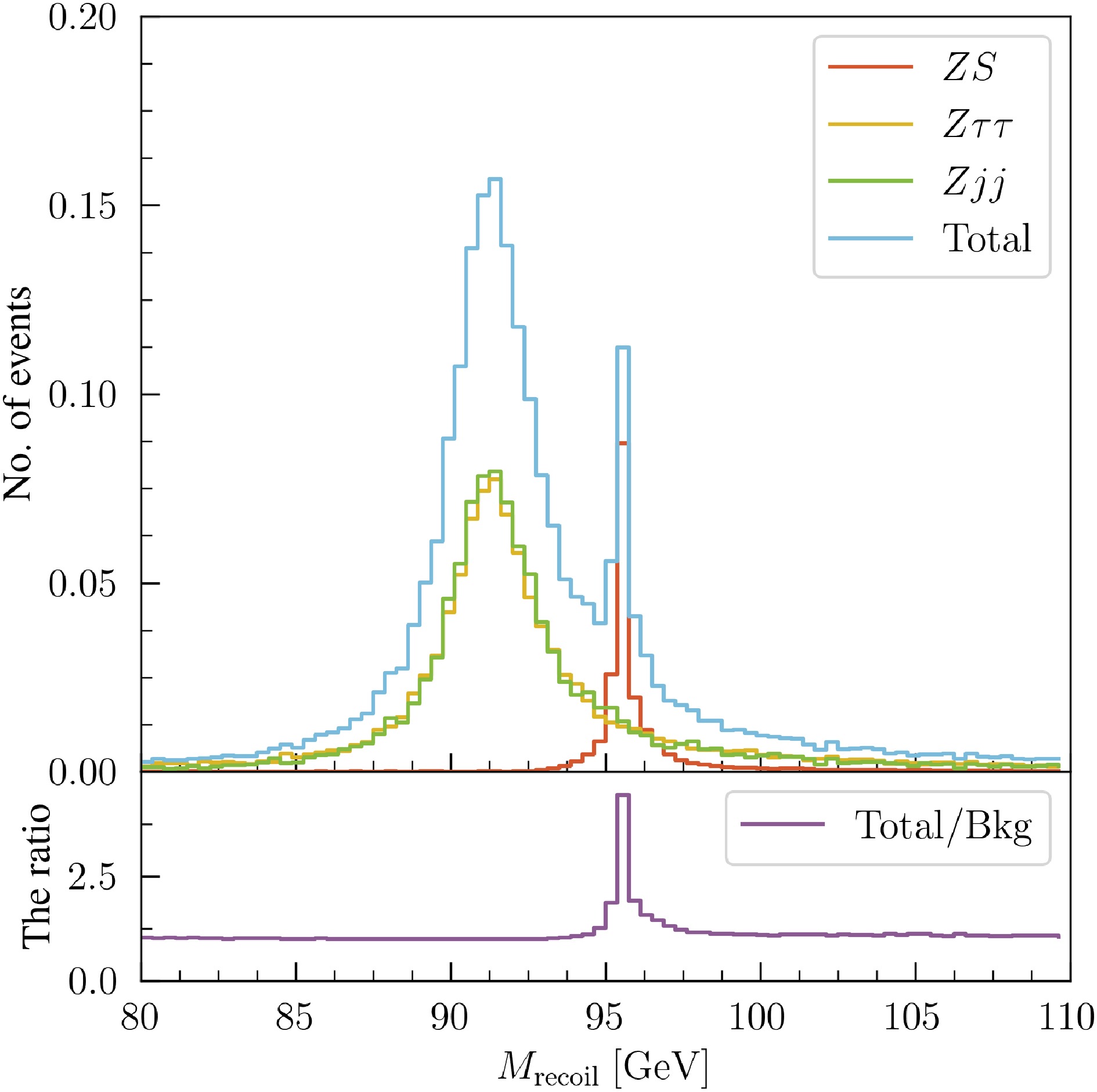
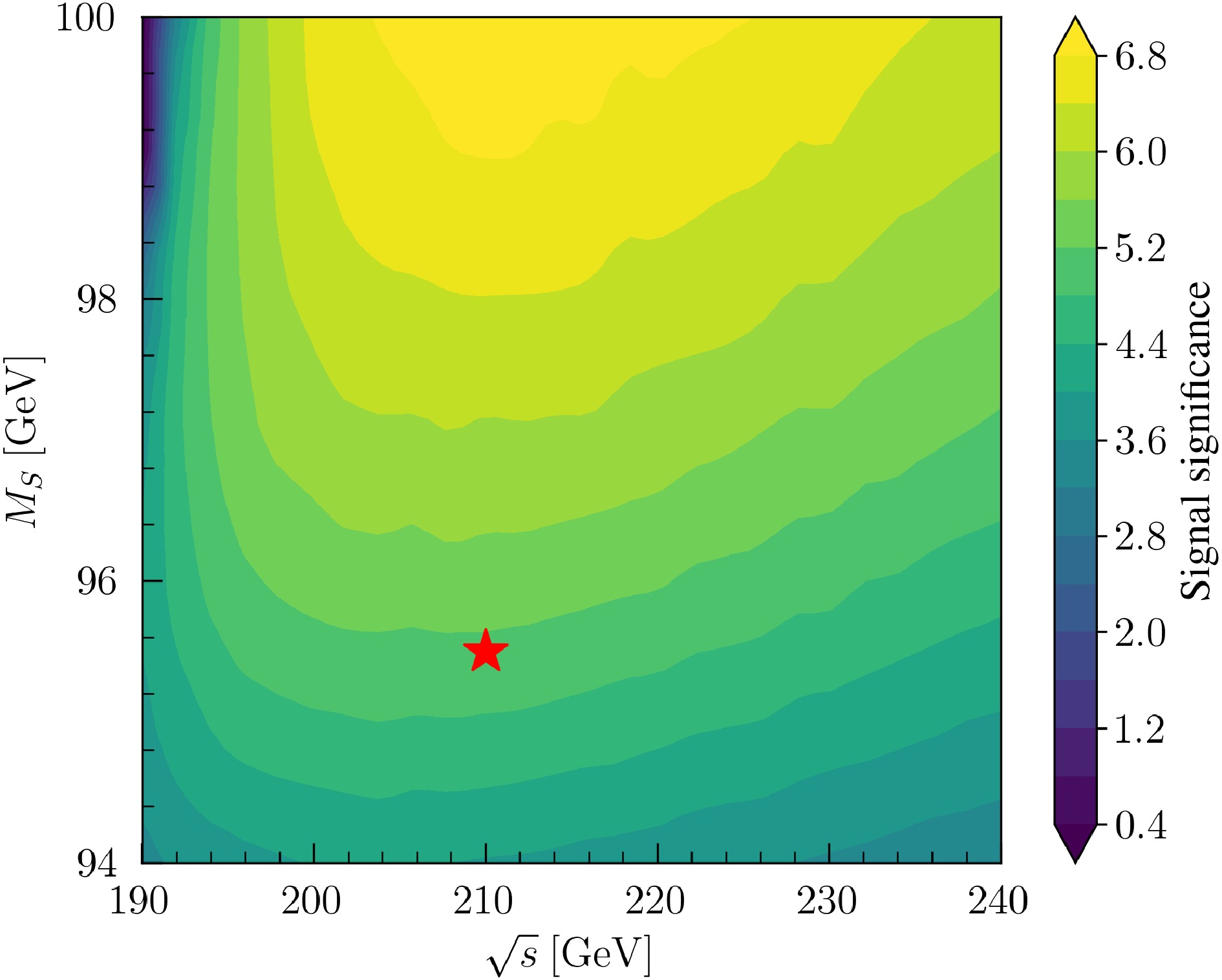
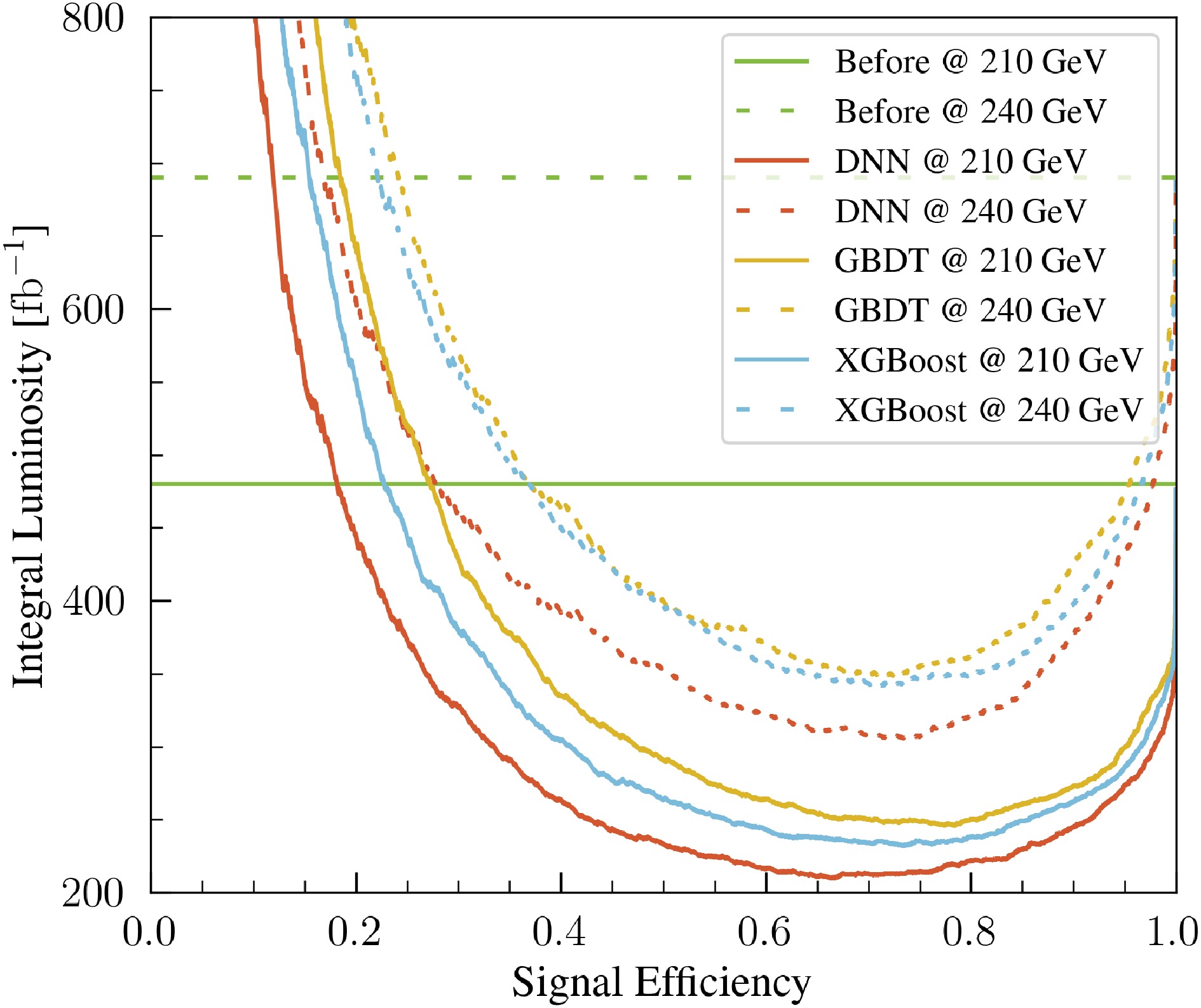
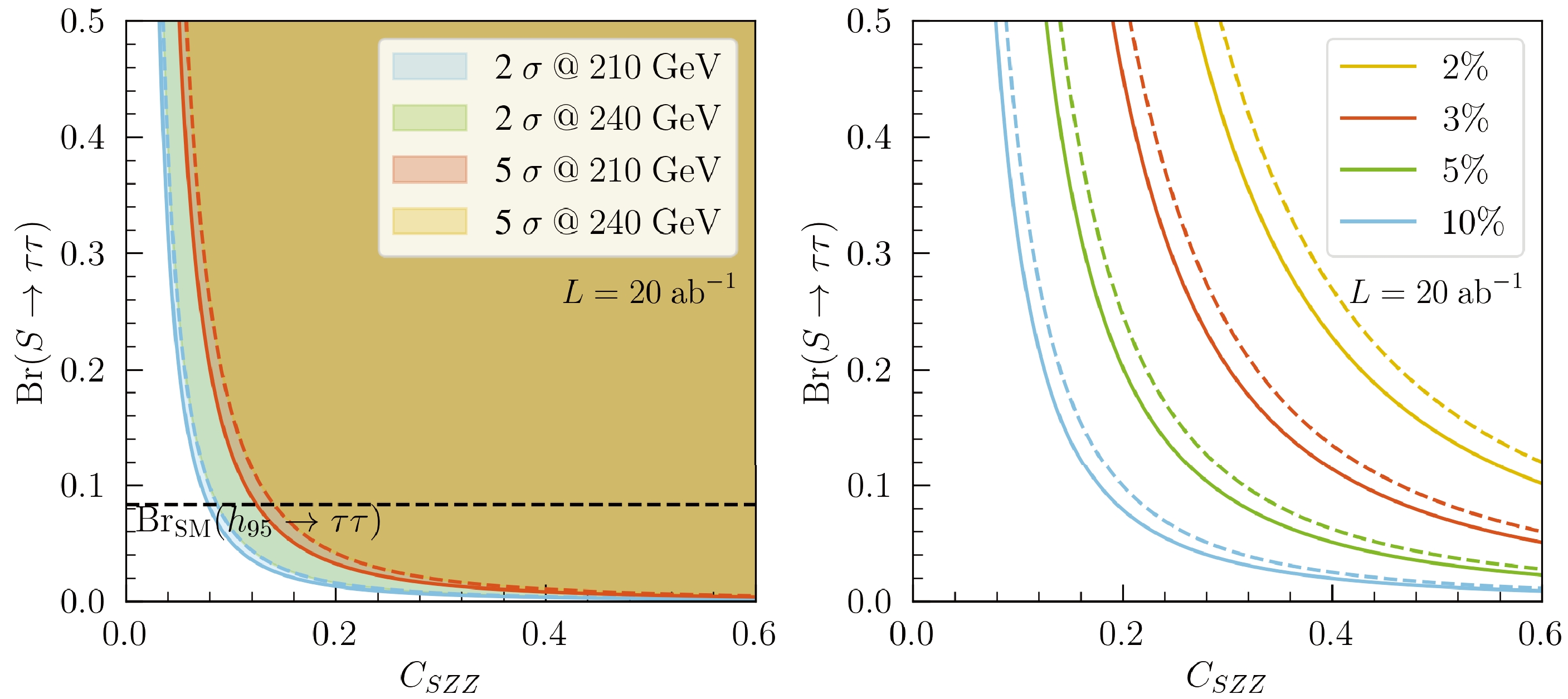
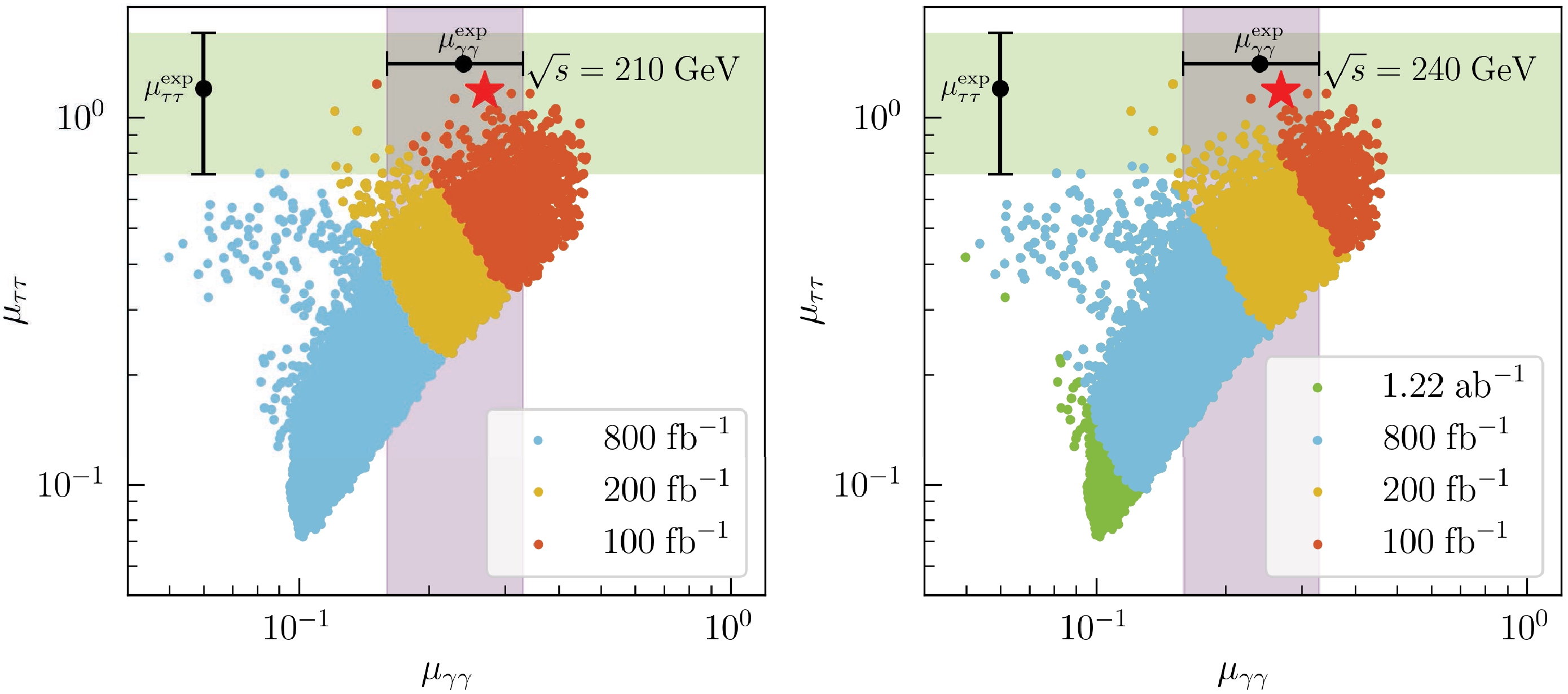
Several possible excesses around\begin{document}$ 95 $\end{document} \begin{document}$ e^{+}e^{-} \to ZS $\end{document} \begin{document}$ Z \to\mu^{+}\mu^{-} $\end{document} \begin{document}$ S \to\tau^{+}\tau^{-} $\end{document} \begin{document}$ L = 20\; \mathrm{ab}^{-1} $\end{document} \begin{document}$ 5\sigma $\end{document} \begin{document}$ \mu_{\tau\tau}^{ZS} $\end{document} \begin{document}$ \sqrt{s} = 210 $\end{document} \begin{document}$ \mu_{\tau\tau}^{ZS} \gt 0.10 $\end{document} \begin{document}$ >0.12 $\end{document} \begin{document}$ \sqrt{s}=210 $\end{document} \begin{document}$ 5\sigma $\end{document} \begin{document}$ \chi^2_{h_{95}}<7.82 $\end{document} \begin{document}$ L=800\ \mathrm{fb}^{-1} $\end{document} \begin{document}$ \mathrm{ab}^{-1} $\end{document}
Several possible excesses around
2026, 50(3): 033001. doi: 10.1088/1674-1137/ae2f4e
Abstract:
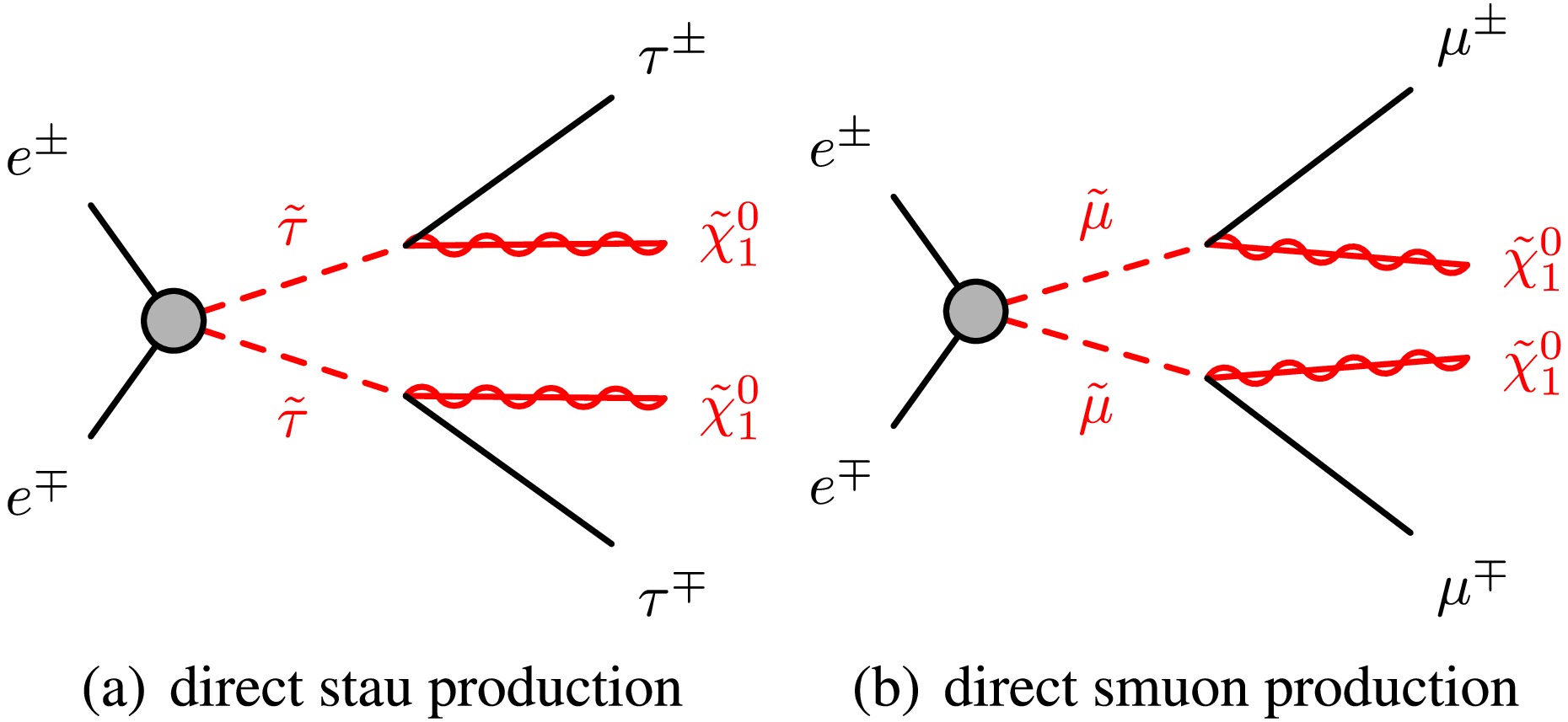
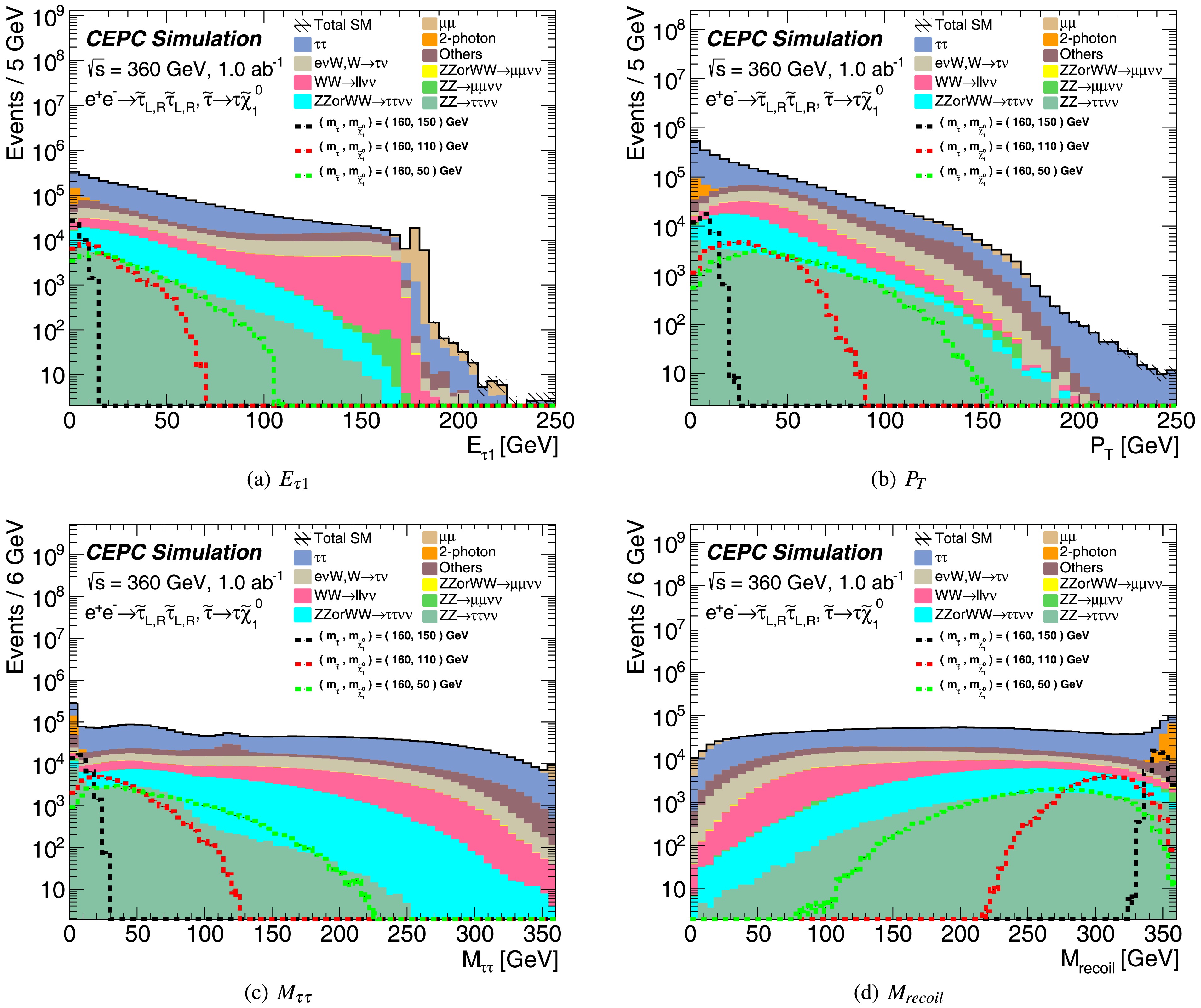
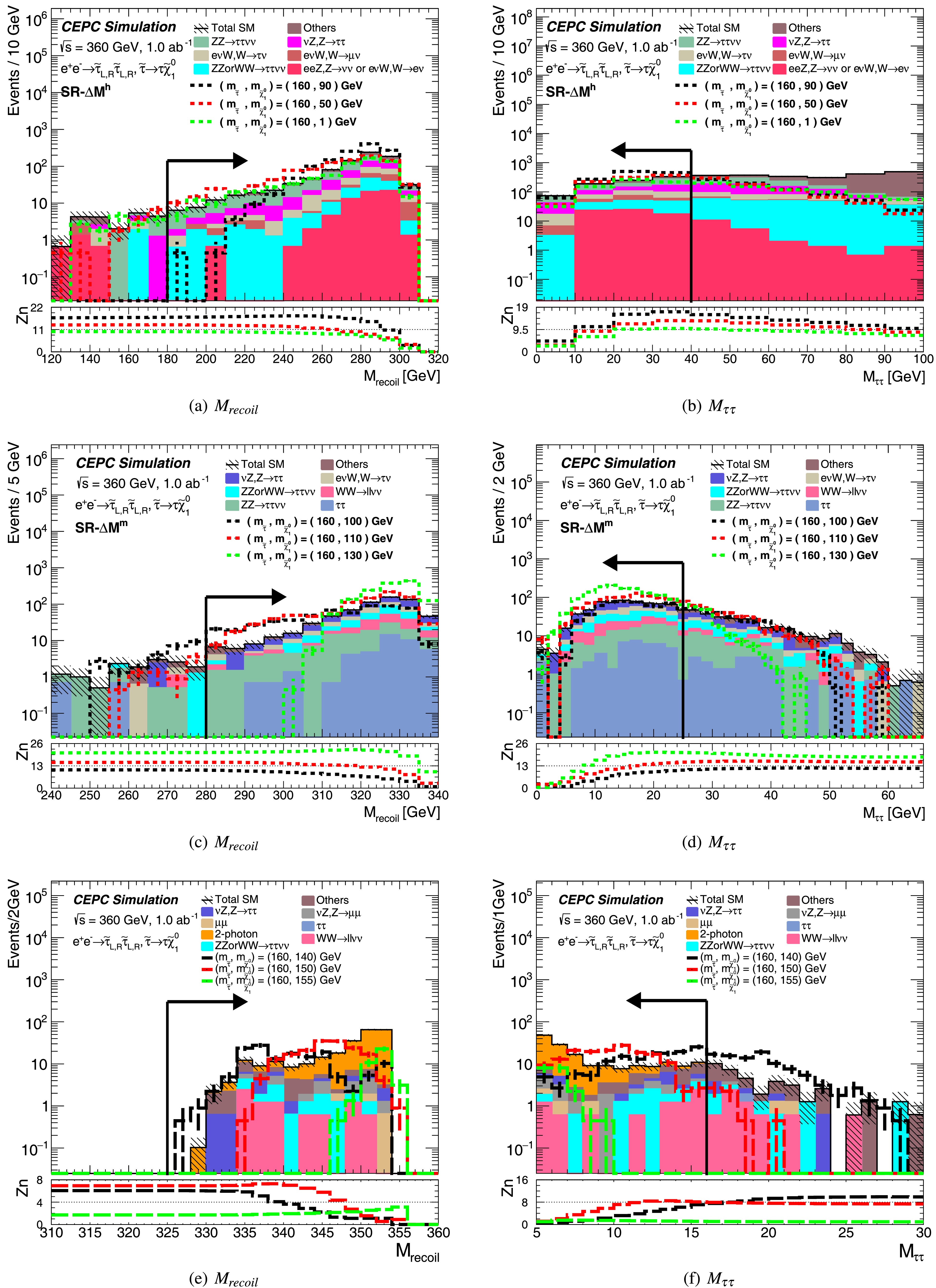
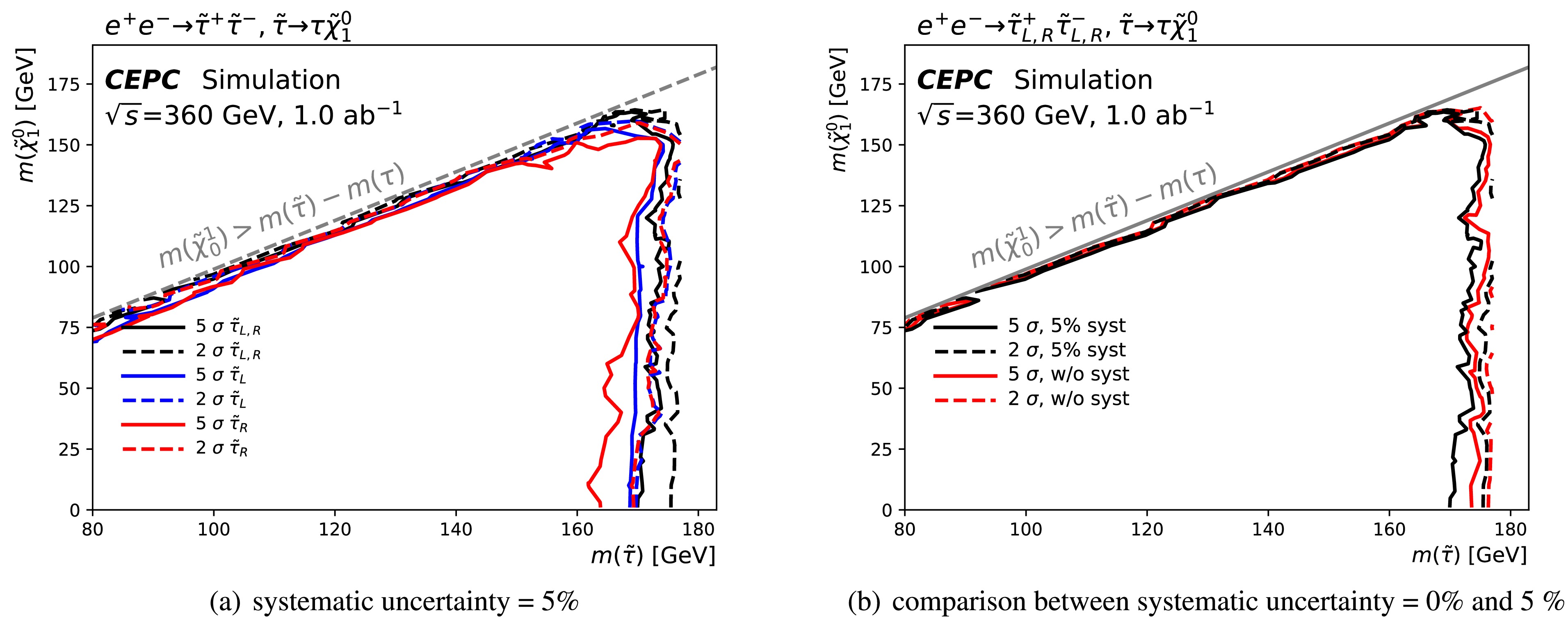
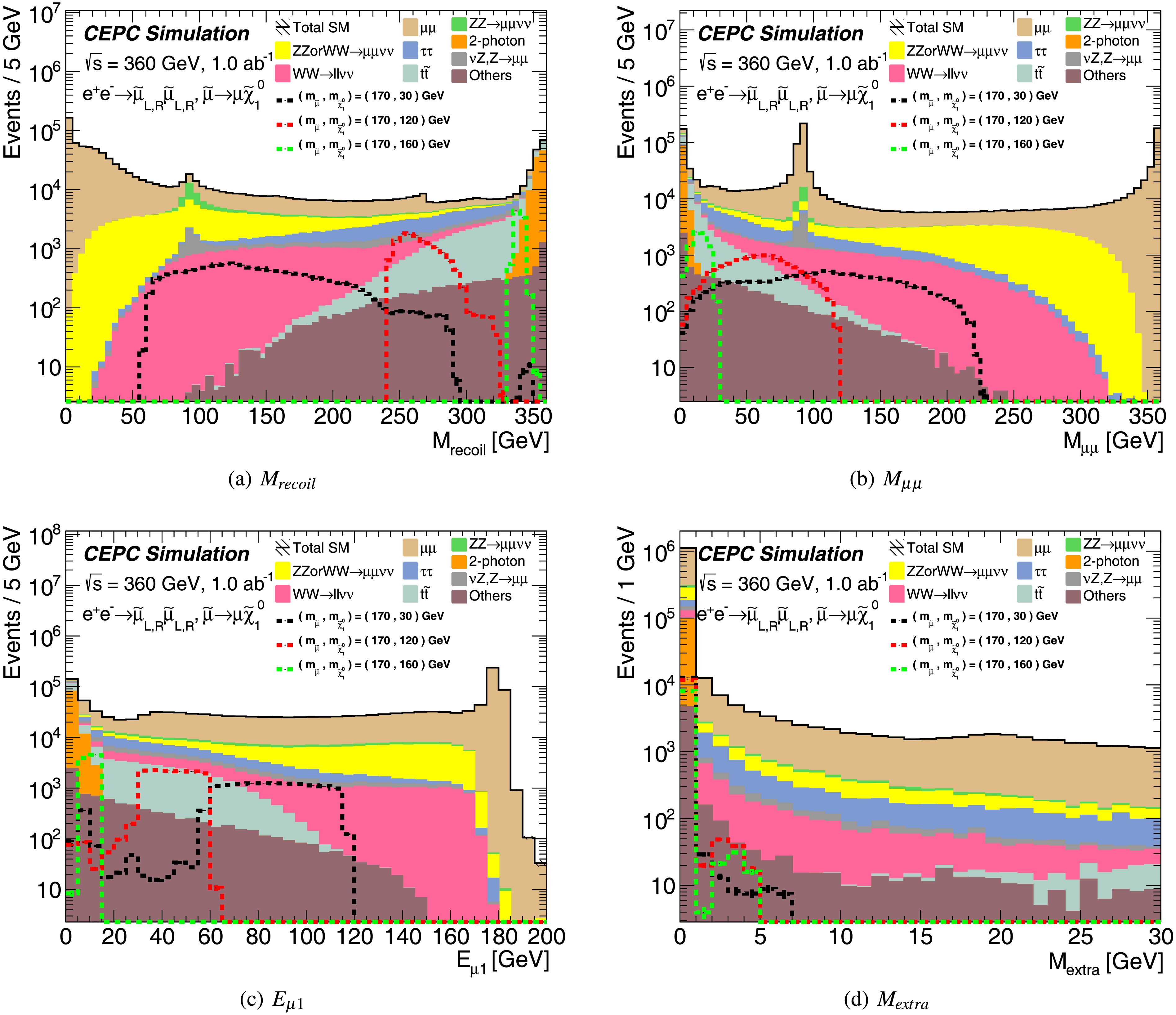
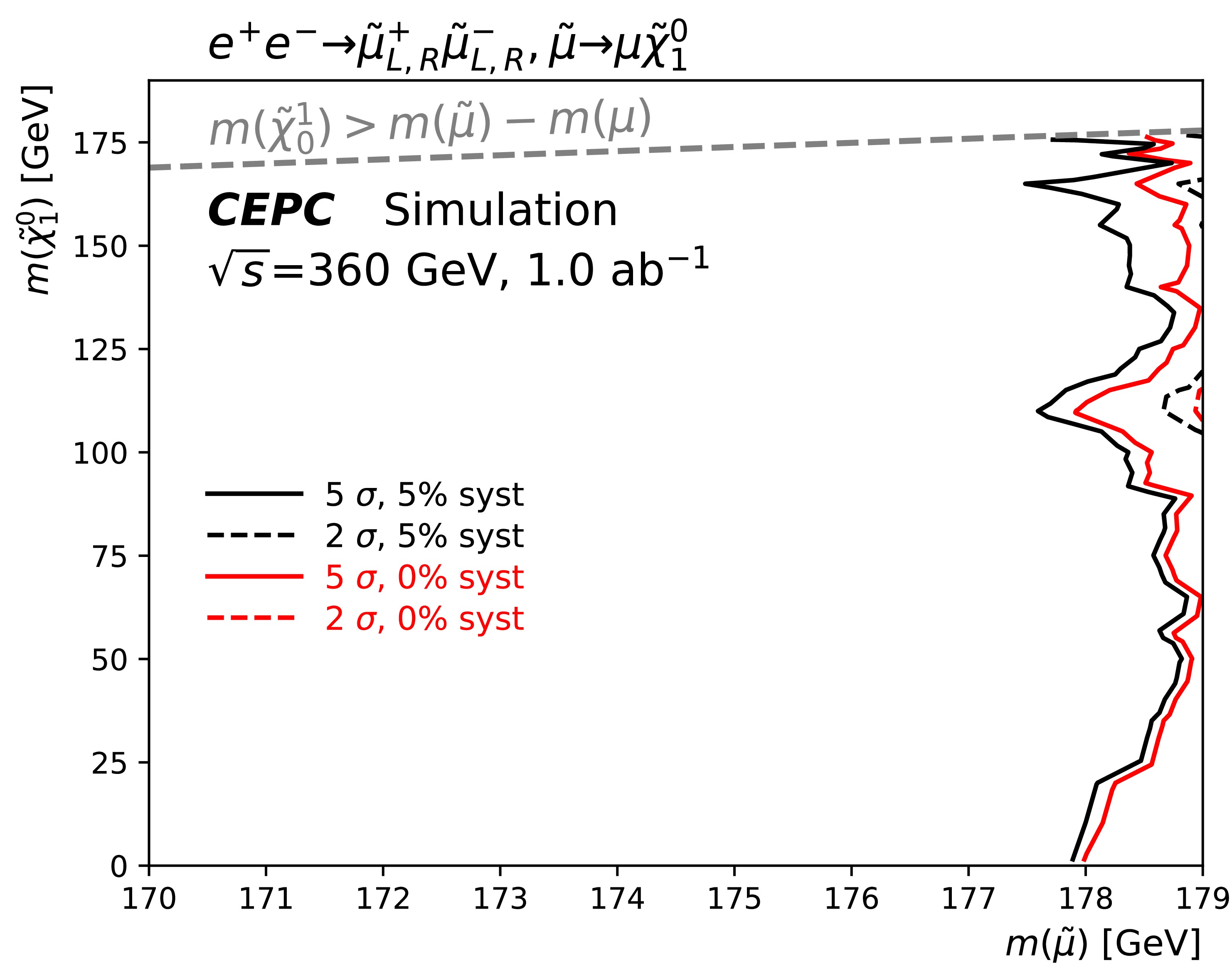
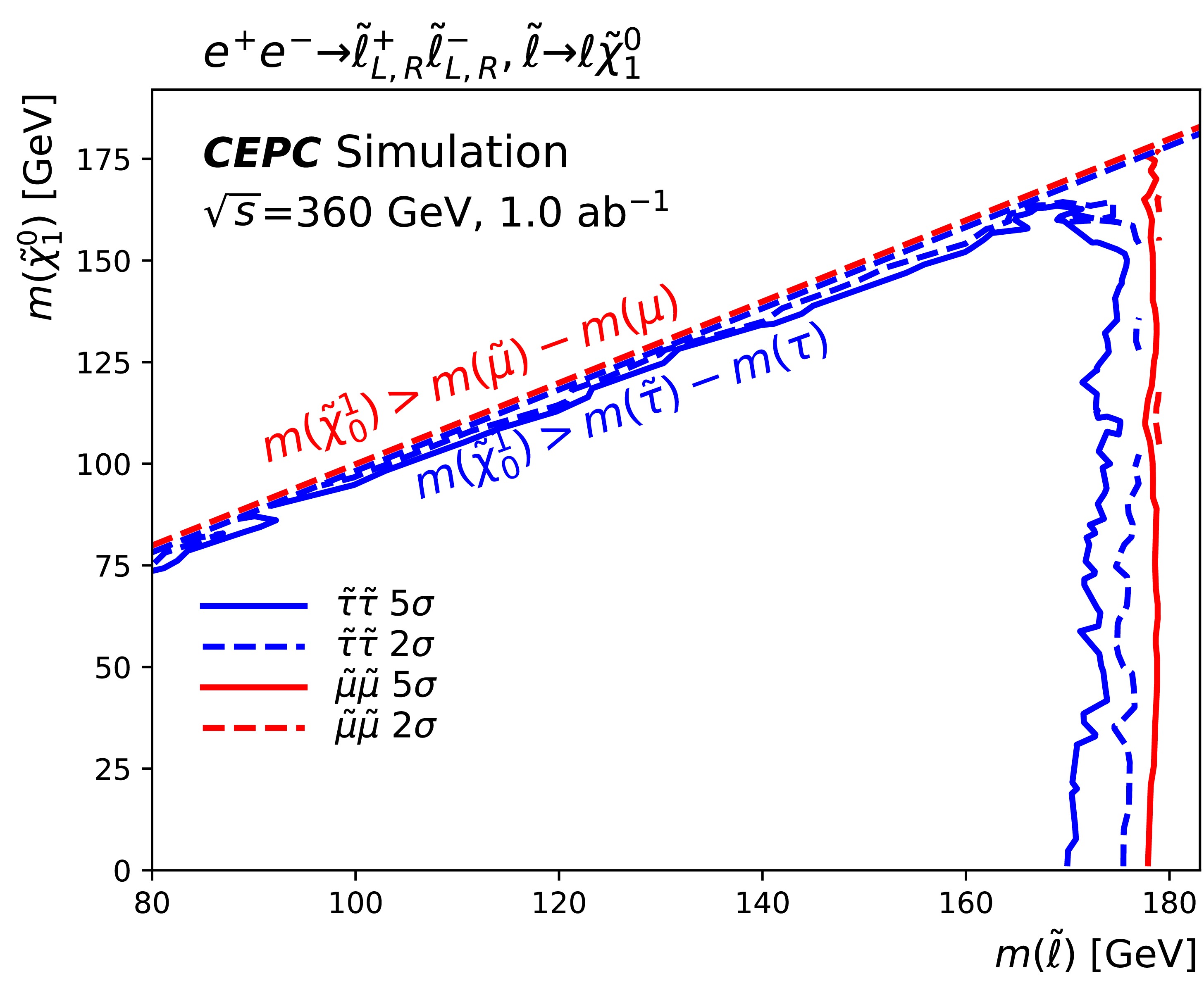
The Circular Electron Positron Collider (CEPC) is designed to operate at key center-of-mass energies: 91.2 GeV as a Z factory for precision Z boson studies, ≈ 160 GeV at the threshold for W boson pair production, and 240 GeV as a Higgs factory for copious Higgs boson production. It can be upgraded to 360 GeV (CEPC-360 GeV) for enabling top quark-antiquark (\begin{document}$ t\bar{t}$\end{document} \begin{document}$ \sqrt{s}$\end{document}
The Circular Electron Positron Collider (CEPC) is designed to operate at key center-of-mass energies: 91.2 GeV as a Z factory for precision Z boson studies, ≈ 160 GeV at the threshold for W boson pair production, and 240 GeV as a Higgs factory for copious Higgs boson production. It can be upgraded to 360 GeV (CEPC-360 GeV) for enabling top quark-antiquark (

2026, 50(3): 033101. doi: 10.1088/1674-1137/ae18aa
Abstract:
Inspired by the observation of the\begin{document}${\eta}_{t}$\end{document} \begin{document}${\eta}_{t}$\end{document} \begin{document}${\eta}_{t}$\end{document} \begin{document}${\to}$\end{document} \begin{document}$f\bar{f}$\end{document} \begin{document}$gg$\end{document} \begin{document}${\gamma}{\gamma}$\end{document} \begin{document}$W^{+}W^{-}$\end{document} \begin{document}$Z^{0}Z^{0}$\end{document} \begin{document}$Z^{0}{\gamma}$\end{document} \begin{document}$Z^{0}H$\end{document} \begin{document}${\eta}_{t}$\end{document} \begin{document}${\to}$\end{document} \begin{document}$W^{+}W^{-}$\end{document} \begin{document}${\eta}_{t}$\end{document} \begin{document}${\to}$\end{document} \begin{document}$Z^{0}H$\end{document} \begin{document}${\to}$\end{document} \begin{document}${\ell}^{+}{\ell}^{-}H$\end{document} \begin{document}$Z^{0}$\end{document} \begin{document}${\eta}_{t}$\end{document}
Inspired by the observation of the
2026, 50(3): 033102. doi: 10.1088/1674-1137/ae1afd
Abstract:
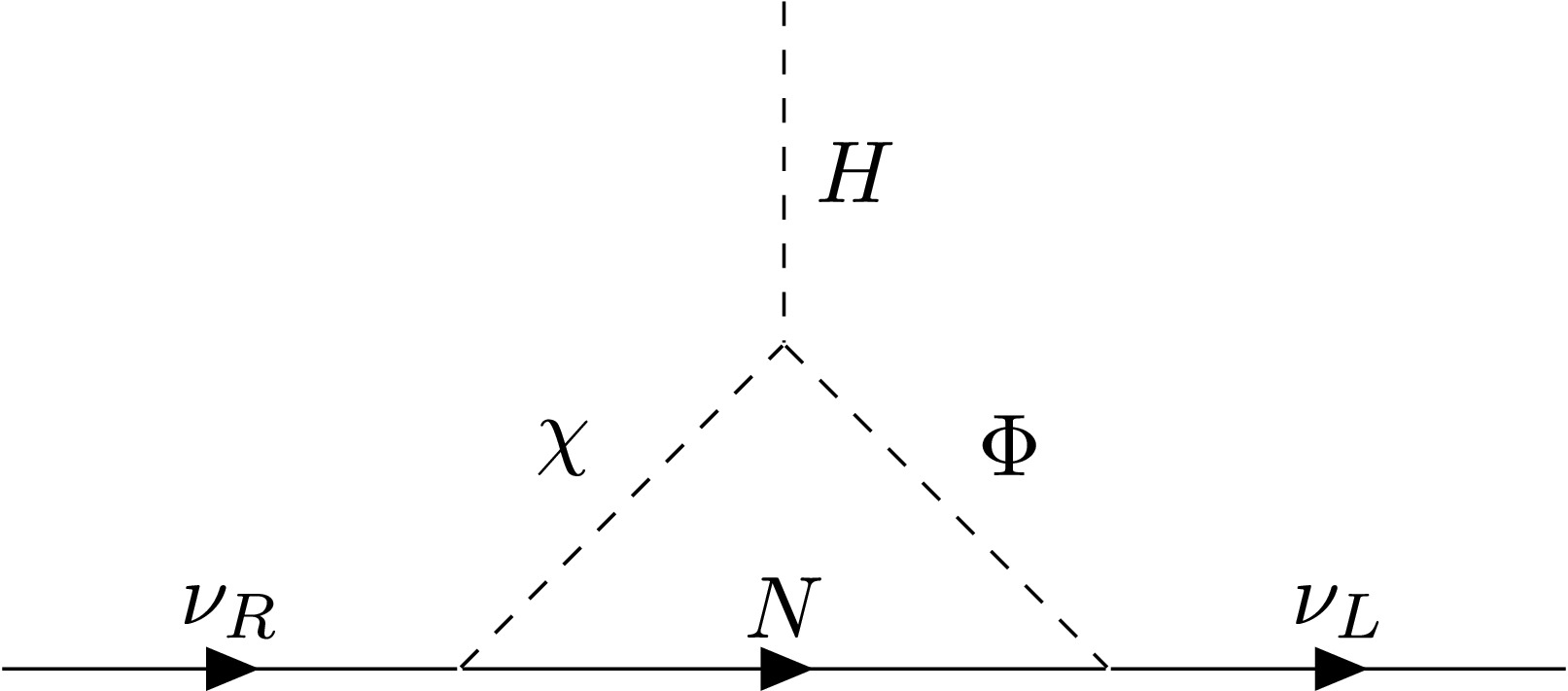
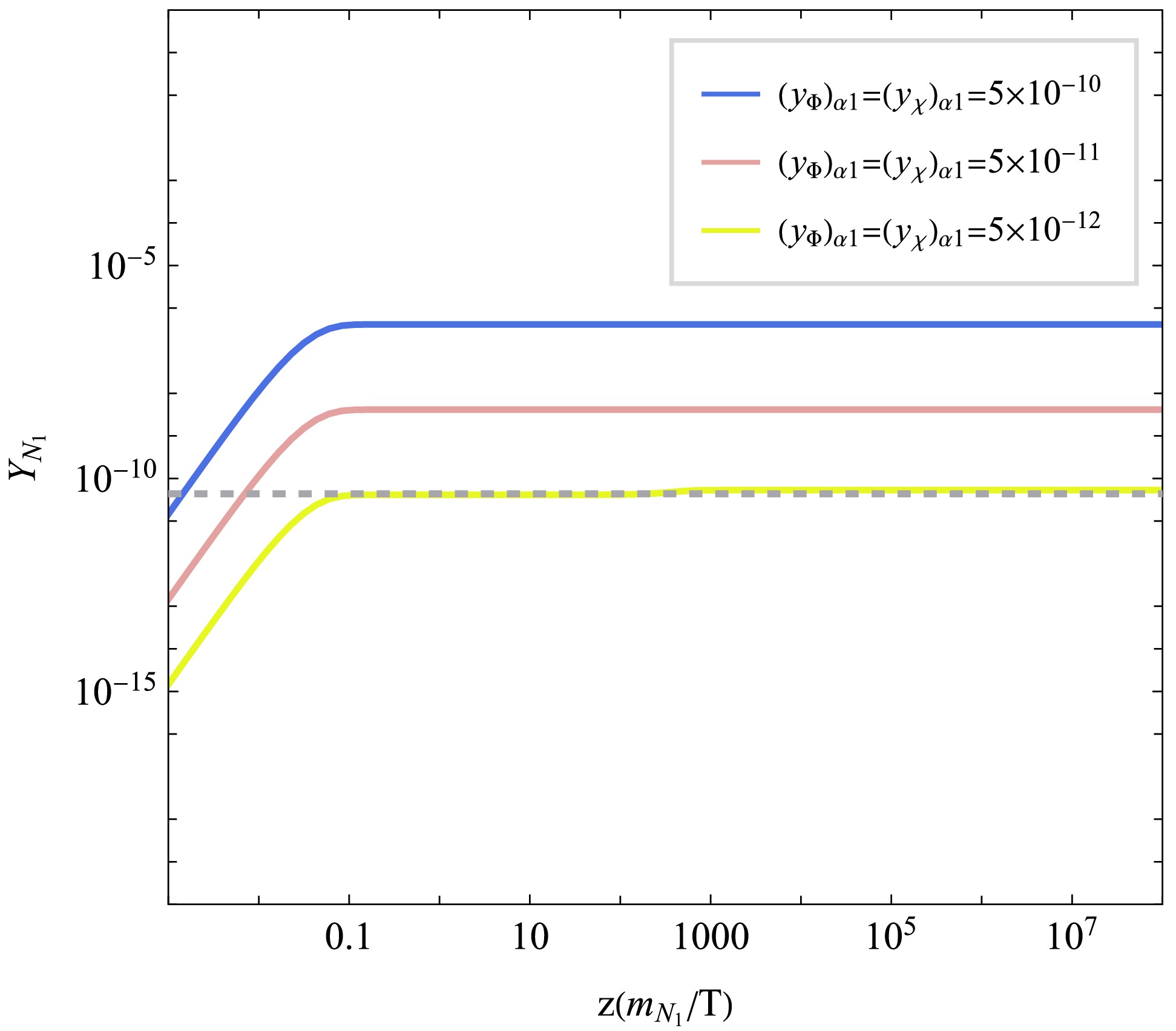
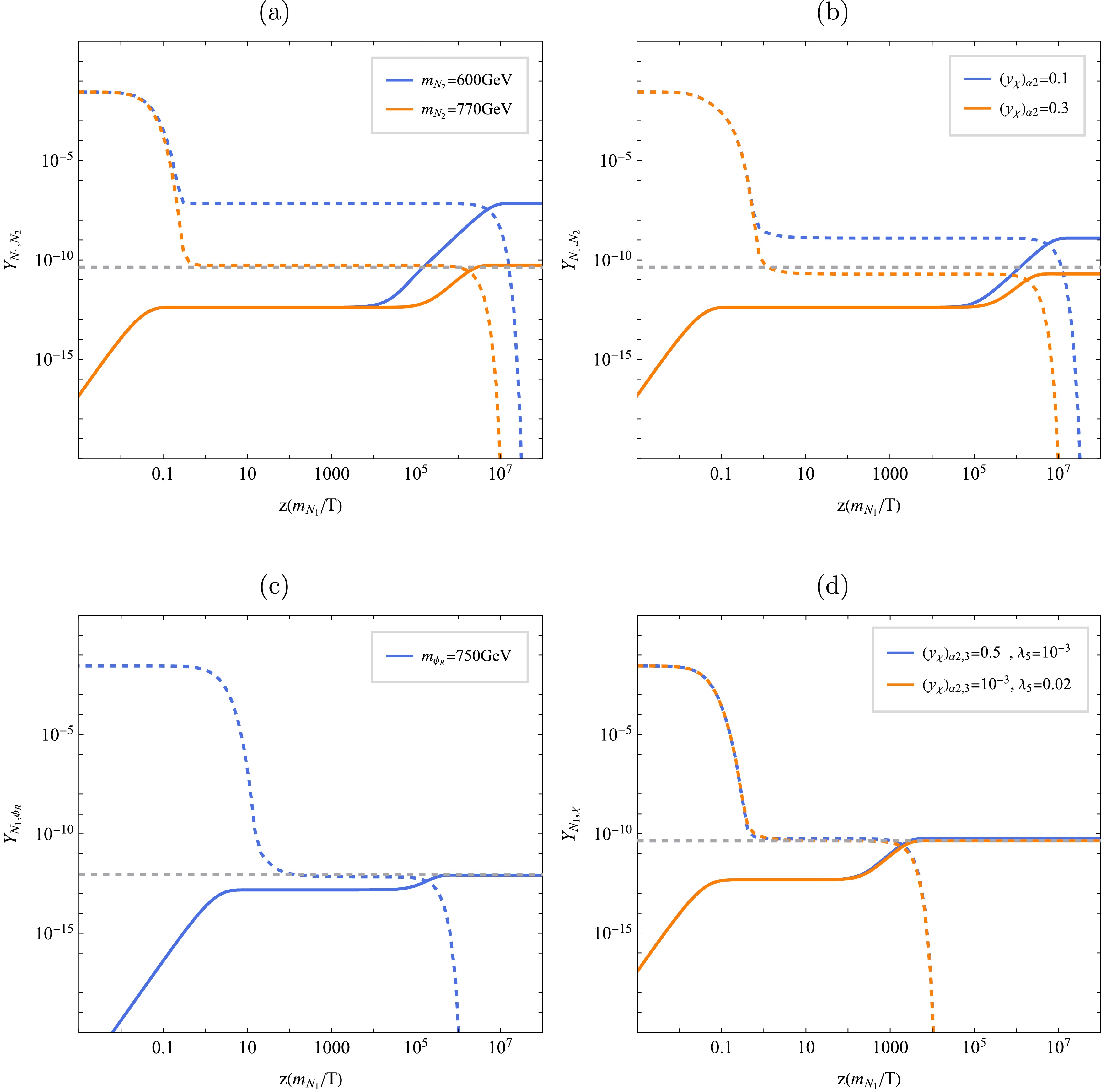
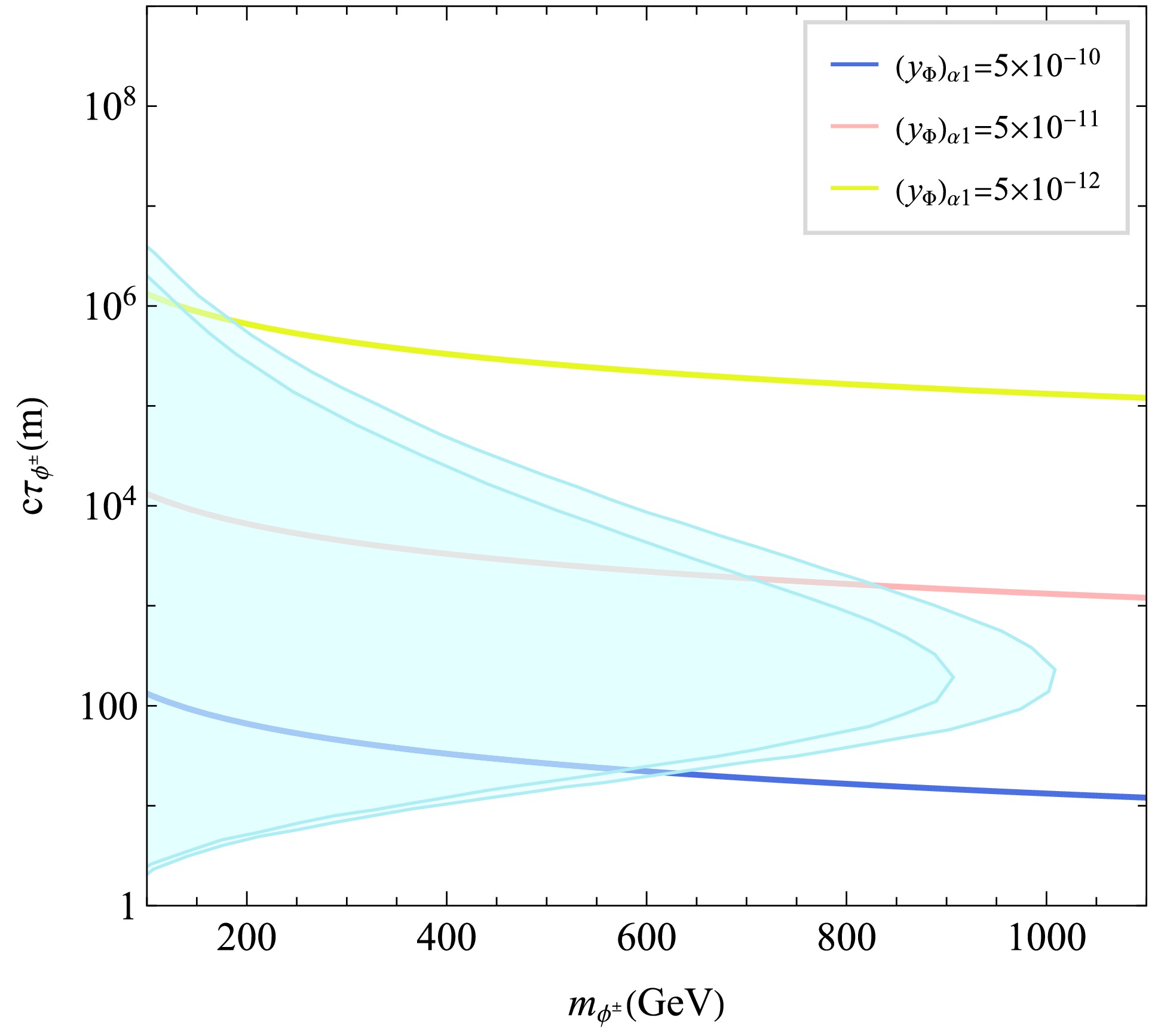
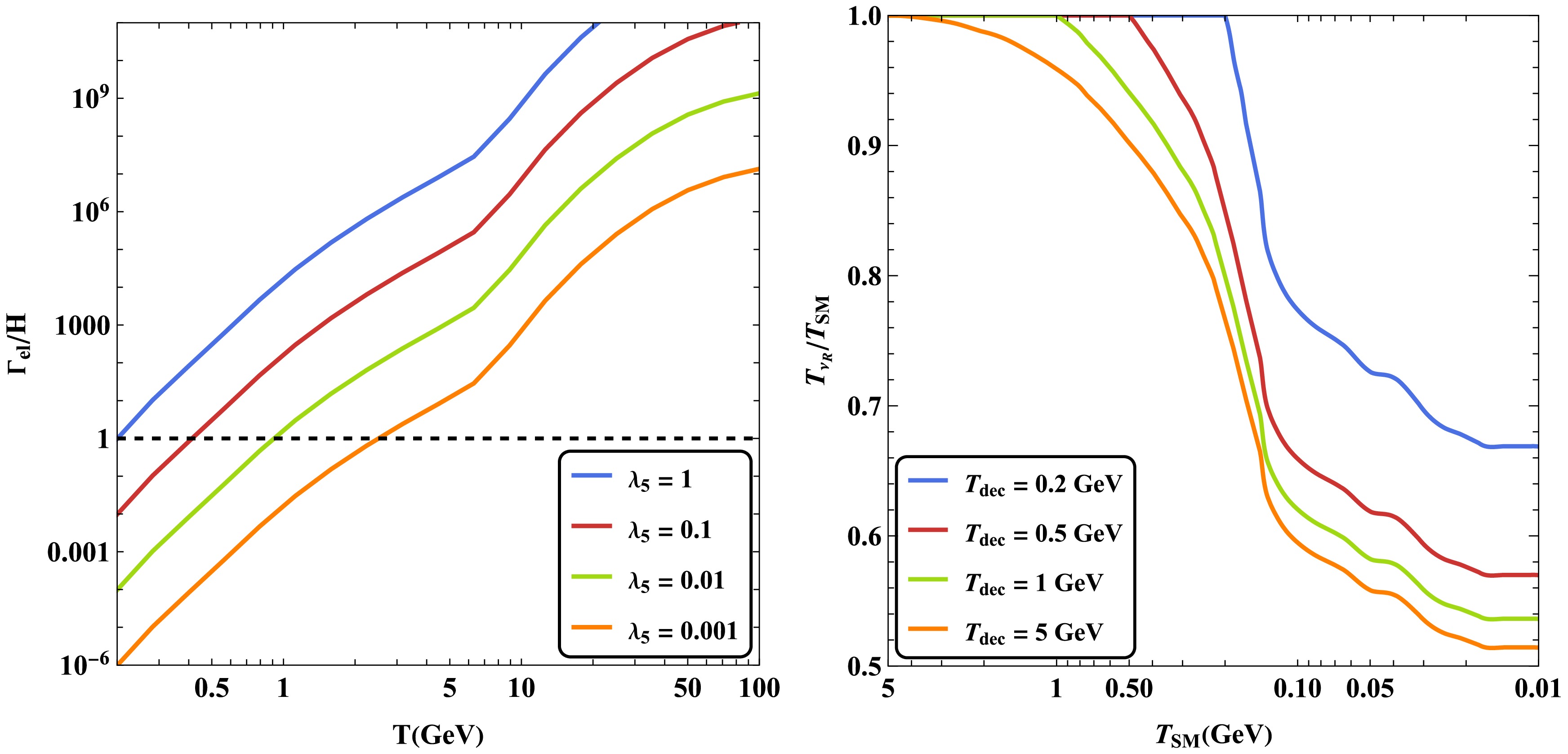
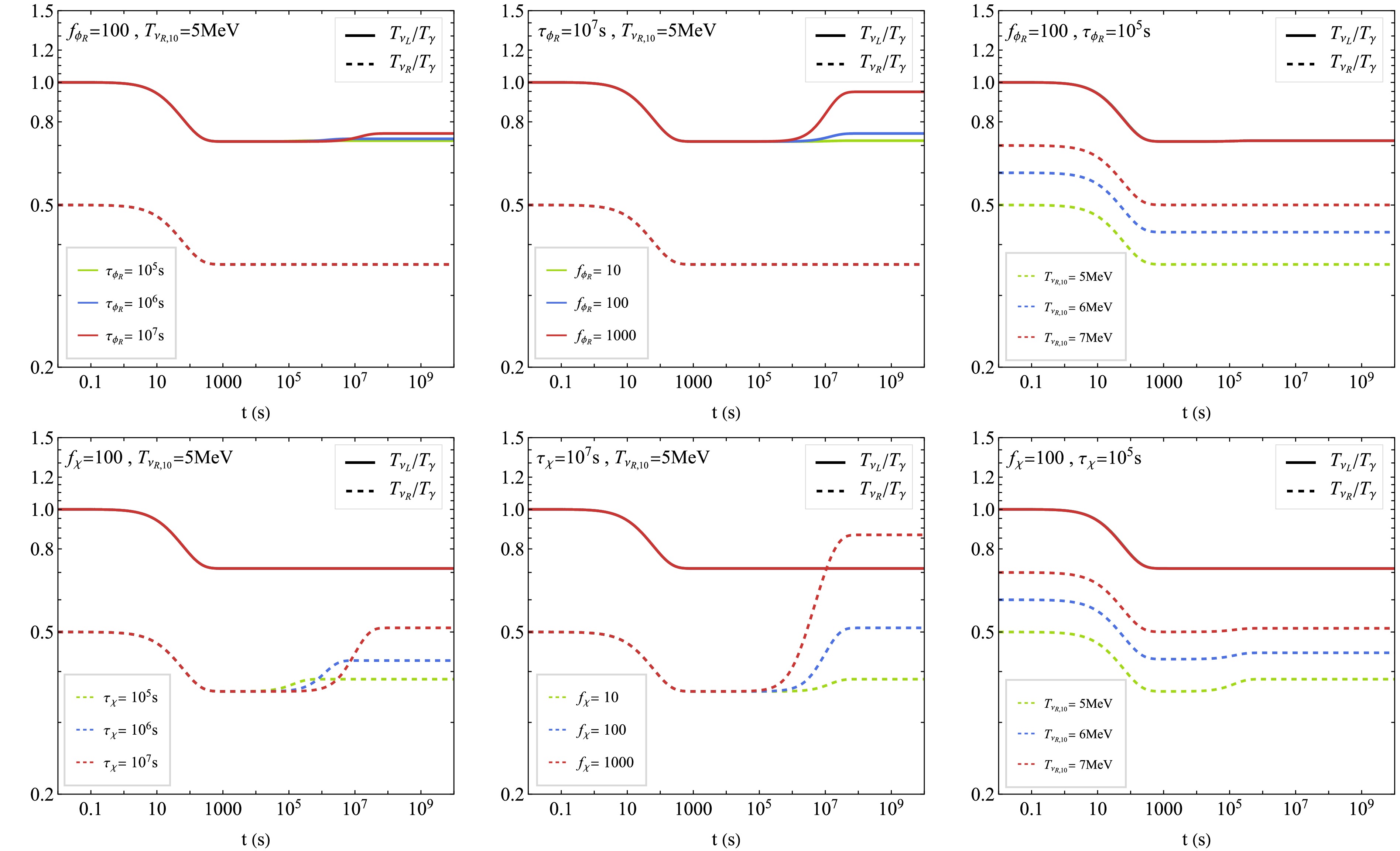
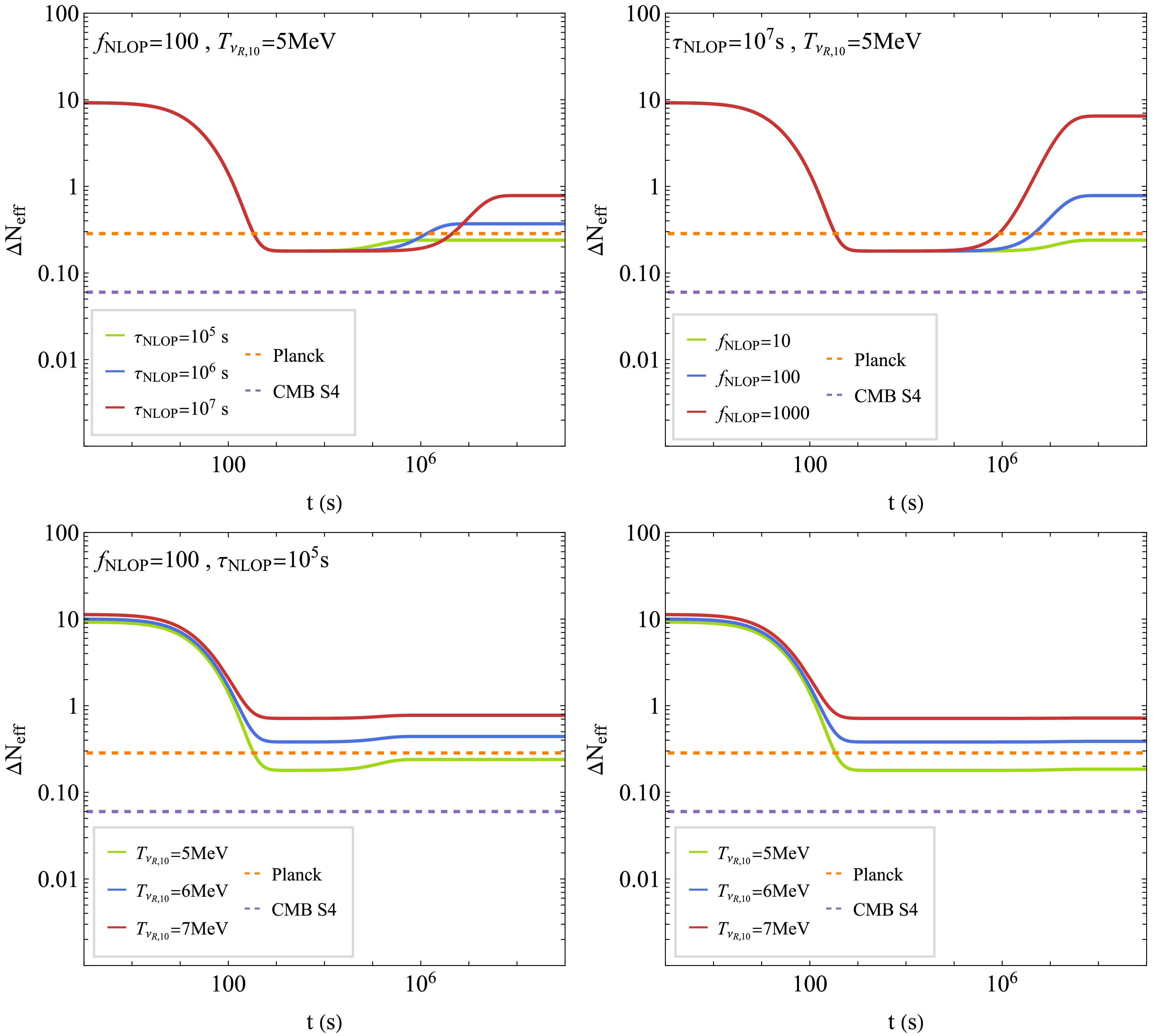
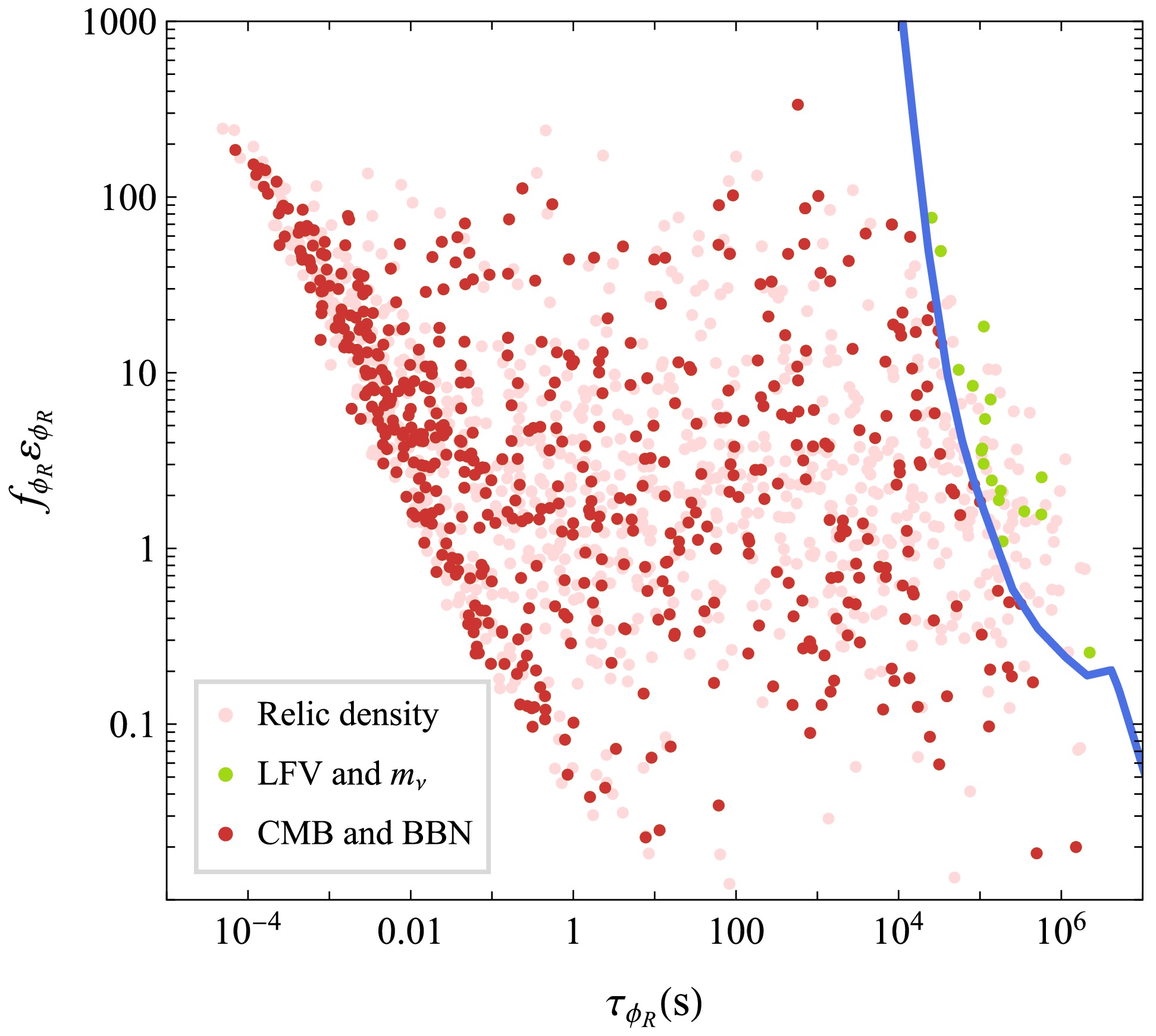
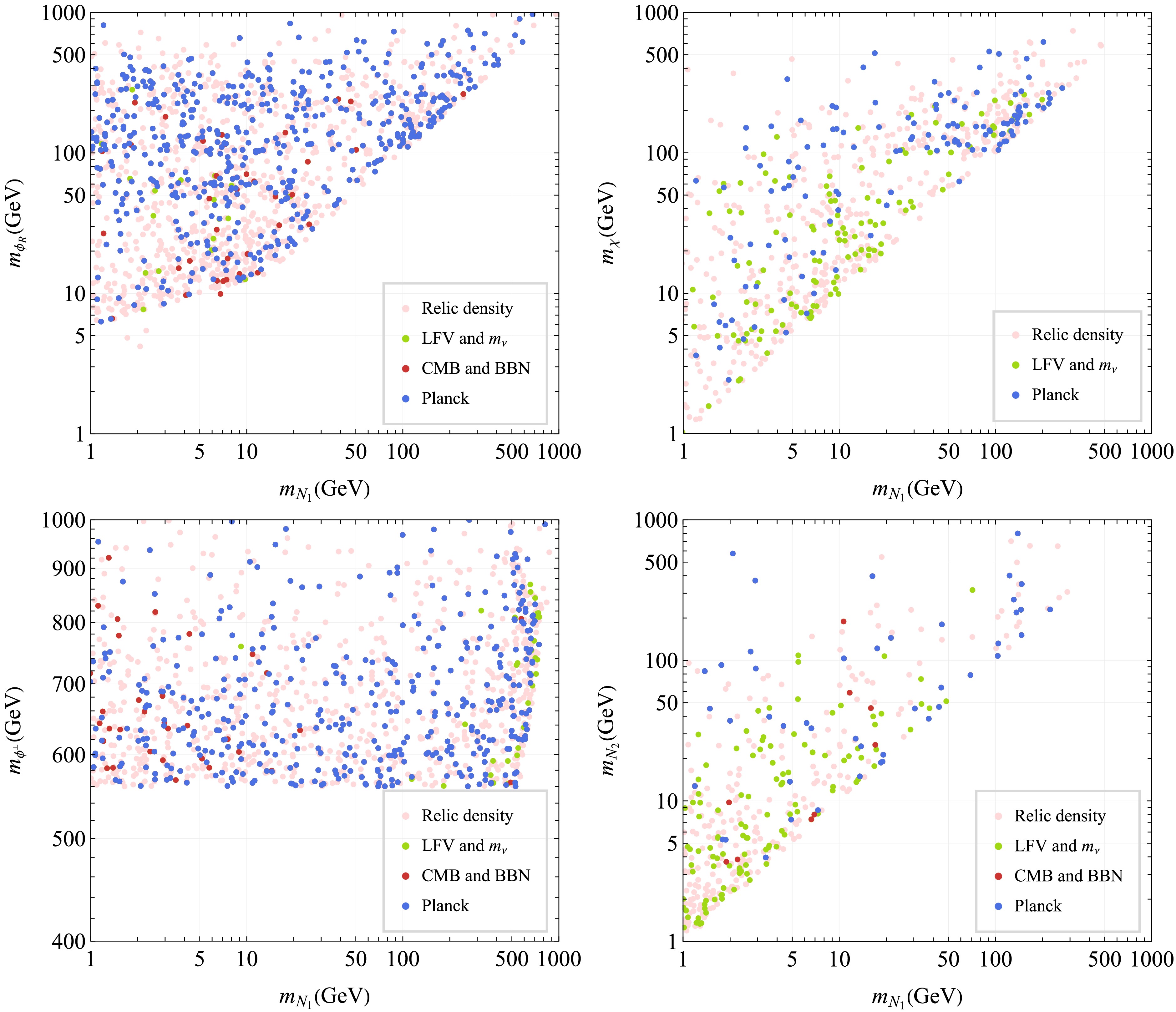
We study a feebly interacting massive particle realization of the Scotogenic Dirac Model in which the lightest neutral fermion\begin{document}$ N_1 $\end{document} \begin{document}$ \Delta N_{{\rm{eff}}} $\end{document} \begin{document}$ \Delta N_{{\rm{eff}}} $\end{document}
We study a feebly interacting massive particle realization of the Scotogenic Dirac Model in which the lightest neutral fermion
2026, 50(3): 033103. doi: 10.1088/1674-1137/ae25c9
Abstract:
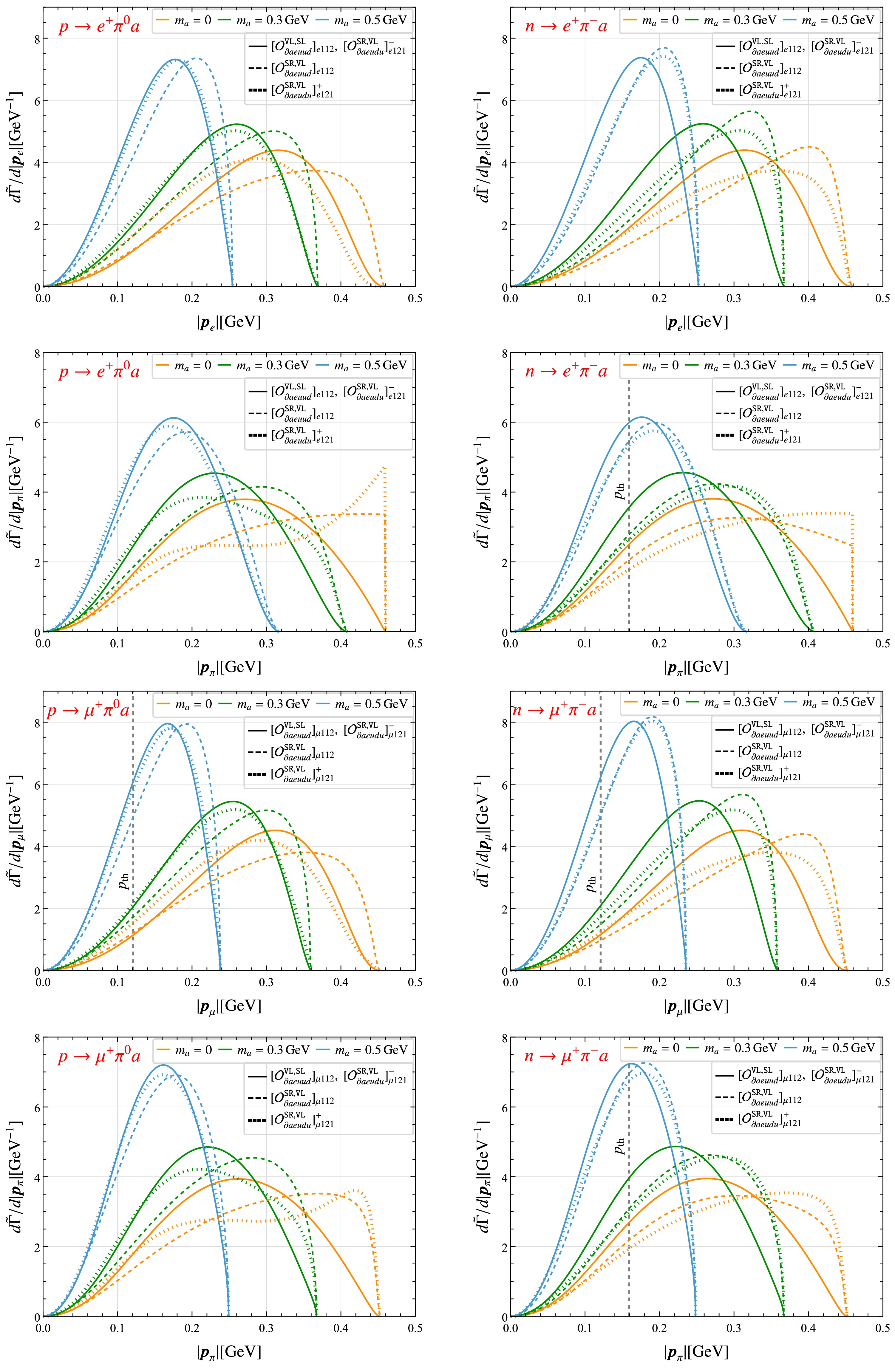
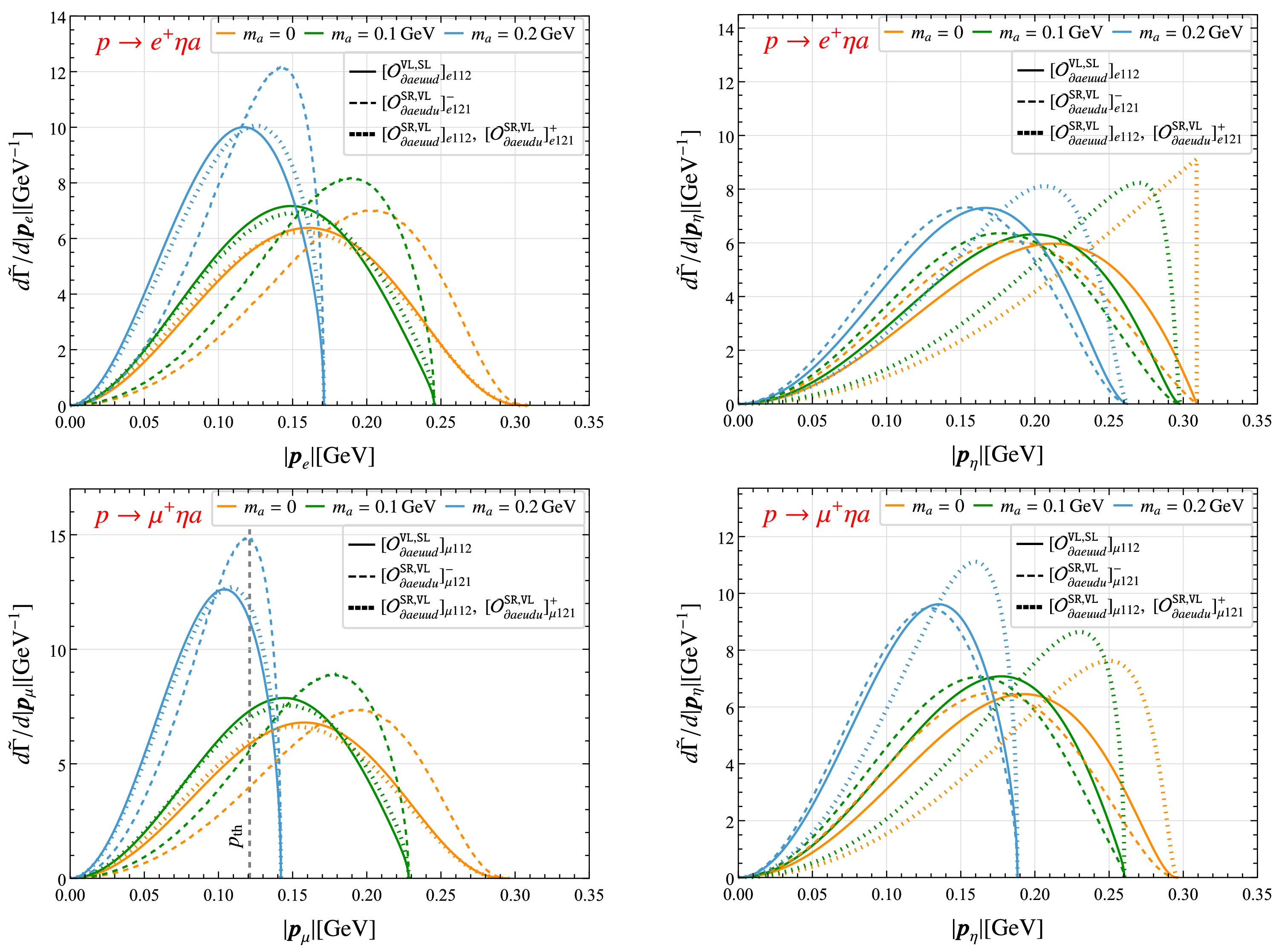
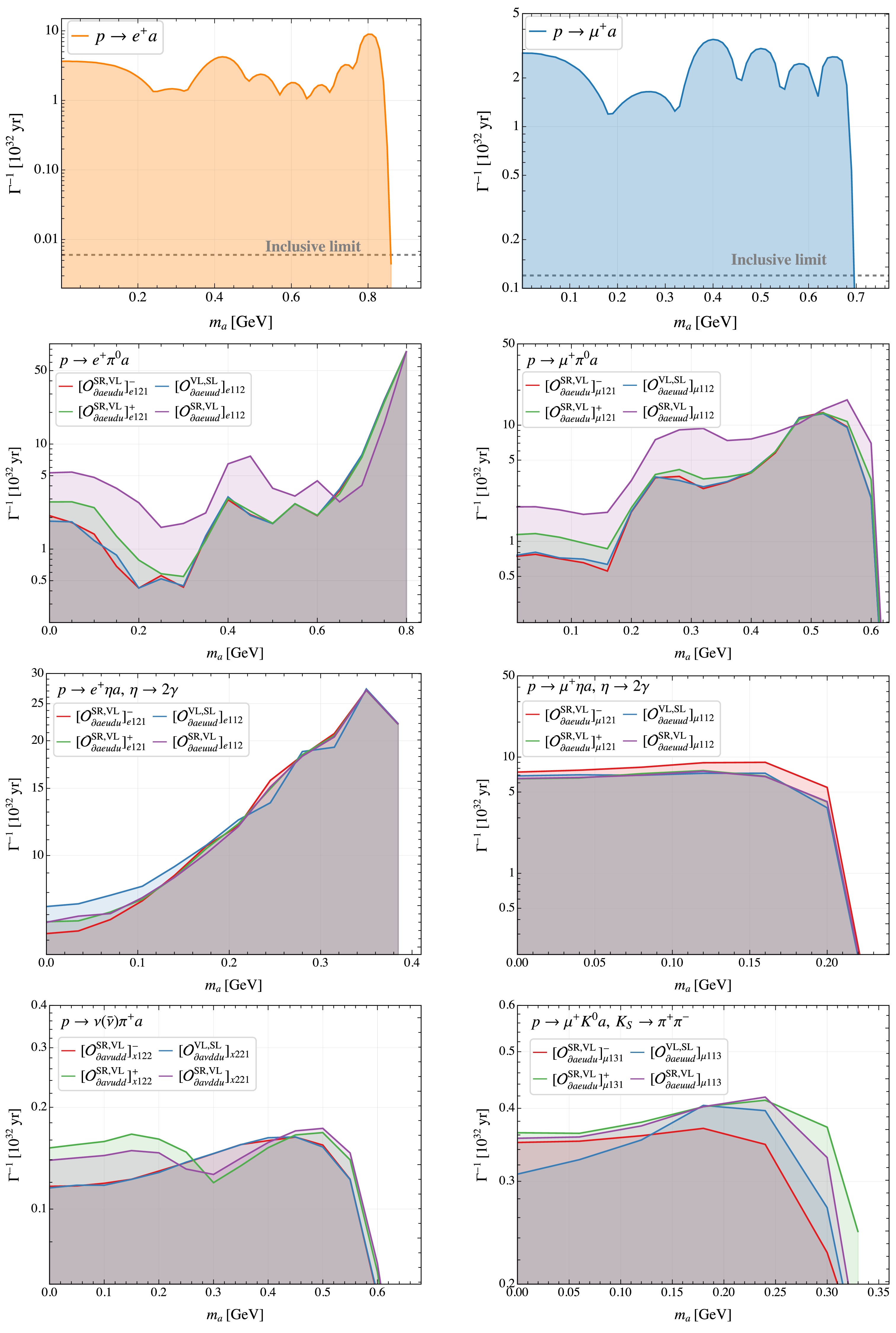
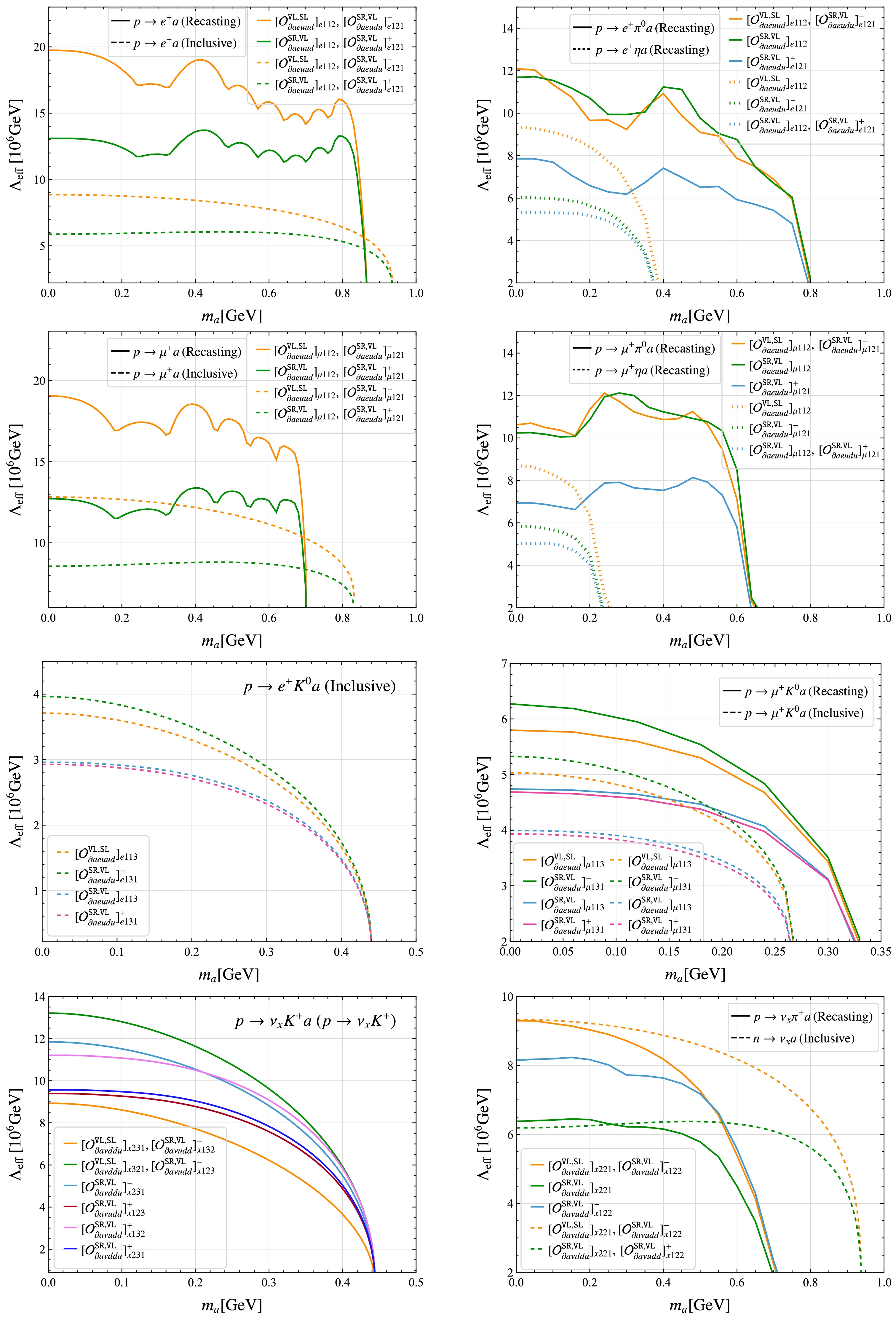
In this study, we systematically investigate baryon number violating (BNV) nucleon decays into an axion-like particle (ALP) within a low energy effective field theory extended with an ALP, which is referred to as aLEFT. Unlike previous studies in the literature, we consider contributions to nucleon decays from a complete set of dimension-eight BNV aLEFT operators involving light u, d, and s quarks. We perform the chiral irreducible representation (irrep) decomposition of these interactions under the QCD chiral group\begin{document}${S U}(3)_{\mathtt{L}}\times {S U}(3)_{\mathtt{R}}$\end{document} \begin{document}${\bf{6}}_{{\mathtt{L}}({\mathtt{R}})}\times {\bf{3}}_{{\mathtt{R}}({\mathtt{L}})}$\end{document} \begin{document}${\bf{8}}_{{\mathtt{L}}({\mathtt{R}})}\times \pmb{1}_{{\mathtt{R}}({\mathtt{L}})}$\end{document} \begin{document}${\bf{3}}_{{\mathtt{L}}({\mathtt{R}})}\times \bar{{\bf{3}}}_{{\mathtt{R}}({\mathtt{L}})}$\end{document}
In this study, we systematically investigate baryon number violating (BNV) nucleon decays into an axion-like particle (ALP) within a low energy effective field theory extended with an ALP, which is referred to as aLEFT. Unlike previous studies in the literature, we consider contributions to nucleon decays from a complete set of dimension-eight BNV aLEFT operators involving light u, d, and s quarks. We perform the chiral irreducible representation (irrep) decomposition of these interactions under the QCD chiral group

2026, 50(3): 033104. doi: 10.1088/1674-1137/ae1de4
Abstract:
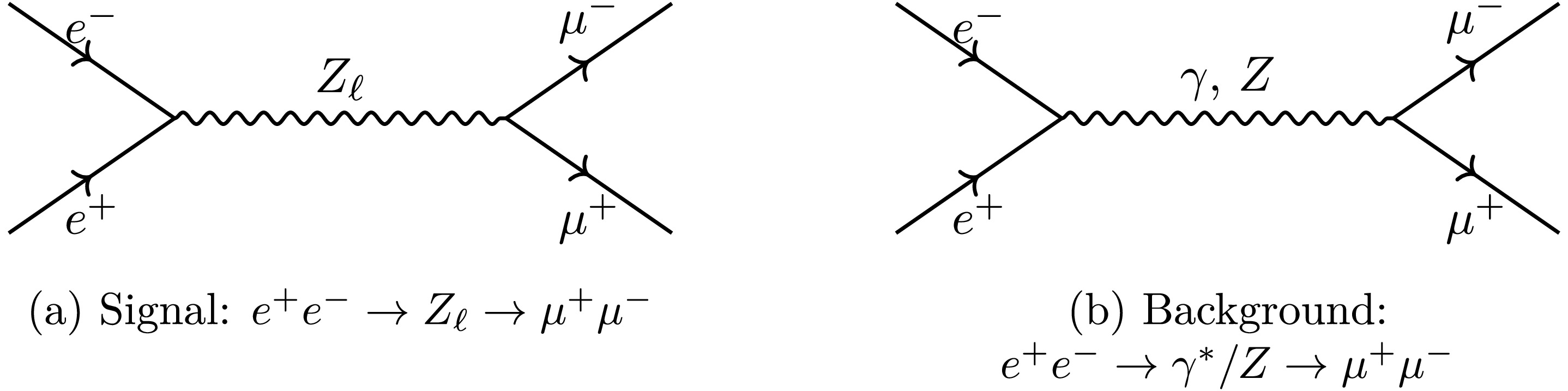
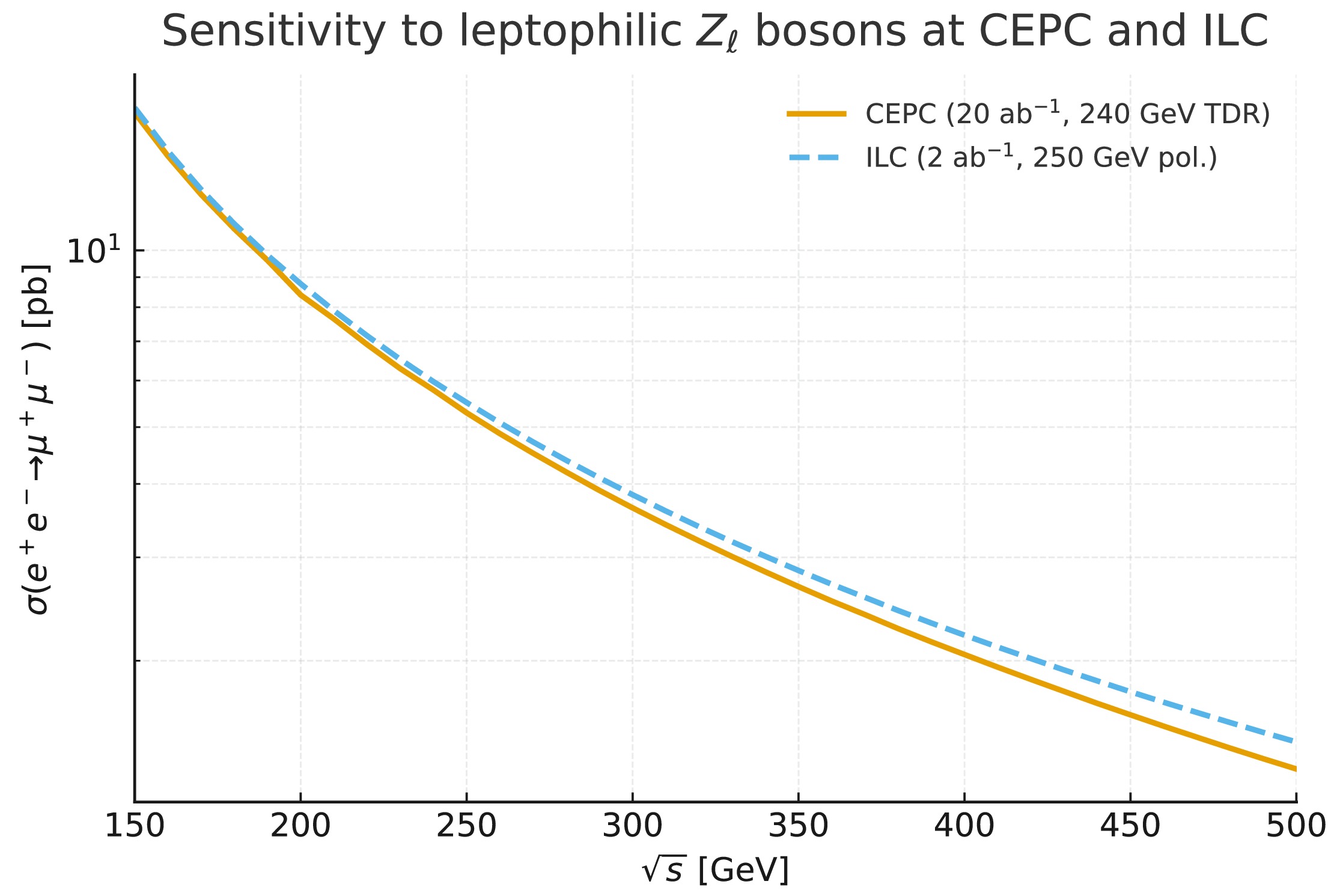
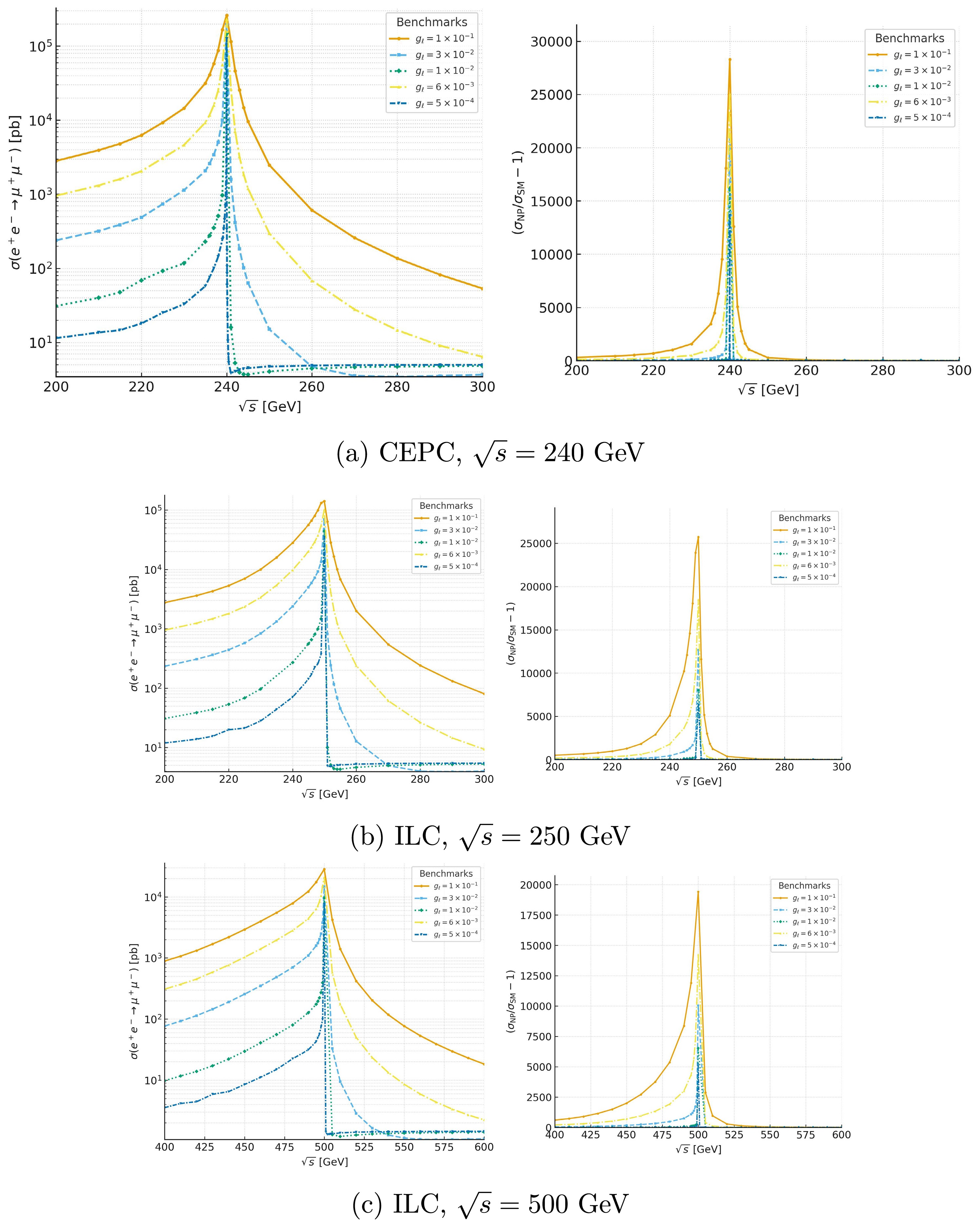
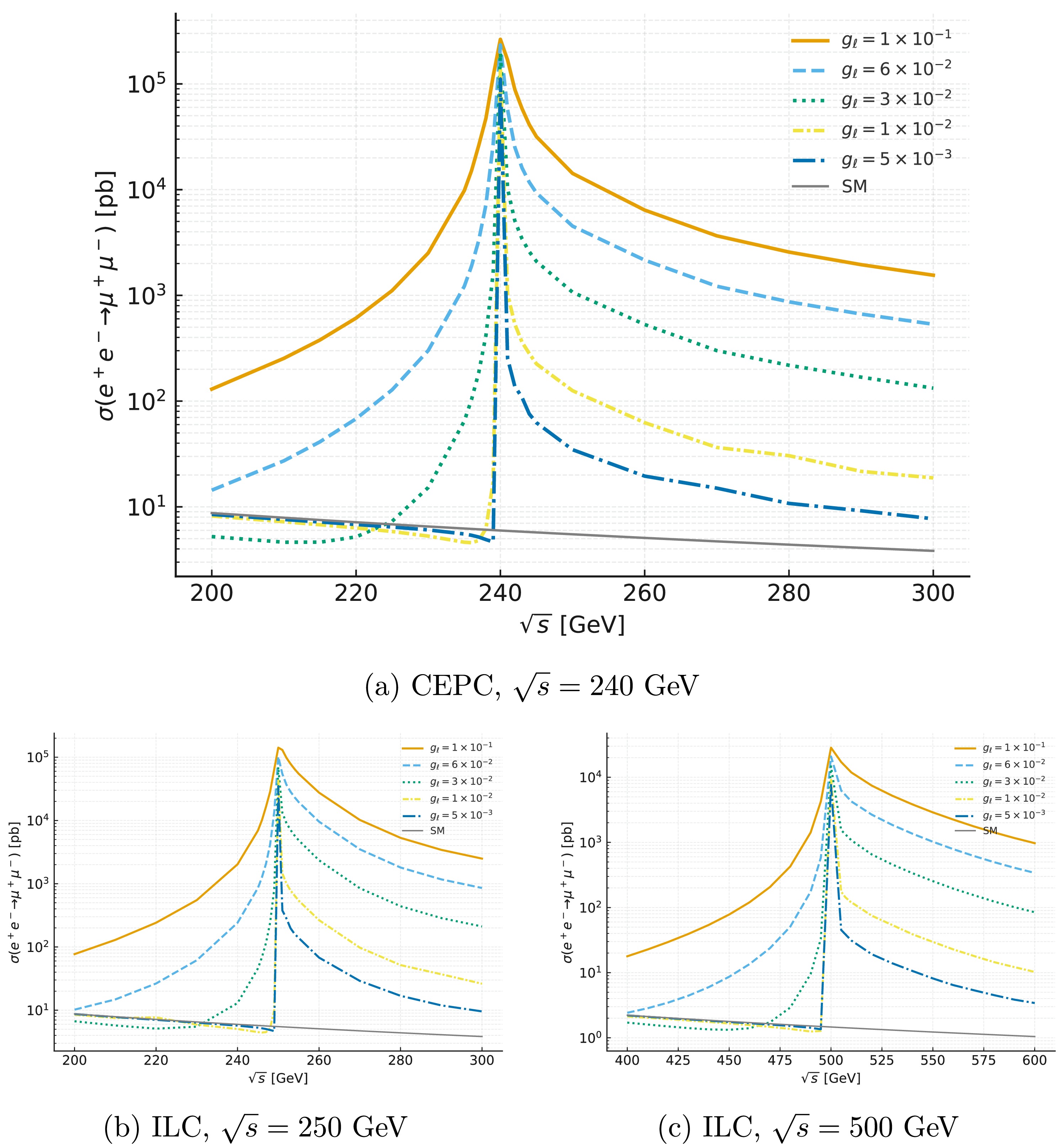
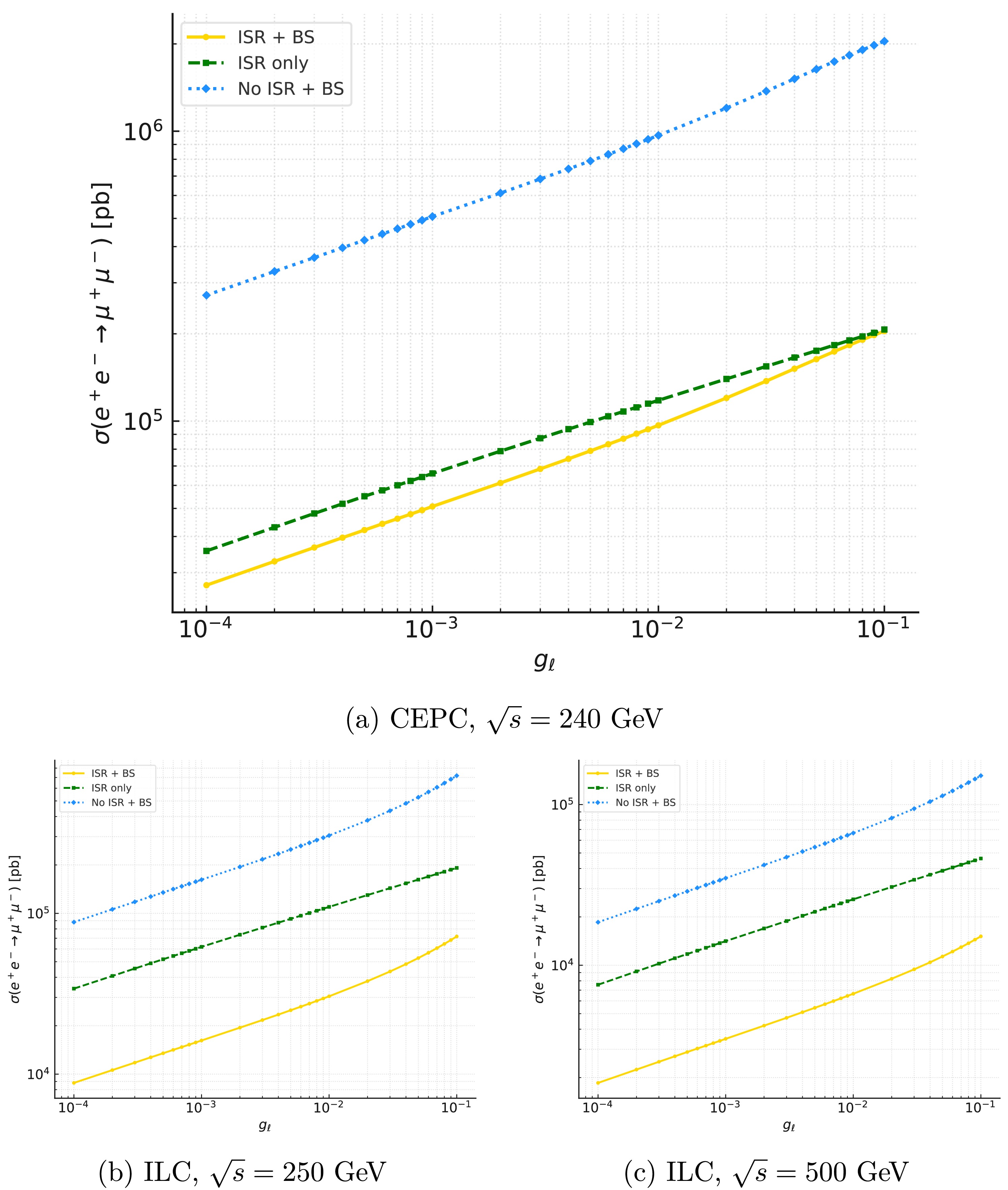
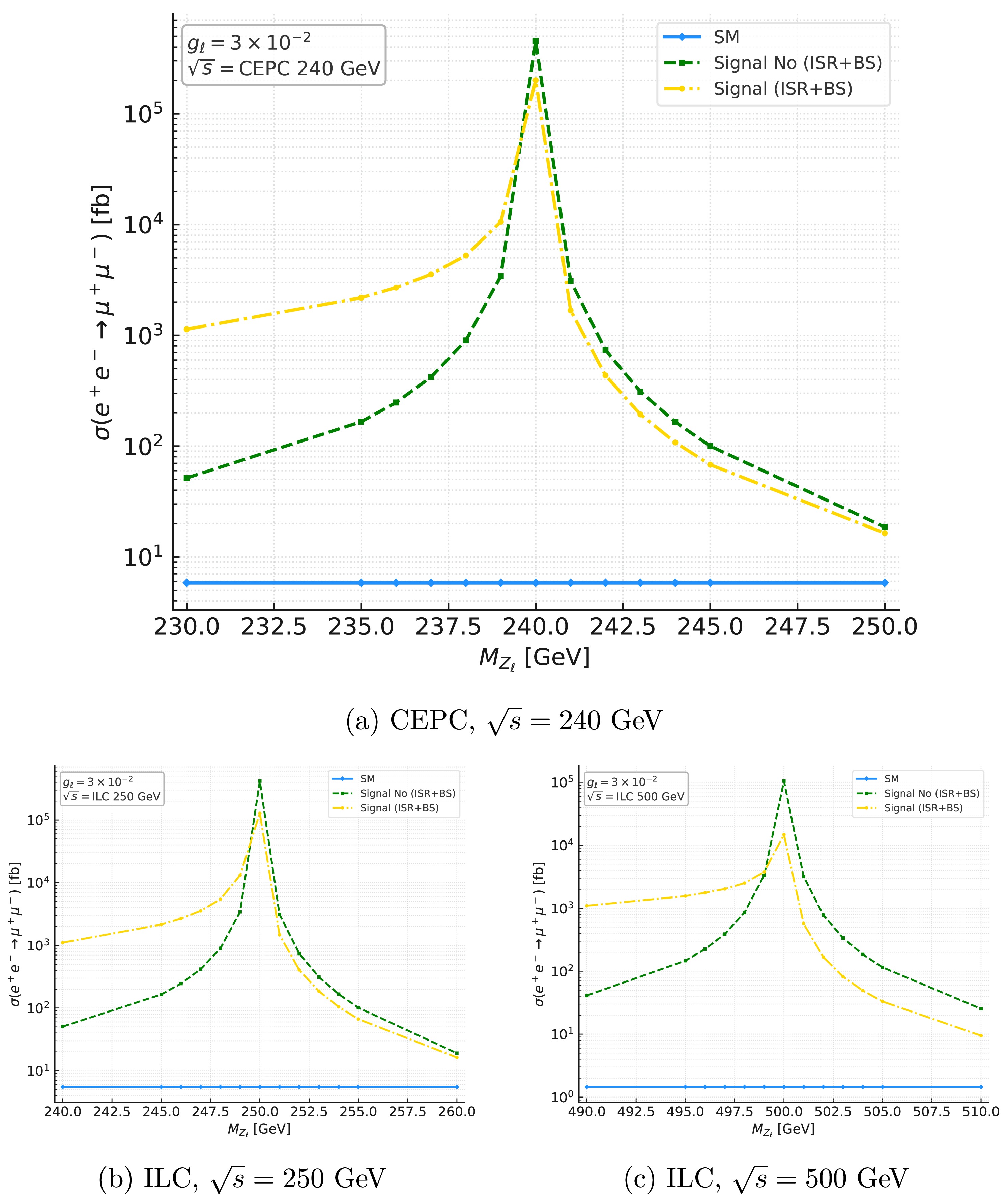
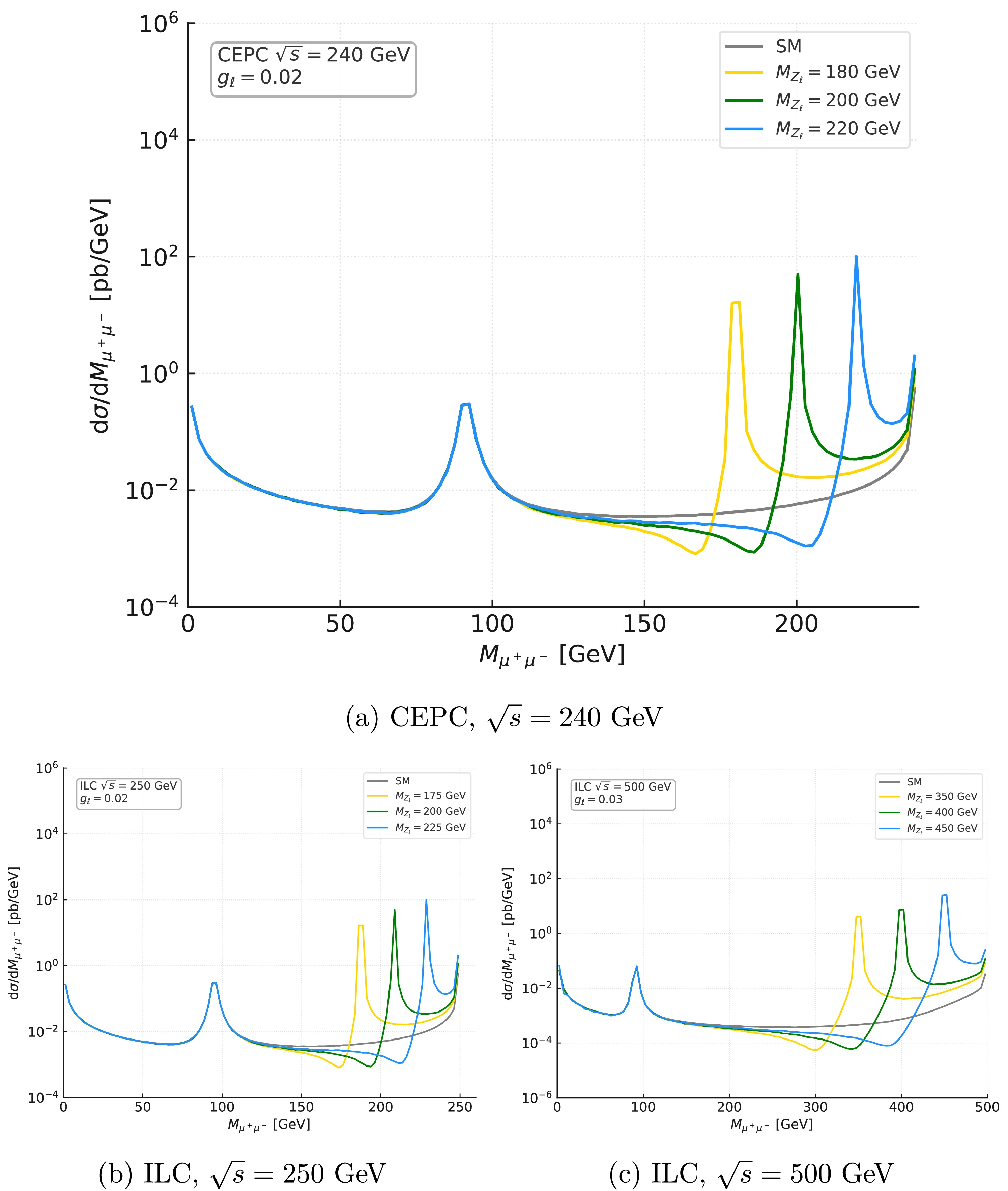
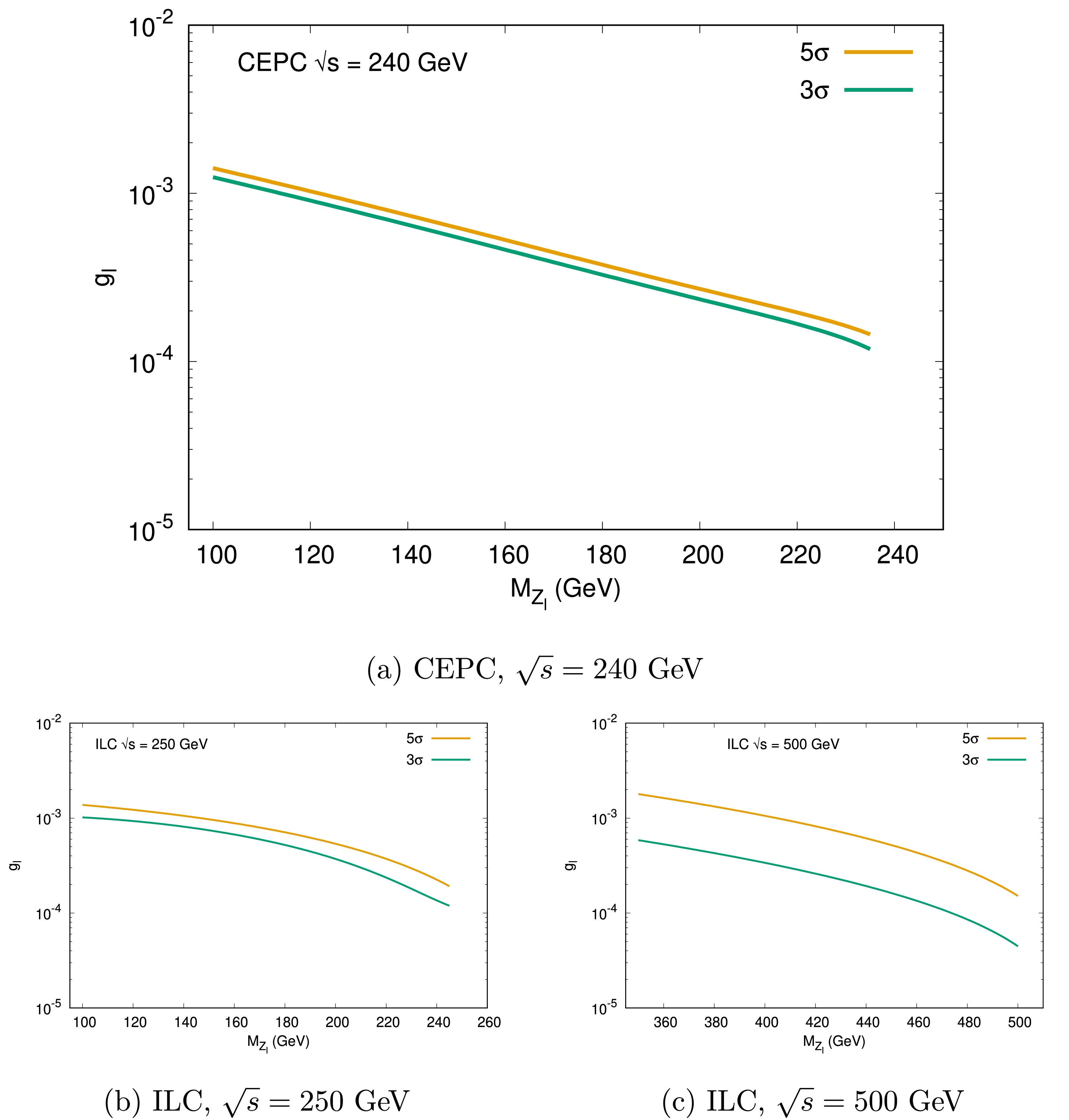
We investigate the discovery prospects of a leptophilic gauge boson\begin{document}$ Z_\ell $\end{document} \begin{document}$ e^+e^- $\end{document} \begin{document}$ U(1)'_\ell $\end{document} \begin{document}$ e^+e^- \to \mu^+\mu^- $\end{document} \begin{document}$ \sqrt{s}=240 $\end{document} \begin{document}$ g_\ell \approx 10^{-3} $\end{document} \begin{document}$ Z_\ell $\end{document} \begin{document}$ \sqrt{s} $\end{document}
We investigate the discovery prospects of a leptophilic gauge boson
2026, 50(3): 033105. doi: 10.1088/1674-1137/ae2454
Abstract:
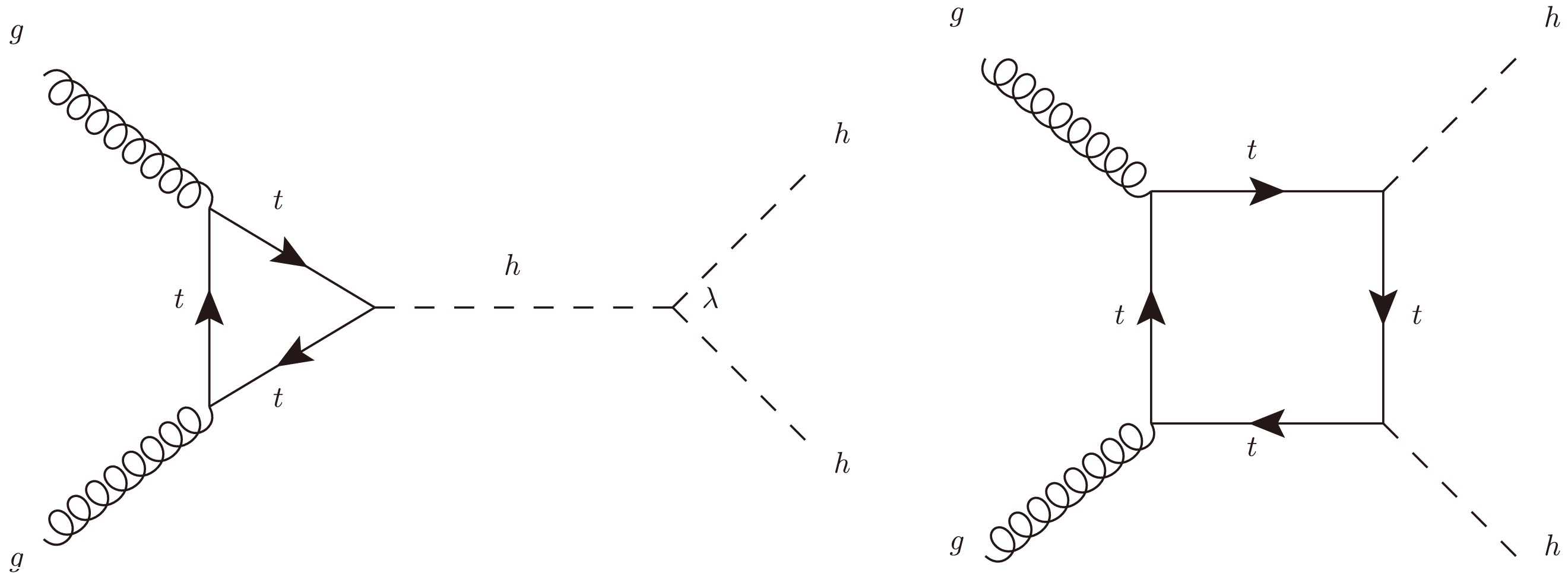
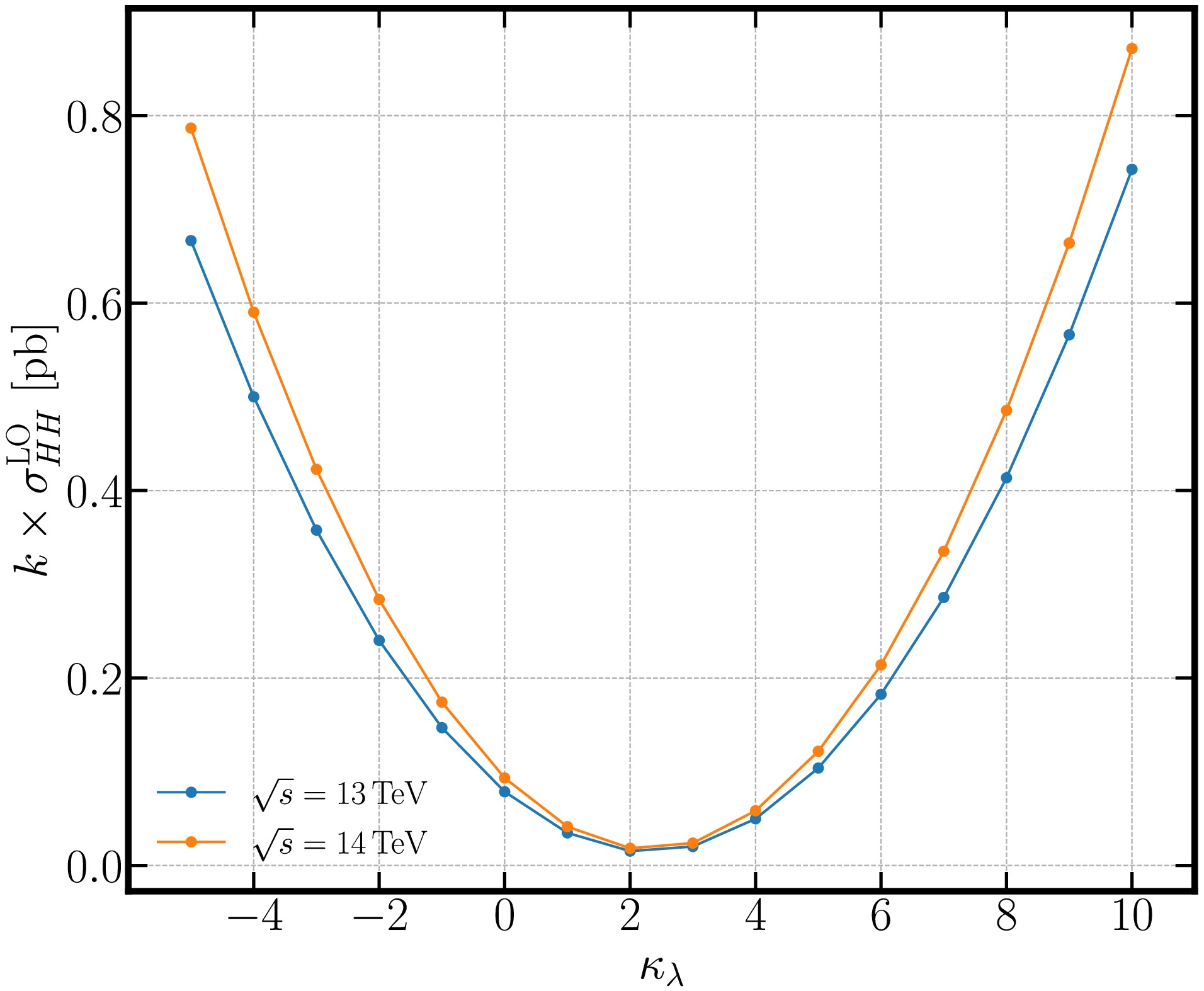
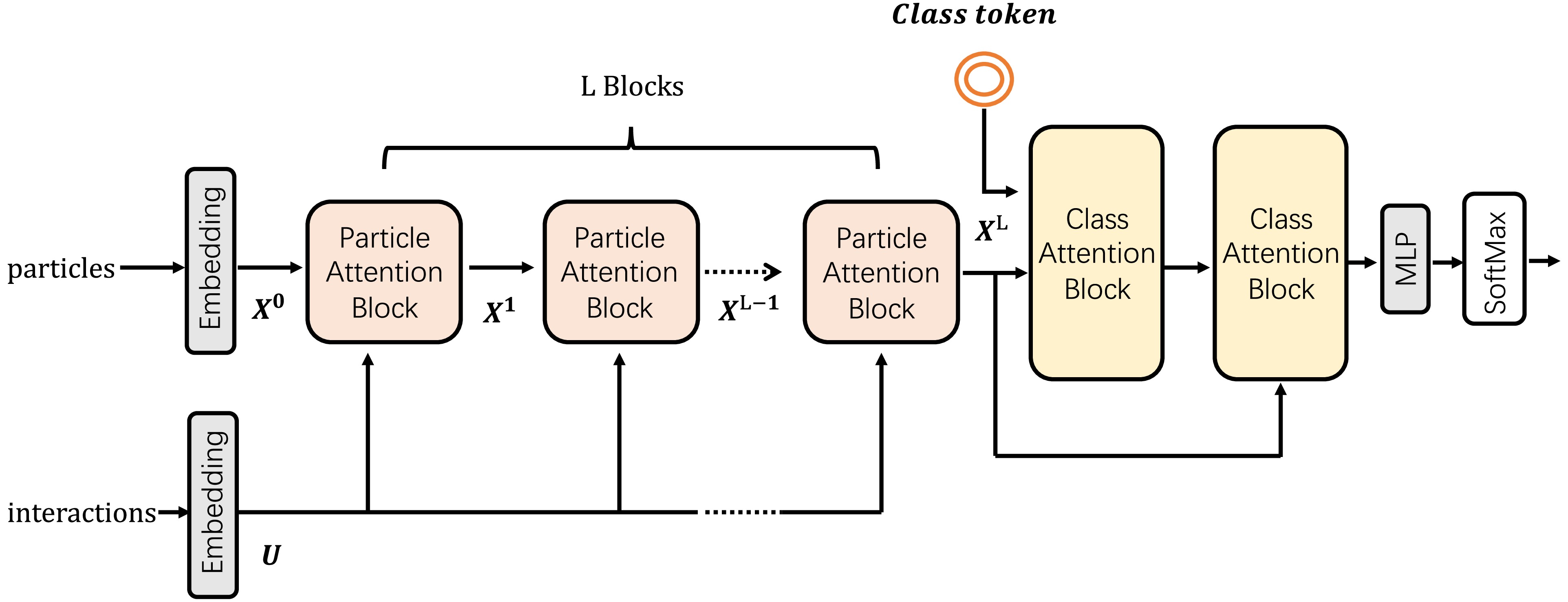
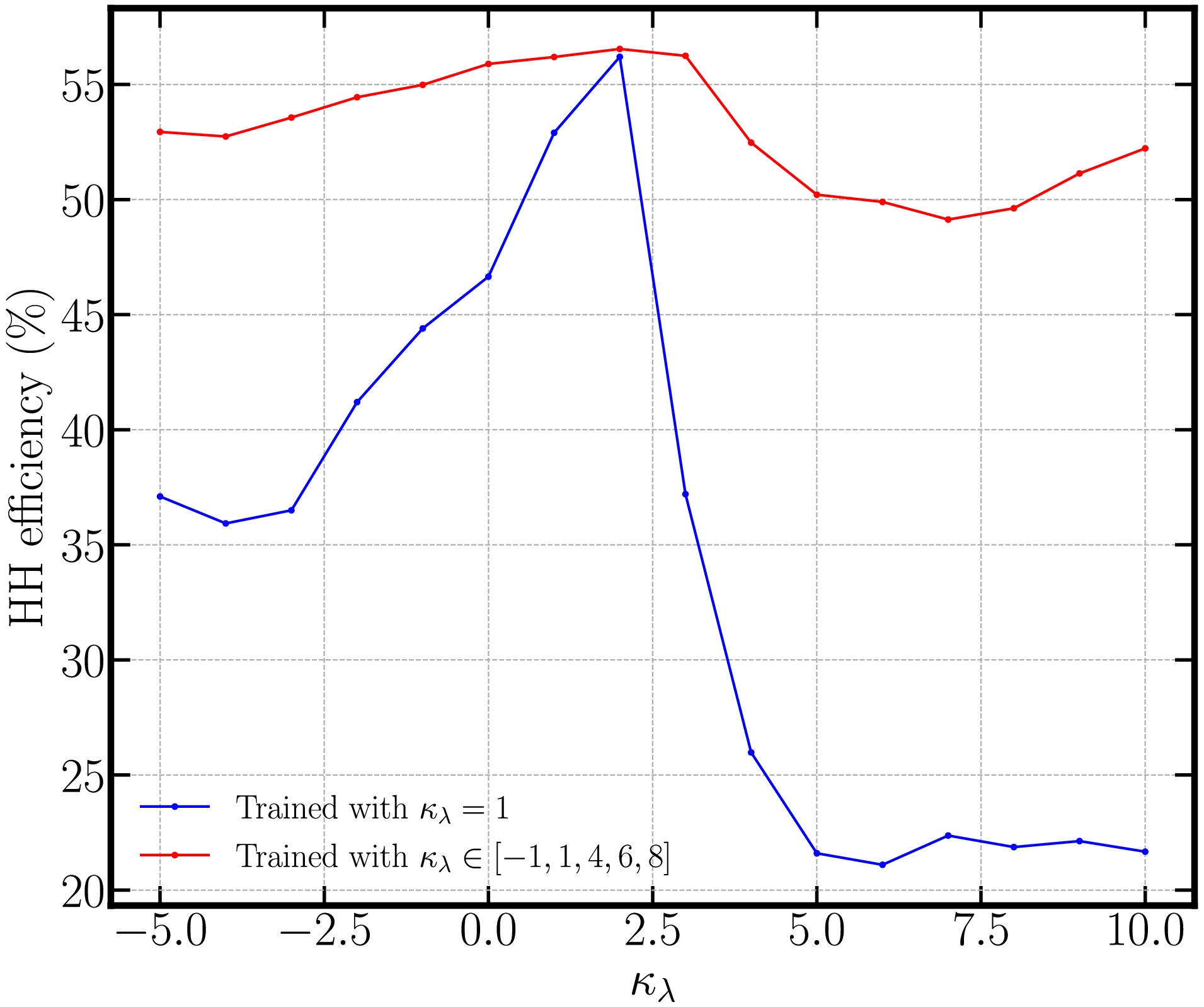
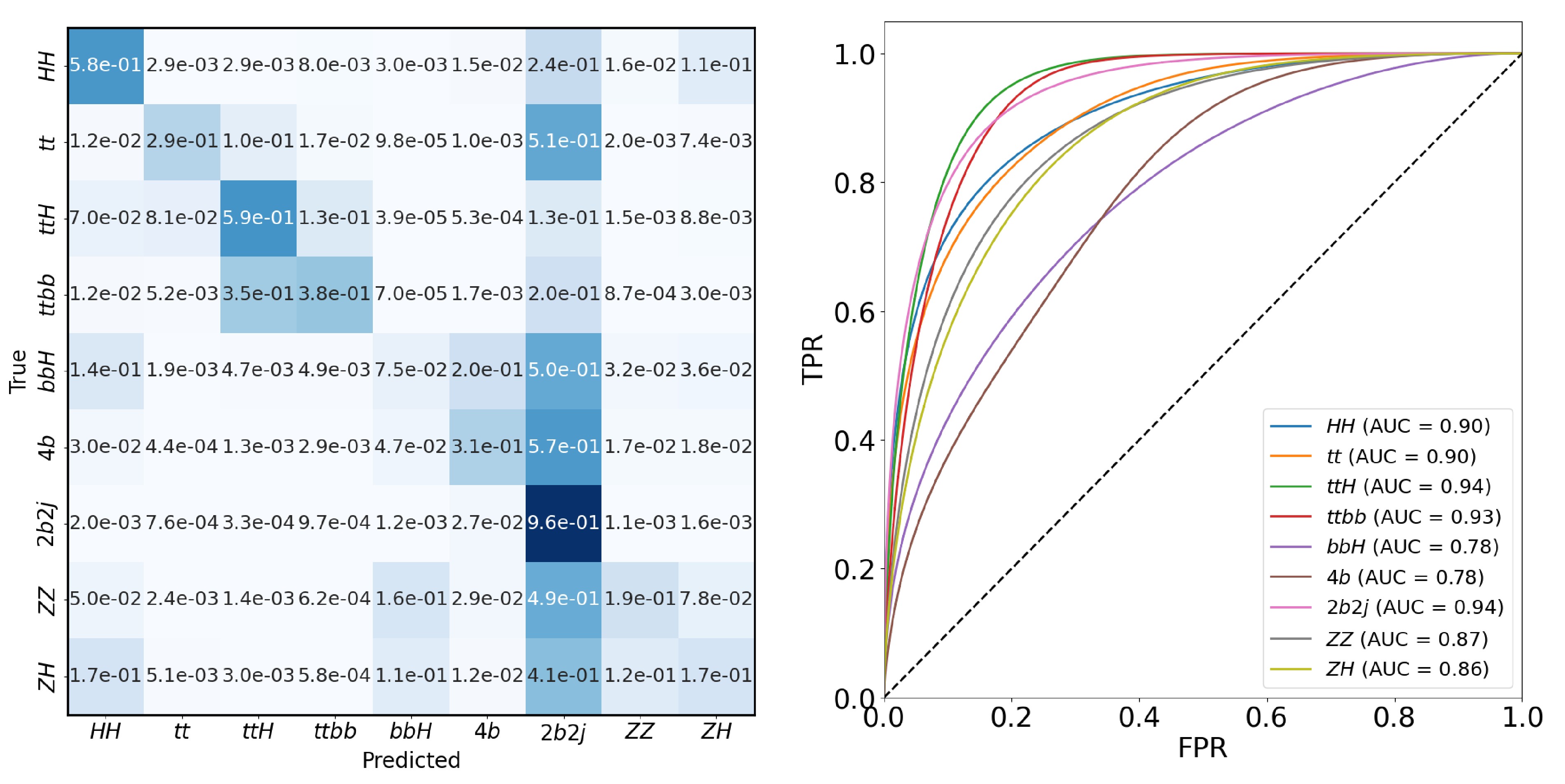
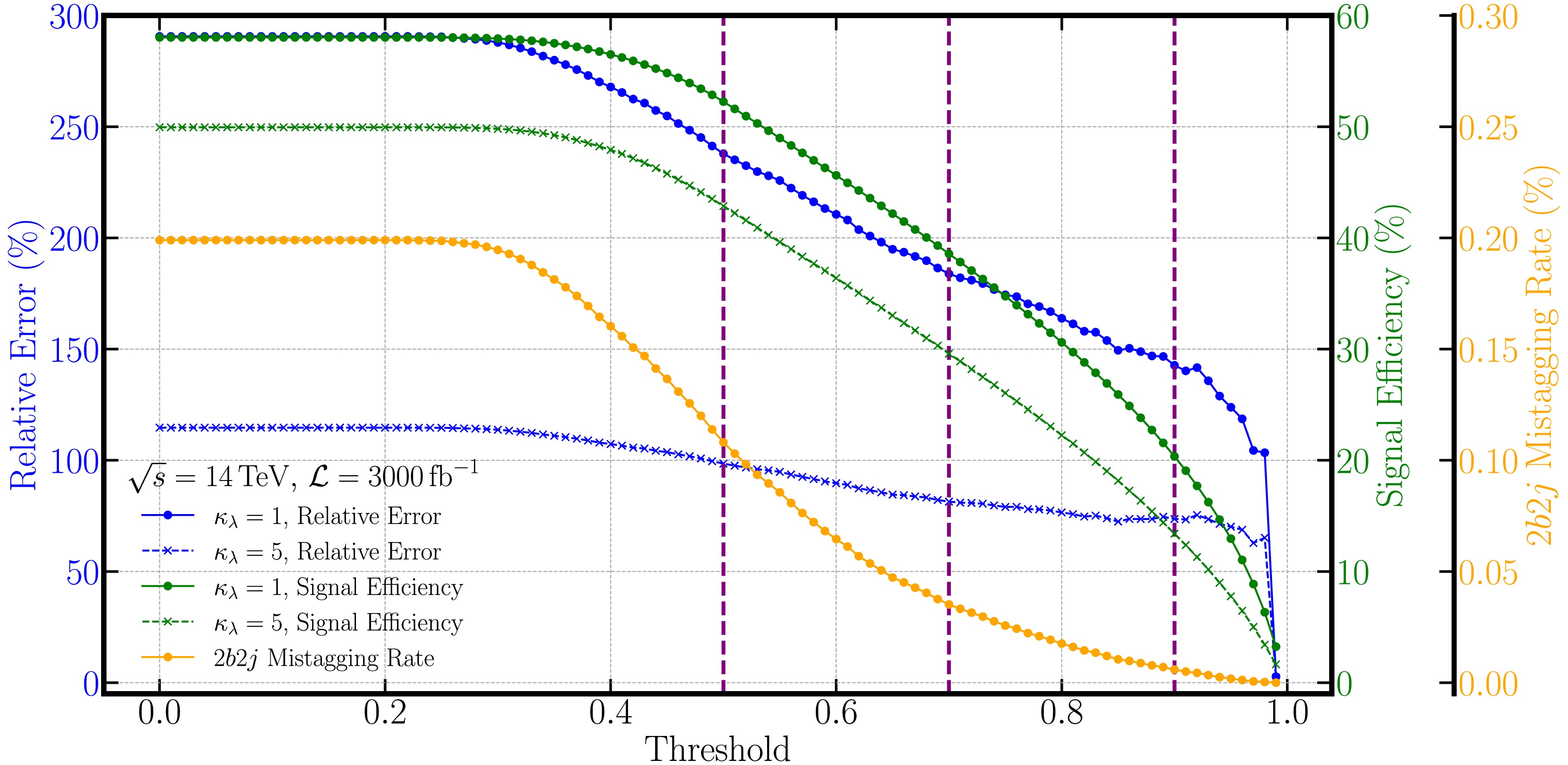
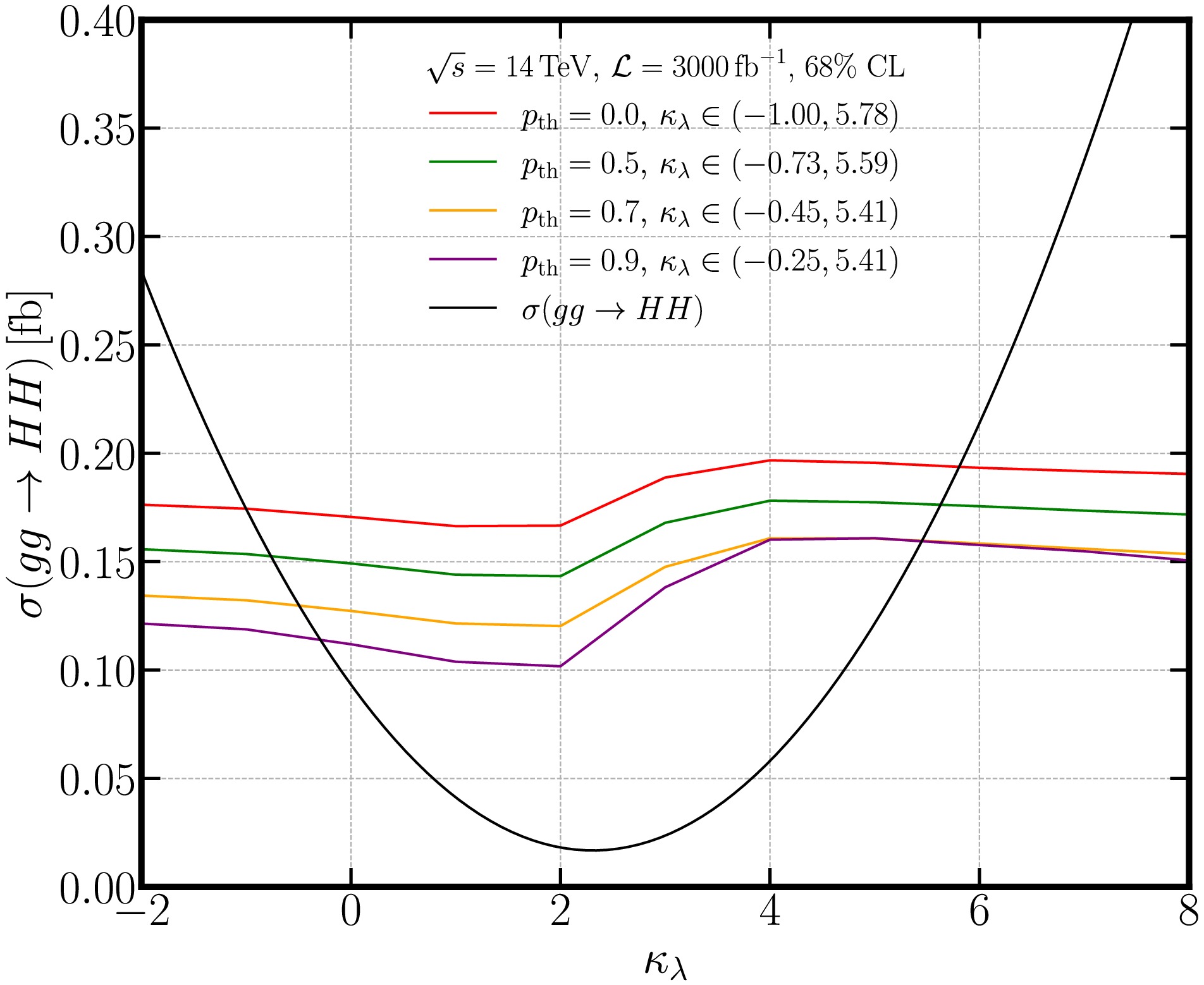
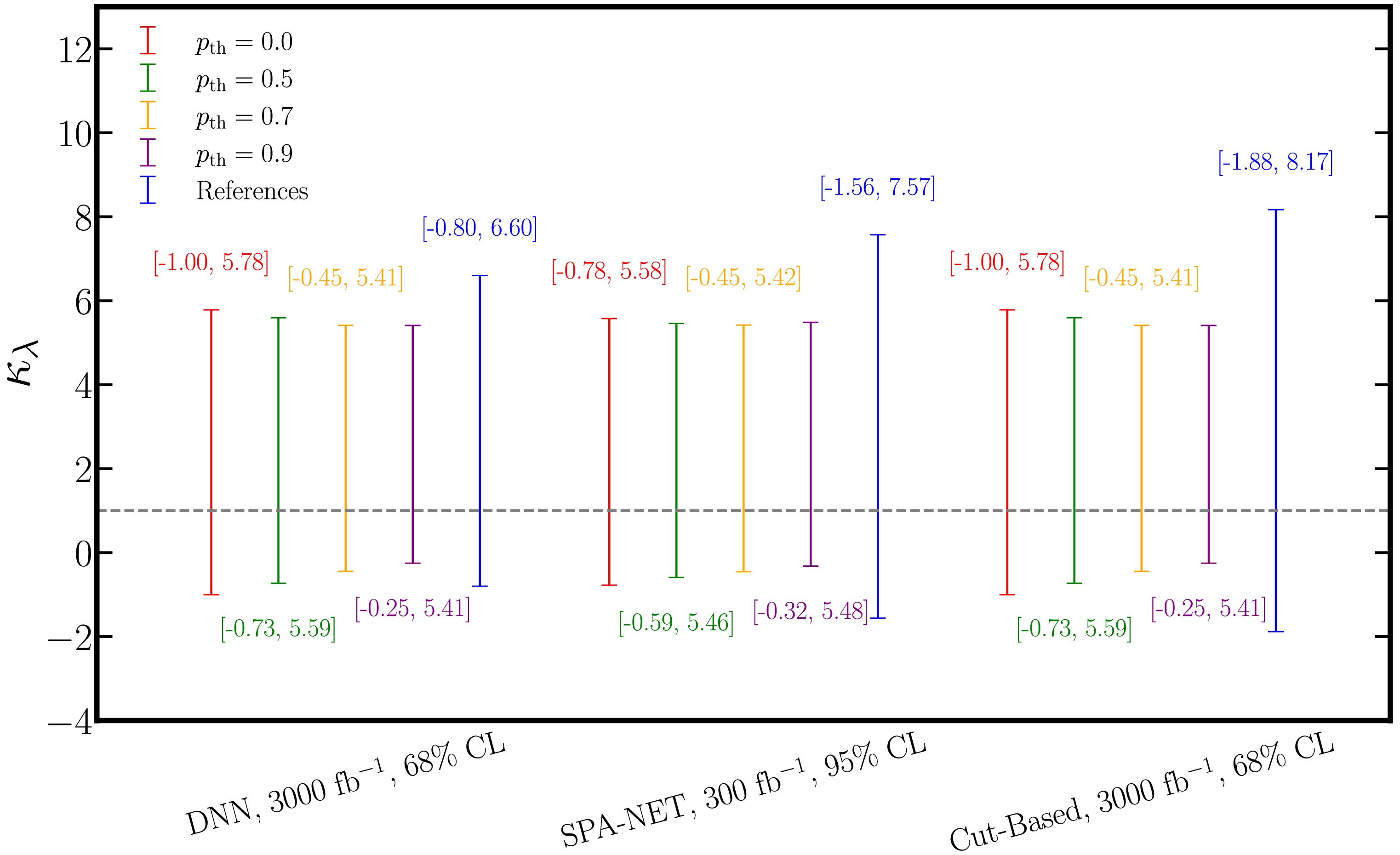
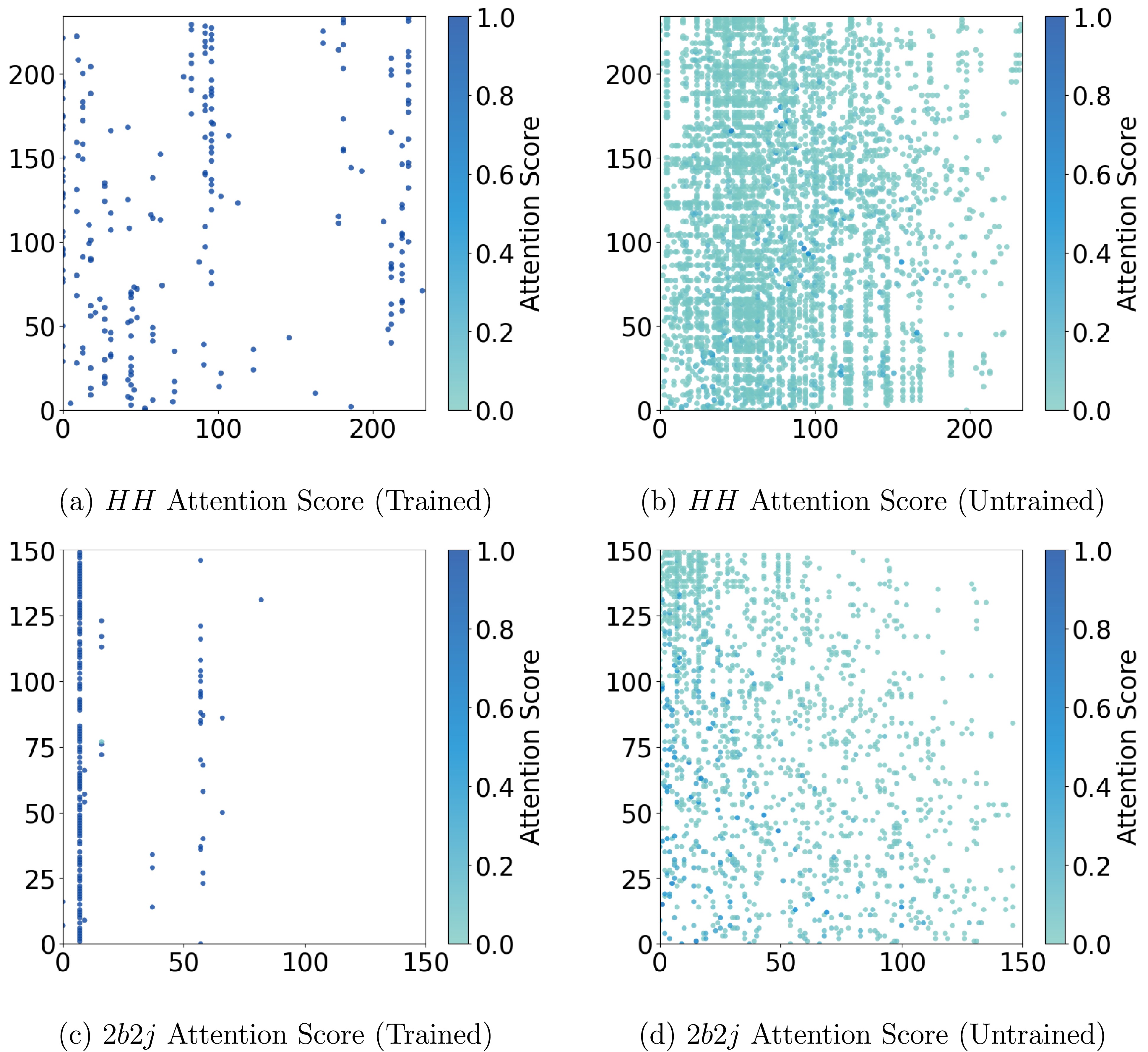
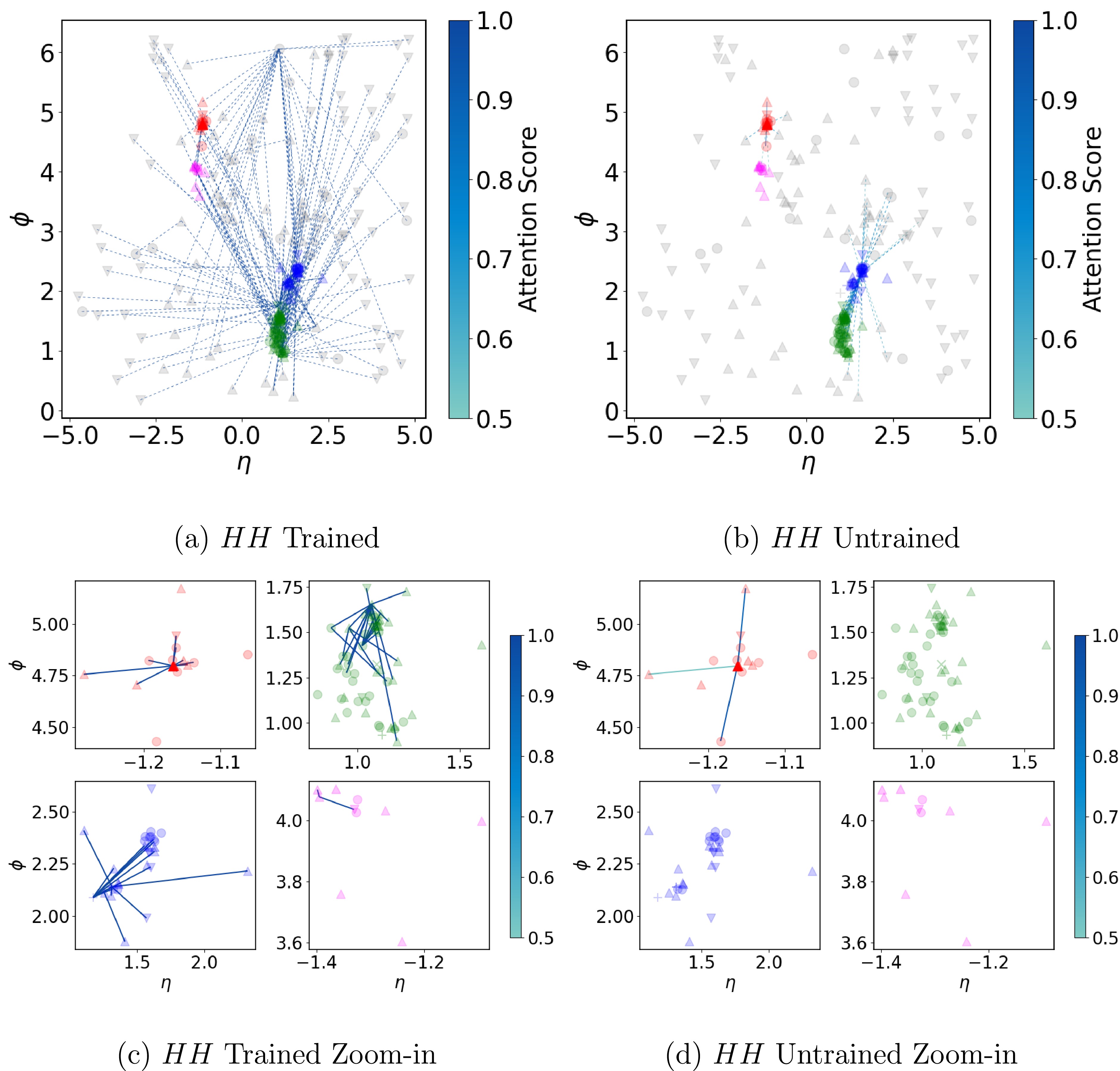
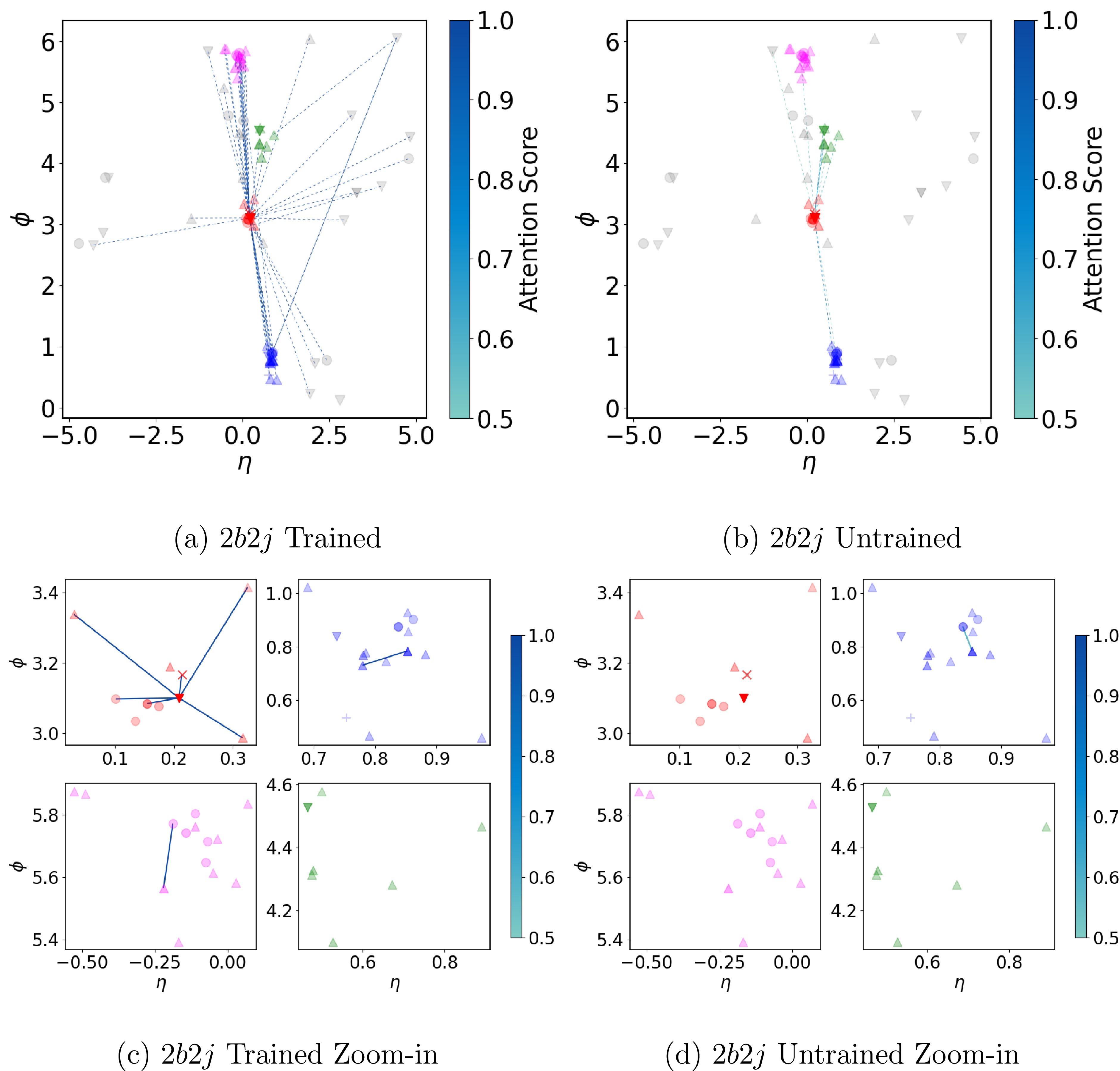
Higgs self-coupling is crucial to understand the structure of the scalar potential and the mechanism of electroweak symmetry breaking. In this study, we utilize a deep neural network based on a particle Transformer model that relies on an attention mechanism to comprehensively analyze the measured trilinear Higgs self-coupling through Higgs pair production with subsequent decay into four b-quarks (\begin{document}$ HH\to b\bar{b}b\bar{b} $\end{document} \begin{document}$ \kappa_\lambda $\end{document} \begin{document}$ (-0.25,\,5.41) $\end{document}
Higgs self-coupling is crucial to understand the structure of the scalar potential and the mechanism of electroweak symmetry breaking. In this study, we utilize a deep neural network based on a particle Transformer model that relies on an attention mechanism to comprehensively analyze the measured trilinear Higgs self-coupling through Higgs pair production with subsequent decay into four b-quarks (
2026, 50(3): 033106. doi: 10.1088/1674-1137/ae28e9
Abstract:
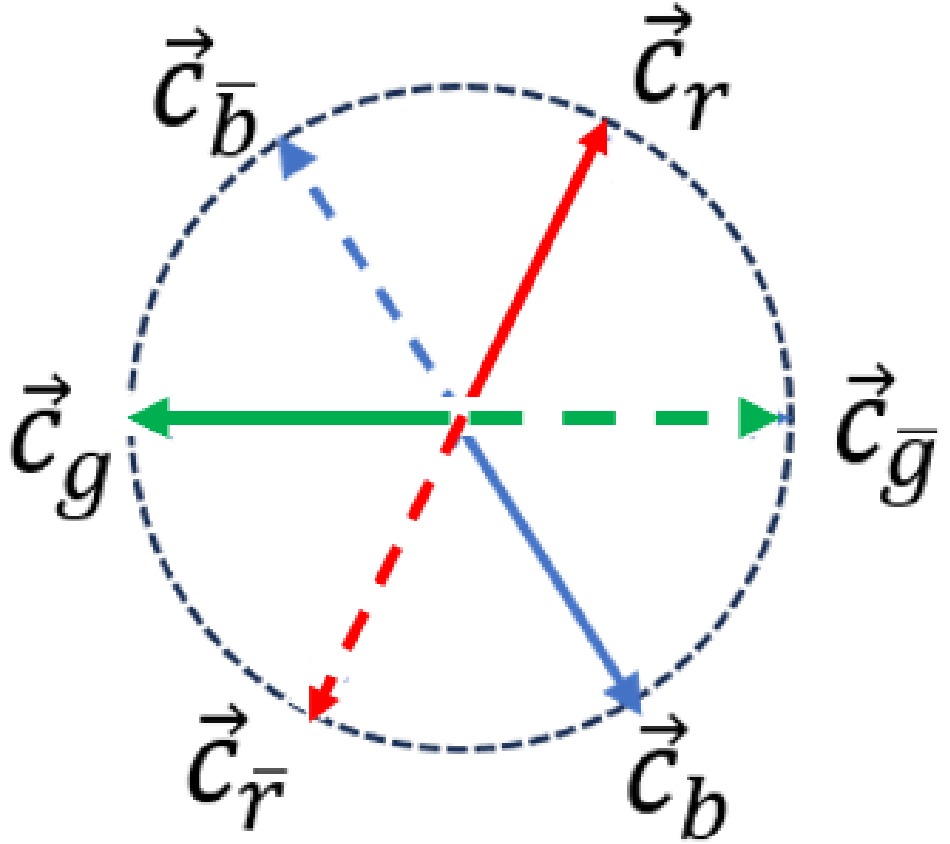
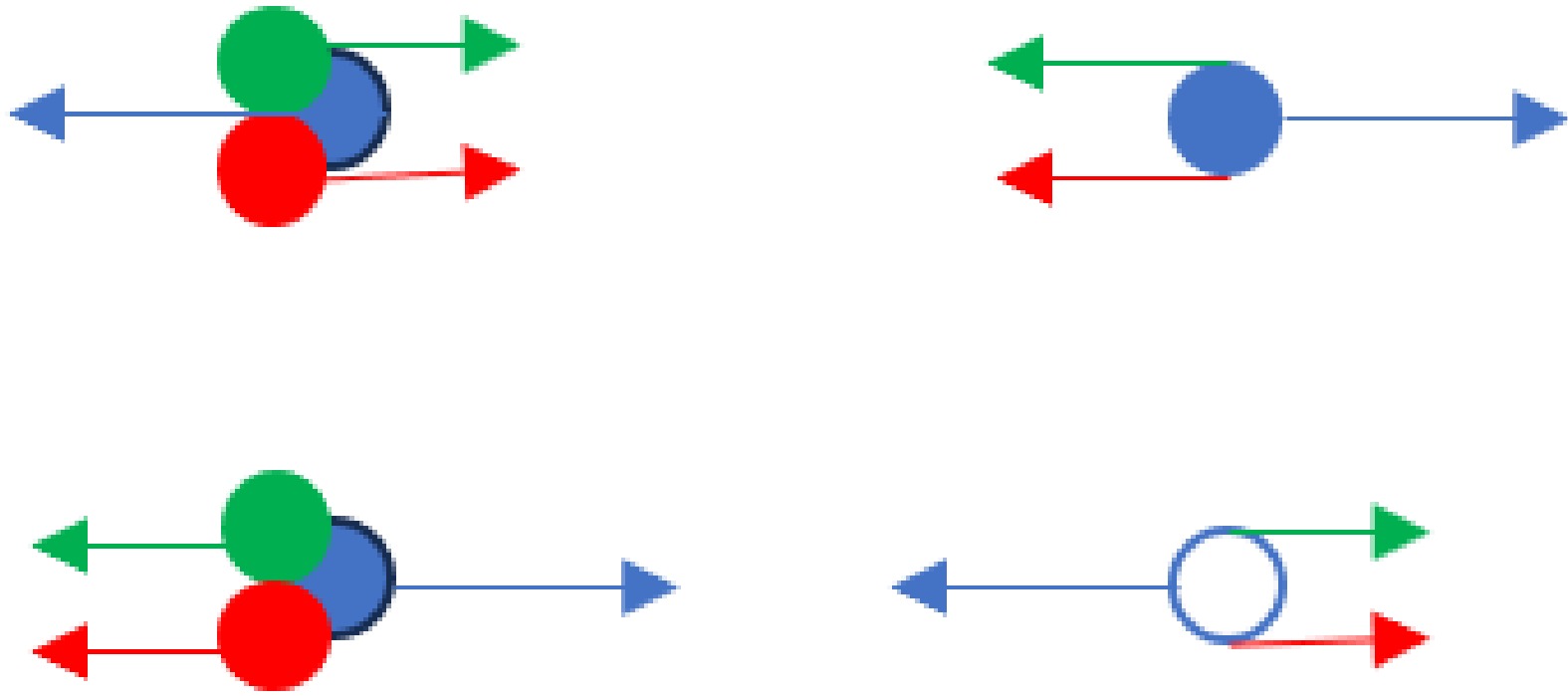
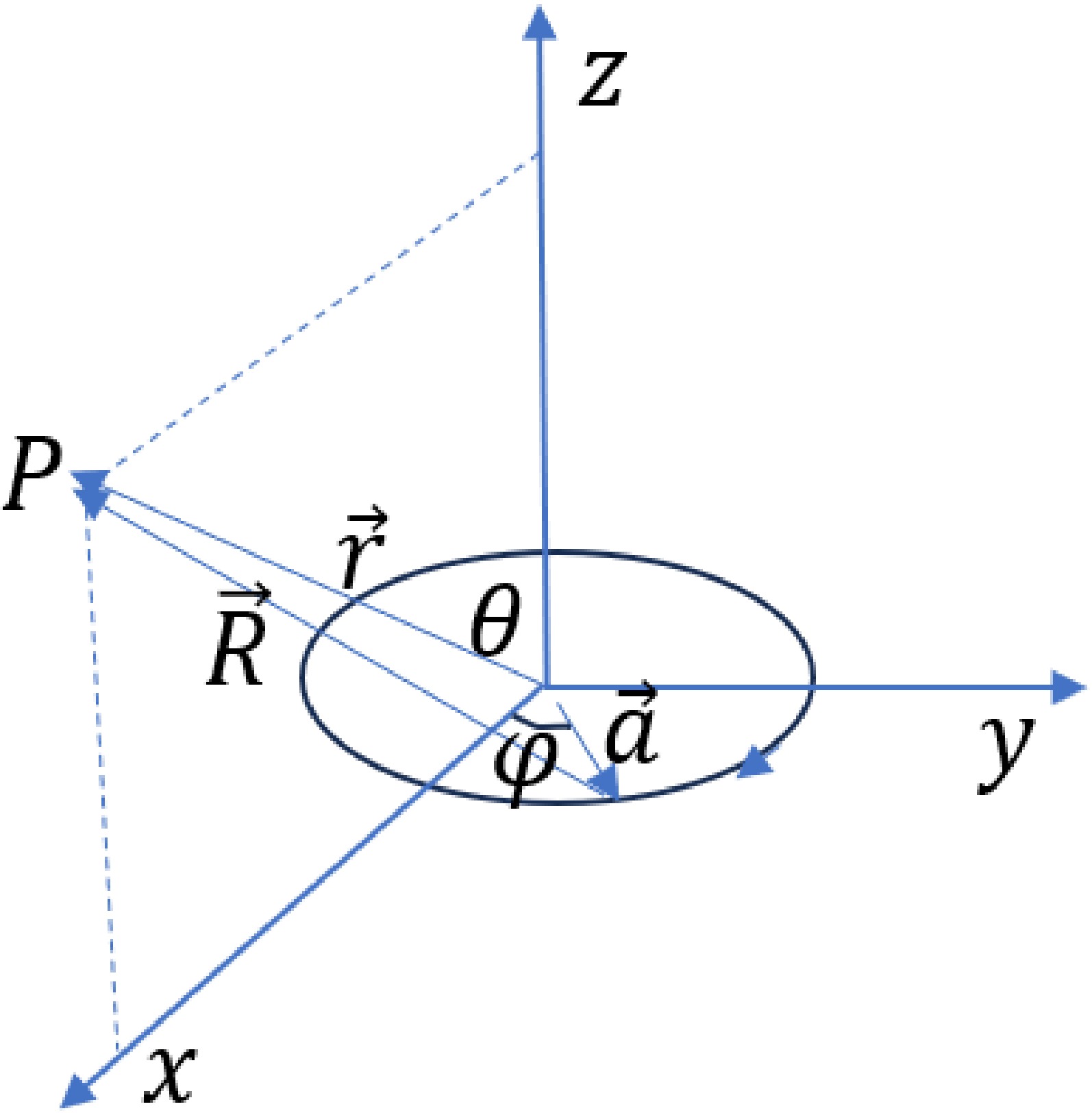
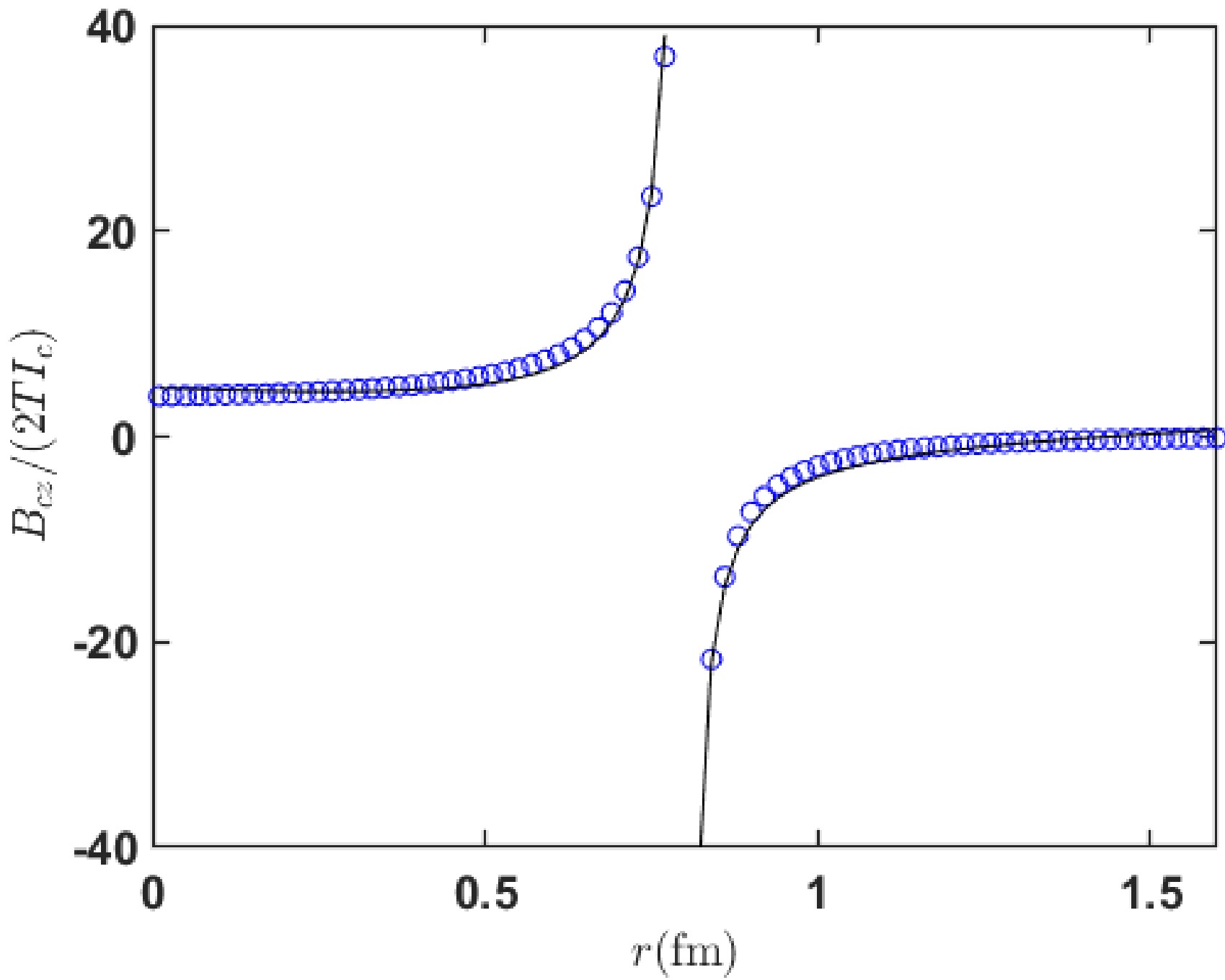
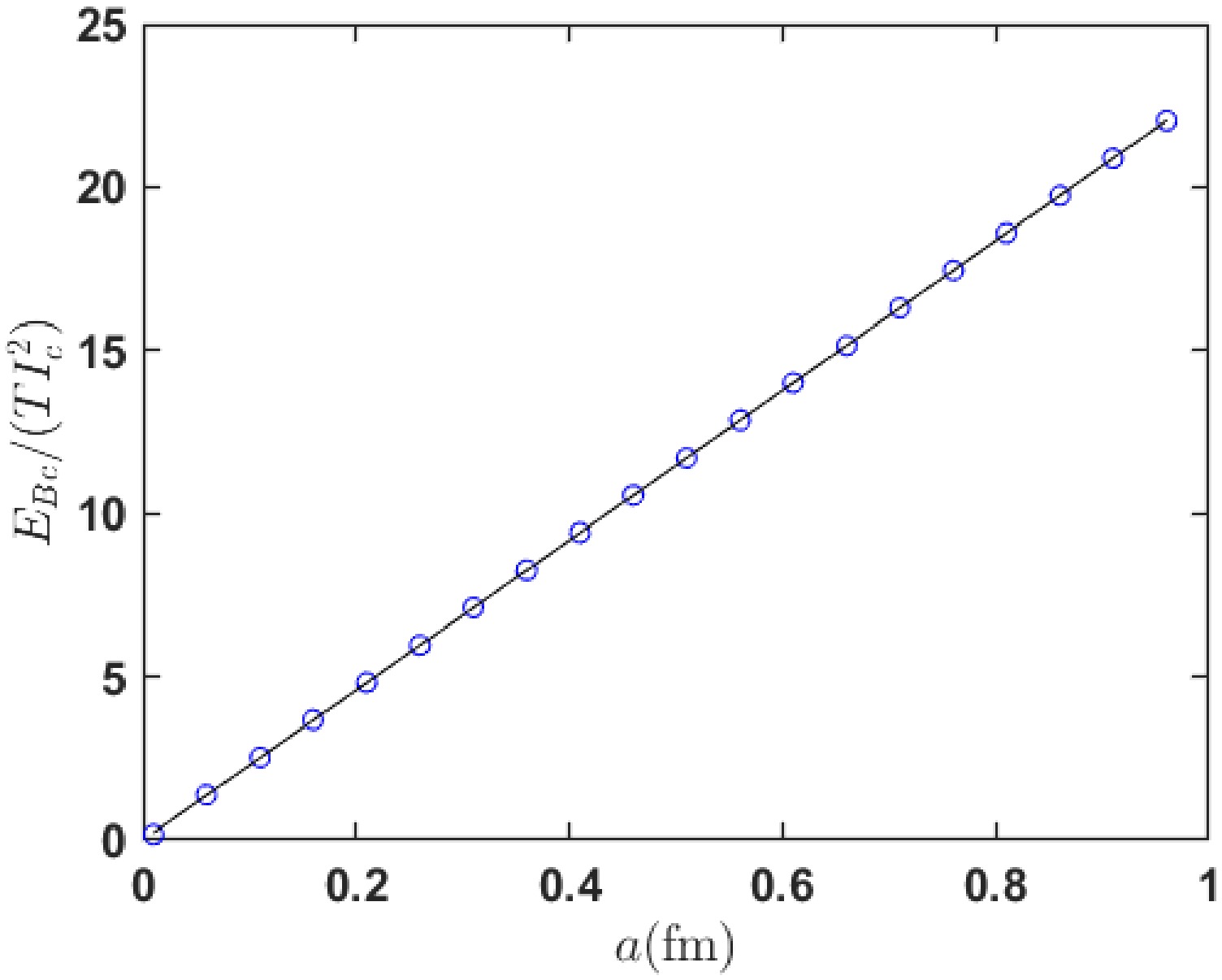
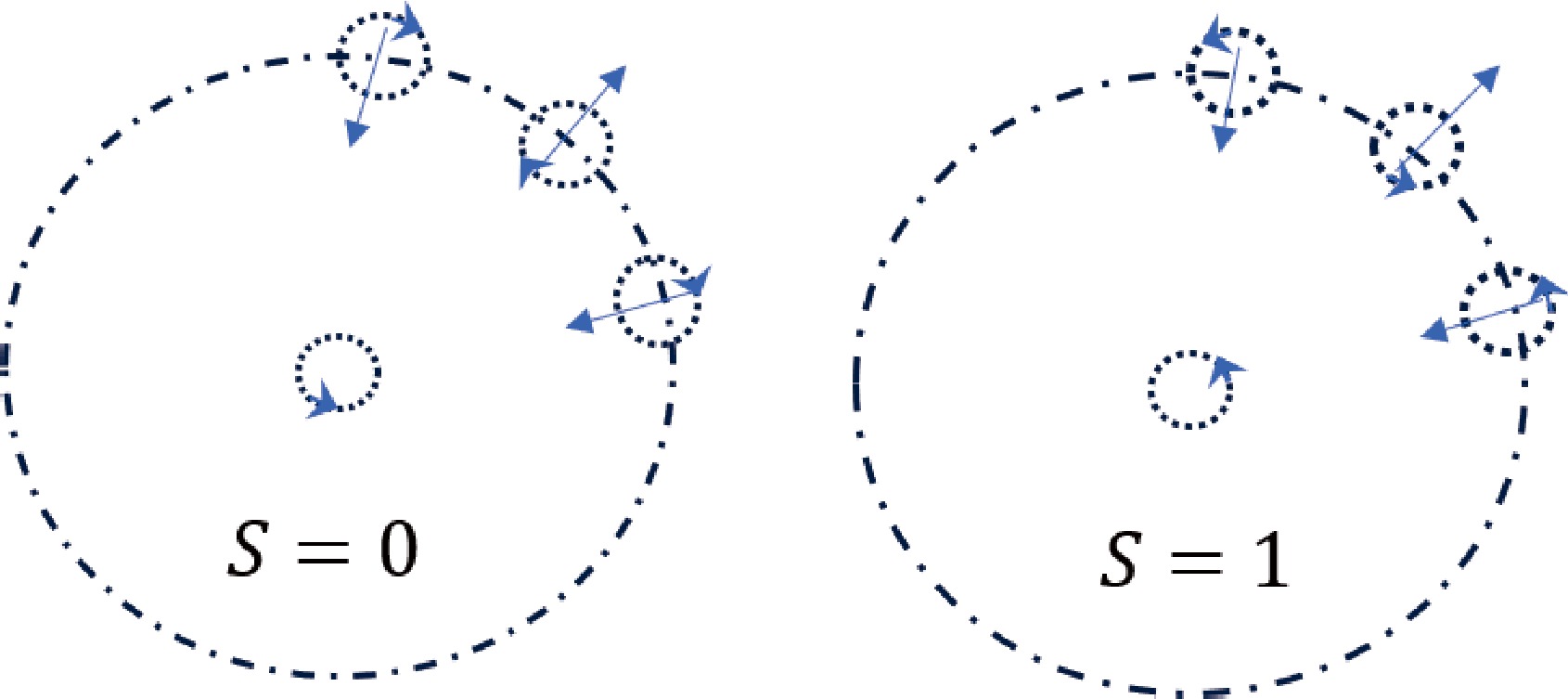
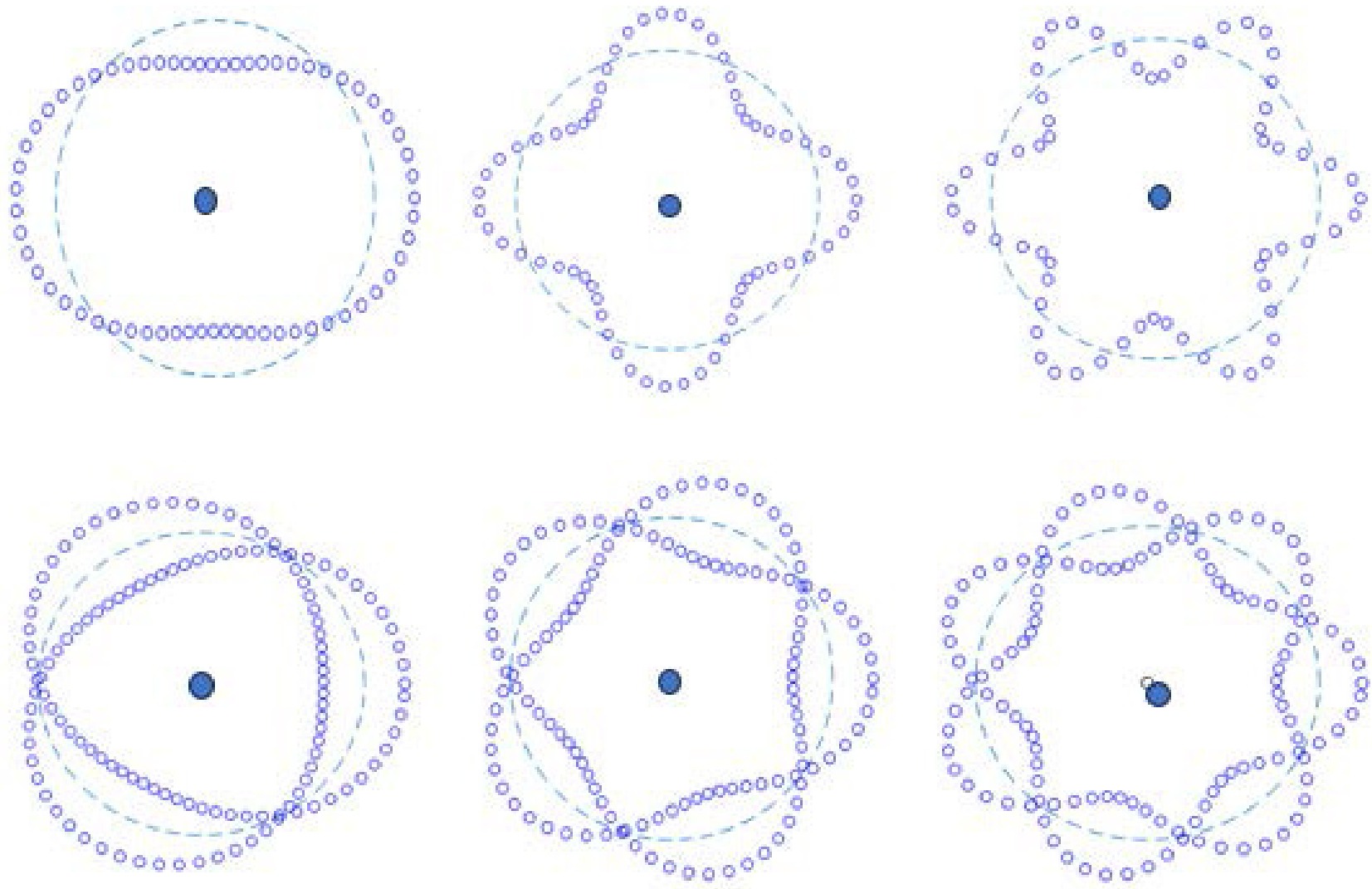
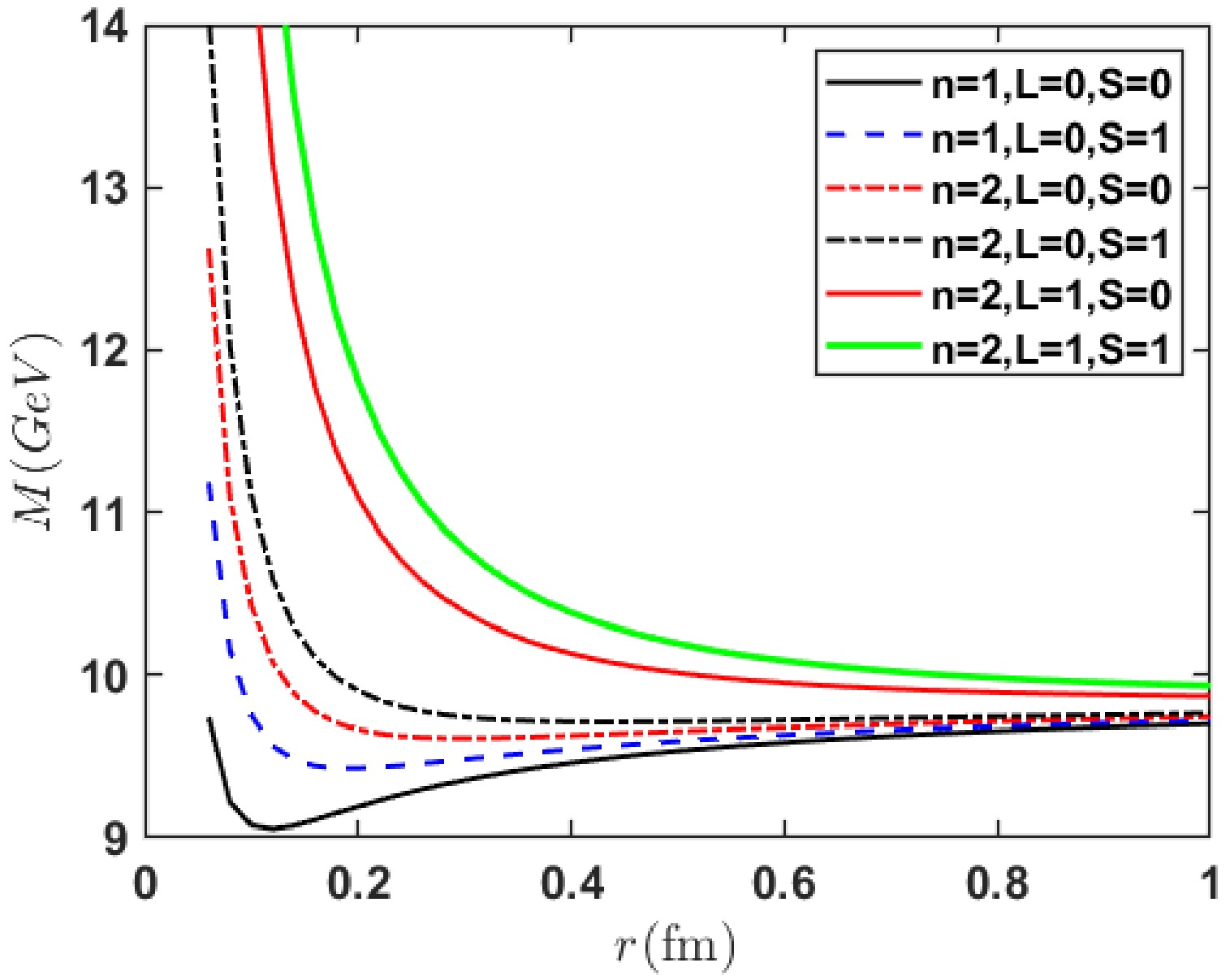
Quantum chromodynamics (QCD) is a fundamental theory describing quark interactions. Thus far, various quark models based on QCD have been widely used to study the properties of hadrons, including their structures and mass spectra. However, unlike quantum electrodynamics and Bohr's model of the hydrogen atom, a direct classical analogy is lacking for hadronic structures. This paper presents a classical interpretation of the nonrelativistic quark potential model, providing a more intuitive and visualizable description of strong interactions through the quantitative formulation of color charge and color flux. In addition, we establish the relationship between meson mass and its structural radius in the nonrelativistic framework and estimate key parameters of our model using available data from\begin{document}$ \eta_b(1S) $\end{document} \begin{document}$ \Upsilon(1S) $\end{document}
Quantum chromodynamics (QCD) is a fundamental theory describing quark interactions. Thus far, various quark models based on QCD have been widely used to study the properties of hadrons, including their structures and mass spectra. However, unlike quantum electrodynamics and Bohr's model of the hydrogen atom, a direct classical analogy is lacking for hadronic structures. This paper presents a classical interpretation of the nonrelativistic quark potential model, providing a more intuitive and visualizable description of strong interactions through the quantitative formulation of color charge and color flux. In addition, we establish the relationship between meson mass and its structural radius in the nonrelativistic framework and estimate key parameters of our model using available data from
2026, 50(3): 033107. doi: 10.1088/1674-1137/ae2b5b
Abstract:
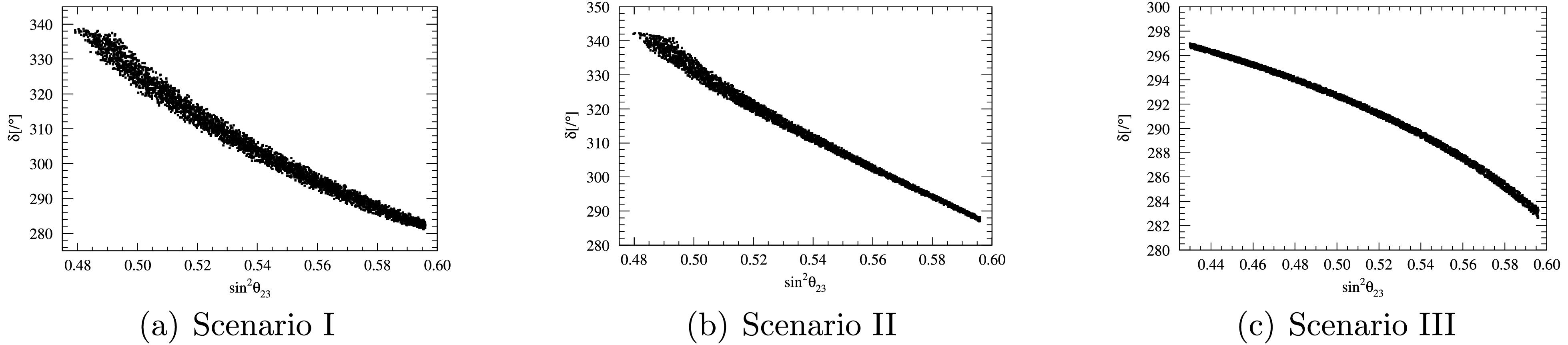
Neutrino oscillation experiments have confirmed that neutrinos are massive particles and that lepton flavors are mixed. To explain the observed lepton mass spectra and flavor mixing patterns, flavor symmetry plays a crucial and unique role. In this paper, we propose a useful symmetry-breaking scheme by applying\begin{document}$S_{3L} \times S_{3R} \rightarrow $\end{document} \begin{document}$ S_{2L} \times S_{2R} \rightarrow \emptyset$\end{document} \begin{document}$S_{2L}^{(23)} \times S_{2R}^{(23)}$\end{document} \begin{document}$S_{2L}^{(13)} \times S_{2R}^{(13)}$\end{document} \begin{document}$S_{2L}^{(12)} \times S_{2R}^{(12)}$\end{document} \begin{document}$294.6^\circ$\end{document} \begin{document}$302.3^\circ$\end{document} \begin{document}$287.0^\circ$\end{document} \begin{document}$3\sigma$\end{document} \begin{document}$281.2^\circ \rightarrow 338.7^\circ$\end{document} \begin{document}$287.0^\circ \rightarrow 342.2^\circ$\end{document} \begin{document}$282.7^\circ \rightarrow 297.0^\circ$\end{document} \begin{document}$3\sigma$\end{document} \begin{document}$S_{3L} \times S_{3R} \rightarrow S_{2L} \times S_{2R} \rightarrow \emptyset$\end{document}
Neutrino oscillation experiments have confirmed that neutrinos are massive particles and that lepton flavors are mixed. To explain the observed lepton mass spectra and flavor mixing patterns, flavor symmetry plays a crucial and unique role. In this paper, we propose a useful symmetry-breaking scheme by applying
One-loop expressions for ${H^\pm \rightarrow W^\pm Z} $ and their implications at muon-TeV colliders

2026, 50(3): 033108. doi: 10.1088/1674-1137/ae2660
Abstract:
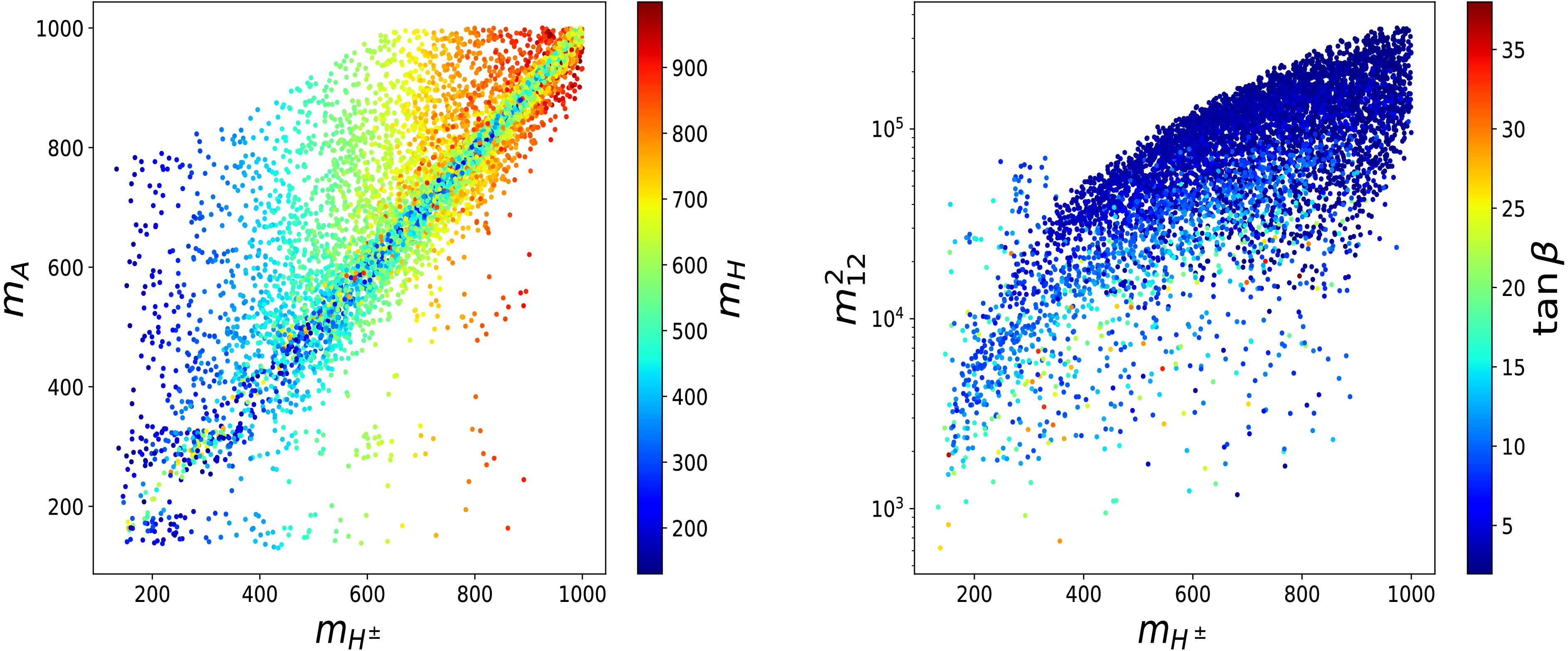
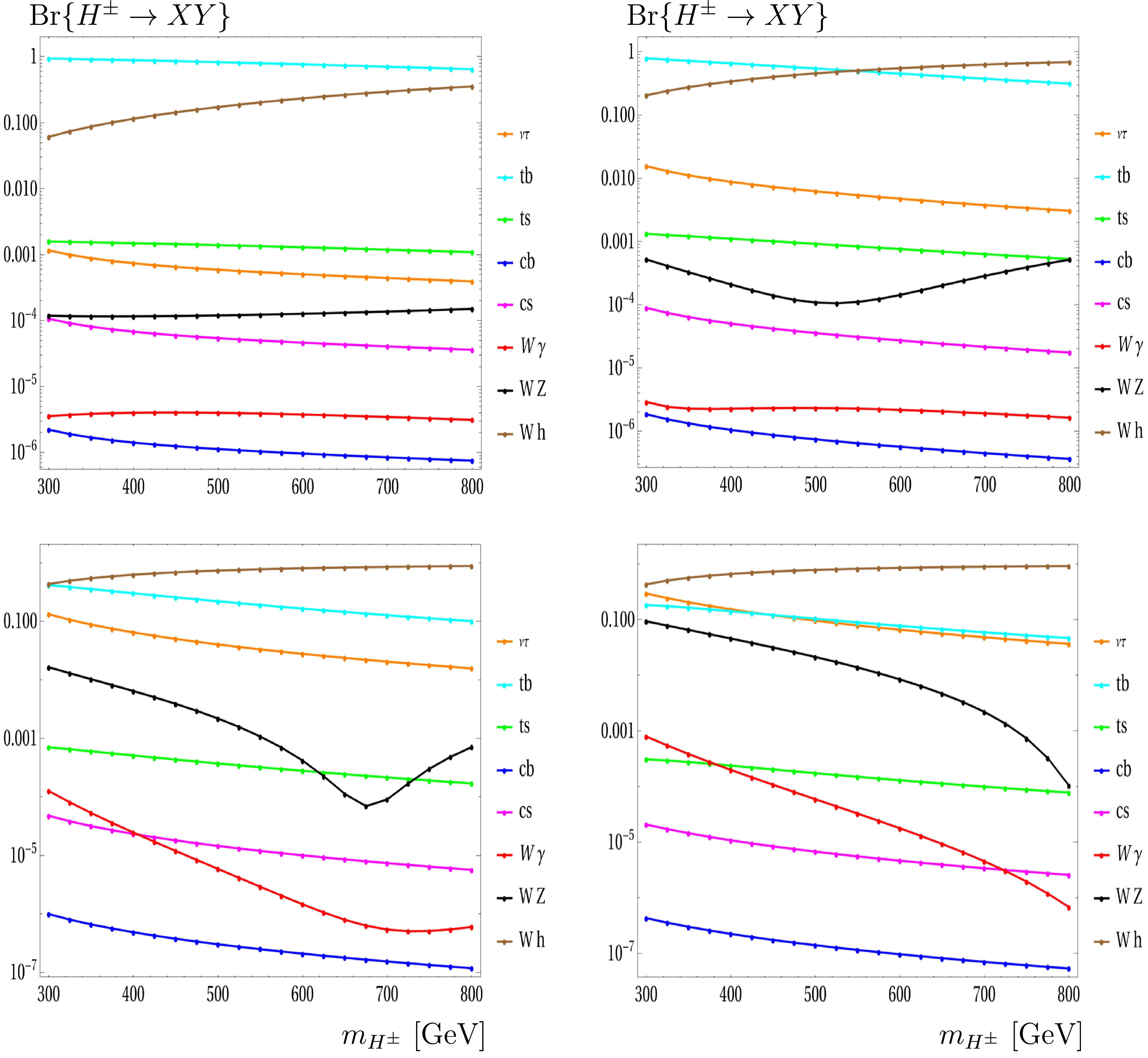
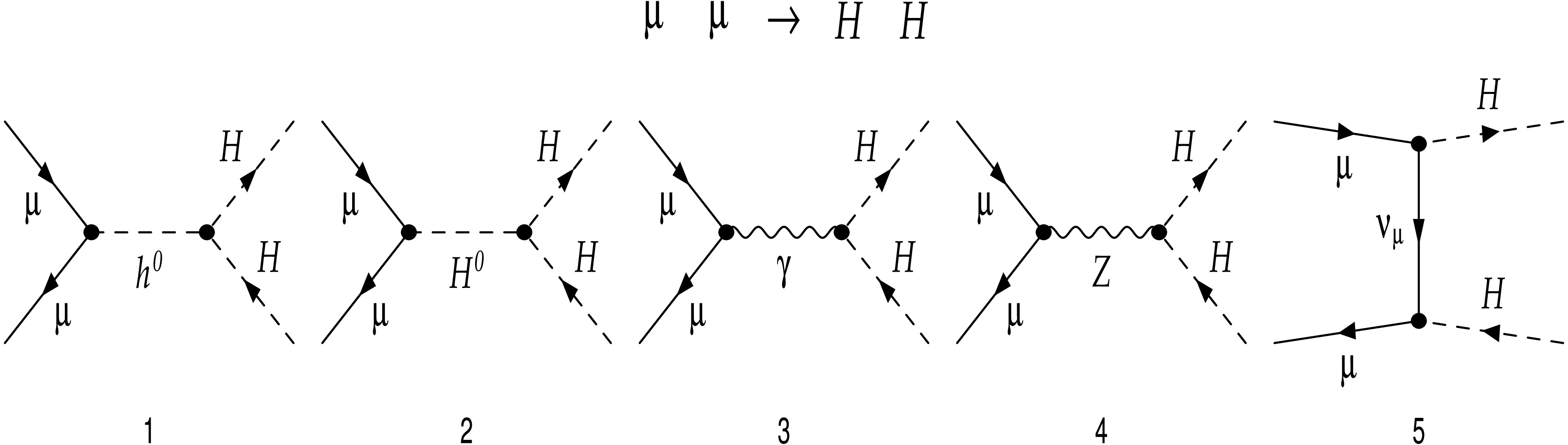
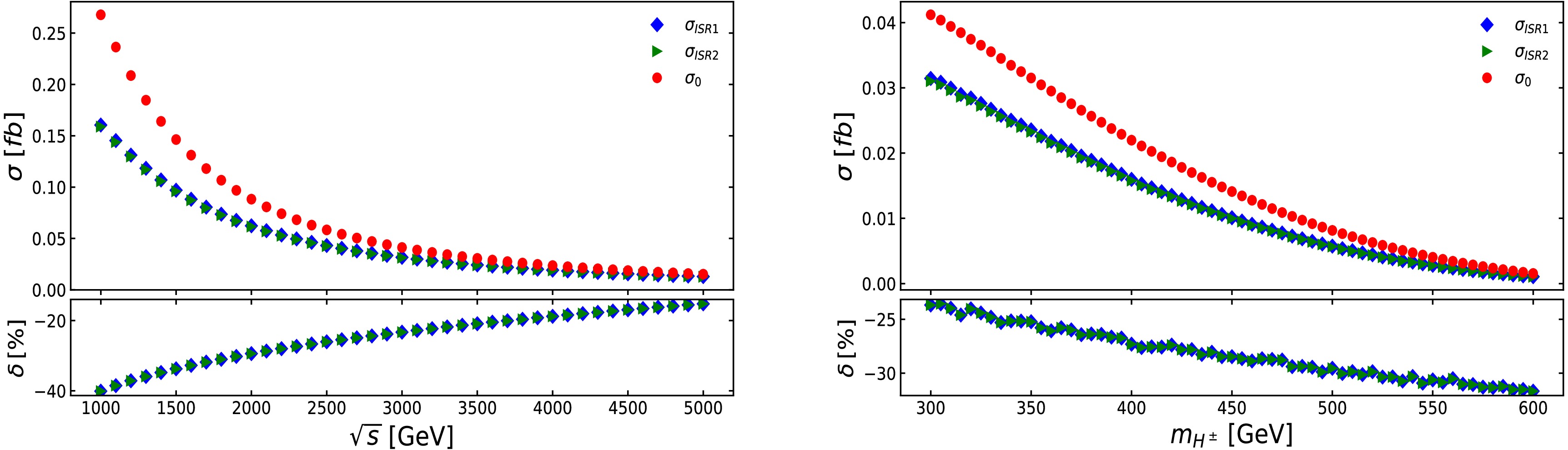
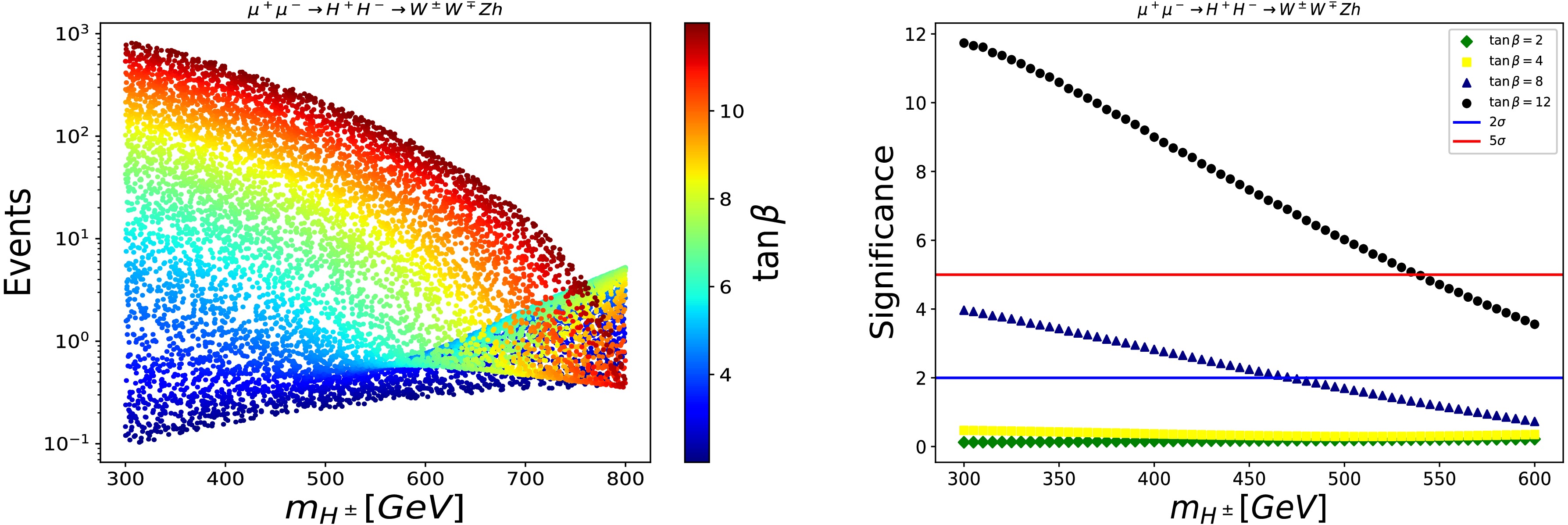
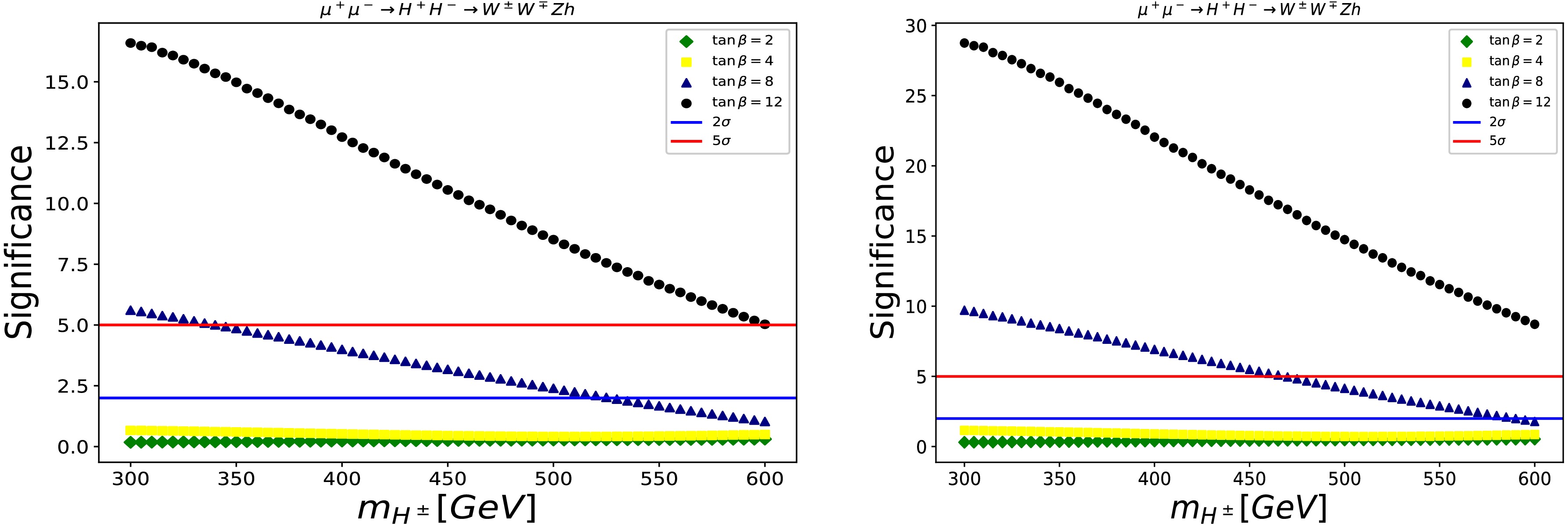
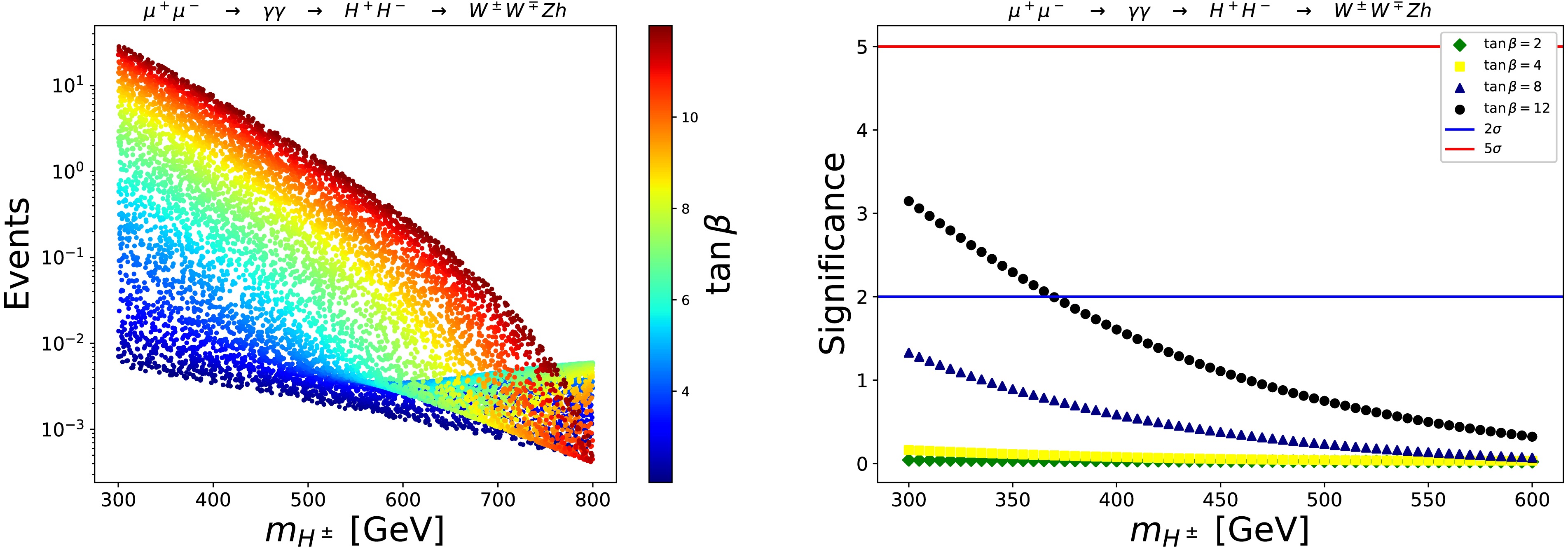
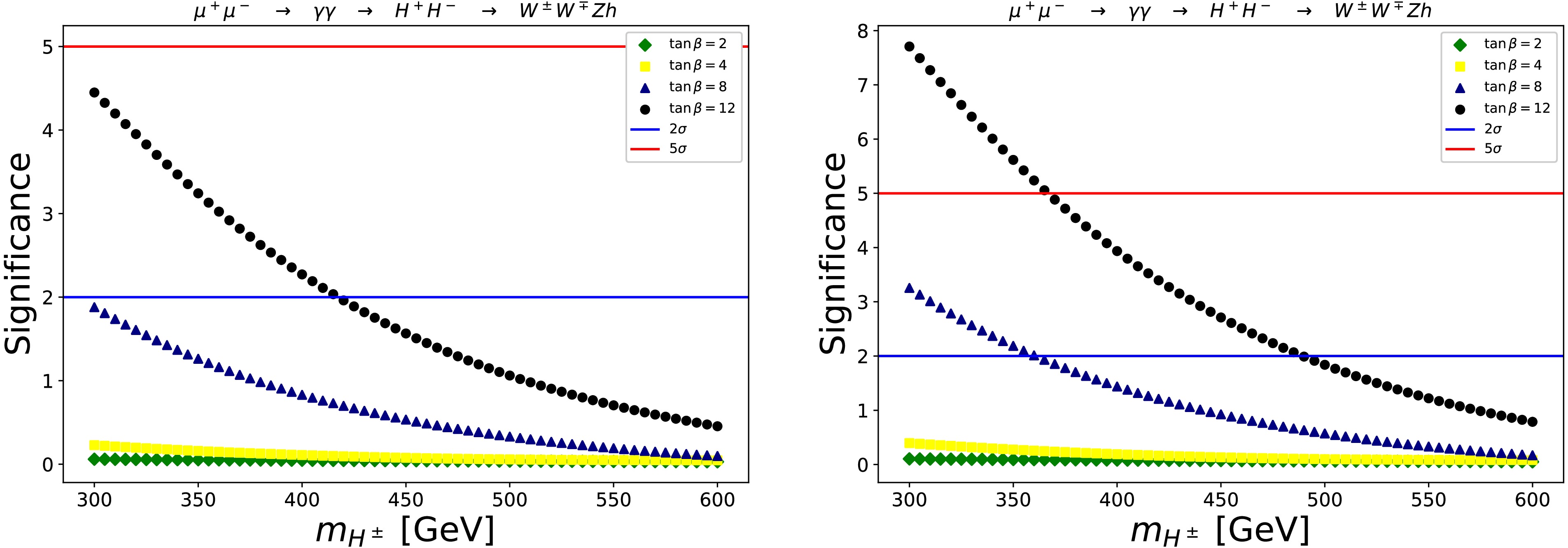
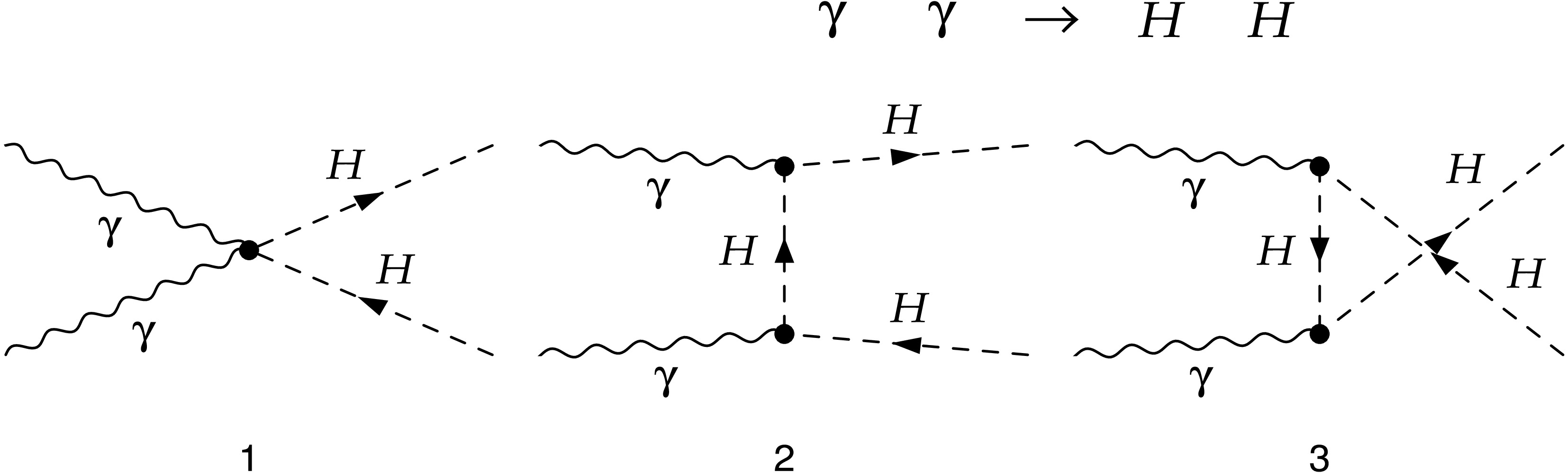
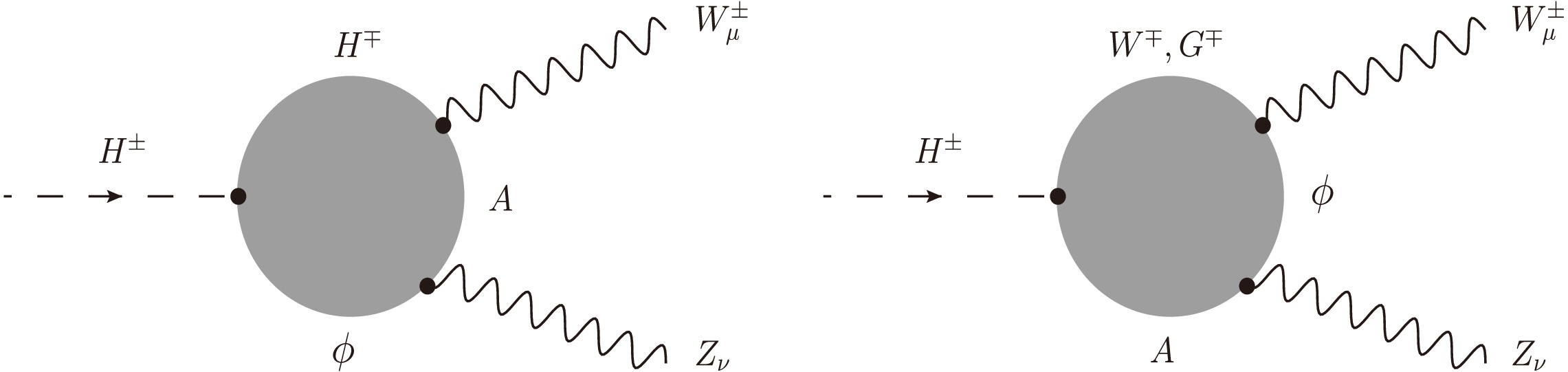
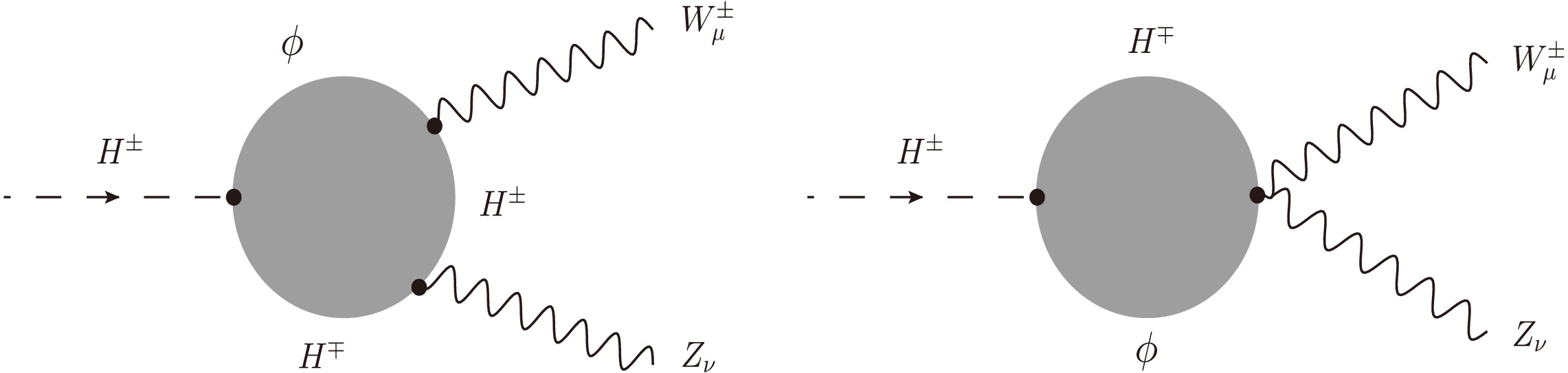
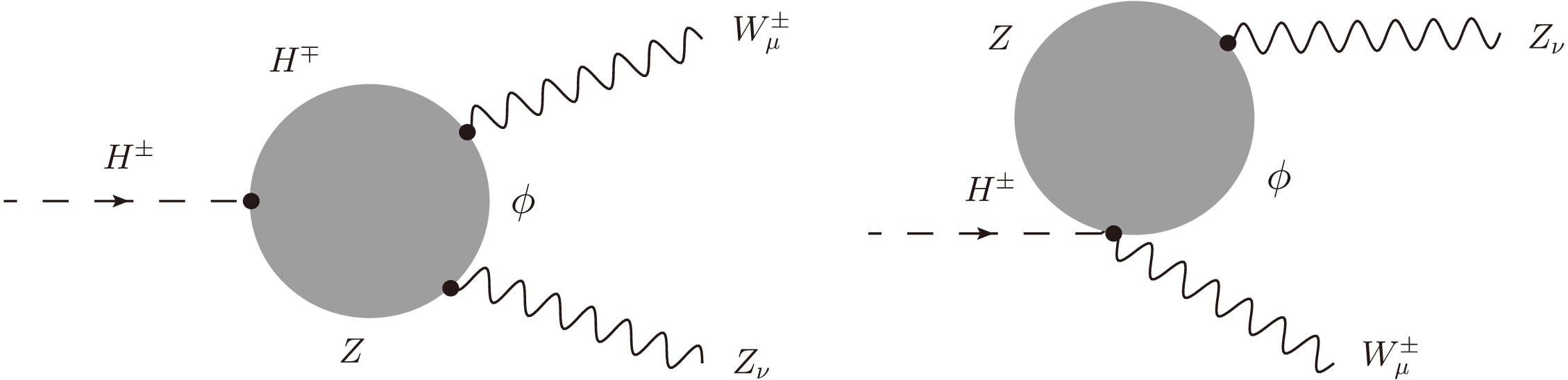
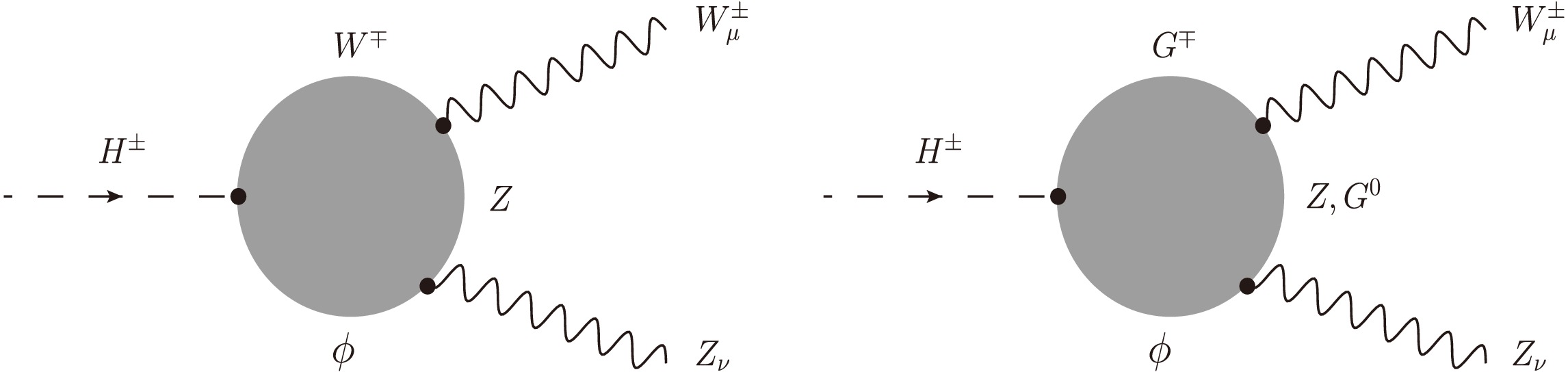
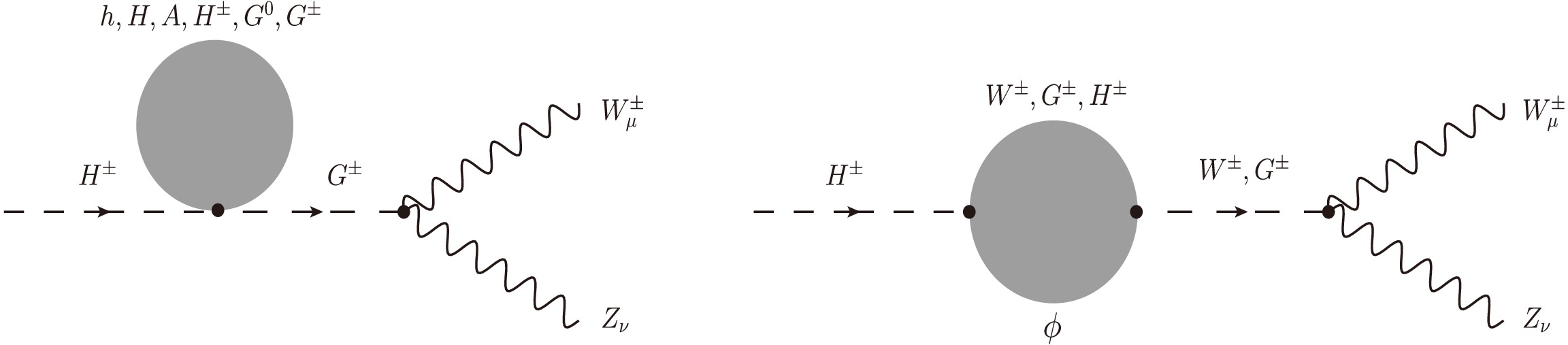
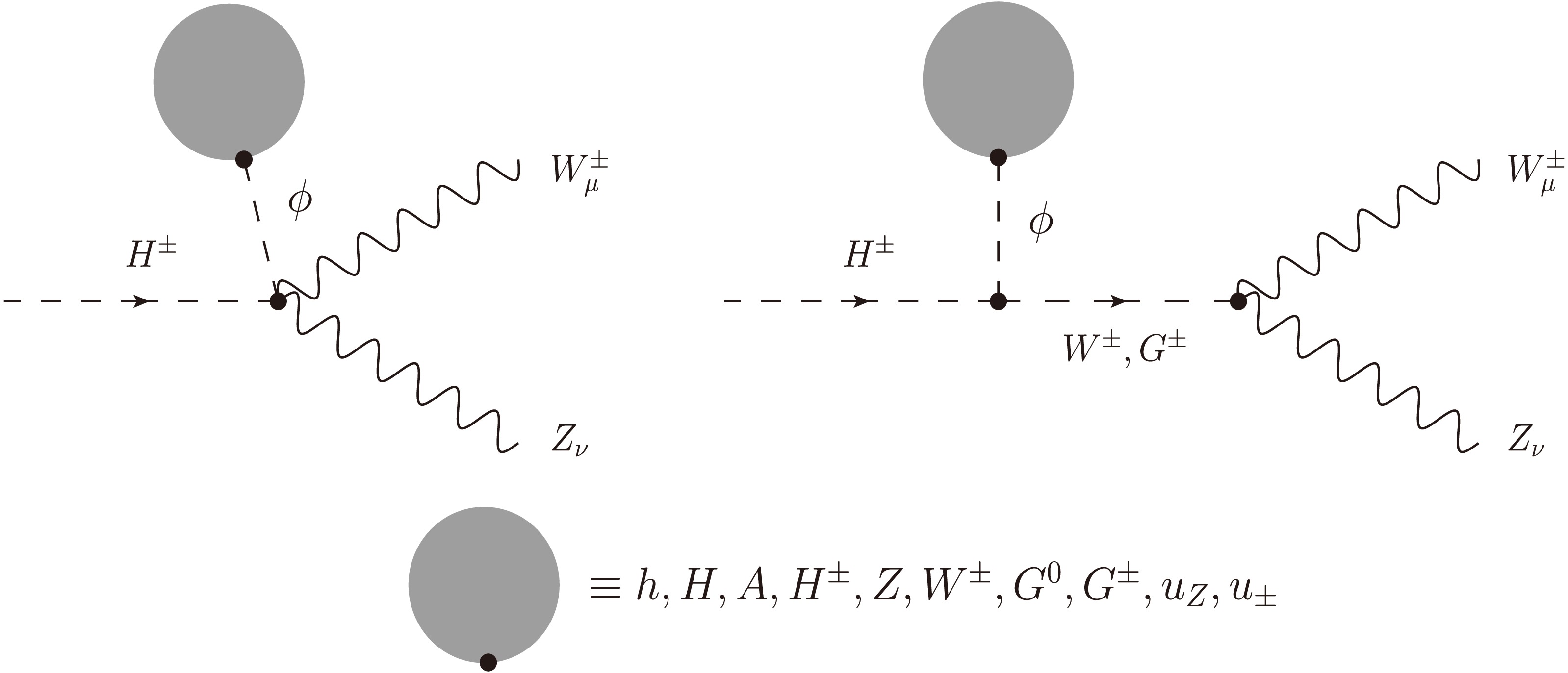
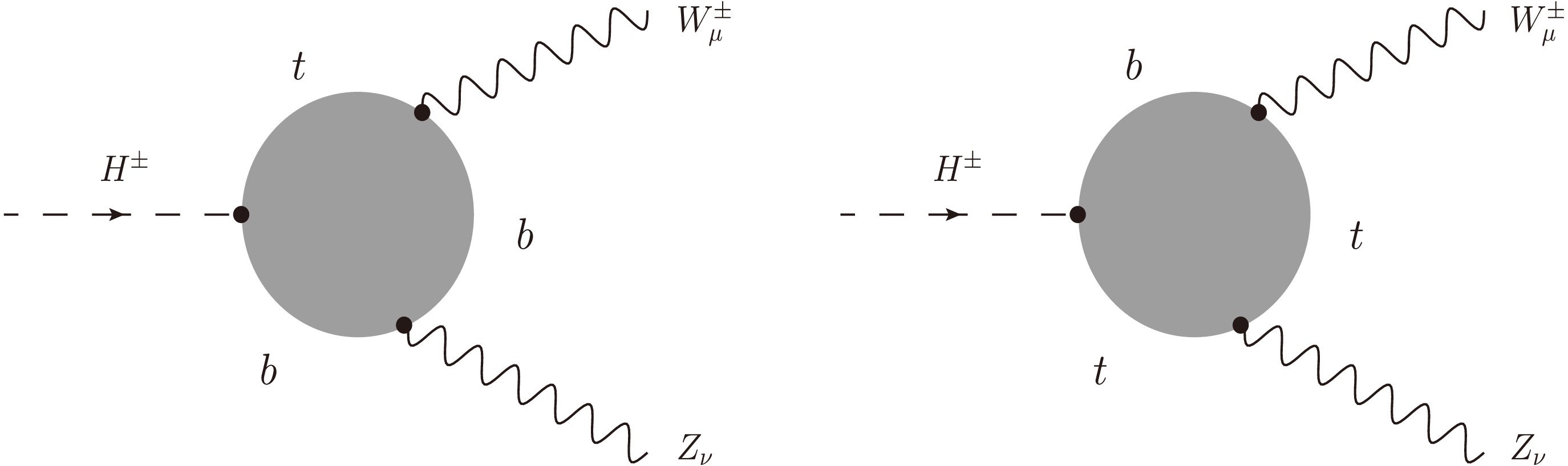
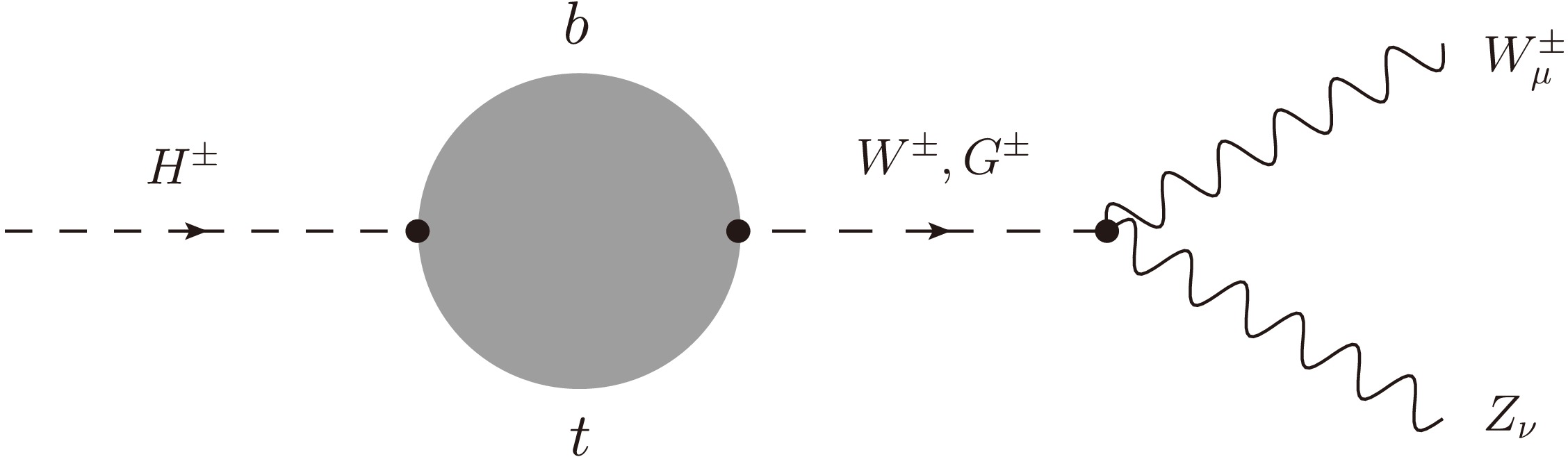
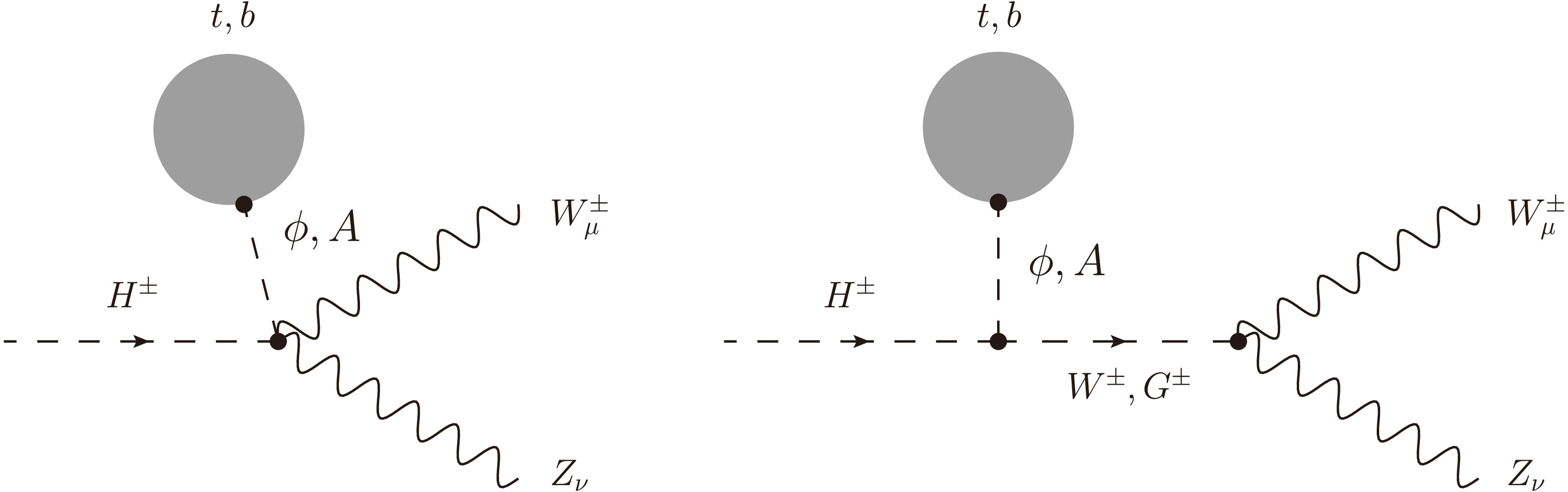
One-loop contributions for the decay process\begin{document}$ H^{\pm} \rightarrow W^{\pm}Z $\end{document} \begin{document}$ {\cal{R}}_{\xi} $\end{document} \begin{document}$ \mu^+\mu^- \rightarrow H^+H^- \rightarrow W^{\pm}W^{\mp}Zh $\end{document} \begin{document}$ \mu^+\mu^- \rightarrow \gamma\gamma \rightarrow H^+H^- \rightarrow W^{\pm}W^{\mp}Zh $\end{document} \begin{document}$ 5\sigma $\end{document}
One-loop contributions for the decay process

2026, 50(3): 033109. doi: 10.1088/1674-1137/ae28ea
Abstract:
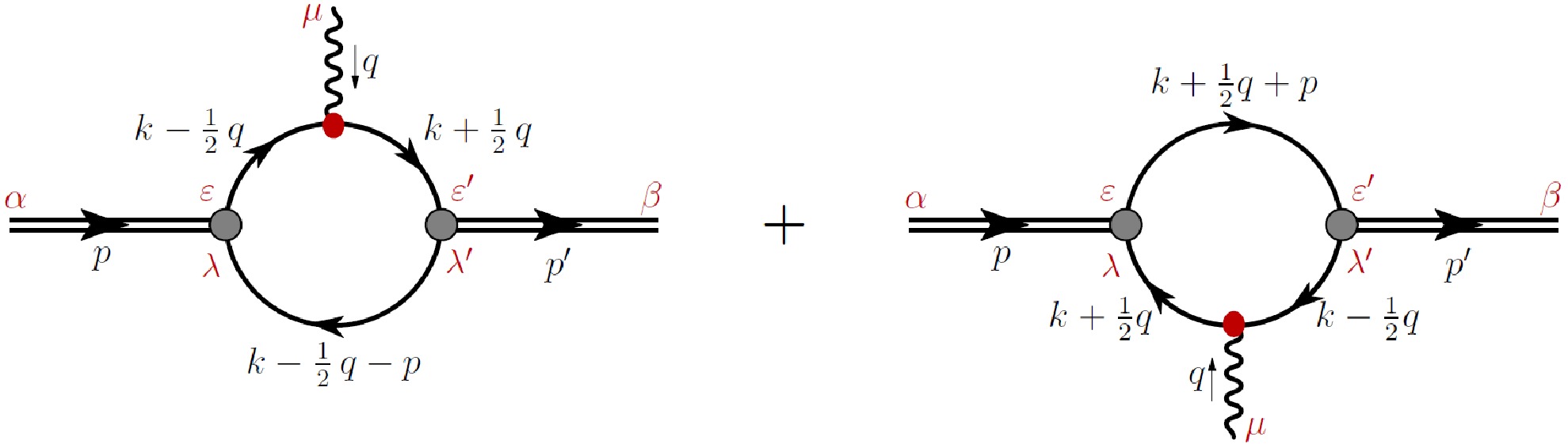
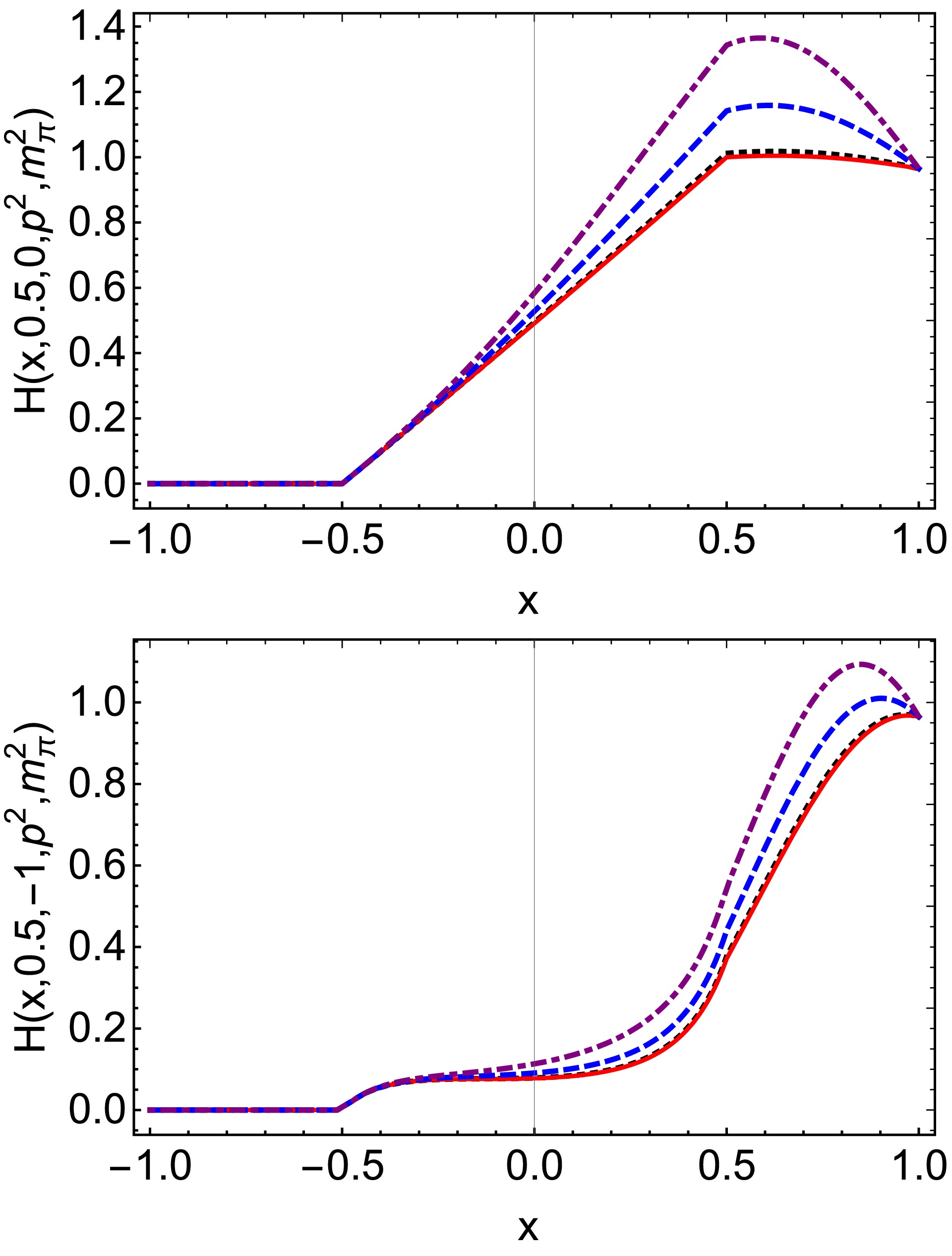
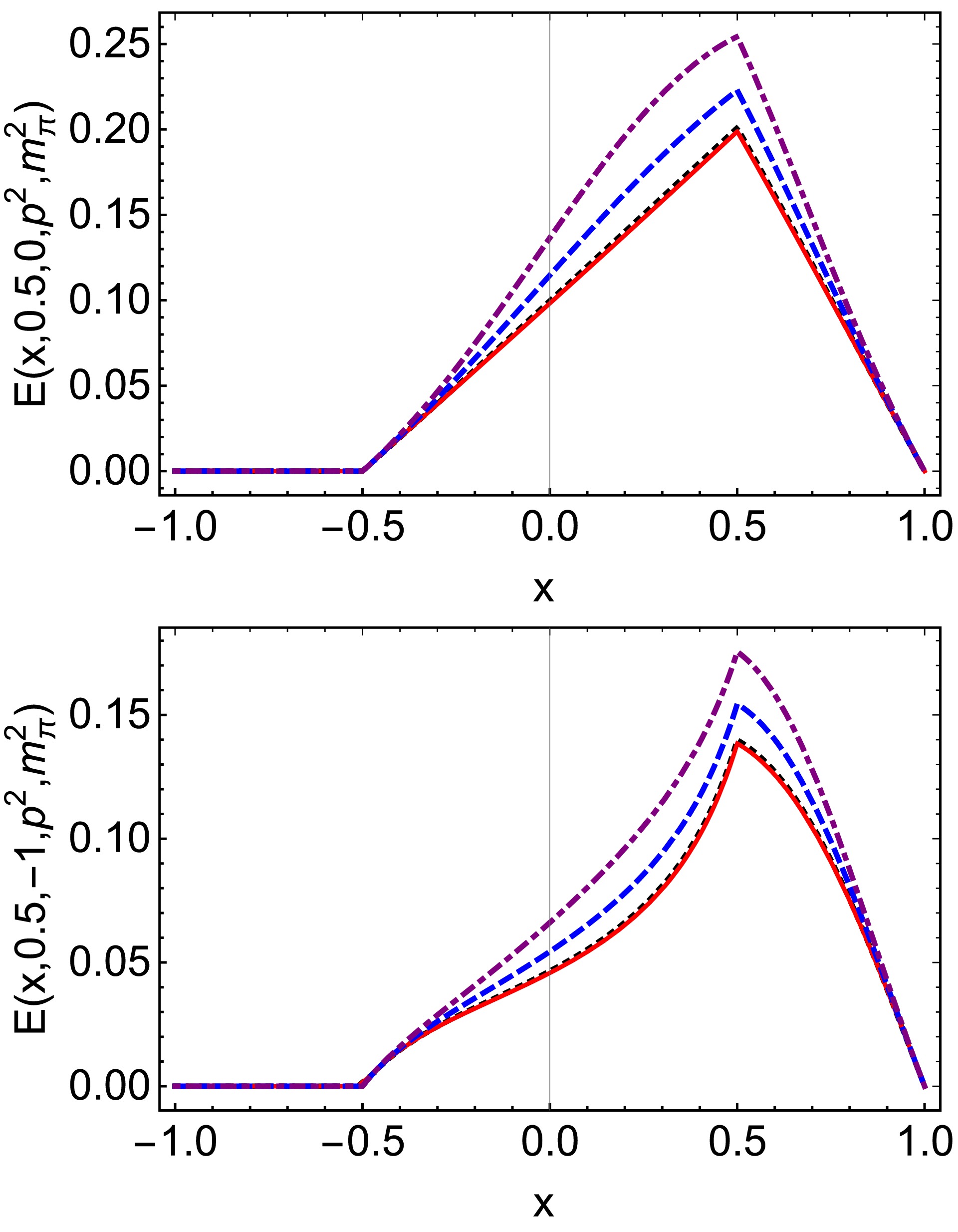
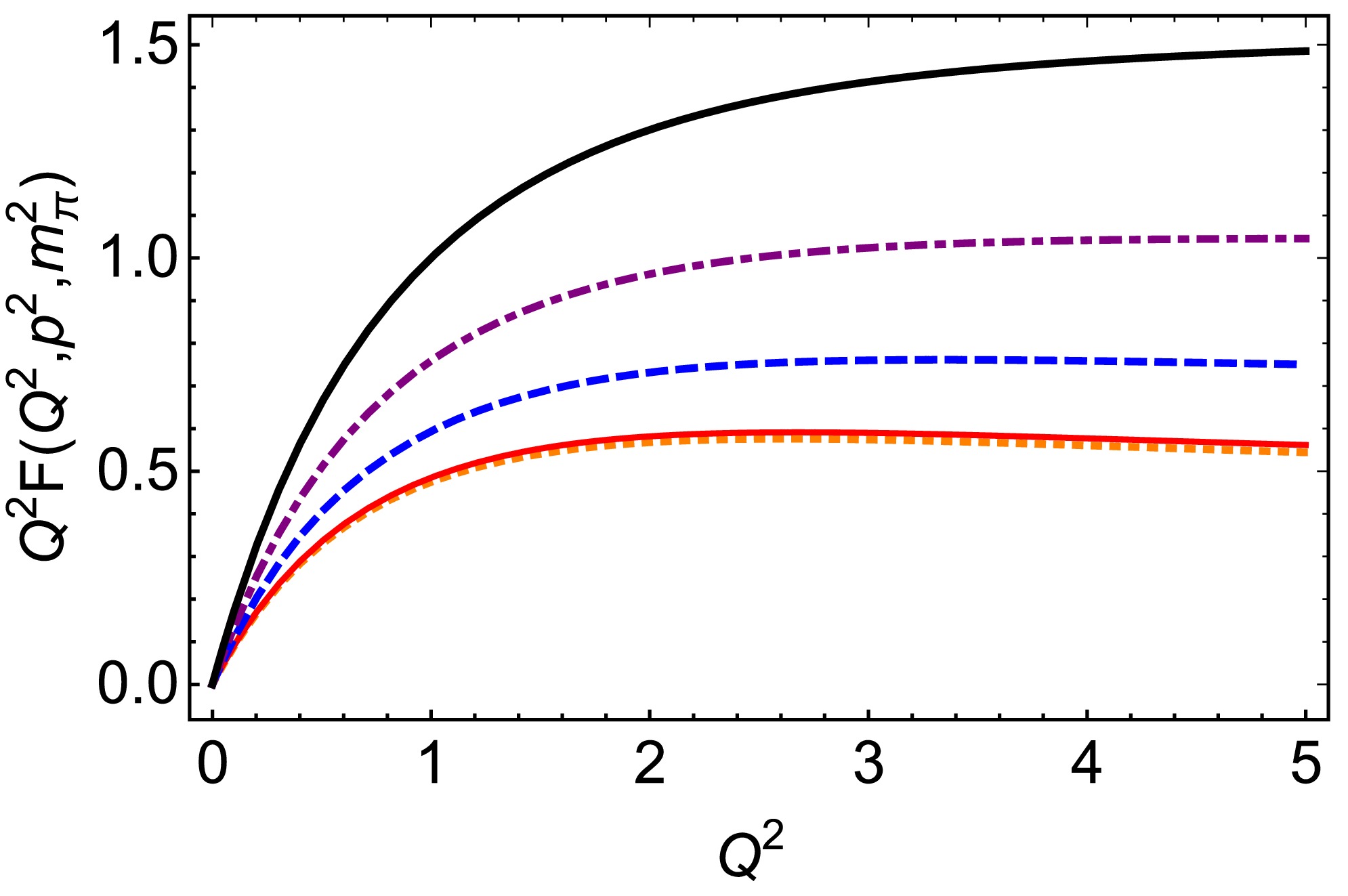
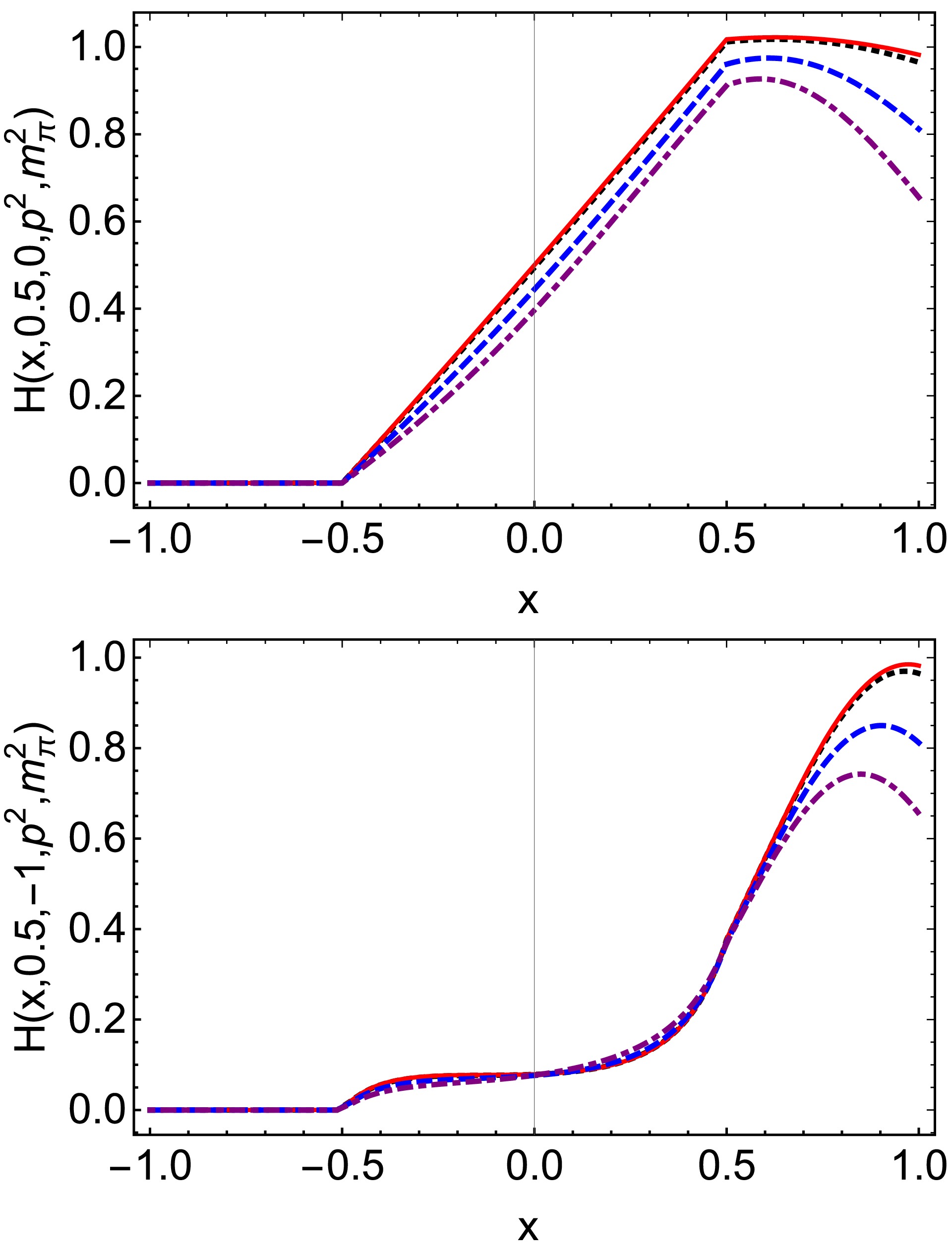
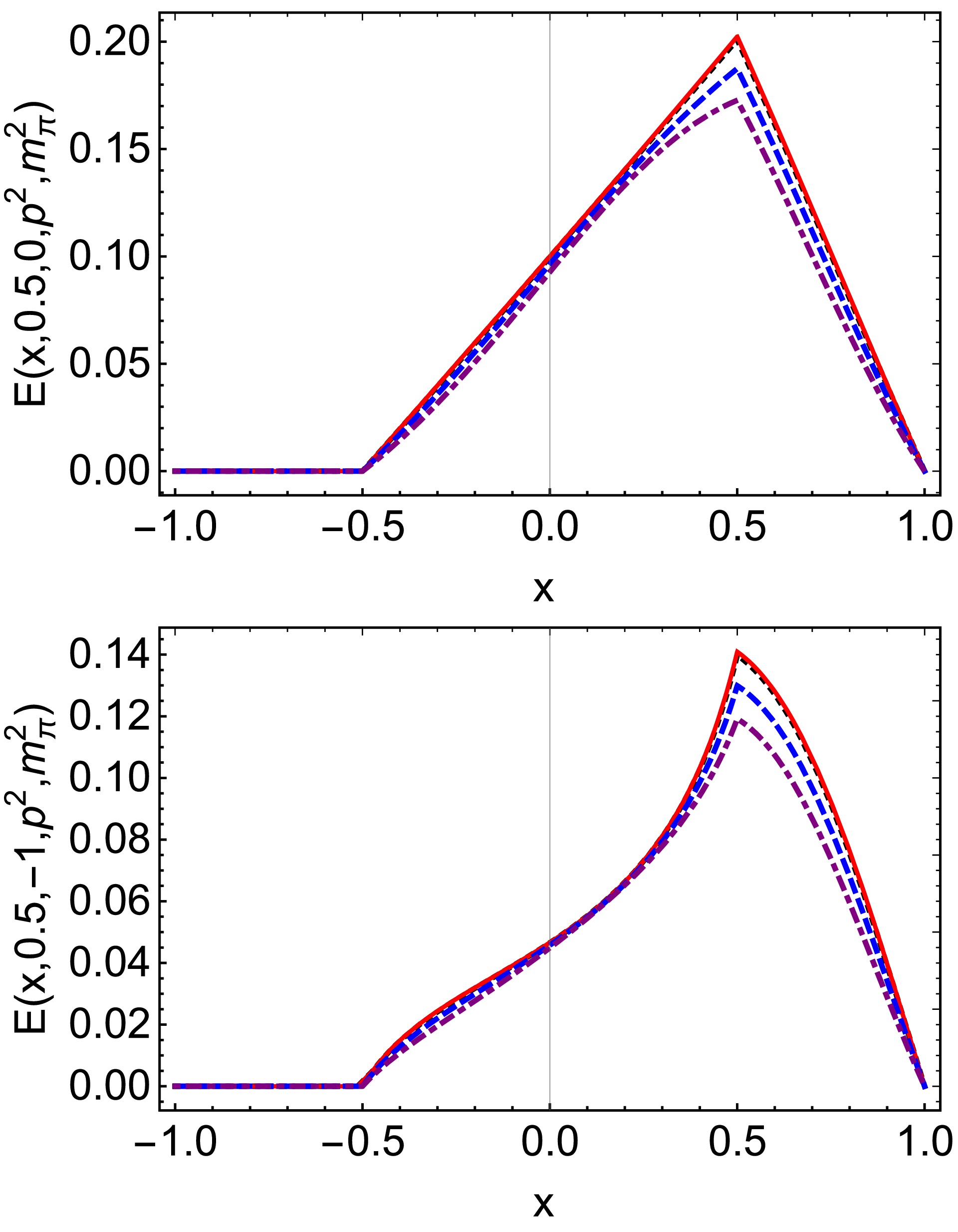
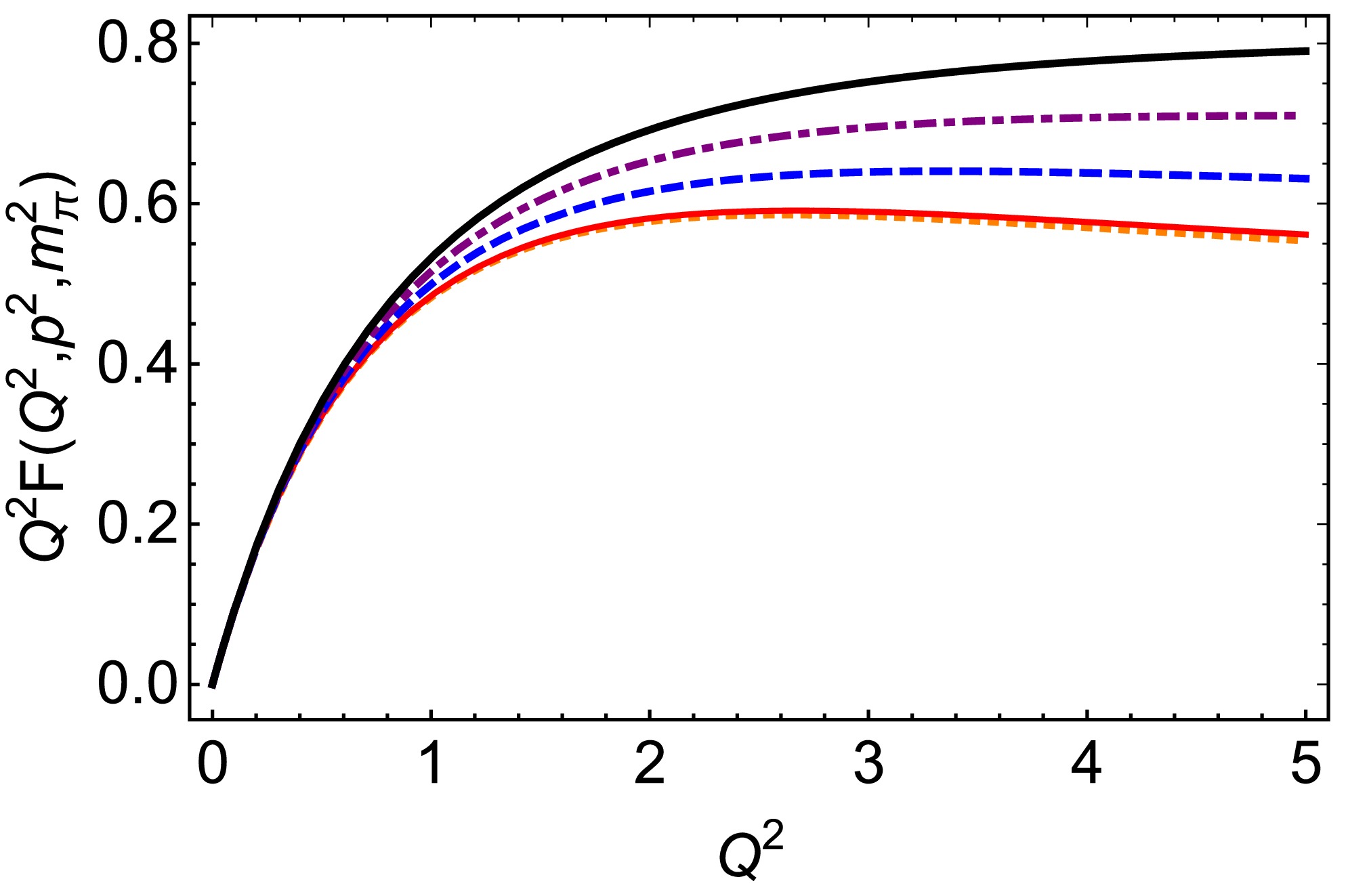
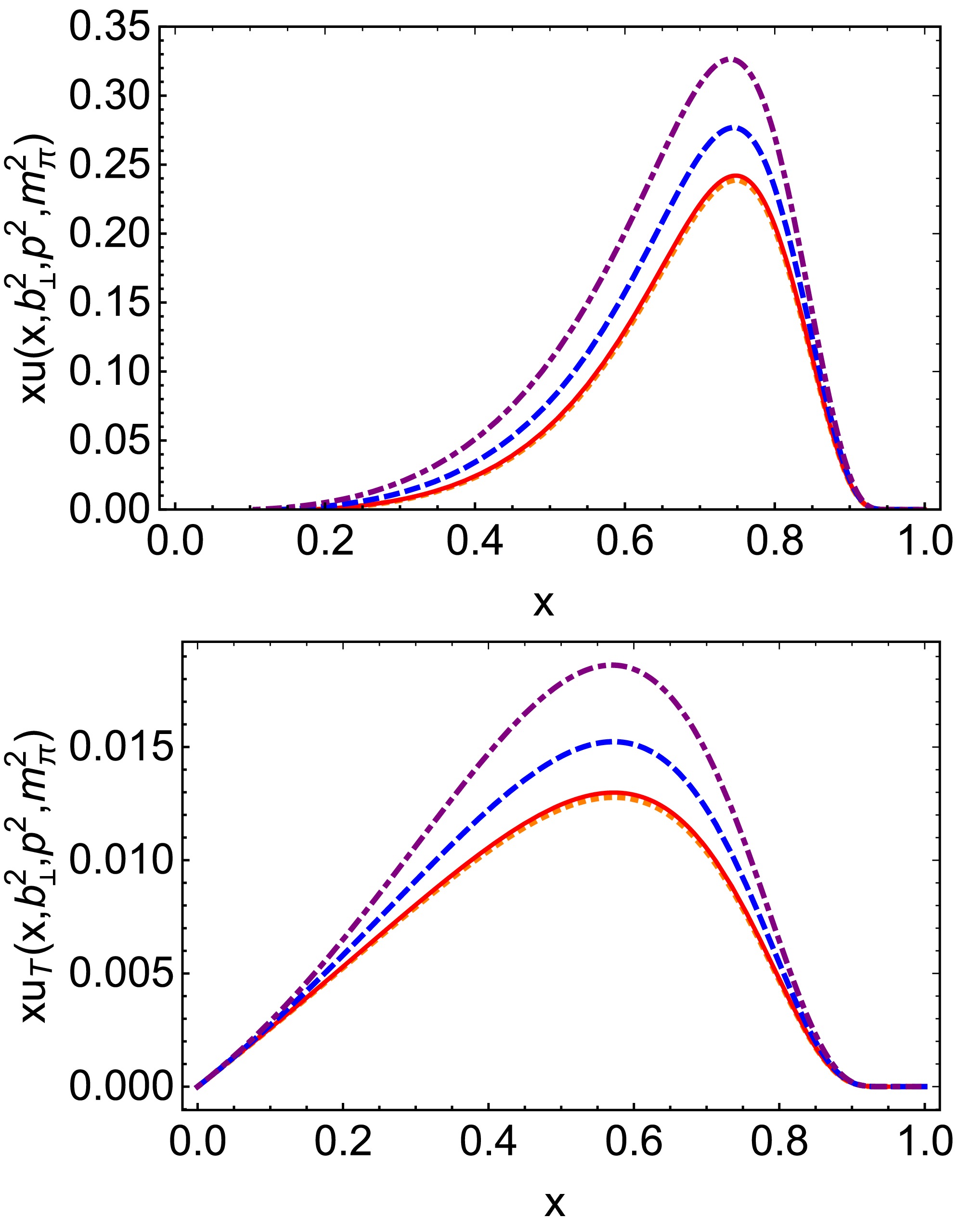
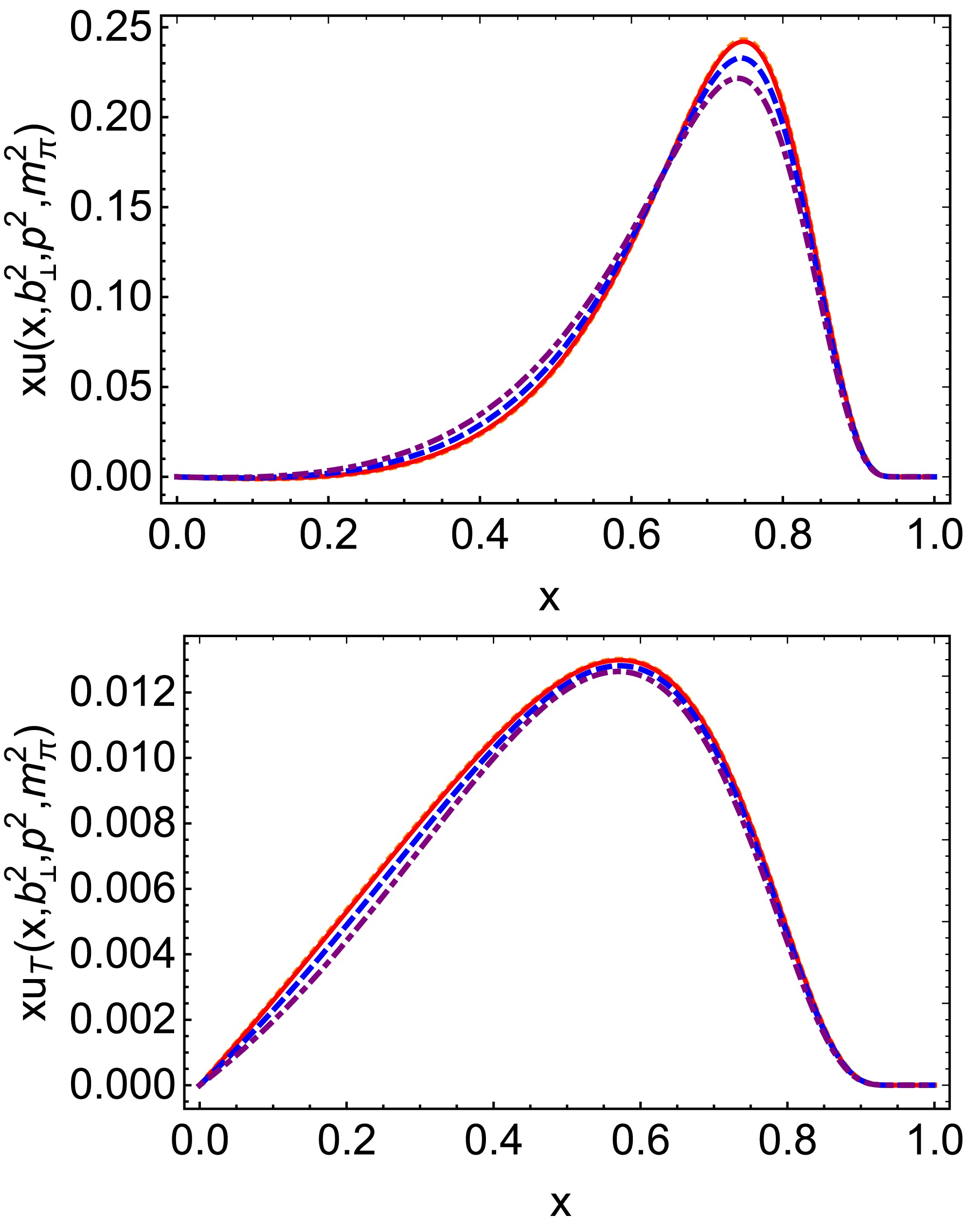
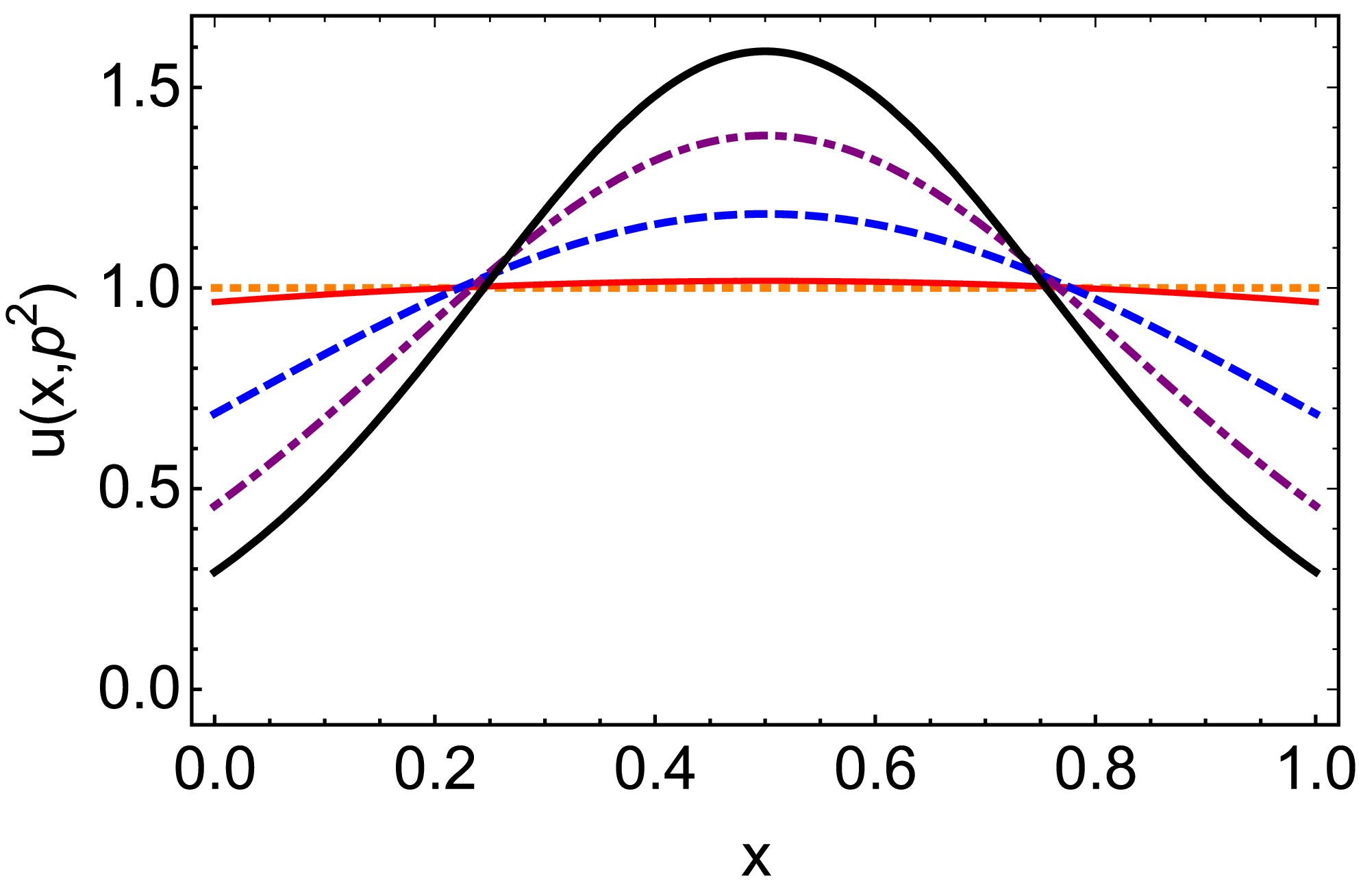
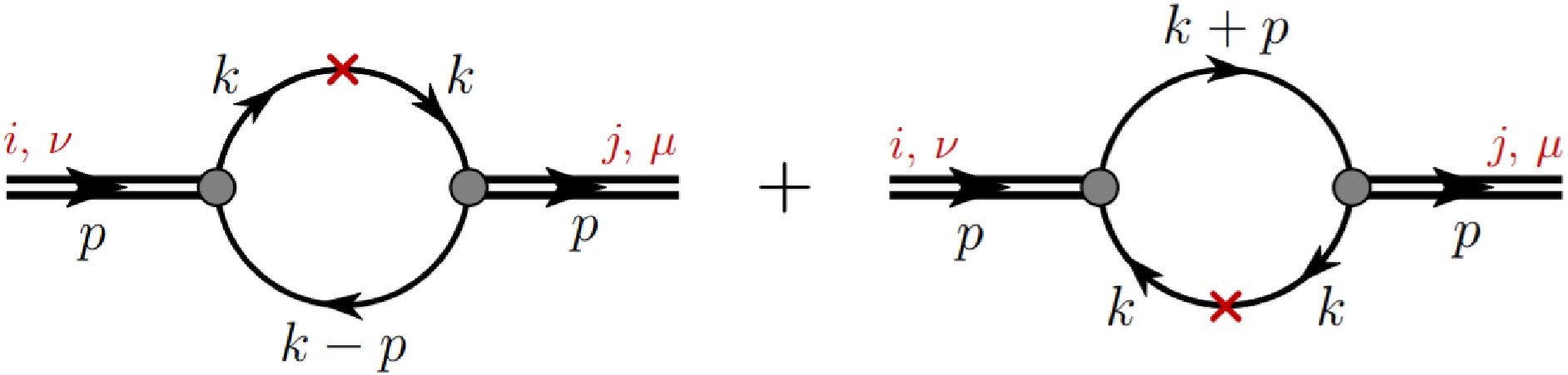
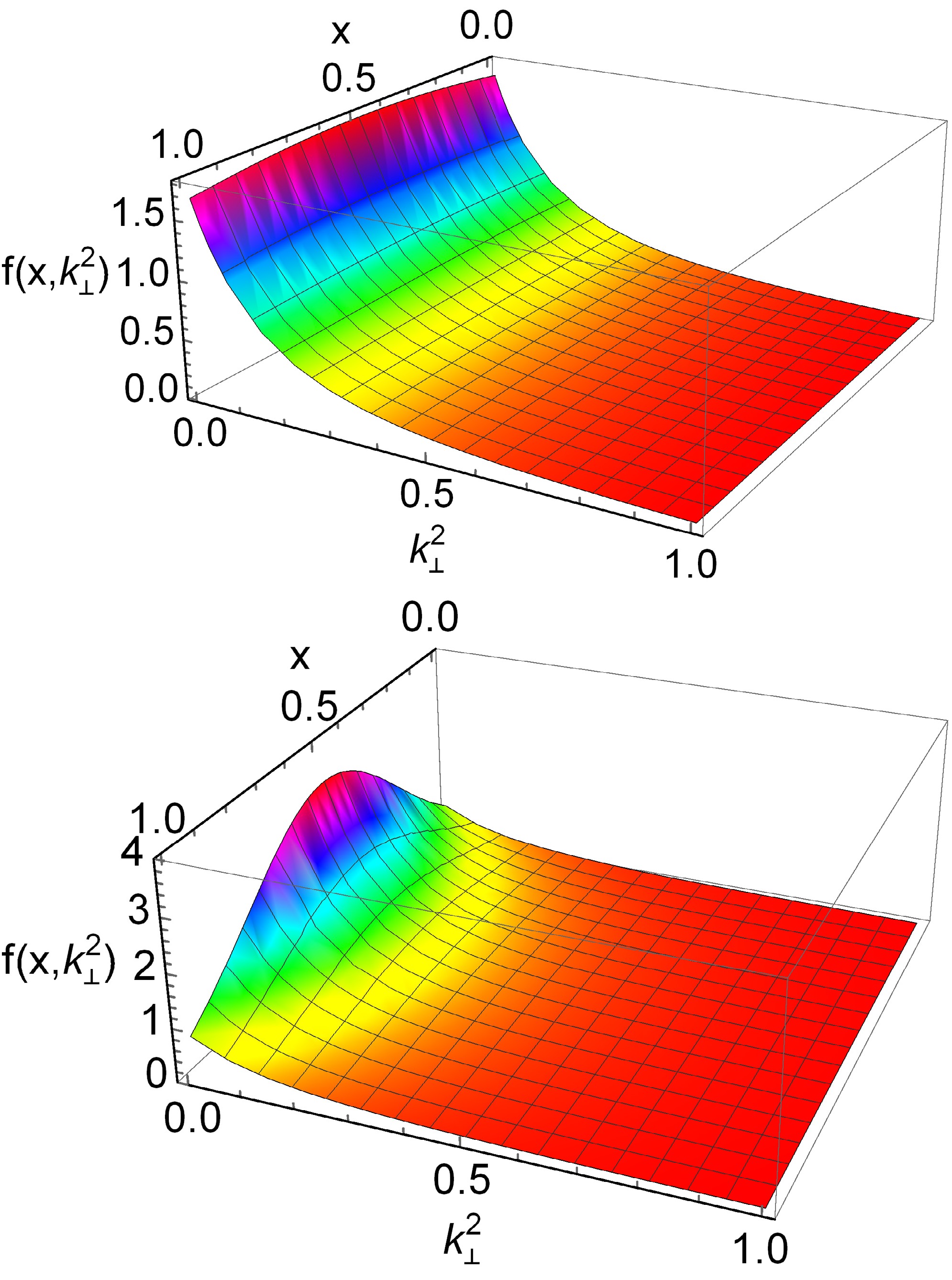
Off-shell characteristics of pion generalized parton distributions (GPDs) and transverse momentum dependent parton distributions (TMDs) are examined within the framework of the Nambu–Jona-Lasinio model. In our previous studies, we separately investigated the properties of on-shell pion GPDs and light-front wave functions. Comparing the differences between on-shell and off-shell pion GPDs is particularly intriguing becuase it enables us to explore the effects associated with off-shellness. The absence of crossing symmetry causes the moments of GPDs to incorporate odd powers of the skewness parameter, resulting in new off-shell form factors. Through our calculations, we derived correction functions that account for modifications in pion GPDs attributed to off-shell effects. Unlike their on-shell counterparts, certain properties break down in the off-shell scenario; for example, symmetry properties and polynomiality conditions may no longer hold. In addition, we evaluate off-shell TMDs and compare them with their on-shell equivalents while also investigating their dependence on\begin{document}$ {\boldsymbol{k}}_{\perp} $\end{document}
Off-shell characteristics of pion generalized parton distributions (GPDs) and transverse momentum dependent parton distributions (TMDs) are examined within the framework of the Nambu–Jona-Lasinio model. In our previous studies, we separately investigated the properties of on-shell pion GPDs and light-front wave functions. Comparing the differences between on-shell and off-shell pion GPDs is particularly intriguing becuase it enables us to explore the effects associated with off-shellness. The absence of crossing symmetry causes the moments of GPDs to incorporate odd powers of the skewness parameter, resulting in new off-shell form factors. Through our calculations, we derived correction functions that account for modifications in pion GPDs attributed to off-shell effects. Unlike their on-shell counterparts, certain properties break down in the off-shell scenario; for example, symmetry properties and polynomiality conditions may no longer hold. In addition, we evaluate off-shell TMDs and compare them with their on-shell equivalents while also investigating their dependence on
2026, 50(3): 033110. doi: 10.1088/1674-1137/ae2d24
Abstract:
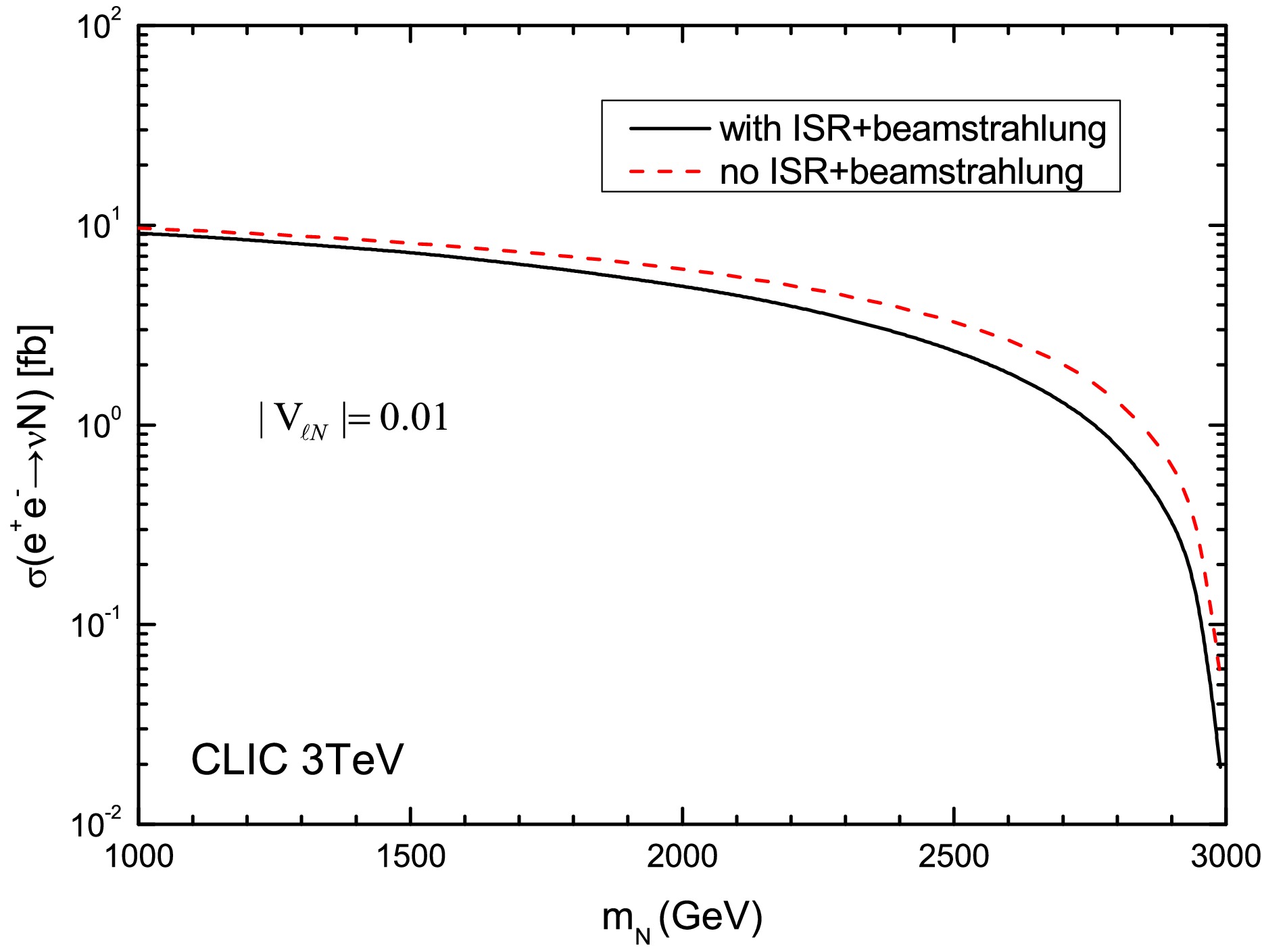
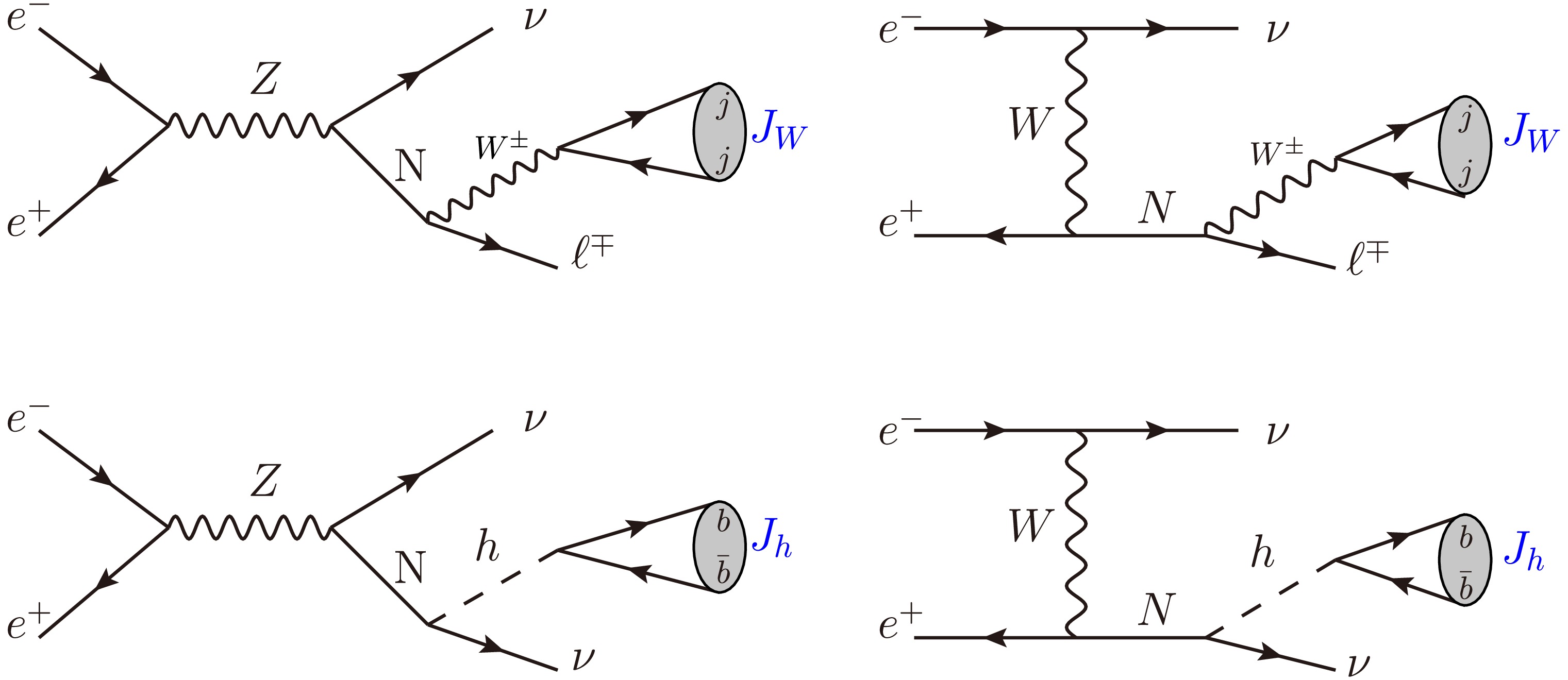
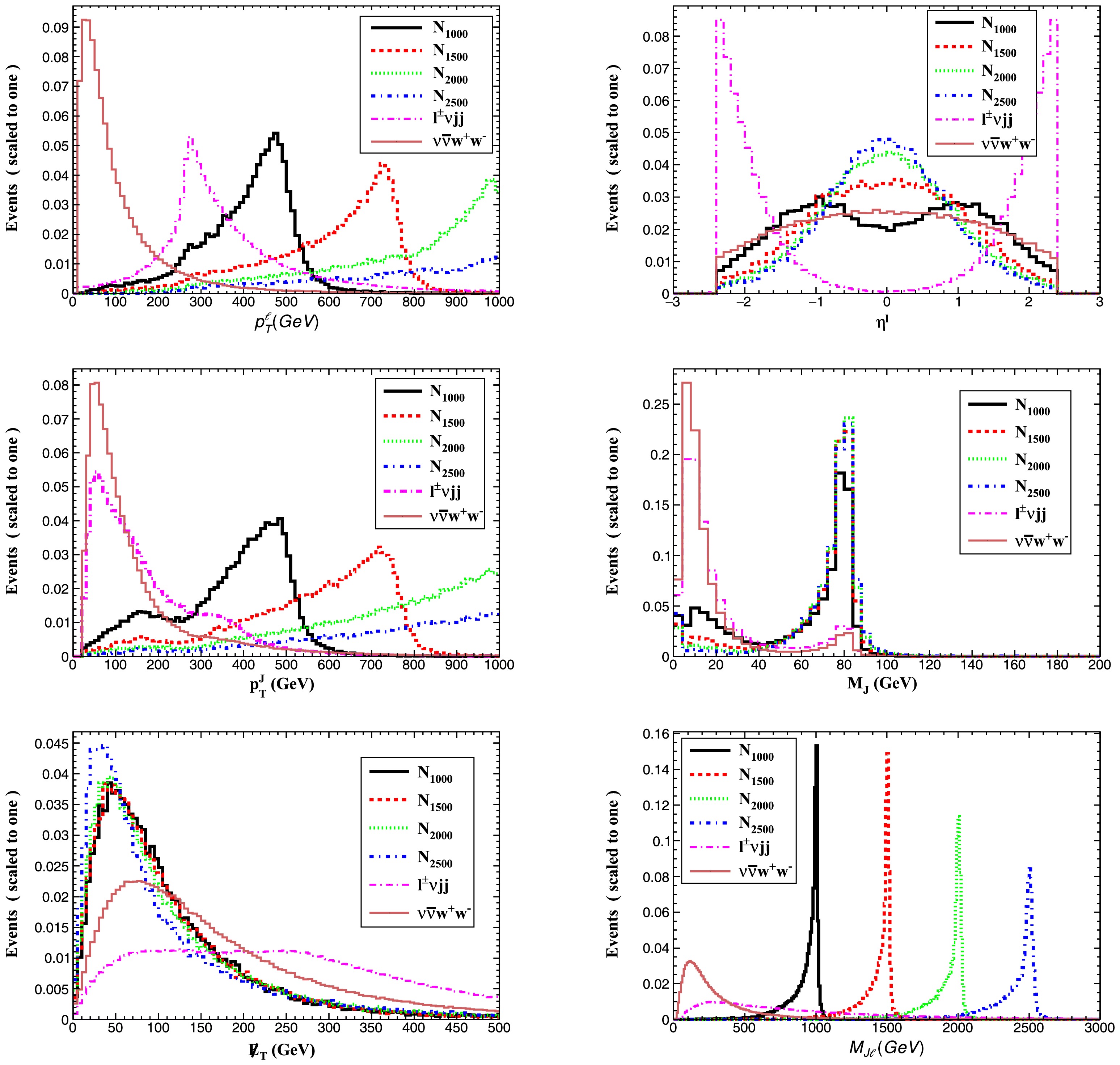
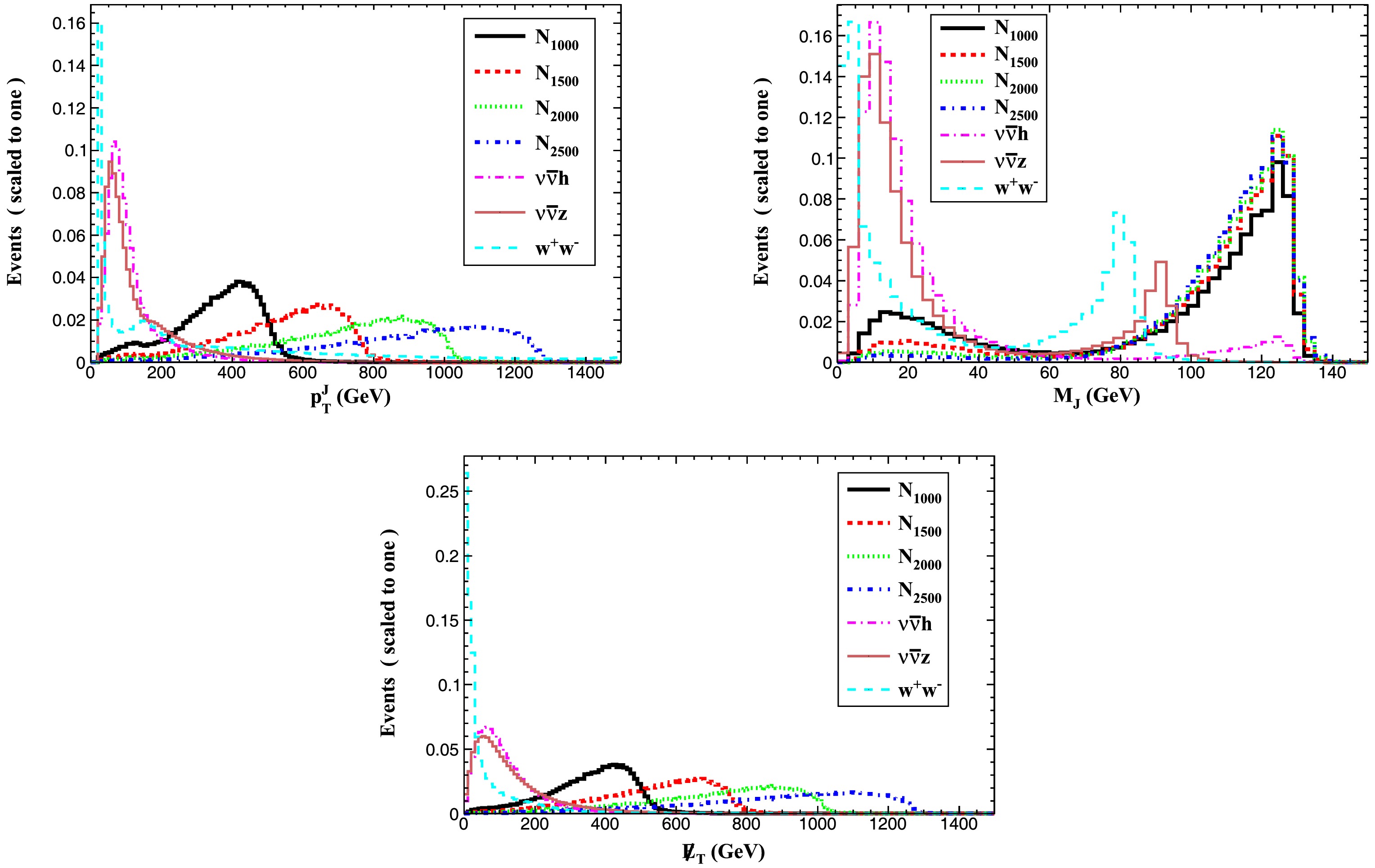
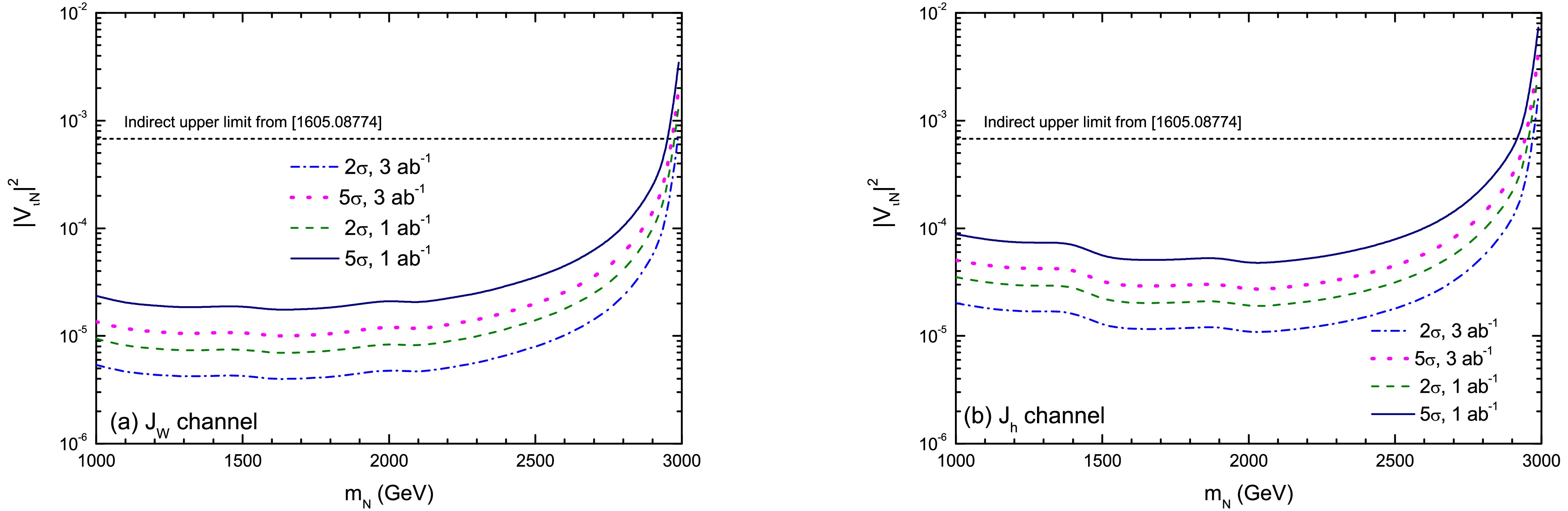
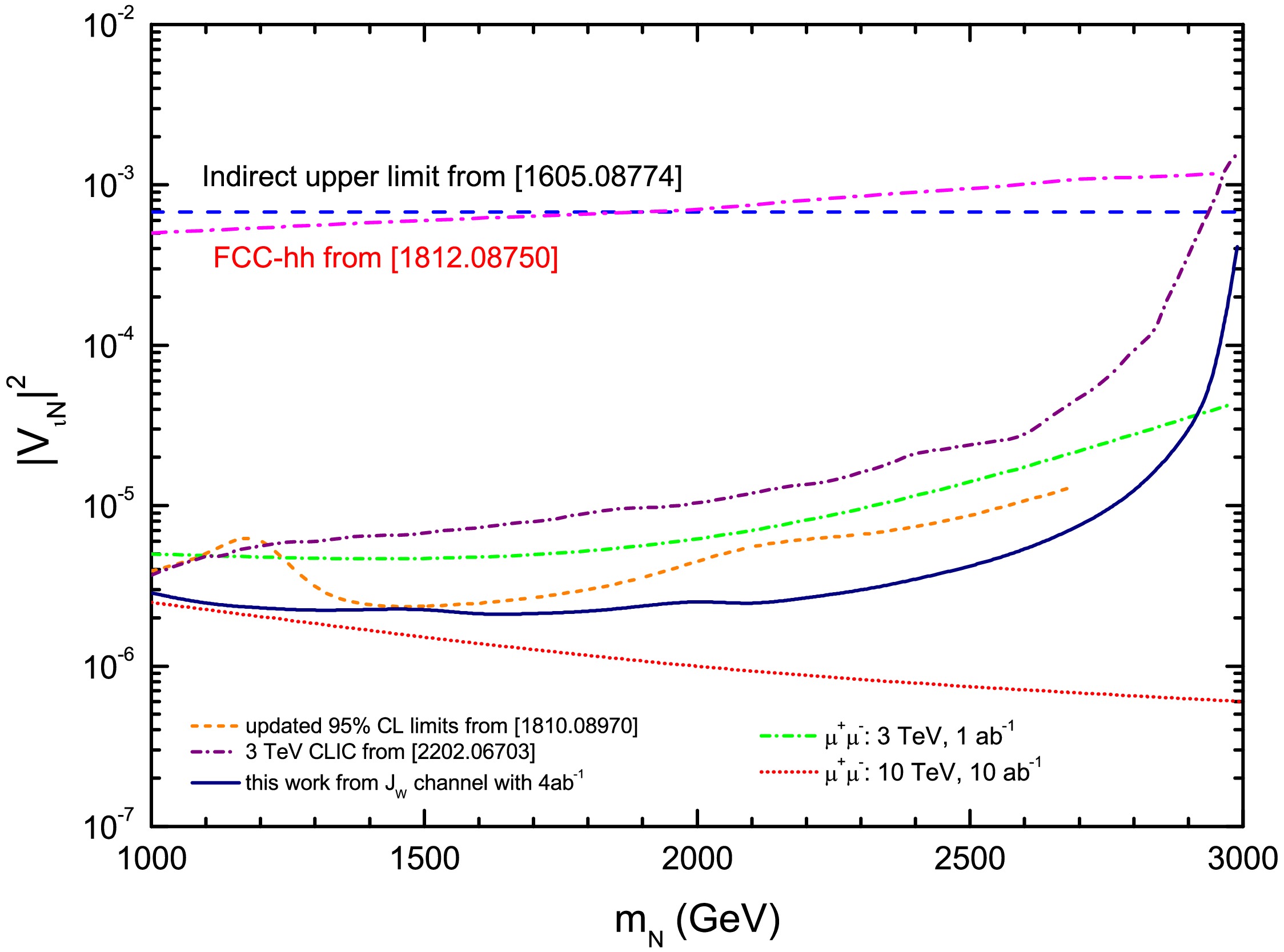
Heavy Majorana neutrinos (N) are predicted in many models of physics beyond the Standard Model. In this work, we explore the production and detection prospects of TeV-scale heavy neutrinos (\begin{document}$ m_N \gtrsim 1 $\end{document} \begin{document}$ N \to \ell^\pm W^\mp $\end{document} \begin{document}$ J_W $\end{document} \begin{document}$ N \to \nu h $\end{document} \begin{document}$ h \to b\bar{b} $\end{document} \begin{document}$ J_h $\end{document} \begin{document}$\not{E}_T$\end{document} \begin{document}$ 2\sigma $\end{document} \begin{document}$ 5\sigma $\end{document} \begin{document}$ m_N $\end{document} \begin{document}$ |V_{\ell N}|^2 $\end{document} \begin{document}$ |V_{\ell N}|^2 $\end{document} \begin{document}$ |V_{\ell N}|^2 $\end{document}
Heavy Majorana neutrinos (N) are predicted in many models of physics beyond the Standard Model. In this work, we explore the production and detection prospects of TeV-scale heavy neutrinos (
2026, 50(3): 033111. doi: 10.1088/1674-1137/ae2b5c
Abstract:
An analytical and numerical systematic study of the neutrino mass matrix with one texture zero is presented in a basis where the charged leptons are diagonal. Under the assumption that neutrinos are Dirac particles, the analysis is conducted in detail for the normal and inverted hierarchy mass spectra. Our study is performed without any approximations, first analytically and then numerically, using current neutrino oscillation data. The analysis constrains the parameter space in such a way that, among the six possible one-texture-zero patterns, only four are favored in the normal hierarchy and one in the inverted hierarchy by current oscillation data at the\begin{document}$3 \sigma$\end{document}
An analytical and numerical systematic study of the neutrino mass matrix with one texture zero is presented in a basis where the charged leptons are diagonal. Under the assumption that neutrinos are Dirac particles, the analysis is conducted in detail for the normal and inverted hierarchy mass spectra. Our study is performed without any approximations, first analytically and then numerically, using current neutrino oscillation data. The analysis constrains the parameter space in such a way that, among the six possible one-texture-zero patterns, only four are favored in the normal hierarchy and one in the inverted hierarchy by current oscillation data at the
2026, 50(3): 034001. doi: 10.1088/1674-1137/ae2455
Abstract:
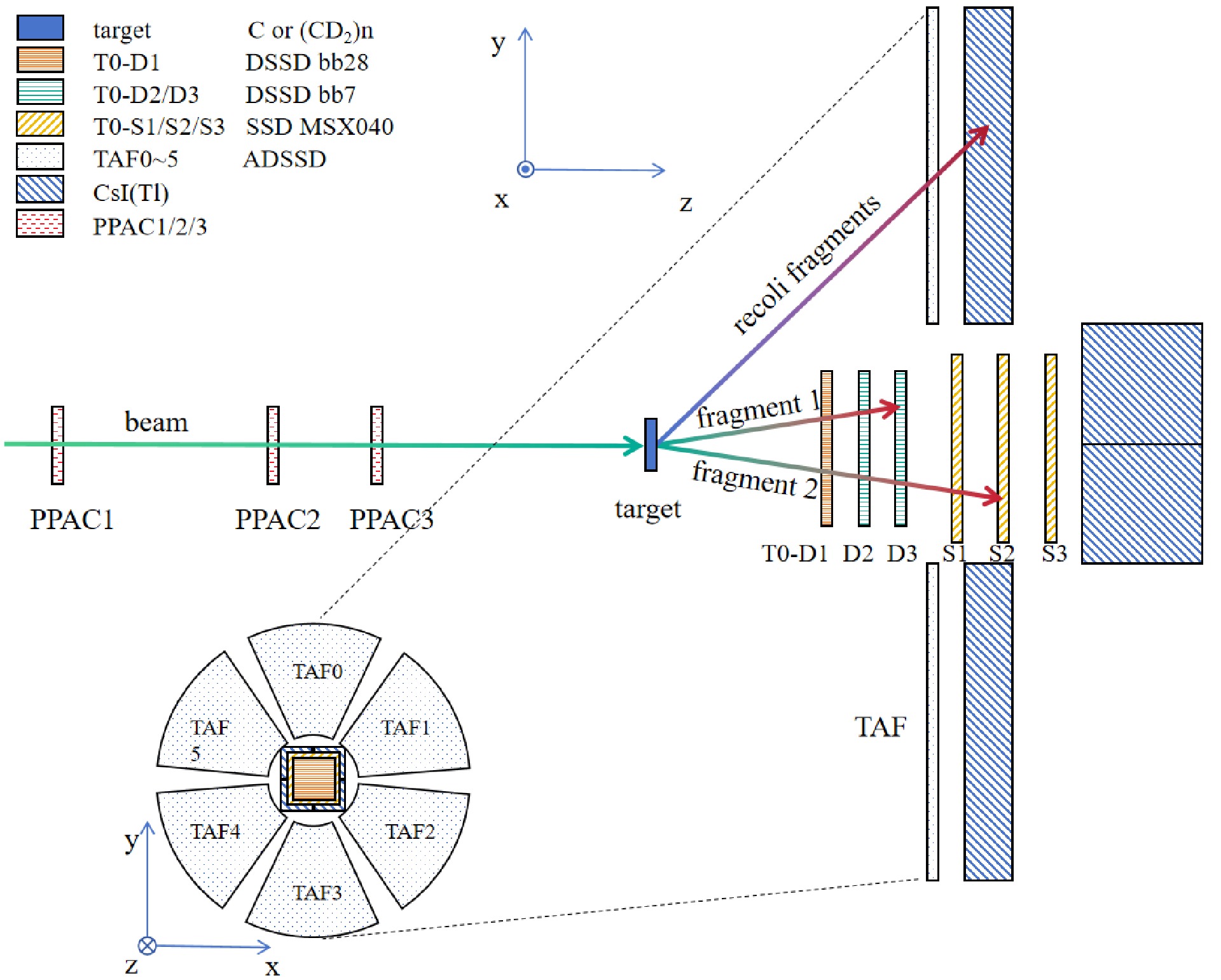
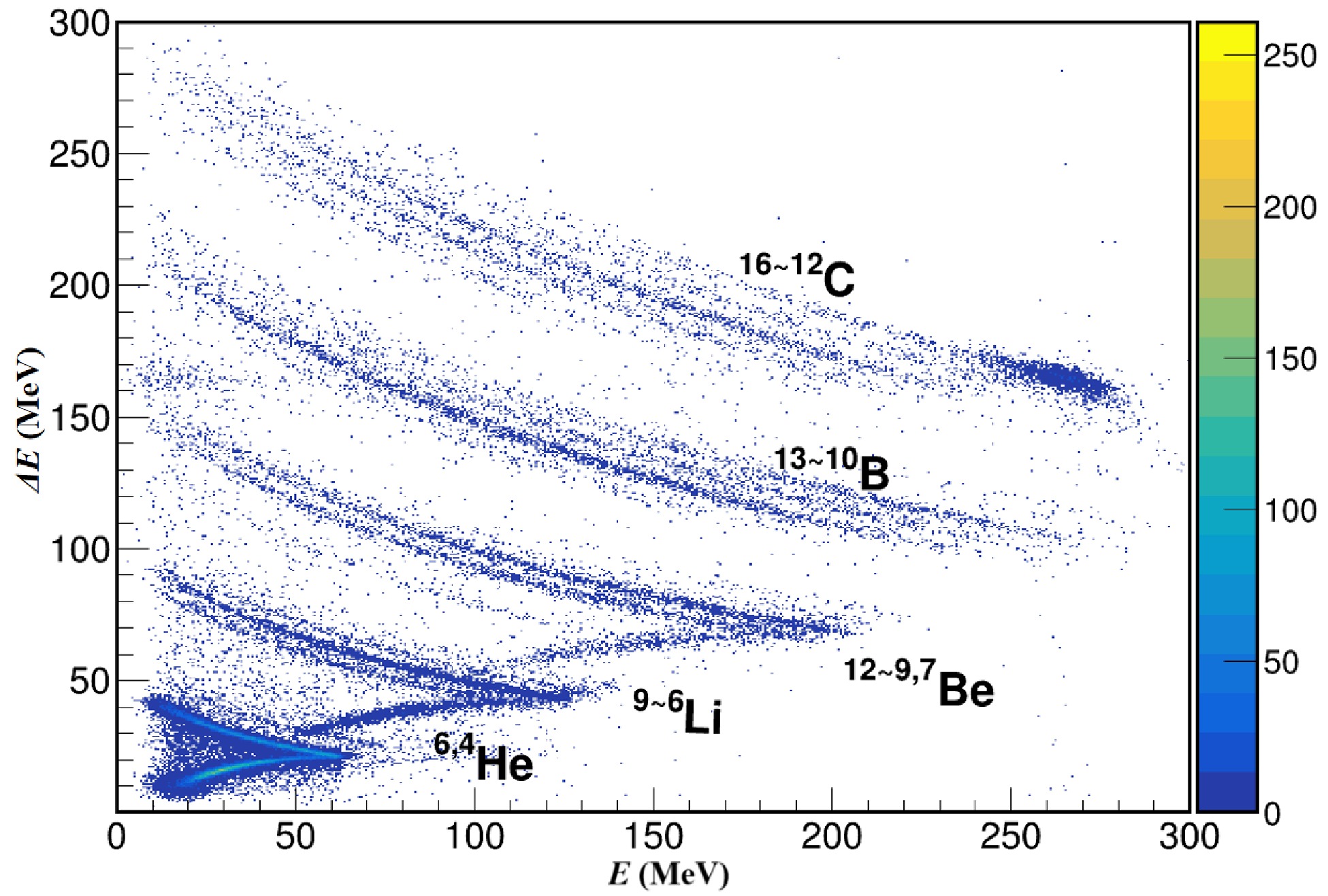
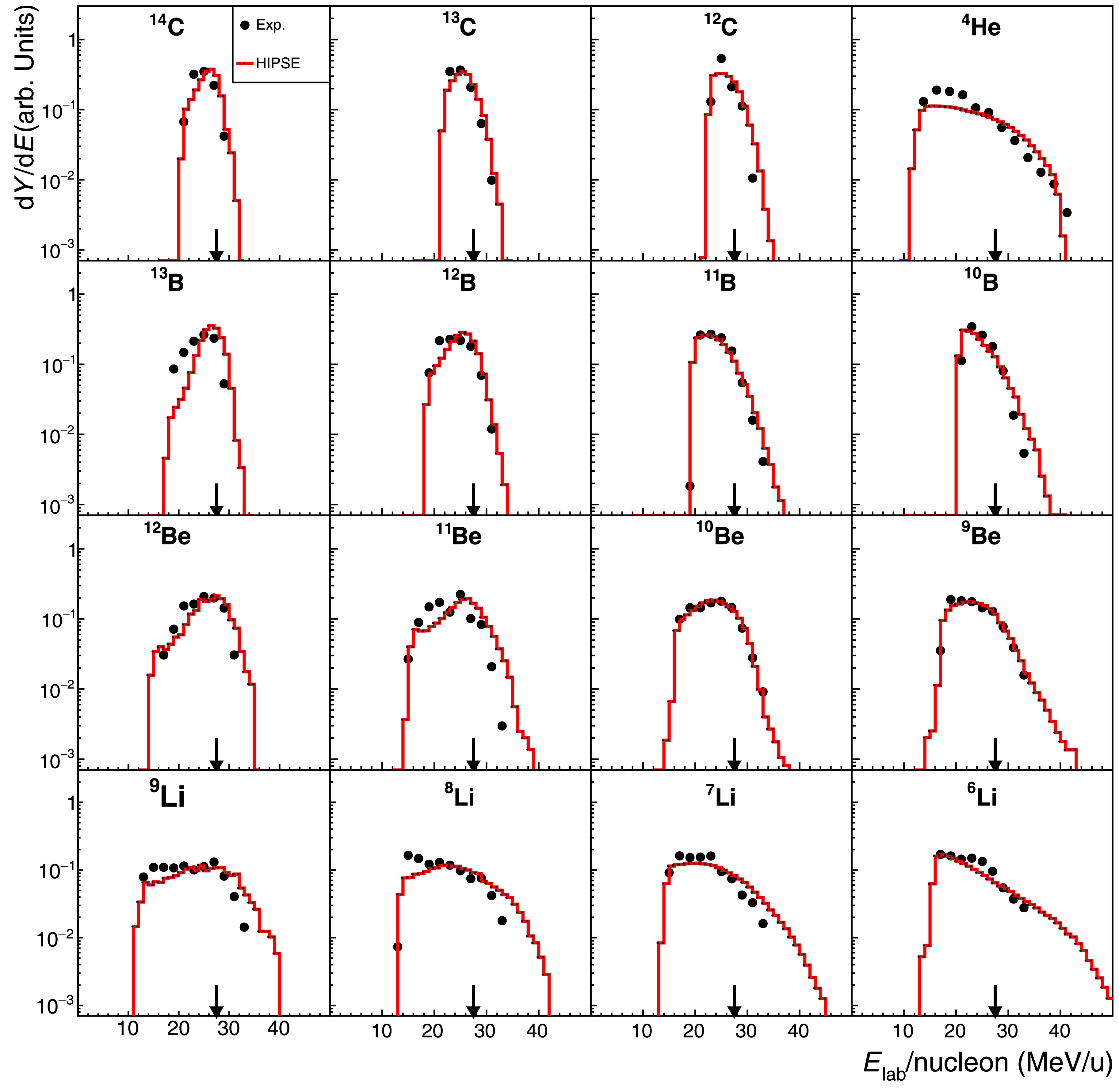
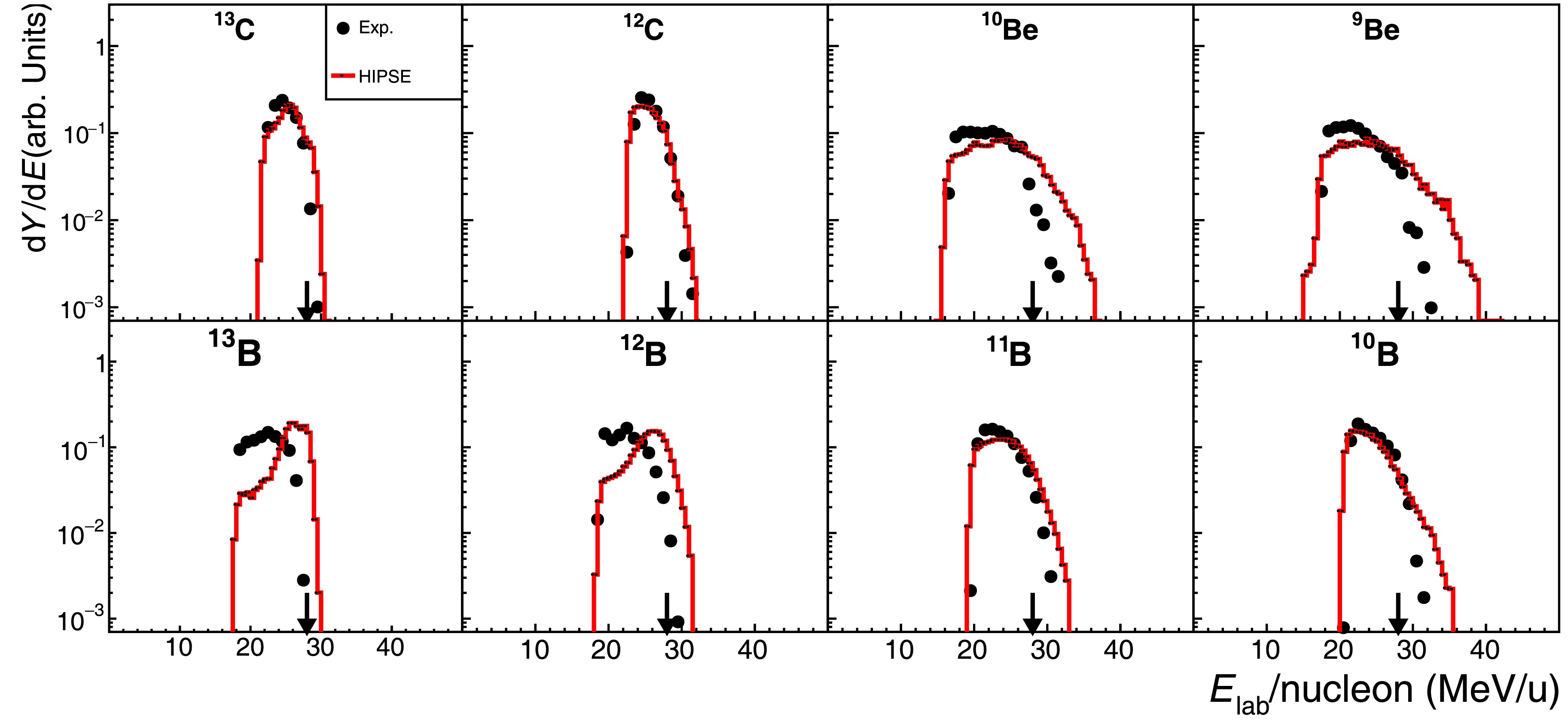
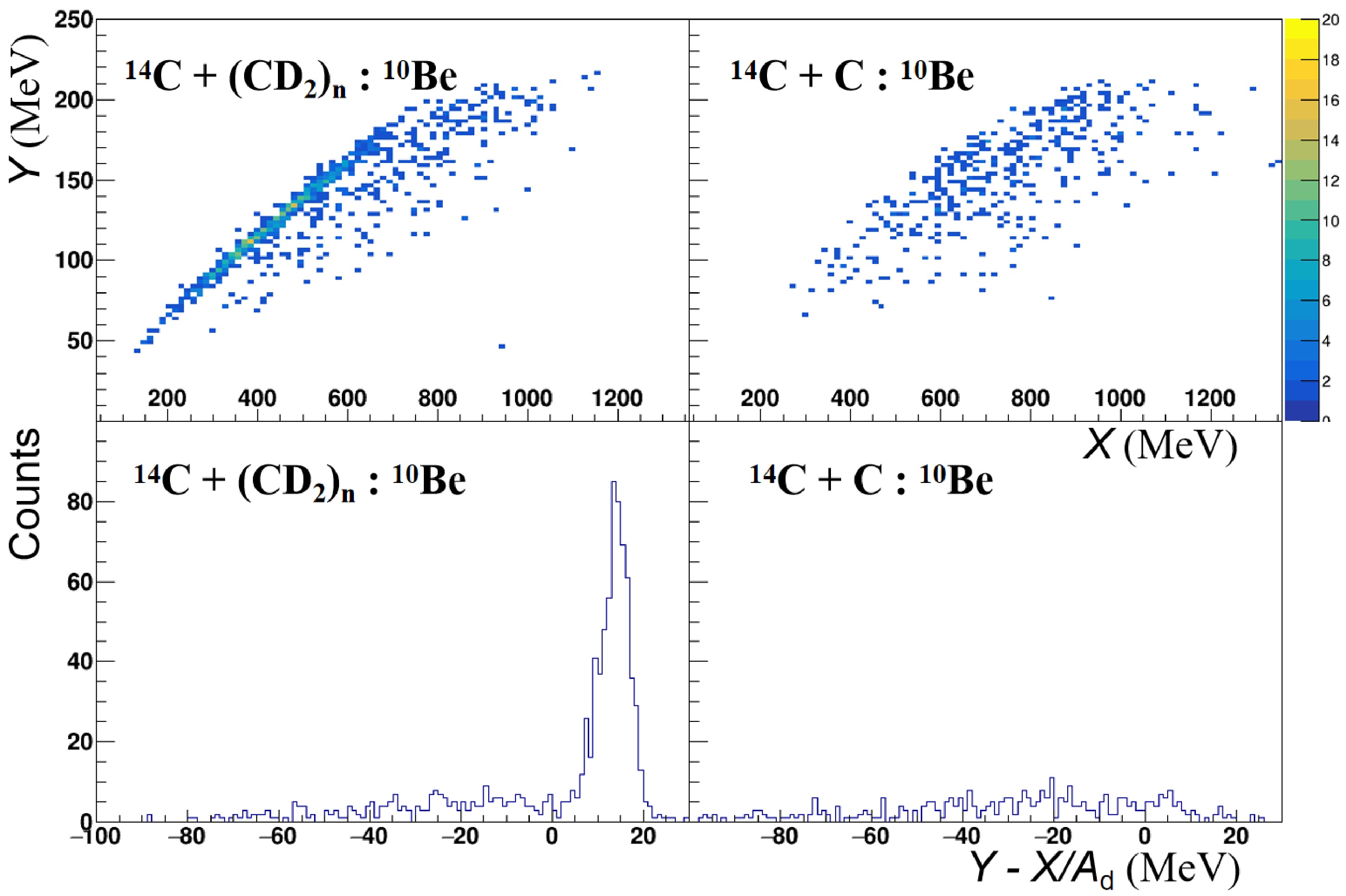
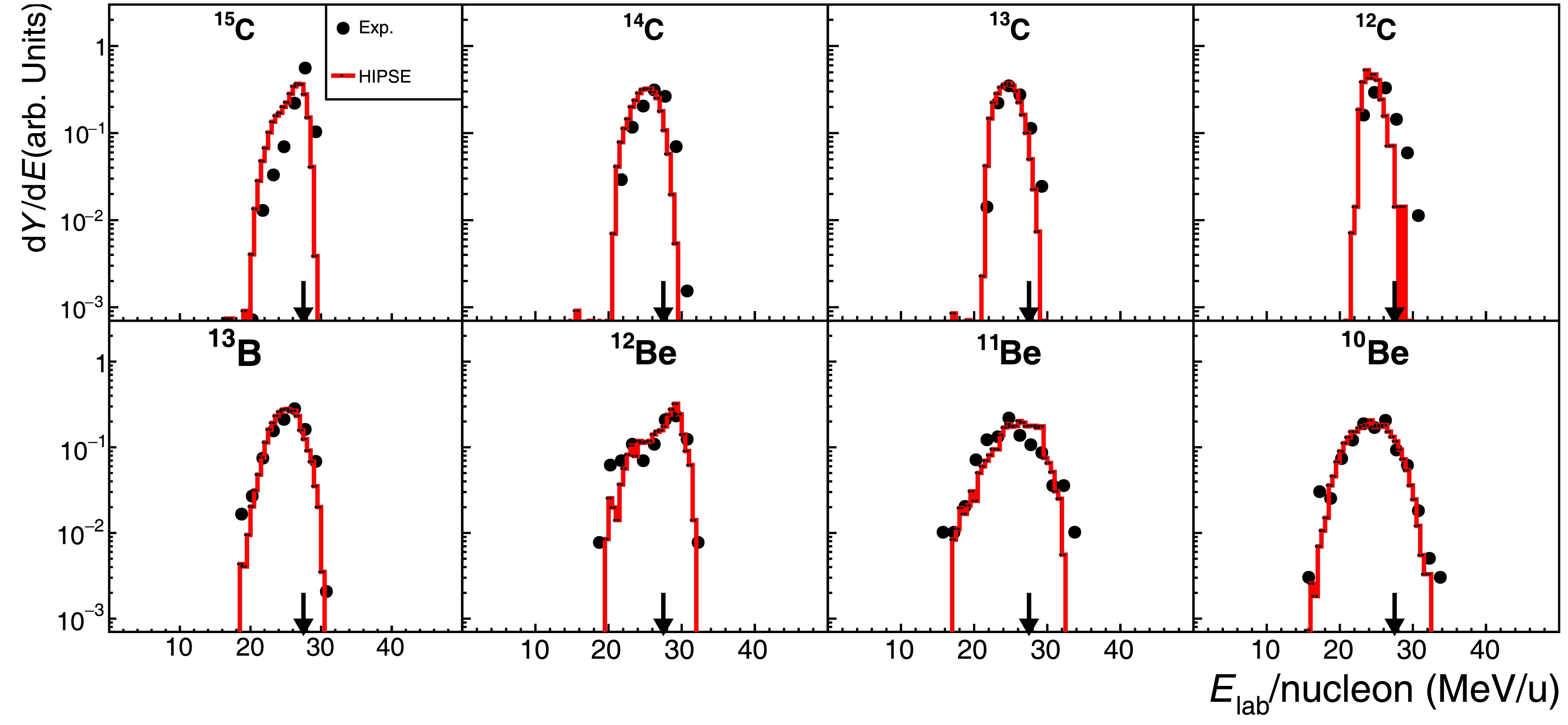
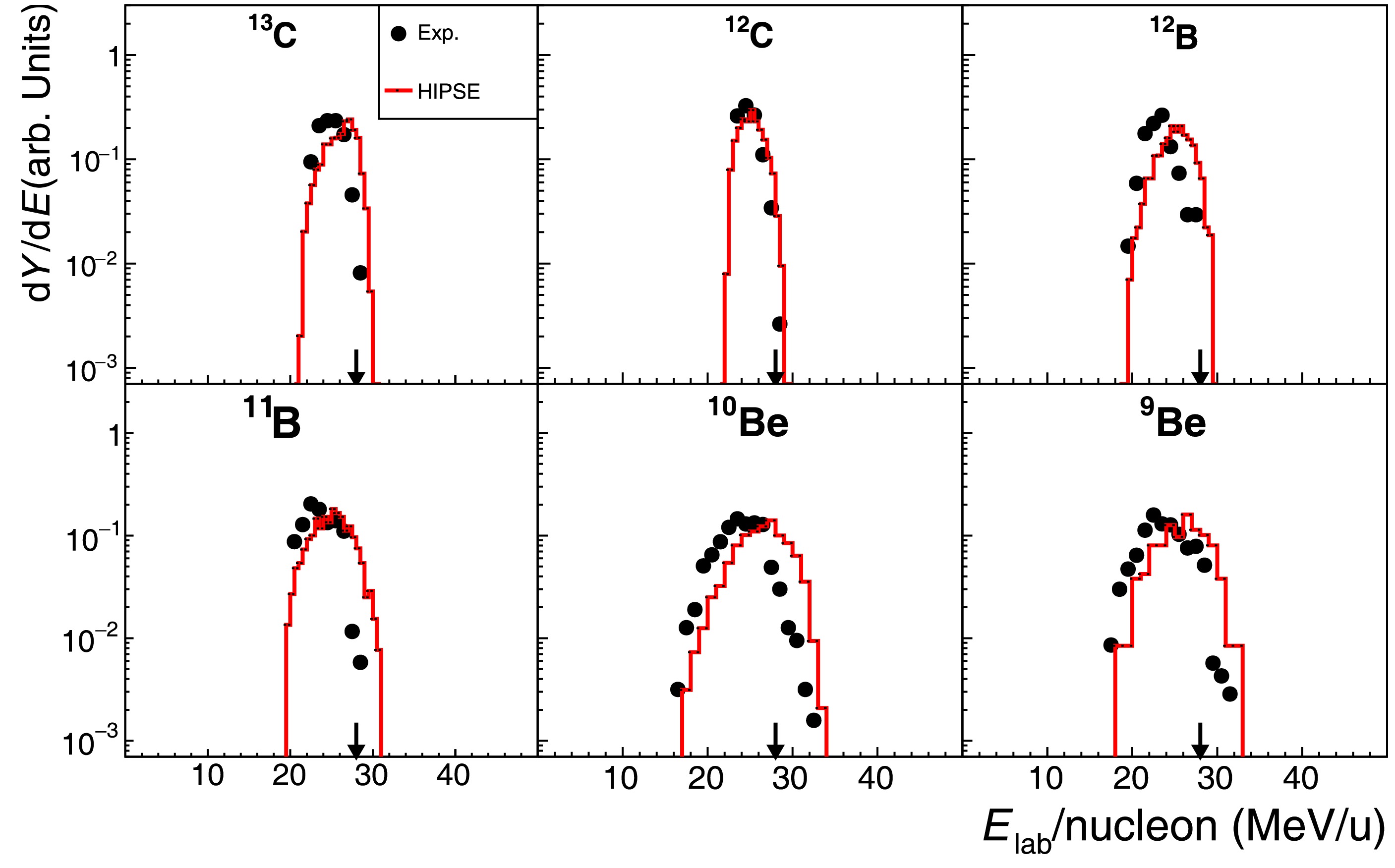
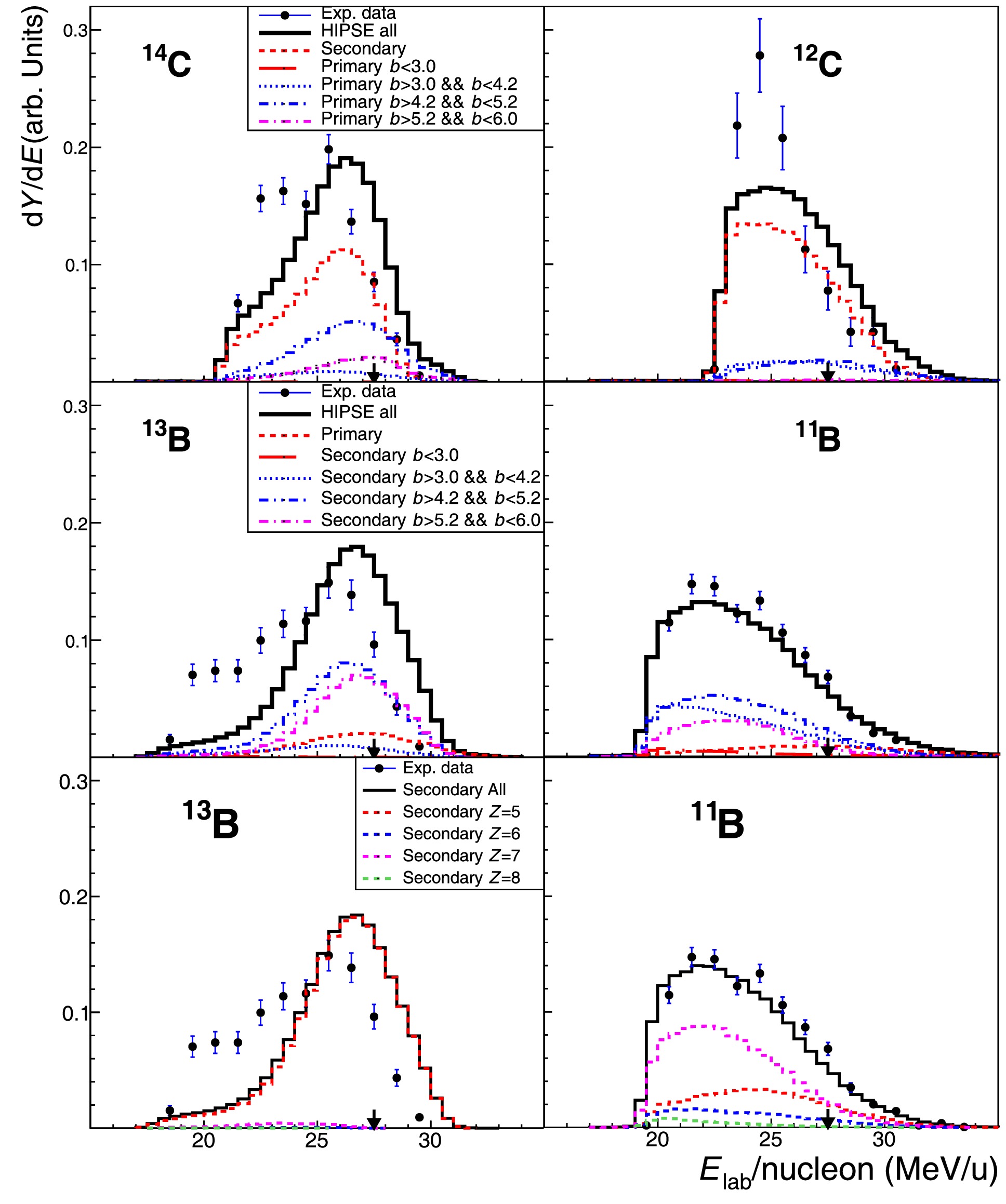
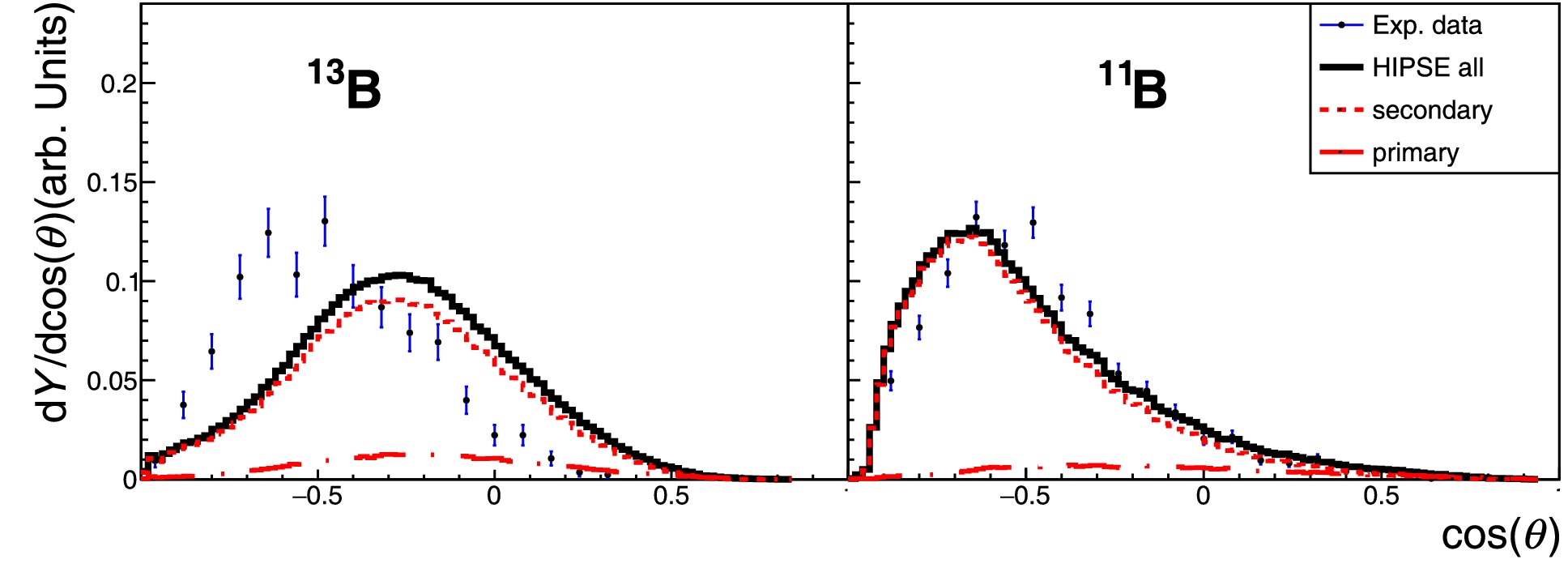
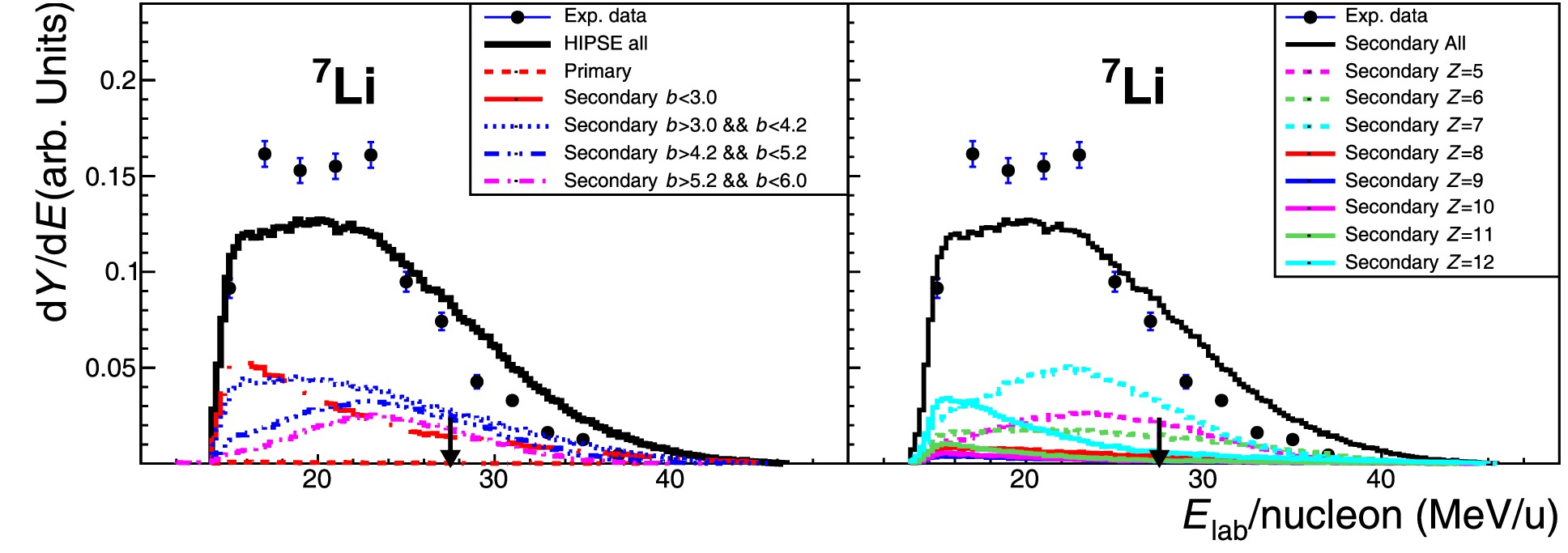
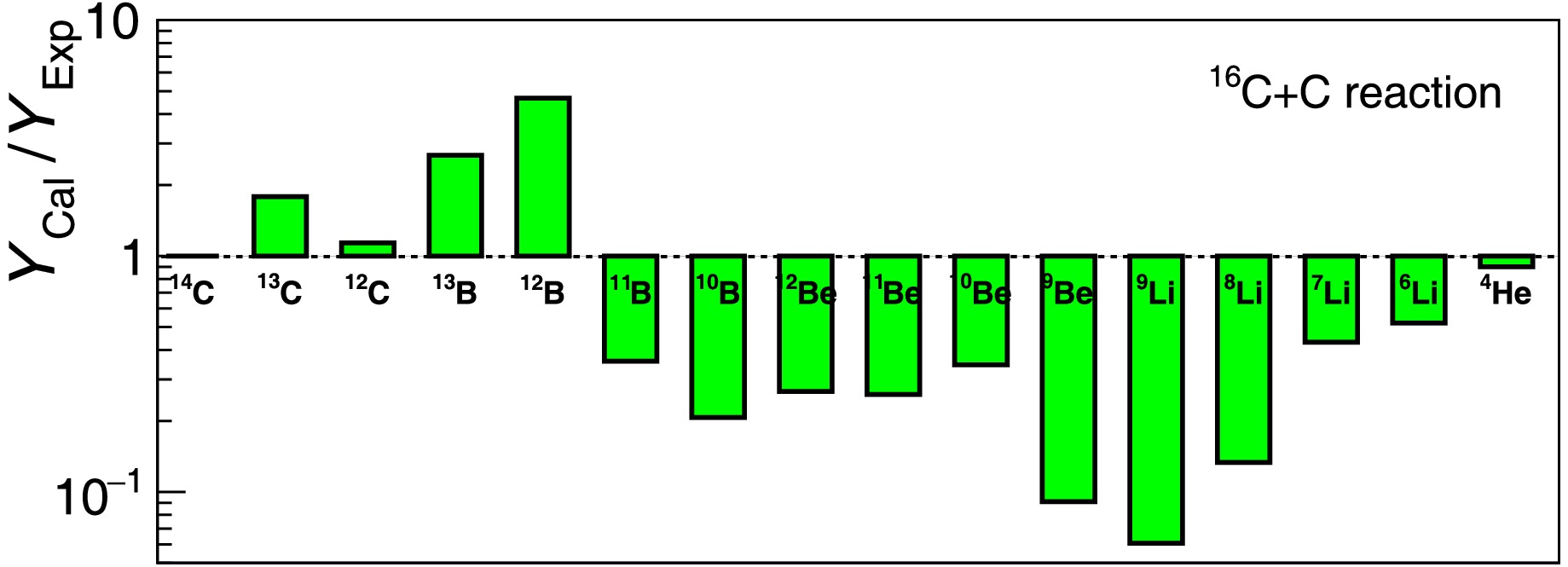
Experimental and theoretical investigation of the fragmentation reaction in the Fermi-energy domain is currently of particular importance for not only nuclear physics but also some interdisciplinary fields. In the present study, neutron-rich 14C and 16C ion beams at 27.5 MeV/nucleon were used to bombard carbon and polyethylene (CD2)n targets. Energy and angular distributions of the produced fragments were measured. Background events originating from the carbon content in (CD2)n target were efficiently excluded using an extended E-P plot method. Experimental results are systematically analyzed using the HIPSE-SIMON dynamic model. The comparison reveals that, for the carbon target, the HIPSE-SIMON calculation overestimates the yields of the beam-velocity component for fragments near the projectile and also the energy phase space for fragments far away from the projectile, suggesting that fine tuning of the overall interaction profile adopted in the model is required. In contrast, for reactions with the deuteron target, the model calculation can reasonably reproduce the experimental data. The implication of the fragmentation mechanism on the validity of the invariant mass method, as frequently used to reconstruct the clustering resonant structures in light nuclei, is also discussed.
Experimental and theoretical investigation of the fragmentation reaction in the Fermi-energy domain is currently of particular importance for not only nuclear physics but also some interdisciplinary fields. In the present study, neutron-rich 14C and 16C ion beams at 27.5 MeV/nucleon were used to bombard carbon and polyethylene (CD2)n targets. Energy and angular distributions of the produced fragments were measured. Background events originating from the carbon content in (CD2)n target were efficiently excluded using an extended E-P plot method. Experimental results are systematically analyzed using the HIPSE-SIMON dynamic model. The comparison reveals that, for the carbon target, the HIPSE-SIMON calculation overestimates the yields of the beam-velocity component for fragments near the projectile and also the energy phase space for fragments far away from the projectile, suggesting that fine tuning of the overall interaction profile adopted in the model is required. In contrast, for reactions with the deuteron target, the model calculation can reasonably reproduce the experimental data. The implication of the fragmentation mechanism on the validity of the invariant mass method, as frequently used to reconstruct the clustering resonant structures in light nuclei, is also discussed.
2026, 50(3): 034002. doi: 10.1088/1674-1137/ae2263
Abstract:
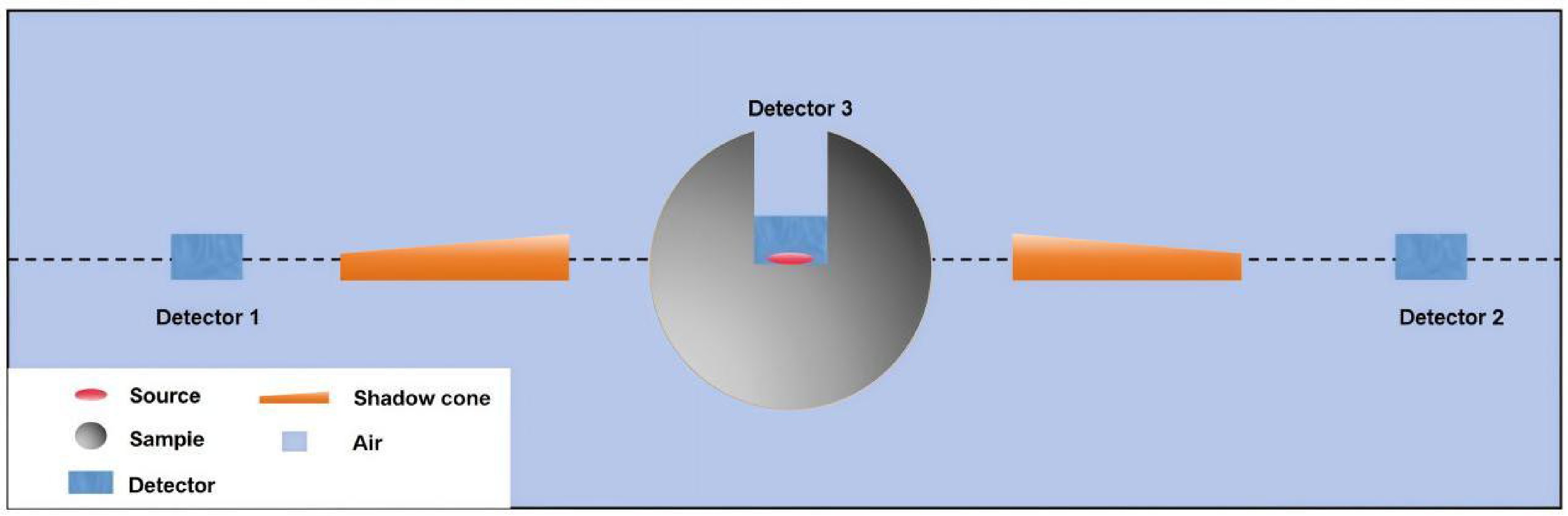
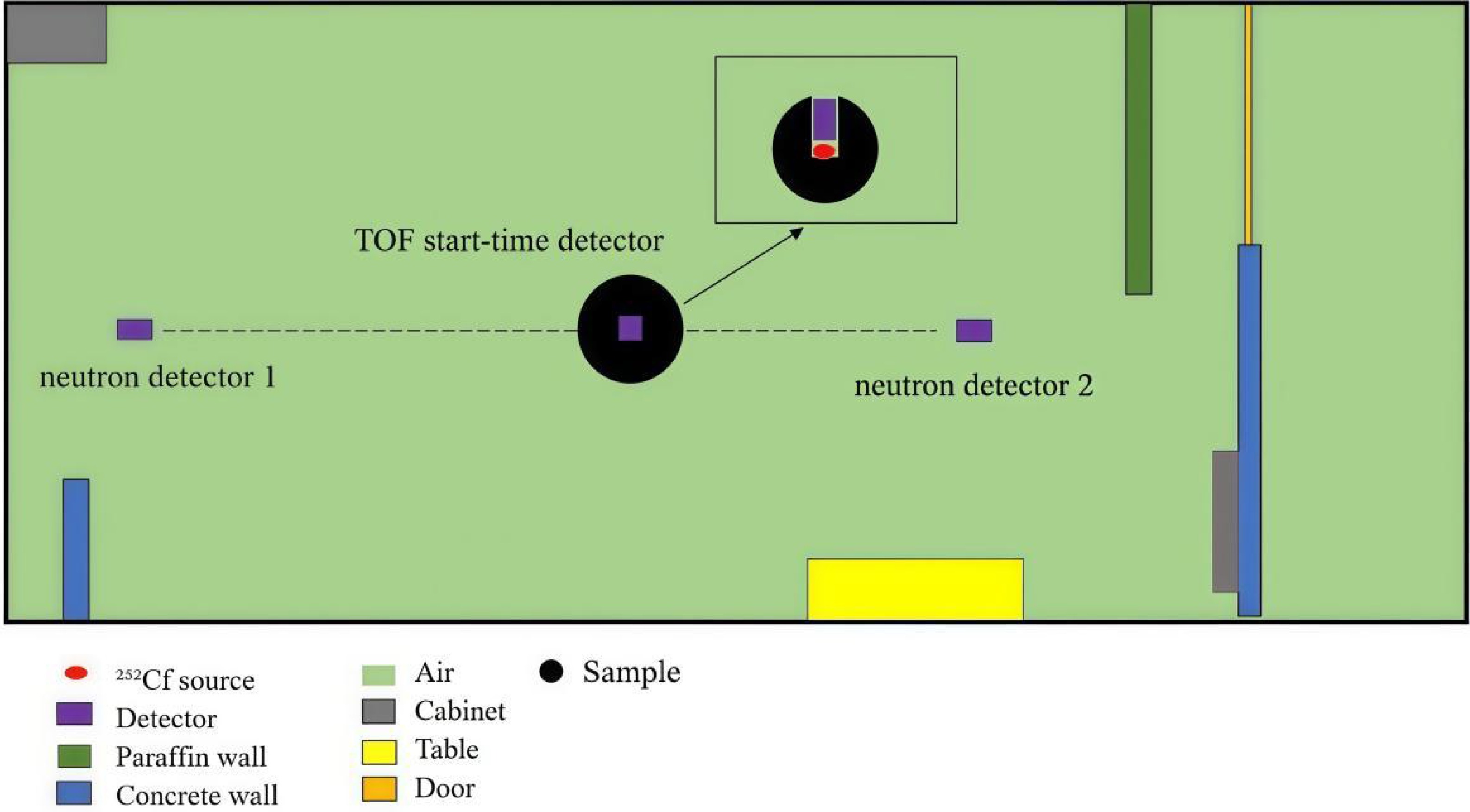
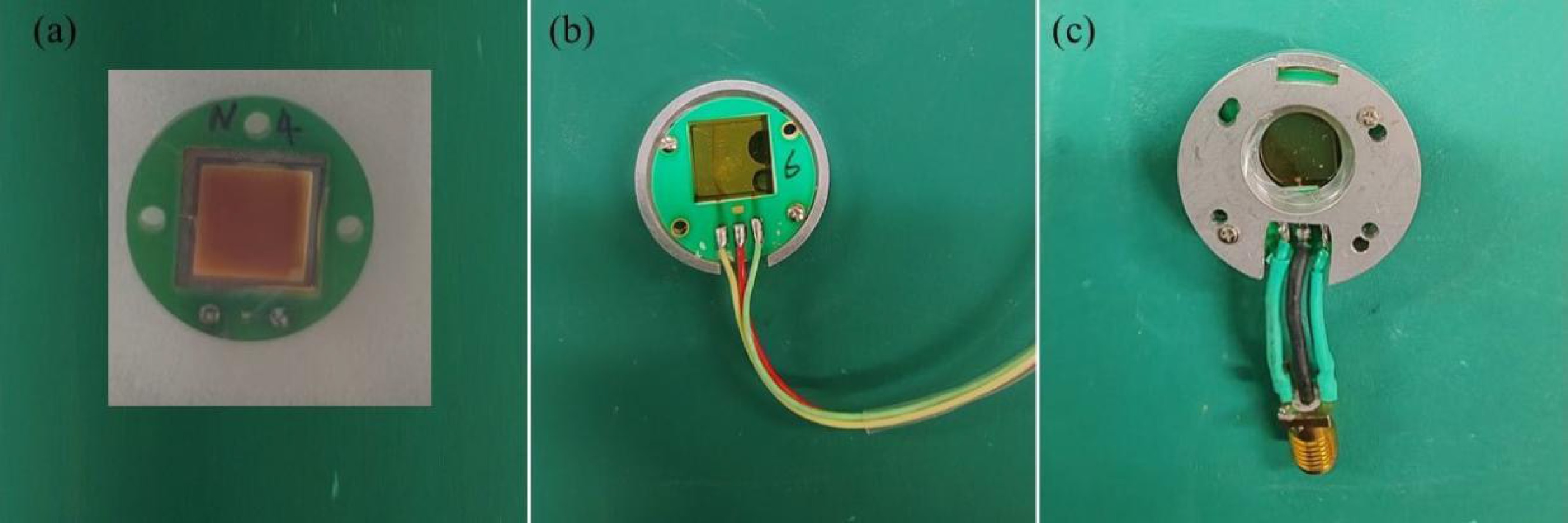
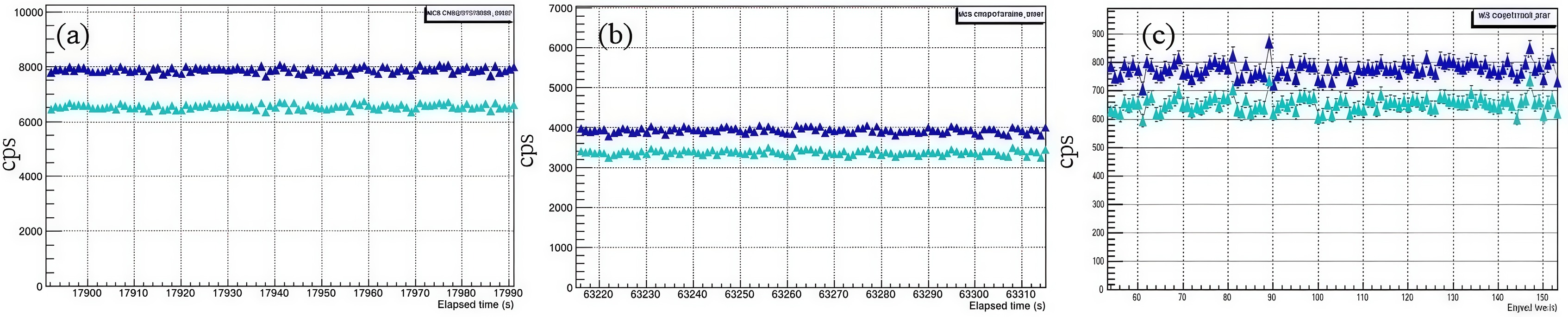
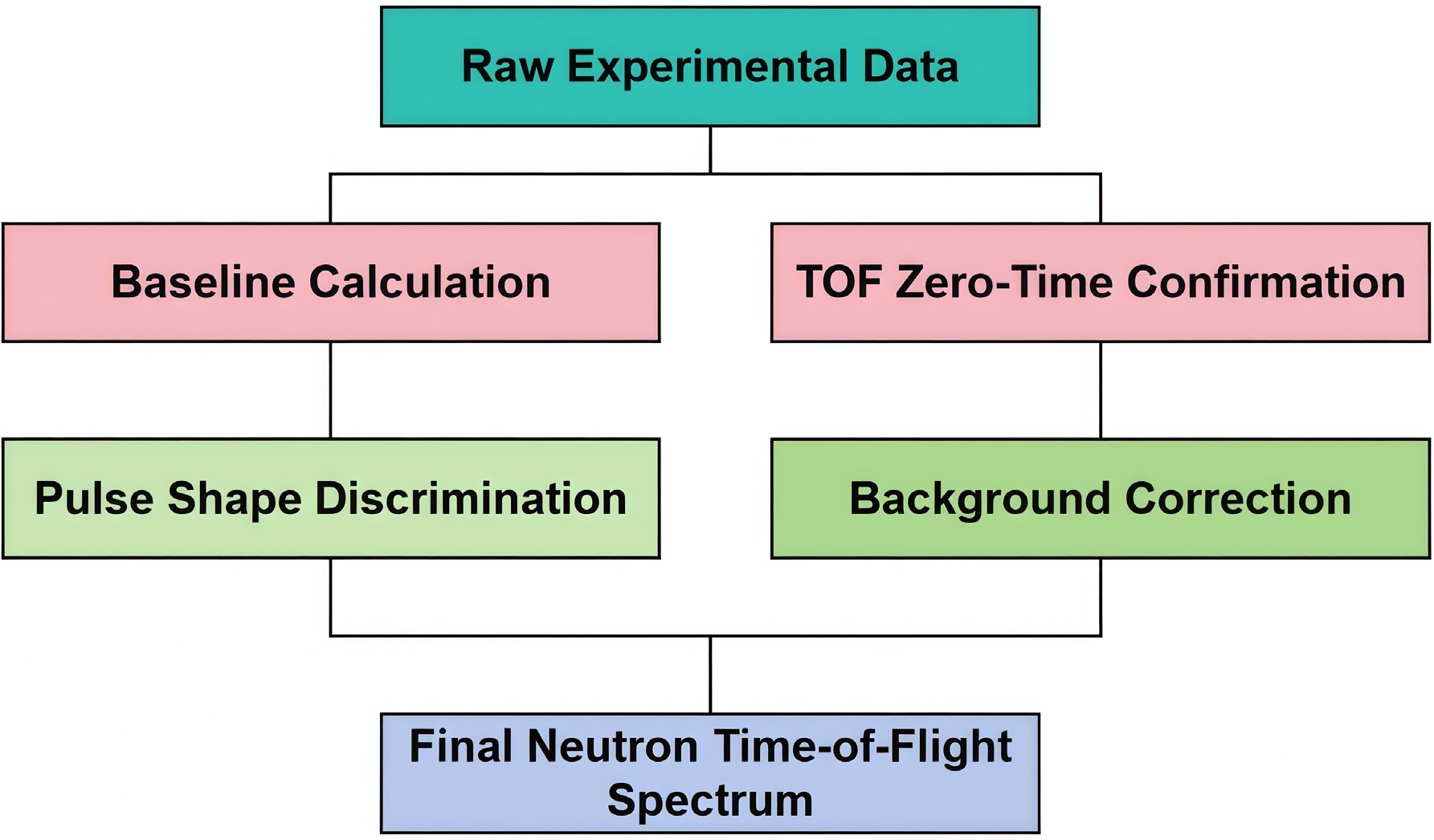
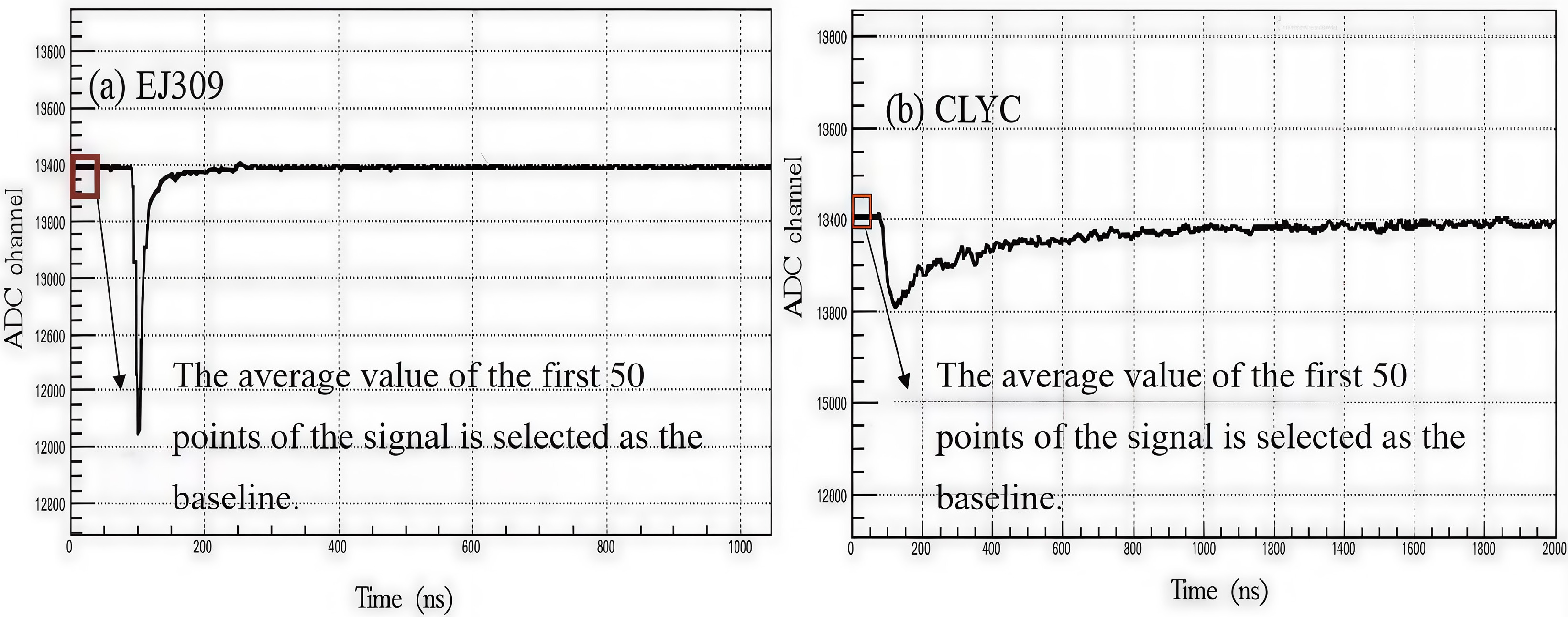
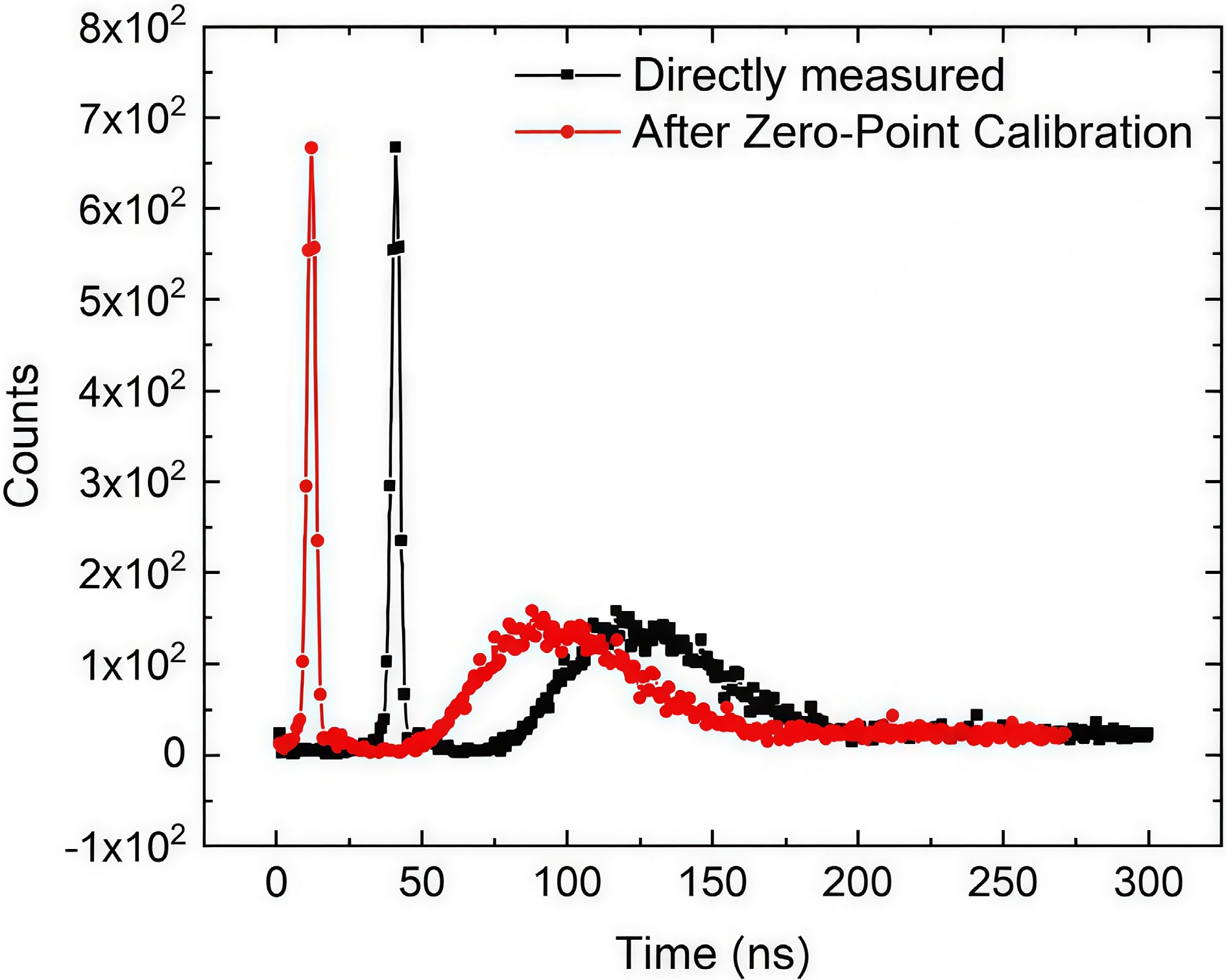
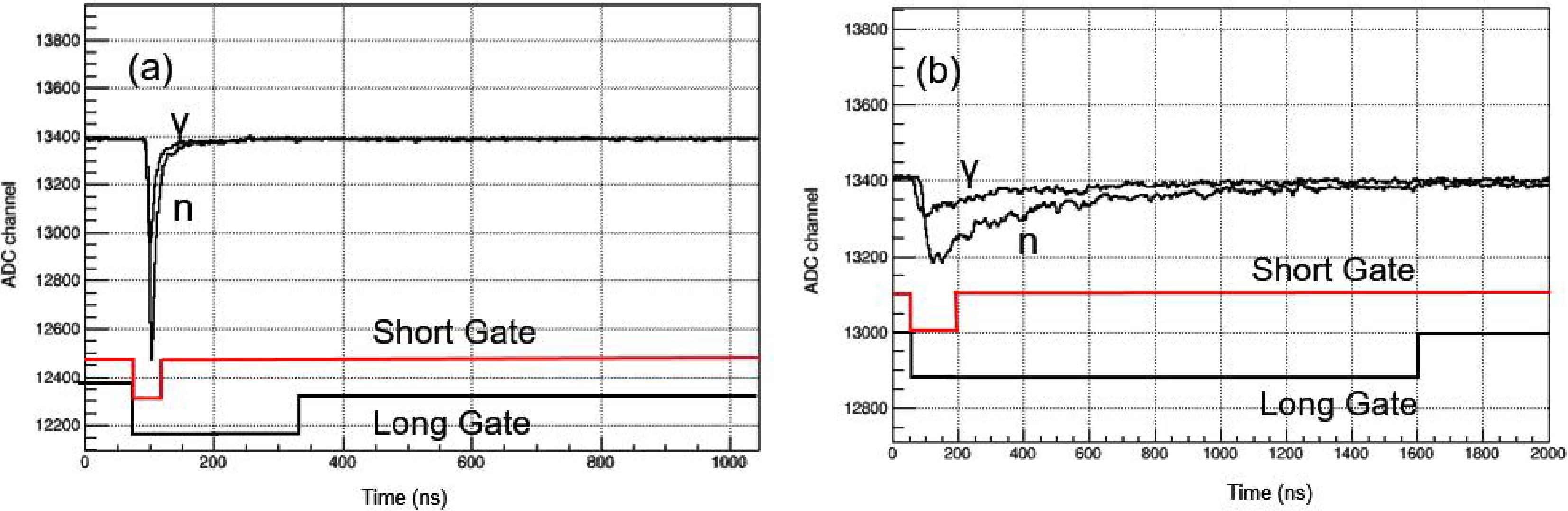
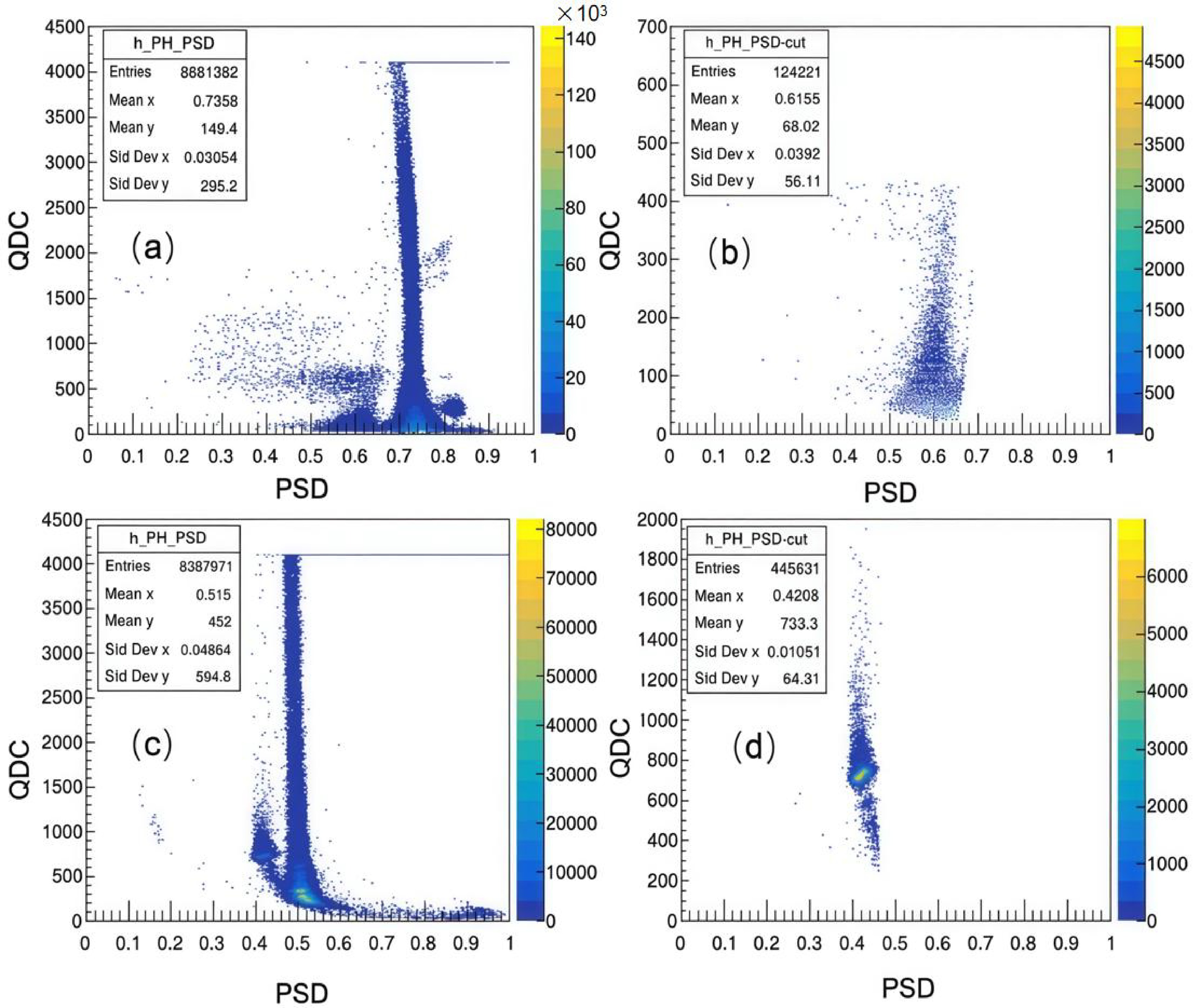
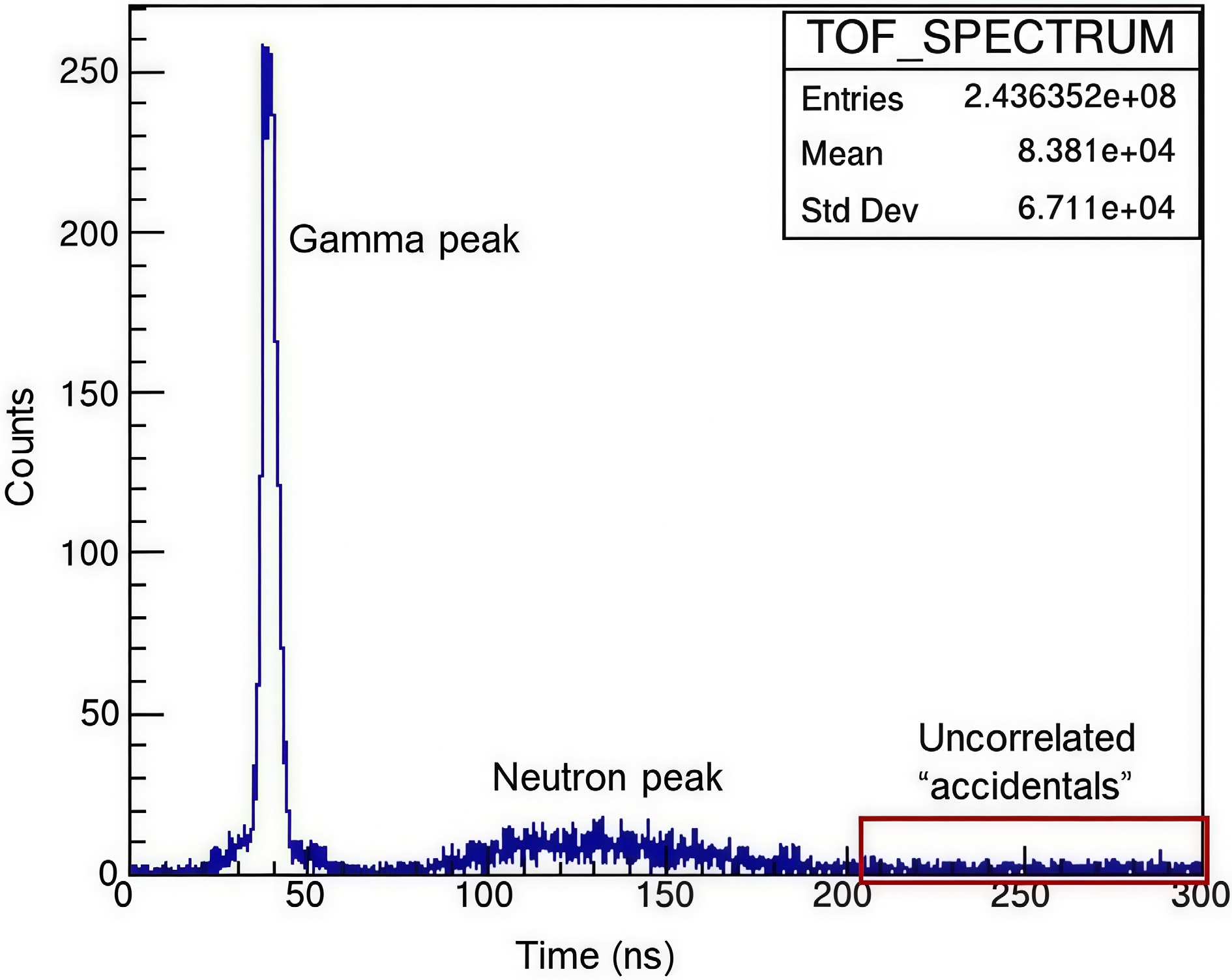
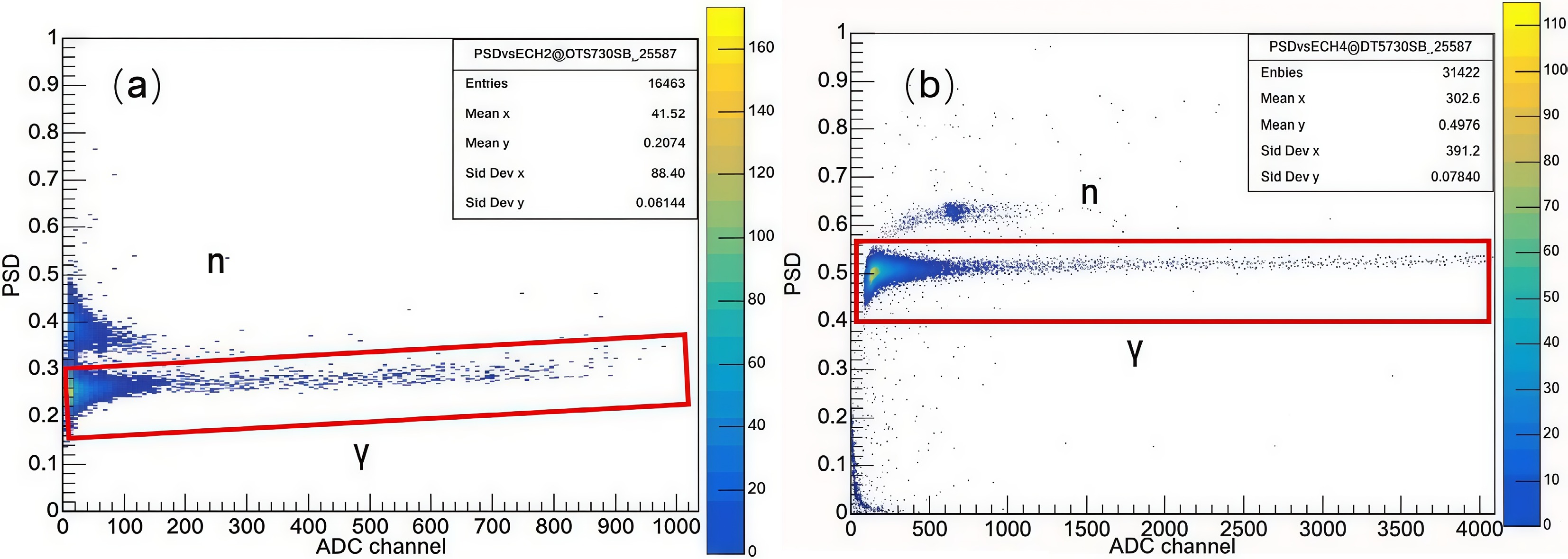
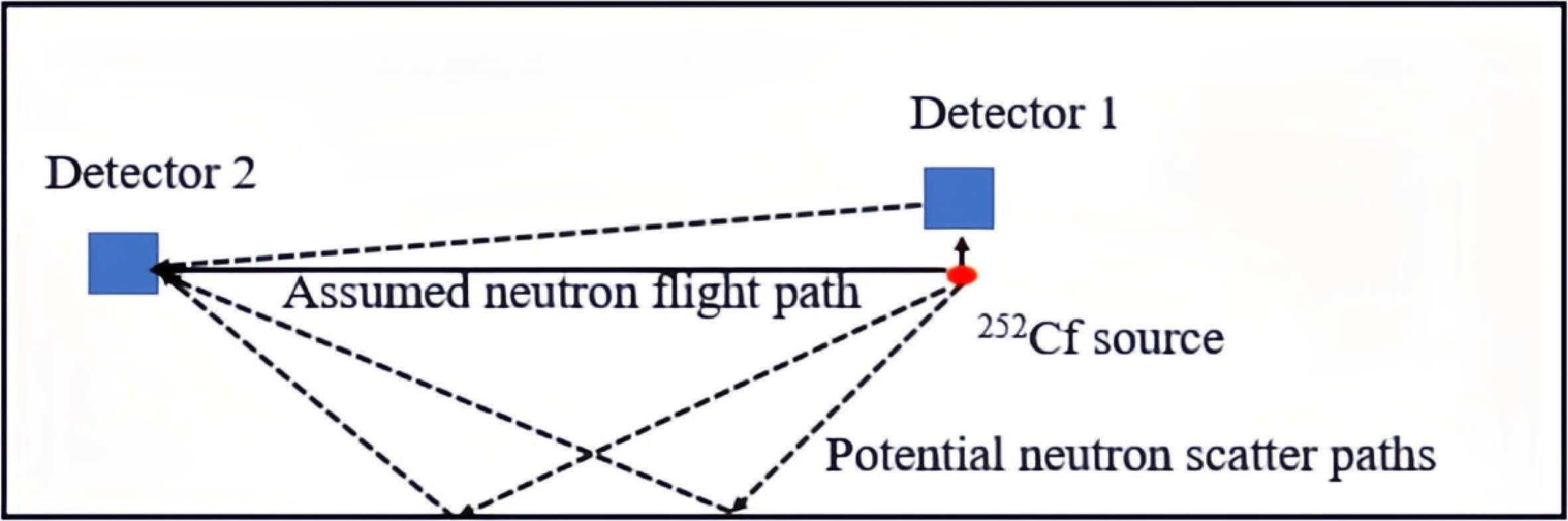
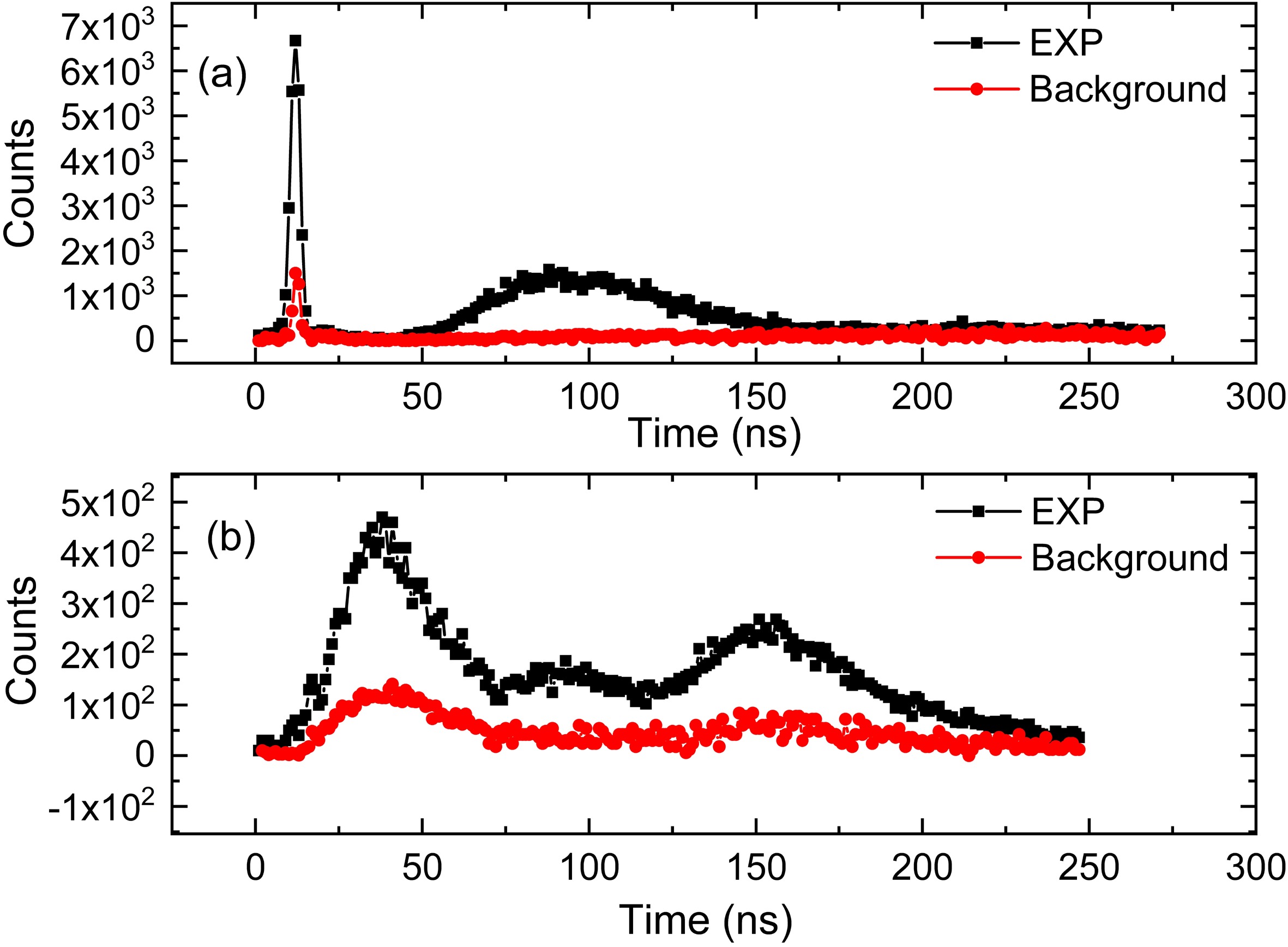
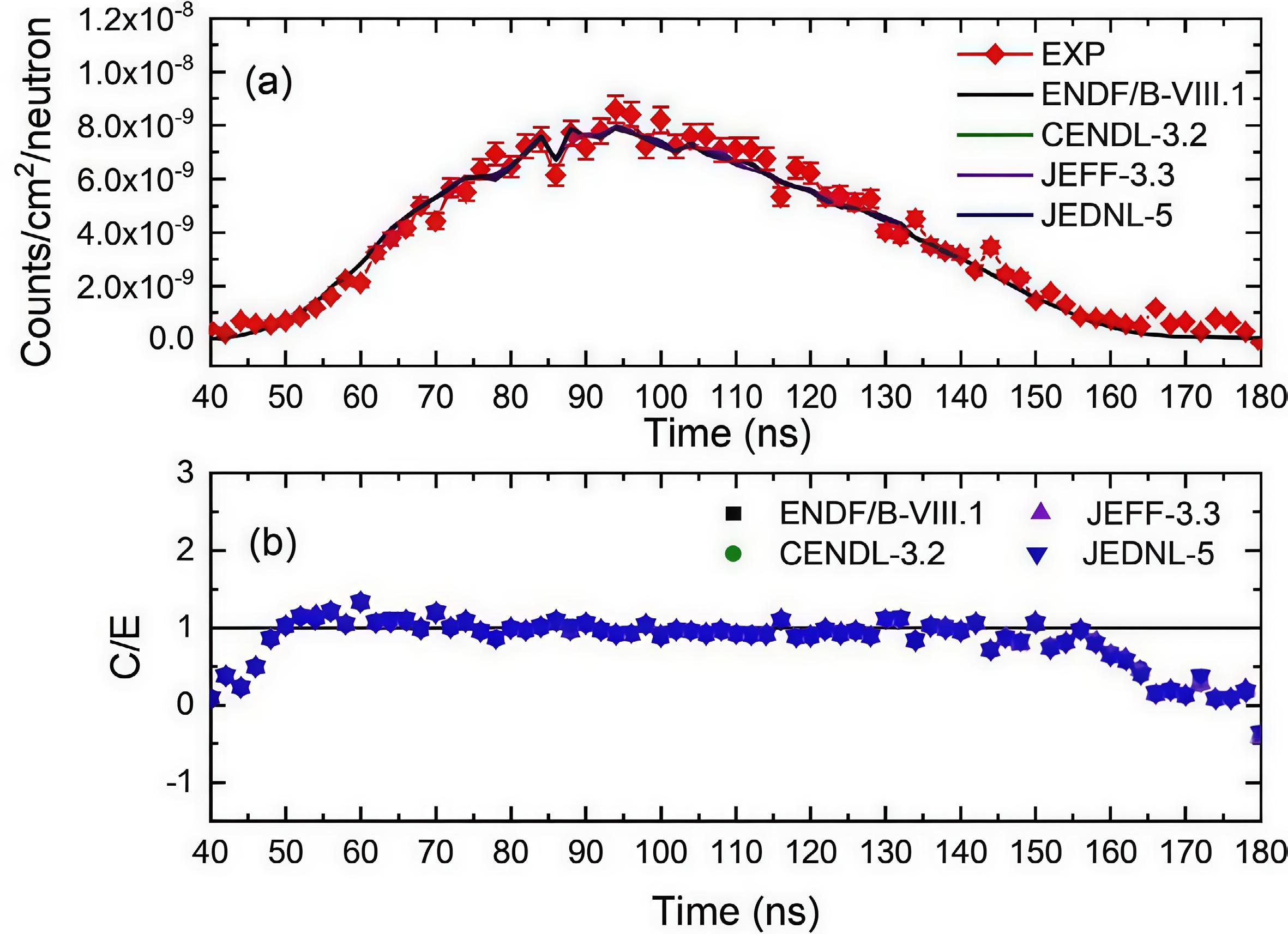
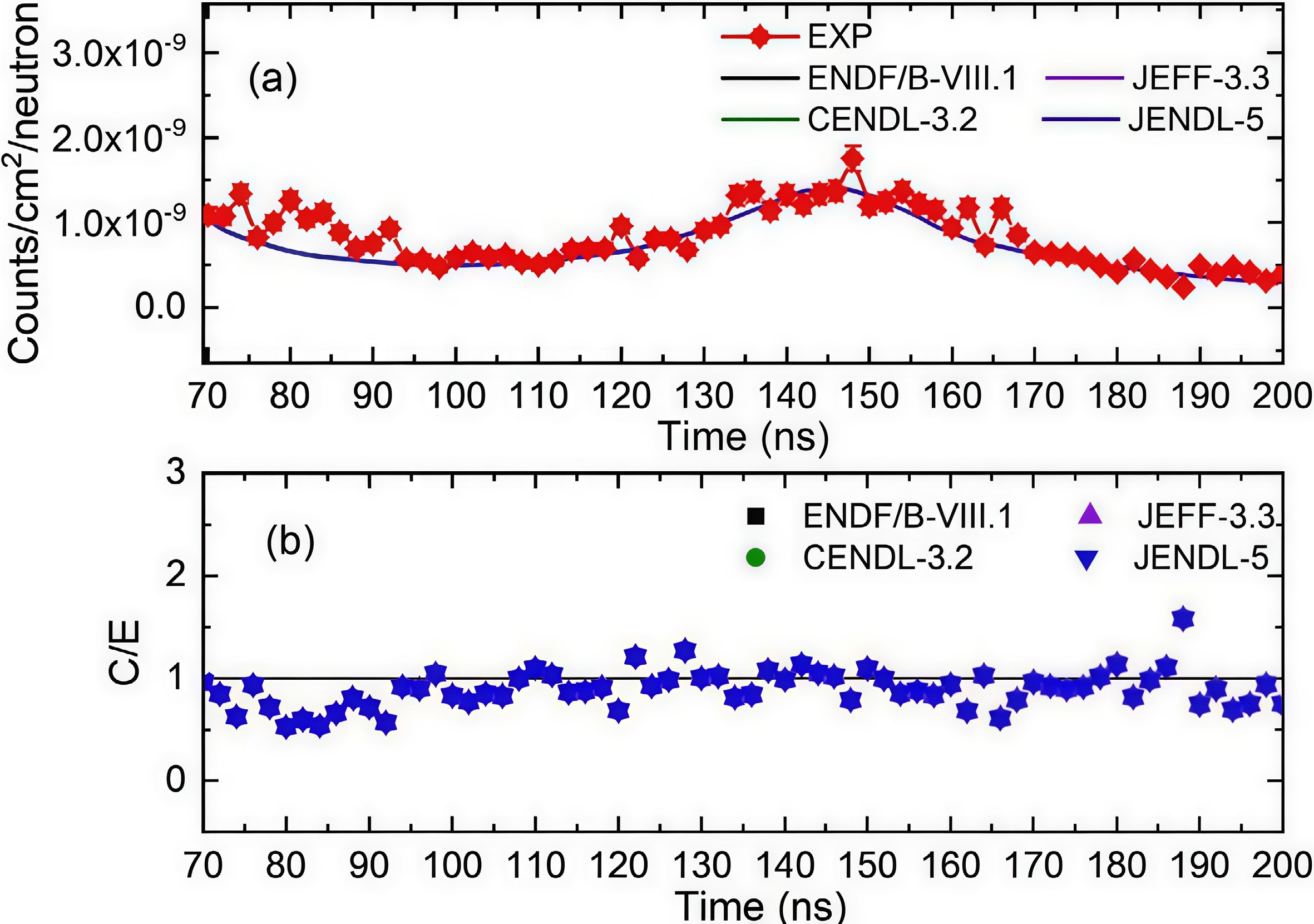
This paper presents the development and validation of China’s first benchmark measurement system for neutron leakage time-of-flight (TOF) spectra using a 252Cf spontaneous fission source and spherical polyethylene sample. EJ-309 and CLYC scintillation detectors were used for neutron detection, and a shadow cone was employed for background suppression. Notably, the SiC detector was, for the first time on this platform, applied as the start-time signal generator in TOF spectrum measurement. The TOF spectrum covering the energy range of 0.15−8.00 MeV was measured, and the results were systematically compared with evaluated data from four major nuclear libraries: ENDF/B-VIII.1, JEFF-3.3, JENDL-5, and CENDL-3.2. The comparison revealed strong agreement across the full spectrum, with calculated to experimental (C/E) deviations remaining within 5% in the high-energy region and within 13% at low energies. These results verify the system’s stability and suitability for integral experiments. The established benchmark platform provides a strong technical foundation for future neutron nuclear data validation, particularly in shielding applications and the improvement of fission-spectrum nuclear databases.
This paper presents the development and validation of China’s first benchmark measurement system for neutron leakage time-of-flight (TOF) spectra using a 252Cf spontaneous fission source and spherical polyethylene sample. EJ-309 and CLYC scintillation detectors were used for neutron detection, and a shadow cone was employed for background suppression. Notably, the SiC detector was, for the first time on this platform, applied as the start-time signal generator in TOF spectrum measurement. The TOF spectrum covering the energy range of 0.15−8.00 MeV was measured, and the results were systematically compared with evaluated data from four major nuclear libraries: ENDF/B-VIII.1, JEFF-3.3, JENDL-5, and CENDL-3.2. The comparison revealed strong agreement across the full spectrum, with calculated to experimental (C/E) deviations remaining within 5% in the high-energy region and within 13% at low energies. These results verify the system’s stability and suitability for integral experiments. The established benchmark platform provides a strong technical foundation for future neutron nuclear data validation, particularly in shielding applications and the improvement of fission-spectrum nuclear databases.
2026, 50(3): 034003. doi: 10.1088/1674-1137/ae1f06
Abstract:
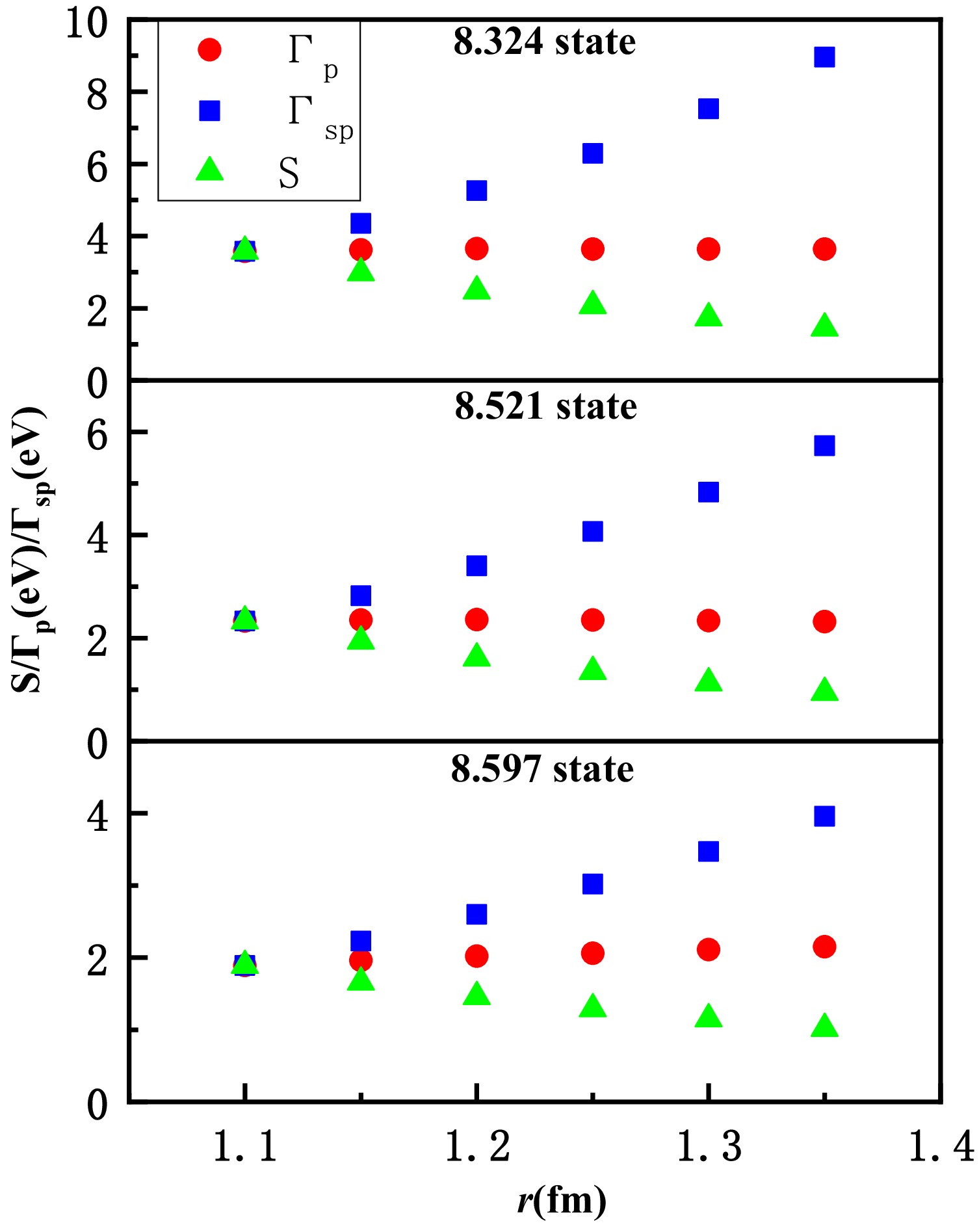
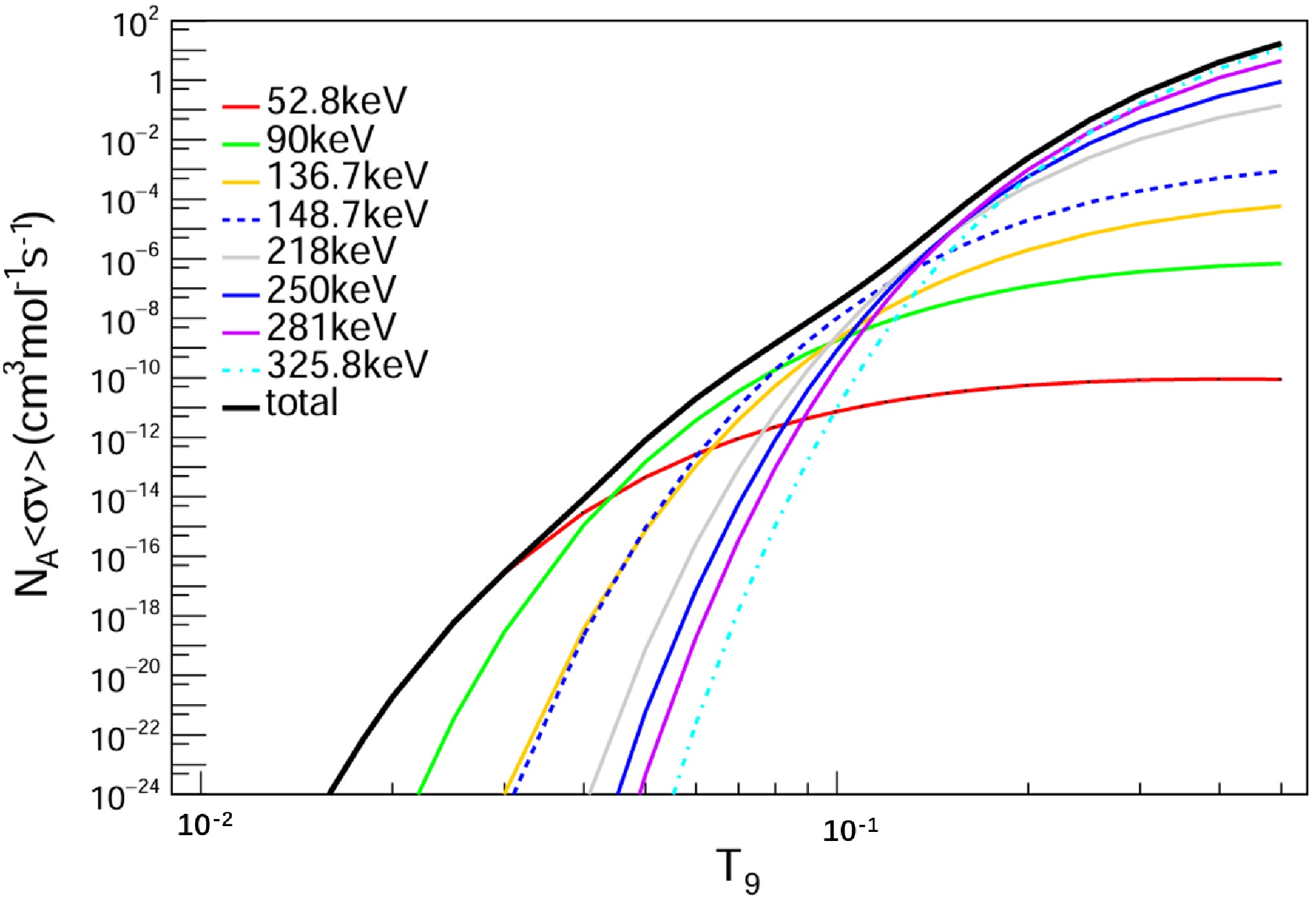
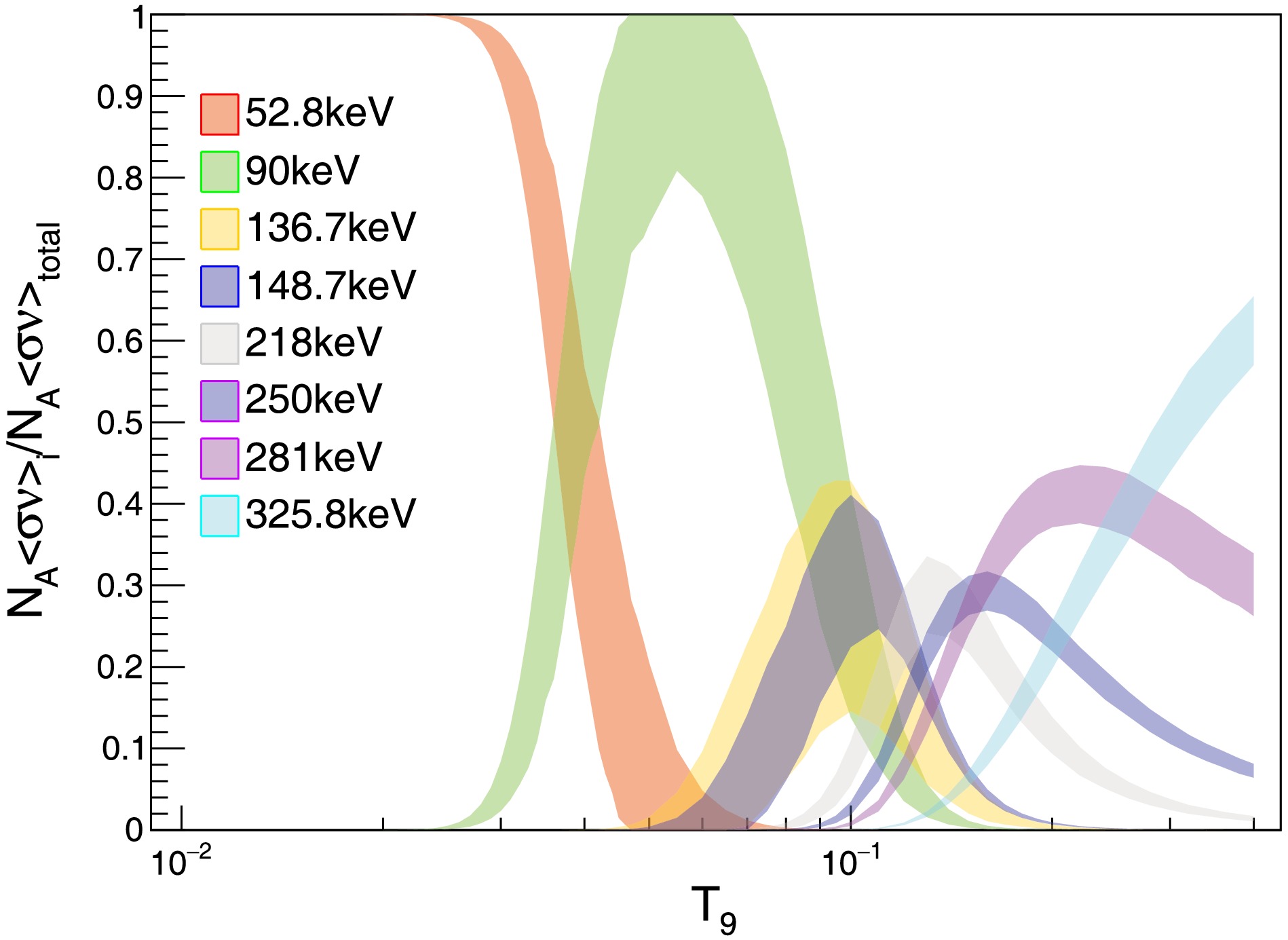
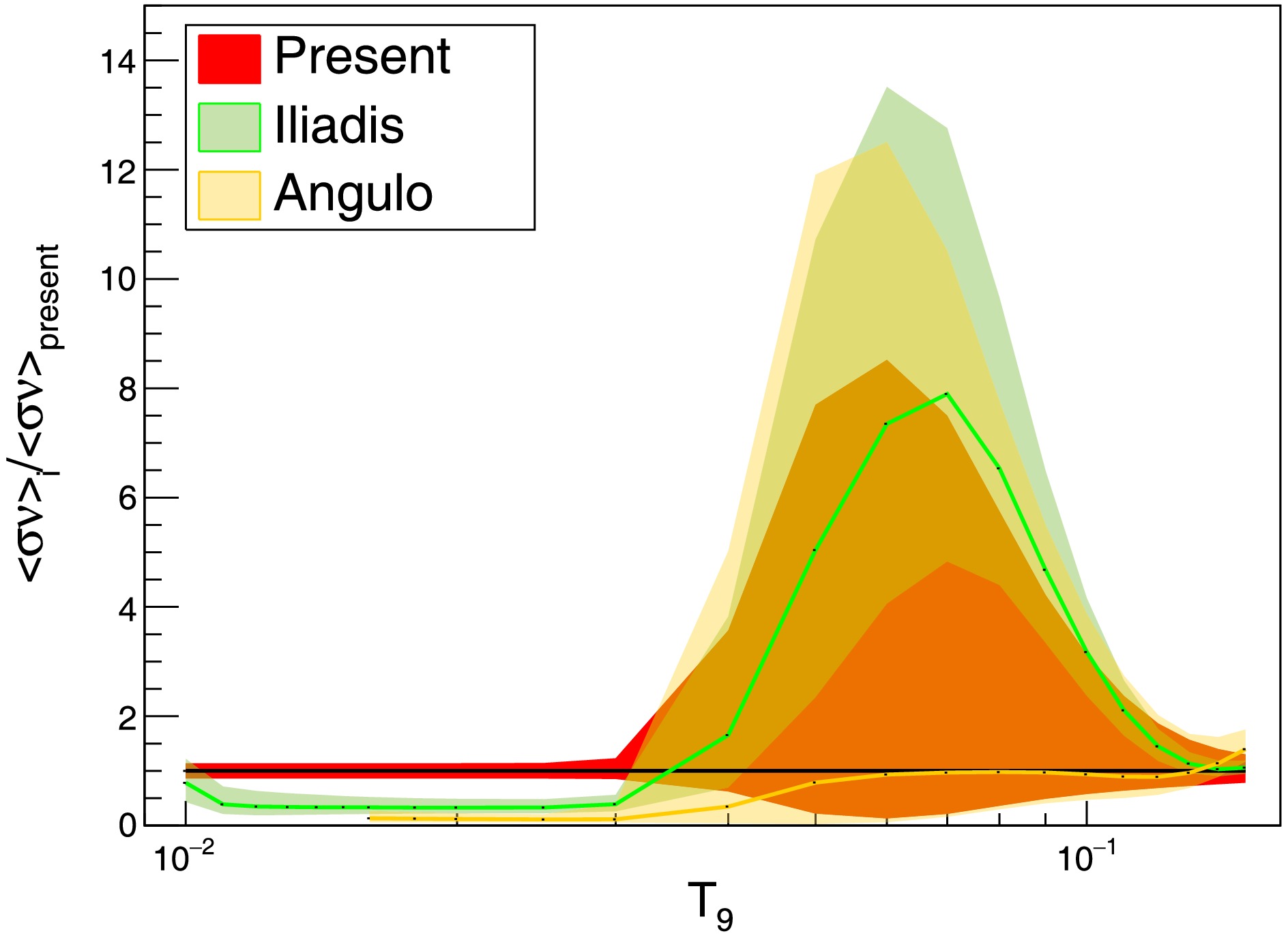
The 26Mg\begin{document}$(p,\,\gamma)$\end{document} \begin{document}$T_{9}<0.03$\end{document}
The 26Mg
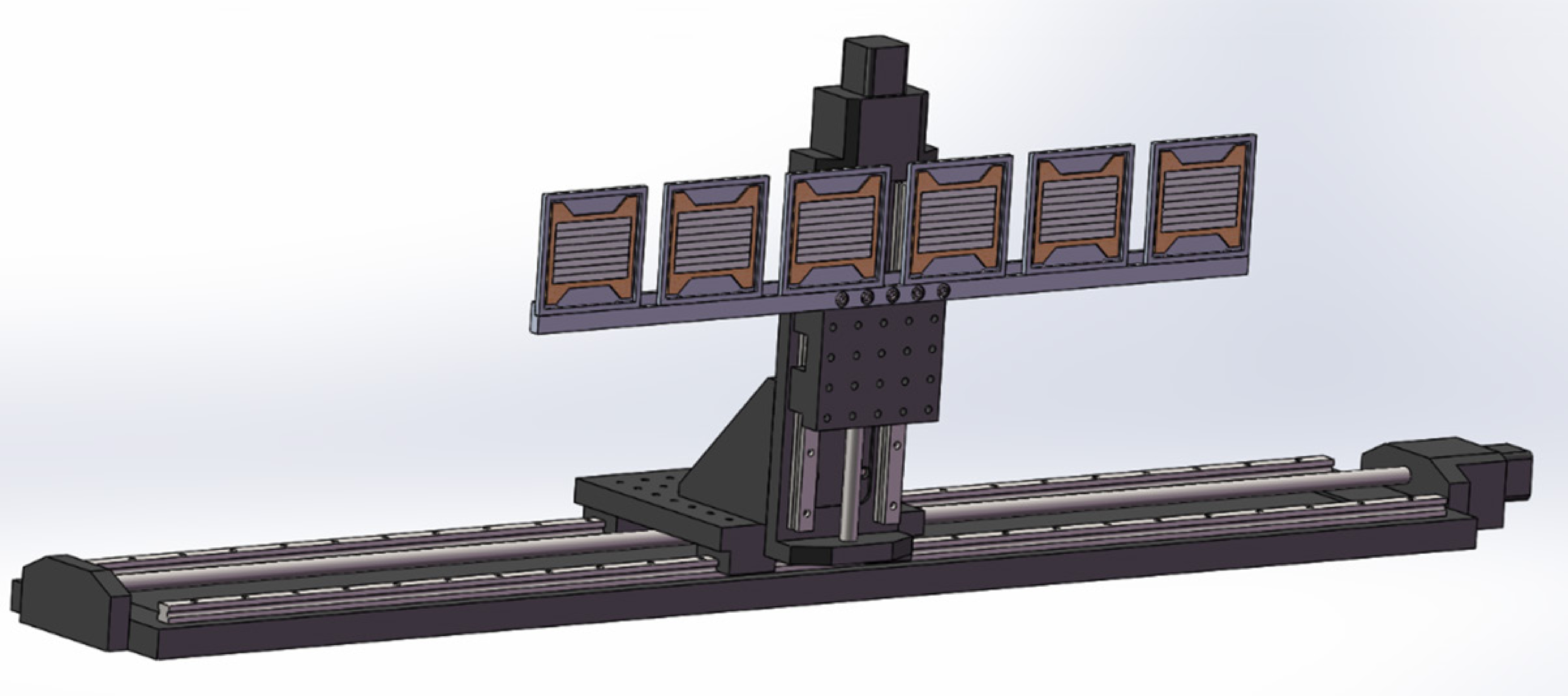
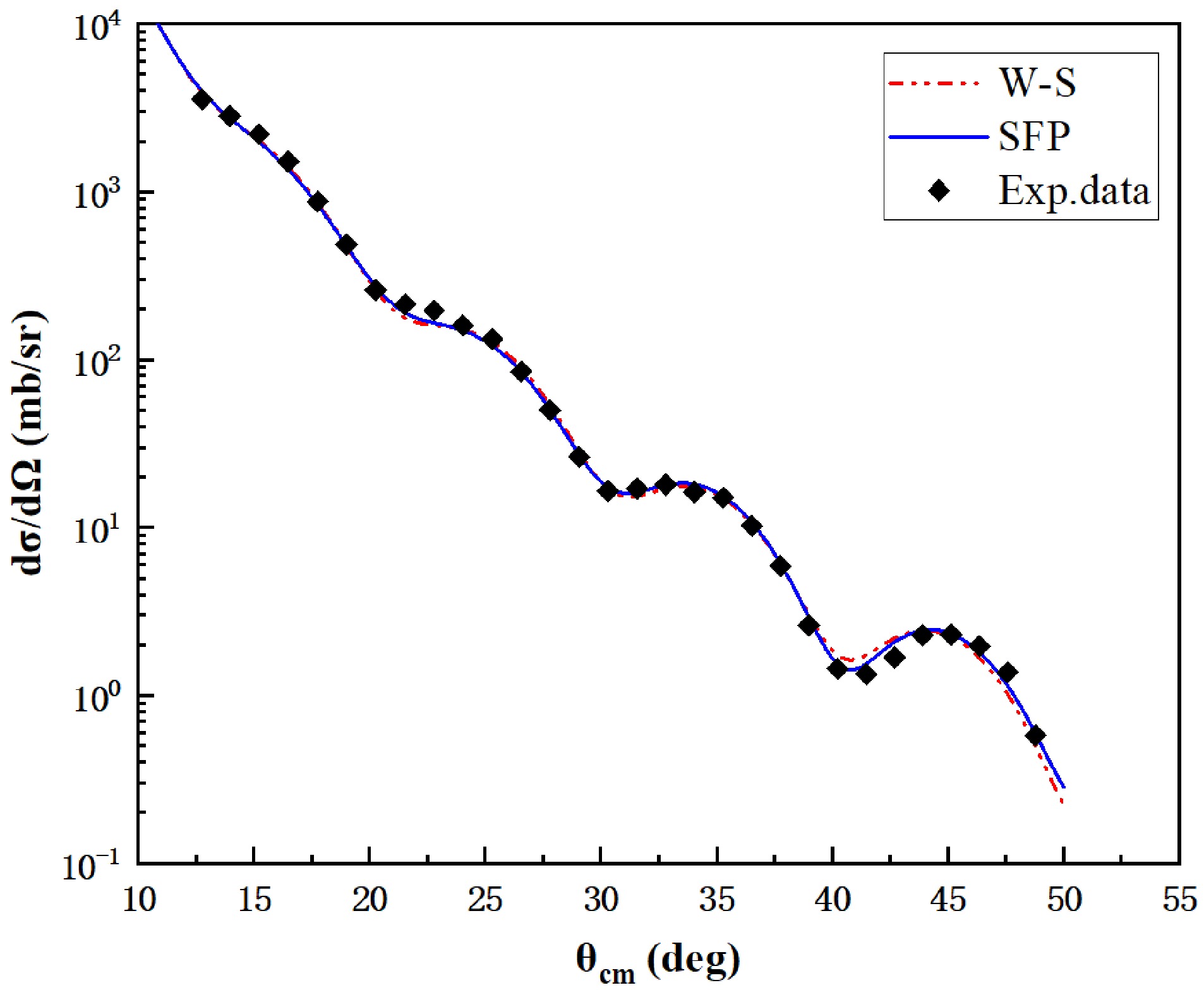
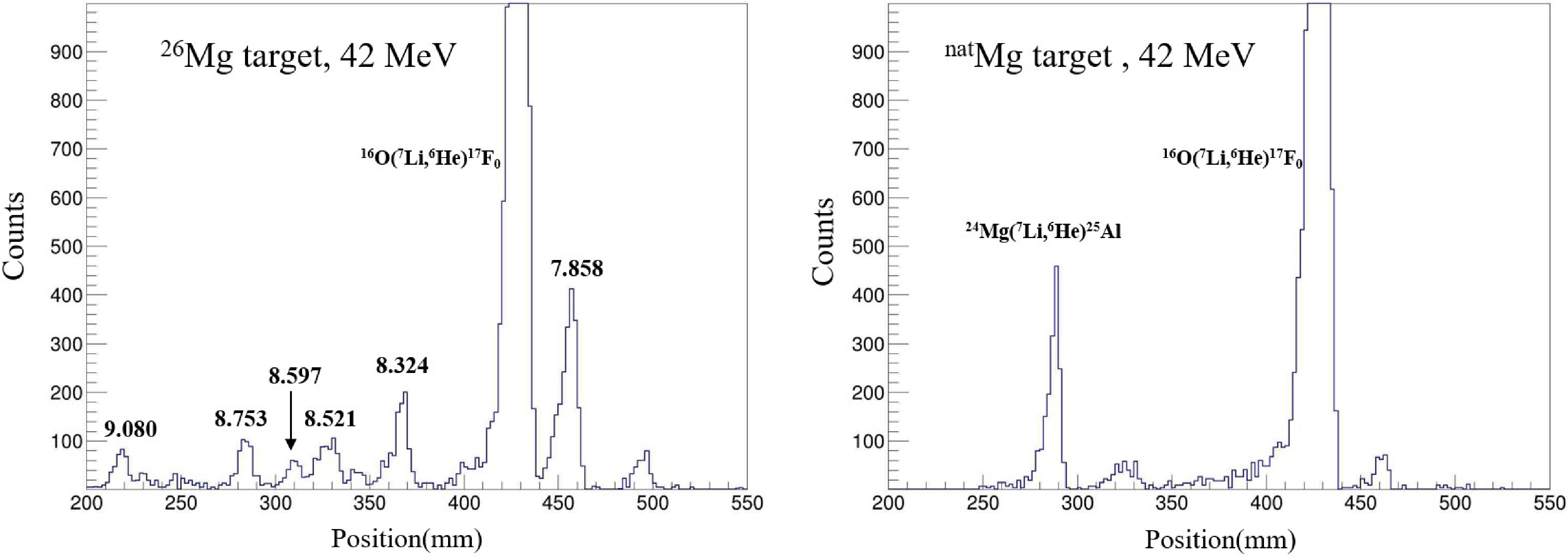
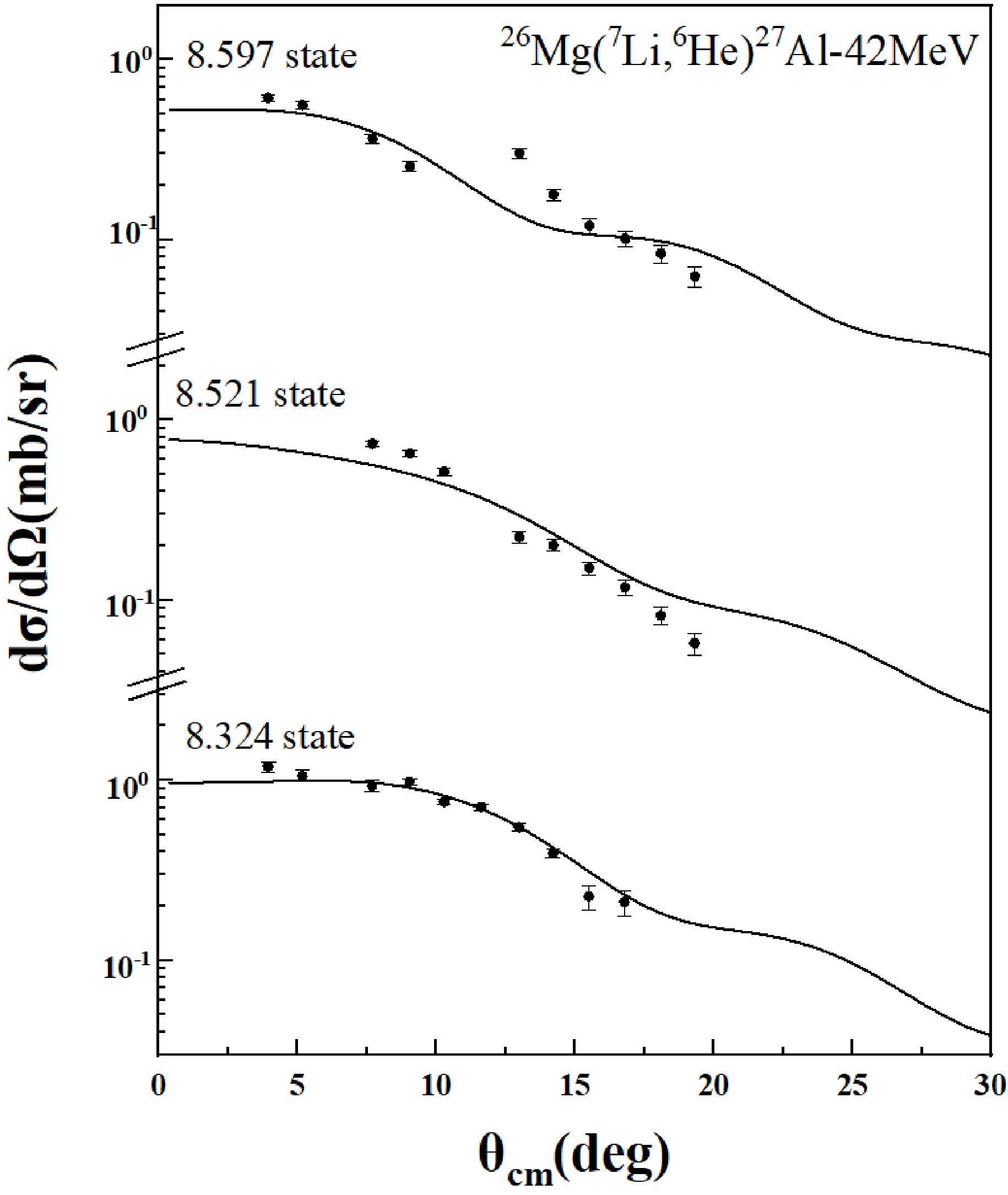
2026, 50(3): 034004. doi: 10.1088/1674-1137/ae1cb1
Abstract:
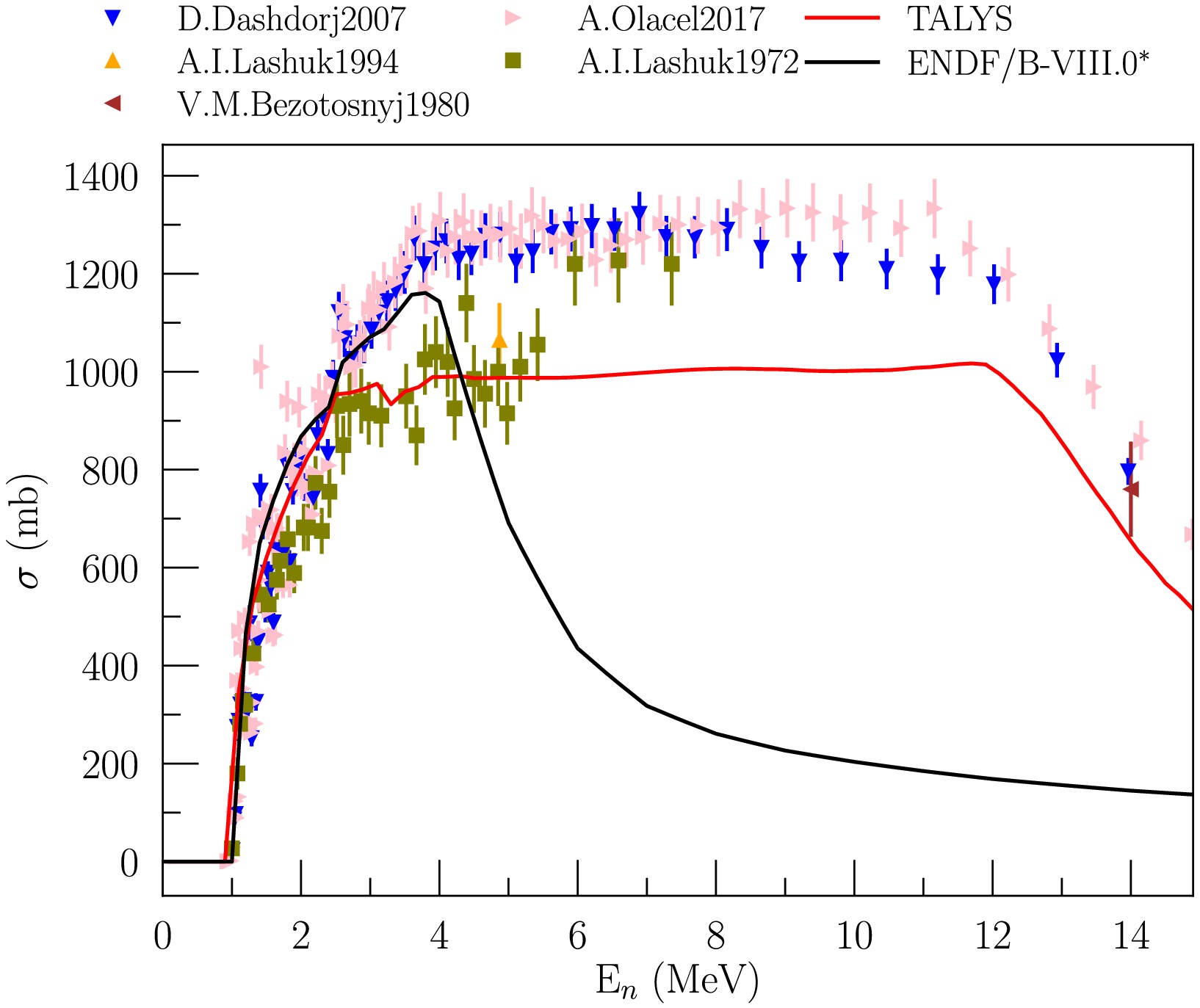
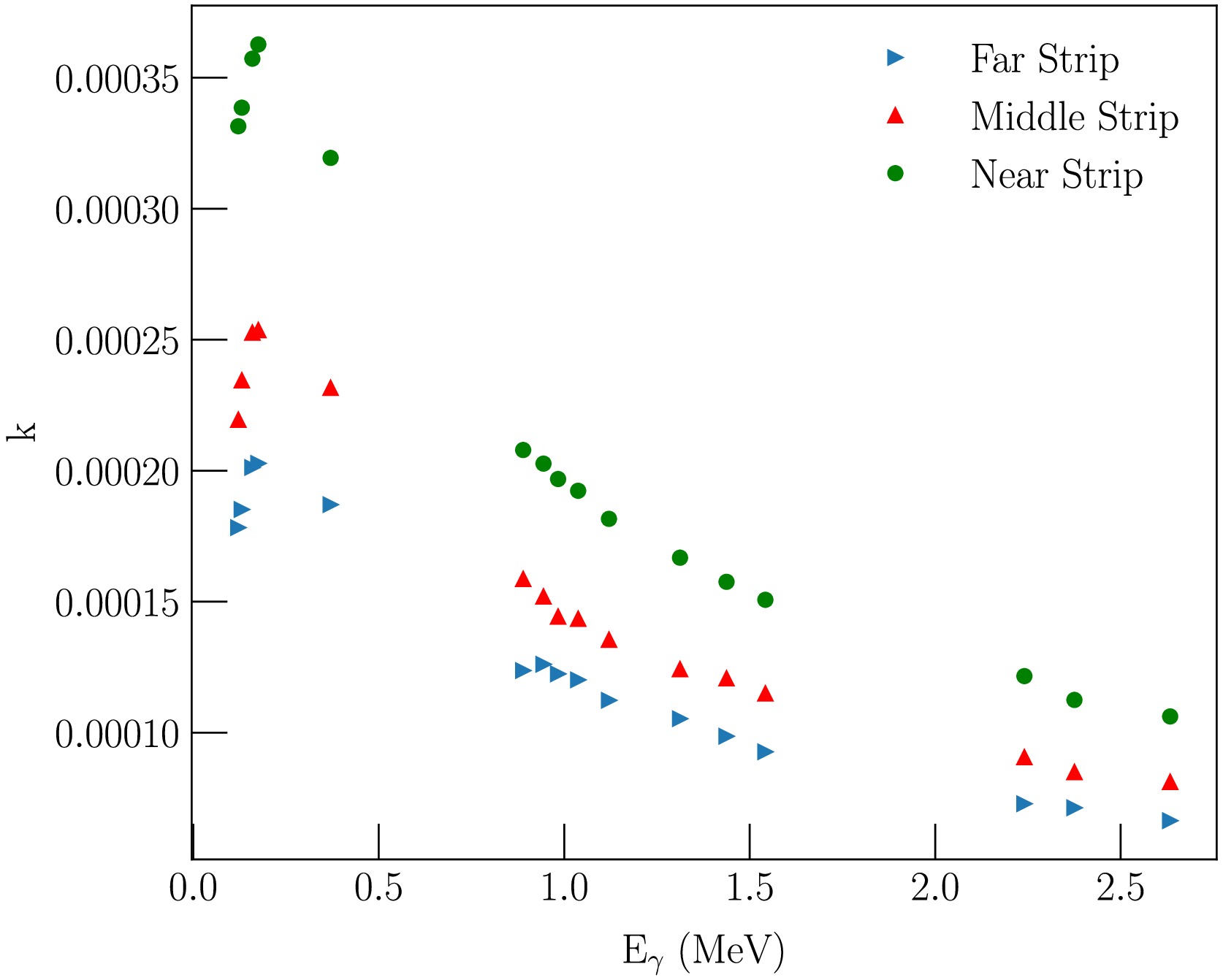
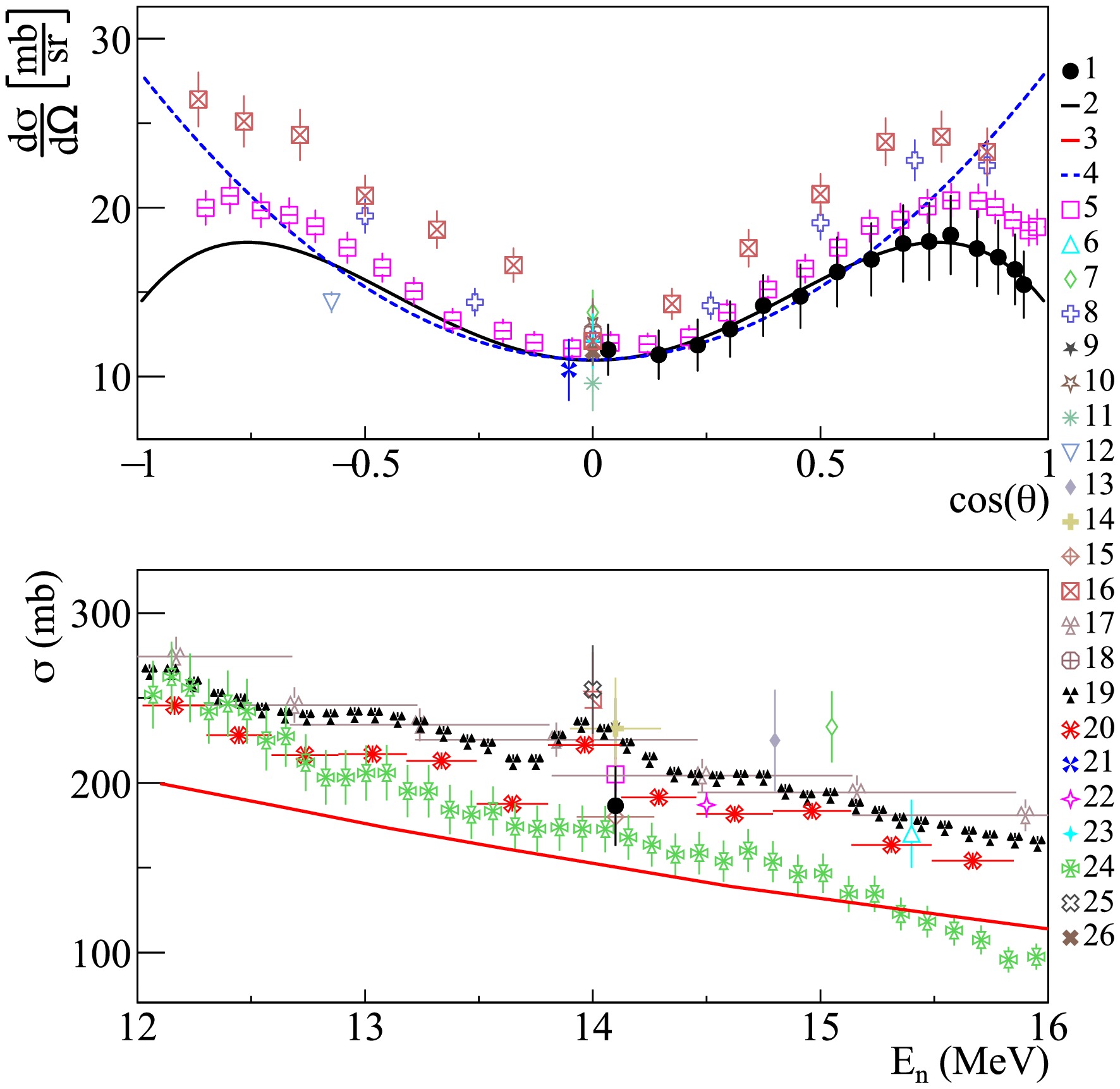
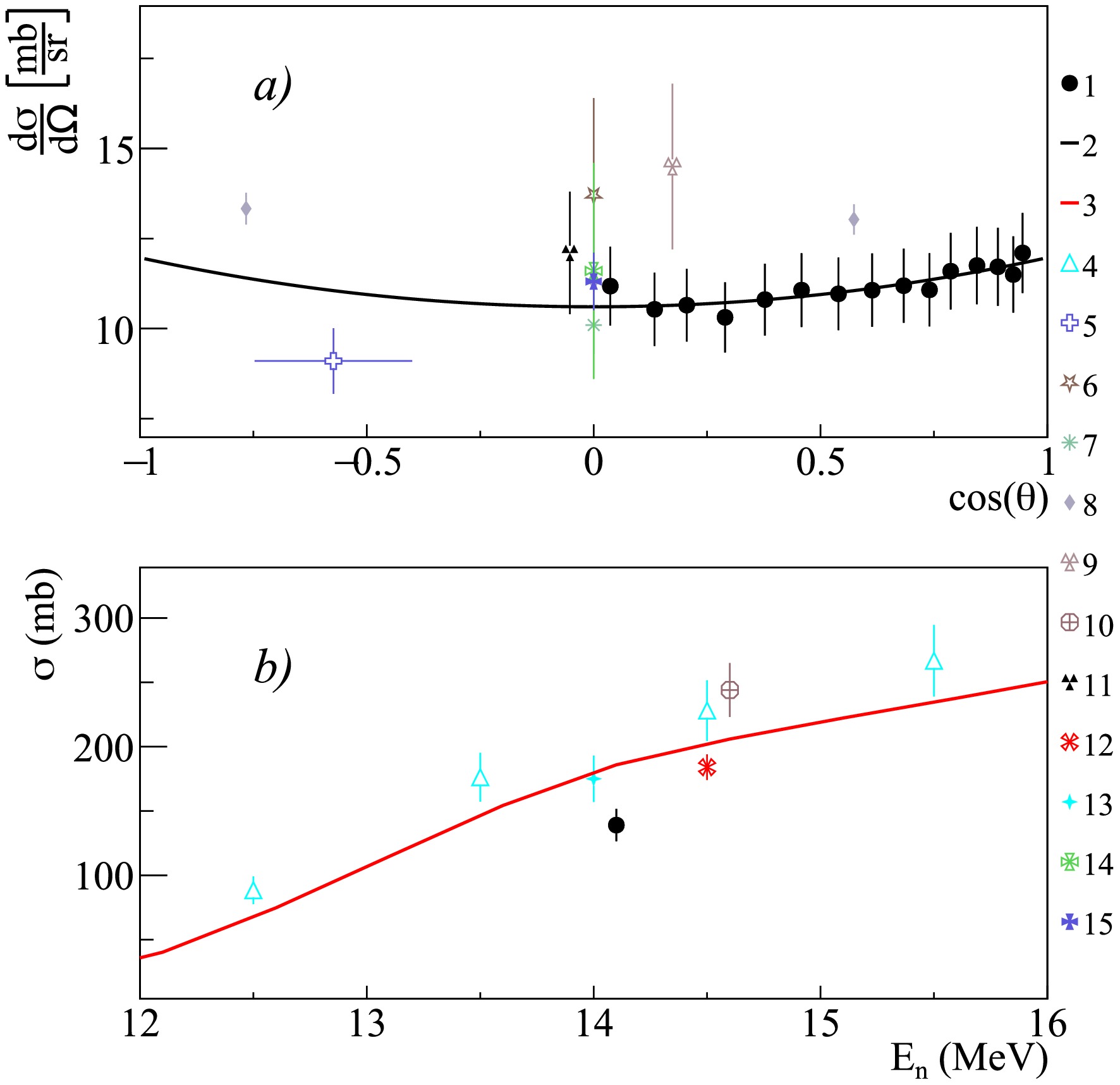
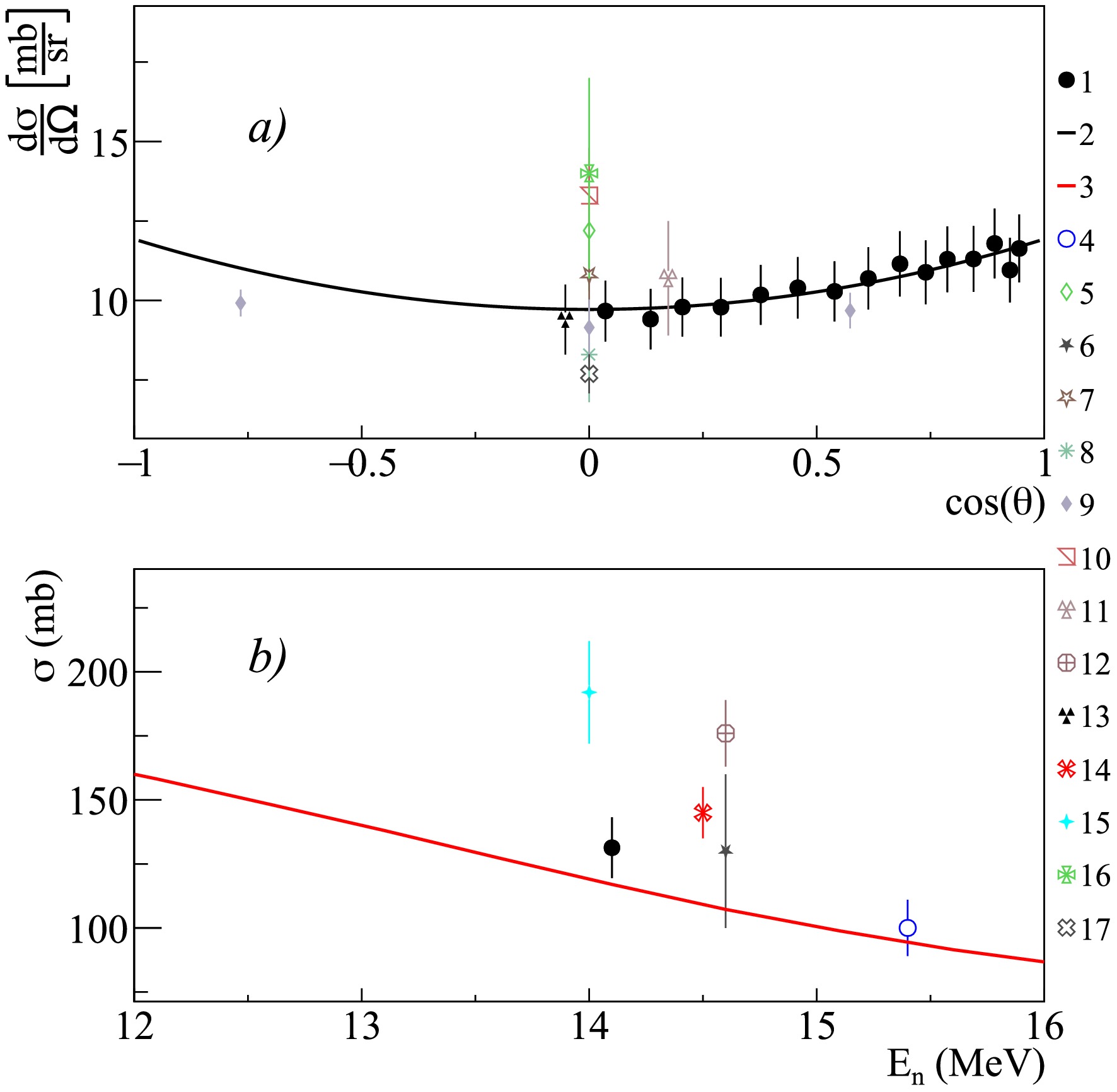
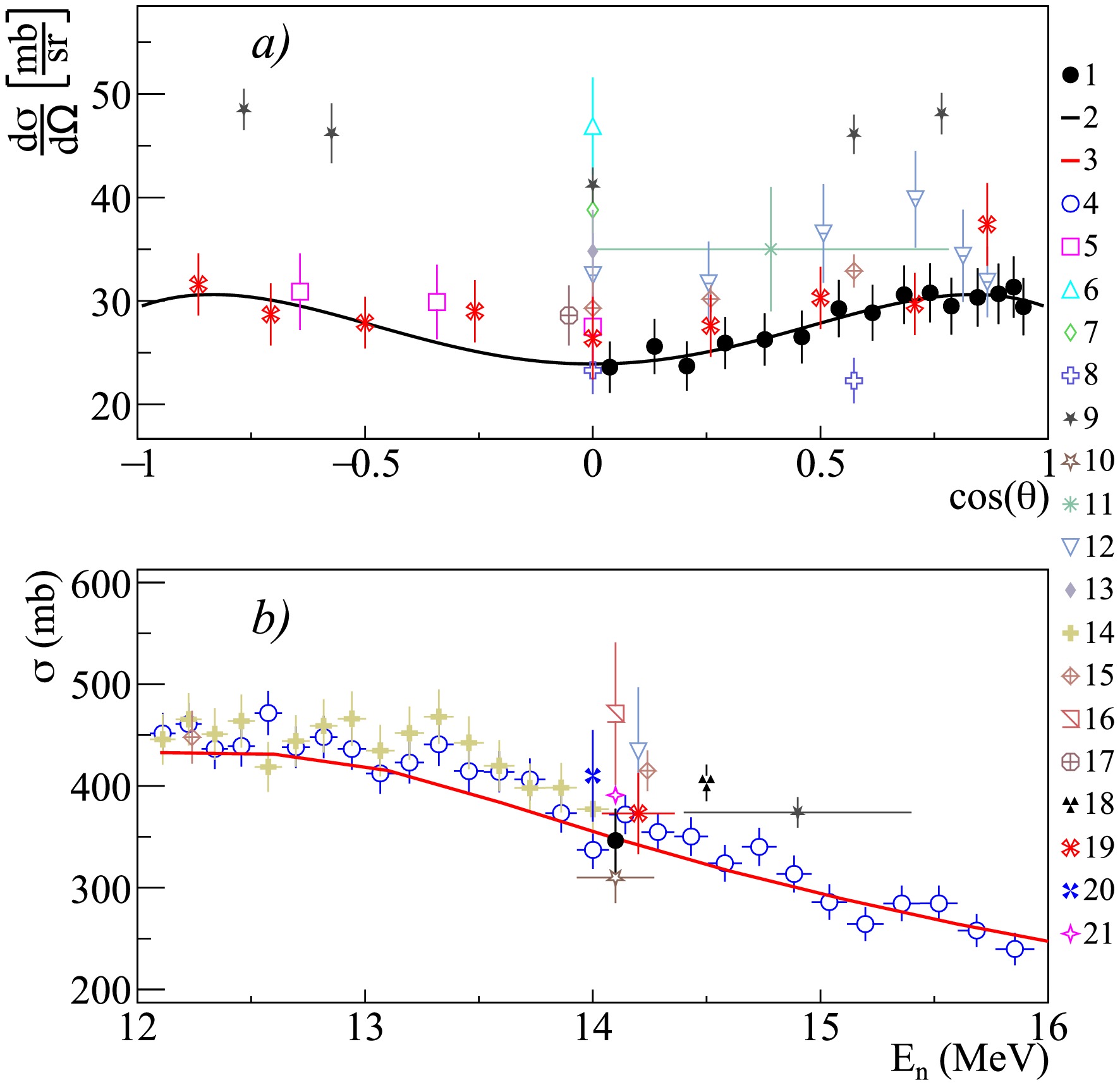
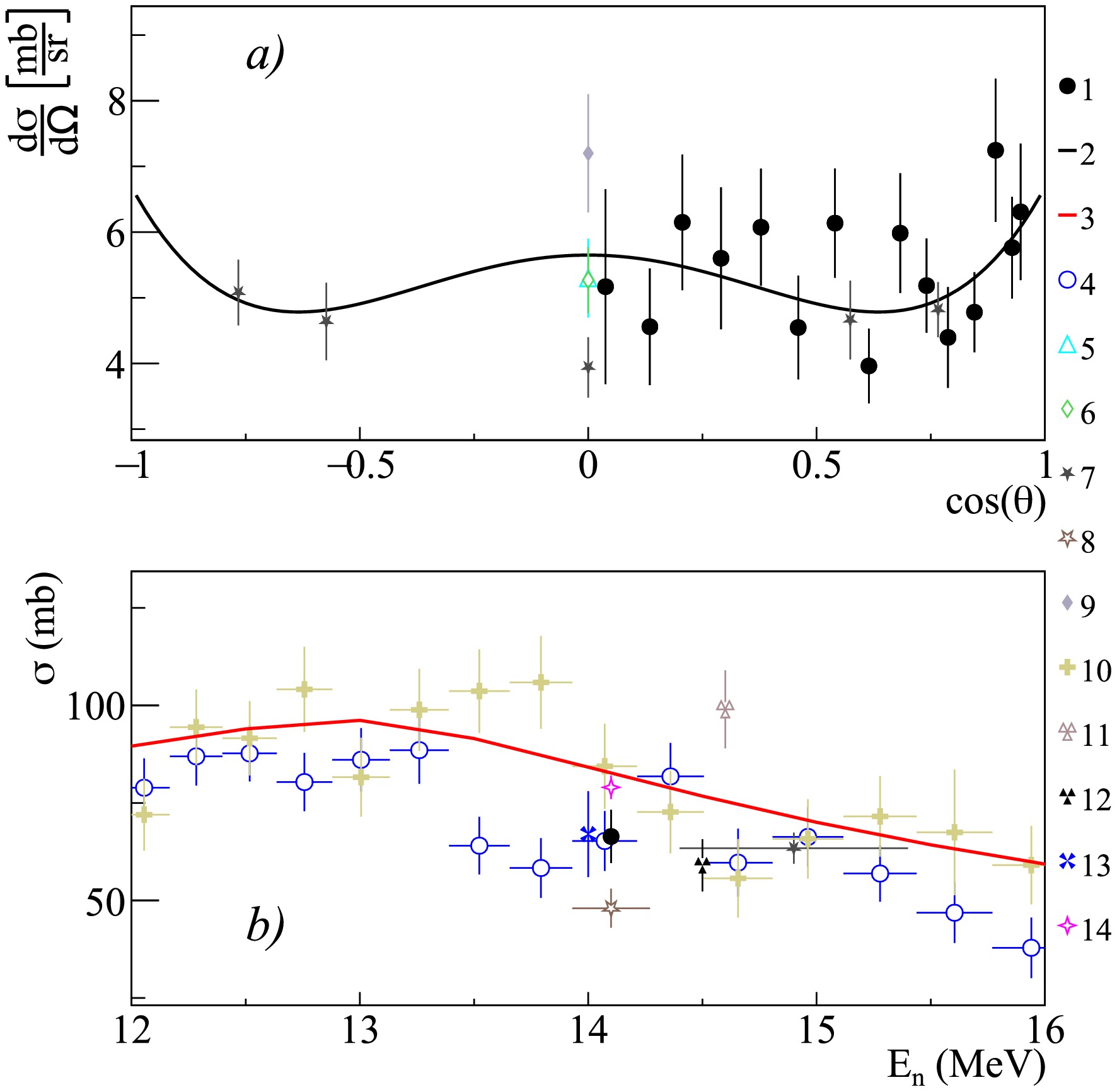
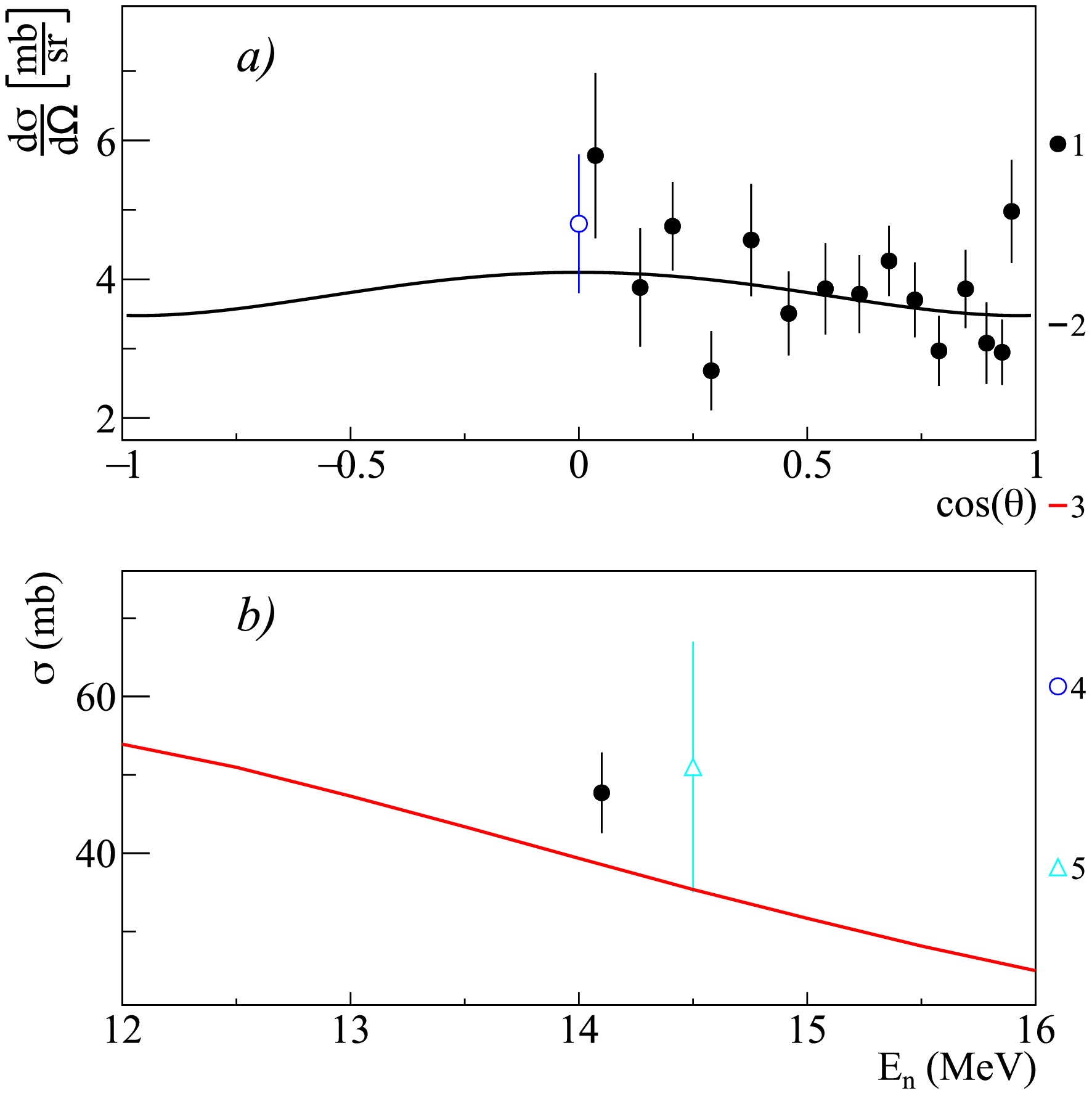
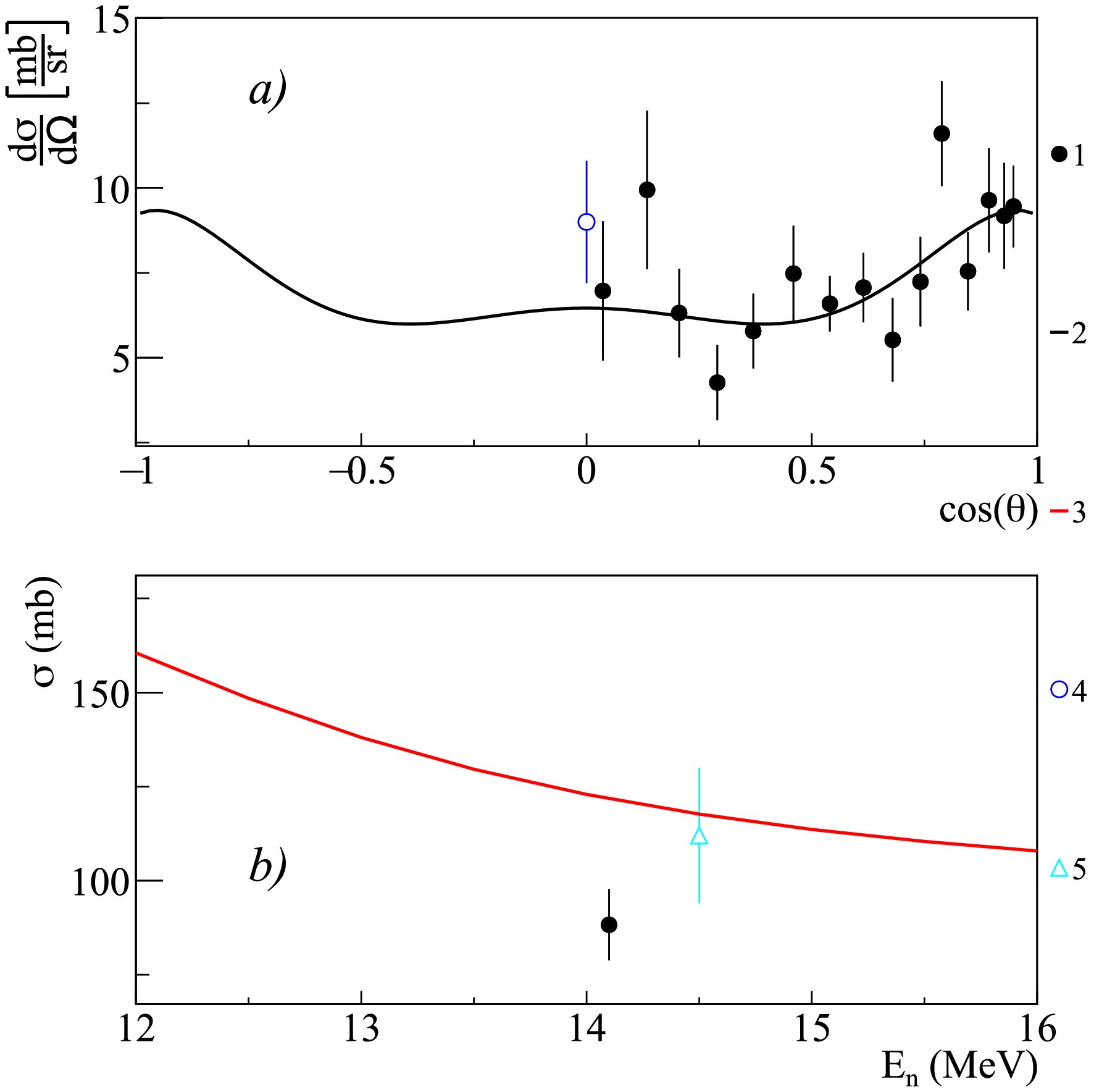
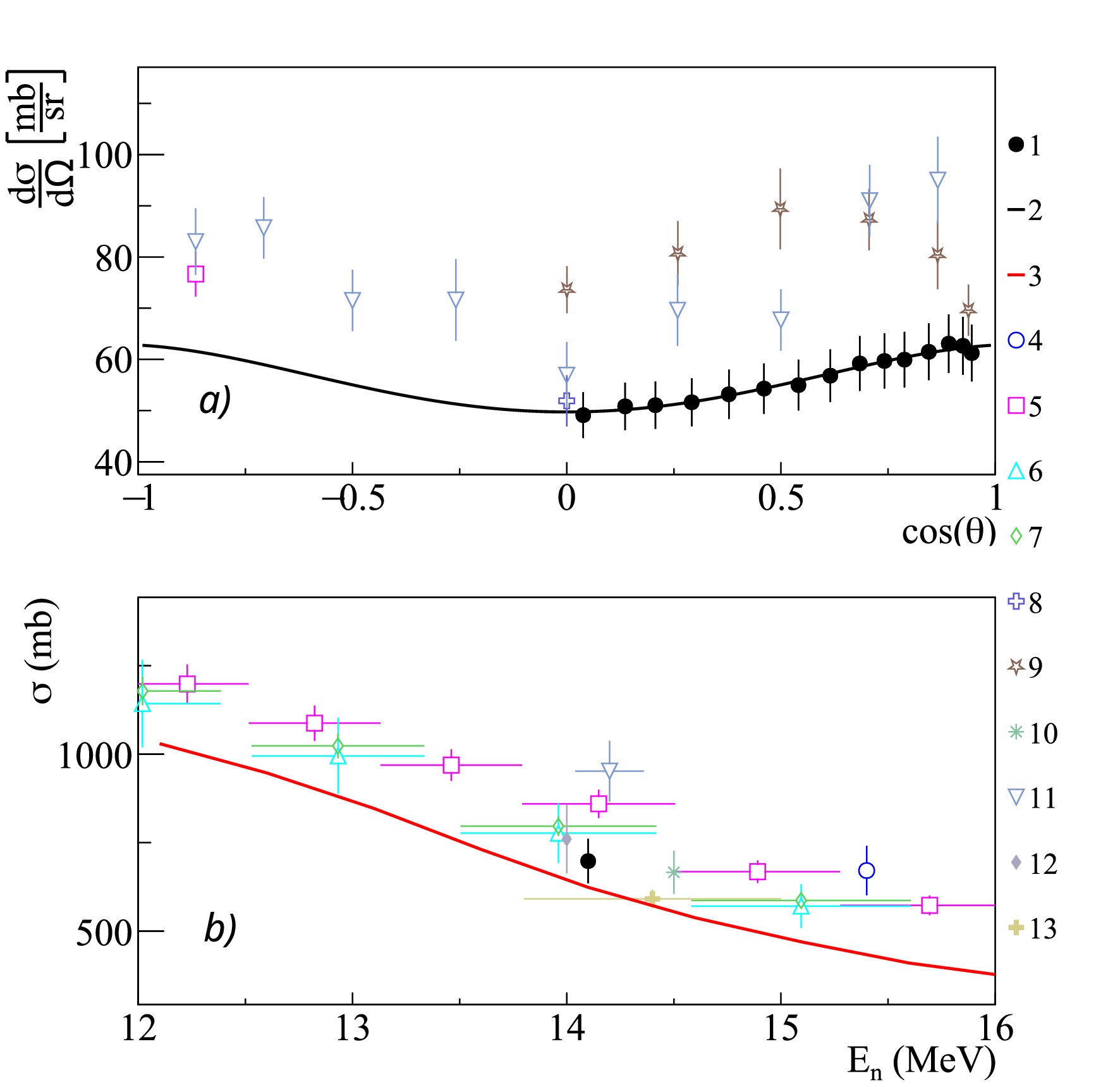
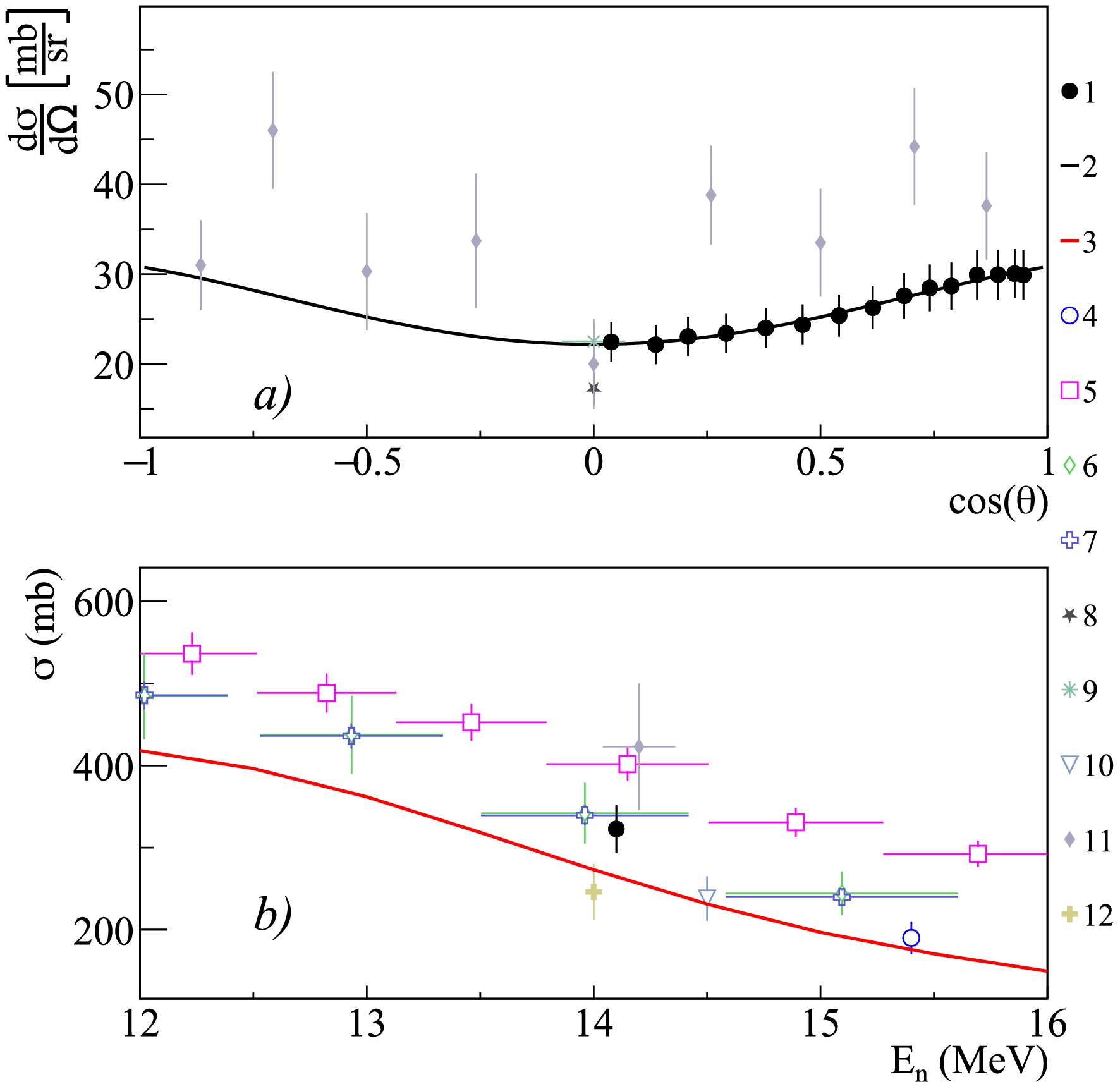
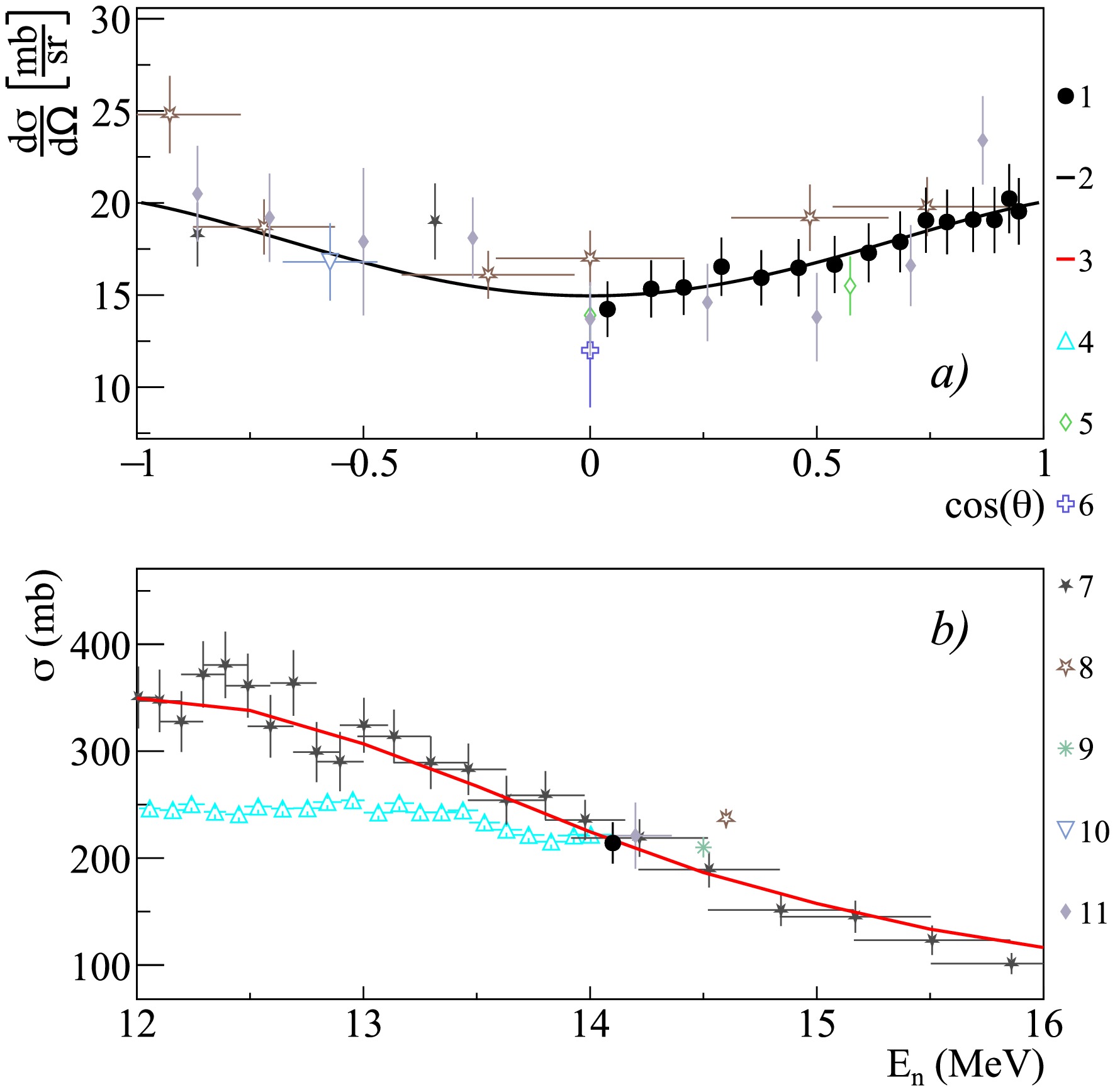
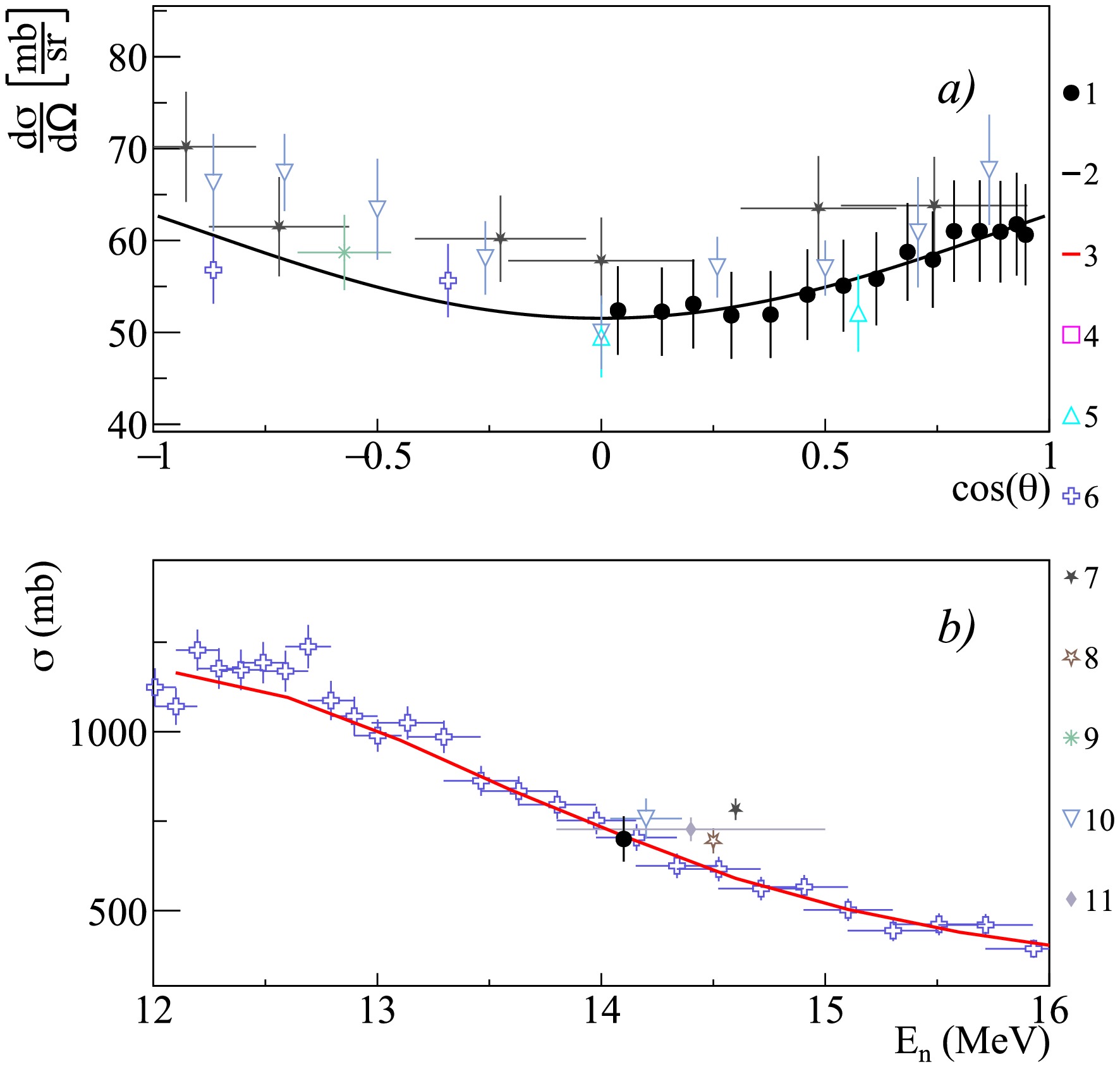
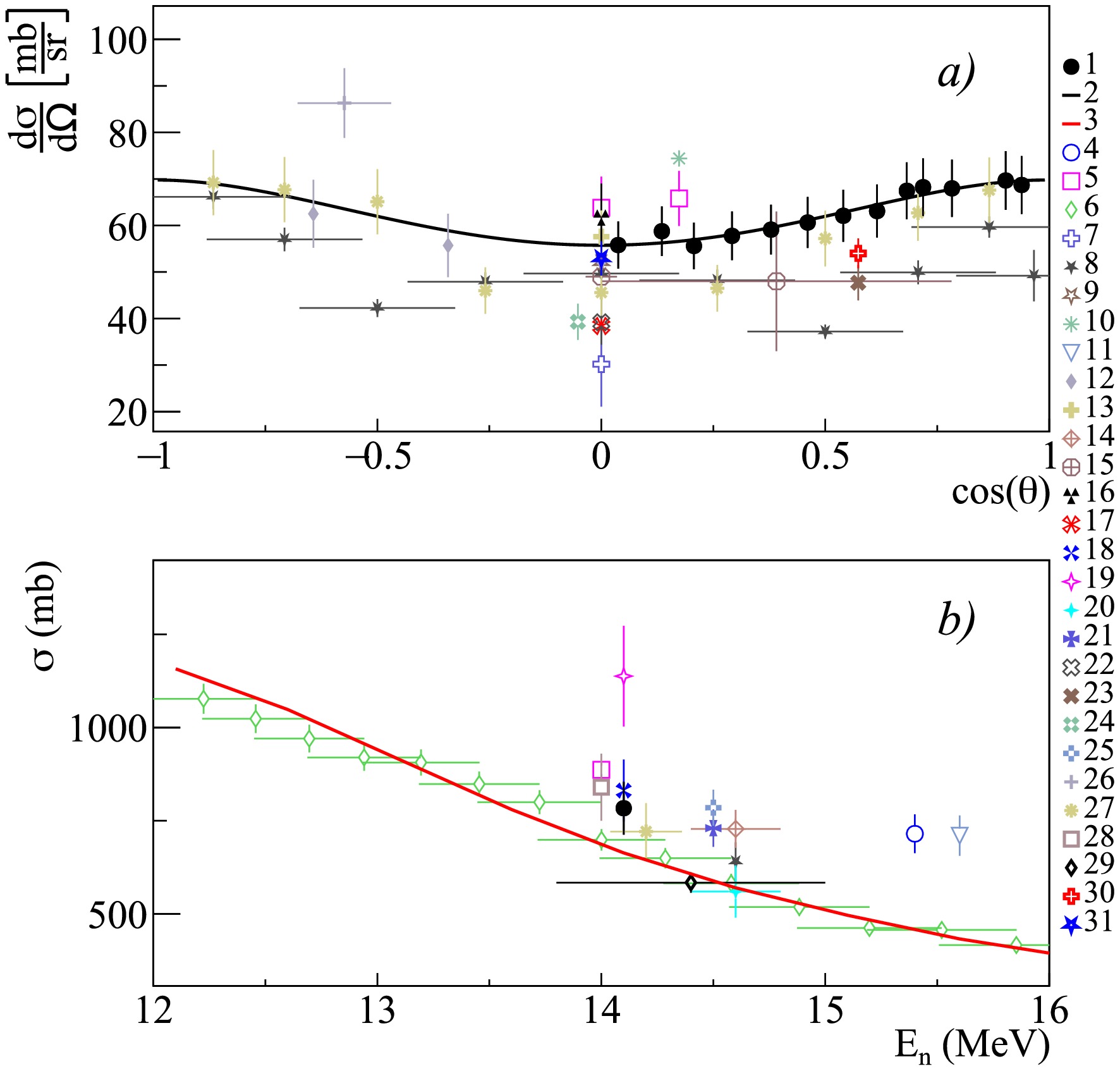
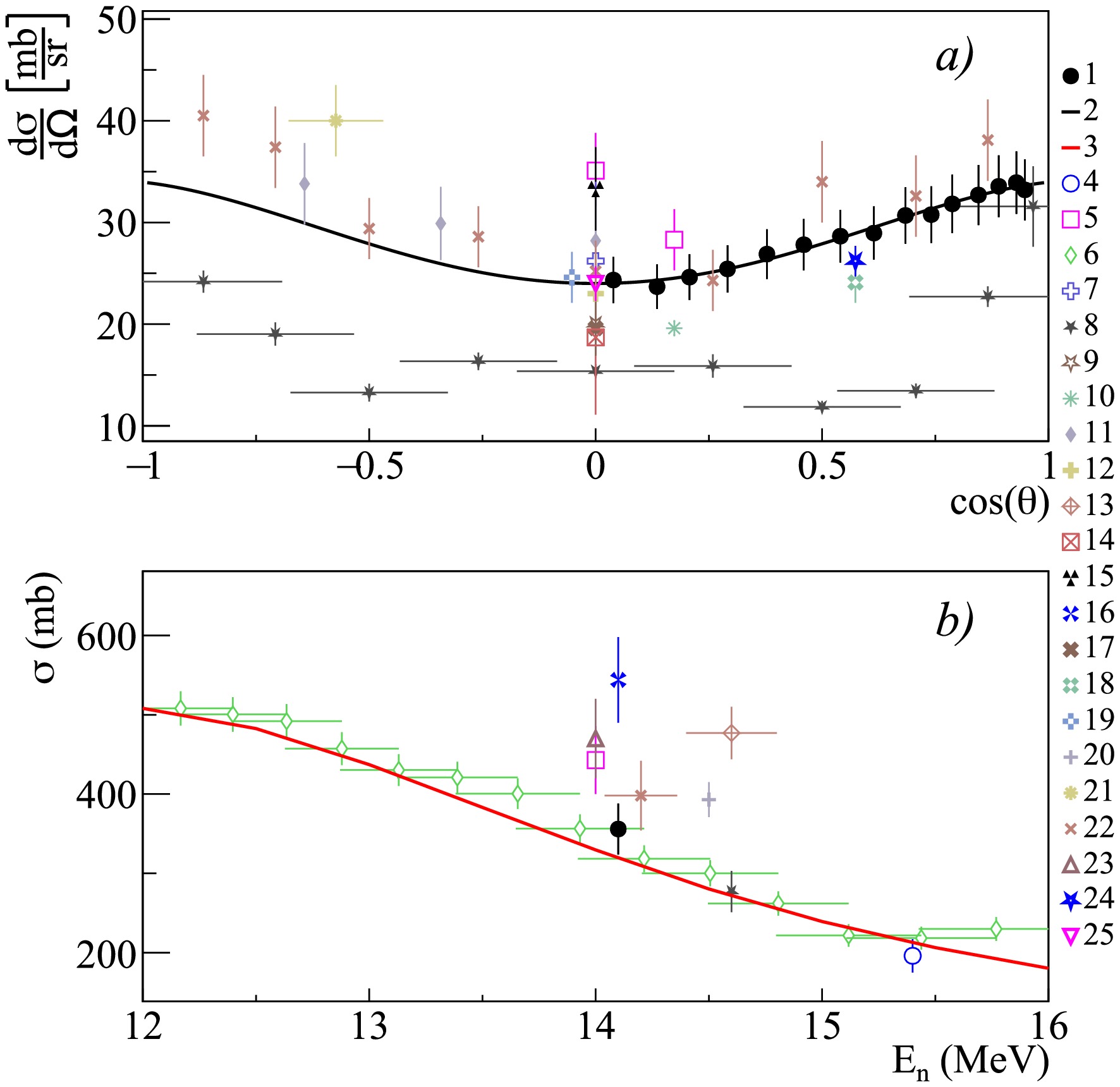
In this work, differential cross sections of\begin{document}$ \gamma $\end{document} \begin{document}$ \gamma $\end{document} \begin{document}$ \gamma $\end{document} \begin{document}$ \gamma $\end{document}
In this work, differential cross sections of
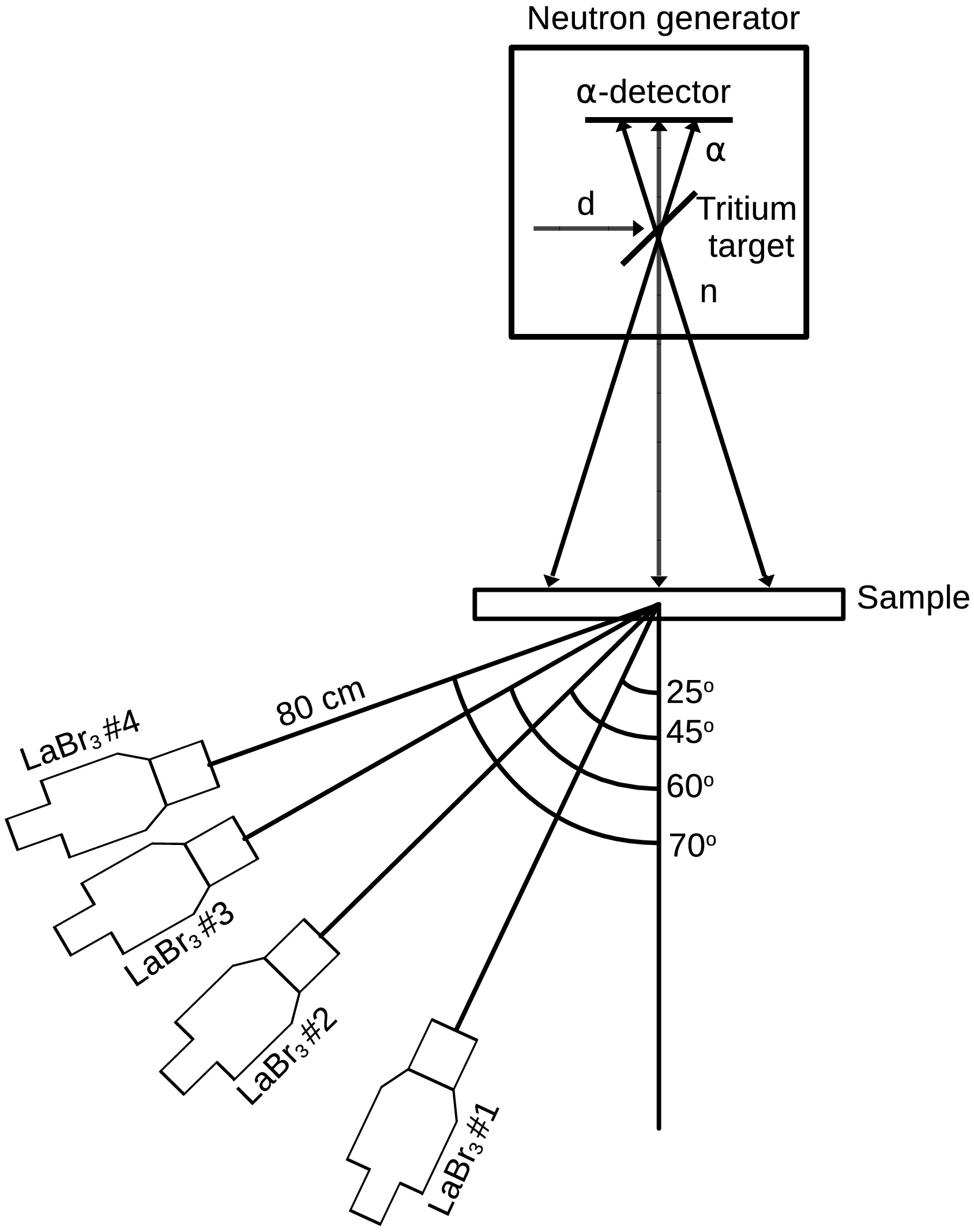
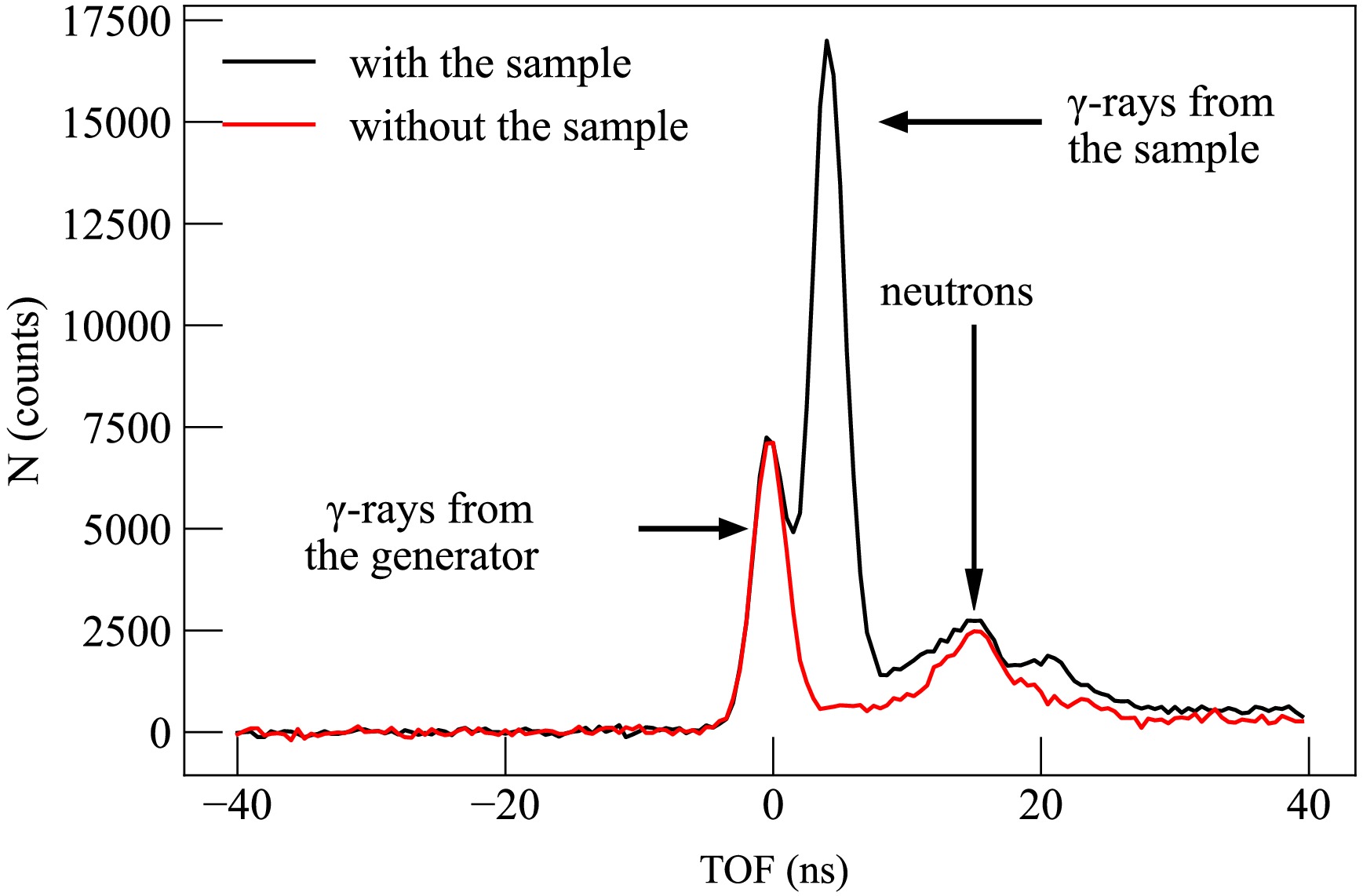
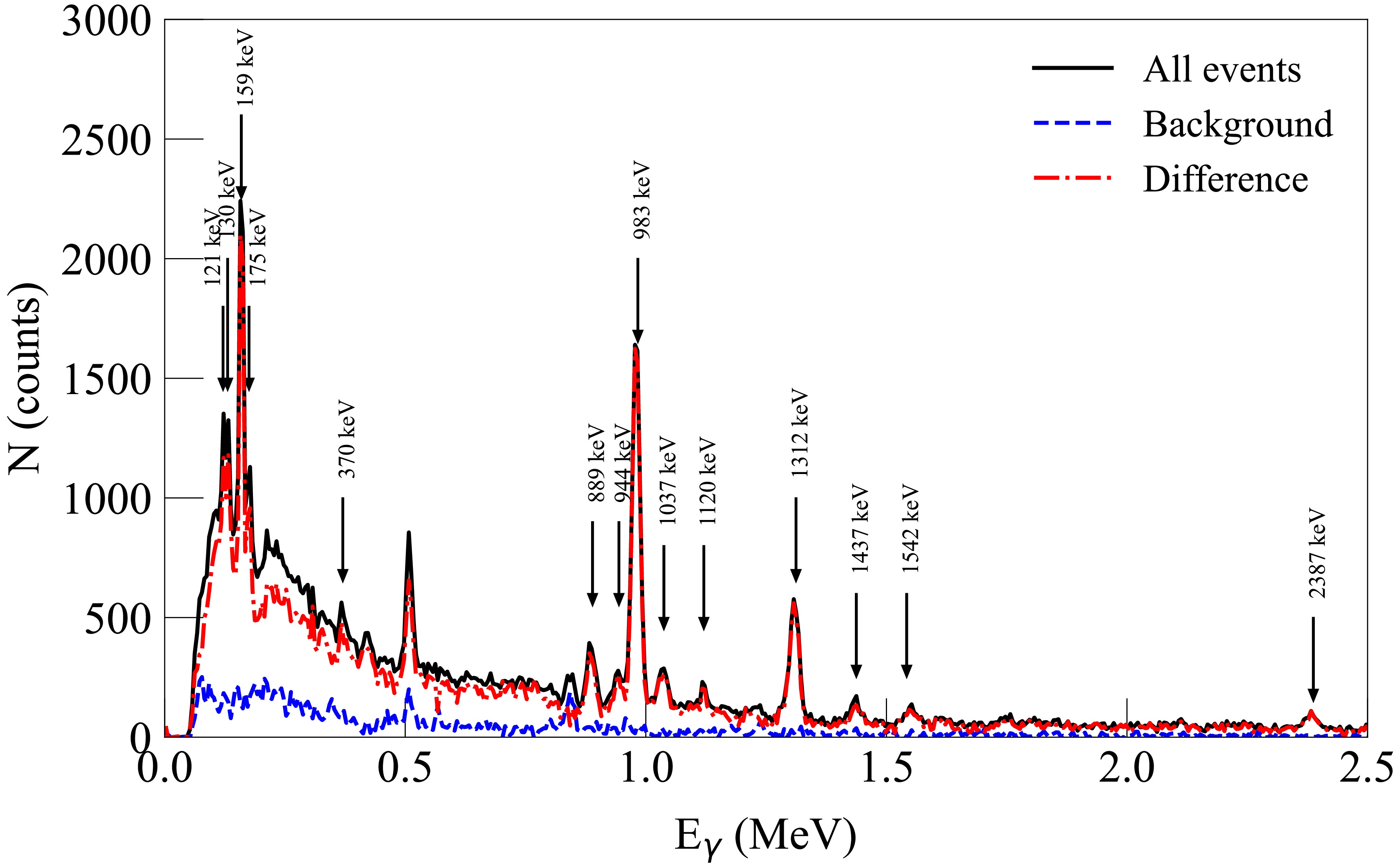
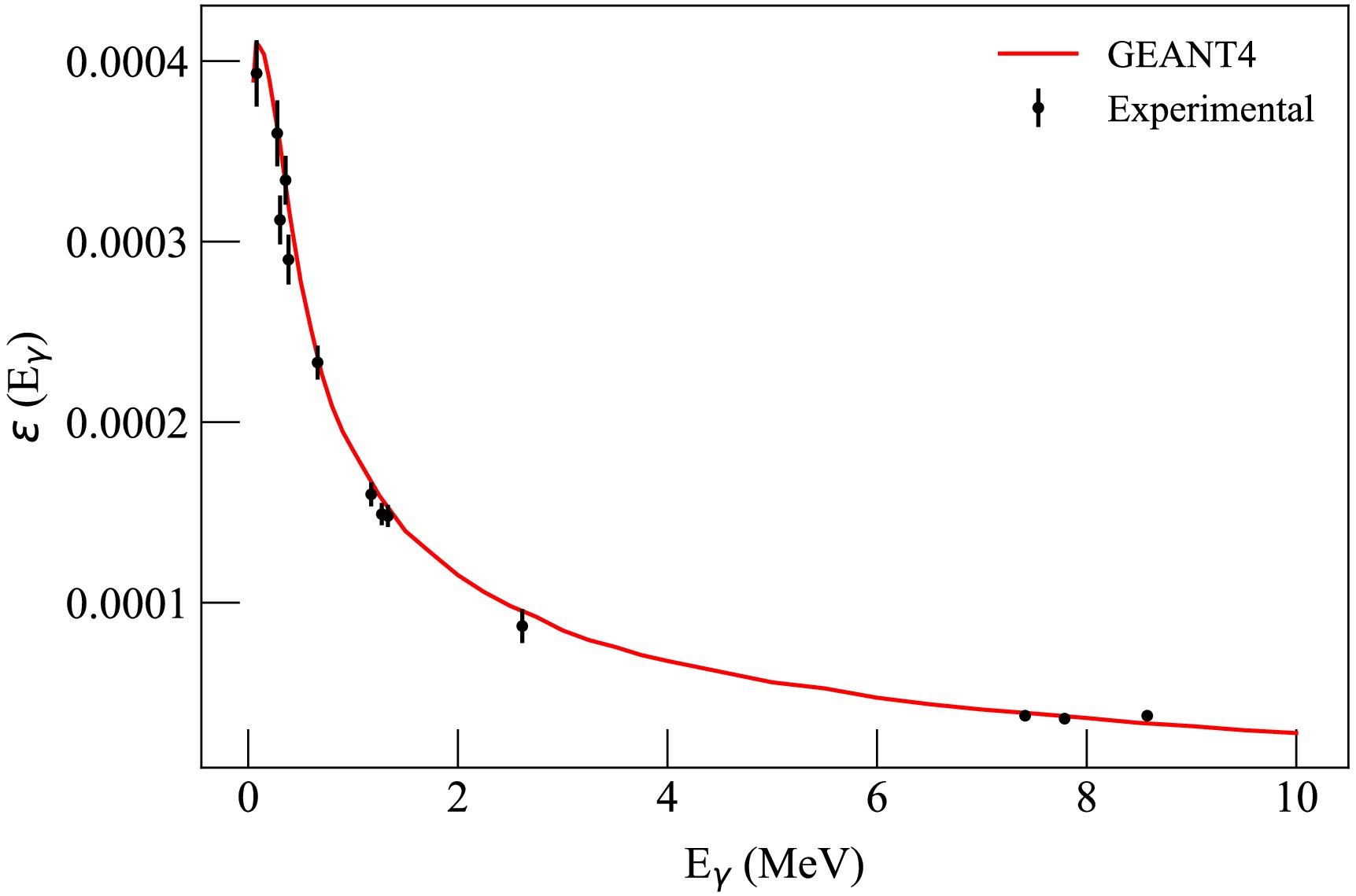
2026, 50(3): 034101. doi: 10.1088/1674-1137/ae1c2a
Abstract:
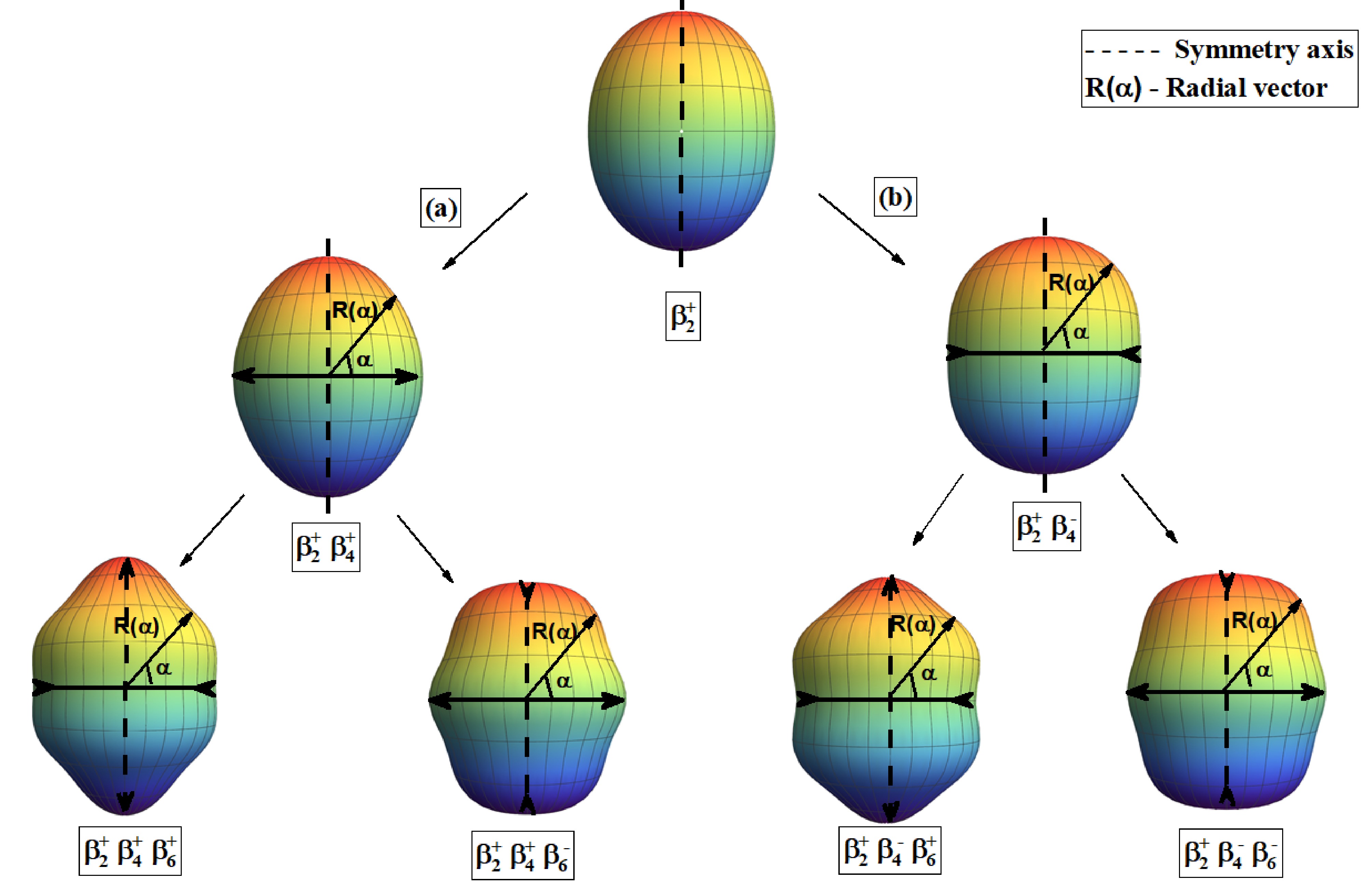
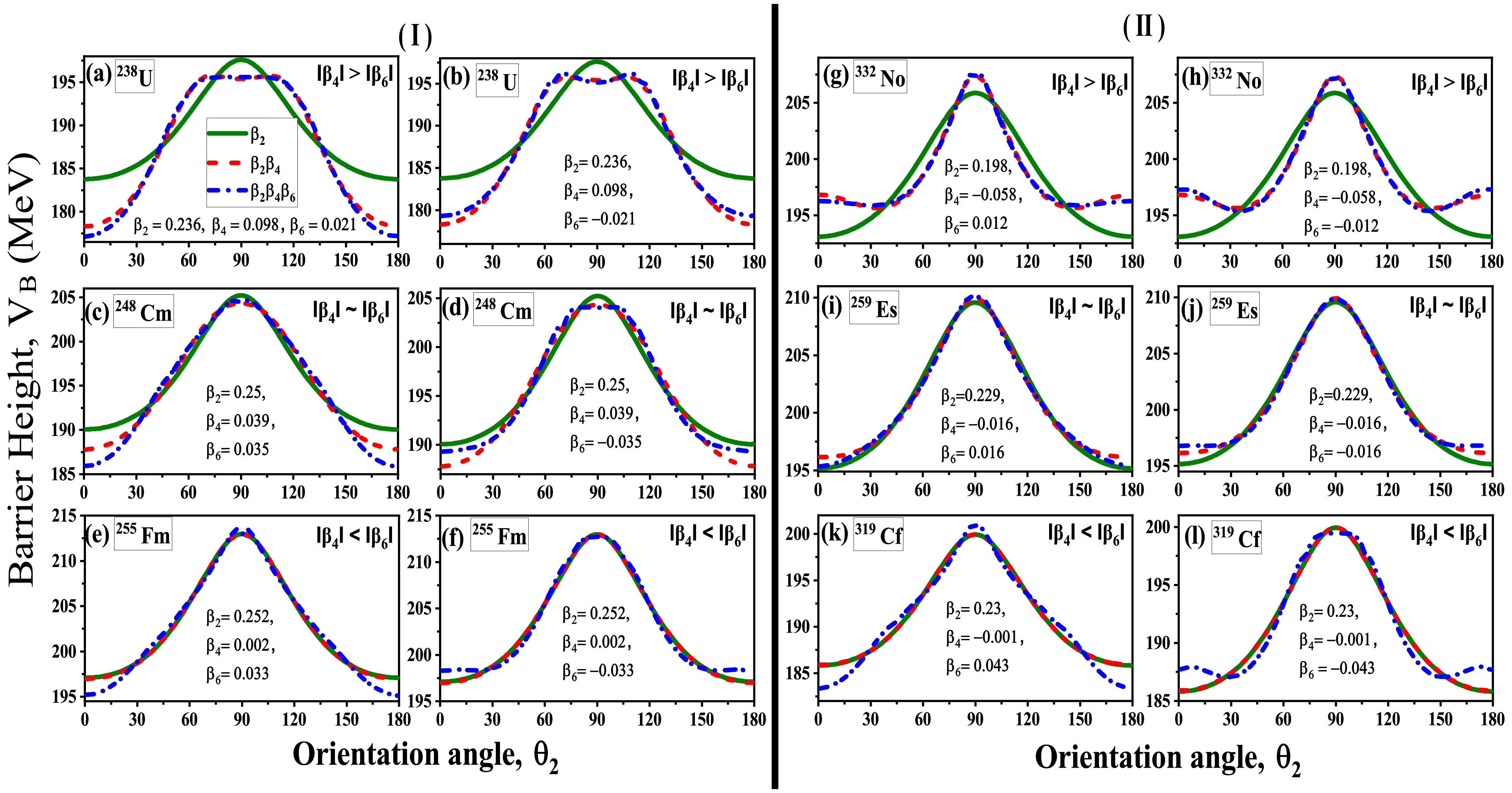
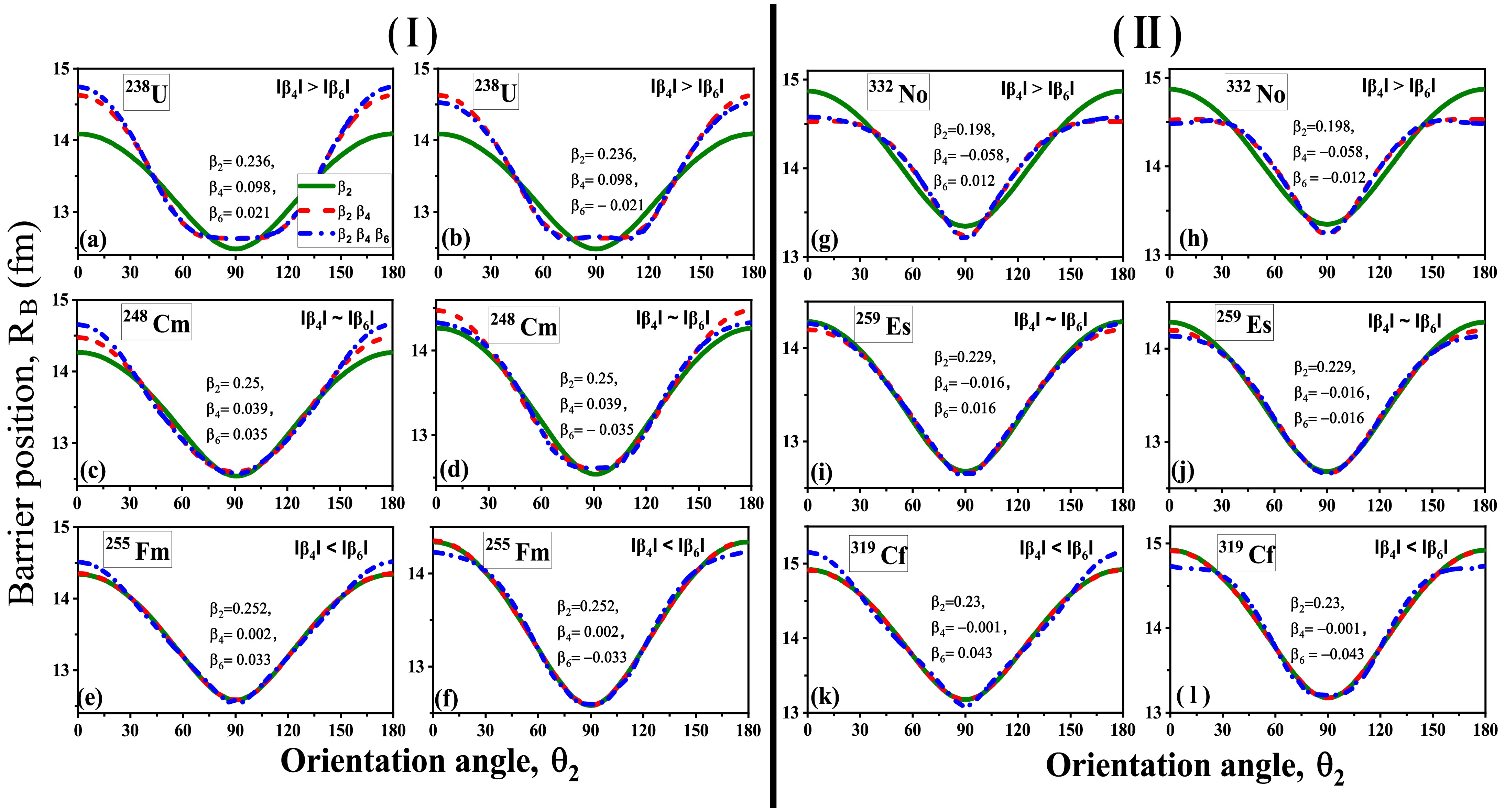
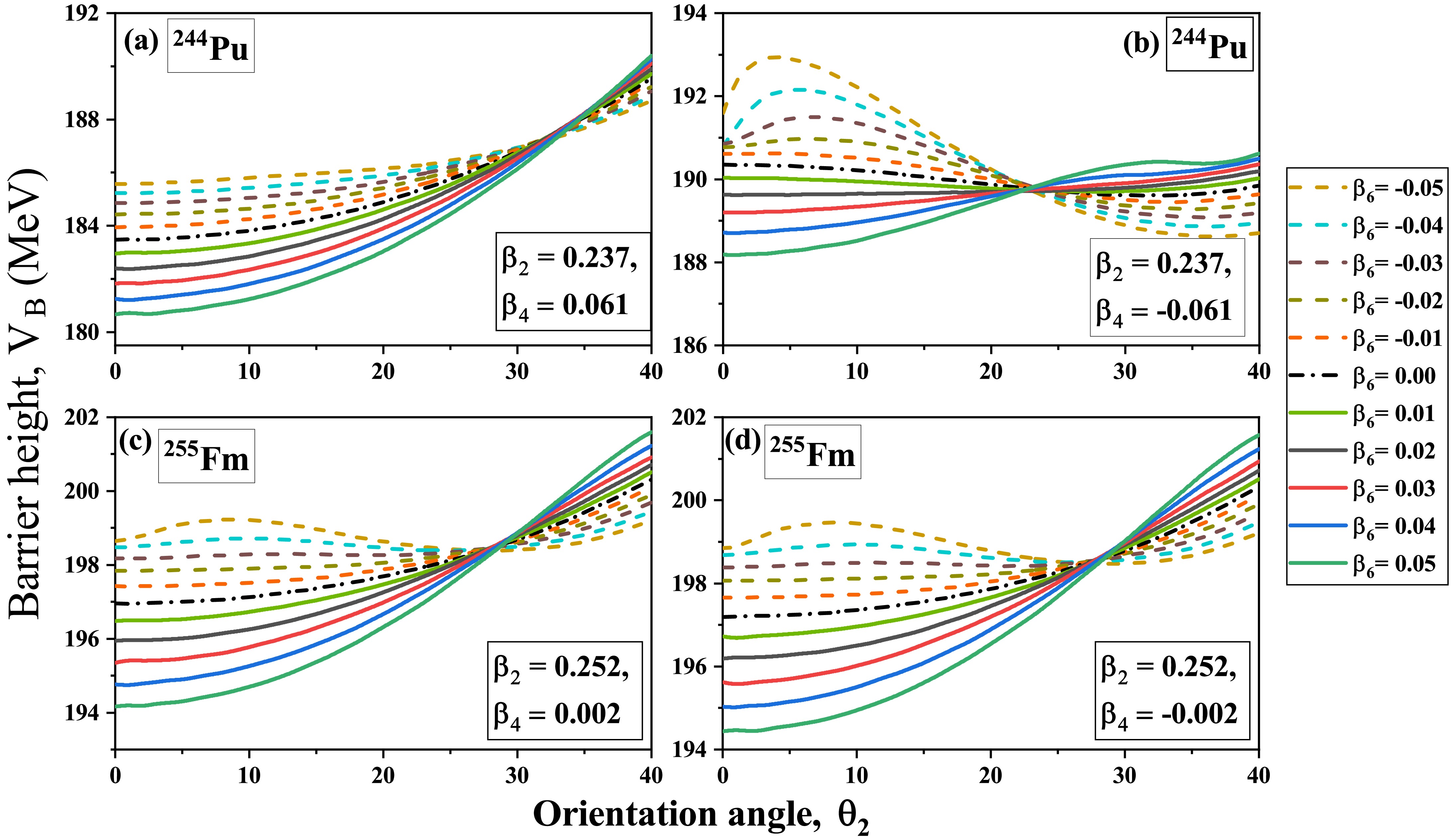
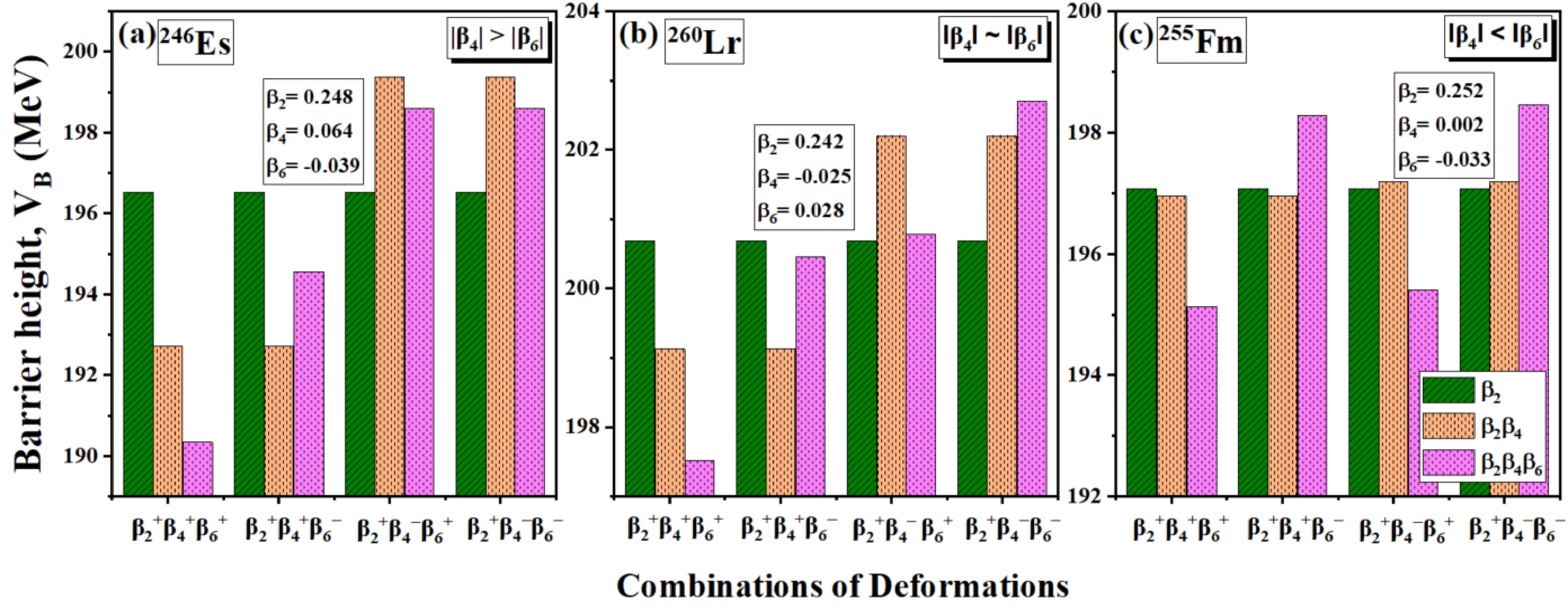
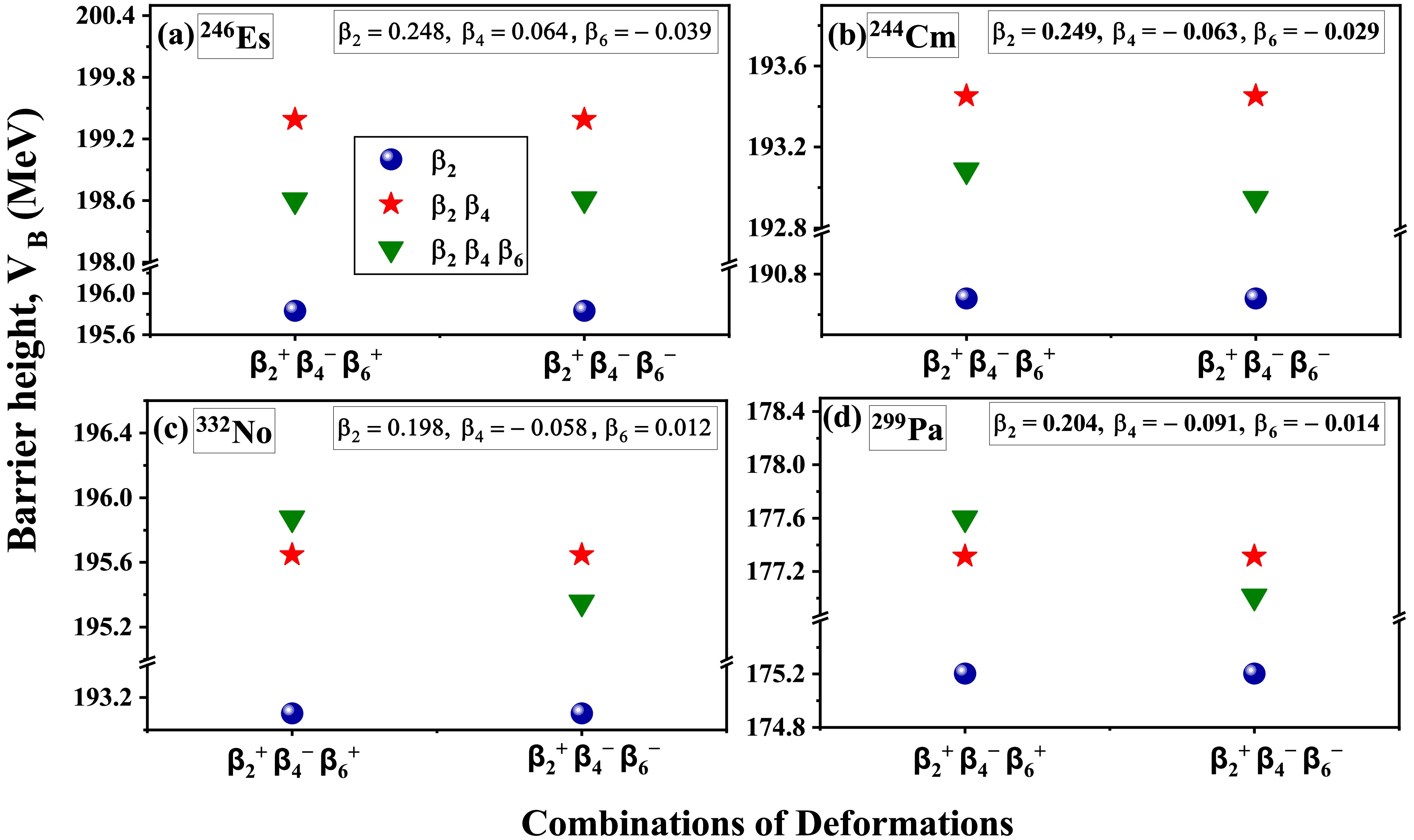
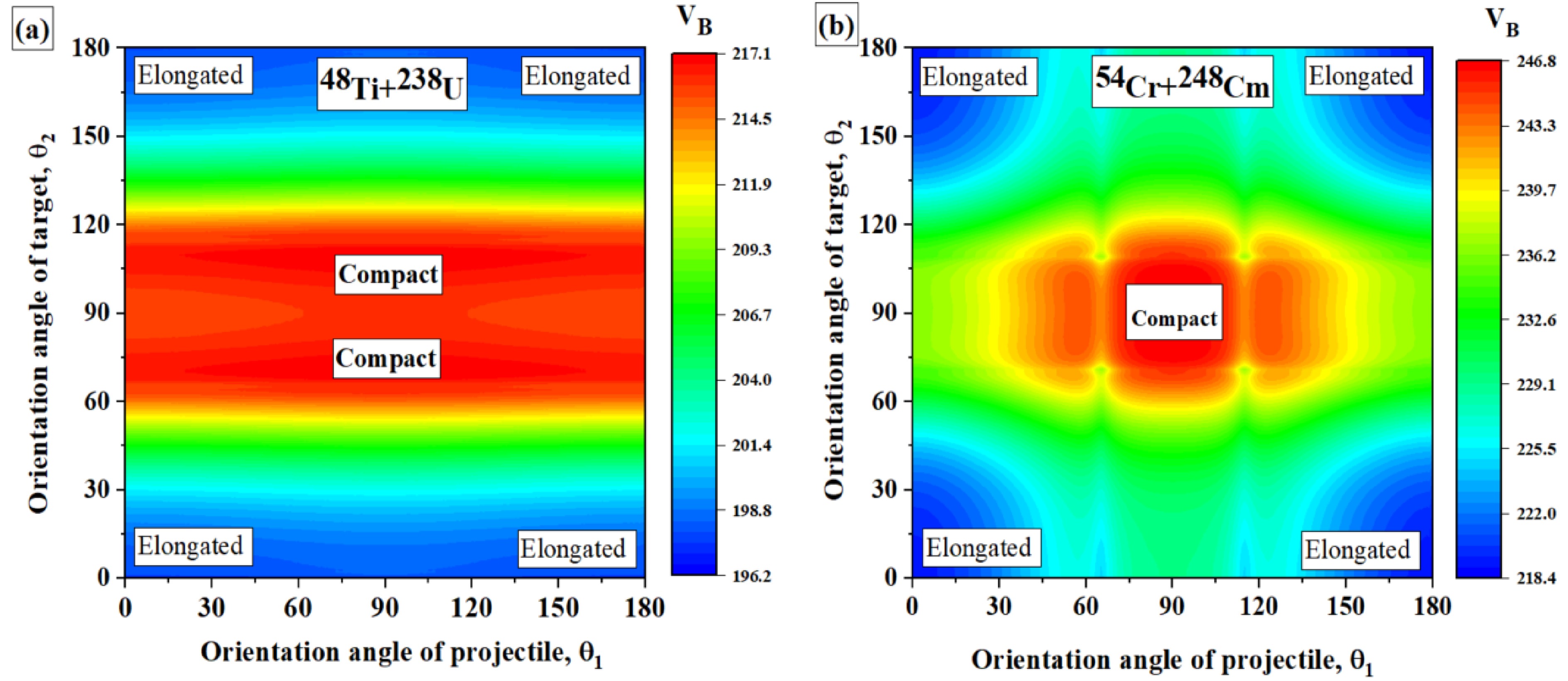
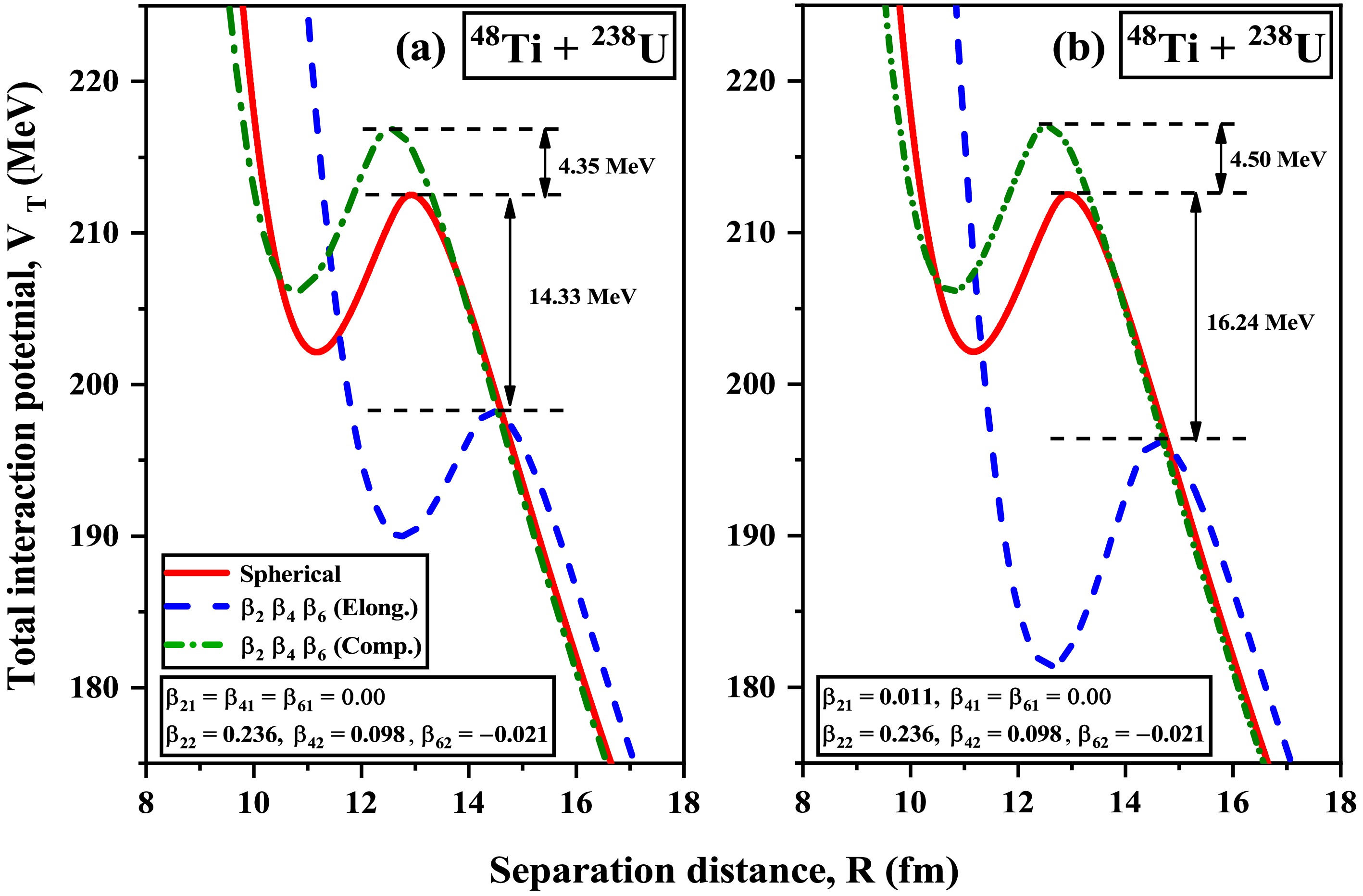
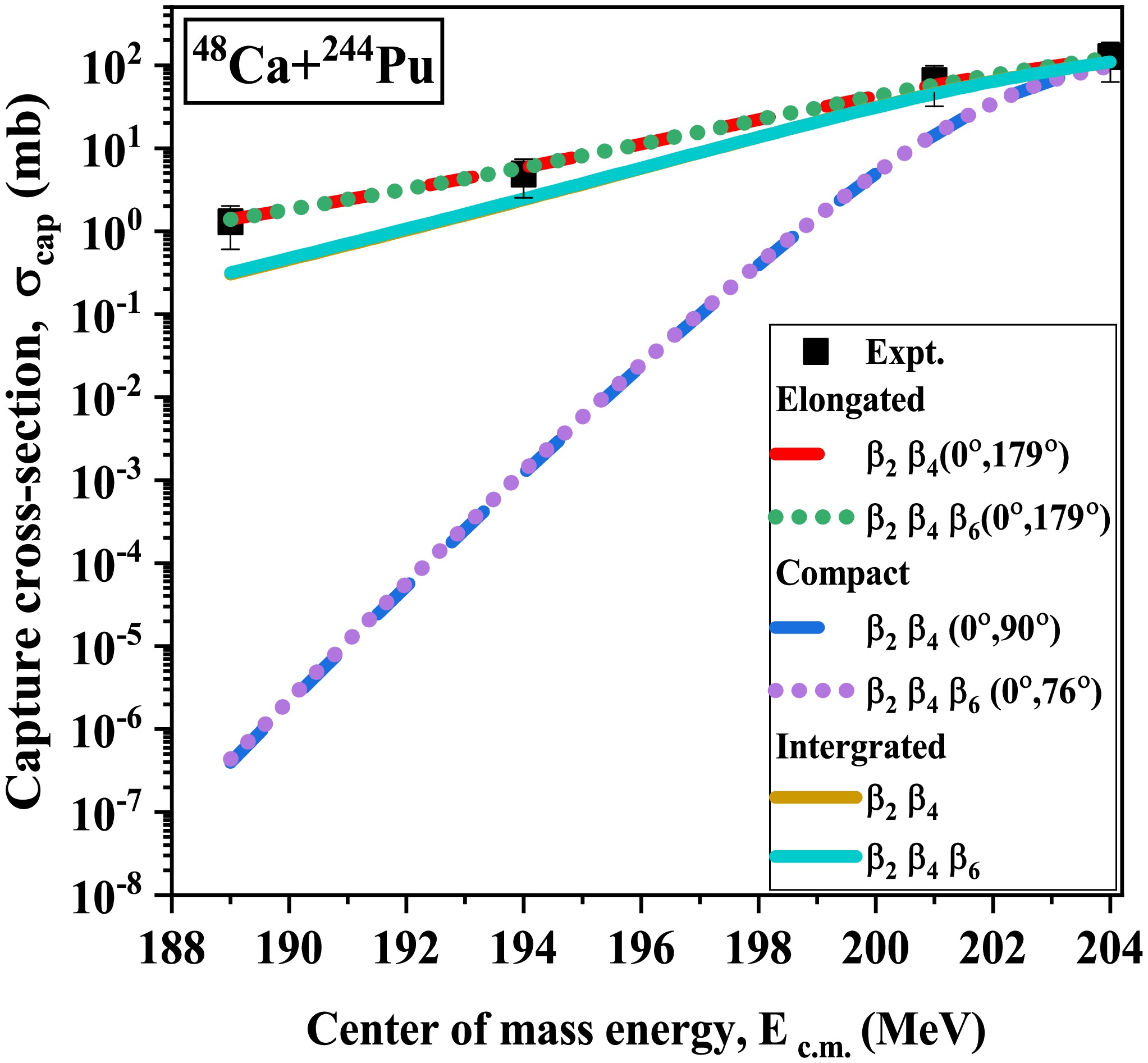
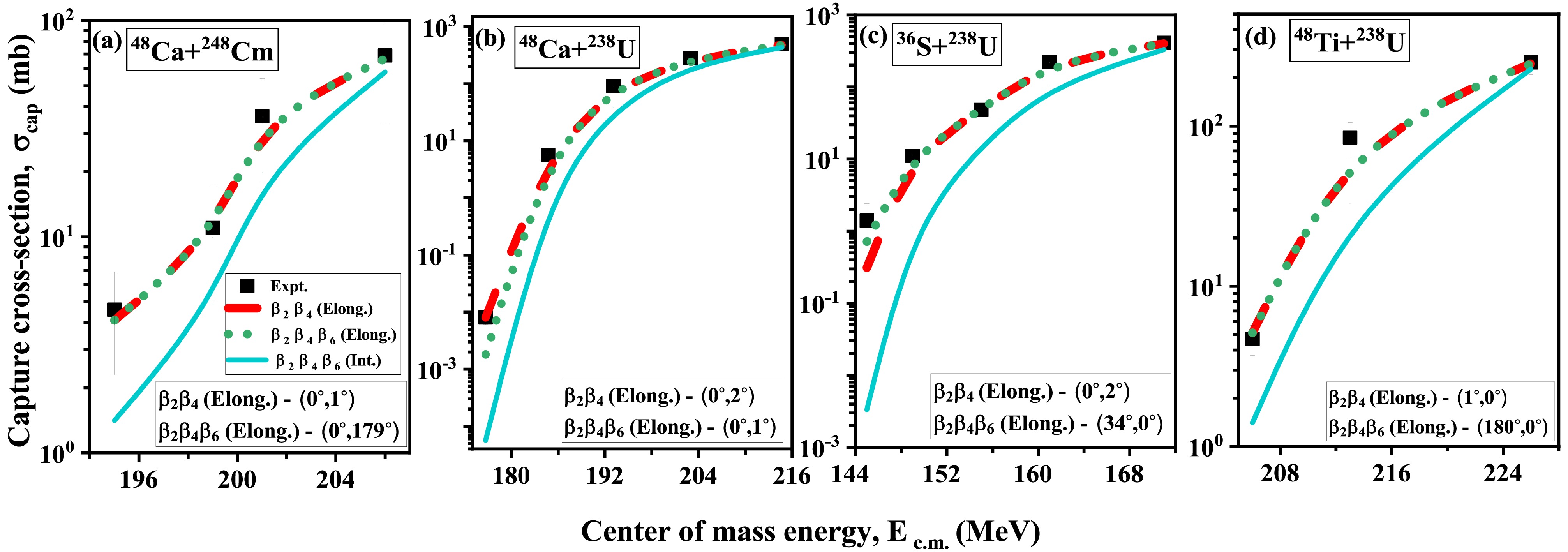
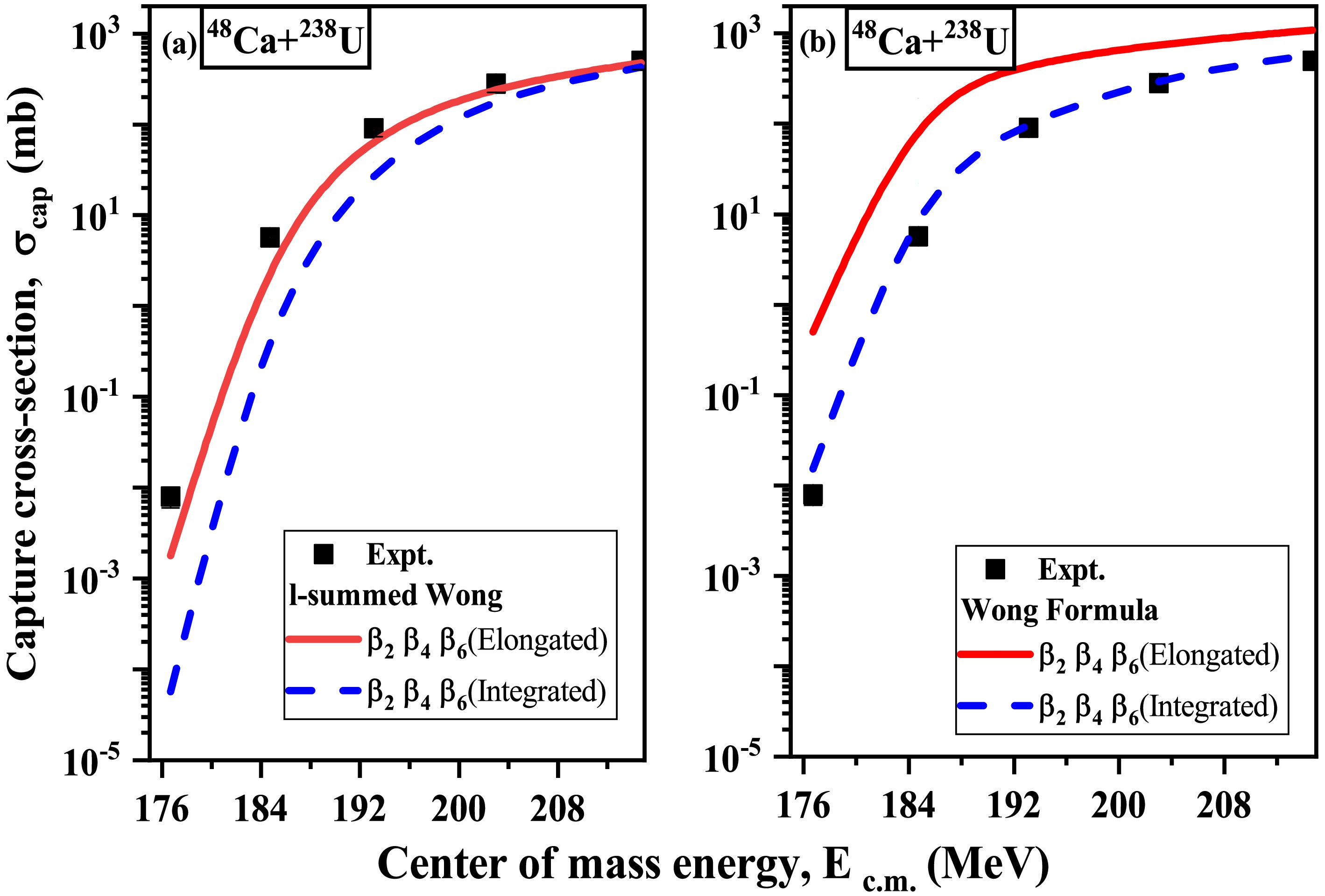
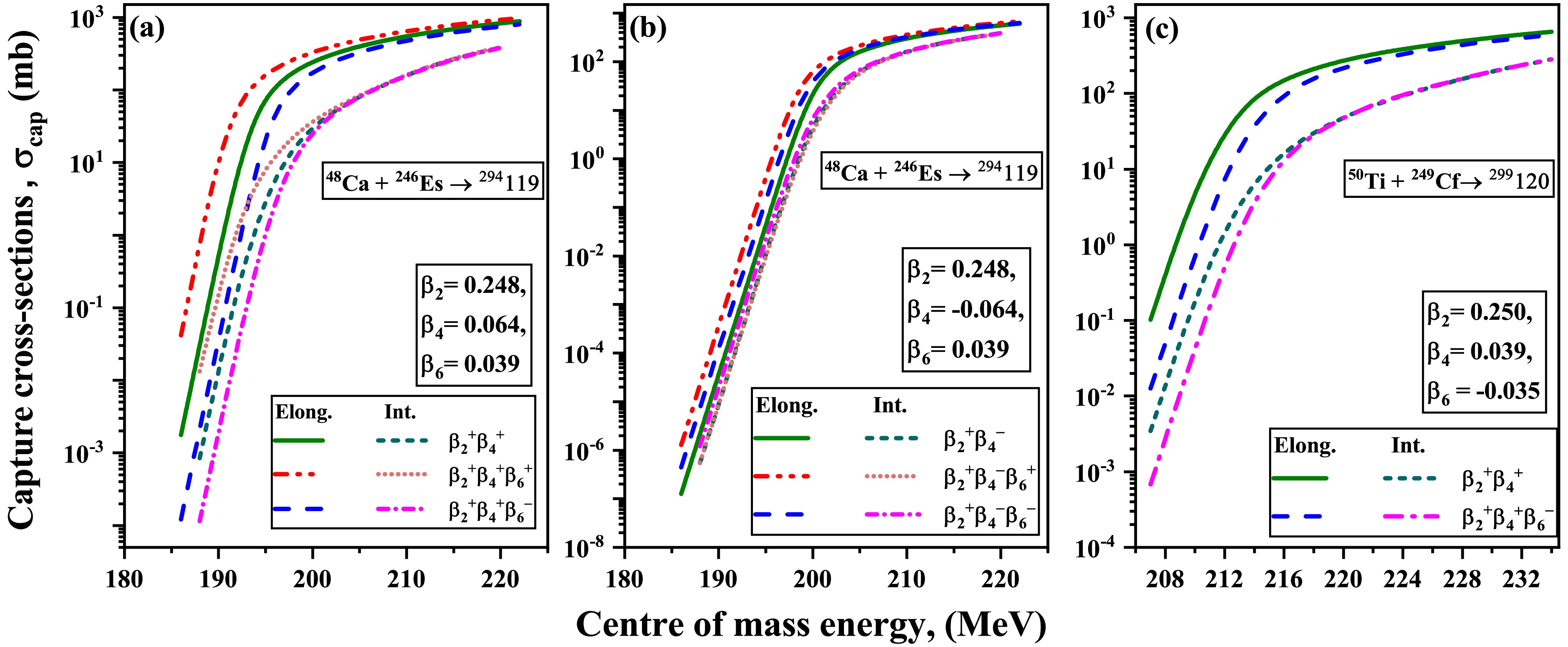
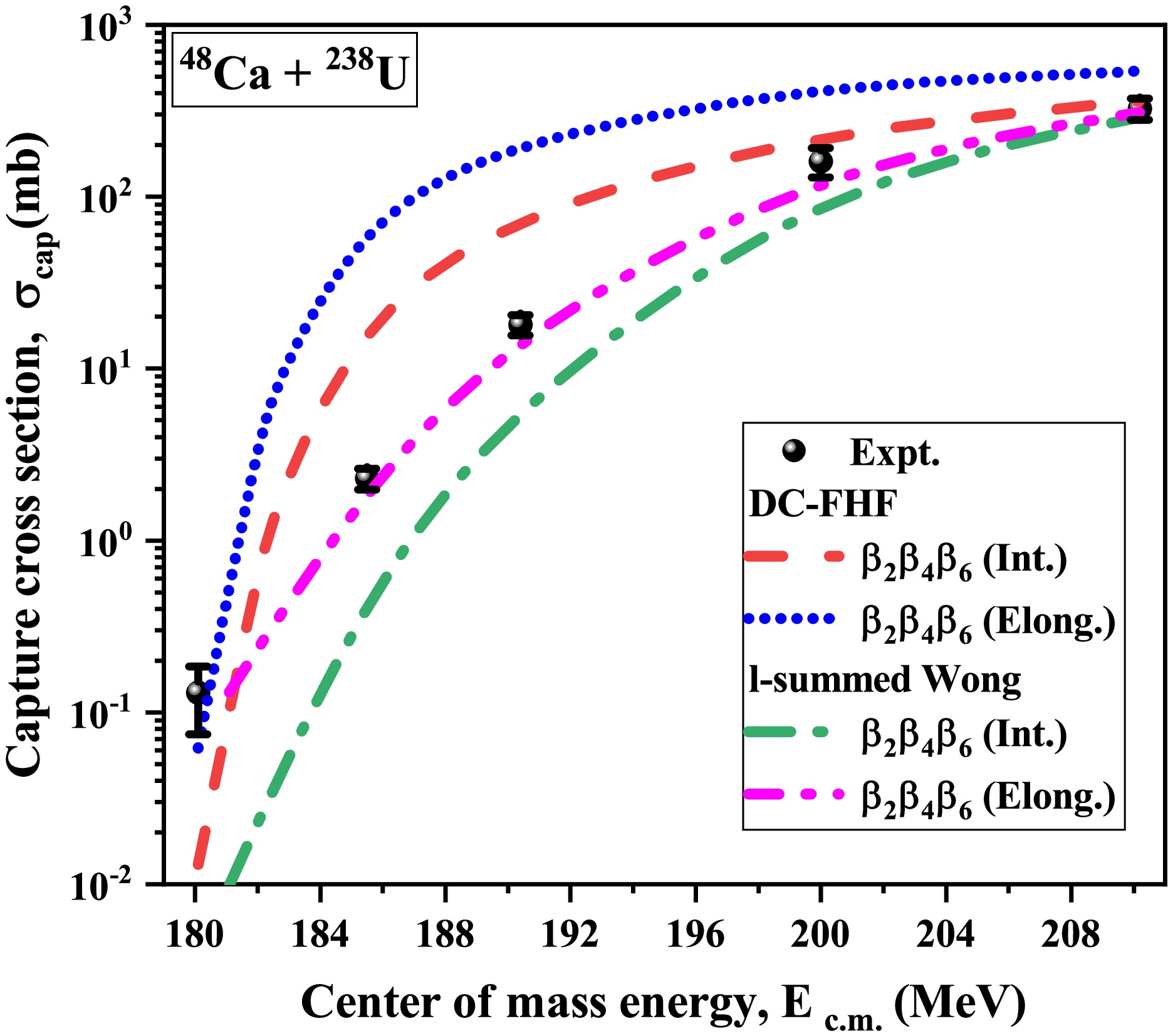
This study examines the impact of higher-order deformations up to hexacontatetrapole (\begin{document}$ \beta_6 $\end{document} \begin{document}$ \beta_6 $\end{document} \begin{document}$ V_B $\end{document} \begin{document}$ R_B $\end{document} \begin{document}$ \pm $\end{document} \begin{document}$ \beta_6 $\end{document} \begin{document}$ \beta_6 $\end{document} \begin{document}$ \beta_2 $\end{document} \begin{document}$ \beta_4 $\end{document} \begin{document}$ \beta_6 $\end{document} \begin{document}$ \sigma_{\mathrm{cap}} $\end{document} \begin{document}$ \beta_6 $\end{document} \begin{document}$ \beta_2 $\end{document} \begin{document}$ \beta_4 $\end{document} \begin{document}$ \beta_2\beta_4 $\end{document} \begin{document}$ \beta_6 $\end{document}
This study examines the impact of higher-order deformations up to hexacontatetrapole (
2026, 50(3): 034102. doi: 10.1088/1674-1137/ae039d
Abstract:
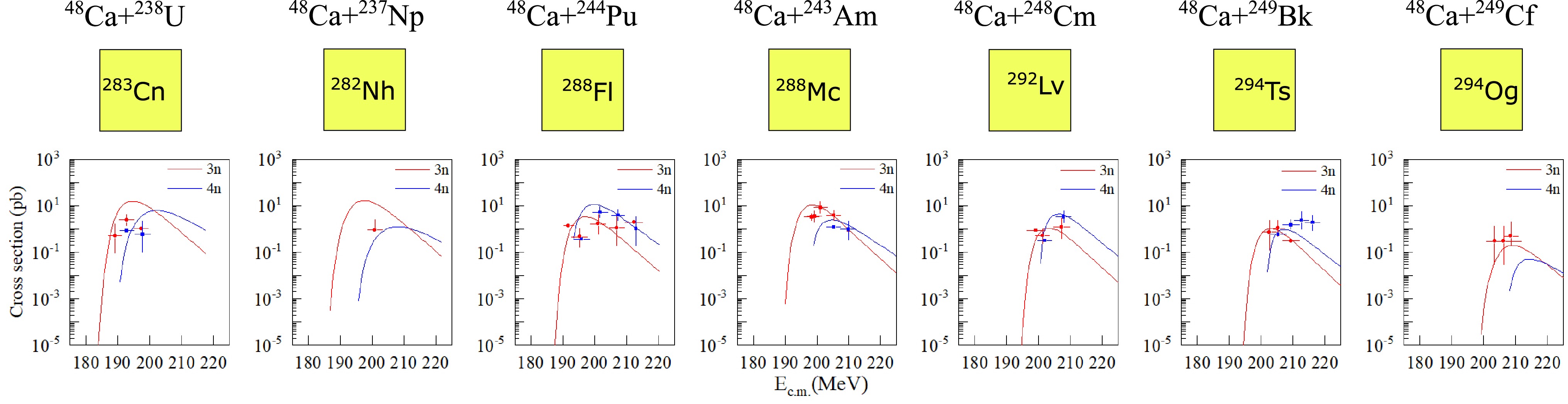
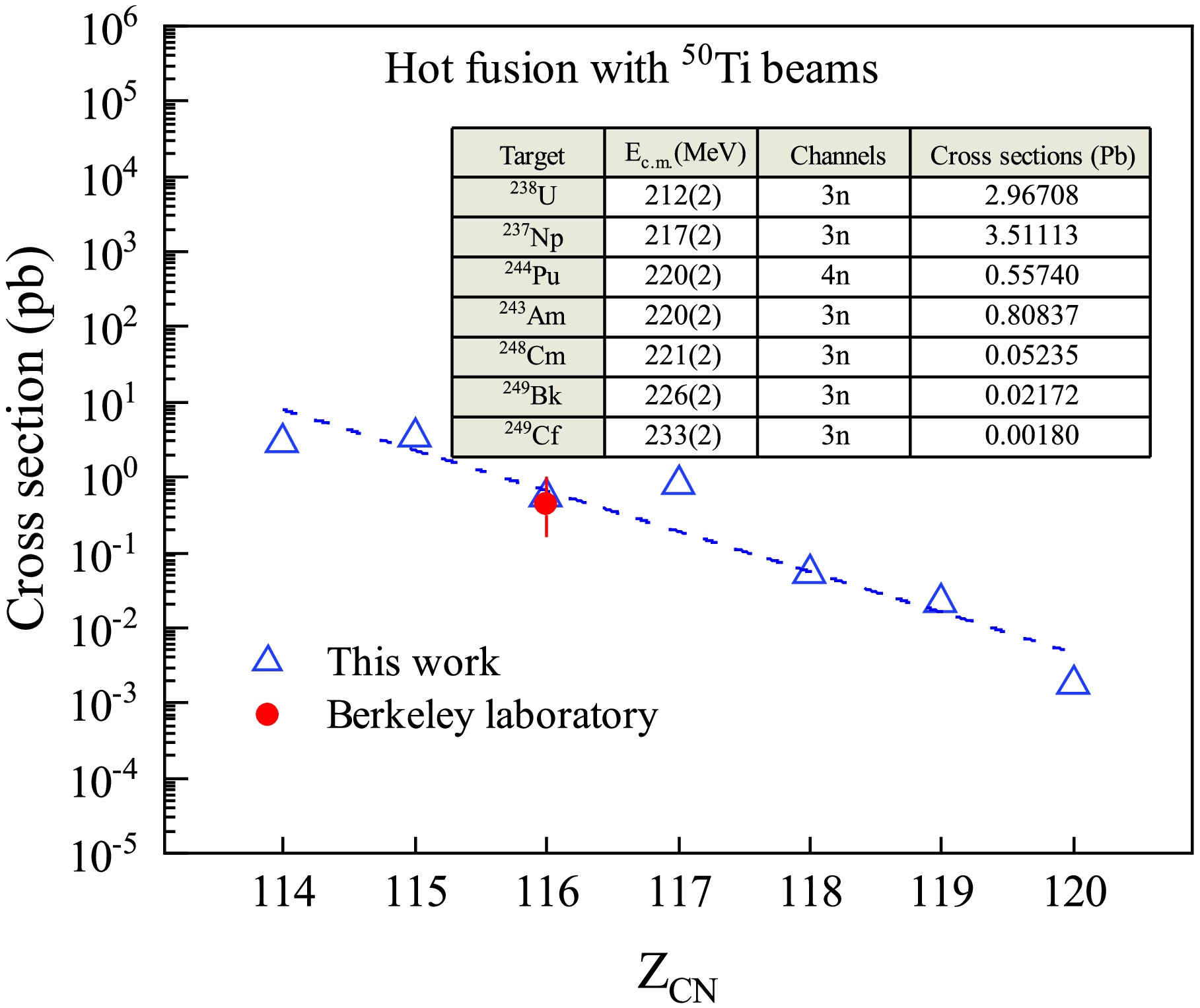
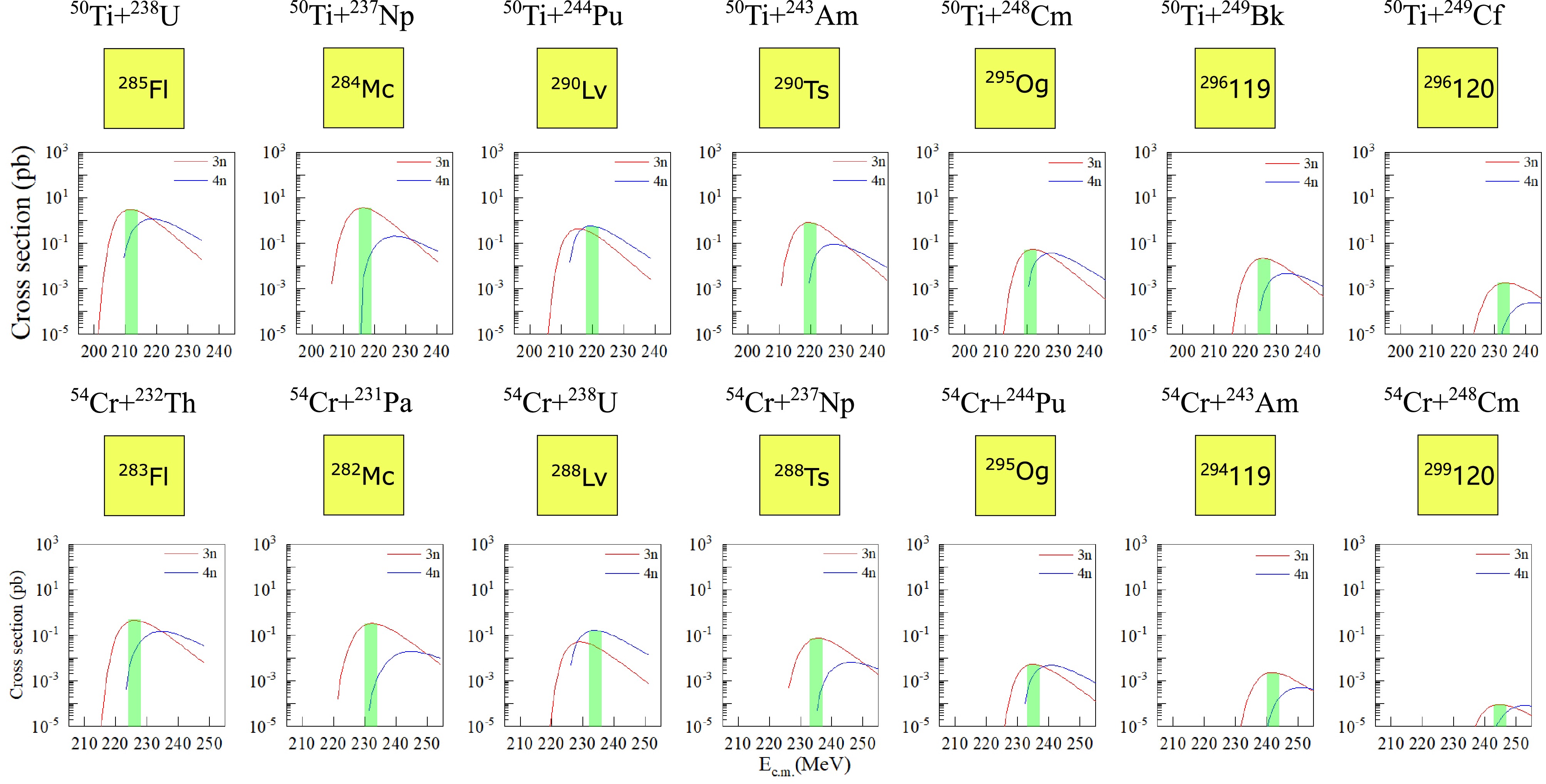
The theoretical study aims to synthesize superheavy elements with\begin{document}$ Z \geq 114 $\end{document} \begin{document}$^{48}\text{Ca}$\end{document} \begin{document}$ \mathrm{^{244}Pu}(\mathrm{^{50}Ti}, \, \mathit{x} n)\, \mathrm{^{294-\mathit{x}}Lv} $\end{document} \begin{document}$ \mathrm{^{50}Ti} $\end{document} \begin{document}$ \mathrm{^{54}Cr} $\end{document} \begin{document}$ \mathrm{^{249}Bk}(\mathrm{^{50}Ti}, \, \mathit{x} n)\, \mathrm{^{299-\mathit{x}}119} $\end{document} \begin{document}$ \sigma_{\mathrm{prod}} = 21.72 $\end{document} \begin{document}$ \mathrm{^{249}Cf}(\mathrm{^{50}Ti}, \, \mathit{x} n)\, \mathrm{^{299-\mathit{x}}120} $\end{document} \begin{document}$ \sigma_{\mathrm{prod}} = 1.80 $\end{document} \begin{document}$ \mathrm{^{50}Ti} $\end{document} \begin{document}$ Z = 118 $\end{document}
The theoretical study aims to synthesize superheavy elements with

2026, 50(3): 034103. doi: 10.1088/1674-1137/ae1f07
Abstract:
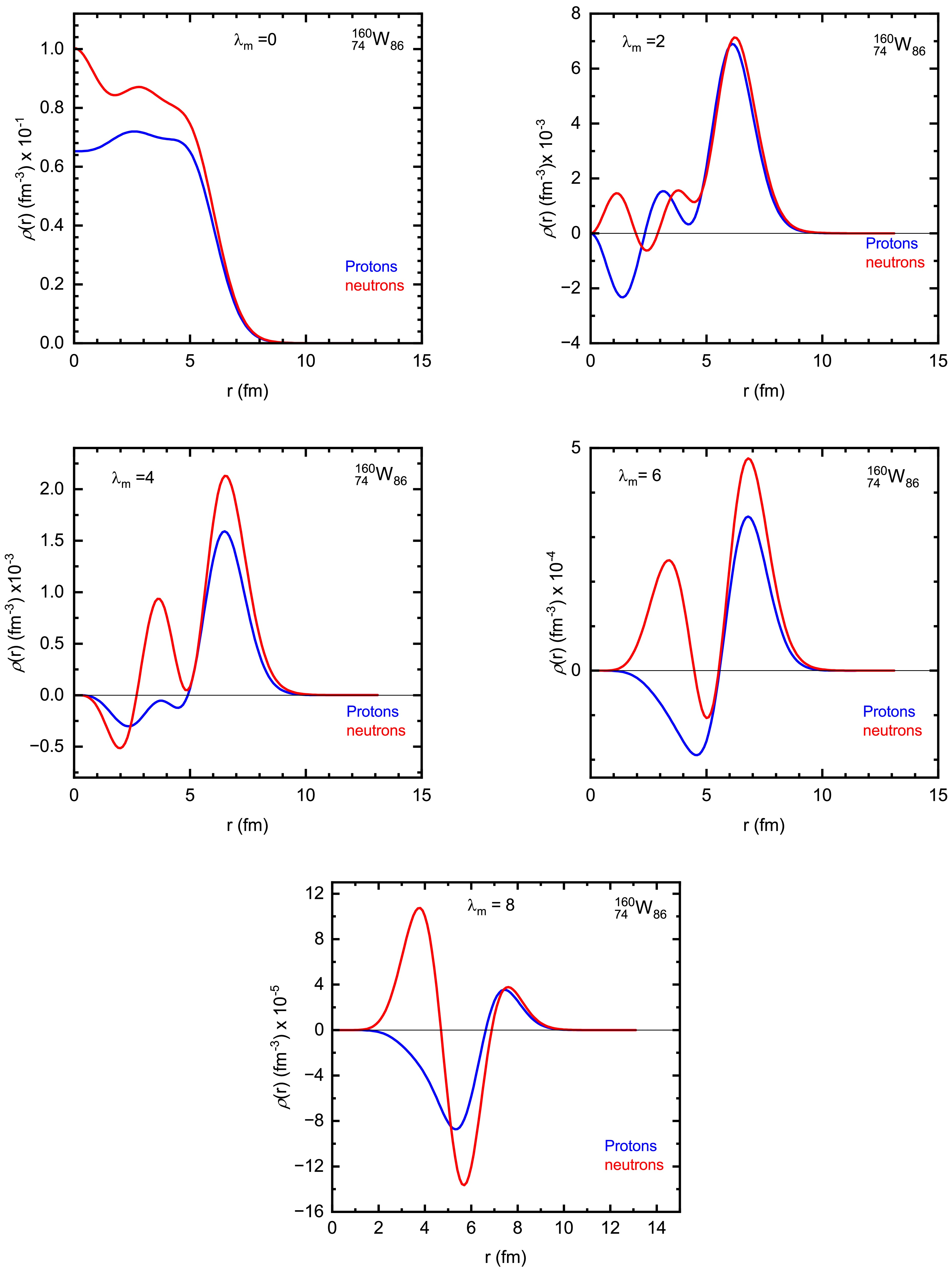
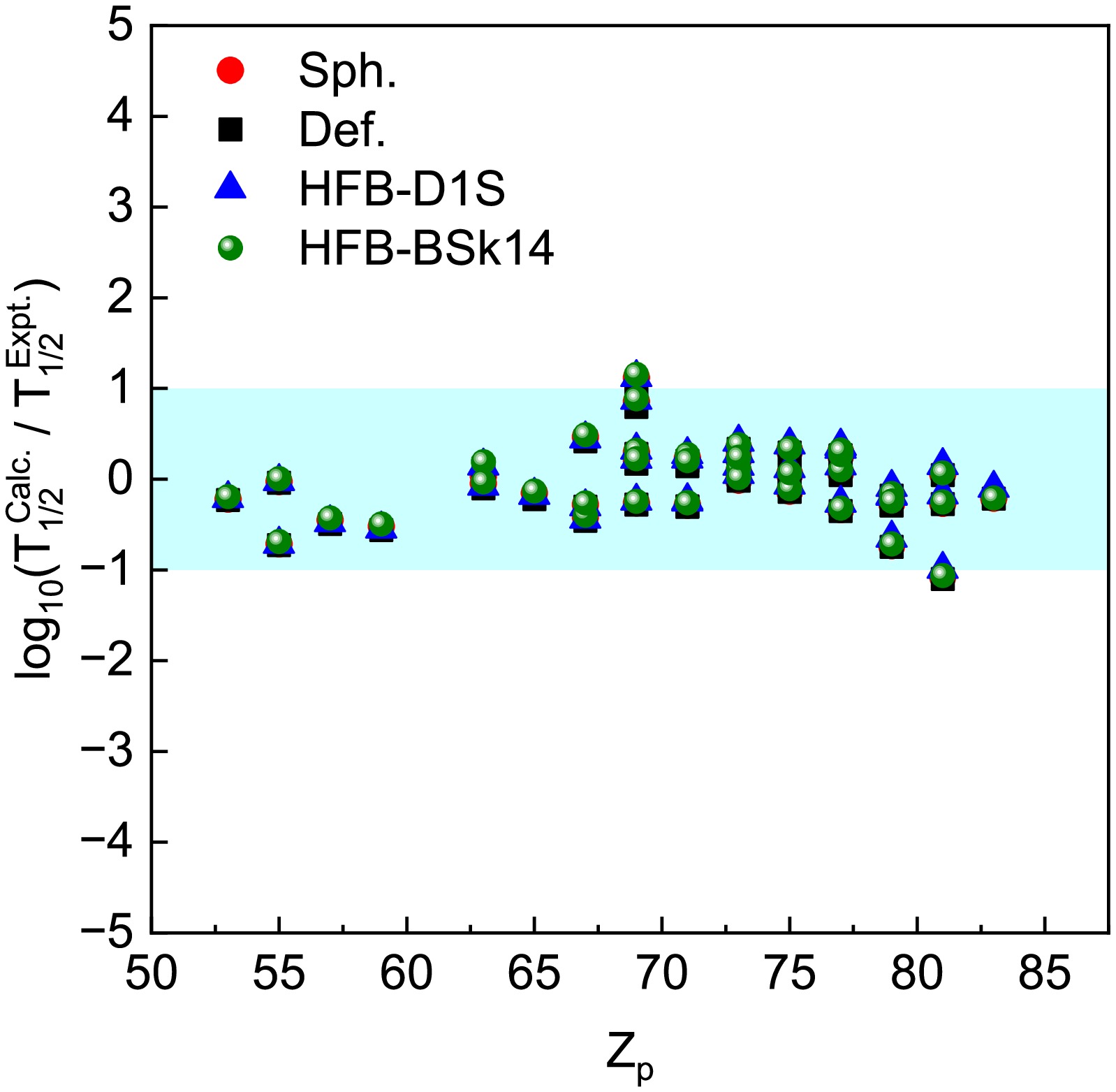
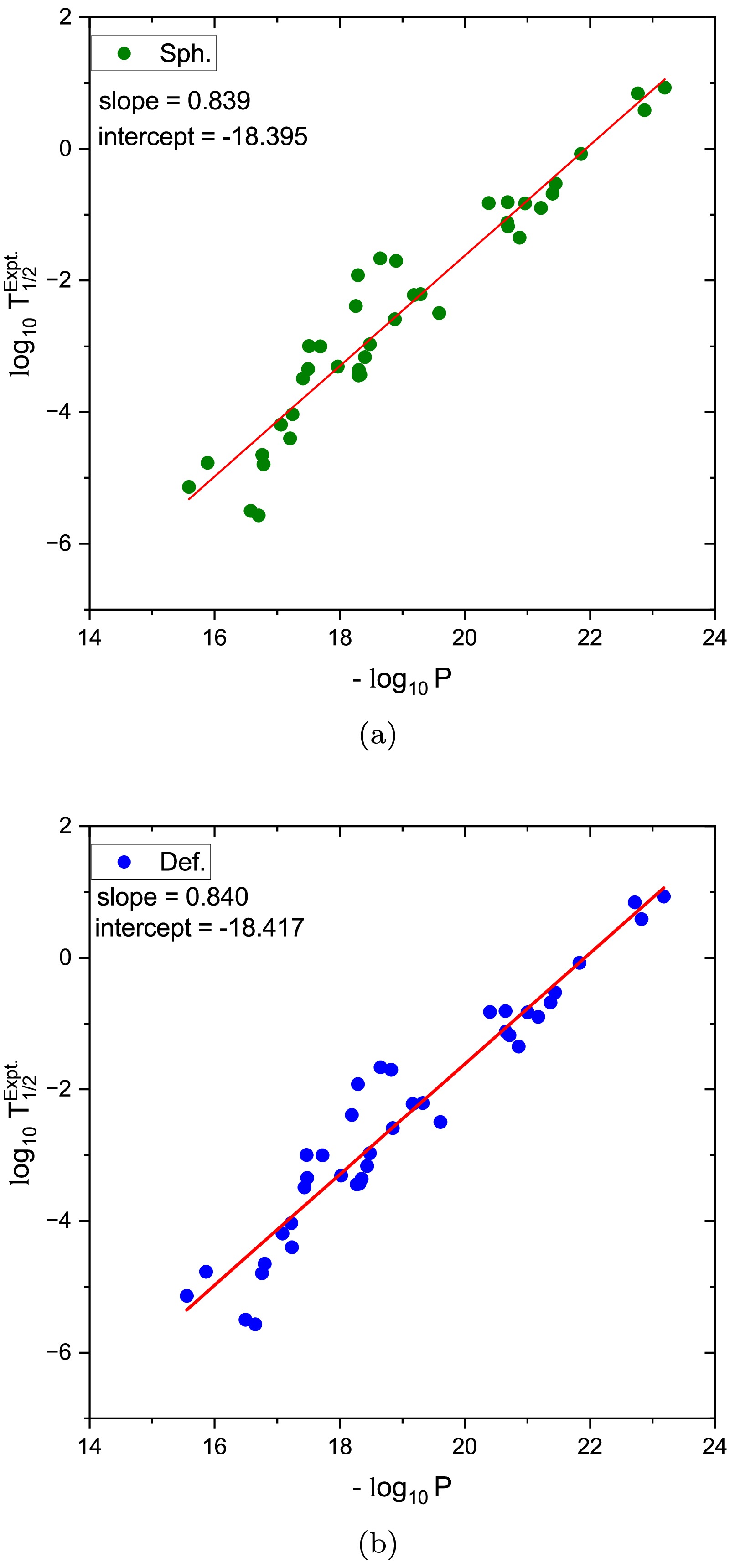
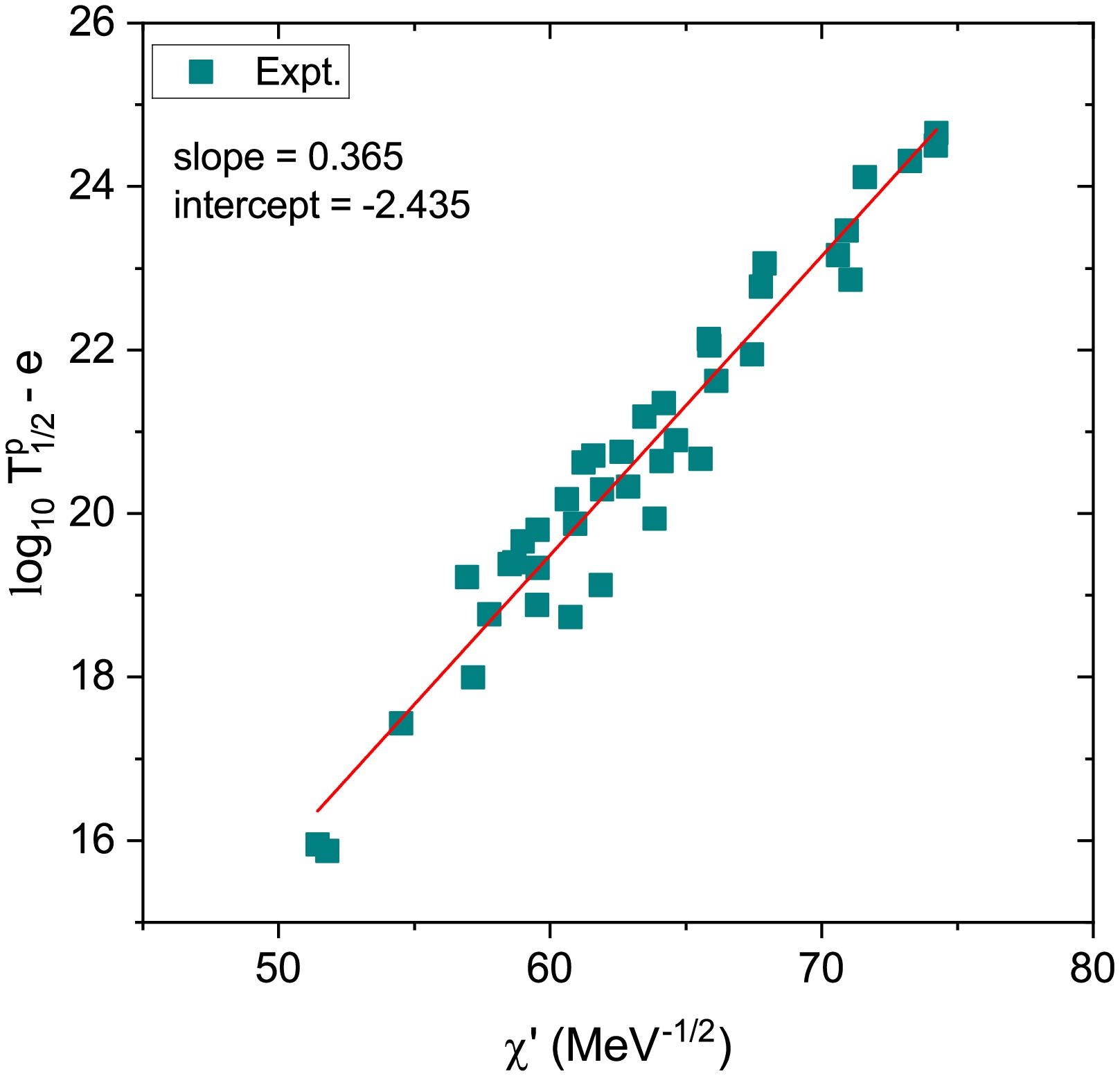
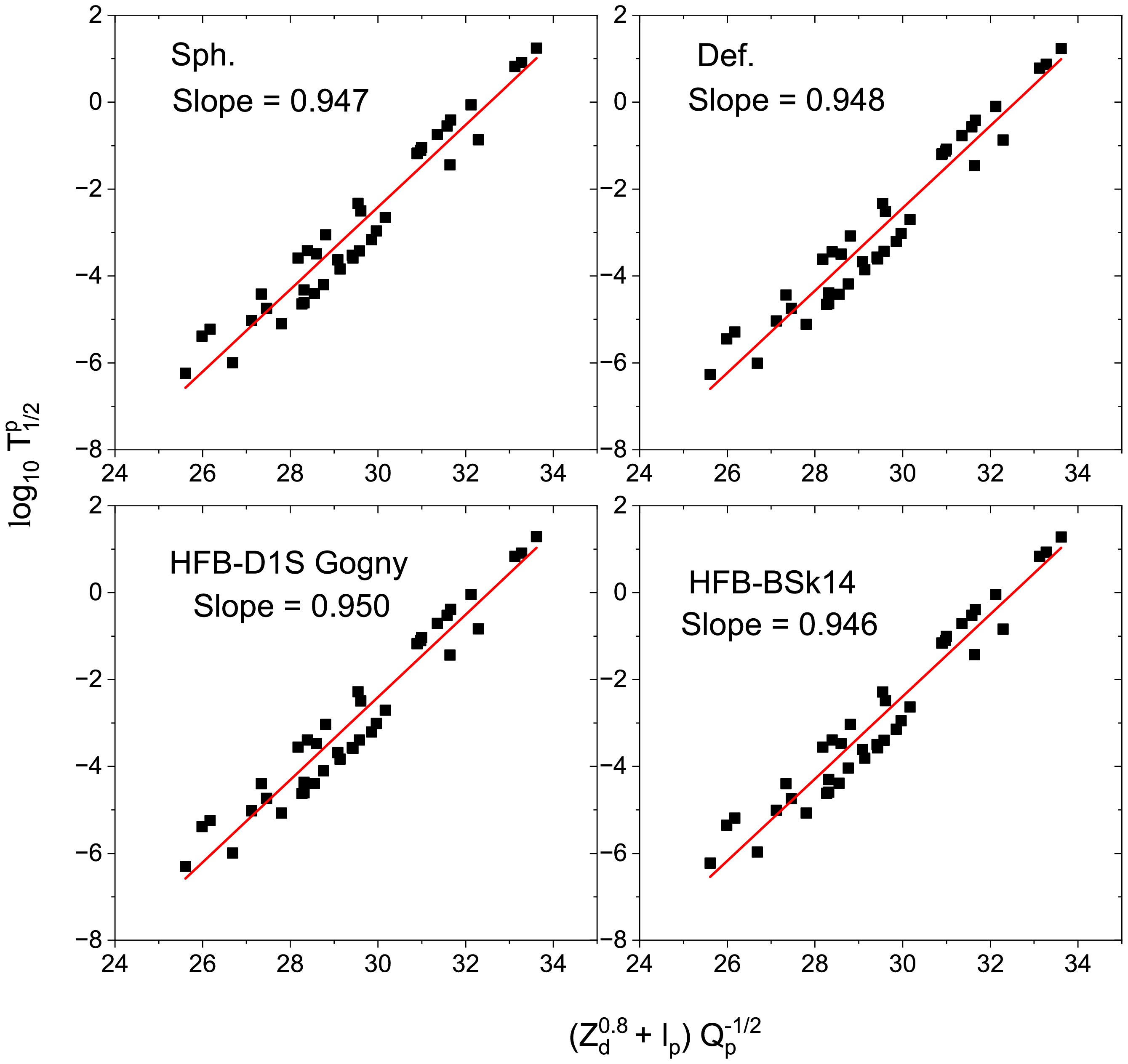
In this study, we perform a microscopic study of proton decay half-lives in neutron-deficient nuclei using the Hartree-Fock-Bogolyubov (HFB) approach with the Gogny D1S effective interaction. Proton emission half-lives from ground and isomeric states are computed by employing a single-folding potential constructed from a realistic M3Y-Paris nucleon-nucleon interaction. Deformed density distributions of daughter nuclei are calculated self-consistently within the same HFB framework. The resulting decay half-lives are systematically compared with recent experimental measurements and other theoretical models for evaluating the accuracy and predictive capacity of this fully microscopic methodology in describing proton radioactivity near the proton dripline.
In this study, we perform a microscopic study of proton decay half-lives in neutron-deficient nuclei using the Hartree-Fock-Bogolyubov (HFB) approach with the Gogny D1S effective interaction. Proton emission half-lives from ground and isomeric states are computed by employing a single-folding potential constructed from a realistic M3Y-Paris nucleon-nucleon interaction. Deformed density distributions of daughter nuclei are calculated self-consistently within the same HFB framework. The resulting decay half-lives are systematically compared with recent experimental measurements and other theoretical models for evaluating the accuracy and predictive capacity of this fully microscopic methodology in describing proton radioactivity near the proton dripline.
2026, 50(3): 034104. doi: 10.1088/1674-1137/ae1de5
Abstract:
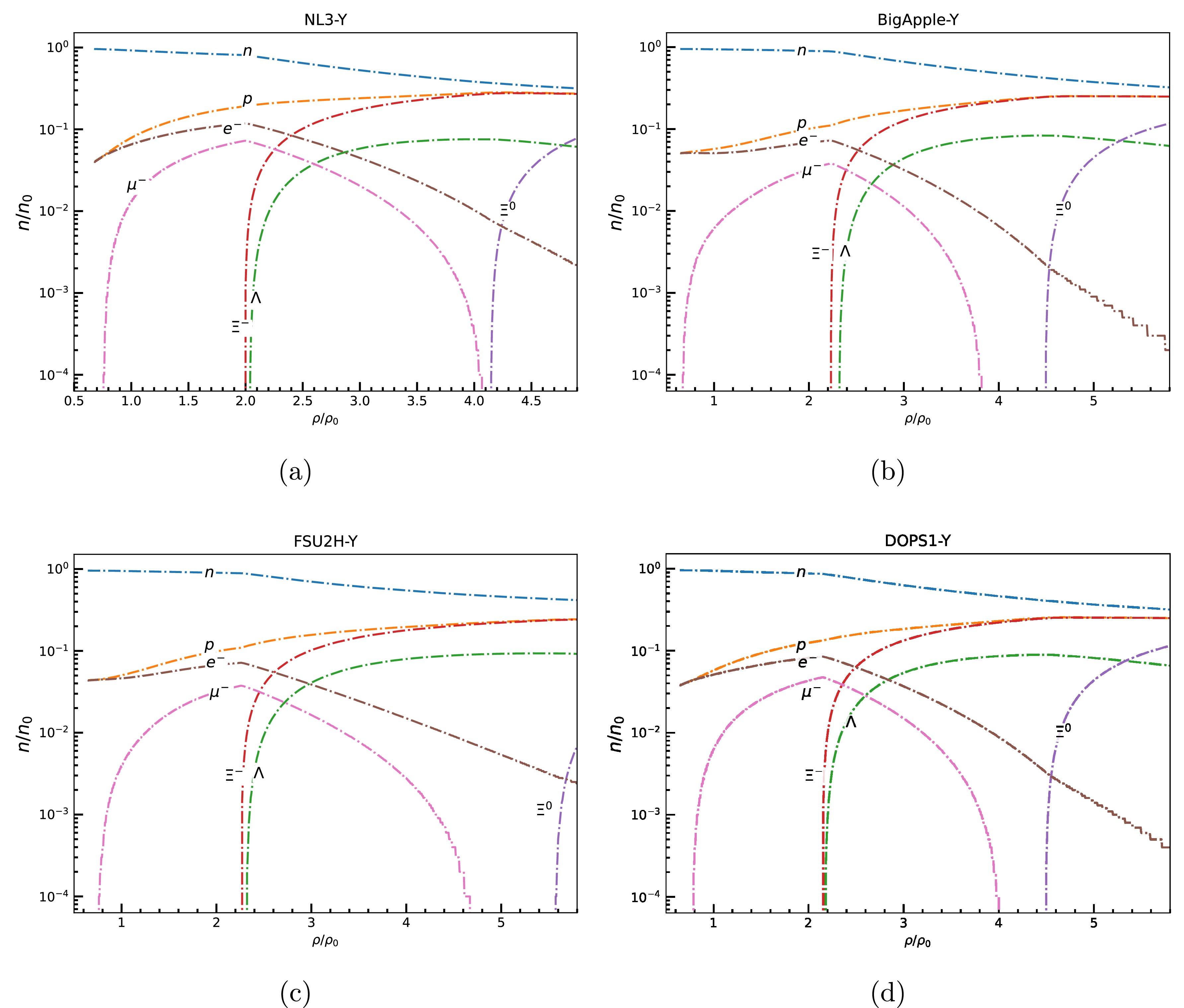
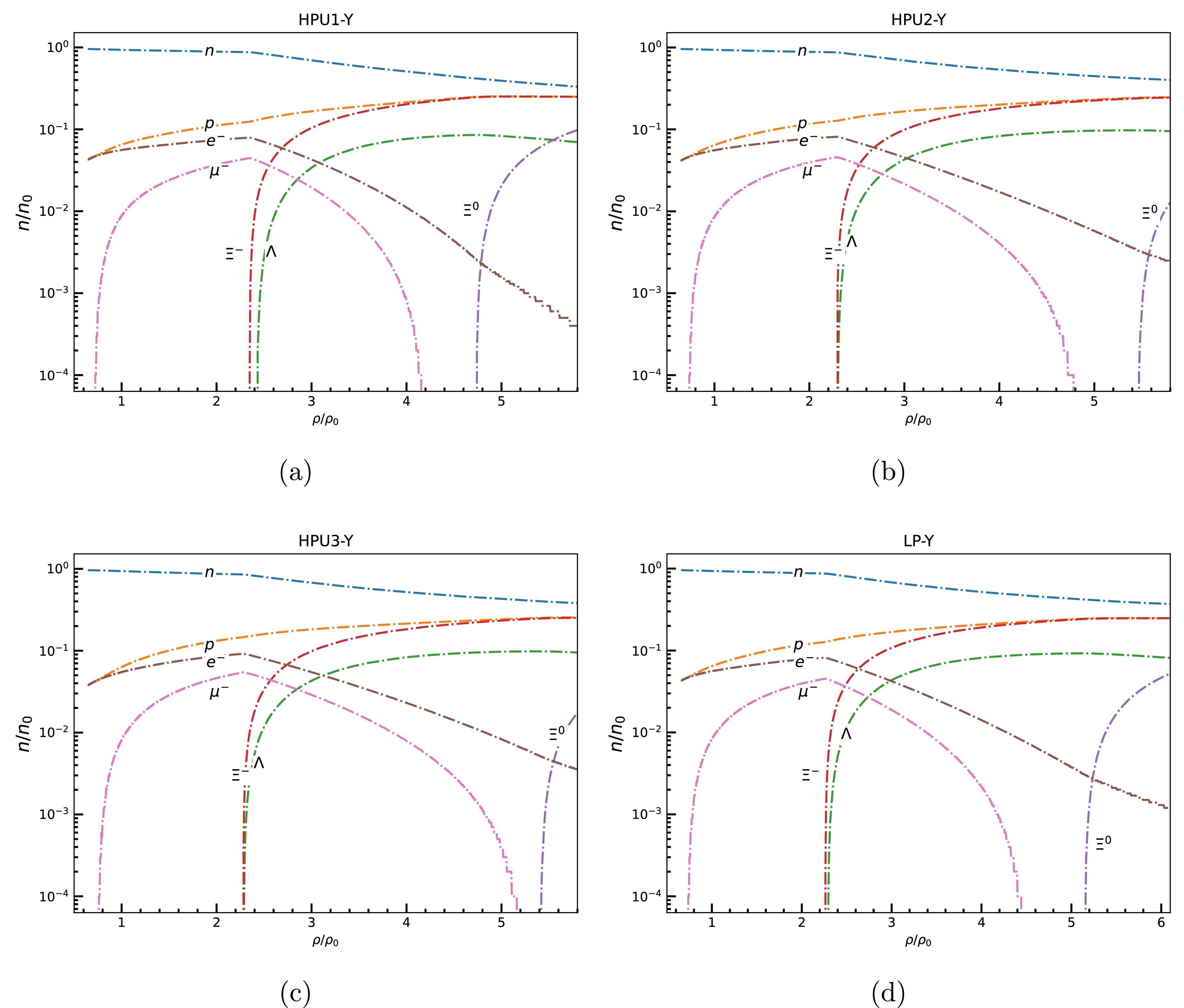
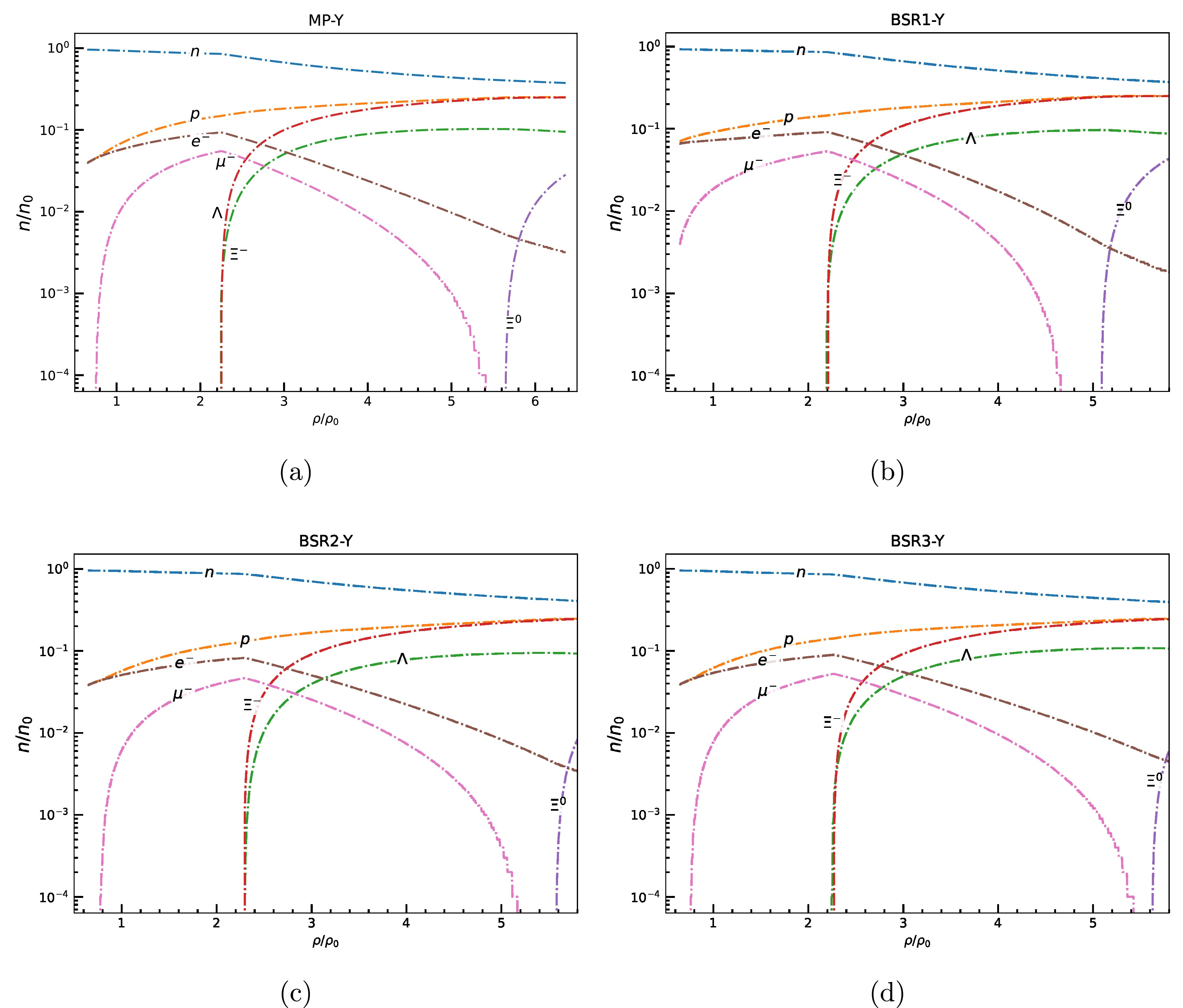
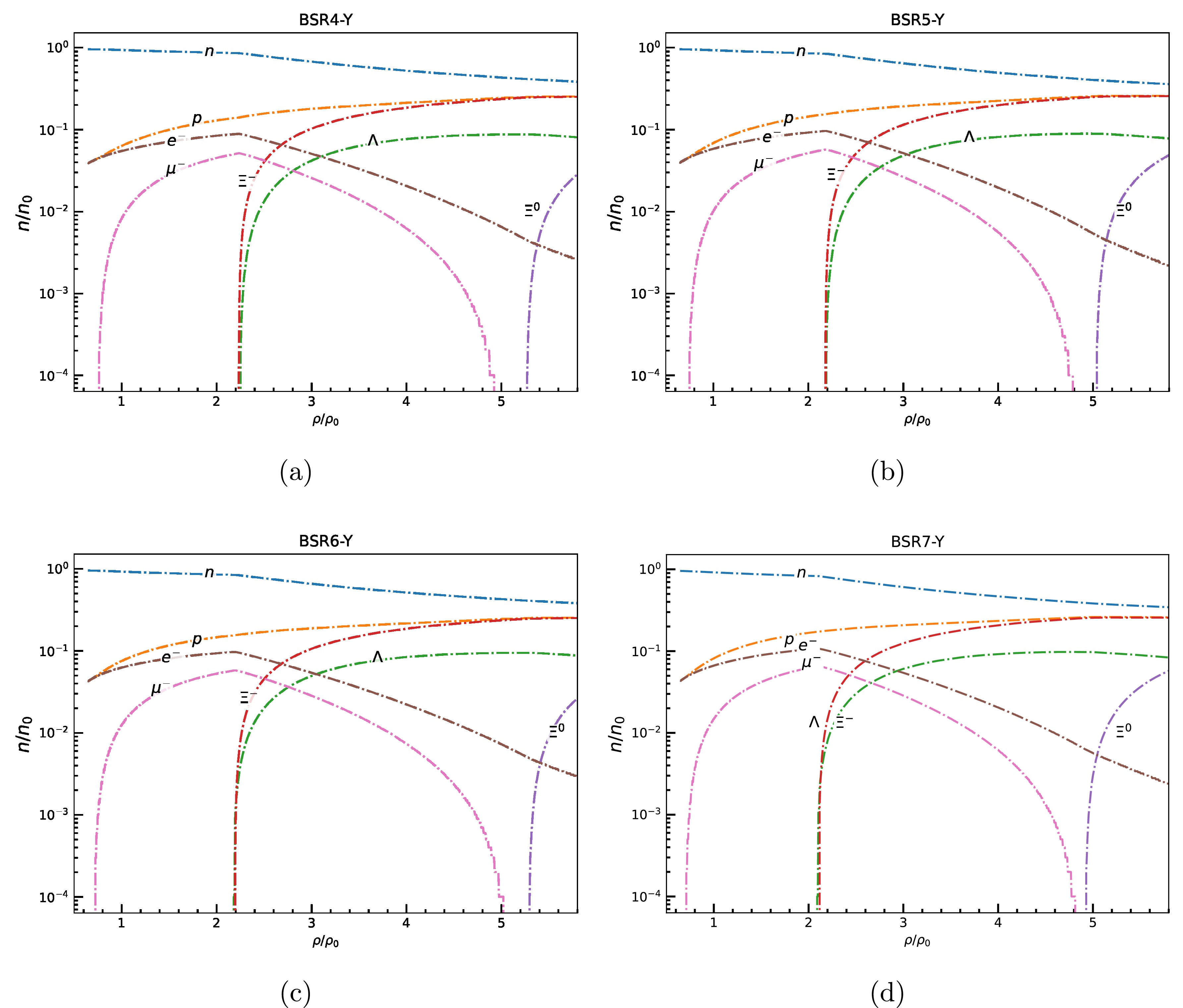
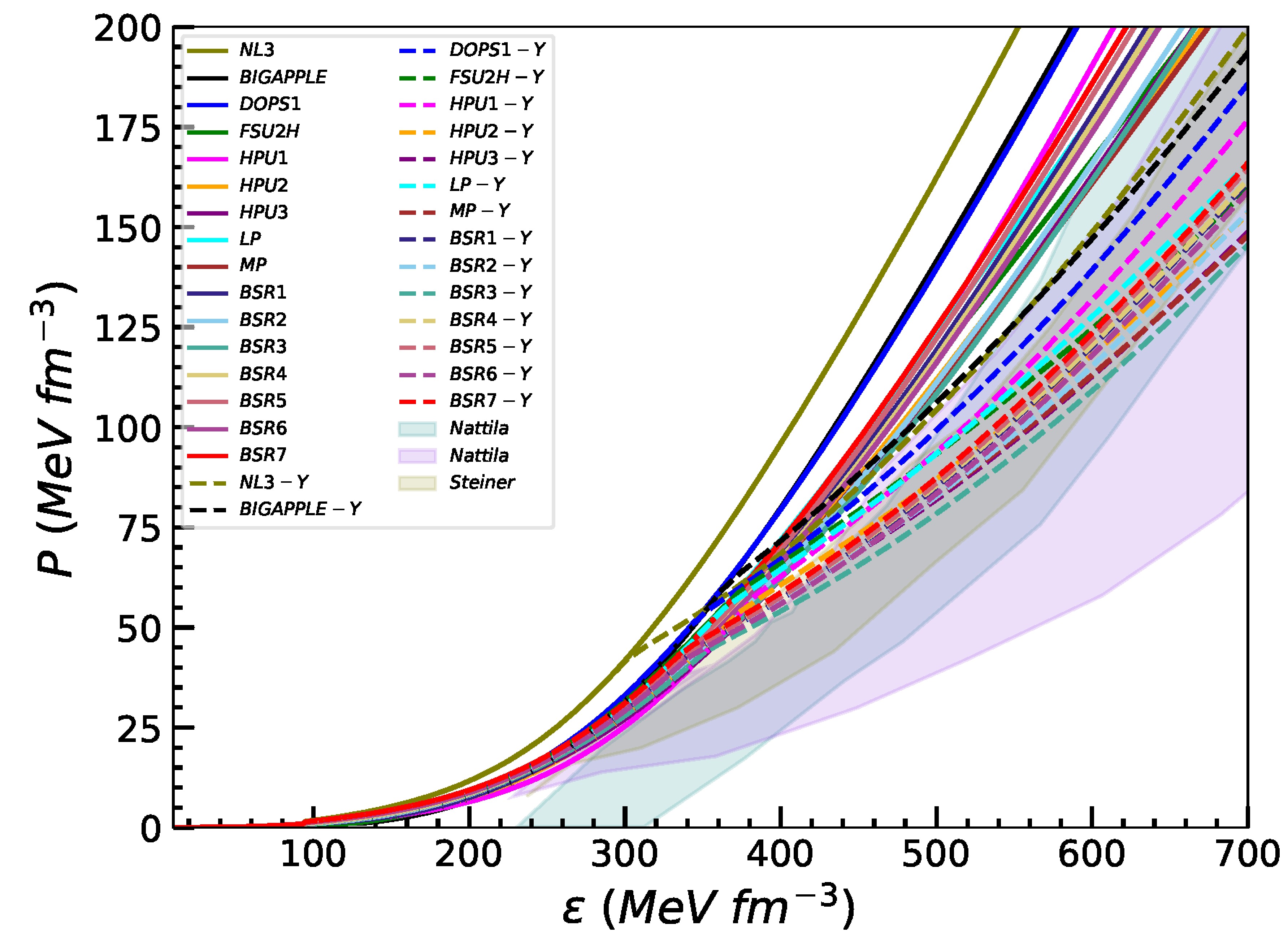
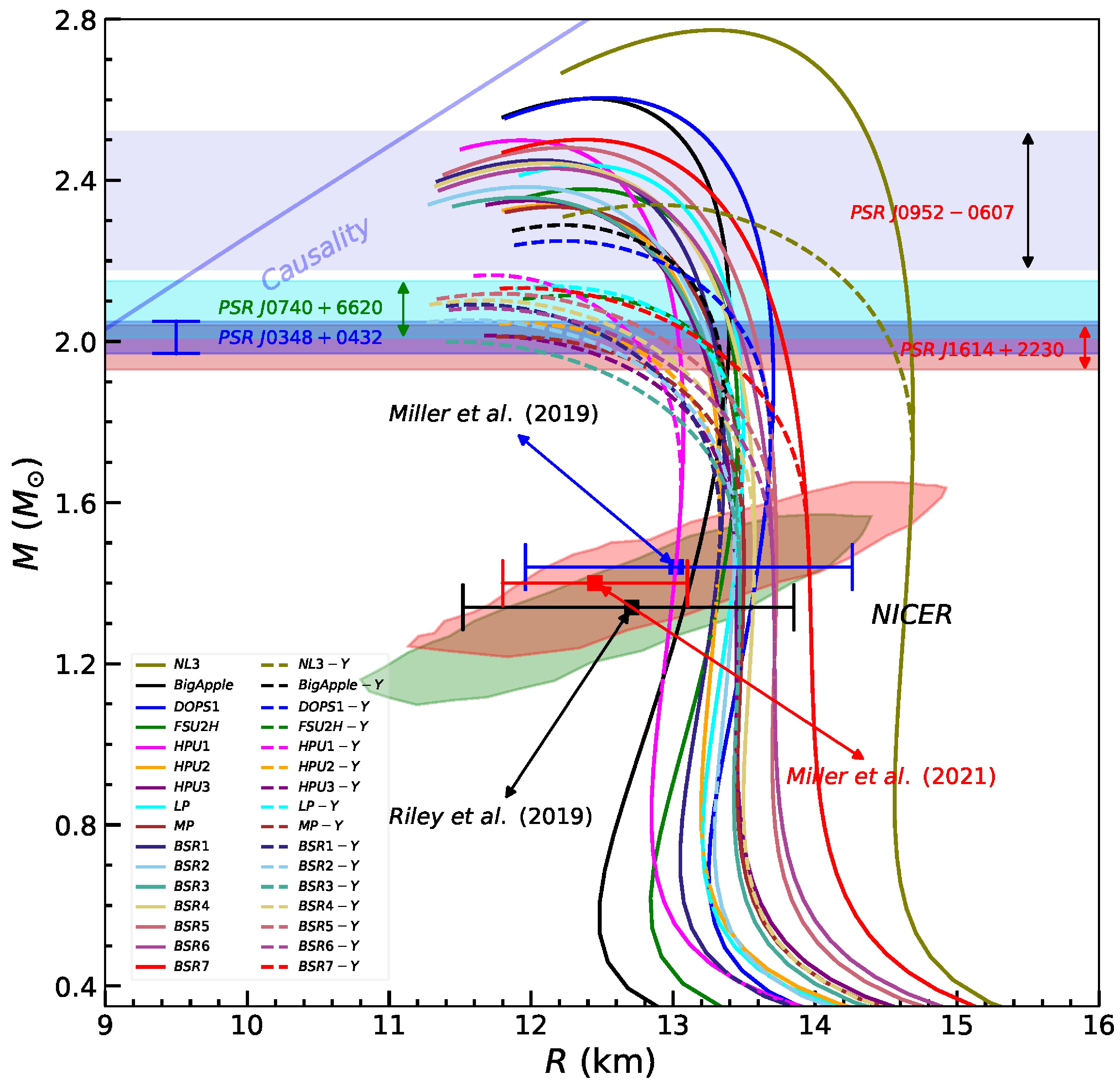
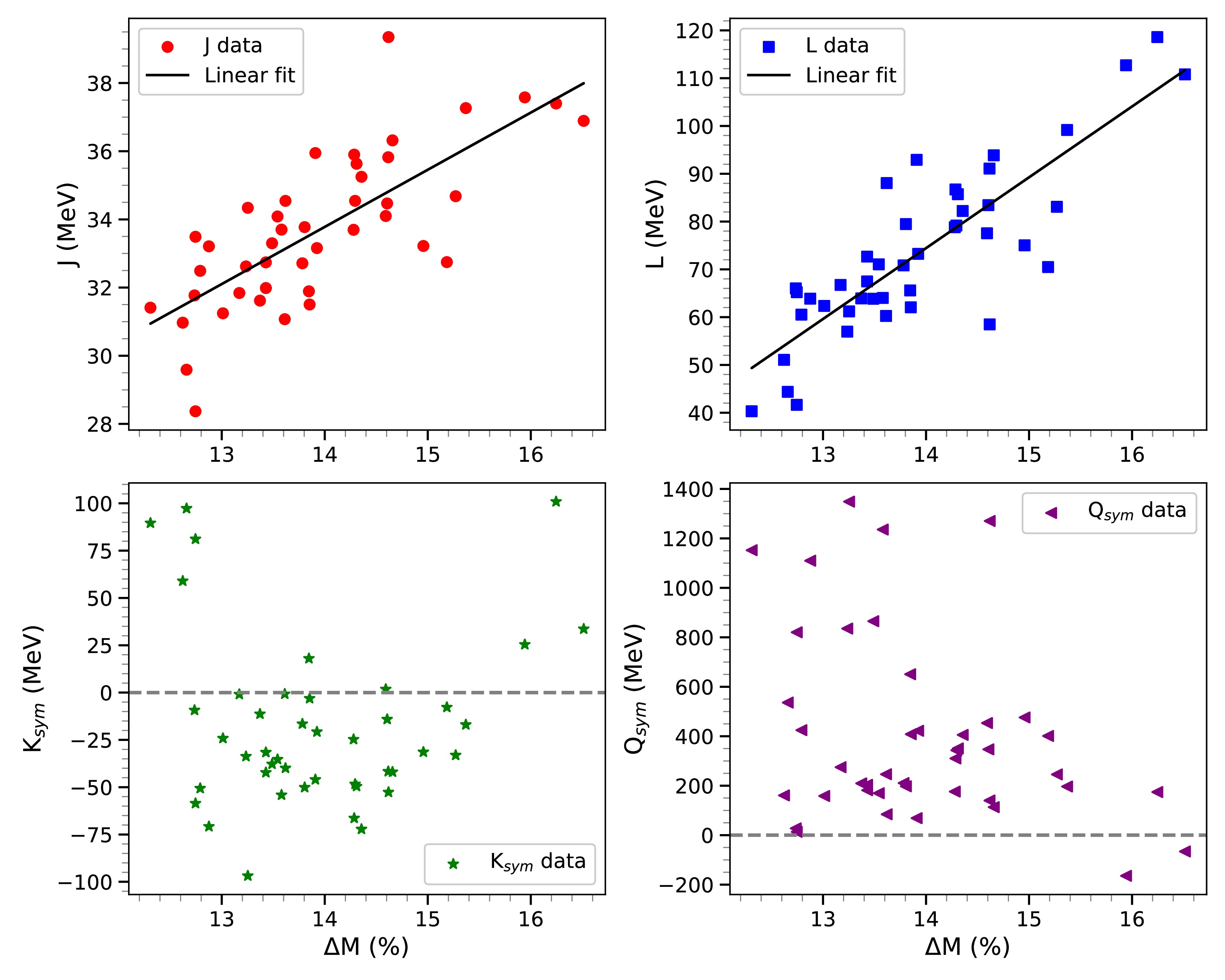
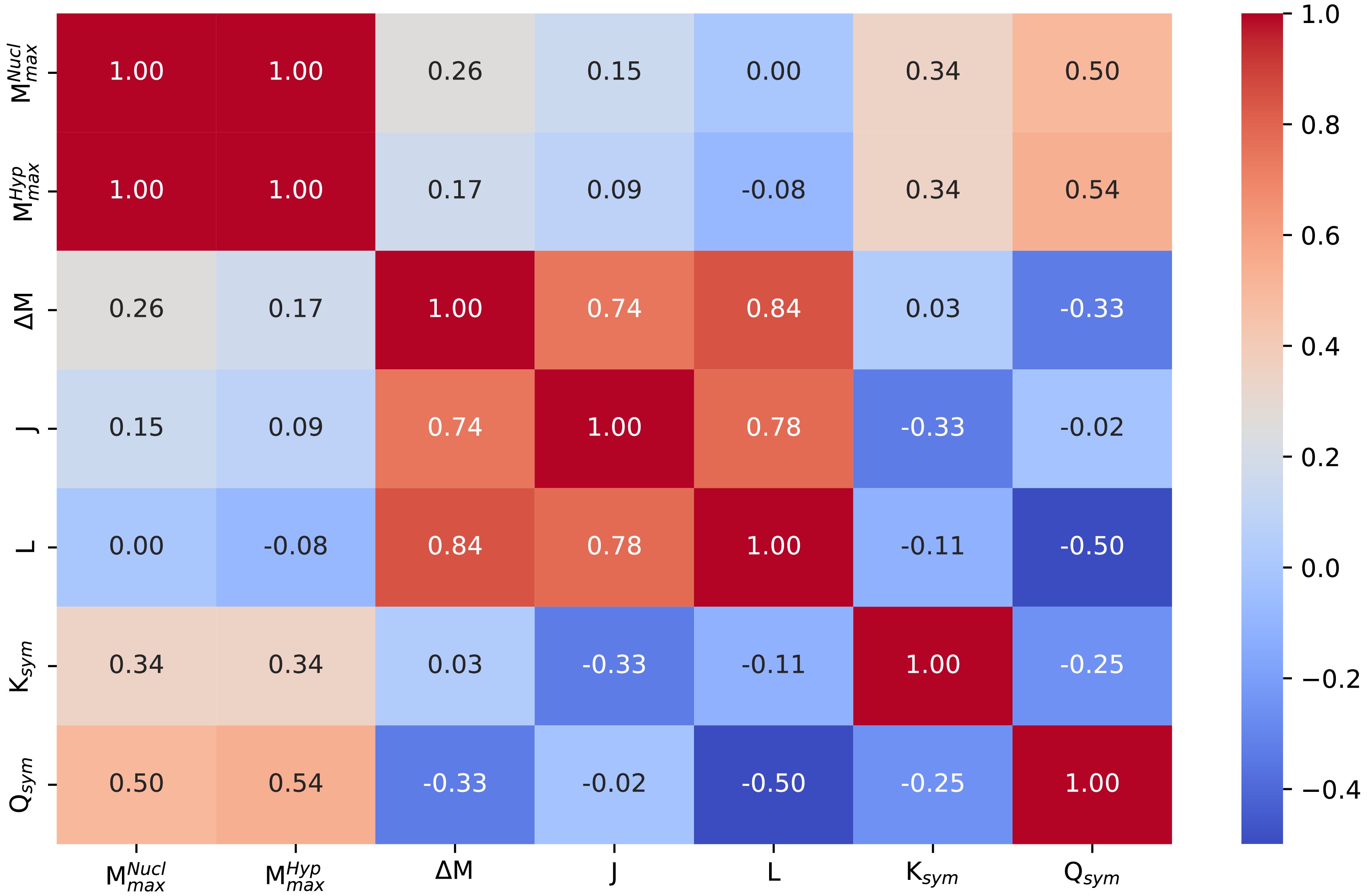
We employ a comprehensive set of relativistic mean-field (RMF) models to investigate the role of hyperons (Λ,\begin{document}$ \Sigma^{\pm,0} $\end{document} \begin{document}$ \Xi^{-,0} $\end{document} \begin{document}$ _{\rm max} $\end{document} \begin{document}$ _{\rm max} $\end{document} \begin{document}$ \Lambda_{\rm max} $\end{document} \begin{document}$ X_{\omega Y} $\end{document} \begin{document}$ X_{\omega Y} $\end{document} \begin{document}$ X_{\omega Y} $\end{document} \begin{document}$ \Xi^- $\end{document} \begin{document}$ \Xi^0 $\end{document} \begin{document}$ _{\rm max} $\end{document} \begin{document}$ _{\rm max} $\end{document} \begin{document}$ \Lambda_{\rm max} $\end{document} \begin{document}$ _{1.4} $\end{document} \begin{document}$ \Lambda_{1.4} $\end{document} \begin{document}$ _{\odot} $\end{document} \begin{document}$ _{1.4} $\end{document} \begin{document}$ \Lambda_{1.4} $\end{document} \begin{document}$ _{\rm max} $\end{document} \begin{document}$ \ge $\end{document} \begin{document}$ _{\odot} $\end{document} \begin{document}$ _{\omega Y} $\end{document} \begin{document}$ _{\omega Y} $\end{document} \begin{document}$ _{\odot} $\end{document}
We employ a comprehensive set of relativistic mean-field (RMF) models to investigate the role of hyperons (Λ,
2026, 50(3): 034105. doi: 10.1088/1674-1137/ae1c29
Abstract:
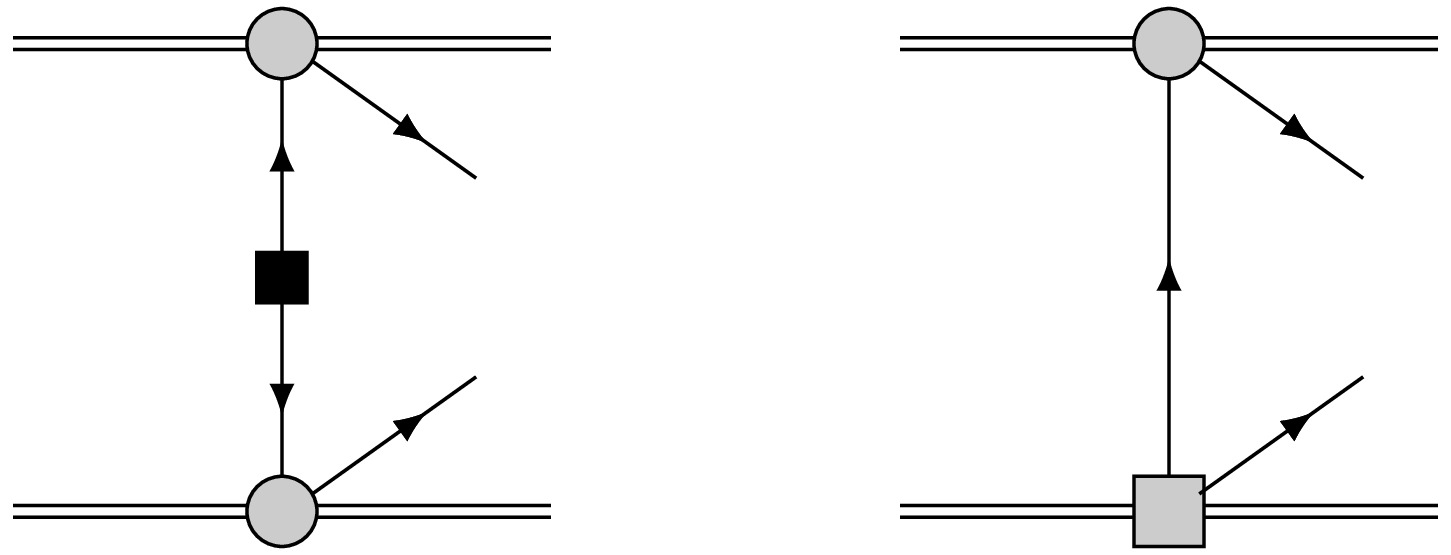
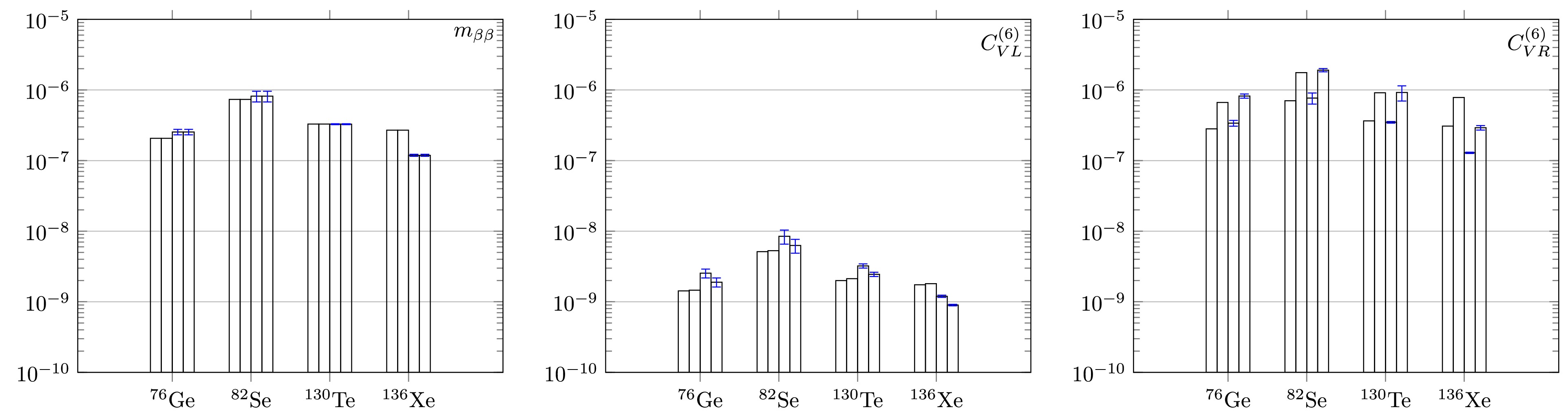
In the framework of effective field theory, we derive the formula for the decay width of neutrinoless double beta-decay with the S-matrix theory, considering only the contribution from the exchange of light neutrinos. Our results agree with previous derivations for a left-right symmetric model. Detailed analyses of the nuclear matrix elements for 76Ge, 82Se, 130Te, and 136Xe from the quasi-particle random phase approximation method with realistic force and large-scale shell model calculations are performed. We compare the results of two many-body approaches and discuss possible origins of the deviation. We also compare our results with those from the so-called master formula, and observe good agreement between the two schemes. A deviation of the q-term in our scheme compared with the counterpart in the master formula can be explained by the distortion of the electron wave function under the static Coulomb field. We also provide constraints for the low energy effective field theory Wilson coefficients\begin{document}$ C_{VL}^{(6)} $\end{document} \begin{document}$ C_{VR}^{(6)} $\end{document}
In the framework of effective field theory, we derive the formula for the decay width of neutrinoless double beta-decay with the S-matrix theory, considering only the contribution from the exchange of light neutrinos. Our results agree with previous derivations for a left-right symmetric model. Detailed analyses of the nuclear matrix elements for 76Ge, 82Se, 130Te, and 136Xe from the quasi-particle random phase approximation method with realistic force and large-scale shell model calculations are performed. We compare the results of two many-body approaches and discuss possible origins of the deviation. We also compare our results with those from the so-called master formula, and observe good agreement between the two schemes. A deviation of the q-term in our scheme compared with the counterpart in the master formula can be explained by the distortion of the electron wave function under the static Coulomb field. We also provide constraints for the low energy effective field theory Wilson coefficients
2026, 50(3): 034106. doi: 10.1088/1674-1137/ae1f7a
Abstract:
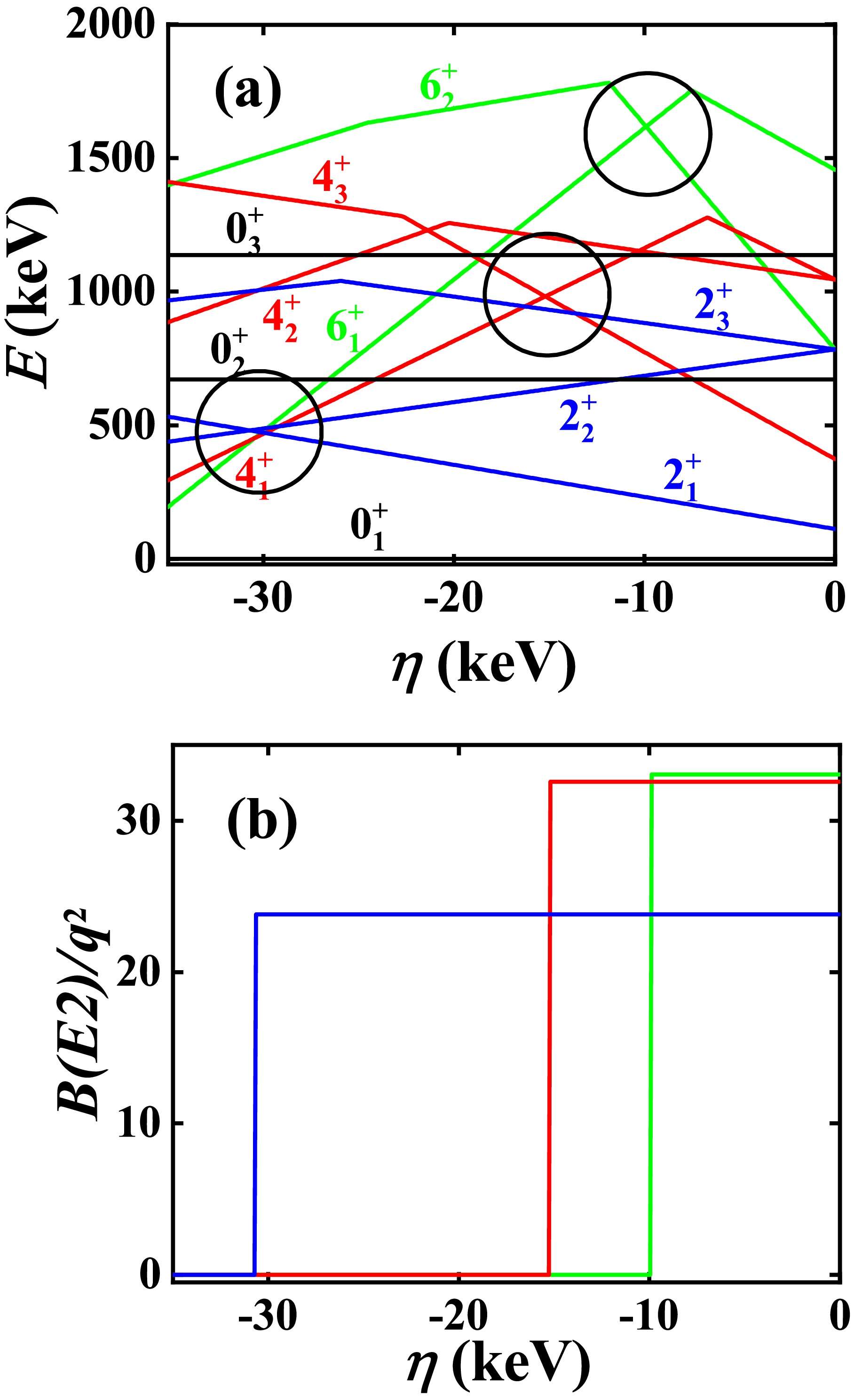
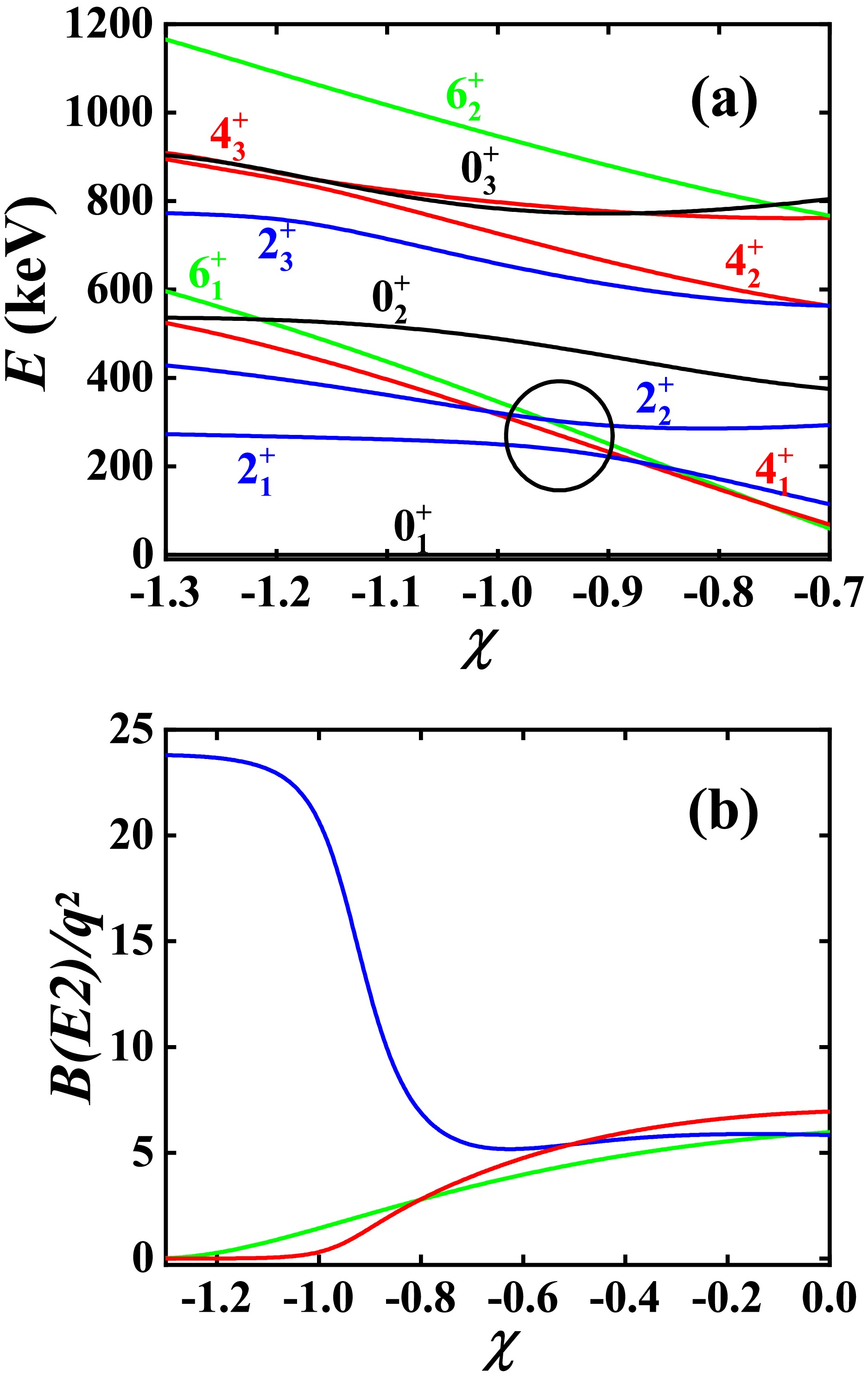
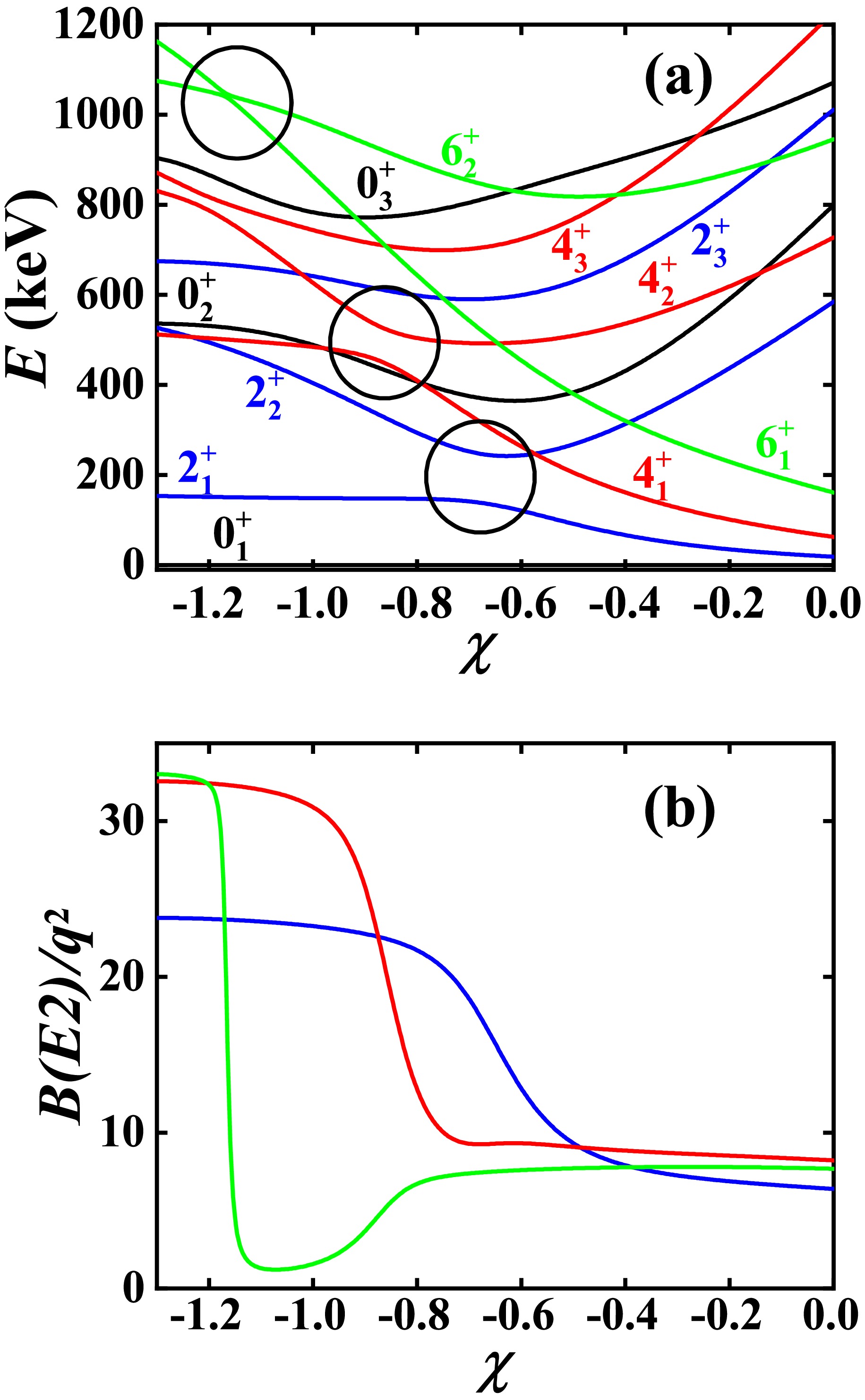
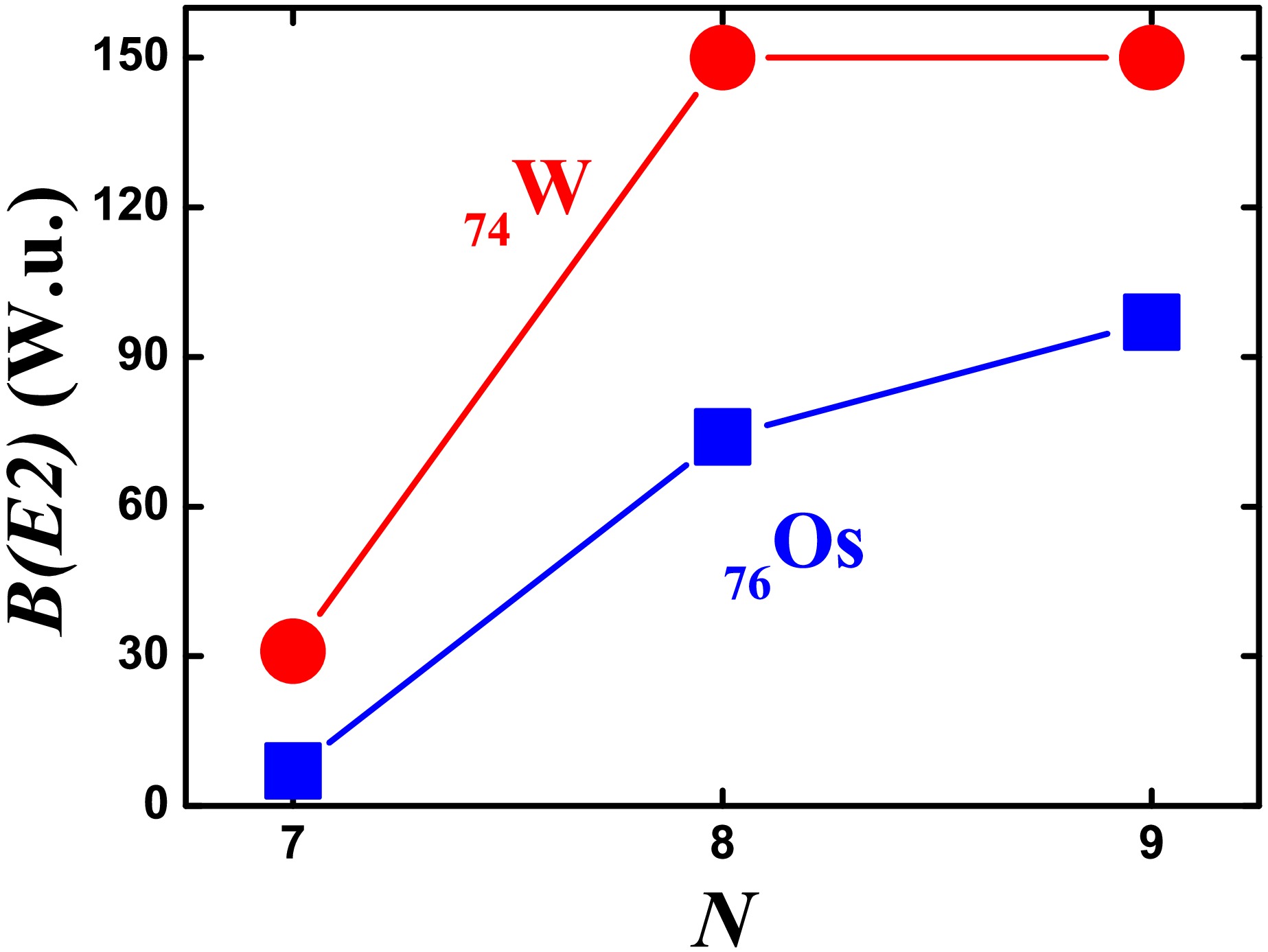
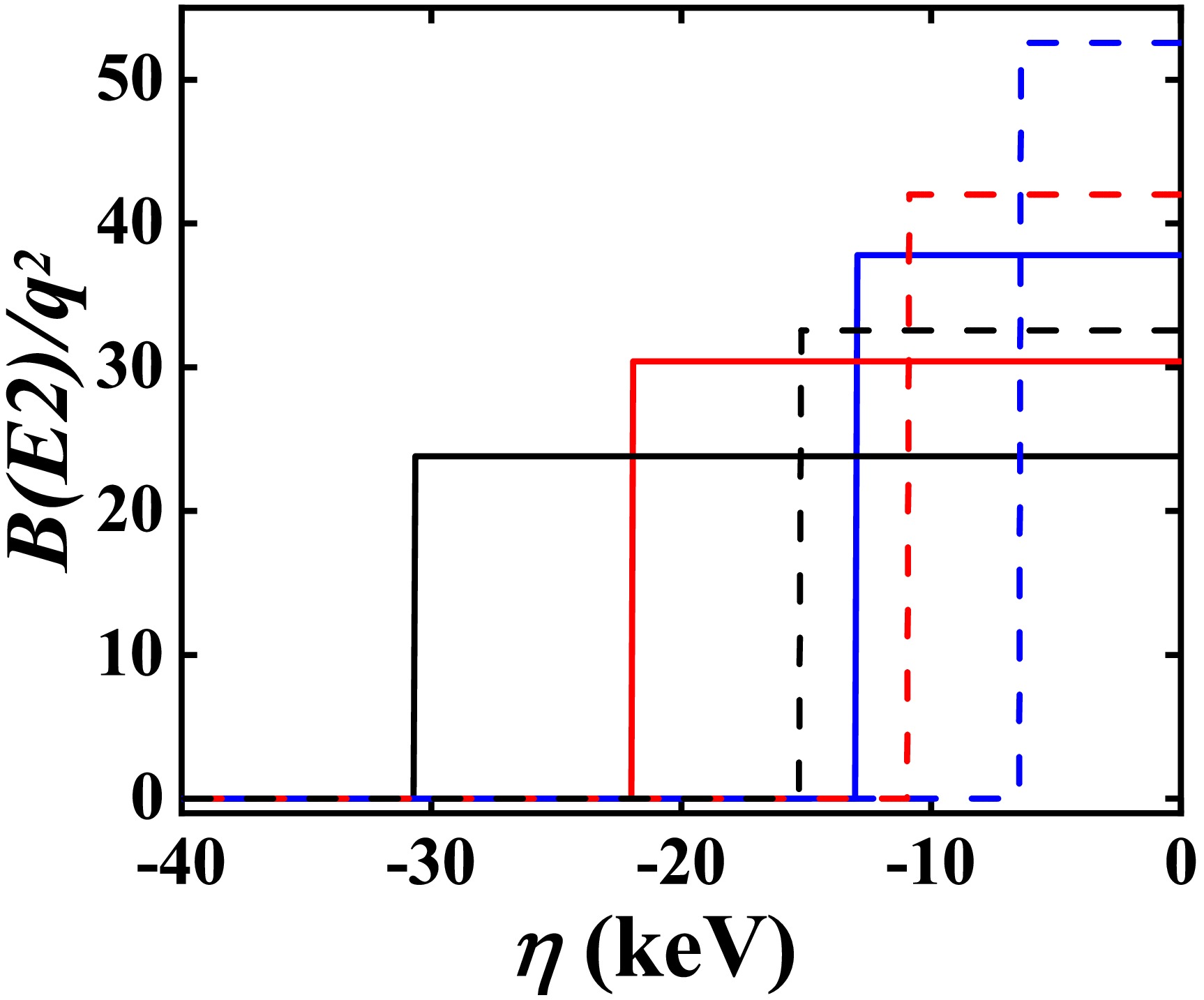
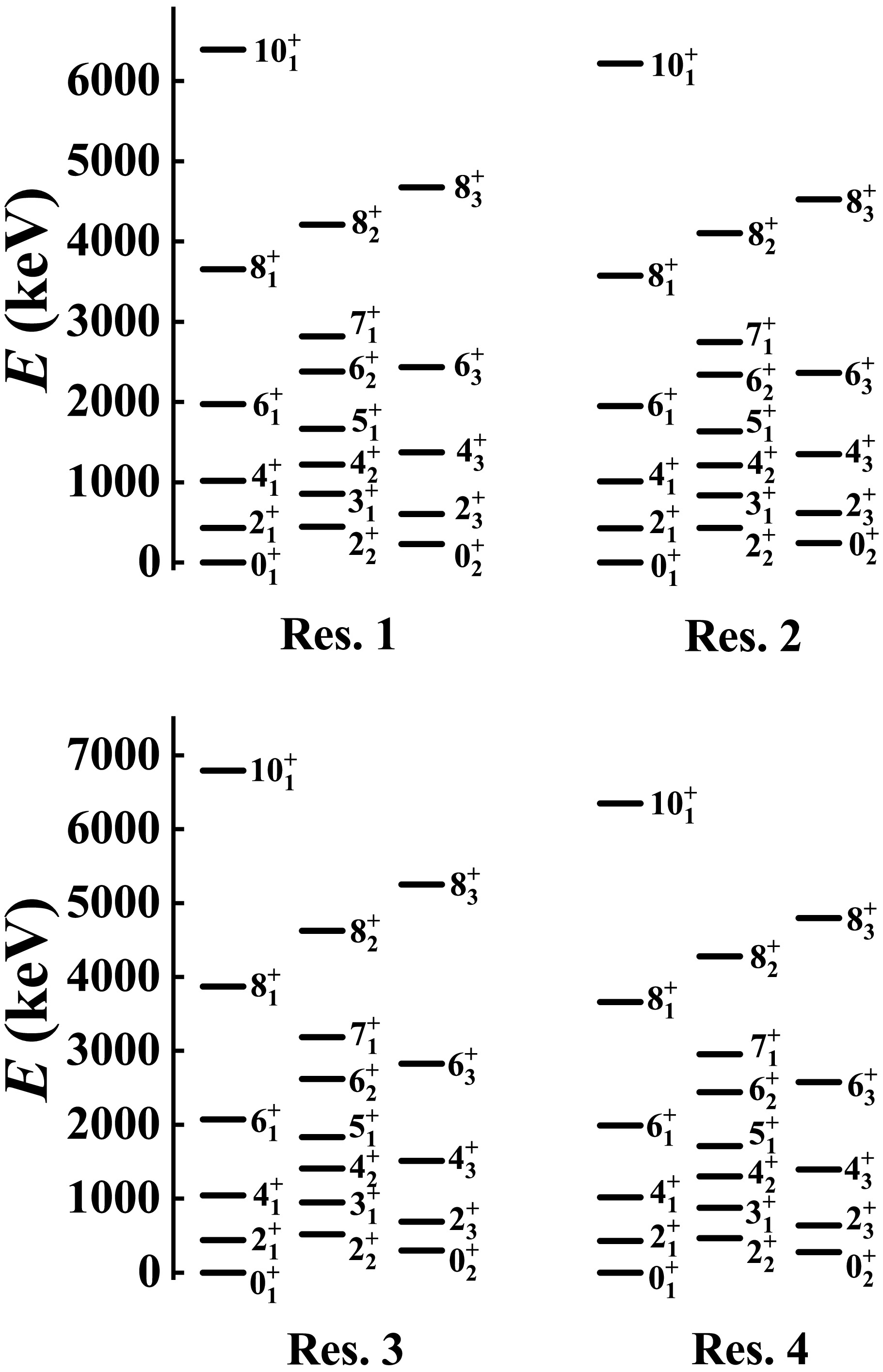
Recently, the very small\begin{document}$B(E2;2_{1}^{+}\rightarrow0_{1}^{+})$\end{document} \begin{document}$^{166}{\rm{Os}}$\end{document} \begin{document}$^{168,170}{\rm{Os}}$\end{document} \begin{document}$ S U$\end{document} \begin{document}$B(E2;2_{1}^{+}\rightarrow0_{1}^{+})$\end{document} \begin{document}$^{166}{\rm{Os}}$\end{document} \begin{document}$^{166,168,170}{\rm{Os}}$\end{document}
Recently, the very small
2026, 50(3): 034107. doi: 10.1088/1674-1137/ae1de6
Abstract:
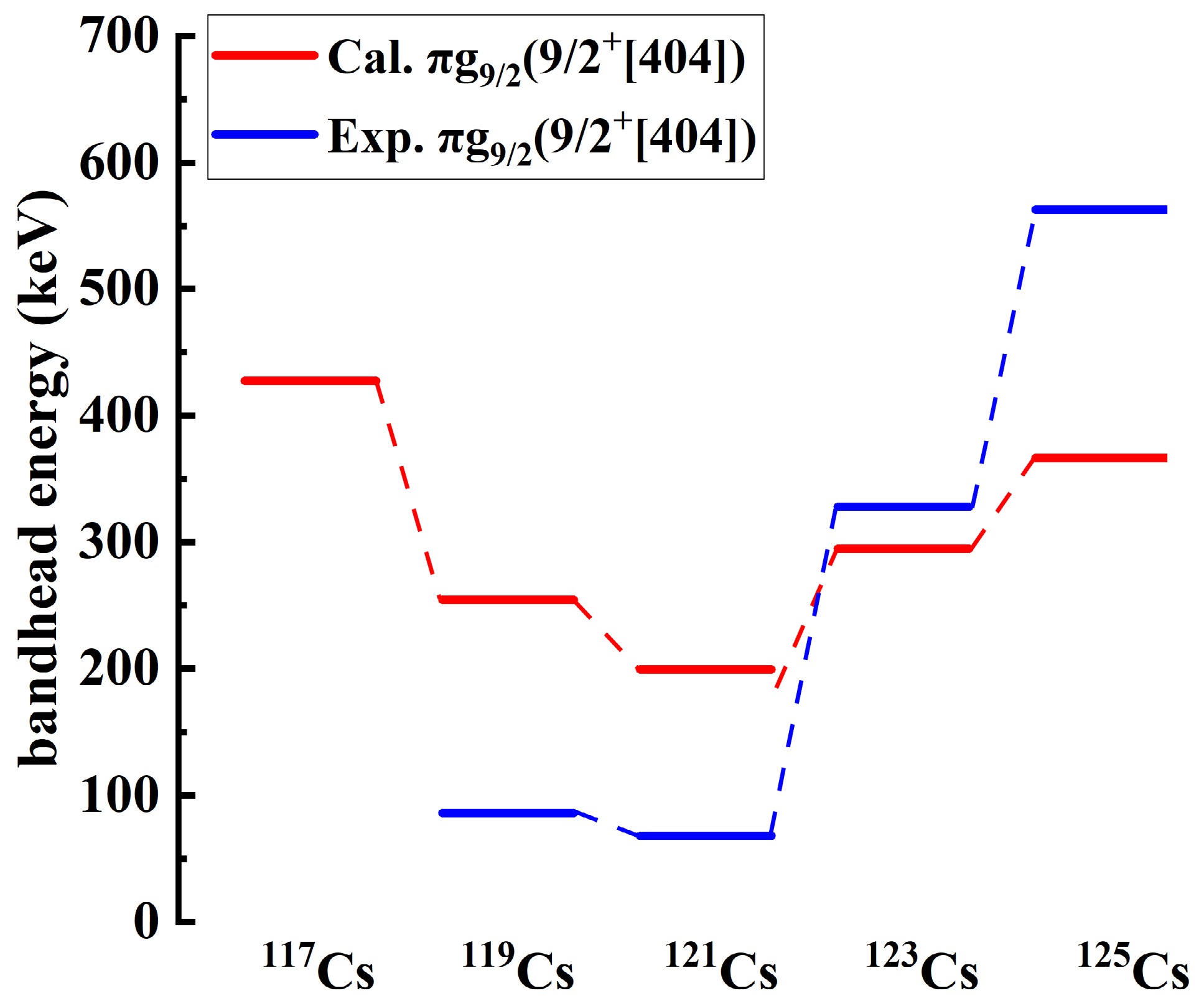
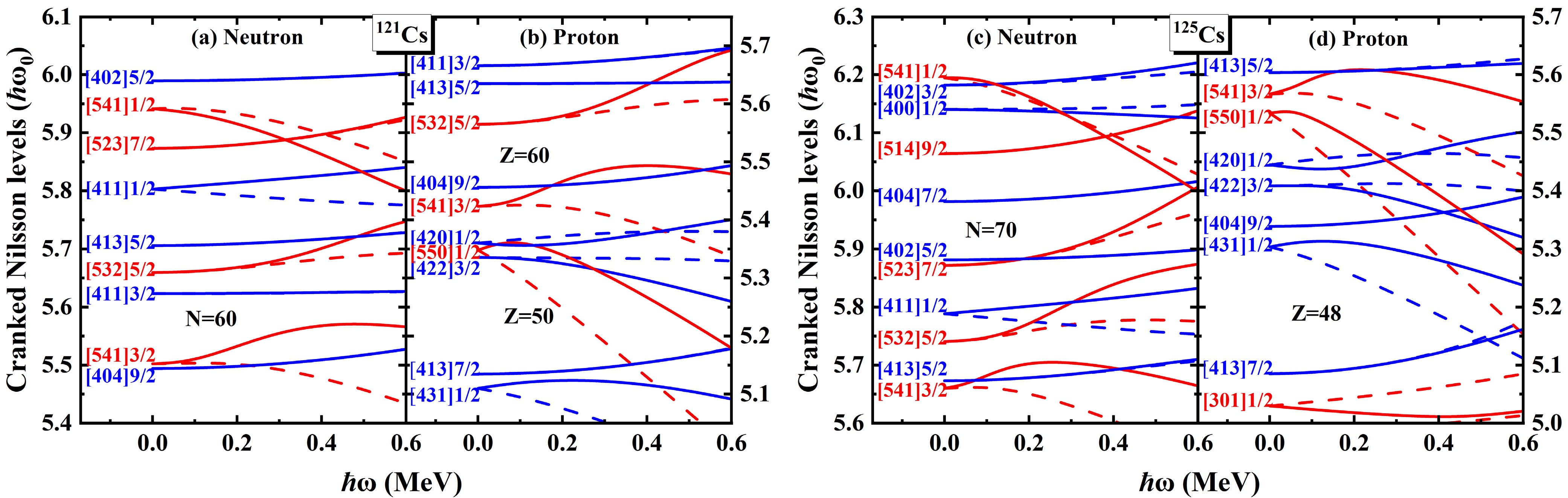
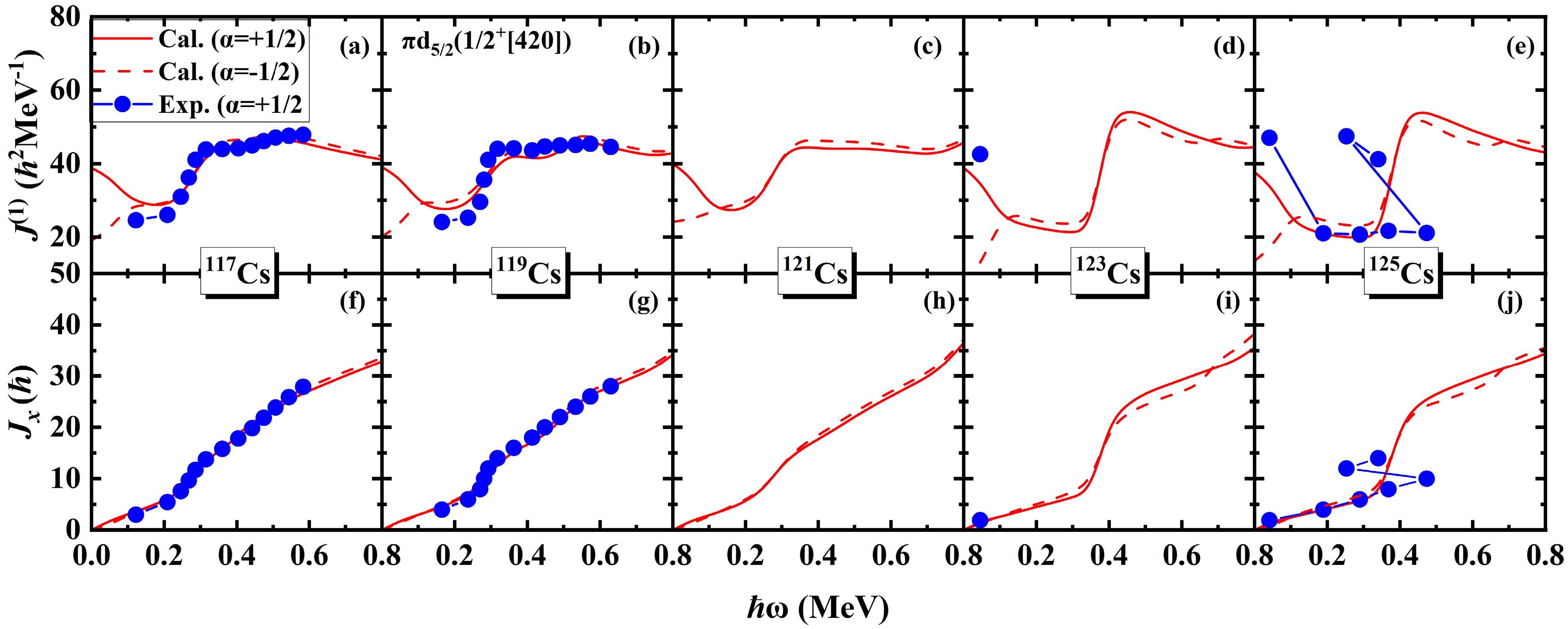
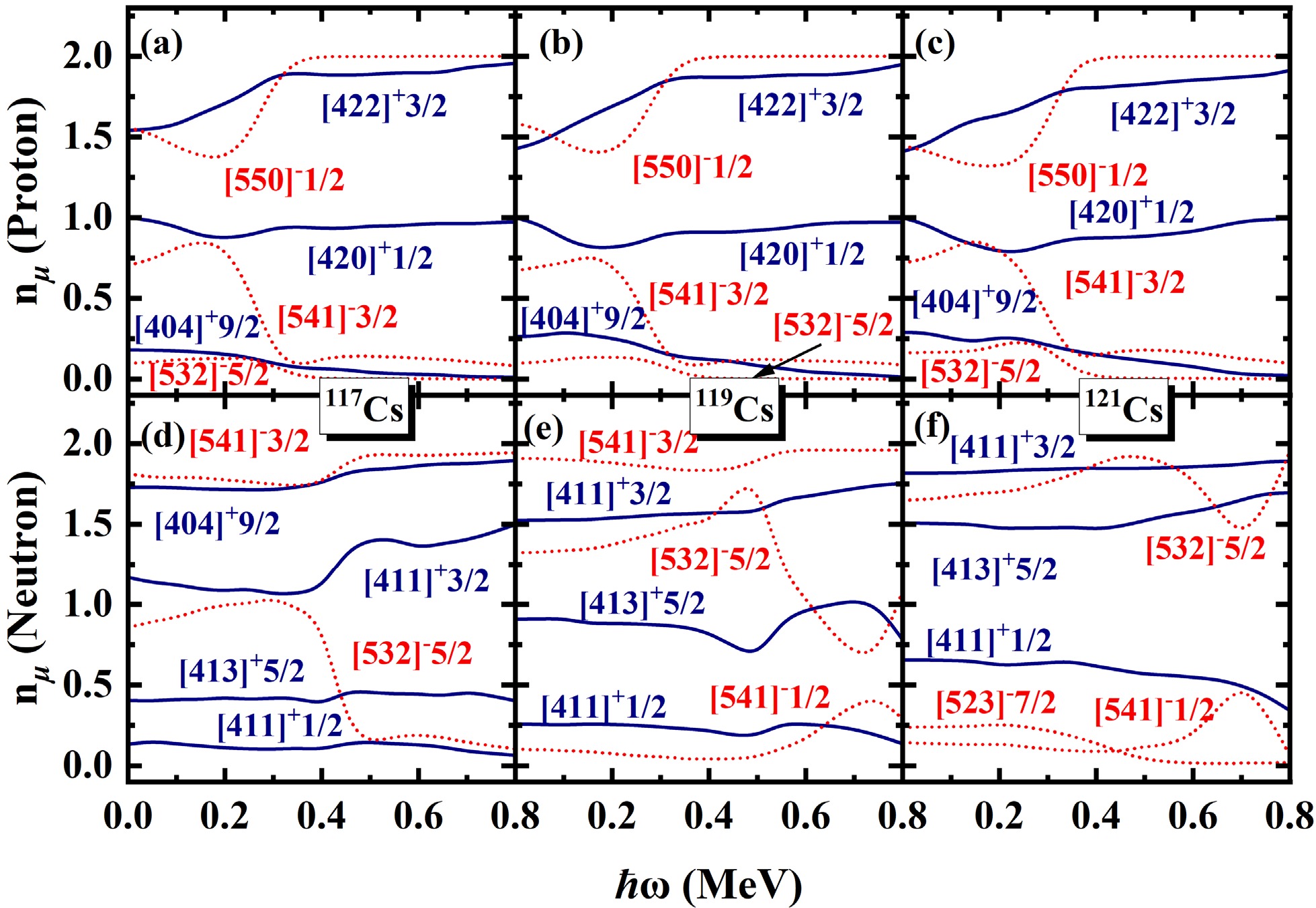
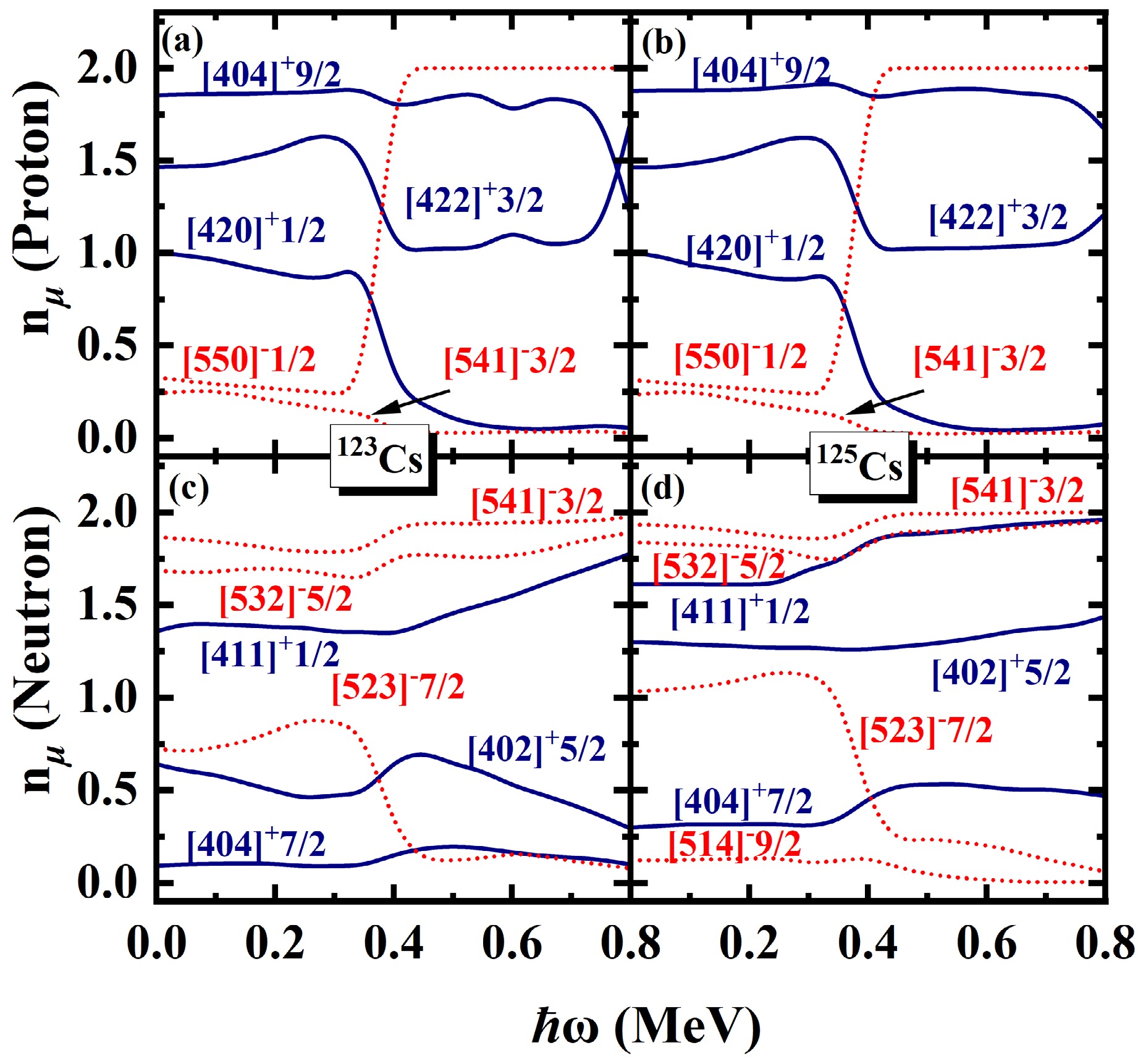
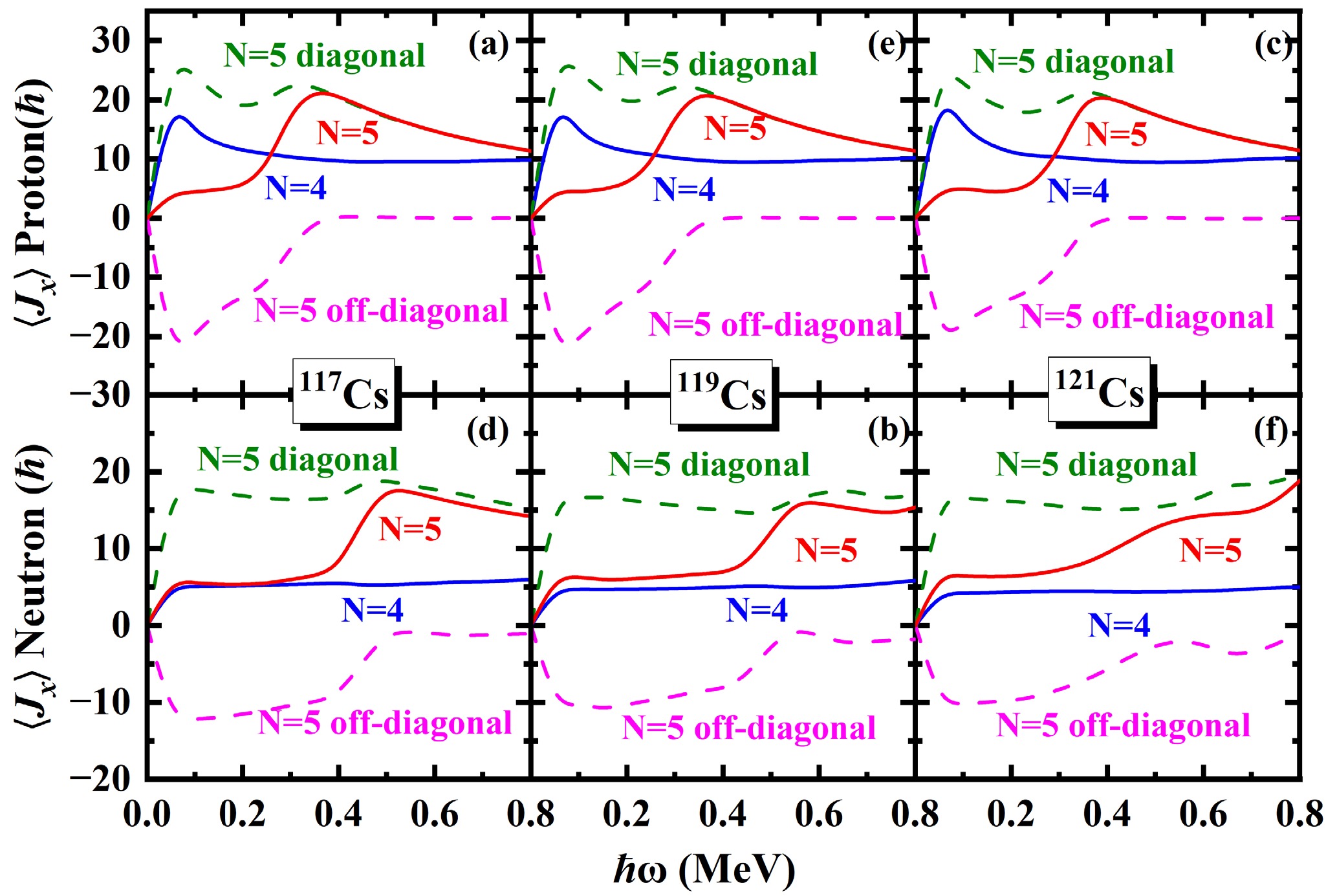
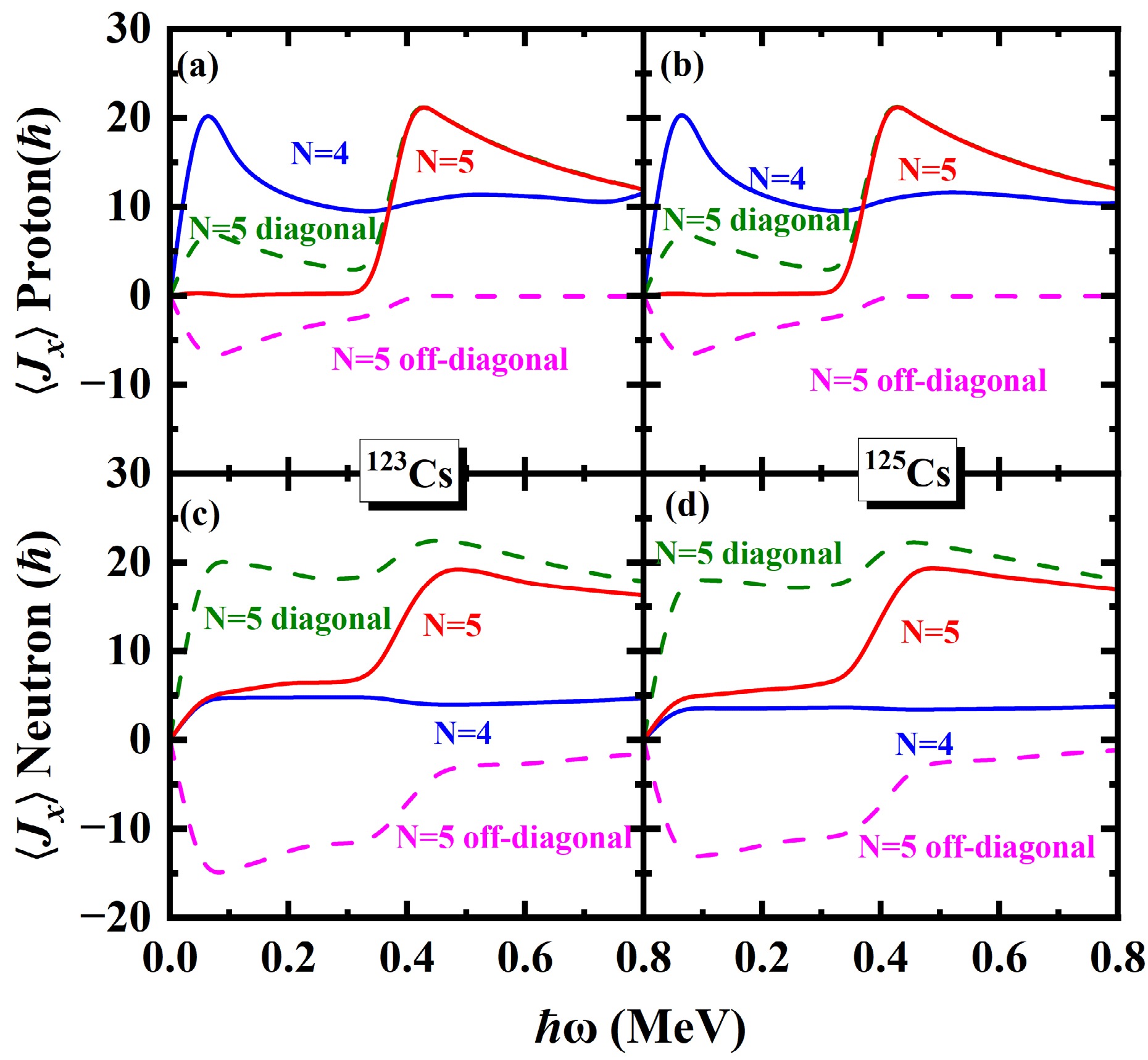
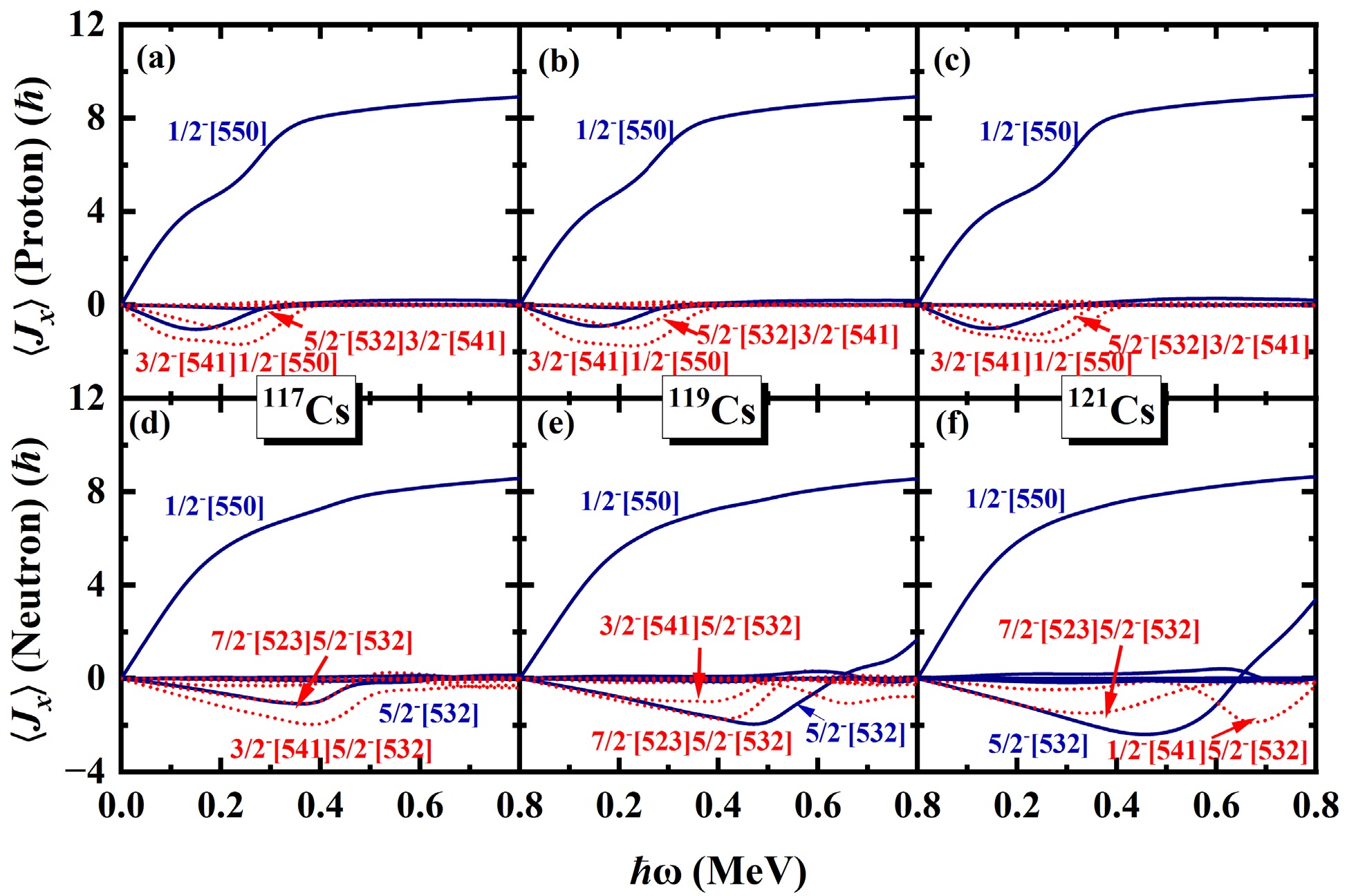
The\begin{document}$ \pi d_{5/2} $\end{document} \begin{document}$ \pi d_{5/2} $\end{document} \begin{document}$ \pi d_{5/2} $\end{document} \begin{document}$ \pi [550]1/2 $\end{document} \begin{document}$ Z=50 $\end{document} \begin{document}$ Z=48 $\end{document} \begin{document}$ j_{x}(\pi5/2^{-}[532]\pi3/2^{-}[541]) $\end{document} \begin{document}$ j_{x}(\pi1/2^{-}[550]\pi3/2^{-}[541]) $\end{document} \begin{document}$ j_{x}(\nu7/2^{-}[523] \nu5/2^{-}[532]) $\end{document} \begin{document}$ j_{x}(\nu3/2^{-}[541] \nu5/2^{-}[532]) $\end{document} \begin{document}$ j_{x}(\nu1/2^{-}[541] \nu5/2^{-}[532]) $\end{document} \begin{document}$ j_{x}(\pi1/2^{-}[550]) $\end{document} \begin{document}$ \nu7/2^{-}[523] $\end{document} \begin{document}$ j_{x}(\nu7/2^{-}[523]) $\end{document} \begin{document}$ j_{x}(\nu7/2^{-}[523] \nu5/2^{-}[532]) $\end{document}
The
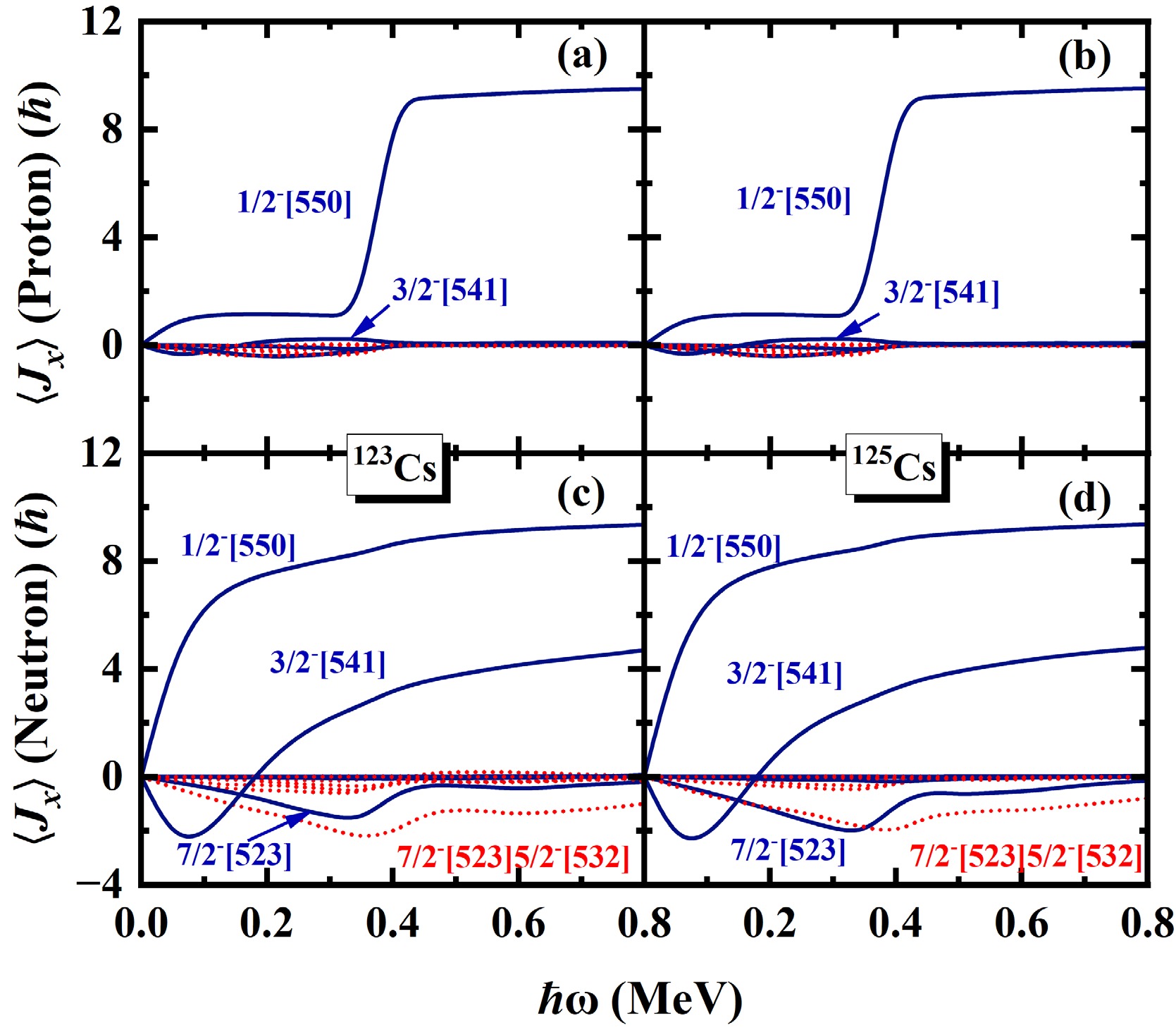
2026, 50(3): 034108. doi: 10.1088/1674-1137/ae2109
Abstract:
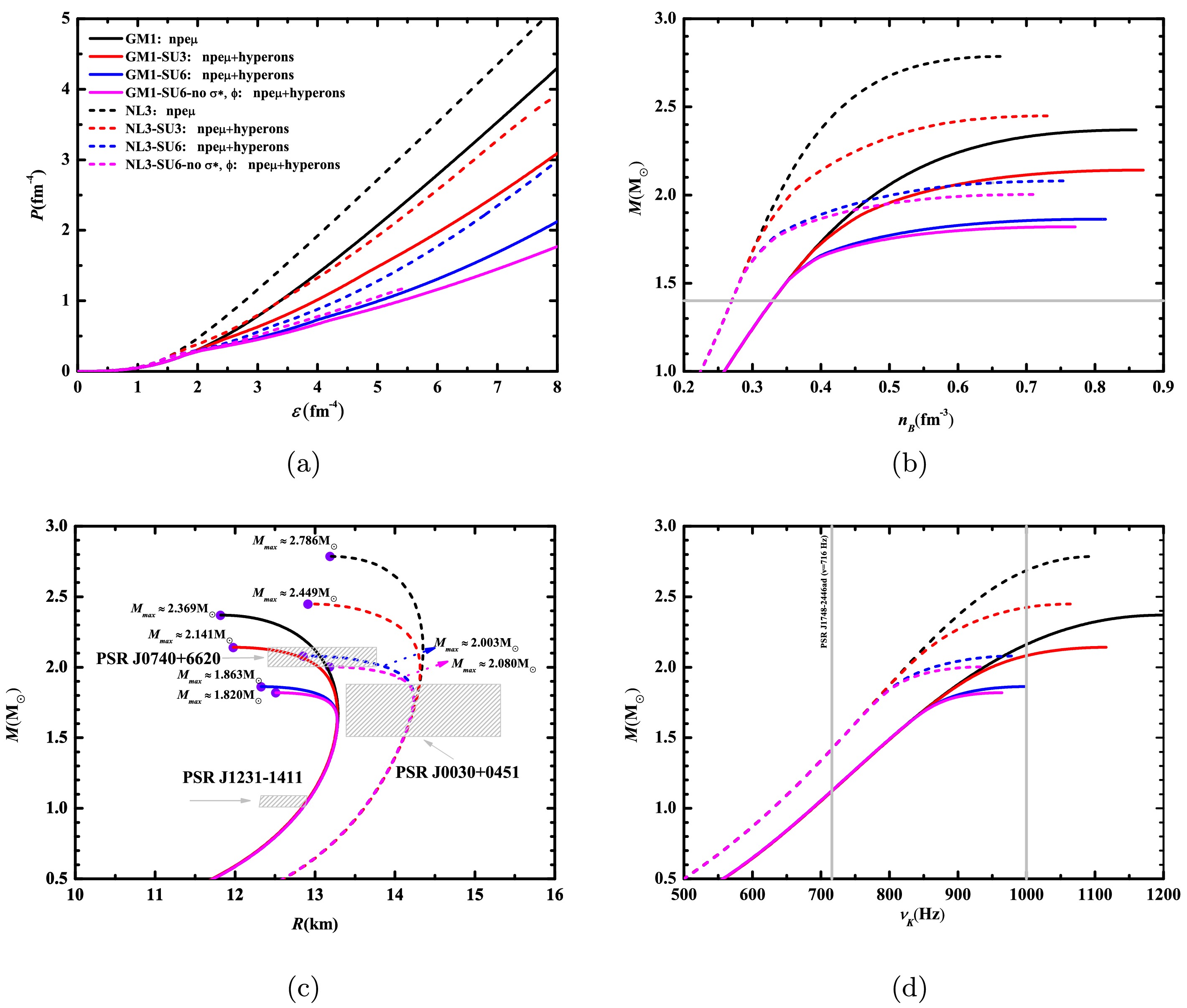
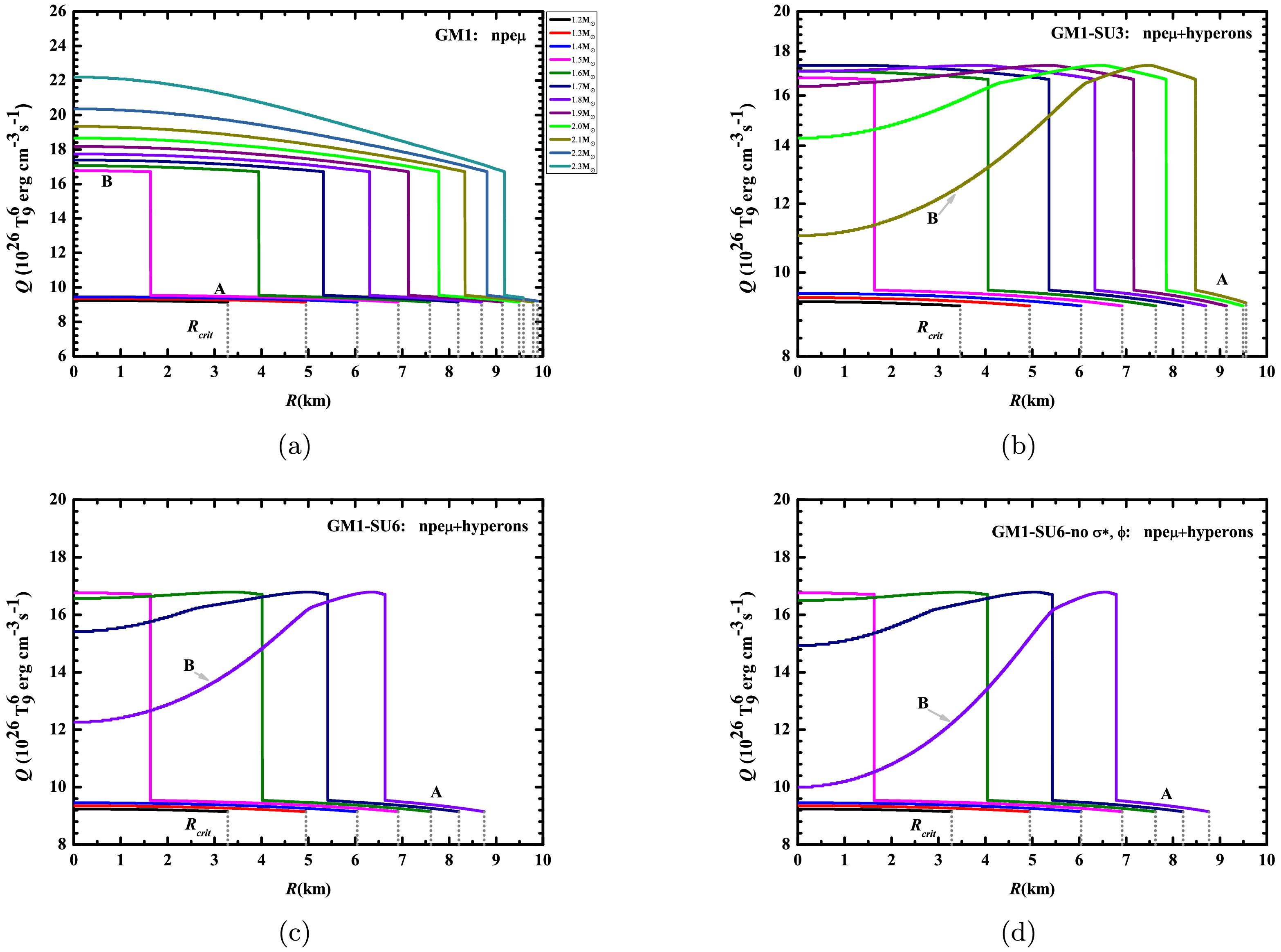
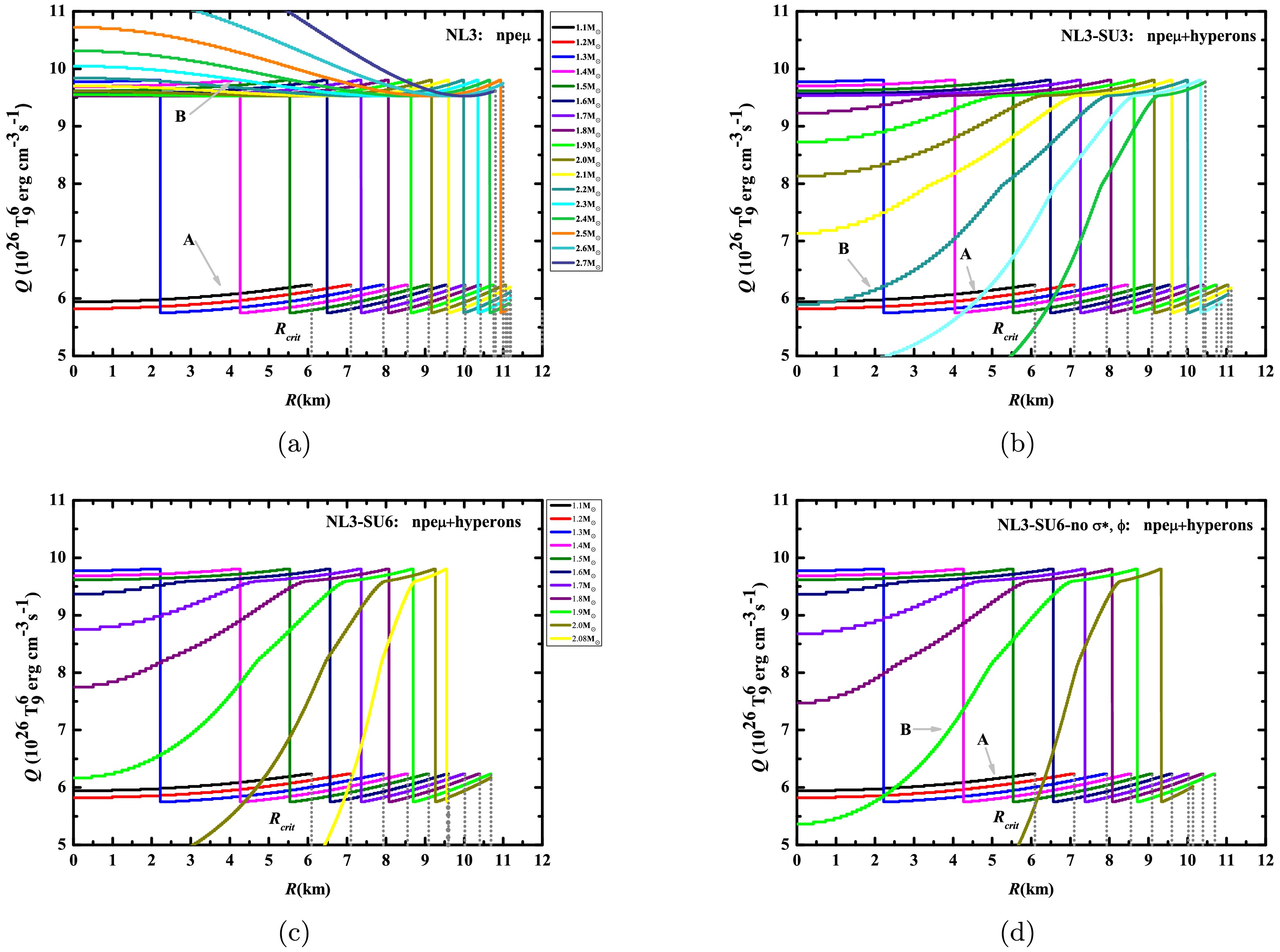
This work aims to analyze how hyperons affect neutrino radiation properties in nucleonic direct URCA processes, with the goal of providing useful references for identifying evidence of hyperons in astronomical observations. This analysis is conducted using the GM1 and NL3 parameter sets under the SU(6) and SU(3) flavor symmetries within the relativistic mean field theory framework. In conjunction with the inferred mass and radius values of PSRs J1231-1411, J0030+0451, and J0740+6620, our results indicate that nucleonic direct URCA processes are absent in PSR J1231-1411 due to momentum conservation violation. In the hyperon-containing PSR J0030+0451 (NL3 parameter set), the nucleonic direct URCA processes involving\begin{document}$e^{-}$\end{document} \begin{document}$\mu^{-}$\end{document} \begin{document}$M_{\odot}$\end{document}
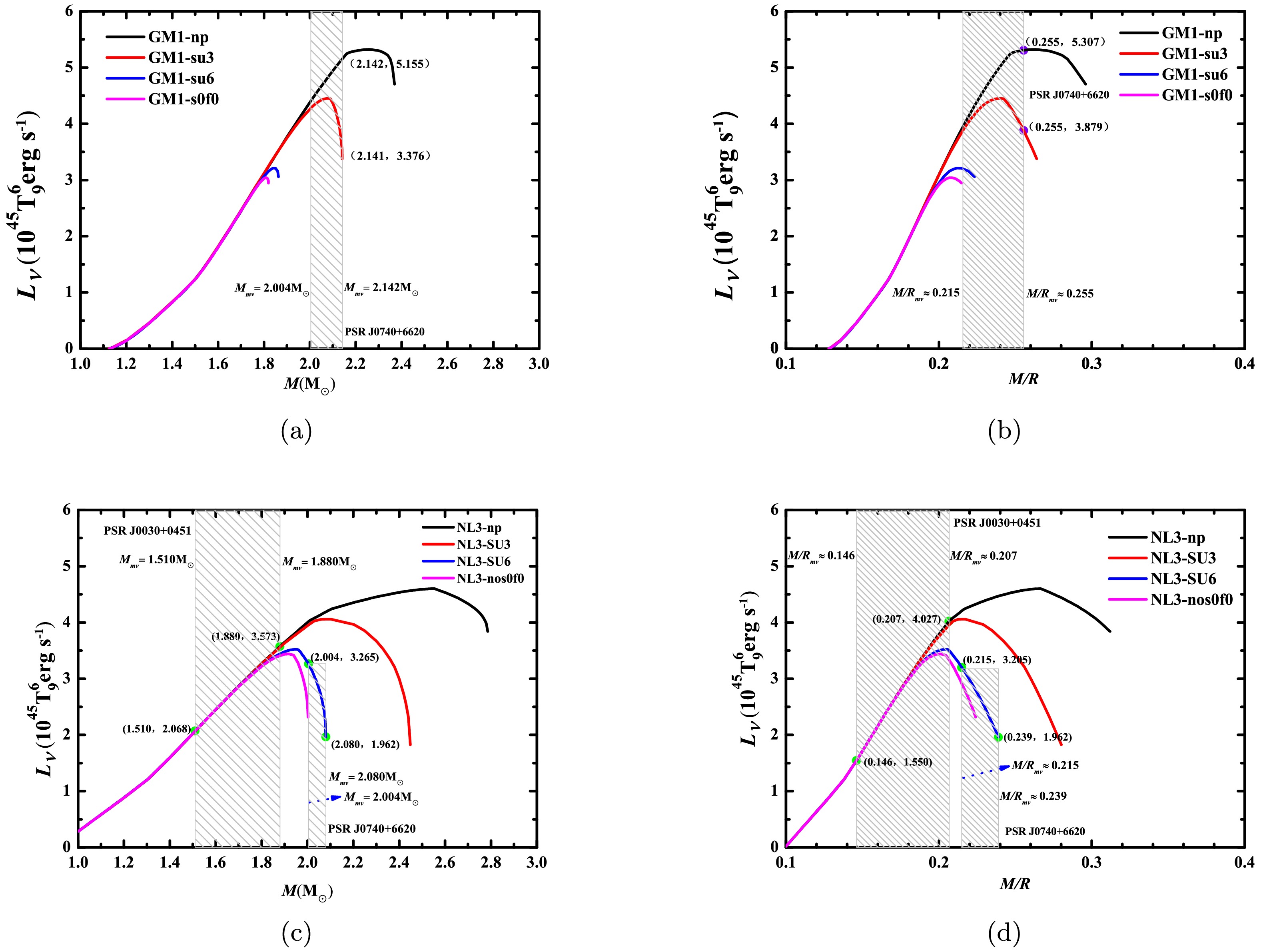
This work aims to analyze how hyperons affect neutrino radiation properties in nucleonic direct URCA processes, with the goal of providing useful references for identifying evidence of hyperons in astronomical observations. This analysis is conducted using the GM1 and NL3 parameter sets under the SU(6) and SU(3) flavor symmetries within the relativistic mean field theory framework. In conjunction with the inferred mass and radius values of PSRs J1231-1411, J0030+0451, and J0740+6620, our results indicate that nucleonic direct URCA processes are absent in PSR J1231-1411 due to momentum conservation violation. In the hyperon-containing PSR J0030+0451 (NL3 parameter set), the nucleonic direct URCA processes involving
2026, 50(3): 034109. doi: 10.1088/1674-1137/ae25ca
Abstract:
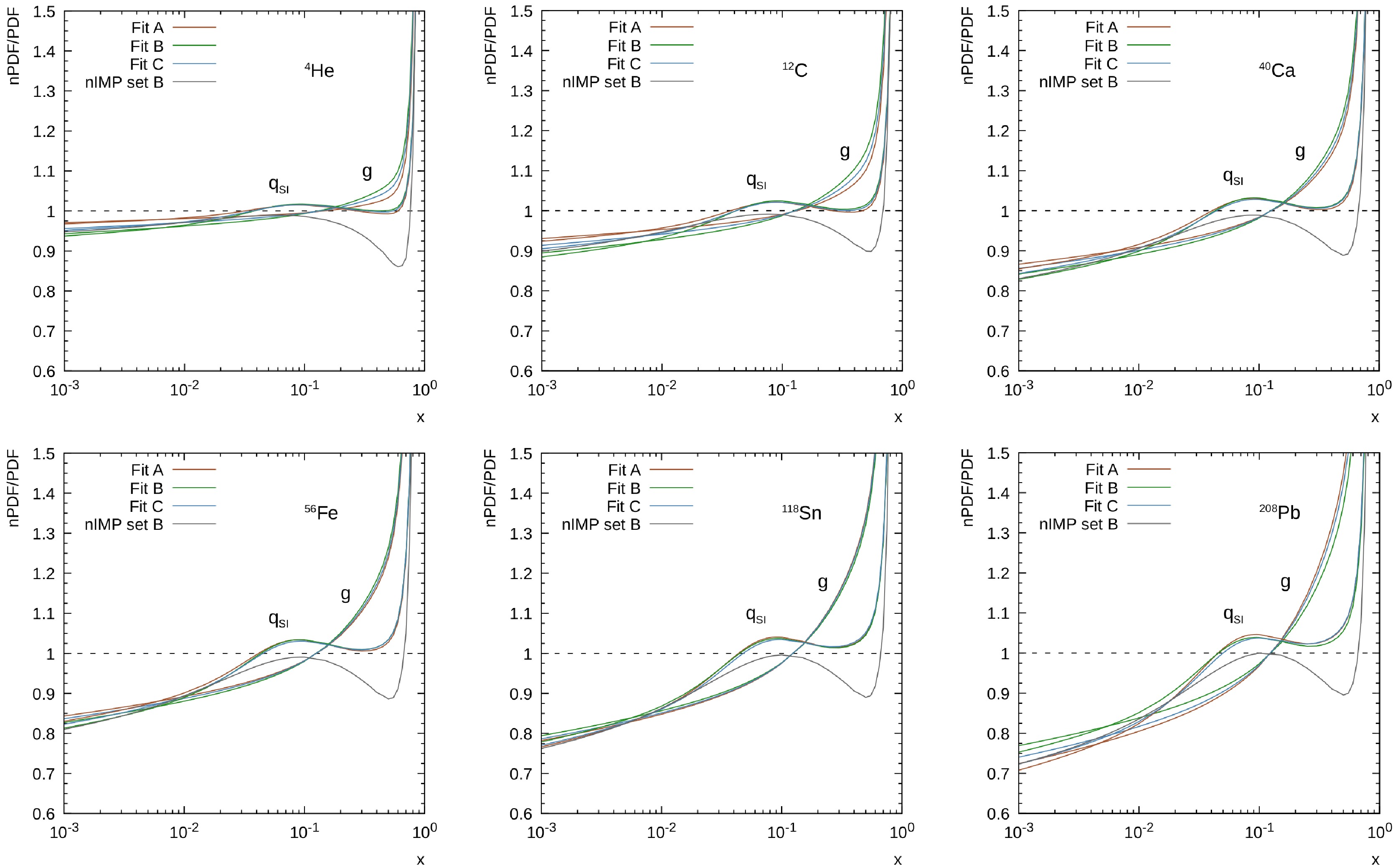
A model for the nuclear medium modification of parton densities is presented. The approach is based on a global analysis of available deep inelastic scattering data for different nuclear targets within the rescaling model, combined with the effects of Fermi motion. The scale dependence is implemented through the DGLAP-evolved quark and gluon densities in a proton derived analytically at the leading order of QCD coupling. By fitting the rescaling parameters to experimental data on the ratio\begin{document}$F_2^A(x,Q^2)/F_2^{A^\prime}(x,Q^2) $\end{document}
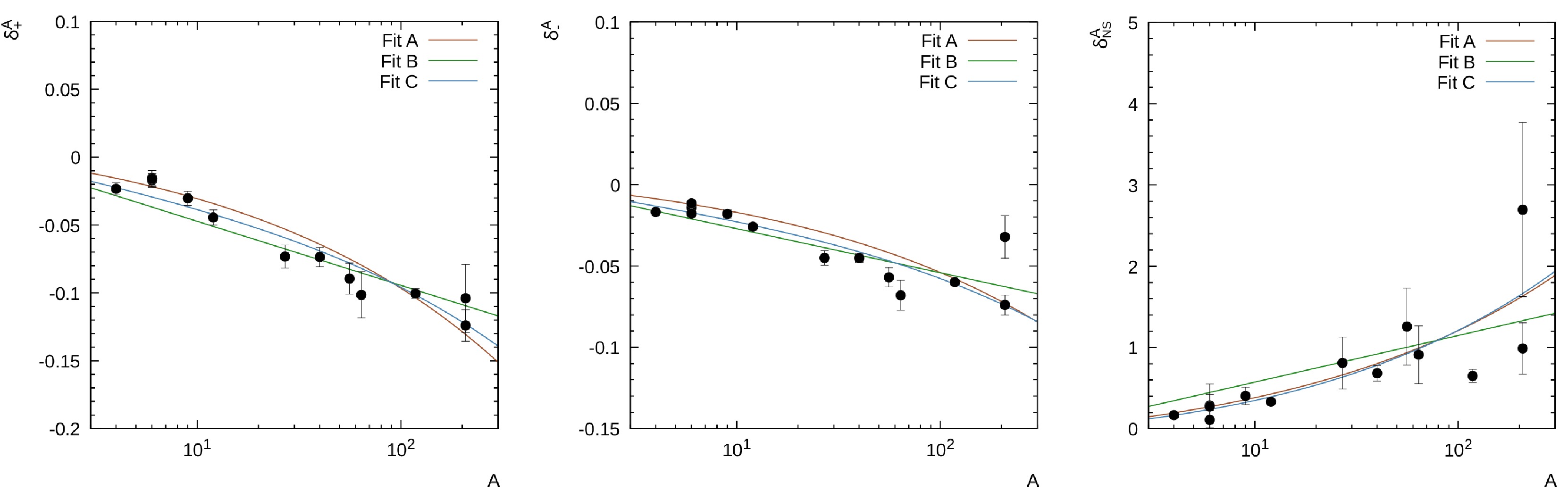
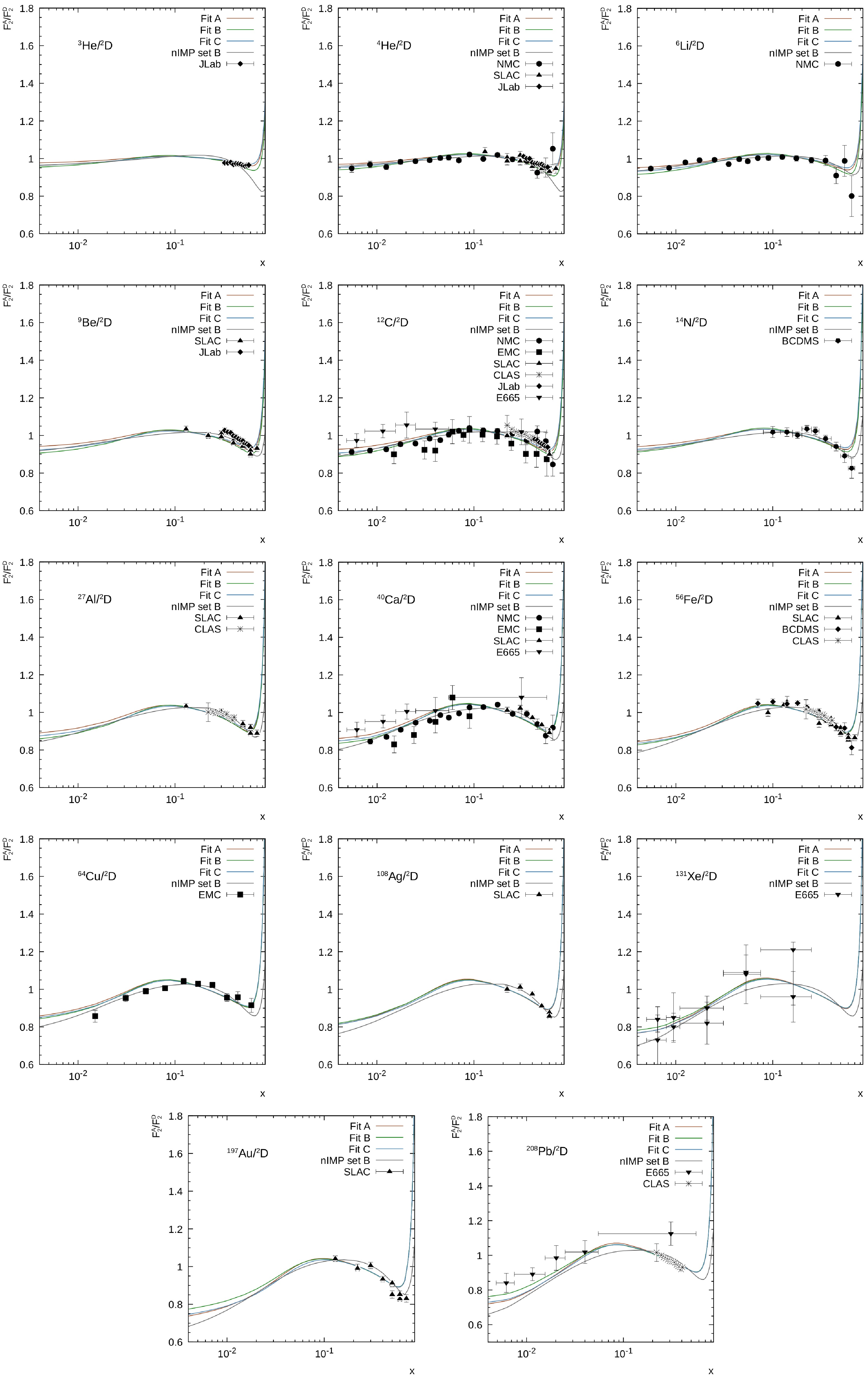
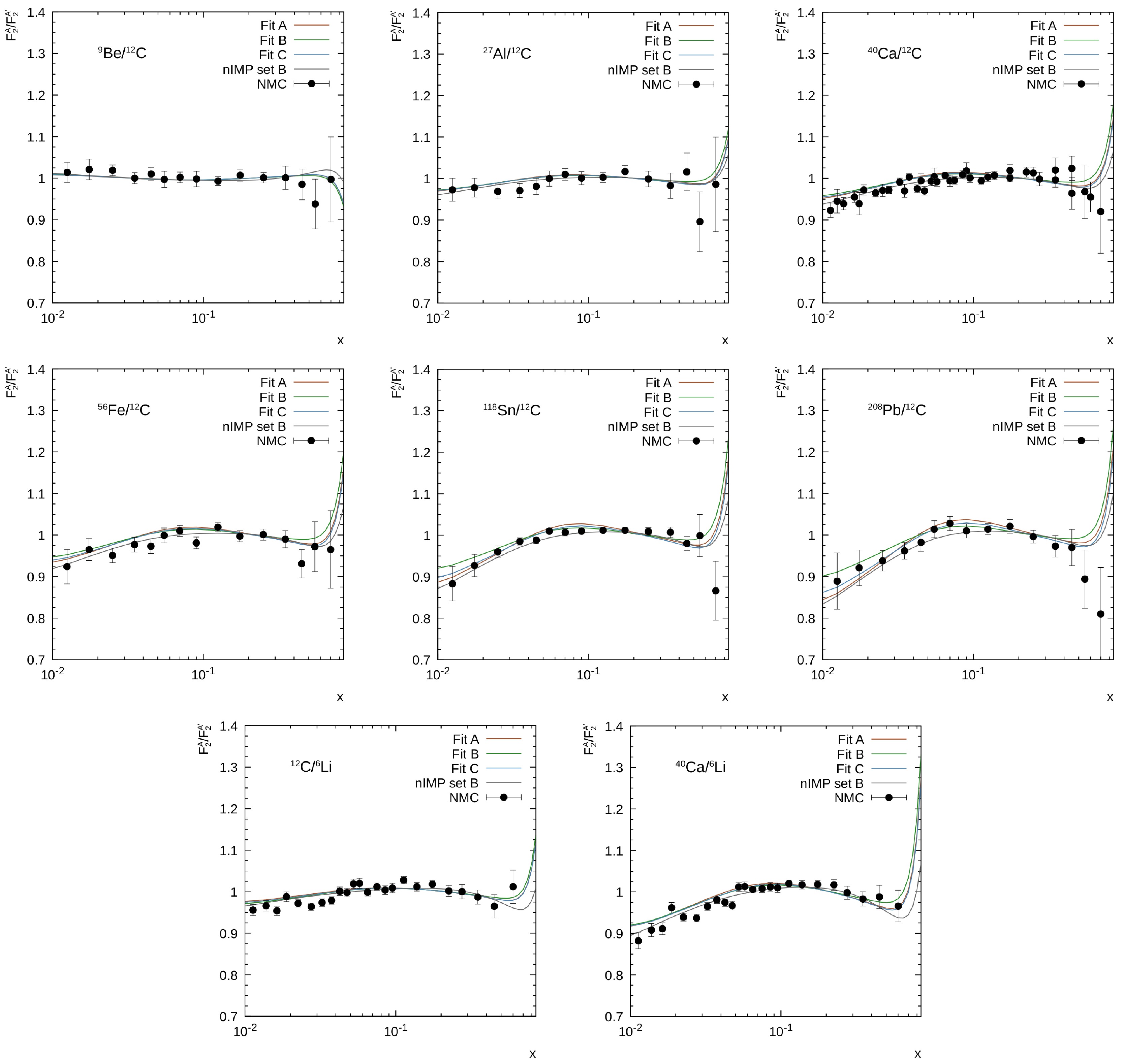
A model for the nuclear medium modification of parton densities is presented. The approach is based on a global analysis of available deep inelastic scattering data for different nuclear targets within the rescaling model, combined with the effects of Fermi motion. The scale dependence is implemented through the DGLAP-evolved quark and gluon densities in a proton derived analytically at the leading order of QCD coupling. By fitting the rescaling parameters to experimental data on the ratio
2026, 50(3): 035101. doi: 10.1088/1674-1137/ae210d
Abstract:
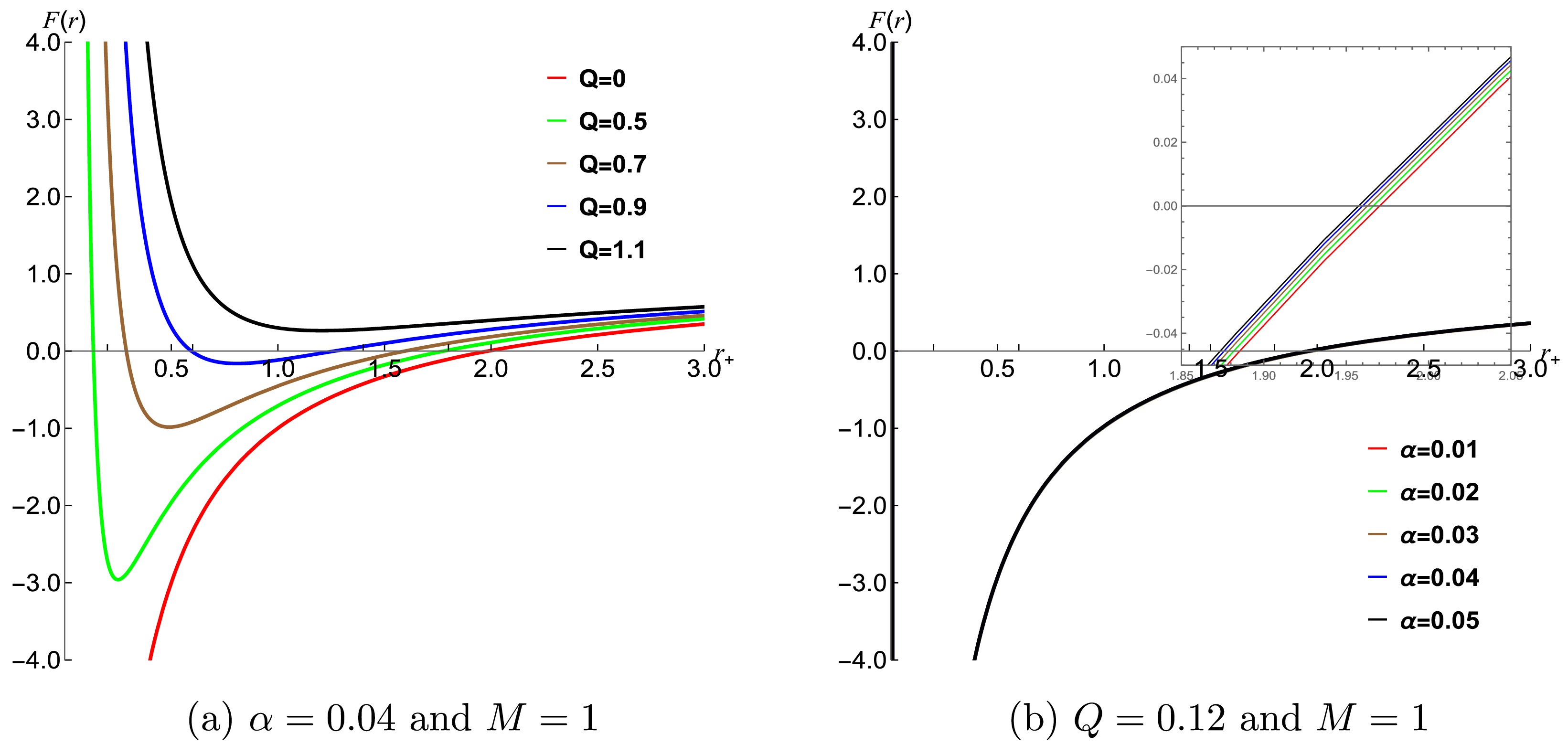
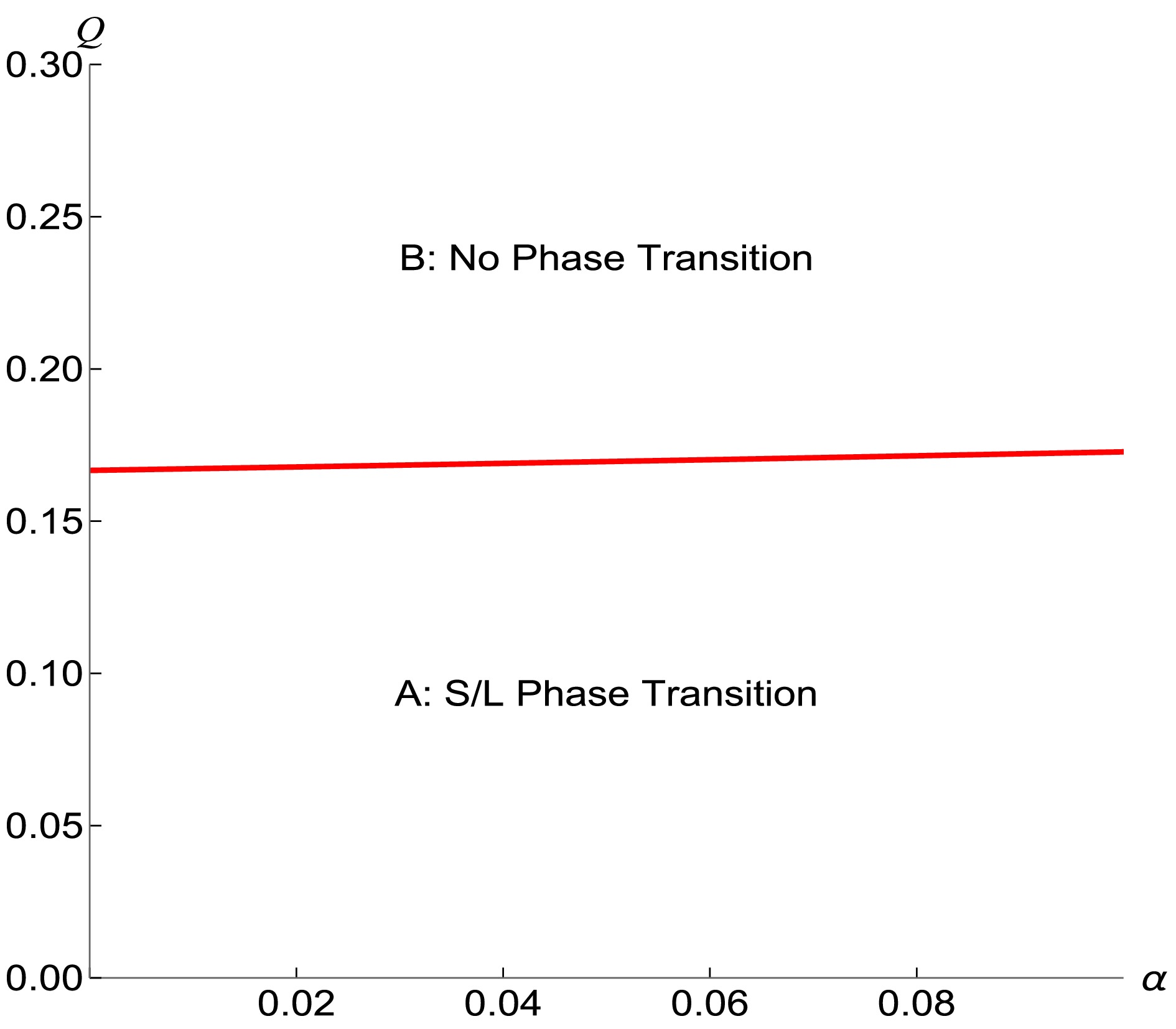
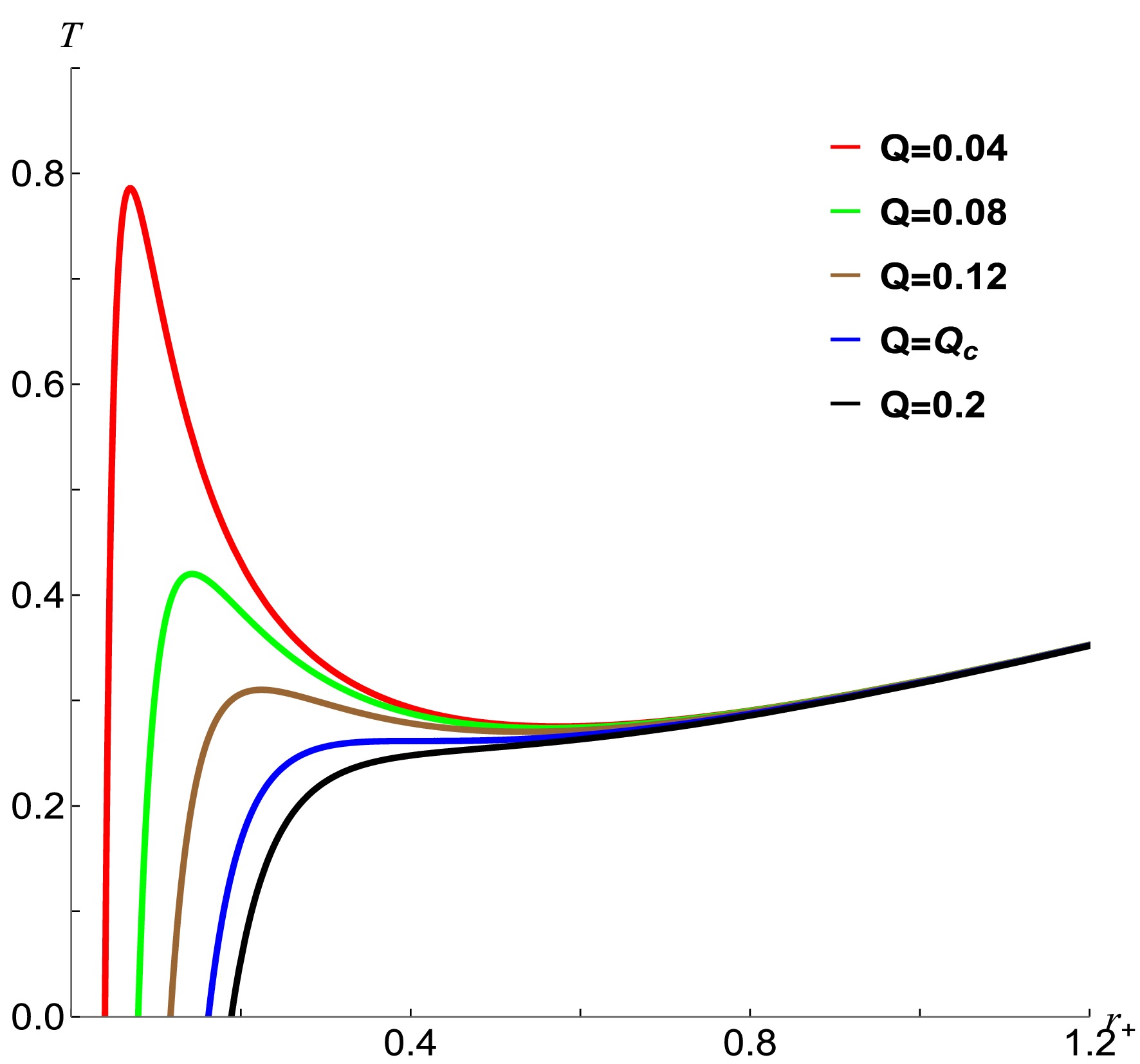
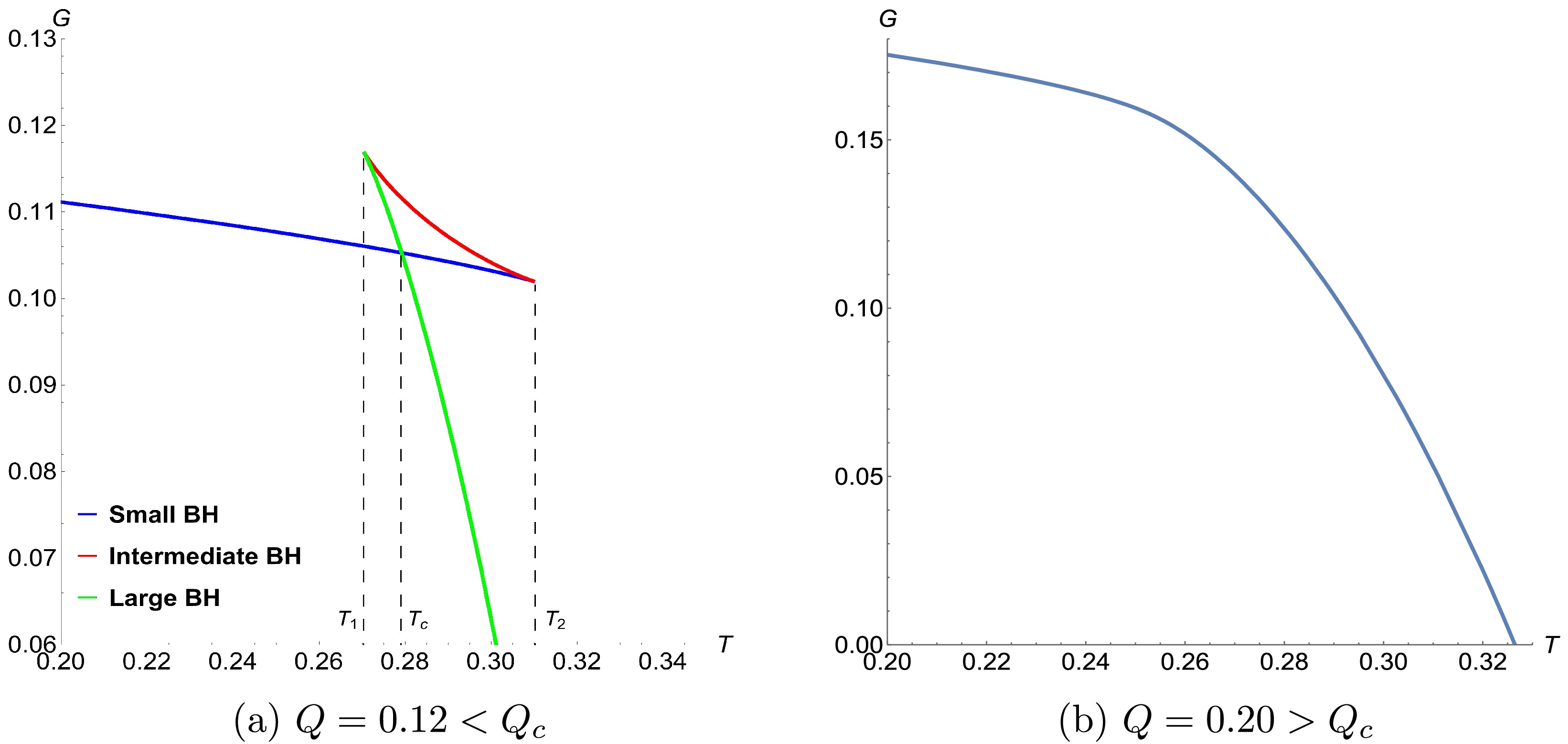
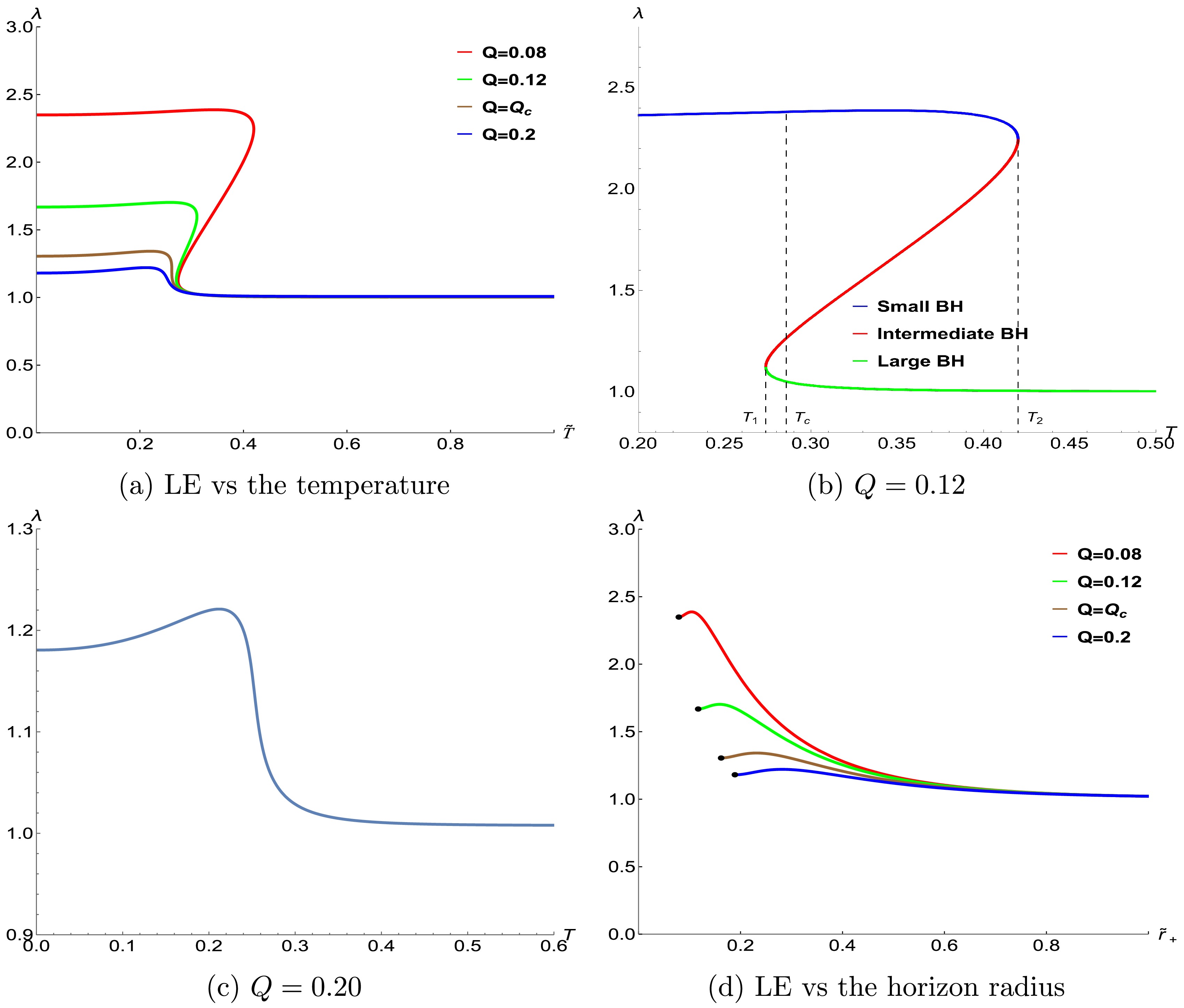
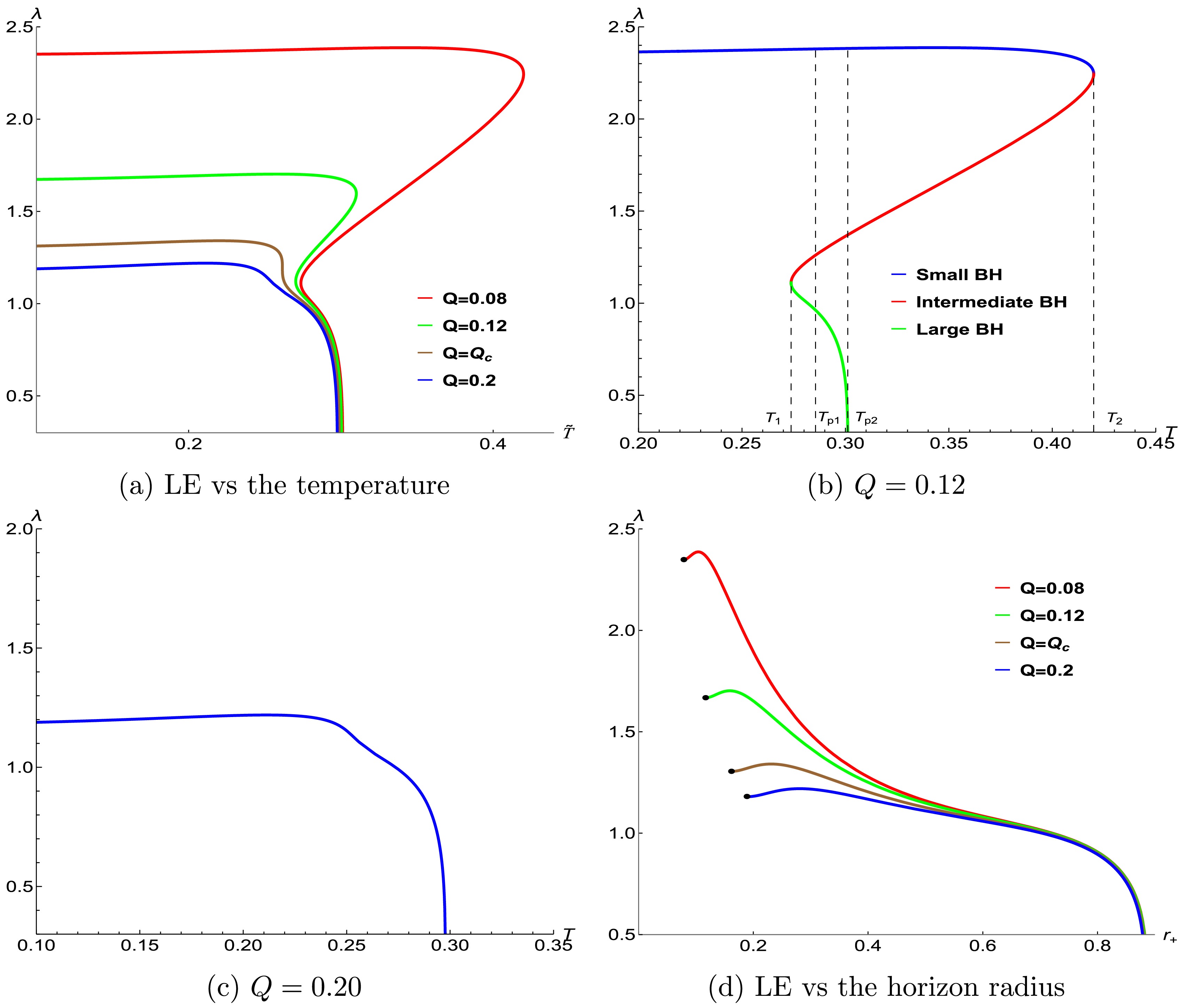
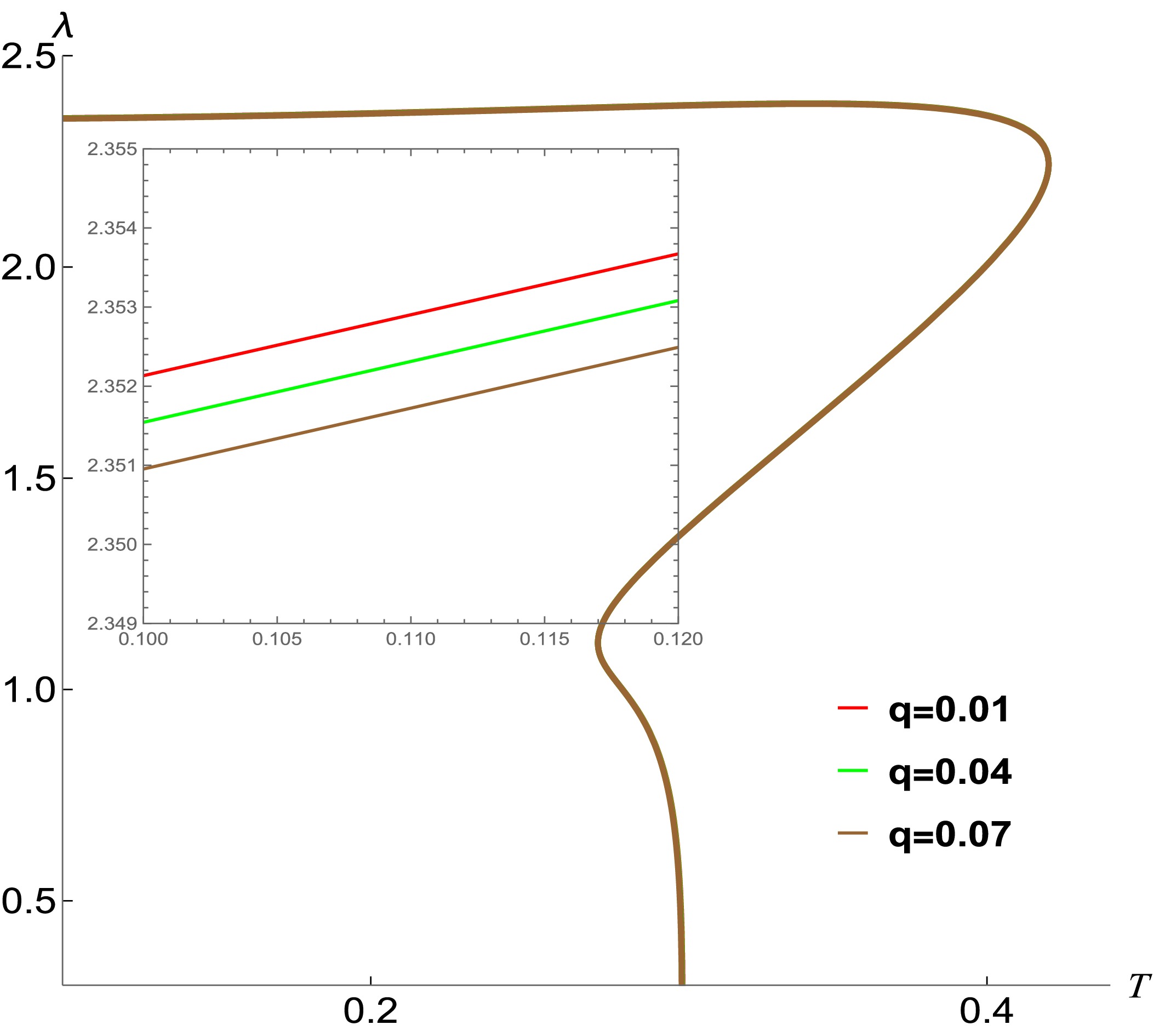
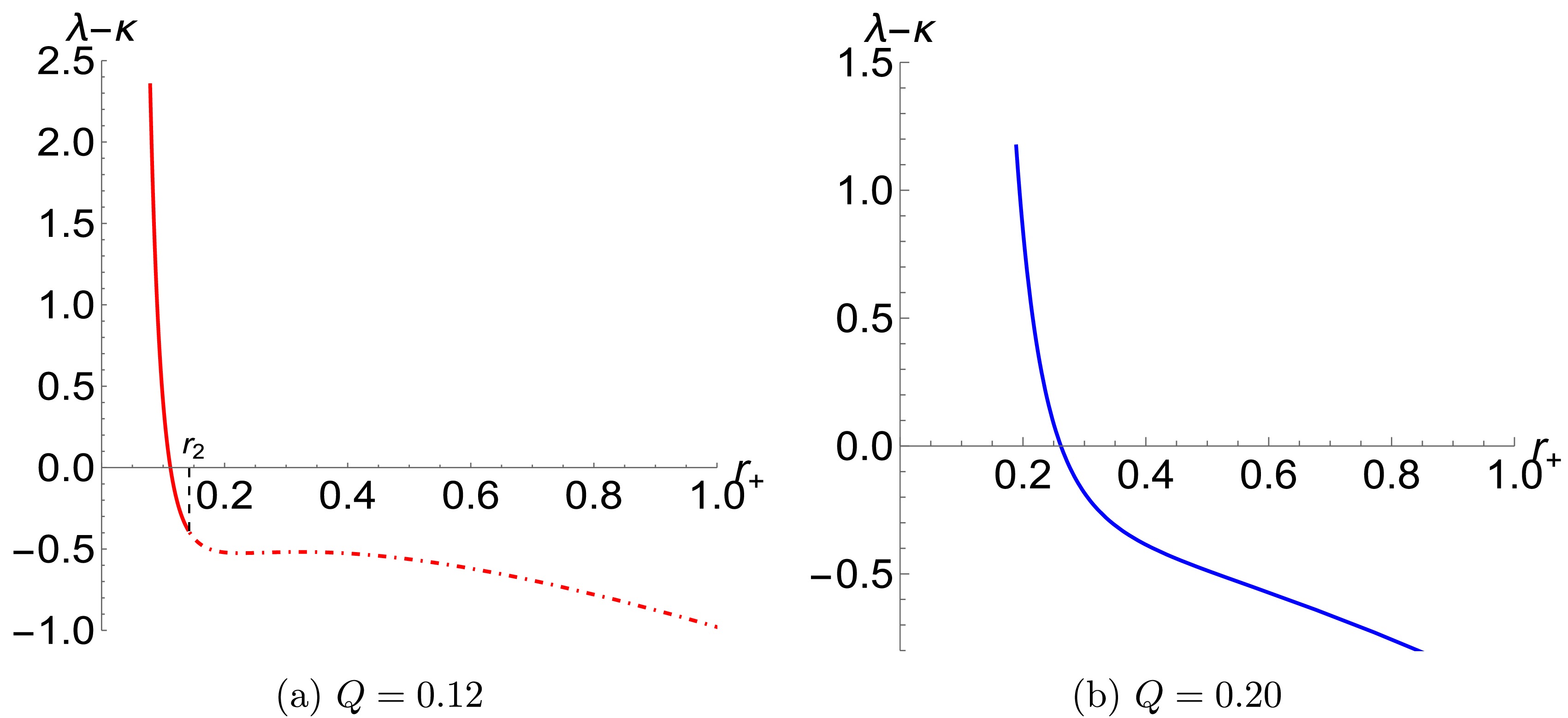
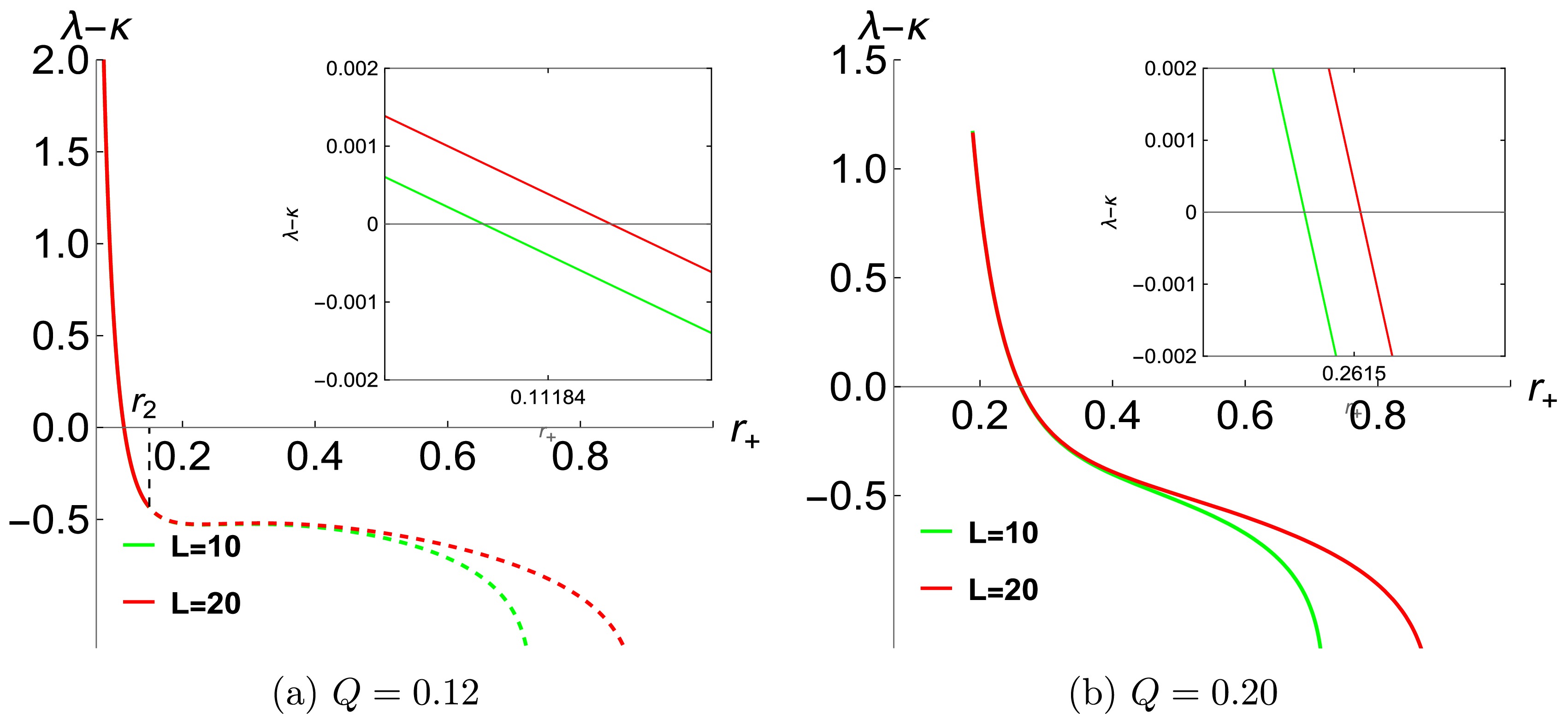
In this study, we investigate Lyapunov exponents of chaos for both massless and charged particles around a non-linear electrodynamics black hole and explore their relationships with a phase transition and chaos bound of this black hole. Our results indicate that these exponents can effectively reveal the phase transition. Specifically, during the phase transition, violation of the chaos bound occurs solely within a stable branch of a small black hole. Moreover, the violations are observed regardless of whether the phase transition takes place.
In this study, we investigate Lyapunov exponents of chaos for both massless and charged particles around a non-linear electrodynamics black hole and explore their relationships with a phase transition and chaos bound of this black hole. Our results indicate that these exponents can effectively reveal the phase transition. Specifically, during the phase transition, violation of the chaos bound occurs solely within a stable branch of a small black hole. Moreover, the violations are observed regardless of whether the phase transition takes place.
2026, 50(3): 035102. doi: 10.1088/1674-1137/ae1aff
Abstract:
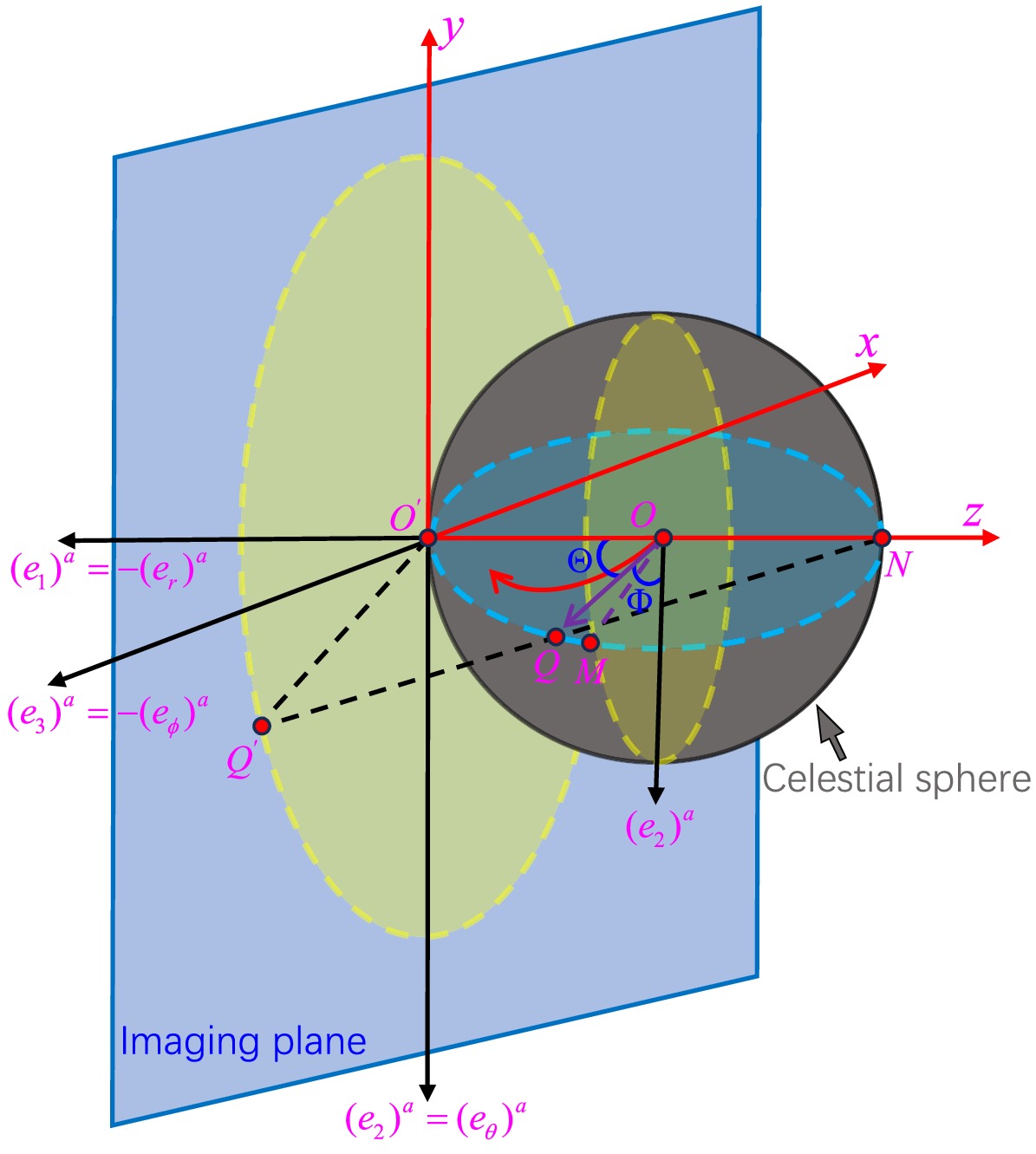
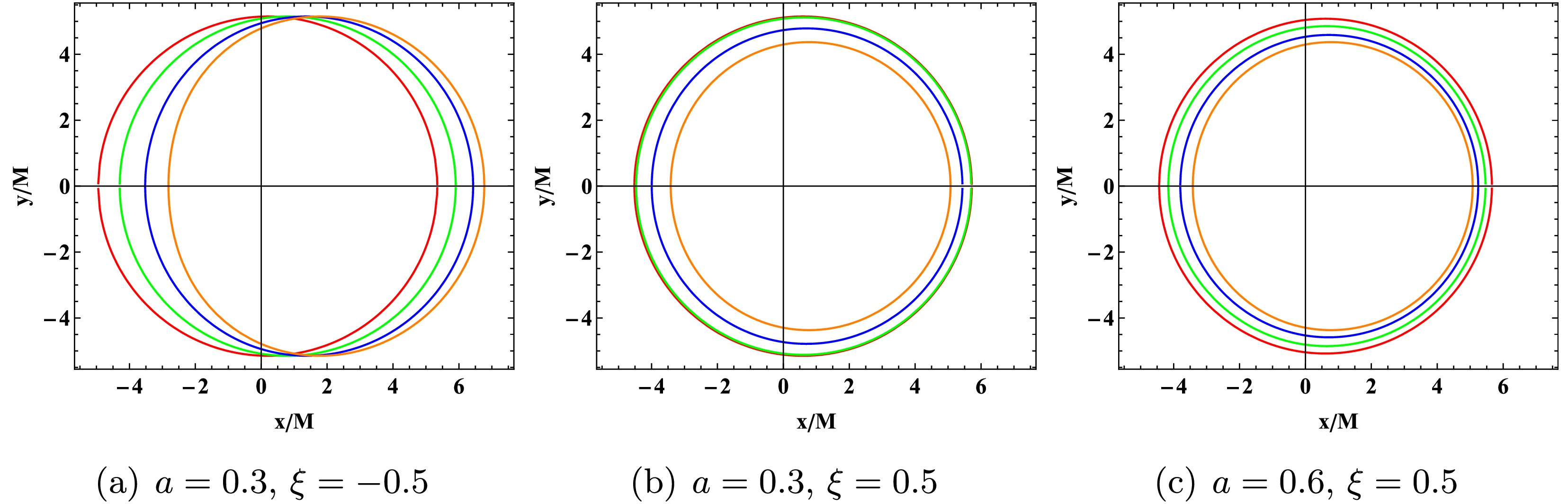
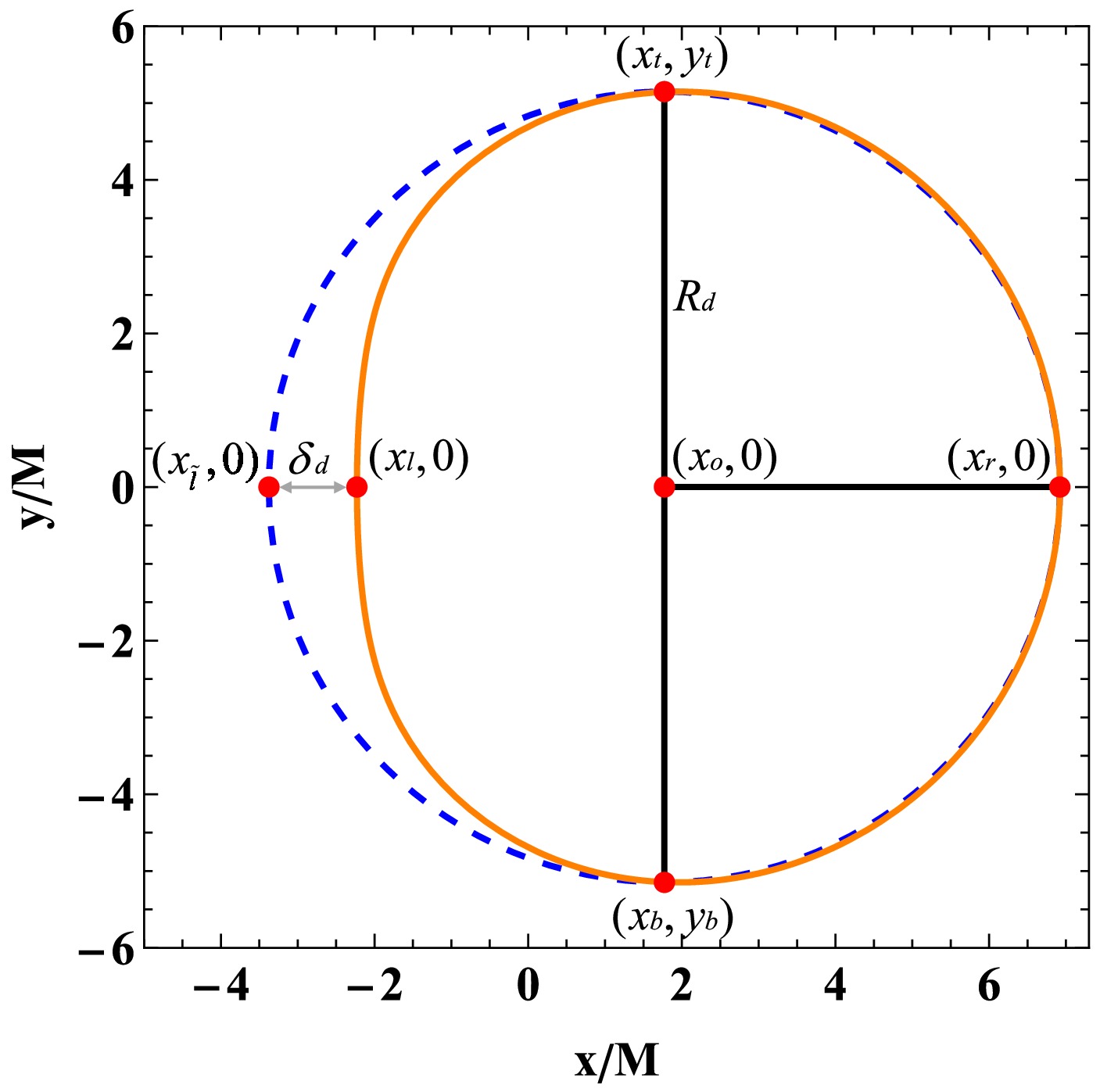
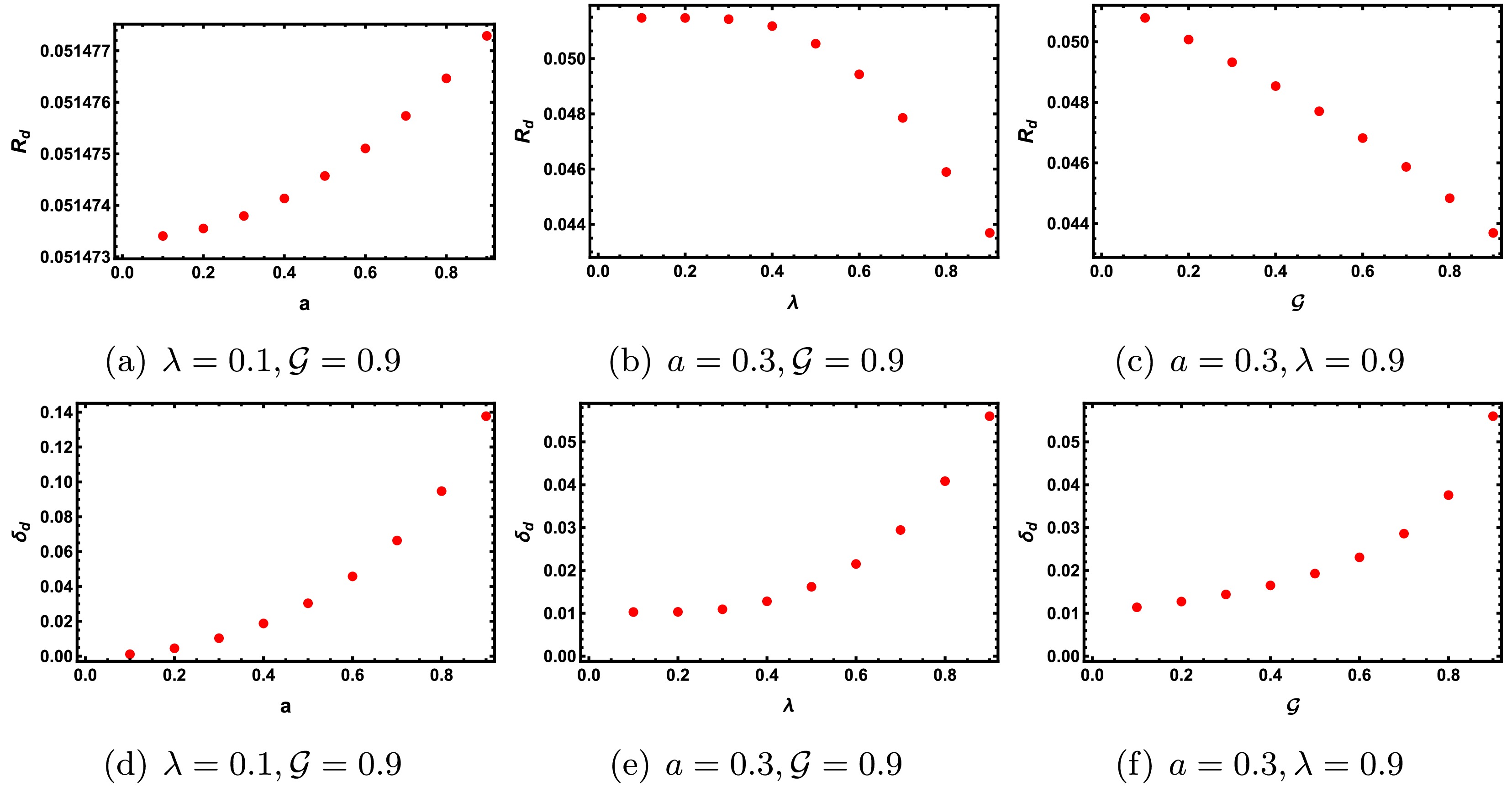
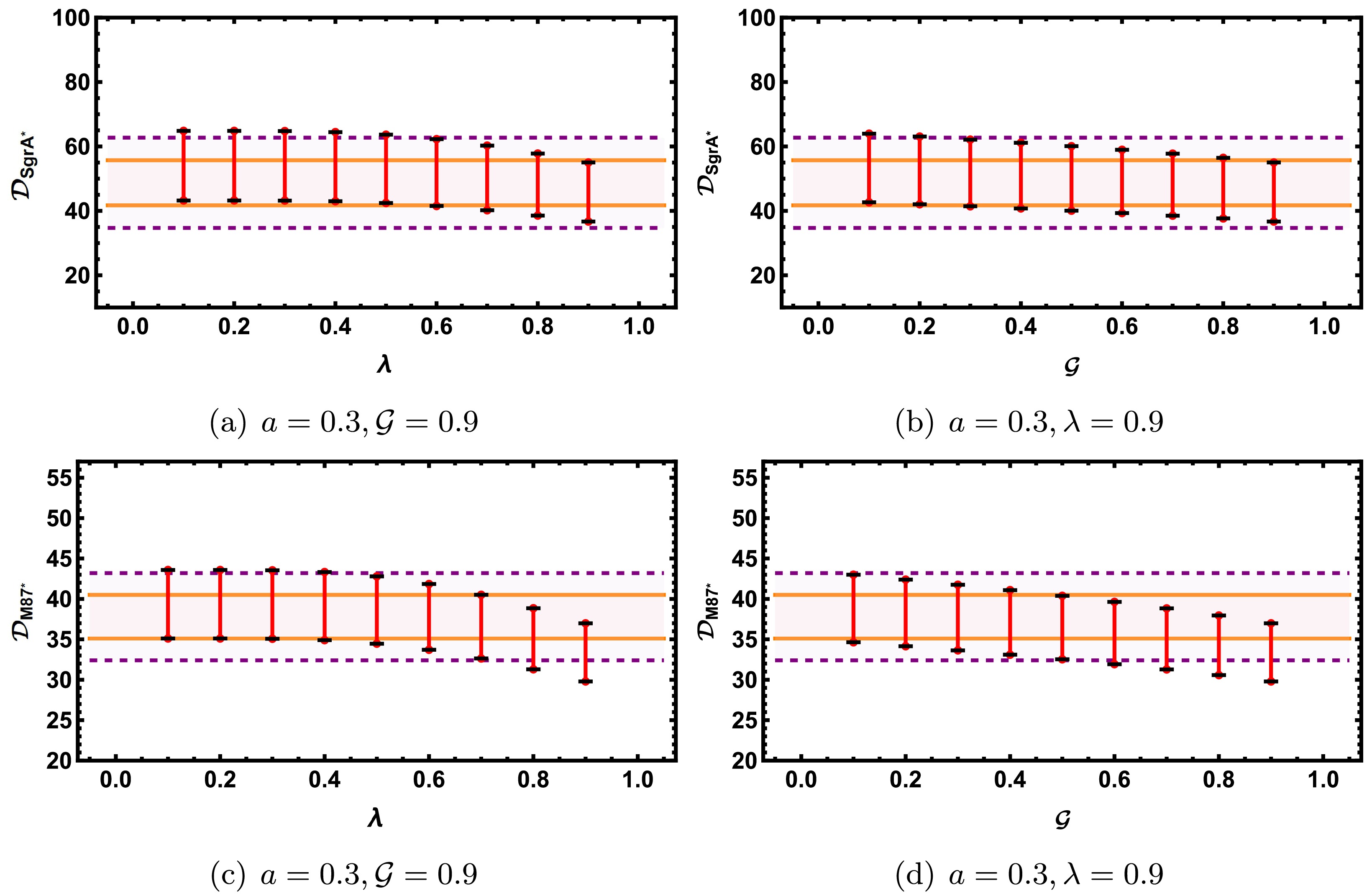
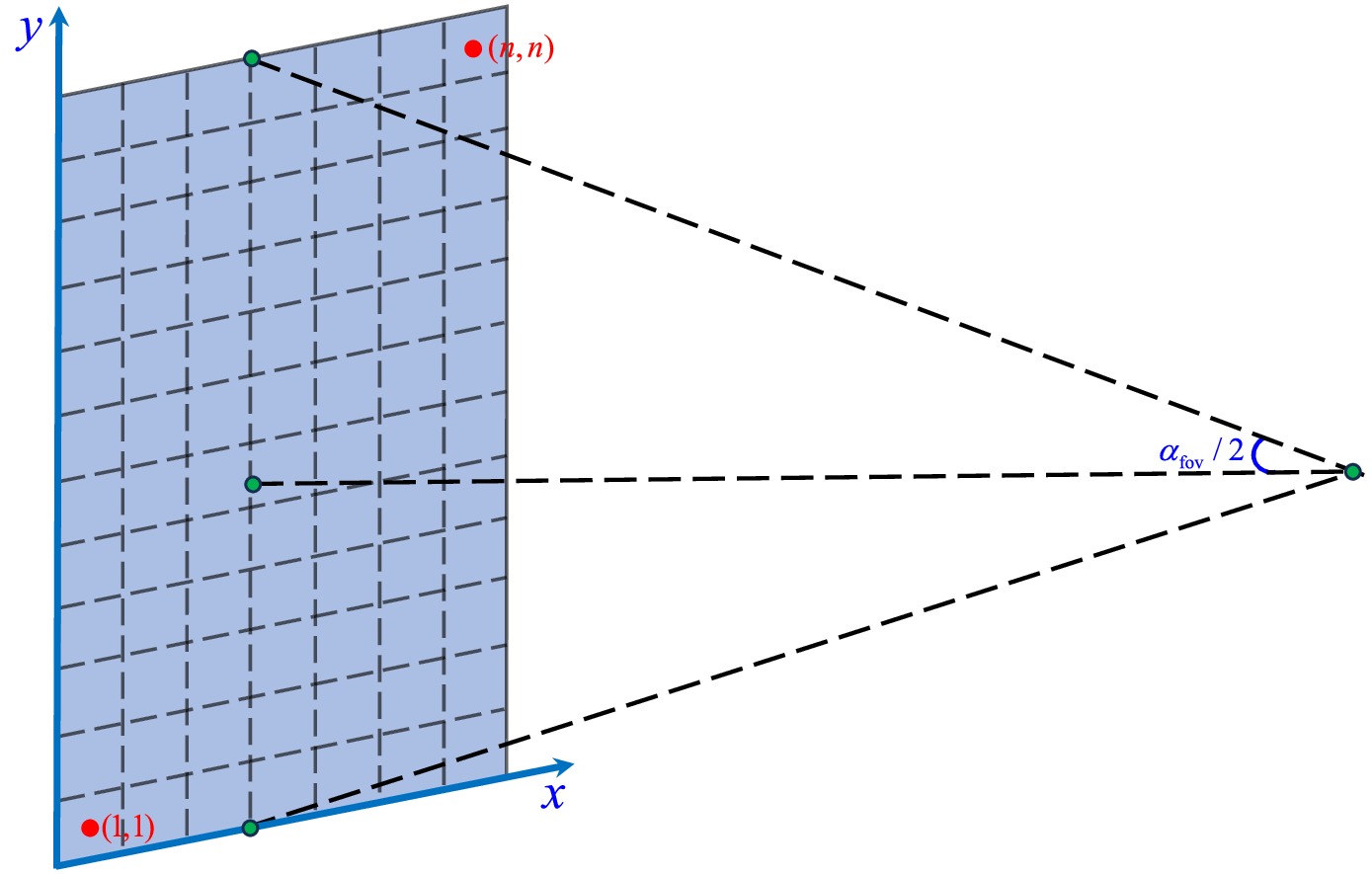
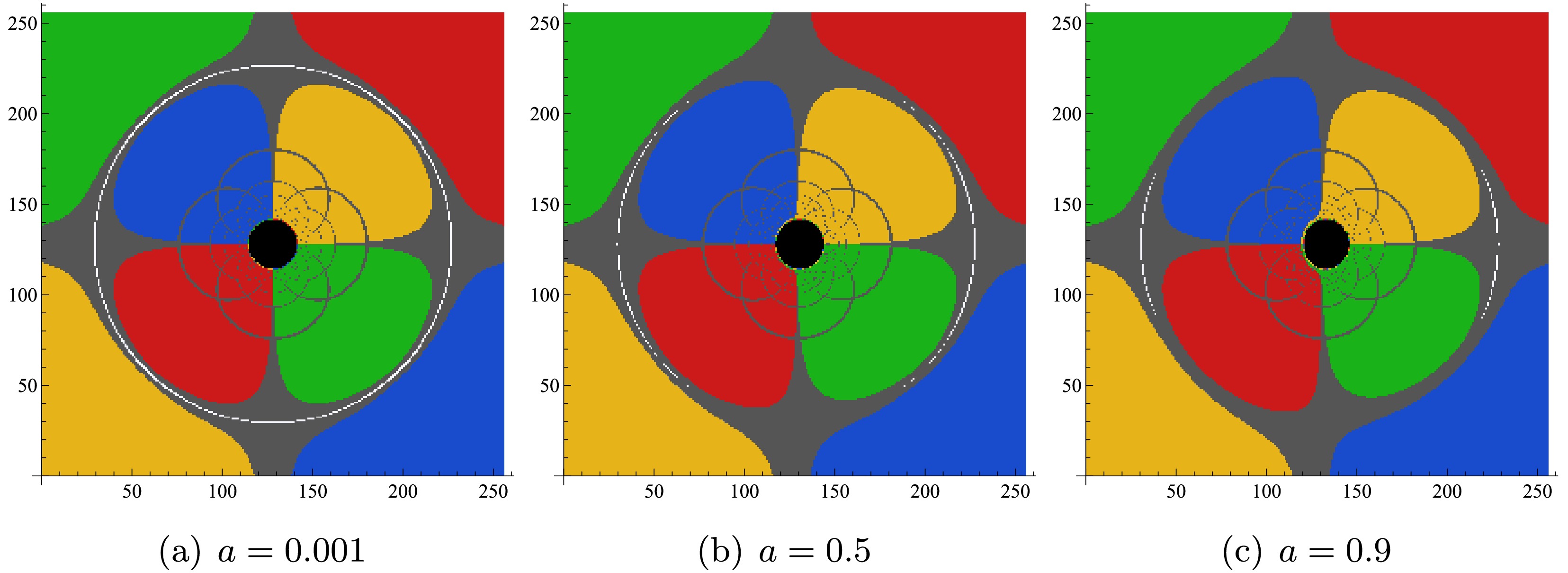
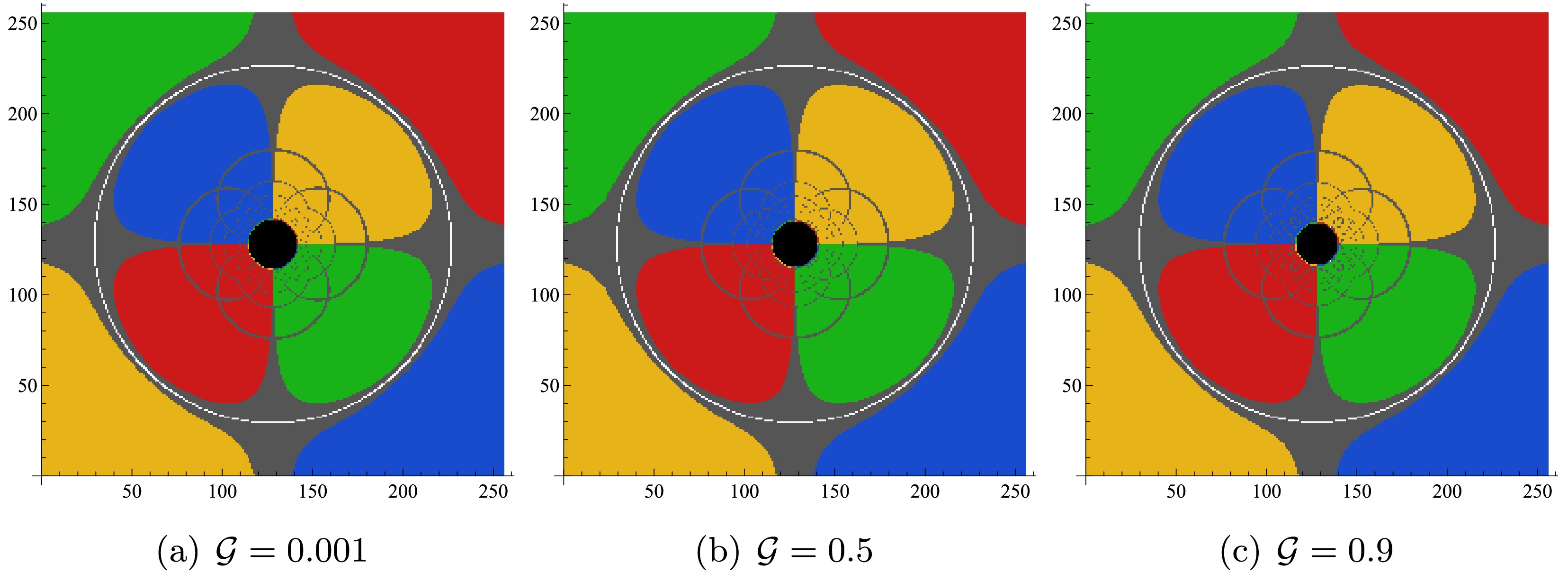
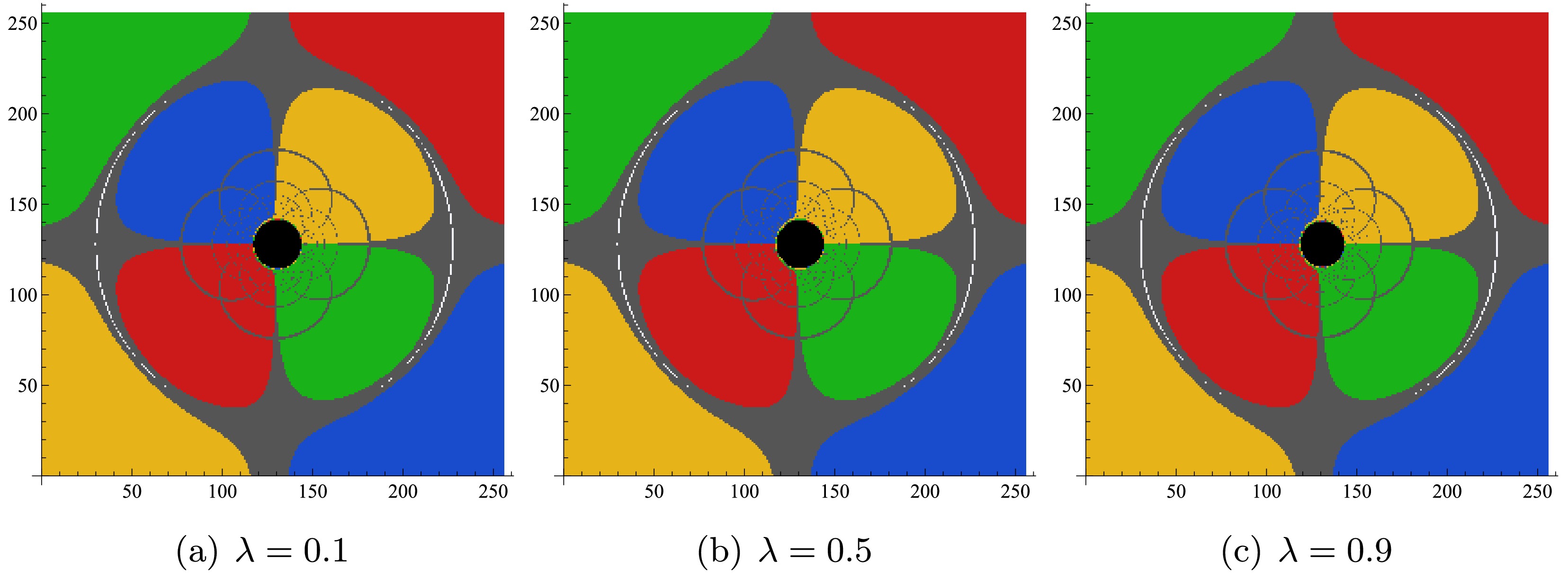
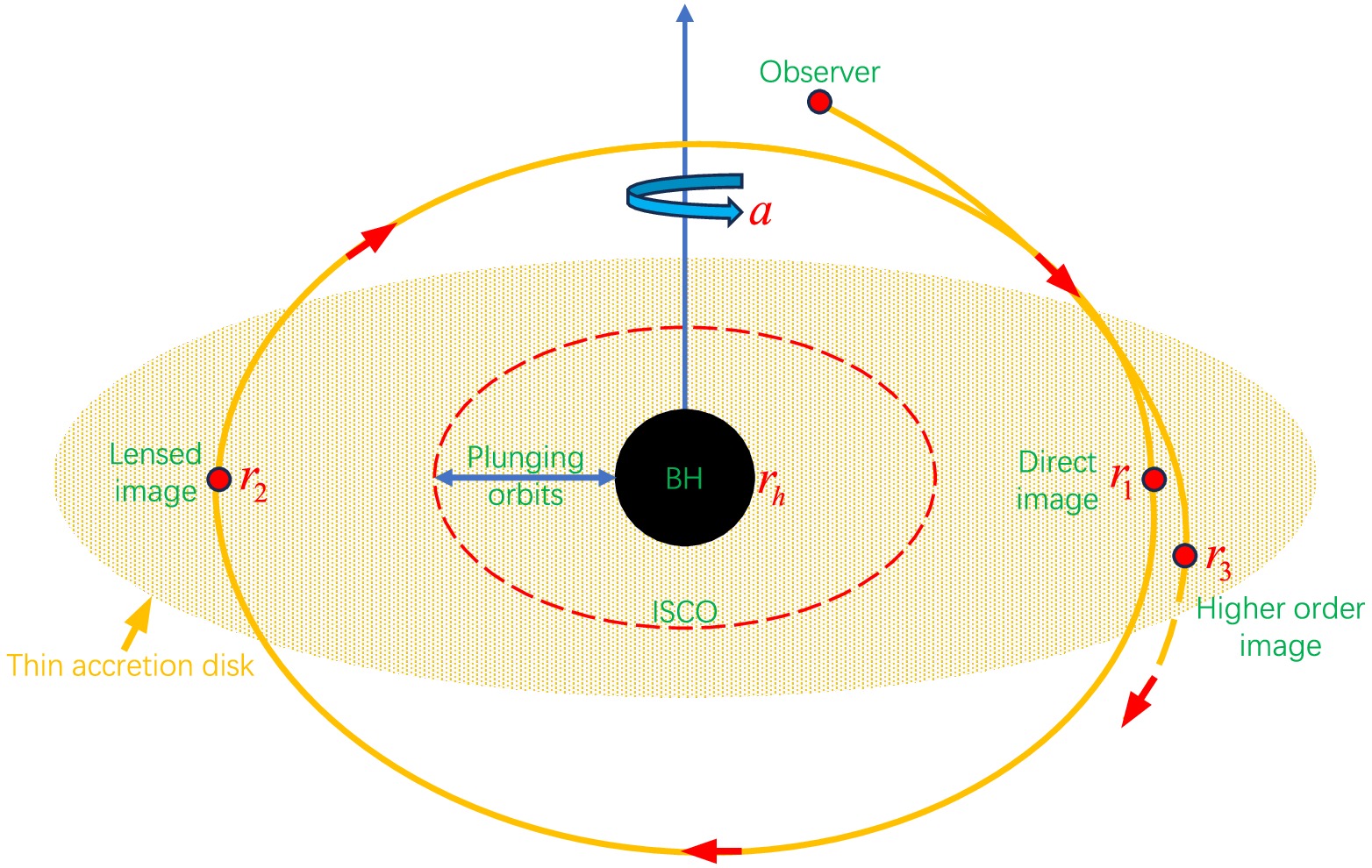
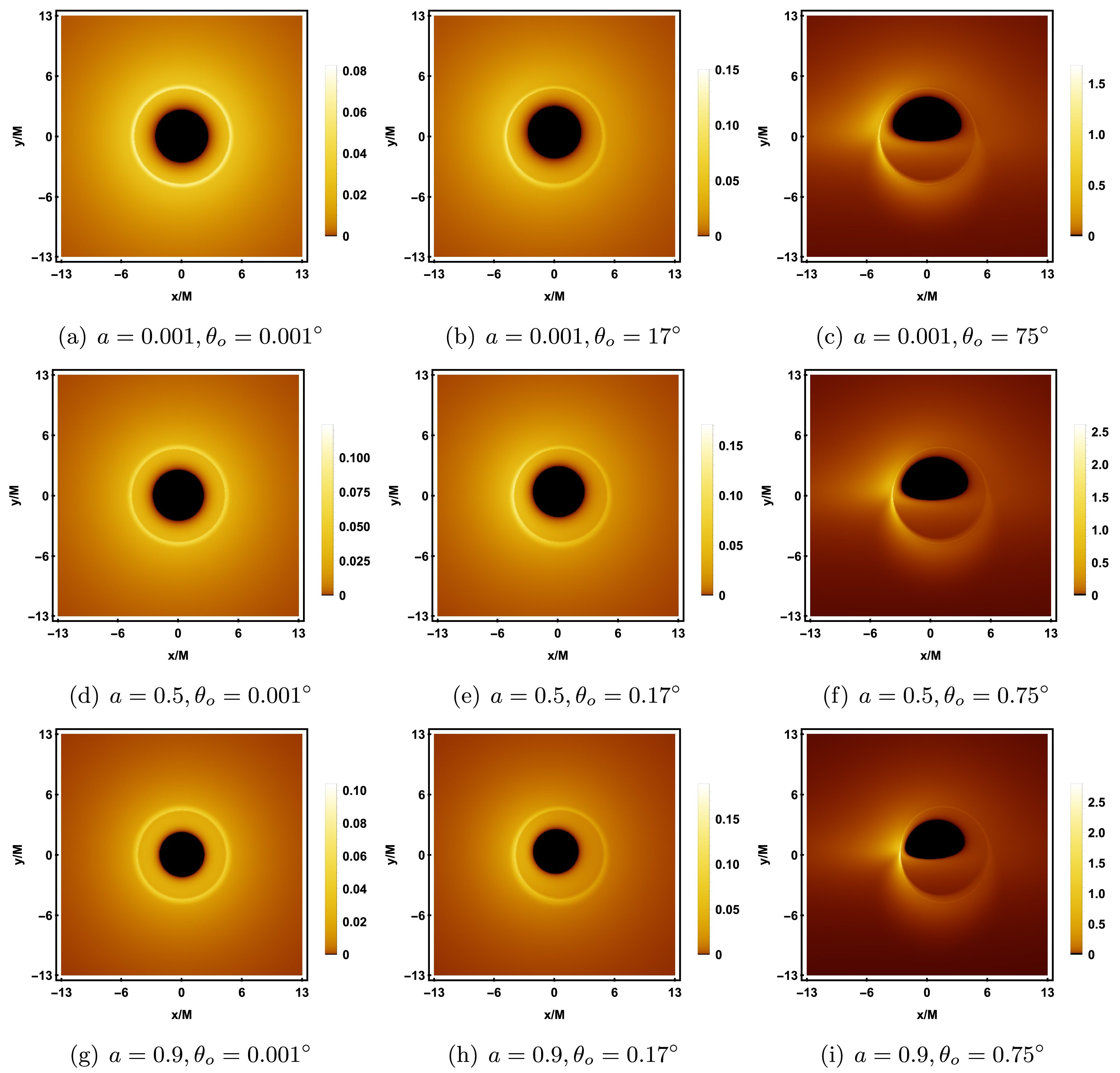
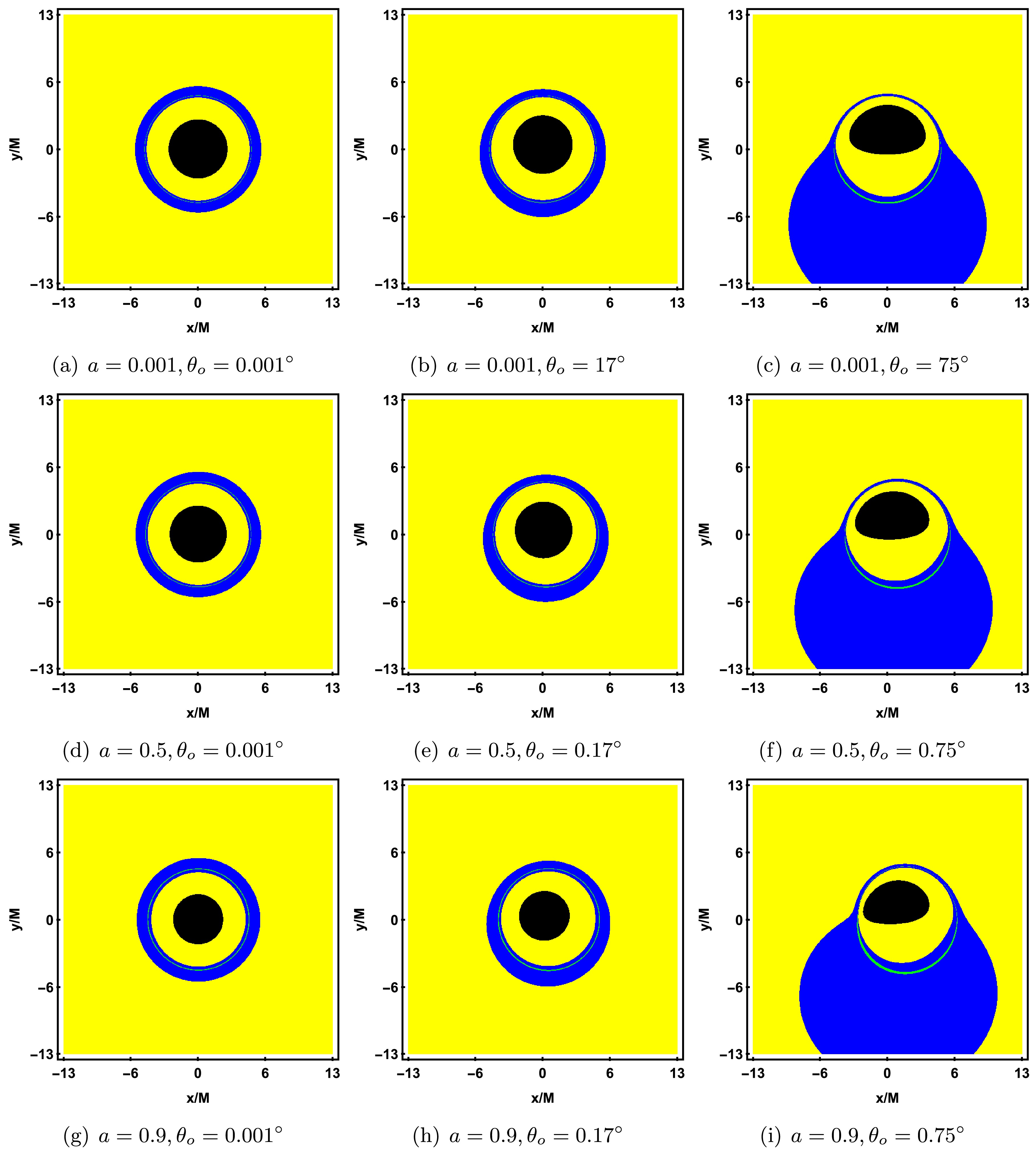
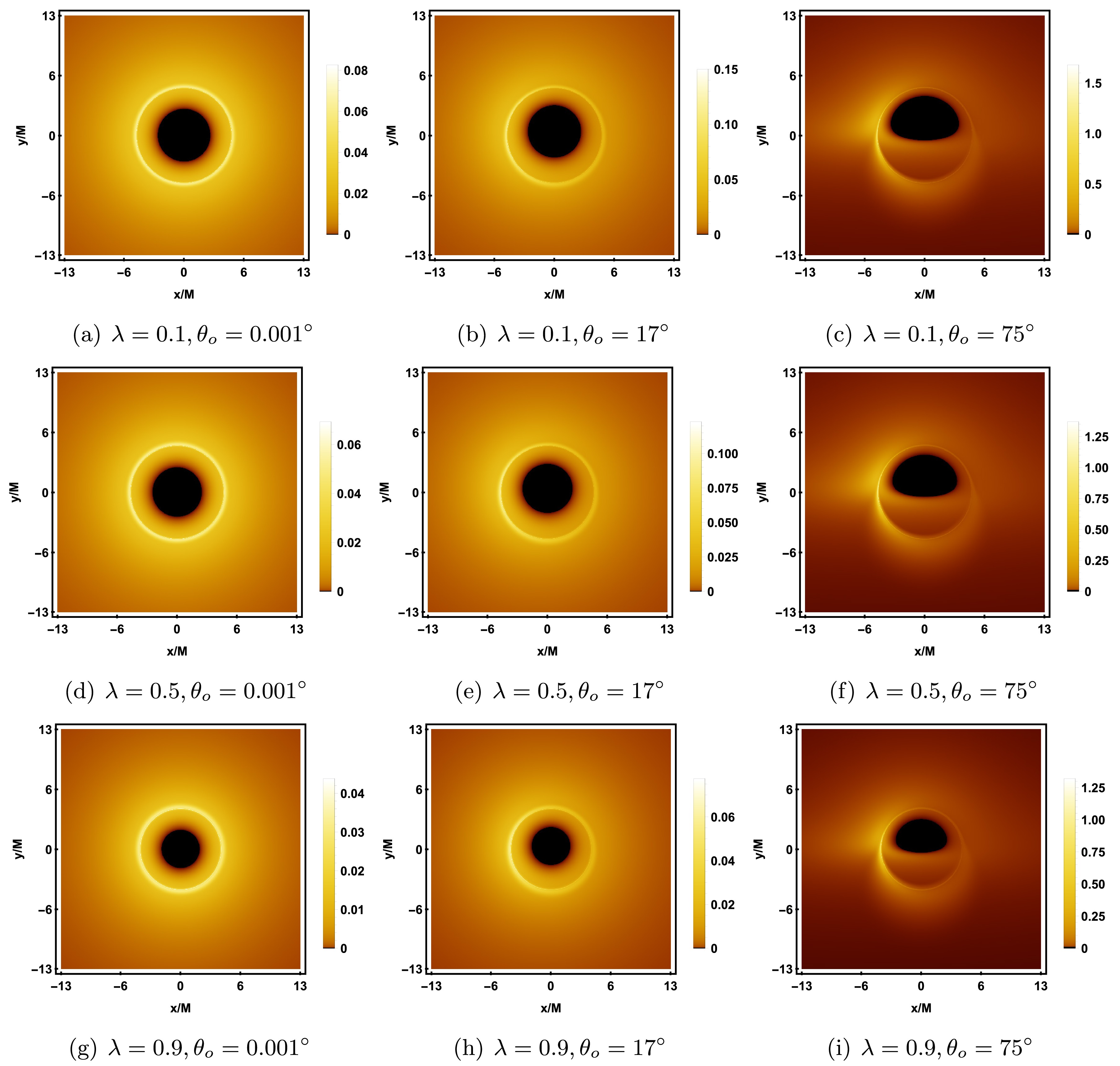
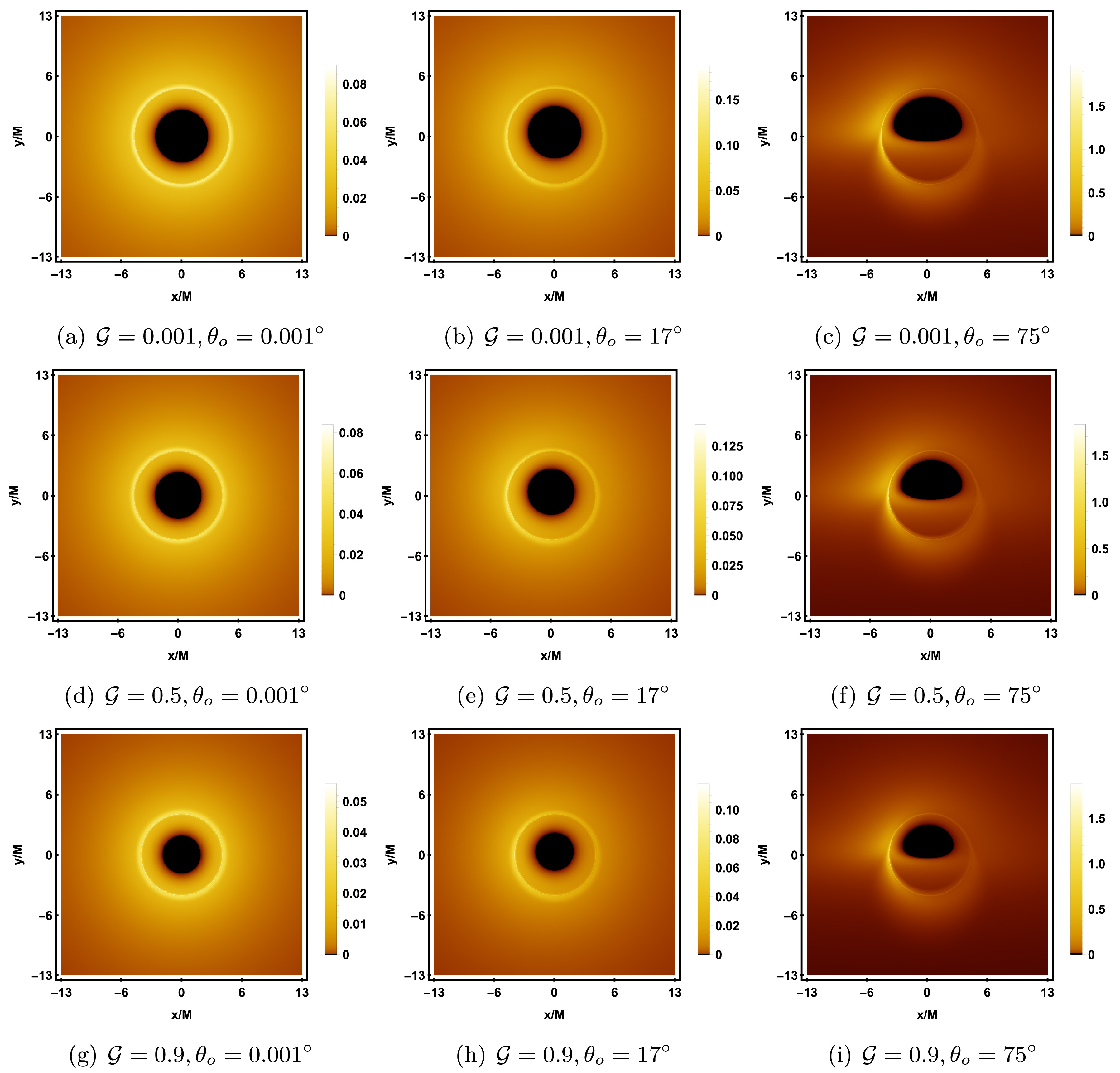
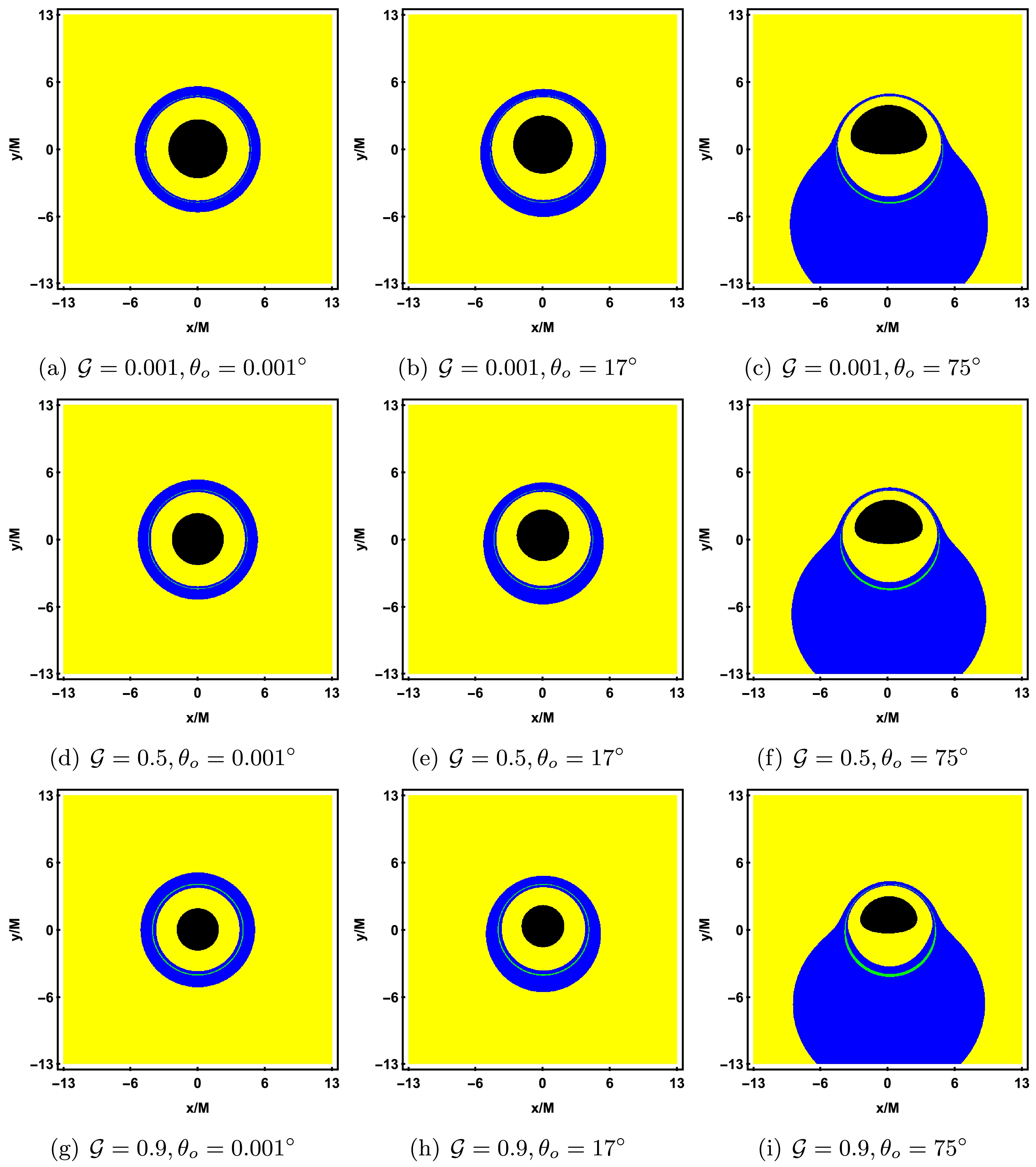
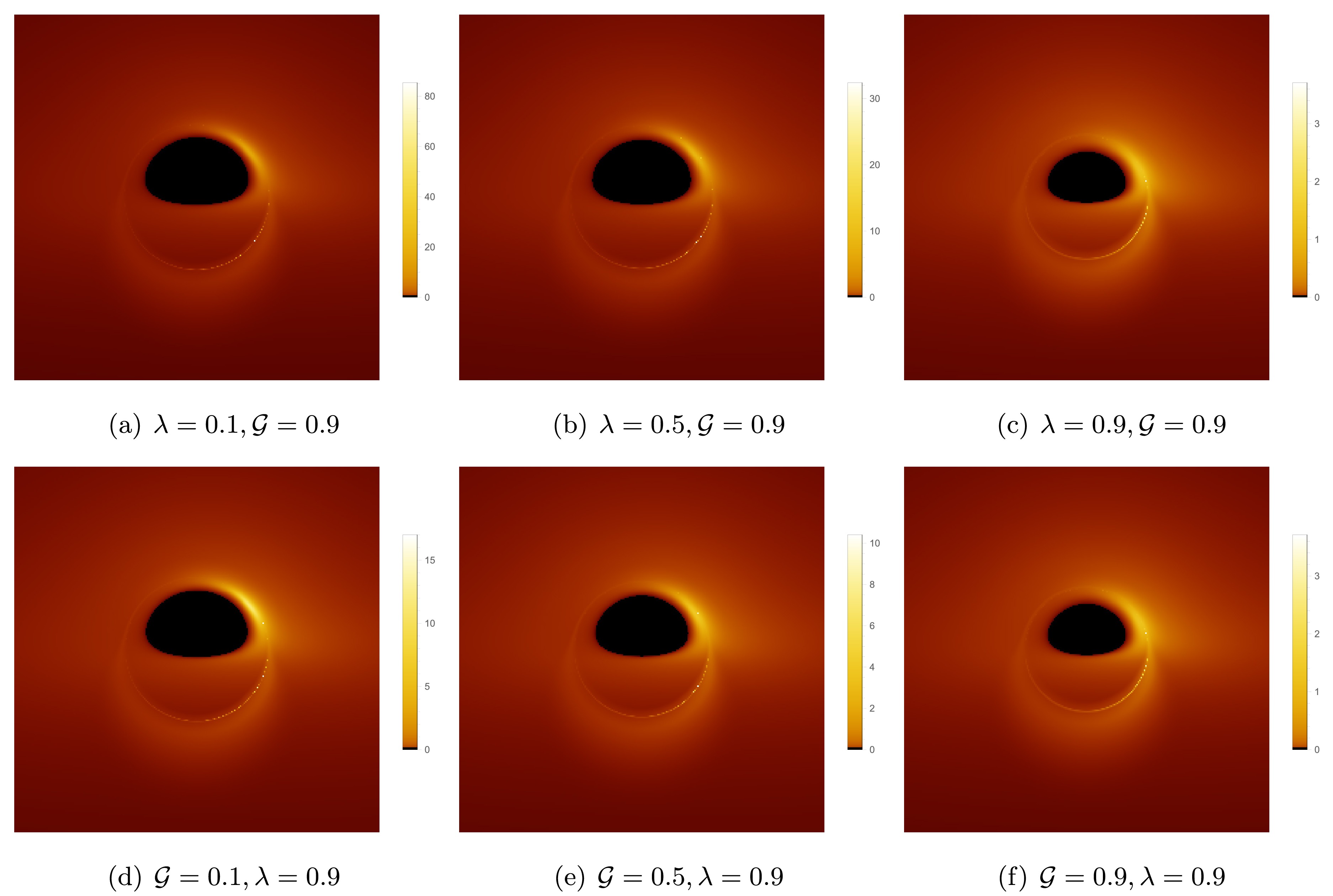
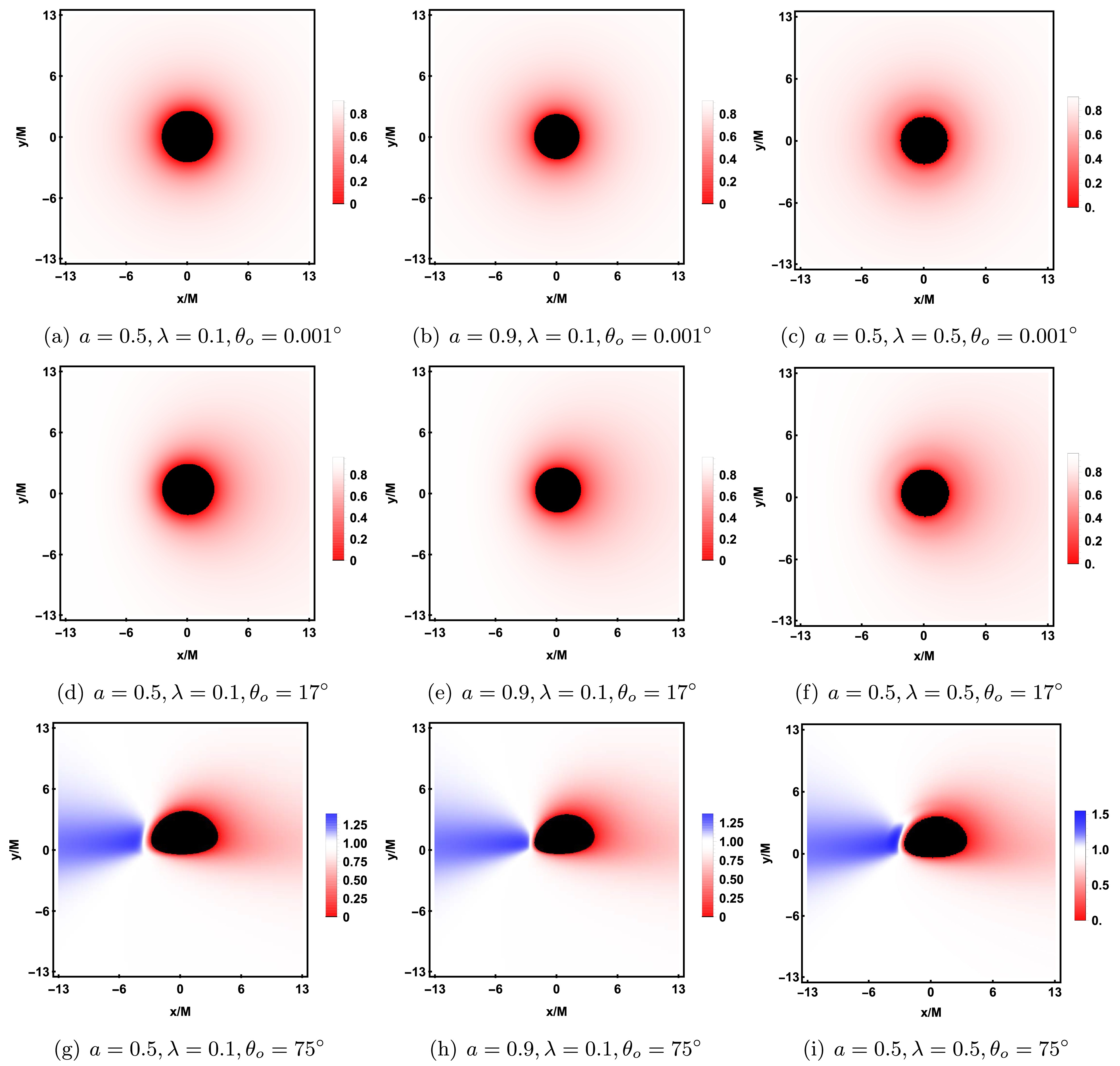
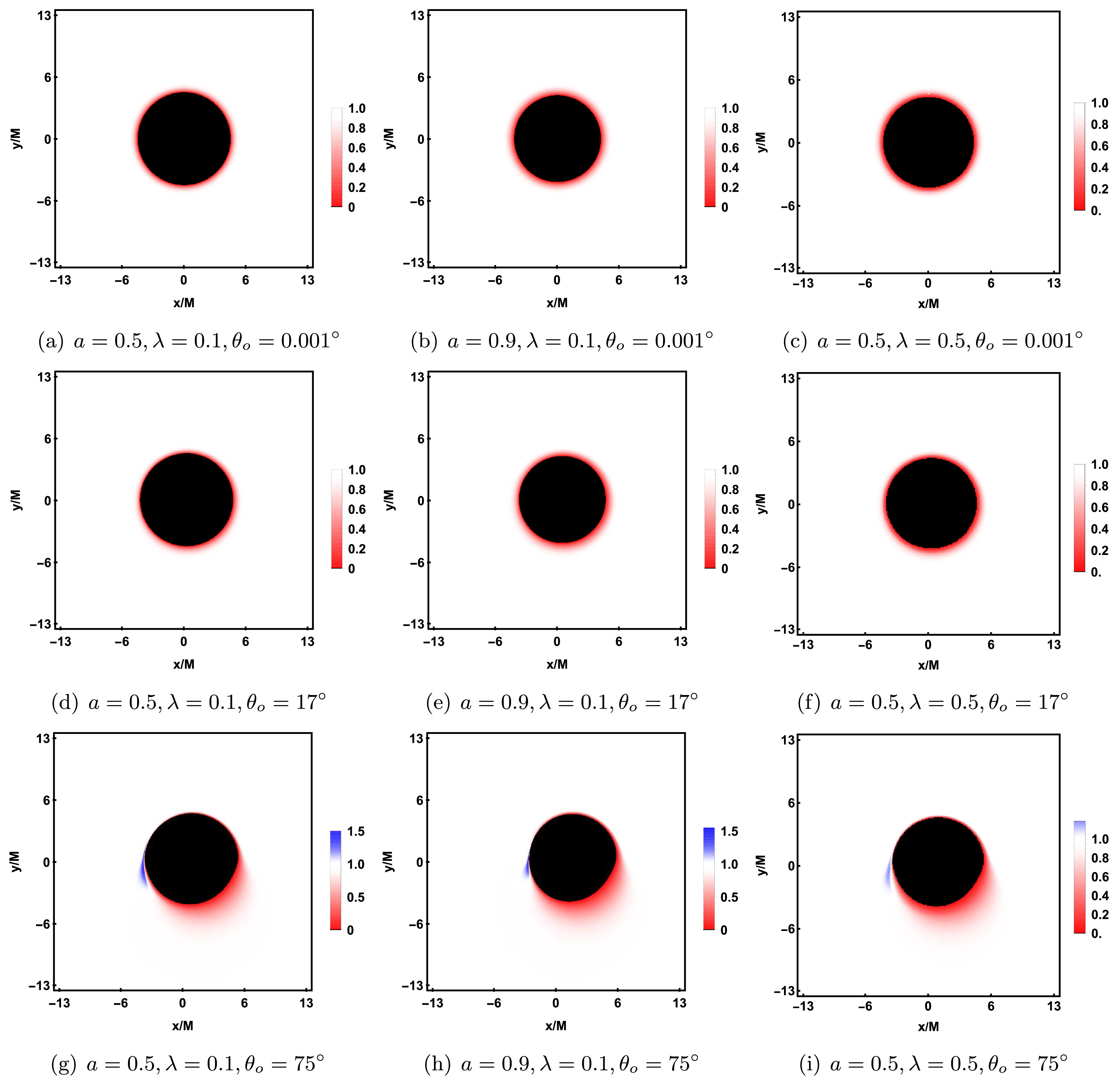
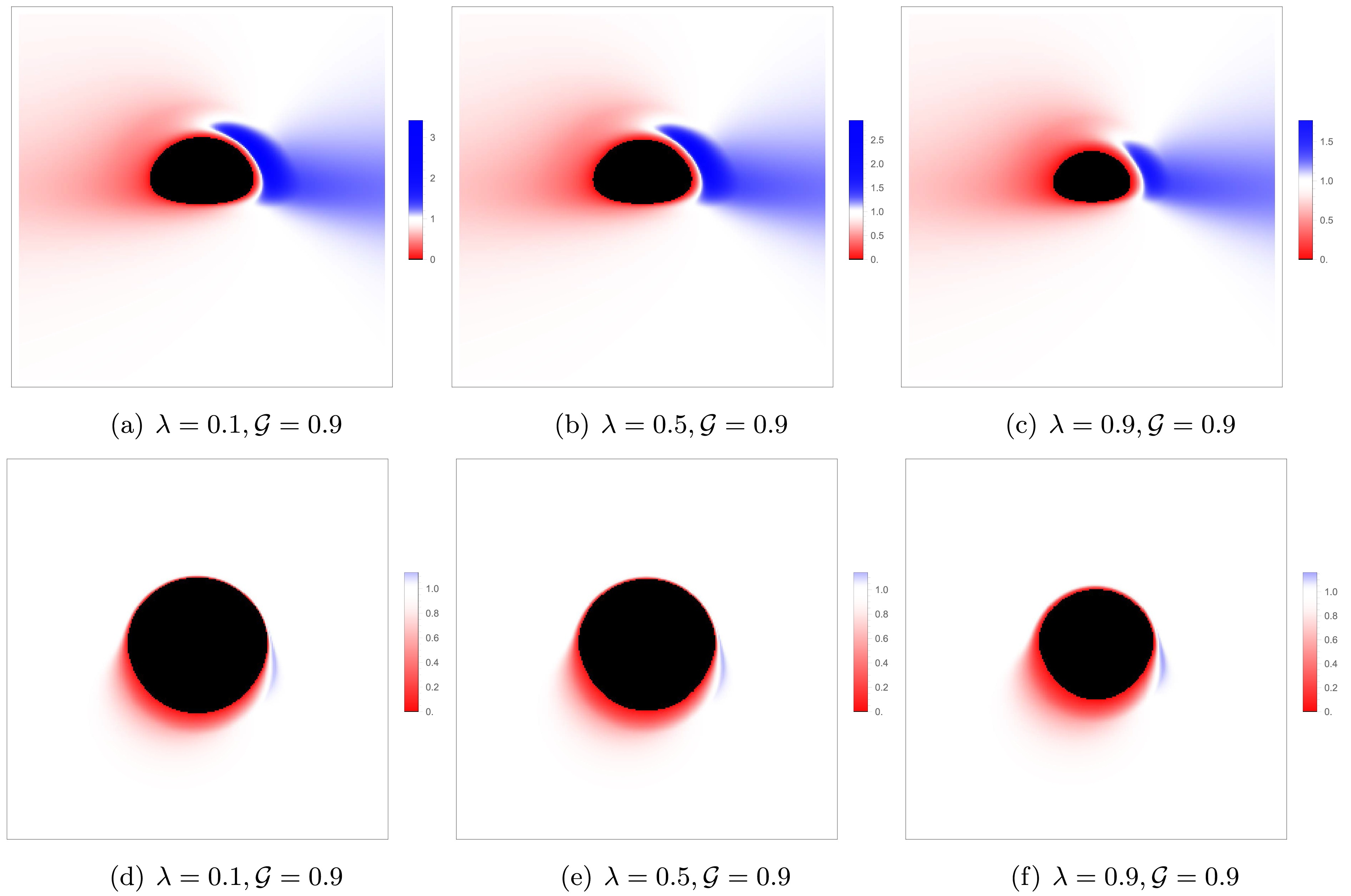
We investigate the shadow image of rotating black holes in Kalb-Ramond gravity using backward ray-tracing techniques. We consider two primary emission models: a spherical source and a optically and geometrically thin accretion disk. The results show that enhanced black hole rotation parameter a amplifies the shadow's departure from circular symmetry, whereas spontaneous Lorentz symmetry-breaking parameters\begin{document}${\cal{G}}$\end{document} \begin{document}$\theta_o$\end{document} \begin{document}${\cal{G}}$\end{document} \begin{document}$\theta_o$\end{document} \begin{document}${\cal{G}}$\end{document} \begin{document}$\theta_o$\end{document}
We investigate the shadow image of rotating black holes in Kalb-Ramond gravity using backward ray-tracing techniques. We consider two primary emission models: a spherical source and a optically and geometrically thin accretion disk. The results show that enhanced black hole rotation parameter a amplifies the shadow's departure from circular symmetry, whereas spontaneous Lorentz symmetry-breaking parameters

2026, 50(3): 035103. doi: 10.1088/1674-1137/ae28eb
Abstract:
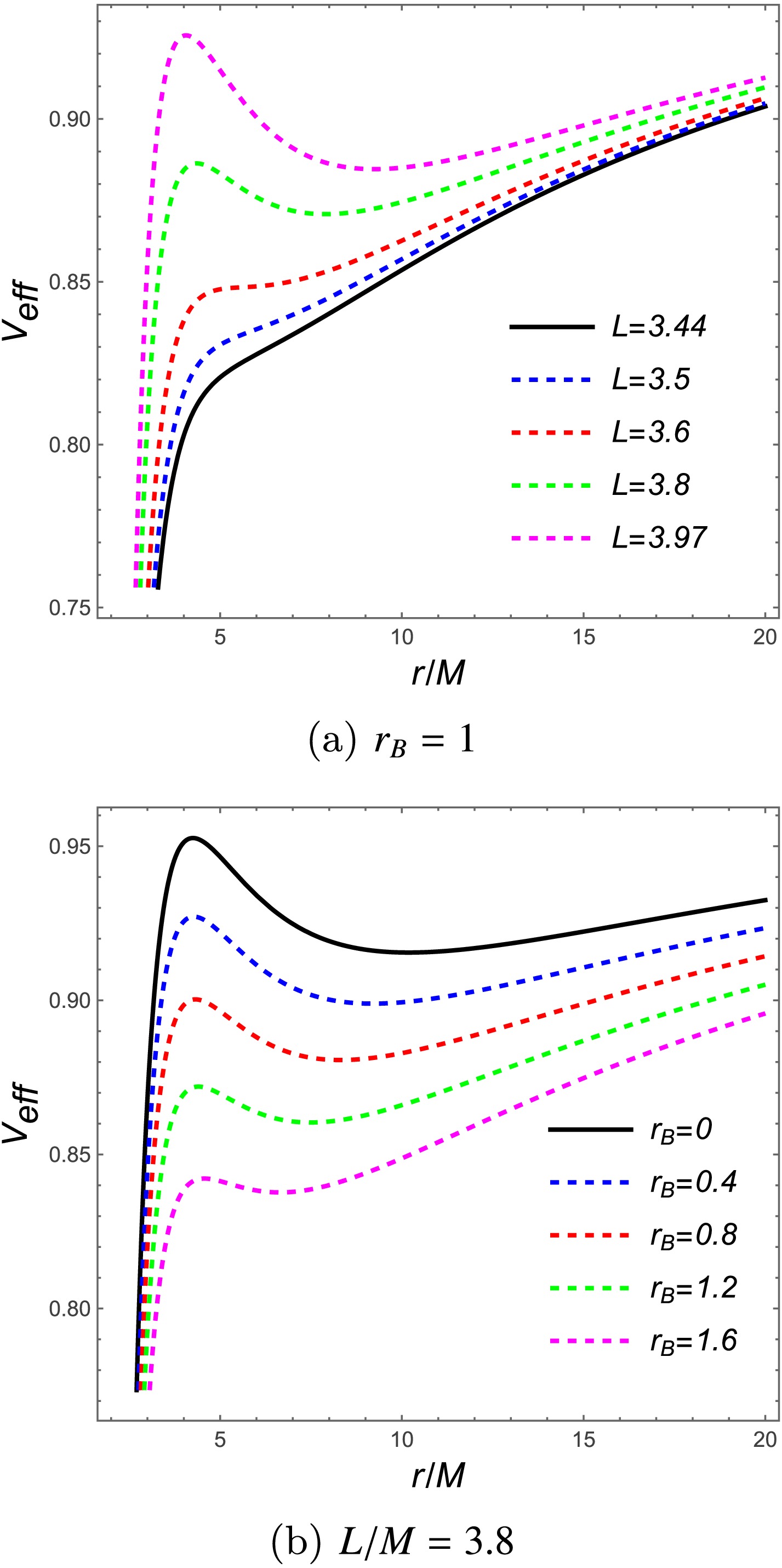
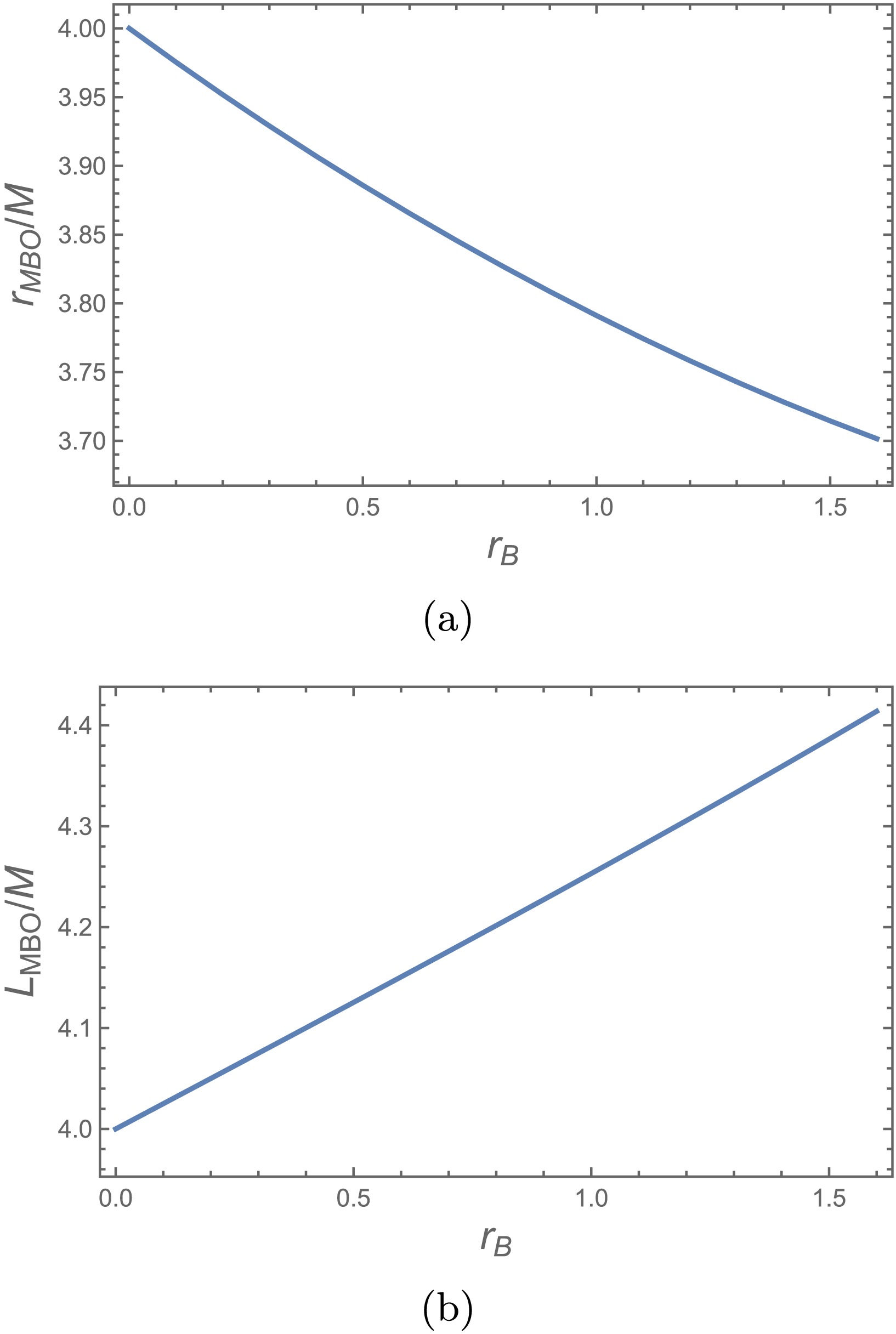
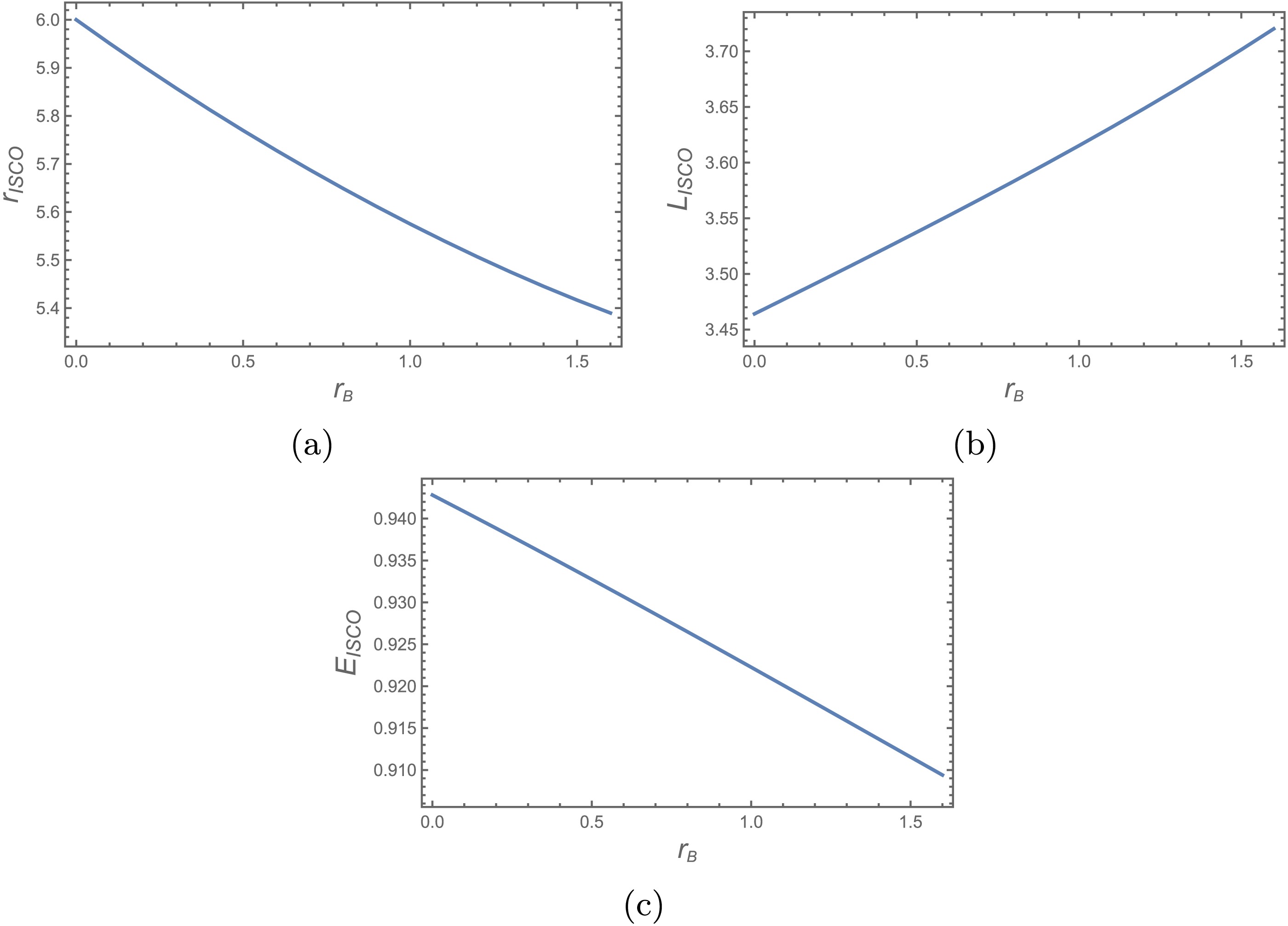
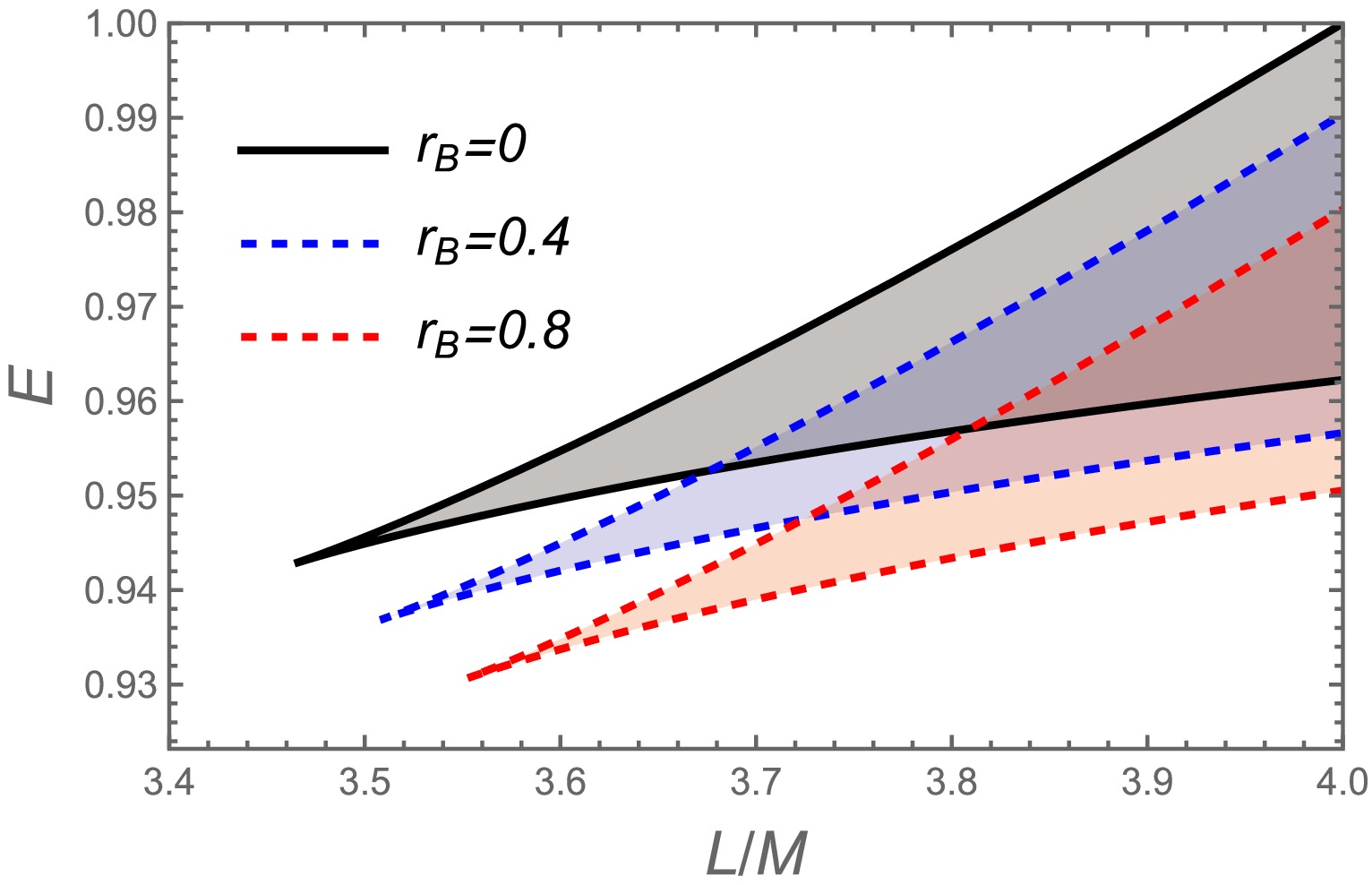
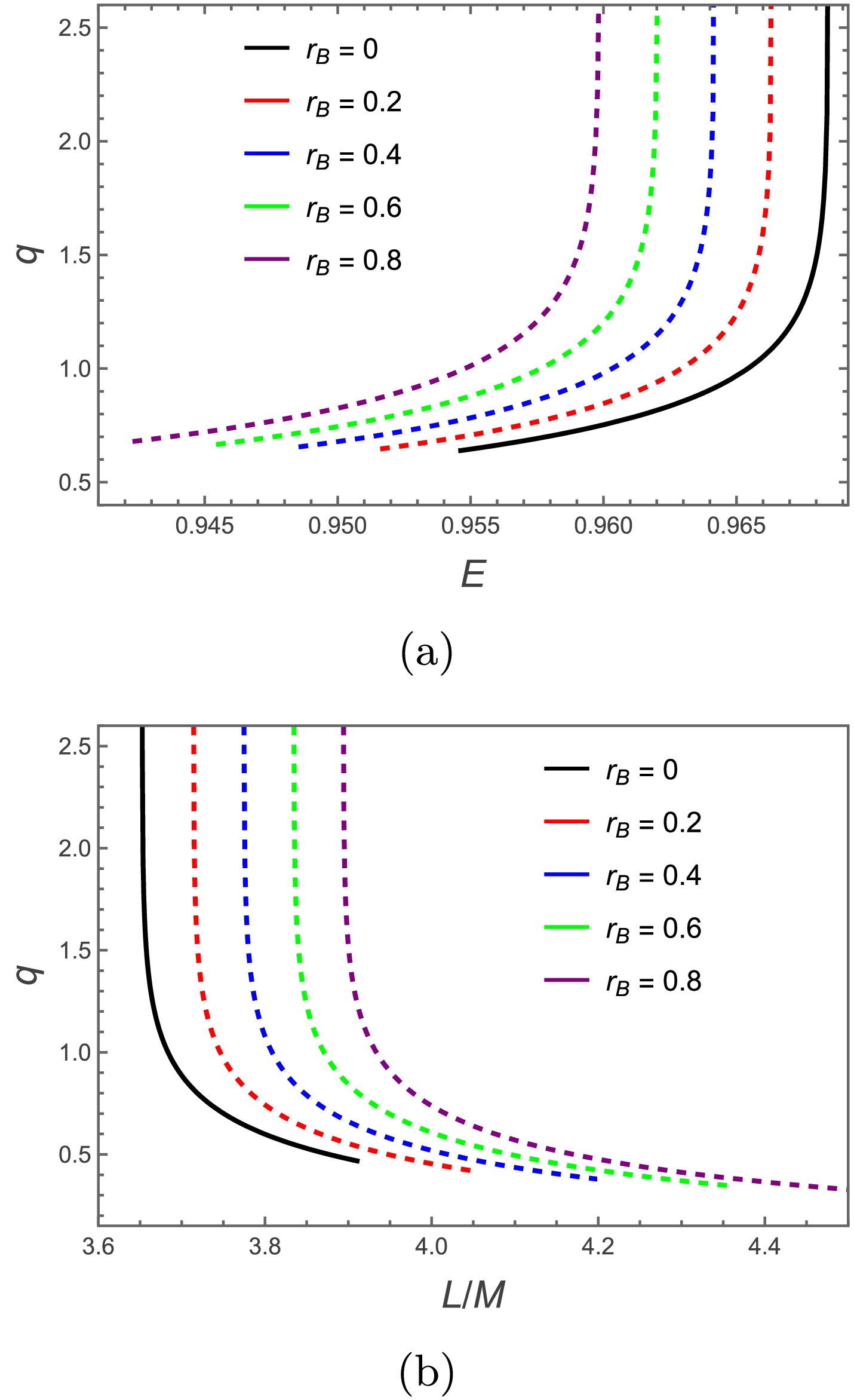
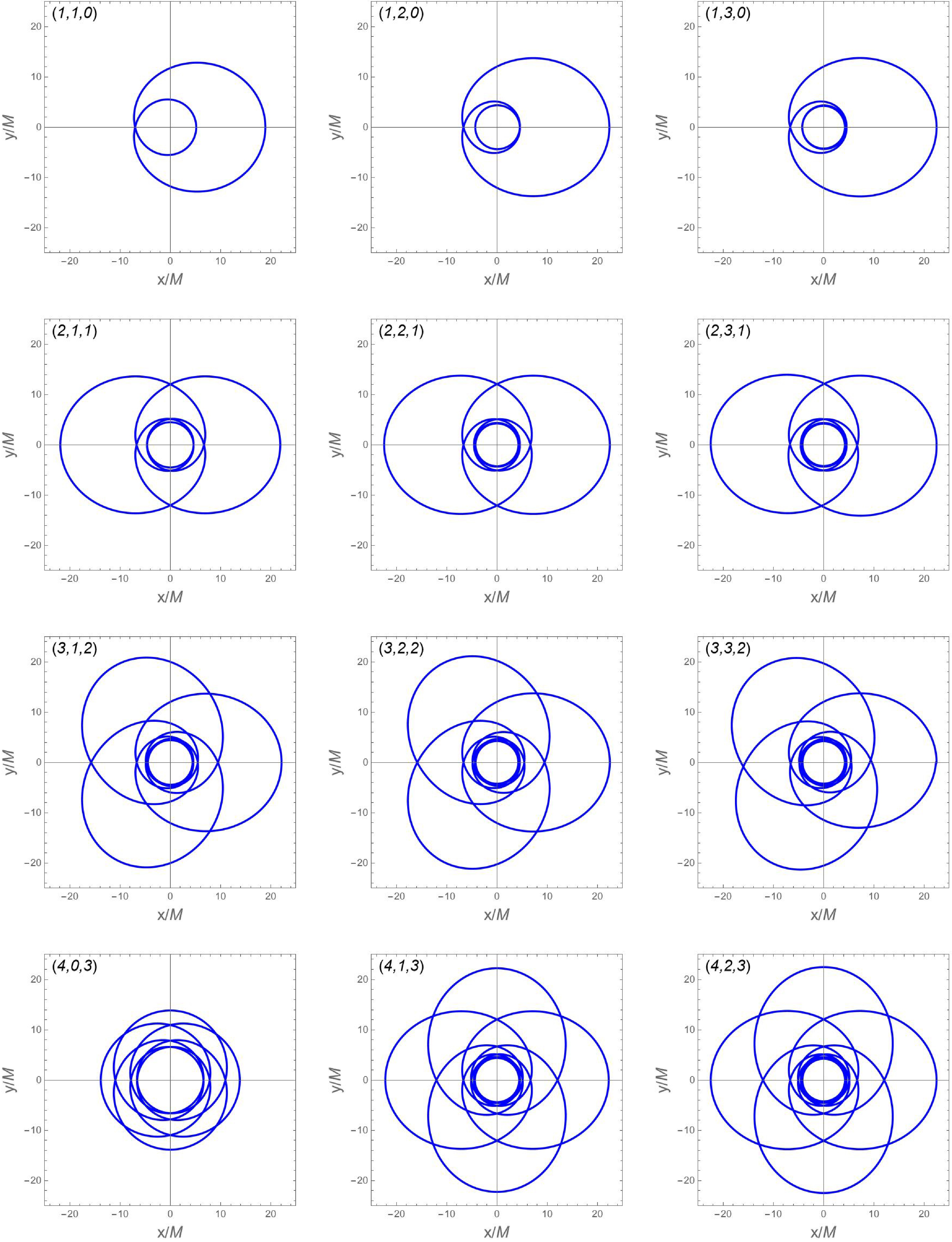
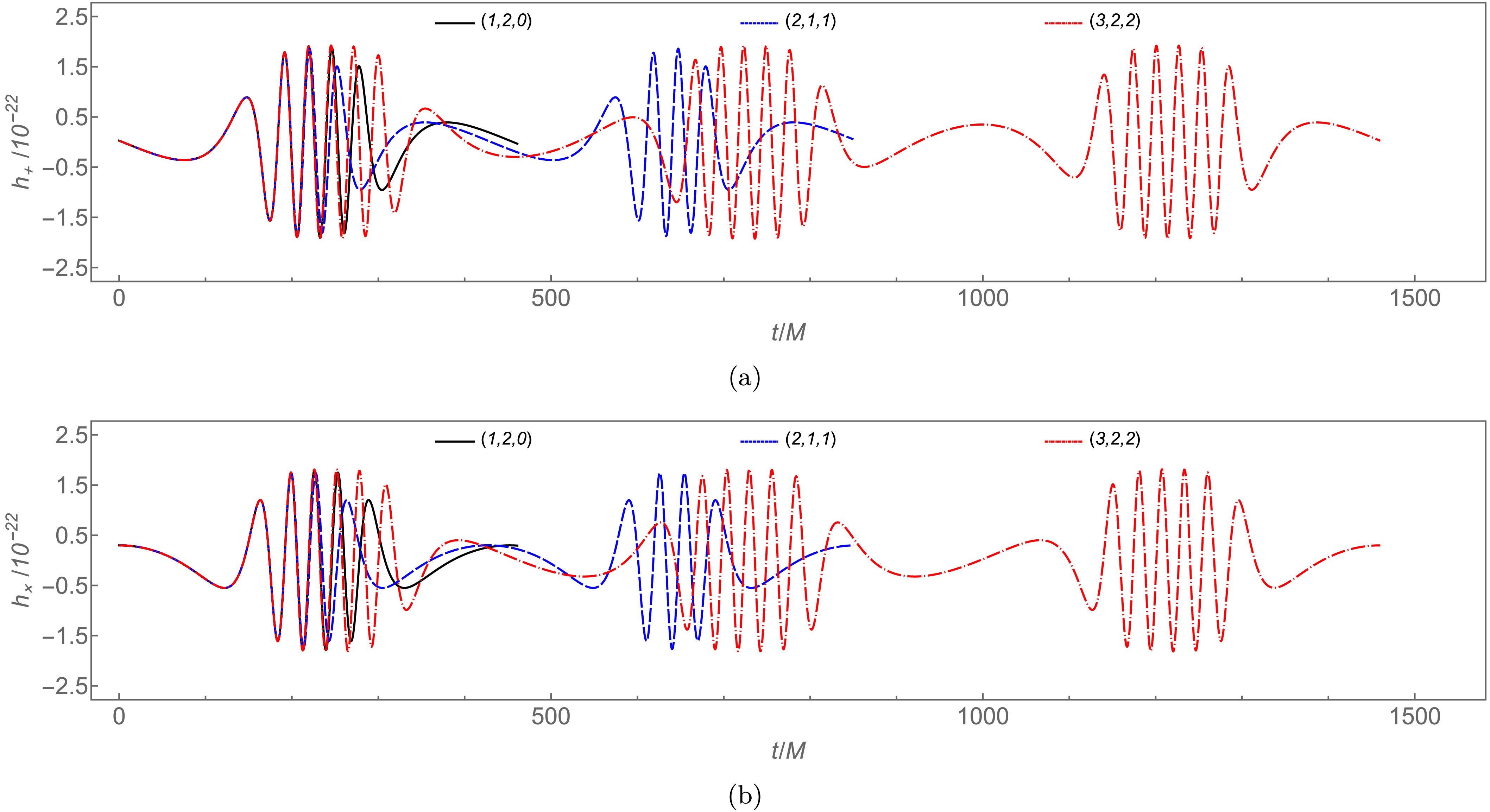
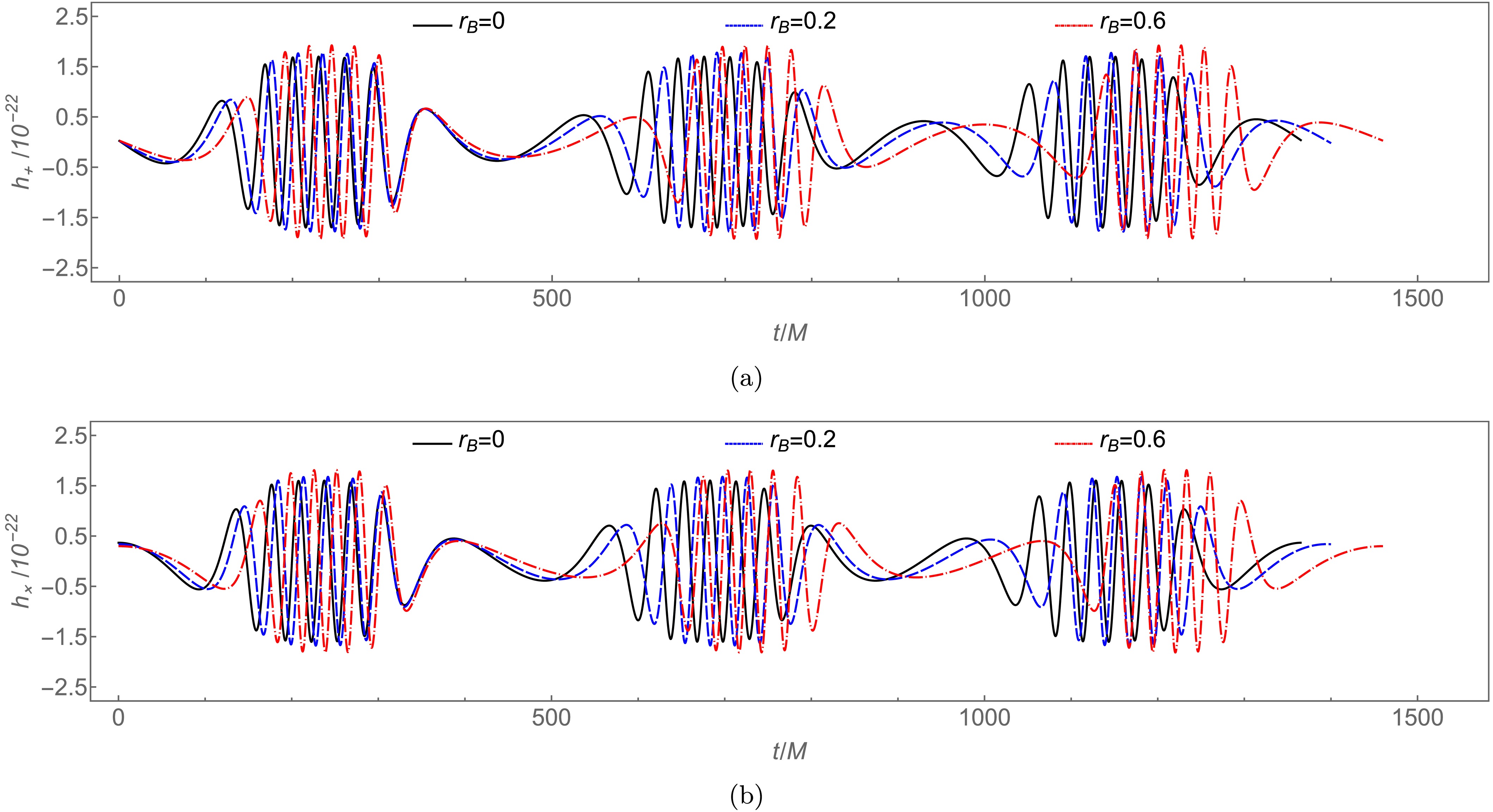
We investigated geodesic motion and gravitational-wave signatures of charged black holes with scalar hair. Using the effective potential approach, we analyzed marginally bound orbits and innermost stable circular orbits, showing how their positions and energy thresholds are modified by the scalar hair parameter\begin{document}$ r_B $\end{document} \begin{document}$ (z,w,v) $\end{document} \begin{document}$ r_B $\end{document}
We investigated geodesic motion and gravitational-wave signatures of charged black holes with scalar hair. Using the effective potential approach, we analyzed marginally bound orbits and innermost stable circular orbits, showing how their positions and energy thresholds are modified by the scalar hair parameter

2026, 50(3): 035104. doi: 10.1088/1674-1137/ae042e
Abstract:
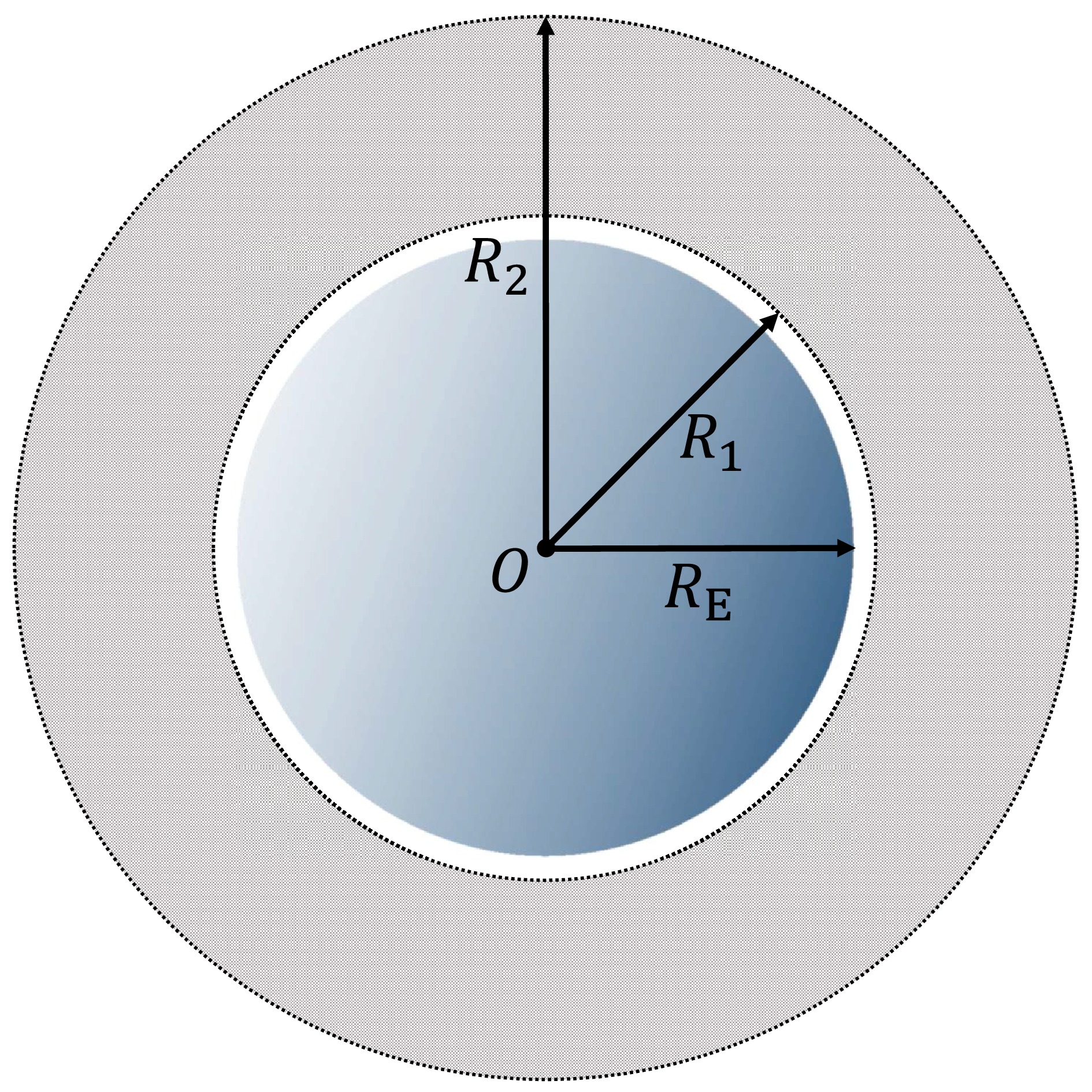
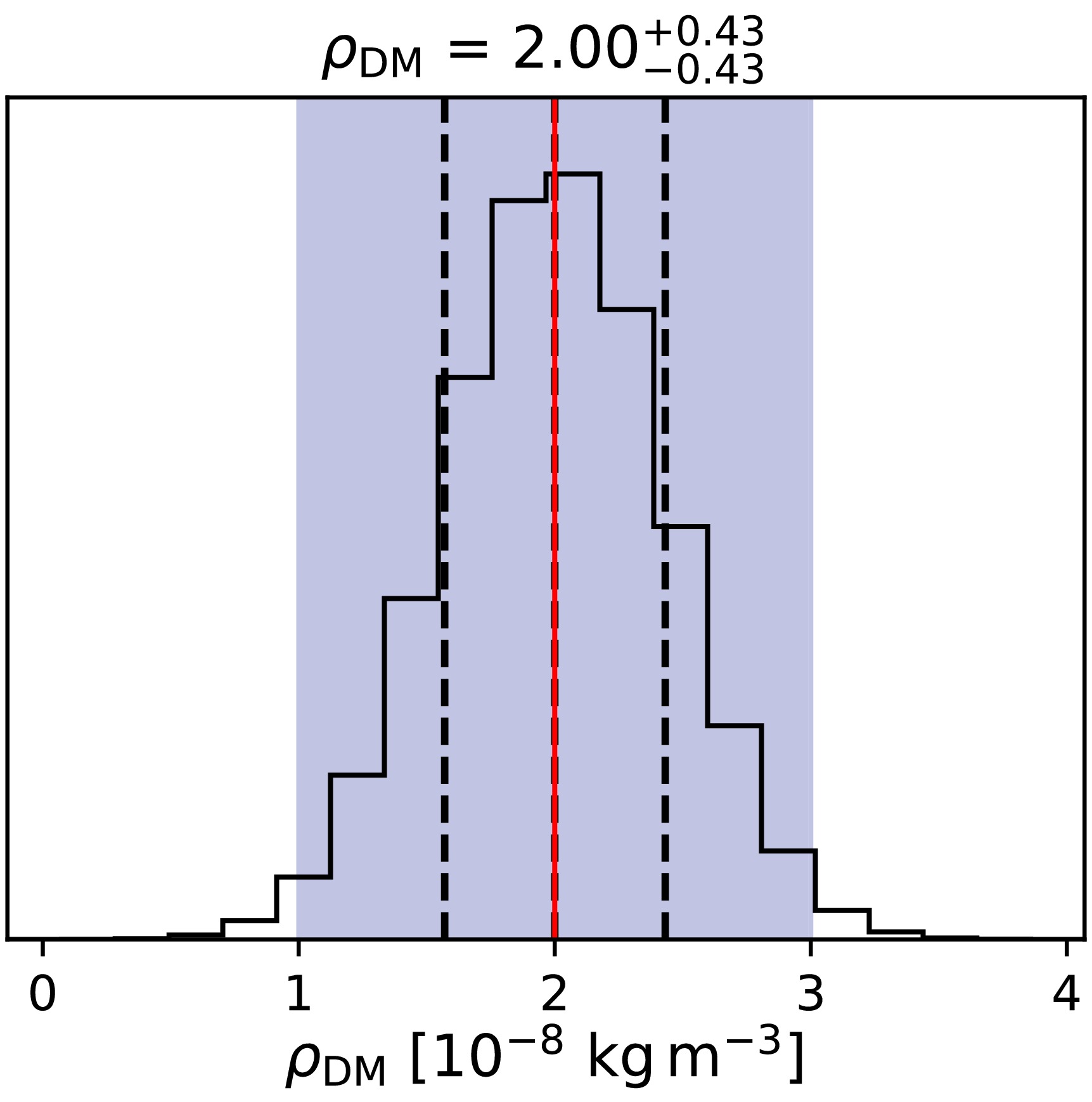
In this study, we explore the potential of using TianQin missions to probe the local gravitational effects of dark matter. The TianQin project plans to launch satellites at both low and high orbits. High-precision orbit determination is expected to aid in detecting Earth’s gravity or gravitational waves. By comparing the derived masses in low and high orbits, it is possible to constrain the amount of dark matter between the two spheres, hence placing a local constraint on dark matter’s gravitational effect. Our results show the capability of TianQin in detecting the density of dark matter around Earth, with an ultimate sensitivity to a value of 10−8 kg m−3. This detection limit surpasses the estimated bounds for the solar system and the observation results for our Galaxy by approximately 7 and 14 orders of magnitude, respectively.
In this study, we explore the potential of using TianQin missions to probe the local gravitational effects of dark matter. The TianQin project plans to launch satellites at both low and high orbits. High-precision orbit determination is expected to aid in detecting Earth’s gravity or gravitational waves. By comparing the derived masses in low and high orbits, it is possible to constrain the amount of dark matter between the two spheres, hence placing a local constraint on dark matter’s gravitational effect. Our results show the capability of TianQin in detecting the density of dark matter around Earth, with an ultimate sensitivity to a value of 10−8 kg m−3. This detection limit surpasses the estimated bounds for the solar system and the observation results for our Galaxy by approximately 7 and 14 orders of magnitude, respectively.
2026, 50(3): 035105. doi: 10.1088/1674-1137/ae2ab0
Abstract:
A class of gravity theories respecting spatial covariance and in the presence of non-dynamical auxiliary scalar fields with only spatial derivatives is investigated. Generally, without higher temporal derivatives in the metric sector, 3 degrees of freedom (DOFs) propagate due to the breaking of general covariance. Through a Hamiltonian constraint analysis, we examine the conditions to eliminate the scalar DOF such that only 2 DOFs propagate, which correspond the tensorial gravitational waves in a homogeneous and isotropic background. We find that two conditions are needed, each of which can eliminate half of a DOF. The second condition can be further classified into two cases according to its effect on the Dirac matrix. We also apply the formal conditions to a polynomial-type Lagrangian as a concrete example in which all the monomials are spatially covariant scalars containing two derivatives. Our results are consistent with a previous analysis based on the perturbative method.
A class of gravity theories respecting spatial covariance and in the presence of non-dynamical auxiliary scalar fields with only spatial derivatives is investigated. Generally, without higher temporal derivatives in the metric sector, 3 degrees of freedom (DOFs) propagate due to the breaking of general covariance. Through a Hamiltonian constraint analysis, we examine the conditions to eliminate the scalar DOF such that only 2 DOFs propagate, which correspond the tensorial gravitational waves in a homogeneous and isotropic background. We find that two conditions are needed, each of which can eliminate half of a DOF. The second condition can be further classified into two cases according to its effect on the Dirac matrix. We also apply the formal conditions to a polynomial-type Lagrangian as a concrete example in which all the monomials are spatially covariant scalars containing two derivatives. Our results are consistent with a previous analysis based on the perturbative method.
2026, 50(3): 035106. doi: 10.1088/1674-1137/ae265a
Abstract:
In this study, we investigate a scenario based on the effects of the Loop Quantum Gravity (LQG) on the electromagnetic sector of the Standard Model of Fundamental Interactions and Particle Physics (SM). Starting from a post-Maxwellian version of electromagnetism that includes LQG effects, we derive and discuss the influence of LQG parameters on classical quantities such as the components of the stress-tensor. Furthermore, we inspect the propagation of electromagnetic waves and examine the optical properties of the QED vacuum in this scenario. Among these, we contemplate the combined effect of the LQG parameters and a homogeneous background magnetic field on the propagation of electromagnetic waves by considering issues such as group velocities and refractive indices of the QED vacuum, in detail. Finally, with the aid of the previously analyzed LQG-extended photonic dispersion relations, we re-discuss the kinematics of the Compton effect and conclude that an interesting nonlinear profile emerges in the wavelengths of the incoming and deflected photons.
In this study, we investigate a scenario based on the effects of the Loop Quantum Gravity (LQG) on the electromagnetic sector of the Standard Model of Fundamental Interactions and Particle Physics (SM). Starting from a post-Maxwellian version of electromagnetism that includes LQG effects, we derive and discuss the influence of LQG parameters on classical quantities such as the components of the stress-tensor. Furthermore, we inspect the propagation of electromagnetic waves and examine the optical properties of the QED vacuum in this scenario. Among these, we contemplate the combined effect of the LQG parameters and a homogeneous background magnetic field on the propagation of electromagnetic waves by considering issues such as group velocities and refractive indices of the QED vacuum, in detail. Finally, with the aid of the previously analyzed LQG-extended photonic dispersion relations, we re-discuss the kinematics of the Compton effect and conclude that an interesting nonlinear profile emerges in the wavelengths of the incoming and deflected photons.
2026, 50(3): 039001. doi: 10.1088/1674-1137/ae18a9
Abstract:

IF: 3.0
Monthly issued, founded in 1977
Sponsored by:
ISSN 1674-1137 CN 11-5641/O4
Original research articles, Ietters and reviews Covering theory and experiments in the fieids of
- Particle physics
- Nuclear physics
- Particle and nuclear astrophysics
- Cosmology
Author benefits
- A SCOAP3 participating journal - free Open Access publication for qualifying articles
- Average 24 days to first decision
- Fast-track publication for selected articles
- Subscriptions at over 3000 institutions worldwide
- Free English editing on all accepted articles
News
- Chinese Physics C Best Paper Awards 2026 Announced
- Editorial Office Closed
- CPC Announces 2025 Outstanding Reviewers
- Chinese Physics C Outstanding Reviewer Award 2023
- Impact factor of Chinese Physics C is 3.6 in 2022
Cover Story
- Cover Story (Issue 9, 2026): Charge Separation Measurements in Au+Au collisions at \sqrt{S_{NN}} = 7.7-200 GeV in Search of the Chiral Magnetic Effect
- Cover Story (Issue 5, 2026): Determination of Fragmentation Functions from Charge Asymmetries in Hadron Production
- Cover Story (Issue 4, 2026): Initial performance results of the JUNO detector
- Cover Story (Issue 3, 2026): Comprehensive investigation on baryon number violating nucleon decays involving an axion-like particle
- Cover Story (Issue 2, 2026) |The images of Brans-Dicke-Kerr type naked singularities
Advertising