Recent
Display Method:
2026 No.9
2026 No.10


2026, 50(10): 104107. doi: 10.1088/1674-1137/ae8e63
Abstract:
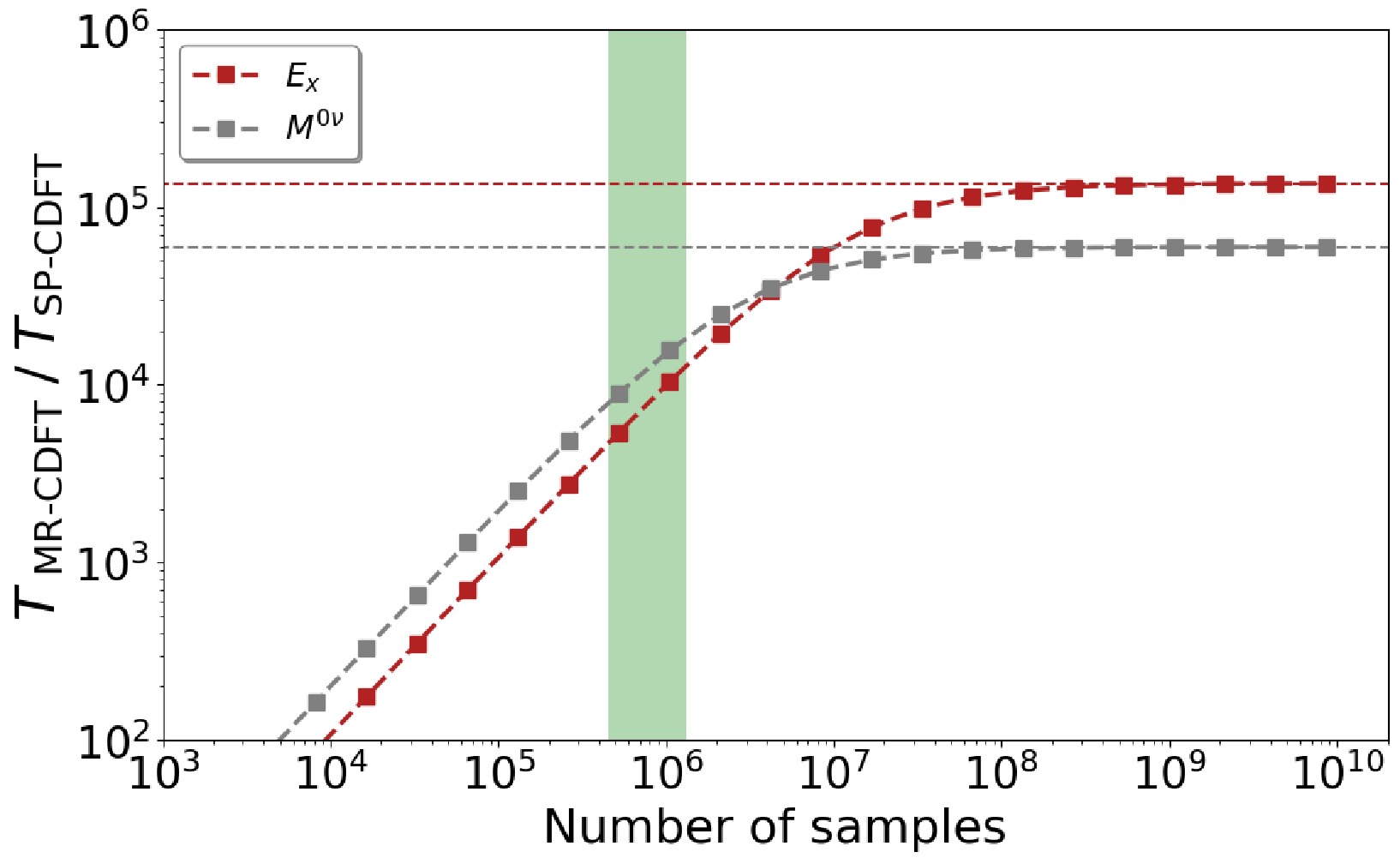
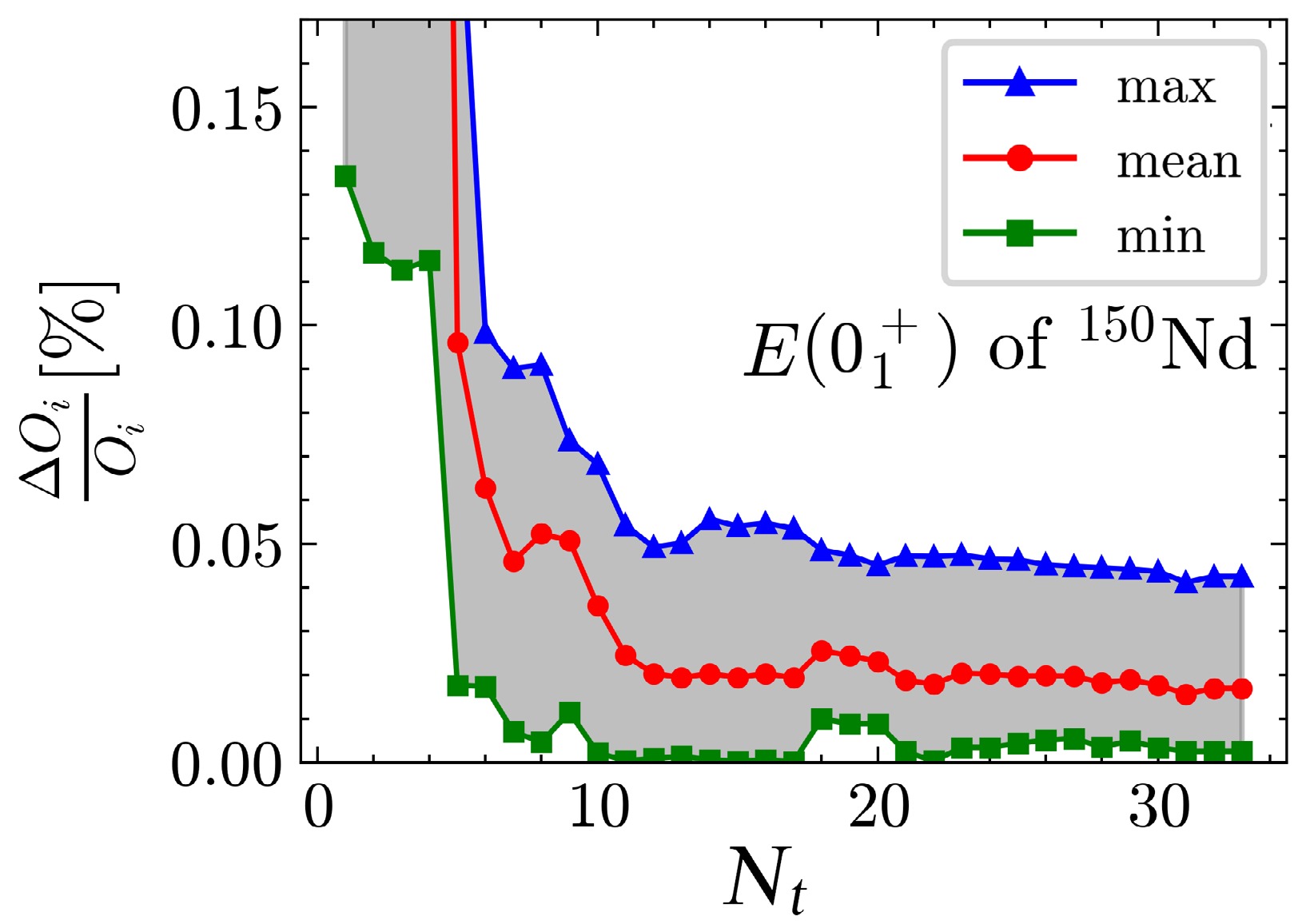
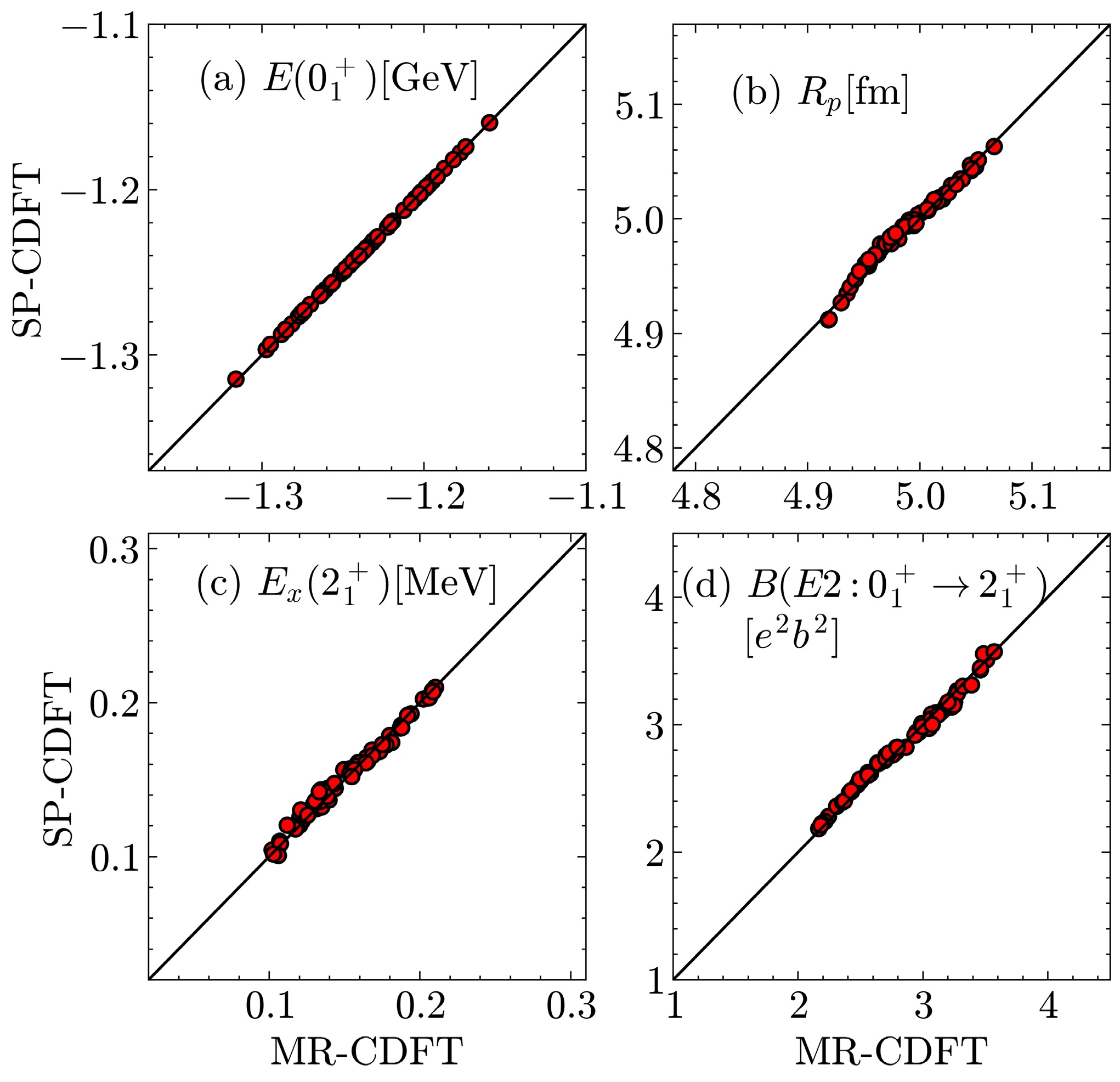
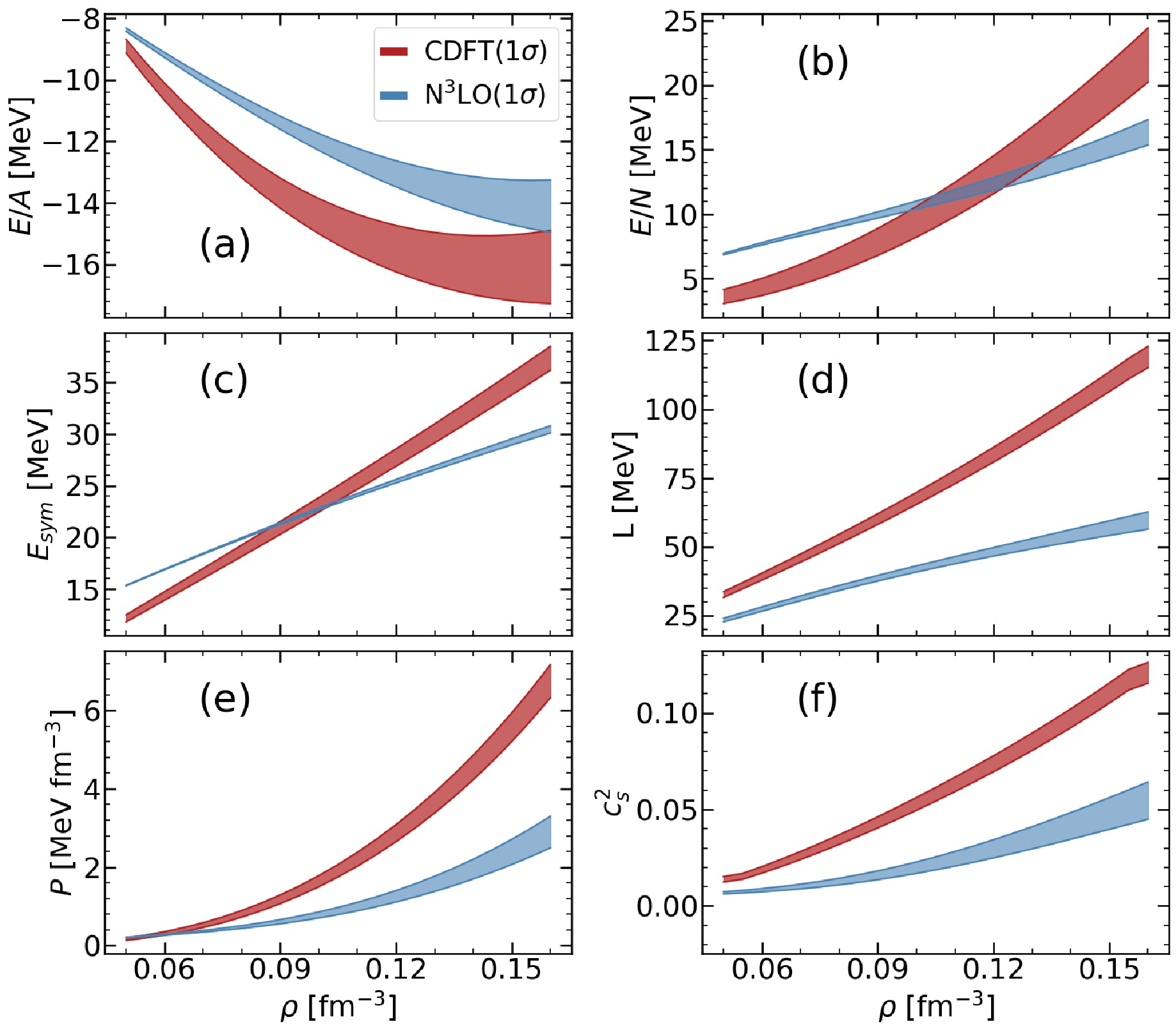
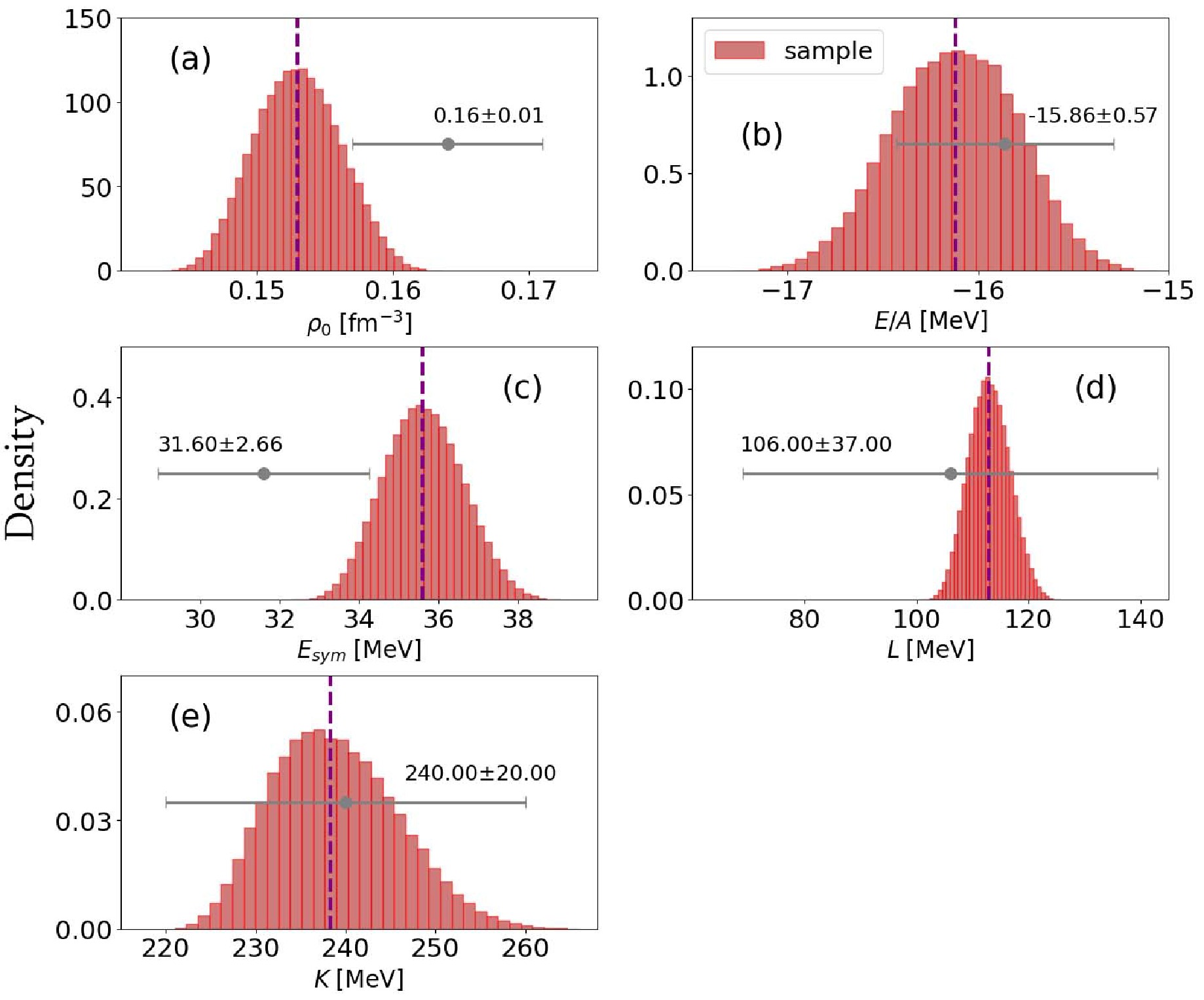
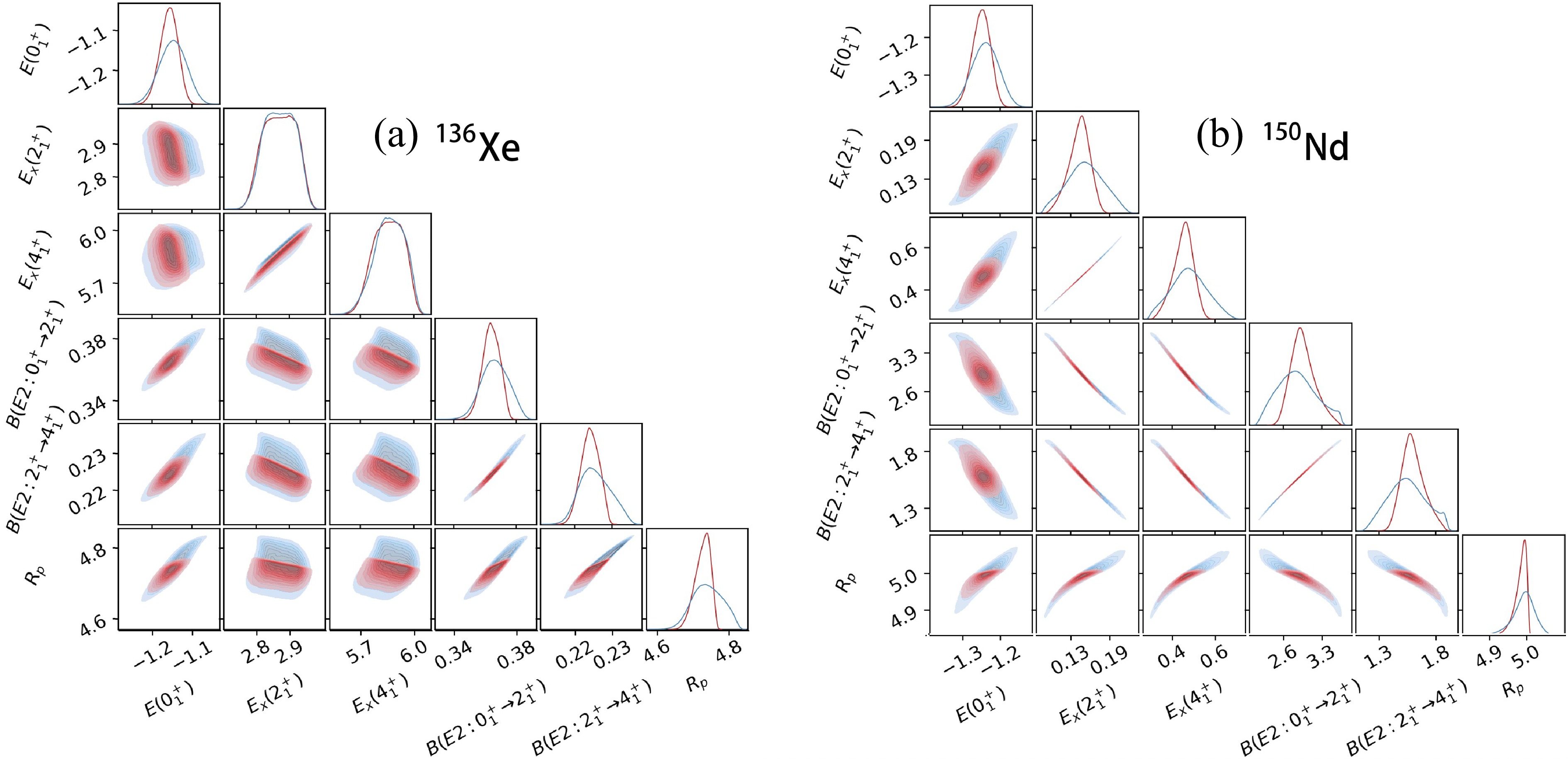
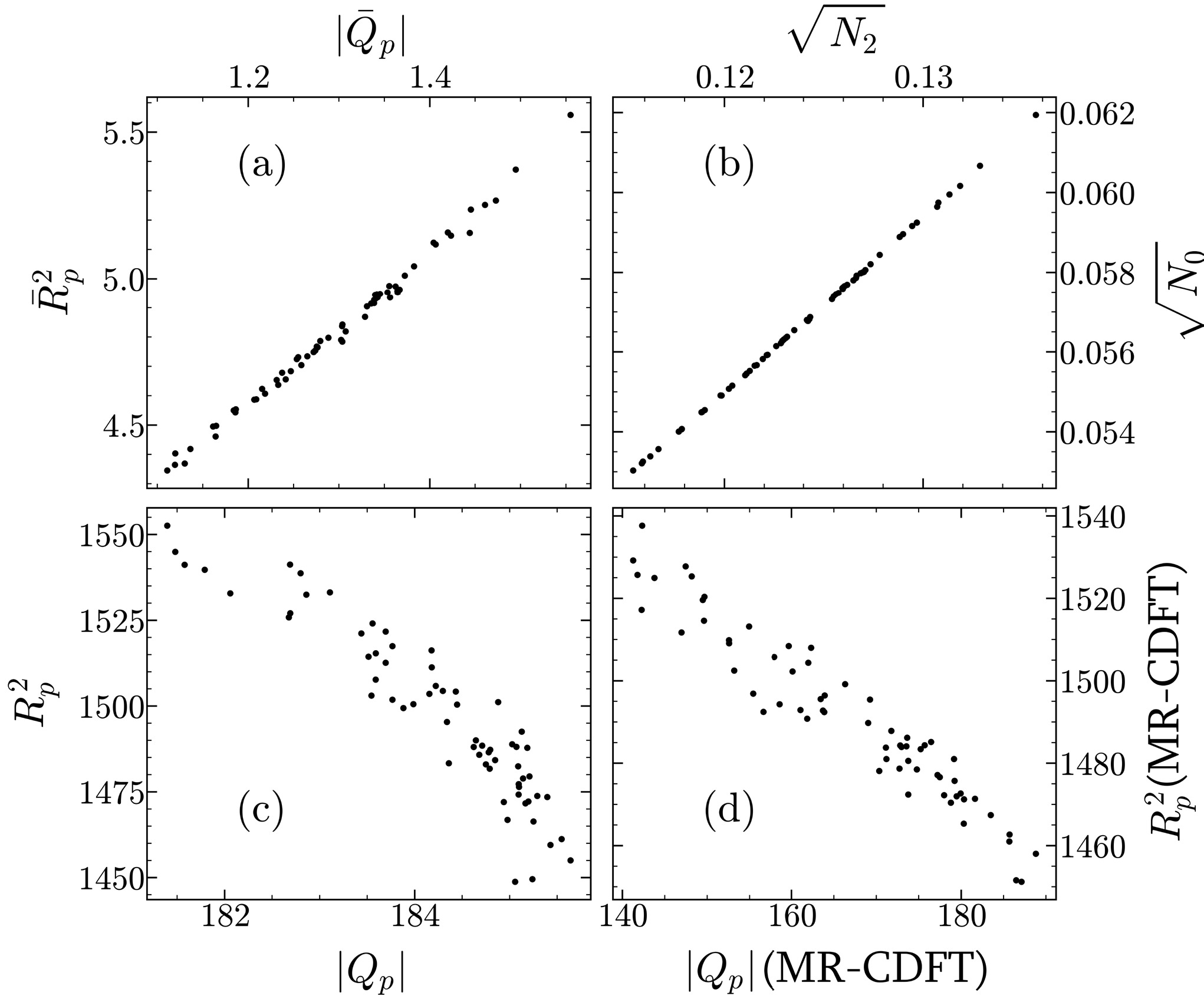
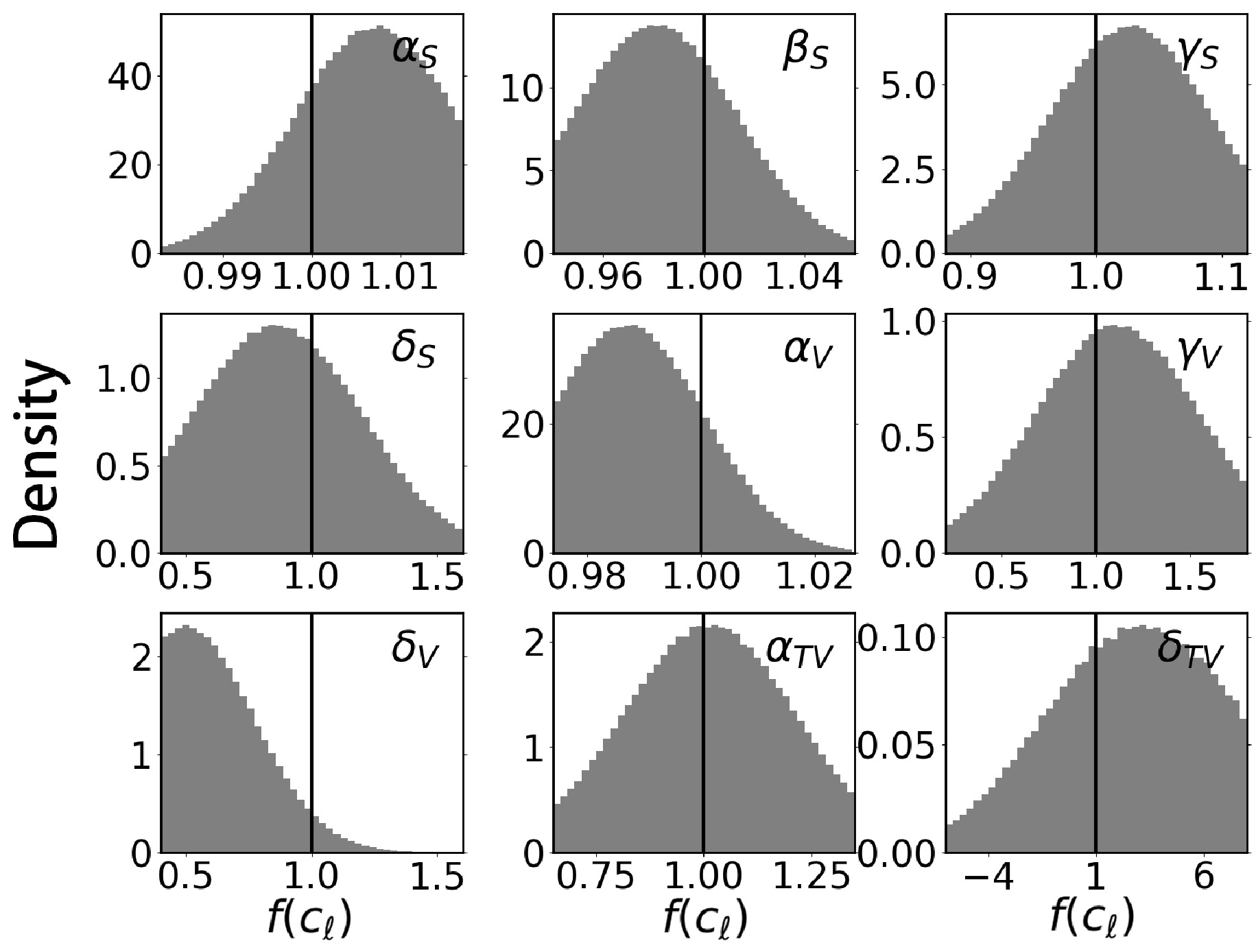
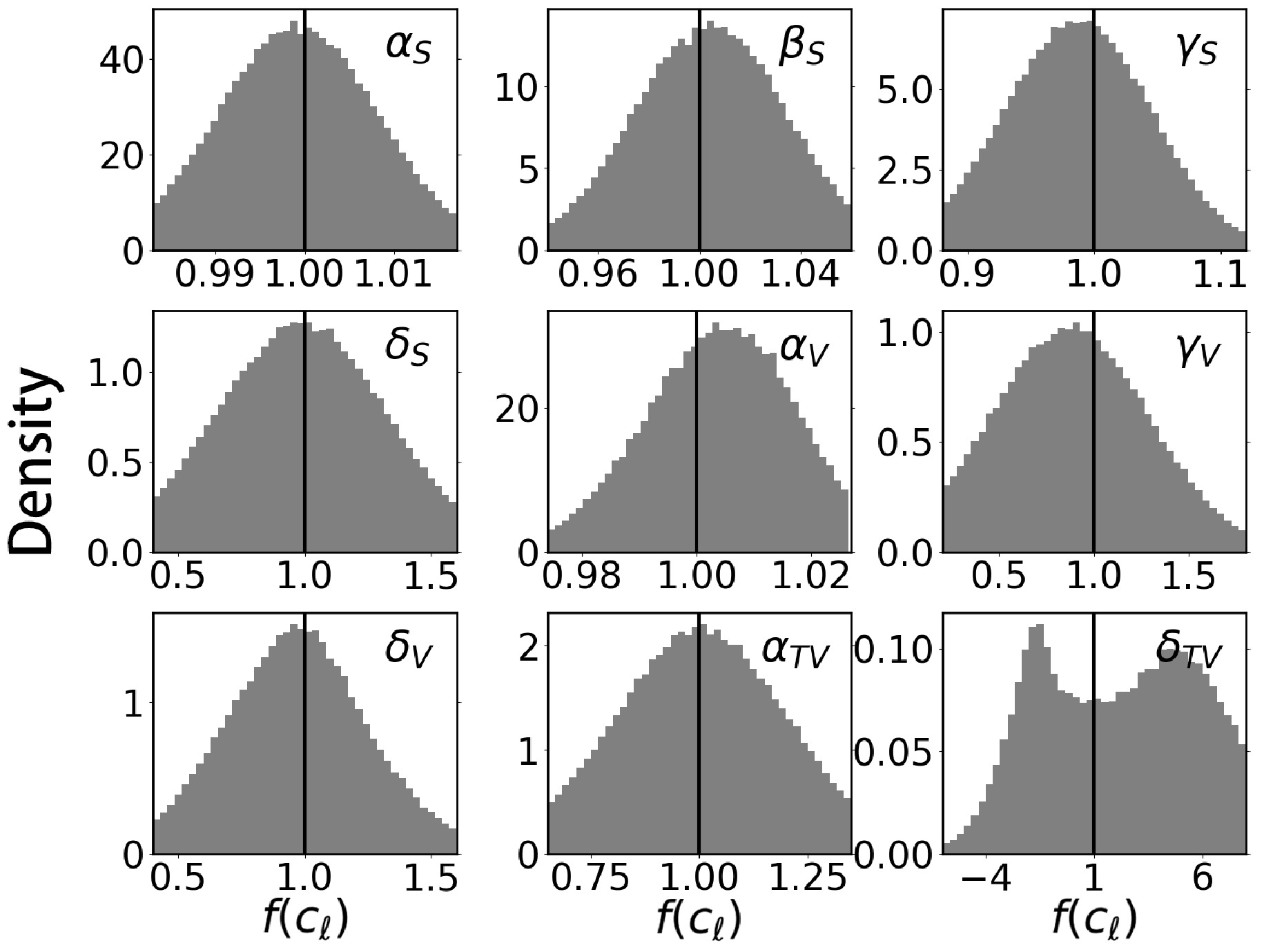
We present a theoretical framework for quantifying statistical uncertainties in covariant density functional theory (CDFT) for both nuclear matter and finite nuclei, based on a relativistic point-coupling energy density functional (EDF). By sampling approximately one million parameter sets, with nine parameters varied around their values in the PC-PK1 functional, we construct a probability density function for nuclear matter properties. Incorporating empirical values of nuclear matter at saturation density, predictions from chiral nuclear forces, and measured $ B(E2) $ values of finite nuclei, we infer posterior distributions for the model parameters within a Bayesian framework. These posterior distributions are then propagated to the low-lying states of finite nuclei using the newly developed subspace-projected (SP)-CDFT approach, in which the wave functions of target EDF parameter sets are expanded in a subspace spanned by low-lying states obtained from a set of training parameterizations. We find that the observables of low-lying states in deformed nuclei 150Nd and 150Sm are well reproduced once statistical uncertainties are taken into account. In contrast, those of near-spherical nuclei 136Xe and 136Ba remain difficult to describe within the present framework, a limitation expected to be alleviated by extending the model space to include quasiparticle excitations.
We present a theoretical framework for quantifying statistical uncertainties in covariant density functional theory (CDFT) for both nuclear matter and finite nuclei, based on a relativistic point-coupling energy density functional (EDF). By sampling approximately one million parameter sets, with nine parameters varied around their values in the PC-PK1 functional, we construct a probability density function for nuclear matter properties. Incorporating empirical values of nuclear matter at saturation density, predictions from chiral nuclear forces, and measured $ B(E2) $ values of finite nuclei, we infer posterior distributions for the model parameters within a Bayesian framework. These posterior distributions are then propagated to the low-lying states of finite nuclei using the newly developed subspace-projected (SP)-CDFT approach, in which the wave functions of target EDF parameter sets are expanded in a subspace spanned by low-lying states obtained from a set of training parameterizations. We find that the observables of low-lying states in deformed nuclei 150Nd and 150Sm are well reproduced once statistical uncertainties are taken into account. In contrast, those of near-spherical nuclei 136Xe and 136Ba remain difficult to describe within the present framework, a limitation expected to be alleviated by extending the model space to include quasiparticle excitations.
2026, 50(10): 104106. doi: 10.1088/1674-1137/ae8cf5
Abstract:
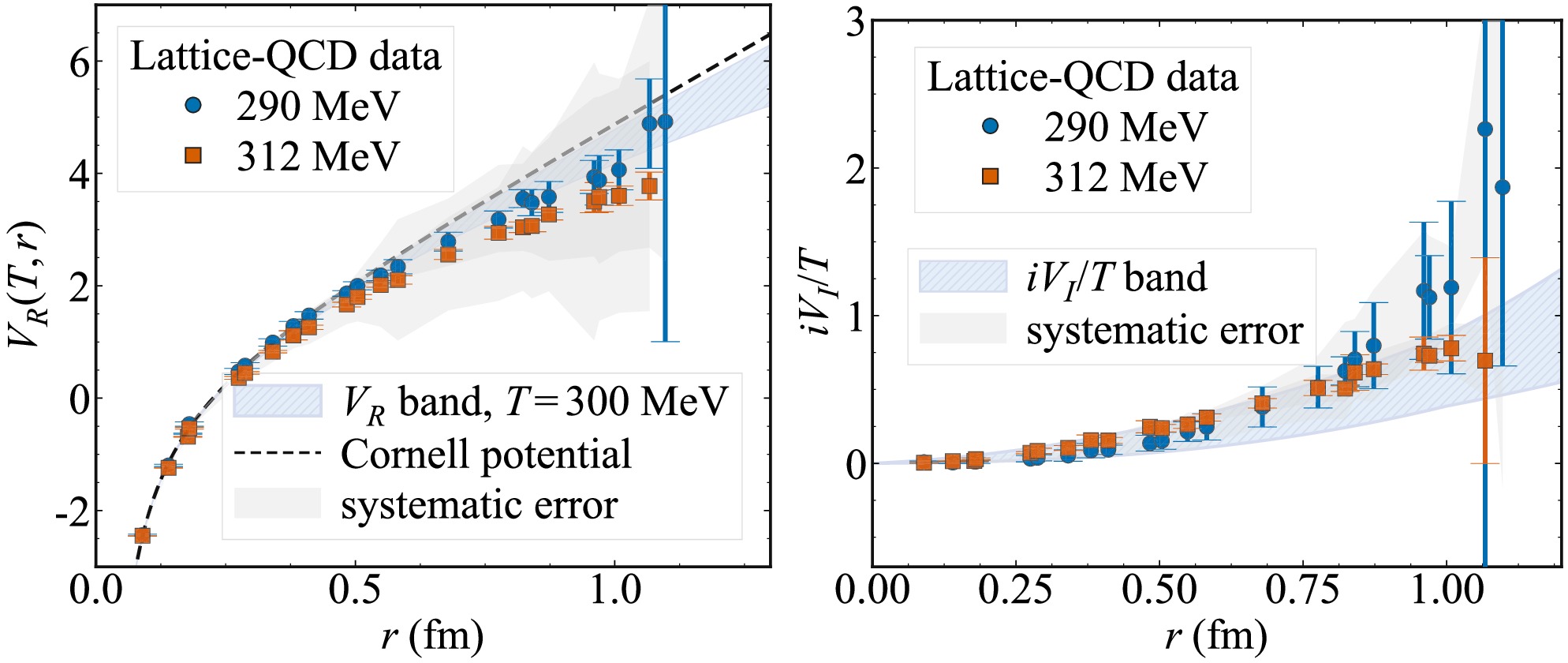
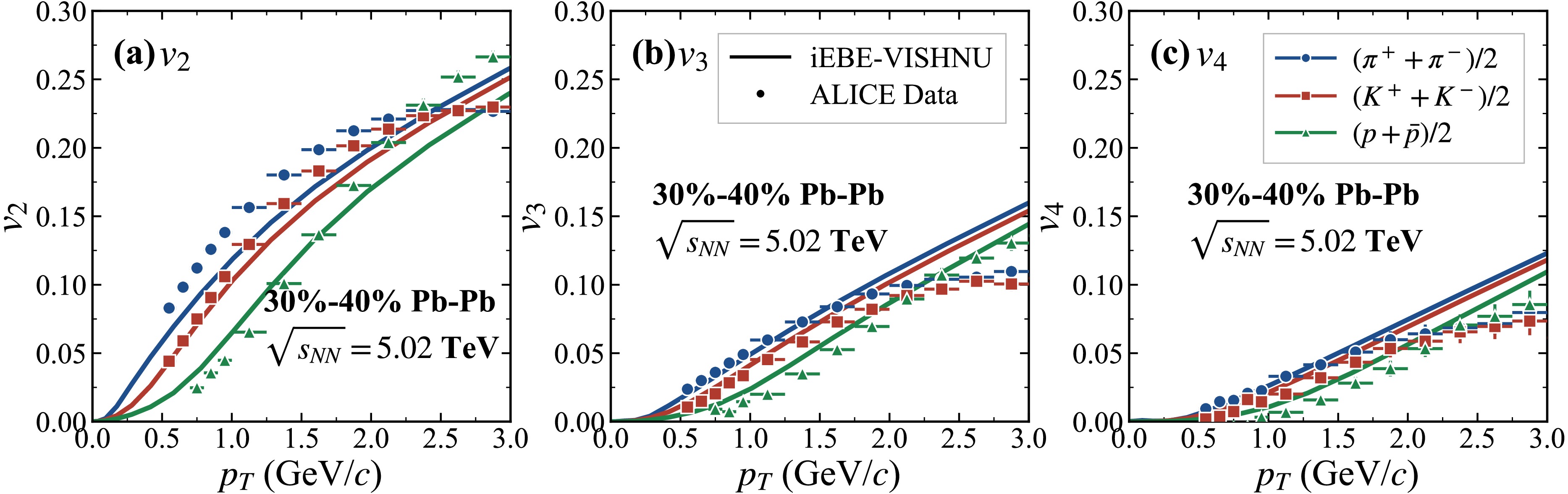
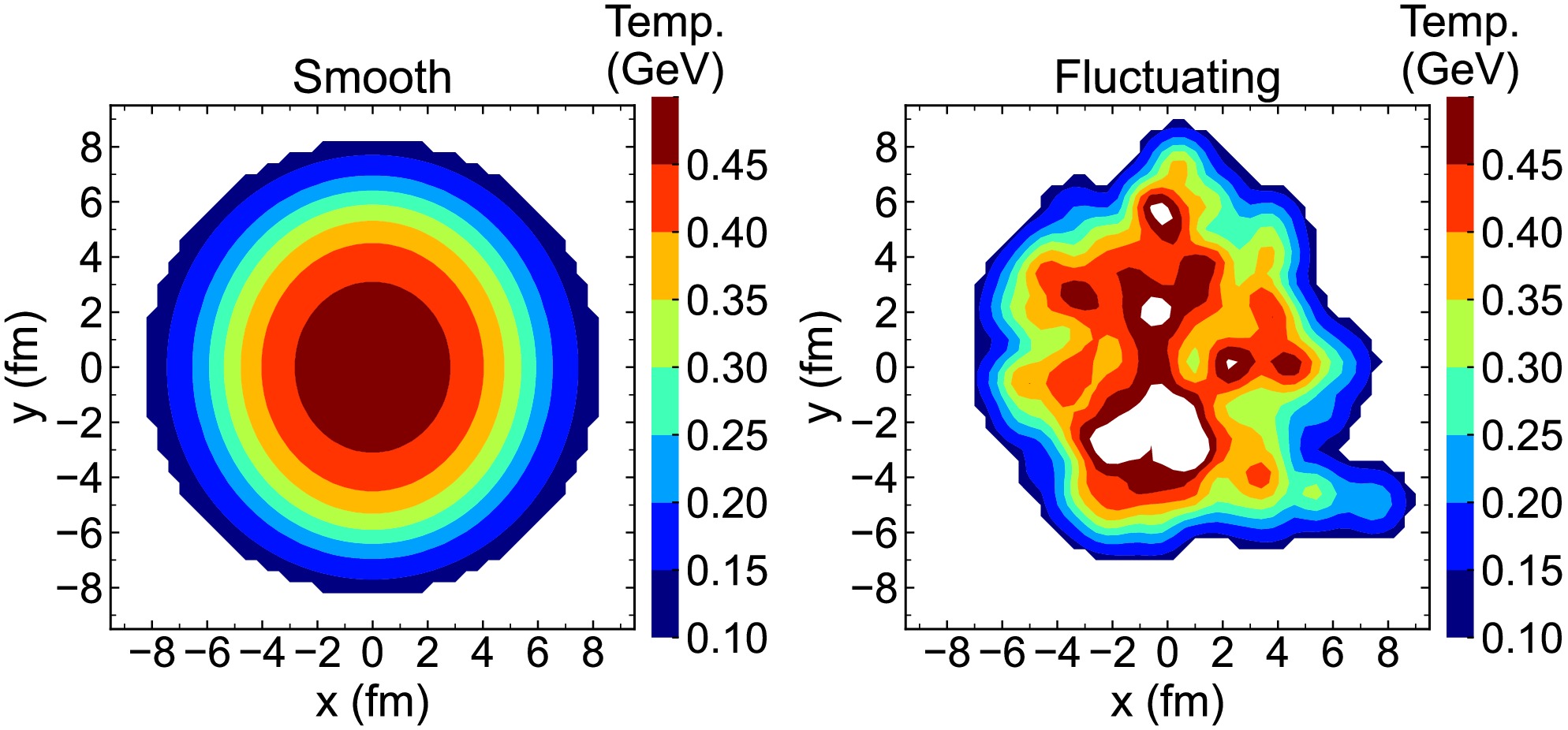
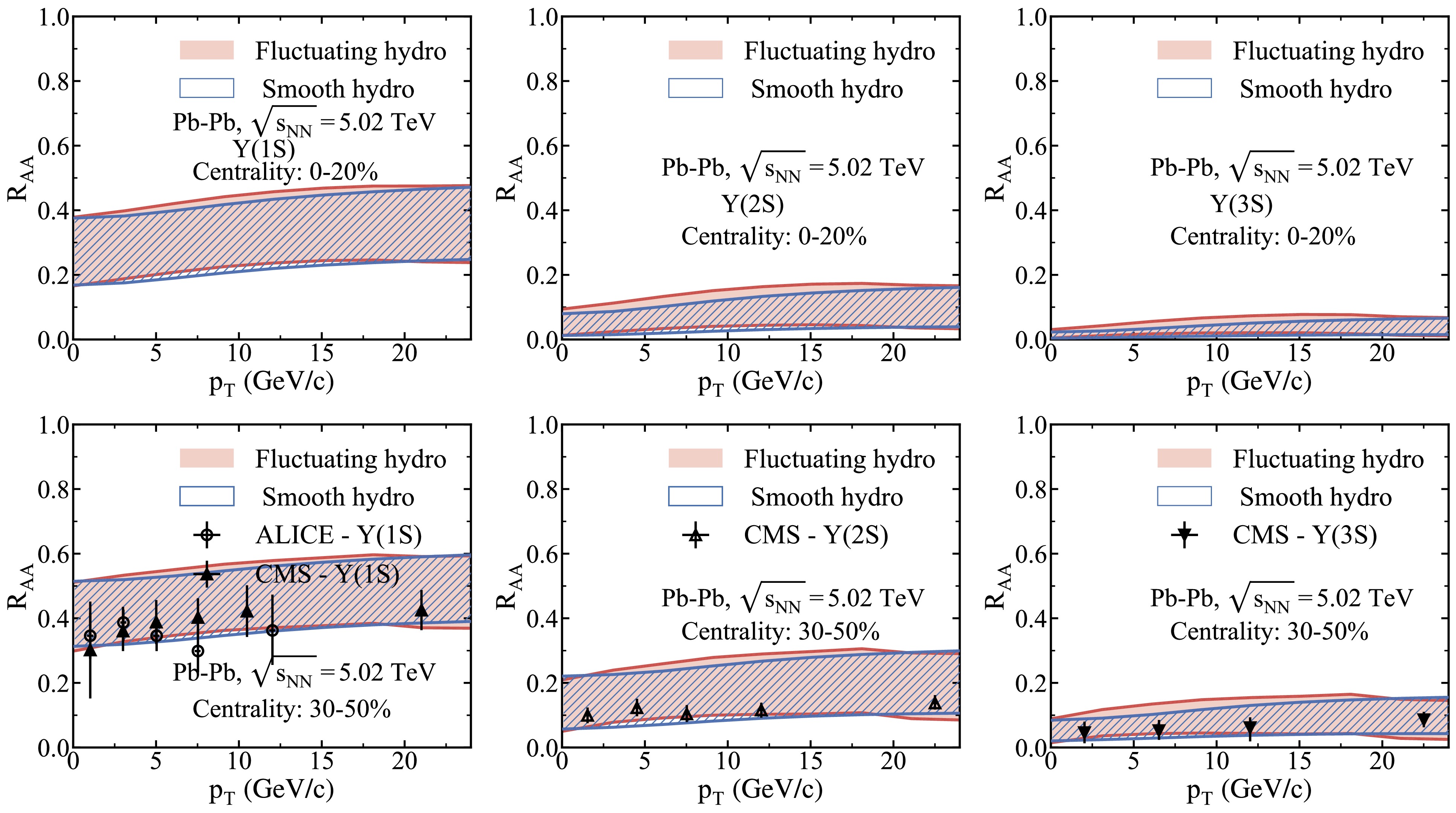
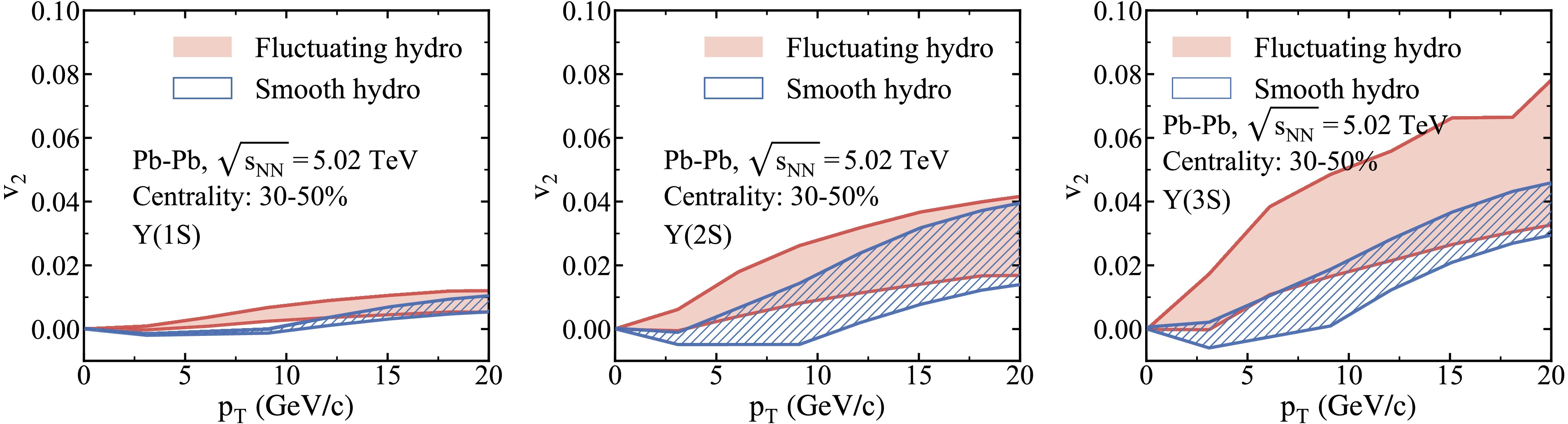
We investigate the effects of event-by-event hydrodynamic fluctuations on bottomonium nuclear modification factors and elliptic flow in Pb–Pb collisions at $ \sqrt{s_{NN}}=5.02 $ TeV. The internal evolution of heavy quarkonium is described by a time-dependent Schrödinger equation with a temperature-dependent complex heavy-quark potential, while the evolution of the hot QCD medium is simulated using the iEBE-VISHNU event-by-event viscous hydrodynamic framework. By incorporating both fluctuating and smooth hot media, we find that the bottomonium nuclear modification factor $ R_{\rm{AA}} $ is only marginally affected by event-by-event fluctuations. In contrast, the elliptic flow $ v_2 $ is systematically enhanced, with the enhancement increasing from the tightly bound $ \Upsilon(1{\rm{S}}) $ to the more weakly bound $ \Upsilon(2{\rm{S}}) $ and $ \Upsilon(3{\rm{S}}) $. This enhancement arises from the more pronounced participant-plane anisotropy of the fluctuating medium relative to the smooth optical-Glauber reference geometry. These results indicate that a smooth hydrodynamic background reproduces the bottomonium $ R_{\rm{AA}} $ but underestimates its $ v_2 $, implying that the bottomonium $ v_2 $ retains a discernible imprint of event-by-event medium fluctuations.
We investigate the effects of event-by-event hydrodynamic fluctuations on bottomonium nuclear modification factors and elliptic flow in Pb–Pb collisions at $ \sqrt{s_{NN}}=5.02 $ TeV. The internal evolution of heavy quarkonium is described by a time-dependent Schrödinger equation with a temperature-dependent complex heavy-quark potential, while the evolution of the hot QCD medium is simulated using the iEBE-VISHNU event-by-event viscous hydrodynamic framework. By incorporating both fluctuating and smooth hot media, we find that the bottomonium nuclear modification factor $ R_{\rm{AA}} $ is only marginally affected by event-by-event fluctuations. In contrast, the elliptic flow $ v_2 $ is systematically enhanced, with the enhancement increasing from the tightly bound $ \Upsilon(1{\rm{S}}) $ to the more weakly bound $ \Upsilon(2{\rm{S}}) $ and $ \Upsilon(3{\rm{S}}) $. This enhancement arises from the more pronounced participant-plane anisotropy of the fluctuating medium relative to the smooth optical-Glauber reference geometry. These results indicate that a smooth hydrodynamic background reproduces the bottomonium $ R_{\rm{AA}} $ but underestimates its $ v_2 $, implying that the bottomonium $ v_2 $ retains a discernible imprint of event-by-event medium fluctuations.
2026, 50(10): 104110. doi: 10.1088/1674-1137/ae8ce6
Abstract:
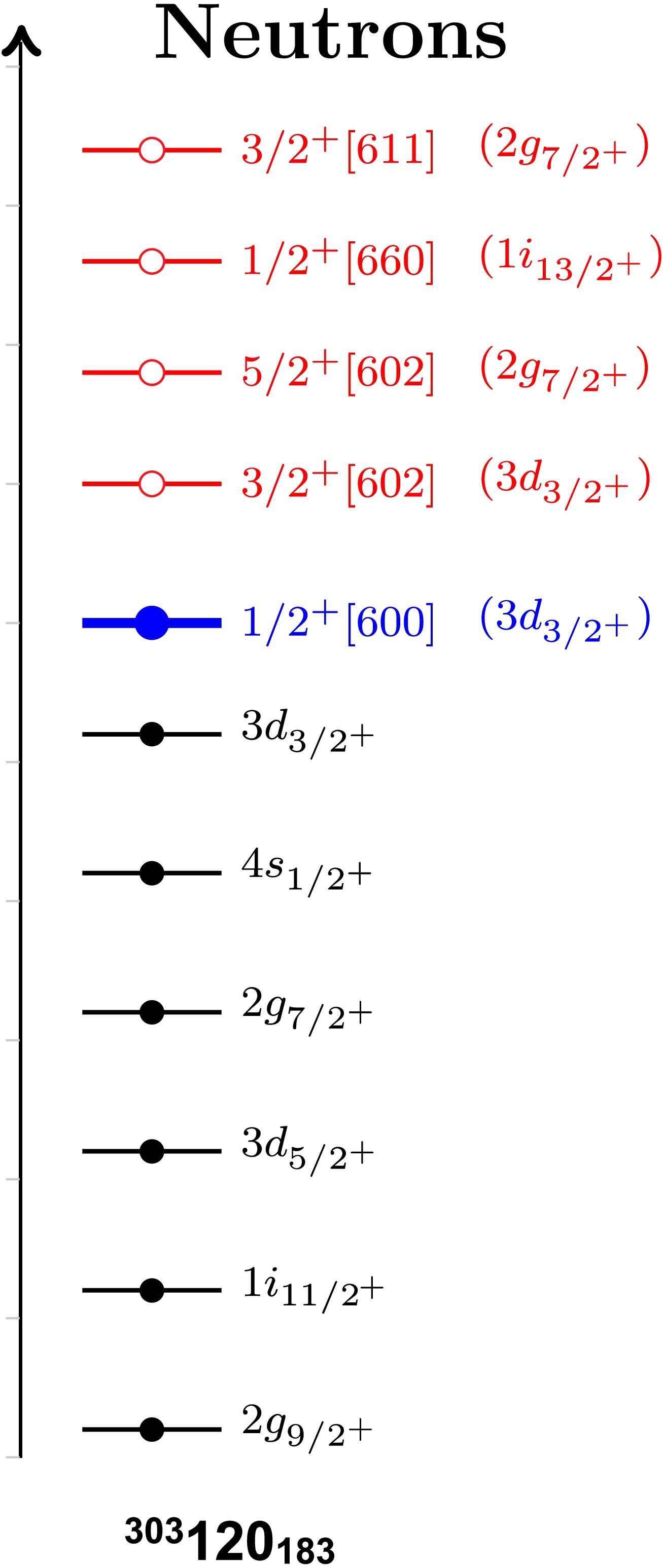
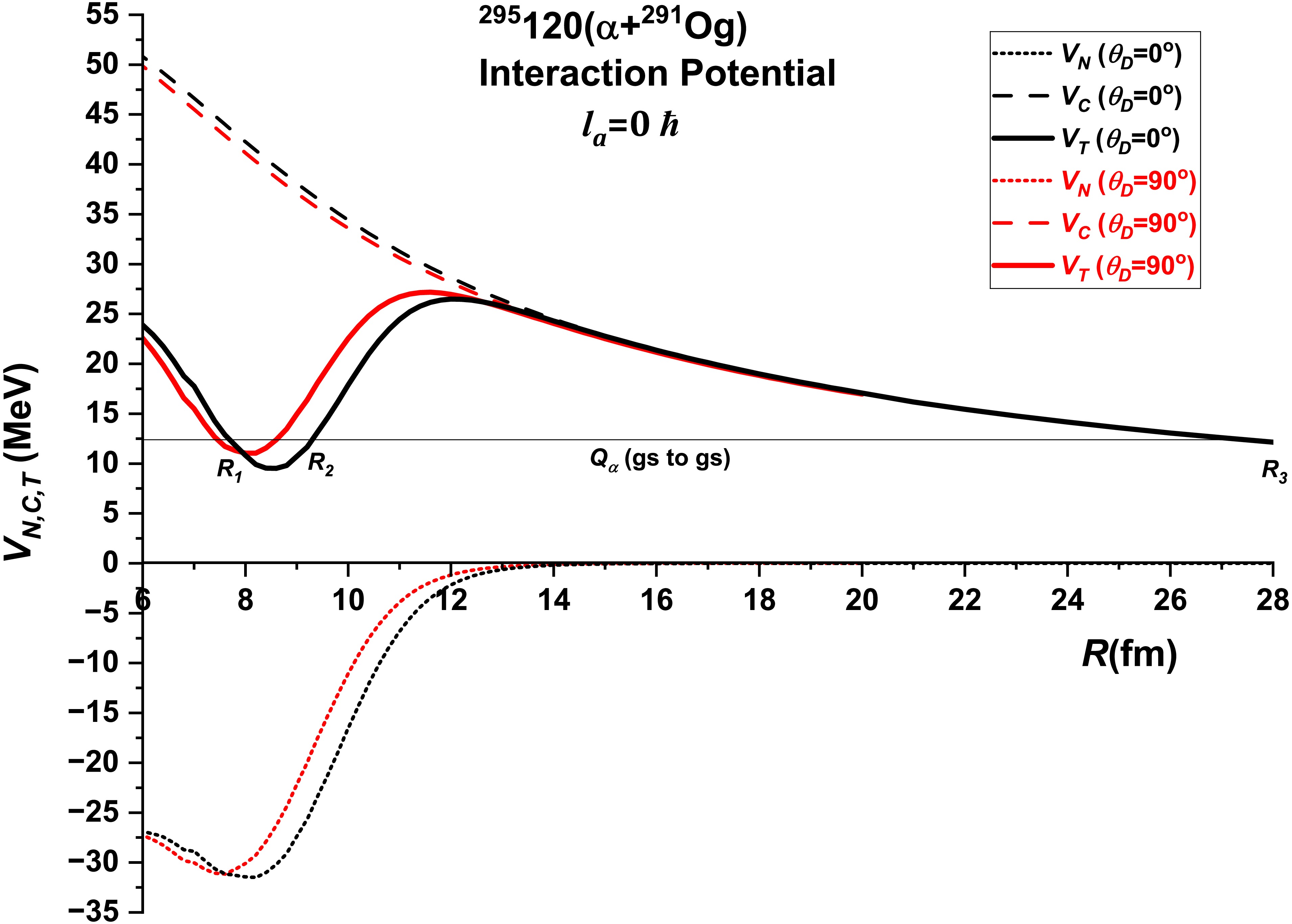
We performed axially deformed HFB calculations with the Skyrme-SLy4 energy density functional (EDF) for isotopes in the even-odd $^{295-303}120$ α-decay chains to study their single-particle structure, deformations, and α-decay fine-structure patterns. Ground and excited states were generated by blocking the corresponding quasineutron configurations. The α-decay half-lives were computed consistently within the preformed cluster model employed, using a nucleus-nucleus potential derived from the same EDF and the WKB approximation. The evolution of single-neutron states proceeds sequentially under prolate deformation from $1/2^+[620]$ and $3/2^+[622]$ states above $N=152$, through $9/2^+[615]$ and $11/2^-[725]$, to $3/2^+[611]$ for $N=163-167$, and then to $1/2^+[611]$ followed by $9/2^+[604]$ as the prolate deformation decreases toward $N=169-171$. A pivotal shift to oblate deformation occurs around $N=175$, favoring the $1/2^+[640]$, $3/2^+[642]$, and $5/2^+[642]$ sequence, followed by $1/2^+[620]$ and later alternating states such as $3/2^+[651]$ and $1/2^+[660]$, as the oblate deformation decreases. Approaching $N=184$, the ground state stabilizes in the spherical $1/2^+[600]3d_{3/2^{+}}$ orbital. In addition to the predicted rich decay schemes for $^{291}$Og, $^{283}$Fl, $^{281}$Cn, and $^{275}$Sg, branching ratios above 55% for α-decay through excited states are indicated for $^{295}$120, $^{297,299}$Og, $^{287,293}$Lv, and $^{283}$Fl. The estimated half-lives range from ms ($^{301,303}$120, $^{289}$Lv) and fractions of a second ($^{297,299}$Og) to hundreds of seconds ($^{291}$Fl, $^{287}$Cn, $^{273,275}$Sg), with long $^{295,297,299}$120 decay chains extending to Rf.
We performed axially deformed HFB calculations with the Skyrme-SLy4 energy density functional (EDF) for isotopes in the even-odd $^{295-303}120$ α-decay chains to study their single-particle structure, deformations, and α-decay fine-structure patterns. Ground and excited states were generated by blocking the corresponding quasineutron configurations. The α-decay half-lives were computed consistently within the preformed cluster model employed, using a nucleus-nucleus potential derived from the same EDF and the WKB approximation. The evolution of single-neutron states proceeds sequentially under prolate deformation from $1/2^+[620]$ and $3/2^+[622]$ states above $N=152$, through $9/2^+[615]$ and $11/2^-[725]$, to $3/2^+[611]$ for $N=163-167$, and then to $1/2^+[611]$ followed by $9/2^+[604]$ as the prolate deformation decreases toward $N=169-171$. A pivotal shift to oblate deformation occurs around $N=175$, favoring the $1/2^+[640]$, $3/2^+[642]$, and $5/2^+[642]$ sequence, followed by $1/2^+[620]$ and later alternating states such as $3/2^+[651]$ and $1/2^+[660]$, as the oblate deformation decreases. Approaching $N=184$, the ground state stabilizes in the spherical $1/2^+[600]3d_{3/2^{+}}$ orbital. In addition to the predicted rich decay schemes for $^{291}$Og, $^{283}$Fl, $^{281}$Cn, and $^{275}$Sg, branching ratios above 55% for α-decay through excited states are indicated for $^{295}$120, $^{297,299}$Og, $^{287,293}$Lv, and $^{283}$Fl. The estimated half-lives range from ms ($^{301,303}$120, $^{289}$Lv) and fractions of a second ($^{297,299}$Og) to hundreds of seconds ($^{291}$Fl, $^{287}$Cn, $^{273,275}$Sg), with long $^{295,297,299}$120 decay chains extending to Rf.
2026, 50(10): 104001. doi: 10.1088/1674-1137/ae8509
Abstract:
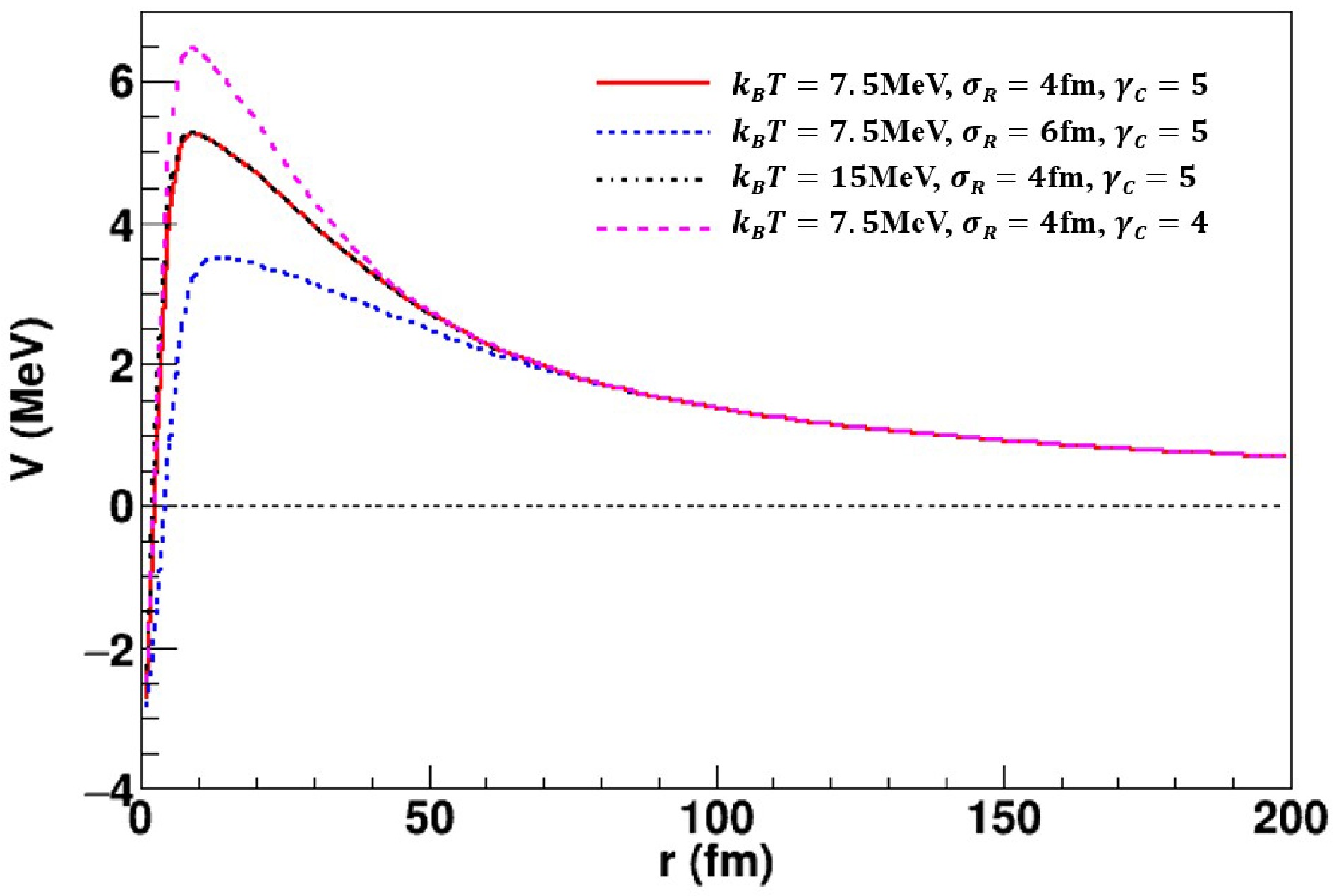
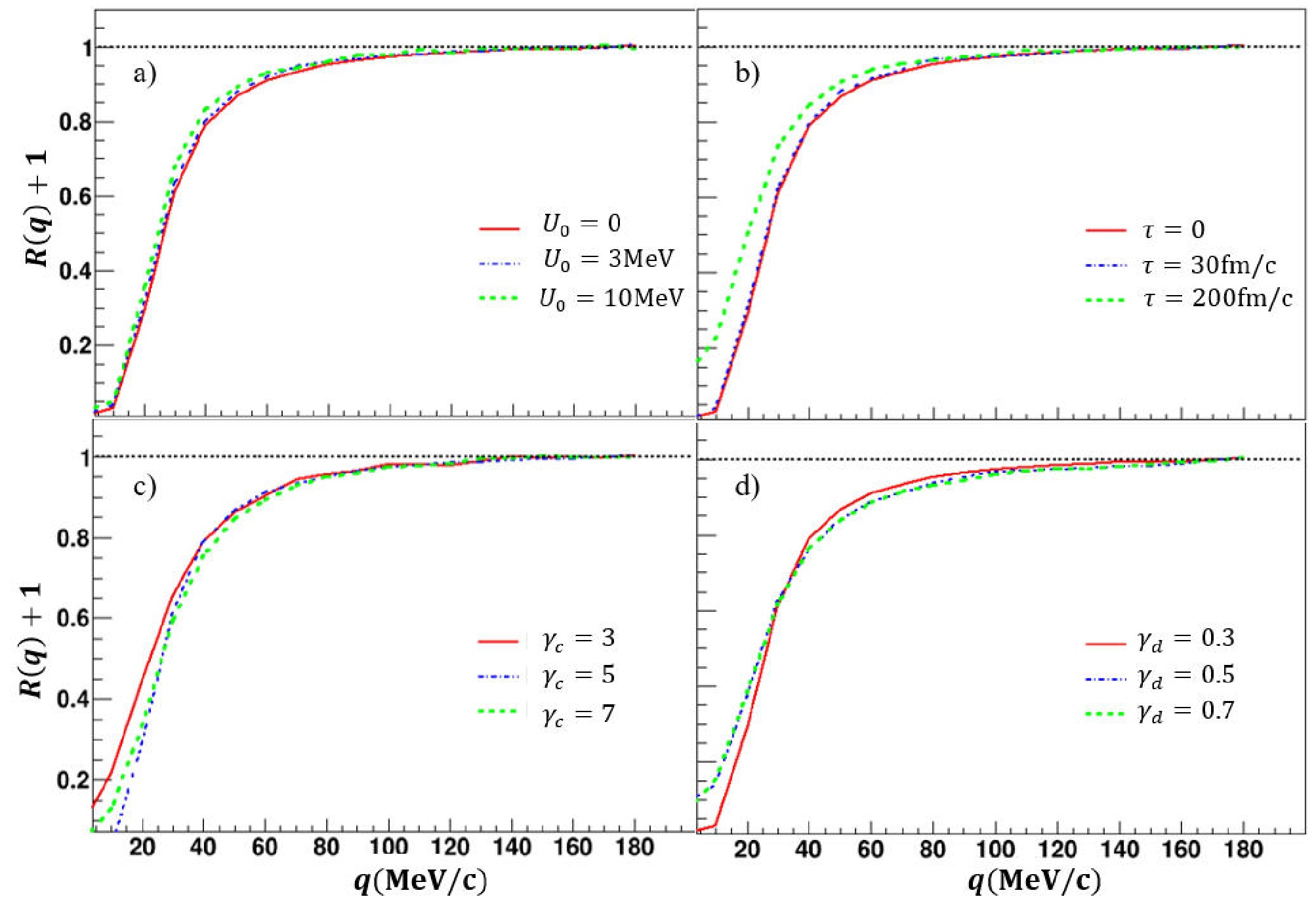
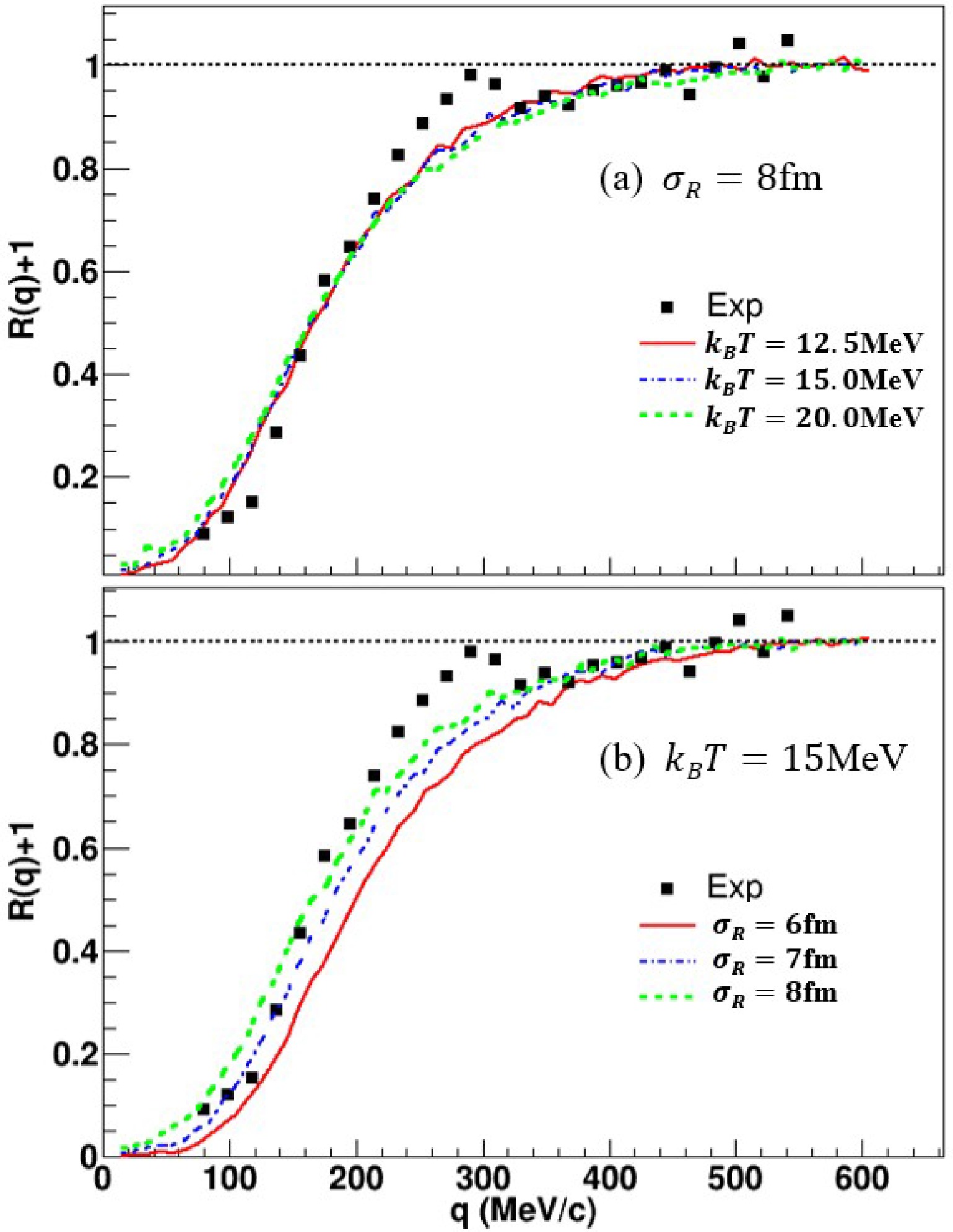
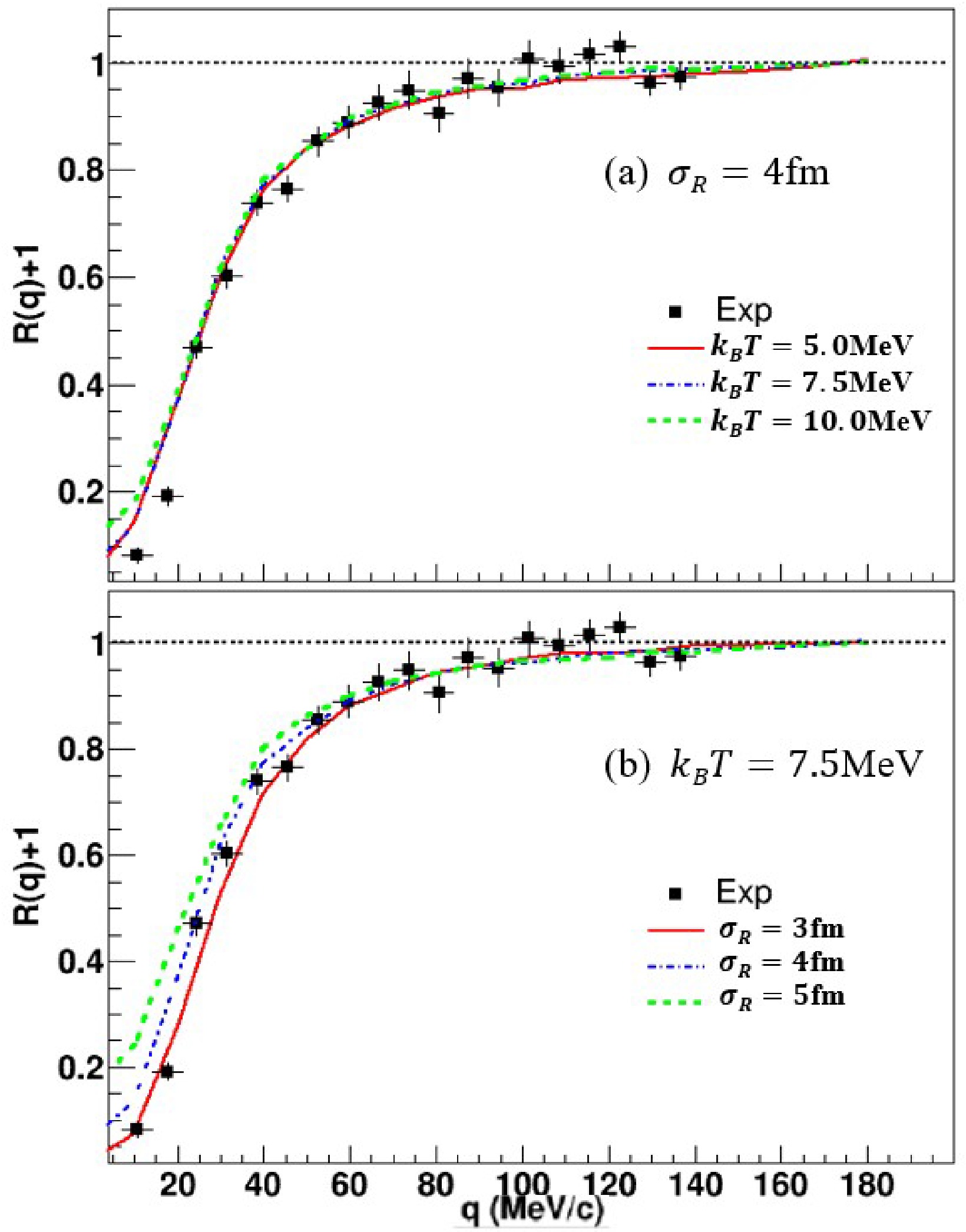
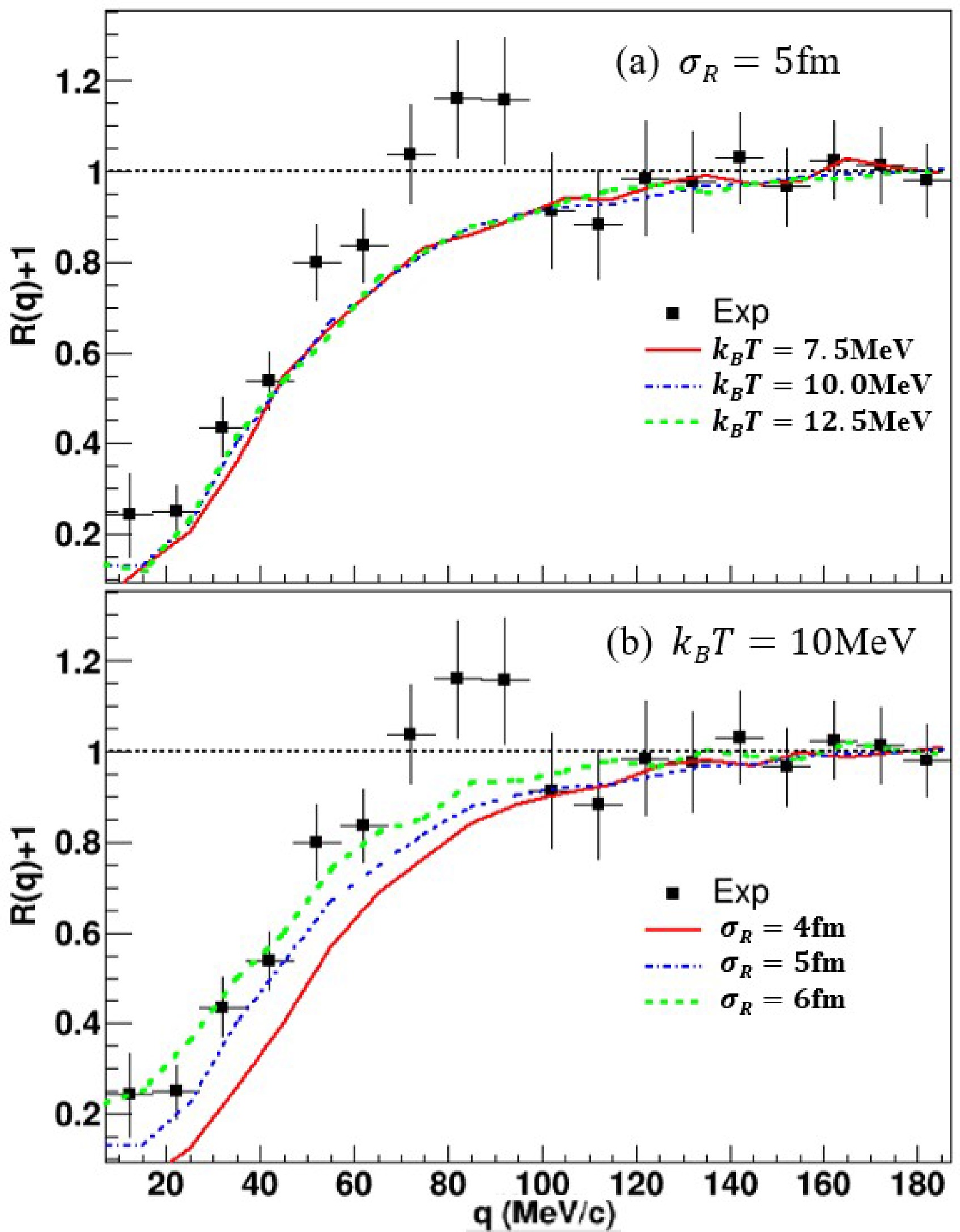
Femtoscopic interferometry is a powerful tool for probing the spatiotemporal evolution of emission sources in heavy-ion reactions. A major challenge in the field is formulating a self-consistent description of the source function, final-state interactions between the particle pair, and interactions inherent to the source itself. To address this challenge, we have developed a novel Monte Carlo model for calculating two-particle correlation functions within the classical trajectory approximation (CTA-I). The model self-consistently incorporates a thermal-equilibrium emission source and three-body final-state interactions. Applications of the model yield satisfactory fits to experimental data and reveal that the correlation function is highly sensitive to the spatiotemporal extent of the source. In contrast, the temperature parameter governing the energy spectra of the emitted particles has a negligible influence. Our approach has the potential to extract spatiotemporal information from the emission source, thereby advancing the applicability of femtoscopic interferometry in the Fermi energy domain.
Femtoscopic interferometry is a powerful tool for probing the spatiotemporal evolution of emission sources in heavy-ion reactions. A major challenge in the field is formulating a self-consistent description of the source function, final-state interactions between the particle pair, and interactions inherent to the source itself. To address this challenge, we have developed a novel Monte Carlo model for calculating two-particle correlation functions within the classical trajectory approximation (CTA-I). The model self-consistently incorporates a thermal-equilibrium emission source and three-body final-state interactions. Applications of the model yield satisfactory fits to experimental data and reveal that the correlation function is highly sensitive to the spatiotemporal extent of the source. In contrast, the temperature parameter governing the energy spectra of the emitted particles has a negligible influence. Our approach has the potential to extract spatiotemporal information from the emission source, thereby advancing the applicability of femtoscopic interferometry in the Fermi energy domain.
2026, 50(10): 101001. doi: 10.1088/1674-1137/ae8acd
Abstract:
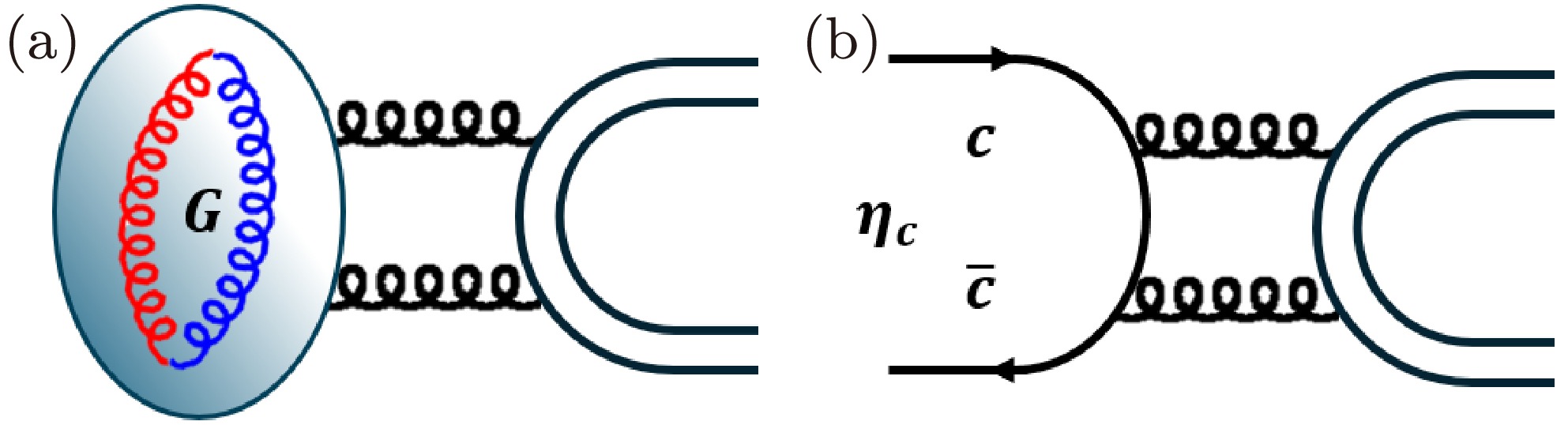
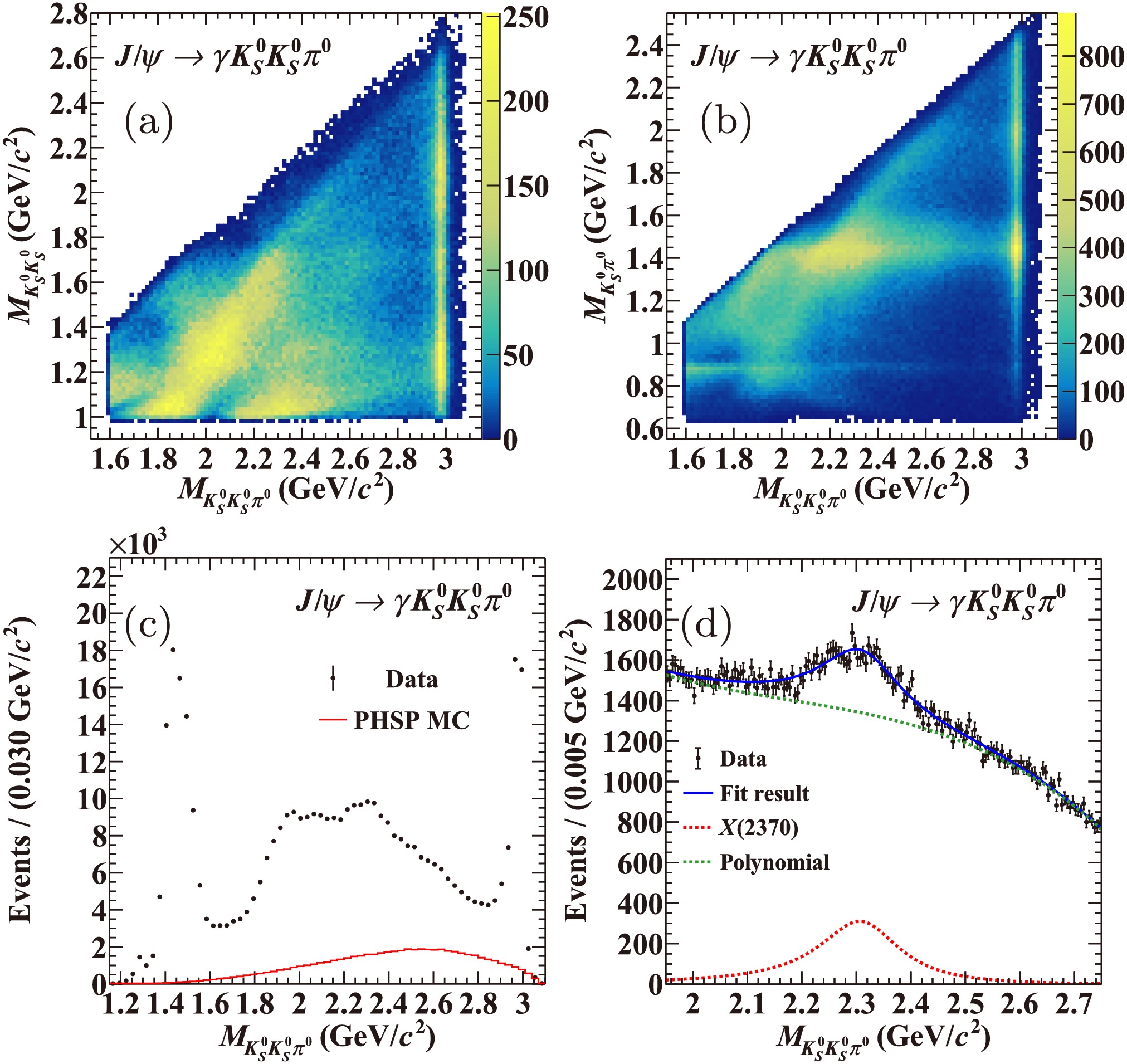
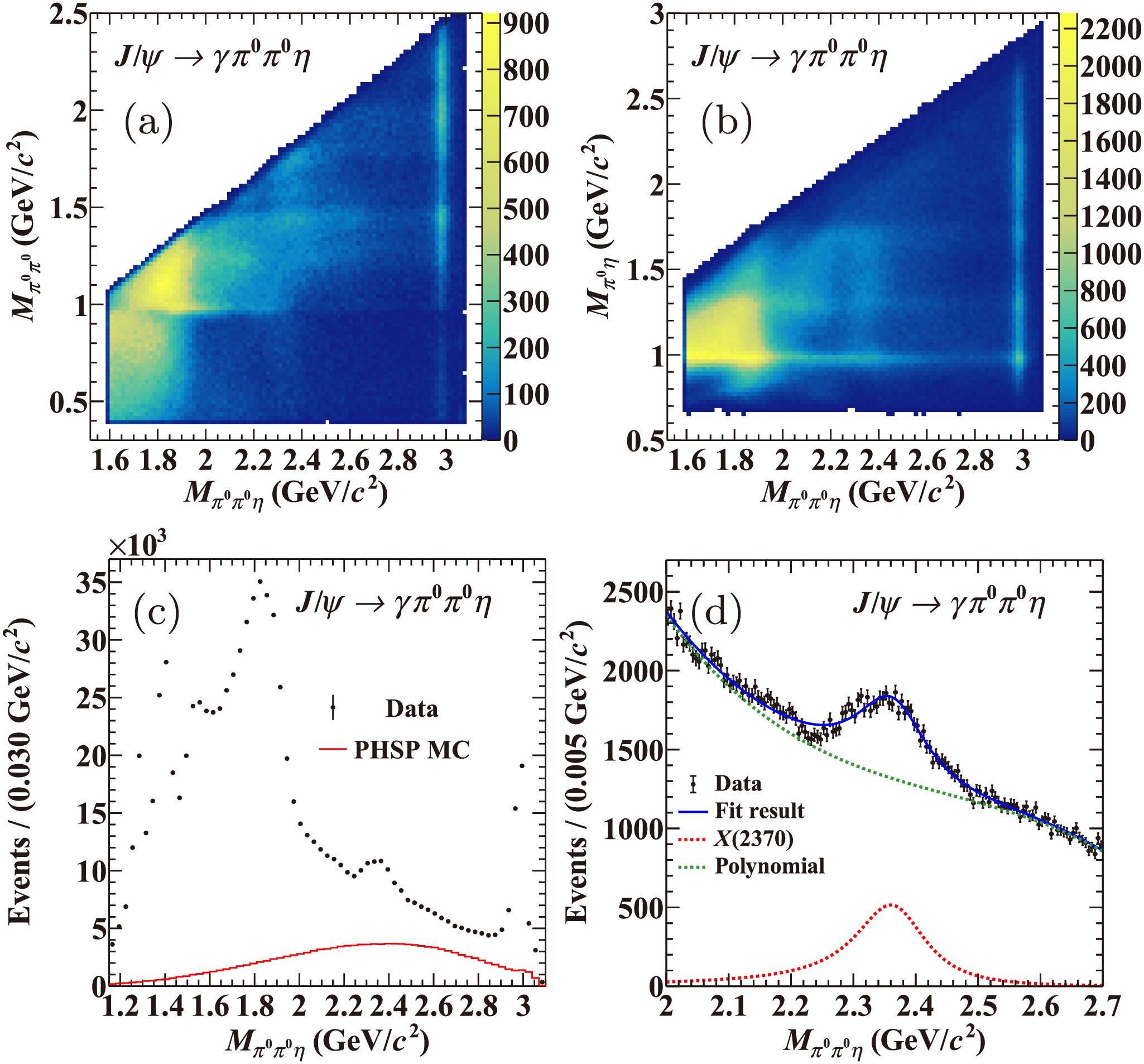
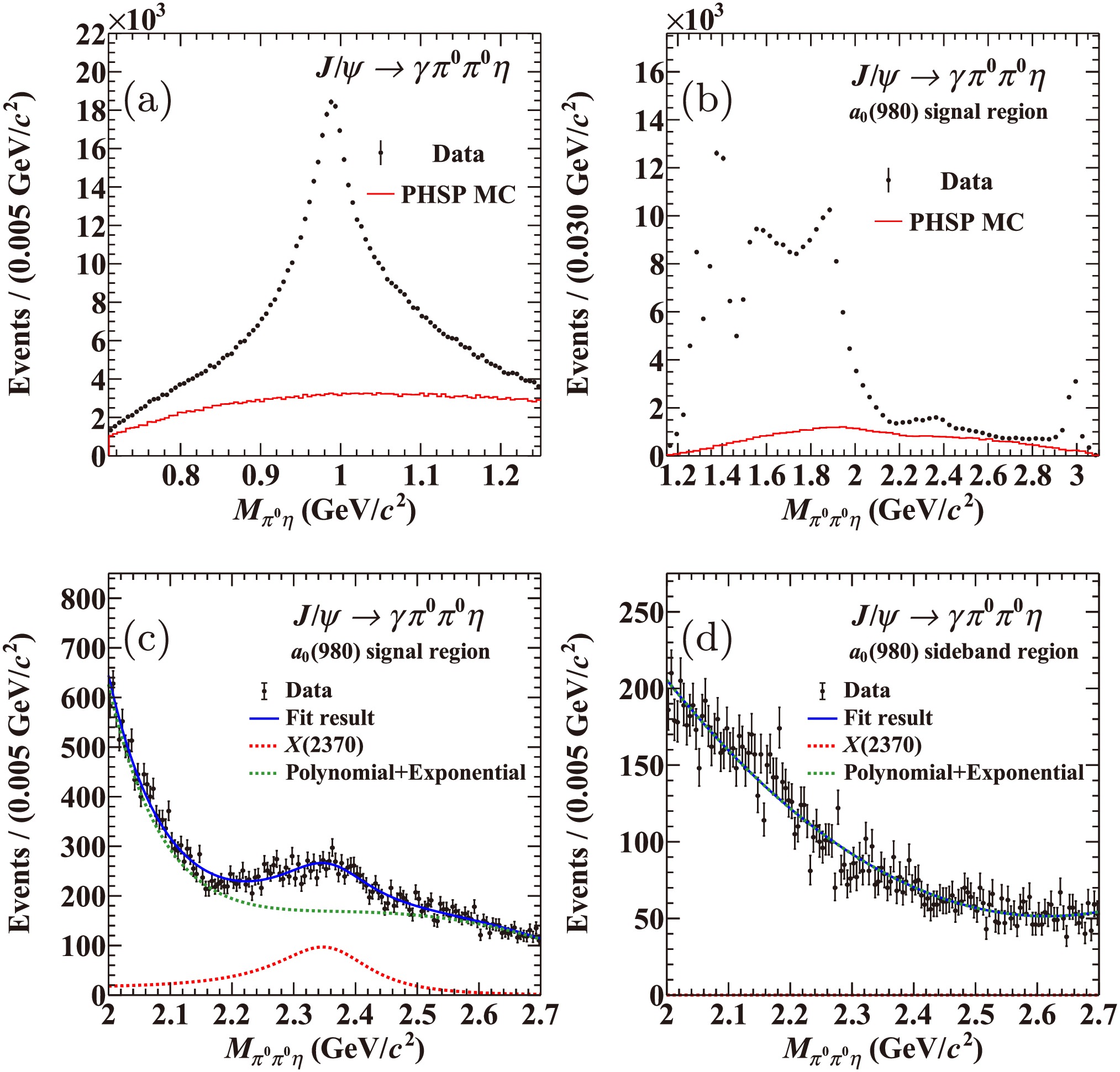
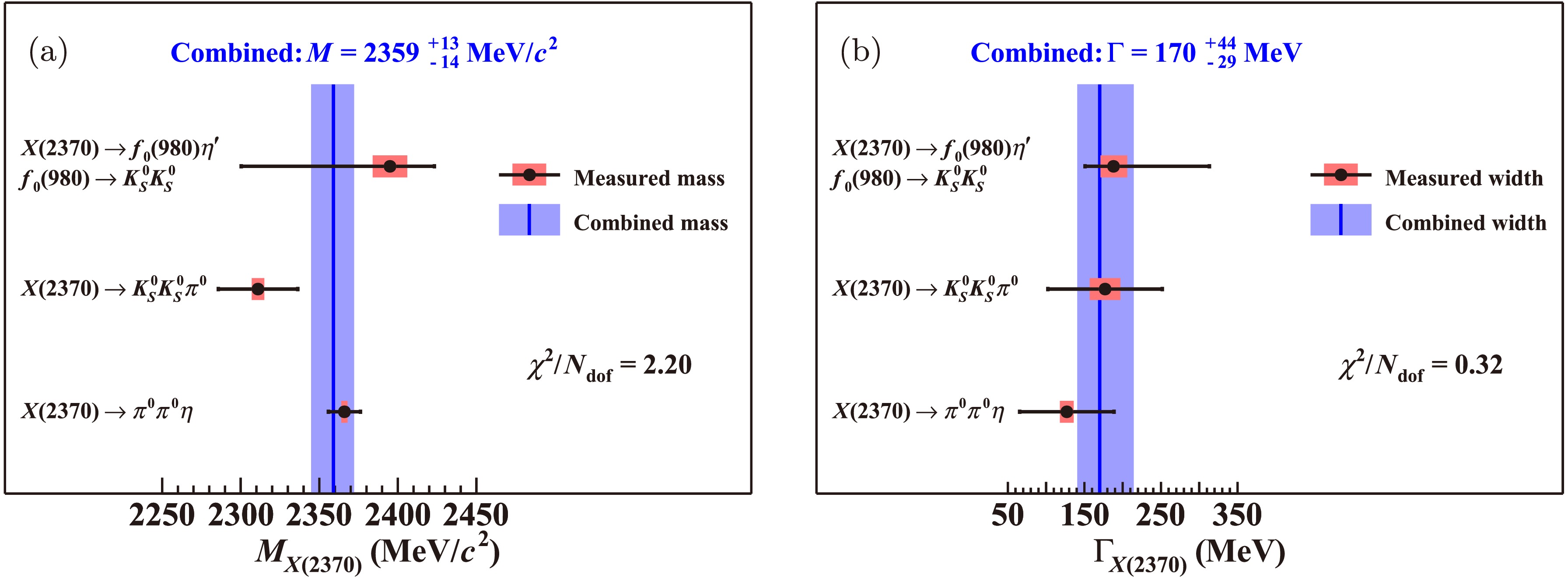
Based on $ (10087\pm44)\times10^{6} $ $ J/\psi $ events collected with the BESIII detector, the $ J/\psi\rightarrow \gamma K^{0}_{S}K^{0}_{S}\pi^{0} $ and $ J/\psi\rightarrow \gamma \pi^{0}\pi^{0}\eta $ processes are studied. The $ X(2370) $ is observed in both the $ K^{0}_{S}K^{0}_{S}\pi^{0} $ and $ \pi^{0}\pi^{0}\eta $ invariant mass spectra, with statistical significances greater than $ 14\sigma $ and $ 20\sigma $, respectively. By combining measurements from these processes with those from the previously reported $ J/\psi\rightarrow \gamma K^{0}_{S}K^{0}_{S}\eta^{\prime} $ process, the mass and width of the $ X(2370) $ are determined to be $ 2359^{+13}_{-14}\; \text{MeV}/c^{2} $ and $ 170^{+44}_{-29}\; \text{MeV} $, respectively. In addition, the decay $ X(2370)\to a_{0}(980)^{0}\pi^{0} $ with $ a_{0}(980)^{0}\to \pi^{0}\eta $ is observed with a statistical significance exceeding $ 9\sigma $. The properties of the $ X(2370) $—decay pattern similarities to that of $ \eta_{c} $, are consistent with those of a pseudoscalar glueball.
Based on $ (10087\pm44)\times10^{6} $ $ J/\psi $ events collected with the BESIII detector, the $ J/\psi\rightarrow \gamma K^{0}_{S}K^{0}_{S}\pi^{0} $ and $ J/\psi\rightarrow \gamma \pi^{0}\pi^{0}\eta $ processes are studied. The $ X(2370) $ is observed in both the $ K^{0}_{S}K^{0}_{S}\pi^{0} $ and $ \pi^{0}\pi^{0}\eta $ invariant mass spectra, with statistical significances greater than $ 14\sigma $ and $ 20\sigma $, respectively. By combining measurements from these processes with those from the previously reported $ J/\psi\rightarrow \gamma K^{0}_{S}K^{0}_{S}\eta^{\prime} $ process, the mass and width of the $ X(2370) $ are determined to be $ 2359^{+13}_{-14}\; \text{MeV}/c^{2} $ and $ 170^{+44}_{-29}\; \text{MeV} $, respectively. In addition, the decay $ X(2370)\to a_{0}(980)^{0}\pi^{0} $ with $ a_{0}(980)^{0}\to \pi^{0}\eta $ is observed with a statistical significance exceeding $ 9\sigma $. The properties of the $ X(2370) $—decay pattern similarities to that of $ \eta_{c} $, are consistent with those of a pseudoscalar glueball.
2026, 50(10): 105103. doi: 10.1088/1674-1137/ae7961
Abstract:
This article is devoted to investigating the observational properties of a Schwarzschild black hole (BH) surrounded by a dark matter (DM) halo. First, we briefly review the spacetime and analyze the event horizon radius. Subsequently, we explore the dynamics of massive and massless particles around the Schwarzschild BH surrounded by a dark matter halo, including the innermost stable circular orbit (ISCO) and photon sphere radii. We find that the ISCO radius increases under the influence of the spacetime parameters. Additionally, we investigate weak gravitational lensing assuming a uniform or non-uniform plasma surrounding the BH. Finally, we examine the impact of the plasma on the BH shadow and employ the Event Horizon Telescope (EHT) observational data to constrain the BH's parameters.
This article is devoted to investigating the observational properties of a Schwarzschild black hole (BH) surrounded by a dark matter (DM) halo. First, we briefly review the spacetime and analyze the event horizon radius. Subsequently, we explore the dynamics of massive and massless particles around the Schwarzschild BH surrounded by a dark matter halo, including the innermost stable circular orbit (ISCO) and photon sphere radii. We find that the ISCO radius increases under the influence of the spacetime parameters. Additionally, we investigate weak gravitational lensing assuming a uniform or non-uniform plasma surrounding the BH. Finally, we examine the impact of the plasma on the BH shadow and employ the Event Horizon Telescope (EHT) observational data to constrain the BH's parameters.


2026, 50(10): 105101. doi: 10.1088/1674-1137/ae7d00
Abstract:
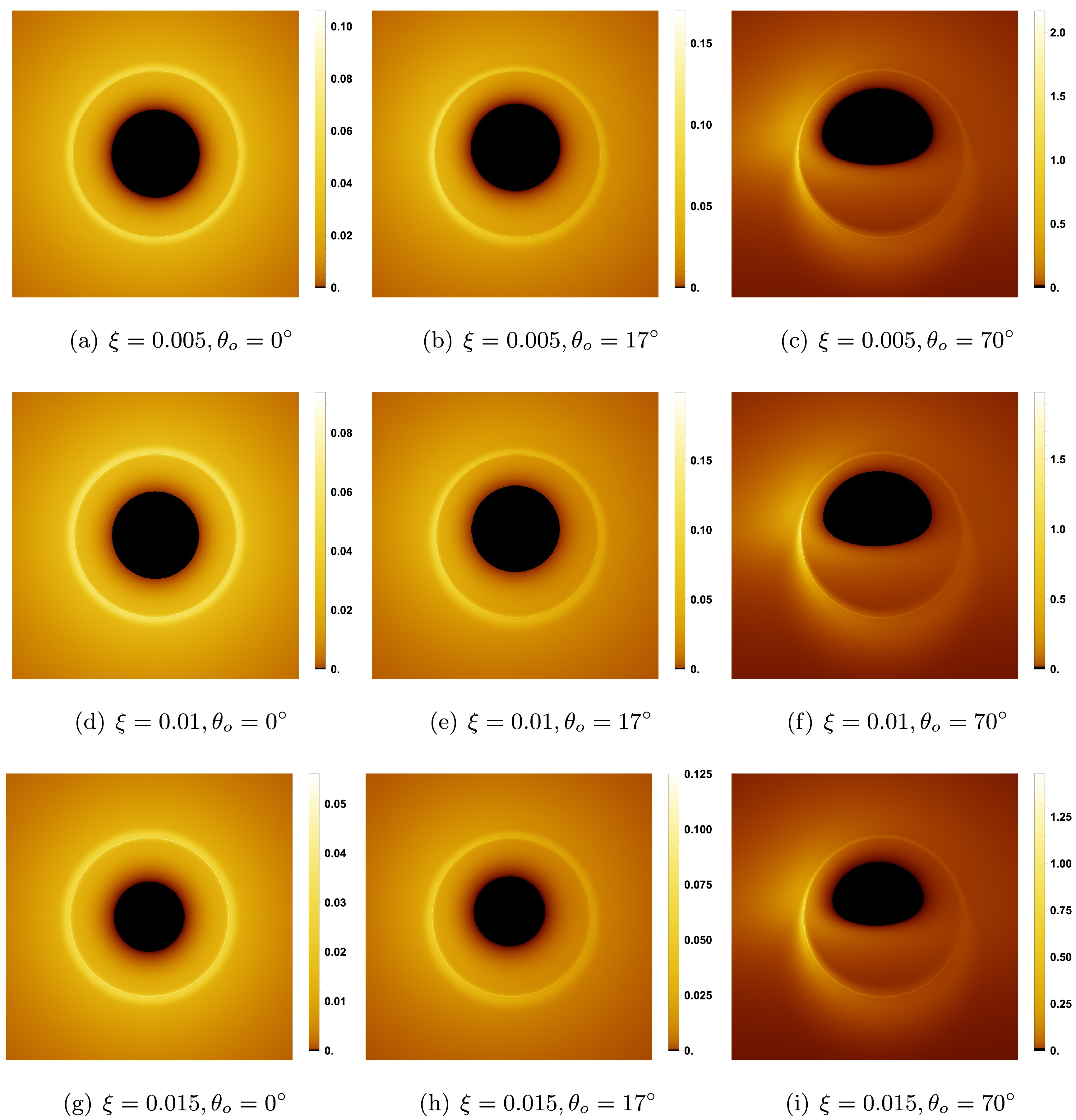
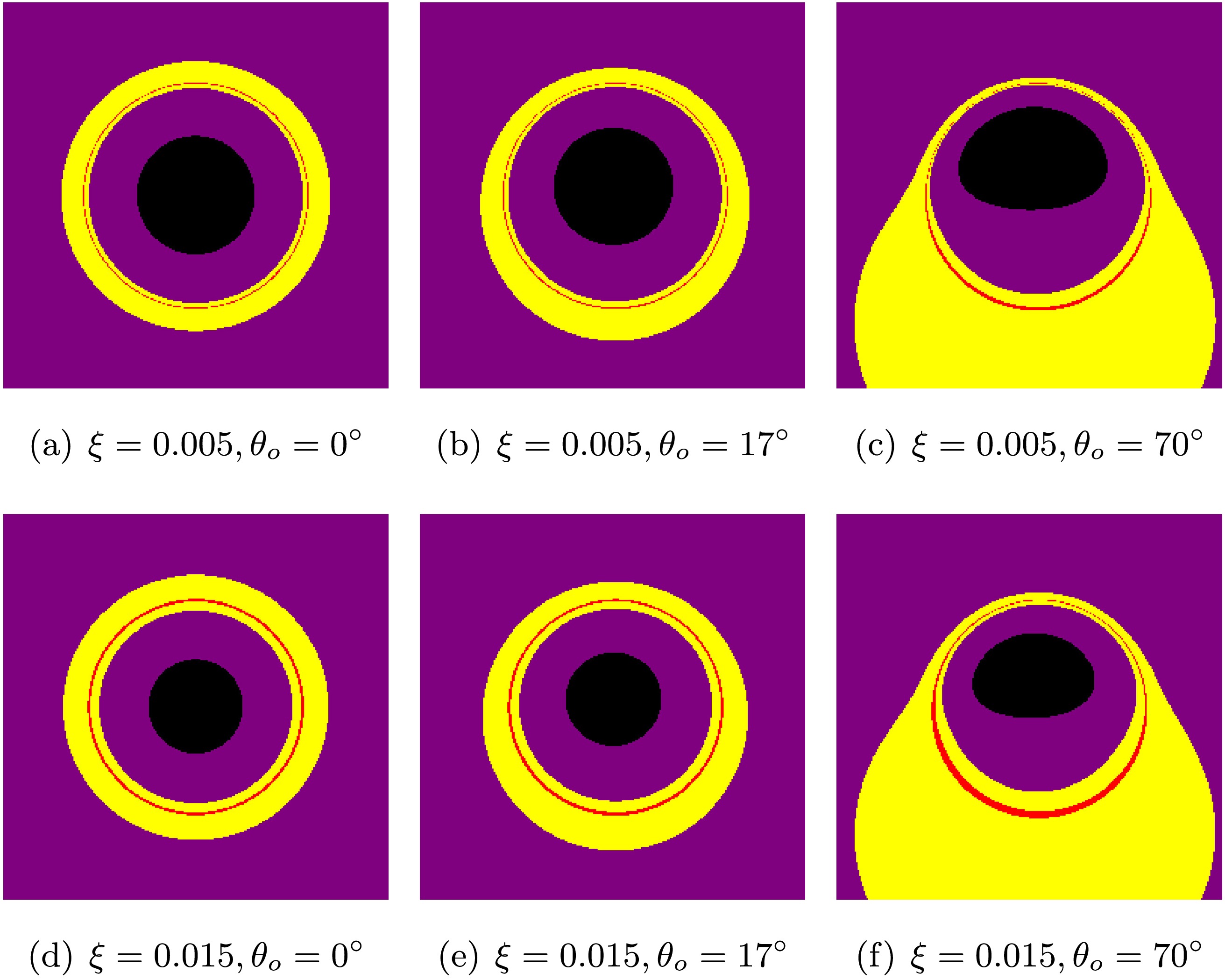
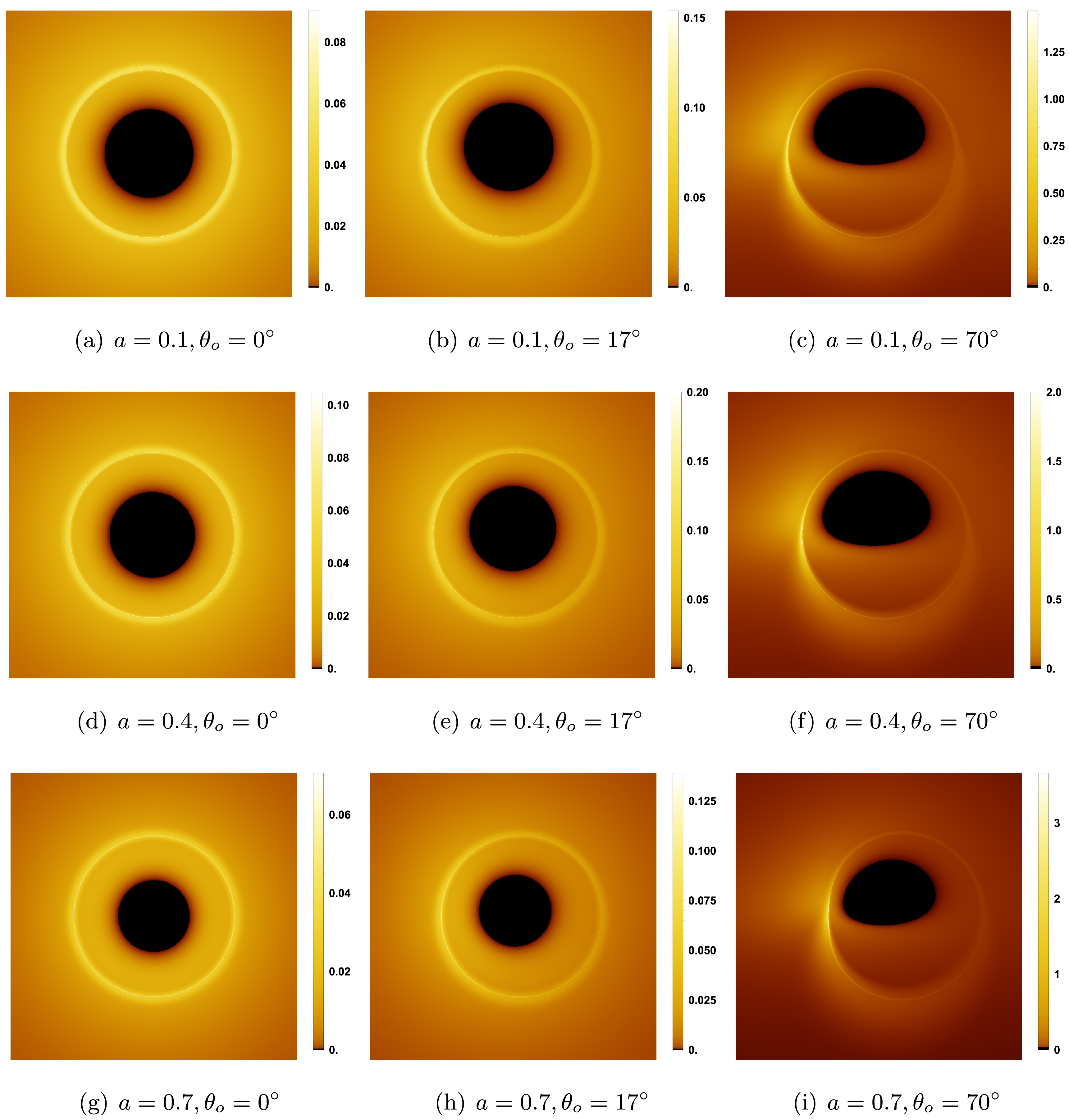
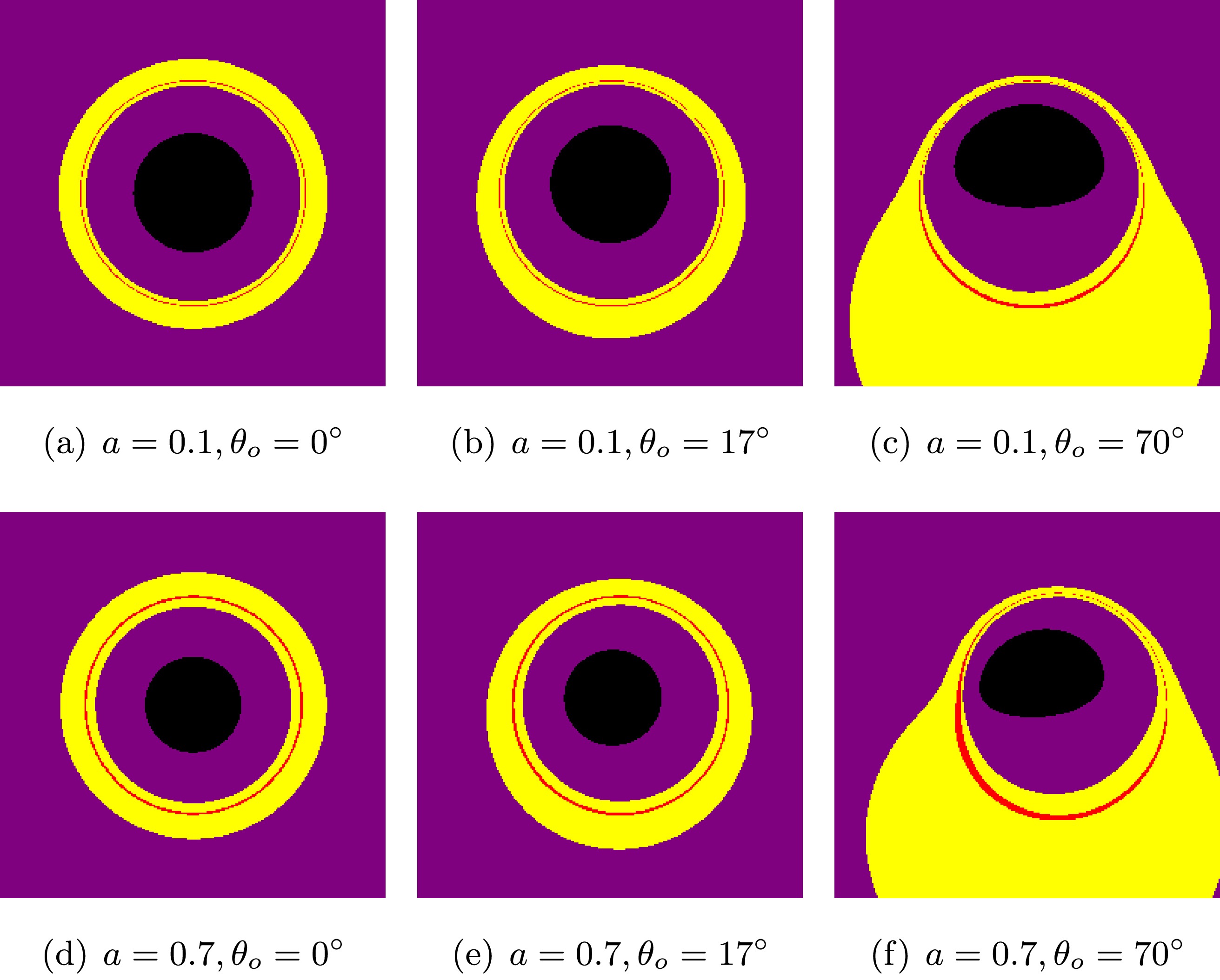
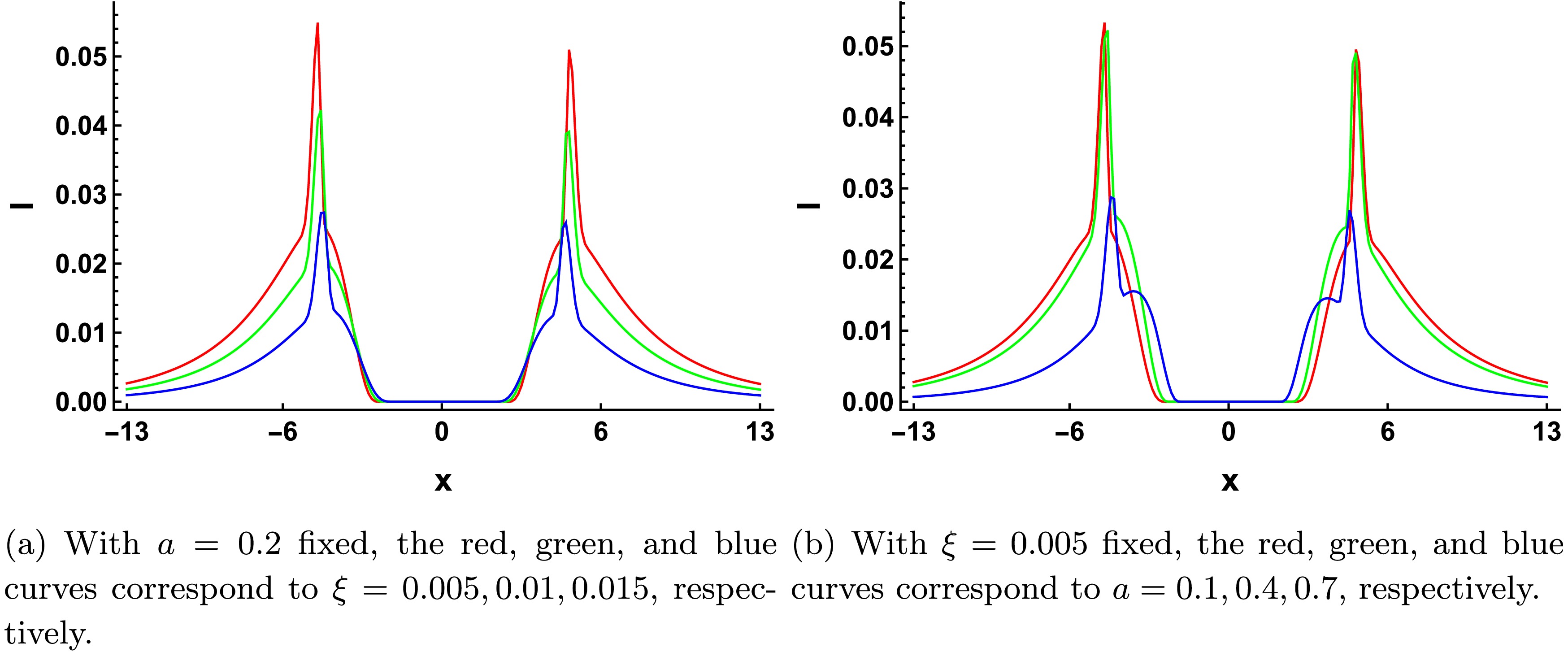
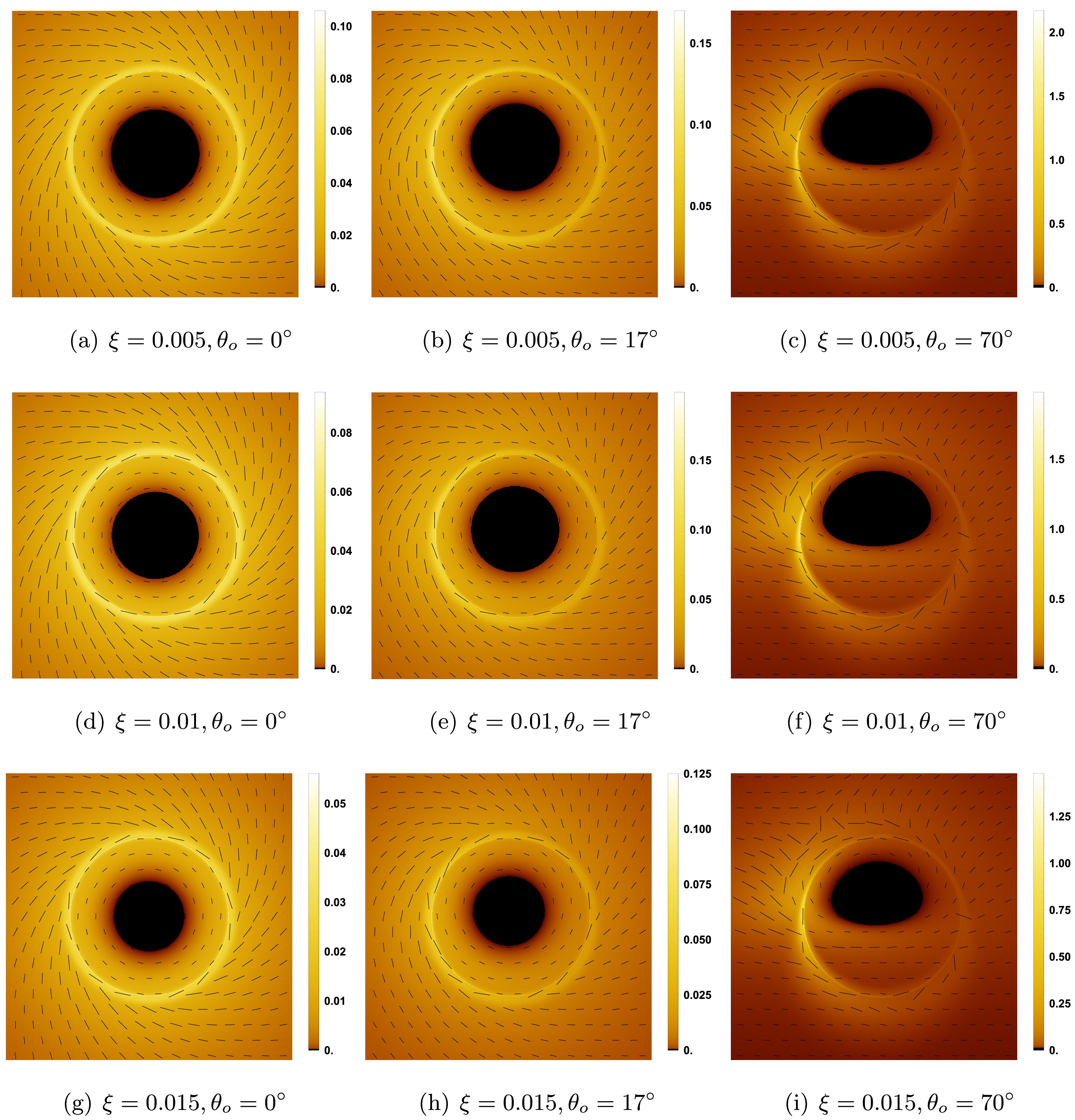
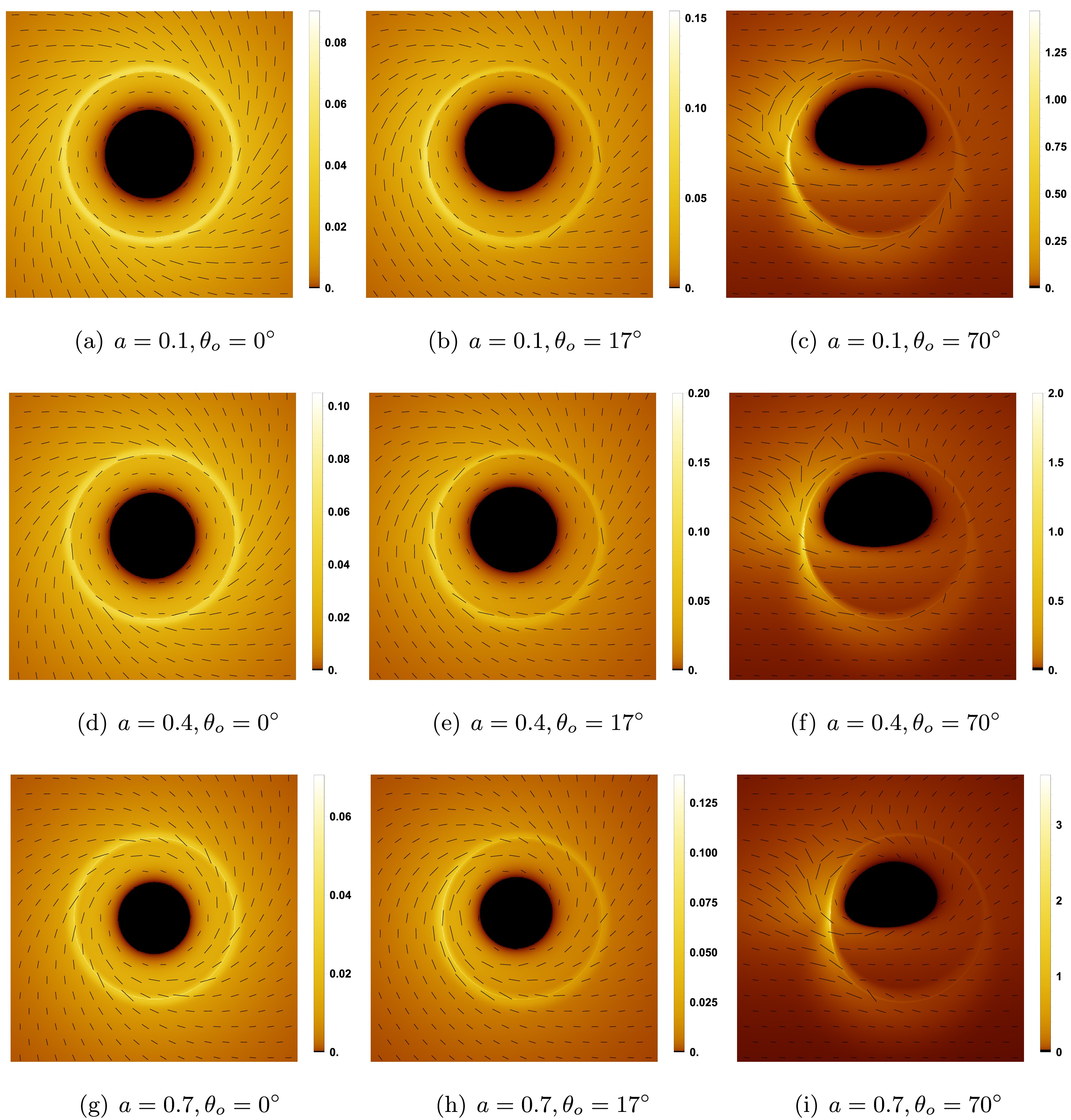
Based on the backward ray-tracing method, we investigate the intensity and polarization images of a rotating Einstein–Gauss–Bonnet (EGB) black hole surrounded by a thin accretion disk. We examine the effects of the GB parameter ξ, the spin parameter a, and the viewing inclination on the horizon-scale image of the black hole. Our results show that ξ mainly affects the size of the inner shadow, while the spin parameter controls its deformation. The photon-ring morphology is more sensitive to the viewing inclination than to the GB coupling. For polarized emission, the polarized-intensity distribution is consistent with the total-intensity distribution of the thin-disk image, but the polarization direction near the inner shadow and photon-ring regions responds clearly to changes in ξ. Finally, we conclude that, compared to relying on either accretion-disk images or polarization images alone, the simultaneous combination and synergistic analysis of both can more profoundly reveal the optical properties of rotating EGB black holes, providing a stronger theoretical basis for identifying such black holes through future high-resolution observations.
Based on the backward ray-tracing method, we investigate the intensity and polarization images of a rotating Einstein–Gauss–Bonnet (EGB) black hole surrounded by a thin accretion disk. We examine the effects of the GB parameter ξ, the spin parameter a, and the viewing inclination on the horizon-scale image of the black hole. Our results show that ξ mainly affects the size of the inner shadow, while the spin parameter controls its deformation. The photon-ring morphology is more sensitive to the viewing inclination than to the GB coupling. For polarized emission, the polarized-intensity distribution is consistent with the total-intensity distribution of the thin-disk image, but the polarization direction near the inner shadow and photon-ring regions responds clearly to changes in ξ. Finally, we conclude that, compared to relying on either accretion-disk images or polarization images alone, the simultaneous combination and synergistic analysis of both can more profoundly reveal the optical properties of rotating EGB black holes, providing a stronger theoretical basis for identifying such black holes through future high-resolution observations.
2026, 50(10): 105105. doi: 10.1088/1674-1137/ae8824
Abstract:
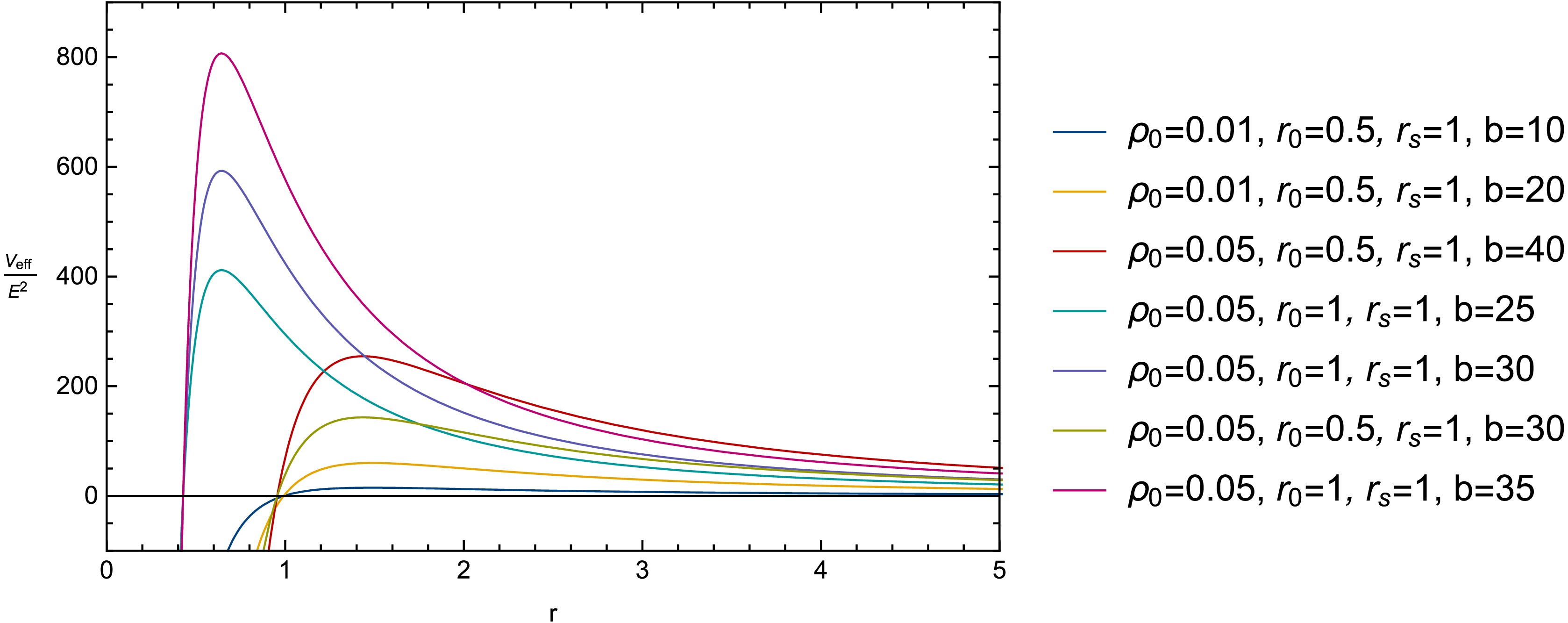
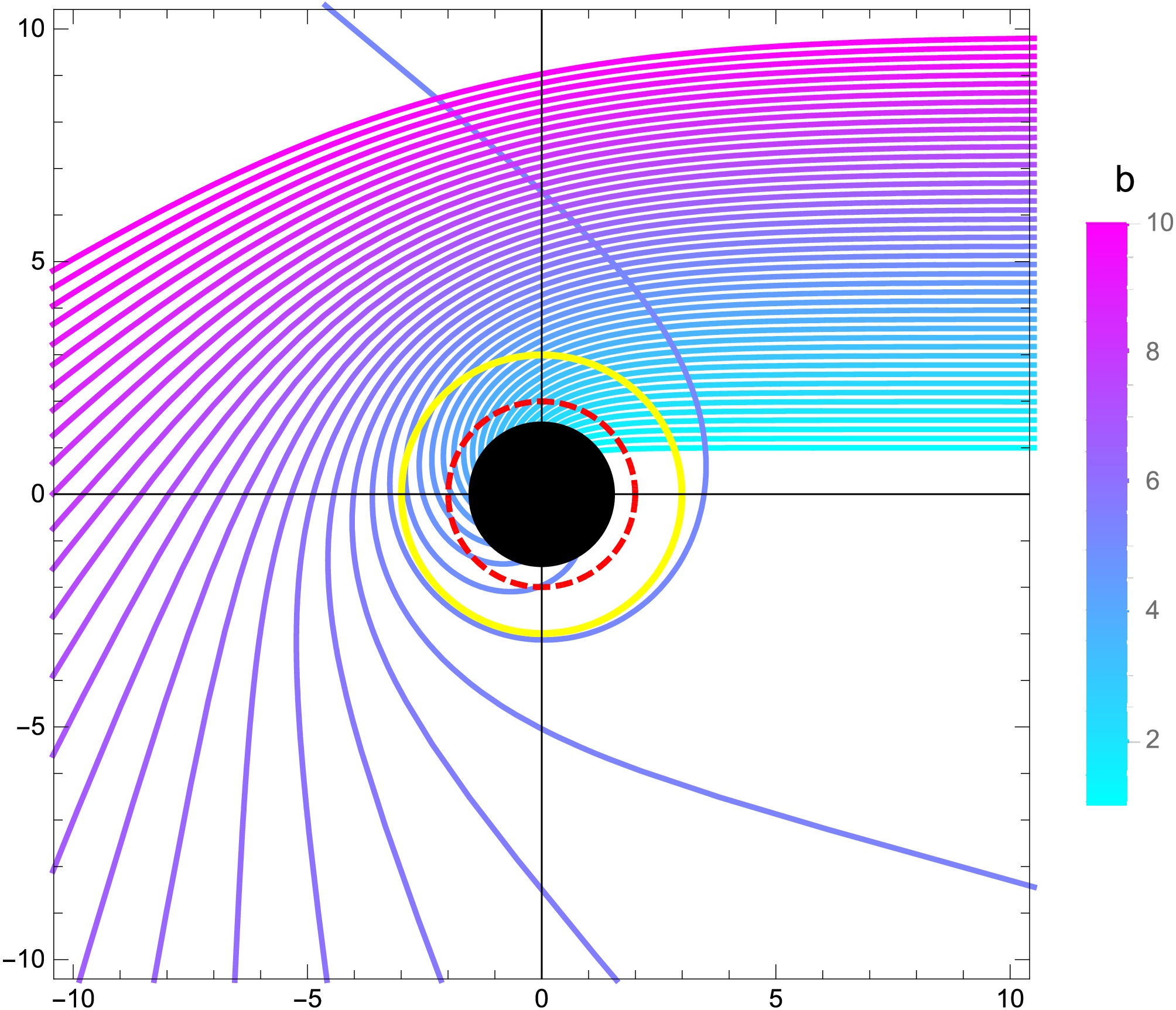
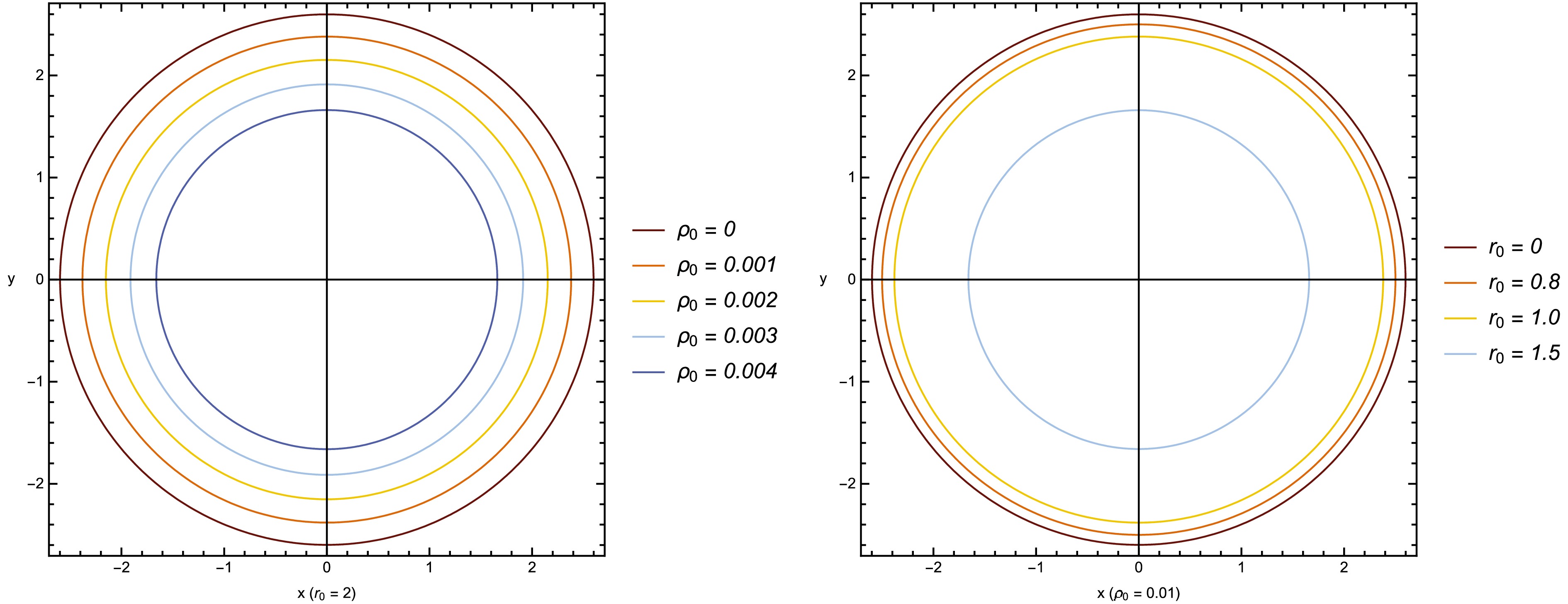
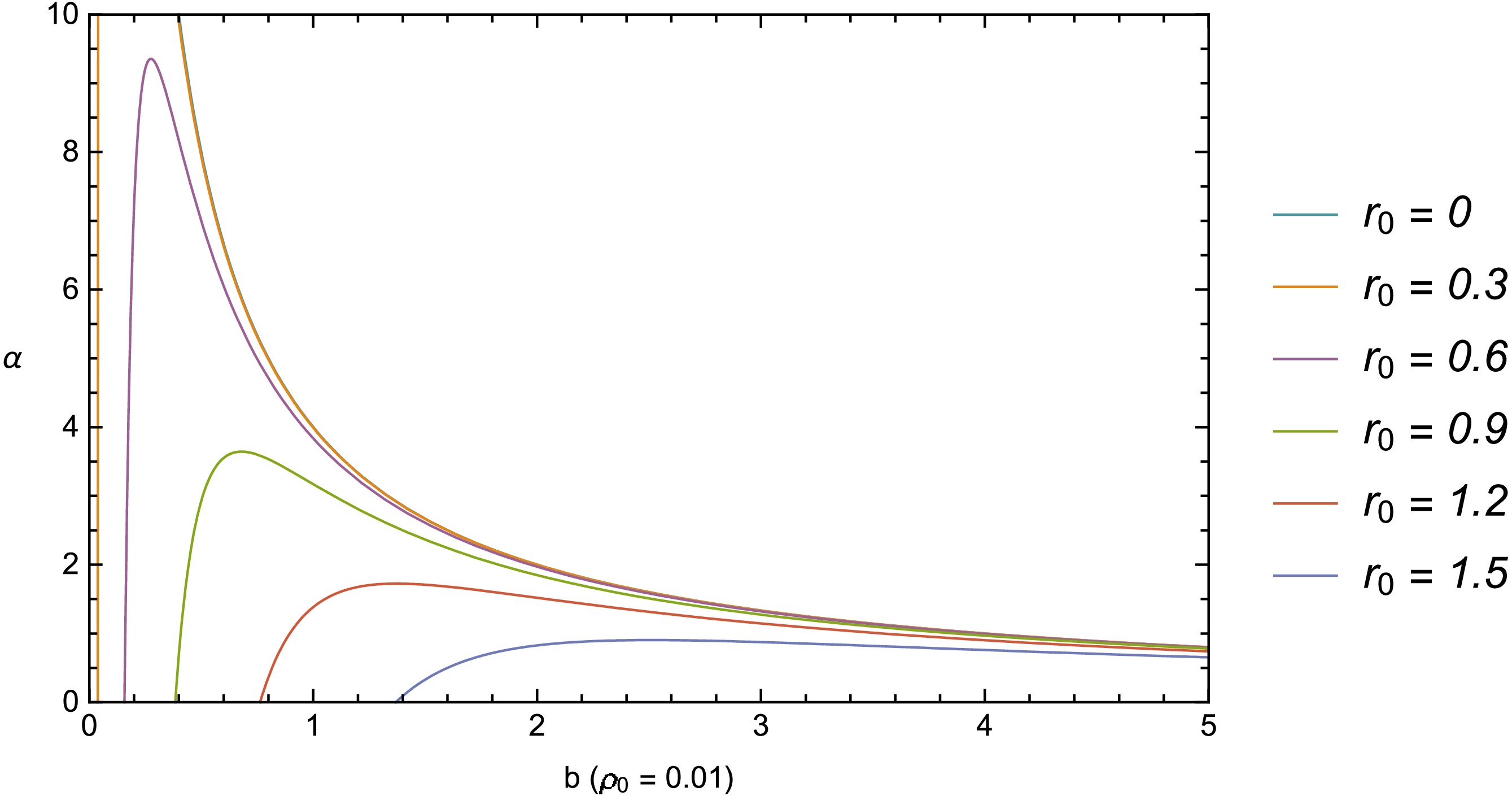
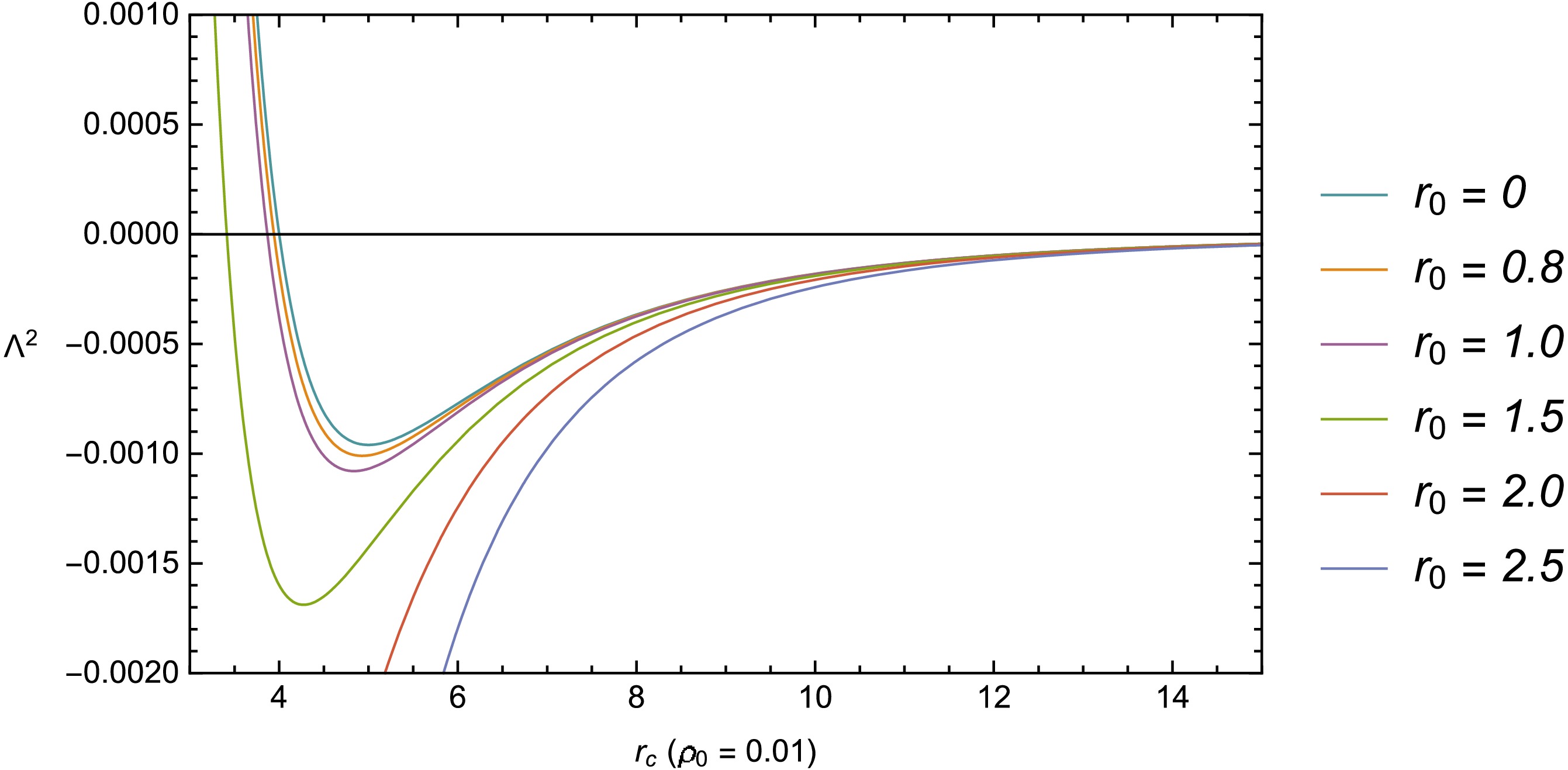
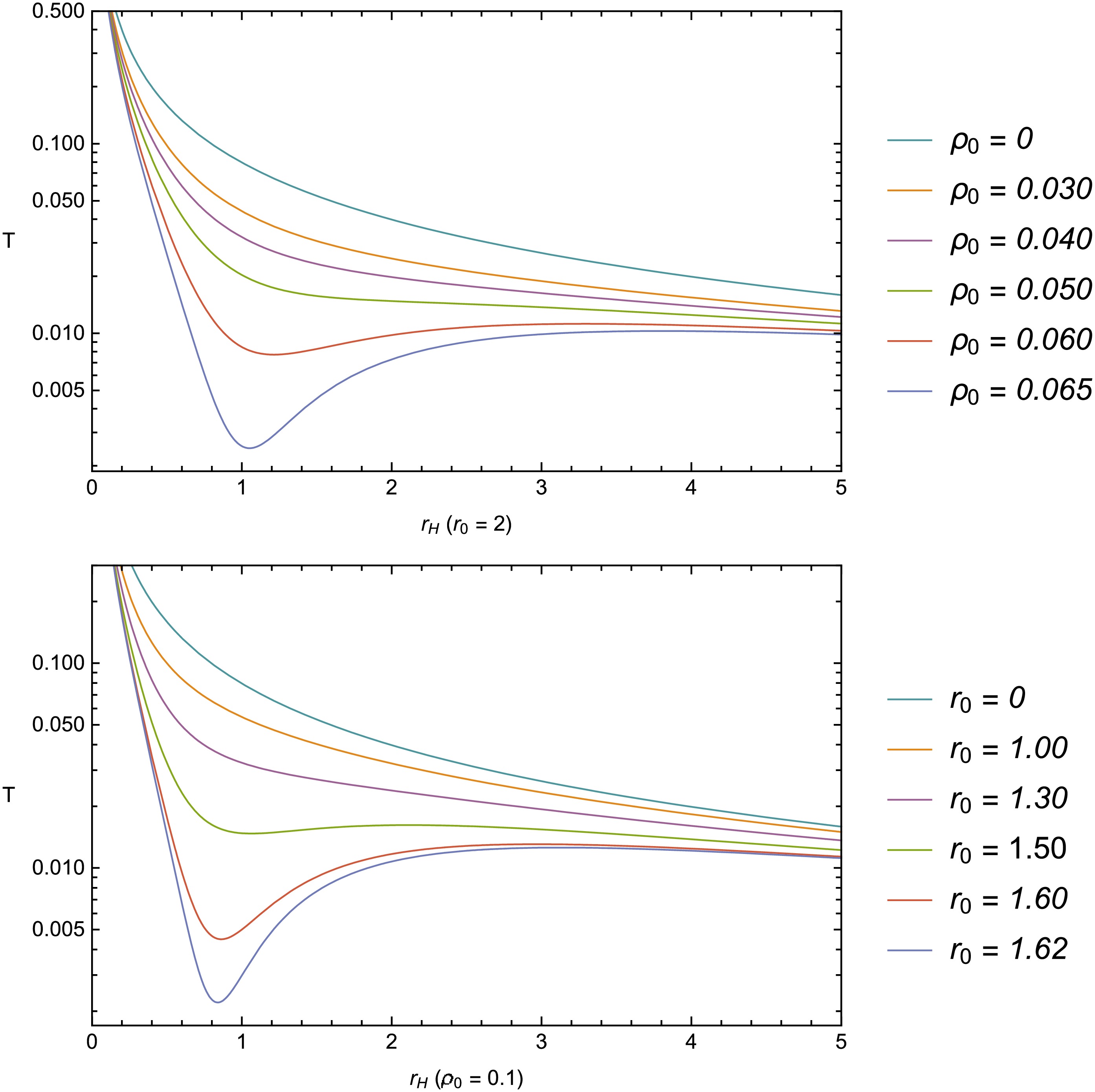
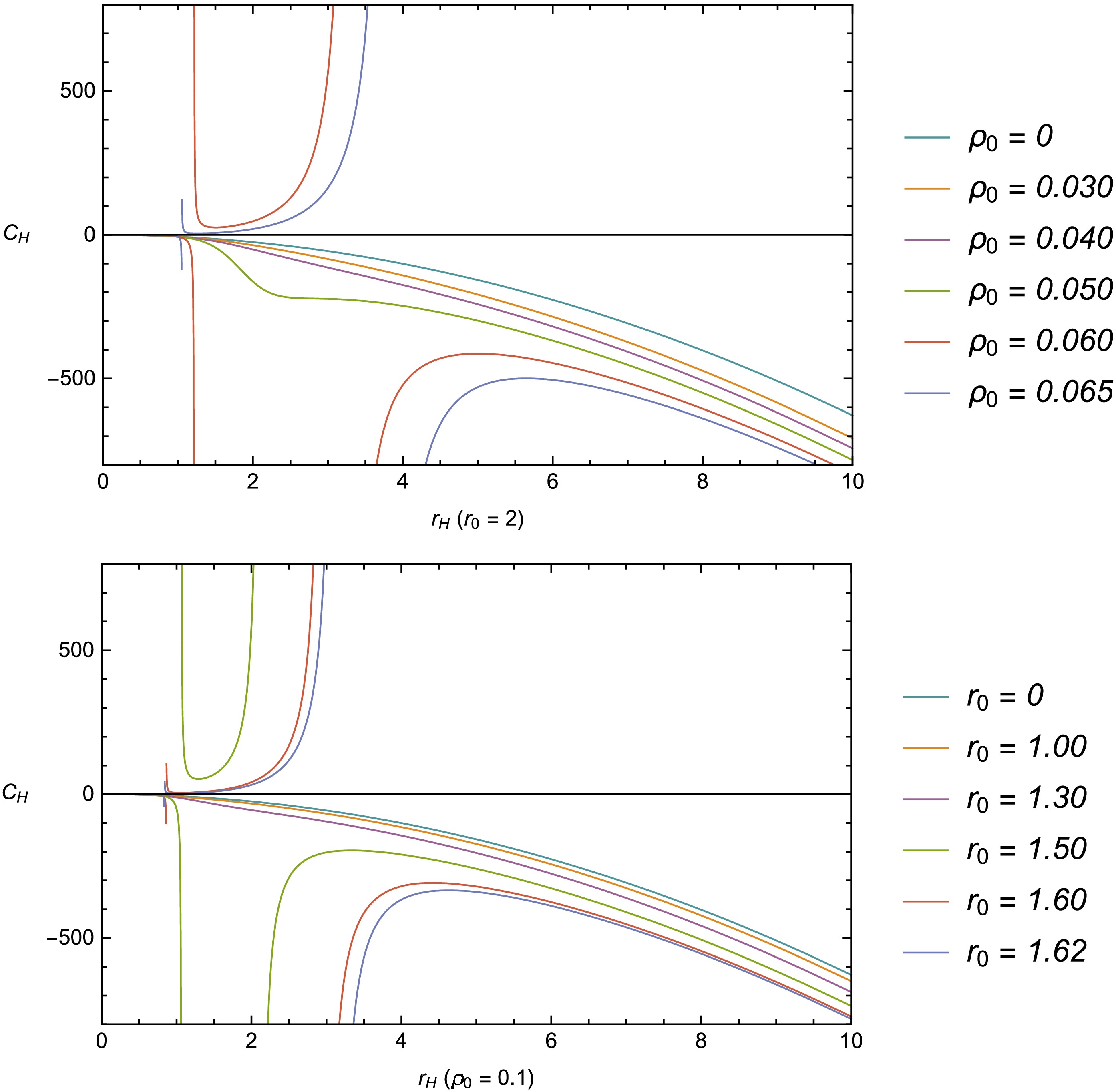
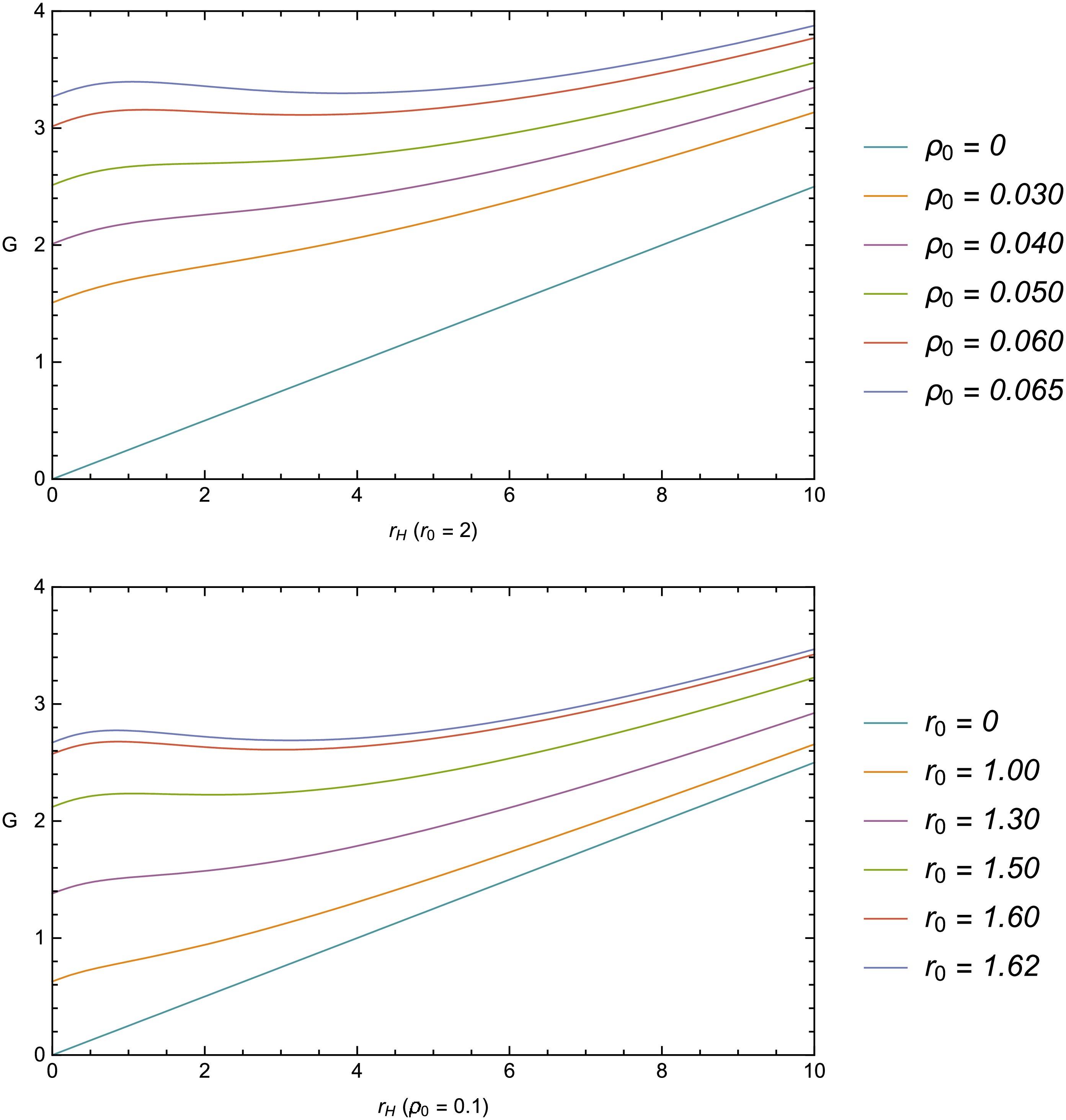
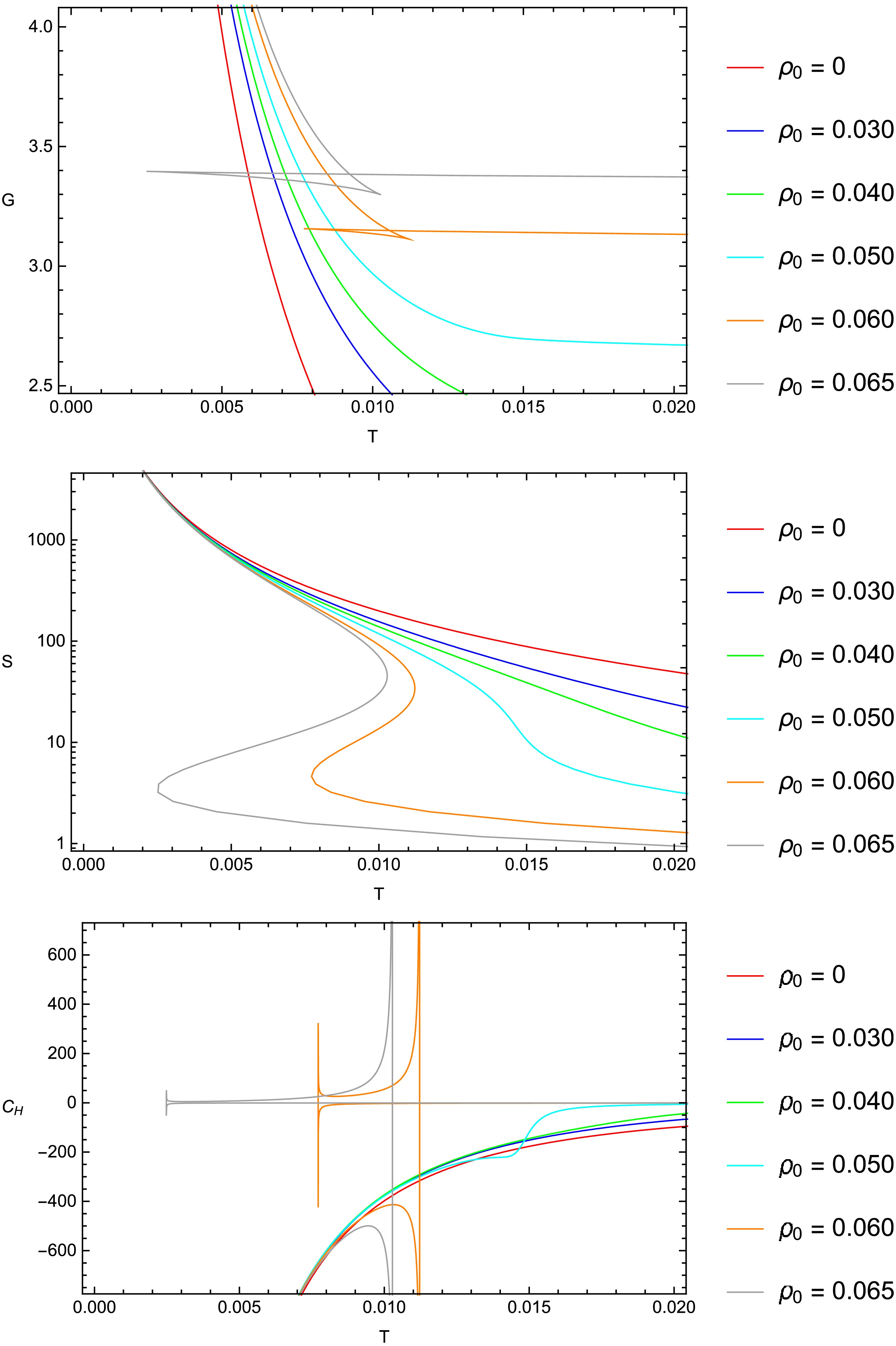
Recent advances in black hole imaging and gravitational-wave observations have intensified interest in understanding how realistic astrophysical environments modify black hole spacetimes. In this work, we construct an exact, static, spherically symmetric black hole solution embedded within a Hernquist dark matter halo by solving the full Einstein field equations. We subsequently investigate how the surrounding halo reshapes the geometry and observable properties of the black hole. Through an analysis of null geodesics, we demonstrate that the dark matter distribution significantly alters photon trajectories, displaces circular photon orbits, and distorts the associated gravitational lensing structure. Using the Lyapunov exponent of unstable null geodesics, we further determine the behavior of massless quasinormal modes in the eikonal regime, revealing explicit halo-induced corrections to the oscillation frequencies and damping rates. We also examine the thermodynamic behavior of the black hole–halo configuration by evaluating the conserved mass, temperature, entropy, heat capacity, and Gibbs free energy, thereby enabling a detailed analysis of local and global thermal stability. Our results reveal that the Hernquist dark matter halo reduces both the photon-sphere radius and the apparent shadow size, while substantially enlarging the region of thermodynamic stability and producing nontrivial phase structures absent from the Schwarzschild vacuum spacetime. These findings demonstrate that astrophysical dark matter environments can leave measurable imprints on both optical and thermodynamic observables, offering a potential avenue for probing halo-induced gravitational effects around black holes.
Recent advances in black hole imaging and gravitational-wave observations have intensified interest in understanding how realistic astrophysical environments modify black hole spacetimes. In this work, we construct an exact, static, spherically symmetric black hole solution embedded within a Hernquist dark matter halo by solving the full Einstein field equations. We subsequently investigate how the surrounding halo reshapes the geometry and observable properties of the black hole. Through an analysis of null geodesics, we demonstrate that the dark matter distribution significantly alters photon trajectories, displaces circular photon orbits, and distorts the associated gravitational lensing structure. Using the Lyapunov exponent of unstable null geodesics, we further determine the behavior of massless quasinormal modes in the eikonal regime, revealing explicit halo-induced corrections to the oscillation frequencies and damping rates. We also examine the thermodynamic behavior of the black hole–halo configuration by evaluating the conserved mass, temperature, entropy, heat capacity, and Gibbs free energy, thereby enabling a detailed analysis of local and global thermal stability. Our results reveal that the Hernquist dark matter halo reduces both the photon-sphere radius and the apparent shadow size, while substantially enlarging the region of thermodynamic stability and producing nontrivial phase structures absent from the Schwarzschild vacuum spacetime. These findings demonstrate that astrophysical dark matter environments can leave measurable imprints on both optical and thermodynamic observables, offering a potential avenue for probing halo-induced gravitational effects around black holes.
2026, 50(10): 105104. doi: 10.1088/1674-1137/ae8240
Abstract:
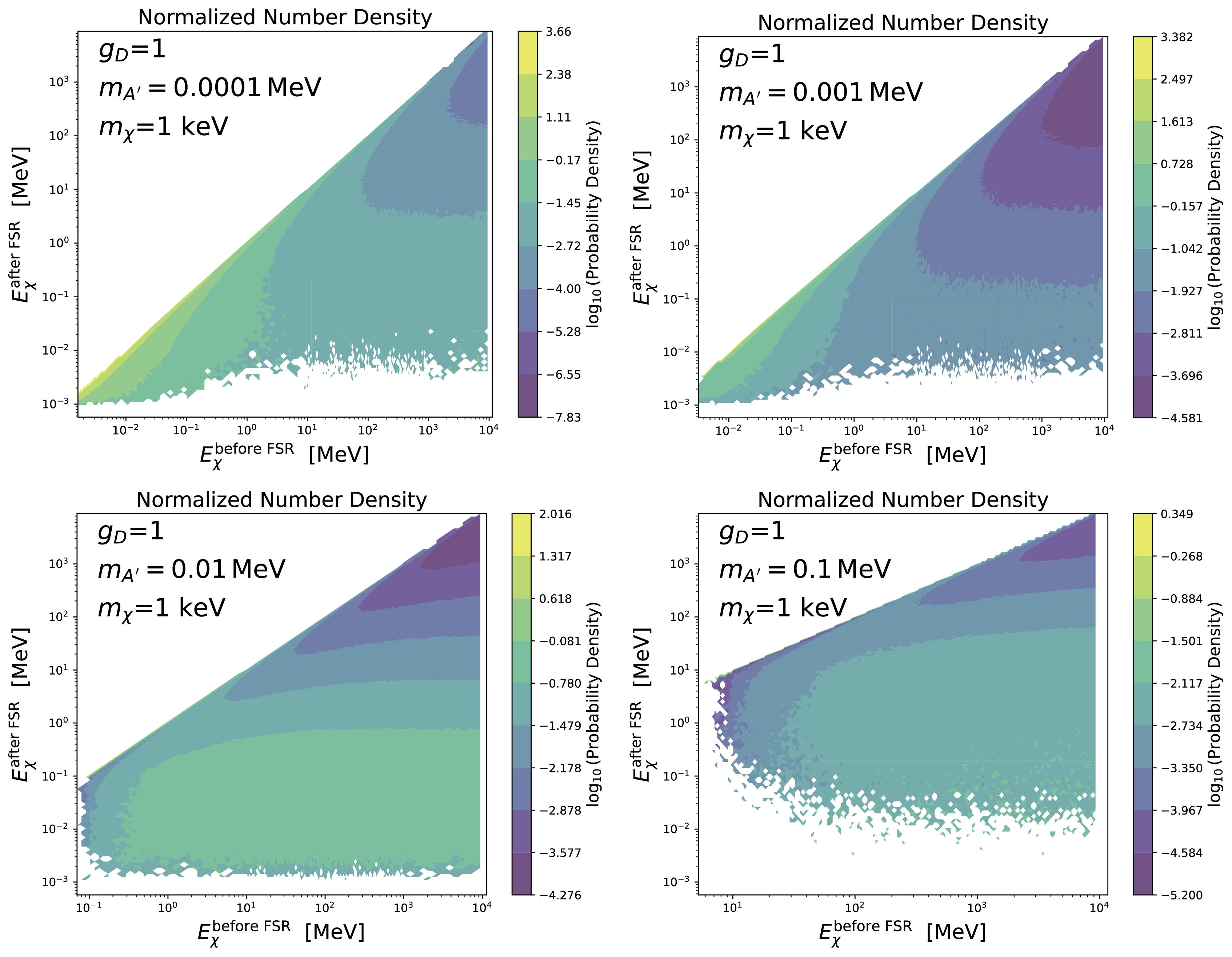
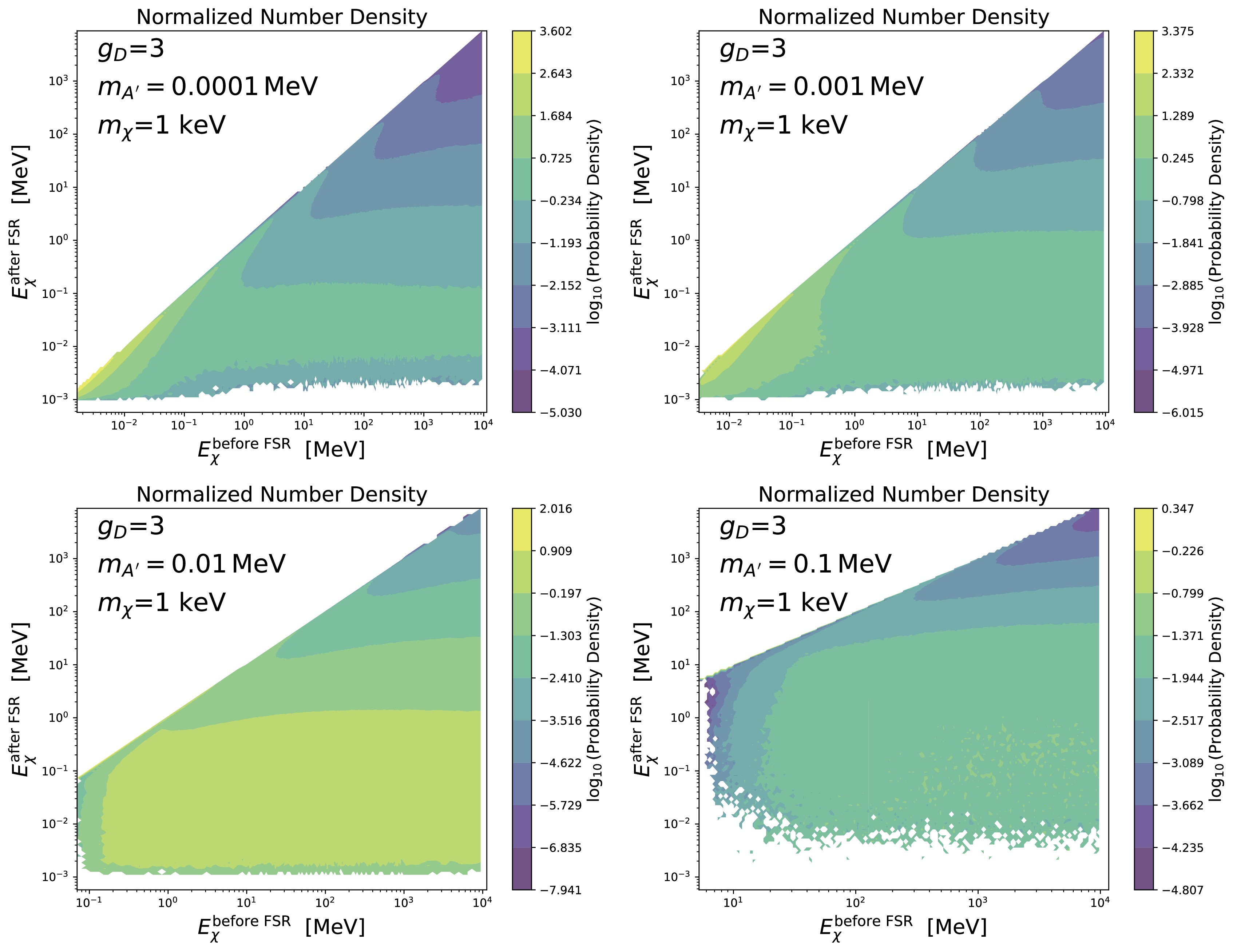
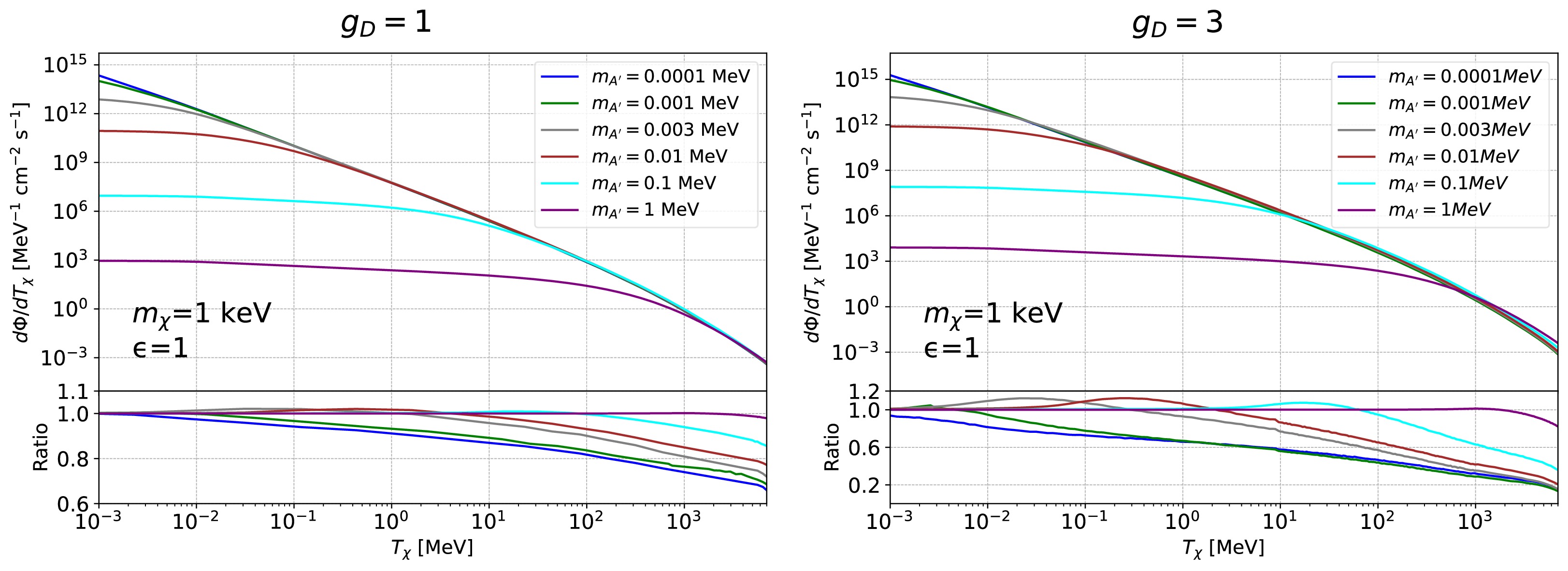
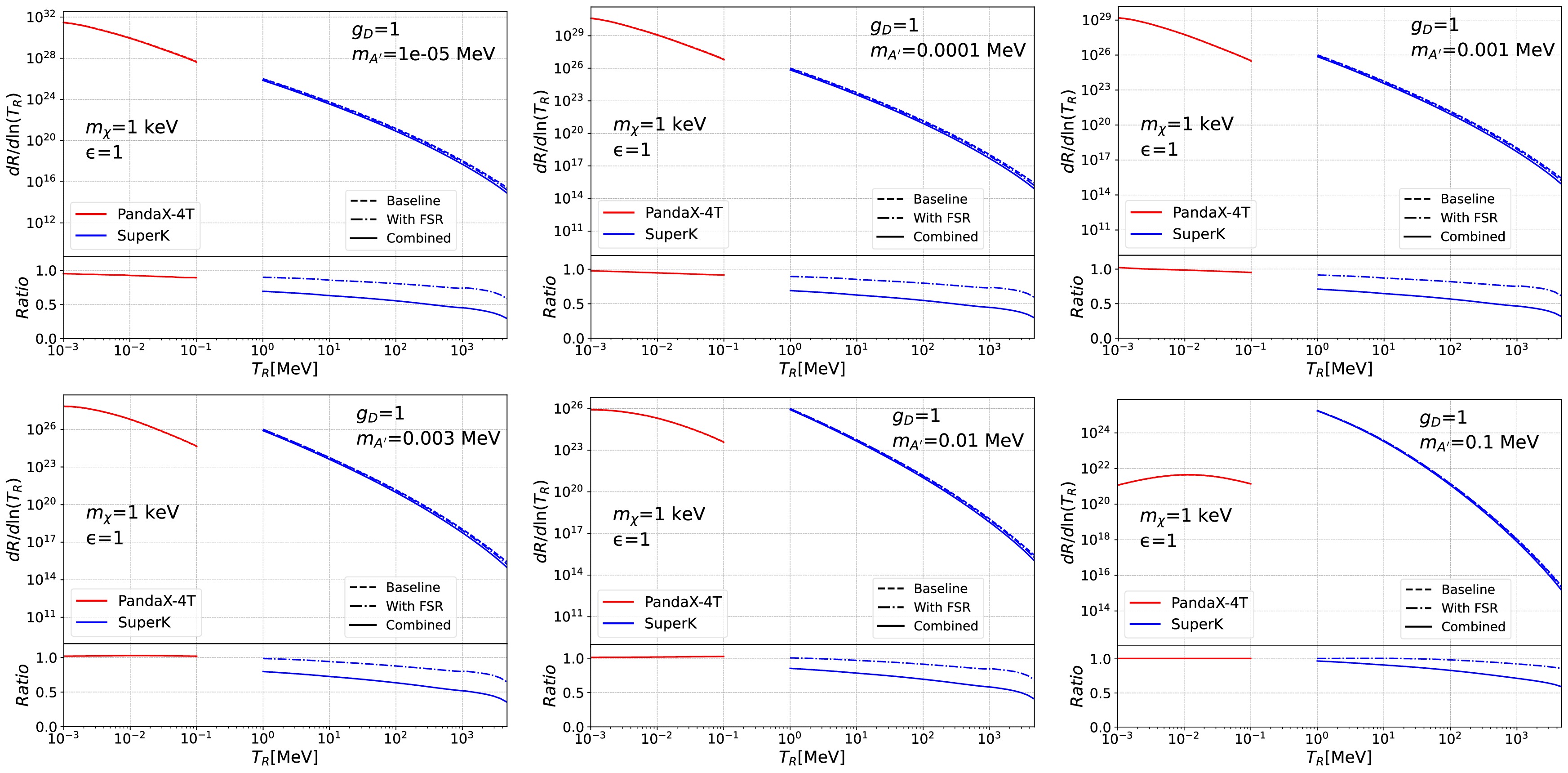
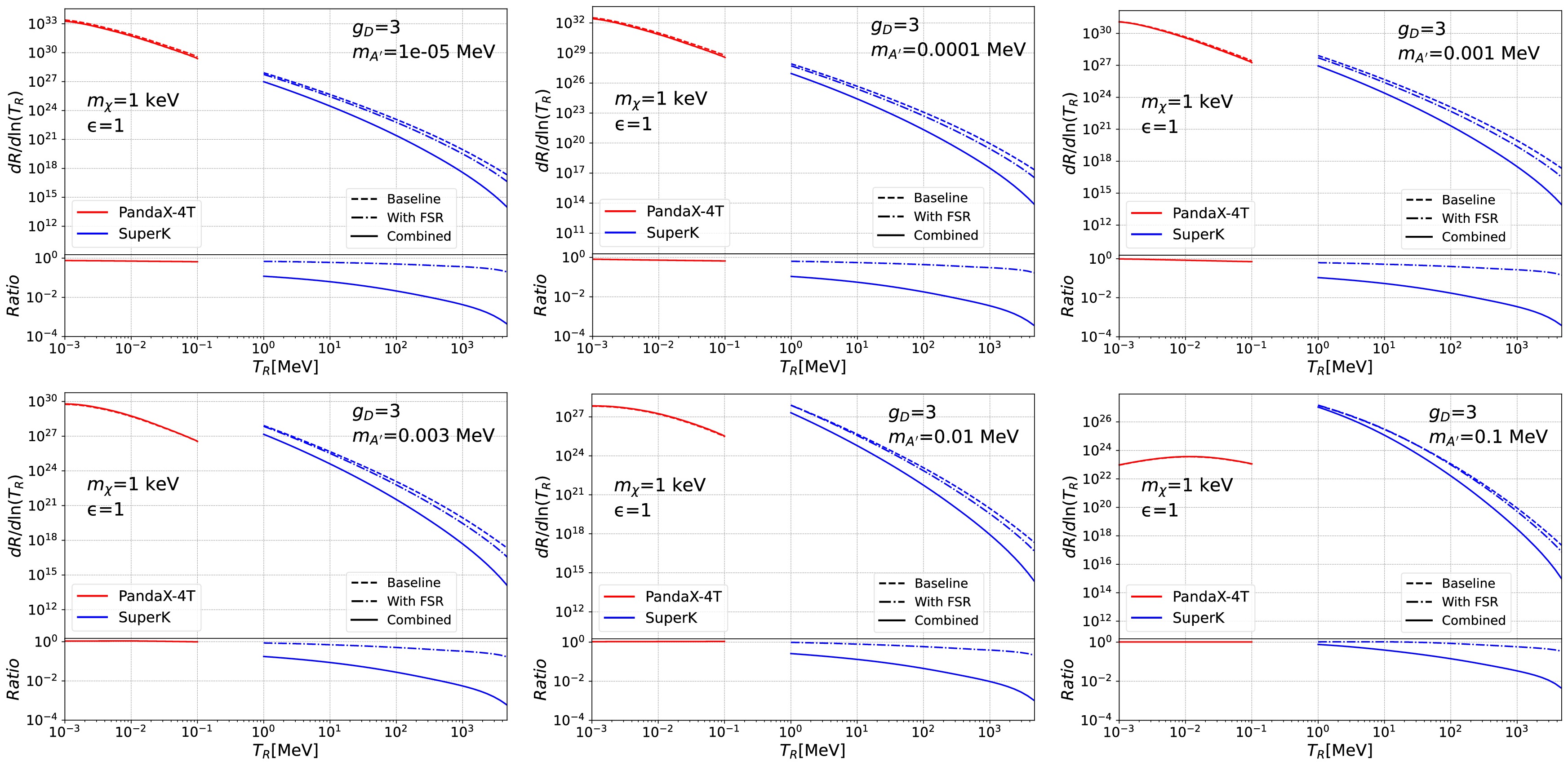
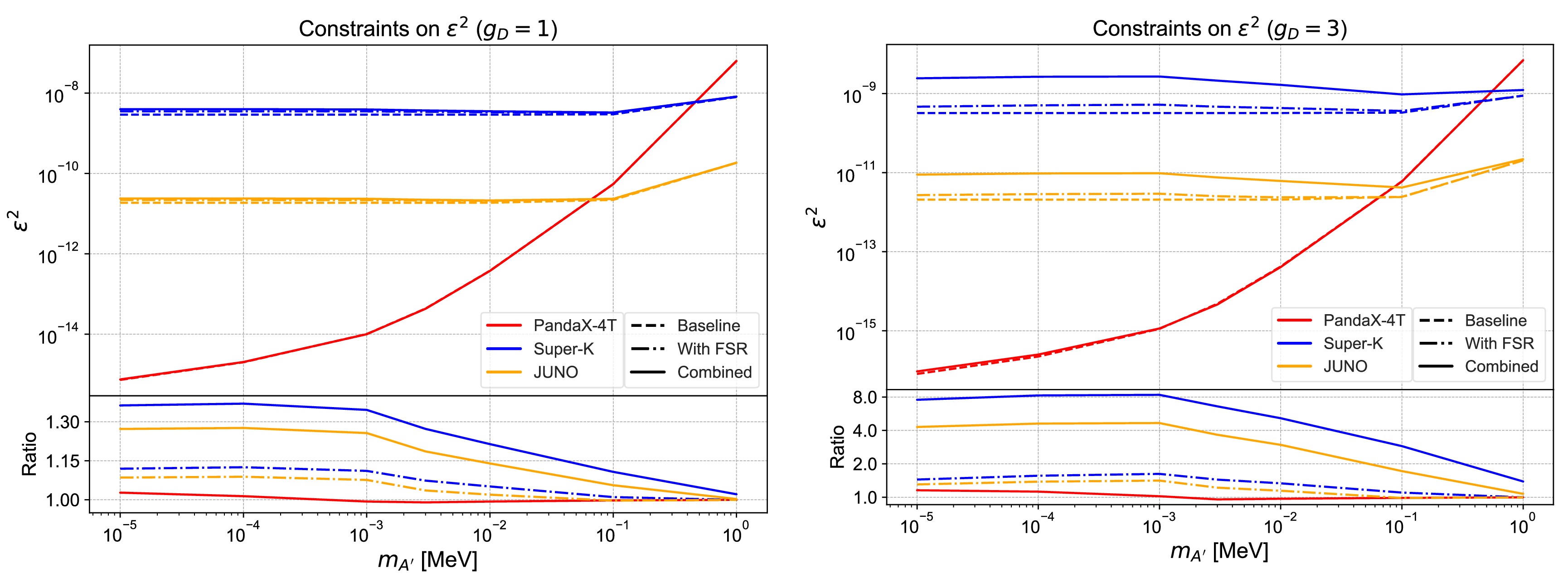
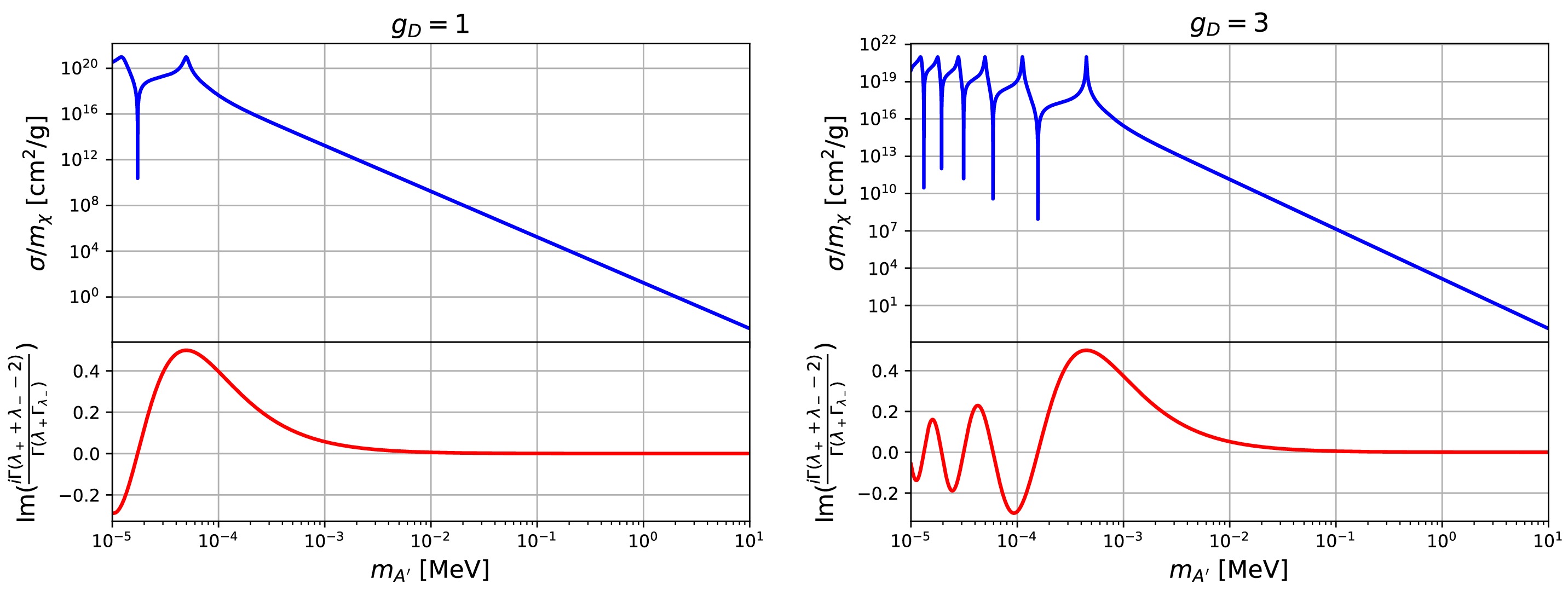
We investigate the effects of dark parton showers on the direct detection of cosmic-ray boosted dark matter (CRDM), focusing on a dark-photon-mediated model with fermionic dark matter–electron interactions. Using a Monte Carlo framework to incorporate Sudakov form factors and kinematic dipole recoil schemes, we simulate the evolution of the CRDM energy spectrum under dark sector splitting. Our results reveal that dark parton showering induces an energy-dependent reshaping of the CRDM flux, particularly characterized by a depletion of the high-energy flux. For a dark matter (DM) mass of 1 keV and a coupling of $g_D=3$, the CRDM flux can be enhanced by up to a factor of 1.12 in the $\mathcal{O}(10^{-2} \sim 1)$ MeV energy range for $2m_\chi \lesssim m_{A^\prime} \lesssim 10^{-2}$ MeV, whereas it is suppressed by more than 50% at energies around 100 MeV for $m_{A^\prime} \lesssim 10^{-3}$ MeV. We then translate these effects into experimental sensitivities for PandaX-4T, Super-Kamiokande, and JUNO. For $m_{A^\prime} = 10^{-3}$ MeV and $g_D=3$, the bounds on the kinetic mixing parameter $\epsilon^2$ are relaxed by factors of 1.02, 1.6, and 1.4, respectively. Incorporating the effects of DM parton distribution functions (PDFs) at neutrino detectors alongside dark parton shower effects further relaxes these bounds.
We investigate the effects of dark parton showers on the direct detection of cosmic-ray boosted dark matter (CRDM), focusing on a dark-photon-mediated model with fermionic dark matter–electron interactions. Using a Monte Carlo framework to incorporate Sudakov form factors and kinematic dipole recoil schemes, we simulate the evolution of the CRDM energy spectrum under dark sector splitting. Our results reveal that dark parton showering induces an energy-dependent reshaping of the CRDM flux, particularly characterized by a depletion of the high-energy flux. For a dark matter (DM) mass of 1 keV and a coupling of $g_D=3$, the CRDM flux can be enhanced by up to a factor of 1.12 in the $\mathcal{O}(10^{-2} \sim 1)$ MeV energy range for $2m_\chi \lesssim m_{A^\prime} \lesssim 10^{-2}$ MeV, whereas it is suppressed by more than 50% at energies around 100 MeV for $m_{A^\prime} \lesssim 10^{-3}$ MeV. We then translate these effects into experimental sensitivities for PandaX-4T, Super-Kamiokande, and JUNO. For $m_{A^\prime} = 10^{-3}$ MeV and $g_D=3$, the bounds on the kinetic mixing parameter $\epsilon^2$ are relaxed by factors of 1.02, 1.6, and 1.4, respectively. Incorporating the effects of DM parton distribution functions (PDFs) at neutrino detectors alongside dark parton shower effects further relaxes these bounds.
2026, 50(10): 105102. doi: 10.1088/1674-1137/ae6ed3
Abstract:
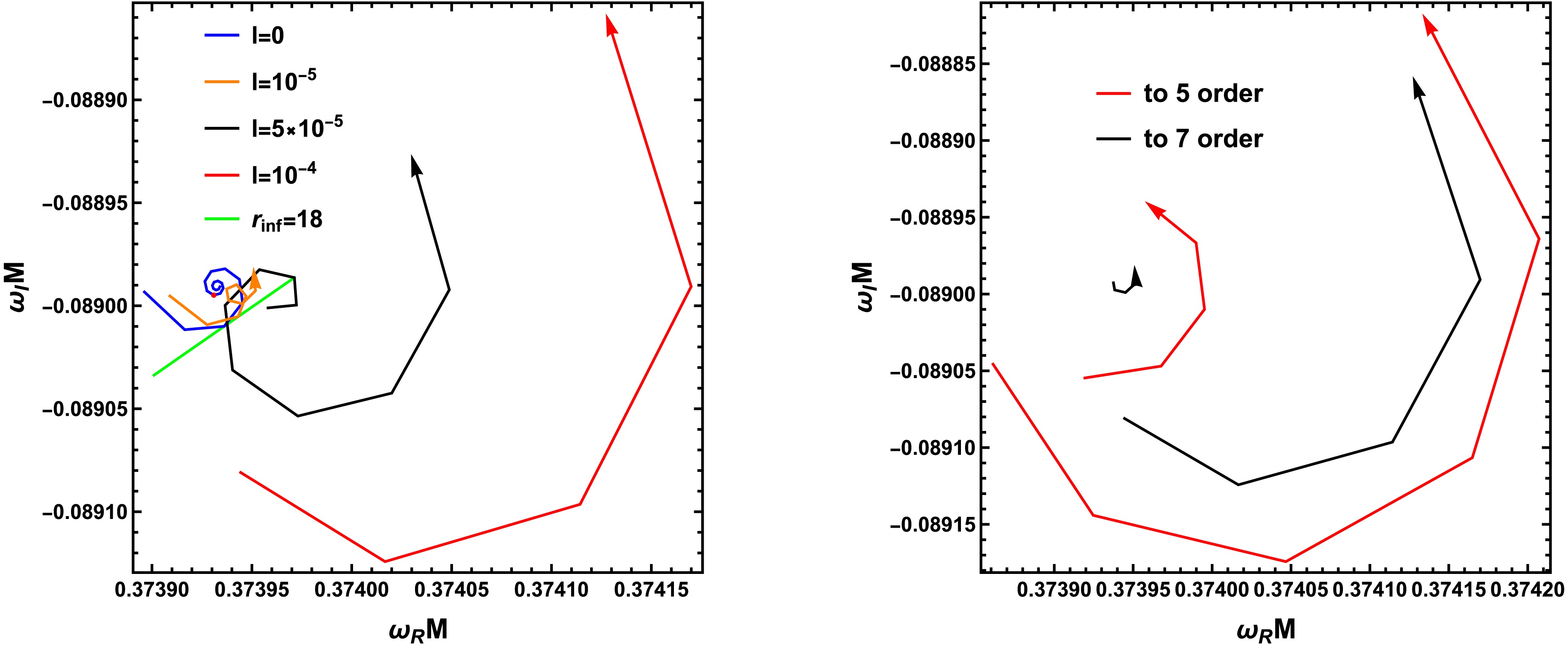
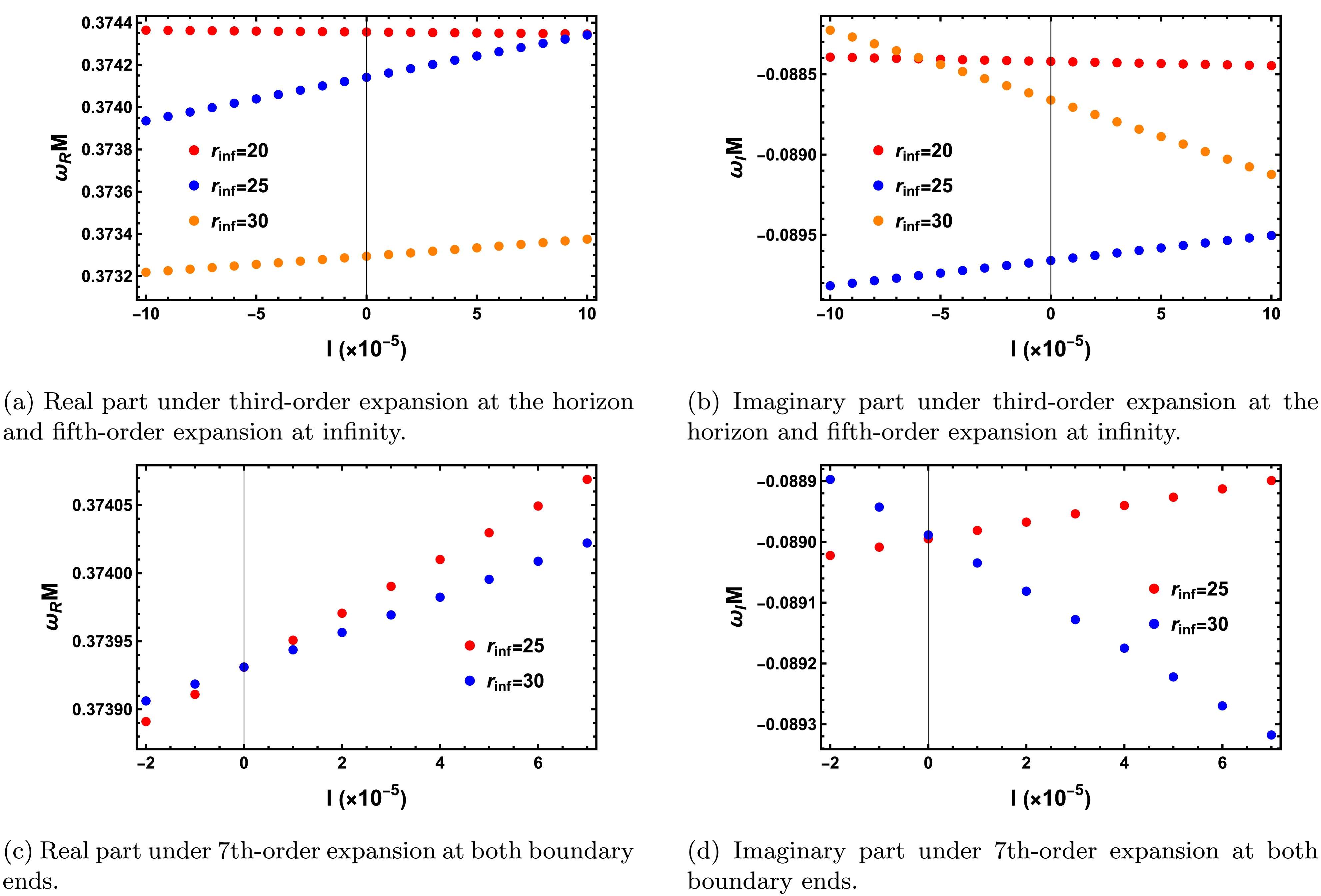
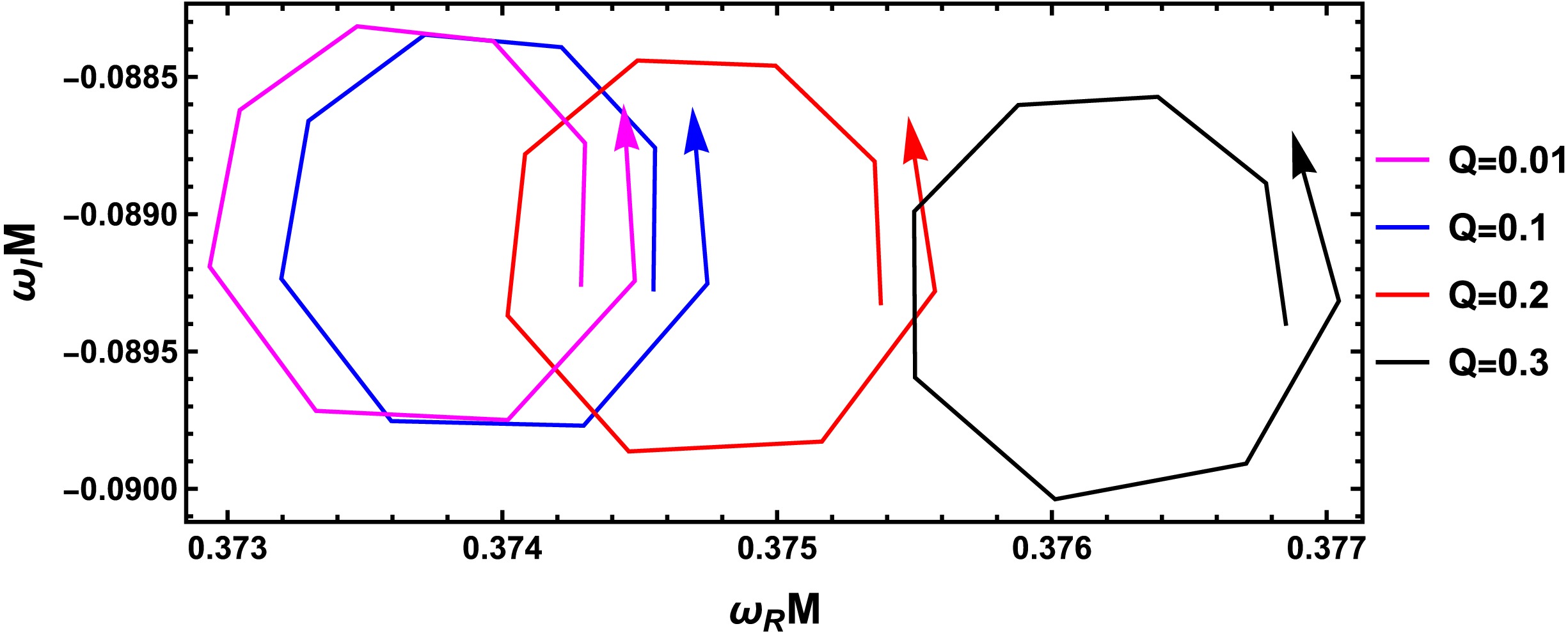
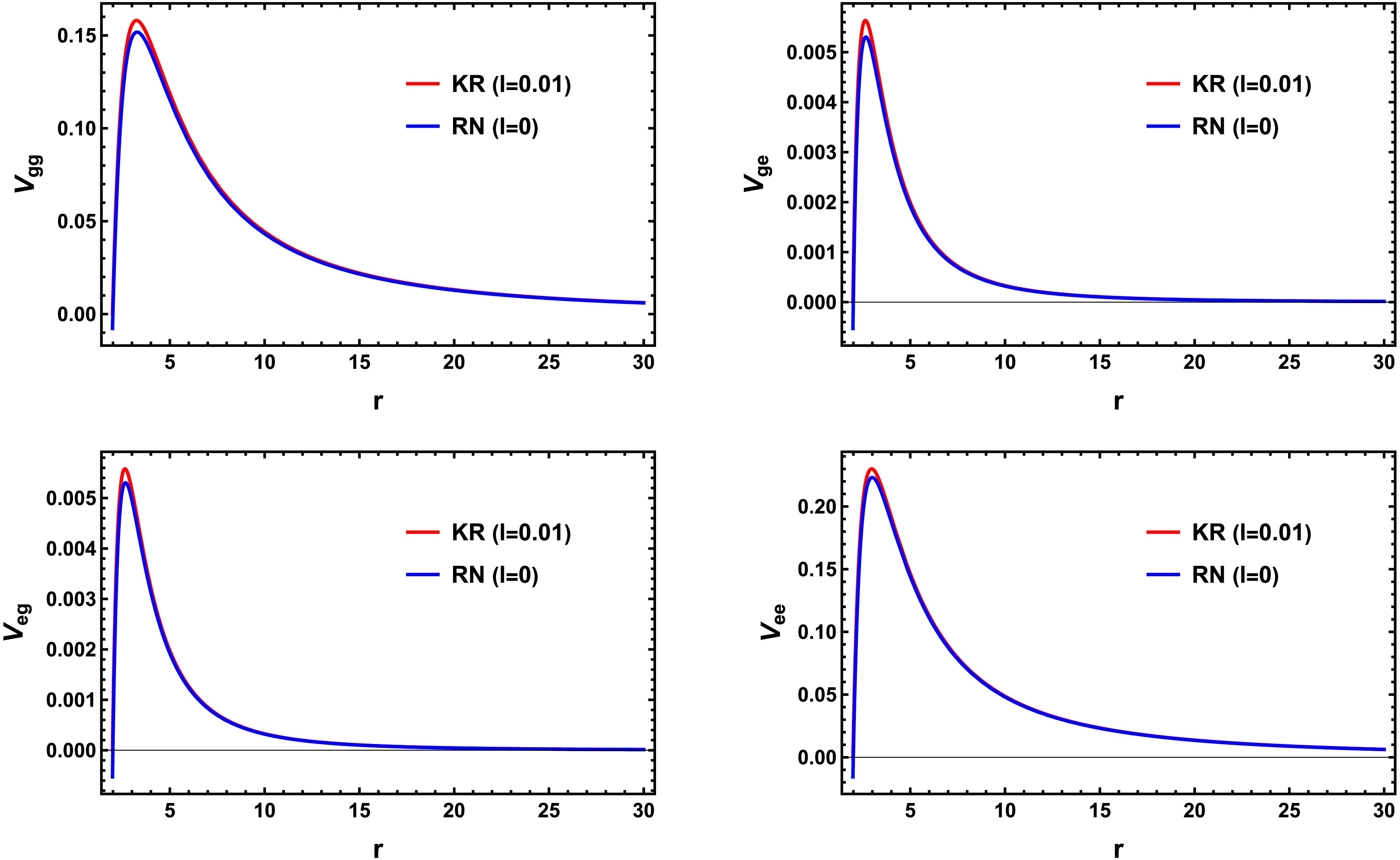
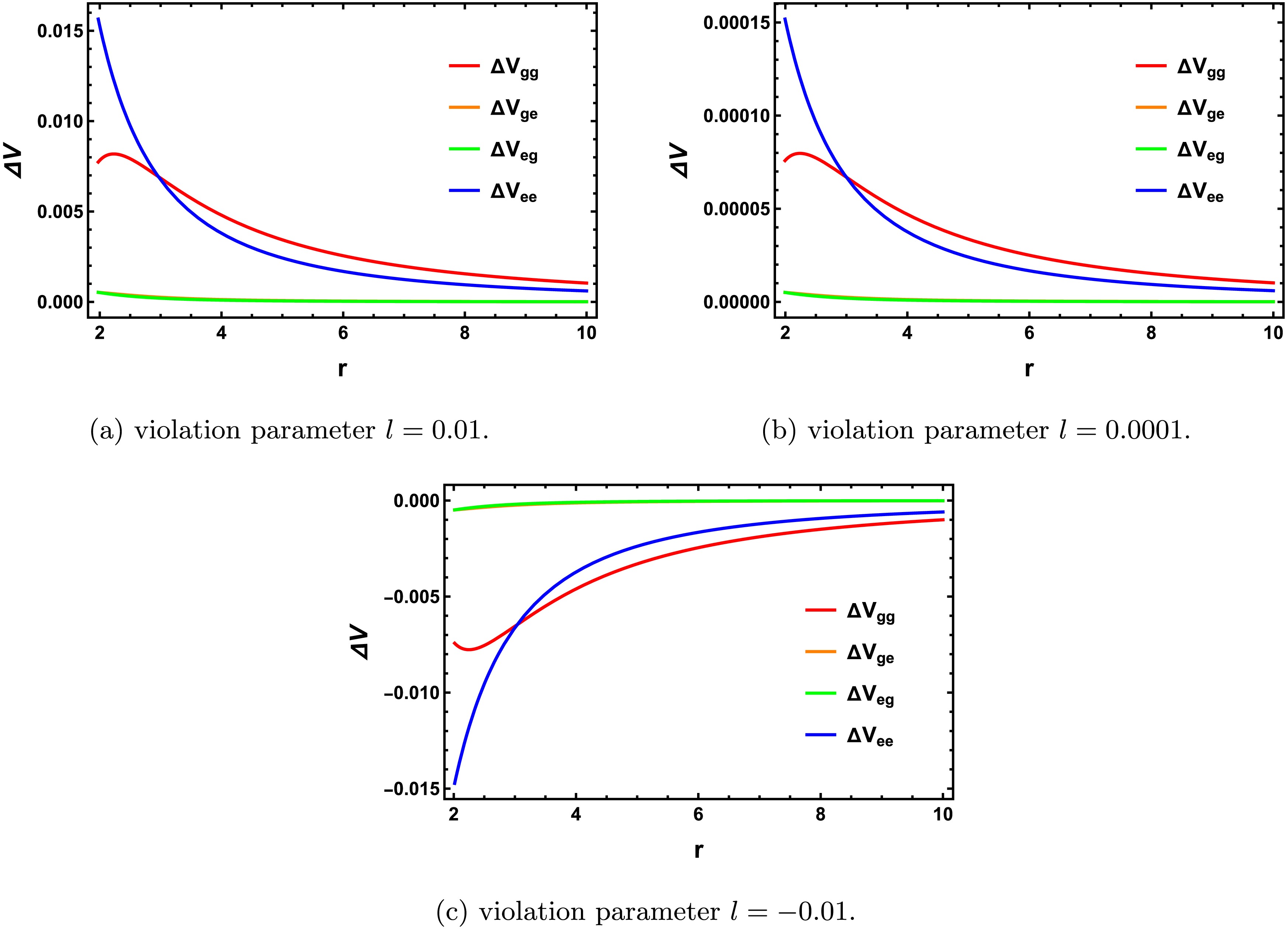
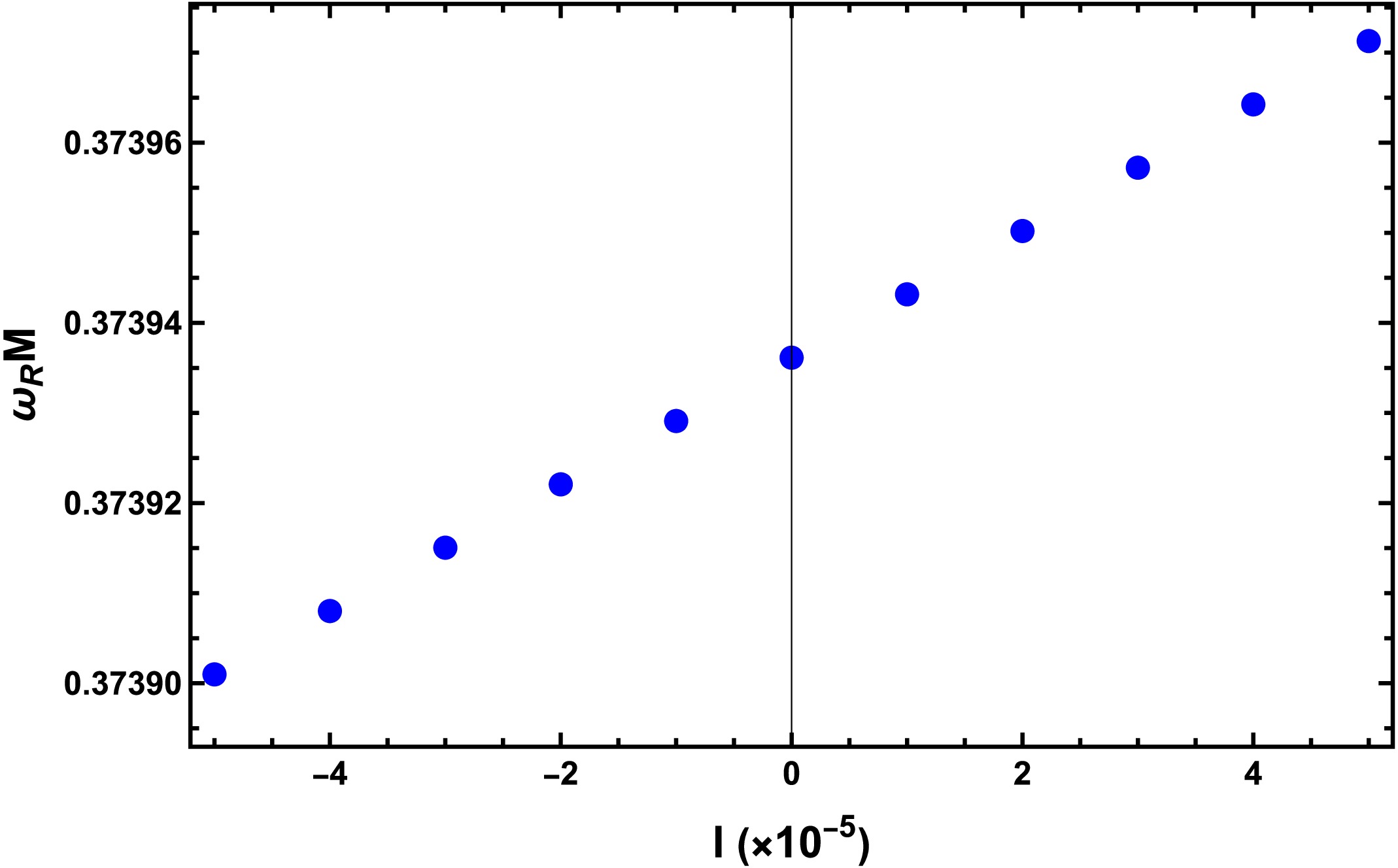
Lorentz violation serves as a significant feature in many modified theories of gravity. In particular, spontaneous Lorentz violation induced by the Kalb-Ramond field has attracted considerable attention. Recently, an electrically charged black hole solution within the Kalb-Ramond framework was proposed. In this study, we investigate the odd-parity quasinormal modes of the resulting non-decouplable system of the gravitational and electromagnetic perturbations using both the matrix-valued continued fraction method and the matrix-valued direct integration method. Additionally, we develop a new approach to distinguish between different modes in such non-decouplable systems. An error analysis is performed, and the influence of Lorentz violation on the fundamental quasinormal modes is systematically analyzed within a suitable parameter range.
Lorentz violation serves as a significant feature in many modified theories of gravity. In particular, spontaneous Lorentz violation induced by the Kalb-Ramond field has attracted considerable attention. Recently, an electrically charged black hole solution within the Kalb-Ramond framework was proposed. In this study, we investigate the odd-parity quasinormal modes of the resulting non-decouplable system of the gravitational and electromagnetic perturbations using both the matrix-valued continued fraction method and the matrix-valued direct integration method. Additionally, we develop a new approach to distinguish between different modes in such non-decouplable systems. An error analysis is performed, and the influence of Lorentz violation on the fundamental quasinormal modes is systematically analyzed within a suitable parameter range.
2026, 50(10): 103104. doi: 10.1088/1674-1137/ae71a9
Abstract:
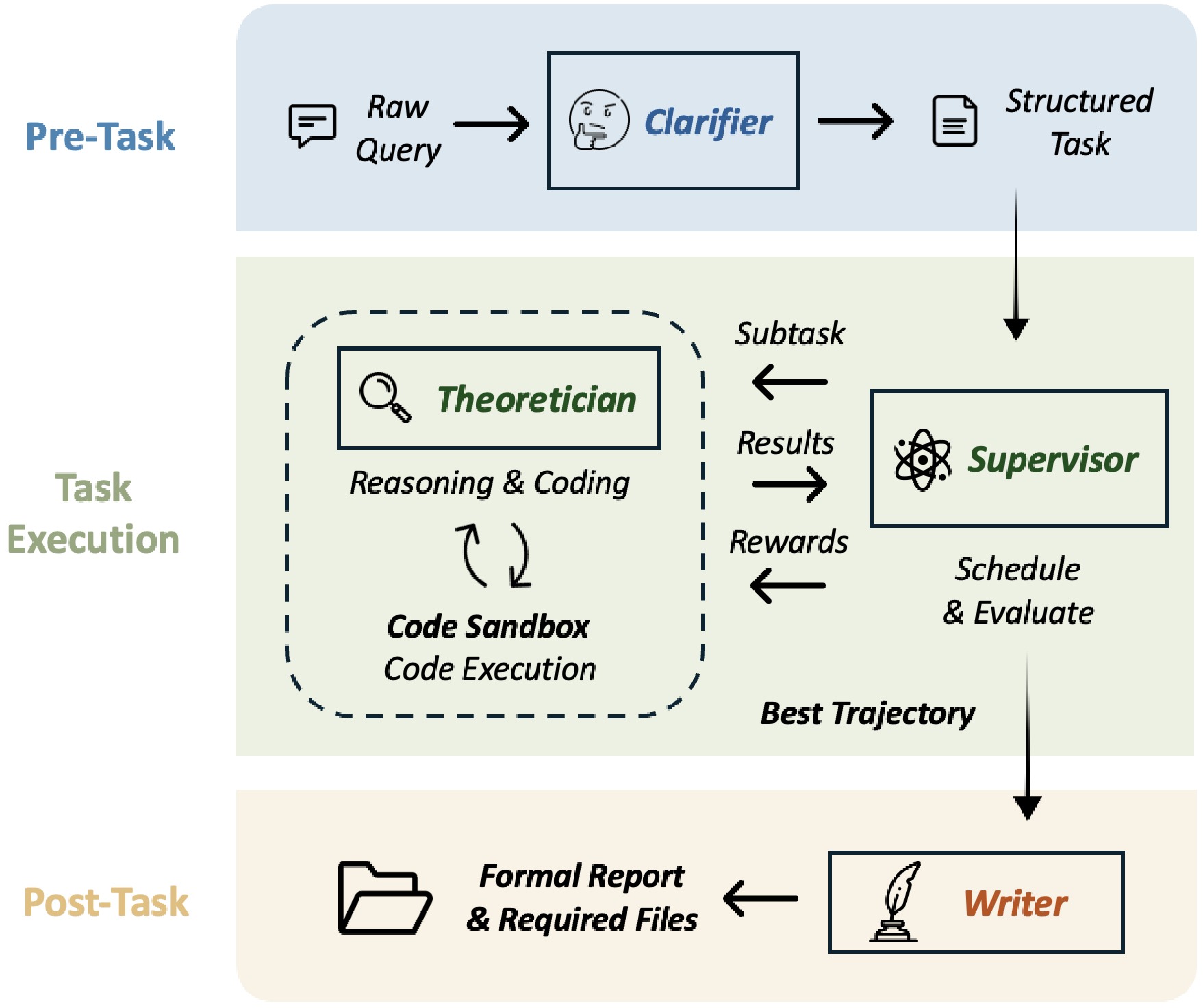
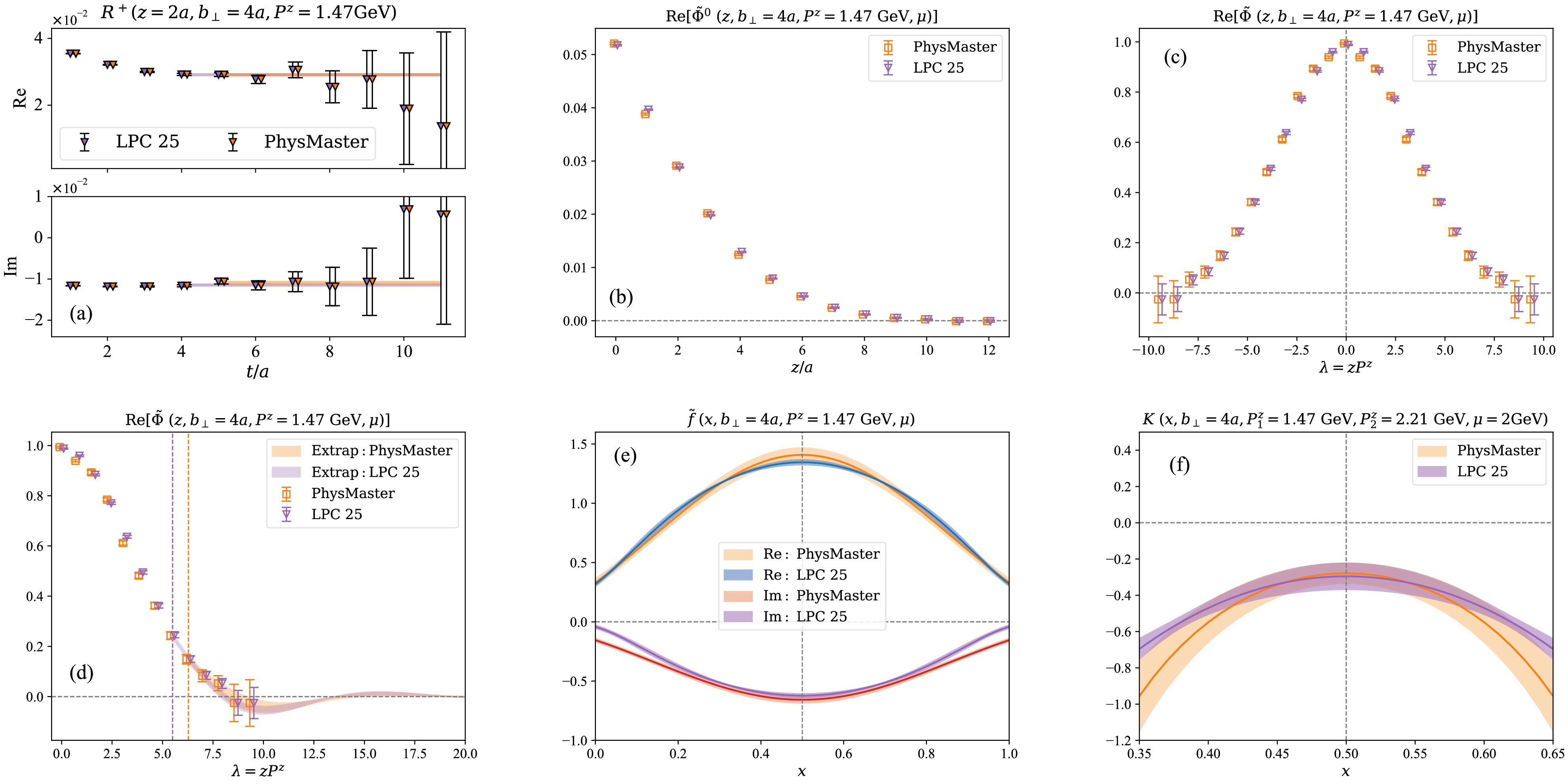
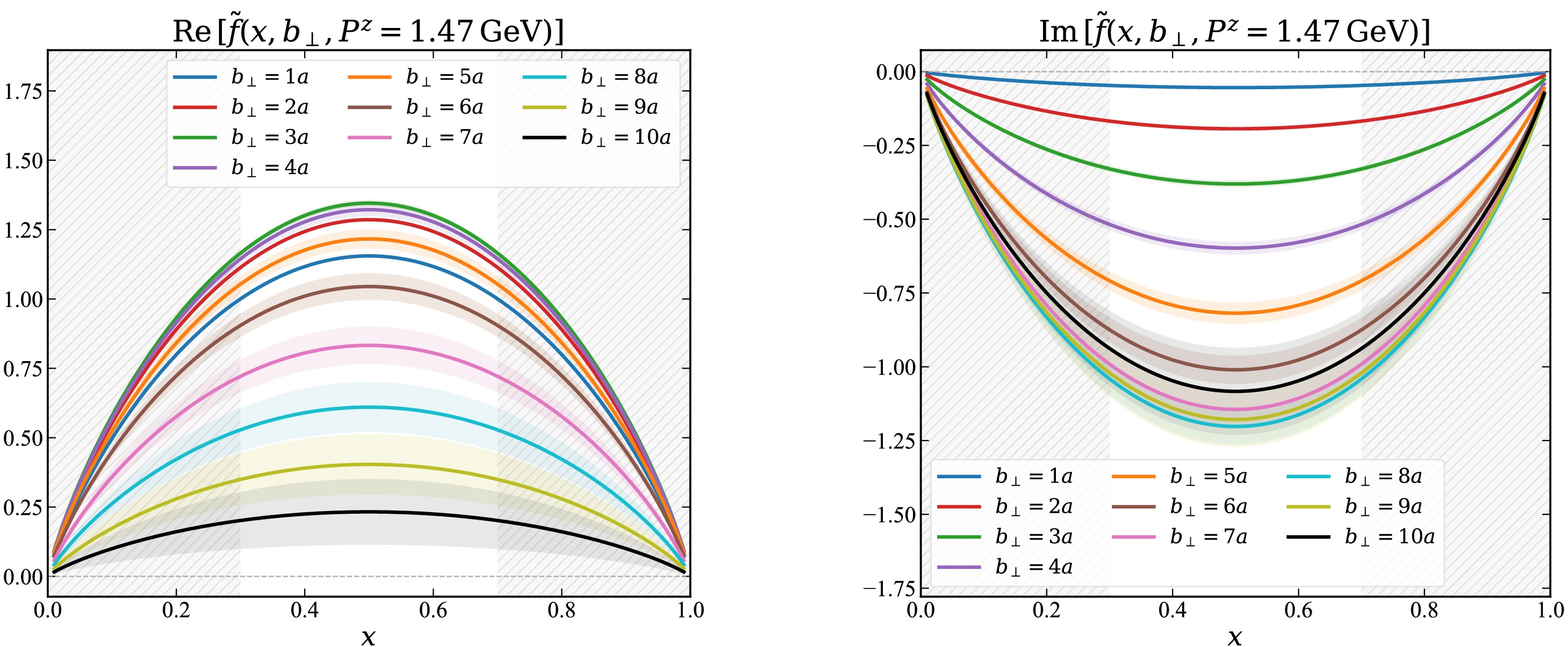
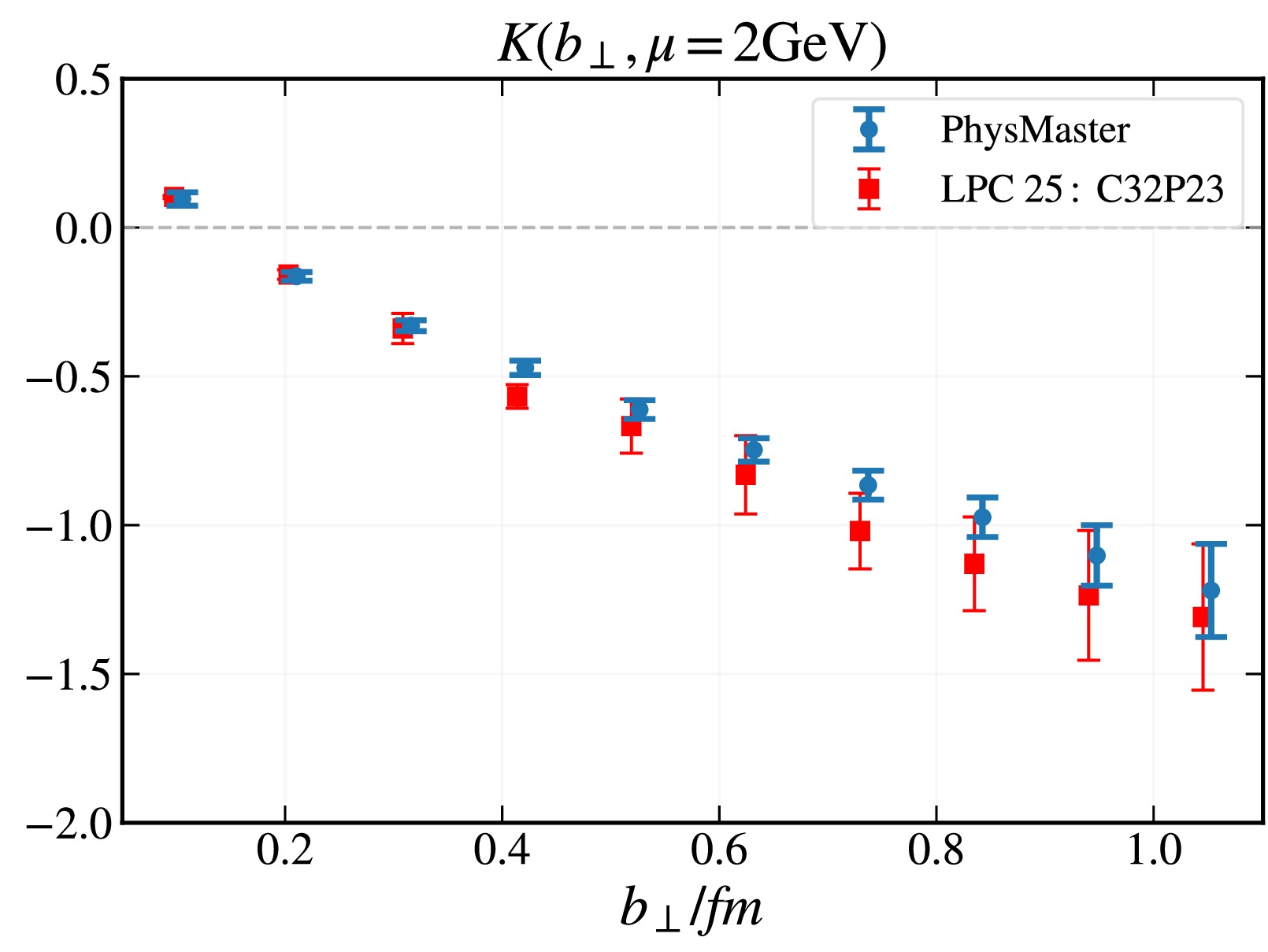
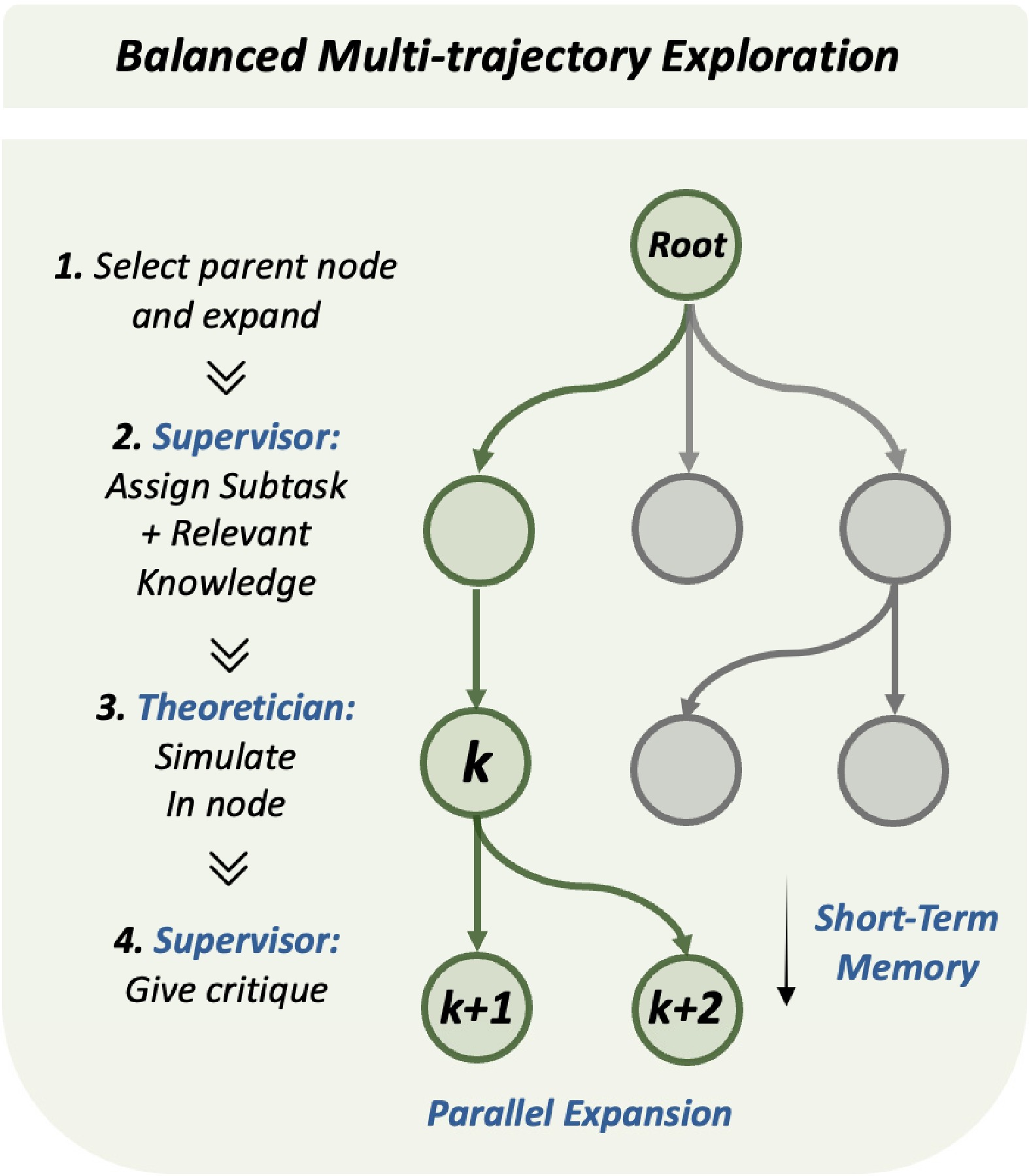
We employ PHYSMASTER, an AI-assisted agentic system that integrates theoretical reasoning, numerical computation, and long-horizon workflow automation, to address long-standing challenges in non-perturbative lattice analyses, including low signal-to-noise ratios at large transverse separations, complex systematic uncertainties, and labor-intensive manual workflows. Using the extraction of the Collins–Soper (CS) kernel from quasi–transverse-momentum-dependent wave functions (quasi-TMDWFs) via large-momentum effective theory (LaMET) as a showcase, we demonstrate that, once the theoretical framework, renormalization prescription, and physically motivated ansätze are specified, PHYSMASTER can automate high-dimensional fitting, renormalization, continuum–chiral extrapolation, and non-perturbative reconstruction. For the dataset considered here, the resulting multi-stage analysis can be completed within a few hours after the lattice correlators are prepared, while yielding results consistent with perturbative QCD and state-of-the-art lattice calculations. The framework stabilizes the large-$ b_\perp$ region out to 1 fm and provides a generalizable, reproducible paradigm for AI-automated studies of parton structure and other non-perturbative observables in lattice QCD.
We employ PHYSMASTER, an AI-assisted agentic system that integrates theoretical reasoning, numerical computation, and long-horizon workflow automation, to address long-standing challenges in non-perturbative lattice analyses, including low signal-to-noise ratios at large transverse separations, complex systematic uncertainties, and labor-intensive manual workflows. Using the extraction of the Collins–Soper (CS) kernel from quasi–transverse-momentum-dependent wave functions (quasi-TMDWFs) via large-momentum effective theory (LaMET) as a showcase, we demonstrate that, once the theoretical framework, renormalization prescription, and physically motivated ansätze are specified, PHYSMASTER can automate high-dimensional fitting, renormalization, continuum–chiral extrapolation, and non-perturbative reconstruction. For the dataset considered here, the resulting multi-stage analysis can be completed within a few hours after the lattice correlators are prepared, while yielding results consistent with perturbative QCD and state-of-the-art lattice calculations. The framework stabilizes the large-$ b_\perp$ region out to 1 fm and provides a generalizable, reproducible paradigm for AI-automated studies of parton structure and other non-perturbative observables in lattice QCD.

2026, 50(10): 103102. doi: 10.1088/1674-1137/ae6b41
Abstract:
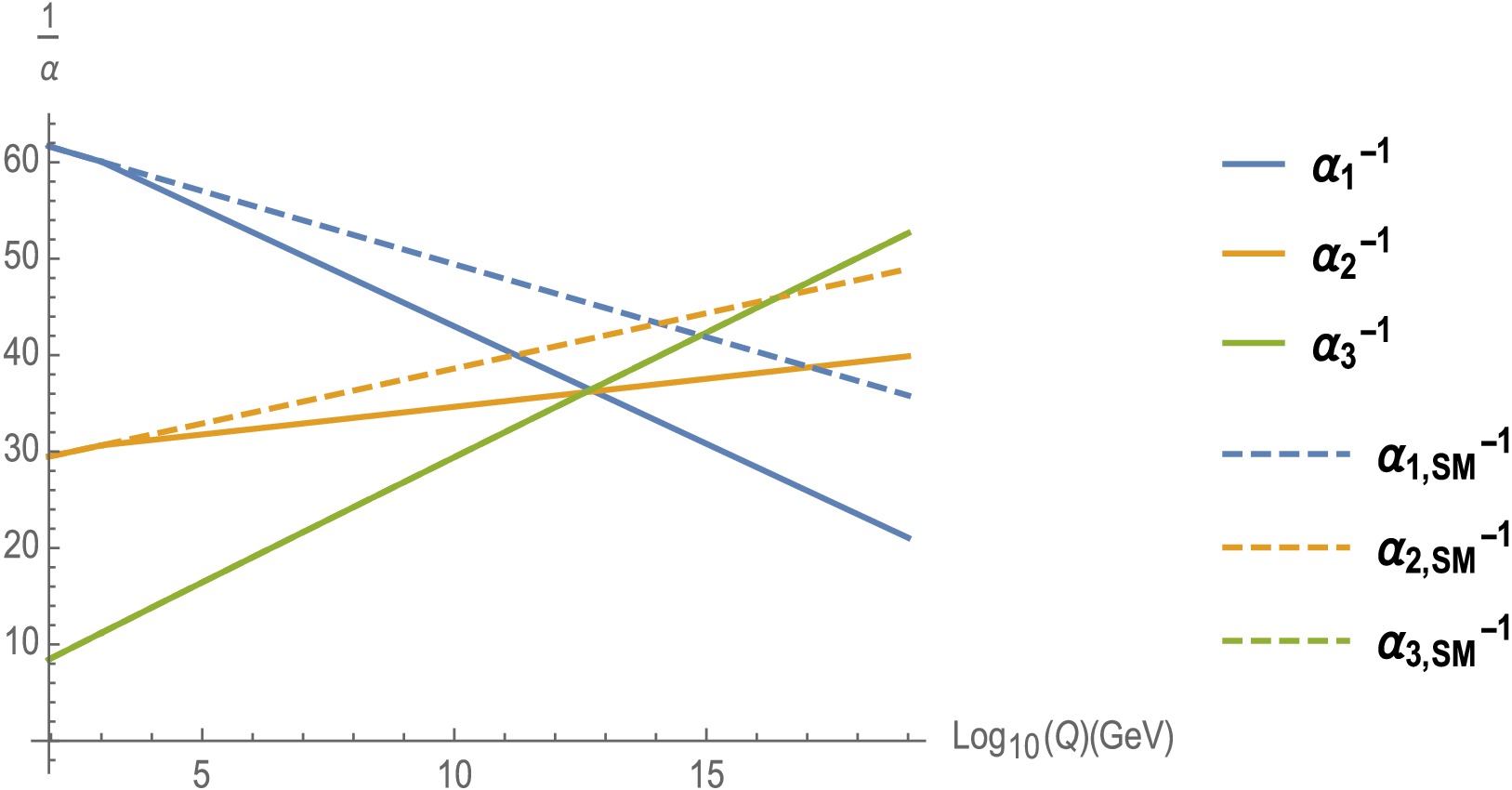
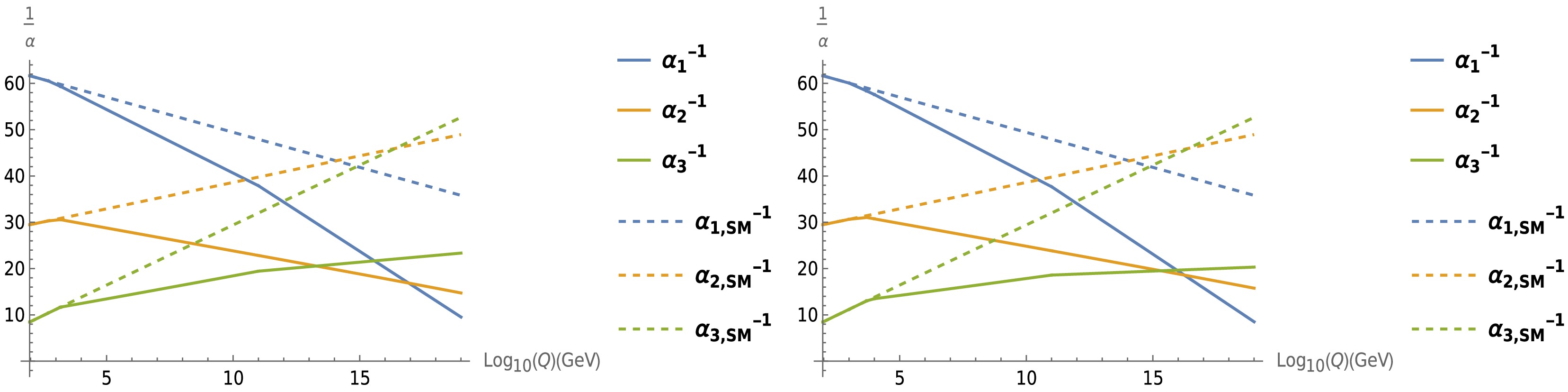
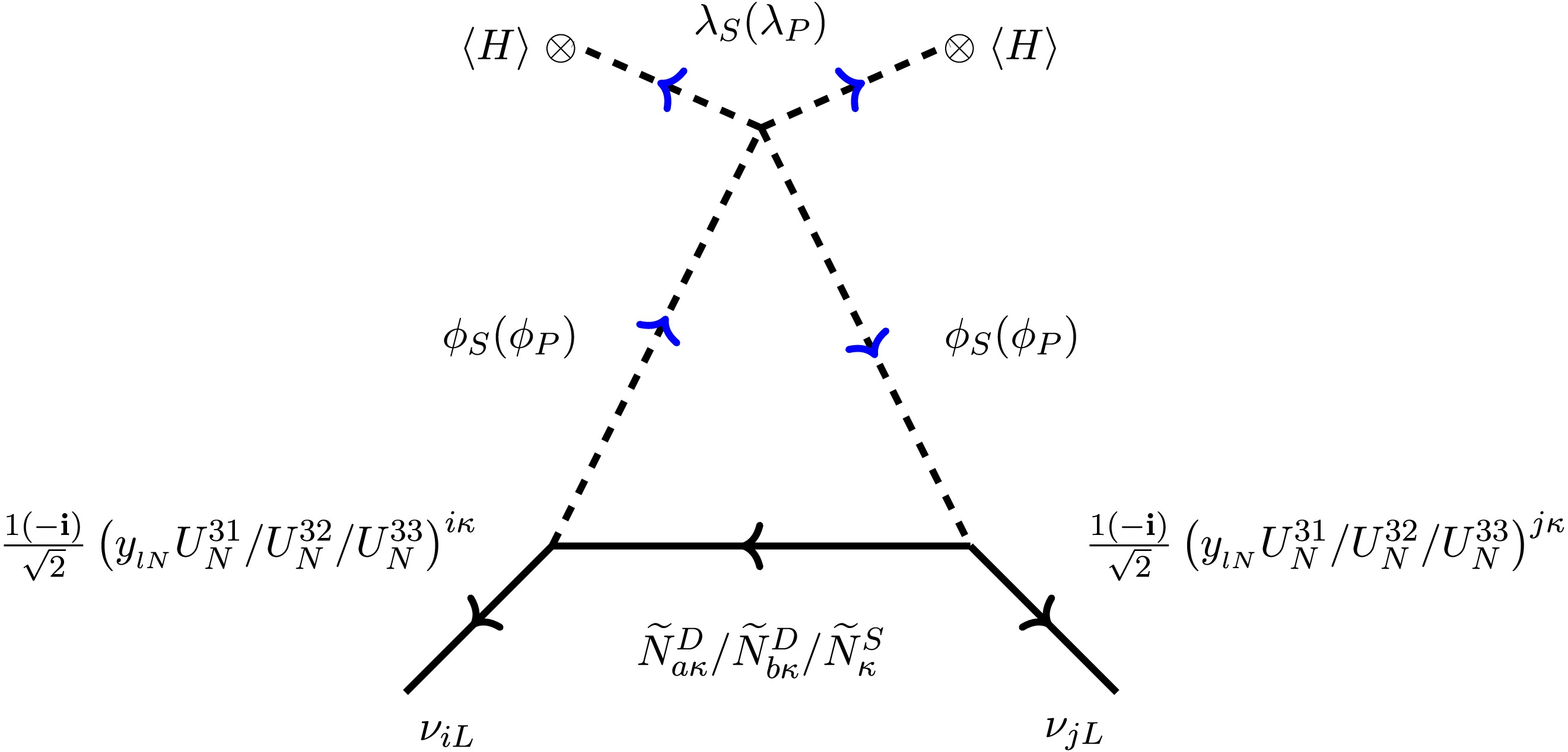
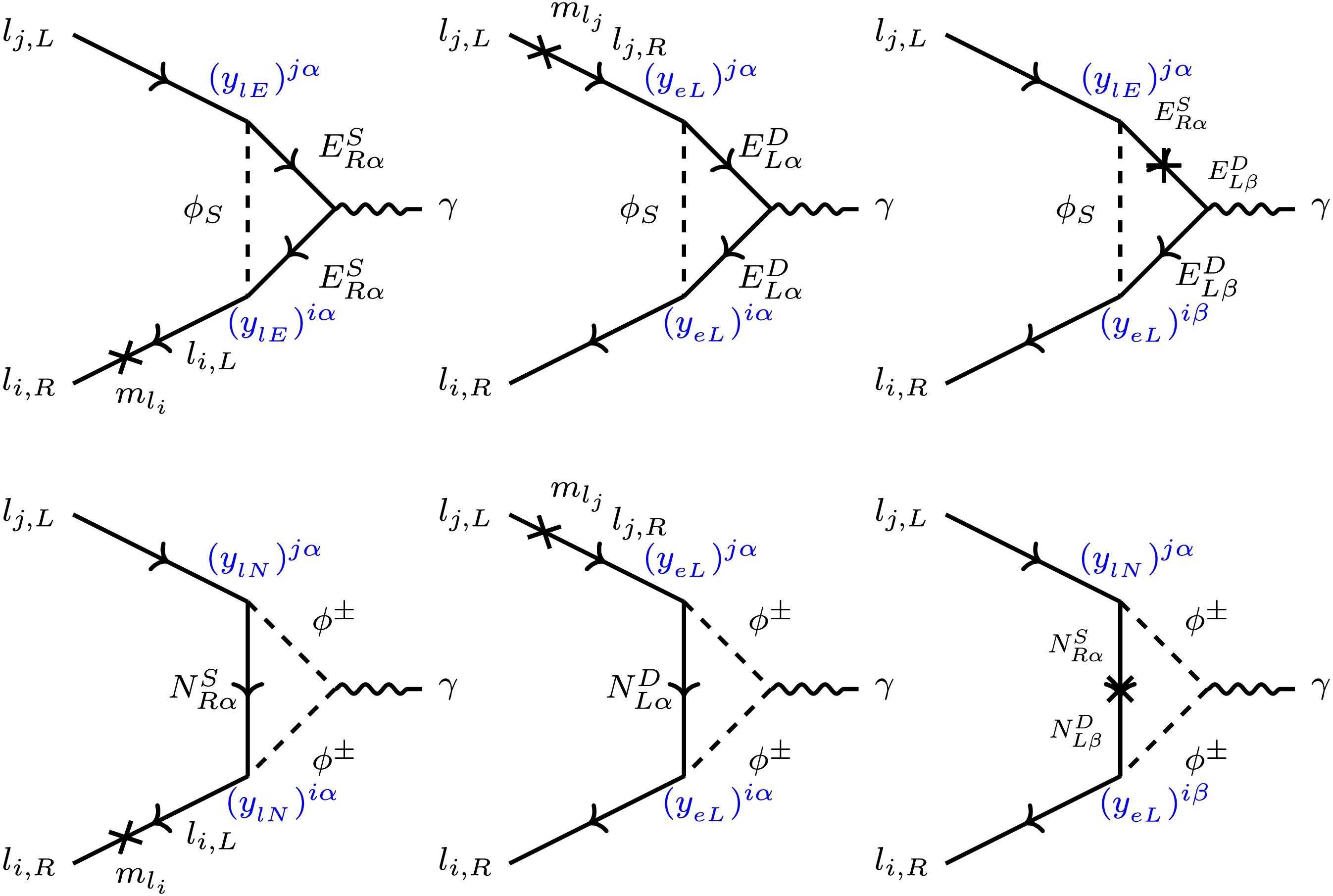
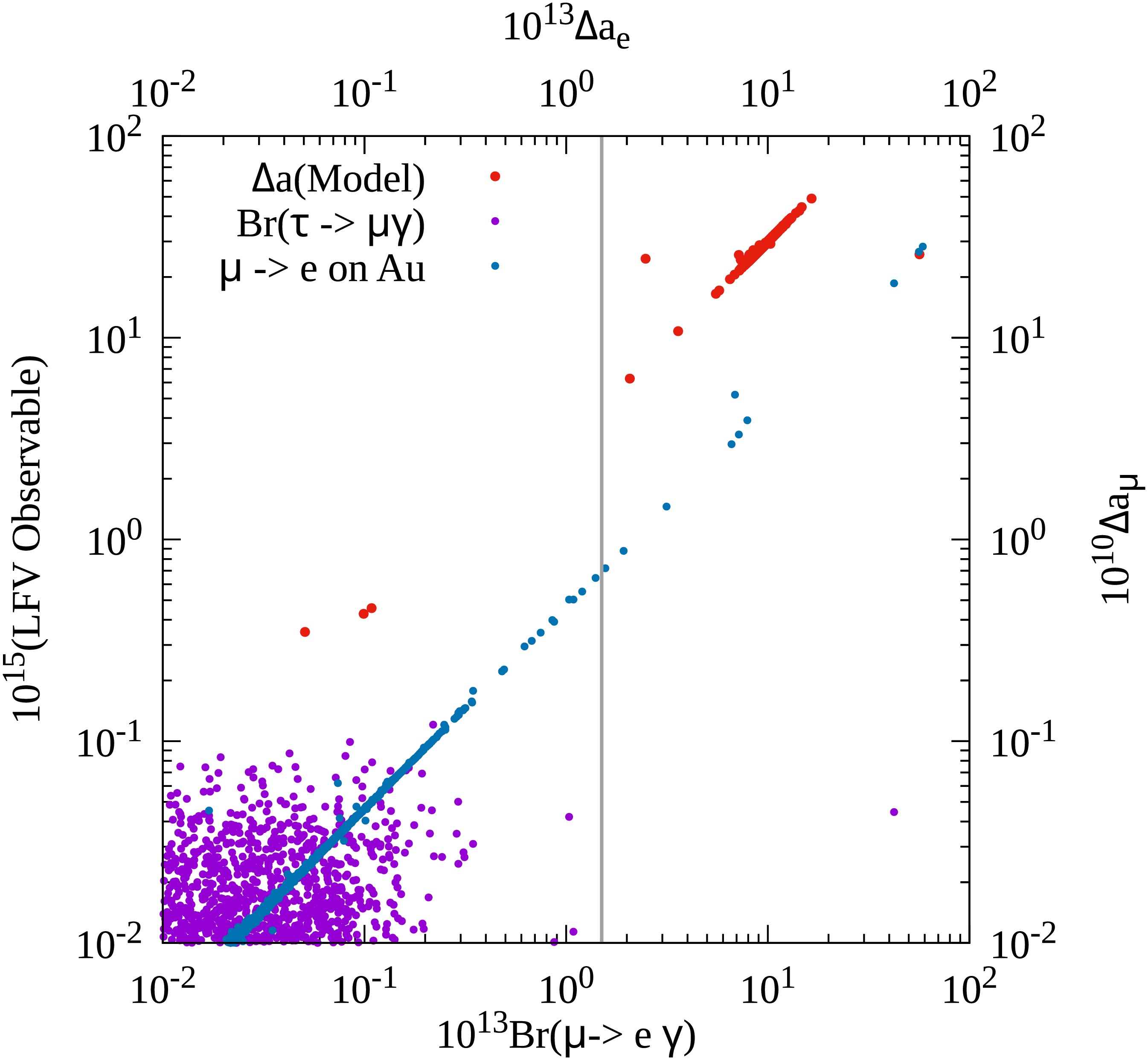
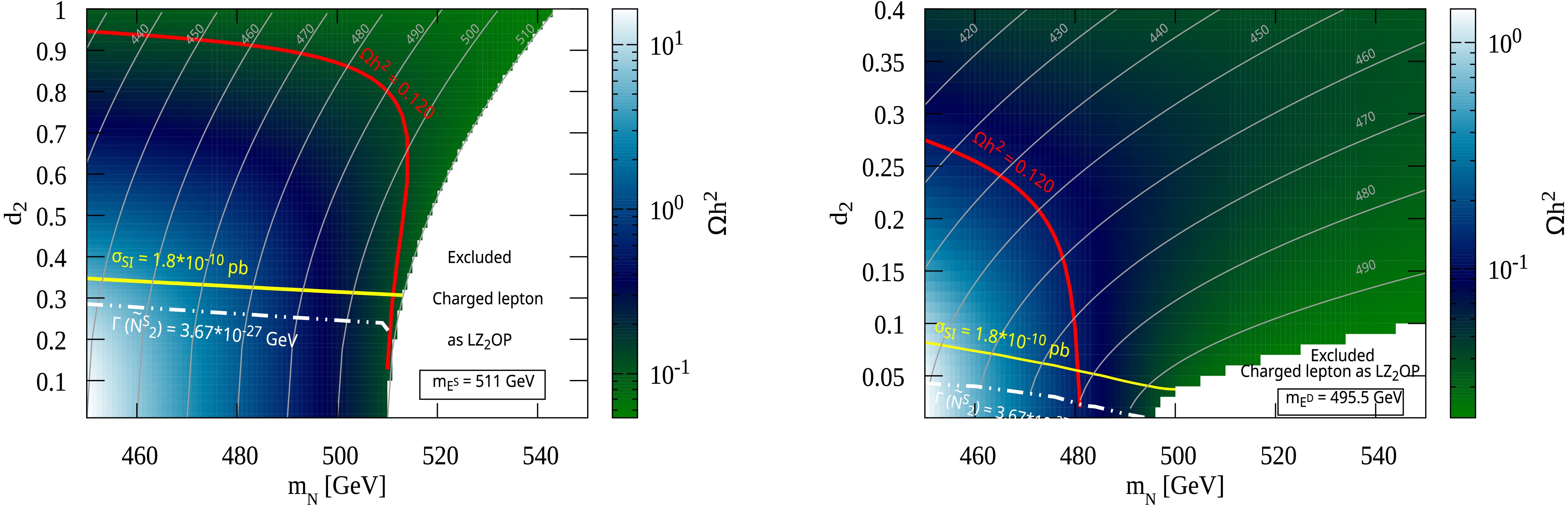
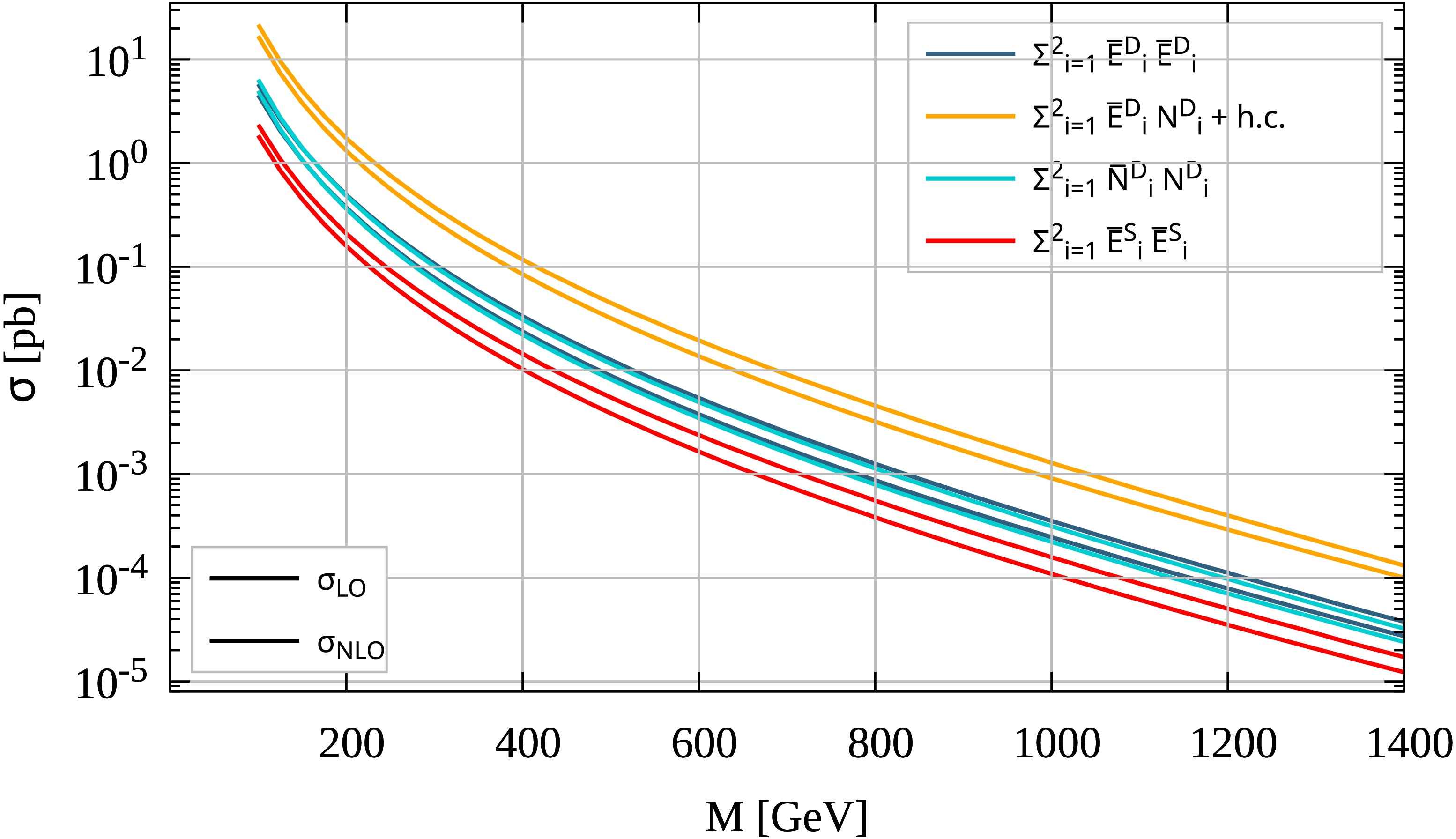
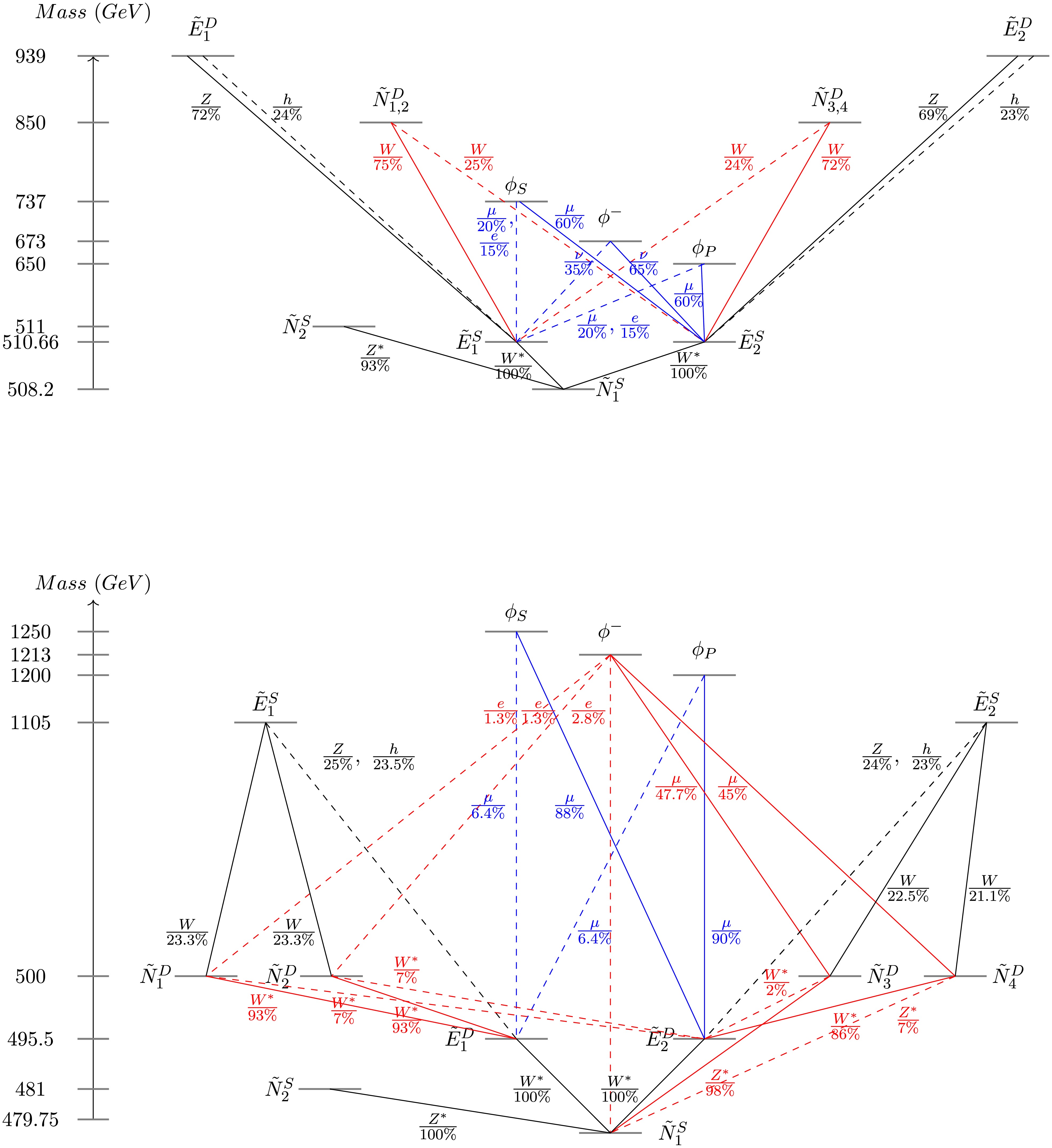
The beyond-the-standard-model scenario presented in this work is motivated by the observations of neutrino masses, the anomalous magnetic moments of the electron and muon, and dark matter in the Universe. We explain these observations by extending the standard model with two generations of vector-like fermions and an inert scalar doublet, all of which are odd under a $Z_2$ symmetry. The light neutrino masses and mixings are generated radiatively while maintaining consistency with bounds on lepton flavor violation. Loop diagrams featuring the same fields also explain the anomalous magnetic moments. Similarly, the correct dark matter relic abundance is reproduced without conflicting with direct detection constraints, or those from big bang nucleosynthesis or cosmic microwave background observations. Finally, prospective signatures at the LHC are discussed.
The beyond-the-standard-model scenario presented in this work is motivated by the observations of neutrino masses, the anomalous magnetic moments of the electron and muon, and dark matter in the Universe. We explain these observations by extending the standard model with two generations of vector-like fermions and an inert scalar doublet, all of which are odd under a $Z_2$ symmetry. The light neutrino masses and mixings are generated radiatively while maintaining consistency with bounds on lepton flavor violation. Loop diagrams featuring the same fields also explain the anomalous magnetic moments. Similarly, the correct dark matter relic abundance is reproduced without conflicting with direct detection constraints, or those from big bang nucleosynthesis or cosmic microwave background observations. Finally, prospective signatures at the LHC are discussed.
2026, 50(10): 103106. doi: 10.1088/1674-1137/ae8005
Abstract:
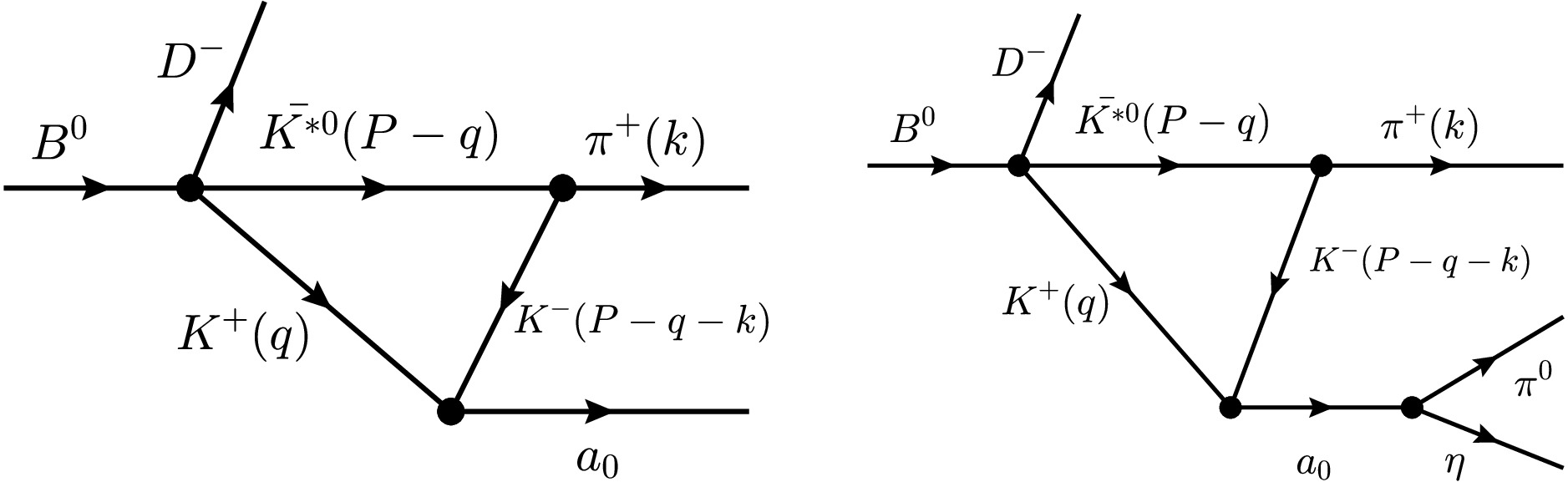
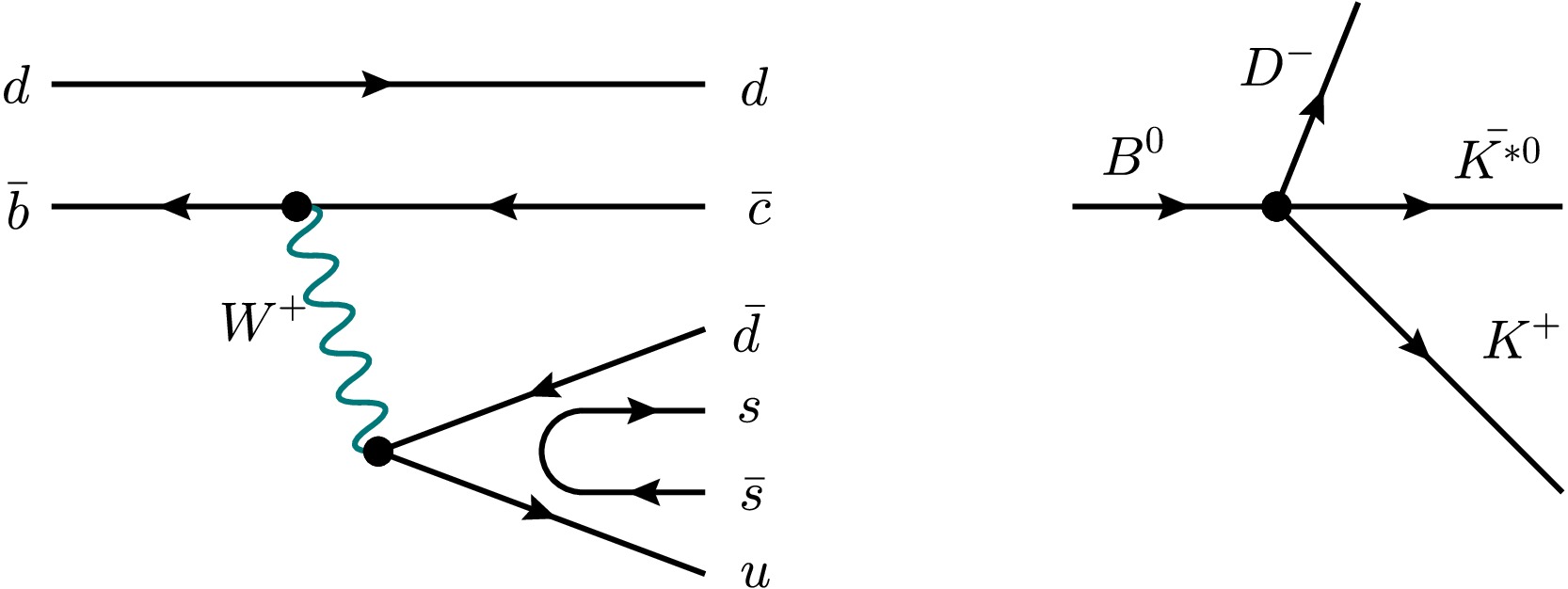
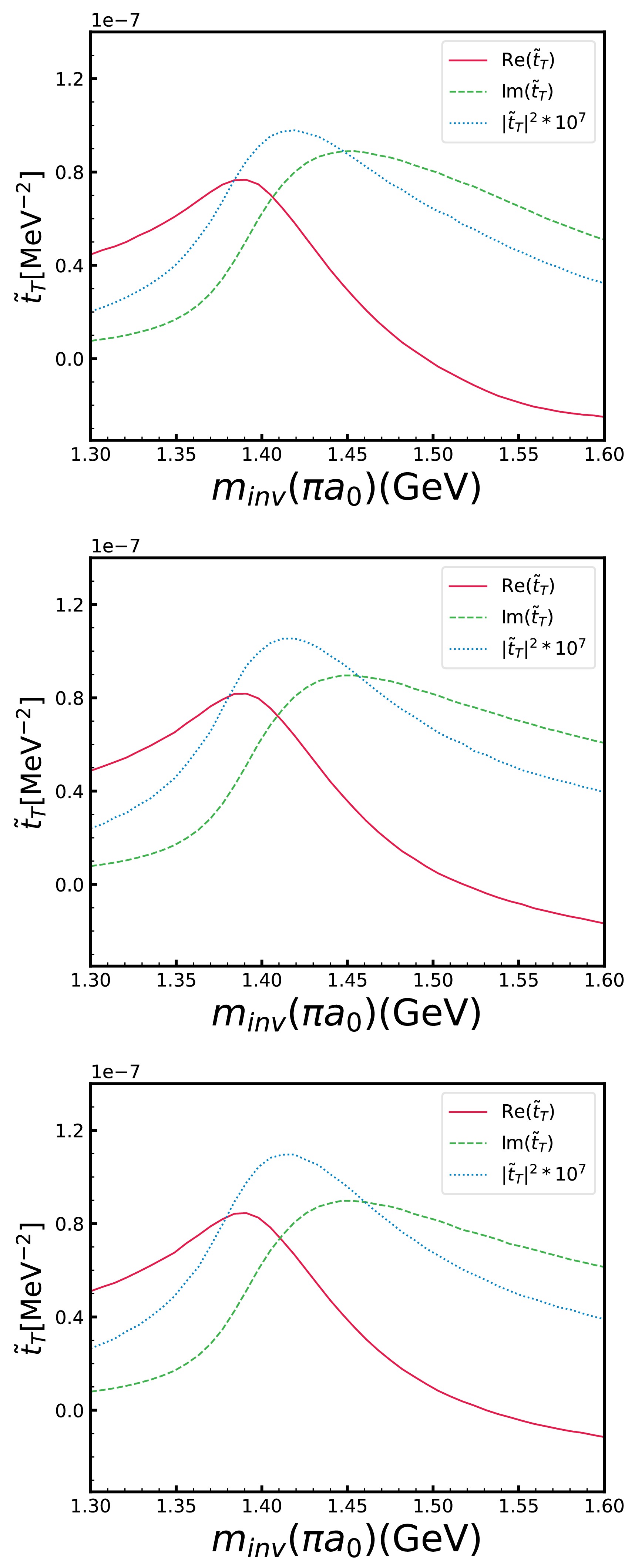
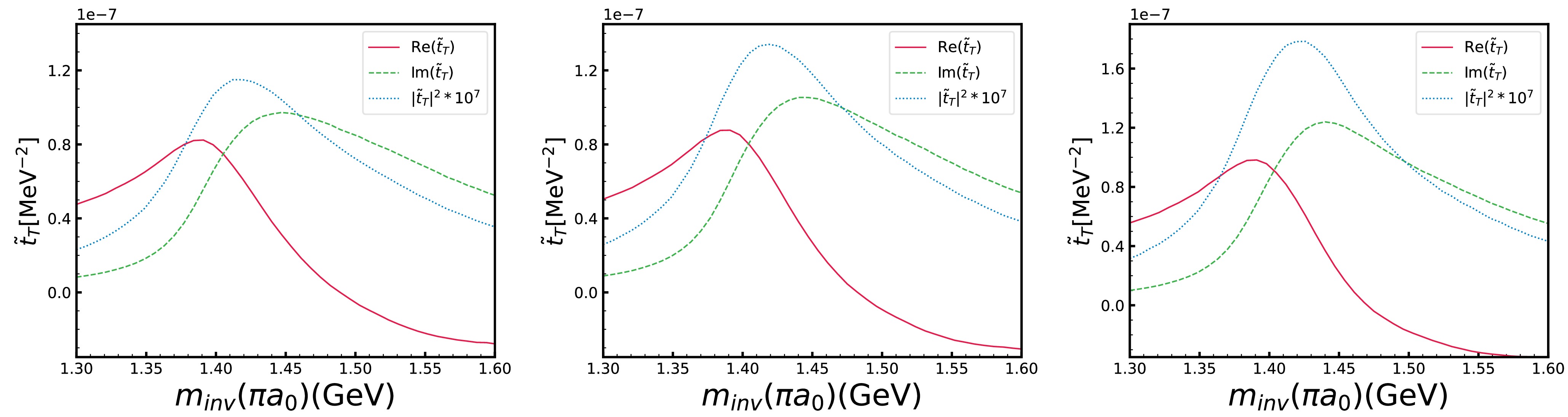
The triangle singularity interpretation of the $a_1(1420)$ observed by the COMPASS Collaboration has been widely accepted. In this work, we investigate the triangle mechanism in the decay $B^0 \to D^- \pi^+ a_0(980)(\pi^0 \eta)$, where the $a_0(980)$ is treated as a dynamically generated state. The $\bar{K}^{*0}$-$K^+$-$K^-$ triangle loop originates from the decay $B^0 \to D^- K^+ \bar{K}^{*0}$, which has been observed by the Belle Collaboration, followed by the subsequent decay $\bar{K}^{*0} \to K^- \pi^+$. The triangle amplitude develops a pronounced peak around 1420 MeV, which is reflected in the invariant mass spectrum of the $\pi a_0(980)$ system. The differential decay width is calculated and exhibits a narrow peak around $980~\mathrm{MeV}$ in the $\pi^0 \eta$ invariant mass distribution. Furthermore, the invariant mass distribution of the $\pi^+ \pi^0 \eta$ system shows a clear peak around $1420~\mathrm{MeV}$, which further confirms the triangle singularity explanation of the $a_1(1420)$. We expect that the proposed $B^0$ decay mode could provide a potential platform for further exploring the triangle-singularity nature of the $a_1(1420)$ and could be tested in future experiments such as LHCb, BESIII, and Belle II.
The triangle singularity interpretation of the $a_1(1420)$ observed by the COMPASS Collaboration has been widely accepted. In this work, we investigate the triangle mechanism in the decay $B^0 \to D^- \pi^+ a_0(980)(\pi^0 \eta)$, where the $a_0(980)$ is treated as a dynamically generated state. The $\bar{K}^{*0}$-$K^+$-$K^-$ triangle loop originates from the decay $B^0 \to D^- K^+ \bar{K}^{*0}$, which has been observed by the Belle Collaboration, followed by the subsequent decay $\bar{K}^{*0} \to K^- \pi^+$. The triangle amplitude develops a pronounced peak around 1420 MeV, which is reflected in the invariant mass spectrum of the $\pi a_0(980)$ system. The differential decay width is calculated and exhibits a narrow peak around $980~\mathrm{MeV}$ in the $\pi^0 \eta$ invariant mass distribution. Furthermore, the invariant mass distribution of the $\pi^+ \pi^0 \eta$ system shows a clear peak around $1420~\mathrm{MeV}$, which further confirms the triangle singularity explanation of the $a_1(1420)$. We expect that the proposed $B^0$ decay mode could provide a potential platform for further exploring the triangle-singularity nature of the $a_1(1420)$ and could be tested in future experiments such as LHCb, BESIII, and Belle II.
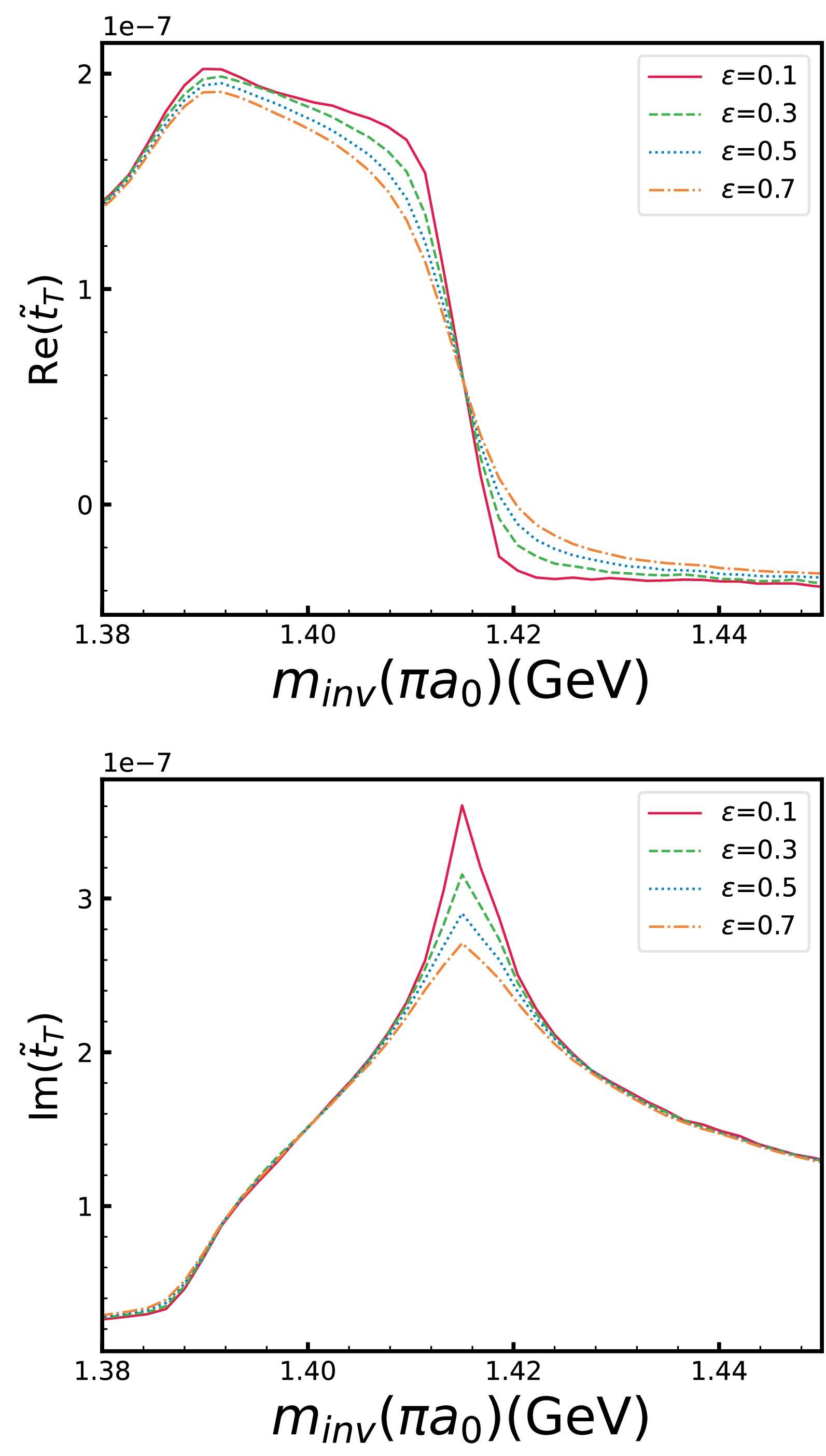
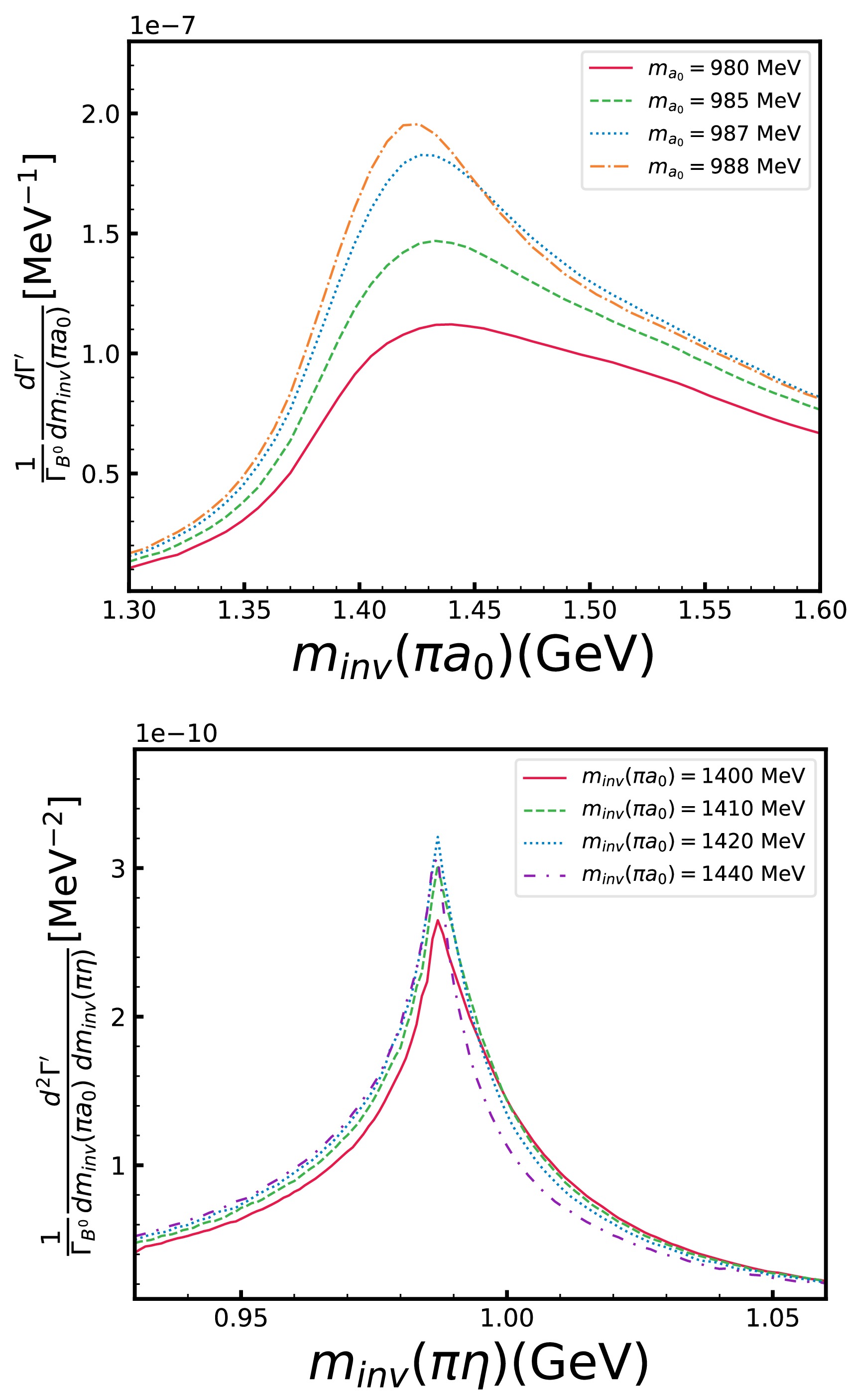
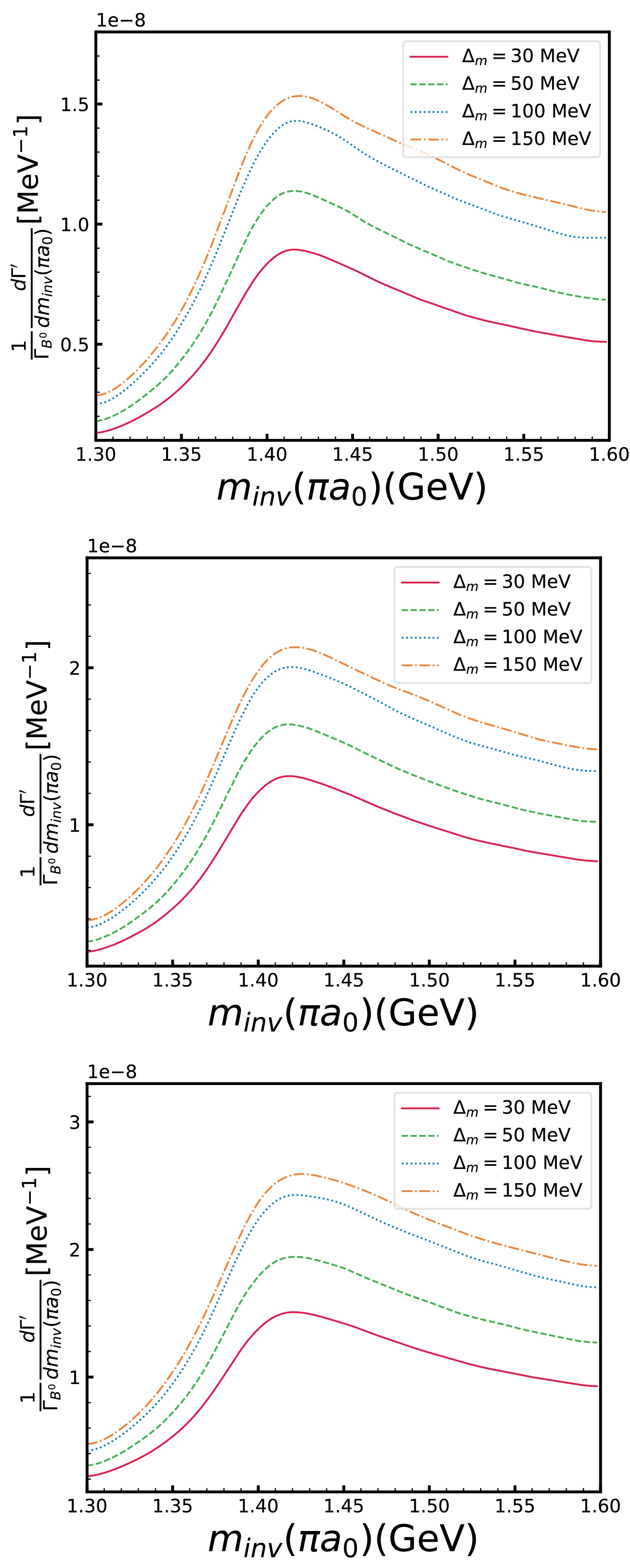
2026, 50(10): 103101. doi: 10.1088/1674-1137/ae8004
Abstract:
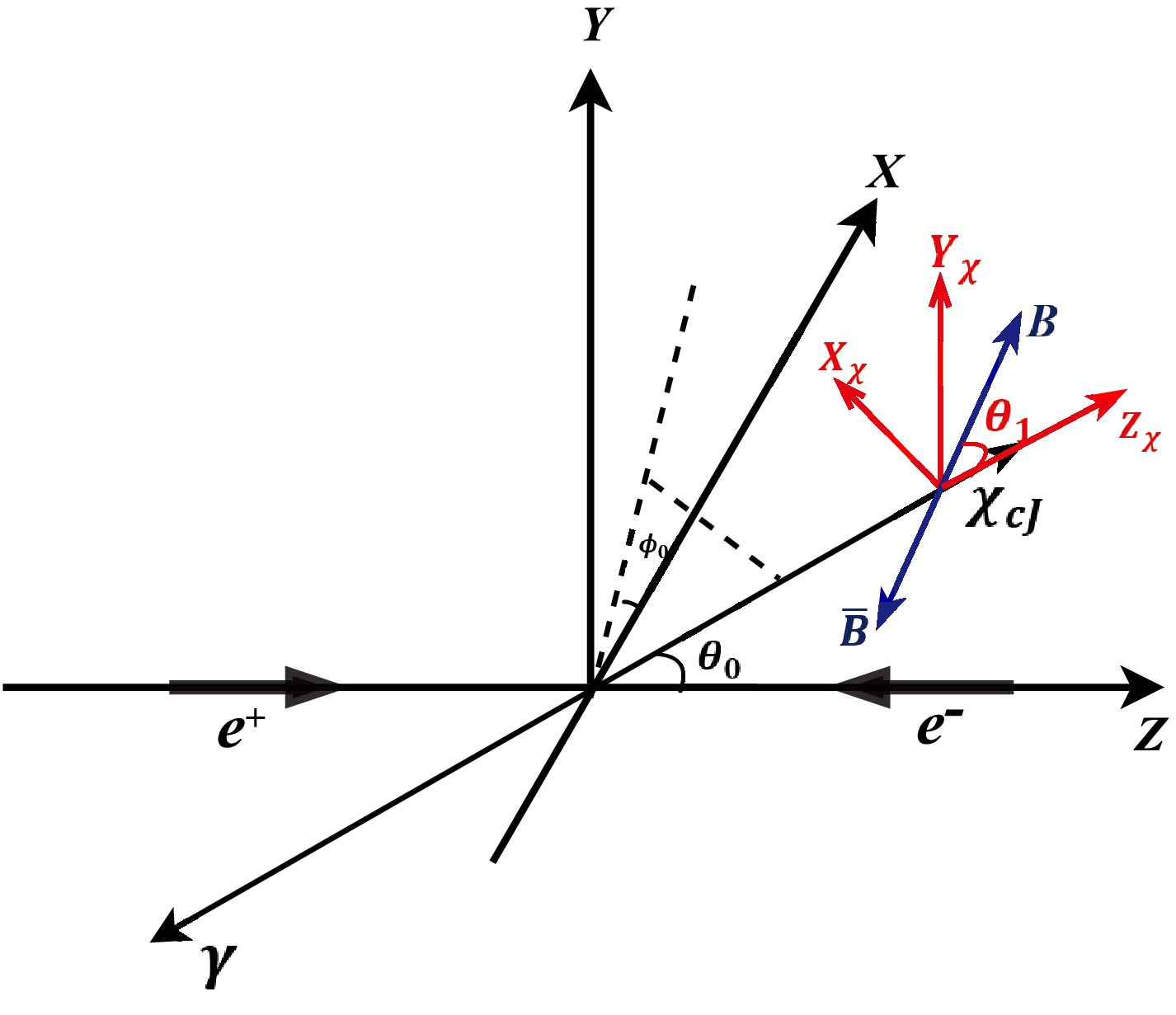
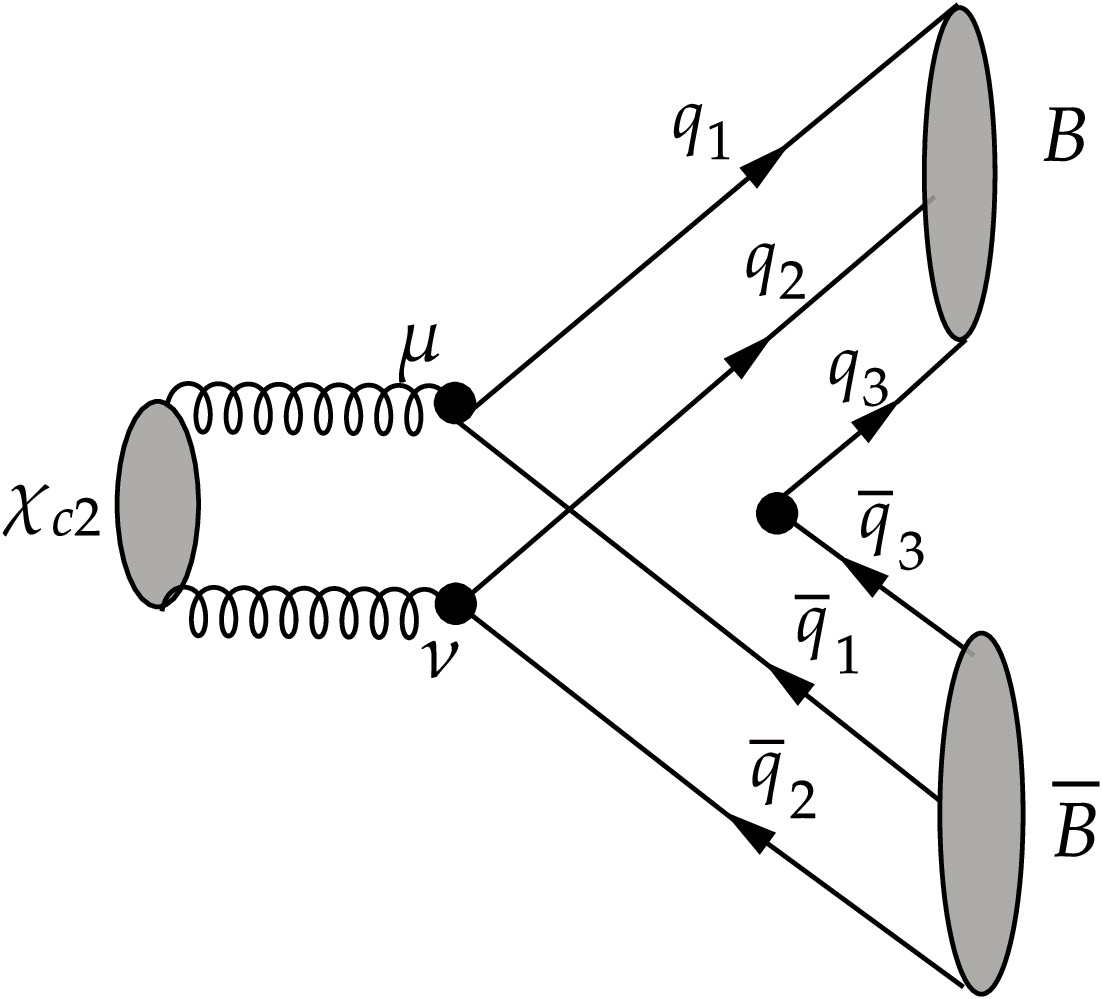
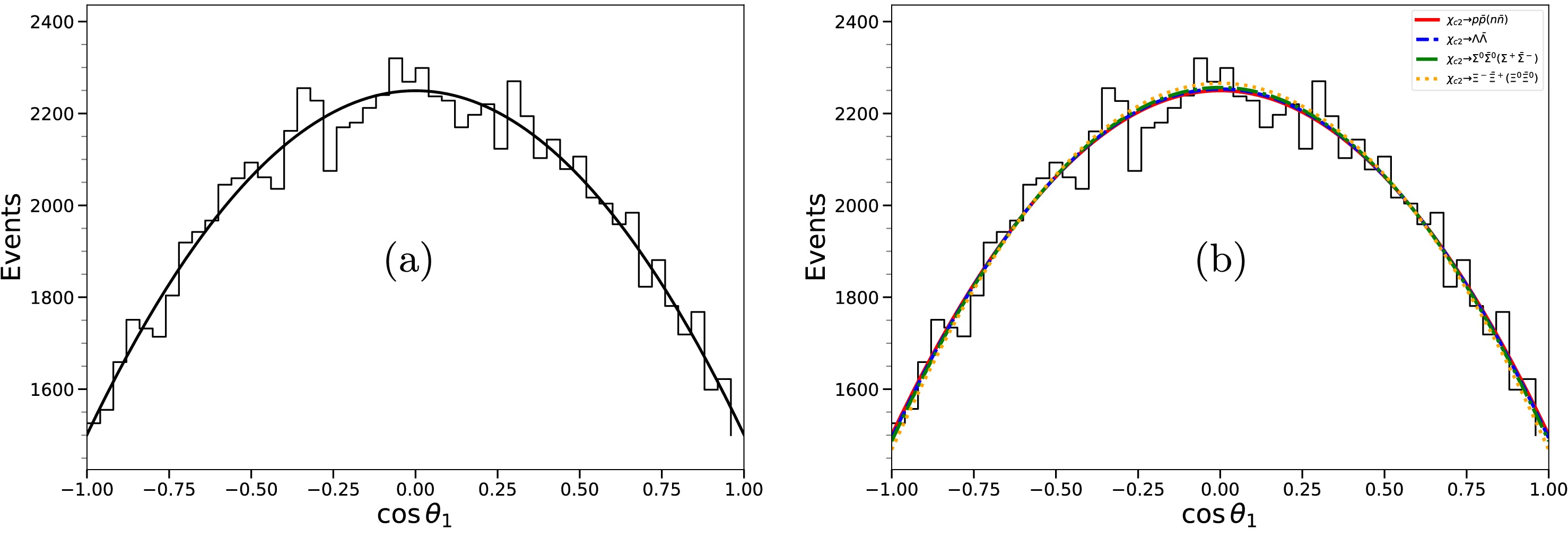
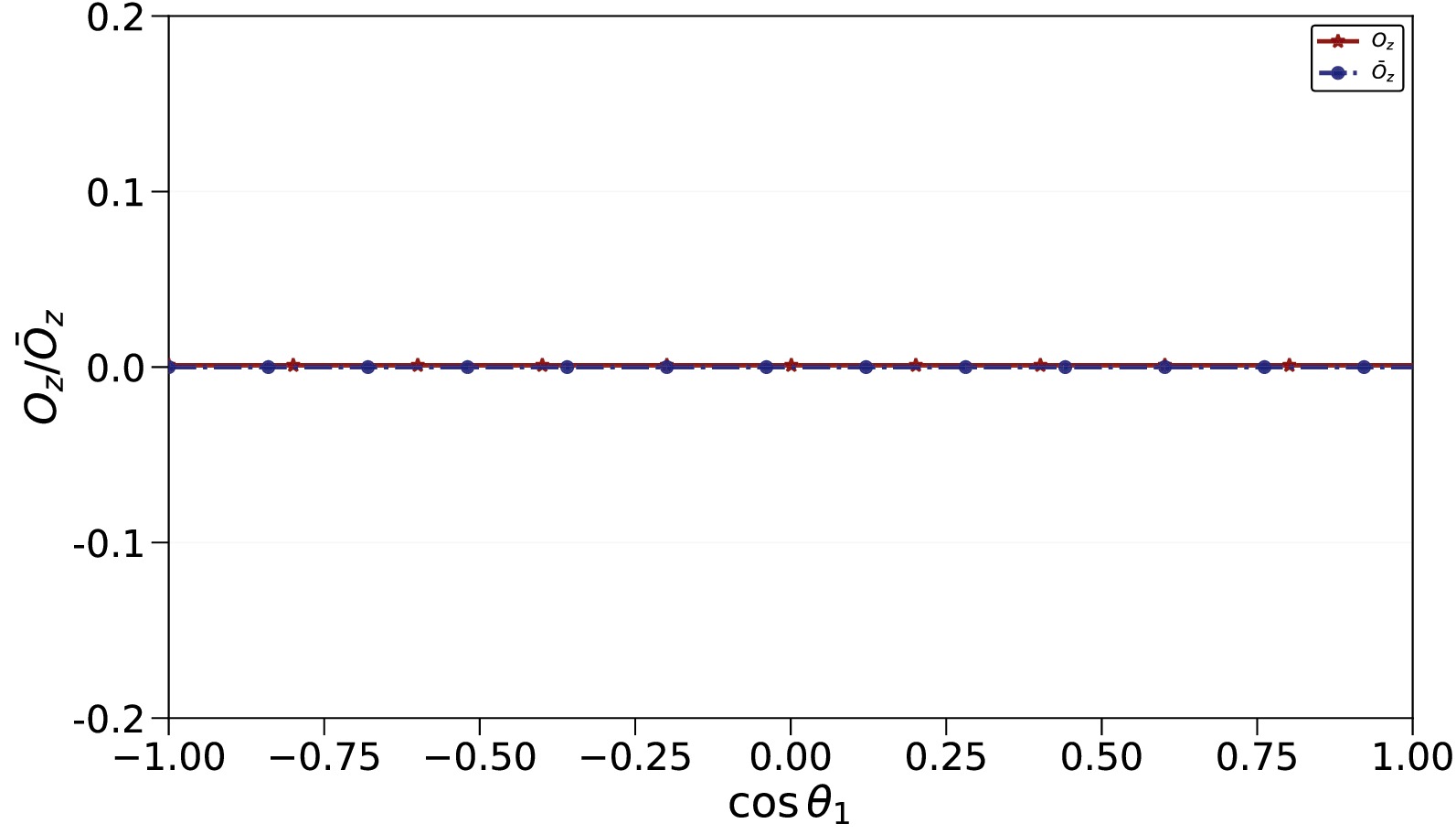
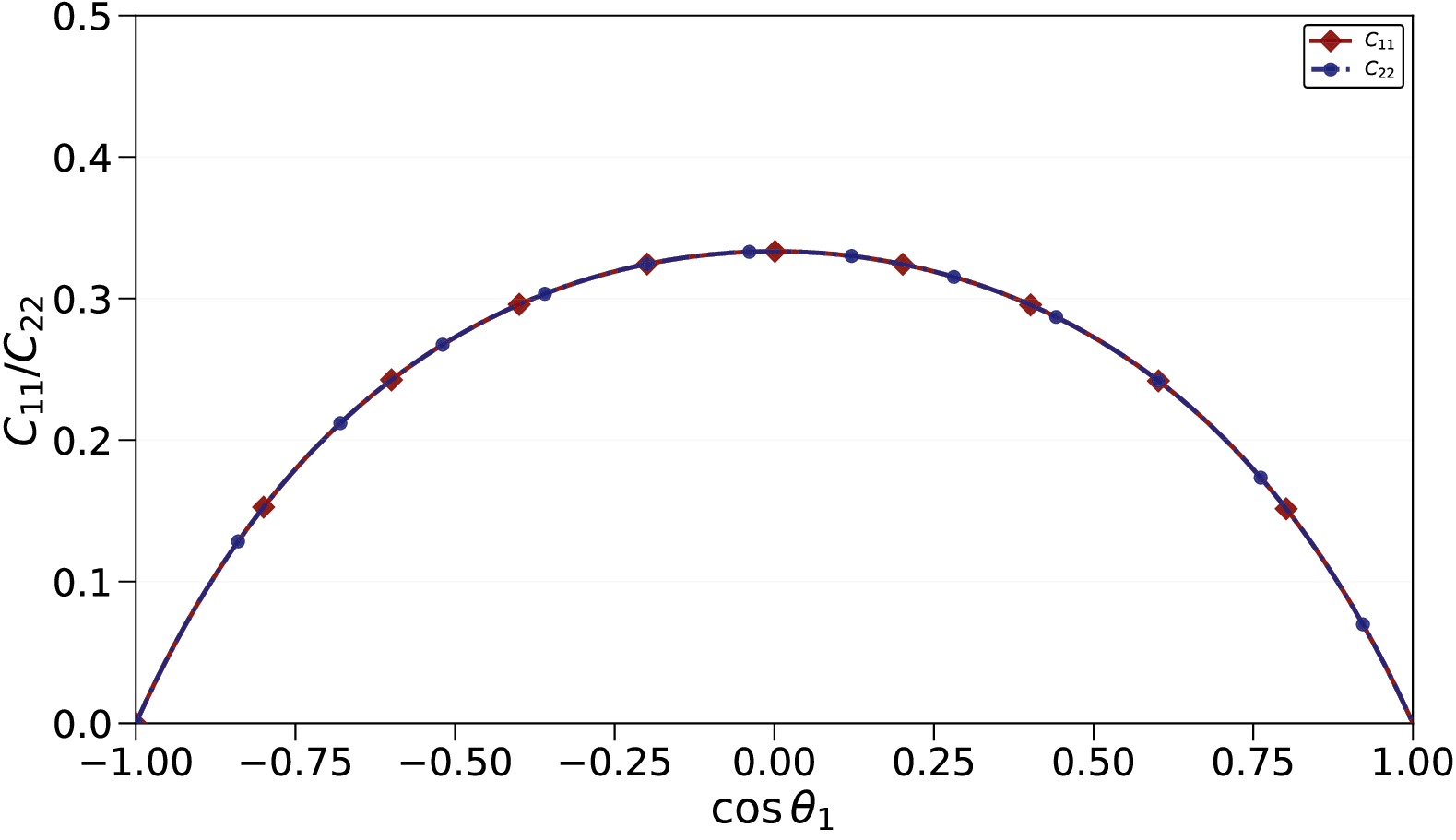
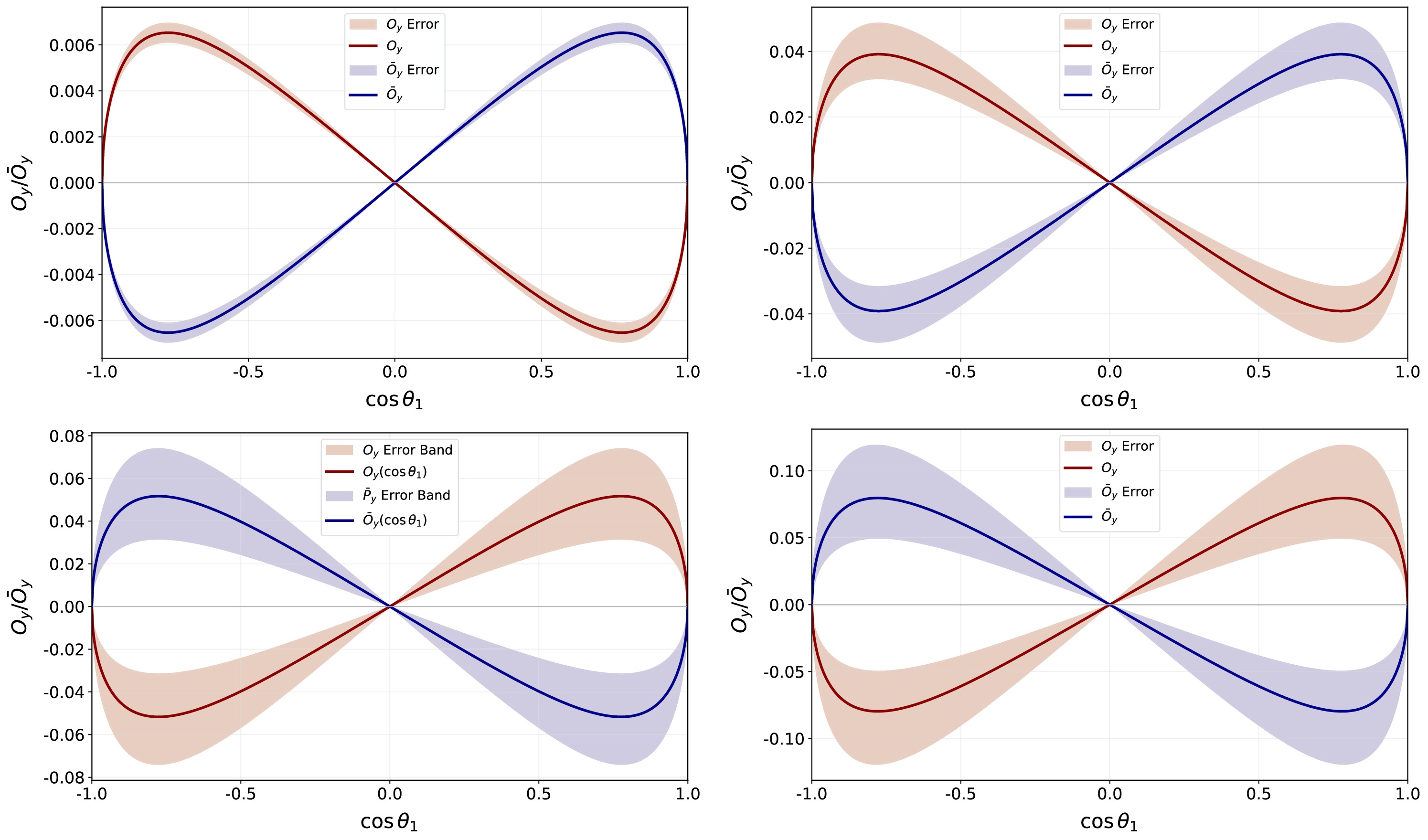
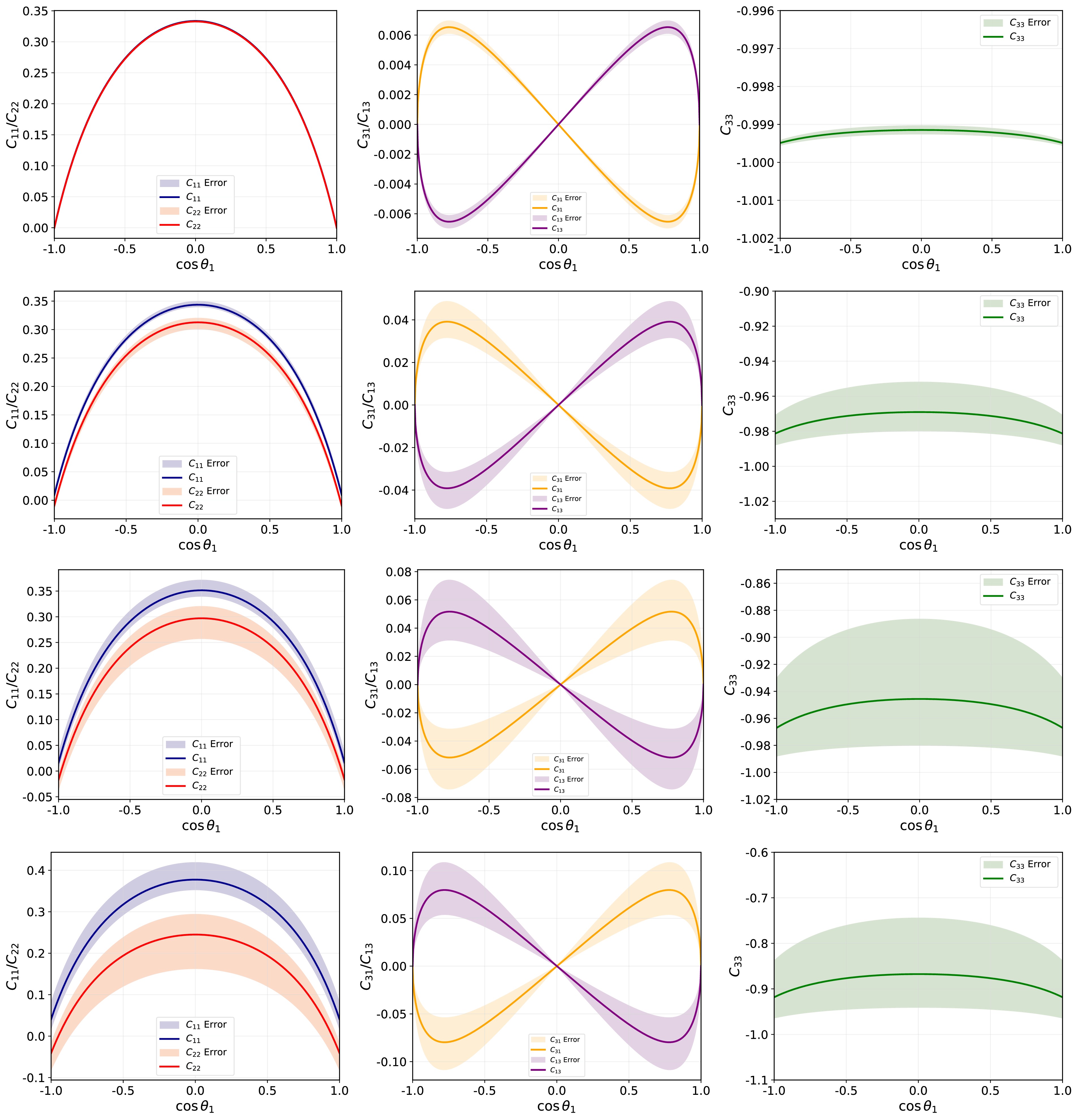
This work presents a comprehensive analysis of polarization transfer in the decays of $\chi_{cJ}$ ($J=0,1,2$) into octet baryon-antibaryon pairs in polarized electron-positron collisions. Using the spin density matrix formalism, we trace the polarization from the initial beams through the production chain $e^+e^- \to \psi(2S) \to \gamma \chi_{cJ}$ to the final-state baryon-antibaryon system. The helicity amplitude analysis for $\chi_{c1} \to B\bar{B}$ confirms the universal angular distribution parameter $\alpha = -1/3$, as dictated by the charge-conjugation helicity selection rule. For $\chi_{c2}$ decays, α and the transverse polarization depend on two independent amplitudes, and our quark-model calculations agree with existing data. We demonstrate that the longitudinal beam polarization $P_z$ modifies the spin observables for $\chi_{c1}$ and $\chi_{c2}$. This offers new experimental handles at future polarized facilities, such as the Super τ-Charm Facility (STCF), to test decay mechanisms and explore baryonic spin entanglement as a quantum information resource.
This work presents a comprehensive analysis of polarization transfer in the decays of $\chi_{cJ}$ ($J=0,1,2$) into octet baryon-antibaryon pairs in polarized electron-positron collisions. Using the spin density matrix formalism, we trace the polarization from the initial beams through the production chain $e^+e^- \to \psi(2S) \to \gamma \chi_{cJ}$ to the final-state baryon-antibaryon system. The helicity amplitude analysis for $\chi_{c1} \to B\bar{B}$ confirms the universal angular distribution parameter $\alpha = -1/3$, as dictated by the charge-conjugation helicity selection rule. For $\chi_{c2}$ decays, α and the transverse polarization depend on two independent amplitudes, and our quark-model calculations agree with existing data. We demonstrate that the longitudinal beam polarization $P_z$ modifies the spin observables for $\chi_{c1}$ and $\chi_{c2}$. This offers new experimental handles at future polarized facilities, such as the Super τ-Charm Facility (STCF), to test decay mechanisms and explore baryonic spin entanglement as a quantum information resource.
2026, 50(10): 103107. doi: 10.1088/1674-1137/ae8006
Abstract:
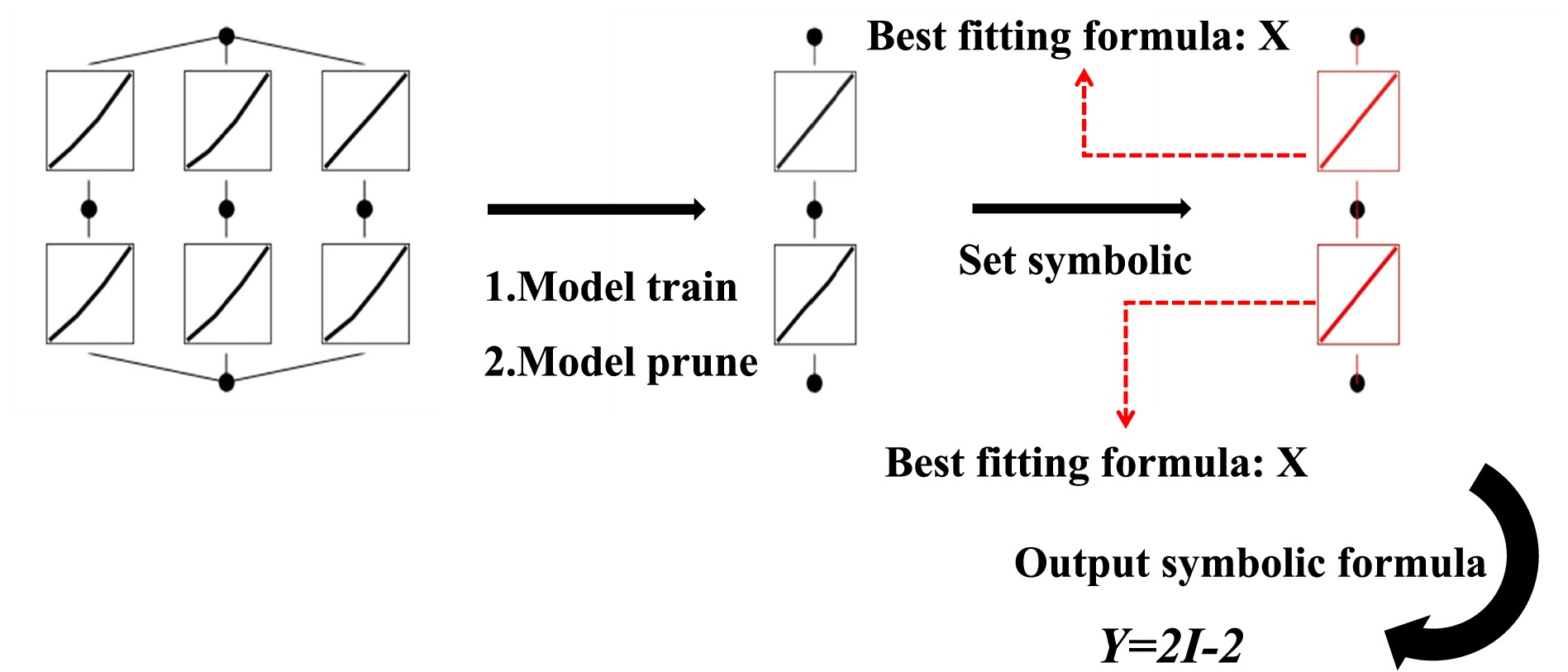
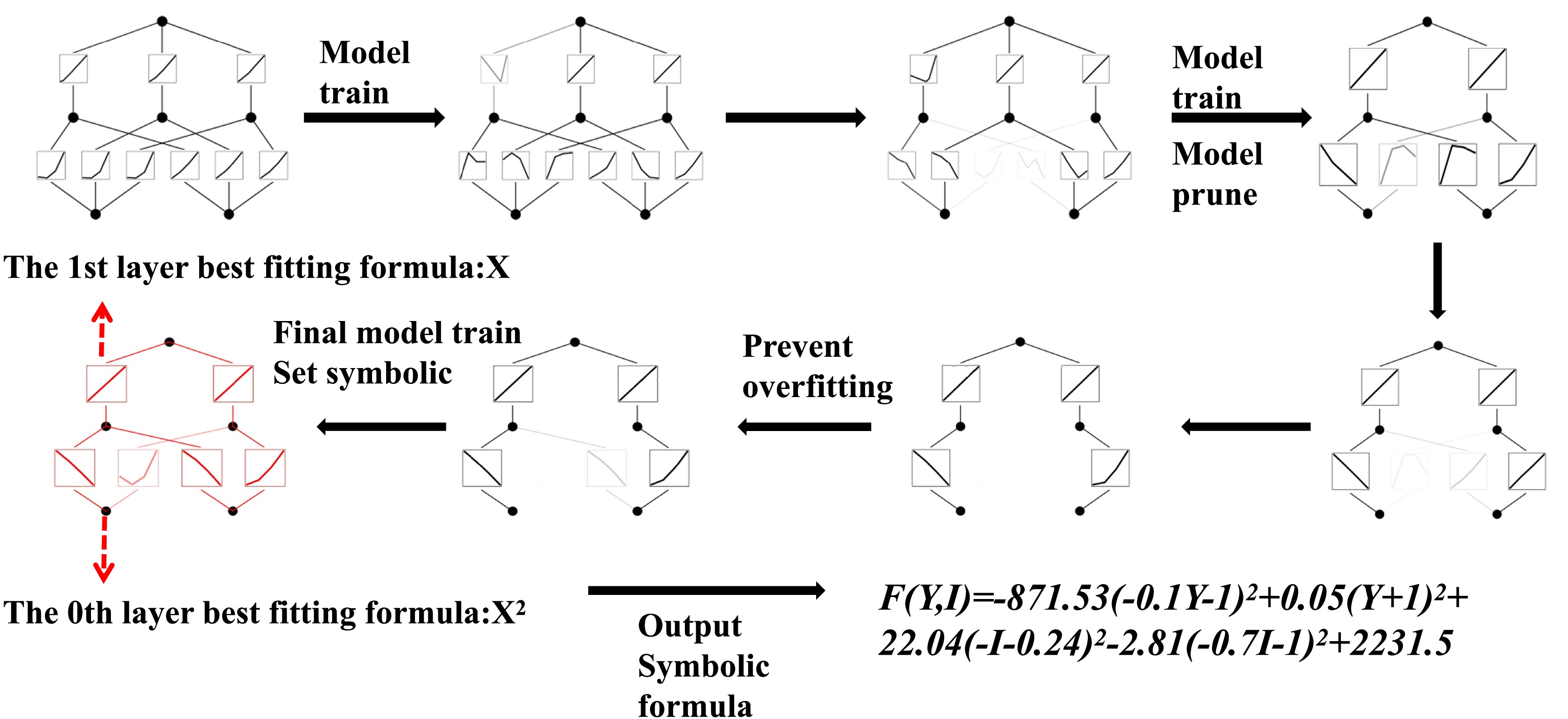
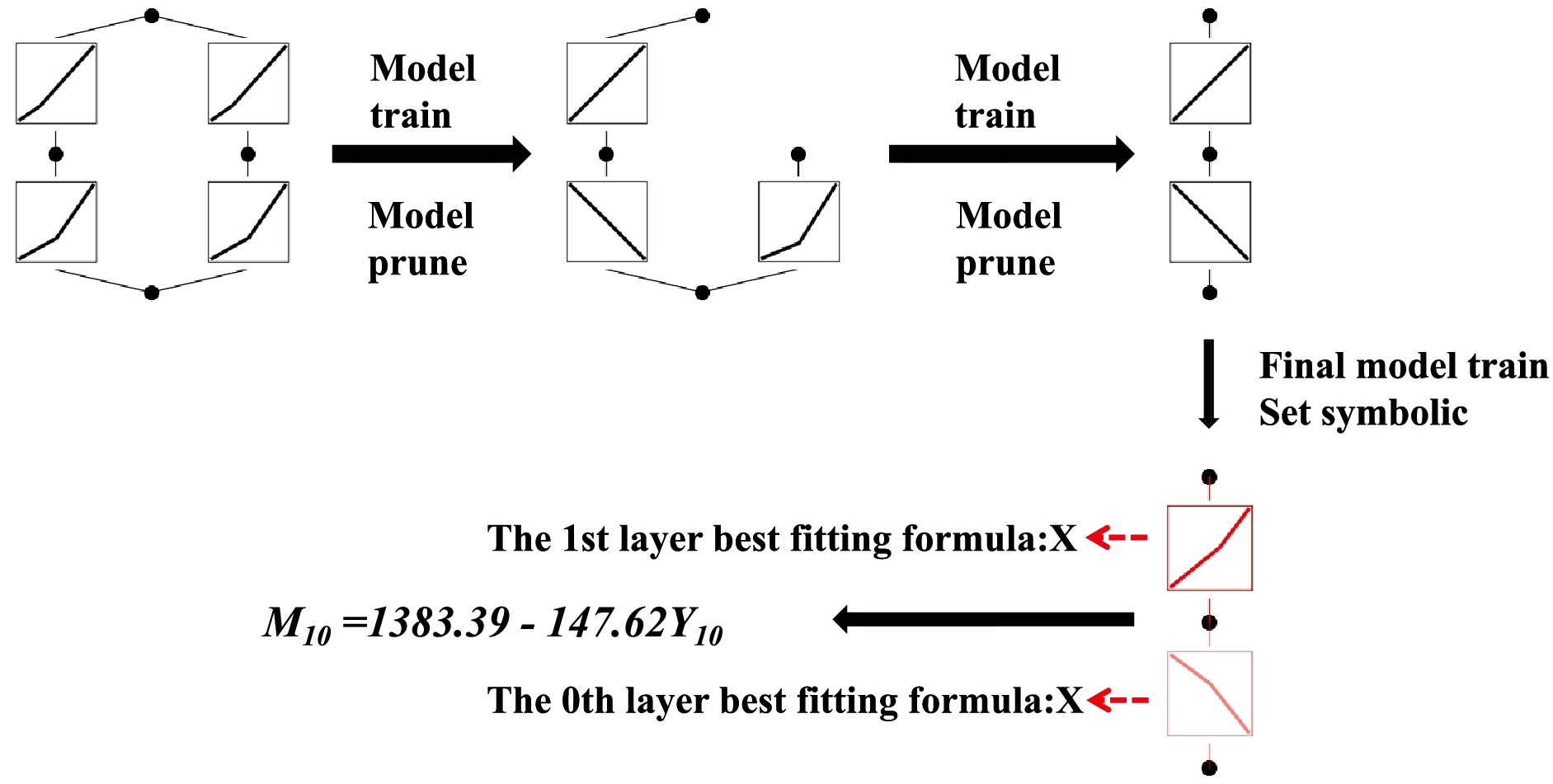
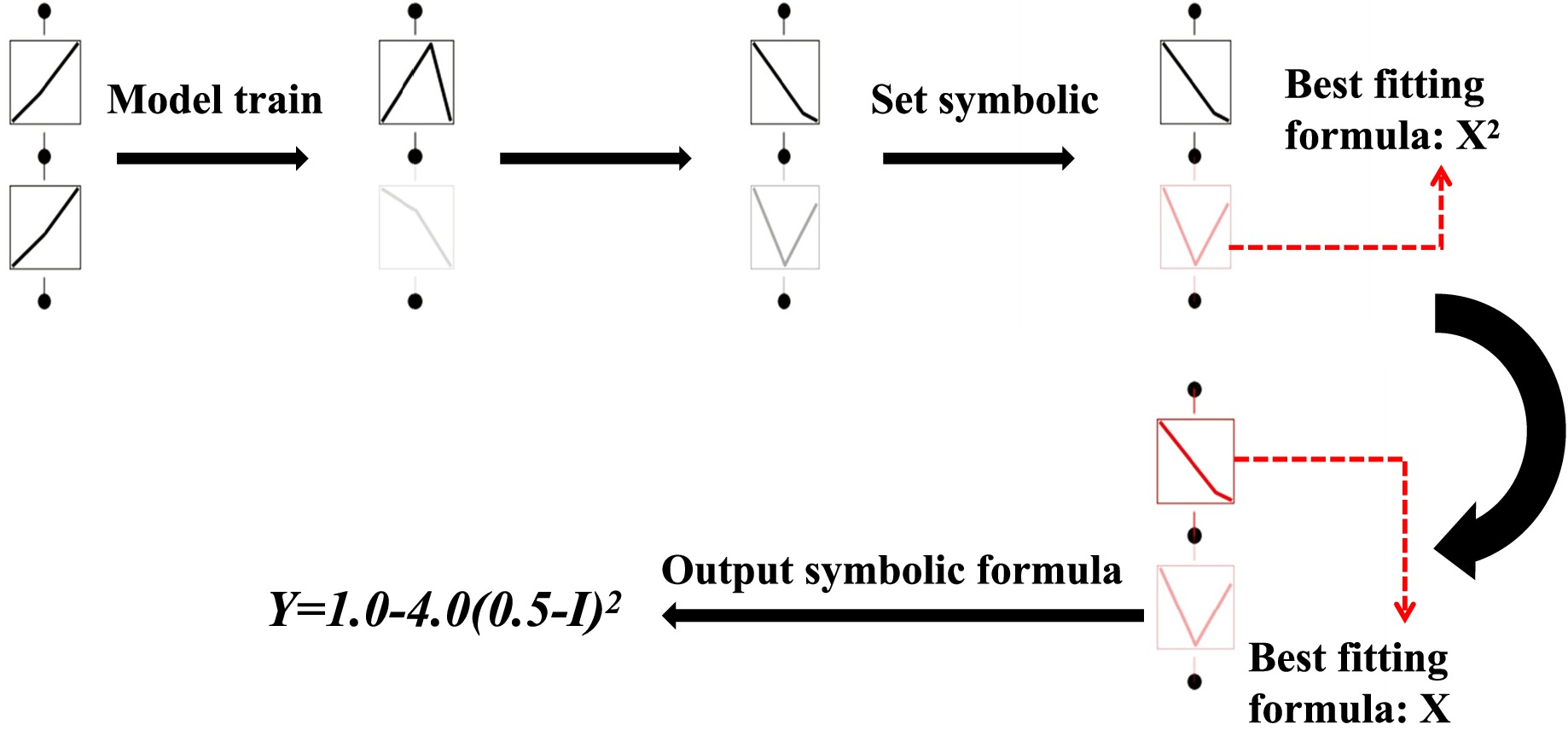
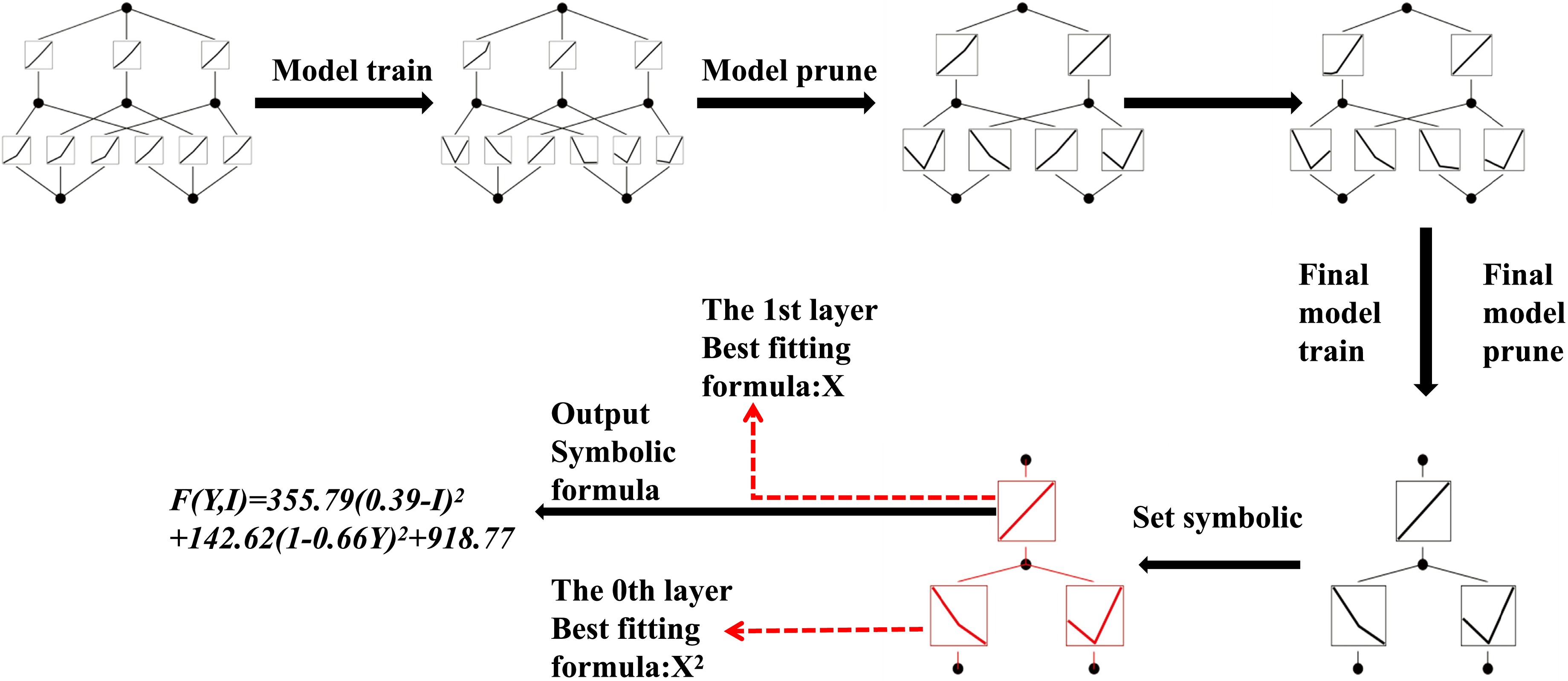
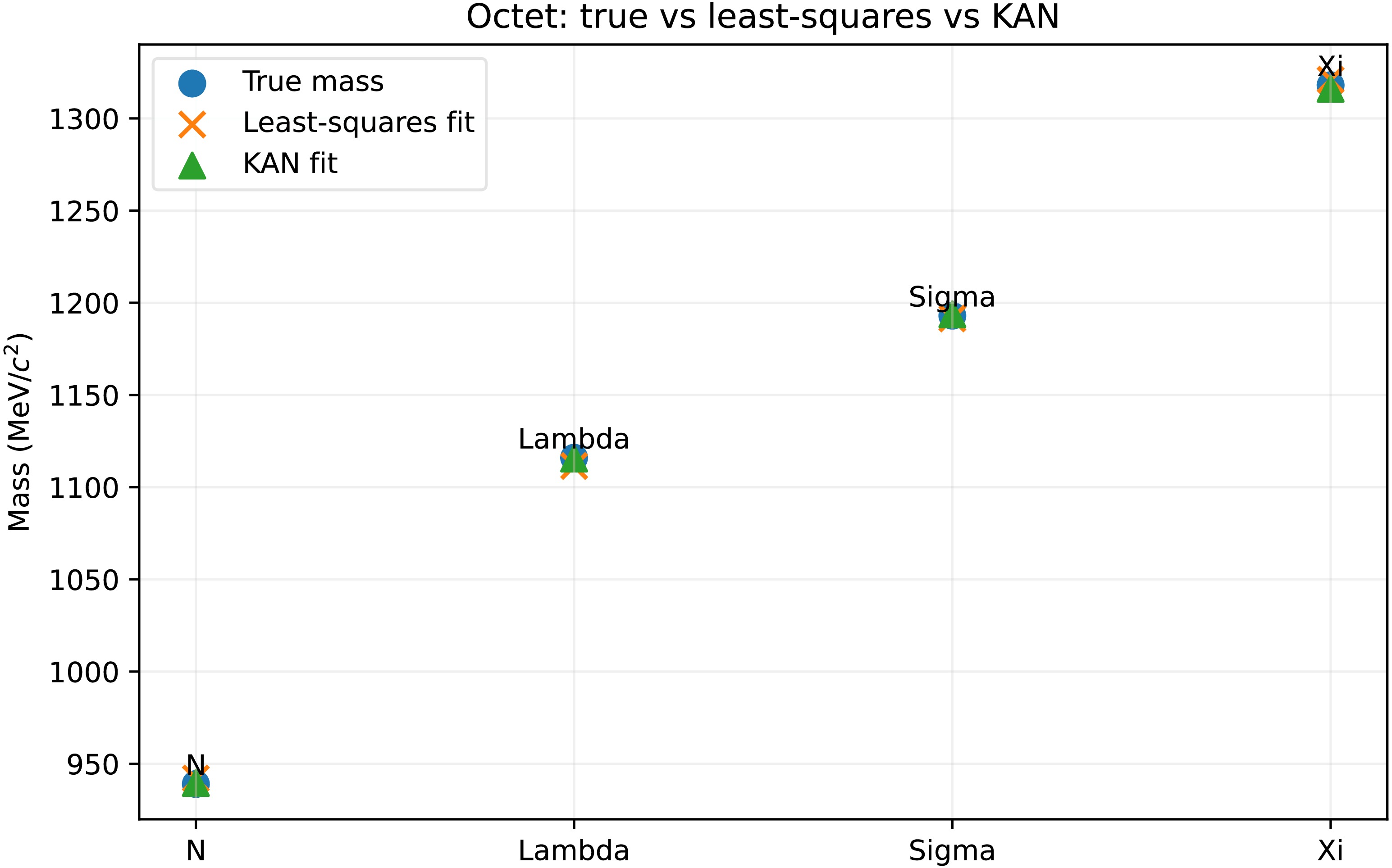
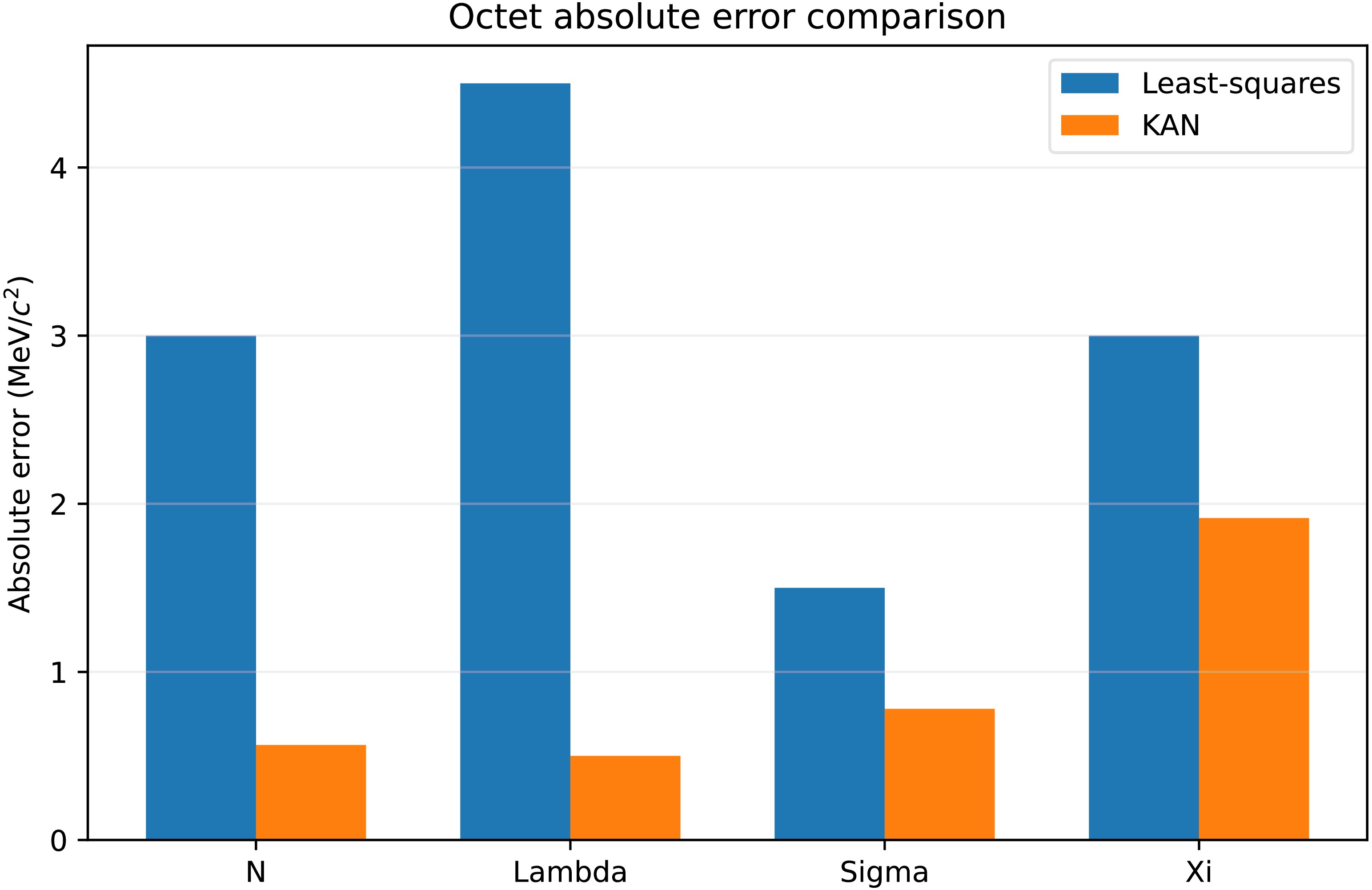
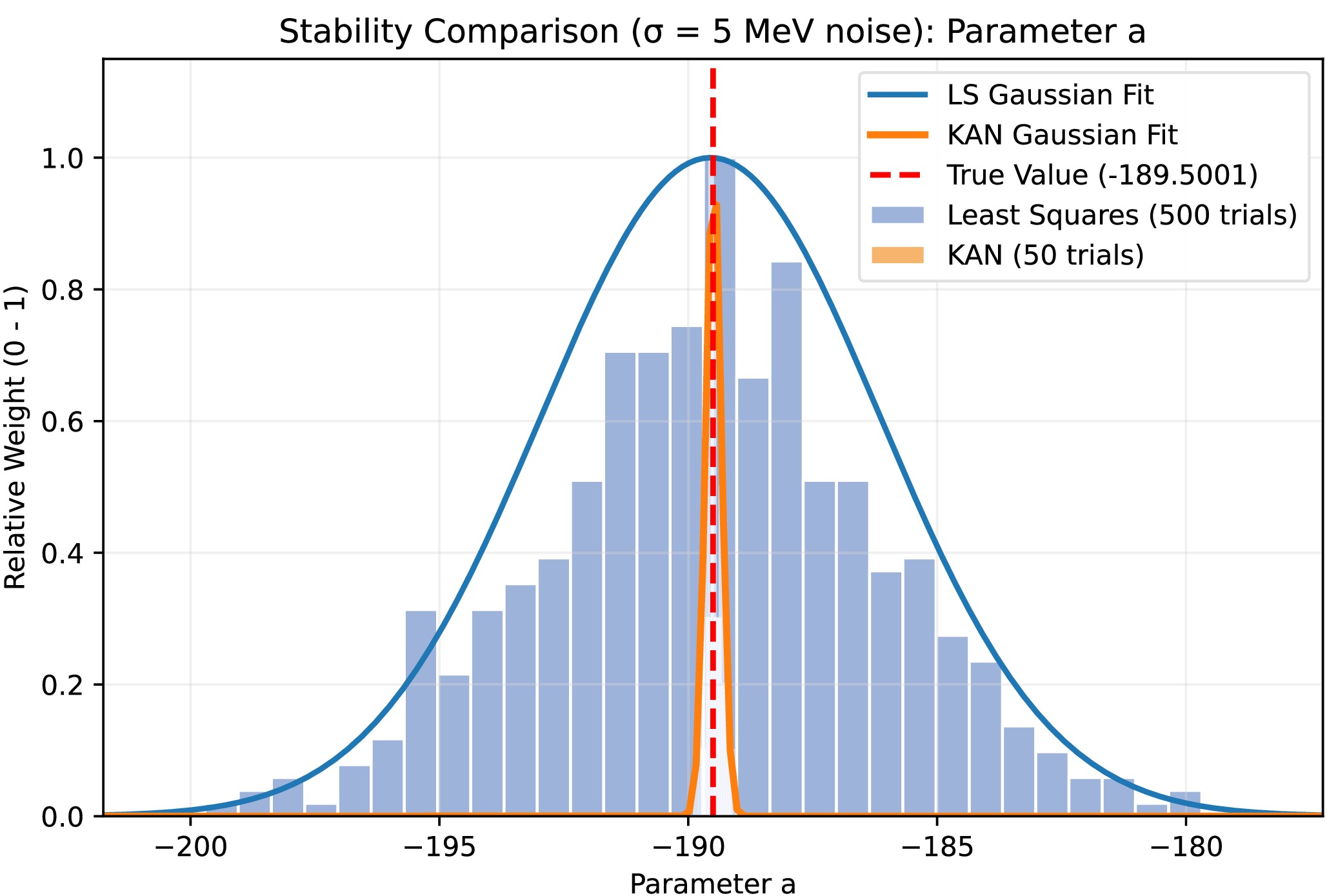
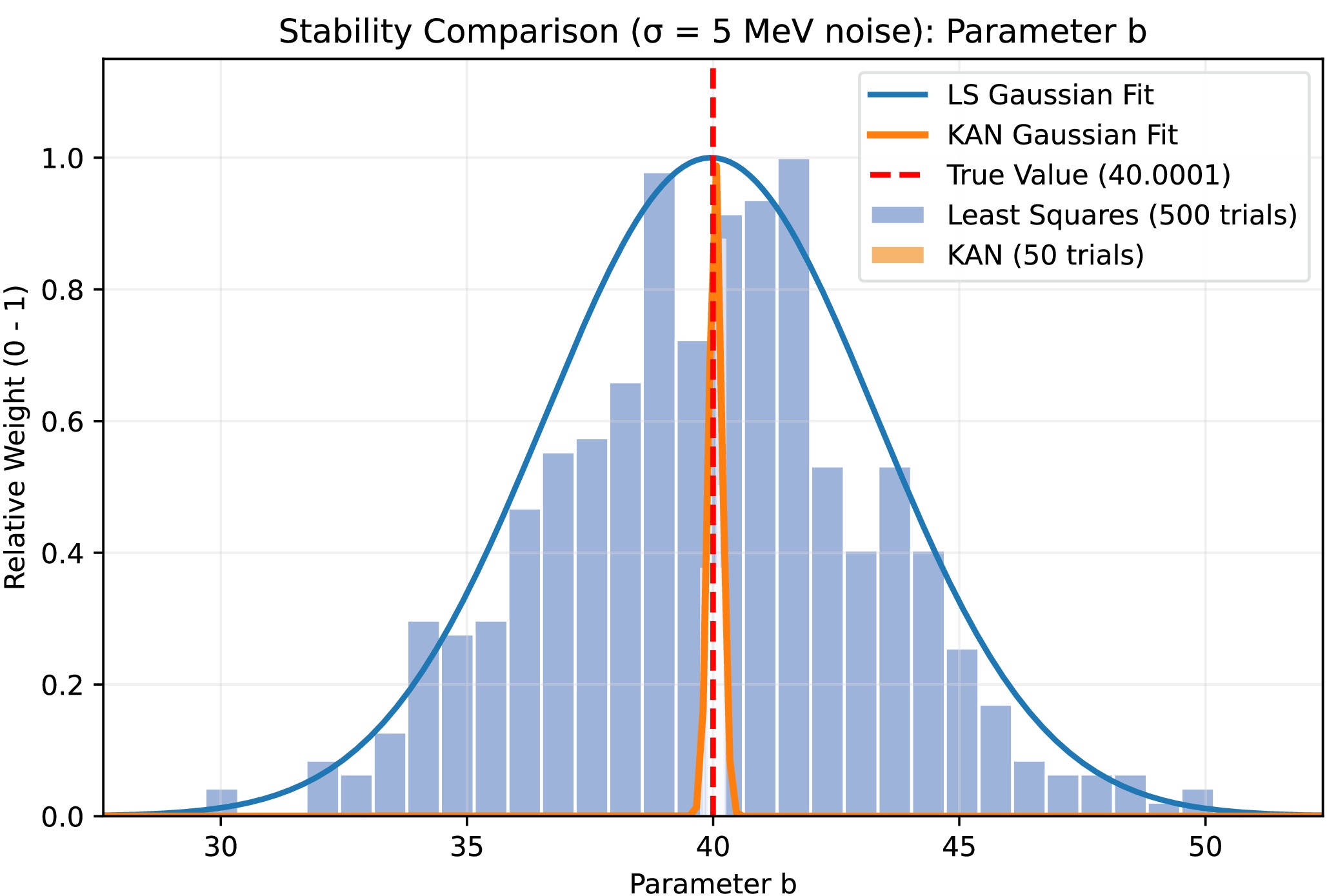
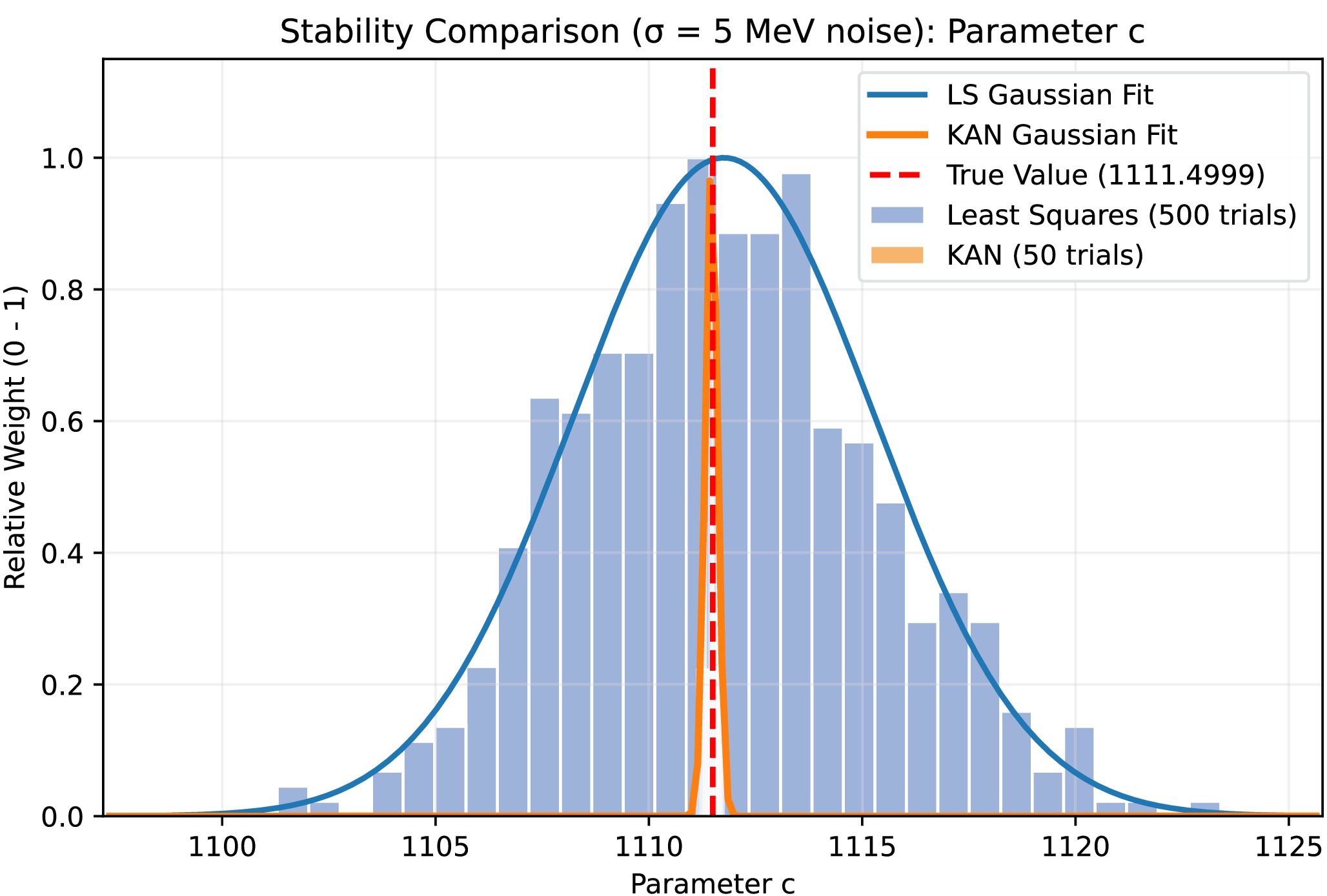
Uncovering physical laws from experimental data is a fundamental goal of theoretical physics. In this work, we apply the spline-based, interpretable Kolmogorov–Arnold Network (KAN) to investigate the algebraic structure underlying the baryon octet and decuplet mass spectra. Within a symbolic regression framework and without imposing theoretical priors, KAN recovers a symbolic representation equivalent to the classical Gell-Mann–Okubo mass relations, which can be transformed into the standard form through algebraic rearrangement. Compared with conventional fitting approaches, this method achieves comparable predictive accuracy while providing substantially improved interpretability and analytical transparency. Our results demonstrate the potential of KAN as a powerful tool for symbolic discovery in hadron physics and for bridging data-driven modeling with fundamental physical laws.
Uncovering physical laws from experimental data is a fundamental goal of theoretical physics. In this work, we apply the spline-based, interpretable Kolmogorov–Arnold Network (KAN) to investigate the algebraic structure underlying the baryon octet and decuplet mass spectra. Within a symbolic regression framework and without imposing theoretical priors, KAN recovers a symbolic representation equivalent to the classical Gell-Mann–Okubo mass relations, which can be transformed into the standard form through algebraic rearrangement. Compared with conventional fitting approaches, this method achieves comparable predictive accuracy while providing substantially improved interpretability and analytical transparency. Our results demonstrate the potential of KAN as a powerful tool for symbolic discovery in hadron physics and for bridging data-driven modeling with fundamental physical laws.
2026, 50(10): 103108. doi: 10.1088/1674-1137/ae823e
Abstract:
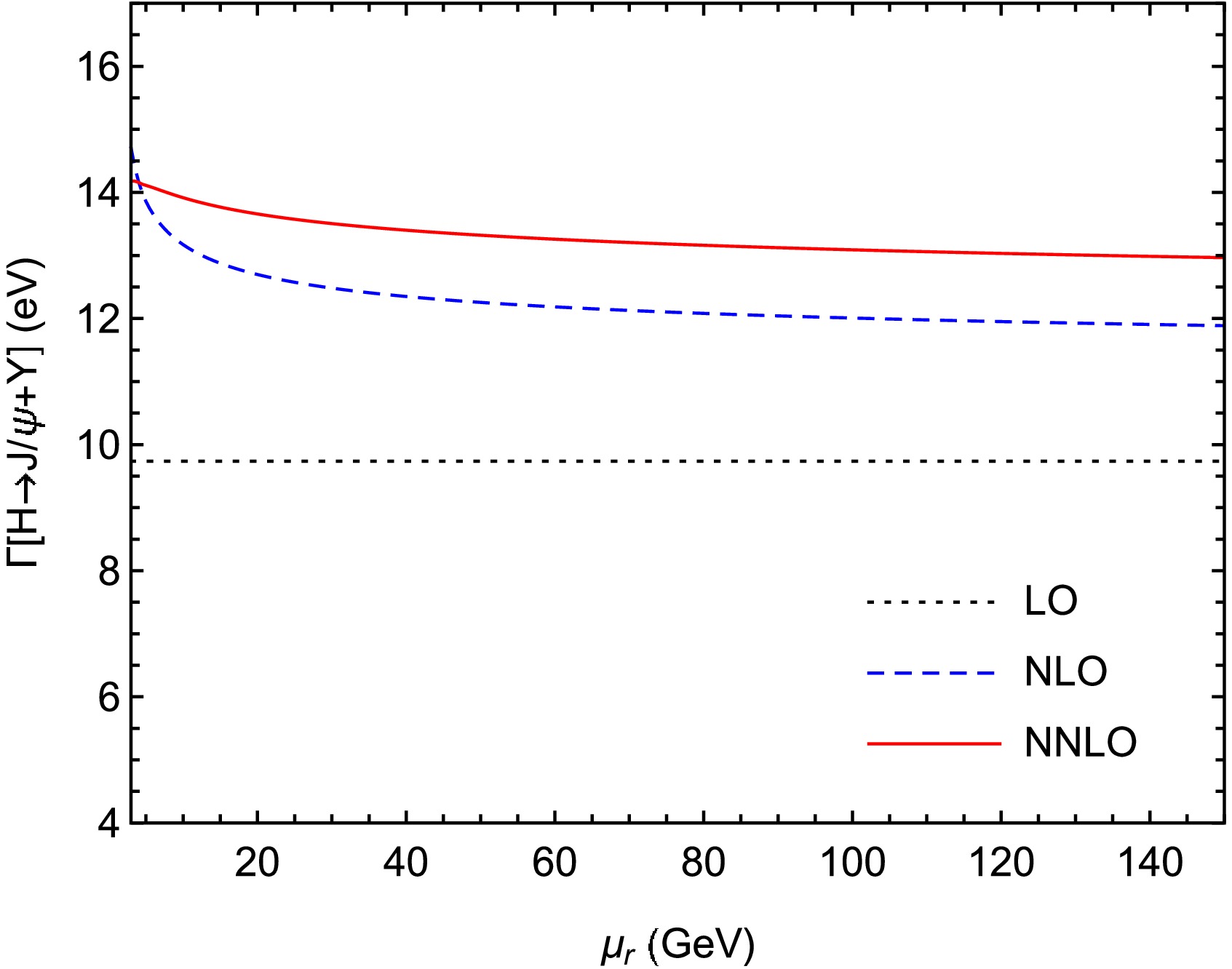
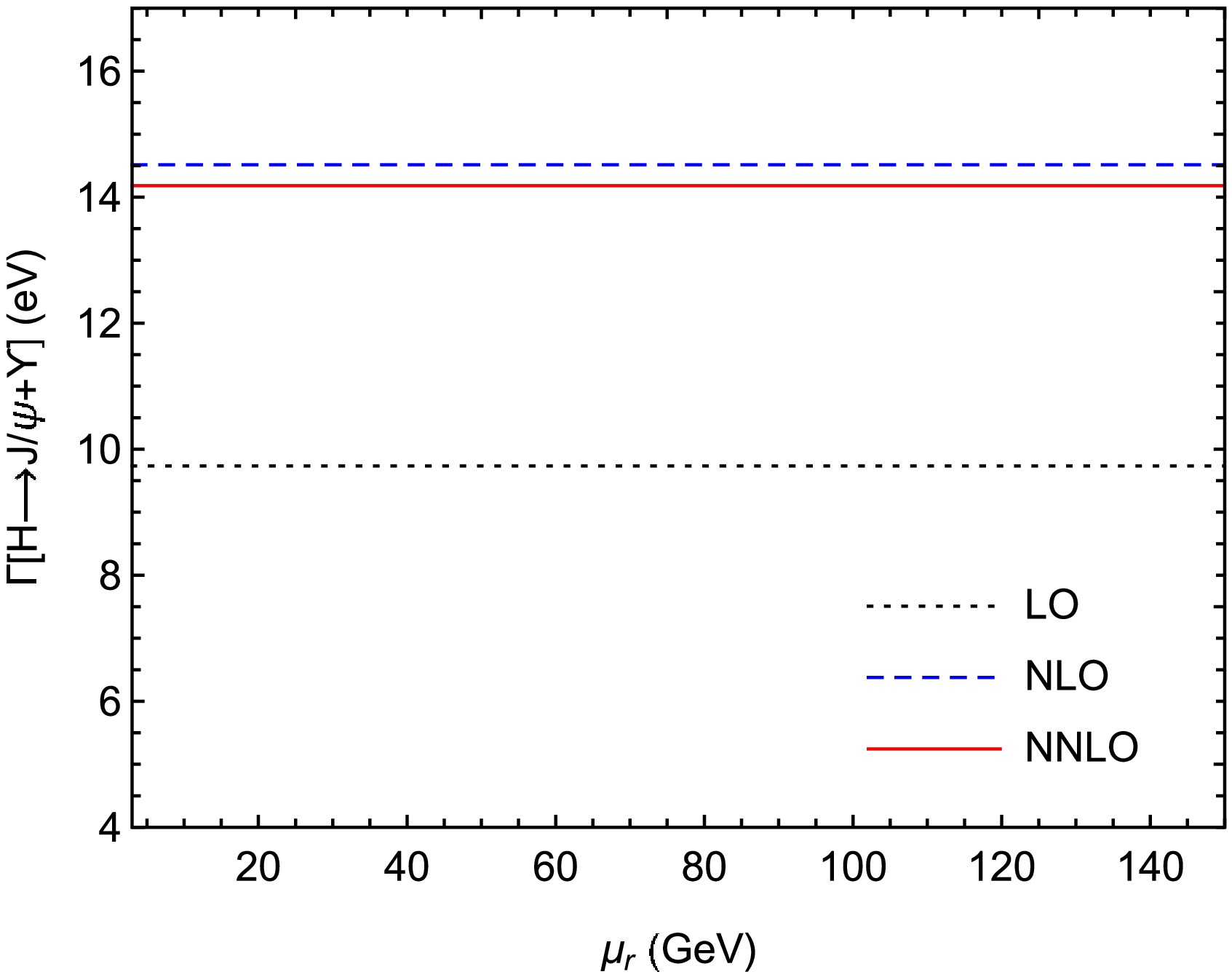
The rare exclusive decay of the Higgs boson, $ H \to J/\psi + \gamma $, is a crucial channel for assessing the Yukawa coupling of the charm quark. In this article, we examine this process up to the next-to-next-to-leading order (NNLO) in QCD utilizing the Principle of Maximum Conformality (PMC). The PMC offers a systematic approach to eliminate renormalization scale uncertainties by resumming non-conformal β contributions into the QCD running coupling through the renormalization group equation (RGE). A PMC scale of $ Q_\star = 3.29\ {\rm{GeV}} $ is obtained, which reflects the low virtuality of the underlying QCD dynamics in the $ H \to J/\psi + \gamma $ process. Notably, this is an order of magnitude smaller than the scale estimated using the conventional method, i.e., $ \mu_r = m_H/2 $. By removing the non-conformal $ \{\beta_i\} $-terms from the perturbative QCD (pQCD) series, we observe that the PMC NLO QCD correction term is significantly enhanced, while the PMC NNLO QCD correction is suppressed. This indicates improved convergence of the pQCD series up to NNLO. Finally, we calculate the decay width $ \Gamma(H \to J/\psi + \gamma) = $$ 14.183^{+0.249}_{-0.347} \pm 0.022 $ eV, where the first uncertainty arises from the factorization scale $ \mu_\Lambda \in [1, 2]\ {\rm{GeV}} $, and the second is due to the estimation of unknown higher-order terms using the Pad$ \acute{e} $ approximant approach. The corresponding branching fraction is $ {\cal{B}}(H \to J/\psi + \gamma) = 3.485_{-0.161}^{+0.152} \times 10^{-6} $.
The rare exclusive decay of the Higgs boson, $ H \to J/\psi + \gamma $, is a crucial channel for assessing the Yukawa coupling of the charm quark. In this article, we examine this process up to the next-to-next-to-leading order (NNLO) in QCD utilizing the Principle of Maximum Conformality (PMC). The PMC offers a systematic approach to eliminate renormalization scale uncertainties by resumming non-conformal β contributions into the QCD running coupling through the renormalization group equation (RGE). A PMC scale of $ Q_\star = 3.29\ {\rm{GeV}} $ is obtained, which reflects the low virtuality of the underlying QCD dynamics in the $ H \to J/\psi + \gamma $ process. Notably, this is an order of magnitude smaller than the scale estimated using the conventional method, i.e., $ \mu_r = m_H/2 $. By removing the non-conformal $ \{\beta_i\} $-terms from the perturbative QCD (pQCD) series, we observe that the PMC NLO QCD correction term is significantly enhanced, while the PMC NNLO QCD correction is suppressed. This indicates improved convergence of the pQCD series up to NNLO. Finally, we calculate the decay width $ \Gamma(H \to J/\psi + \gamma) = $$ 14.183^{+0.249}_{-0.347} \pm 0.022 $ eV, where the first uncertainty arises from the factorization scale $ \mu_\Lambda \in [1, 2]\ {\rm{GeV}} $, and the second is due to the estimation of unknown higher-order terms using the Pad$ \acute{e} $ approximant approach. The corresponding branching fraction is $ {\cal{B}}(H \to J/\psi + \gamma) = 3.485_{-0.161}^{+0.152} \times 10^{-6} $.
2026, 50(10): 103103. doi: 10.1088/1674-1137/ae8827
Abstract:
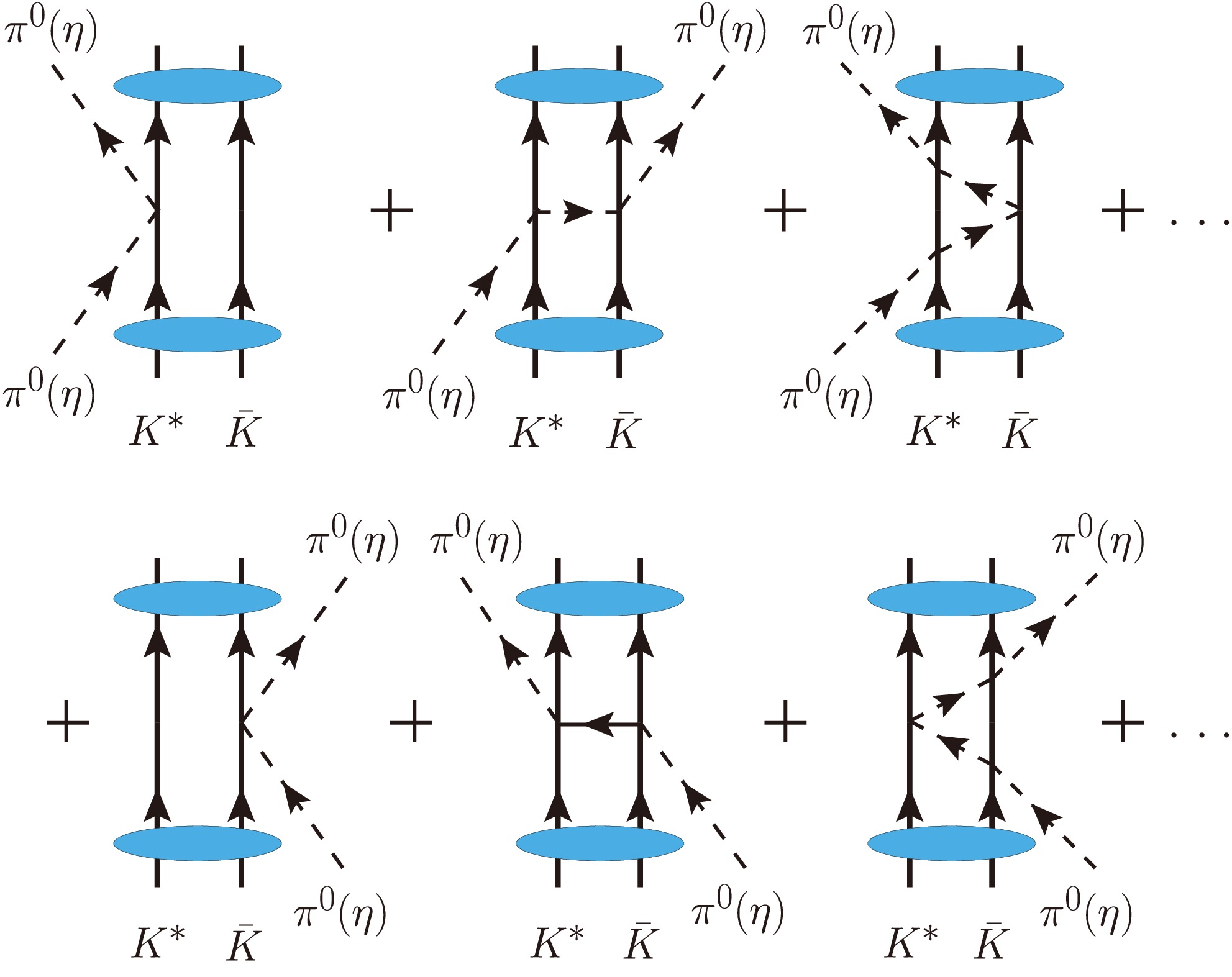
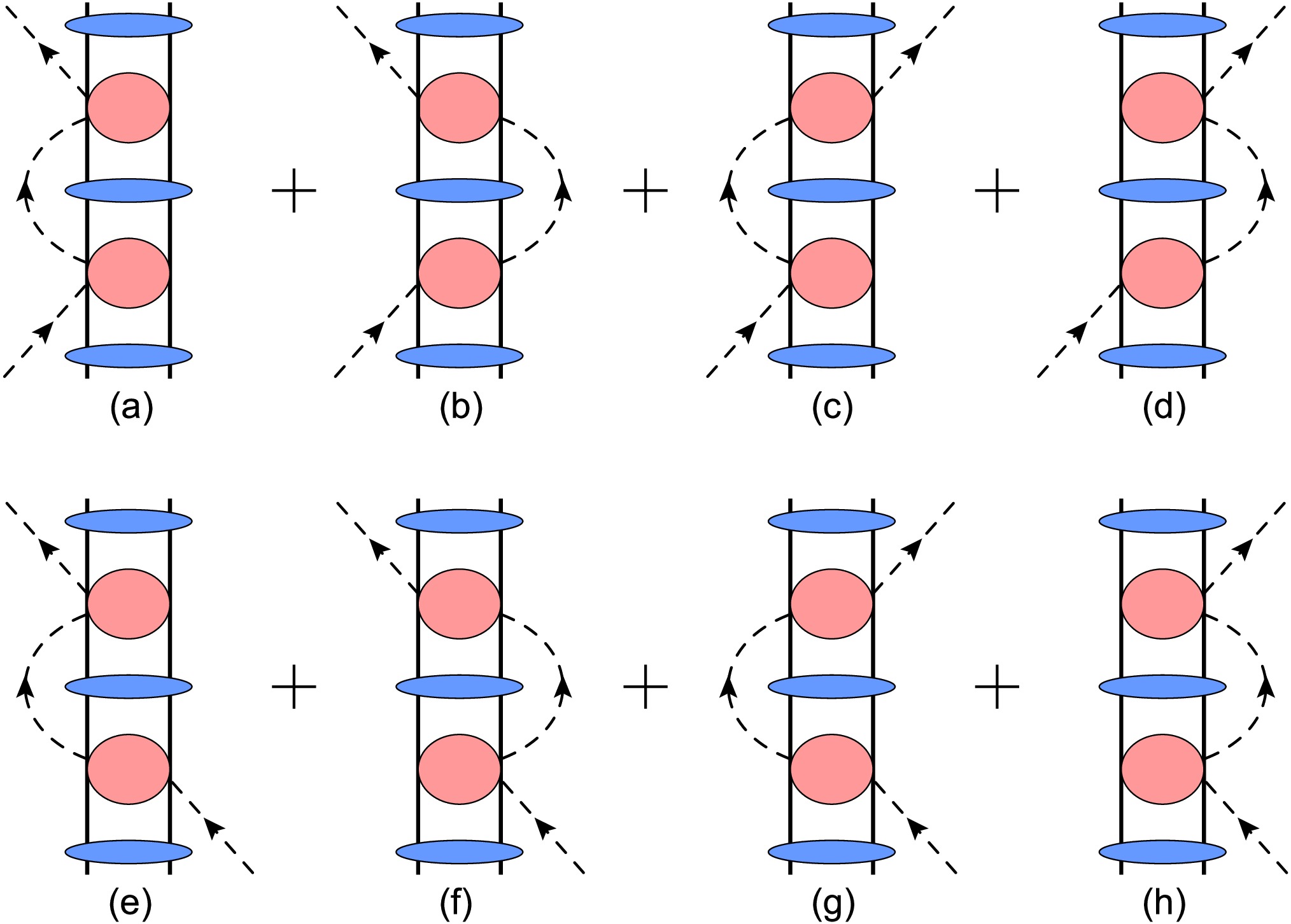
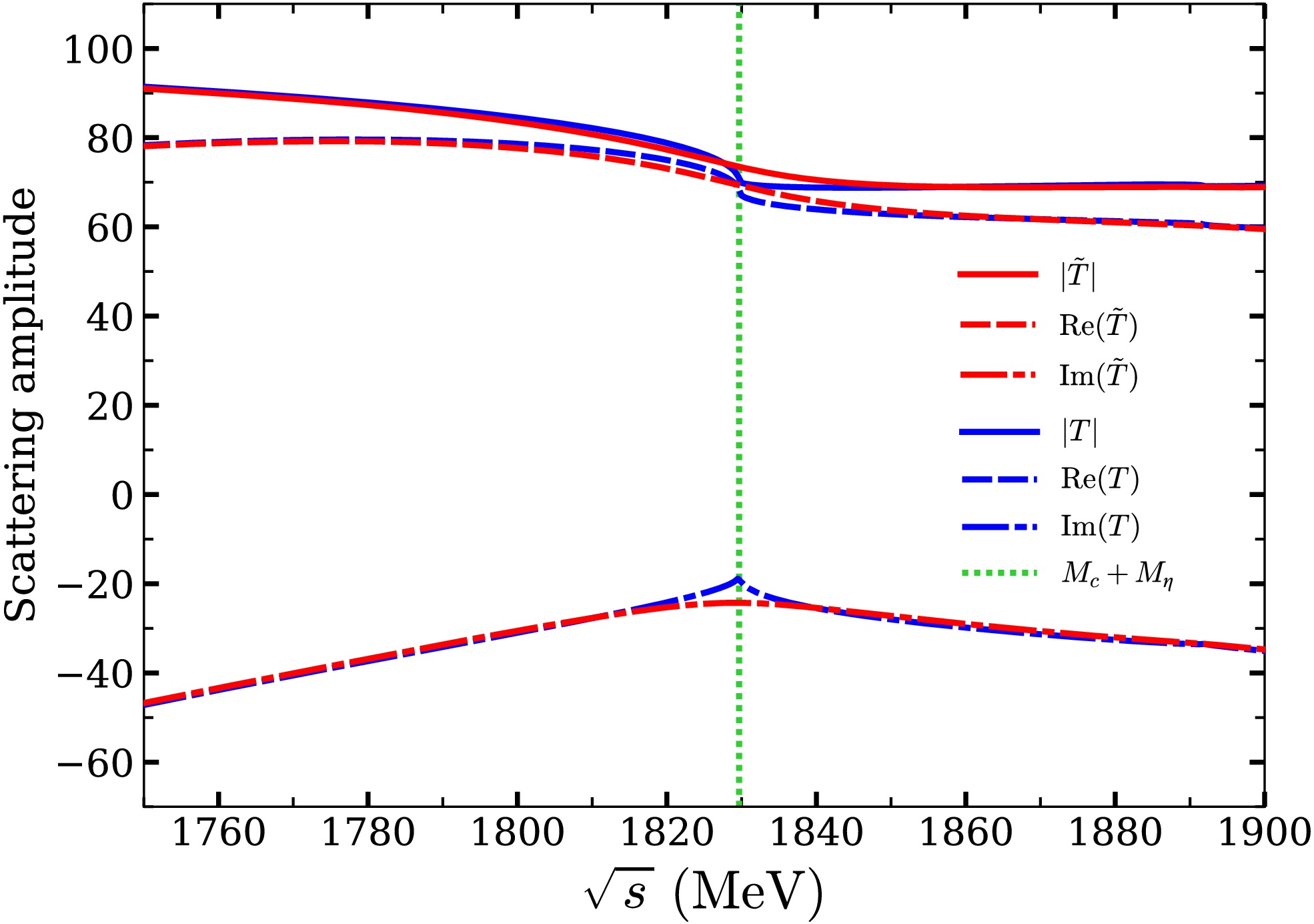
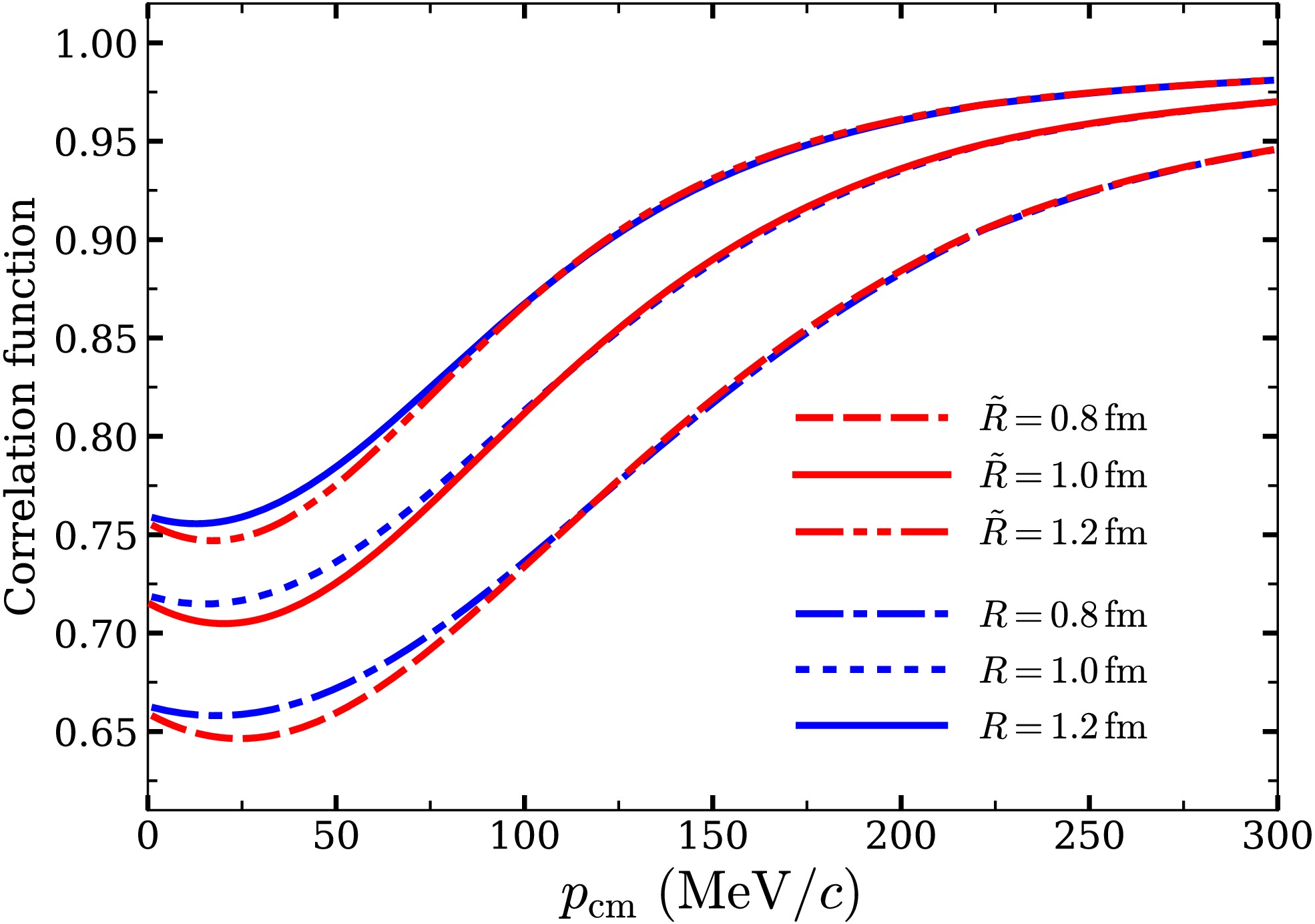
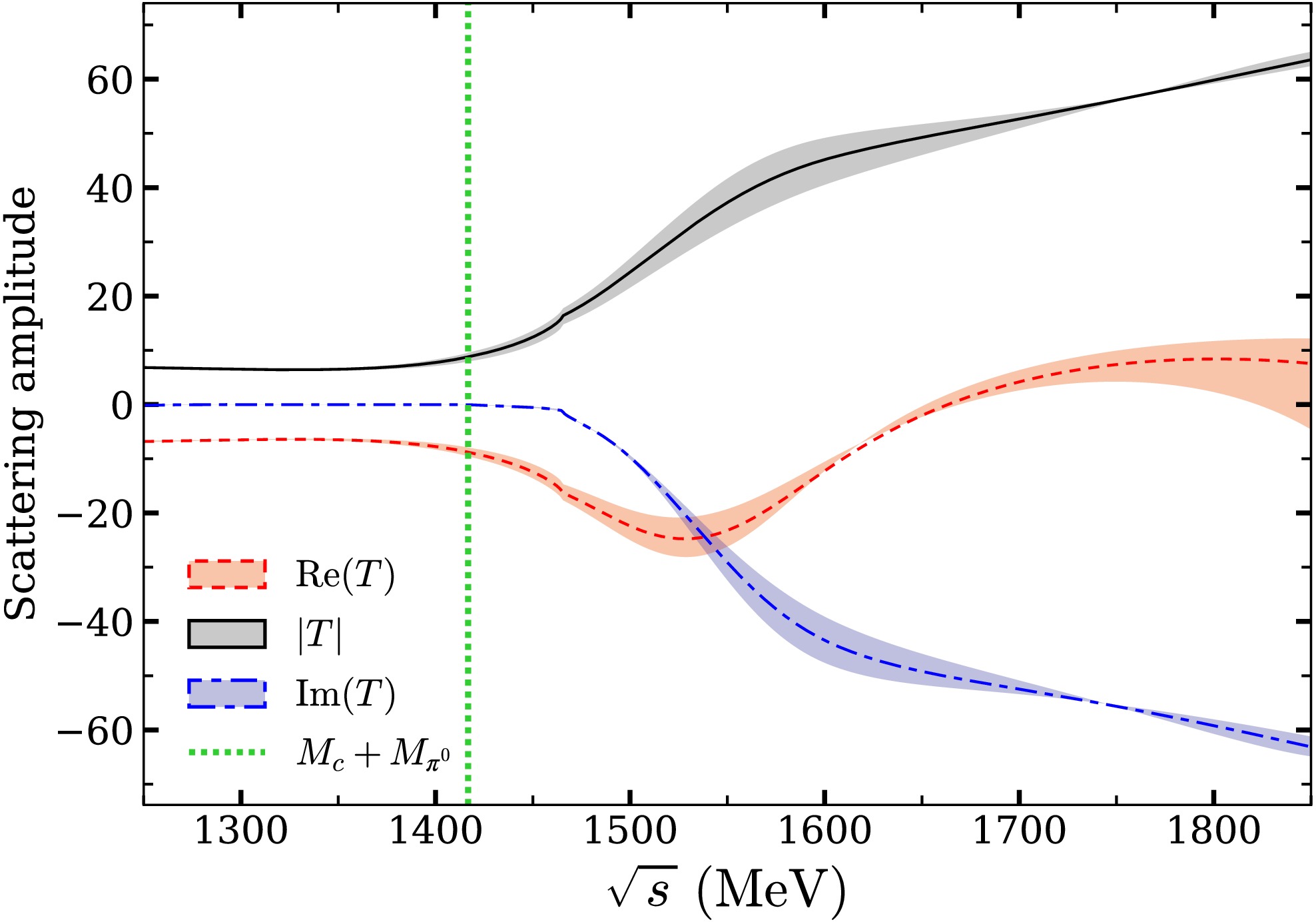
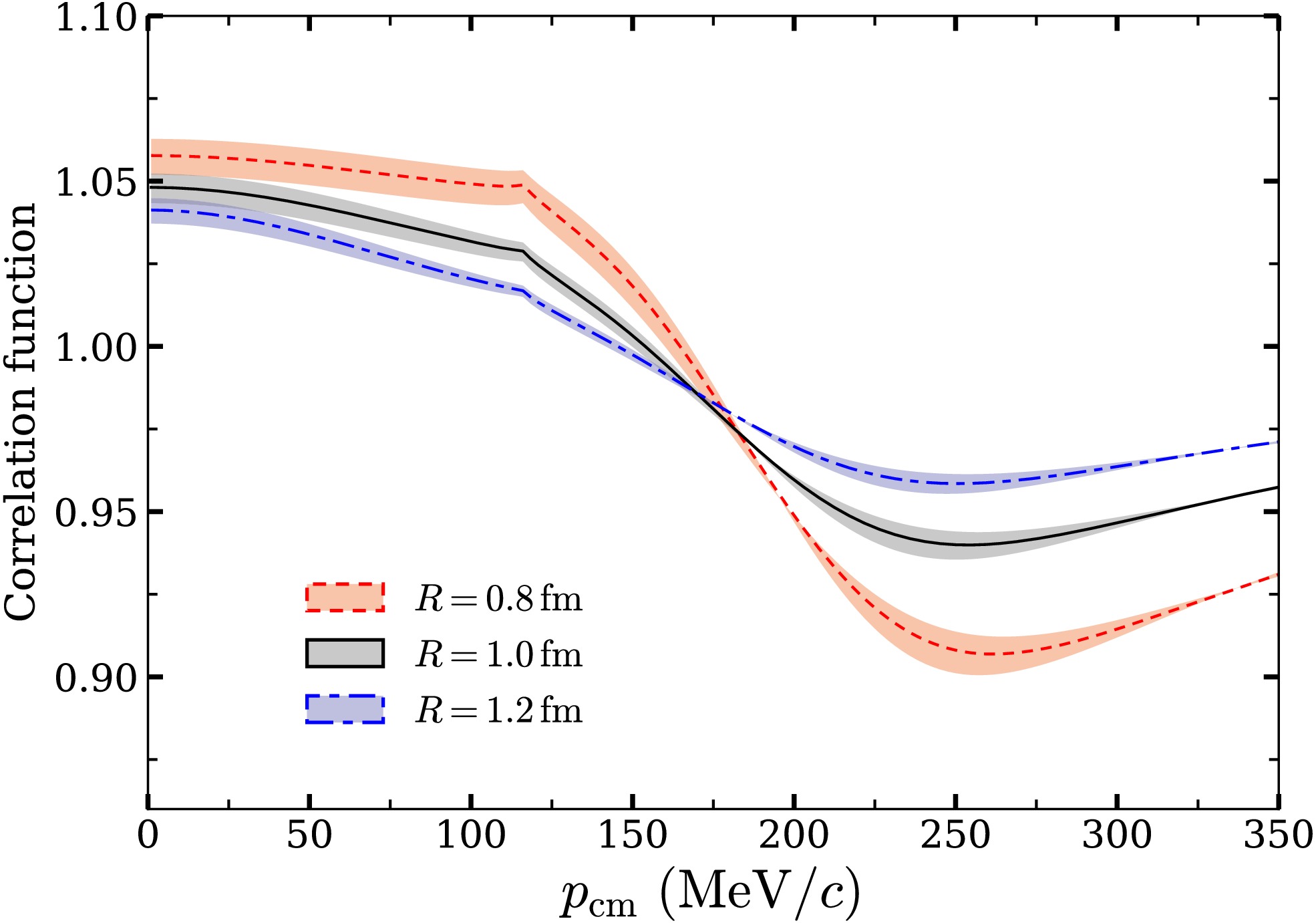
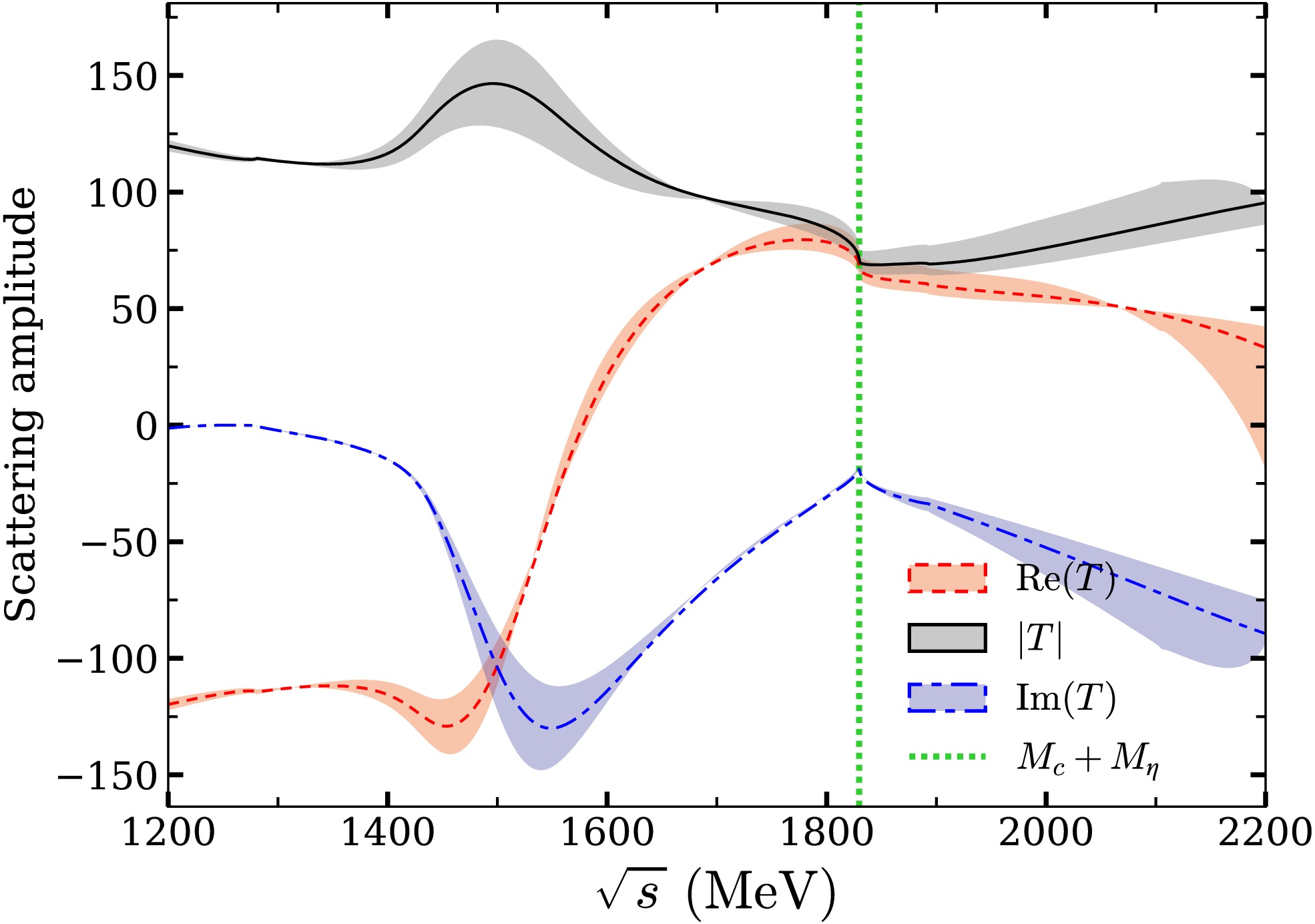
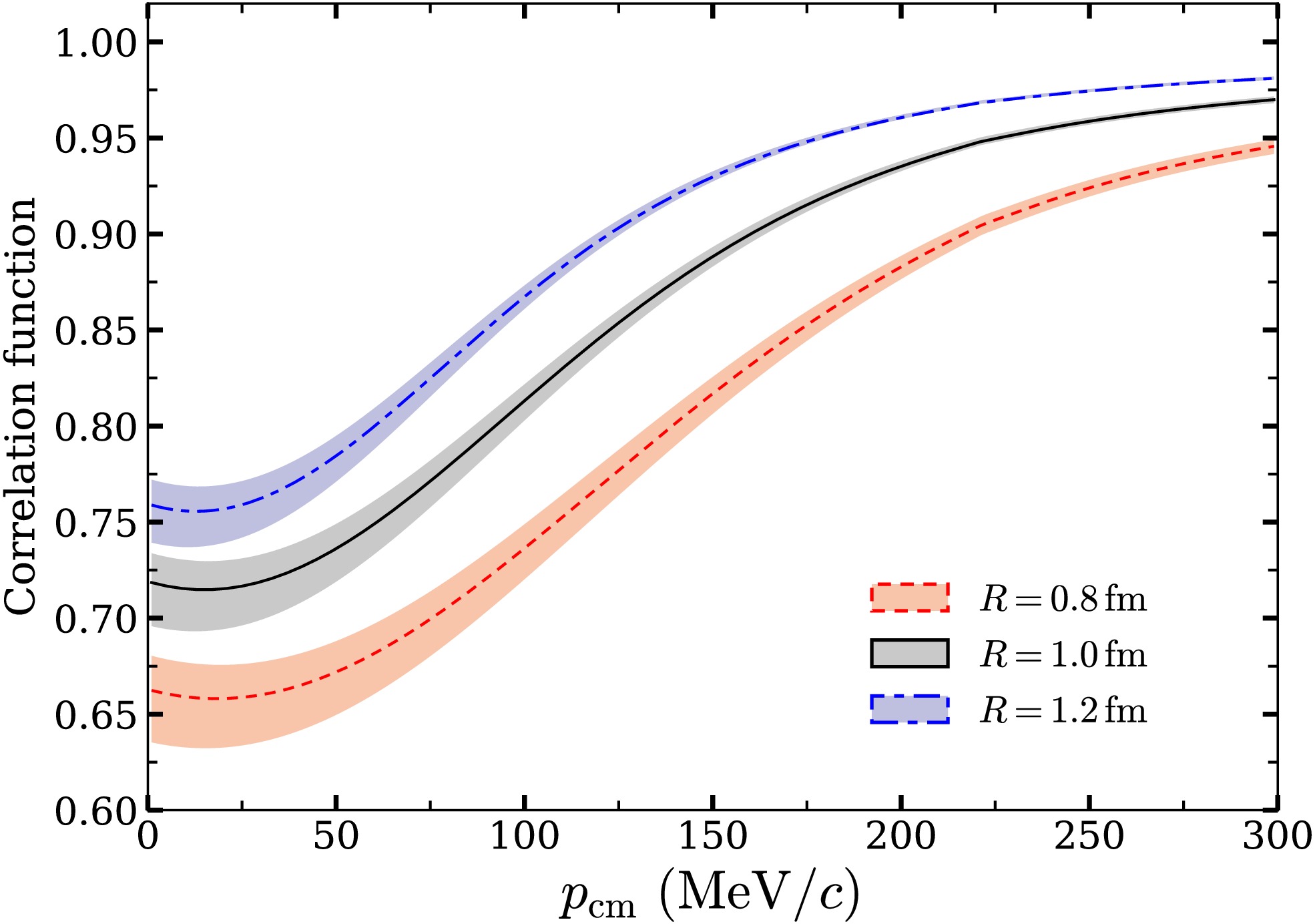
We have studied the interaction of $ \pi^0 (\eta) f_1(1285) $ by assuming the $ f_1(1285) $ to be a molecular state of $ K^* \bar K - \bar K^* K $. We use a framework in which a $ \pi^0 (\eta) f_1(1285) $ optical potential is obtained and subsequently used as the kernel of the Lippmann-Schwinger equation, following the standard method for the interaction of particles with nuclei. The optical potential is obtained using the fixed center approximation to the Faddeev equations, in which a cluster, here the $ f_1(1285) $, remains unchanged during the interaction, as appropriate for the present situation. We have obtained the scattering matrix for this system, as well as the scattering length, effective range, and correlation functions. This framework has been previously tested in the study of the $ p f_1(1285) $ interaction and has been shown to give results in agreement with recent experimental measurements of the $ p f_1(1285) $ correlation function. On the other hand, from this interaction we do not obtain clear signals for the $ \pi_1(1400) $ or $ \pi_1(1600) $, nor for the $ \eta_1(1855) $ resonances, which in other approaches have been claimed to arise from the same dynamics. However, we obtain a structure in the $ \pi^0 f_1(1285) $ amplitude around $ 1500-1600 \ {\rm{ MeV}} $ and a strong cusp at the $ \eta f_1(1285) $ threshold of $ 1833 \ {\rm{ MeV}} $.
We have studied the interaction of $ \pi^0 (\eta) f_1(1285) $ by assuming the $ f_1(1285) $ to be a molecular state of $ K^* \bar K - \bar K^* K $. We use a framework in which a $ \pi^0 (\eta) f_1(1285) $ optical potential is obtained and subsequently used as the kernel of the Lippmann-Schwinger equation, following the standard method for the interaction of particles with nuclei. The optical potential is obtained using the fixed center approximation to the Faddeev equations, in which a cluster, here the $ f_1(1285) $, remains unchanged during the interaction, as appropriate for the present situation. We have obtained the scattering matrix for this system, as well as the scattering length, effective range, and correlation functions. This framework has been previously tested in the study of the $ p f_1(1285) $ interaction and has been shown to give results in agreement with recent experimental measurements of the $ p f_1(1285) $ correlation function. On the other hand, from this interaction we do not obtain clear signals for the $ \pi_1(1400) $ or $ \pi_1(1600) $, nor for the $ \eta_1(1855) $ resonances, which in other approaches have been claimed to arise from the same dynamics. However, we obtain a structure in the $ \pi^0 f_1(1285) $ amplitude around $ 1500-1600 \ {\rm{ MeV}} $ and a strong cusp at the $ \eta f_1(1285) $ threshold of $ 1833 \ {\rm{ MeV}} $.
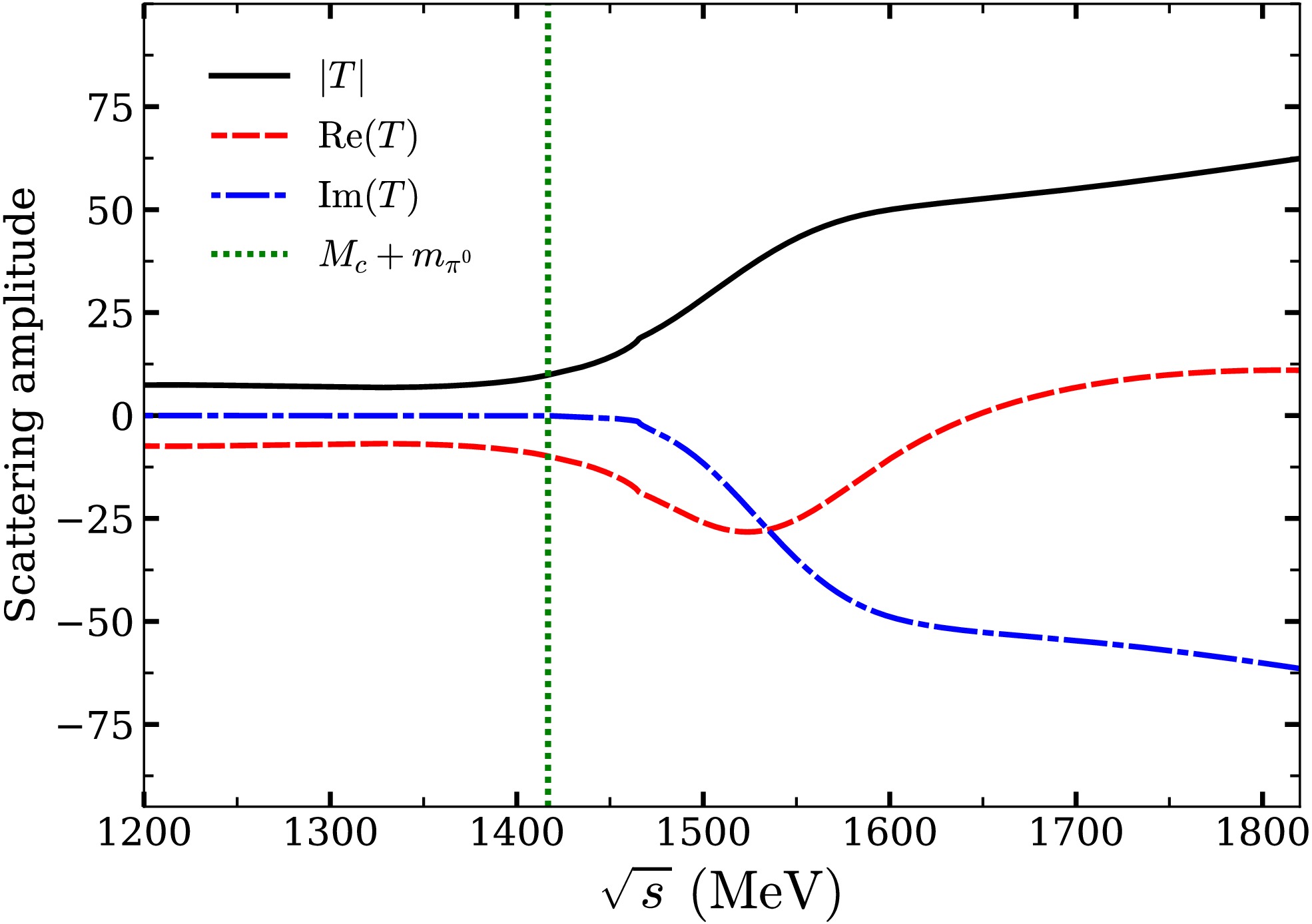
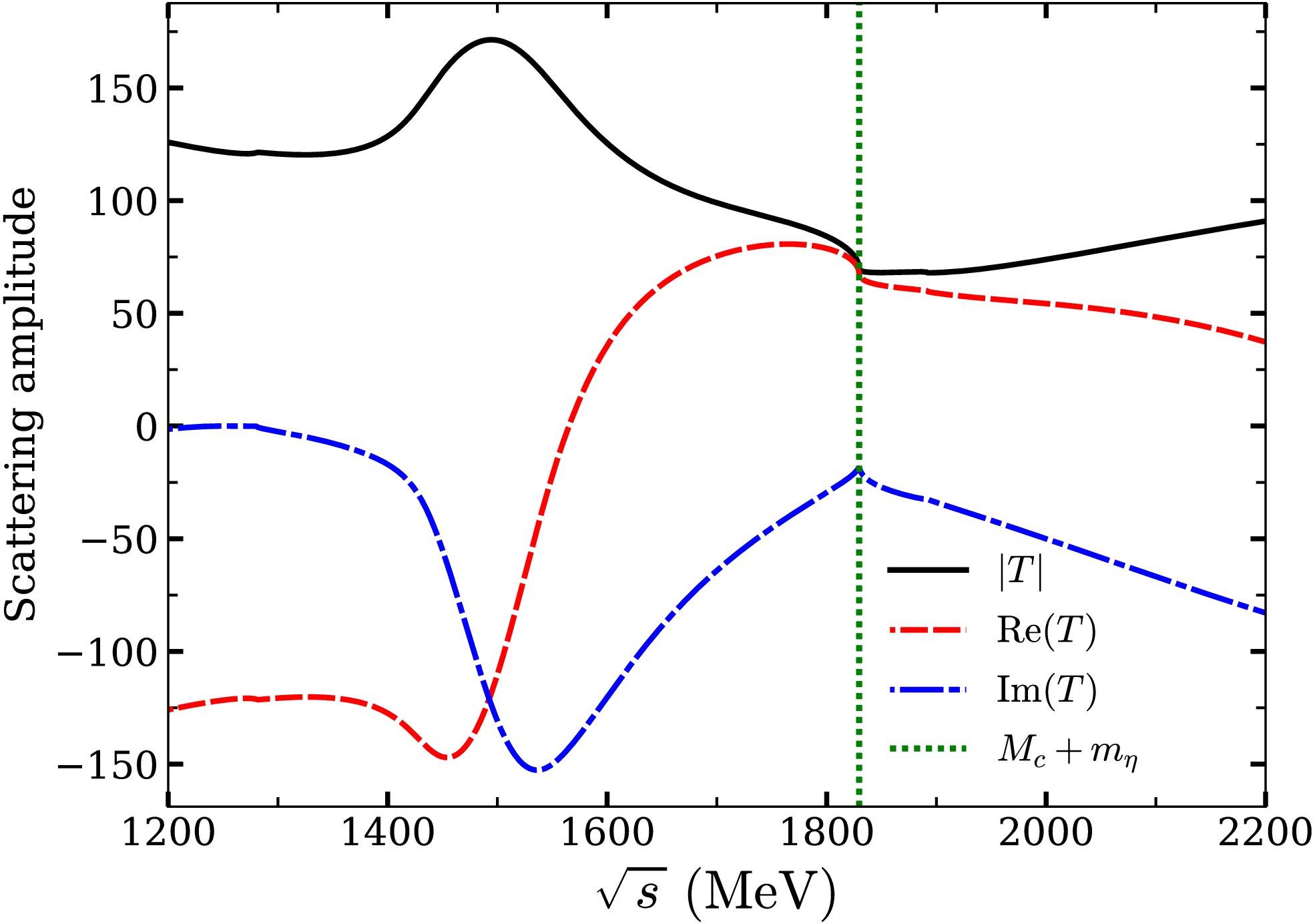
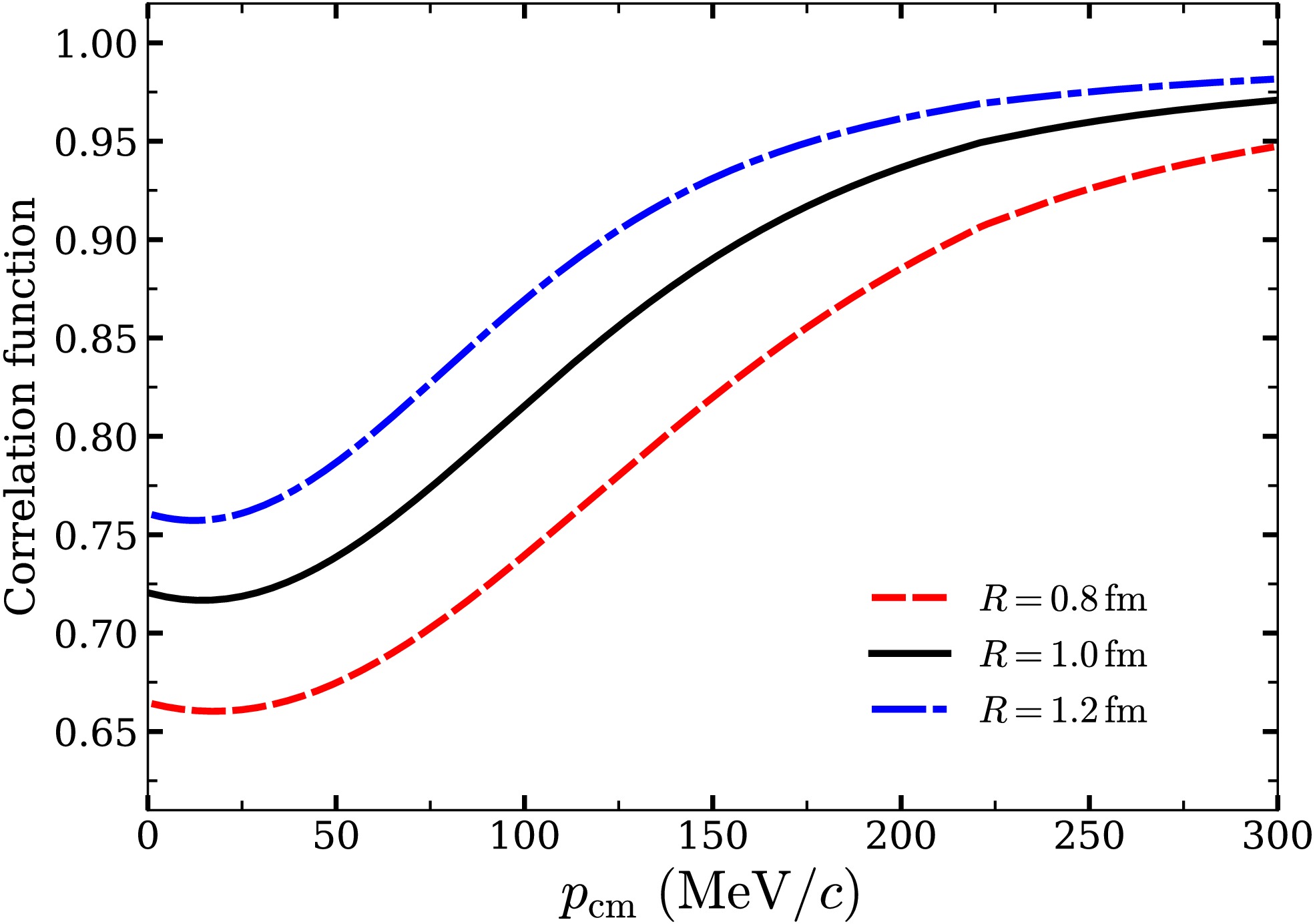
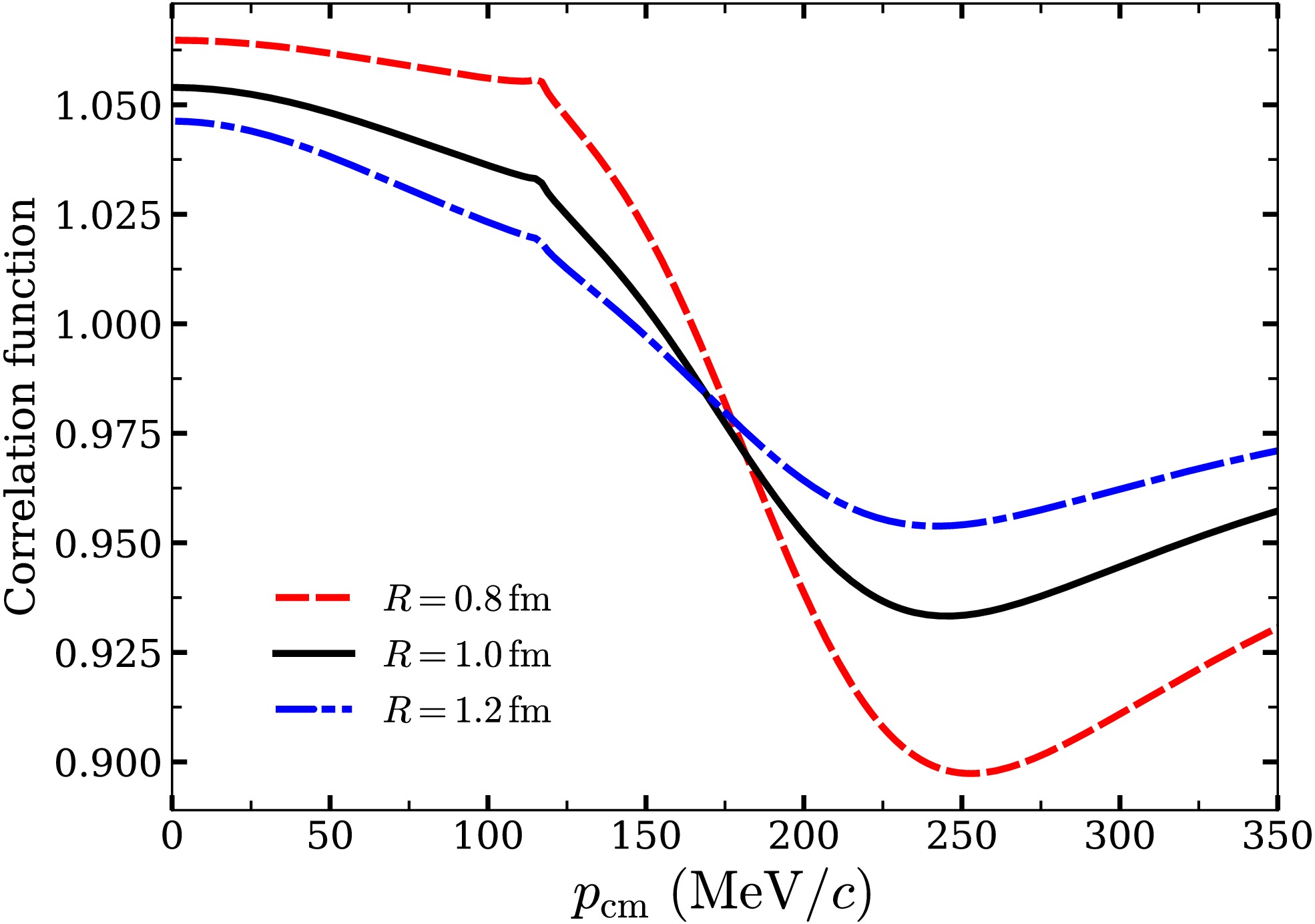
2026, 50(10): 104101. doi: 10.1088/1674-1137/ae7ff5
Abstract:
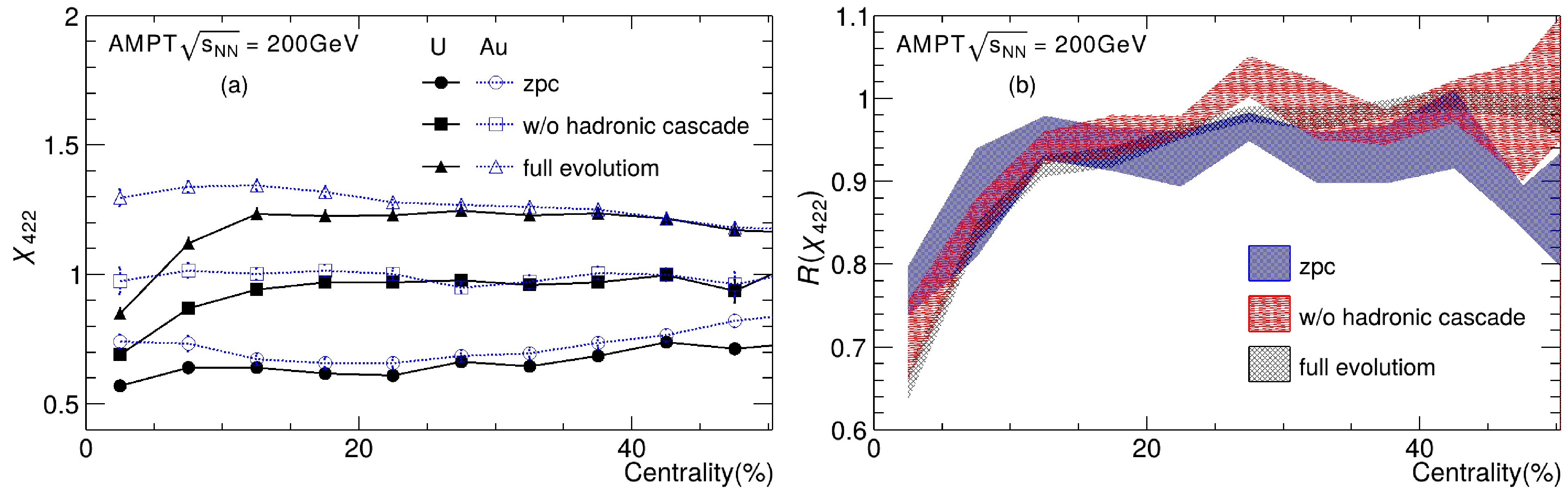
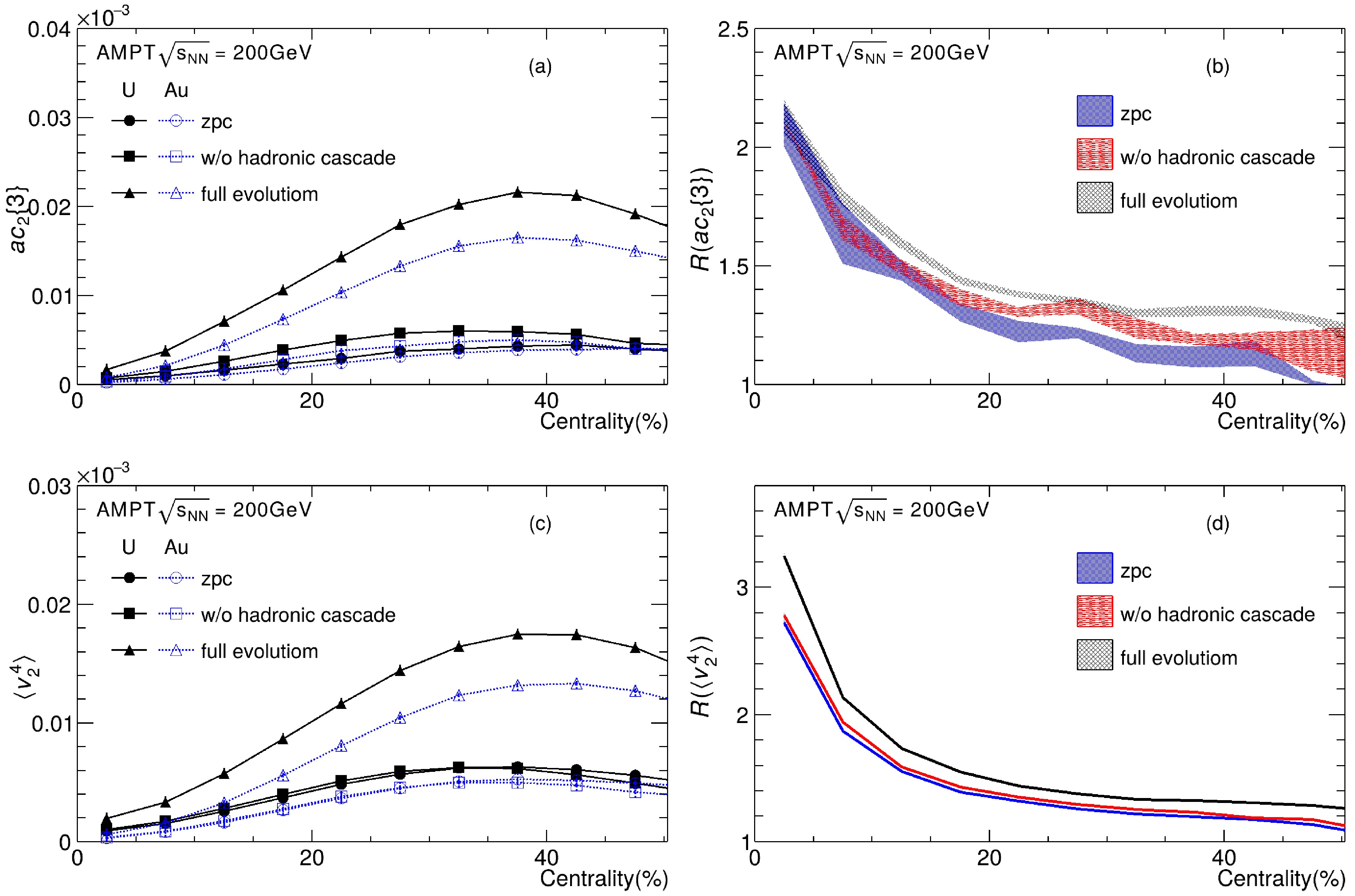
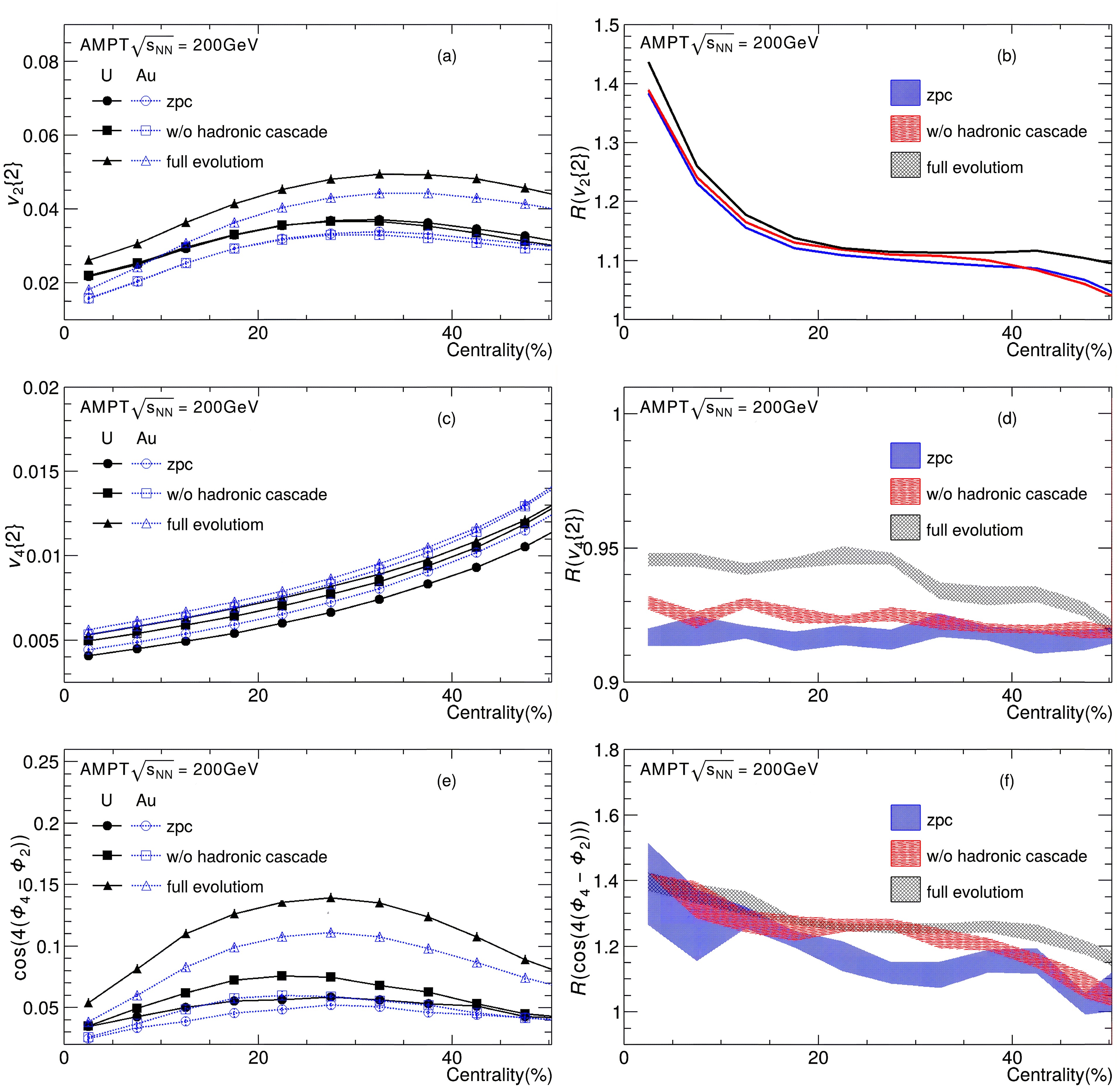
The nonlinear response coefficient, $\chi_{4,22}$, is a crucial observable for probing the dynamical properties of the quark-gluon plasma (QGP). Although traditionally interpreted as a signature of medium response, recent studies suggest that $\chi_{4,22}$ also encodes information about the intrinsic initial-state configuration of the colliding nuclei. In this study, we use A Multi-Phase Transport (AMPT) model to investigate the microscopic origin and stage-by-stage development of $\chi_{4,22}$ in $^{238}$U+$^{238}$U and $^{197}$Au+$^{197}$Au collisions at $\sqrt{s_{\mathrm{NN}}} = 200$ GeV. By tracking flow observables through the partonic cascade, quark coalescence, and hadronic rescattering phases, we map the conversion of initial geometric eccentricities into final-state momentum anisotropies. Our results demonstrate that the absolute magnitude of $\chi_{4,22}$ increases continuously during collective expansion, confirming its nature as a dynamically generated medium response. In contrast, the relative ratio of this coefficient between the U+U and Au+Au systems, $R(\chi_{4,22})$, exhibits approximate stage independence over a broad centrality range, as quantified by a constant-fit test across the three AMPT evolution stages. This indicates that the ratio reduces common medium-response effects, such as overall amplification efficiency and viscous attenuation, and therefore retains stronger sensitivity to the relative initial-state geometry. These findings provide theoretical support for using nonlinear flow ratios to constrain higher-order nuclear structure, such as hexadecapole deformation, while also clarifying the residual stage dependence and nonflow limitations relevant to precision extractions.
The nonlinear response coefficient, $\chi_{4,22}$, is a crucial observable for probing the dynamical properties of the quark-gluon plasma (QGP). Although traditionally interpreted as a signature of medium response, recent studies suggest that $\chi_{4,22}$ also encodes information about the intrinsic initial-state configuration of the colliding nuclei. In this study, we use A Multi-Phase Transport (AMPT) model to investigate the microscopic origin and stage-by-stage development of $\chi_{4,22}$ in $^{238}$U+$^{238}$U and $^{197}$Au+$^{197}$Au collisions at $\sqrt{s_{\mathrm{NN}}} = 200$ GeV. By tracking flow observables through the partonic cascade, quark coalescence, and hadronic rescattering phases, we map the conversion of initial geometric eccentricities into final-state momentum anisotropies. Our results demonstrate that the absolute magnitude of $\chi_{4,22}$ increases continuously during collective expansion, confirming its nature as a dynamically generated medium response. In contrast, the relative ratio of this coefficient between the U+U and Au+Au systems, $R(\chi_{4,22})$, exhibits approximate stage independence over a broad centrality range, as quantified by a constant-fit test across the three AMPT evolution stages. This indicates that the ratio reduces common medium-response effects, such as overall amplification efficiency and viscous attenuation, and therefore retains stronger sensitivity to the relative initial-state geometry. These findings provide theoretical support for using nonlinear flow ratios to constrain higher-order nuclear structure, such as hexadecapole deformation, while also clarifying the residual stage dependence and nonflow limitations relevant to precision extractions.
2026, 50(10): 104108. doi: 10.1088/1674-1137/ae836f
Abstract:
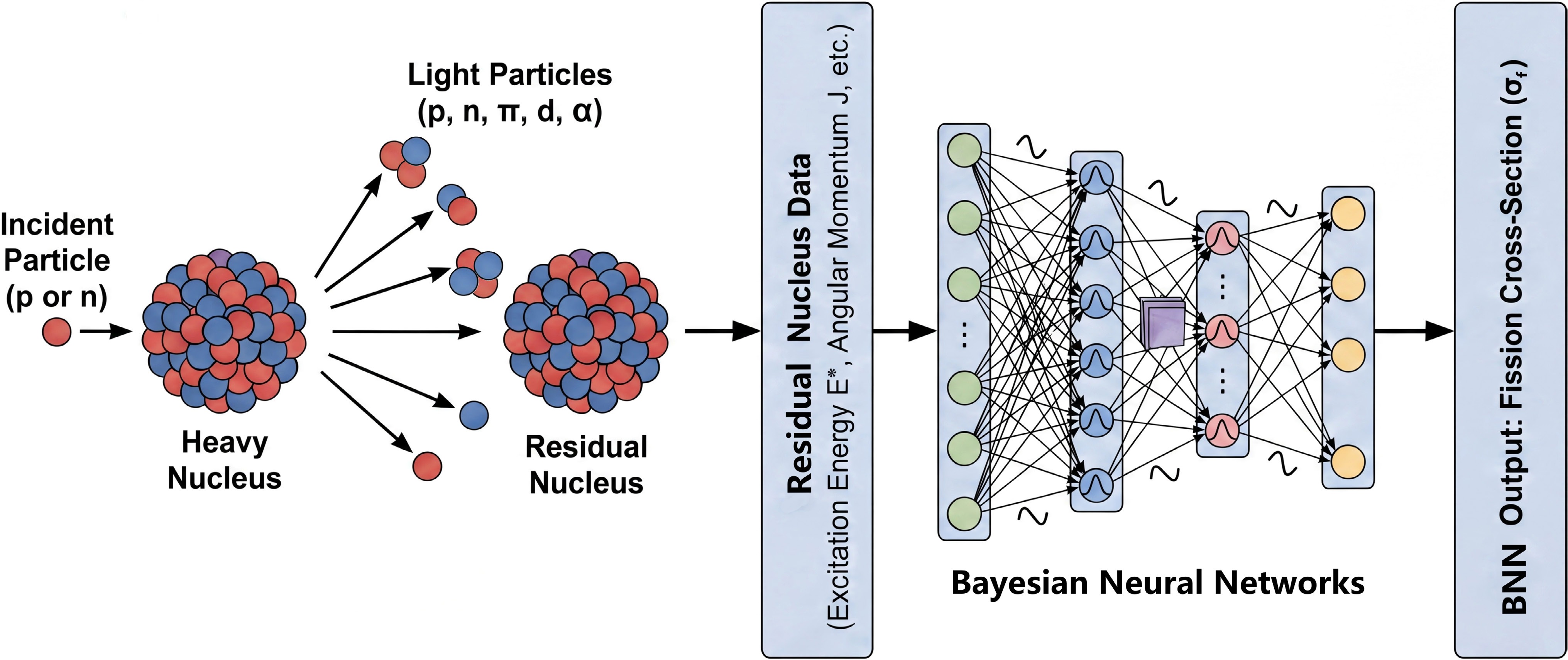
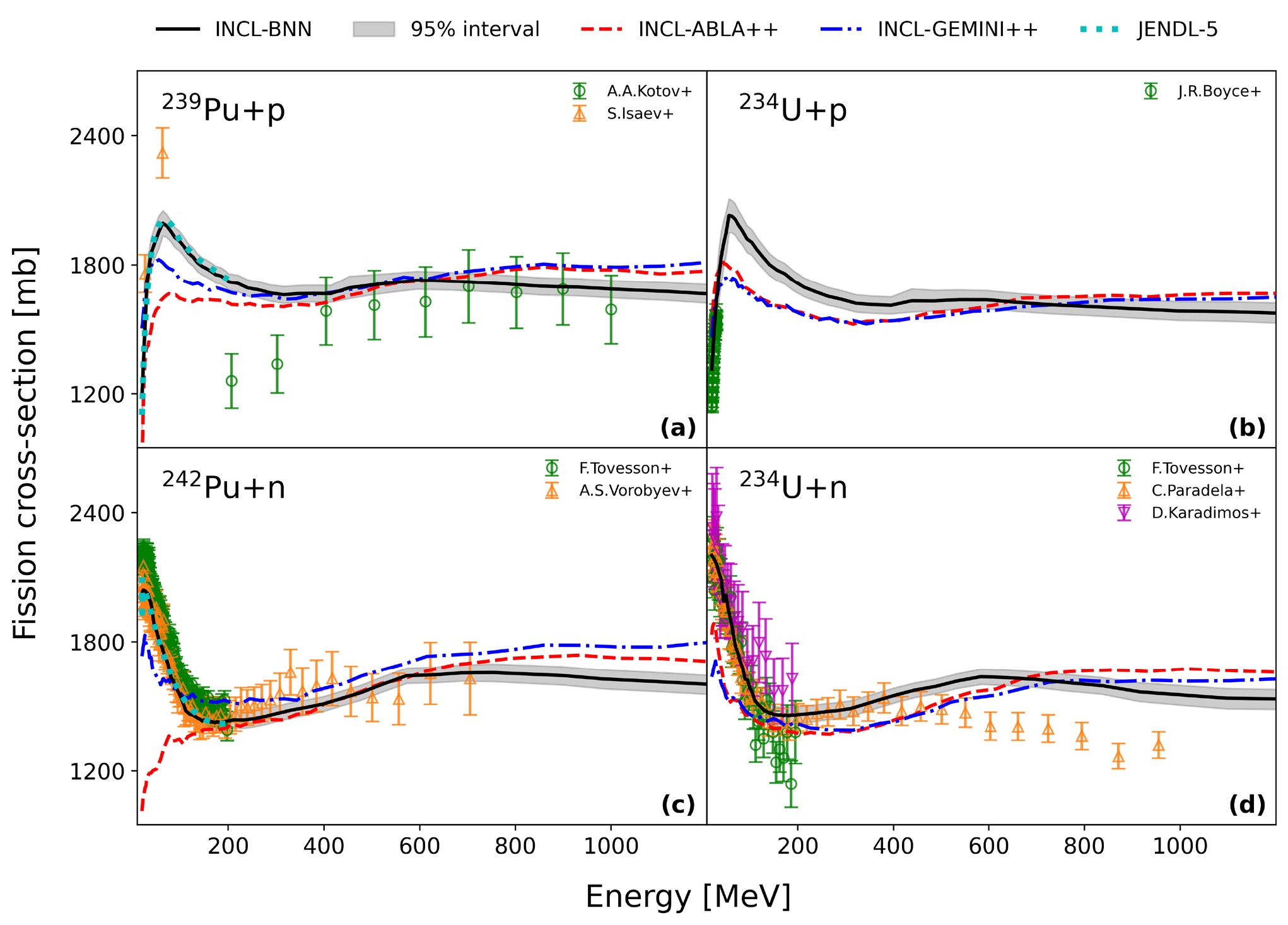
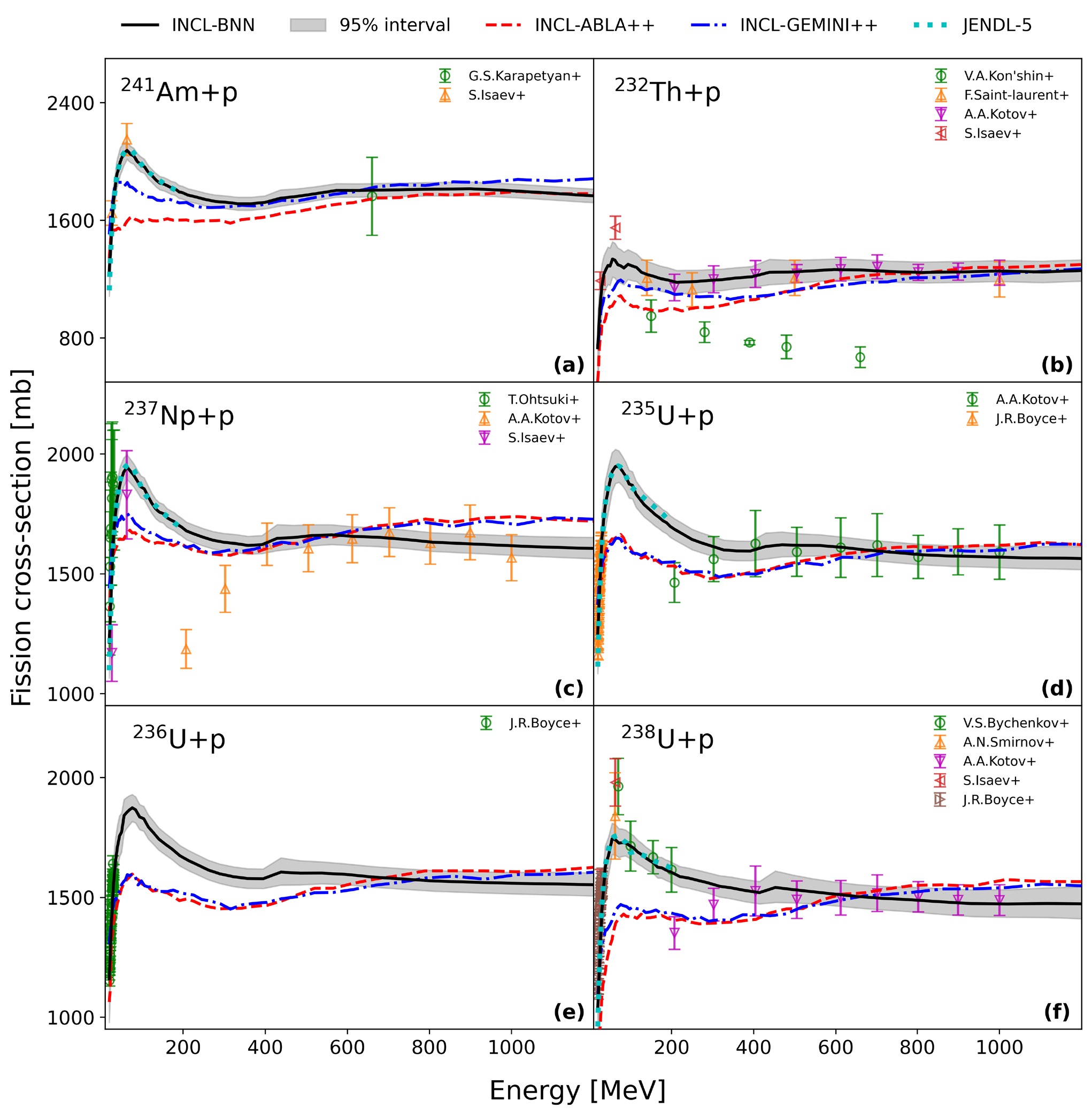
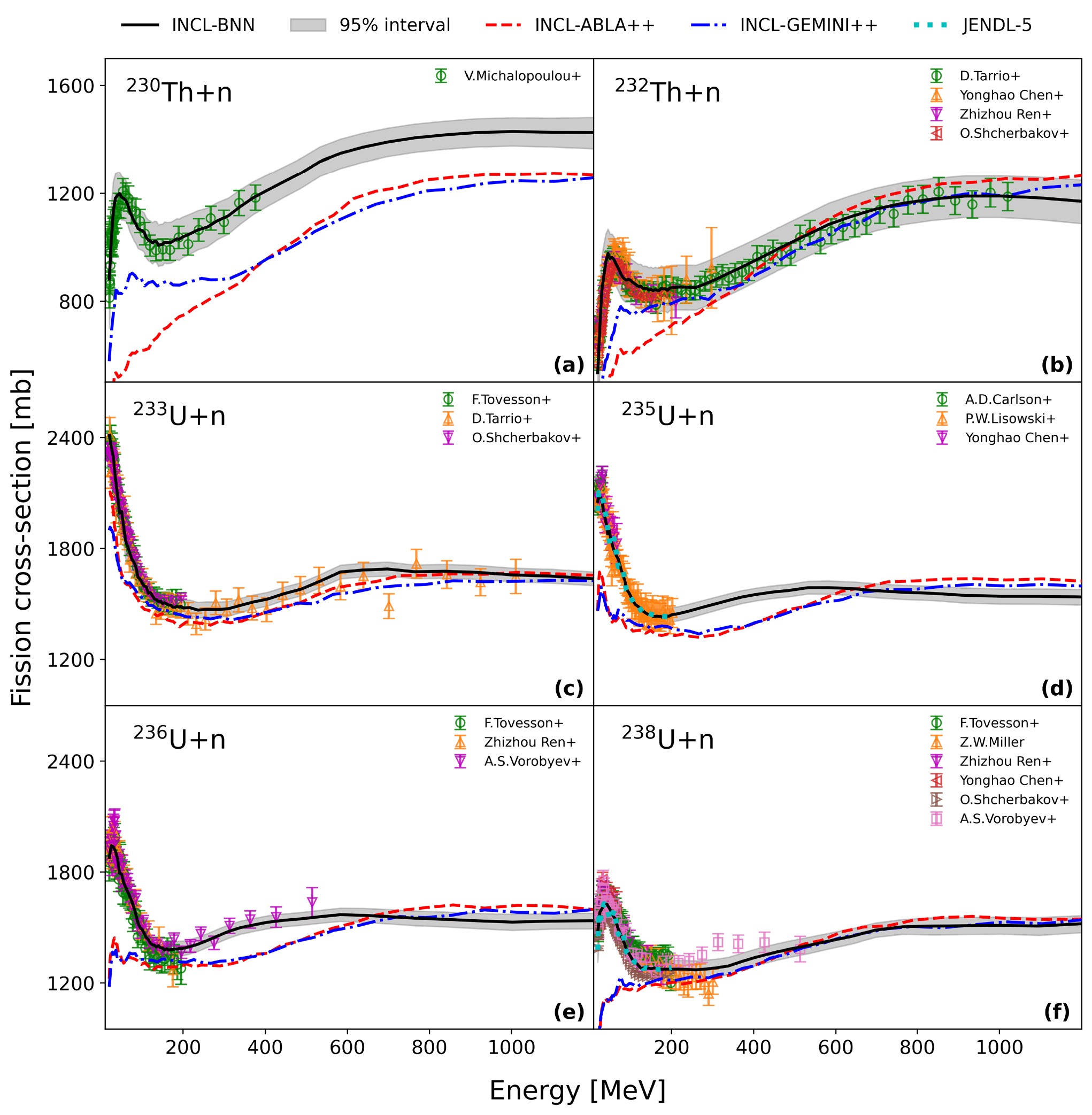
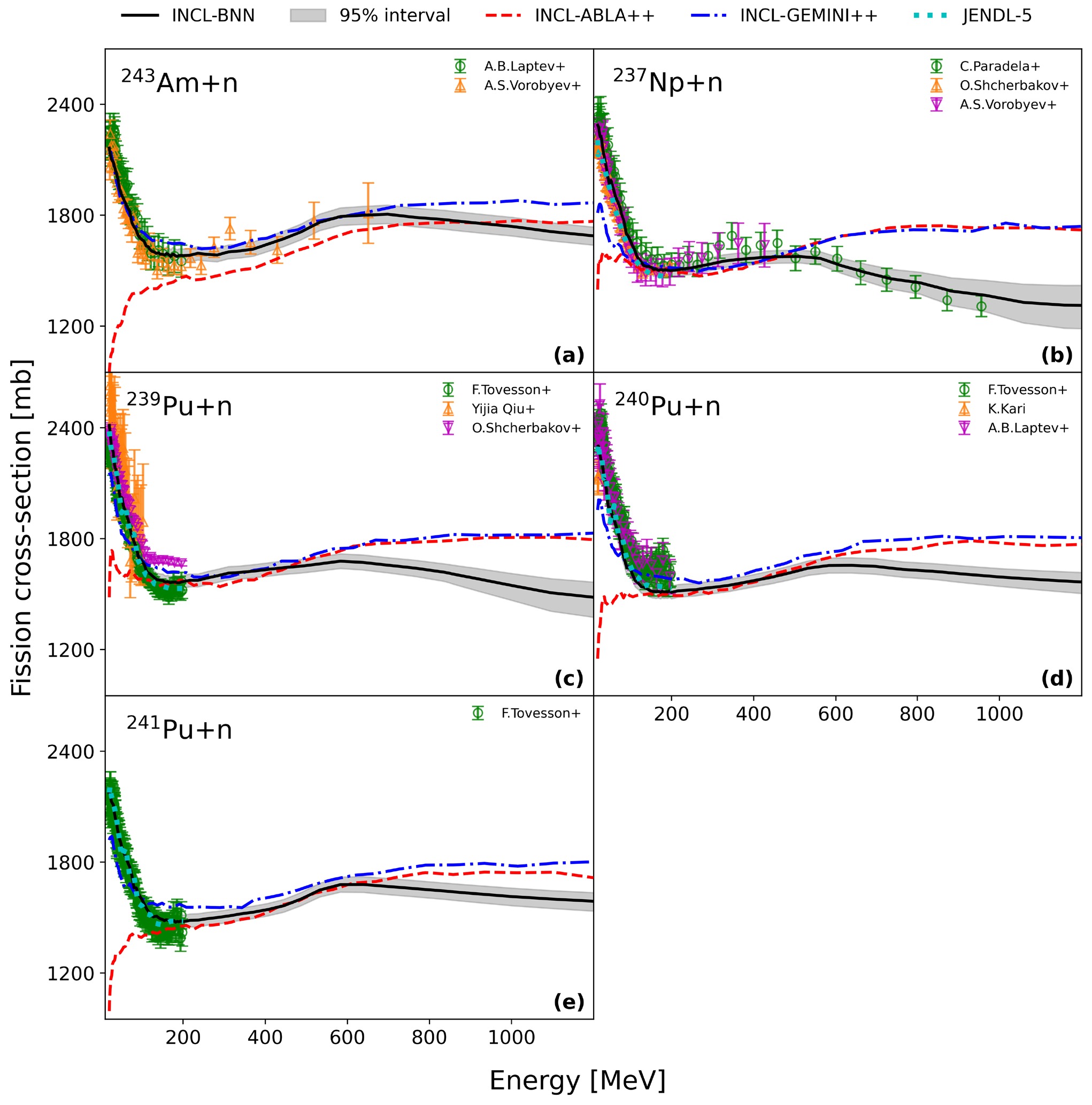
The intermediate- and high-energy proton- and neutron-induced fission cross-sections serve as essential nuclear data for the design and safe operation of the Accelerator-Driven Subcritical System (ADS). This work proposes a hybrid framework combining the Liège Intranuclear Cascade Model (INCL) with Bayesian Neural Networks (BNN) to calculate relevant fission cross-sections. The numerical results are further validated against the simulated data from the INCL-ABLA++ and INCL-GEMINI++ coupled models. The results demonstrate that the established INCL-BNN hybrid framework incorporates adequate physical constraints. It not only accurately reproduces the evolutionary trend of fission cross-sections but also maintains excellent consistency with available experimental measurements. In energy ranges lacking experimental data, the INCL-BNN model exhibits a physically reasonable predictive trend.
The intermediate- and high-energy proton- and neutron-induced fission cross-sections serve as essential nuclear data for the design and safe operation of the Accelerator-Driven Subcritical System (ADS). This work proposes a hybrid framework combining the Liège Intranuclear Cascade Model (INCL) with Bayesian Neural Networks (BNN) to calculate relevant fission cross-sections. The numerical results are further validated against the simulated data from the INCL-ABLA++ and INCL-GEMINI++ coupled models. The results demonstrate that the established INCL-BNN hybrid framework incorporates adequate physical constraints. It not only accurately reproduces the evolutionary trend of fission cross-sections but also maintains excellent consistency with available experimental measurements. In energy ranges lacking experimental data, the INCL-BNN model exhibits a physically reasonable predictive trend.
2026, 50(10): 104105. doi: 10.1088/1674-1137/ae85f3
Abstract:
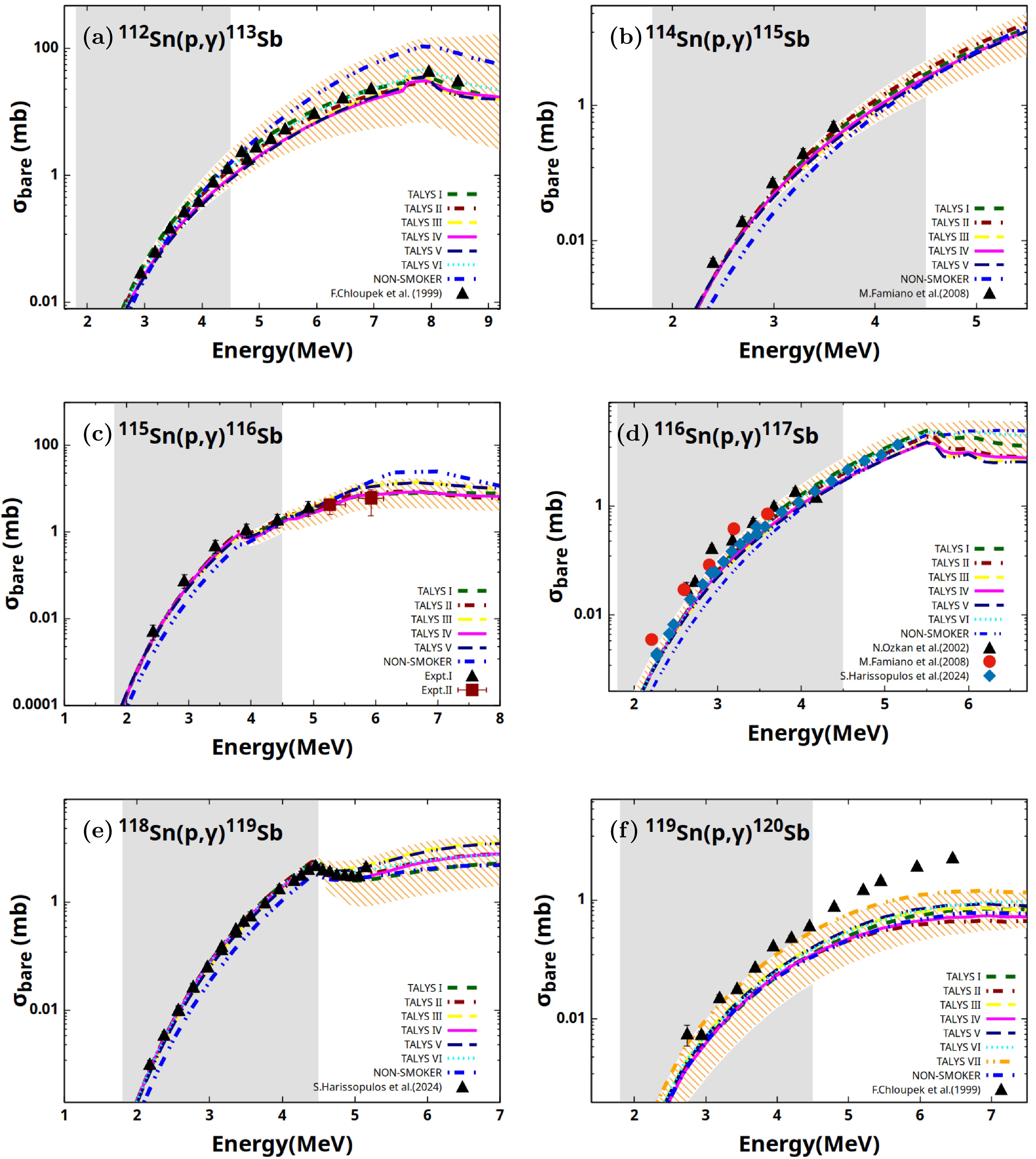
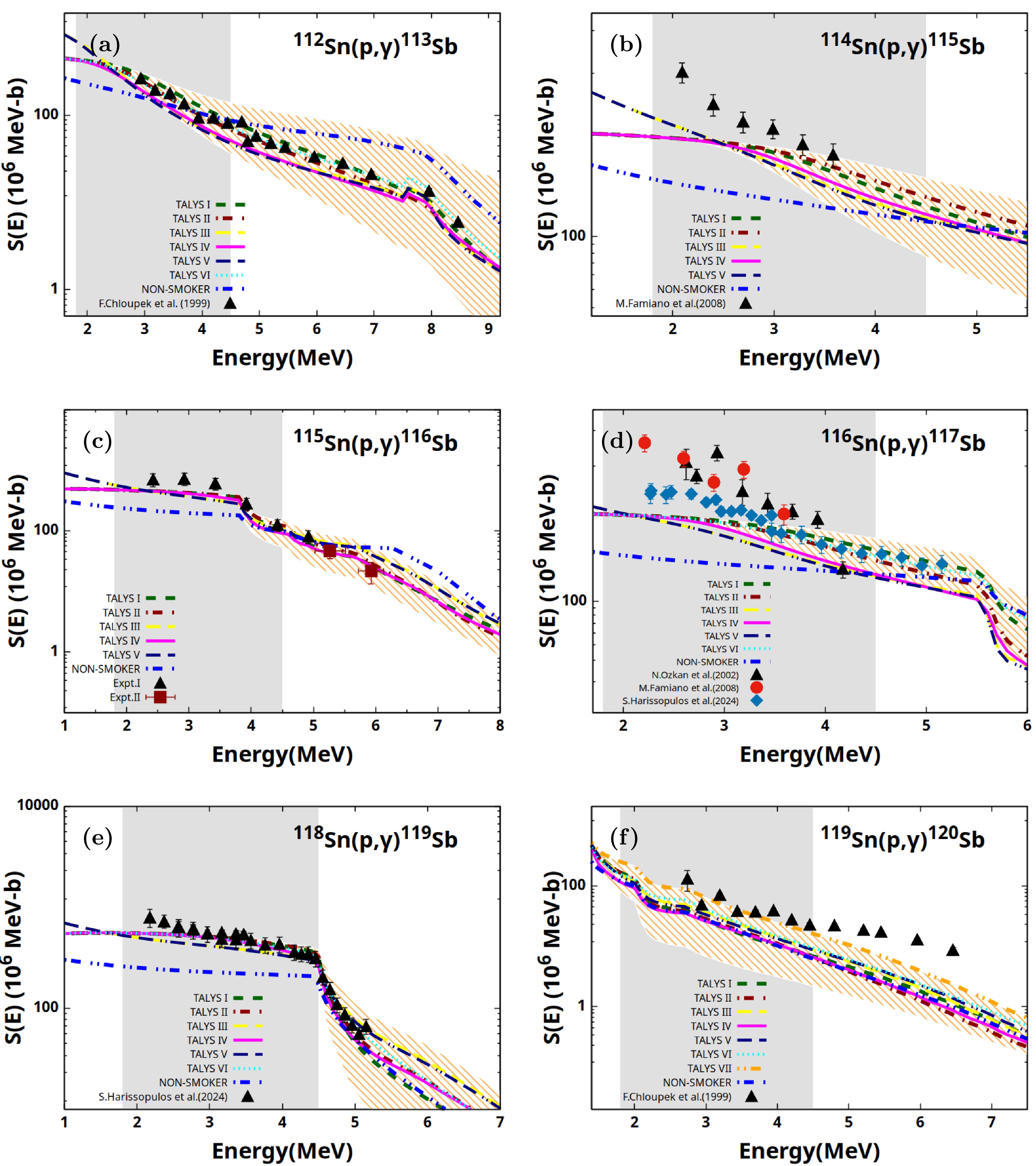
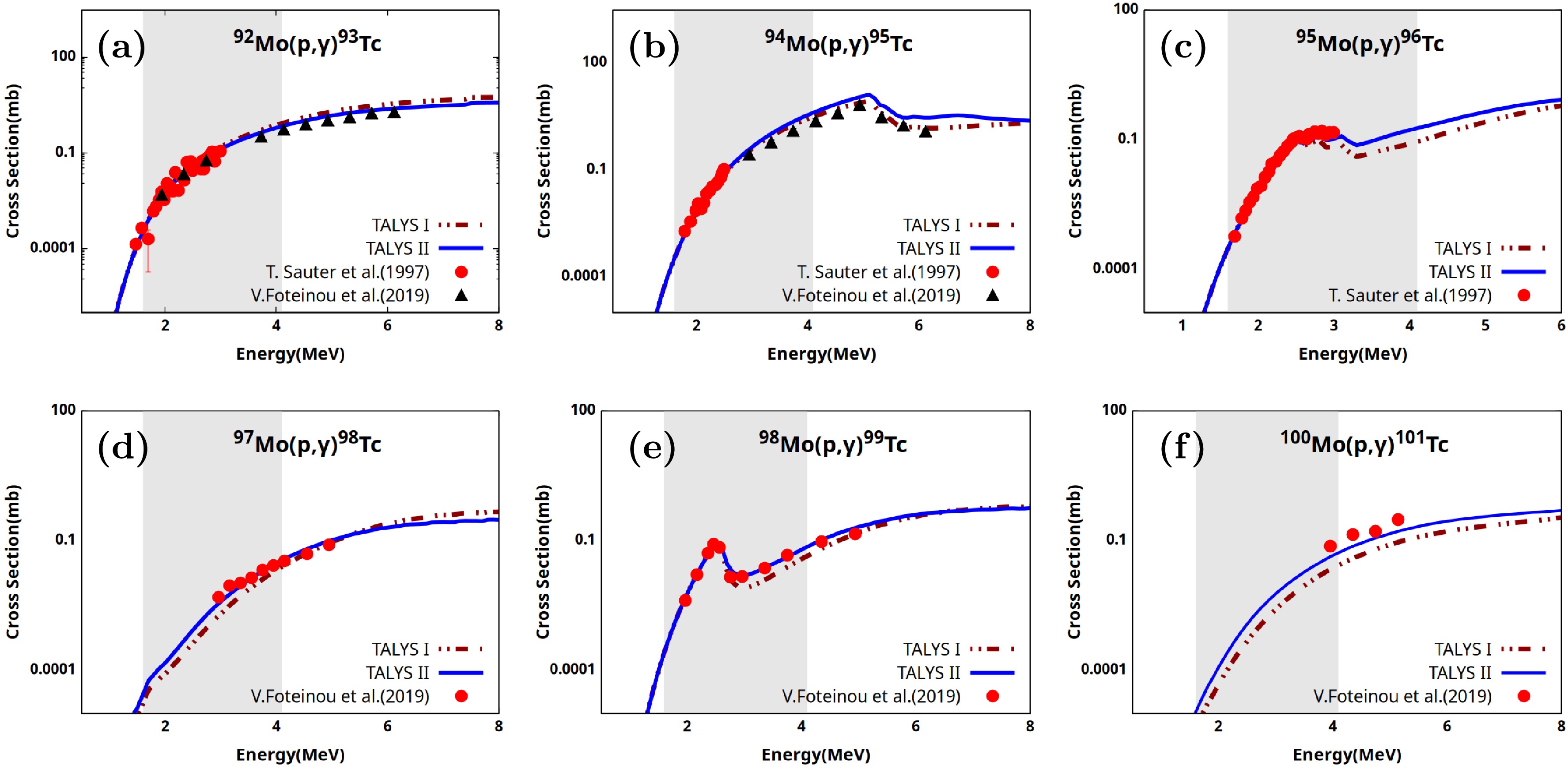
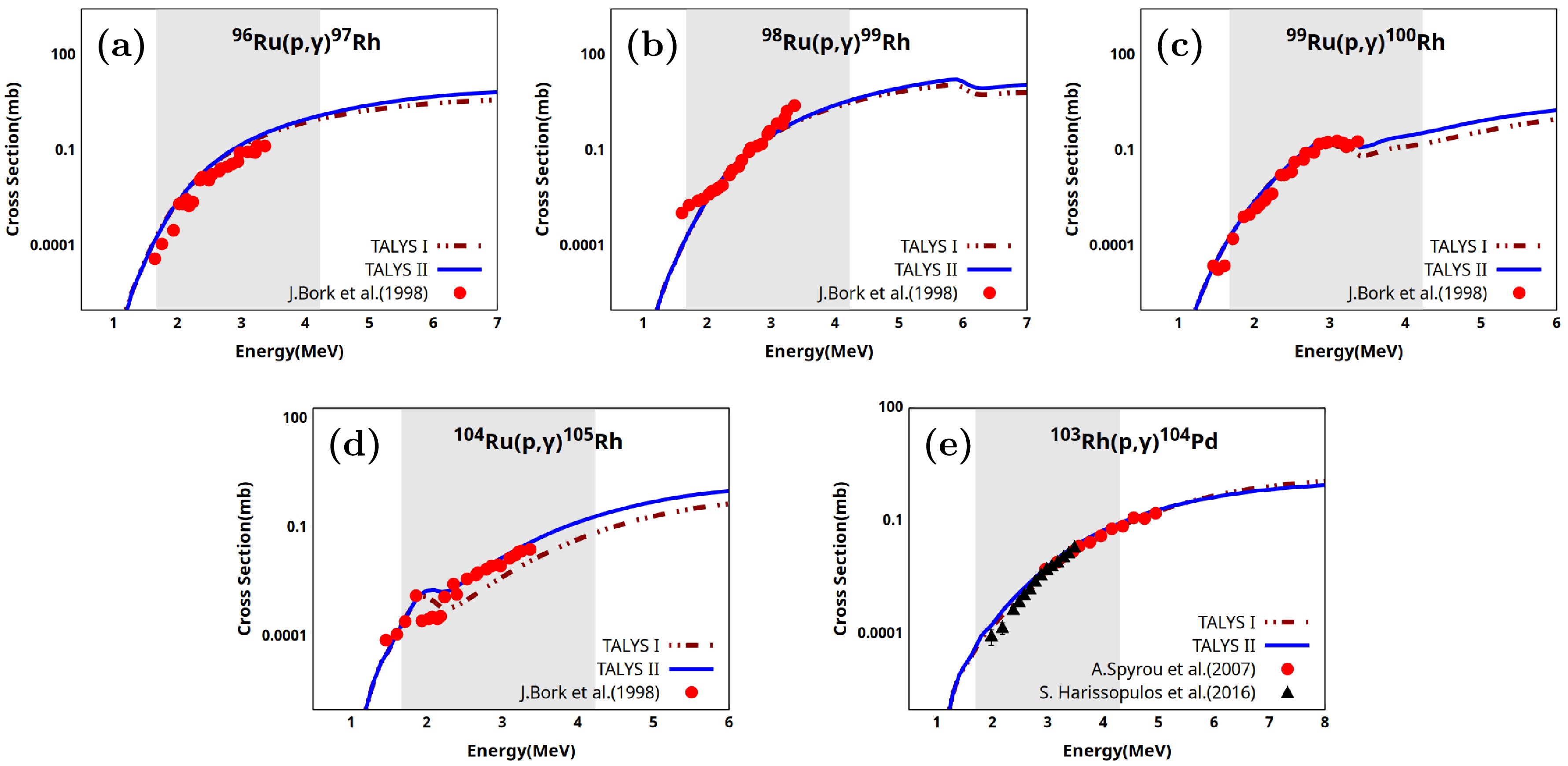
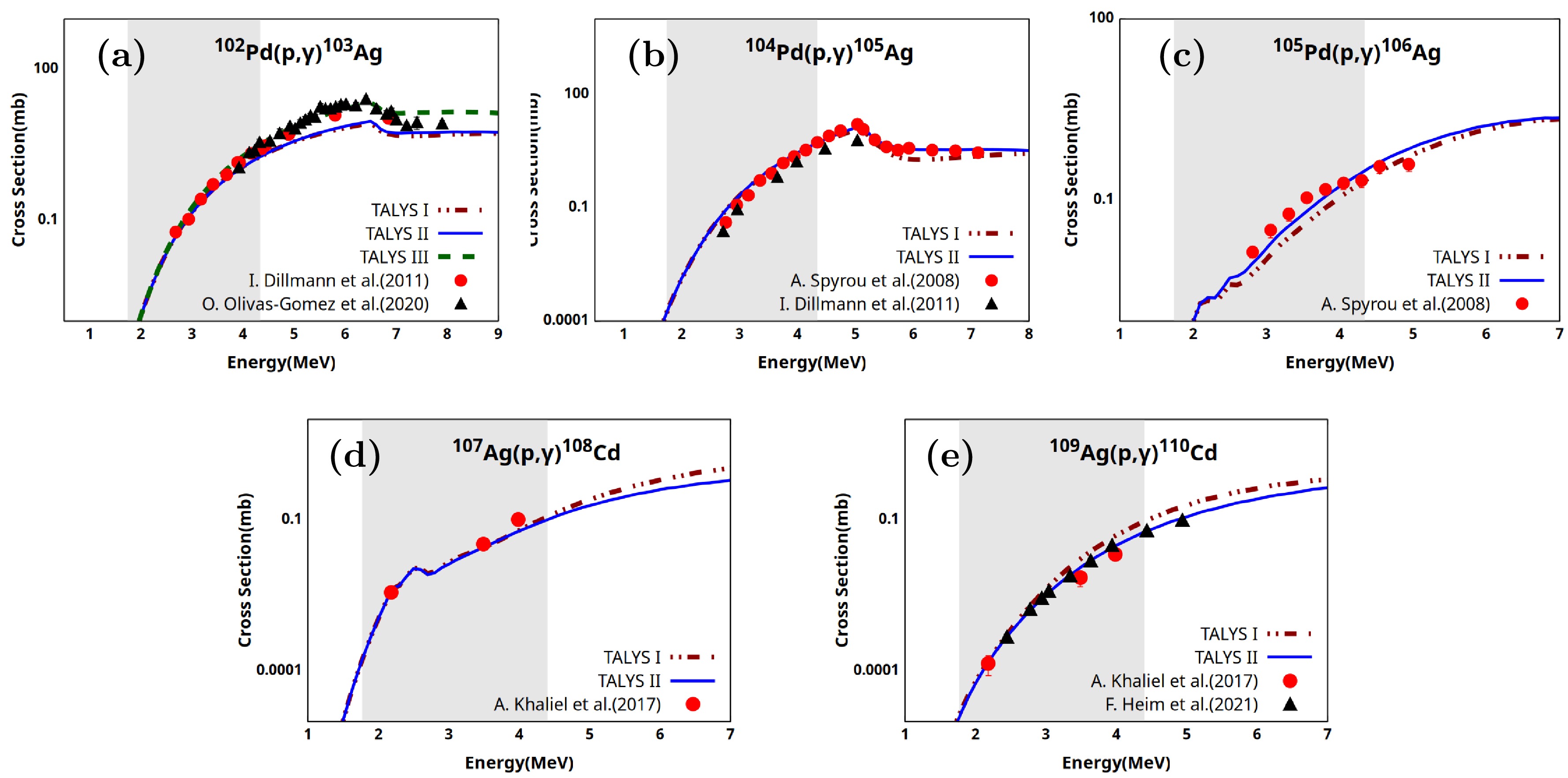
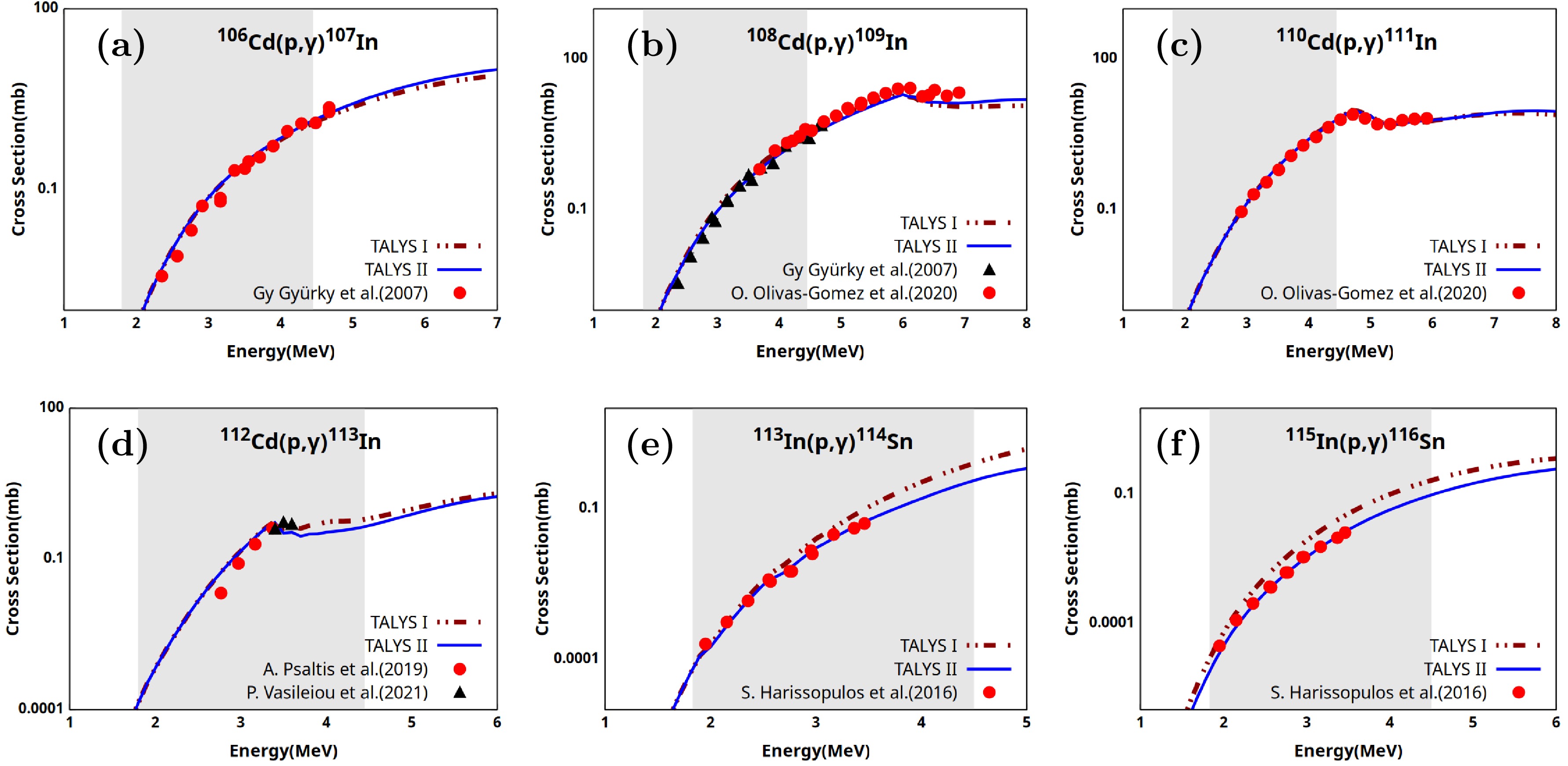
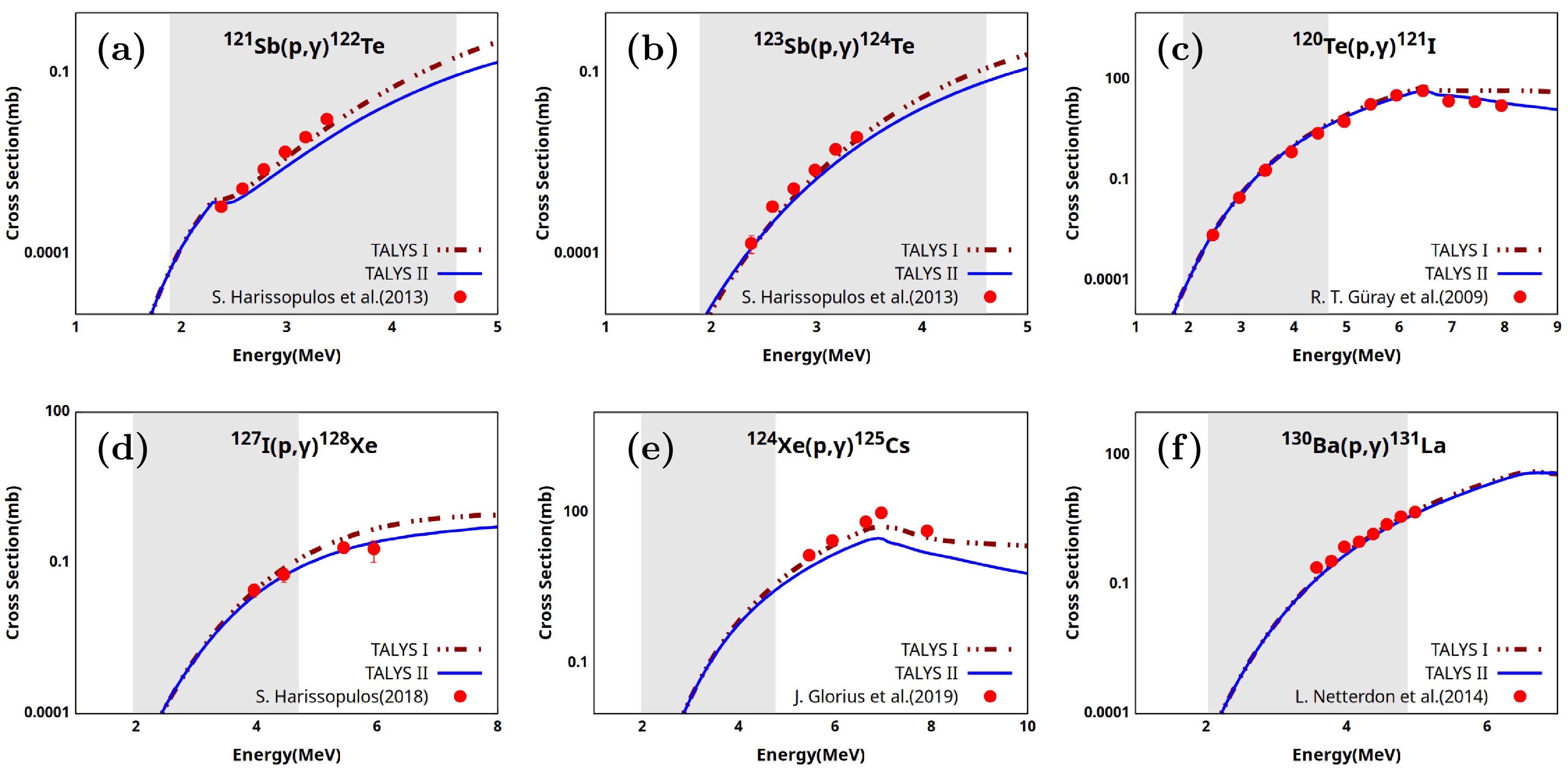
A systematic study of radiative proton-capture (p, γ) cross sections on Sn isotopes and neighboring nuclei was performed within the framework of the Hauser–Feshbach statistical model using the TALYS 2.0 code. The available experimental (p, γ) cross sections for the isotopes 112,114,115,116,118,119Sn were corrected for electron screening effects, and the corresponding astrophysical S-factors were derived. These corrected data were then compared with TALYS calculations to assess the predictive capability of the code for modeling (p, γ) reactions on Sn isotopes. Different combinations of nuclear input models, including photon strength functions (PSF), nuclear level densities (NLD), and optical model potentials (OMP), were systematically explored to reproduce the measured cross sections and corresponding S-factors. In addition, calculations were performed using experimentally constrained NLD and PSF parameters from a recent systematic study of Sn isotopes. These calculations successfully reproduced the measured Sn(p, γ) data and provided a stringent test of the theoretical inputs used in TALYS. The results were further compared with predictions from the NON-SMOKER(web) database. The model combinations within the TALYS framework that showed reasonable agreement with the experimental data for Sn isotopes were subsequently used to evaluate their predictive performance for existing (p, γ) cross sections of neighboring nuclei in the atomic number range $ Z=42-56 $, after applying electron screening corrections. The present study establishes a reliable modeling framework for describing proton-capture reactions and improving astrophysical reaction-rate predictions in this region.
A systematic study of radiative proton-capture (p, γ) cross sections on Sn isotopes and neighboring nuclei was performed within the framework of the Hauser–Feshbach statistical model using the TALYS 2.0 code. The available experimental (p, γ) cross sections for the isotopes 112,114,115,116,118,119Sn were corrected for electron screening effects, and the corresponding astrophysical S-factors were derived. These corrected data were then compared with TALYS calculations to assess the predictive capability of the code for modeling (p, γ) reactions on Sn isotopes. Different combinations of nuclear input models, including photon strength functions (PSF), nuclear level densities (NLD), and optical model potentials (OMP), were systematically explored to reproduce the measured cross sections and corresponding S-factors. In addition, calculations were performed using experimentally constrained NLD and PSF parameters from a recent systematic study of Sn isotopes. These calculations successfully reproduced the measured Sn(p, γ) data and provided a stringent test of the theoretical inputs used in TALYS. The results were further compared with predictions from the NON-SMOKER(web) database. The model combinations within the TALYS framework that showed reasonable agreement with the experimental data for Sn isotopes were subsequently used to evaluate their predictive performance for existing (p, γ) cross sections of neighboring nuclei in the atomic number range $ Z=42-56 $, after applying electron screening corrections. The present study establishes a reliable modeling framework for describing proton-capture reactions and improving astrophysical reaction-rate predictions in this region.
2026, 50(10): 104109. doi: 10.1088/1674-1137/ae8ace
Abstract:
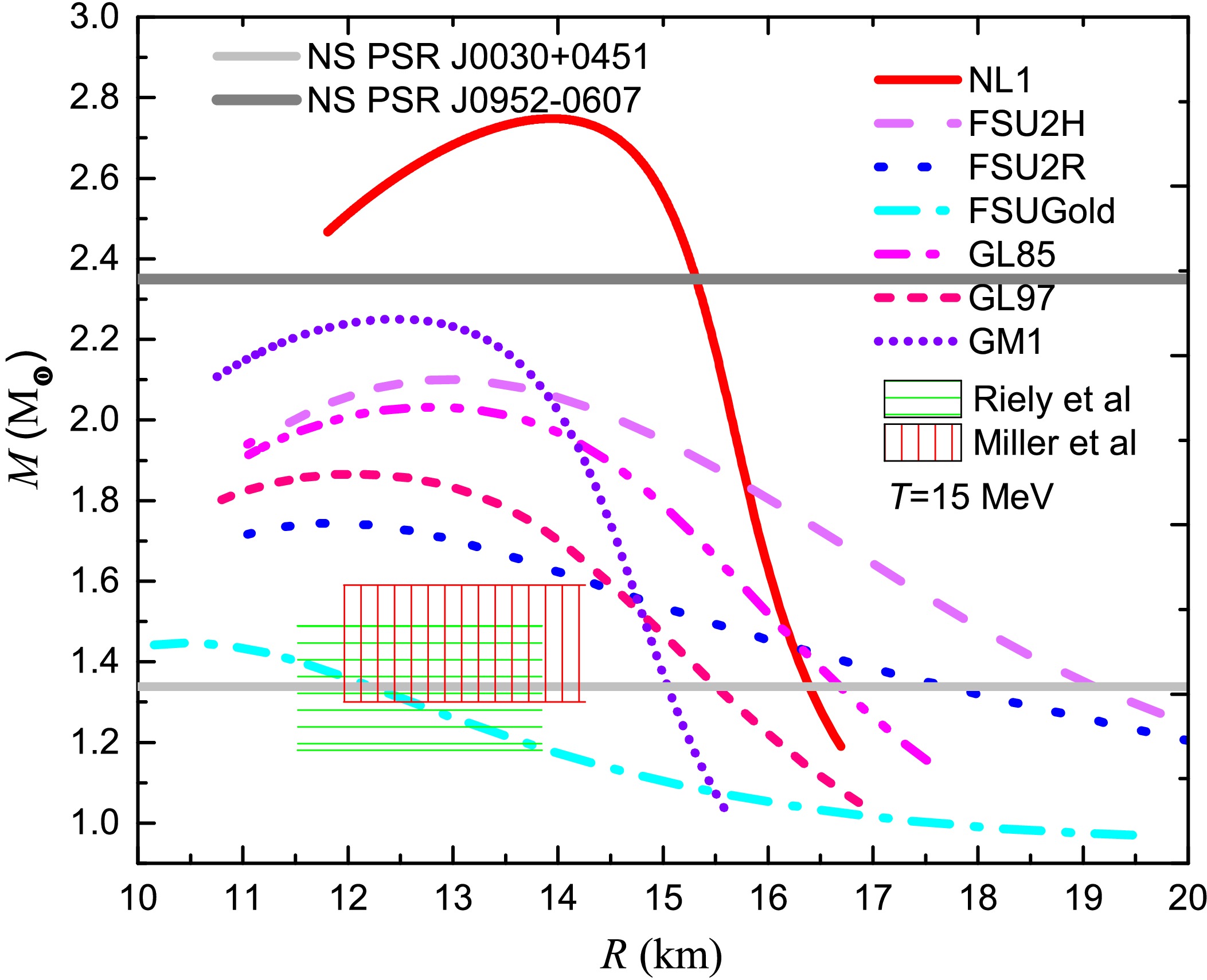
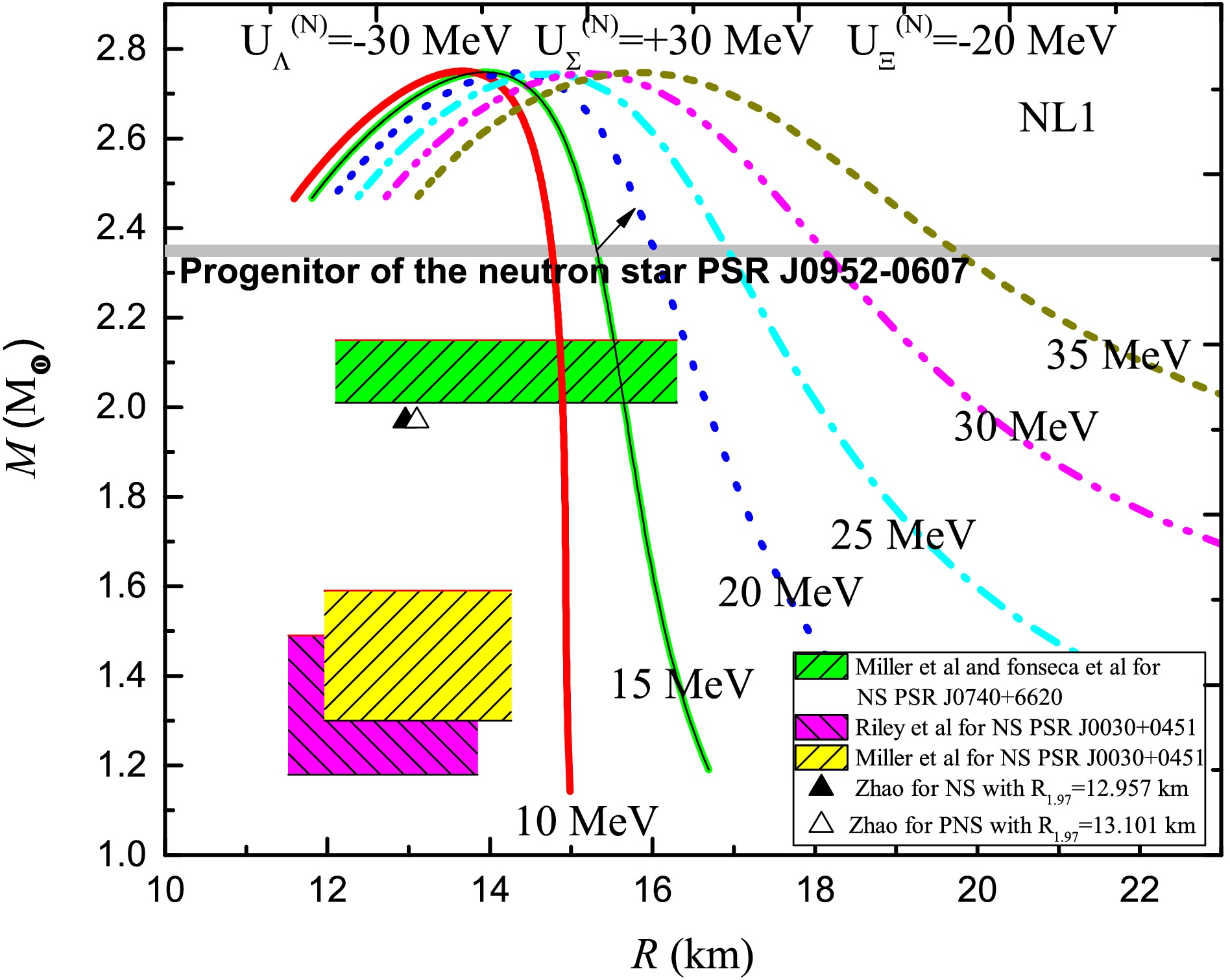
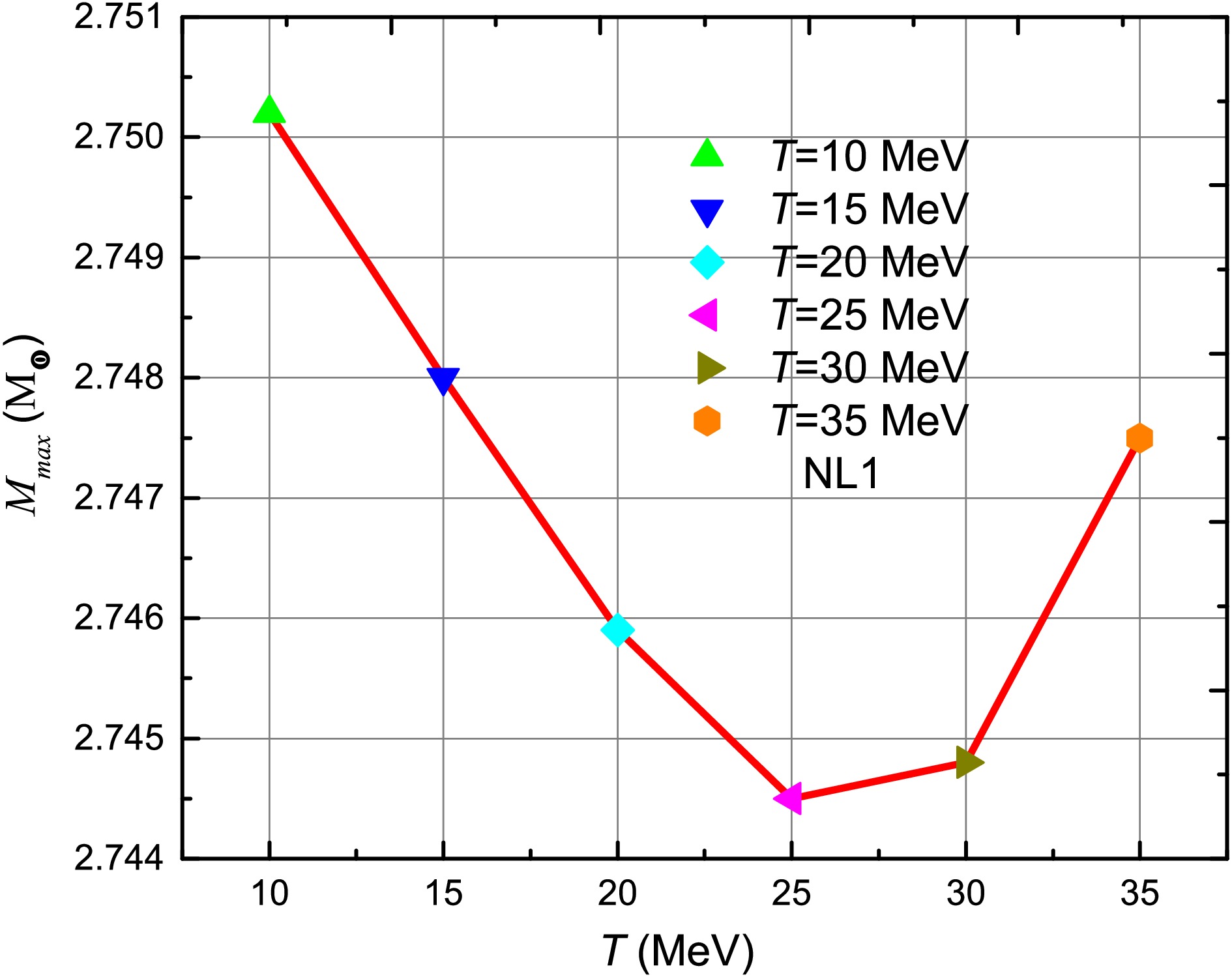
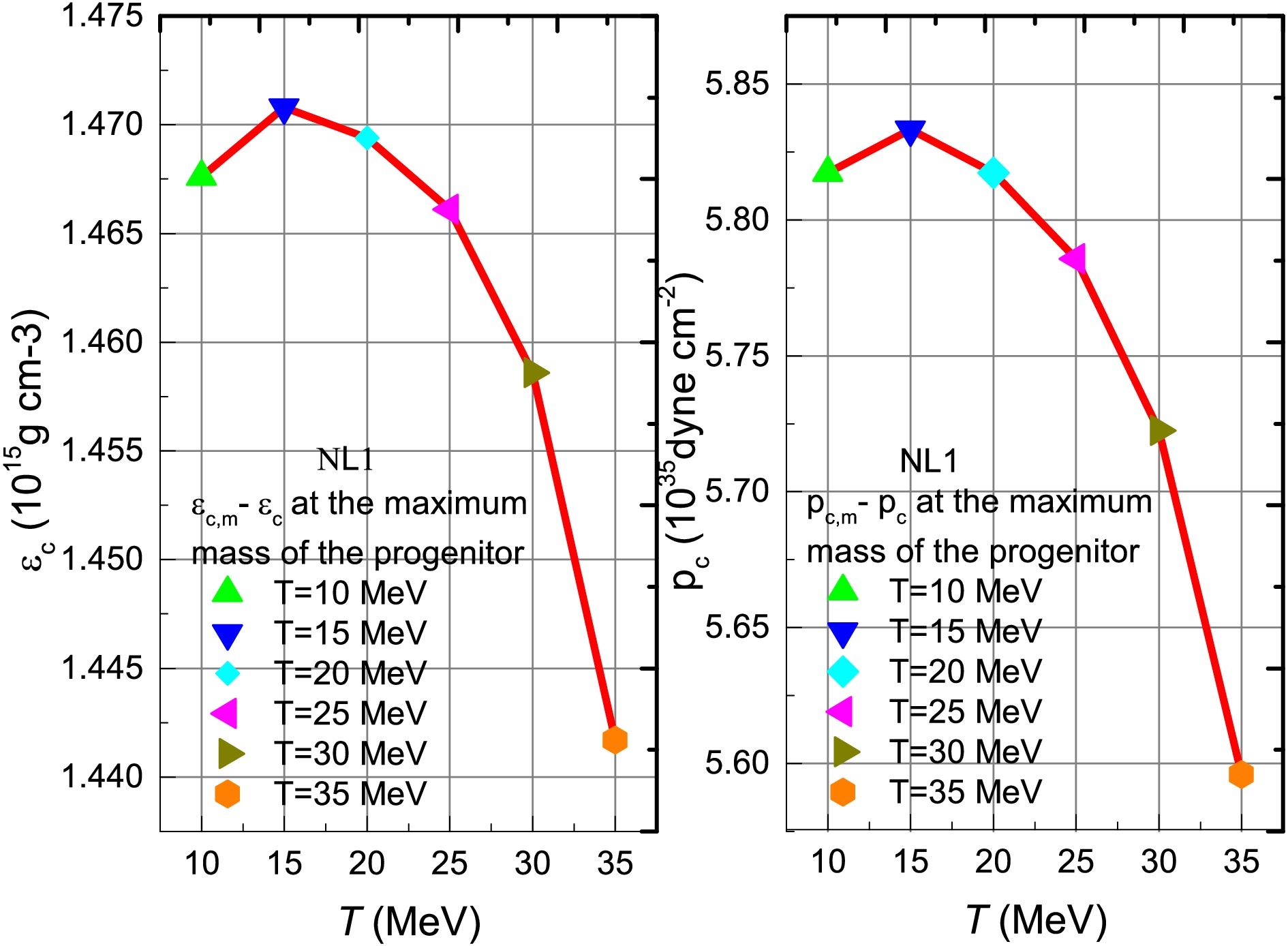
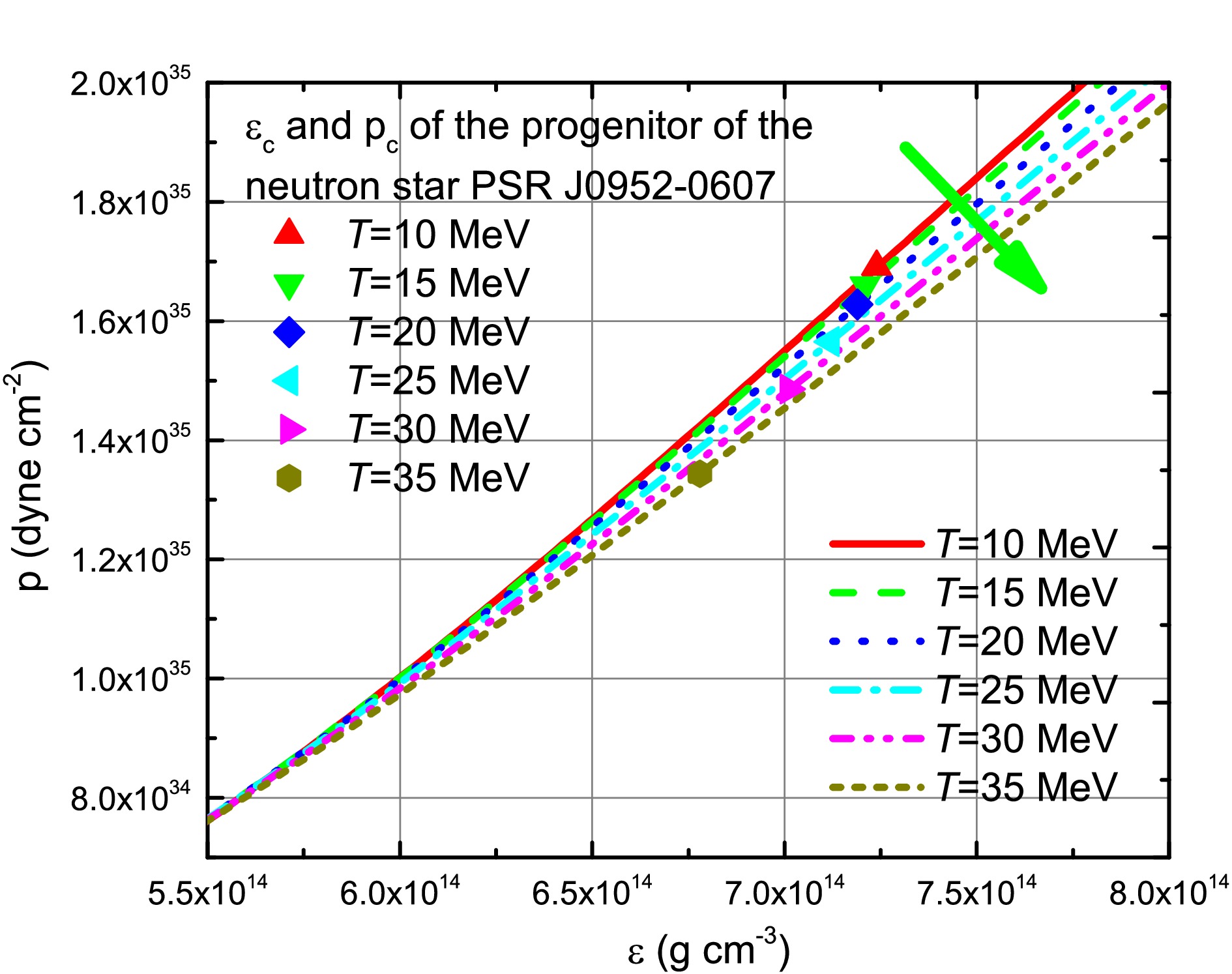
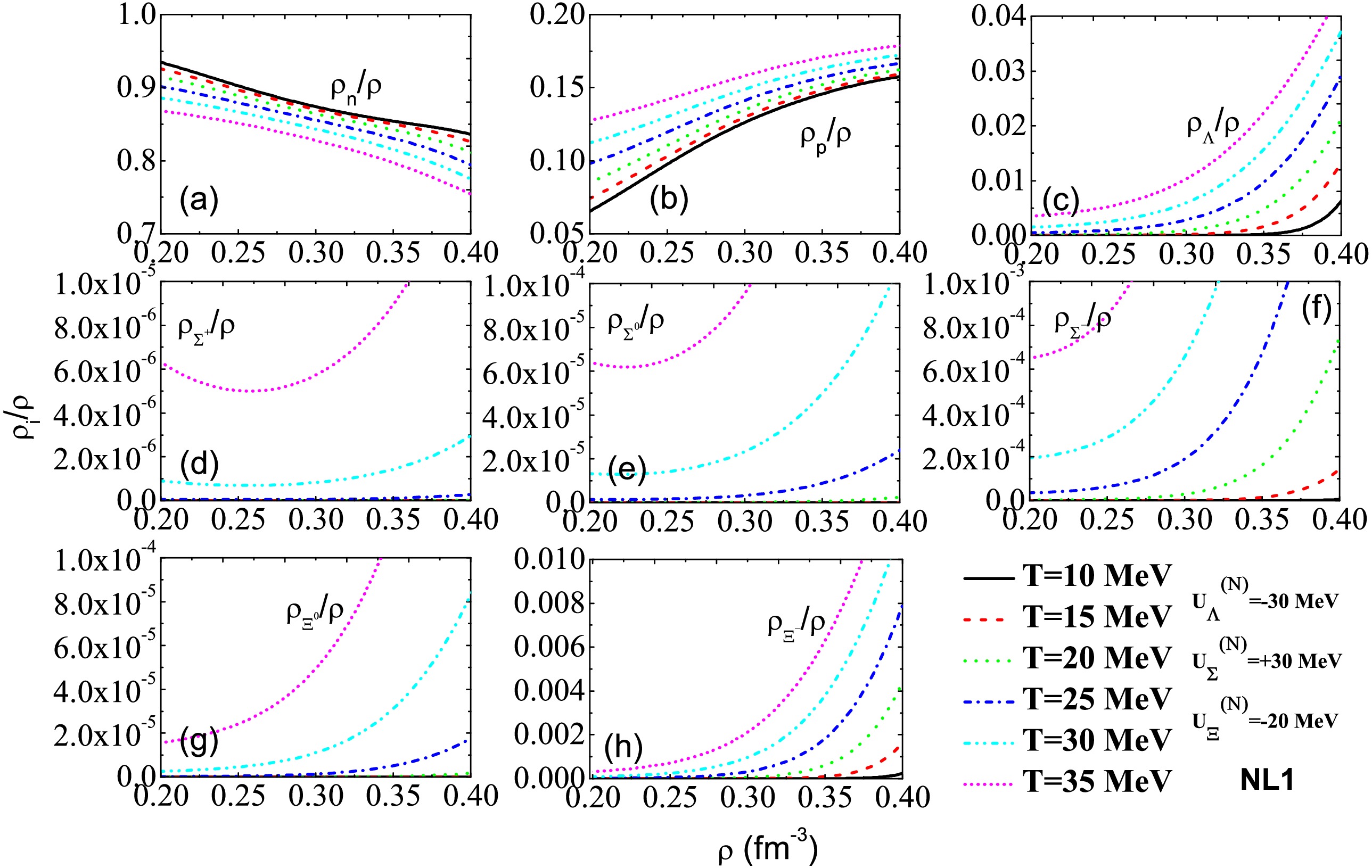
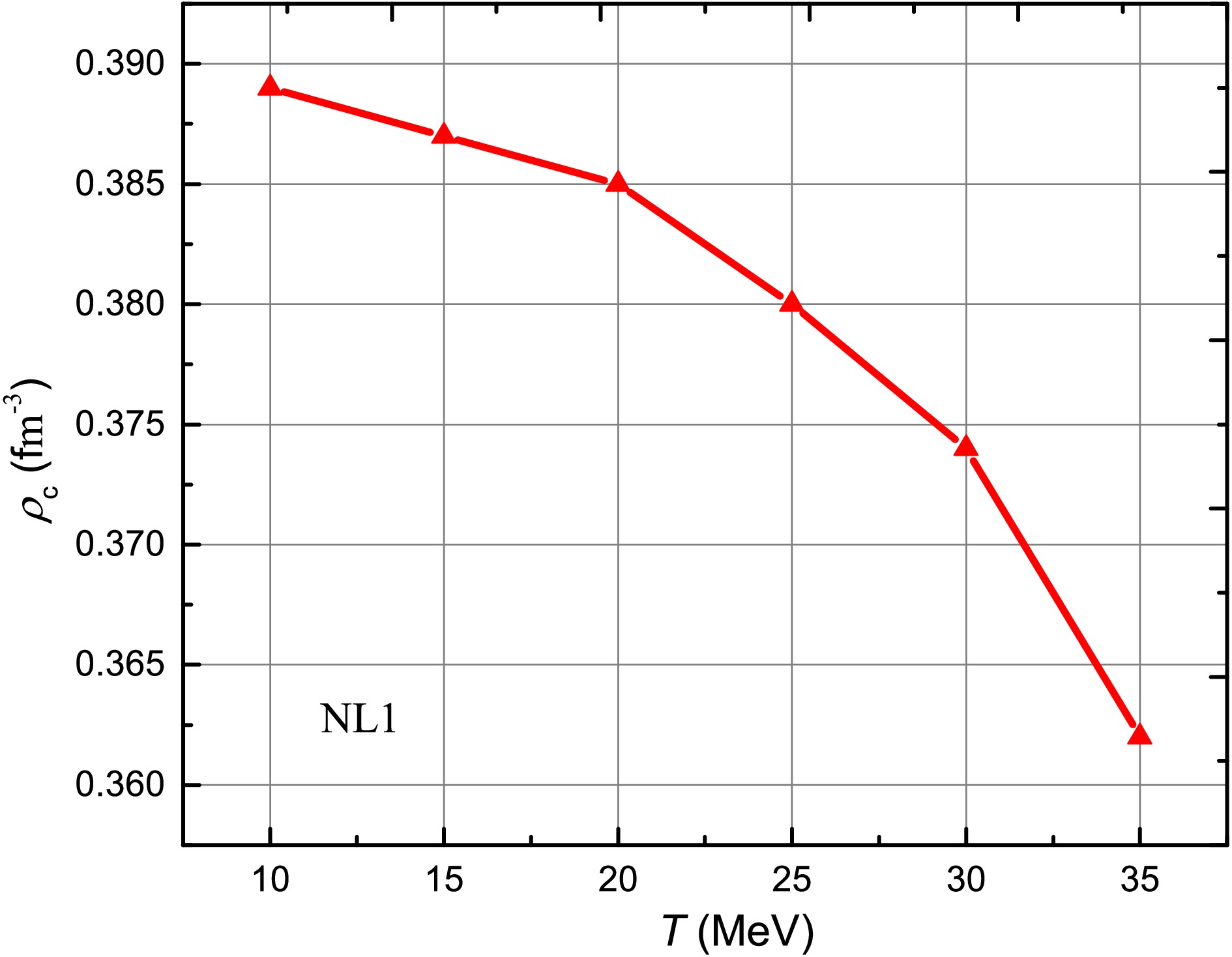
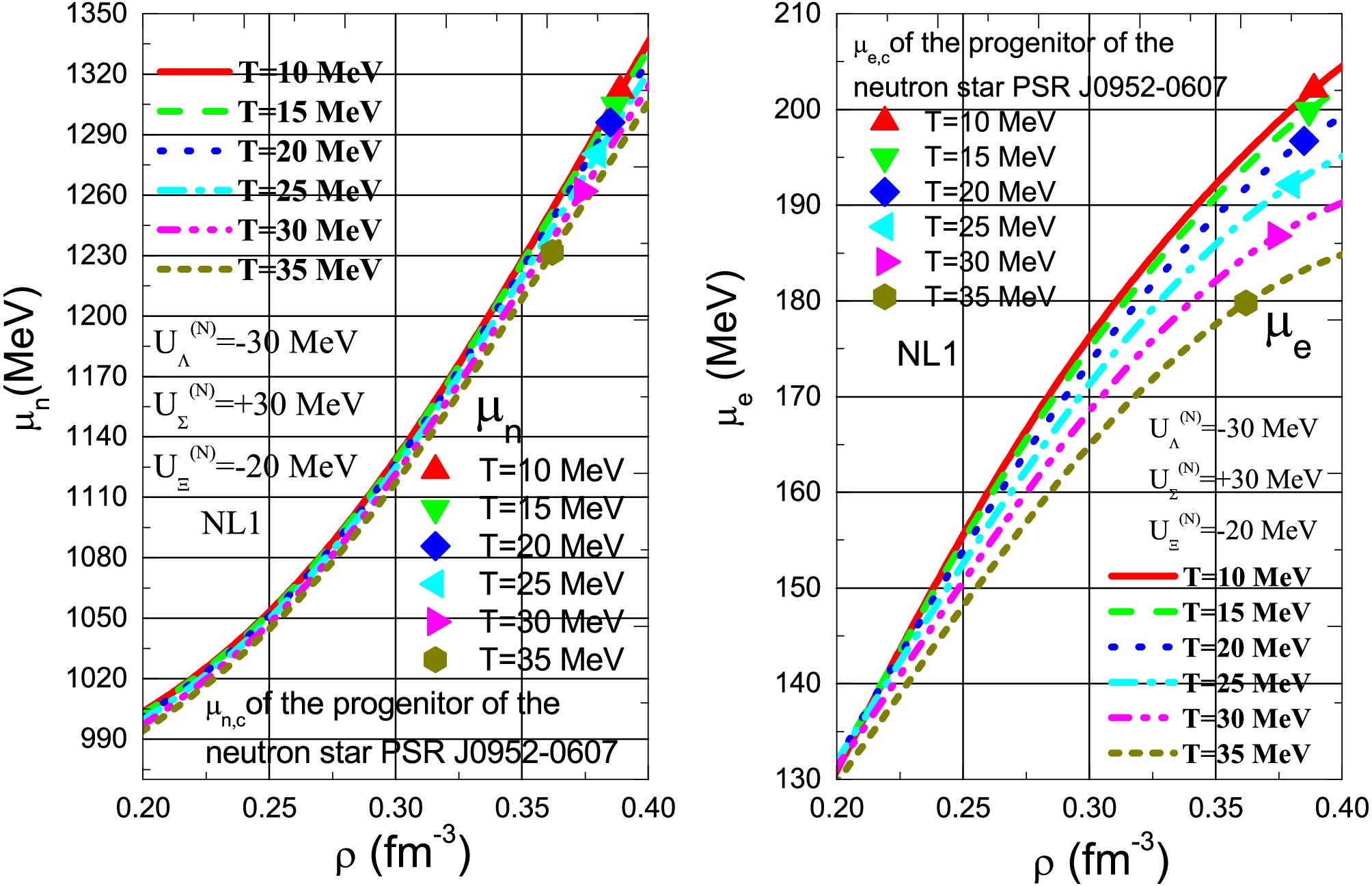
The temperature dependence of the properties of the progenitor of the neutron star PSR J0952-0607 is investigated within the relativistic mean-field theory using the NL1 nucleon coupling parameter set, with temperatures ranging from 10 to 35 MeV. The maximum mass exhibits a non-monotonic behavior: it decreases from 2.7502 $ {M}_{\odot} $ at 10 MeV to 2.7445 $ {M}_{\odot}$ at 25 MeV, then increases slightly to 2.7475 $ {M}_{\odot}$ at 35 MeV. The corresponding radius at maximum mass expands monotonically from 13.66 to 15.81 km due to thermal pressure. As temperature rises, the central baryon density drops from 0.389 to 0.362 fm-3, and the central neutron (electron) chemical potential decreases from 1312 (202) to 1232 (180) MeV. The relative density of neutrons decreases from 84.1% to 78.8%, while the proton fraction increases from 15.6% to 17.3%. Hyperons, especially Λ, appear and grow in abundance (from 0.3% to 2.7%), softening the EoS. These temperature-induced changes in composition and thermodynamics explain the observed non-monotonic variation of the maximum mass and the overall expansion of the star. This work provides essential insights into the early evolution of hot neutron stars.
The temperature dependence of the properties of the progenitor of the neutron star PSR J0952-0607 is investigated within the relativistic mean-field theory using the NL1 nucleon coupling parameter set, with temperatures ranging from 10 to 35 MeV. The maximum mass exhibits a non-monotonic behavior: it decreases from 2.7502 $ {M}_{\odot} $ at 10 MeV to 2.7445 $ {M}_{\odot}$ at 25 MeV, then increases slightly to 2.7475 $ {M}_{\odot}$ at 35 MeV. The corresponding radius at maximum mass expands monotonically from 13.66 to 15.81 km due to thermal pressure. As temperature rises, the central baryon density drops from 0.389 to 0.362 fm-3, and the central neutron (electron) chemical potential decreases from 1312 (202) to 1232 (180) MeV. The relative density of neutrons decreases from 84.1% to 78.8%, while the proton fraction increases from 15.6% to 17.3%. Hyperons, especially Λ, appear and grow in abundance (from 0.3% to 2.7%), softening the EoS. These temperature-induced changes in composition and thermodynamics explain the observed non-monotonic variation of the maximum mass and the overall expansion of the star. This work provides essential insights into the early evolution of hot neutron stars.
2026, 50(10): 104102. doi: 10.1088/1674-1137/ae71a4
Abstract:
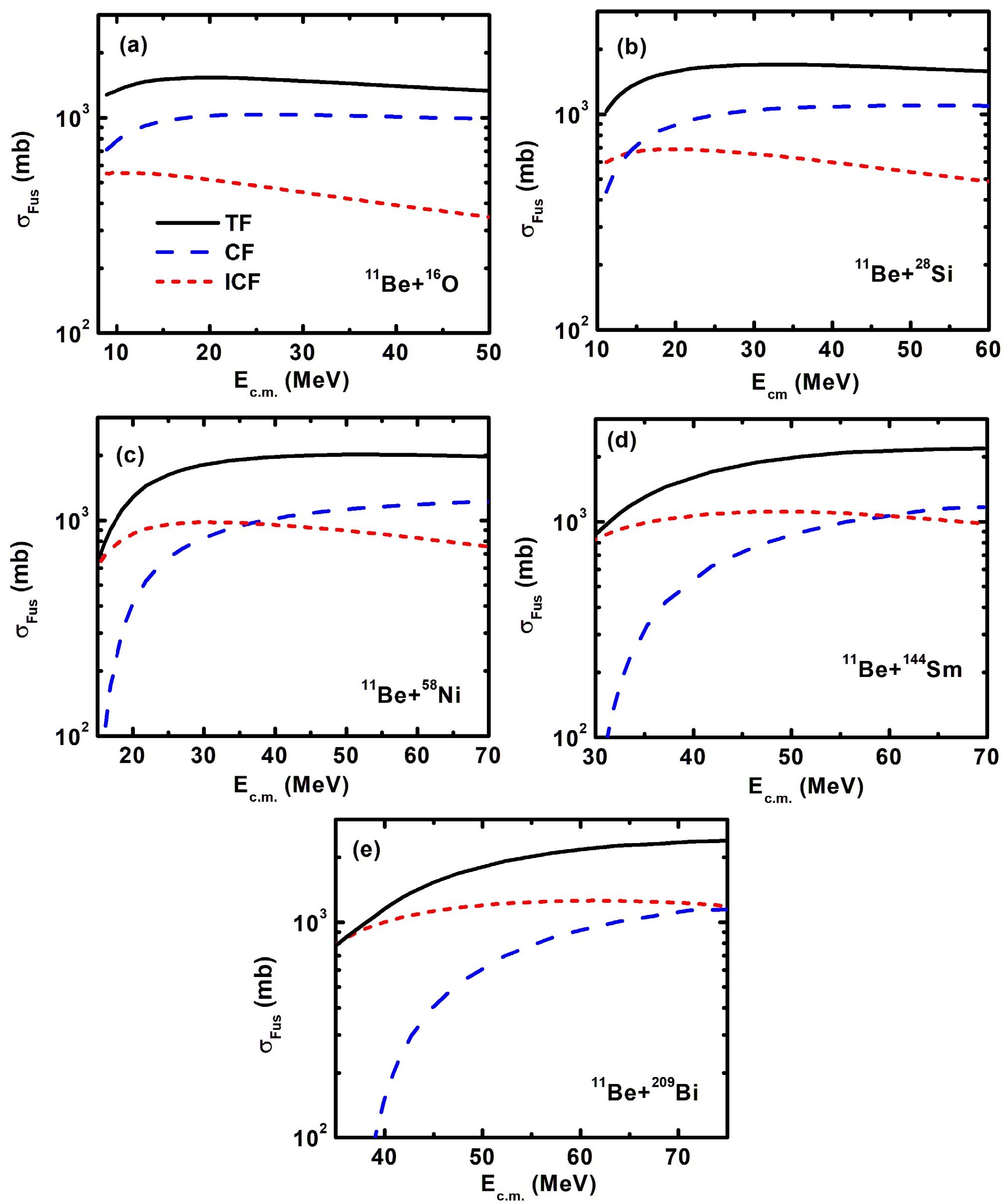
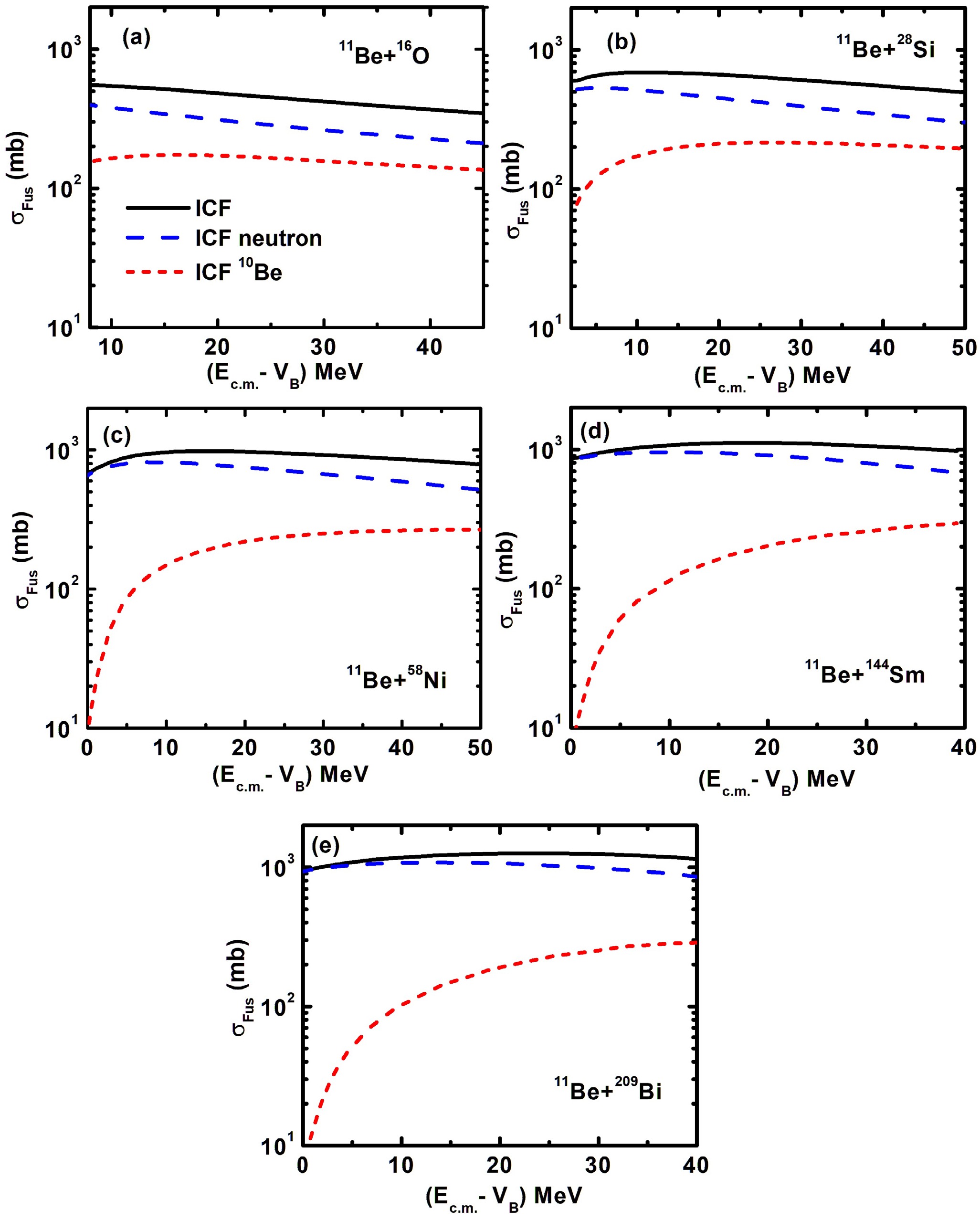
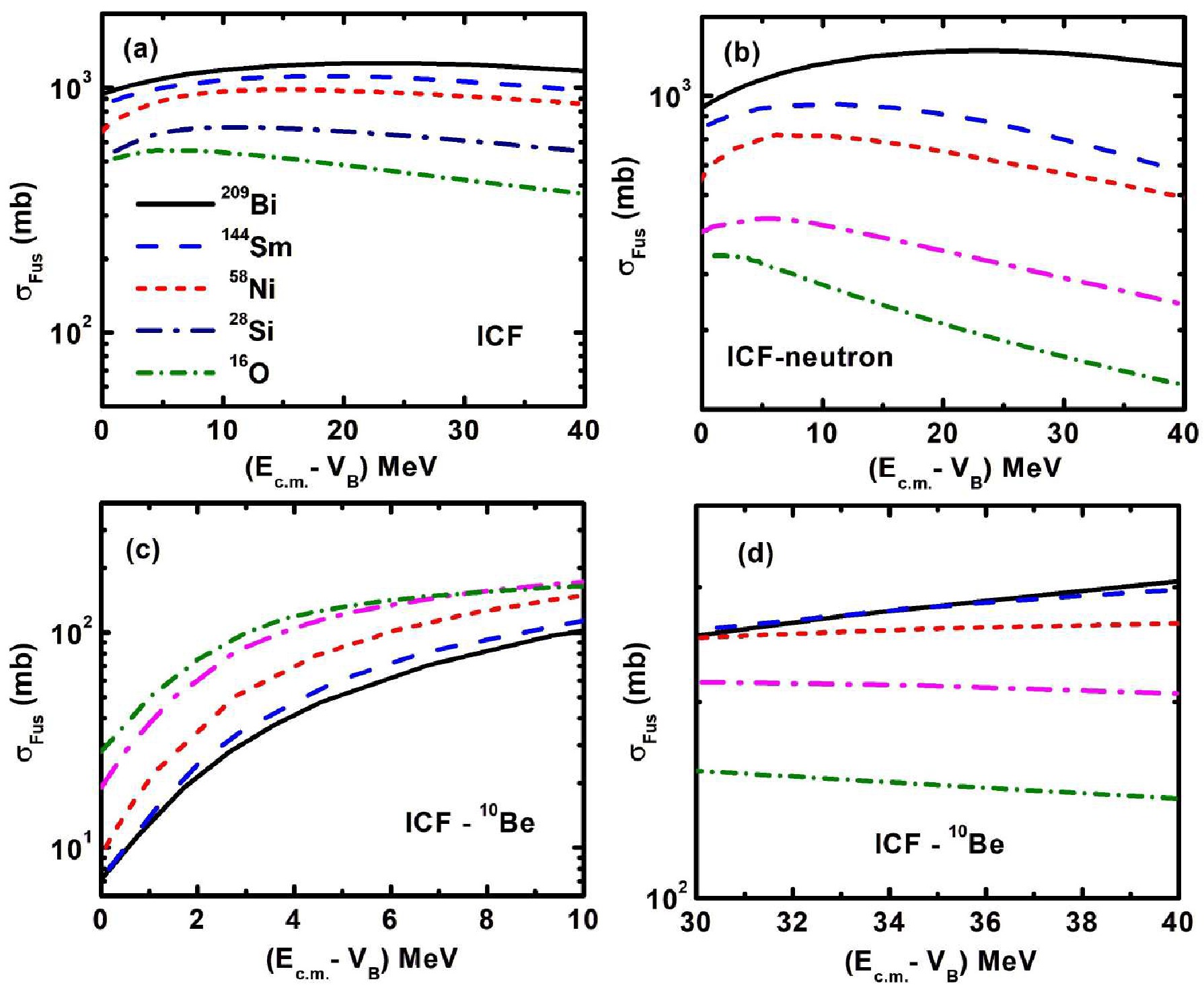
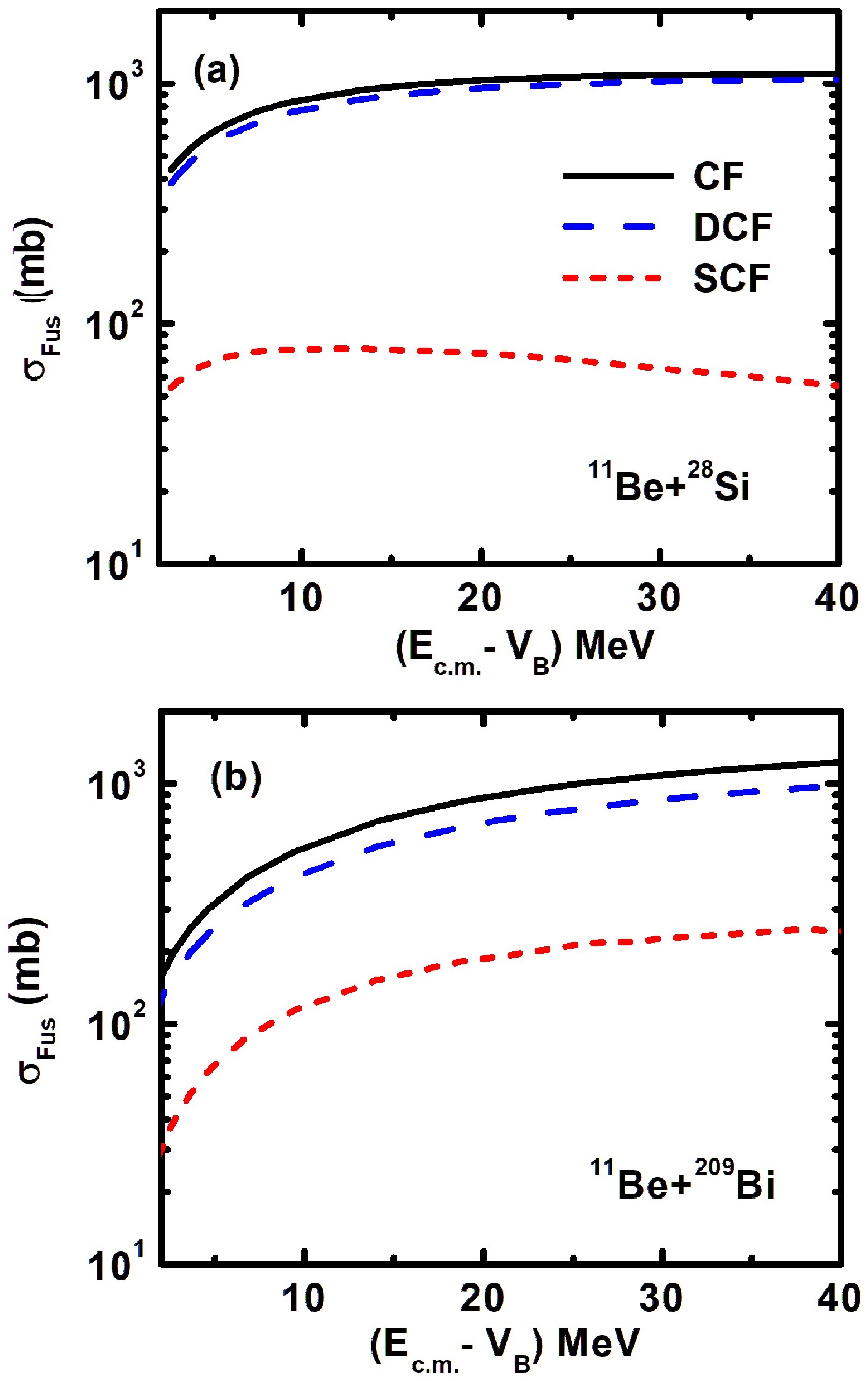
Calculations of the effect of the breakup reactions of the weakly bound projectile 11Be on total, complete, and incomplete fusion with targets 16O, 28Si, 58Ni, 144Sm, and 209Bi are presented. The calculations primarily focus on the relative effects of projectile neutron and 10Be fragments on incomplete fusion. In fact, the energy-dependent contributions to the incomplete fusion of the fragments exhibit highly interesting behaviors when targets of different masses and charges are considered. Incomplete fusion for neutron absorption becomes more important than that for $ ^{10}\mathrm{Be} $ for all targets at energies around and above the barrier. Indeed, neutron capture becomes increasingly important as the target becomes heavier. In addition, it is found that incomplete fusion becomes larger than complete fusion for energies lower than a certain value that depends on the target. Above this value, complete fusion overcomes incomplete fusion. As a final calculation, an energy-dependent systematic comparison of the total incomplete fusion, incomplete fusion of the neutron, and incomplete fusion of 10Be for the different targets is presented. The calculations are performed with two complementary theoretical approaches. The continuum discretized coupled channel model is used to determine the relative projectile-target radial wave functions, which are subsequently used in the angular-momentum-dependent model of fusion probabilities to calculate complete, incomplete, and total fusion cross sections.
Calculations of the effect of the breakup reactions of the weakly bound projectile 11Be on total, complete, and incomplete fusion with targets 16O, 28Si, 58Ni, 144Sm, and 209Bi are presented. The calculations primarily focus on the relative effects of projectile neutron and 10Be fragments on incomplete fusion. In fact, the energy-dependent contributions to the incomplete fusion of the fragments exhibit highly interesting behaviors when targets of different masses and charges are considered. Incomplete fusion for neutron absorption becomes more important than that for $ ^{10}\mathrm{Be} $ for all targets at energies around and above the barrier. Indeed, neutron capture becomes increasingly important as the target becomes heavier. In addition, it is found that incomplete fusion becomes larger than complete fusion for energies lower than a certain value that depends on the target. Above this value, complete fusion overcomes incomplete fusion. As a final calculation, an energy-dependent systematic comparison of the total incomplete fusion, incomplete fusion of the neutron, and incomplete fusion of 10Be for the different targets is presented. The calculations are performed with two complementary theoretical approaches. The continuum discretized coupled channel model is used to determine the relative projectile-target radial wave functions, which are subsequently used in the angular-momentum-dependent model of fusion probabilities to calculate complete, incomplete, and total fusion cross sections.
2026, 50(10): 104103. doi: 10.1088/1674-1137/ae84aa
Abstract:
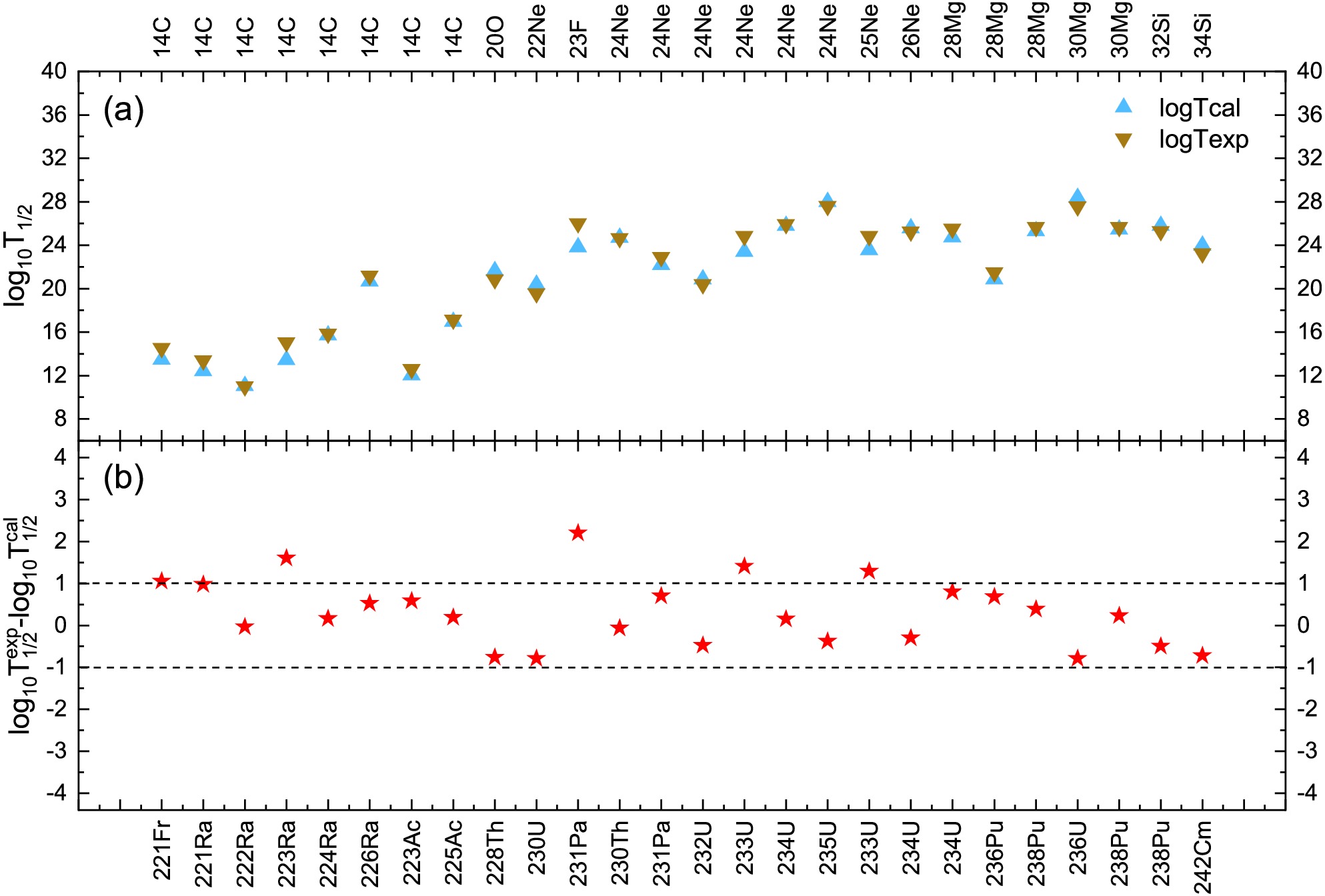
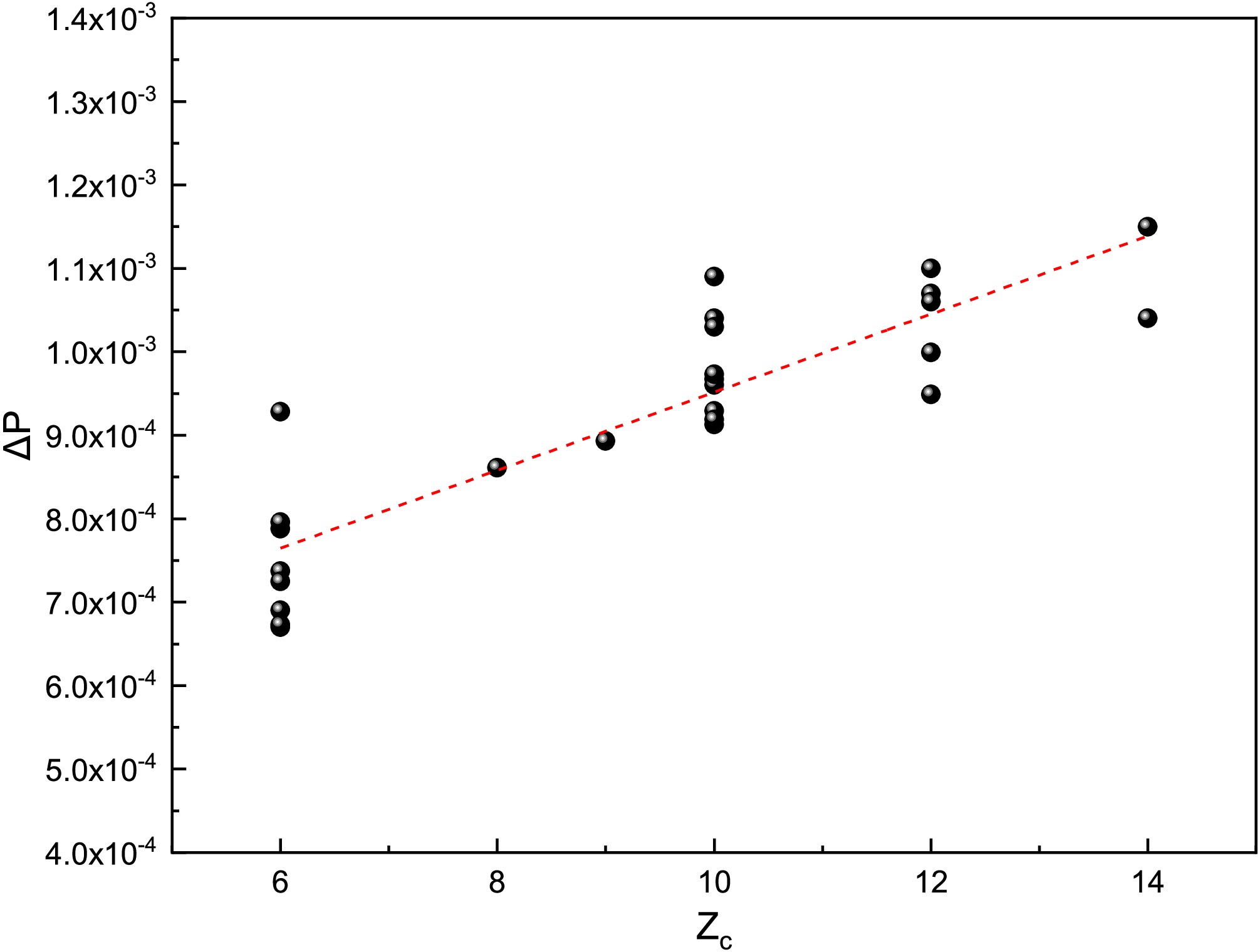
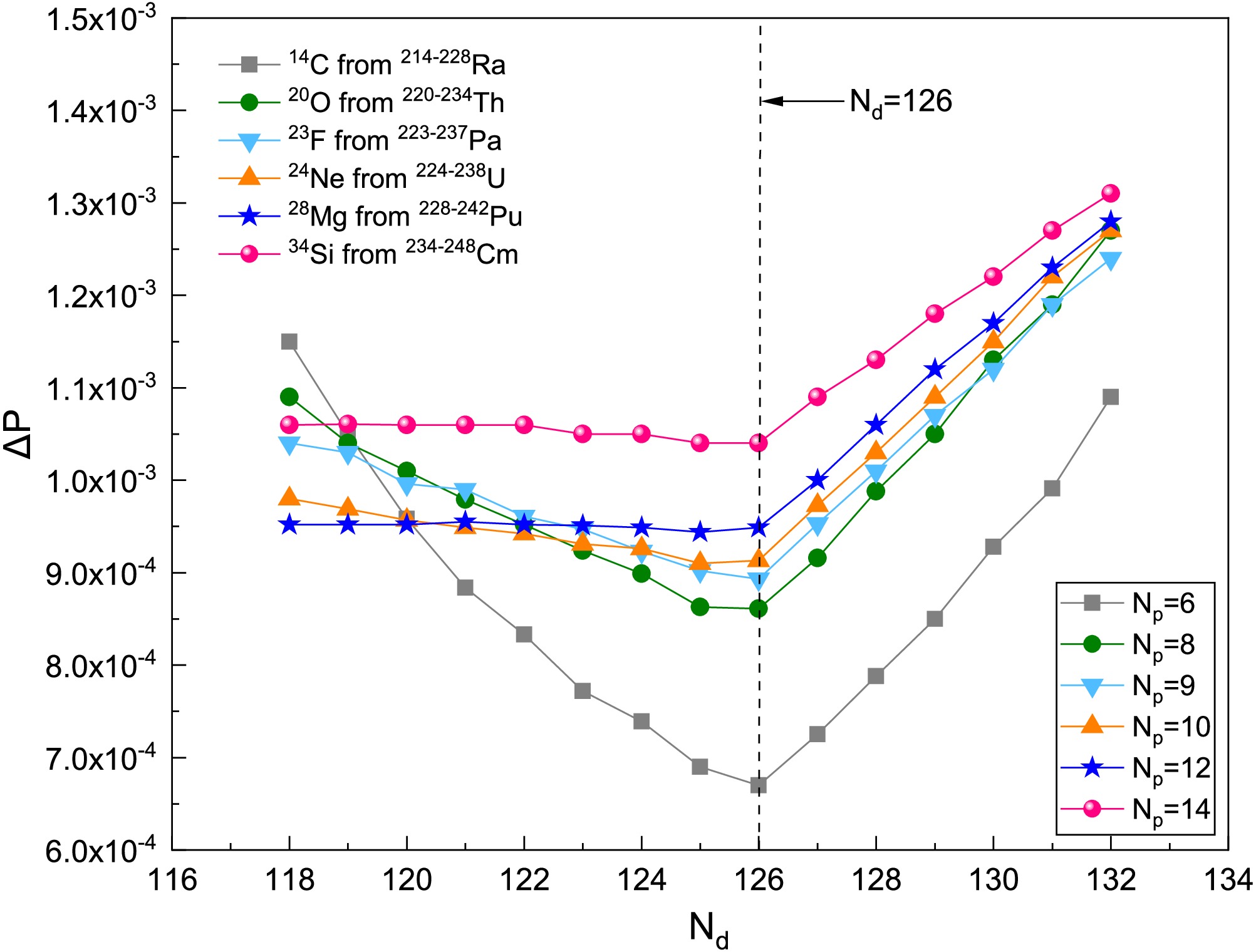
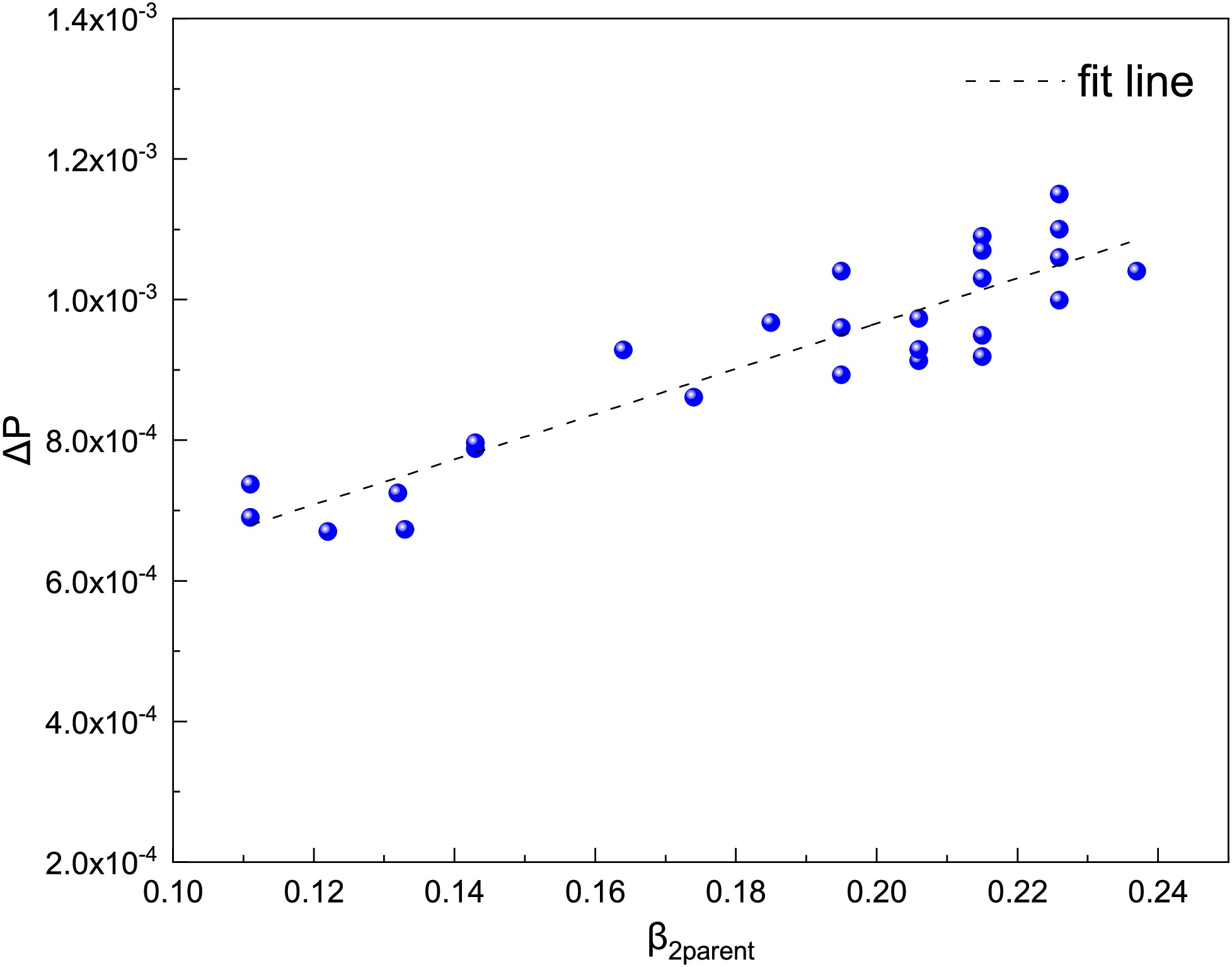
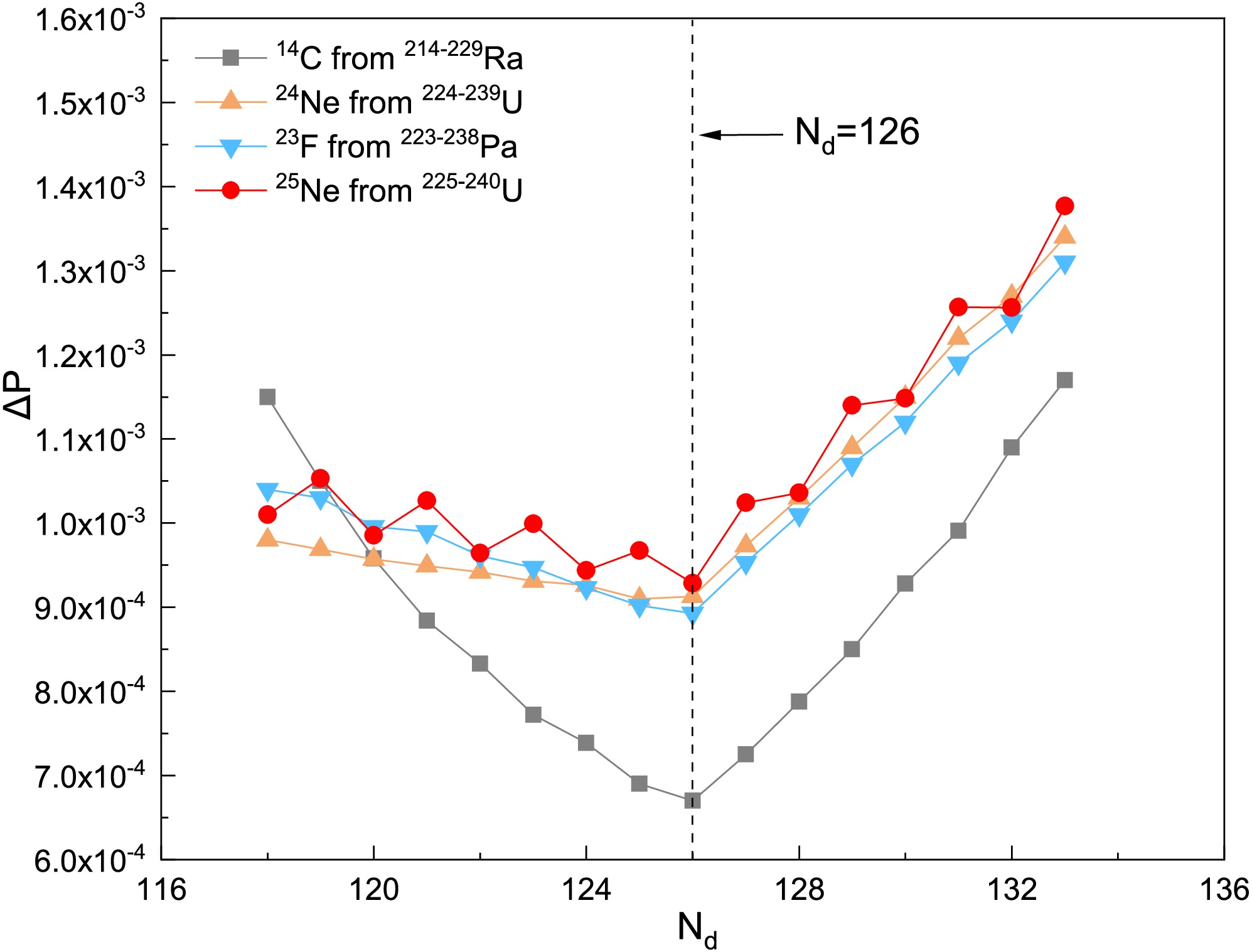
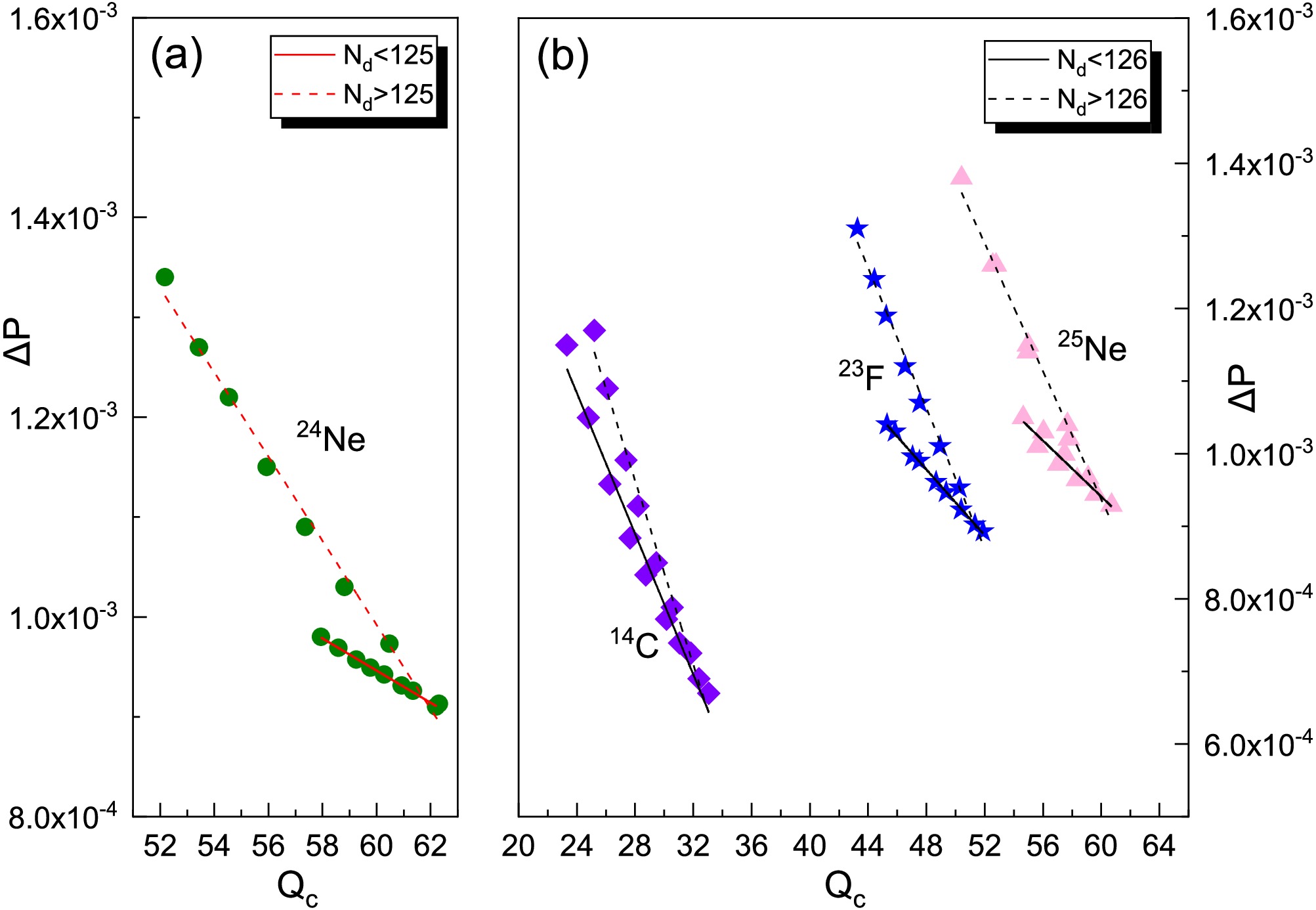
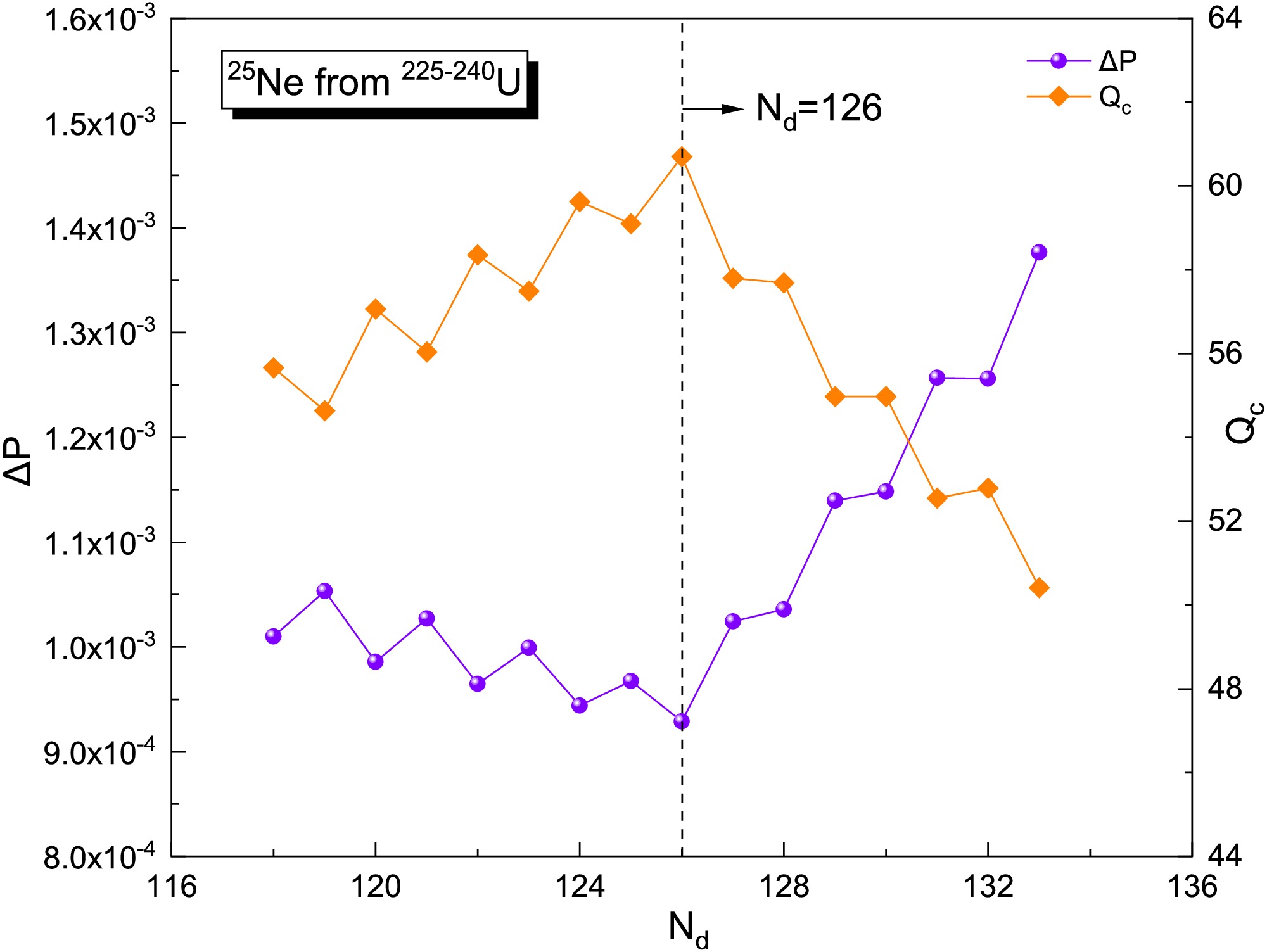
In the present work, we investigate the effect of ultra-intense laser fields on cluster radioactivity from a nuclear-structure perspective. Specifically, we examine the relationship between the maximum instantaneous rate of change of the penetration probability and the proton number of the emitted cluster. Subsequently, based on the characteristics of cluster-radioactive nuclei, we investigate the correlation between the rate of change of the penetration probability and the neutron number of the daughter nuclei for the emission of $ ^{14} {\rm{C}}$ from Ra, $ ^{20} {\rm{O}}$ from Th, $ ^{23} {\rm{F}}$ from Pa, $ ^{24} {\rm{Ne}}$ from U, $ ^{28} {\rm{Mg}}$ from Pu, and $ ^{34} {\rm{Si}}$ from Cm isotopes. The results demonstrate that shell effects contribute to the rate of change of the penetration probability. Notably, the influence of the neutron shell effect on this rate diminishes as the number of valence protons increases. In addition, the rate of change exhibits an overall linear increase with the quadrupole deformation parameter of the parent nucleus. Finally, the effect of odd-even staggering on laser-assisted cluster radioactivity is revealed. This research provides valuable insights for future laser-nuclear physics experiments.
In the present work, we investigate the effect of ultra-intense laser fields on cluster radioactivity from a nuclear-structure perspective. Specifically, we examine the relationship between the maximum instantaneous rate of change of the penetration probability and the proton number of the emitted cluster. Subsequently, based on the characteristics of cluster-radioactive nuclei, we investigate the correlation between the rate of change of the penetration probability and the neutron number of the daughter nuclei for the emission of $ ^{14} {\rm{C}}$ from Ra, $ ^{20} {\rm{O}}$ from Th, $ ^{23} {\rm{F}}$ from Pa, $ ^{24} {\rm{Ne}}$ from U, $ ^{28} {\rm{Mg}}$ from Pu, and $ ^{34} {\rm{Si}}$ from Cm isotopes. The results demonstrate that shell effects contribute to the rate of change of the penetration probability. Notably, the influence of the neutron shell effect on this rate diminishes as the number of valence protons increases. In addition, the rate of change exhibits an overall linear increase with the quadrupole deformation parameter of the parent nucleus. Finally, the effect of odd-even staggering on laser-assisted cluster radioactivity is revealed. This research provides valuable insights for future laser-nuclear physics experiments.
2026, 50(10): 104002. doi: 10.1088/1674-1137/ae82e9
Abstract:
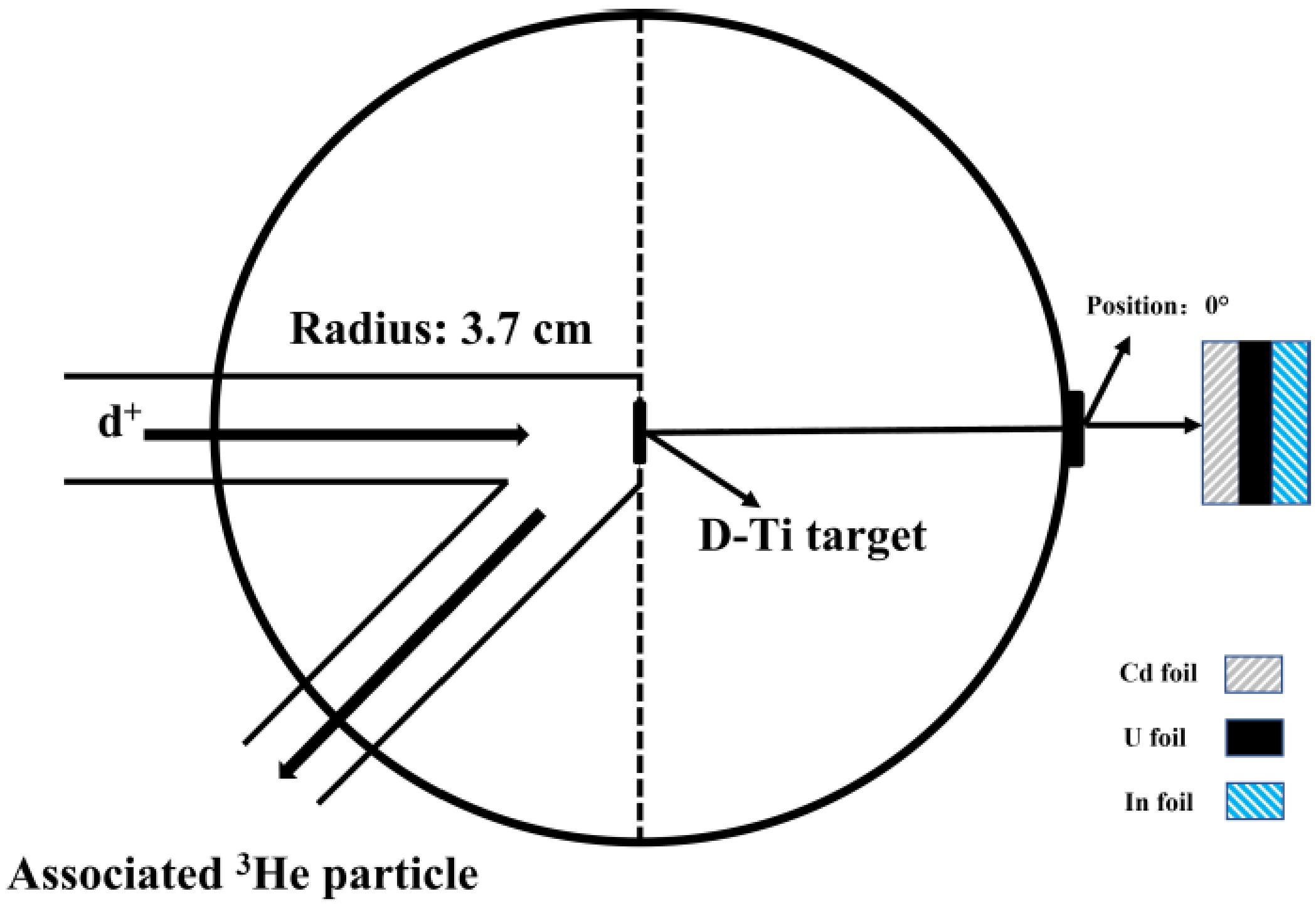
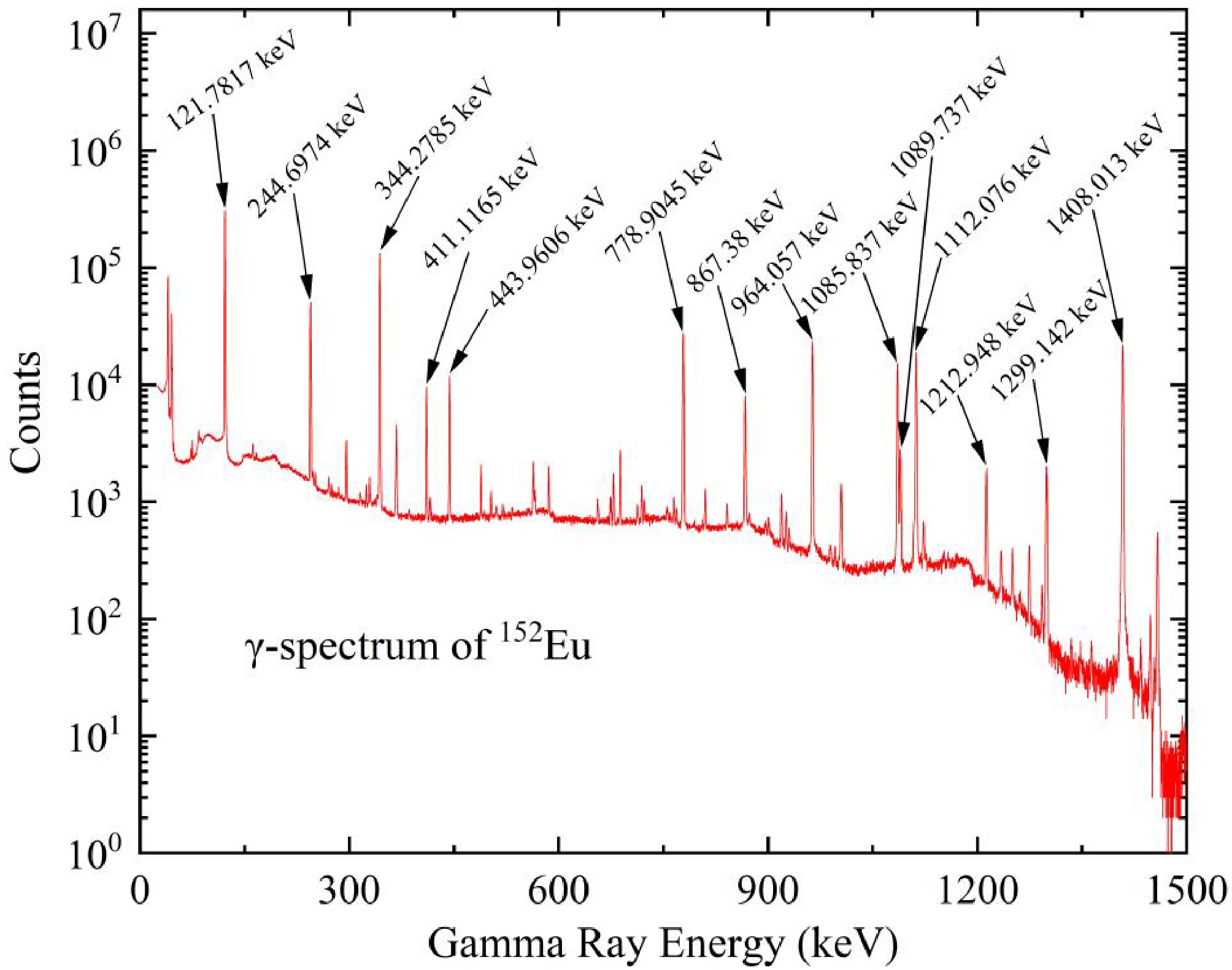
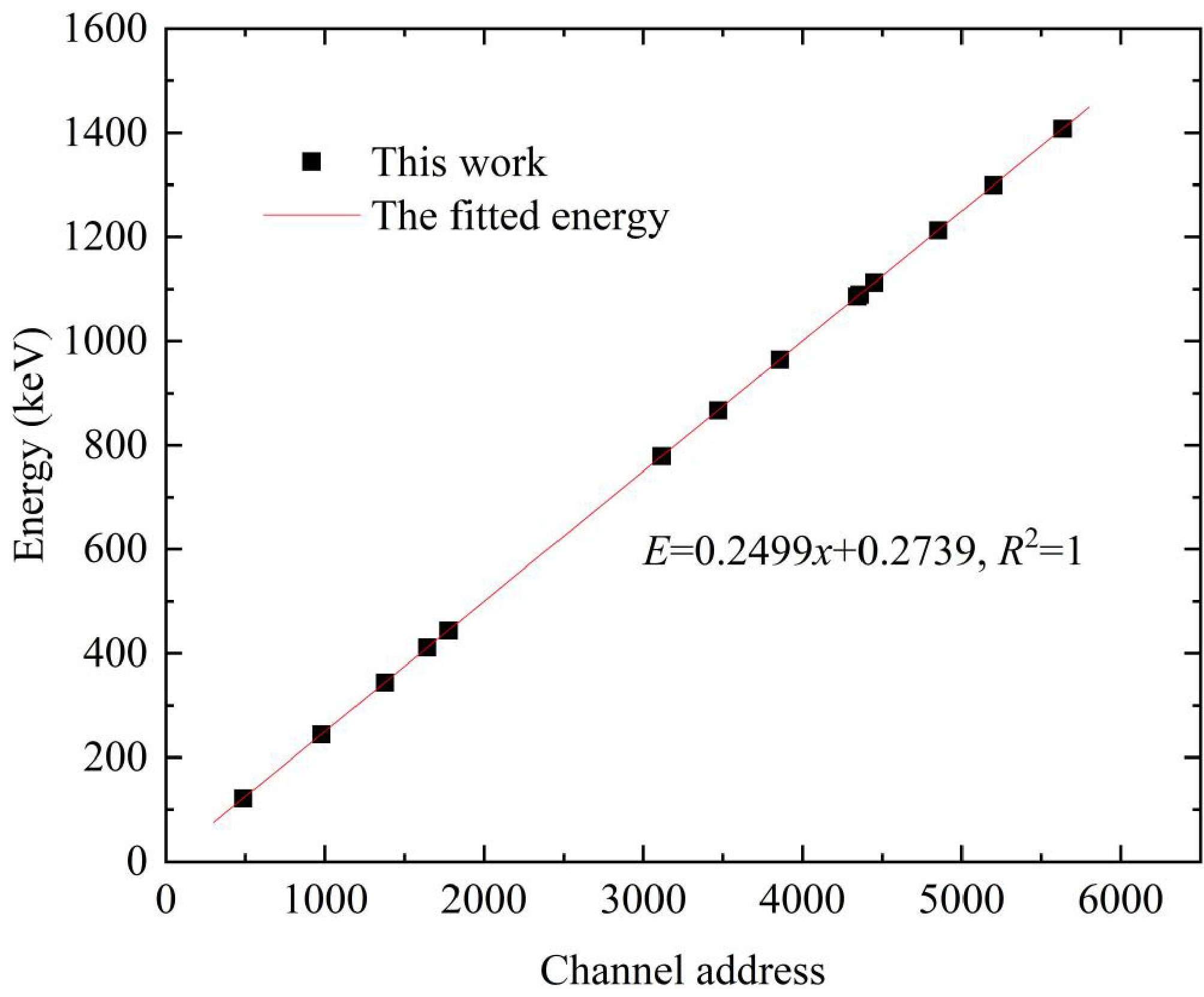
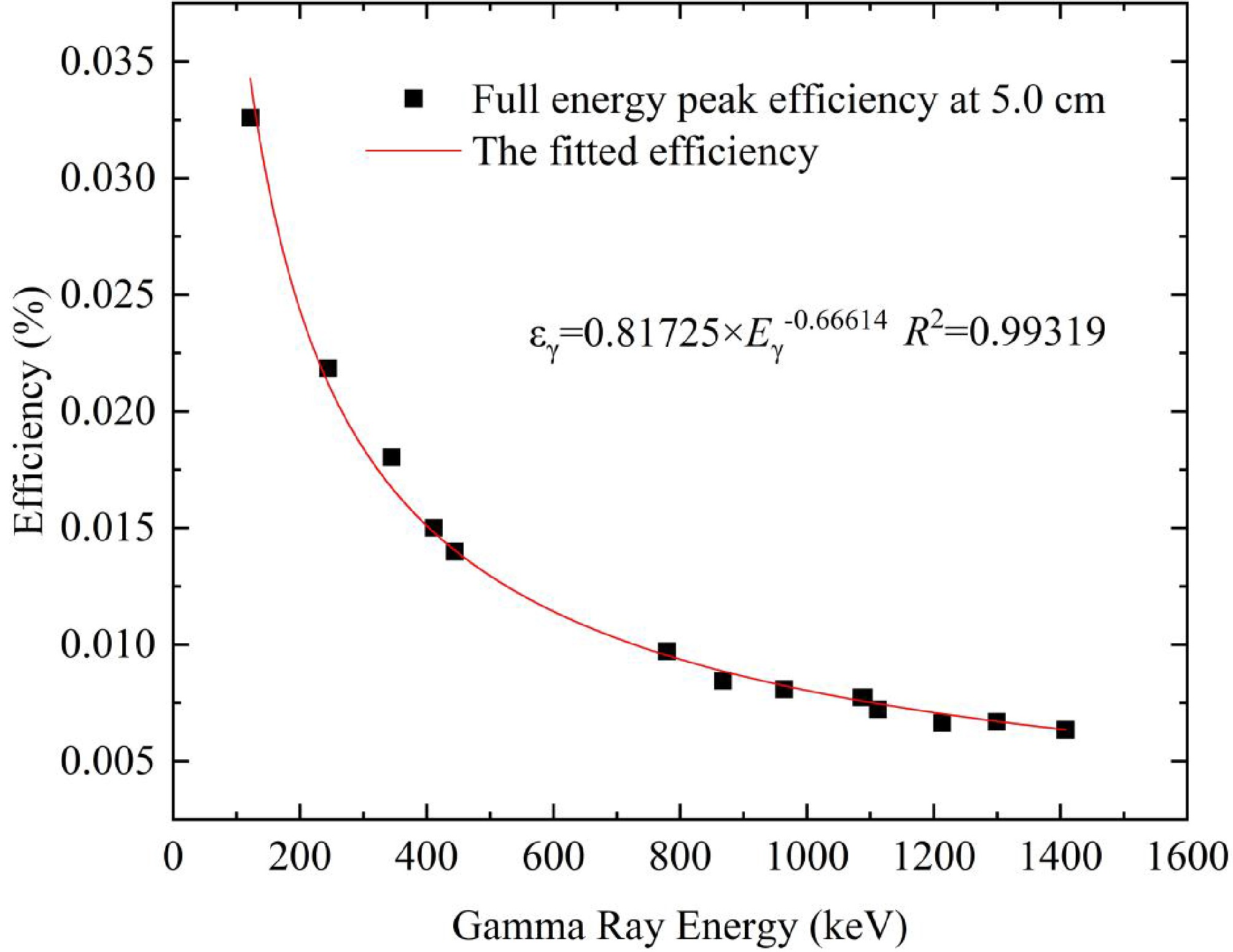
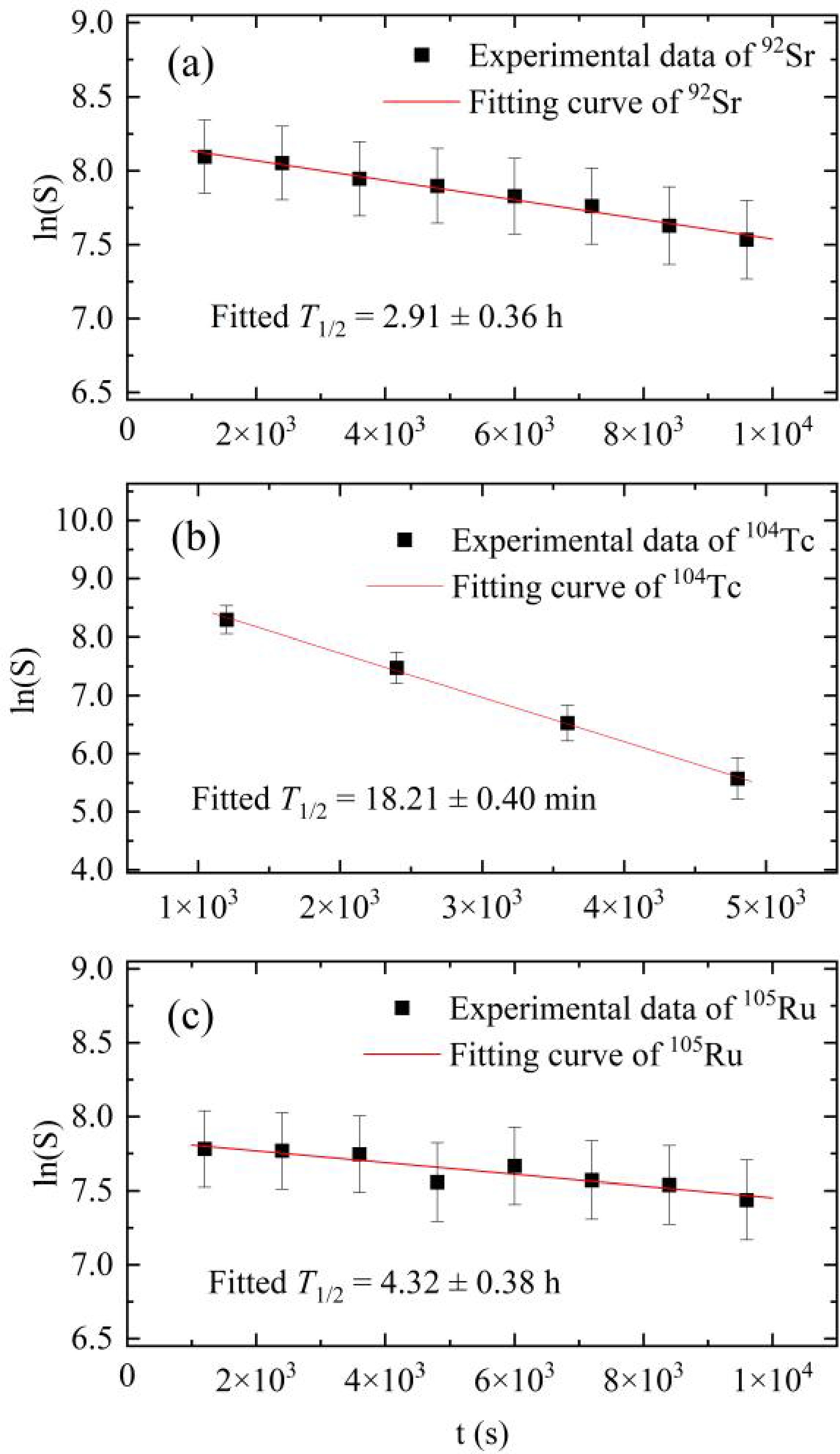
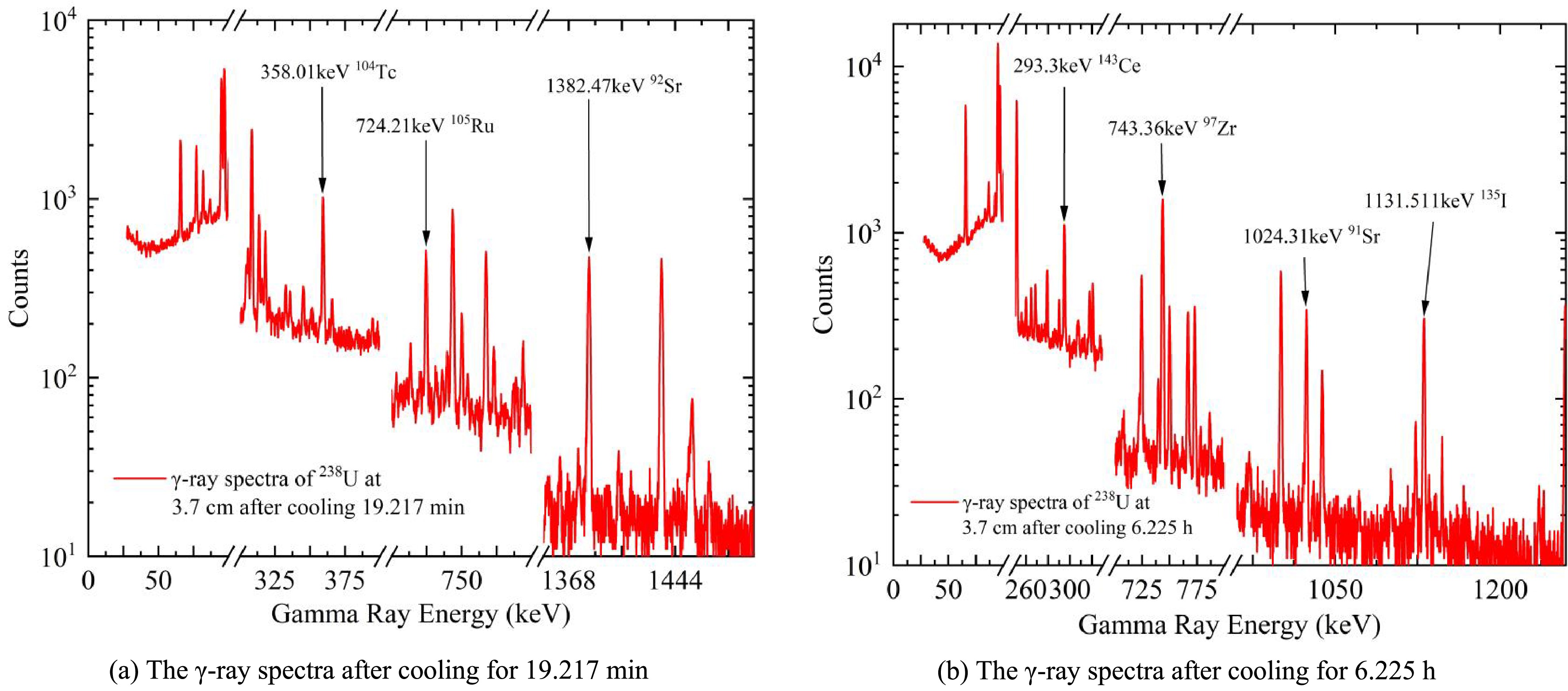
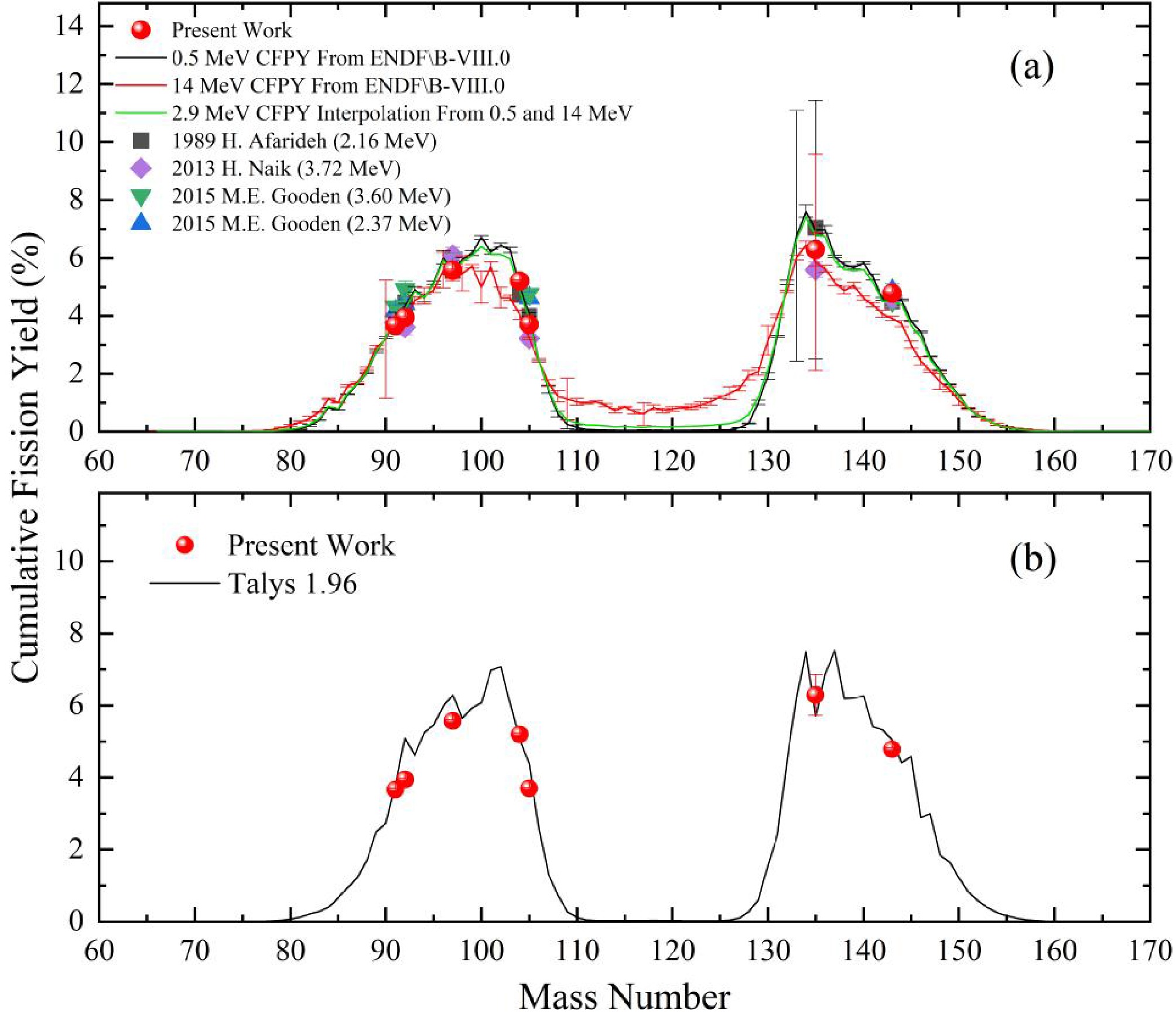
Neutron-induced fission data are widely used in reactor burnup, neutron fuel verification, and the identification of nuclear fuels. Due to the abundance of 238U, the most common isotope of uranium, cumulative data on 238U fission yield in the D-D neutron energy range are significant for fission research in Generation-IV (Gen-IV) reactors. In this article, measurements of the fission yield of the 238U(n, f) reaction at a neutron energy of 2.9 ± 0.3 MeV have been performed using the activation technique based on off-line γ-ray spectrometry. The neutron irradiation experiment was conducted using the CPNG-600 neutron generator at the China Institute of Atomic Energy (CIAE). A quasi-monoenergetic beam of neutrons was produced using the D(d, n)3He reaction. The γ-rays from the activation products were measured using a low-background HPGe spectrometer, and fluctuations in neutron flux were measured using an Au-Si surface barrier detector. After applying the required correction factor, highly accurate cumulative yields for seven fission products were derived. The obtained measurements were compared with the existing experimental values and yield estimates provided by the ENDF/B-VIII.0 library. Fission yields of the 238U(n, f) reaction were also determined with the help of the TALYS-1.96 code. The present outcomes provide reliable information to confirm the behavior of the energy-dependent fission yield and to supplement the nuclear reaction database for use in reactor design and operation.
Neutron-induced fission data are widely used in reactor burnup, neutron fuel verification, and the identification of nuclear fuels. Due to the abundance of 238U, the most common isotope of uranium, cumulative data on 238U fission yield in the D-D neutron energy range are significant for fission research in Generation-IV (Gen-IV) reactors. In this article, measurements of the fission yield of the 238U(n, f) reaction at a neutron energy of 2.9 ± 0.3 MeV have been performed using the activation technique based on off-line γ-ray spectrometry. The neutron irradiation experiment was conducted using the CPNG-600 neutron generator at the China Institute of Atomic Energy (CIAE). A quasi-monoenergetic beam of neutrons was produced using the D(d, n)3He reaction. The γ-rays from the activation products were measured using a low-background HPGe spectrometer, and fluctuations in neutron flux were measured using an Au-Si surface barrier detector. After applying the required correction factor, highly accurate cumulative yields for seven fission products were derived. The obtained measurements were compared with the existing experimental values and yield estimates provided by the ENDF/B-VIII.0 library. Fission yields of the 238U(n, f) reaction were also determined with the help of the TALYS-1.96 code. The present outcomes provide reliable information to confirm the behavior of the energy-dependent fission yield and to supplement the nuclear reaction database for use in reactor design and operation.
2026, 50(10): 104111. doi: 10.1088/1674-1137/ae82e8
Abstract:
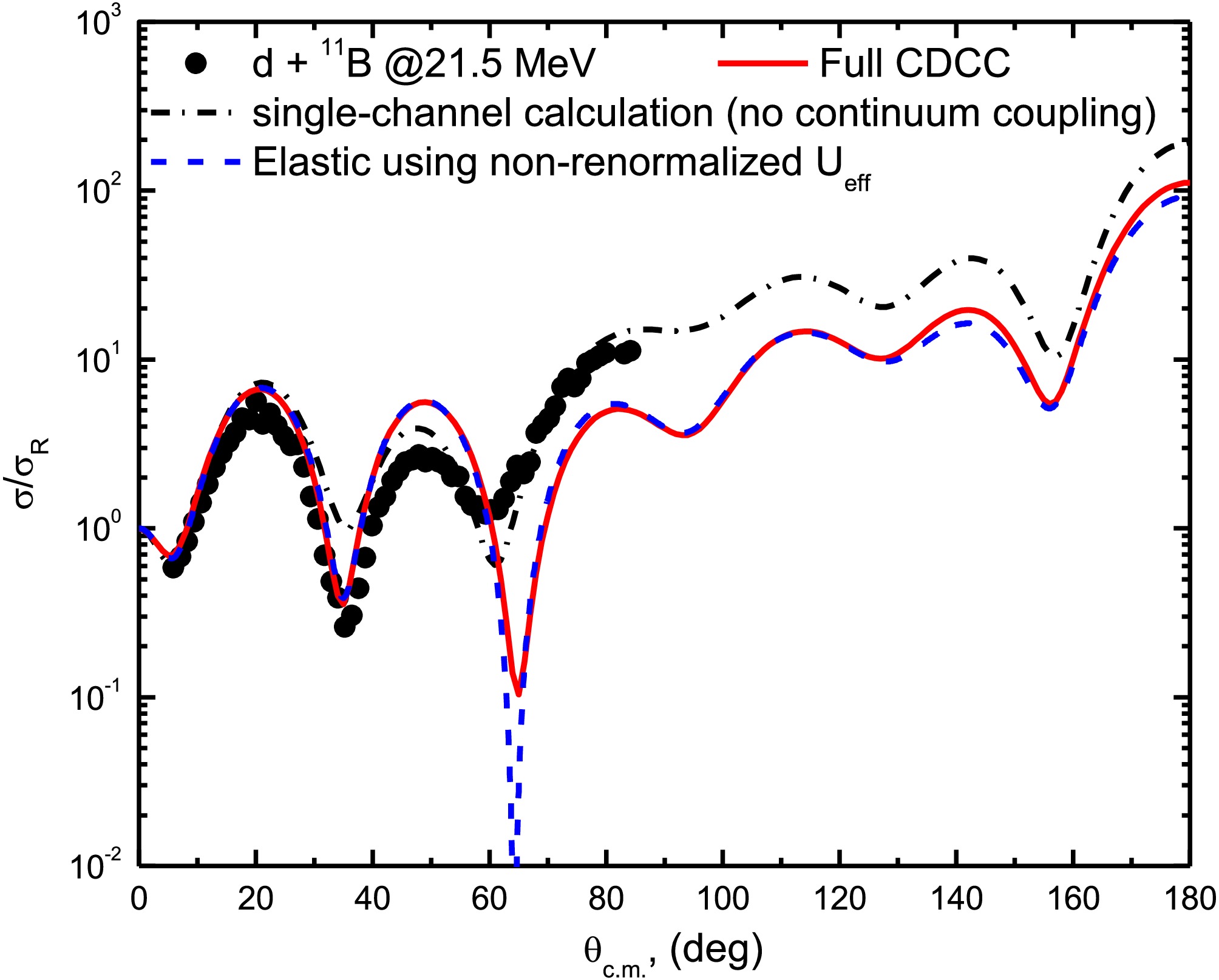
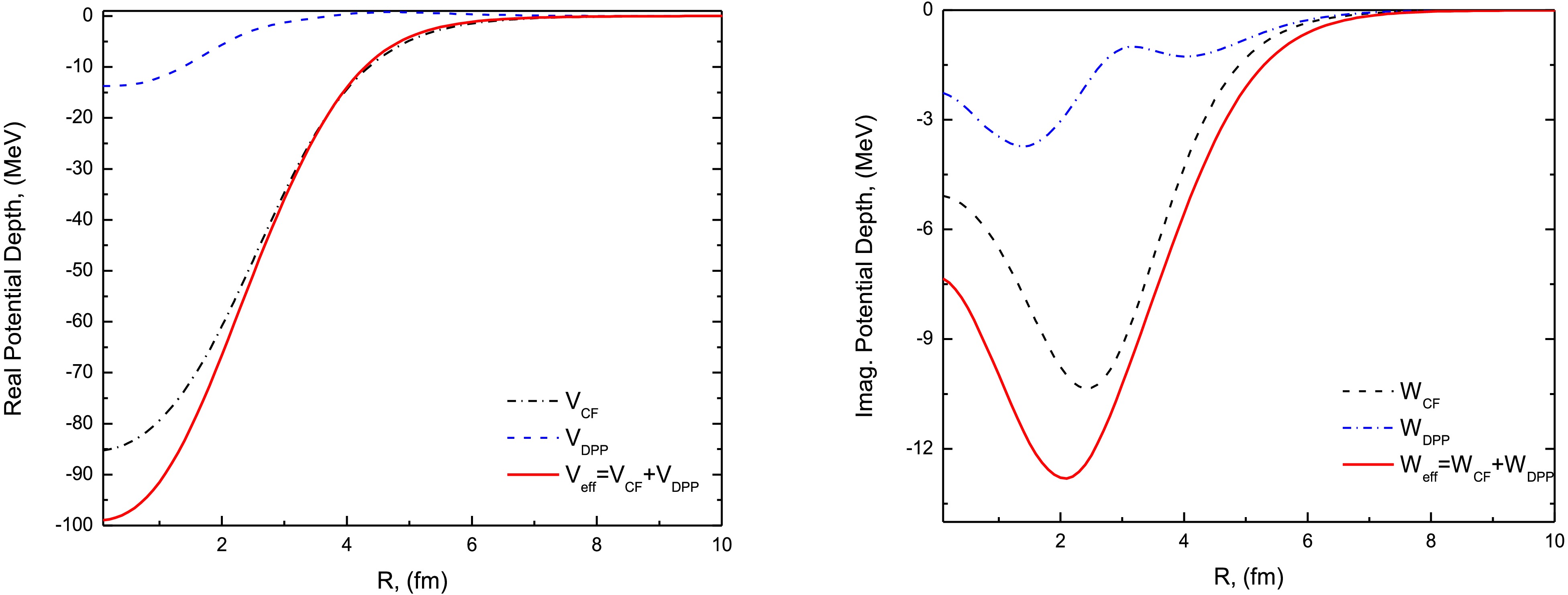
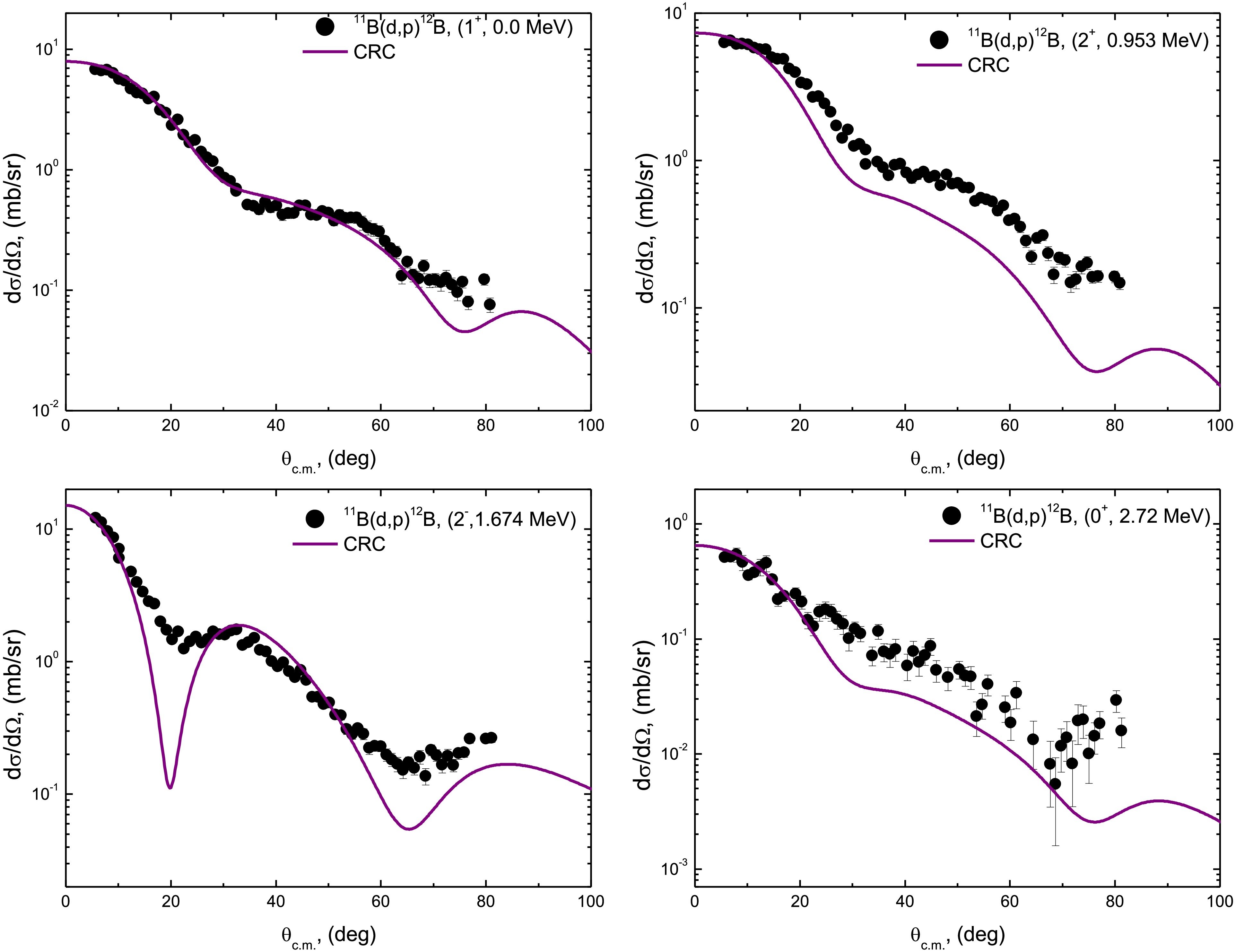
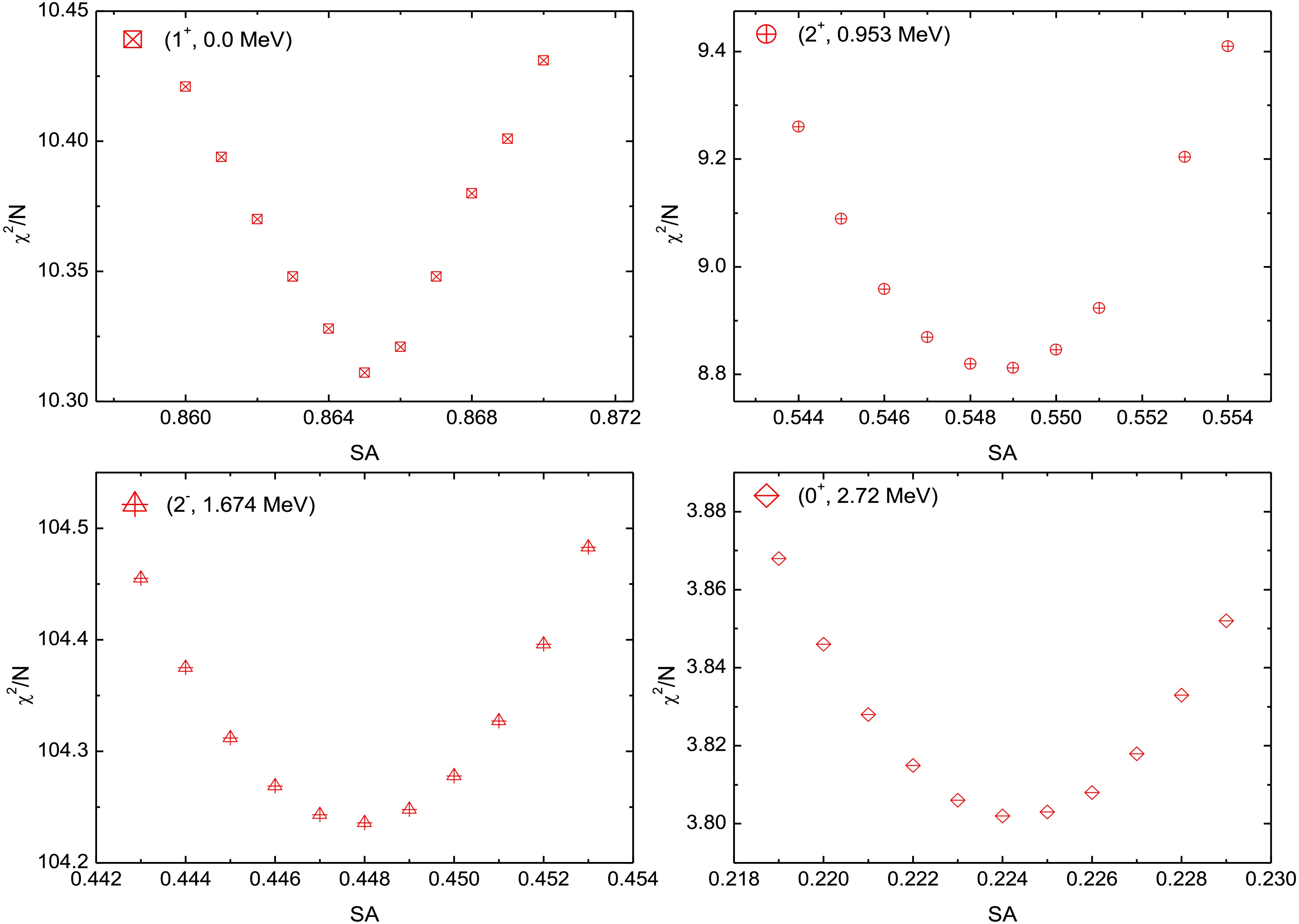
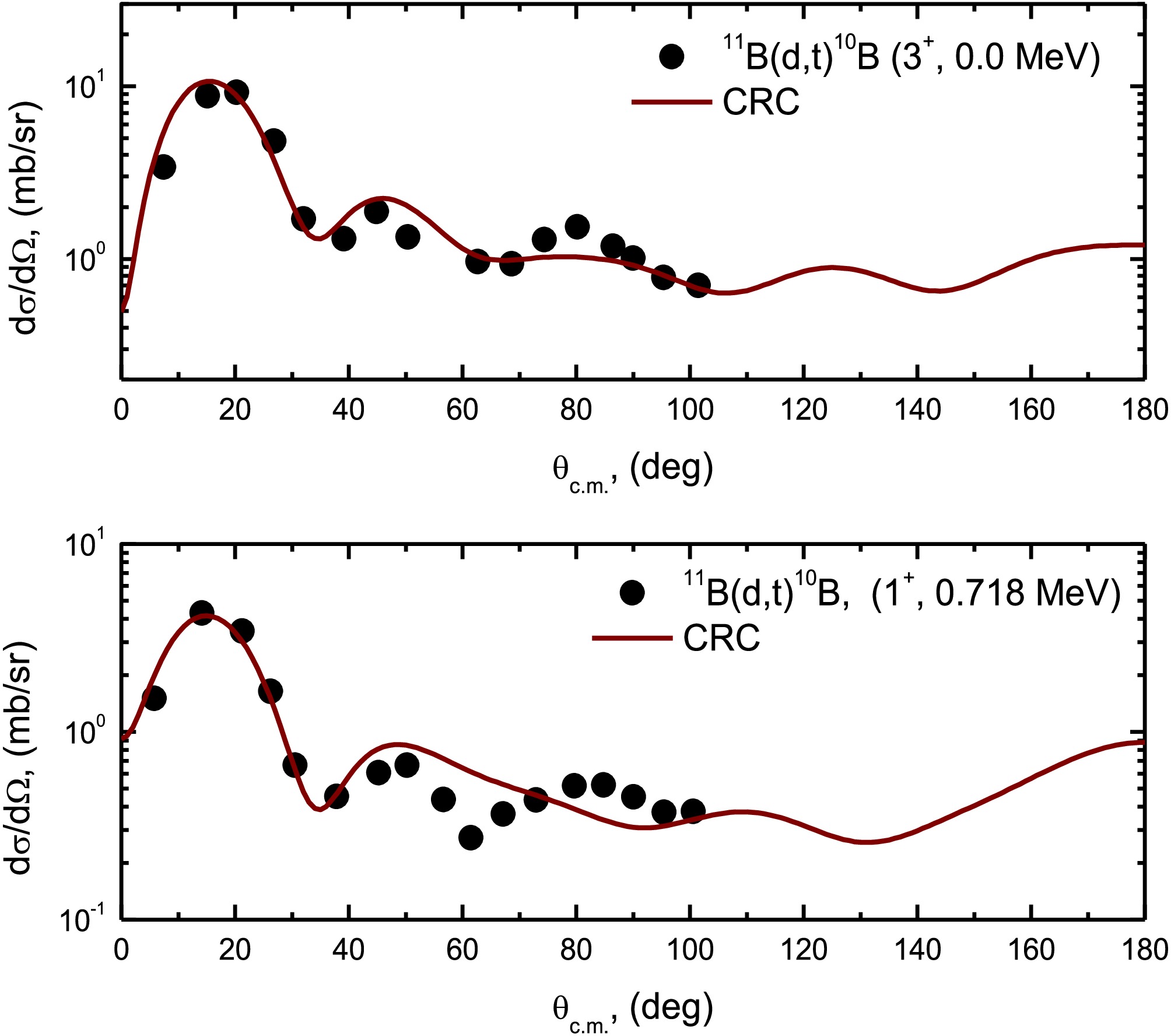
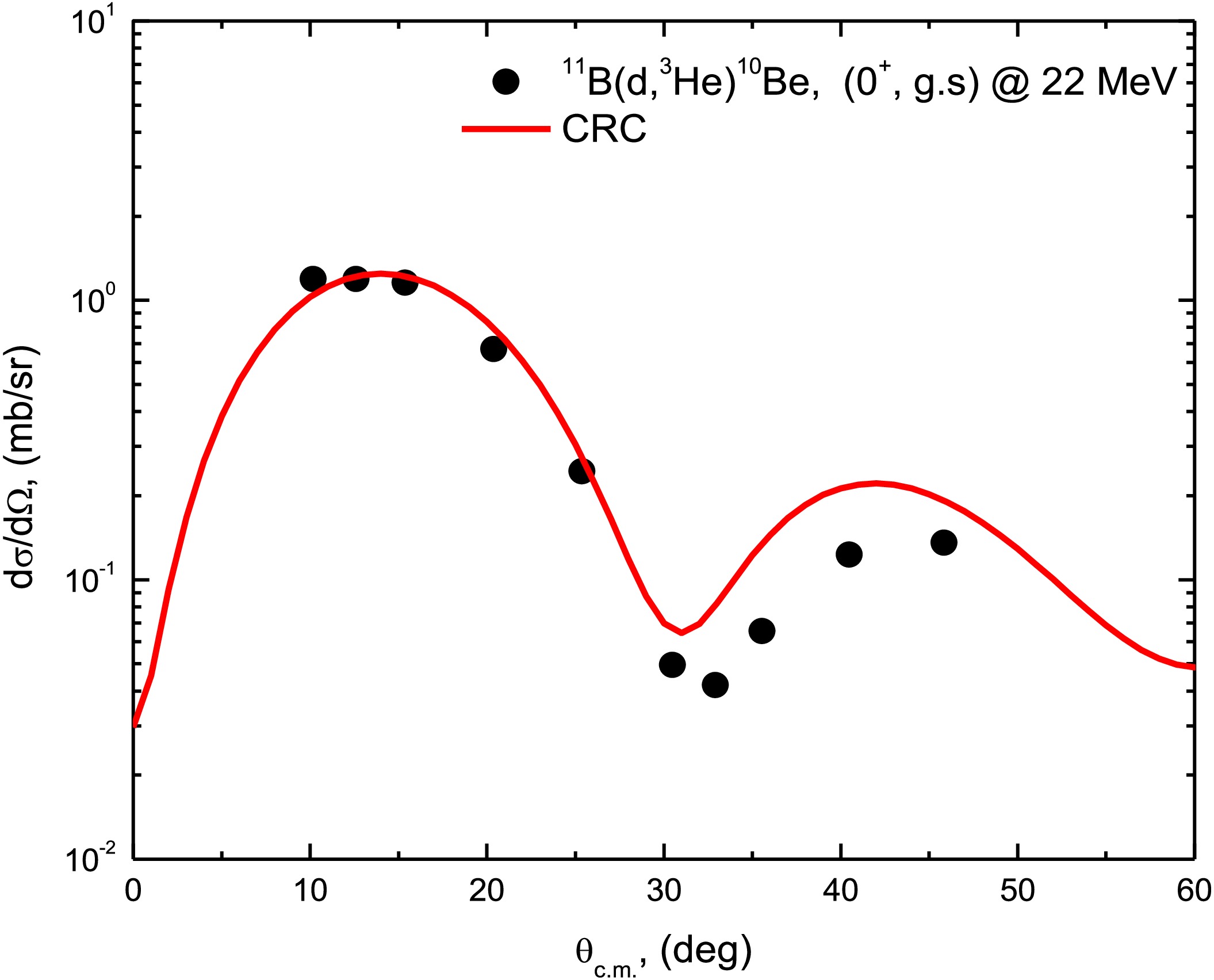
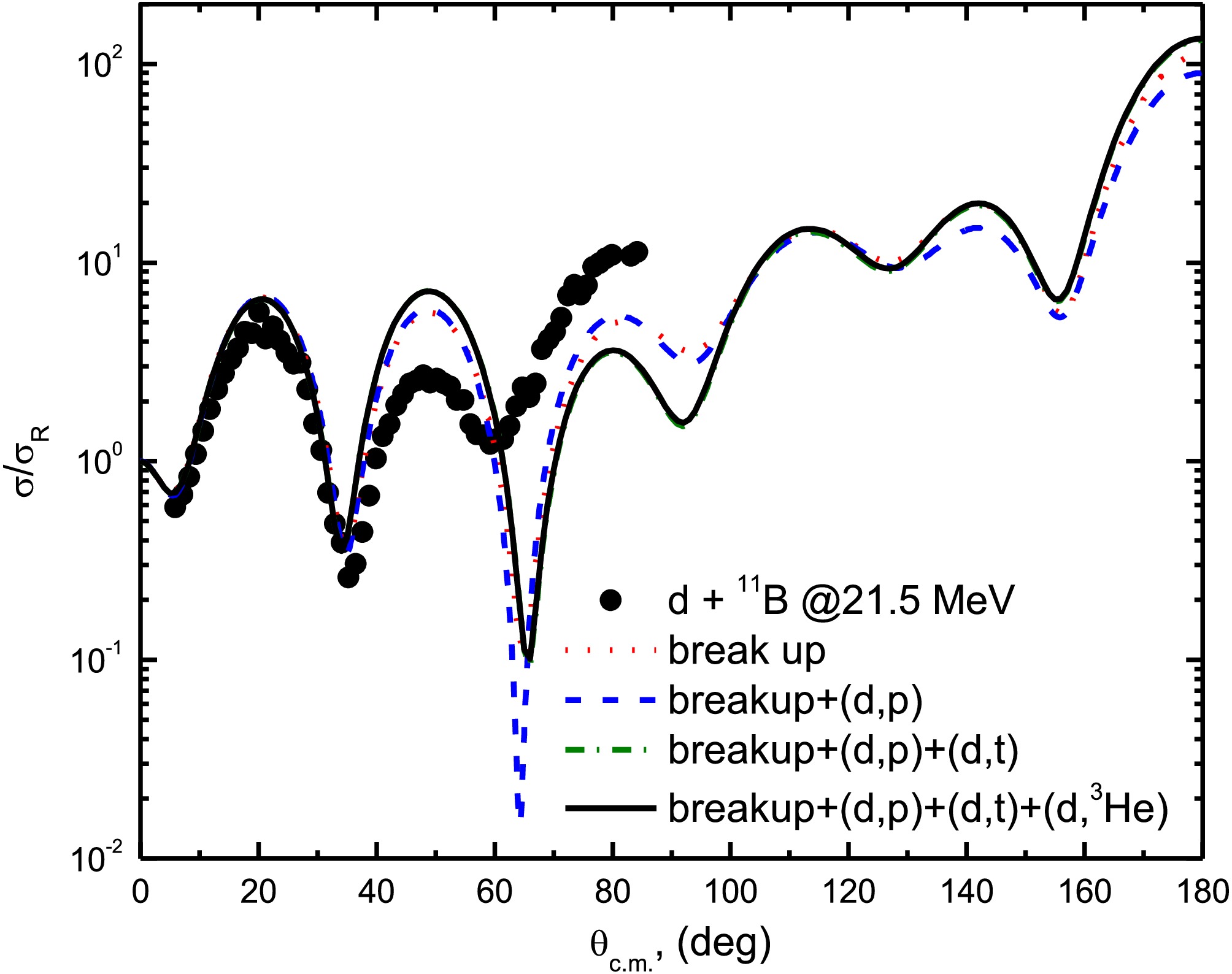
In the present study, we examine the reaction dynamics of the d + 11B system with a special focus on the interplay between deuteron breakup and nucleon transfer mechanisms. Elastic scattering data at Ed = 21.5 MeV are analyzed using the continuum-discretized coupled-channel (CDCC) framework to assess the role of breakup couplings. In addition, coupled-reaction-channel (CRC) calculations are performed for the 11B(d, p)12B neutron stripping reaction at 21.5 MeV, the 11B(d, t)10B neutron pickup reaction at 18 MeV, and the 11B(d, 3He)10Be proton pickup reaction at 22 MeV. The CDCC calculations successfully reproduce the elastic angular distribution at forward angles without introducing renormalization factors, confirming the importance of continuum coupling effects. Nevertheless, deviations observed at larger angles suggest that breakup alone is insufficient. The (d, p) neutron stripping channel has negligible influence on the elastic scattering at this energy, whereas the (d, t) neutron pickup channel significantly modifies the calculated elastic cross sections over a broad angular range. The proton pickup channel produces only a minor effect. The present analysis demonstrates that neutron pickup, rather than stripping, is the primary transfer mechanism affecting d + 11B elastic scattering at this incident energy.
In the present study, we examine the reaction dynamics of the d + 11B system with a special focus on the interplay between deuteron breakup and nucleon transfer mechanisms. Elastic scattering data at Ed = 21.5 MeV are analyzed using the continuum-discretized coupled-channel (CDCC) framework to assess the role of breakup couplings. In addition, coupled-reaction-channel (CRC) calculations are performed for the 11B(d, p)12B neutron stripping reaction at 21.5 MeV, the 11B(d, t)10B neutron pickup reaction at 18 MeV, and the 11B(d, 3He)10Be proton pickup reaction at 22 MeV. The CDCC calculations successfully reproduce the elastic angular distribution at forward angles without introducing renormalization factors, confirming the importance of continuum coupling effects. Nevertheless, deviations observed at larger angles suggest that breakup alone is insufficient. The (d, p) neutron stripping channel has negligible influence on the elastic scattering at this energy, whereas the (d, t) neutron pickup channel significantly modifies the calculated elastic cross sections over a broad angular range. The proton pickup channel produces only a minor effect. The present analysis demonstrates that neutron pickup, rather than stripping, is the primary transfer mechanism affecting d + 11B elastic scattering at this incident energy.
2026, 50(10): 104104. doi: 10.1088/1674-1137/ae8370
Abstract:
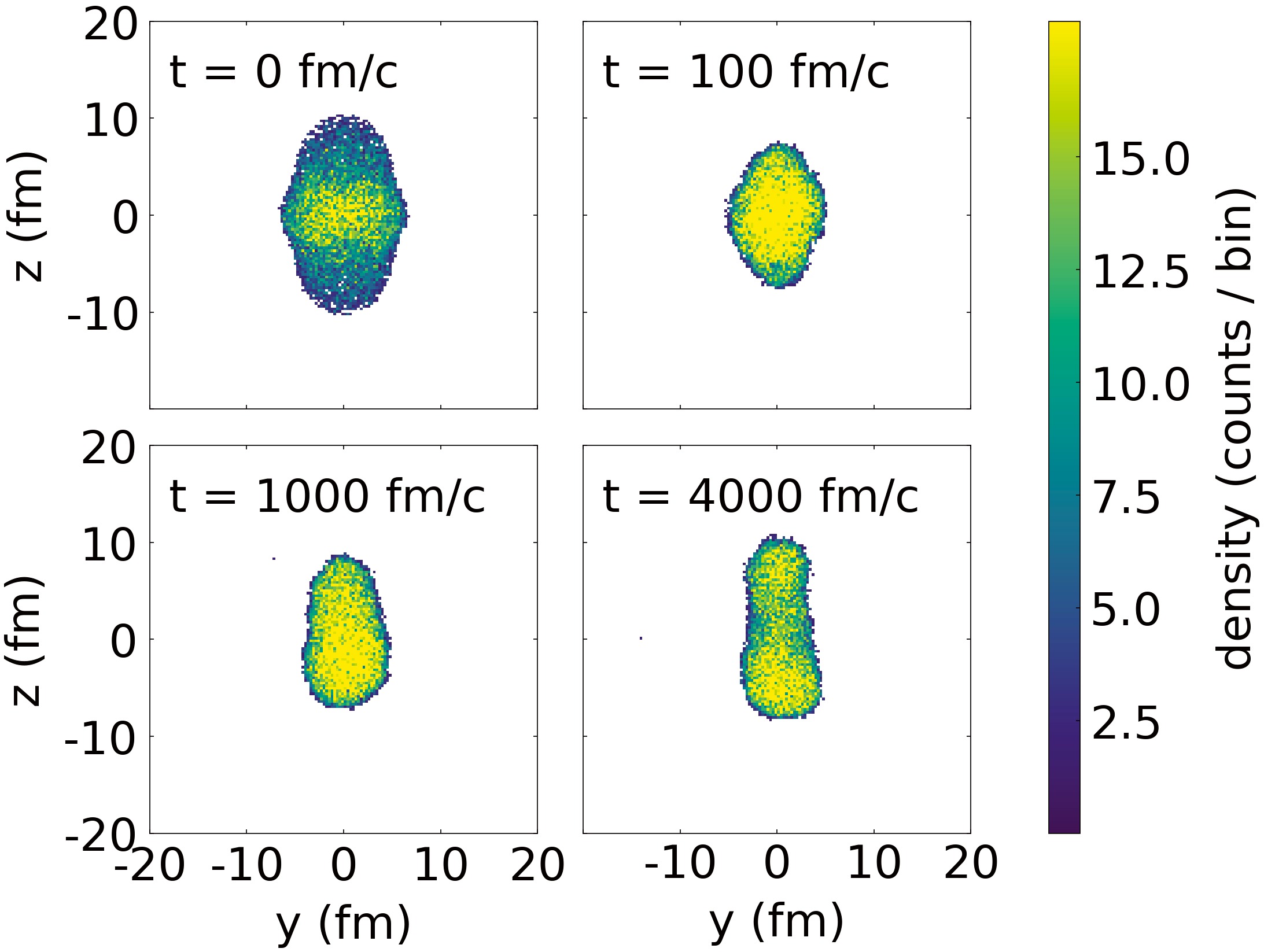
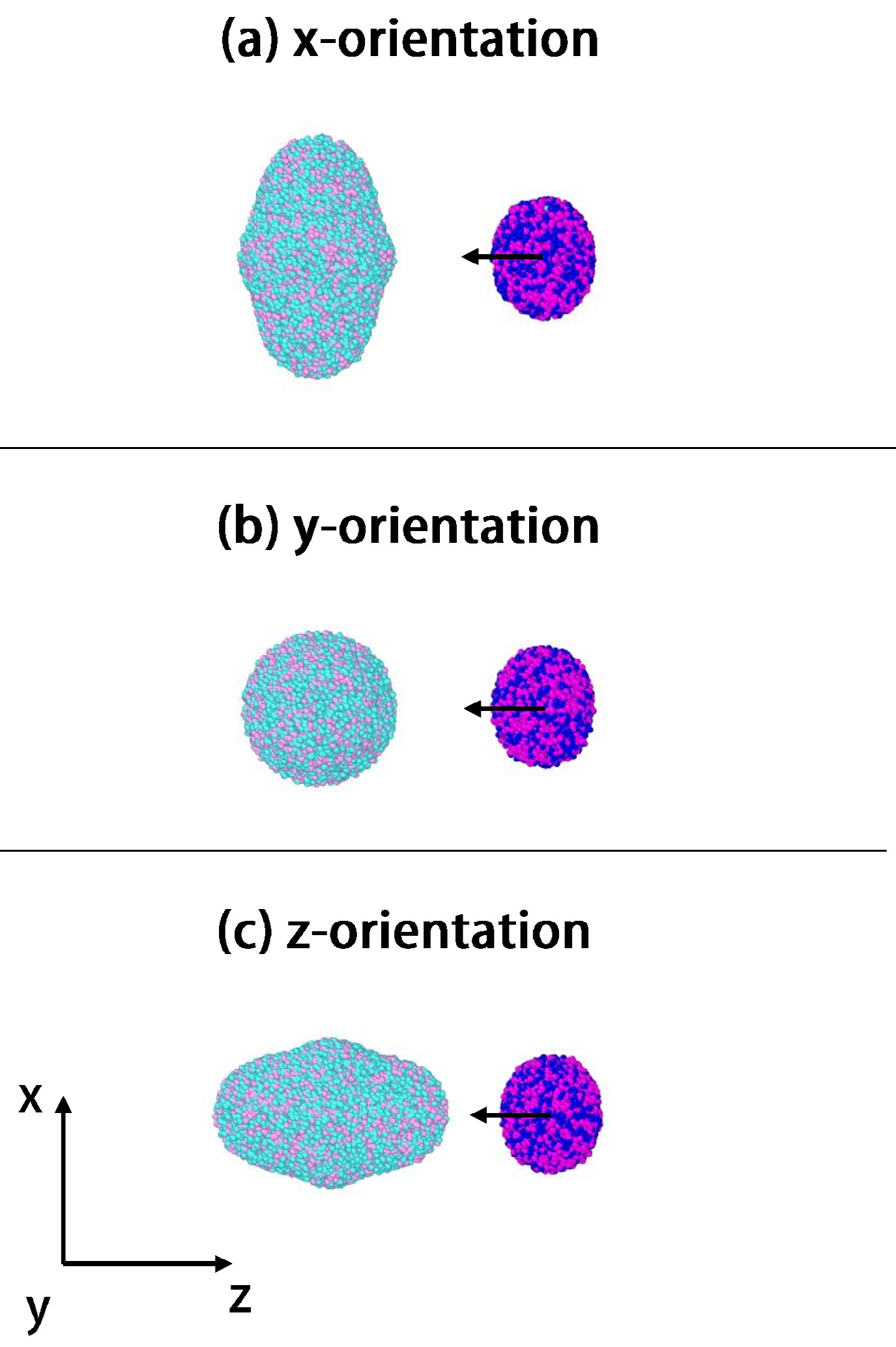
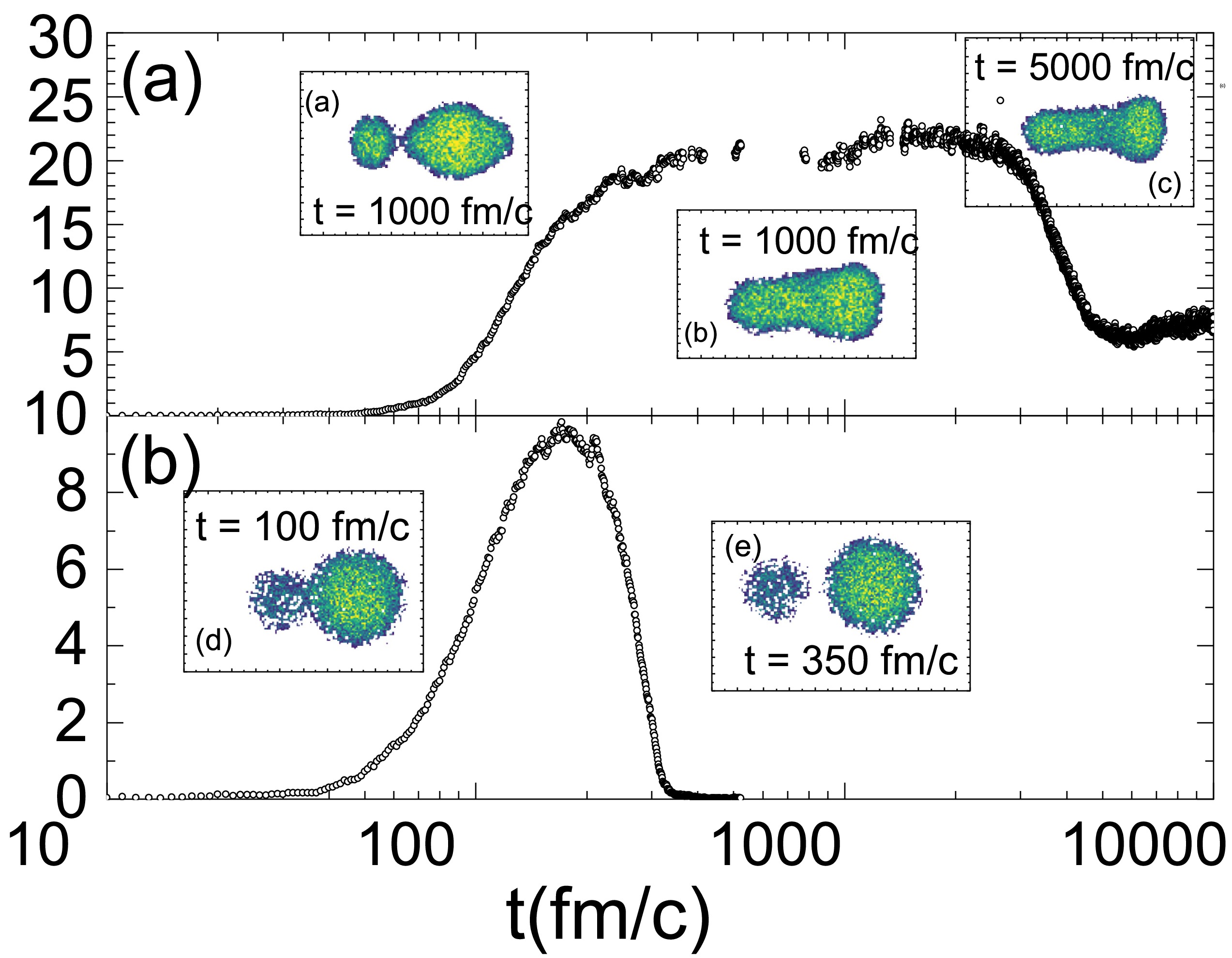
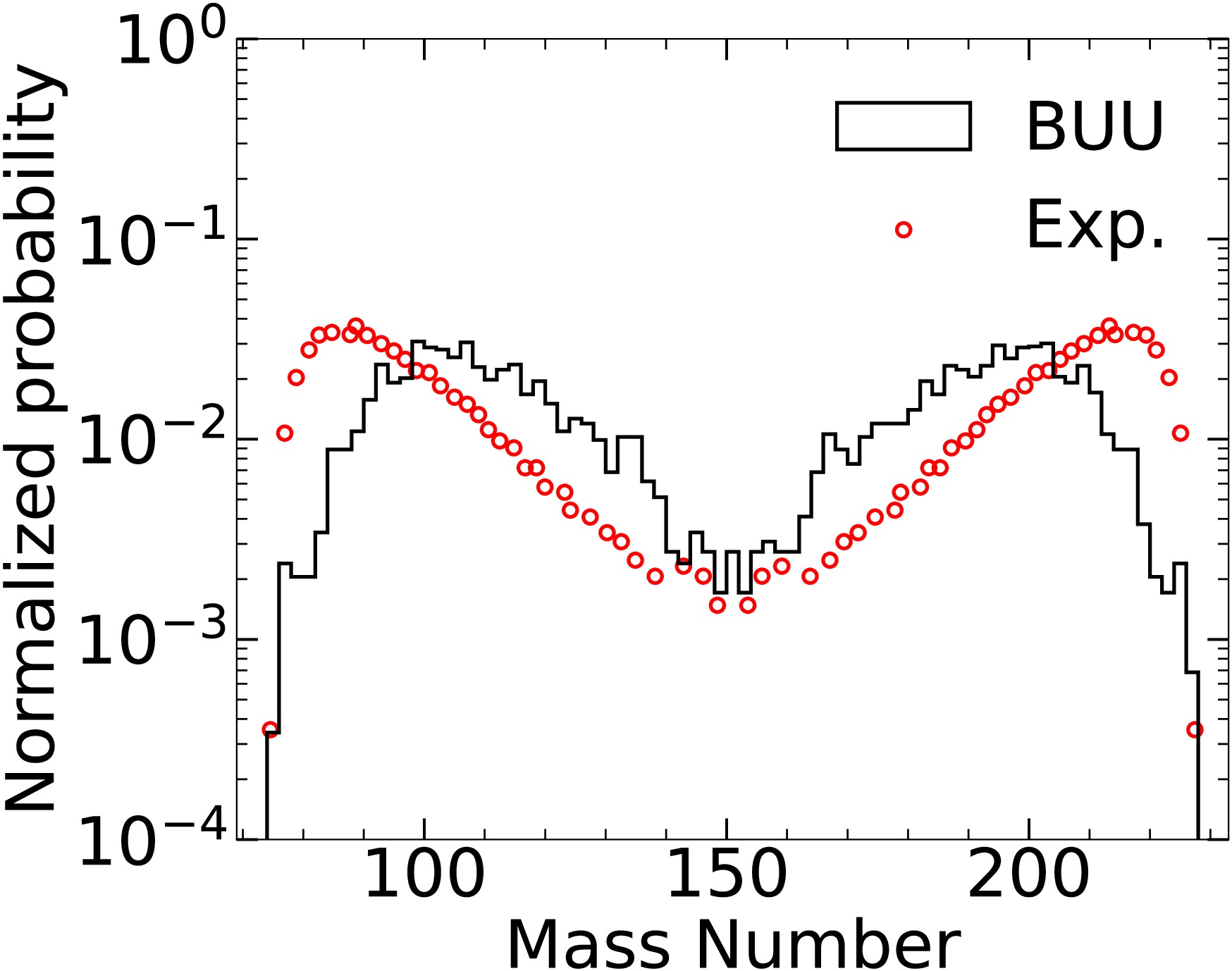
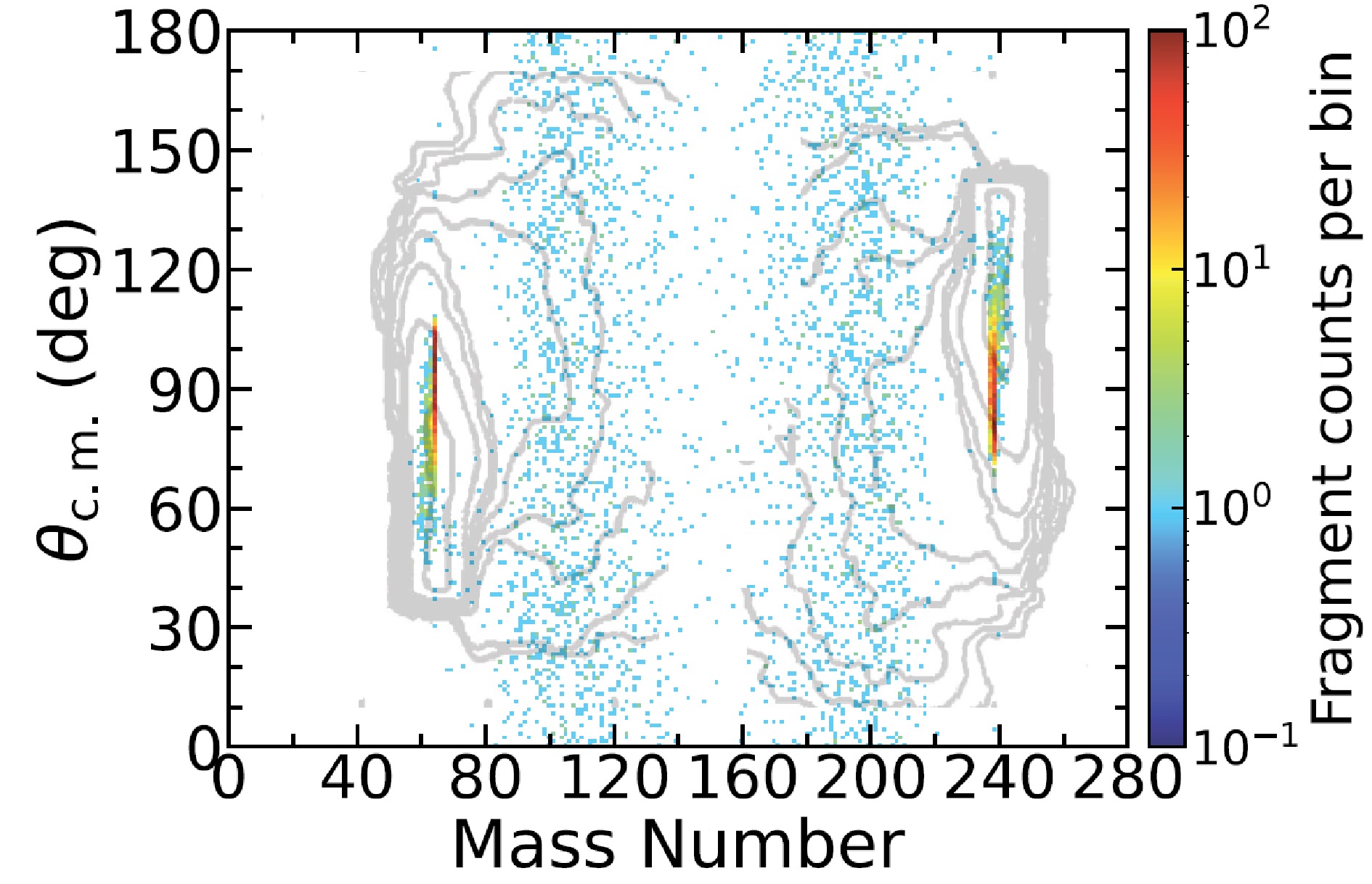
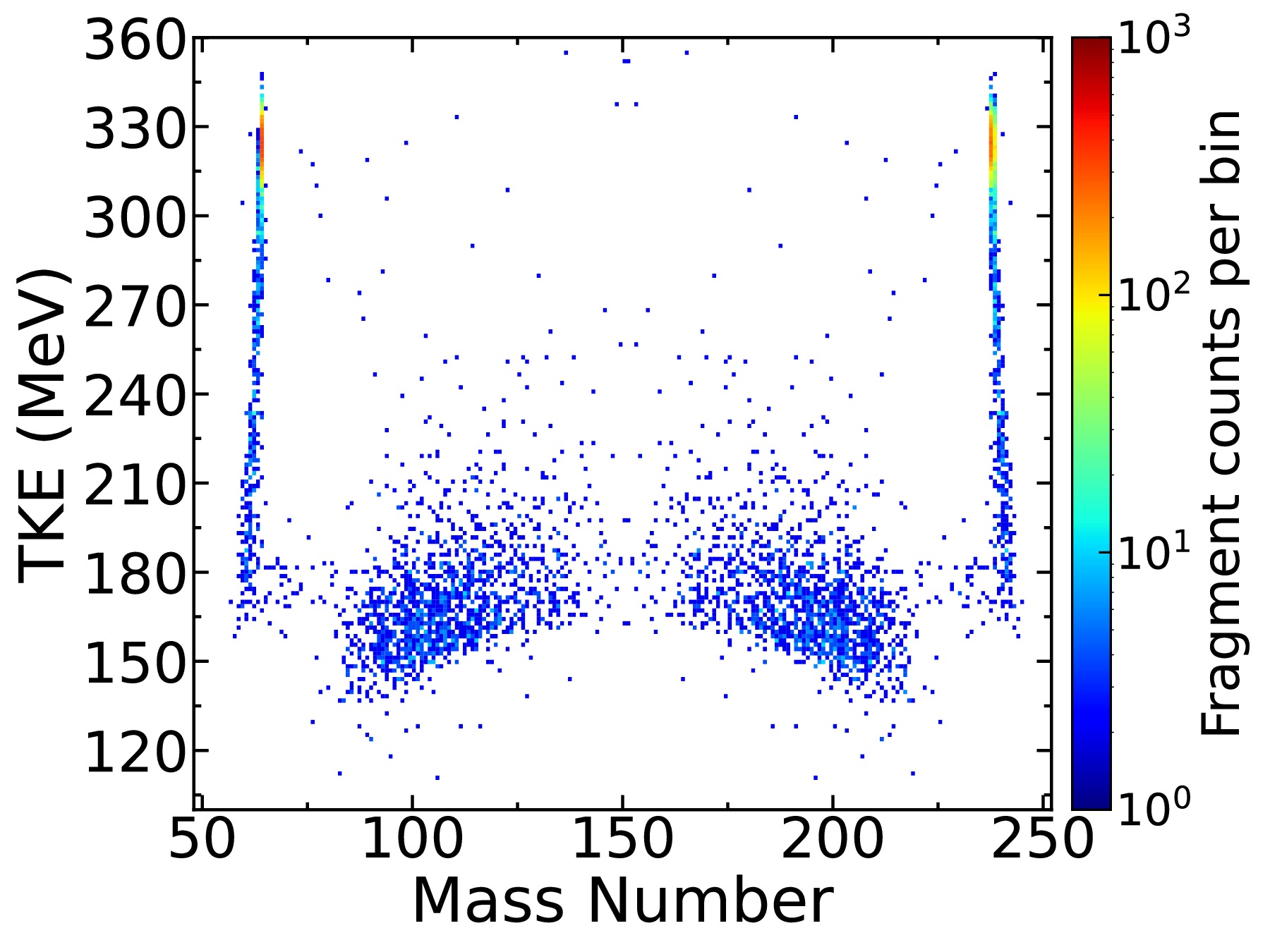
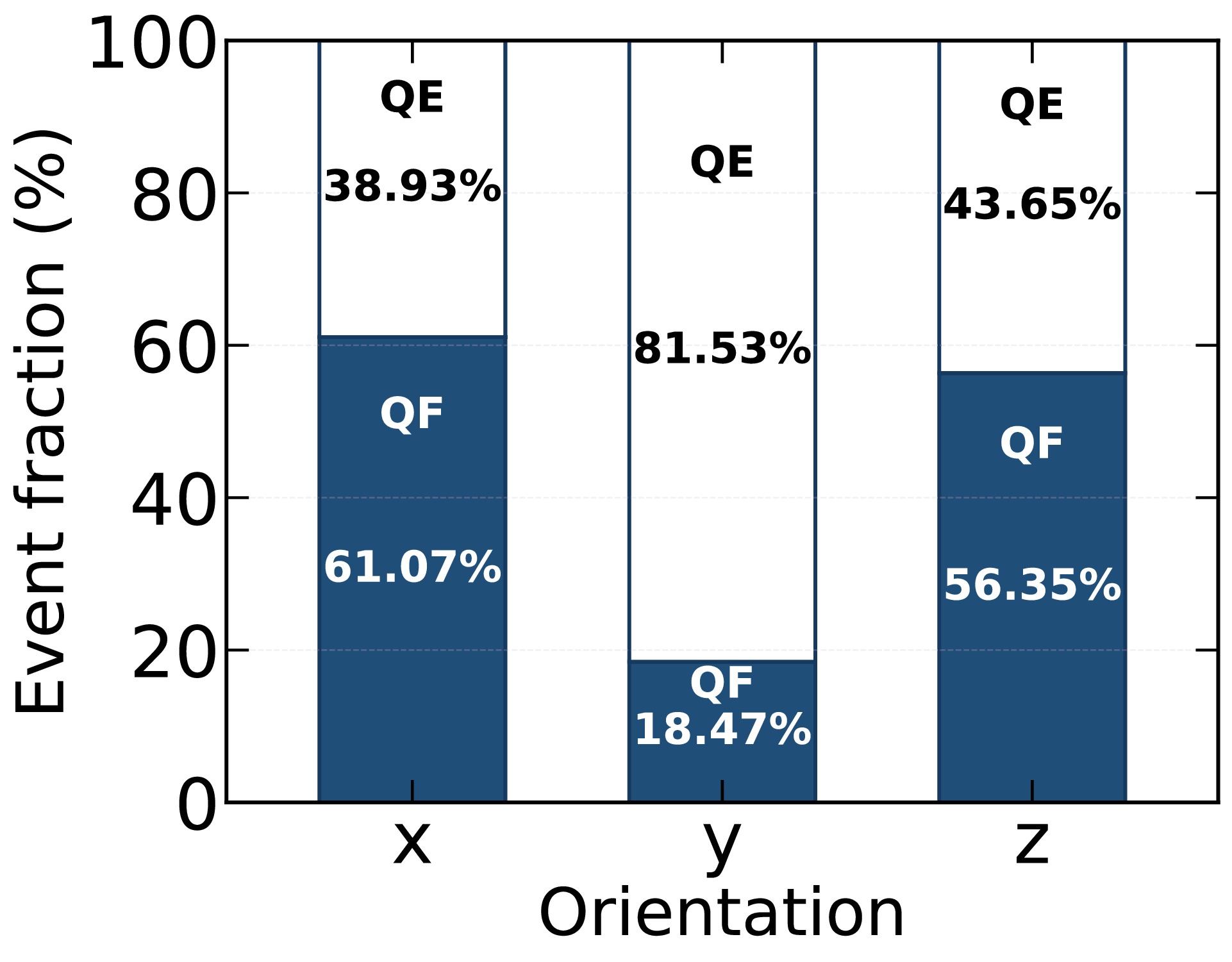
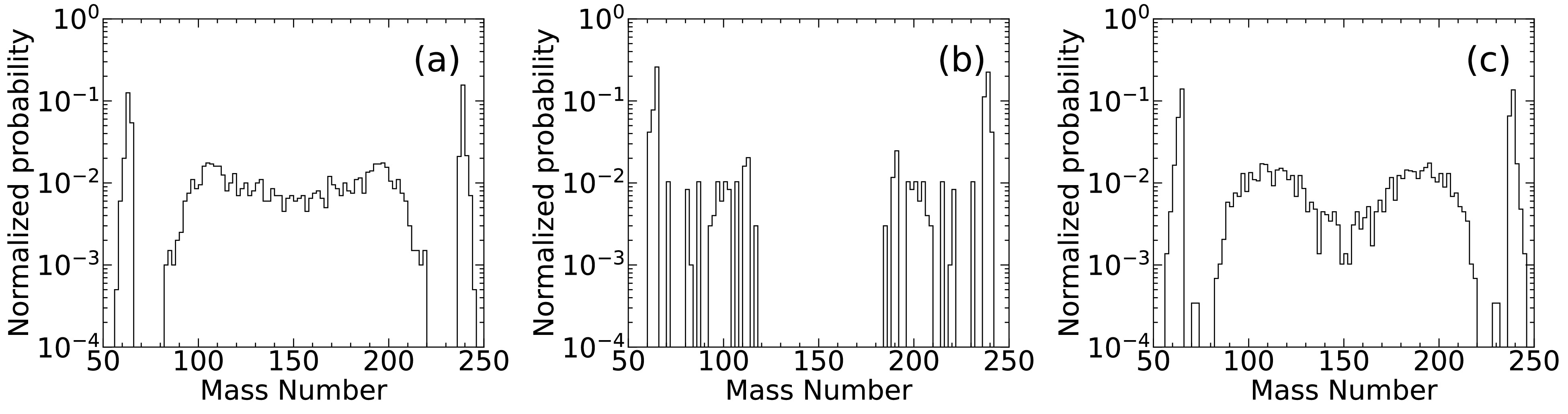
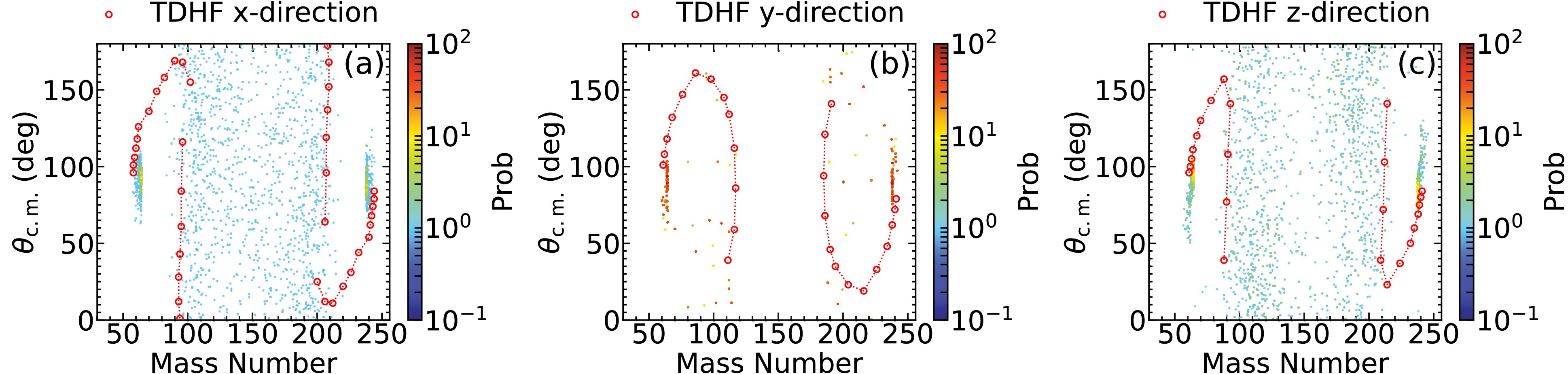
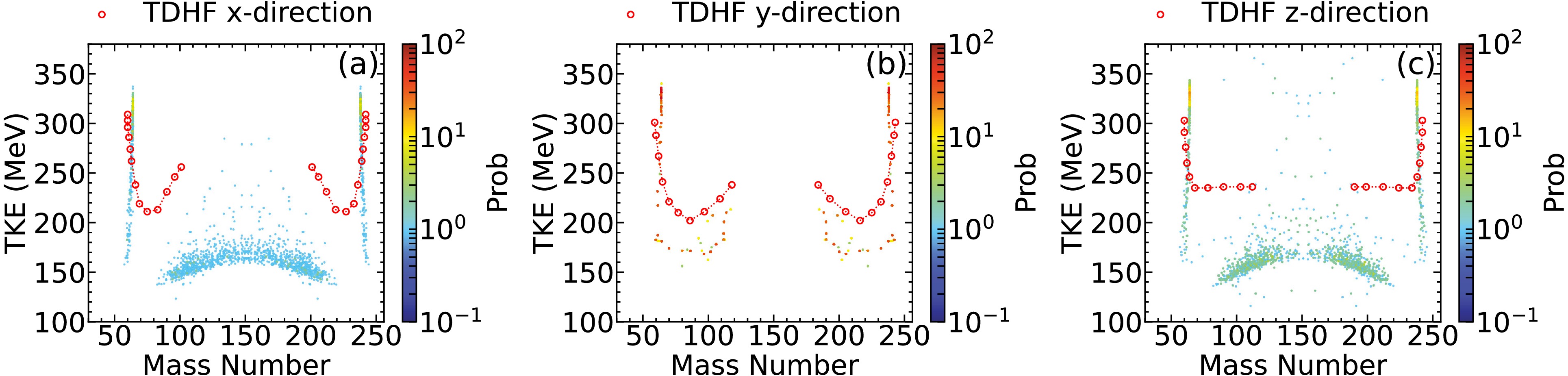
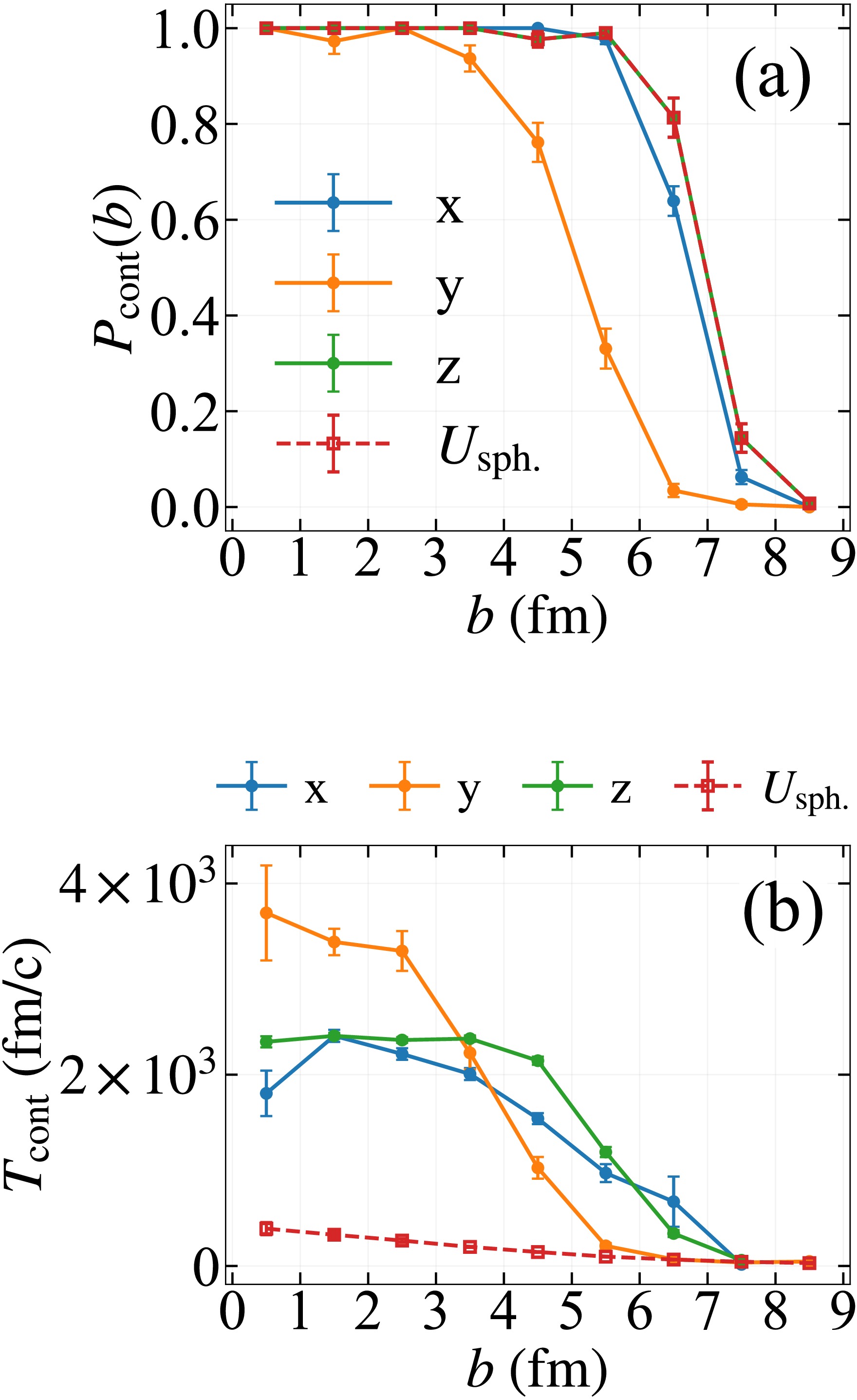
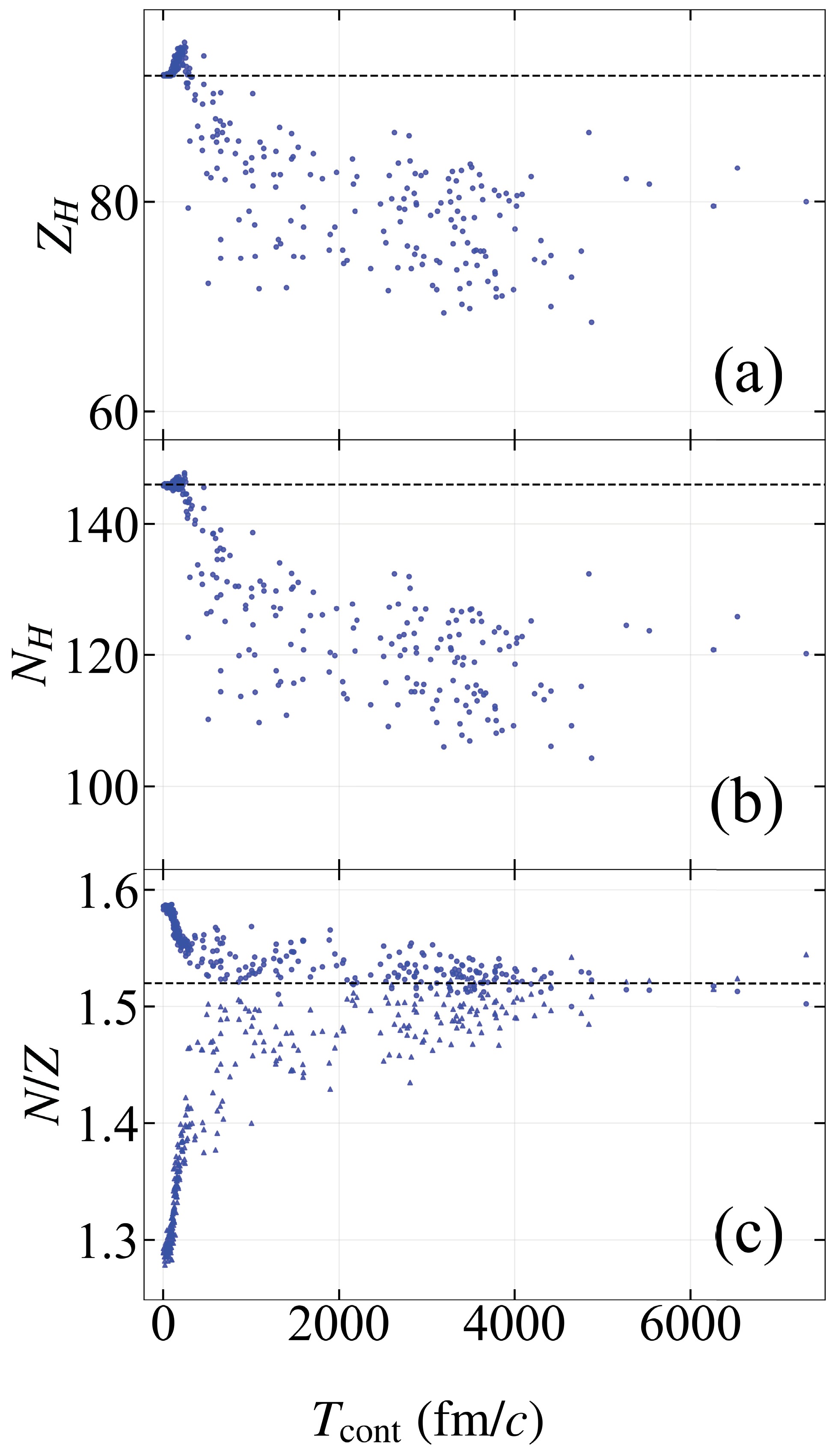
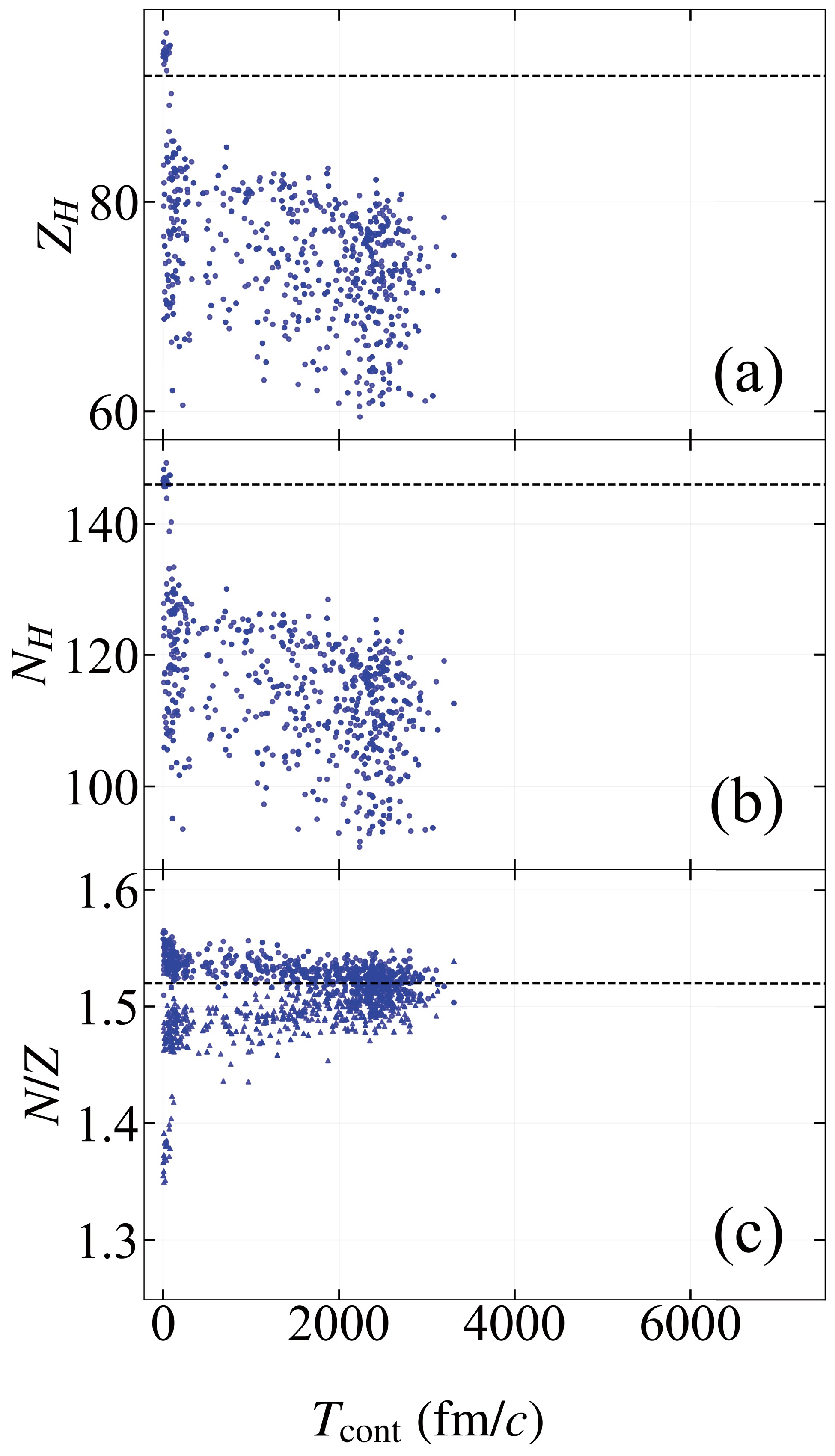
The orientation dependence of the near-Coulomb-barrier $^{64}\mathrm{Ni}+{}^{238}\mathrm{U}$ reaction at $E_{\mathrm{c.m.}}=301.05 ~\;\mathrm{MeV}$ is investigated within the Boltzmann–Uehling–Uhlenbeck transport framework. Three representative orientations of the deformed $^{238}\mathrm{U}$ target are considered, and an event-by-event window analysis is performed to connect final-state observables with the underlying contact-stage dynamics. The calculated fragment mass distribution, mass–angle distribution, and mass–total-kinetic-energy correlation reproduce the main qualitative features of the available experimental data, including the double-humped mass structure and the weak population near mass symmetry. Within the present event-identification criterion and evolution time, no fusion events are identified. The x orientation gives the largest quasifission component and the strongest mass drift toward symmetry, the z orientation is intermediate, whereas the y orientation is dominated by quasielastic or weakly dissipative events. The analysis of the contact probability $P_{\rm{cont}}(b)$, contact time $T_{\rm{cont}}$, and fragment Z, N, and $N/Z$ indicates that the orientation dependence originates from the combined effects of contact formation, contact lifetime, and nucleon-exchange efficiency through the neck region. An additional reference calculation using an artificially spherical $^{238}\mathrm{U}$ nucleus shows that, although the contact probability remains comparable to those of the x and z orientations, the contact time is significantly reduced. This result suggests that the deformation of $^{238}\mathrm{U}$ primarily enhances the persistence of the dinuclear configuration rather than simply increasing the probability of initial contact formation. These results provide a dynamical interpretation of how the entrance-channel orientation governs the branching between quasielastic and quasifission trajectories.
The orientation dependence of the near-Coulomb-barrier $^{64}\mathrm{Ni}+{}^{238}\mathrm{U}$ reaction at $E_{\mathrm{c.m.}}=301.05 ~\;\mathrm{MeV}$ is investigated within the Boltzmann–Uehling–Uhlenbeck transport framework. Three representative orientations of the deformed $^{238}\mathrm{U}$ target are considered, and an event-by-event window analysis is performed to connect final-state observables with the underlying contact-stage dynamics. The calculated fragment mass distribution, mass–angle distribution, and mass–total-kinetic-energy correlation reproduce the main qualitative features of the available experimental data, including the double-humped mass structure and the weak population near mass symmetry. Within the present event-identification criterion and evolution time, no fusion events are identified. The x orientation gives the largest quasifission component and the strongest mass drift toward symmetry, the z orientation is intermediate, whereas the y orientation is dominated by quasielastic or weakly dissipative events. The analysis of the contact probability $P_{\rm{cont}}(b)$, contact time $T_{\rm{cont}}$, and fragment Z, N, and $N/Z$ indicates that the orientation dependence originates from the combined effects of contact formation, contact lifetime, and nucleon-exchange efficiency through the neck region. An additional reference calculation using an artificially spherical $^{238}\mathrm{U}$ nucleus shows that, although the contact probability remains comparable to those of the x and z orientations, the contact time is significantly reduced. This result suggests that the deformation of $^{238}\mathrm{U}$ primarily enhances the persistence of the dinuclear configuration rather than simply increasing the probability of initial contact formation. These results provide a dynamical interpretation of how the entrance-channel orientation governs the branching between quasielastic and quasifission trajectories.

IF: 3.1
Monthly issued, founded in 1977
Sponsored by:
ISSN 1674-1137 CN 11-5641/O4
Original research articles, Ietters and reviews Covering theory and experiments in the fieids of
- Particle physics
- Nuclear physics
- Particle and nuclear astrophysics
- Cosmology
Author benefits
- A SCOAP3 participating journal - free Open Access publication for qualifying articles
- Average 24 days to first decision
- Fast-track publication for selected articles
- Subscriptions at over 3000 institutions worldwide
- Free English editing on all accepted articles
News
- Editorial Office Closed
- CPC Announces 2025 Outstanding Reviewers
- Chinese Physics C Outstanding Reviewer Award 2023
- Impact factor of Chinese Physics C is 3.6 in 2022
- 2022 CPC Outstanding Reviewer Awards
Cover Story
- Cover Story (Issue 5, 2026): Determination of Fragmentation Functions from Charge Asymmetries in Hadron Production
- Cover Story (Issue 4, 2026): Initial performance results of the JUNO detector
- Cover Story (Issue 3, 2026): Comprehensive investigation on baryon number violating nucleon decays involving an axion-like particle
- Cover Story (Issue 2, 2026) |The images of Brans-Dicke-Kerr type naked singularities
- Cover Story (Issue 1, 2026) A focused review of quintom cosmology: from quintom dark energy to quintom bounce
Advertising