


 Abstract
 HTML
 Reference
 Related
 PDF




-
Relativistic heavy-ion collisions provide a unique opportunity to study strongly interacting QCD matter under extreme temperature and density conditions. At sufficiently high energies, a deconfined quark-gluon plasma (QGP) is formed, which subsequently expands and cools, evolving into a hadron gas before kinetic freeze-out. While the properties of the QGP have been extensively studied, the later hadronic stage remains crucial for understanding the formation of final-state hadrons[1−4].
During the hadronic phase, inelastic and pseudo-elastic interactions among hadrons can significantly modify final-state observables, including particle yields, correlations, and collective flow[5, 6]. In particular, hadronic rescattering and regeneration processes play an important role in shaping the observable particle composition at kinetic freeze-out[7, 8]. Short-lived hadronic resonances are sensitive probes of the hadronic phase because their lifetimes are comparable to the duration of the hadronic medium. A significant fraction of these resonances decay inside the medium, and their decay daughters may undergo further rescattering, thereby destroying the invariant-mass correlation required for reconstruction. In addition, regeneration processes through hadronic interactions can recreate resonances via pseudo-elastic scattering. The measured resonance signal therefore reflects both early-time dynamics and late-stage hadronic interactions[9, 10].
Experimentally, numerous measurements of short-lived resonances have been performed in relativistic heavy-ion collisions, indicating a general suppression of resonance yields in the hadronic phase[11−19]. Motivated by these observations, the present work aims to systematically investigate how the hadronic phase modifies resonance production and related observables. In particular, we study the dependence on system size, collision energy, and resonance lifetime to quantify the effects of hadronic interactions.
For short-lived resonances such as
$ \rho^{0} $ ,$ K^{*0} $ , and$ \Lambda(1520) $ , a significant fraction of these resonances decay during the early stage of hadronic evolution. In transport model simulations, these resonances can be reconstructed from their decay daughters using an invariant-mass technique similar to that used in experiments[20, 21]. In addition to the reconstructed yields, we also consider Monte Carlo truth-level resonances, defined as all generated particles that have decayed according to their natural decay widths. Reconstructability is defined as the fraction of resonances whose decay daughters do not undergo further interactions in the hadronic phase and thus can be reconstructed via invariant-mass analysis[22]. We then study the reconstructability as a function of charged-particle multiplicity,$ ({\rm d}N_{\mathrm{ch}}/{\rm d}\eta)^{1/3} $ , which serves as a proxy for system size and medium density. This allows us to investigate the dependence of reconstructability on system size and medium properties, directly reflecting the strength of the interactions between the decay daughters and the surrounding hadronic medium.Owing to their different lifetimes—approximately
$ \sim 1.3 $ fm/c for$ \rho^{0} $ ,$ \sim 4 $ fm/c for$ K^{*0} $ , and$ \sim 12 $ fm/c for$ \Lambda(1520) $ [23]—these resonances probe different stages of hadronic evolution. In particular, shorter-lived resonances decay earlier within the hadronic medium, and their decay daughters are therefore more likely to undergo rescattering with surrounding hadrons. This reduces the probability of reconstructing the parent resonance via invariant-mass analysis. Consequently, reconstructability is expected to exhibit a clear dependence on resonance lifetime, which is systematically studied in this work. We systematically compare the results between$ \sqrt{s_{NN}}=19.6 $ GeV and$ \sqrt{s_{NN}}=200 $ GeV collisions to investigate the energy dependence of hadronic interaction effects.Additionally, we investigate the directed flow[24] of resonances at different stages of hadronic evolution, providing complementary information on the dynamical evolution of the hadronic medium. Together, these observables provide complementary probes of the hadronic stage, enabling a more comprehensive understanding of resonance evolution in relativistic heavy-ion collisions.
This paper is organized as follows. In Sec. II, we describe the analysis framework and introduce the transport model setup. In Sec. III, we present the results on resonance production and discuss their energy and lifetime dependence, as well as the directed flow at different stages of hadronic evolution. Finally, a summary of the work is given in Sec. IV.
-
We employ the UrQMD (Ultra-relativistic Quantum Molecular Dynamics) transport model to simulate Au+Au collisions at
$ \sqrt{s_{NN}} = 19.6 $ and$ 200\; \mathrm{GeV} $ . UrQMD is a microscopic hadronic transport approach based on the covariant propagation of hadrons in phase space and stochastic binary collisions, providing a unified description of particle production and hadronic interactions in relativistic heavy-ion collisions [9, 10]. In this study, we use the cascade mode of UrQMD v4.0.In UrQMD, resonances are dynamically produced through hadronic interactions, string excitation, and fragmentation processes, and subsequently decay according to their physical lifetimes and branching ratios. To quantify hadronic medium effects, we distinguish between all resonance decays recorded in the event history and reconstructable resonances. The former are obtained from the event record (f16) and decay according to their physical widths, whereas the latter are defined as resonances whose decay daughters do not undergo any further interactions in the hadronic phase.
In practice, reconstructable resonances are identified using the CTO(68) option in UrQMD v4.0, which enables the selection of resonances based on daughter-particle rescattering information[25]. The reconstructability is defined as:
$ \begin{array}{l} R = \dfrac{N_{\mathrm{reconstructed}}}{N_{\mathrm{true}}} ,\end{array} $
(1) where
$ N_{\mathrm{true}} $ denotes the total number of resonances that decayed during the transport evolution, as obtained from the f16 event record.$ N_{\mathrm{reconstructed}} $ is obtained directly using the CTO(68) option and corresponds to the resonances whose decay daughters remain free from subsequent rescattering. Thus, both$ N_{\mathrm{true}} $ and$ N_{\mathrm{reconstructed}} $ are determined from the UrQMD event-history information rather than from invariant-mass signal extraction, and combinatorial background does not enter into the calculation of R. -
We first present the transverse momentum
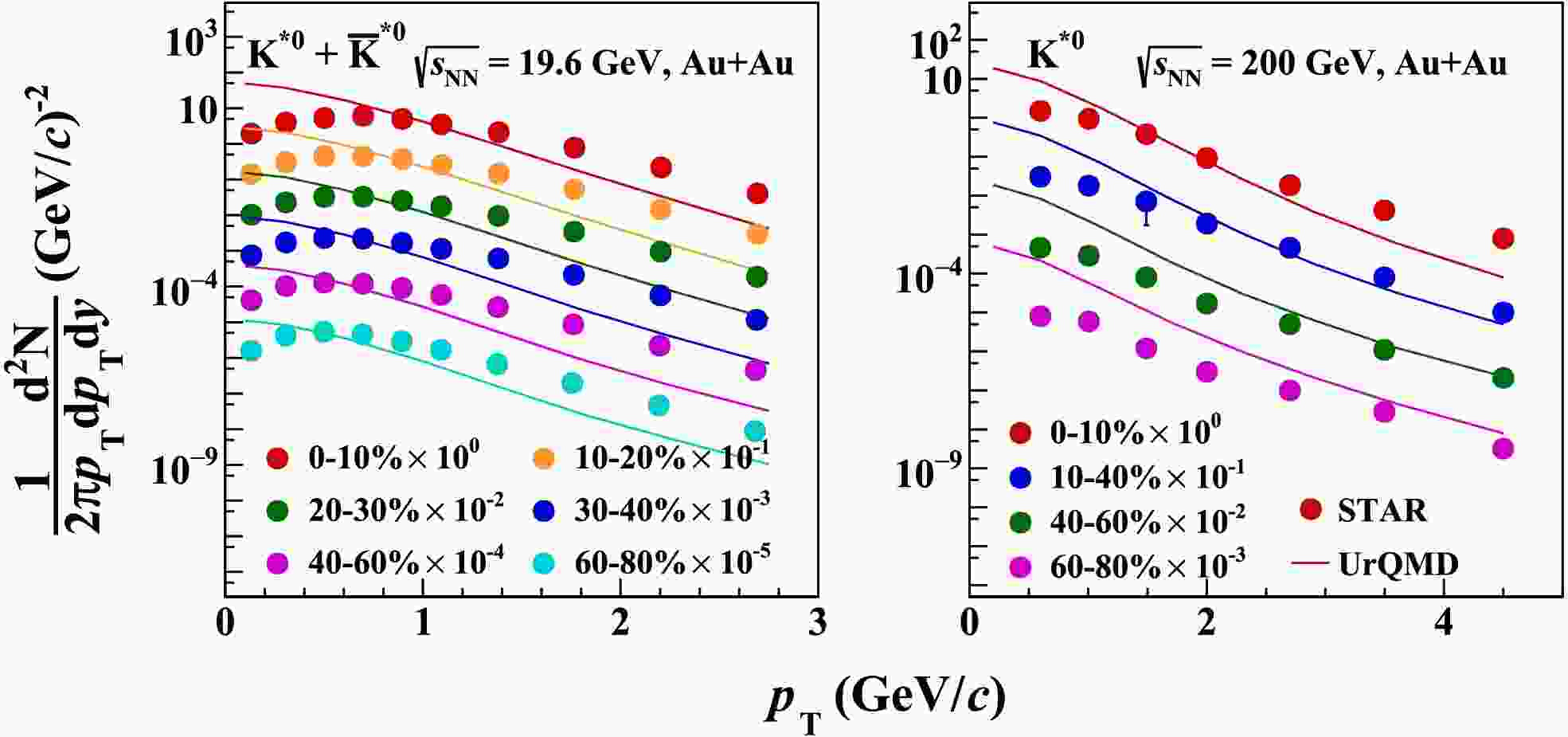
$ (p_T) $ spectra of$ K^{*0} $ production at midrapidity in Au+Au collisions at$ \sqrt{s_{NN}} = 19.6 $ and$ 200 \; \mathrm{GeV} $ , as shown in Fig. 1. The left panel shows the results for 19.6 GeV, where both$ K^{*0} $ and$ \overline{K}^{*0} $ are included, while the right panel corresponds to$ 200 \; \mathrm{GeV} $ , where only$ K^{*0} $ is shown for consistency with the available experimental results[11, 12].
Figure 1. (color online) Transverse-momentum (
$ p_T $ ) spectra of$ K^{*0} + \overline{K}^{*0} $ in Au+Au collisions at$ \sqrt{s_{NN}} = 19.6\; \mathrm{GeV} $ (left panel) and of$ K^{*0} $ at$ \sqrt{s_{NN}} = 200\; \mathrm{GeV} $ (right panel), obtained from UrQMD simulations. Different centrality classes are indicated by different colors, as shown in the legends. For clarity, the spectra are scaled by successive powers of ten. The points represent STAR experimental data, while the solid curves correspond to UrQMD model calculations.The transverse momentum spectra are shown for different centrality classes and exhibit the expected steeply falling behavior with increasing transverse momentum. Different centrality classes are represented by markers of different colors, and successive scaling factors are applied for clarity. The UrQMD calculations (solid curves) are compared with the available STAR data (symbols). While UrQMD reproduces the overall decreasing trend of the spectra with increasing
$ p_{{T}} $ , clear$ p_{{T}} $ -dependent deviations from the experimental data are observed. Nevertheless, the present study focuses on a qualitative investigation of resonance reconstructability and directed flow rather than on a quantitative description of the resonance spectra. -
We next examine the invariant-mass distributions for
$ \rho^0 \rightarrow \pi^{+}+\pi^{-} $ ,$ K^{*0} \rightarrow \pi^{\pm}+K^{\mp} $ , and$ \Lambda(1520) \rightarrow p+ K^{-} $ ($ \bar{p}+K^{+} $ ) in Au+Au collisions at$ \sqrt{s_{NN}} = 19.6\; \mathrm{GeV} $ , as shown in Fig. 2 for two centrality classes,$ 0\% $ –$ 10\% $ and$ 60\% $ –$ 80\% $ . The reconstructed signals (blue points) are obtained using the CTO(68) option in UrQMD v4.0, which identifies reconstructable resonances based on the decay history of their daughter particles, i.e., whether they undergo further interactions after the resonance decay. This procedure provides a proxy for the experimentally reconstructed signal obtained with the invariant-mass method, whereas the red points correspond to the total number of resonances that decayed during the transport evolution.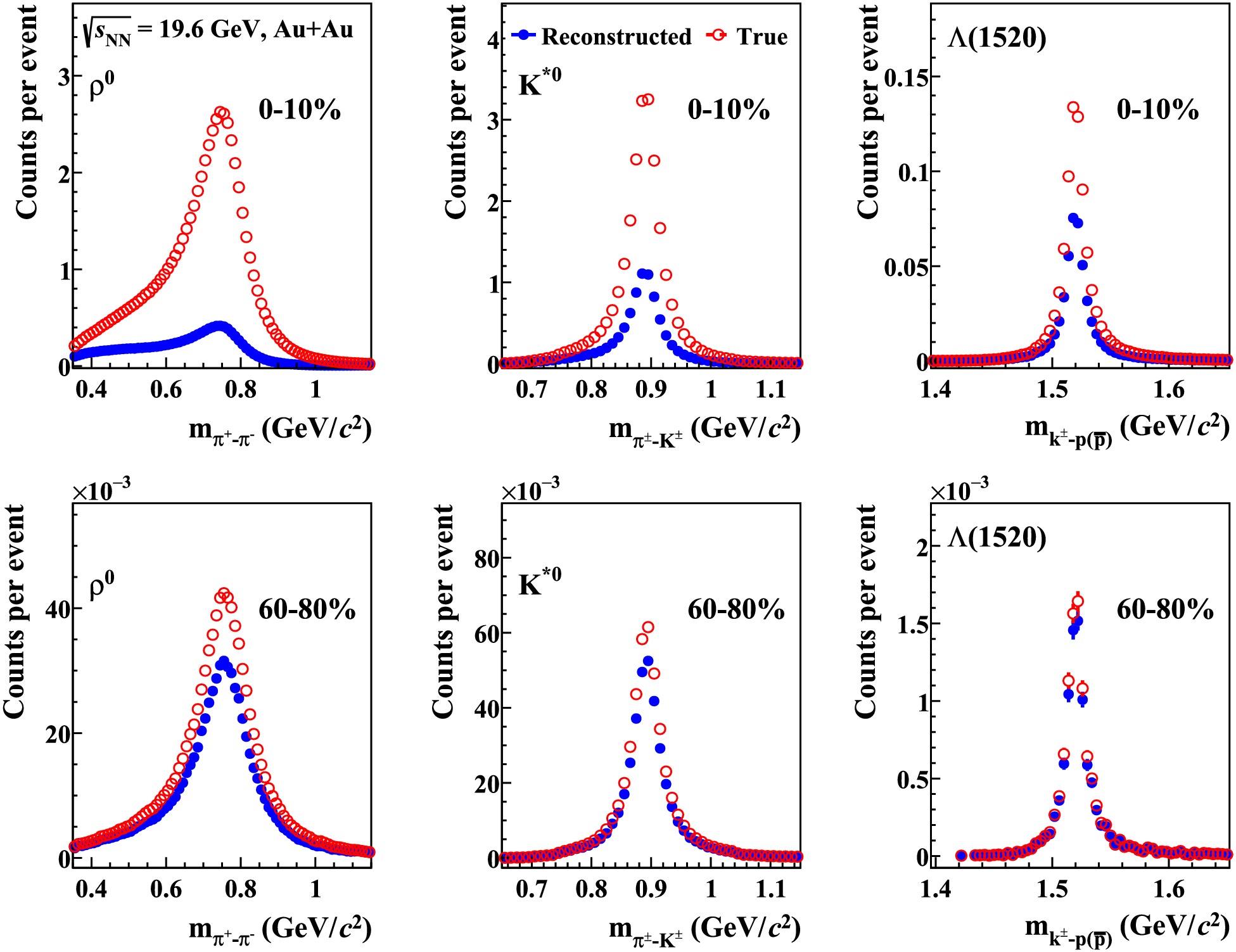
Figure 2. (color online) Invariant-mass distributions for
$ \rho^{0}\rightarrow \pi^{+}\pi^{-} $ ,$ K^{*0}\rightarrow \pi^{\pm}K^{\mp} $ , and$ \Lambda(1520)\rightarrow pK^{-}(\bar{p}K^{+}) $ in Au+Au collisions at$ \sqrt{s_{NN}}=19.6 $ GeV are shown for two centrality classes:$ 0\% $ –$ 10\% $ (upper panels) and$ 60\% $ –$ 80\% $ (lower panels). The reconstructed signals (blue points) are compared with the total number of particles that decayed (red circles). This comparison demonstrates the performance of the reconstruction procedure for different collision centralities and resonance species.A clear peak structure is observed for all three resonances, indicating that a substantial fraction of resonances can be reconstructed despite the presence of hadronic rescattering. In more central collisions, the reconstructed signal shows stronger suppression relative to the true distribution, reflecting the increased probability of daughter-particle rescattering in a denser hadronic medium. In contrast, peripheral collisions exhibit a larger reconstructed fraction because of reduced hadronic interaction effects. The comparison between the reconstructed and true distributions therefore provides a direct visualization of the medium-induced modification of short-lived resonances in heavy-ion collisions.
We next turn to the system-size dependence of the reconstructable fraction of short-lived resonances, as shown in Fig. 3 for Au+Au collisions at
$ \sqrt{s_{NN}} = 19.6 $ and$ 200 \; \mathrm{GeV} $ . The reconstructable fraction$ N_{\mathrm{rec}}/N_{\mathrm{true}} $ is presented as a function of$ (\mathrm{d}N_{ch}/\mathrm{d}\eta)^{1/3} $ , which reflects the increasing system size and medium density.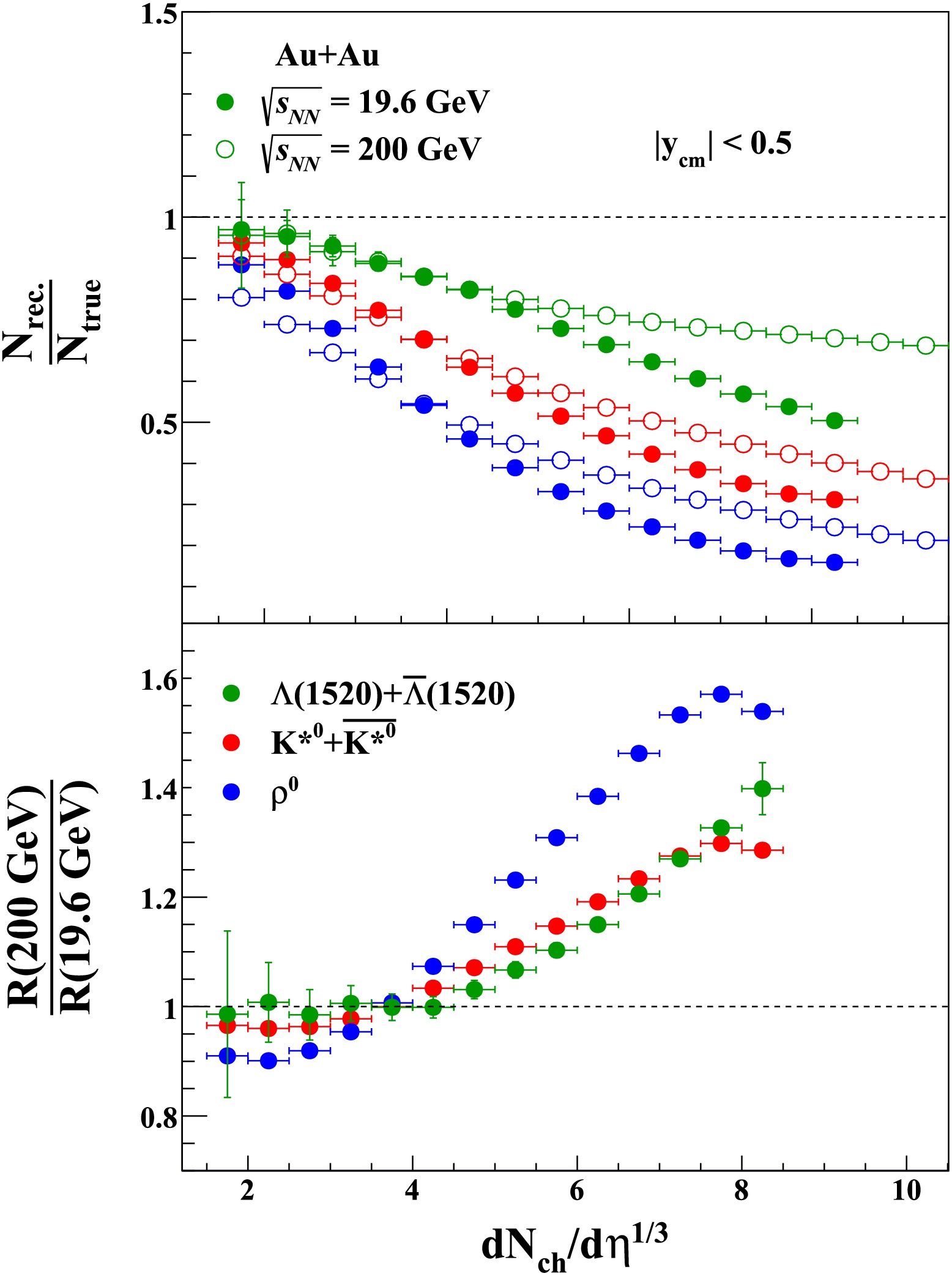
Figure 3. (color online) Reconstructable fraction
$ N_{\mathrm{rec}}/N_{\mathrm{true}} $ of short-lived resonances as a function of system size, characterized by$ (\mathrm{d}N_{ch}/\mathrm{d}\eta)^{1/3} $ , in Au+Au collisions at$ \sqrt{s_{NN}} = 19.6 \; \mathrm{GeV} $ and$ 200 \; \mathrm{GeV} $ from UrQMD. The upper panel shows the reconstructable fraction for$ K^{*0}+\overline{K}^{*0} $ (red),$ \rho^0 $ (blue), and$ \Lambda(1520)+\overline{\Lambda}(1520) $ (green), with filled and open markers representing 19.6 and 200 GeV, respectively. The lower panel shows the ratio of the reconstructable fractions at the two collision energies,$ R(200\; \mathrm{GeV})/R(19.6\; \mathrm{GeV}) $ . The dashed line at unity in the upper panel corresponds to the case in which all decayed resonances are reconstructable, while that in the lower panel indicates no energy dependence. A clear hierarchy in reconstructability is observed, reflecting differences in the lifetimes of the resonances and their sensitivities to hadronic interactions.A clear and universal suppression pattern is observed for all studied resonances, characterized by a monotonic decrease in the reconstructable fraction with increasing system size. This behavior reflects the increasing role of daughter-particle rescattering in a denser and longer-lived hadronic medium formed in more central collisions.
Among the three resonances, a clear hierarchy in the suppression of the reconstructable fraction is observed. The
$ \rho^0 $ meson exhibits the strongest suppression, consistent with its short lifetime and high probability of decaying within the hadronic phase, where its decay daughters are susceptible to rescattering. The$ K^{*0} $ shows an intermediate level of suppression, while the$ \Lambda(1520) $ , owing to its relatively longer lifetime, exhibits the weakest suppression and correspondingly the largest reconstructable fraction across all centralities.Comparing the two collision energies, similar qualitative trends are observed at both
$ \sqrt{s_{NN}} = 19.6 $ and$ 200\; \mathrm{GeV} $ . The reconstructable fractions exhibit consistent dependences on system size, with stronger suppression observed for shorter-lived resonances. The energy dependence is relatively modest but non-negligible, as indicated by the ratio of reconstructable fractions between the two energies. These differences may reflect variations in the space-time evolution of the hadronic phase.These results provide a unified picture in which the reconstructability of short-lived resonances is primarily governed by their intrinsic lifetimes, while additional modifications arise from the space–time evolution of the hadronic phase.
We next present a comprehensive summary of resonance reconstructability as a function of resonance lifetime in Au+Au collisions at
$ \sqrt{s_{NN}} = 19.6 $ and$ 200 \; \mathrm{GeV} $ , as shown in Fig. 4. For each selected centrality class,$ N_{\mathrm{rec}} $ and$ N_{\mathrm{true}} $ are counted separately within$ |y_{\mathrm{c.m.}}|<0.5 $ over the full$ p_{\mathrm{T}} $ range, and the reconstructable fraction is defined as$ N_{\mathrm{rec}}/N_{\mathrm{true}} $ . The results are shown for$ \rho^0 $ ,$ K^{*0}+\overline{K}^{*0} $ , and$ \Lambda(1520)+\overline{\Lambda}(1520) $ , covering a wide range of lifetimes and enabling a direct study of lifetime-dependent medium effects.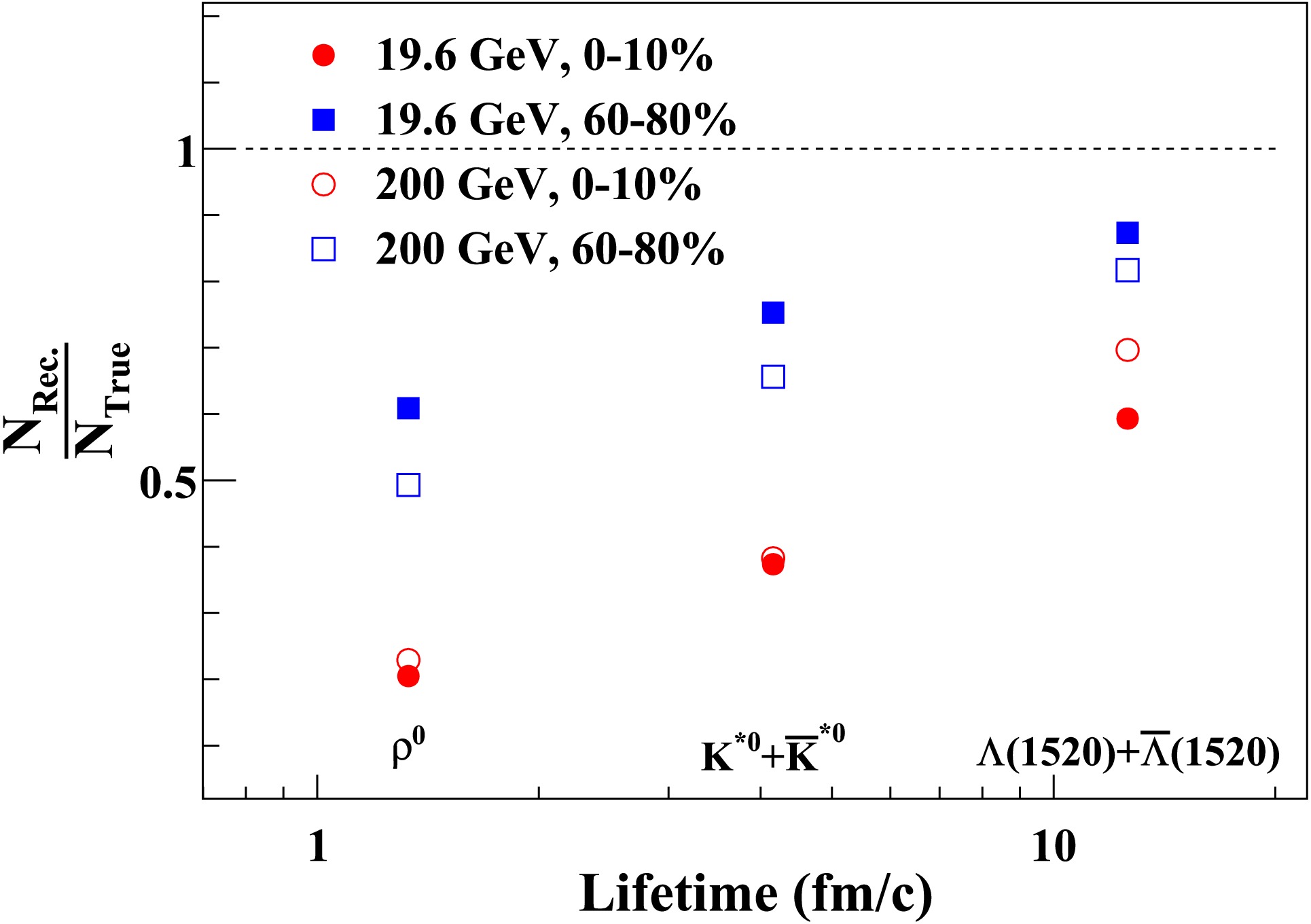
Figure 4. (color online) Reconstructable fraction
$ N_{\mathrm{rec}}/N_{\mathrm{true}} $ of short-lived resonances as a function of resonance lifetime in Au+Au collisions at$ \sqrt{s_{NN}} = 19.6 $ and$ 200 \; \mathrm{GeV} $ from UrQMD simulations. The results are shown for$ \rho^0 $ ,$ K^{*0}+\overline{K}^{*0} $ , and$ \Lambda(1520)+\overline{\Lambda}(1520) $ , corresponding to different lifetimes on the x-axis. Filled symbols represent the 19.6 GeV results, whereas open symbols correspond to 200 GeV. Red and blue markers denote the$ 0\% $ –$ 10\% $ and$ 60\% $ –$ 80\% $ centrality classes, respectively. The dashed line at unity corresponds to the case in which all decayed resonances are reconstructable. A clear lifetime ordering of reconstructability is observed, demonstrating stronger suppression for shorter-lived resonances and enhanced medium effects in more central collisions.This ordering is consistently observed as a function of resonance lifetime, indicating the important role of the intrinsic resonance lifetime in determining reconstructability. Reconstructability is also affected by the hadronic scattering cross sections of the decay daughters, which influence their rescattering probabilities in the hadronic medium. Shorter-lived states are more sensitive to hadronic rescattering effects, leading to a reduced reconstructable fraction in more central collisions and for larger system sizes.
In addition to the lifetime dependence, a clear centrality dependence is observed: more central collisions exhibit stronger suppression than peripheral collisions. This behavior is consistent with the picture illustrated in Fig. 2, where hadronic rescattering leads to a reduction in the reconstructed resonance signal. In more central collisions, the increased hadronic medium density and longer interaction time further enhance the probability of daughter rescattering, resulting in stronger suppression.
When comparing the two collision energies, similar qualitative behavior is observed at both
$ \sqrt{s_{NN}} = 19.6 $ and$ 200 \; \mathrm{GeV} $ , while quantitative differences suggest variations in the effective properties of the hadronic phase, such as its lifetime, density, and baryon composition.Overall, the results demonstrate a unified picture in which the reconstructability of short-lived resonances is influenced by both their intrinsic lifetimes and the hadronic interactions of their decay daughters with the medium, while additional modifications arise from the system-size and collision-energy dependence of the hadronic phase.
-
After discussing the reconstructability of short-lived resonances, we investigate the directed flow of resonances during hadronic evolution. Fig. 5 shows the rapidity dependence of
$ v_1 $ for$ \pi^+ + \pi^- $ ,$ K^+ + K^- $ ,$ \rho^0 $ ,$ K^{*0}+\overline{K}^{*0} $ , and ϕ in Au+Au collisions at$ \sqrt{s_{NN}} = 19.6\; \mathrm{GeV} $ for two representative centrality classes,$ 10\% $ –$ 40\% $ and$ 40\% $ –$ 80\% $ .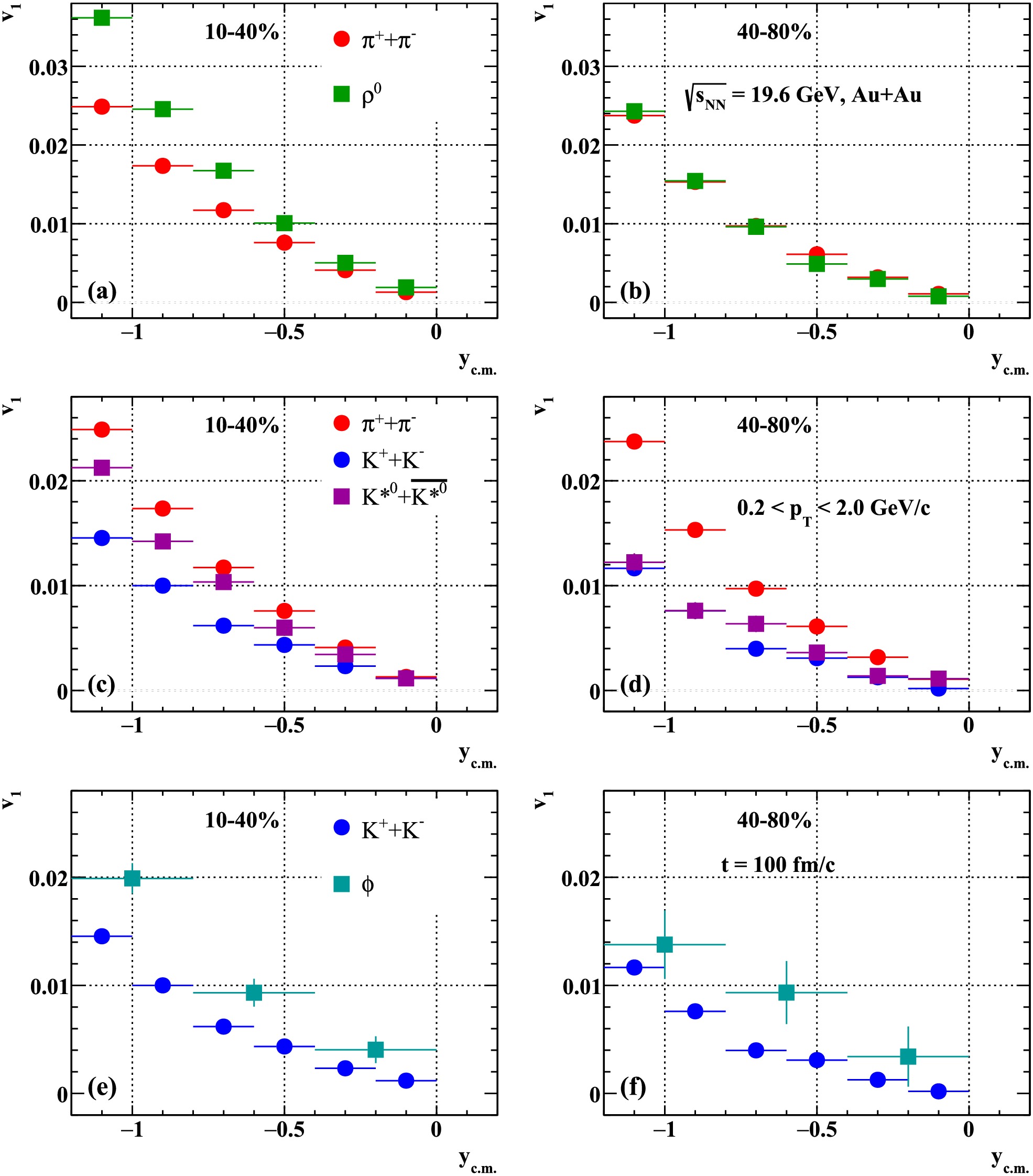
Figure 5. (color online) Directed flow
$ v_1 $ as a function of center-of-mass rapidity$ y_{\mathrm{c.m.}} $ for different particle species in Au+Au collisions at$ \sqrt{s_{NN}} = 19.6\; \mathrm{GeV} $ . The results are shown for$ \pi^+ + \pi^- $ (red circles),$ K^+ + K^- $ (blue circles),$ \rho^0 $ (green squares),$ K^{*0} + \bar{K}^{*0} $ (purple squares), and ϕ (cyan squares). The left (right) panels correspond to the$ 10\% $ –$ 40\% $ ($ 40\% $ –$ 80\% $ ) centrality classes. The upper, middle, and lower panels compare$ \pi^+ + \pi^- $ with$ \rho^0 $ ,$ \pi/K $ with$ K^{*0} $ , and K with ϕ, respectively.In mid-central collisions (
$ 10\% $ –$ 40\% $ ), short-lived resonances exhibit a larger directed-flow magnitude than stable mesons, with the$ \rho^0 $ showing the largest$ v_1 $ slope. The difference between pion and kaon$ v_1 $ reflects their different responses to the initial dynamics and to interactions with the baryon-rich hadronic medium during the system evolution. The observed differences between resonances and stable mesons suggest that their final-state$ v_1 $ values probe different stages of the system evolution. At late times, the reconstructed samples of short-lived resonances such as$ \rho^0 $ and$ K^{*0} $ are dominated by resonances regenerated during the hadronic phase and therefore mainly reflect the collective motion of the hadronic system at the time of their last formation. In contrast, stable mesons retain contributions from different stages of the evolution through their initial production and subsequent interactions with the hadronic medium.However, the observed modification of resonance
$ v_1 $ does not follow a simple lifetime ordering. In particular, despite the significantly different lifetimes of the$ K^{*0} $ ($ \tau\sim4 $ fm/c) and the ϕ ($ \tau\sim46 $ fm/c), they exhibit comparable$ v_1 $ values at backward rapidity, while the ϕ shows a larger$ v_1 $ magnitude than both kaons and$ K^{*0} $ at midrapidity. These observations indicate that resonance lifetime alone is insufficient to determine the final directed flow. Hadronic interactions during the subsequent evolution, including daughter rescattering and resonance regeneration, can further influence the reconstructed resonance$ v_1 $ , with the relevant scattering cross sections playing an important role in these processes.By contrast, in peripheral collisions (
$ 40\% $ –$ 80\% $ ), the shorter duration and lower density of the hadronic phase reduce both hadronic rescattering and resonance regeneration. Consequently, late-stage hadronic evolution has a much weaker impact on the final-state$ v_1 $ . Stable mesons retain directed-flow values closer to those established at earlier stages, while reconstructed short-lived resonances receive a smaller contribution from late-stage regeneration and preserve a larger fraction of the information from their earlier production. As a result, the differences in$ v_1 $ between short-lived resonances and stable hadrons become much smaller.Specifically, the
$ \rho^0 $ $ v_1 $ is very close to that of pions, while the$ K^{*0} $ $ v_1 $ is closer to that of kaons than to that of pions at both midrapidity and backward rapidity. In contrast, the difference between the ϕ$ v_1 $ and that of kaons at midrapidity remains larger than the corresponding difference observed for$ K^{*0} $ . This behavior cannot be explained by resonance lifetime alone, suggesting that additional mechanisms may contribute to the final directed flow. A more detailed understanding of the underlying dynamics requires further investigation.Recent STAR measurements show a positive midrapidity
$ v_1 $ slope for$ K^{*0} $ in$ 10\% $ –$ 40\% $ Au+Au collisions at$ \sqrt{s_{NN}}=19.6 $ GeV, opposite to the negative slope of charged kaons [26]. Such a sign change is not reproduced in the present UrQMD calculation, in which both kaons and$ K^{*0} $ exhibit negative slopes. Previous model calculations have shown that hadronic interactions can significantly modify the reconstructed$ K^{*0} $ $ v_1 $ through daughter rescattering [27].To further understand the dynamical origin of the observed species dependence, we study the time evolution of the directed flow for different particle species in
$ 10\% $ –$ 40\% $ Au+Au collisions at$ \sqrt{s_{NN}} = 19.6\; \mathrm{GeV} $ . Fig. 6 shows the rapidity dependence of$ v_1 $ at different evolution cutoff times,$ t_{\mathrm{cut}} = 5 $ , 10, 20, 50, and 100$ \mathrm{fm}/c $ . The rapidity dependence is described using the function$ v_1(y)=a_1y+a_3y^3 $ , from which the midrapidity slope is extracted and discussed in Fig. 7.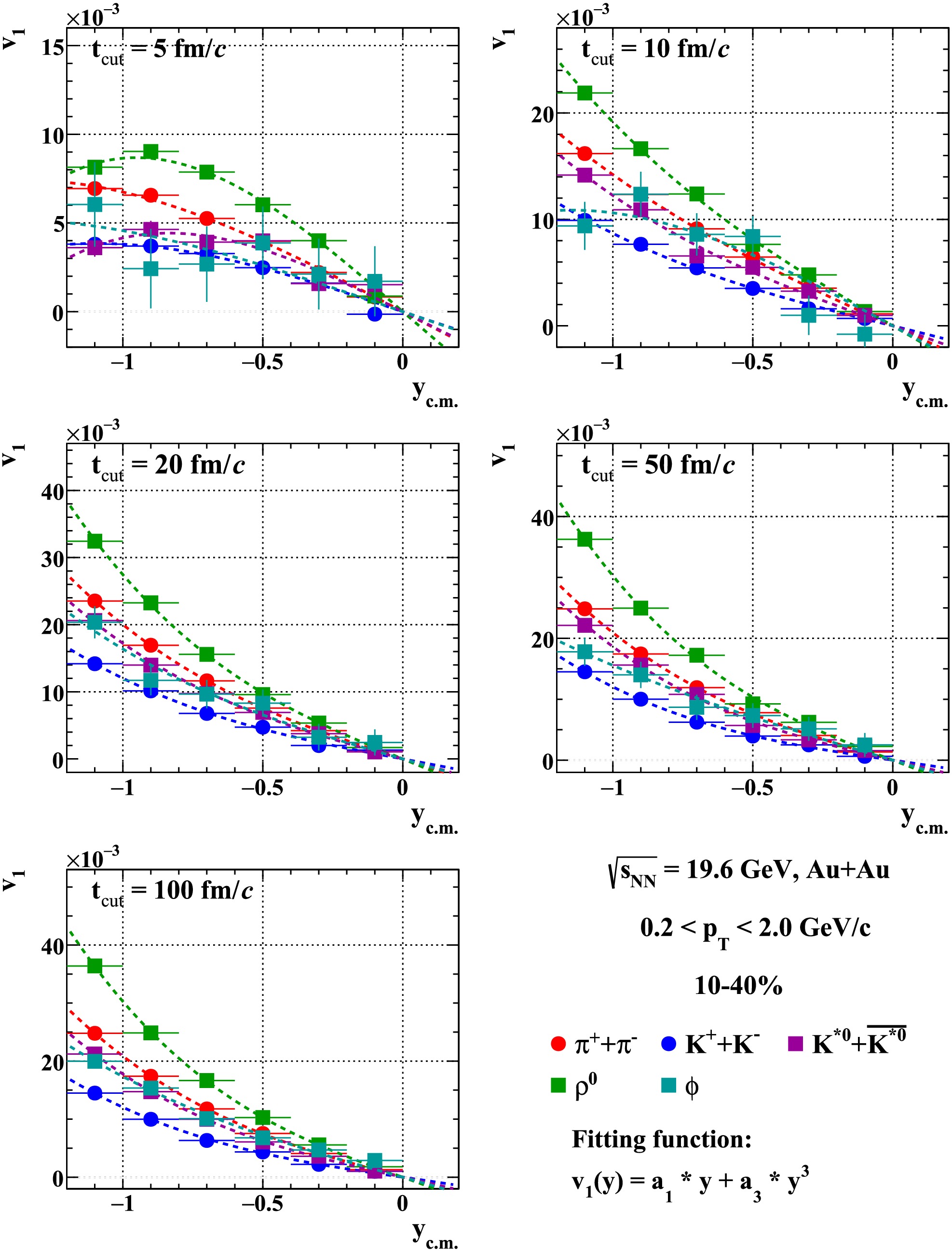
Figure 6. (color online) Rapidity dependence of the directed flow
$ v_1 $ for$ \pi^+ + \pi^- $ ,$ K^+ + K^- $ ,$ \rho^0 $ ,$ K^{*0} + \bar{K}^{*0} $ , and ϕ at different evolution cutoff times,$ t_{\mathrm{cut}} = 5 $ , 10, 20, 50, and 100$ \; \mathrm{fm}/c $ , in 10%–40% Au+Au collisions at$ \sqrt{s_{NN}} = 19.6\; \mathrm{GeV} $ . The dashed curves represent fits using$ v_1(y)=a_1y+a_3y^3 $ .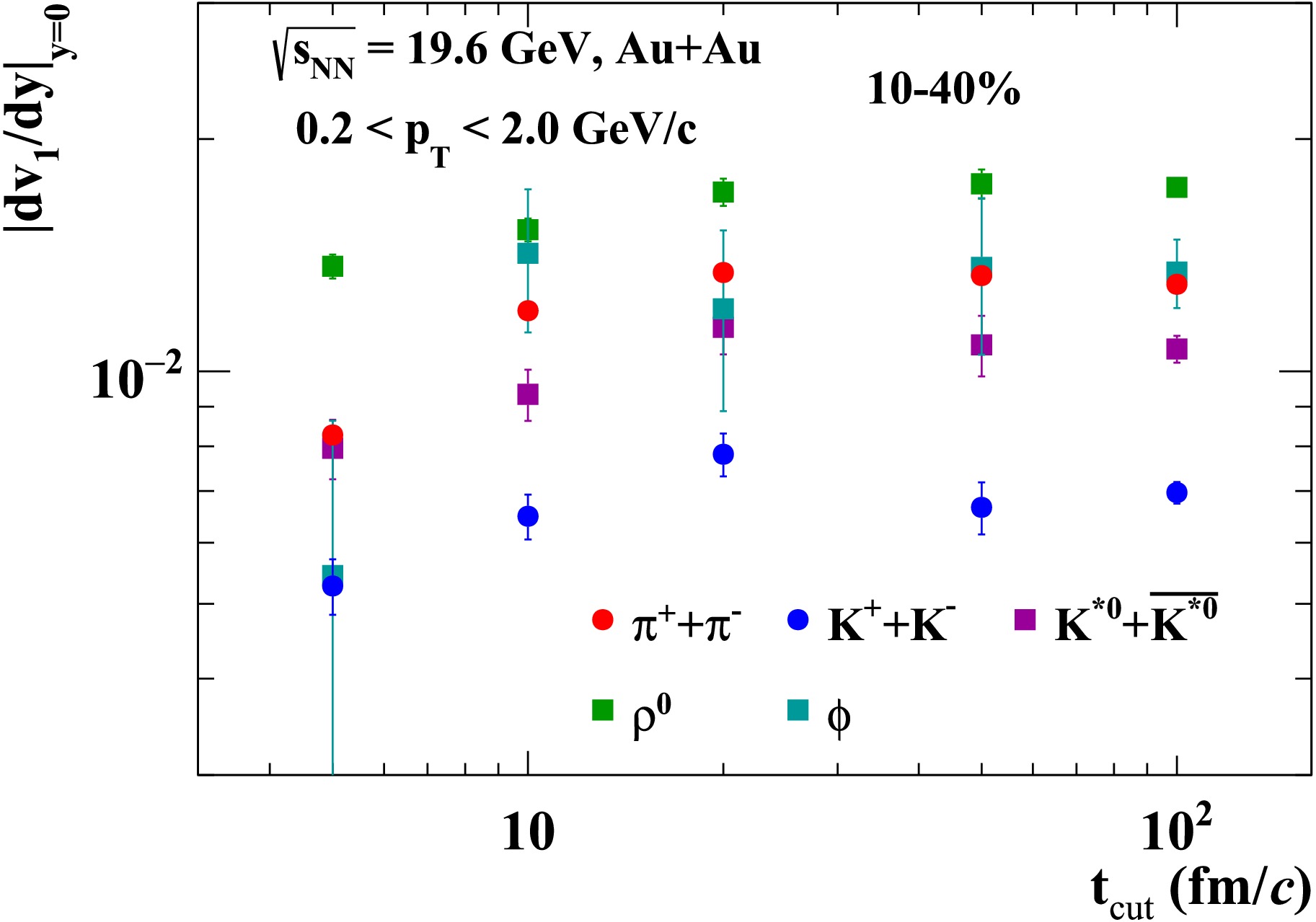
Figure 7. (color online) Time evolution of the absolute value of the midrapidity slope
$ |\mathrm{d}v_1/\mathrm{d}y|_{y=0} $ for$ \pi^+ + \pi^- $ ,$ K^+ + K^- $ ,$ \rho^0 $ ,$ K^{*0} + \bar{K}^{*0} $ , and ϕ in Au+Au collisions at$ \sqrt{s_{NN}} = 19.6\; \mathrm{GeV} $ and$ 10\% $ –$ 40\% $ centrality. The results are presented for different evolution cutoff times,$ t_{\mathrm{cut}} = 5, 10, 20, 50, $ and$ 100\; \mathrm{fm}/c $ .These snapshots provide a direct view of how late-stage hadronic evolution modifies the directed flow of different particle species. Although all particles exhibit a negative
$ v_1 $ slope, the evolution of its magnitude differs substantially among species.At
$ t = 5\; \mathrm{fm}/c $ , the$ \rho^0 $ already exhibits a noticeable deviation from the pion$ v_1 $ , whereas the$ K^{*0} $ and ϕ remain much closer to the kaon$ v_1 $ . This early deviation of the$ \rho^0 $ $ v_1 $ is consistent with its short lifetime, which makes it more sensitive to hadronic evolution at early times than the$ K^{*0} $ and ϕ. As the system evolves from$ t_{\mathrm{cut}} = 20 $ to$ 100\; \mathrm{fm}/c $ , the differences between the resonances and their corresponding stable mesons are largely established and remain nearly unchanged throughout the subsequent evolution.The evolution of the extracted
$ |dv_1/dy|_{y=0} $ , shown in Fig. 7, further quantifies these observations. The absolute values of the$ v_1 $ slopes increase rapidly from$ t_{\mathrm{cut}} = 5 $ to$ 20\; \mathrm{fm}/c $ , indicating that the dominant development of directed flow occurs within$ 0 $ –$ 20\; \mathrm{fm}/c $ of the hadronic evolution. Beyond$ t_{\mathrm{cut}} \approx 20\; \mathrm{fm}/c $ , the slopes become nearly constant, indicating that the hadronic modification of the directed flow is largely established by this time. The relative ordering among different particle species also remains nearly unchanged during the subsequent evolution.Interestingly, the ϕ develops a
$ v_1 $ slope comparable to that of pions at late evolution times despite its much longer lifetime. The origin of this behavior is not yet fully understood and deserves further investigation. -
We performed a systematic study of both the reconstructability and the directed flow of short-lived hadronic resonances in Au+Au collisions at
$ \sqrt{s_{NN}}=19.6 $ and$ 200\; \mathrm{GeV} $ using the UrQMD transport model. Reconstructability was investigated by comparing truth-level and reconstructable resonance yields, while directed flow was analyzed to explore the influence of hadronic evolution on the final-state$ v_1 $ .Three representative resonances,
$ \rho^0 $ ,$ K^{*0} $ , and$ \Lambda(1520) $ , were examined to study reconstructability over a broad range of lifetimes and decay channels. Their reconstructable fractions were analyzed as functions of collision centrality, system size, and resonance lifetime.The results show a clear hierarchy in reconstructability: shorter-lived resonances exhibit stronger suppression due to increased daughter-particle rescattering in the hadronic medium. This behavior is consistently observed at both collision energies and across all centrality classes. A pronounced centrality dependence is also found, with stronger suppression in central collisions, reflecting the larger size and longer lifetime of the hadronic medium. Furthermore, a nontrivial collision-energy dependence is observed between
$ \sqrt{s_{NN}}=19.6 $ and$ 200\; \mathrm{GeV} $ , indicating that the properties of the hadronic medium also affect resonance reconstructability.The directed-flow analysis reveals clear differences between resonances and their corresponding stable hadrons in mid-central collisions, whereas these differences become significantly weaker in peripheral collisions. The time evolution of
$ v_1 $ further demonstrates that different resonance species exhibit distinct patterns during the hadronic stage, indicating that hadronic evolution plays an important role in shaping the final-state$ v_1 $ .Overall, the present study provides a systematic understanding of how the hadronic phase influences both resonance reconstructability and directed flow in relativistic heavy-ion collisions. These findings provide useful guidance for interpreting experimental measurements of short-lived resonances, such as
$ \rho^0 $ ,$ K^{*0} $ , and ϕ, and help disentangle the effects of hadronic evolution from the observed resonance yields and collective flow.
Reconstructability and directed flow of short-lived resonances in Au+Au collisions at 19.6 and 200 GeV
- Received Date: 2026-08-06
- Available Online: 2026-09-01
Abstract: We present a systematic study of the reconstructability and directed flow of short-lived hadronic resonances in Au+Au collisions at $\sqrt{s_{NN}}=19.6$ and $200$ GeV using the UrQMD transport model. The reconstructable fractions of $\rho^0$, $K^{*0}$, and $\Lambda(1520)$ are examined as functions of charged-particle multiplicity and resonance lifetime. The results show a clear lifetime-dependent ordering, with shorter-lived resonances exhibiting stronger suppression of reconstructability. The directed-flow analysis reveals clear differences between resonances and their corresponding stable hadrons in mid-central collisions; however, these differences are substantially reduced in peripheral collisions. These results demonstrate that hadronic evolution significantly affects both resonance reconstructability and final-state directed flow, thereby providing complementary probes of the hadronic stage in relativistic heavy-ion collisions.



 DownLoad: