2026 Vol. 50, No. 8
Display Method: |


2026, 50(8): 081001. doi: 10.1088/1674-1137/ae6310
Abstract:
Hadron-hadron interactions, being nonperturbative in nature, play a significant role in addressing phenomenological questions in particle physics. Femtoscopy is a powerful tool in heavy-ion collision experiments, enabling the extraction of hadron-hadron interactions via momentum-correlation functions (CFs). These CFs are typically expressed as a convolution of source functions and hadron-hadron wave functions, with the latter encoding information about the interactions. However, source functions remain poorly constrained and are commonly approximated by a Gaussian form. Reconstructing source functions from experimental correlation data constitutes an "inverse problem." To address this, we propose a toy model based on Tikhonov regularization. Using a square-well potential with four distinct strengths, we calculate the CFs for inputs of single Gaussian source functions and mixed Gaussian source functions. The resulting CFs are then used to reconstruct the source functions via Tikhonov regularization. Our results show that the Gaussian source function can be successfully reconstructed, highlighting the potential of this approach for extracting realistic source functions from hadron pairs of interest.
Hadron-hadron interactions, being nonperturbative in nature, play a significant role in addressing phenomenological questions in particle physics. Femtoscopy is a powerful tool in heavy-ion collision experiments, enabling the extraction of hadron-hadron interactions via momentum-correlation functions (CFs). These CFs are typically expressed as a convolution of source functions and hadron-hadron wave functions, with the latter encoding information about the interactions. However, source functions remain poorly constrained and are commonly approximated by a Gaussian form. Reconstructing source functions from experimental correlation data constitutes an "inverse problem." To address this, we propose a toy model based on Tikhonov regularization. Using a square-well potential with four distinct strengths, we calculate the CFs for inputs of single Gaussian source functions and mixed Gaussian source functions. The resulting CFs are then used to reconstruct the source functions via Tikhonov regularization. Our results show that the Gaussian source function can be successfully reconstructed, highlighting the potential of this approach for extracting realistic source functions from hadron pairs of interest.


2026, 50(8): 082001. doi: 10.1088/1674-1137/ae6a80
Abstract:
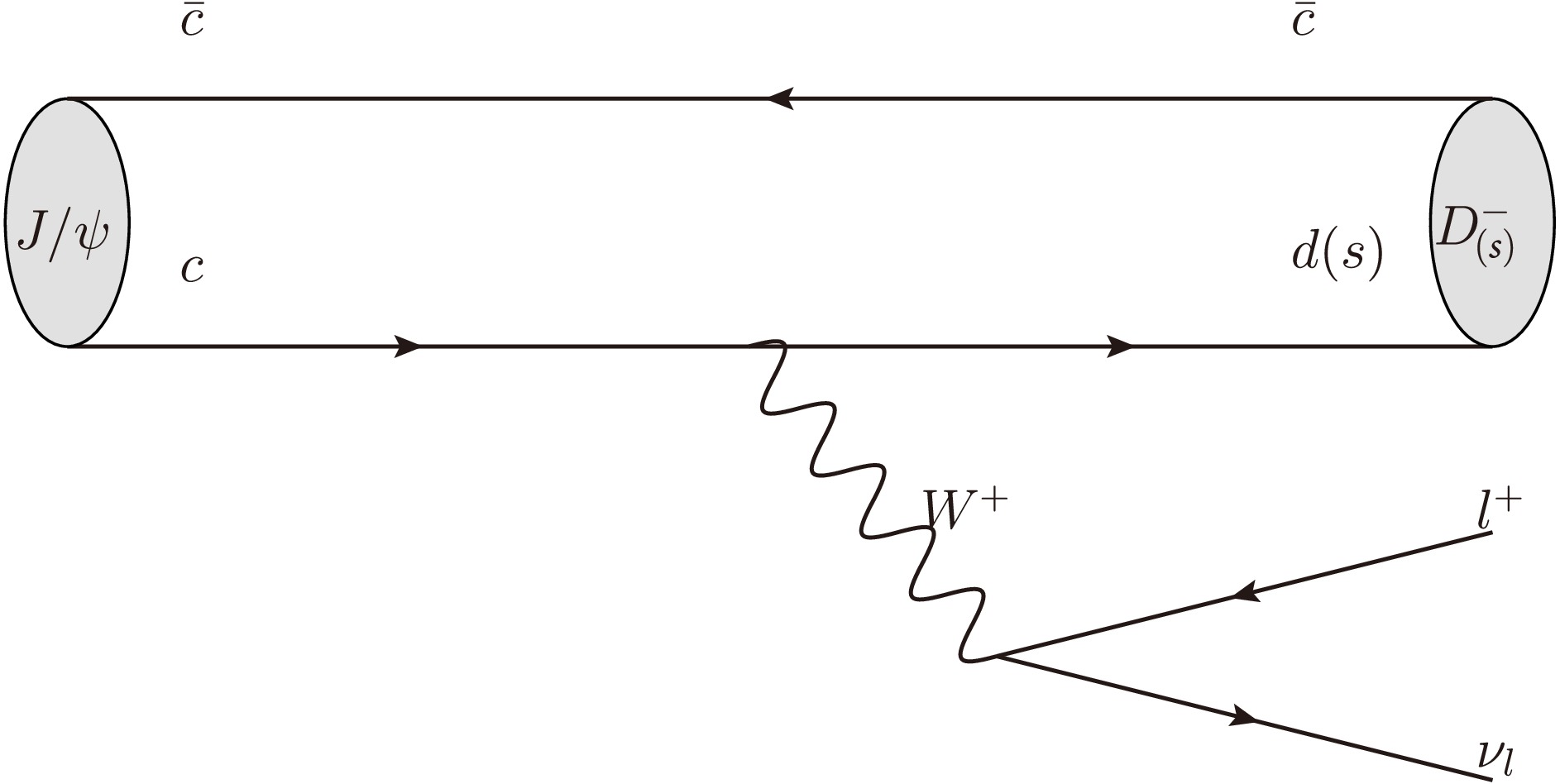
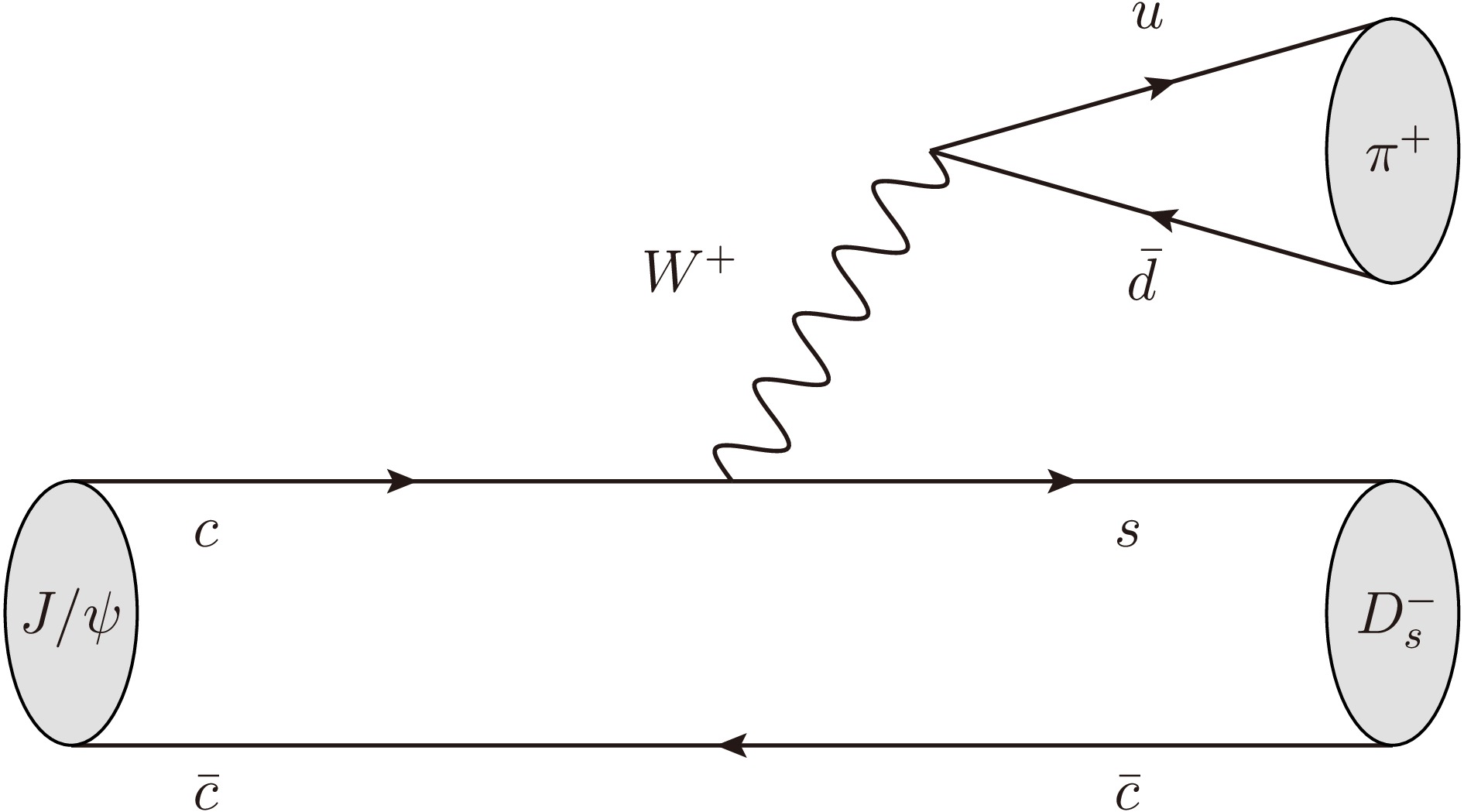
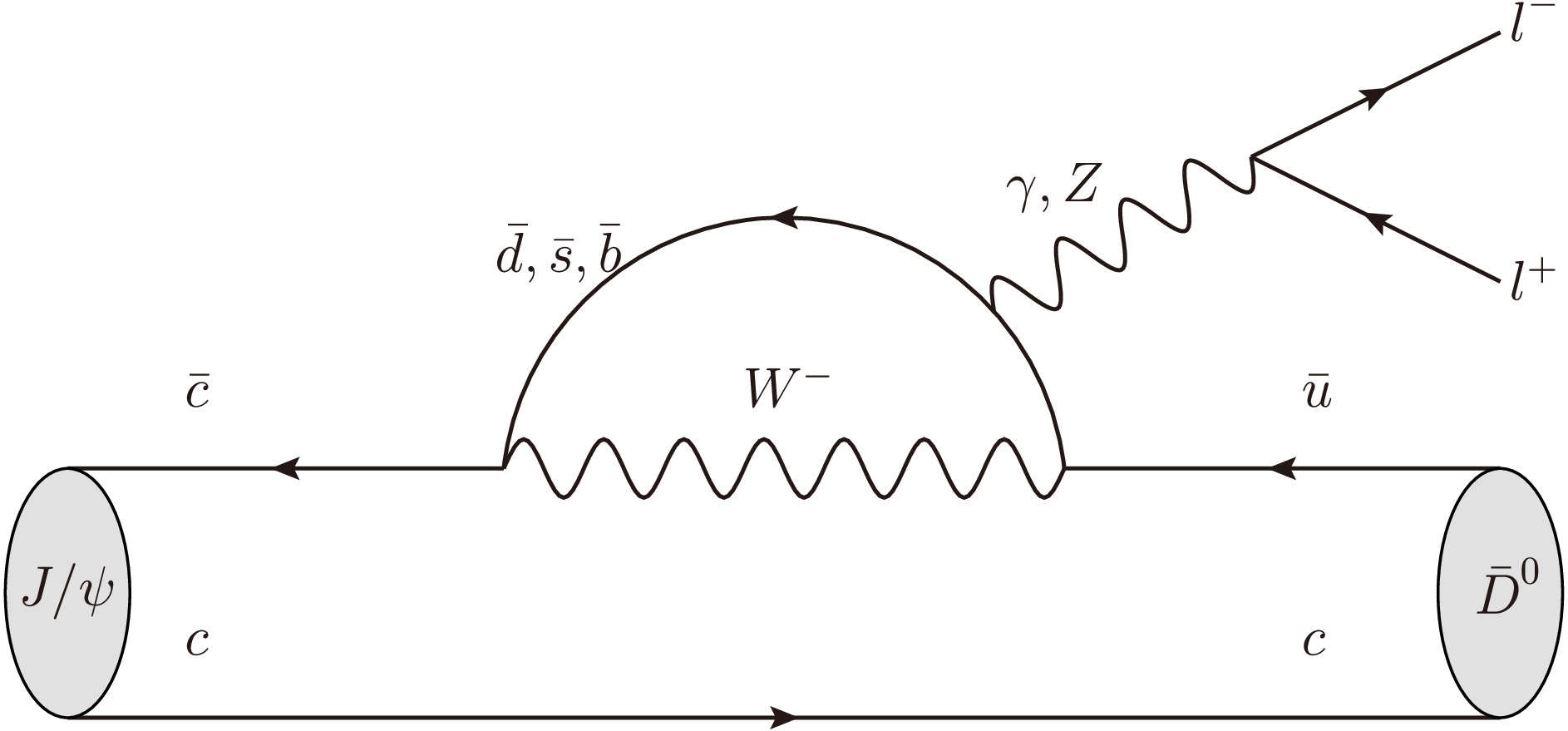
The weak decays of charmonium states such as\begin{document}$ J/\psi $\end{document} \begin{document}$ \psi(2S) $\end{document} \begin{document}$ 10^{10} $\end{document} \begin{document}$ J/\psi $\end{document} \begin{document}$ 2.7\times10^{9} $\end{document} \begin{document}$ \psi(2S) $\end{document}
The weak decays of charmonium states such as
2026, 50(8): 083101. doi: 10.1088/1674-1137/ae6311
Abstract:
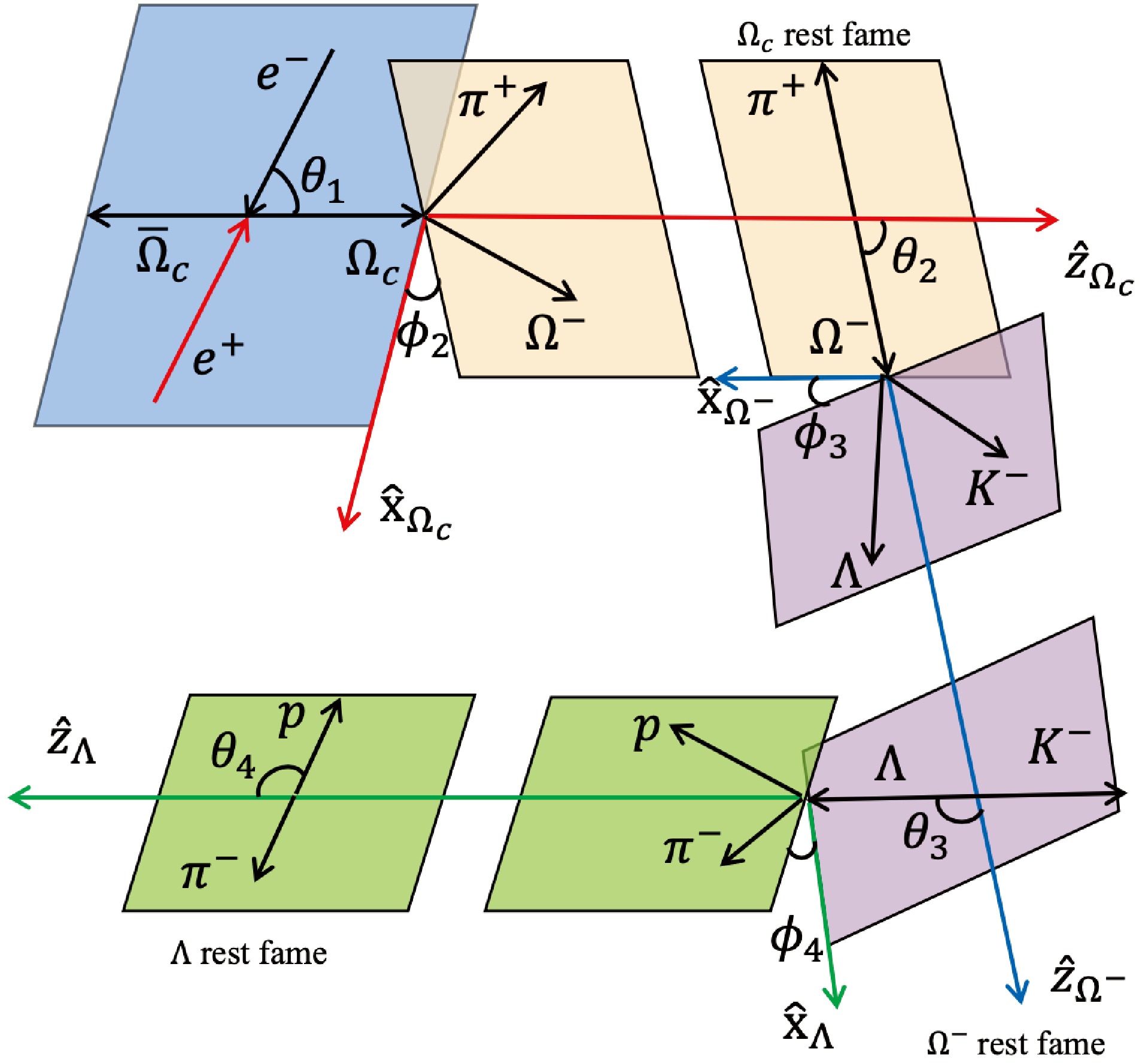
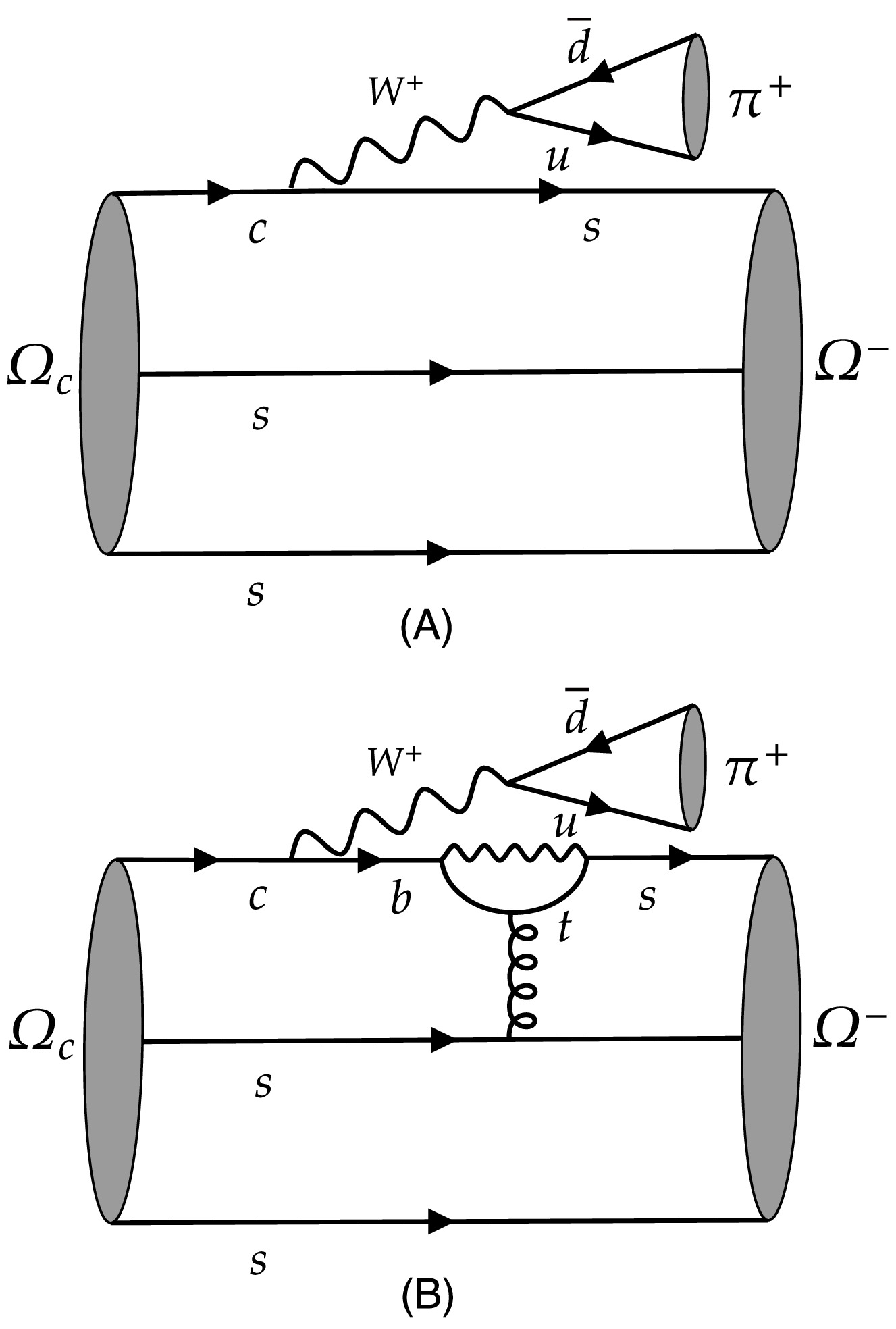
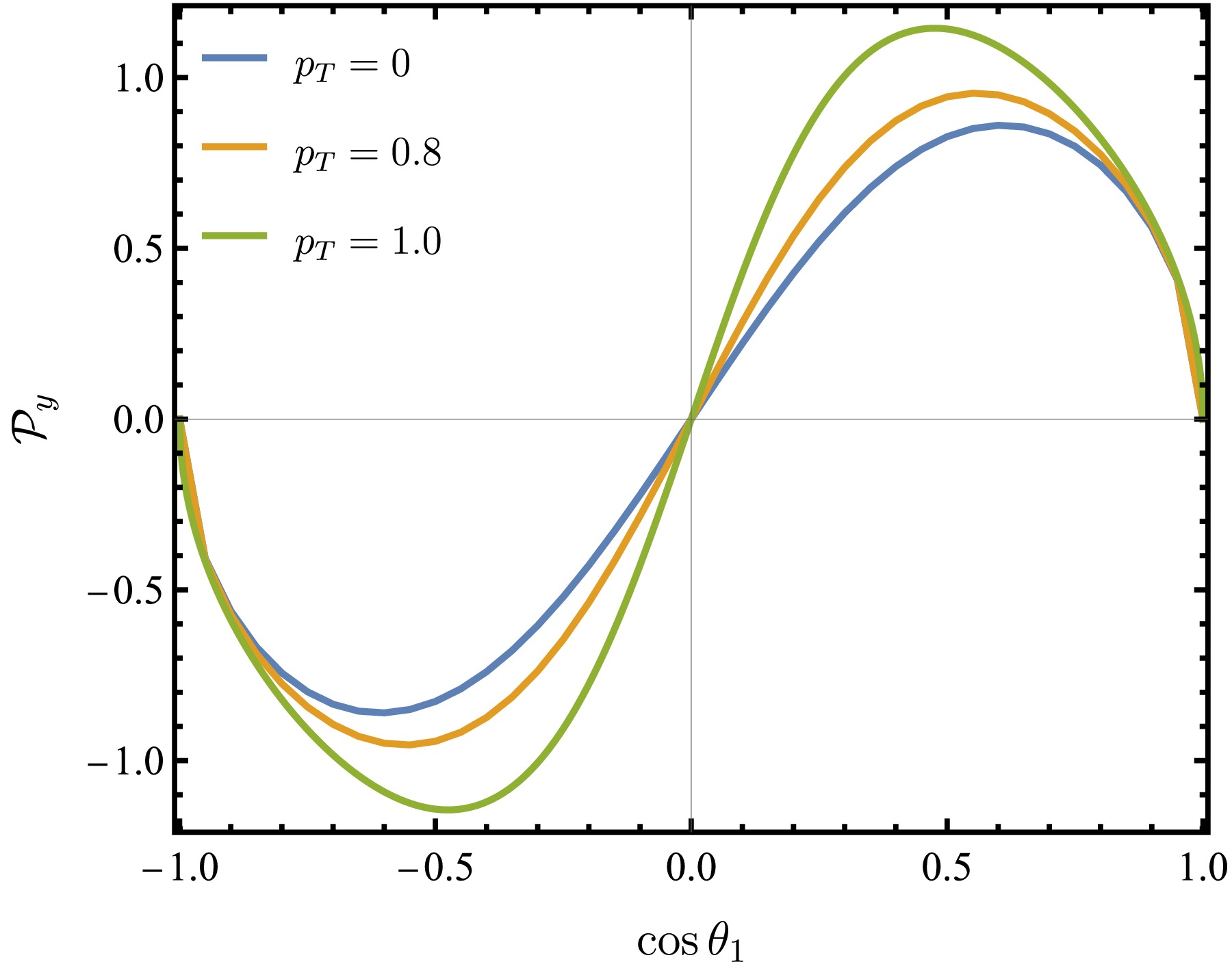
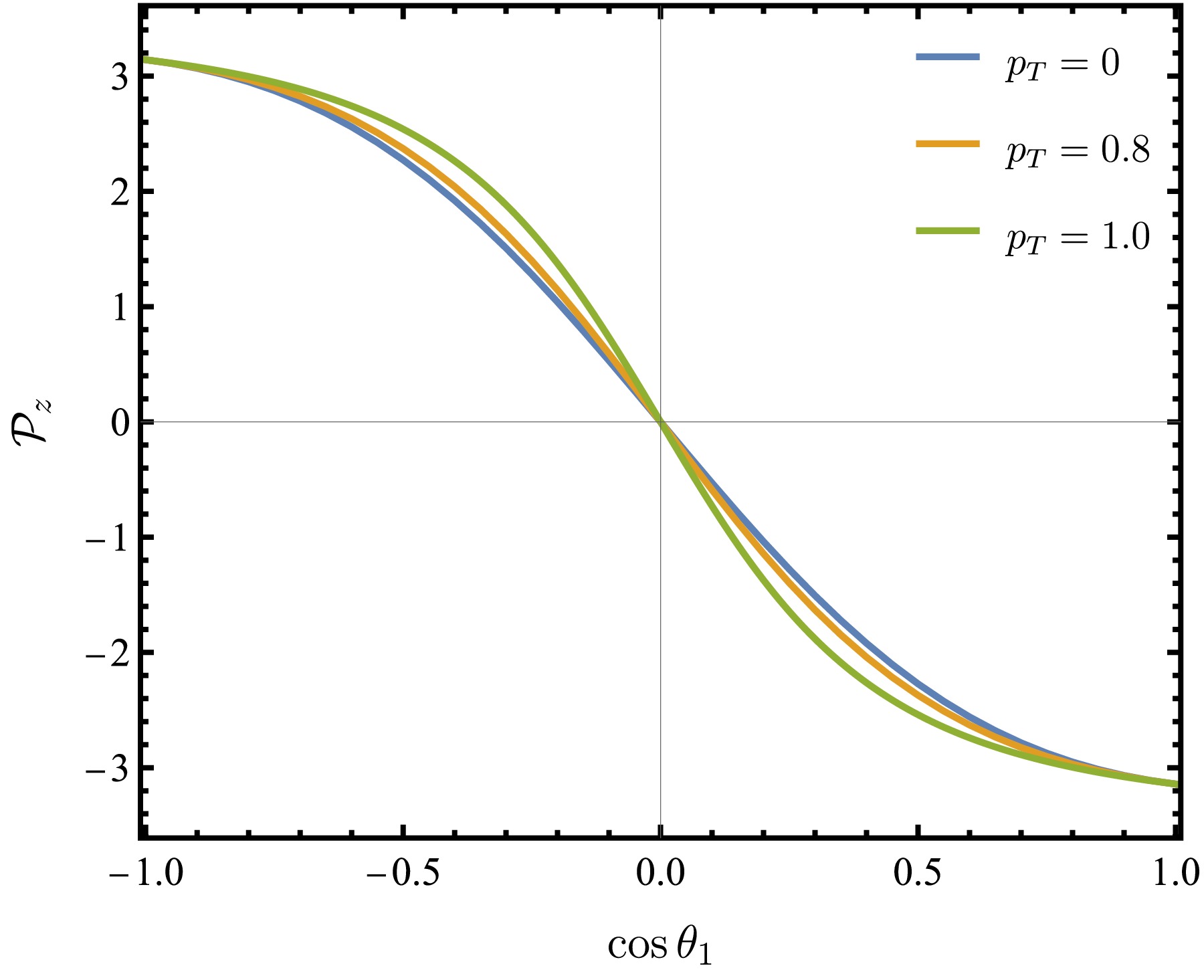
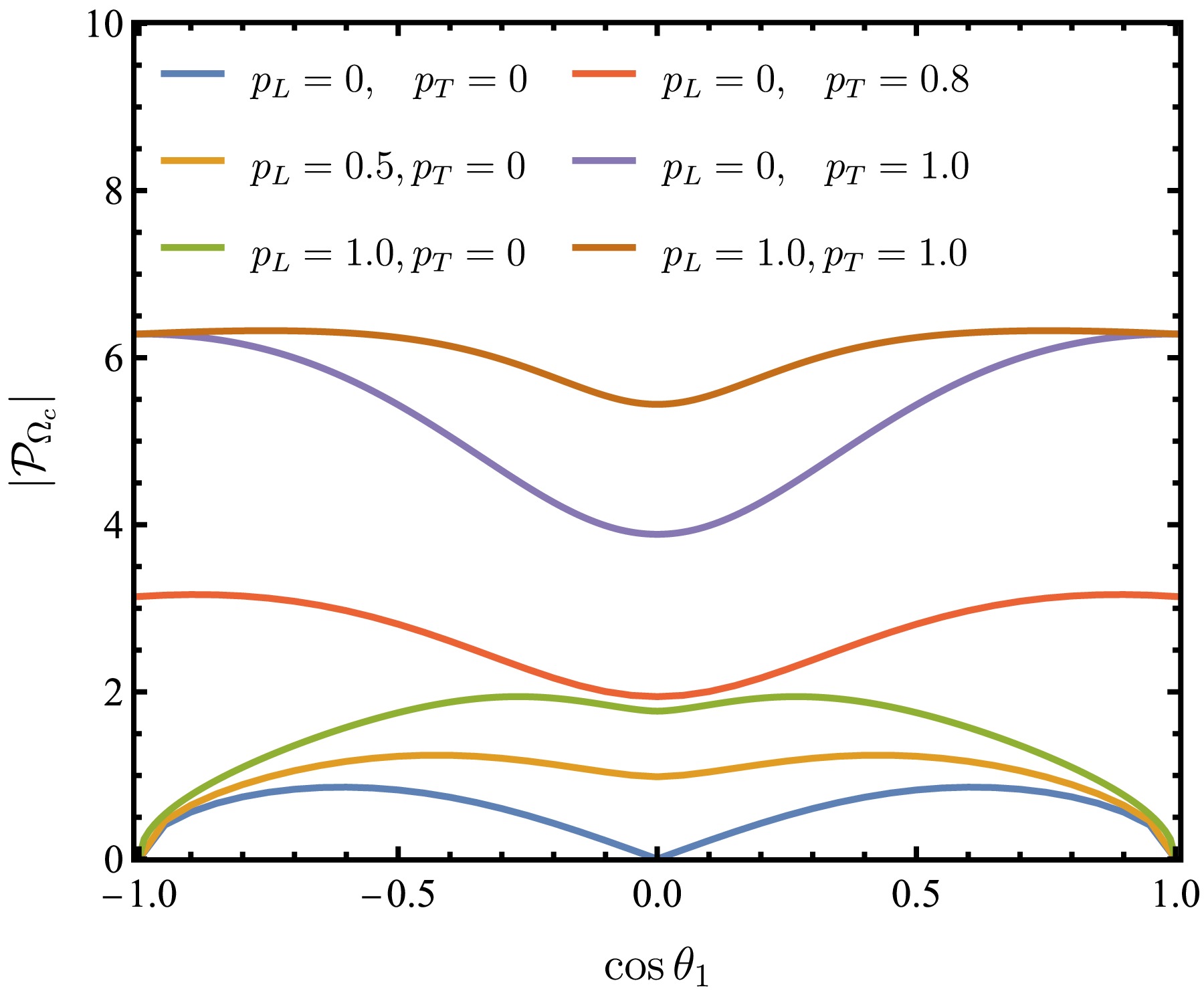
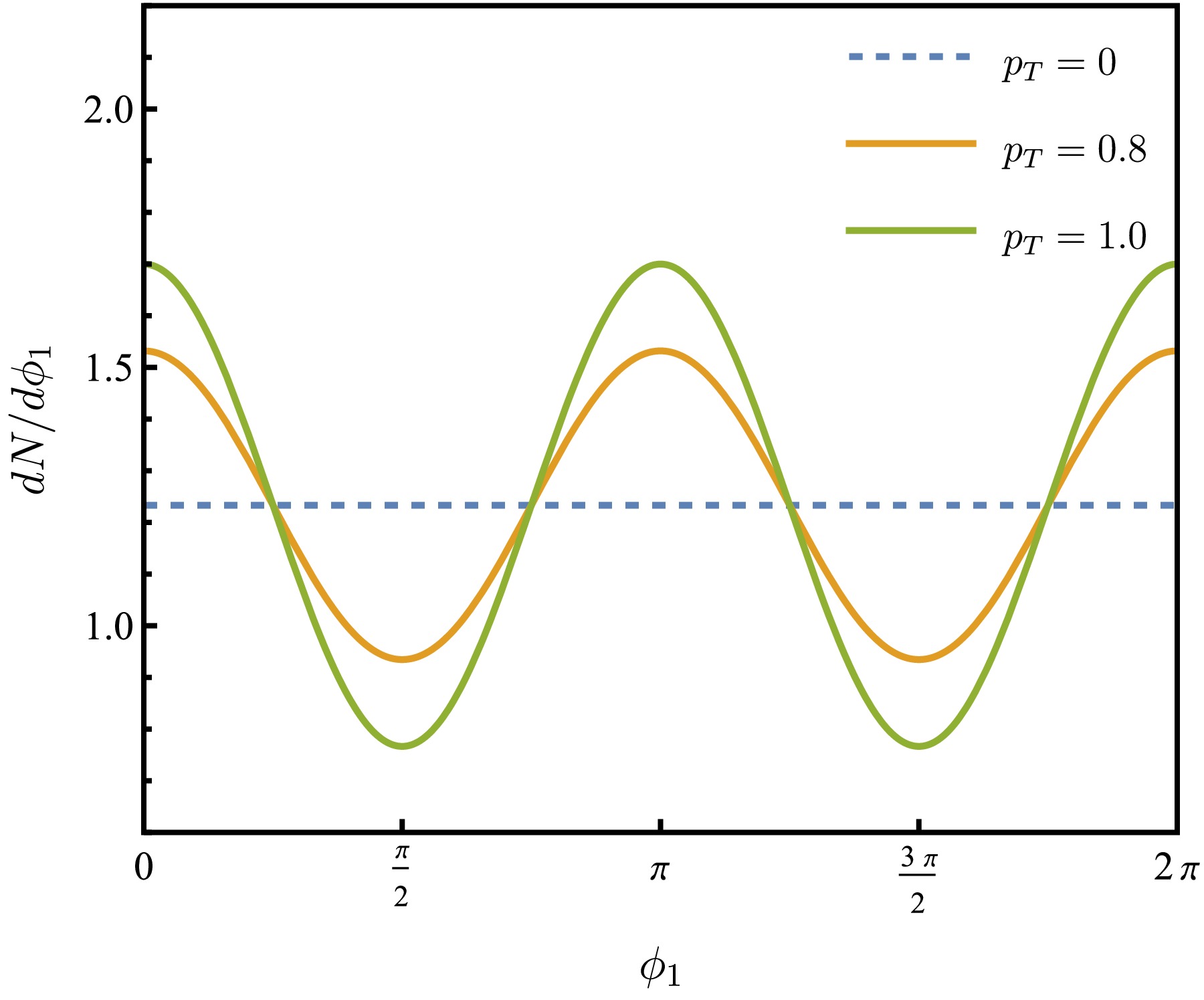
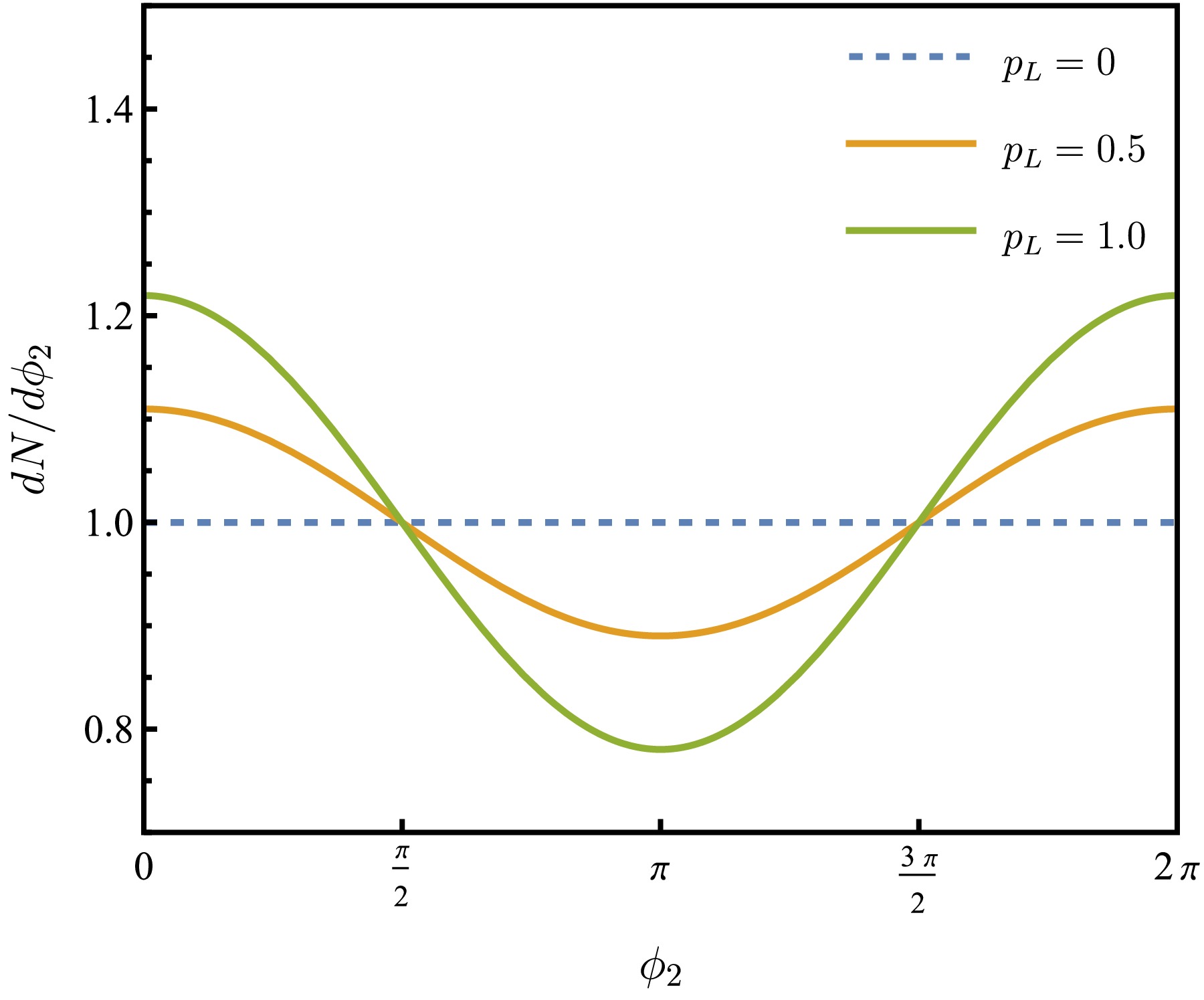
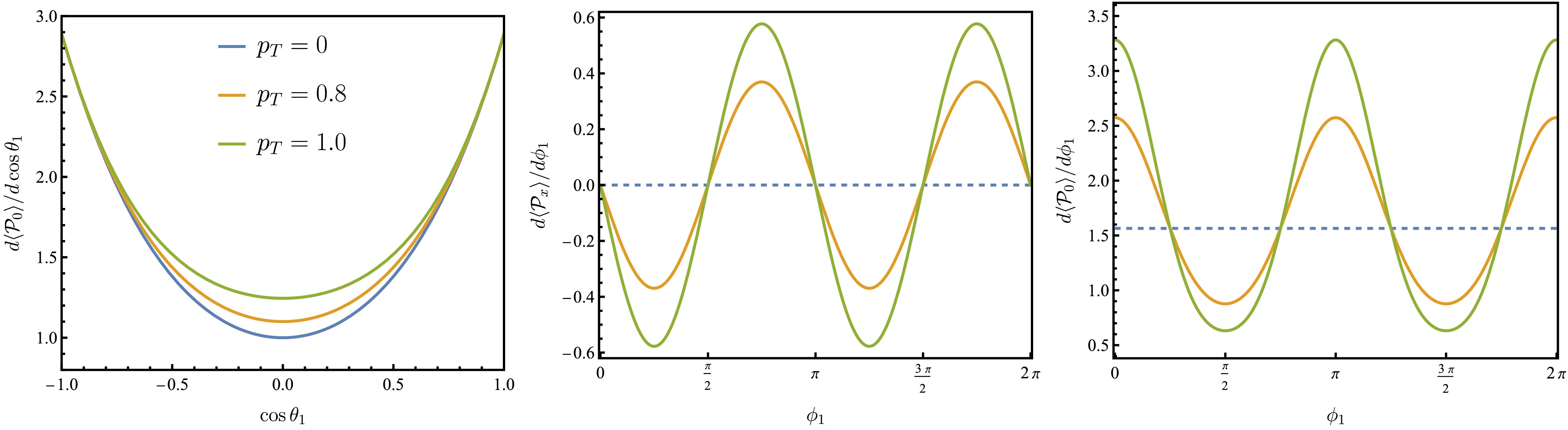
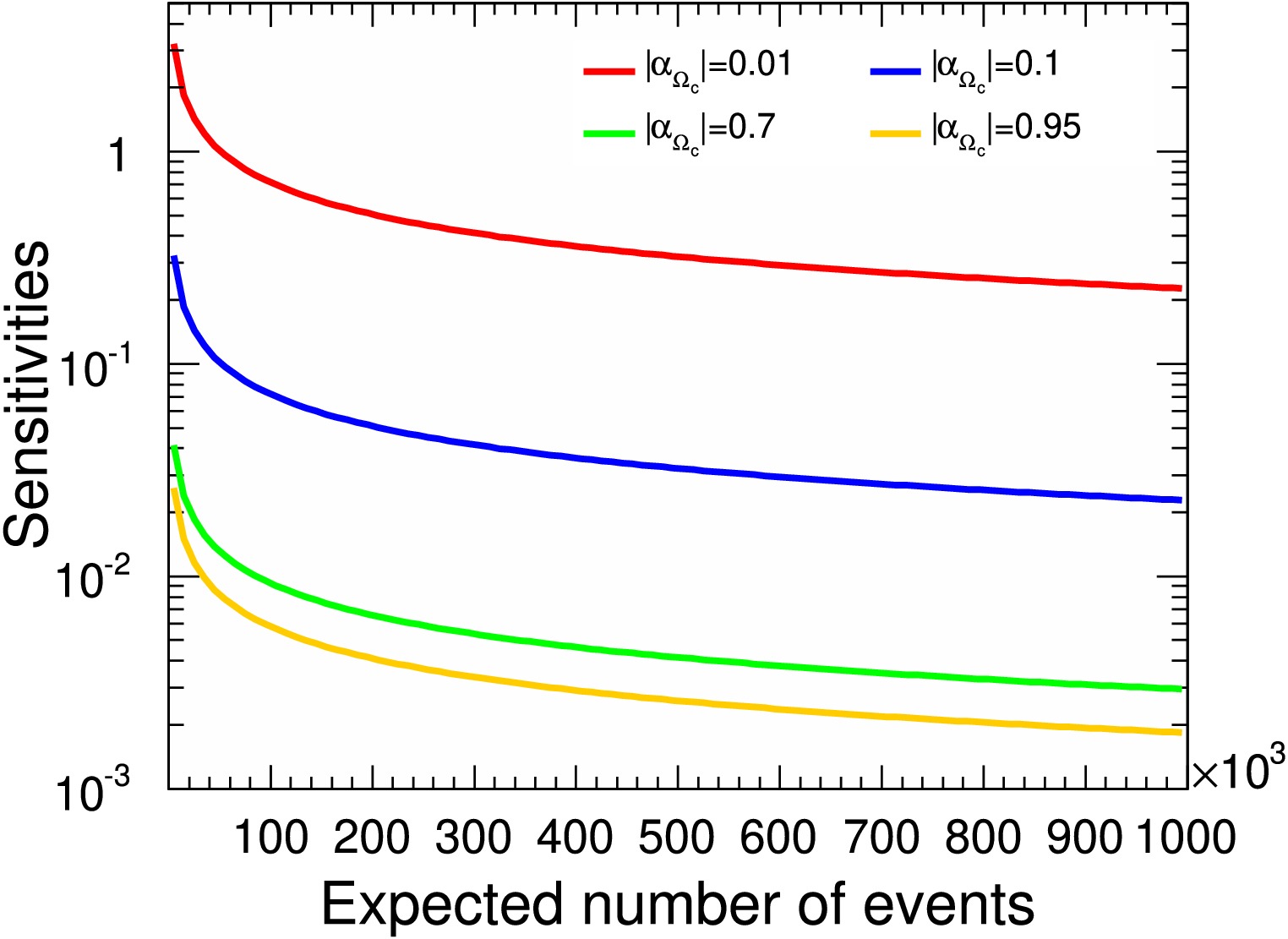
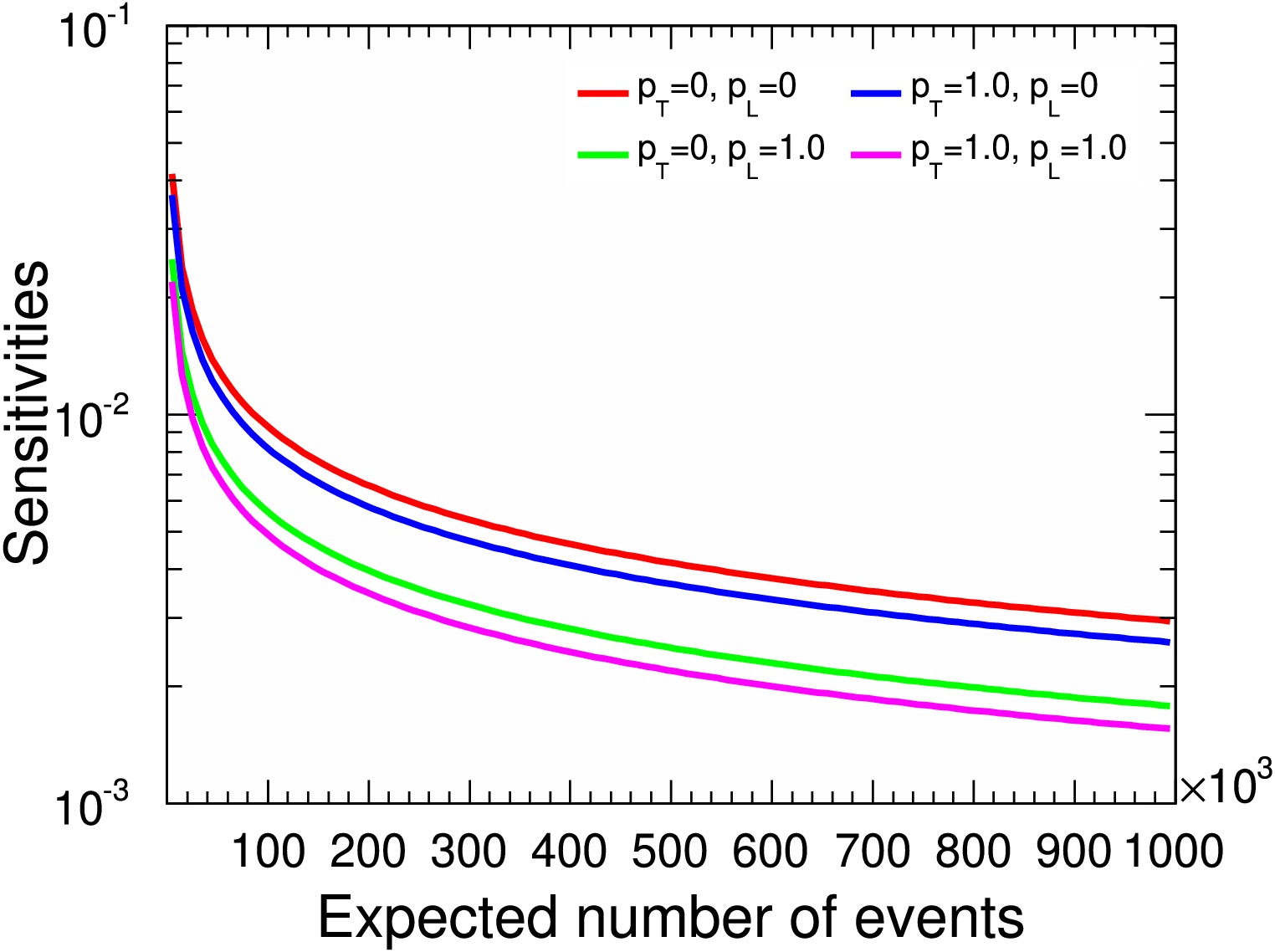
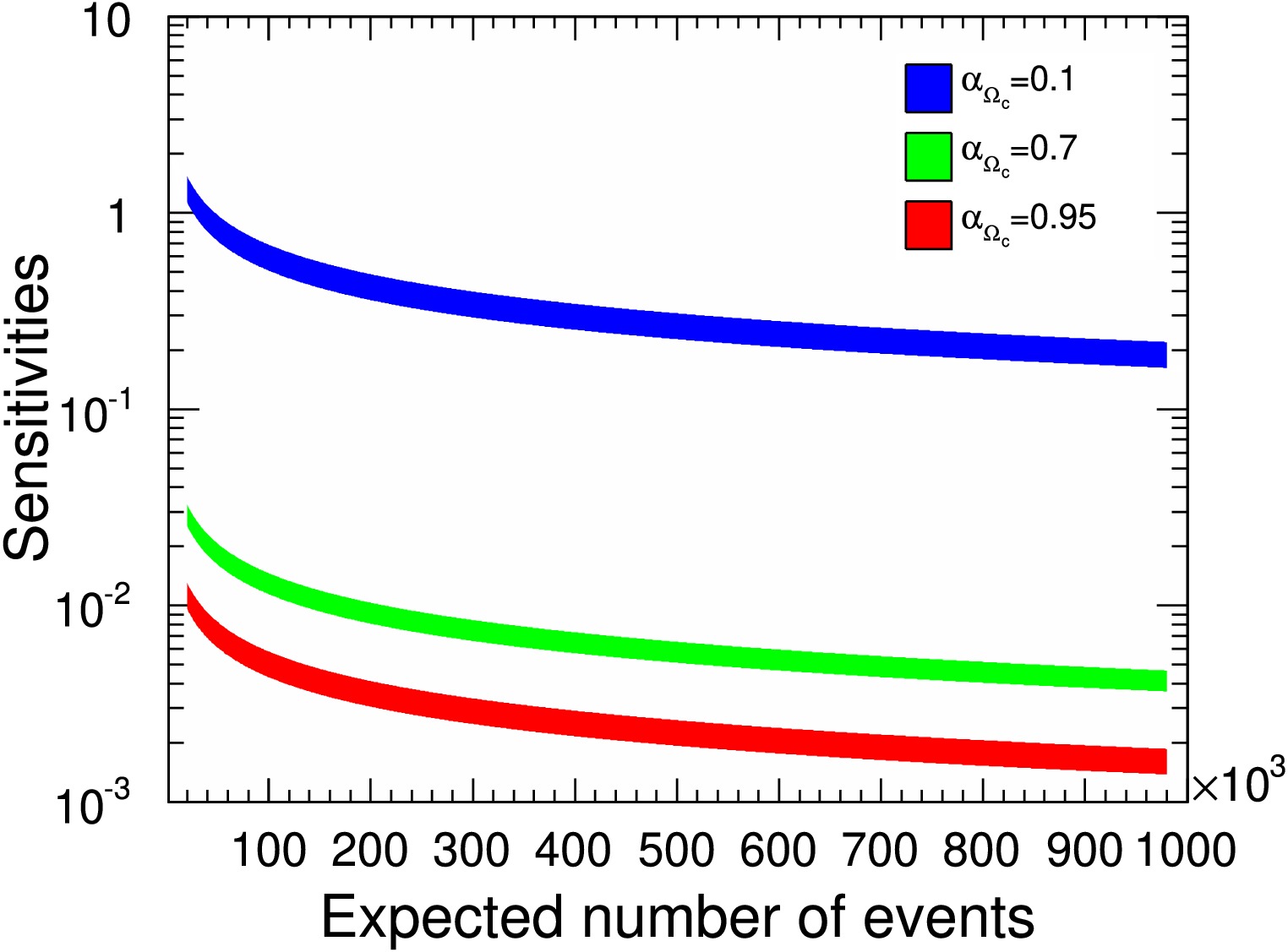
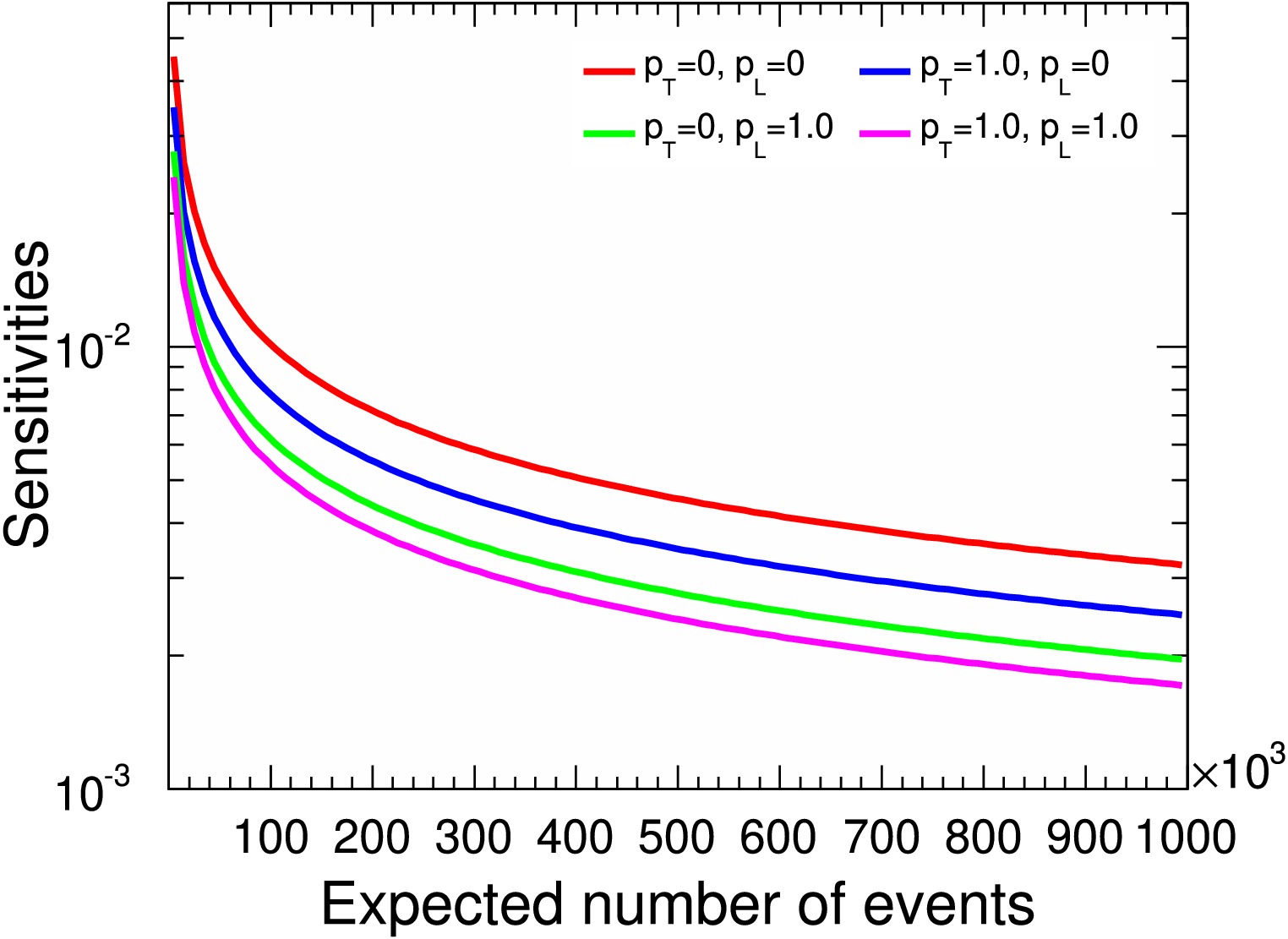
The exploration of symmetry laws stands as a cutting-edge direction in modern physics research. This study delves into the examination of P and\begin{document}$\rm CP$\end{document} \begin{document}$ \Omega_c $\end{document} \begin{document}$ \Omega_c $\end{document} \begin{document}$ \Omega_c\rightarrow \Omega^-\pi^+ $\end{document}
The exploration of symmetry laws stands as a cutting-edge direction in modern physics research. This study delves into the examination of P and
2026, 50(8): 083102. doi: 10.1088/1674-1137/ae66d1
Abstract:
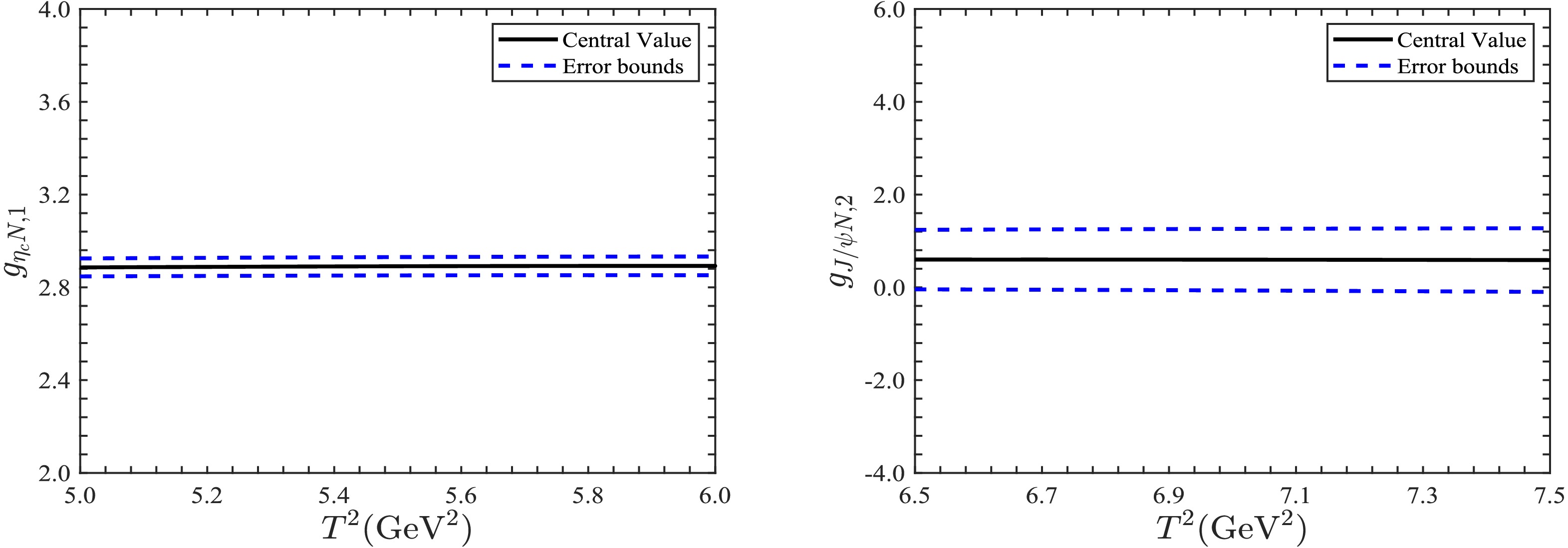
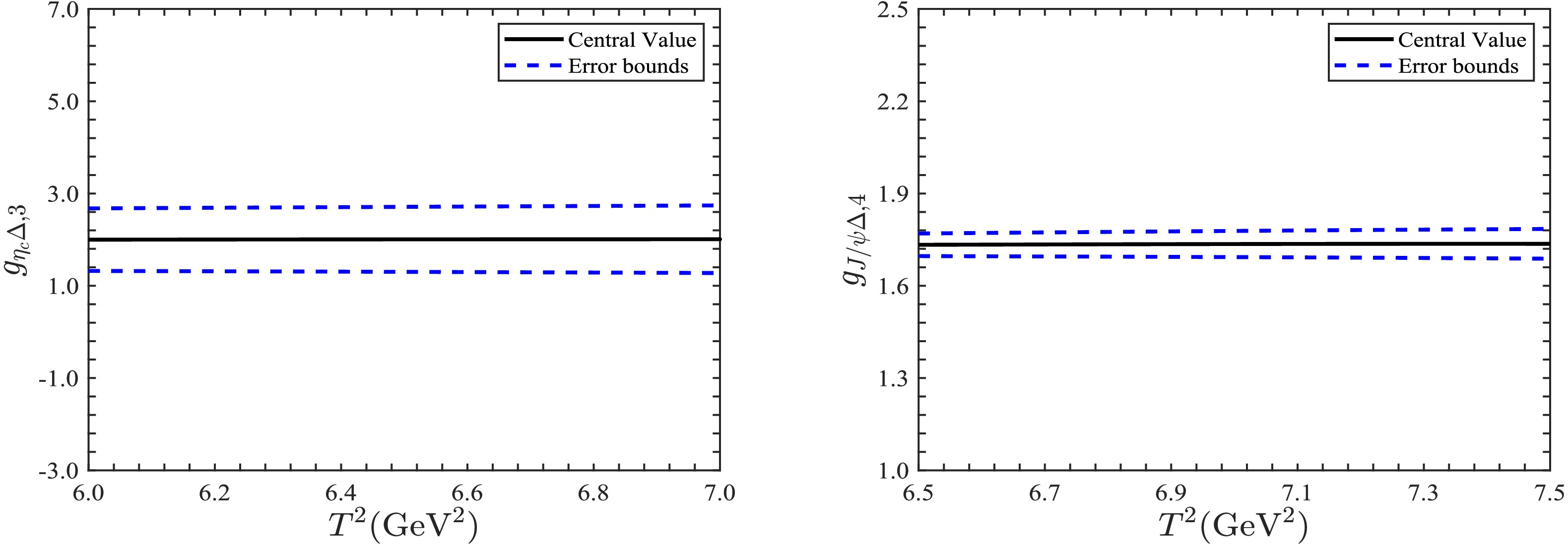
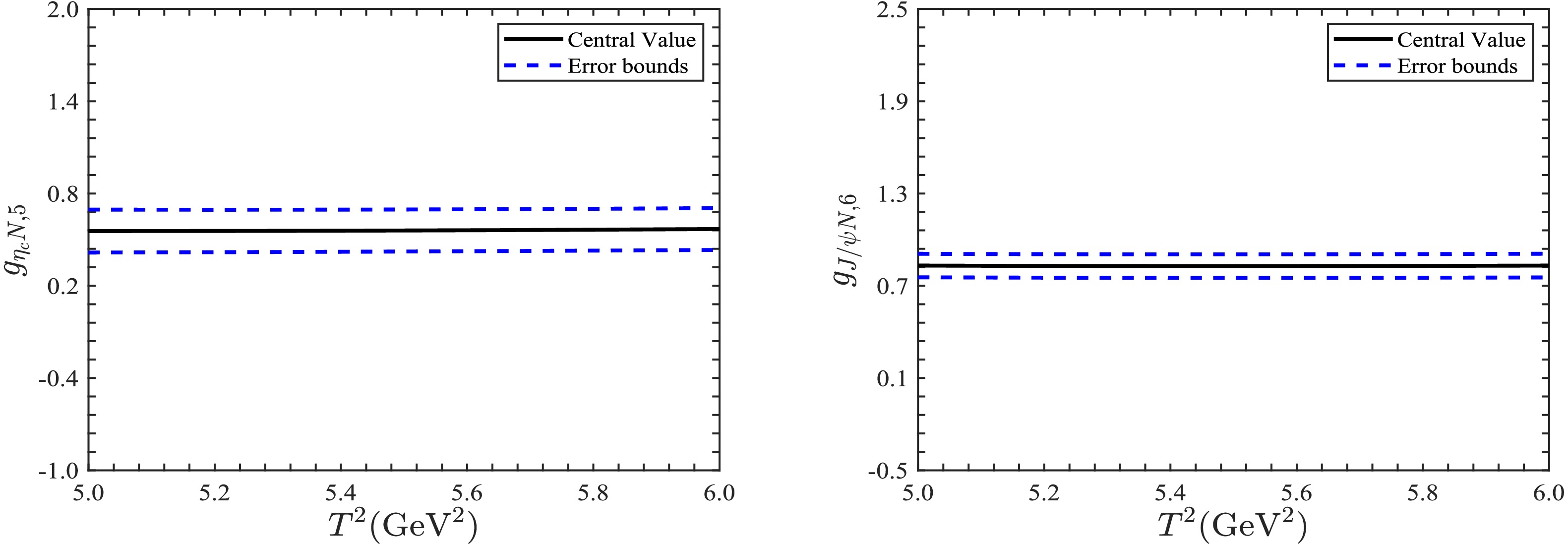
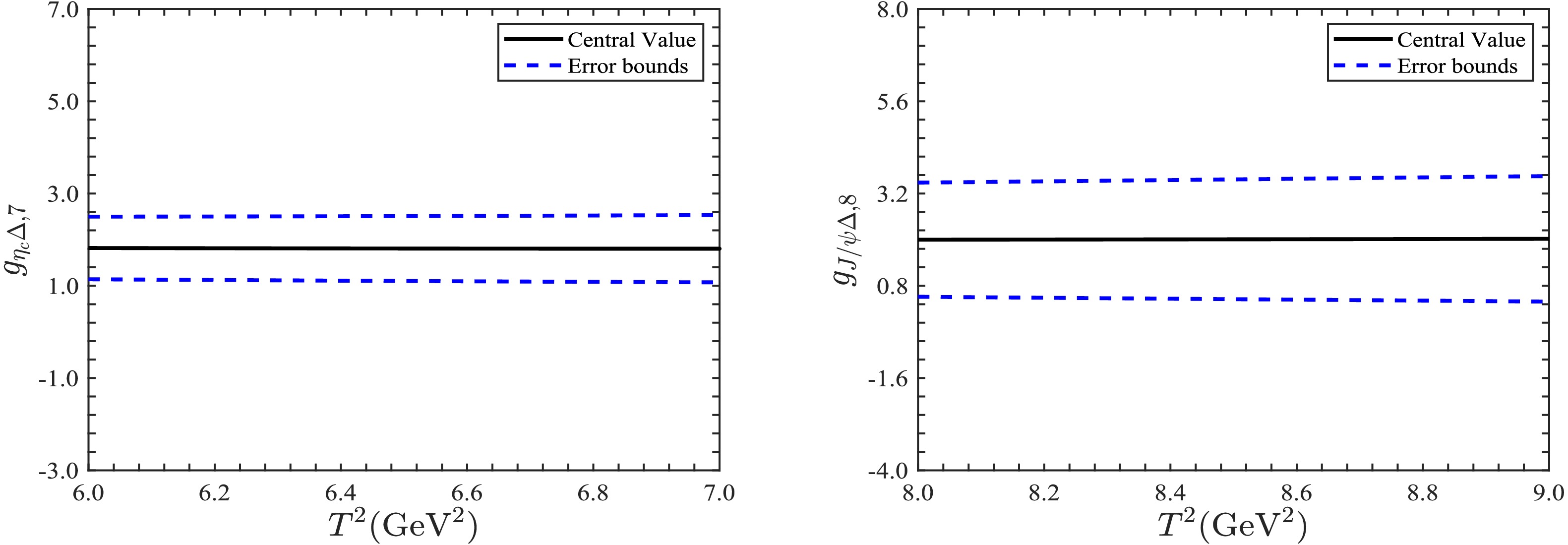
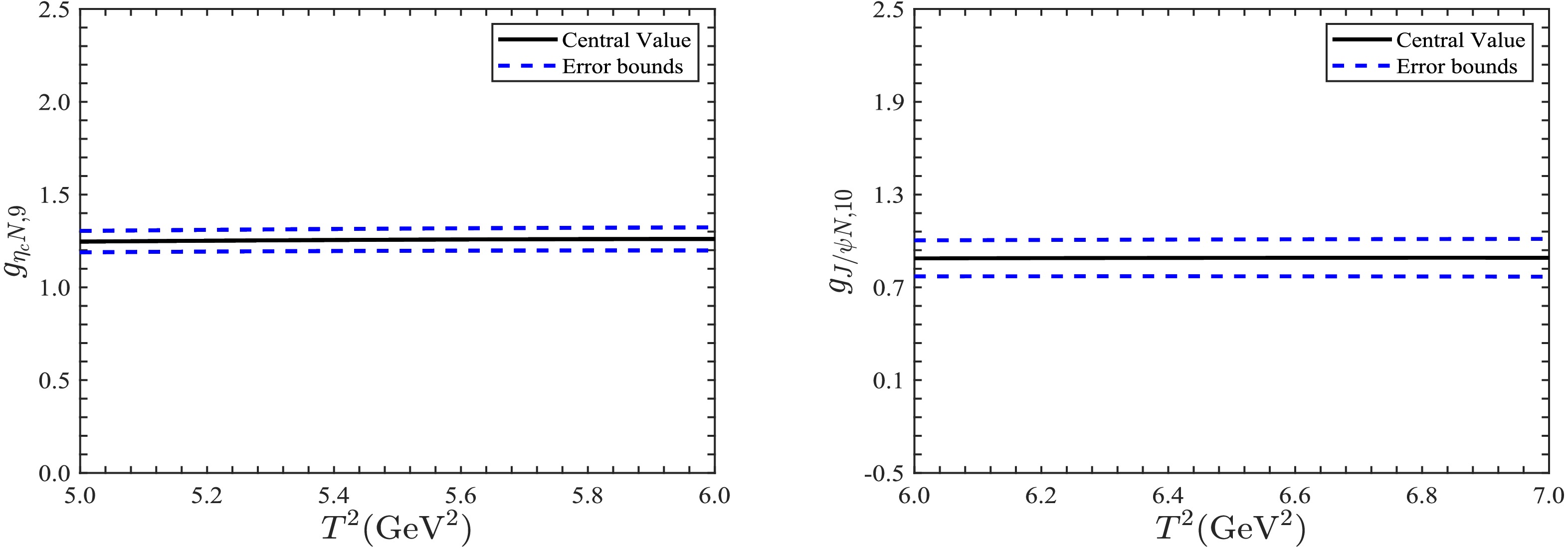
In the present work, the strong decays of the discovered\begin{document}$ P_c(4380) $\end{document} \begin{document}$ P_c(4440) $\end{document} \begin{document}$ P_c(4457) $\end{document} \begin{document}$ P_c(4380) $\end{document} \begin{document}$ P_c(4440) $\end{document} \begin{document}$ P_c(4457) $\end{document} \begin{document}$ P_c $\end{document}
In the present work, the strong decays of the discovered
2026, 50(8): 083103. doi: 10.1088/1674-1137/ae662b
Abstract:
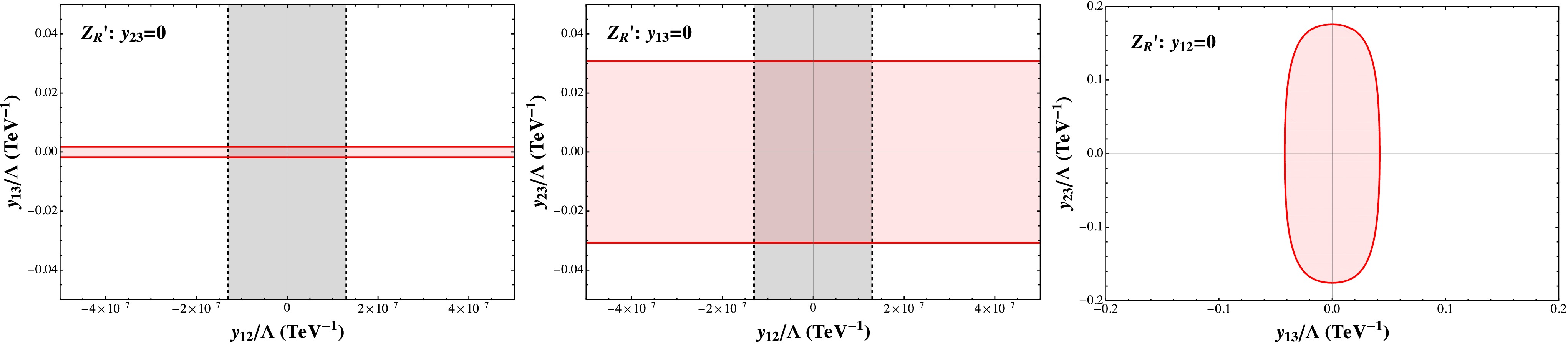
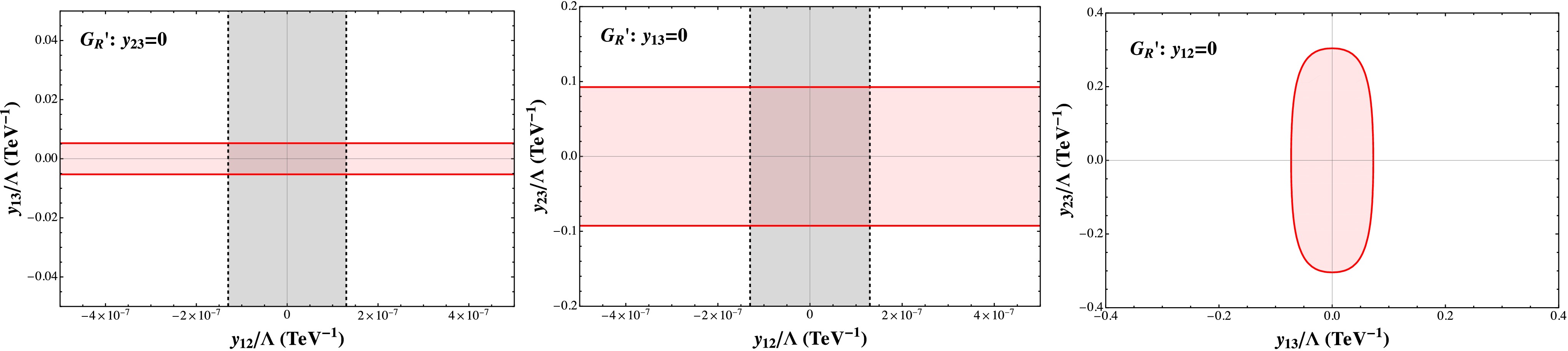
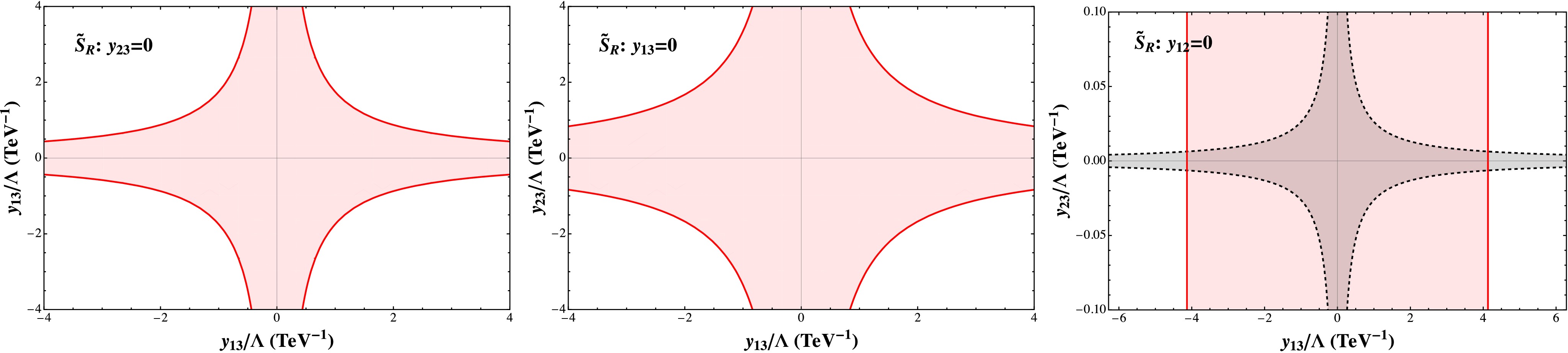
In this work, we investigate three representative new-physics resonances that couple to Standard Model (SM) quarks through flavor-changing interactions involving the top quark. We identify the possible SMEFT operators at the electroweak scale and analyze their phenomenology.
In this work, we investigate three representative new-physics resonances that couple to Standard Model (SM) quarks through flavor-changing interactions involving the top quark. We identify the possible SMEFT operators at the electroweak scale and analyze their phenomenology.
2026, 50(8): 083104. doi: 10.1088/1674-1137/ae68ed
Abstract:
We constructed a four-Higgs-doublet model (4HDM) invariant under D5 symmetry and investigated its complete neutral vacuum structure in detail. Assuming explicit CP conservation in the scalar potential, we examined whether CP symmetry can be spontaneously broken. We provided a complete list of all possible real and complex vacua, along with the constraints on the potential parameters required for each vacuum solution to exist. We also discussed the positive-definiteness conditions that the Hessian must satisfy for each vacuum to be a local minimum of the potential. The results show that, after spontaneous symmetry breaking, some complex vacua lead to spontaneous CP violation in the potential, whereas the remaining complex vacua still preserve CP conservation. Among these CP-violating complex vacua, one can be regarded as the most general form. Furthermore, we discussed the relationship between real and complex vacua.
We constructed a four-Higgs-doublet model (4HDM) invariant under D5 symmetry and investigated its complete neutral vacuum structure in detail. Assuming explicit CP conservation in the scalar potential, we examined whether CP symmetry can be spontaneously broken. We provided a complete list of all possible real and complex vacua, along with the constraints on the potential parameters required for each vacuum solution to exist. We also discussed the positive-definiteness conditions that the Hessian must satisfy for each vacuum to be a local minimum of the potential. The results show that, after spontaneous symmetry breaking, some complex vacua lead to spontaneous CP violation in the potential, whereas the remaining complex vacua still preserve CP conservation. Among these CP-violating complex vacua, one can be regarded as the most general form. Furthermore, we discussed the relationship between real and complex vacua.
2026, 50(8): 083105. doi: 10.1088/1674-1137/ae6b1e
Abstract:
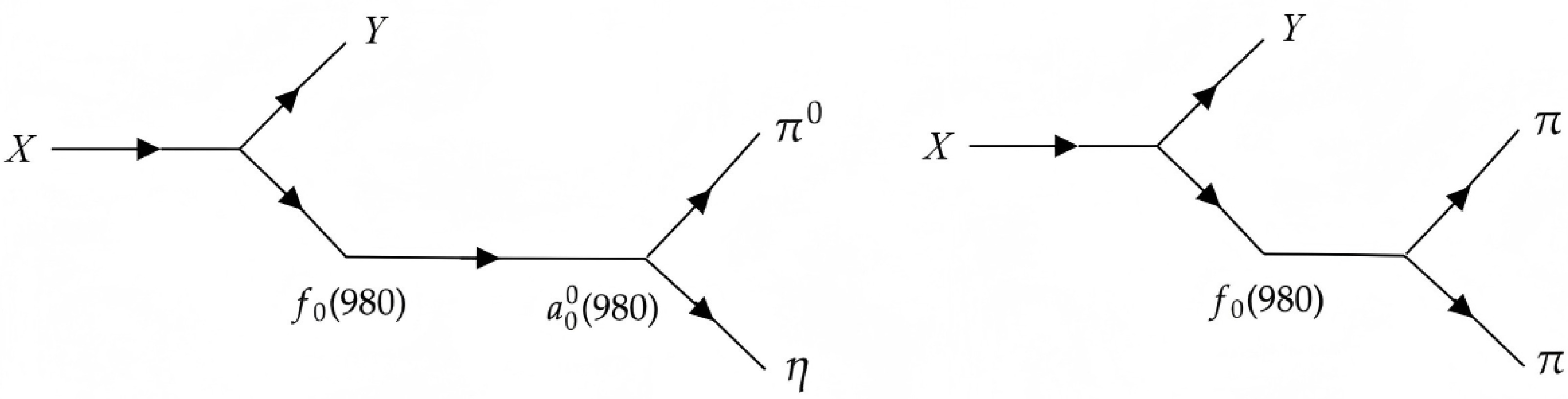
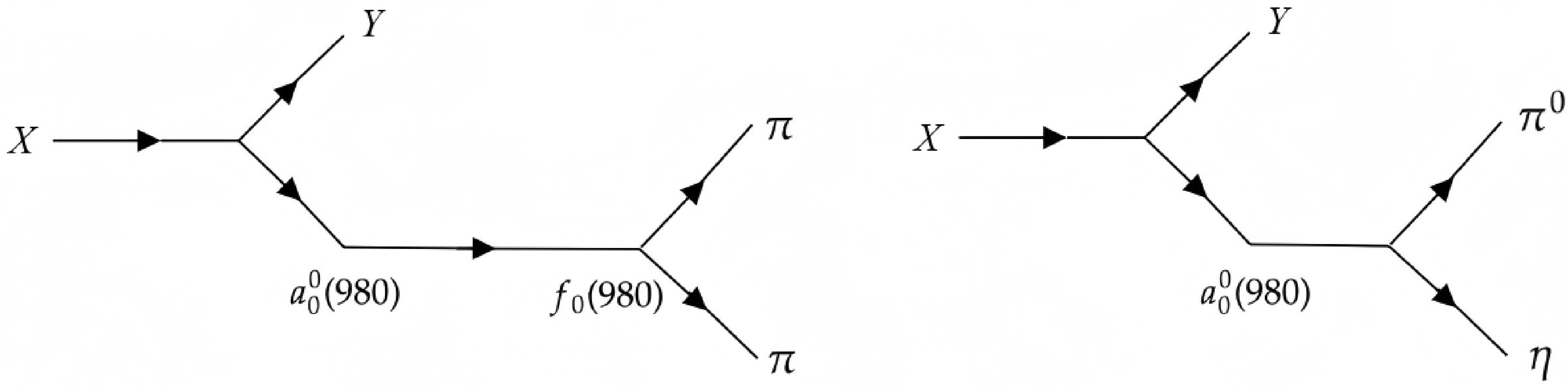
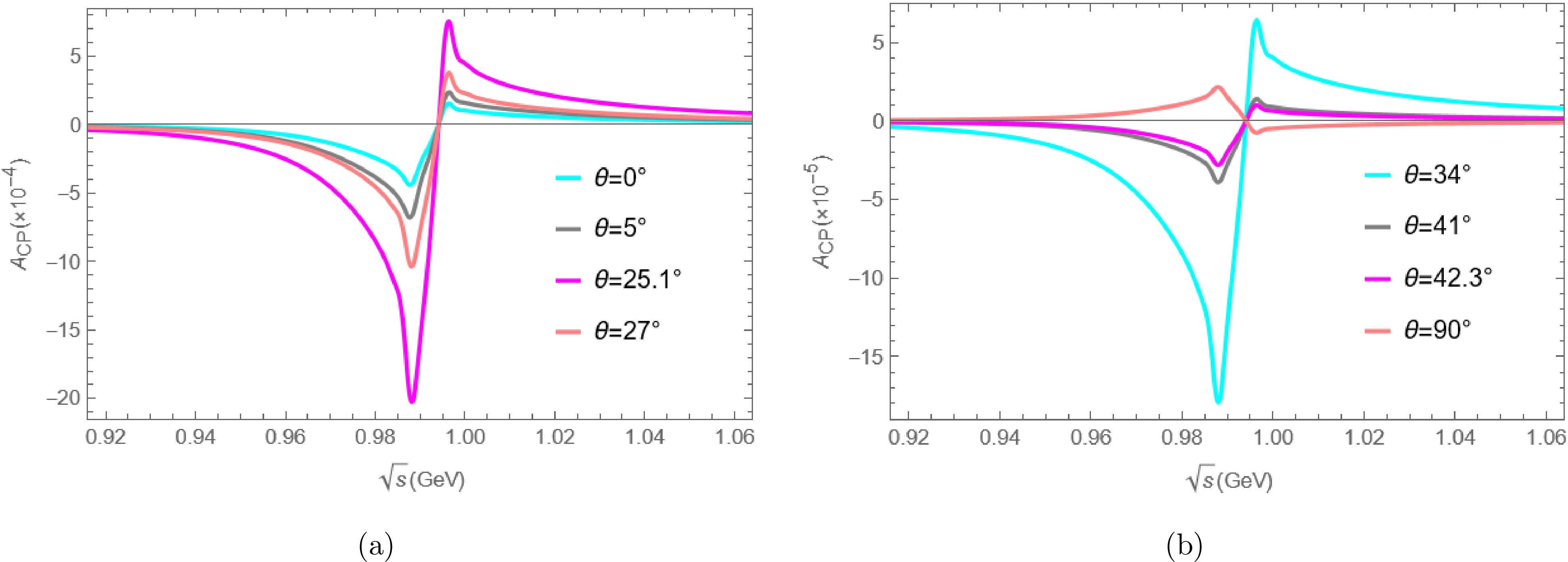
We investigate the direct\begin{document}$\rm CP $\end{document} \begin{document}$ D^\pm \to \pi^\pm \pi^+ \pi^- $\end{document} \begin{document}$ a_0^0(980) $\end{document} \begin{document}$ f_0(980) $\end{document} \begin{document}$ \overline \xi_{fa} $\end{document} \begin{document}$ \overline \xi_{af} $\end{document} \begin{document}$ \pi^+\pi^- $\end{document} \begin{document}$ f_0(980) $\end{document} \begin{document}$\rm CP $\end{document} \begin{document}$ f_0(980) $\end{document} \begin{document}$ n\bar{n} $\end{document} \begin{document}$ f_0(980) $\end{document} \begin{document}$ \sigma(600) $\end{document} \begin{document}$ 26^\circ $\end{document} \begin{document}$\rm CP $\end{document} \begin{document}$ a_0^0(980) $\end{document} \begin{document}$ f_0(980) $\end{document} \begin{document}$\rm CP $\end{document}
We investigate the direct
2026, 50(8): 083106. doi: 10.1088/1674-1137/ae6da4
Abstract:
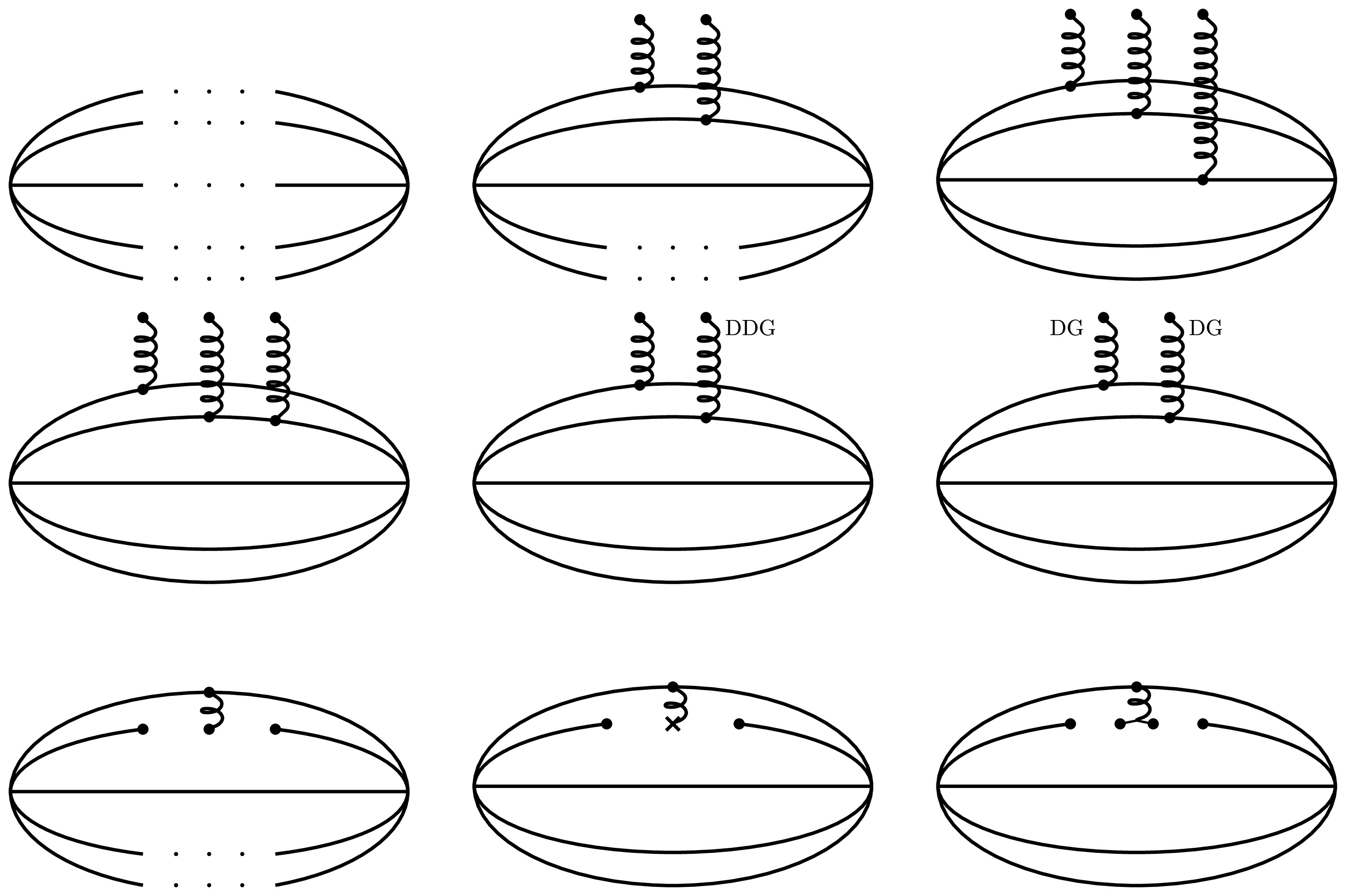
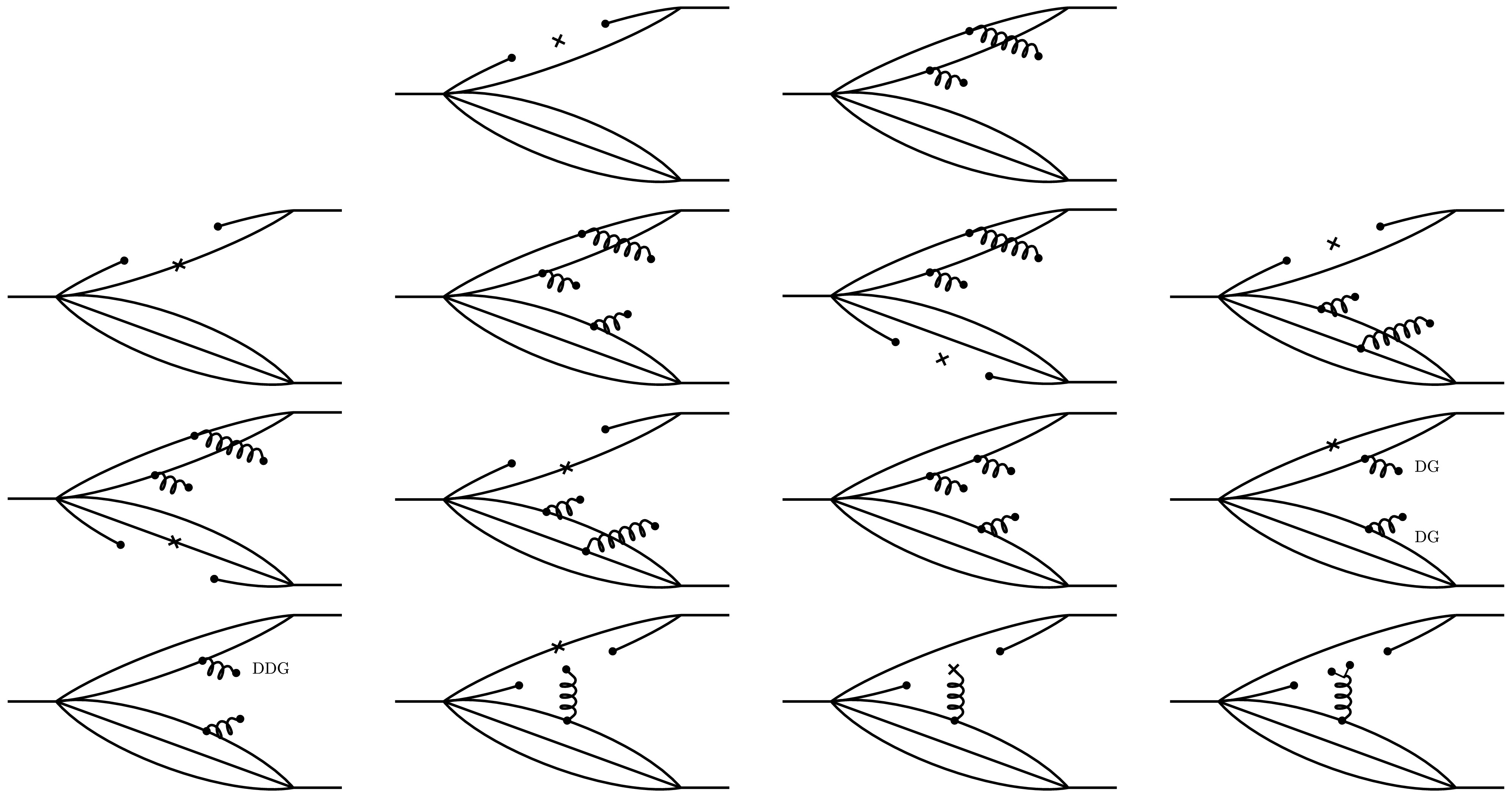
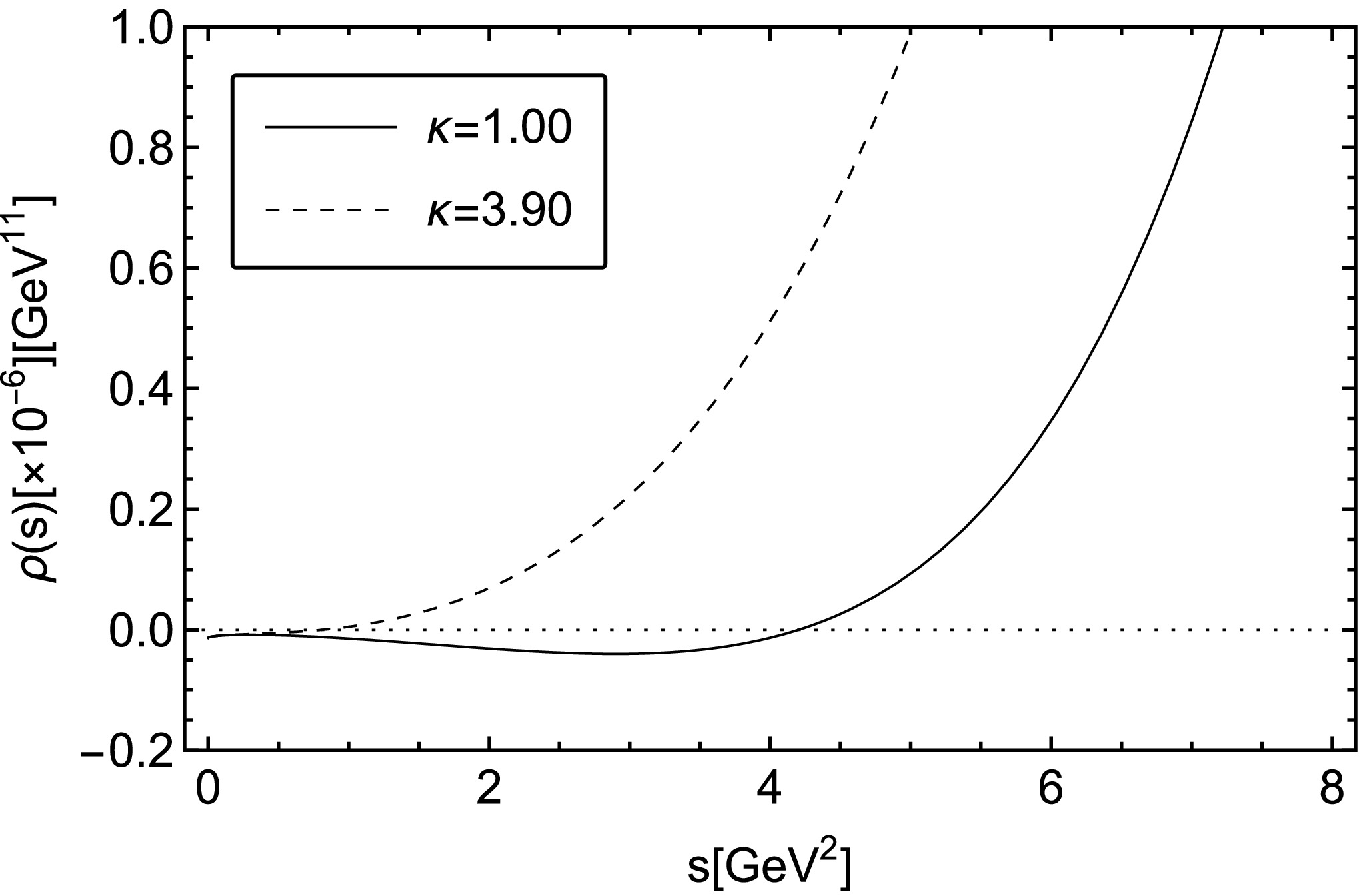
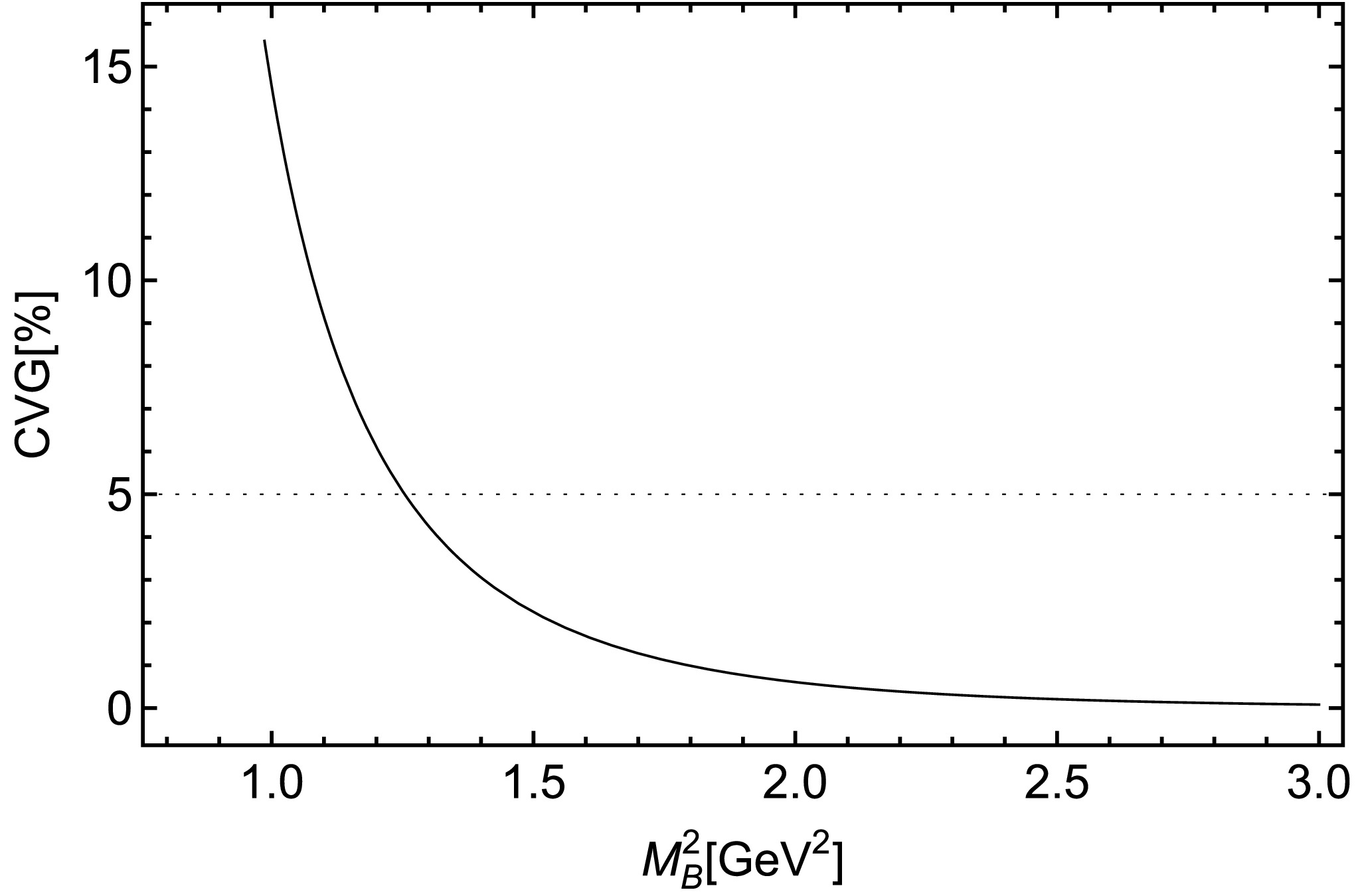
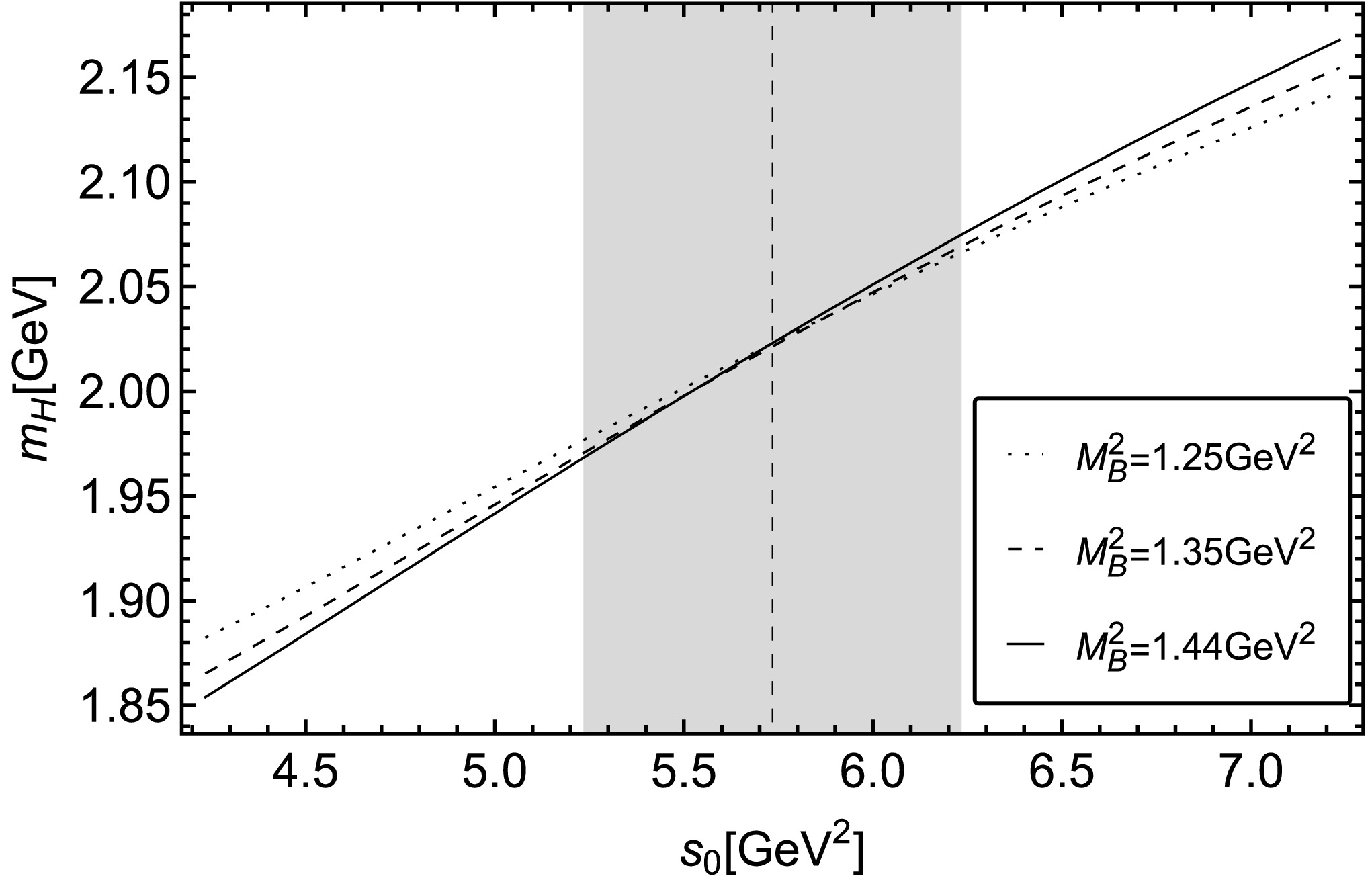
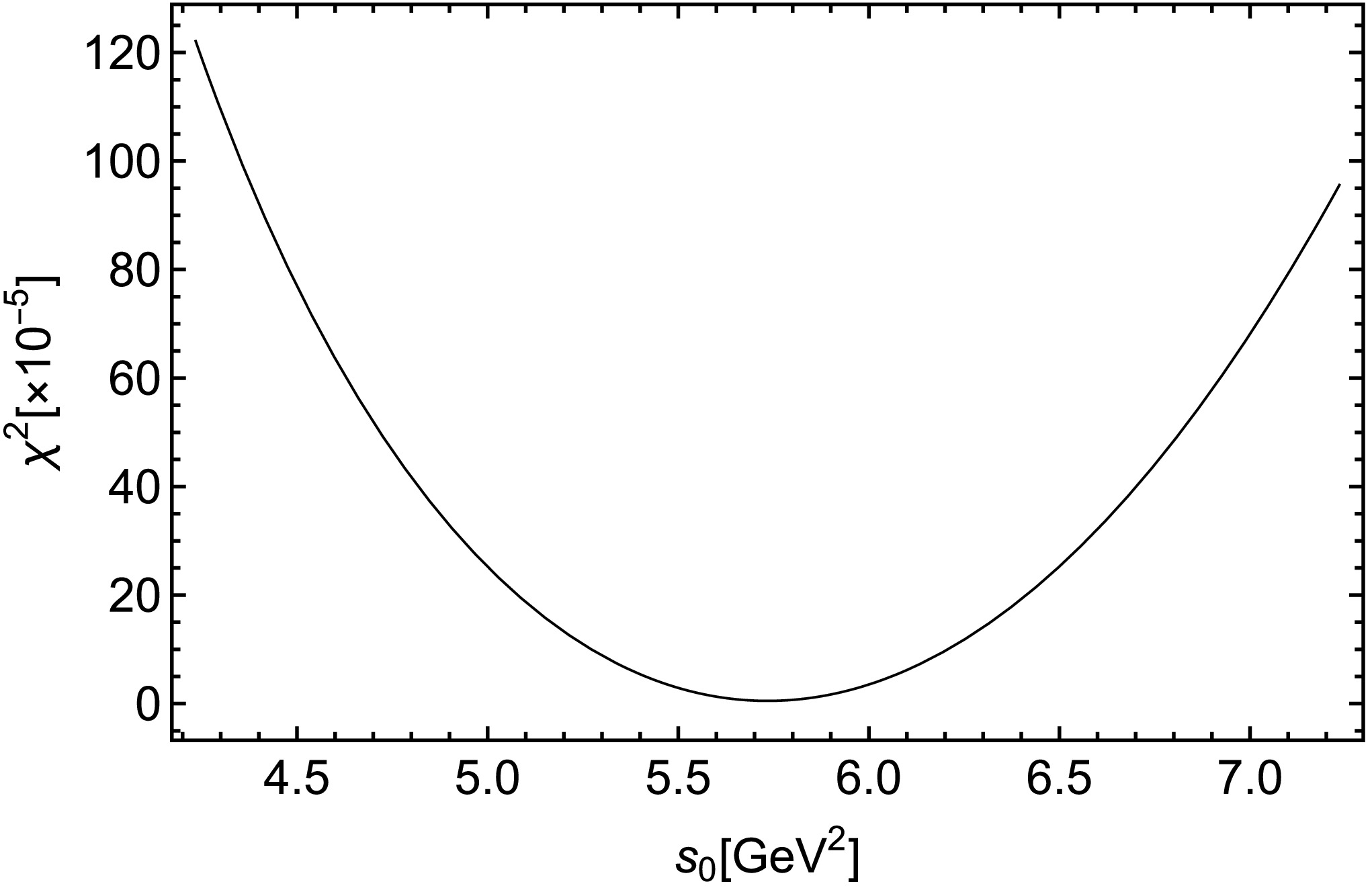
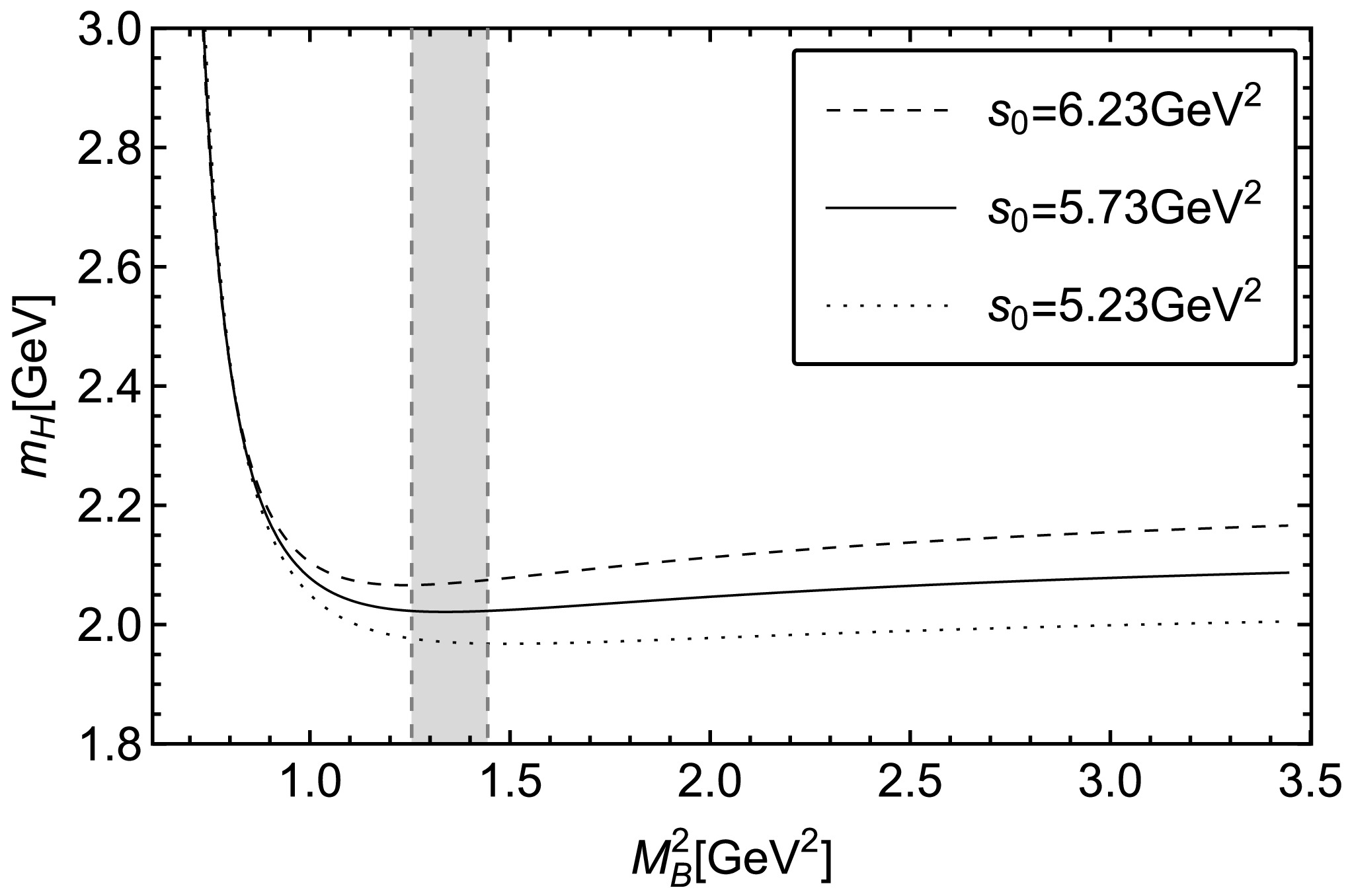
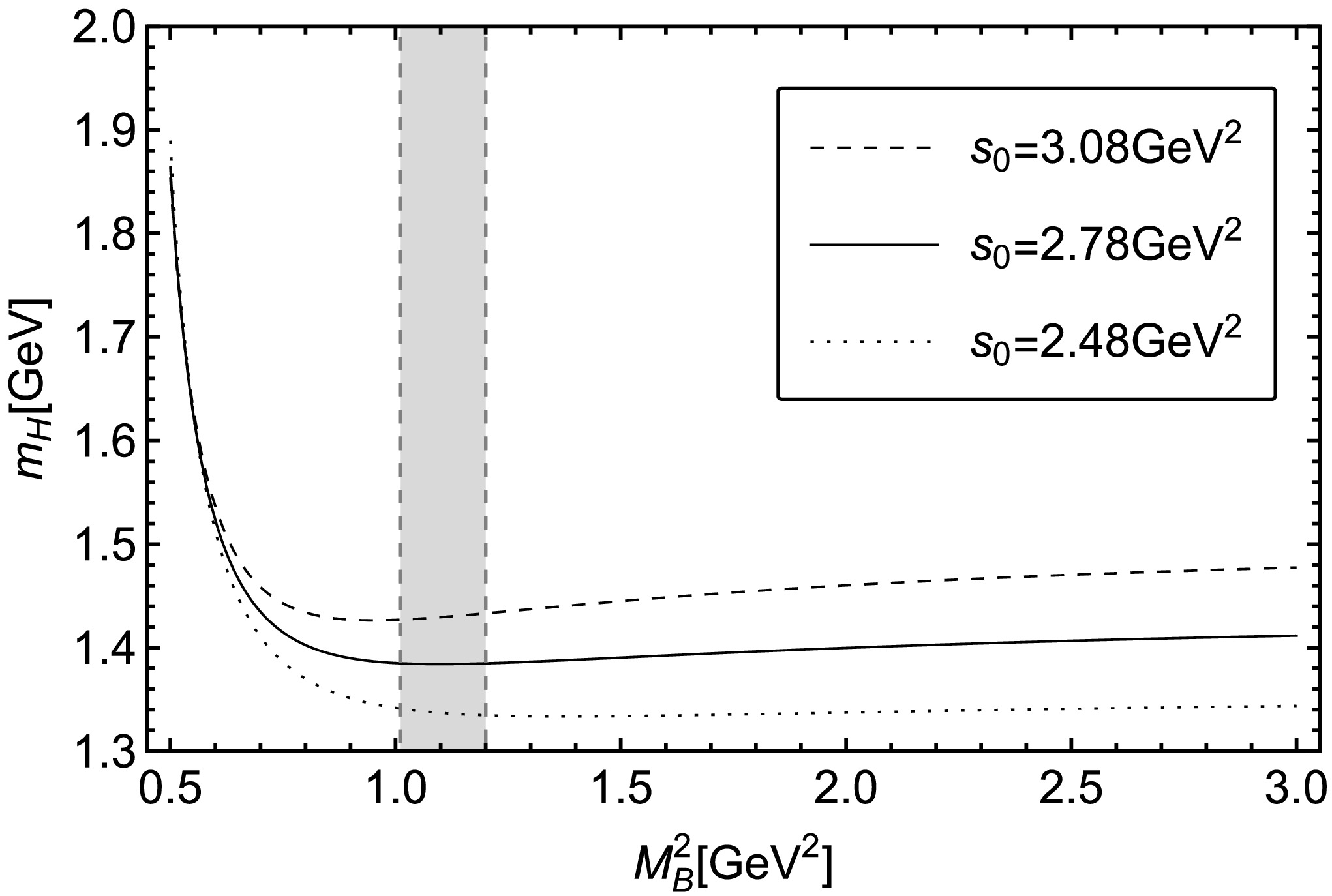
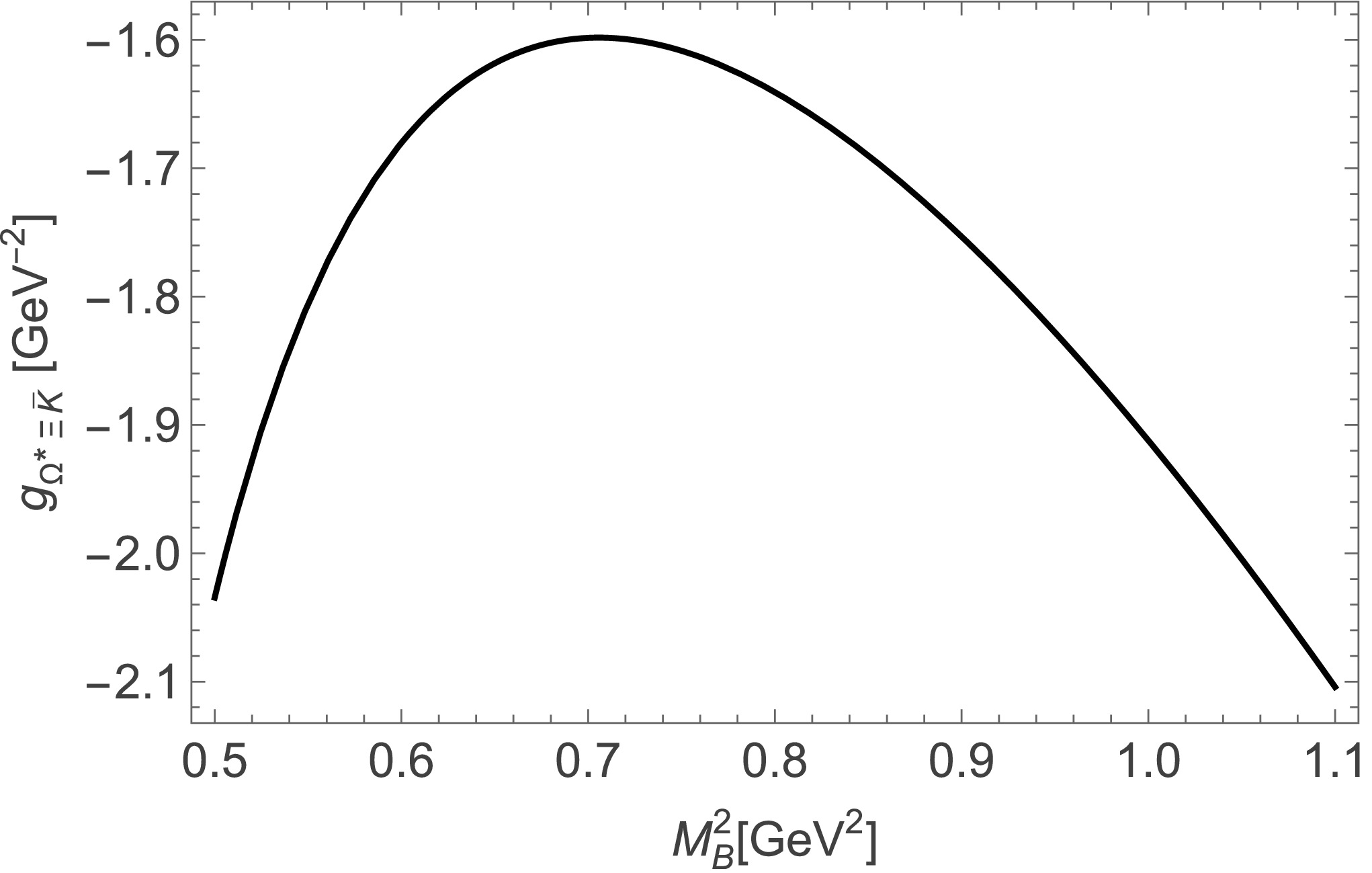
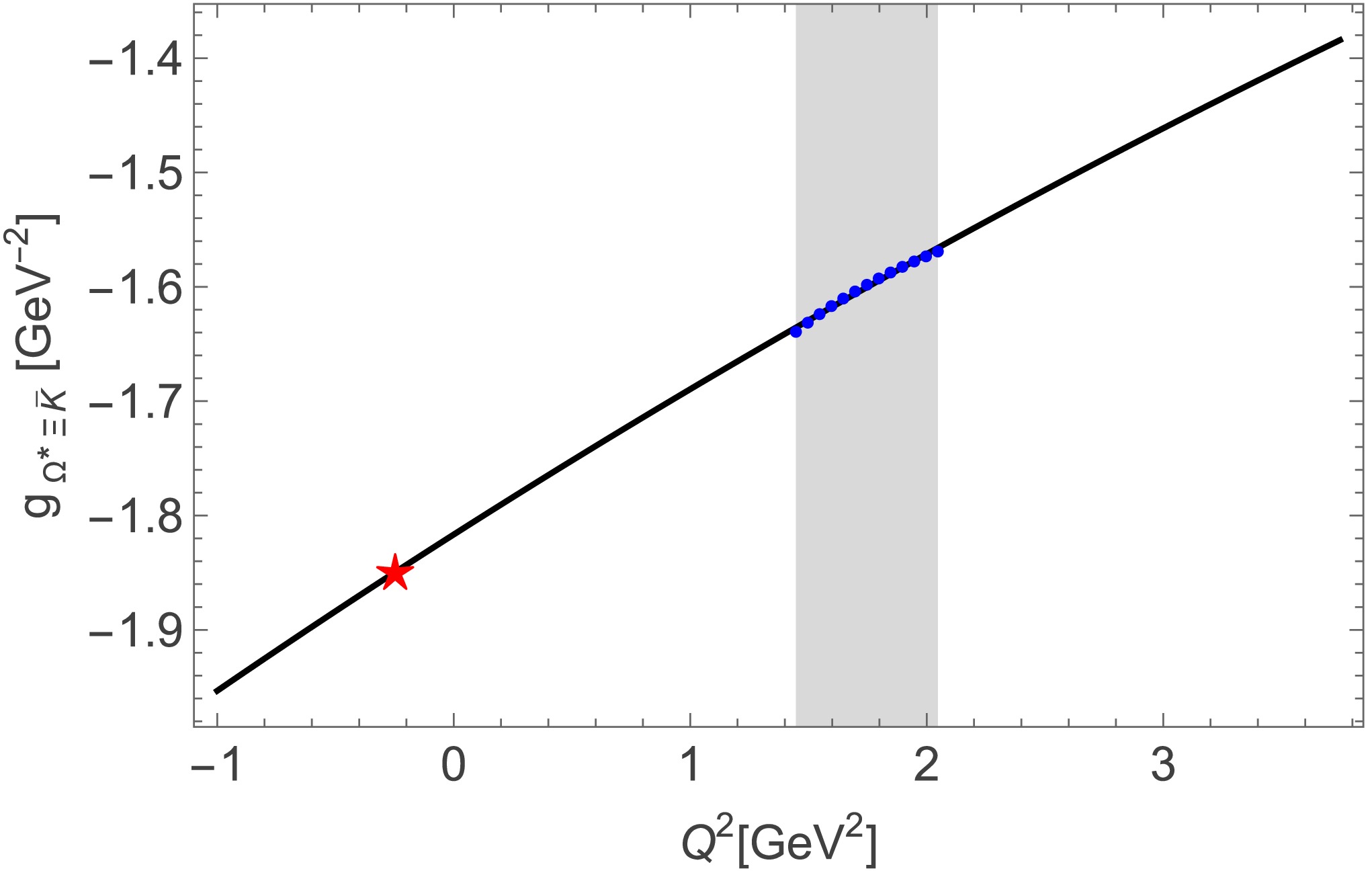
We investigate the mass and strong decay properties of the\begin{document}$\Omega(2012)$\end{document} \begin{document}$\Xi(1530)\bar{K}$\end{document} \begin{document}$I(J^{P})= 0({3}/{2}^{-})$\end{document} \begin{document}$\Xi^0 K^-$\end{document} \begin{document}$\Xi^- \bar{K}^0$\end{document} \begin{document}$2.02 \pm 0.12~\mathrm{GeV}$\end{document} \begin{document}$\Gamma = 0.96^{+0.79}_{-0.41}~\mathrm{MeV}$\end{document} \begin{document}$\Xi(1530)\bar{K}$\end{document} \begin{document}$\mathcal{R}^{\Xi^- \bar{K}^0}_{\Xi^0 K^-} = 0.85$\end{document} \begin{document}$\Omega(2012)$\end{document} \begin{document}$\Xi(1530)\bar{K}$\end{document}
We investigate the mass and strong decay properties of the
2026, 50(8): 084001. doi: 10.1088/1674-1137/ae6b1f
Abstract:
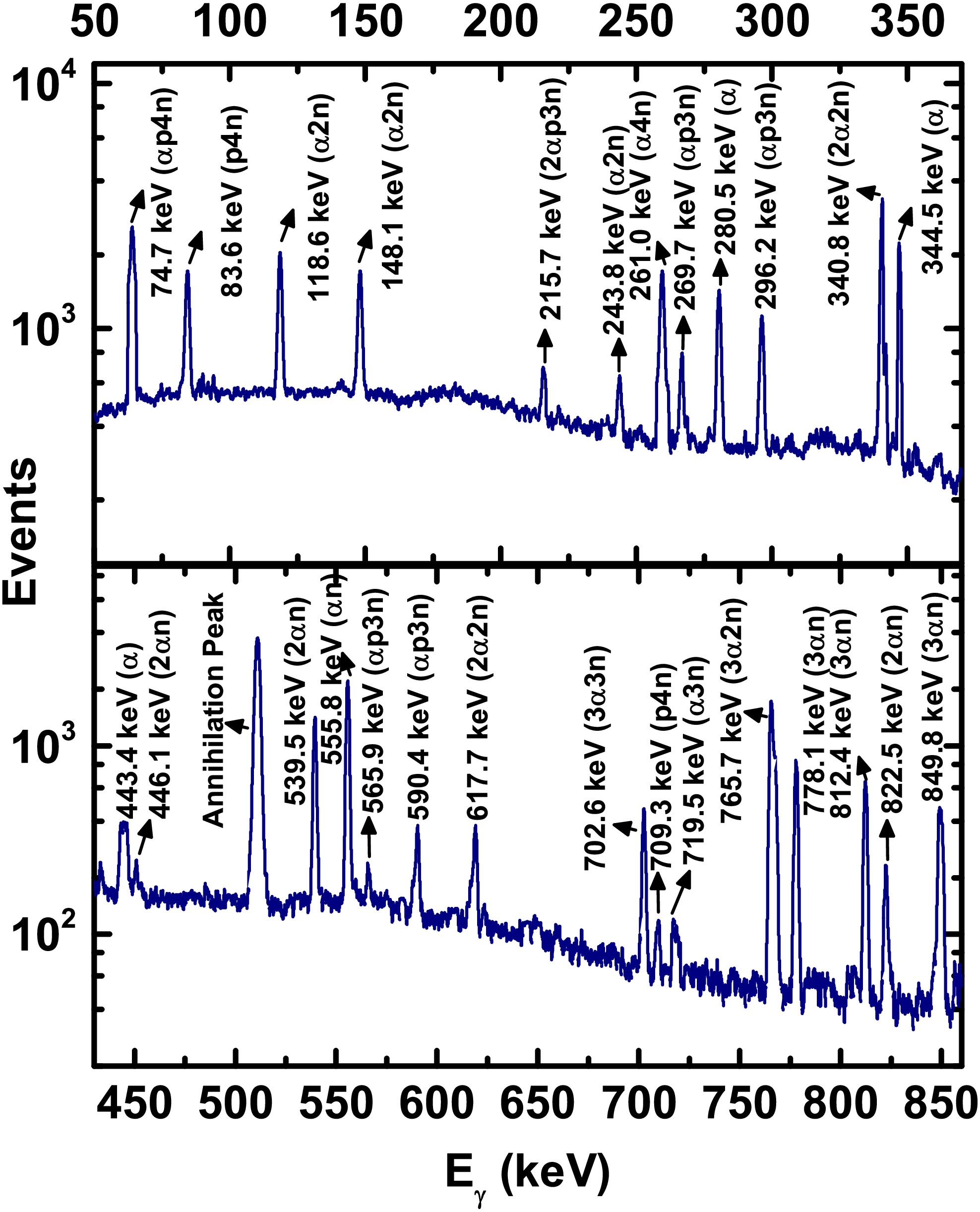
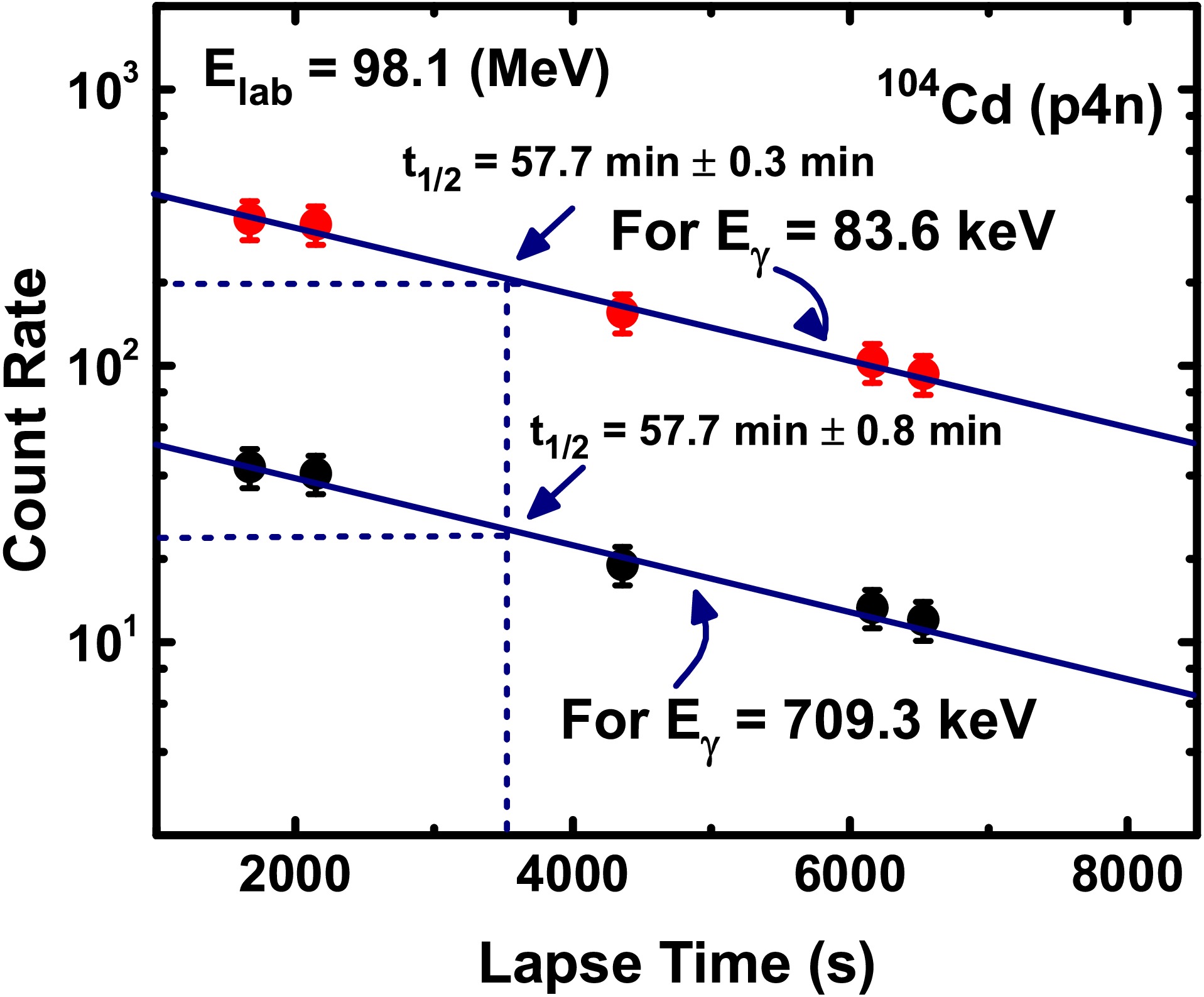
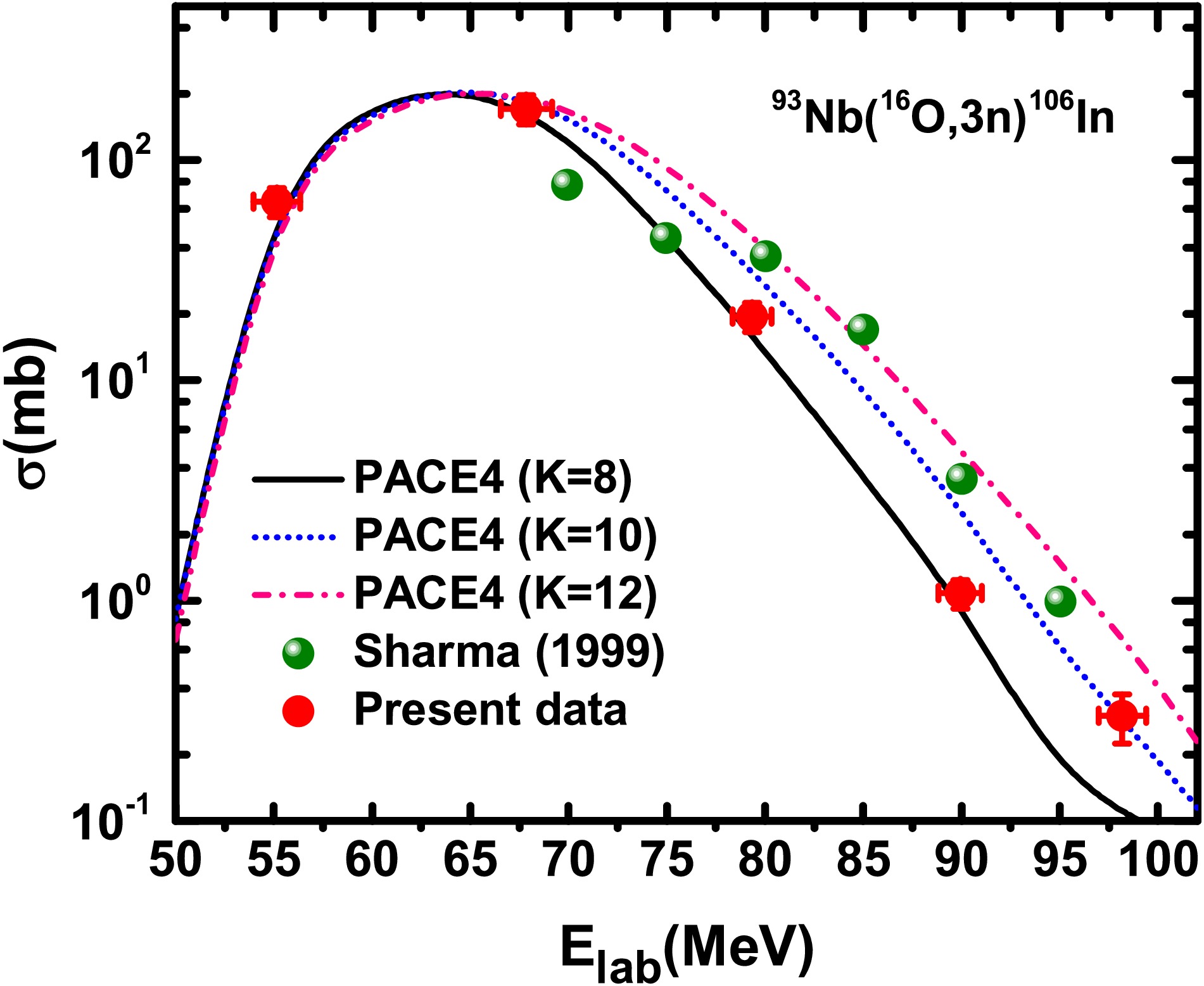
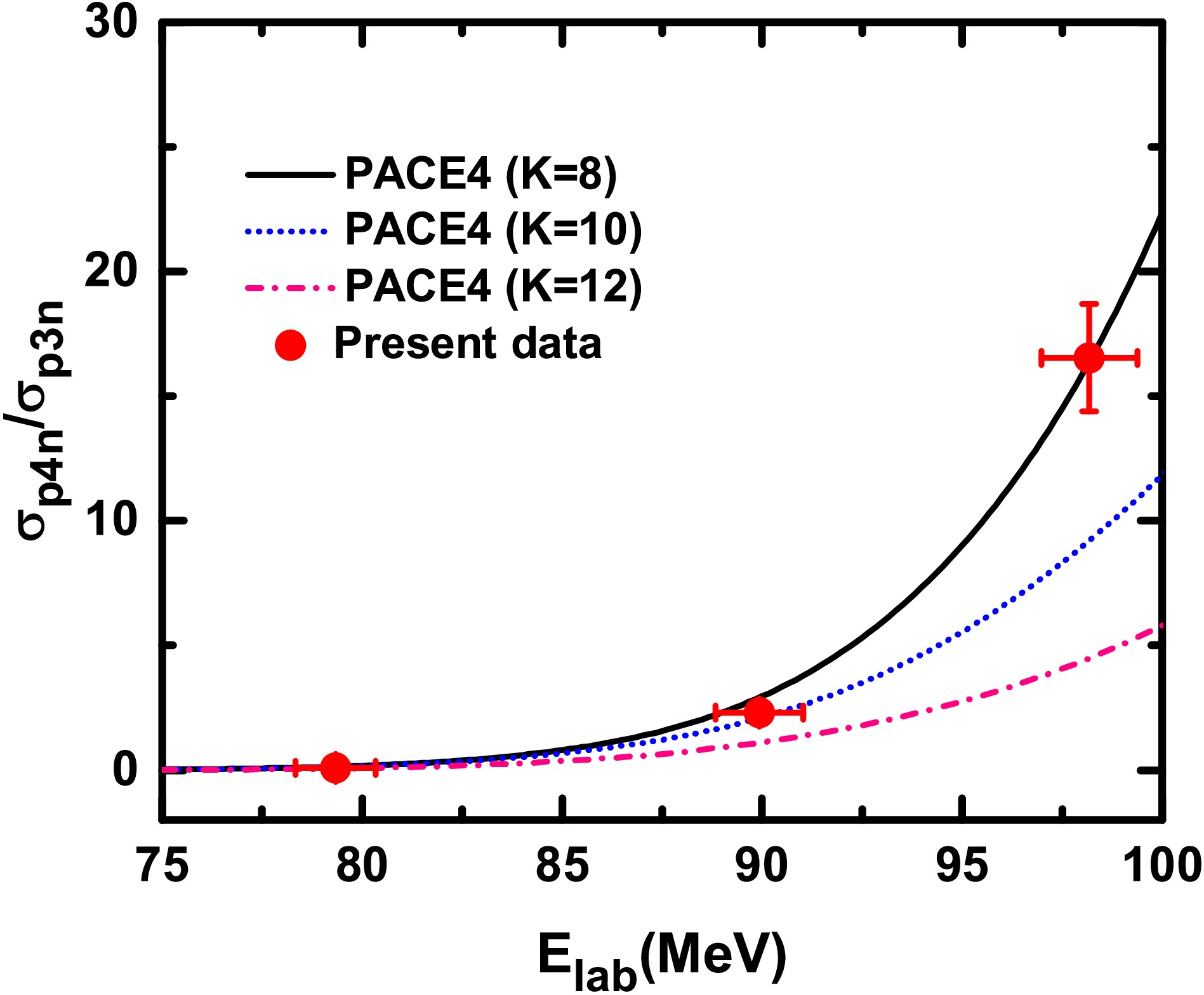
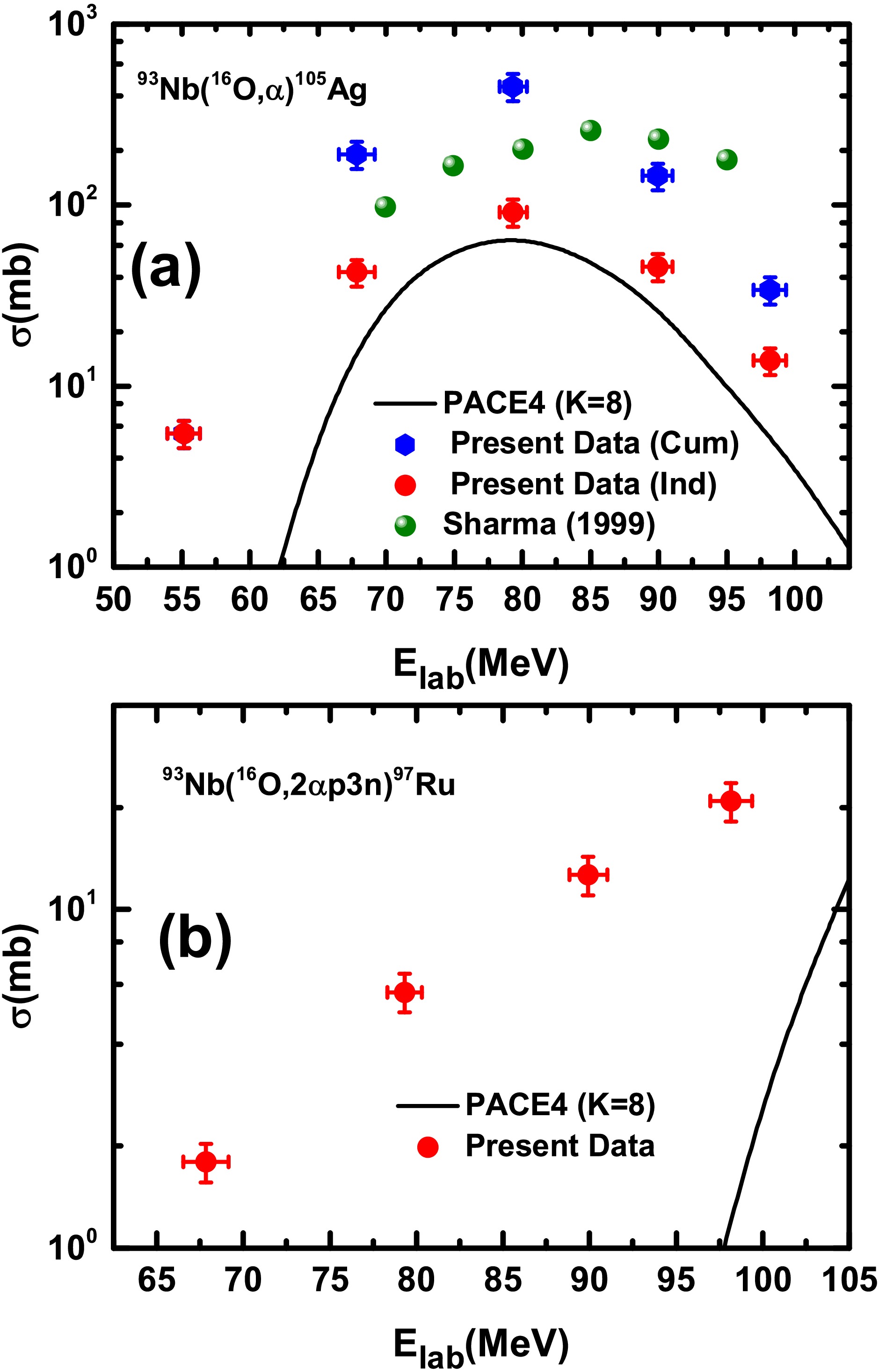
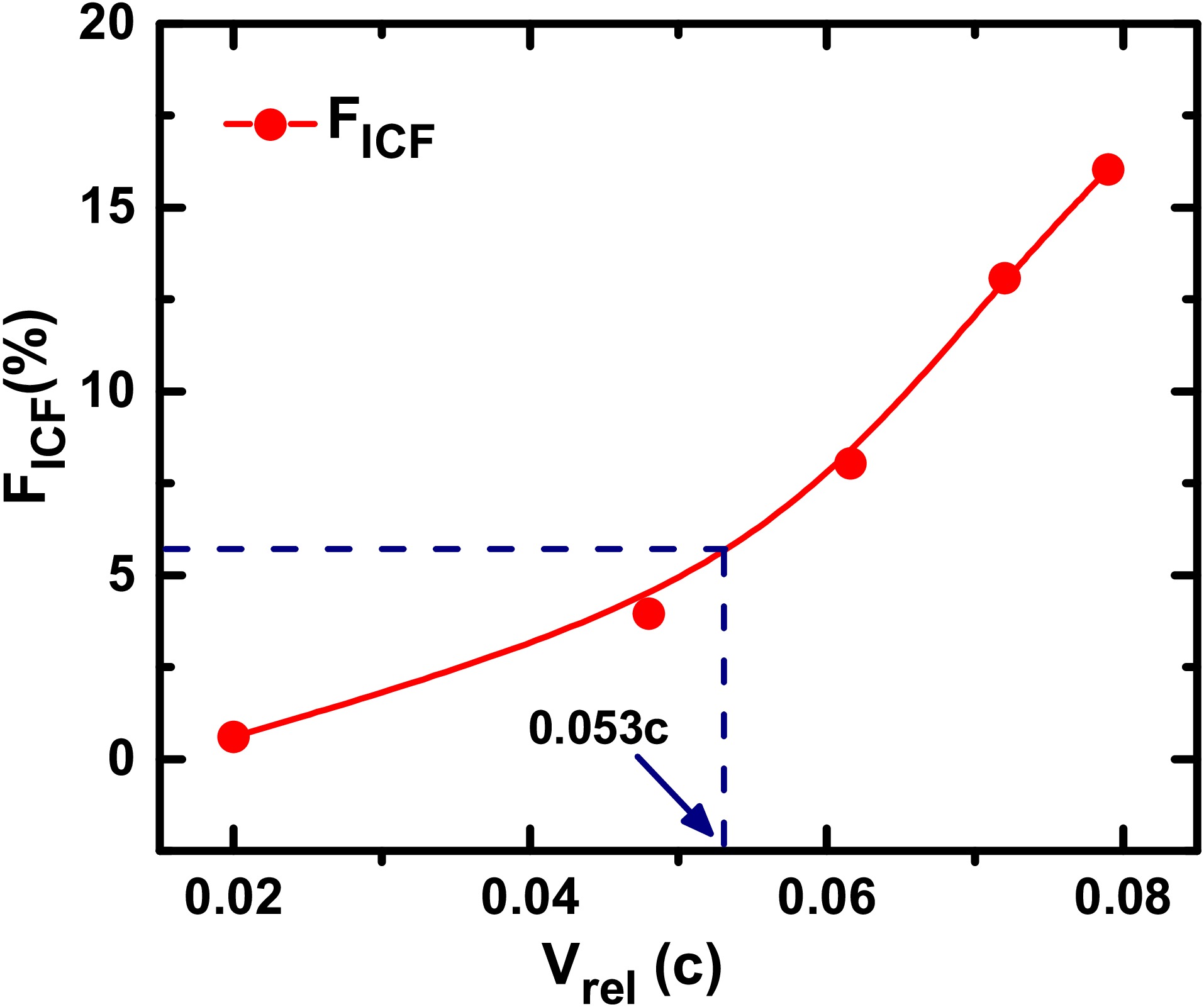
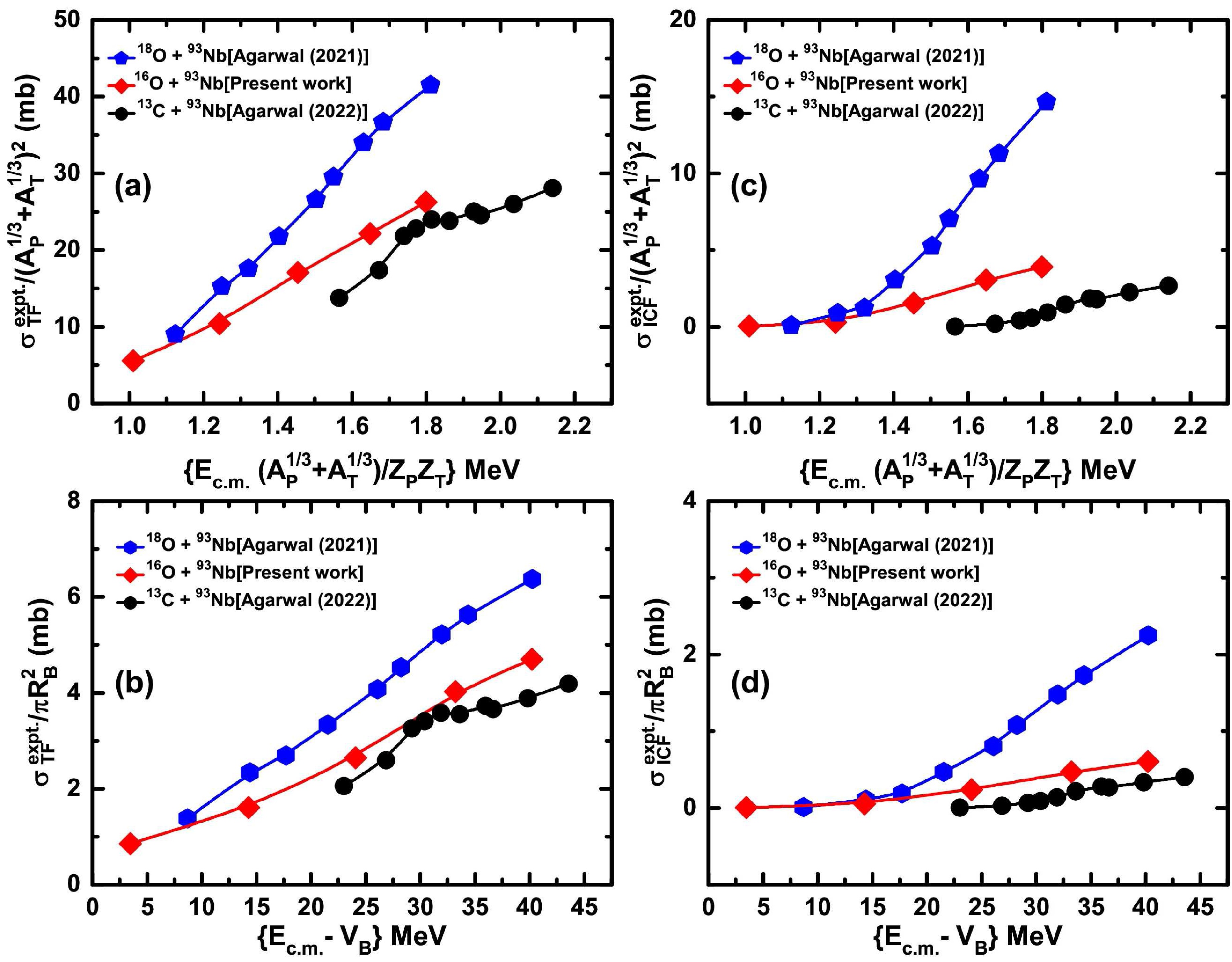
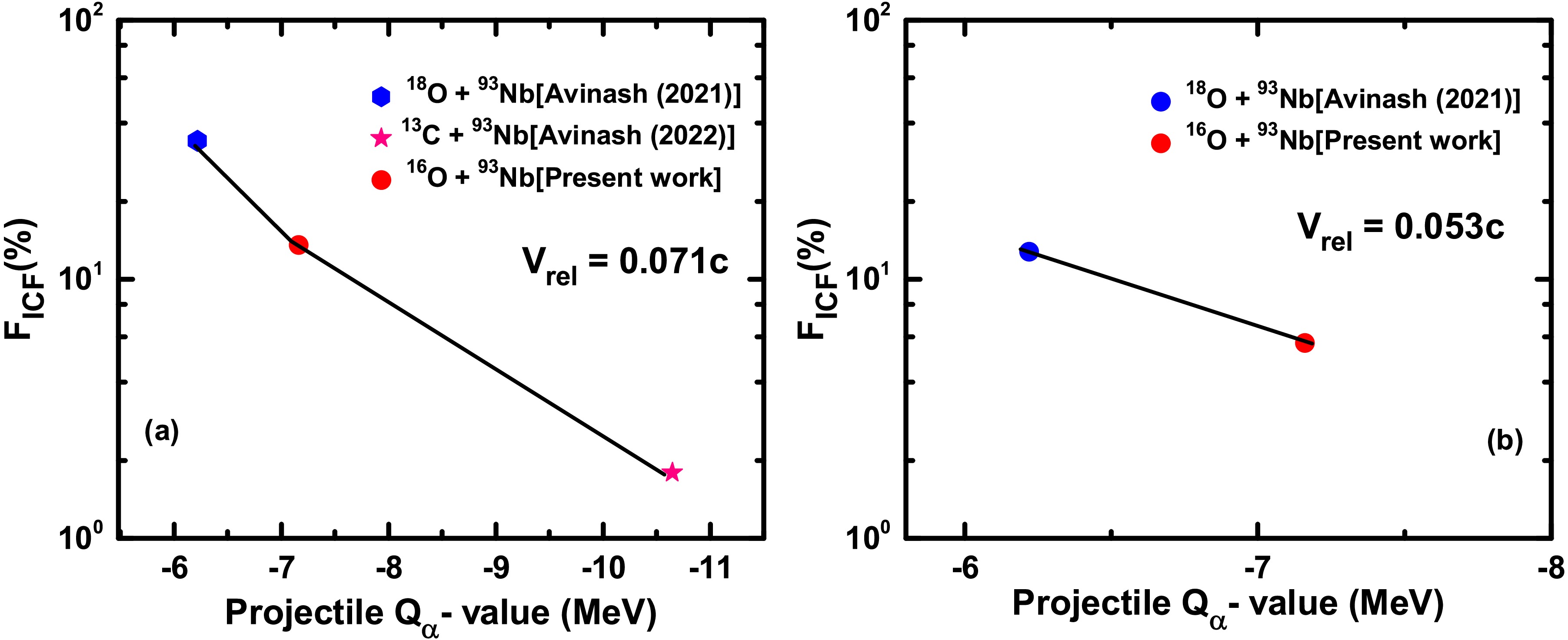
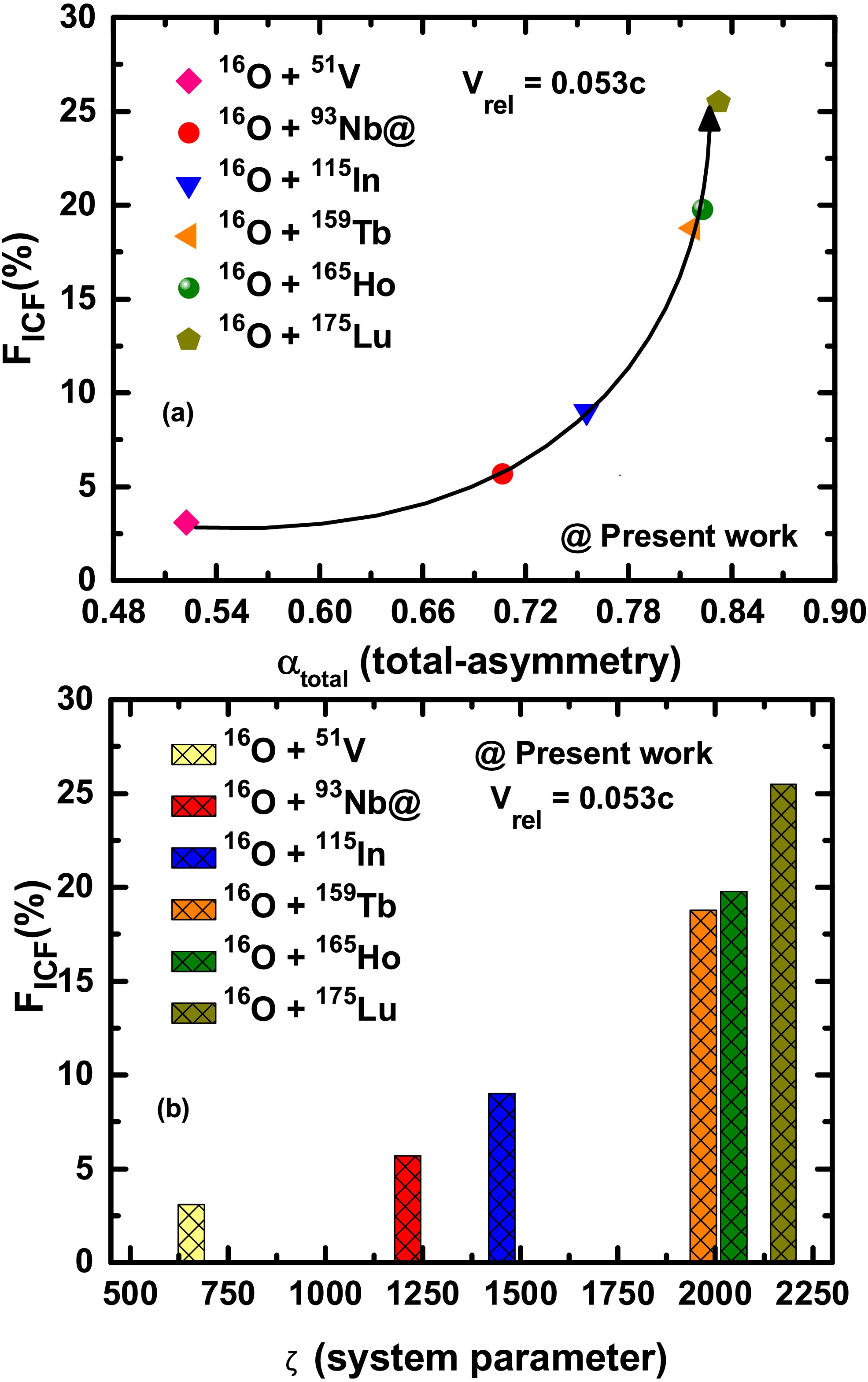
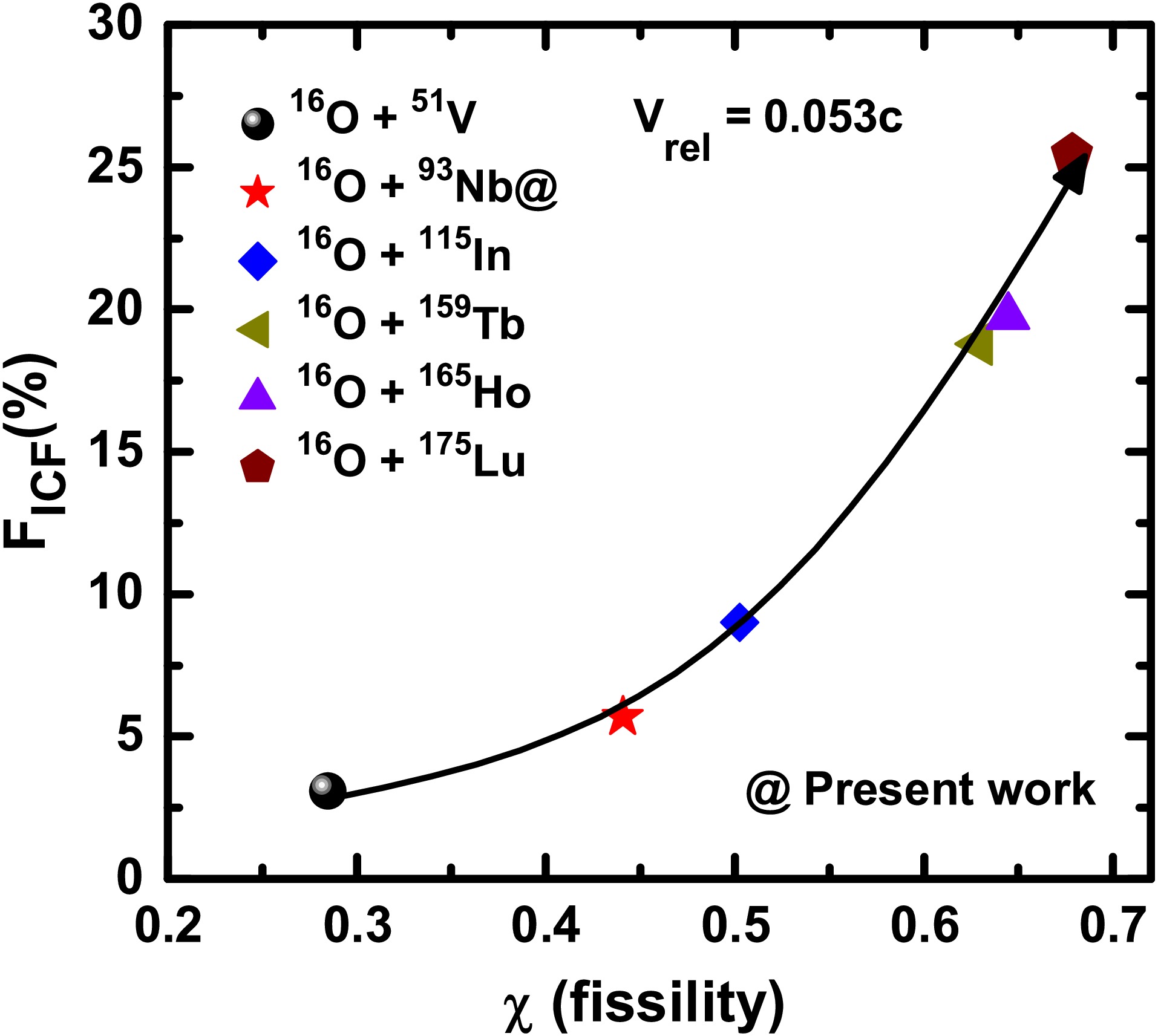
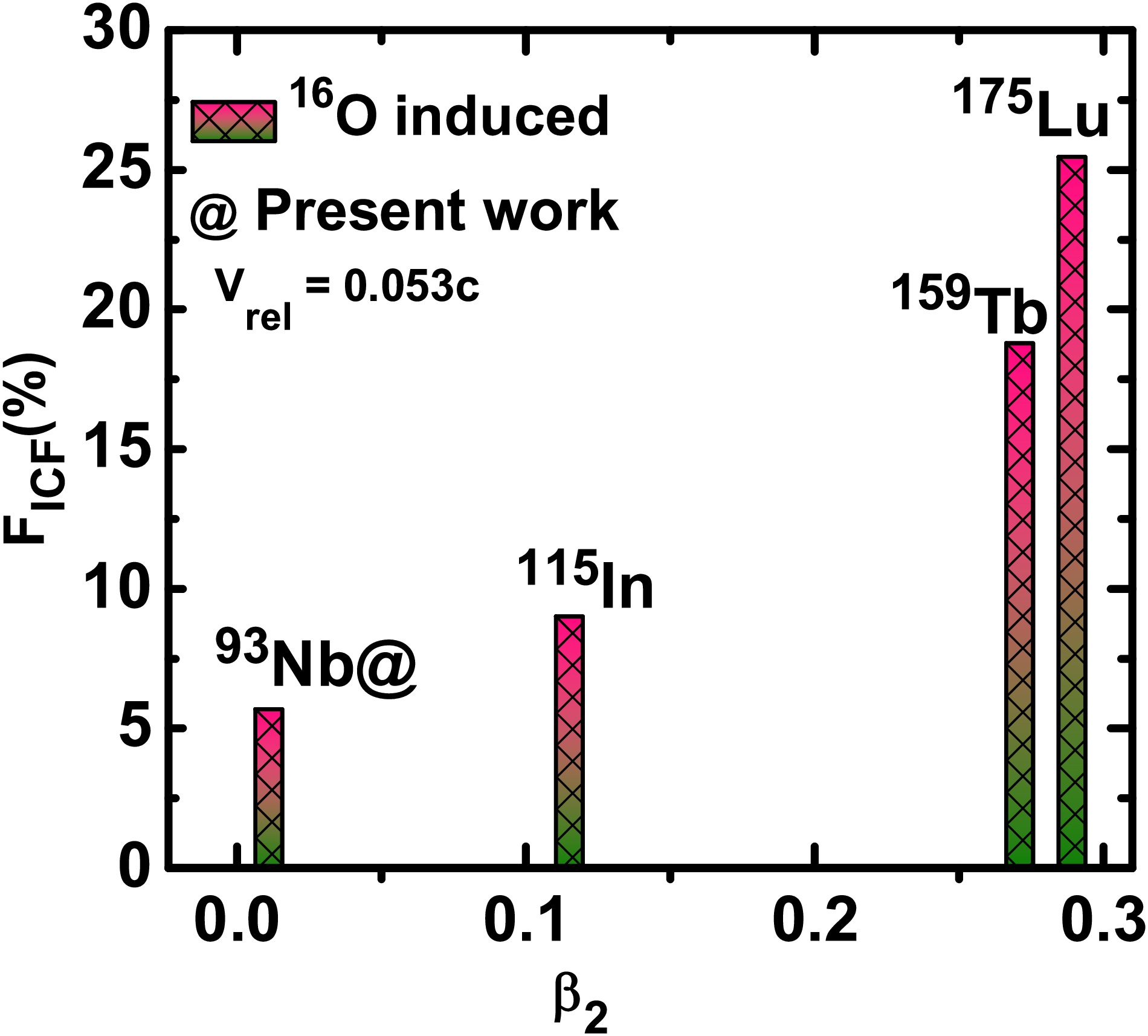
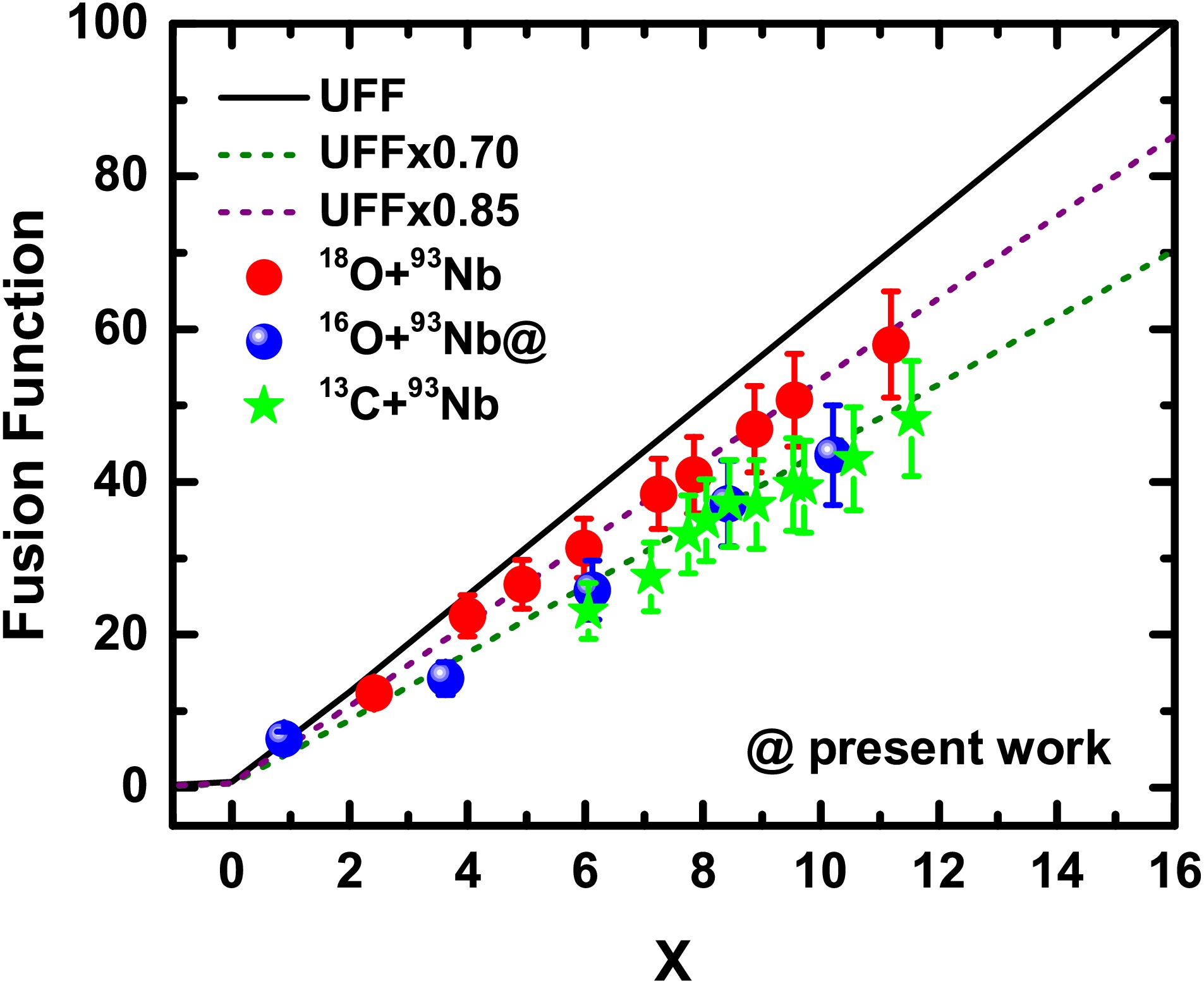
We perform a comprehensive analysis of the complete and incomplete fusion cross sections of the reaction residues produced for the\begin{document}$ {^{16}} {\rm{O}}$\end{document} \begin{document}$ {^{93}} {\rm{N}}{\rm{b}}$\end{document} \begin{document}$ {^{106}} {\rm{In}}$\end{document} \begin{document}$ {^{105}} {\rm{C}}{\rm{d}}$\end{document} \begin{document}$ {^{104}} {\rm{C}}{\rm{d}}$\end{document} \begin{document}$ {^{18}} {\rm{O}}$\end{document} \begin{document}$ {^{93}} {\rm{N}}{\rm{b}}$\end{document} \begin{document}$ {^{16}} {\rm{O}}$\end{document} \begin{document}$ {^{93}} {\rm{N}}{\rm{b}}$\end{document} \begin{document}$ {^{13}} {\rm{C}}$\end{document} \begin{document}$ {^{93}} {\rm{N}}{\rm{b}}$\end{document} \begin{document}$ {^{16}} {\rm{O}}$\end{document} \begin{document}$ {^{18}} {\rm{O}}$\end{document} \begin{document}$ {^{13}} {\rm{C}}$\end{document} \begin{document}$ {\rm{Q}}_{\alpha} $\end{document}
We perform a comprehensive analysis of the complete and incomplete fusion cross sections of the reaction residues produced for the
2026, 50(8): 084101. doi: 10.1088/1674-1137/ae6b21
Abstract:
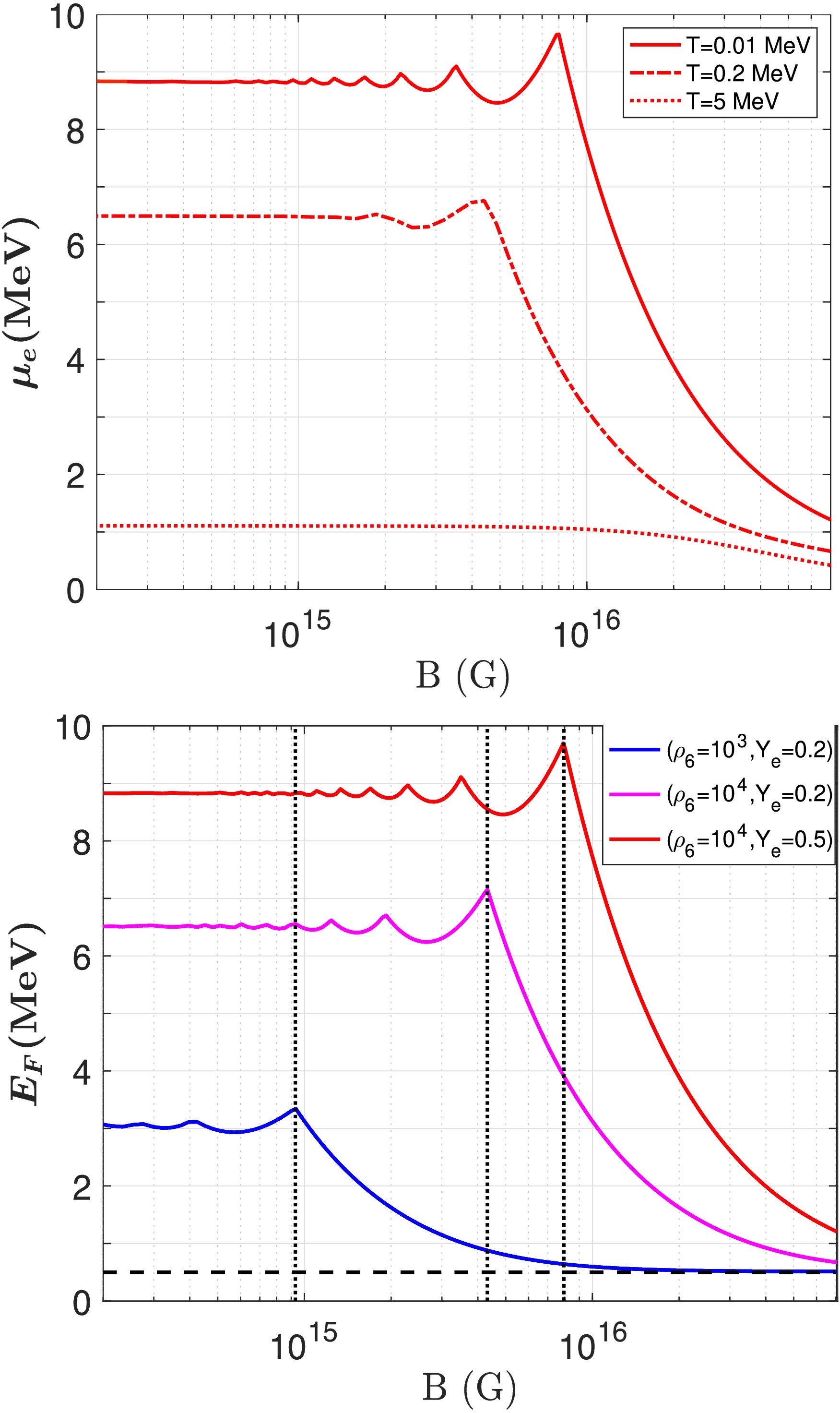
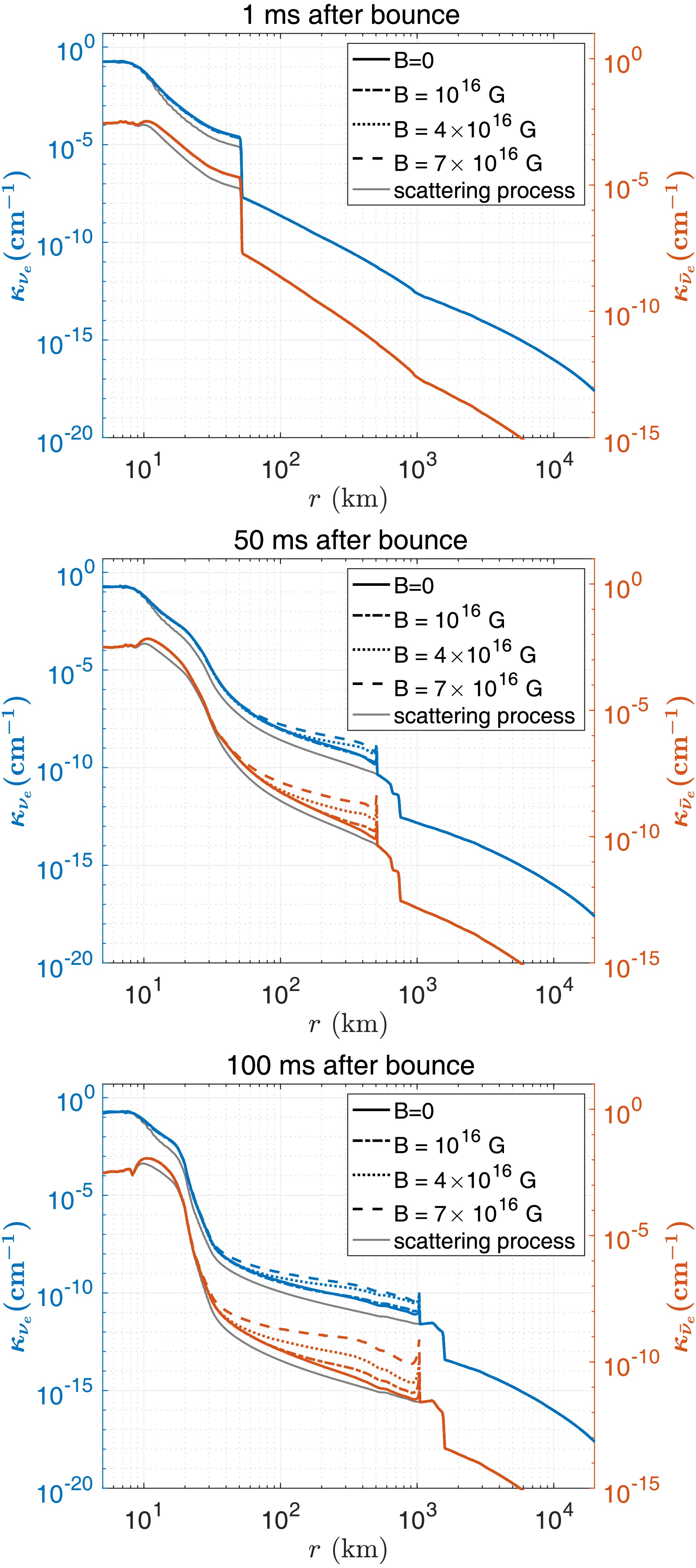
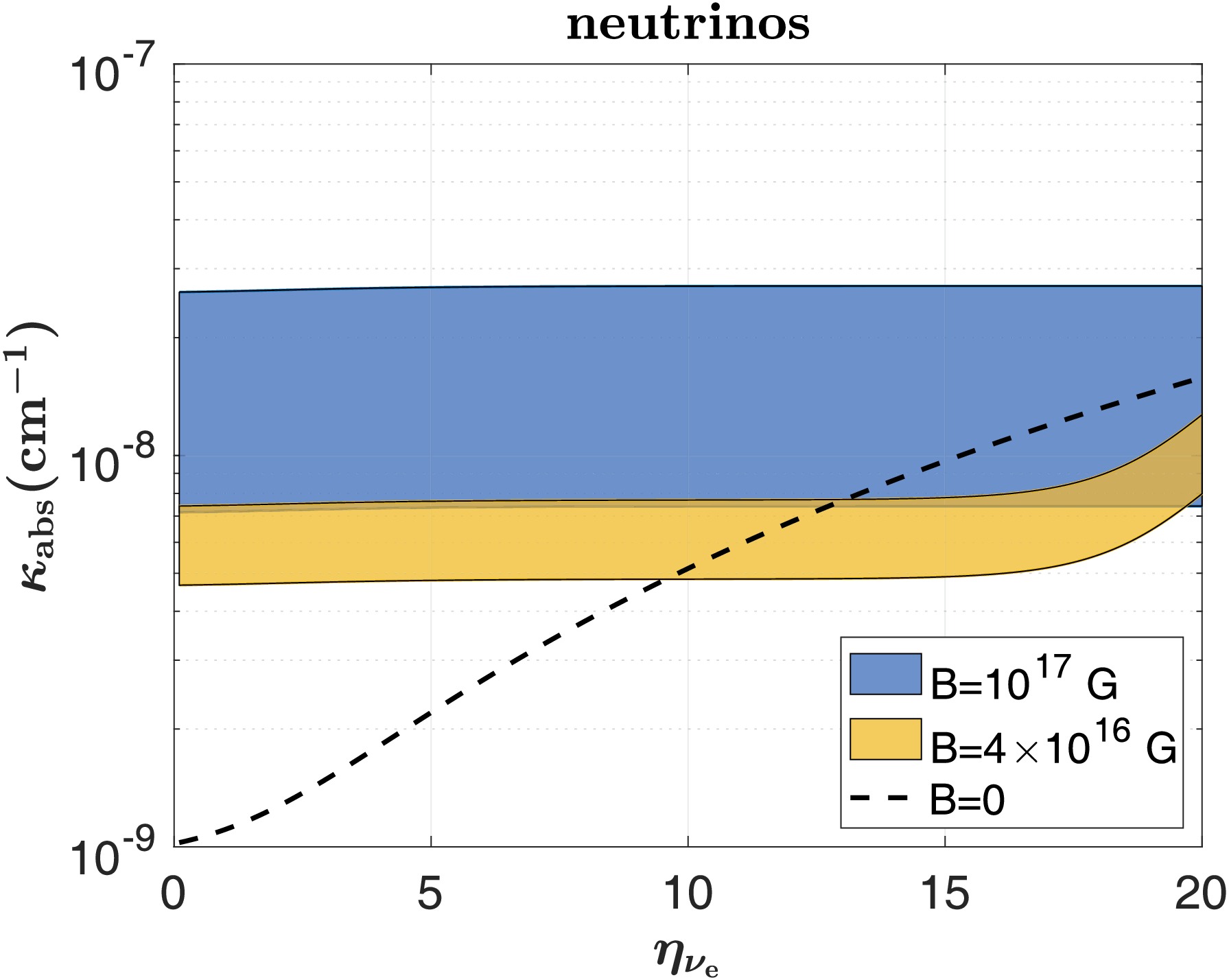
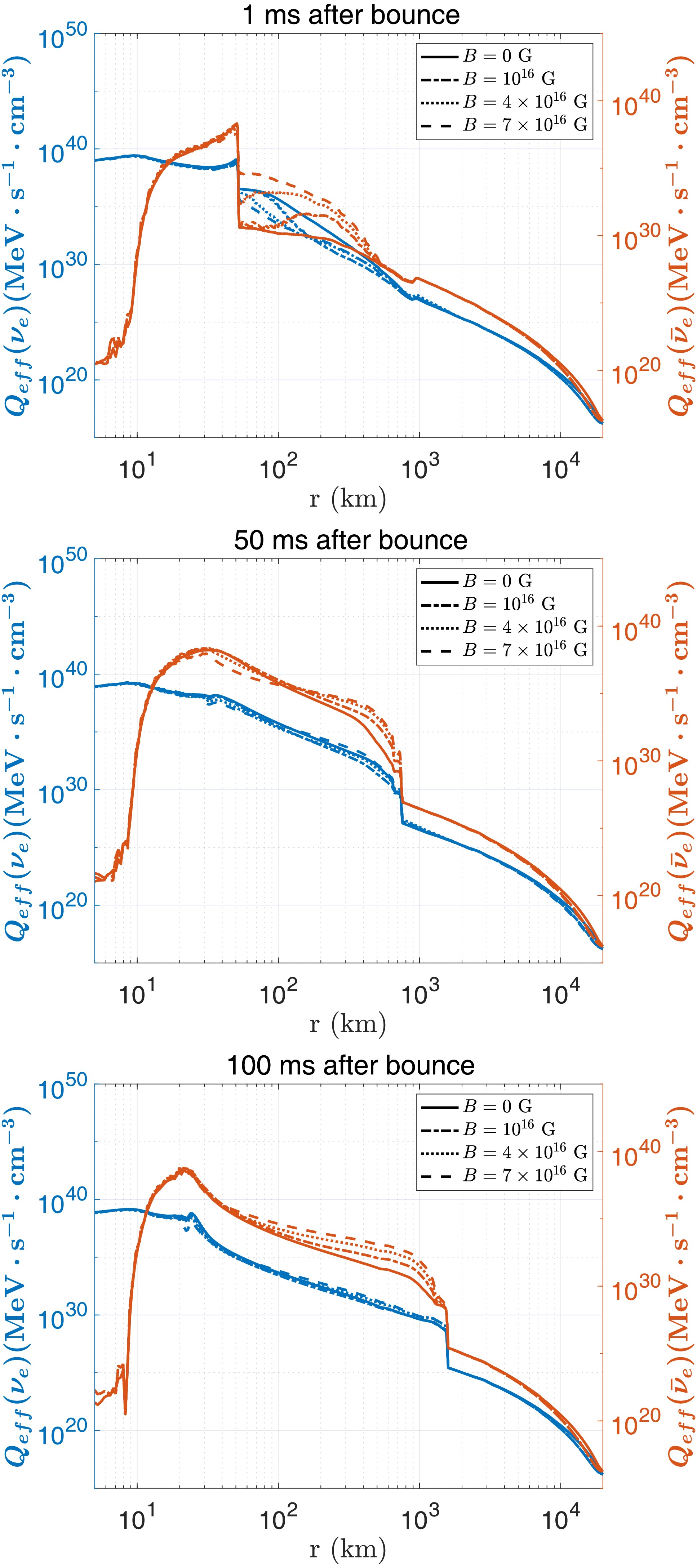
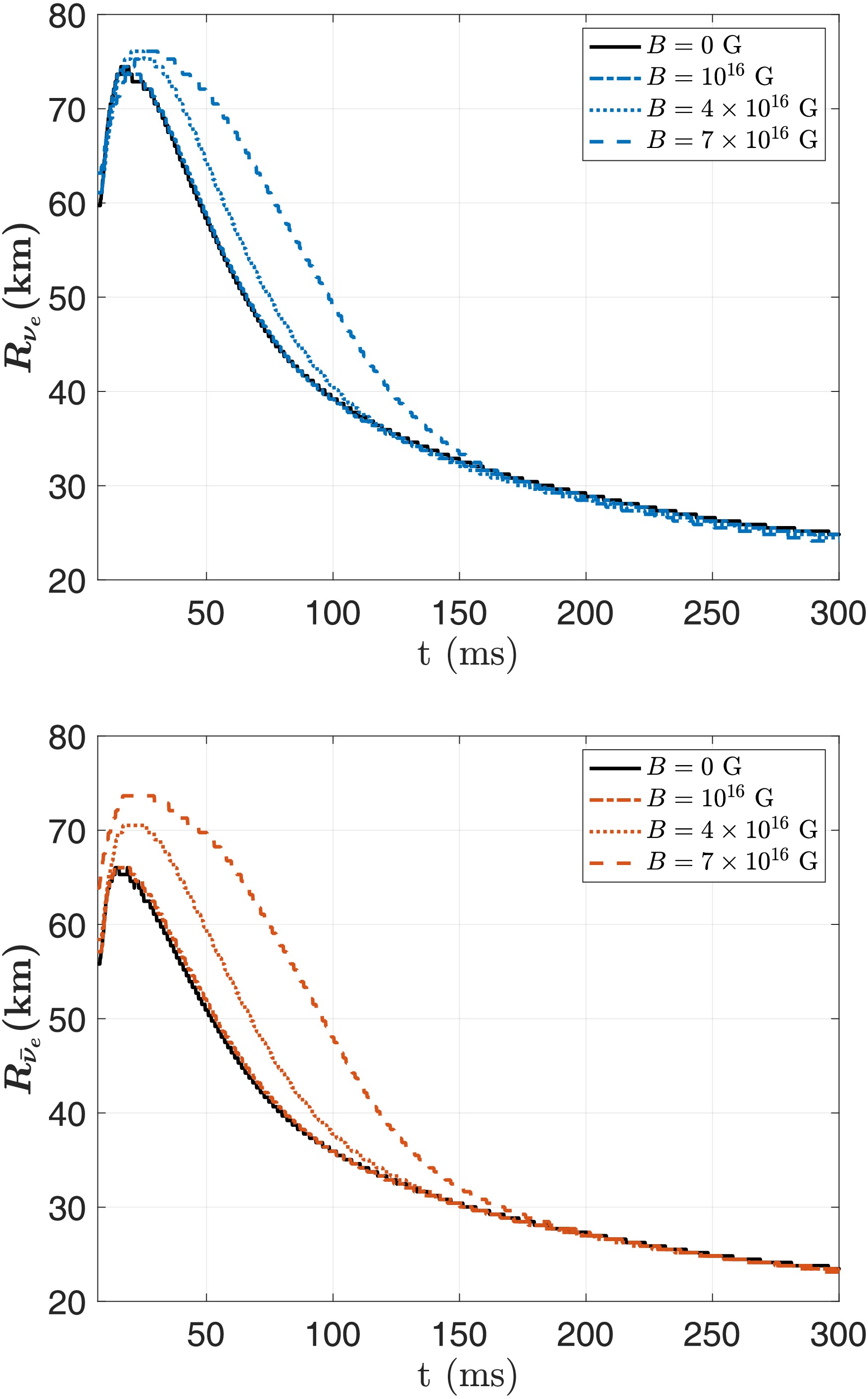
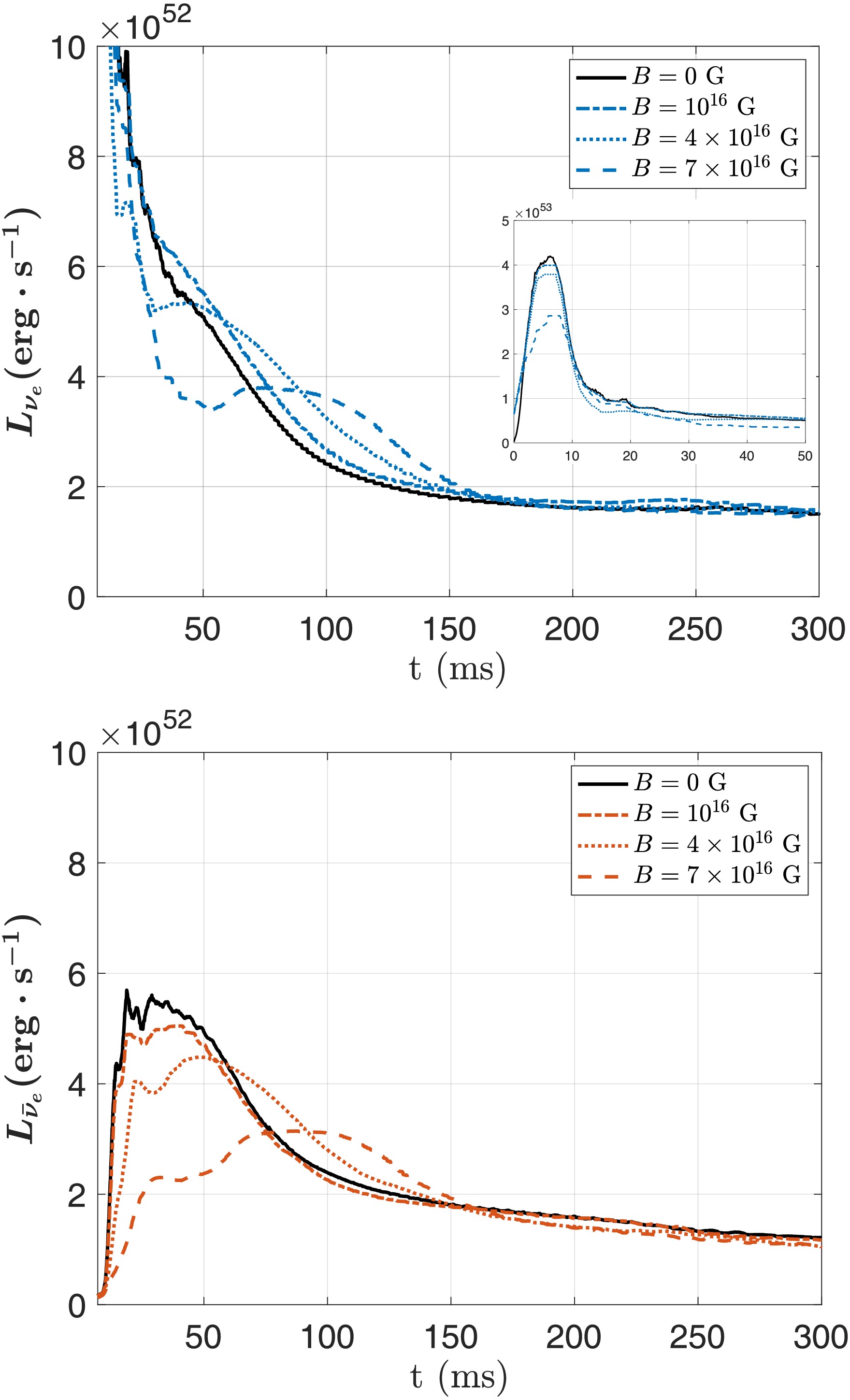
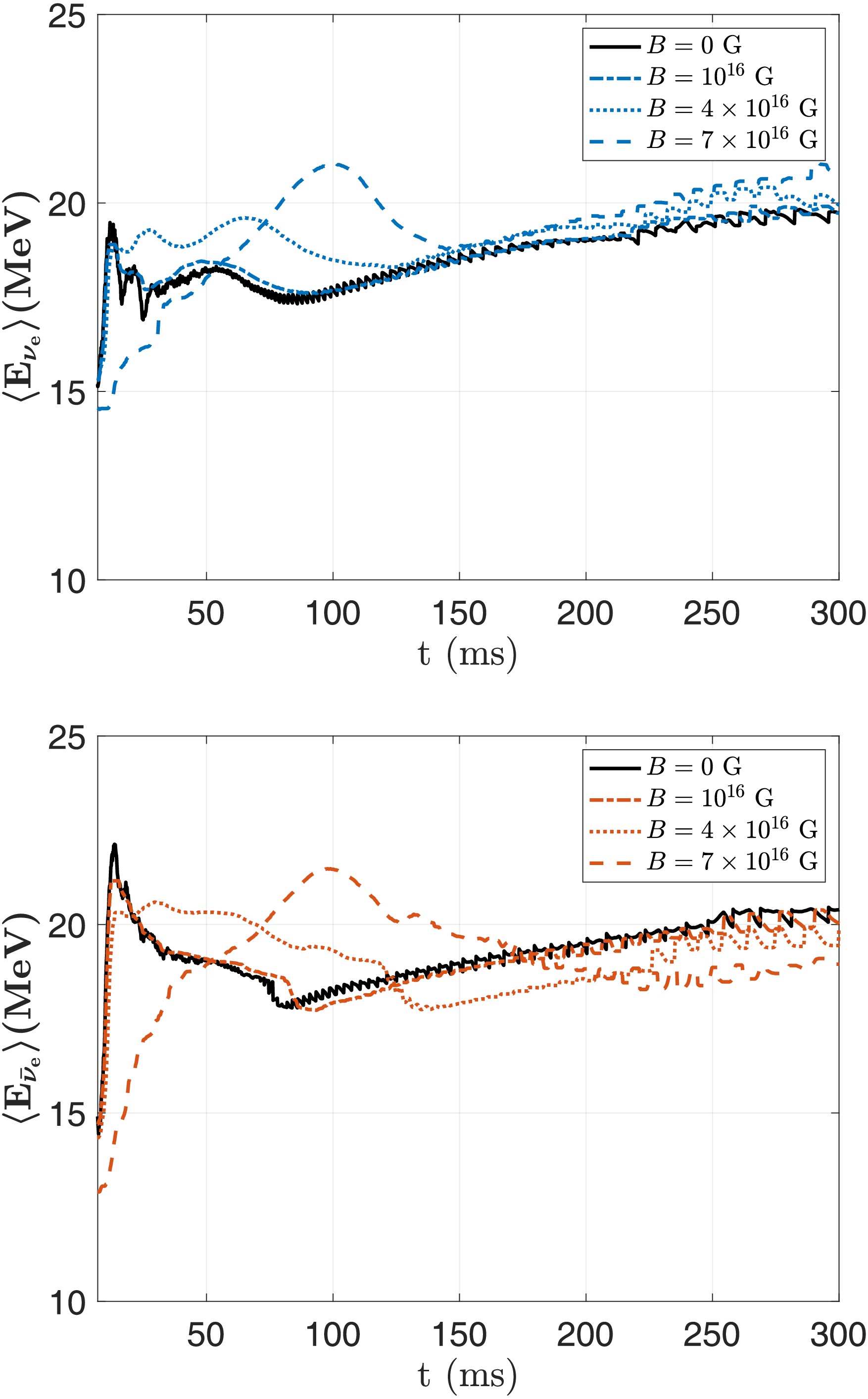
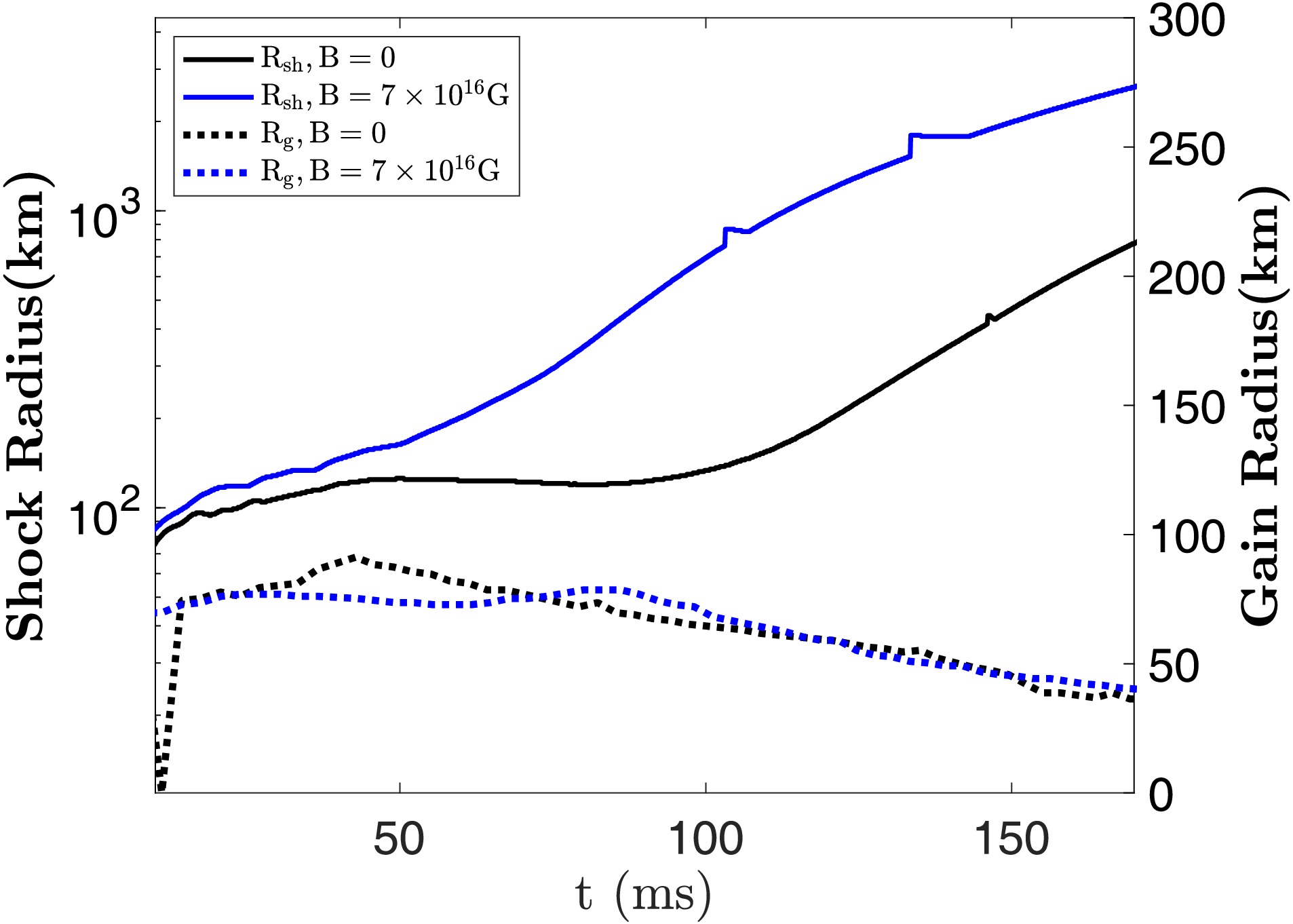
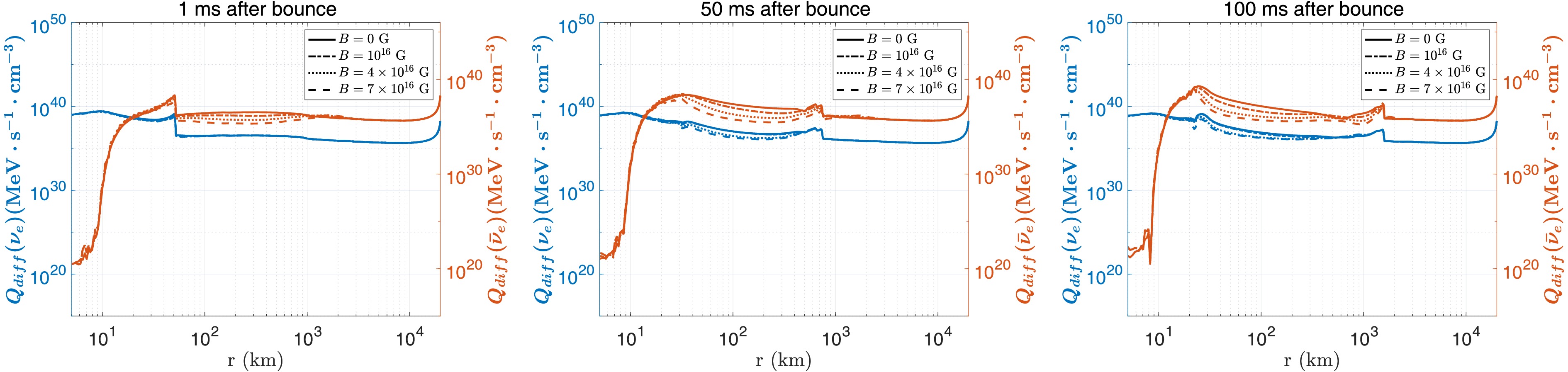
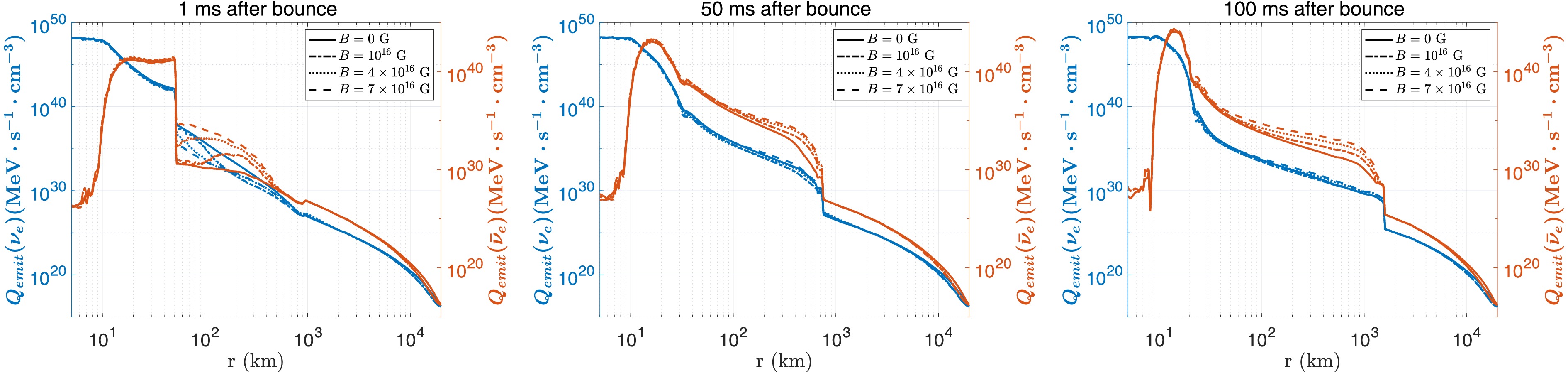
We investigate the impacts of strong magnetic fields on neutrino transport in core-collapse supernovae (CCSNe) using the leakage scheme. The magnetic field quantizes the momentum of electrons and positrons, resulting in the modification of weak-interaction cross sections and the chemical potentials of electrons and positrons. We derive a formula for the neutrino leakage scheme, including these two impacts, and perform 1D CCSN simulations with\begin{document}$ {\tt{GR1D}}$\end{document} \begin{document}$ 10^{16} $\end{document} \begin{document}$ 10^{17} $\end{document}
We investigate the impacts of strong magnetic fields on neutrino transport in core-collapse supernovae (CCSNe) using the leakage scheme. The magnetic field quantizes the momentum of electrons and positrons, resulting in the modification of weak-interaction cross sections and the chemical potentials of electrons and positrons. We derive a formula for the neutrino leakage scheme, including these two impacts, and perform 1D CCSN simulations with
2026, 50(8): 084102. doi: 10.1088/1674-1137/ae6631
Abstract:
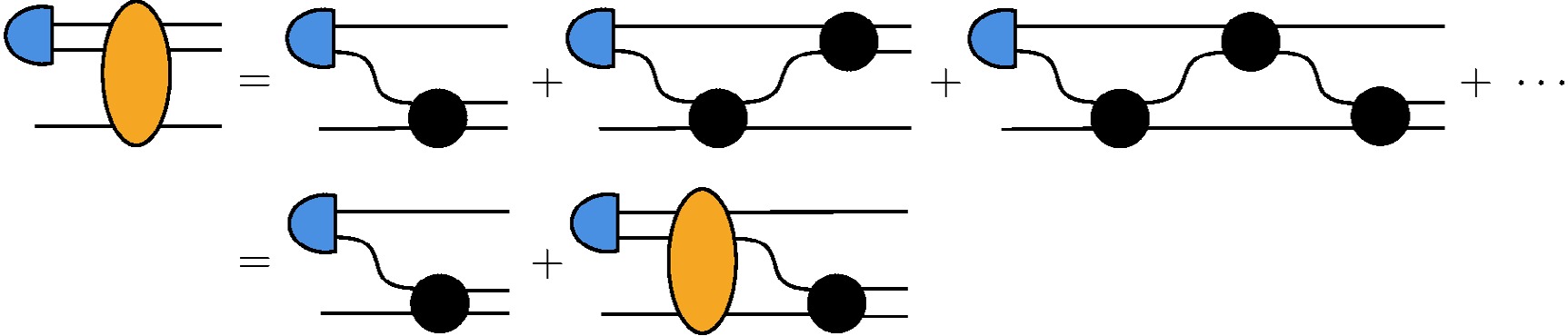
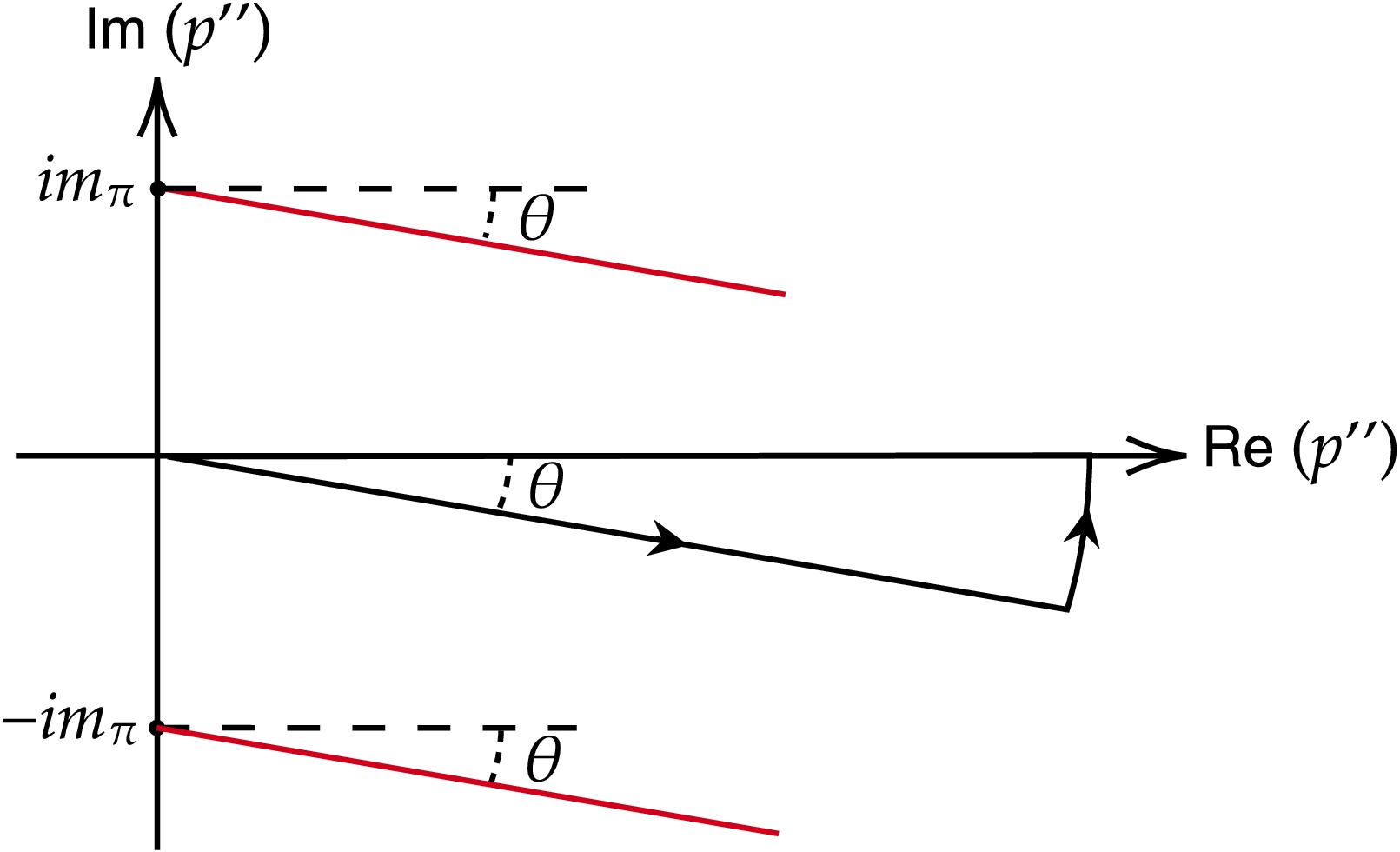
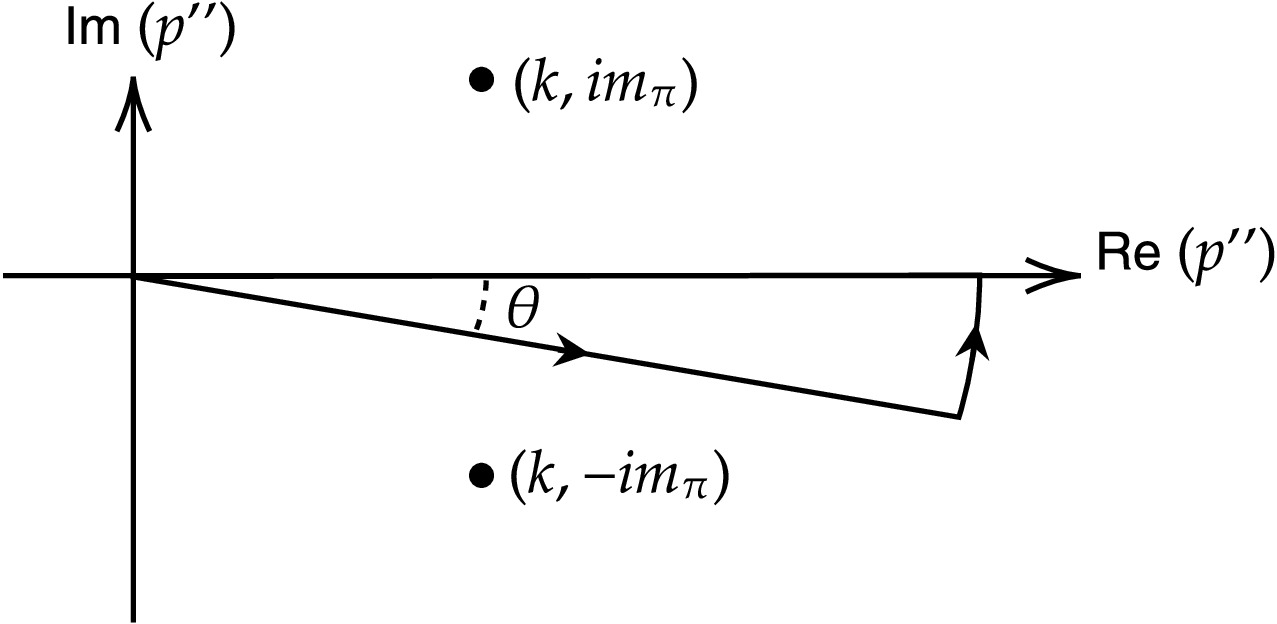
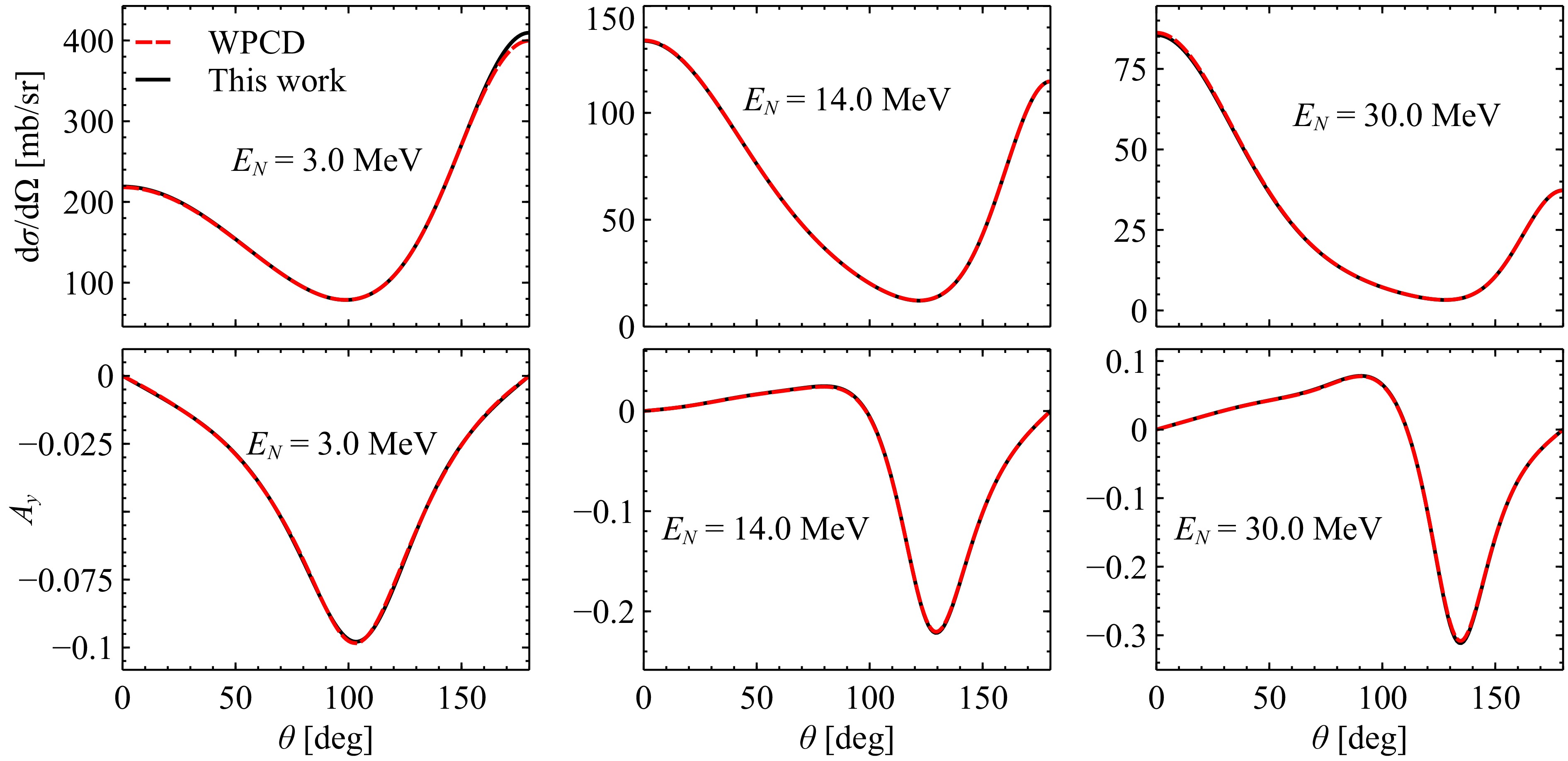
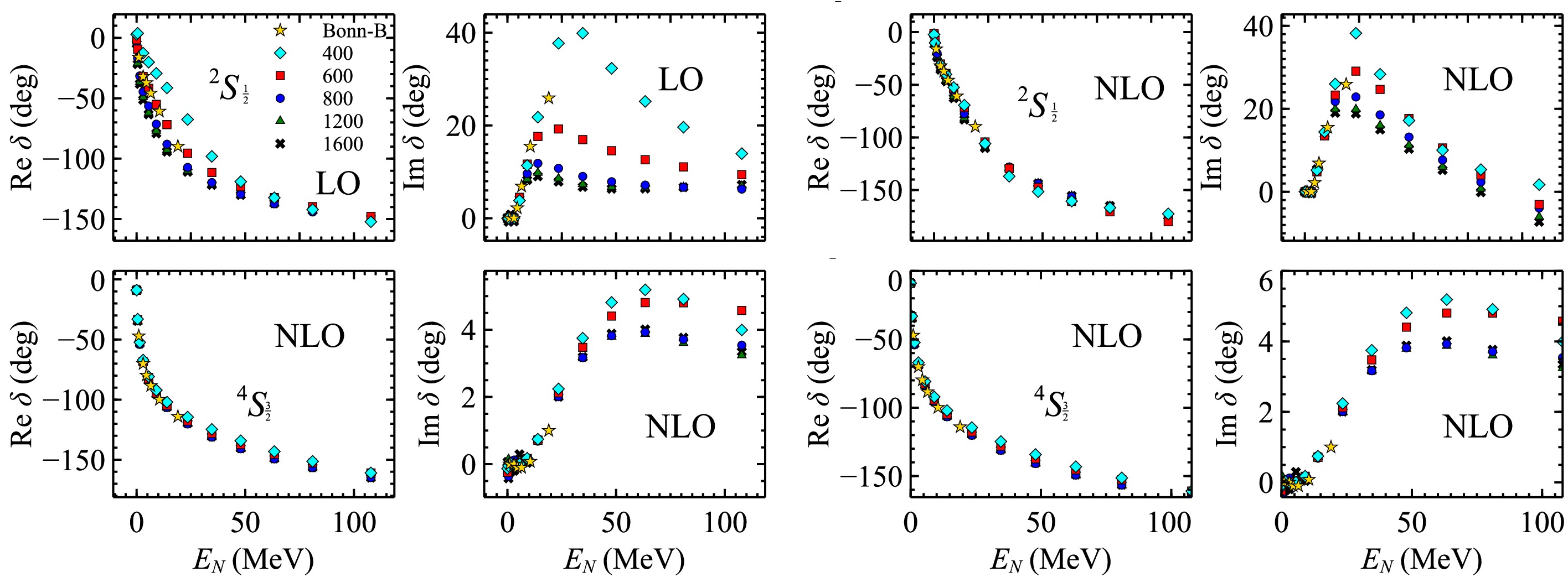
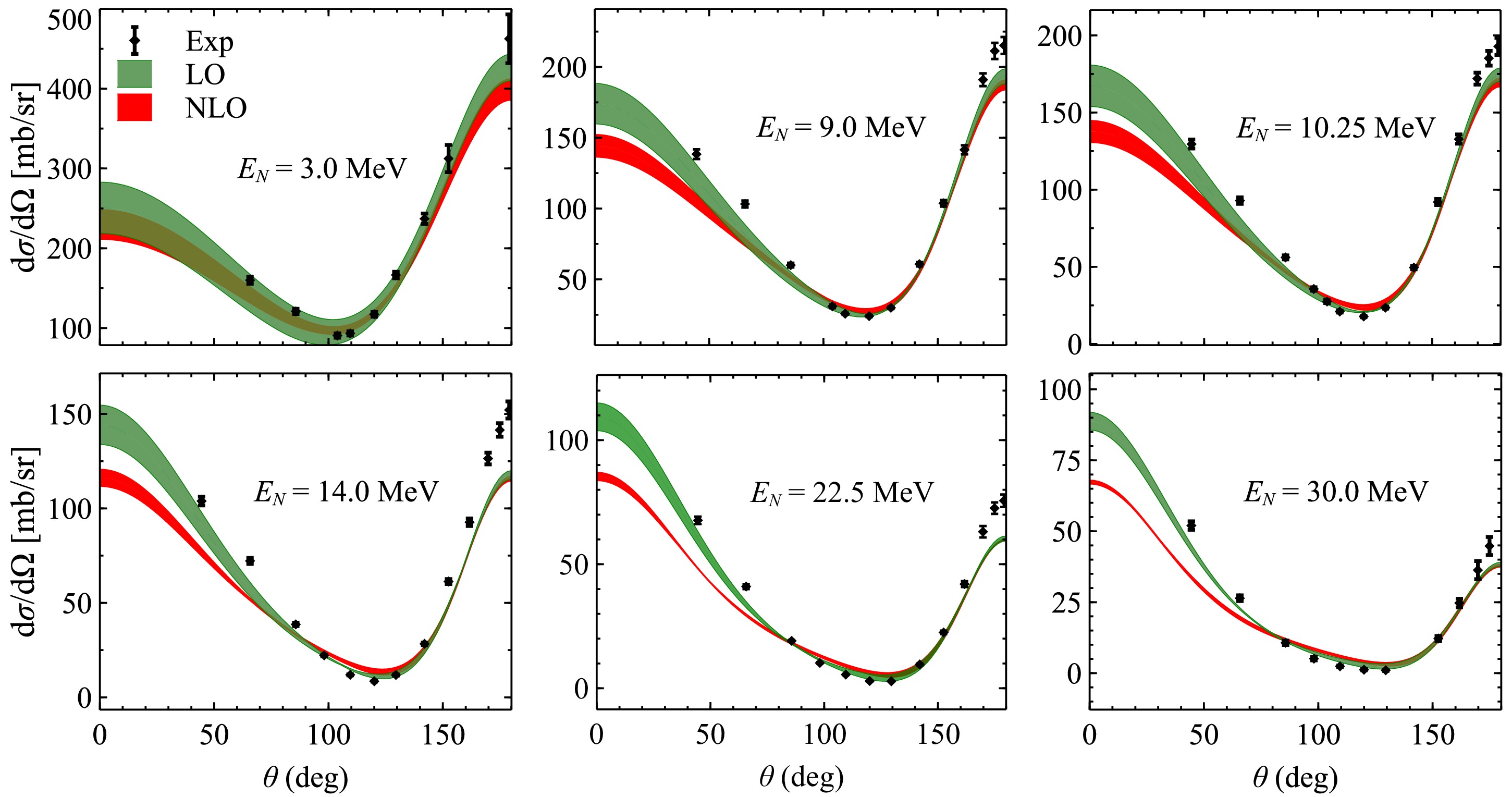
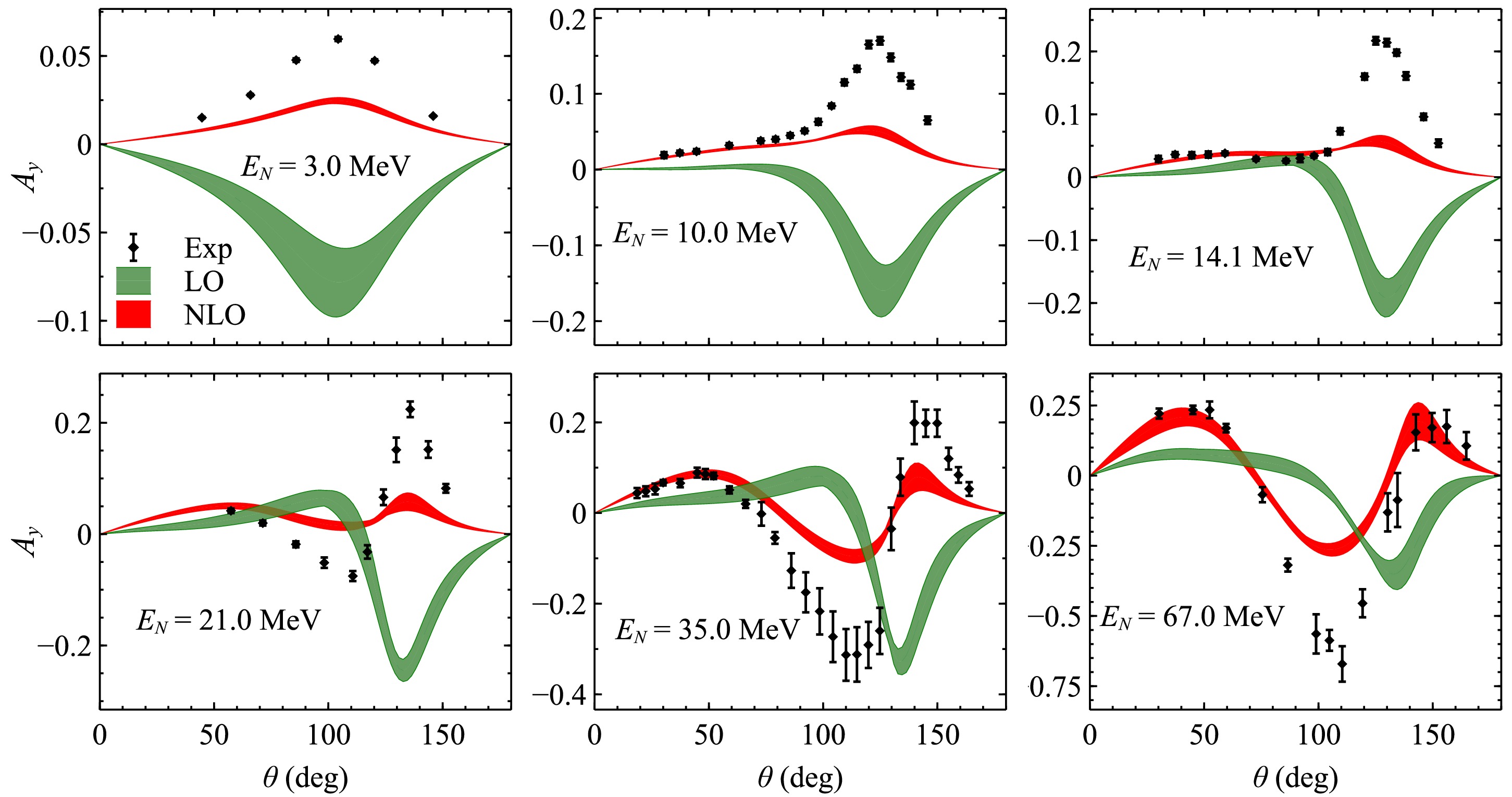
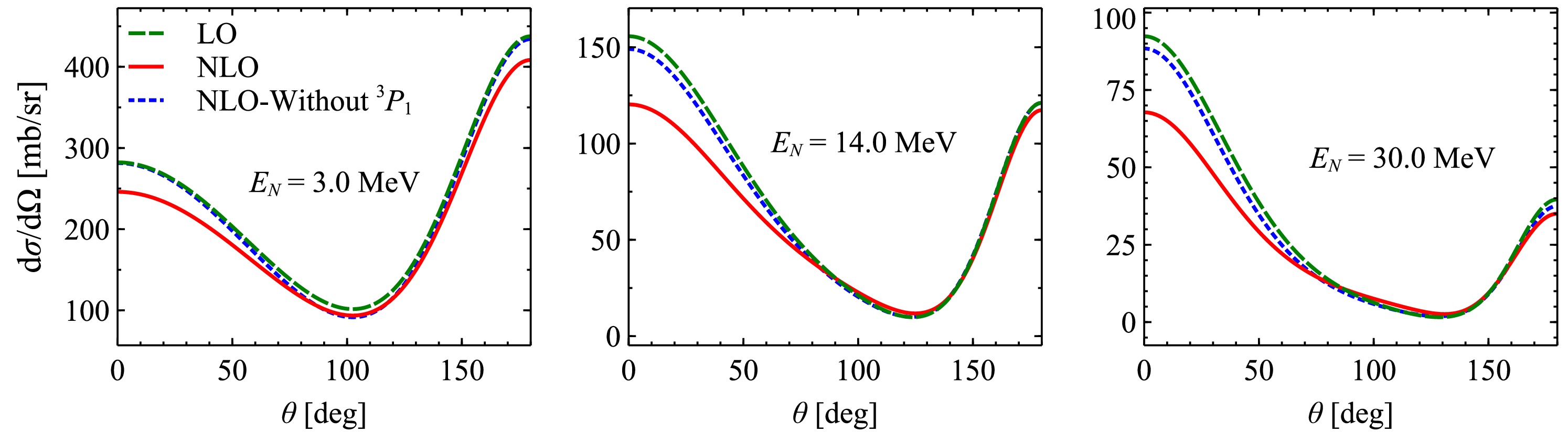
We develop a framework for calculating nucleon-deuteron scattering using the Faddeev equations, employing strict perturbation theory to treat subleading interactions in chiral effective field theory (ChEFT). Rather than evaluating the distorted-wave expansion directly, our approach solves a hierarchy of integral equations to obtain subleading scattering amplitudes. We benchmark the method against the wave-packet continuum discretization. This framework benefits from the fact that renormalization-group-invariant chiral forces involve only a limited number of two-body partial waves at leading order. We use it to calculate differential cross sections and analyzing powers for nucleon-deuteron elastic scattering up to next-to-leading order.
We develop a framework for calculating nucleon-deuteron scattering using the Faddeev equations, employing strict perturbation theory to treat subleading interactions in chiral effective field theory (ChEFT). Rather than evaluating the distorted-wave expansion directly, our approach solves a hierarchy of integral equations to obtain subleading scattering amplitudes. We benchmark the method against the wave-packet continuum discretization. This framework benefits from the fact that renormalization-group-invariant chiral forces involve only a limited number of two-body partial waves at leading order. We use it to calculate differential cross sections and analyzing powers for nucleon-deuteron elastic scattering up to next-to-leading order.
2026, 50(8): 084103. doi: 10.1088/1674-1137/ae6633
Abstract:
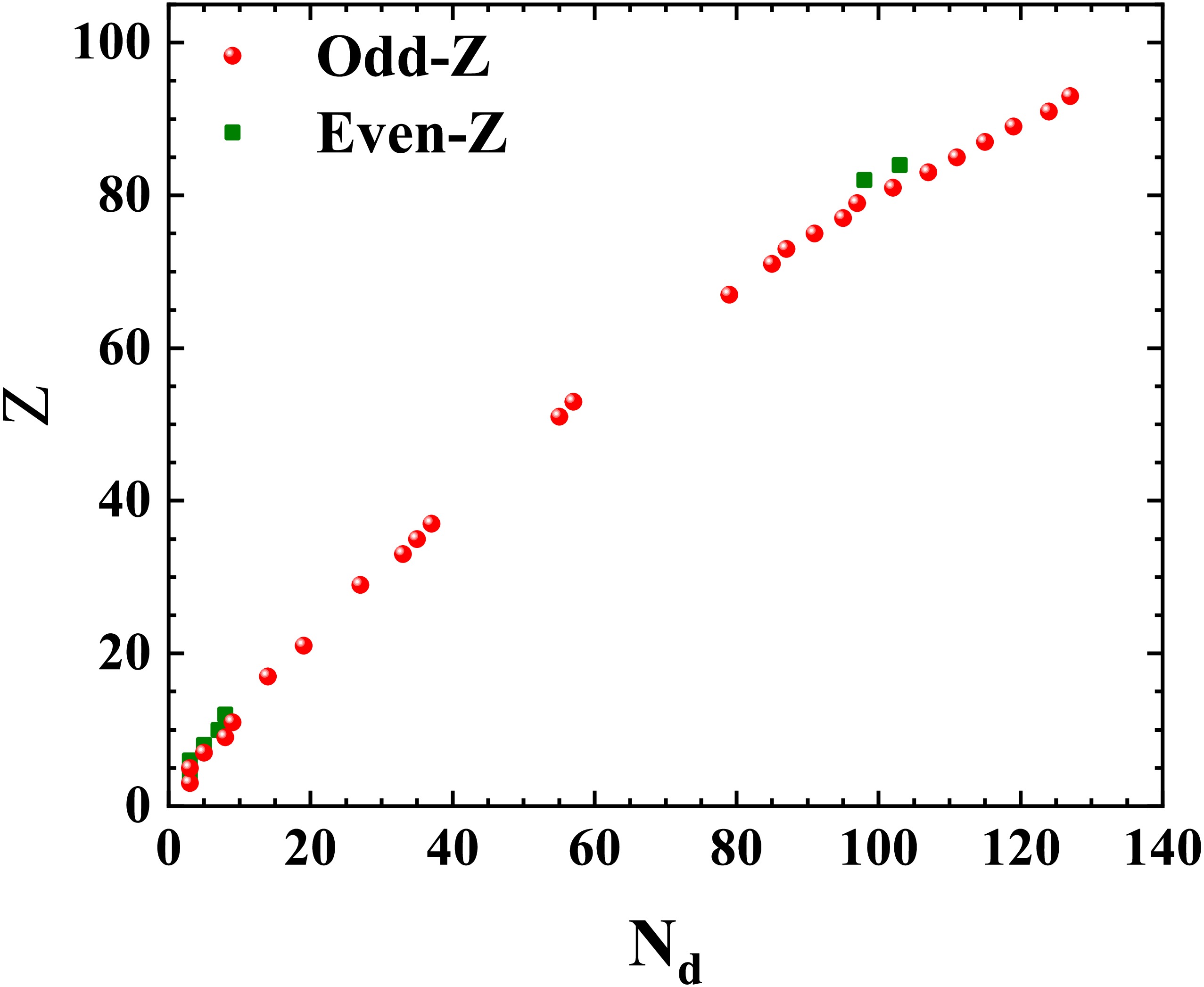
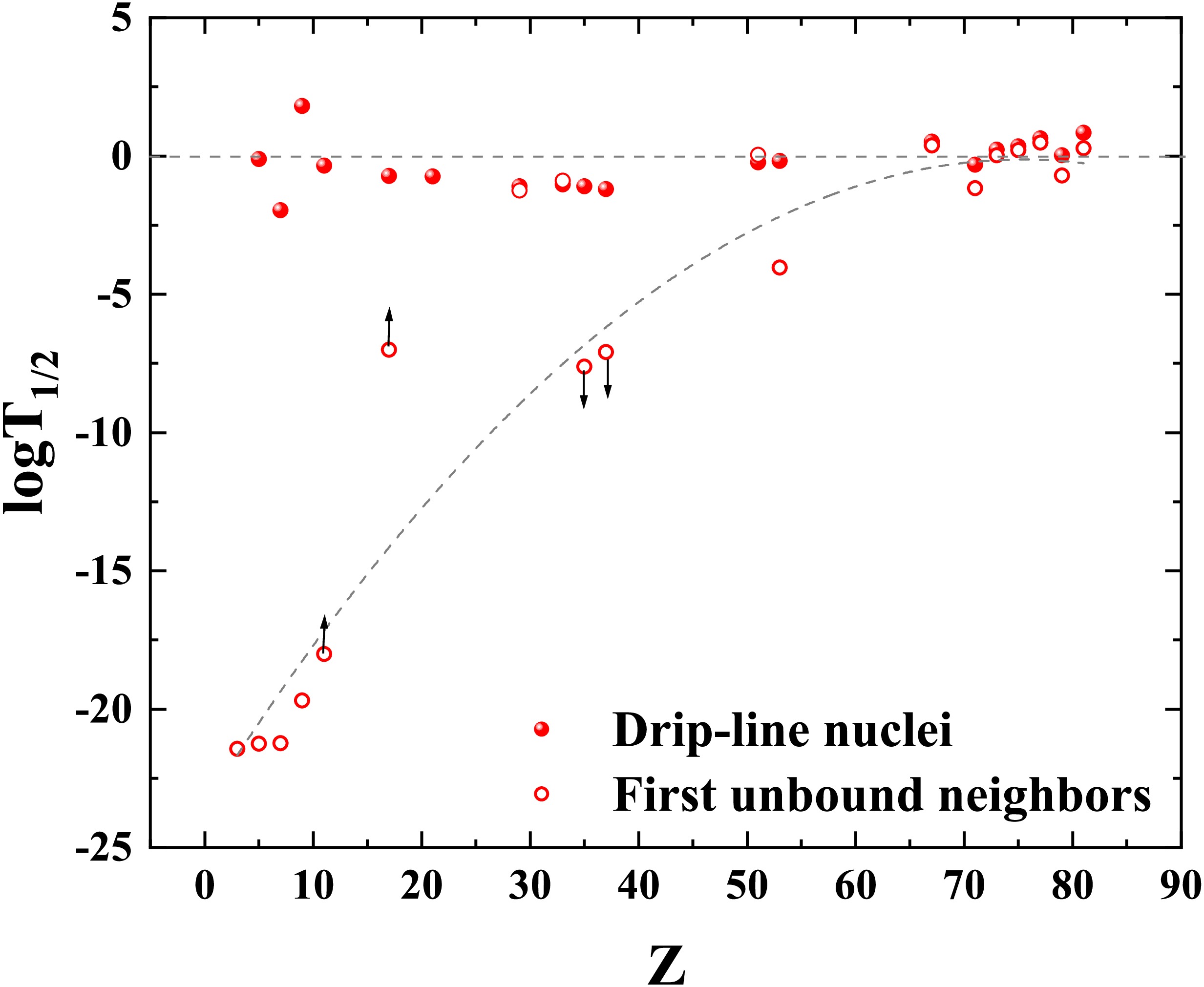
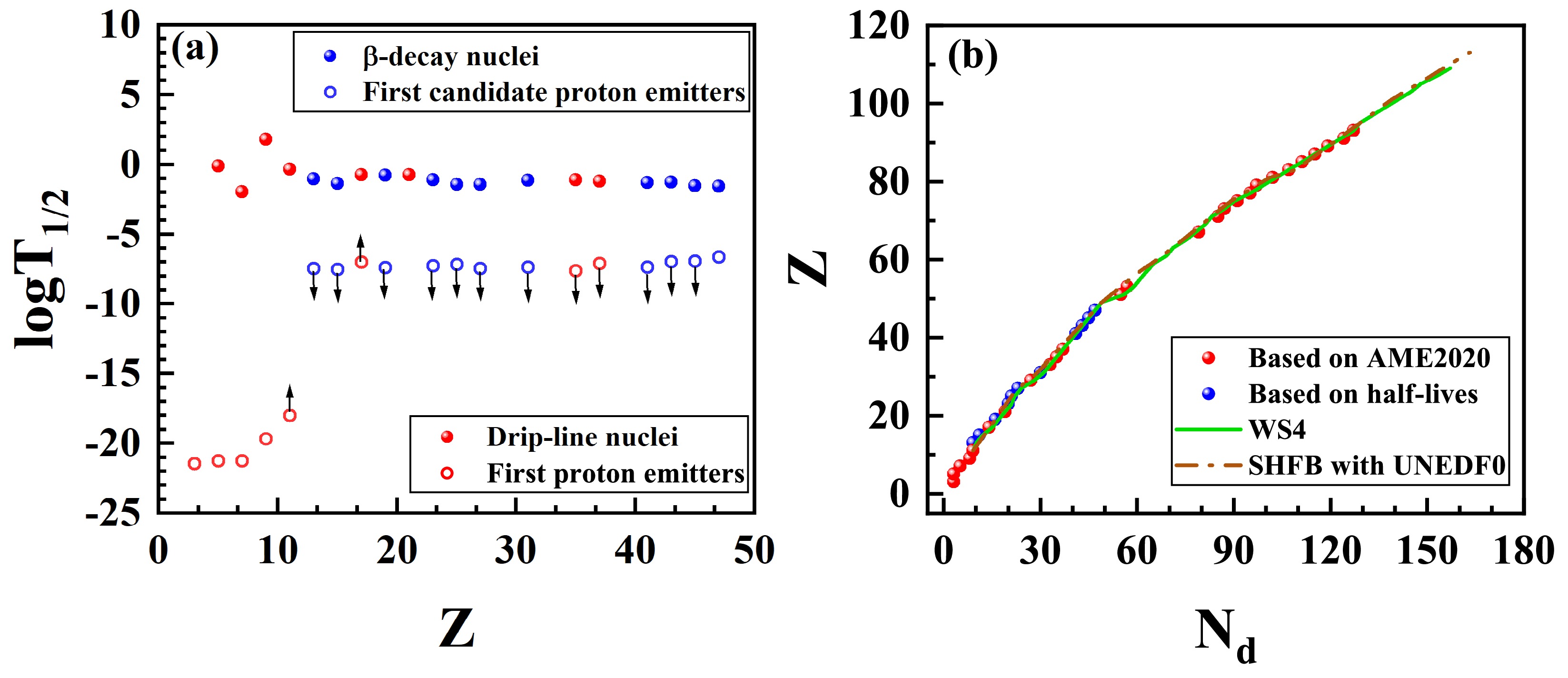
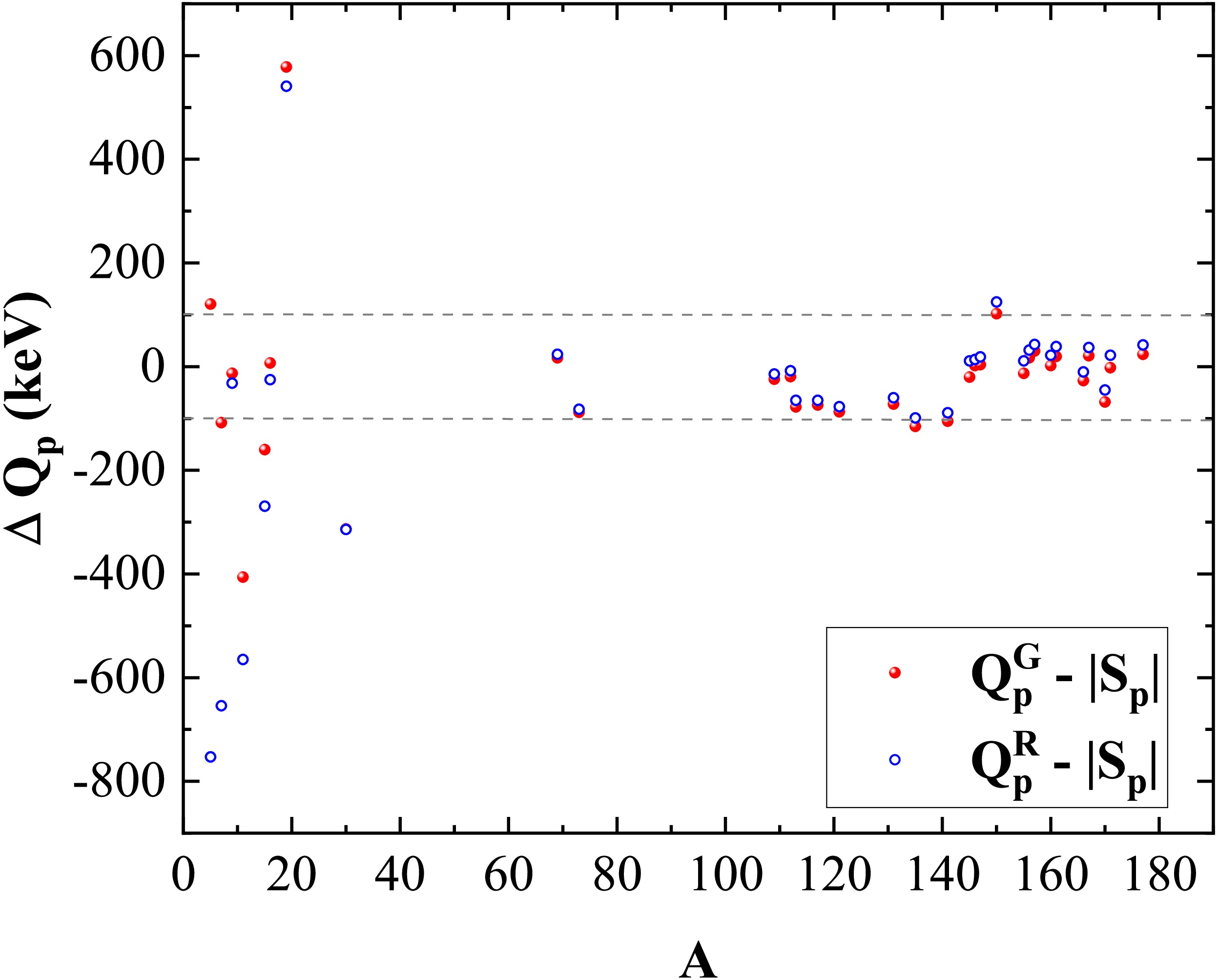
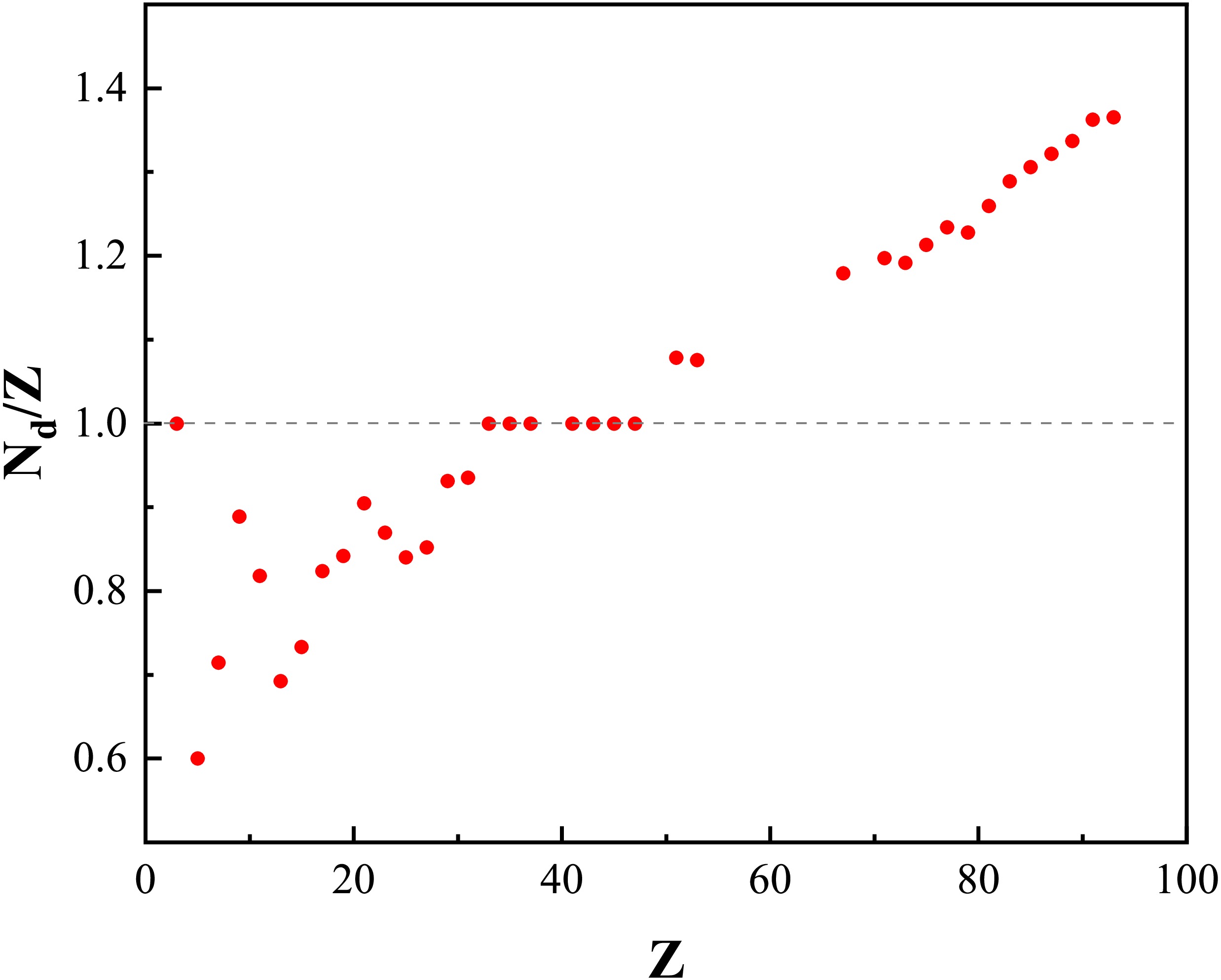
The proton drip-line marks the limiting location where the proton binding energy vanishes. Ground-state proton emission is a signature of having crossed this drip line. We determine the locations of the proton drip-line for odd-Z nuclei along isotopic chains toward the neutron-deficient side based on experimentally measured nuclear masses and proton emission half-lives. The odd-odd characteristics and a plateau at\begin{document}$N = Z$\end{document} \begin{document}$33 \leq Z \leq 47$\end{document}
The proton drip-line marks the limiting location where the proton binding energy vanishes. Ground-state proton emission is a signature of having crossed this drip line. We determine the locations of the proton drip-line for odd-Z nuclei along isotopic chains toward the neutron-deficient side based on experimentally measured nuclear masses and proton emission half-lives. The odd-odd characteristics and a plateau at
2026, 50(8): 084104. doi: 10.1088/1674-1137/ae662d
Abstract:
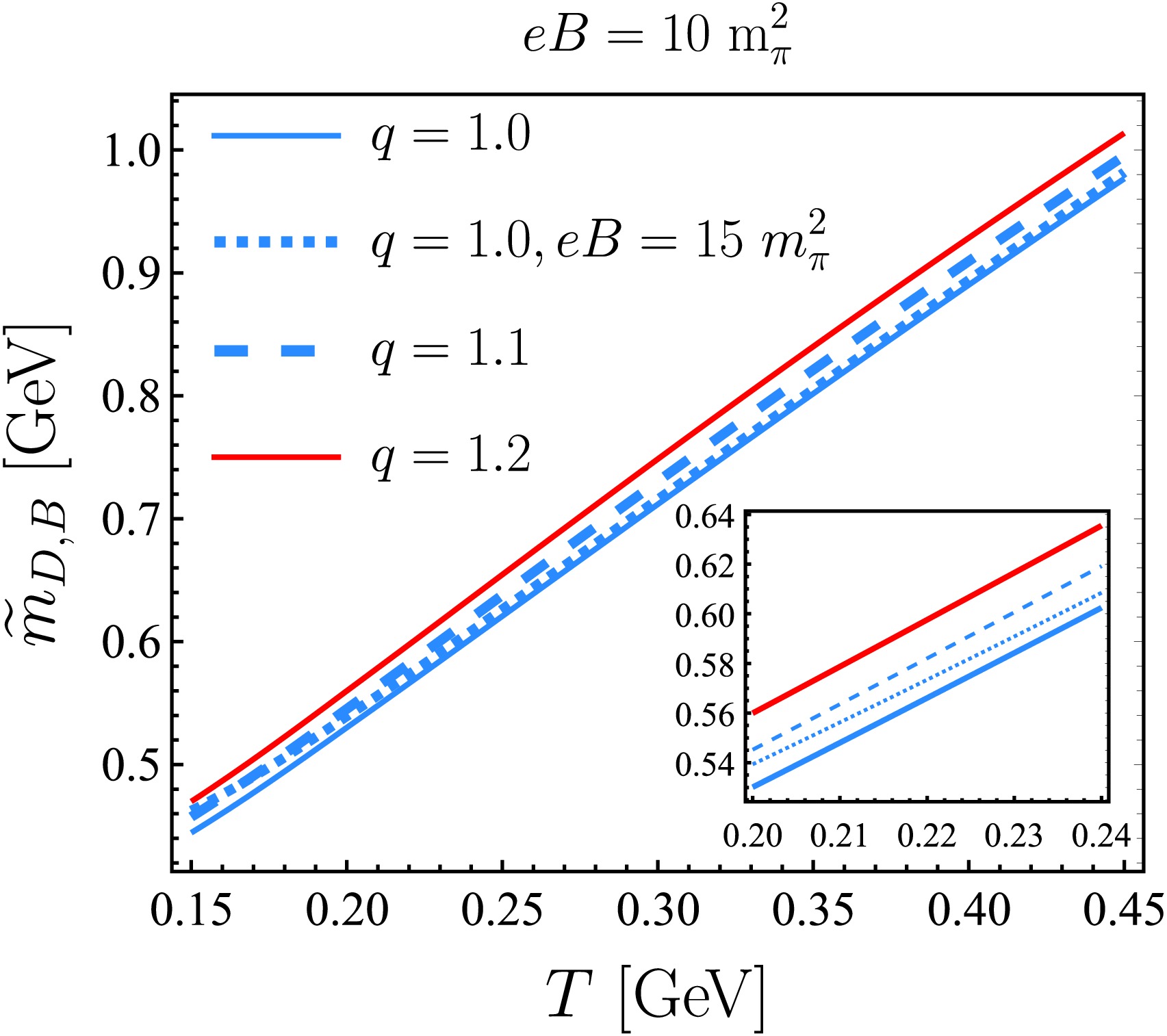
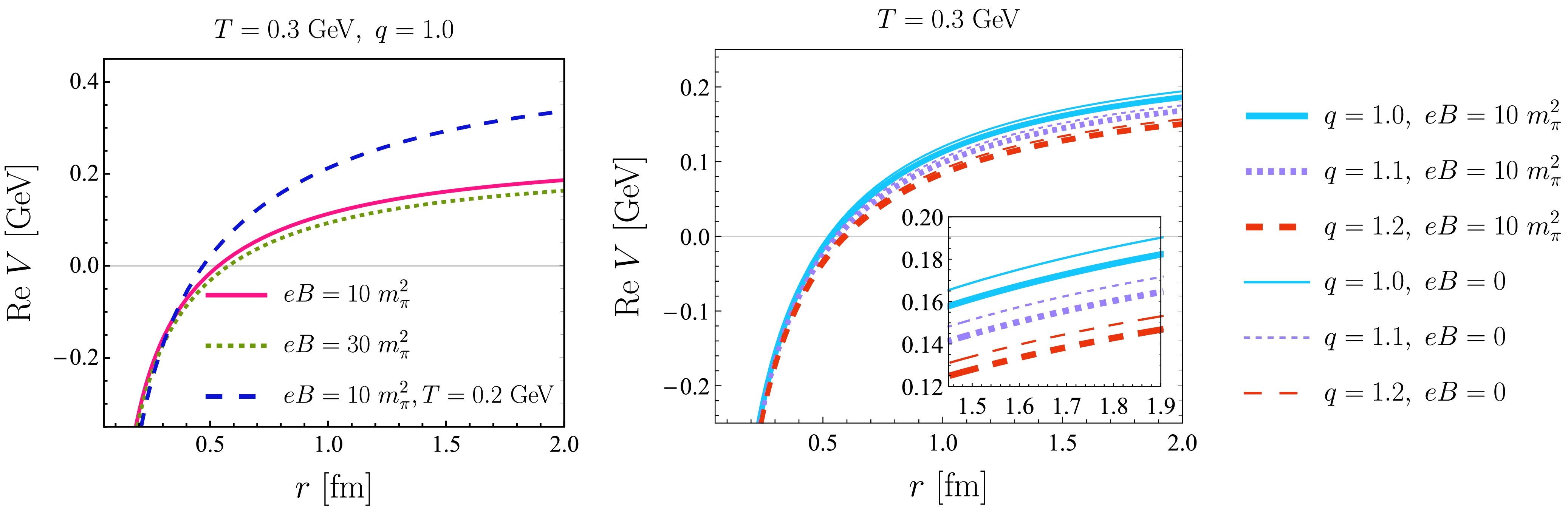
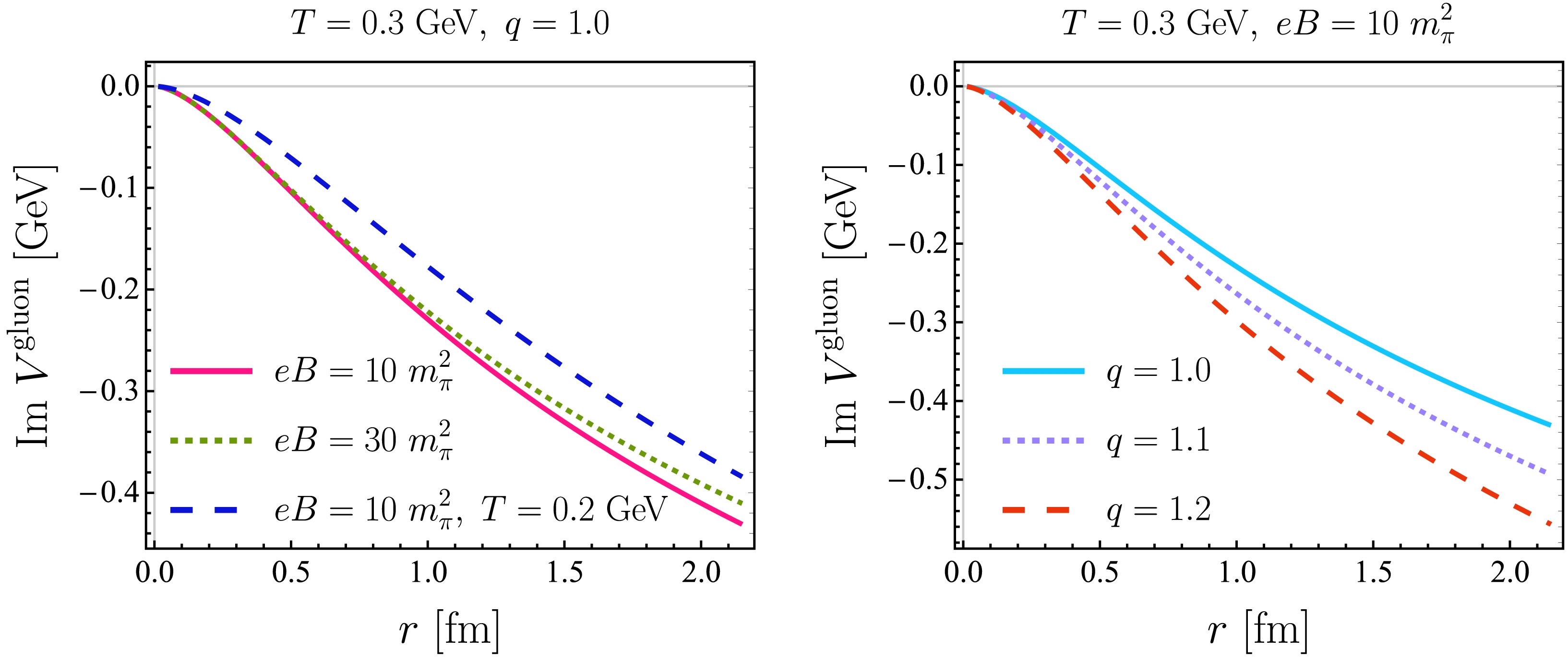
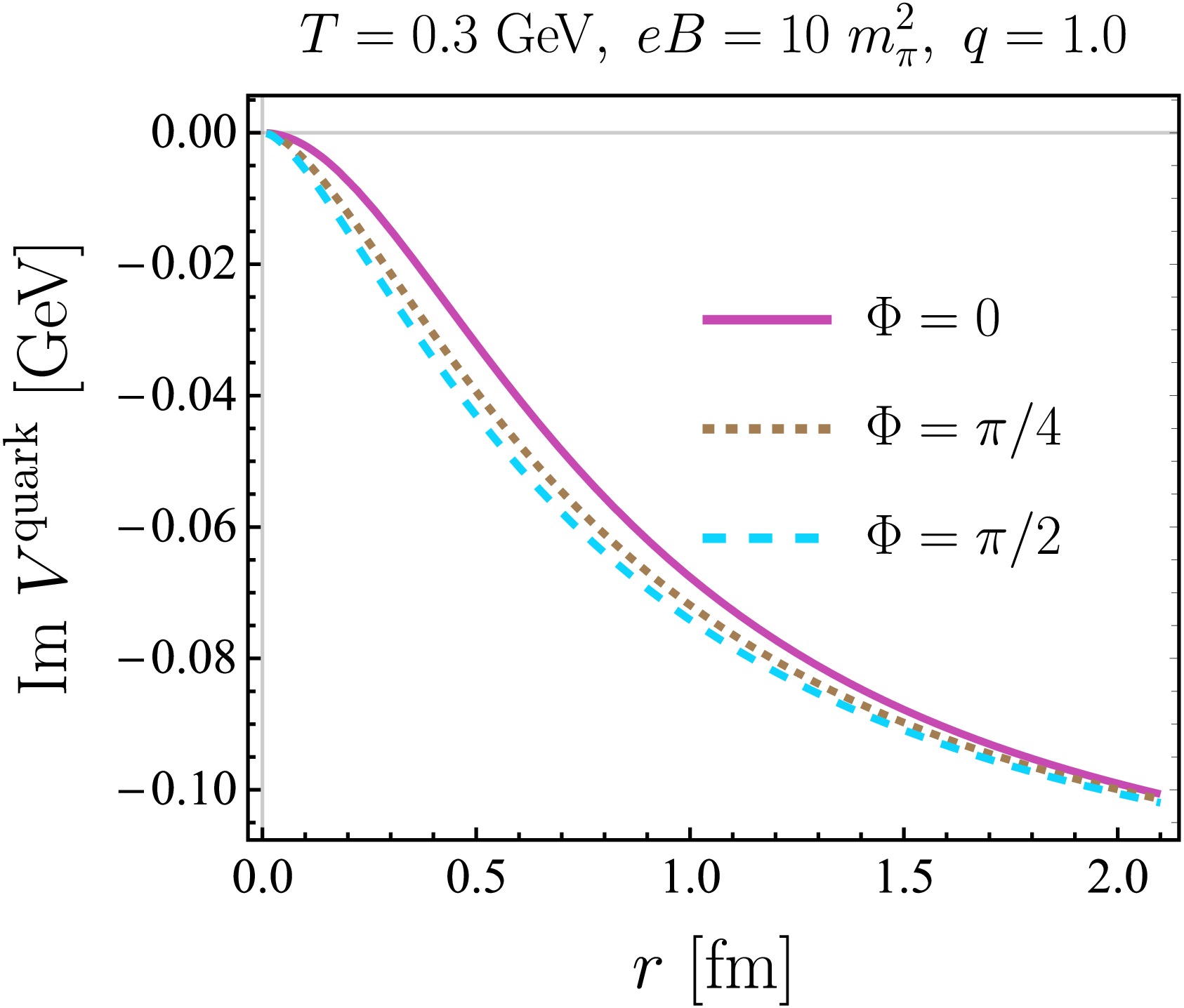
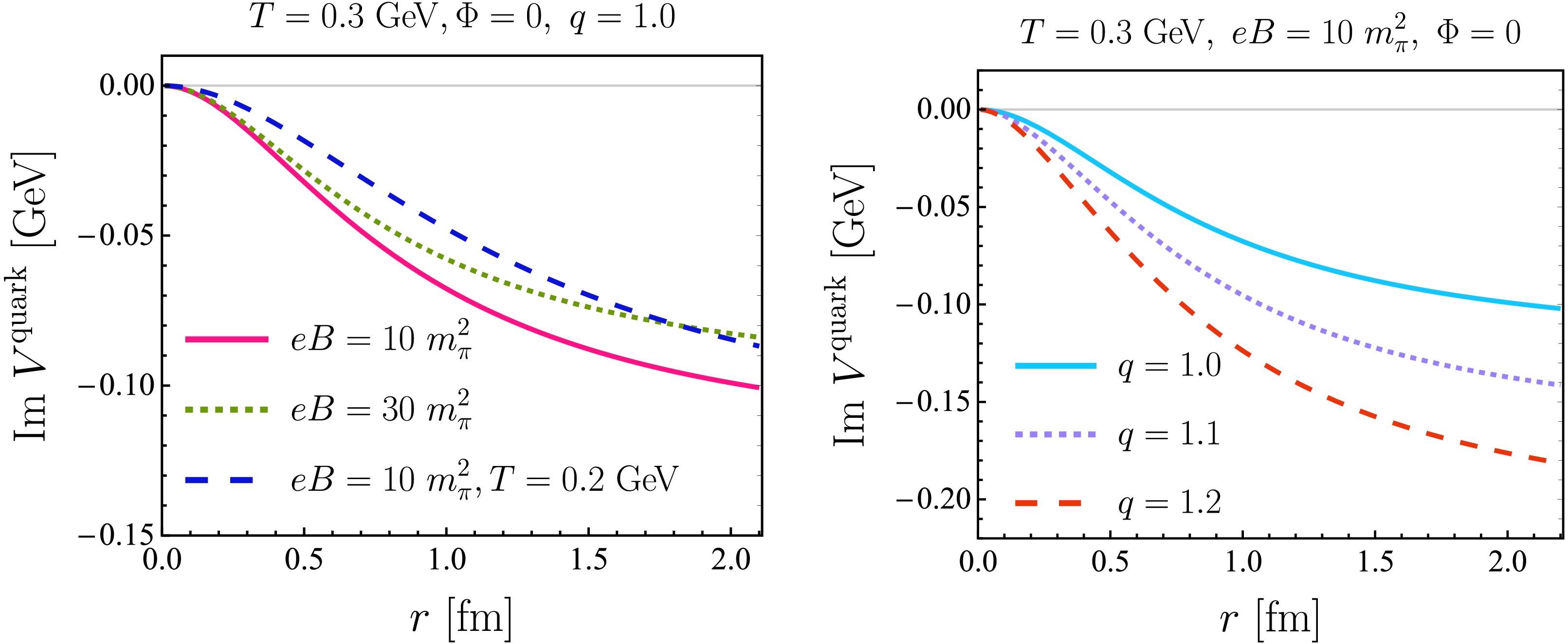
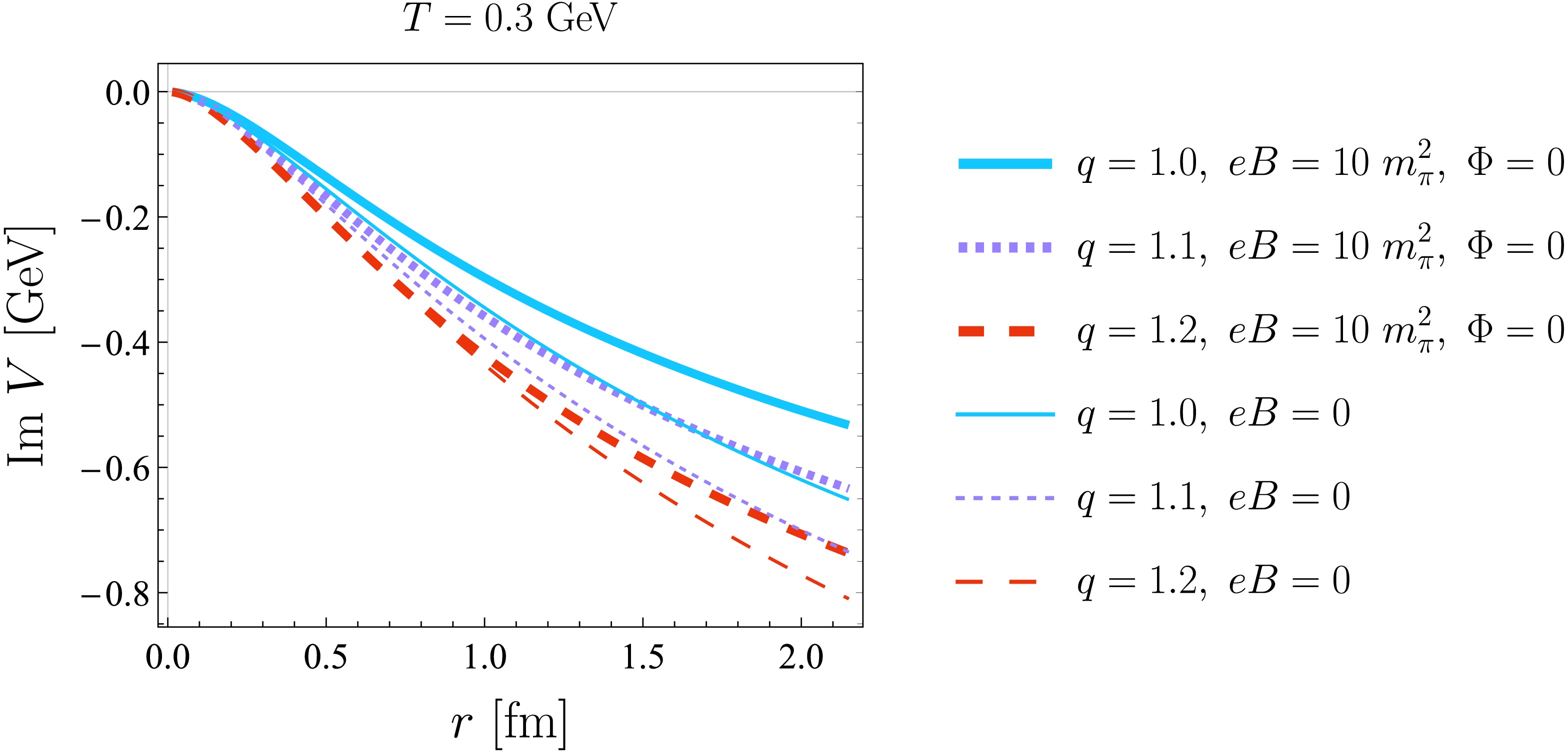
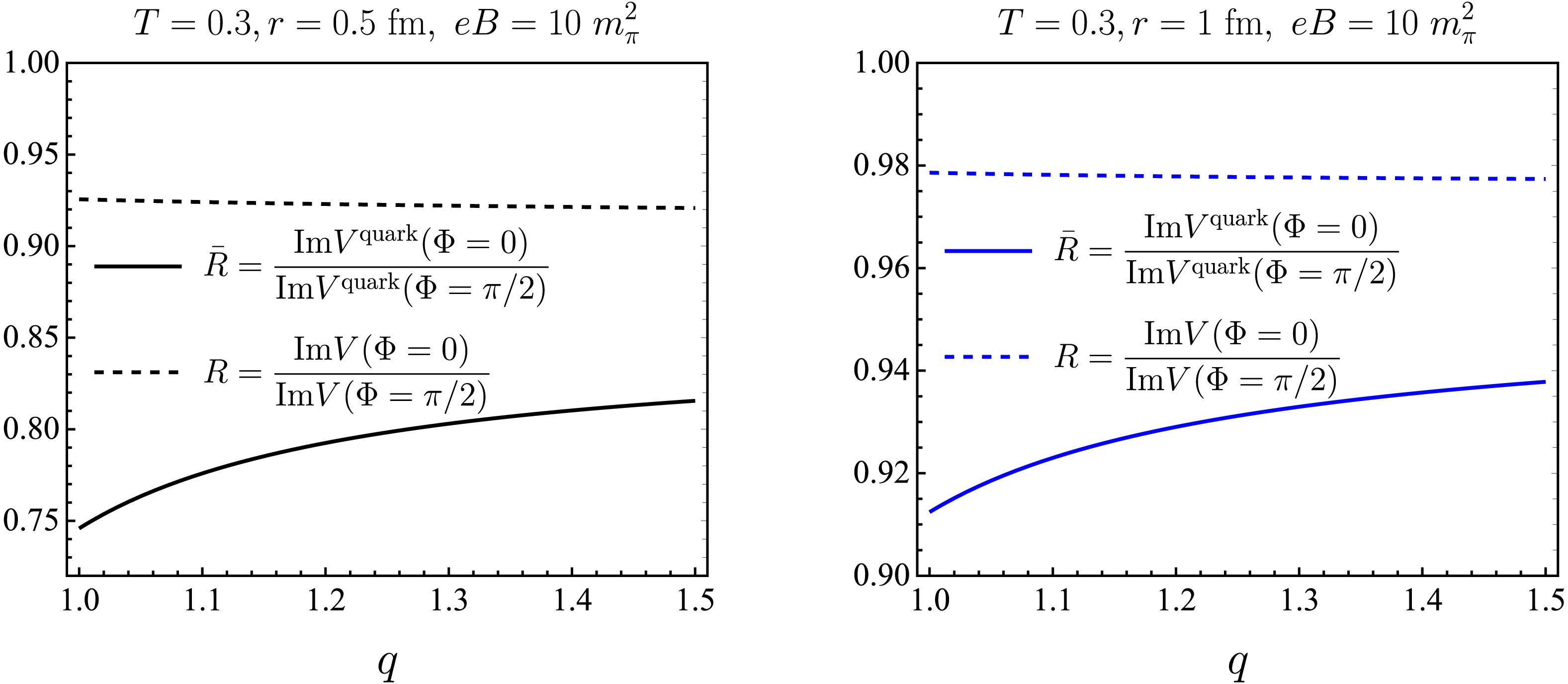
We explore the interplay between the magnetic field and non-extensivity in shaping the complex heavy-quark potential in the quark-gluon plasma via the dielectric permittivity. Within the real-time formalism with hard-thermal-loop resummation, we determine the non-extensive corrections to the gluon self-energy and the resummed gluon propagator in the Keldysh representation, and we apply these results to compute the medium's dielectric permittivity. Our study shows that increases in the magnetic field and in non-extensivity enhance screening and flatten the real part of the potential, whereas they affect the imaginary part in opposite ways. When the gluon-loop contribution to the gluon self-energy is excluded, the imaginary part of the potential exhibits pronounced anisotropy in the presence of a magnetic field, especially at small quark-antiquark separations, while non-extensivity can weaken this anisotropy. When the gluon-loop contribution is included, the degree of anisotropy of the imaginary part of the potential is largely reduced and becomes nearly insensitive to non-extensive effects. These results pave the way for further studies of the properties of heavy quarkonia in a magnetized, non-extensive quark-gluon plasma.
We explore the interplay between the magnetic field and non-extensivity in shaping the complex heavy-quark potential in the quark-gluon plasma via the dielectric permittivity. Within the real-time formalism with hard-thermal-loop resummation, we determine the non-extensive corrections to the gluon self-energy and the resummed gluon propagator in the Keldysh representation, and we apply these results to compute the medium's dielectric permittivity. Our study shows that increases in the magnetic field and in non-extensivity enhance screening and flatten the real part of the potential, whereas they affect the imaginary part in opposite ways. When the gluon-loop contribution to the gluon self-energy is excluded, the imaginary part of the potential exhibits pronounced anisotropy in the presence of a magnetic field, especially at small quark-antiquark separations, while non-extensivity can weaken this anisotropy. When the gluon-loop contribution is included, the degree of anisotropy of the imaginary part of the potential is largely reduced and becomes nearly insensitive to non-extensive effects. These results pave the way for further studies of the properties of heavy quarkonia in a magnetized, non-extensive quark-gluon plasma.
2026, 50(8): 084105. doi: 10.1088/1674-1137/ae66d4
Abstract:
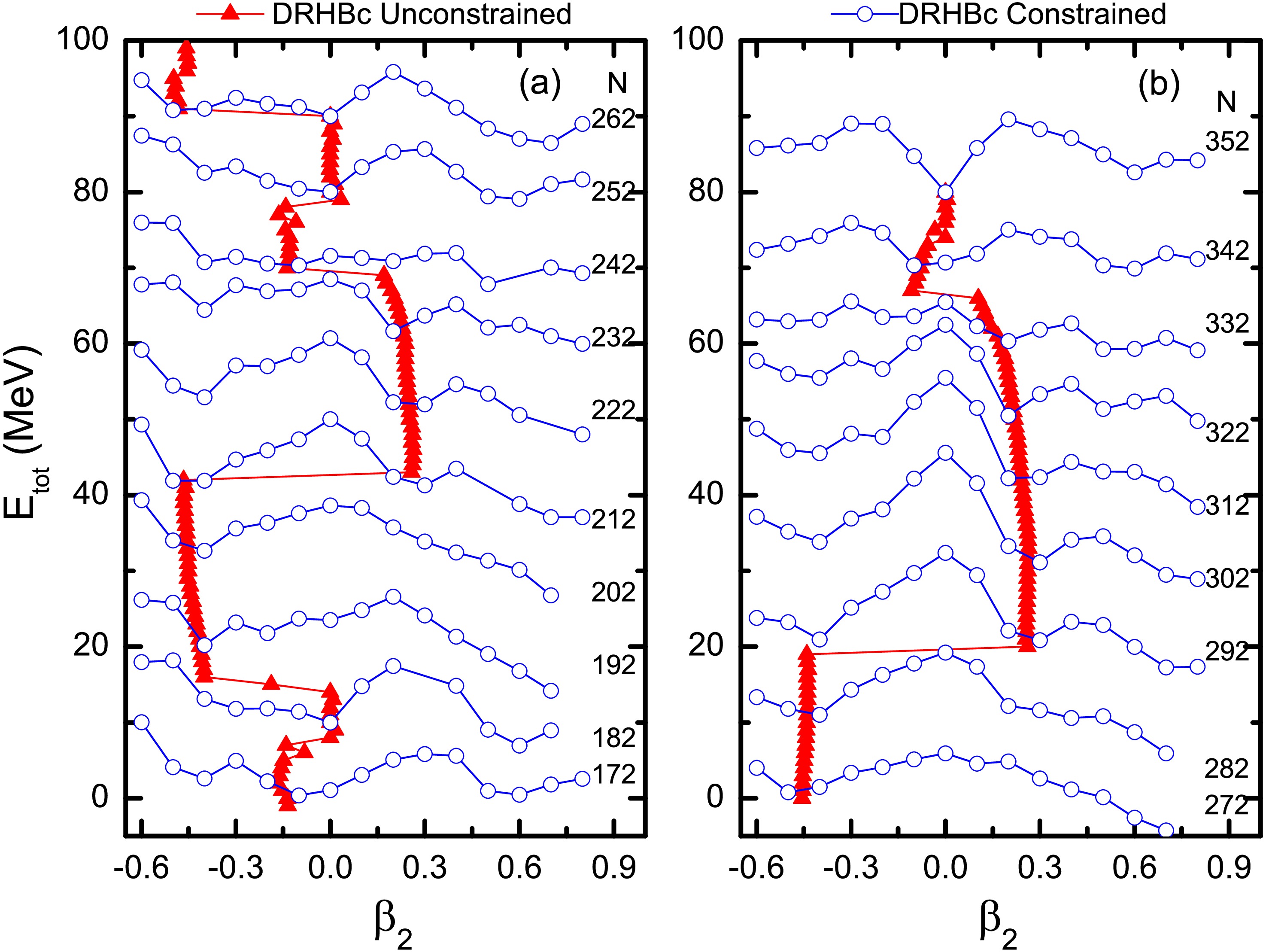
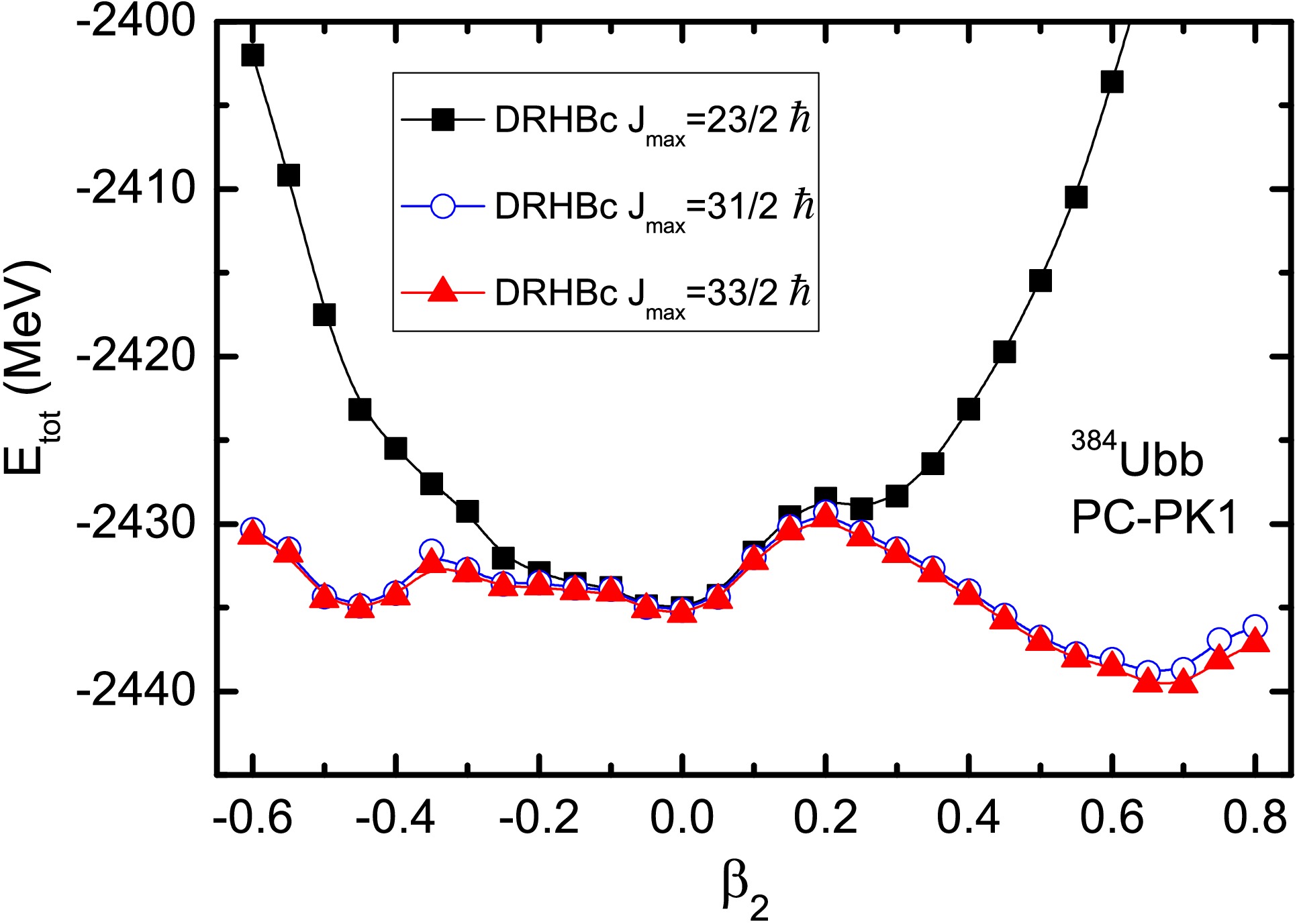
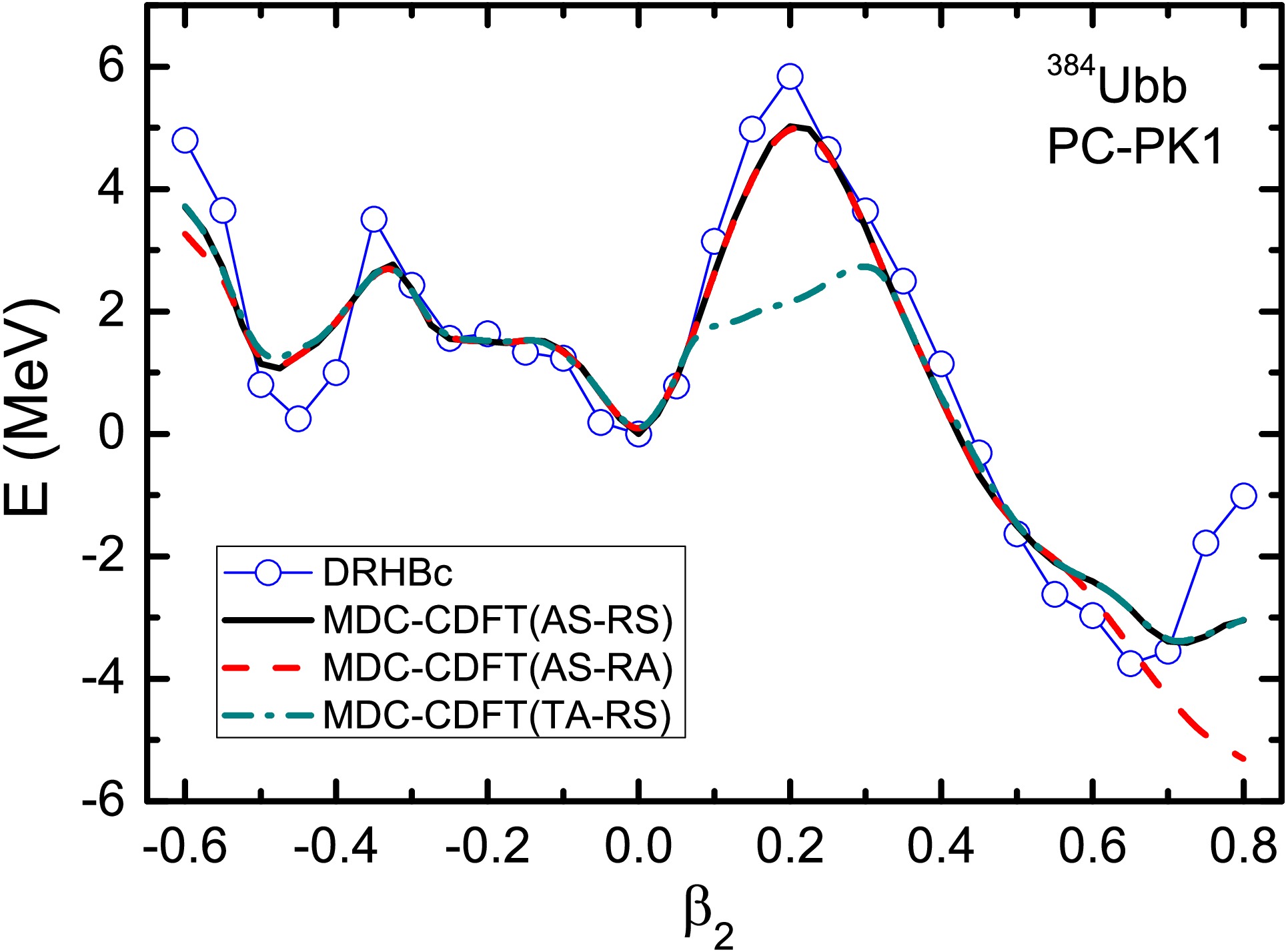
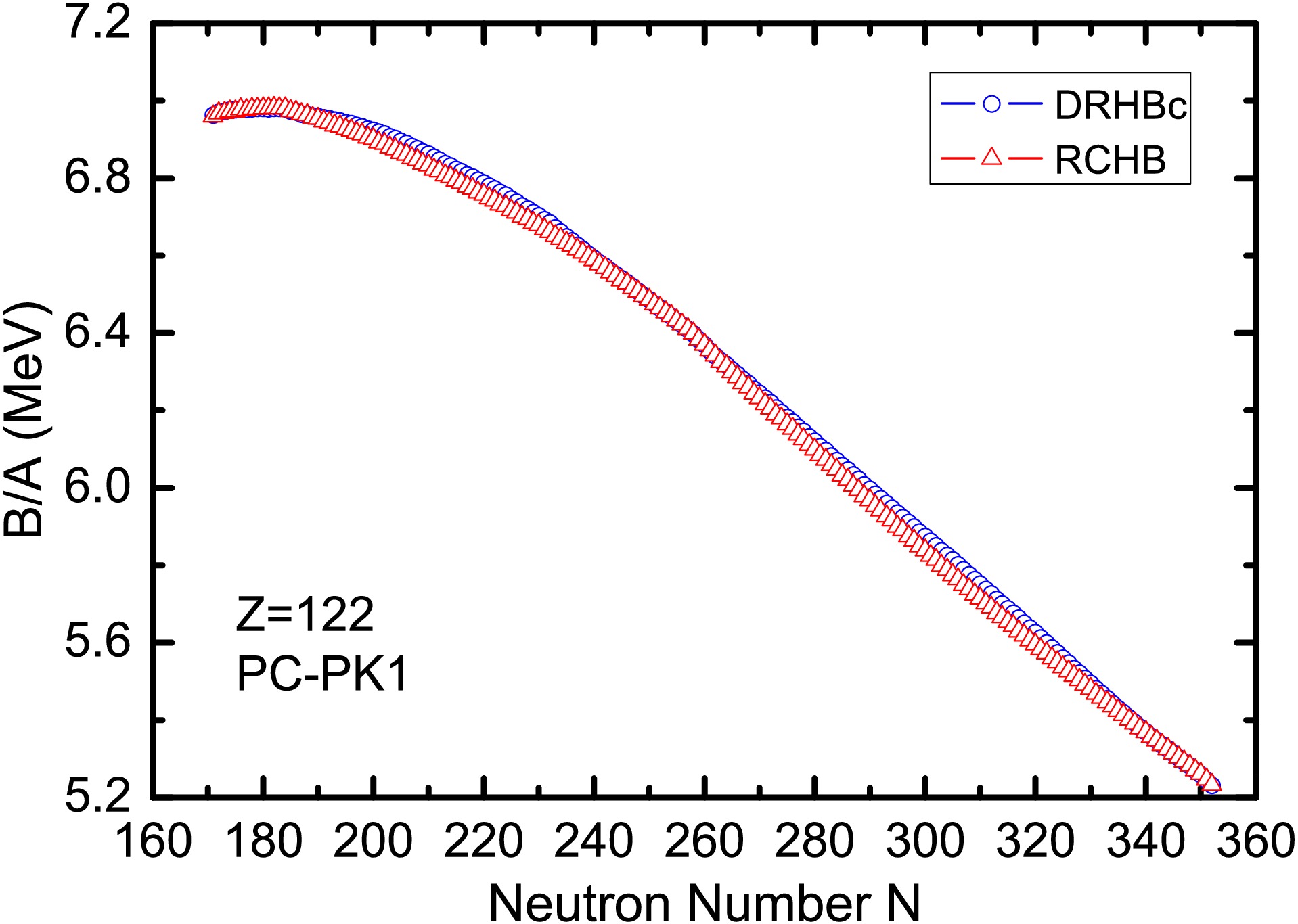
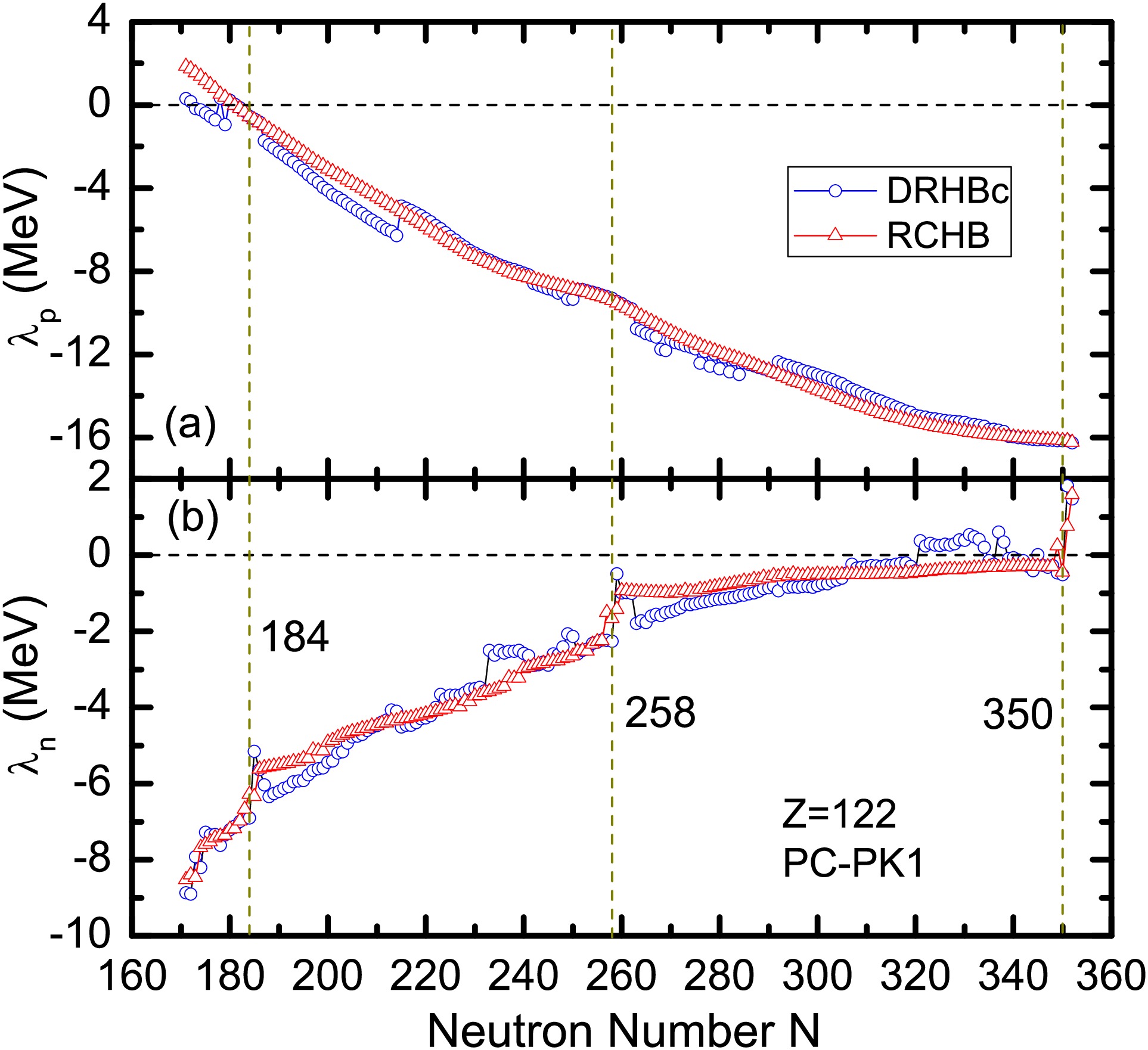
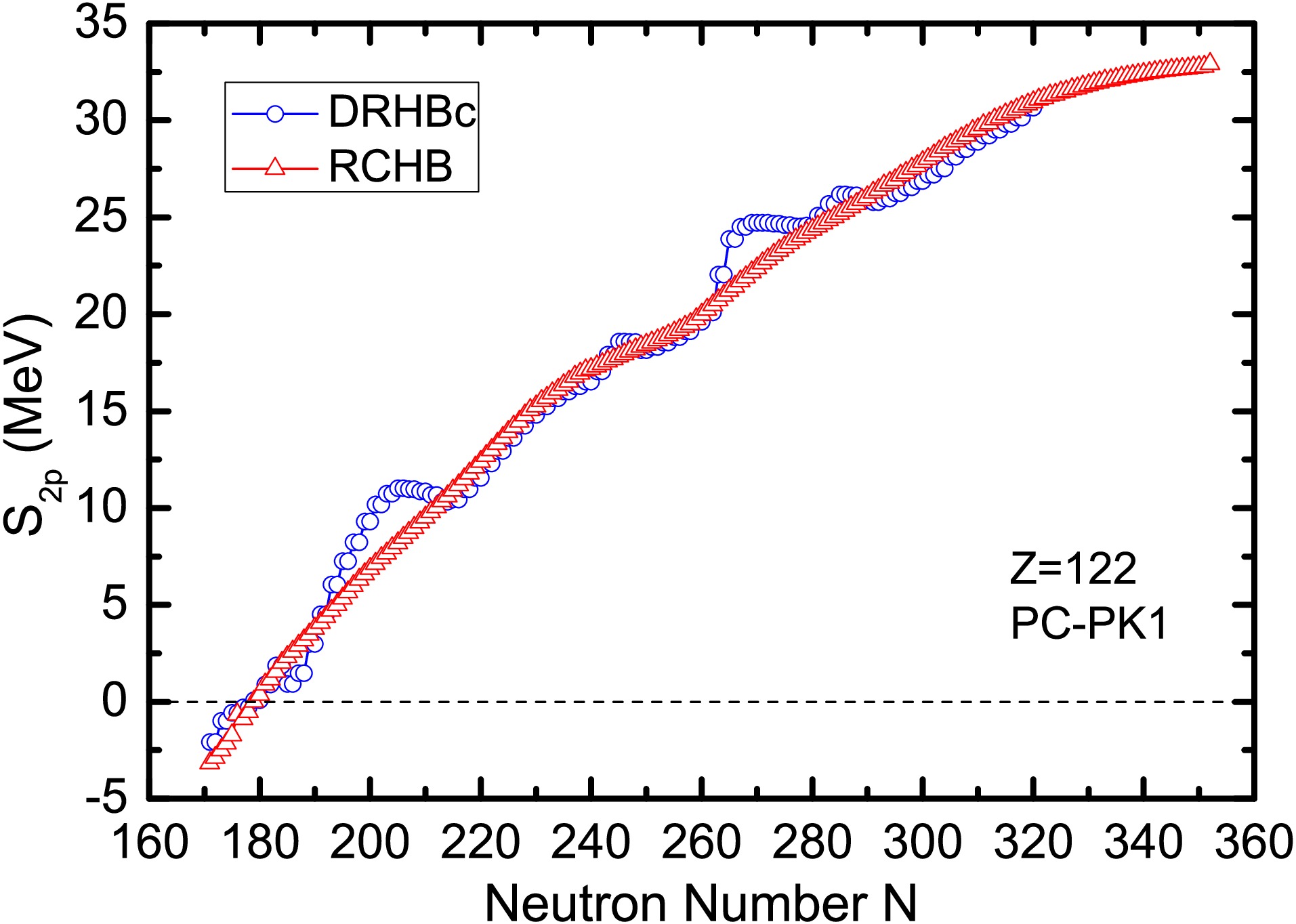
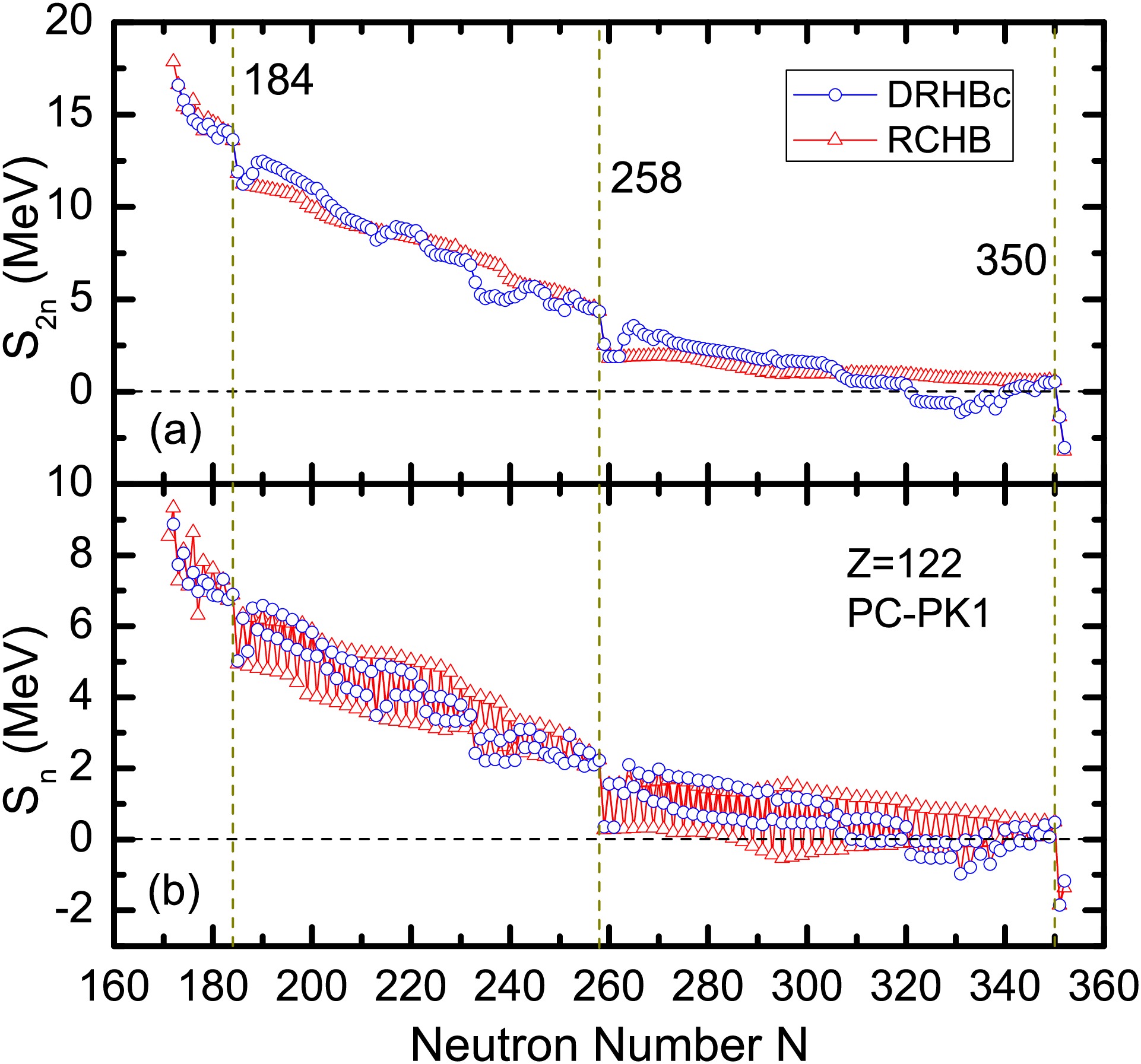
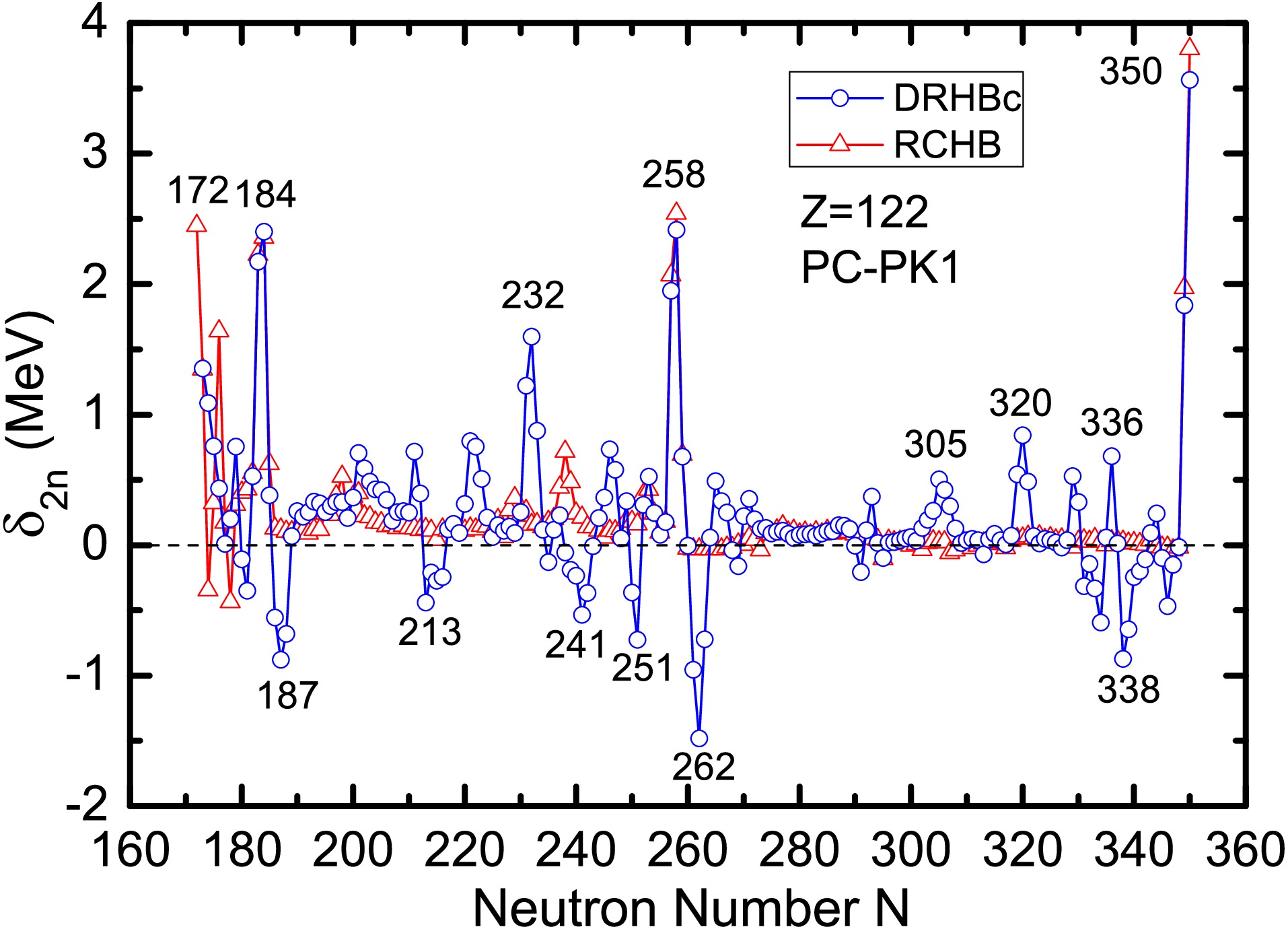
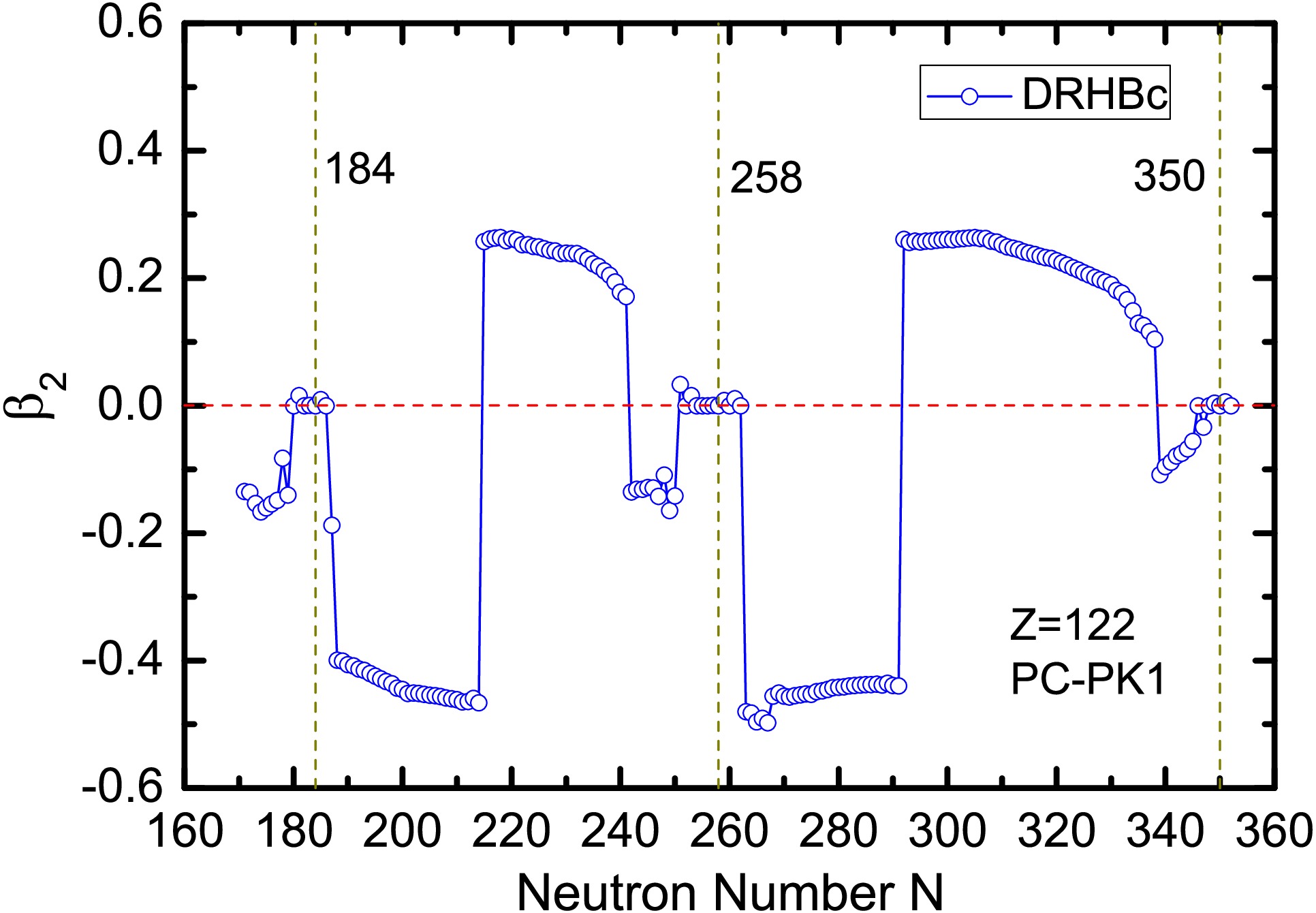
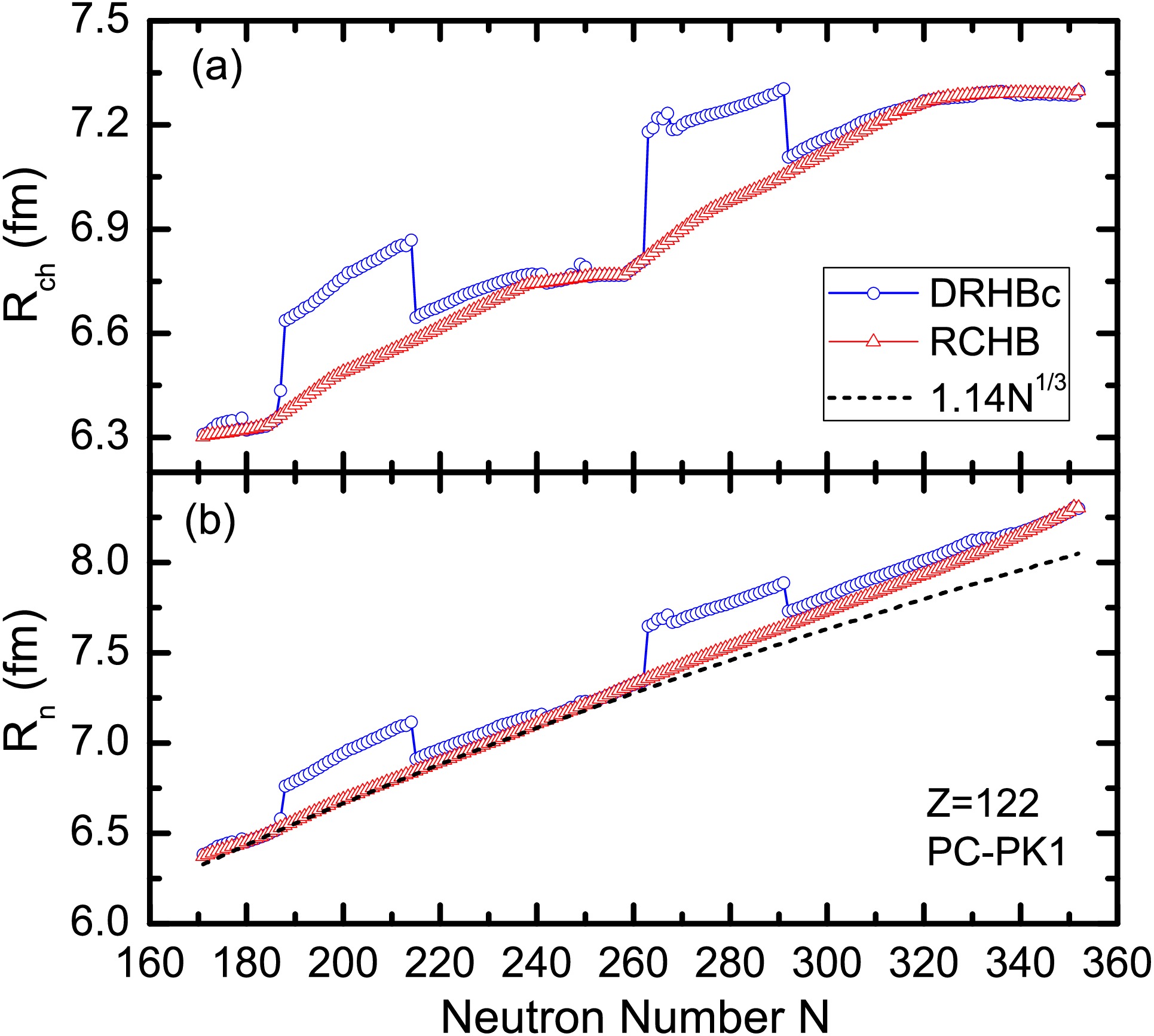
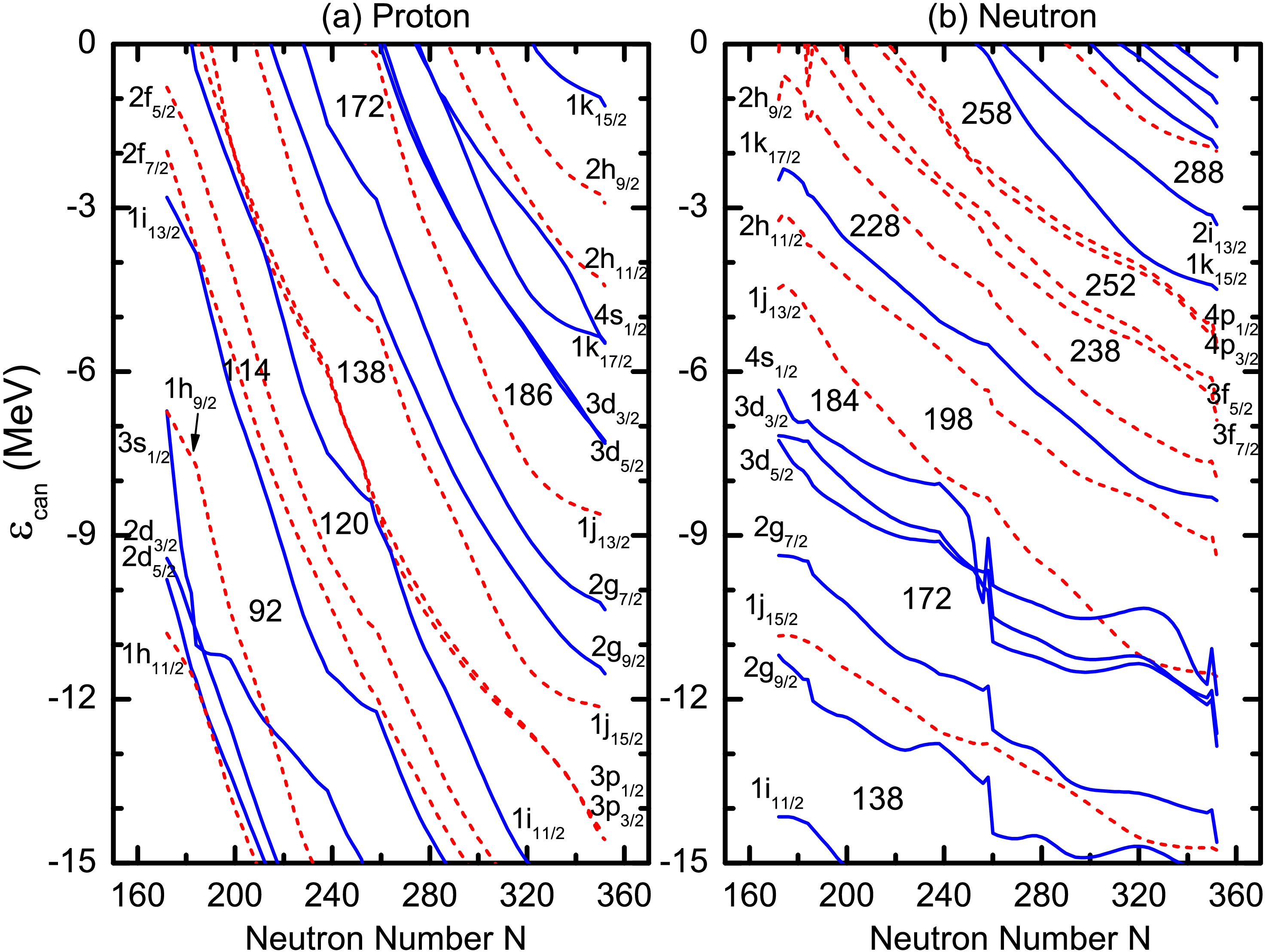
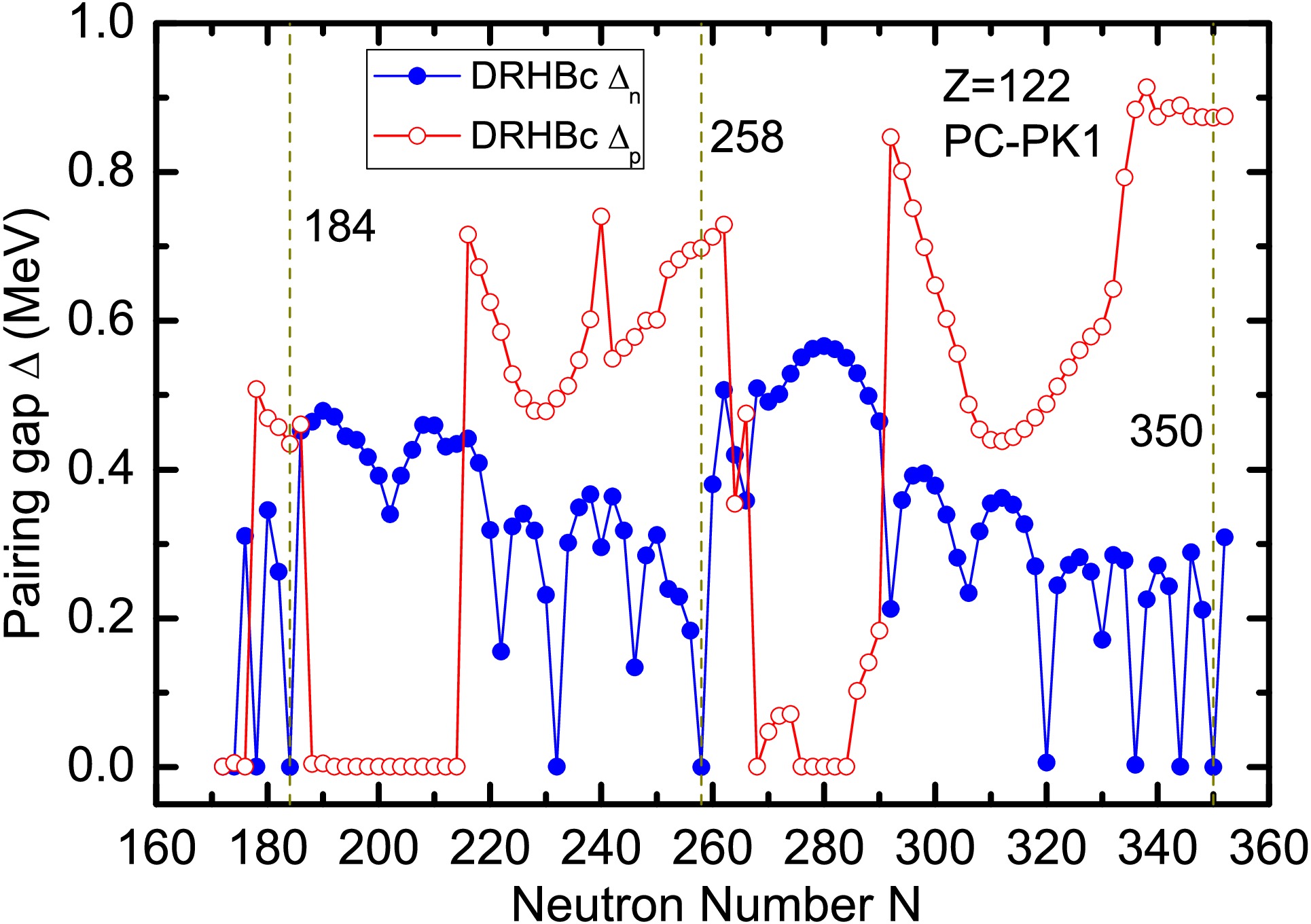
The ground-state properties of superheavy Z = 122 isotopes are investigated using the deformed relativistic Hartree-Bogoliubov theory in continuum (DRHBc). Bulk properties, including binding energies, Fermi energies, nucleon separation energies, two-neutron shell gaps, quadrupole deformations, root-mean-square radii, and average pairing gaps, are calculated. The results are compared with those obtained from the relativistic continuum Hartree-Bogoliubov (RCHB) theory. By examining the dependence on the angular-momentum cutoff and the effects of triaxial and octupole deformations, a strategy for determining the ground states is suggested. Furthermore, based on an analysis of the Fermi and nucleon separation energies, the proton and neutron drip lines for Z = 122 isotopes are determined within both the DRHBc and RCHB frameworks. The possible magic numbers N = 184, 258, and 350 are also suggested. Finally, the evolution of the two-neutron shell gaps, deformation, charge and neutron radii, single-particle levels, and average pairing gaps with increasing neutron number is discussed. These quantities consistently support the suggested neutron shell closure.
The ground-state properties of superheavy Z = 122 isotopes are investigated using the deformed relativistic Hartree-Bogoliubov theory in continuum (DRHBc). Bulk properties, including binding energies, Fermi energies, nucleon separation energies, two-neutron shell gaps, quadrupole deformations, root-mean-square radii, and average pairing gaps, are calculated. The results are compared with those obtained from the relativistic continuum Hartree-Bogoliubov (RCHB) theory. By examining the dependence on the angular-momentum cutoff and the effects of triaxial and octupole deformations, a strategy for determining the ground states is suggested. Furthermore, based on an analysis of the Fermi and nucleon separation energies, the proton and neutron drip lines for Z = 122 isotopes are determined within both the DRHBc and RCHB frameworks. The possible magic numbers N = 184, 258, and 350 are also suggested. Finally, the evolution of the two-neutron shell gaps, deformation, charge and neutron radii, single-particle levels, and average pairing gaps with increasing neutron number is discussed. These quantities consistently support the suggested neutron shell closure.
2026, 50(8): 084106. doi: 10.1088/1674-1137/ae6b20
Abstract:
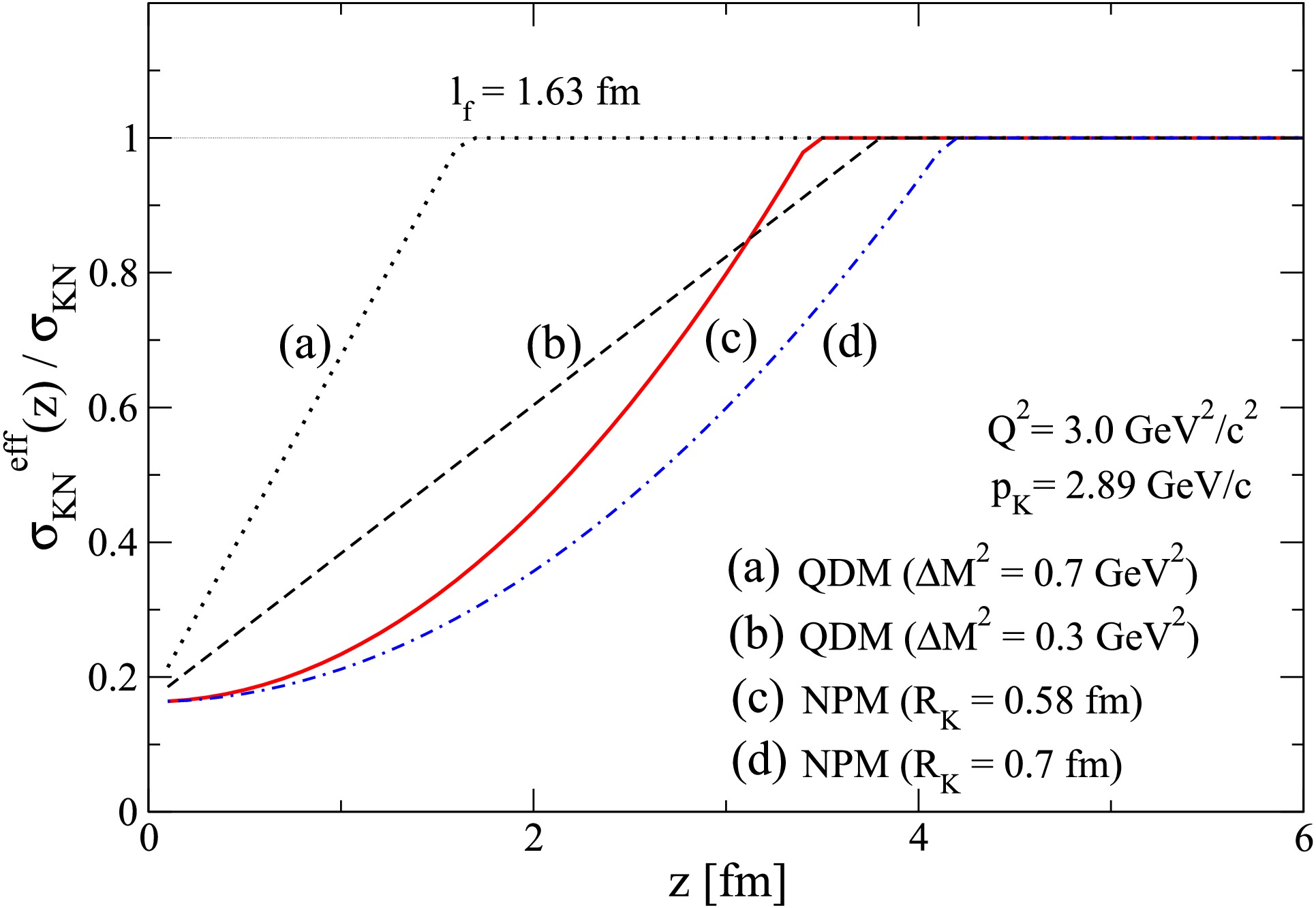
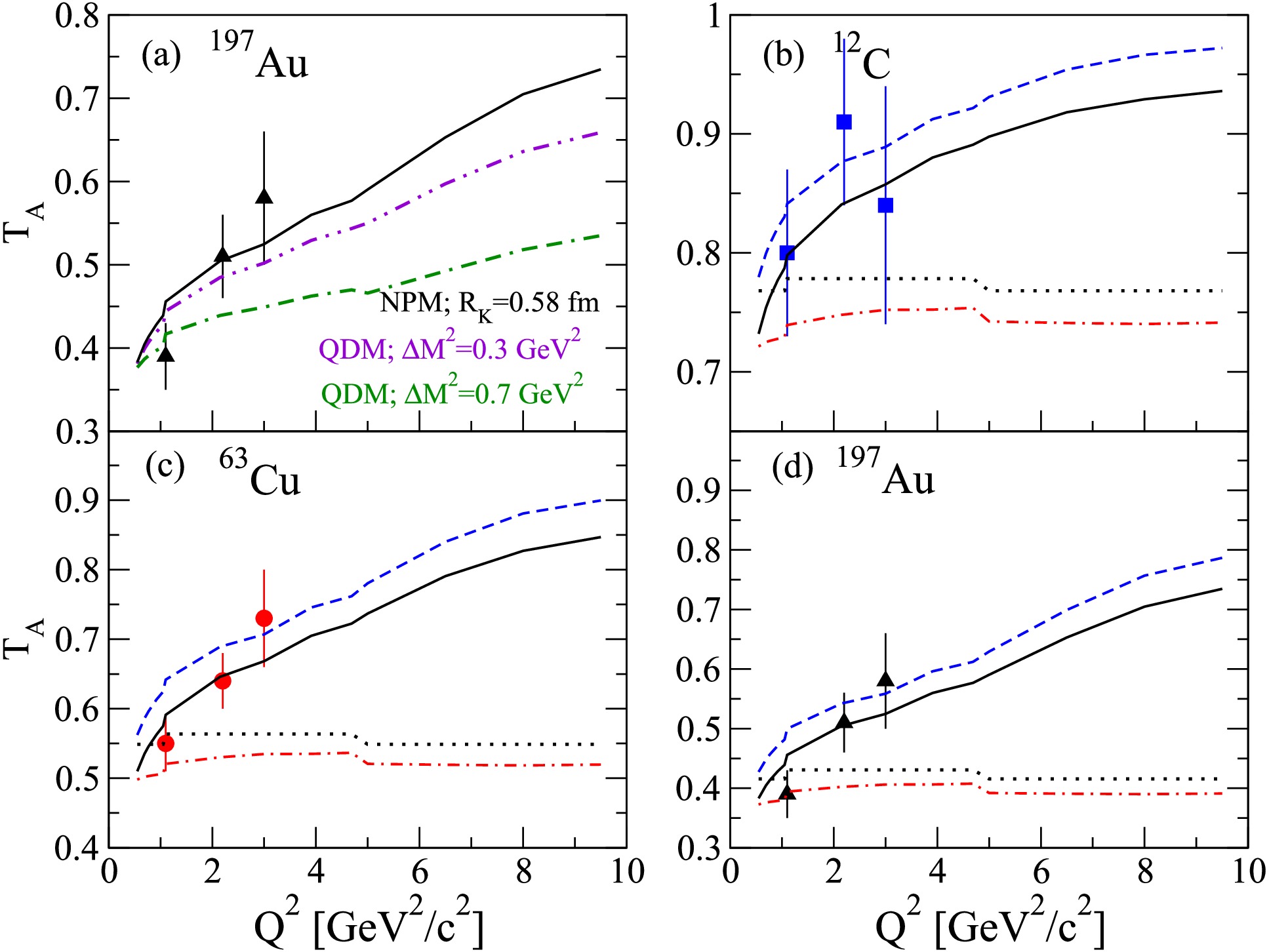
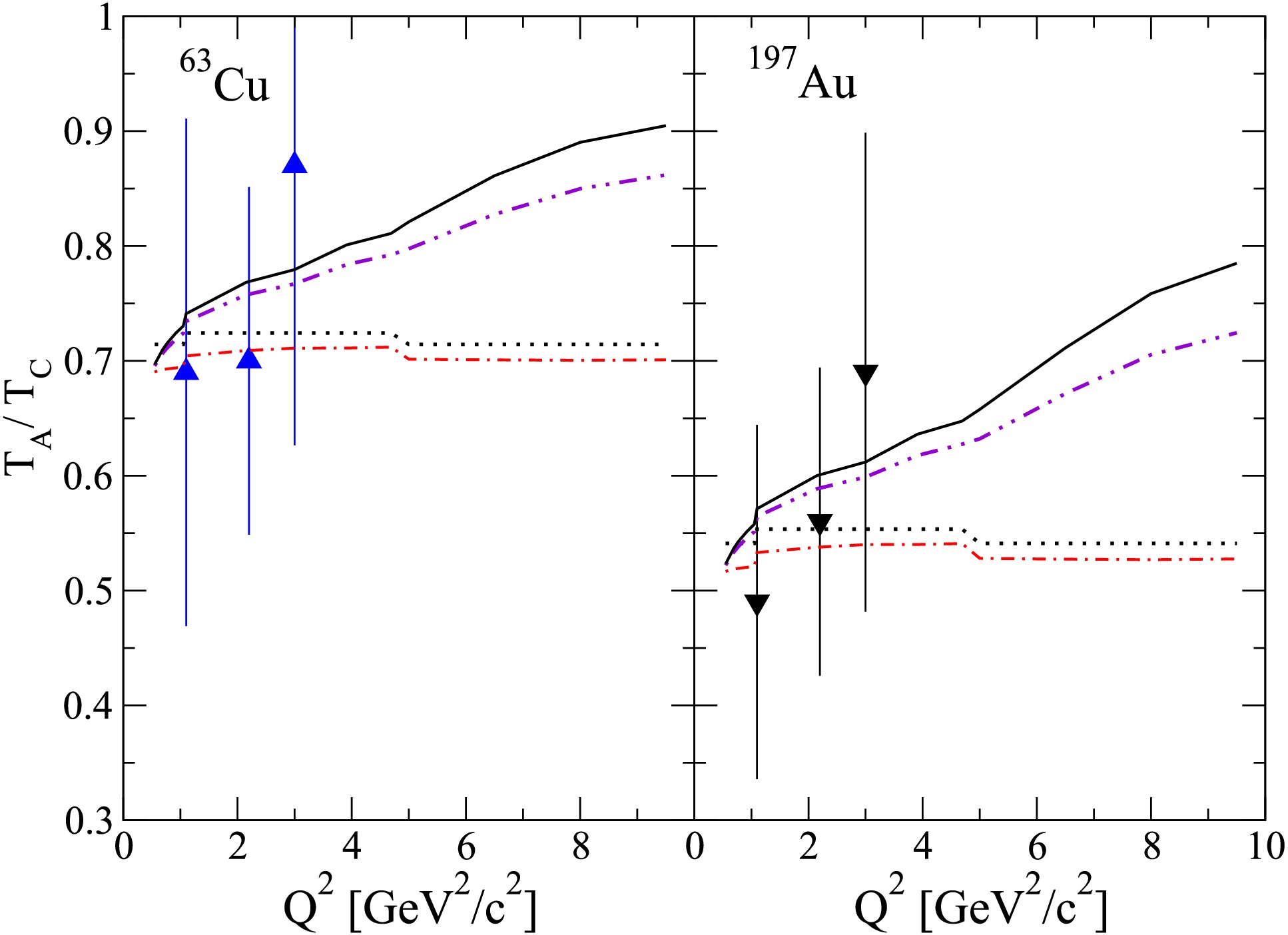
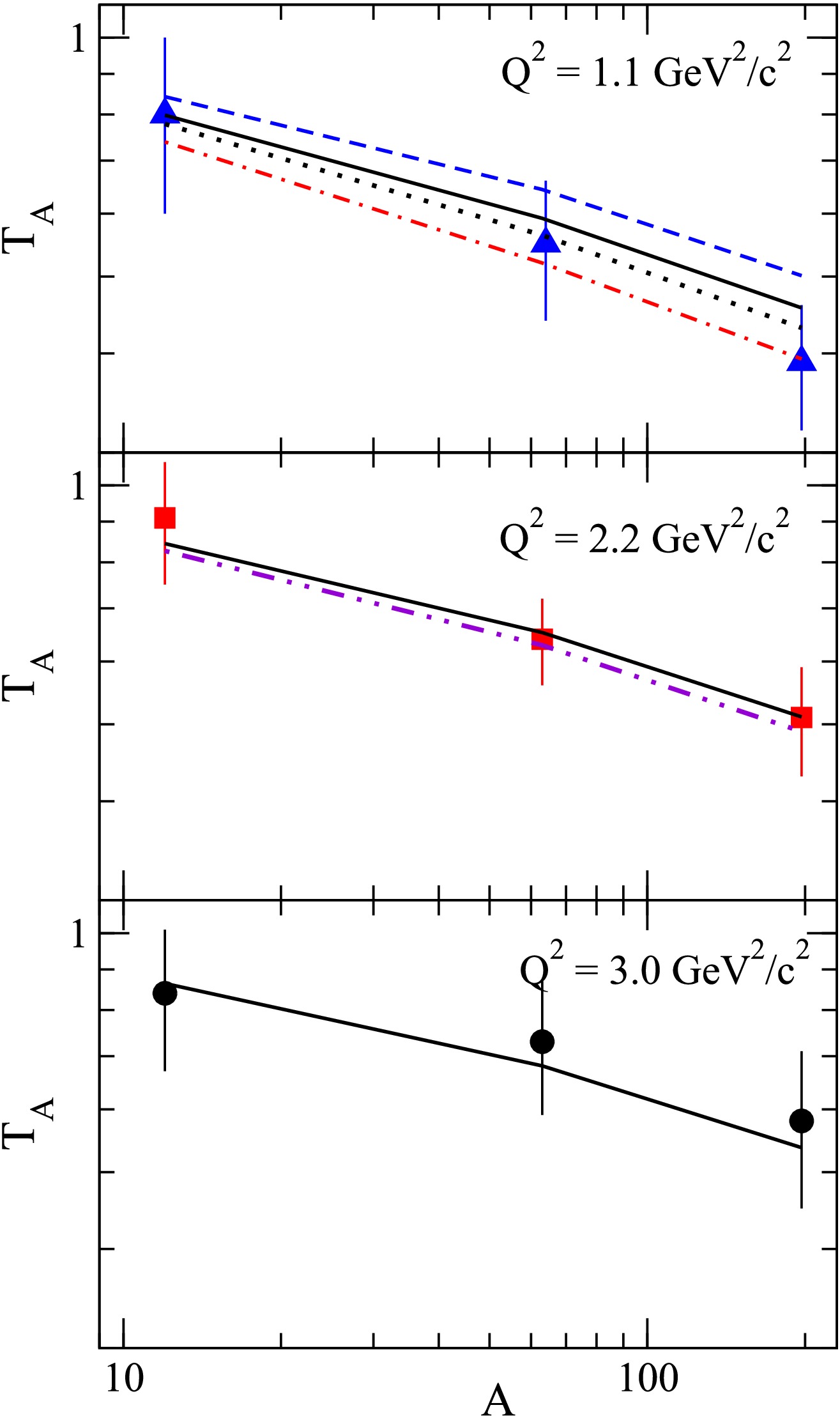
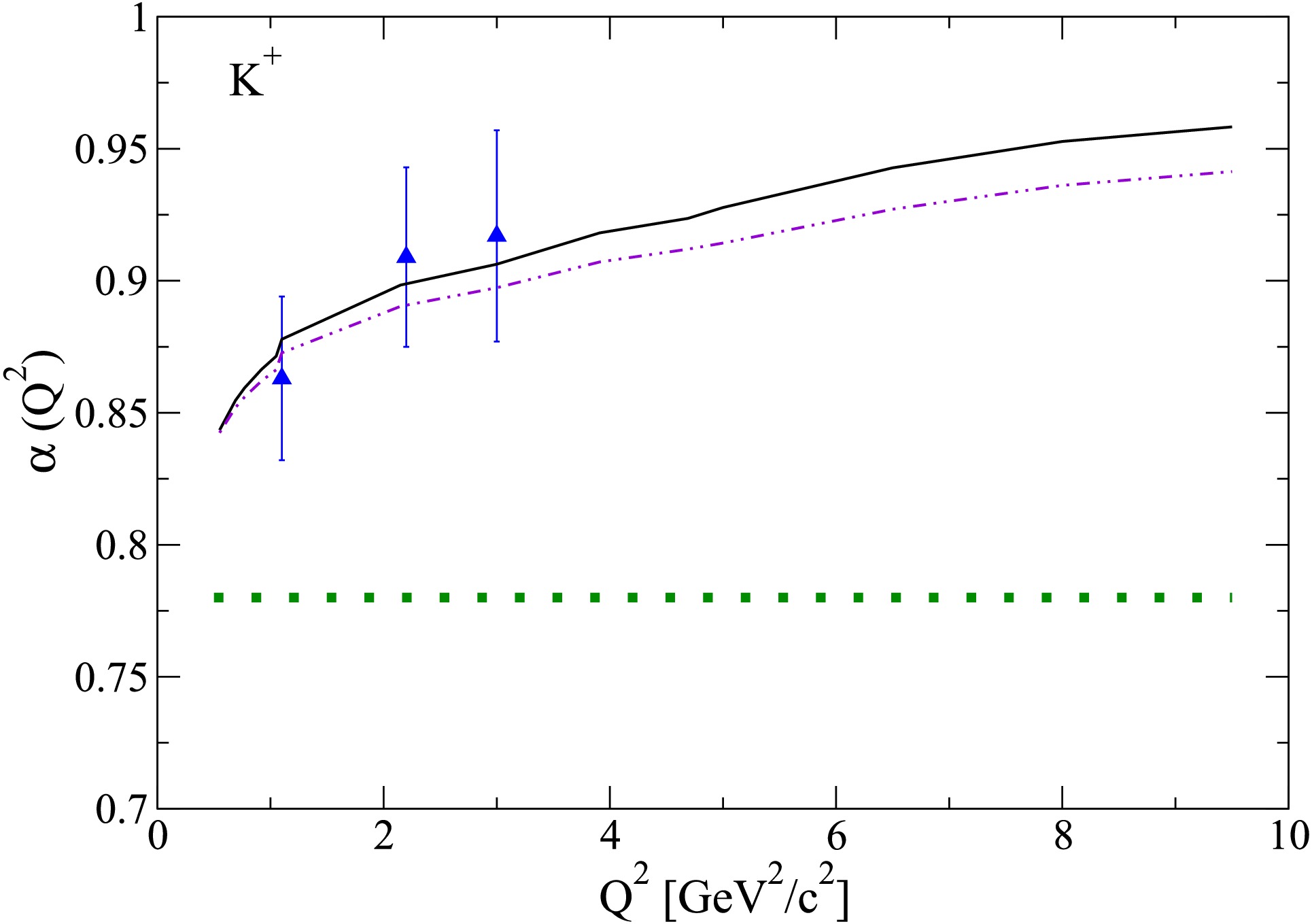
Nuclear transparency in the electronuclear reaction\begin{document}$ A(e,e'K^+) $\end{document} \begin{document}$ Q^2 $\end{document} \begin{document}$ Q^2 $\end{document} \begin{document}$ Q^2=10 $\end{document} \begin{document}$ {\mathrm{GeV}}^2/c^2 $\end{document} \begin{document}$ \alpha(Q^2) $\end{document} \begin{document}$ T_A/T_C $\end{document}
Nuclear transparency in the electronuclear reaction
2026, 50(8): 084107. doi: 10.1088/1674-1137/ae6a84
Abstract:
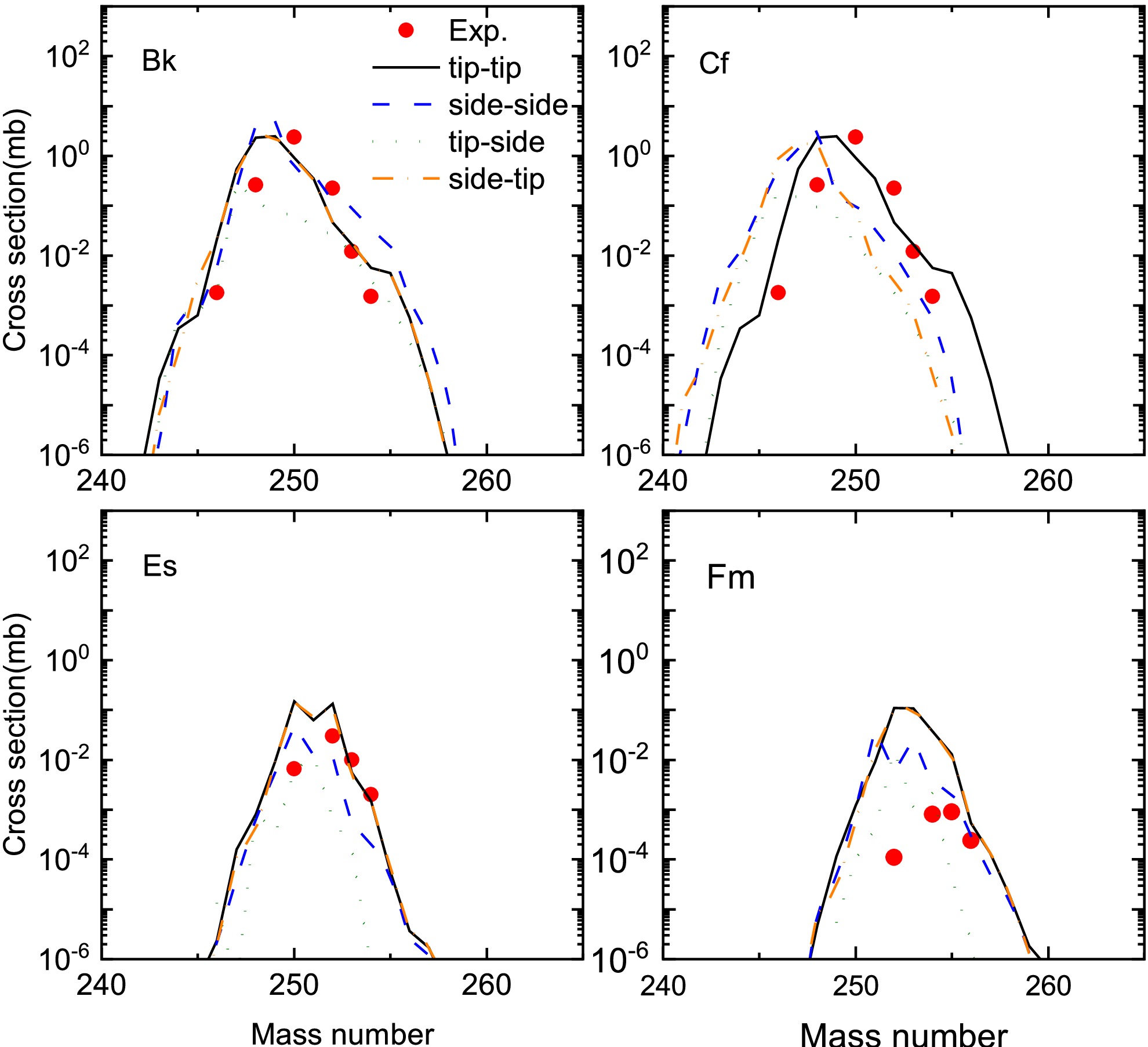
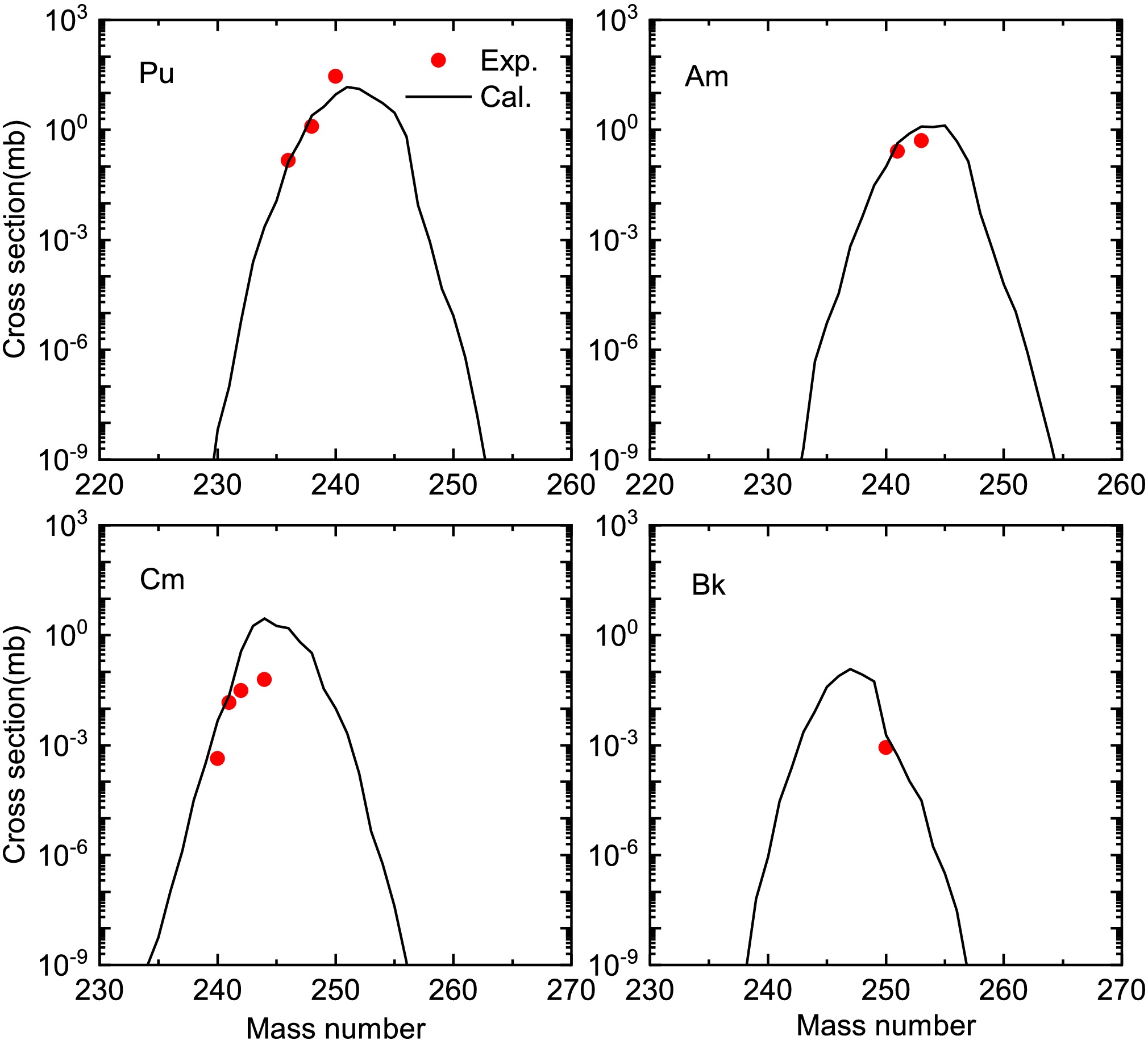
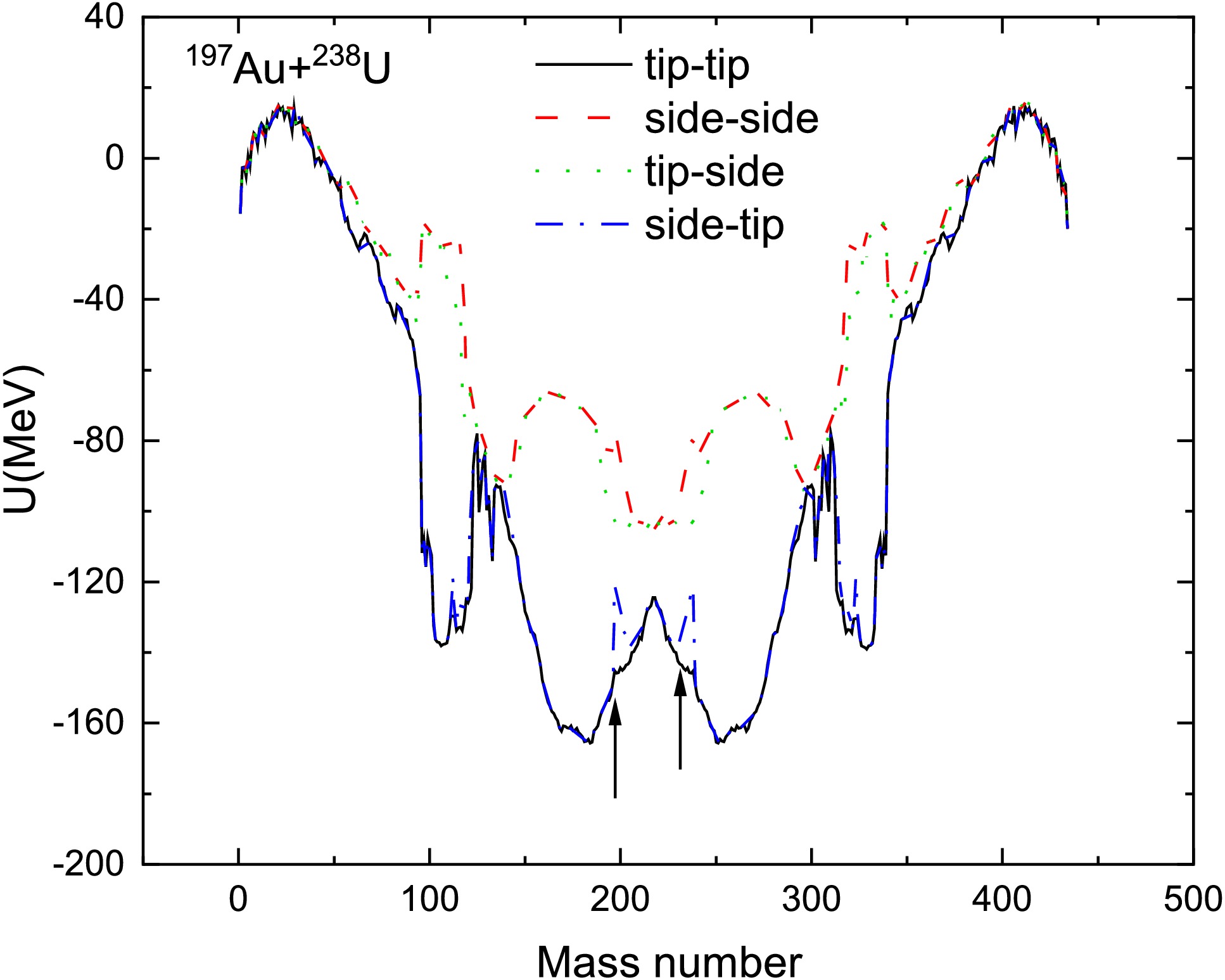
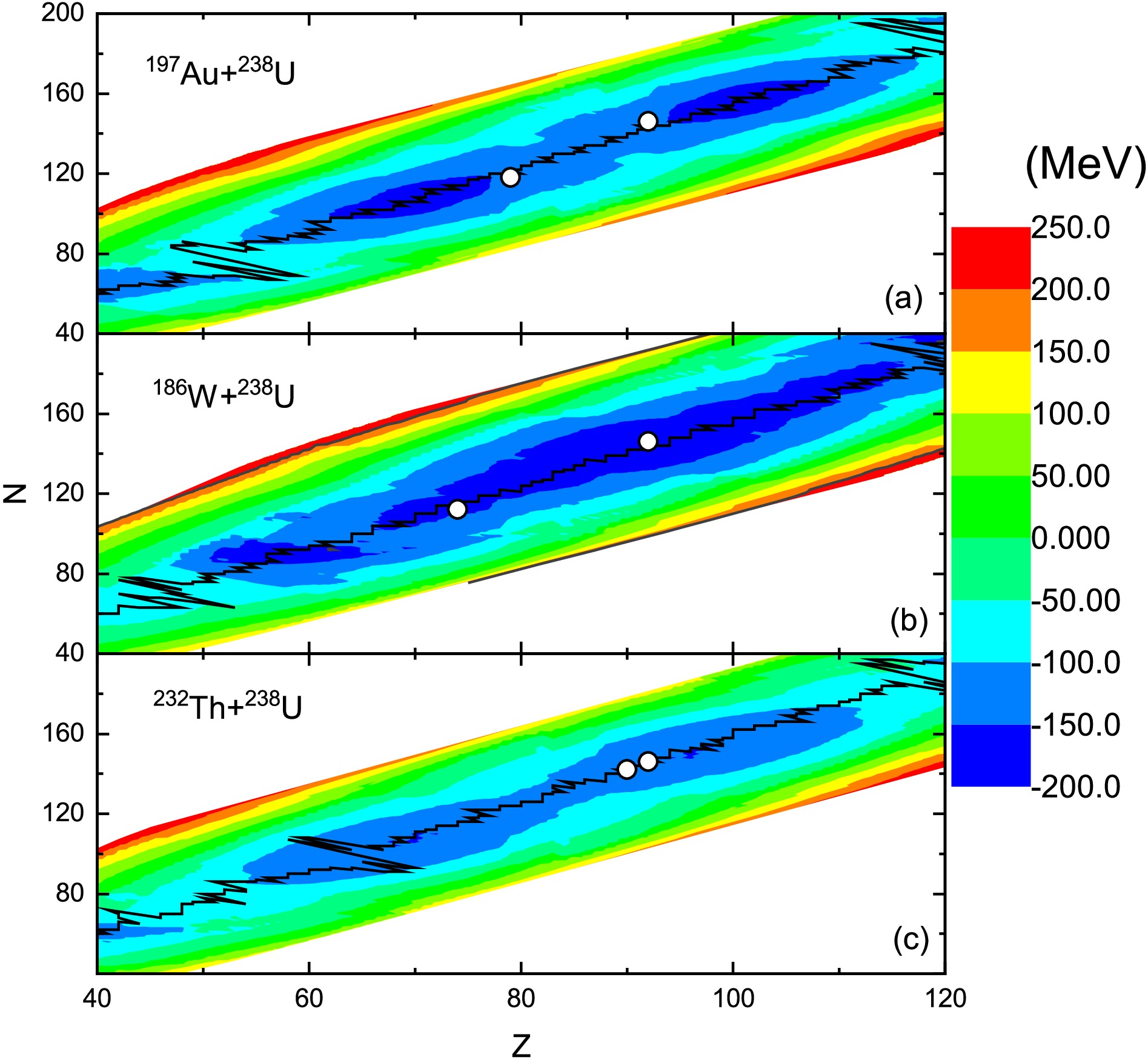
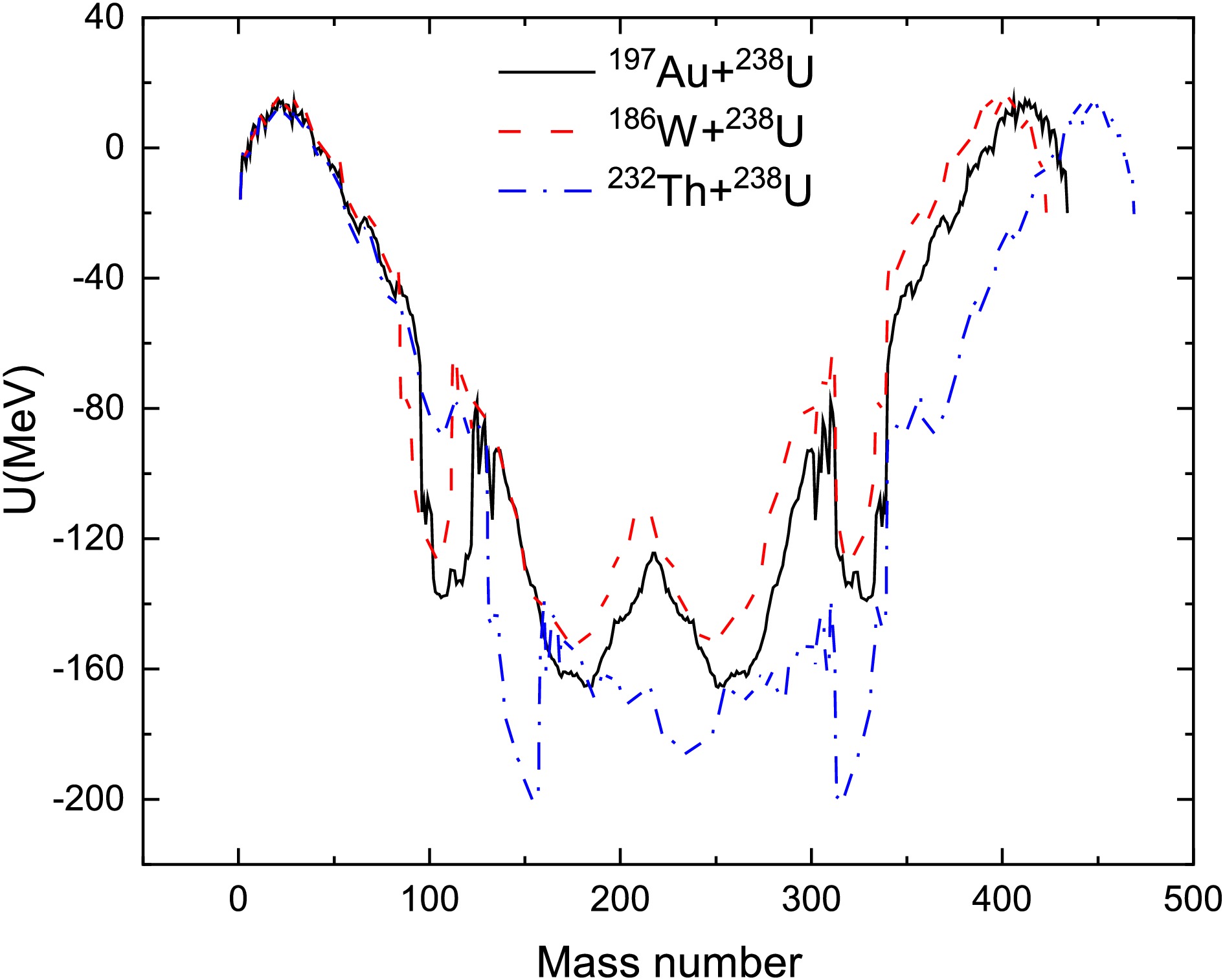
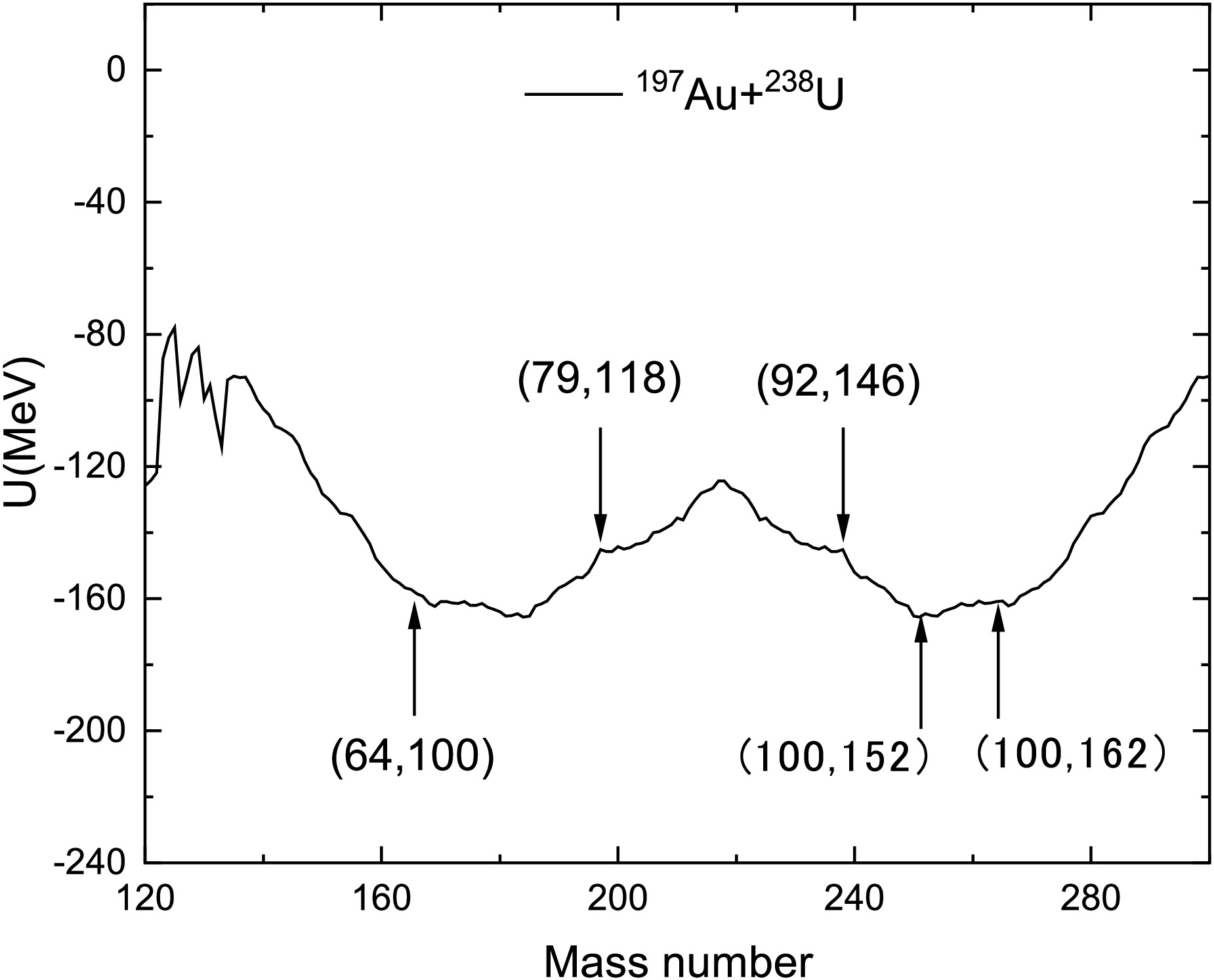
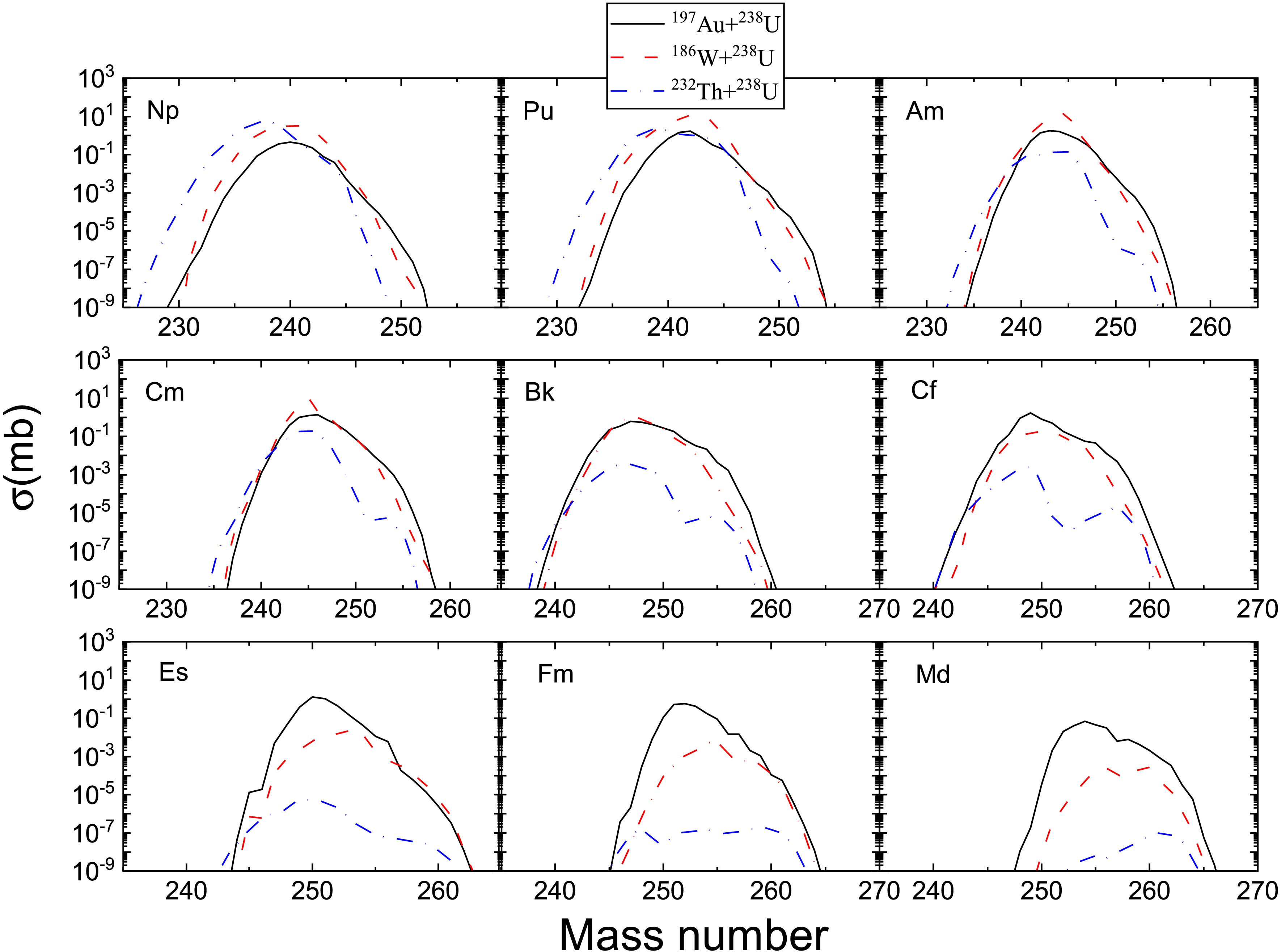
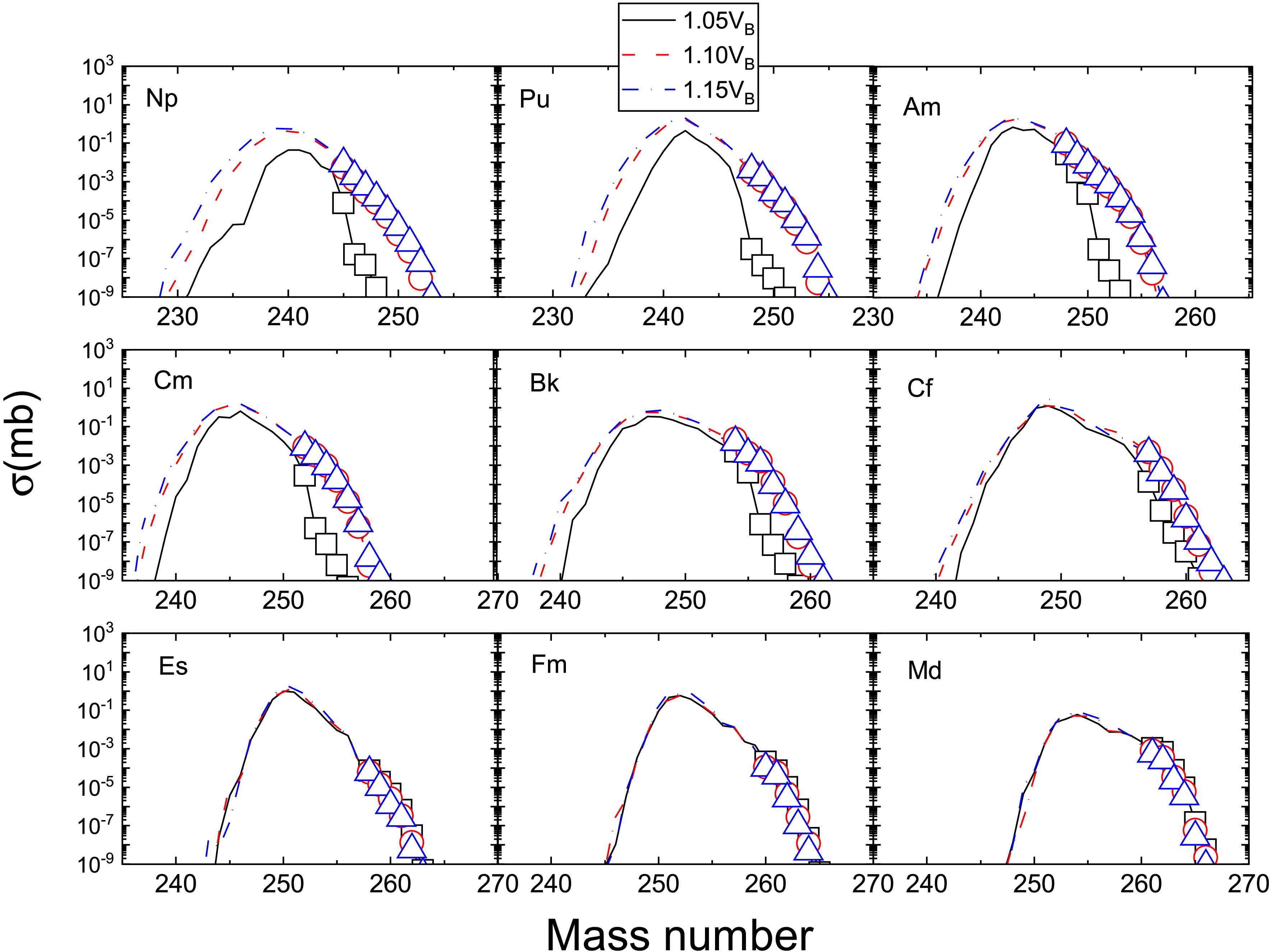
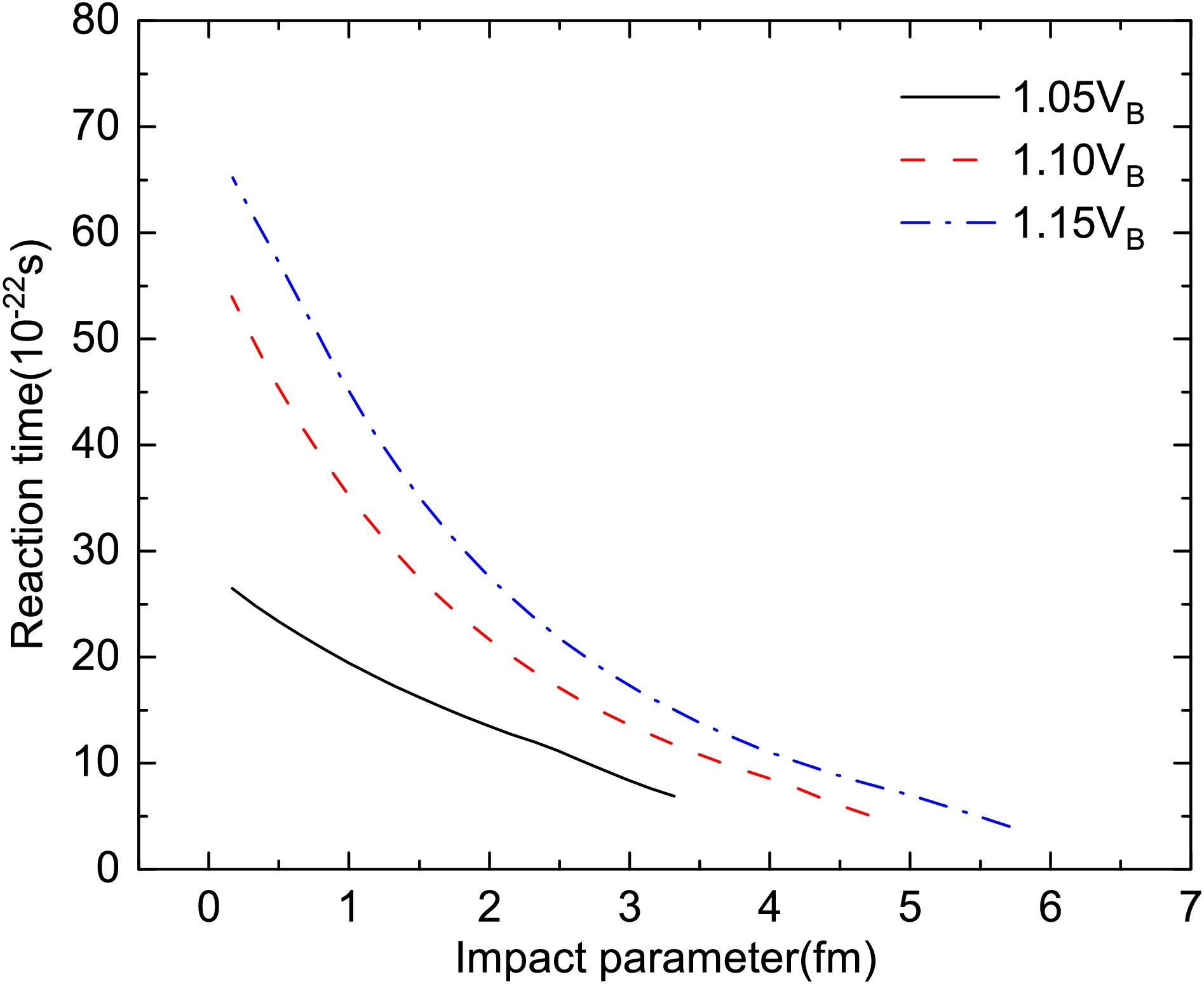
The production mechanisms and cross sections for neutron-rich actinide nuclides formed in multinucleon transfer reactions with 238U targets are systematically investigated using the dinuclear system (DNS) model coupled with the GEMINI++ de-excitation code. The tip-to-tip configurations for the 48Ca+248Cm and 238U+238U reactions are in good agreement with experimental data. Calculations of the potential energy surfaces and driving potentials for the three systems 197Au+238U, 186W+238U, and 232Th+238U indicate that the first two systems exhibit pronounced "inverse" quasifission characteristics due to shell effects. The final isotopic production cross sections of target-like fragments with Z=93−101 for the three systems are calculated at\begin{document}$ E_{\mathrm{c.m}.} $\end{document} \begin{document}$ V_{B} $\end{document}
The production mechanisms and cross sections for neutron-rich actinide nuclides formed in multinucleon transfer reactions with 238U targets are systematically investigated using the dinuclear system (DNS) model coupled with the GEMINI++ de-excitation code. The tip-to-tip configurations for the 48Ca+248Cm and 238U+238U reactions are in good agreement with experimental data. Calculations of the potential energy surfaces and driving potentials for the three systems 197Au+238U, 186W+238U, and 232Th+238U indicate that the first two systems exhibit pronounced "inverse" quasifission characteristics due to shell effects. The final isotopic production cross sections of target-like fragments with Z=93−101 for the three systems are calculated at
2026, 50(8): 084108. doi: 10.1088/1674-1137/ae6a83
Abstract:
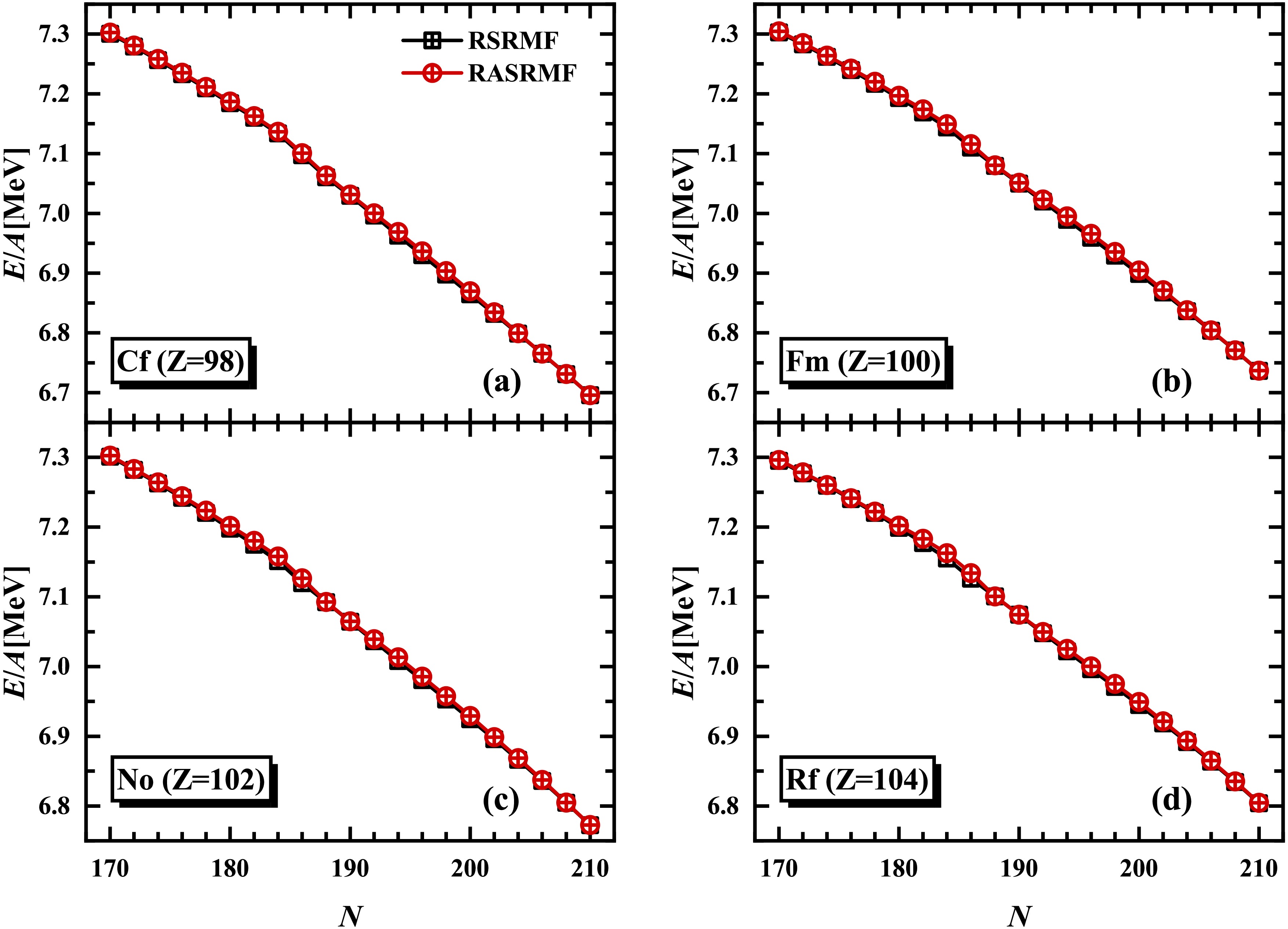
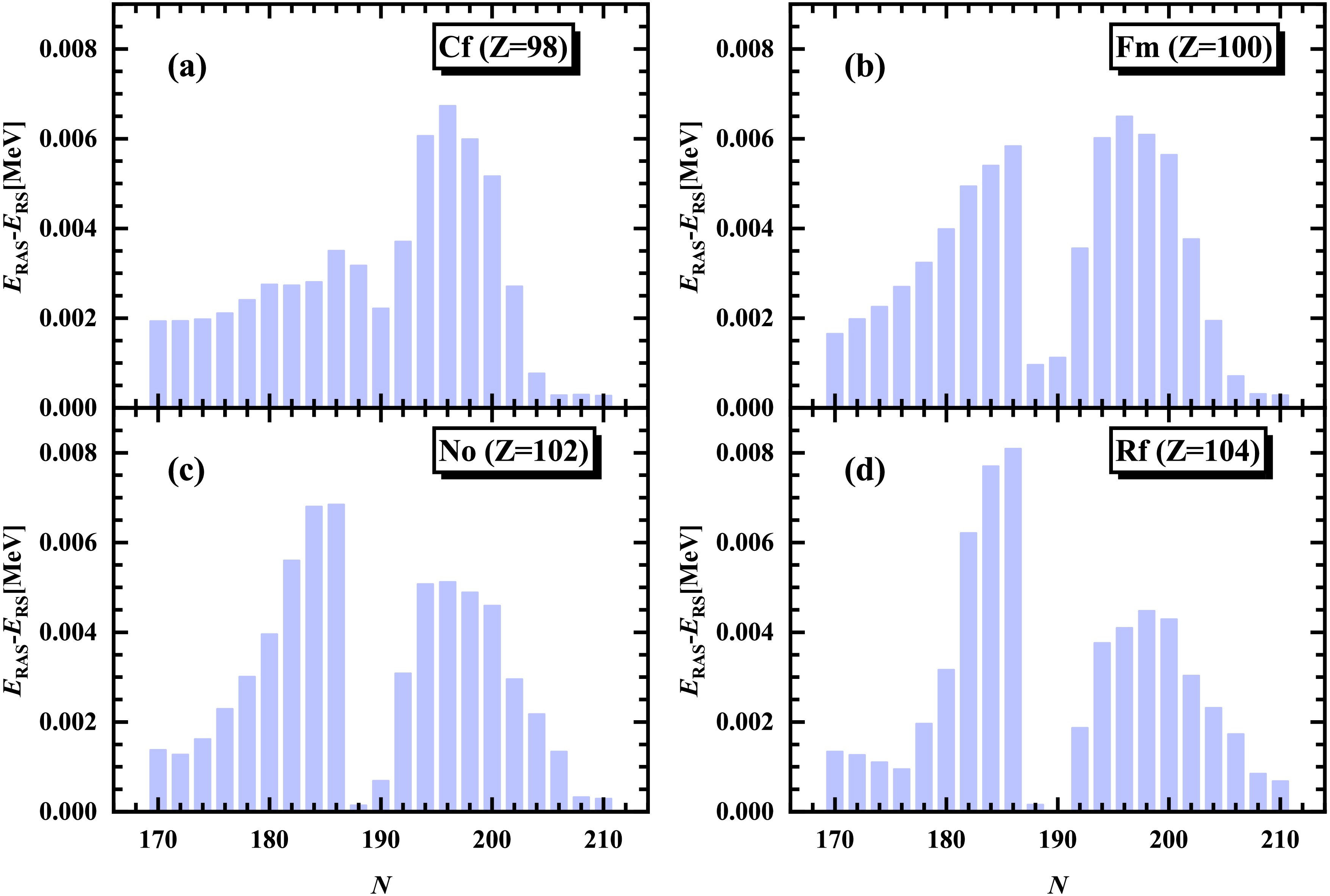
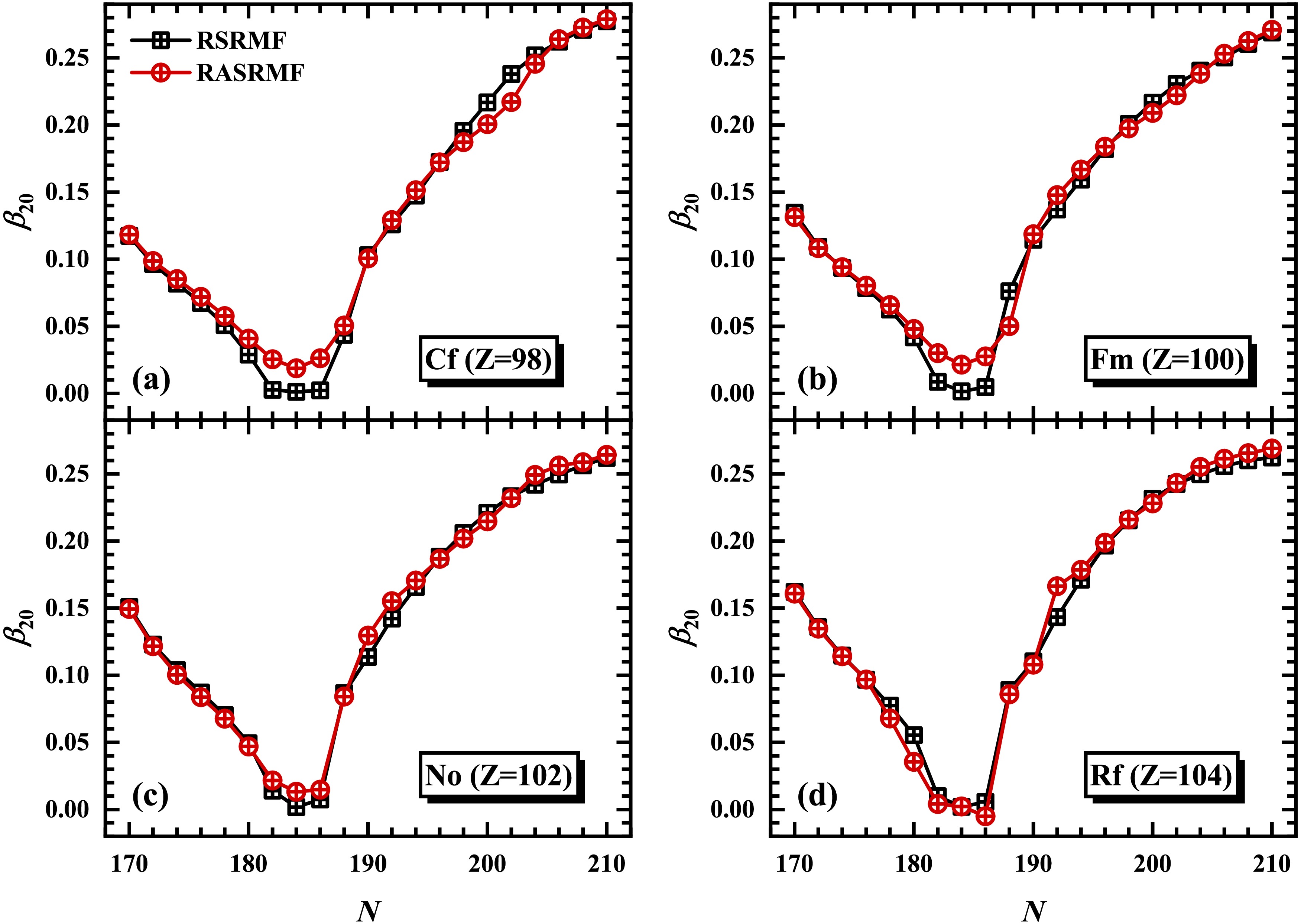
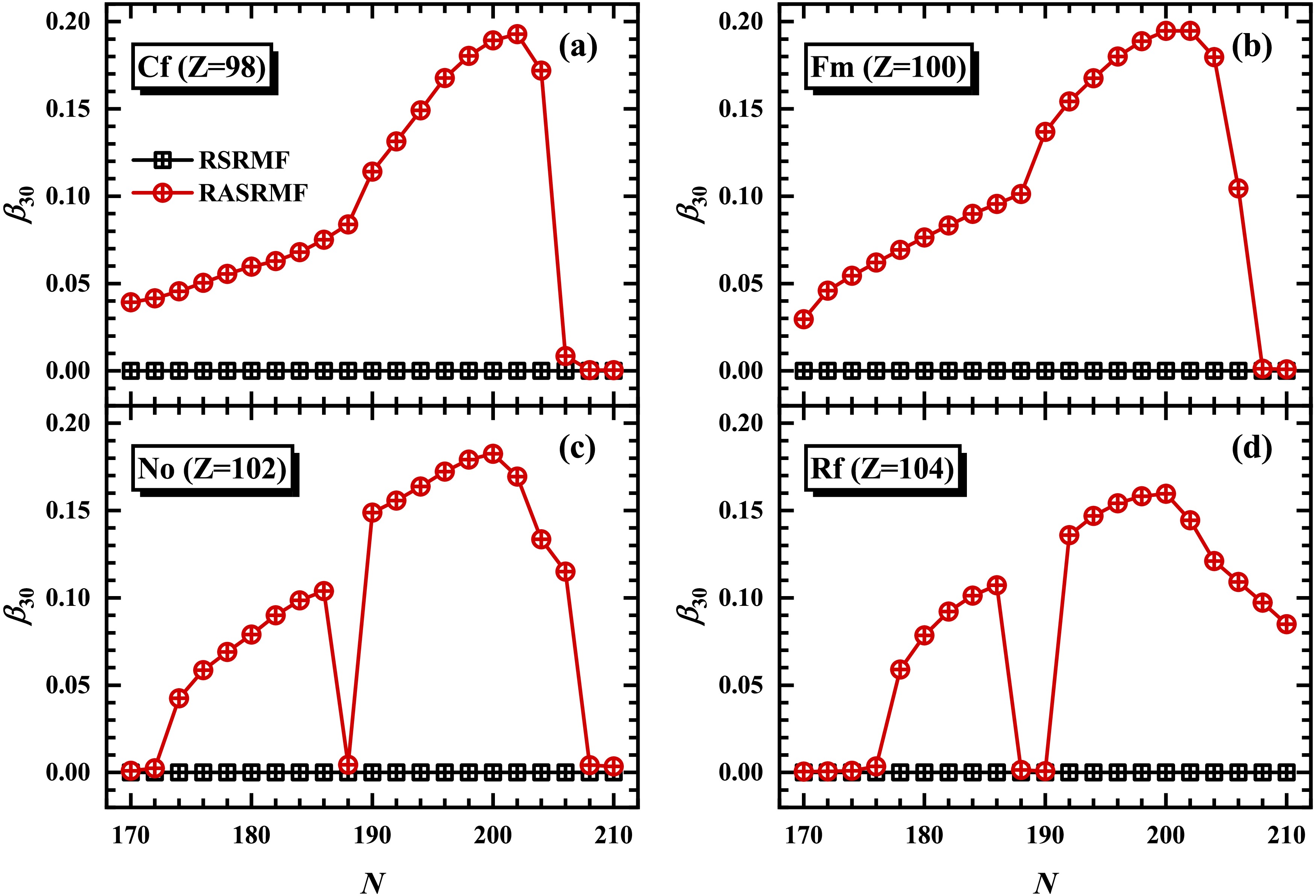
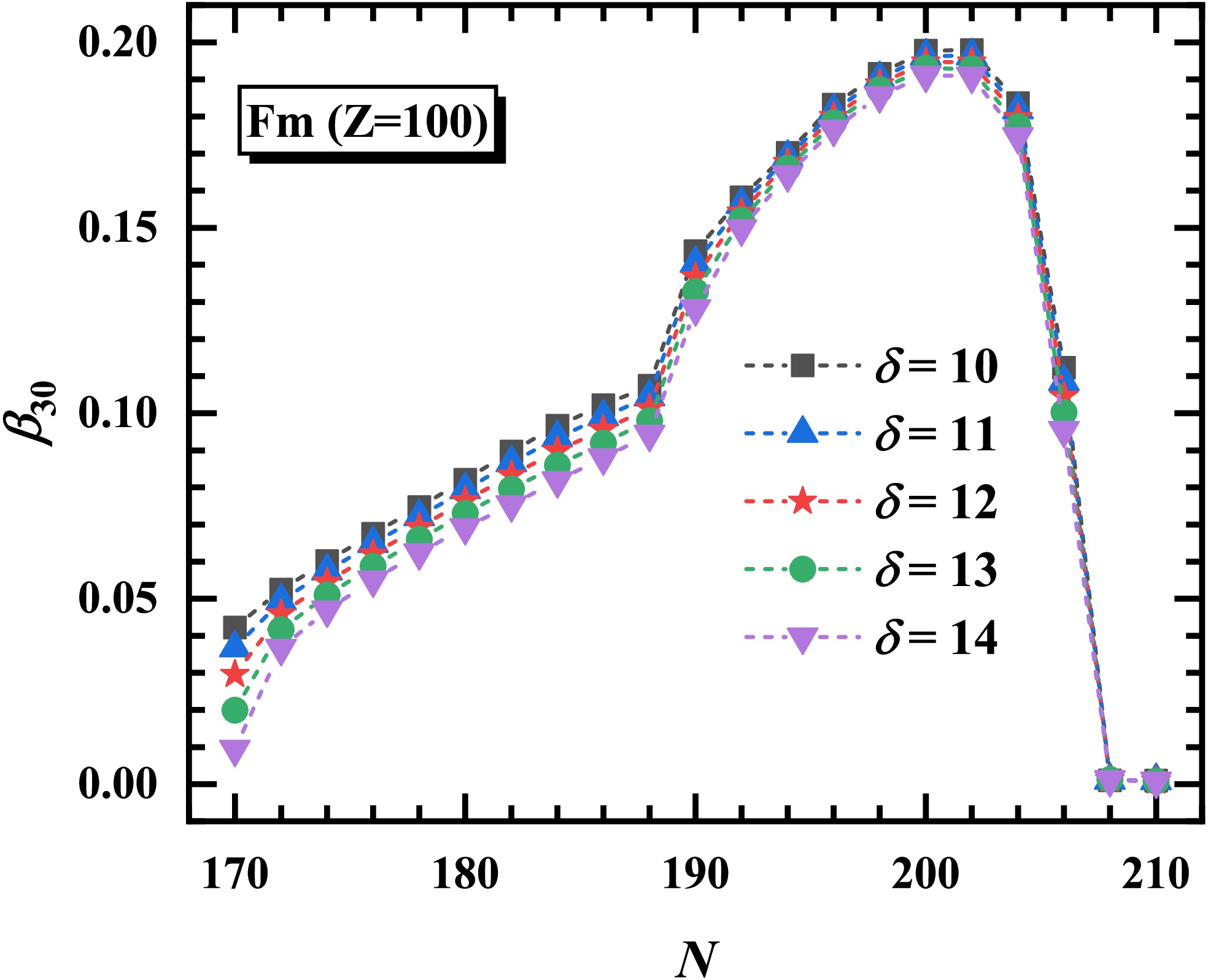
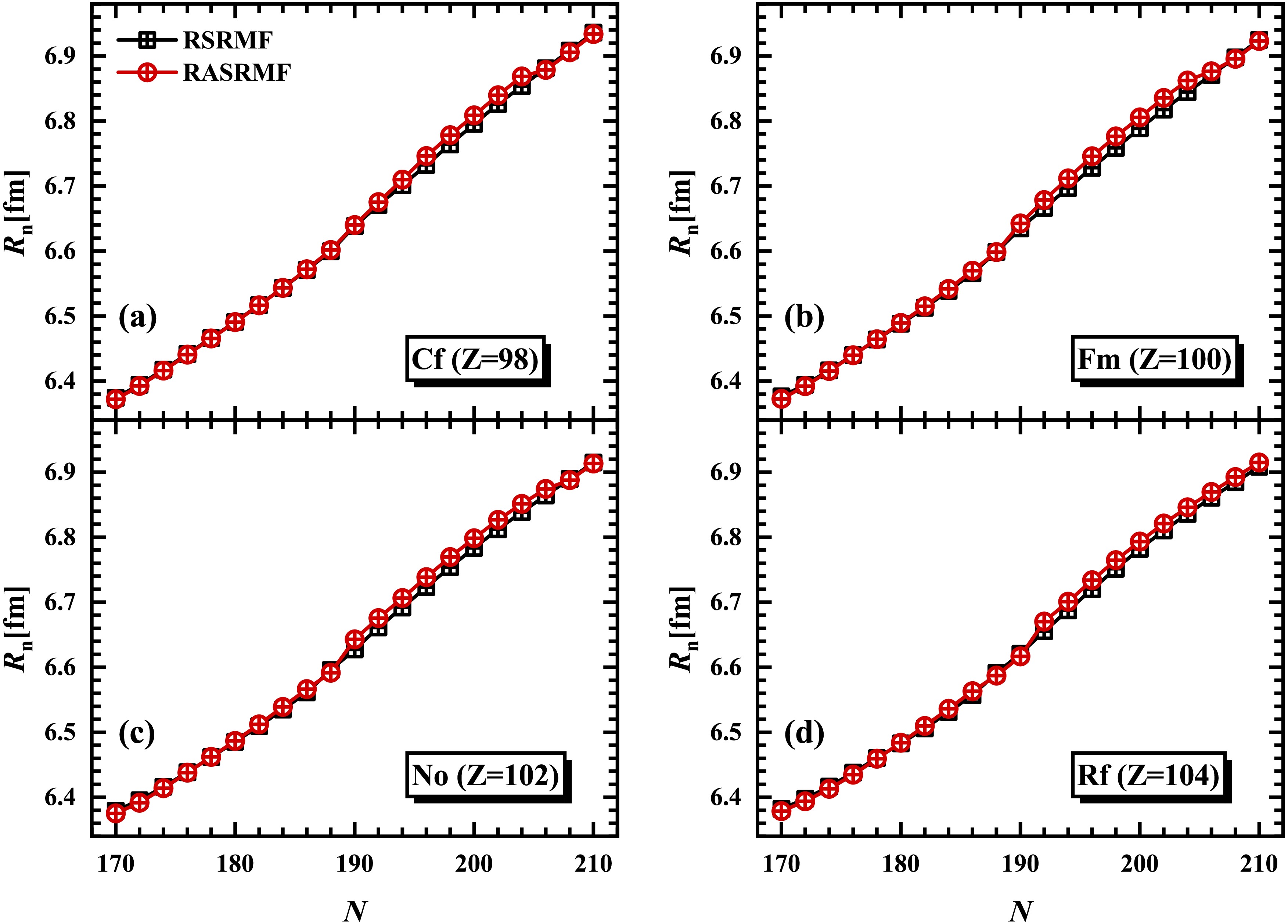
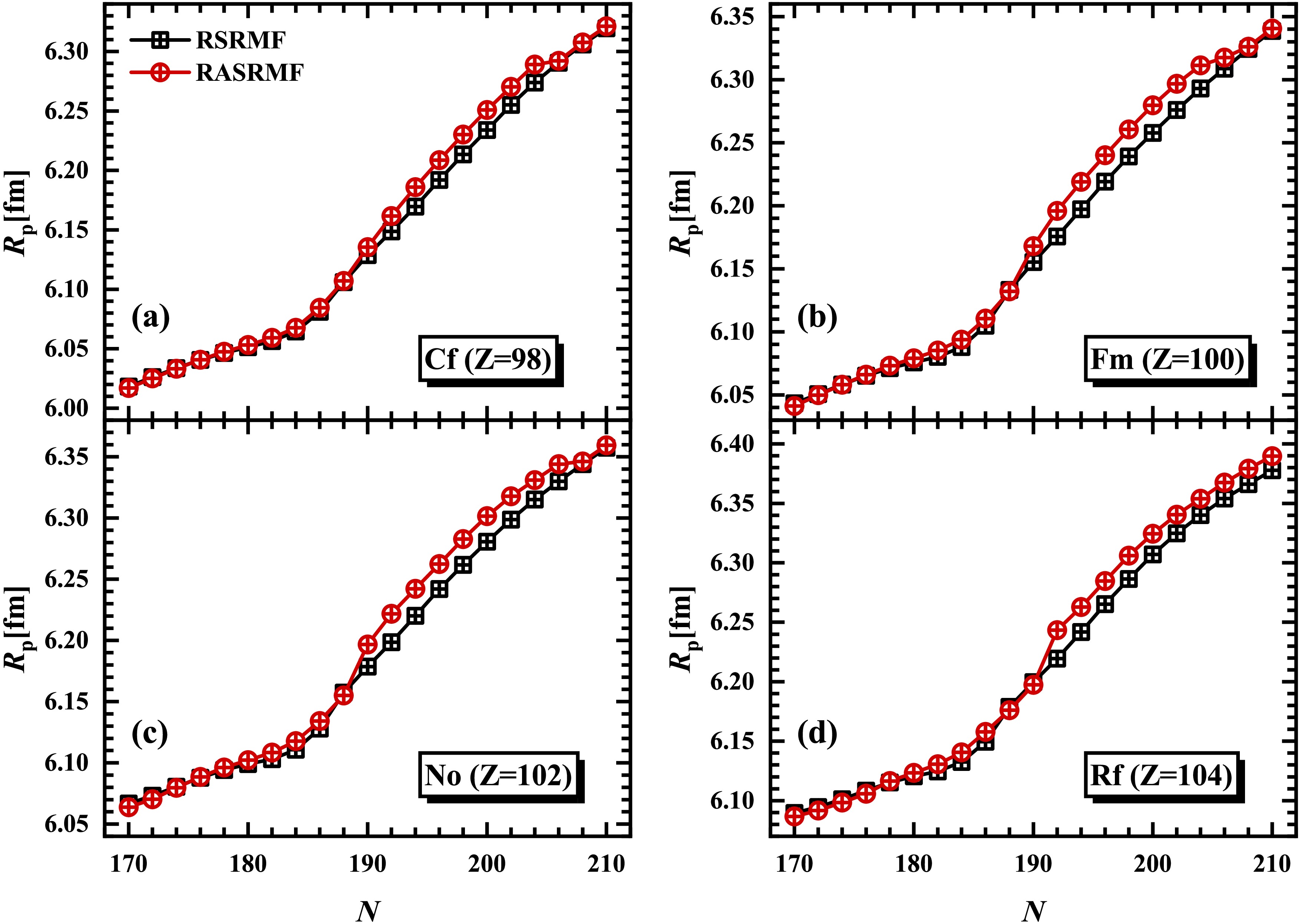
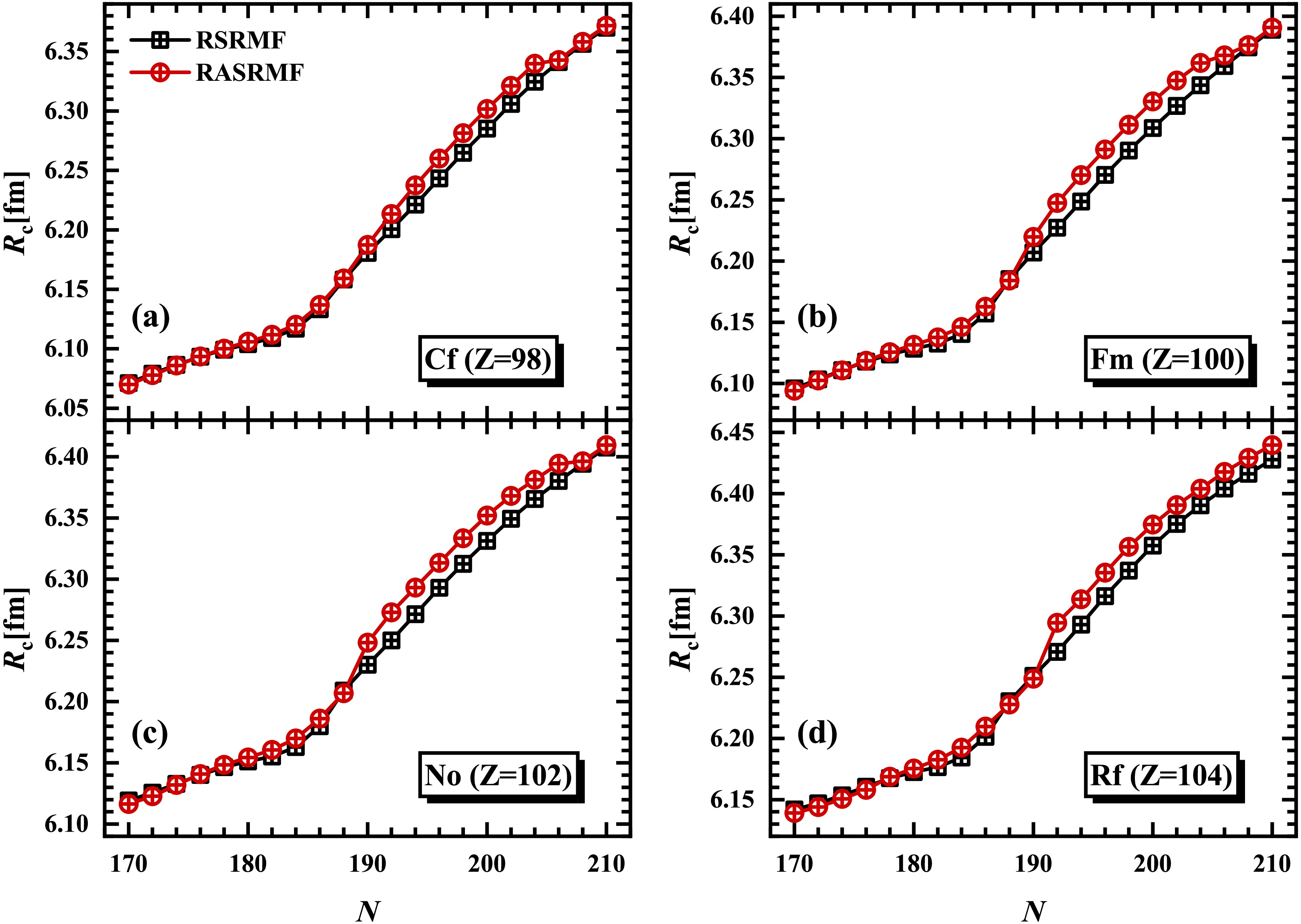
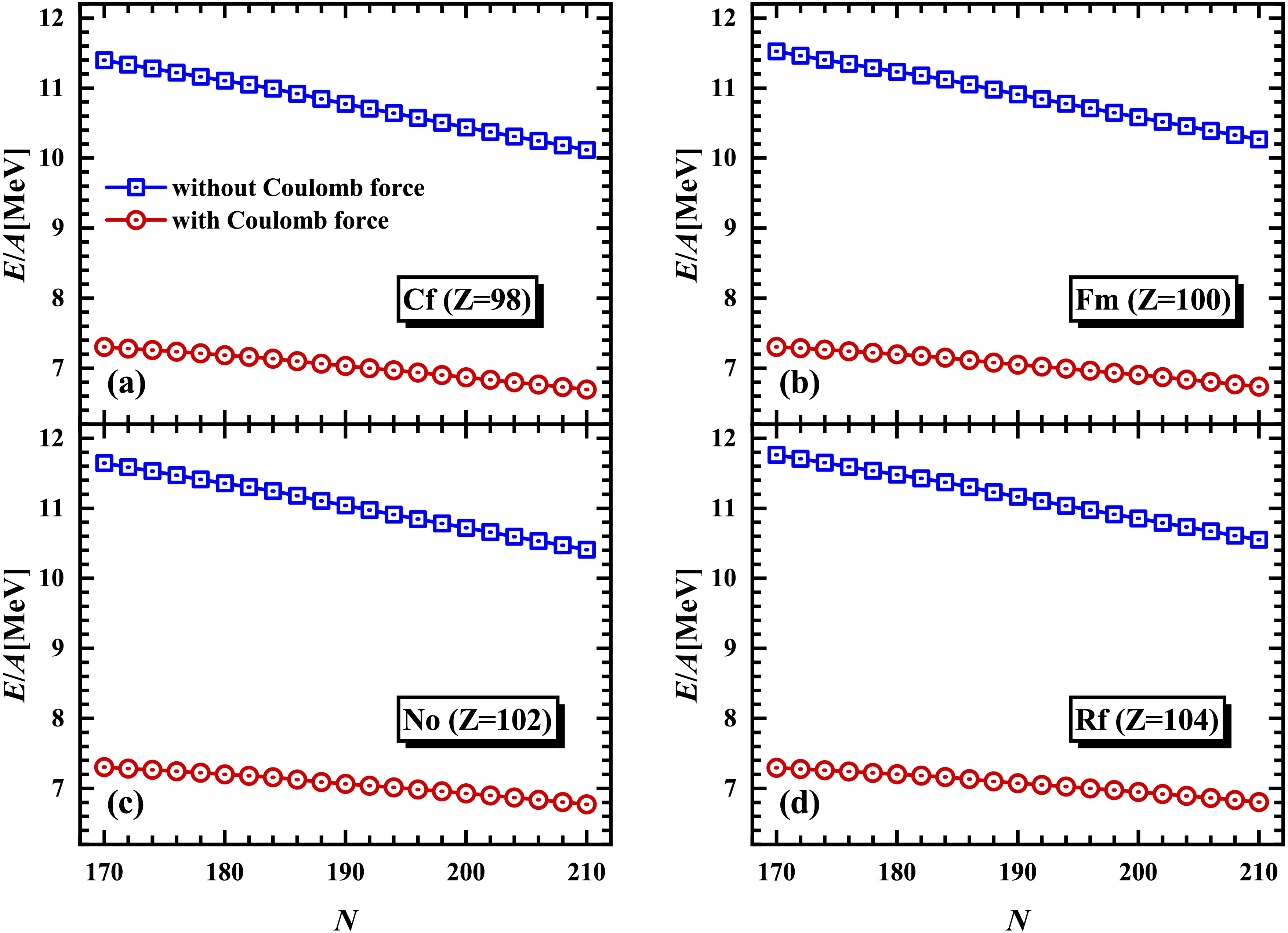
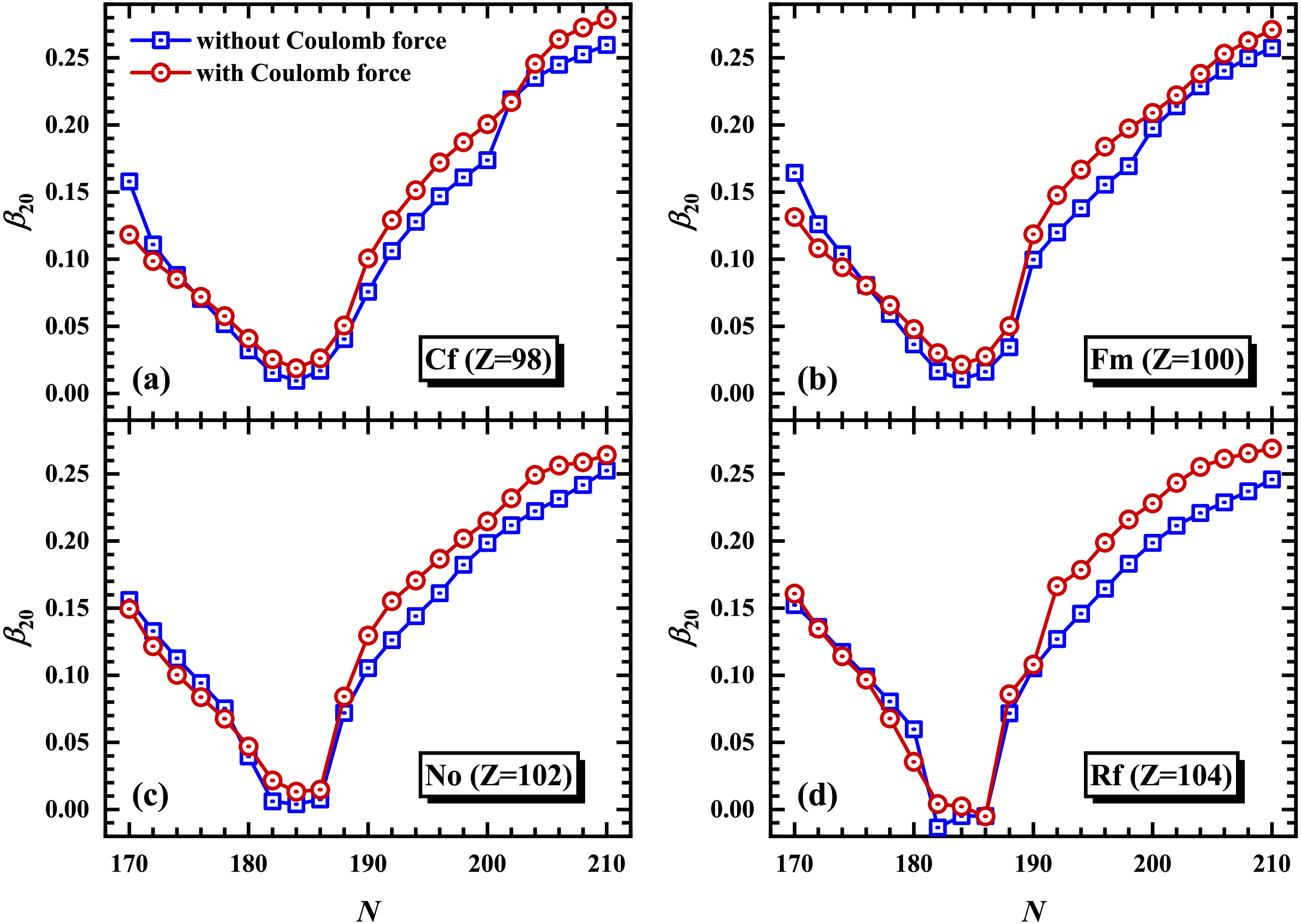
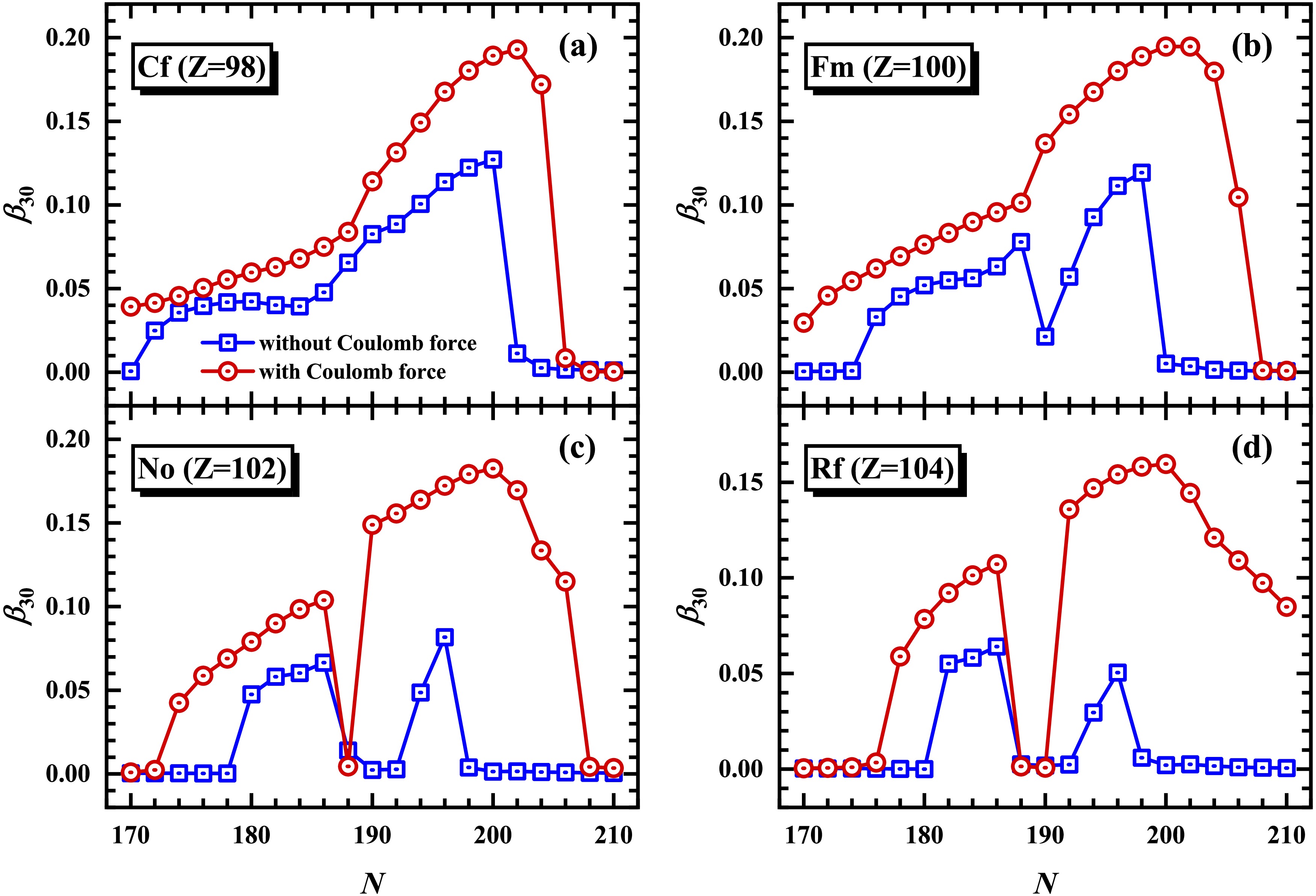
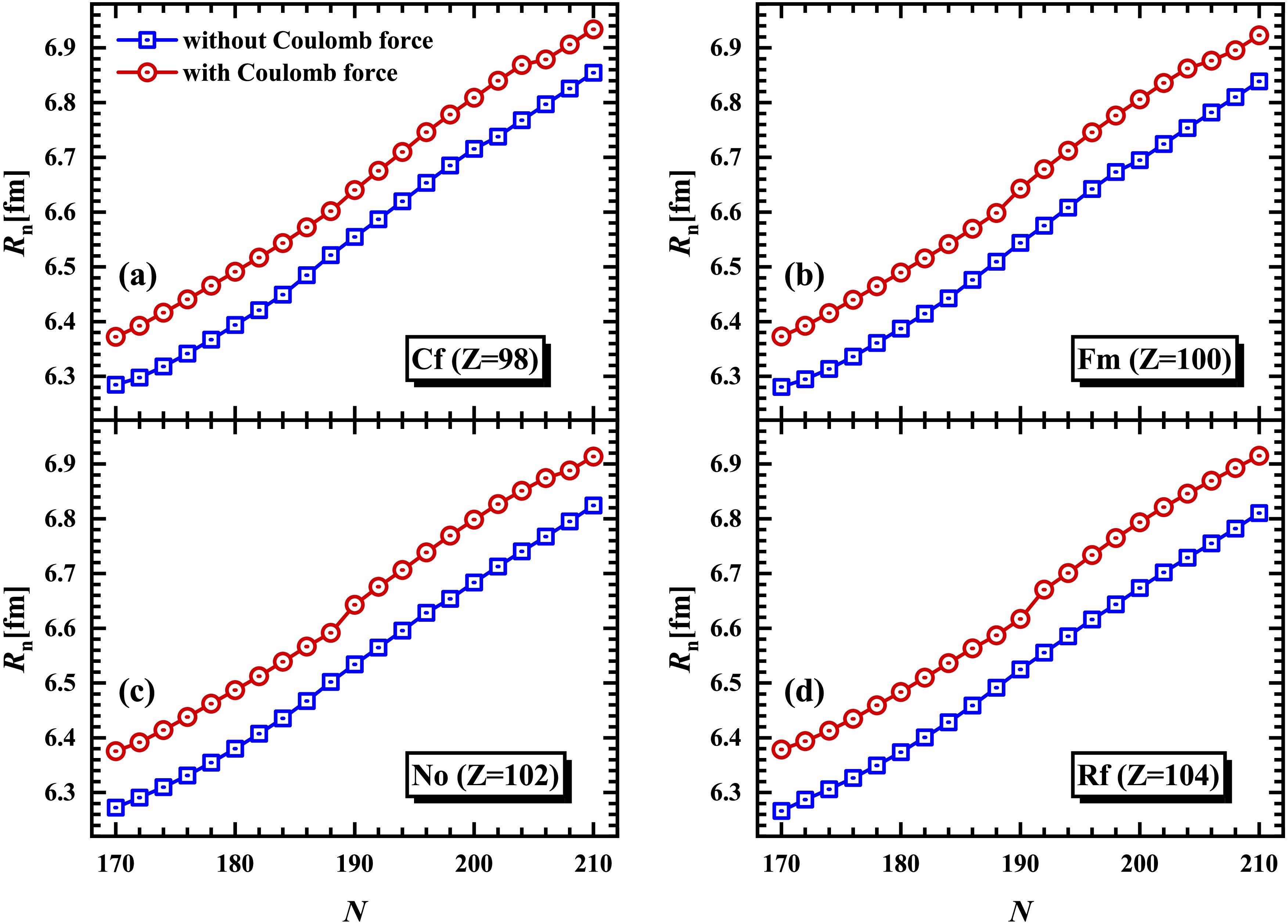
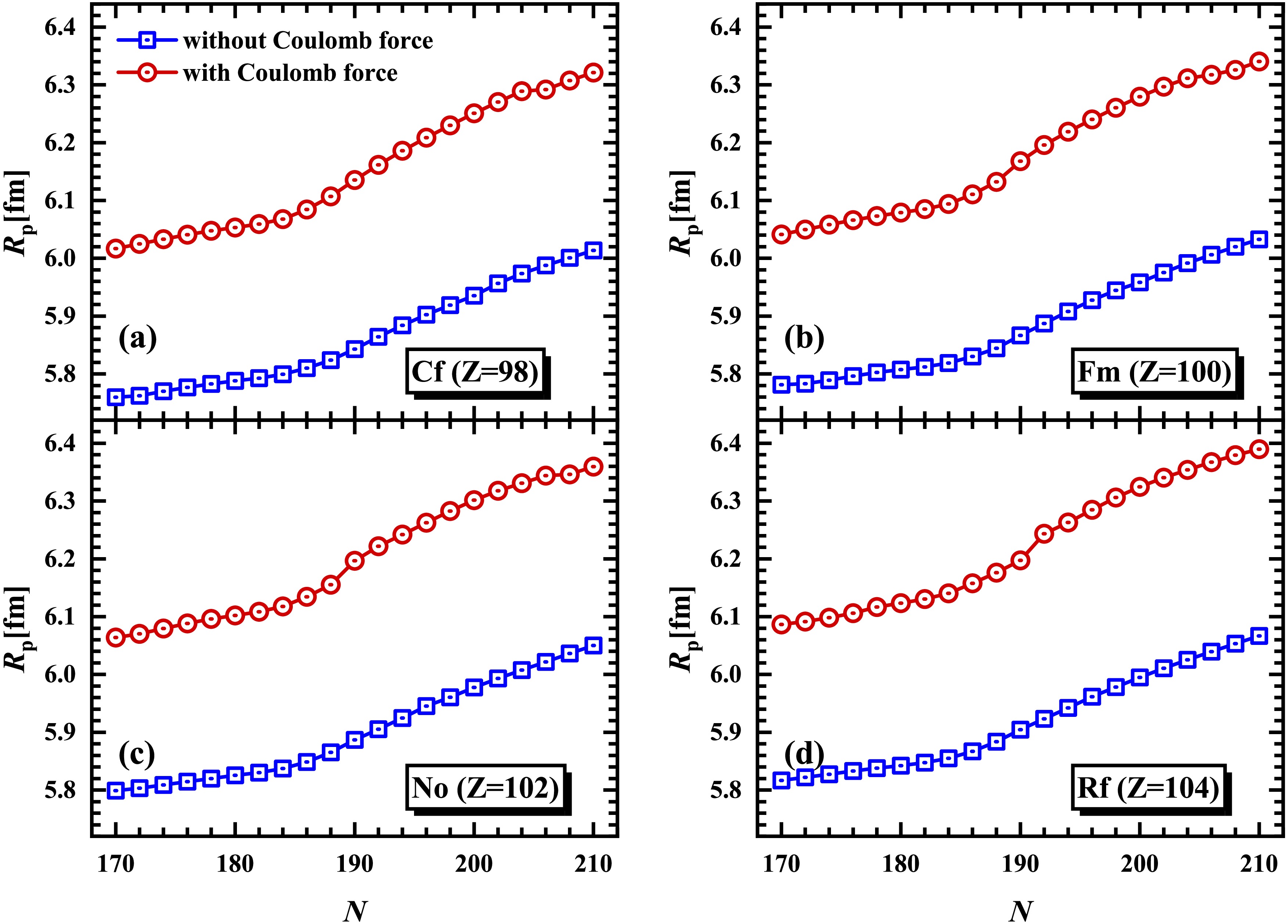
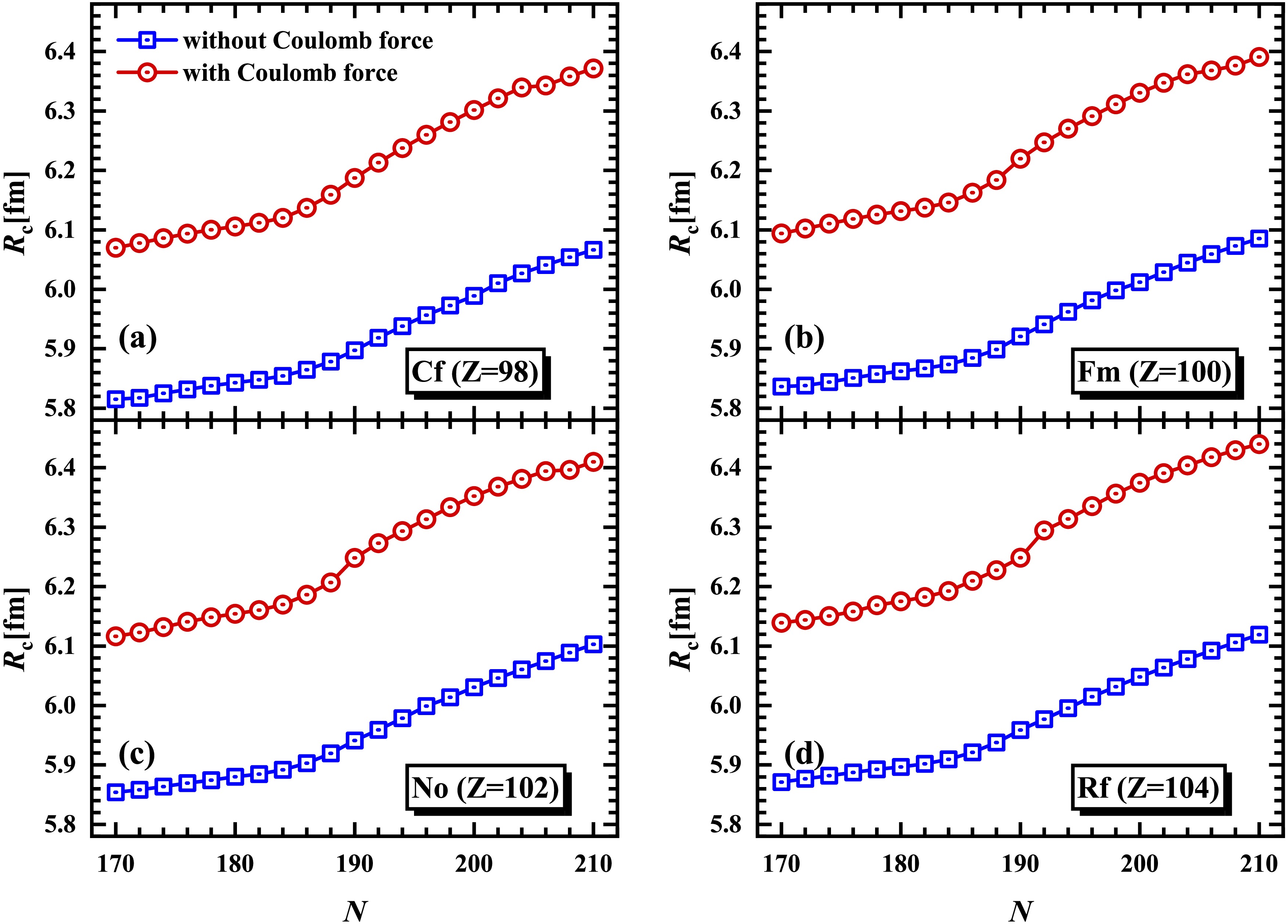
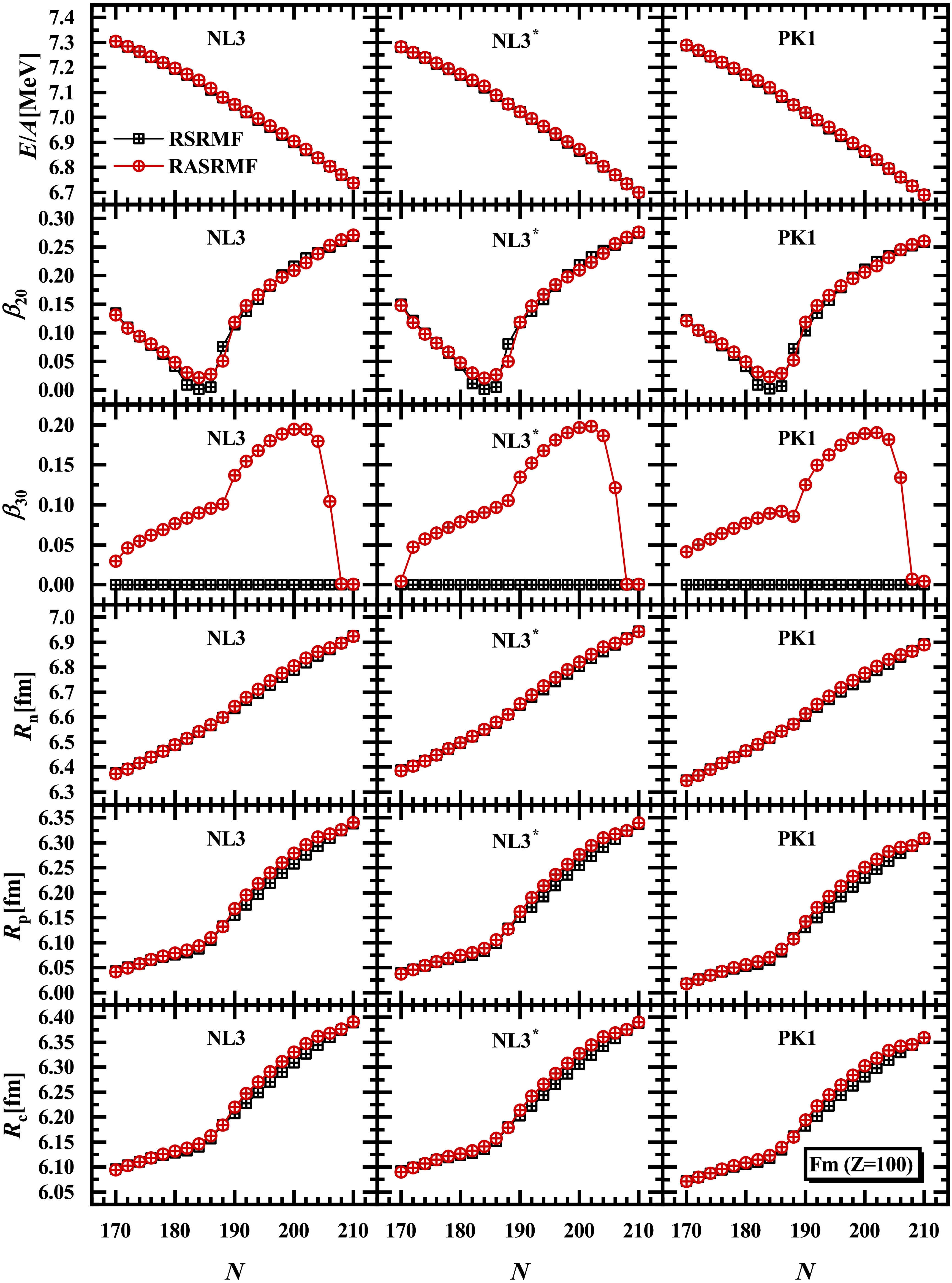
A systematic microscopic analysis of the ground-state properties for the neutron-rich even-even nuclei with\begin{document}$ Z = 98 - 104 $\end{document} \begin{document}$ N = 170 - 210 $\end{document} \begin{document}$ N = 184 $\end{document} \begin{document}$ N = 196 $\end{document} \begin{document}$ N \approx 184 $\end{document} \begin{document}$ N \approx 196 $\end{document}
A systematic microscopic analysis of the ground-state properties for the neutron-rich even-even nuclei with
2026, 50(8): 084109. doi: 10.1088/1674-1137/ae6a85
Abstract:
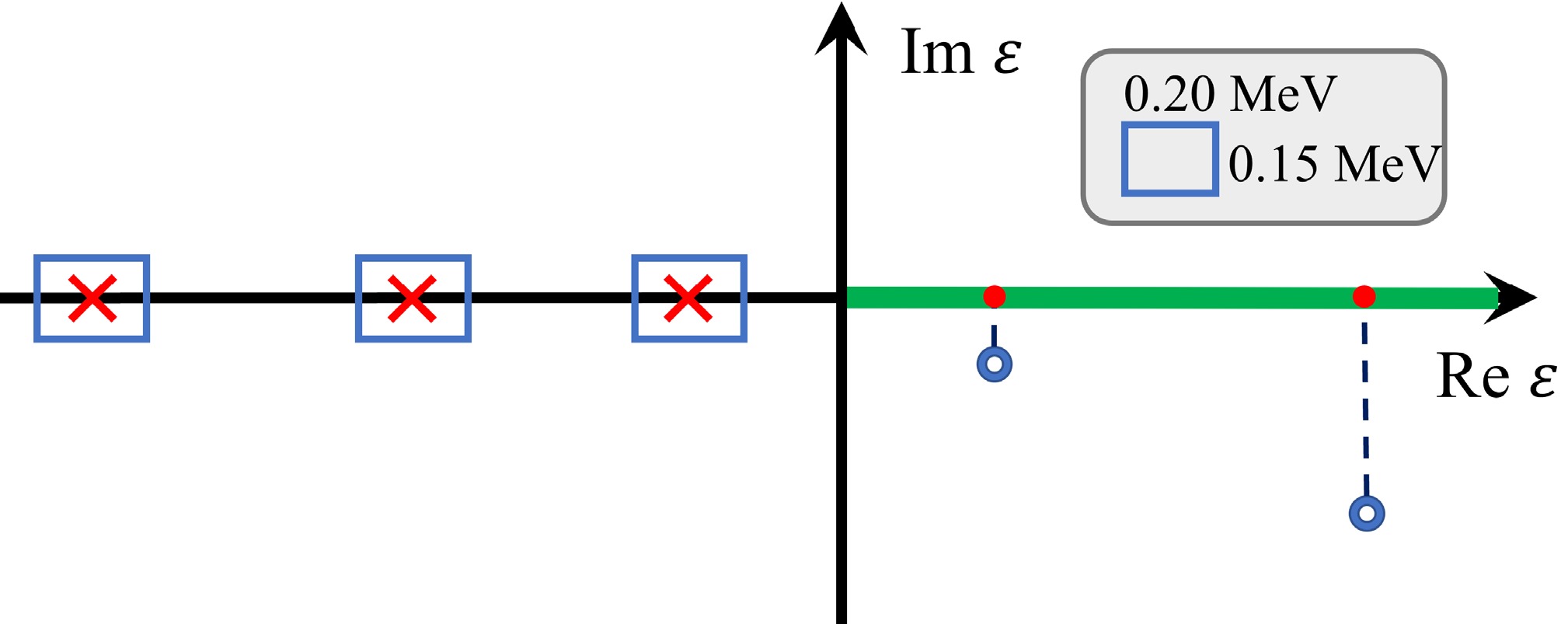
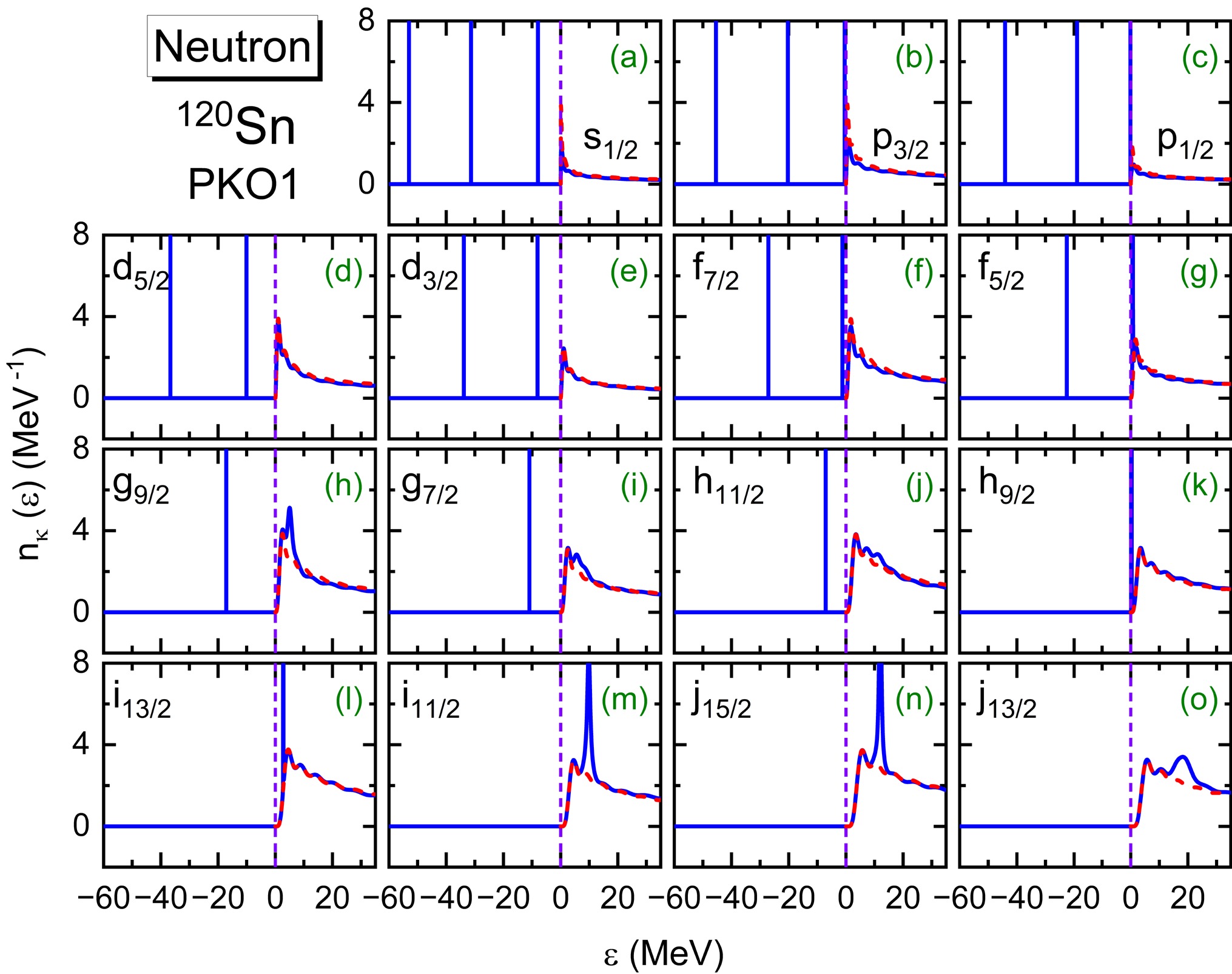
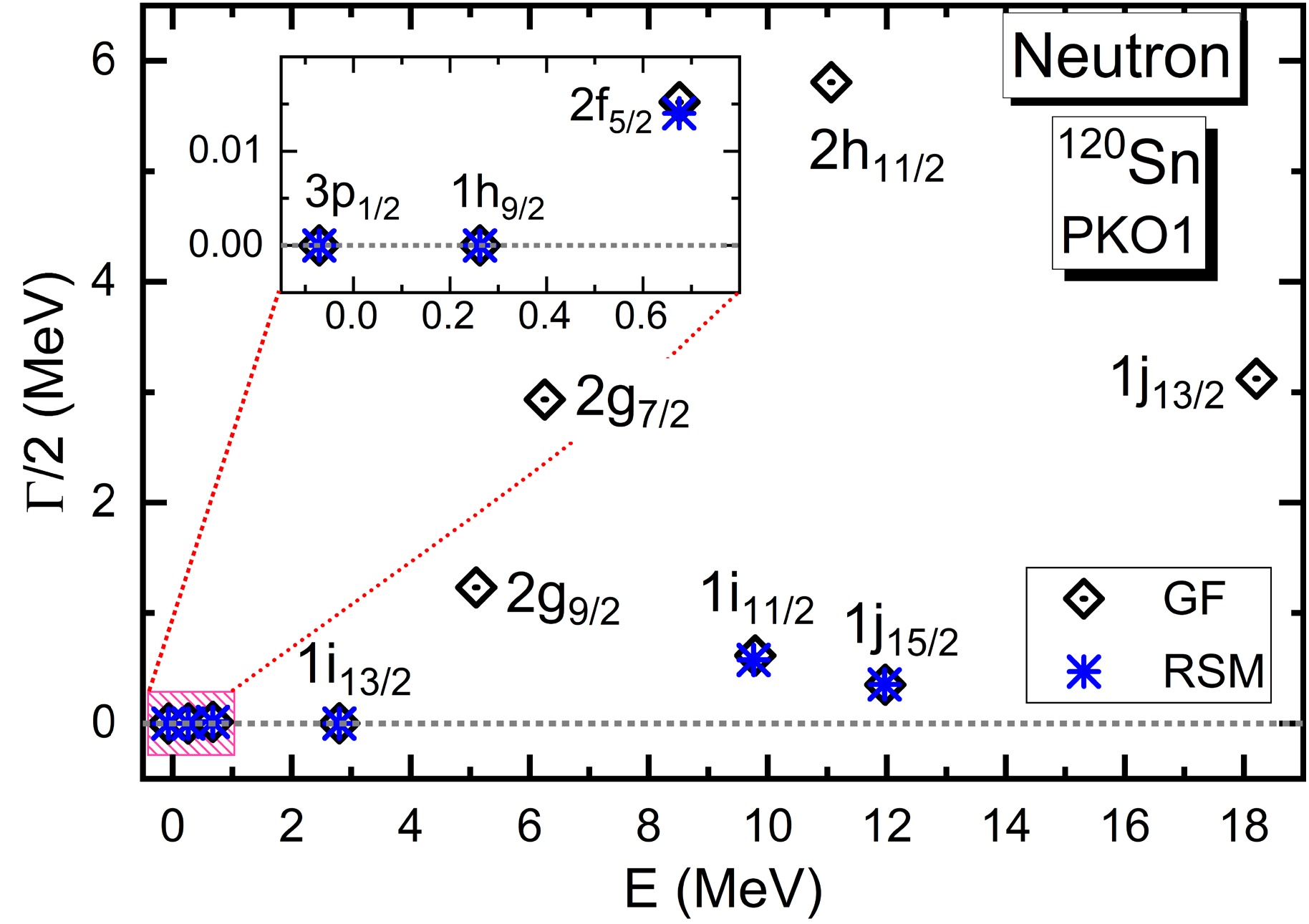
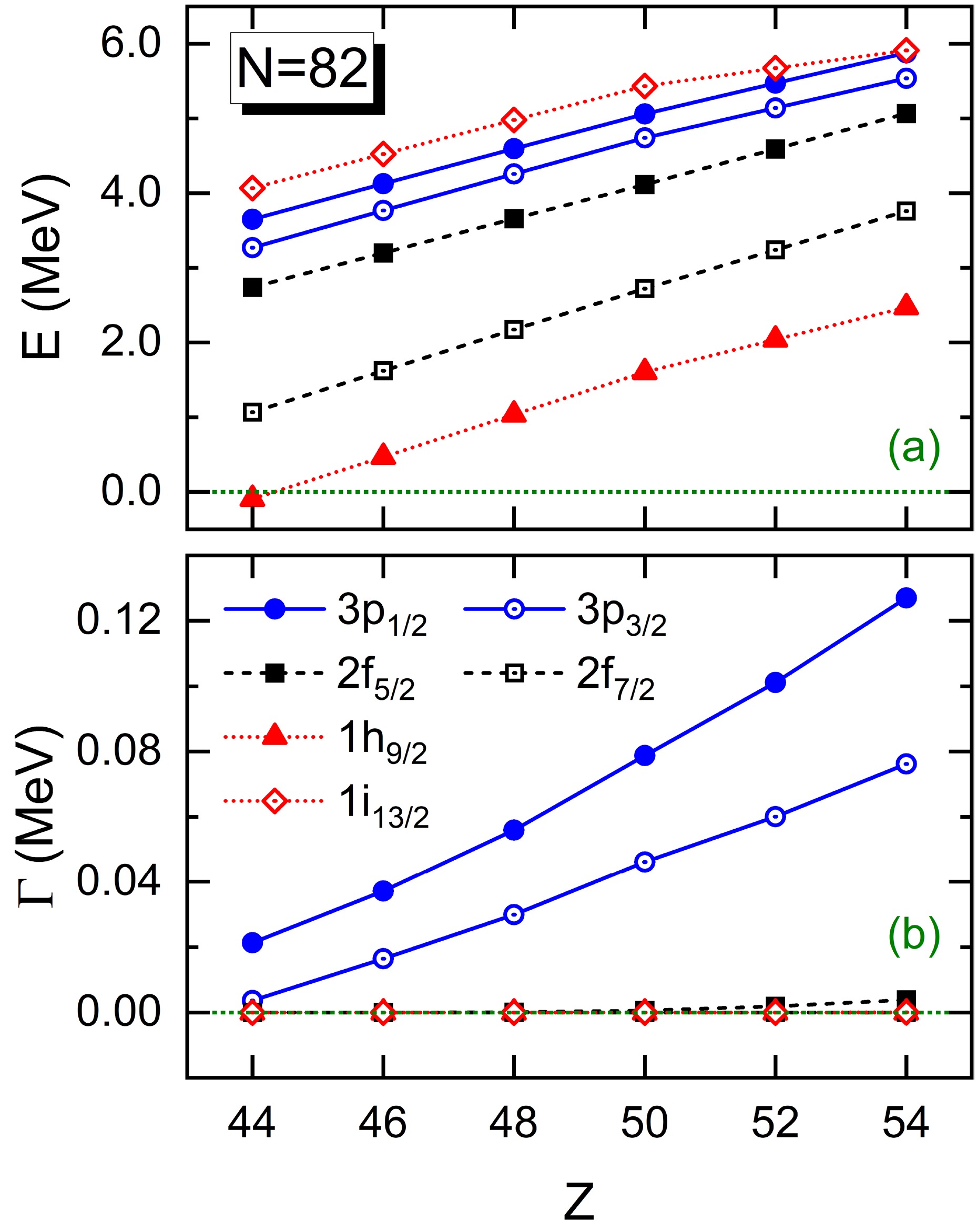
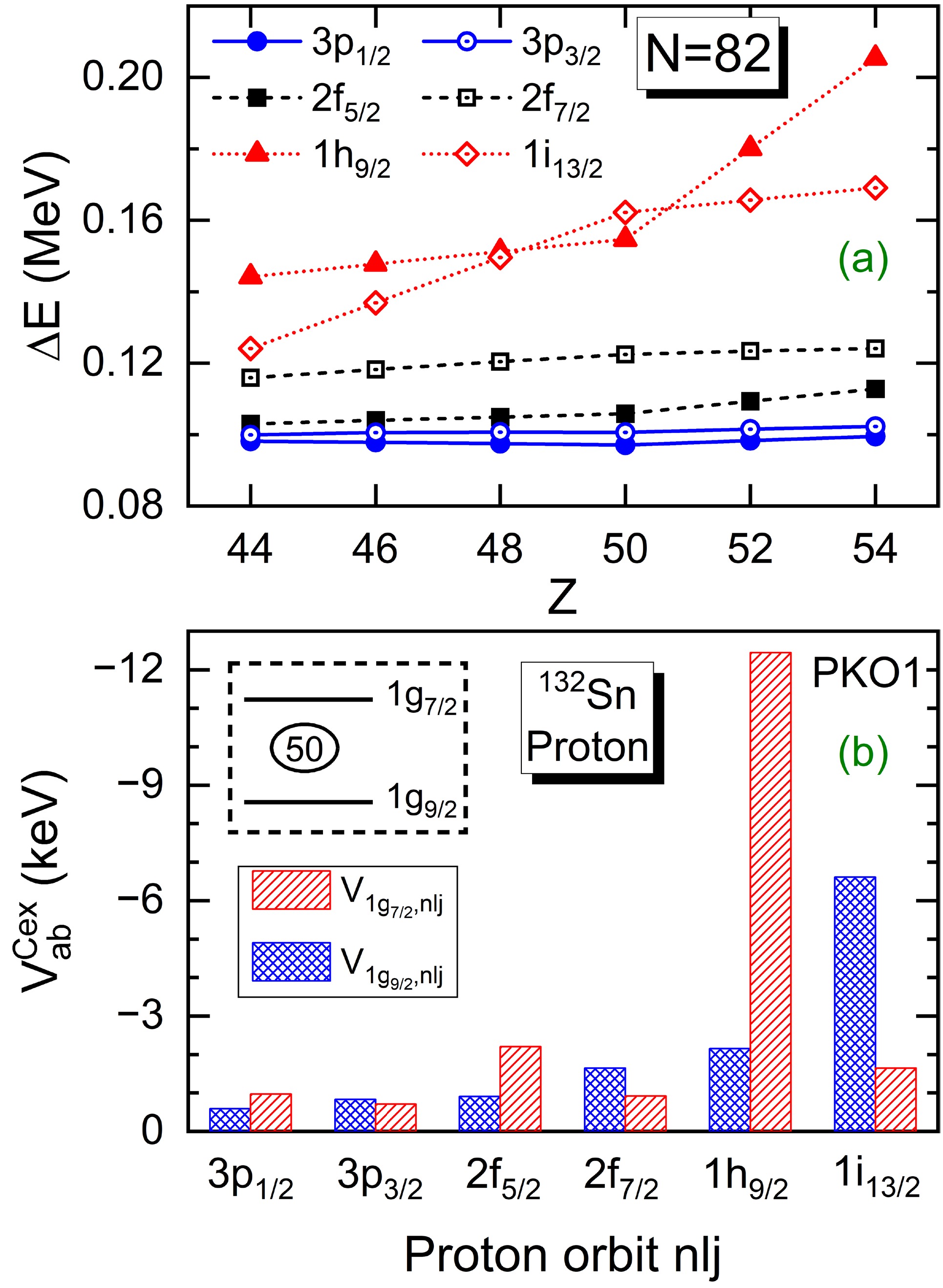
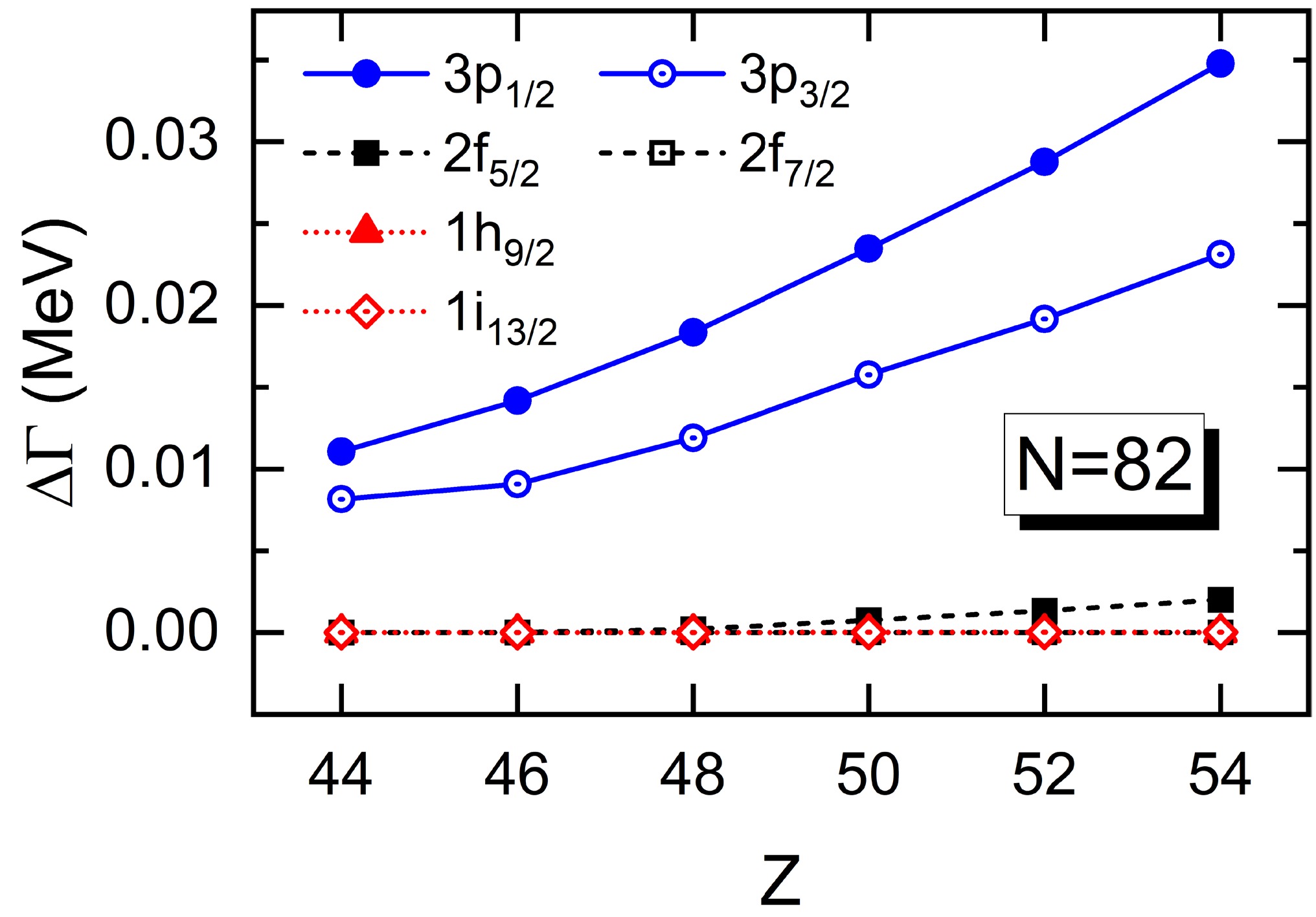
Relativistic Hartree-Fock theory is combined with the Green's function method in coordinate space to study both single-particle bound and resonant states within a unified framework. Within this approach, single-particle resonance energies and widths are unambiguously extracted from the density of states, and the influence of the Coulomb exchange effects on proton resonances in\begin{document}$N=82$\end{document} \begin{document}$0.09-0.21$\end{document}
Relativistic Hartree-Fock theory is combined with the Green's function method in coordinate space to study both single-particle bound and resonant states within a unified framework. Within this approach, single-particle resonance energies and widths are unambiguously extracted from the density of states, and the influence of the Coulomb exchange effects on proton resonances in
2026, 50(8): 084110. doi: 10.1088/1674-1137/ae6b2d
Abstract:
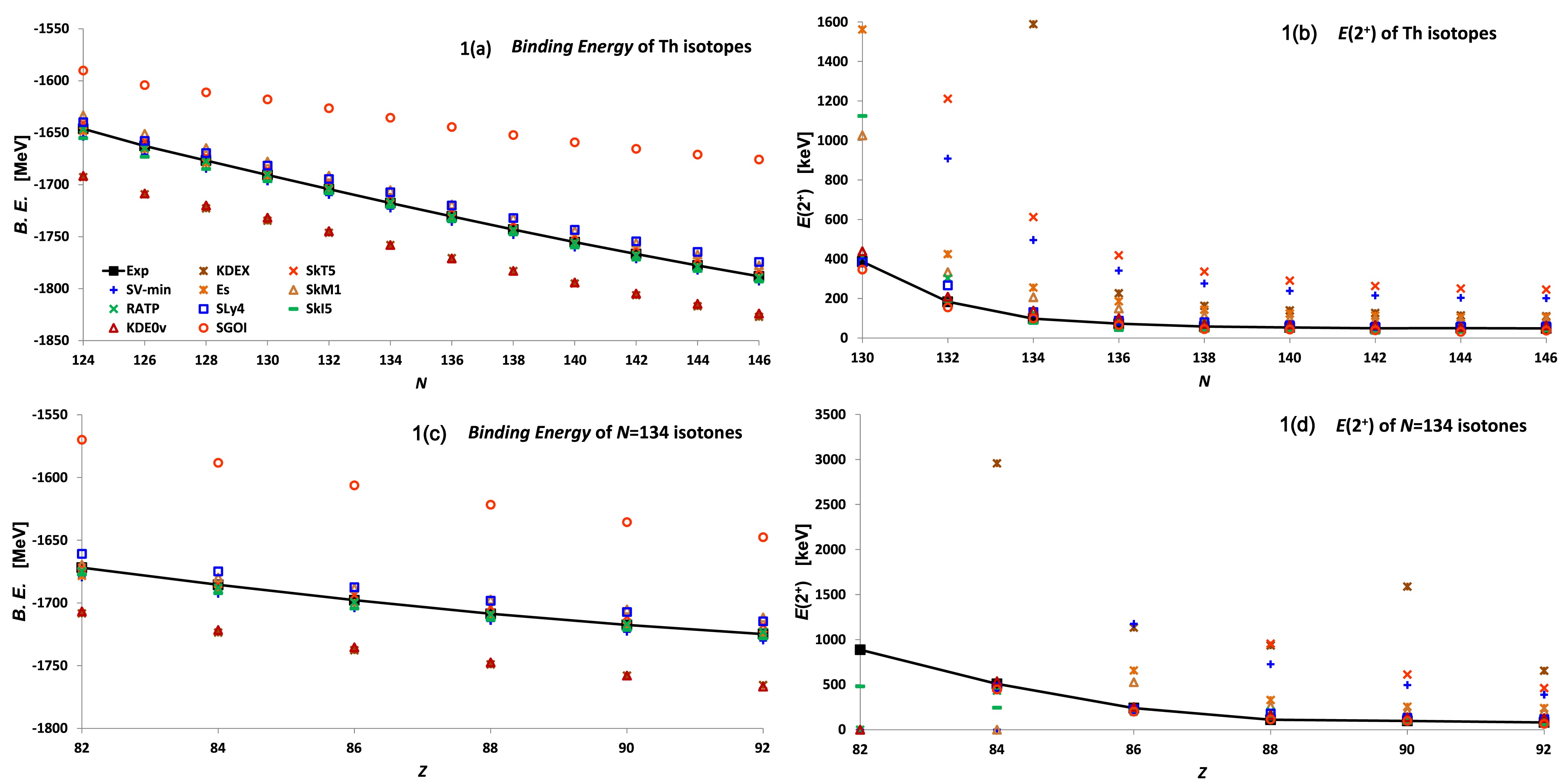
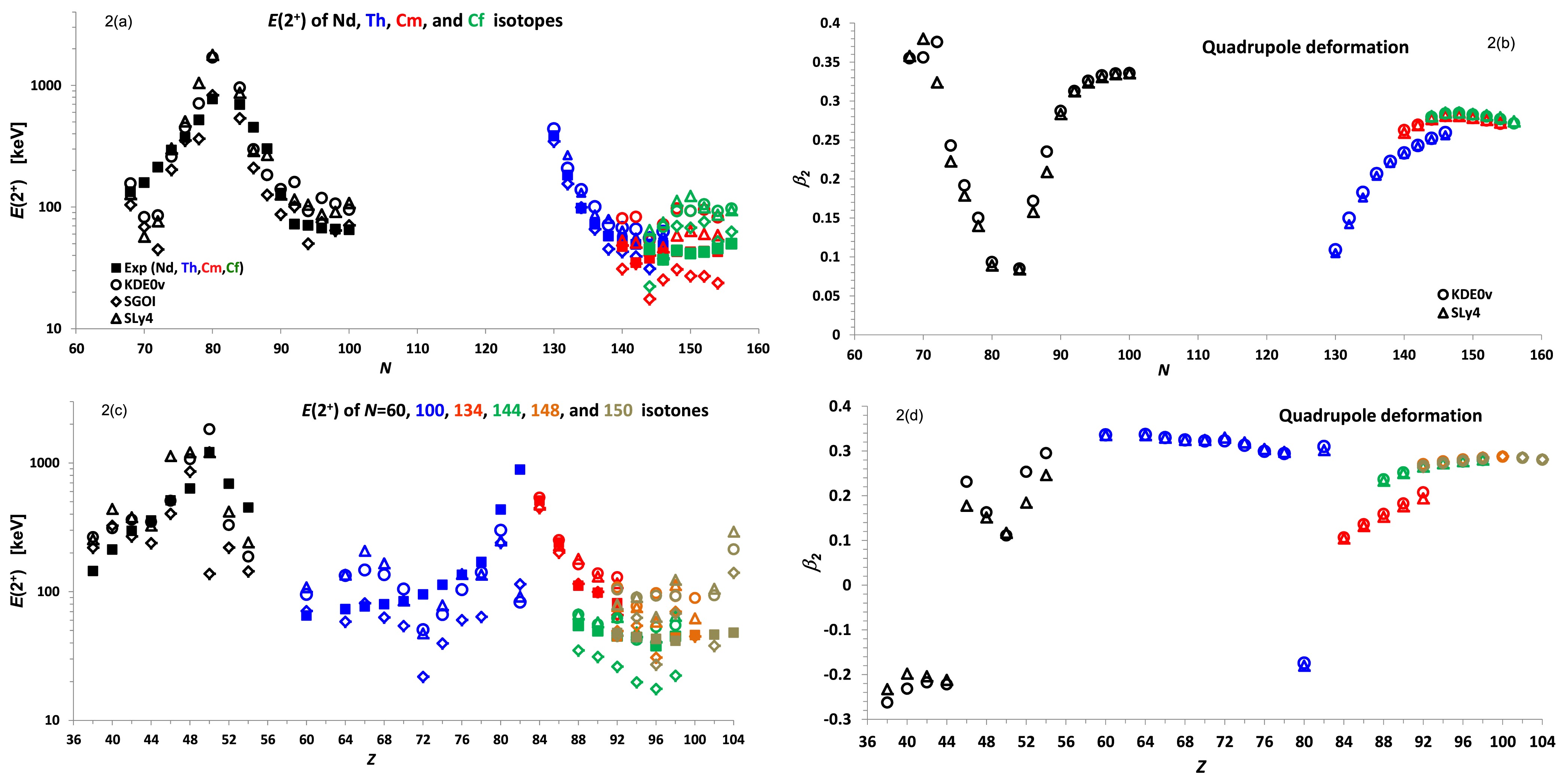
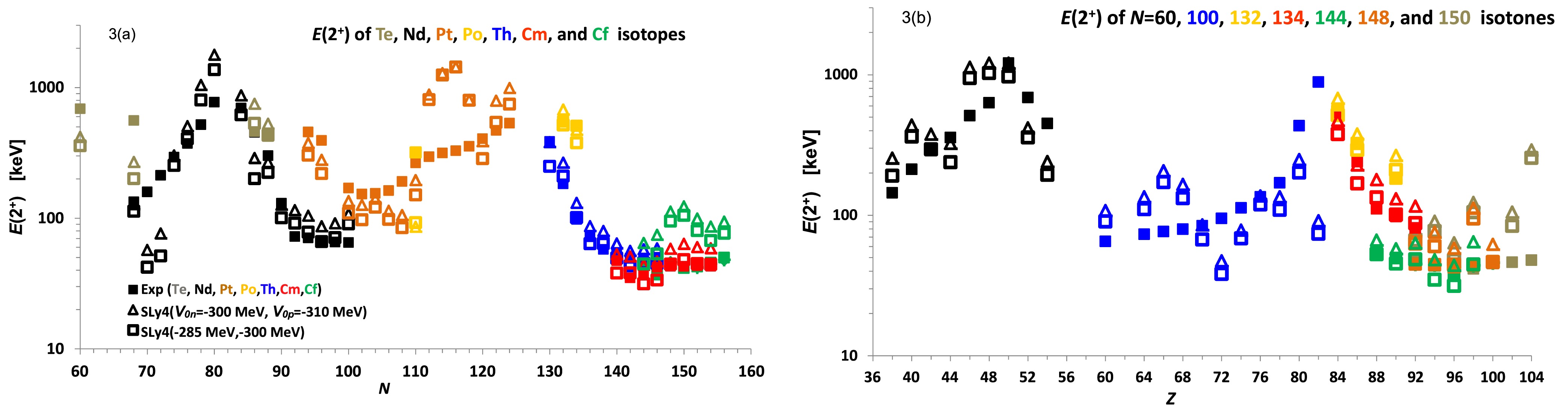
Theoretical predictions of collective rotation are characterized by significant model-dependent uncertainties, limiting their reliability in interpreting rotational structure across the nuclear chart. To address this, we systematically examine how details of the Skyrme effective nucleon-nucleon interaction and neutron and proton pairing correlations affect the microscopic description of the first\begin{document}$ 2^+ $\end{document} \begin{document}$ E(2^+) $\end{document} \begin{document}$ N=156 $\end{document} \begin{document}$ 2^+ $\end{document} \begin{document}$ x_0 $\end{document} \begin{document}$ E(2^+) $\end{document} \begin{document}$ t_0/t_3 $\end{document} \begin{document}$ W_0 \approx 120 $\end{document} \begin{document}$ E(2^{+}) $\end{document}
Theoretical predictions of collective rotation are characterized by significant model-dependent uncertainties, limiting their reliability in interpreting rotational structure across the nuclear chart. To address this, we systematically examine how details of the Skyrme effective nucleon-nucleon interaction and neutron and proton pairing correlations affect the microscopic description of the first
2026, 50(8): 084111. doi: 10.1088/1674-1137/ae6b30
Abstract:
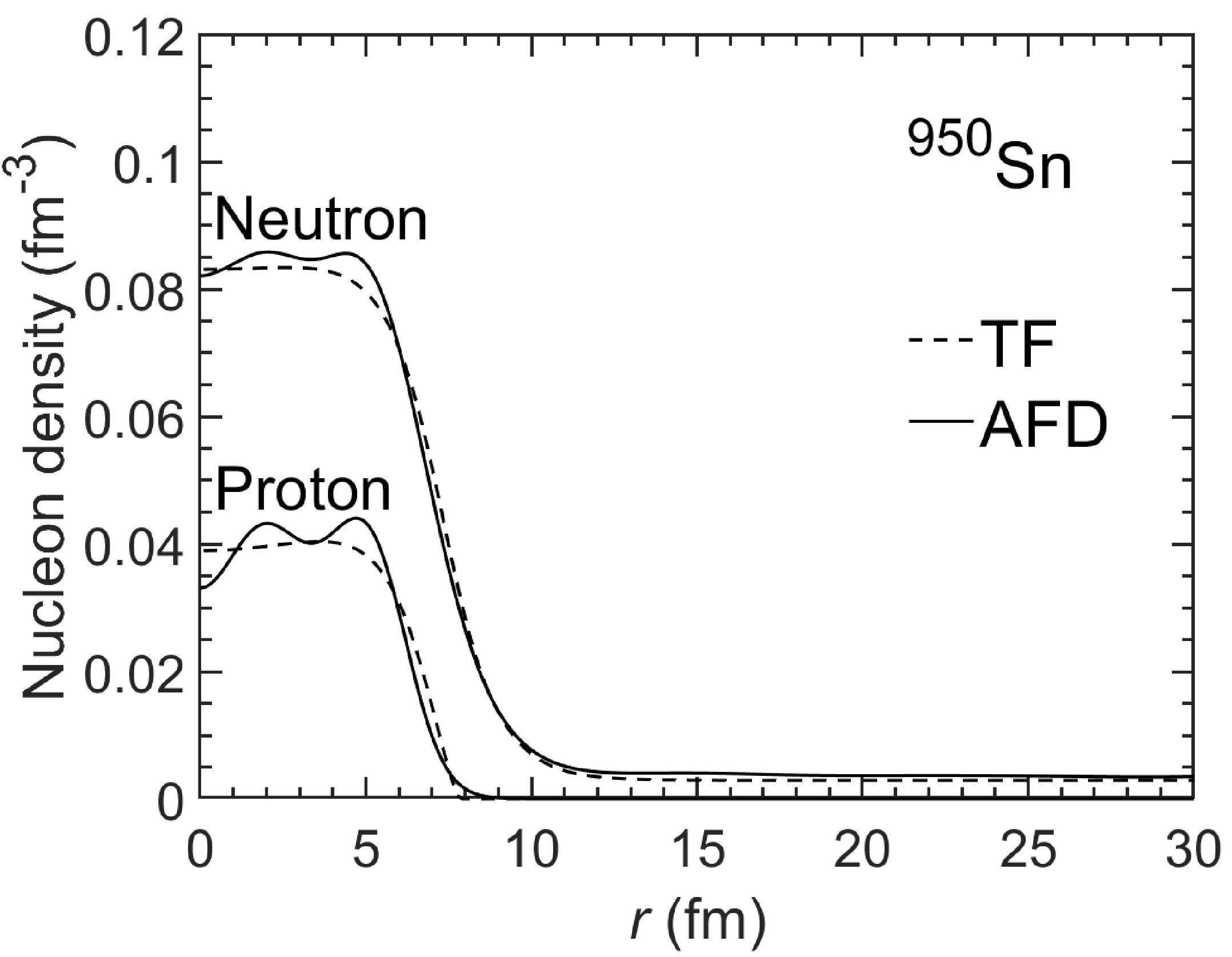
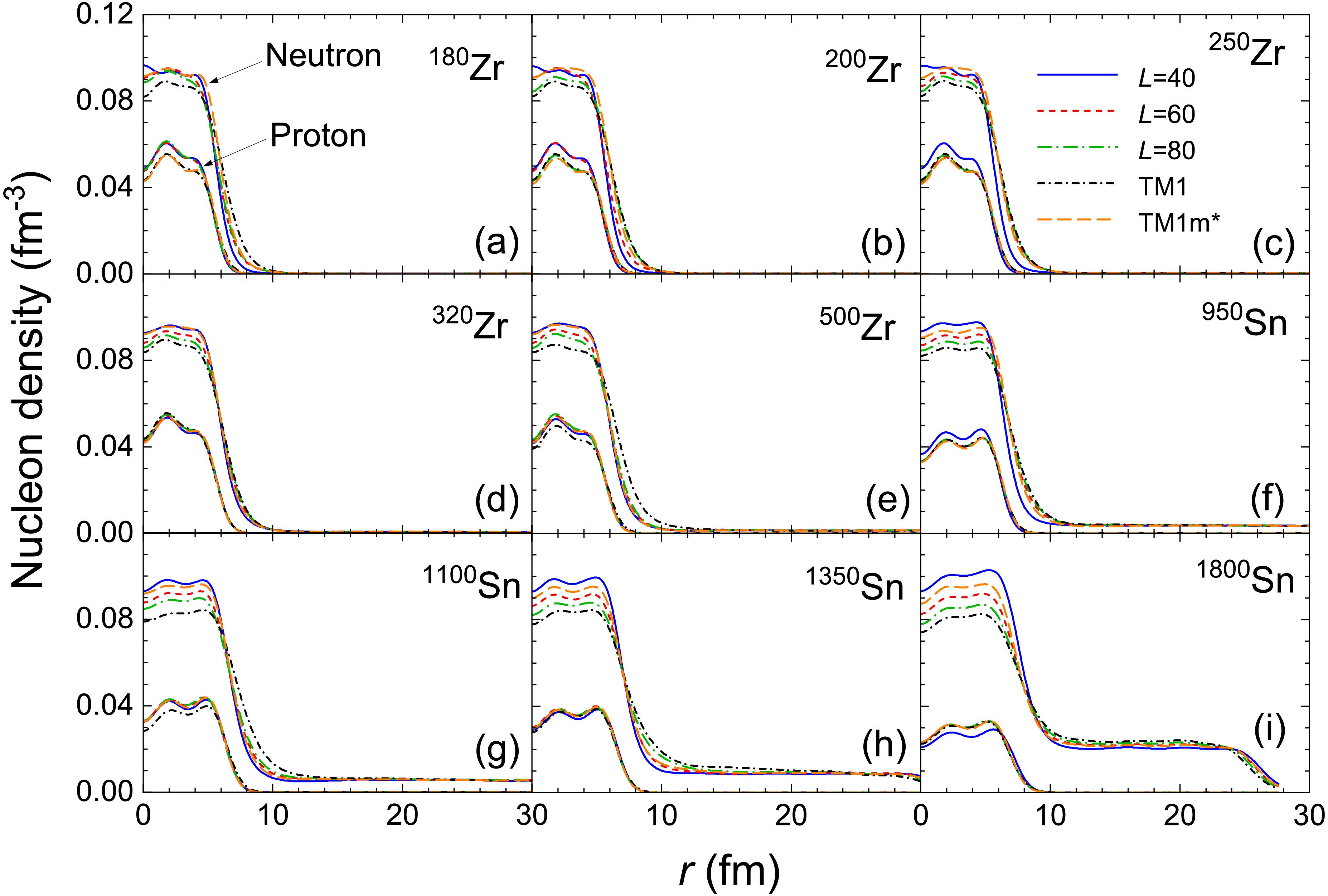
The ground-state properties of neutron-rich nuclear clusters in the inner crust of neutron stars are investigated within the Wigner–Seitz approximation using a relativistic mean-field framework. The radial Dirac equations are solved using an asymmetric finite-difference scheme that preserves hermiticity and eliminates spurious states. Calculations are performed for representative Wigner–Seitz cells using TM1-based interactions with different symmetry-energy slope parameters L, as well as a parametrization with a larger effective nucleon mass. It is found that the binding energy per nucleon decreases systematically with increasing L, while a larger effective nucleon mass produces a further decrease, particularly at higher densities. Quantum shell effects, which are absent in the Thomas–Fermi approximation, give rise to oscillatory density distributions and modify neutron properties. Within the Wigner–Seitz cell, the resulting neutron root-mean-square radius and chemical potential are sensitive to both L and the effective nucleon mass, underscoring their important roles in determining the microscopic structure of the neutron-star inner crust.
The ground-state properties of neutron-rich nuclear clusters in the inner crust of neutron stars are investigated within the Wigner–Seitz approximation using a relativistic mean-field framework. The radial Dirac equations are solved using an asymmetric finite-difference scheme that preserves hermiticity and eliminates spurious states. Calculations are performed for representative Wigner–Seitz cells using TM1-based interactions with different symmetry-energy slope parameters L, as well as a parametrization with a larger effective nucleon mass. It is found that the binding energy per nucleon decreases systematically with increasing L, while a larger effective nucleon mass produces a further decrease, particularly at higher densities. Quantum shell effects, which are absent in the Thomas–Fermi approximation, give rise to oscillatory density distributions and modify neutron properties. Within the Wigner–Seitz cell, the resulting neutron root-mean-square radius and chemical potential are sensitive to both L and the effective nucleon mass, underscoring their important roles in determining the microscopic structure of the neutron-star inner crust.
2026, 50(8): 084112. doi: 10.1088/1674-1137/ae6a7f
Abstract:
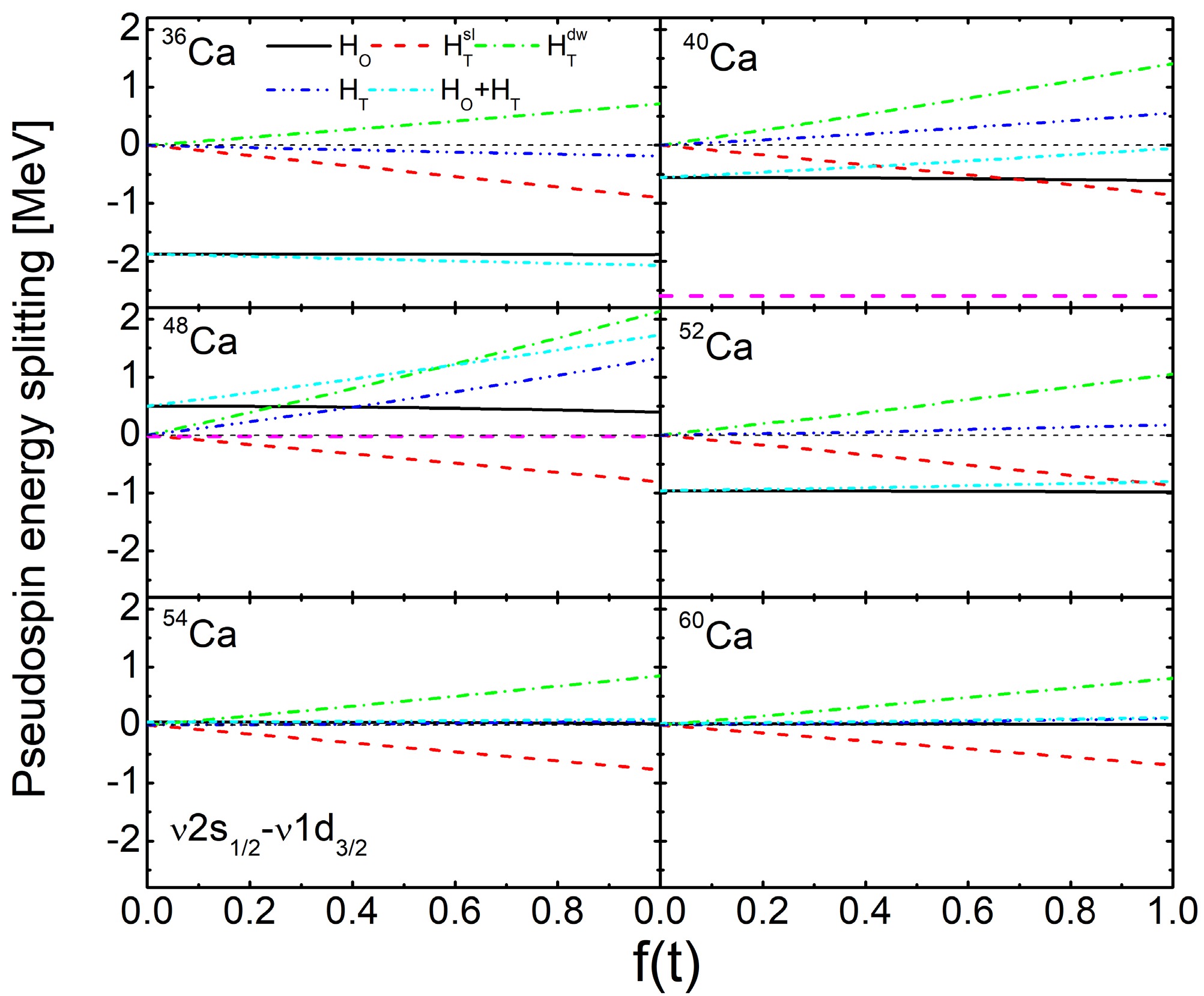
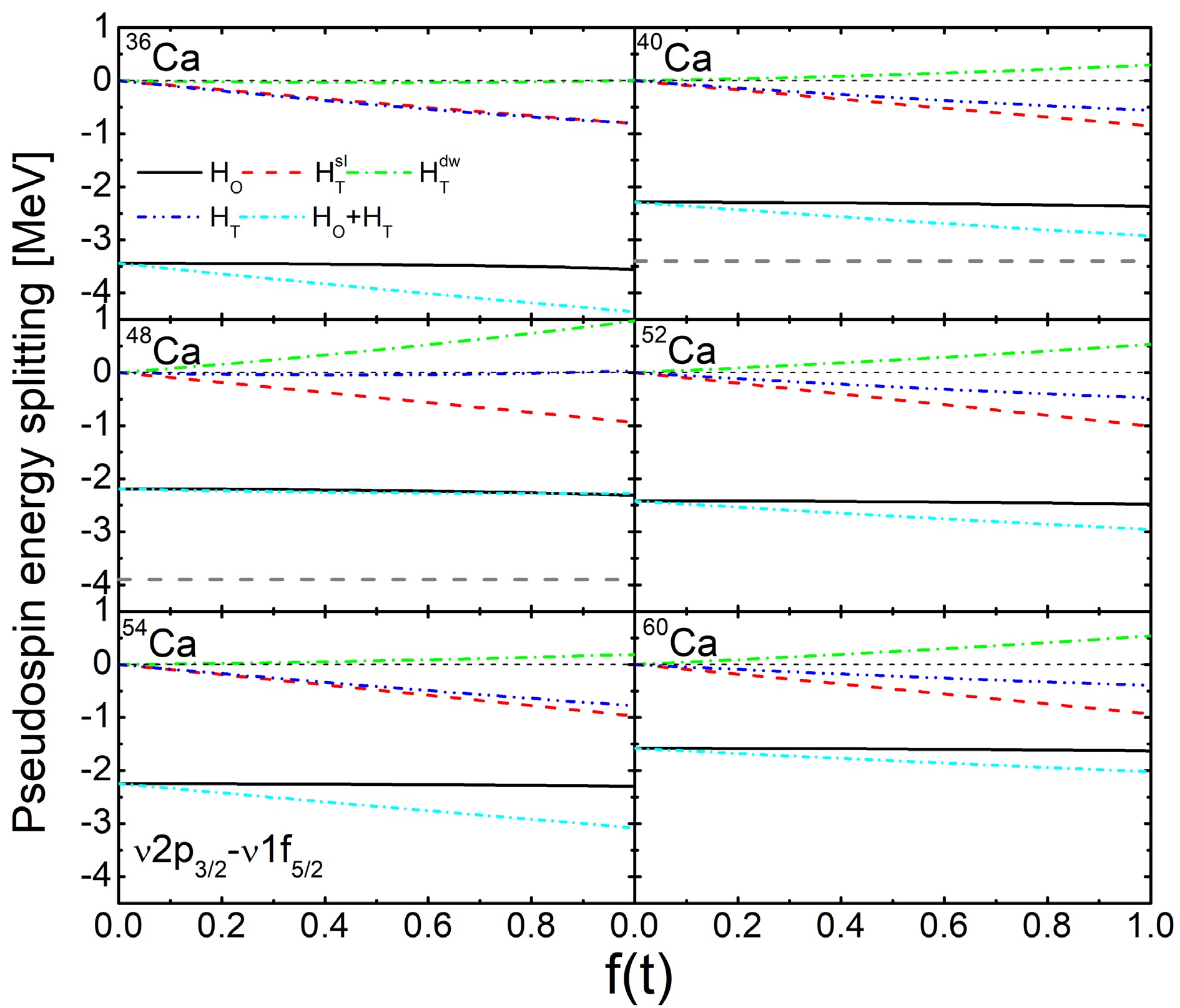
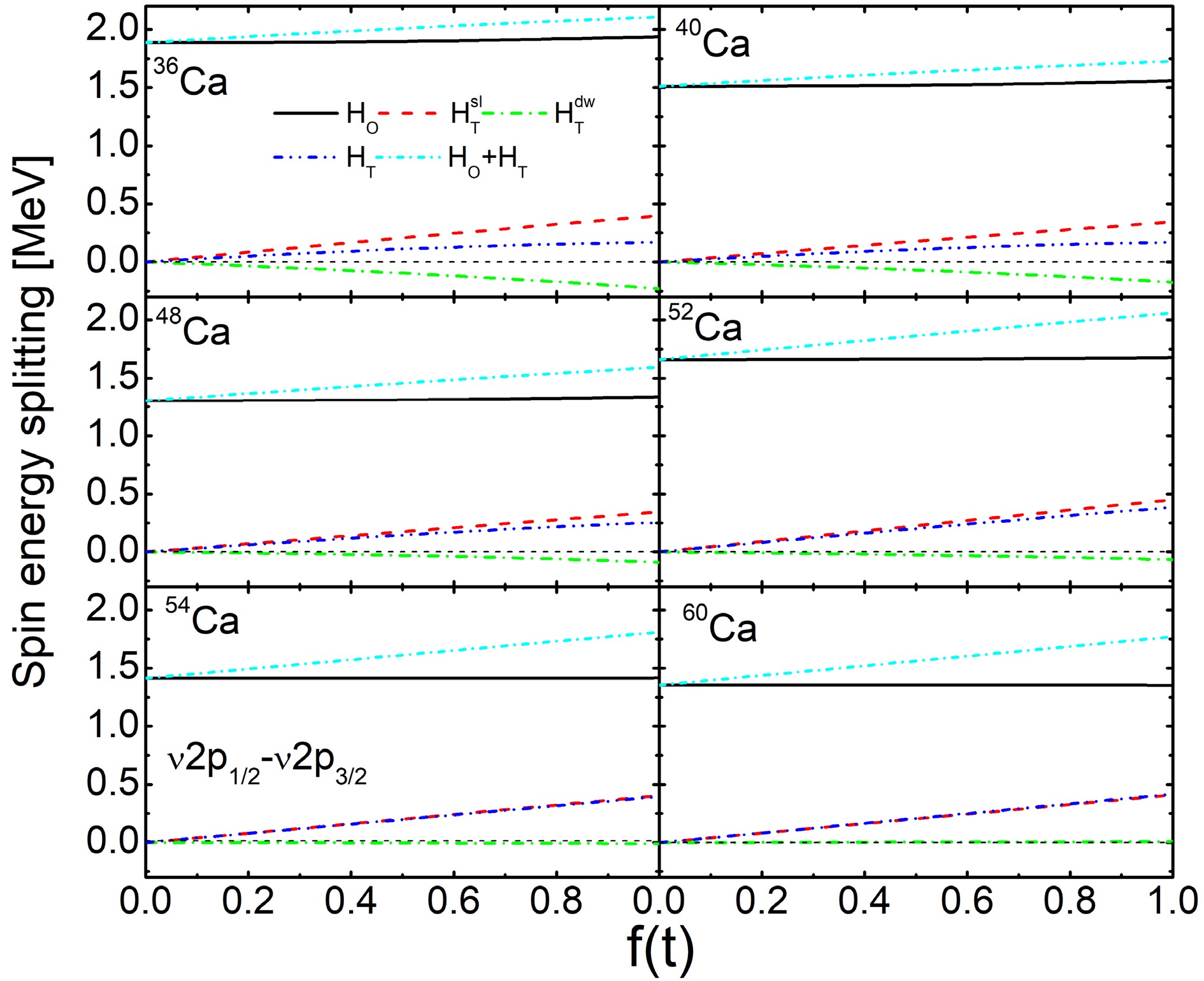
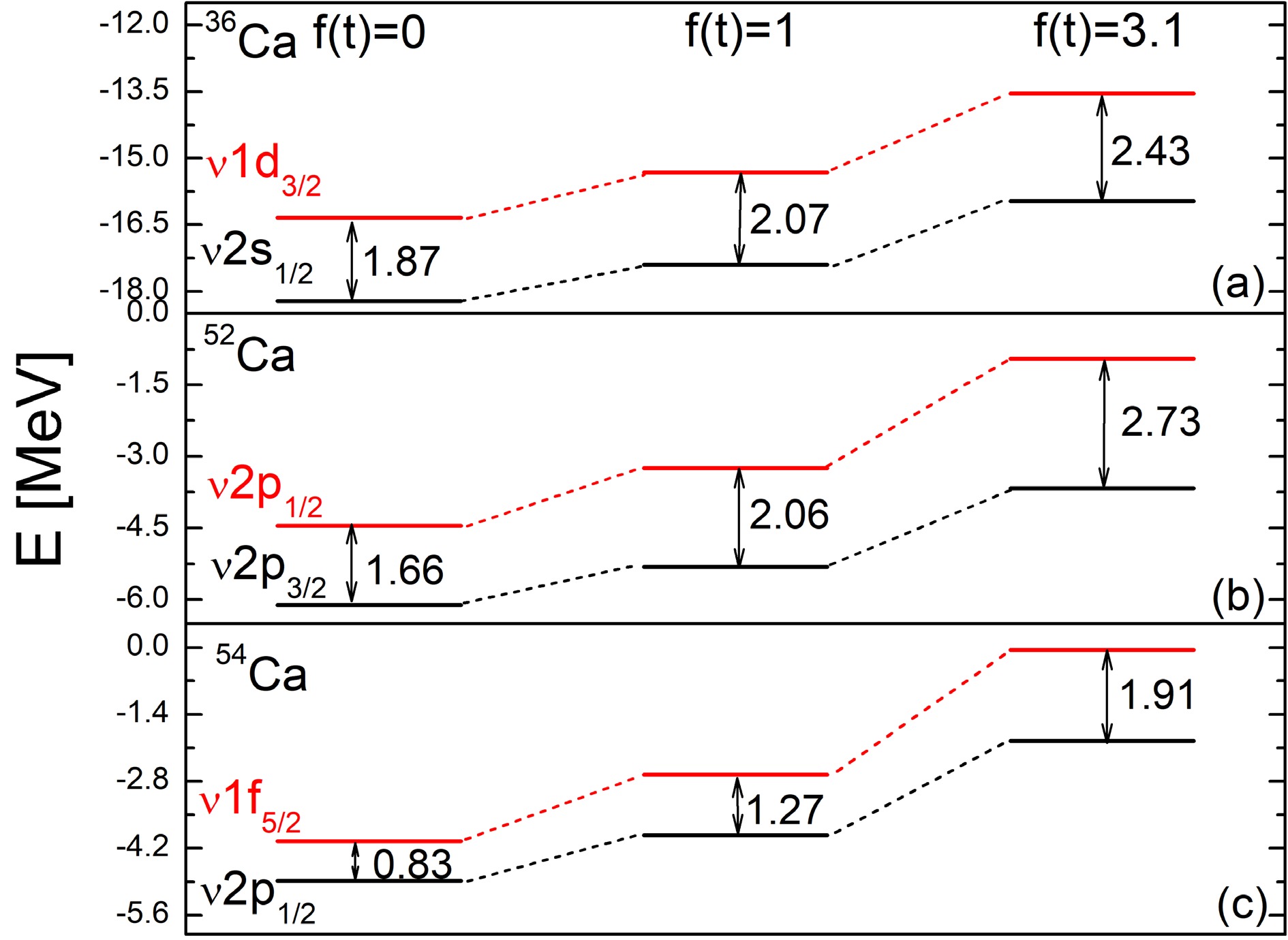
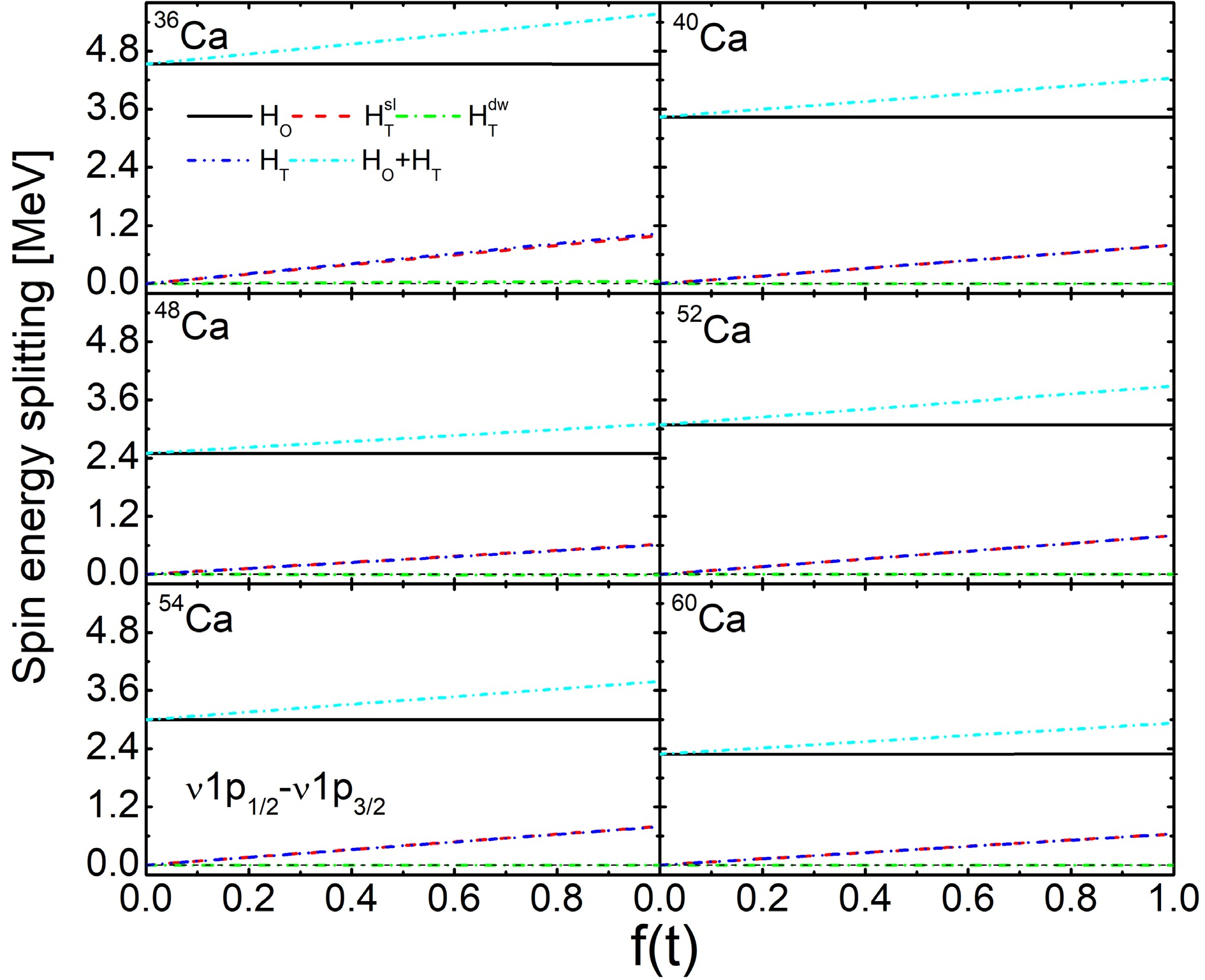
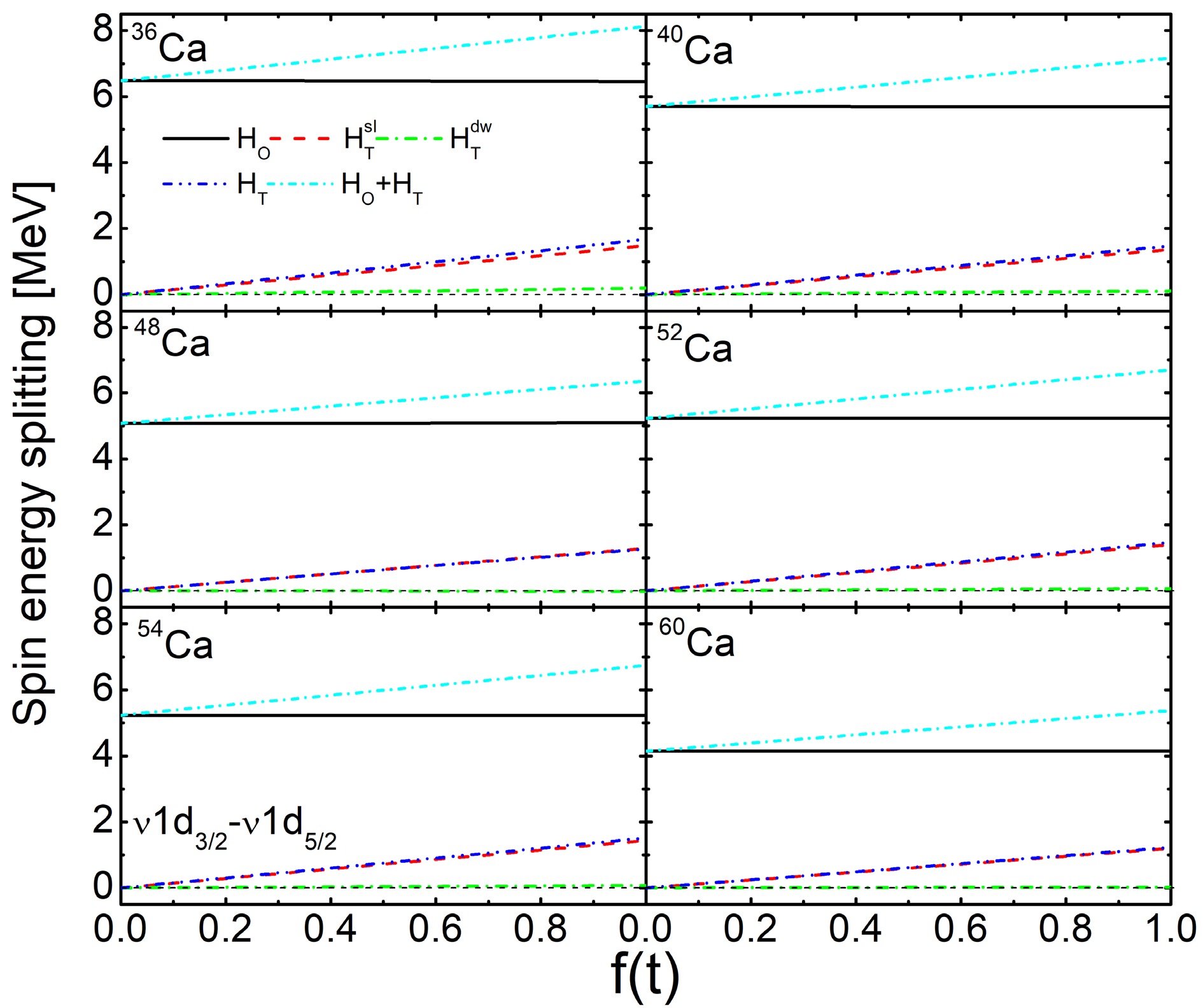
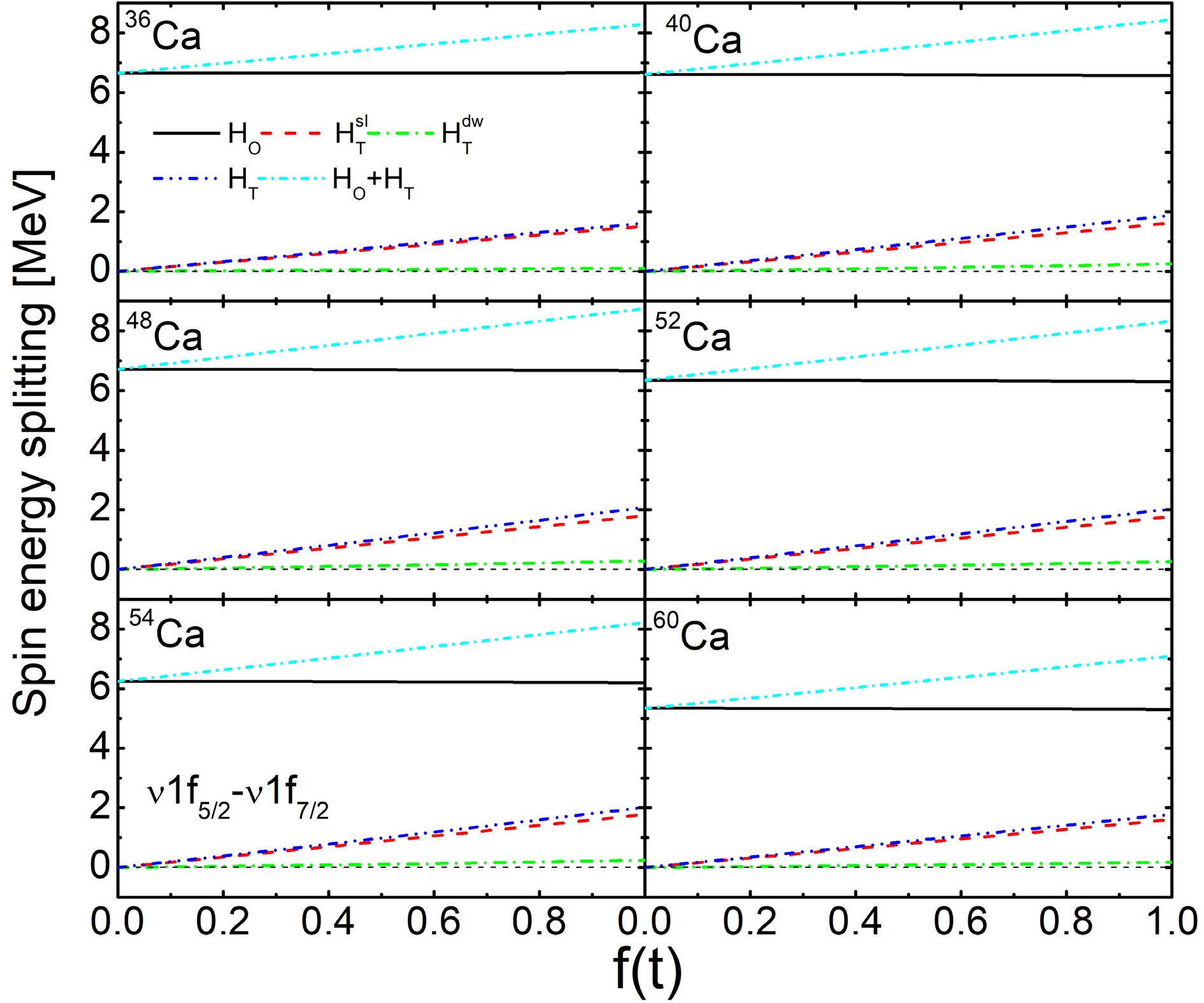
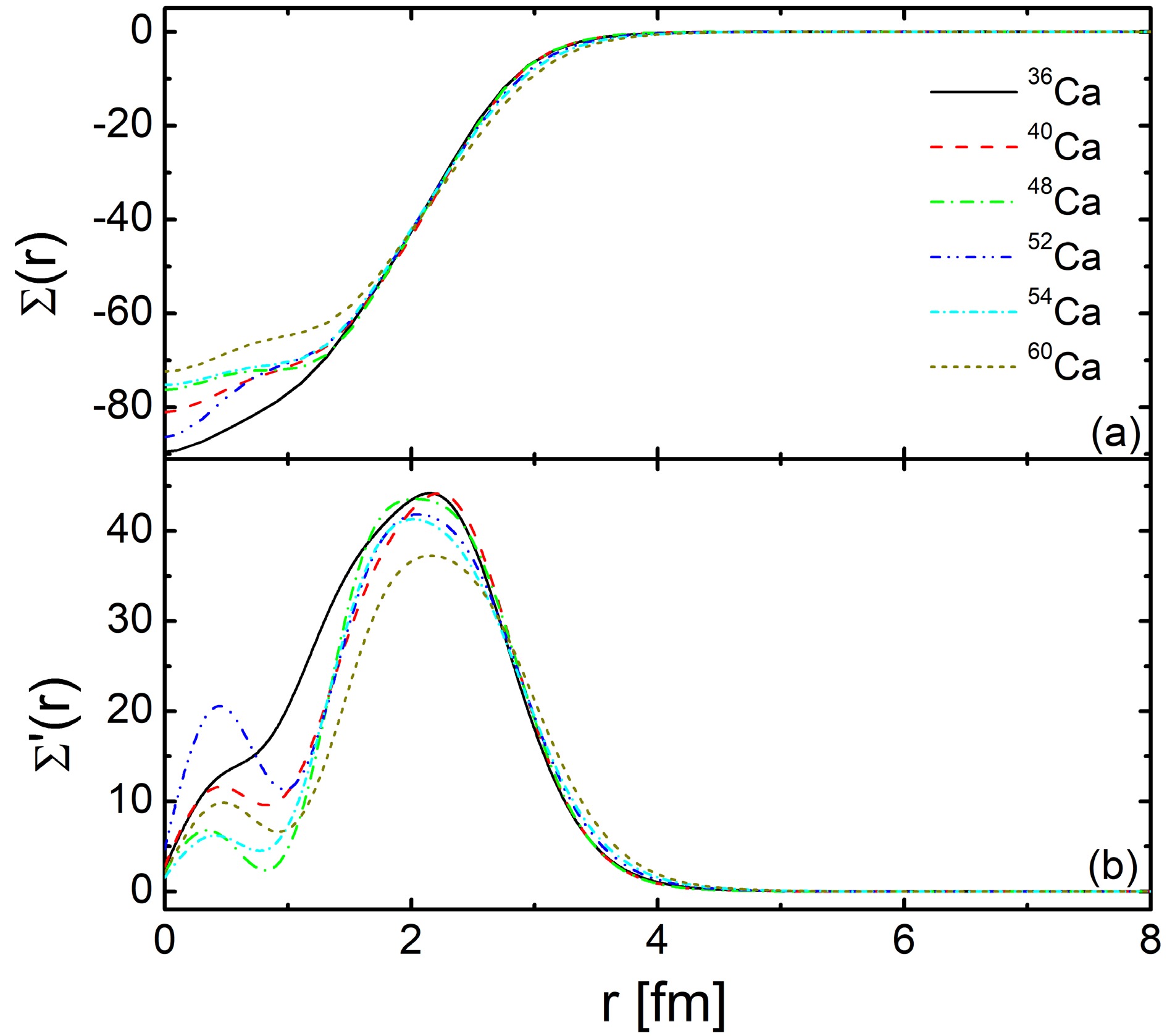
Based on the similarity renormalization group (SRG) method with the relativistic mean field (RMF) theory, we diagonalize the Hamiltonian incorporating the tensor coupling effect to explore pseudospin and spin symmetries and their evolutions in Ca isotopes. The restoration of pseudospin symmetry is governed by the competition between\begin{document}$H_{T}^{sl}$\end{document} \begin{document}$H_{T}^{dw}$\end{document} \begin{document}$H_{T}^{sl}$\end{document} \begin{document}$\kappa <0$\end{document} \begin{document}$\kappa>0$\end{document} \begin{document}$H_{T}^{sl}$\end{document} \begin{document}$f(t)=3.1$\end{document} \begin{document}$N = 32, 34$\end{document} \begin{document}$\Sigma'(r)$\end{document}
Based on the similarity renormalization group (SRG) method with the relativistic mean field (RMF) theory, we diagonalize the Hamiltonian incorporating the tensor coupling effect to explore pseudospin and spin symmetries and their evolutions in Ca isotopes. The restoration of pseudospin symmetry is governed by the competition between
2026, 50(8): 084113. doi: 10.1088/1674-1137/ae6ed4
Abstract:
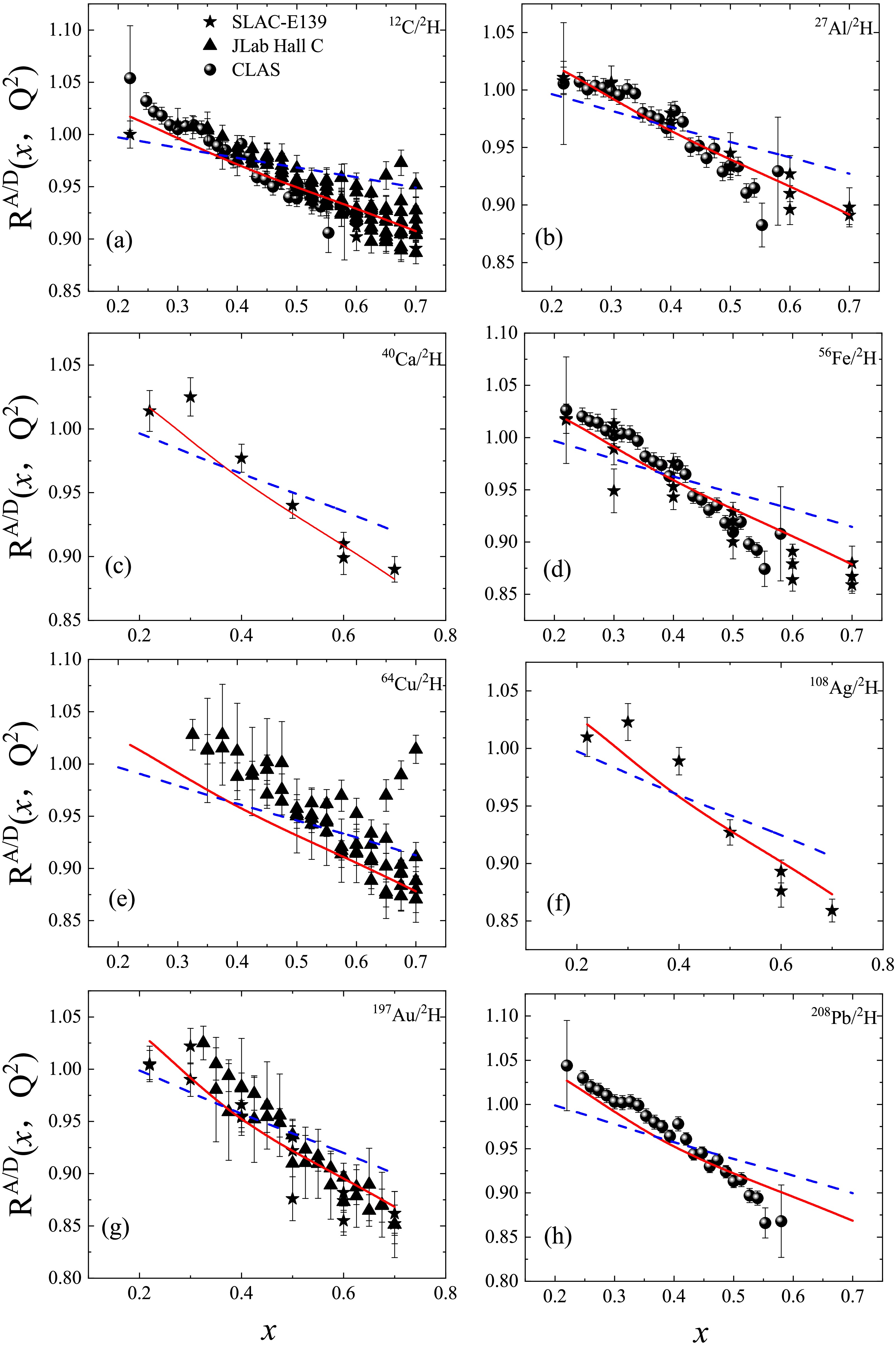
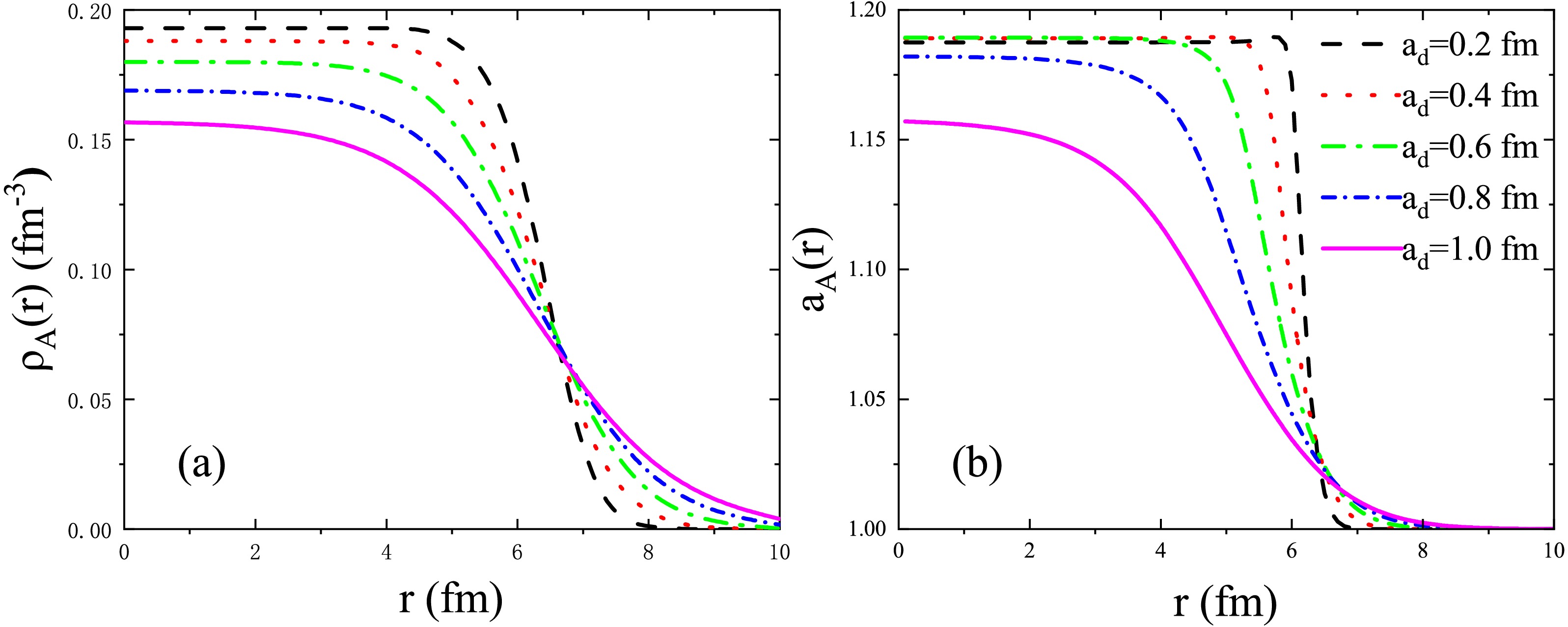
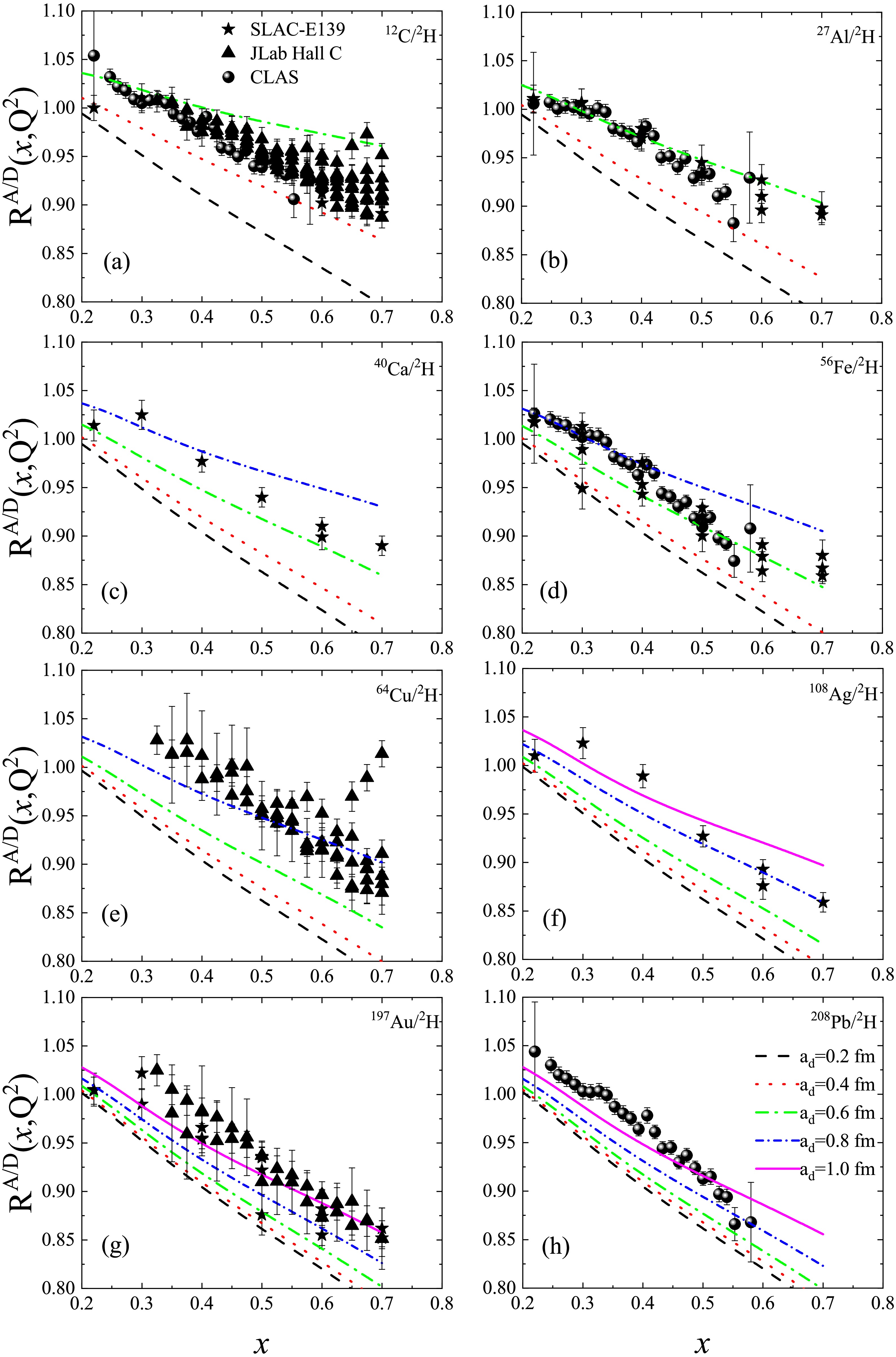
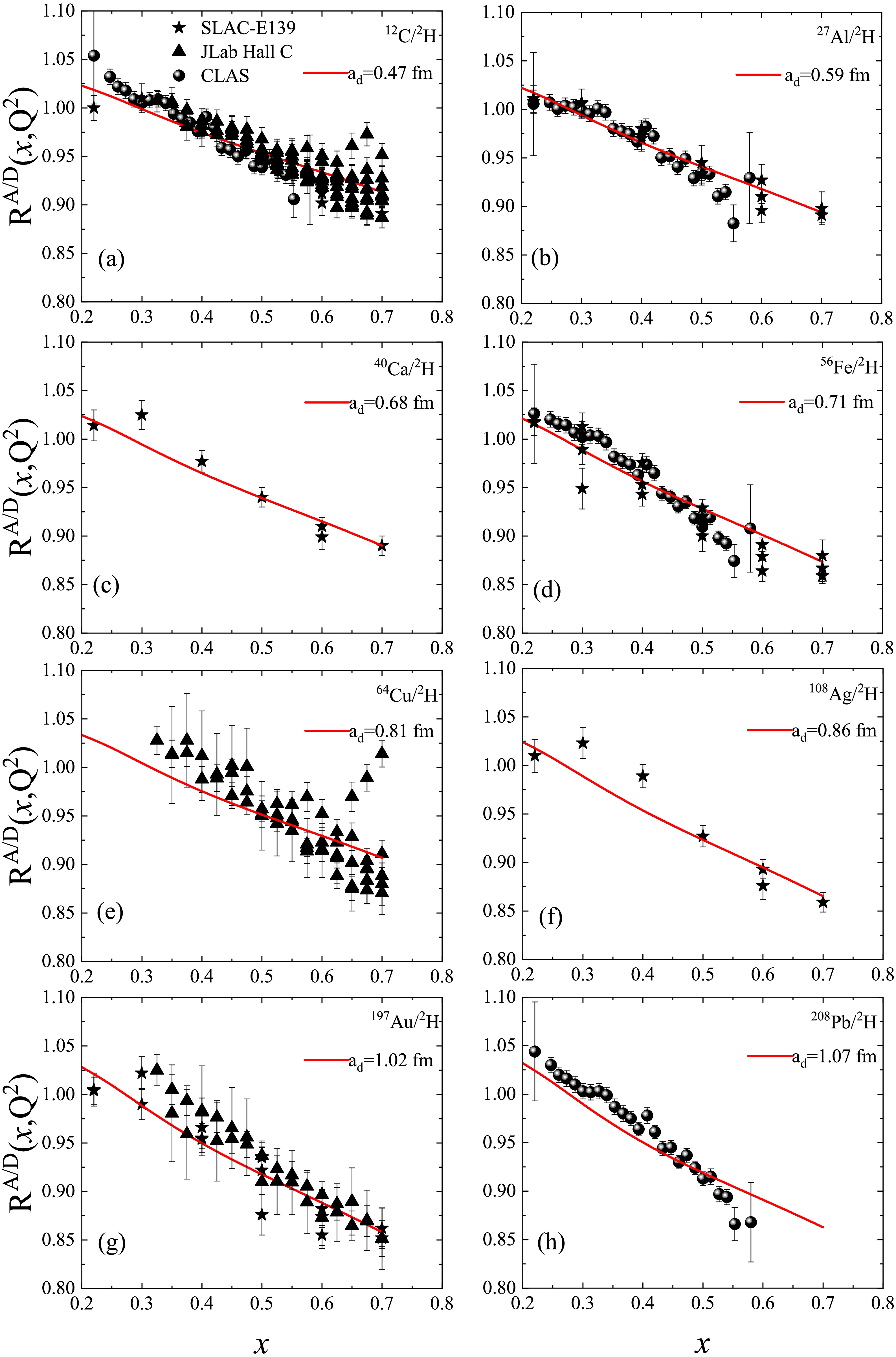
Within the double\begin{document}$ Q^{2} $\end{document} \begin{document}$ A \geq 12 $\end{document}
Within the double
2026, 50(8): 084114. doi: 10.1088/1674-1137/ae71a7
Abstract:
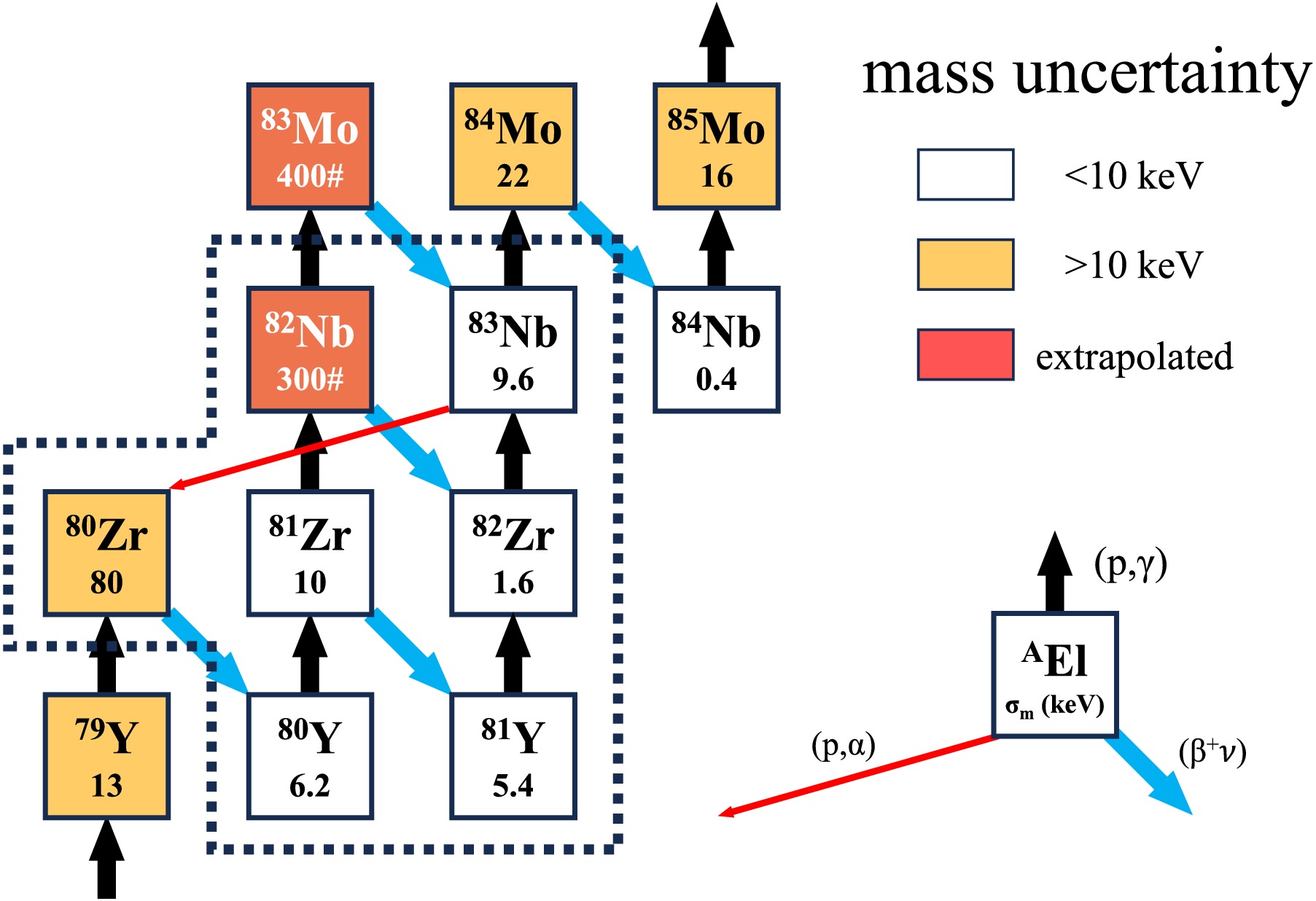
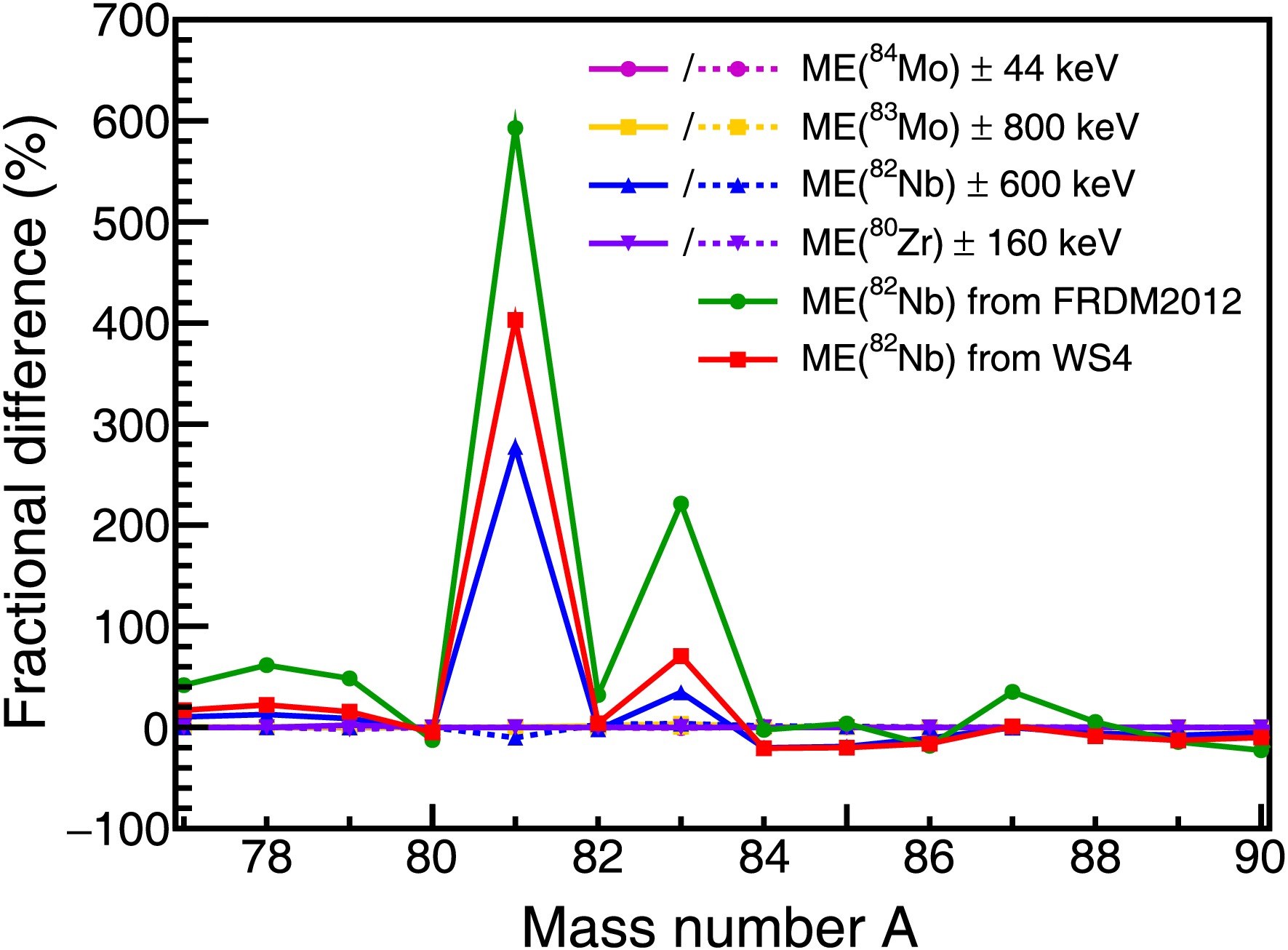
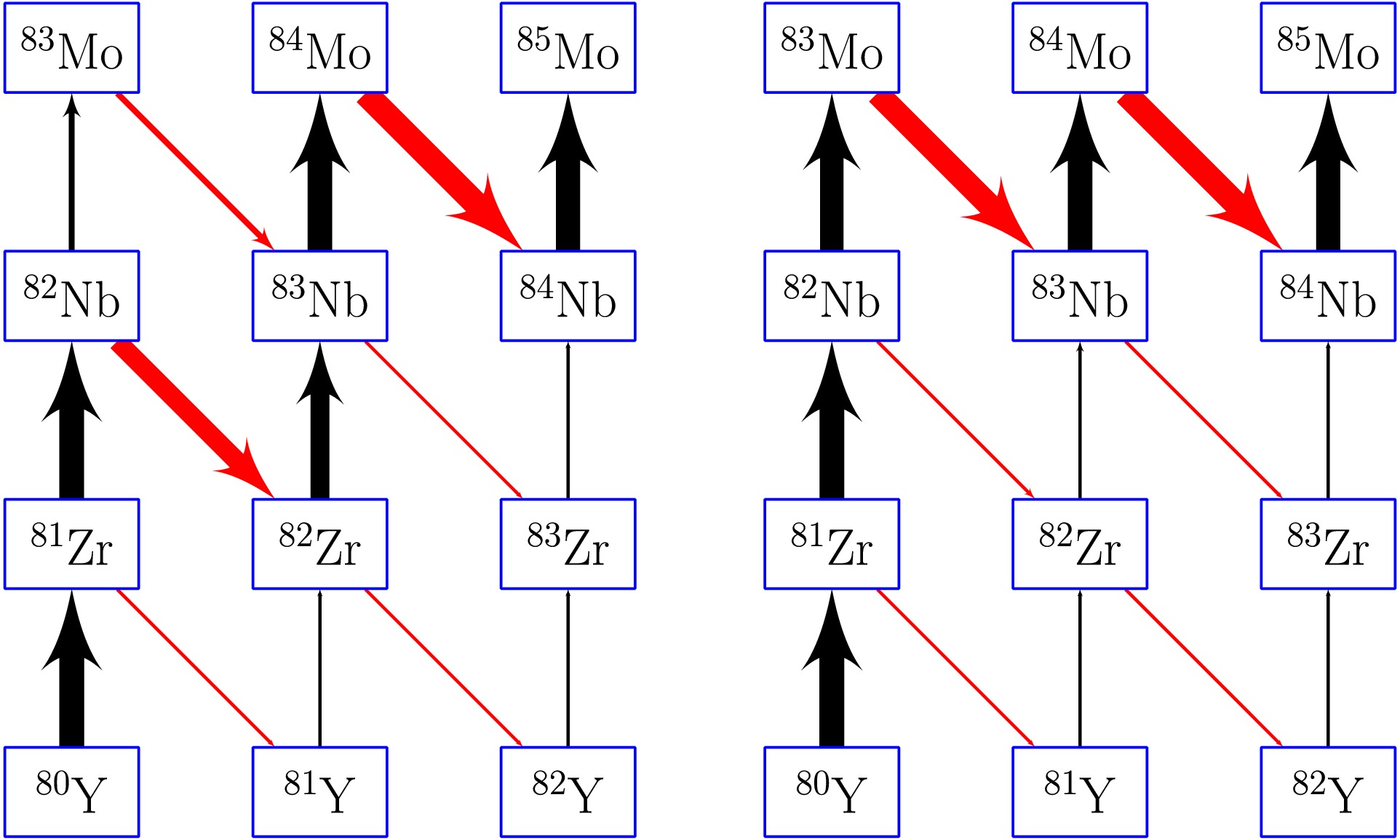
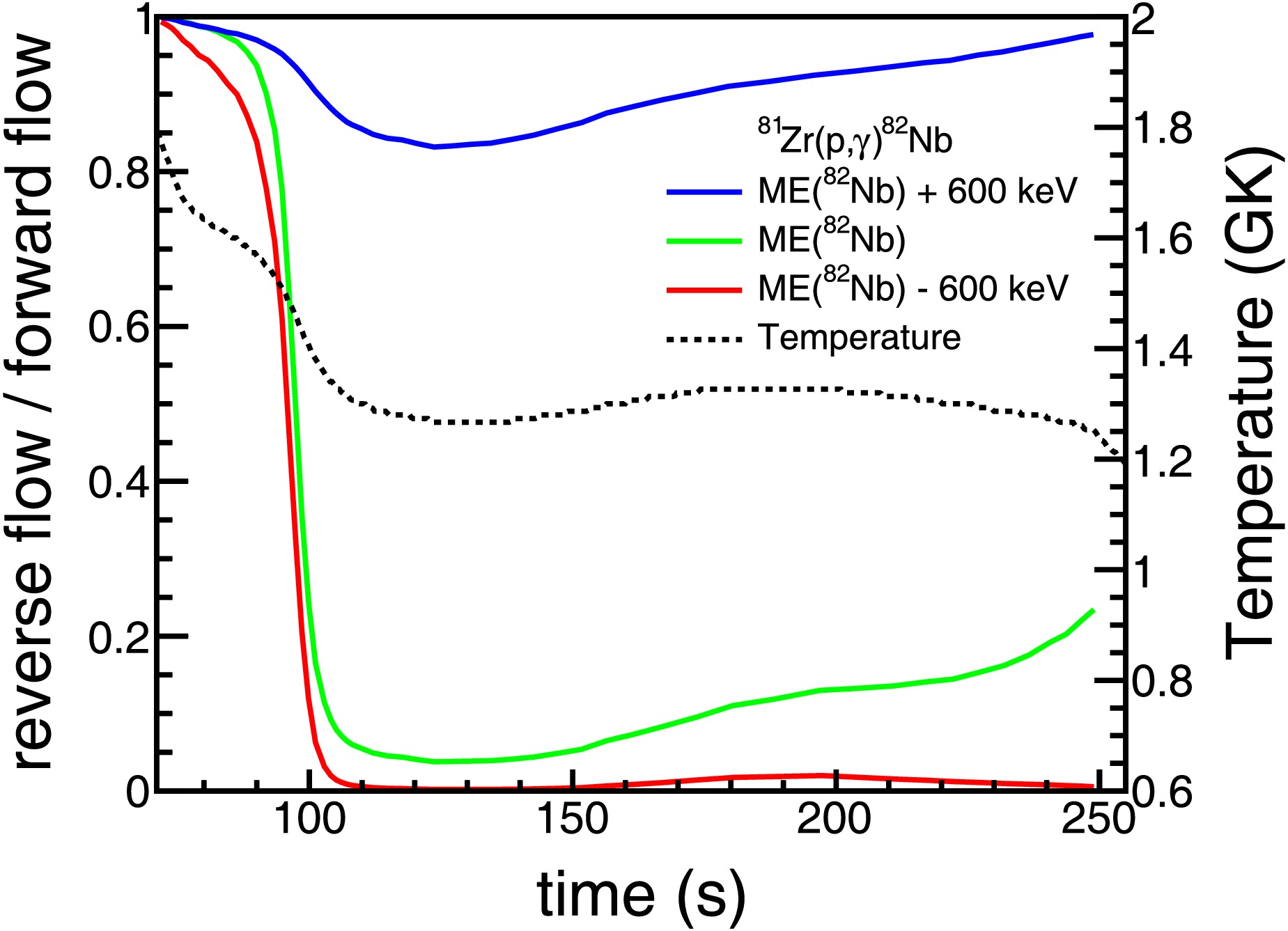
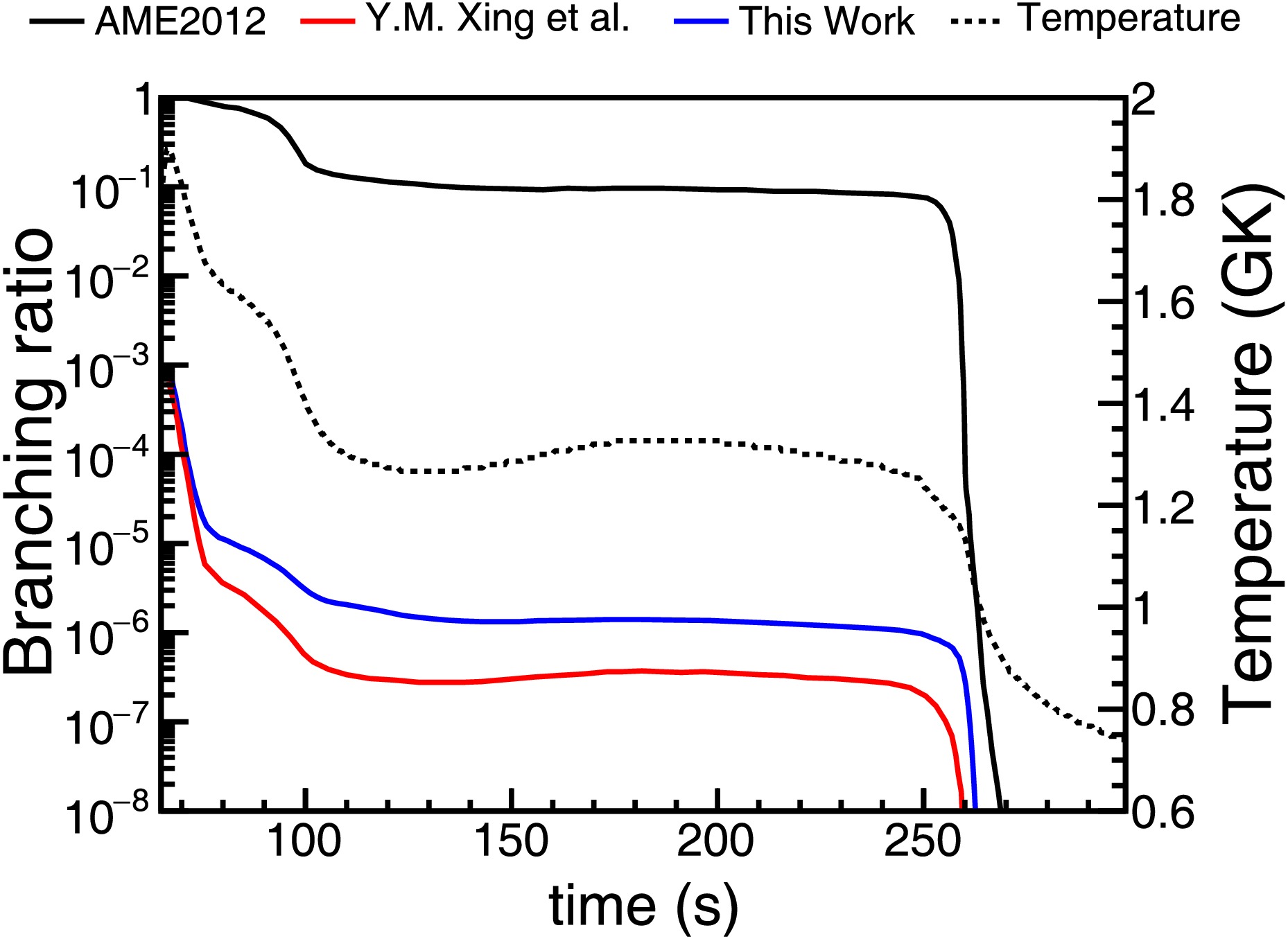
Precise nuclear mass values are key parameters for modeling astrophysical X-ray bursts. In this work, we investigate the impact of current mass uncertainties of 83,84Mo, 82Nb, and 80Zr on the nucleosynthesis of the rp-process. The results reveal that the impact of the mass uncertainties of 83,84Mo and 80Zr on the final abundances is negligible, although the large mass uncertainty of 83Mo can reach a level close to 1 MeV. In contrast, the final abundances are highly sensitive to the mass value of 82Nb. An increase in the mass of 82Nb can significantly enhance the abundance at\begin{document}$ A=81 $\end{document}
Precise nuclear mass values are key parameters for modeling astrophysical X-ray bursts. In this work, we investigate the impact of current mass uncertainties of 83,84Mo, 82Nb, and 80Zr on the nucleosynthesis of the rp-process. The results reveal that the impact of the mass uncertainties of 83,84Mo and 80Zr on the final abundances is negligible, although the large mass uncertainty of 83Mo can reach a level close to 1 MeV. In contrast, the final abundances are highly sensitive to the mass value of 82Nb. An increase in the mass of 82Nb can significantly enhance the abundance at
2026, 50(8): 085101. doi: 10.1088/1674-1137/ae662e
Abstract:
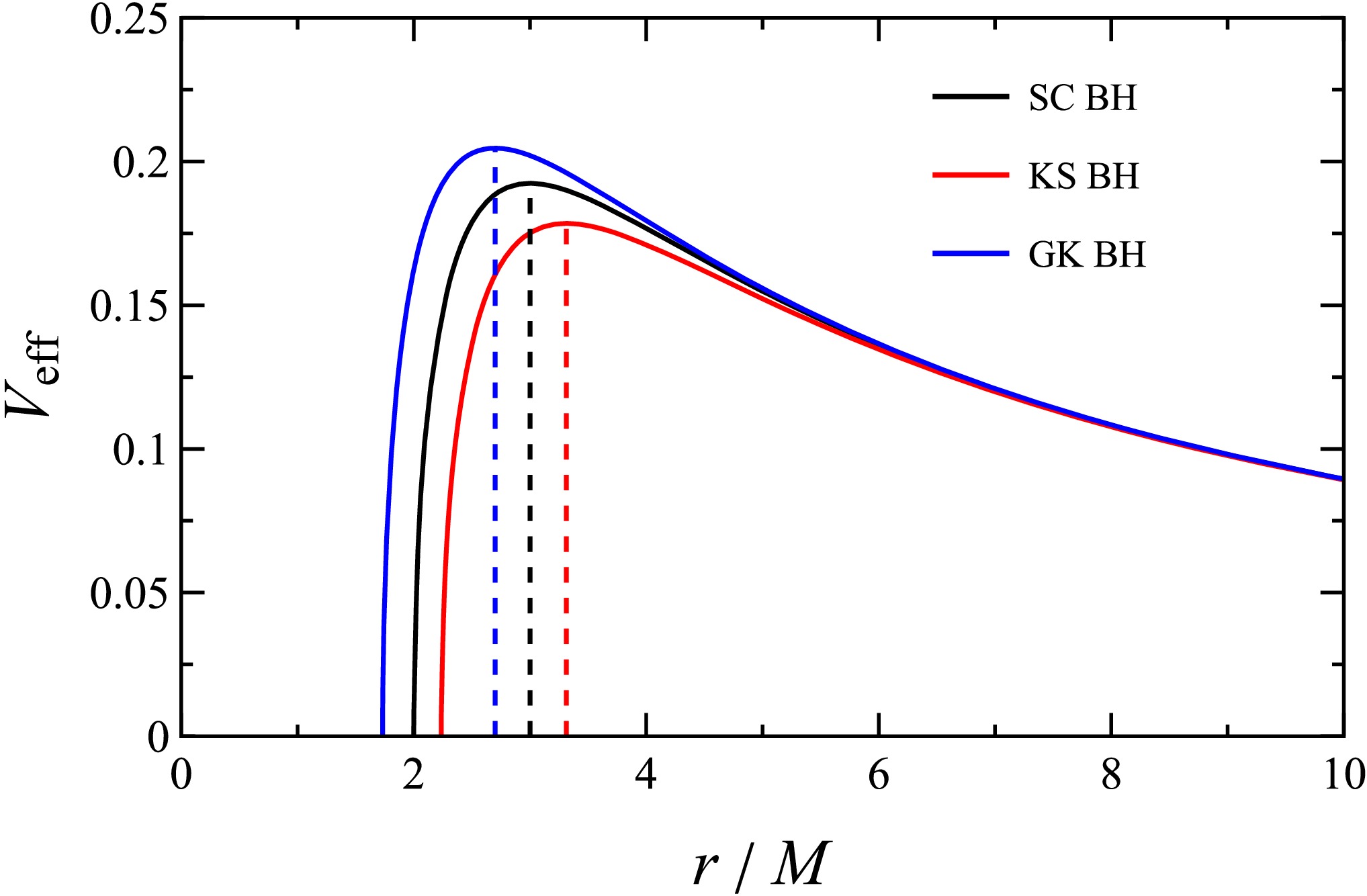
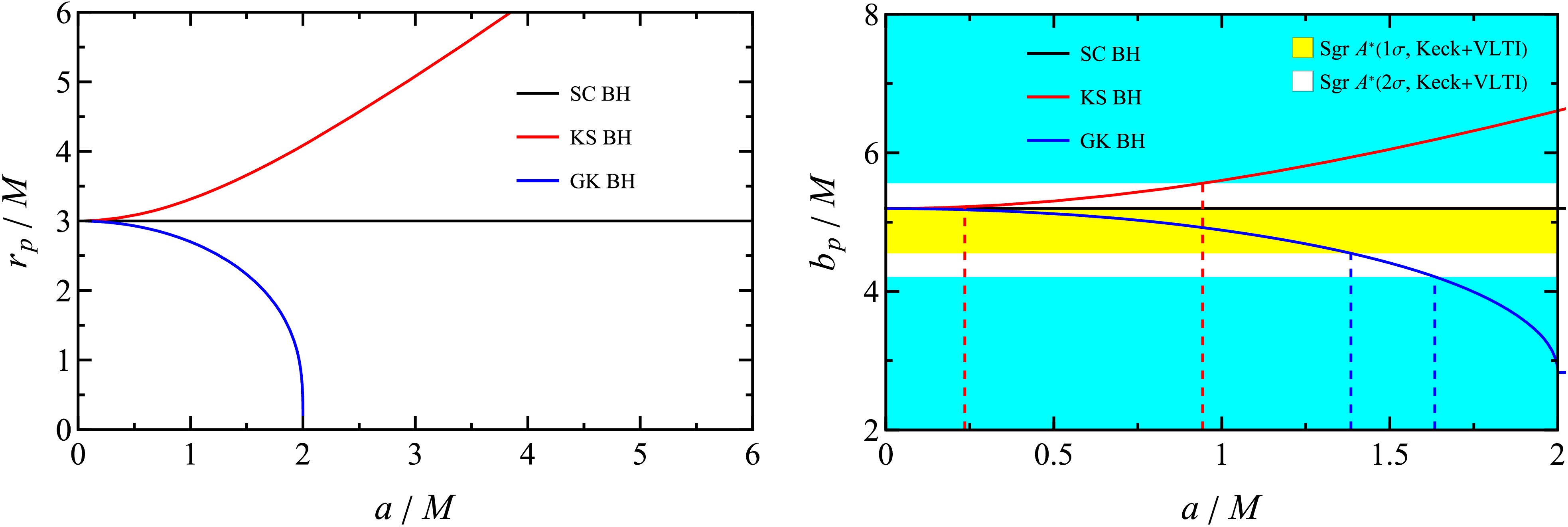
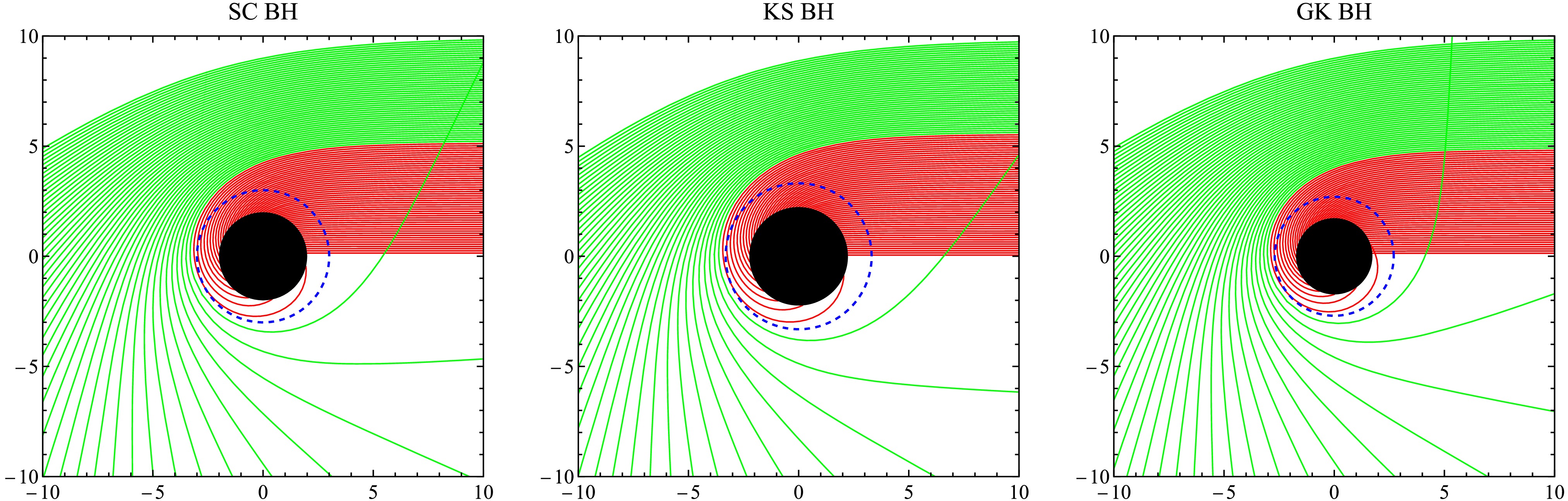
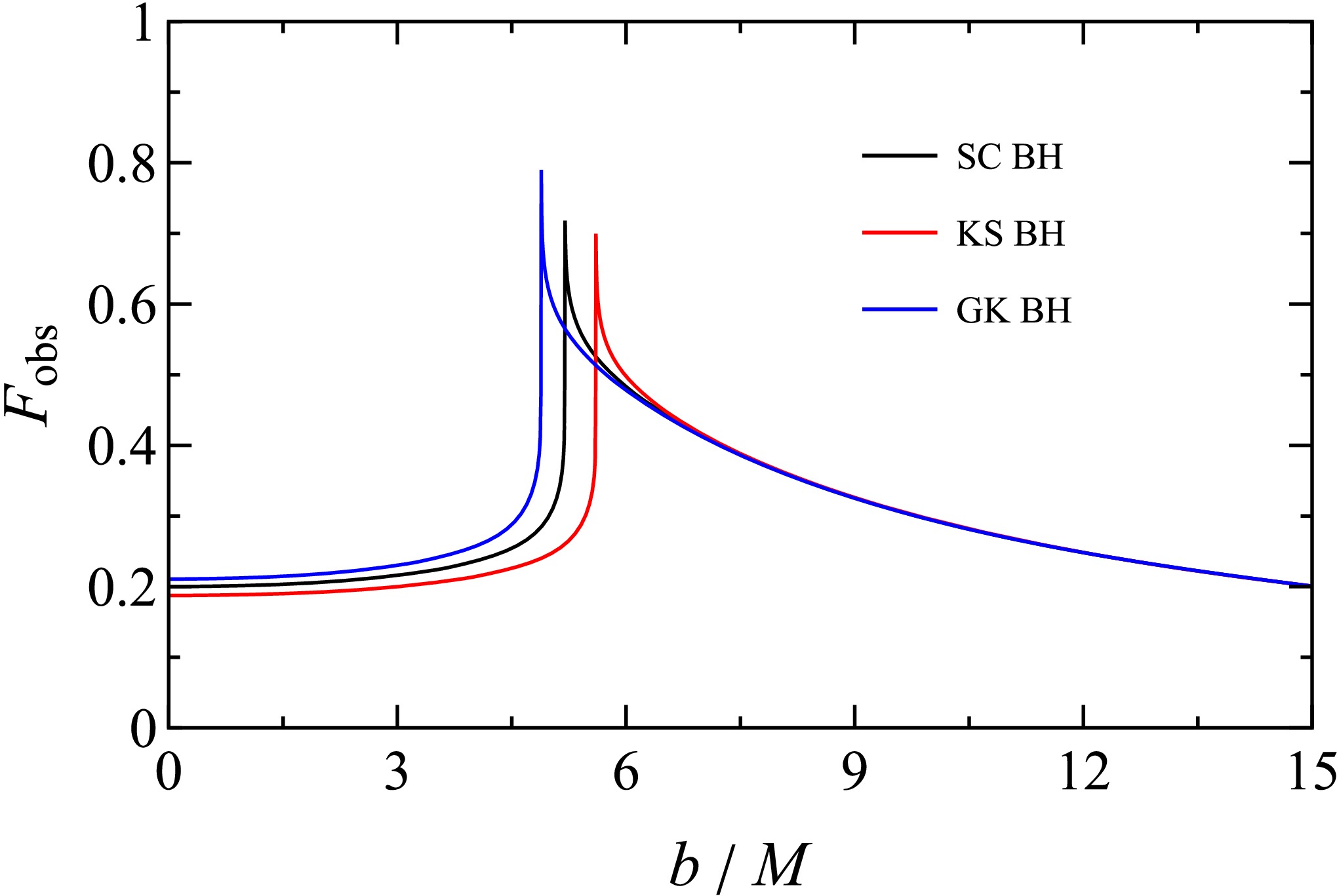
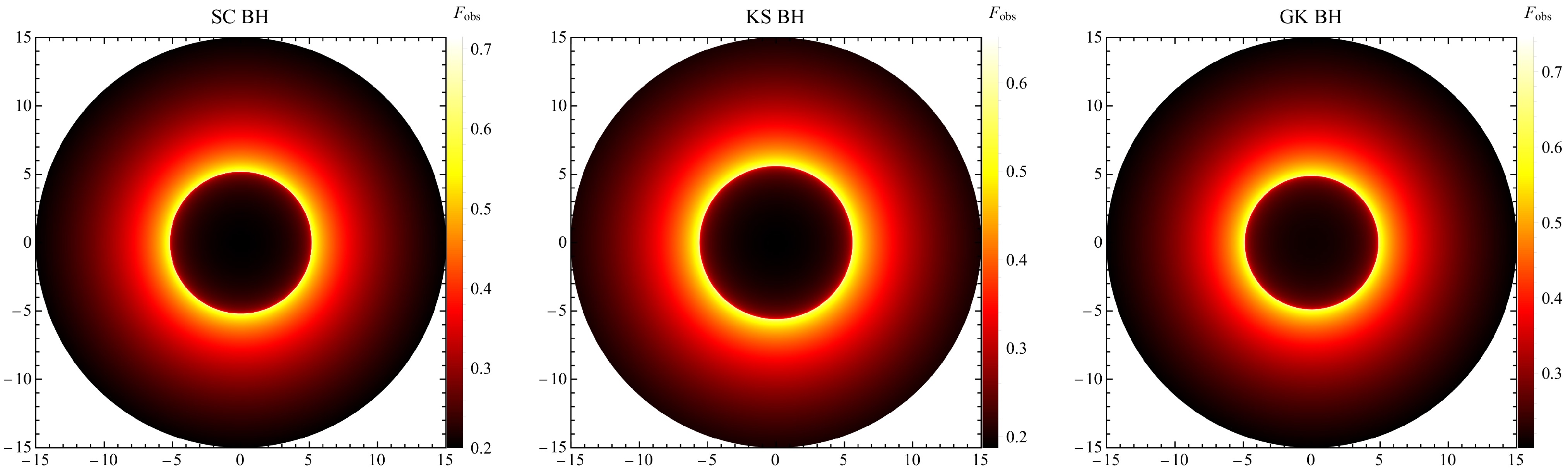
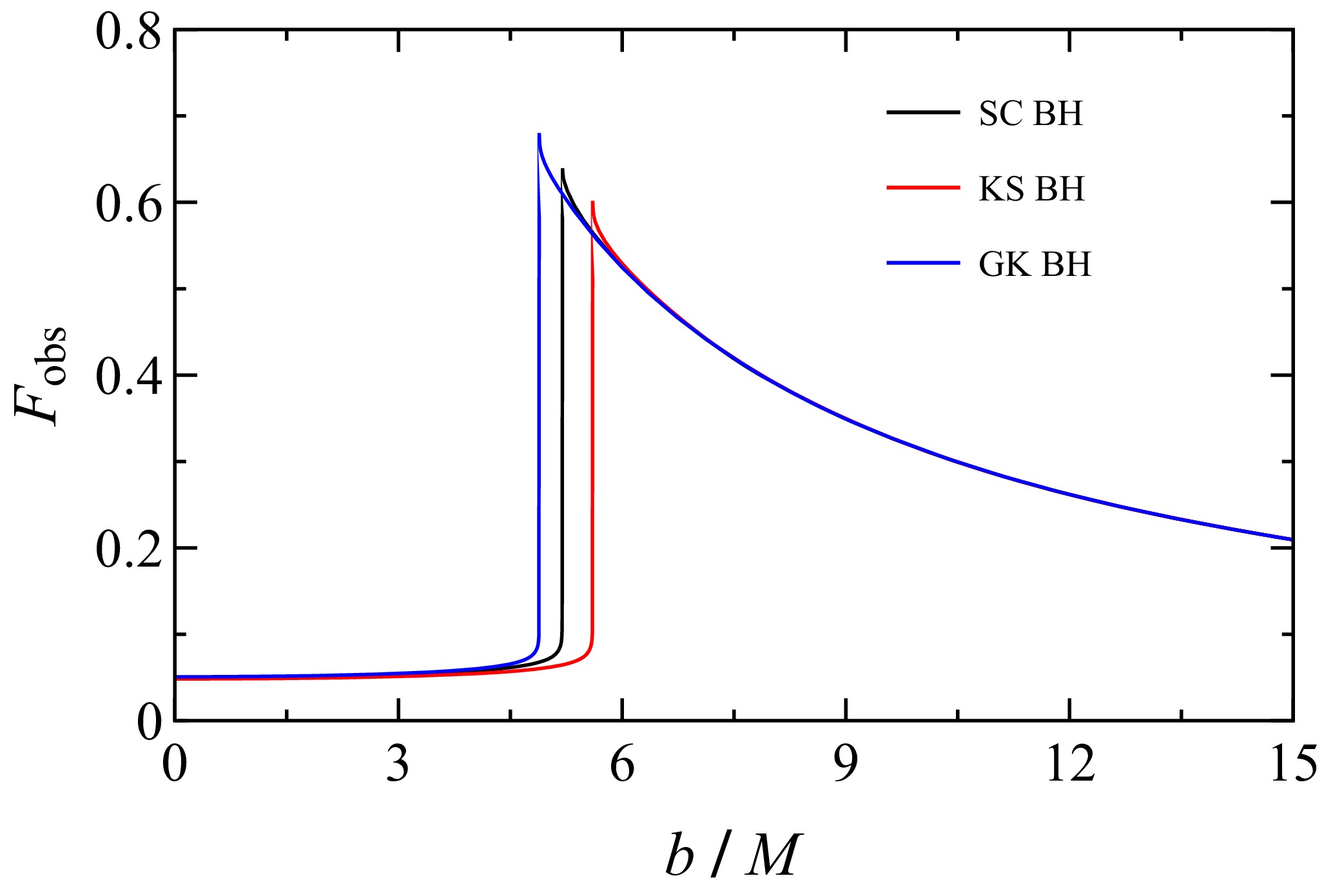
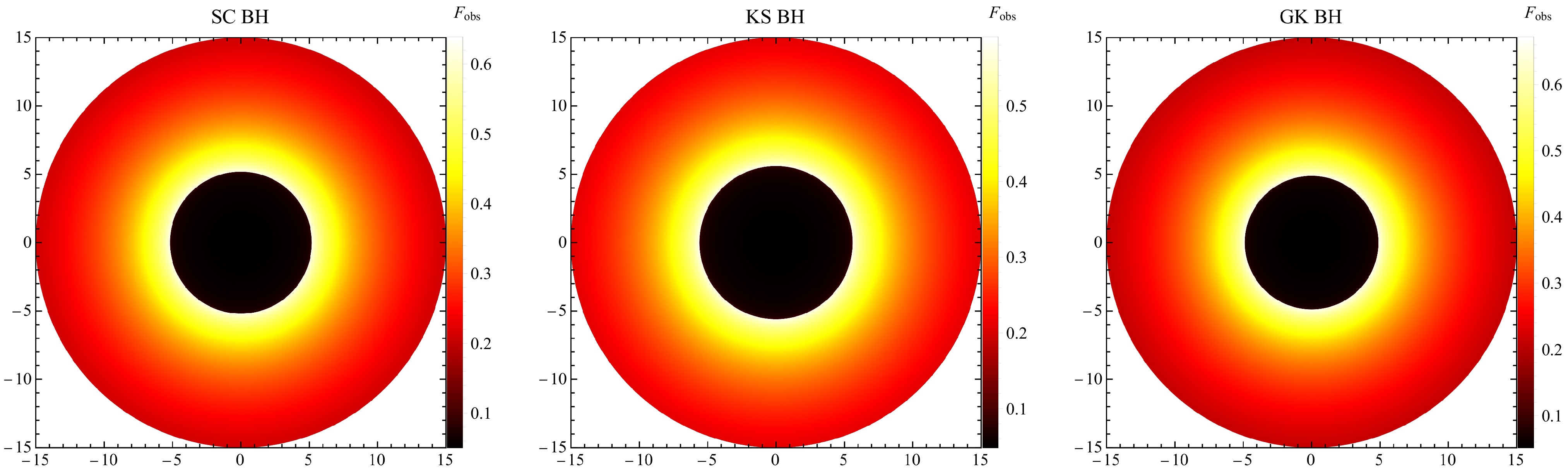
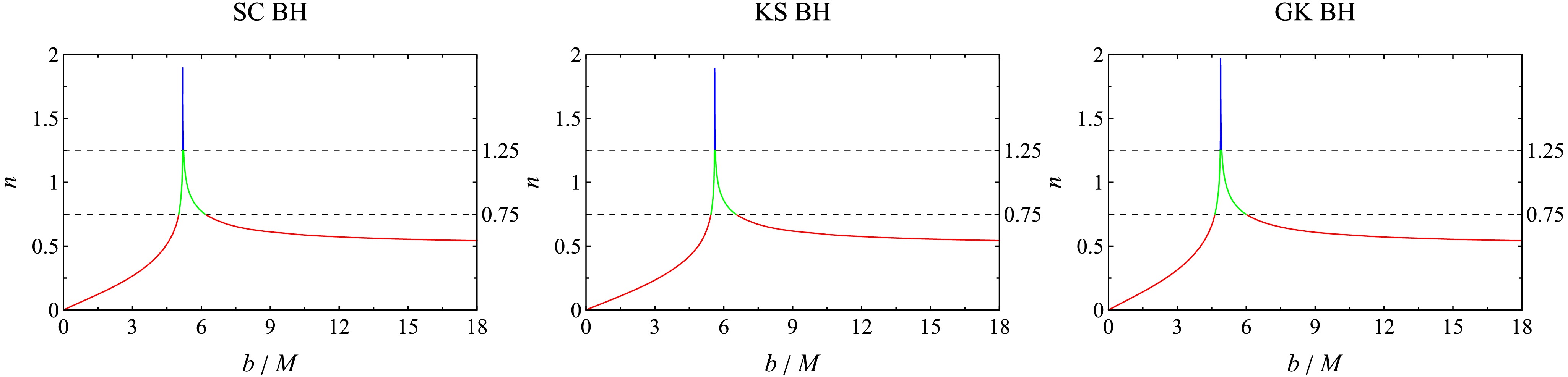
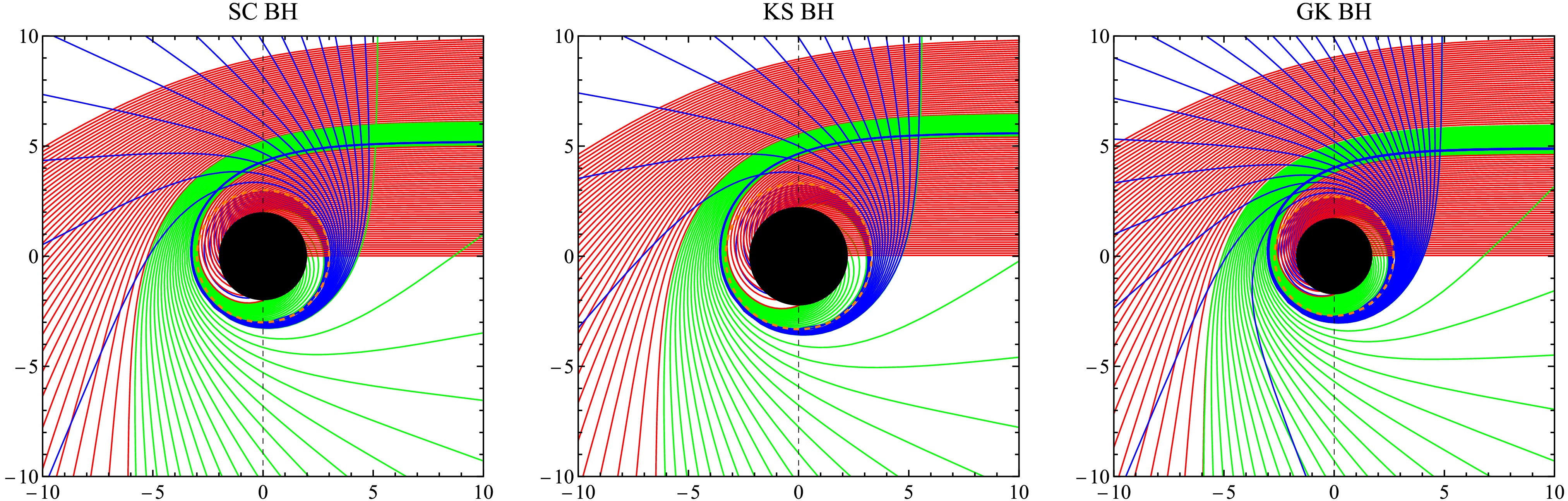
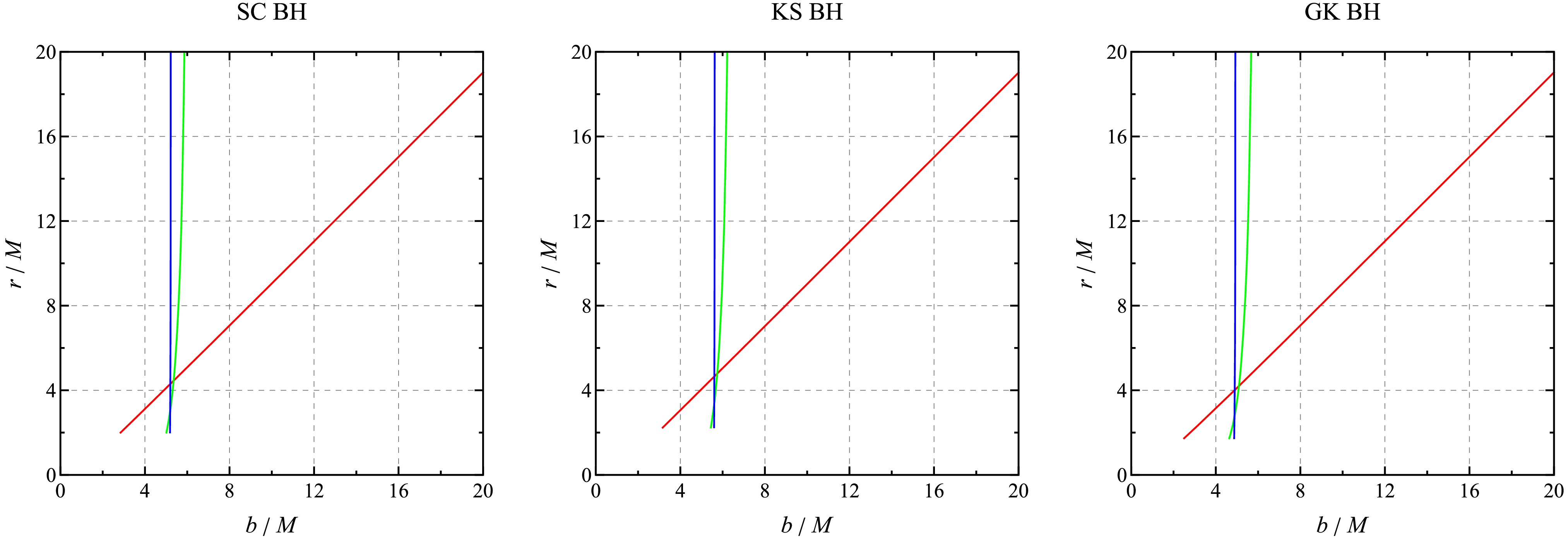
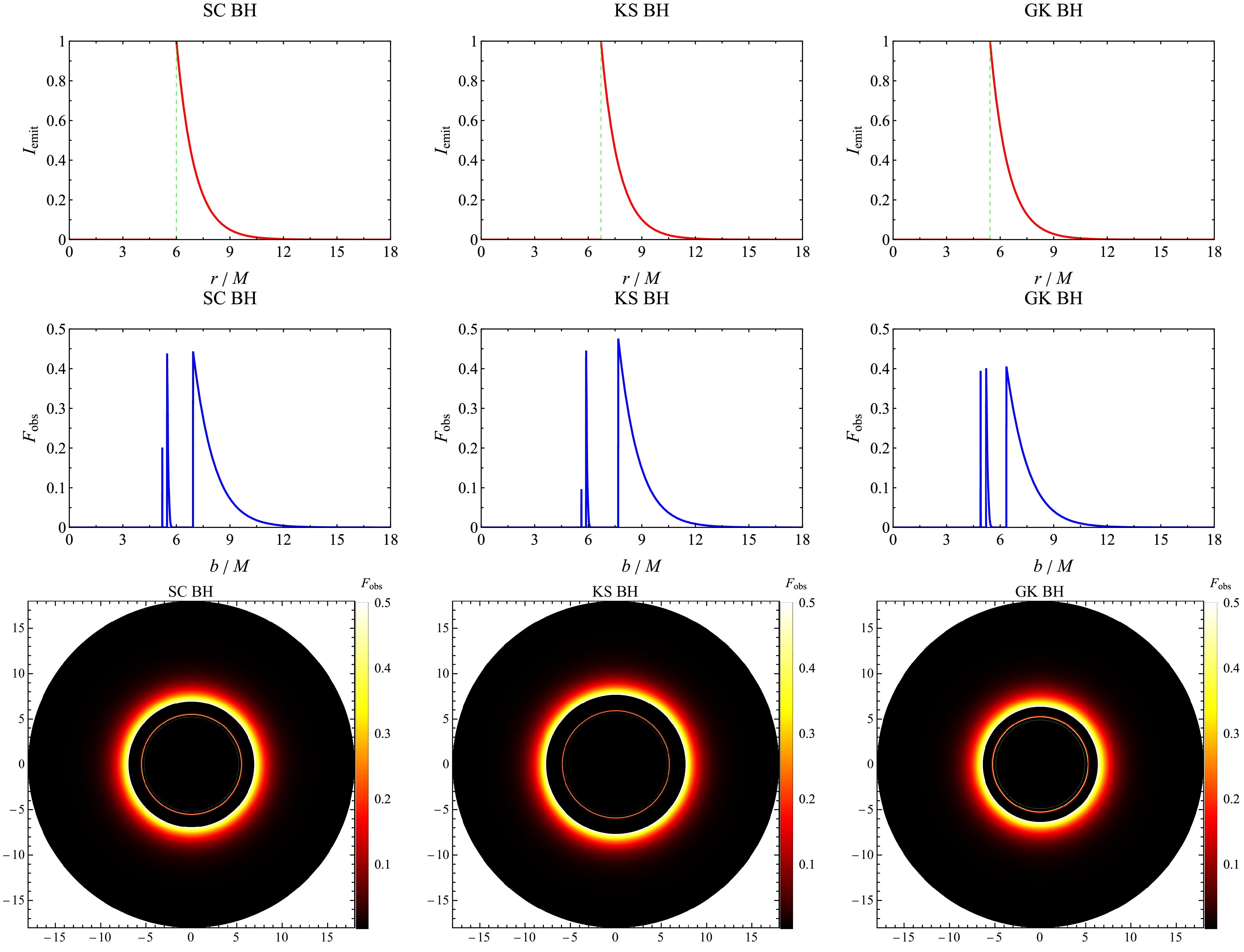
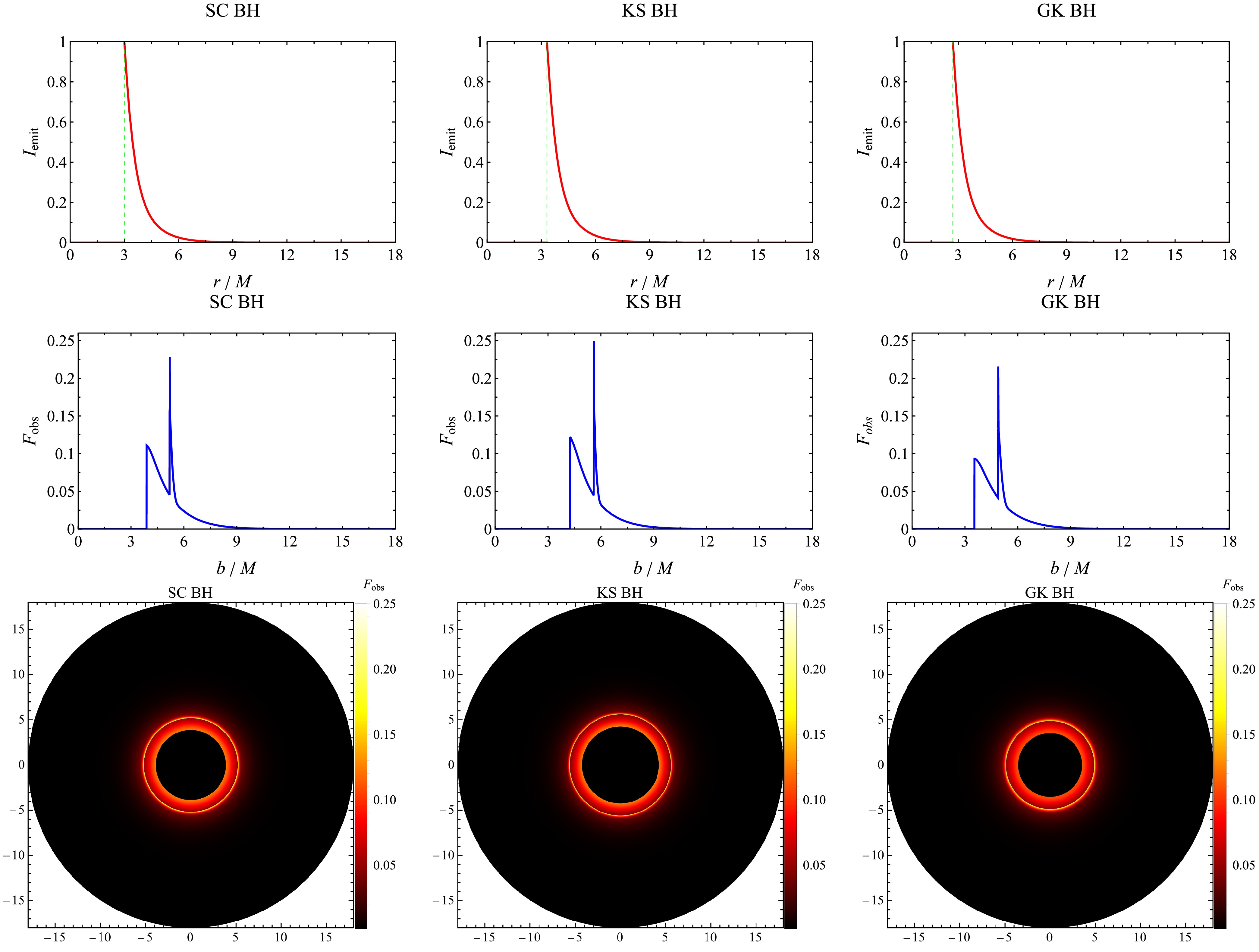
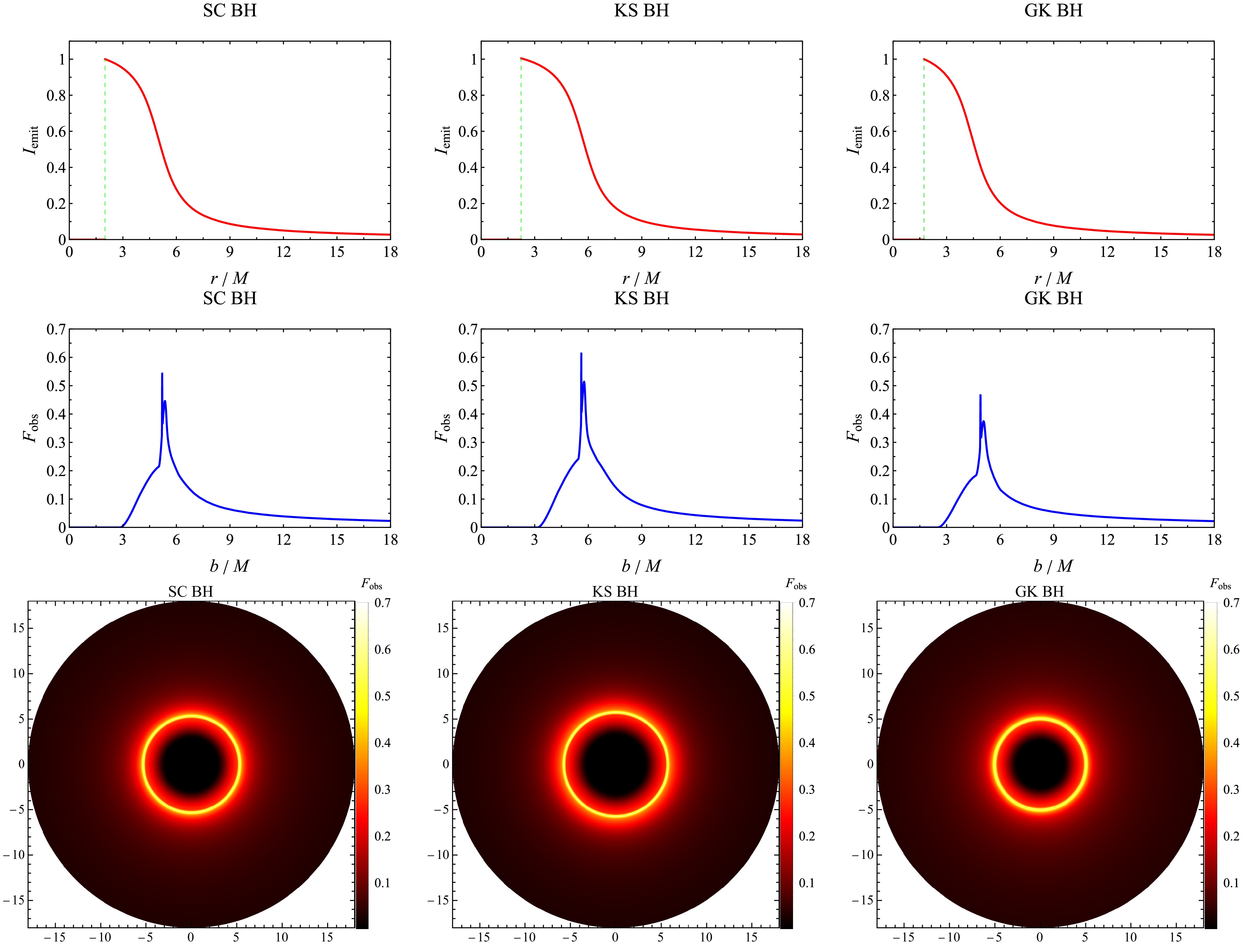
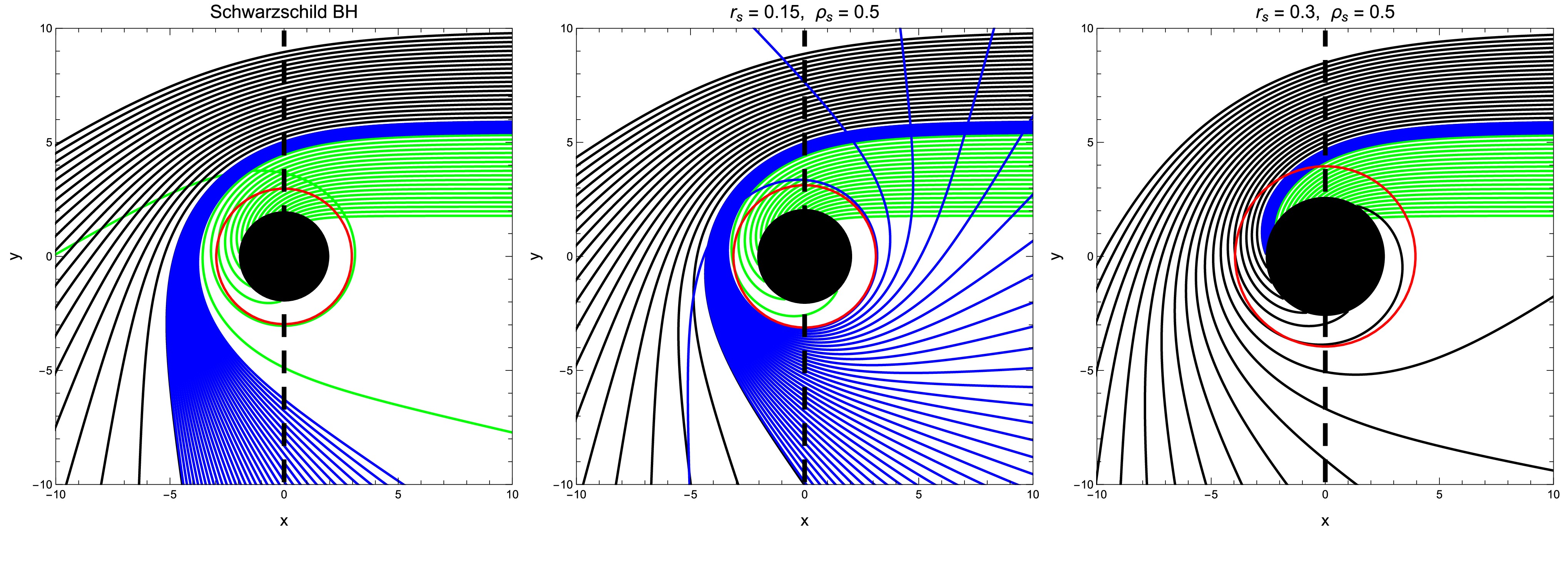
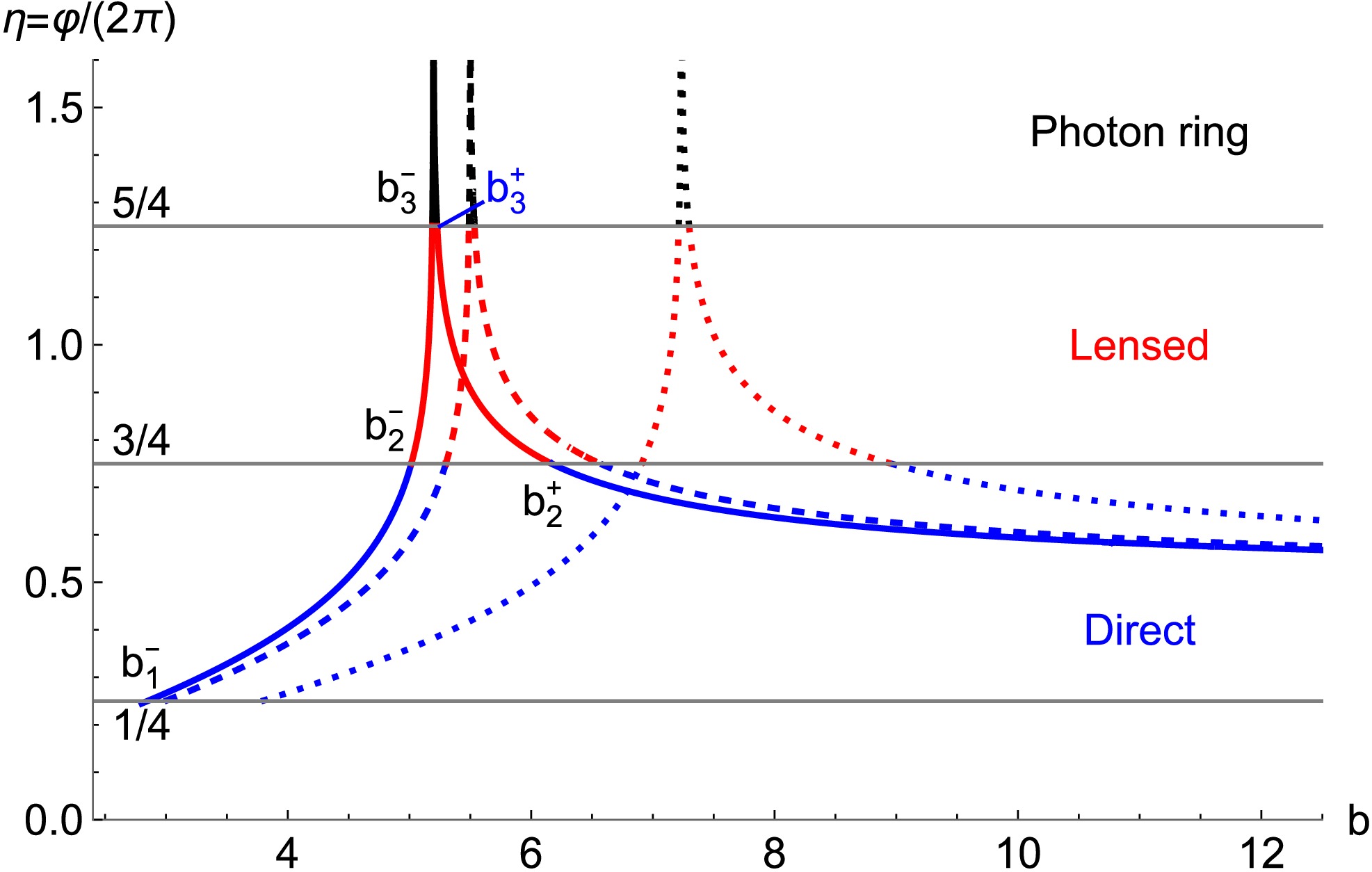
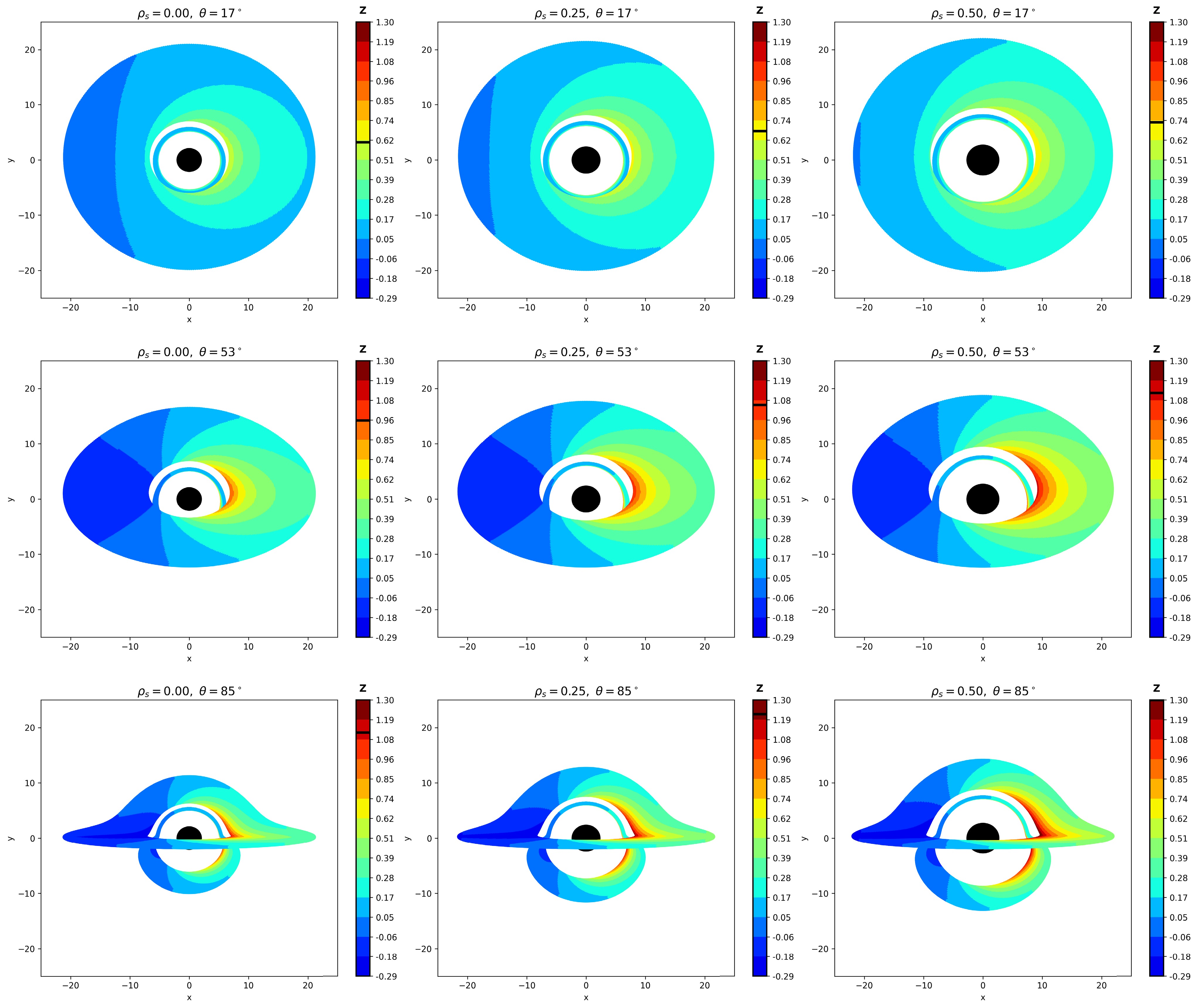
This paper primarily investigates the optical properties of two minimal deformations of the Schwarzschild black hole—the Kazakov-Solodukhin and Ghosh-Kumar black holes—under different accretion models. The event horizon, photon sphere, and critical impact parameter of the former increase relative to the Schwarzschild case, whereas those of the latter decrease. Data from the Event Horizon Telescope Collaboration are used to constrain the parameter ranges of the two black holes. Under spherical accretion, the quantum correction of the Kazakov-Solodukhin black hole enlarges the black hole shadow and reduces the integrated intensity, while the shadow of the magnetically charged Ghosh-Kumar black hole shrinks and the integrated intensity increases. The black hole’s shadow radius is independent of the choice of spherical accretion model. For an optically and geometrically thin accretion disk, the integrated intensity is dominated by direct emission, with photon-ring and lensed-ring contributions being negligible. In addition, the photon and lensed rings of the Kazakov-Solodukhin black hole are narrower, whereas those of the Ghosh-Kumar black hole are broader. Whereas the Kazakov-Solodukhin black hole is brighter, the Ghosh-Kumar black hole is dimmer. Additionally, bringing the disk closer to the black hole yields a smaller shadow radius. This paper proposes a method to distinguish different black holes within a specific thin-disk model.
This paper primarily investigates the optical properties of two minimal deformations of the Schwarzschild black hole—the Kazakov-Solodukhin and Ghosh-Kumar black holes—under different accretion models. The event horizon, photon sphere, and critical impact parameter of the former increase relative to the Schwarzschild case, whereas those of the latter decrease. Data from the Event Horizon Telescope Collaboration are used to constrain the parameter ranges of the two black holes. Under spherical accretion, the quantum correction of the Kazakov-Solodukhin black hole enlarges the black hole shadow and reduces the integrated intensity, while the shadow of the magnetically charged Ghosh-Kumar black hole shrinks and the integrated intensity increases. The black hole’s shadow radius is independent of the choice of spherical accretion model. For an optically and geometrically thin accretion disk, the integrated intensity is dominated by direct emission, with photon-ring and lensed-ring contributions being negligible. In addition, the photon and lensed rings of the Kazakov-Solodukhin black hole are narrower, whereas those of the Ghosh-Kumar black hole are broader. Whereas the Kazakov-Solodukhin black hole is brighter, the Ghosh-Kumar black hole is dimmer. Additionally, bringing the disk closer to the black hole yields a smaller shadow radius. This paper proposes a method to distinguish different black holes within a specific thin-disk model.
2026, 50(8): 085102. doi: 10.1088/1674-1137/ae6632
Abstract:
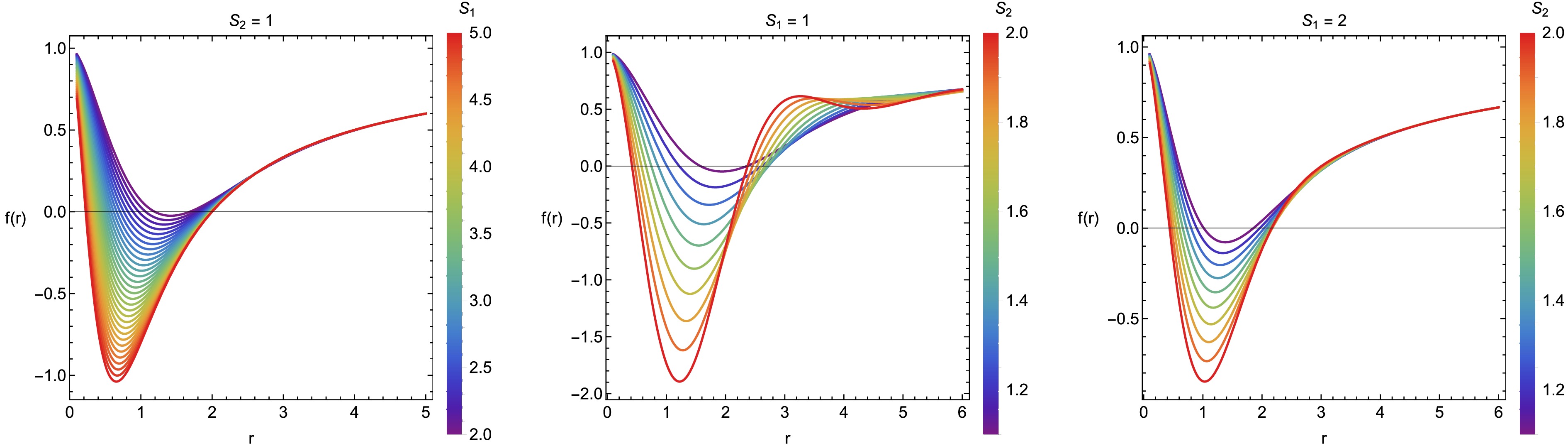
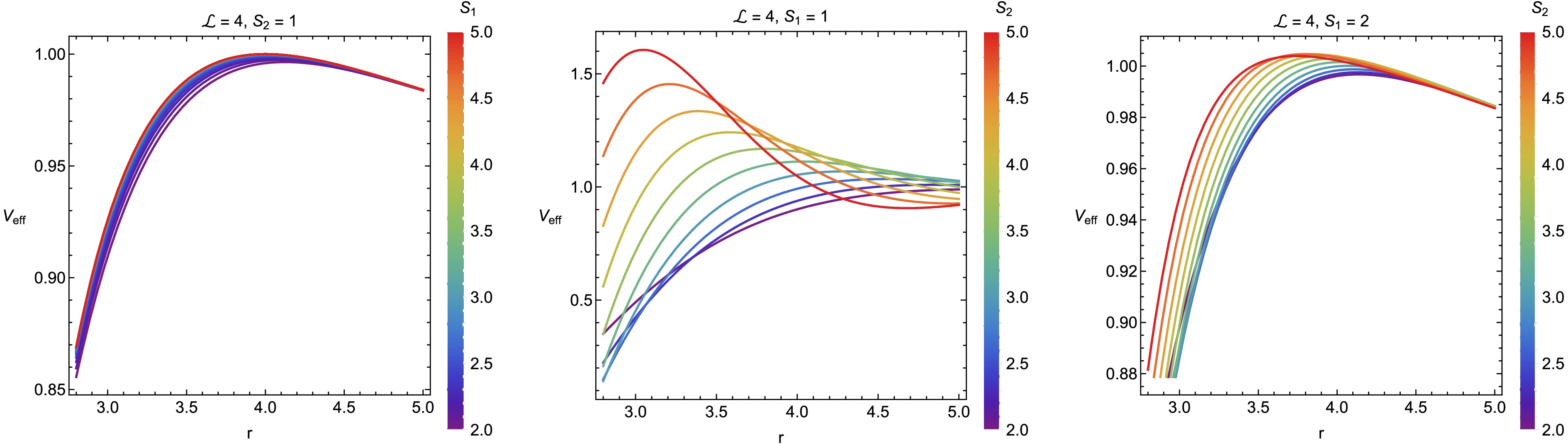
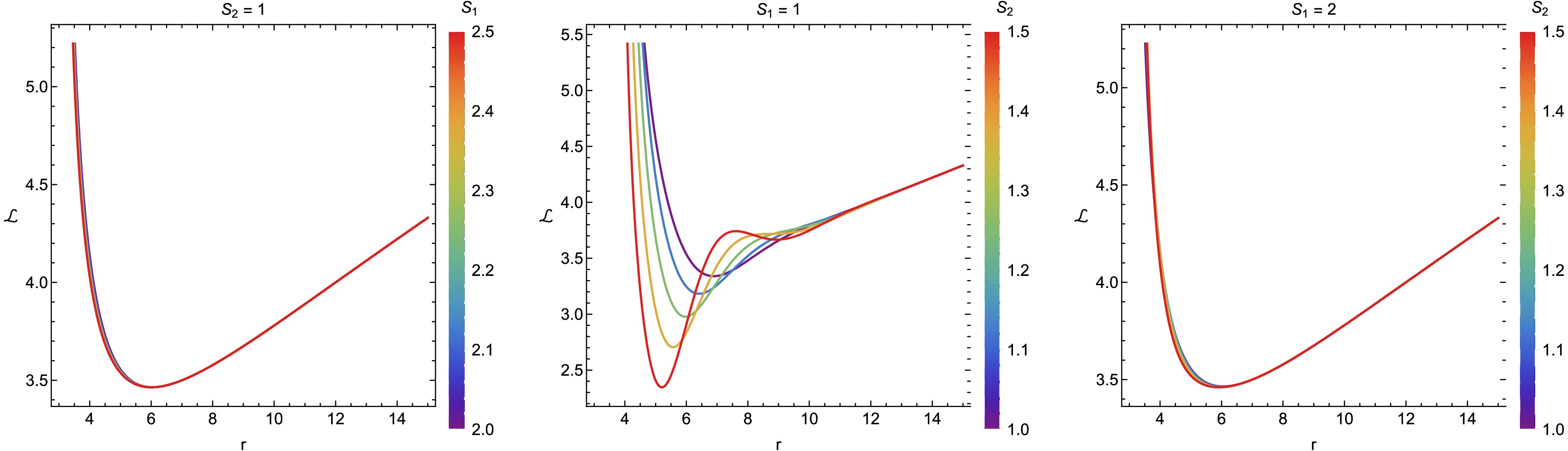
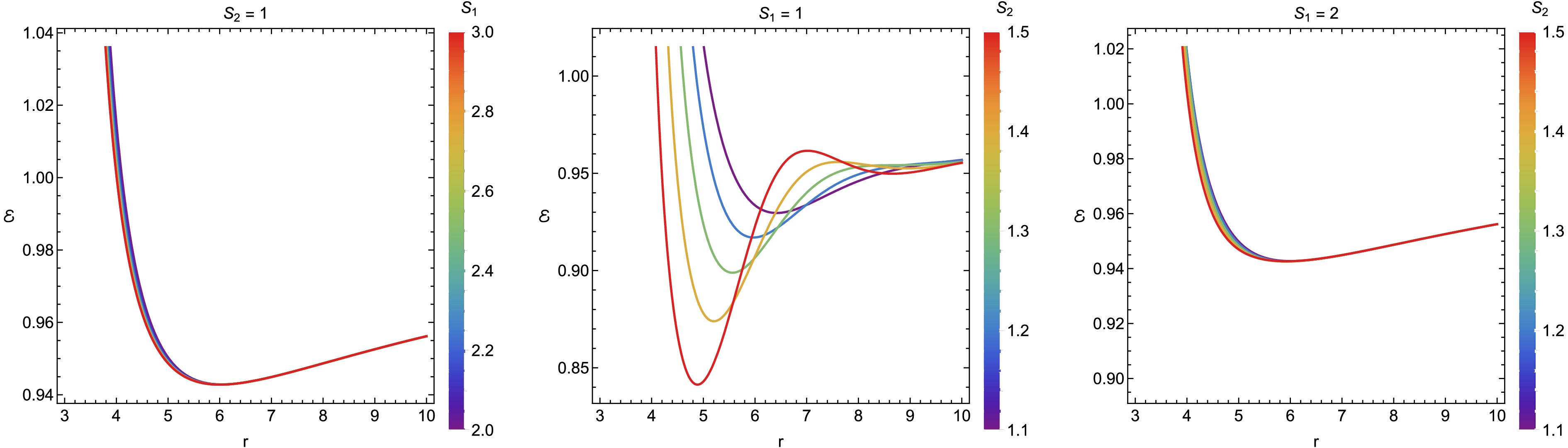
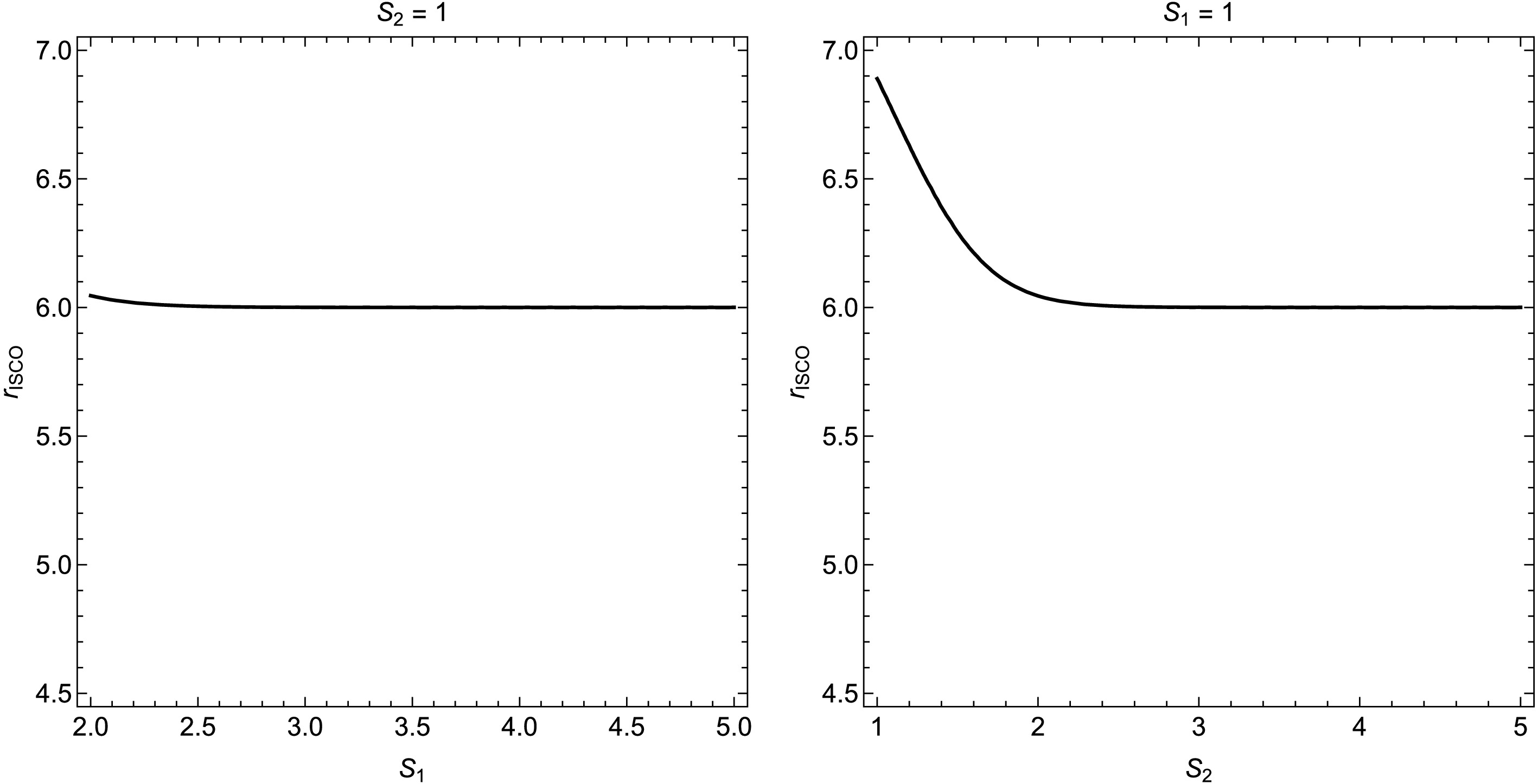
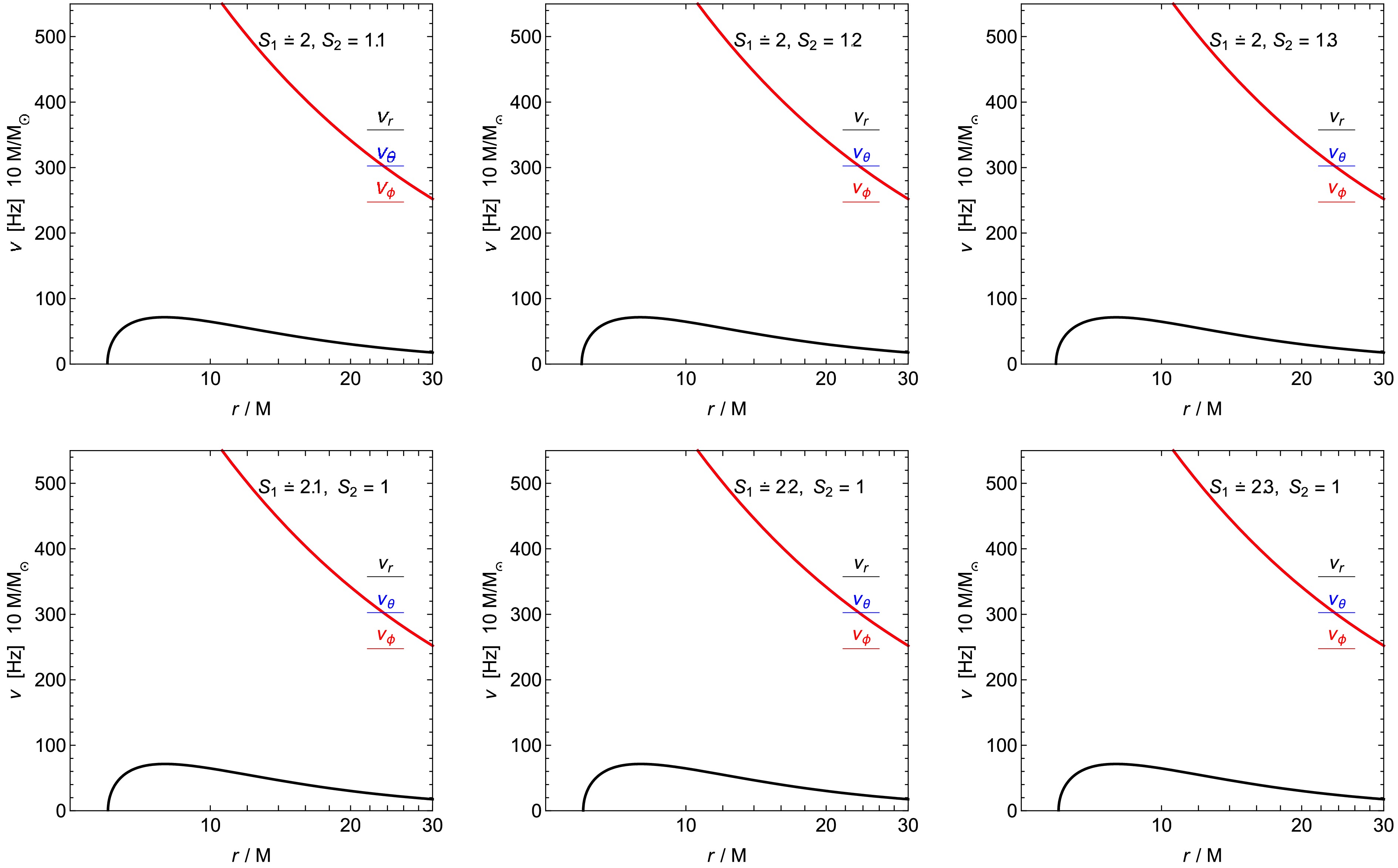
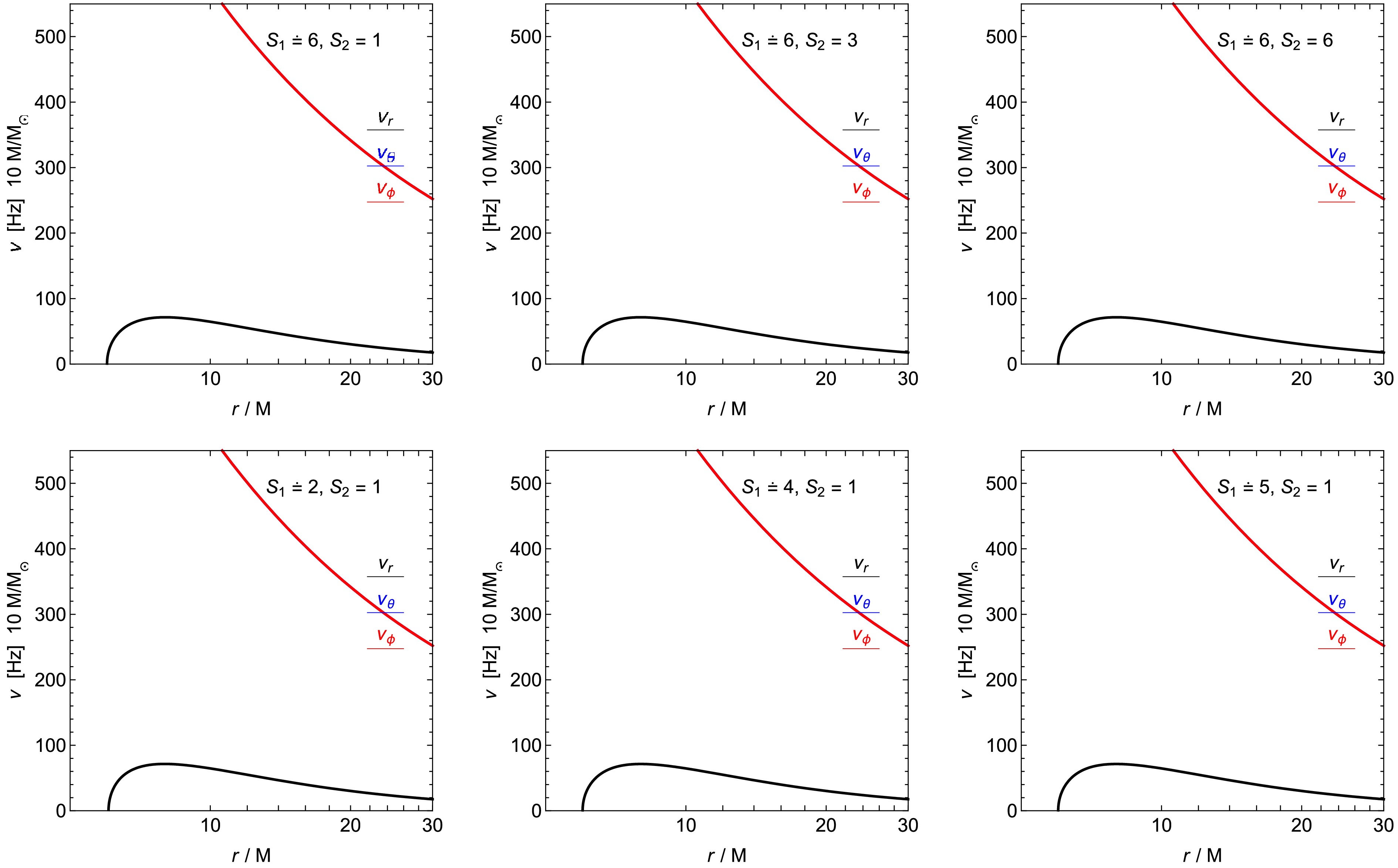
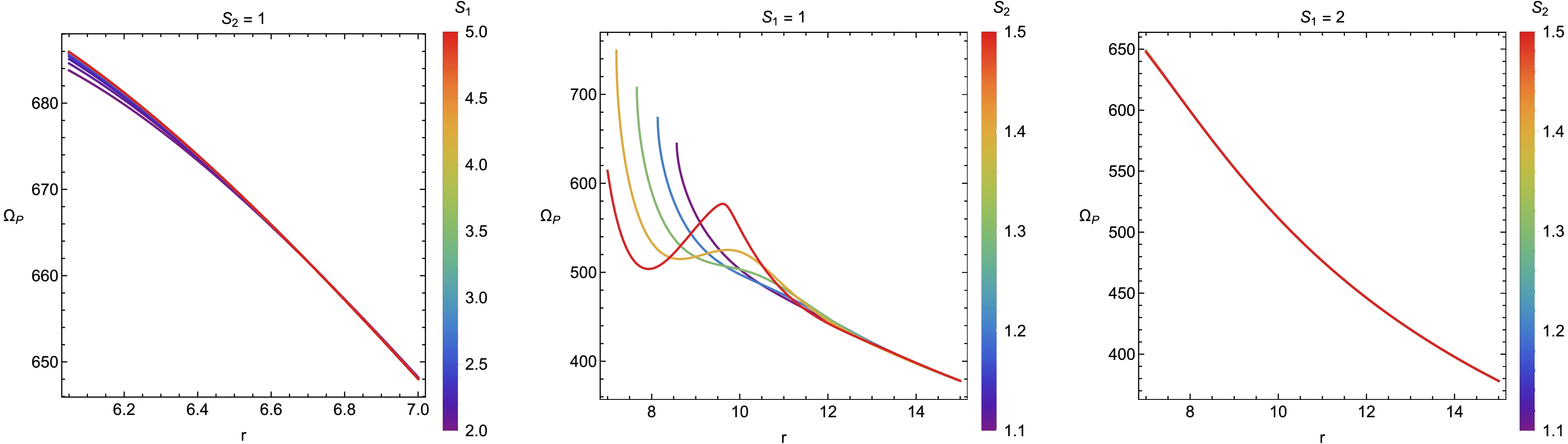
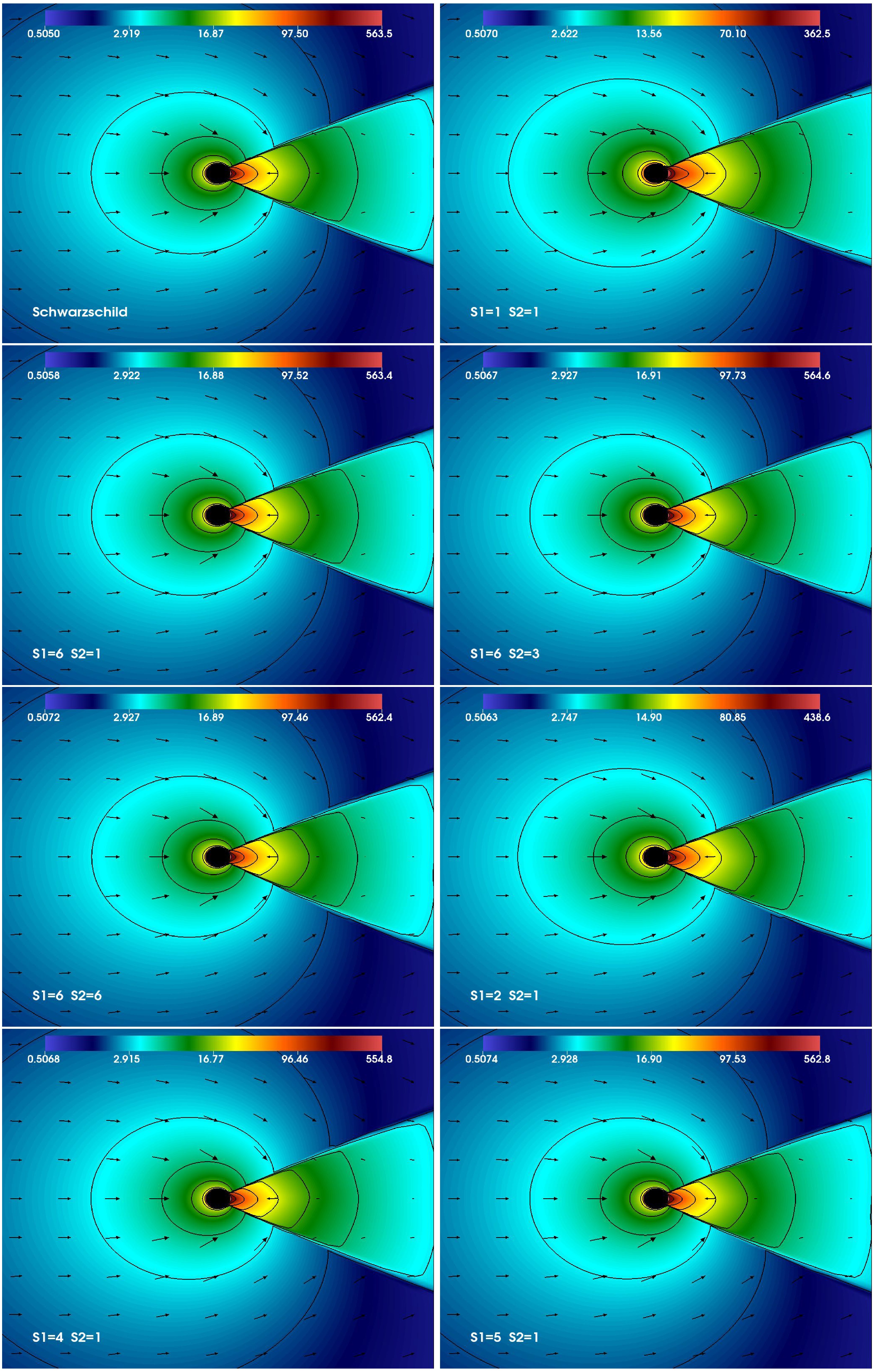
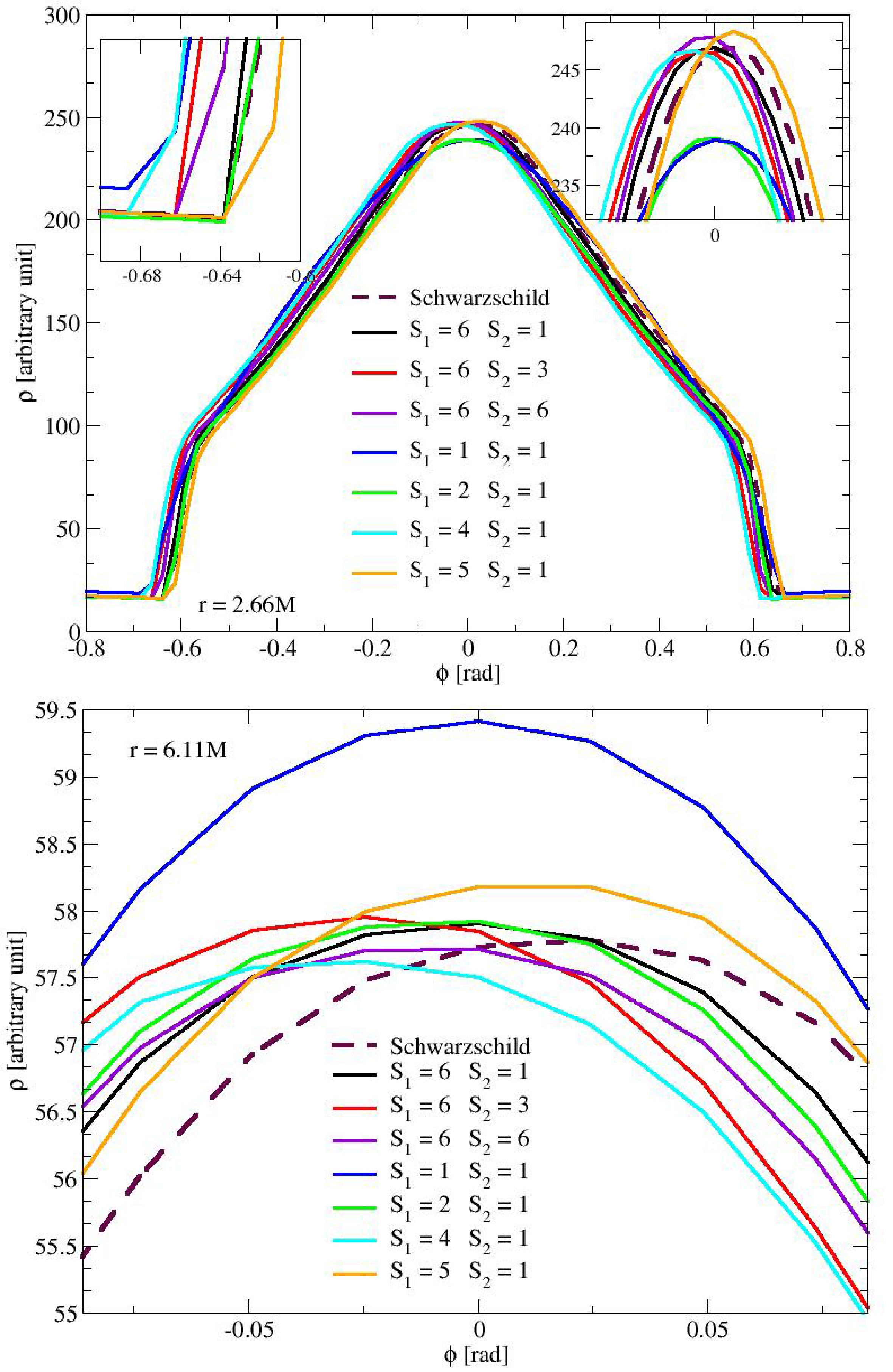
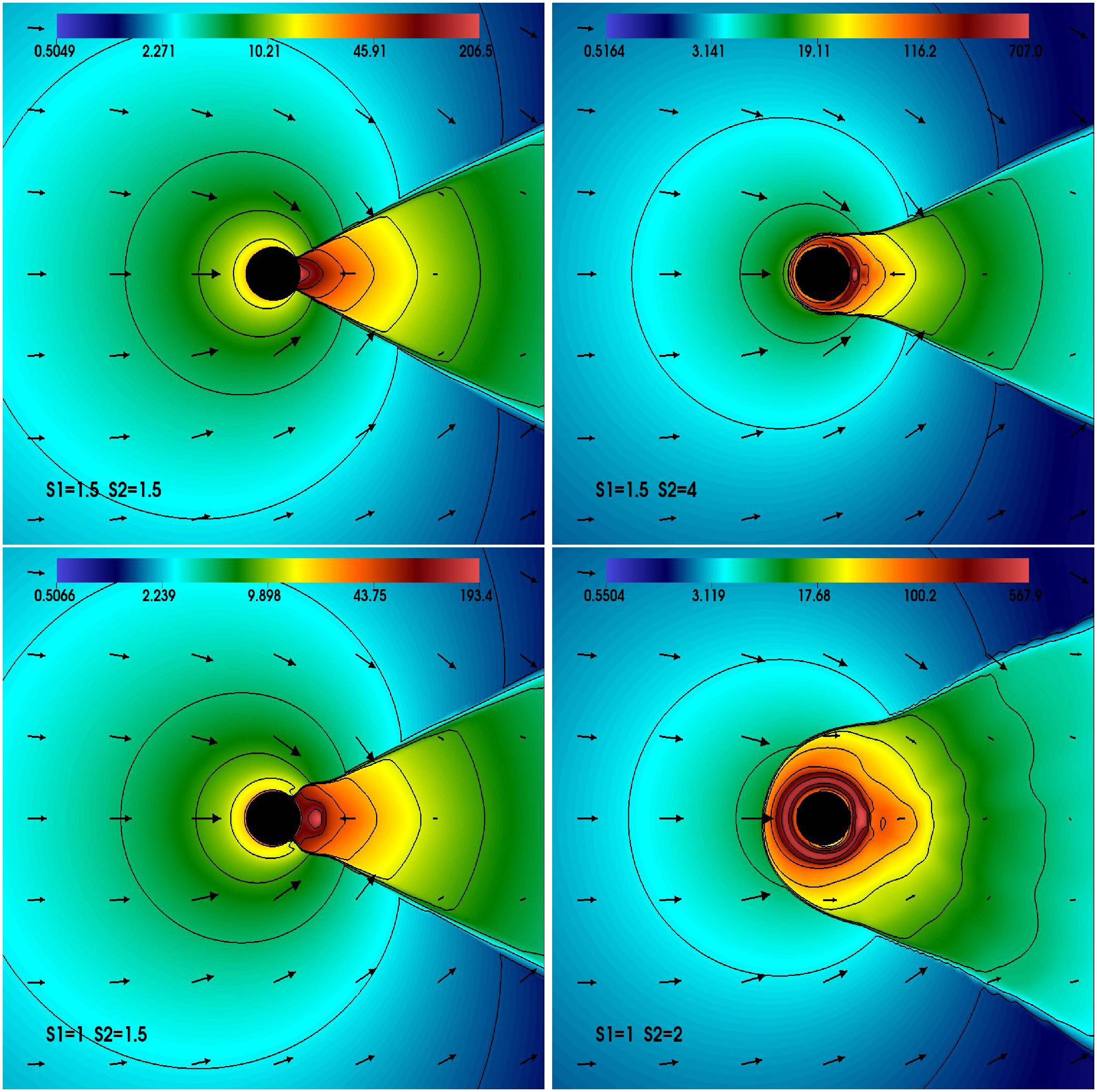
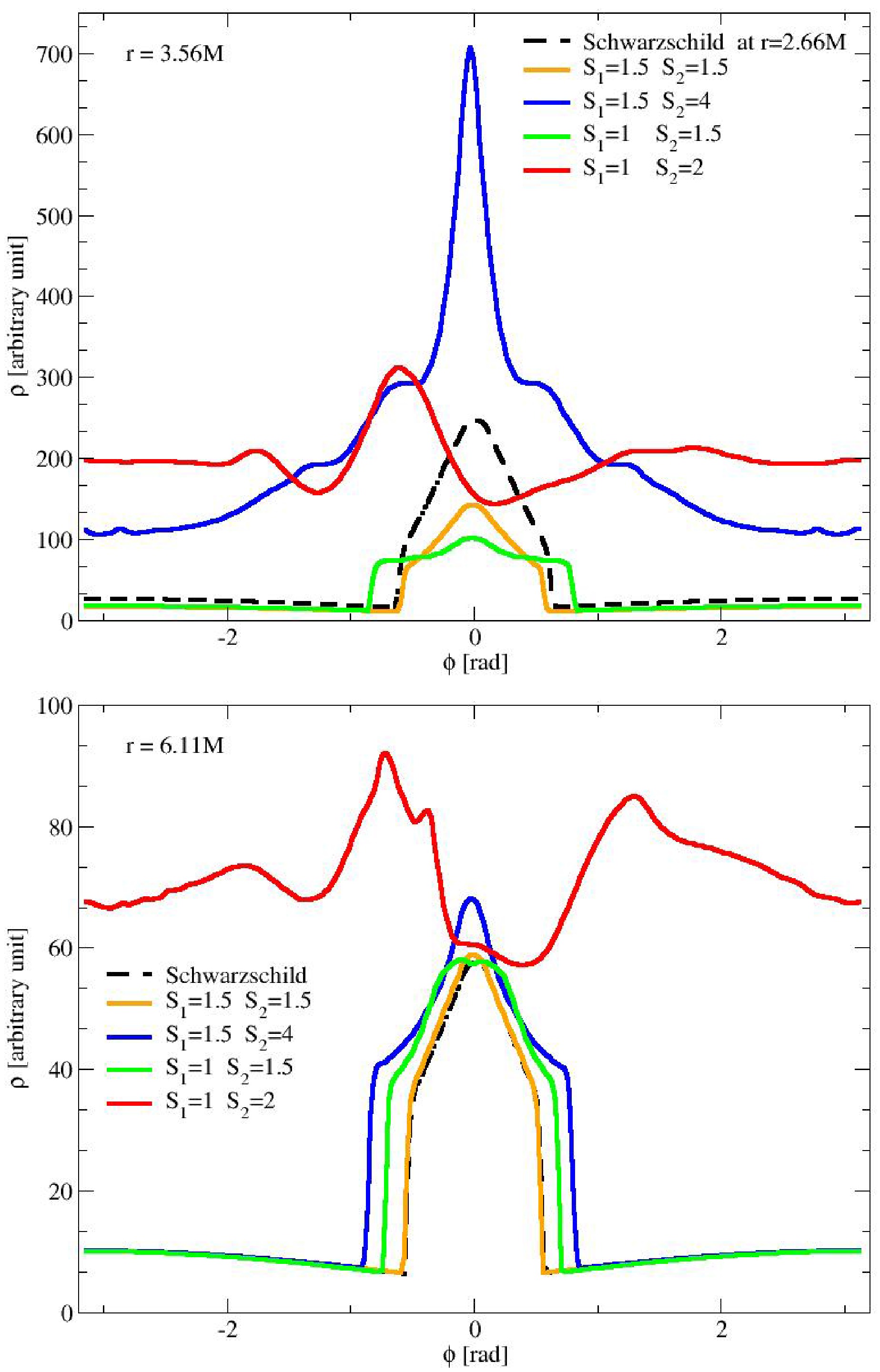
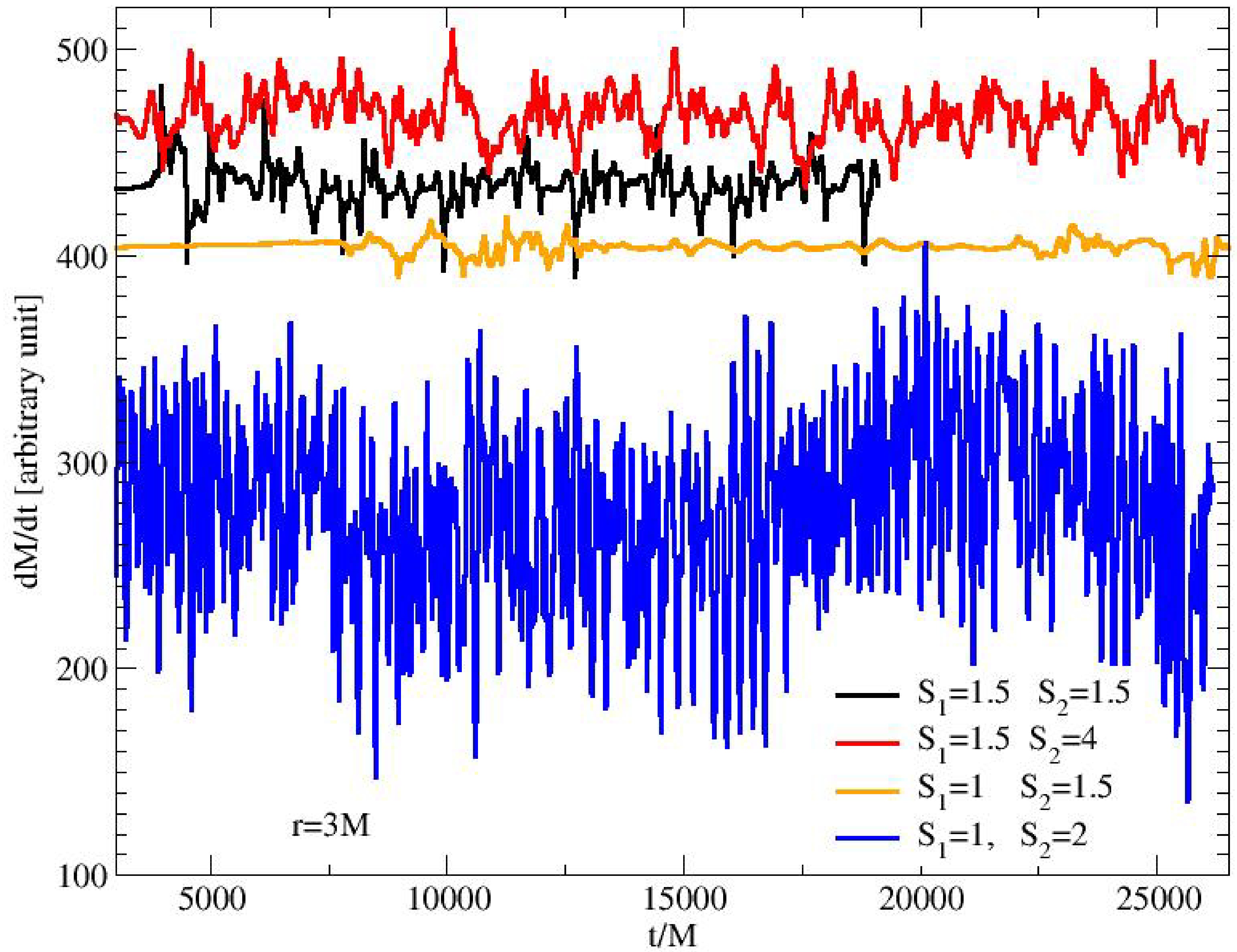
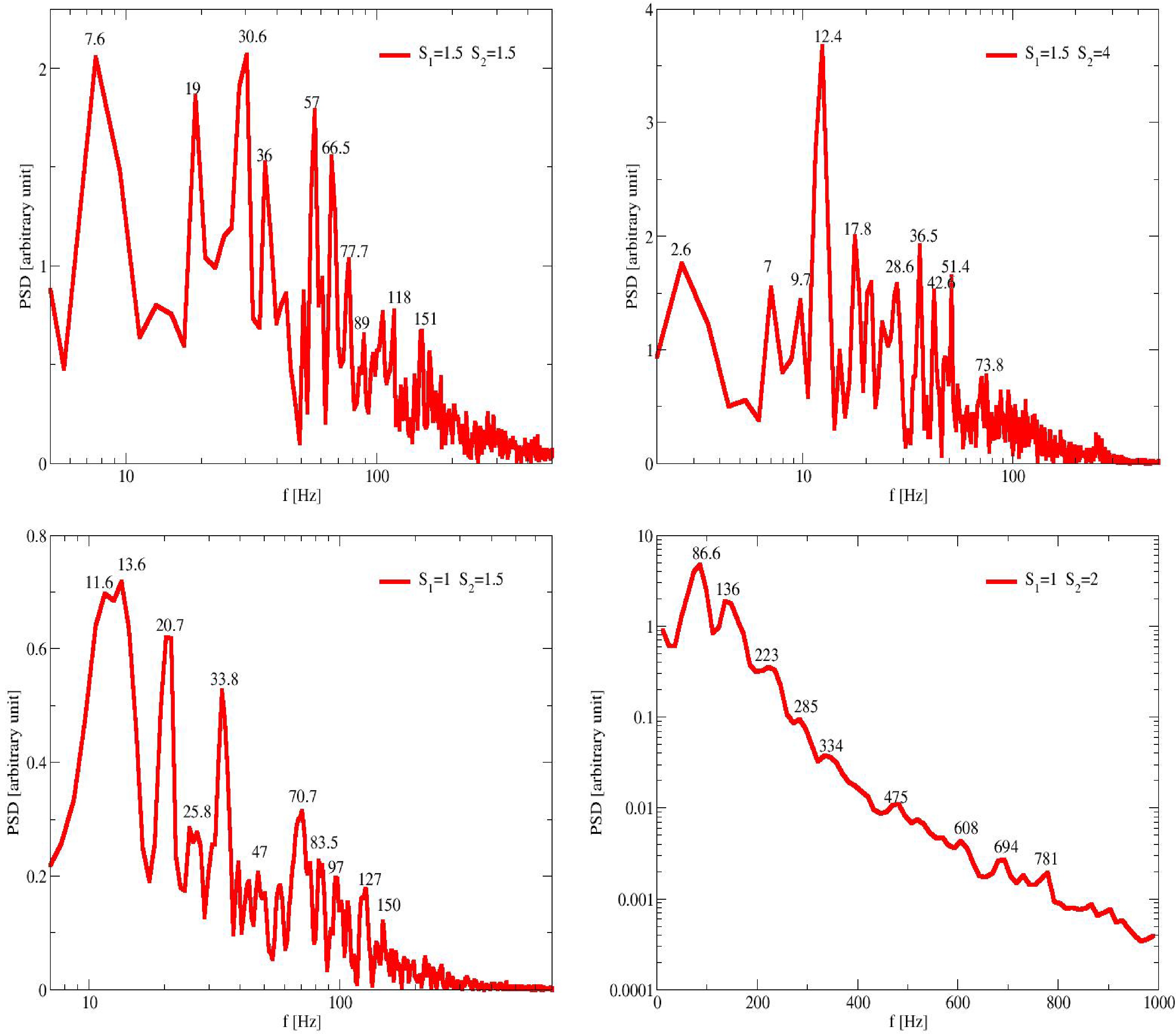
In this study, we investigate the accretion dynamics and test particle motion around a non-rotating, spherically symmetric Lee-Wick black hole (BH) to reveal how the model parameters affect orbital stability and the quasi-periodic oscillations (QPOs) observed in X-ray binary systems. In this work, we deliberately explore parameter values both within the admissible region defined by\begin{document}$ S_2 \gt 0 $\end{document} \begin{document}$ -2\sqrt{S_2} \lt S_1 \lt 2\sqrt{S_2} $\end{document} \begin{document}$ S_1 $\end{document} \begin{document}$ S_2 $\end{document} \begin{document}$ S_1 $\end{document} \begin{document}$ S_2 $\end{document}
In this study, we investigate the accretion dynamics and test particle motion around a non-rotating, spherically symmetric Lee-Wick black hole (BH) to reveal how the model parameters affect orbital stability and the quasi-periodic oscillations (QPOs) observed in X-ray binary systems. In this work, we deliberately explore parameter values both within the admissible region defined by
2026, 50(8): 085103. doi: 10.1088/1674-1137/ae66d3
Abstract:
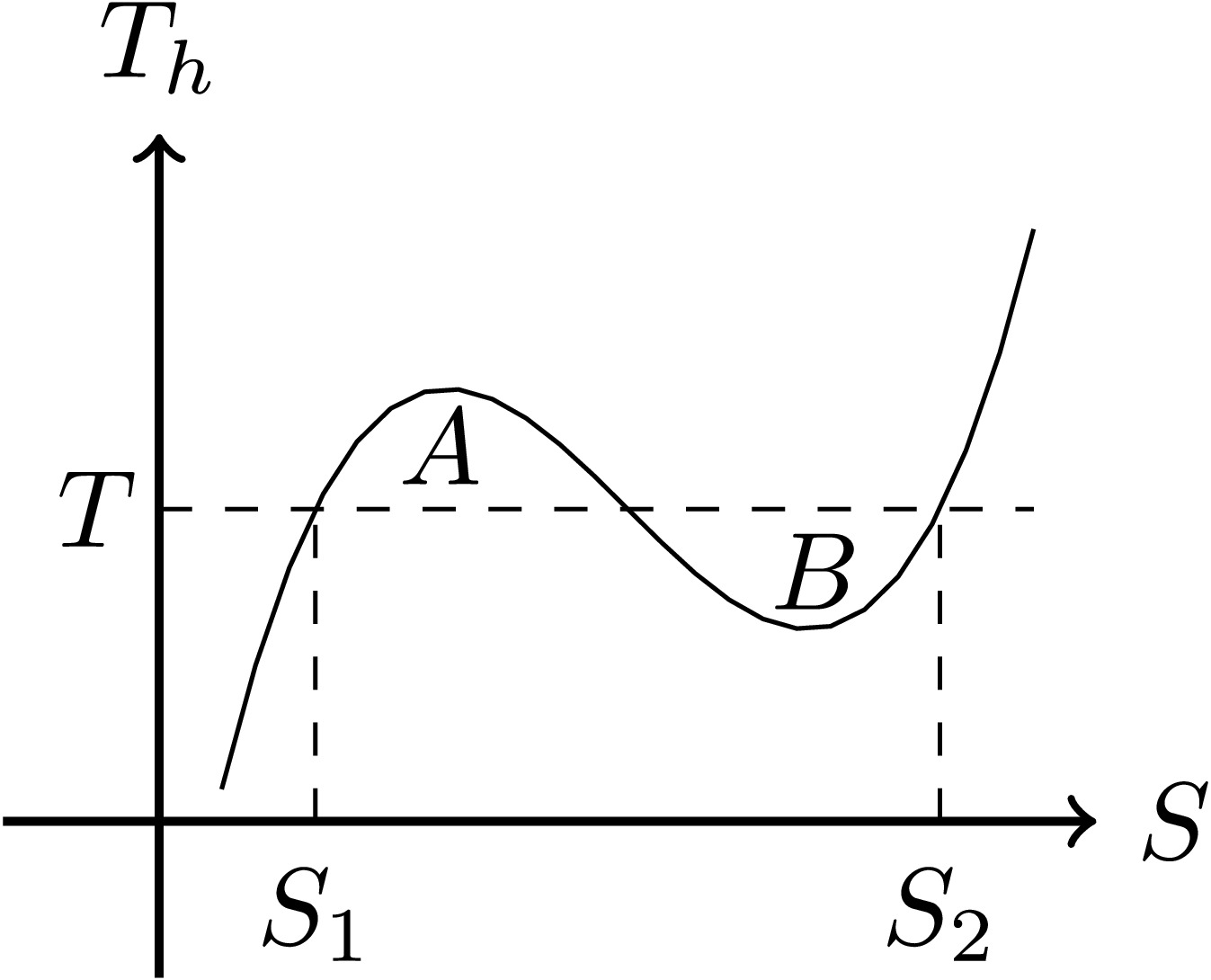
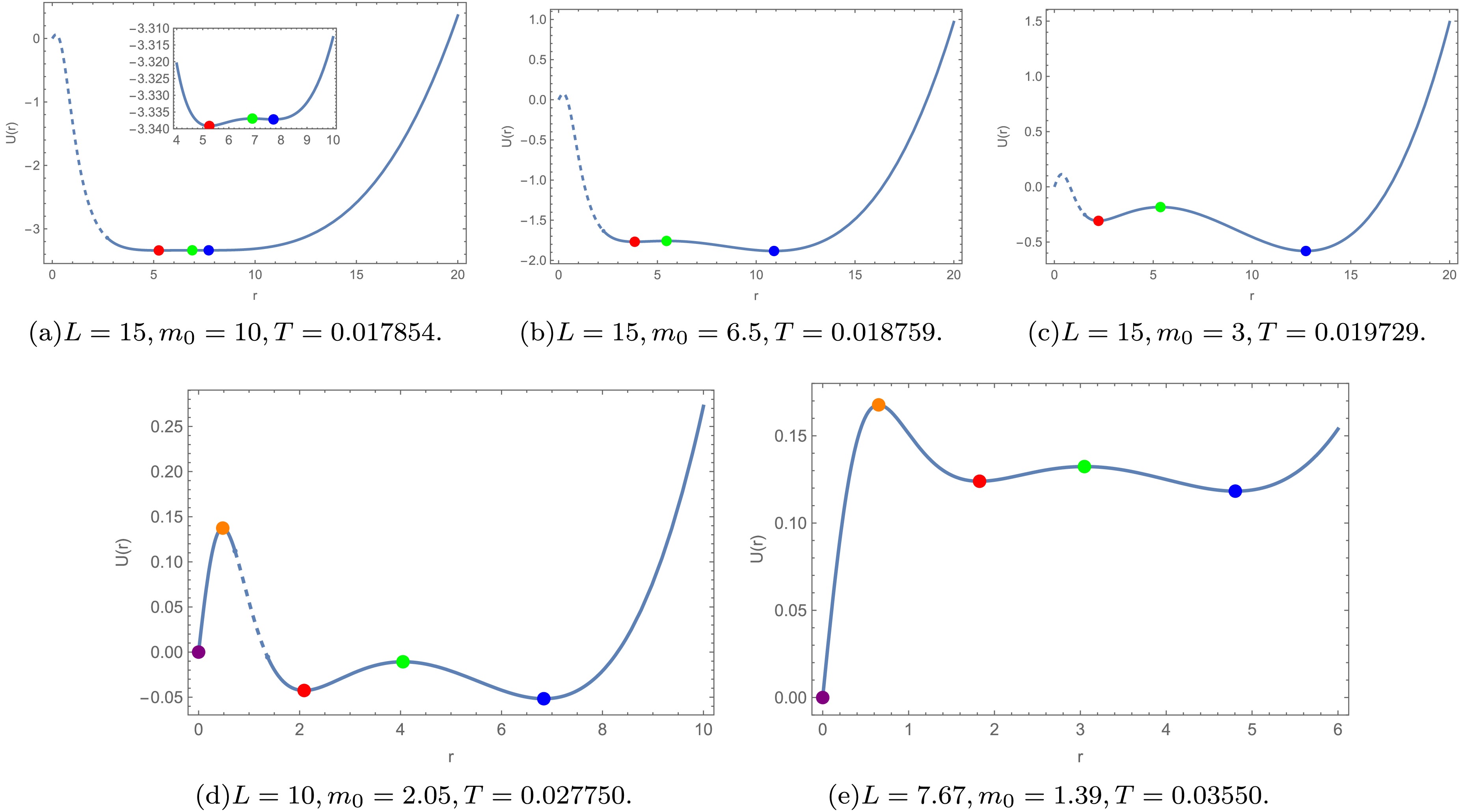
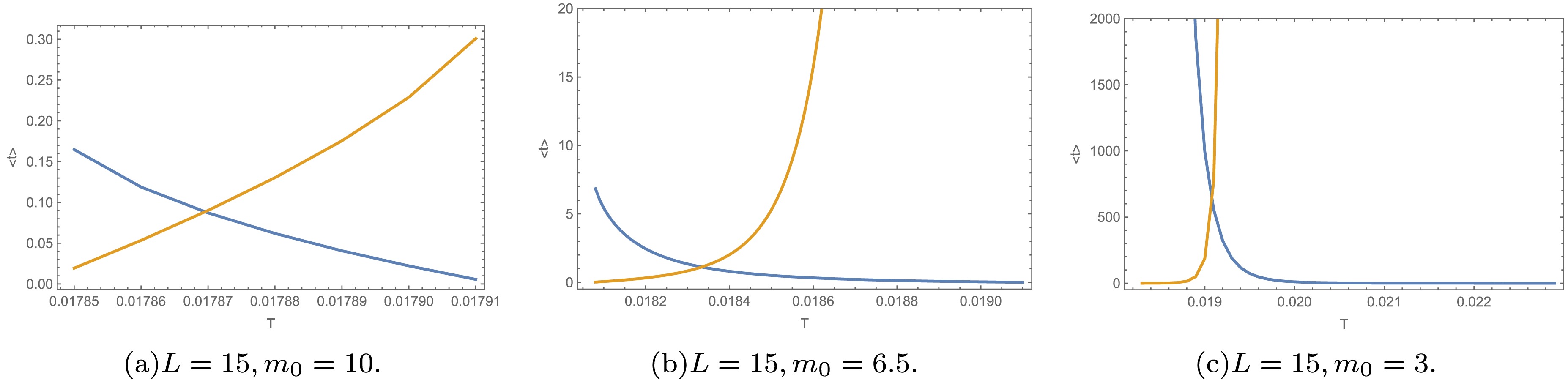
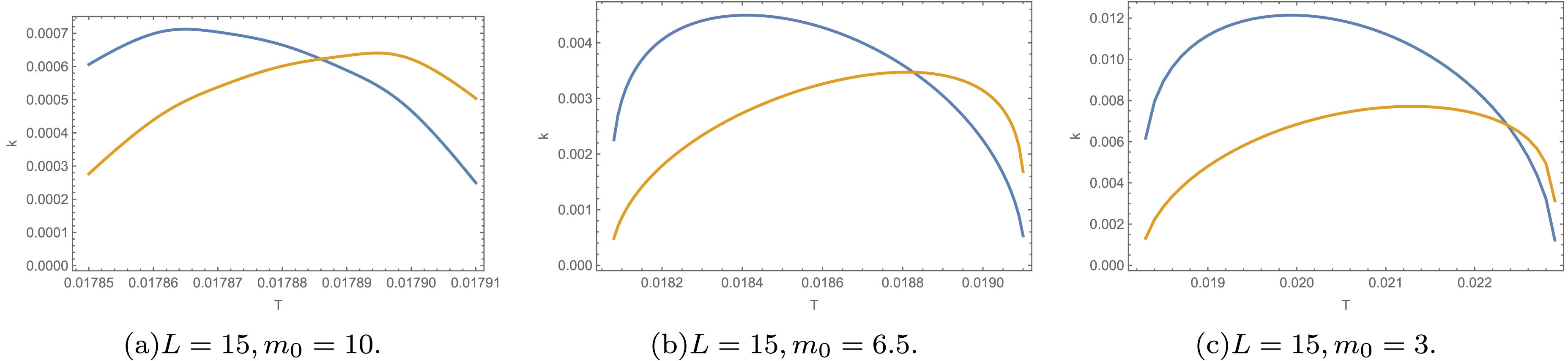
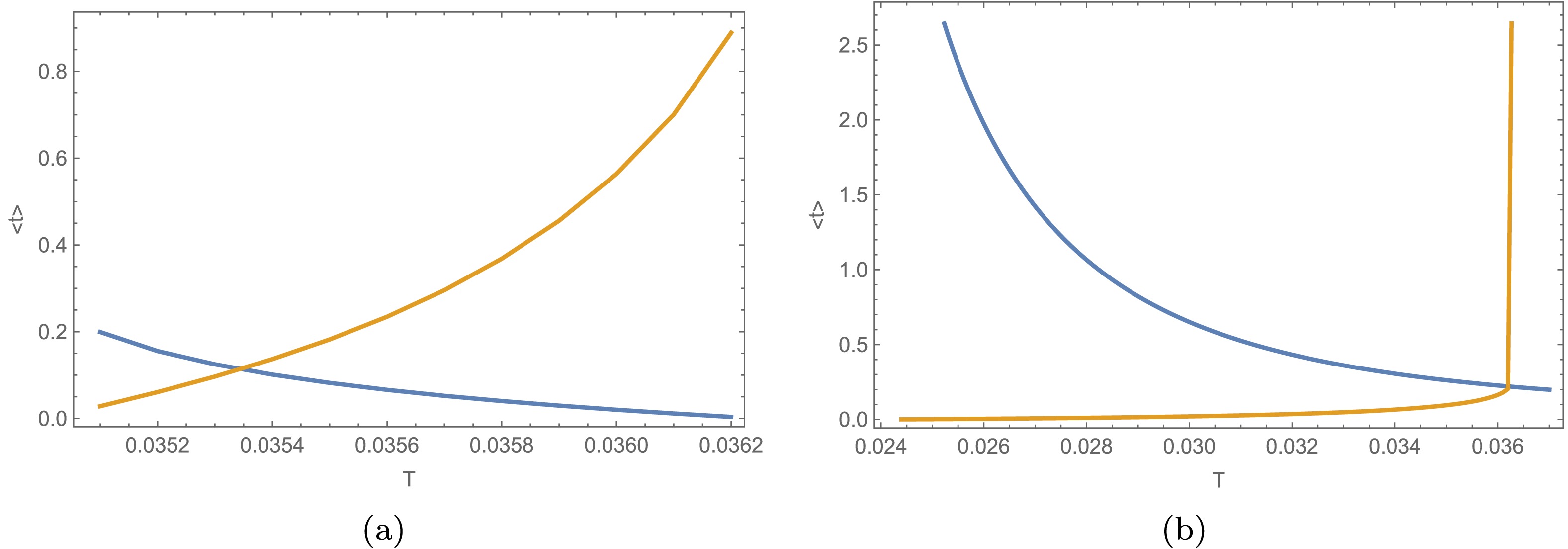
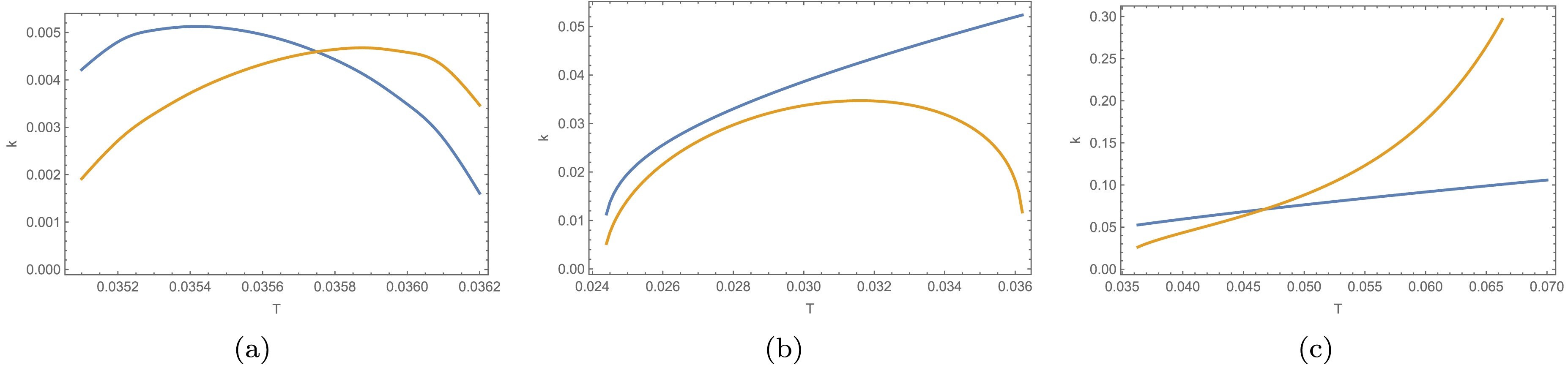
In this study, by utilizing the constructed generalized free energy alongside the Mean First-Passage Time and the Kramers escape rate from stochastic dynamics, we have obtained a comprehensive landscape of the phase transitions for the Bardeen-AdS-class black hole. This black hole model admits two distinct categories of solutions. Type I black holes feature a regular black hole solution, while Type II black holes possess a vacuum state solution. In the phase transition between the small black hole and the large black hole for Type I, the process may pass through a stable, metastable, or unstable regular black hole as an intermediate state. In contrast, for Type II black holes, the phase transition occurs exclusively between the vacuum state and the small black hole, and the transition process does not involve any regular black hole intermediate states.
In this study, by utilizing the constructed generalized free energy alongside the Mean First-Passage Time and the Kramers escape rate from stochastic dynamics, we have obtained a comprehensive landscape of the phase transitions for the Bardeen-AdS-class black hole. This black hole model admits two distinct categories of solutions. Type I black holes feature a regular black hole solution, while Type II black holes possess a vacuum state solution. In the phase transition between the small black hole and the large black hole for Type I, the process may pass through a stable, metastable, or unstable regular black hole as an intermediate state. In contrast, for Type II black holes, the phase transition occurs exclusively between the vacuum state and the small black hole, and the transition process does not involve any regular black hole intermediate states.
2026, 50(8): 085104. doi: 10.1088/1674-1137/ae6a7e
Abstract:
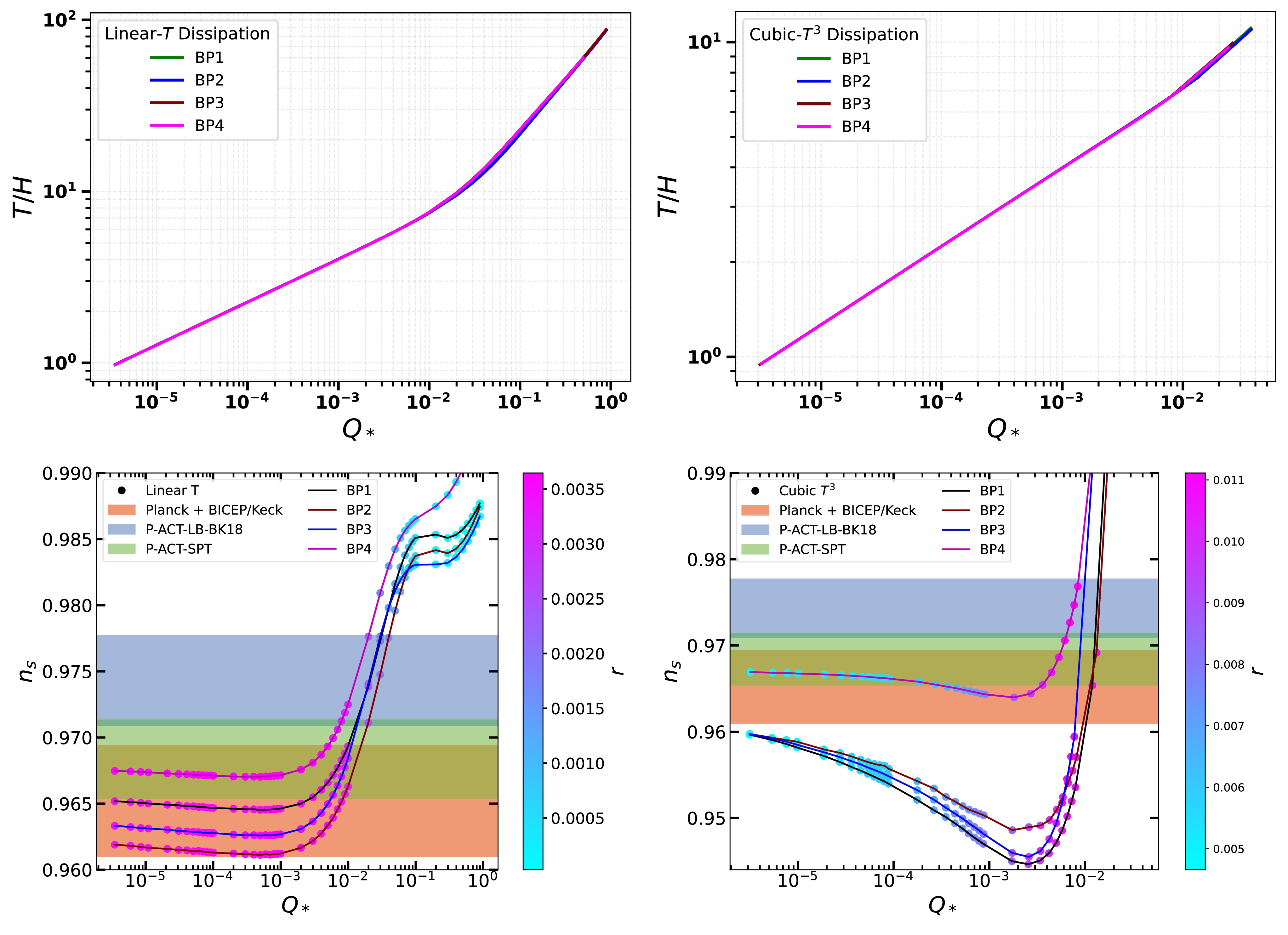
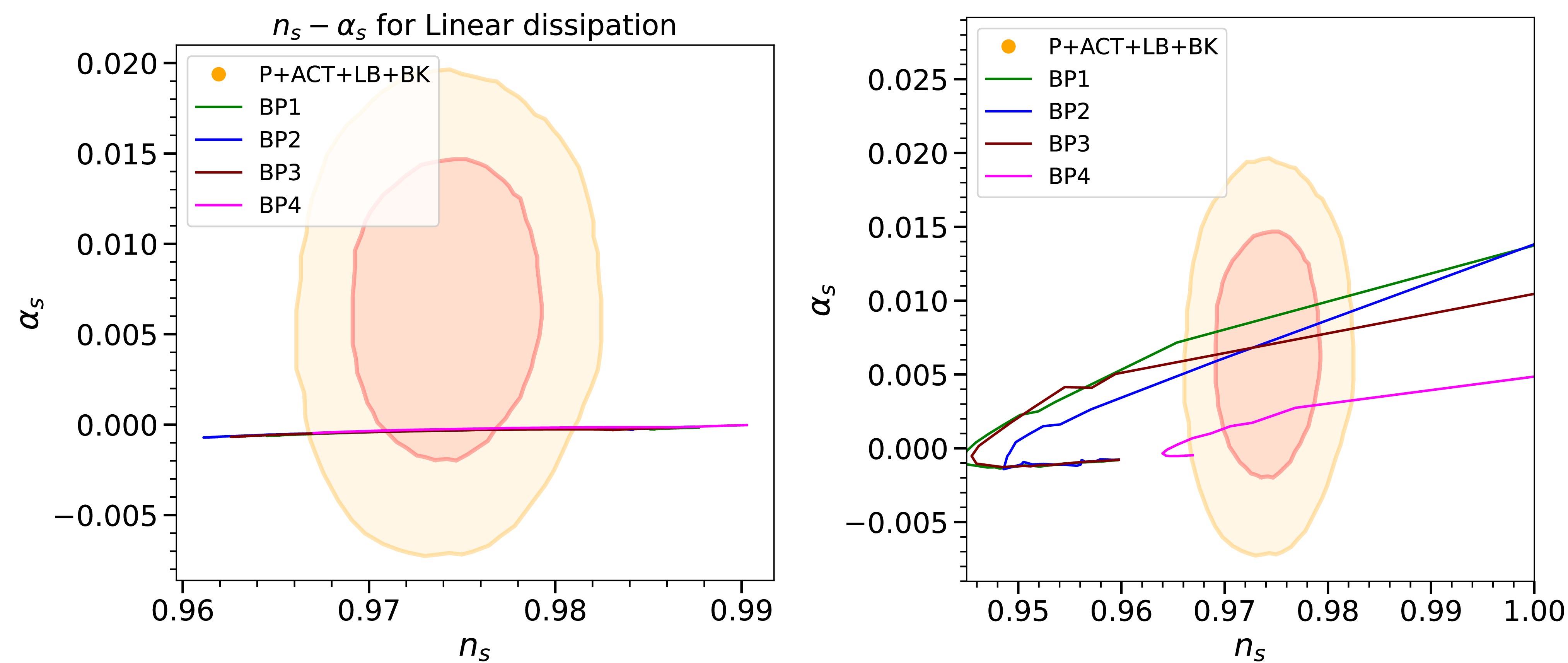
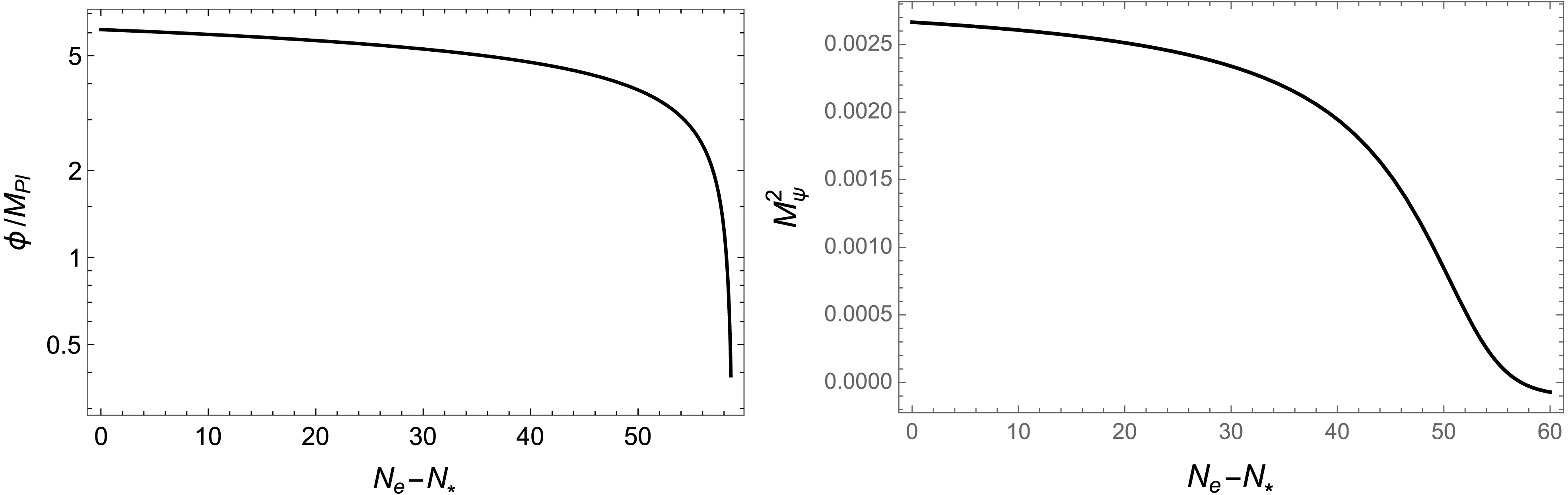
We present a comprehensive study of warm hybrid inflation within the framework of α-attractor models, where an axionic inflaton is coupled to a waterfall field in the presence of thermal dissipation. The model is analyzed for both linear (\begin{document}$ \Upsilon \propto T $\end{document} \begin{document}$ \Upsilon \propto T^{3} $\end{document} \begin{document}$ Q_{*} \lesssim 10^{-5} $\end{document} \begin{document}$ n_{s} \simeq 0.965 $\end{document} \begin{document}$ Q_{*} \gtrsim 10^{-2} $\end{document} \begin{document}$ n_{s} $\end{document} \begin{document}$ 1-2\sigma $\end{document}
We present a comprehensive study of warm hybrid inflation within the framework of α-attractor models, where an axionic inflaton is coupled to a waterfall field in the presence of thermal dissipation. The model is analyzed for both linear (
2026, 50(8): 085105. doi: 10.1088/1674-1137/ae6b2f
Abstract:
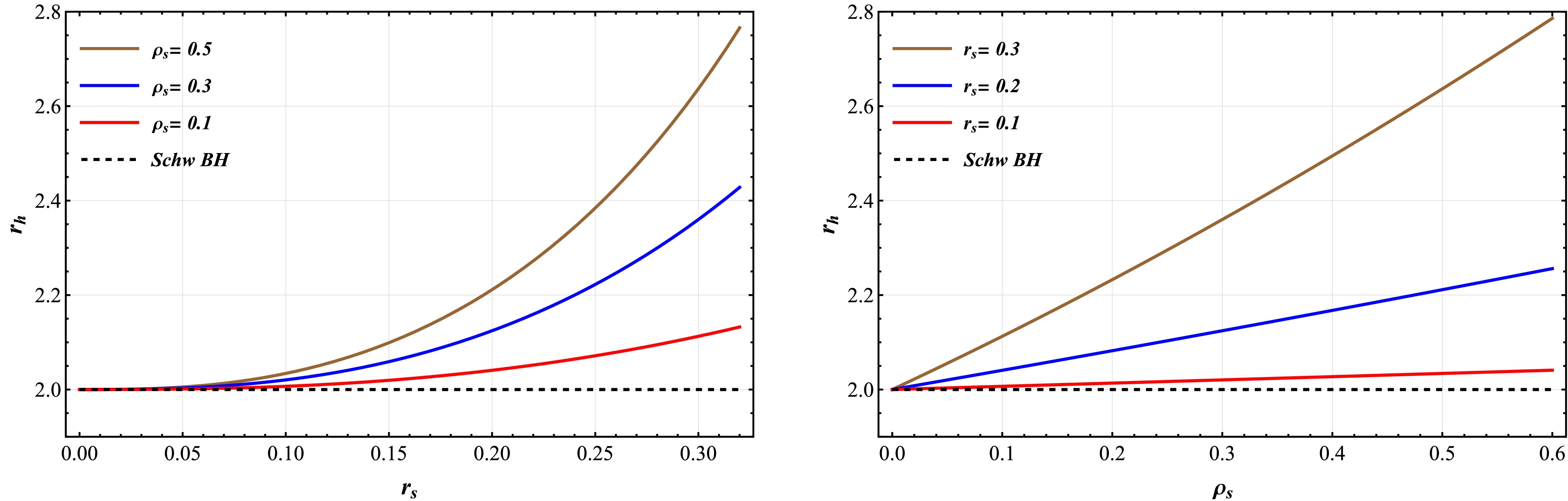
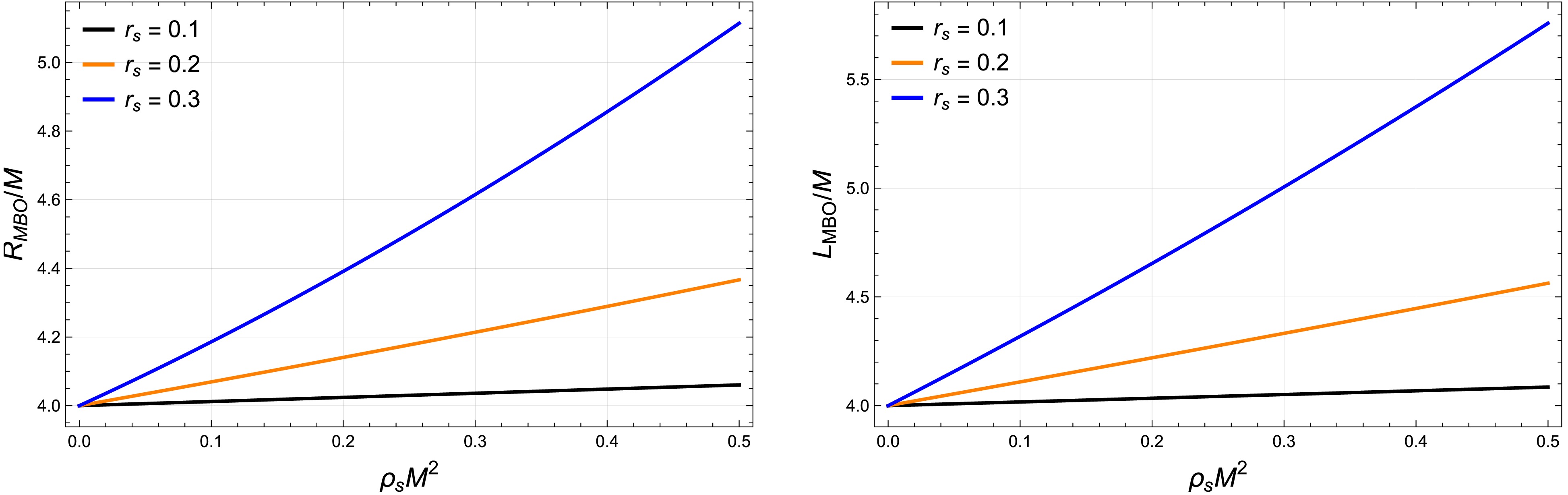
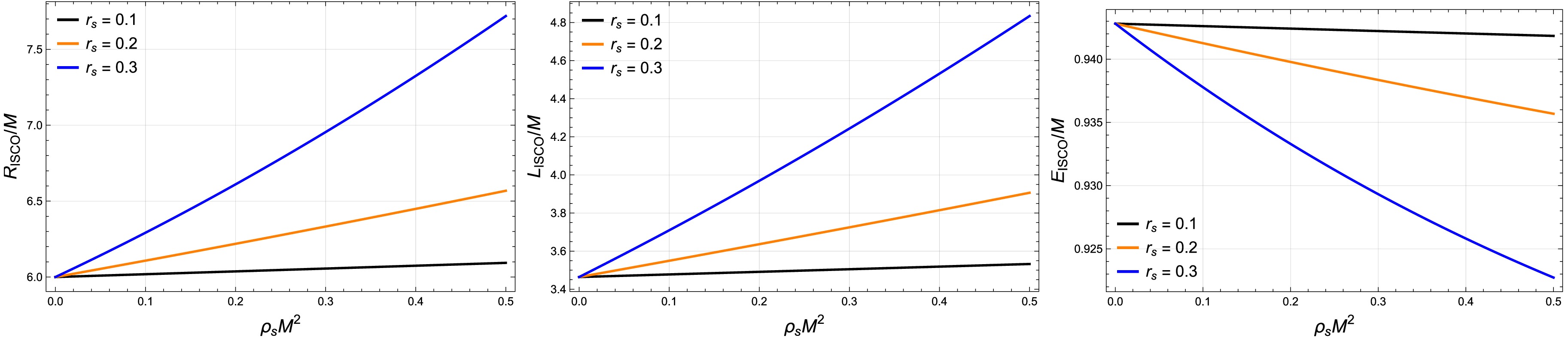
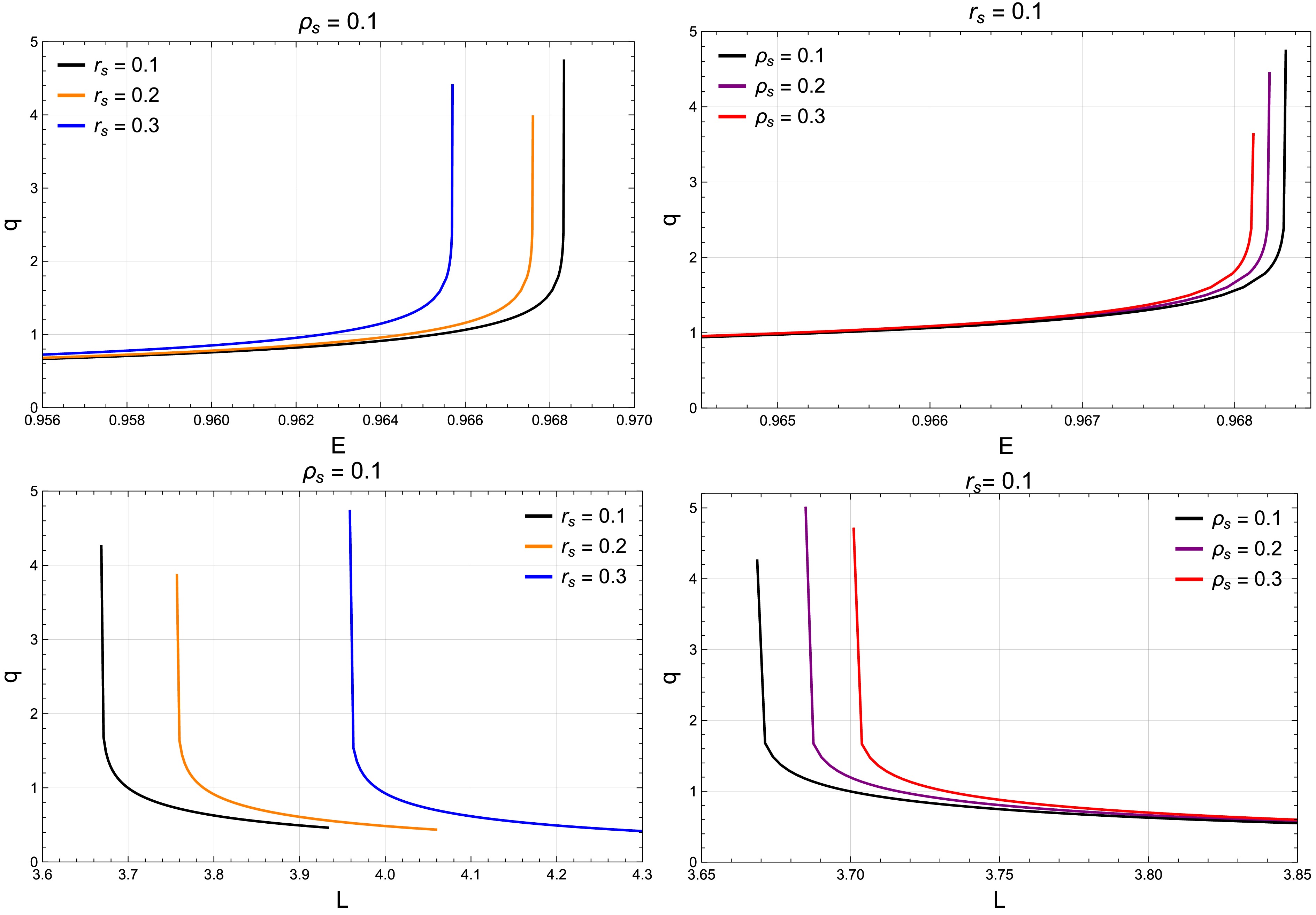
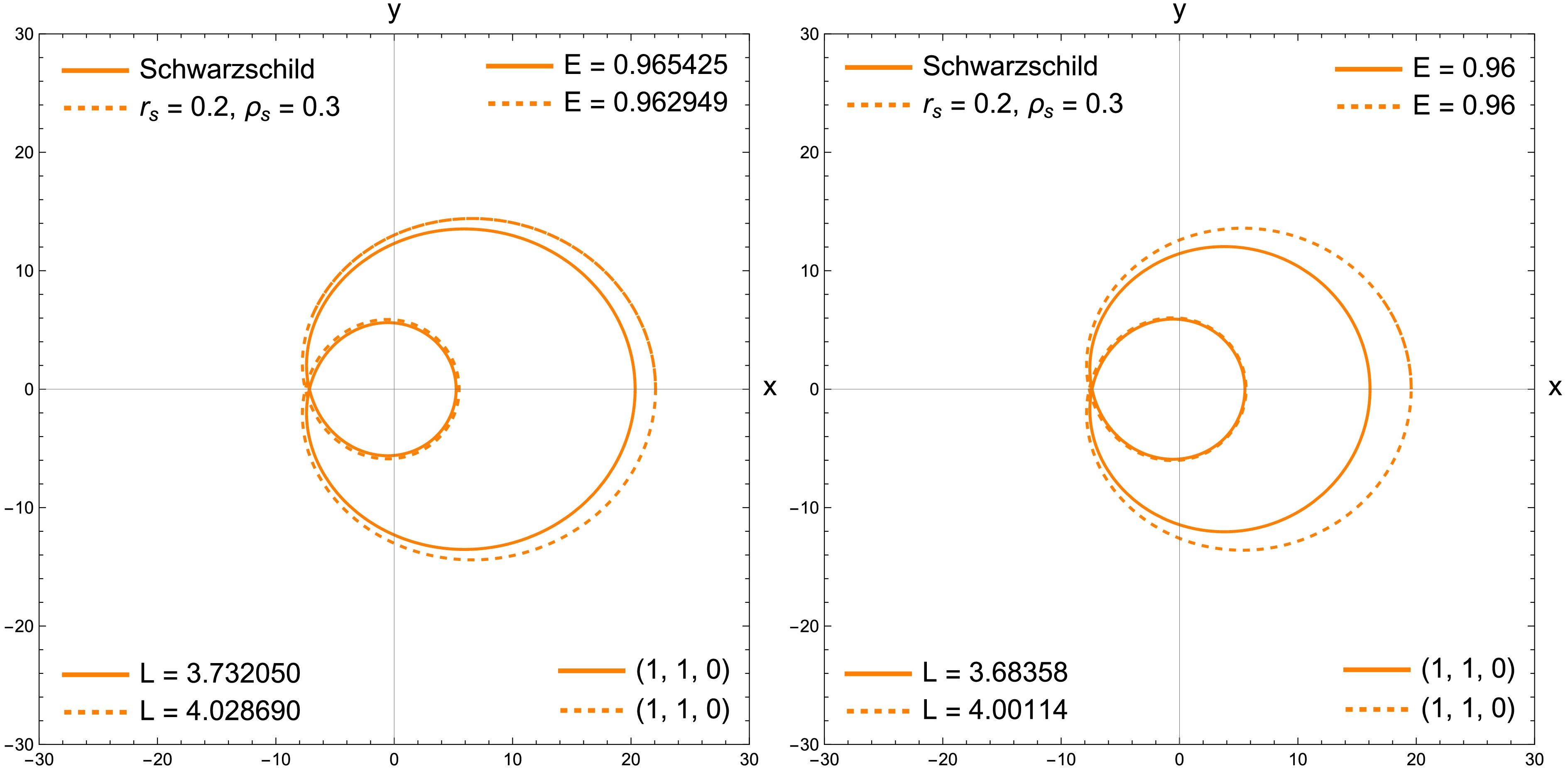
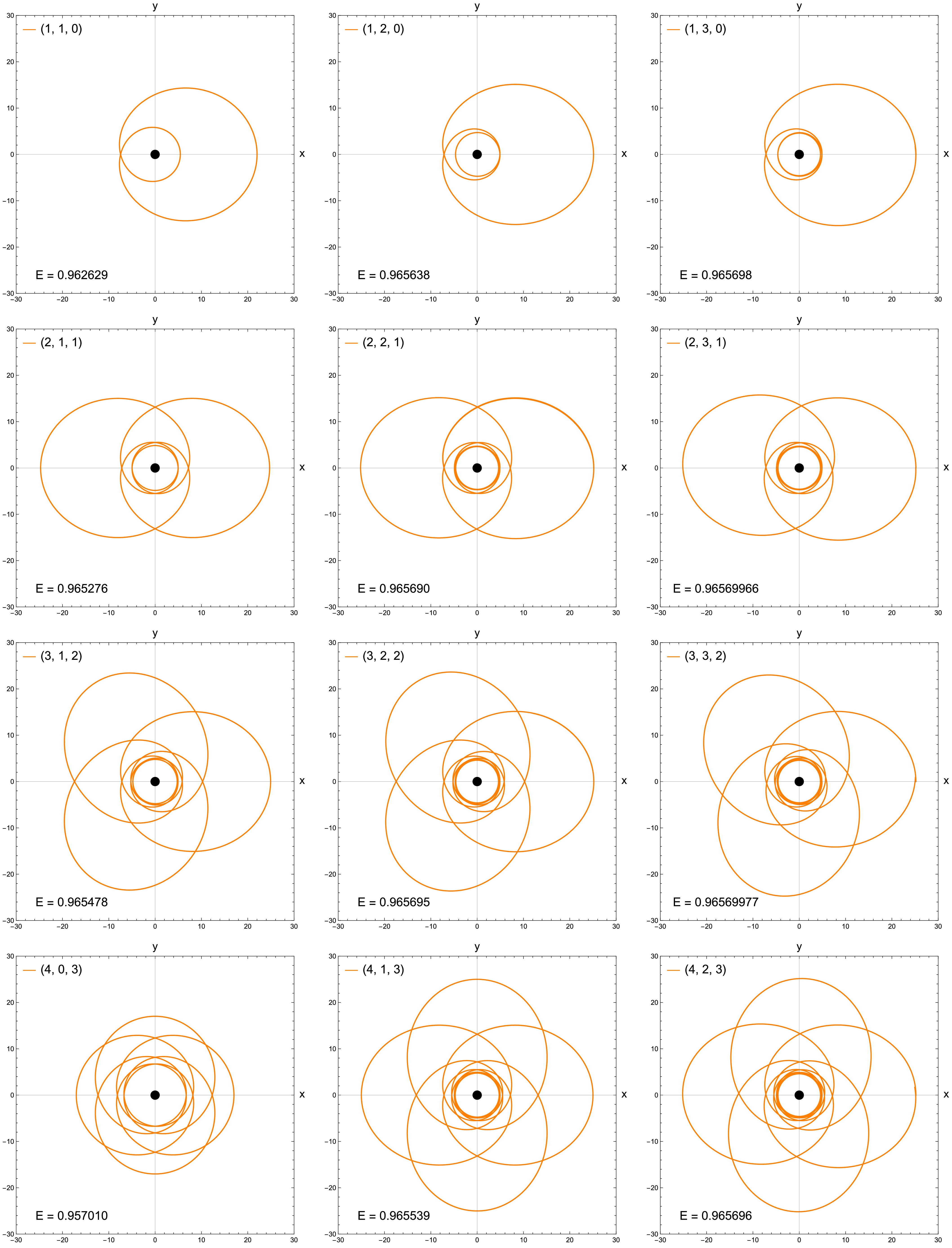
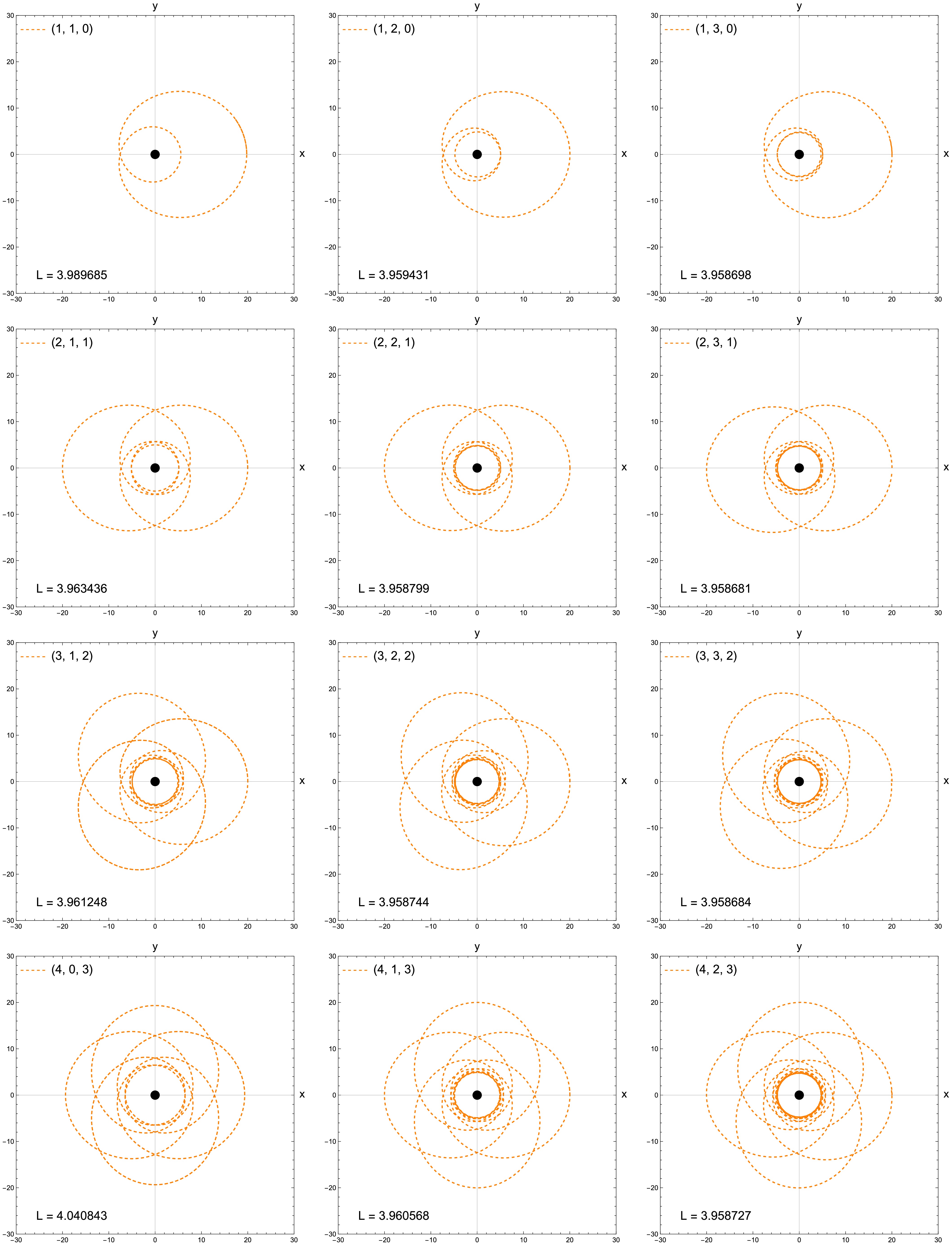
In this work, we investigate the dynamics of periodic orbits and the properties of accretion disks around a Schwarzschild-like black hole (BH) immersed in a King-type dark matter (DM) halo. Our analysis focuses on how the presence of the King DM halo influences both the behavior of periodic orbits and the radiative characteristics of the accretion disk. We begin by examining time-like periodic geodesic orbits for various configurations characterized by different energy and angular momentum values, represented by the integers\begin{document}$ (z, w, v) $\end{document}
In this work, we investigate the dynamics of periodic orbits and the properties of accretion disks around a Schwarzschild-like black hole (BH) immersed in a King-type dark matter (DM) halo. Our analysis focuses on how the presence of the King DM halo influences both the behavior of periodic orbits and the radiative characteristics of the accretion disk. We begin by examining time-like periodic geodesic orbits for various configurations characterized by different energy and angular momentum values, represented by the integers

2026, 50(8): 085106. doi: 10.1088/1674-1137/ae6da2
Abstract:
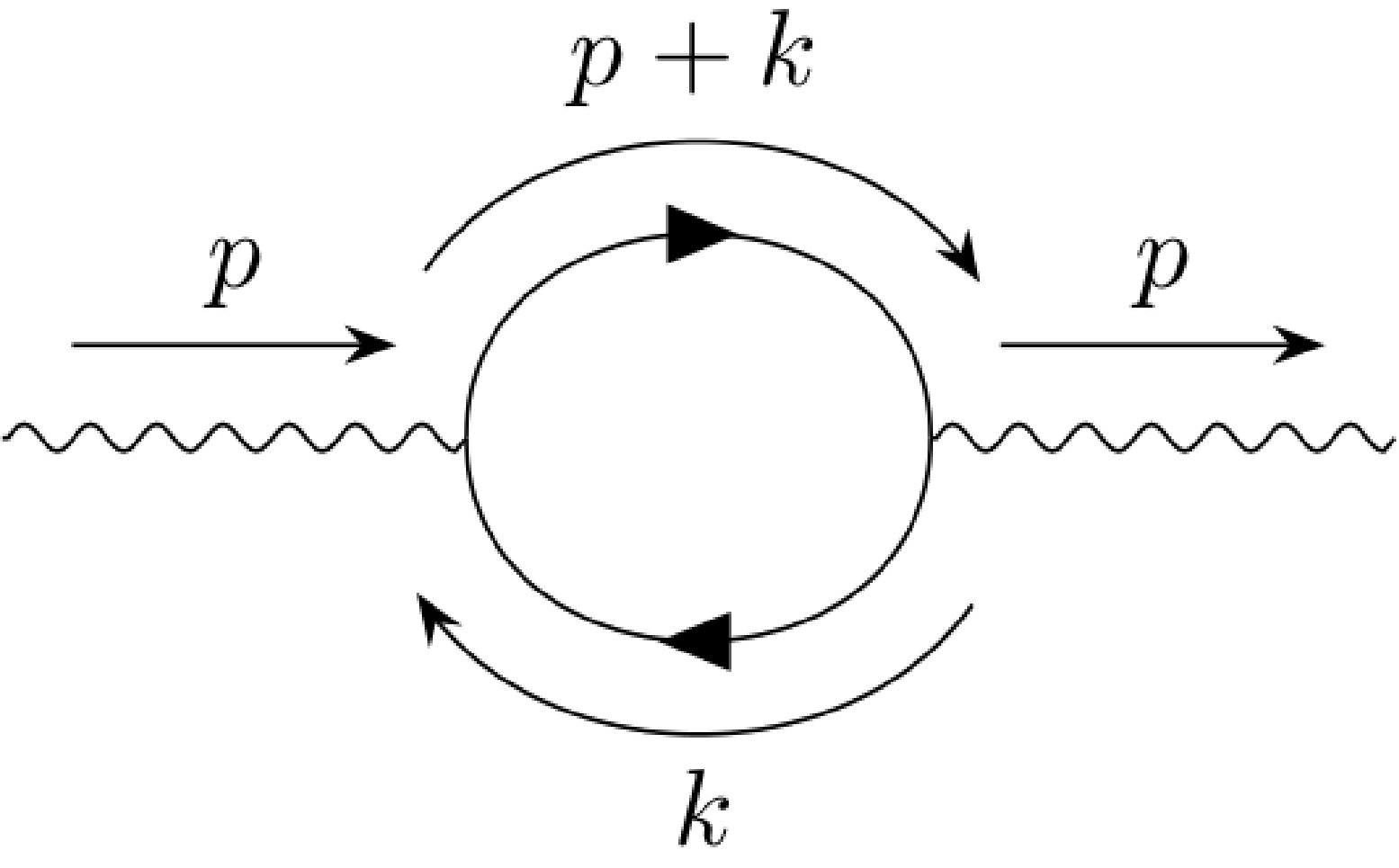
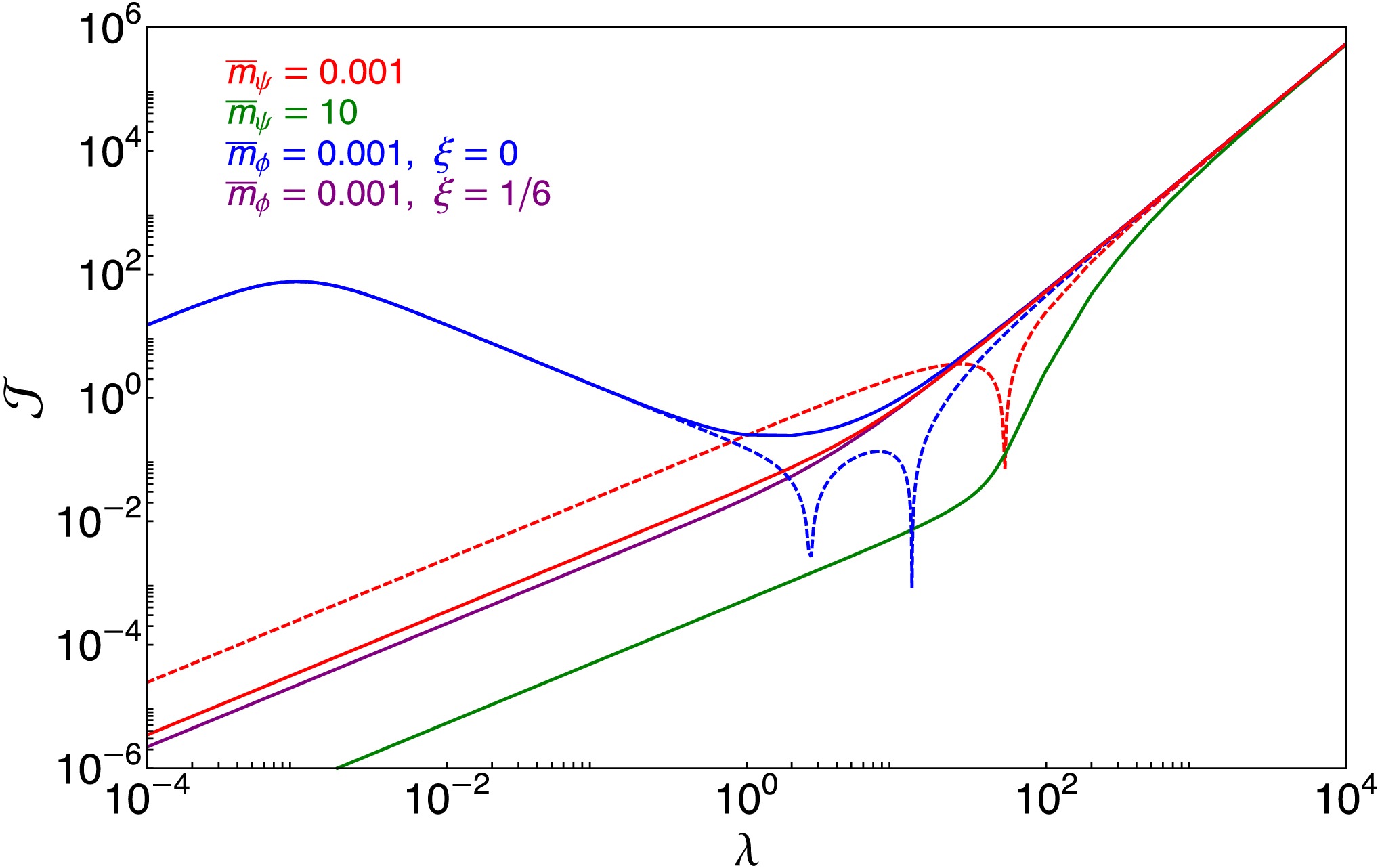
We study classical background electric fields and the Schwinger effect in de Sitter space. We show that a constant electric field in de Sitter requires the photon to have a tachyonic mass proportional to the Hubble scale. This has physical implications for the induced Schwinger current that affect its IR behaviour. To study this, we recompute the Schwinger current in de Sitter space for charged fermions and minimally coupled scalars, imposing a physically consistent renormalization condition. We find a finite and positive Schwinger current even in the massless limit. This is in contrast to previous calculations in the literature, which found a negative IR divergence. We also obtain the first result for the Schwinger current of a non-minimally coupled scalar, including the conformally coupled case, which we find exhibits behaviour very similar to that of the fermion current. Our results may have physical implications for both magnetogenesis and inflationary dark matter production.
We study classical background electric fields and the Schwinger effect in de Sitter space. We show that a constant electric field in de Sitter requires the photon to have a tachyonic mass proportional to the Hubble scale. This has physical implications for the induced Schwinger current that affect its IR behaviour. To study this, we recompute the Schwinger current in de Sitter space for charged fermions and minimally coupled scalars, imposing a physically consistent renormalization condition. We find a finite and positive Schwinger current even in the massless limit. This is in contrast to previous calculations in the literature, which found a negative IR divergence. We also obtain the first result for the Schwinger current of a non-minimally coupled scalar, including the conformally coupled case, which we find exhibits behaviour very similar to that of the fermion current. Our results may have physical implications for both magnetogenesis and inflationary dark matter production.
2026, 50(8): 085107. doi: 10.1088/1674-1137/ae66d0
Abstract:
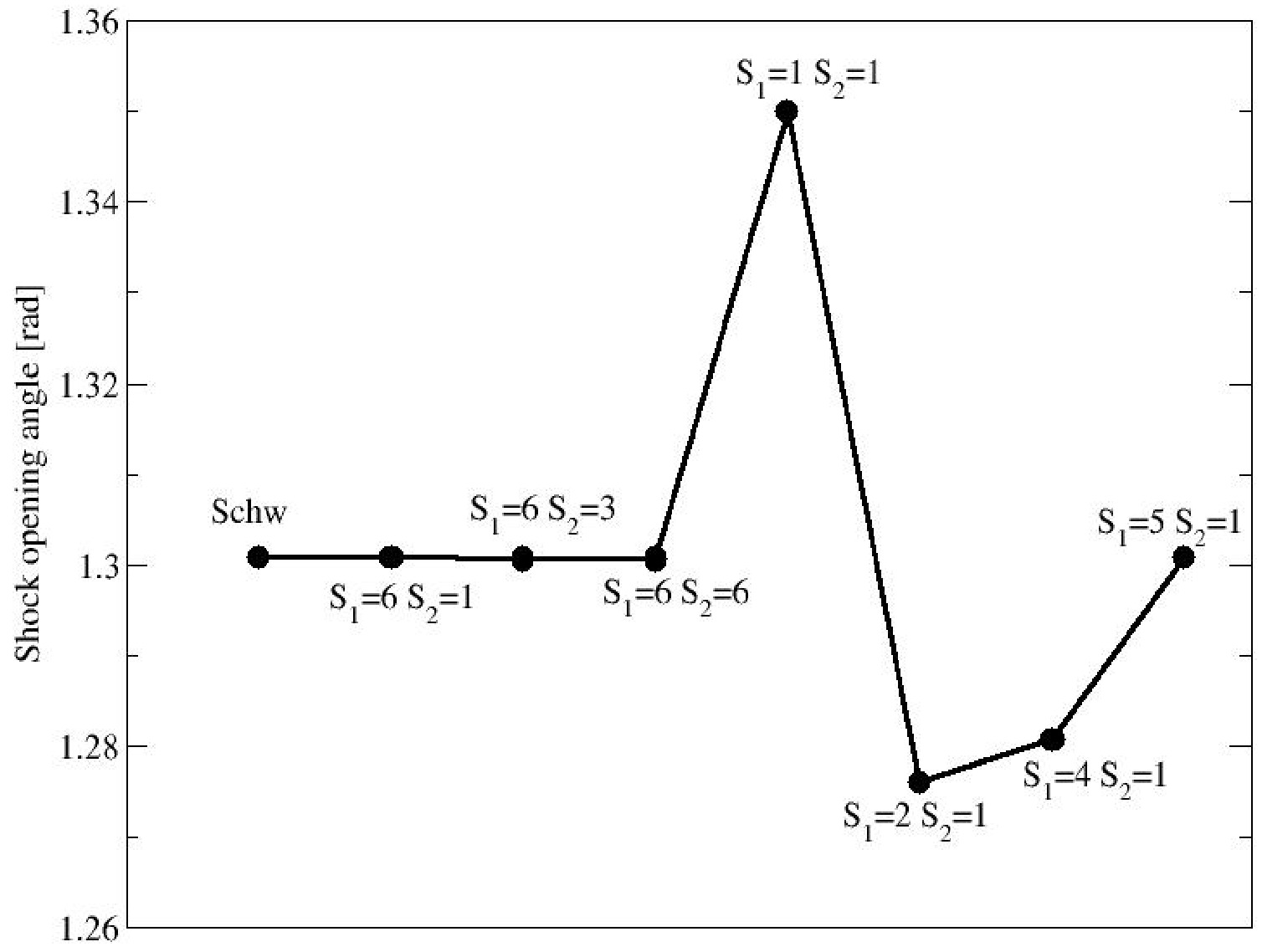
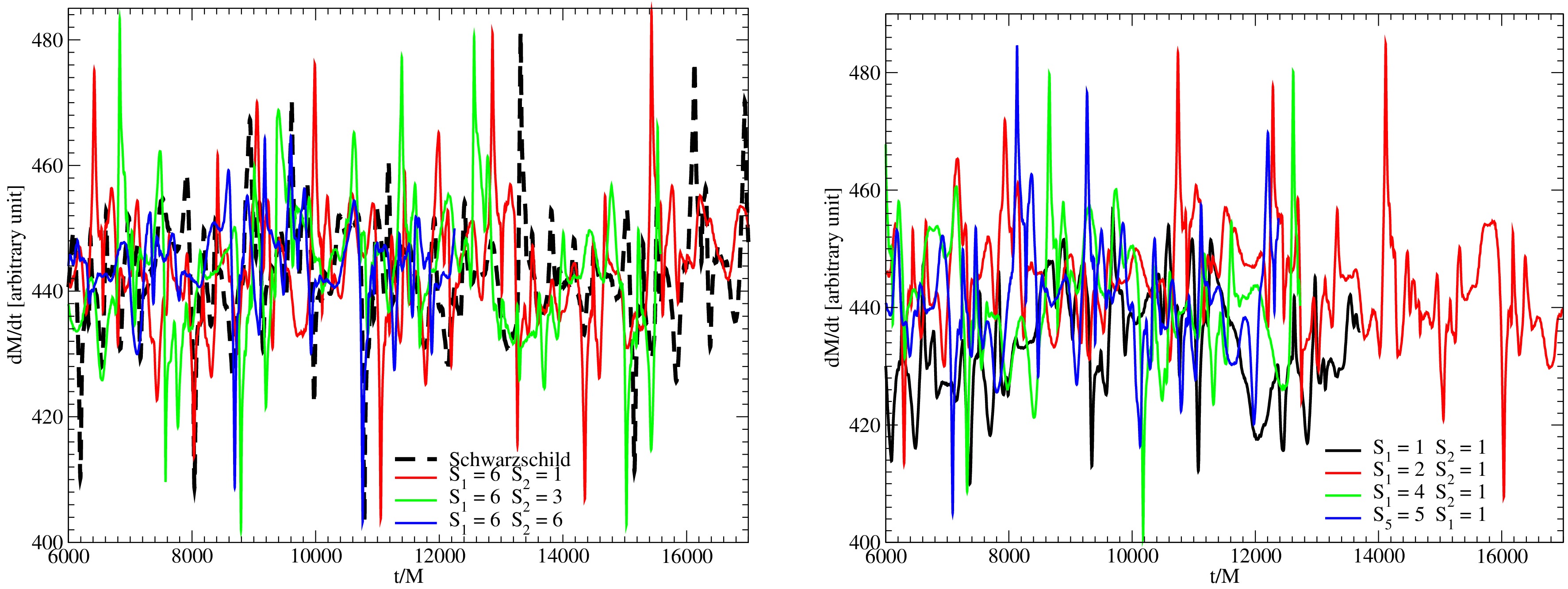
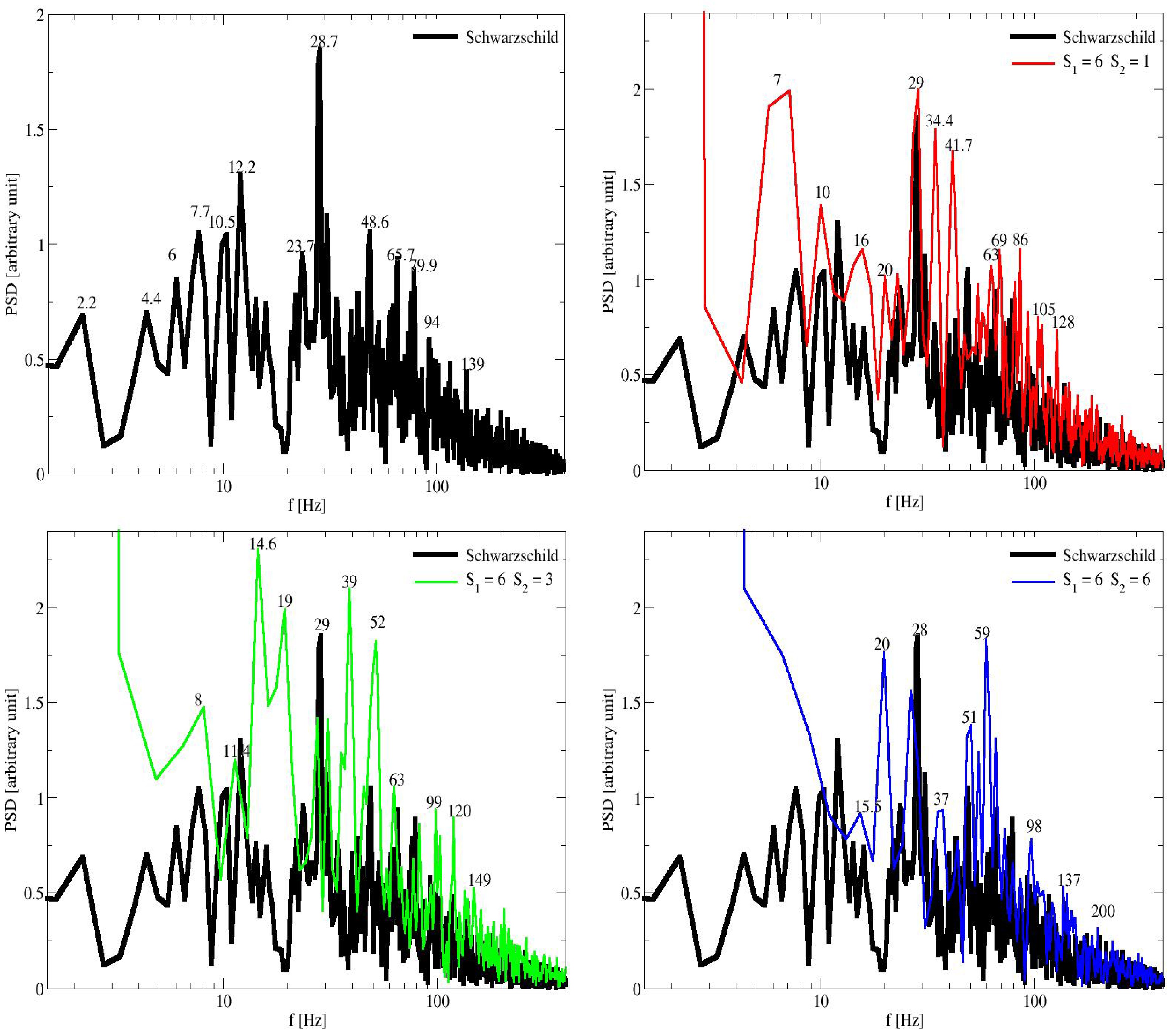
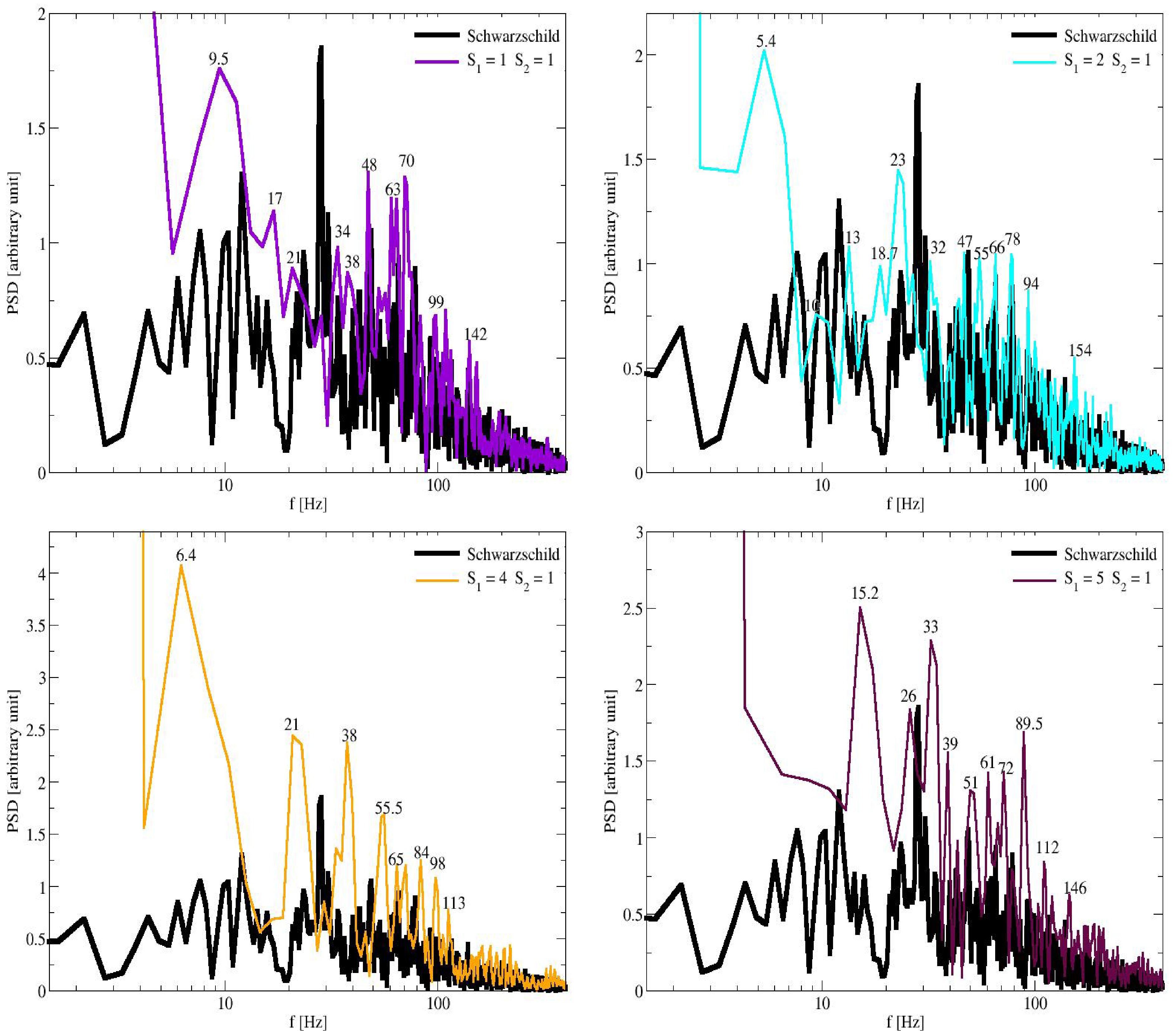
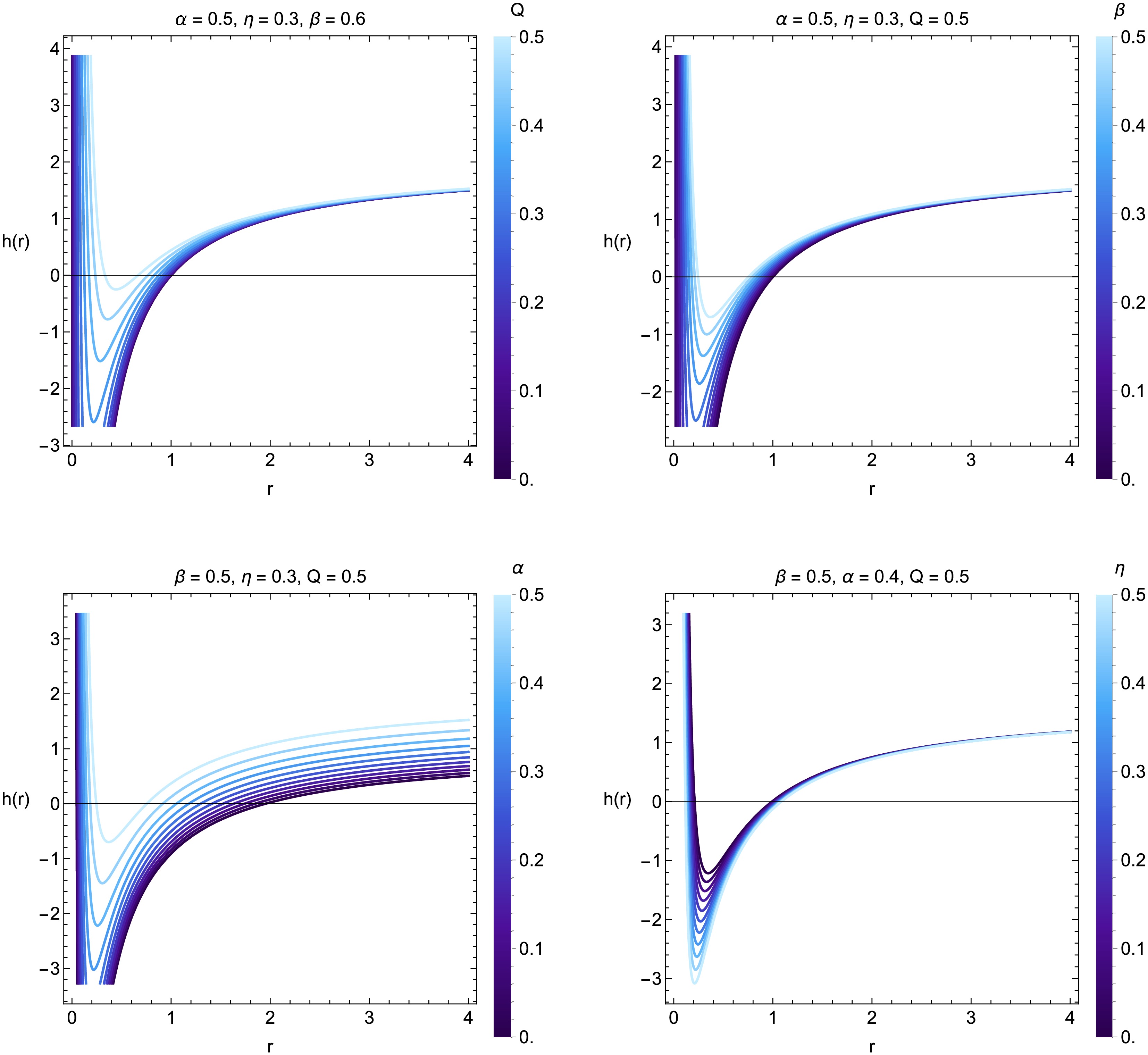
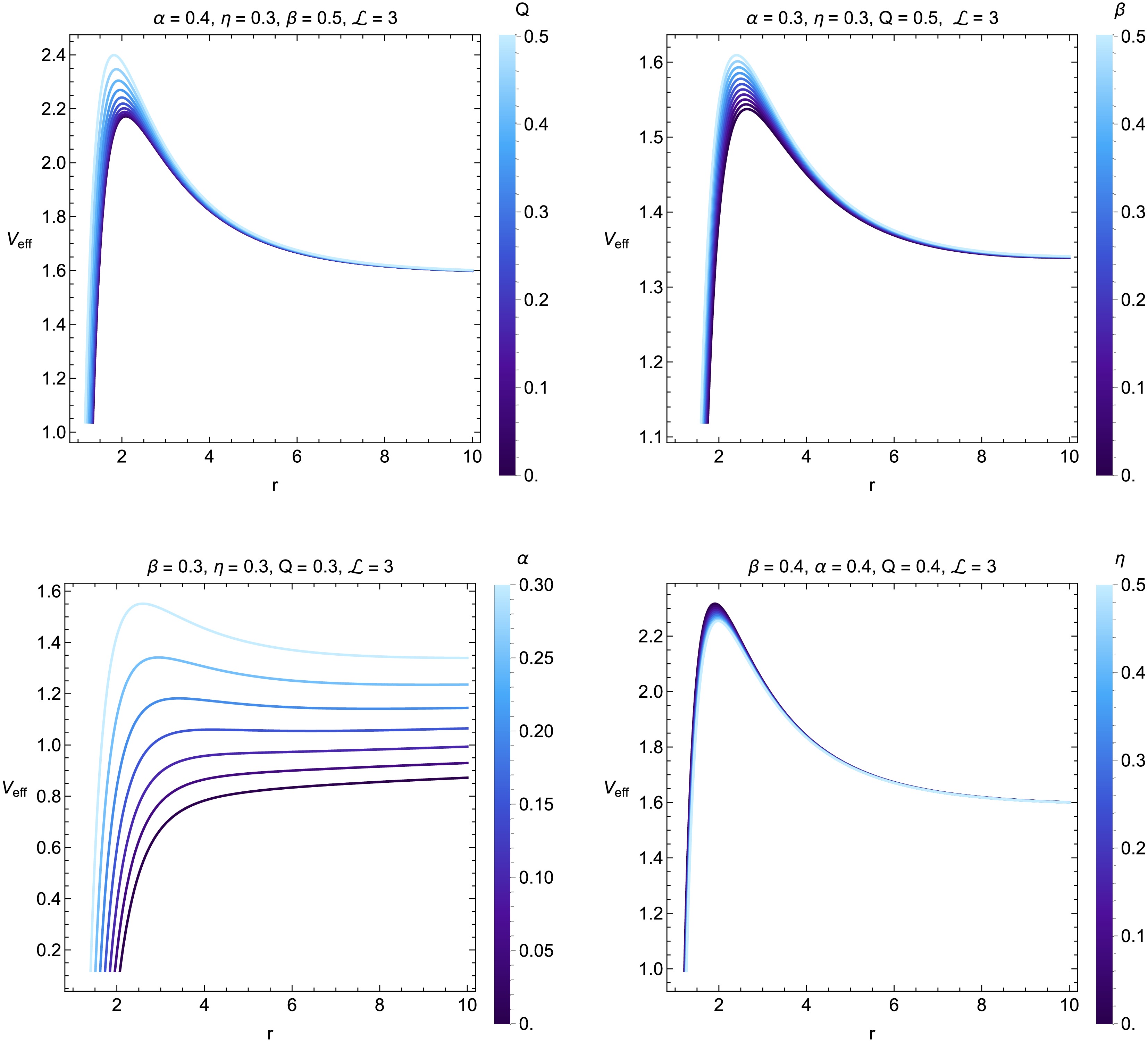
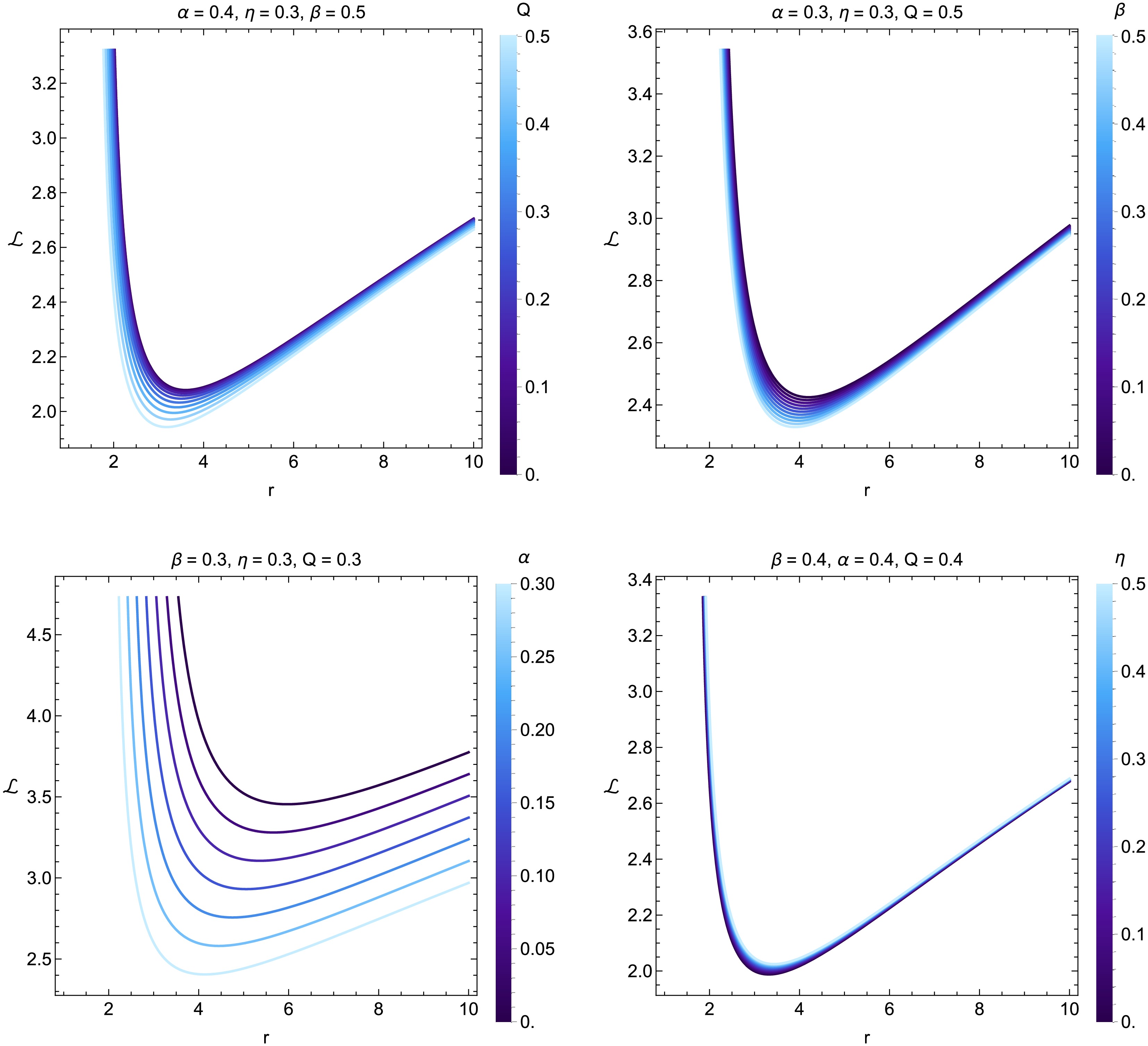
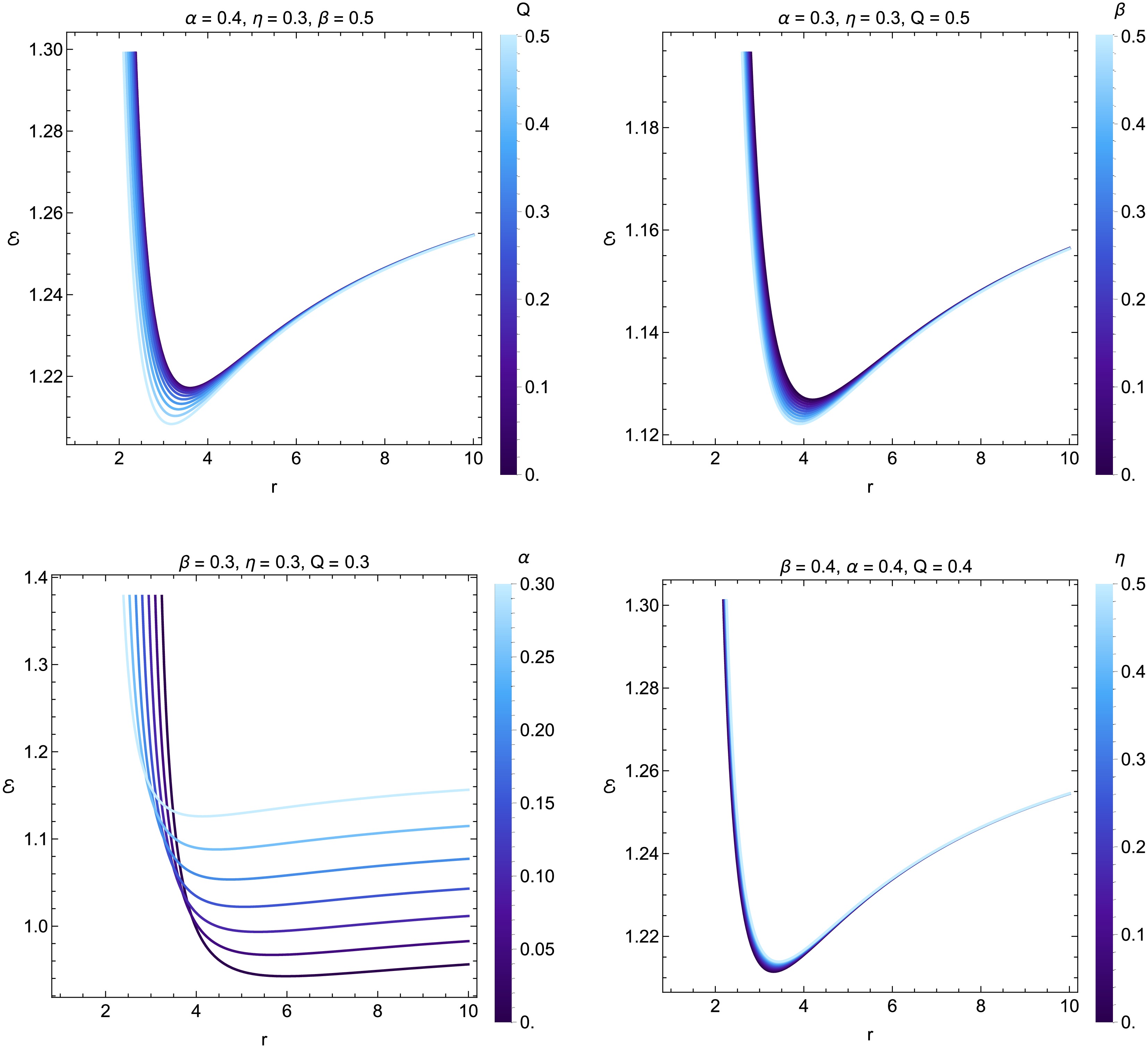
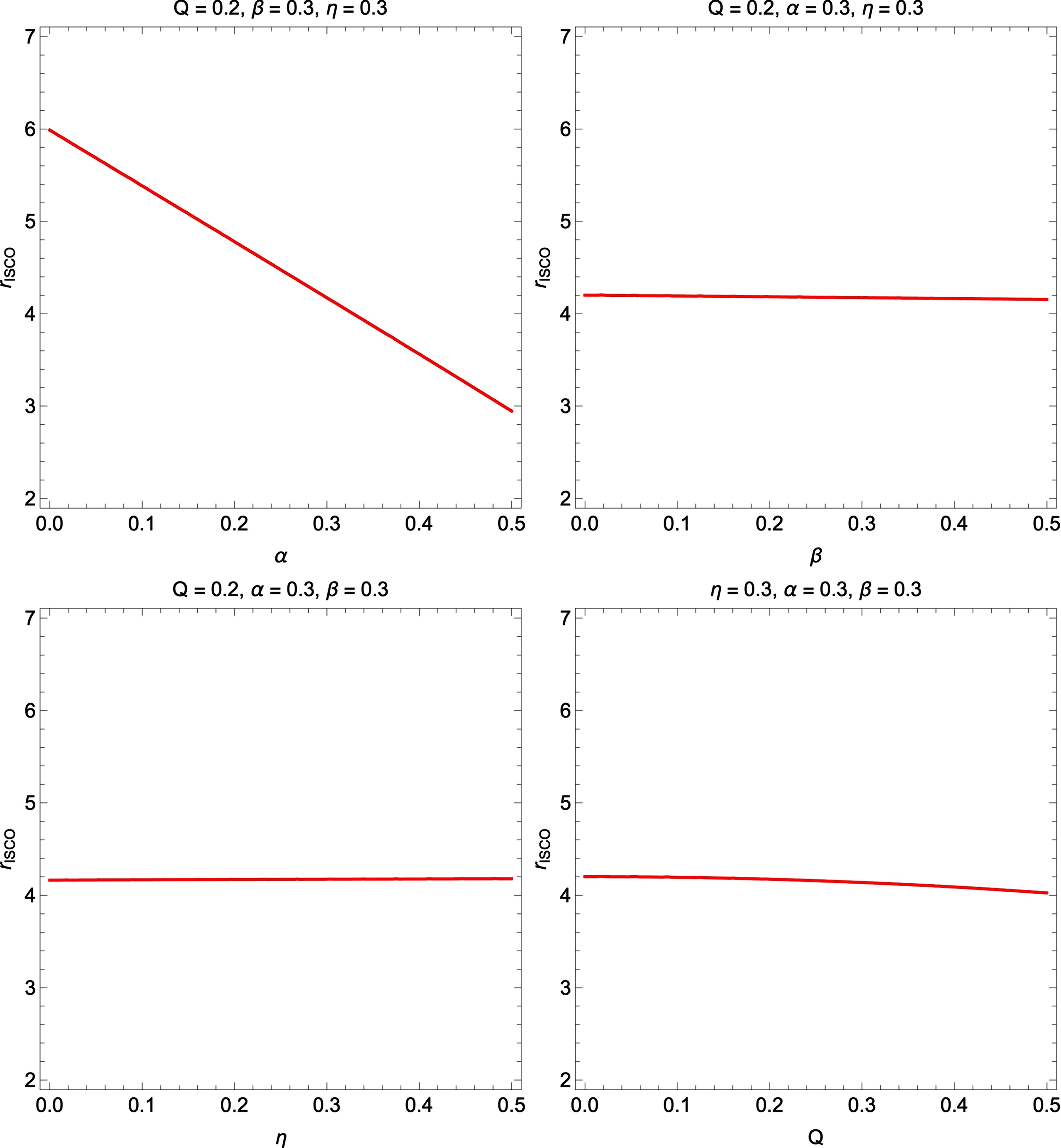
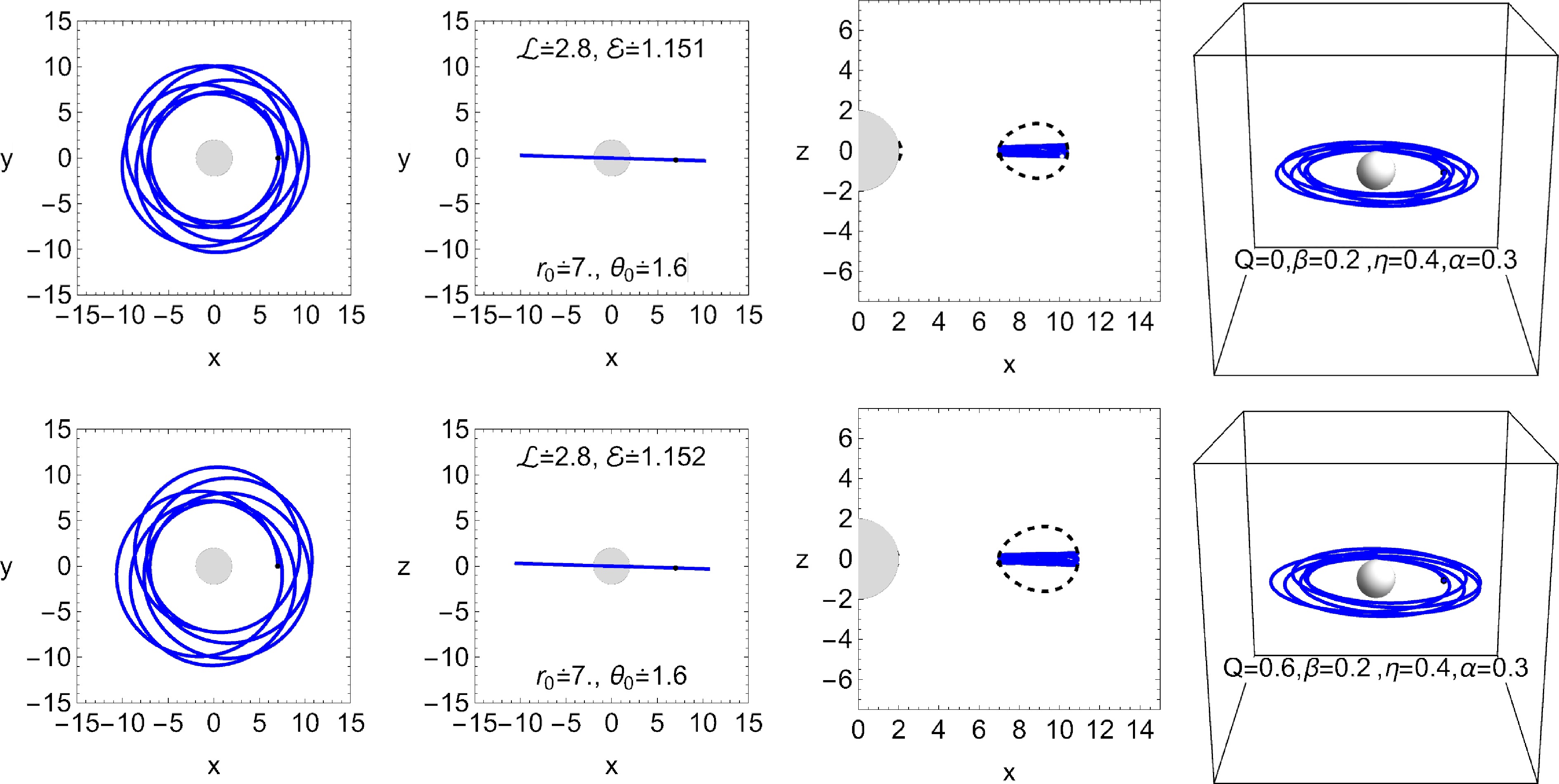
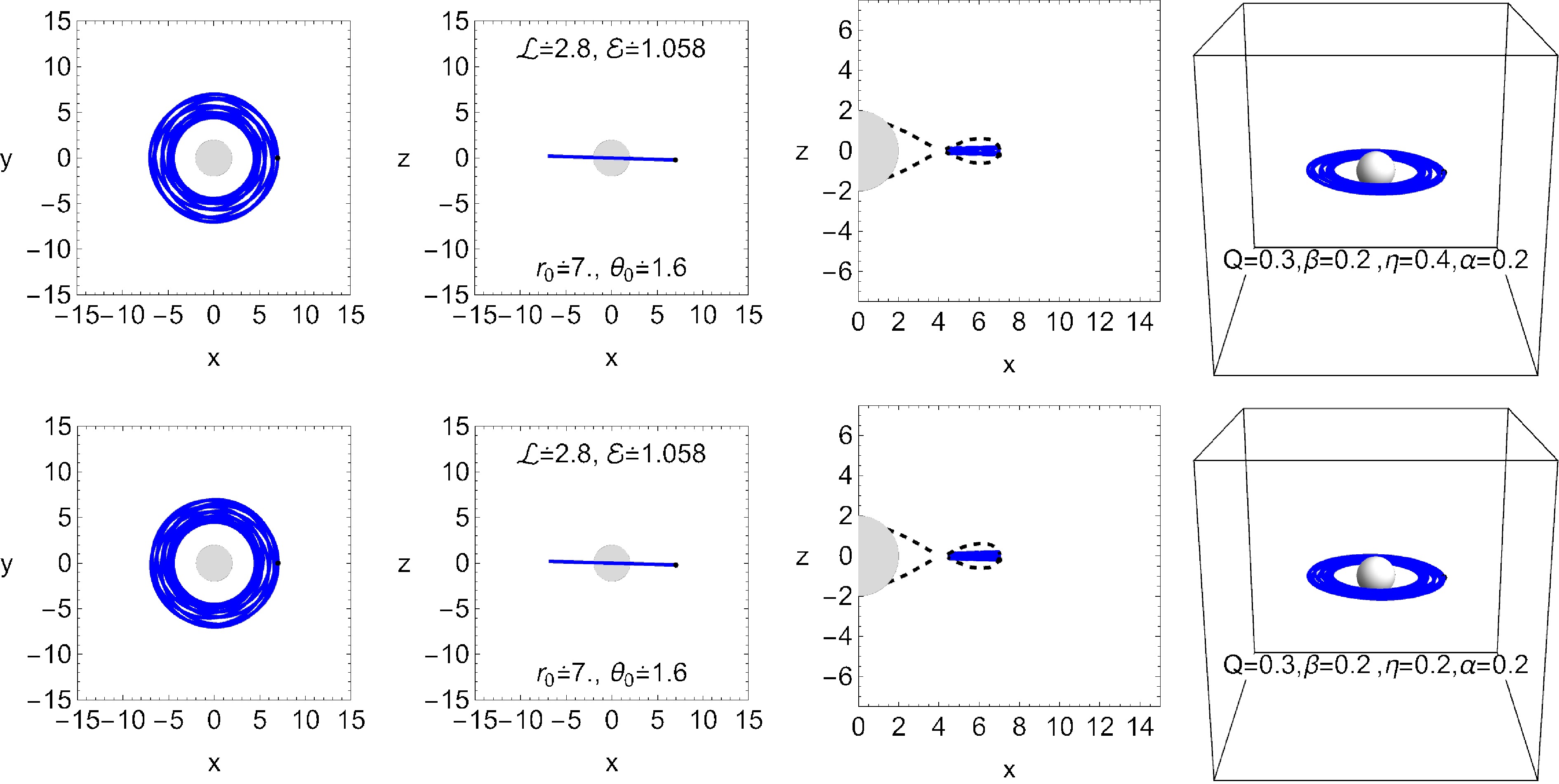
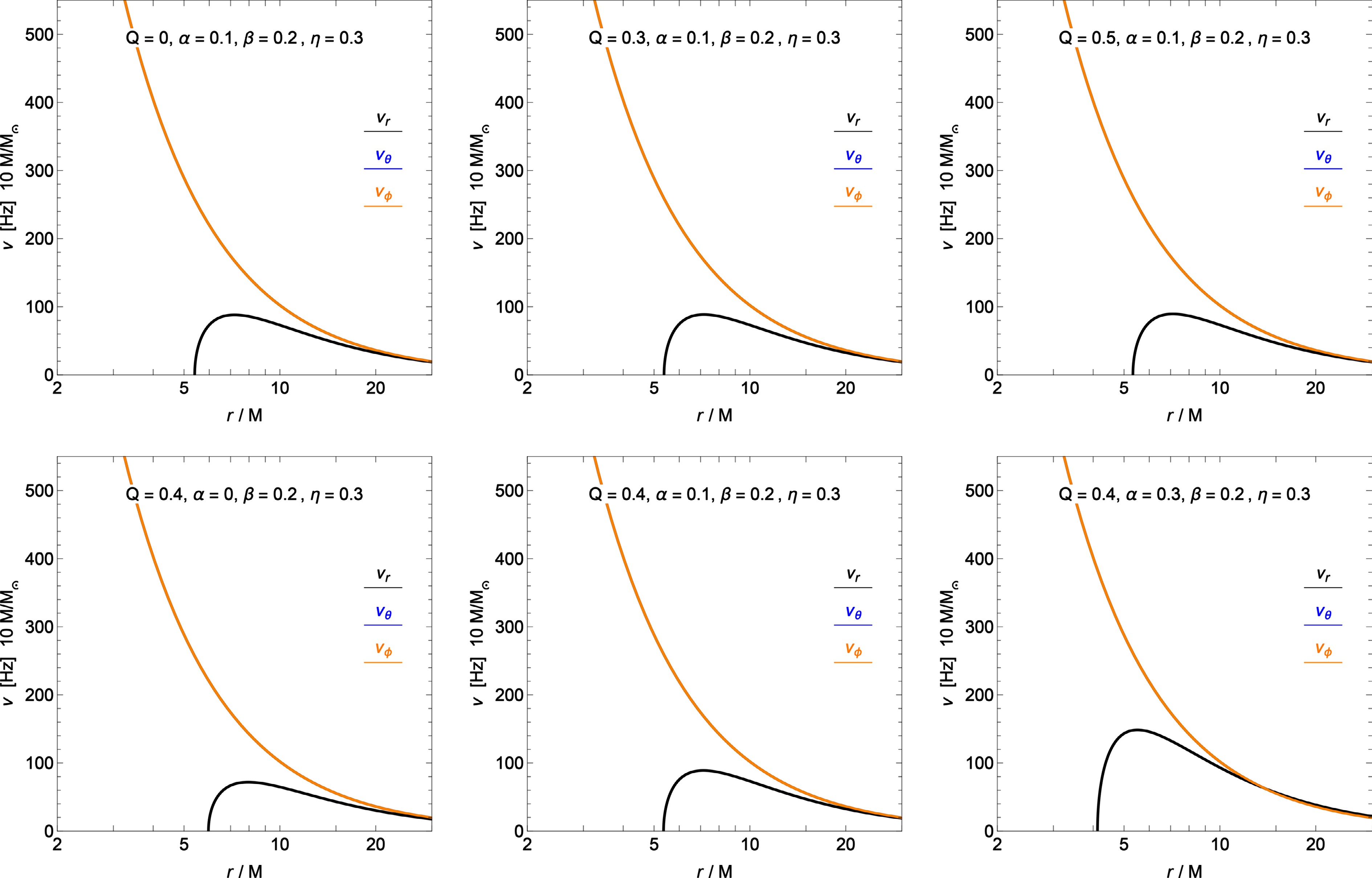
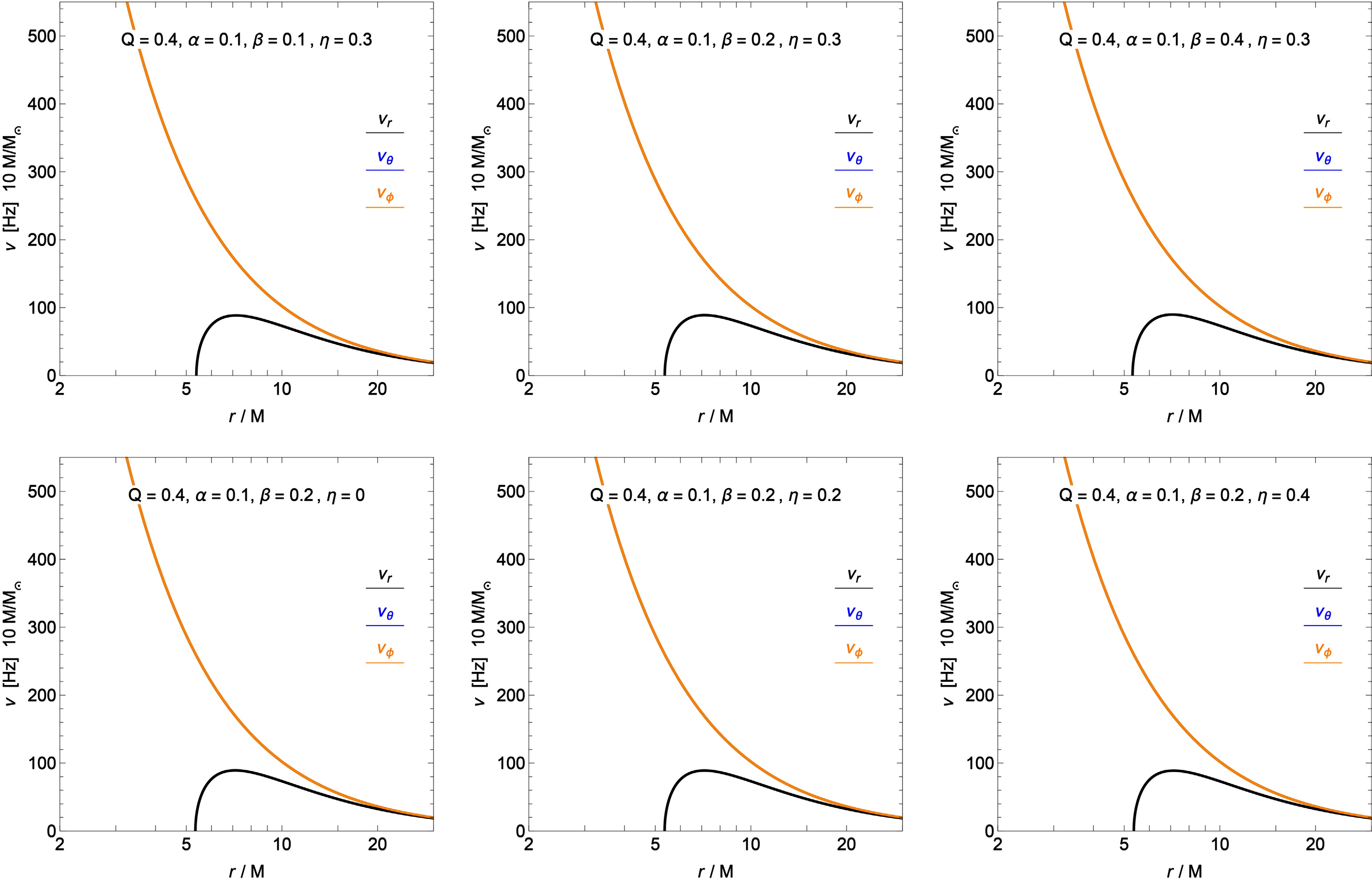
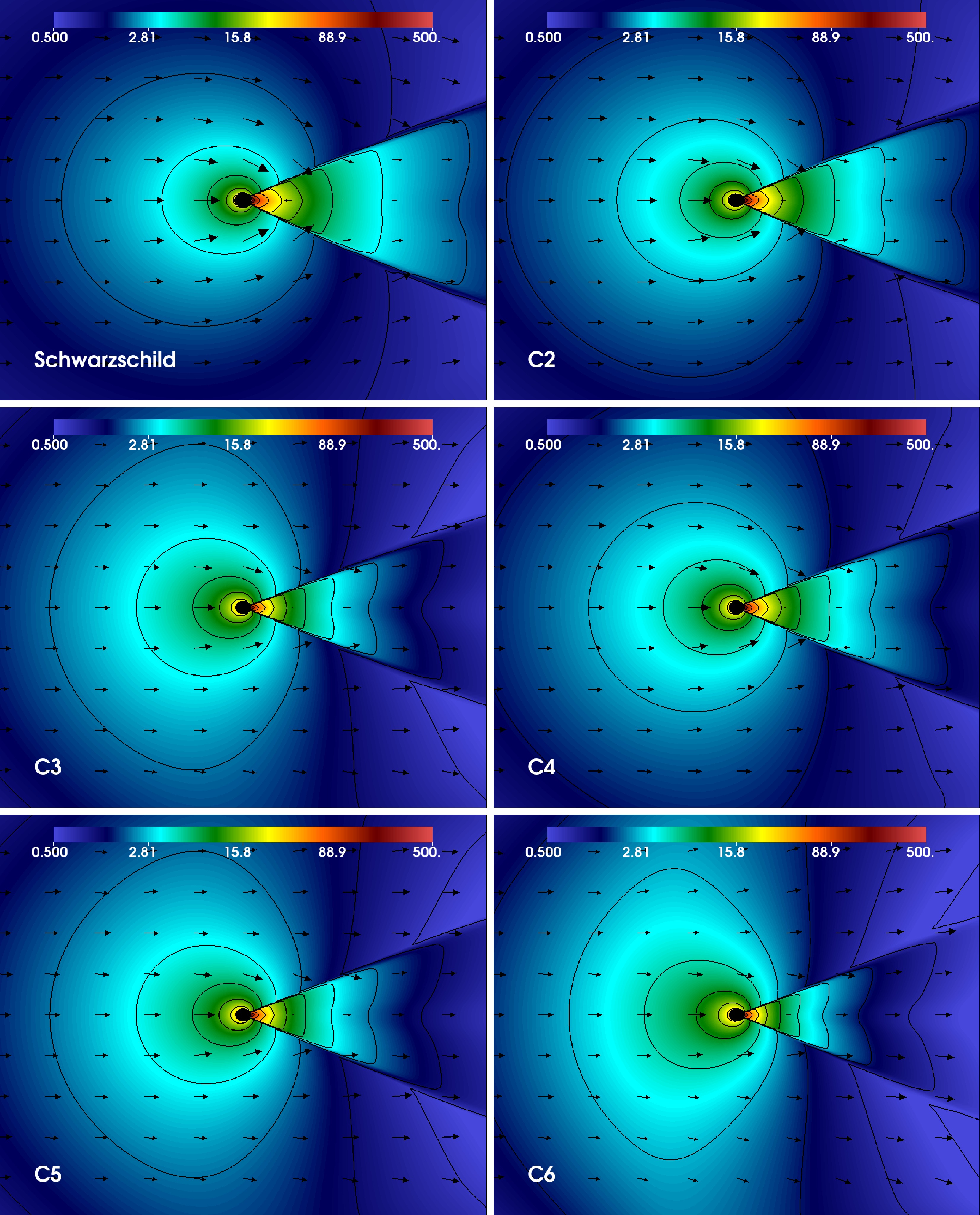
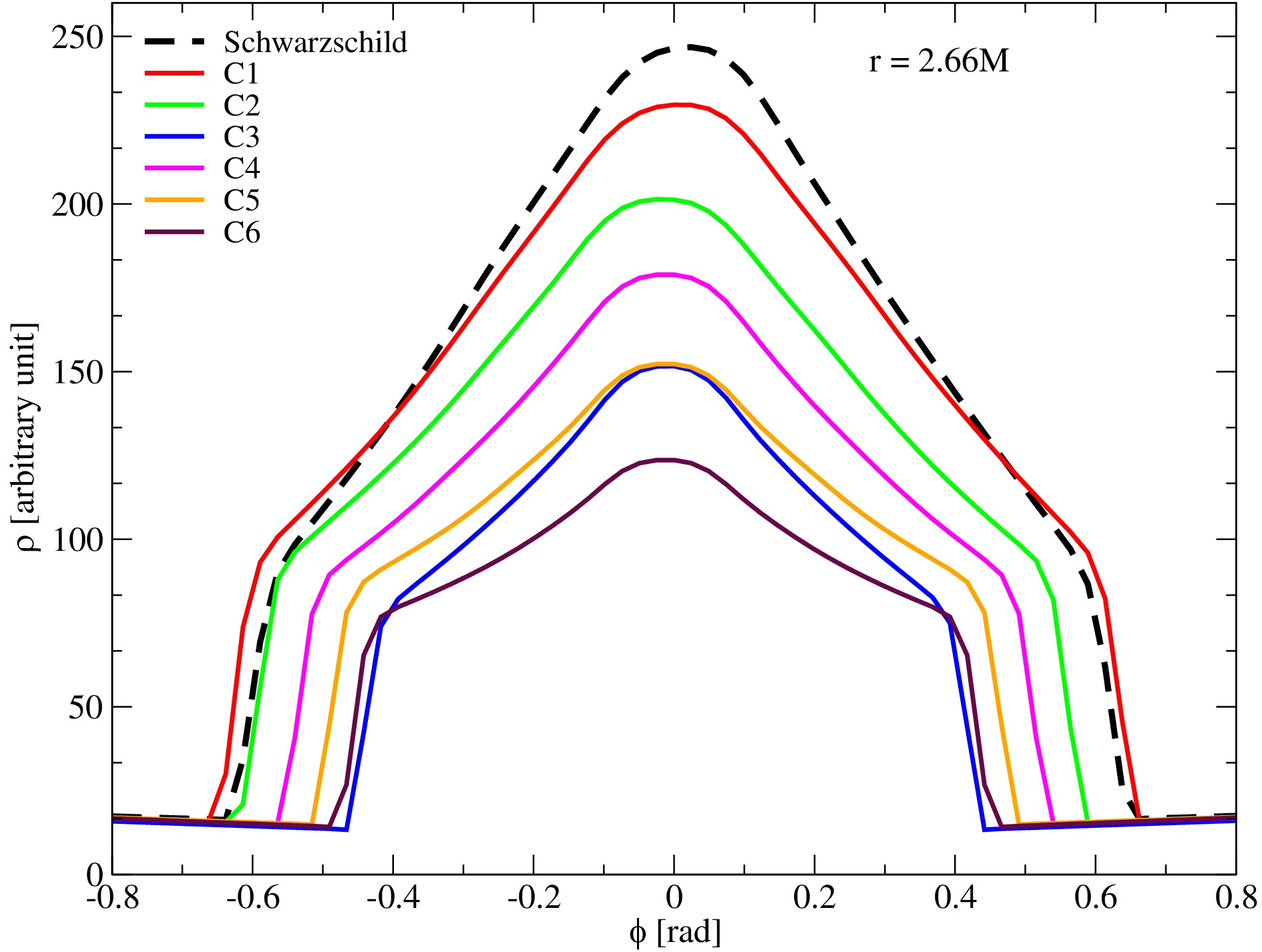
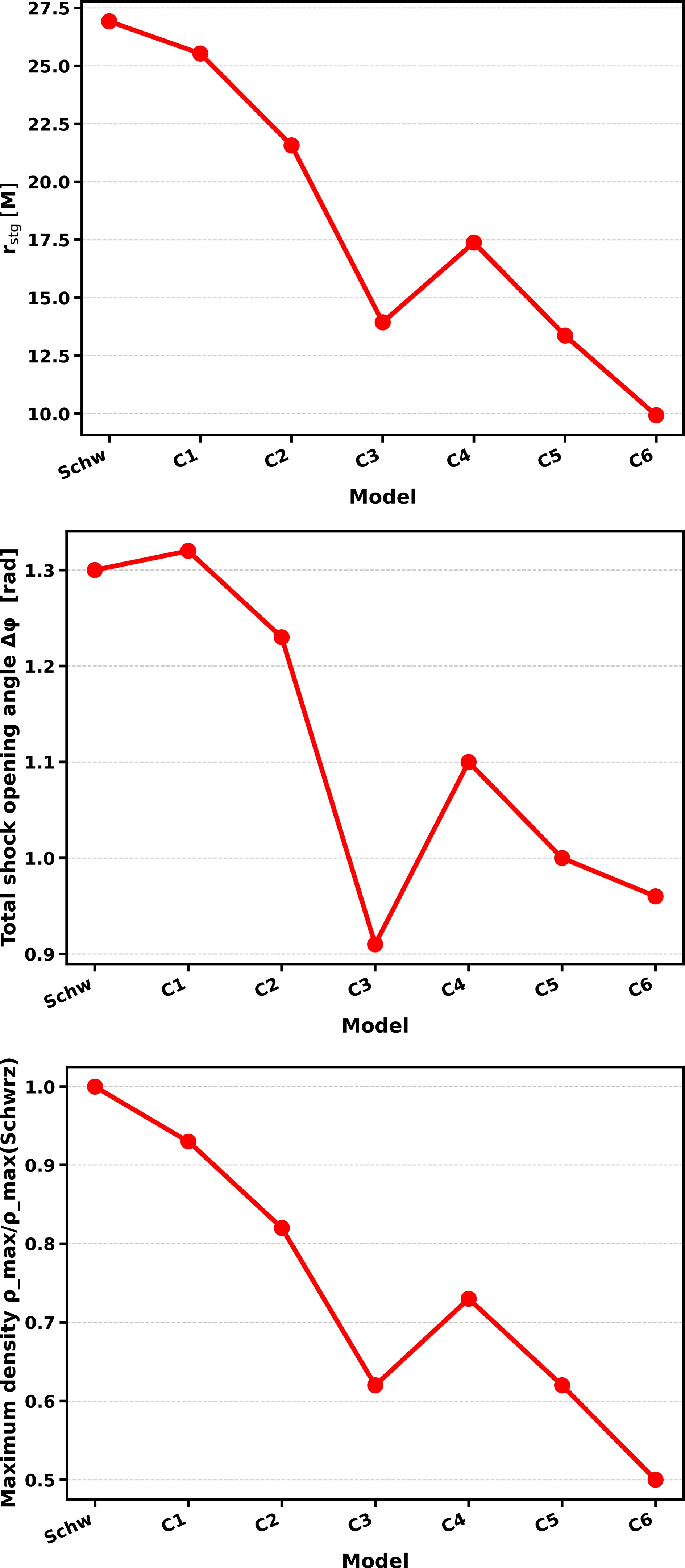
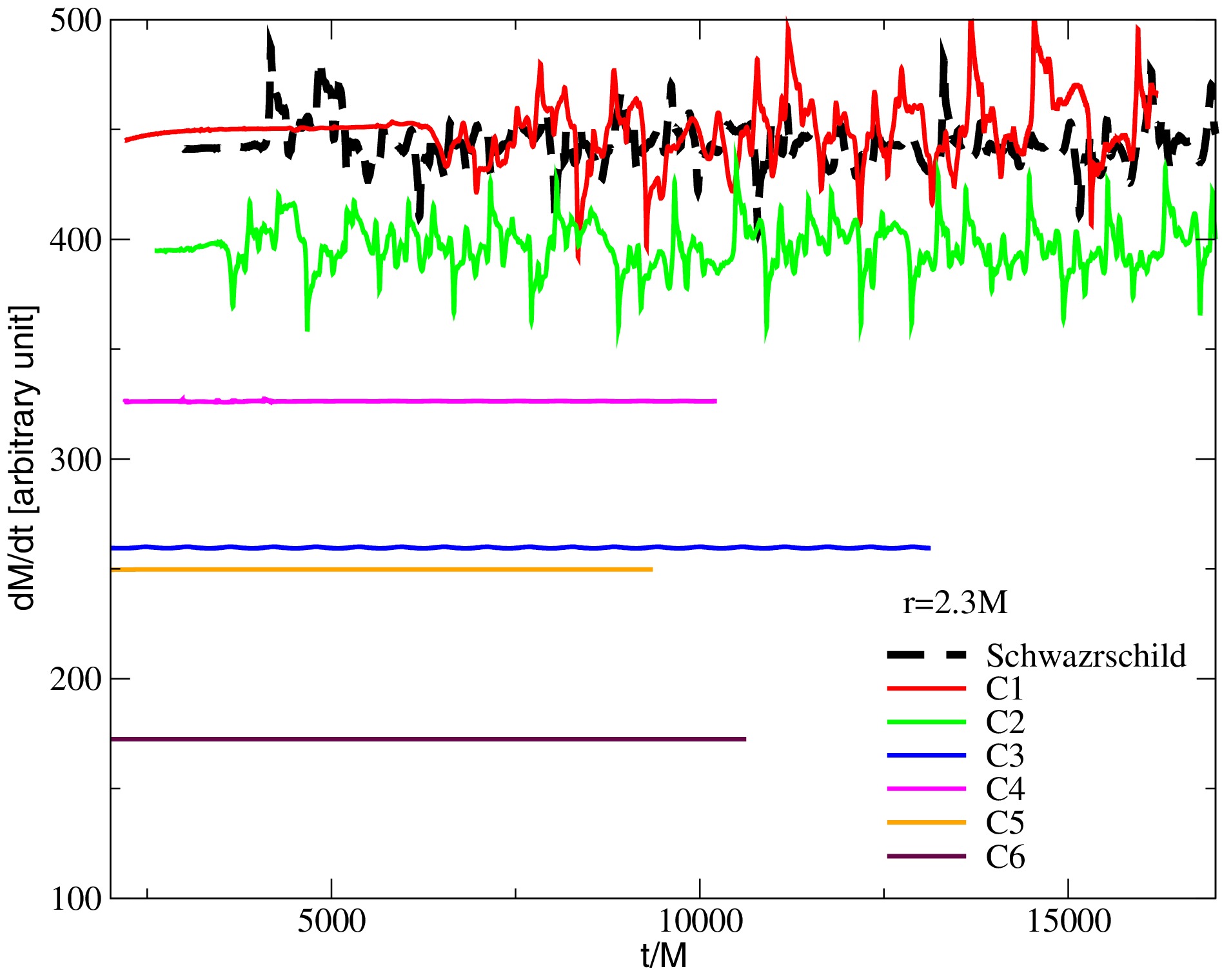
In this paper, we analyze the dynamics of test particles in a Kalb-Ramond black hole (BH) spacetime coupled to nonlinear electrodynamics. After explicitly constructing the corresponding BH metric, including the nonlinear electromagnetic contributions to the geometry, we study the geodesic equations, focusing on the effective potential, the innermost stable circular orbits (ISCOs), and test-particle trajectories. This provides a quantitative description of orbital motion under the combined gravitational, Kalb-Ramond, and nonlinear electromagnetic effects. We then examine small perturbations of circular geodesics and derive the associated epicyclic frequencies for local and distant observers. These results show how the Kalb-Ramond field and nonlinear electrodynamics influence orbital stability, quasi-periodic oscillations (QPOs), and possible high-energy astrophysical signatures. Next, we numerically model Bondi-Hoyle-Lyttleton (BHL) accretion onto Kalb-Ramond BHs to assess how spacetime parameters affect flow morphology and dynamics. As the deformation parameters increase, the shock cone becomes more collimated, the stagnation point moves closer to the event horizon, and the matter density inside the cone decreases. For small deformations, QPO frequencies exhibit systematic shifts with enhanced oscillation amplitudes, whereas strong deformations damp the oscillations and produce a smooth, quasi-steady accretion rate. In this way, we illustrate a direct connection between spacetime geometry, shock-cone structure, and accretion variability, demonstrating that accretion dynamics serve as a sensitive probe of Kalb-Ramond BH spacetimes.
In this paper, we analyze the dynamics of test particles in a Kalb-Ramond black hole (BH) spacetime coupled to nonlinear electrodynamics. After explicitly constructing the corresponding BH metric, including the nonlinear electromagnetic contributions to the geometry, we study the geodesic equations, focusing on the effective potential, the innermost stable circular orbits (ISCOs), and test-particle trajectories. This provides a quantitative description of orbital motion under the combined gravitational, Kalb-Ramond, and nonlinear electromagnetic effects. We then examine small perturbations of circular geodesics and derive the associated epicyclic frequencies for local and distant observers. These results show how the Kalb-Ramond field and nonlinear electrodynamics influence orbital stability, quasi-periodic oscillations (QPOs), and possible high-energy astrophysical signatures. Next, we numerically model Bondi-Hoyle-Lyttleton (BHL) accretion onto Kalb-Ramond BHs to assess how spacetime parameters affect flow morphology and dynamics. As the deformation parameters increase, the shock cone becomes more collimated, the stagnation point moves closer to the event horizon, and the matter density inside the cone decreases. For small deformations, QPO frequencies exhibit systematic shifts with enhanced oscillation amplitudes, whereas strong deformations damp the oscillations and produce a smooth, quasi-steady accretion rate. In this way, we illustrate a direct connection between spacetime geometry, shock-cone structure, and accretion variability, demonstrating that accretion dynamics serve as a sensitive probe of Kalb-Ramond BH spacetimes.
2026, 50(8): 085108. doi: 10.1088/1674-1137/ae6b2e
Abstract:
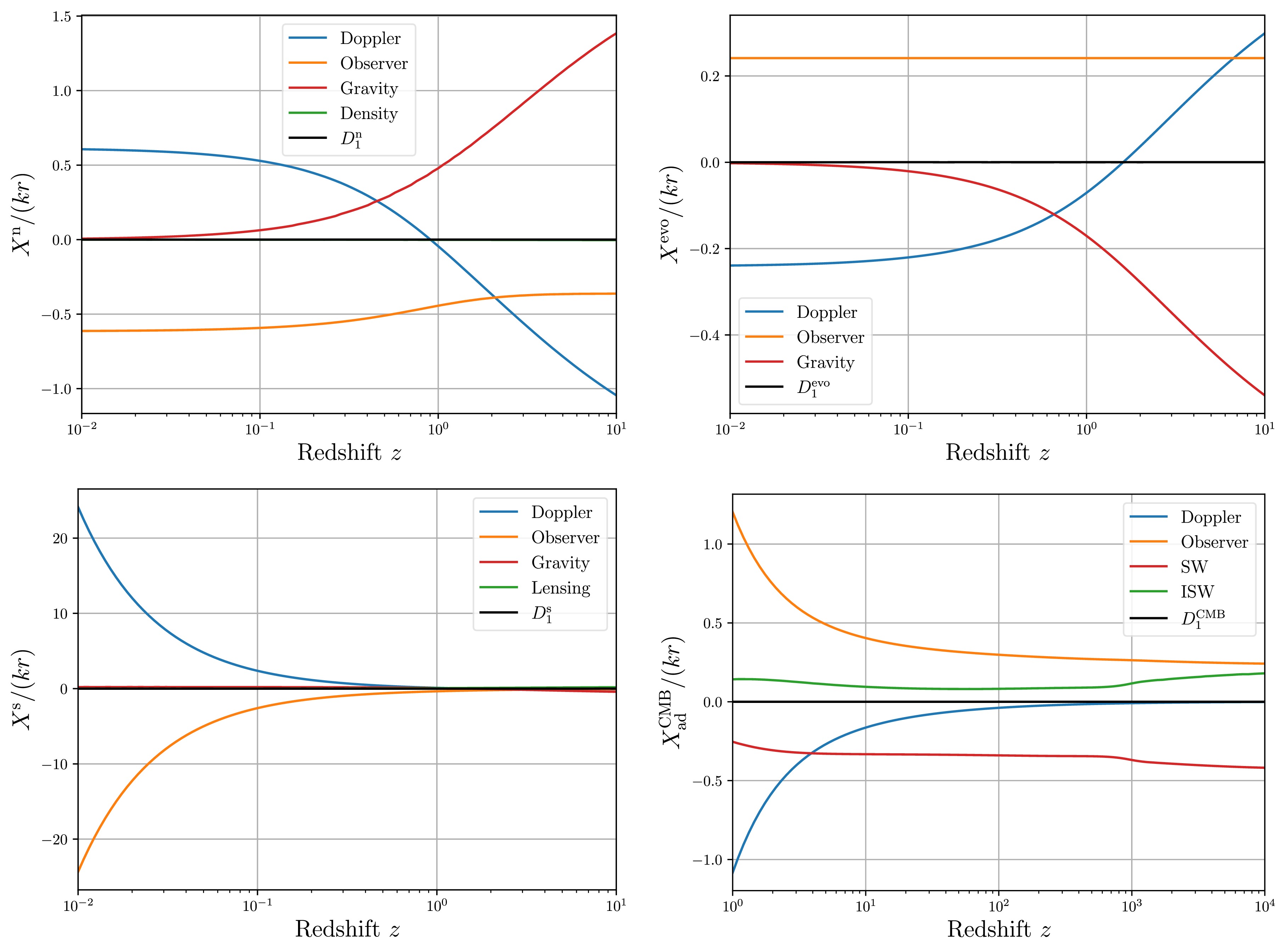
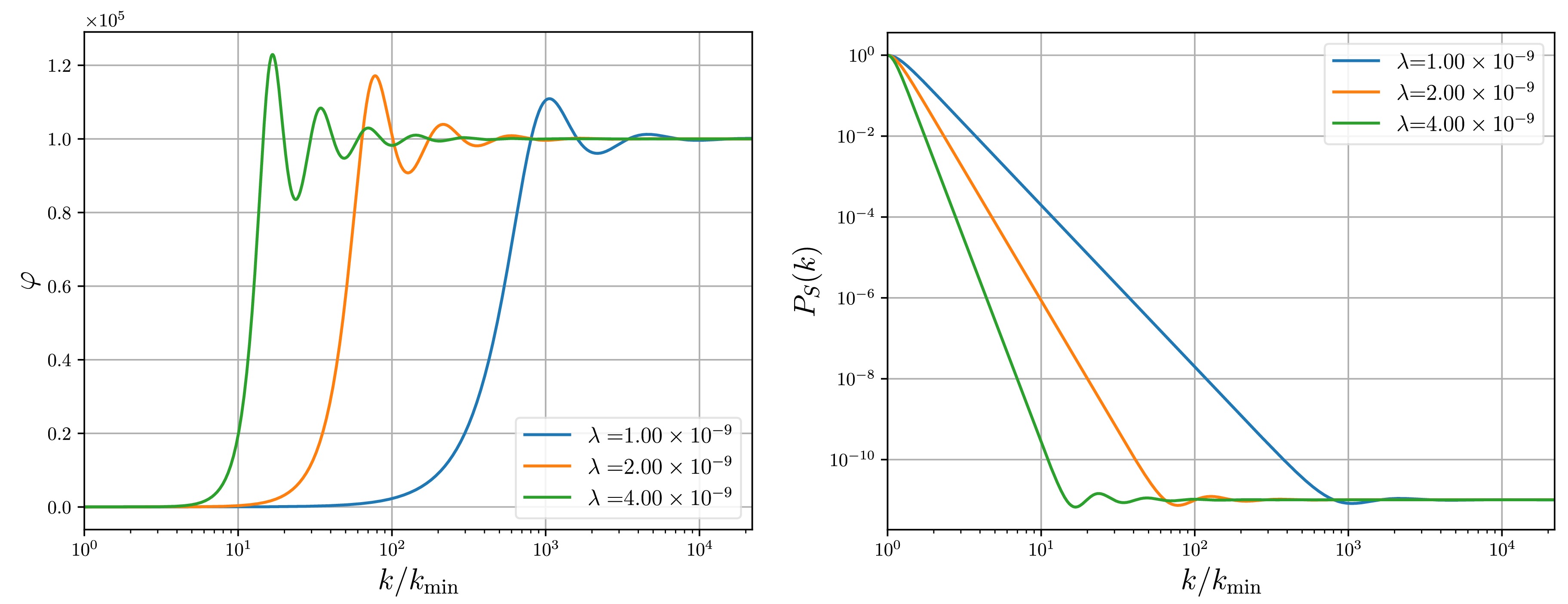
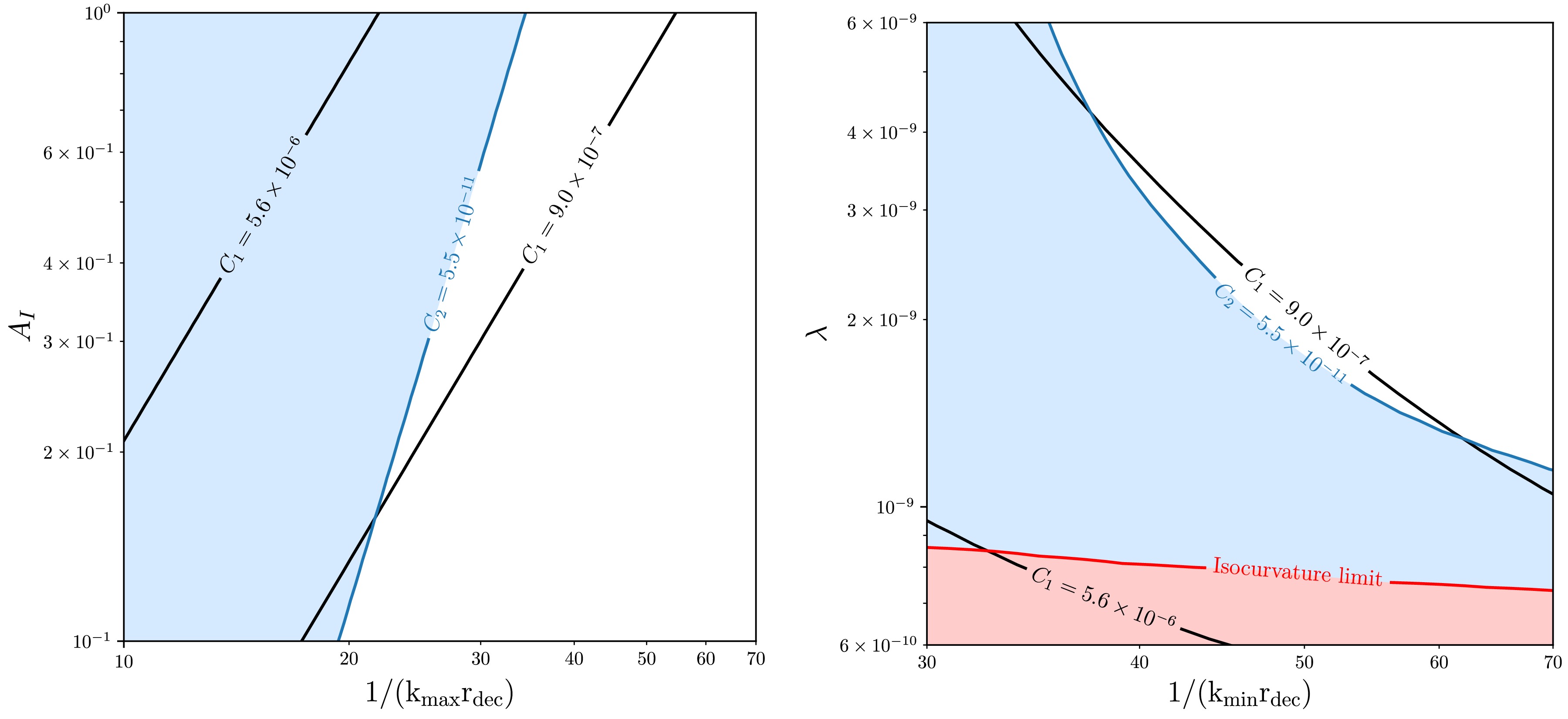
Recent observations have identified a significant 4.9σ tension between the cosmic dipole inferred from galaxy number counts and that derived from the Cosmic Microwave Background (CMB), suggesting a potential deviation from the cosmological principle. This work investigates whether superhorizon isocurvature perturbations in cold dark matter (CDM) can account for this discrepancy. We demonstrate that, unlike adiabatic modes, which cancel at leading order, superhorizon isocurvature modes can generate an intrinsic CMB dipole without significantly affecting galaxy number counts, thereby explaining the observed mismatch. We explore both single-mode and continuous-spectrum cases, focusing on two concrete models: a nearly scale-invariant power-law spectrum with a UV cutoff and axion-induced isocurvature perturbations. For the axion scenario, we show that if the radial mode evolves during inflation, the resulting perturbations can match the required amplitude while evading current CMB constraints. Our analysis constrains the self-coupling of the axion potential to the range\begin{document}$10^{-9} \lt \lambda \lt 4 \times 10^{-9}$\end{document}
Recent observations have identified a significant 4.9σ tension between the cosmic dipole inferred from galaxy number counts and that derived from the Cosmic Microwave Background (CMB), suggesting a potential deviation from the cosmological principle. This work investigates whether superhorizon isocurvature perturbations in cold dark matter (CDM) can account for this discrepancy. We demonstrate that, unlike adiabatic modes, which cancel at leading order, superhorizon isocurvature modes can generate an intrinsic CMB dipole without significantly affecting galaxy number counts, thereby explaining the observed mismatch. We explore both single-mode and continuous-spectrum cases, focusing on two concrete models: a nearly scale-invariant power-law spectrum with a UV cutoff and axion-induced isocurvature perturbations. For the axion scenario, we show that if the radial mode evolves during inflation, the resulting perturbations can match the required amplitude while evading current CMB constraints. Our analysis constrains the self-coupling of the axion potential to the range
2026, 50(8): 085109. doi: 10.1088/1674-1137/ae75ee
Abstract:
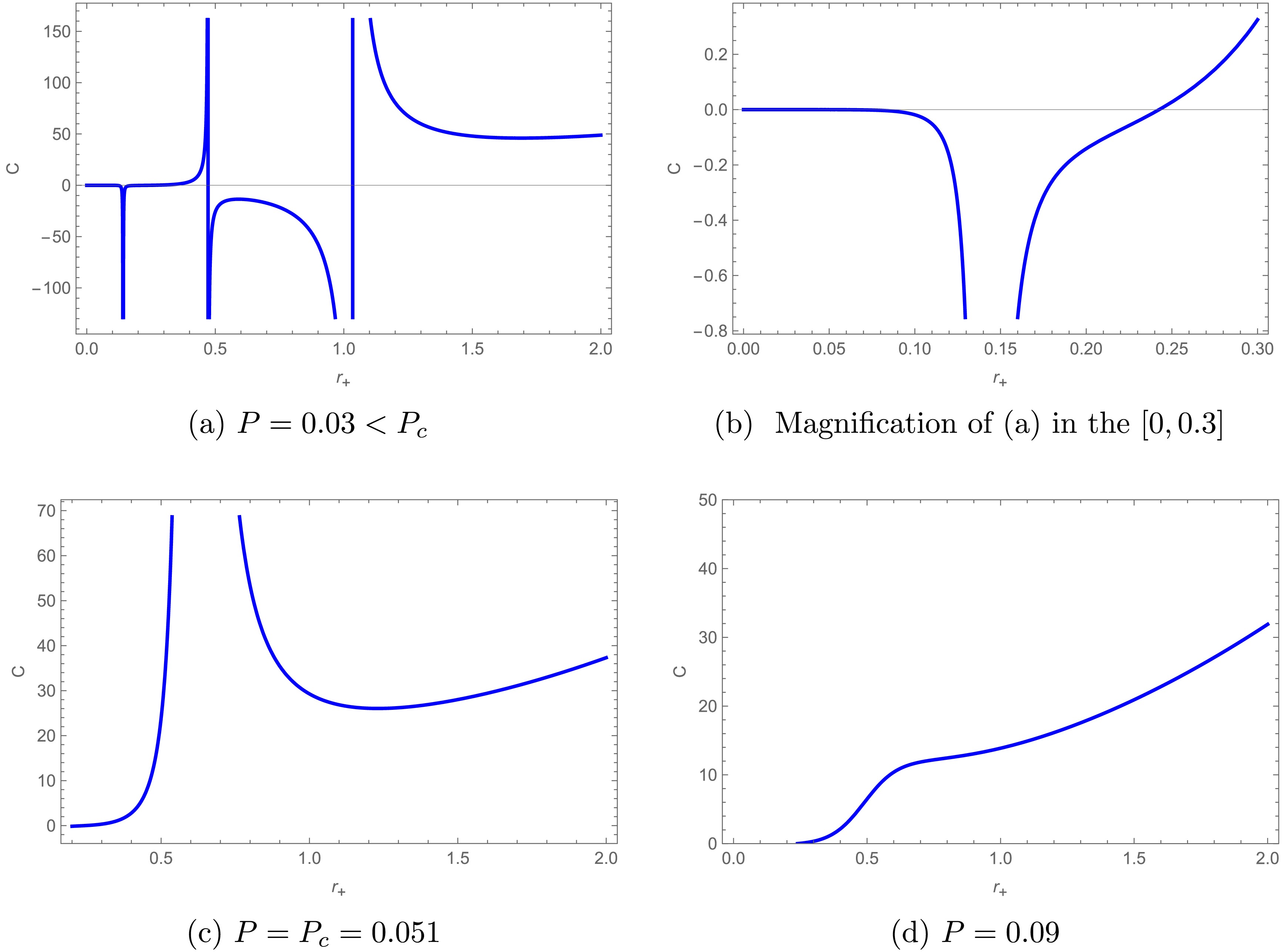
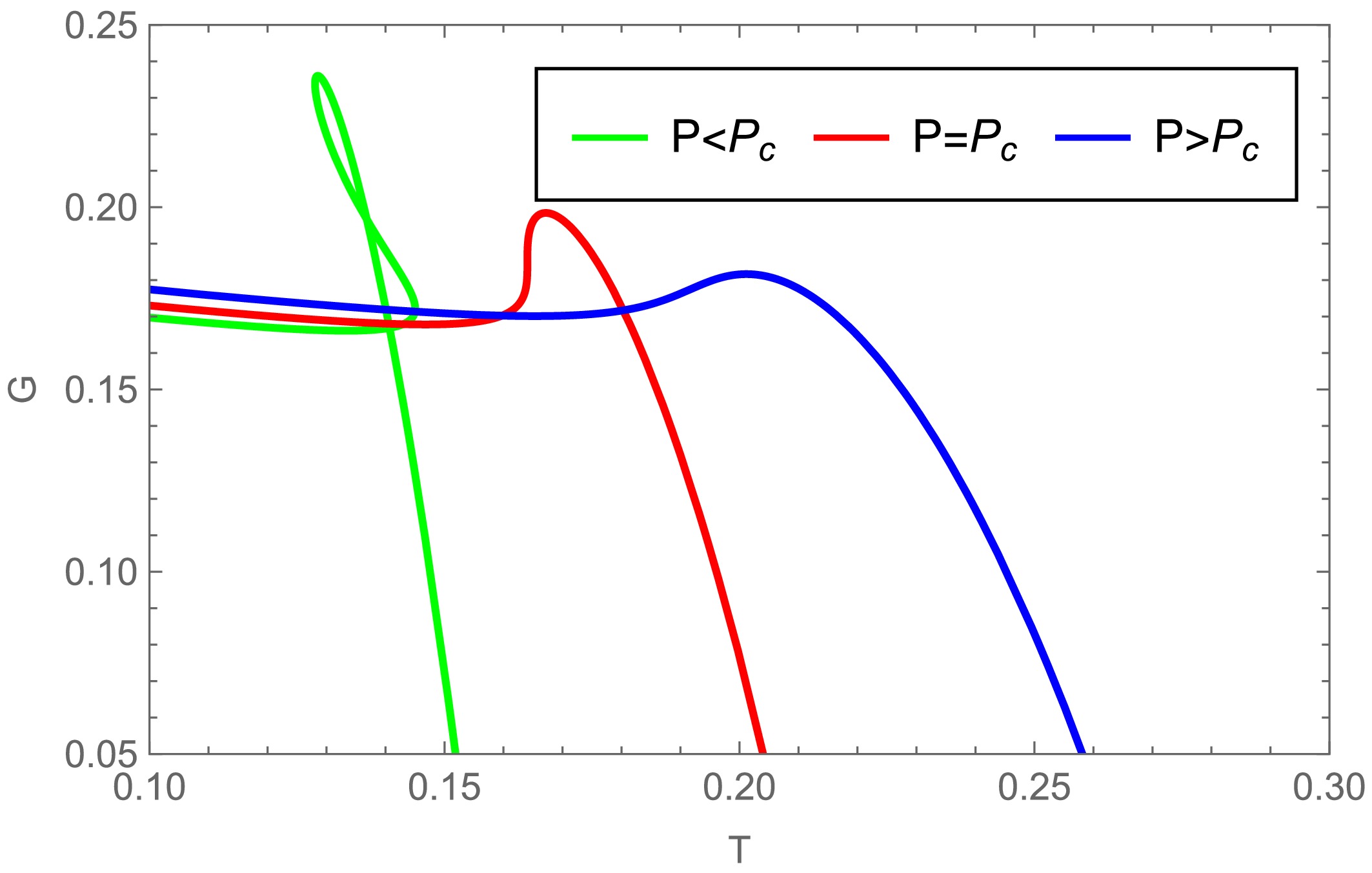
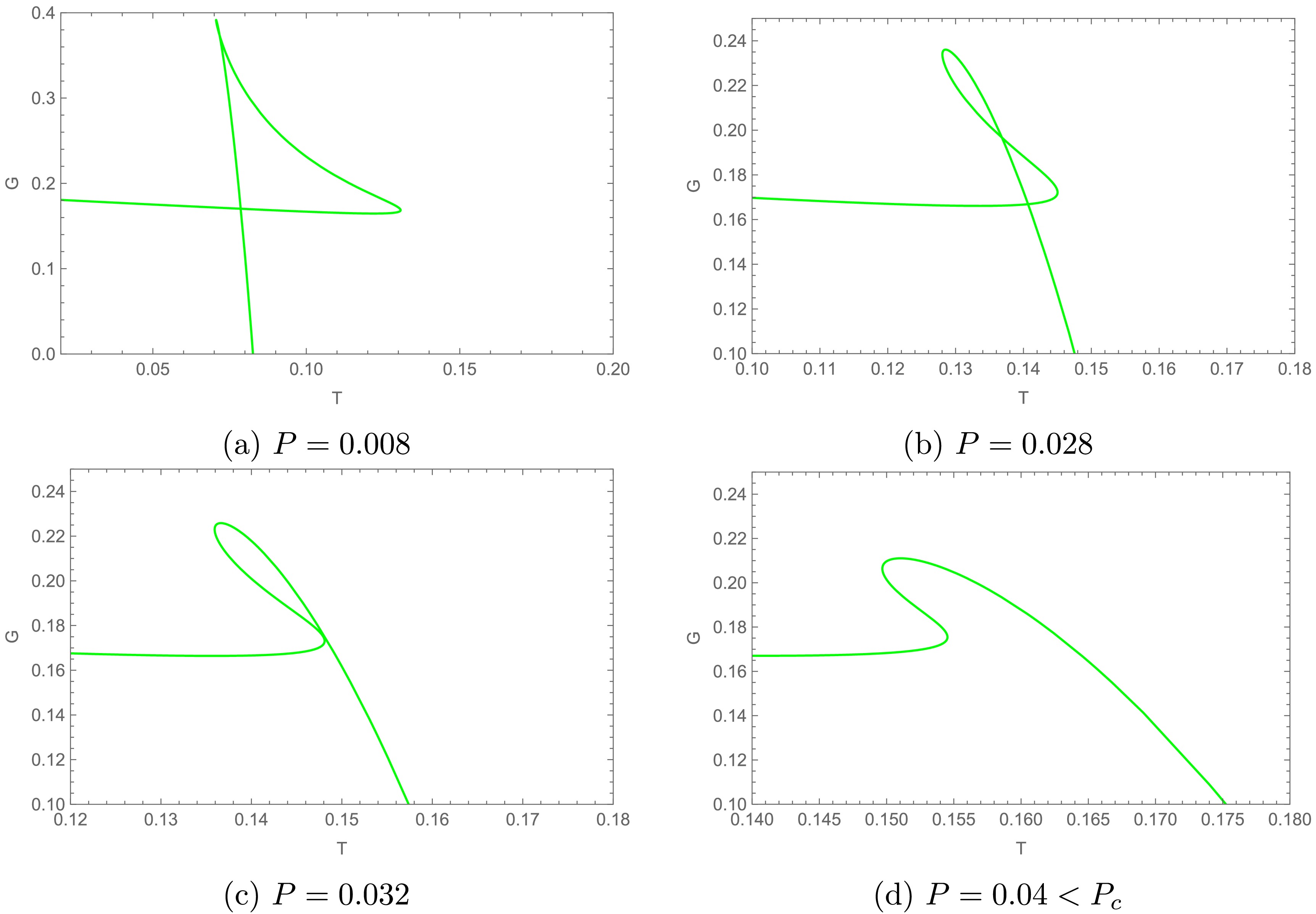
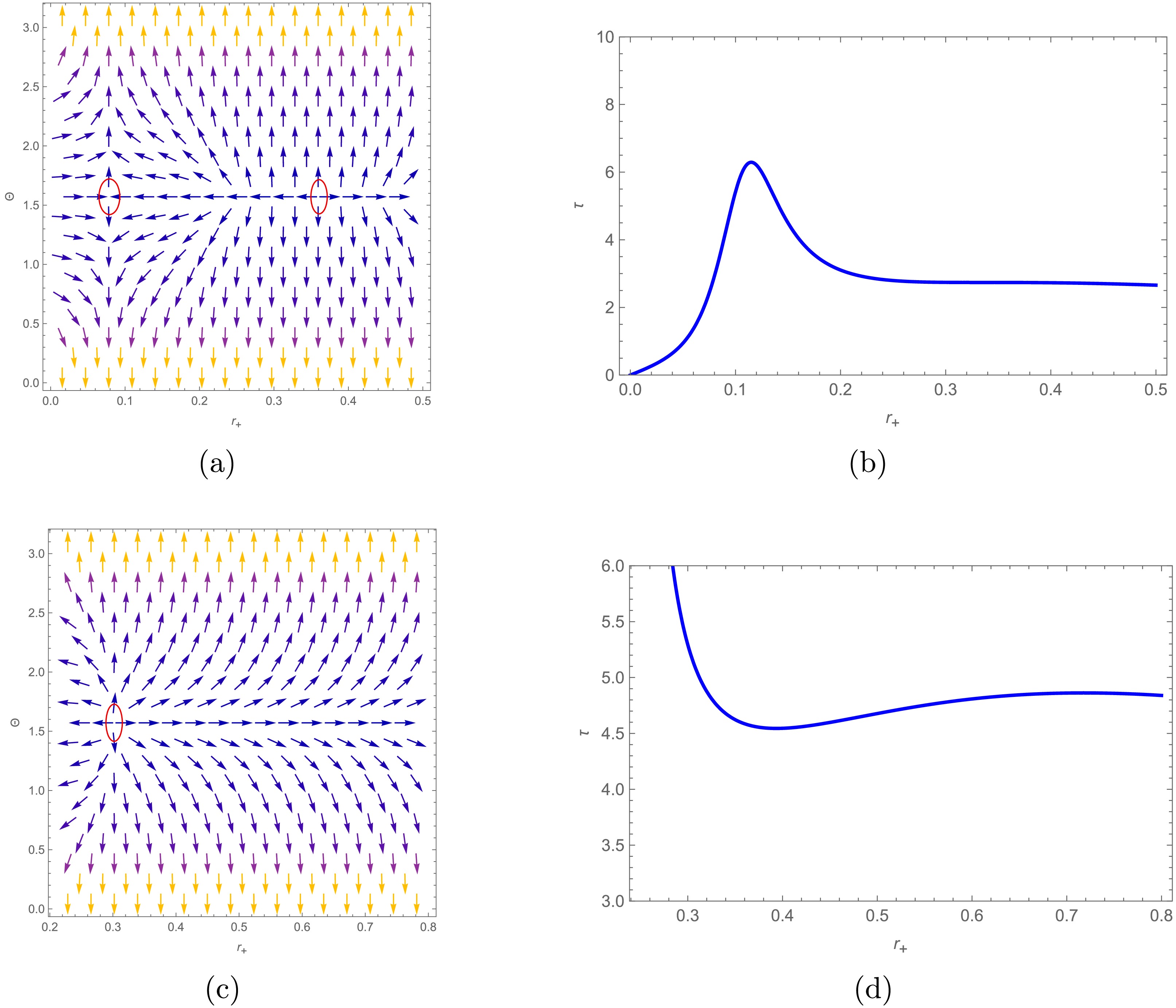
We investigate the thermodynamic behavior of the Hayward-AdS black hole and compare it with its singular counterpart, from which it is constructed by imposing an additional constraint. The singular black hole displays a rich phase structure, including reentrant phase transitions reminiscent of those observed in higher-dimensional Kerr-AdS spacetimes. After the constraint is imposed, the resulting Hayward-AdS black hole continues to exhibit Van der Waals–type\begin{document}$P-V$\end{document} \begin{document}$-1$\end{document} \begin{document}$+1$\end{document}
We investigate the thermodynamic behavior of the Hayward-AdS black hole and compare it with its singular counterpart, from which it is constructed by imposing an additional constraint. The singular black hole displays a rich phase structure, including reentrant phase transitions reminiscent of those observed in higher-dimensional Kerr-AdS spacetimes. After the constraint is imposed, the resulting Hayward-AdS black hole continues to exhibit Van der Waals–type
2026, 50(8): 085110. doi: 10.1088/1674-1137/ae7282
Abstract:
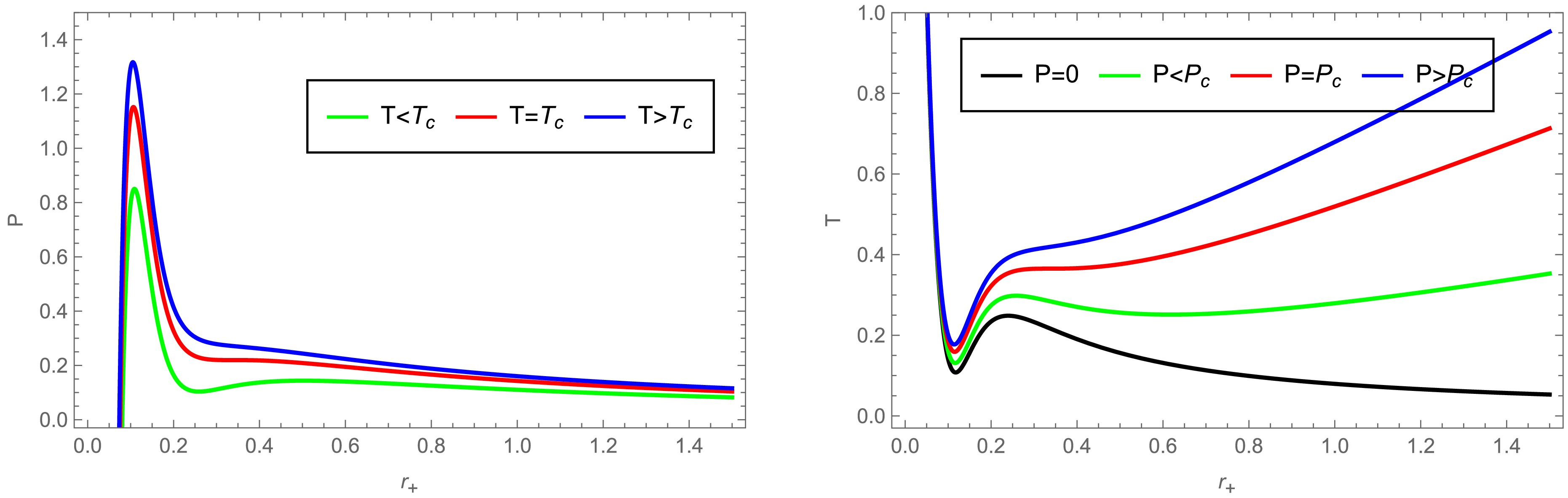
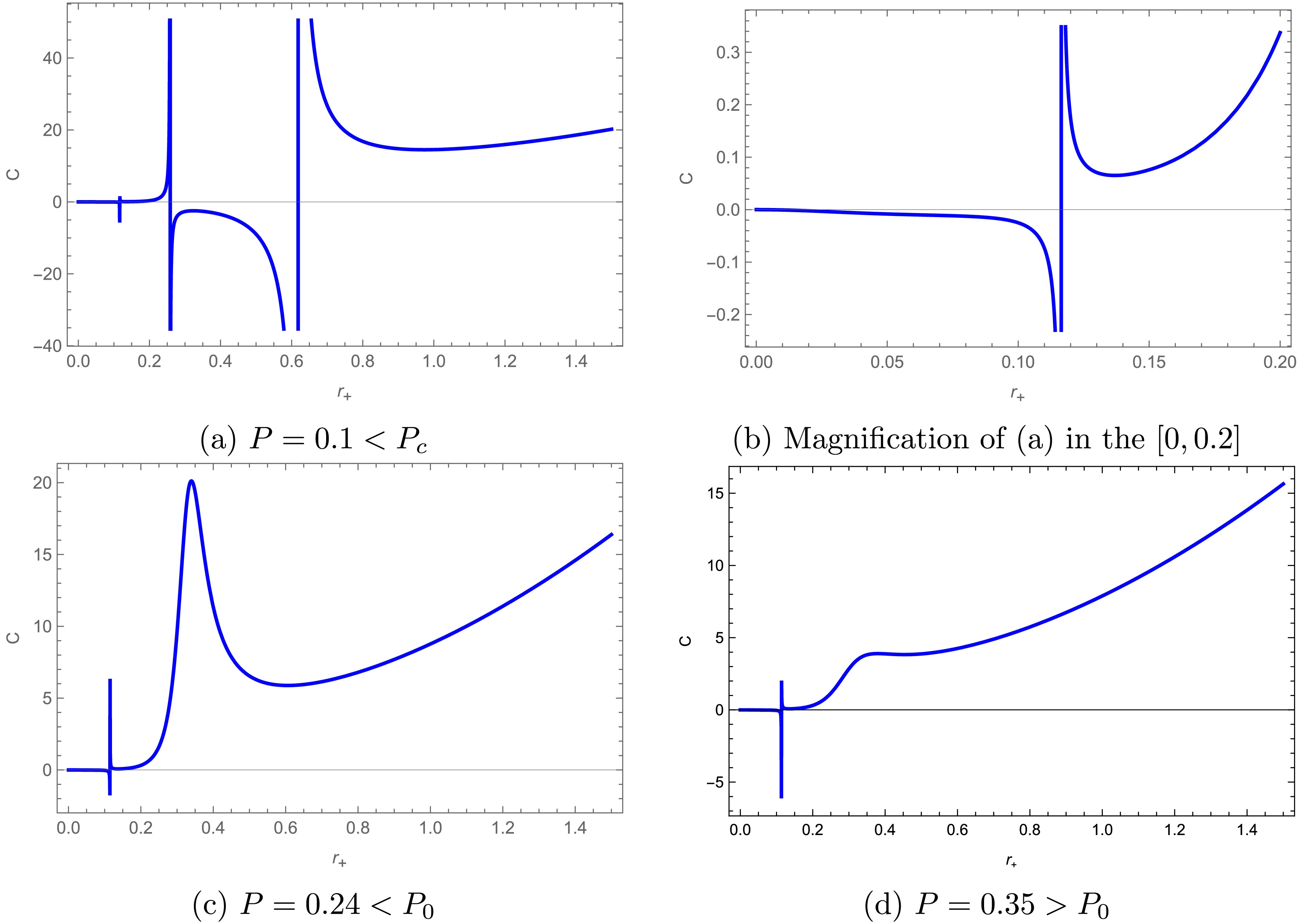
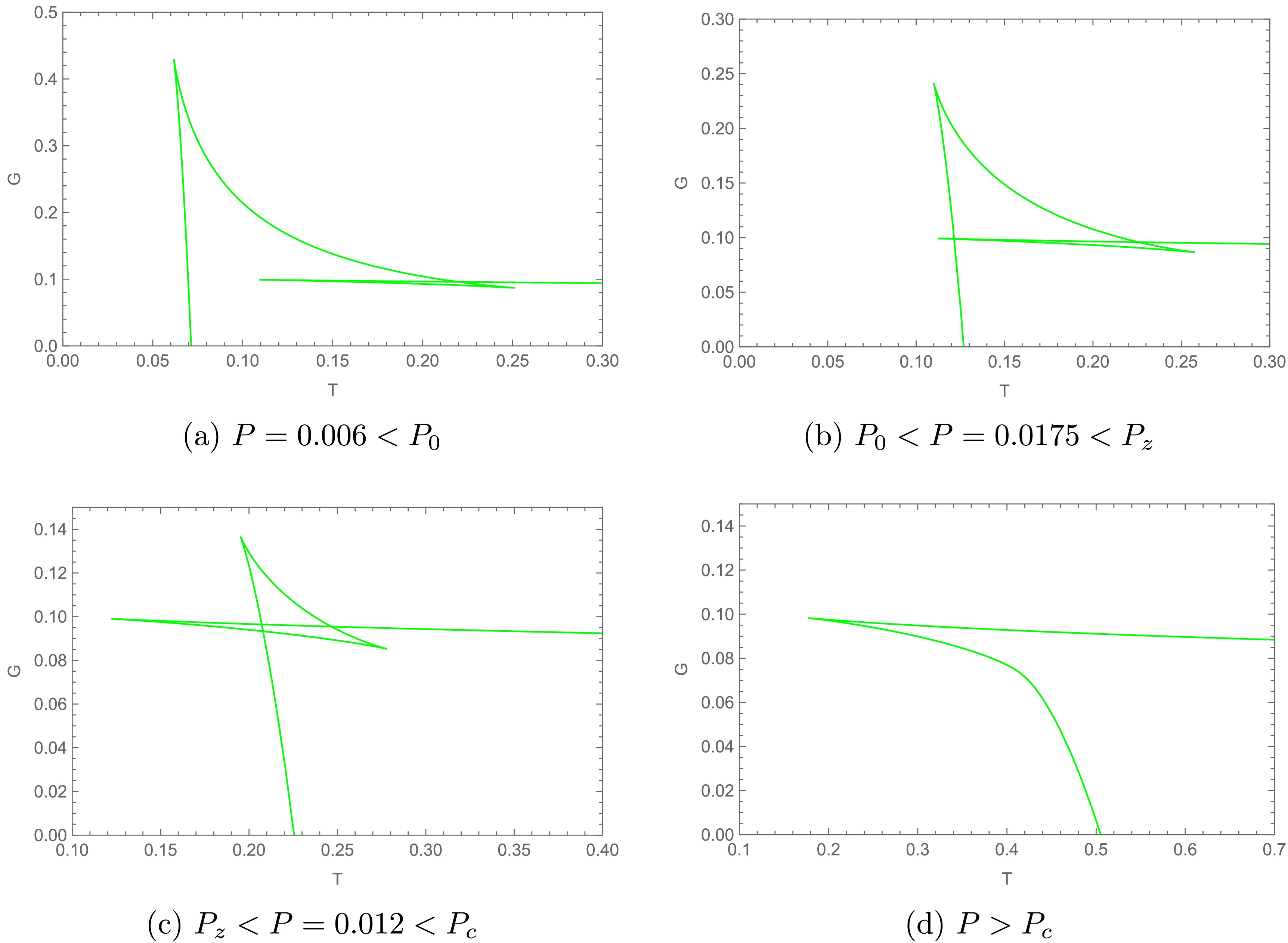
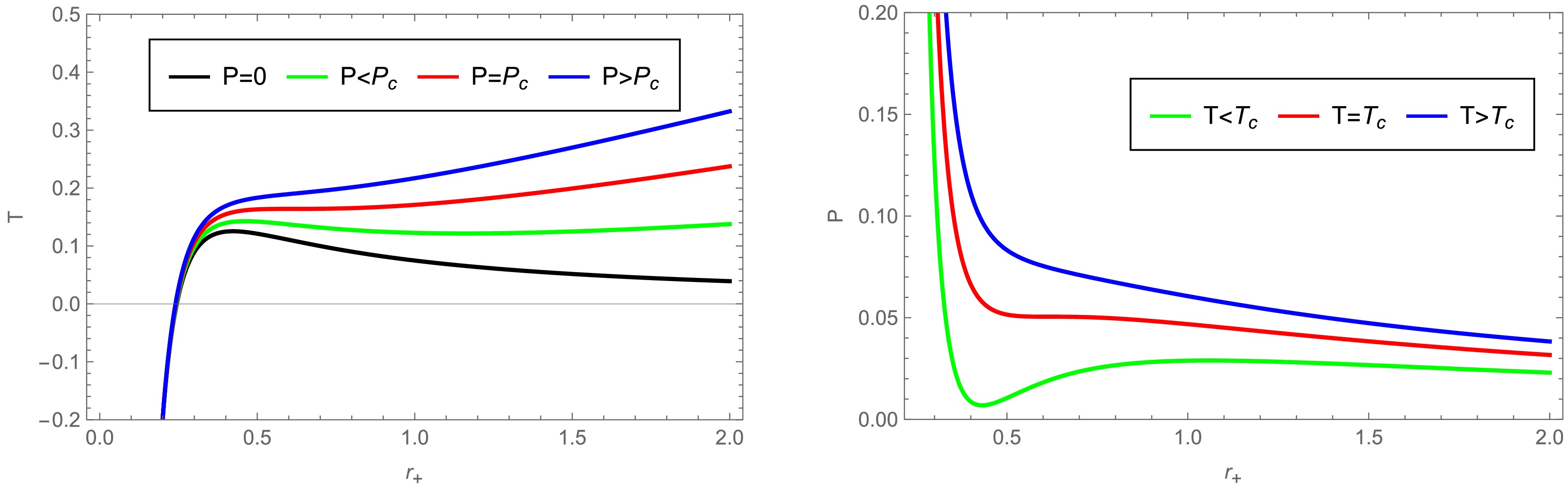
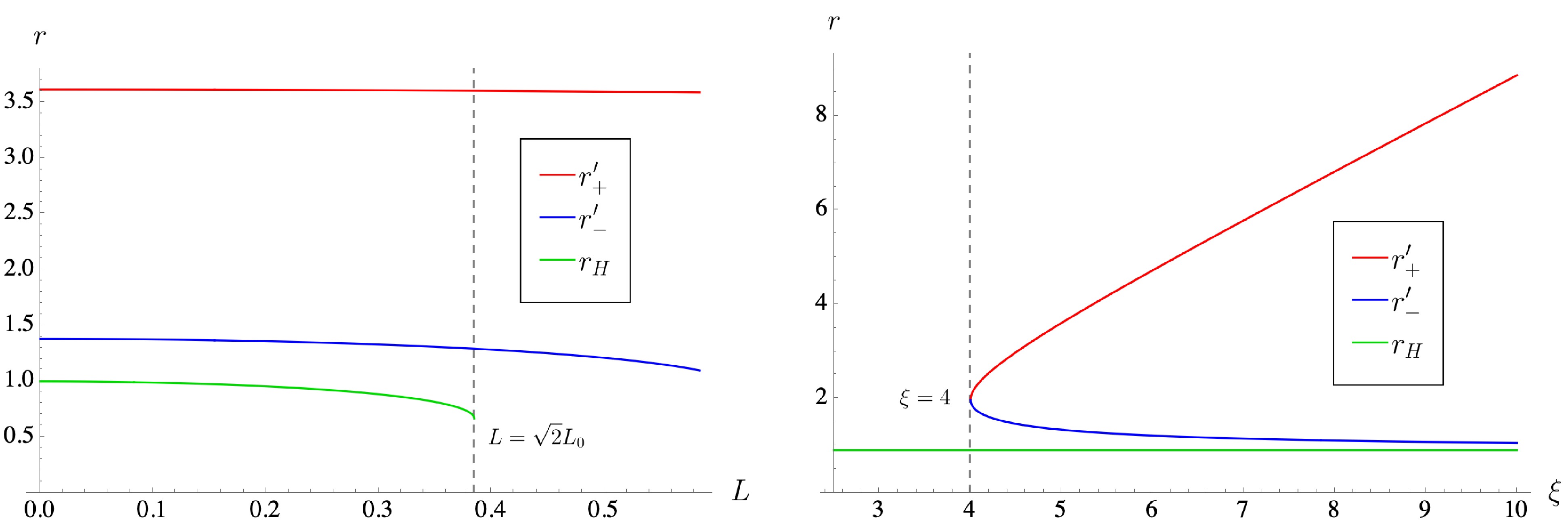
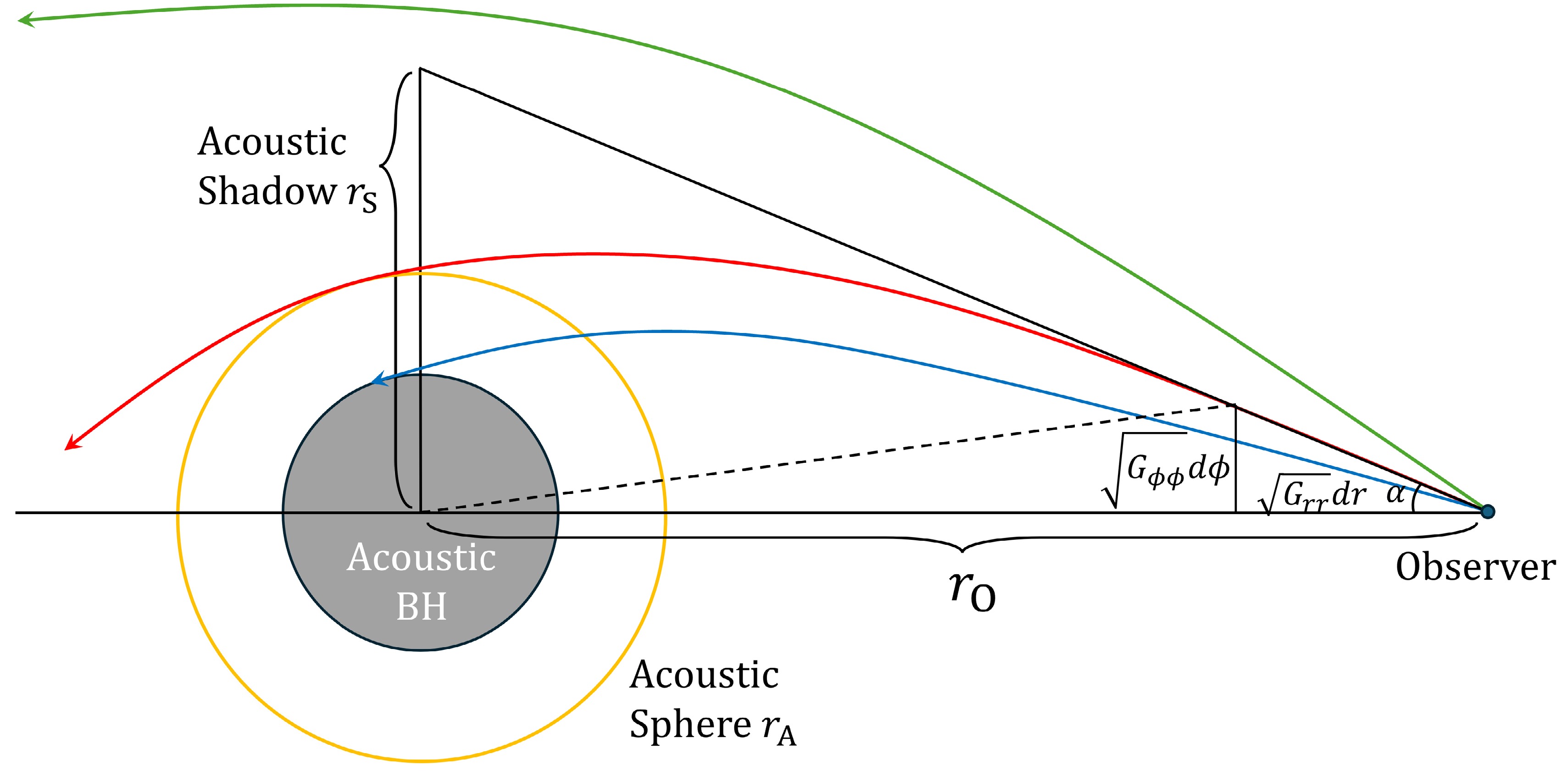
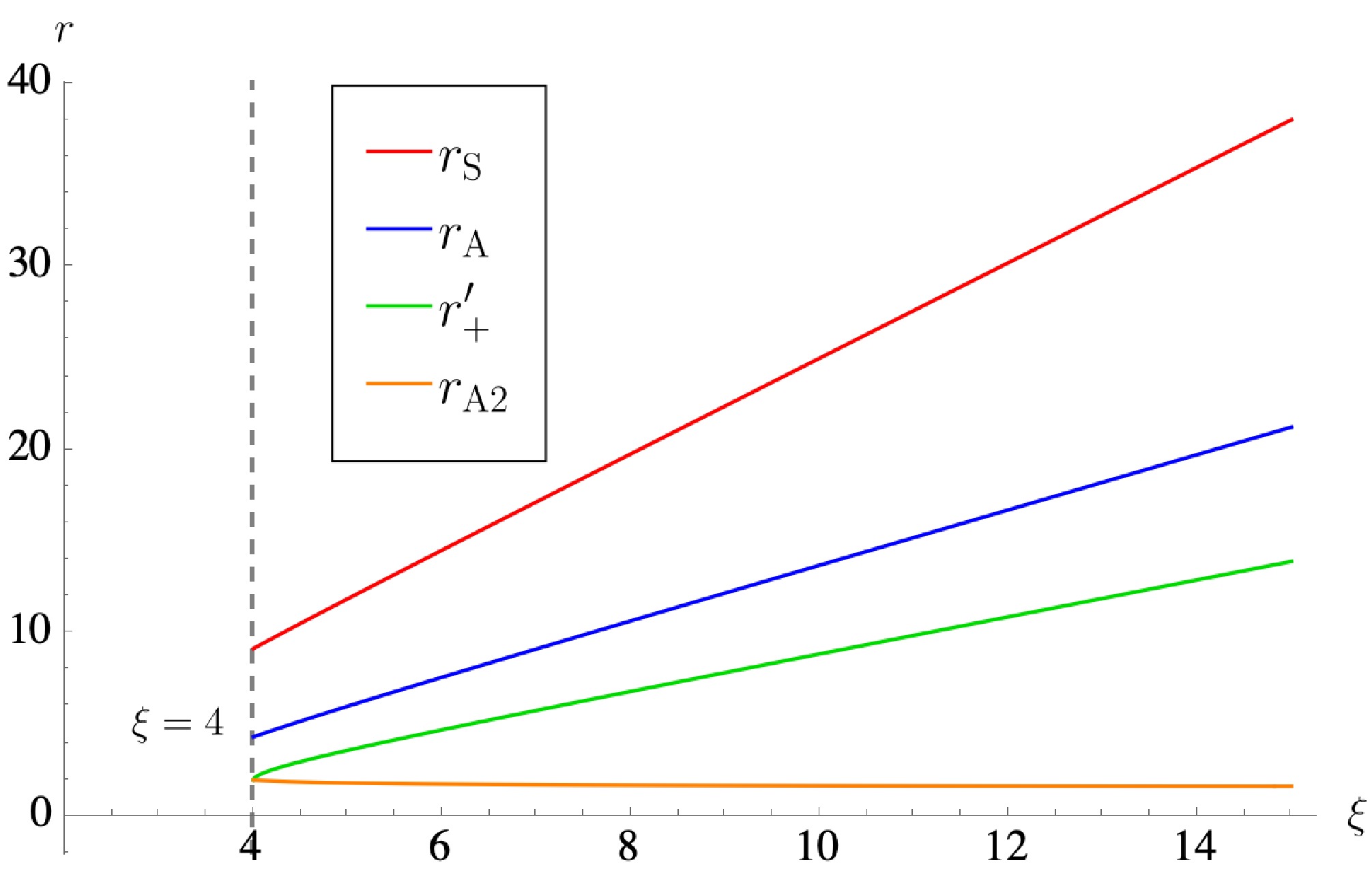
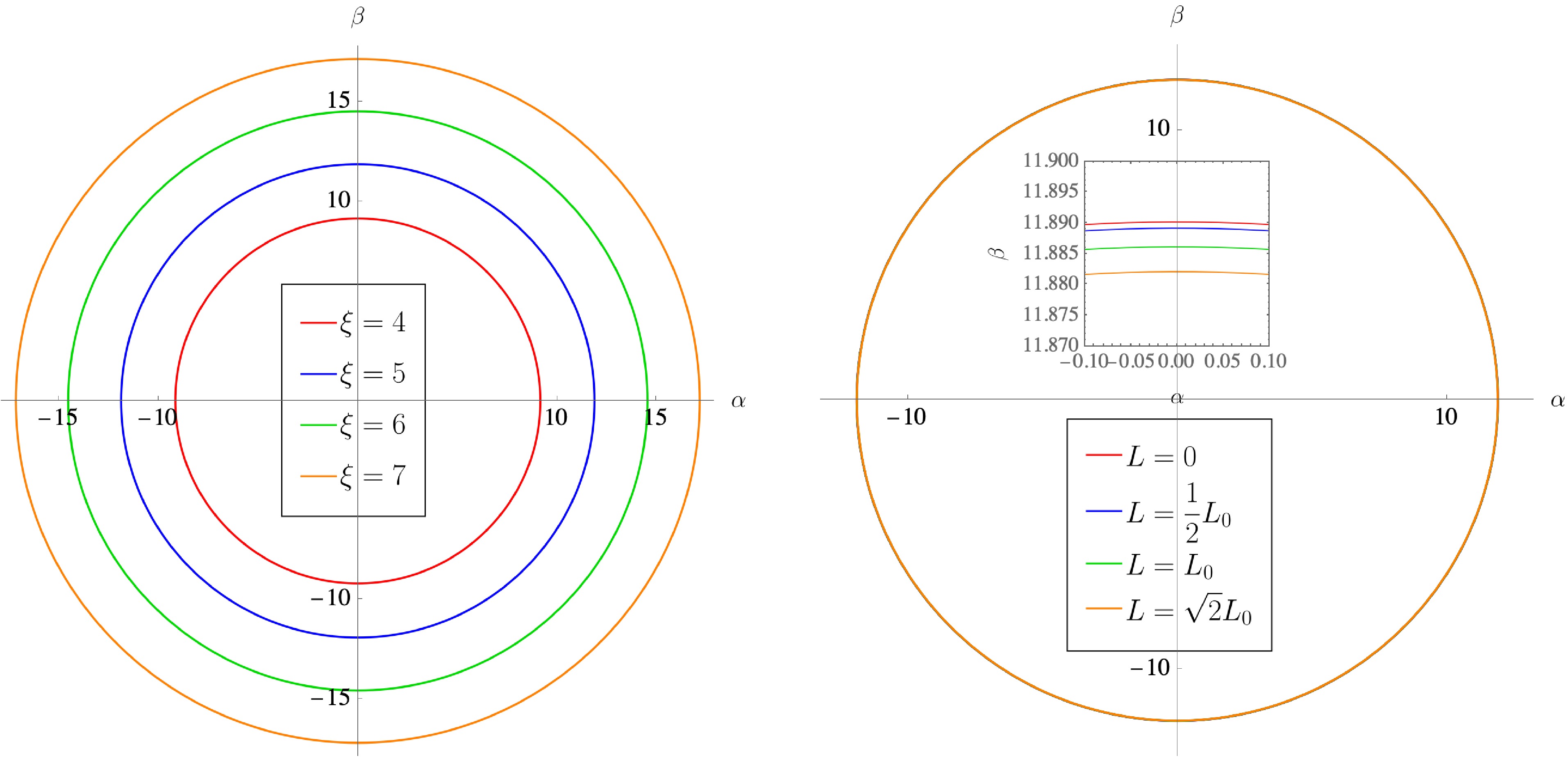
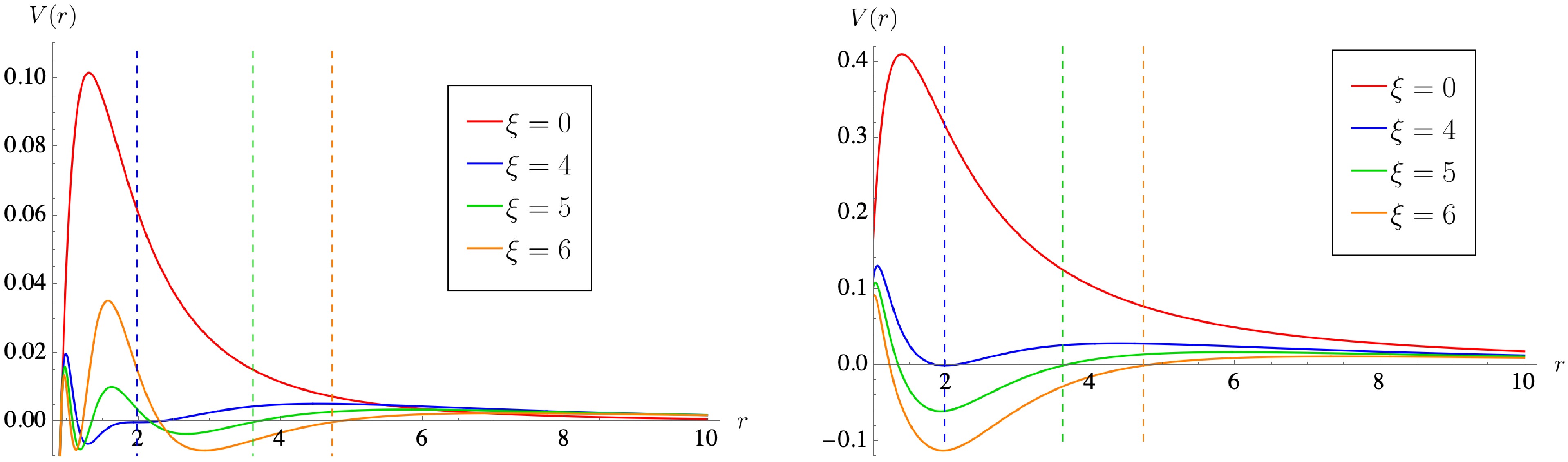
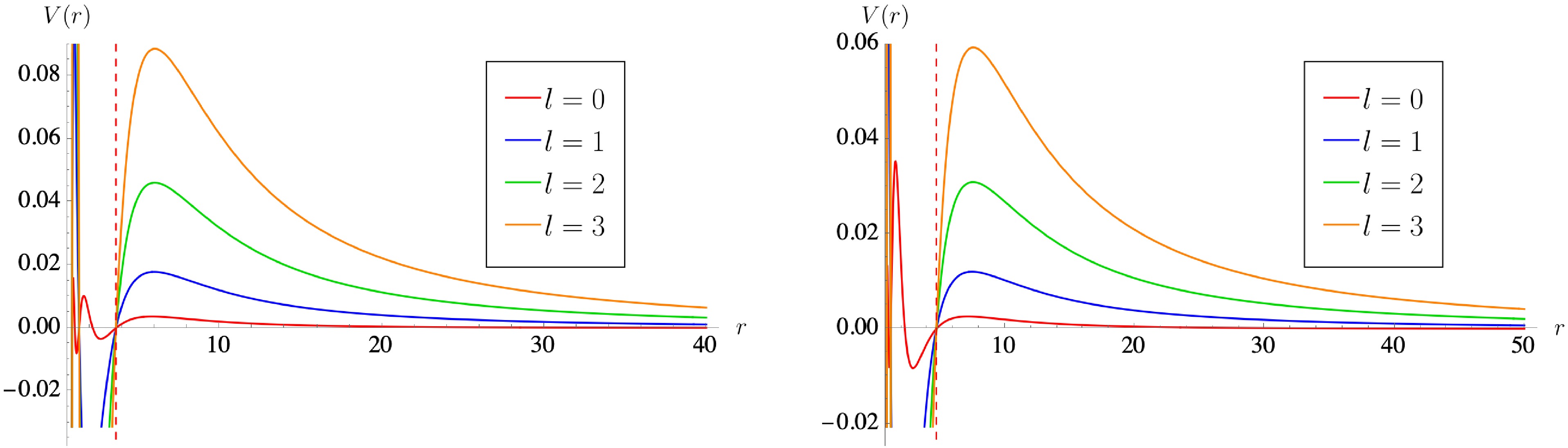
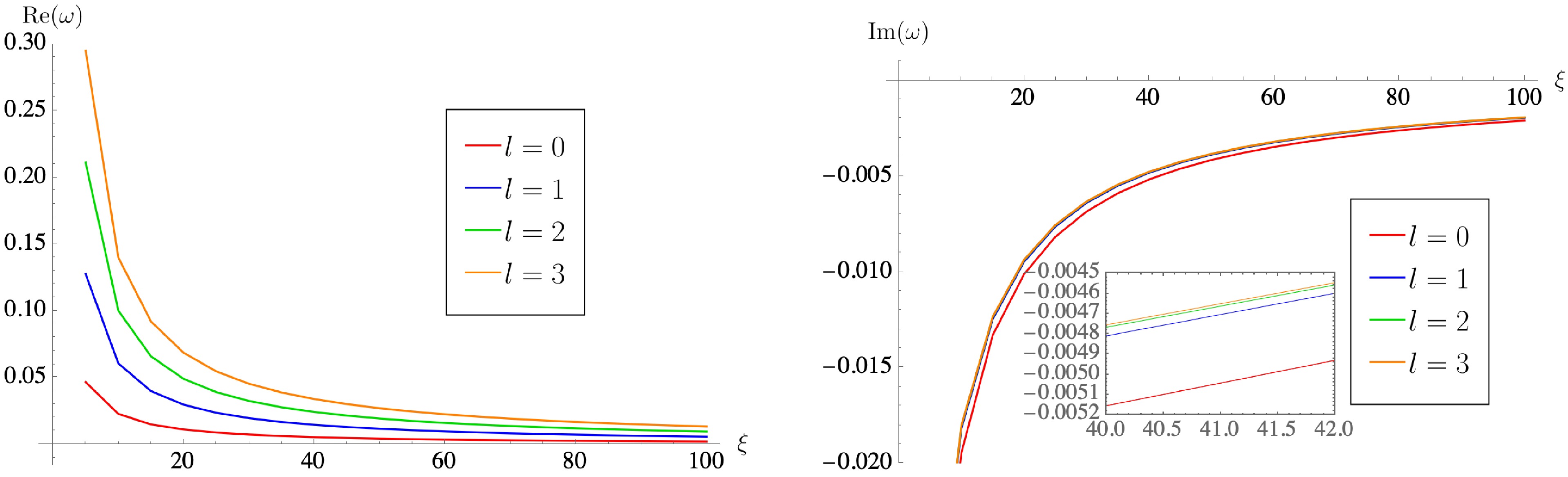
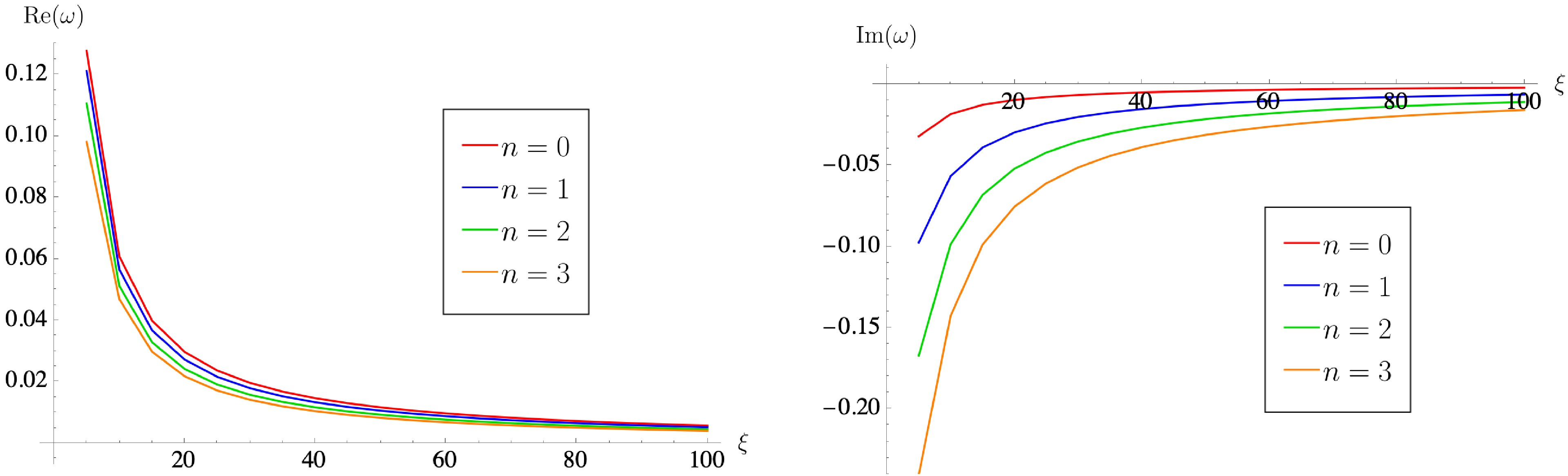
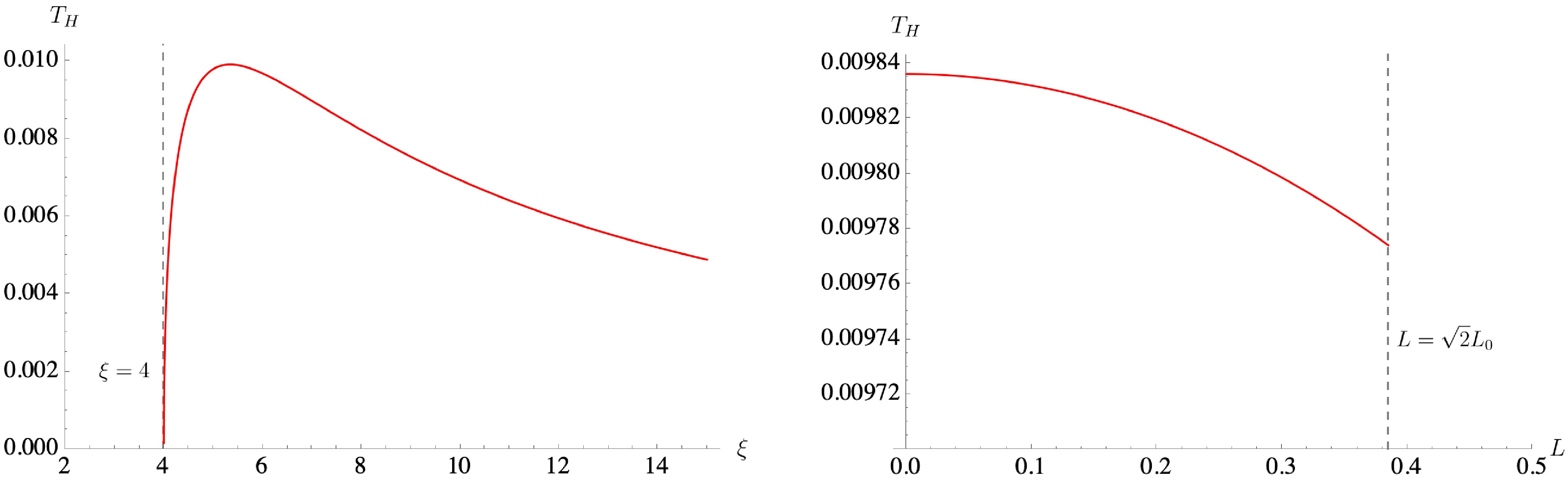
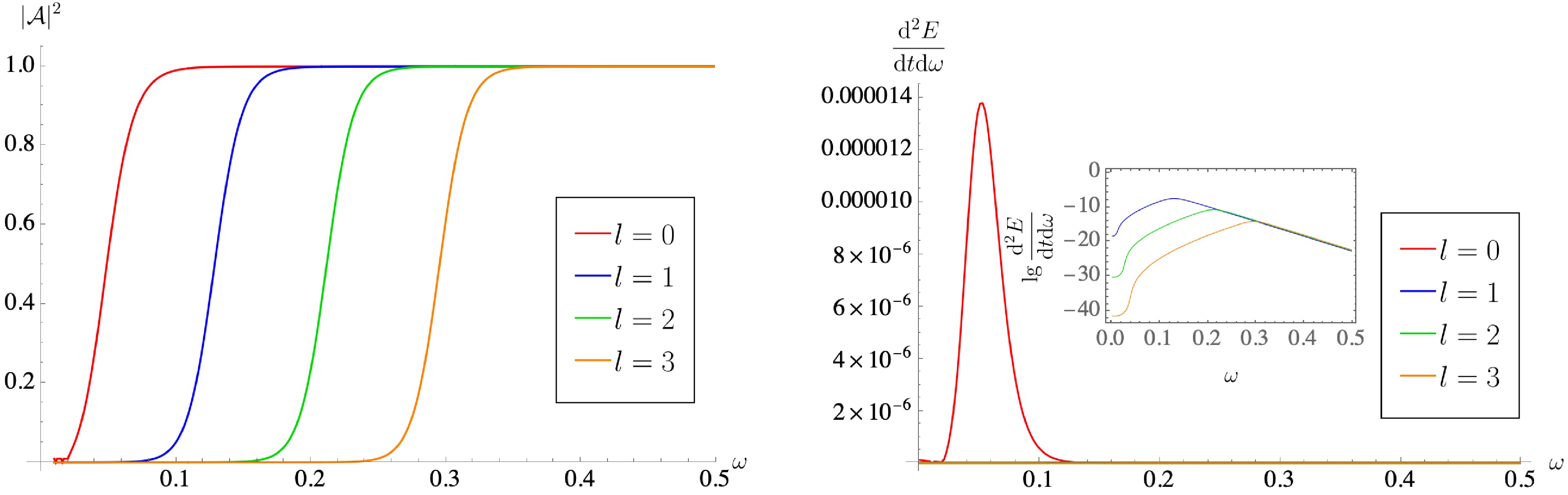
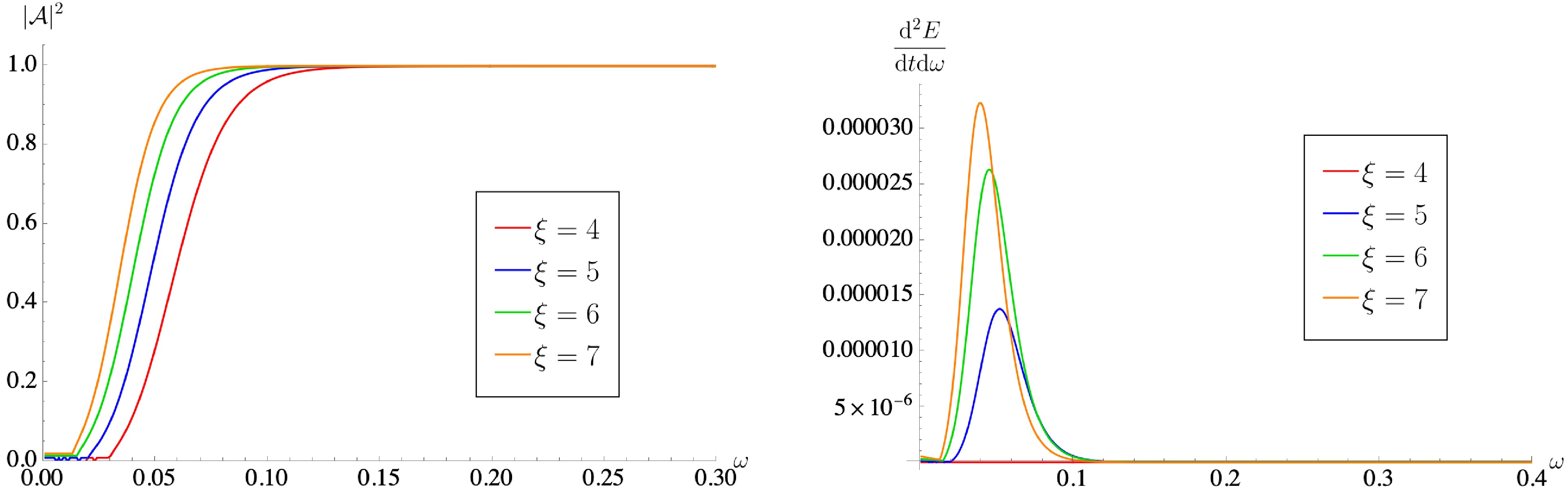
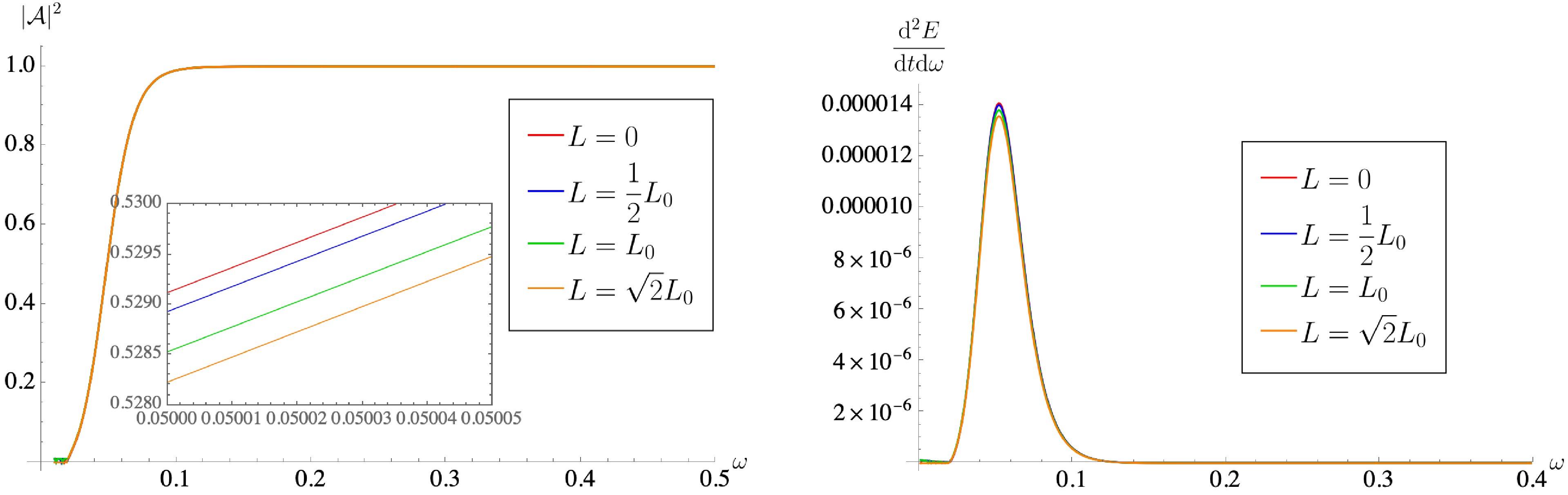
In this paper, we study an acoustic black hole in Hayward spacetime within the framework of relativistic Gross-Pitaevskii theory. By examining the critical null geodesics, we sketch the shadow of the acoustic horizon. The quasinormal mode (QNM) frequencies of the acoustic Hayward black hole are then computed numerically using the WKB method. The results show that these modes are more stable than those of the Hayward black hole, and that variations in the QNM frequencies are correlated with the behavior of the effective potential. We also verify the relationship between QNMs and the acoustic sphere (and the acoustic shadow) in the eikonal limit. Moreover, the WKB method is employed to calculate the grey-body factor and energy emission rate of the analogue Hawking radiation. It is shown that, as the tuning parameter increases, both the grey-body factor and the energy emission rate are enhanced, which can likewise be attributed to changes in the effective potential. In addition, the acoustic shadow radius also increases with the tuning parameter. Our work extends the acoustic black hole model to regular black hole spacetime, and the findings provide a potential application for distinguishing regular black holes from black holes with singularities in astrophysical environments via acoustic black hole effects.
In this paper, we study an acoustic black hole in Hayward spacetime within the framework of relativistic Gross-Pitaevskii theory. By examining the critical null geodesics, we sketch the shadow of the acoustic horizon. The quasinormal mode (QNM) frequencies of the acoustic Hayward black hole are then computed numerically using the WKB method. The results show that these modes are more stable than those of the Hayward black hole, and that variations in the QNM frequencies are correlated with the behavior of the effective potential. We also verify the relationship between QNMs and the acoustic sphere (and the acoustic shadow) in the eikonal limit. Moreover, the WKB method is employed to calculate the grey-body factor and energy emission rate of the analogue Hawking radiation. It is shown that, as the tuning parameter increases, both the grey-body factor and the energy emission rate are enhanced, which can likewise be attributed to changes in the effective potential. In addition, the acoustic shadow radius also increases with the tuning parameter. Our work extends the acoustic black hole model to regular black hole spacetime, and the findings provide a potential application for distinguishing regular black holes from black holes with singularities in astrophysical environments via acoustic black hole effects.

IF: 3.0
Monthly issued, founded in 1977
Sponsored by:
ISSN 1674-1137 CN 11-5641/O4
Original research articles, Ietters and reviews Covering theory and experiments in the fieids of
- Particle physics
- Nuclear physics
- Particle and nuclear astrophysics
- Cosmology
Author benefits
- A SCOAP3 participating journal - free Open Access publication for qualifying articles
- Average 24 days to first decision
- Fast-track publication for selected articles
- Subscriptions at over 3000 institutions worldwide
- Free English editing on all accepted articles
News
- Chinese Physics C Best Paper Awards 2026 Announced
- Editorial Office Closed
- CPC Announces 2025 Outstanding Reviewers
- Chinese Physics C Outstanding Reviewer Award 2023
- Impact factor of Chinese Physics C is 3.6 in 2022
Cover Story
- Cover Story (Issue 9, 2026): Charge Separation Measurements in Au+Au collisions at \sqrt{S_{NN}} = 7.7-200 GeV in Search of the Chiral Magnetic Effect
- Cover Story (Issue 5, 2026): Determination of Fragmentation Functions from Charge Asymmetries in Hadron Production
- Cover Story (Issue 4, 2026): Initial performance results of the JUNO detector
- Cover Story (Issue 3, 2026): Comprehensive investigation on baryon number violating nucleon decays involving an axion-like particle
- Cover Story (Issue 2, 2026) |The images of Brans-Dicke-Kerr type naked singularities
Advertising