2026 Vol. 50, No. 7
Display Method: |


2026, 50(7): 073001. doi: 10.1088/1674-1137/ae5c70
Abstract:
A sensitivity study of\begin{document}$ \bar{K}_1(1270) $\end{document} \begin{document}$ \bar{K}_1(1270) $\end{document} \begin{document}$ K^-\pi^+\pi^- $\end{document} \begin{document}$ K^-\pi^+\pi^0 $\end{document} \begin{document}$ K_S^0\pi^+\pi^- $\end{document} \begin{document}$ K_S^0\pi^-\pi^0 $\end{document} \begin{document}$ {\cal{B}}(\bar{K}_1(1270)\to \bar K\pi\pi) $\end{document}
A sensitivity study of


2026, 50(7): 073002. doi: 10.1088/1674-1137/ae5ef9
Abstract:
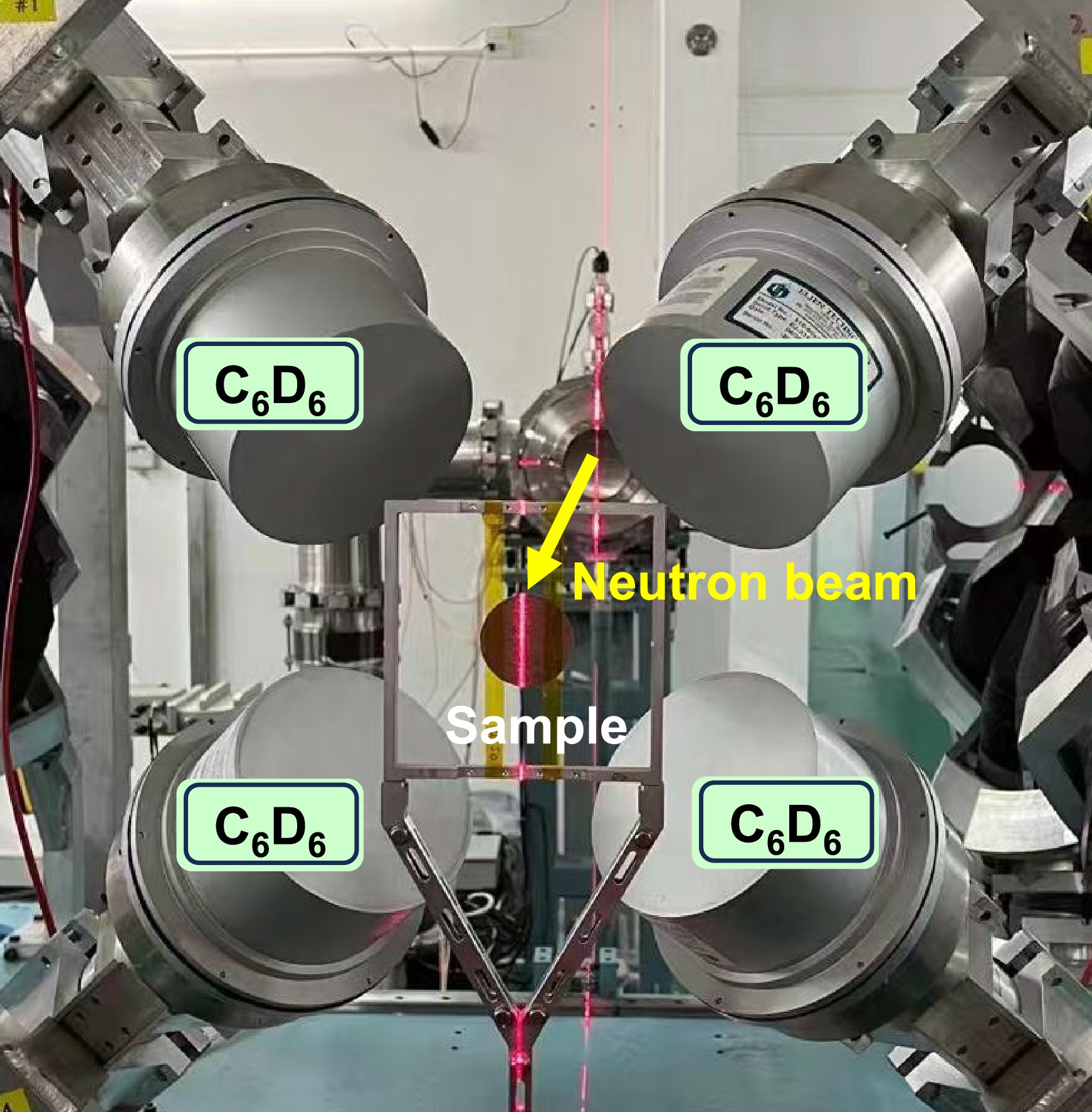
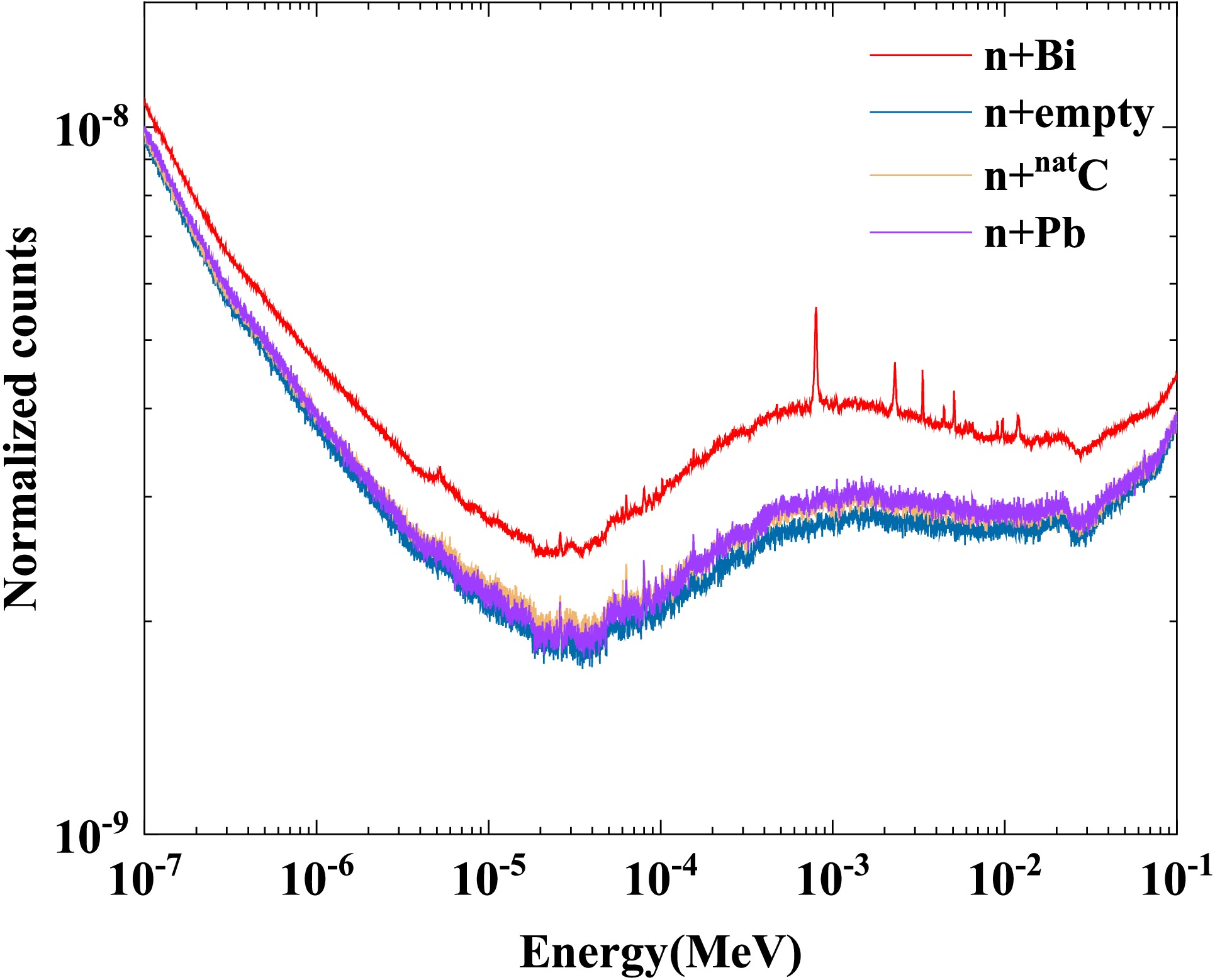
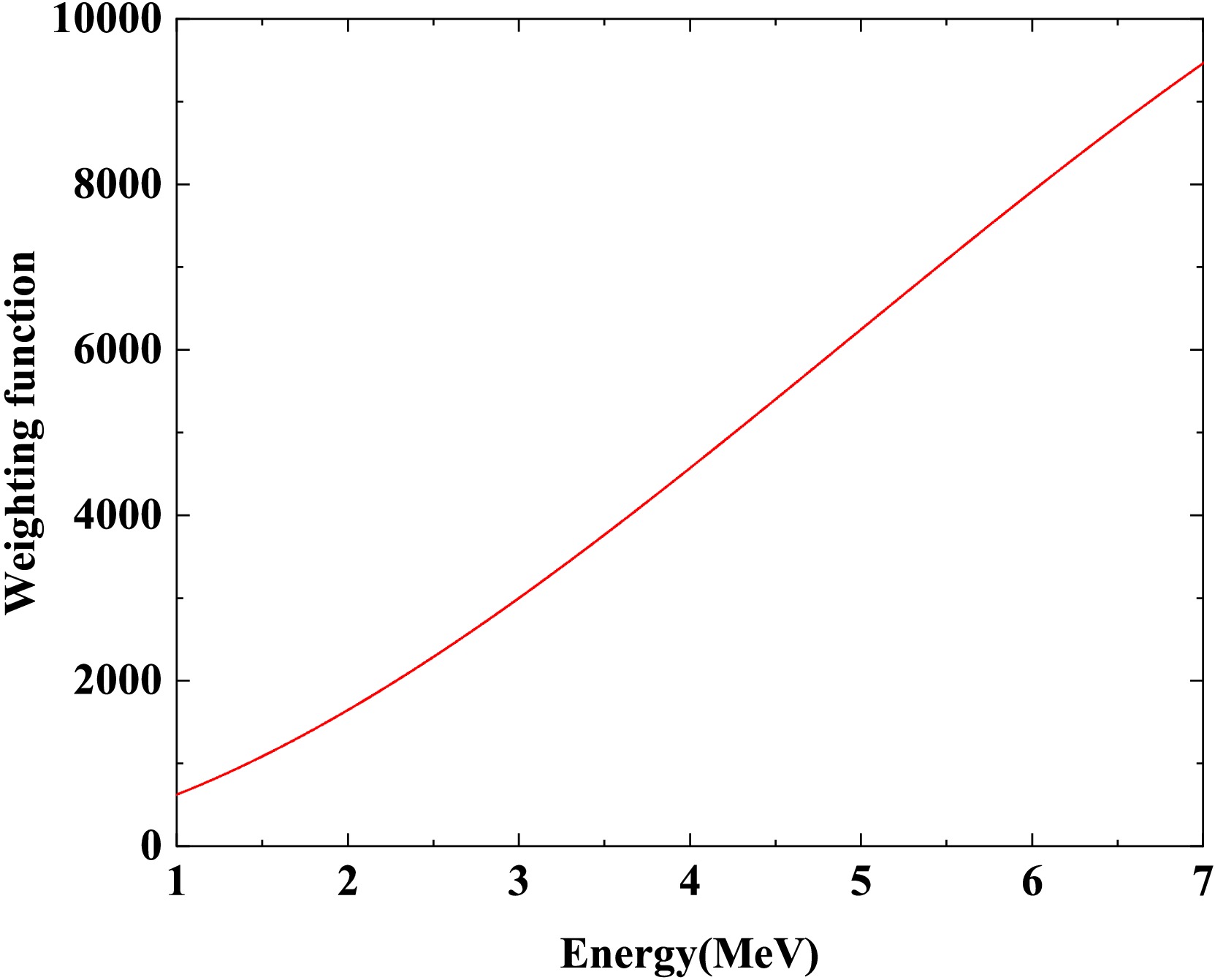
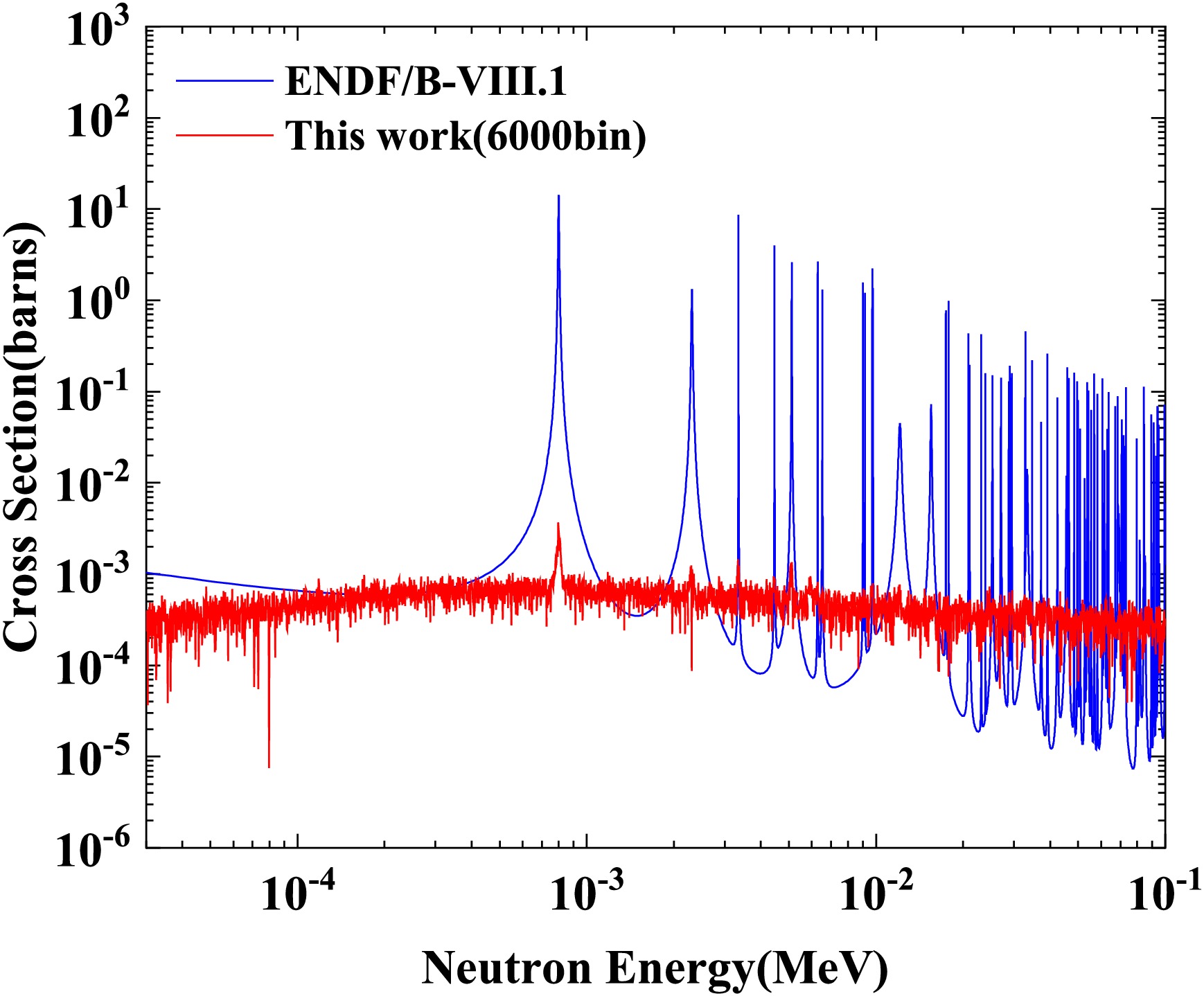
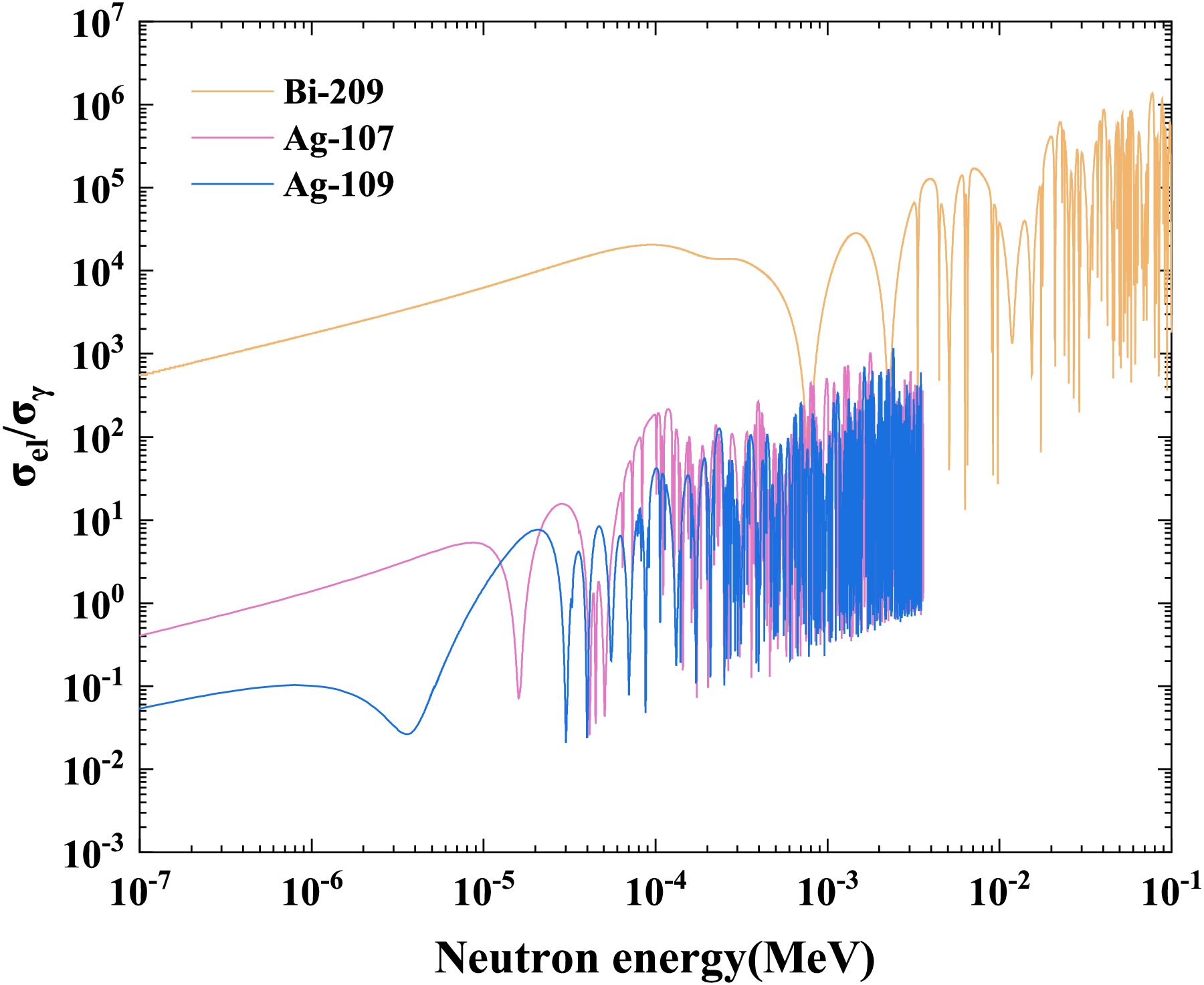
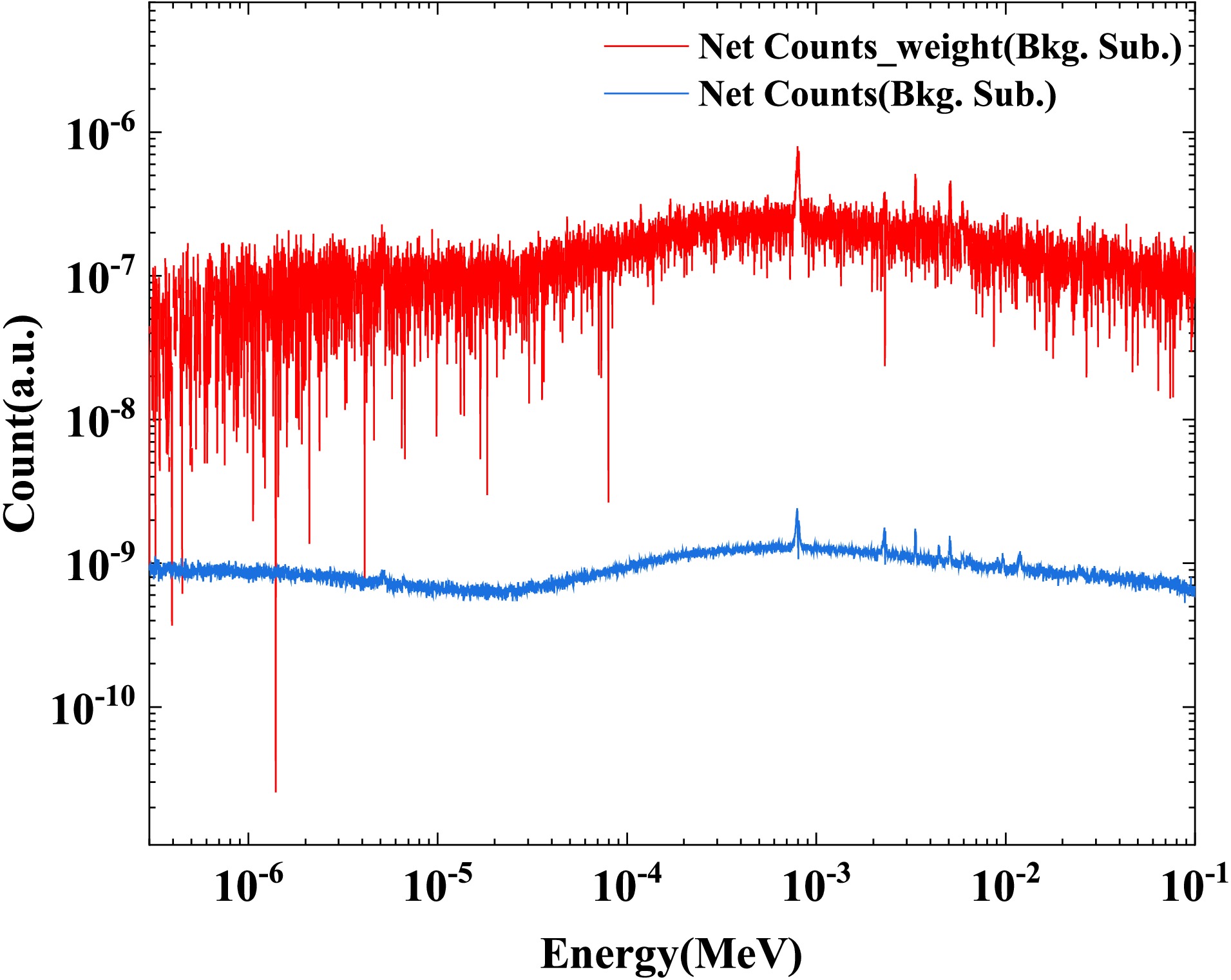
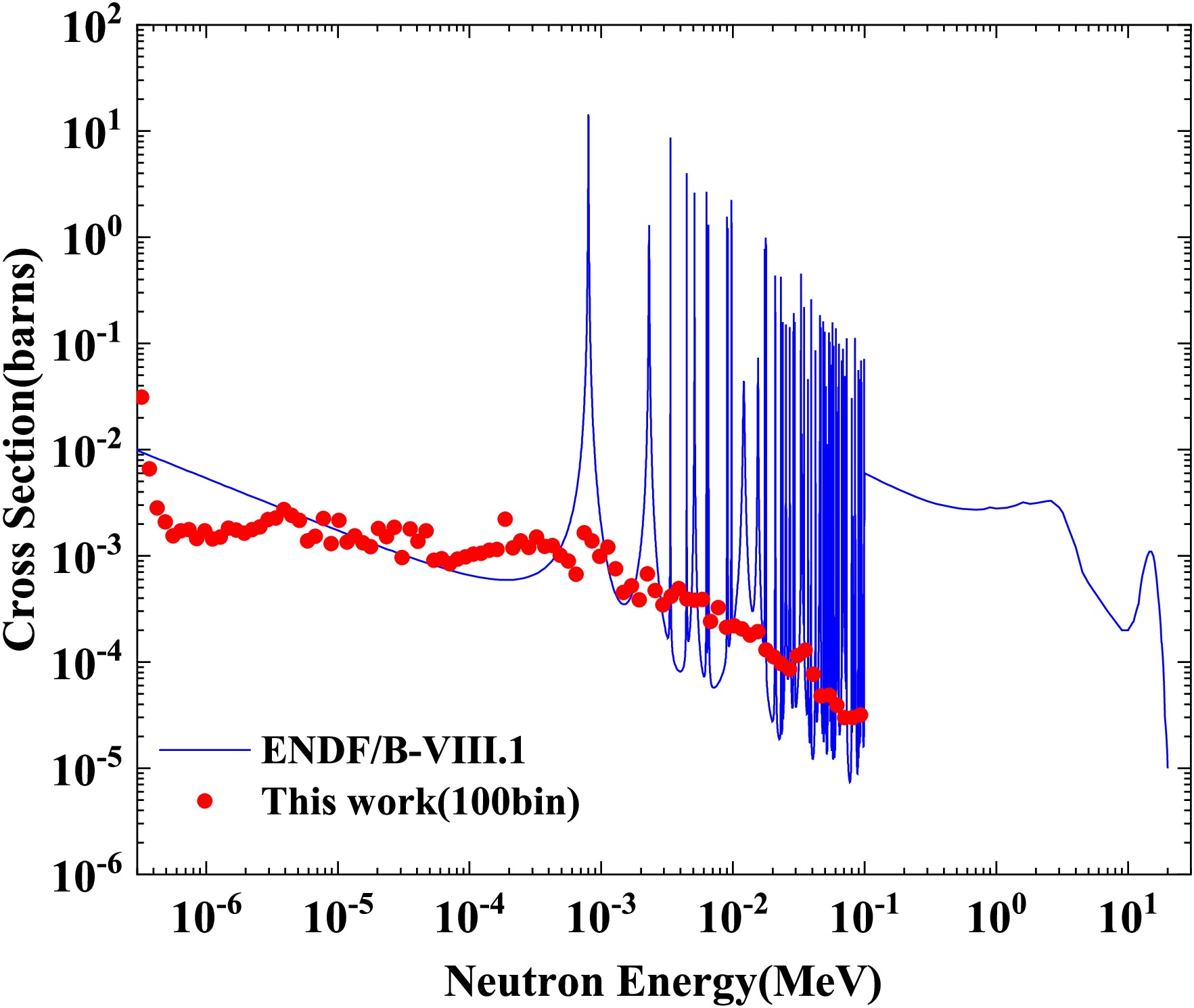
Accurate neutron capture cross section data are essential for validating nuclear models, understanding the origin of heavy elements, and improving reactor safety assessments. Measuring weakly absorbing nuclides at the milli-barn scale is challenging because of low-intensity signals, high levels of environmental background, and sensitivity to target impurities. To investigate the capability of\begin{document}$\text{C}_6\text{D}_6$\end{document} \begin{document}$^{209}$\end{document} \begin{document}$(n, \gamma)$\end{document} \begin{document}$^{209}$\end{document} \begin{document}$\text{C}_6\text{D}_6$\end{document}
Accurate neutron capture cross section data are essential for validating nuclear models, understanding the origin of heavy elements, and improving reactor safety assessments. Measuring weakly absorbing nuclides at the milli-barn scale is challenging because of low-intensity signals, high levels of environmental background, and sensitivity to target impurities. To investigate the capability of
2026, 50(7): 073003. doi: 10.1088/1674-1137/ae643e
Abstract:
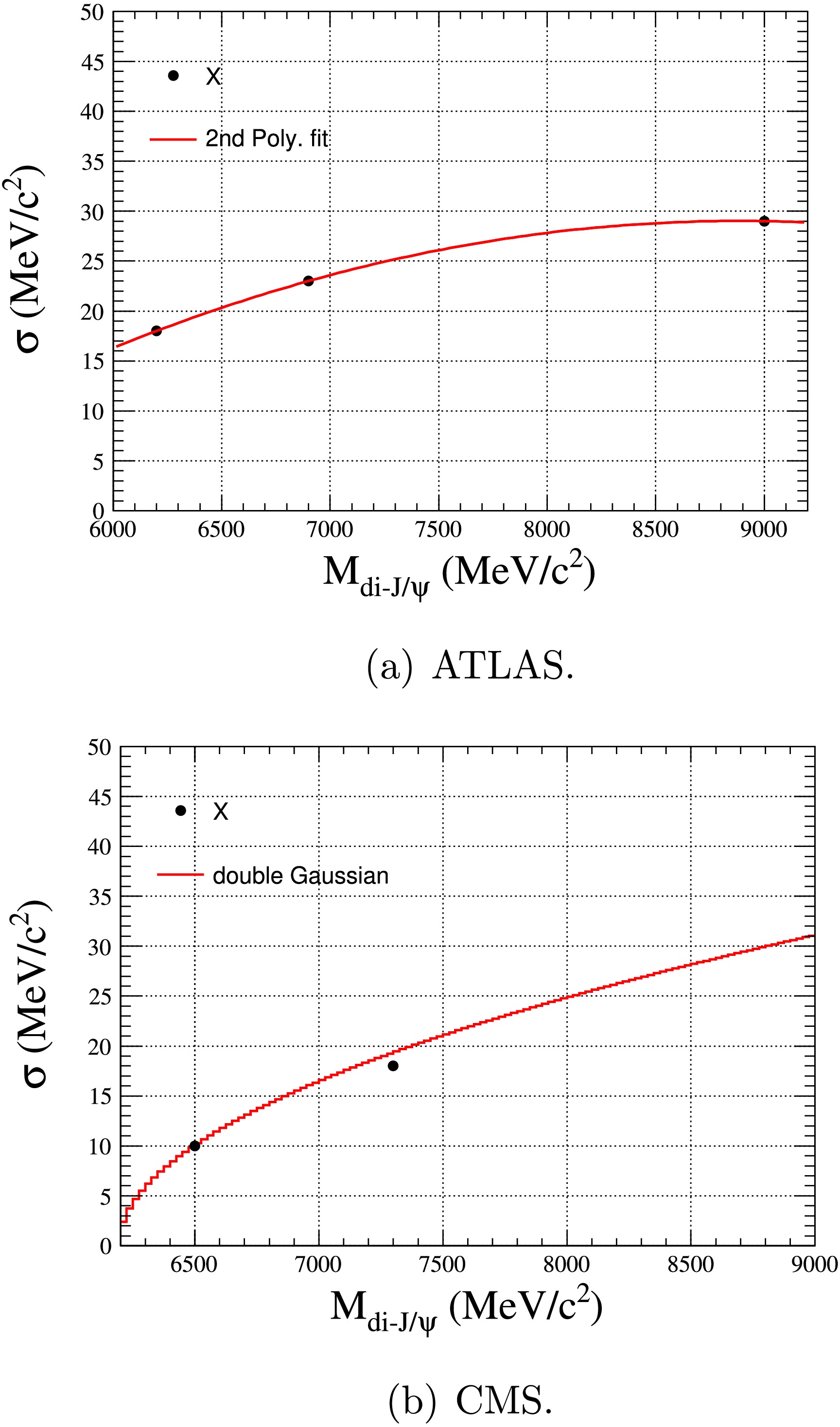
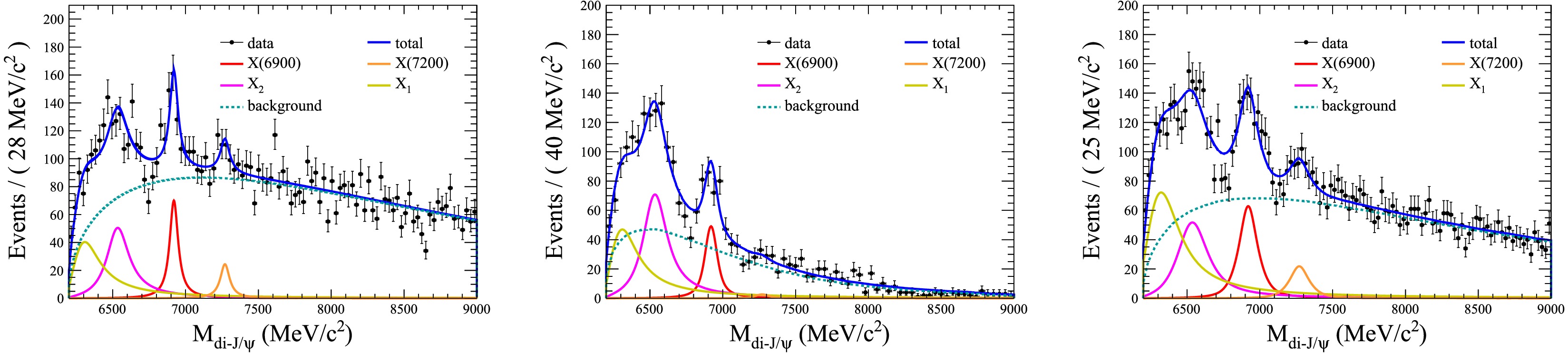
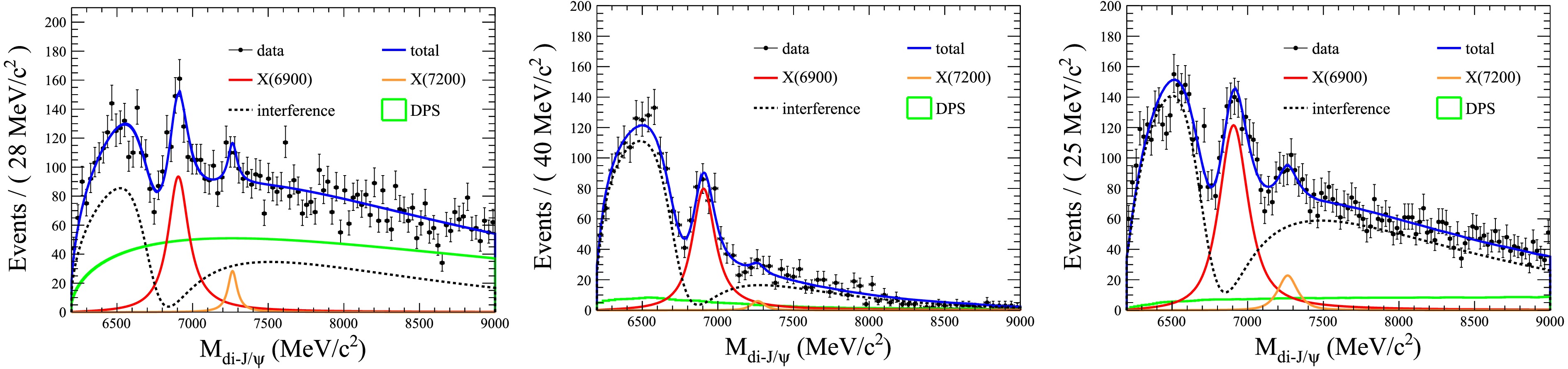
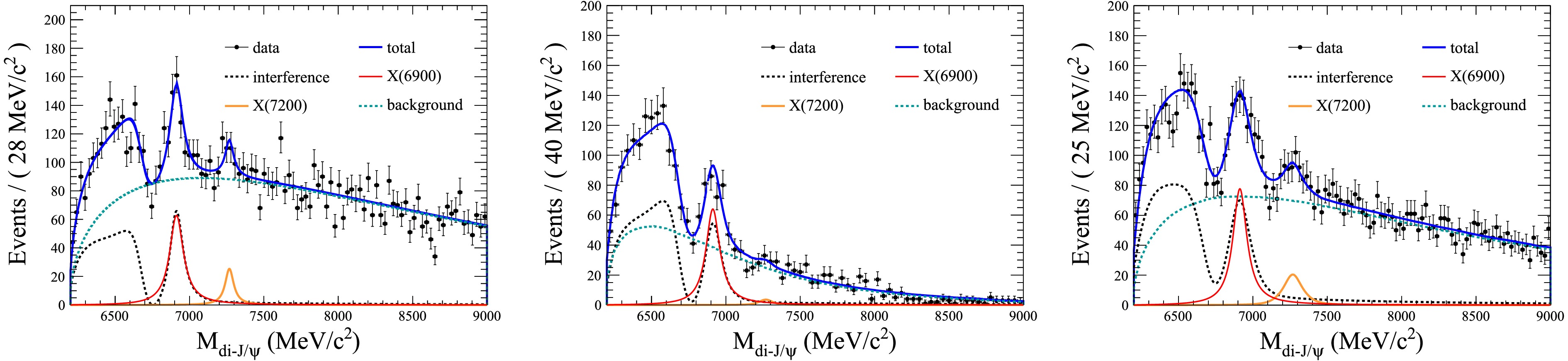
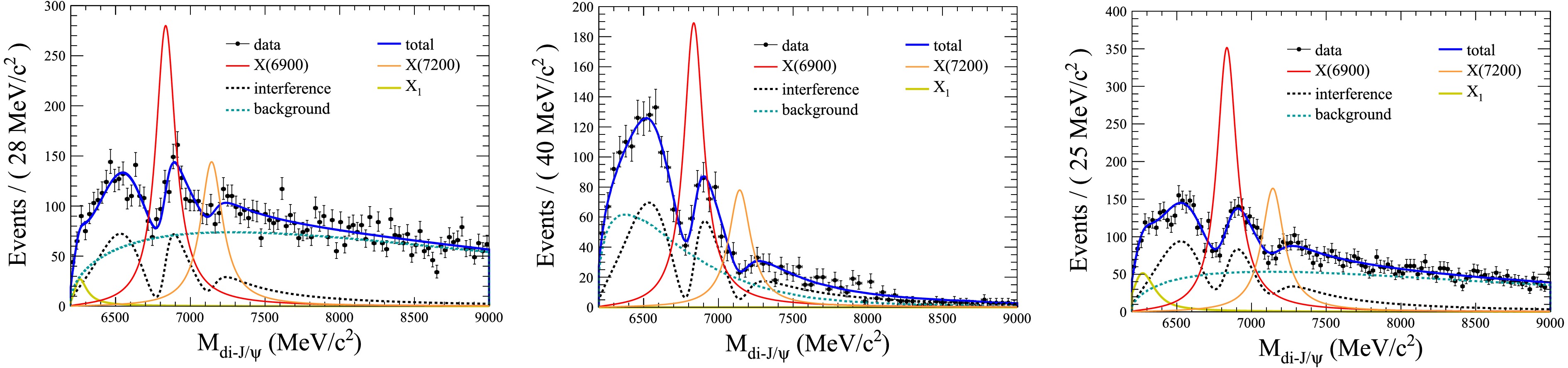
We report stronger evidence for the\begin{document}$X(7200)$\end{document} \begin{document}$X(6900)$\end{document} \begin{document}$J/\psi$\end{document} \begin{document}$X(6900)$\end{document} \begin{document}$>12\sigma$\end{document} \begin{document}$X(7200)$\end{document} \begin{document}$3.7\sigma$\end{document} \begin{document}$6.6\sigma$\end{document} \begin{document}$6.6\sigma$\end{document}
We report stronger evidence for the
2026, 50(7): 073101. doi: 10.1088/1674-1137/ae5884
Abstract:
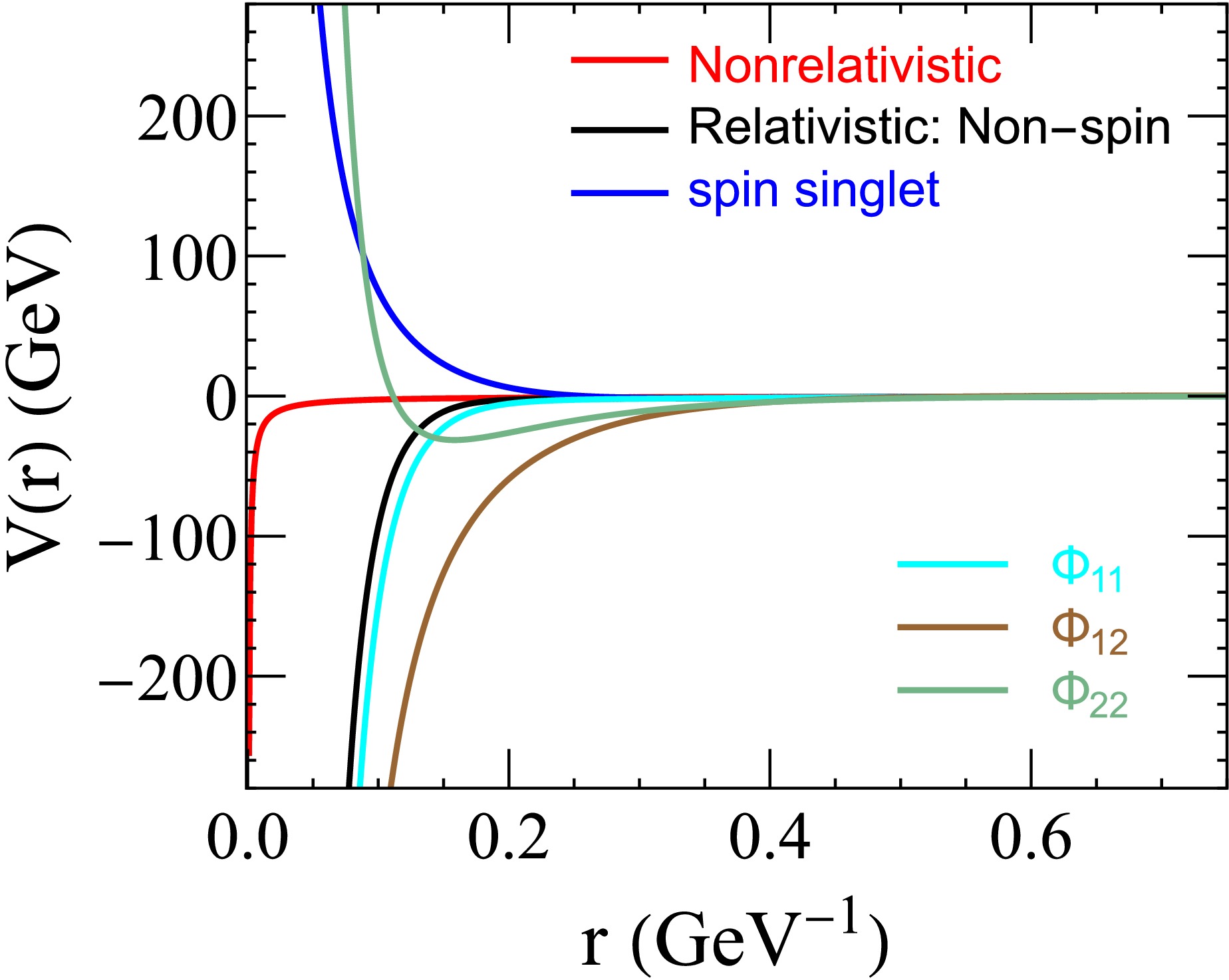
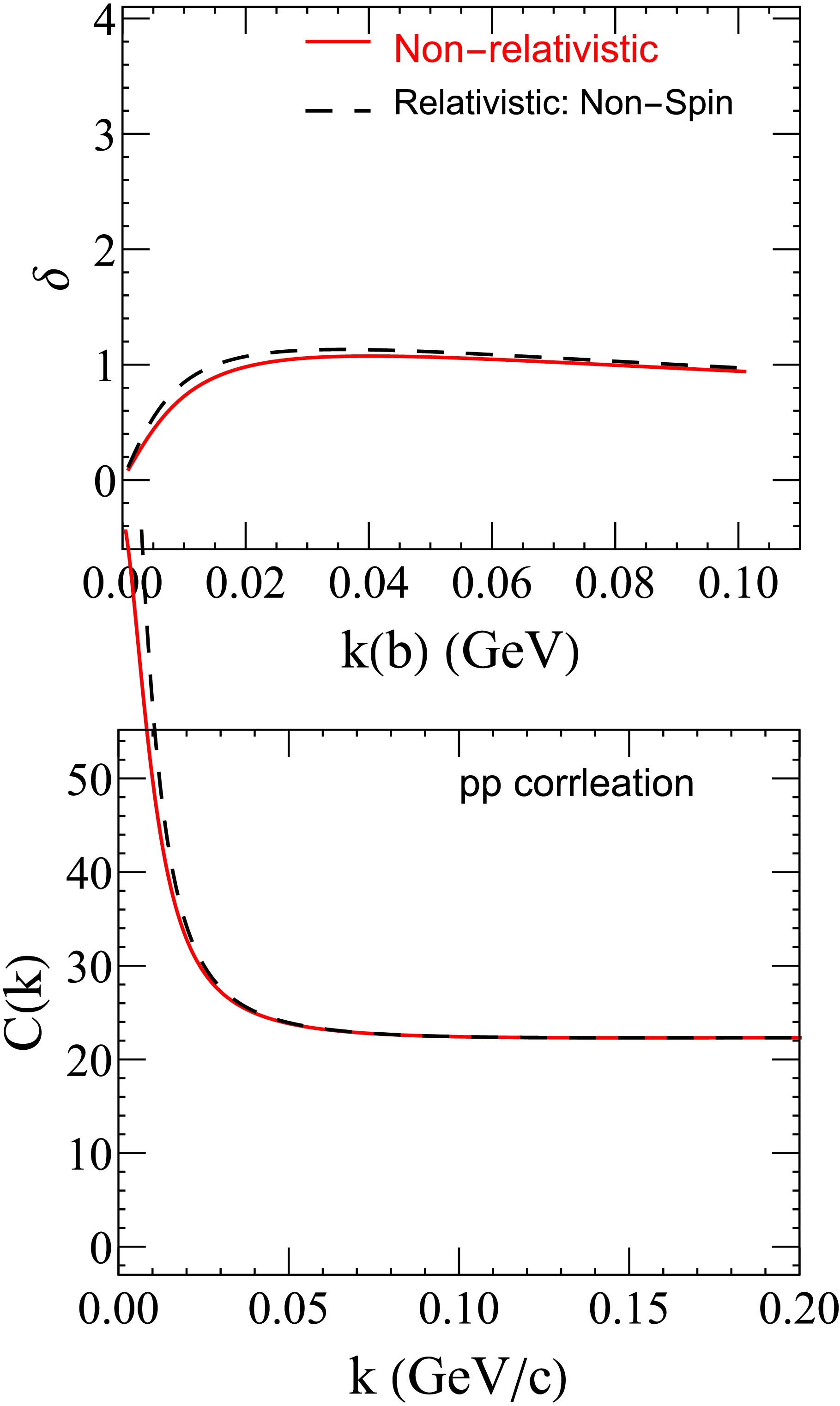
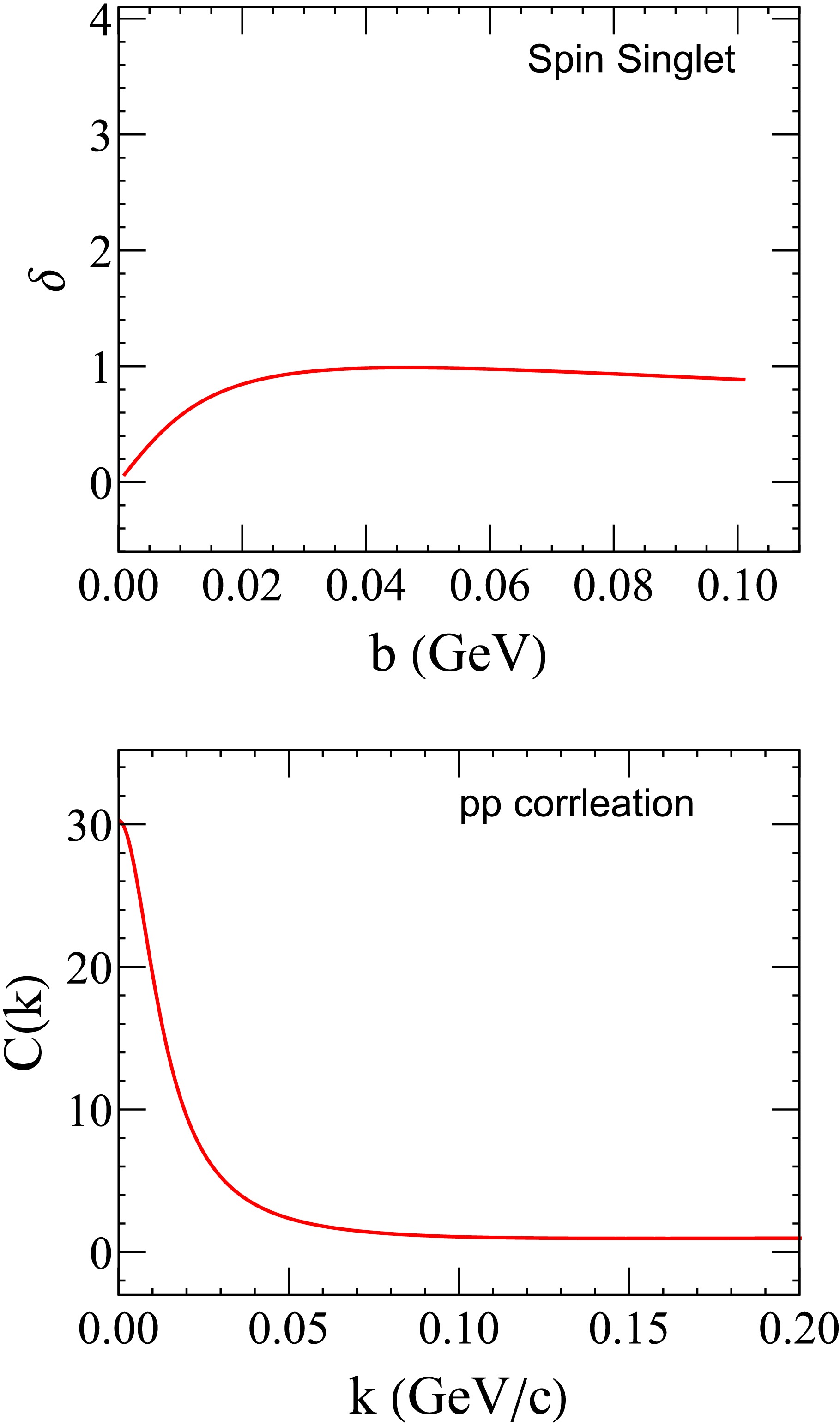
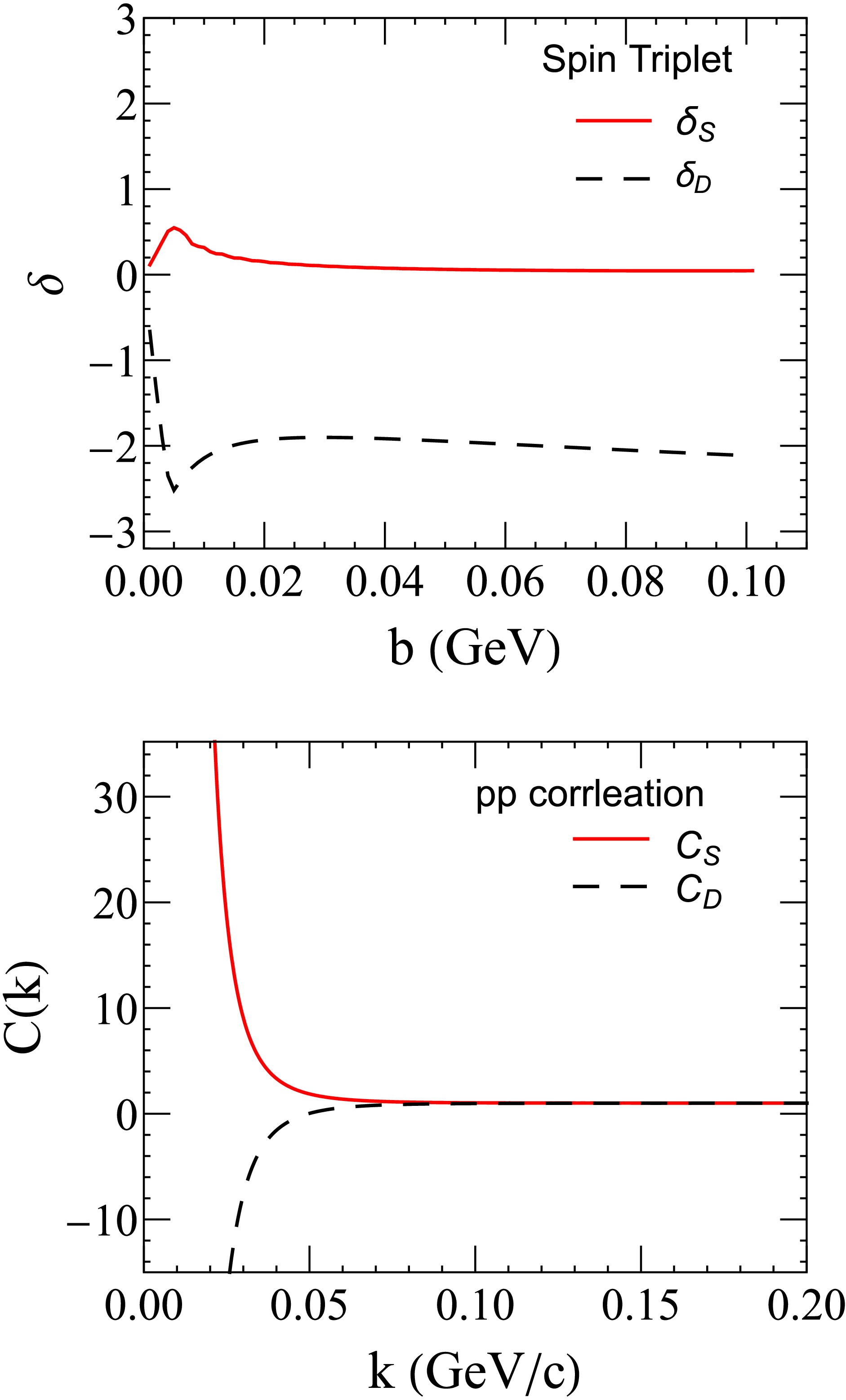
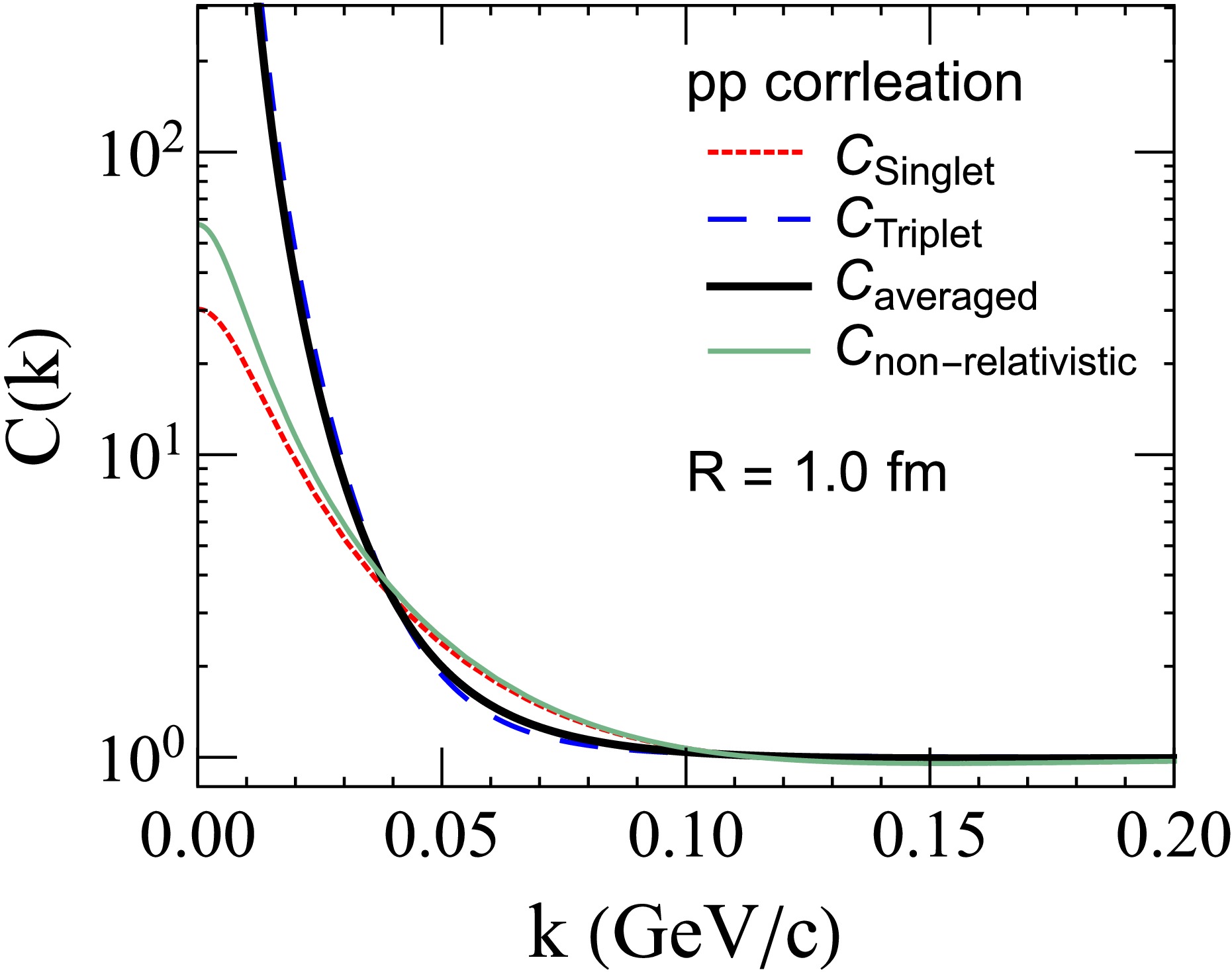
Femtoscopy offers a sensitive probe of hadron emission sources and hadronic interactions. In this study, we examine relativistic corrections to scattering phase shifts and correlation functions using the two-body Dirac equation framework. We analyze the impact of the Darwin term and spin-dependent potentials, showing that these relativistic effects, especially spin-related interactions, significantly enhance the proton-proton correlation function. Our findings emphasize the necessity of including relativistic corrections for precise femtoscopic analyses.
Femtoscopy offers a sensitive probe of hadron emission sources and hadronic interactions. In this study, we examine relativistic corrections to scattering phase shifts and correlation functions using the two-body Dirac equation framework. We analyze the impact of the Darwin term and spin-dependent potentials, showing that these relativistic effects, especially spin-related interactions, significantly enhance the proton-proton correlation function. Our findings emphasize the necessity of including relativistic corrections for precise femtoscopic analyses.
2026, 50(7): 073102. doi: 10.1088/1674-1137/ae5a87
Abstract:
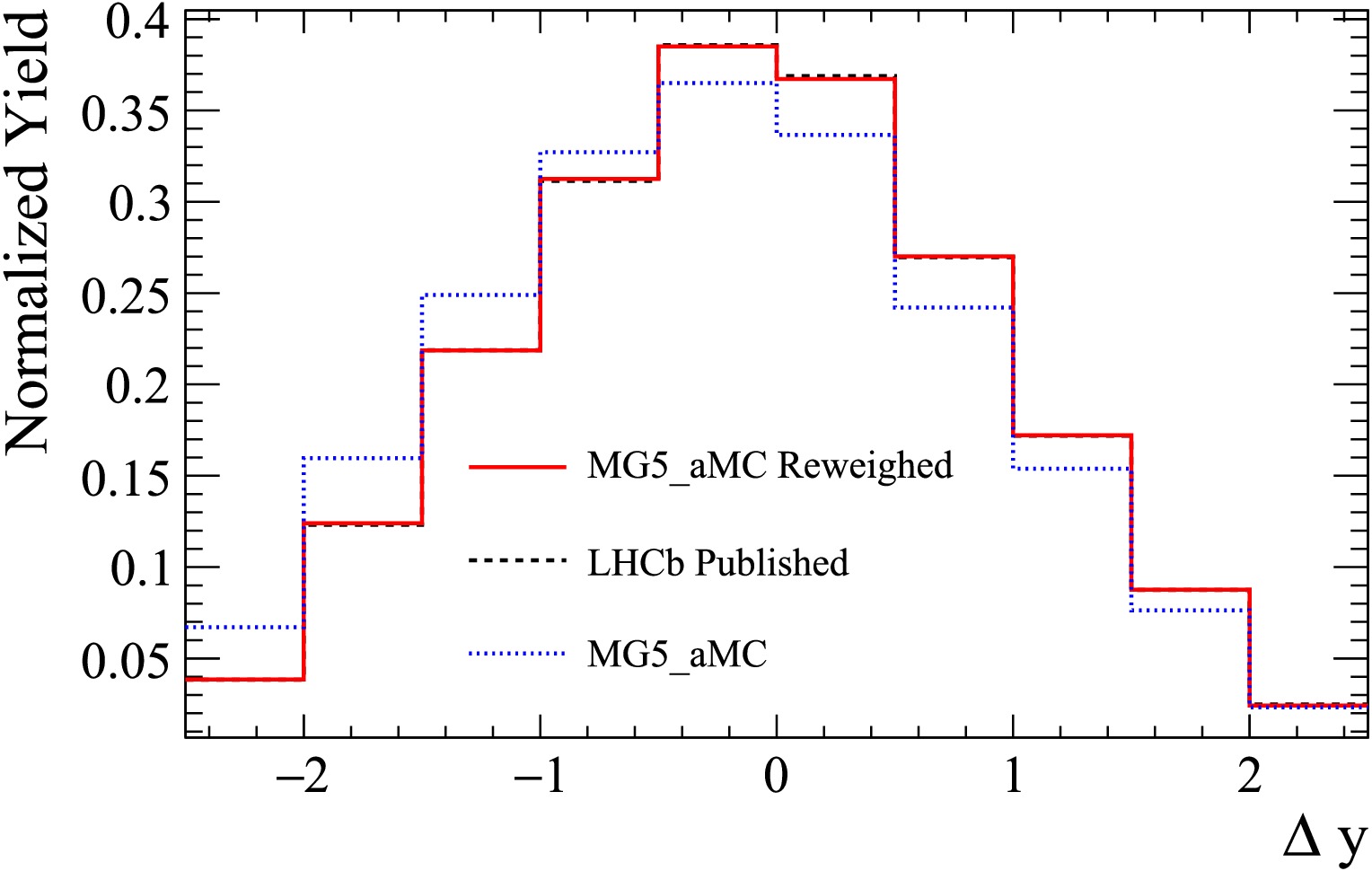
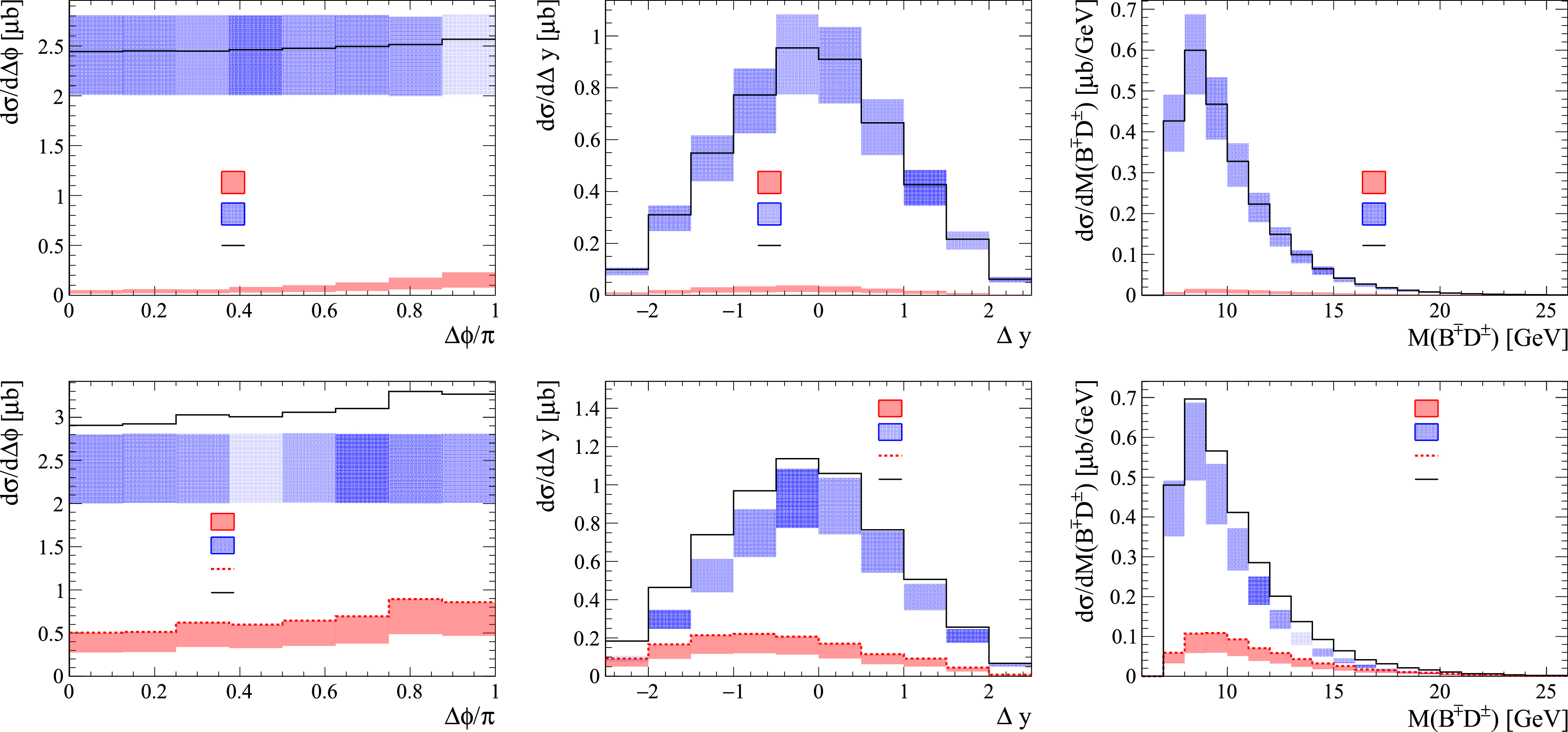
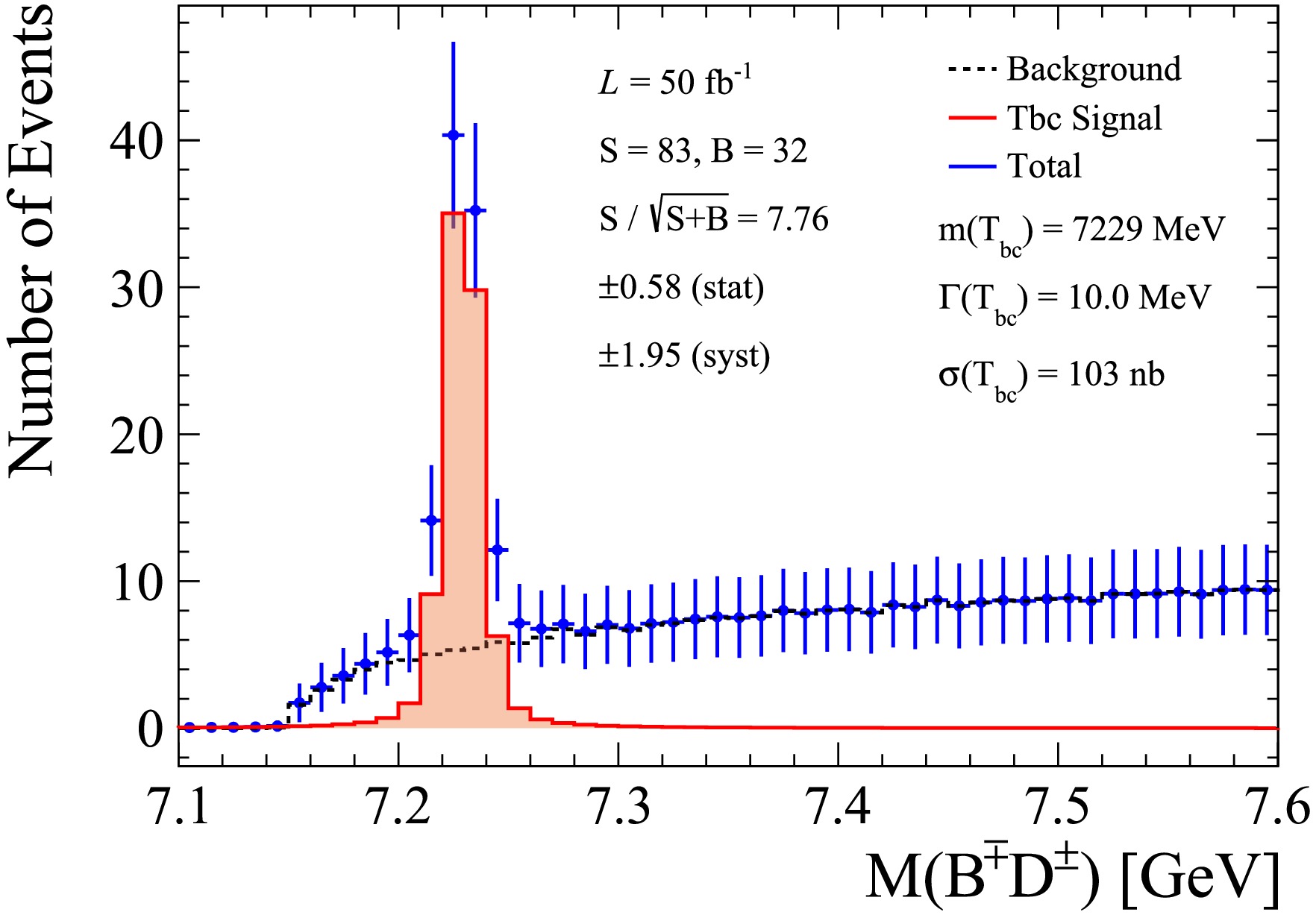
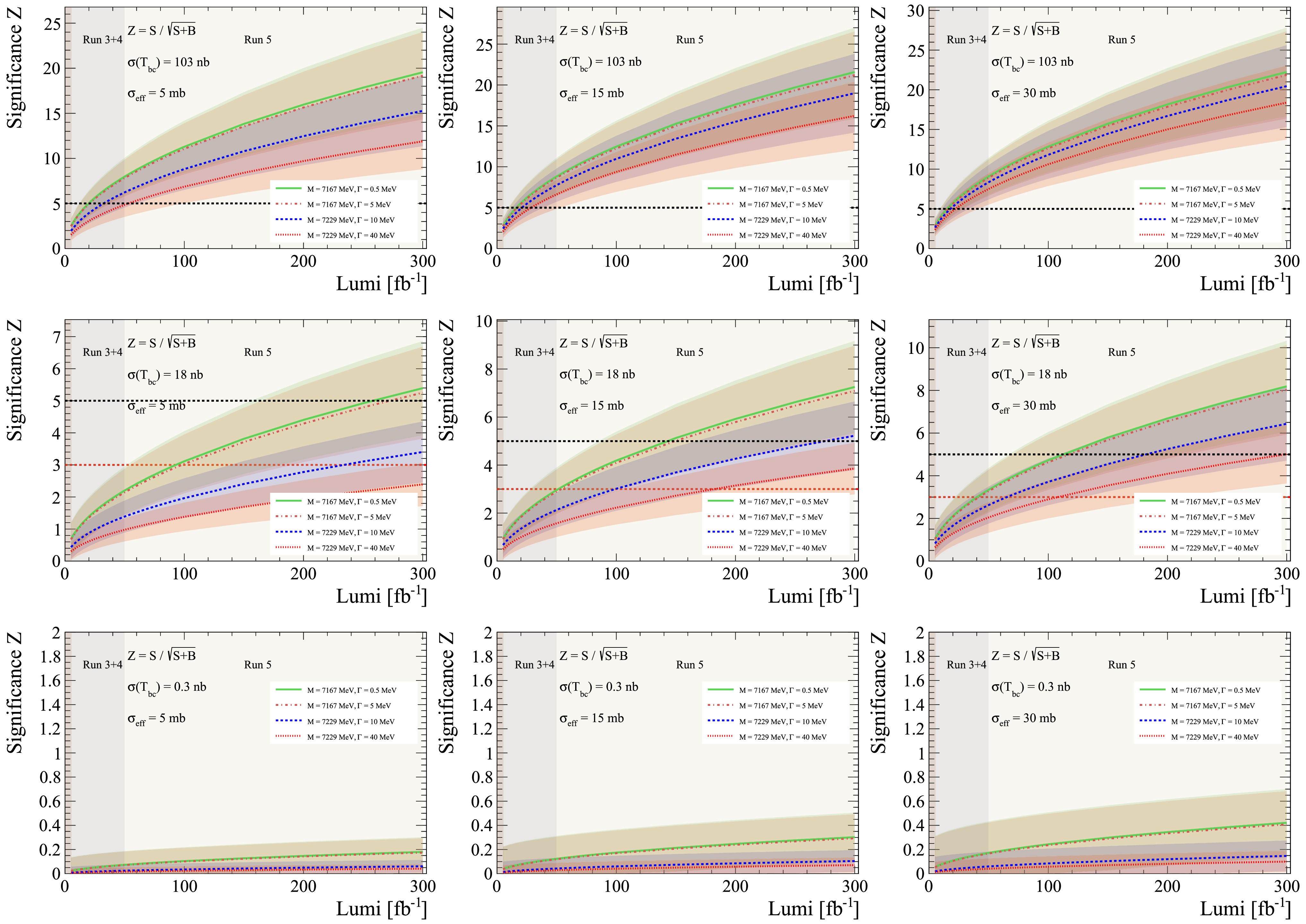
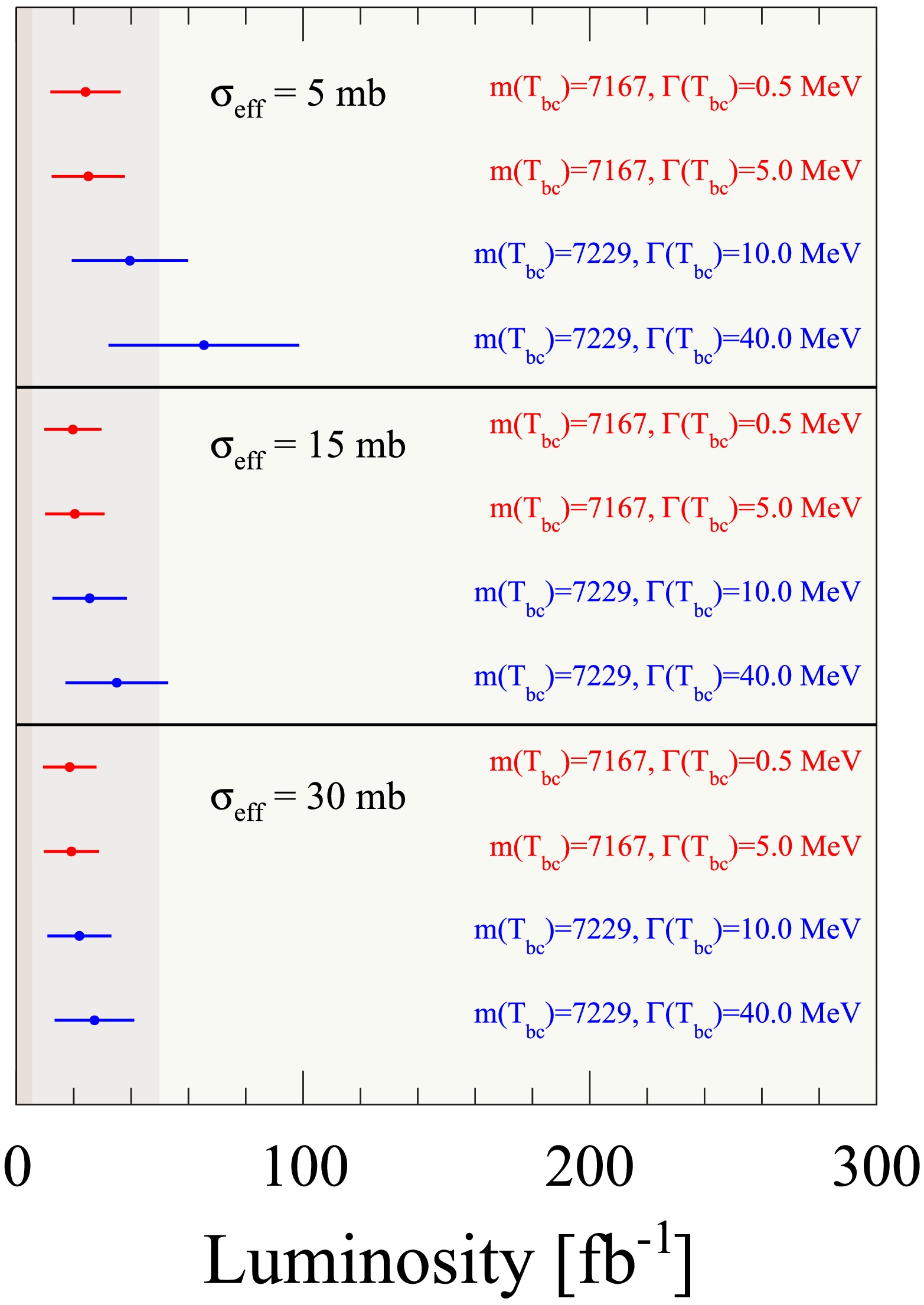
We investigate the discovery potential of the\begin{document}$T_{bc}$\end{document} \begin{document}$J^P = 0^+$\end{document} \begin{document}$pp$\end{document} \begin{document}$\sqrt{s} = 13~{\rm{TeV}}$\end{document} \begin{document}$T_{bc} \to B^- D^+$\end{document} \begin{document}${\mathtt{MadGraph5\_aMC@NLO}}$\end{document} \begin{document}${\mathtt{Pythia8.3}}$\end{document} \begin{document}$T_{bc}$\end{document} \begin{document}$\sigma_{{\rm{eff}}}$\end{document} \begin{document}$B D$\end{document} \begin{document}$5\sigma$\end{document} \begin{document}$T_{bc}$\end{document} \begin{document}$103~{\rm{nb}}$\end{document} \begin{document}$18~{\rm{nb}}$\end{document} \begin{document}$T_{cc}^+$\end{document} \begin{document}$0.3~{\rm{nb}}$\end{document} \begin{document}$5\sigma$\end{document} \begin{document}$103~{\rm{nb}}$\end{document} \begin{document}$18~{\rm{nb}}$\end{document} \begin{document}$300~{\rm{fb}}^{-1}$\end{document} \begin{document}$300~{\rm{fb}}^{-1}$\end{document} \begin{document}$\sigma(T_{bc}) \times {\cal{B}}(T_{bc} \to $\end{document} \begin{document}$ B^- D^+)$\end{document} \begin{document}$5\sigma$\end{document}
We investigate the discovery potential of the
2026, 50(7): 073103. doi: 10.1088/1674-1137/ae5ef7
Abstract:
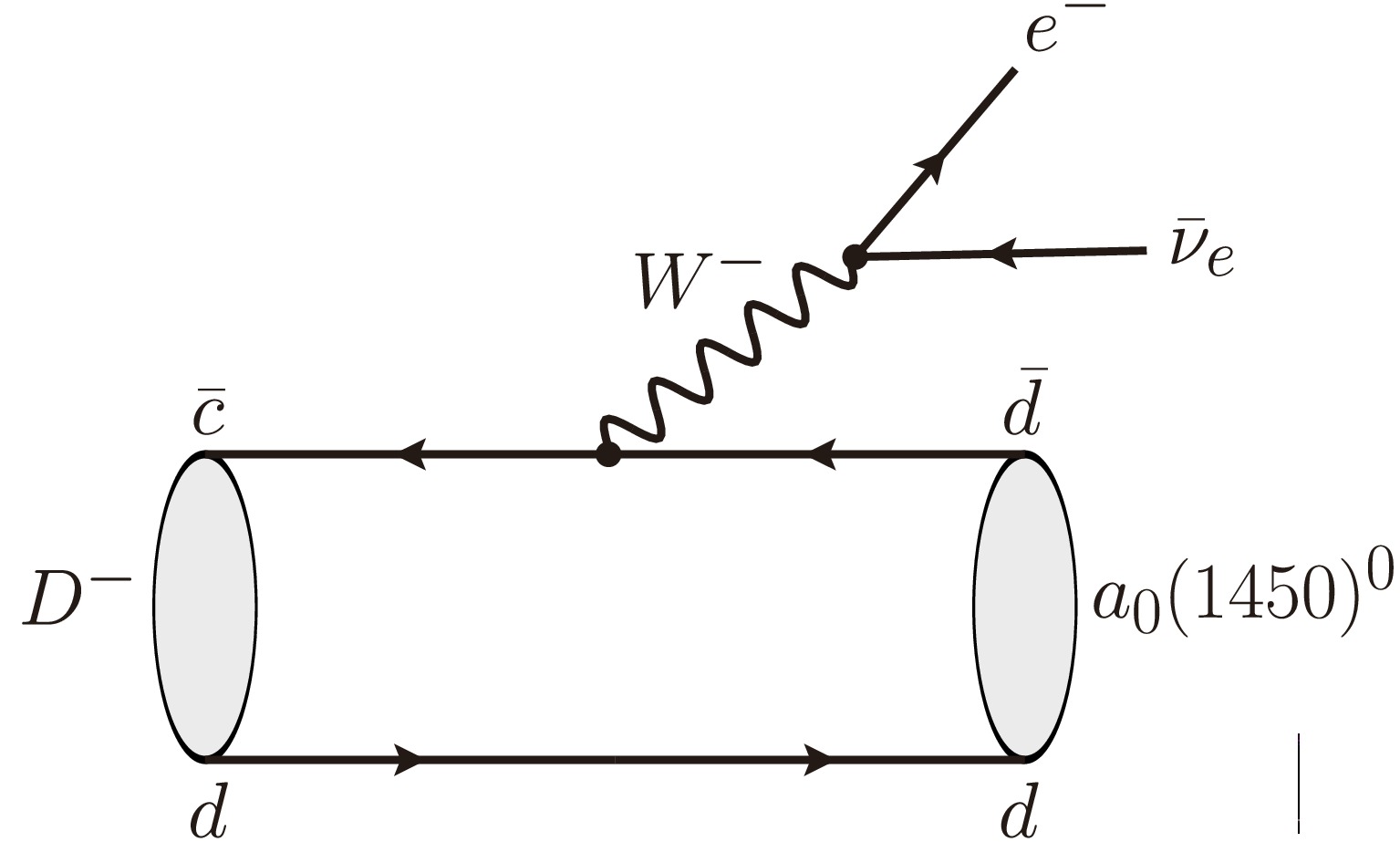
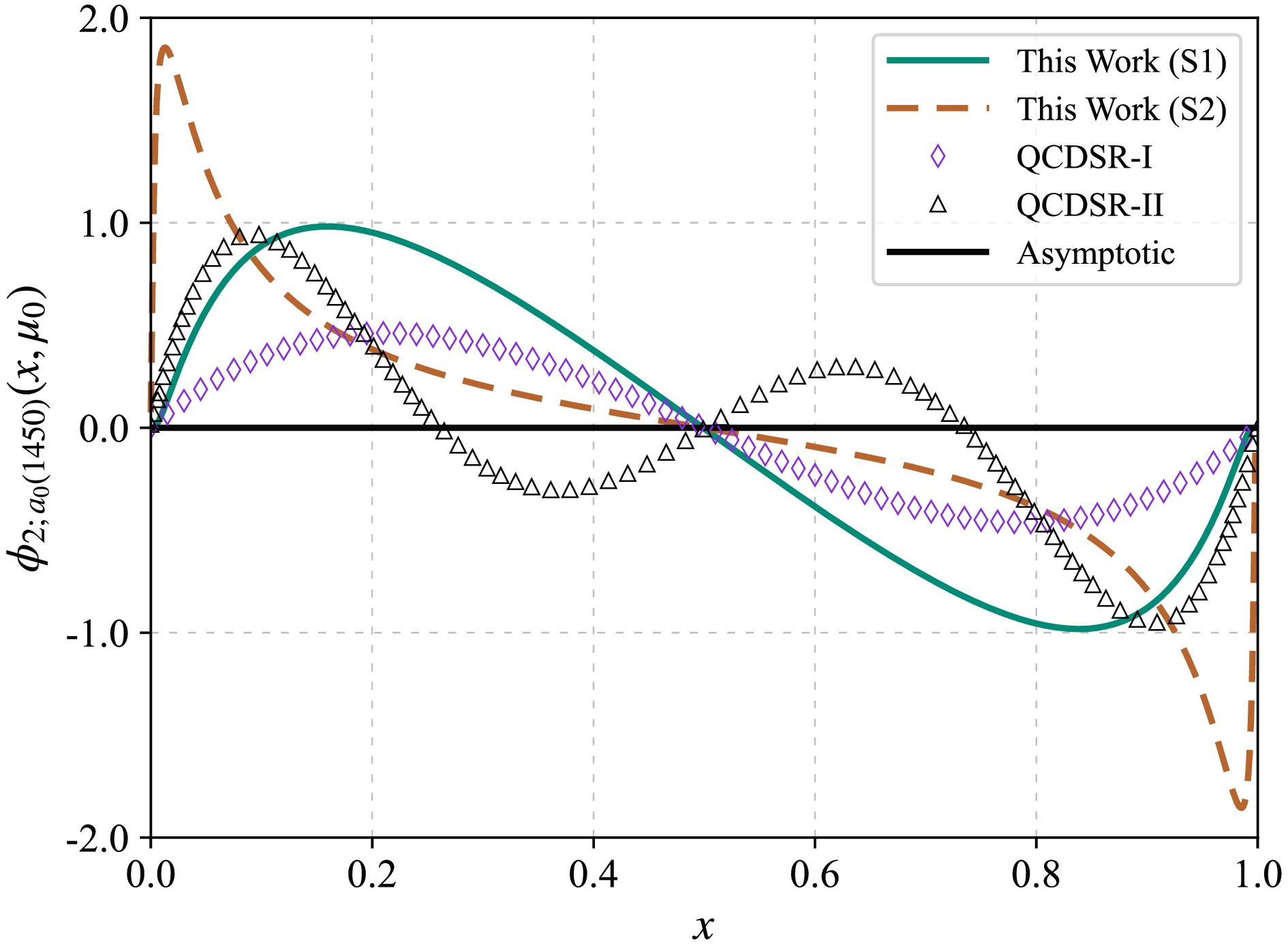
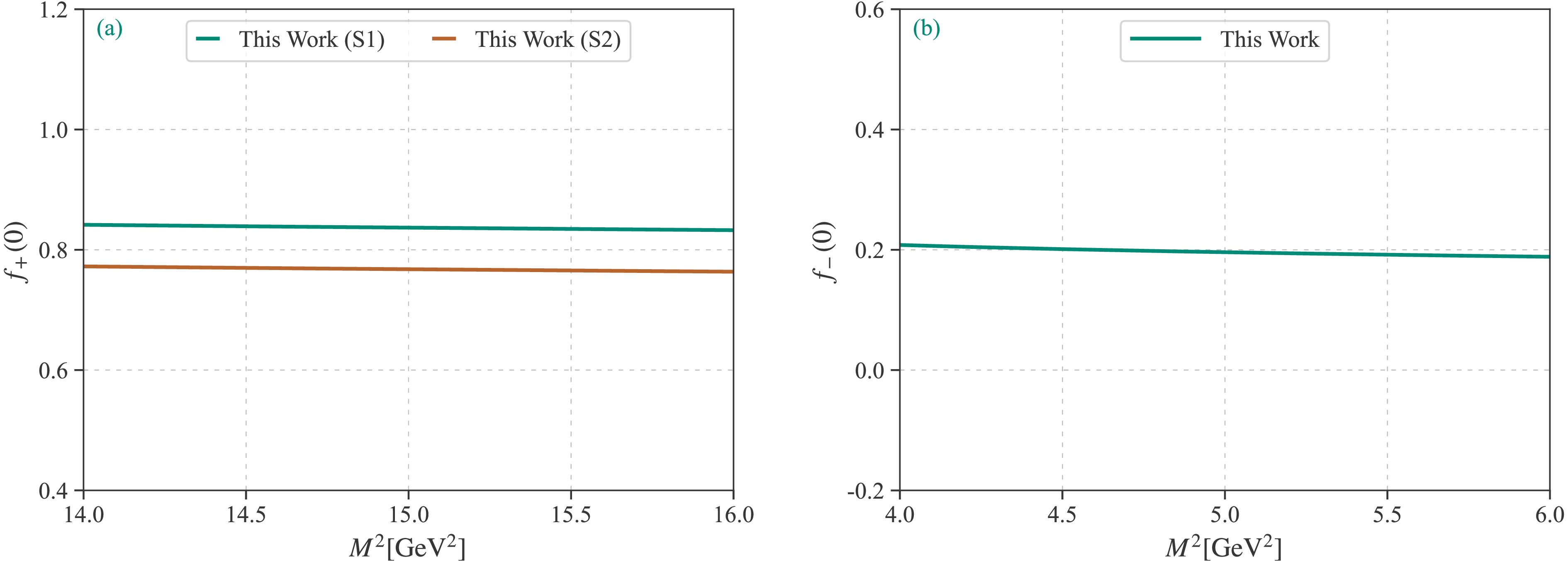
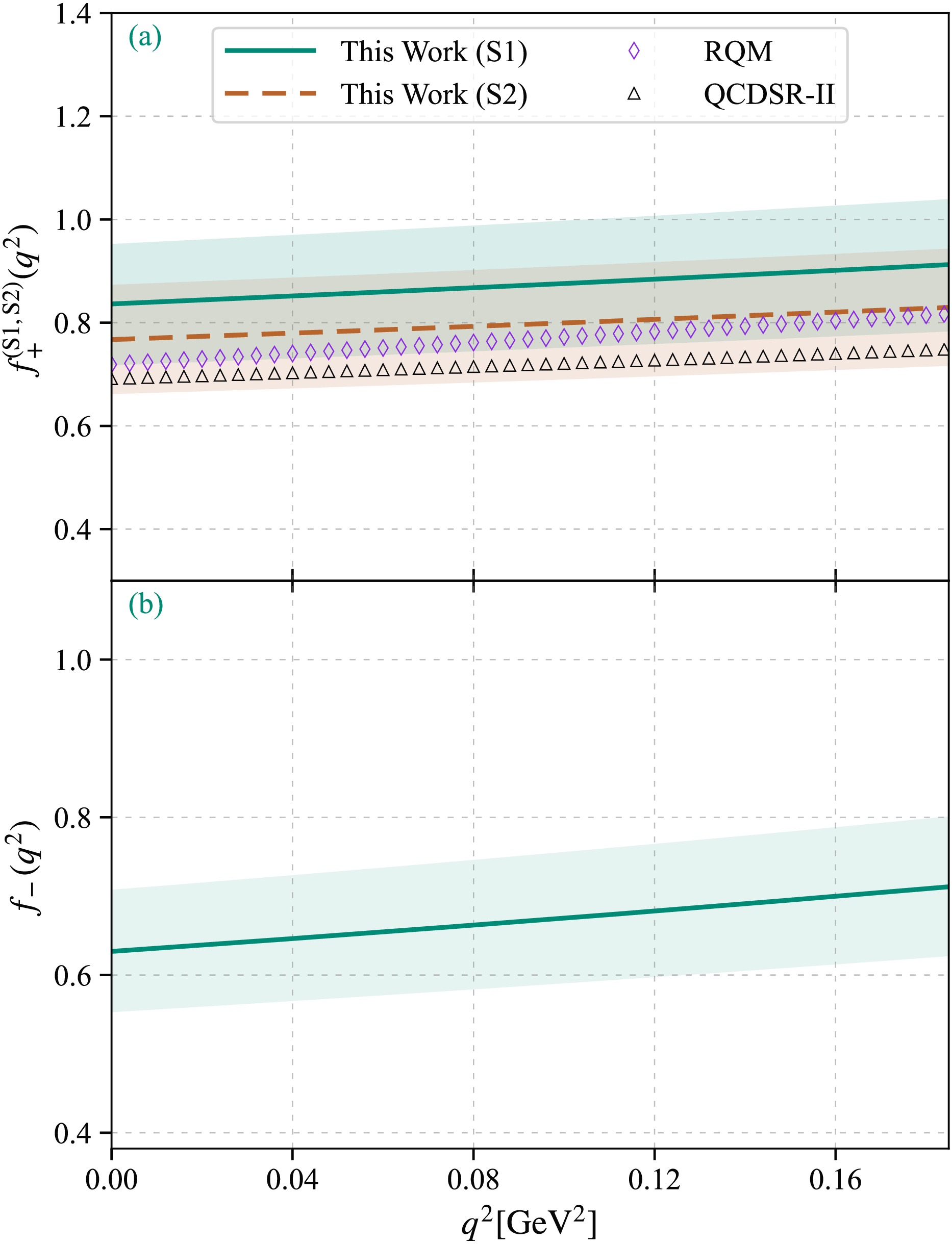
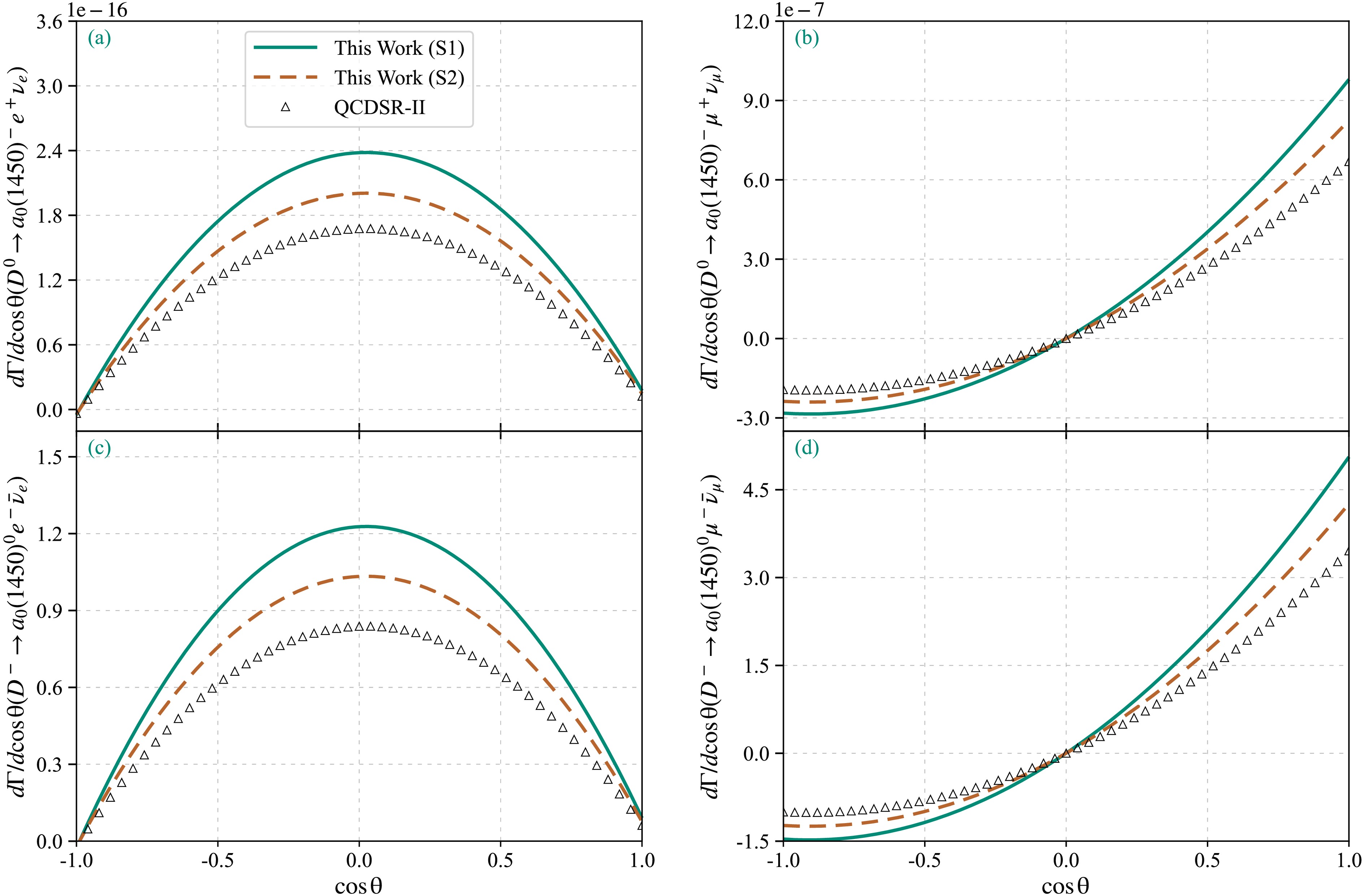
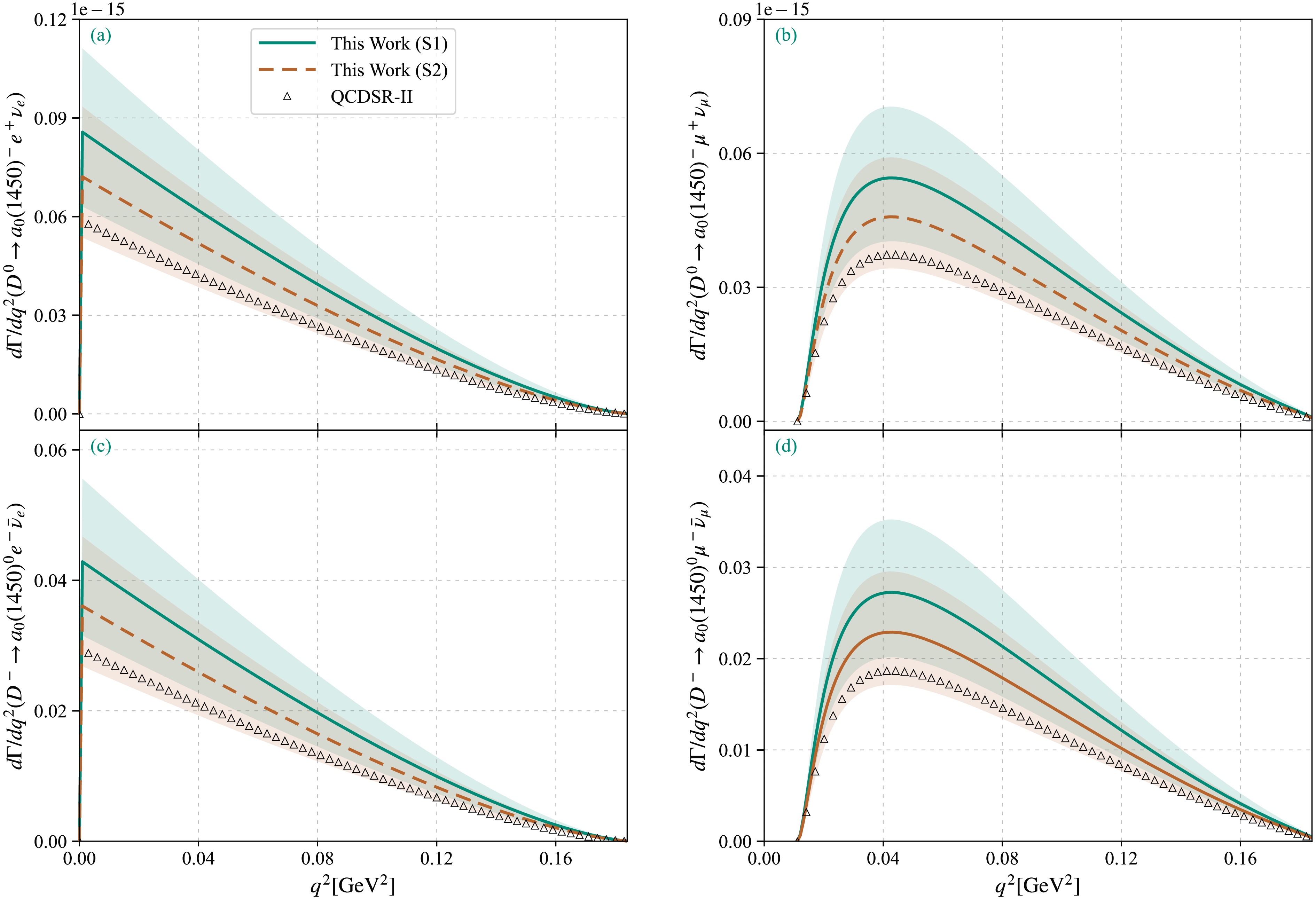
The internal structure of the light scalar state\begin{document}$ a_0(1450) $\end{document} \begin{document}$ q\bar{q} $\end{document} \begin{document}$ D \to a_0(1450)\ell \nu_\ell $\end{document} \begin{document}$ \ell=(e, \mu) $\end{document} \begin{document}$ \langle\xi^{n}\rangle |_{\mu} $\end{document} \begin{document}$ a_{n}(\mu) $\end{document} \begin{document}$ \mu_0=1\; {\rm{GeV}} $\end{document} \begin{document}$ \mu_k= 1.4\; {\rm{GeV}} $\end{document} \begin{document}$ n=(1,3,5) $\end{document} \begin{document}$ f_+^{({\rm{S}}1)}(0) = $\end{document} \begin{document}$ 0.836_{-0.119}^{+0.116} $\end{document} \begin{document}$ f_+^{({\rm{S}}2)}(0)=0.767_{-0.105}^{+0.106} $\end{document} \begin{document}$ f_-(0)=0.630_{-0.077}^{+0.078} $\end{document} \begin{document}$ z(q^2, t) $\end{document} \begin{document}$ q^2 $\end{document} \begin{document}$ q^2=10^{-5} \; {\rm{GeV}}^2 $\end{document} \begin{document}${{\rm d}\Gamma}/{{\rm d}\cos\theta_\ell }$\end{document} \begin{document}$ \cos\theta_\ell \in [-1,1] $\end{document} \begin{document}$ D^0 \to a_0(1450)^- \ell^+ \nu_\ell $\end{document} \begin{document}$ D^- \to a_0(1450)^0 \ell^- \bar{\nu}_\ell $\end{document} \begin{document}$ 10^{-6} $\end{document} \begin{document}$ D^- \to a_0(1450)^0 \ell^- \bar{\nu}_\ell $\end{document} \begin{document}$ {\cal{A}}_{\rm{FB}} $\end{document} \begin{document}$ {\cal{A}}_{\lambda_\ell} $\end{document} \begin{document}$ q^2 $\end{document} \begin{document}$ {\cal{F}}_{\rm{H}} $\end{document}
The internal structure of the light scalar state
2026, 50(7): 073104. doi: 10.1088/1674-1137/ae5c85
Abstract:
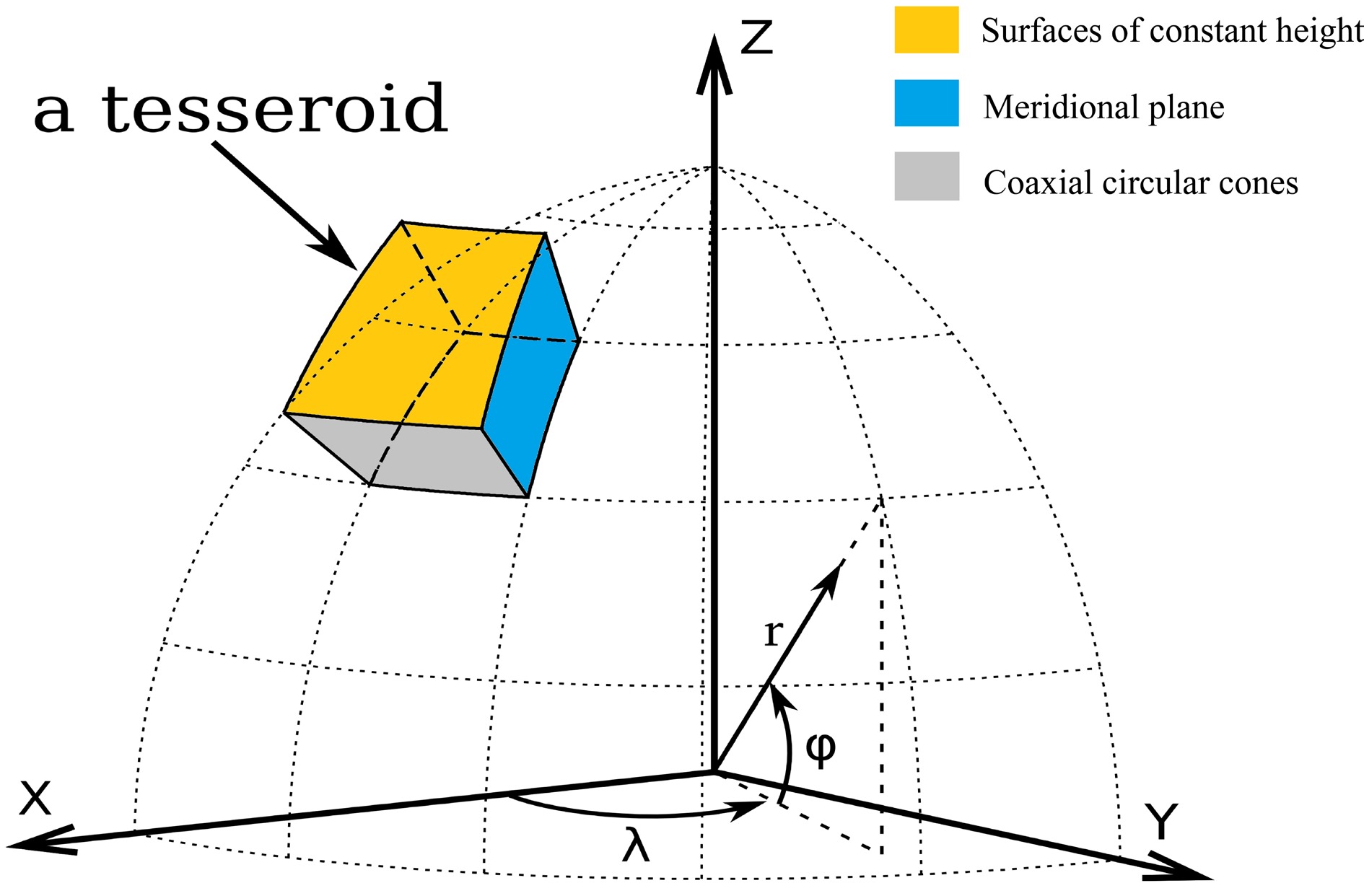
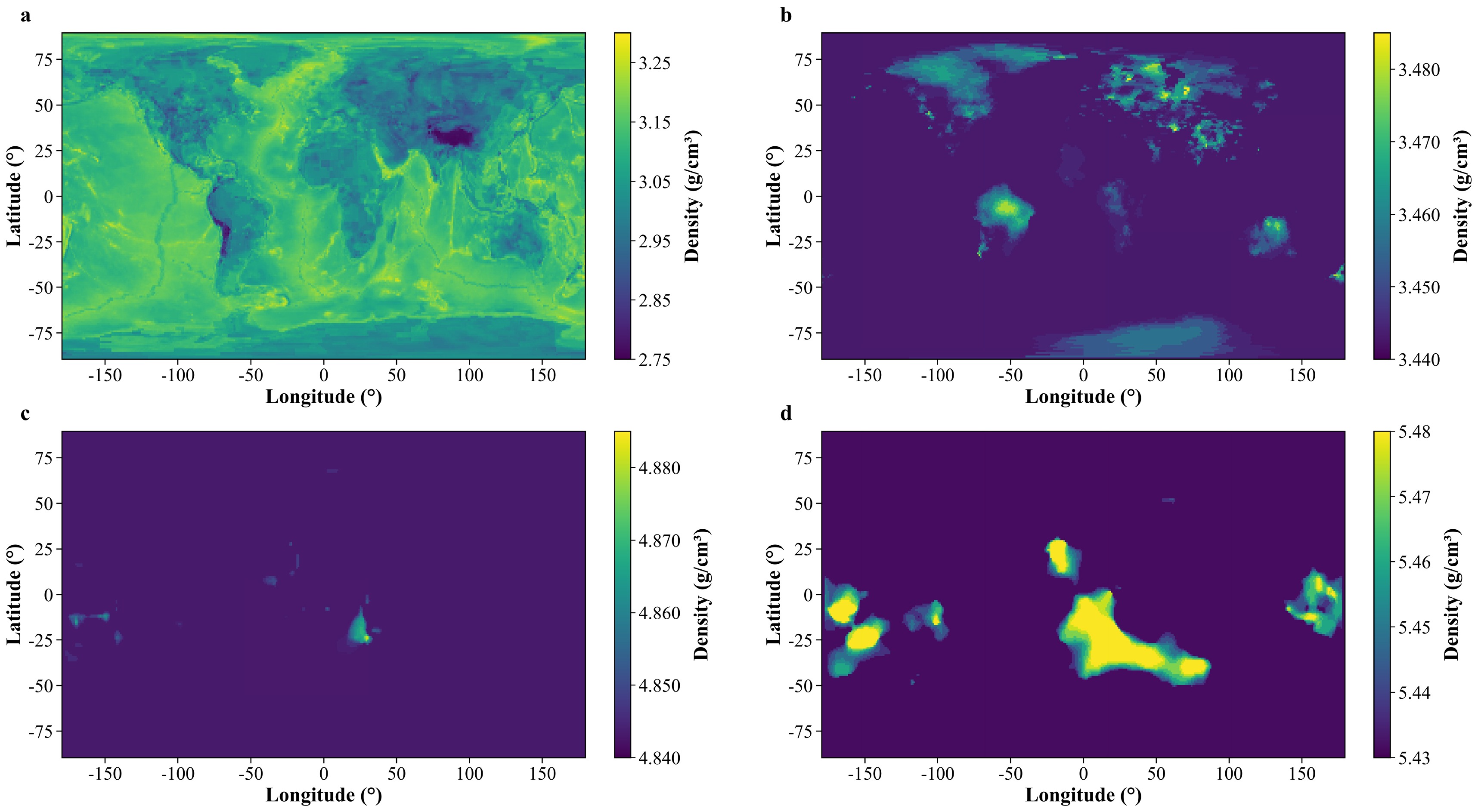
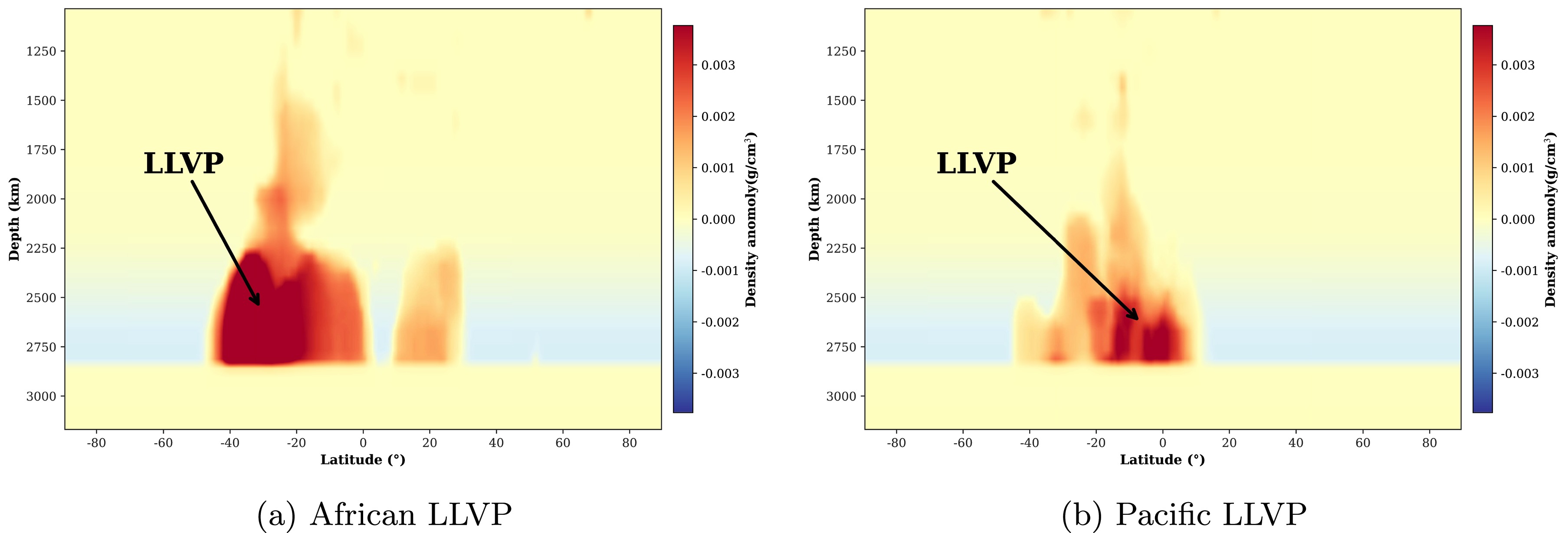
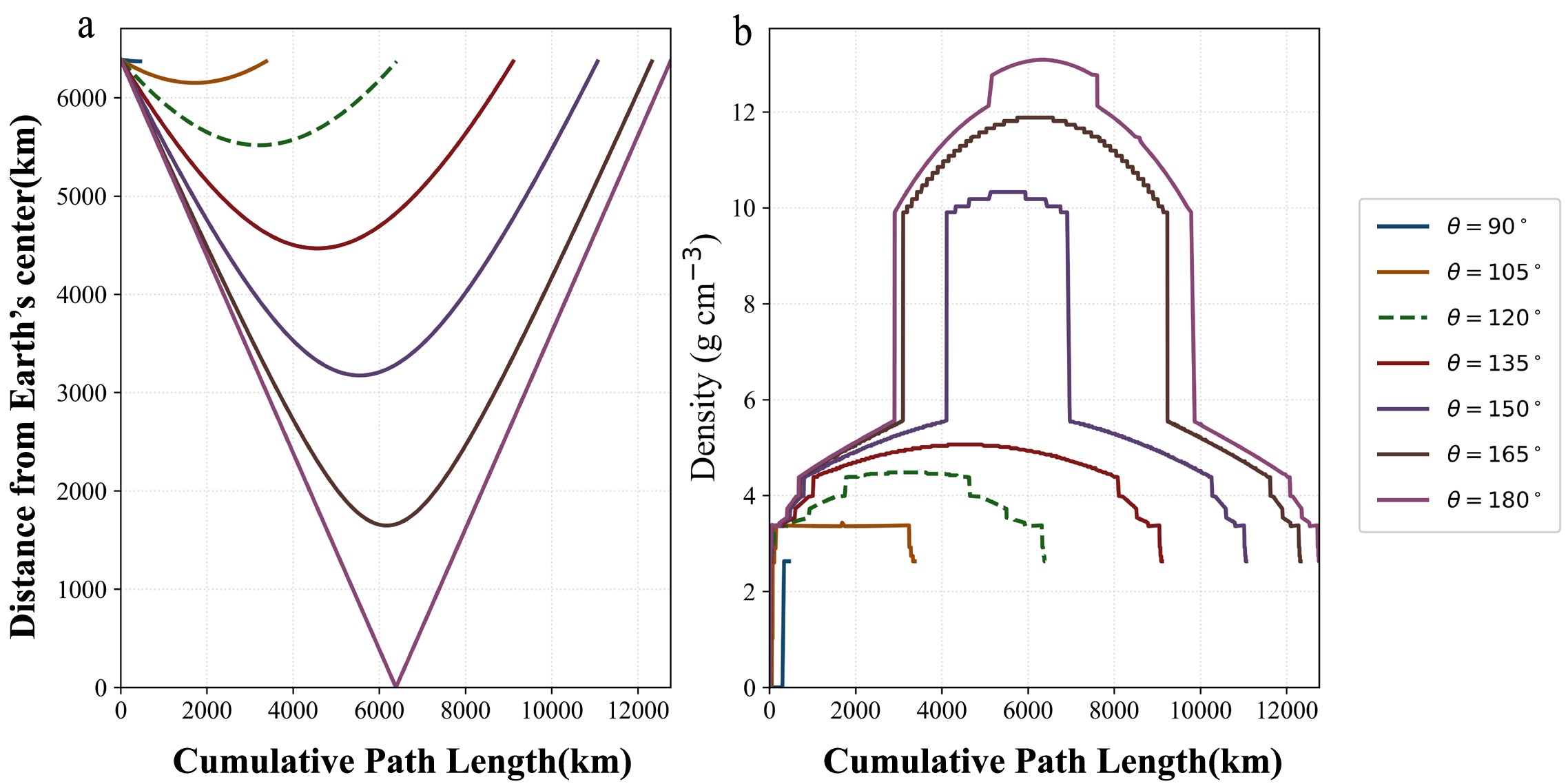
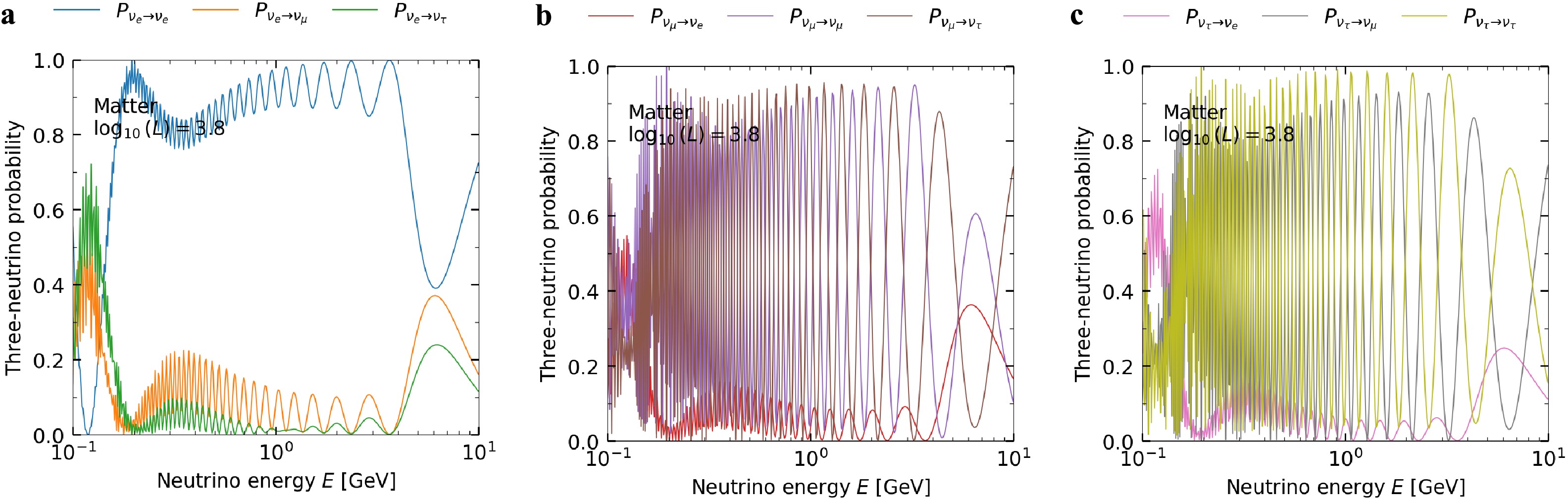
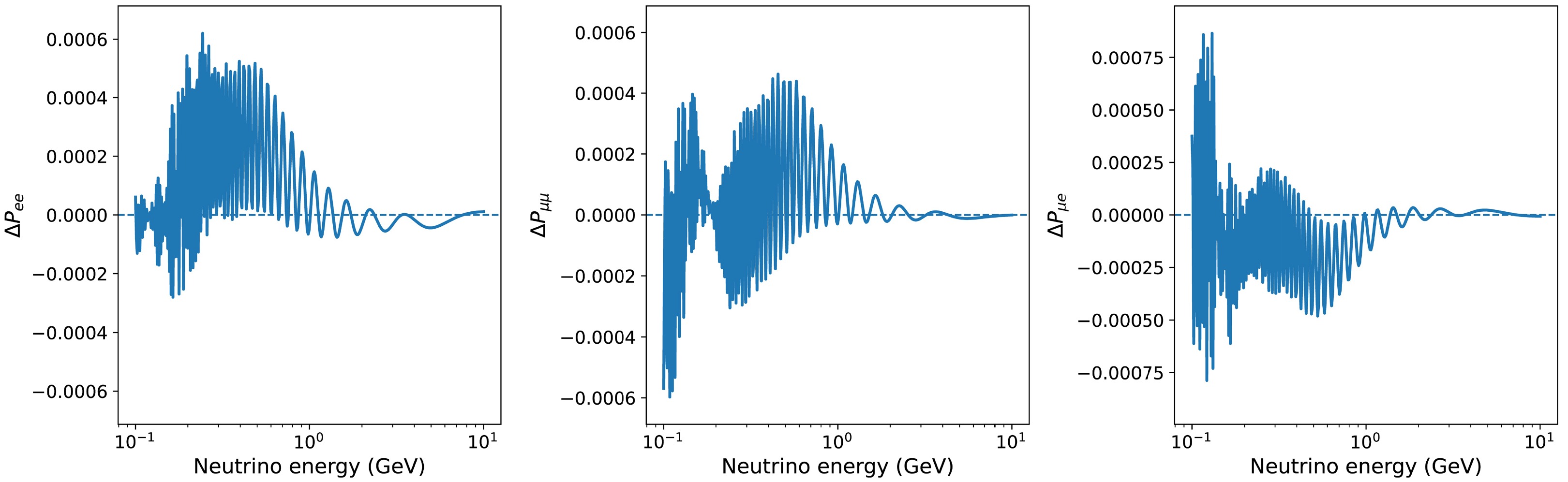
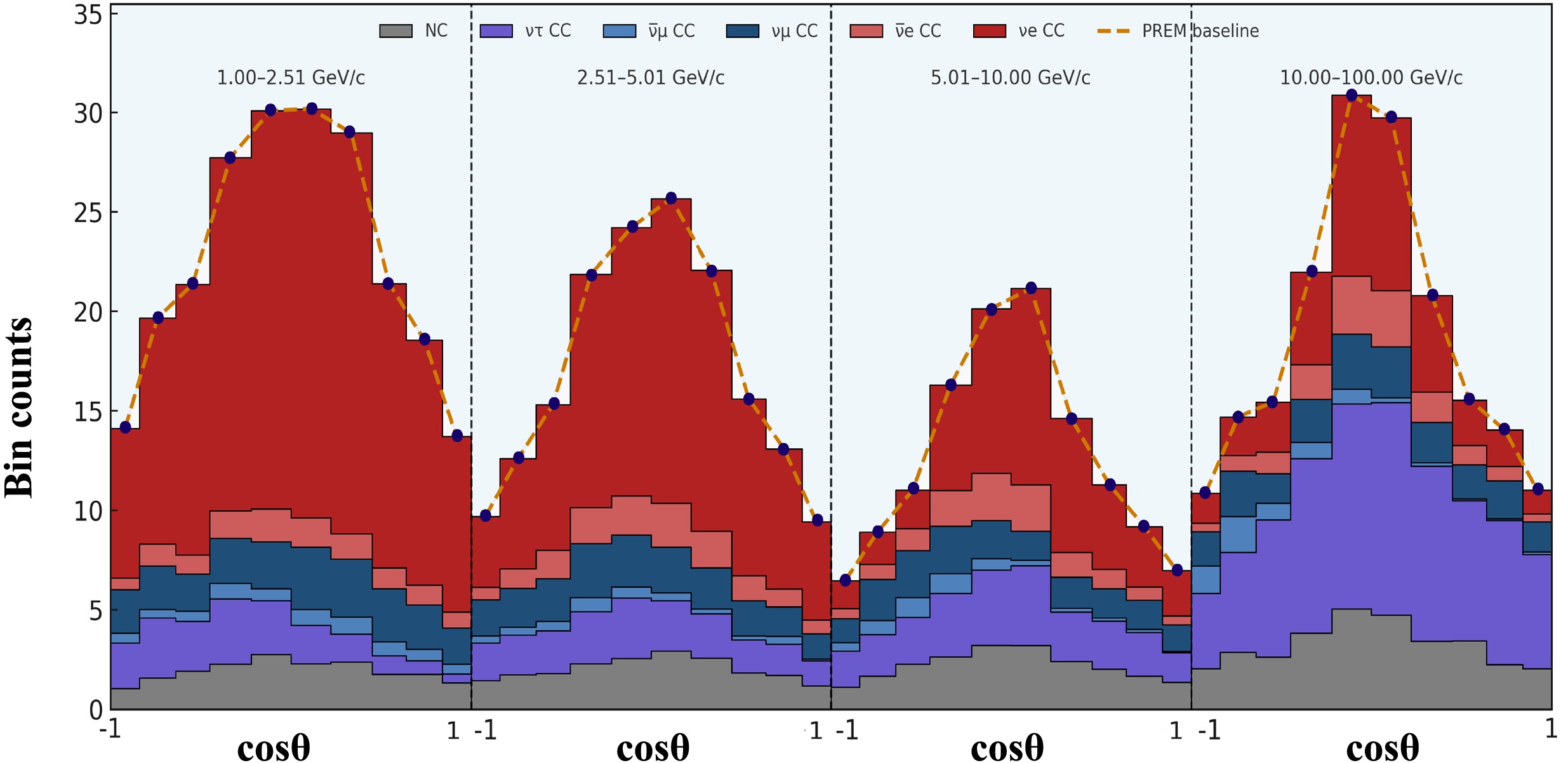
Neutrino Earth tomography provides an observational approach to studying the Earth's deep three-dimensional structure that is distinct from seismology. However, most existing studies still rely on one-dimensional density models and therefore cannot adequately represent lateral heterogeneity within the Earth. To address this issue, this study integrates PREM, CRUST1.0, and HMSL-S06 on a tesseroid grid to construct a non-spherically symmetric three-dimensional Earth density model that includes large low-velocity provinces (LLVPs) in the deep mantle. We also develop a corresponding procedure for extracting neutrino propagation trajectories and derive closed-form expressions for the total mass and axial moment of inertia of the discrete model, which are used as global consistency checks. Within an exact three-flavor oscillation framework, we use public Super-Kamiokande data products to compare the event counts predicted by the three-dimensional model with those from a conventional one-dimensional spherically symmetric model. The results show that, under the present calculation scheme, the differences in the overall event count distributions between the three-dimensional model and the one-dimensional reference model remain limited. This study establishes a three-dimensional calculation framework that can provide a methodological basis for future investigations of how lateral density heterogeneity may affect atmospheric neutrino propagation.
Neutrino Earth tomography provides an observational approach to studying the Earth's deep three-dimensional structure that is distinct from seismology. However, most existing studies still rely on one-dimensional density models and therefore cannot adequately represent lateral heterogeneity within the Earth. To address this issue, this study integrates PREM, CRUST1.0, and HMSL-S06 on a tesseroid grid to construct a non-spherically symmetric three-dimensional Earth density model that includes large low-velocity provinces (LLVPs) in the deep mantle. We also develop a corresponding procedure for extracting neutrino propagation trajectories and derive closed-form expressions for the total mass and axial moment of inertia of the discrete model, which are used as global consistency checks. Within an exact three-flavor oscillation framework, we use public Super-Kamiokande data products to compare the event counts predicted by the three-dimensional model with those from a conventional one-dimensional spherically symmetric model. The results show that, under the present calculation scheme, the differences in the overall event count distributions between the three-dimensional model and the one-dimensional reference model remain limited. This study establishes a three-dimensional calculation framework that can provide a methodological basis for future investigations of how lateral density heterogeneity may affect atmospheric neutrino propagation.
2026, 50(7): 073105. doi: 10.1088/1674-1137/ae5f08
Abstract:
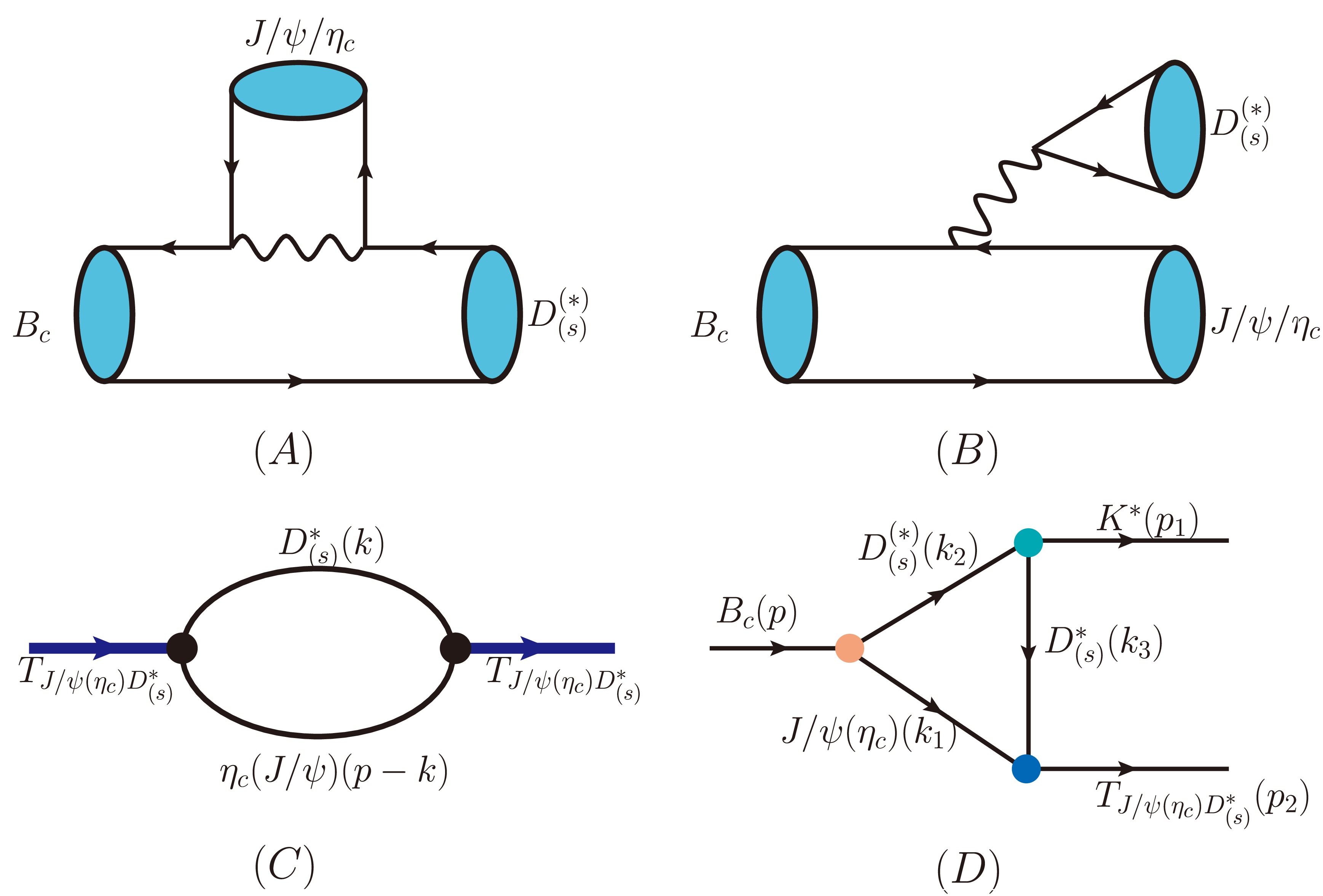
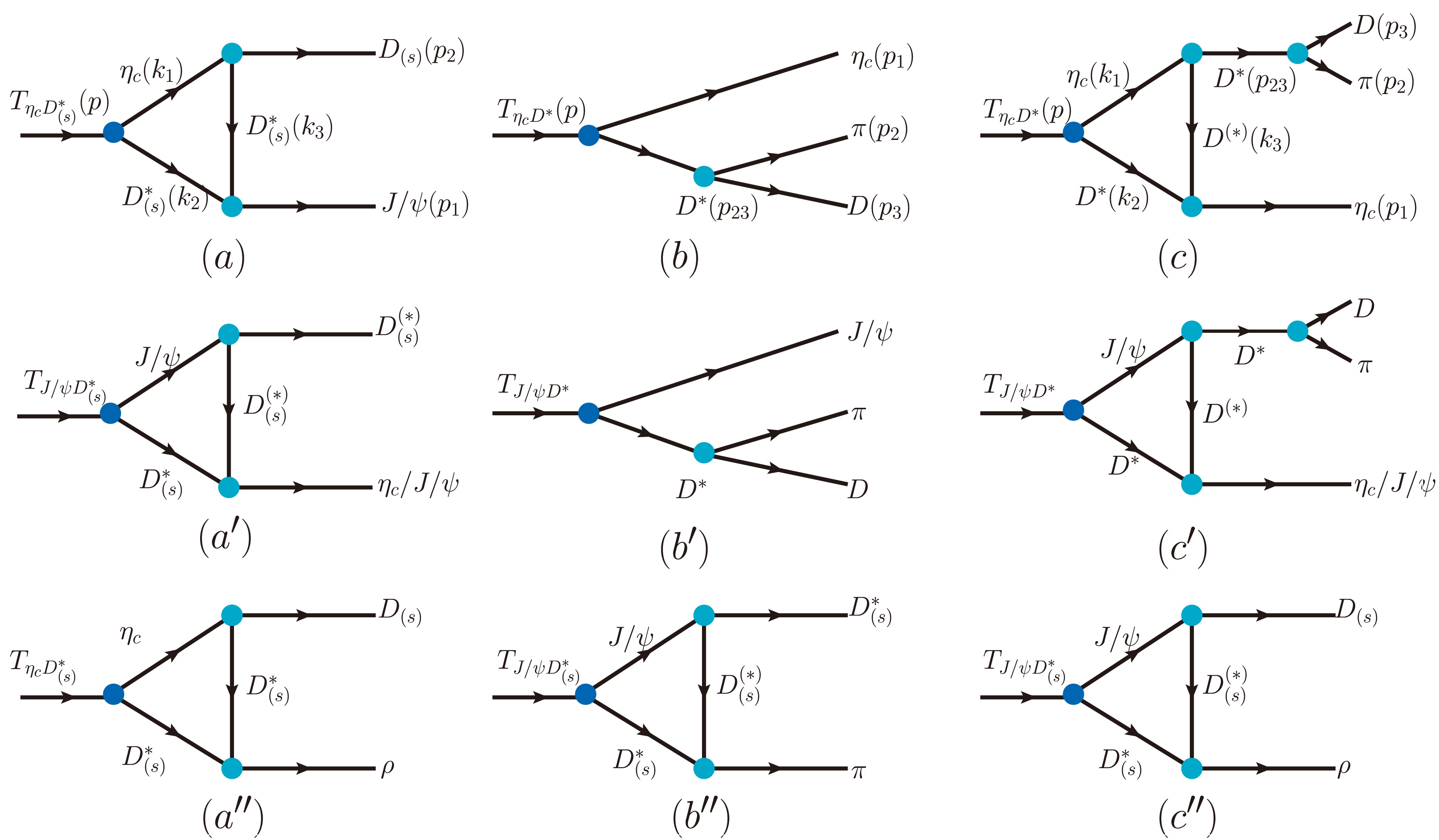
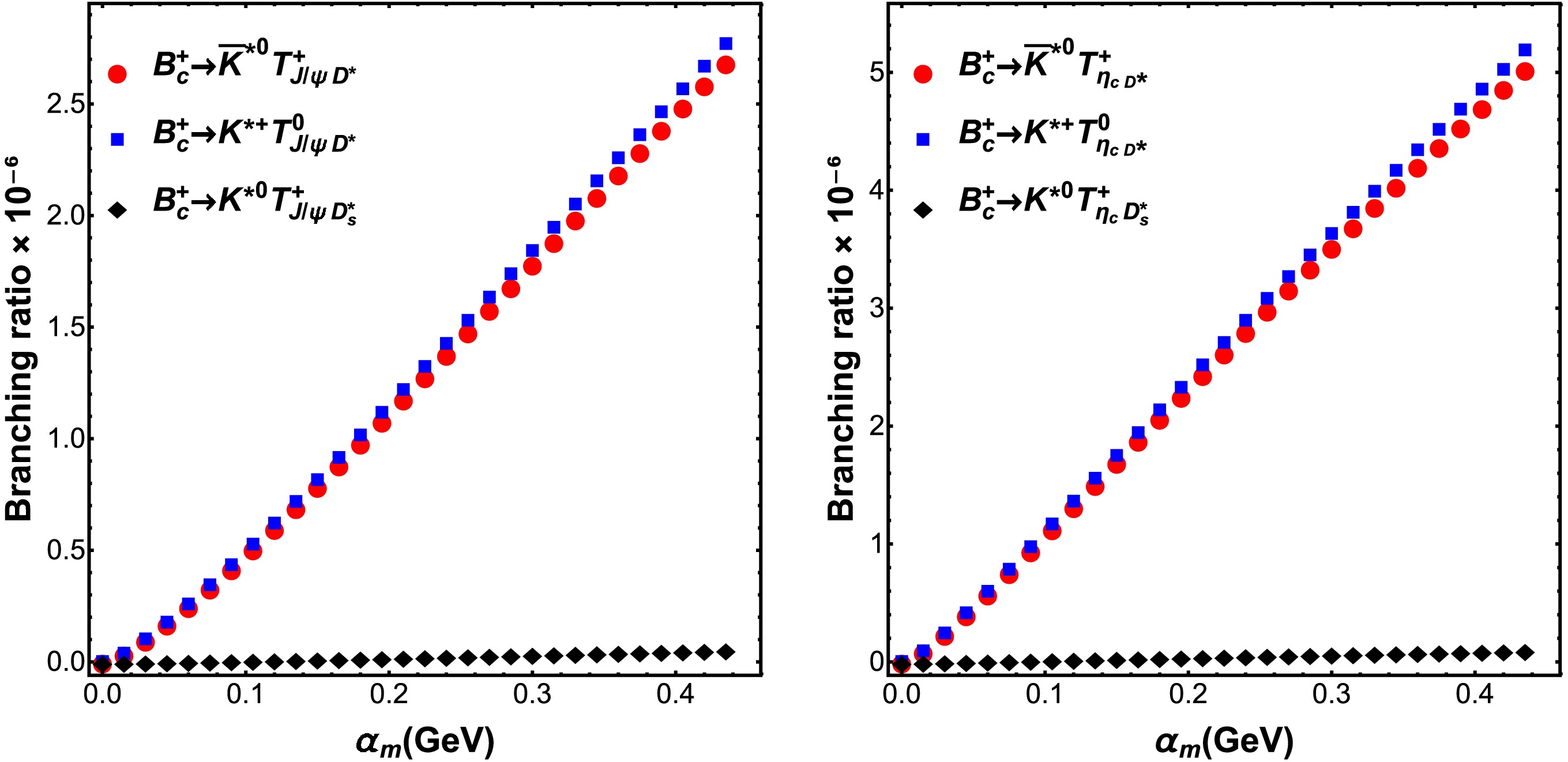
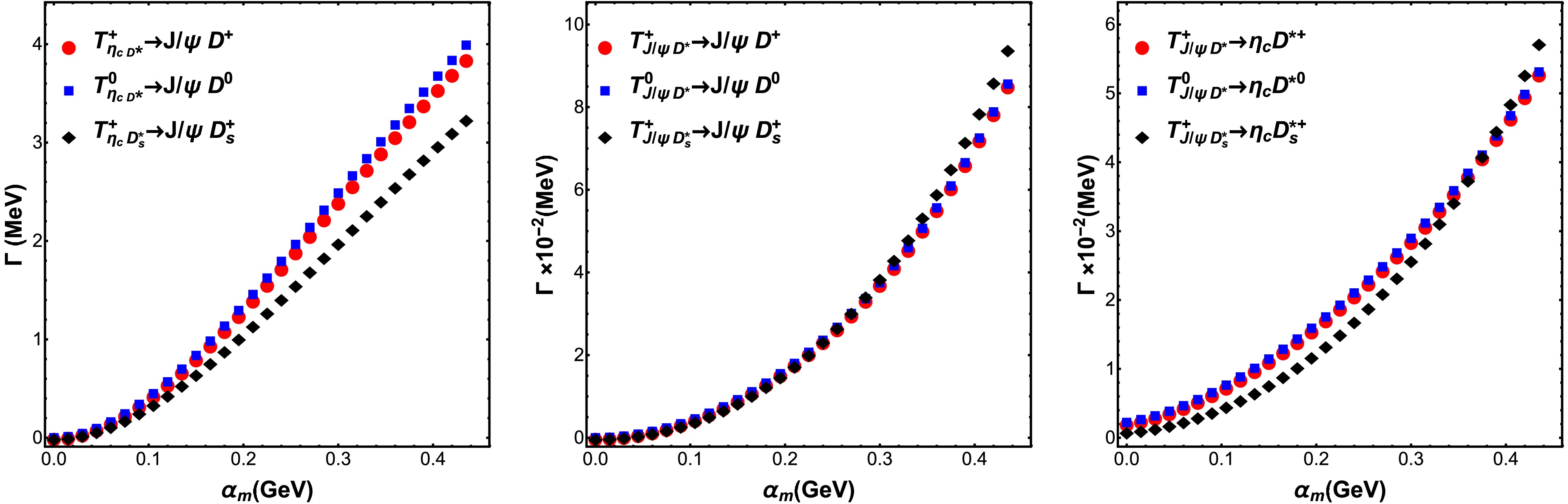
In this work, we investigate the production and decay of molecular states with quark content\begin{document}$cc\bar c\bar q$\end{document} \begin{document}$J^P=1^+$\end{document} \begin{document}${\eta_c D^*}$\end{document} \begin{document}${J/\psi D^*}$\end{document} \begin{document}$B_c$\end{document} \begin{document}$10^{-4}$\end{document} \begin{document}${{\eta}_cD^*}$\end{document} \begin{document}$10^{-5}$\end{document} \begin{document}${J/\psi D^*}$\end{document} \begin{document}${{\eta}_cD^*}$\end{document} \begin{document}${J/\psi D^*}$\end{document} \begin{document}${\cal{O}}$\end{document} \begin{document}$\text{MeV}$\end{document}
In this work, we investigate the production and decay of molecular states with quark content
2026, 50(7): 073106. doi: 10.1088/1674-1137/ae62f8
Abstract:
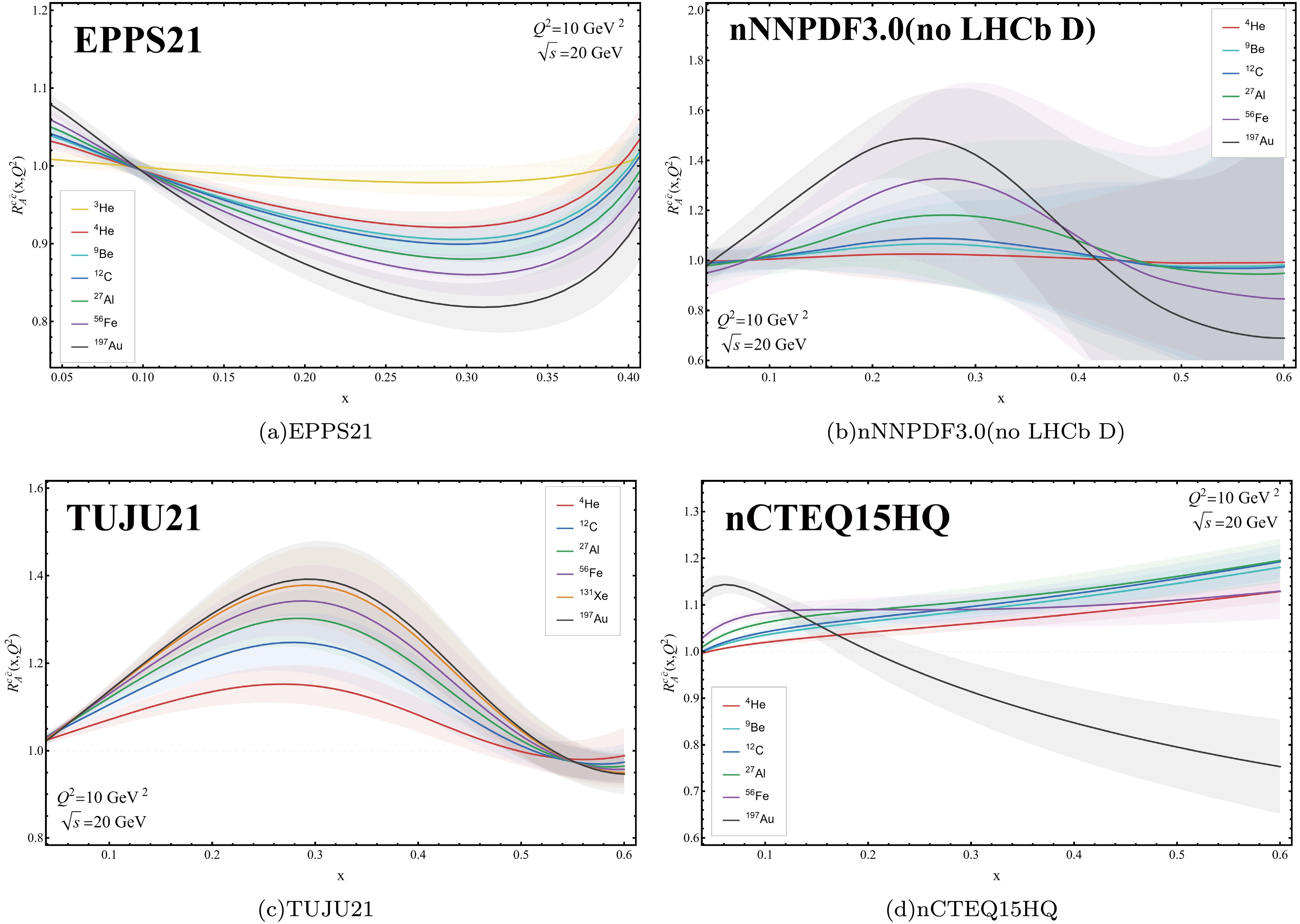
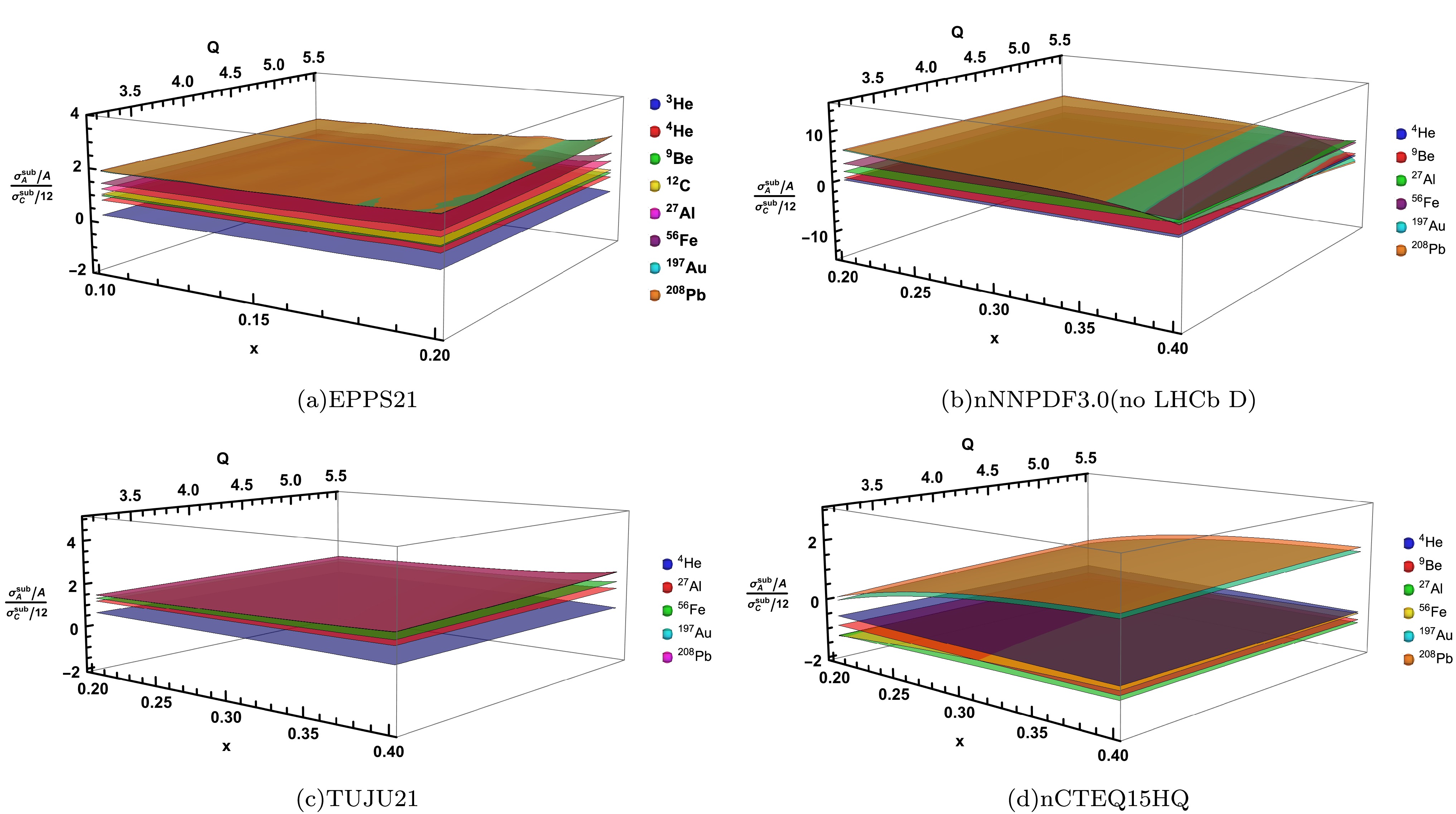
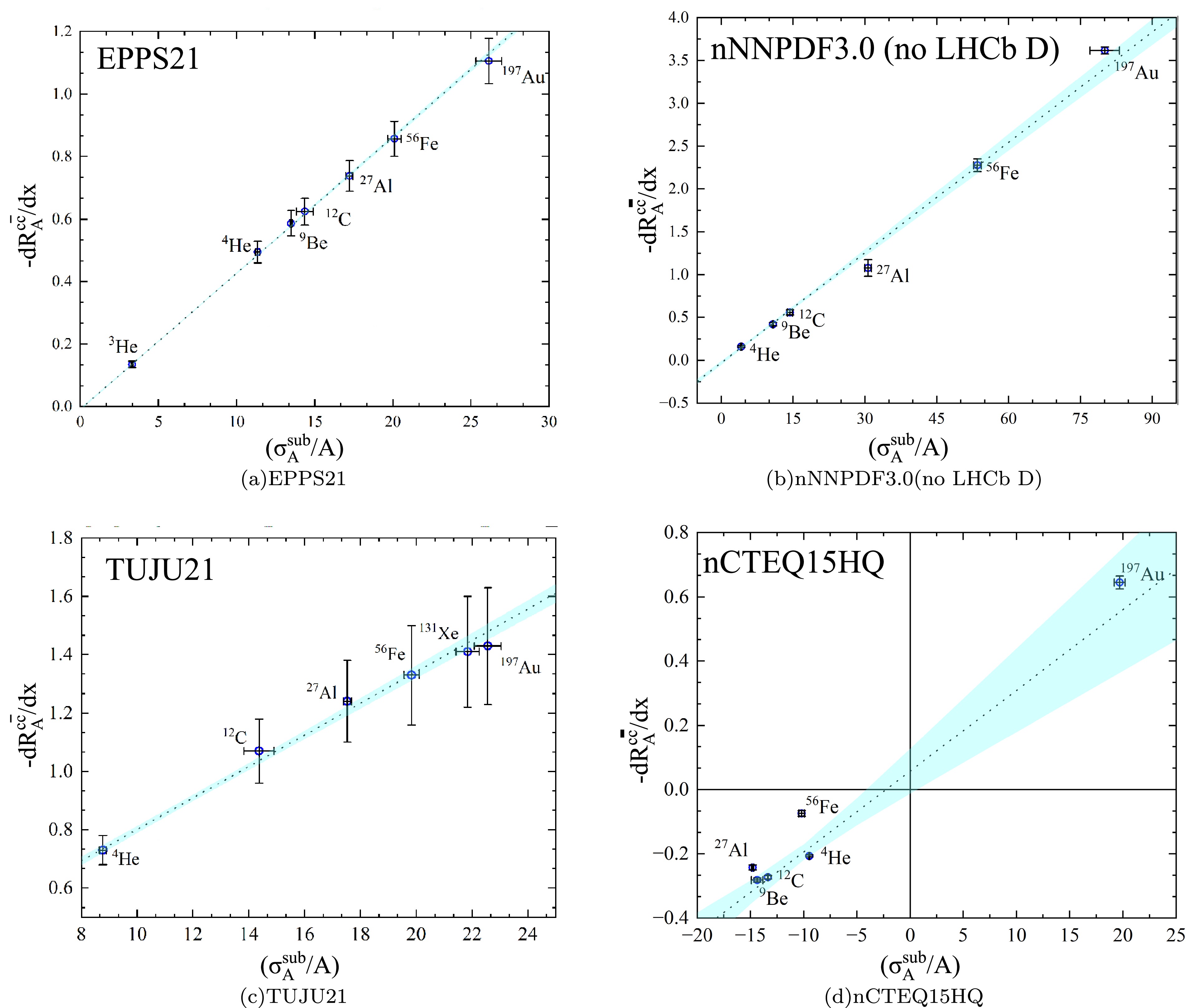
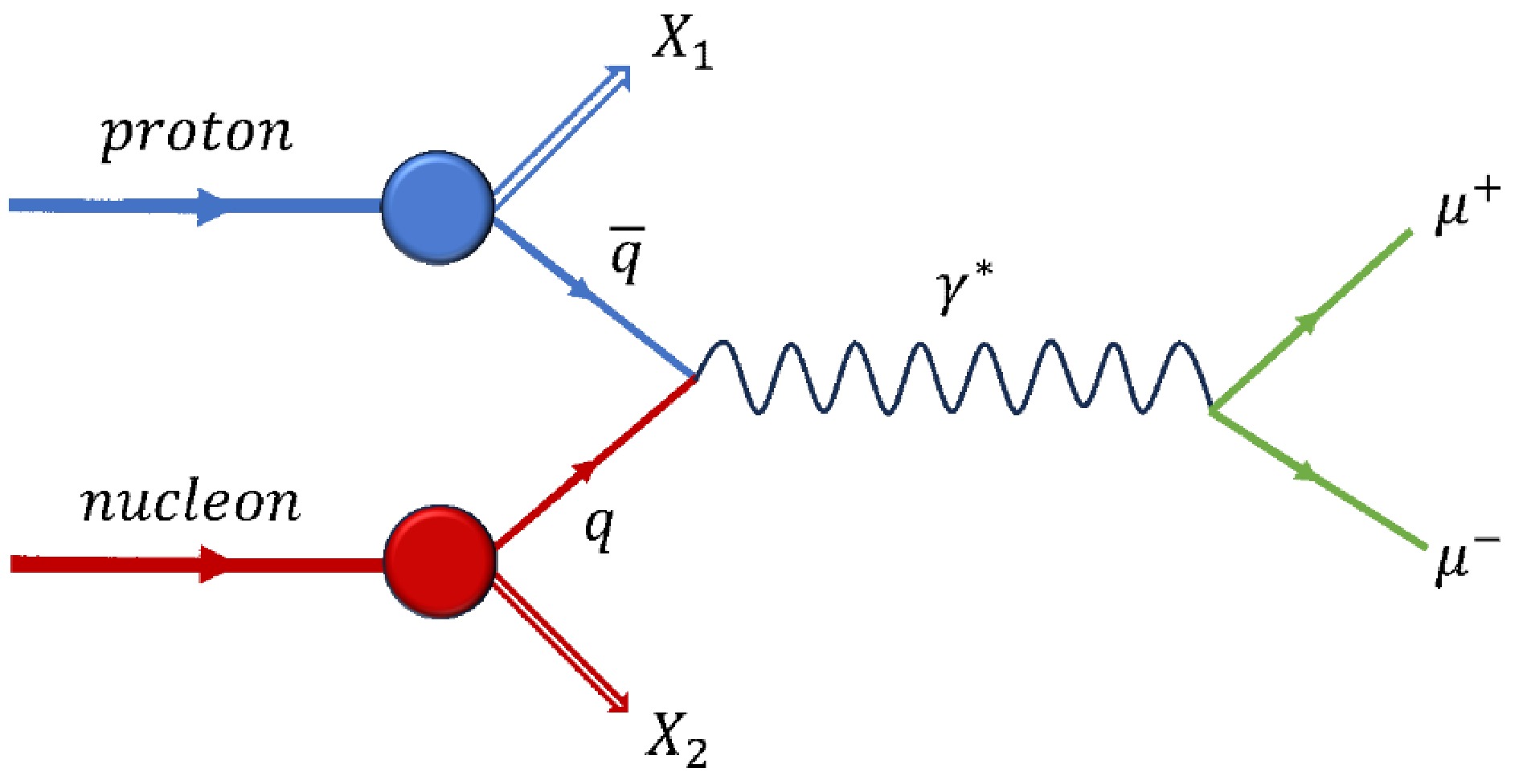
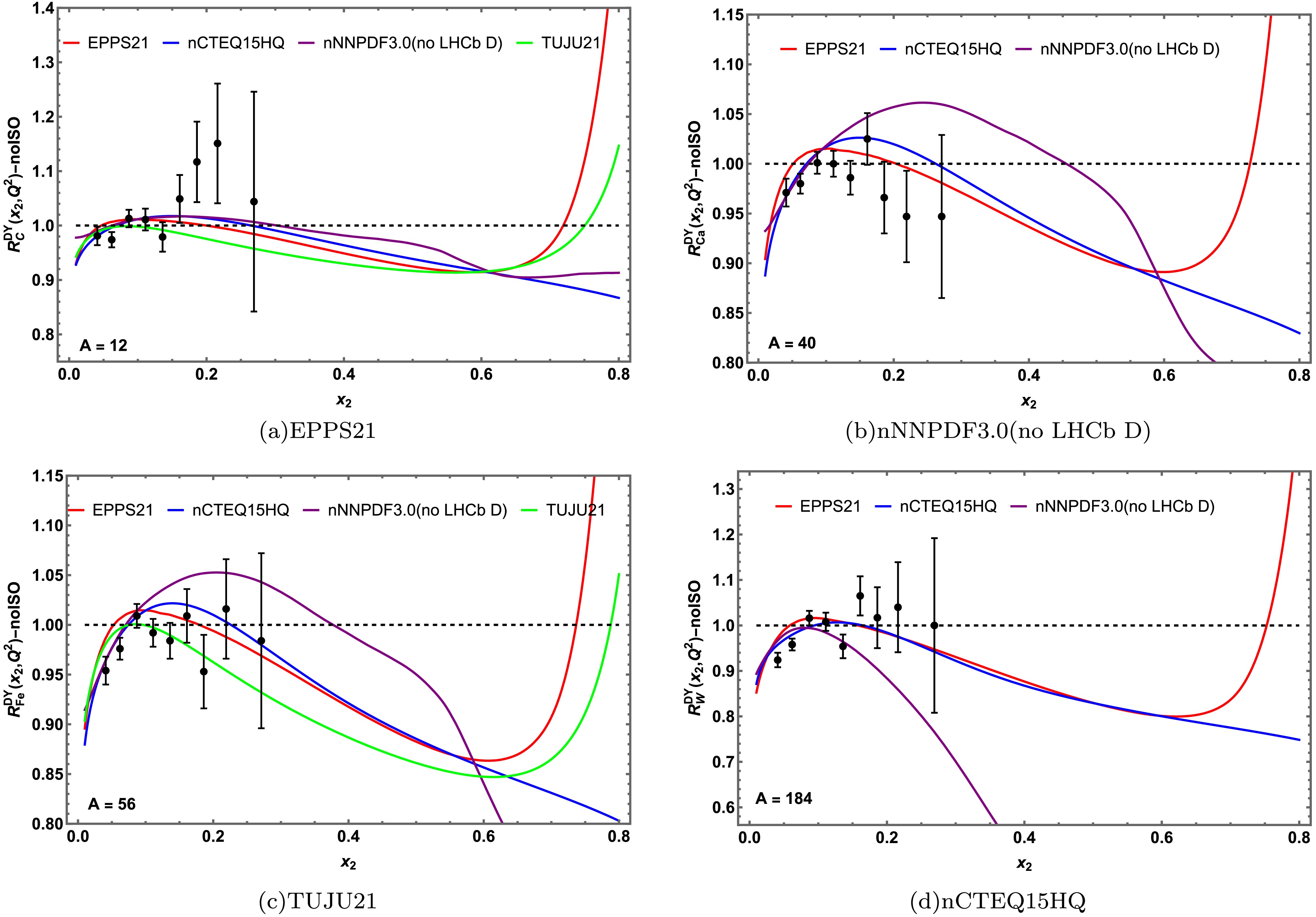
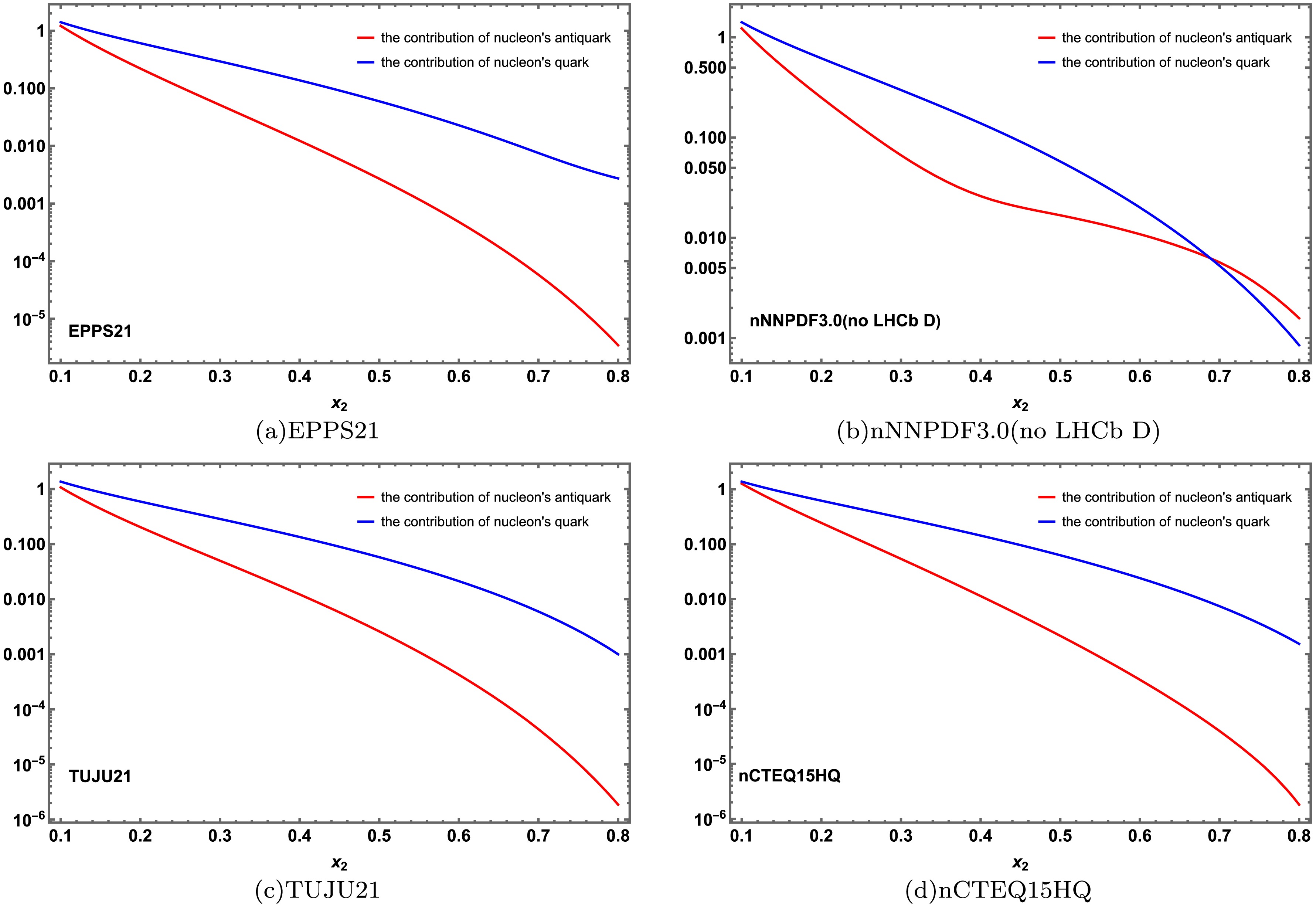
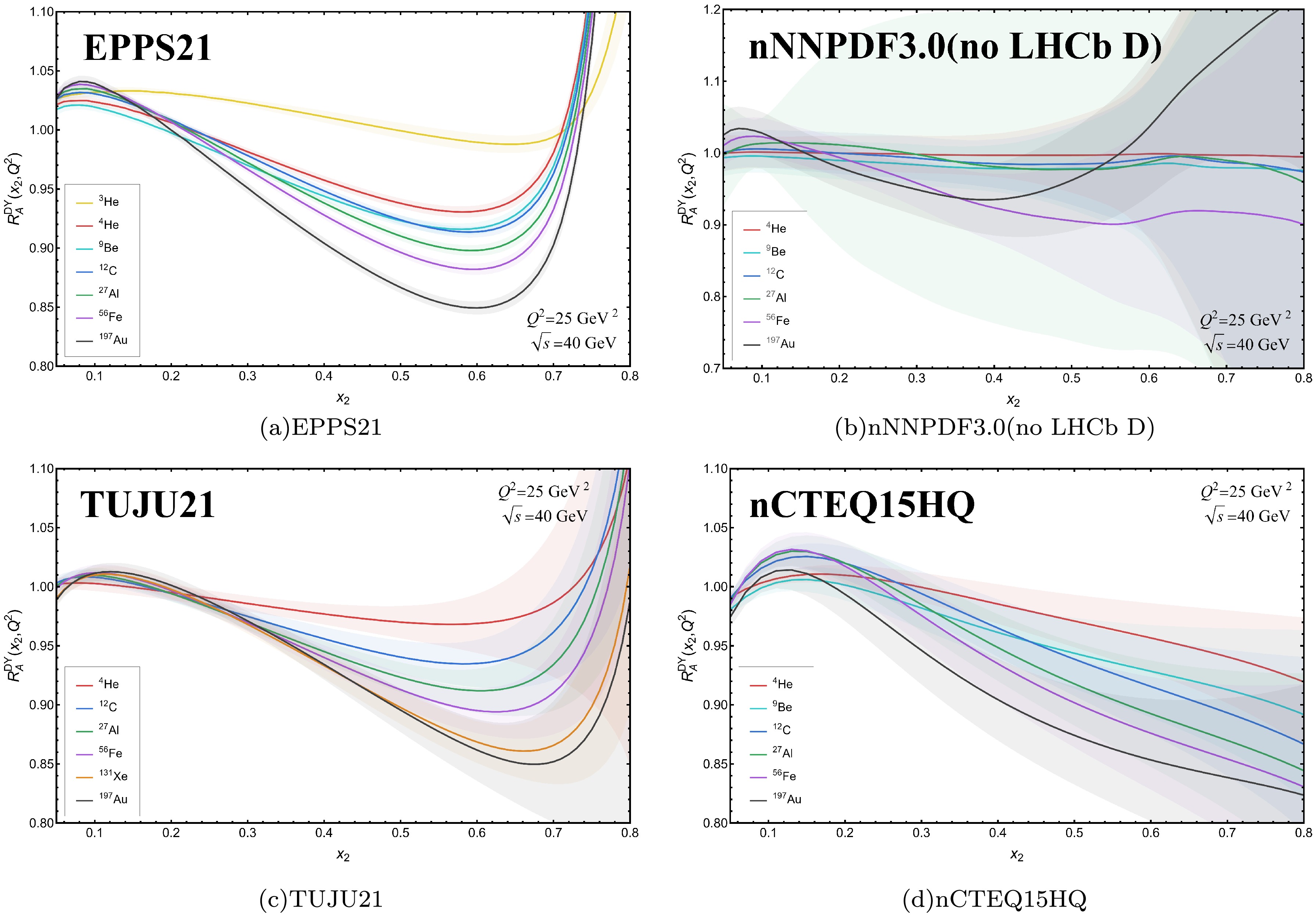
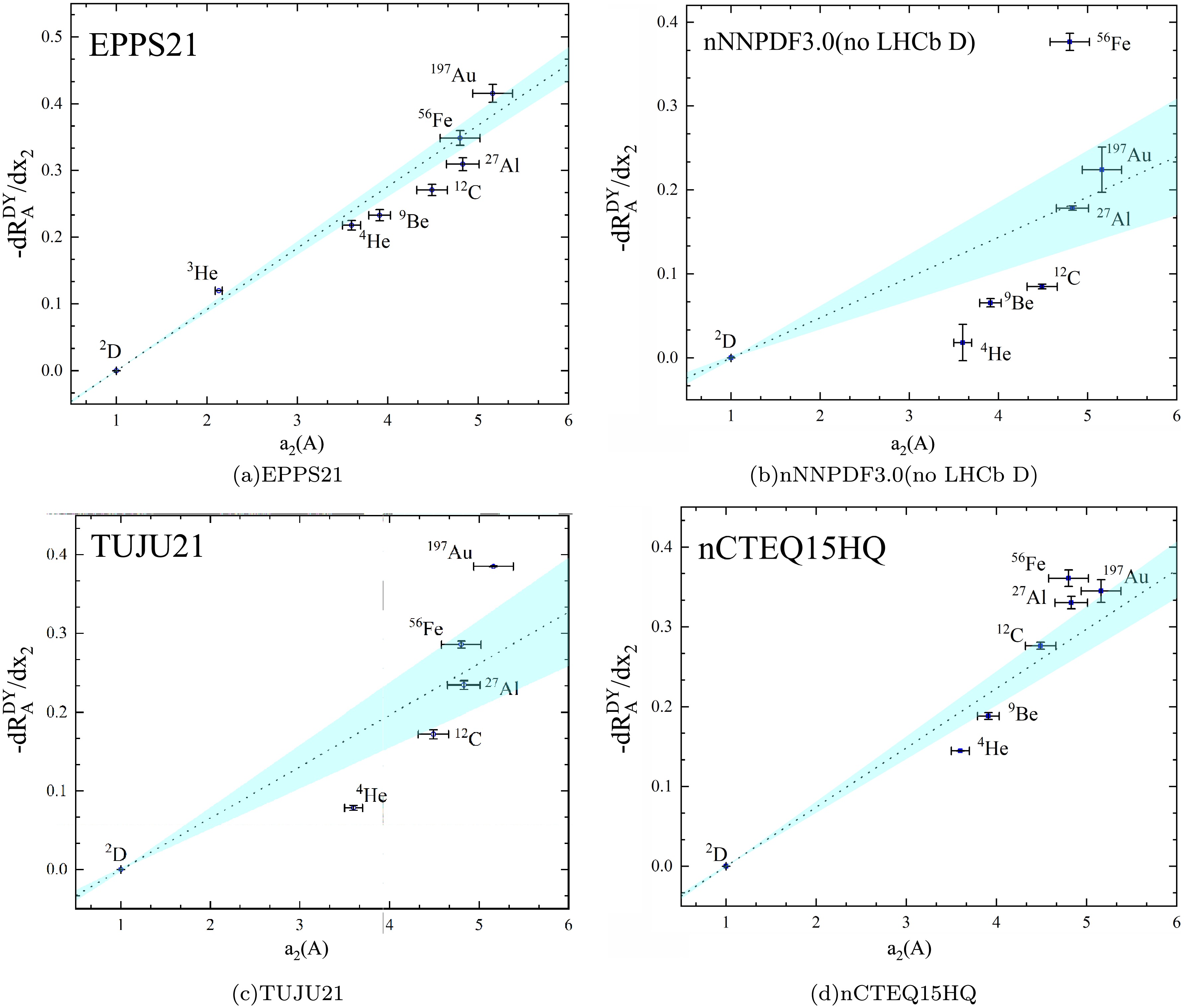
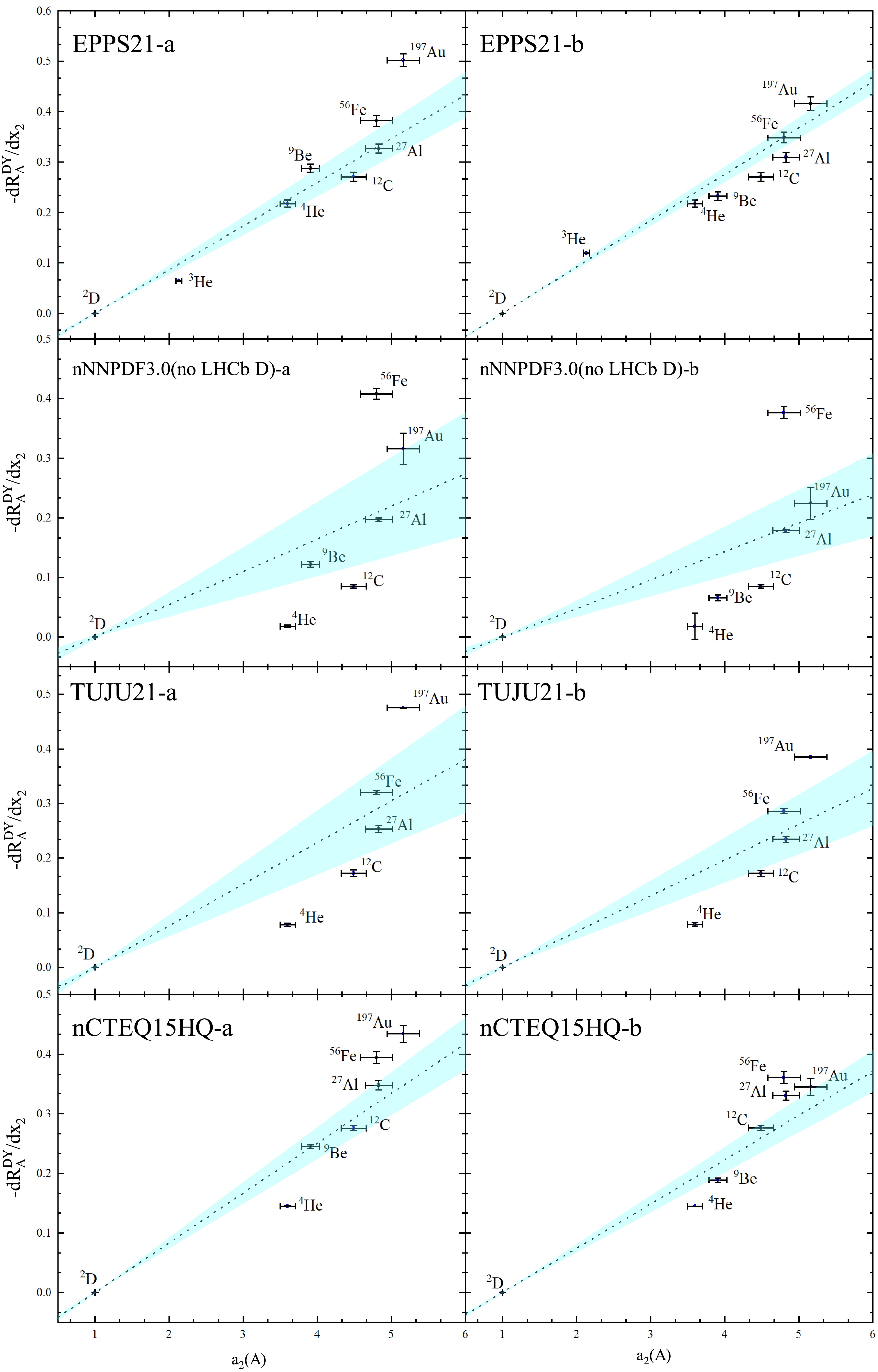
In this work, we focus on the possible linear relationship between short-range correlations (SRCs) and the EMC effect for partons in nuclei. First, we test a linear relationship pertaining to gluons in bound nuclei; it is manifested as a correlation between the slope of the reduced cross-section ratio in deep inelastic scattering (DIS) and the cross-section of sub-threshold\begin{document}$ J/\psi $\end{document}
In this work, we focus on the possible linear relationship between short-range correlations (SRCs) and the EMC effect for partons in nuclei. First, we test a linear relationship pertaining to gluons in bound nuclei; it is manifested as a correlation between the slope of the reduced cross-section ratio in deep inelastic scattering (DIS) and the cross-section of sub-threshold
2026, 50(7): 073107. doi: 10.1088/1674-1137/ae62fa
Abstract:
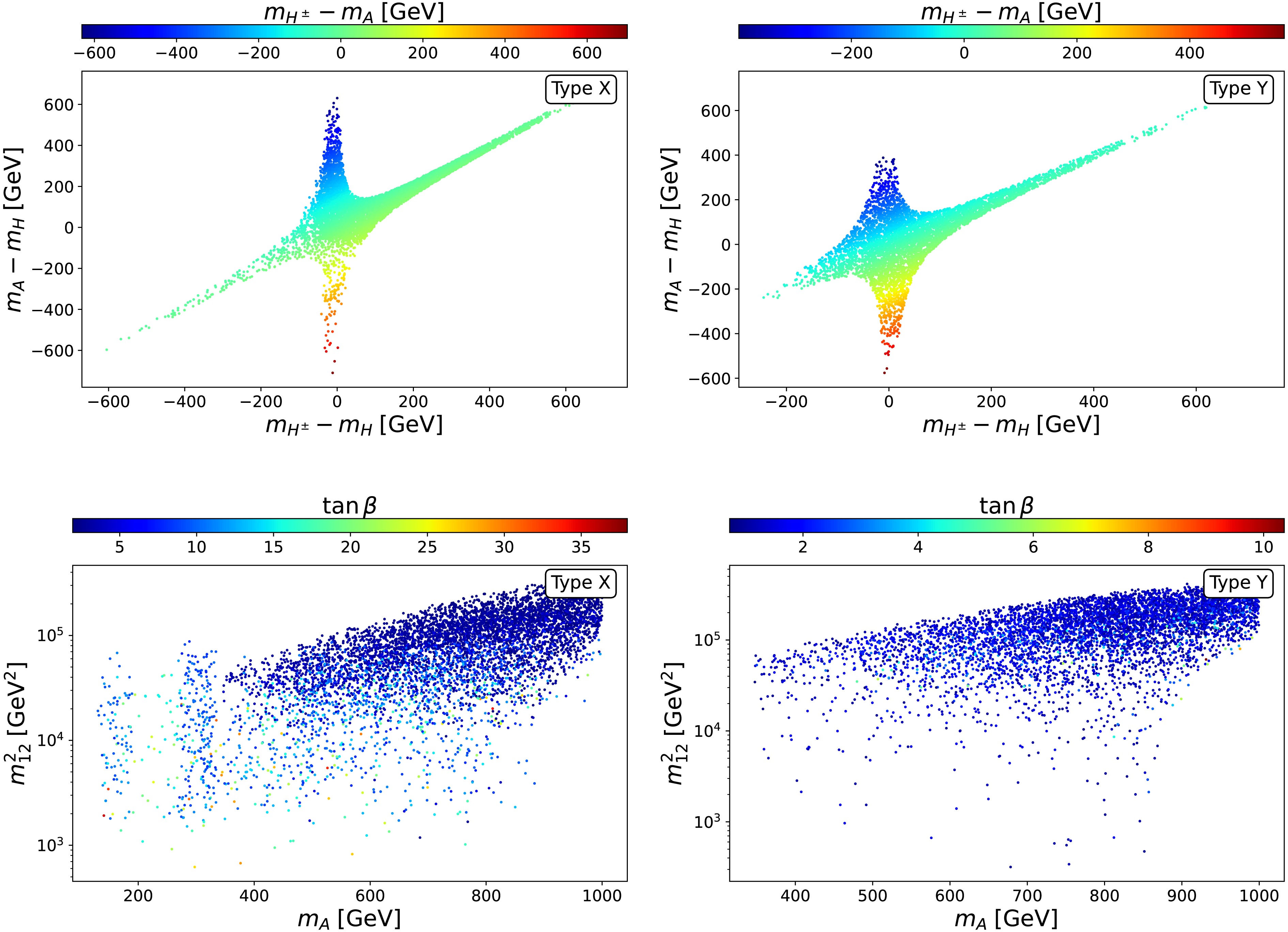
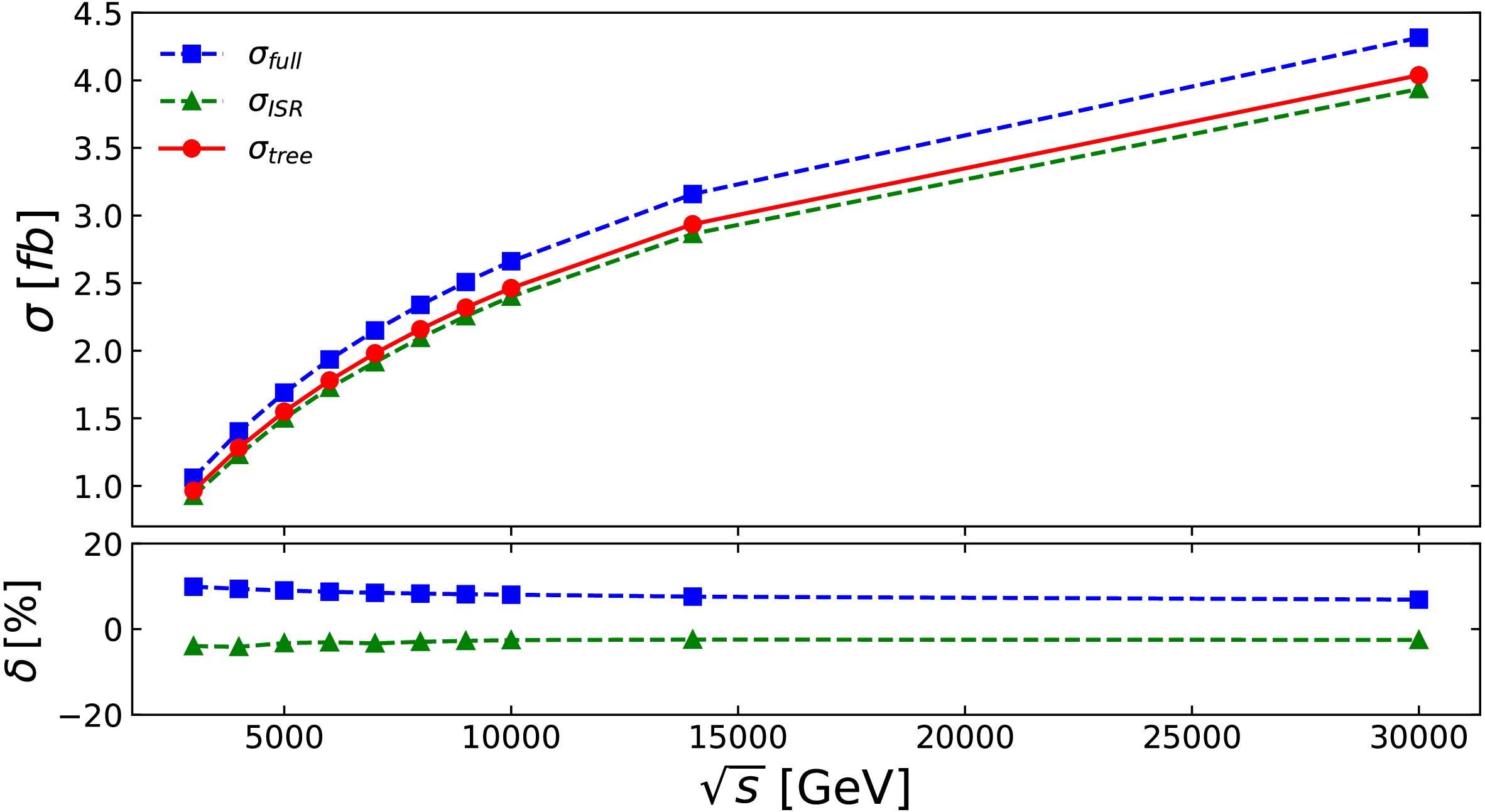
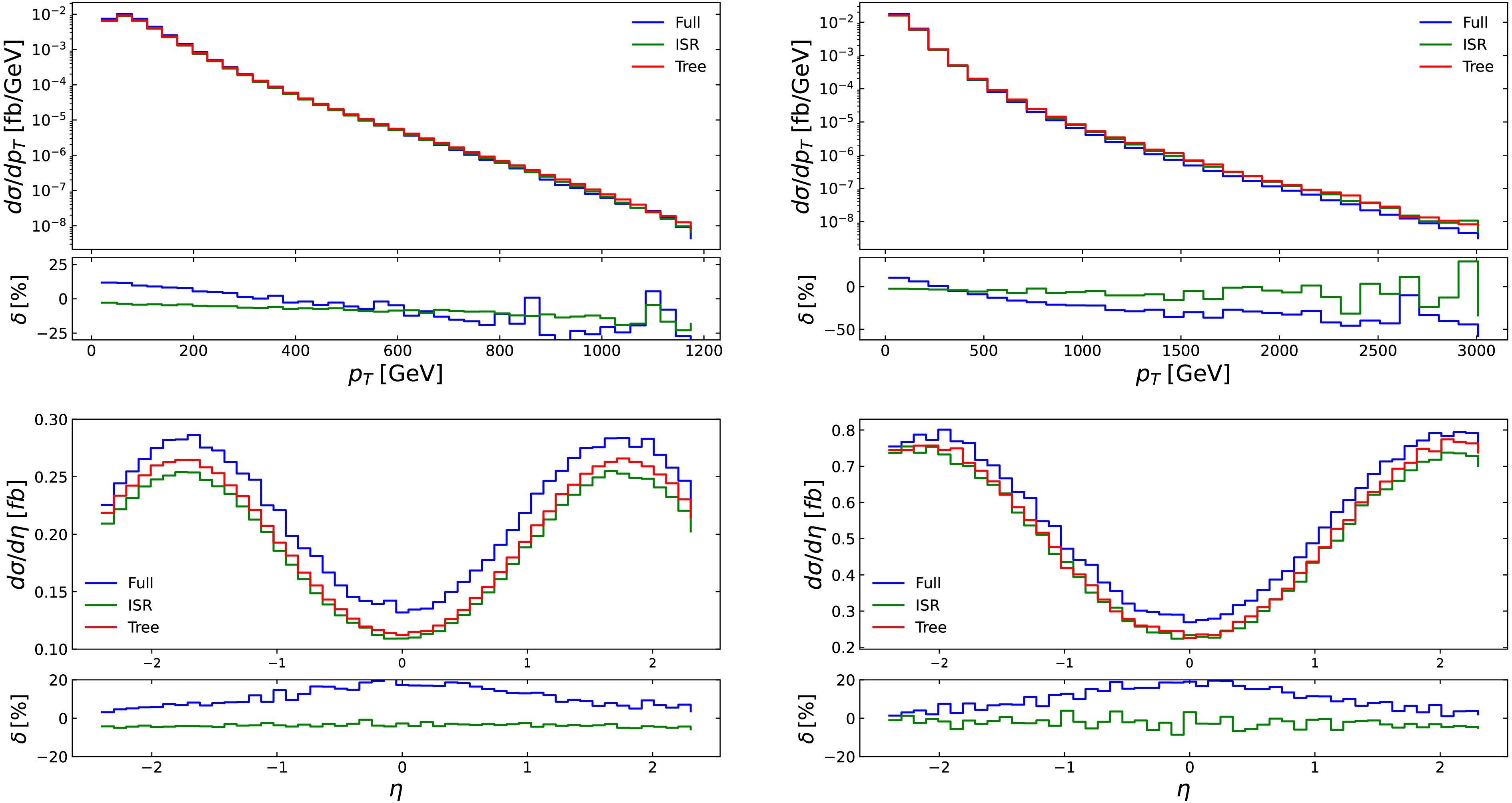
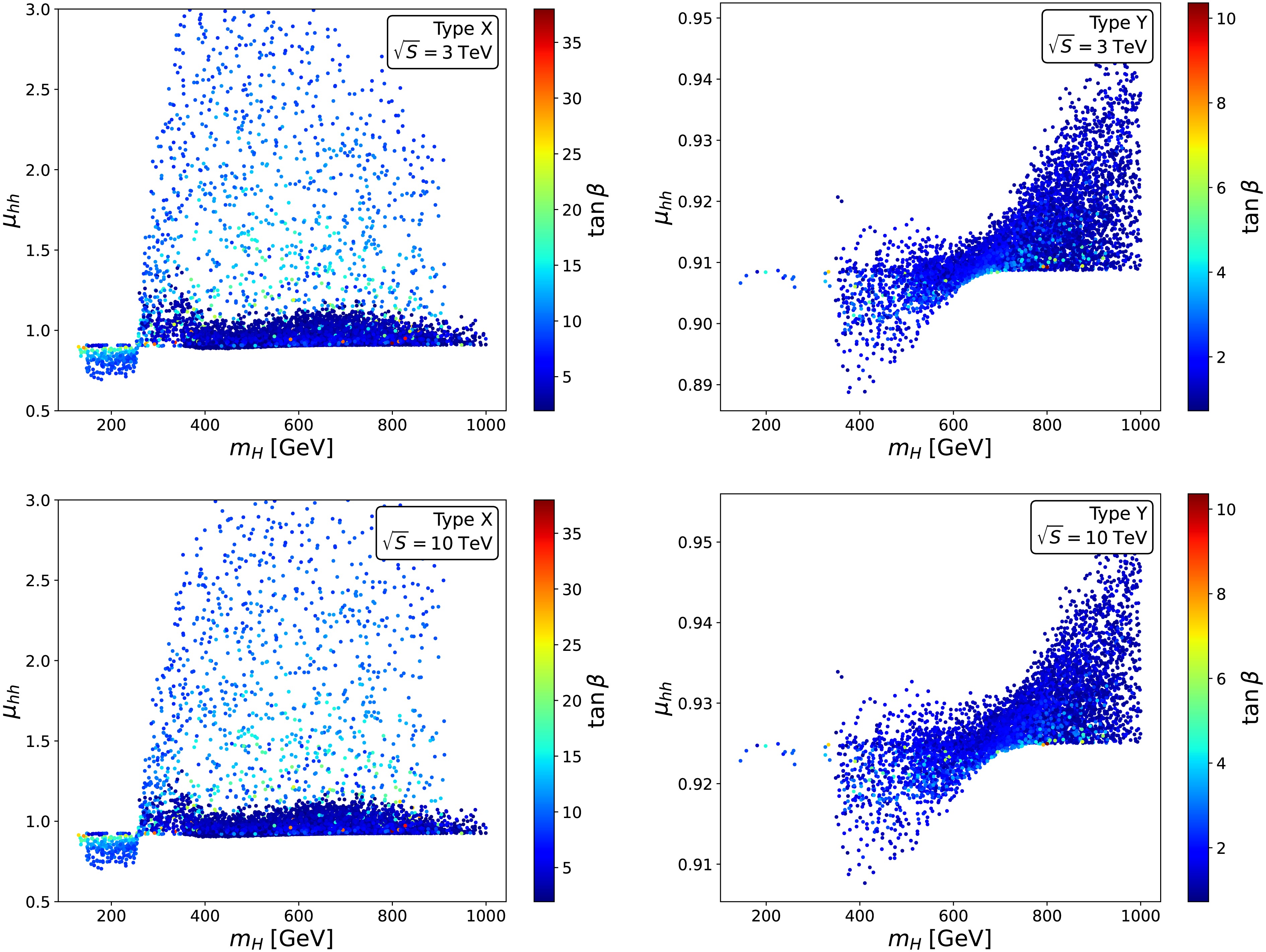

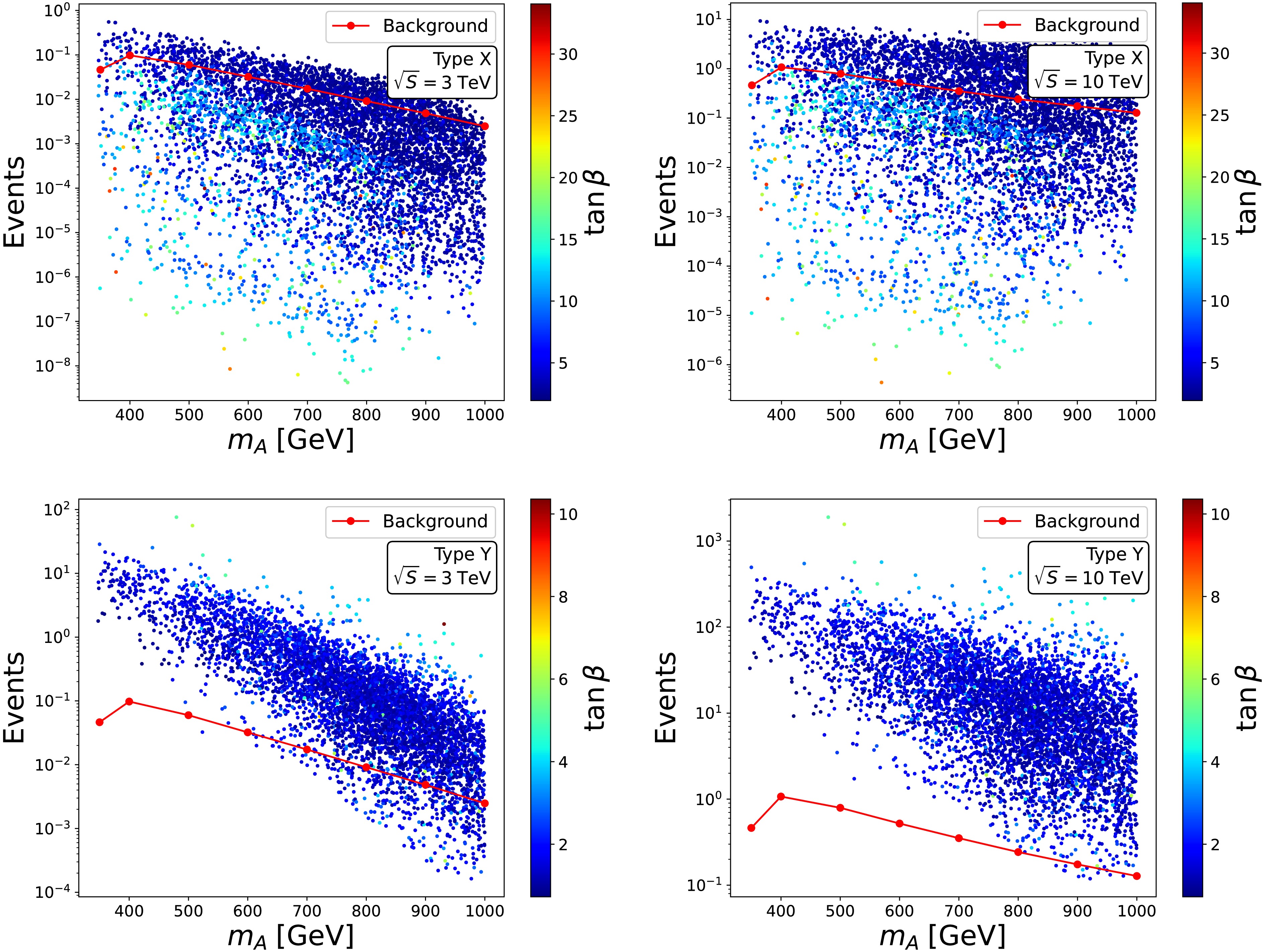
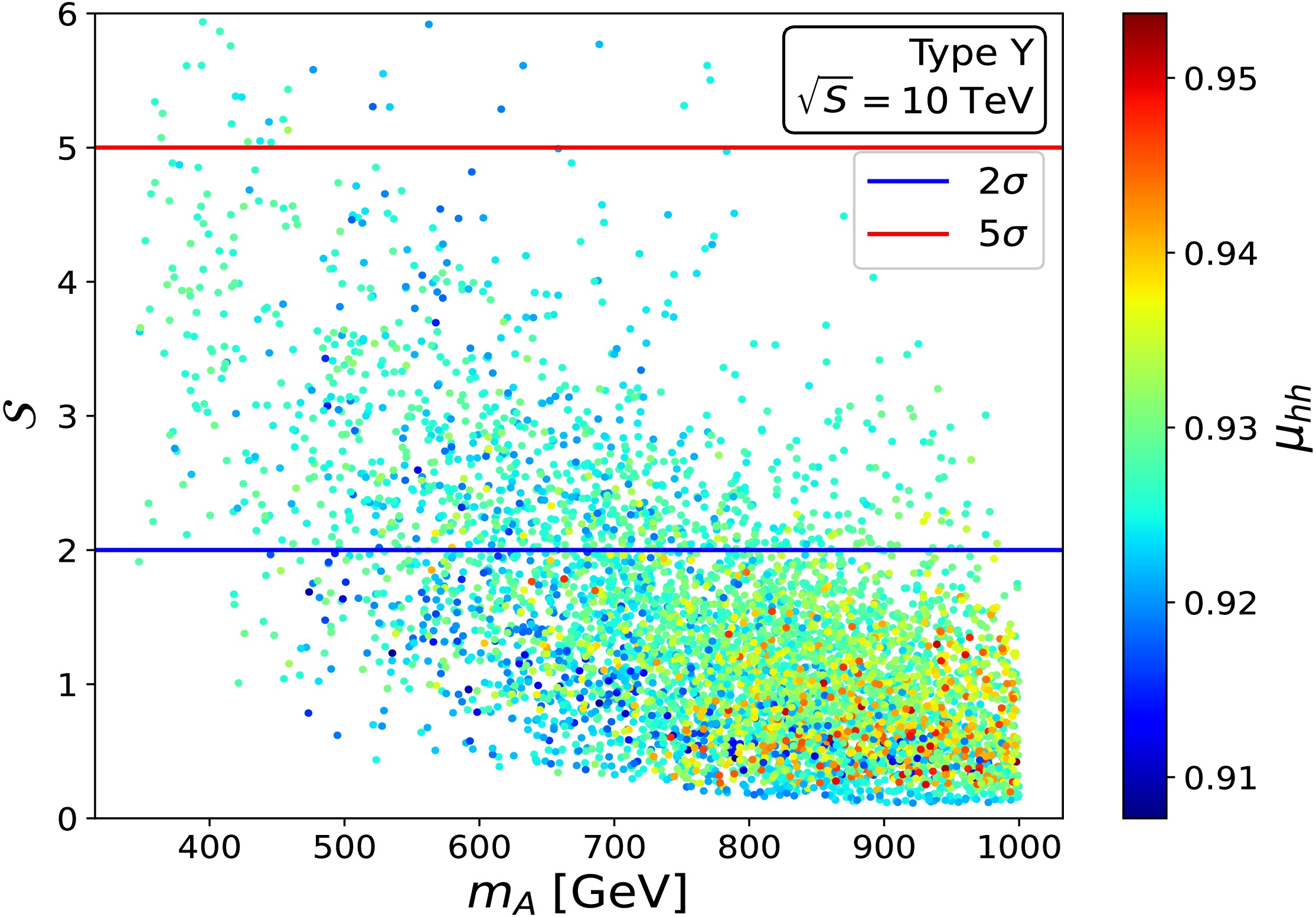
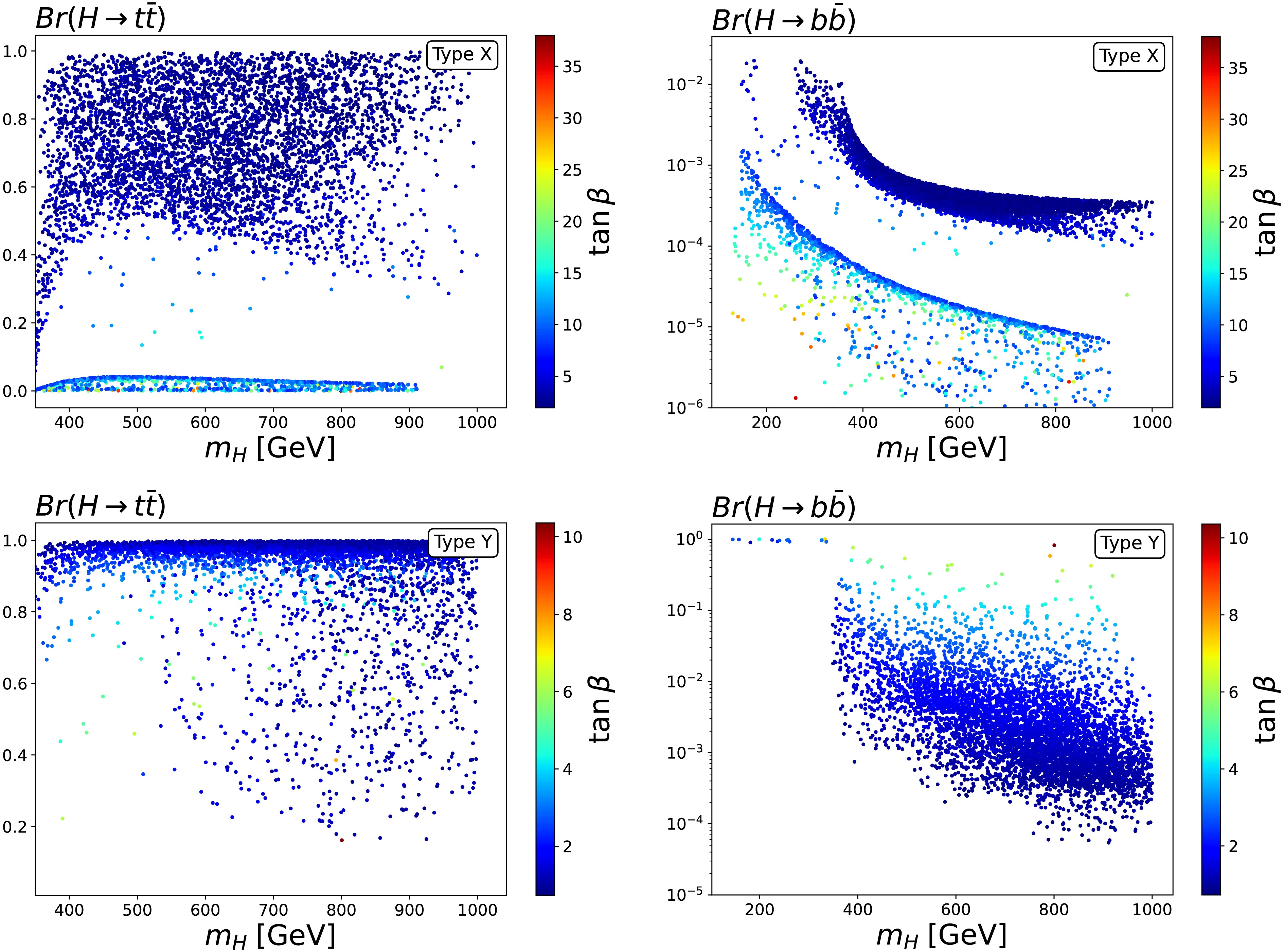
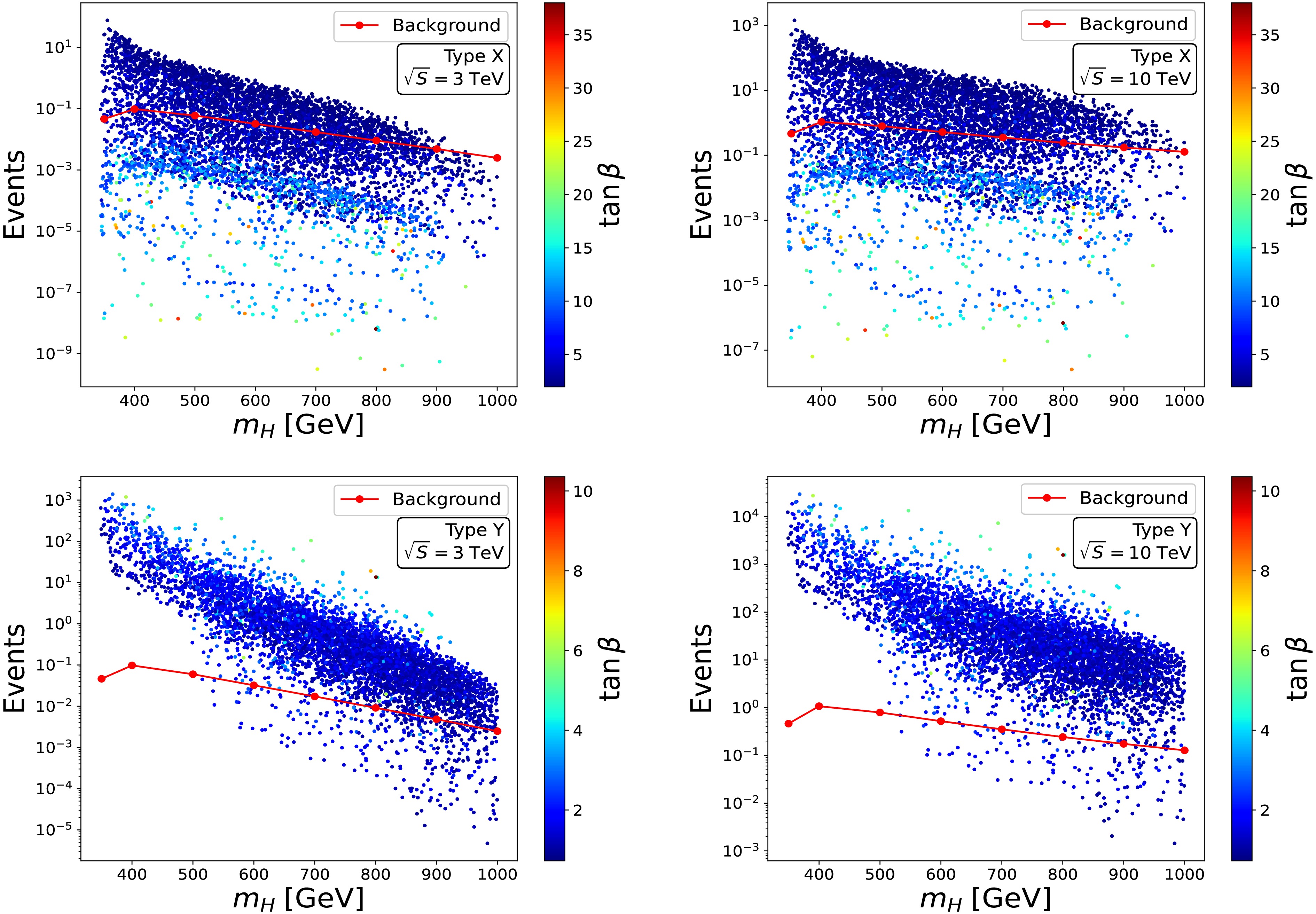
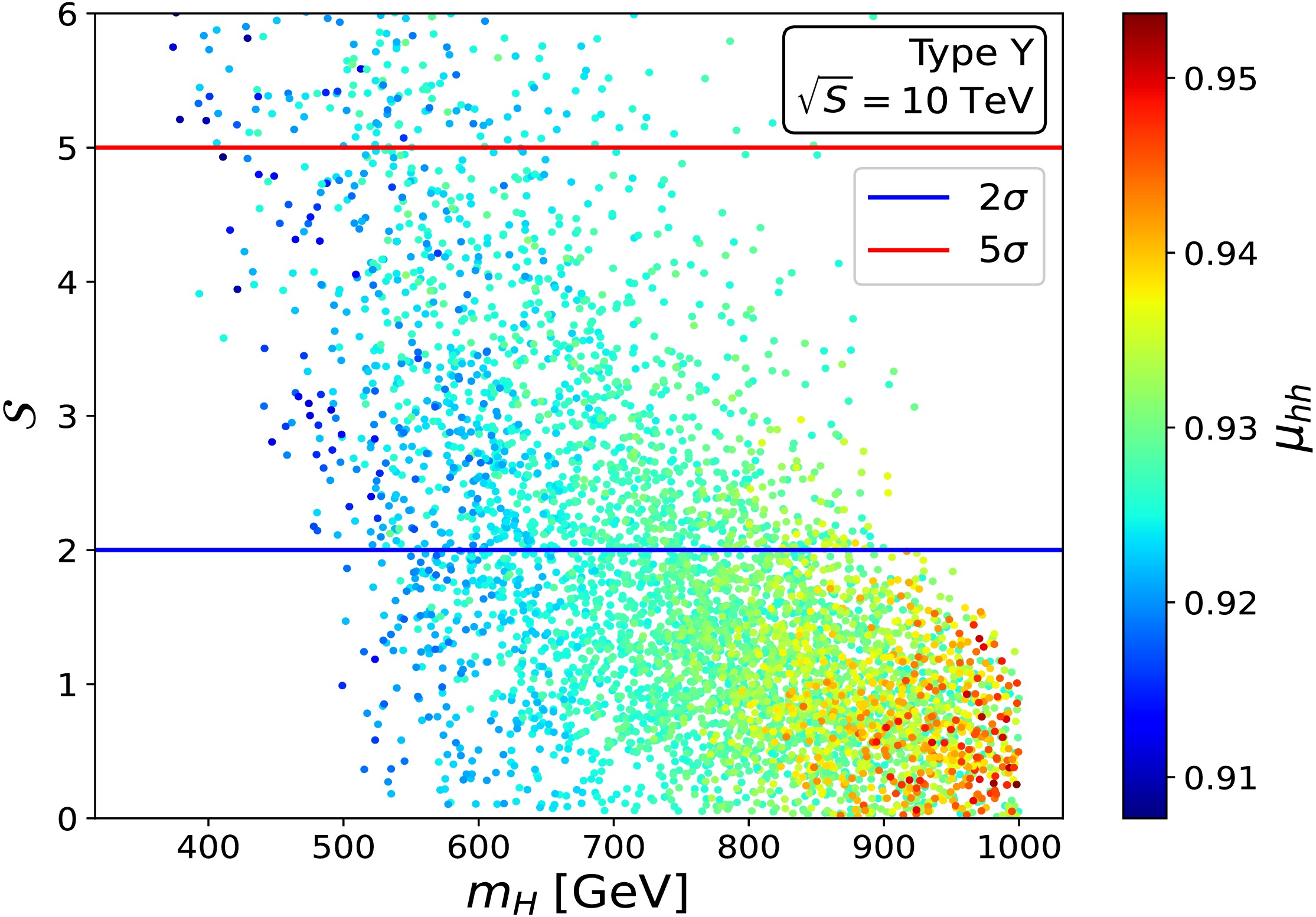
In this work, we present the first computation of the full one-loop electroweak radiative corrections to the process\begin{document}$ \mu^- \mu^+ \to W^\pm W^\mp \to hh $\end{document} \begin{document}$ \sqrt{s} = 10\; \text{TeV} $\end{document} \begin{document}$ {\cal{L}} = 10000\; \text{fb}^{-1} $\end{document} \begin{document}$ t\bar{t}b\bar{b} $\end{document} \begin{document}$ 2\sigma $\end{document}
In this work, we present the first computation of the full one-loop electroweak radiative corrections to the process
2026, 50(7): 073108. doi: 10.1088/1674-1137/ae62fc
Abstract:
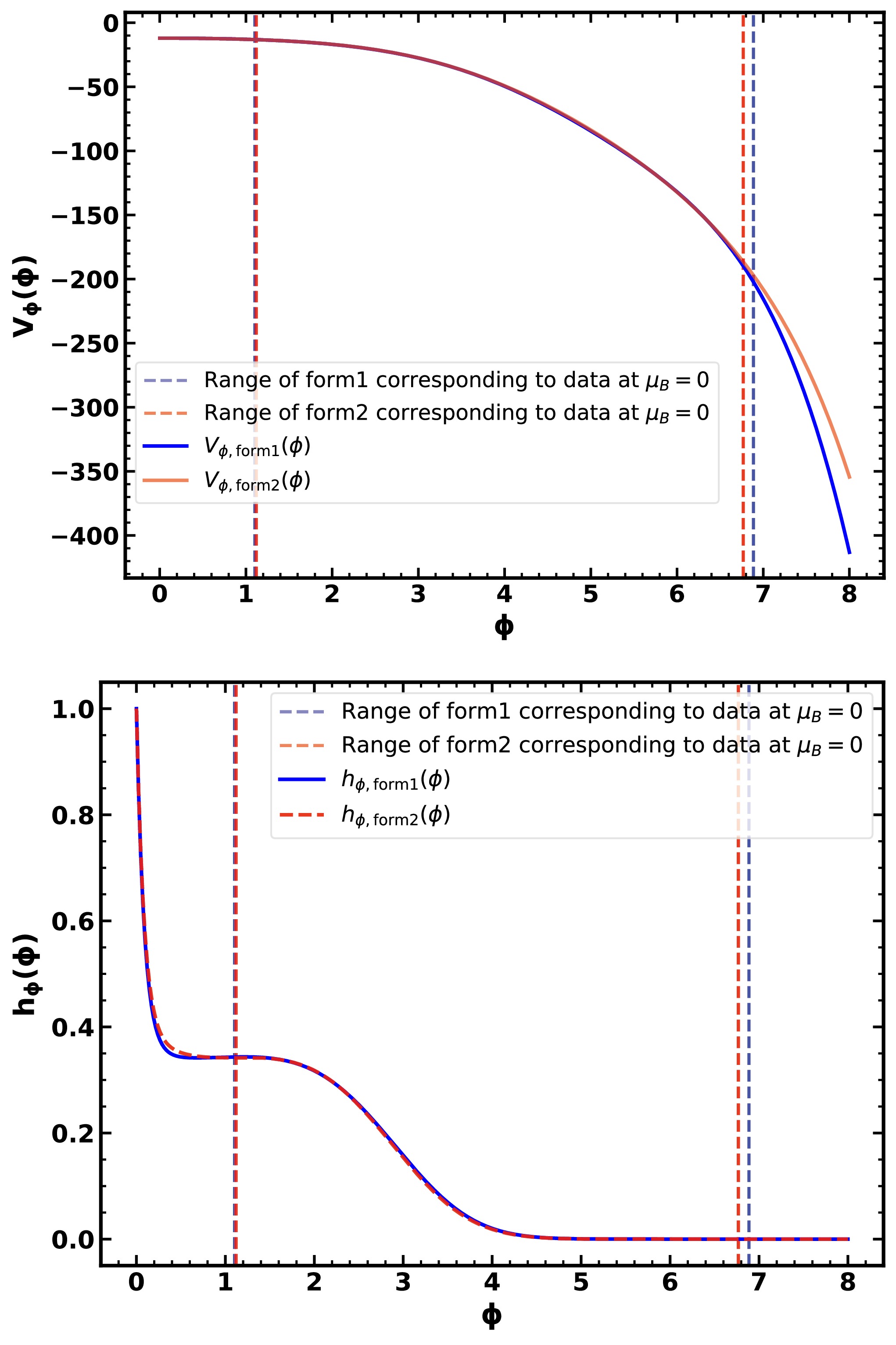
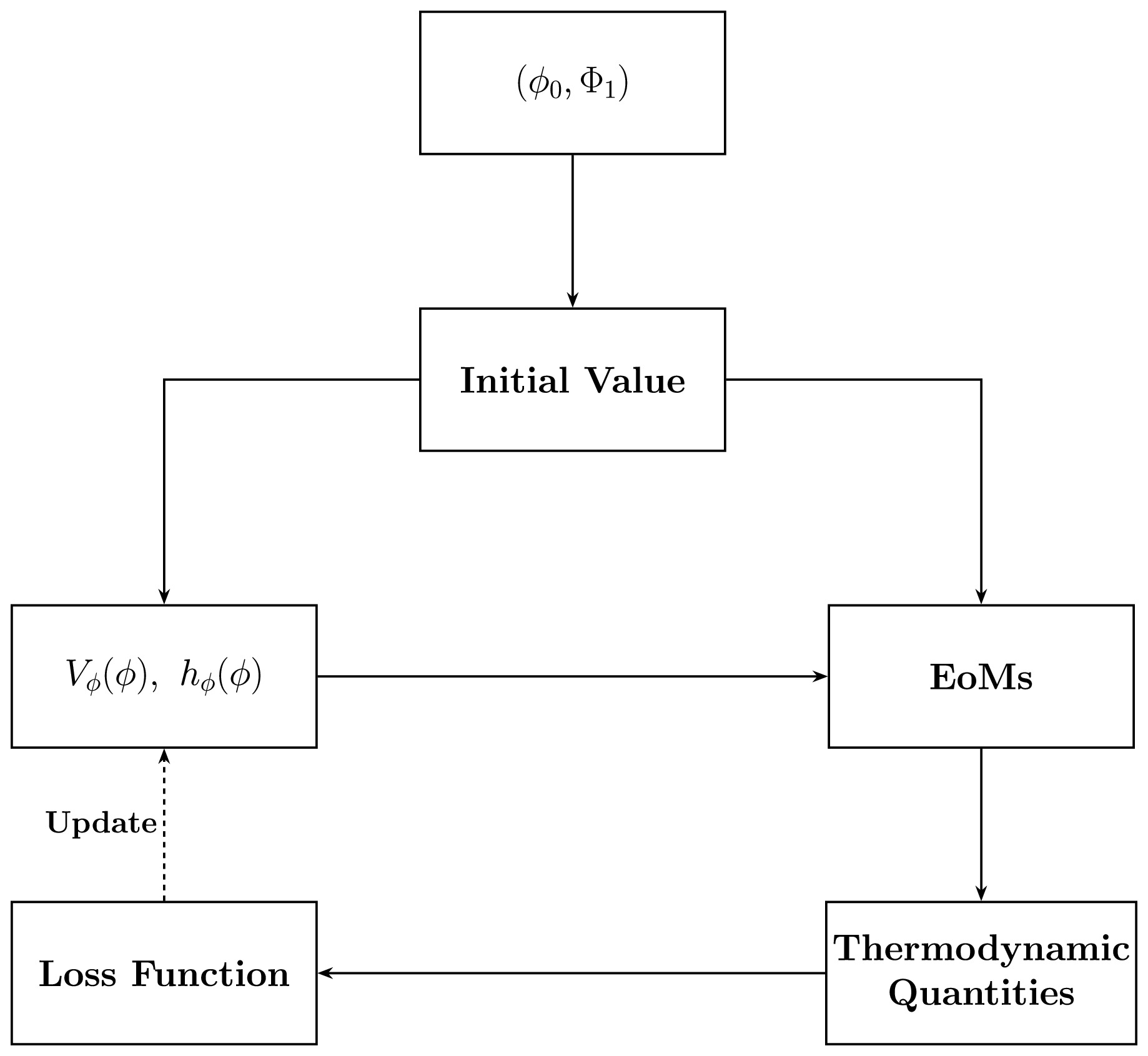
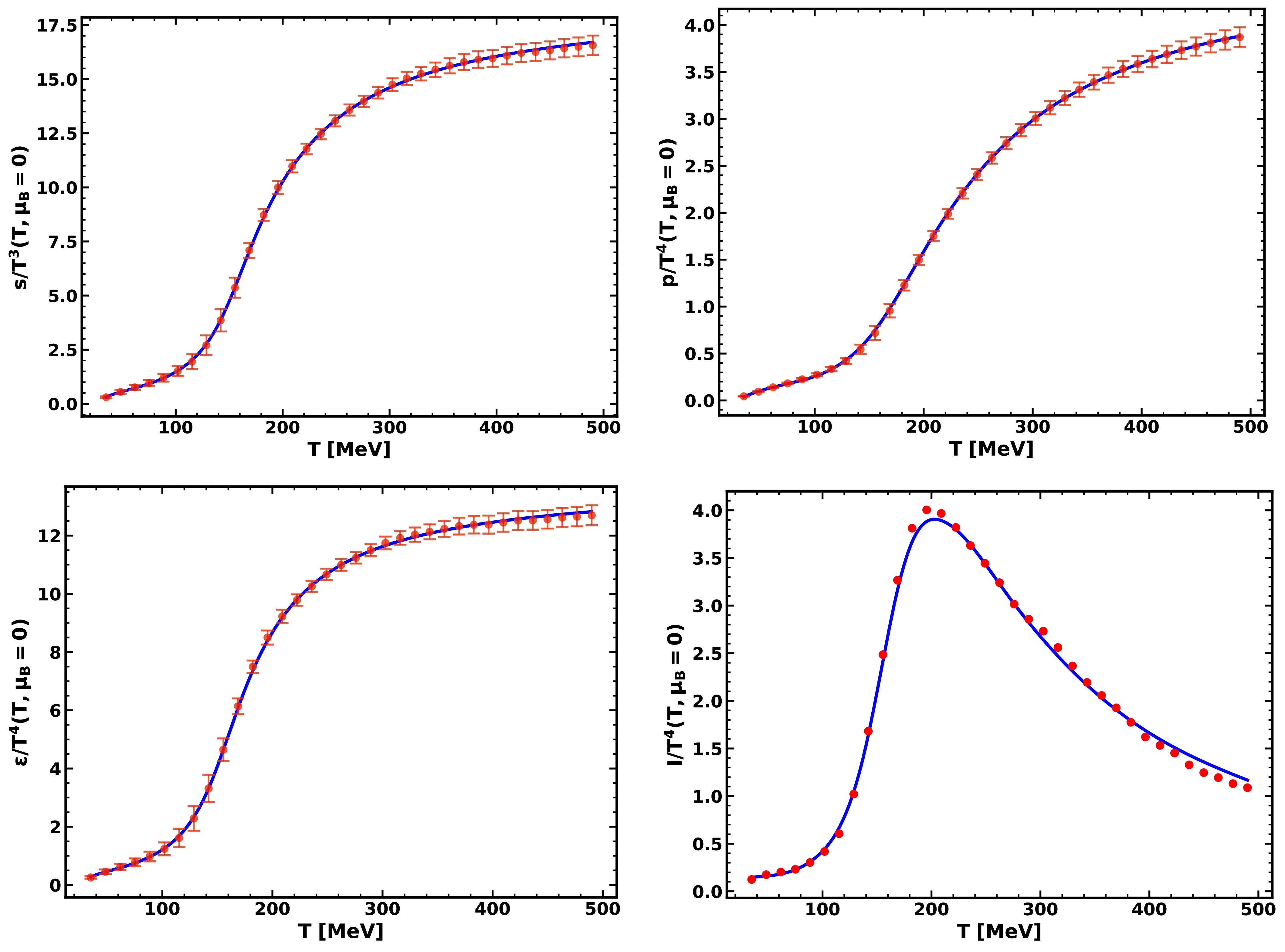
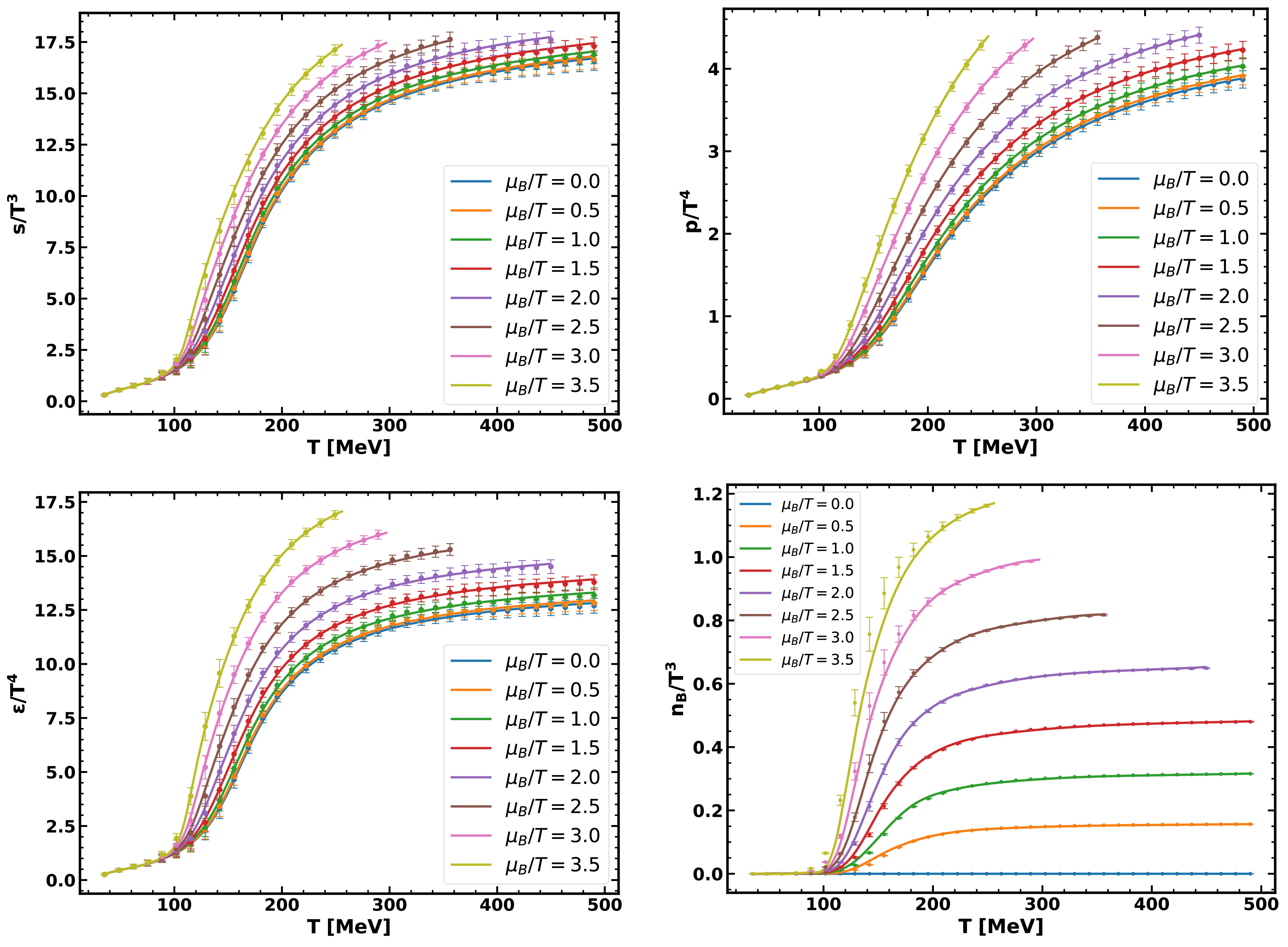
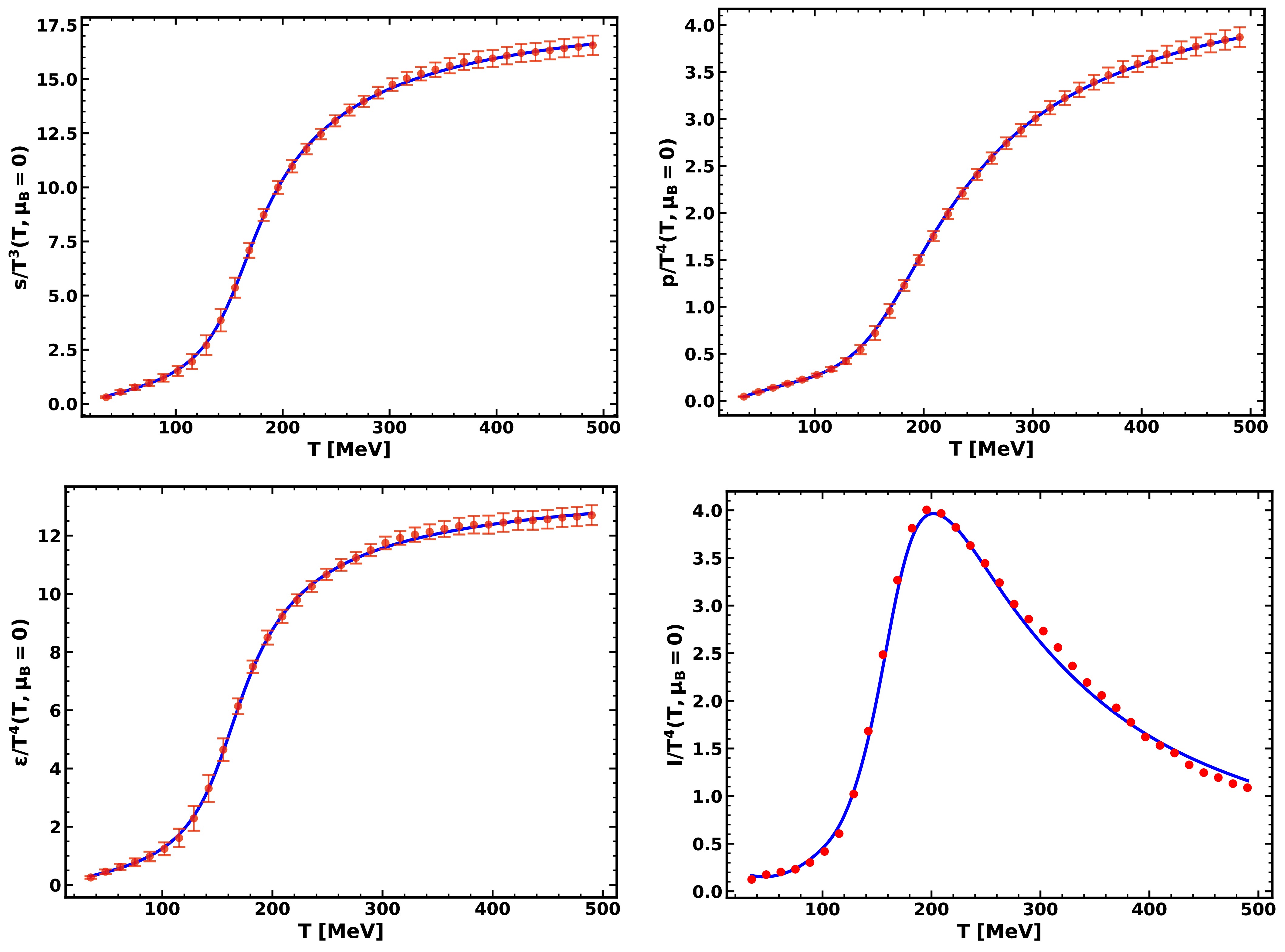
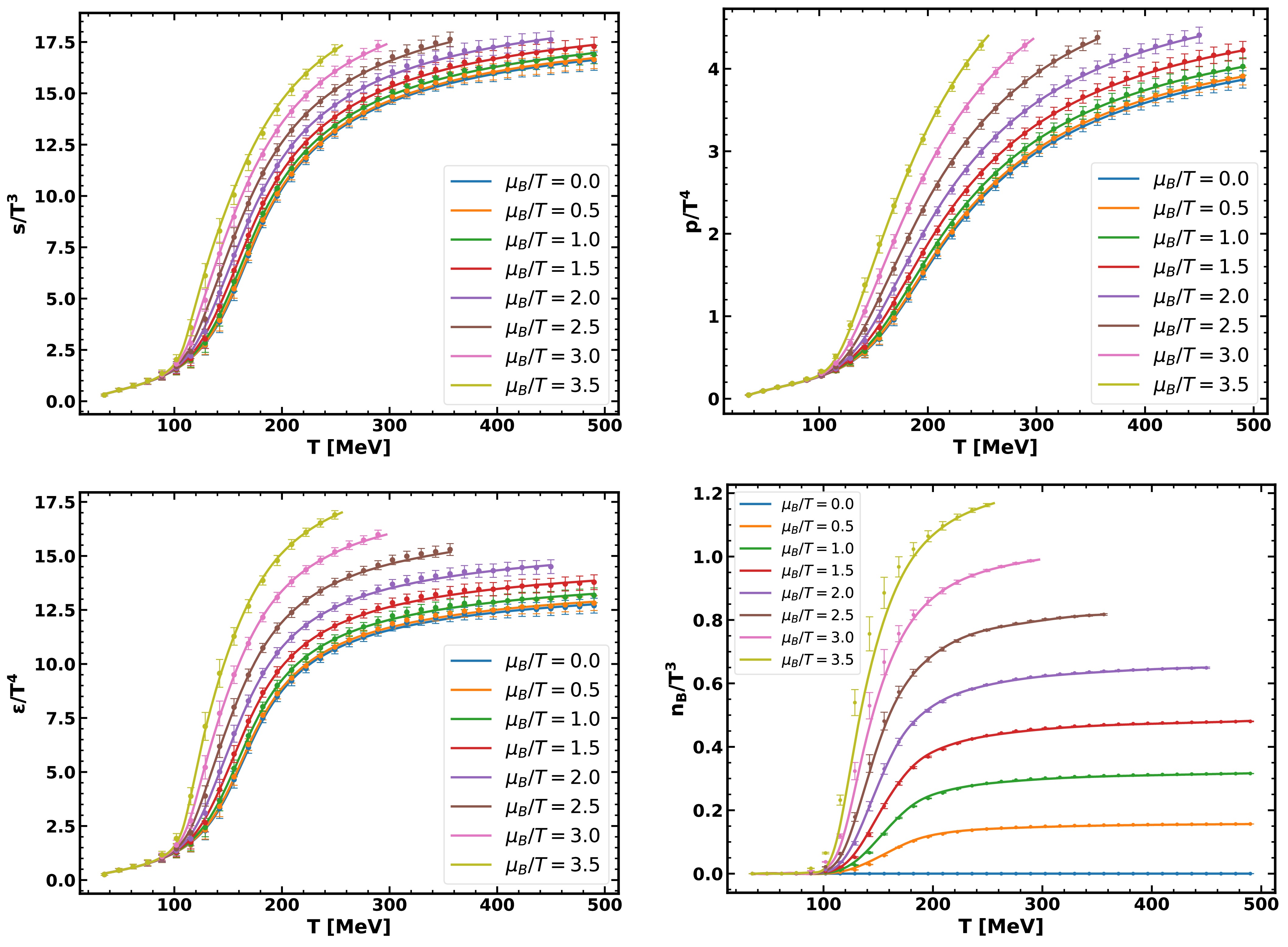
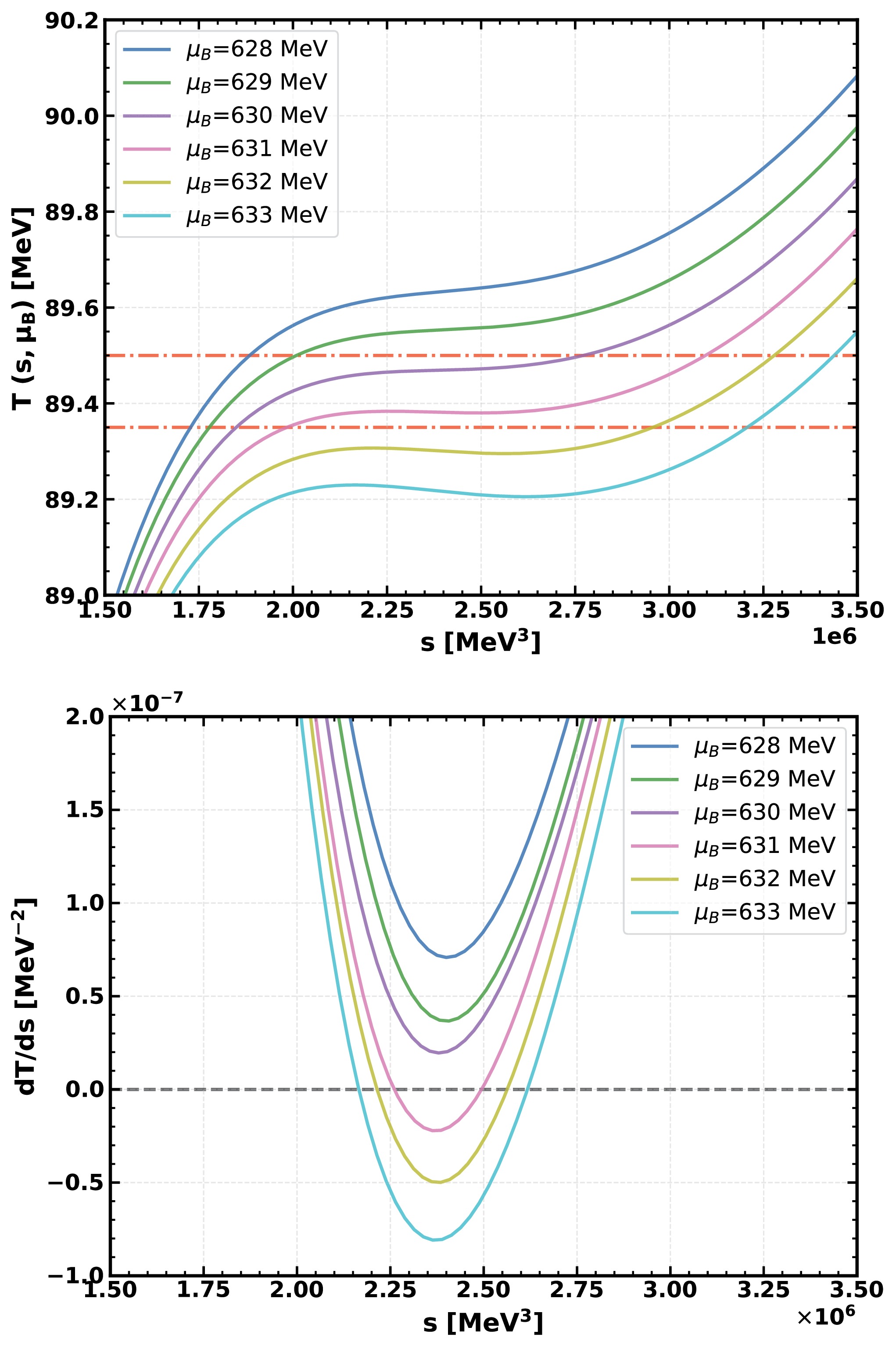
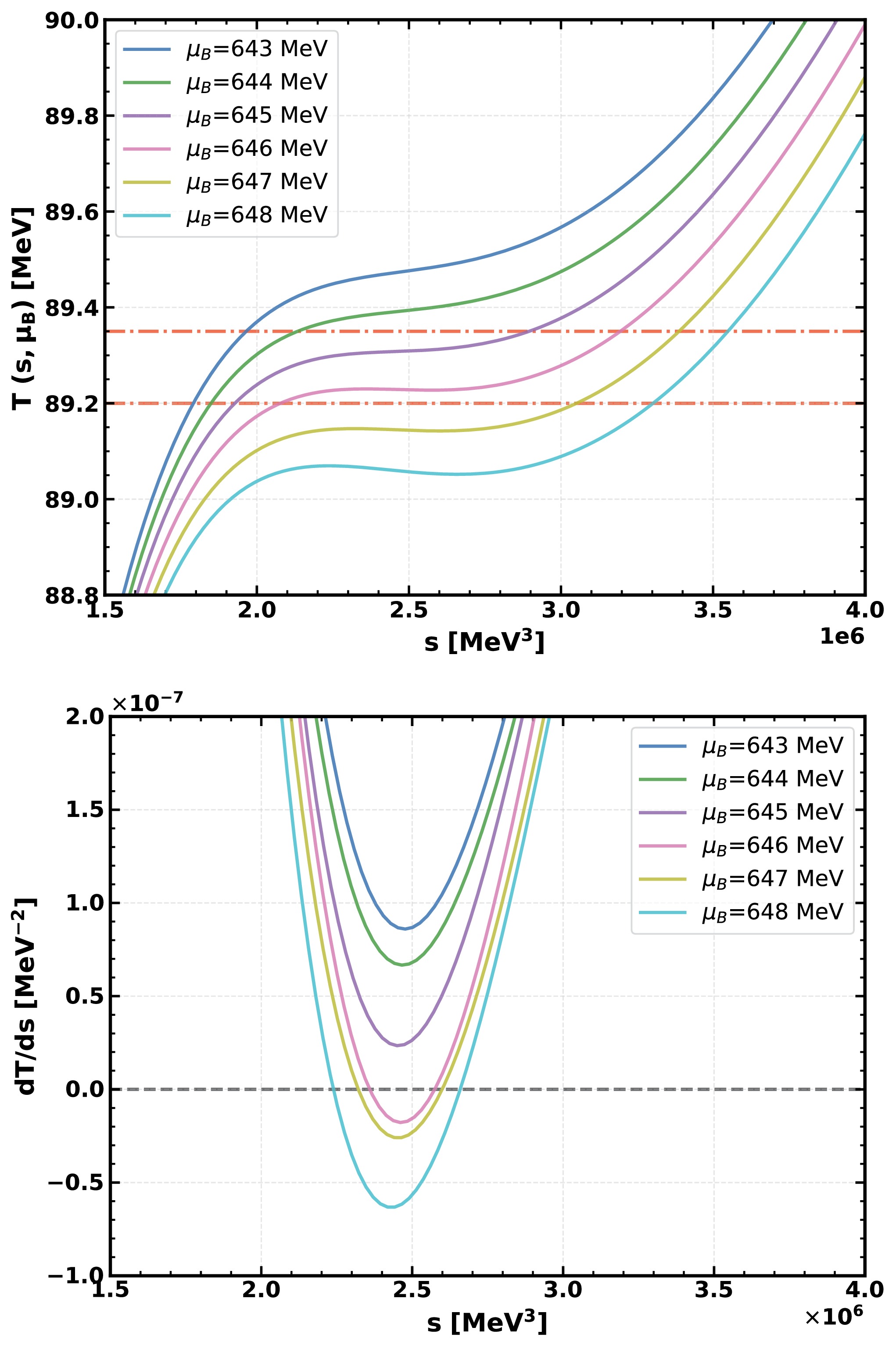
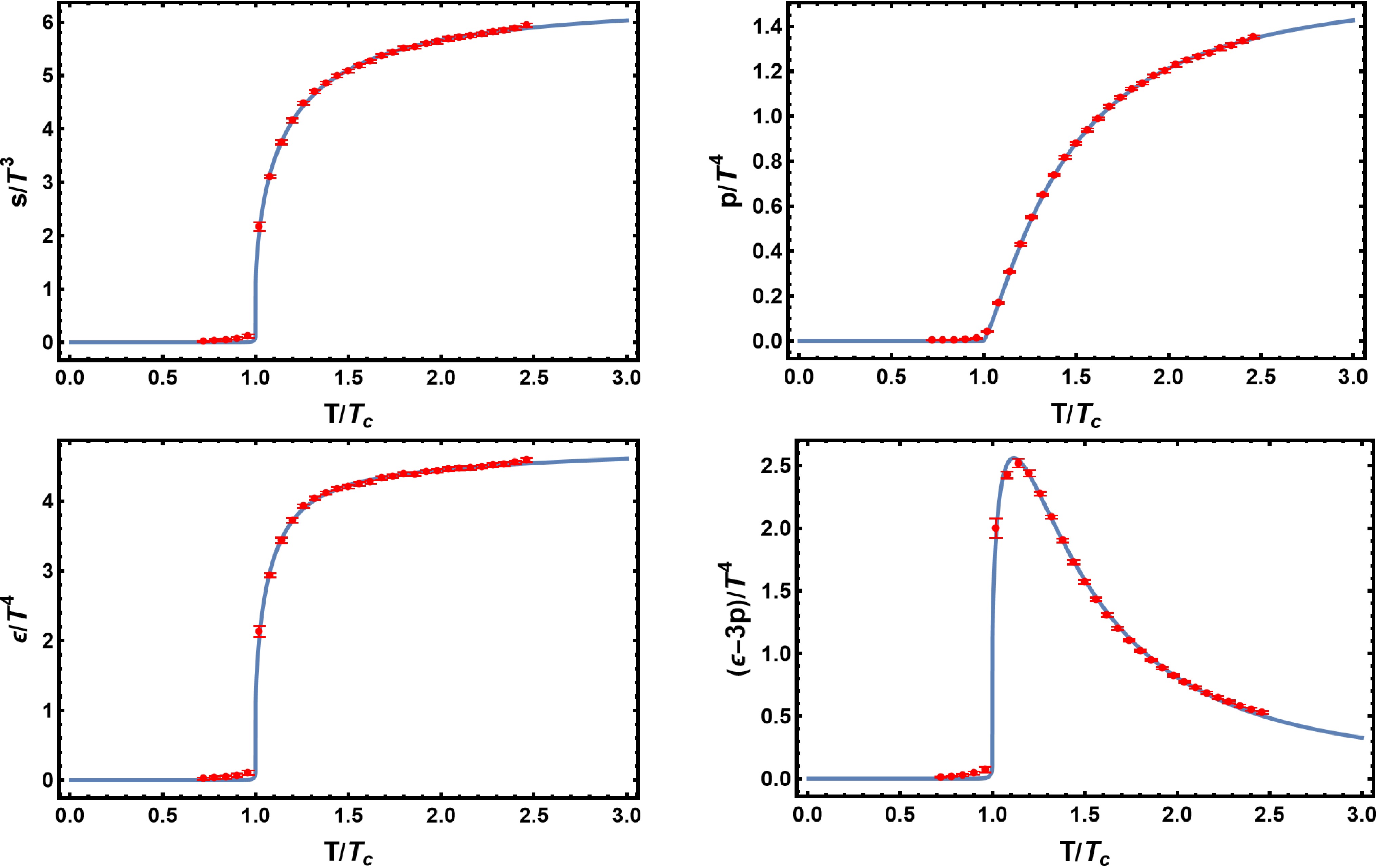
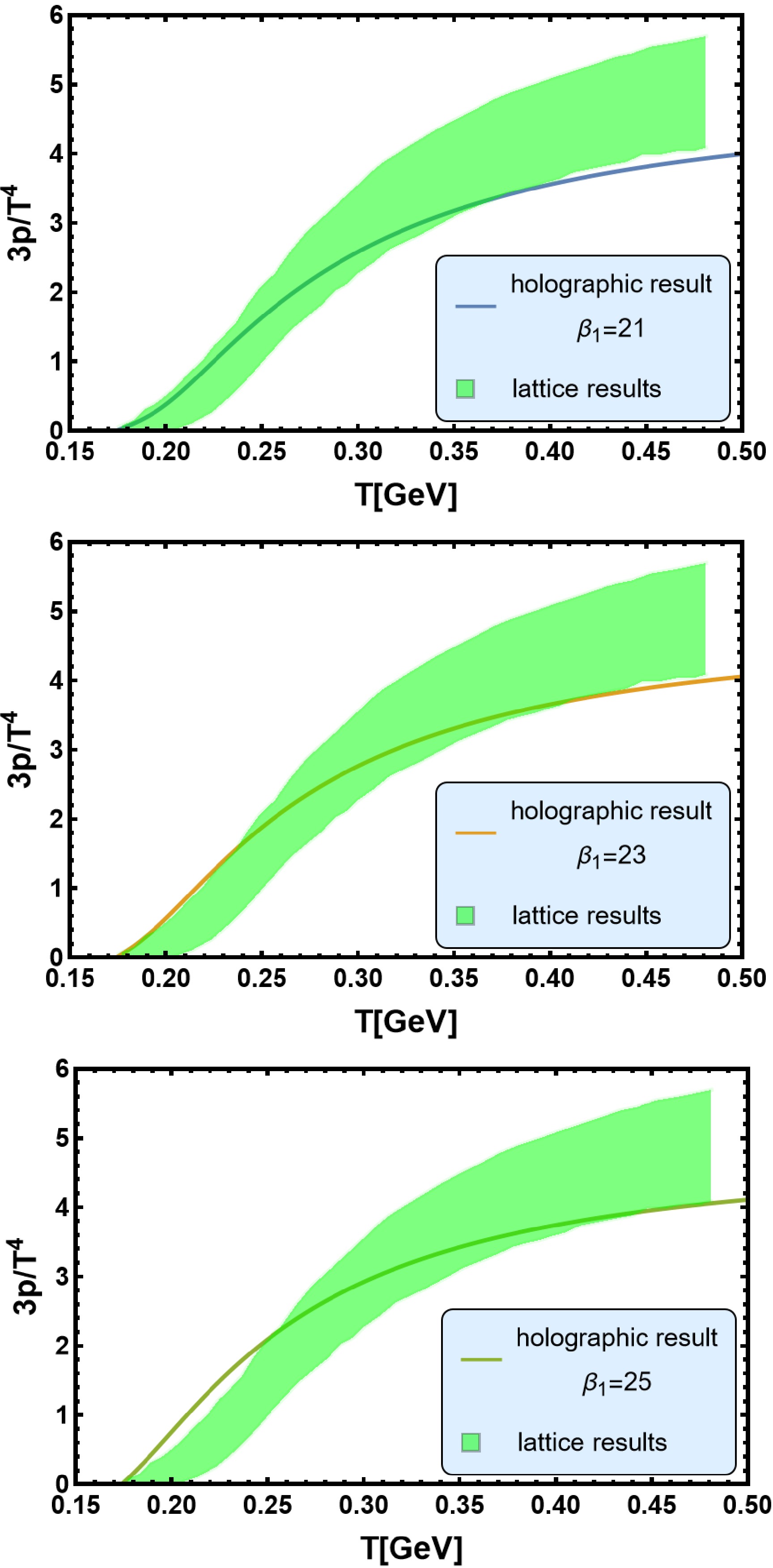
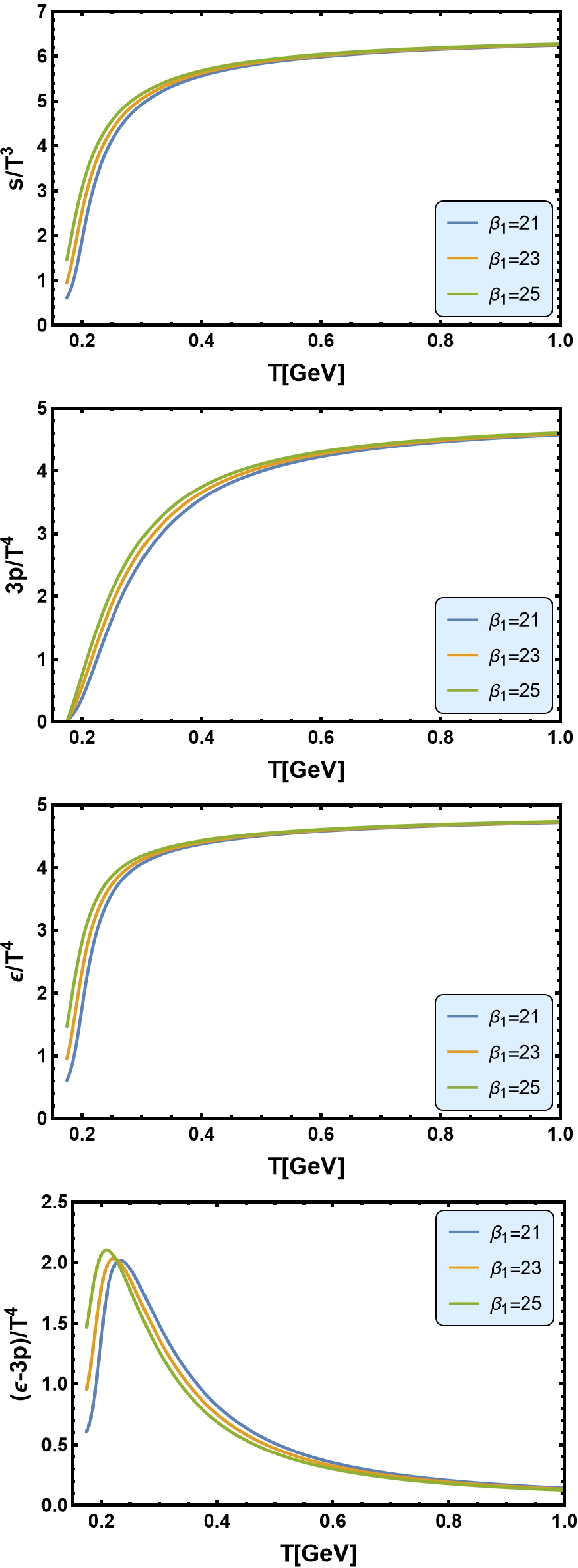
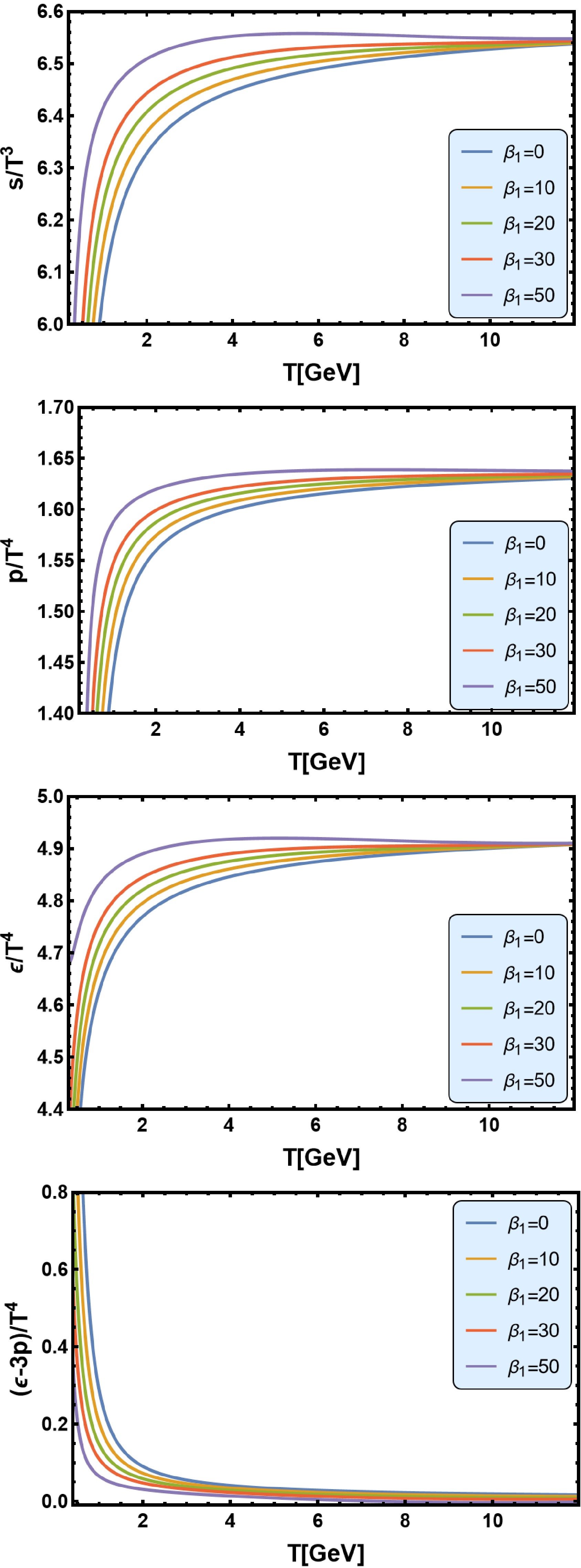
We study the equation of state (EoS) of QCD matter in a bottom-up holographic setup that combines an Einstein-Maxwell-dilaton (EMD) sector with an improved Karch-Katz-Son-Stephanov (KKSS) flavor action. In the probe approximation, we perform an inverse reconstruction of the model functions by parameterizing them with neural networks and solving the EMD equations via a differentiable ODE solver (a neural ODE framework), calibrating the model to a reference thermodynamic table for\begin{document}$(2+1)$\end{document} \begin{document}$\mu_B=0$\end{document} \begin{document}$\mu_B=0$\end{document} \begin{document}$\beta_1$\end{document}
We study the equation of state (EoS) of QCD matter in a bottom-up holographic setup that combines an Einstein-Maxwell-dilaton (EMD) sector with an improved Karch-Katz-Son-Stephanov (KKSS) flavor action. In the probe approximation, we perform an inverse reconstruction of the model functions by parameterizing them with neural networks and solving the EMD equations via a differentiable ODE solver (a neural ODE framework), calibrating the model to a reference thermodynamic table for
2026, 50(7): 073109. doi: 10.1088/1674-1137/ae5ef8
Abstract:
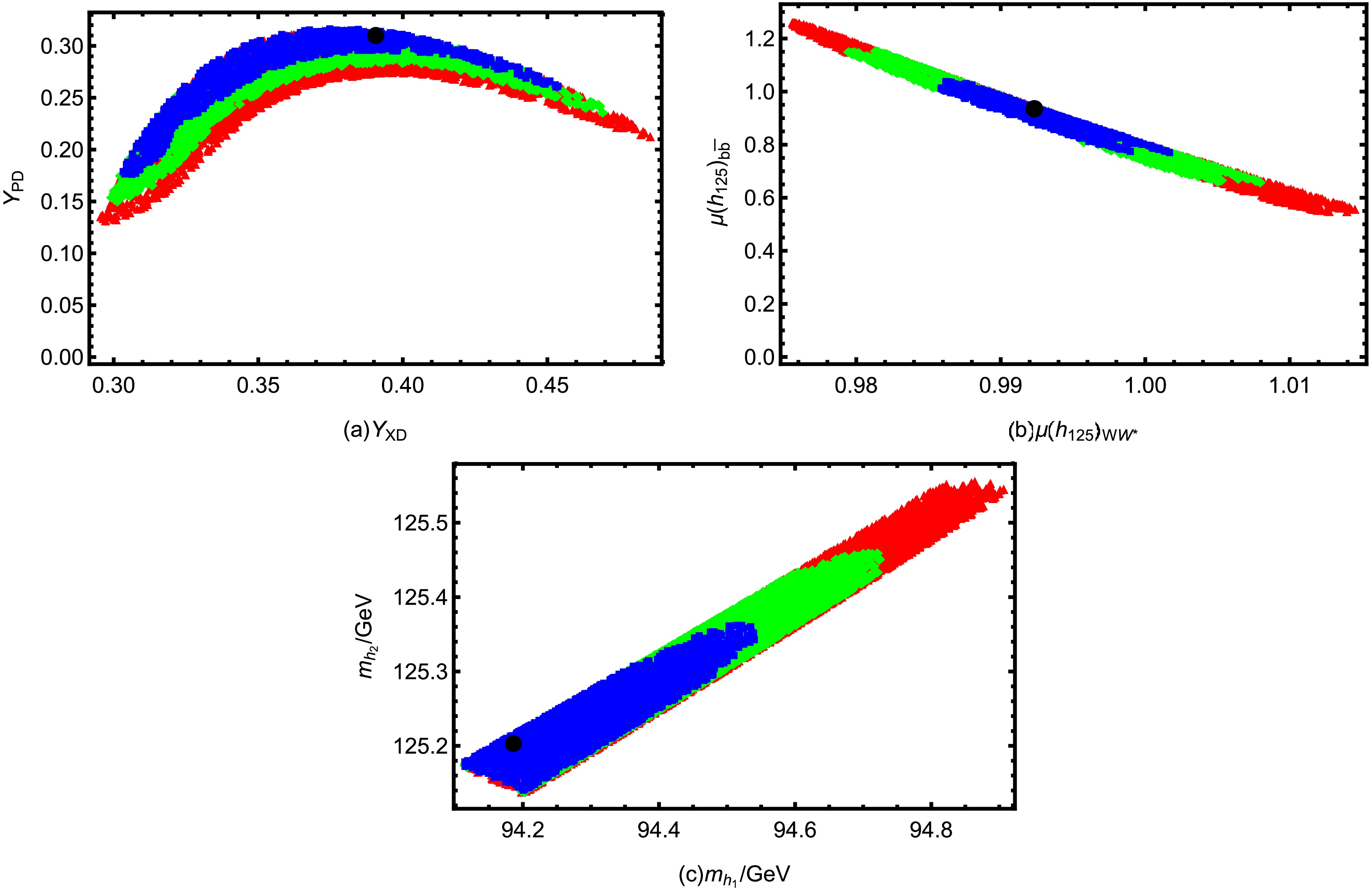
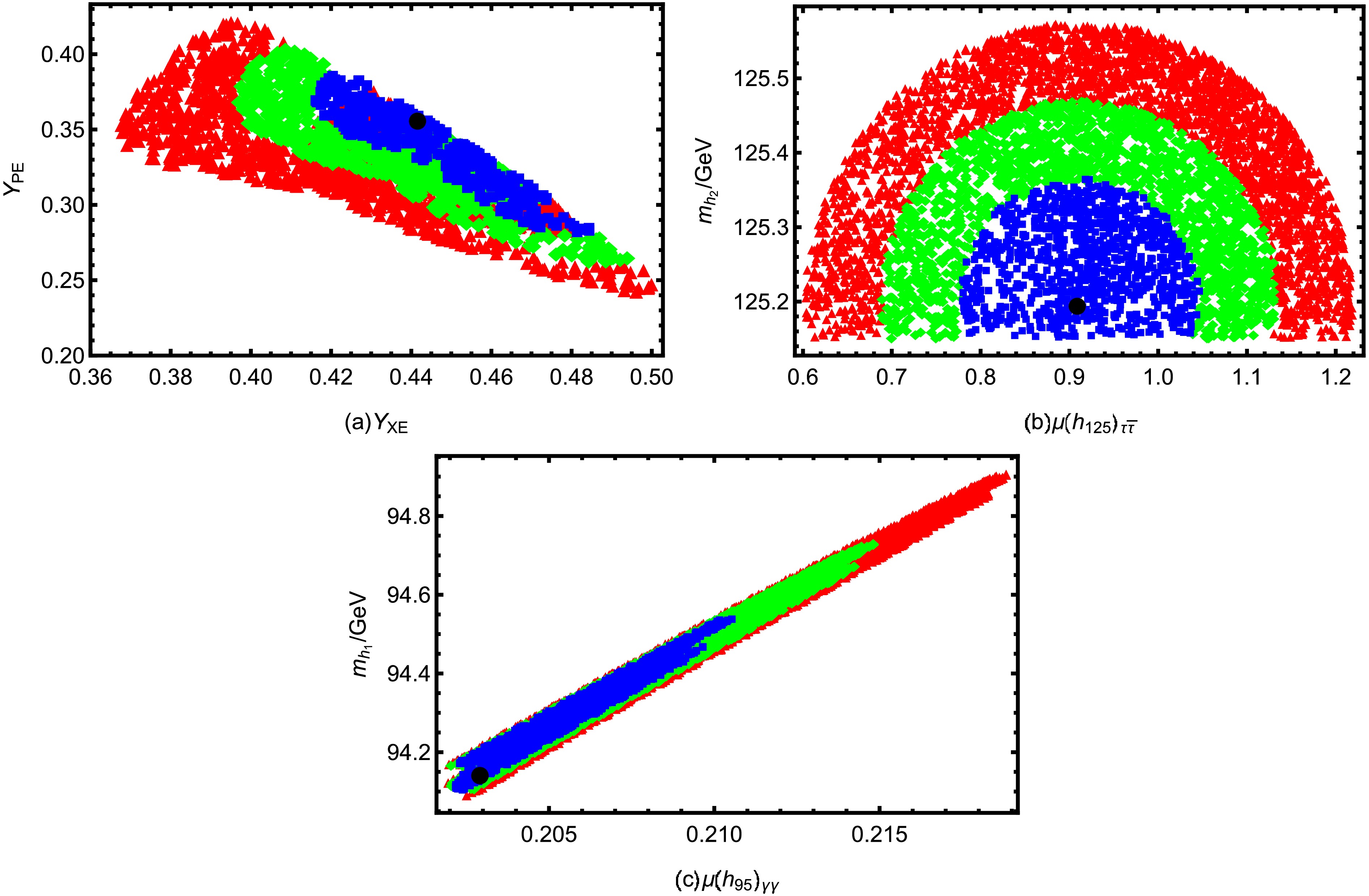
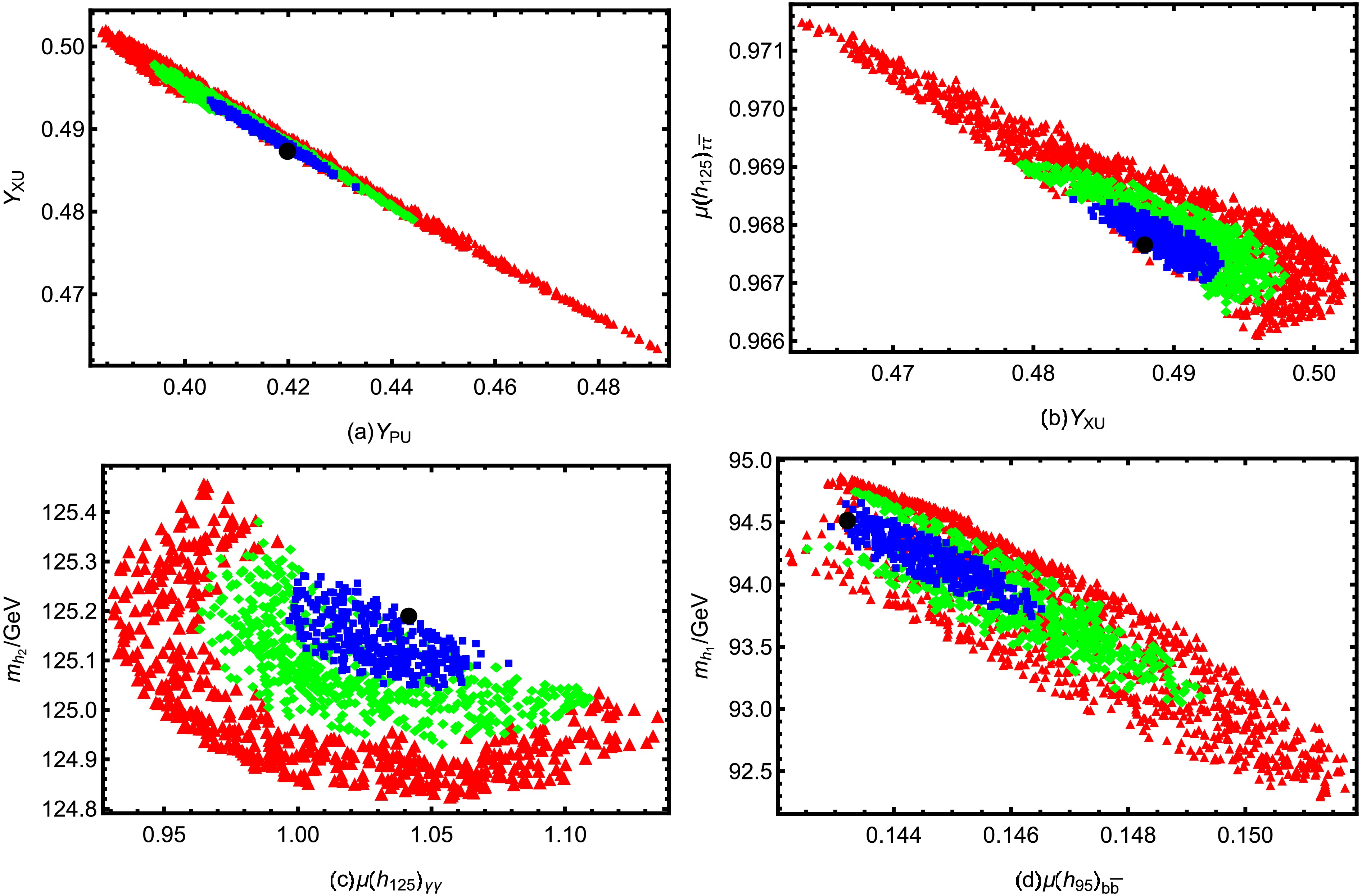
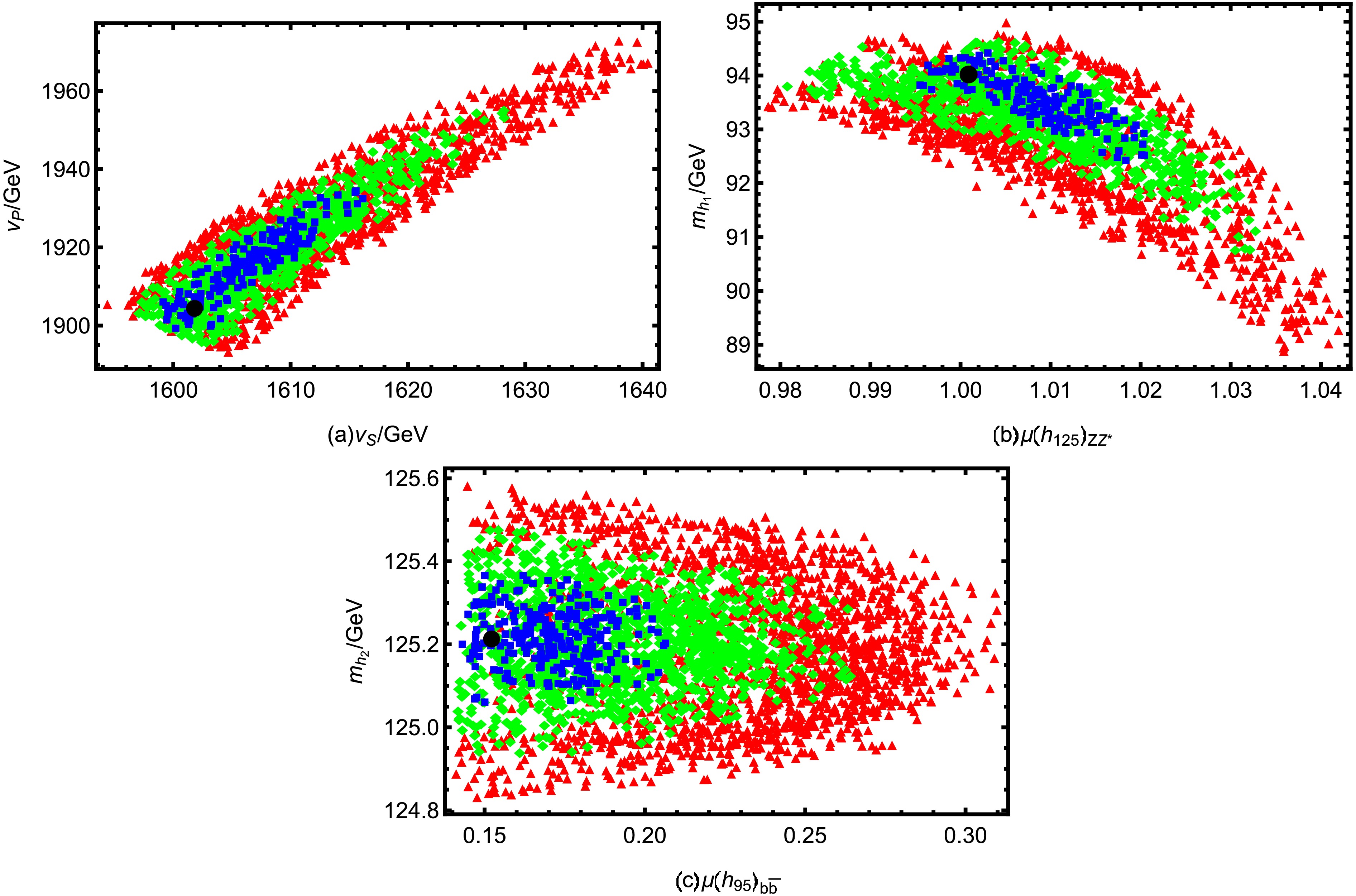
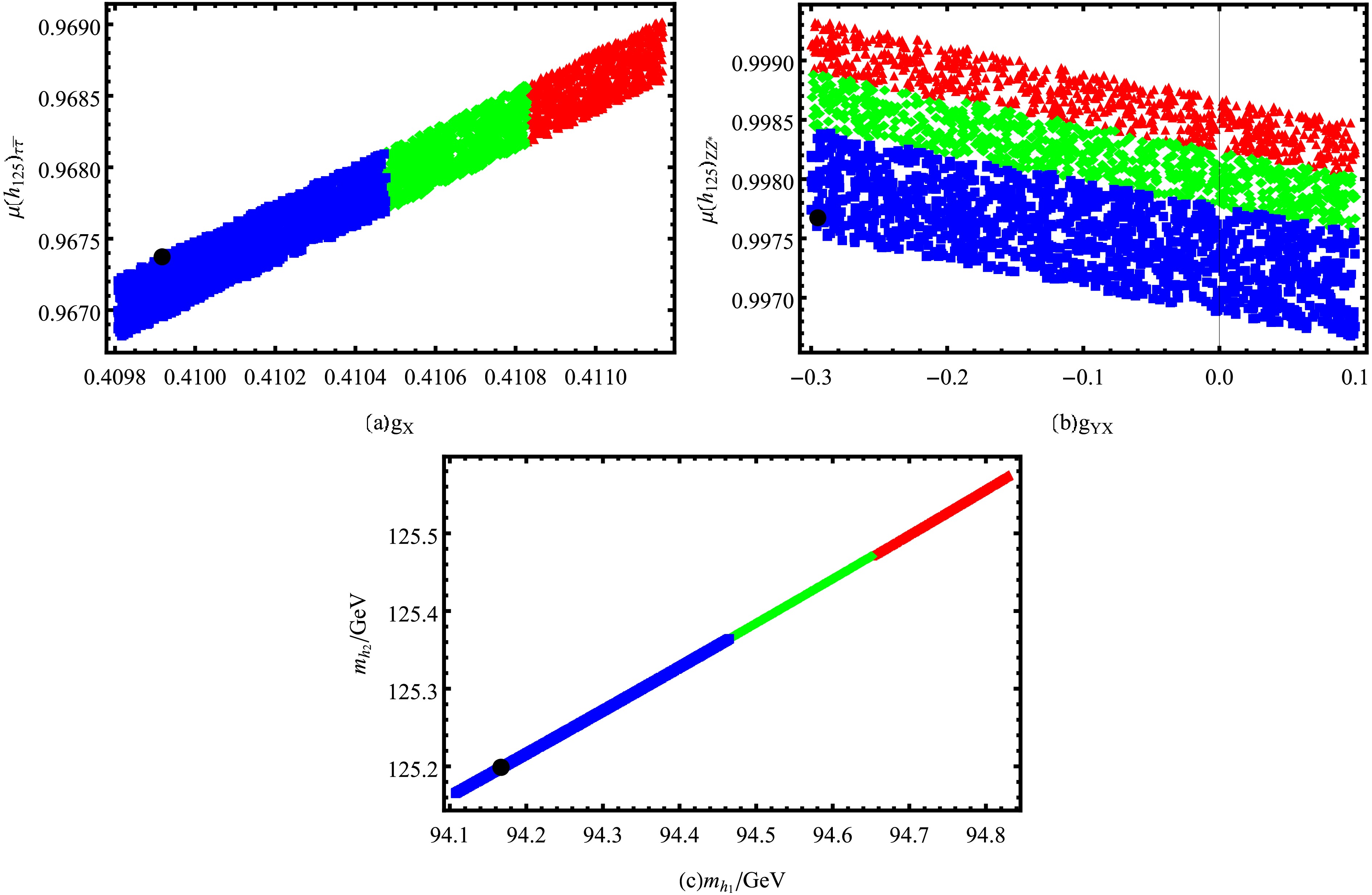
We present a systematic analysis of the Higgs signal strengths at 125 GeV and 95 GeV in a non-supersymmetric\begin{document}$ U(1)_X $\end{document} \begin{document}$ U(1)_X $\end{document} \begin{document}$ U(1)_X $\end{document} \begin{document}$ \chi^2 $\end{document} \begin{document}$ \gamma\gamma $\end{document} \begin{document}$ WW^* $\end{document} \begin{document}$ ZZ^* $\end{document} \begin{document}$ b\bar{b} $\end{document} \begin{document}$ \tau\bar{\tau} $\end{document} \begin{document}$ b\bar{b} $\end{document} \begin{document}$ U(1)_X $\end{document} \begin{document}$ g_X $\end{document} \begin{document}$ g_{YX} $\end{document} \begin{document}$ v_S $\end{document} \begin{document}$ v_P $\end{document}
We present a systematic analysis of the Higgs signal strengths at 125 GeV and 95 GeV in a non-supersymmetric
2026, 50(7): 073110. doi: 10.1088/1674-1137/ae68ee
Abstract:
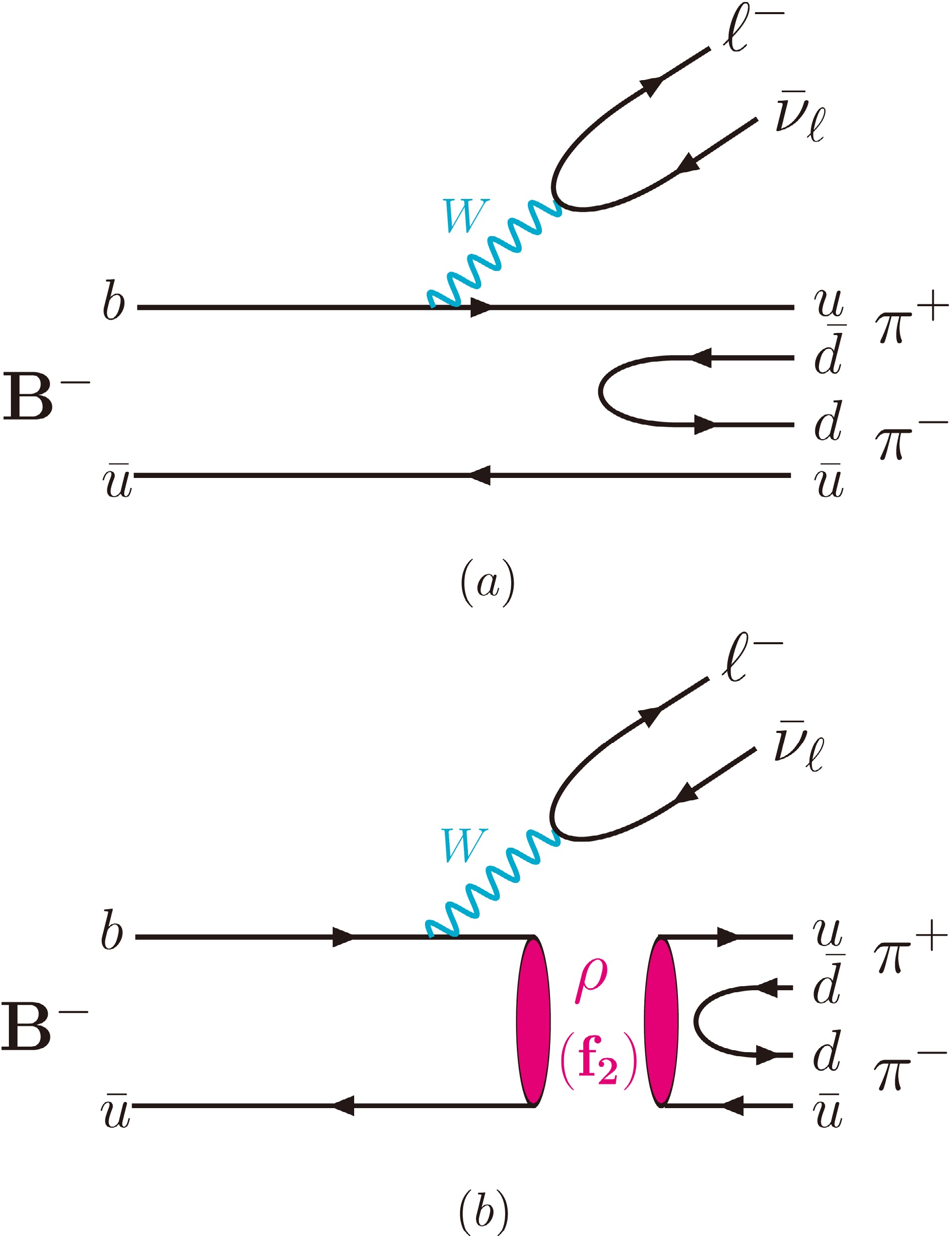
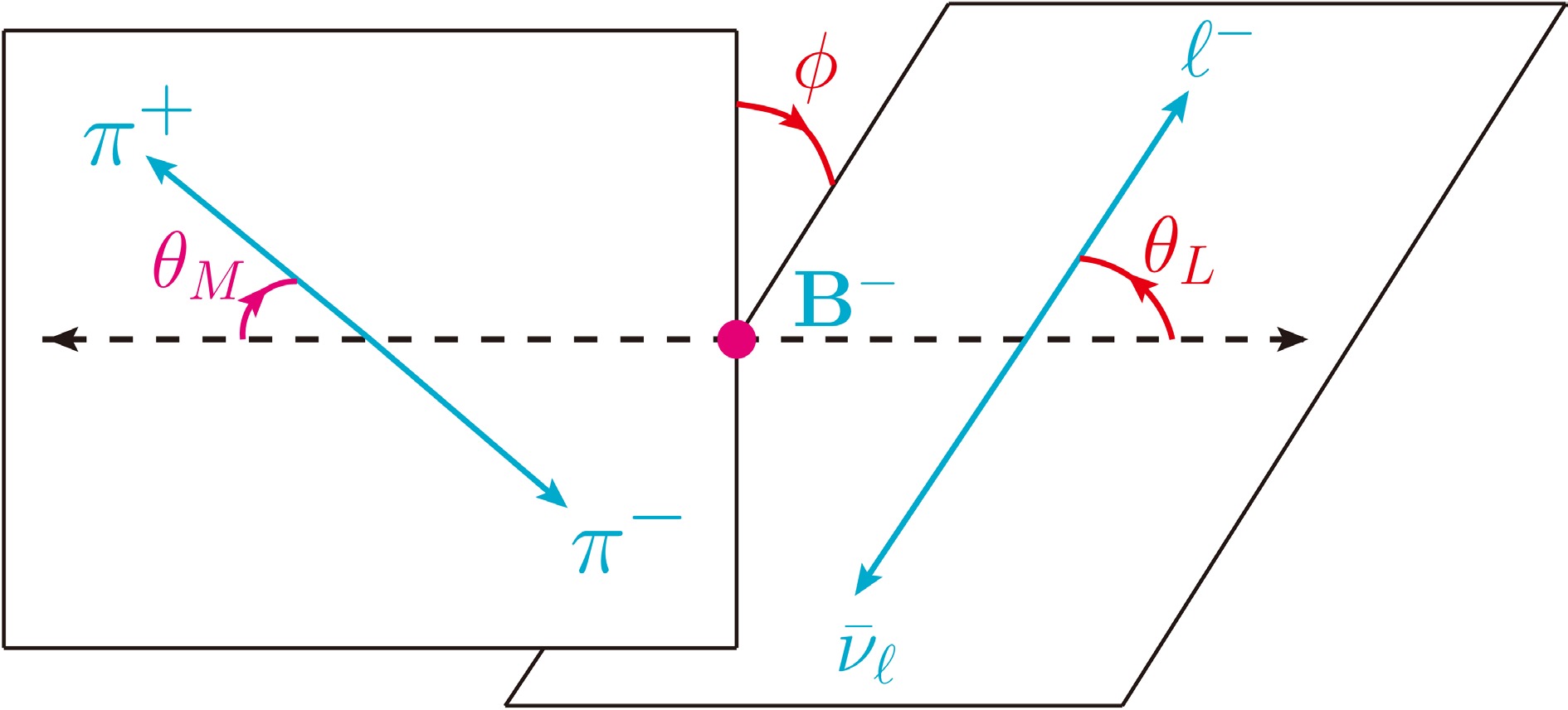
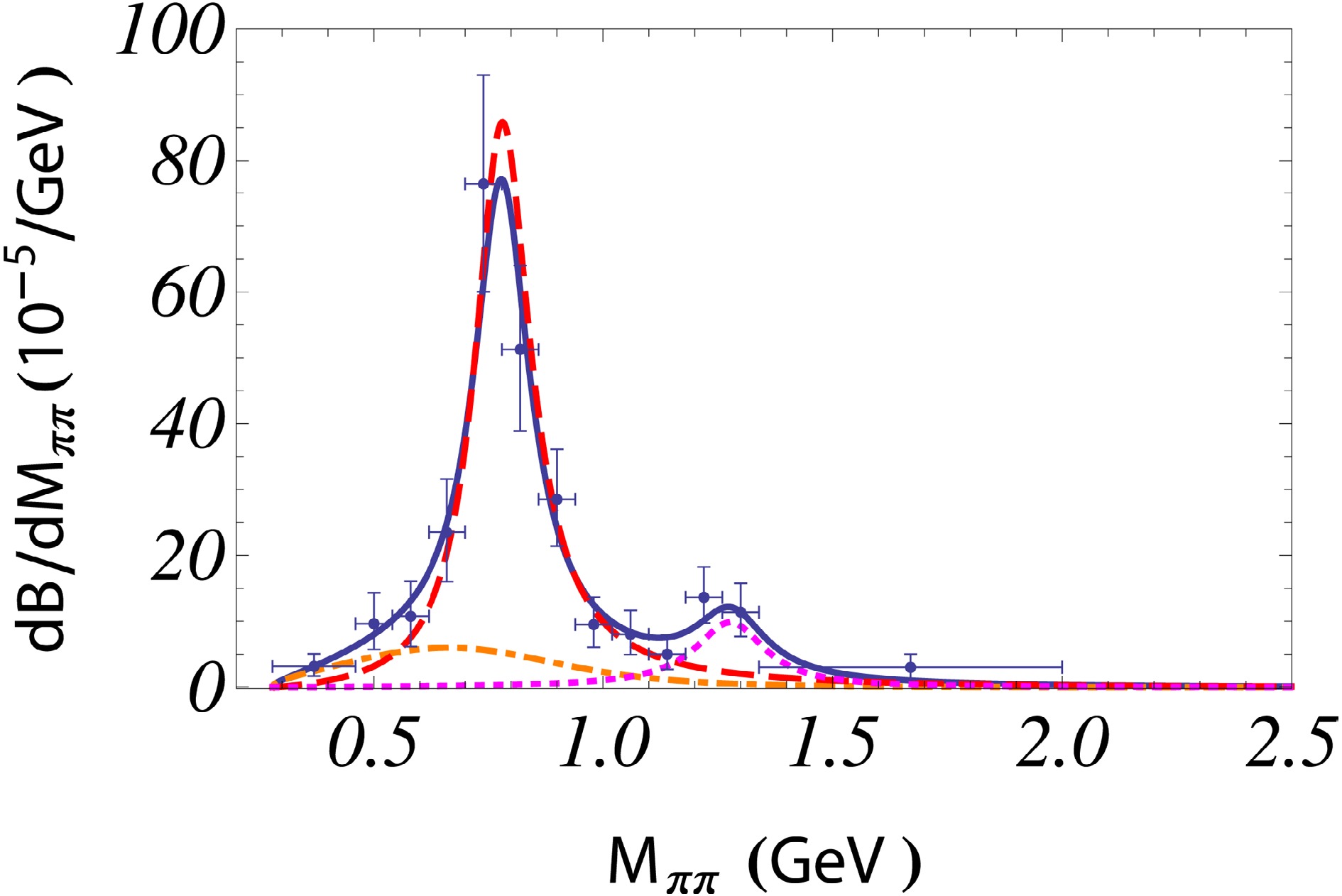
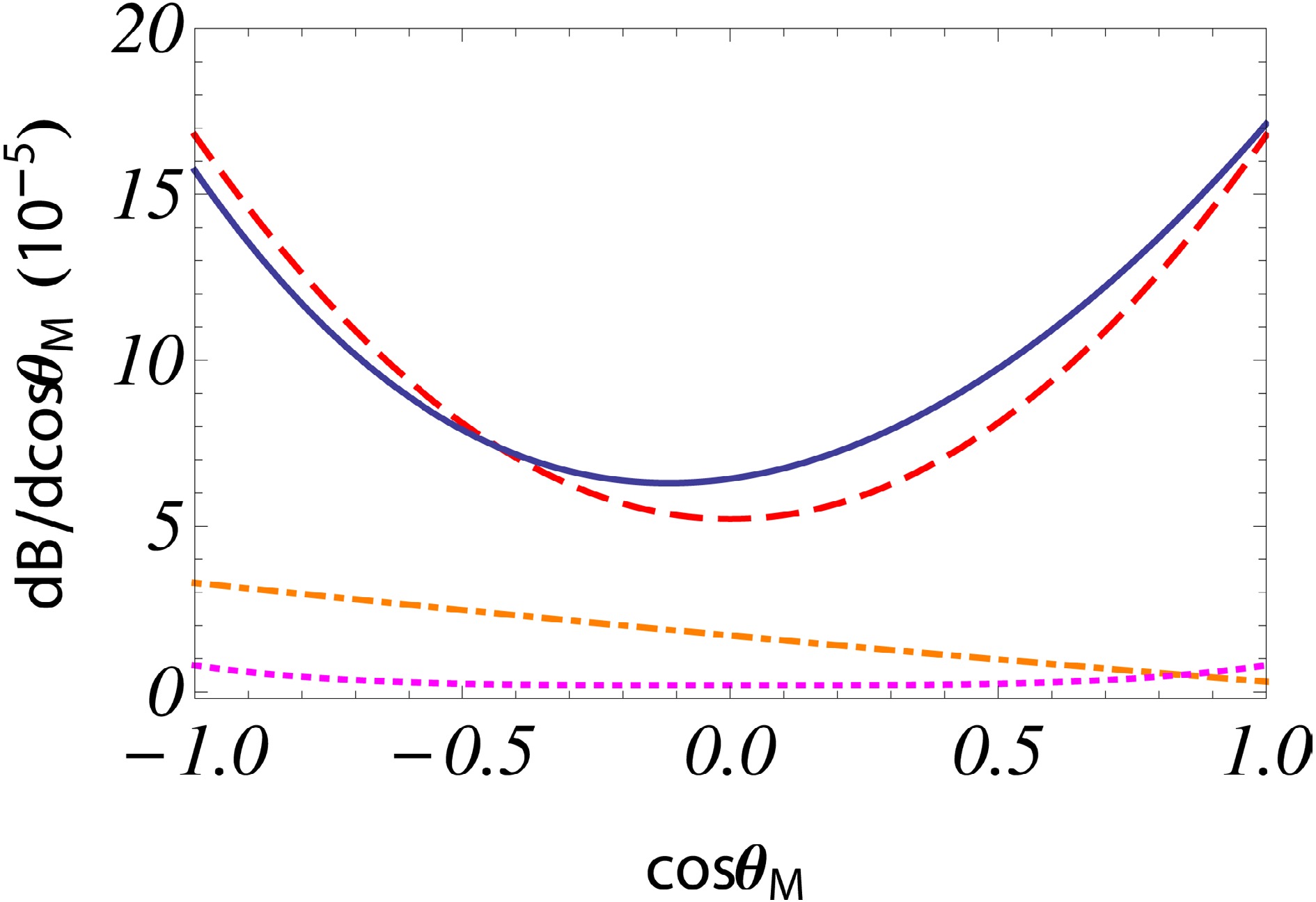
The Belle Collaboration has recently reported a measurement of the branching fraction for the semileptonic decay\begin{document}$ B^{-}\to\pi^{+}\pi^{-}\ell^{-}\bar\nu_\ell $\end{document} \begin{document}$ \ell=e $\end{document} \begin{document}$ \pi\pi $\end{document} \begin{document}$ B\to\pi\pi $\end{document} \begin{document}$ {\cal B}_N(B^{-}\to\pi^{+}\pi^{-}\ell^{-}\bar\nu_\ell)=(3.5\pm 1.4^{+4.3}_{-2.4})\times 10^{-5} $\end{document}
The Belle Collaboration has recently reported a measurement of the branching fraction for the semileptonic decay
2026, 50(7): 073111. doi: 10.1088/1674-1137/ae6b23
Abstract:
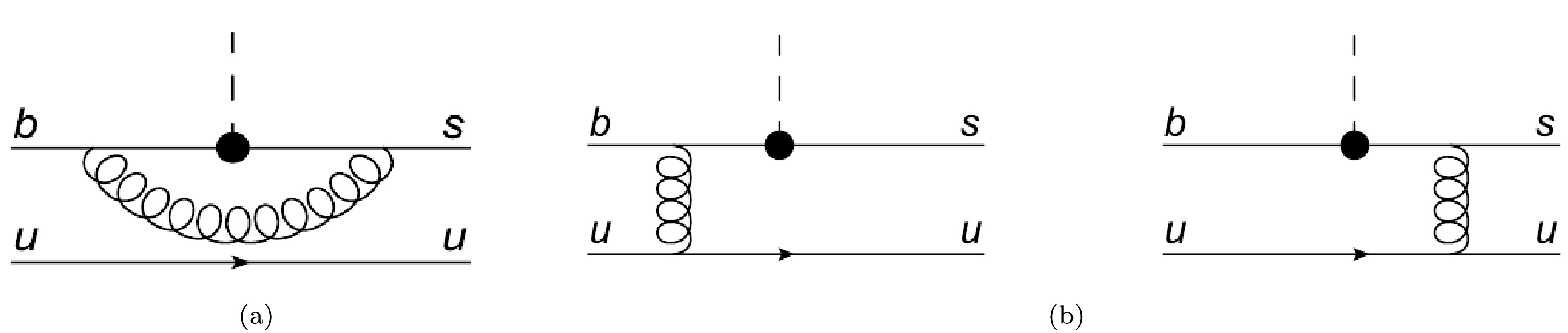
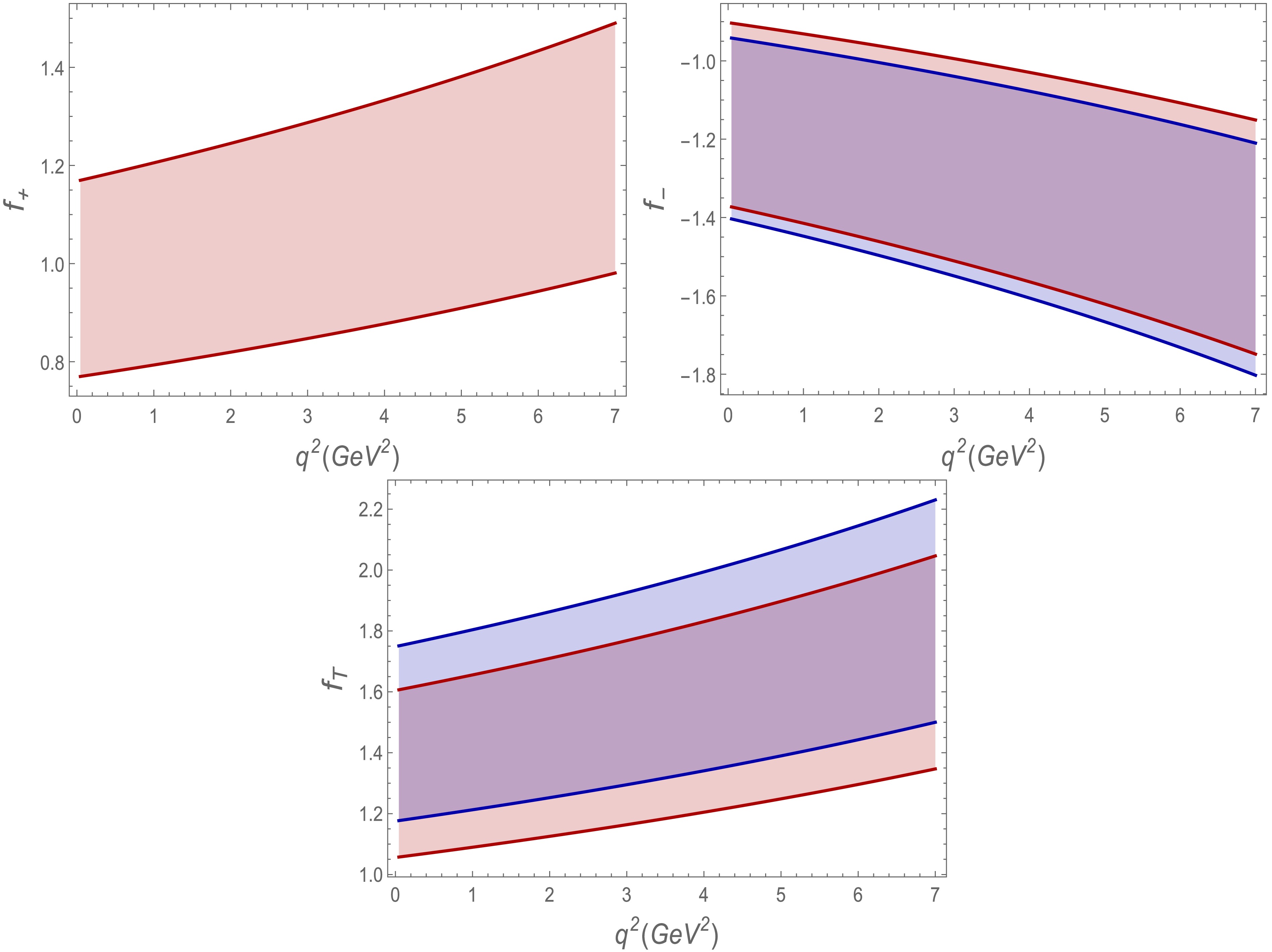
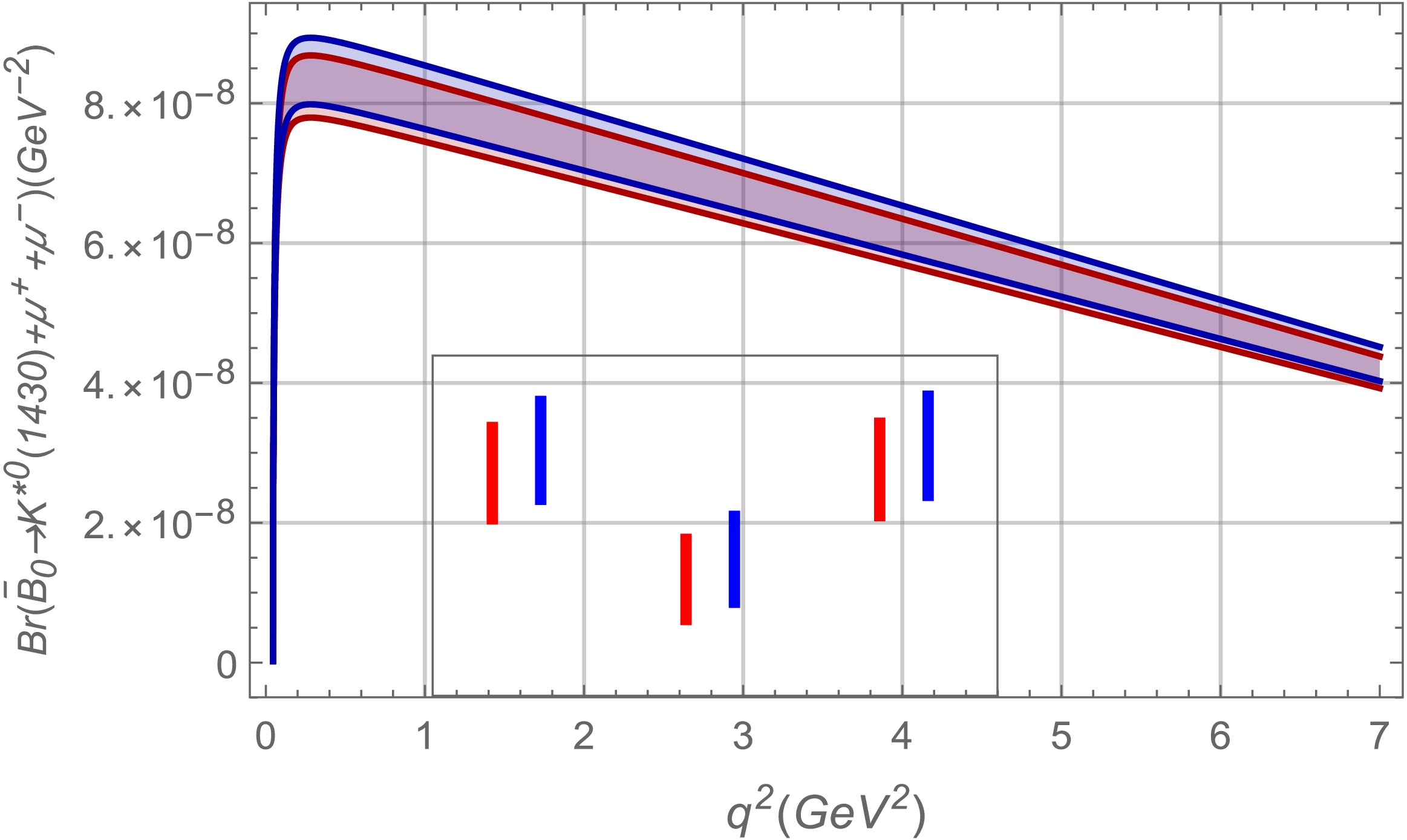
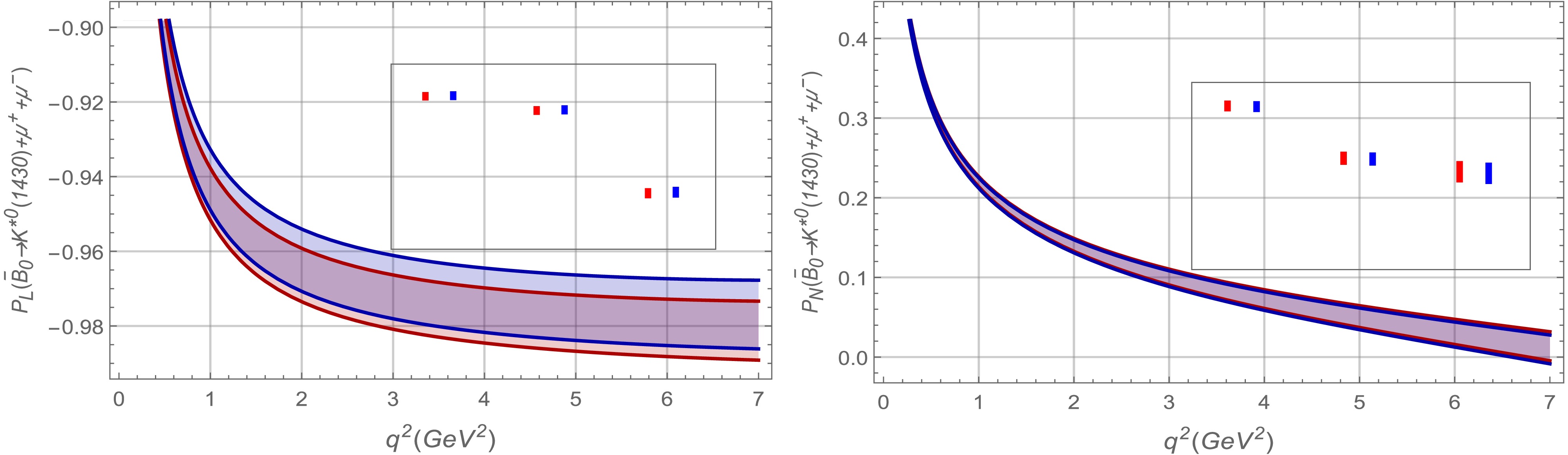
In the heavy-quark and large-energy limits, symmetry relations reduce the number of independent form factors governing heavy-to-light B-meson decays. Exploiting these relations, the form factors can be parametrized while systematically incorporating symmetry-breaking corrections from perturbative QCD. Using vertex renormalization together with light-cone distribution amplitudes, we compute the vertex and hard-spectator contributions for the\begin{document}$B \to K_0^{*}(1430)$\end{document} \begin{document}$(P_L, P_N)$\end{document} \begin{document}$B \to K_0^{*}(1430)\mu^+\mu^-$\end{document}
In the heavy-quark and large-energy limits, symmetry relations reduce the number of independent form factors governing heavy-to-light B-meson decays. Exploiting these relations, the form factors can be parametrized while systematically incorporating symmetry-breaking corrections from perturbative QCD. Using vertex renormalization together with light-cone distribution amplitudes, we compute the vertex and hard-spectator contributions for the
2026, 50(7): 073112. doi: 10.1088/1674-1137/ae6da0
Abstract:
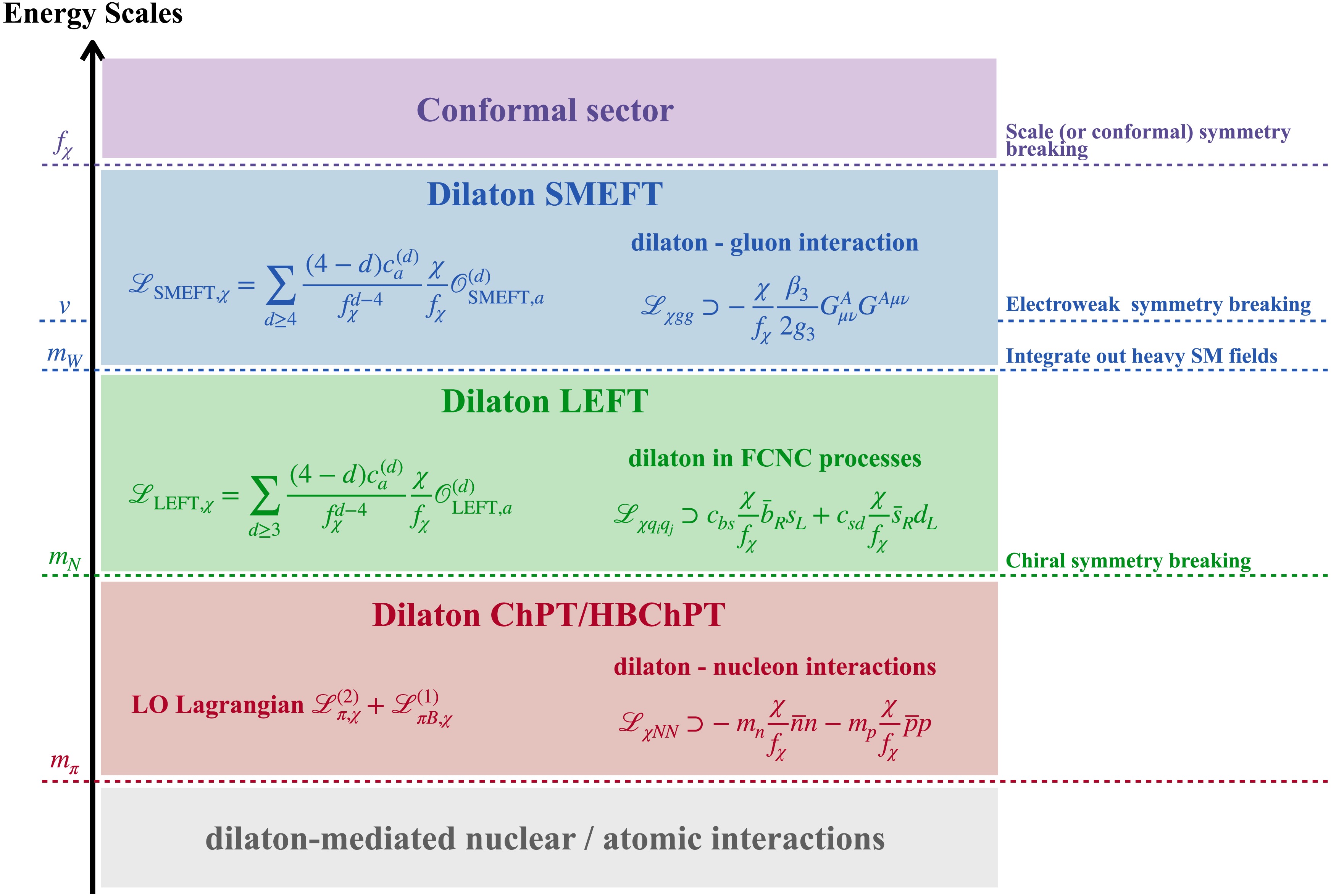
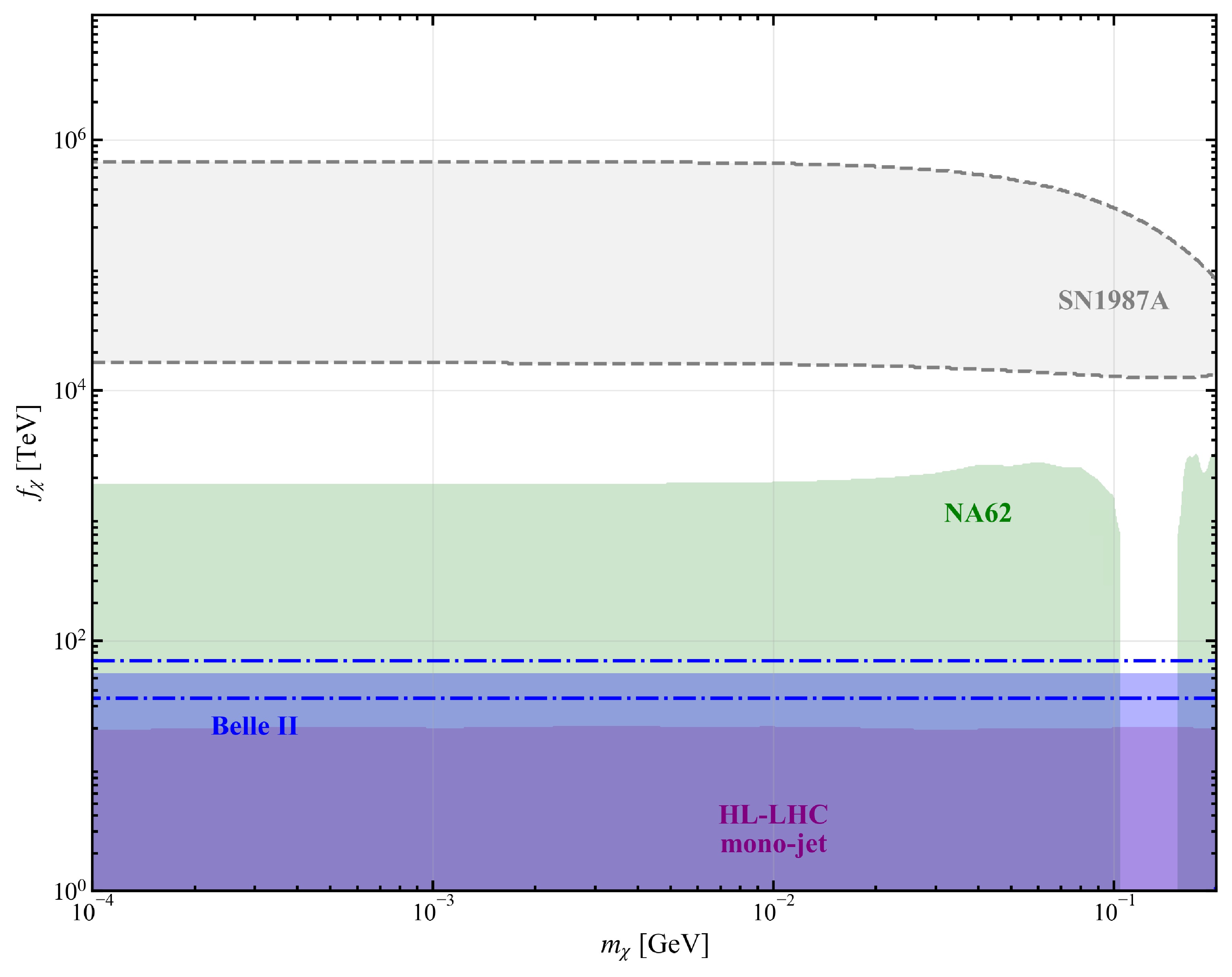
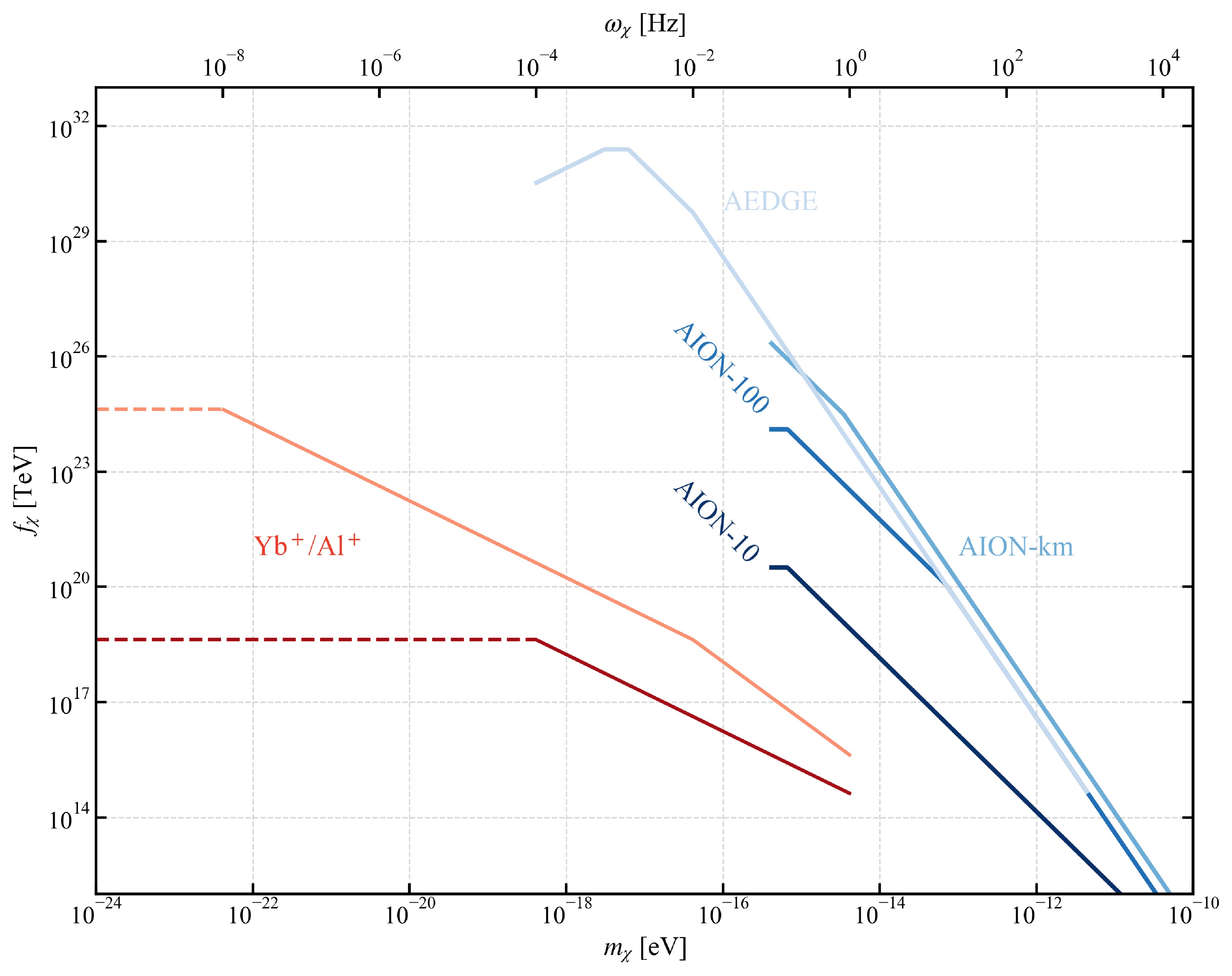
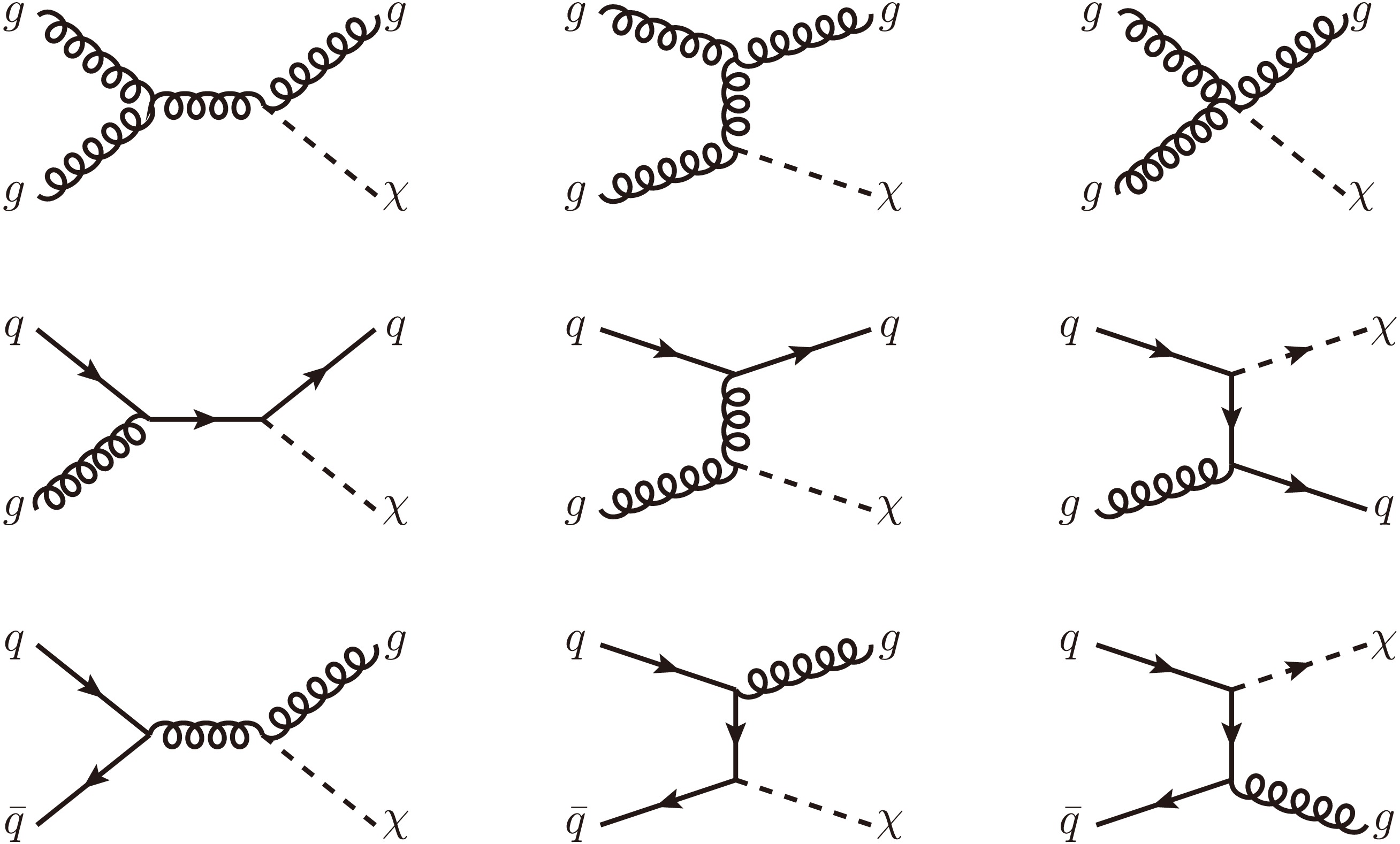
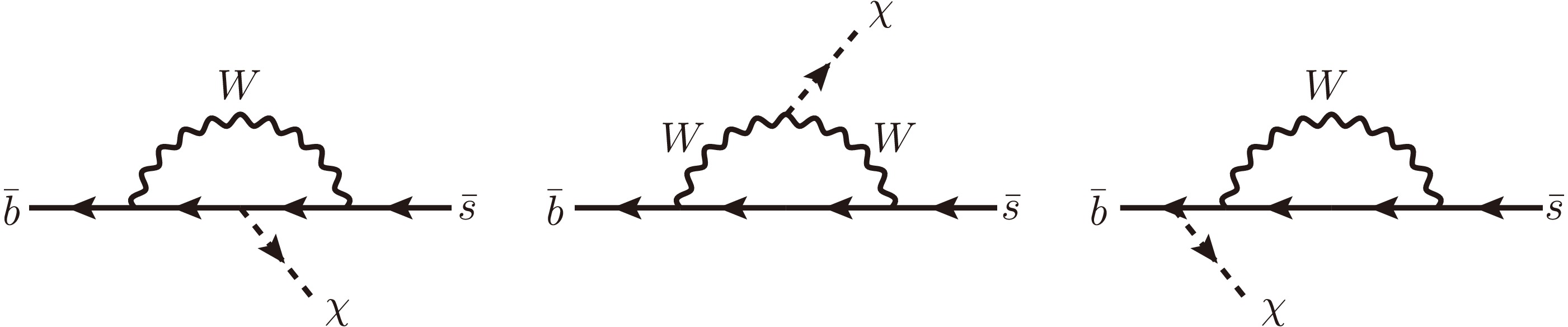
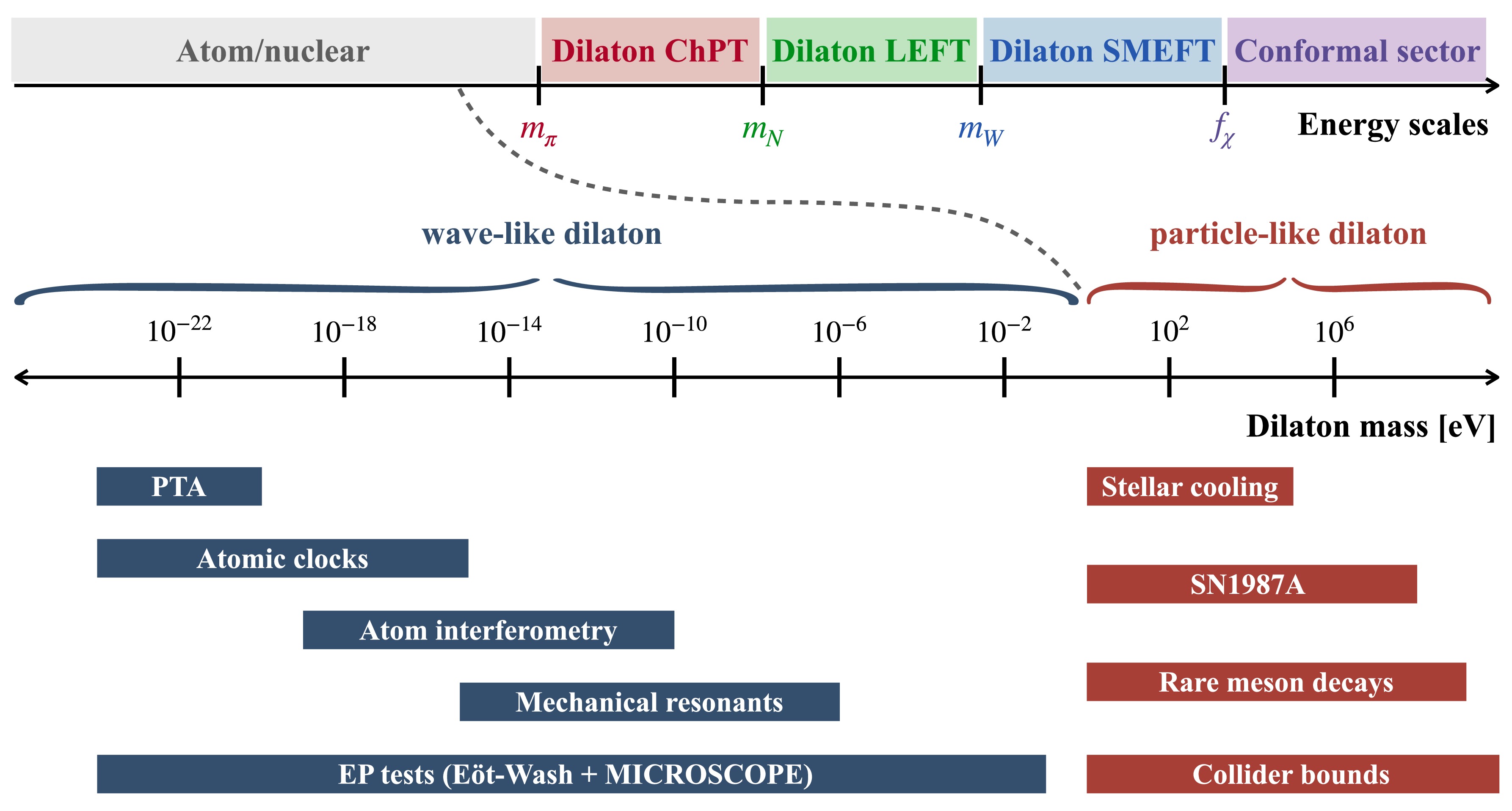
Dilatons, the CP-even pseudo-Nambu-Goldstone bosons arising from spontaneous scale symmetry breaking, offer a compelling alternative to axion-like particles (ALPs) yet lack a comprehensive low-energy framework. We address this by constructing a systematic effective field theory (EFT) for the dilaton based on a manifestly scale-invariant regularization scheme. This approach derives universal linear couplings to the trace anomaly while preserving consistent renormalization group evolution. We establish a hierarchical EFT tower connecting the ultraviolet conformal sector to the infrared, encompassing the dilaton-extended SMEFT, low-energy EFT up to dimension-7, and a chiral Lagrangian describing meson and baryon interactions. We perform a comprehensive phenomenological analysis across two distinct mass regimes, where the dilaton manifests as either a conventional particle or a wave-like particle. For MeV-scale dilatons behaving as conventional particles, we obtain constraints from LHC production, semi-invisible B- and K-meson decays, and supernova cooling. For ultralight dilatons acting as dark matter, we project sensitivities for atomic clocks and atom interferometers. This unified EFT framework would pave the way for extended phenomenological studies across the full mass spectrum of the light dilaton.
Dilatons, the CP-even pseudo-Nambu-Goldstone bosons arising from spontaneous scale symmetry breaking, offer a compelling alternative to axion-like particles (ALPs) yet lack a comprehensive low-energy framework. We address this by constructing a systematic effective field theory (EFT) for the dilaton based on a manifestly scale-invariant regularization scheme. This approach derives universal linear couplings to the trace anomaly while preserving consistent renormalization group evolution. We establish a hierarchical EFT tower connecting the ultraviolet conformal sector to the infrared, encompassing the dilaton-extended SMEFT, low-energy EFT up to dimension-7, and a chiral Lagrangian describing meson and baryon interactions. We perform a comprehensive phenomenological analysis across two distinct mass regimes, where the dilaton manifests as either a conventional particle or a wave-like particle. For MeV-scale dilatons behaving as conventional particles, we obtain constraints from LHC production, semi-invisible B- and K-meson decays, and supernova cooling. For ultralight dilatons acting as dark matter, we project sensitivities for atomic clocks and atom interferometers. This unified EFT framework would pave the way for extended phenomenological studies across the full mass spectrum of the light dilaton.
2026, 50(7): 074001. doi: 10.1088/1674-1137/ae5dae
Abstract:
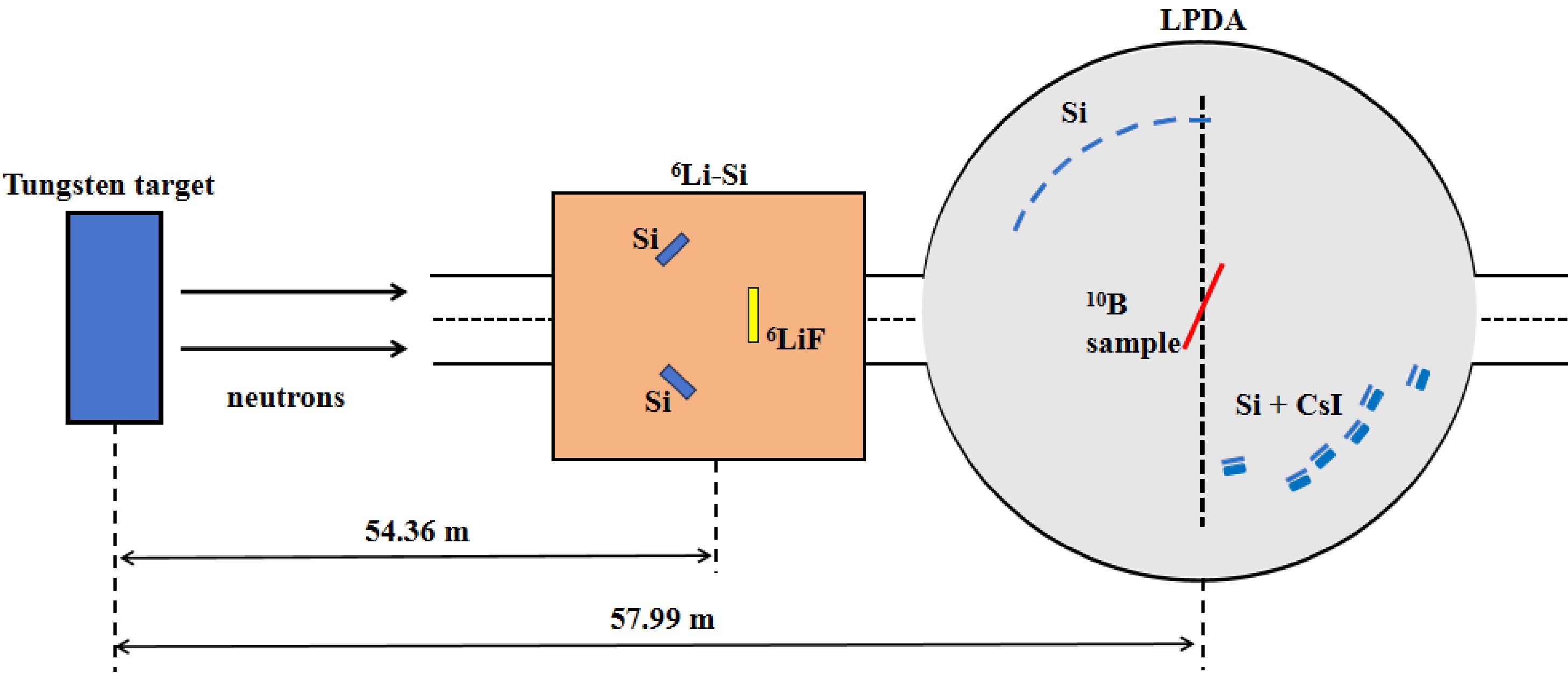
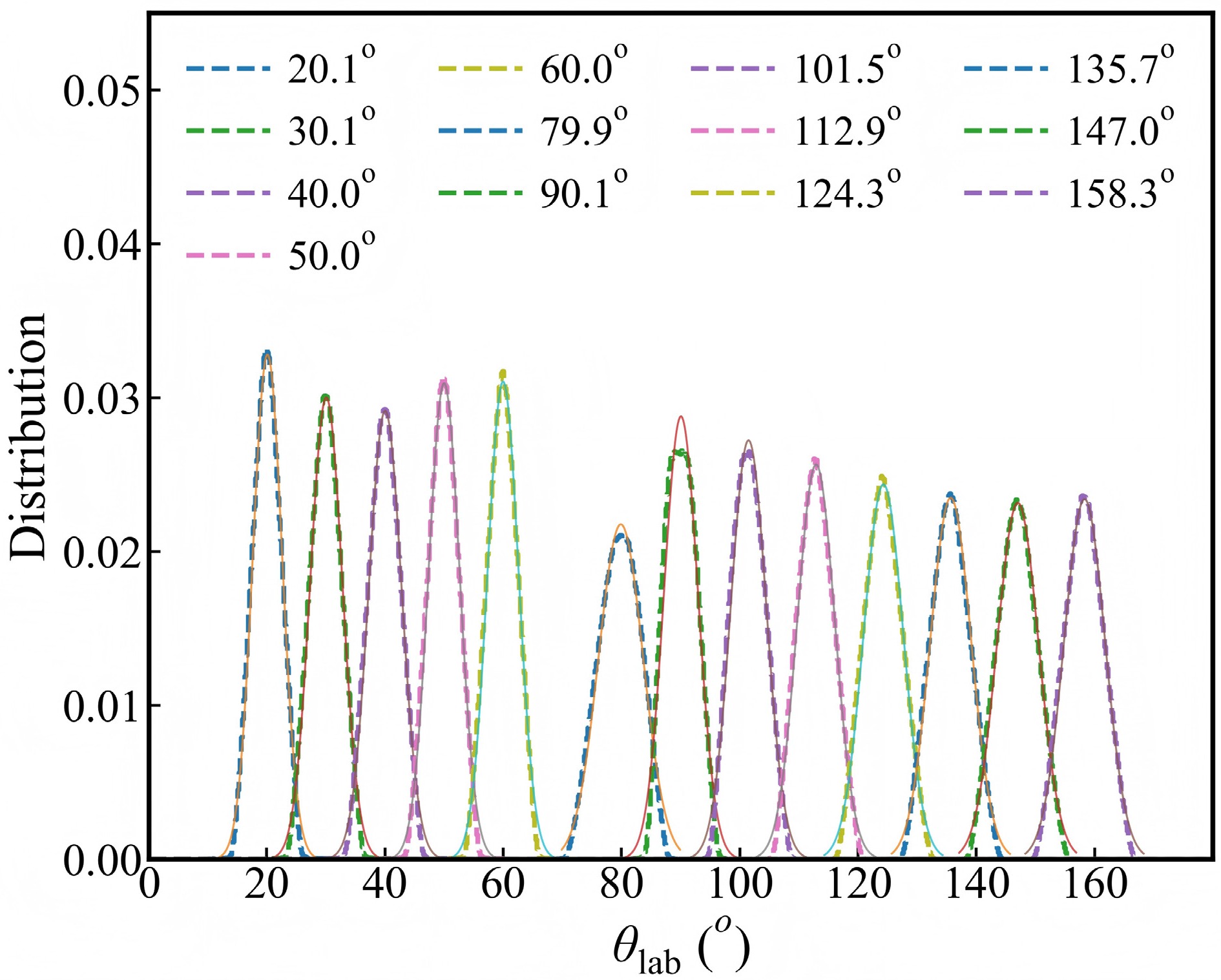
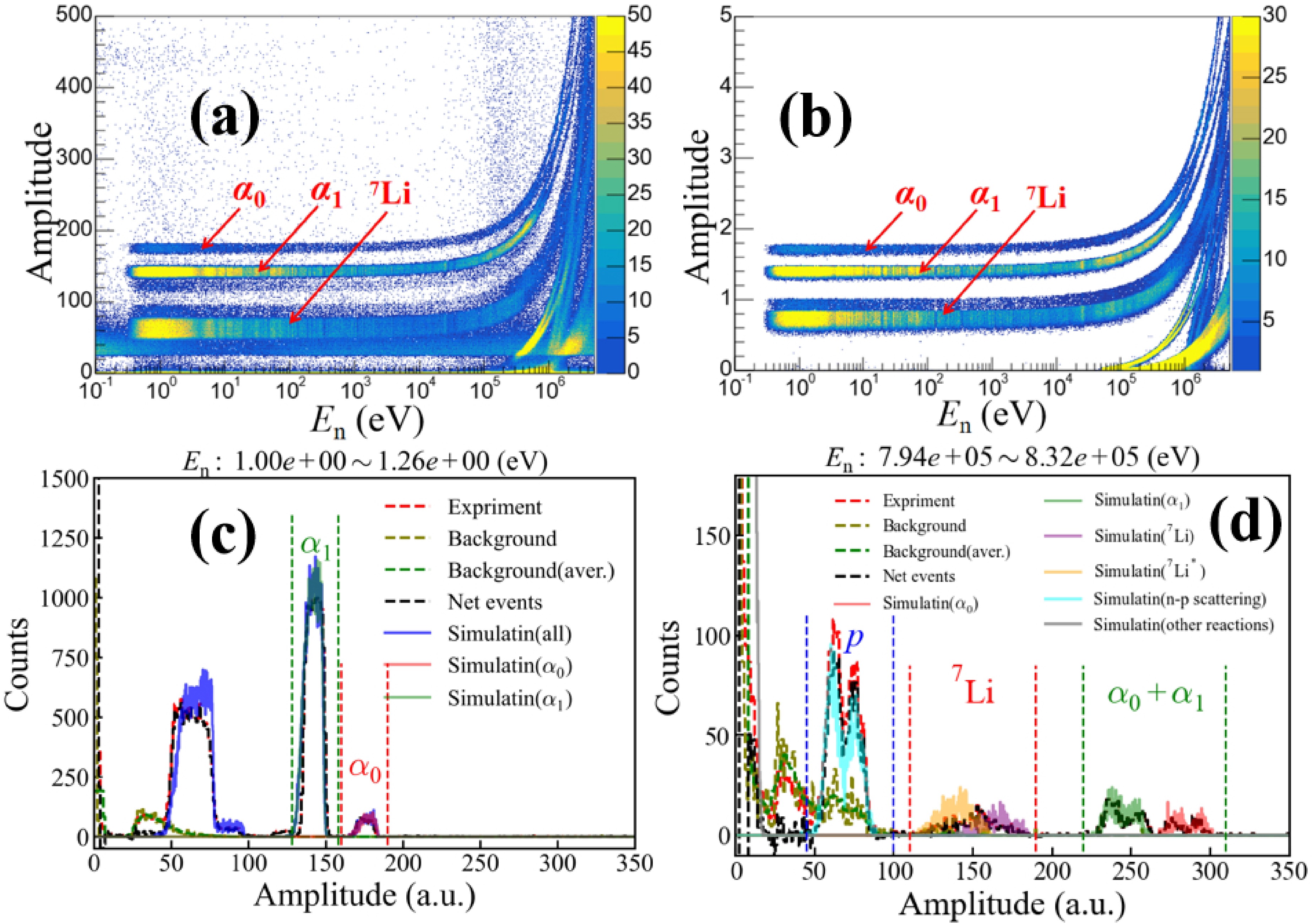
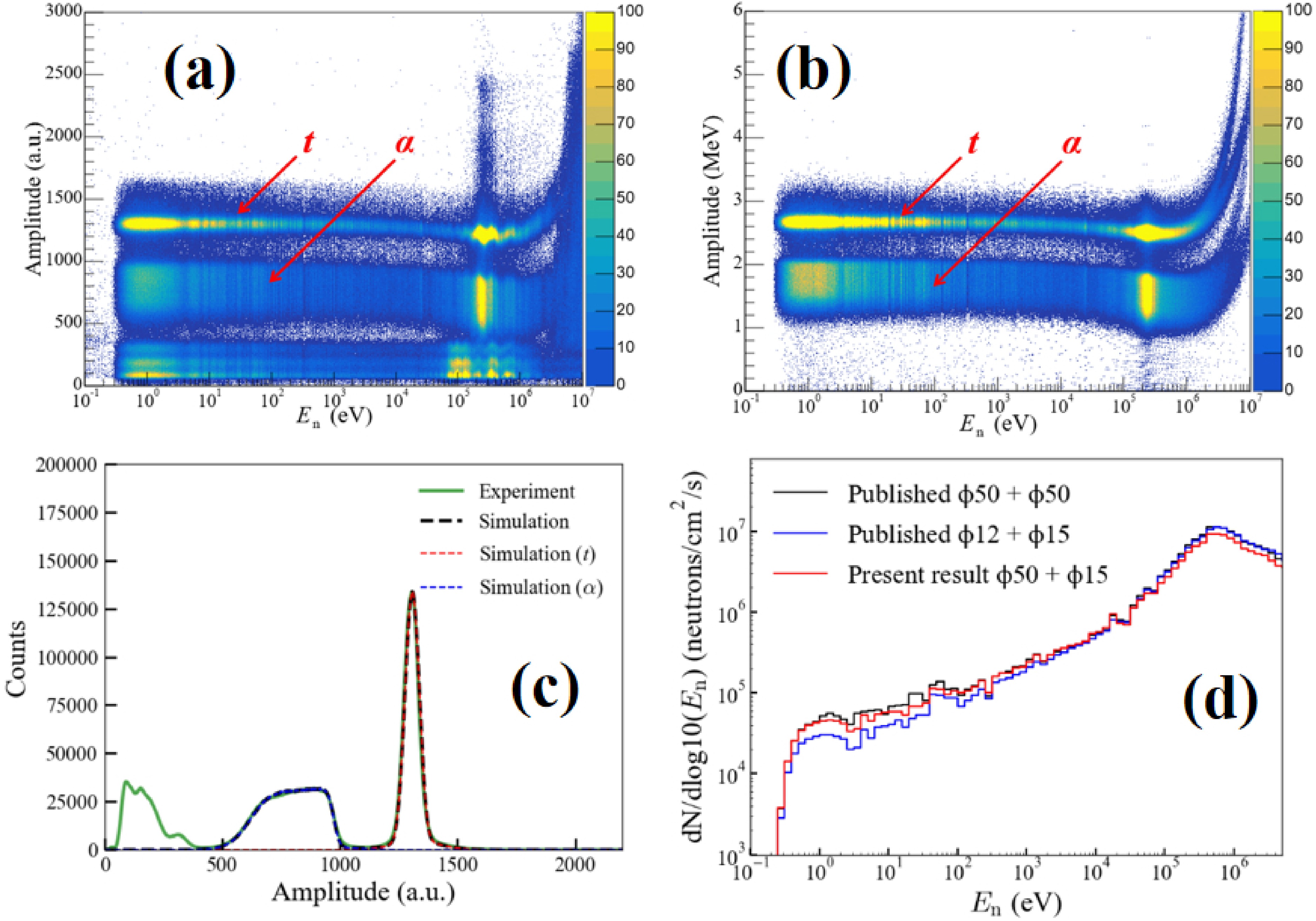
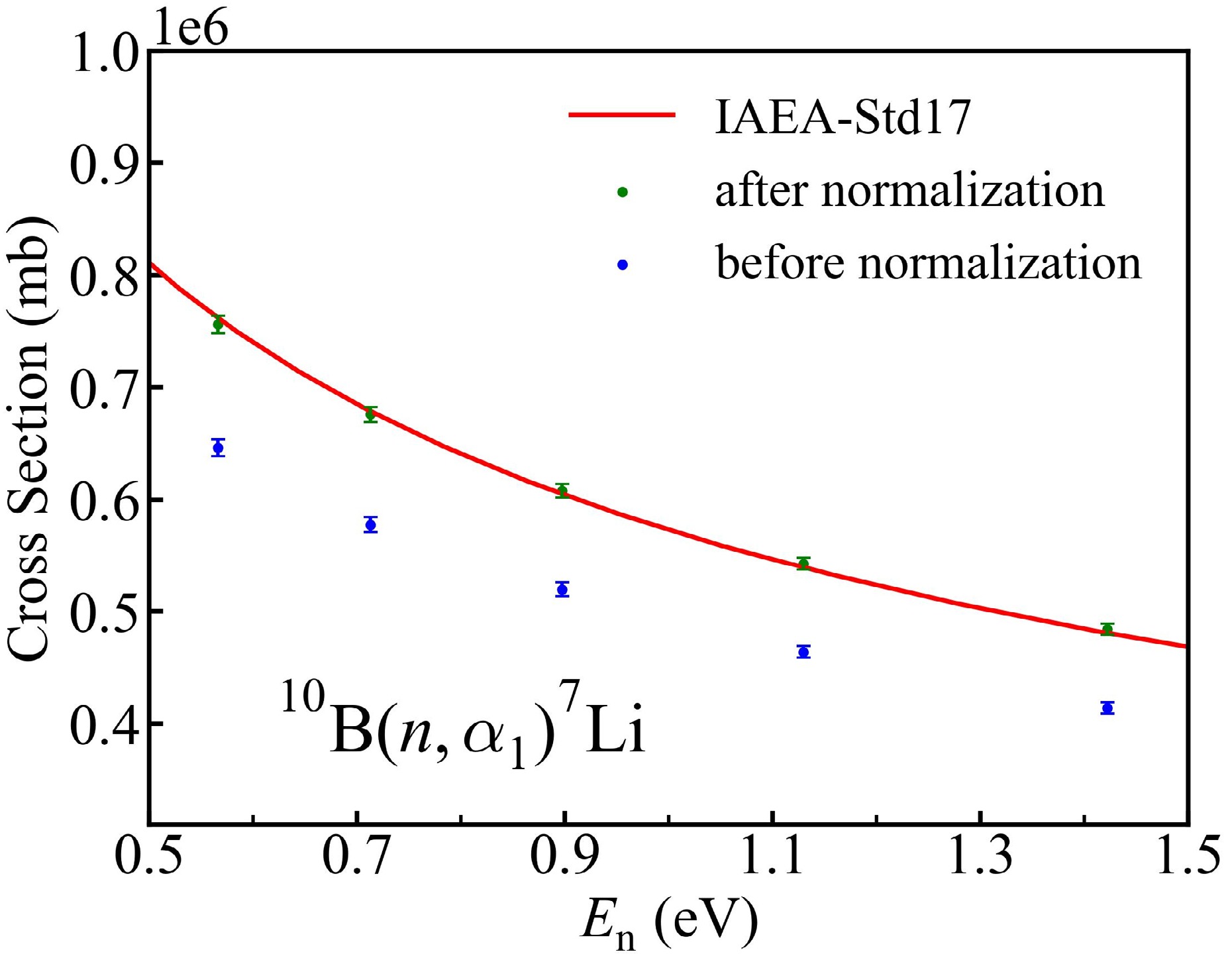
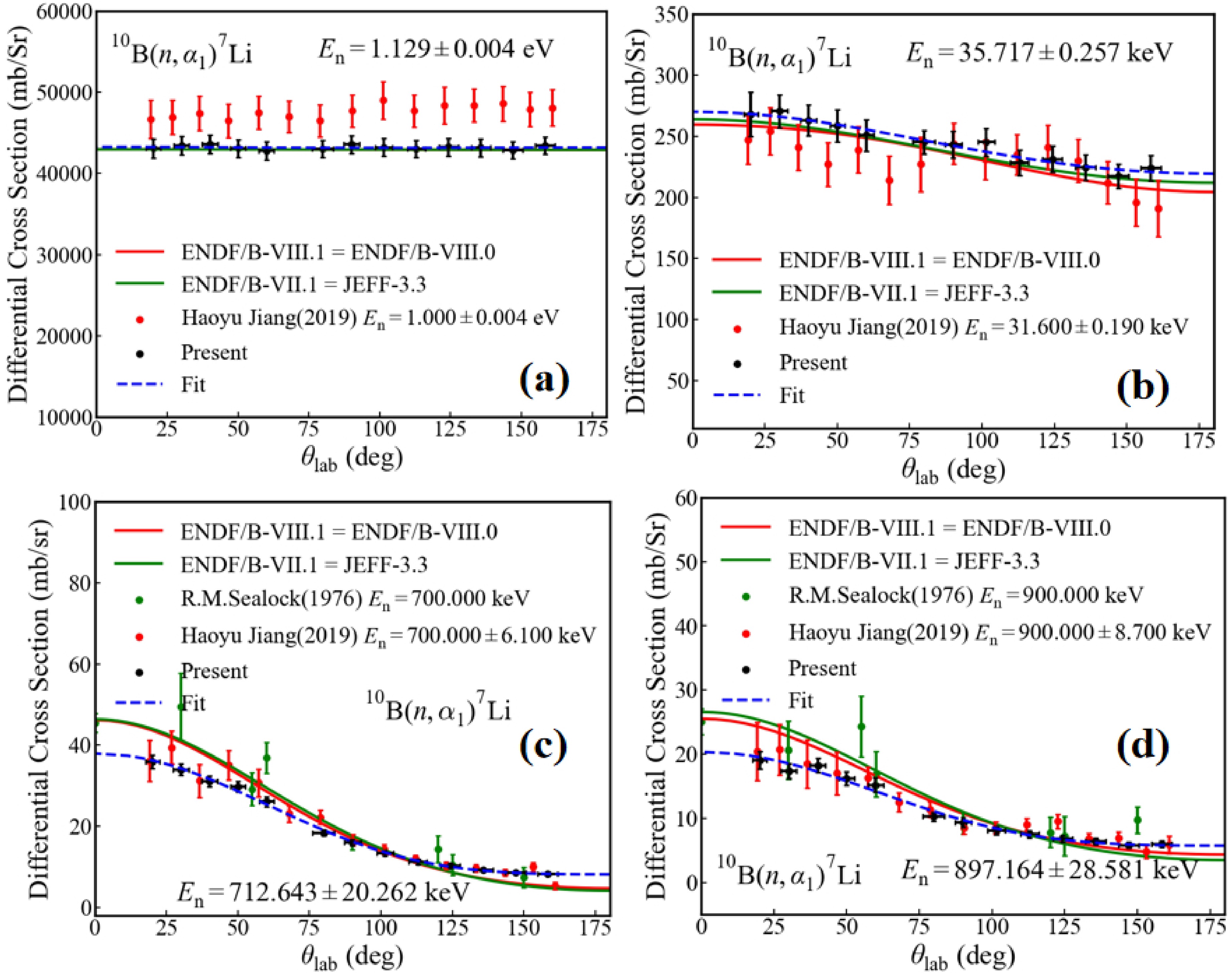
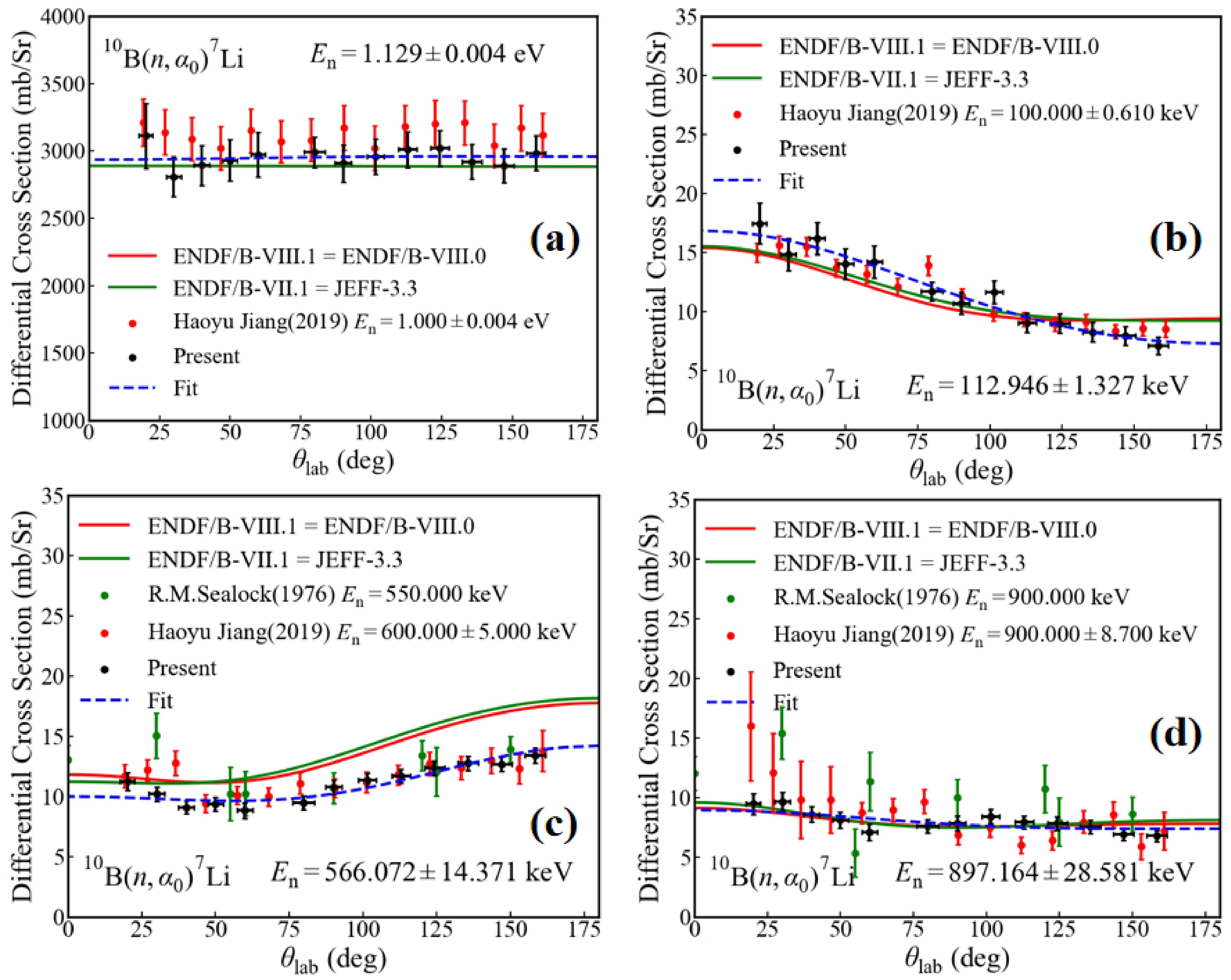
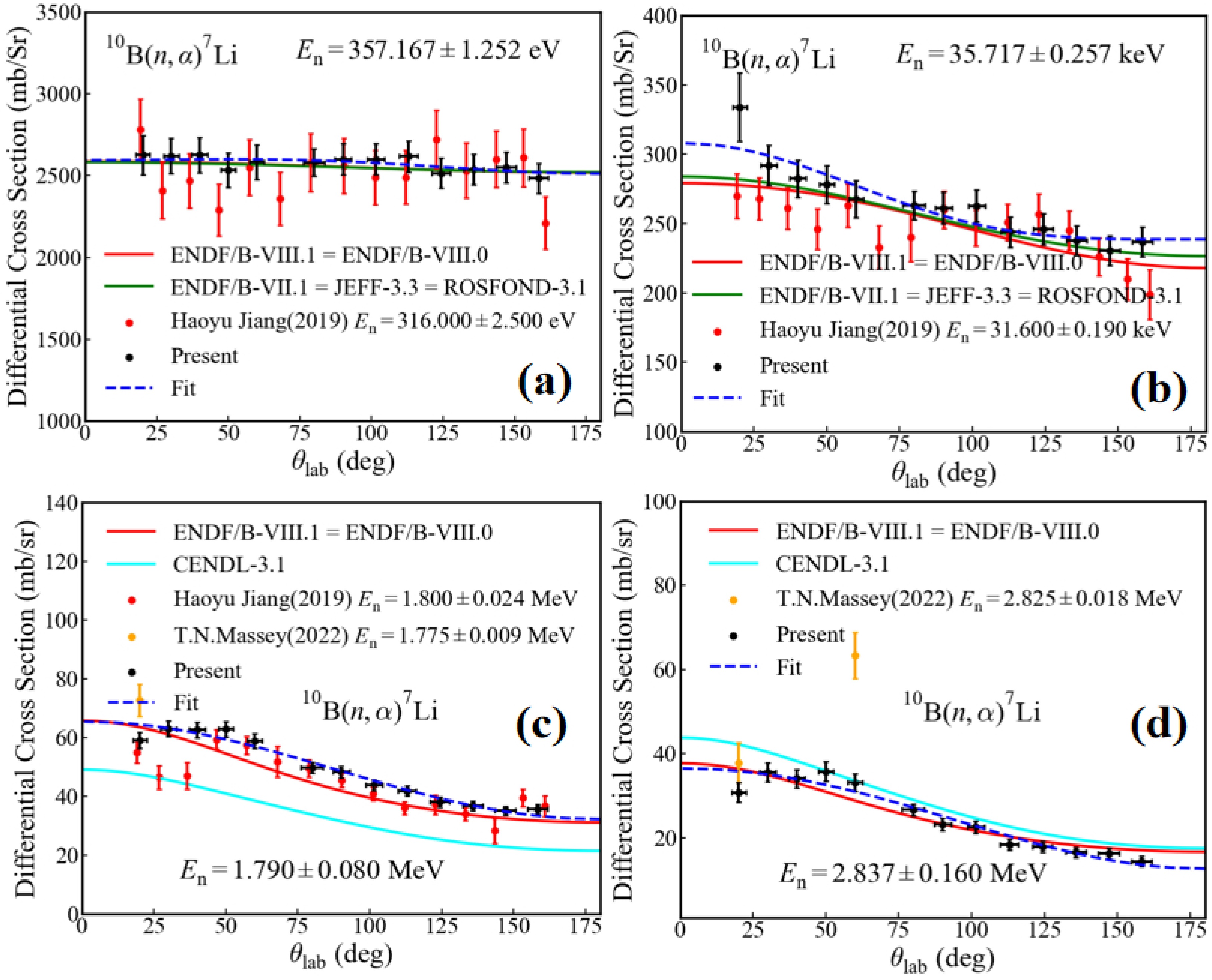
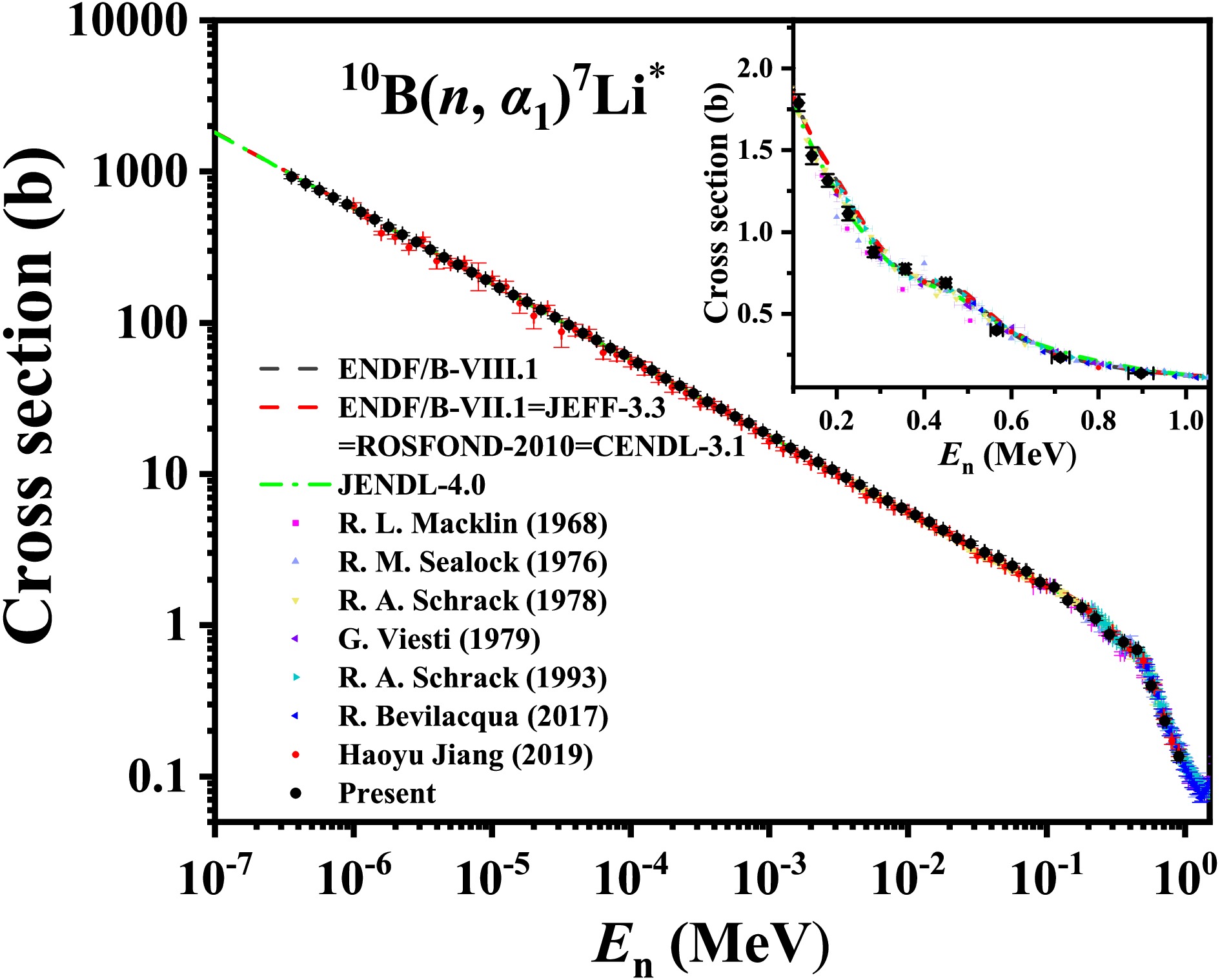
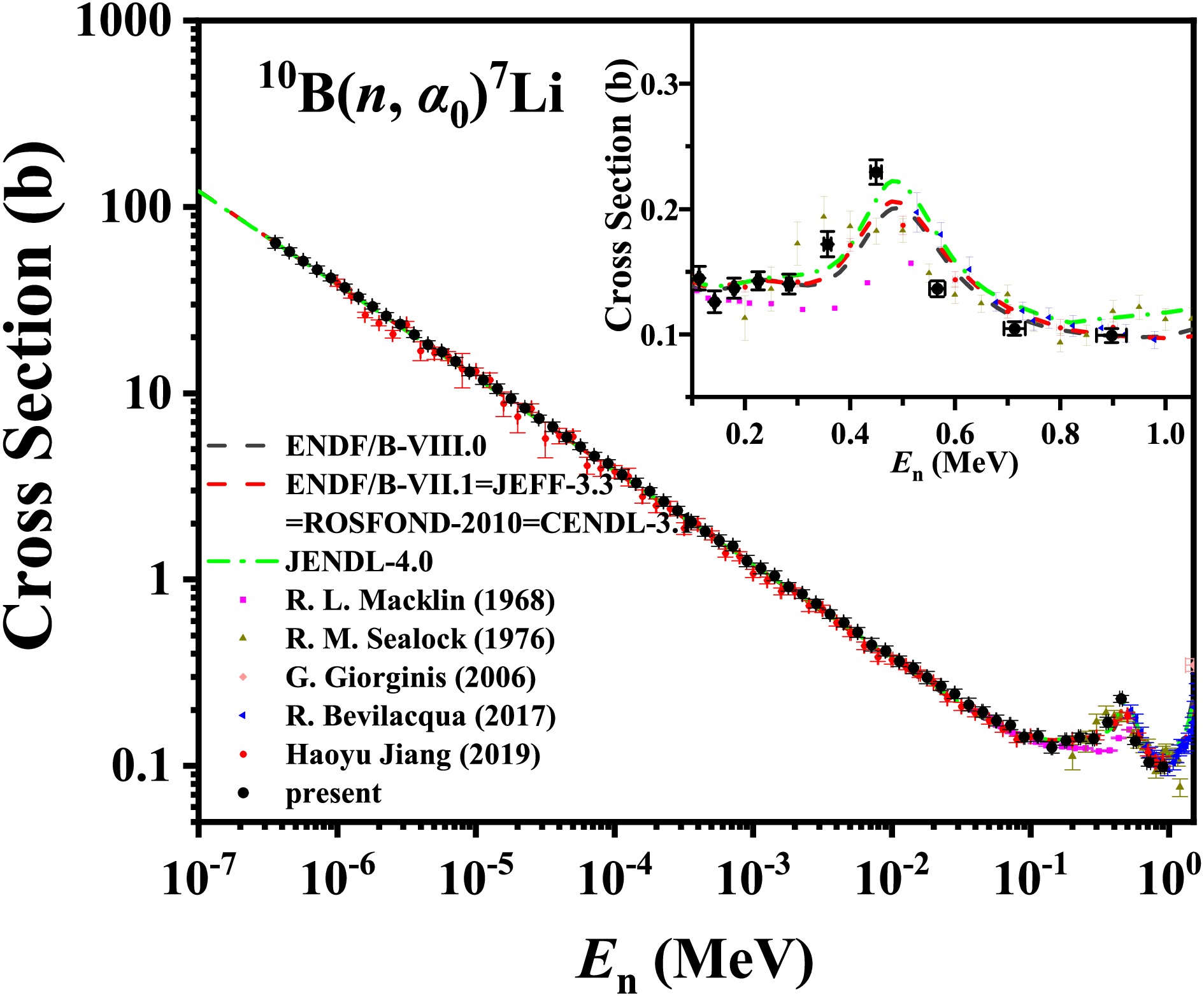
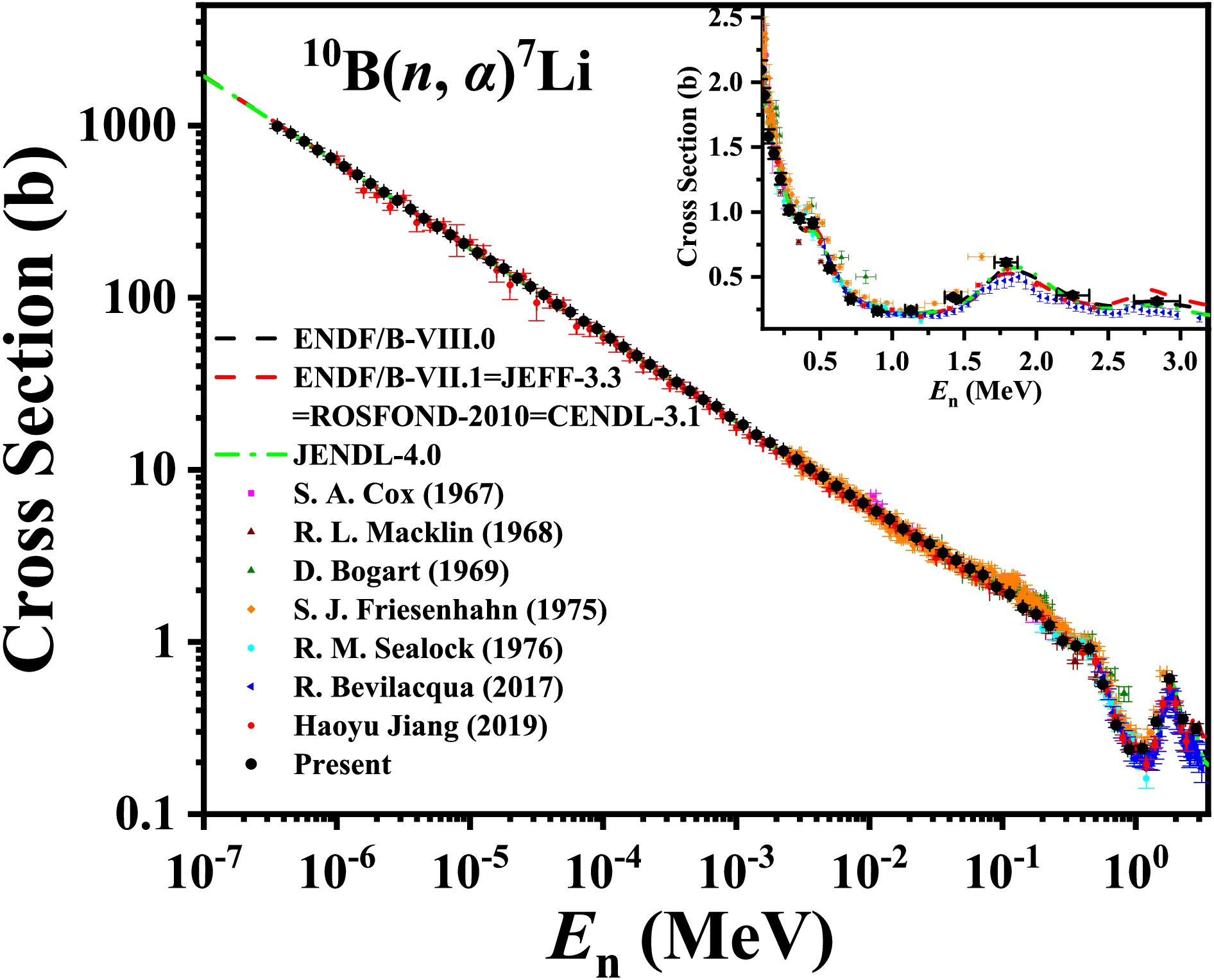
In the present study, new measurements of differential and angle-integrated cross sections for the 10B(n, α1)7Li*, 10B(n, α0)7Li, and 10B(n, α)7Li reactions were performed at the CSNS Back-n white neutron source. The Light-charged Particle Detector Array (LPDA) system was used to detect charged particles. The 6Li-Si monitor was employed to measure the neutron flux. The differential cross sections for the 10B(n, α)7Li reaction were obtained from 20.1° to 158.3° (13 angles) in the neutron energy region from 0.3 eV to 3.0 MeV (70 energy points). The differential cross sections for the 10B(n, α0)7Li and 10B(n, α1)7Li* reactions were also obtained at the same angular positions in the neutron energy region from 0.3 eV to 1.0 MeV (65 energy points). Fitting with the Legendre polynomial series, the angle-integrated cross sections of these three reactions were obtained through integration. The experimental data for these three reactions across such a wide neutron energy range are valuable references for future nuclear data evaluations.
In the present study, new measurements of differential and angle-integrated cross sections for the 10B(n, α1)7Li*, 10B(n, α0)7Li, and 10B(n, α)7Li reactions were performed at the CSNS Back-n white neutron source. The Light-charged Particle Detector Array (LPDA) system was used to detect charged particles. The 6Li-Si monitor was employed to measure the neutron flux. The differential cross sections for the 10B(n, α)7Li reaction were obtained from 20.1° to 158.3° (13 angles) in the neutron energy region from 0.3 eV to 3.0 MeV (70 energy points). The differential cross sections for the 10B(n, α0)7Li and 10B(n, α1)7Li* reactions were also obtained at the same angular positions in the neutron energy region from 0.3 eV to 1.0 MeV (65 energy points). Fitting with the Legendre polynomial series, the angle-integrated cross sections of these three reactions were obtained through integration. The experimental data for these three reactions across such a wide neutron energy range are valuable references for future nuclear data evaluations.
2026, 50(7): 074101. doi: 10.1088/1674-1137/ae5807
Abstract:
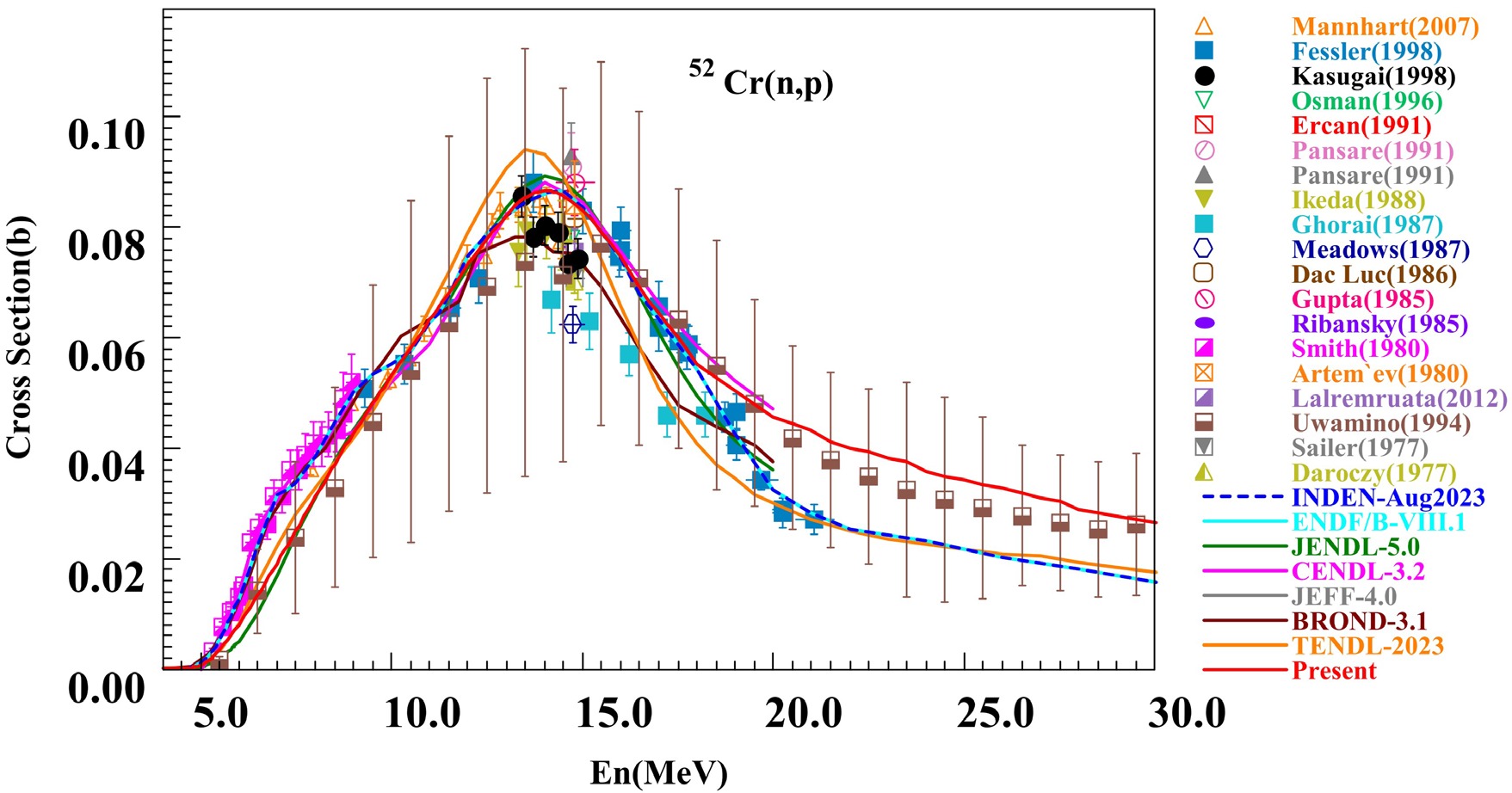
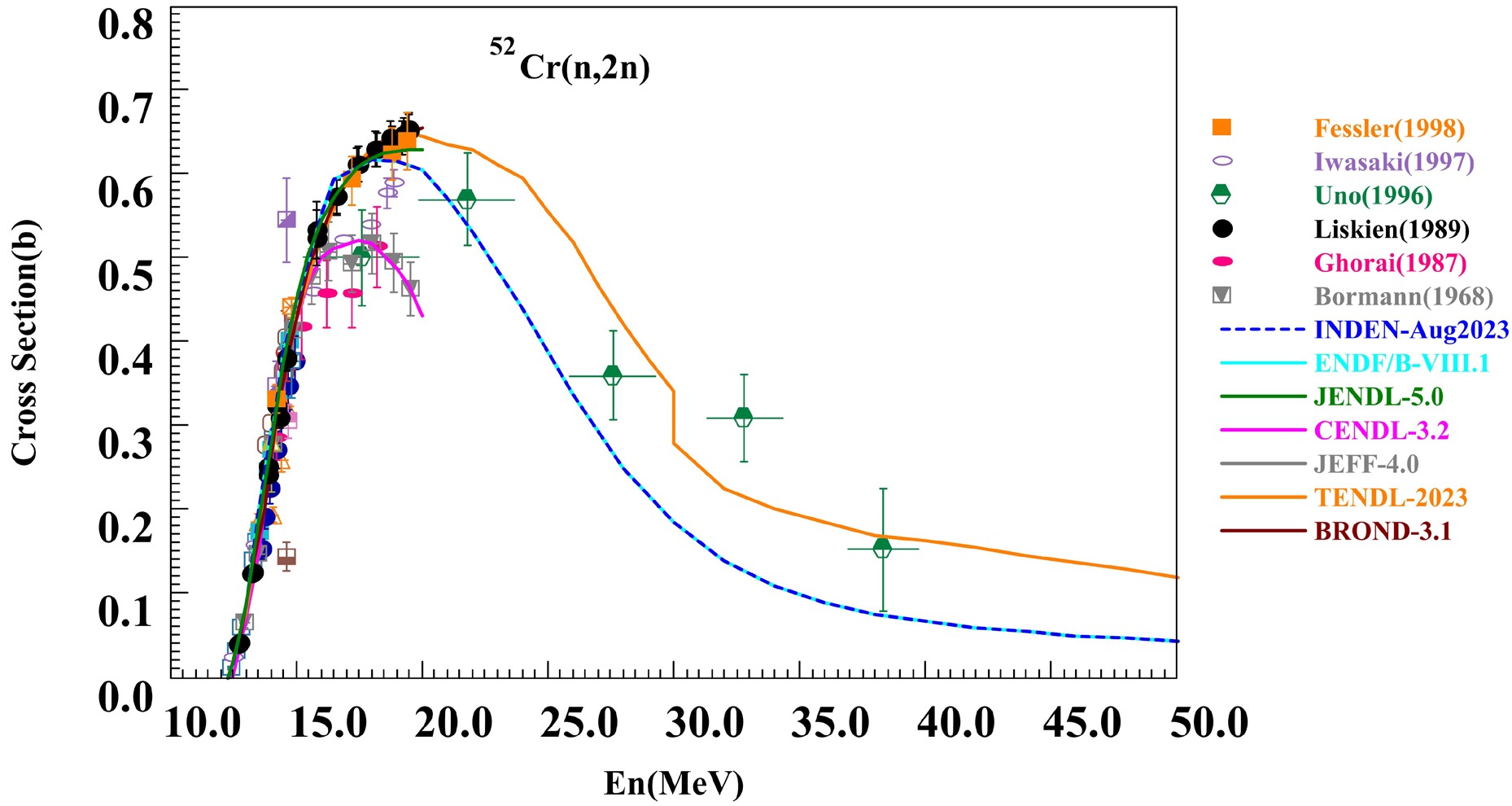
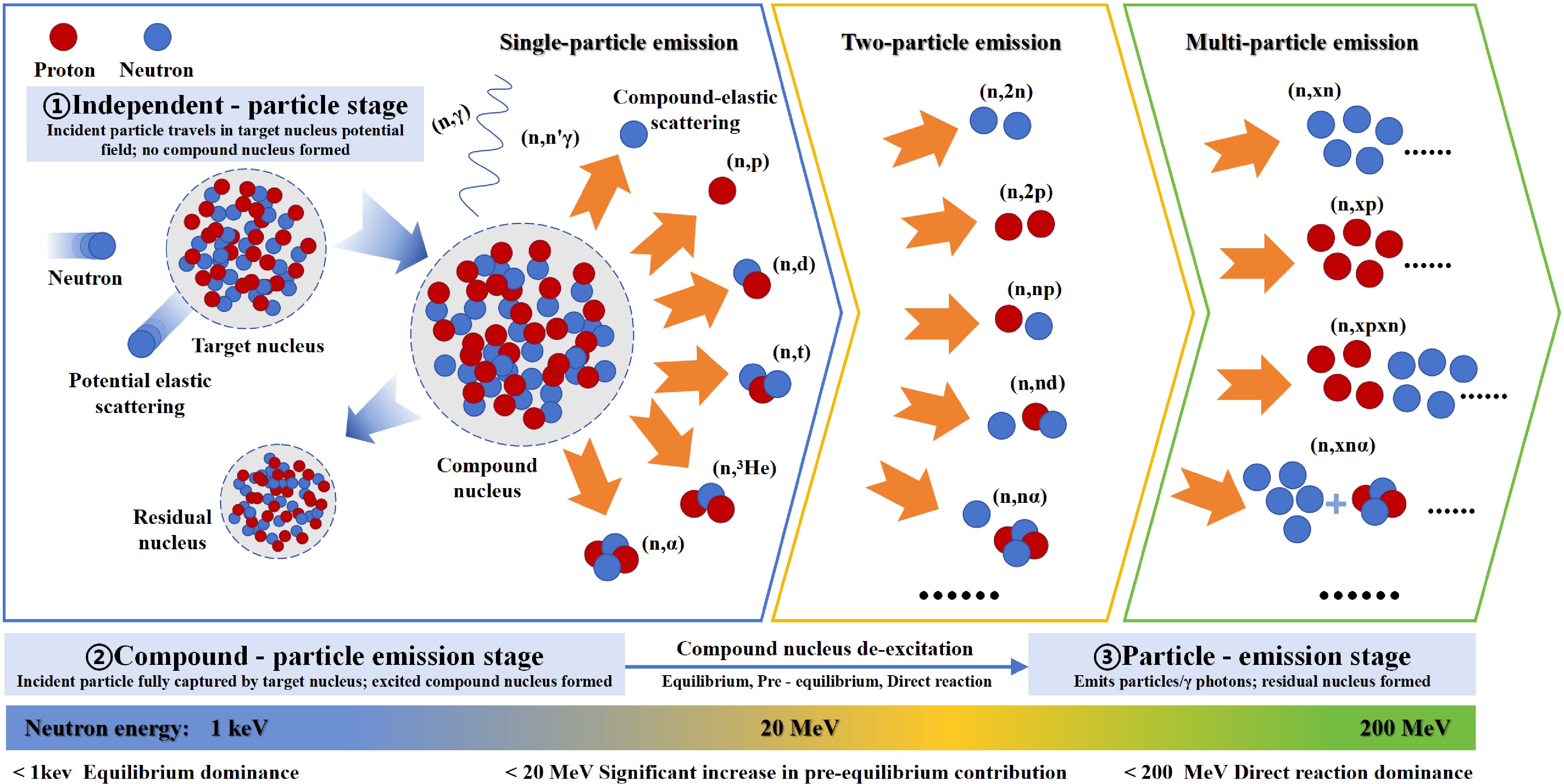
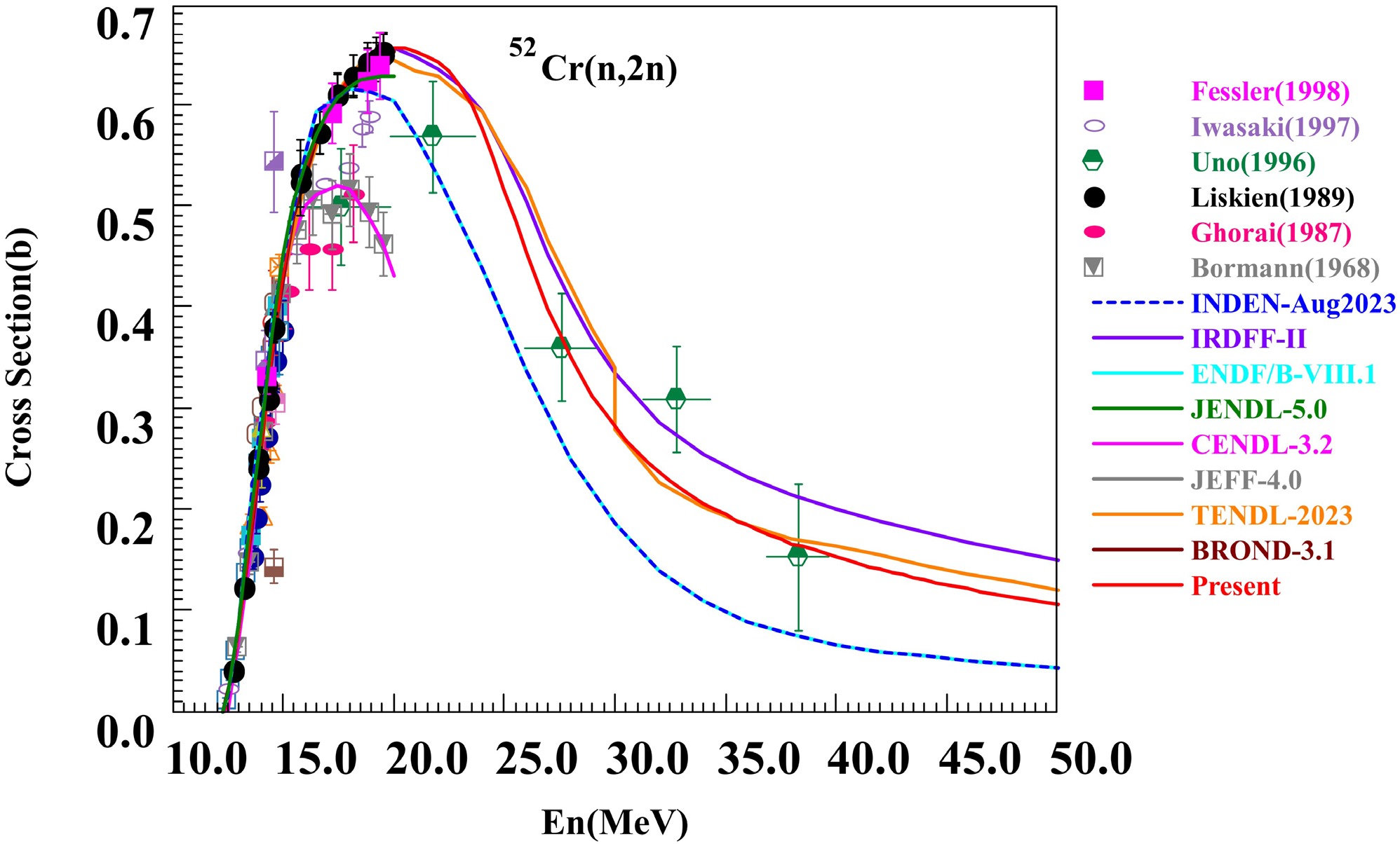
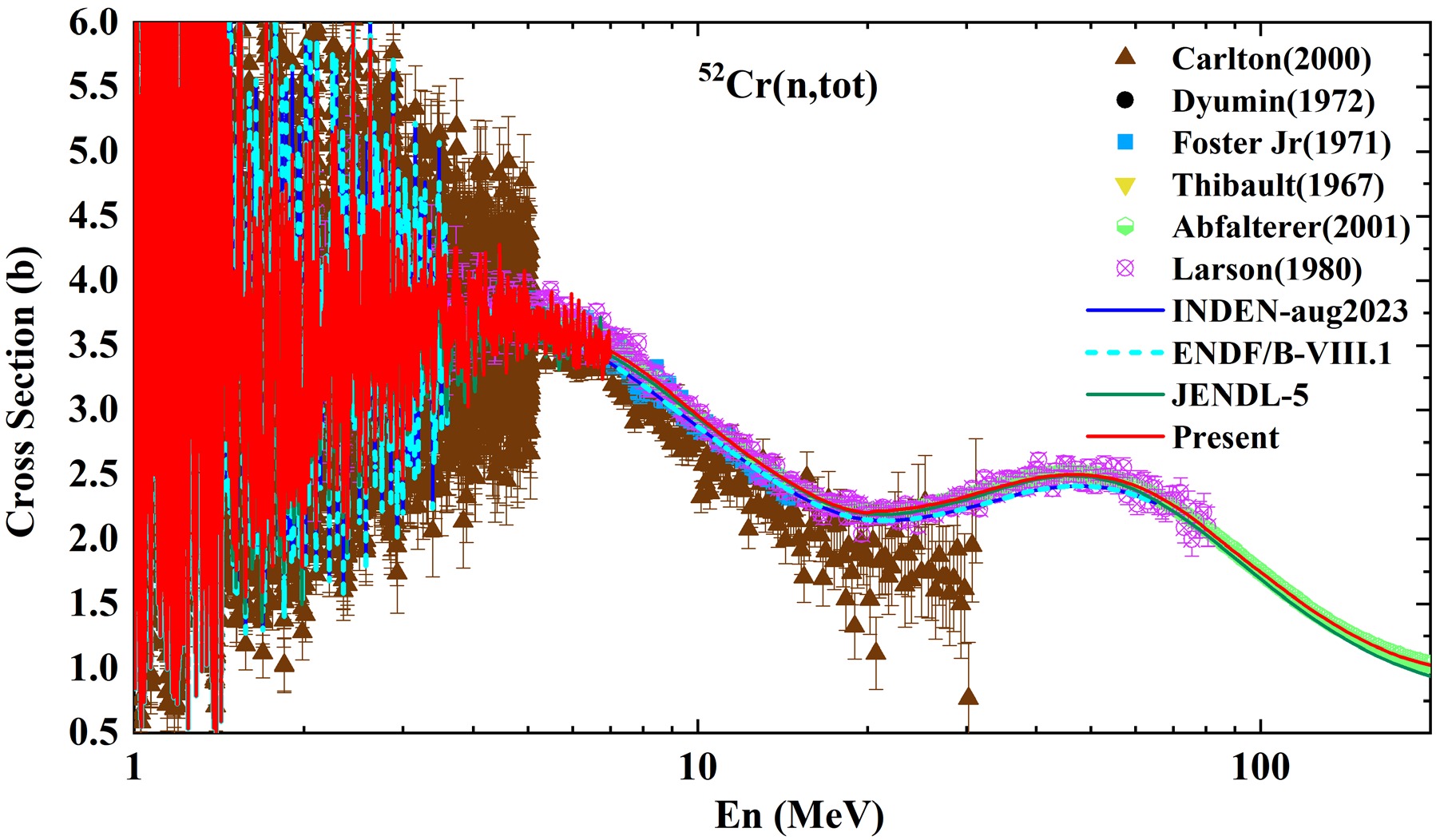
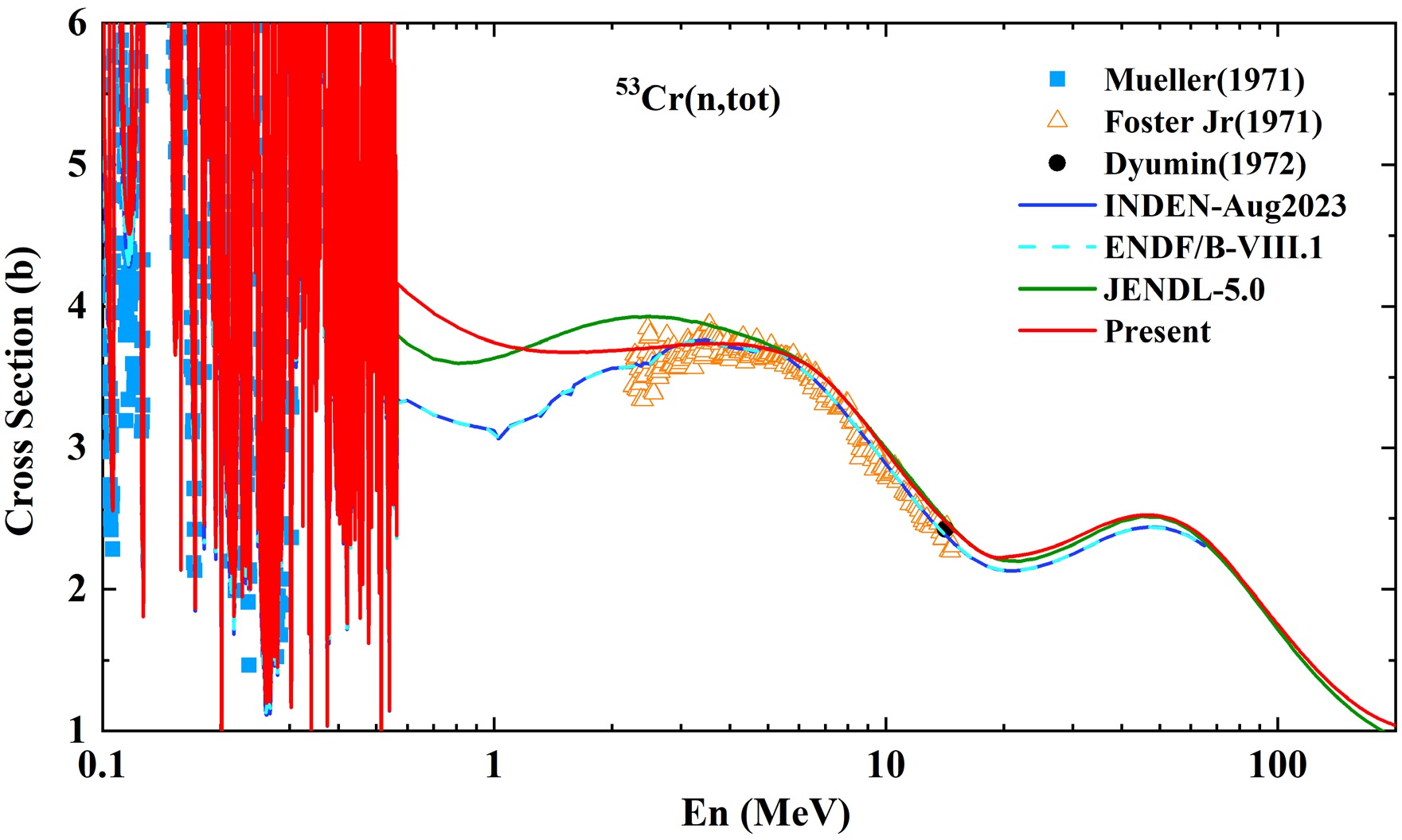
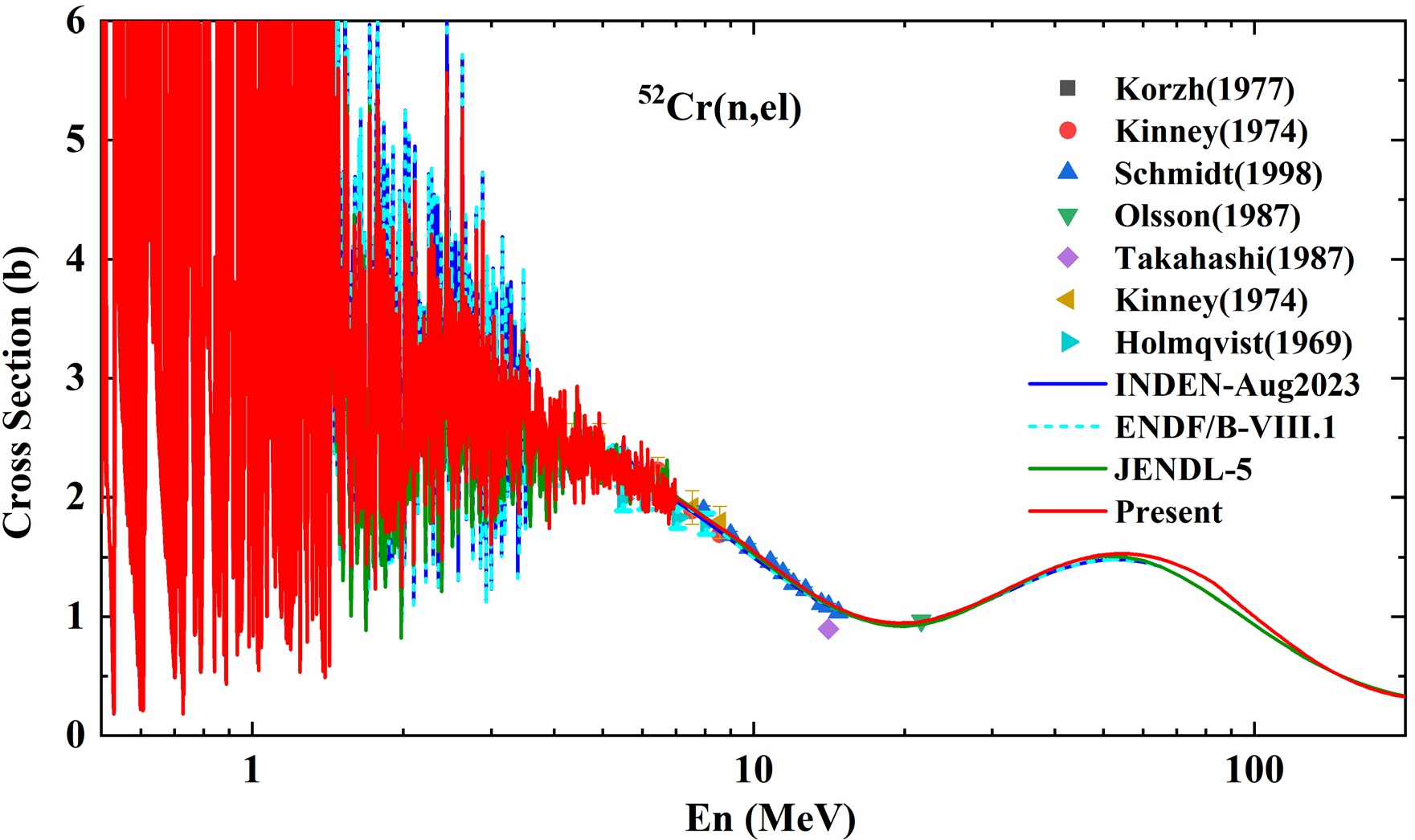
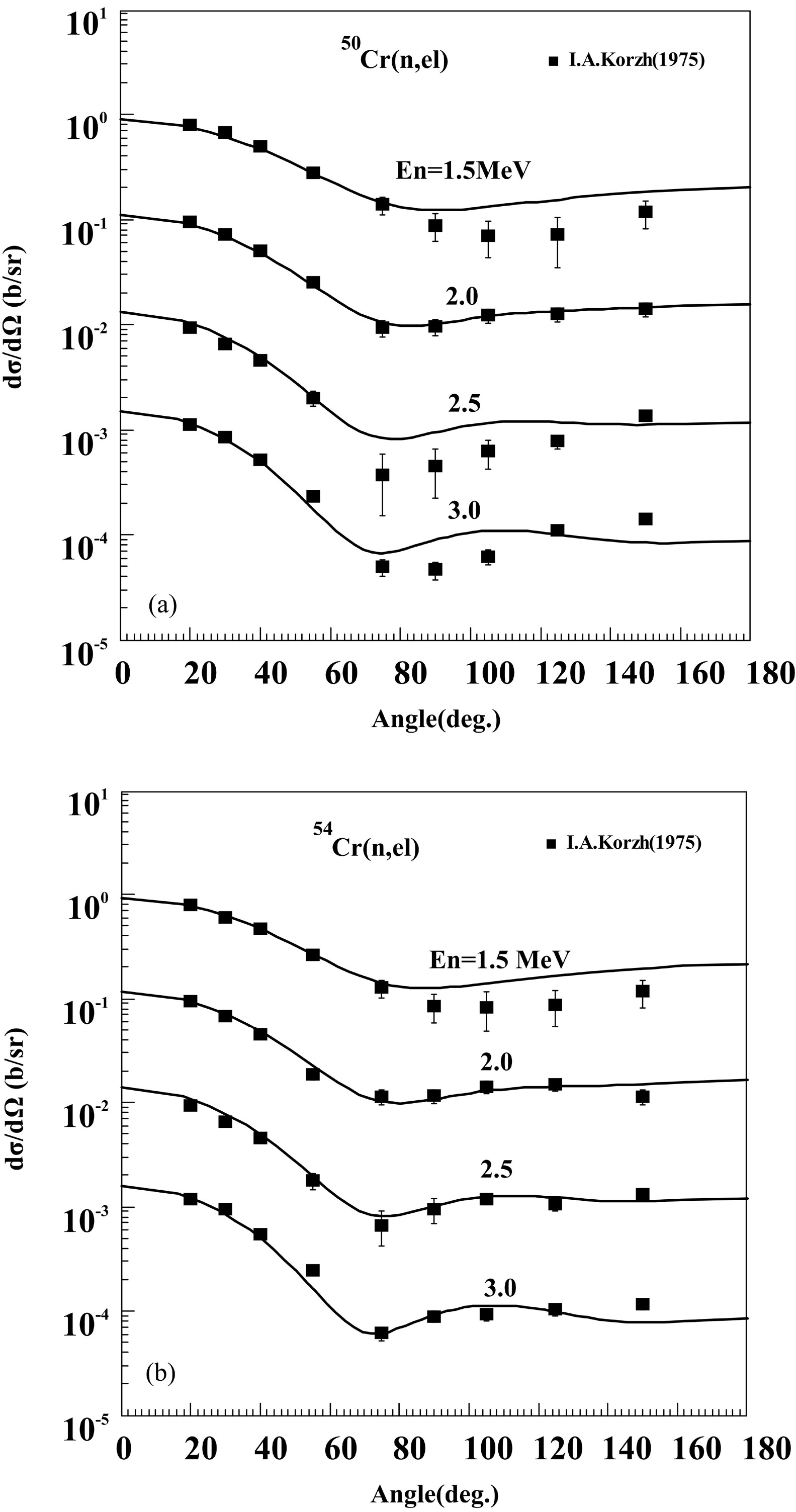
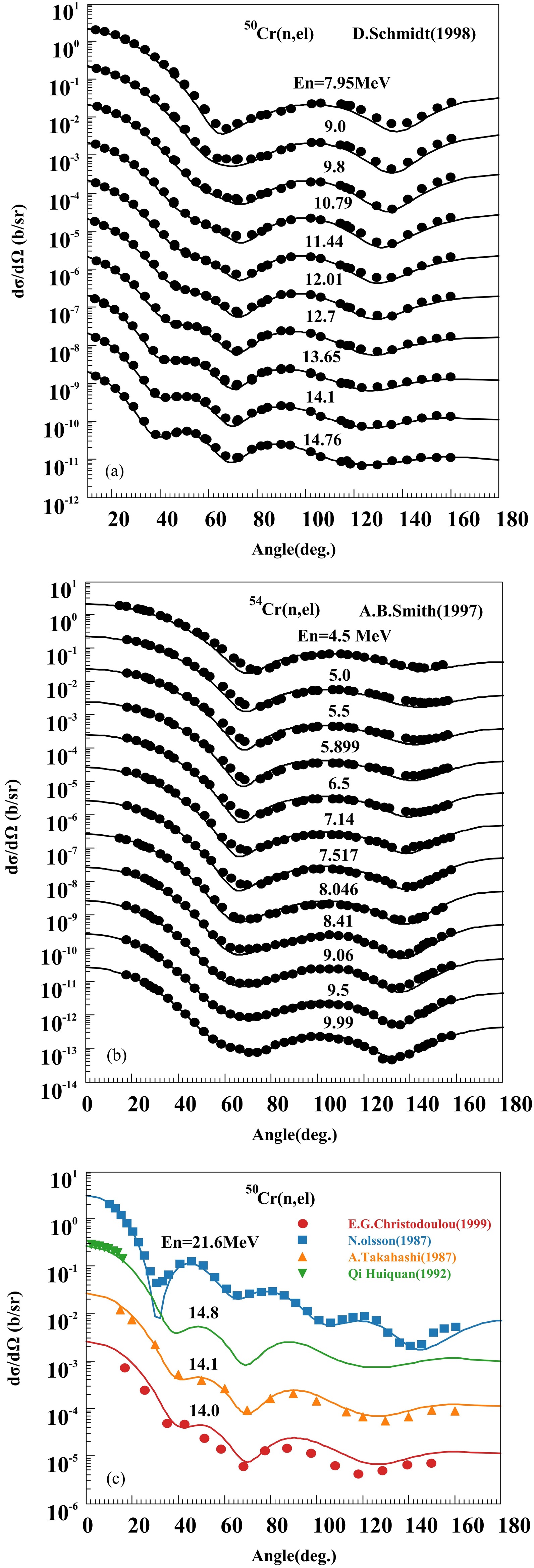
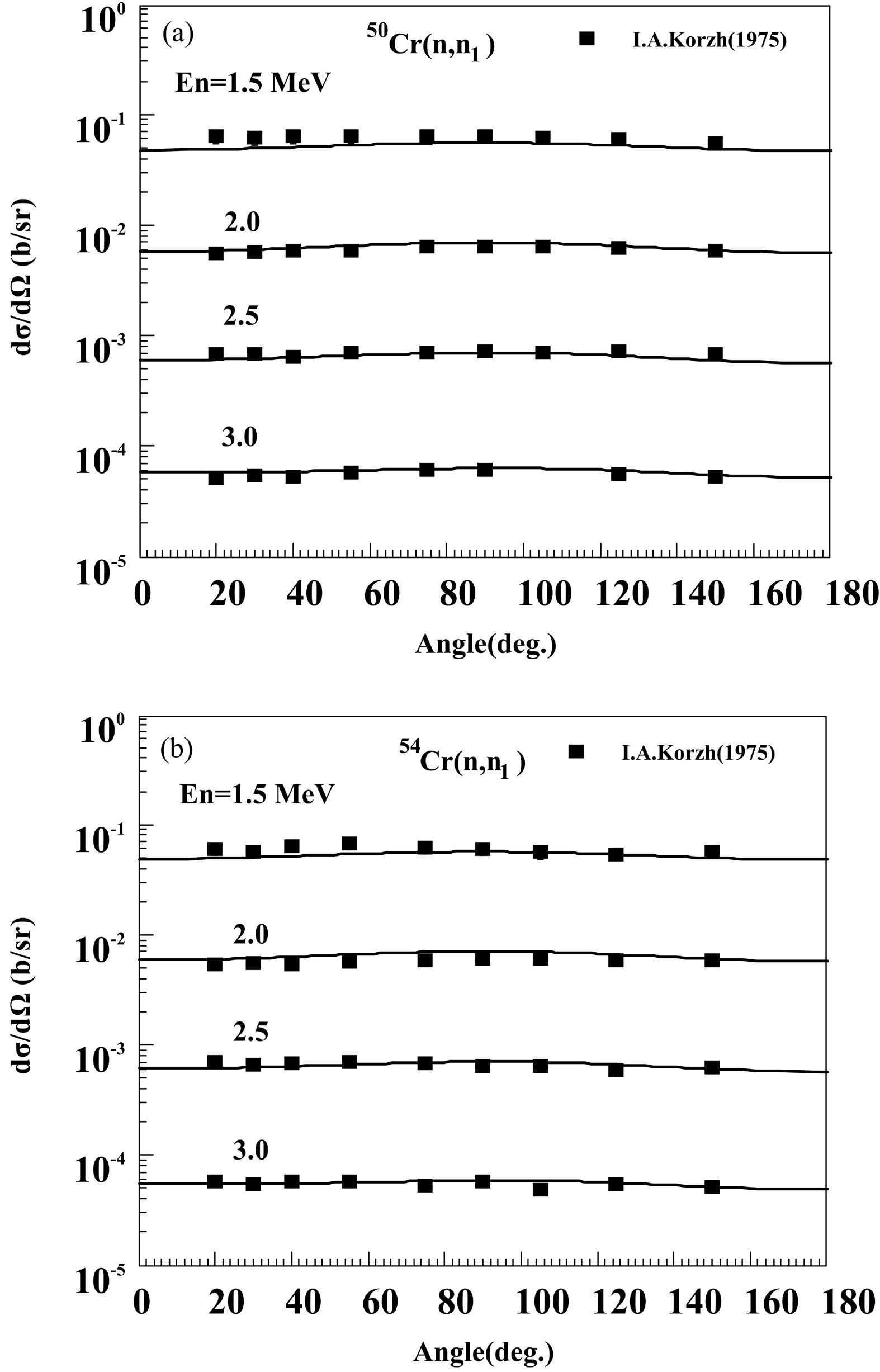
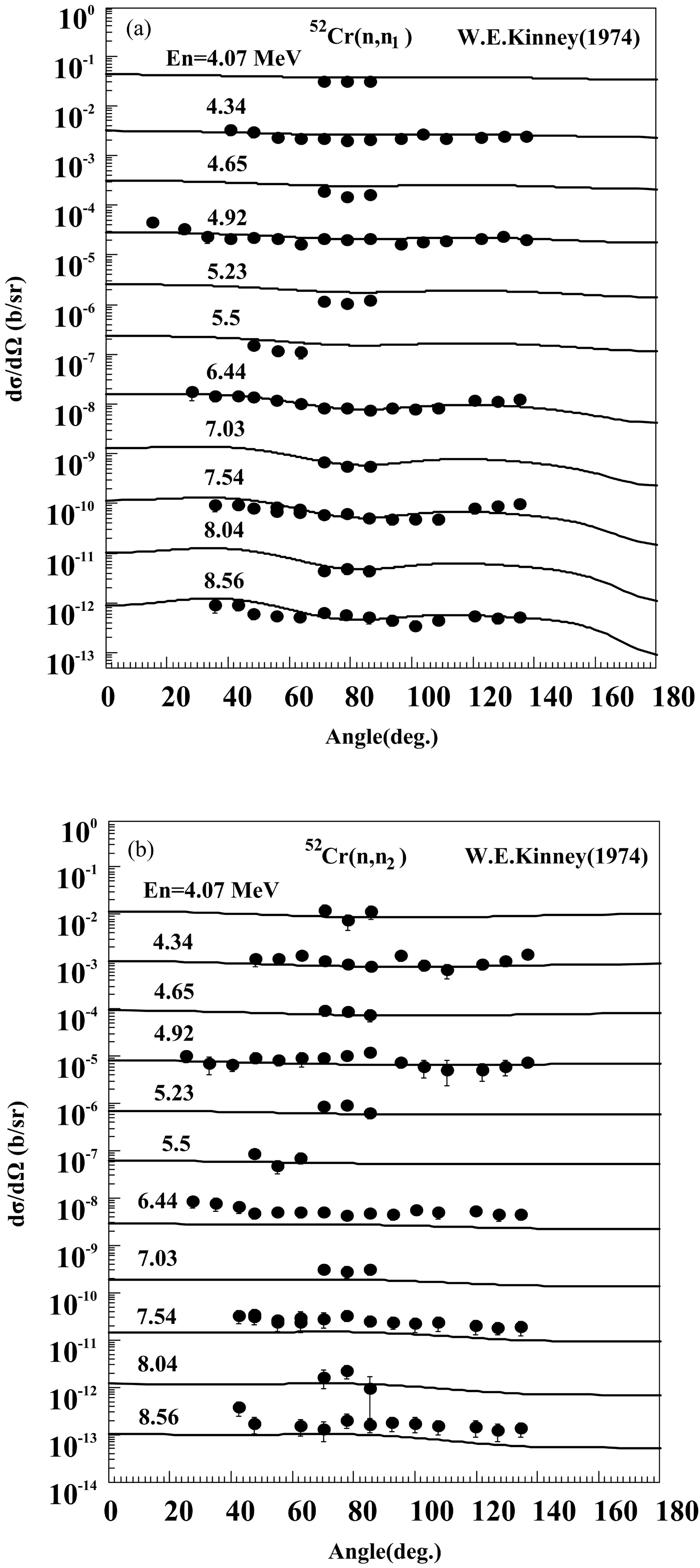
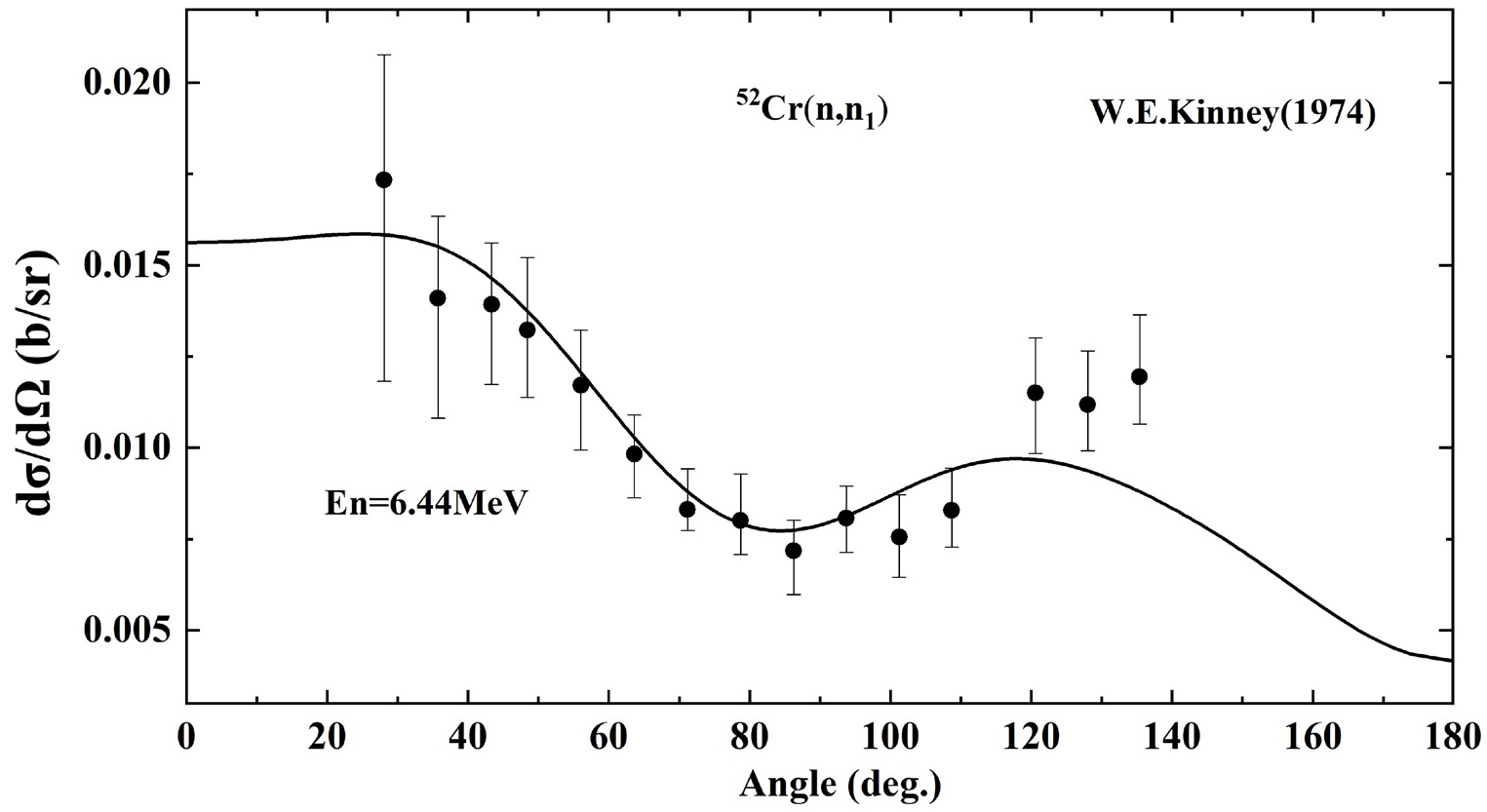
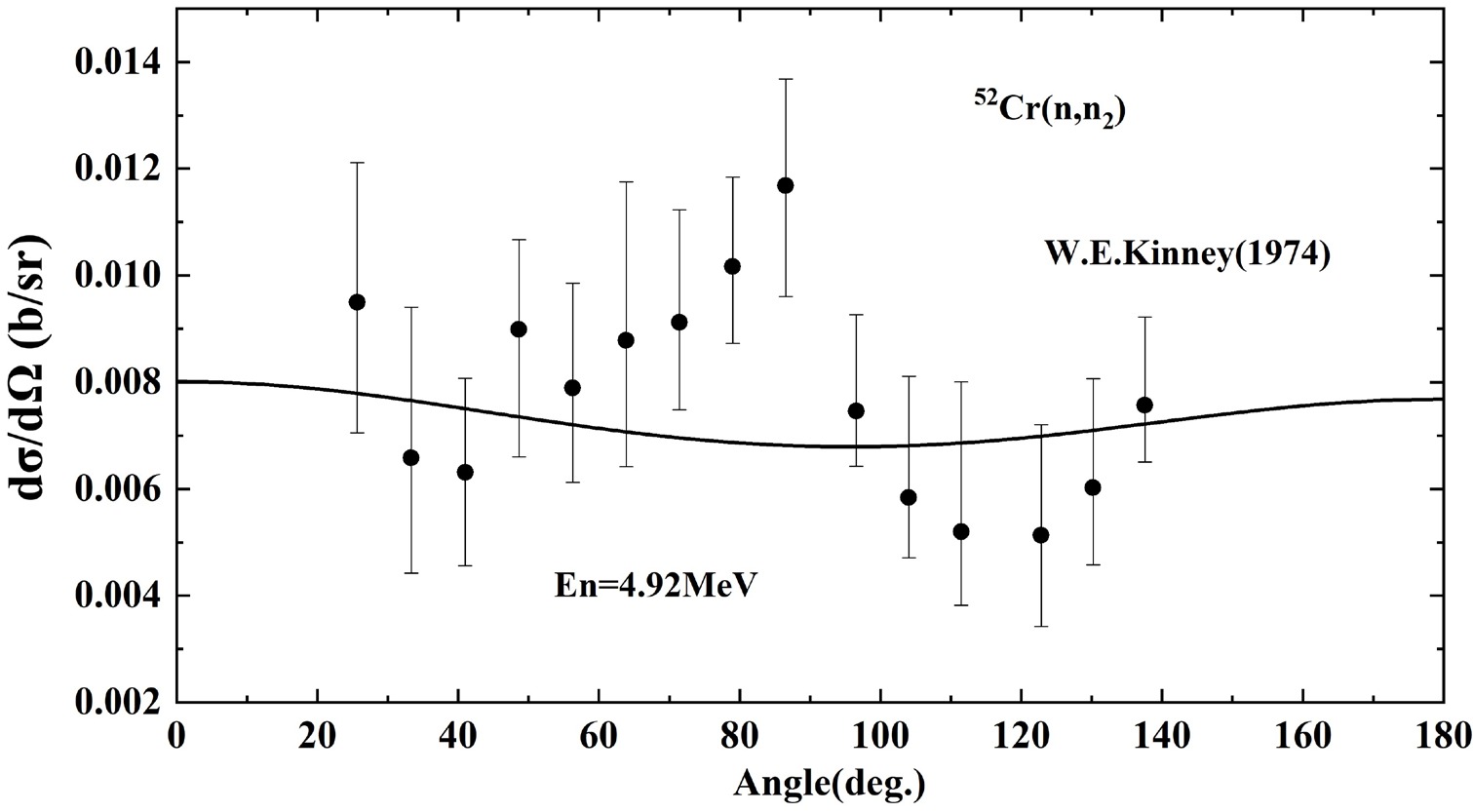
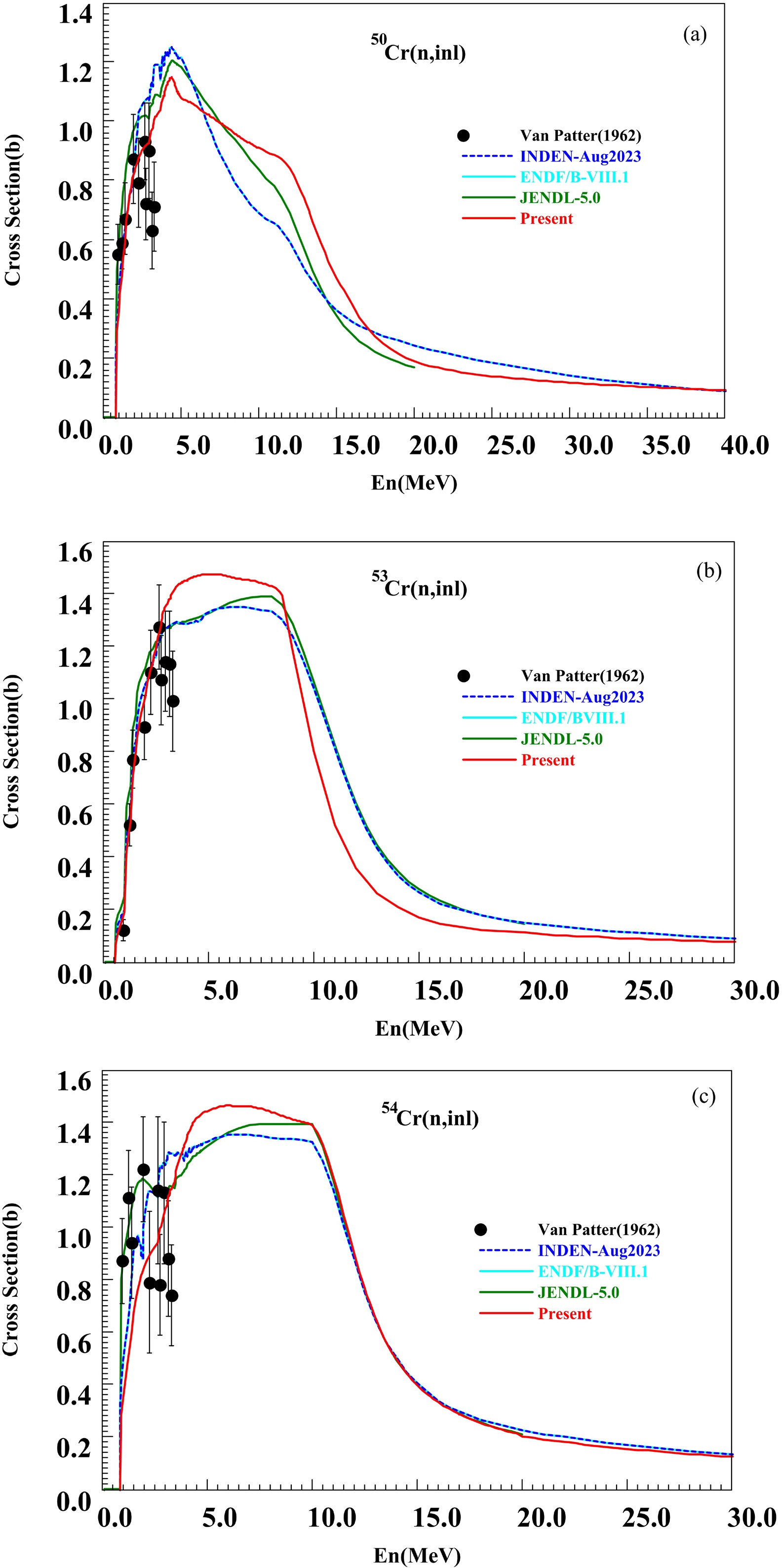
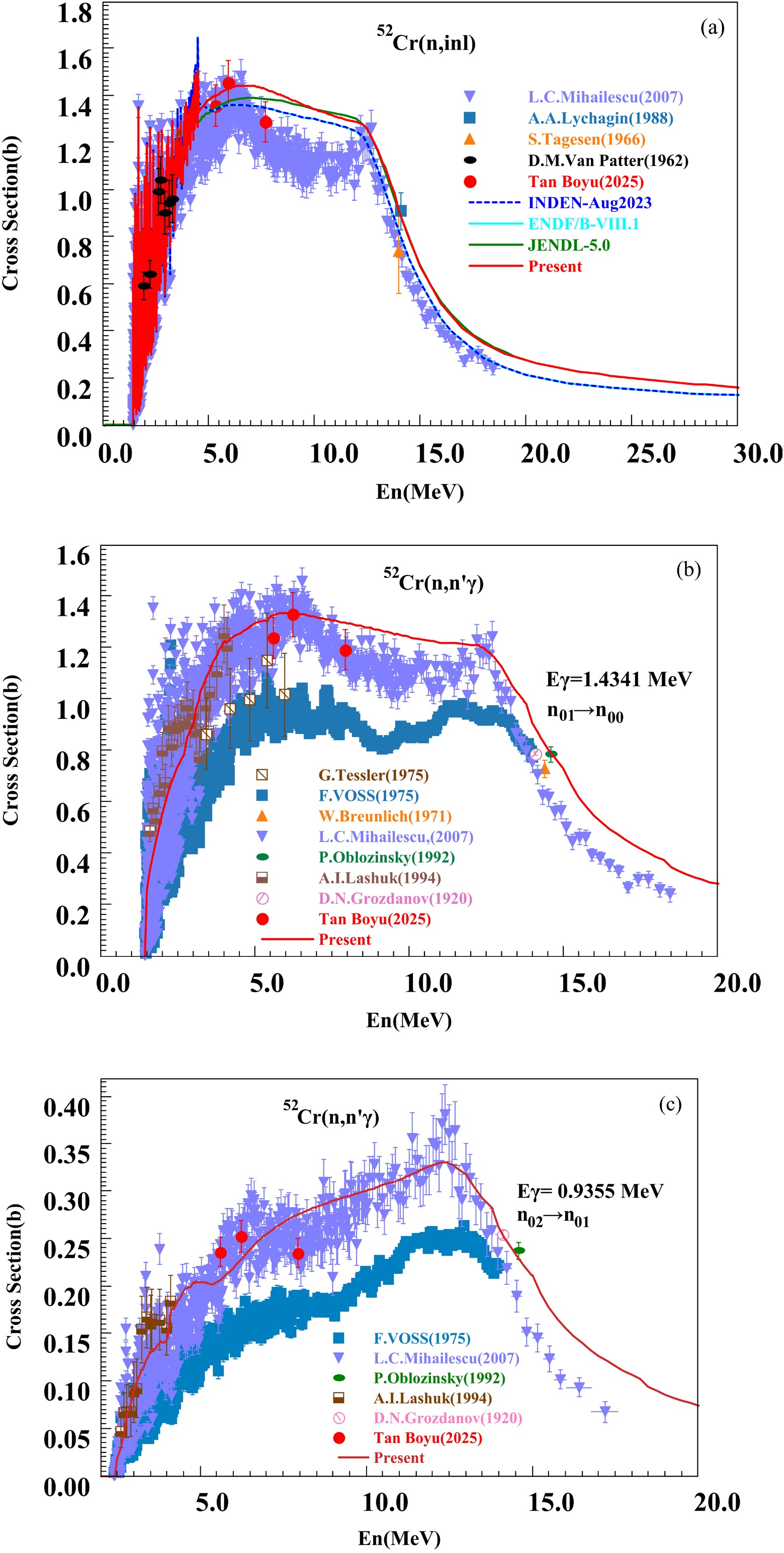
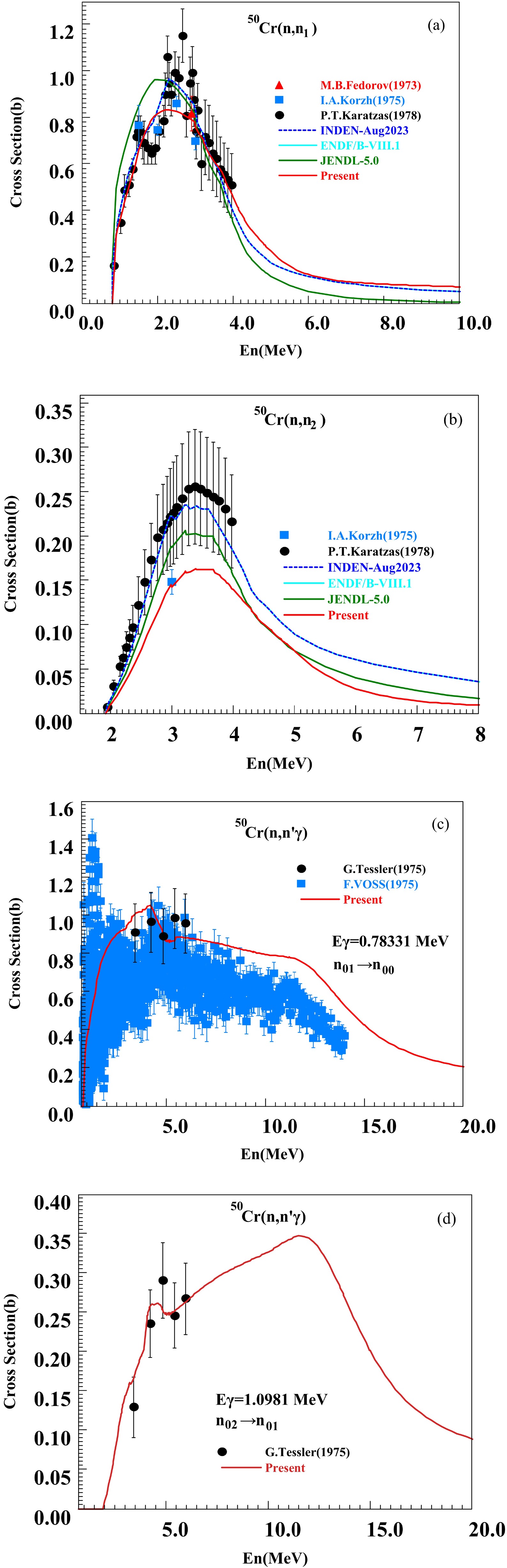
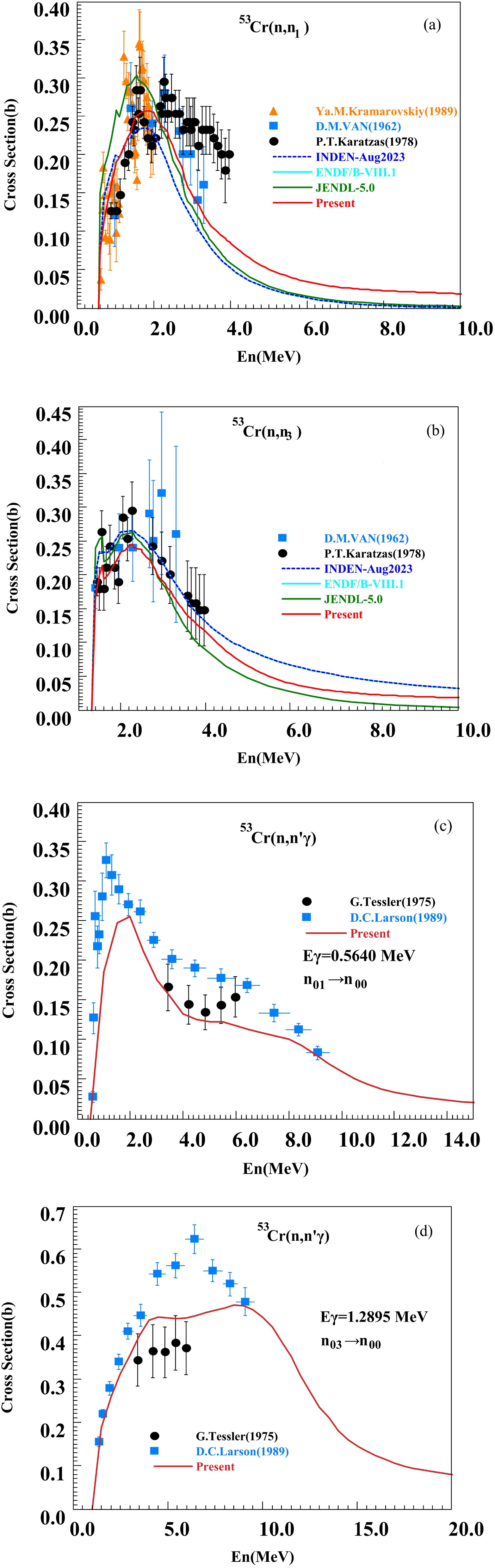
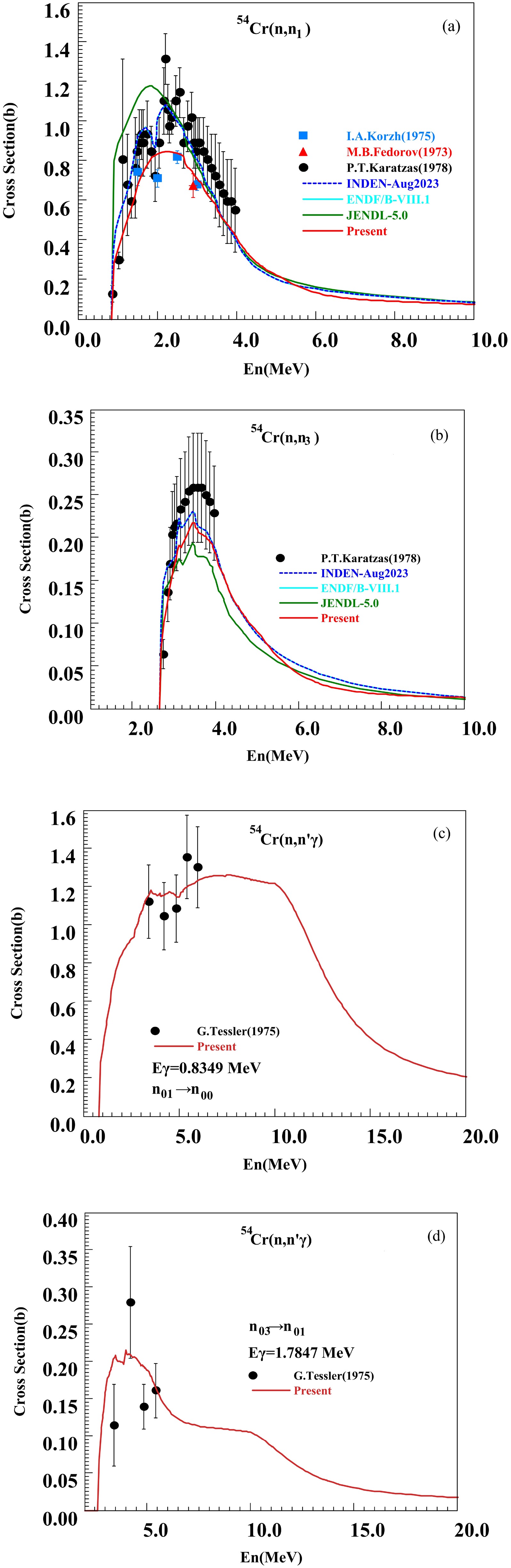
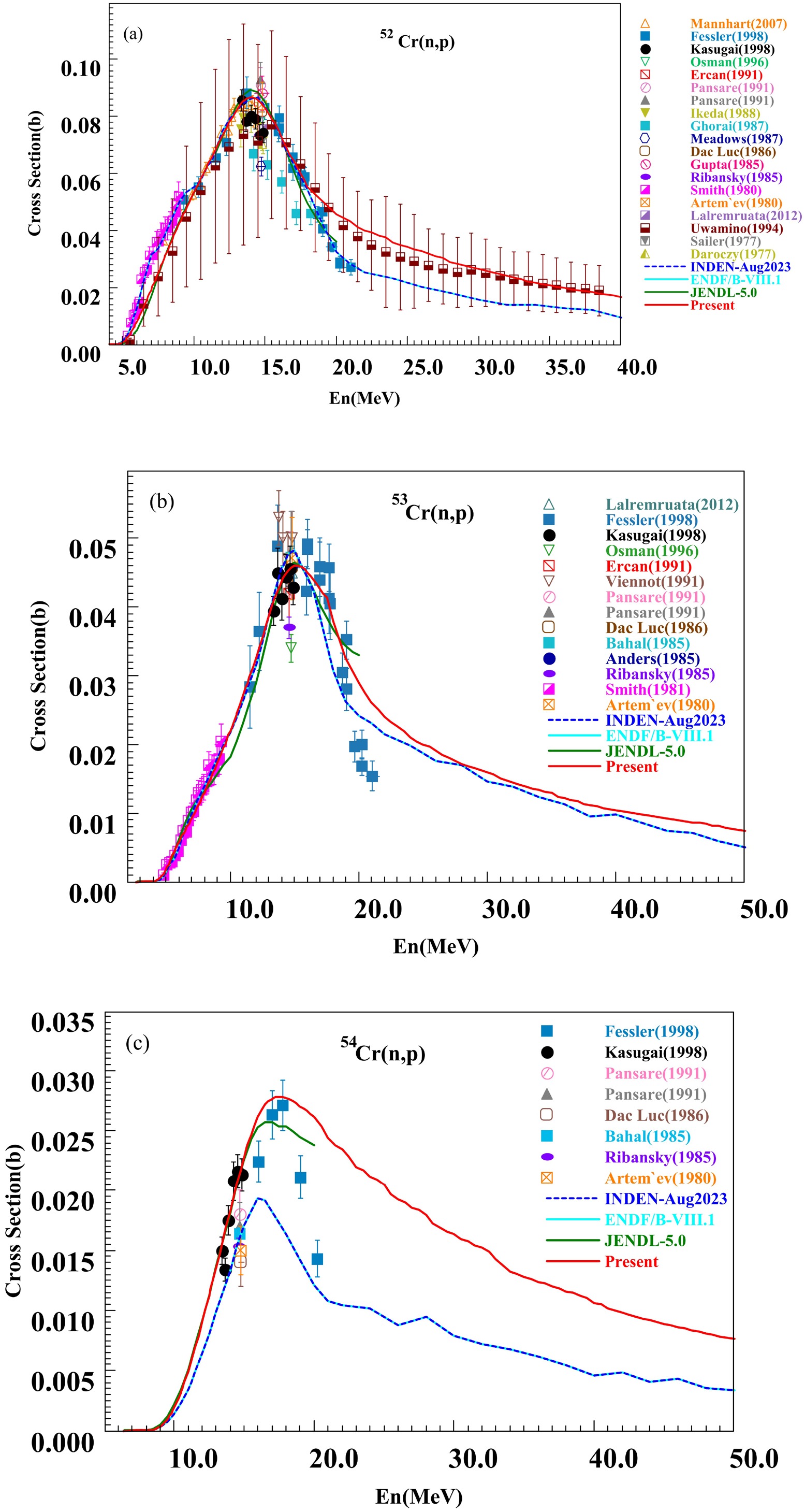
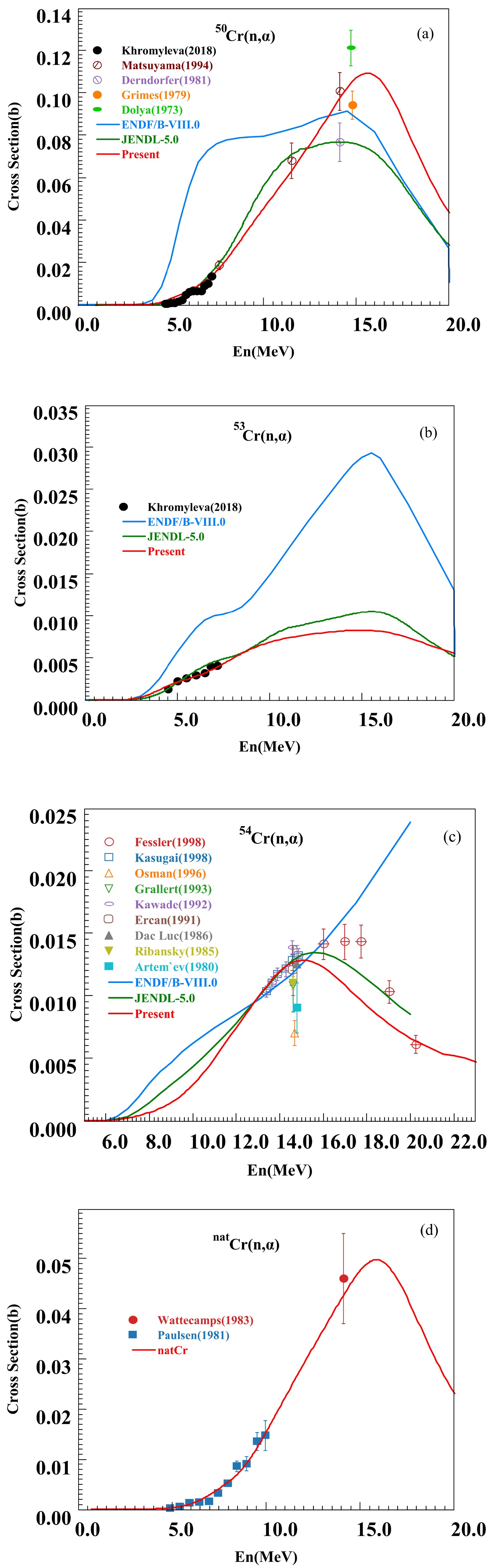
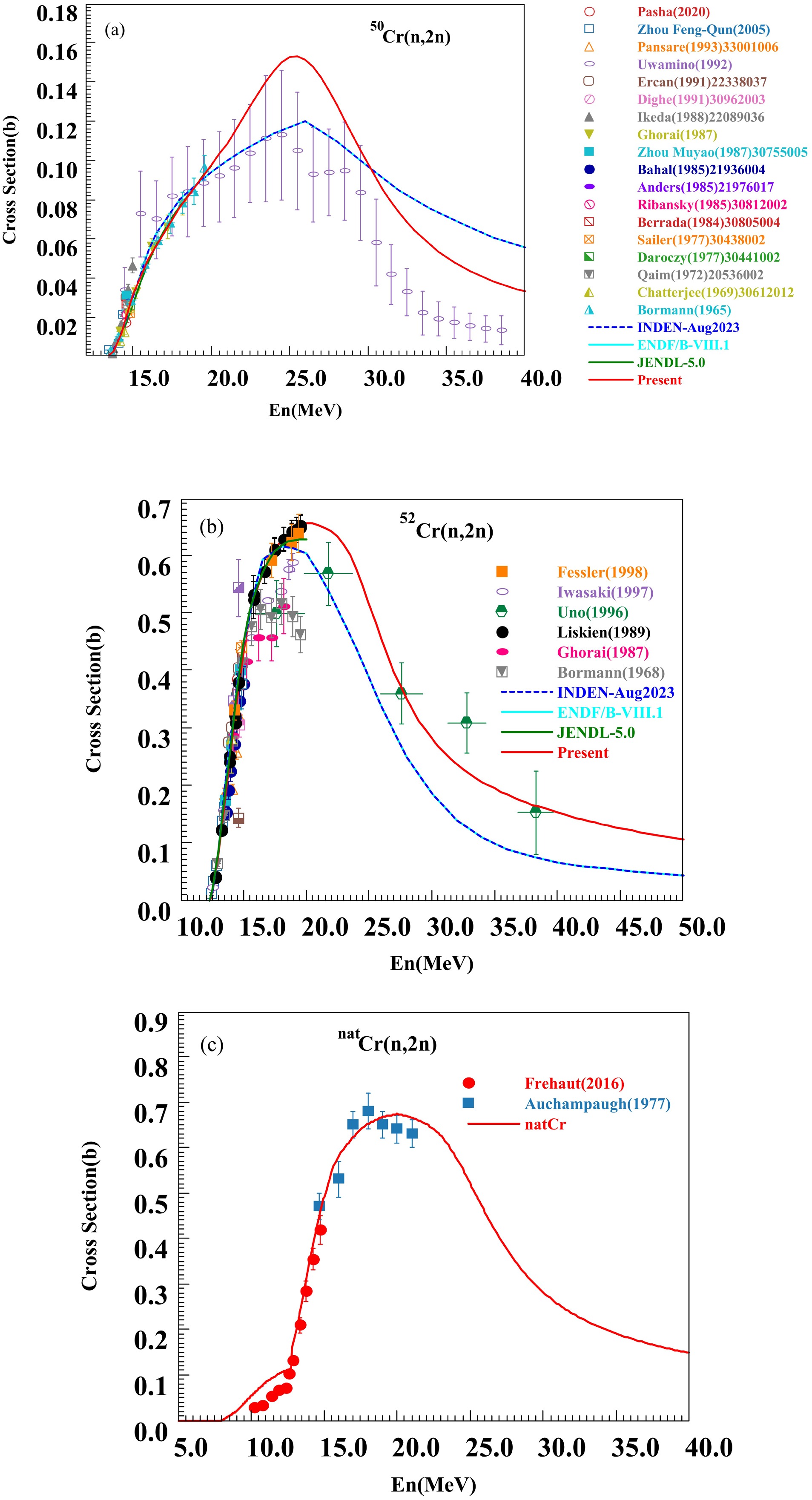
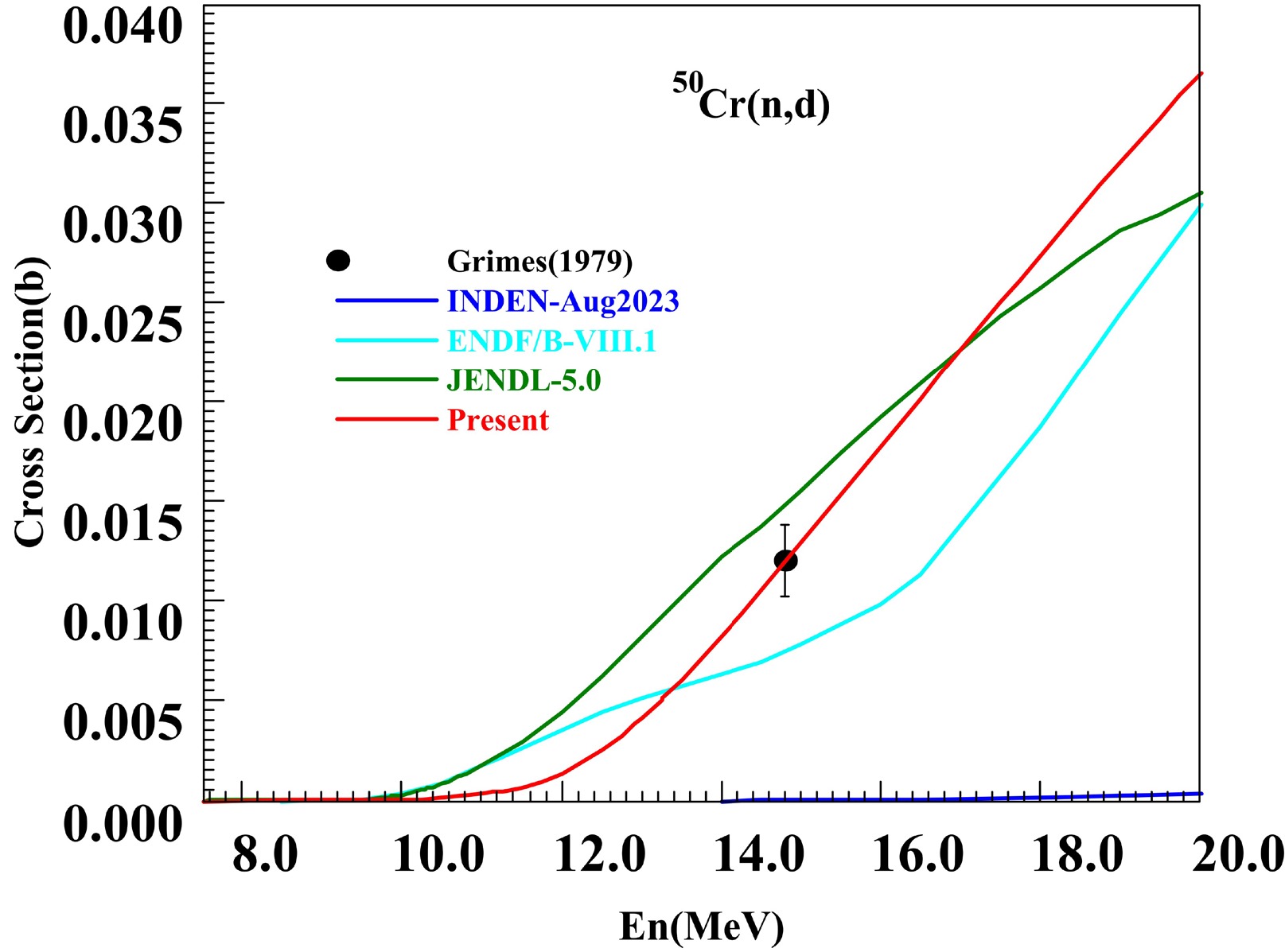
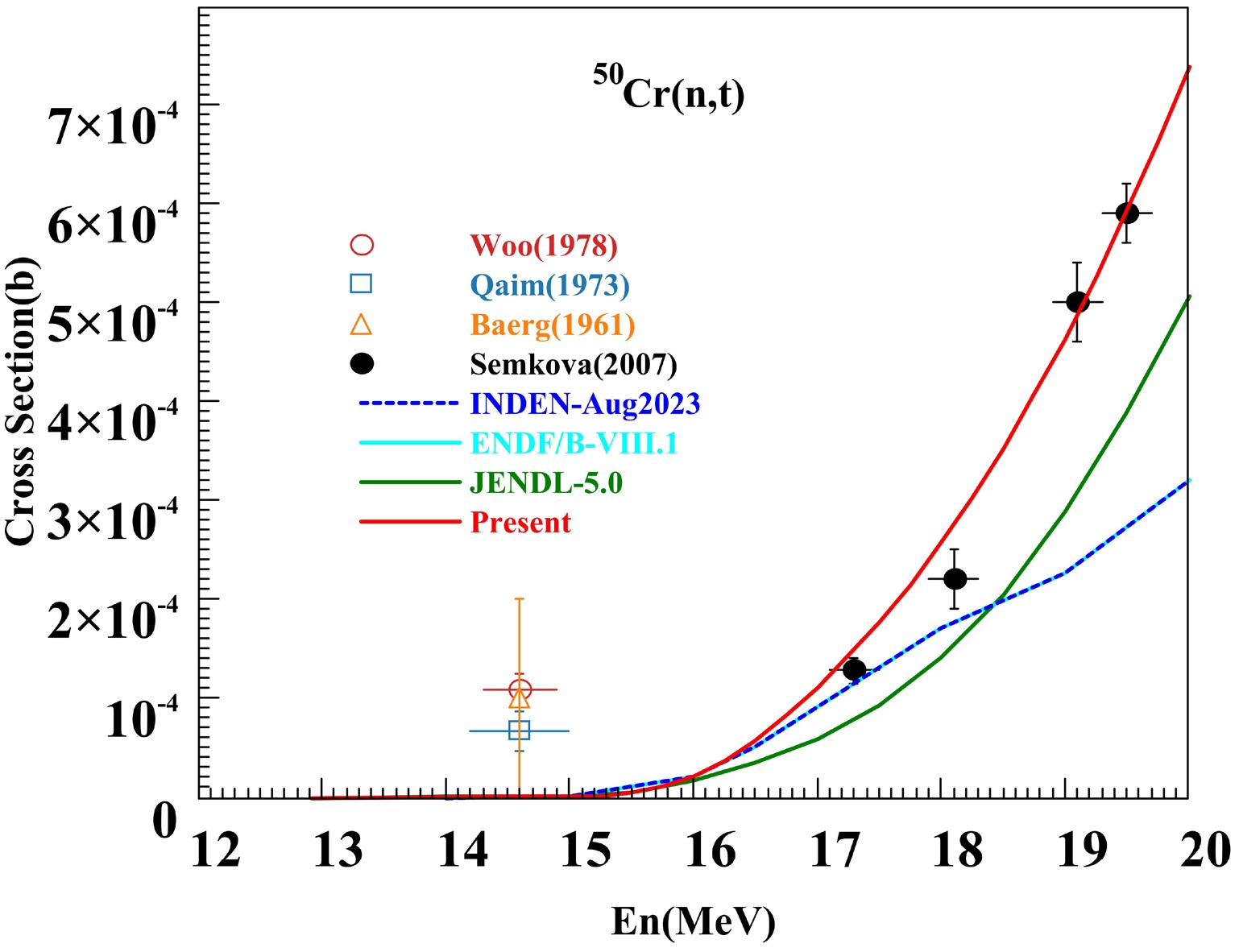
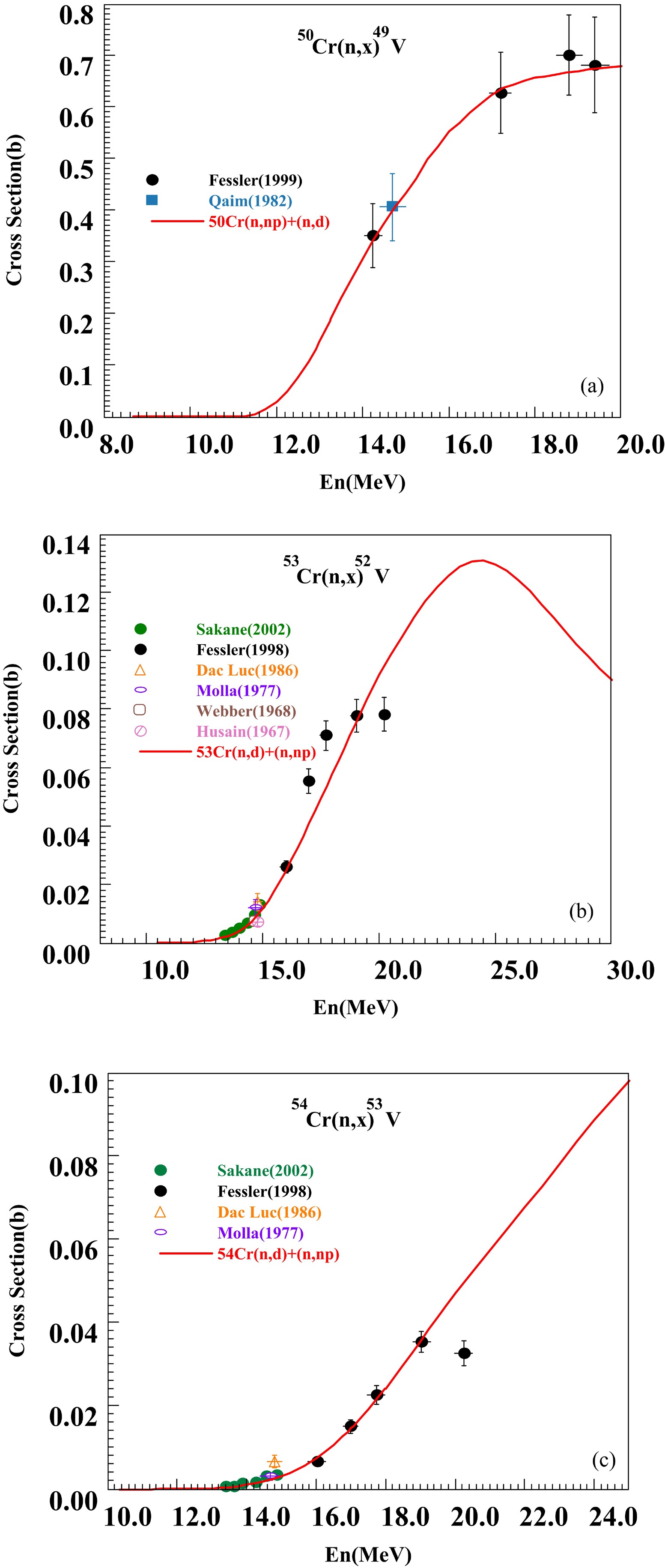
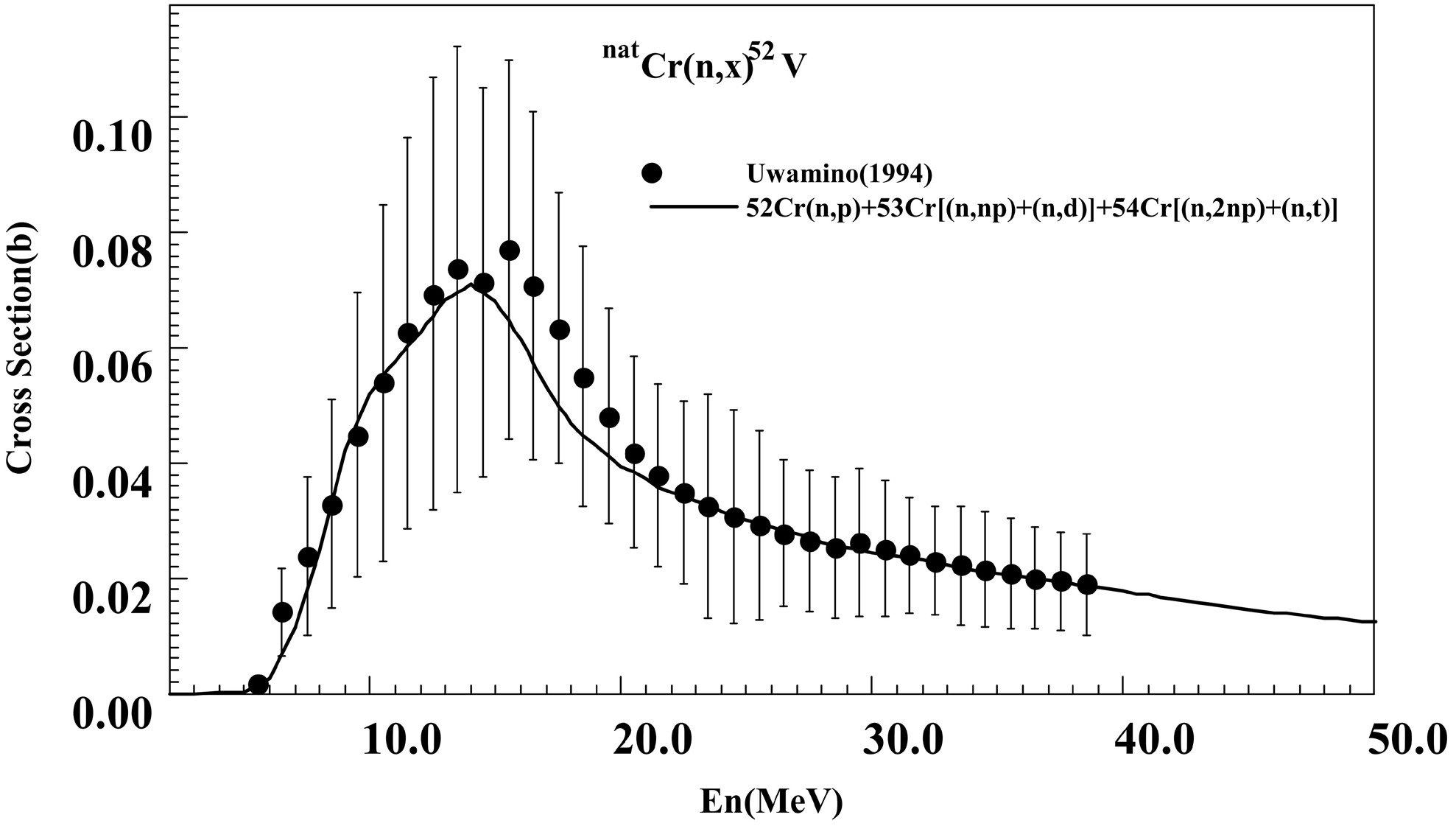
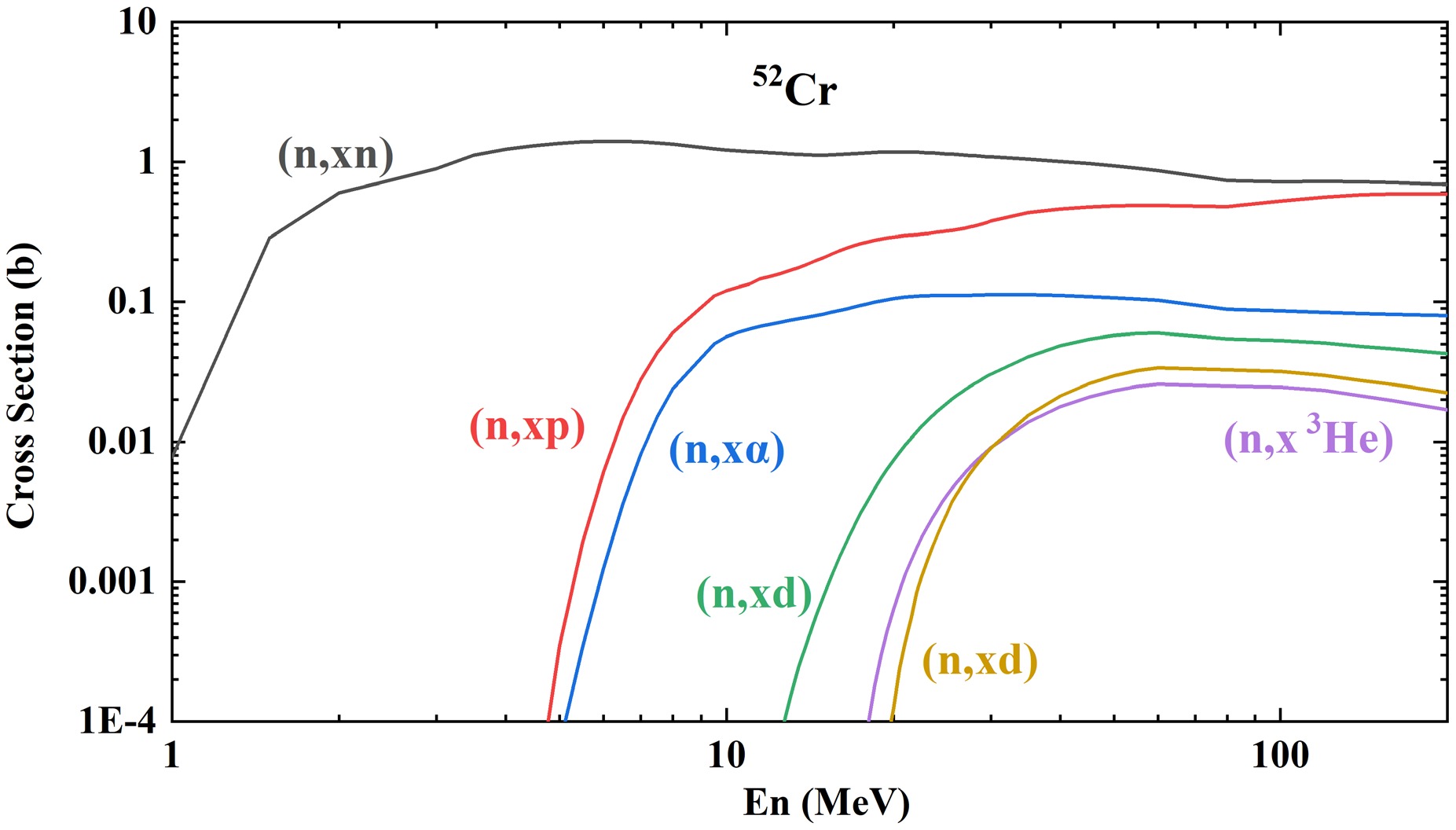
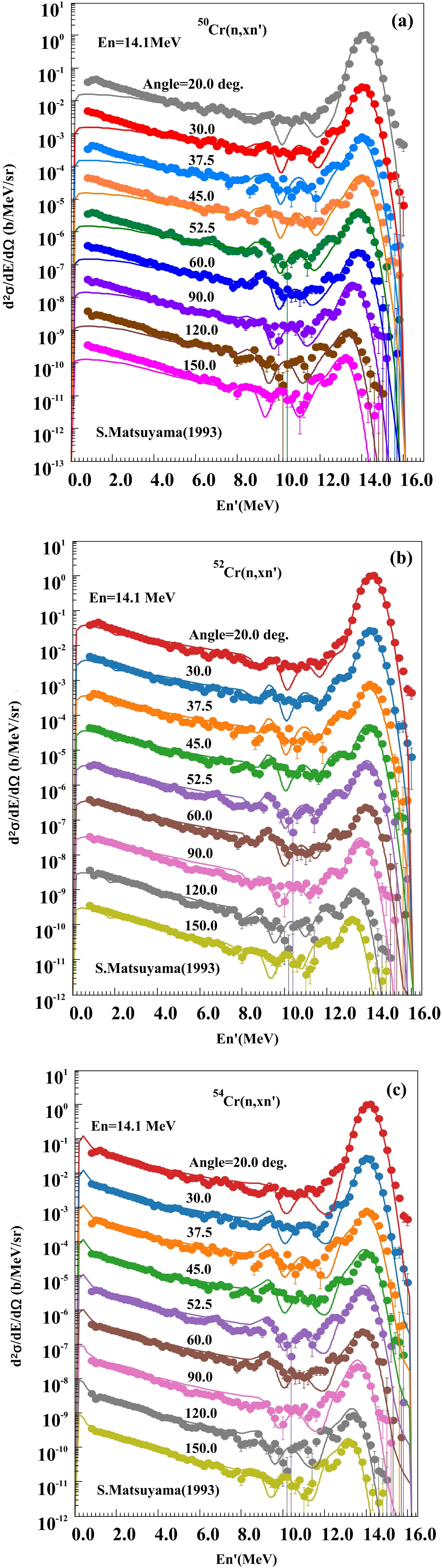
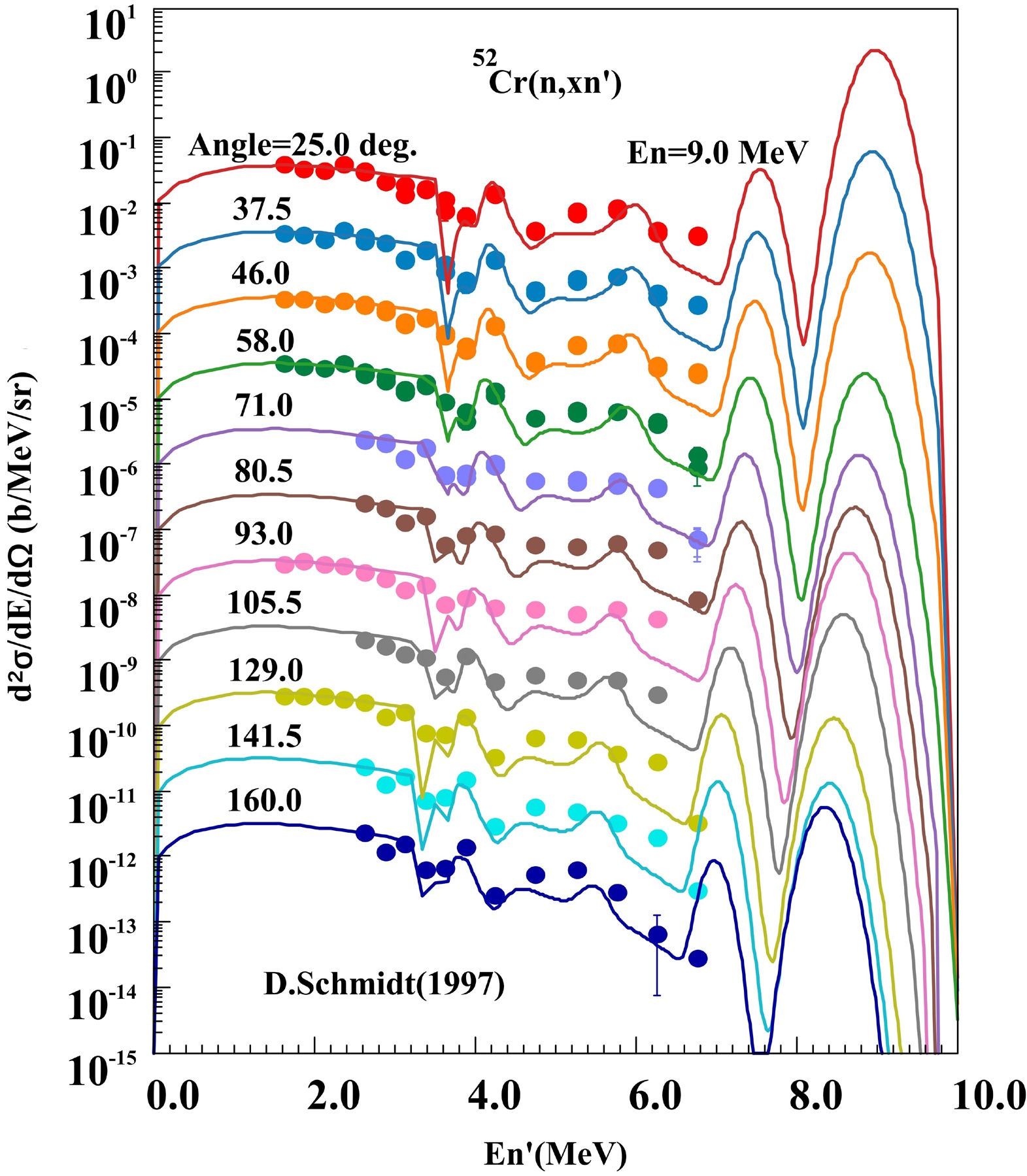
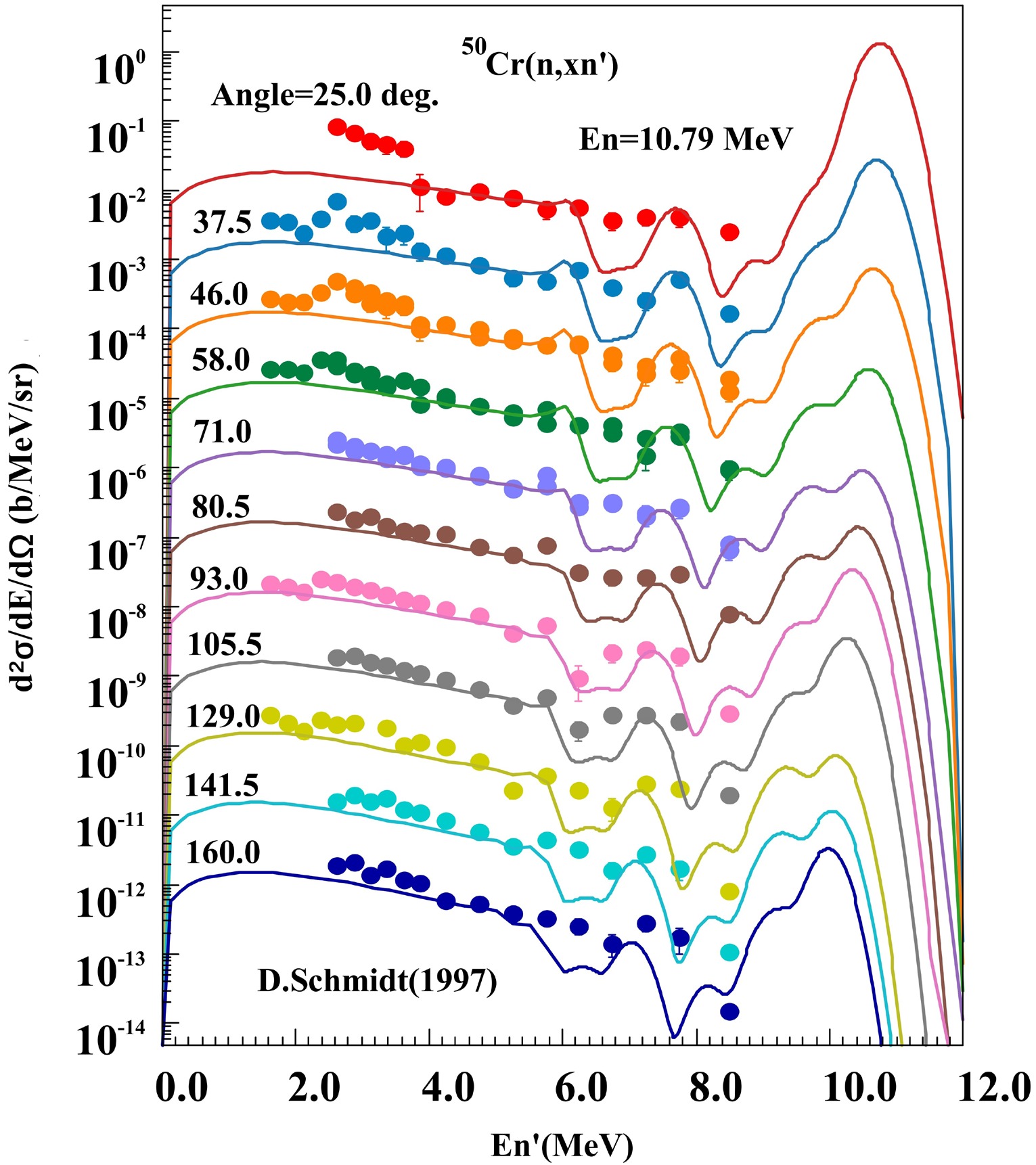
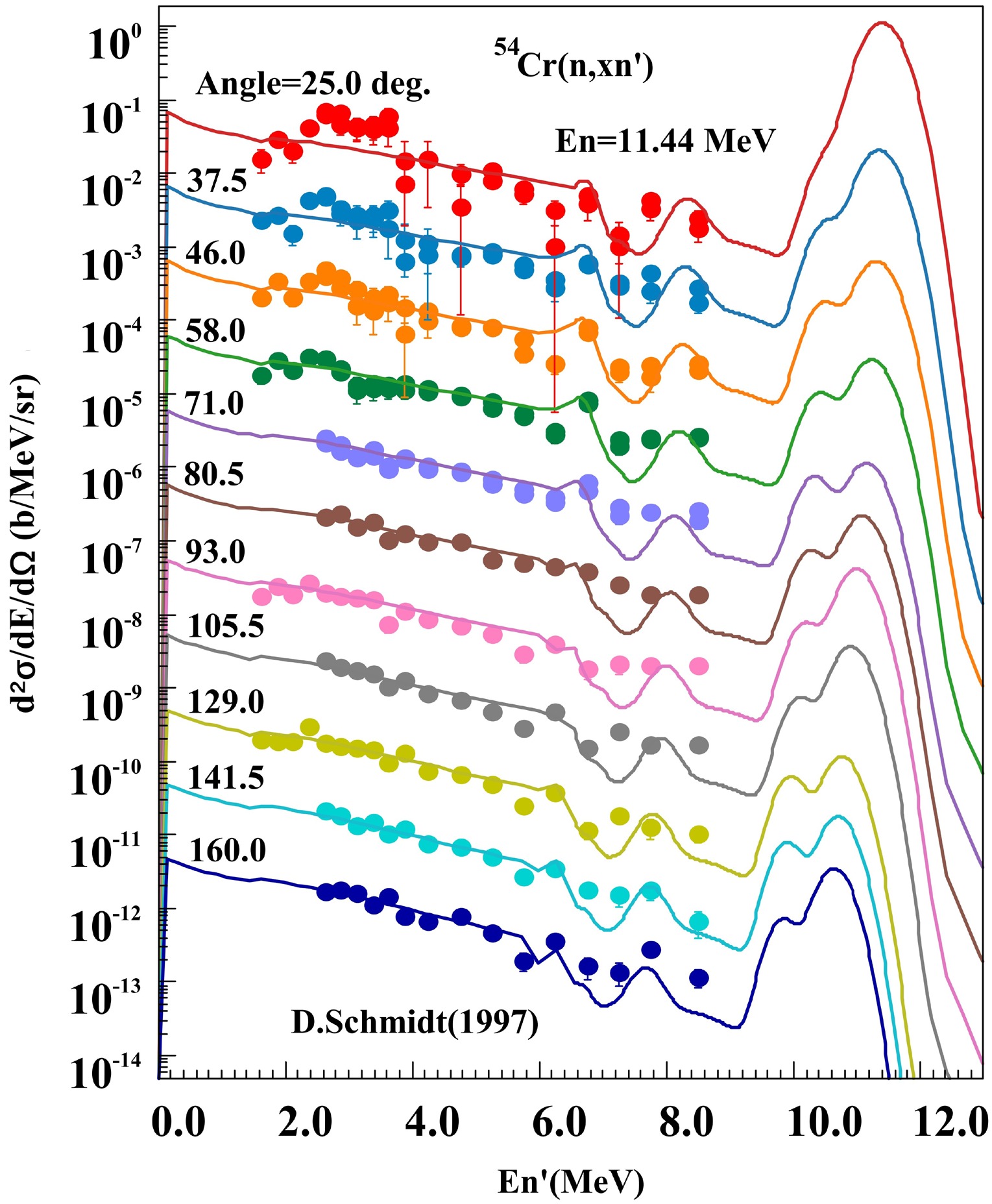
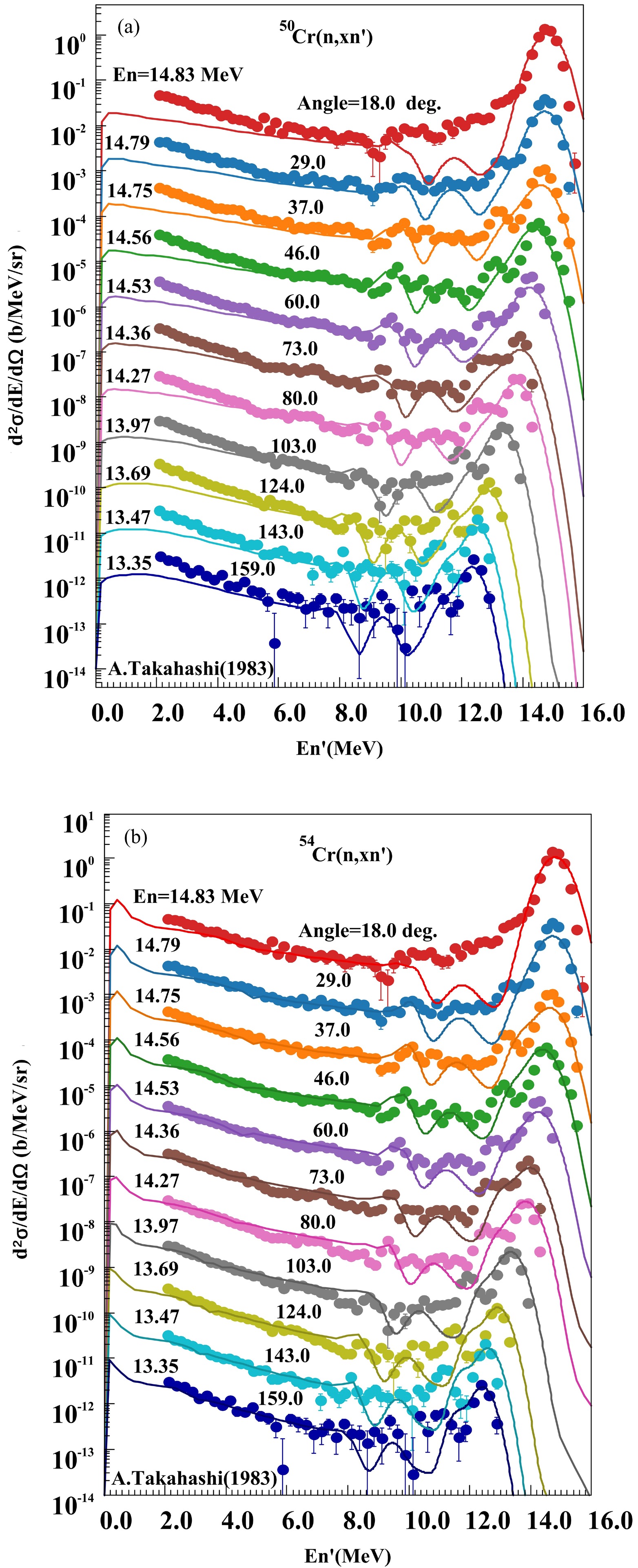
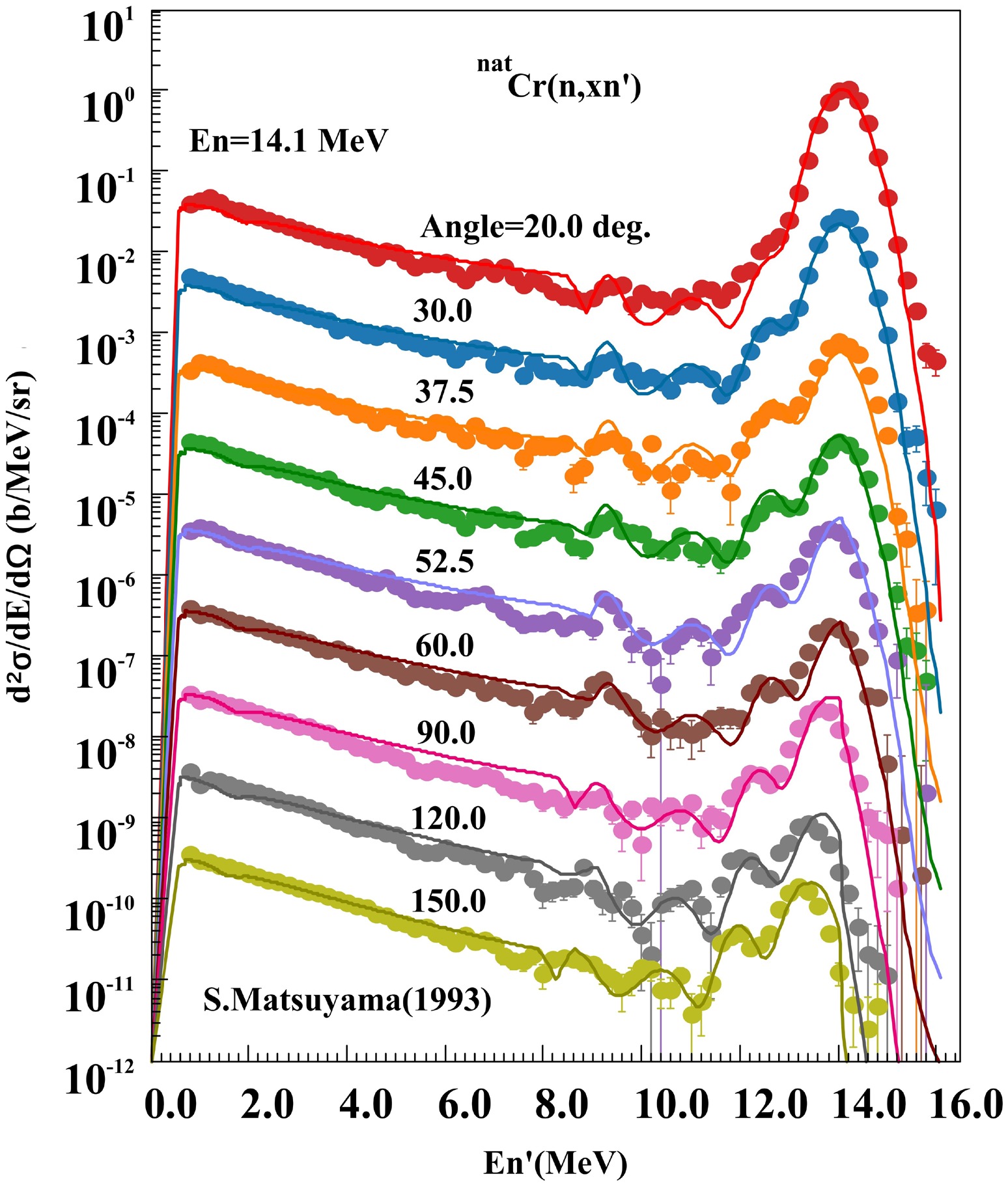
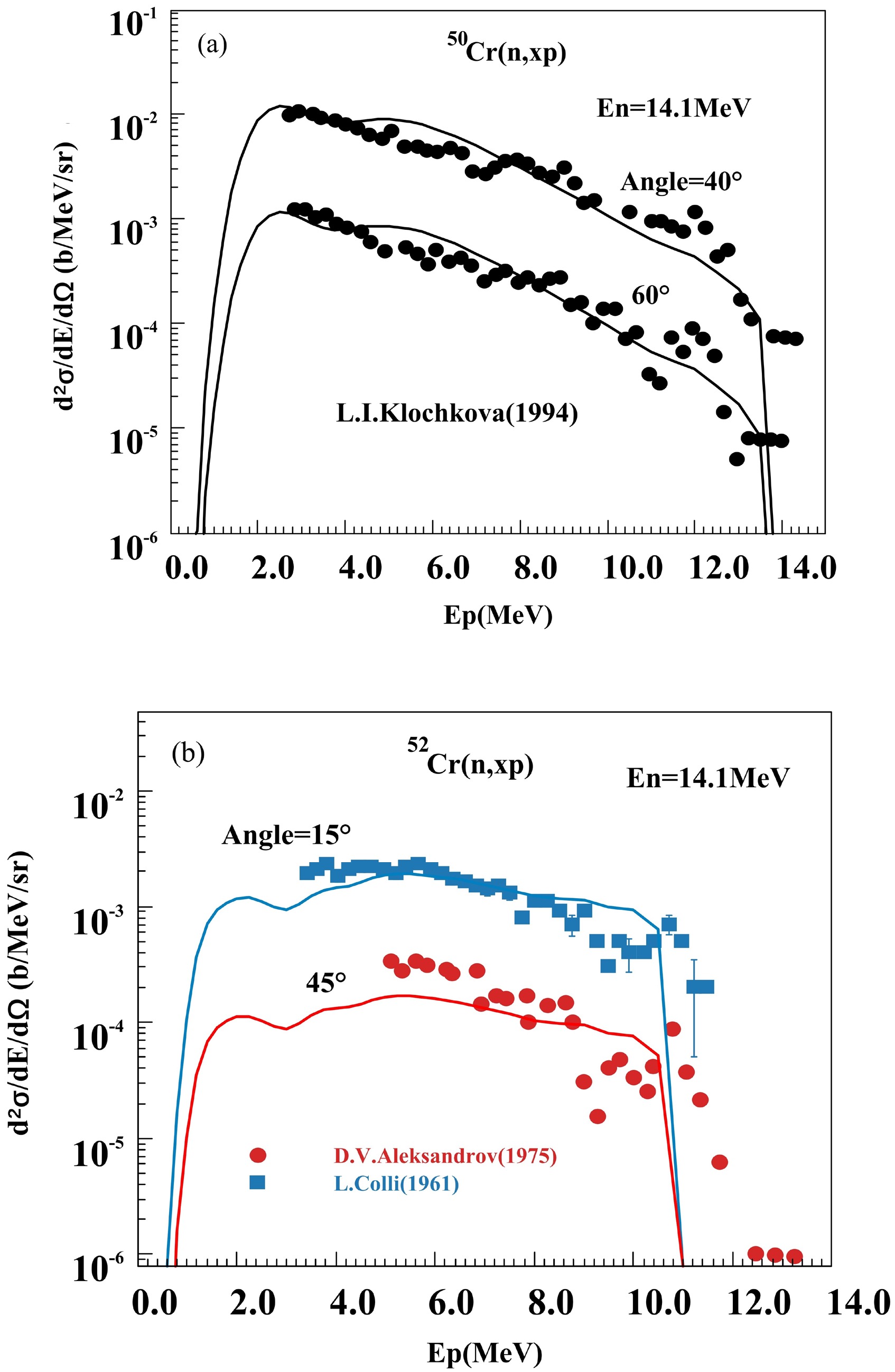
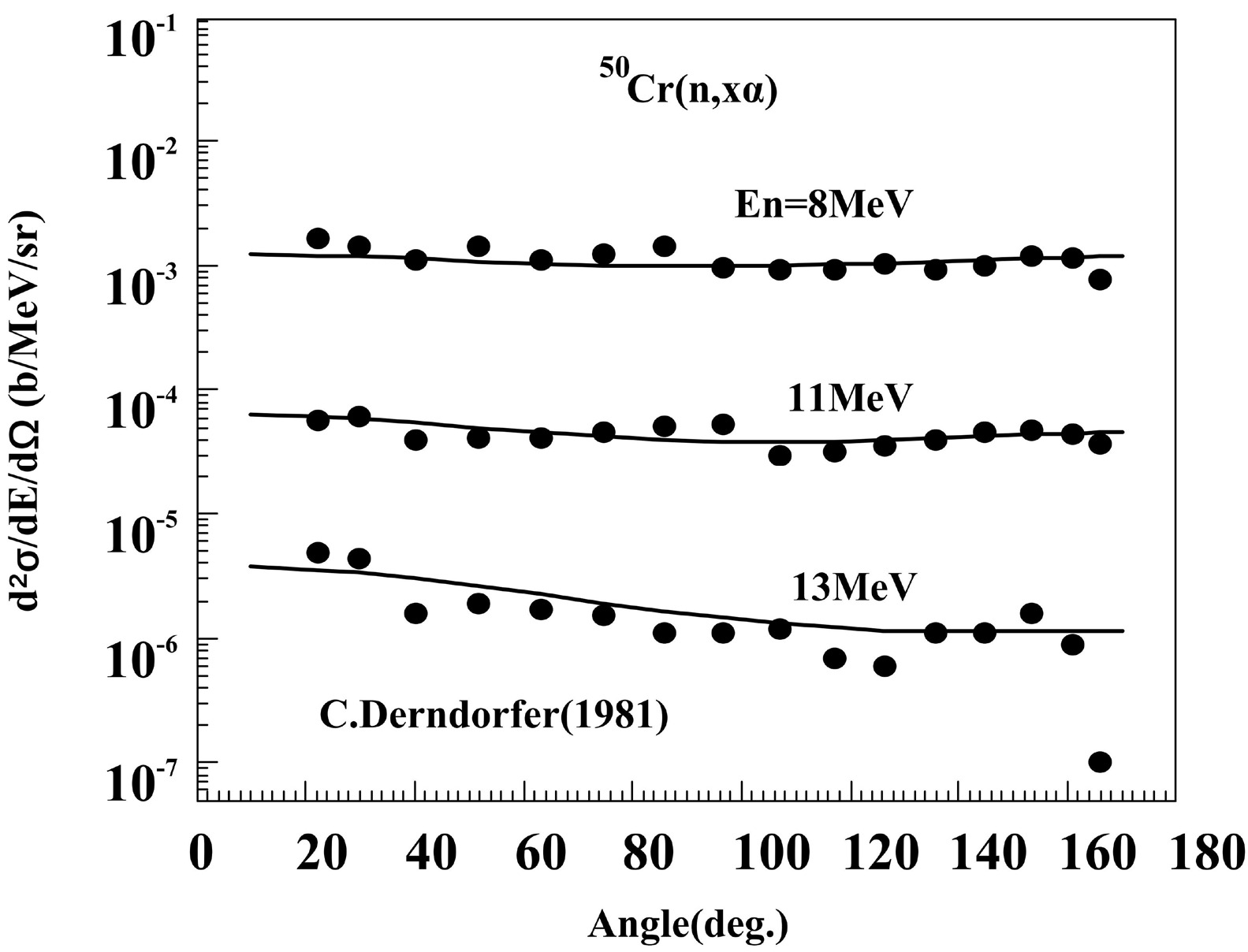
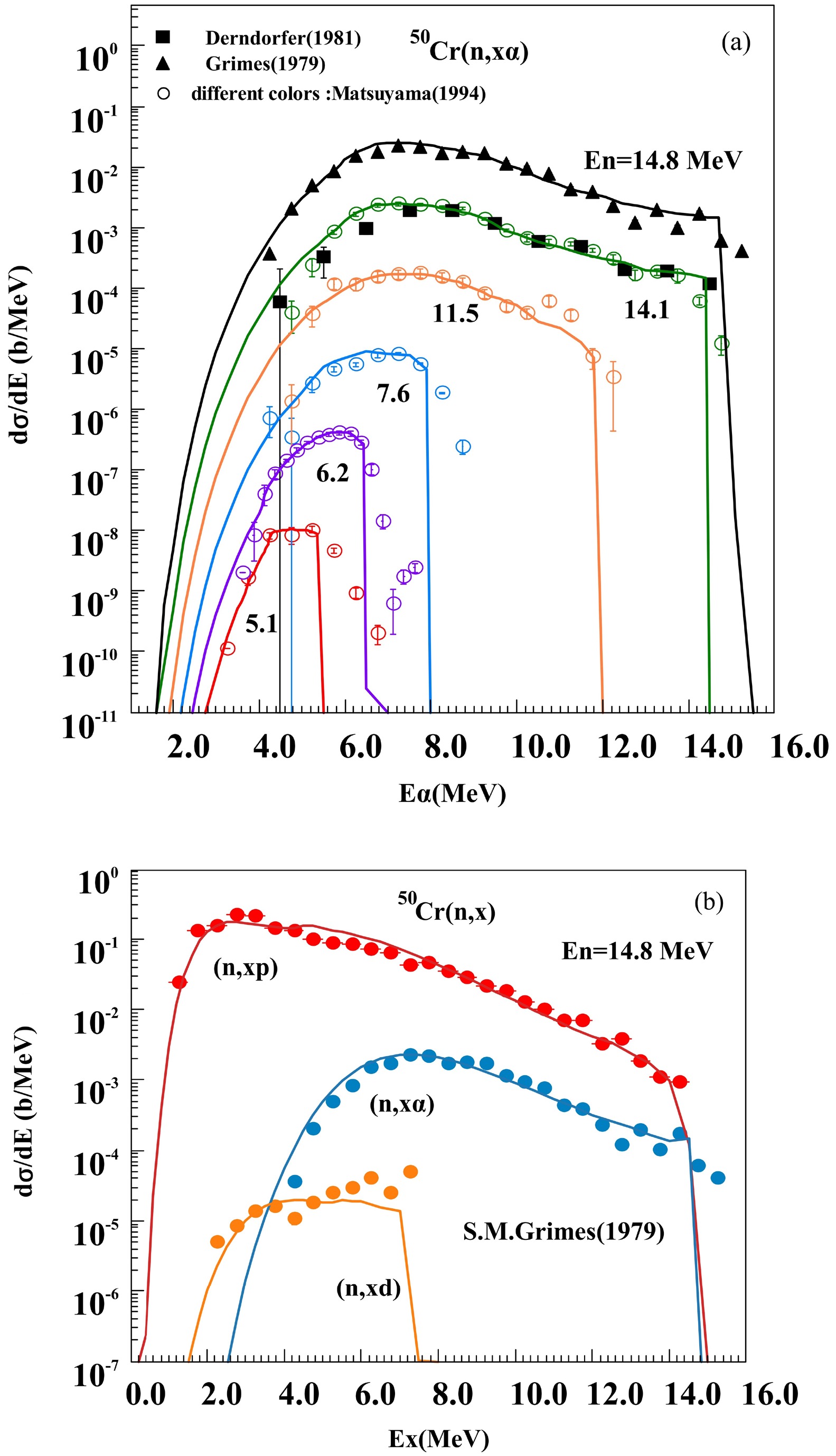
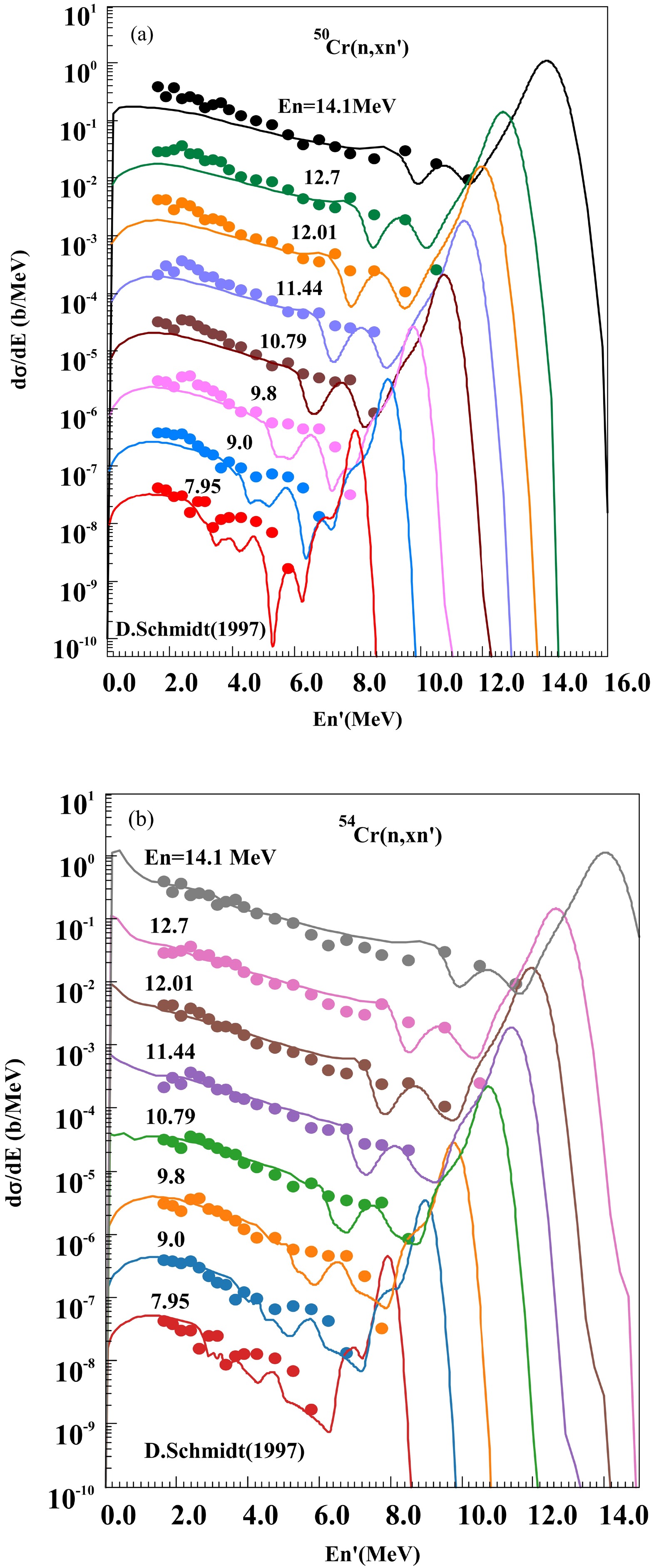
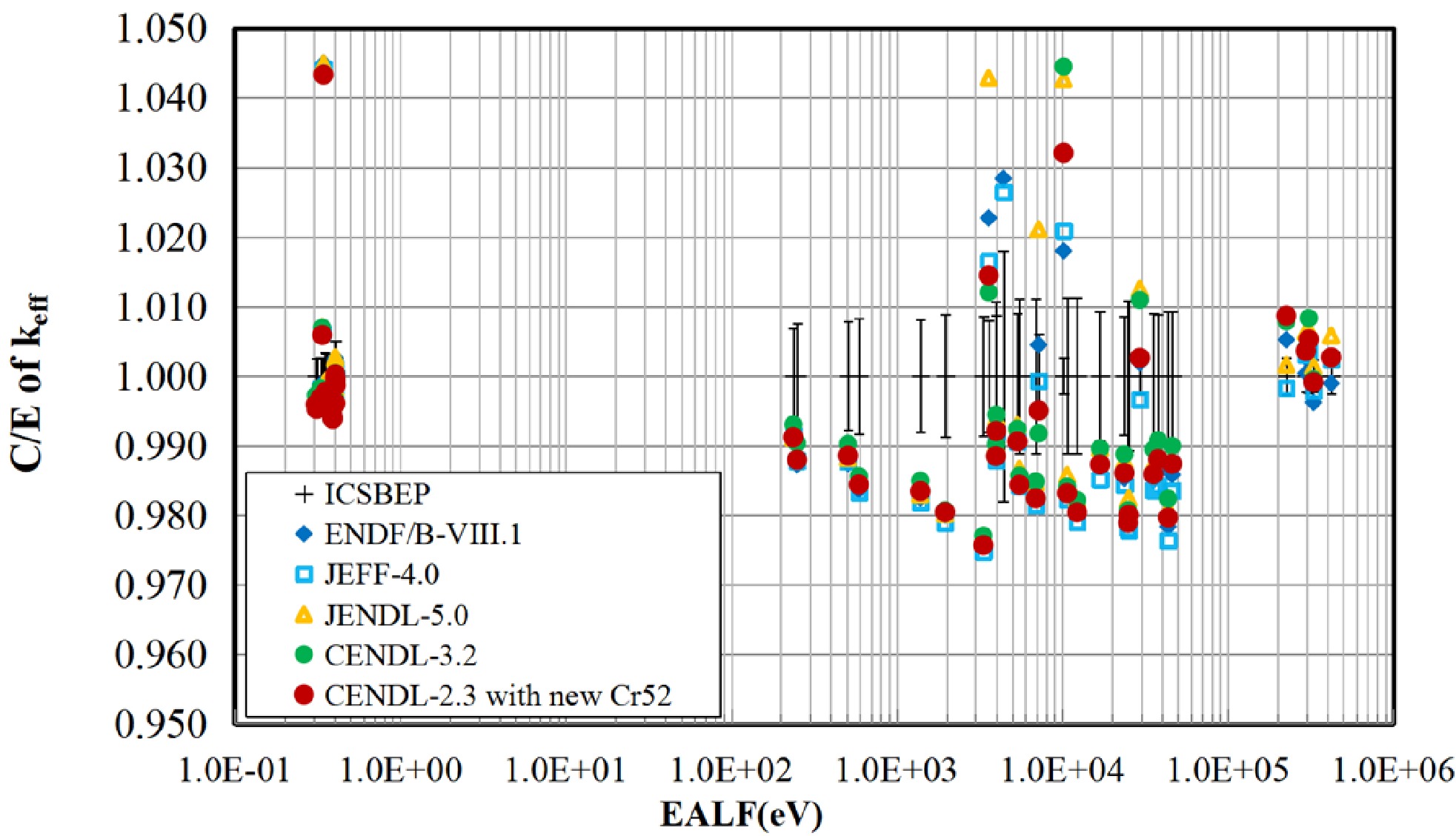
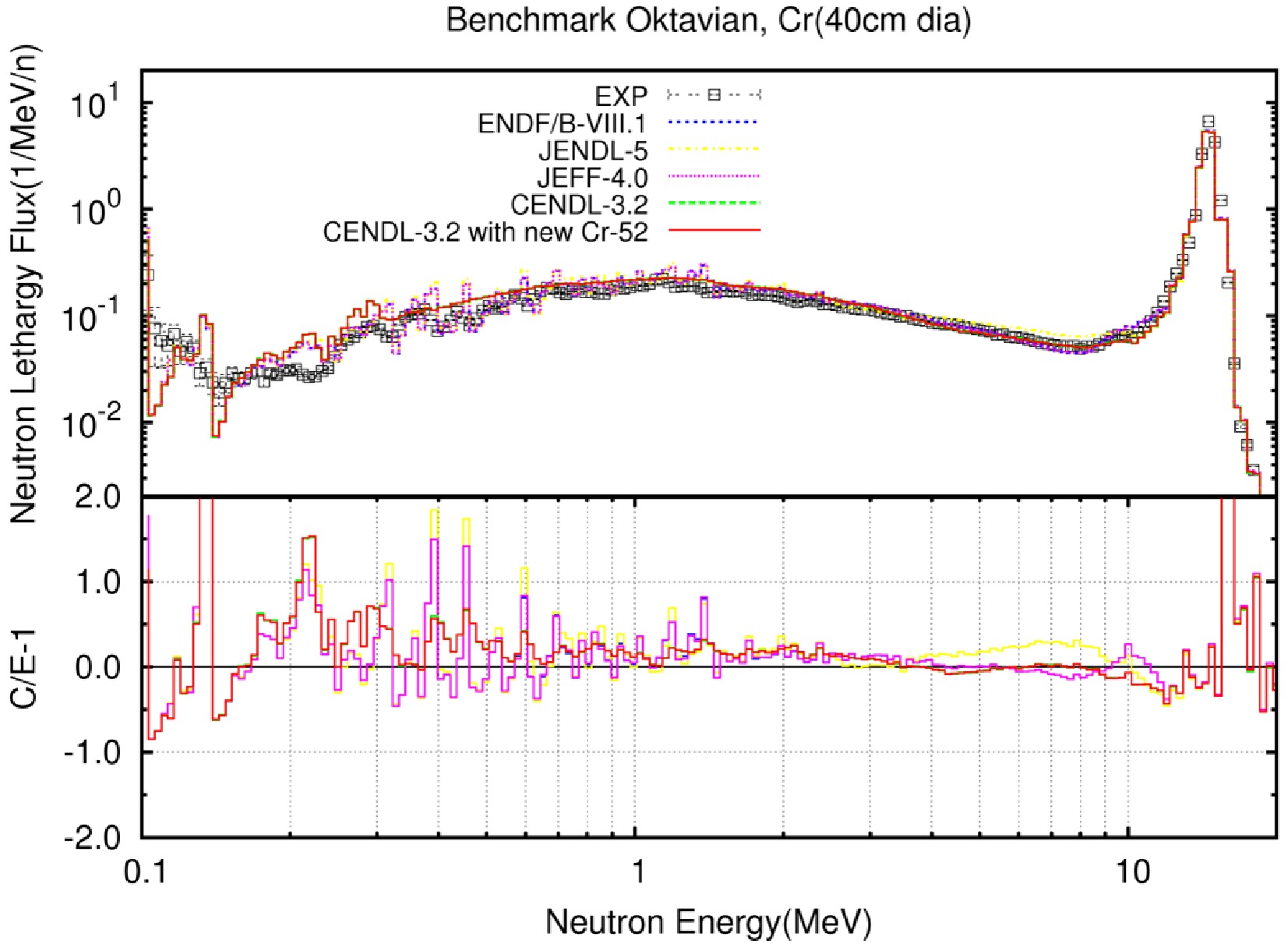
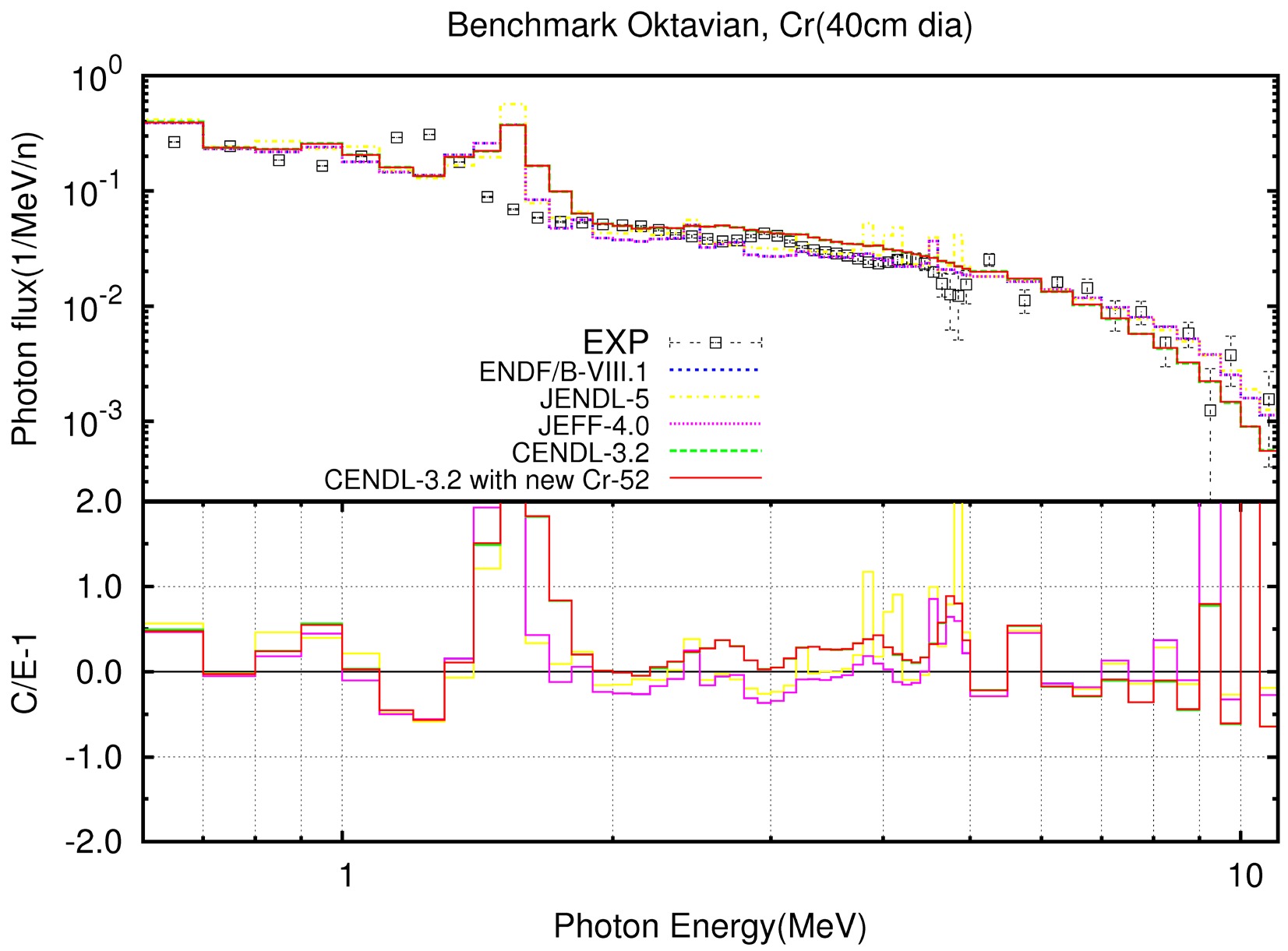
Chromium (Cr) serves as an indispensable structural material in accelerator-driven systems (ADSs) and Generation IV reactors, where the precision of its neutron reaction data is important for ensuring reactor safety and operational reliability. However, significant discrepancies persist in both experimental data and evaluations for key reaction channels, such as\begin{document}$(n, p)$\end{document} \begin{document}$(n, 2n)$\end{document} \begin{document}${}^{50,52,53,54}{\rm{Cr}}$\end{document} \begin{document}${}^{52}{\rm{Cr}}(n,2n)$\end{document} \begin{document}${}^{52}{\rm{Cr}}(n, p)$\end{document} \begin{document}${}^{50,52}{\rm{Cr}}$\end{document} \begin{document}$(n, p)$\end{document} \begin{document}$(n, 2n)$\end{document} \begin{document}$ k_{{\rm{eff}}}$\end{document} \begin{document}$ k_{{\rm{eff}}}$\end{document} \begin{document}$\sim 1000$\end{document}
Chromium (Cr) serves as an indispensable structural material in accelerator-driven systems (ADSs) and Generation IV reactors, where the precision of its neutron reaction data is important for ensuring reactor safety and operational reliability. However, significant discrepancies persist in both experimental data and evaluations for key reaction channels, such as
2026, 50(7): 074102. doi: 10.1088/1674-1137/ae5ef4
Abstract:
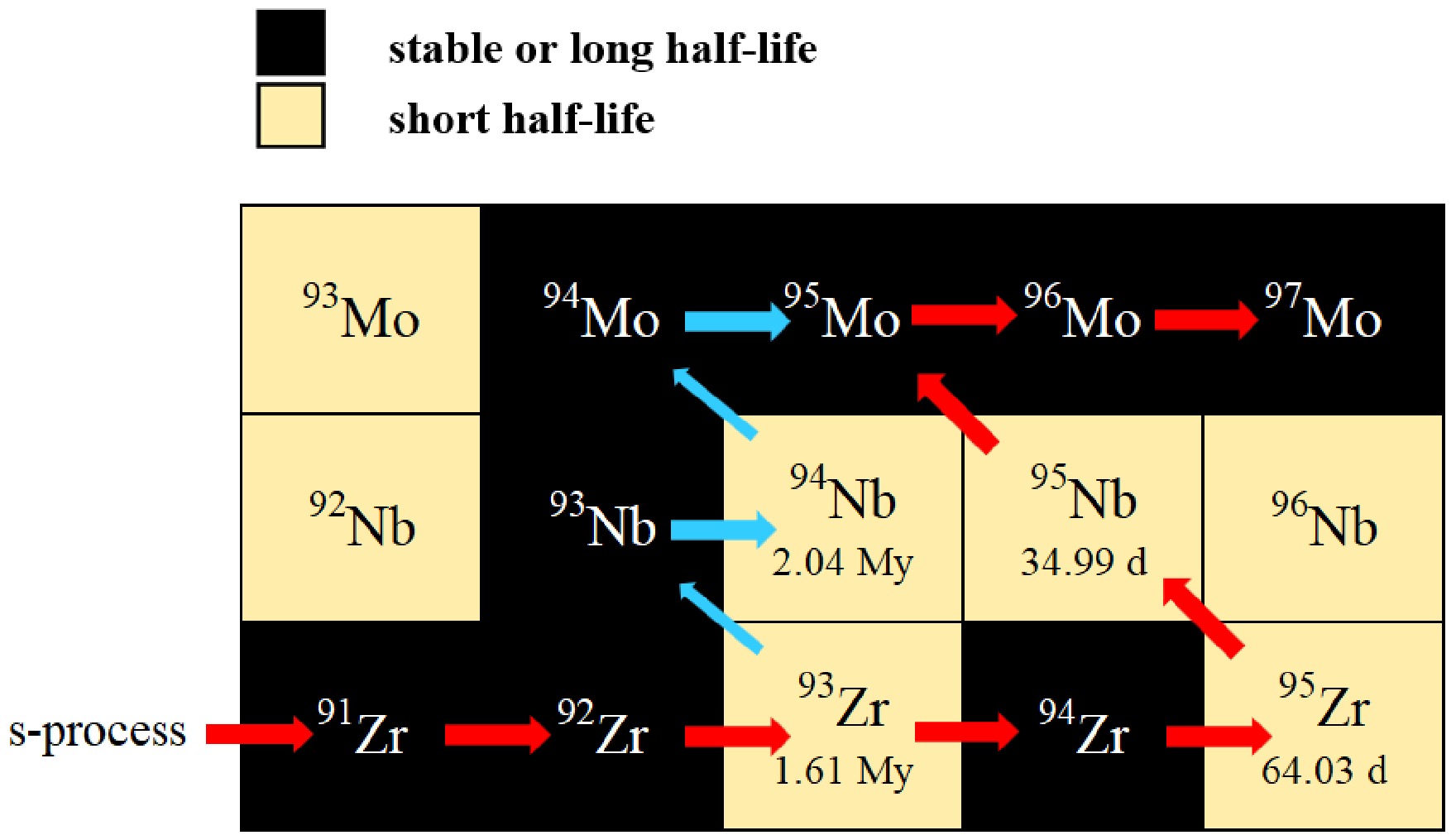
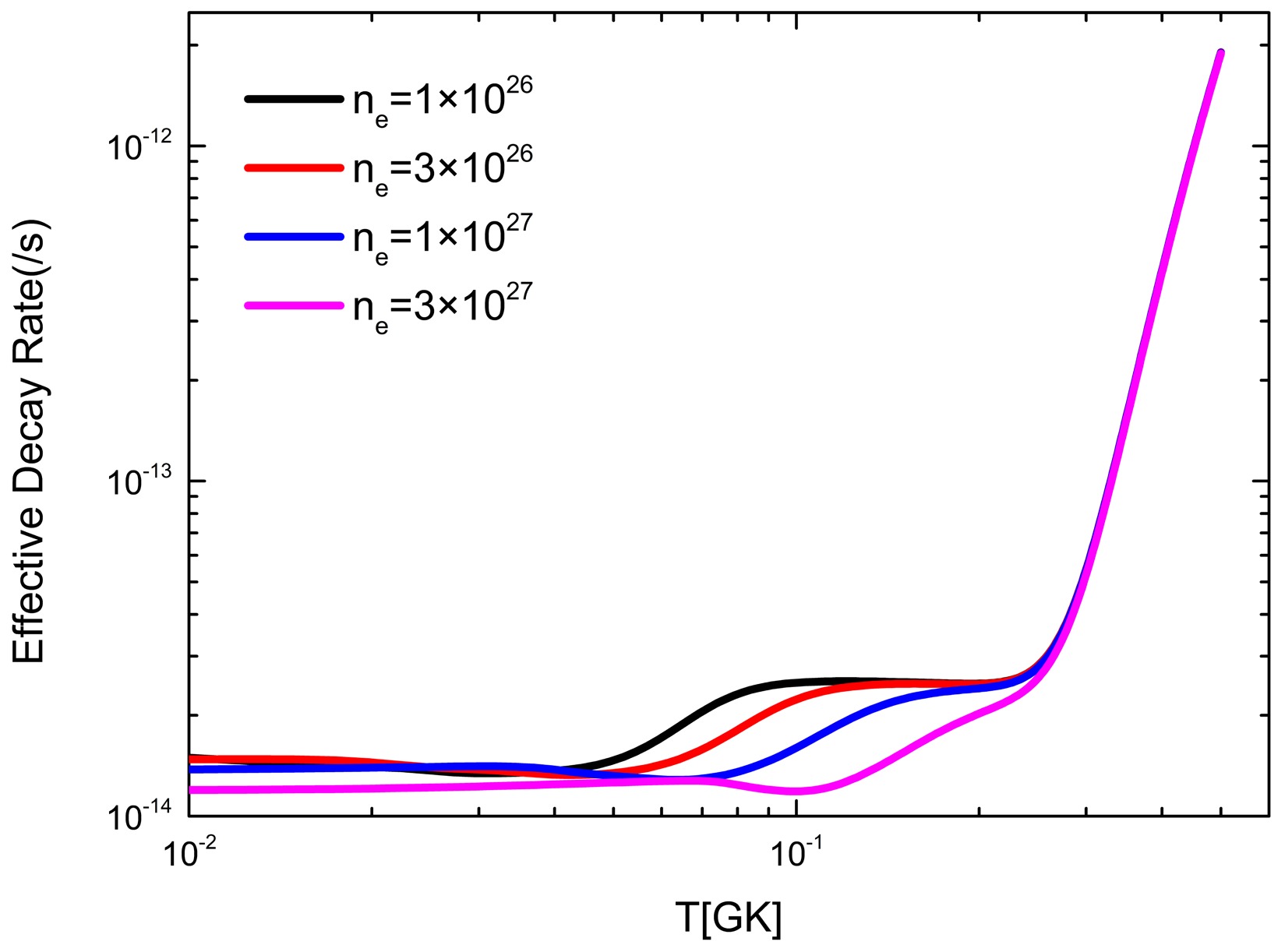
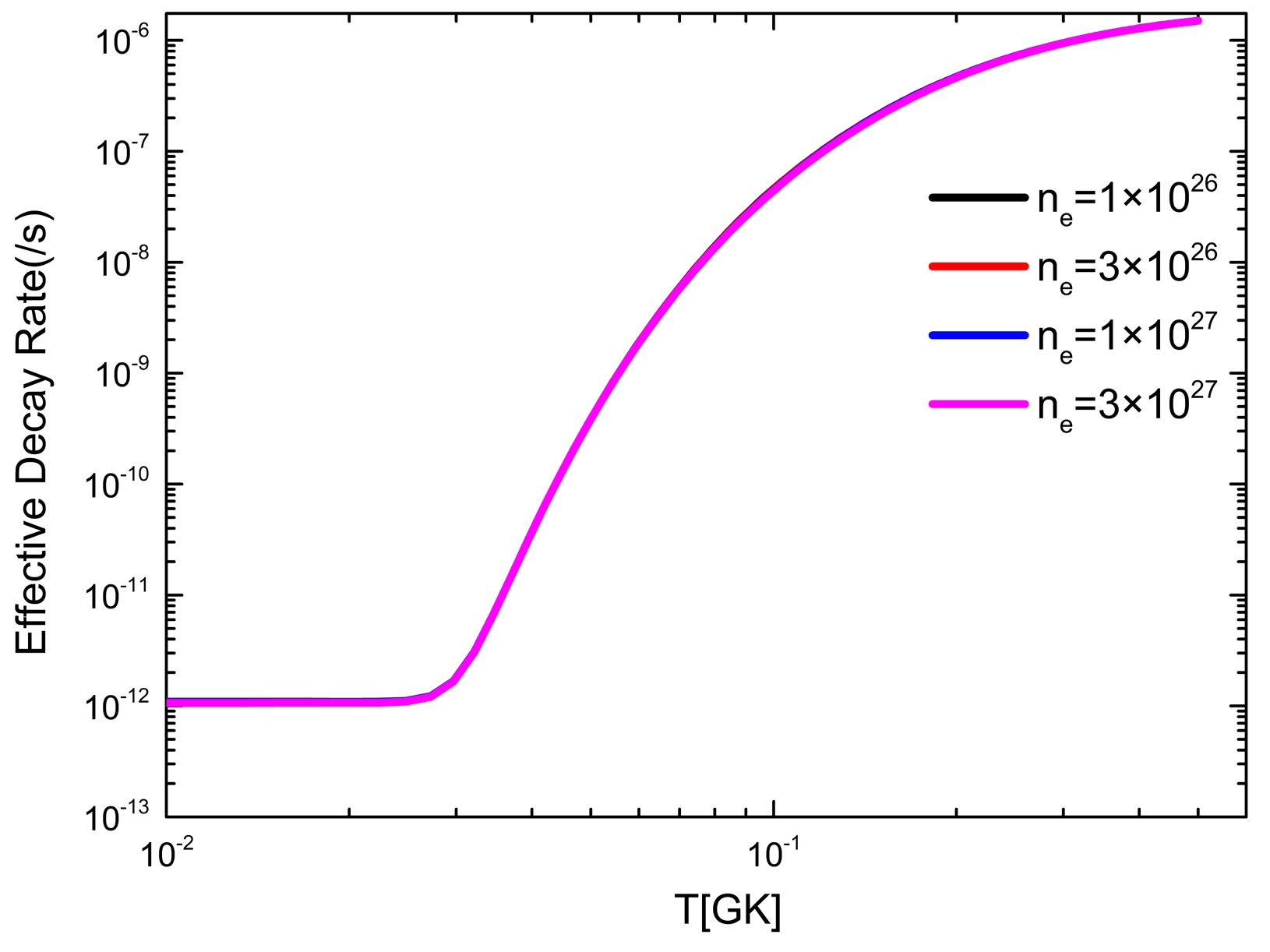
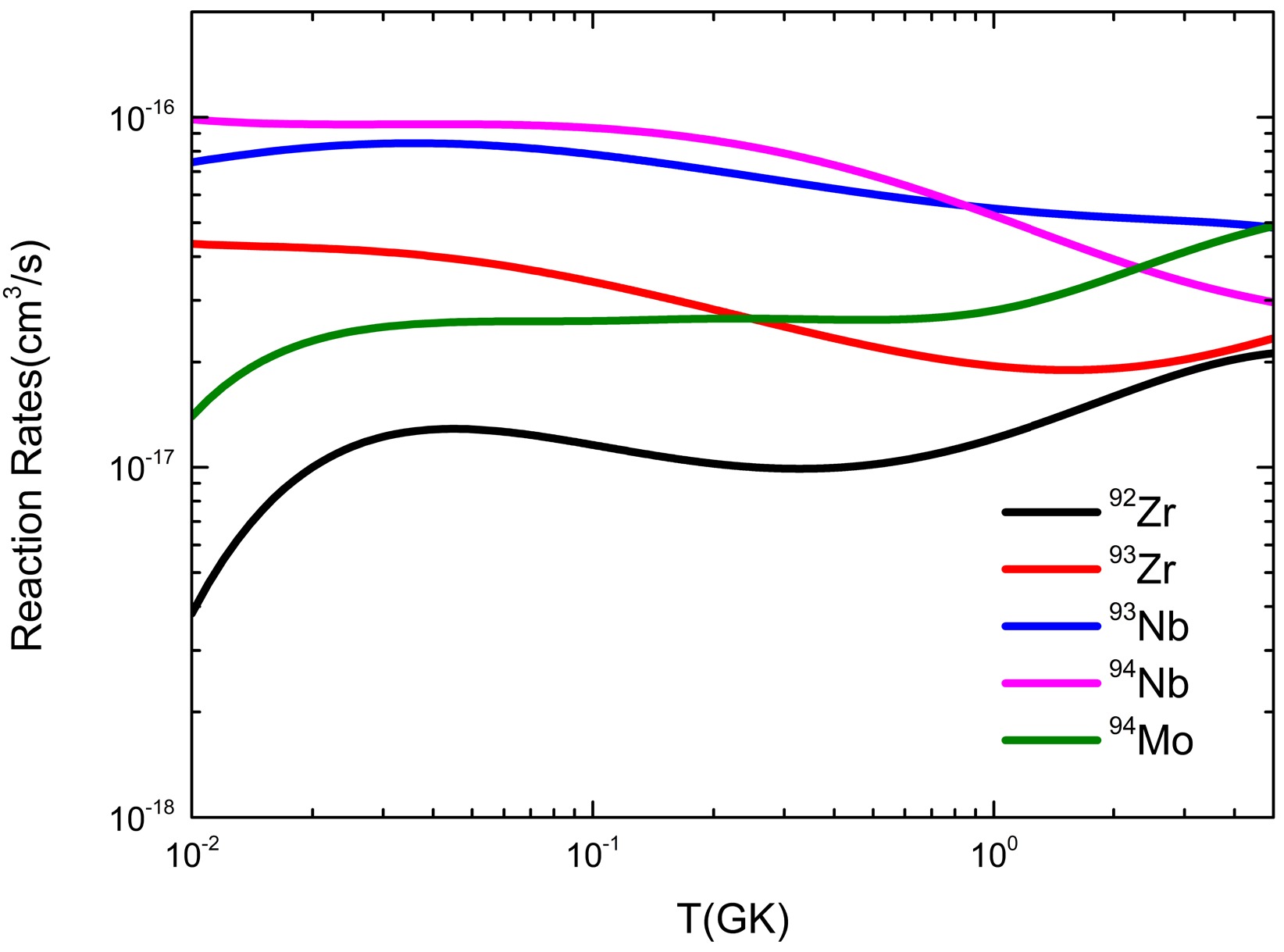
This paper addresses a long-standing problem in astrophysics—the origin of the solar system abundance of the proton-rich isotope\begin{document}$ ^{94}\text{Mo} $\end{document} \begin{document}$ ^{94}\text{Mo} $\end{document} \begin{document}$ ^{93}\text{Zr} \rightarrow $\end{document} \begin{document}$ ^{93}\text{Nb} $\end{document} \begin{document}$ \rightarrow ^{94}\text{Nb} \rightarrow ^{94}\text{Mo} $\end{document} \begin{document}$ ^{94}\text{Mo} $\end{document} \begin{document}$ ^{93}\text{Zr} $\end{document} \begin{document}$ ^{94}\text{Nb} $\end{document} \begin{document}$ ^{94}\text{Mo} $\end{document} \begin{document}$ ^{94}\text{Mo} $\end{document}
This paper addresses a long-standing problem in astrophysics—the origin of the solar system abundance of the proton-rich isotope
2026, 50(7): 074103. doi: 10.1088/1674-1137/ae62ff
Abstract:
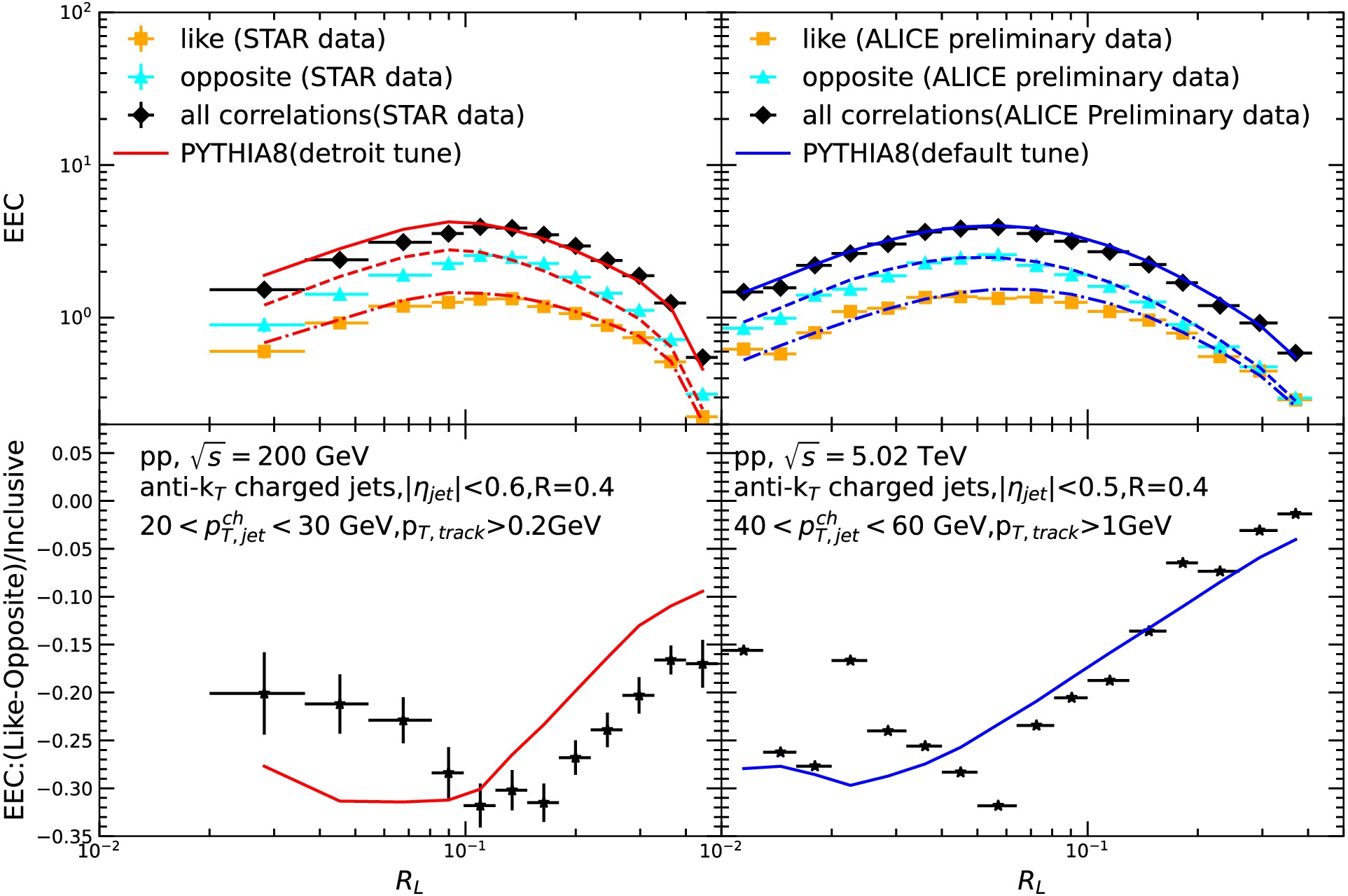
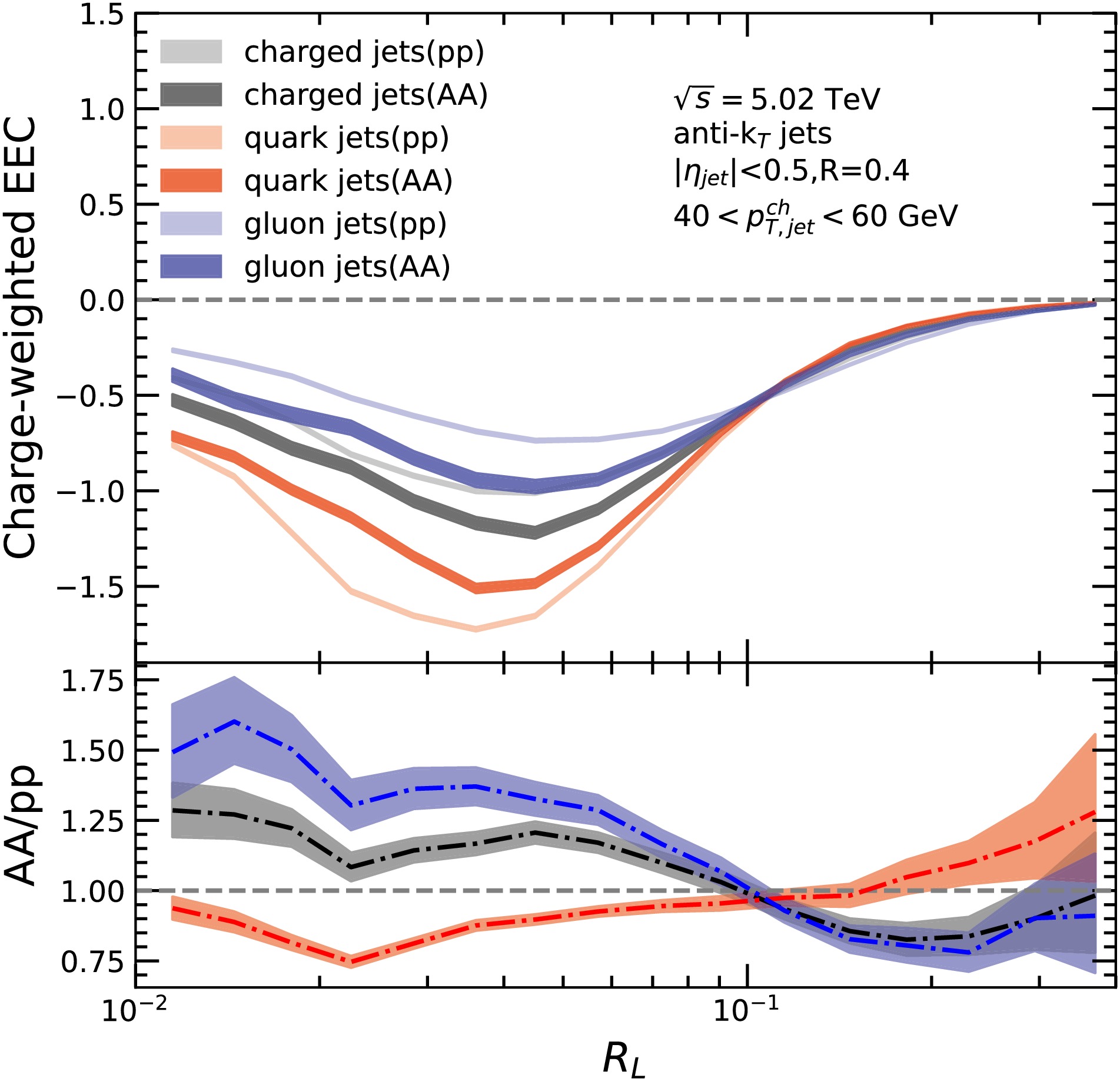
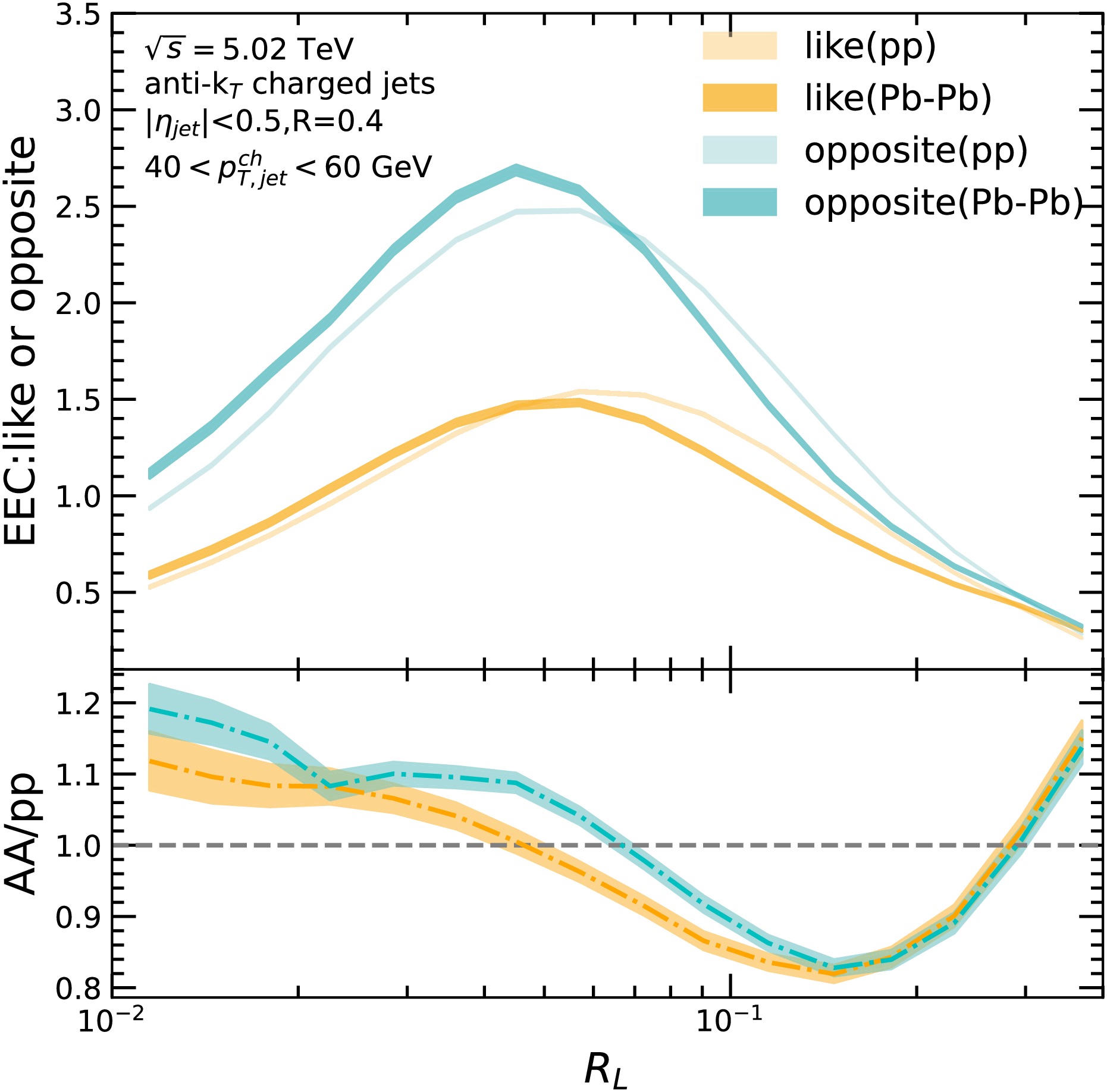
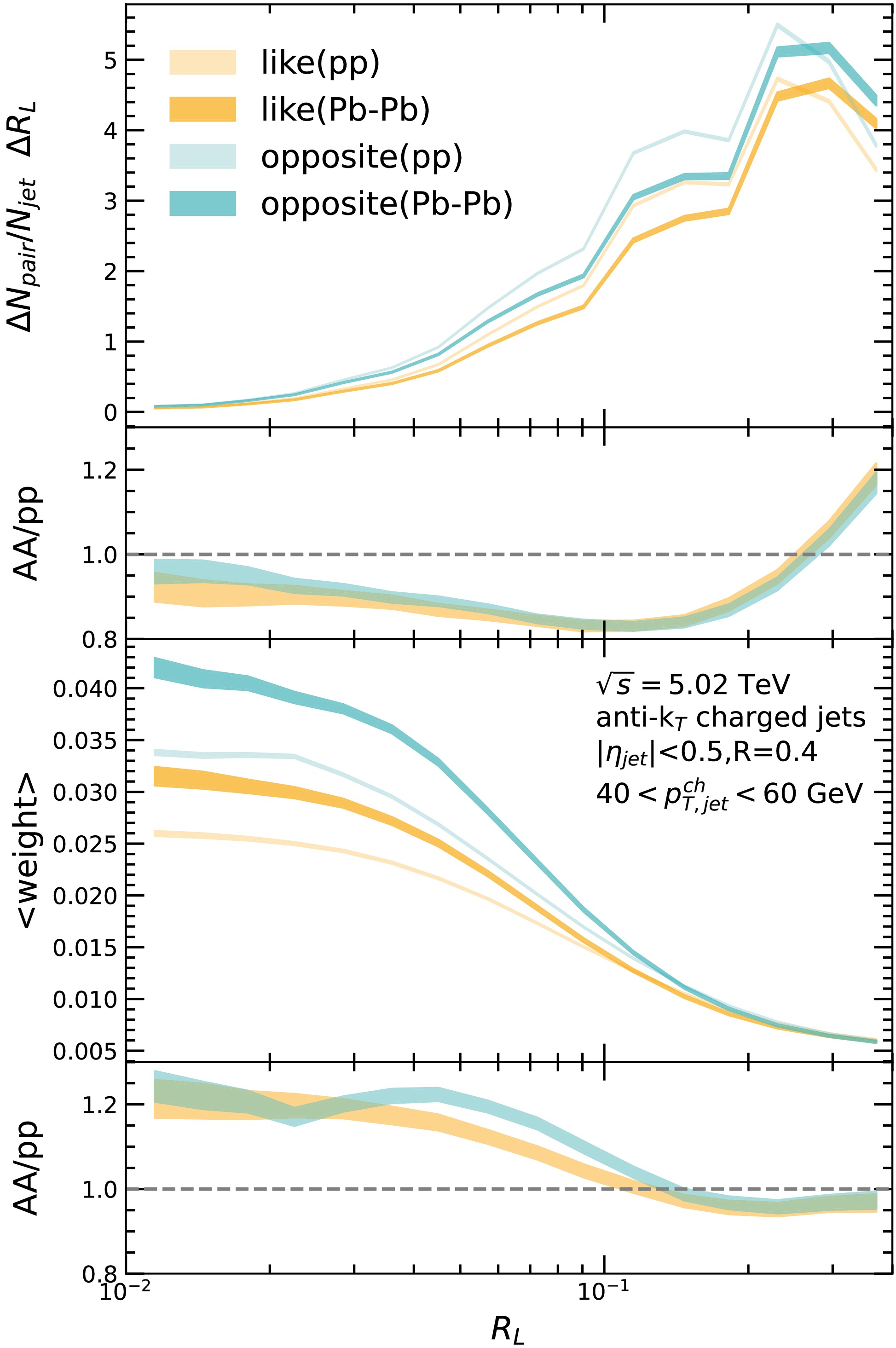
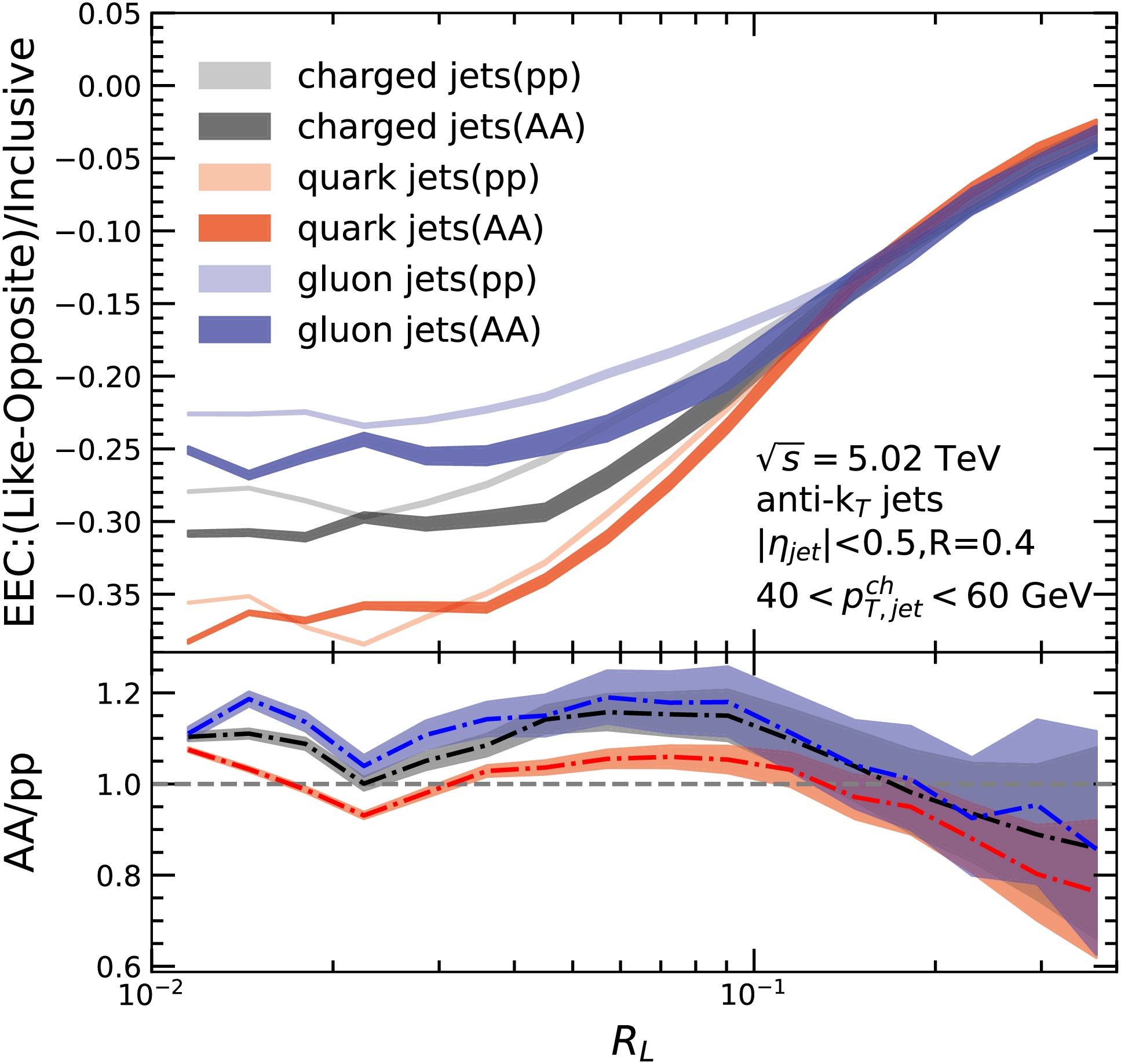
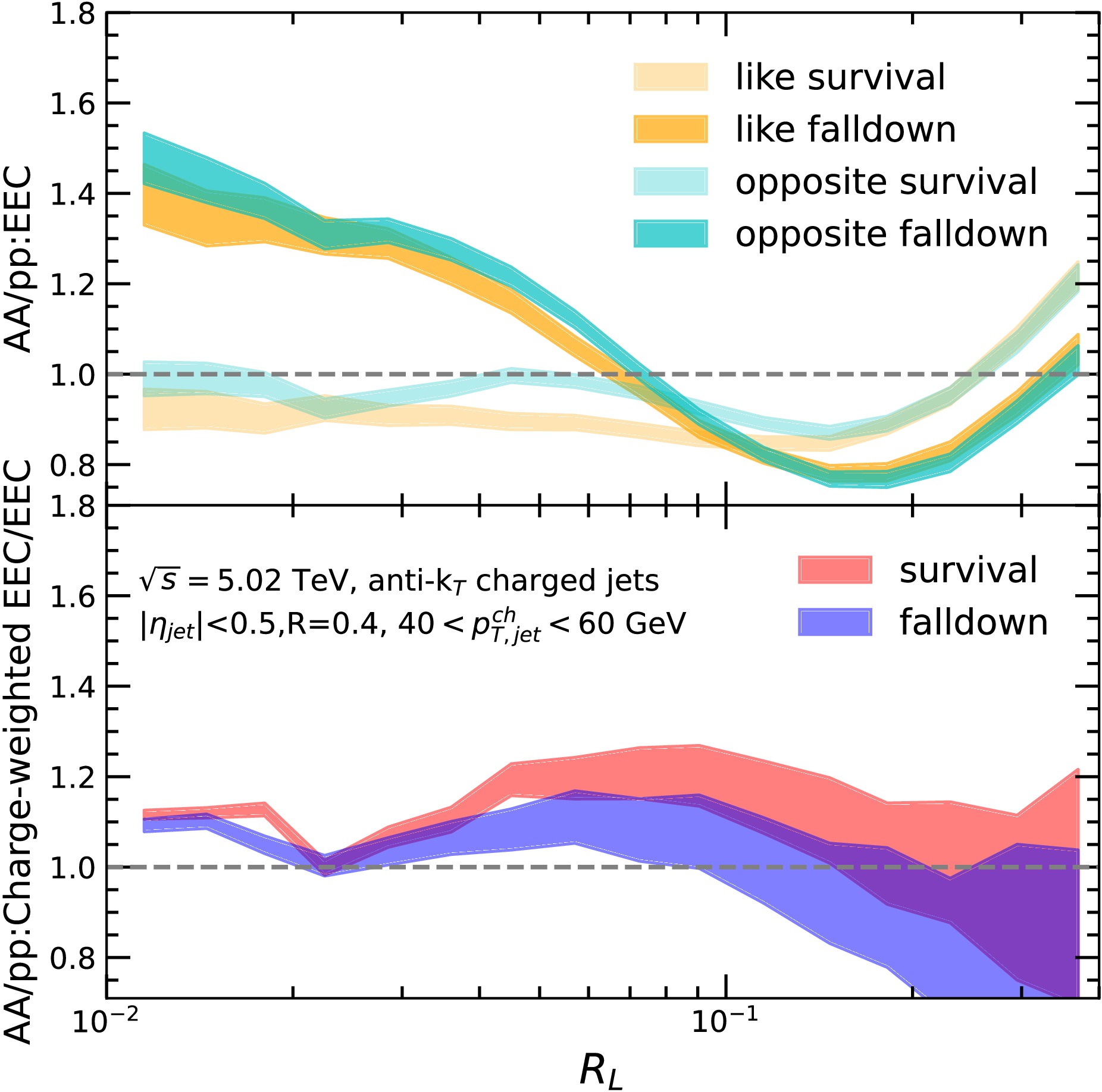
We report a systematic study and predictions of medium-induced modifications in charge-dependent jet substructure using the charge-weighted Energy-Energy Correlators (EEC) in 0−10% central Pb+Pb collisions at\begin{document}$ \sqrt{s_{NN}} = 5.02\ {\rm{TeV}} $\end{document} \begin{document}$ \pi^+\pi^{-} $\end{document}
We report a systematic study and predictions of medium-induced modifications in charge-dependent jet substructure using the charge-weighted Energy-Energy Correlators (EEC) in 0−10% central Pb+Pb collisions at
2026, 50(7): 074104. doi: 10.1088/1674-1137/ae5ef5
Abstract:
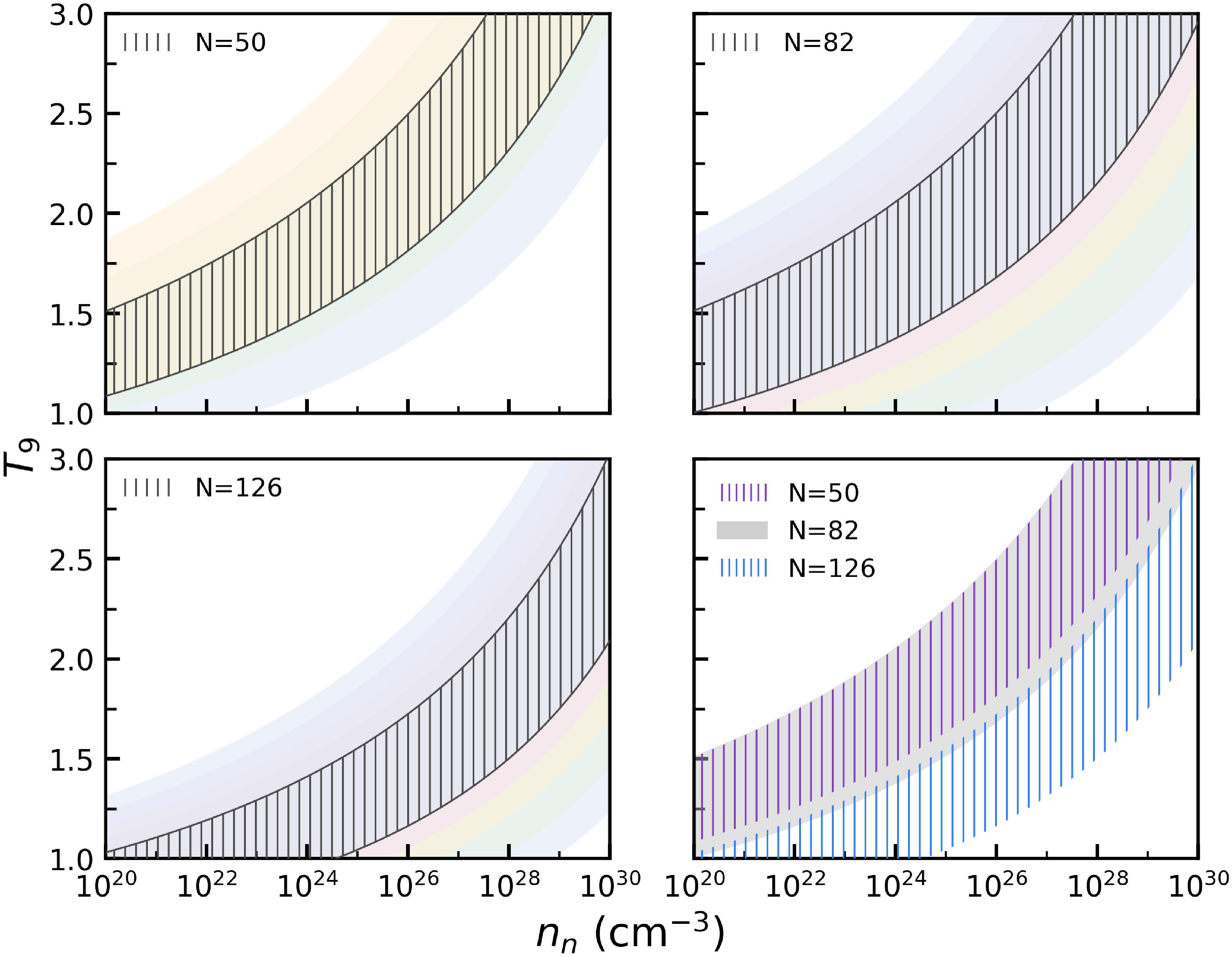
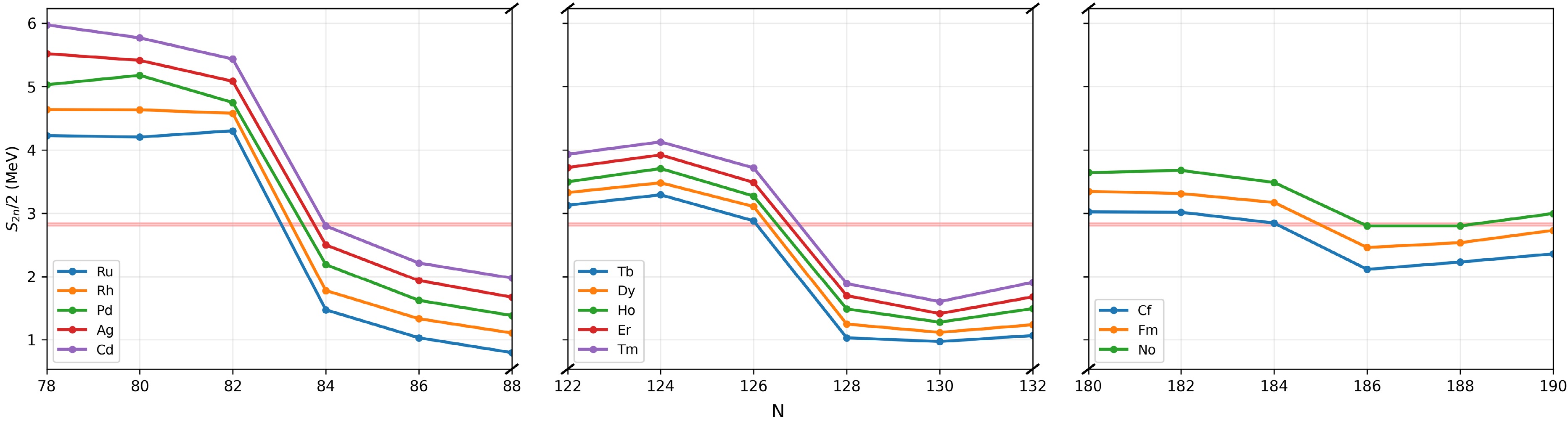
Identifying the thermodynamic conditions marking the onset of fission cycling is crucial for modeling heavy-element production in the r-process. In this work, we develop a framework to determine this onset over the\begin{document}$ (T_9, n_n) $\end{document} \begin{document}$ N \approx 184 $\end{document} \begin{document}$ S_n^{0}(T_9, n_n) $\end{document} \begin{document}$ 94 \leqslant Z \leqslant 106 $\end{document}
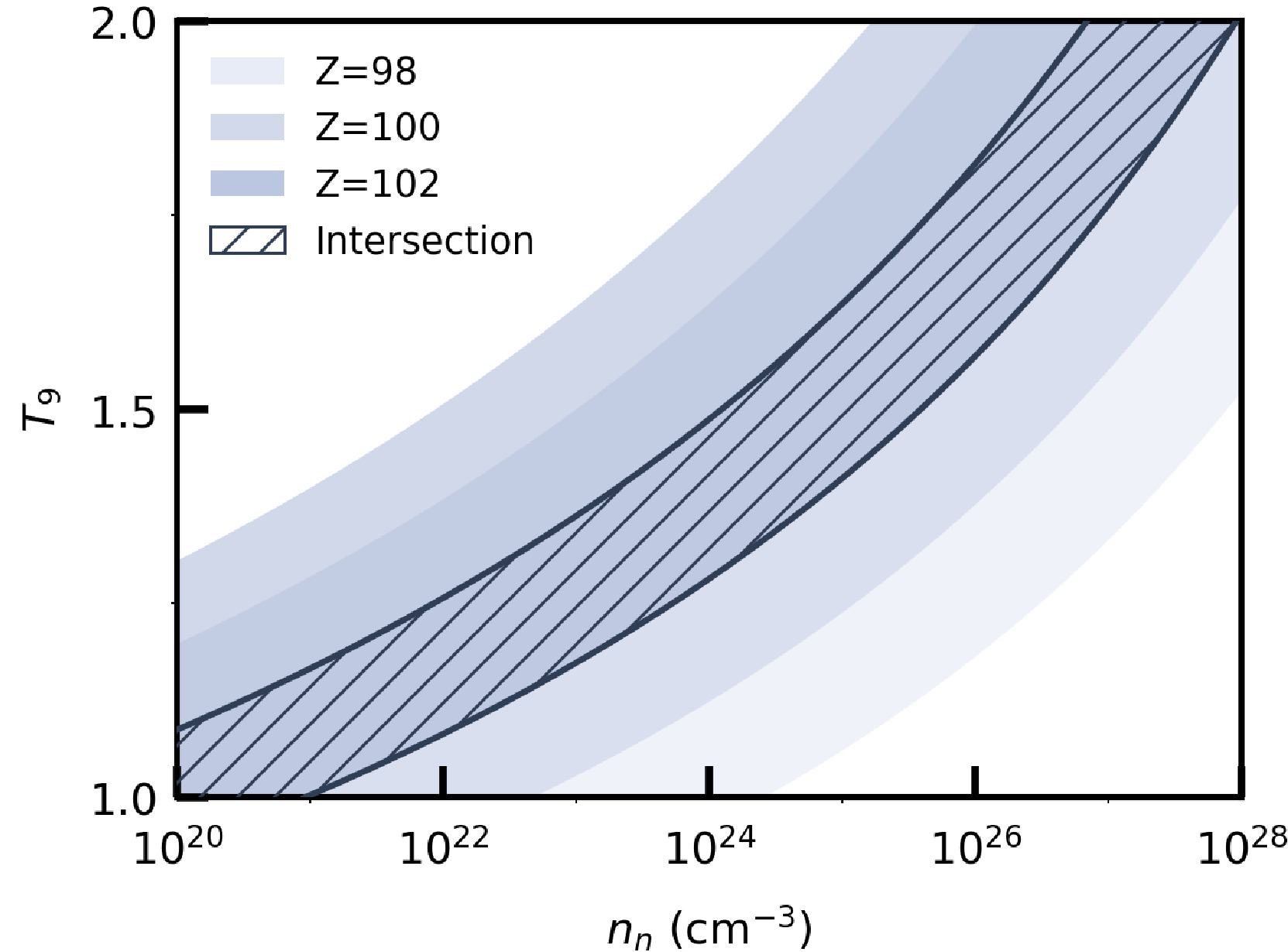
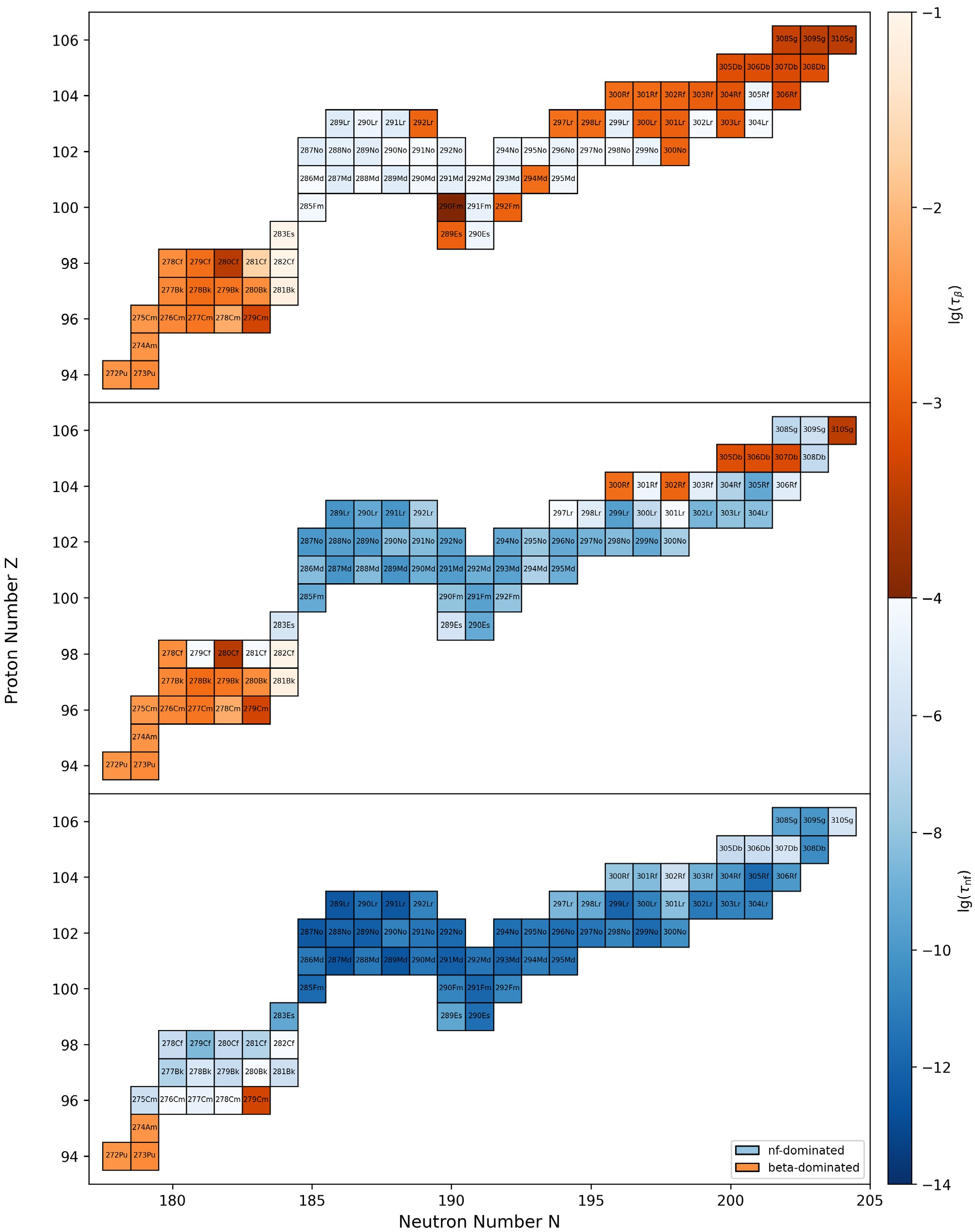
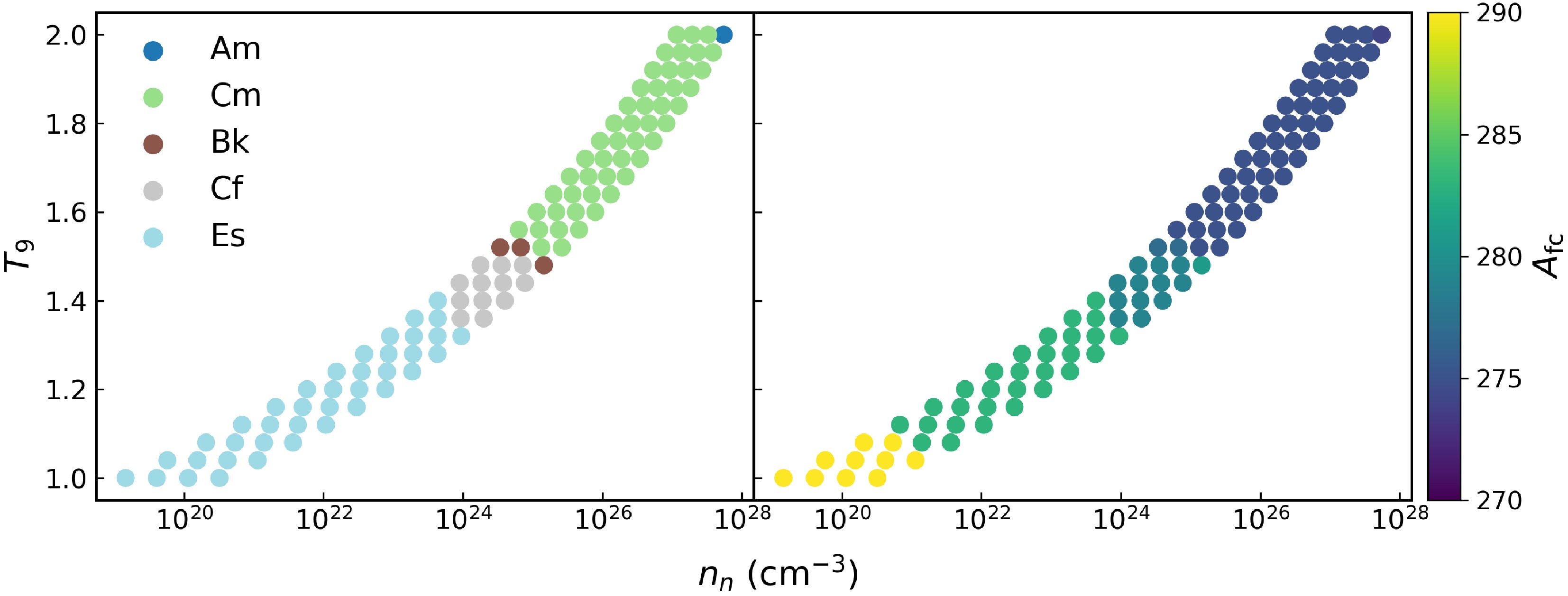
Identifying the thermodynamic conditions marking the onset of fission cycling is crucial for modeling heavy-element production in the r-process. In this work, we develop a framework to determine this onset over the
2026, 50(7): 074105. doi: 10.1088/1674-1137/ae5ef6
Abstract:
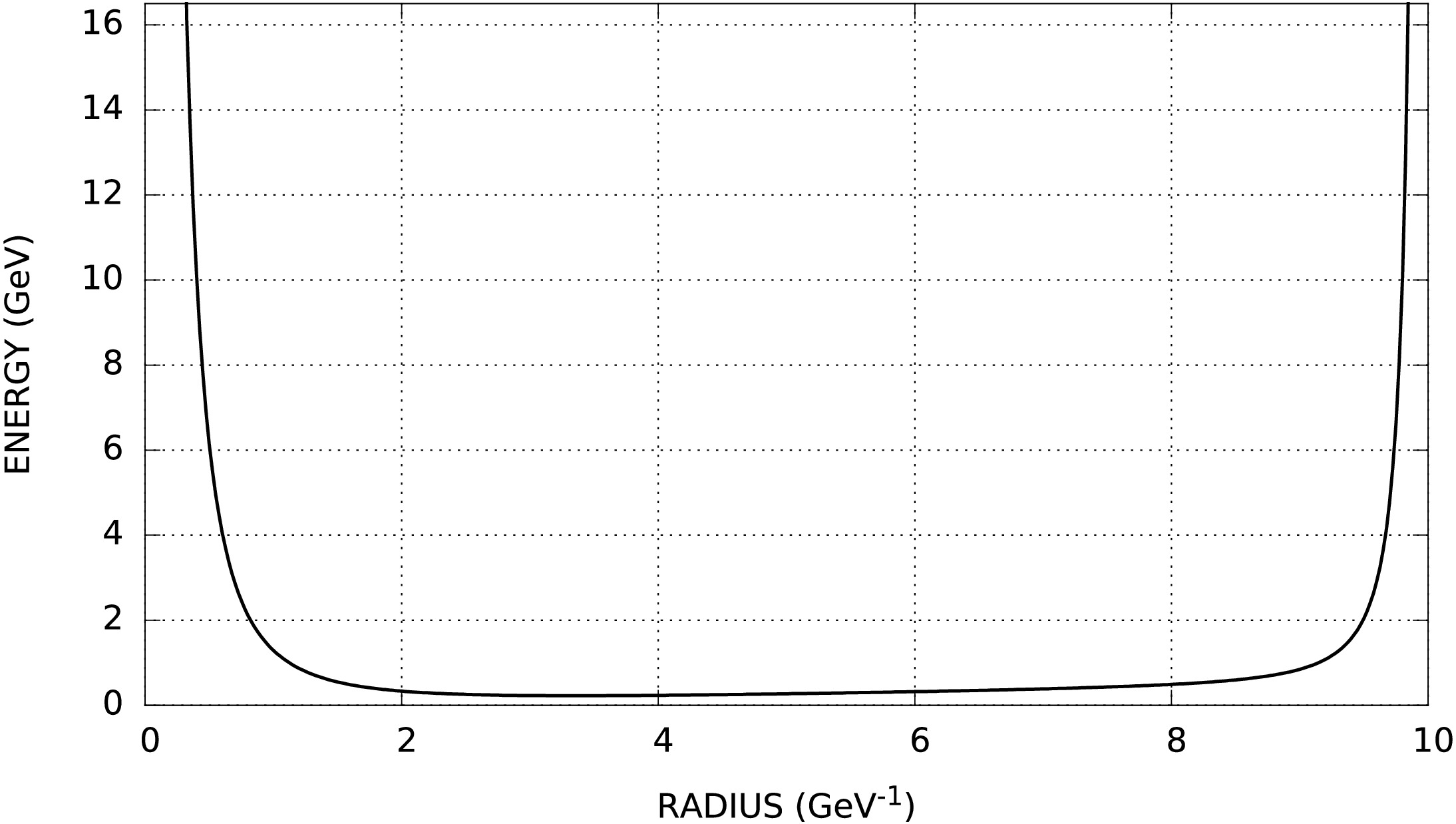
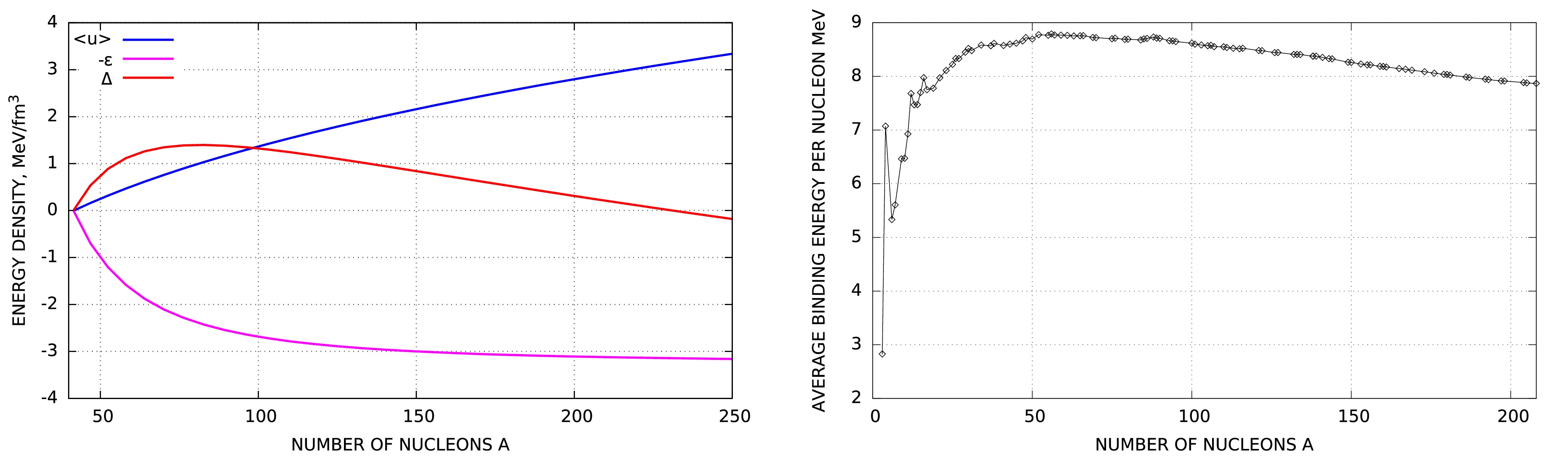
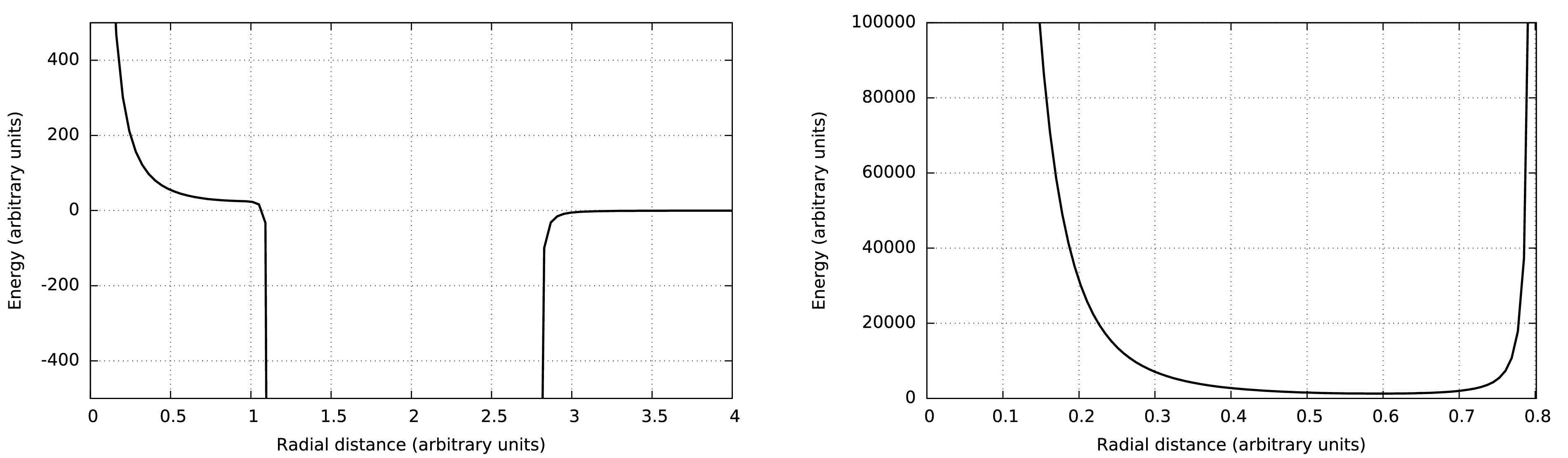
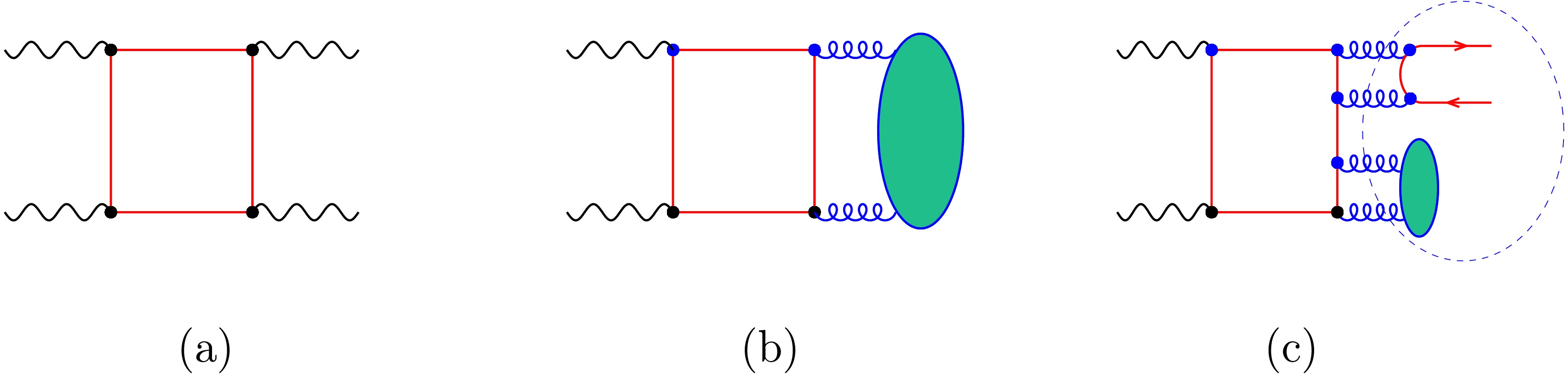
The atomic nucleus, viewed as a system of bound quarks, should, in principle, be described within an effective theory of low-energy quantum chromodynamics. This paper provides an overview of recently developed models that embody essential features of the desired effective theory. The Fermi gas model helps explain why the number of d quarks is approximately equal to that of u quarks in stable light nuclei up to\begin{document}$ {}^{40}_{20}{\rm Ca} $\end{document} \begin{document}$ {{\rm{AdS}}}_5 $\end{document} \begin{document}$ {\mathbb R}_{1,3} $\end{document} \begin{document}$ Z_{{\rm{max}}} $\end{document} \begin{document}$ Z_{{\rm{max}}}\approx 82 $\end{document} \begin{document}$ {}^{208}_{\phantom{2}82}{\rm Pb} $\end{document}
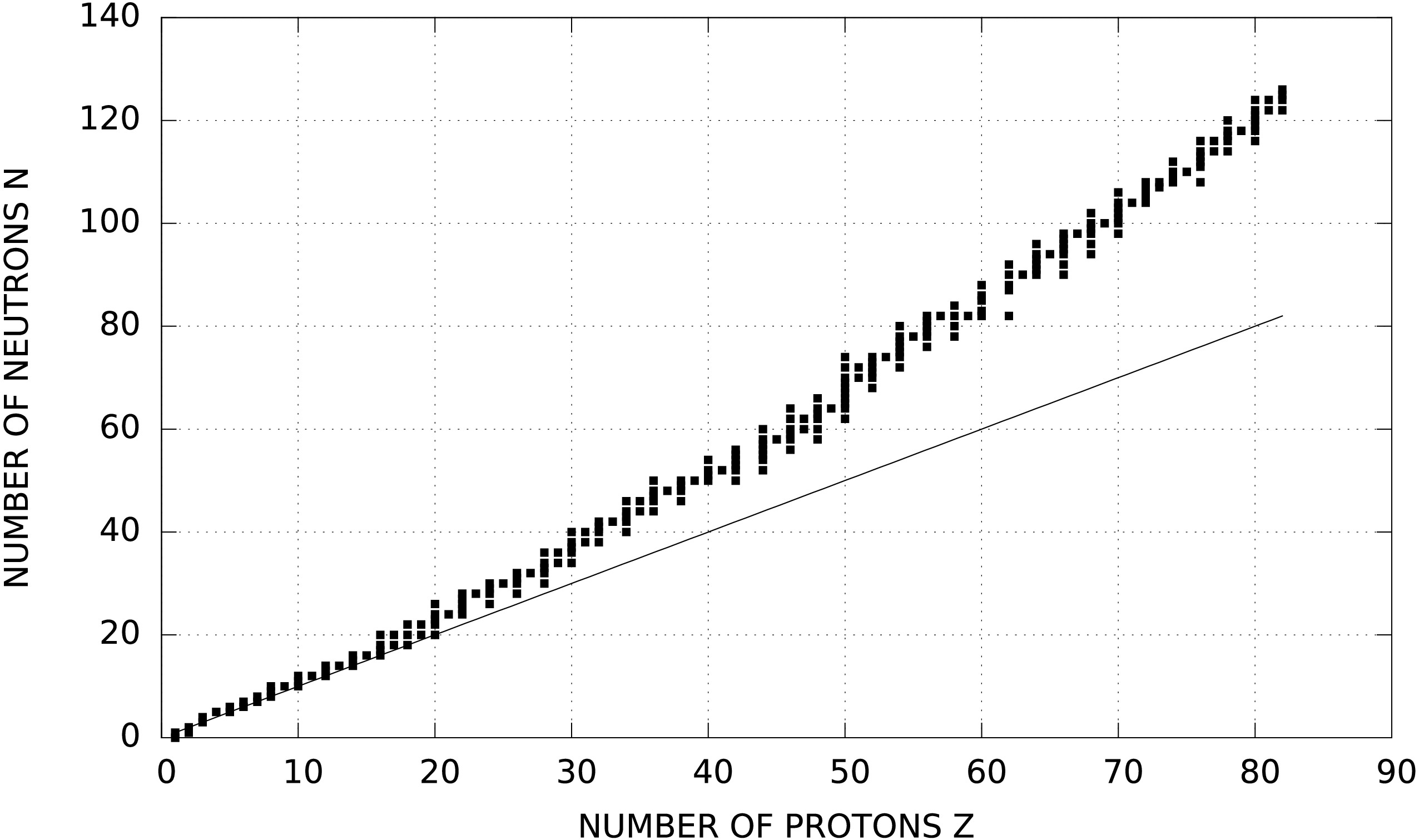
The atomic nucleus, viewed as a system of bound quarks, should, in principle, be described within an effective theory of low-energy quantum chromodynamics. This paper provides an overview of recently developed models that embody essential features of the desired effective theory. The Fermi gas model helps explain why the number of d quarks is approximately equal to that of u quarks in stable light nuclei up to

2026, 50(7): 075001. doi: 10.1088/1674-1137/ae5c6f
Abstract:
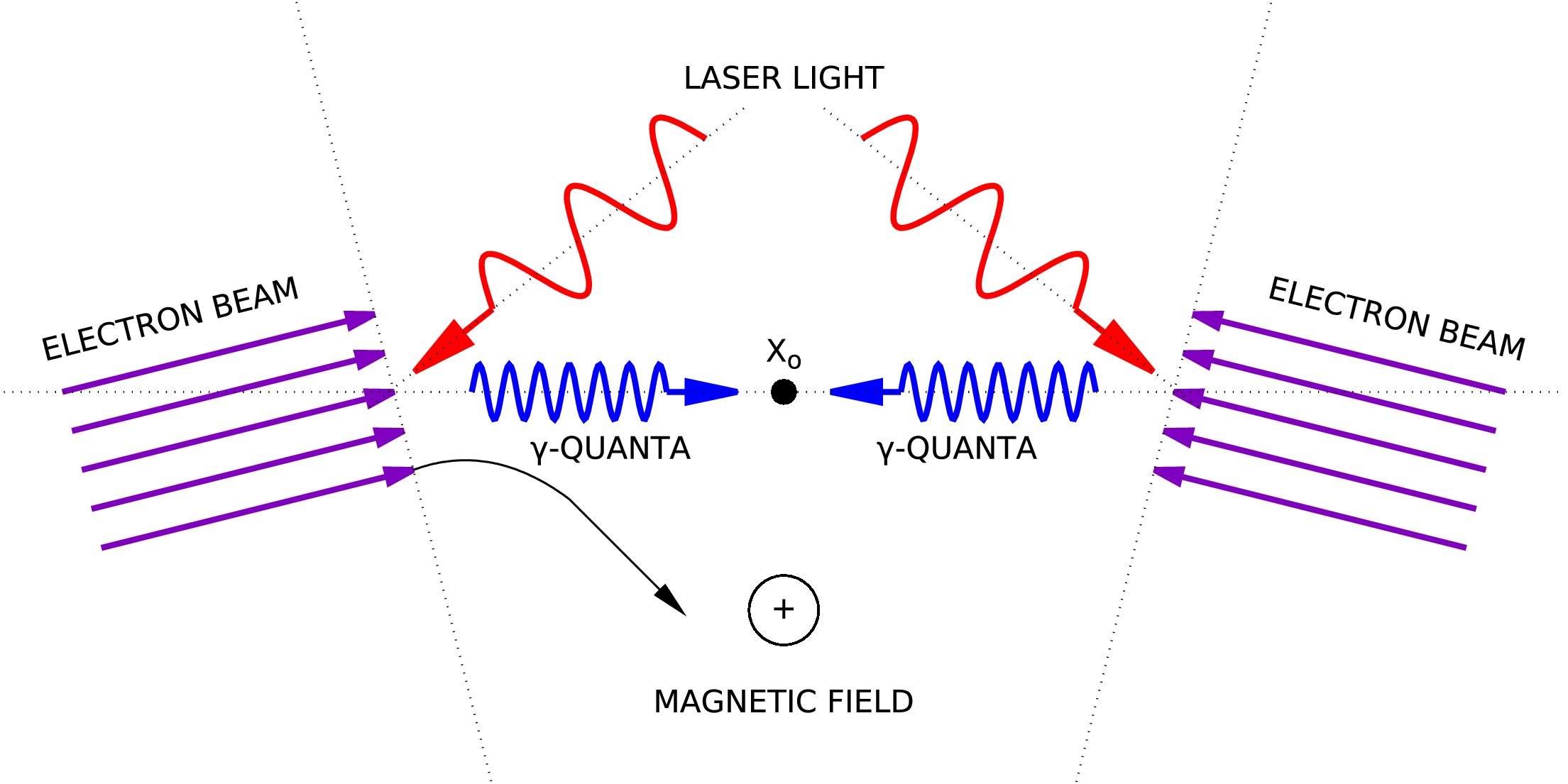
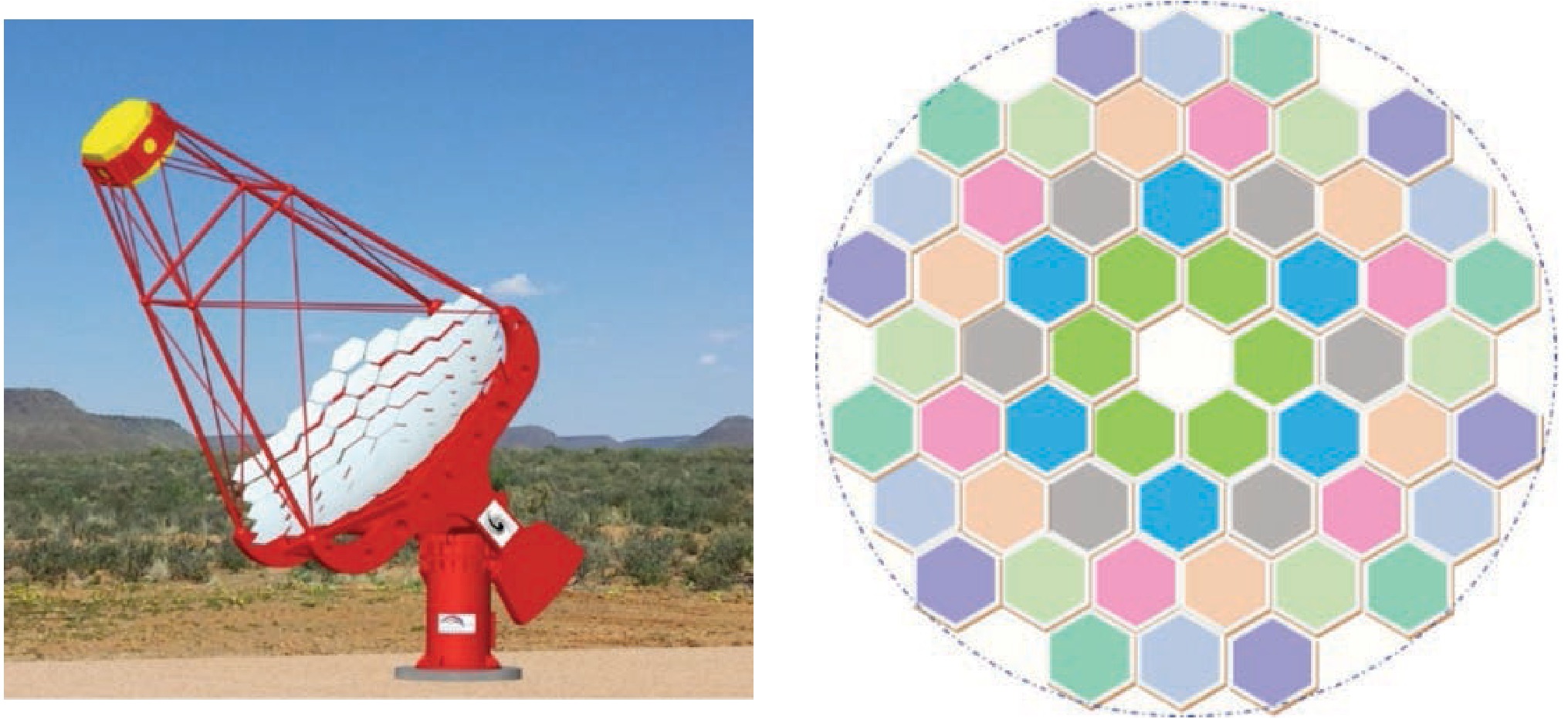
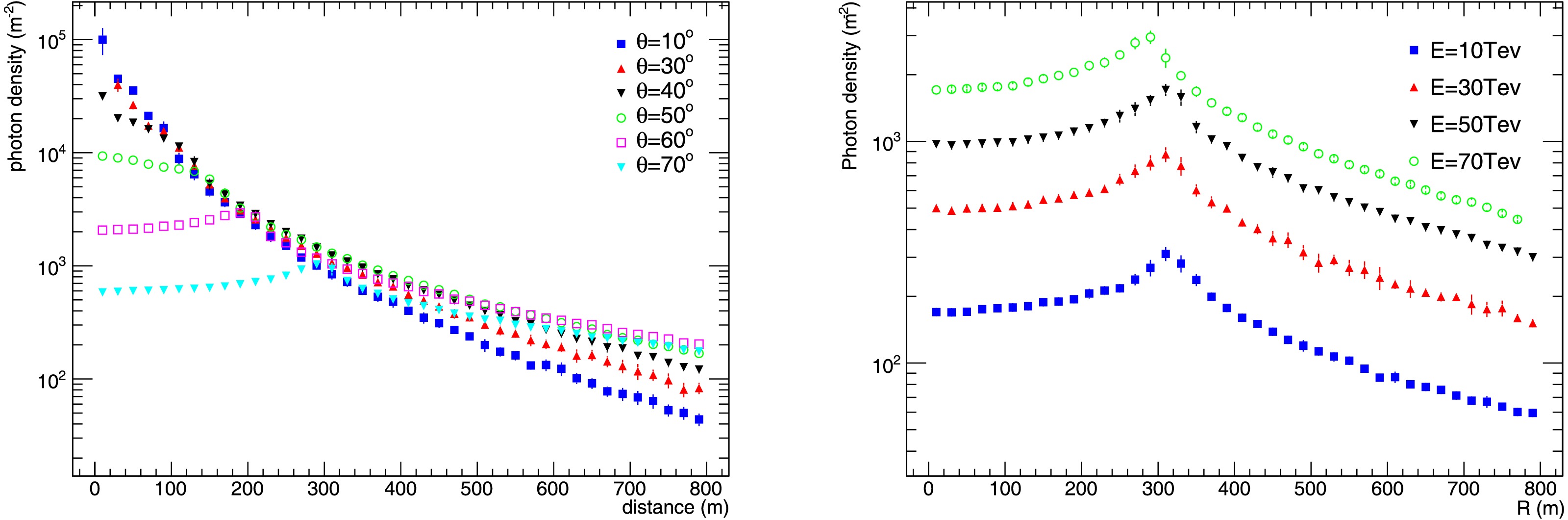
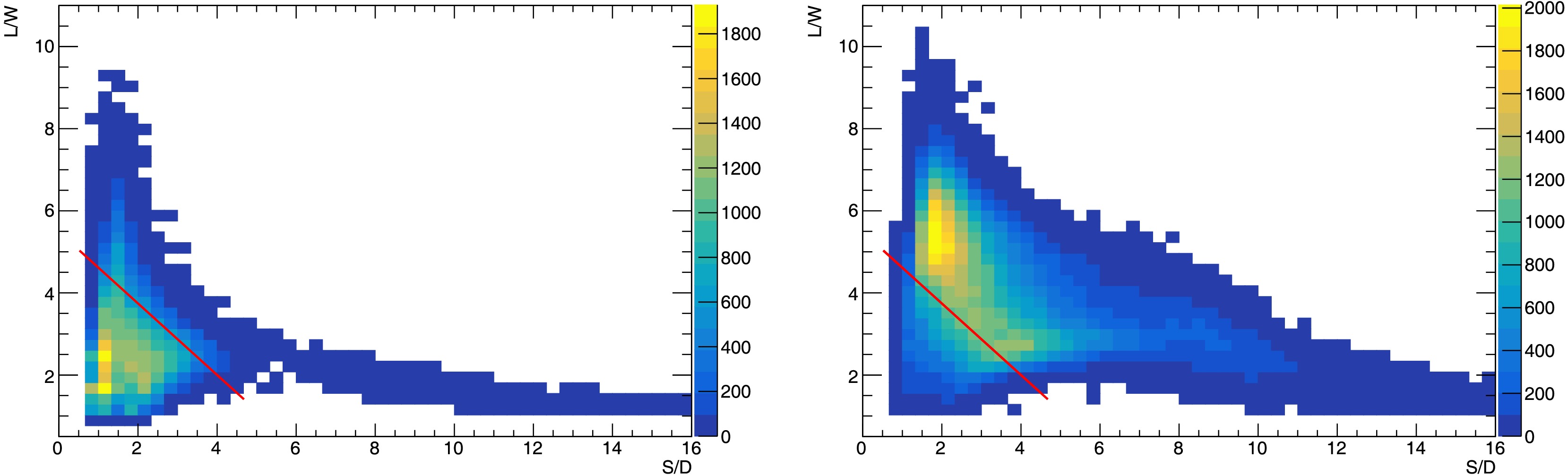
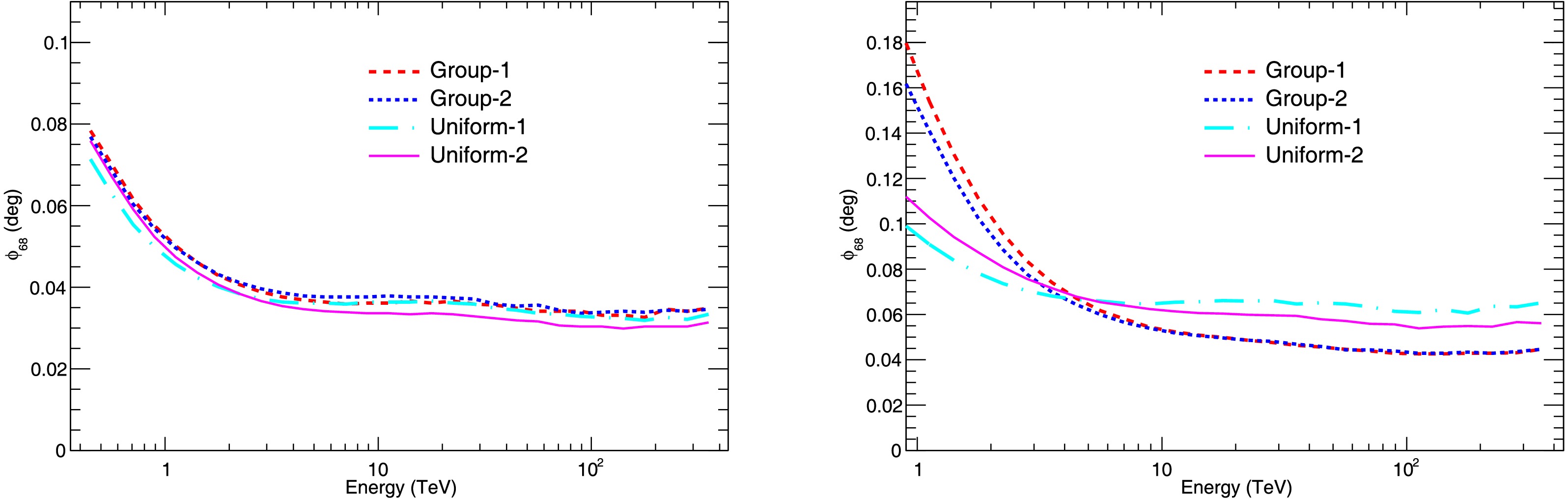
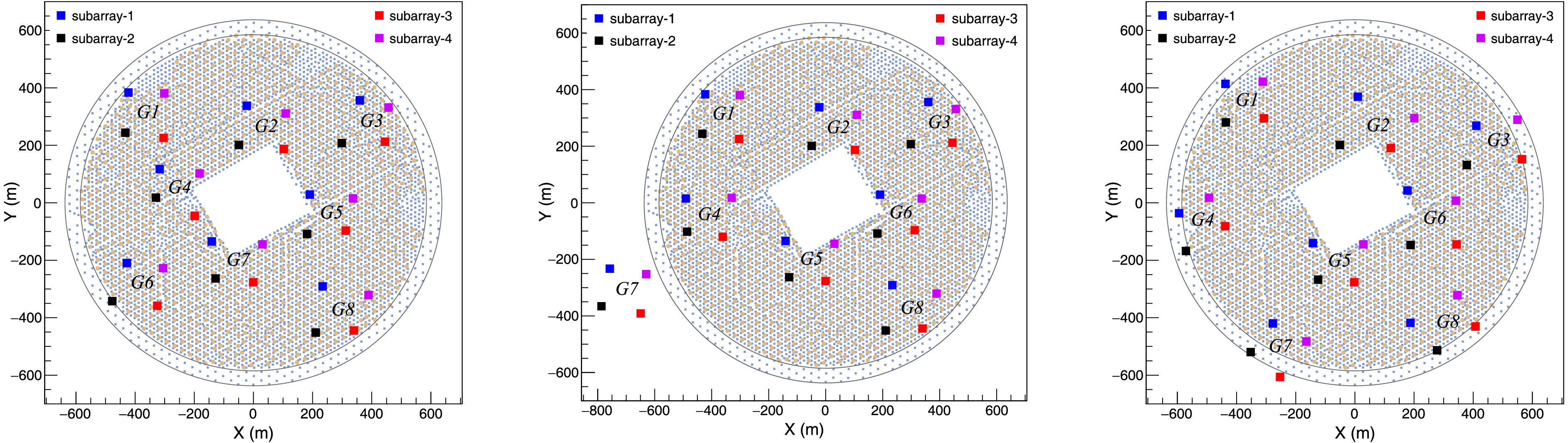
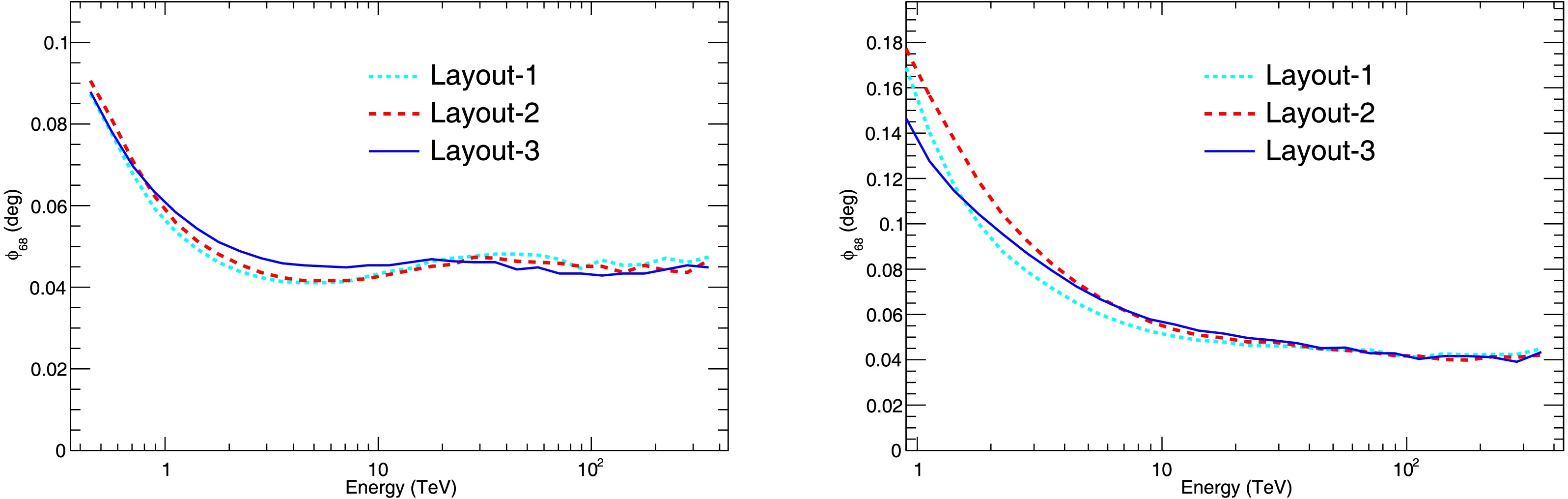
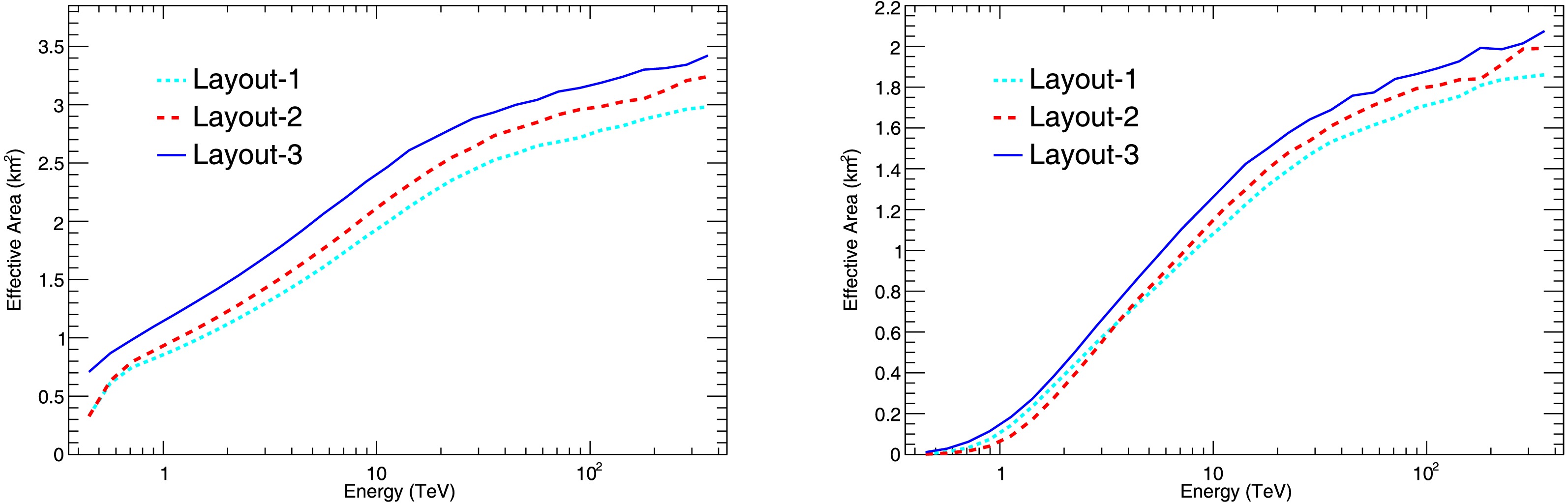
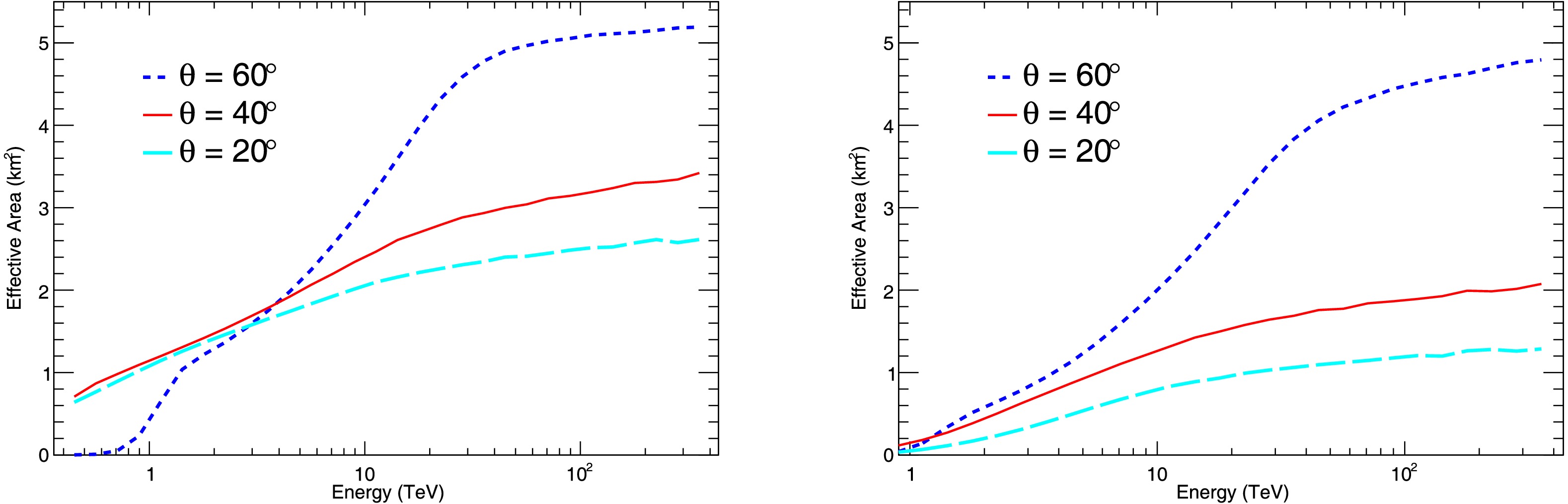
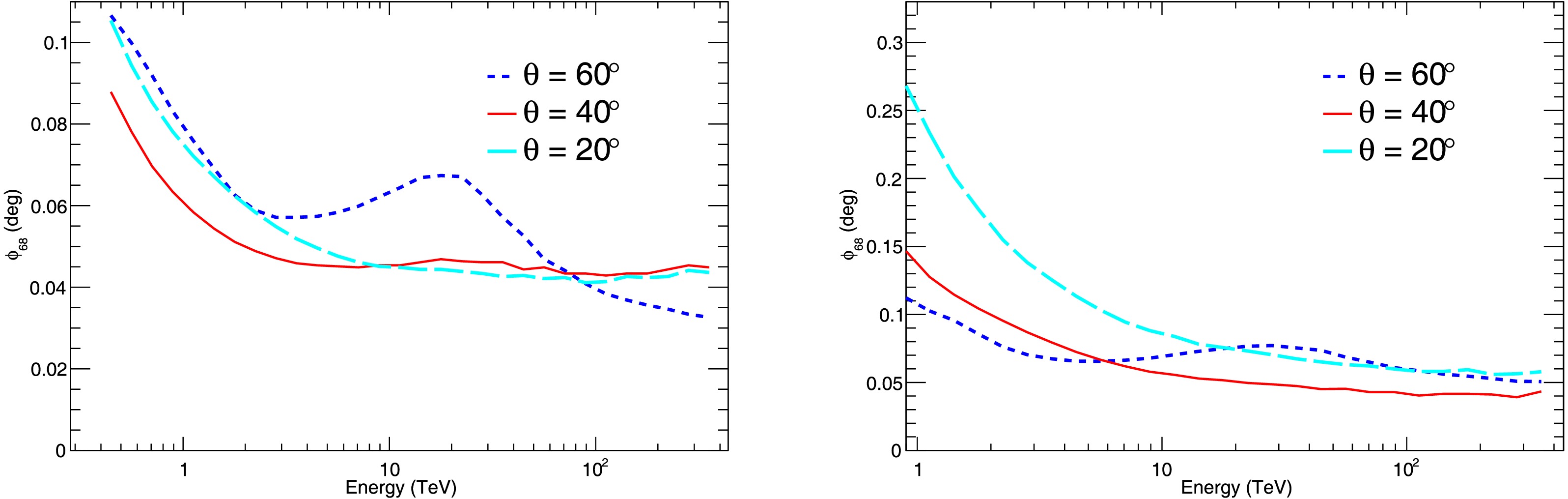
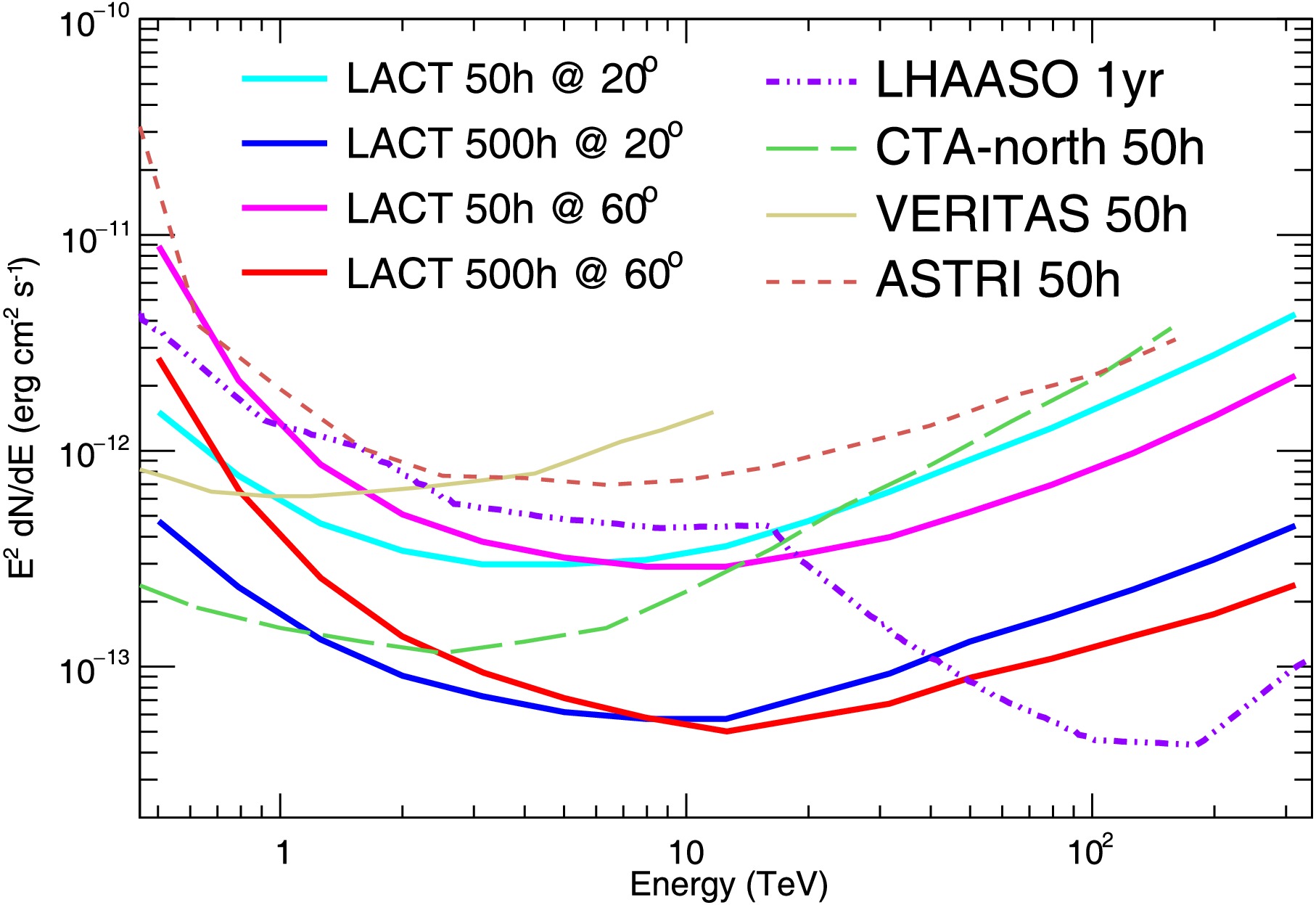
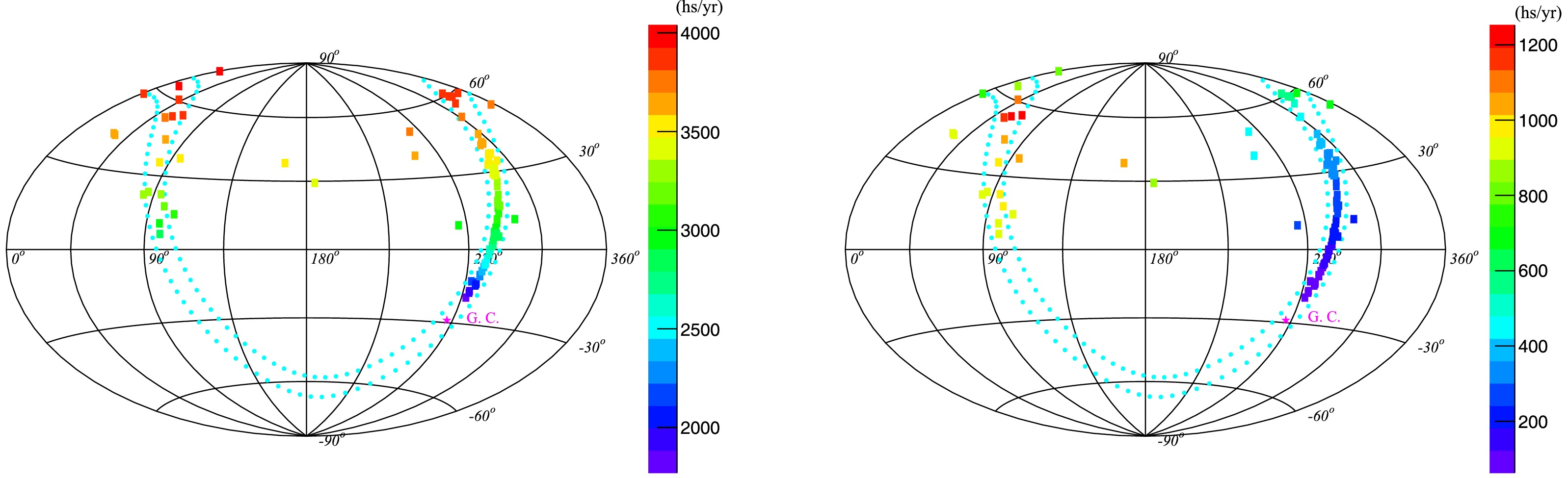
The Large Array of Imaging Atmospheric Cherenkov Telescopes (LACT) is a next-generation Cherenkov telescope array designed to study the morphology and energy spectra of ultra-high-energy gamma-ray sources in hybrid operation with the Large High Altitude Air Shower Observatory (LHAASO). With its excellent angular resolution, large effective area, and powerful gamma/hadron discrimination capabilities, LACT achieves outstanding sensitivity for observations of gamma-ray sources. In this paper, we present an optimized configuration for the LACT array, developed through comprehensive Monte Carlo simulations. Based on these simulations, we conducted on-site surveys at the LHAASO site and selected the most effective array layout. Detailed performance studies show that this optimized configuration delivers excellent sensitivity across various observational modes. Furthermore, we present a detailed outlook on LACT's potential observations of gamma-ray sources in the LHAASO catalog. By incorporating the measured energy spectra from LHAASO and accounting for LACT's detector response function at different zenith angles, we estimate the number of detectable events over a one-year observation period. This analysis provides a foundation for developing a preliminary observation strategy for LACT in the coming years.
The Large Array of Imaging Atmospheric Cherenkov Telescopes (LACT) is a next-generation Cherenkov telescope array designed to study the morphology and energy spectra of ultra-high-energy gamma-ray sources in hybrid operation with the Large High Altitude Air Shower Observatory (LHAASO). With its excellent angular resolution, large effective area, and powerful gamma/hadron discrimination capabilities, LACT achieves outstanding sensitivity for observations of gamma-ray sources. In this paper, we present an optimized configuration for the LACT array, developed through comprehensive Monte Carlo simulations. Based on these simulations, we conducted on-site surveys at the LHAASO site and selected the most effective array layout. Detailed performance studies show that this optimized configuration delivers excellent sensitivity across various observational modes. Furthermore, we present a detailed outlook on LACT's potential observations of gamma-ray sources in the LHAASO catalog. By incorporating the measured energy spectra from LHAASO and accounting for LACT's detector response function at different zenith angles, we estimate the number of detectable events over a one-year observation period. This analysis provides a foundation for developing a preliminary observation strategy for LACT in the coming years.
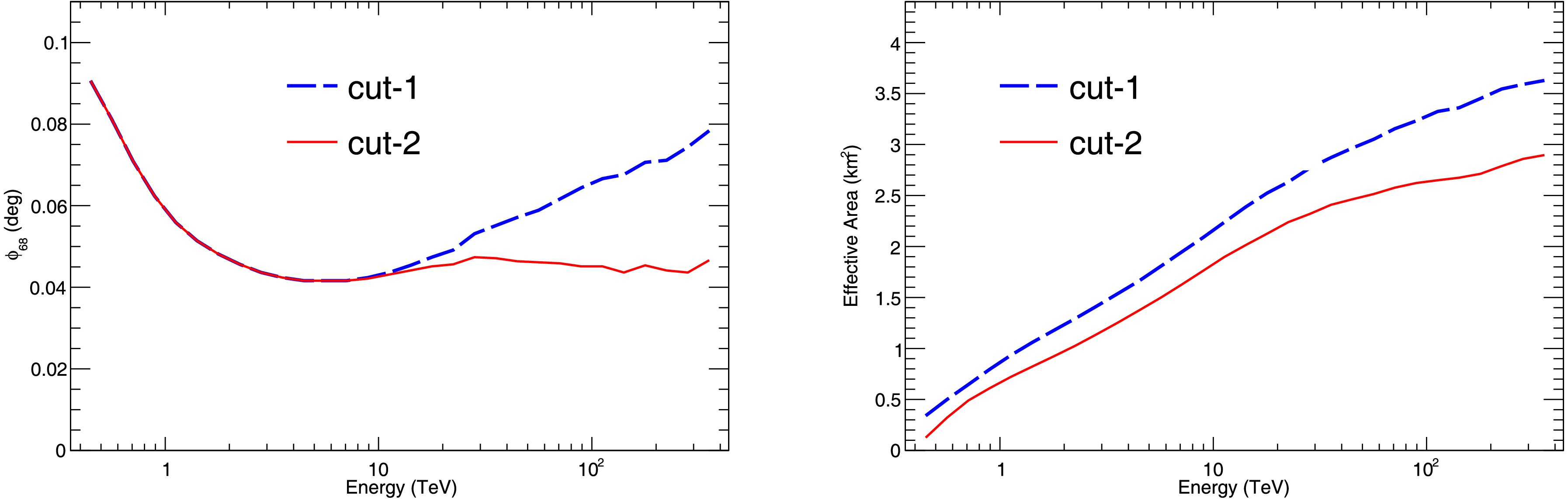
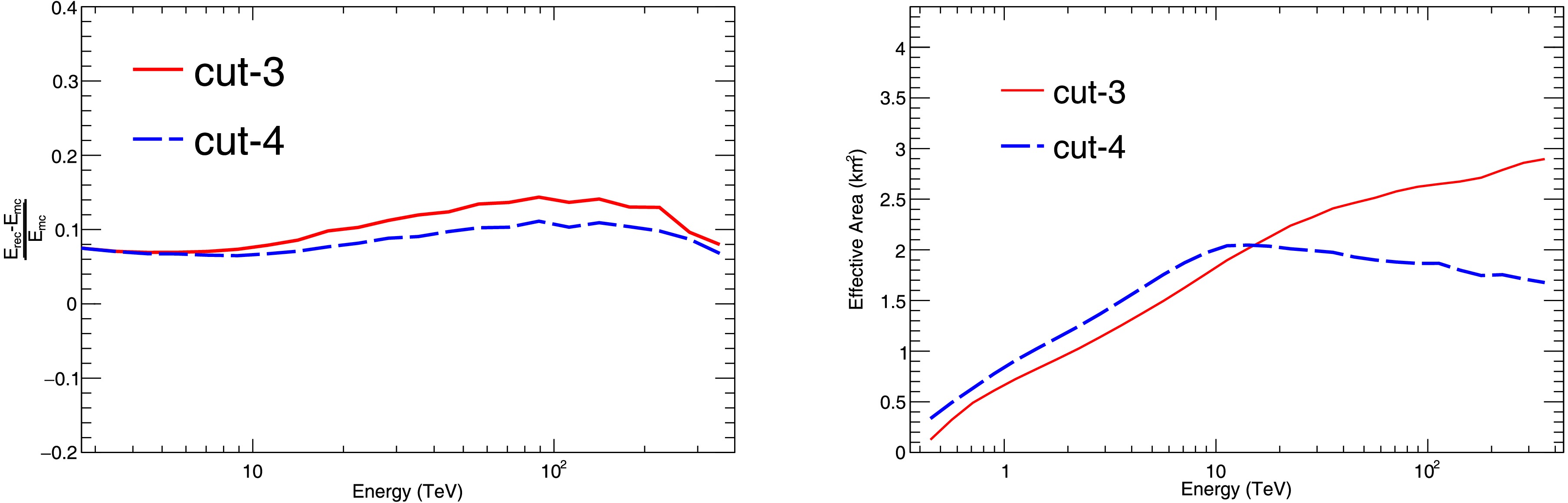
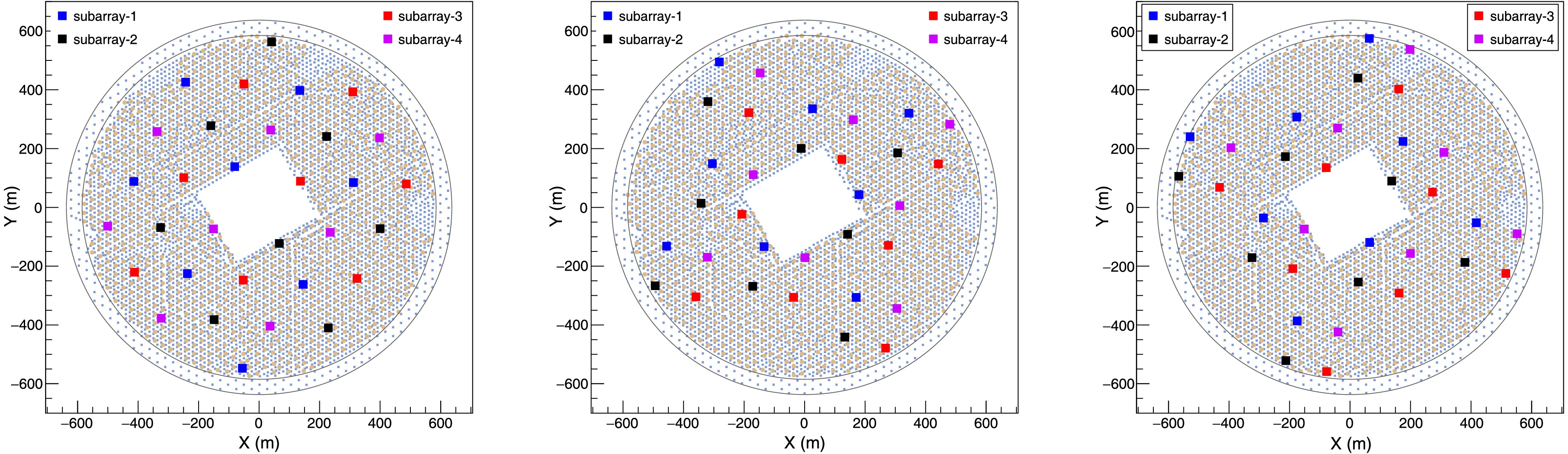
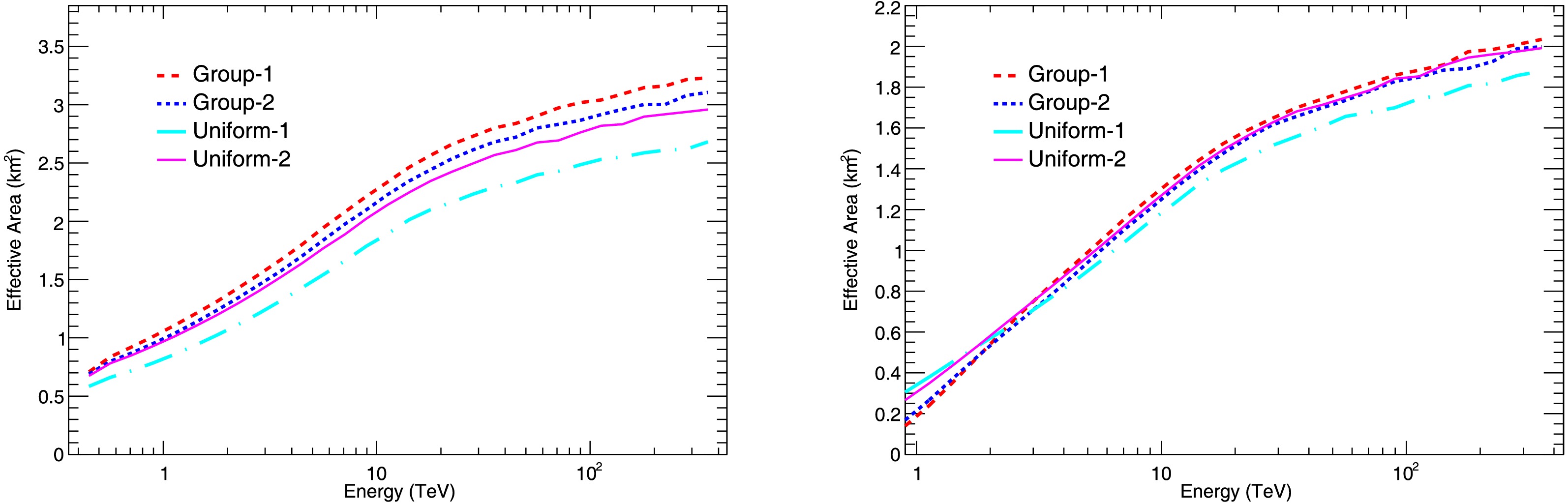
2026, 50(7): 075101. doi: 10.1088/1674-1137/ae5c84
Abstract:
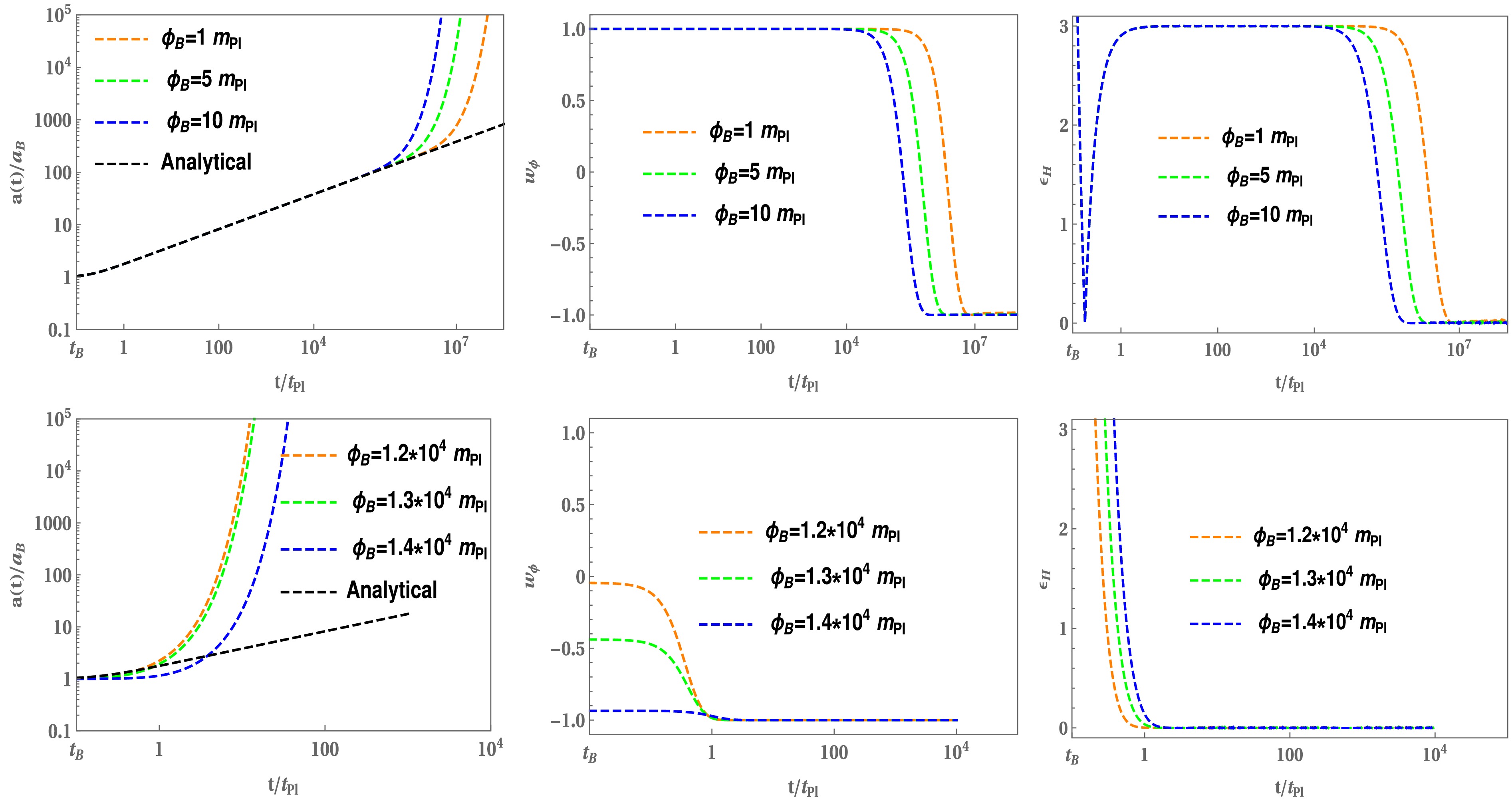
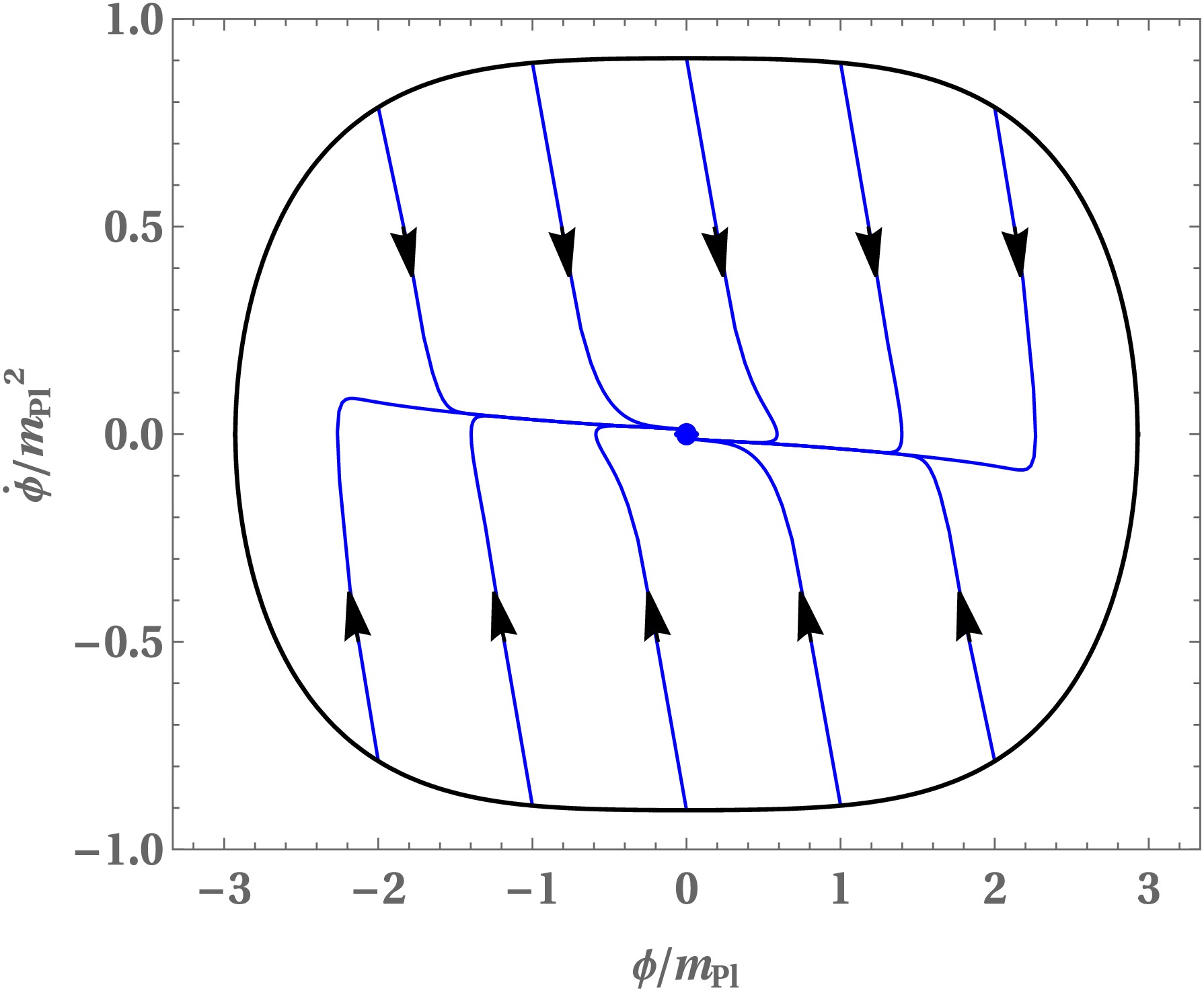
We study the pre-inflationary evolution of the universe within the framework of loop quantum cosmology for a scalar field with potential\begin{document}$ V(\phi)=M^{4}\frac{\phi^{2}}{M_{Pl}^{2}}\left(1+\alpha\frac{\phi^{2}}{M_{Pl}^{2}}\right) $\end{document} \begin{document}$ n_s $\end{document}
We study the pre-inflationary evolution of the universe within the framework of loop quantum cosmology for a scalar field with potential
2026, 50(7): 075102. doi: 10.1088/1674-1137/ae5ef2
Abstract:
The Kerr/CFT correspondence establishes a correspondence between extremal black holes in higher dimensions and a chiral conformal field theory (CFT) in their near-horizon limit. A generalization of this framework, known as the EVH/CFT correspondence, has been developed for four- and five-dimensional AdS black holes. It was further proposed in [1 ] that, for \begin{document}${\rm{AdS}}_{D=6,7}$\end{document} \begin{document}$(D-2)$\end{document} \begin{document}$(D-3)$\end{document} \begin{document}${\rm{AdS}}_{D=6,7}$\end{document}
The Kerr/CFT correspondence establishes a correspondence between extremal black holes in higher dimensions and a chiral conformal field theory (CFT) in their near-horizon limit. A generalization of this framework, known as the EVH/CFT correspondence, has been developed for four- and five-dimensional AdS black holes. It was further proposed in [
2026, 50(7): 075103. doi: 10.1088/1674-1137/ae5d29
Abstract:
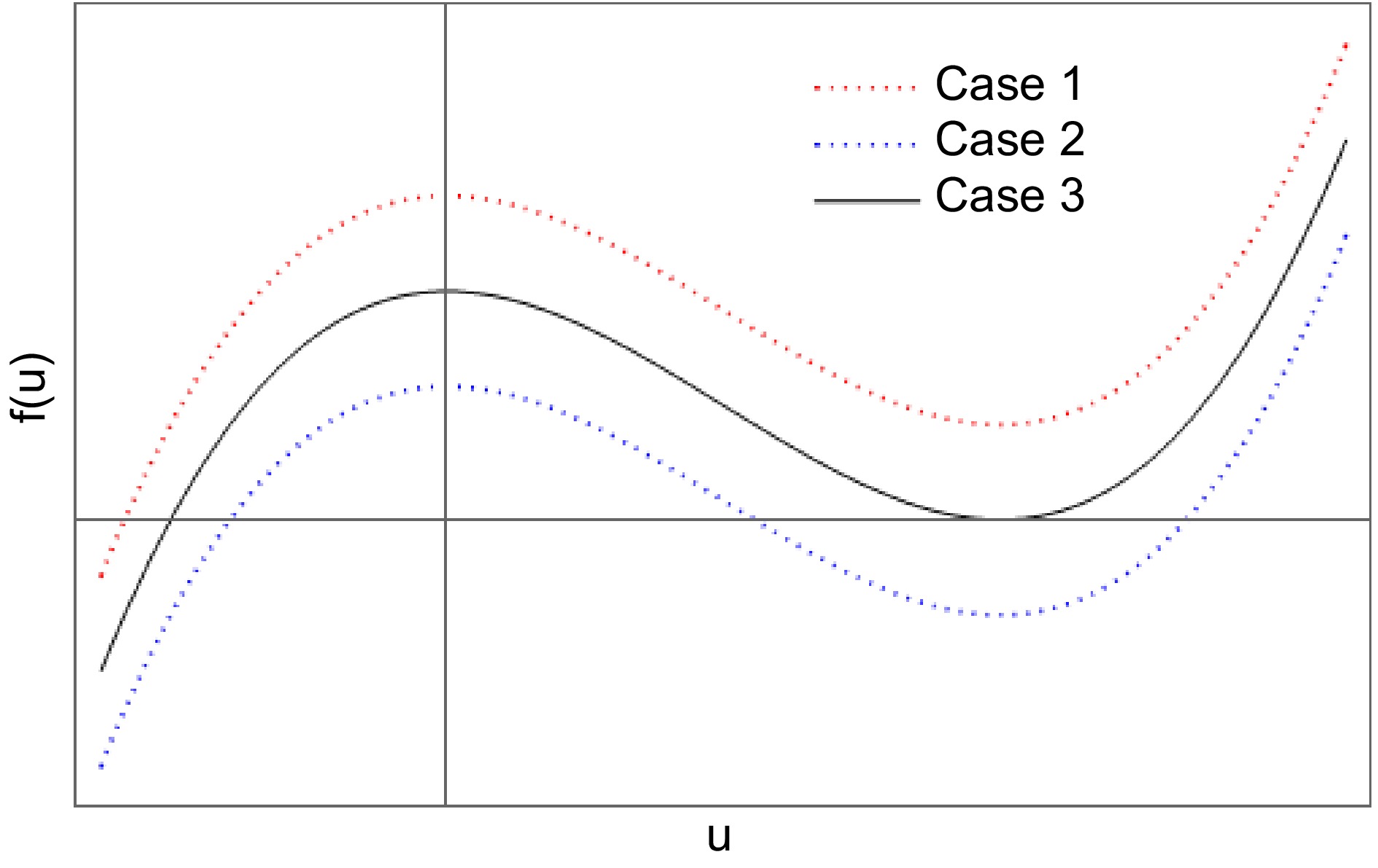
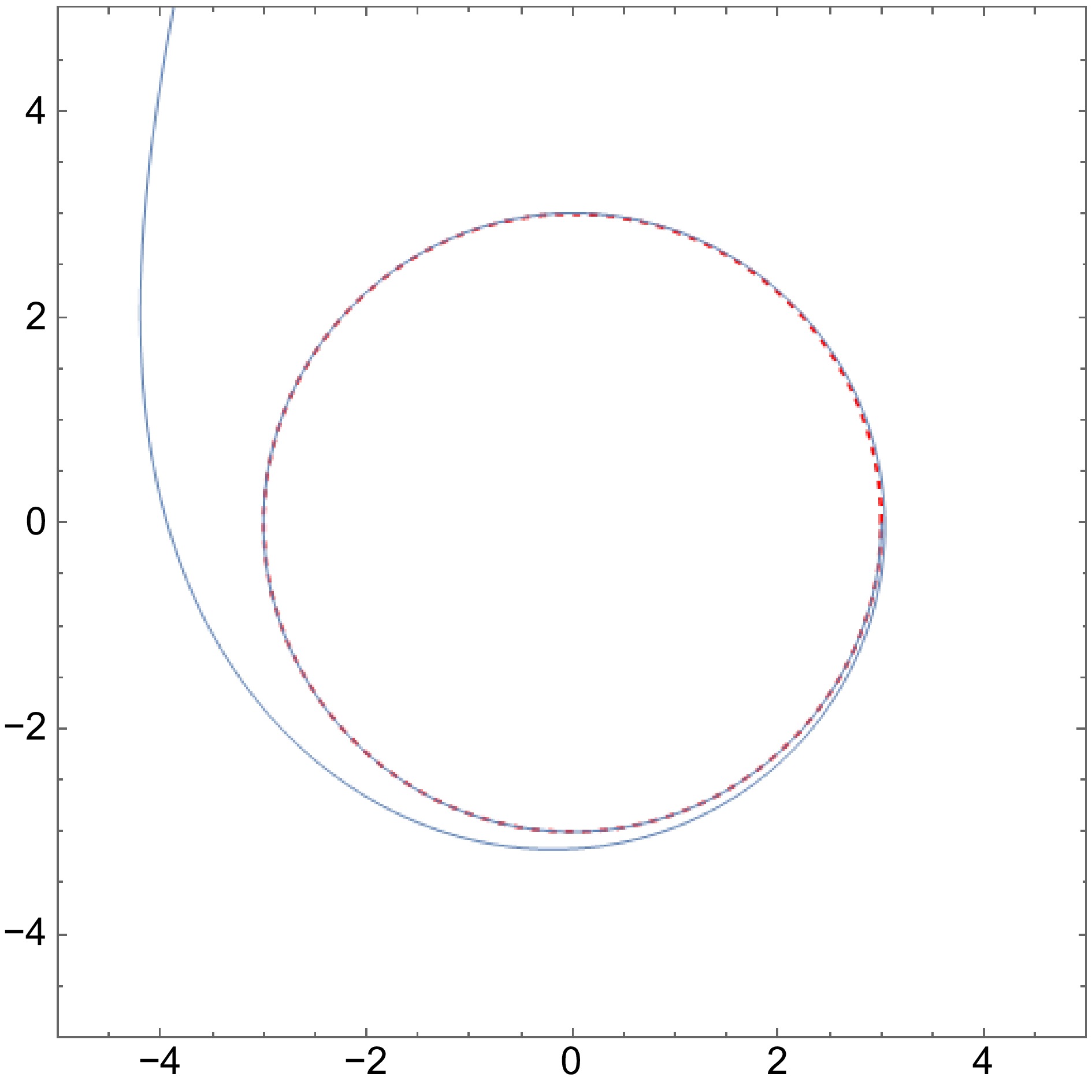
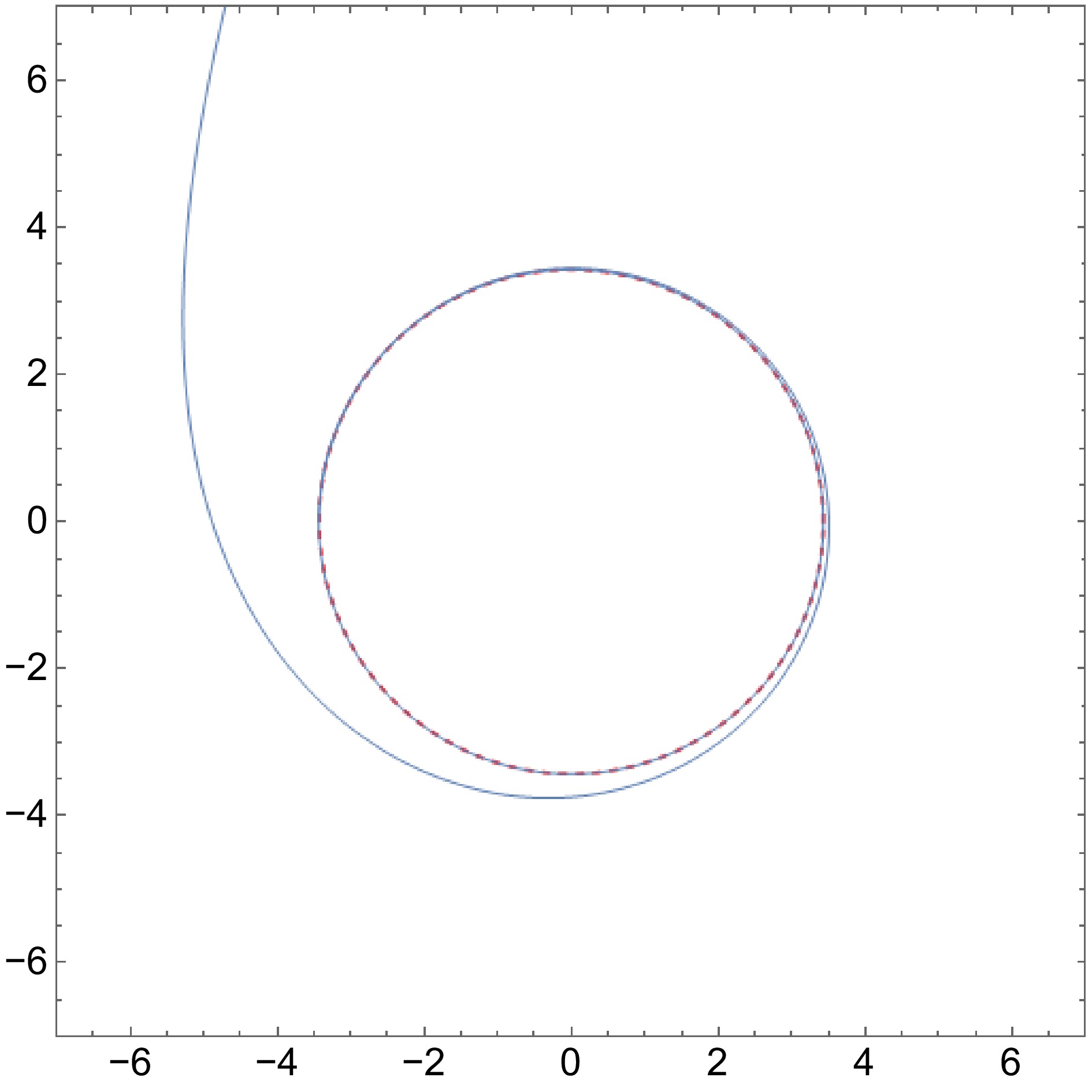
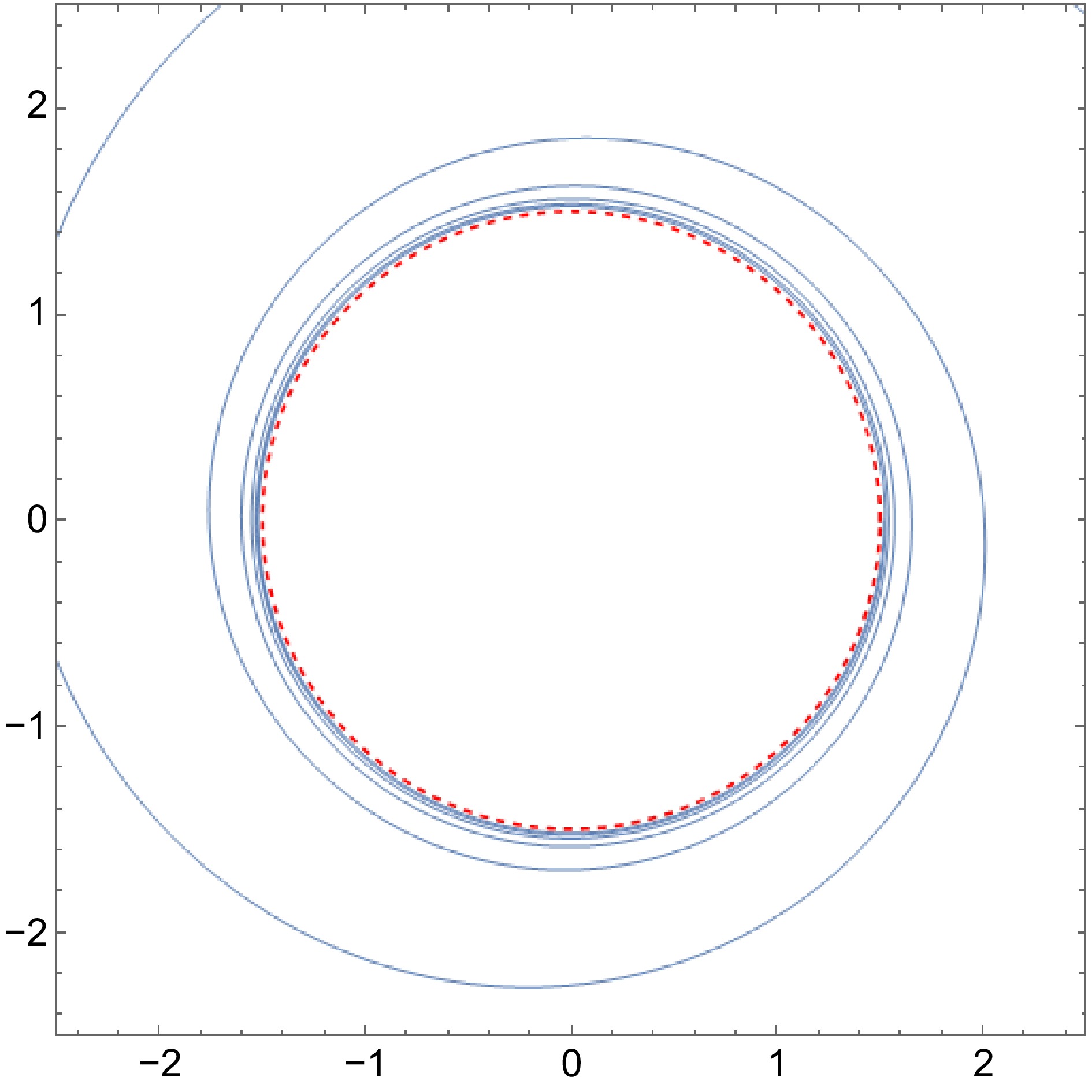
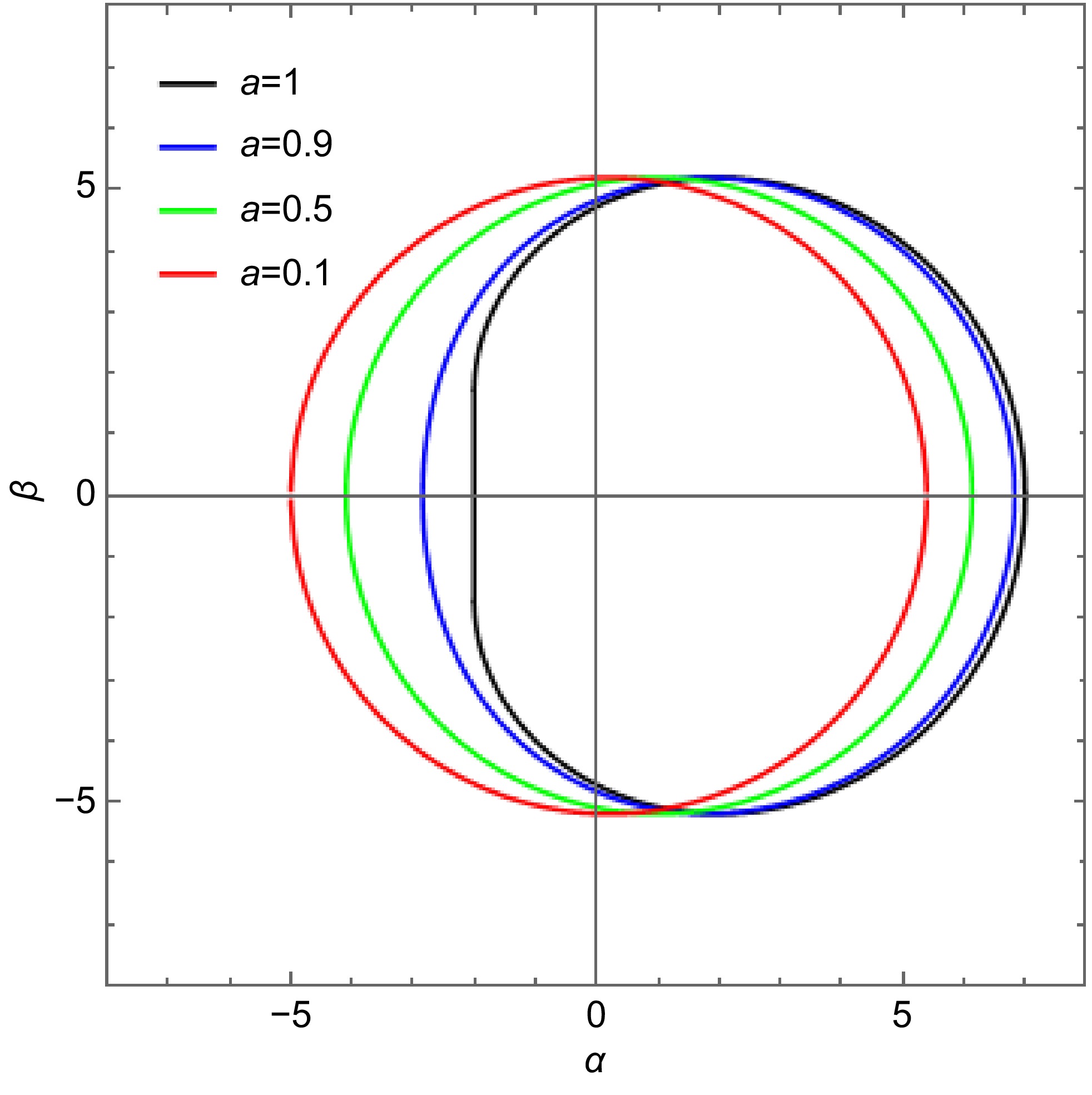
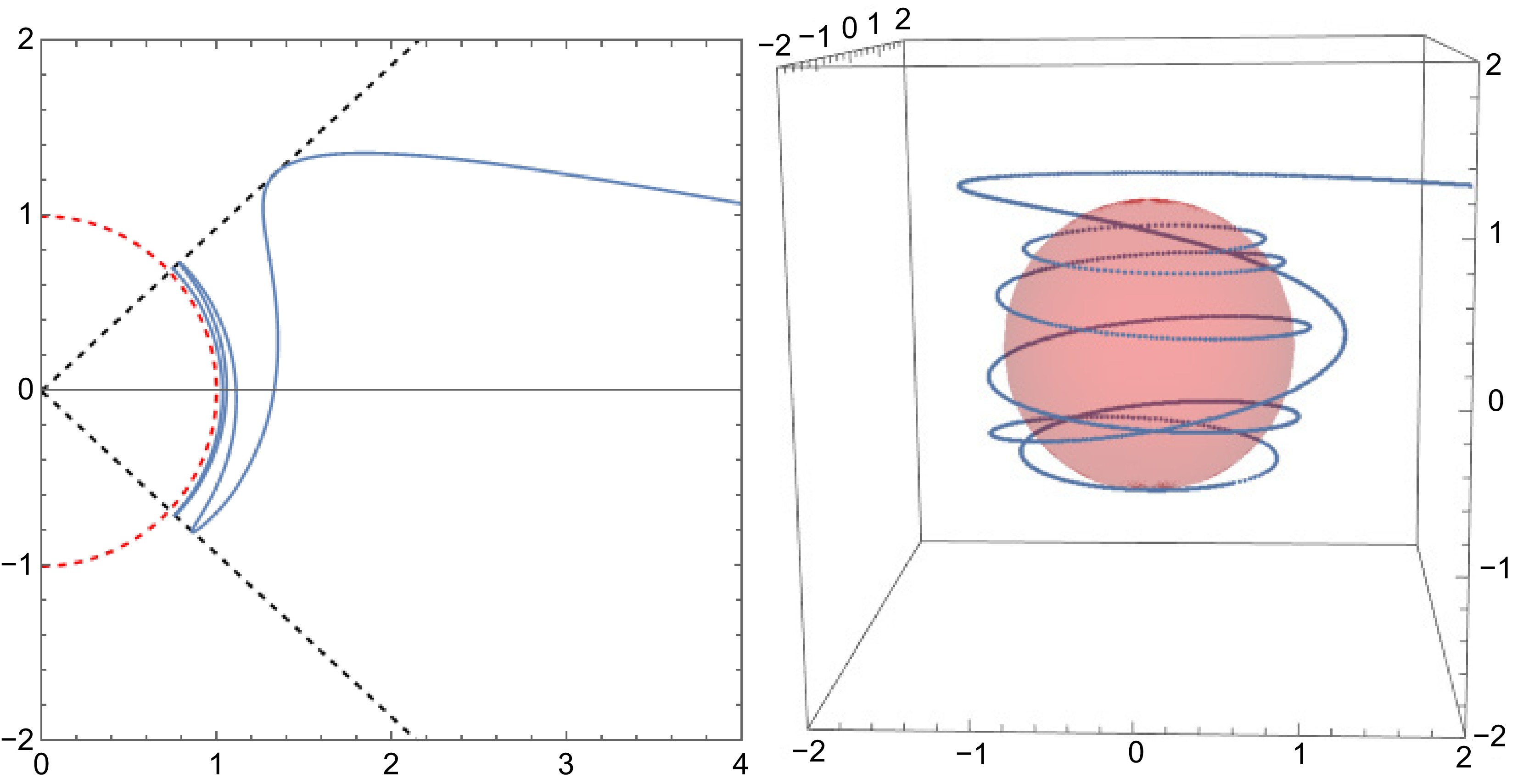
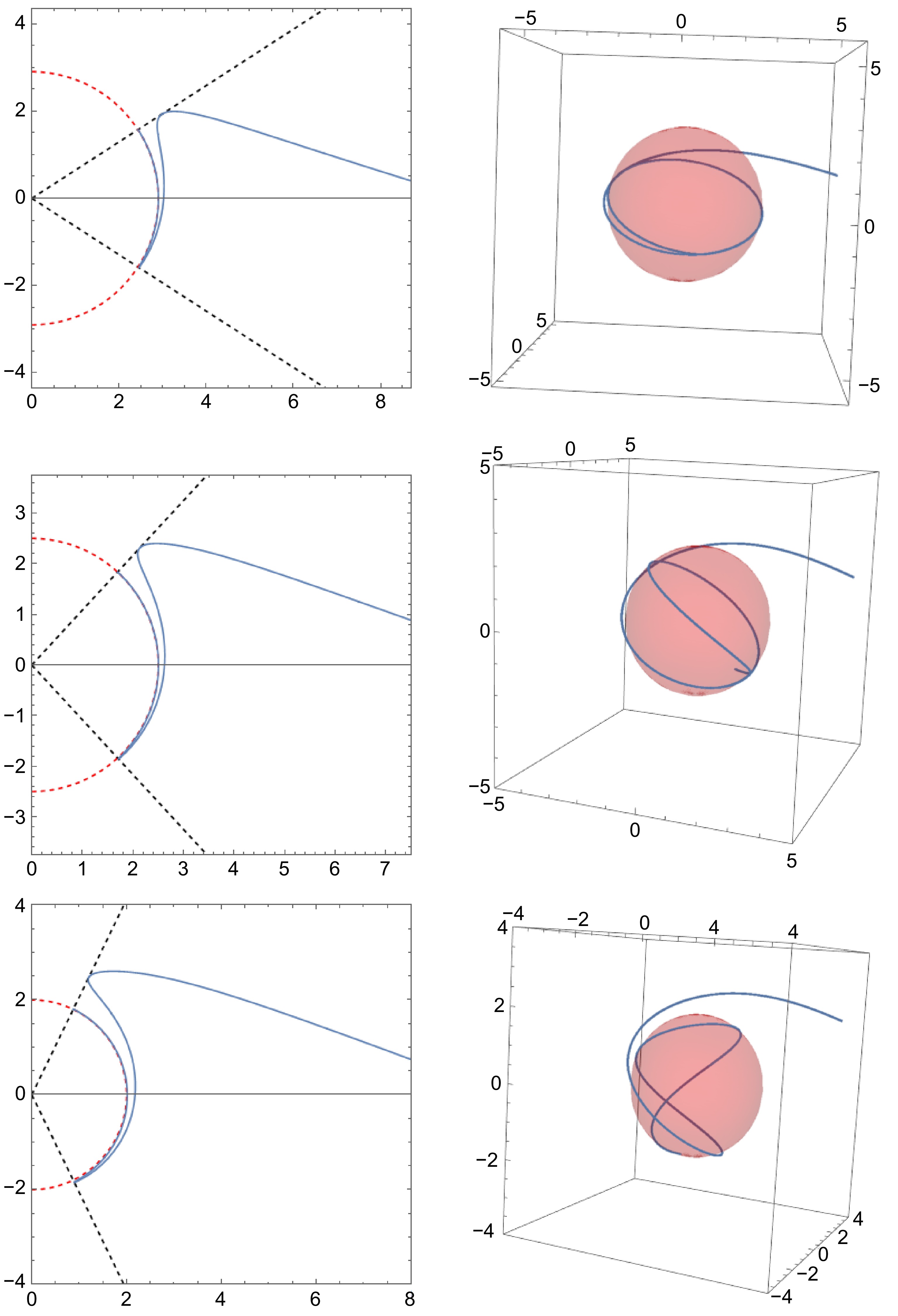
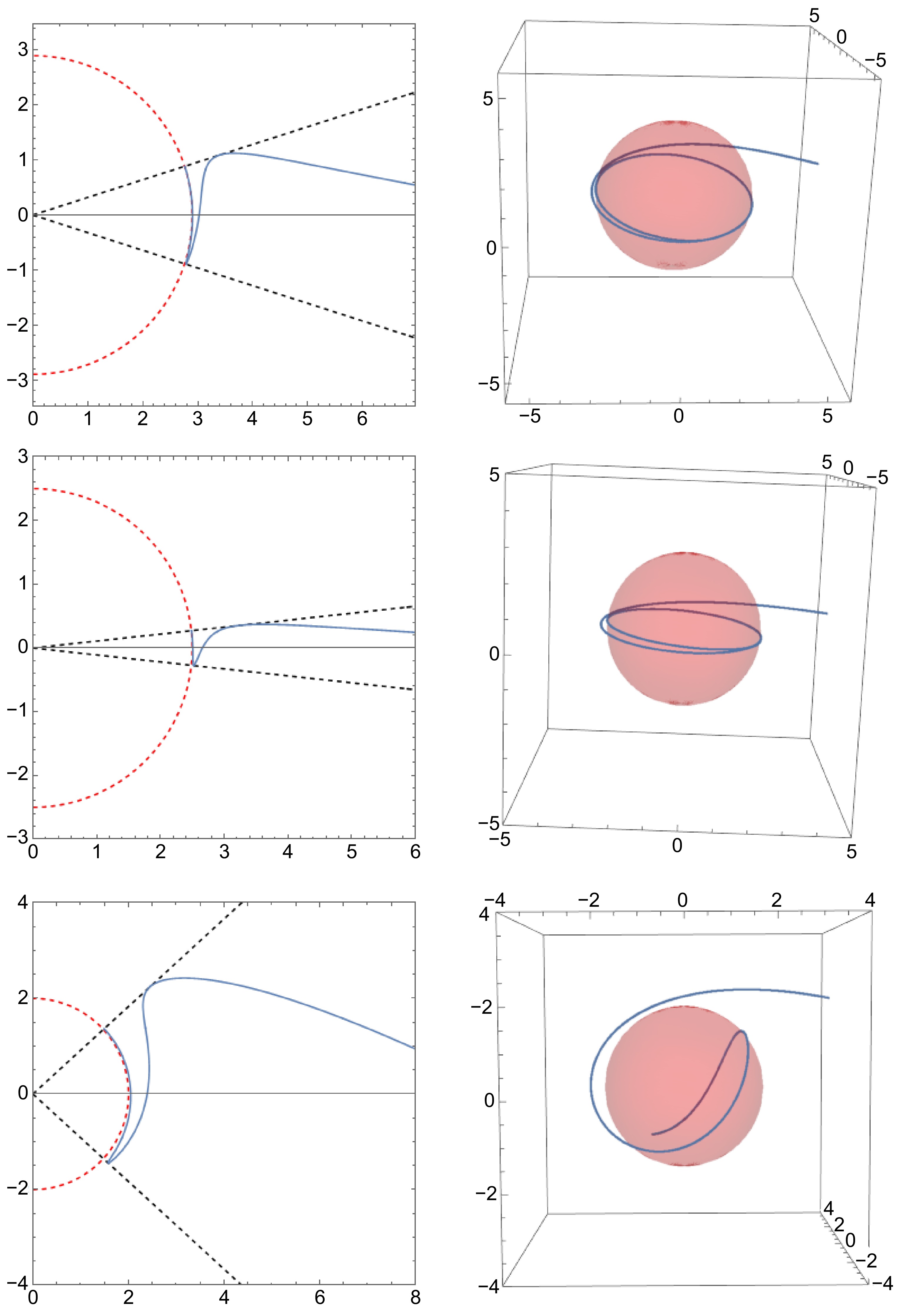
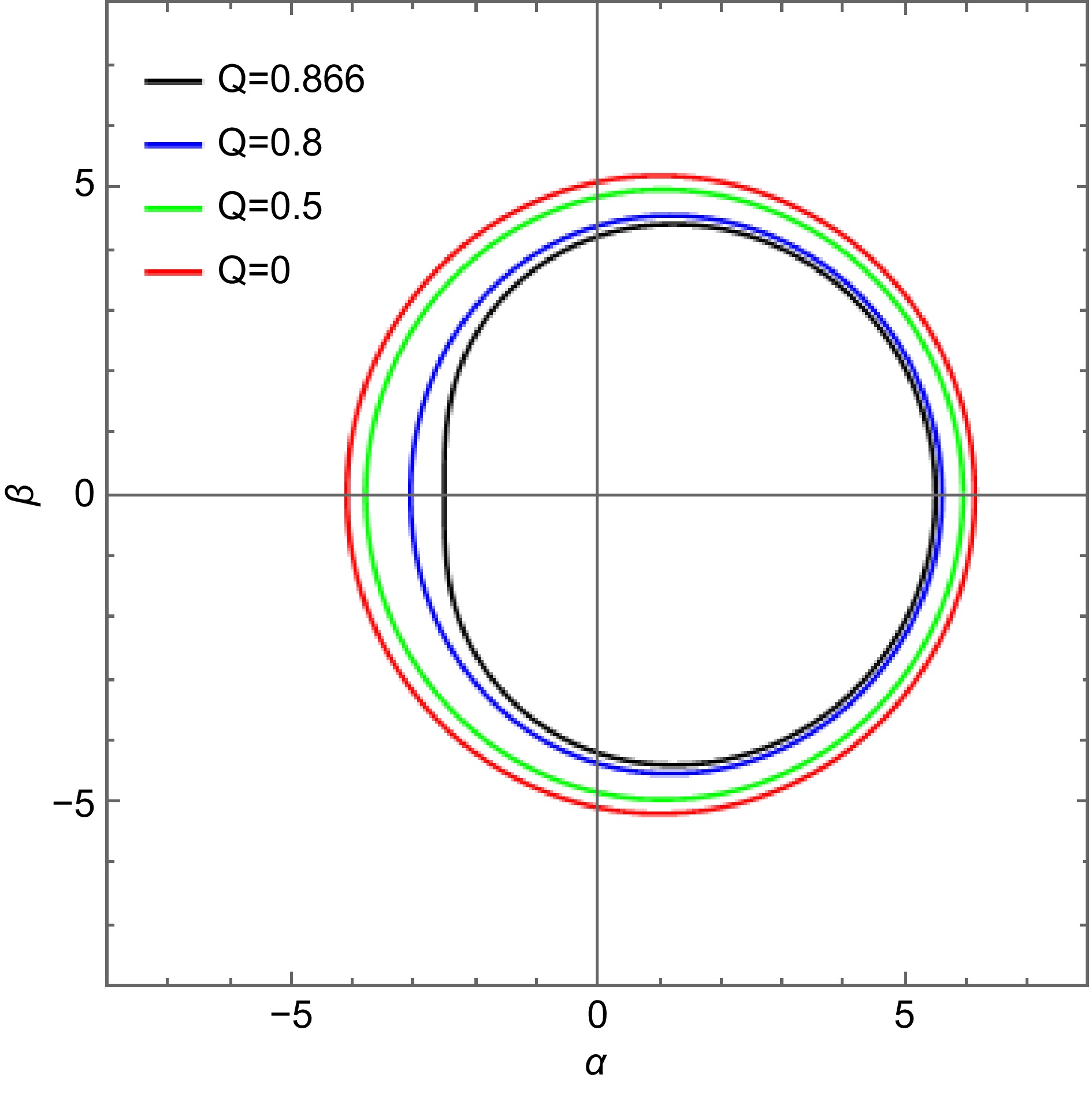
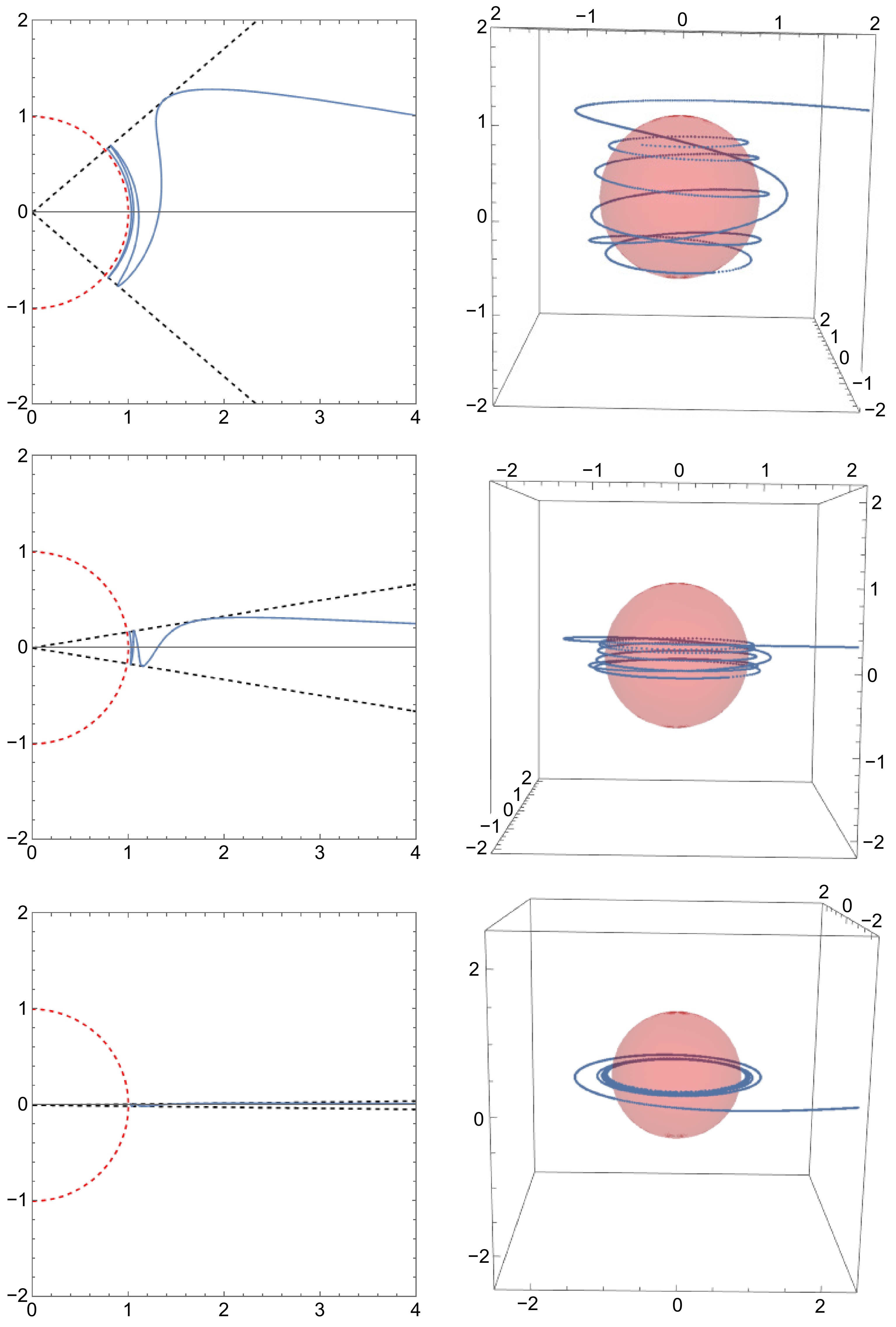
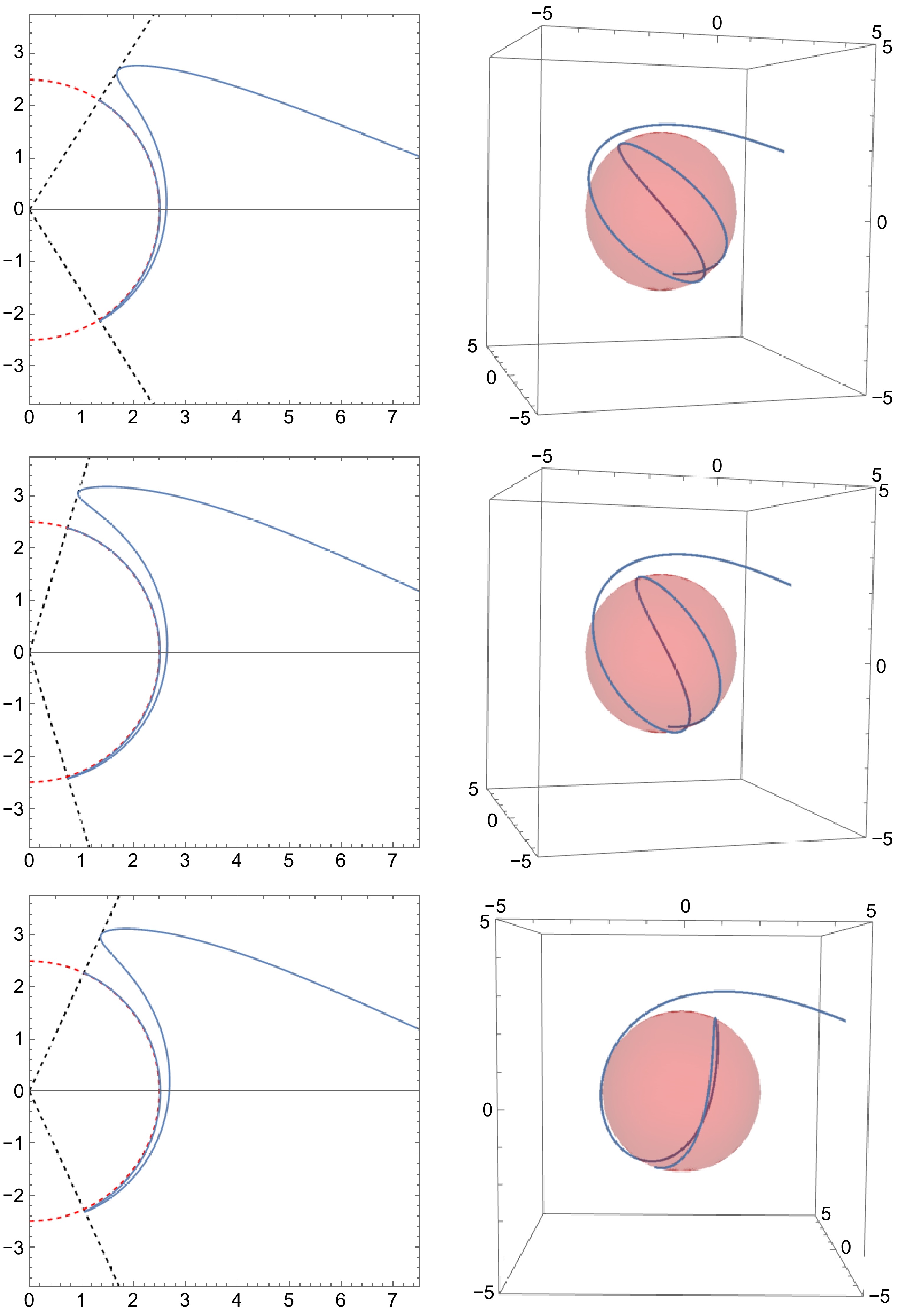
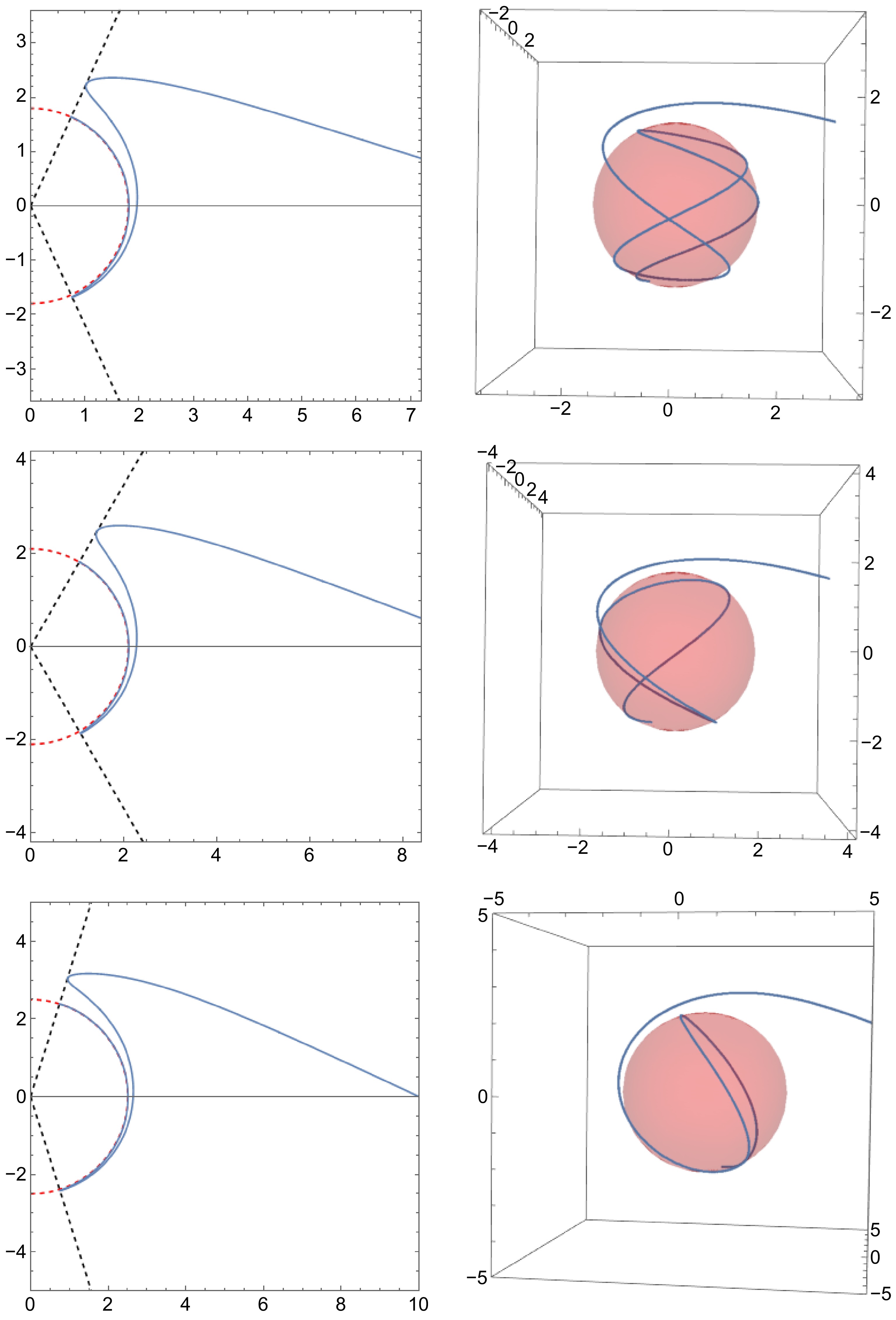
This paper systematically revisits the critical orbits of test particles in various black hole backgrounds, including Schwarzschild, Reissner–Nordströom, Kerr, and Kerr–Newman spacetimes. We identify the critical orbits directly from the root structure of the radial equation, and we provide explicit expressions that relate the relevant parameters—energy, angular momentum, and charge-to-mass ratio—to the critical radius, as well as explicit formulas for the critical orbits in each case. Special attention is given to the relationships among the photon spheres, black hole shadows, and critical null geodesics. We also present extensive numerical results.
This paper systematically revisits the critical orbits of test particles in various black hole backgrounds, including Schwarzschild, Reissner–Nordströom, Kerr, and Kerr–Newman spacetimes. We identify the critical orbits directly from the root structure of the radial equation, and we provide explicit expressions that relate the relevant parameters—energy, angular momentum, and charge-to-mass ratio—to the critical radius, as well as explicit formulas for the critical orbits in each case. Special attention is given to the relationships among the photon spheres, black hole shadows, and critical null geodesics. We also present extensive numerical results.
2026, 50(7): 075104. doi: 10.1088/1674-1137/ae6630
Abstract:
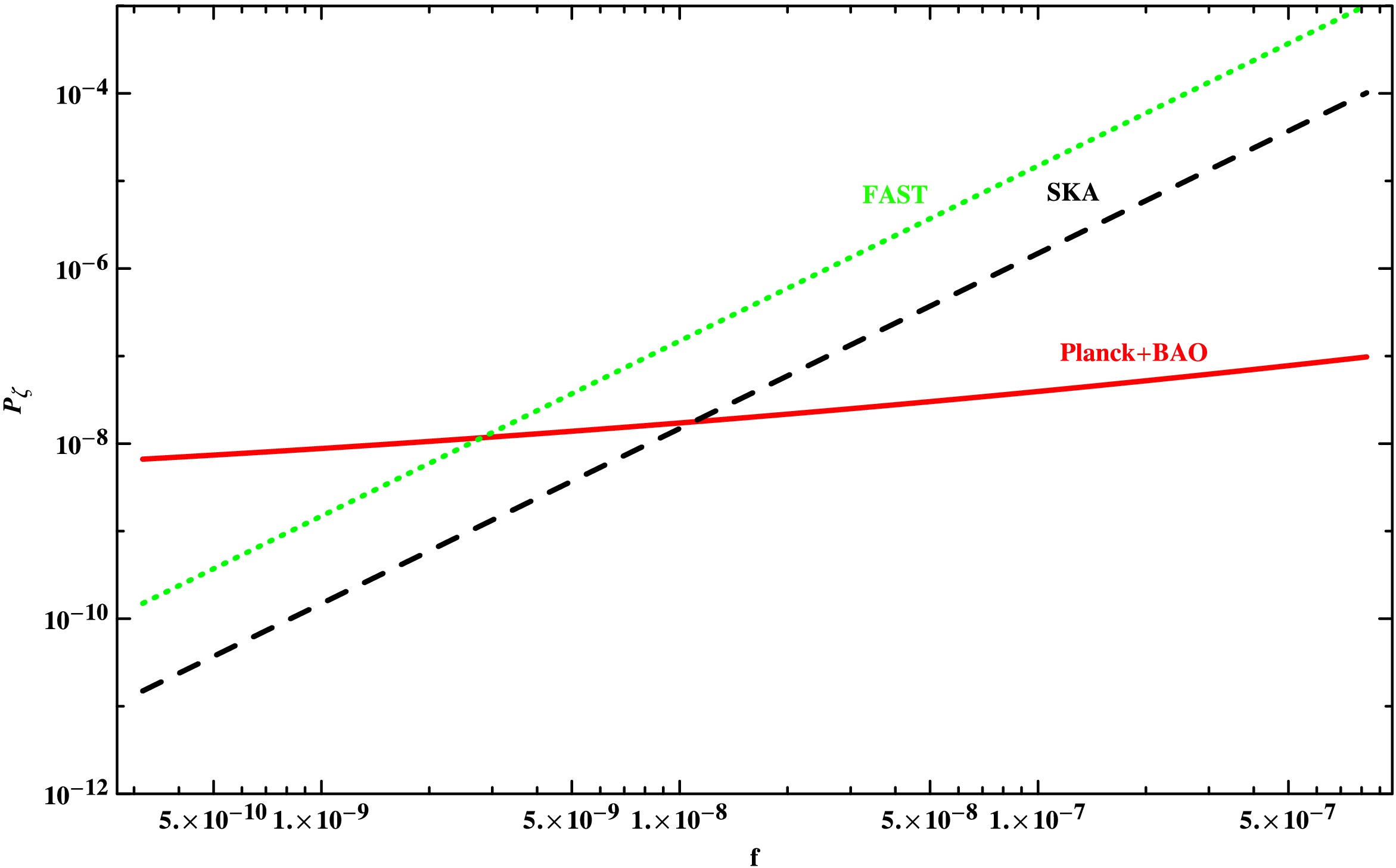
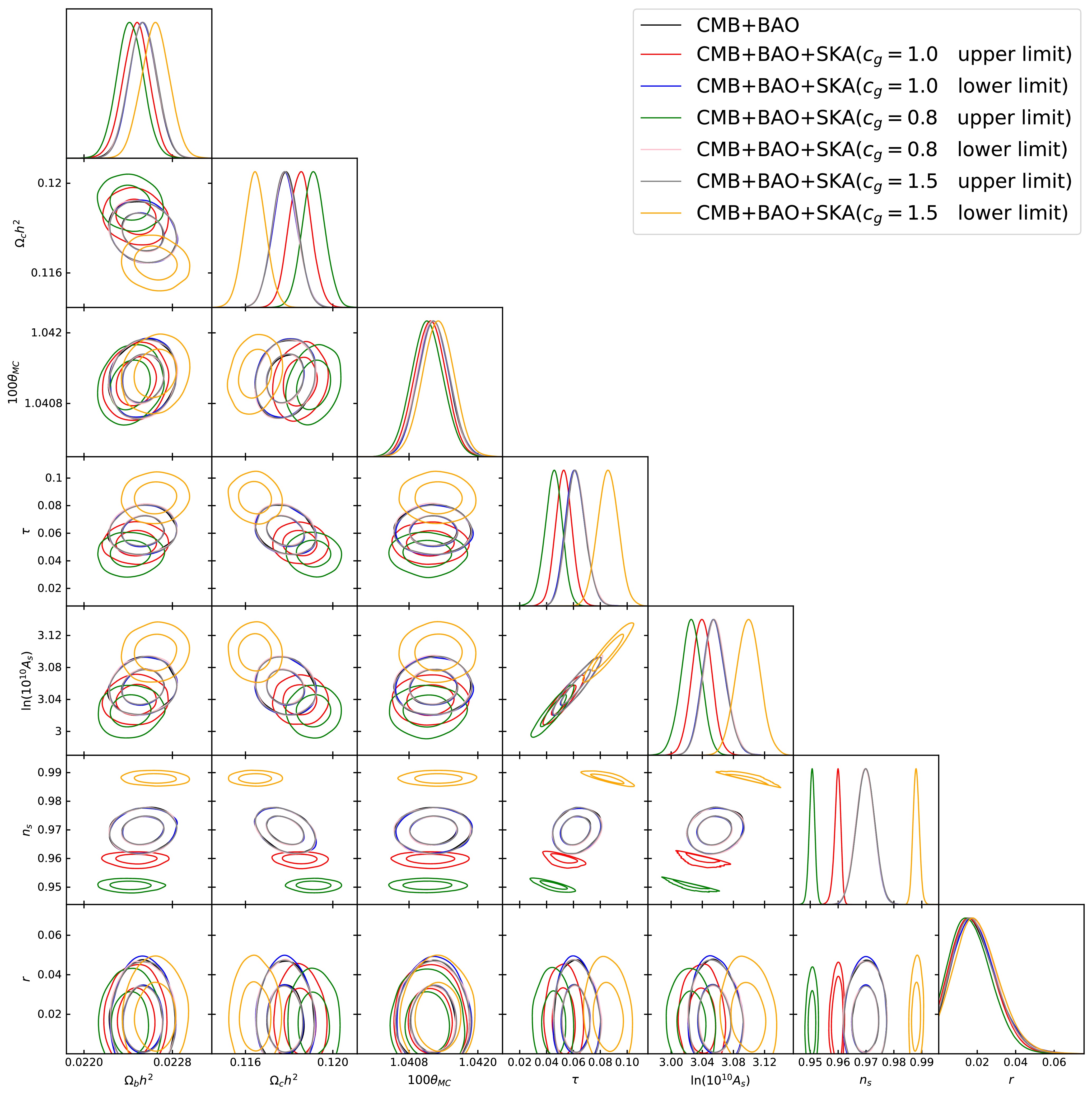
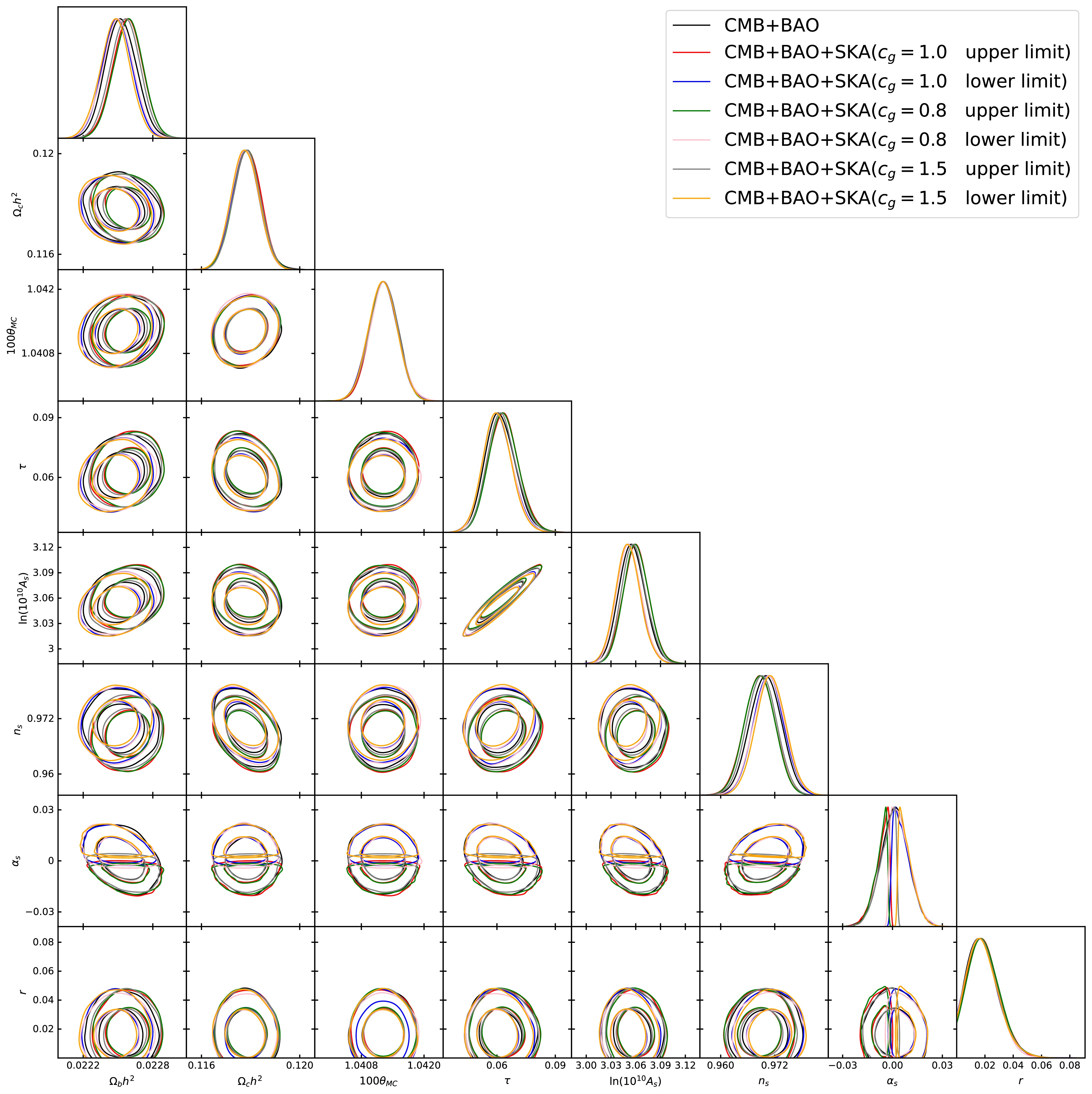
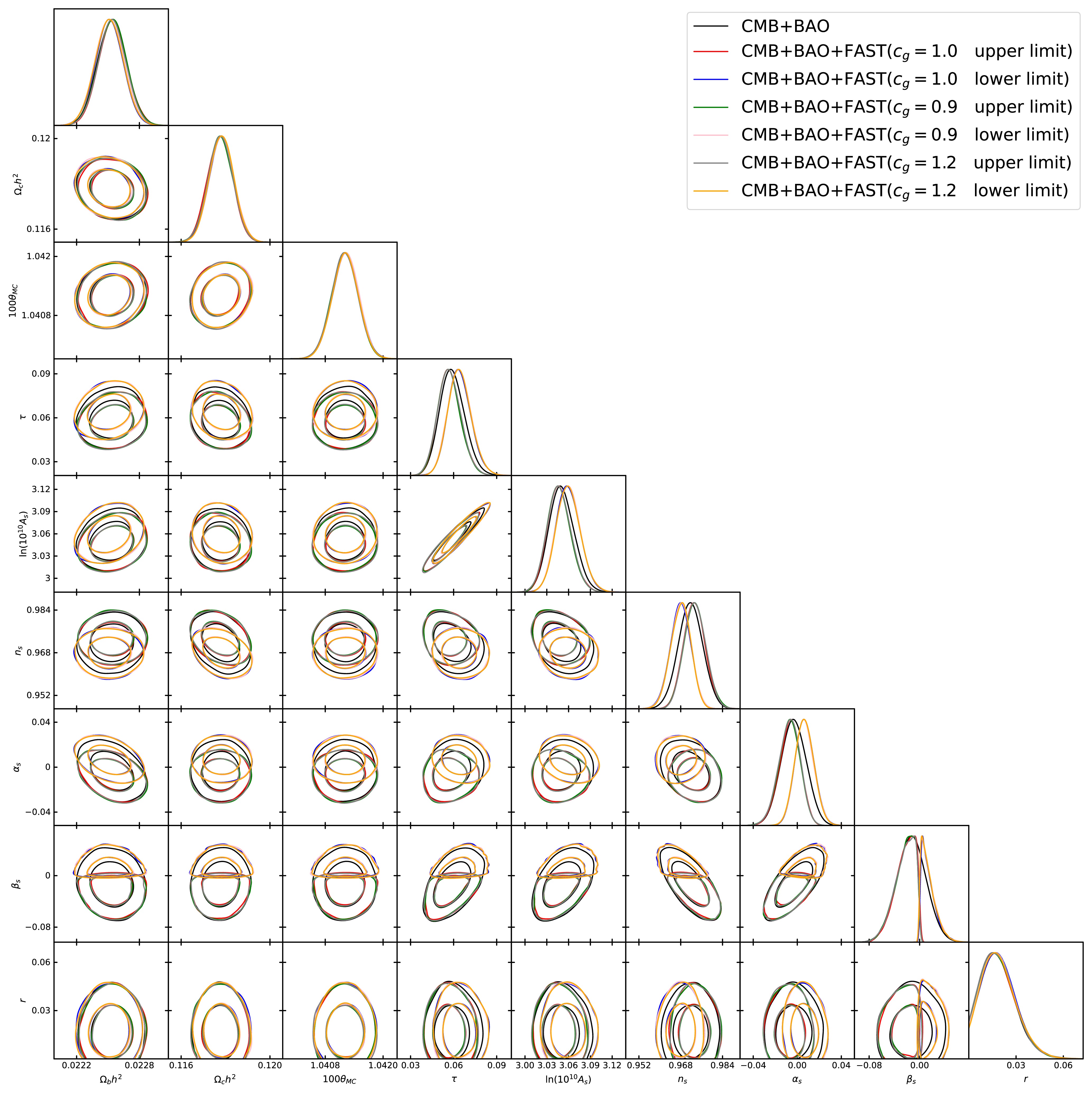
Gravitational-wave astronomy offers a promising opportunity to directly observe scalar-induced gravitational waves originating from the early universe. Experiments—including ground-based interferometers such as LIGO and Virgo, and pulsar timing arrays (PTAs) based on facilities such as FAST and SKA—are poised to significantly enhance sensitivity to these signals. In this paper, we combine Cosmic Microwave Background (CMB) and Baryon Acoustic Oscillation (BAO) datasets with upper or lower limits on the stochastic gravitational-wave background provided by FAST or SKA to constrain scalar-induced gravitational waves. To provide a comprehensive forecast, we consider two scenarios at a given frequency: one in which FAST or SKA does not detect scalar-induced gravitational waves, thereby setting an upper limit on the fractional energy density; and another in which these waves are detected, thus establishing a lower limit. In the ΛCDM+r model, the scalar spectral index of the power-law power spectrum is constrained to\begin{document}$ n_s=0.9598^{+0.0013}_{-0.0009} $\end{document} \begin{document}$ n_s = 0.9697\pm{0.0033} $\end{document} \begin{document}$ n_s $\end{document} \begin{document}$ \alpha_s $\end{document} \begin{document}$ \alpha_s $\end{document} \begin{document}$ \beta_s $\end{document} \begin{document}$ \alpha_s $\end{document} \begin{document}$ \beta_s $\end{document}
Gravitational-wave astronomy offers a promising opportunity to directly observe scalar-induced gravitational waves originating from the early universe. Experiments—including ground-based interferometers such as LIGO and Virgo, and pulsar timing arrays (PTAs) based on facilities such as FAST and SKA—are poised to significantly enhance sensitivity to these signals. In this paper, we combine Cosmic Microwave Background (CMB) and Baryon Acoustic Oscillation (BAO) datasets with upper or lower limits on the stochastic gravitational-wave background provided by FAST or SKA to constrain scalar-induced gravitational waves. To provide a comprehensive forecast, we consider two scenarios at a given frequency: one in which FAST or SKA does not detect scalar-induced gravitational waves, thereby setting an upper limit on the fractional energy density; and another in which these waves are detected, thus establishing a lower limit. In the ΛCDM+r model, the scalar spectral index of the power-law power spectrum is constrained to
2026, 50(7): 075105. doi: 10.1088/1674-1137/ae5ef3
Abstract:
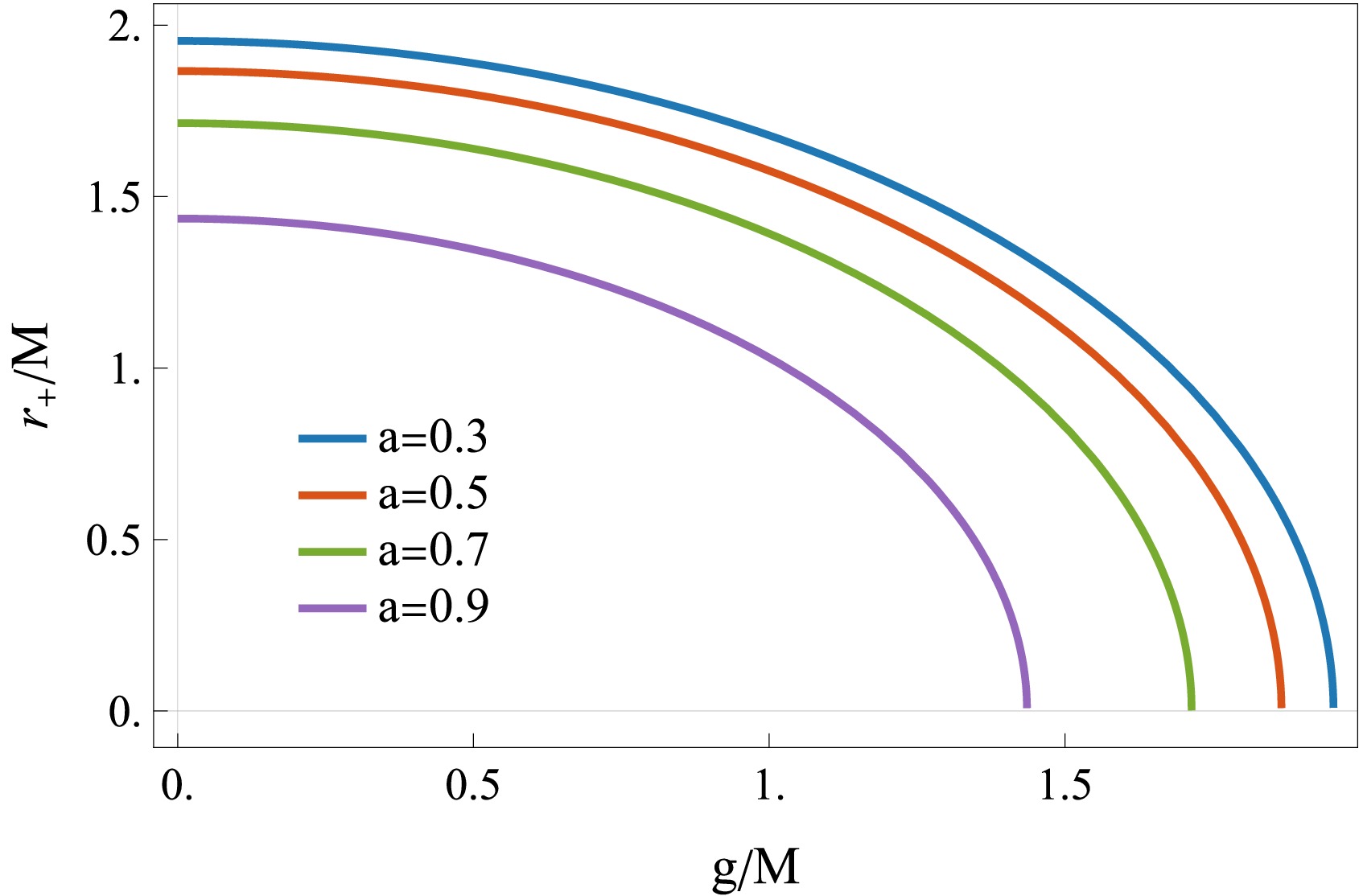
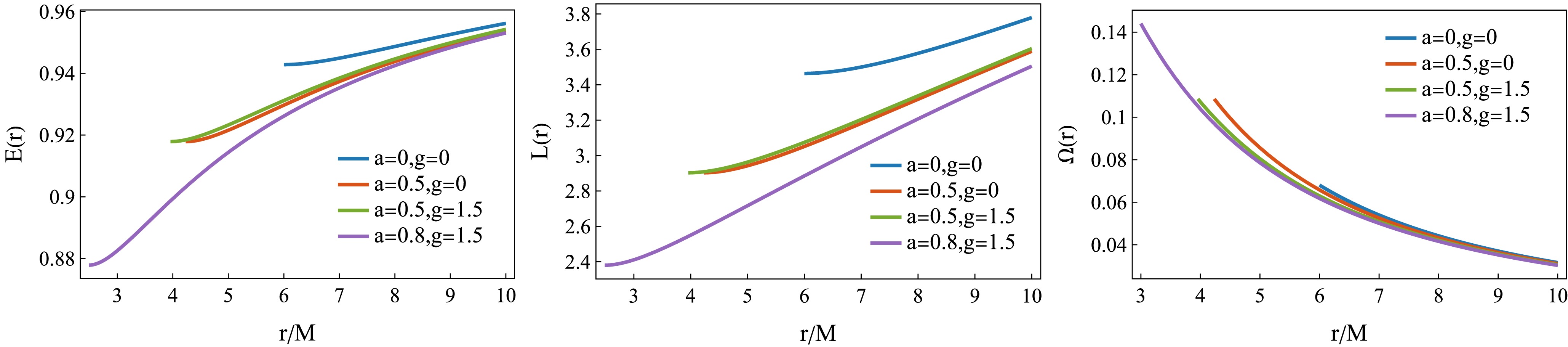
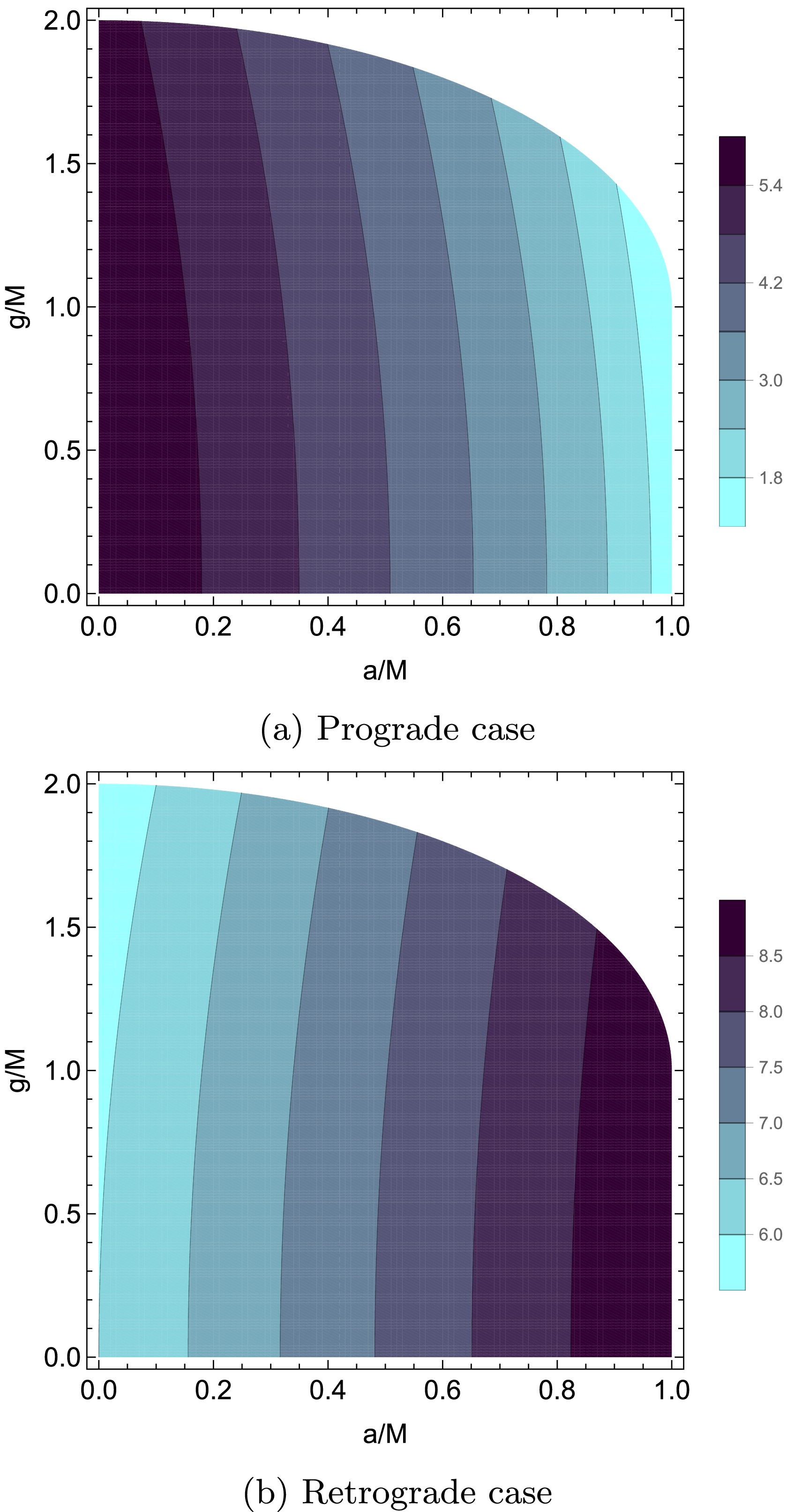
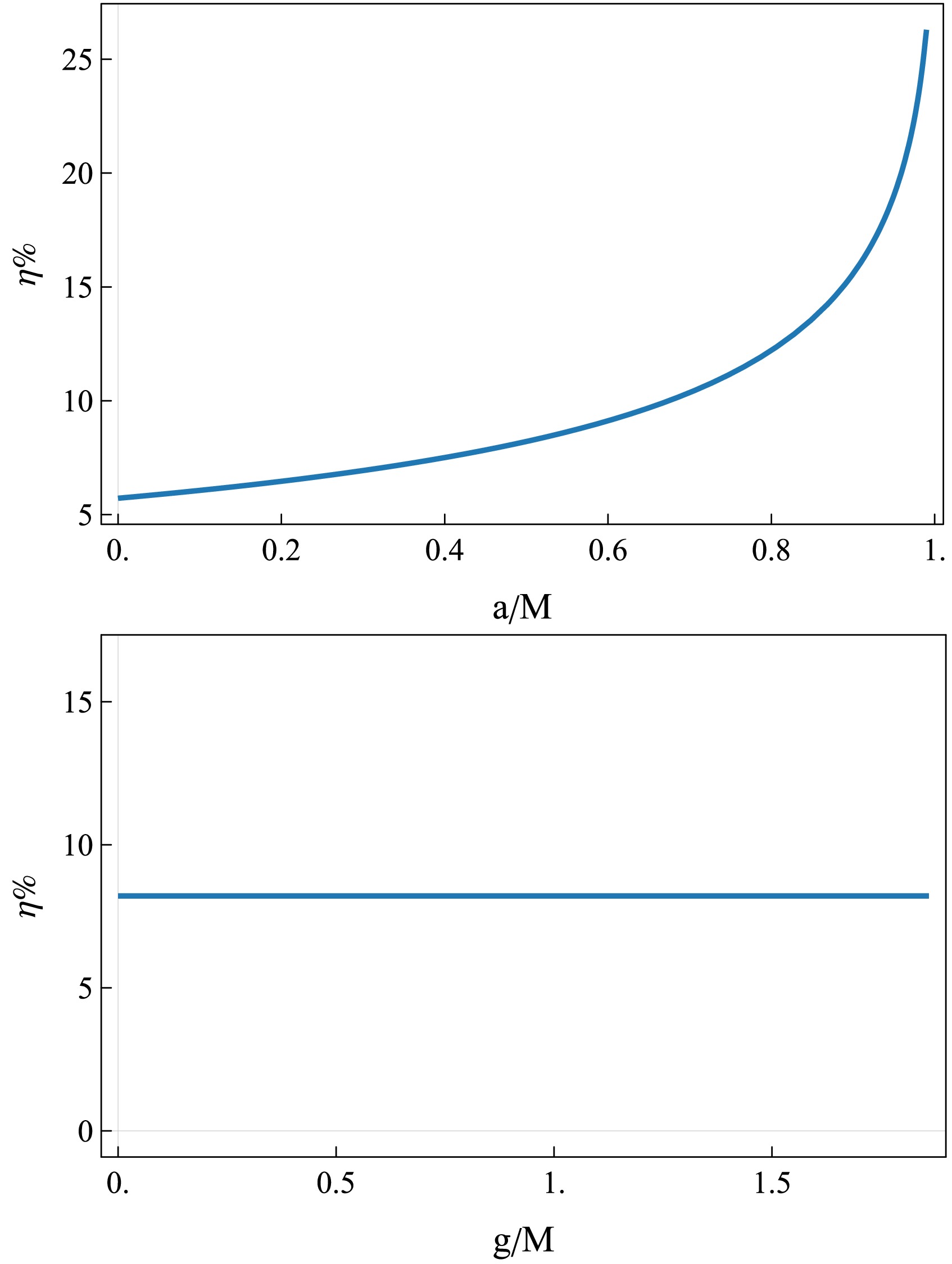
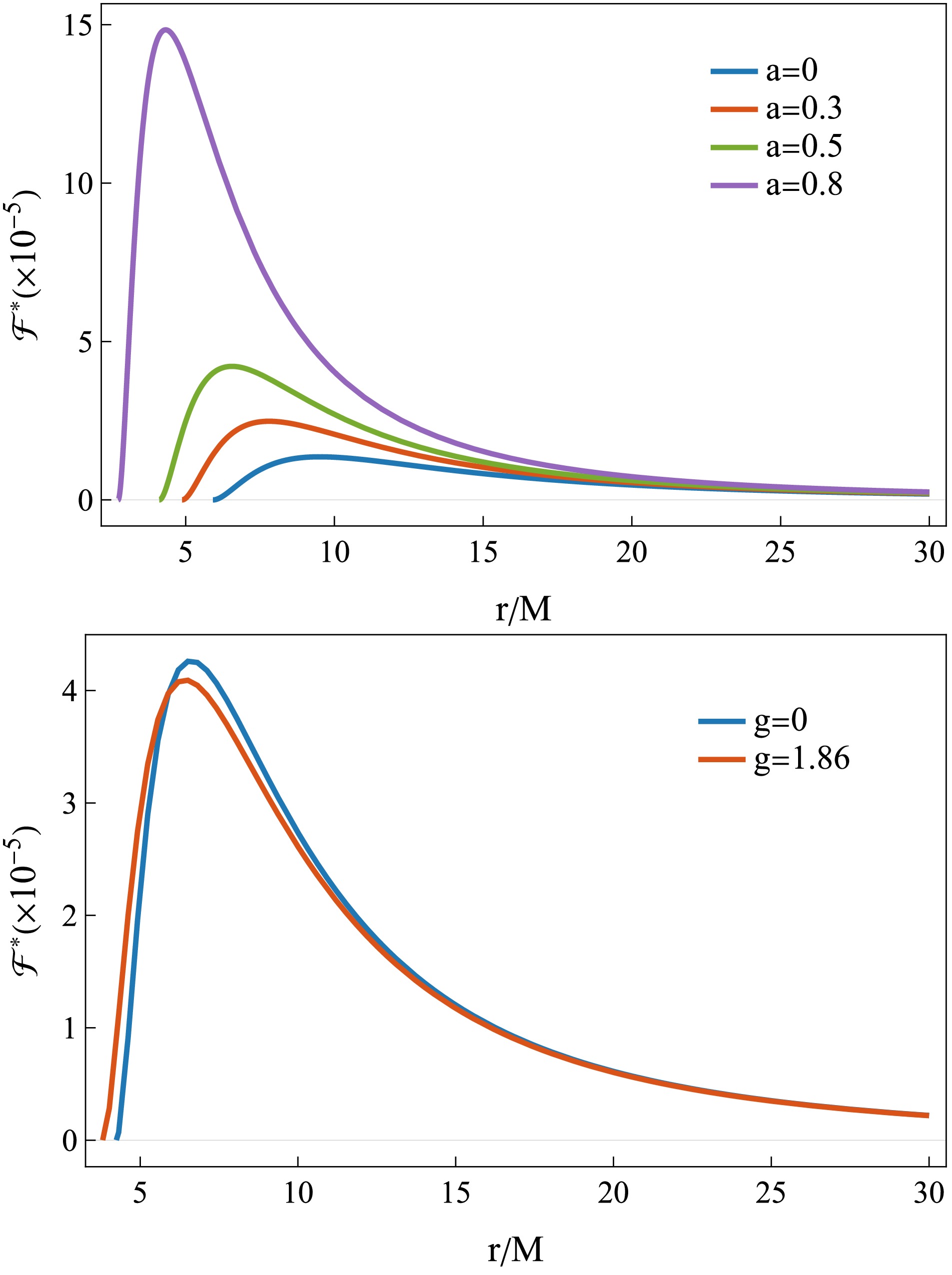
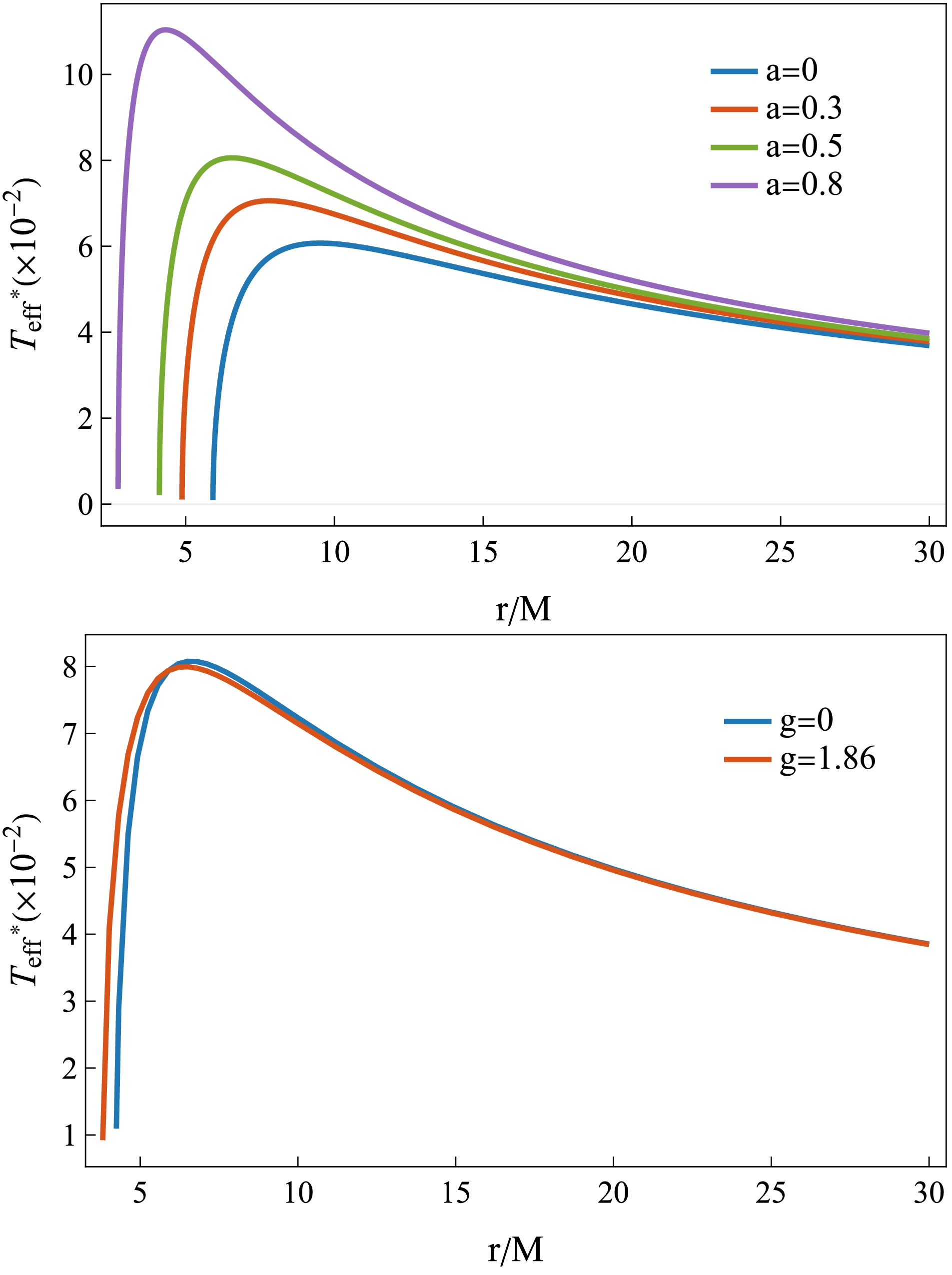
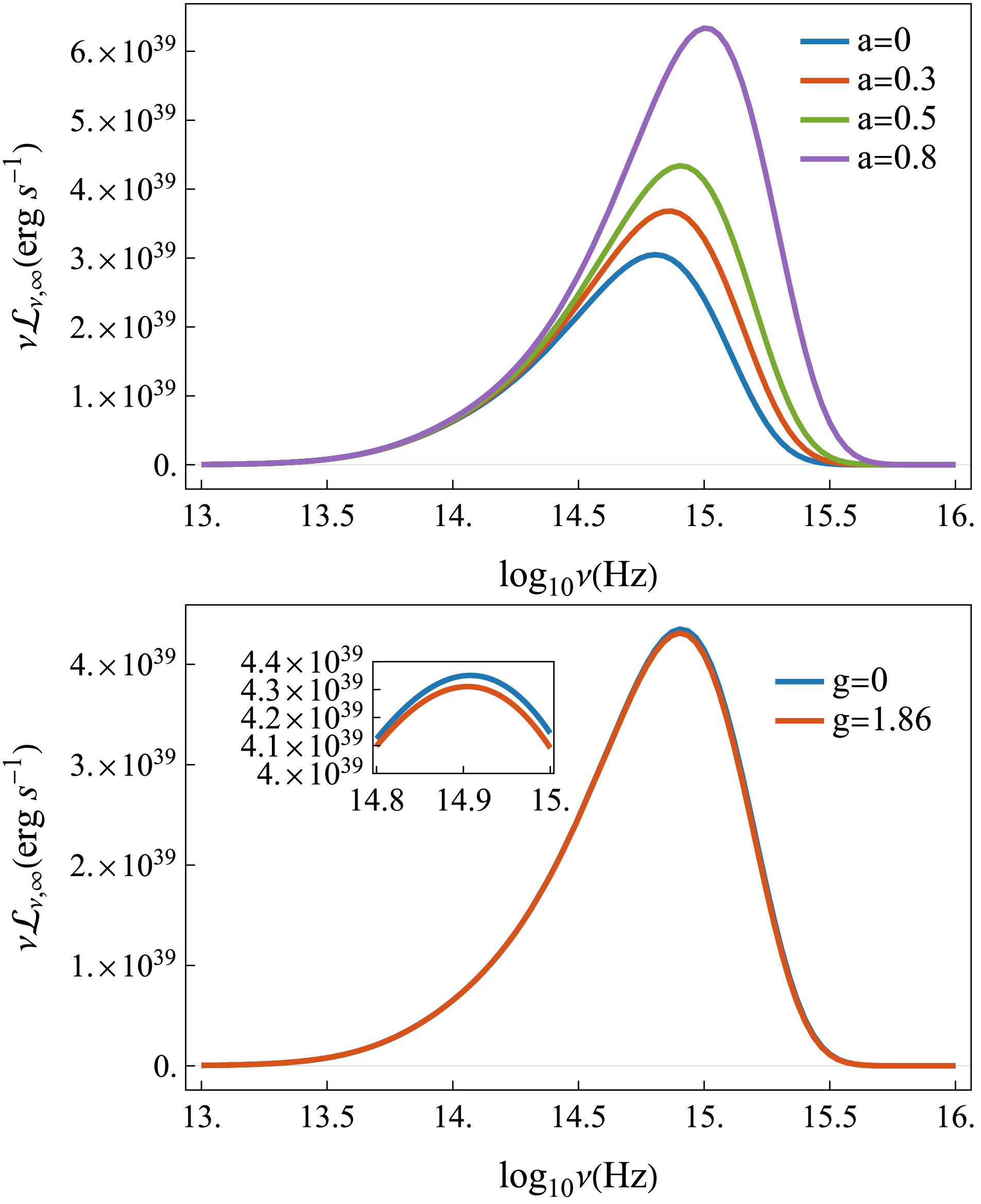
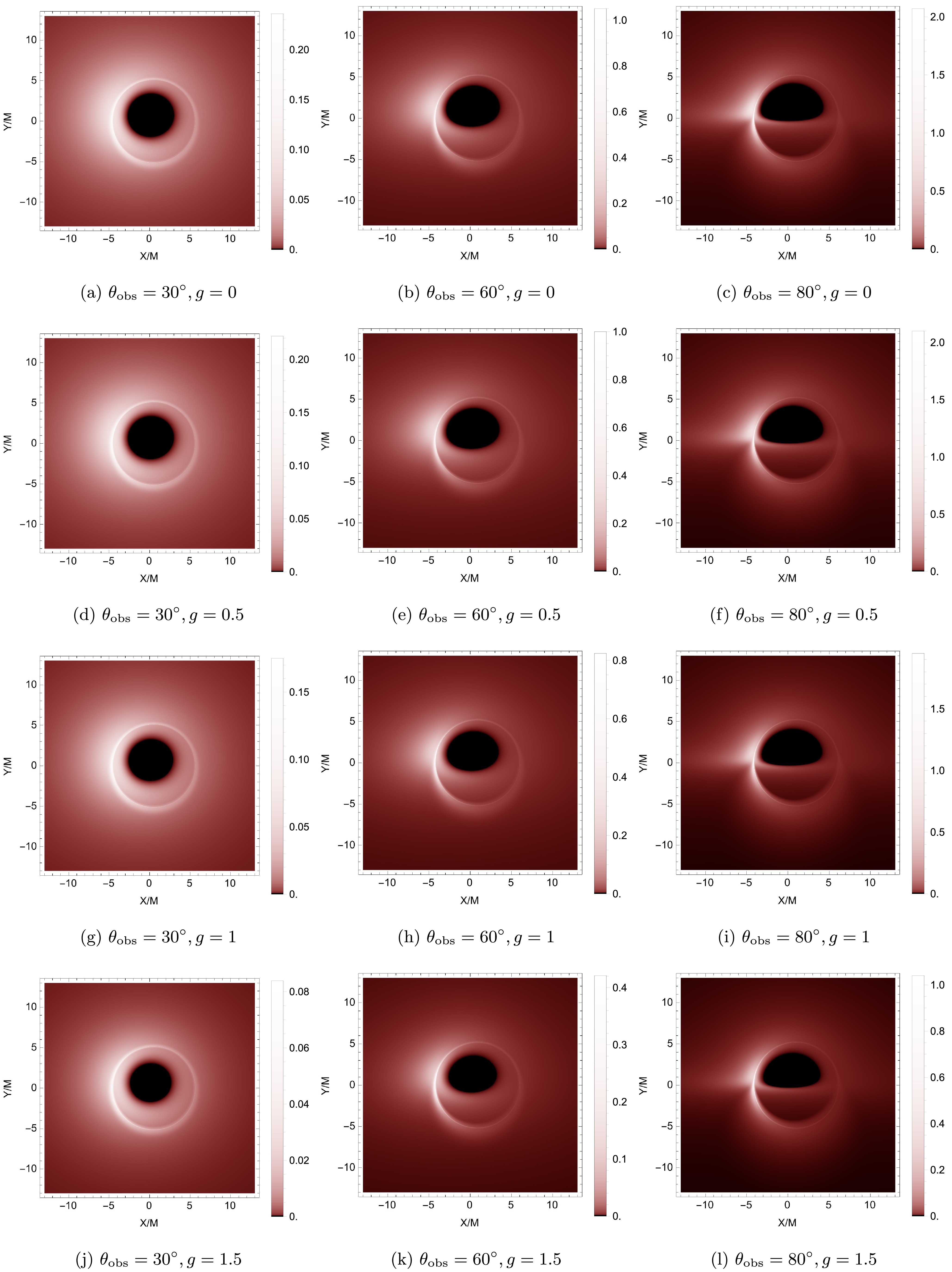
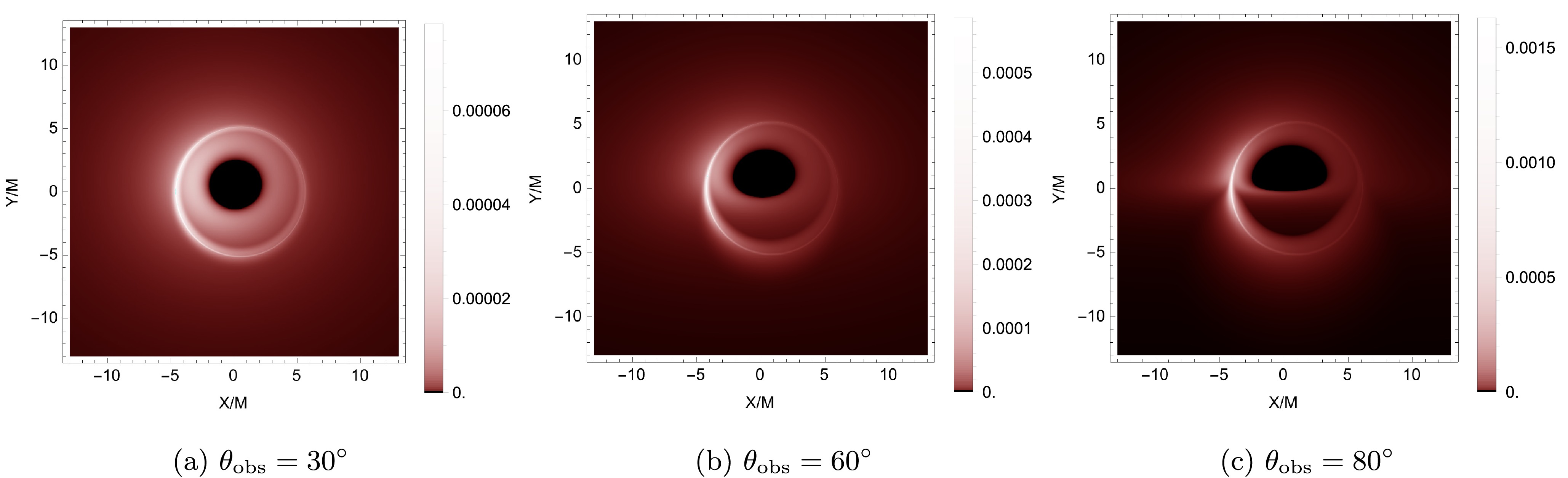
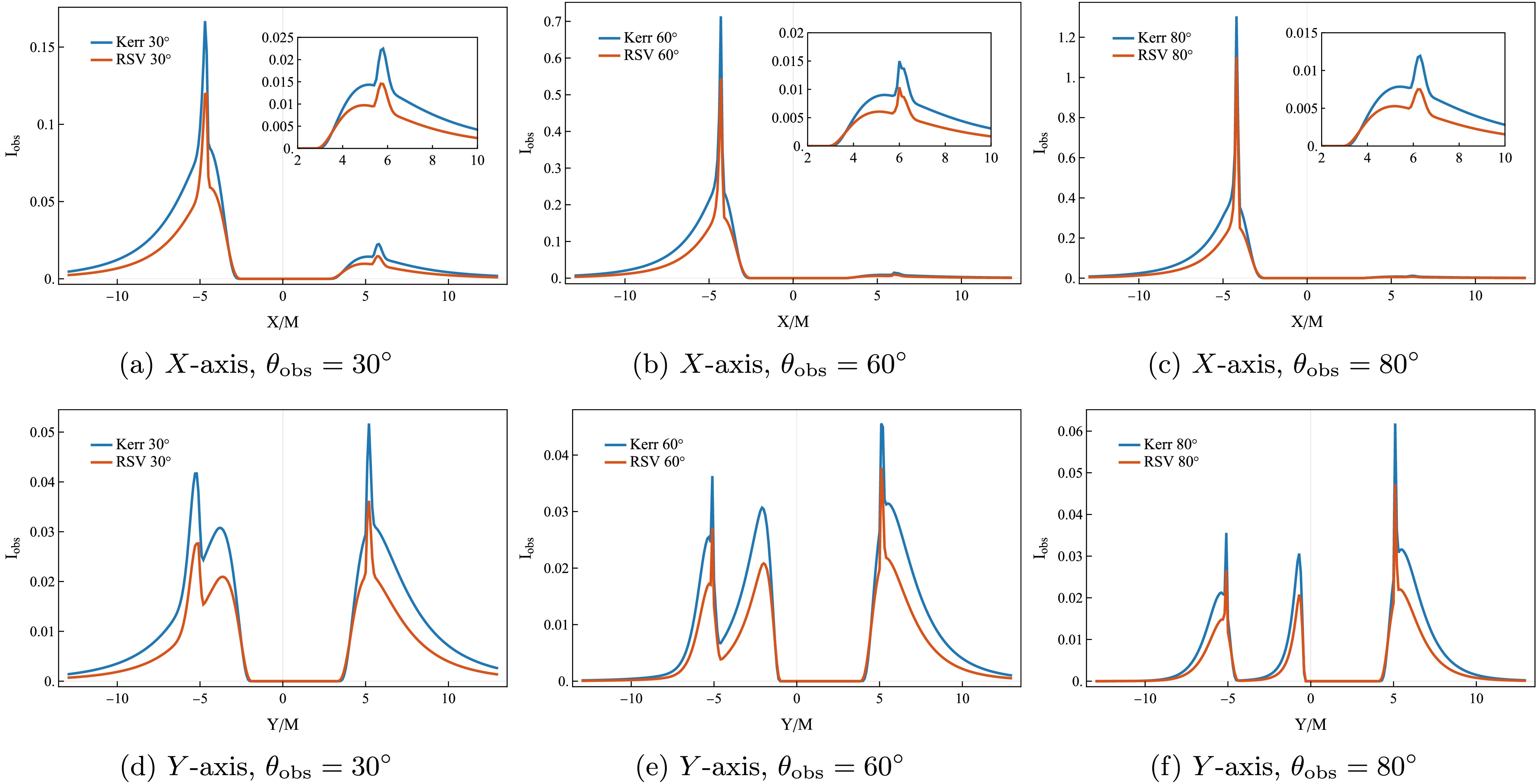
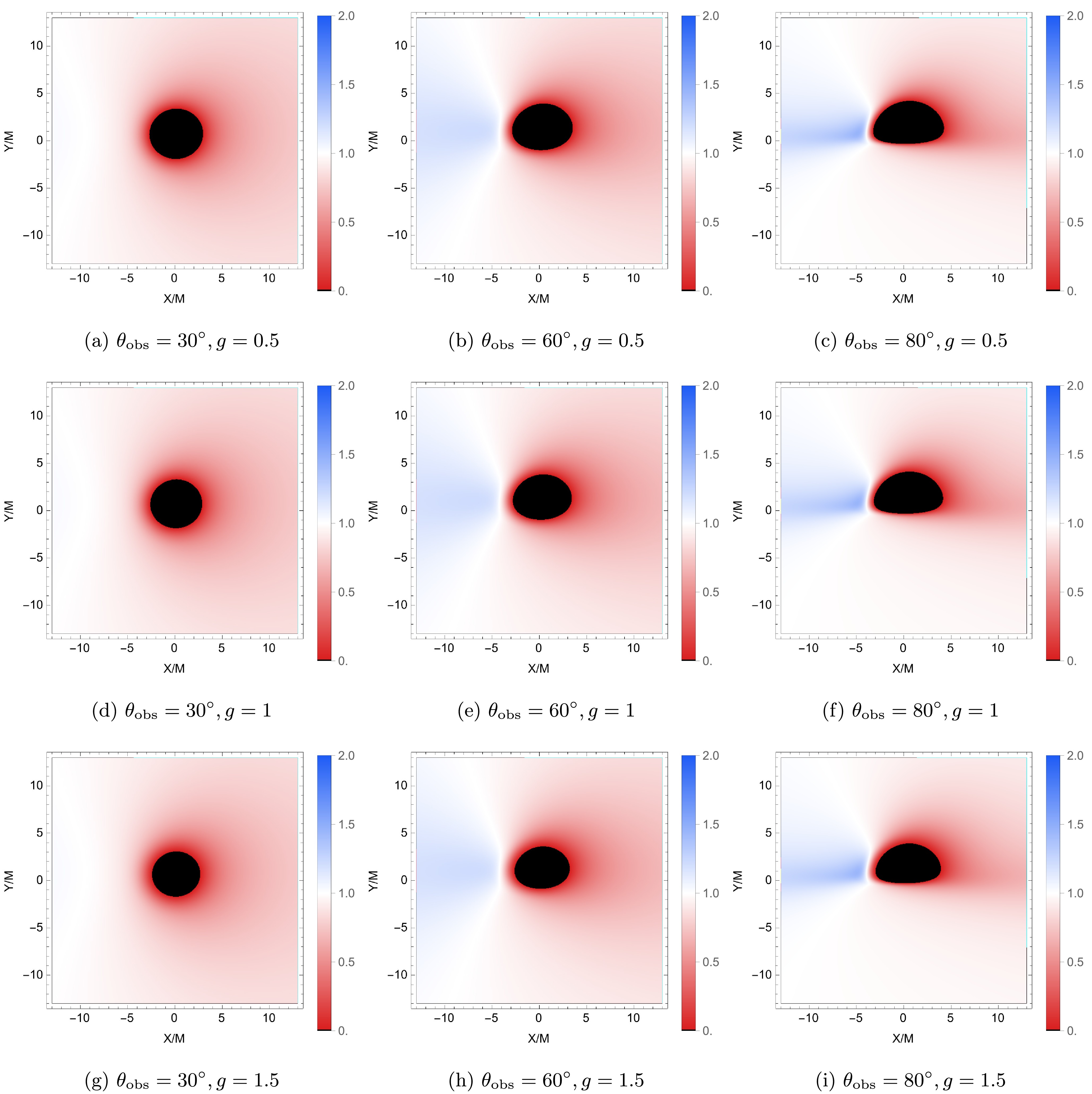
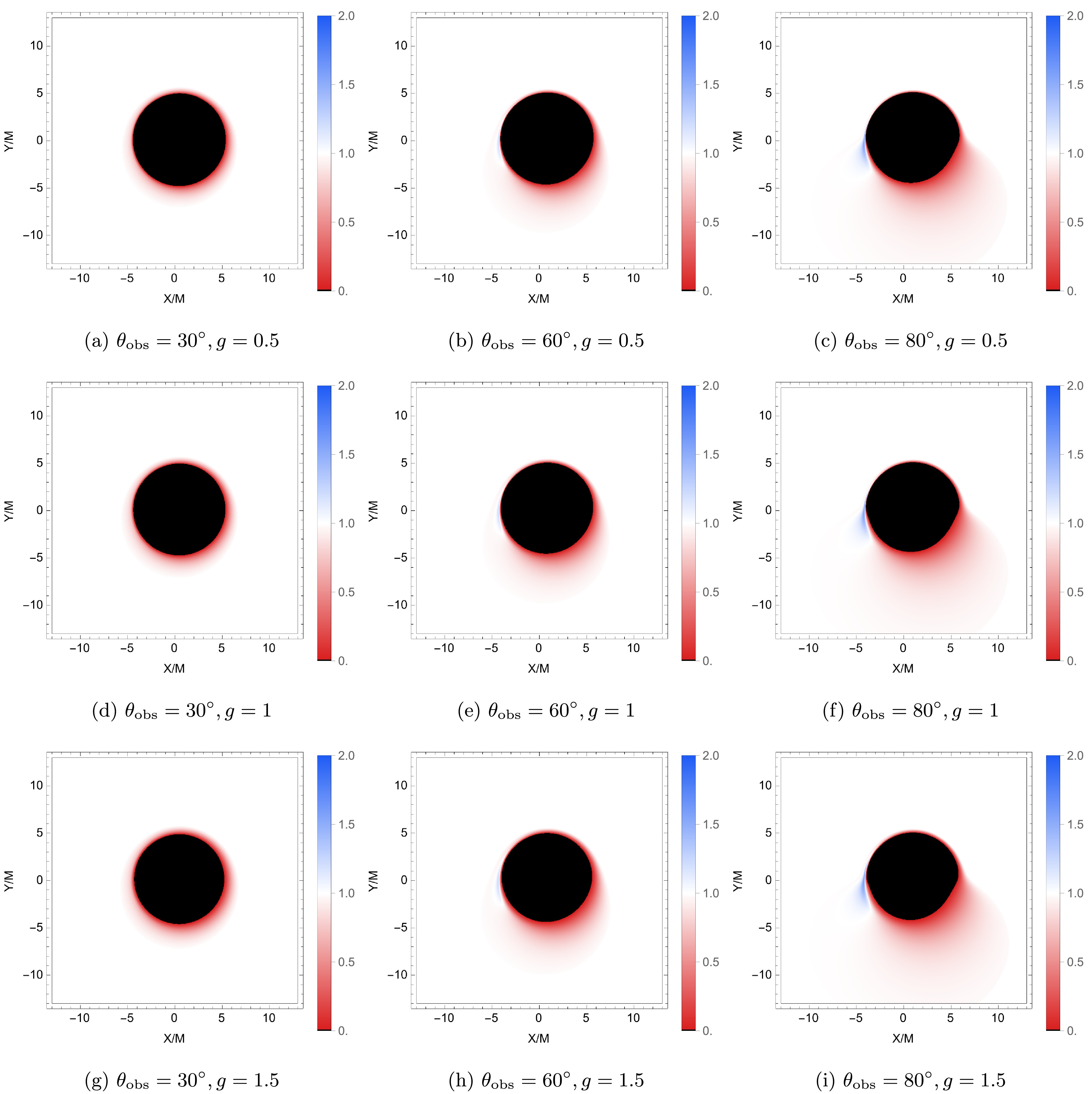
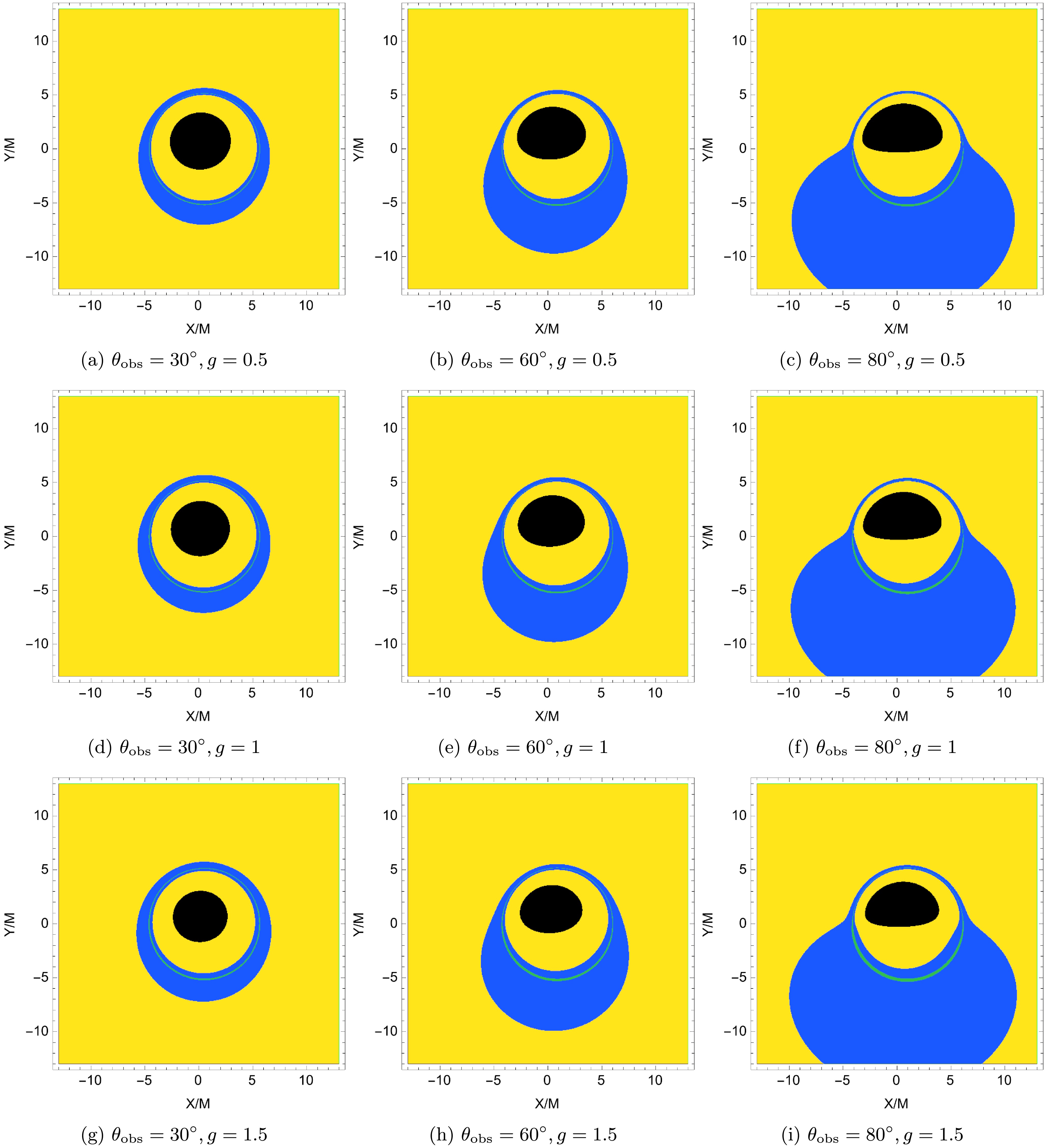
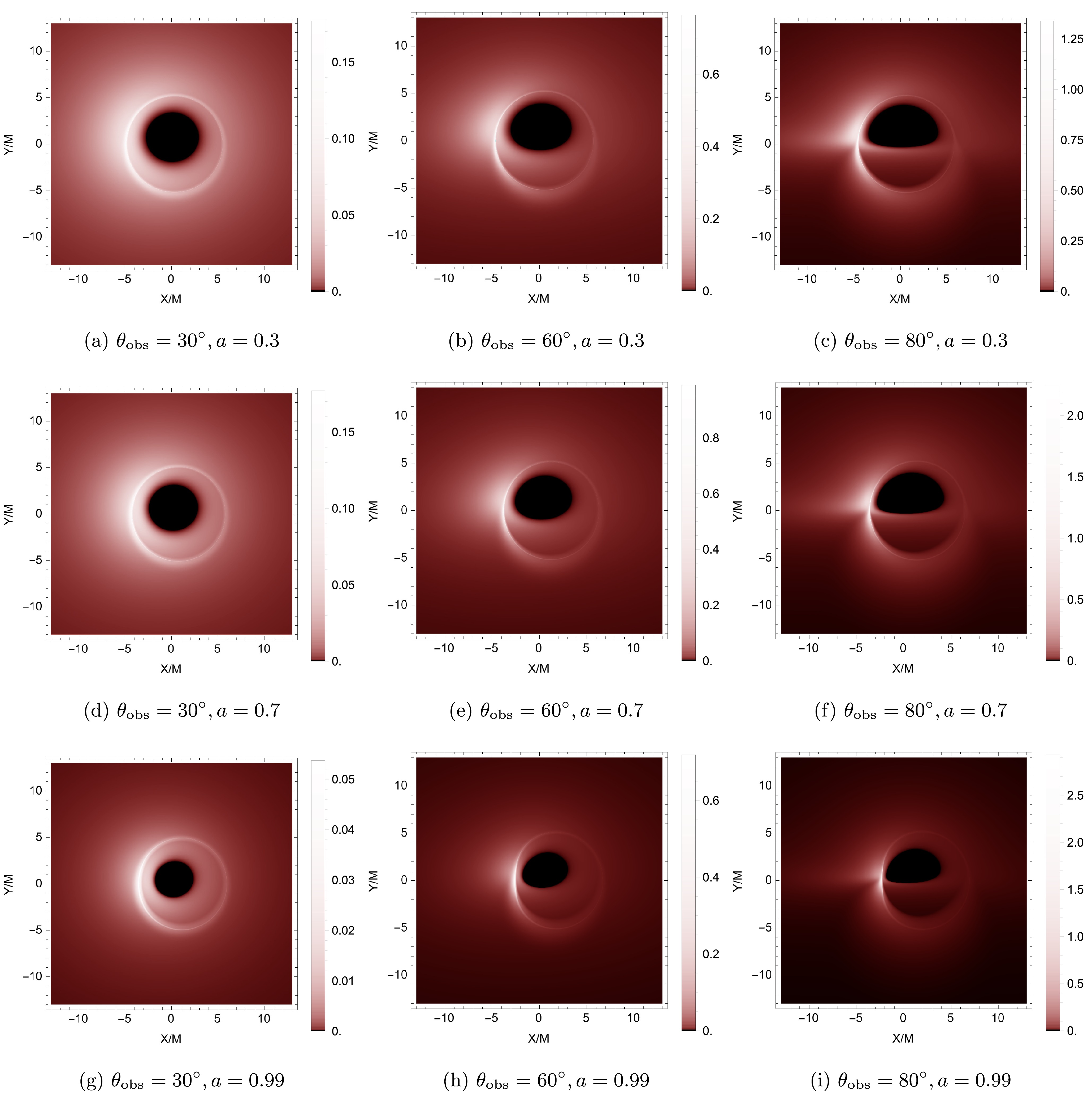
Since the Event Horizon Telescope (EHT) collaboration released horizon-scale images of the supermassive black holes Sgr A* and M87*, a new observational window for probing black hole spacetimes in the strong-gravity regime has opened. As an important class of Kerr black hole mimickers, rotating Simpson-Visser (SV) black holes exhibit a degeneracy with Kerr black holes in terms of shadow size, making them difficult to distinguish using shadow observations alone. Motivated by this issue, we present a systematic investigation of the radiative properties and optical appearance of rotating SV black holes surrounded by a thin accretion disk, focusing on the influence of the regularization parameter g on the relevant observables. The results show that although the kinematic quantities and the location of the innermost stable circular orbit (ISCO) depend on the regularization parameter g, the radiative efficiency of the rotating SV black hole is the same as that of its Kerr counterpart. Within the Novikov-Thorne thin-disk model, we study the radiative flux, effective temperature, and spectral luminosity; adopting observational parameters relevant to Sgr A* and M87*, we compute concrete examples for rotating SV black holes and compare them with those for Kerr black holes. The results show that the parameter g suppresses the maximum values of these quantities. In addition, using a backward ray-tracing technique, we numerically simulate the optical appearance of rotating SV black holes and analyze the corresponding intensity images, redshift, and observed flux distributions. Our results indicate that these quantities are sensitive to g. In particular, as g increases, the observed intensity is significantly suppressed, and the photon ring region exhibits a remarkable increase in width. Our findings suggest that accretion-disk-related observables may provide important avenues to distinguish between rotating SV black holes and Kerr black holes, and offer theoretical guidance for future high-resolution observations.
Since the Event Horizon Telescope (EHT) collaboration released horizon-scale images of the supermassive black holes Sgr A* and M87*, a new observational window for probing black hole spacetimes in the strong-gravity regime has opened. As an important class of Kerr black hole mimickers, rotating Simpson-Visser (SV) black holes exhibit a degeneracy with Kerr black holes in terms of shadow size, making them difficult to distinguish using shadow observations alone. Motivated by this issue, we present a systematic investigation of the radiative properties and optical appearance of rotating SV black holes surrounded by a thin accretion disk, focusing on the influence of the regularization parameter g on the relevant observables. The results show that although the kinematic quantities and the location of the innermost stable circular orbit (ISCO) depend on the regularization parameter g, the radiative efficiency of the rotating SV black hole is the same as that of its Kerr counterpart. Within the Novikov-Thorne thin-disk model, we study the radiative flux, effective temperature, and spectral luminosity; adopting observational parameters relevant to Sgr A* and M87*, we compute concrete examples for rotating SV black holes and compare them with those for Kerr black holes. The results show that the parameter g suppresses the maximum values of these quantities. In addition, using a backward ray-tracing technique, we numerically simulate the optical appearance of rotating SV black holes and analyze the corresponding intensity images, redshift, and observed flux distributions. Our results indicate that these quantities are sensitive to g. In particular, as g increases, the observed intensity is significantly suppressed, and the photon ring region exhibits a remarkable increase in width. Our findings suggest that accretion-disk-related observables may provide important avenues to distinguish between rotating SV black holes and Kerr black holes, and offer theoretical guidance for future high-resolution observations.
2026, 50(7): 075106. doi: 10.1088/1674-1137/ae643d
Abstract:
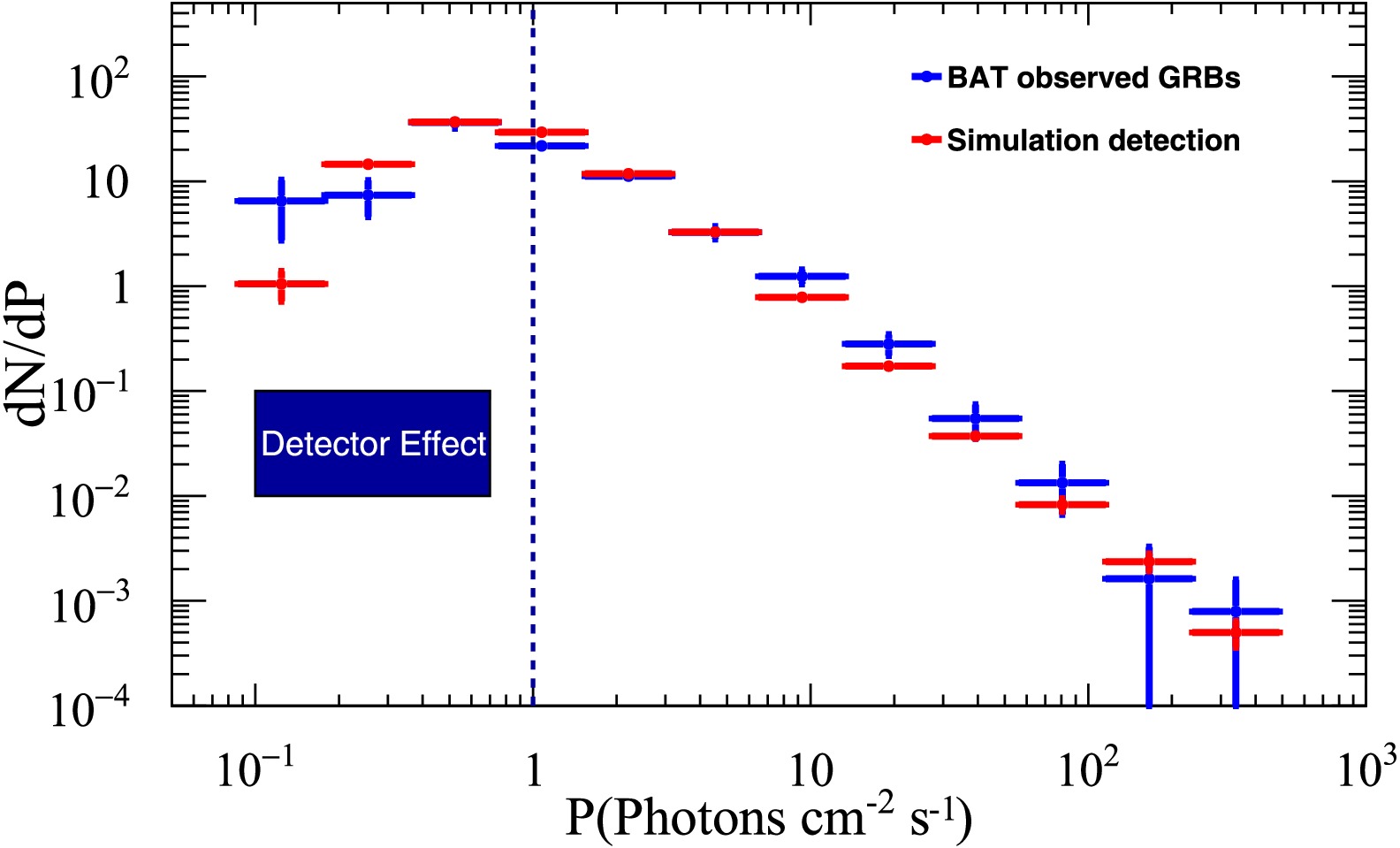
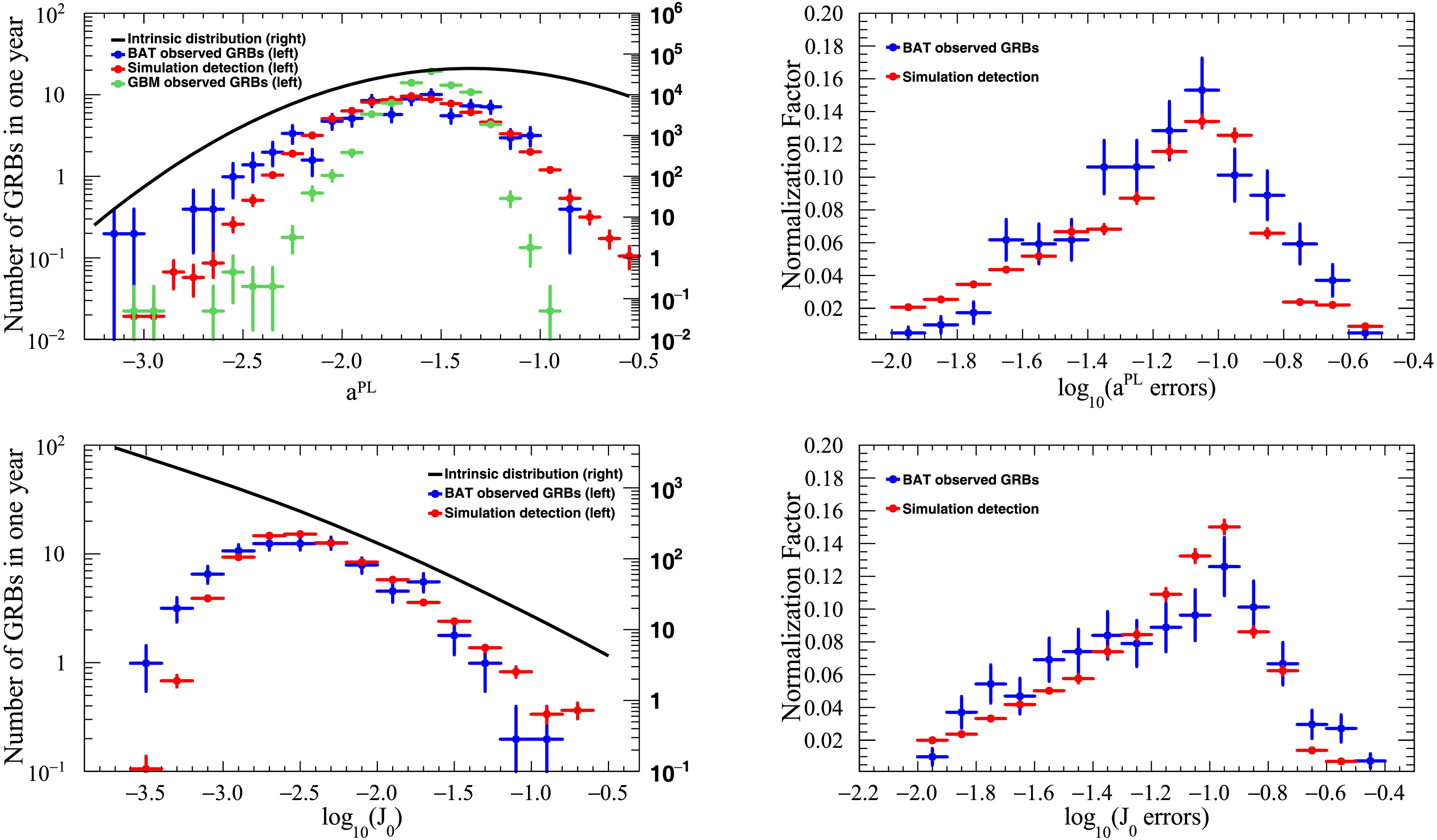
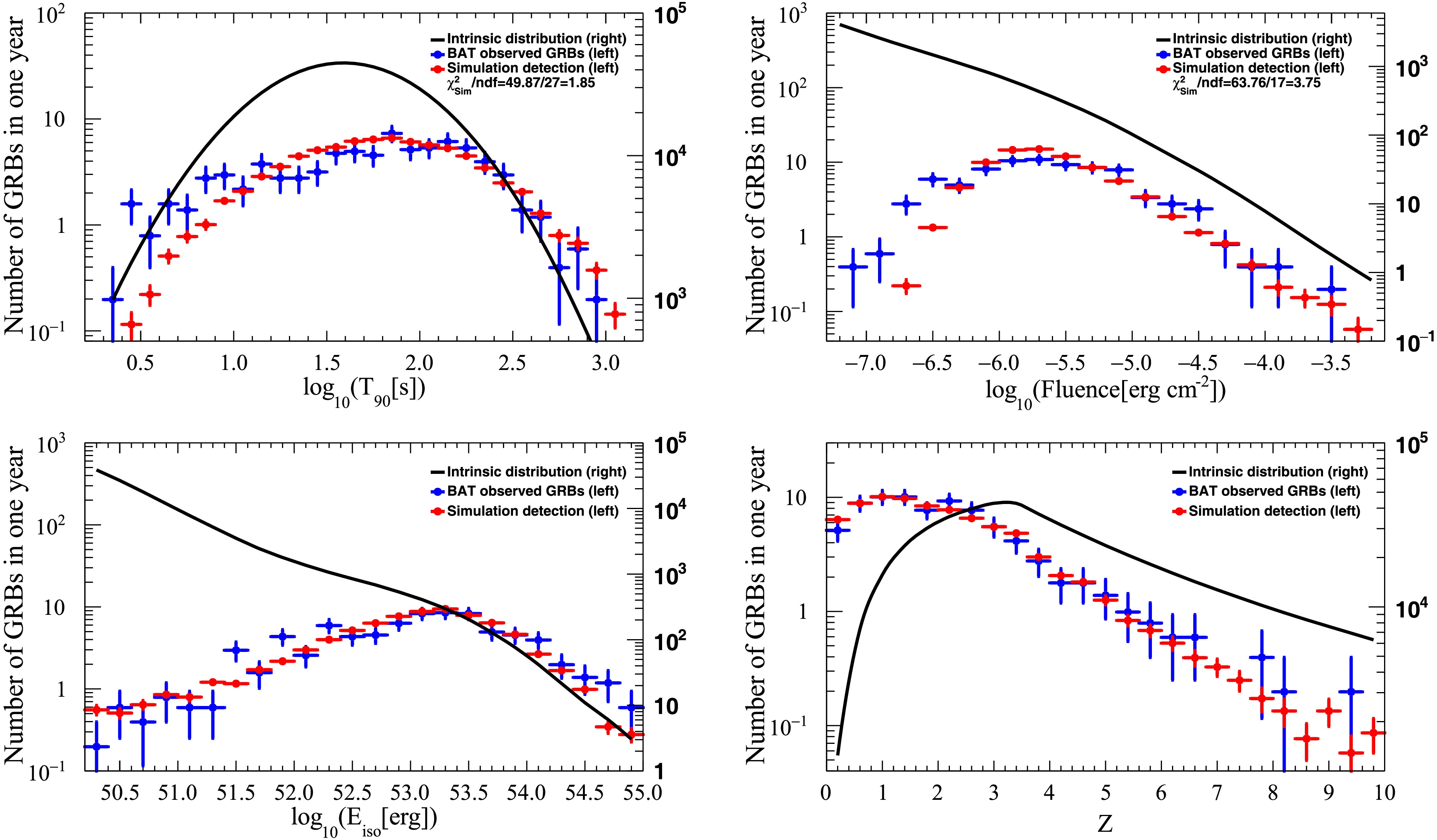
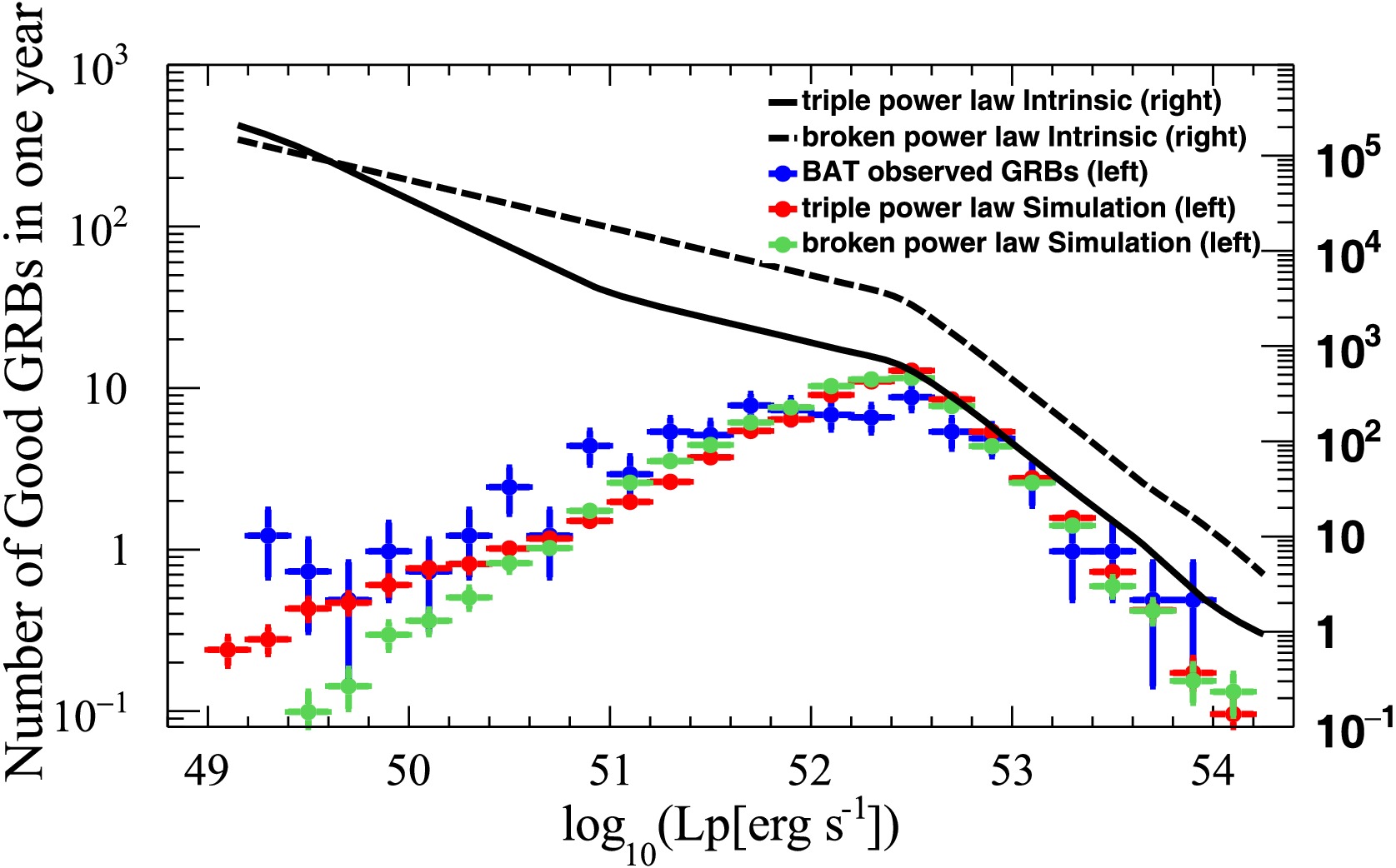
We investigate the intrinsic distributions of key Gamma-Ray Burst (GRB) parameters that are essential to understanding the physics of their central engines, radiation mechanisms, and cosmological evolution. Using our independently developed GodEyes Monte Carlo framework, we generate synthetic long-GRB samples tailored to the Swift/BAT detector and explicitly incorporate instrumental selection effects. In particular, we account for the loss of low-peak-flux events due to the detector's sensitivity threshold, thereby enabling consistent comparisons between theoretical models and observations. Our results constrain the intrinsic distributions of several fundamental properties, including redshift, peak luminosity, isotropic energy, and related quantities. We find that the inferred intrinsic distribution of the spectral index\begin{document}$ \alpha^{\rm{PL}}$\end{document}
We investigate the intrinsic distributions of key Gamma-Ray Burst (GRB) parameters that are essential to understanding the physics of their central engines, radiation mechanisms, and cosmological evolution. Using our independently developed GodEyes Monte Carlo framework, we generate synthetic long-GRB samples tailored to the Swift/BAT detector and explicitly incorporate instrumental selection effects. In particular, we account for the loss of low-peak-flux events due to the detector's sensitivity threshold, thereby enabling consistent comparisons between theoretical models and observations. Our results constrain the intrinsic distributions of several fundamental properties, including redshift, peak luminosity, isotropic energy, and related quantities. We find that the inferred intrinsic distribution of the spectral index
2026, 50(7): 075107. doi: 10.1088/1674-1137/ae66d2
Abstract:
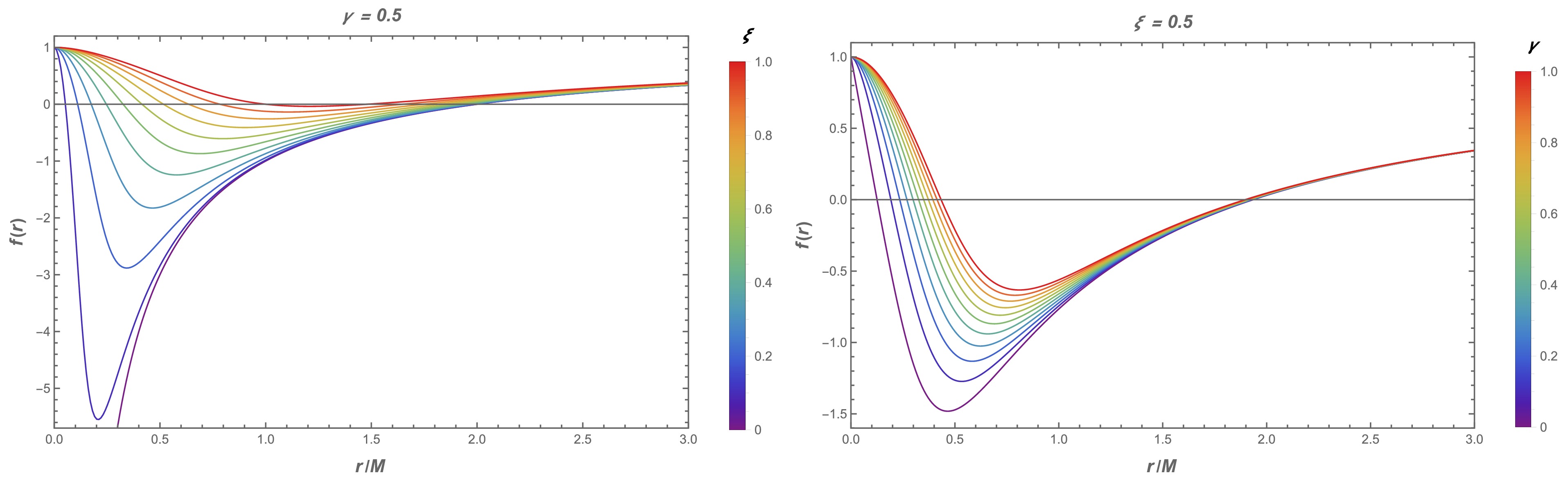
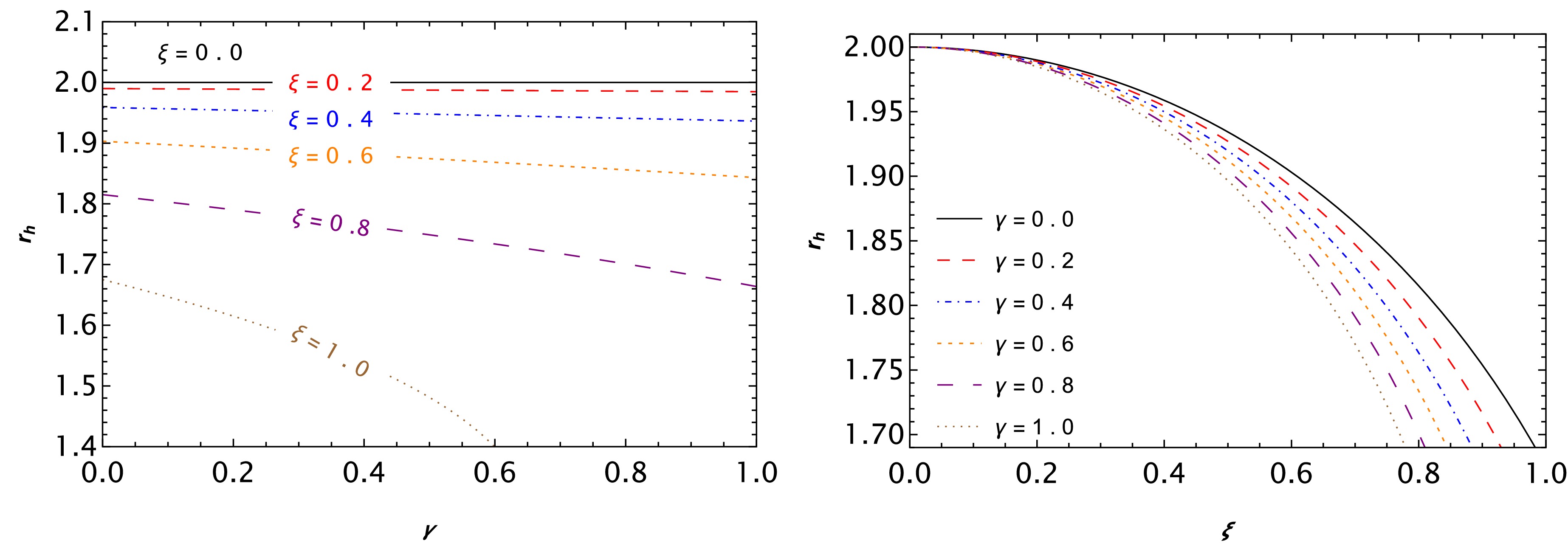
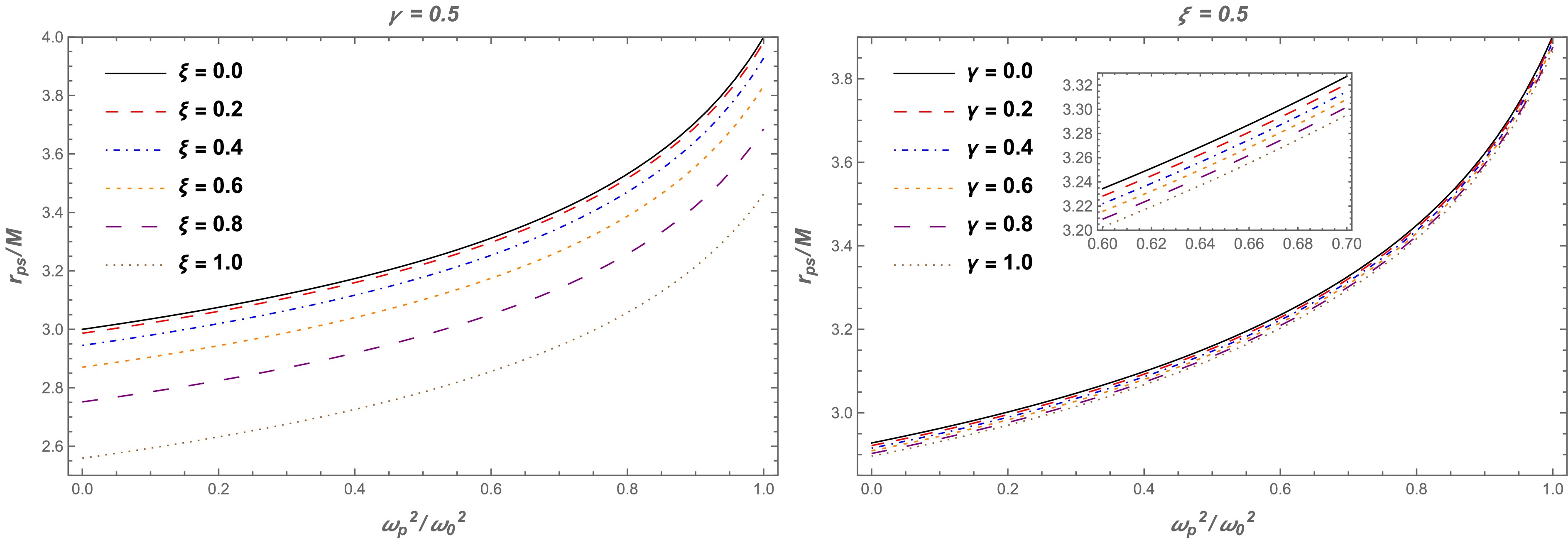
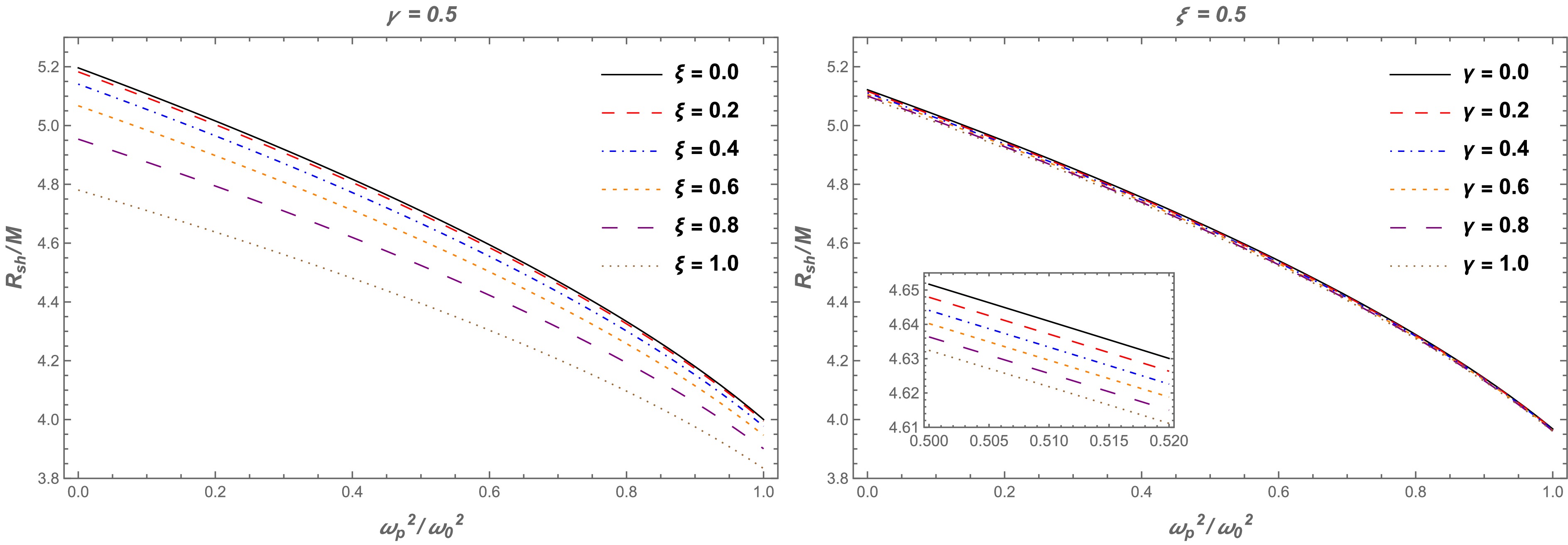
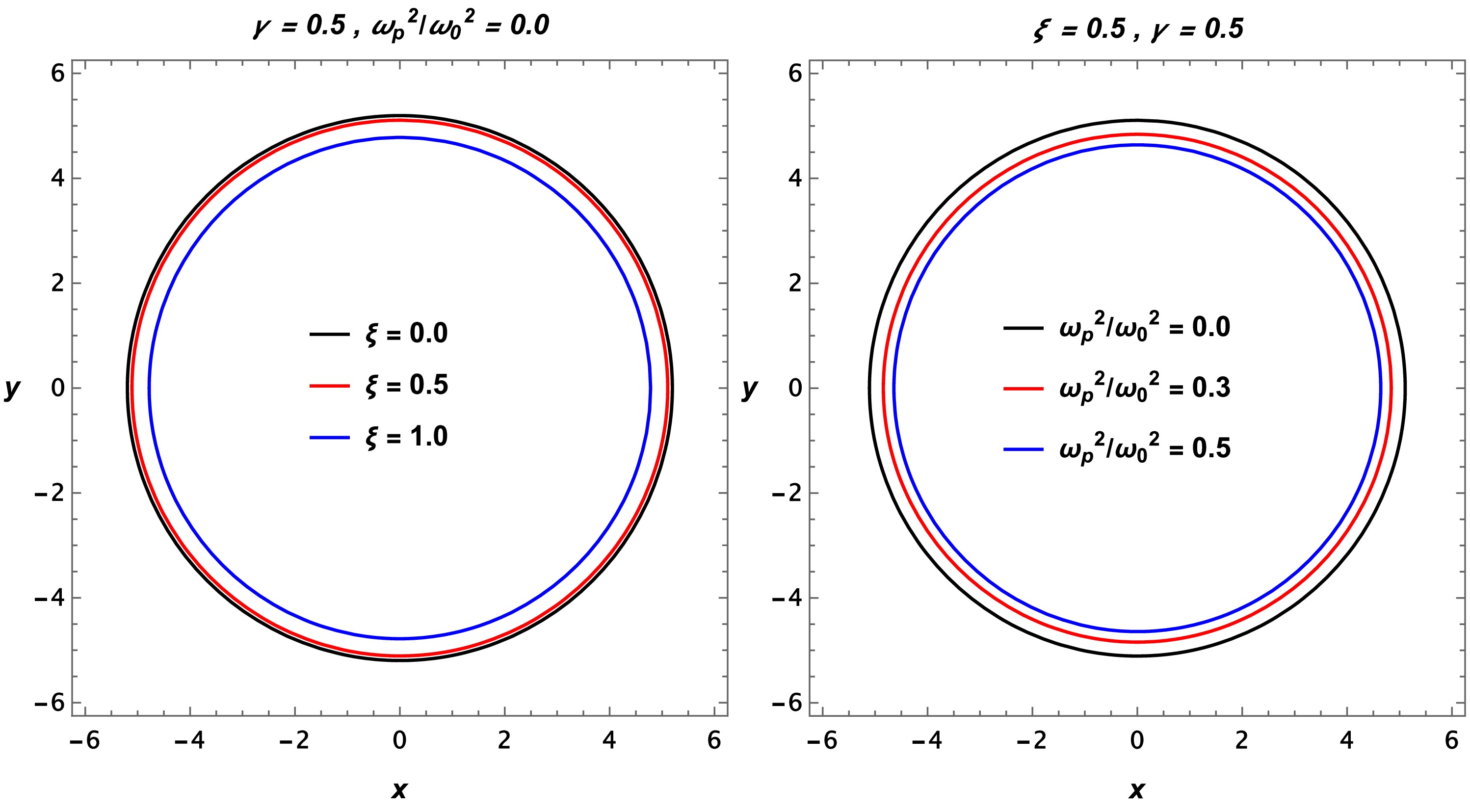
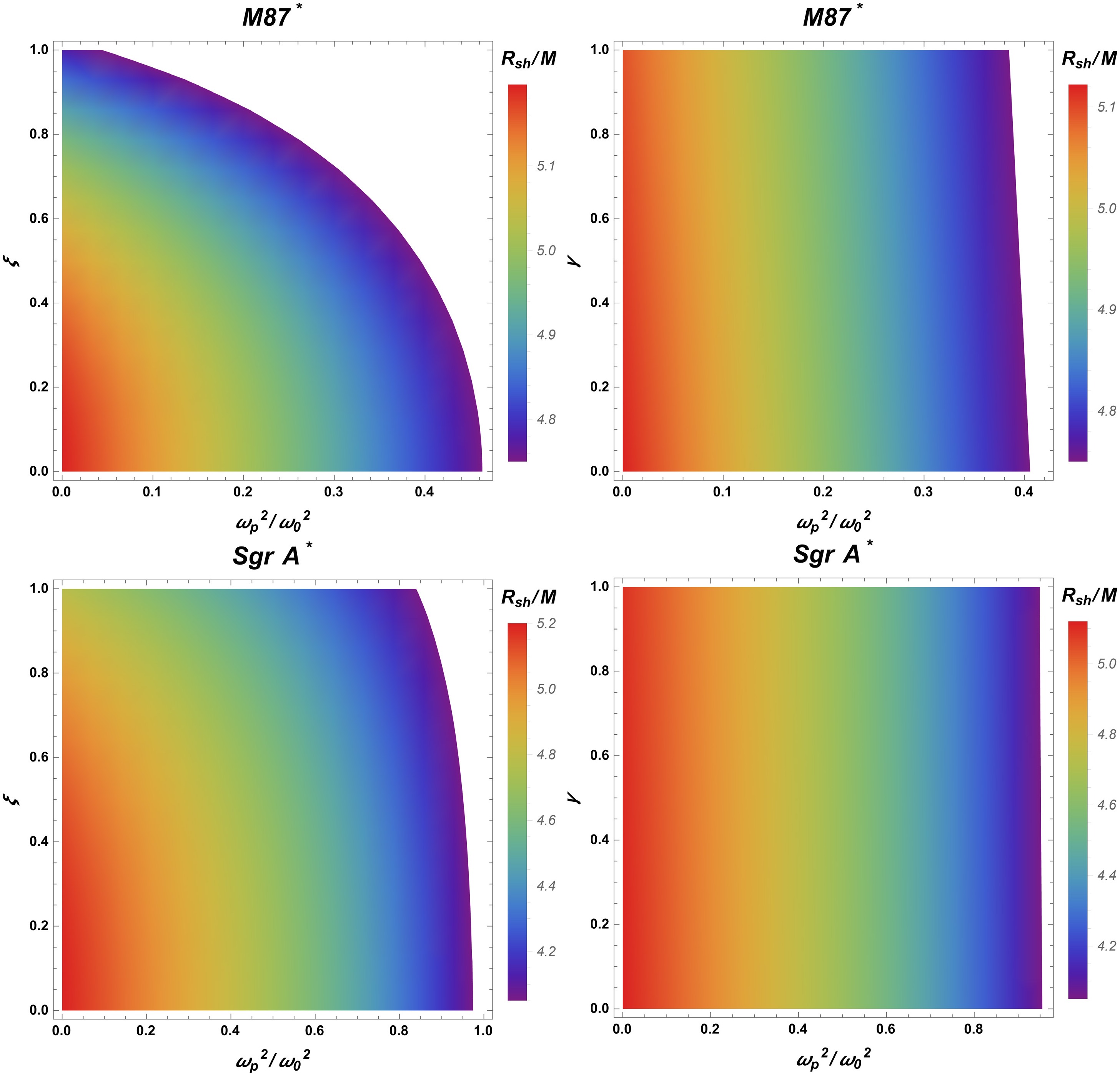
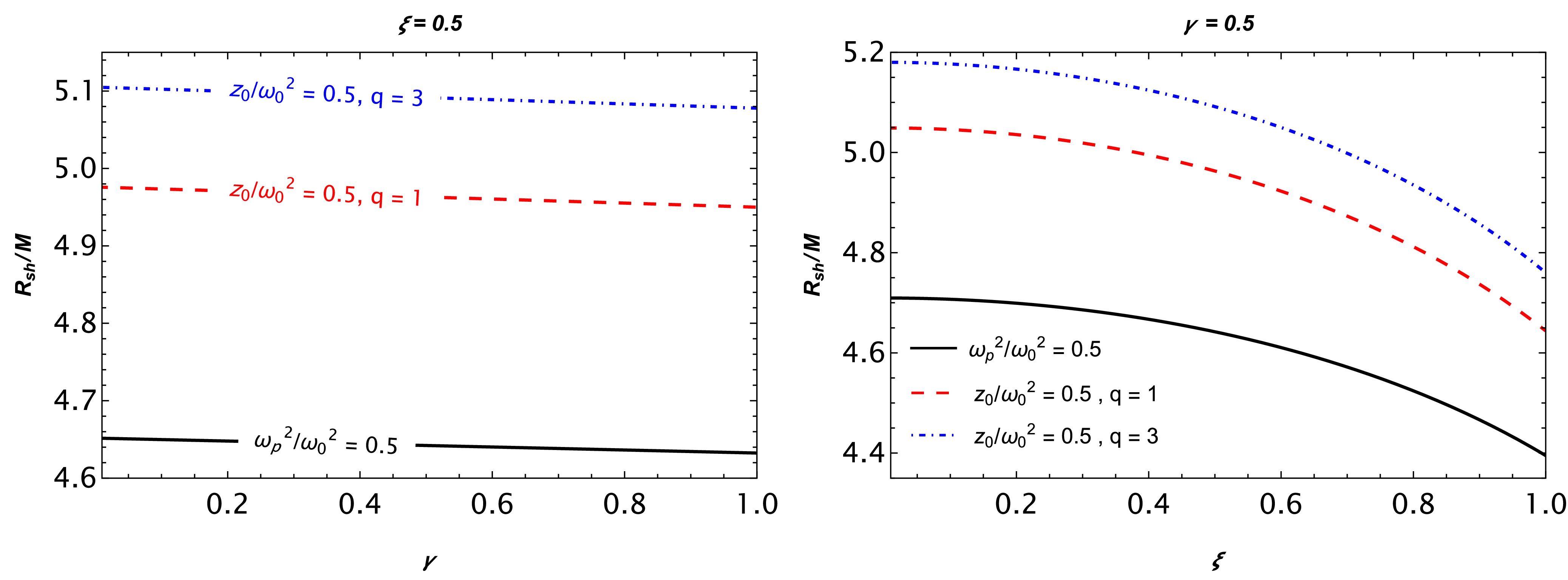
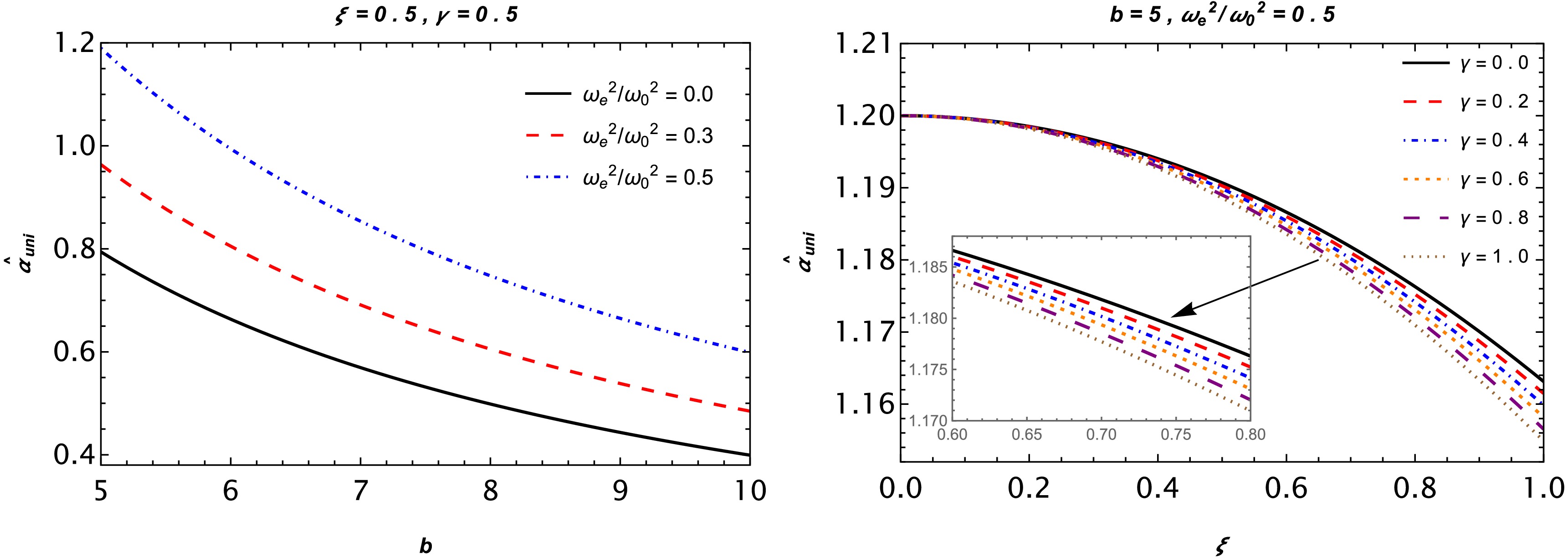
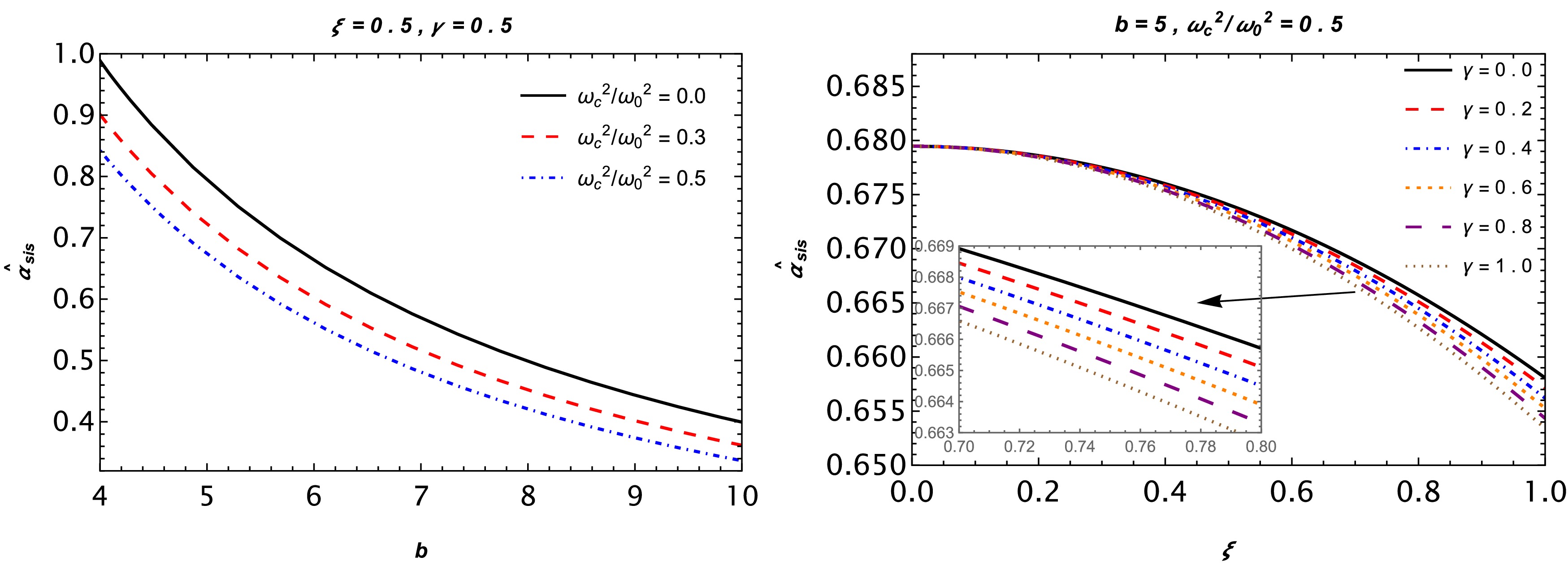
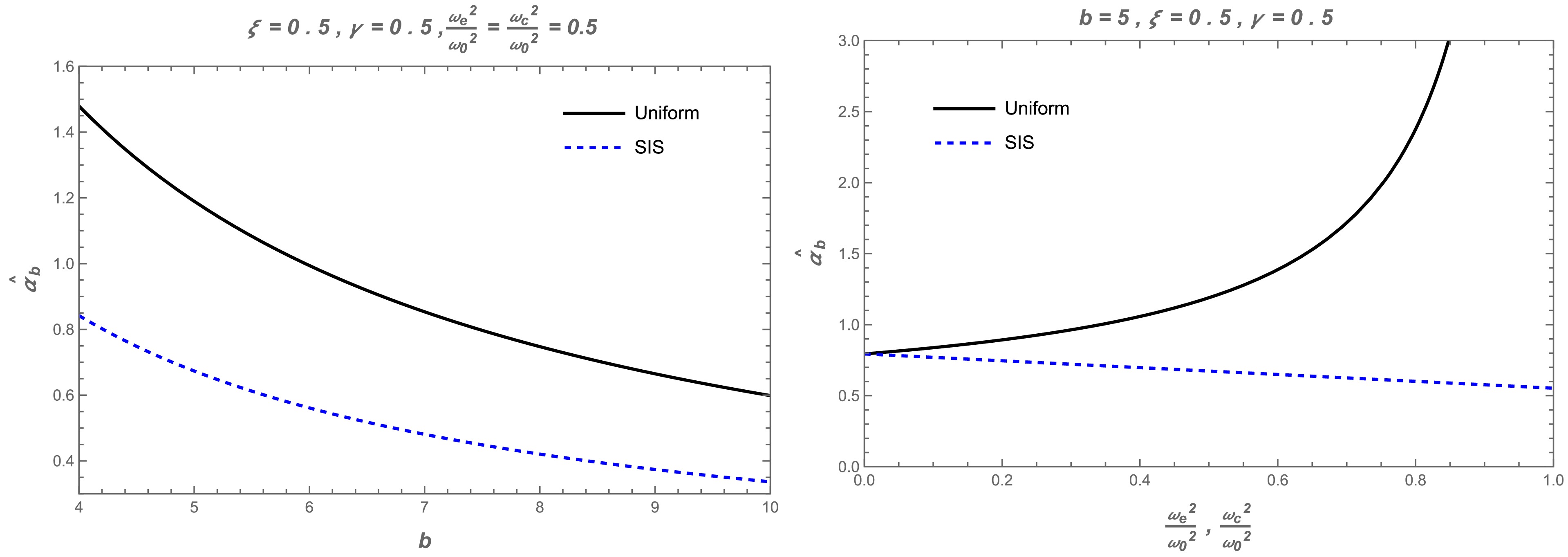
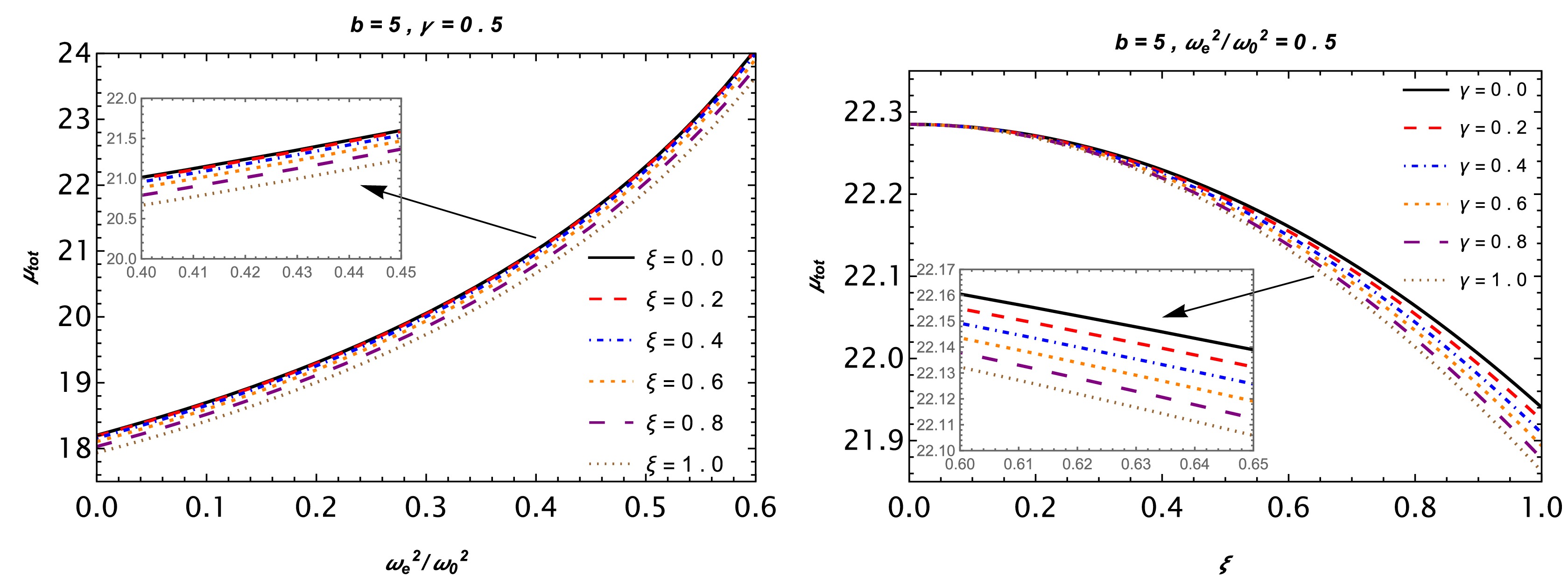
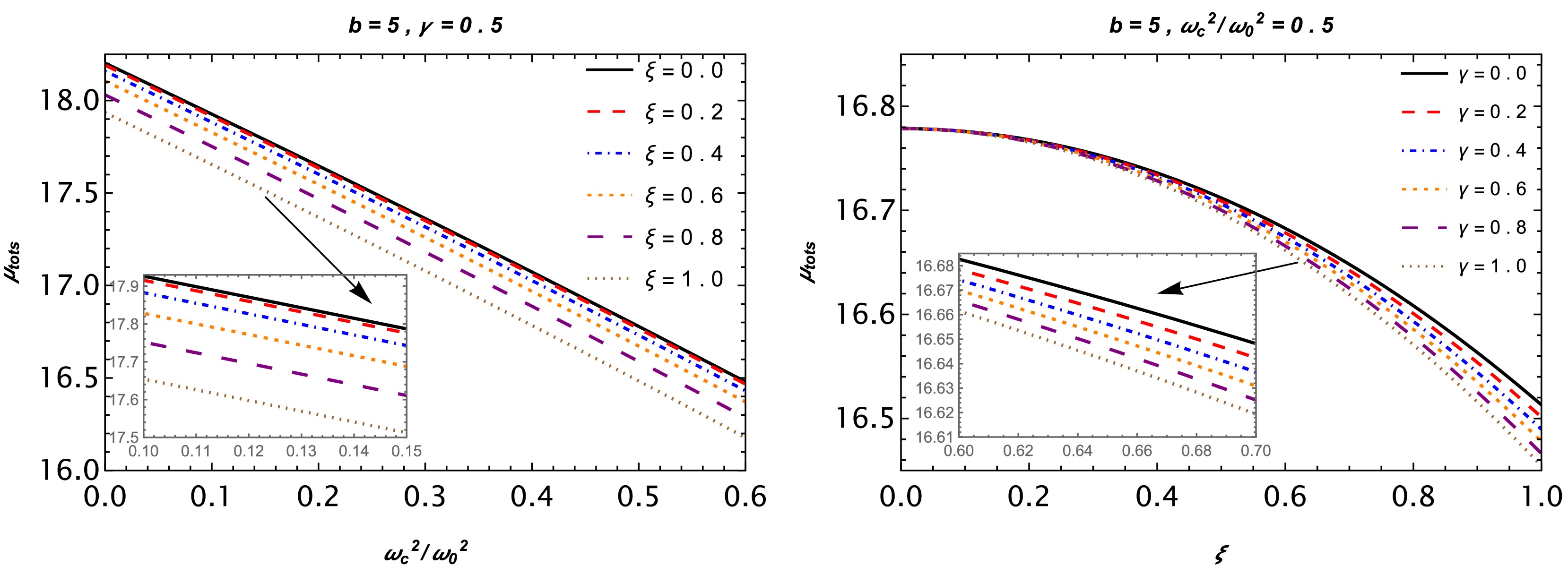
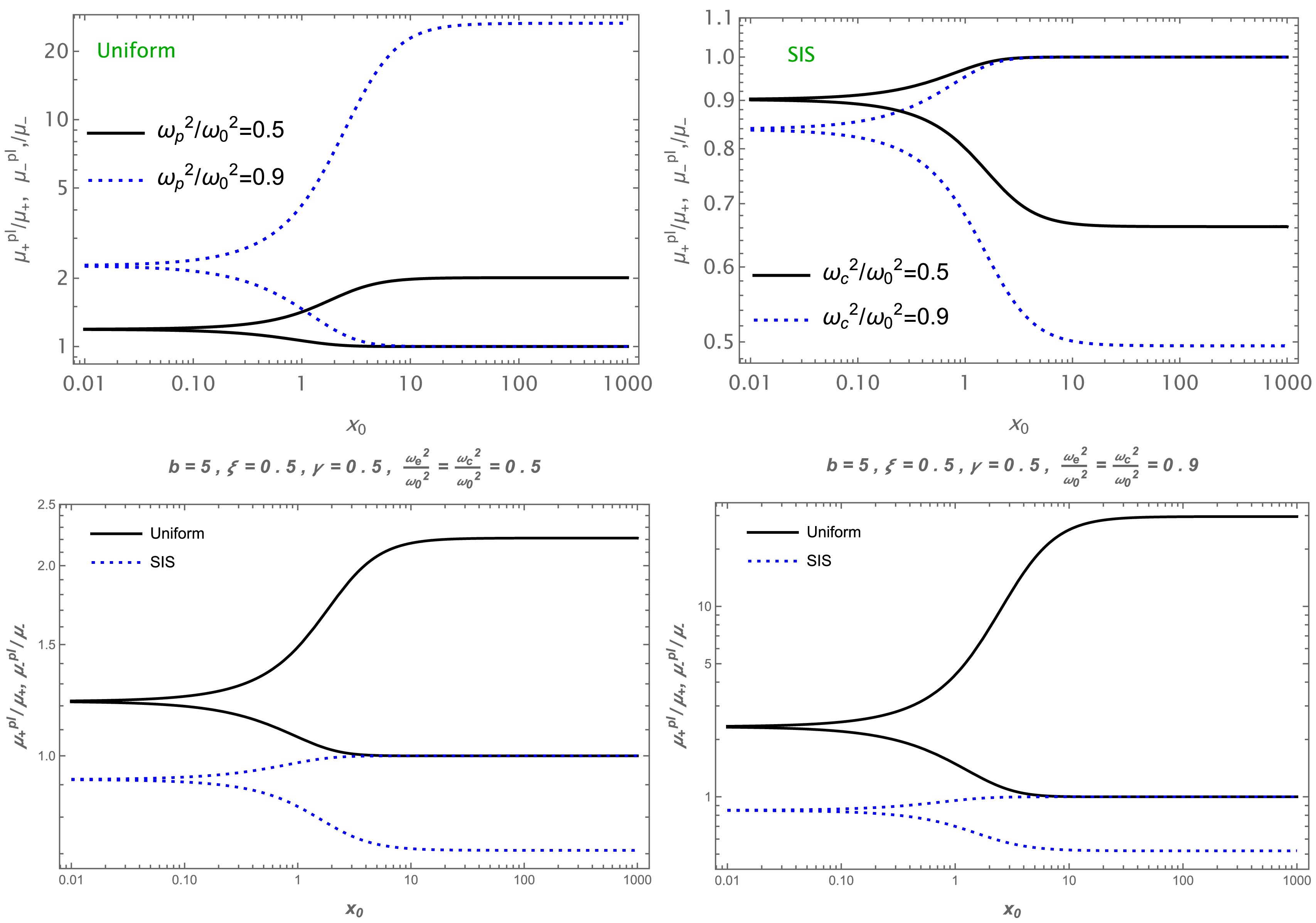
This article delves into the observational properties of a Schwarzschild-like black hole (BH). Initially, the research provides a succinct examination of the spacetime geometry and the configuration of its horizon. Furthermore, we study the photon dynamics around the Schwarzschild-like BH in the presence of plasma using the Hamiltonian formalism. We found that the photon sphere radii increase under the influence of plasma frequency and vice versa for the spacetime parameters. Further exploration is dedicated to understanding how plasma affects the shadow of the BH, and we find that the radius of the BH shadow shrinks with the rise of the ξ parameter and plasma frequency. We then turn to constraining the spacetime parameters and the plasma frequency by using the observational data released by the Event Horizon Telescope (EHT) collaboration for M87* and Sgr A*. Additionally, the research scrutinizes the phenomenon of gravitational weak lensing in the vicinity of a Schwarzschild-like BH, considering both uniform and non-uniform plasma scenarios. The outcomes demonstrate that the angle of deflection increases under the influence of a uniform plasma frequency, whereas the opposite is true for non-uniform plasma. In both scenarios, a rise in the spacetime parameters results in a decrease in the deflection angle. Finally, we investigate the magnification of the gravitationally lensed image. The effect of the spacetime parameters and plasma frequencies on the total magnification is the same as in the deflection angles.
This article delves into the observational properties of a Schwarzschild-like black hole (BH). Initially, the research provides a succinct examination of the spacetime geometry and the configuration of its horizon. Furthermore, we study the photon dynamics around the Schwarzschild-like BH in the presence of plasma using the Hamiltonian formalism. We found that the photon sphere radii increase under the influence of plasma frequency and vice versa for the spacetime parameters. Further exploration is dedicated to understanding how plasma affects the shadow of the BH, and we find that the radius of the BH shadow shrinks with the rise of the ξ parameter and plasma frequency. We then turn to constraining the spacetime parameters and the plasma frequency by using the observational data released by the Event Horizon Telescope (EHT) collaboration for M87* and Sgr A*. Additionally, the research scrutinizes the phenomenon of gravitational weak lensing in the vicinity of a Schwarzschild-like BH, considering both uniform and non-uniform plasma scenarios. The outcomes demonstrate that the angle of deflection increases under the influence of a uniform plasma frequency, whereas the opposite is true for non-uniform plasma. In both scenarios, a rise in the spacetime parameters results in a decrease in the deflection angle. Finally, we investigate the magnification of the gravitationally lensed image. The effect of the spacetime parameters and plasma frequencies on the total magnification is the same as in the deflection angles.

IF: 3.0
Monthly issued, founded in 1977
Sponsored by:
ISSN 1674-1137 CN 11-5641/O4
Original research articles, Ietters and reviews Covering theory and experiments in the fieids of
- Particle physics
- Nuclear physics
- Particle and nuclear astrophysics
- Cosmology
Author benefits
- A SCOAP3 participating journal - free Open Access publication for qualifying articles
- Average 24 days to first decision
- Fast-track publication for selected articles
- Subscriptions at over 3000 institutions worldwide
- Free English editing on all accepted articles
News
- Chinese Physics C Best Paper Awards 2026 Announced
- Editorial Office Closed
- CPC Announces 2025 Outstanding Reviewers
- Chinese Physics C Outstanding Reviewer Award 2023
- Impact factor of Chinese Physics C is 3.6 in 2022
Cover Story
- Cover Story (Issue 9, 2026): Charge Separation Measurements in Au+Au collisions at \sqrt{S_{NN}} = 7.7-200 GeV in Search of the Chiral Magnetic Effect
- Cover Story (Issue 5, 2026): Determination of Fragmentation Functions from Charge Asymmetries in Hadron Production
- Cover Story (Issue 4, 2026): Initial performance results of the JUNO detector
- Cover Story (Issue 3, 2026): Comprehensive investigation on baryon number violating nucleon decays involving an axion-like particle
- Cover Story (Issue 2, 2026) |The images of Brans-Dicke-Kerr type naked singularities
Advertising