2026 Vol. 50, No. 1
Display Method: |


2026, 50(1): 011001. doi: 10.1088/1674-1137/ae0996
Abstract:
We propose a novel method to detect reactor\begin{document}$ \overline{\nu}^{}_e \to \overline{\nu}^{}_\mu $\end{document} \begin{document}$ \overline{\nu}^{}_e \to \overline{\nu}^{}_\tau $\end{document} \begin{document}$ \overline{\nu}^{}_\alpha + e^- \to \overline{\nu}^{}_\alpha + e^- $\end{document} \begin{document}$ \alpha = e, \mu, \tau $\end{document} \begin{document}$ \overline{\nu}^{}_e $\end{document} \begin{document}$ \overline{\nu}^{}_e $\end{document} \begin{document}$ \overline{\nu}^{}_e + p \to e^+ + n $\end{document}
We propose a novel method to detect reactor


2026, 50(1): 011002. doi: 10.1088/1674-1137/ae07b7
Abstract:
In this letter, we present rephasing invariant formulae\begin{document}$ \delta^{(\alpha i)} = \arg [{ V_{\alpha 1} V_{\alpha 2} V_{\alpha 3} V_{1i} V_{2i} V_{3i} / V_{\alpha i }^{3} \det V }] $\end{document} \begin{document}$ \delta^{(\alpha i)} $\end{document} \begin{document}$ \delta^{(\alpha i)} $\end{document} \begin{document}$ \Phi_{\alpha i} $\end{document} \begin{document}$ \delta^{(\alpha, i+2)} - \delta^{(\alpha, i+1)} = \Phi_{\alpha+1, i} - \Phi_{\alpha+2, i} $\end{document} \begin{document}$ \delta^{(\alpha+1, i)} - \delta^{(\alpha+2, i)} = \Phi_{\alpha, i+2} - \Phi_{\alpha, i+1} $\end{document} \begin{document}$ \delta_{\mathrm{PDG}}+\delta_{\mathrm{KM}}=\pi-\alpha+\gamma. $\end{document}
In this letter, we present rephasing invariant formulae
2026, 50(1): 011003. doi: 10.1088/1674-1137/ae0995
Abstract:
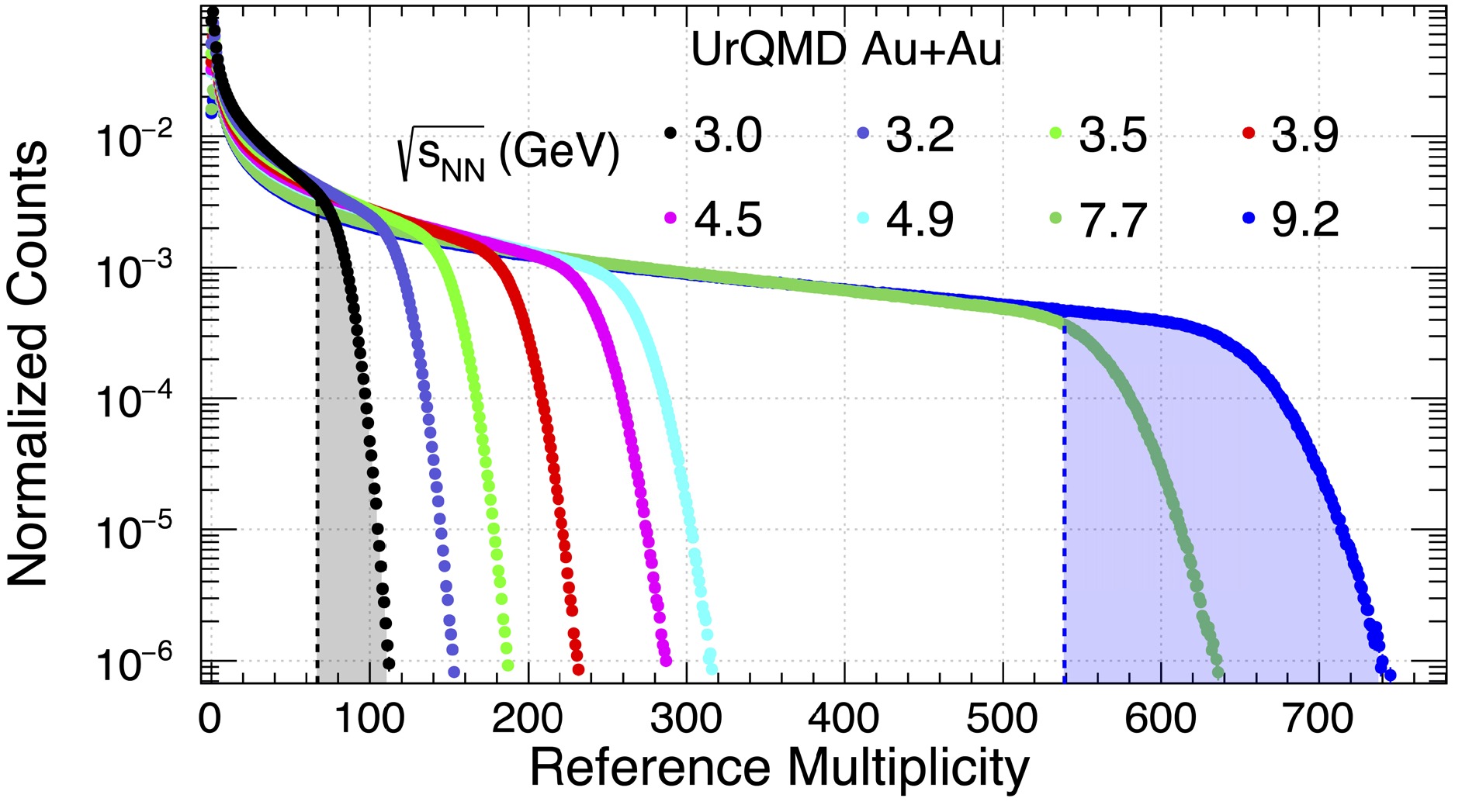
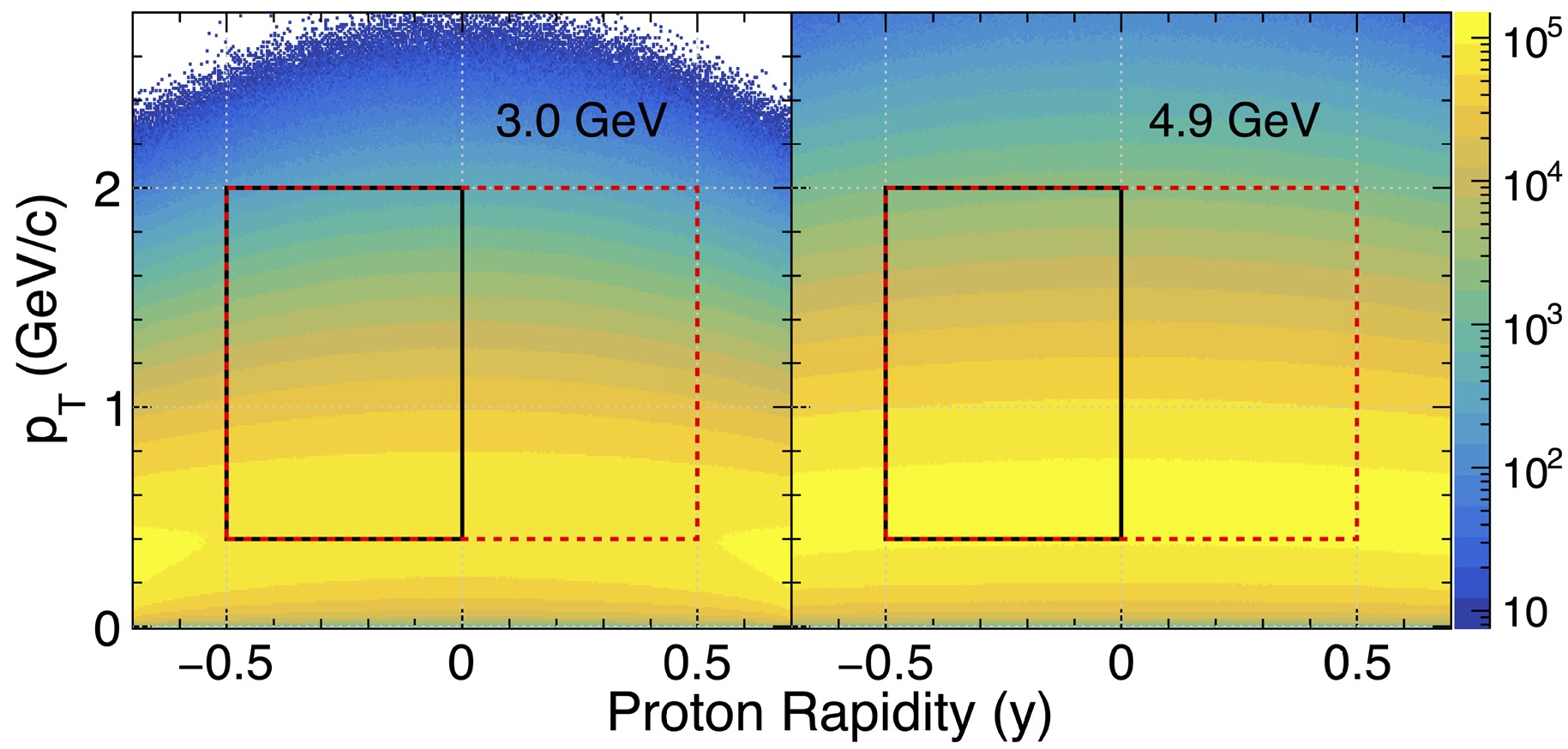
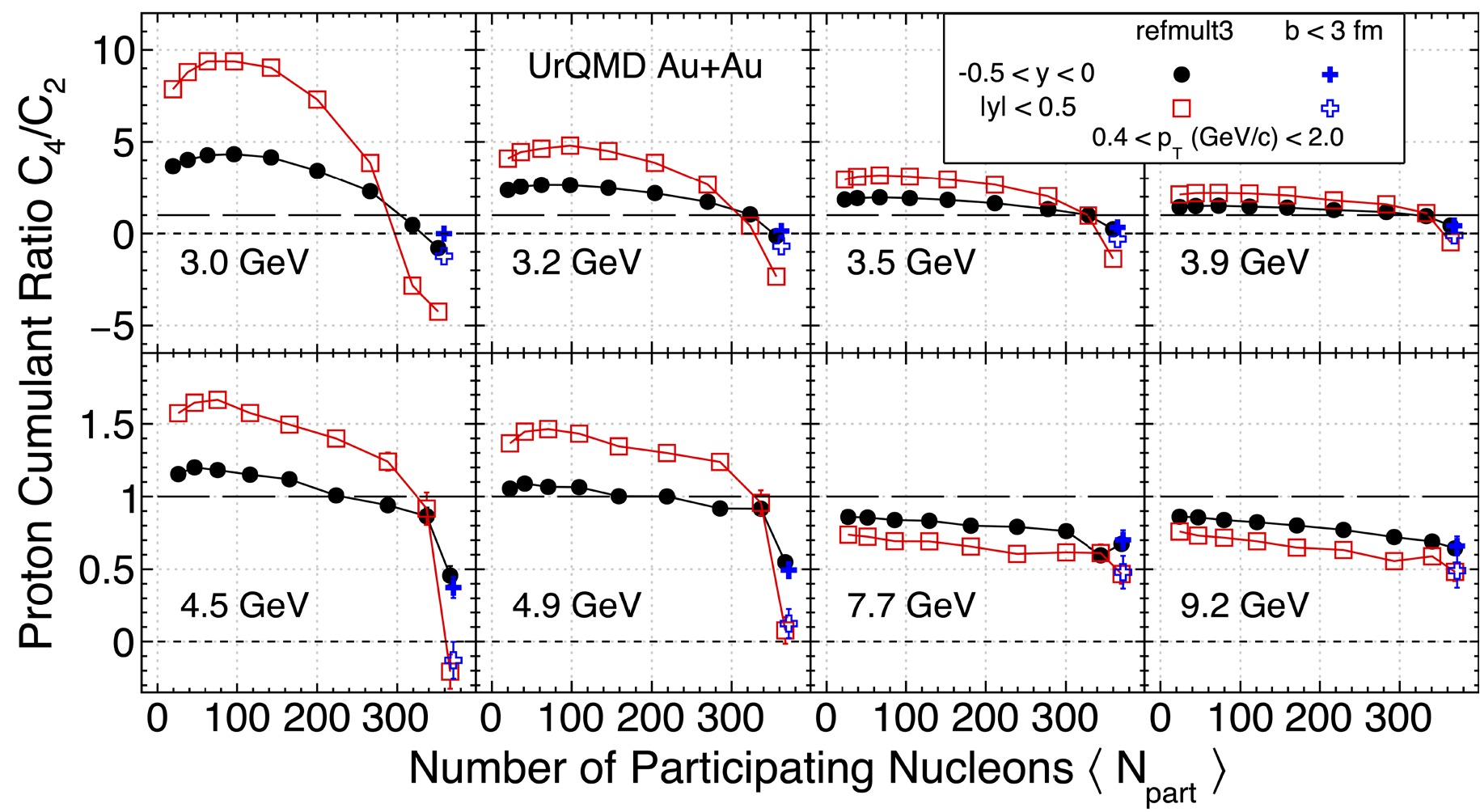
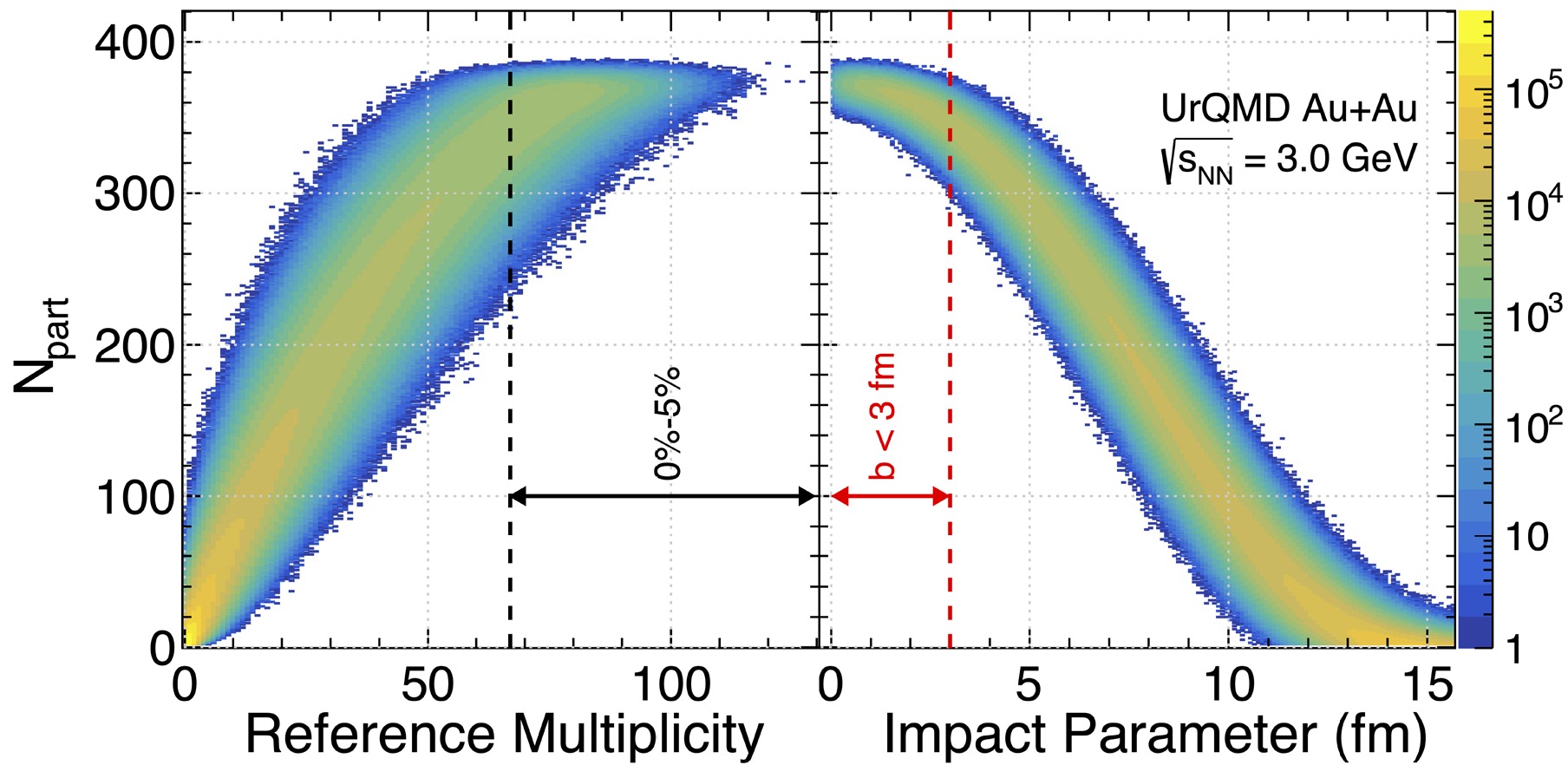
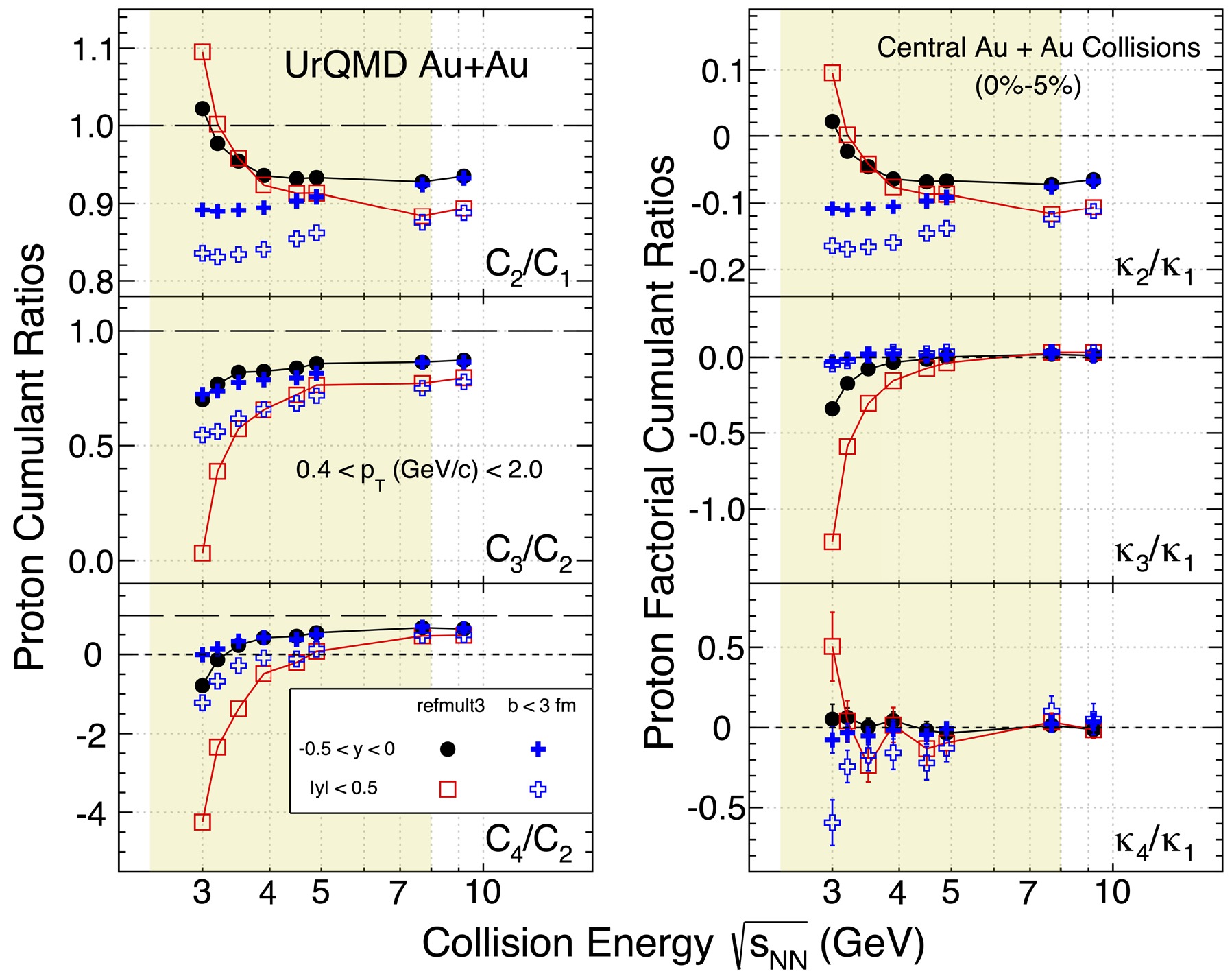
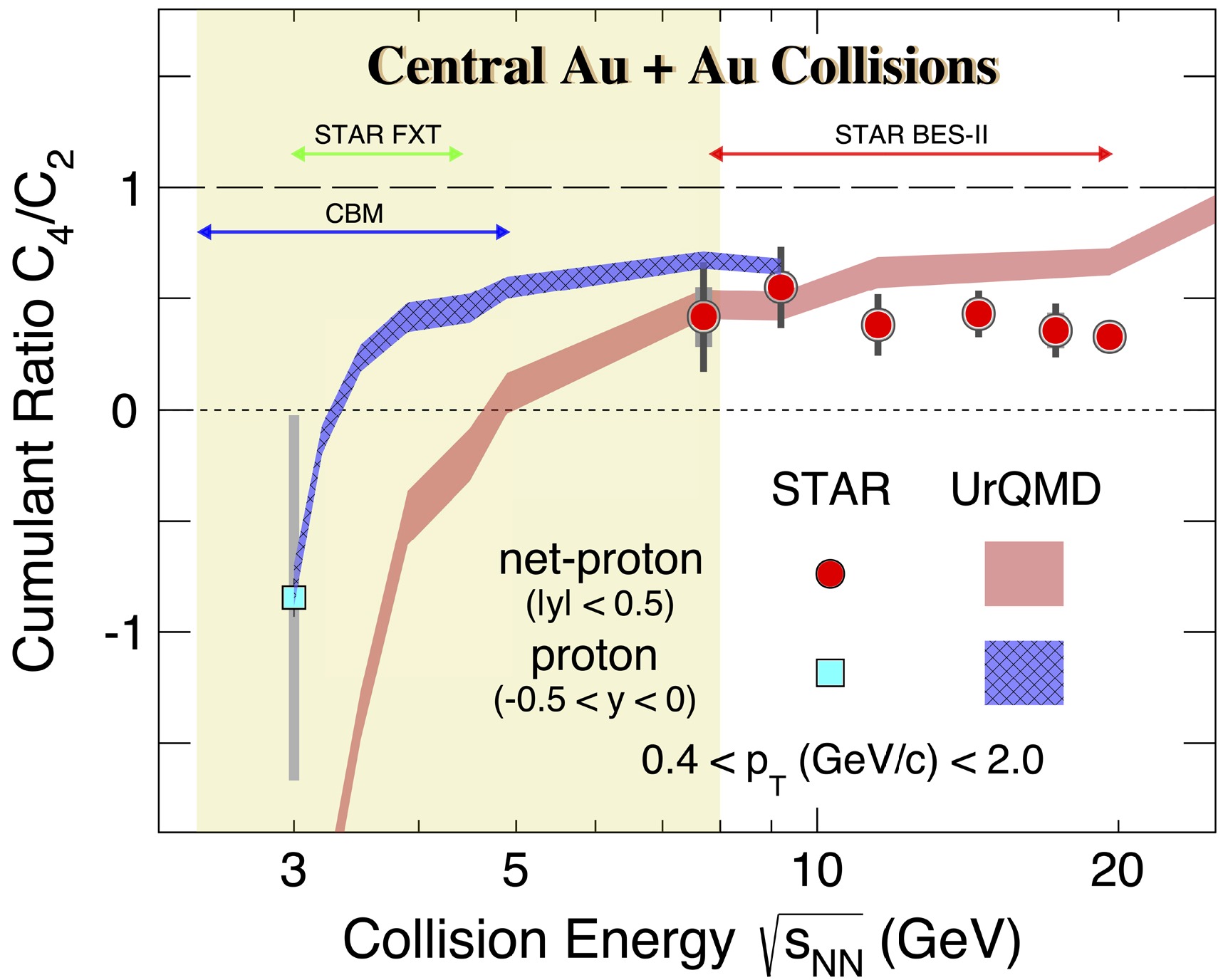
High moments of conserved quantities, such as net-baryon, net-electric charge, and net-strangeness, in heavy-ion collisions are sensitive to fluctuations caused by the quantum chromodynamics critical point (CP). The event-by-event analysis of high moments of the conserved charges has been widely used in experiments to search for the CP, particularly in the RHIC-STAR experiment. To establish a dynamical non-critical baseline, particularly in the high baryon density region, we performed a systematic analysis of the proton multiplicity distributions from Au+Au collisions at\begin{document}$ 3 \leq \sqrt{s_{NN}} \leq 9.2 $\end{document} \begin{document}$ 4^{\rm th} $\end{document}
High moments of conserved quantities, such as net-baryon, net-electric charge, and net-strangeness, in heavy-ion collisions are sensitive to fluctuations caused by the quantum chromodynamics critical point (CP). The event-by-event analysis of high moments of the conserved charges has been widely used in experiments to search for the CP, particularly in the RHIC-STAR experiment. To establish a dynamical non-critical baseline, particularly in the high baryon density region, we performed a systematic analysis of the proton multiplicity distributions from Au+Au collisions at
2026, 50(1): 012001. doi: 10.1088/1674-1137/ae30e9
Abstract:
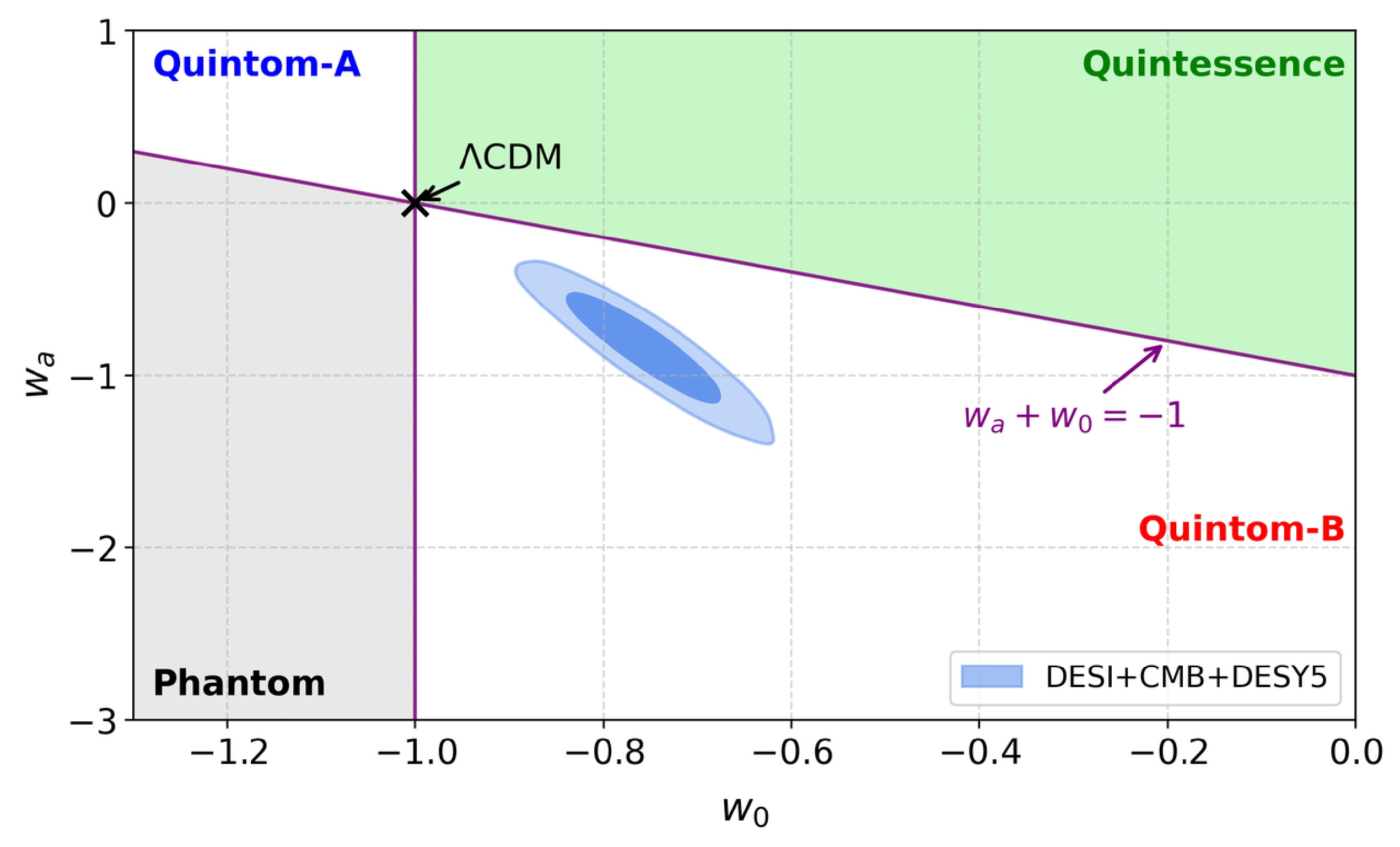
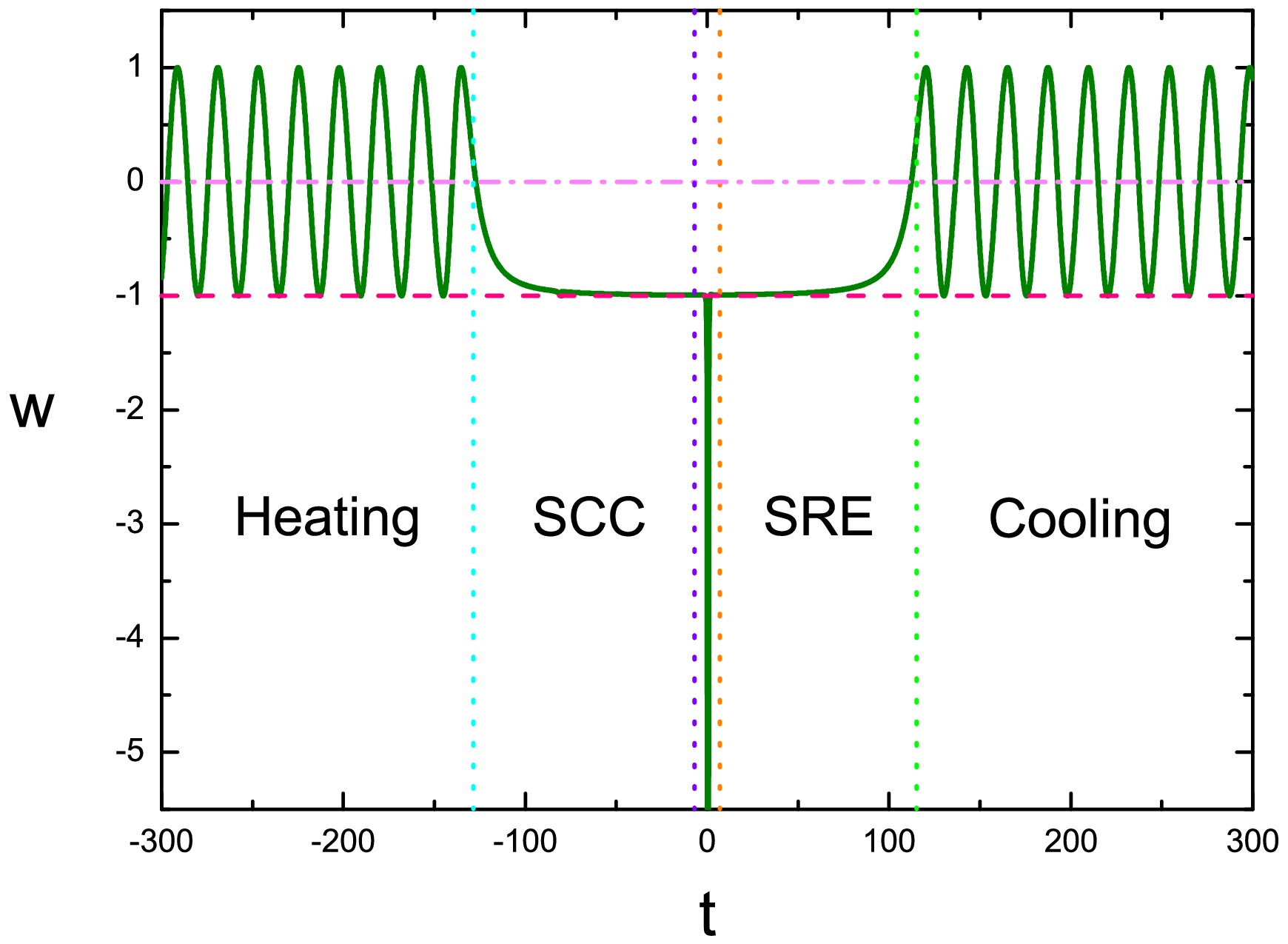
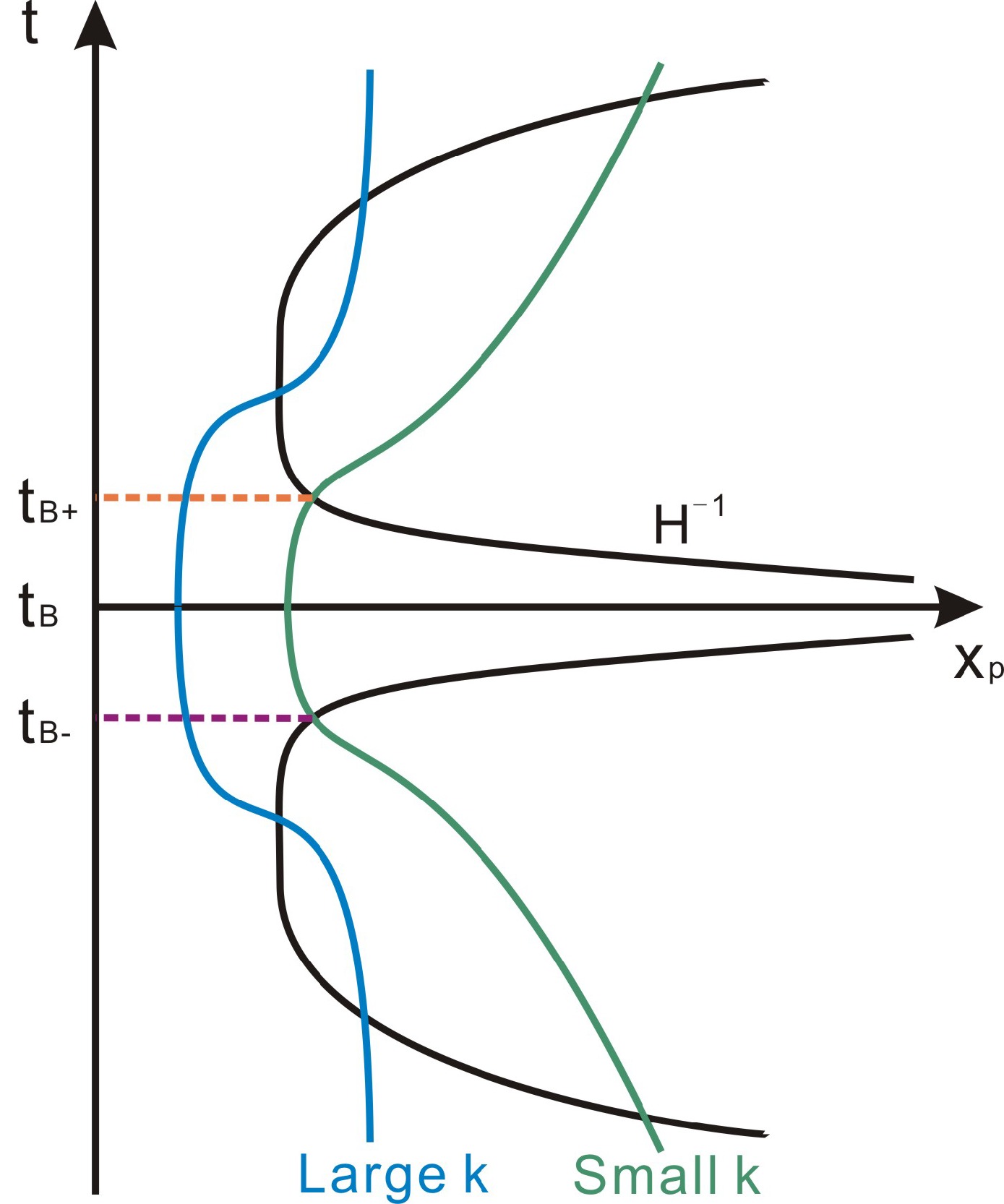
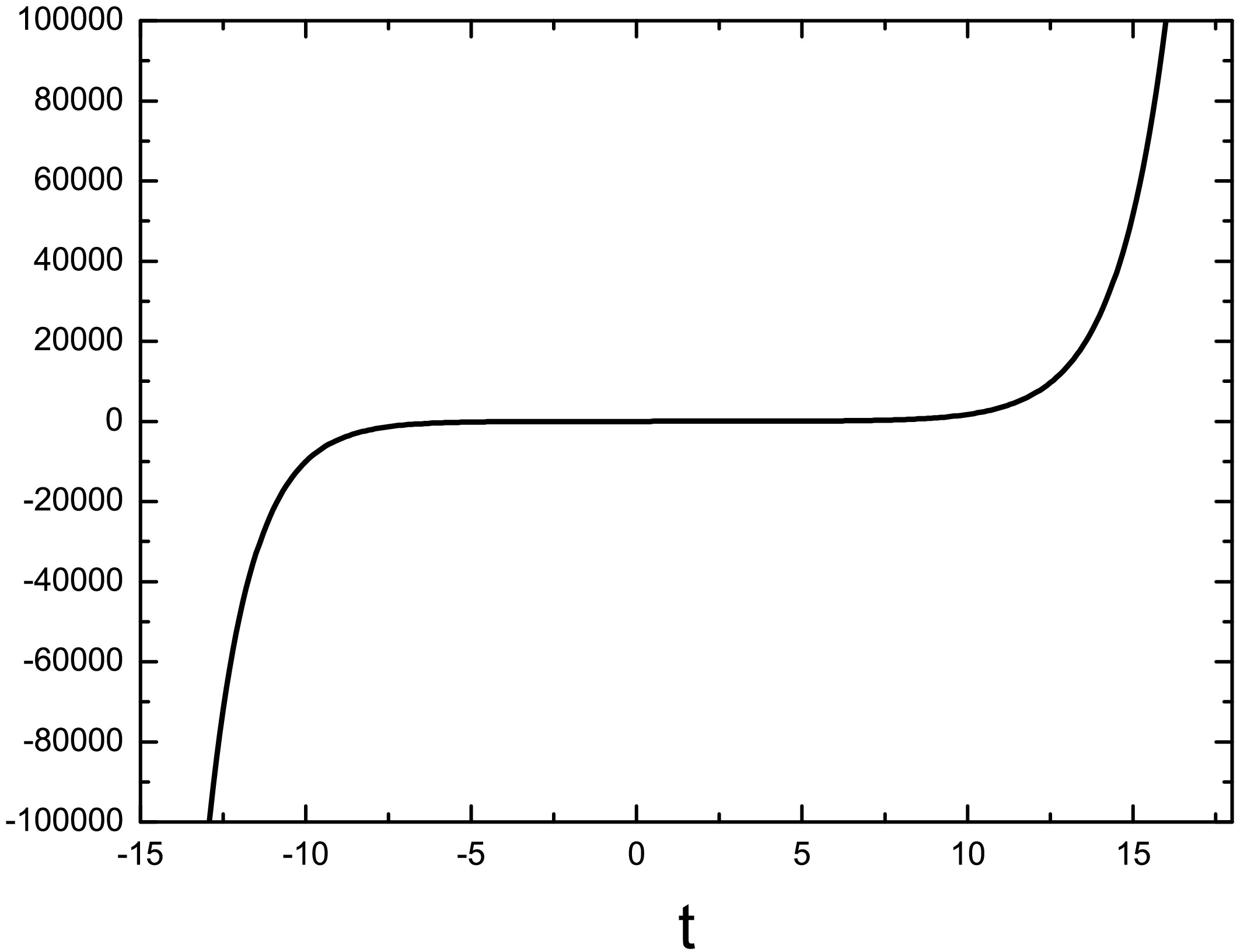
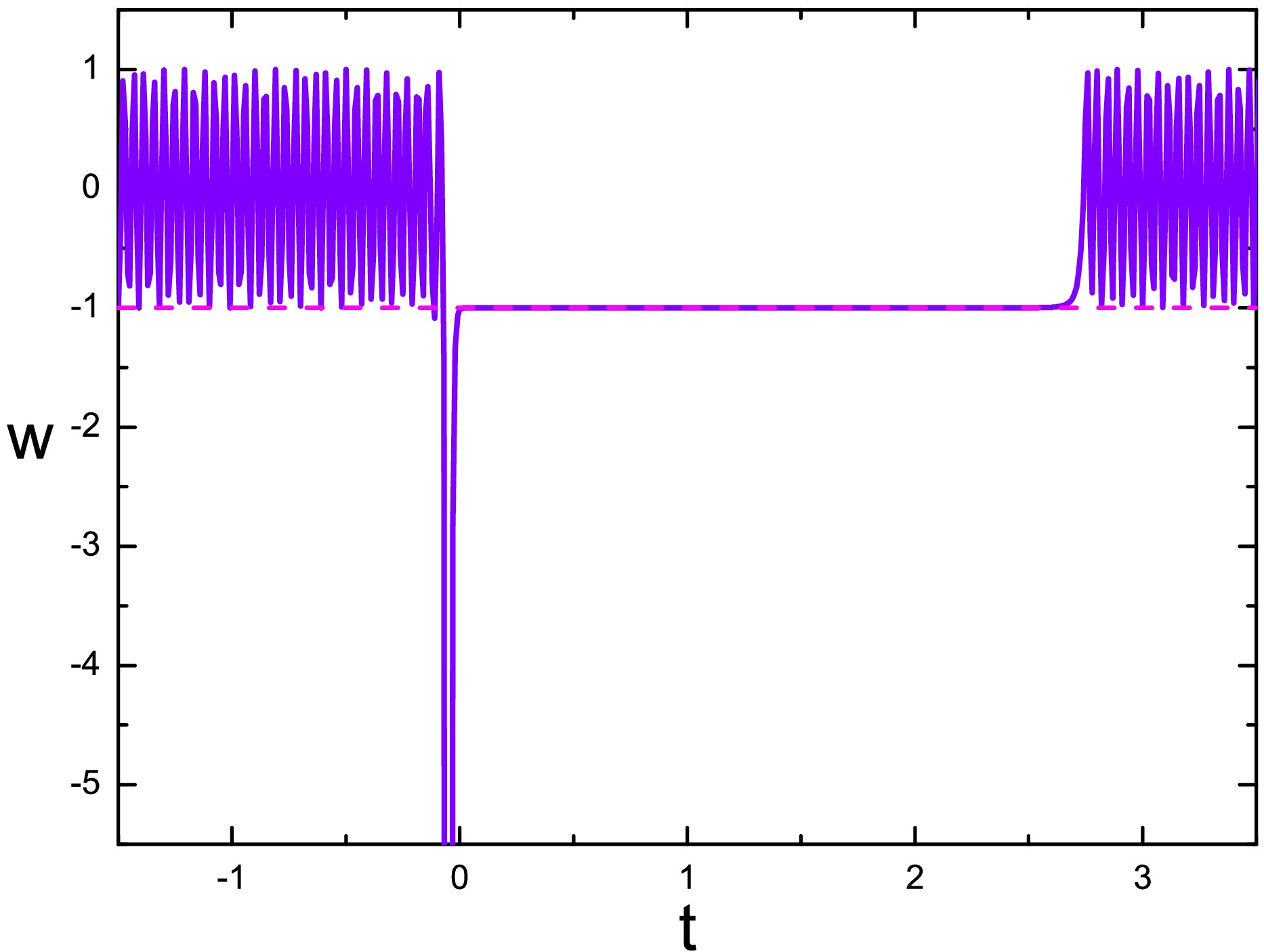
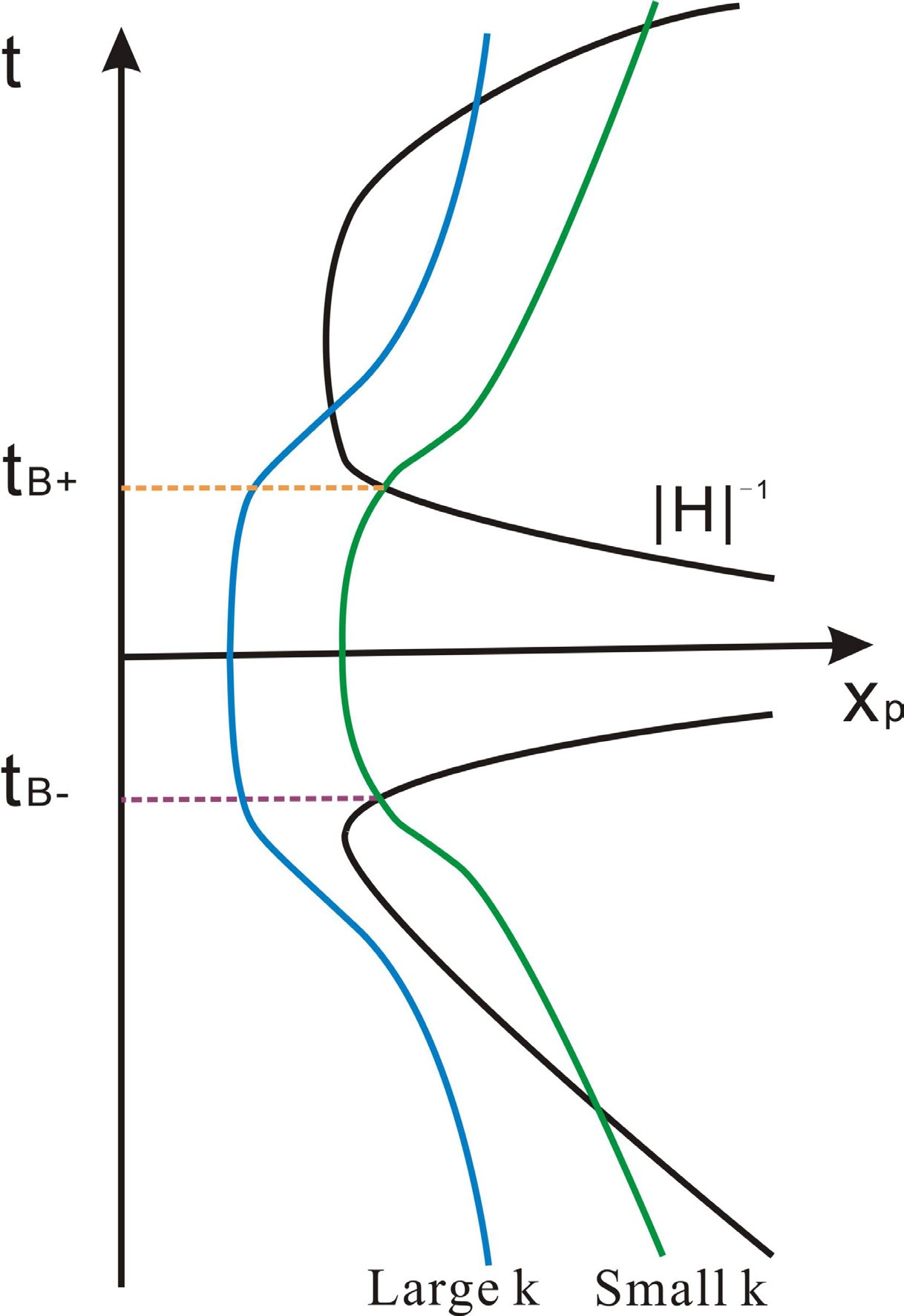
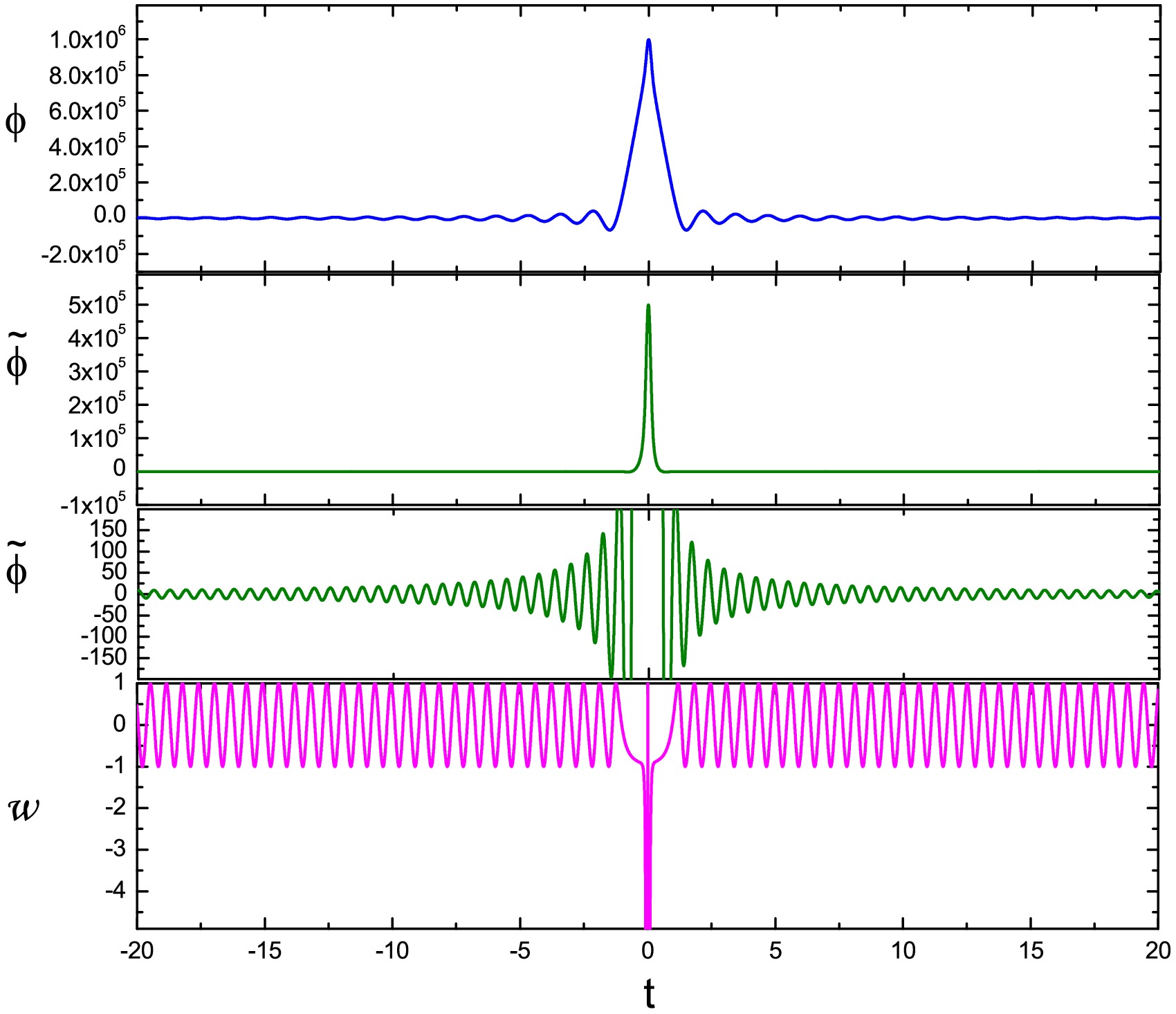
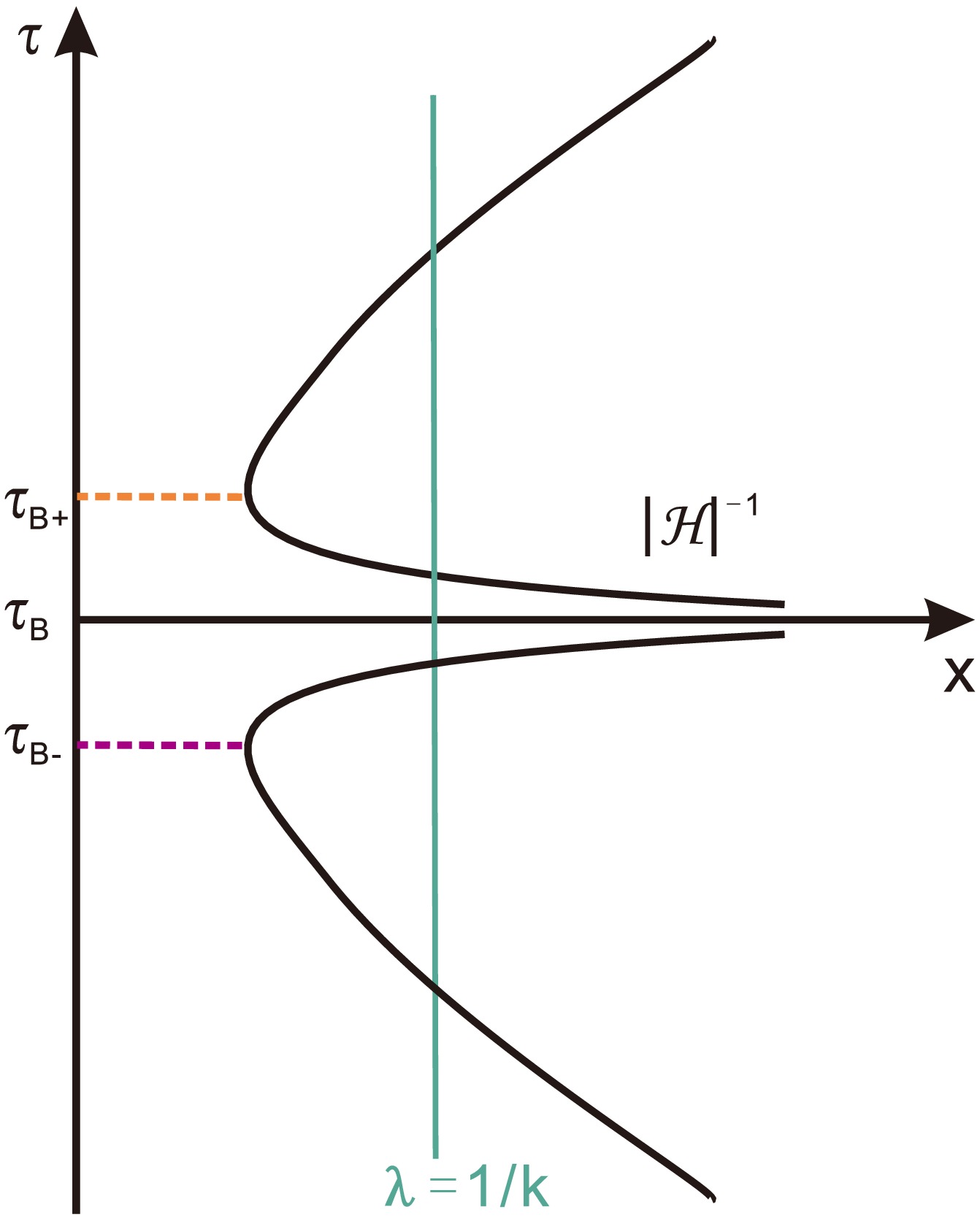
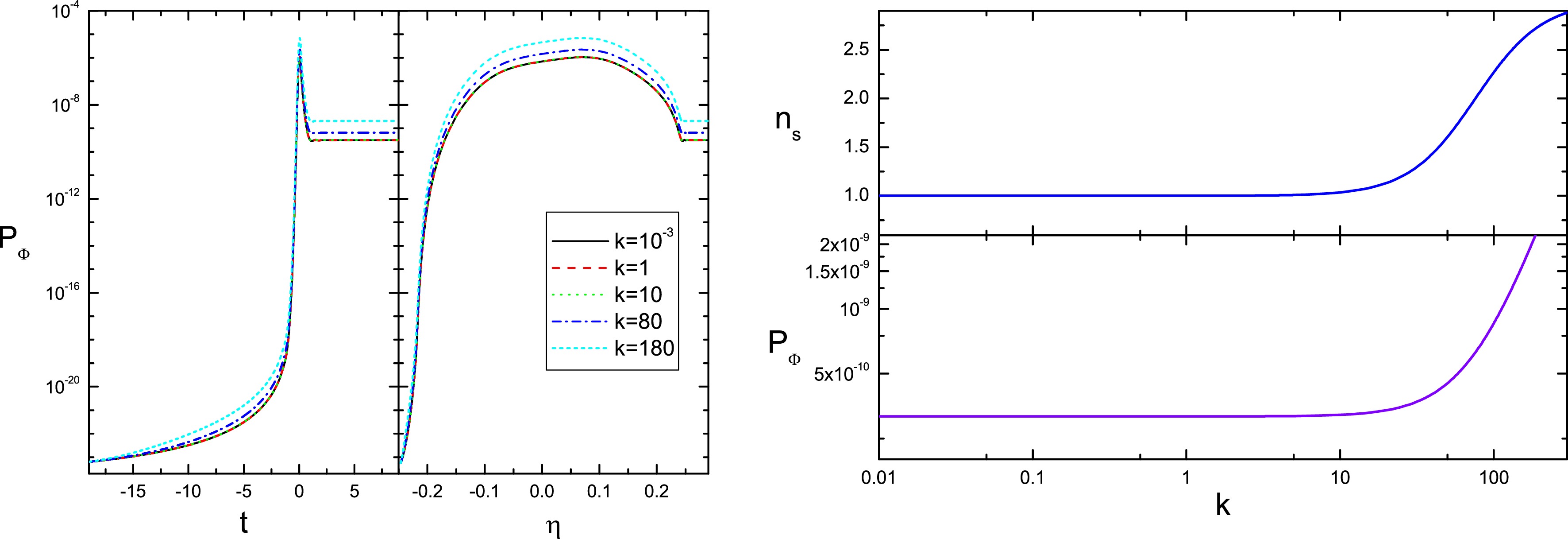
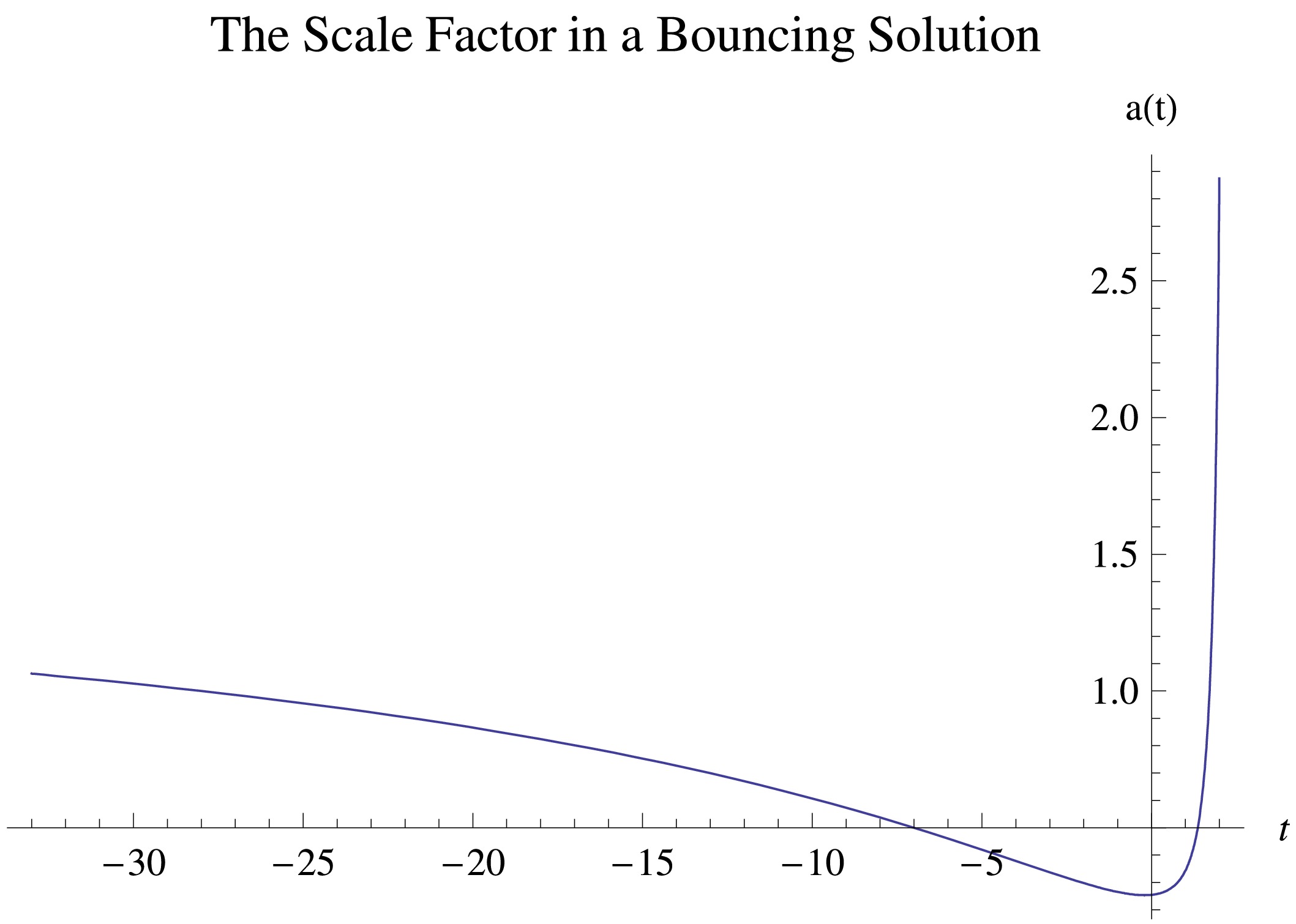
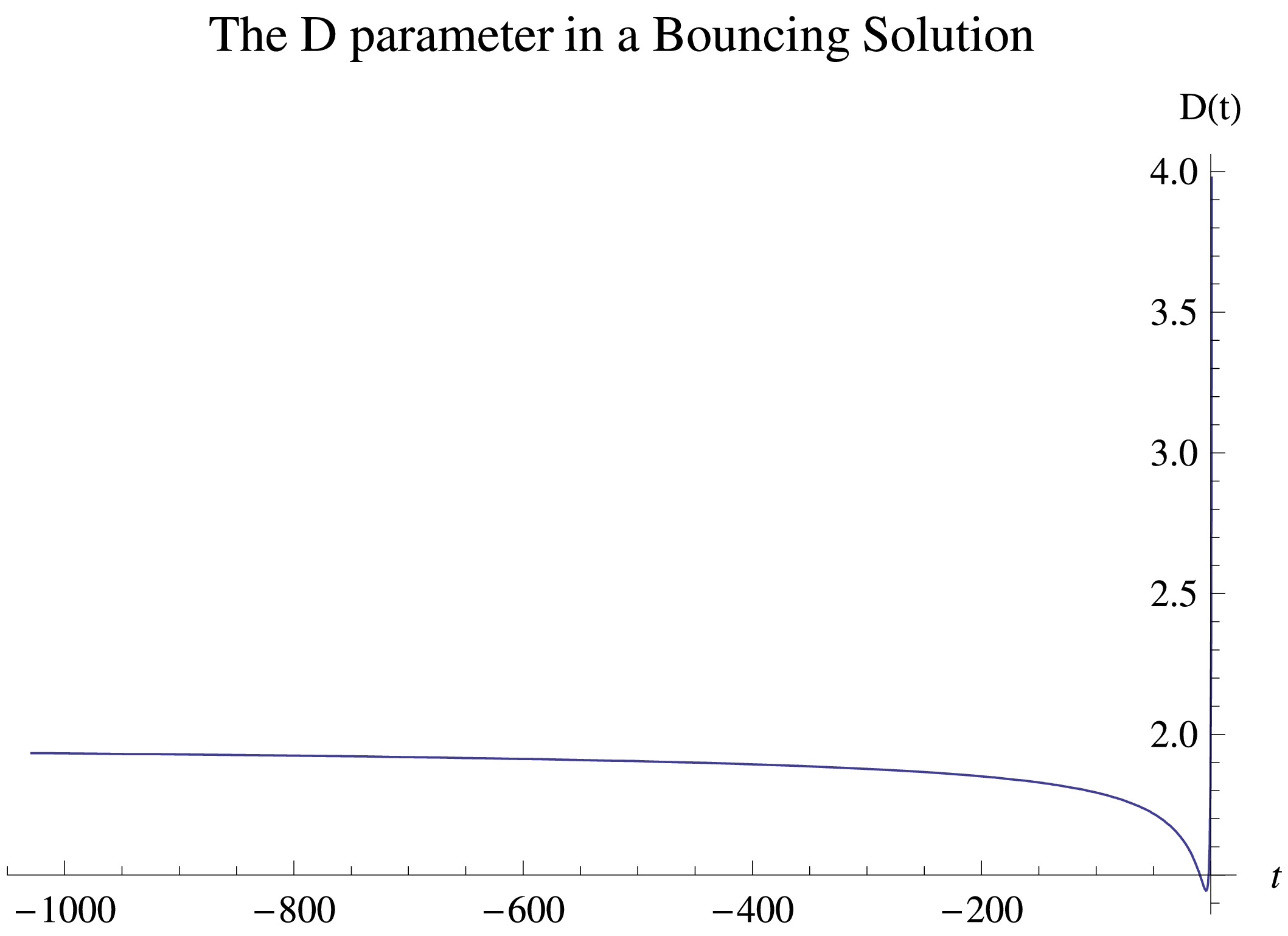
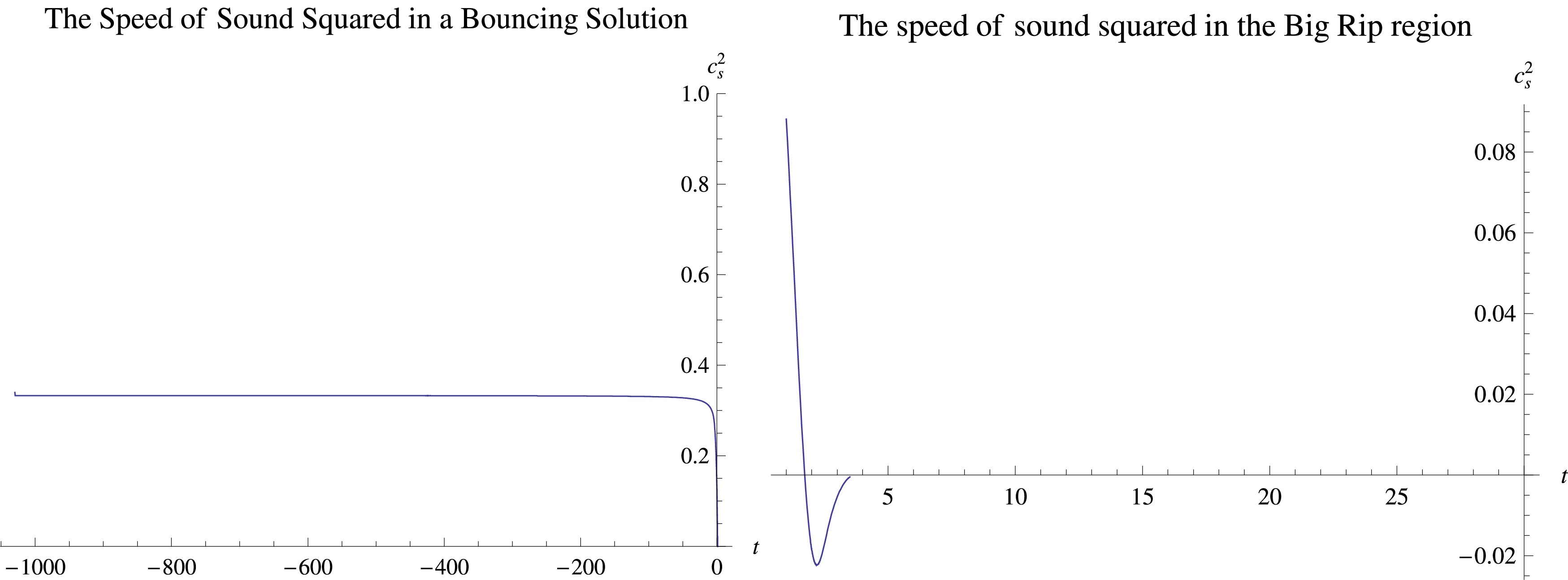
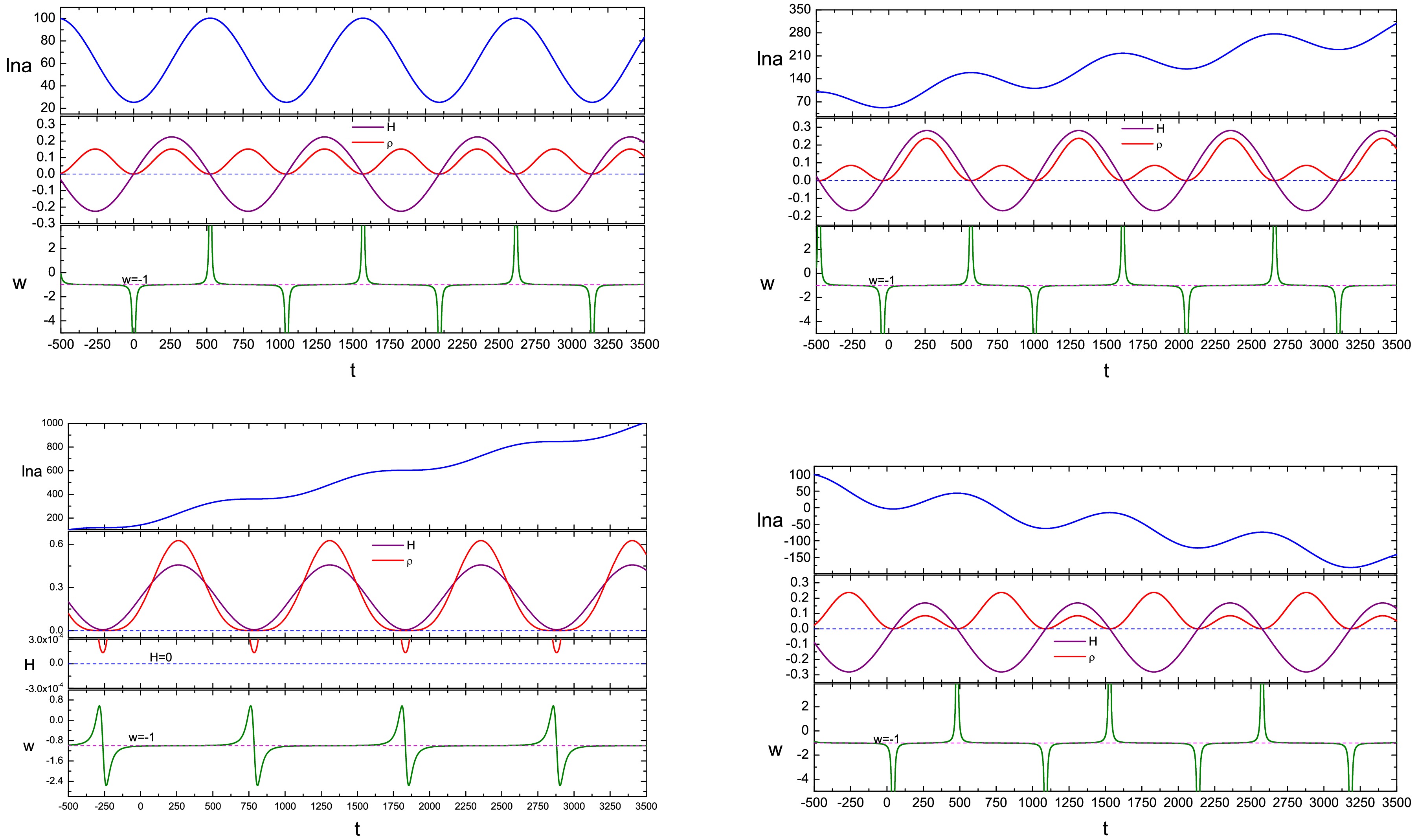
The recently released data of DESI DR2 favors a dynamical dark energy theory, with the equation of state crossing the cosmological constant boundary w = −1. In this paper, we briefly review quintom cosmology, especially the quintom bounce. We will give three examples of a quintom bounce and one example of a cyclic universe with quintom matter.
The recently released data of DESI DR2 favors a dynamical dark energy theory, with the equation of state crossing the cosmological constant boundary w = −1. In this paper, we briefly review quintom cosmology, especially the quintom bounce. We will give three examples of a quintom bounce and one example of a cyclic universe with quintom matter.
2026, 50(1): 013001. doi: 10.1088/1674-1137/ae1443
Abstract:
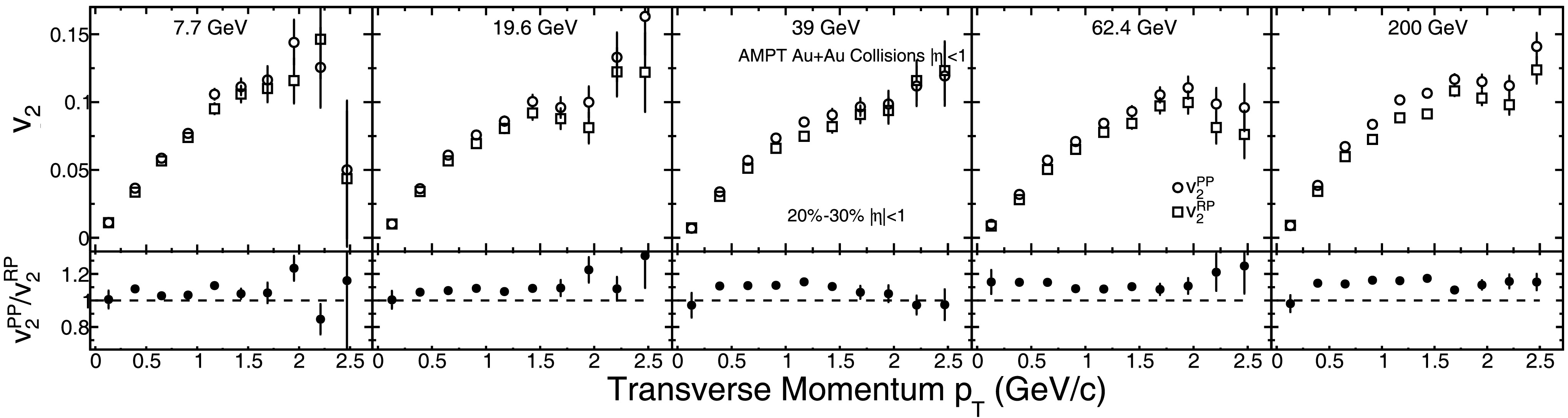
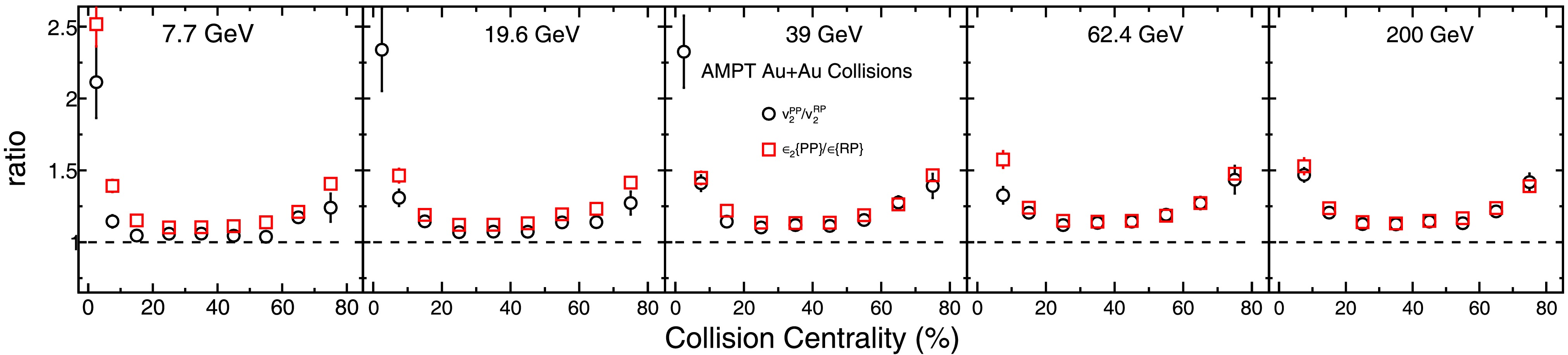
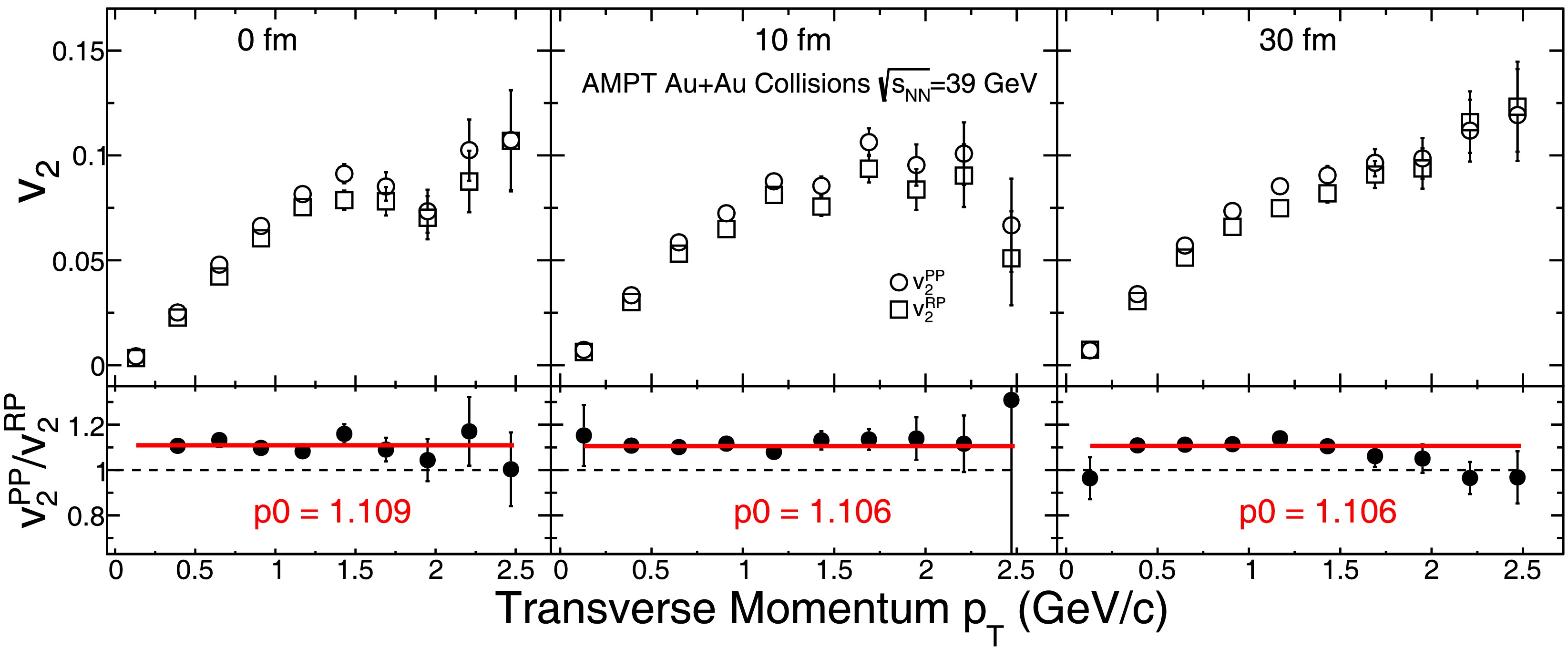
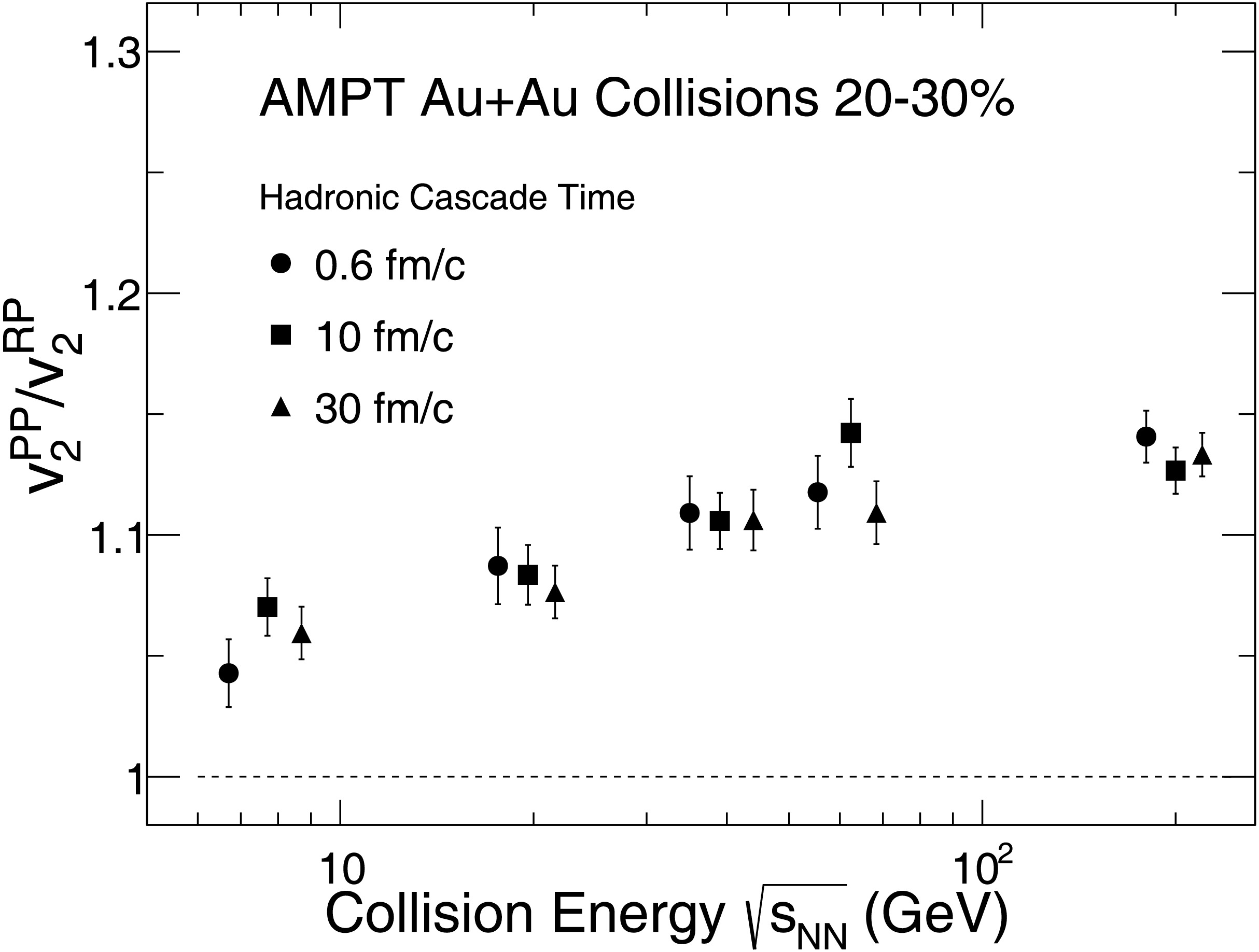
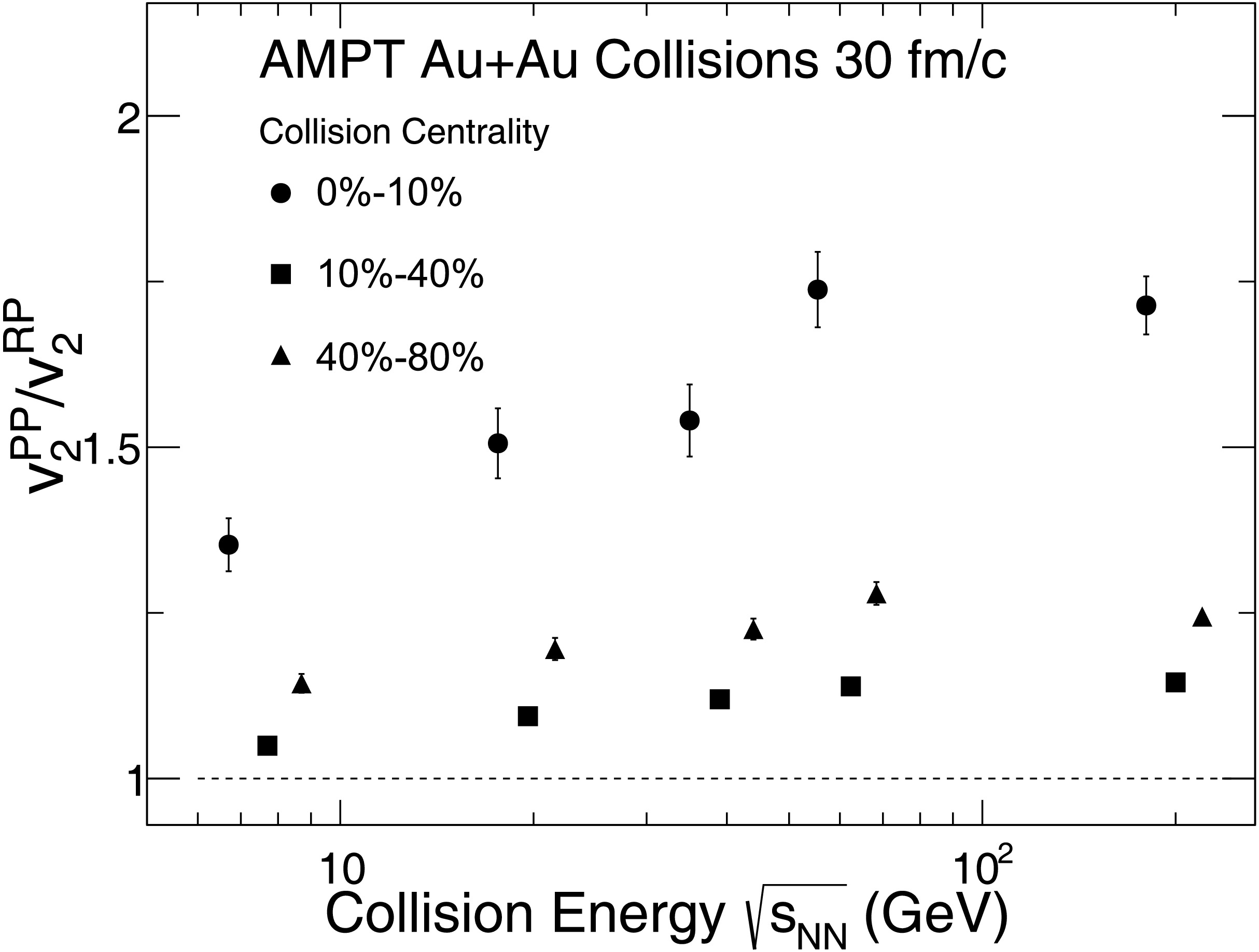
We present a systematic study of the elliptic flow\begin{document}$ v_2 $\end{document} \begin{document}$ \sqrt{s_{NN}} = 7.7 $\end{document} \begin{document}$ v_{2}^{\text{PP}} $\end{document} \begin{document}$ v_{2}^{\text{RP}} $\end{document} \begin{document}$ \sqrt{s_{NN}} \approx 62.4 $\end{document}
We present a systematic study of the elliptic flow
2026, 50(1): 013101. doi: 10.1088/1674-1137/ae042d
Abstract:
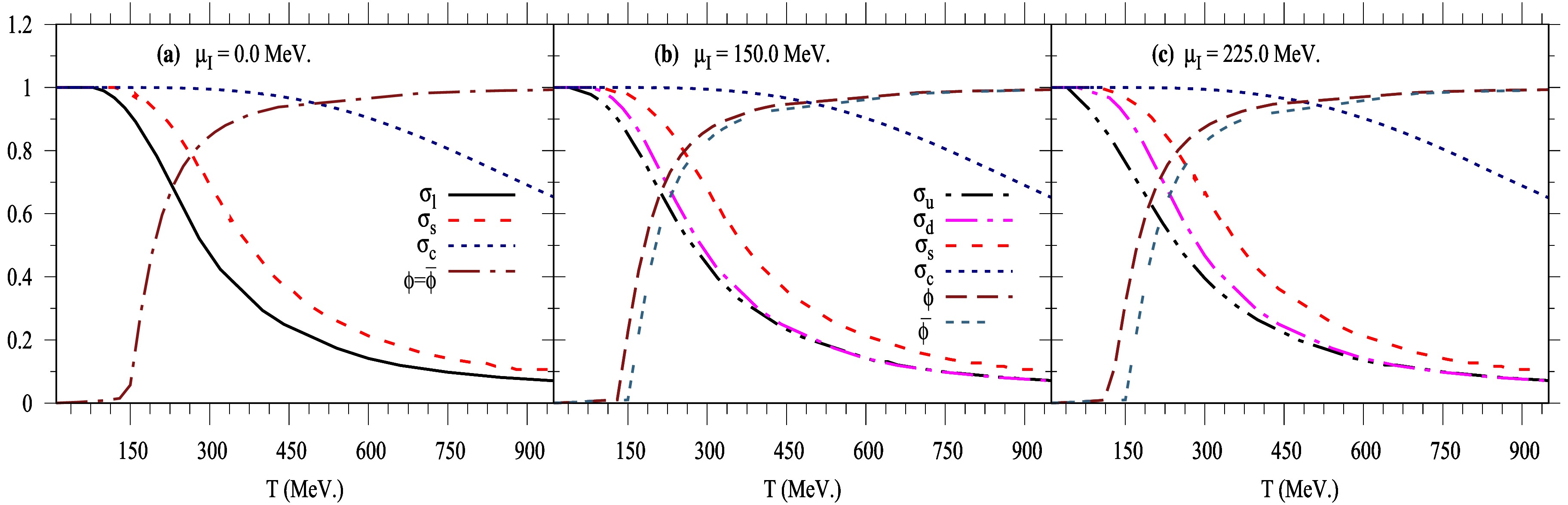
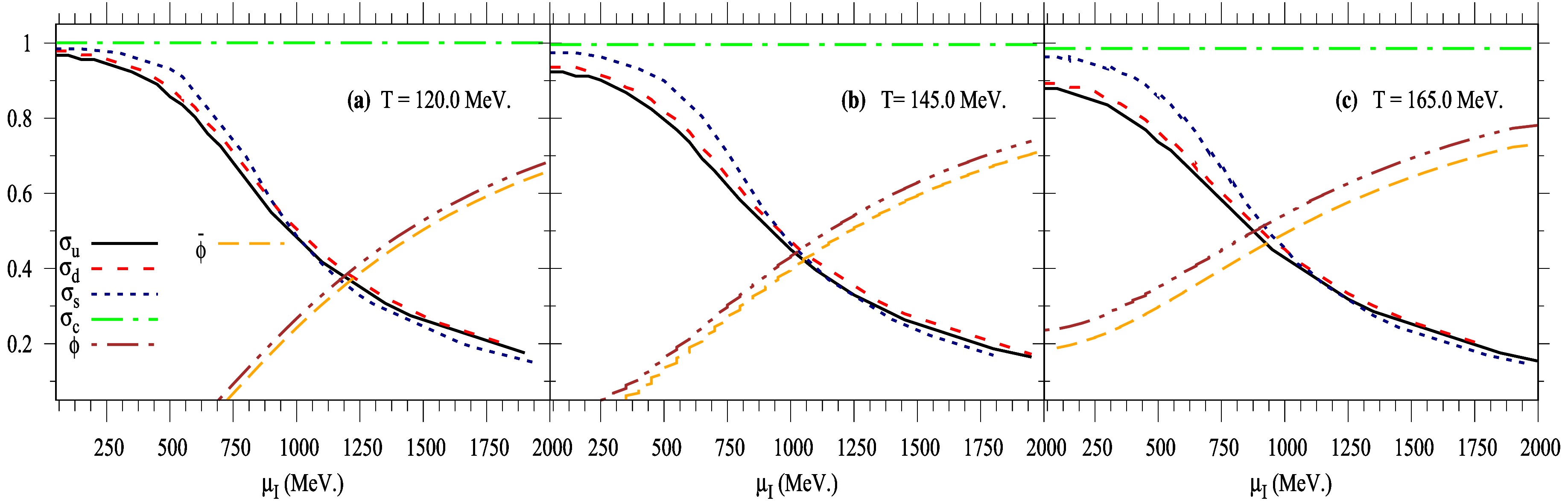
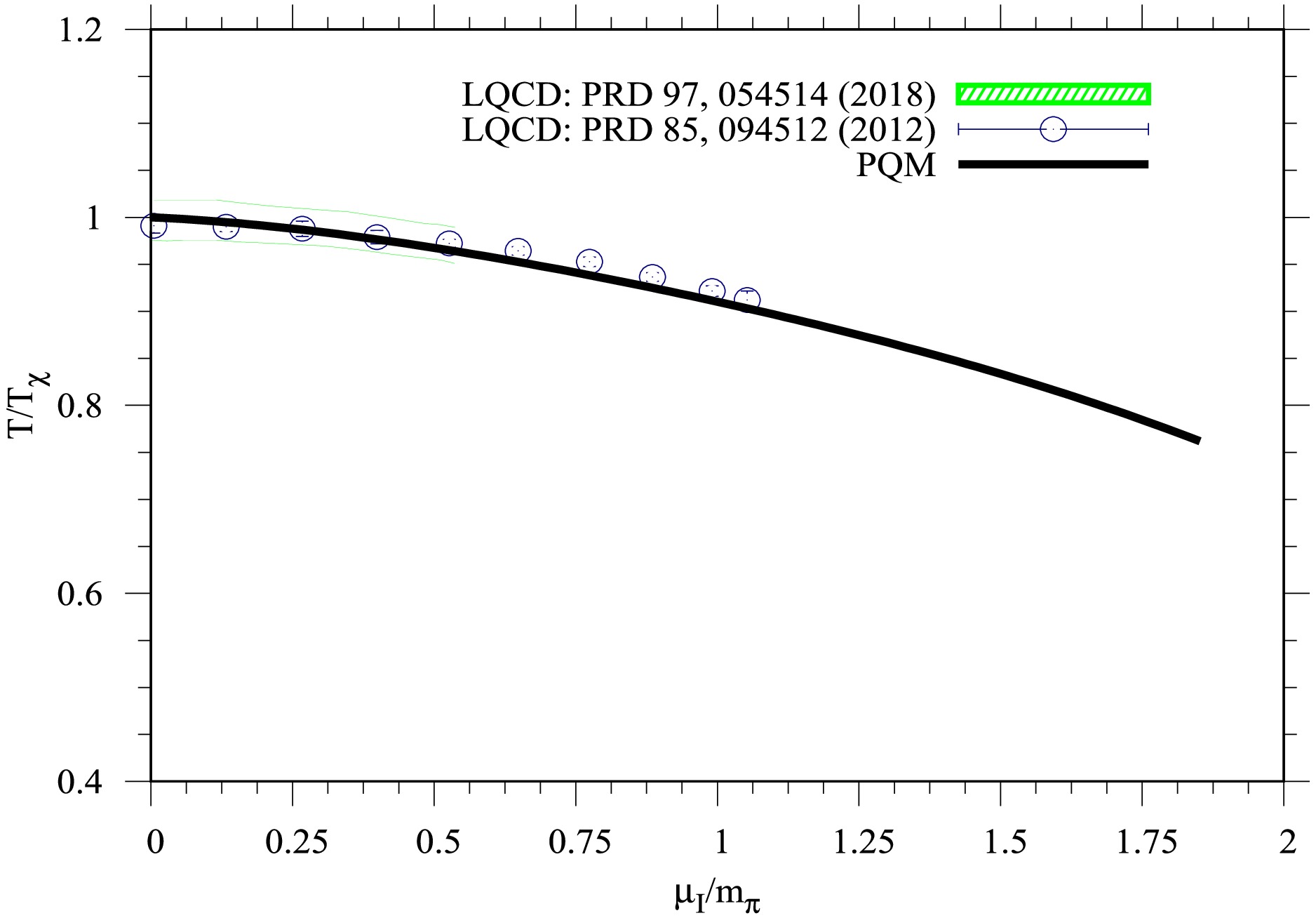
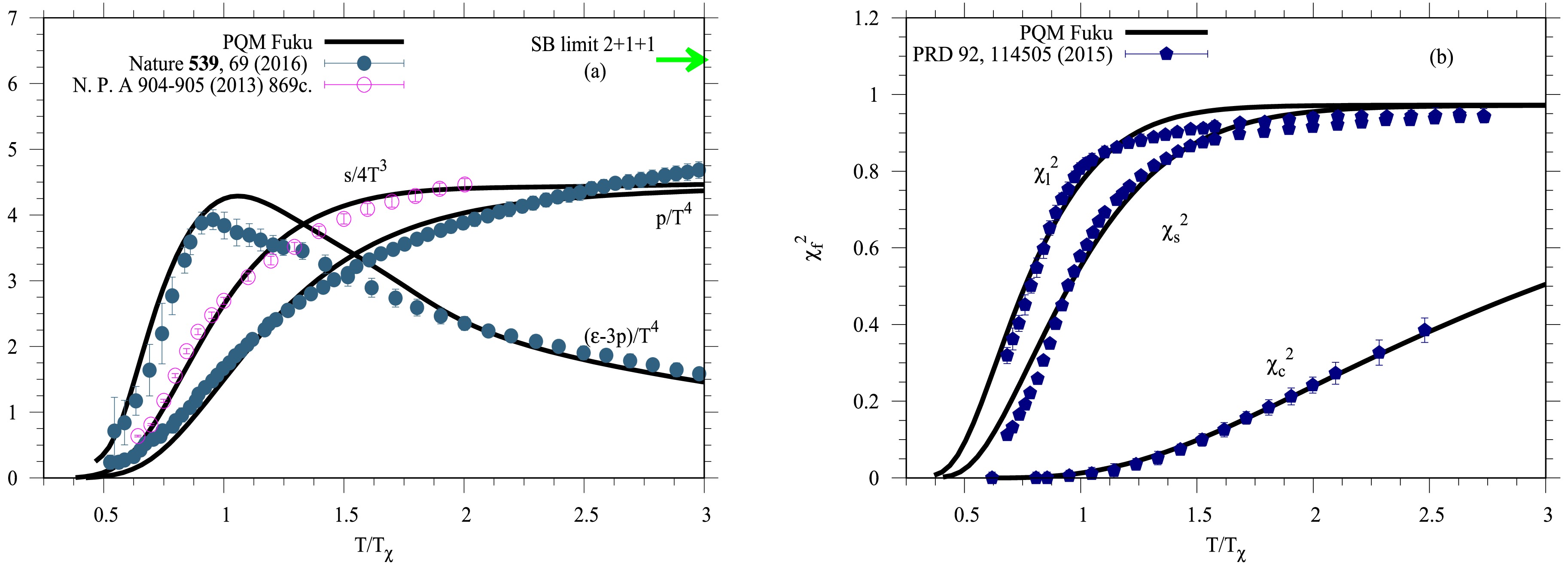
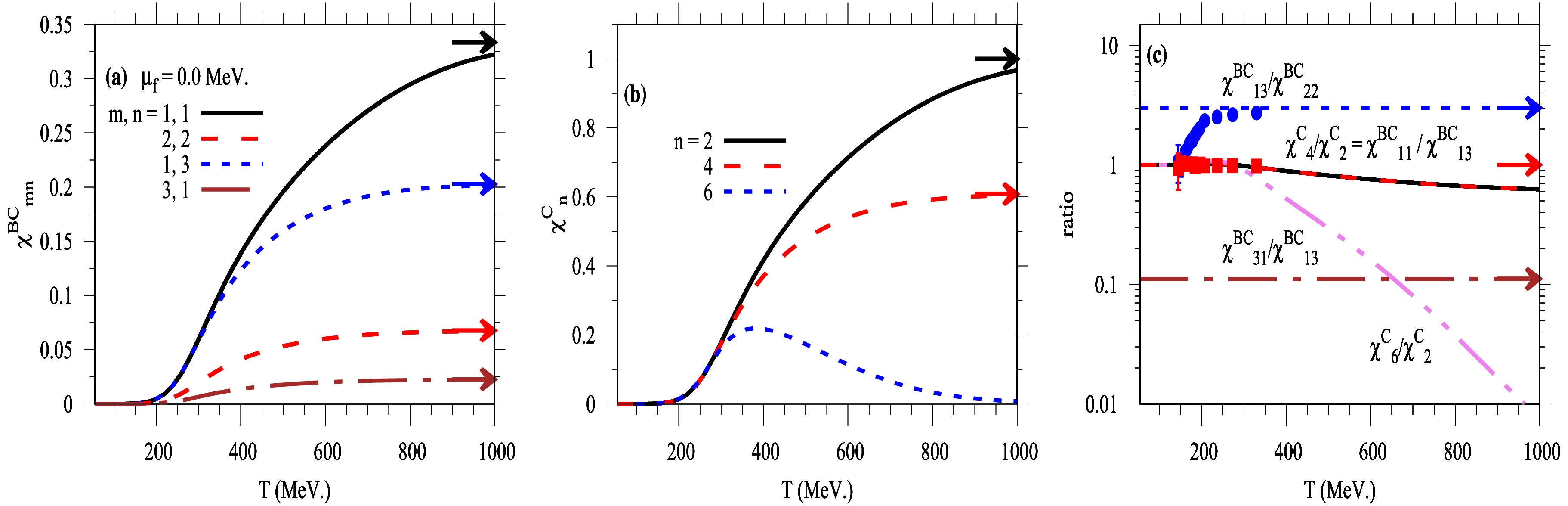
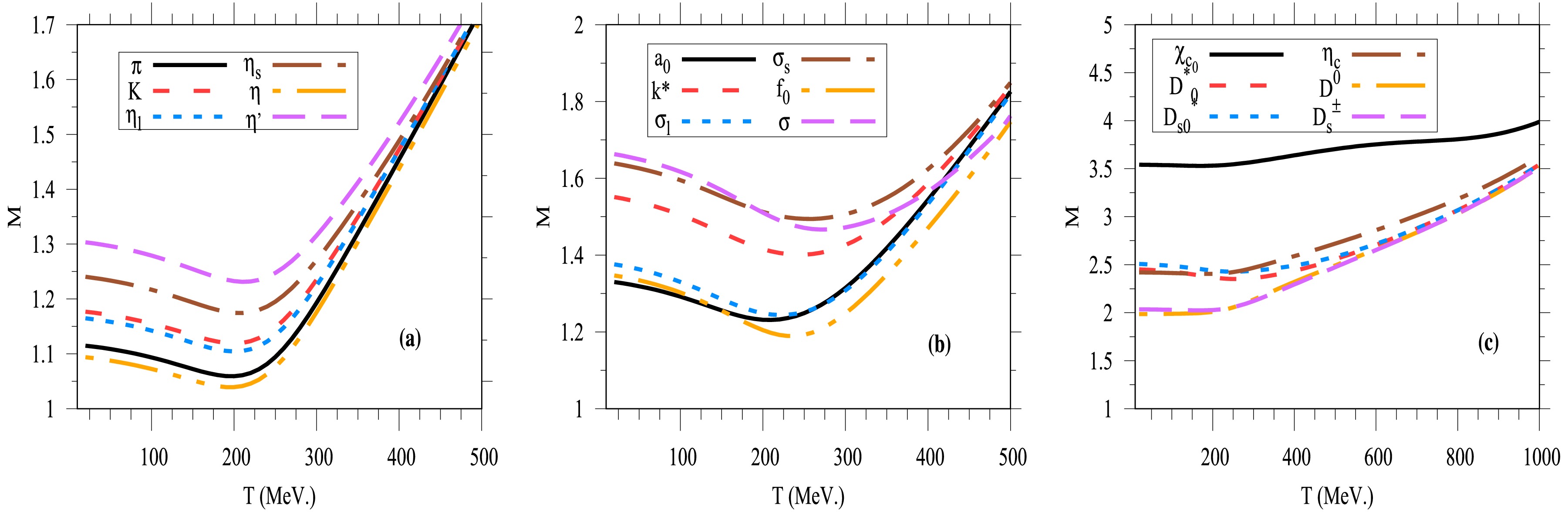
The Polyakov Quark Meson (PQM) model is extended to SU(4) flavor symmetry by incorporating the charm quark and introducing a finite isospin asymmetry. This model incorporates the light, strange, and charm chiral condensates, along with the Polyakov-loop variables, to describe the confinement–deconfinement phase transition in a thermal and dense QCD medium. The inclusion of the charm quark condensate enhances the capability of the SU(4) PQM model to explore the spatial and thermal resolution of the chiral phase structure, particularly in the crossover and high-temperature regimes. We construct the QCD phase diagram (\begin{document}$ T/T_\chi-\mu_I/m_\pi $\end{document}
The Polyakov Quark Meson (PQM) model is extended to SU(4) flavor symmetry by incorporating the charm quark and introducing a finite isospin asymmetry. This model incorporates the light, strange, and charm chiral condensates, along with the Polyakov-loop variables, to describe the confinement–deconfinement phase transition in a thermal and dense QCD medium. The inclusion of the charm quark condensate enhances the capability of the SU(4) PQM model to explore the spatial and thermal resolution of the chiral phase structure, particularly in the crossover and high-temperature regimes. We construct the QCD phase diagram (
2026, 50(1): 013102. doi: 10.1088/1674-1137/ad62d6
Abstract:
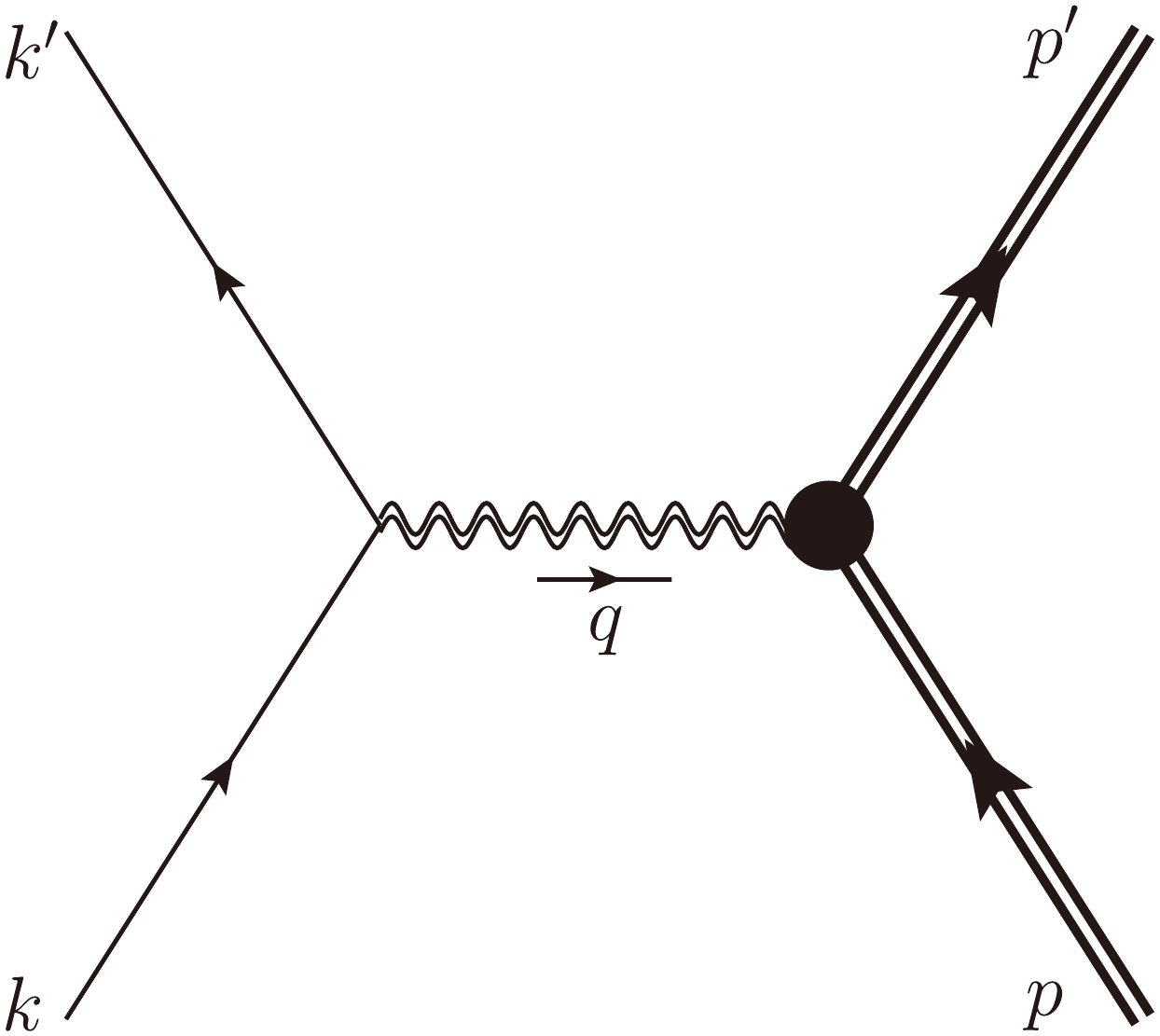
We investigate the soft behavior of the tree-level Rutherford scattering processes mediated via t-channel one-graviton exchange. We consider two types of Rutherford scattering processes: a low-energy massless structureless projectile (up to spin-1) hits a static massive composite particle carrying various spins (up to spin-2), and slowly moving light projectile hits a heavy static composite target. The unpolarized cross sections in the first type exhibit universal forms at the first two orders in\begin{document}$ 1/M $\end{document} \begin{document}$ 1/M $\end{document} \begin{document}$ v^2/M^2 $\end{document}
We investigate the soft behavior of the tree-level Rutherford scattering processes mediated via t-channel one-graviton exchange. We consider two types of Rutherford scattering processes: a low-energy massless structureless projectile (up to spin-1) hits a static massive composite particle carrying various spins (up to spin-2), and slowly moving light projectile hits a heavy static composite target. The unpolarized cross sections in the first type exhibit universal forms at the first two orders in
2026, 50(1): 013103. doi: 10.1088/1674-1137/ae0998
Abstract:
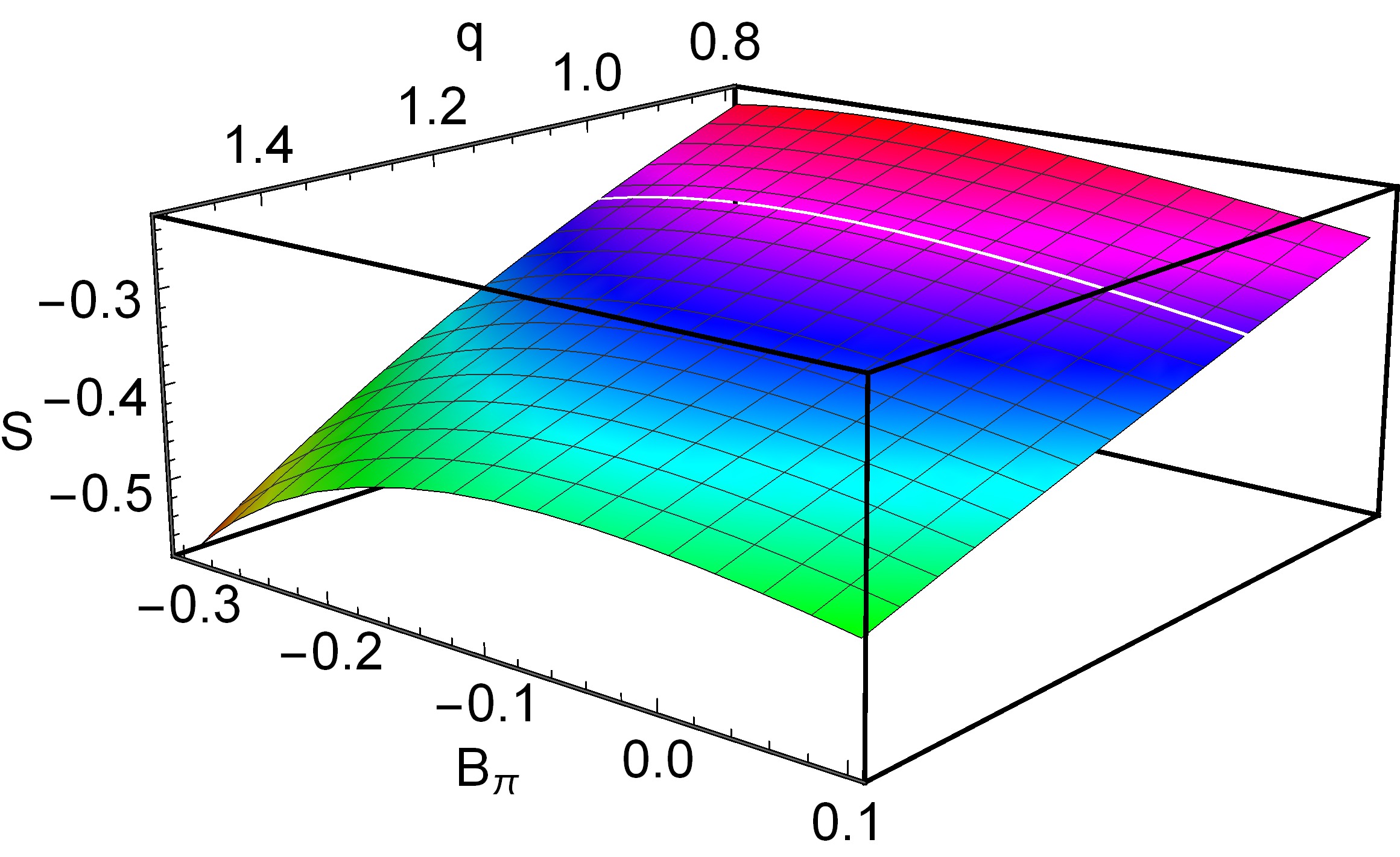
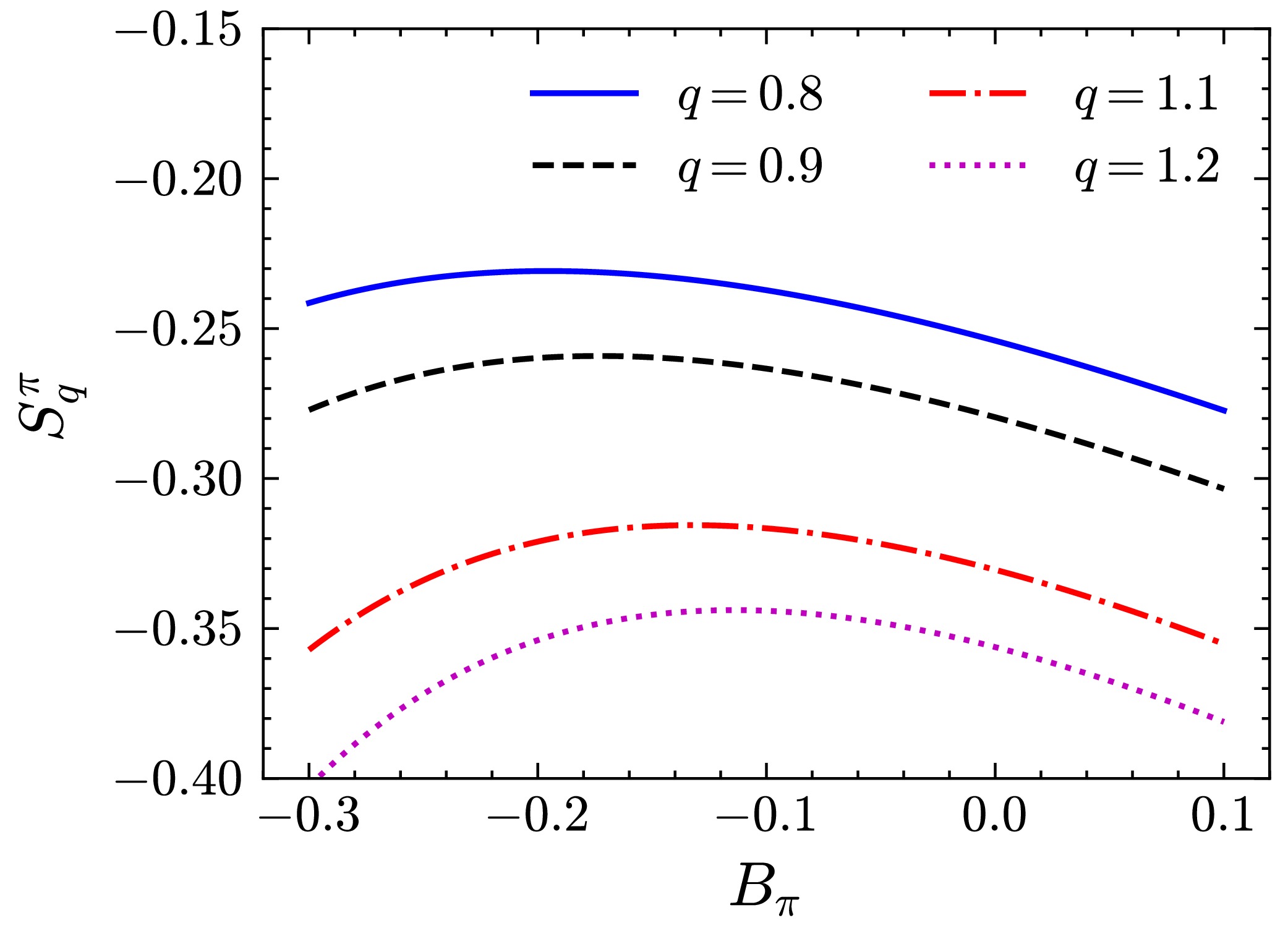
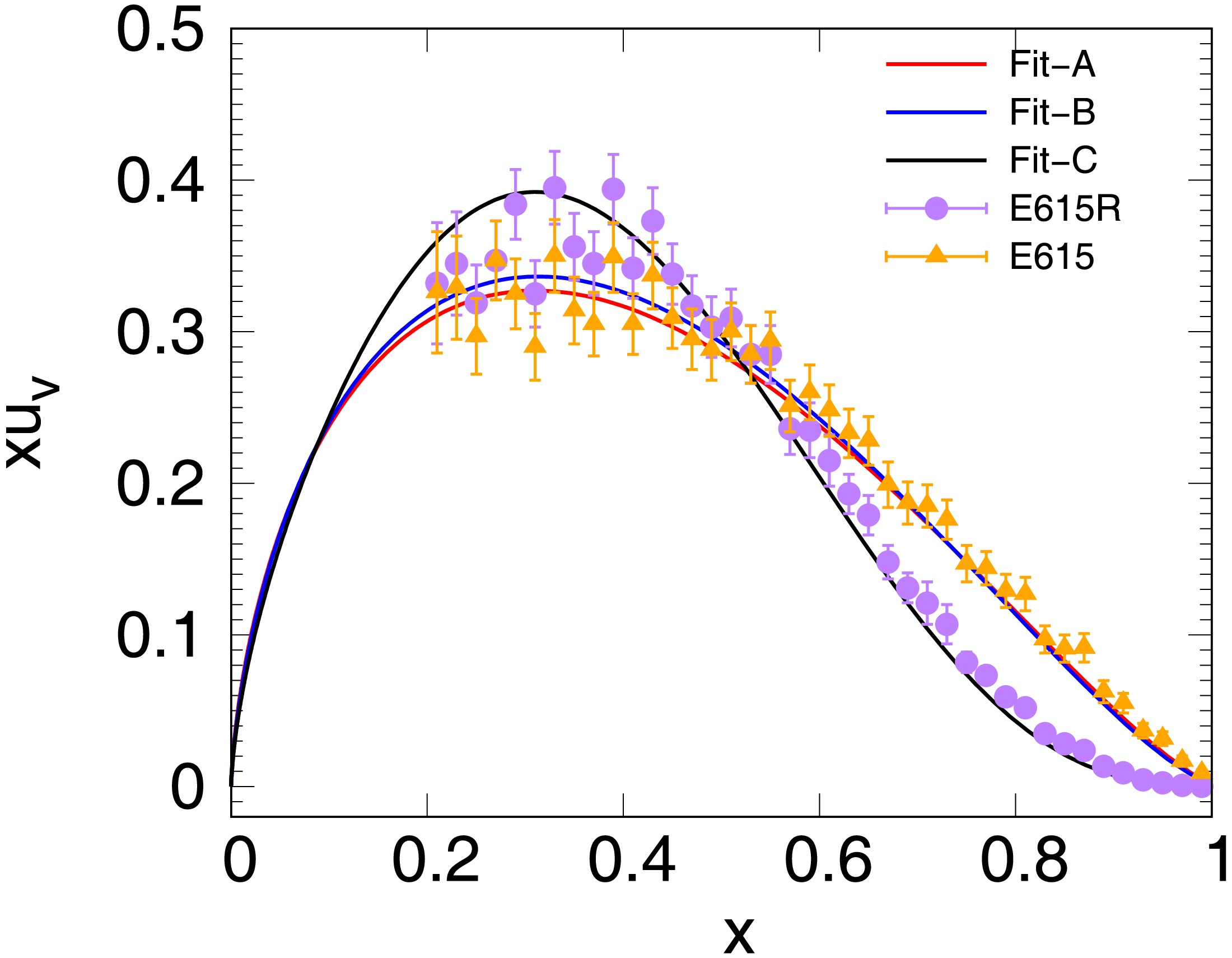
We investigate the valence quark distributions of pions at a low initial scale (\begin{document}$Q^2_0$\end{document} \begin{document}$ Q^2 = 4$\end{document}
We investigate the valence quark distributions of pions at a low initial scale (
2026, 50(1): 013104. doi: 10.1088/1674-1137/ae07b9
Abstract:
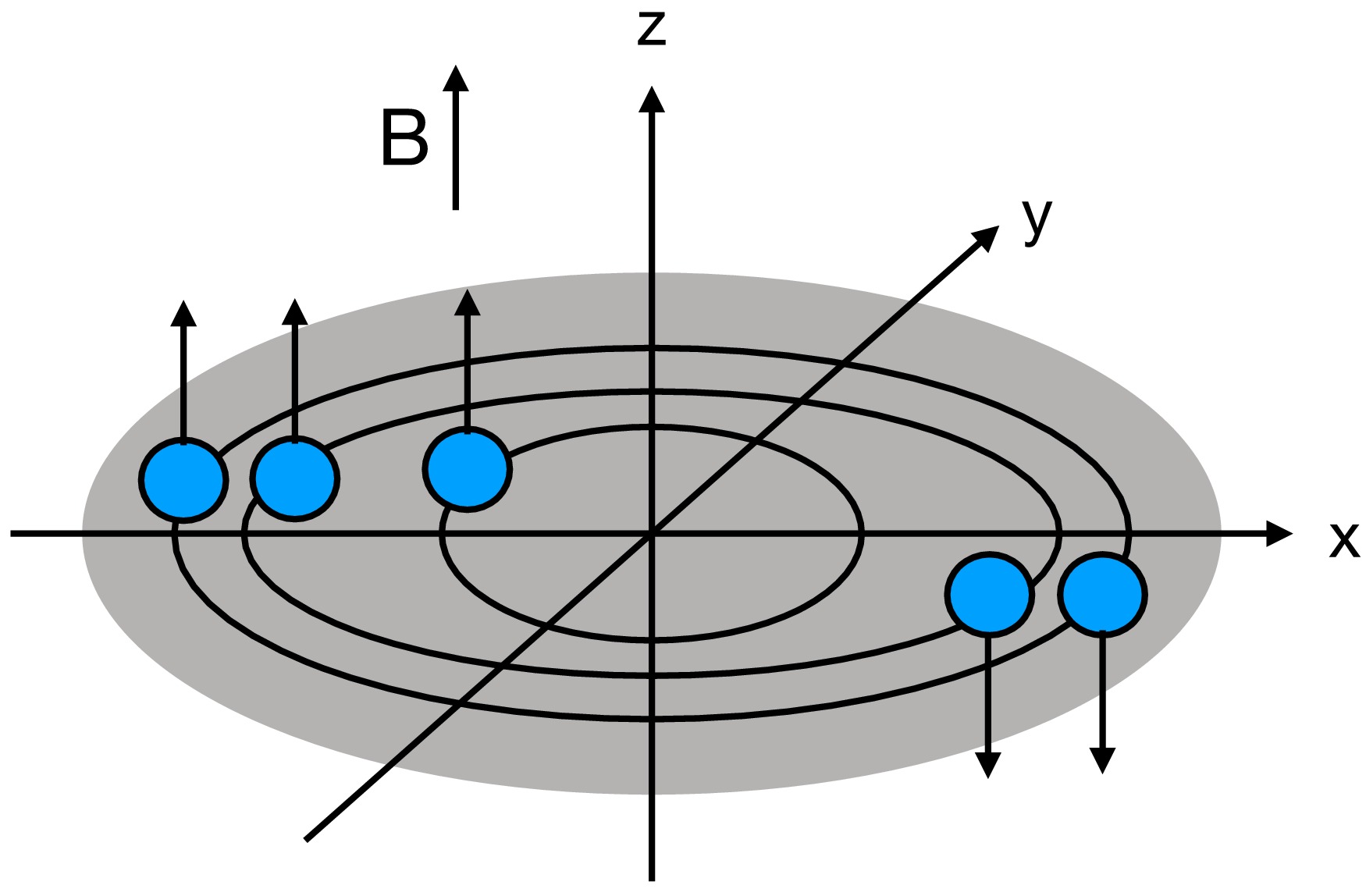
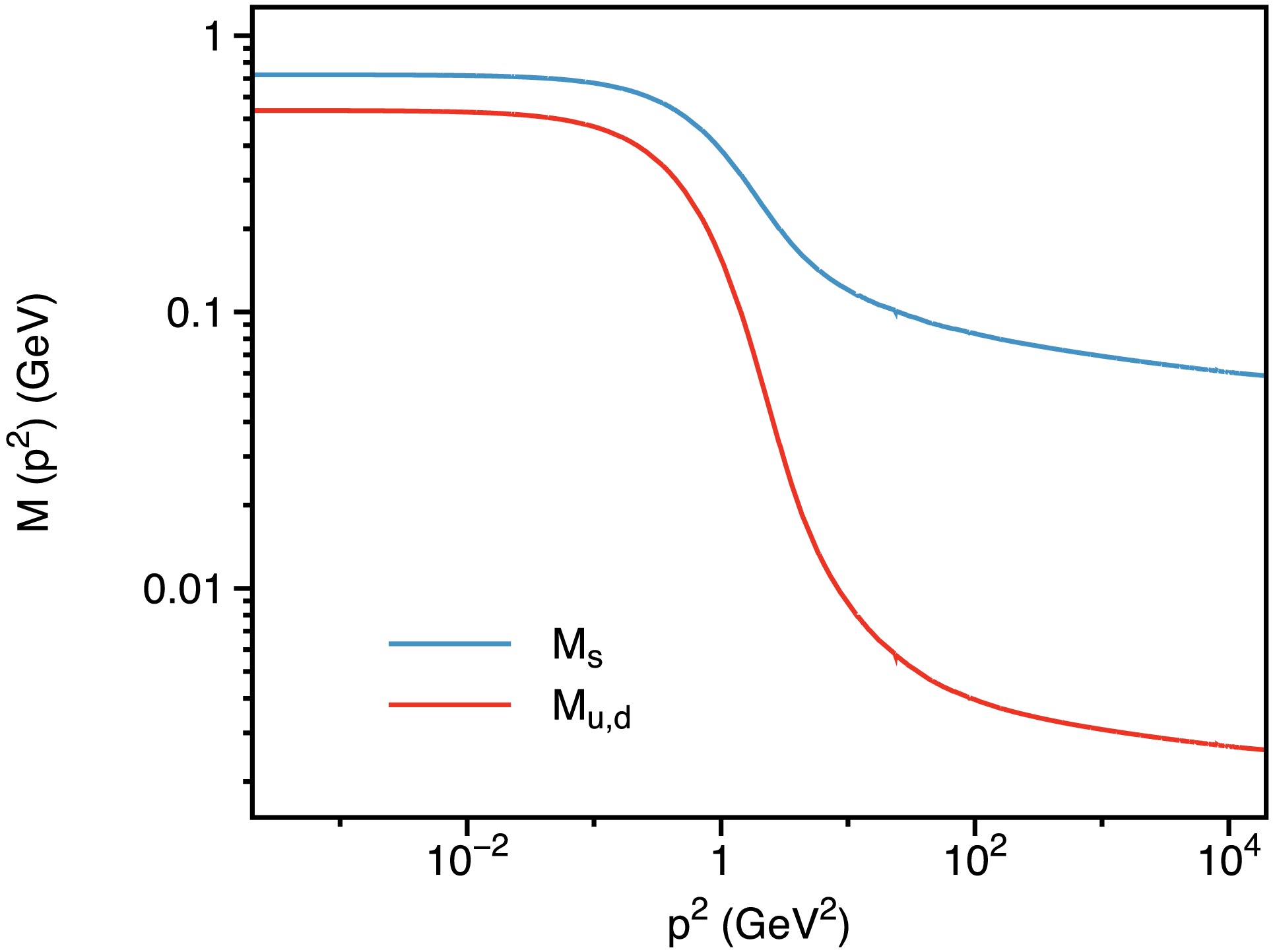
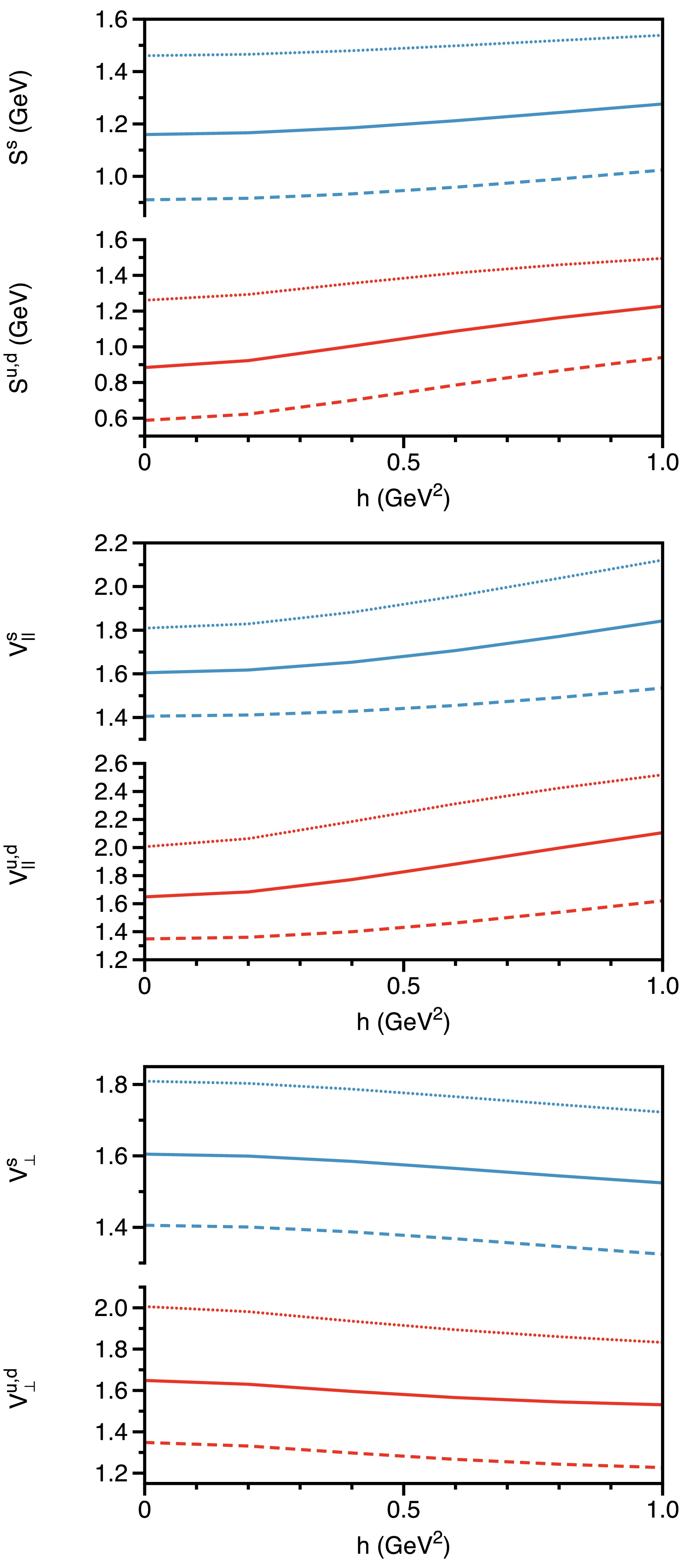
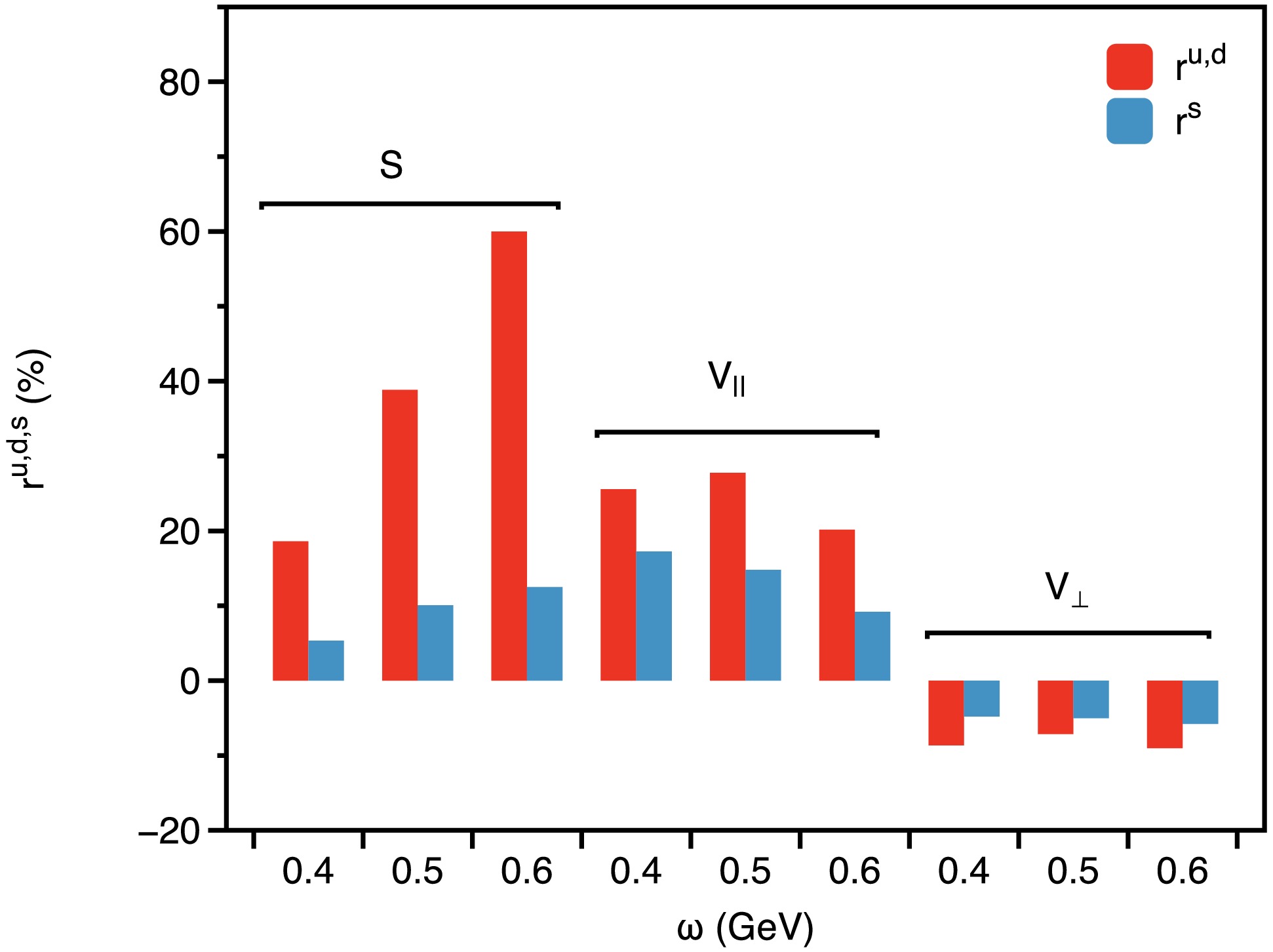
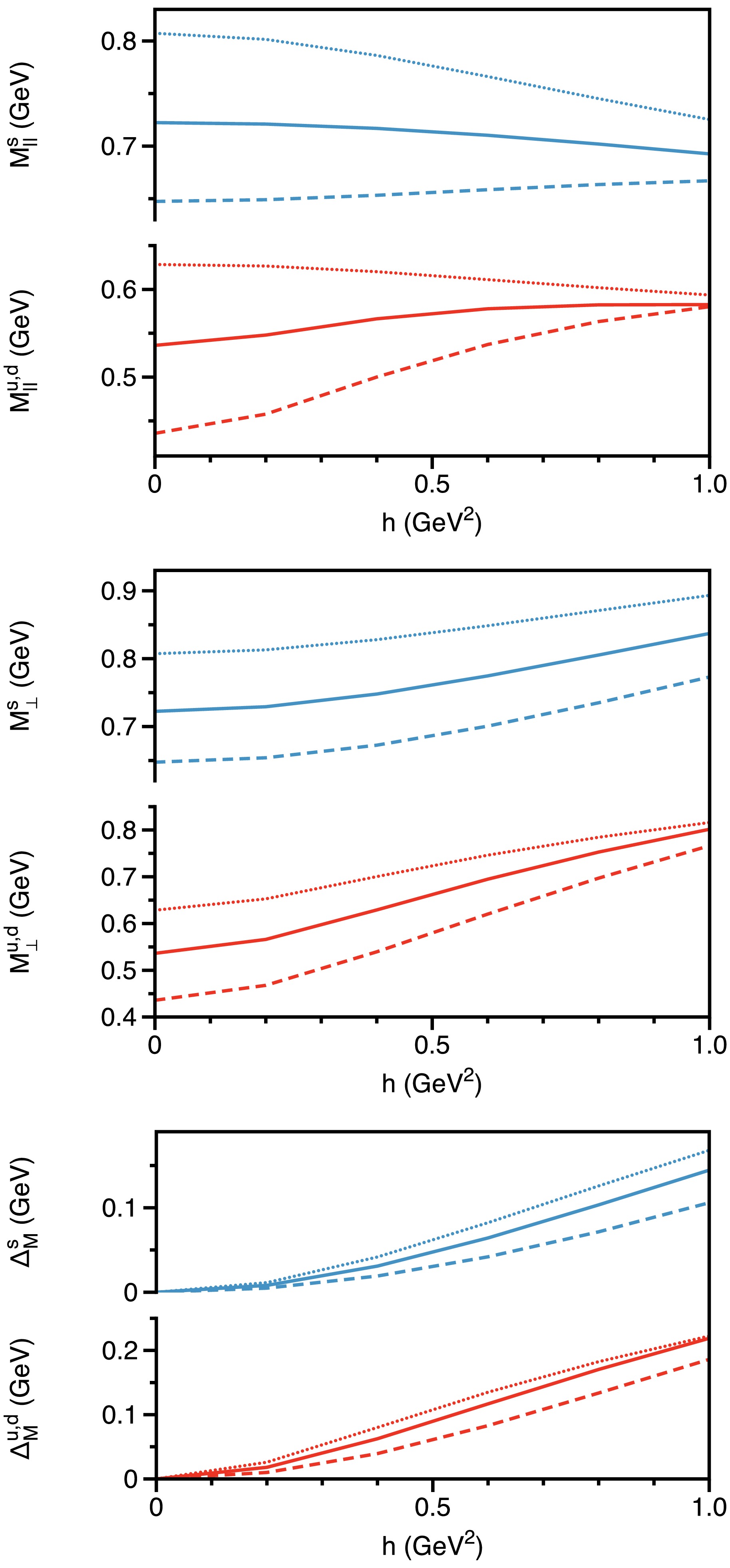
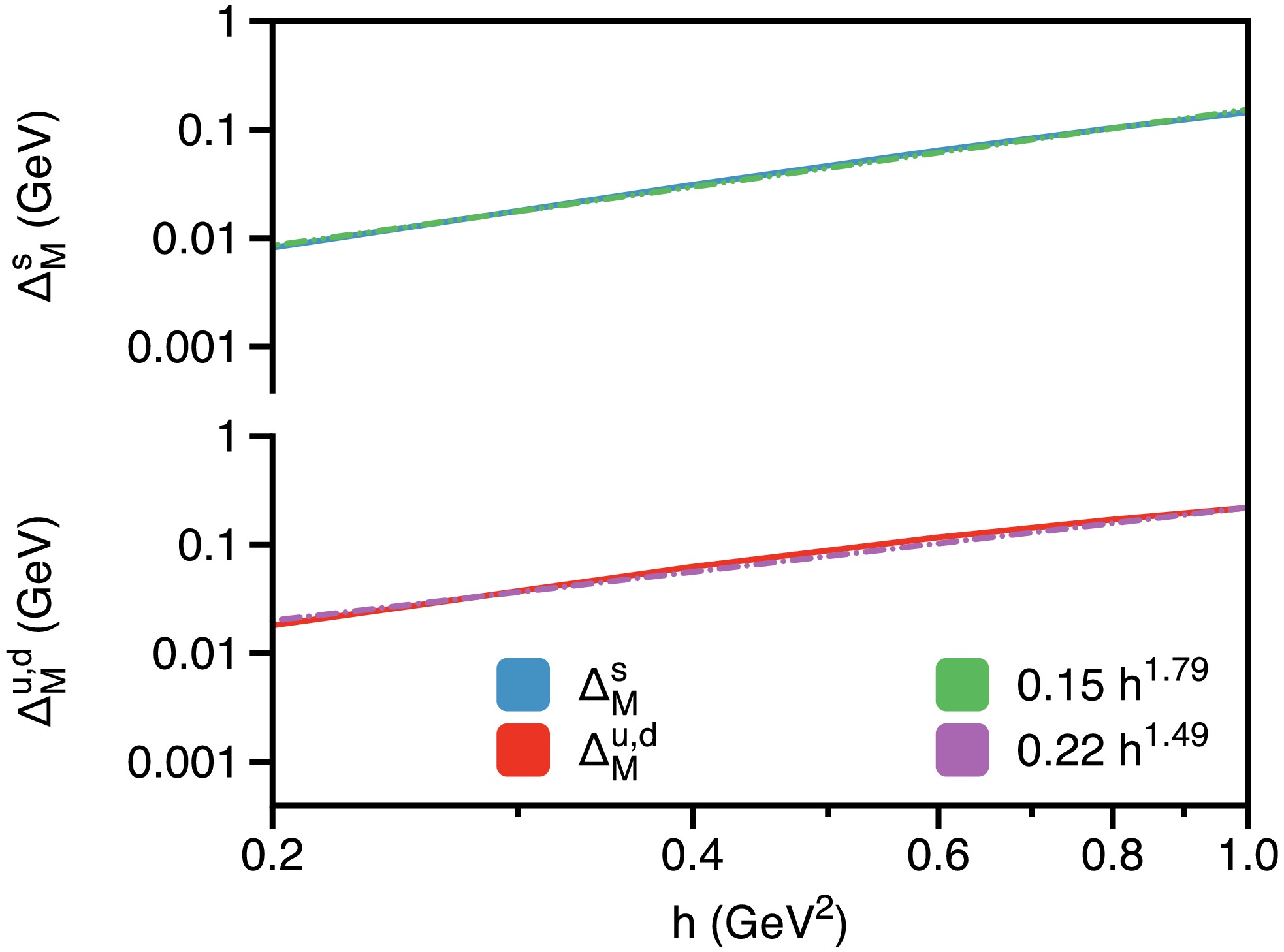
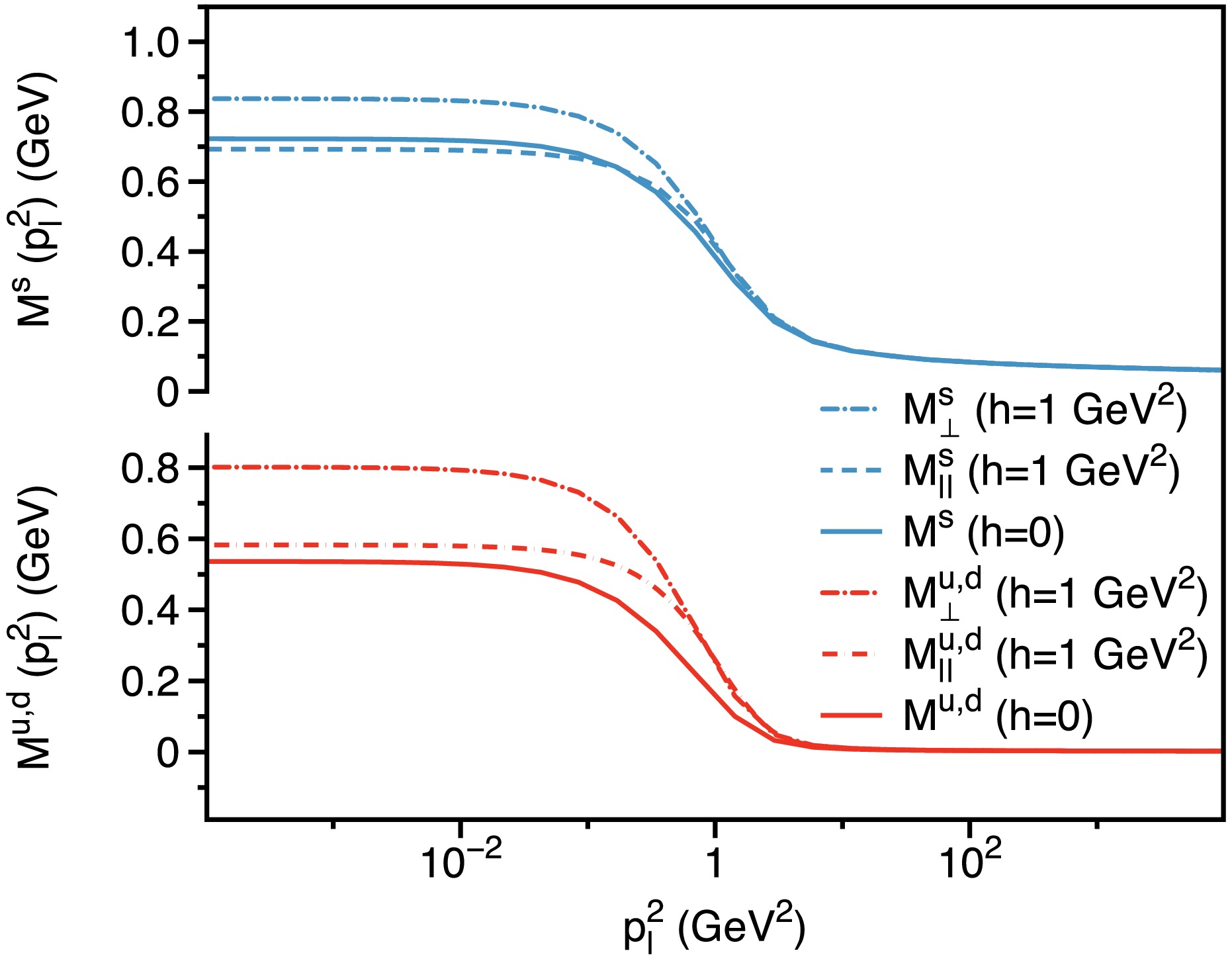
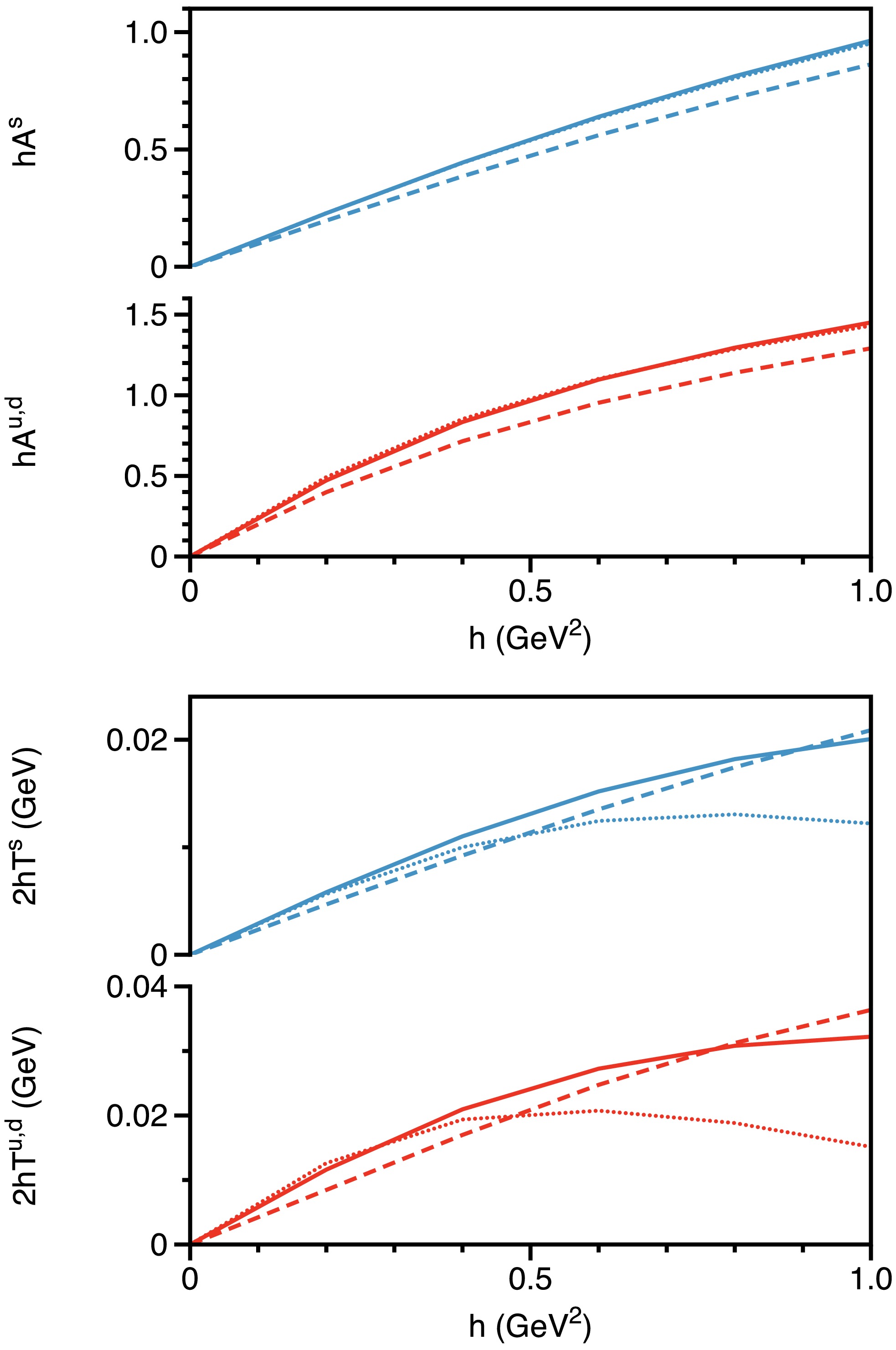
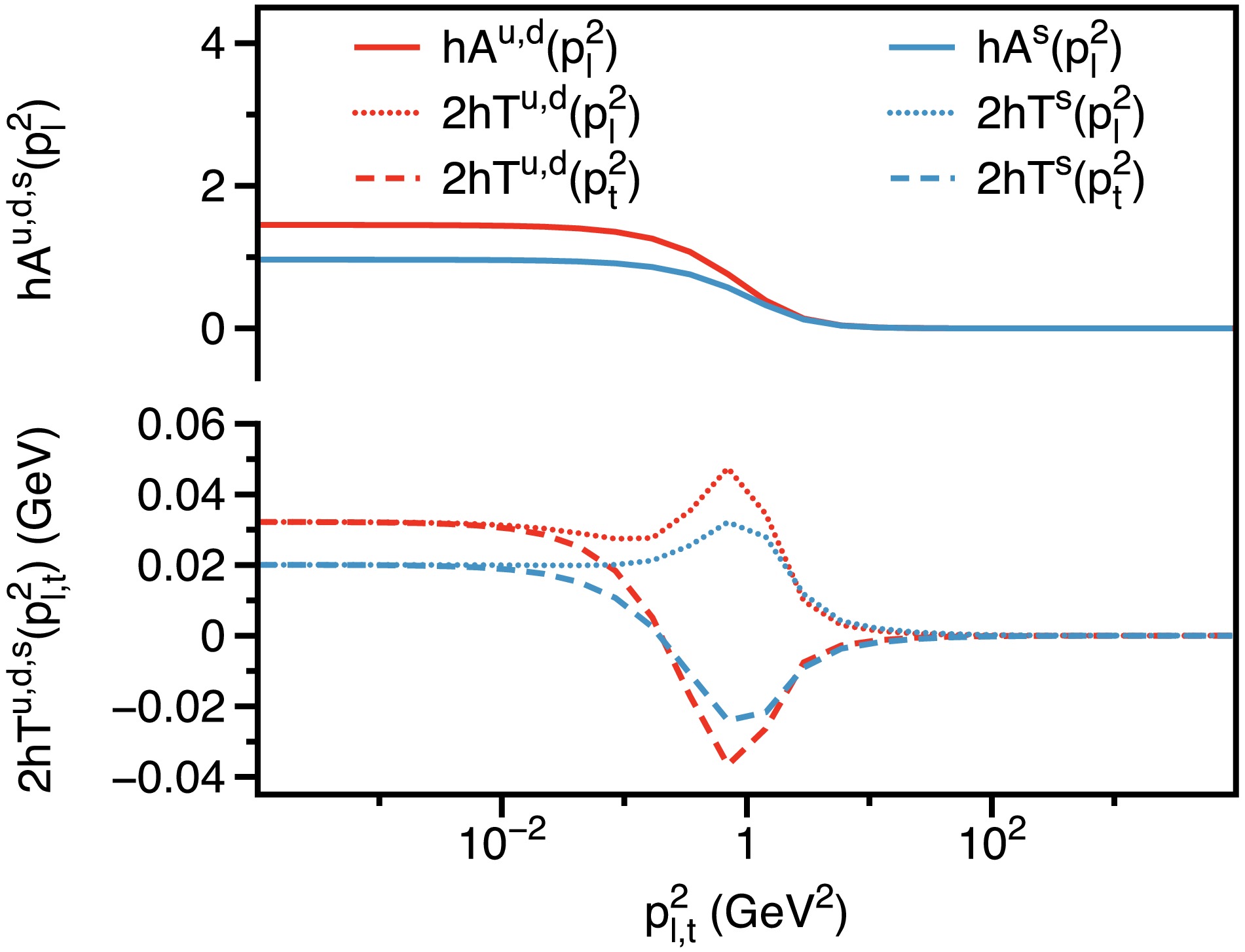
We investigated the impact of a constant external magnetic field on the dressed propagators of up-, down-, and strange quarks. In the weak field limit, we derive a general momentum-space representation for the propagator and numerically solve the corresponding gap equation. Our analysis reveals that the vector term of the propagator can be decomposed into components parallel and perpendicular to the magnetic field, resulting in anisotropic effective masses, with the transverse mass consistently exceeding the longitudinal mass. This mass disparity exhibits a power law dependence on the magnetic field strength and is less pronounced for the strange quark compared to up and down quarks. Additionally, the magnetic field induces axial-vector and tensor terms, highlighting the Zeeman effect, resulting from quark interactions with the magnetic field. These findings have important implications for (inverse) magnetic catalysis and phenomena such as vector meson and pion condensations.
We investigated the impact of a constant external magnetic field on the dressed propagators of up-, down-, and strange quarks. In the weak field limit, we derive a general momentum-space representation for the propagator and numerically solve the corresponding gap equation. Our analysis reveals that the vector term of the propagator can be decomposed into components parallel and perpendicular to the magnetic field, resulting in anisotropic effective masses, with the transverse mass consistently exceeding the longitudinal mass. This mass disparity exhibits a power law dependence on the magnetic field strength and is less pronounced for the strange quark compared to up and down quarks. Additionally, the magnetic field induces axial-vector and tensor terms, highlighting the Zeeman effect, resulting from quark interactions with the magnetic field. These findings have important implications for (inverse) magnetic catalysis and phenomena such as vector meson and pion condensations.
2026, 50(1): 013105. doi: 10.1088/1674-1137/ae07b3
Abstract:
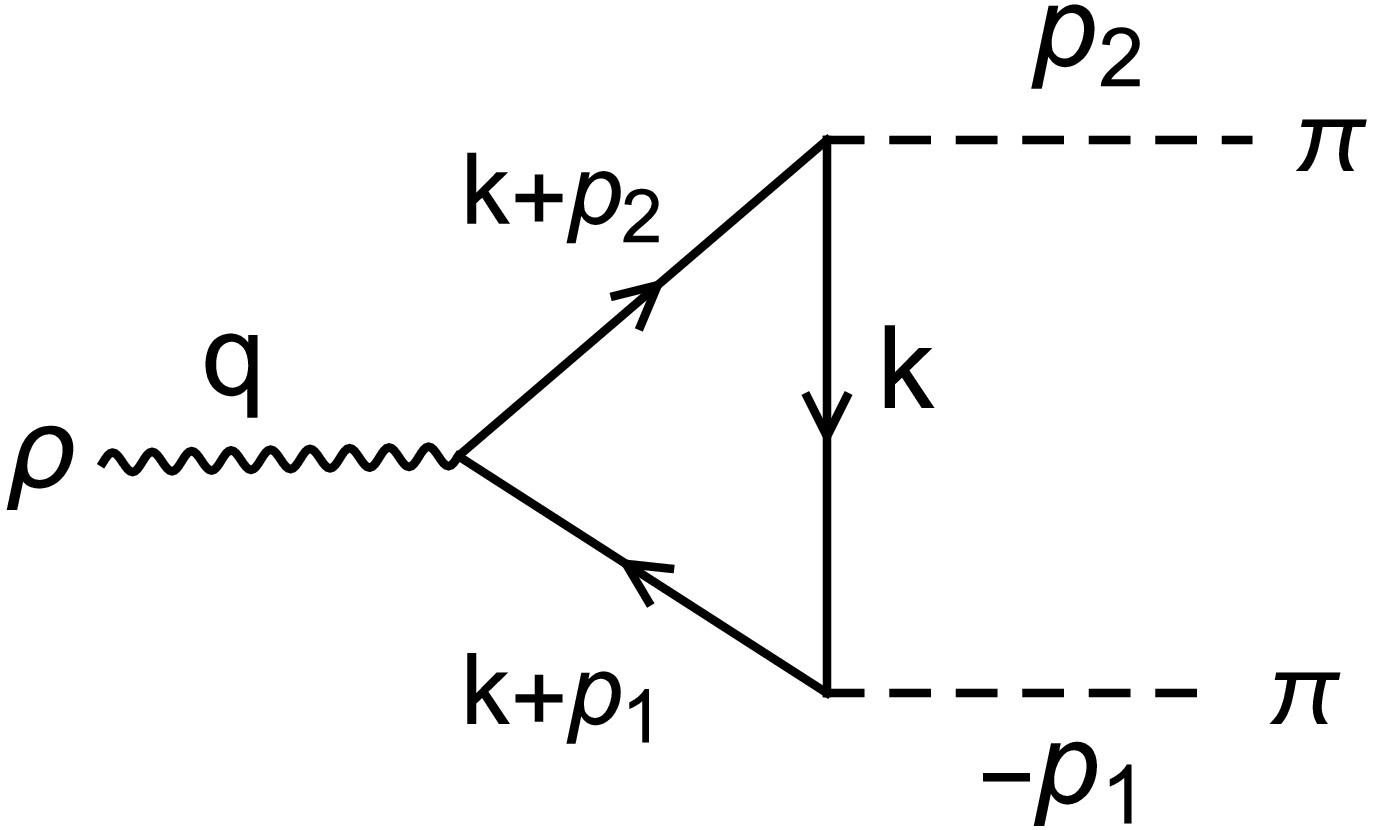
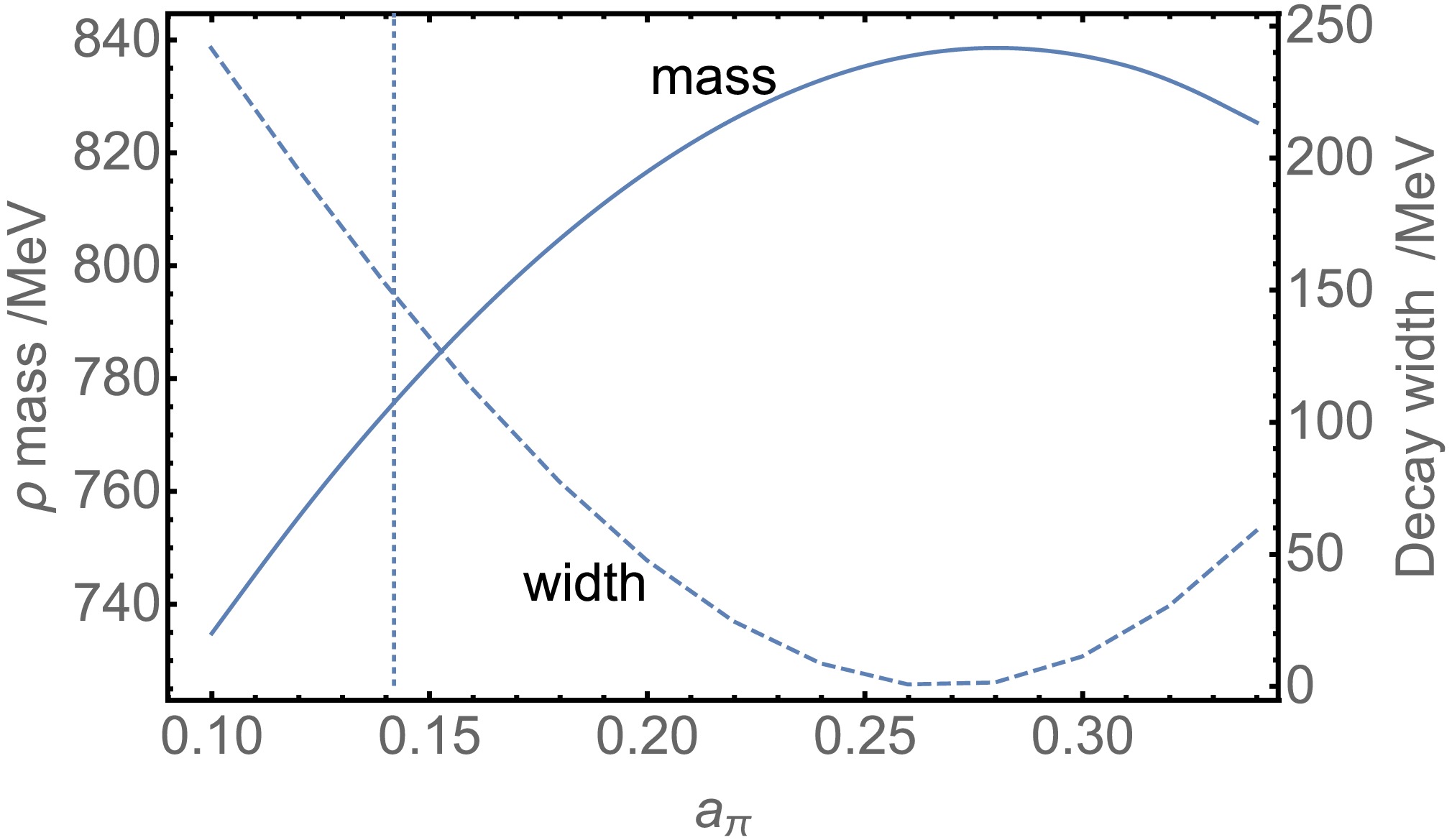
This paper presents novel framework for analyzing unstable composite particles using Green's functions and dispersion relations. As an illustrative example, we explore the ρ vector meson decay process\begin{document}$\rho\to\pi\pi$\end{document} \begin{document}$\Delta M $\end{document} \begin{document}$\Gamma(M)$\end{document}
This paper presents novel framework for analyzing unstable composite particles using Green's functions and dispersion relations. As an illustrative example, we explore the ρ vector meson decay process
2026, 50(1): 013106. doi: 10.1088/1674-1137/ae1185
Abstract:
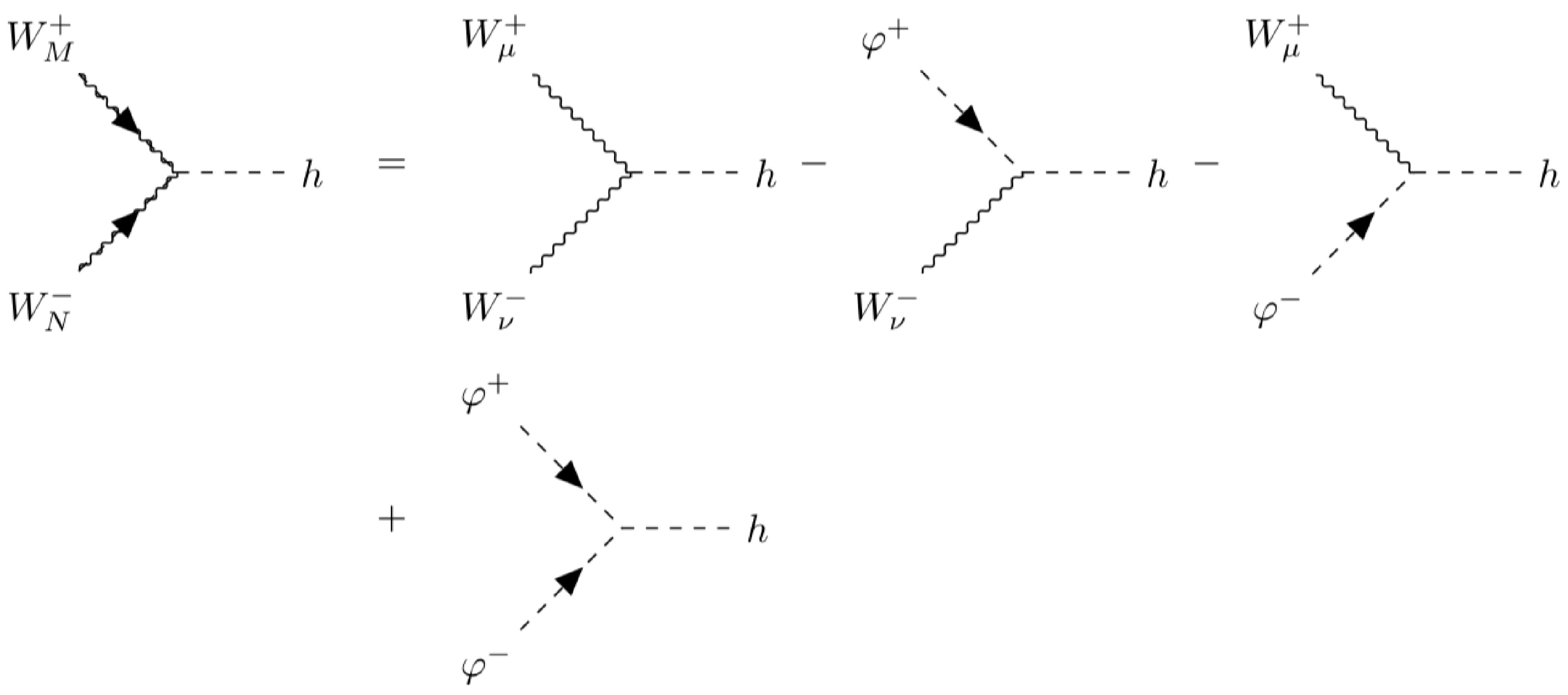
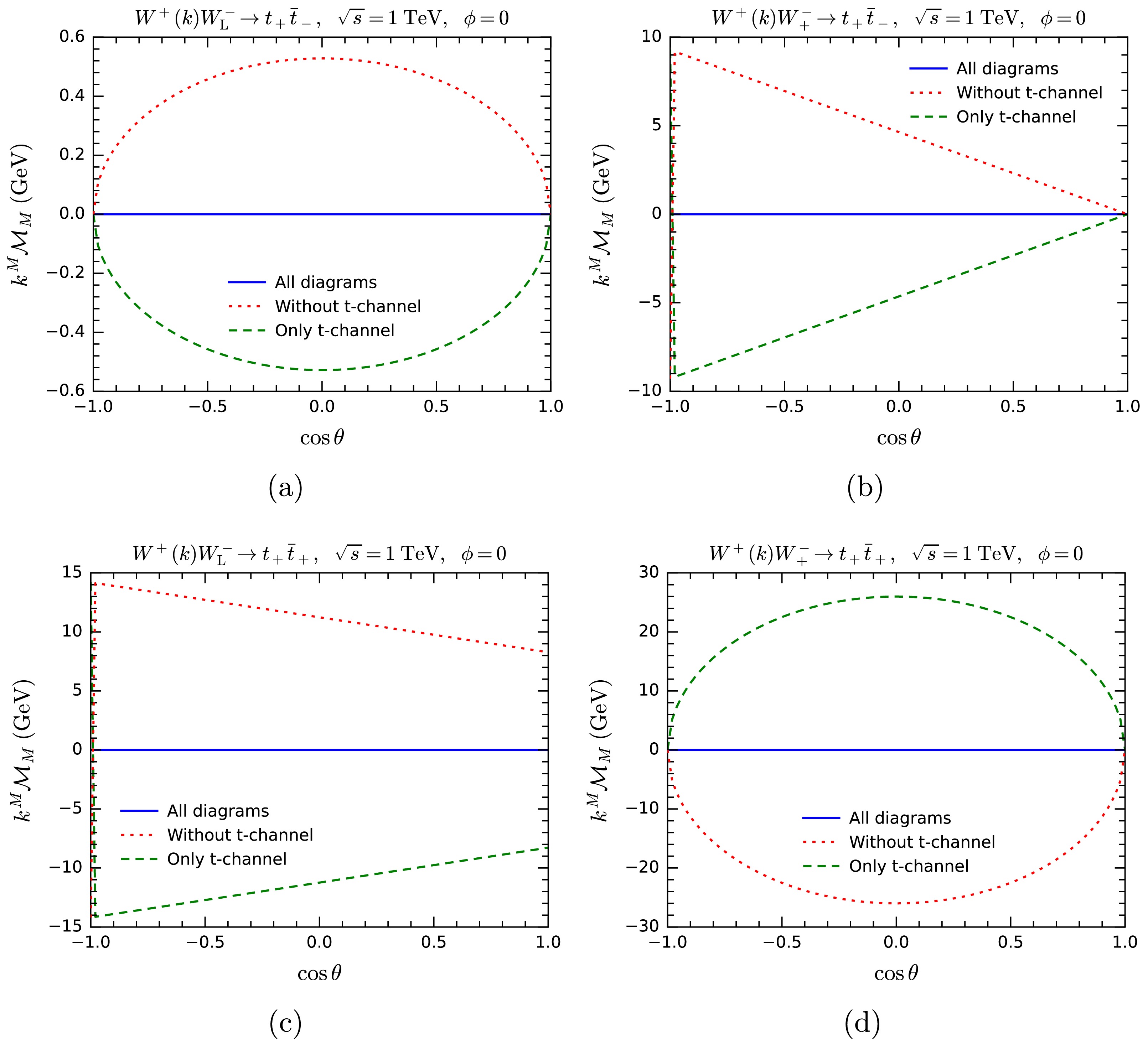
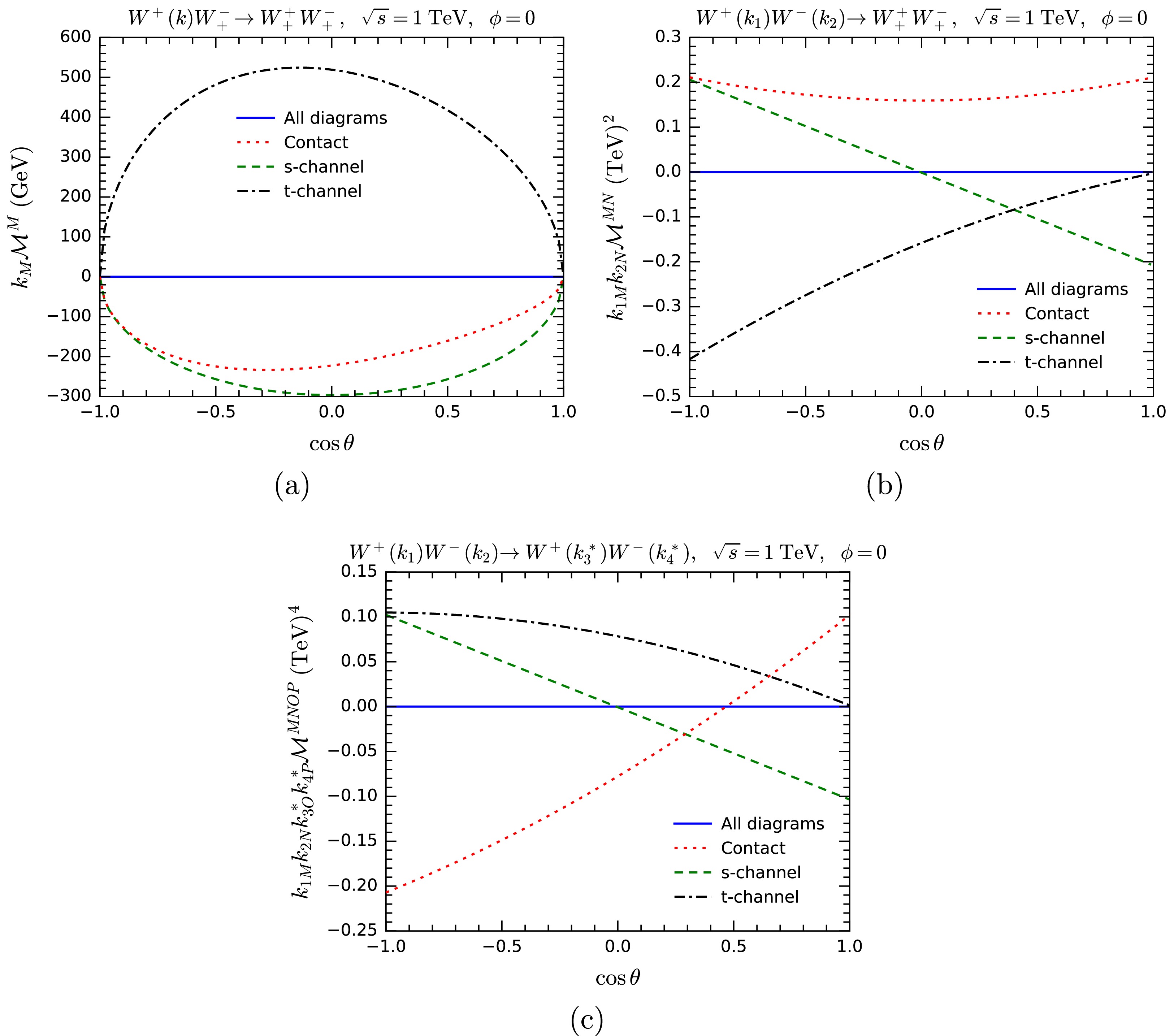
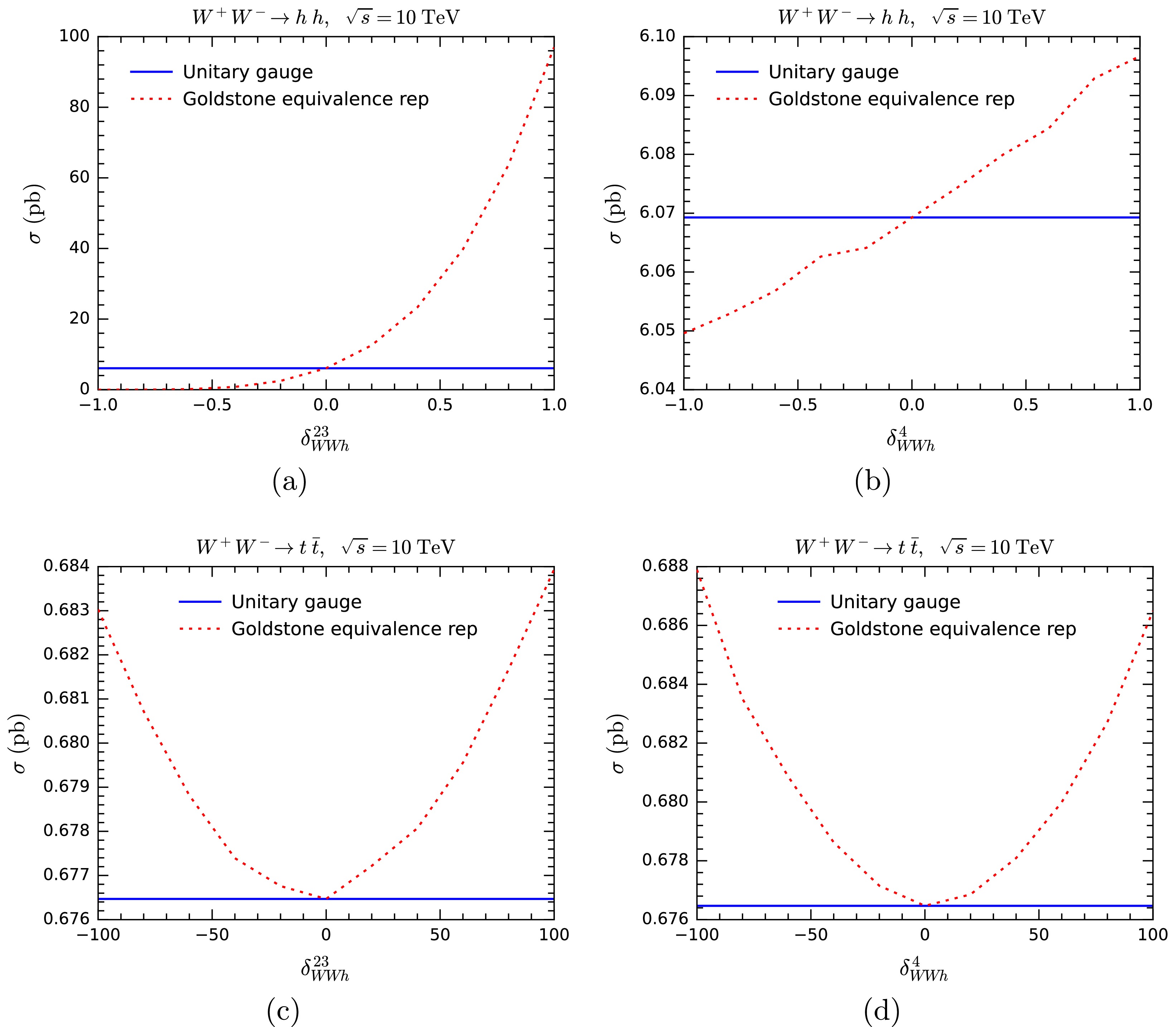
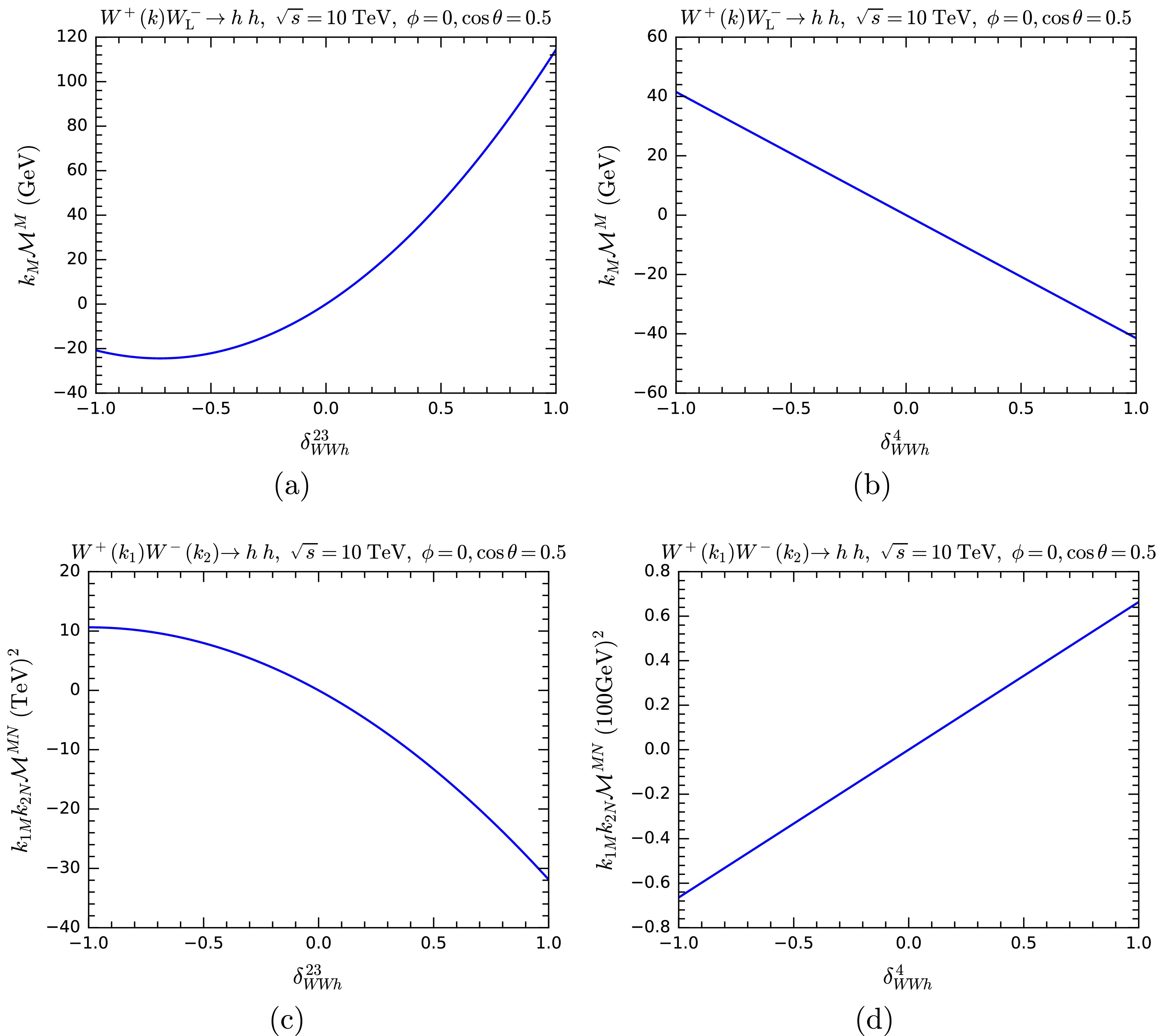
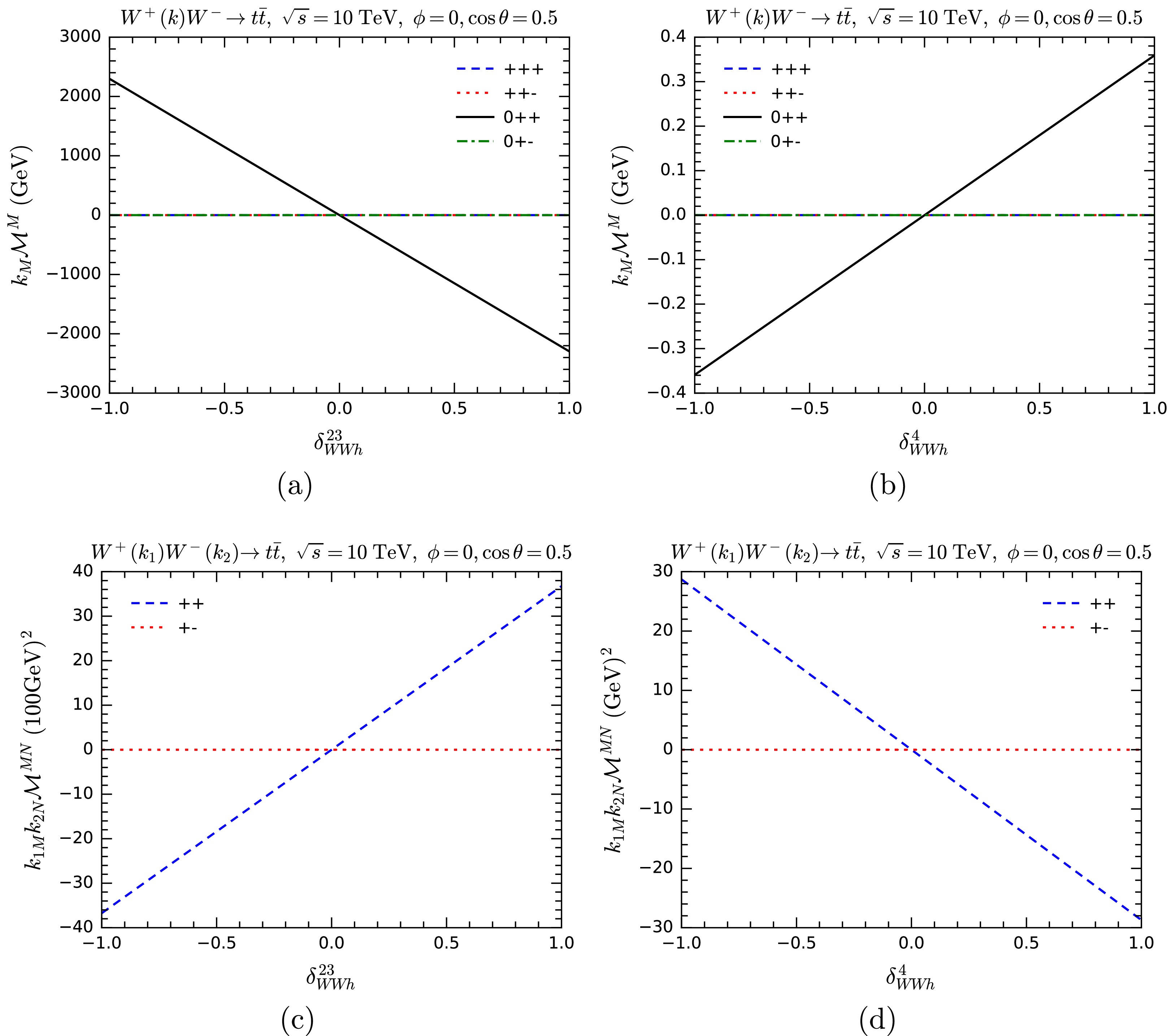
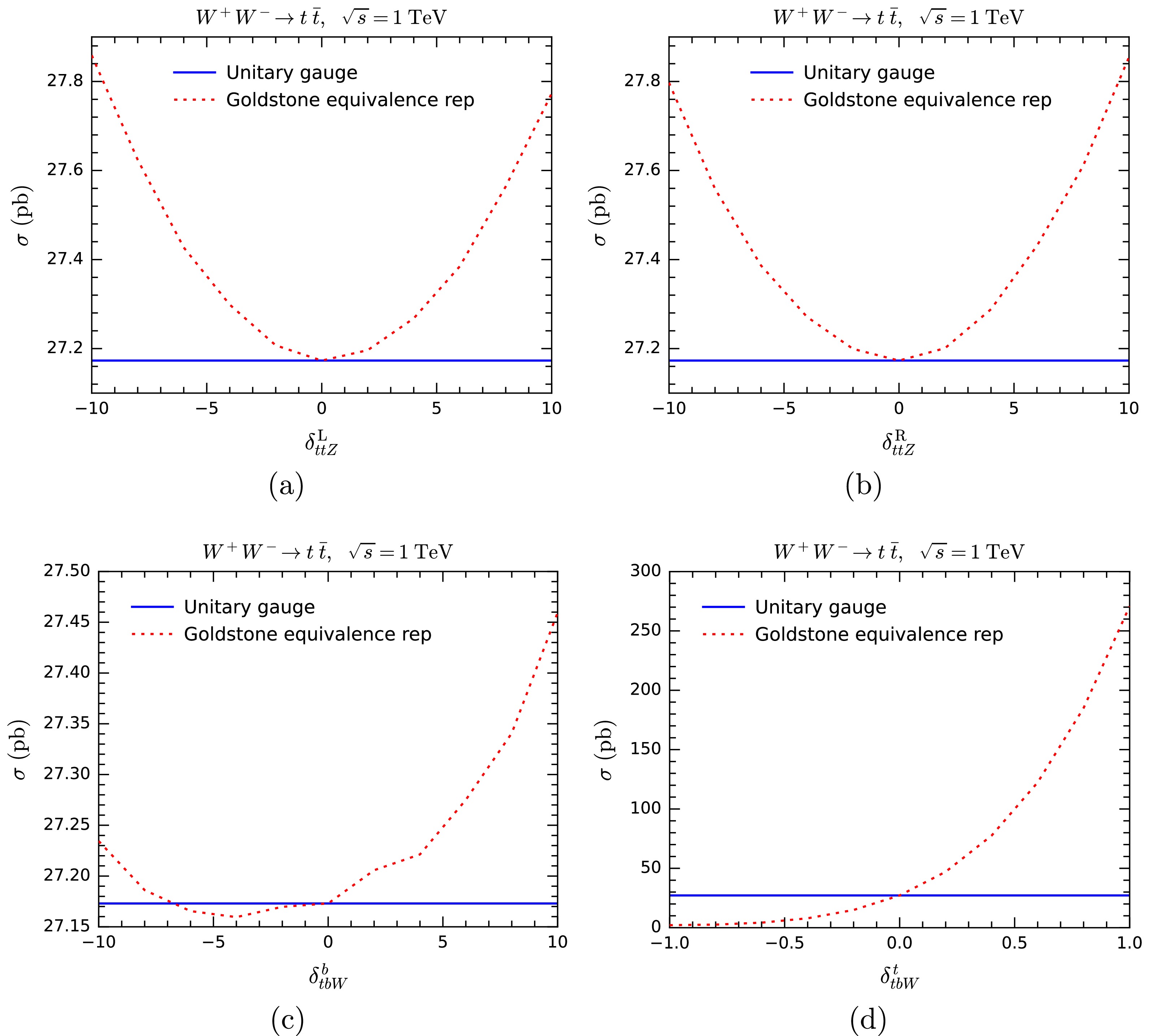
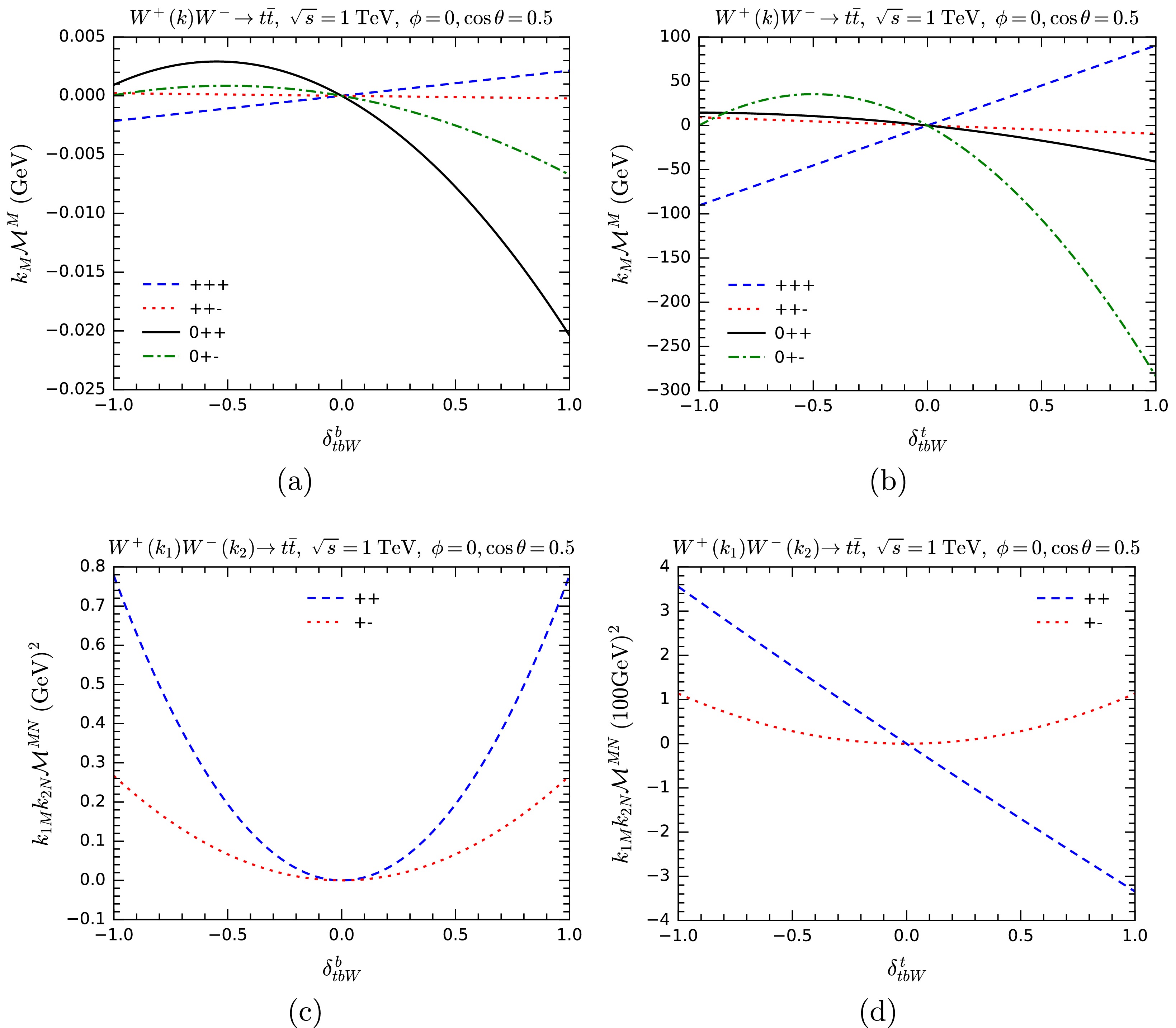
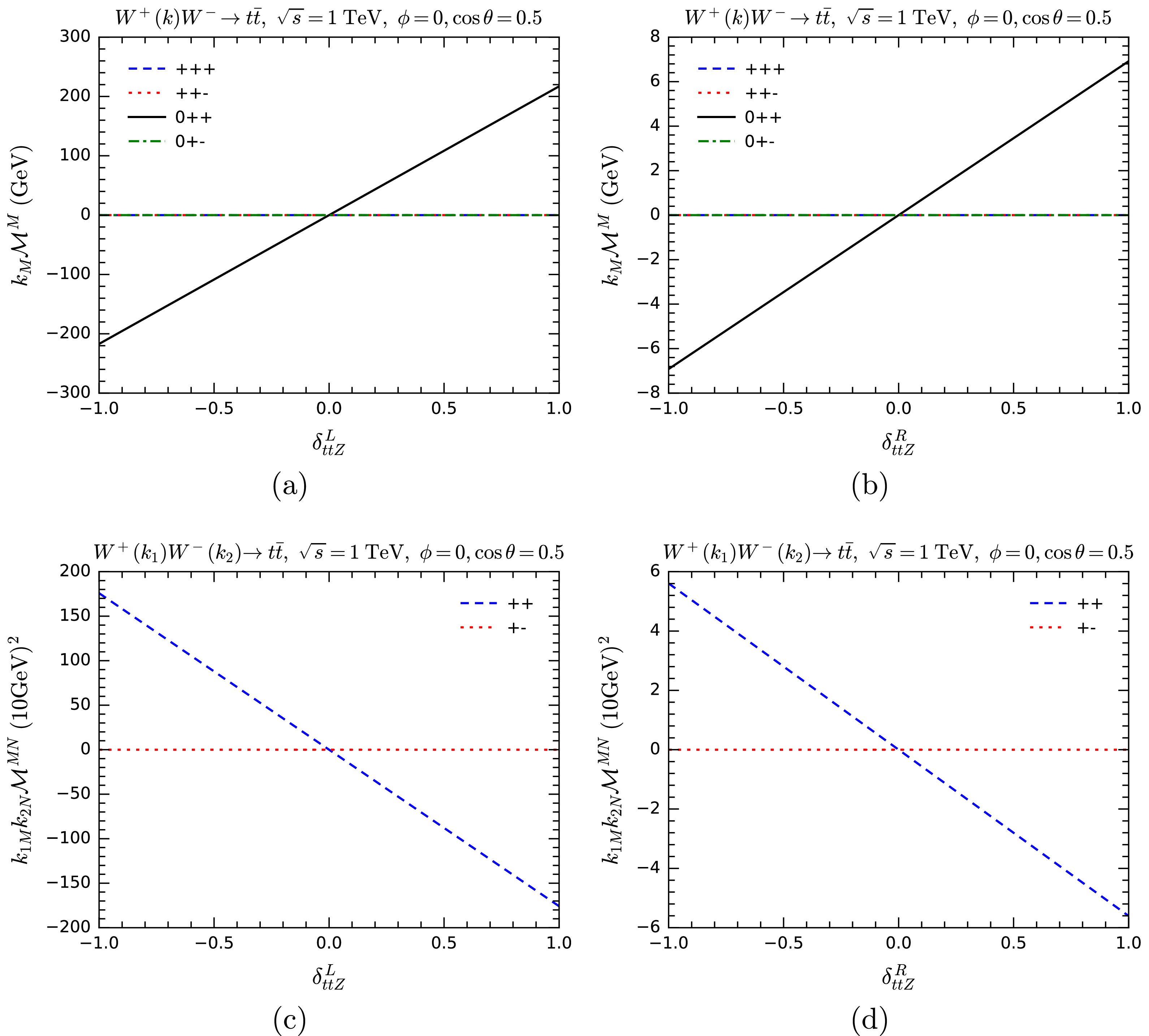
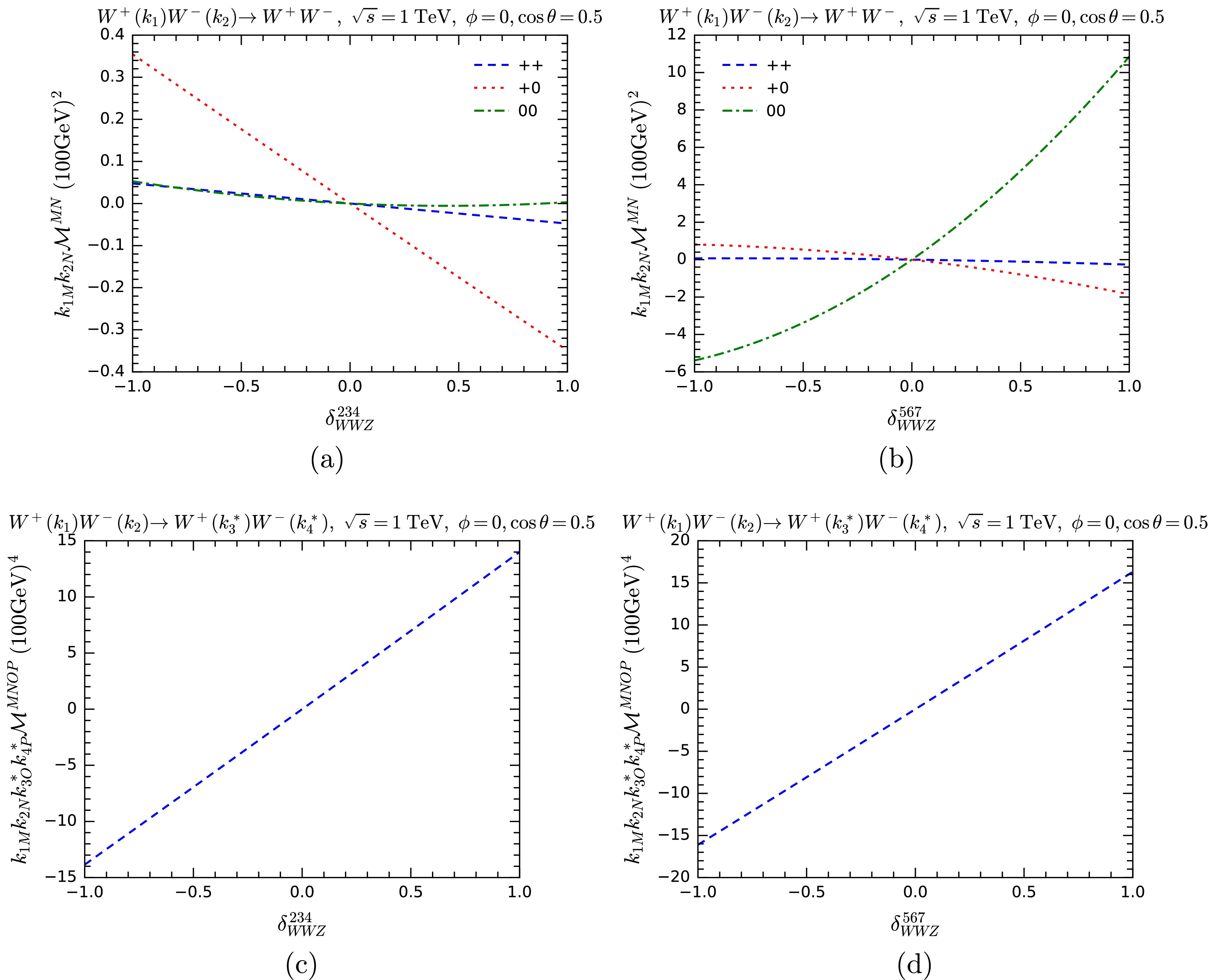
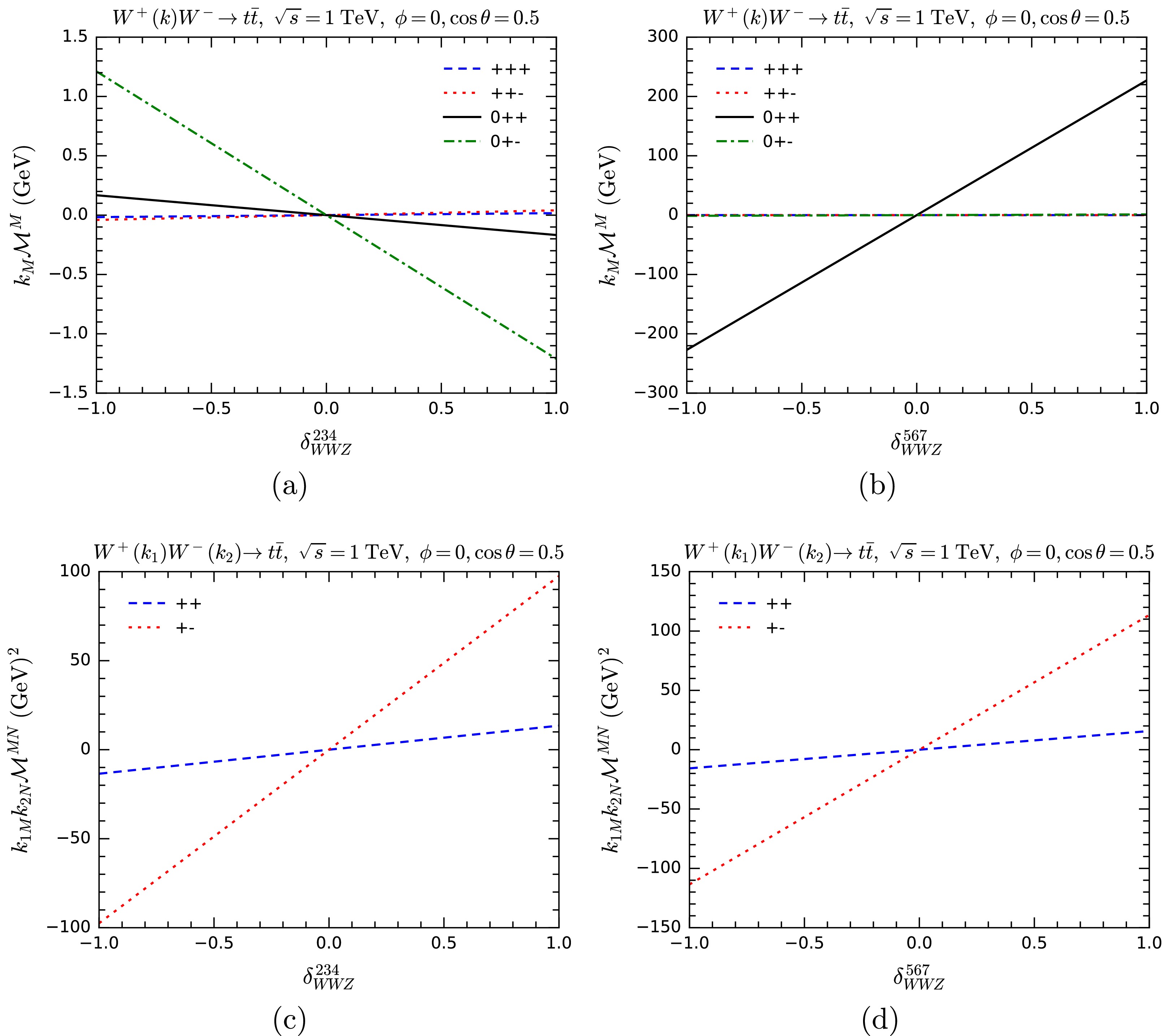
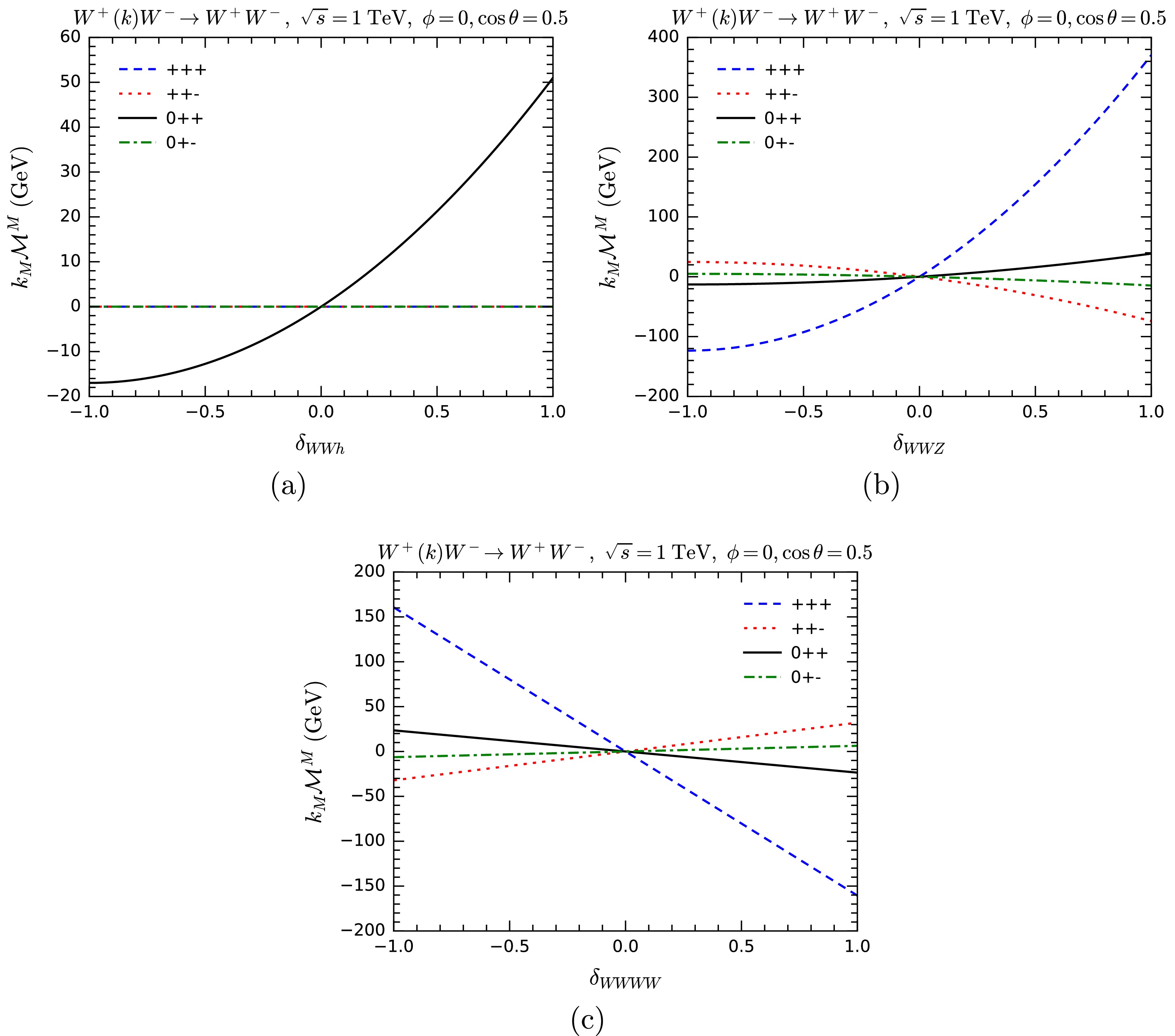
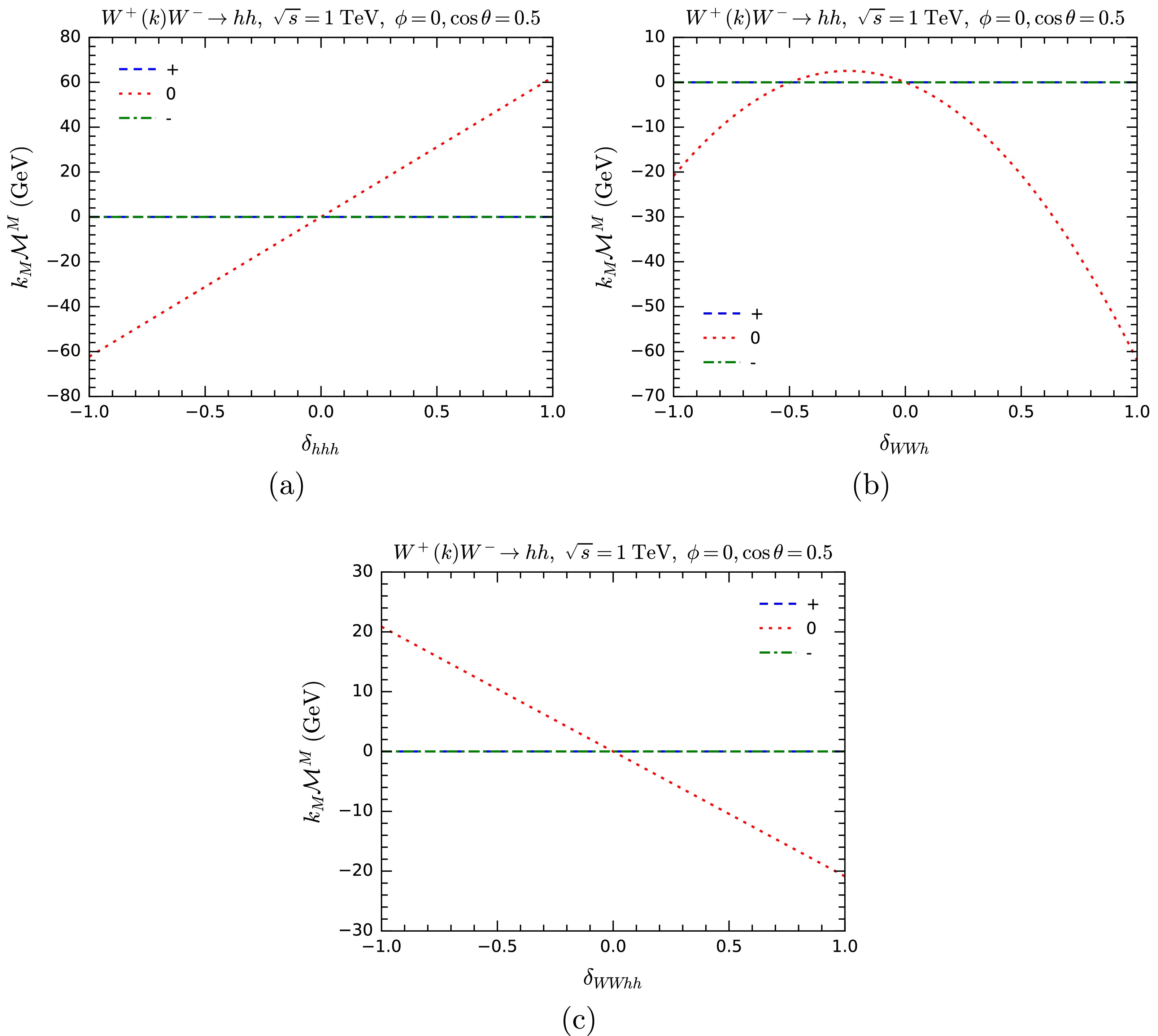
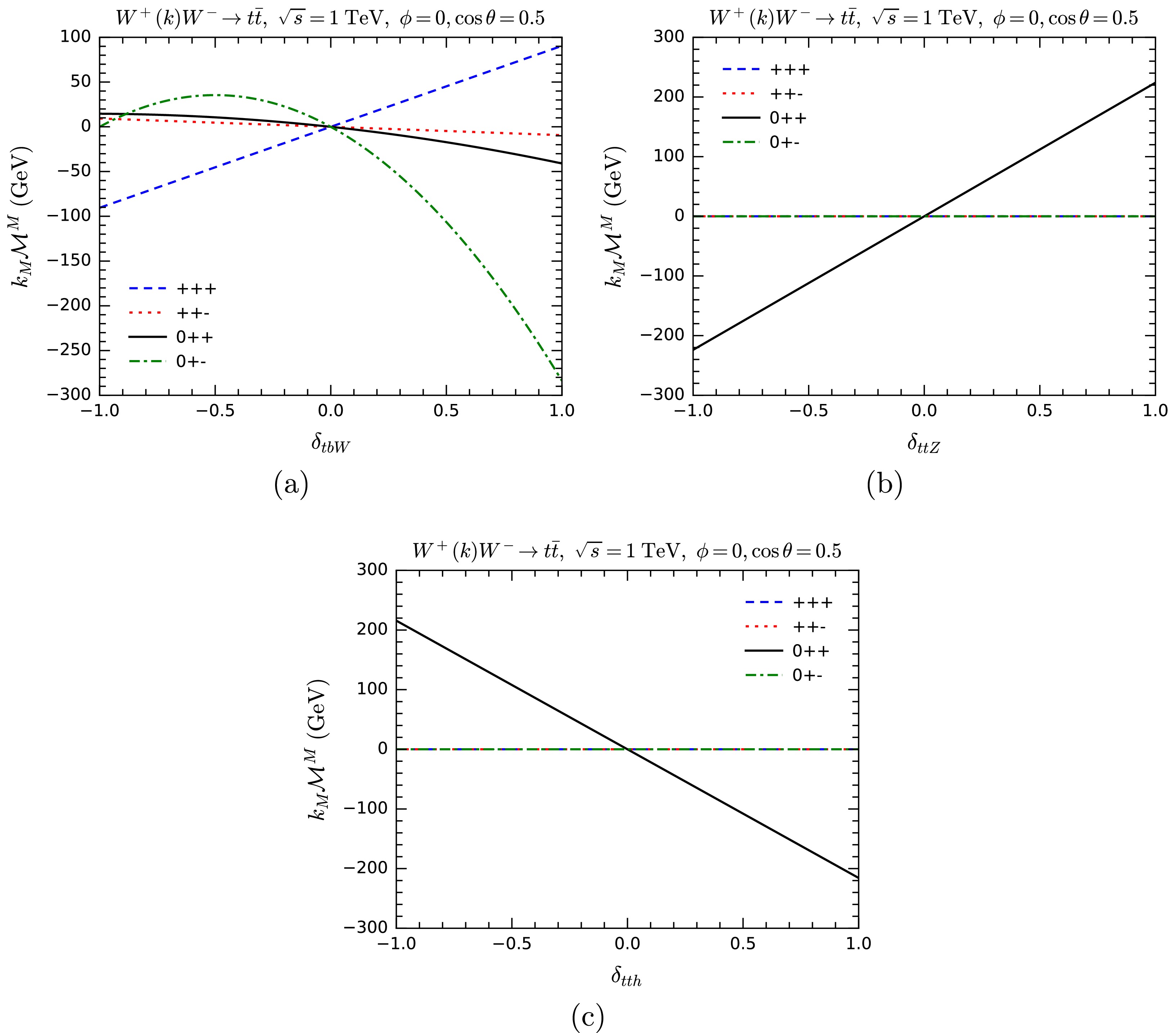
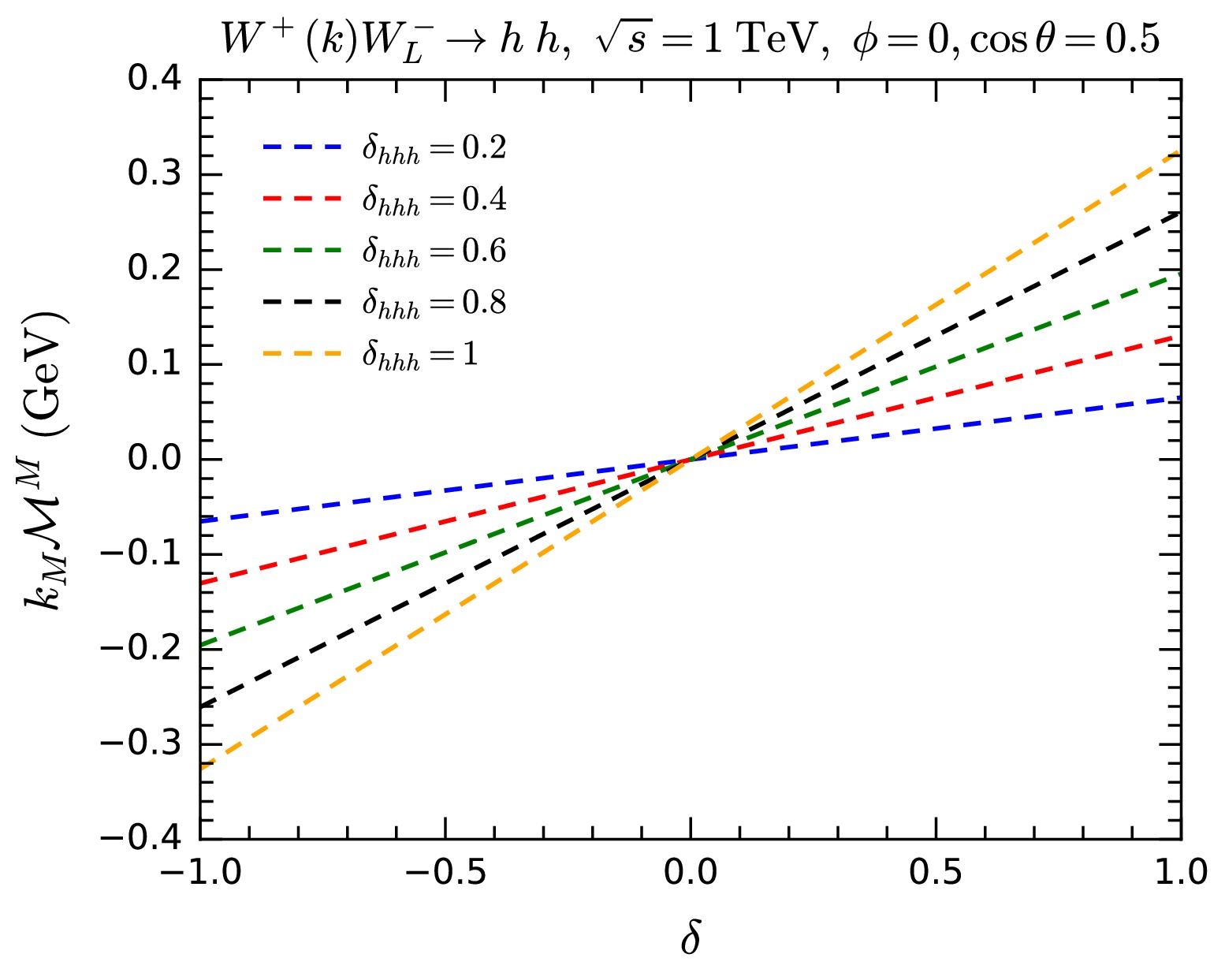
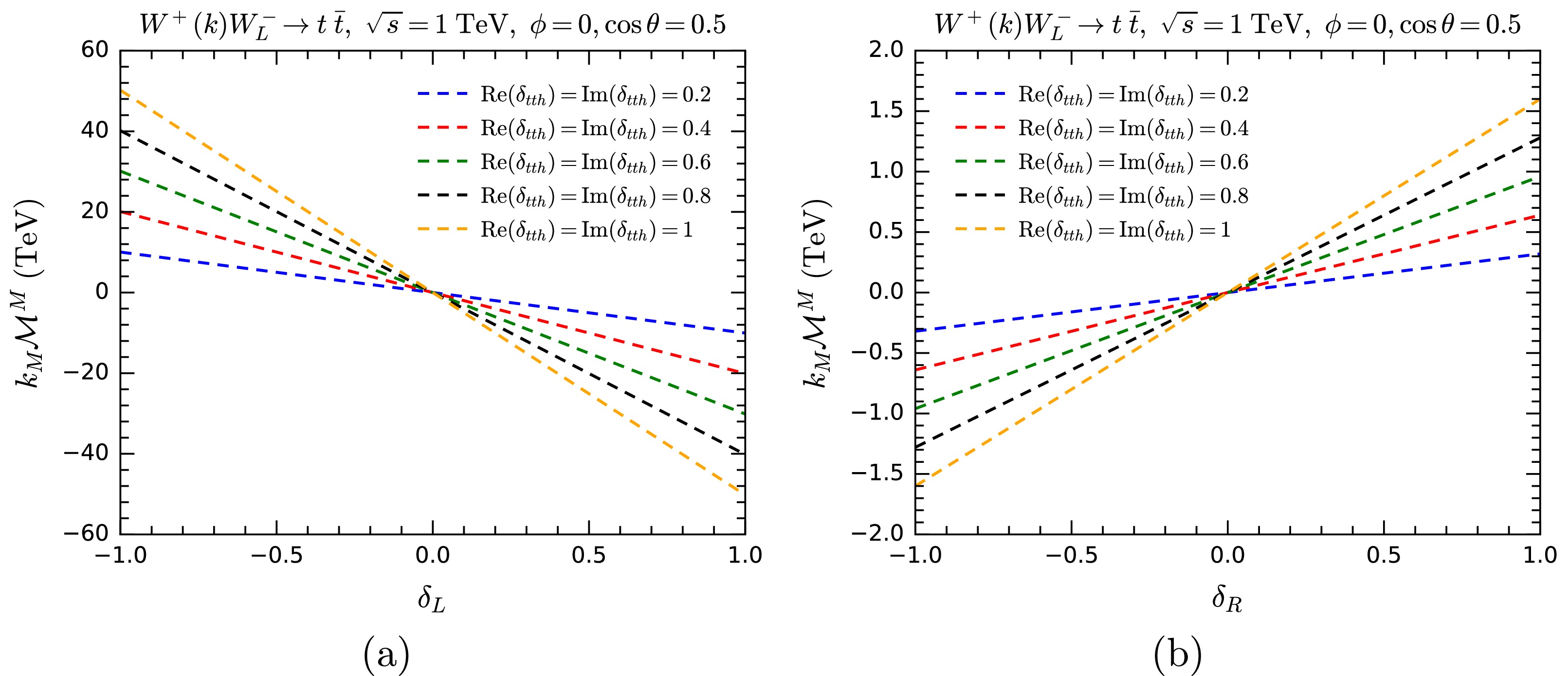
Electroweak (EW) amplitudes in the gauge-Goldstone five-component formalism have a distinctive property: gauge symmetry is imprinted in the amplitudes, manifested as the massive Ward identity (MWI)\begin{document}$ k^M{\cal{M}}_M=0 $\end{document}
Electroweak (EW) amplitudes in the gauge-Goldstone five-component formalism have a distinctive property: gauge symmetry is imprinted in the amplitudes, manifested as the massive Ward identity (MWI)

2026, 50(1): 013107. doi: 10.1088/1674-1137/ae0f86
Abstract:
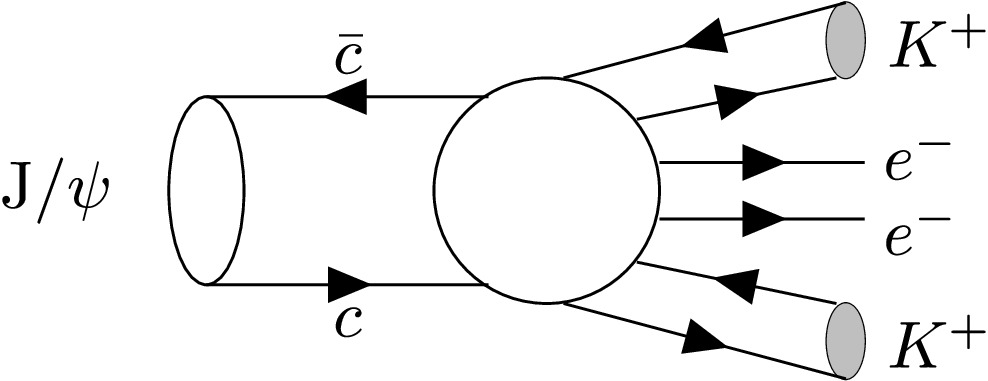
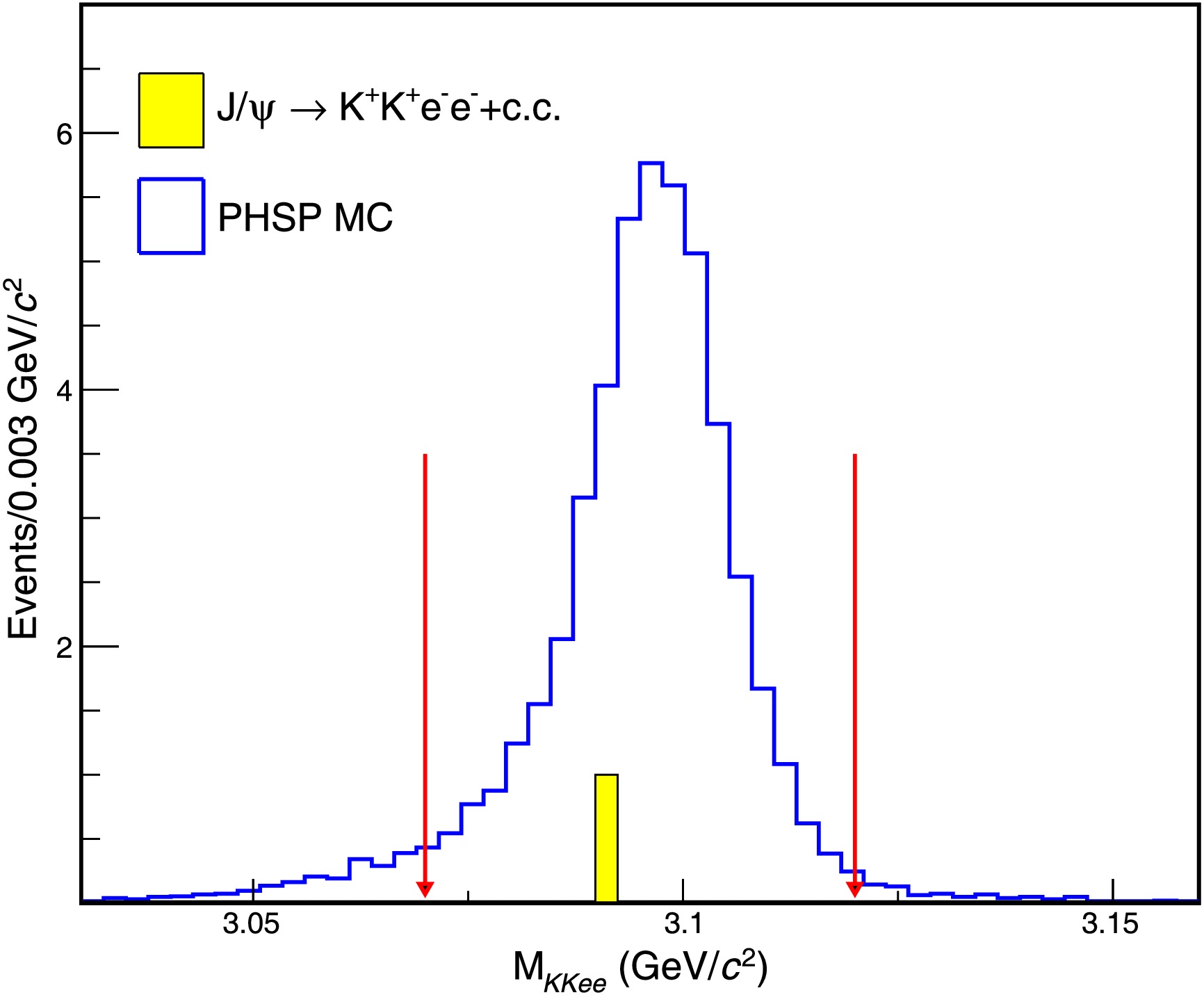
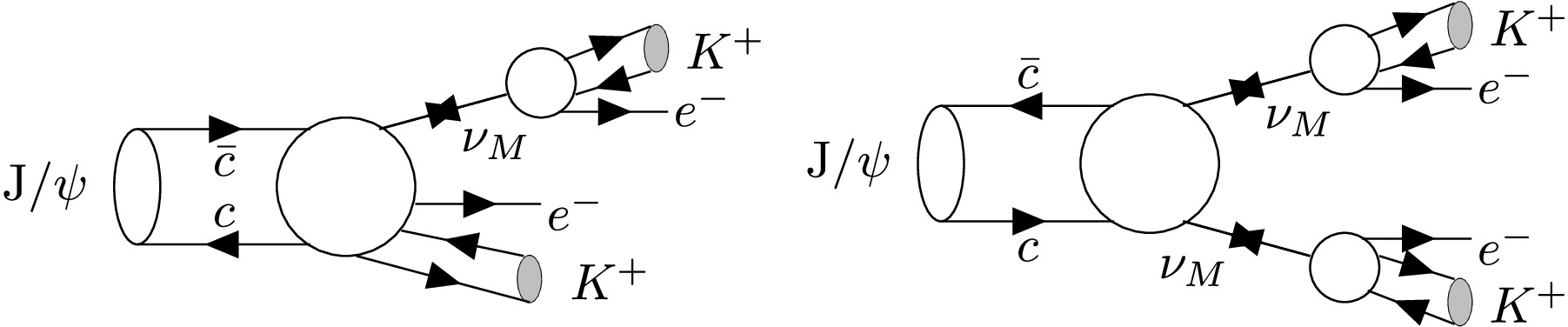
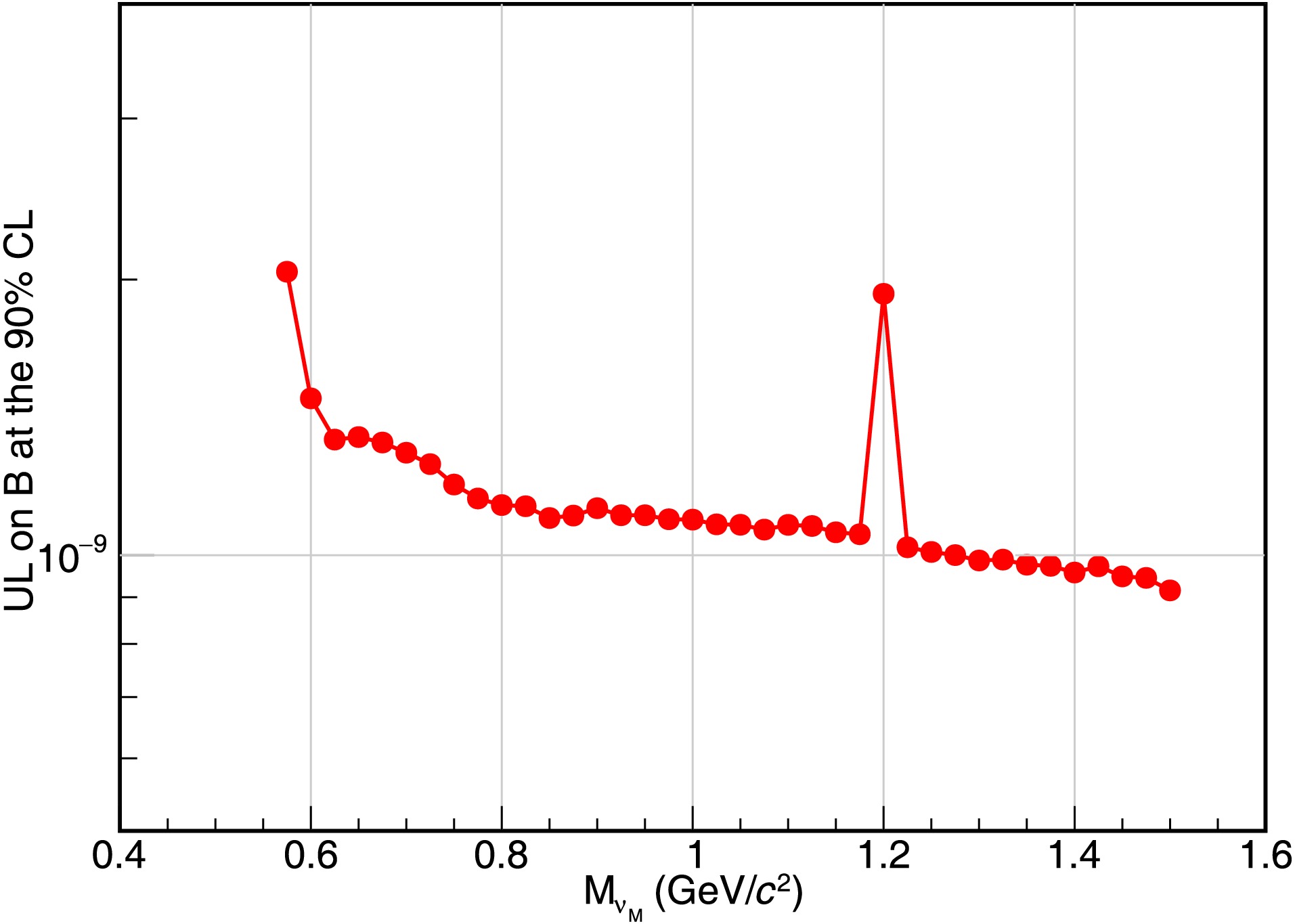
Based on\begin{document}$ (10087\pm 44)\times10^{6} $\end{document} \begin{document}$ J/\psi $\end{document} \begin{document}$ J/\psi \to K^+K^+e^-e^- + c.c. $\end{document} \begin{document}$ 2.1 \times 10^{-9} $\end{document} \begin{document}$ J/\psi $\end{document}
Based on
2026, 50(1): 013108. doi: 10.1088/1674-1137/ae2082
Abstract:
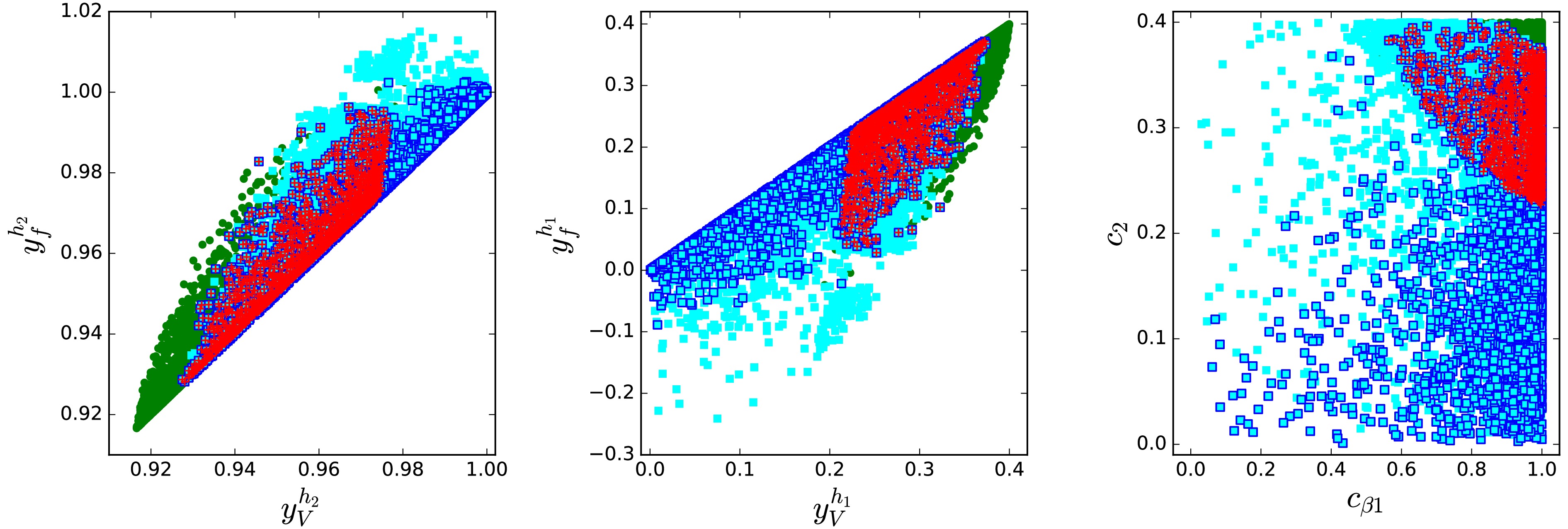
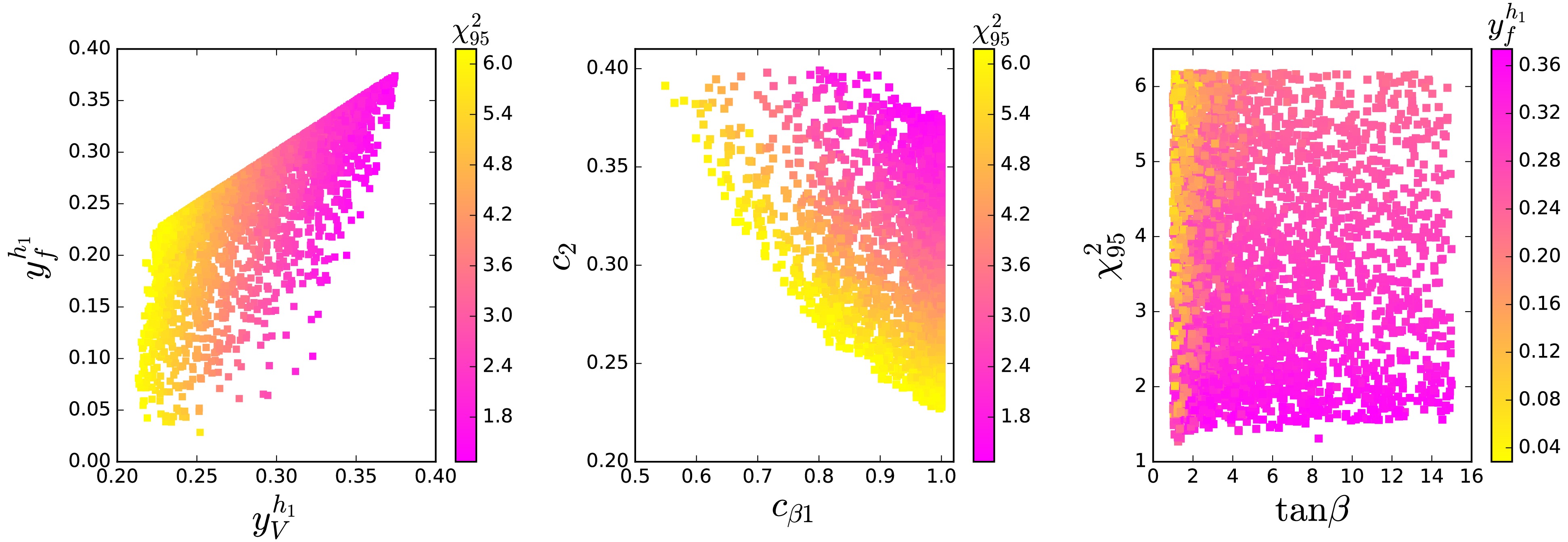
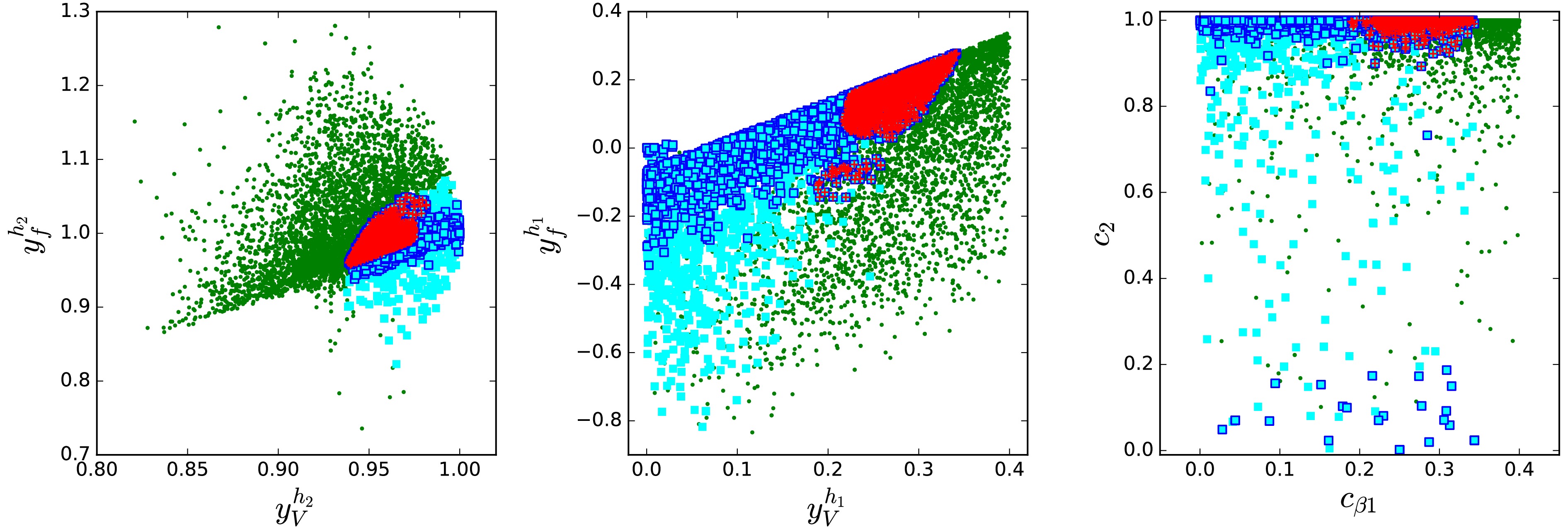
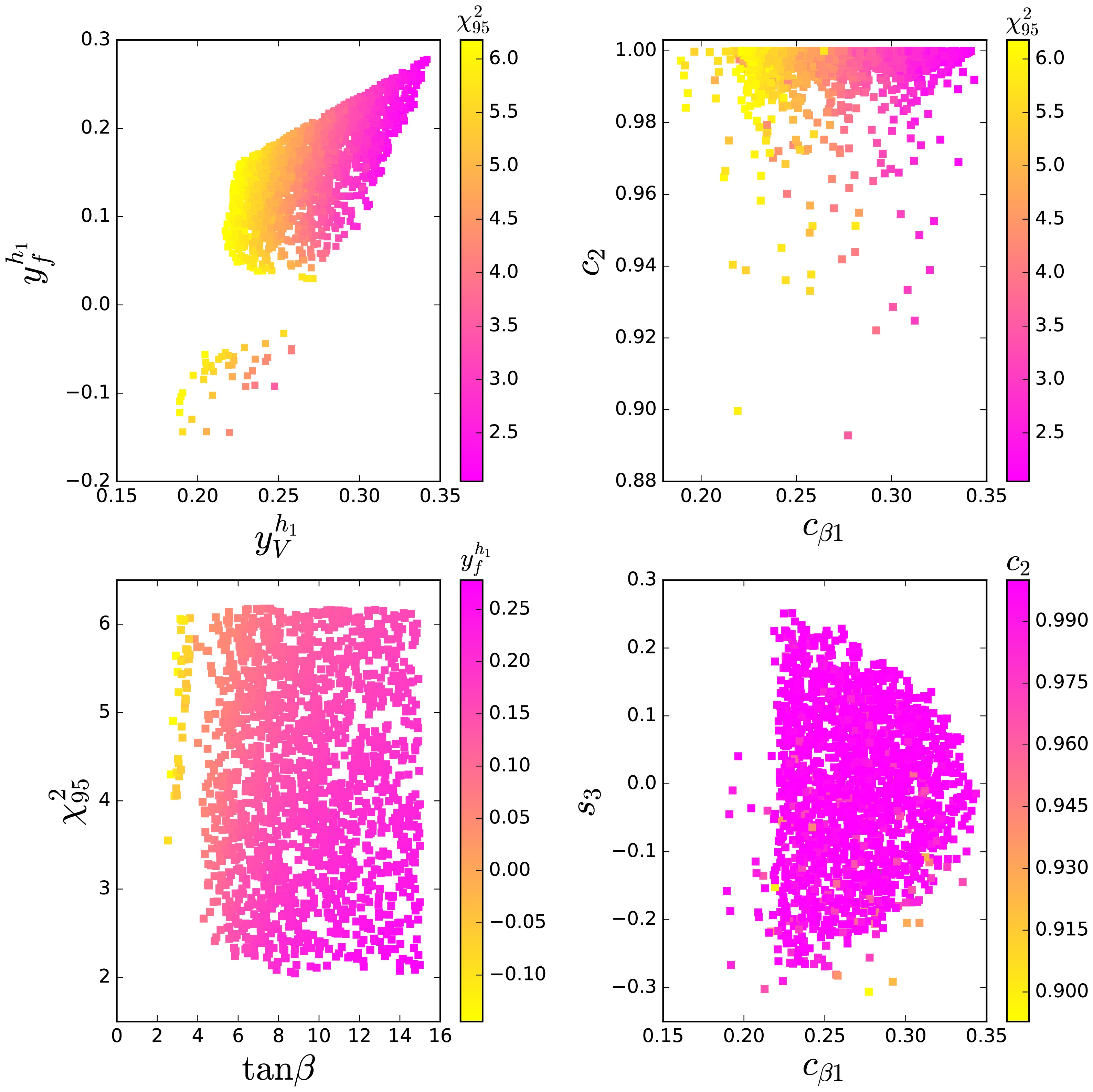
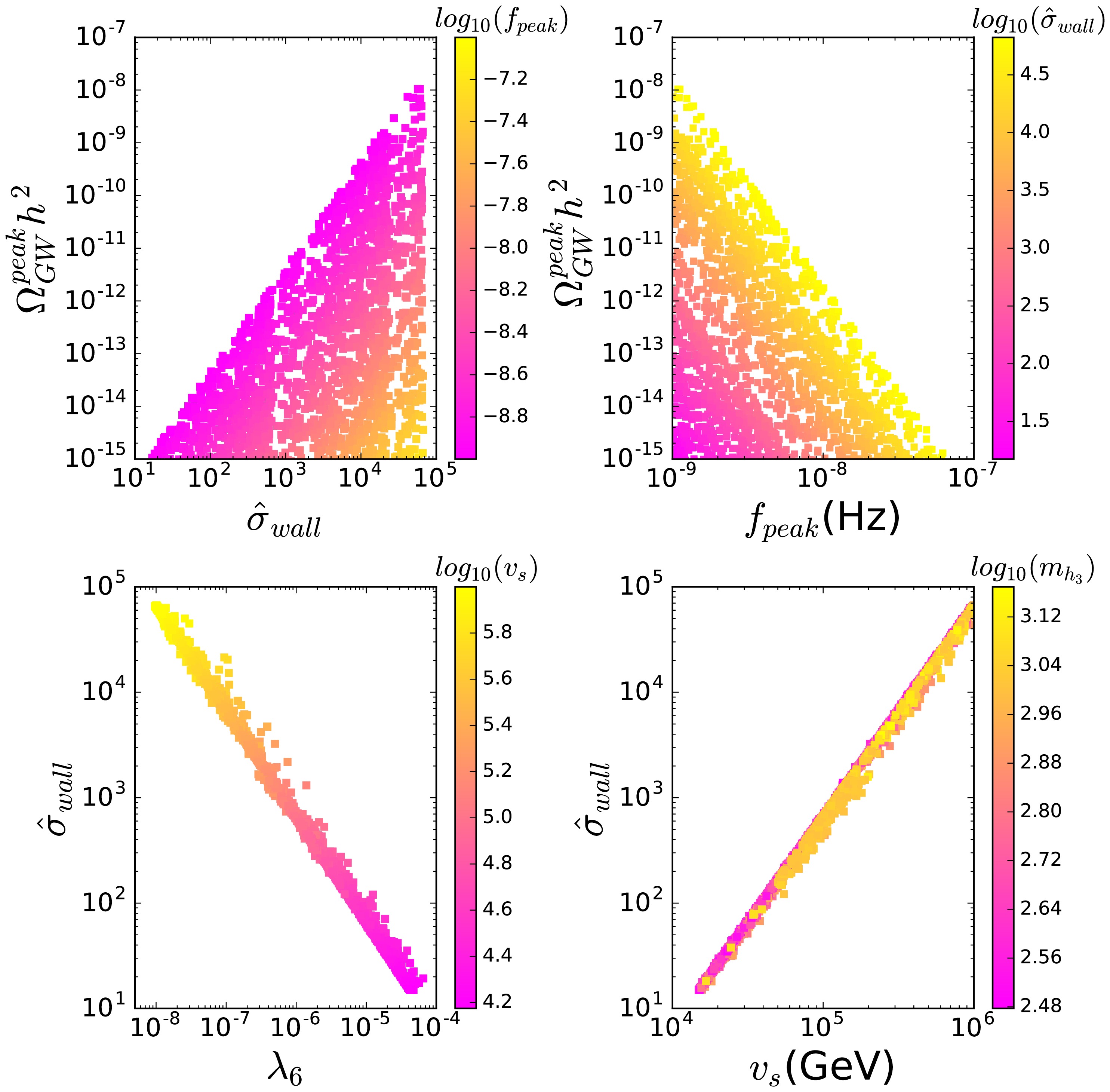
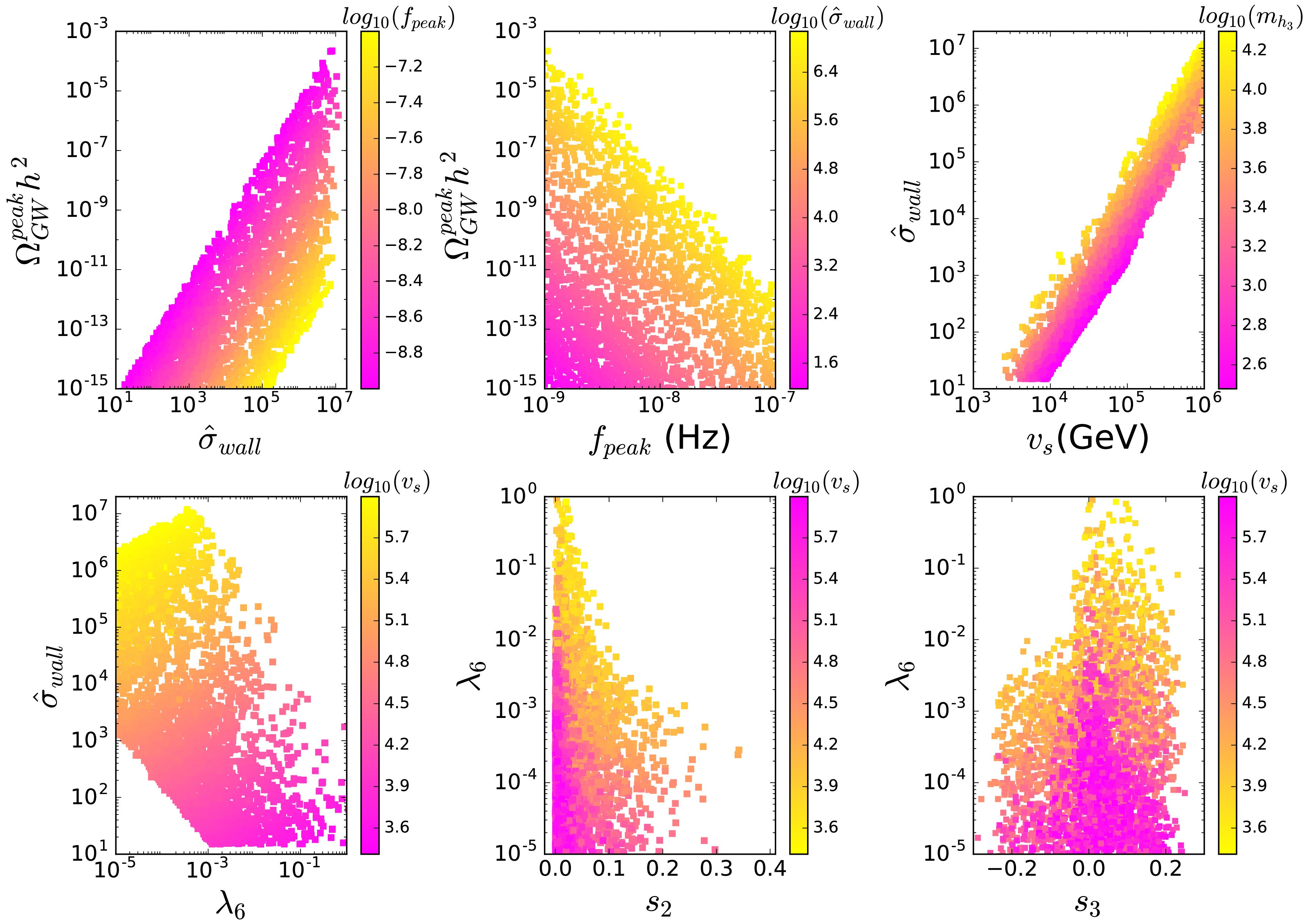
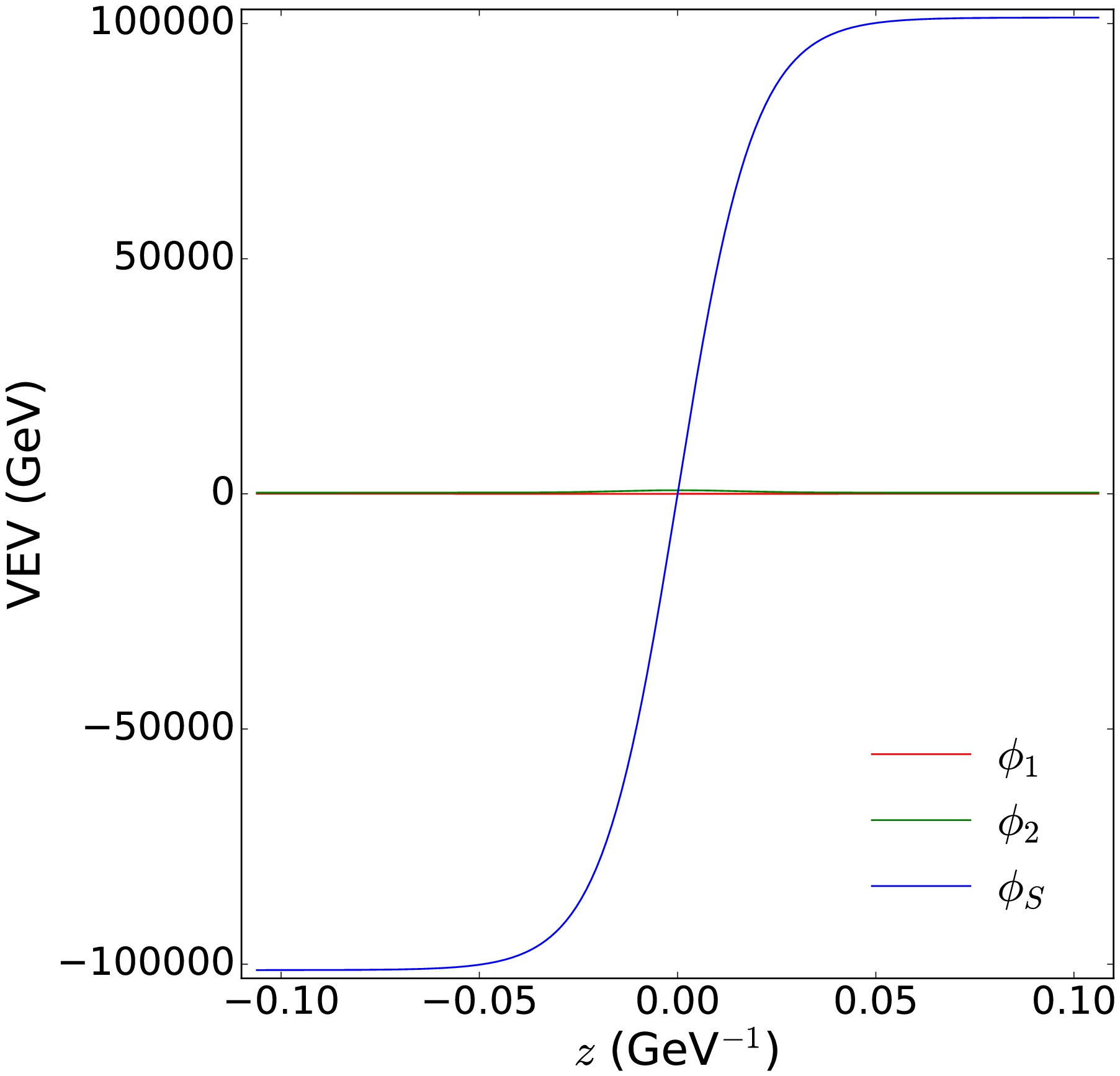
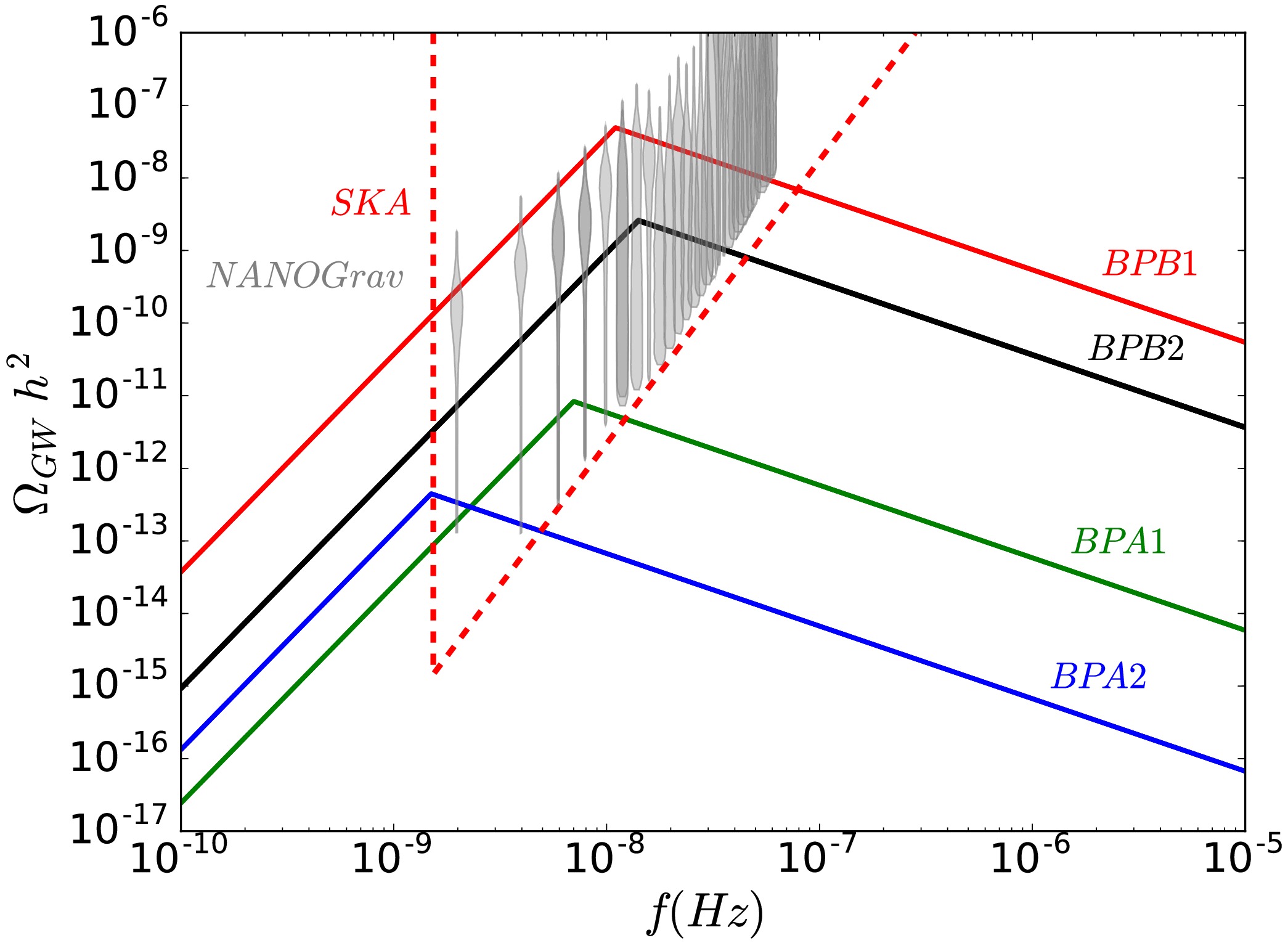
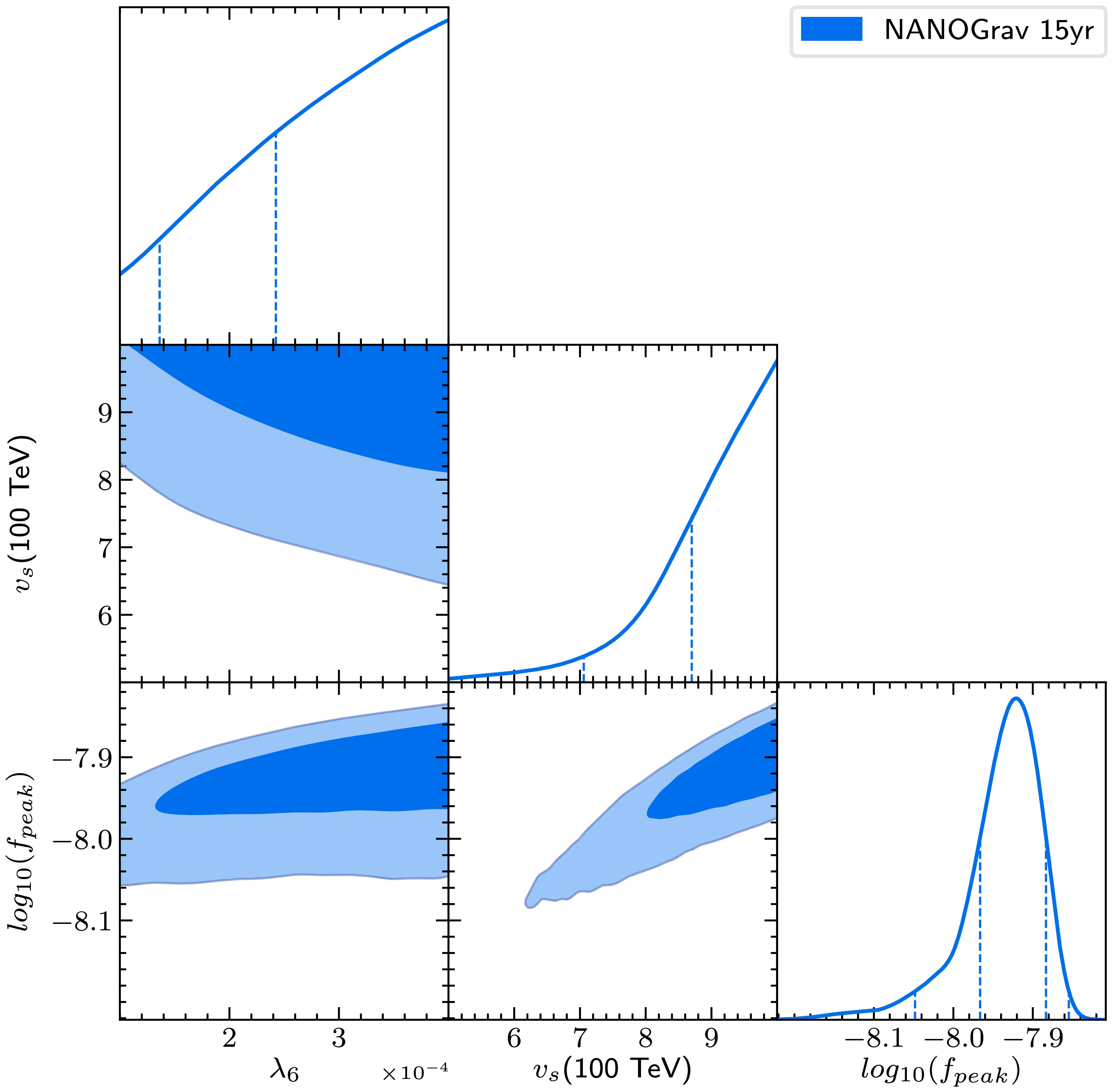
This study explores the diphoton and\begin{document}$b\bar{b}$\end{document} \begin{document}$Z_2$\end{document} \begin{document}$Z_2$\end{document} \begin{document}$v_s$\end{document} \begin{document}$b\bar{b}$\end{document} \begin{document}$1\sigma$\end{document} \begin{document}$v_s=$\end{document} \begin{document}$b\bar{b}$\end{document} \begin{document}$1\sigma$\end{document}
This study explores the diphoton and
2026, 50(1): 014101. doi: 10.1088/1674-1137/adfa81
Abstract:
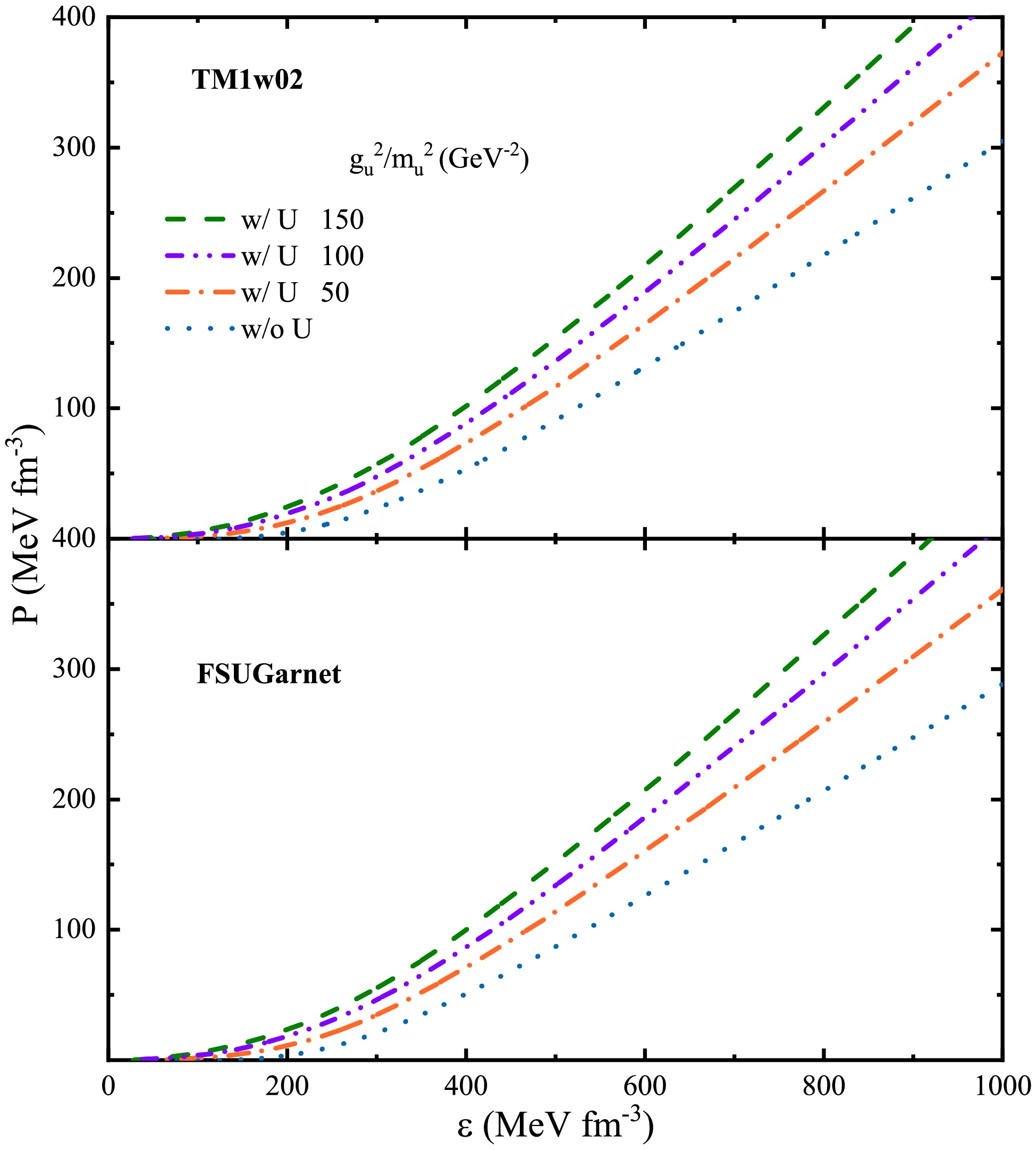
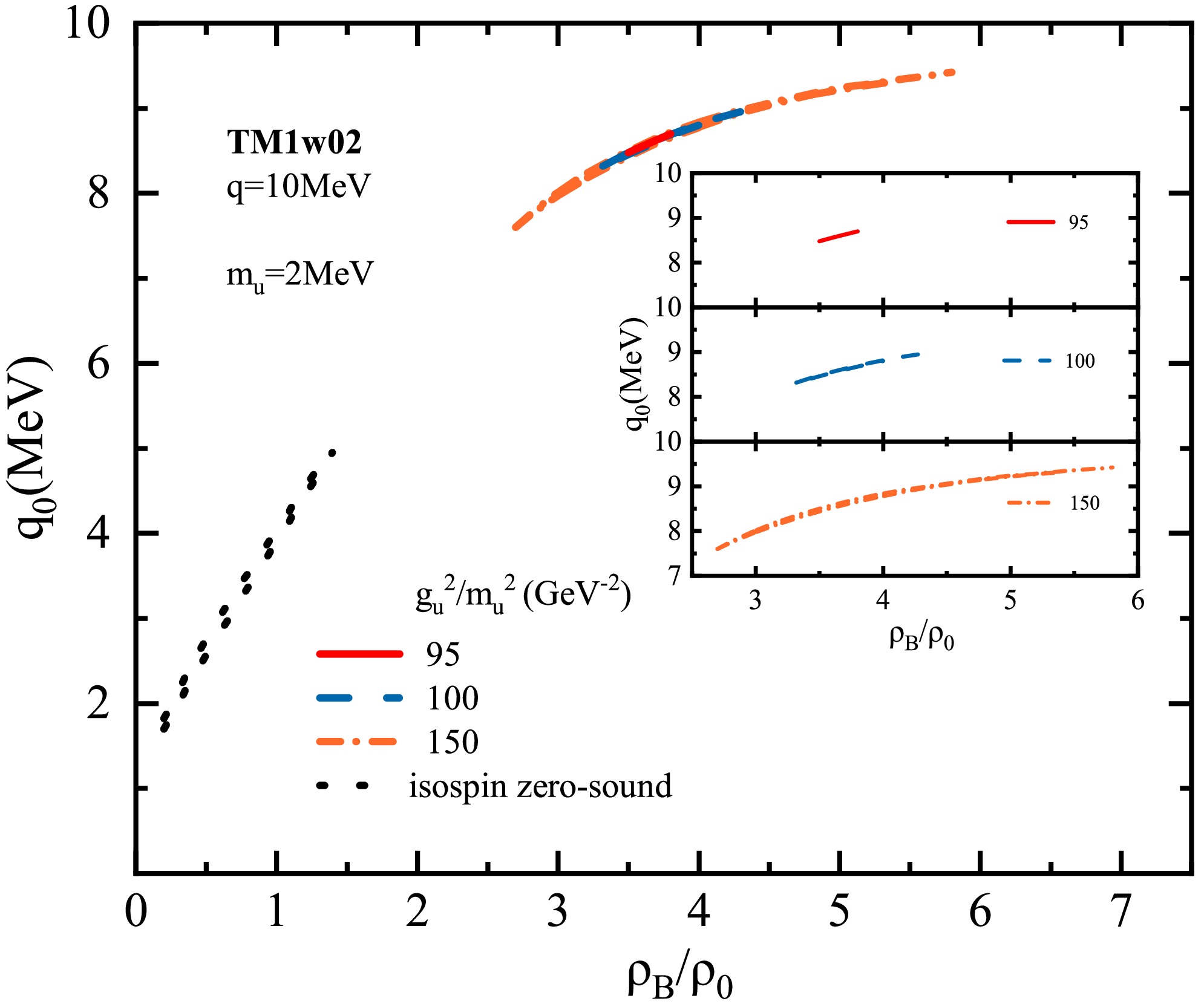
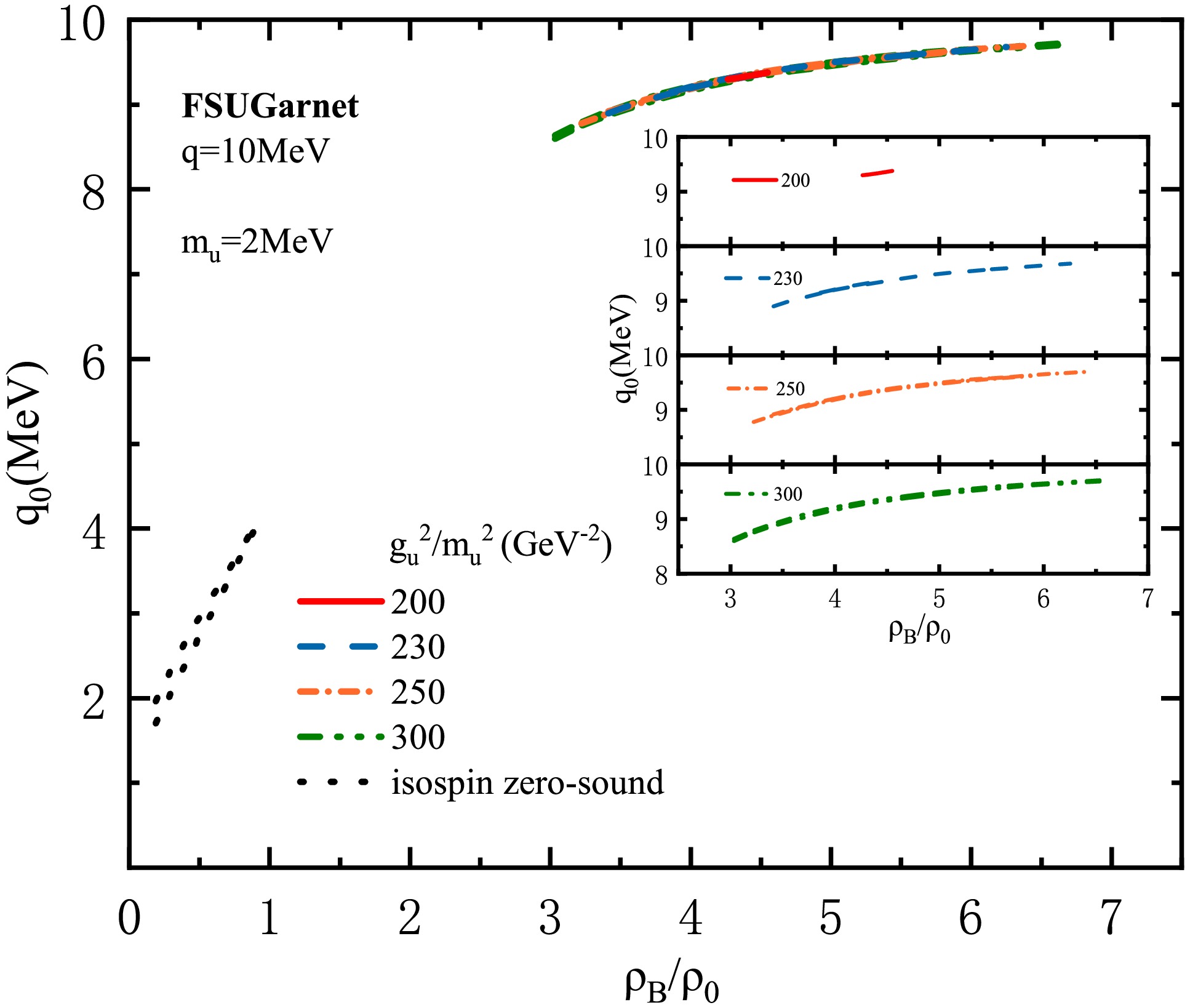
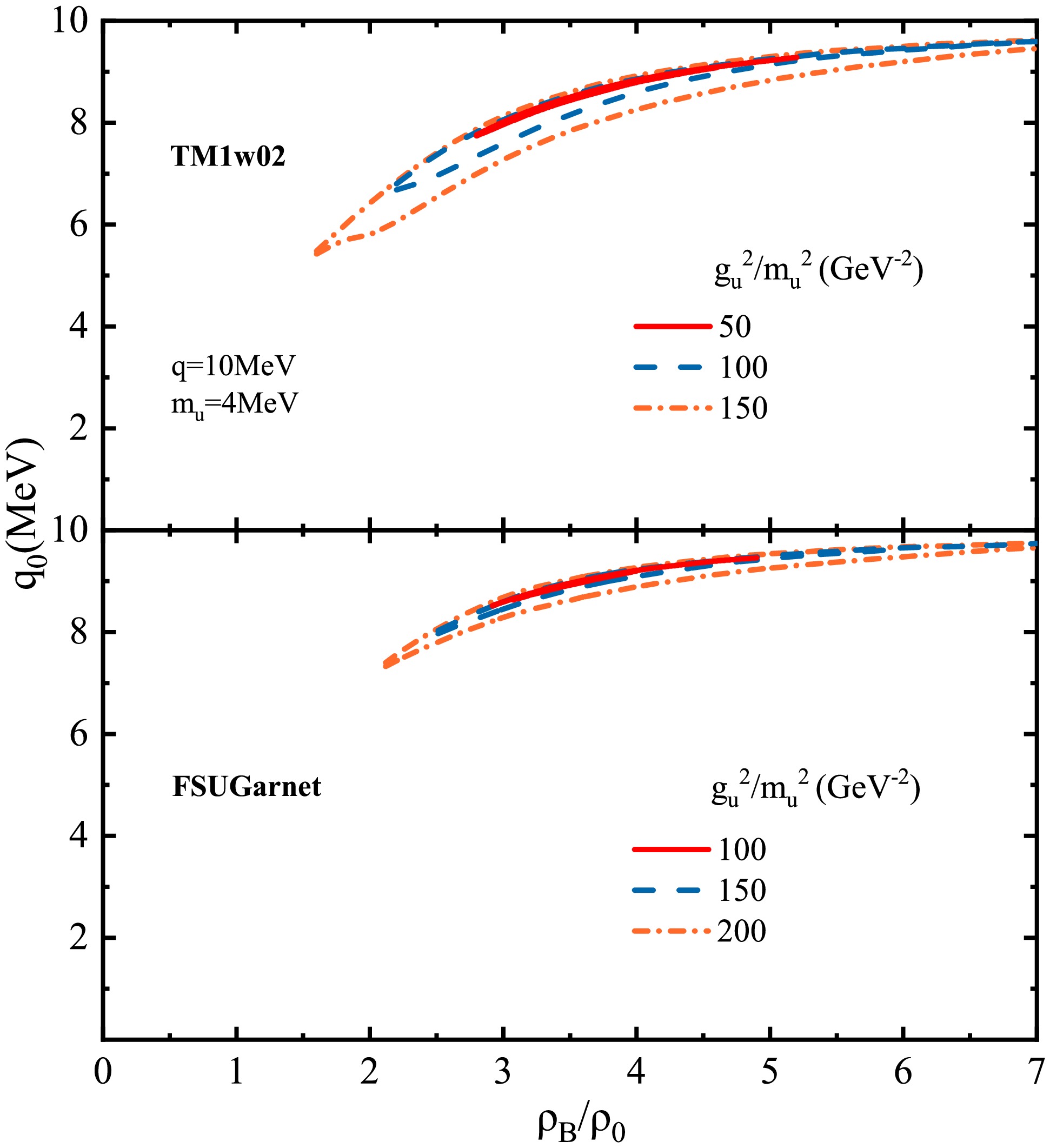
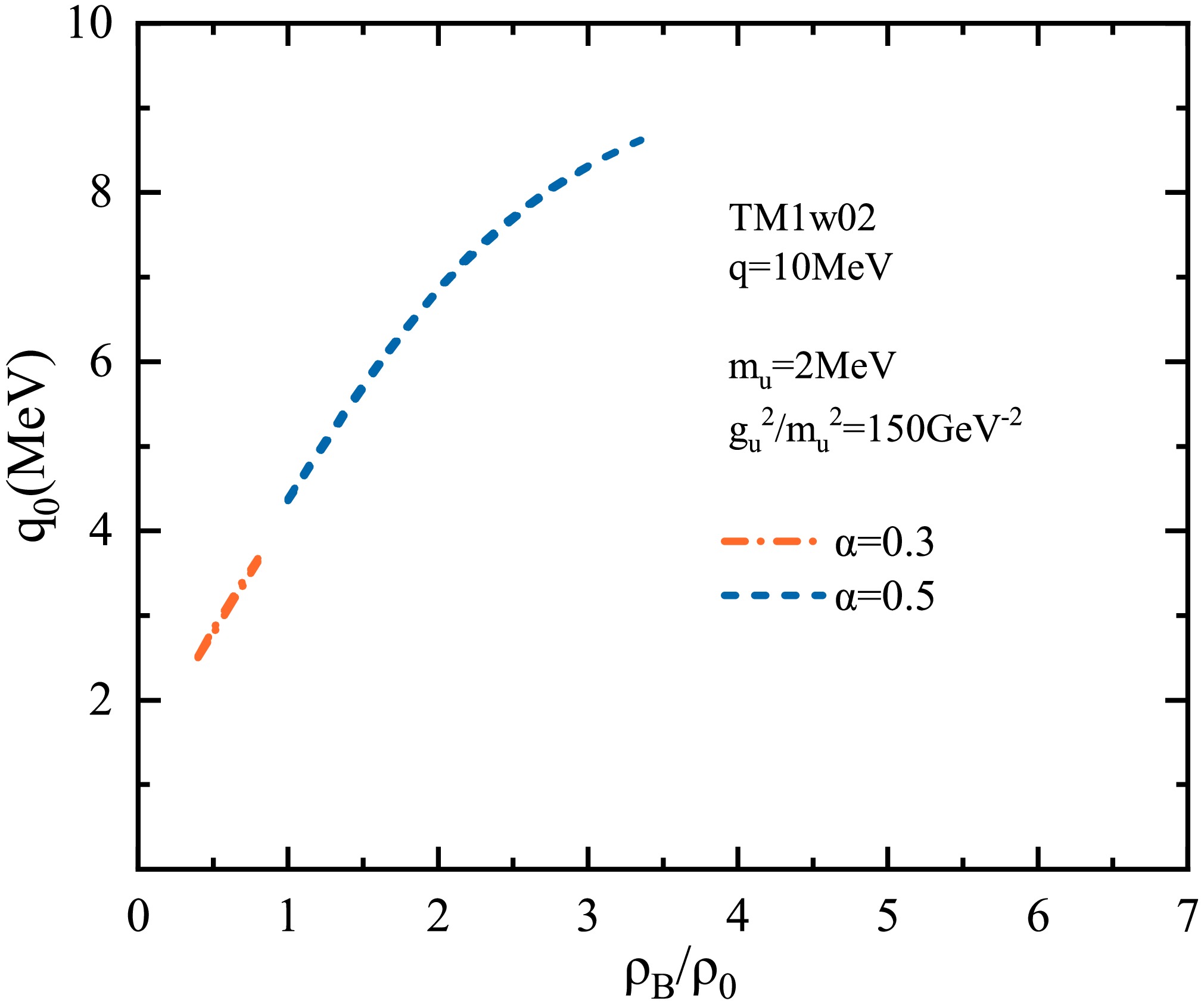
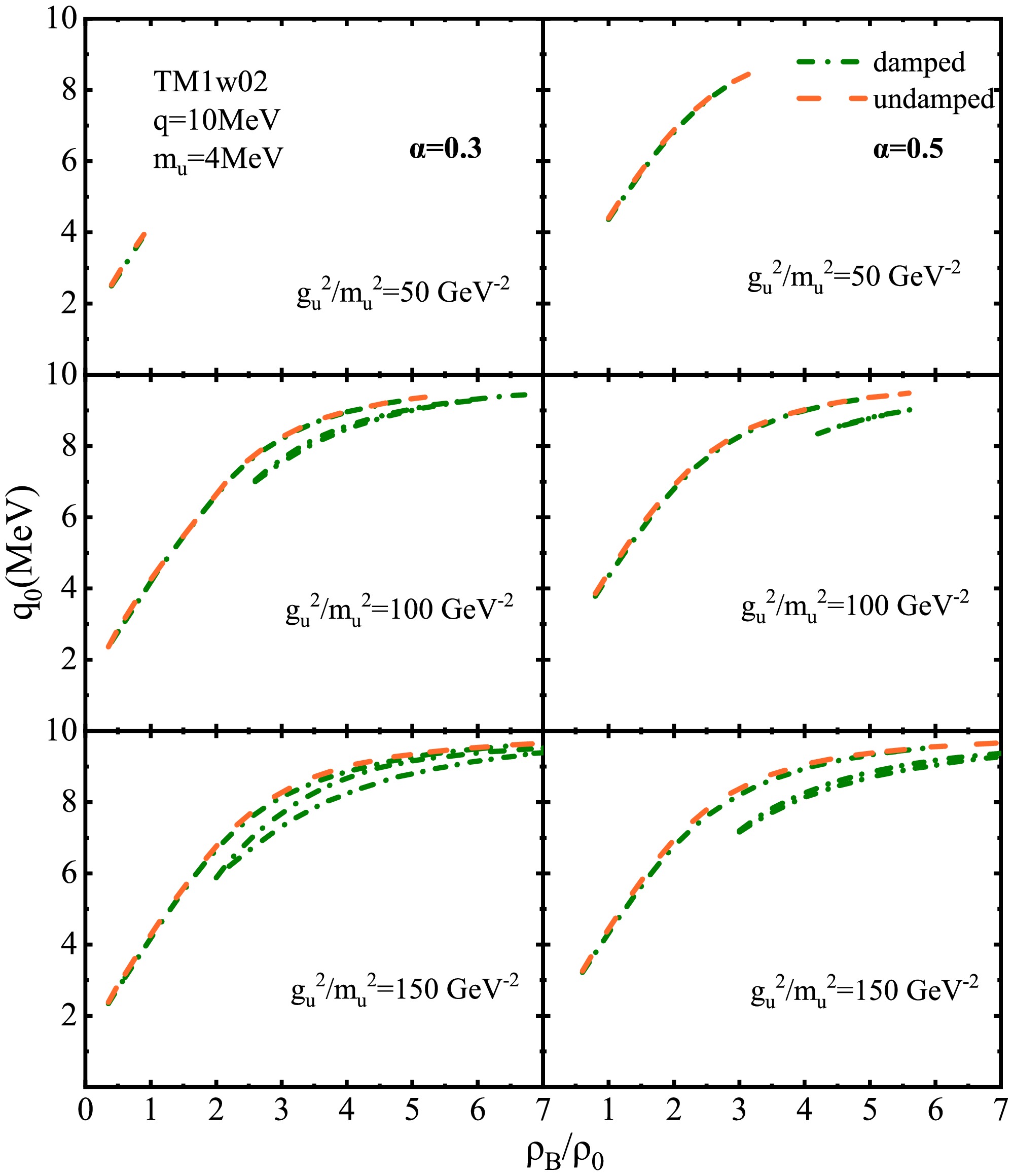
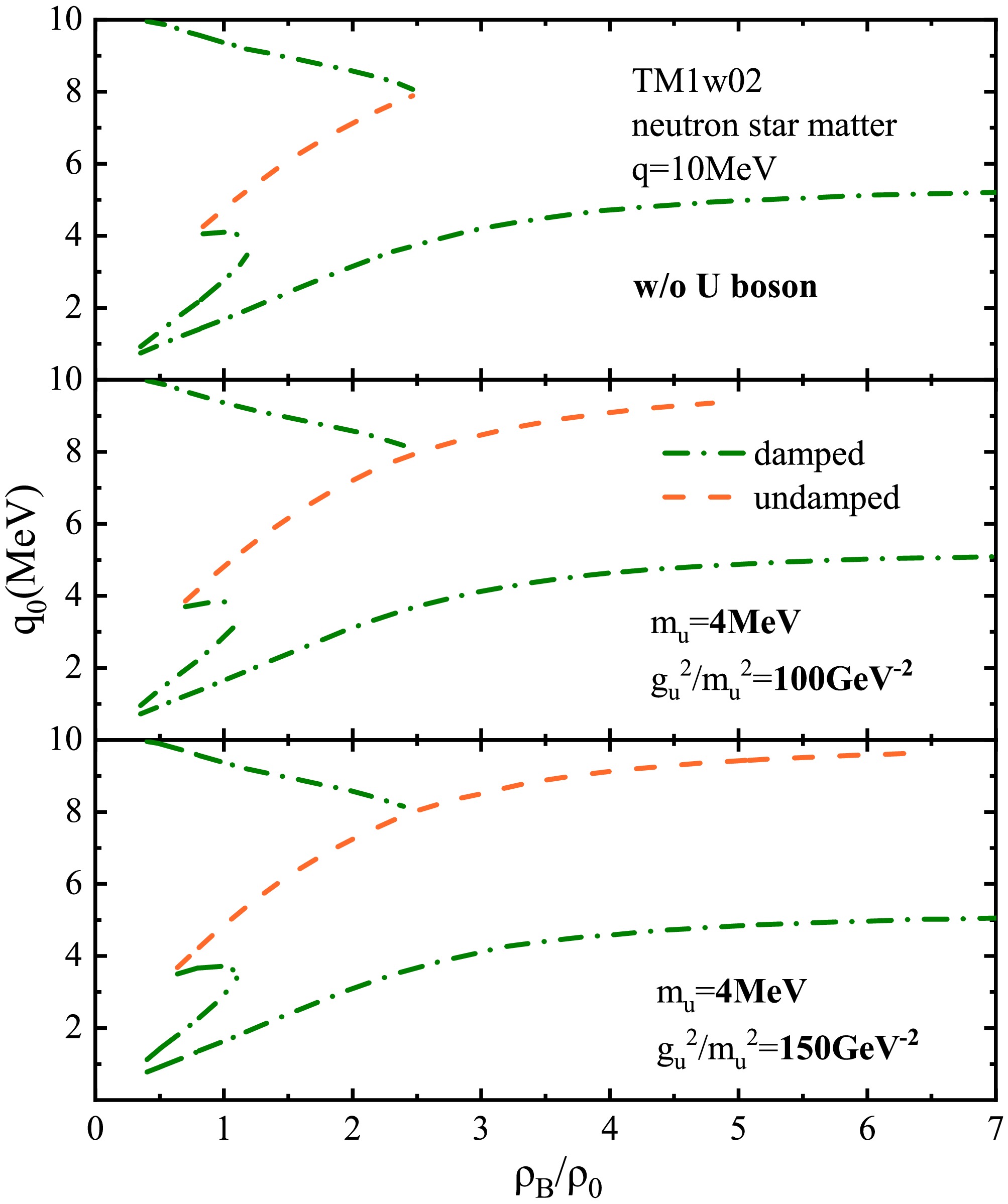
We investigate zero-sound modes in nuclear matter and neutron star matter using the relativistic random phase approximation (RRPA), focusing on the role of a light vector U boson in stiffening the nuclear equation of state (EOS). The occurrence of zero sound is closely linked to the stiffness of the nuclear EOS. The additional vector repulsive potential induced by the U boson results in the occurrence of zero sound at high densities in models with a soft high-density EOS, and the density range for zero sound extends to higher densities with larger coupling strength of the U boson. This confirms the unambiguous role of stiffening the high-density EOS in resulting in the appearance of zero sound.
We investigate zero-sound modes in nuclear matter and neutron star matter using the relativistic random phase approximation (RRPA), focusing on the role of a light vector U boson in stiffening the nuclear equation of state (EOS). The occurrence of zero sound is closely linked to the stiffness of the nuclear EOS. The additional vector repulsive potential induced by the U boson results in the occurrence of zero sound at high densities in models with a soft high-density EOS, and the density range for zero sound extends to higher densities with larger coupling strength of the U boson. This confirms the unambiguous role of stiffening the high-density EOS in resulting in the appearance of zero sound.
2026, 50(1): 014102. doi: 10.1088/1674-1137/ae072b
Abstract:
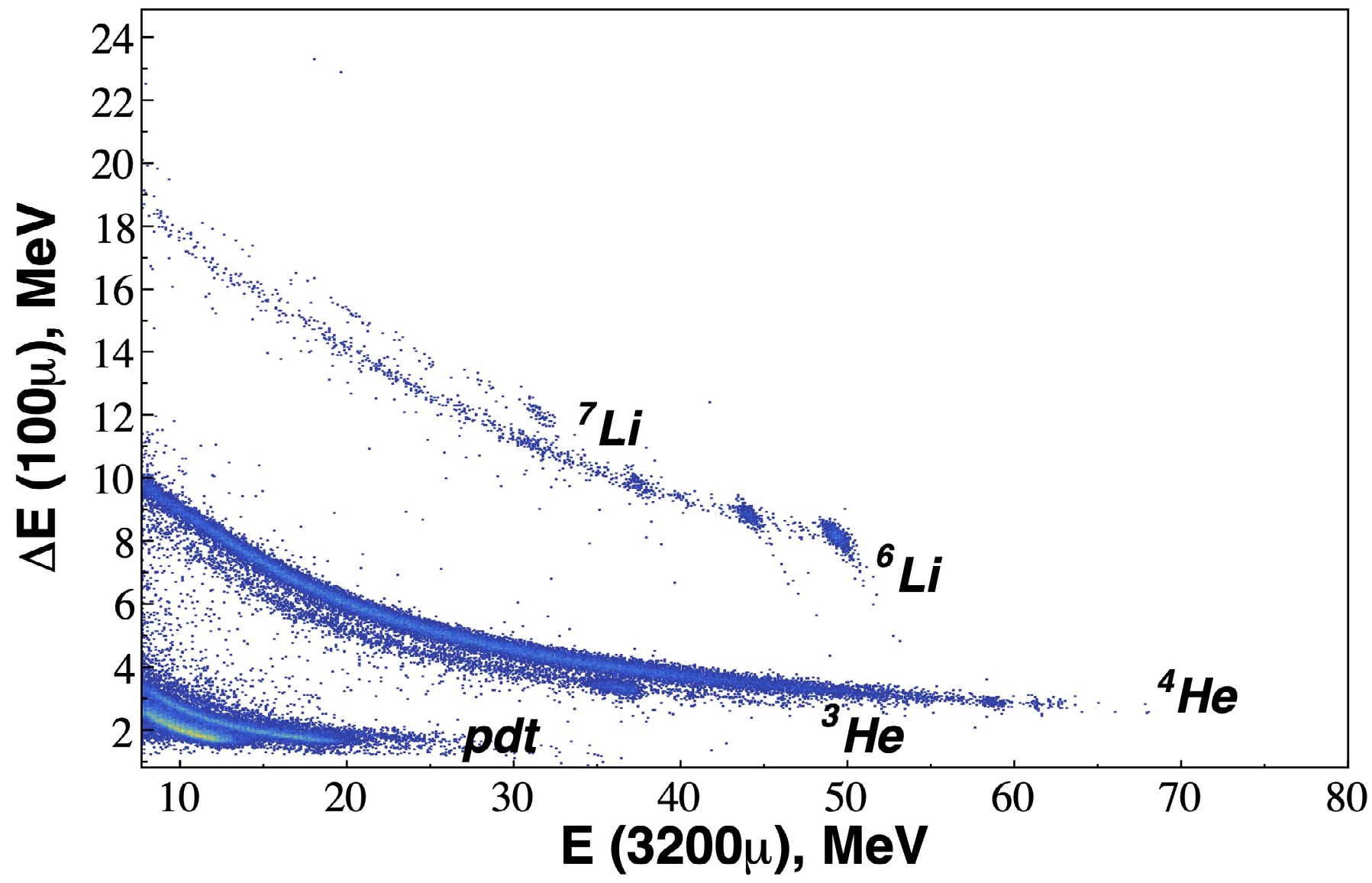
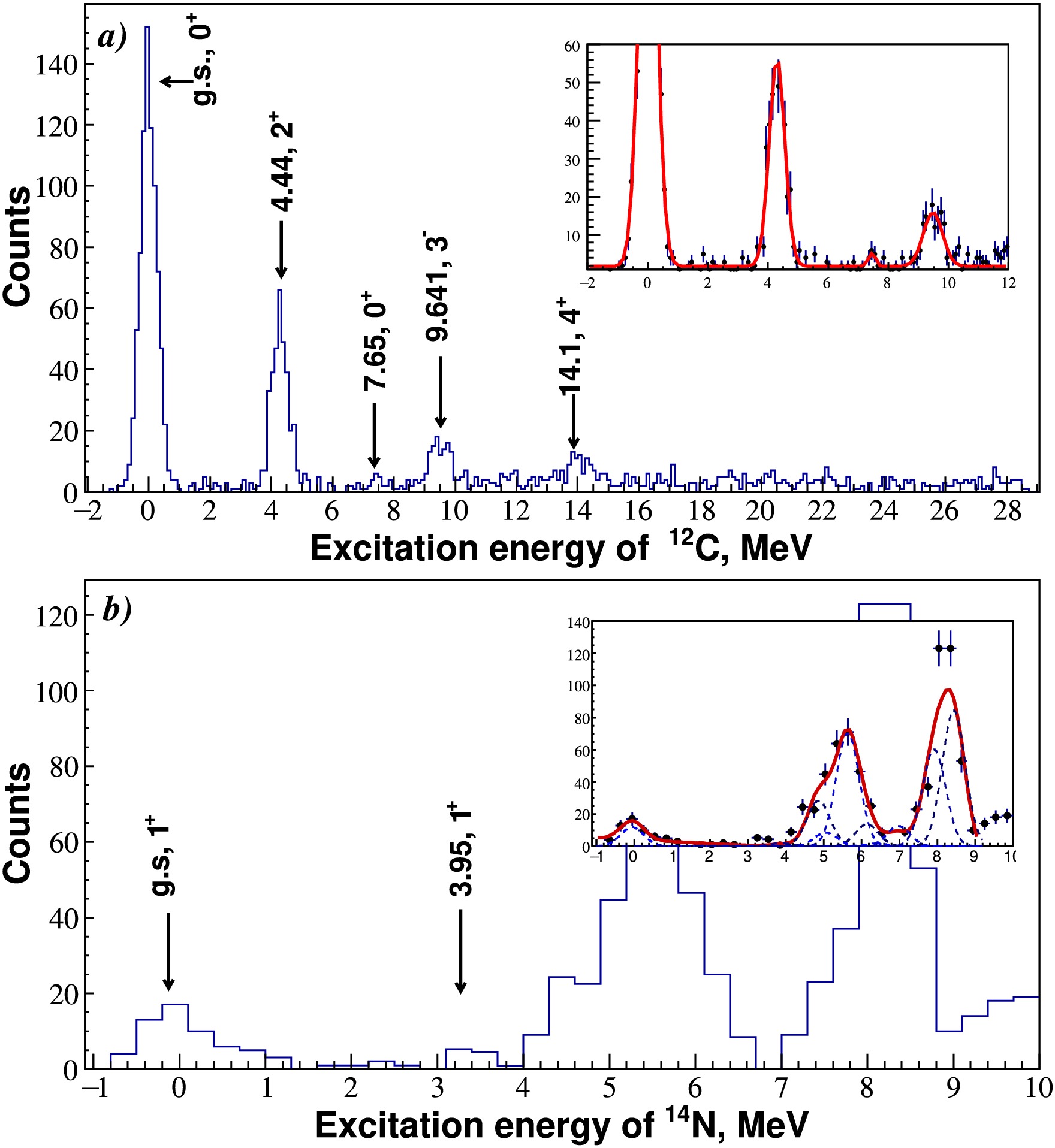
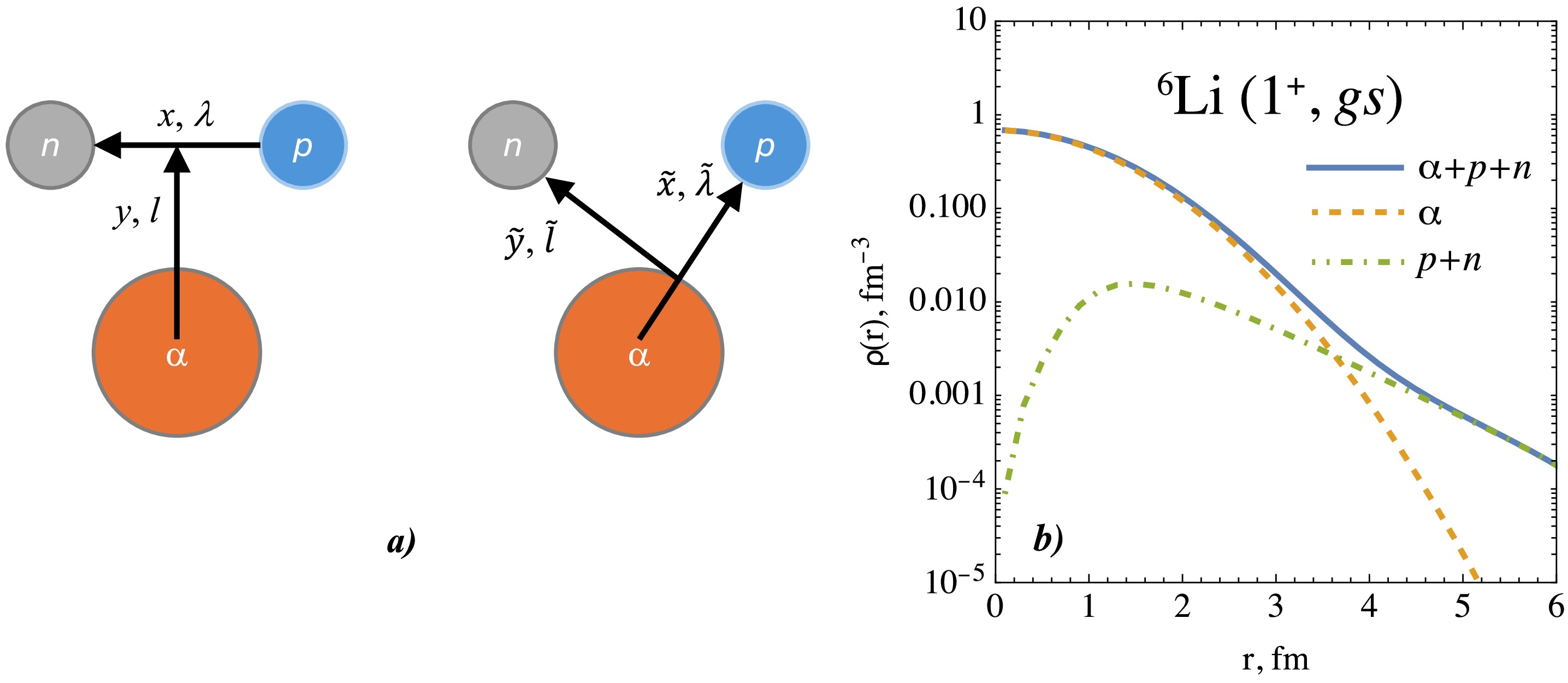
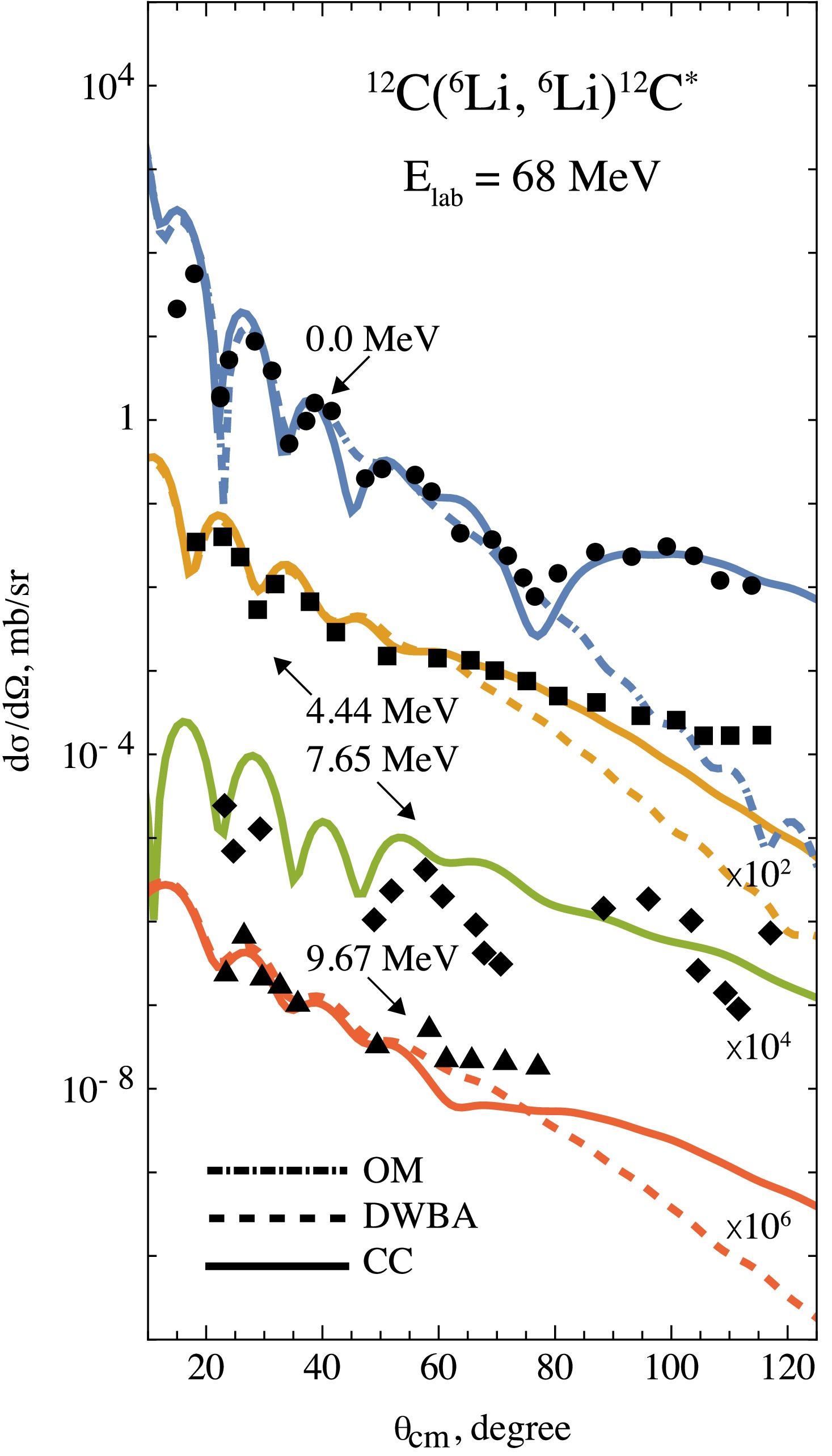
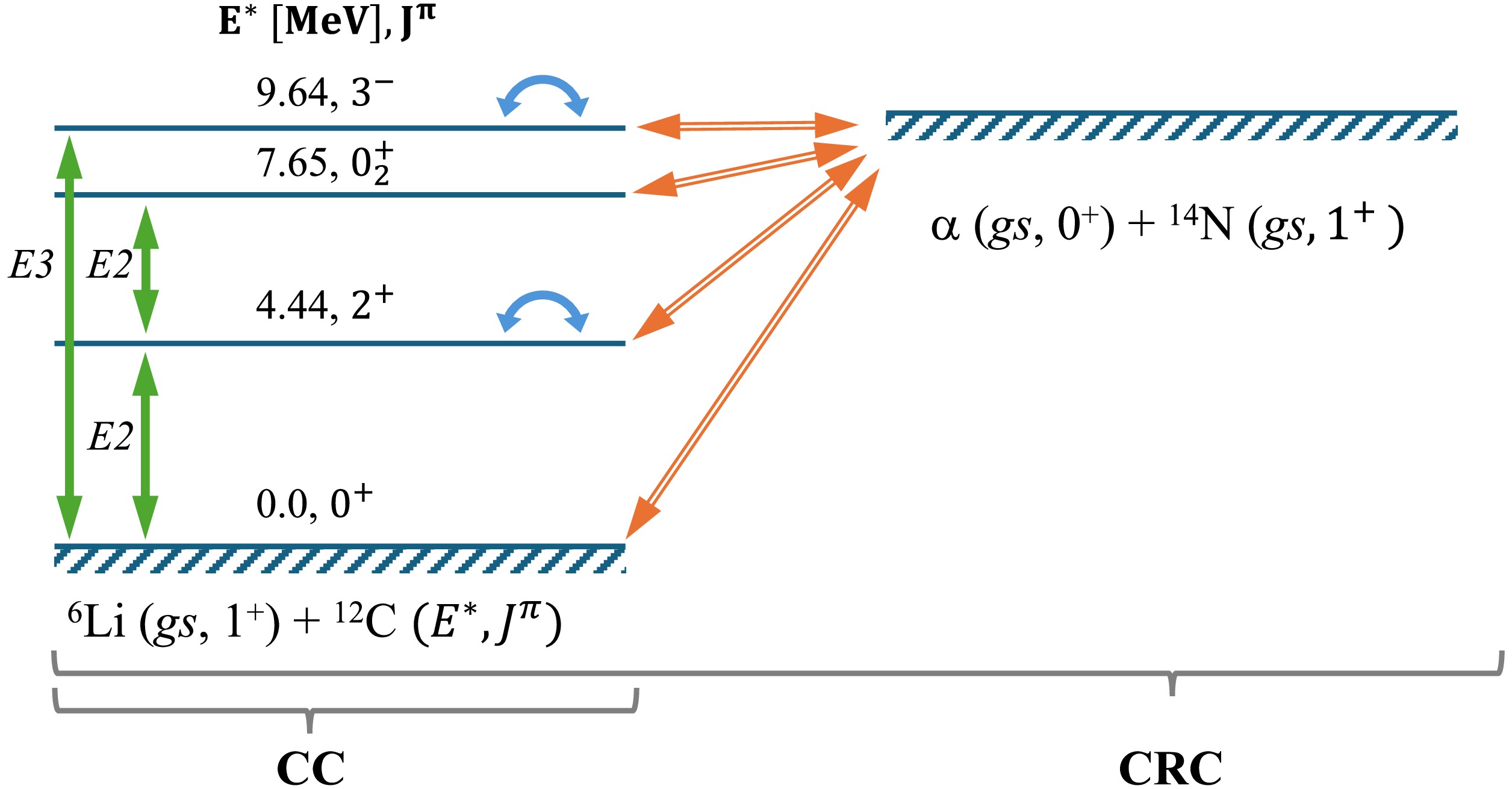
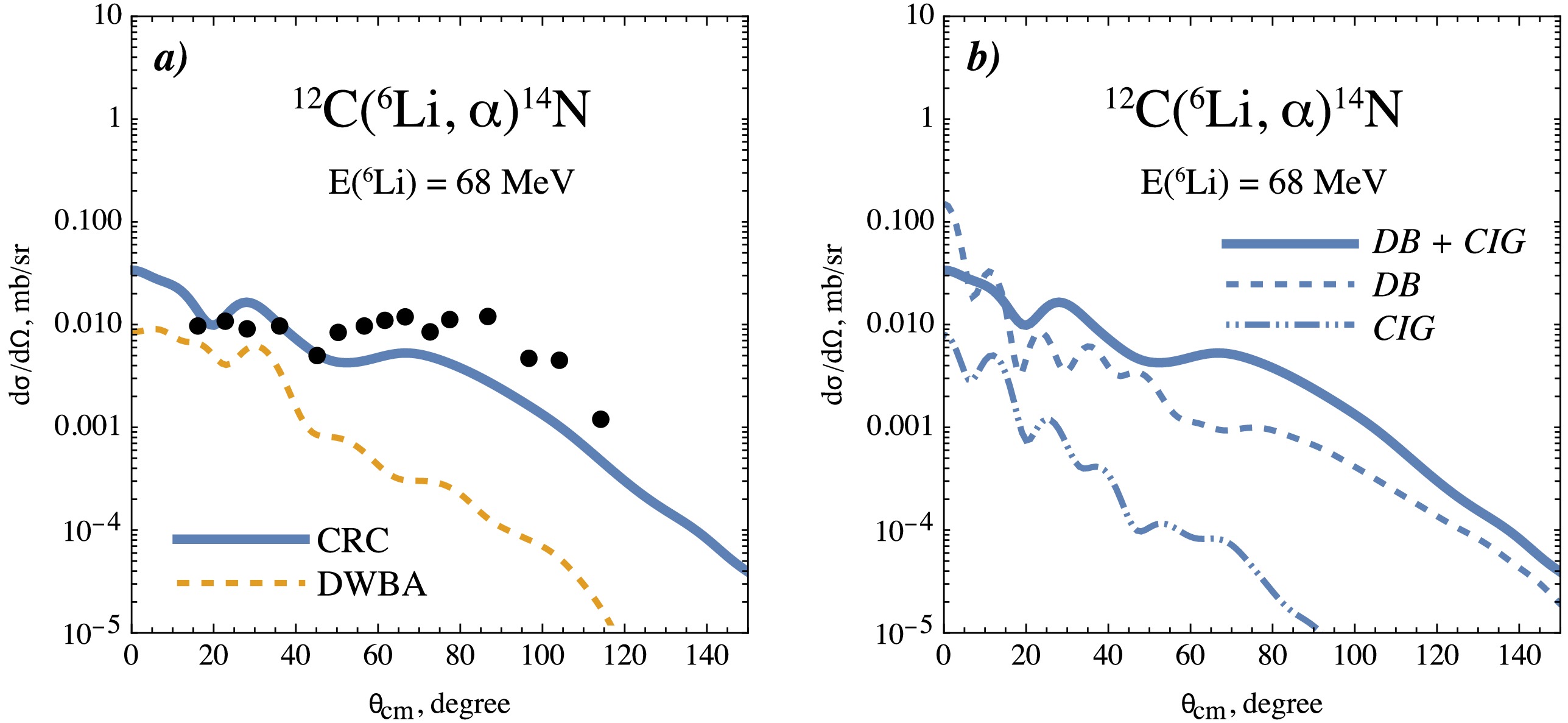
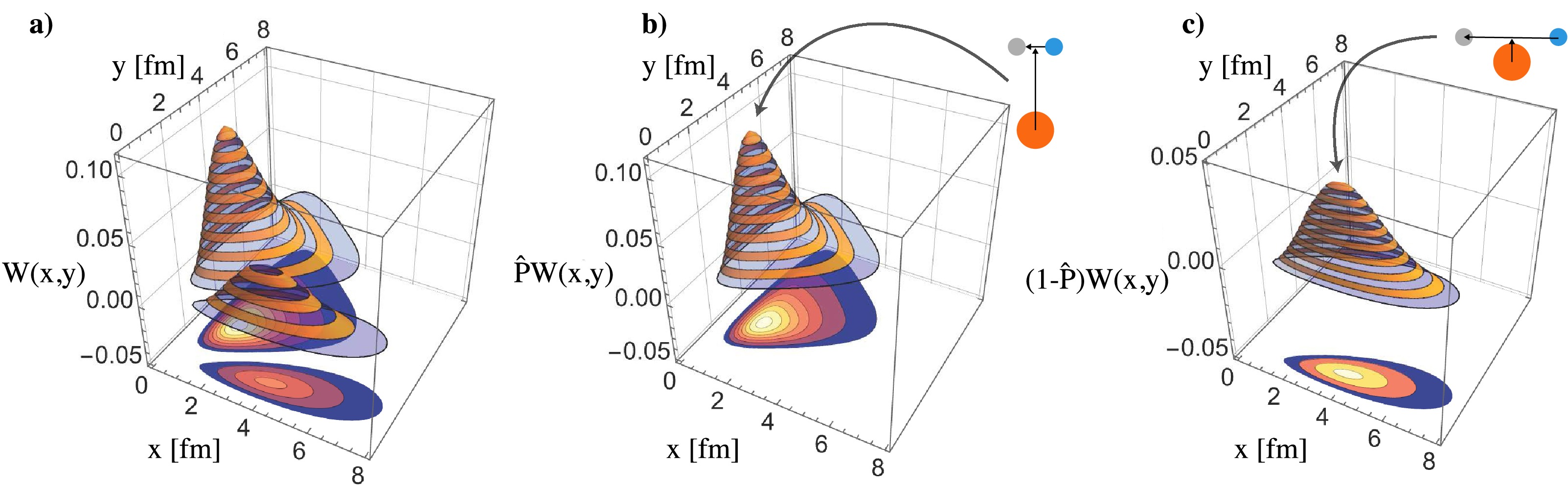
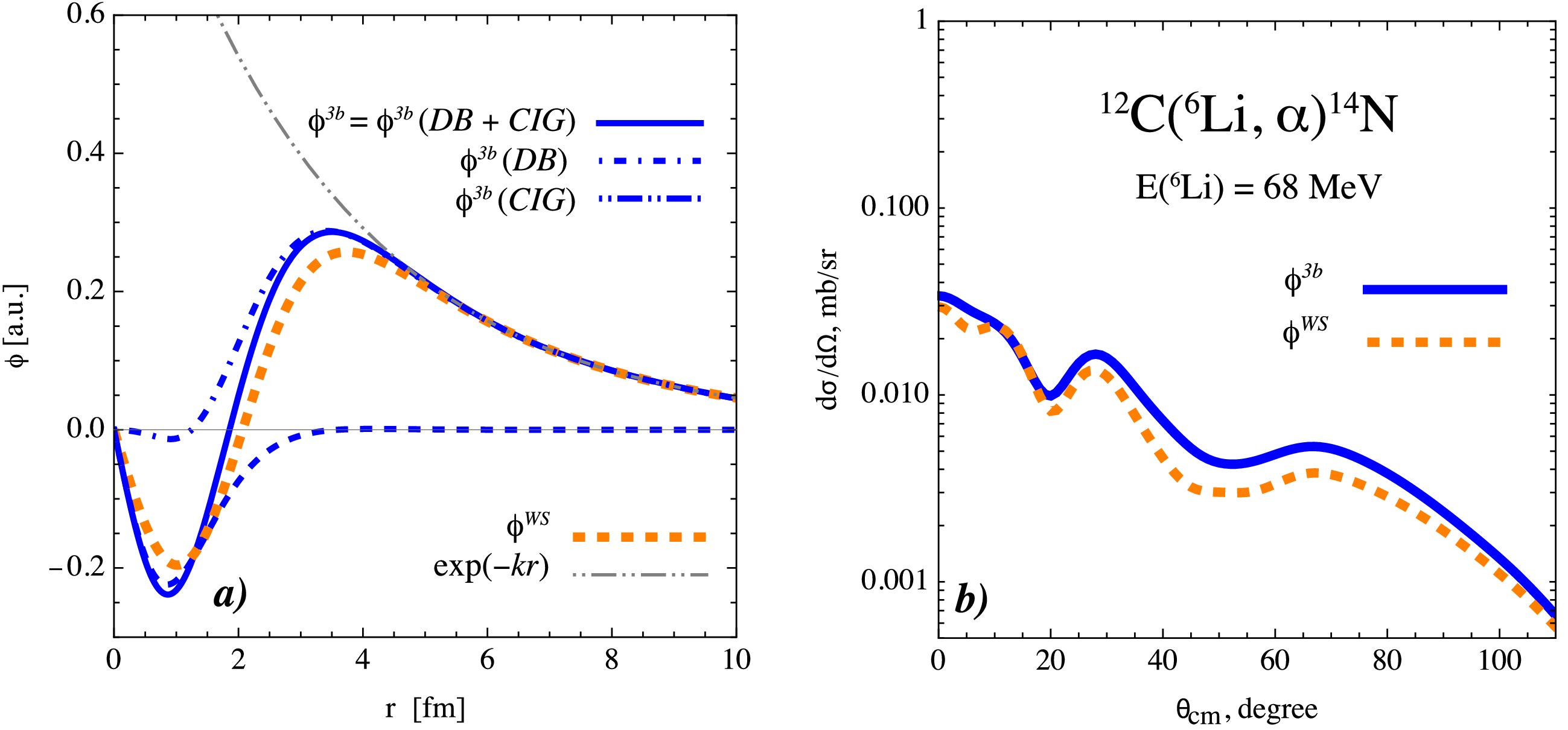
This study presents a combined experimental and theoretical investigation of the 6Li + 12C nuclear reaction at a laboratory energy of 68 MeV. The reaction products are identified via the standard\begin{document}$ \Delta E $\end{document}
This study presents a combined experimental and theoretical investigation of the 6Li + 12C nuclear reaction at a laboratory energy of 68 MeV. The reaction products are identified via the standard
2026, 50(1): 014103. doi: 10.1088/1674-1137/ae042c
Abstract:
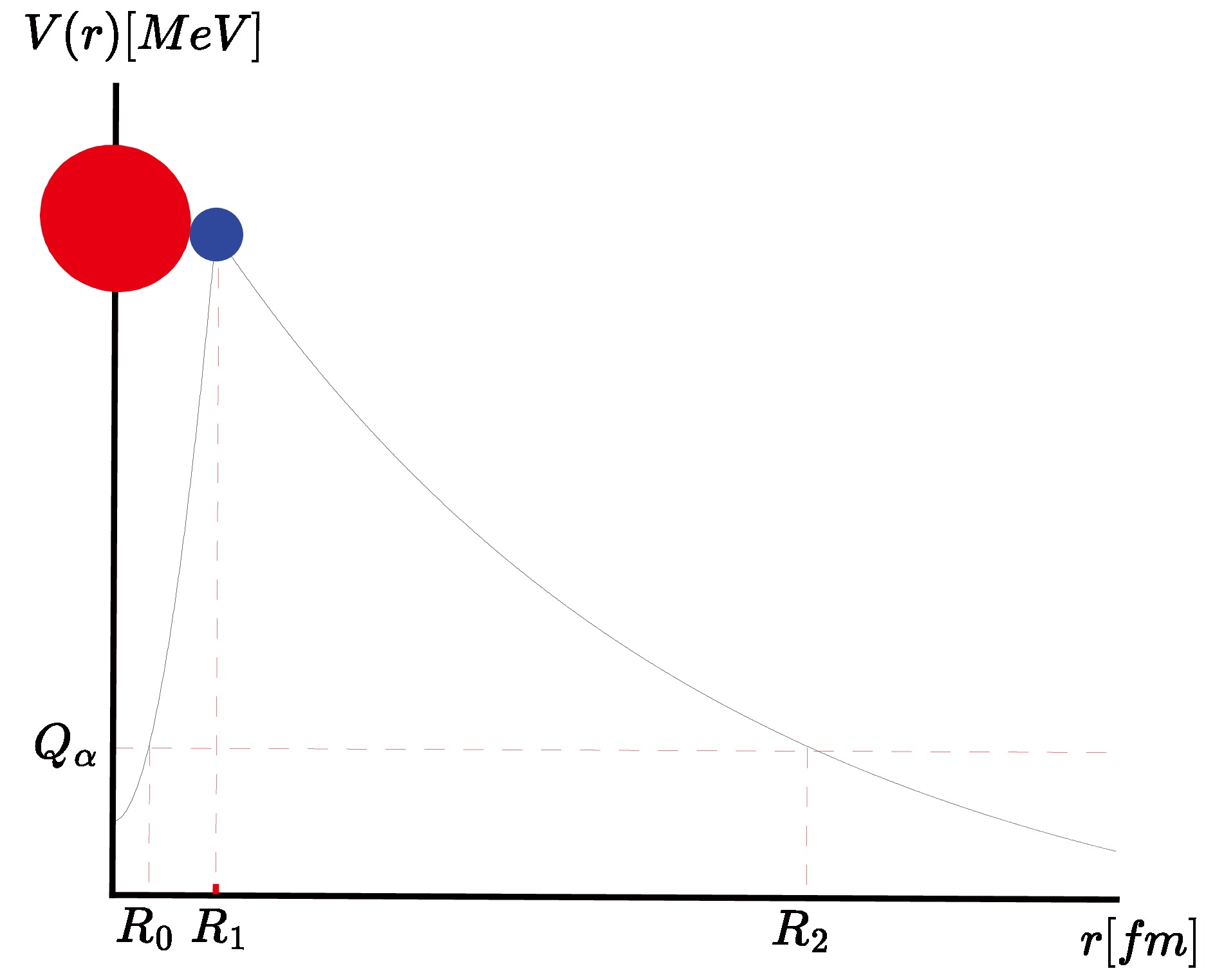
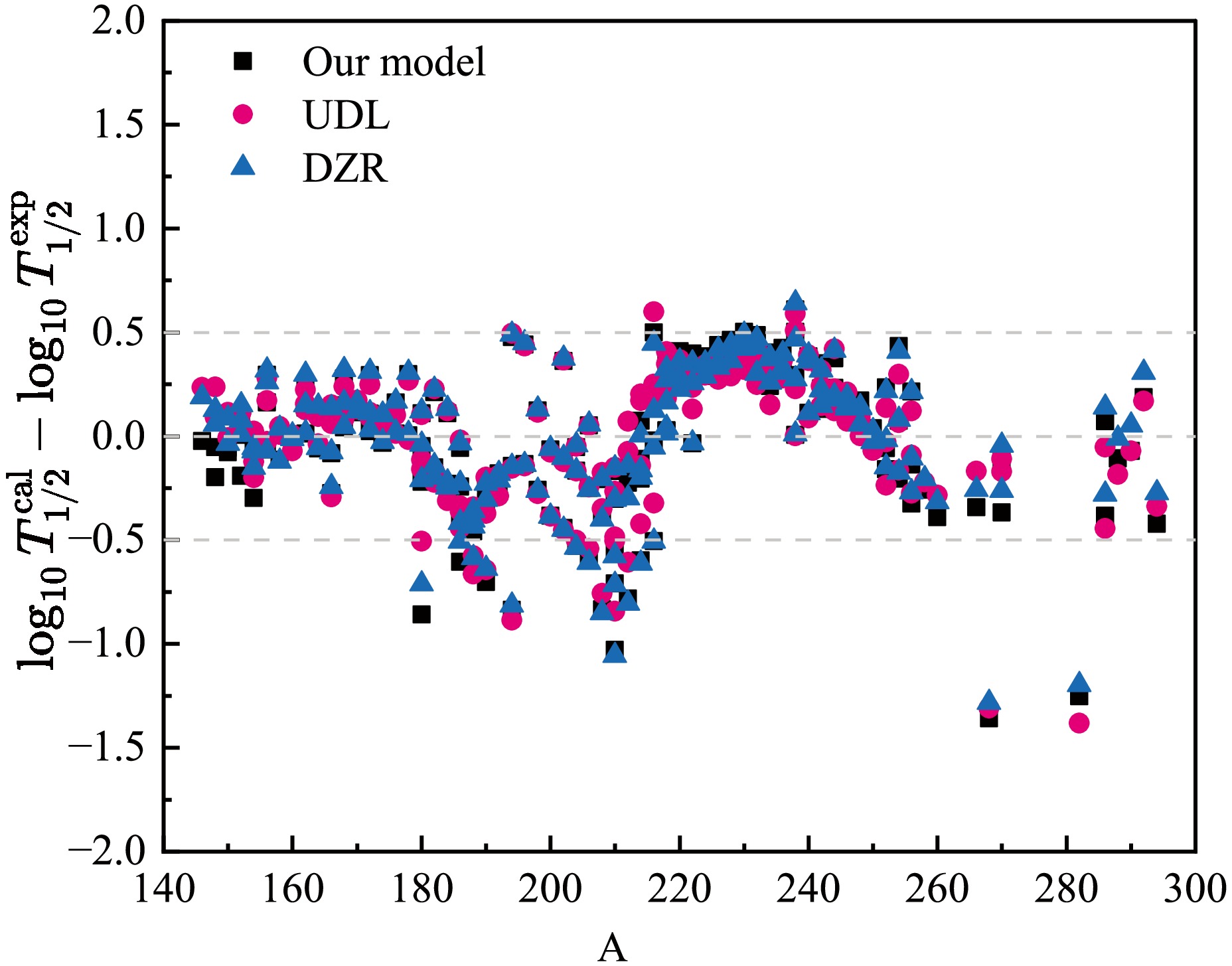
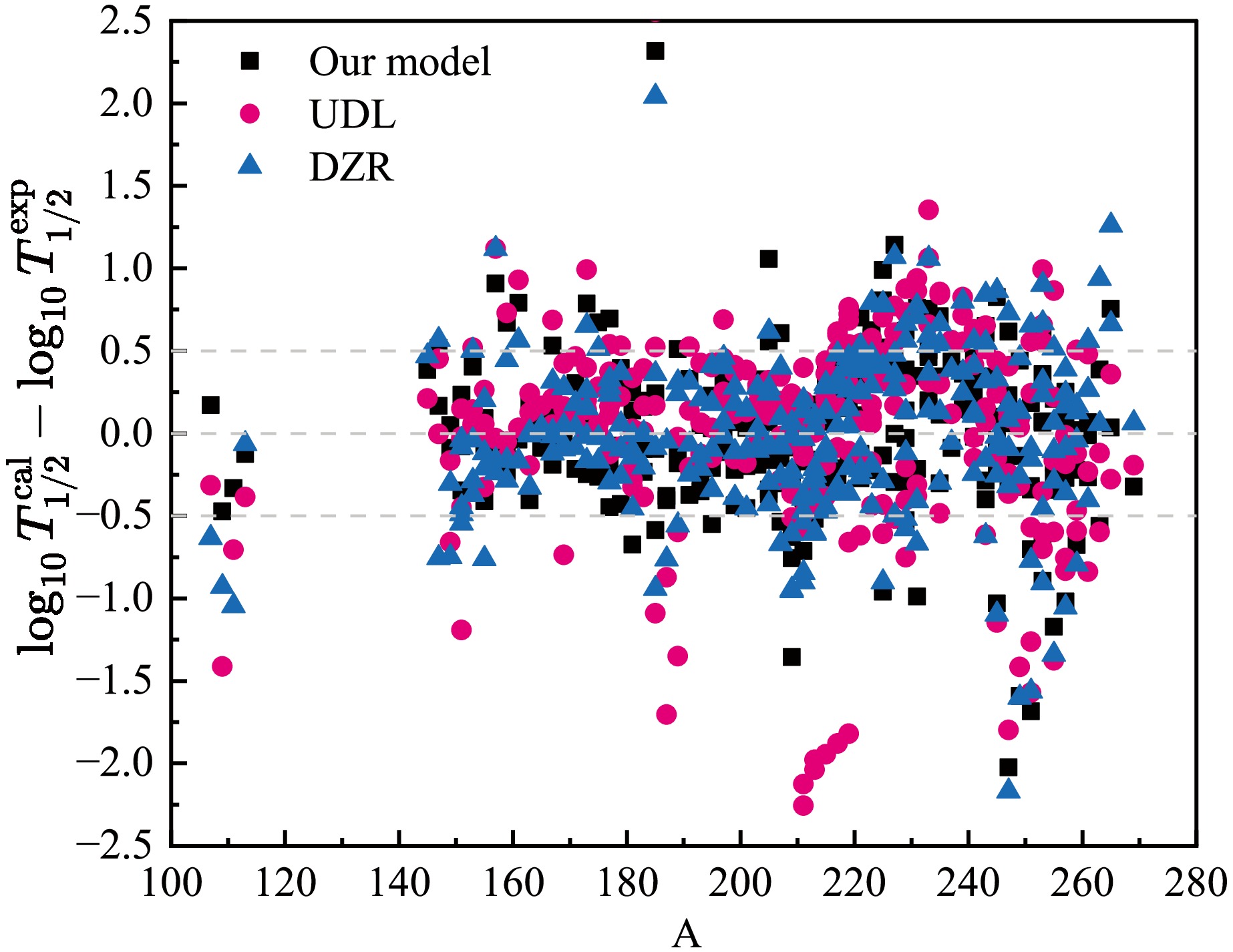
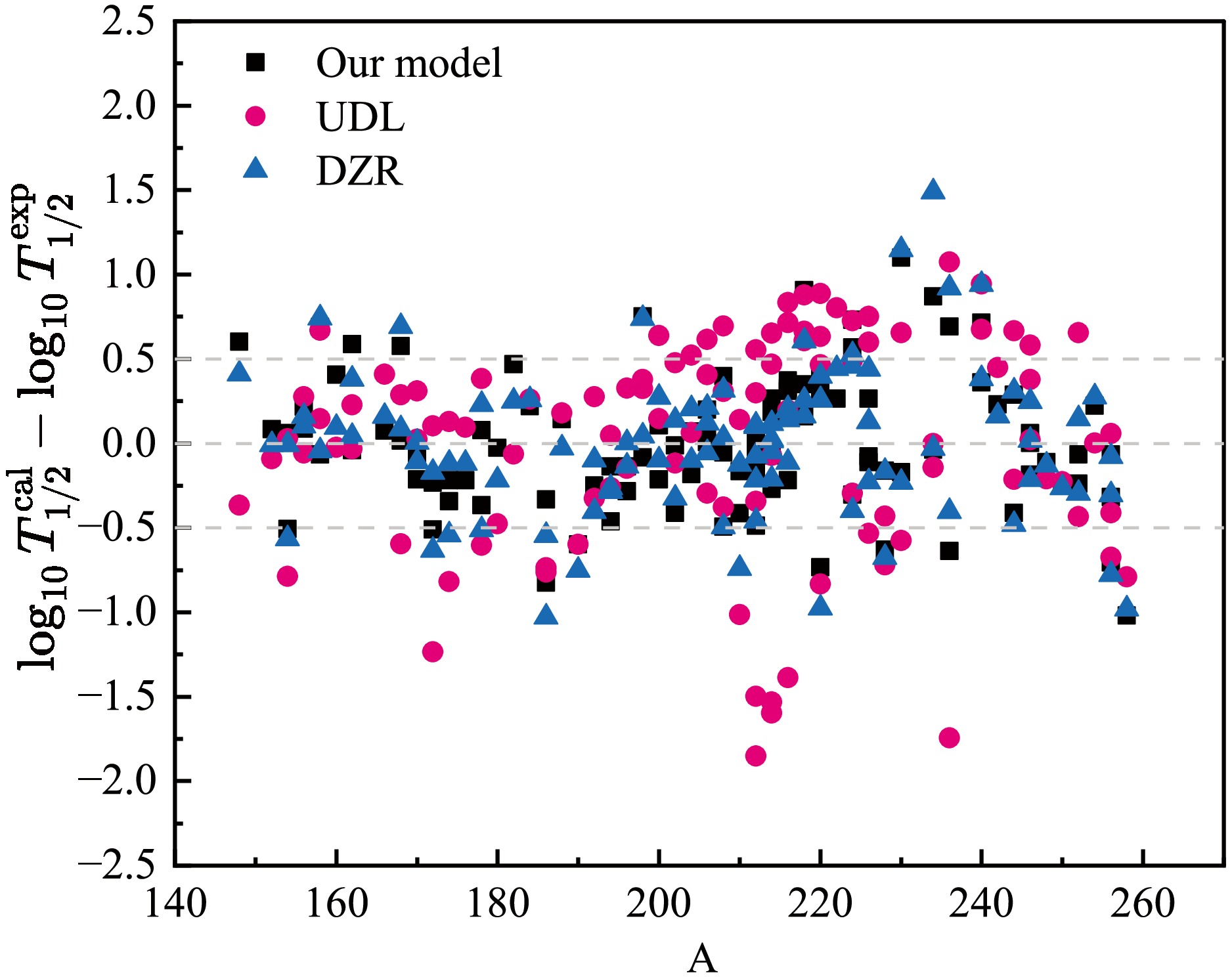
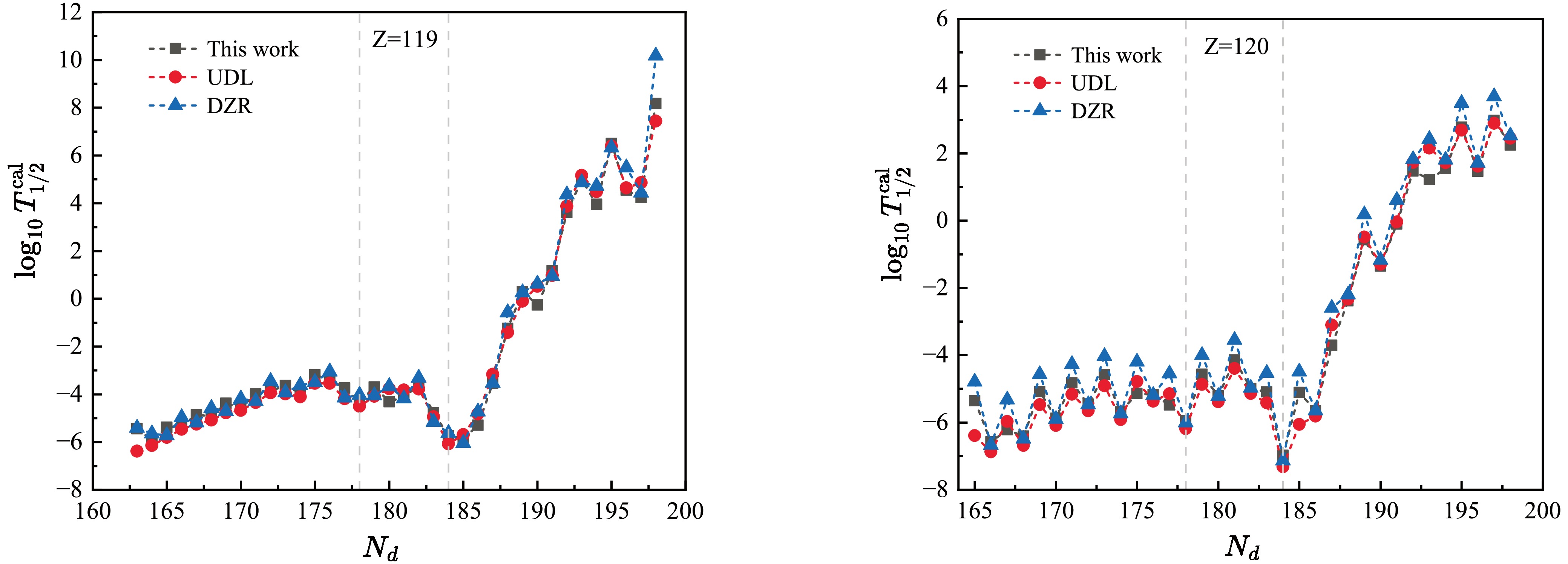
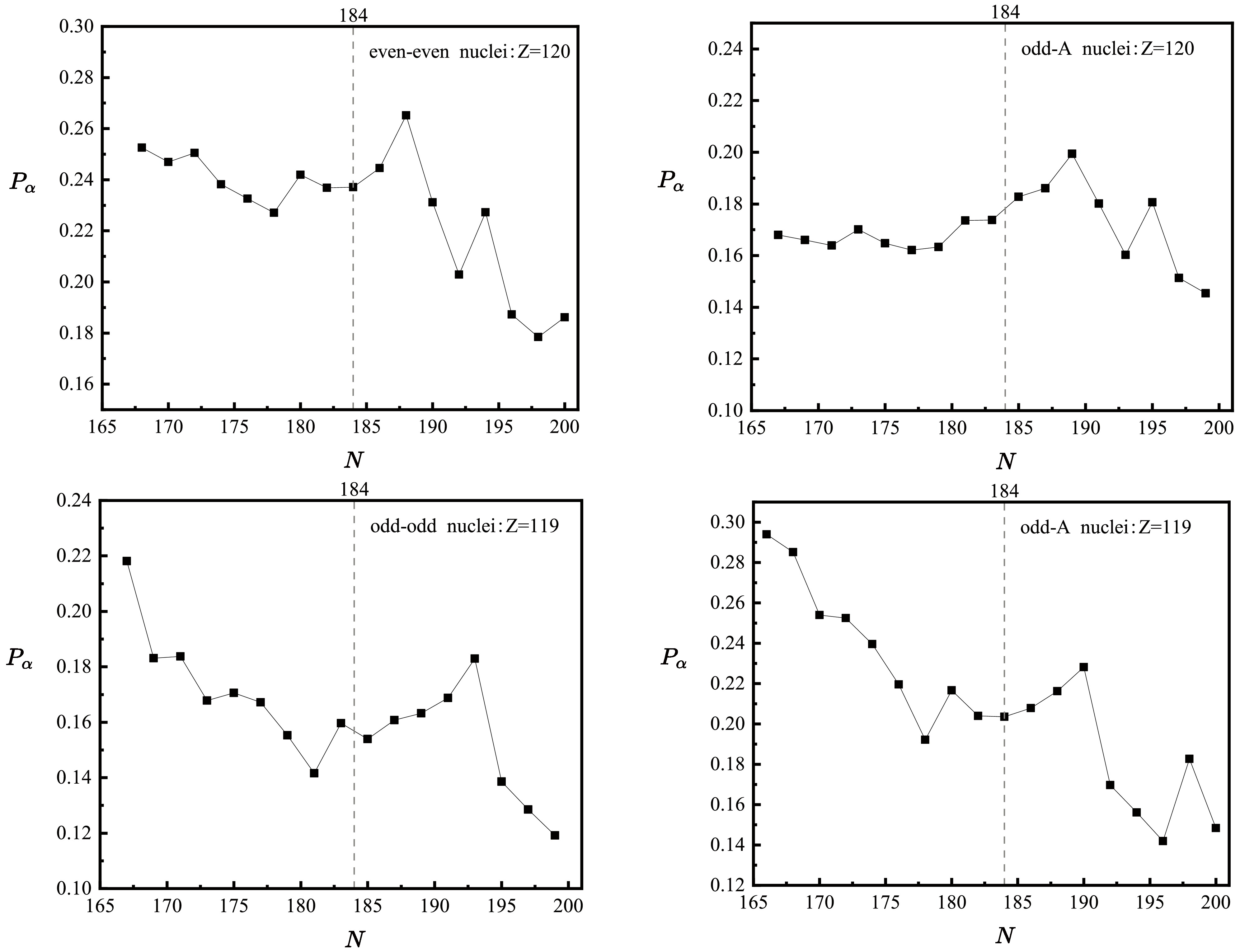
In this study, based on the Wentzel-Kramers-Brillouin (WKB) theory, by parameterizing the assault frequency\begin{document}$ \nu $\end{document} \begin{document}$ \alpha $\end{document} \begin{document}$ \alpha $\end{document} \begin{document}$ P_\alpha $\end{document} \begin{document}$ \alpha $\end{document} \begin{document}$ \alpha $\end{document}
In this study, based on the Wentzel-Kramers-Brillouin (WKB) theory, by parameterizing the assault frequency
2026, 50(1): 014104. doi: 10.1088/1674-1137/ae099a
Abstract:
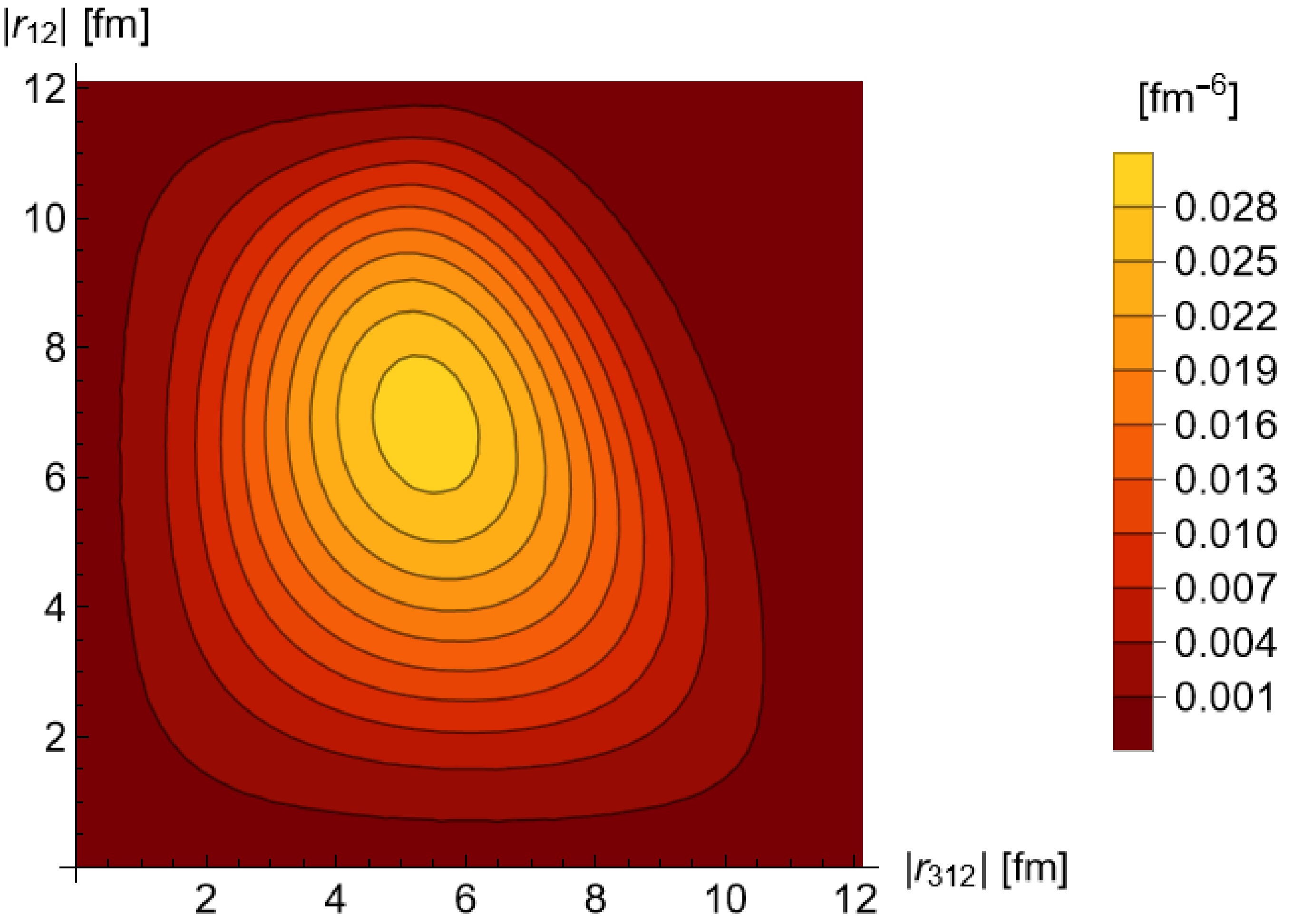
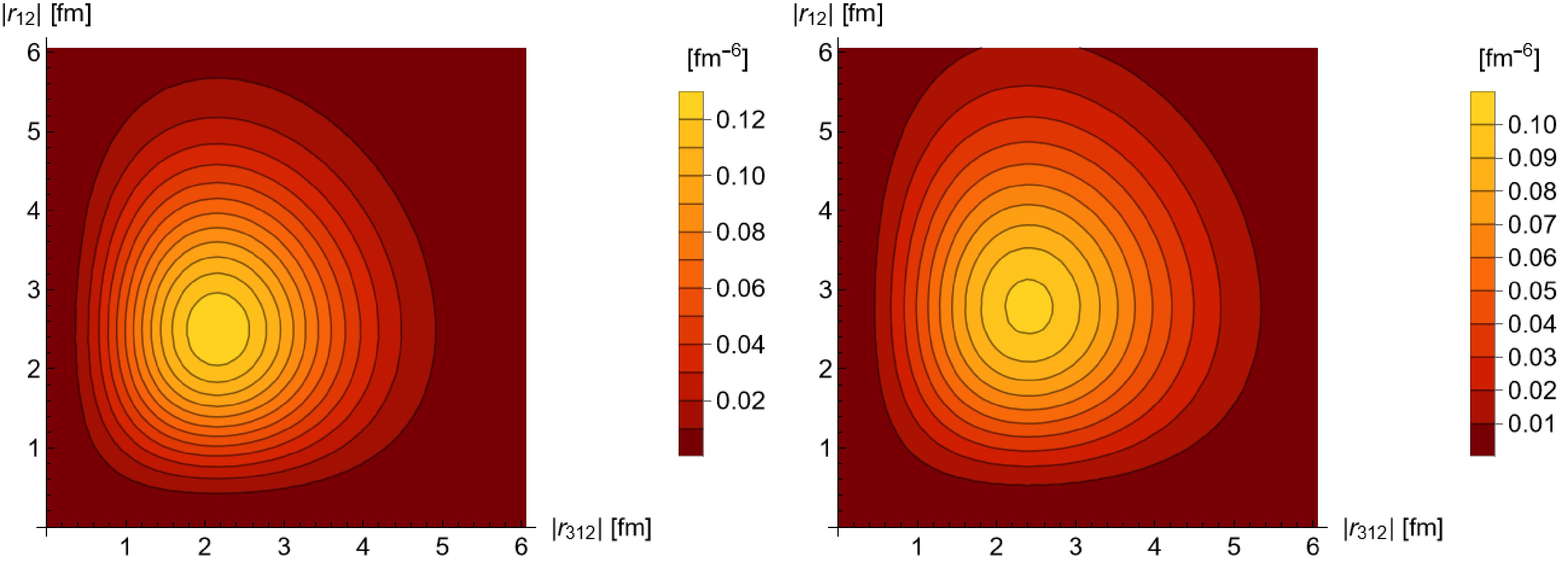
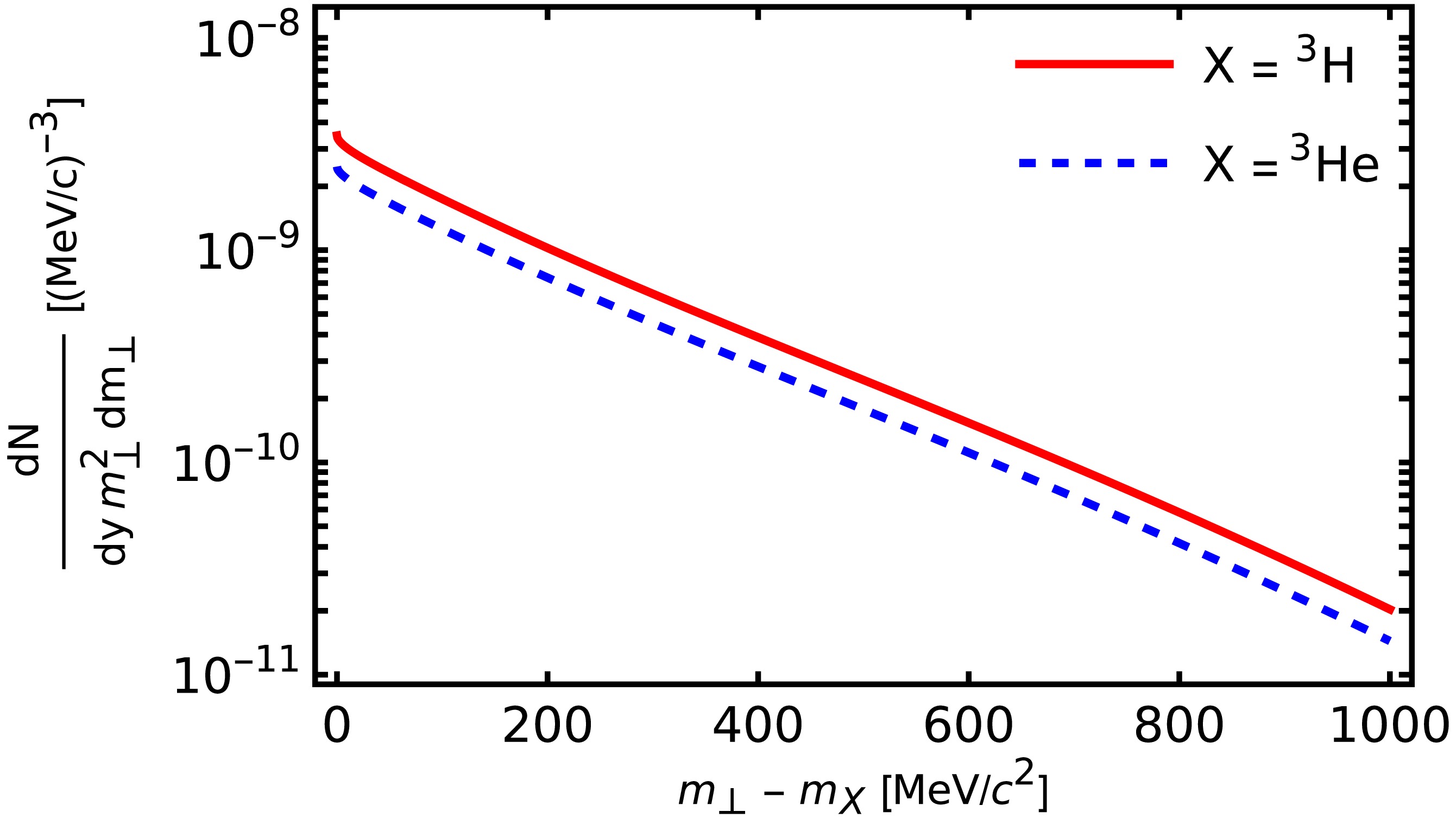
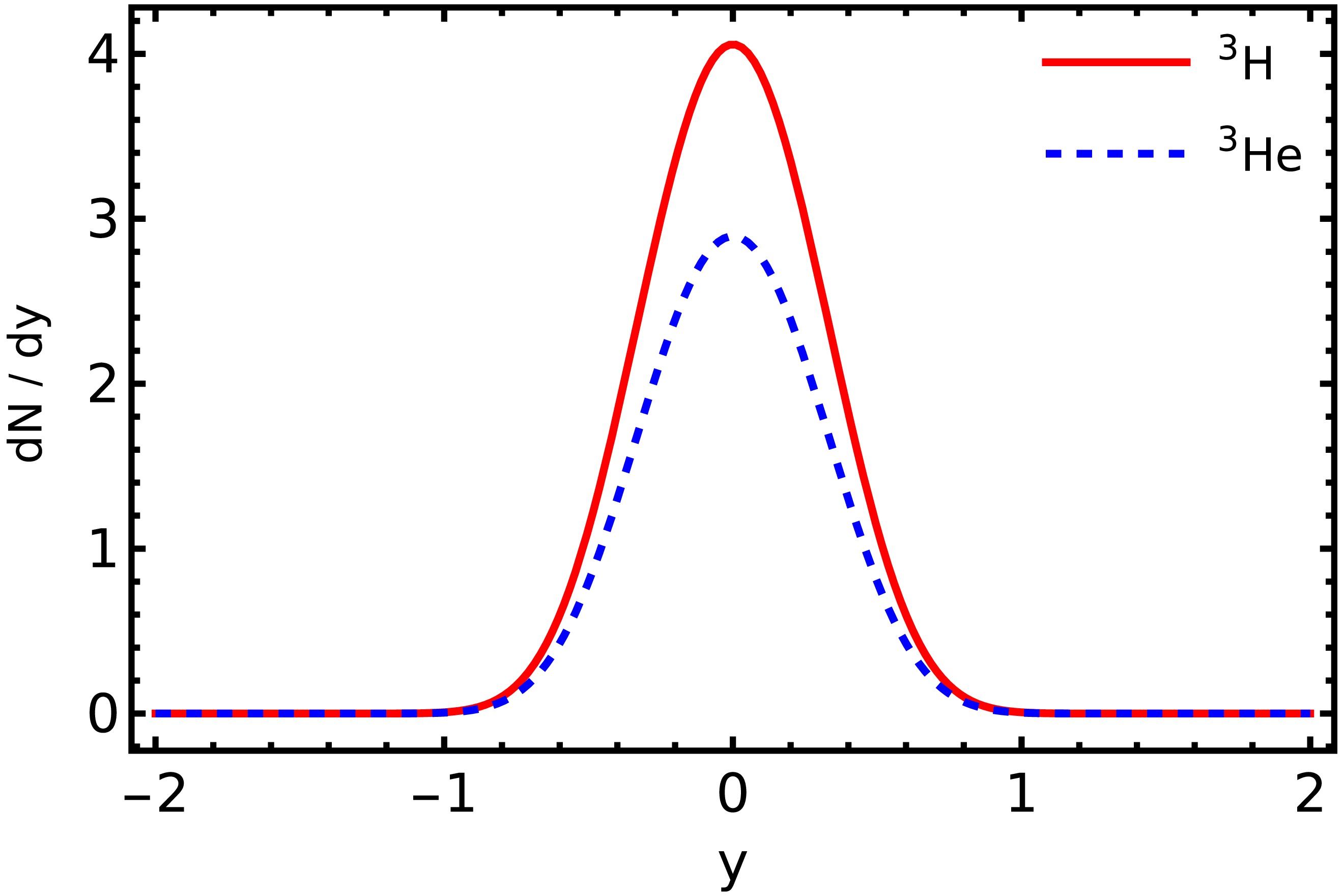
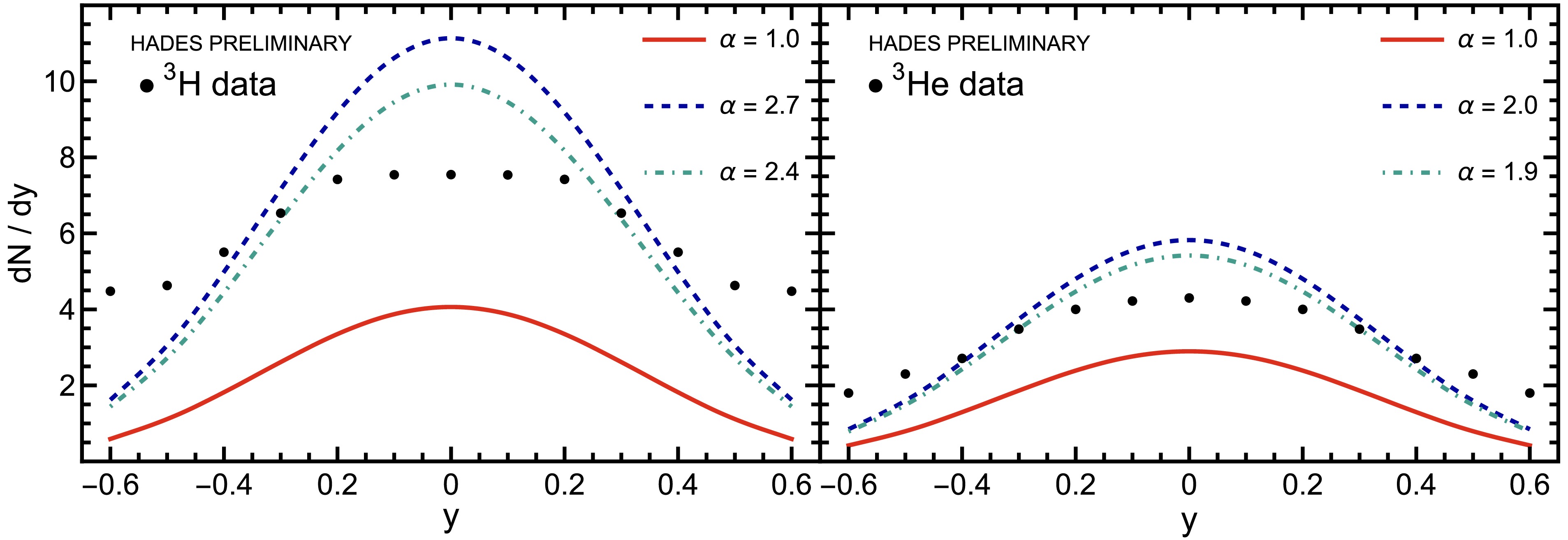
A thermal model describing hadron production in heavy-ion collisions in the few-GeV energy regime is combined with the concept of nucleon coalescence to make predictions for the production of 3H and 3He nuclei. A realistic parametrization of the freeze-out conditions is employed, which accurately reproduces the spectra of protons and pions. It also correctly predicts the deuteron yield, which agrees with experimental observations. However, the predicted yields of 3H and 3He are lower than the experimental results by approximately a factor of two. The model predictions for the spectra can be compared with future experimental data.
A thermal model describing hadron production in heavy-ion collisions in the few-GeV energy regime is combined with the concept of nucleon coalescence to make predictions for the production of 3H and 3He nuclei. A realistic parametrization of the freeze-out conditions is employed, which accurately reproduces the spectra of protons and pions. It also correctly predicts the deuteron yield, which agrees with experimental observations. However, the predicted yields of 3H and 3He are lower than the experimental results by approximately a factor of two. The model predictions for the spectra can be compared with future experimental data.
2026, 50(1): 014105. doi: 10.1088/1674-1137/ae0997
Abstract:
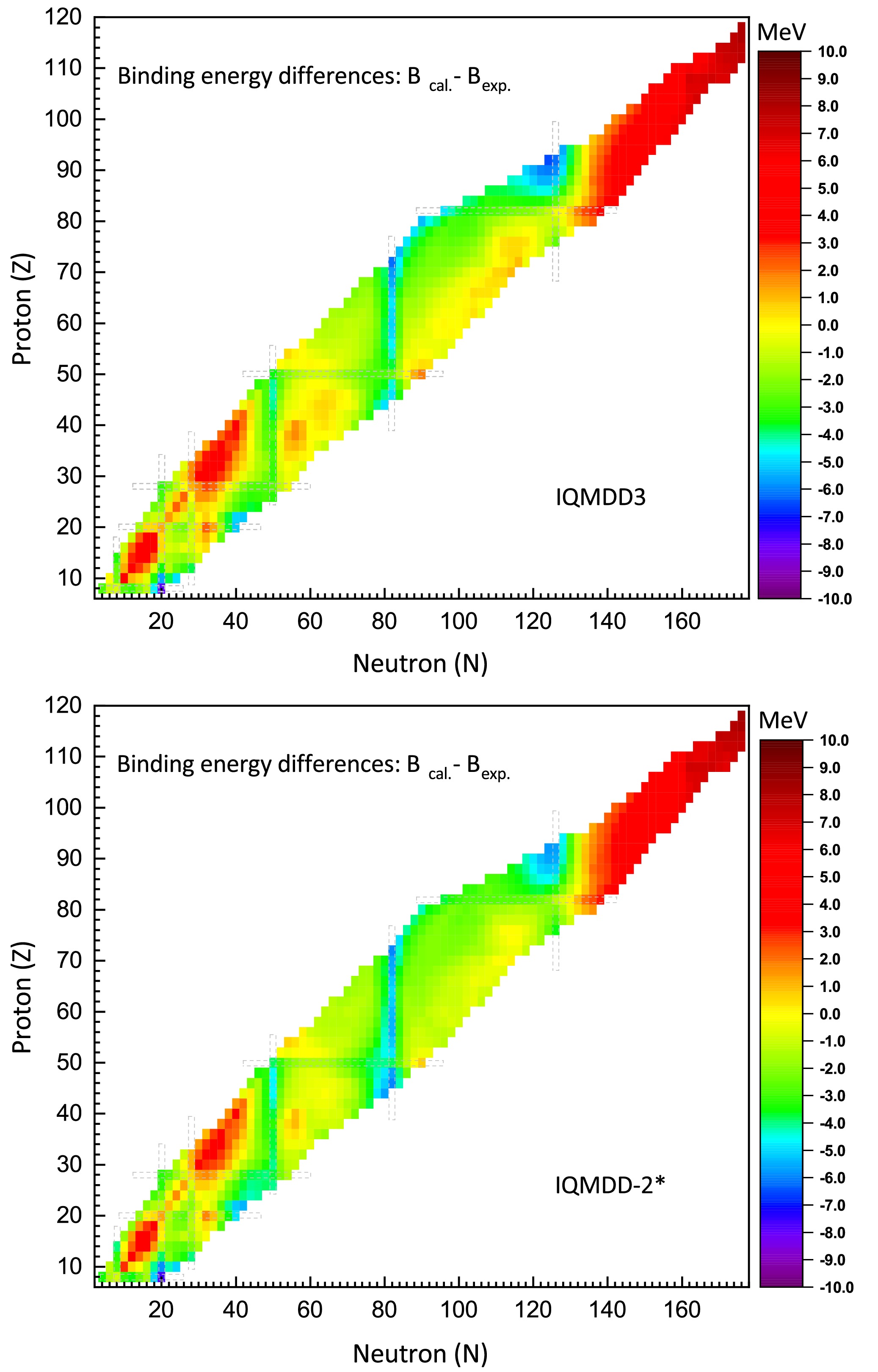
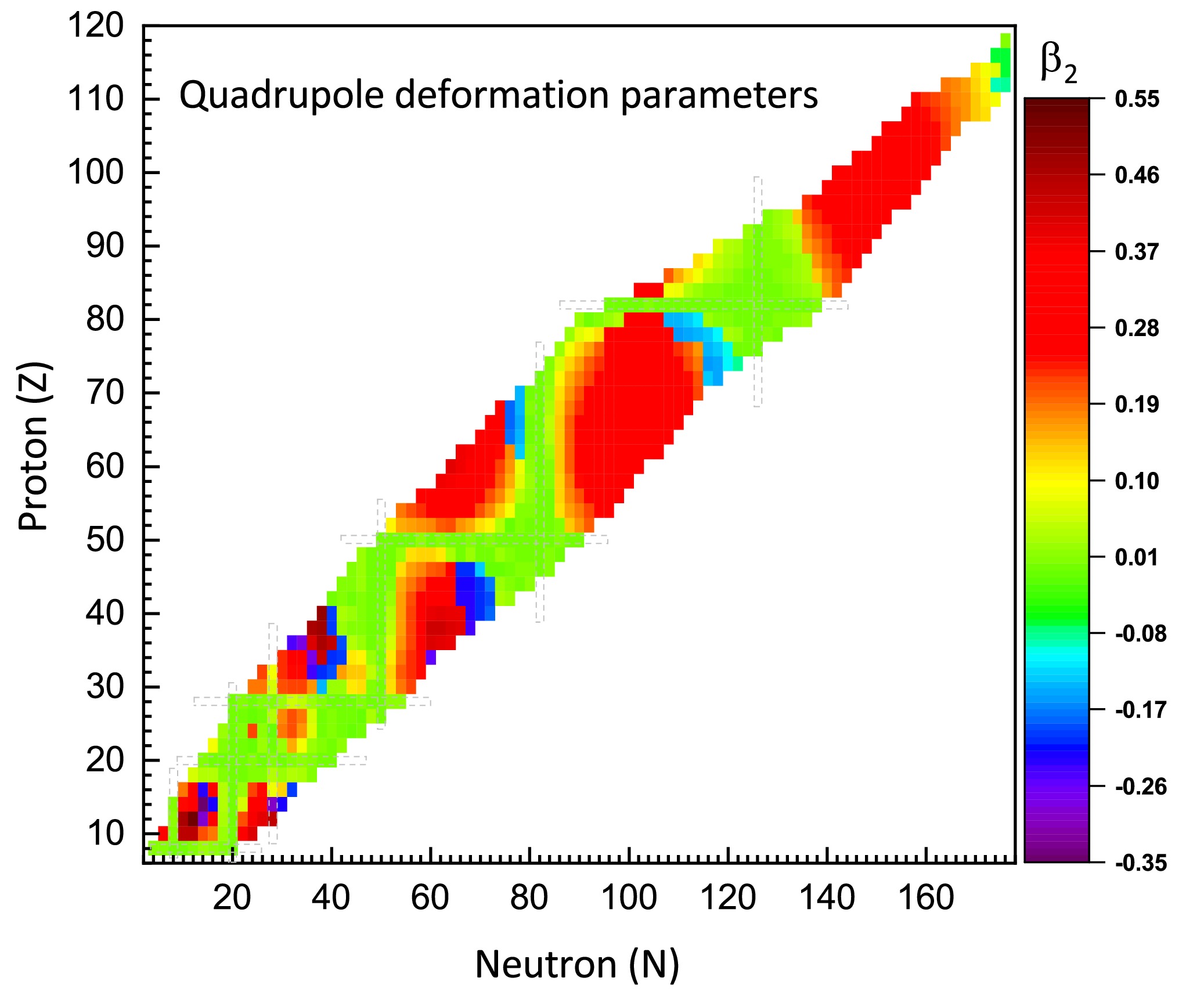
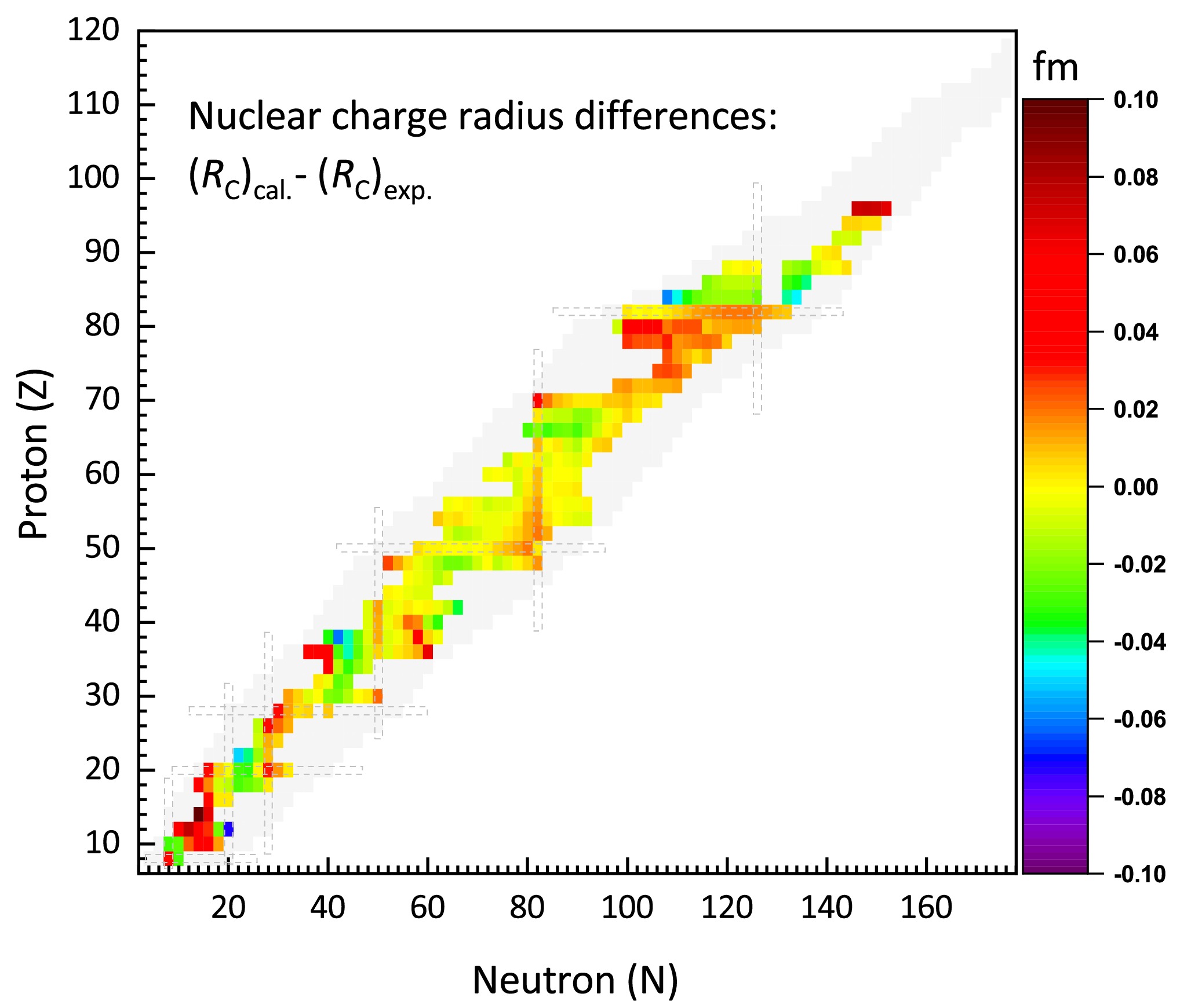
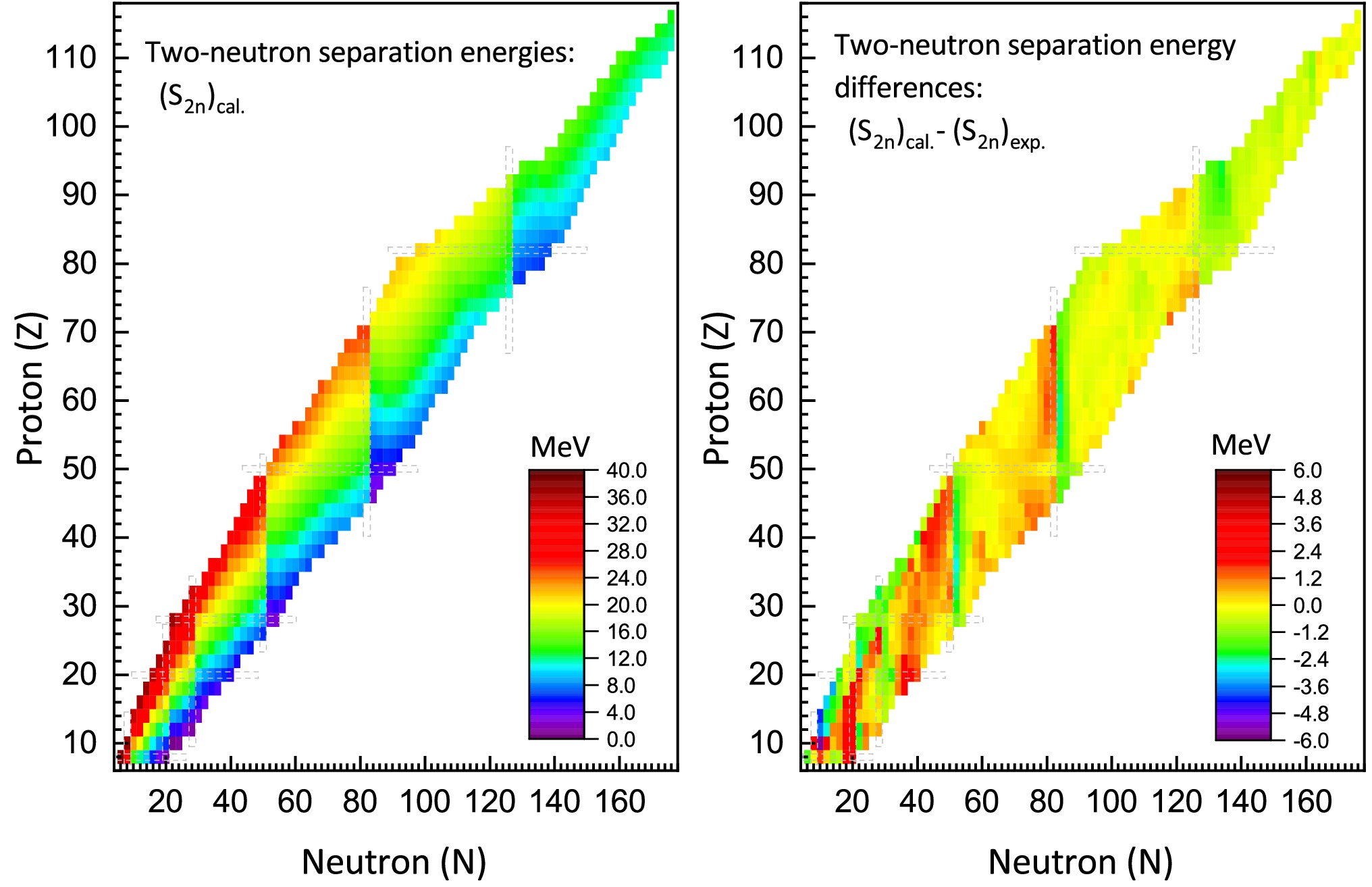
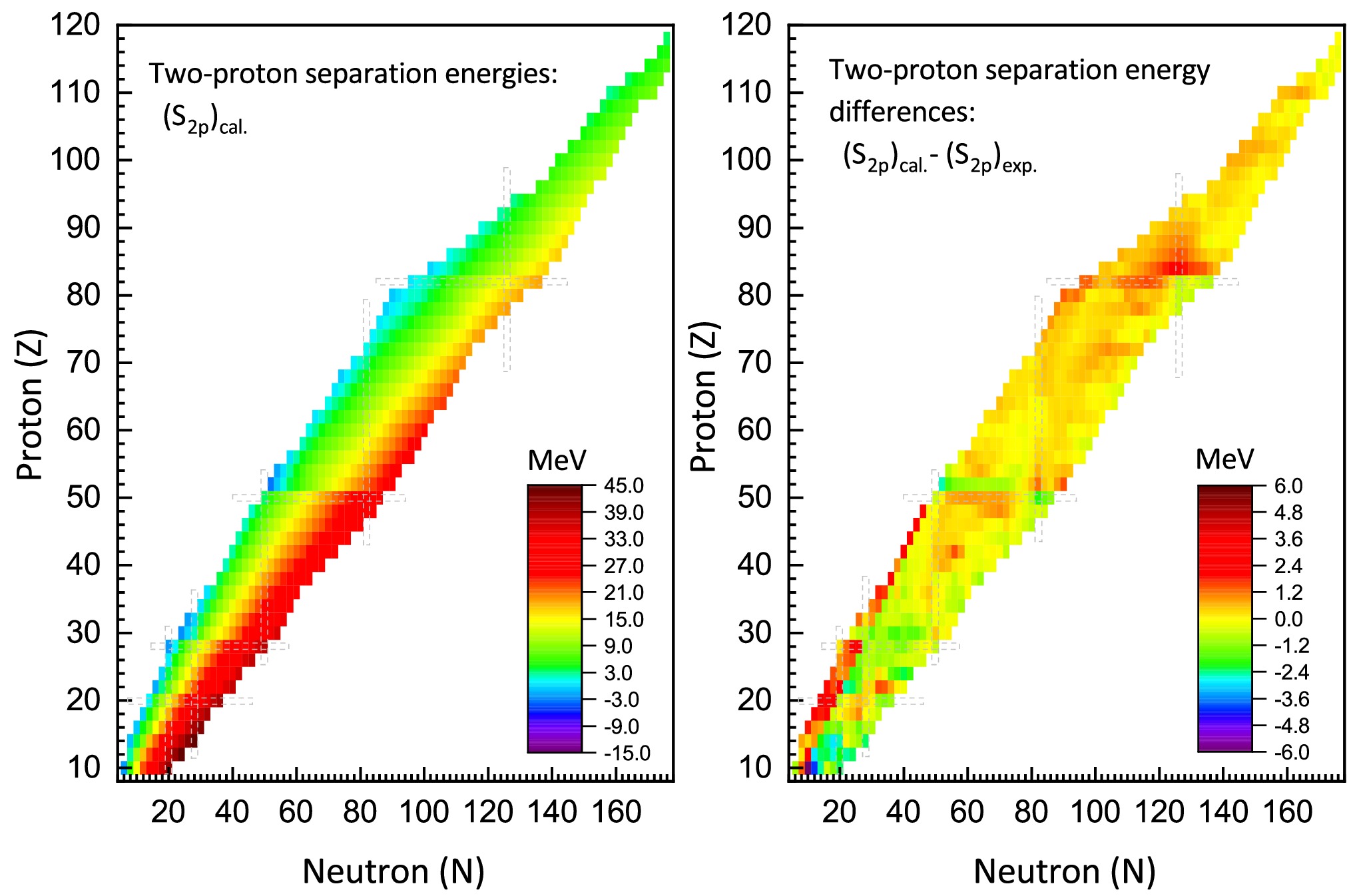
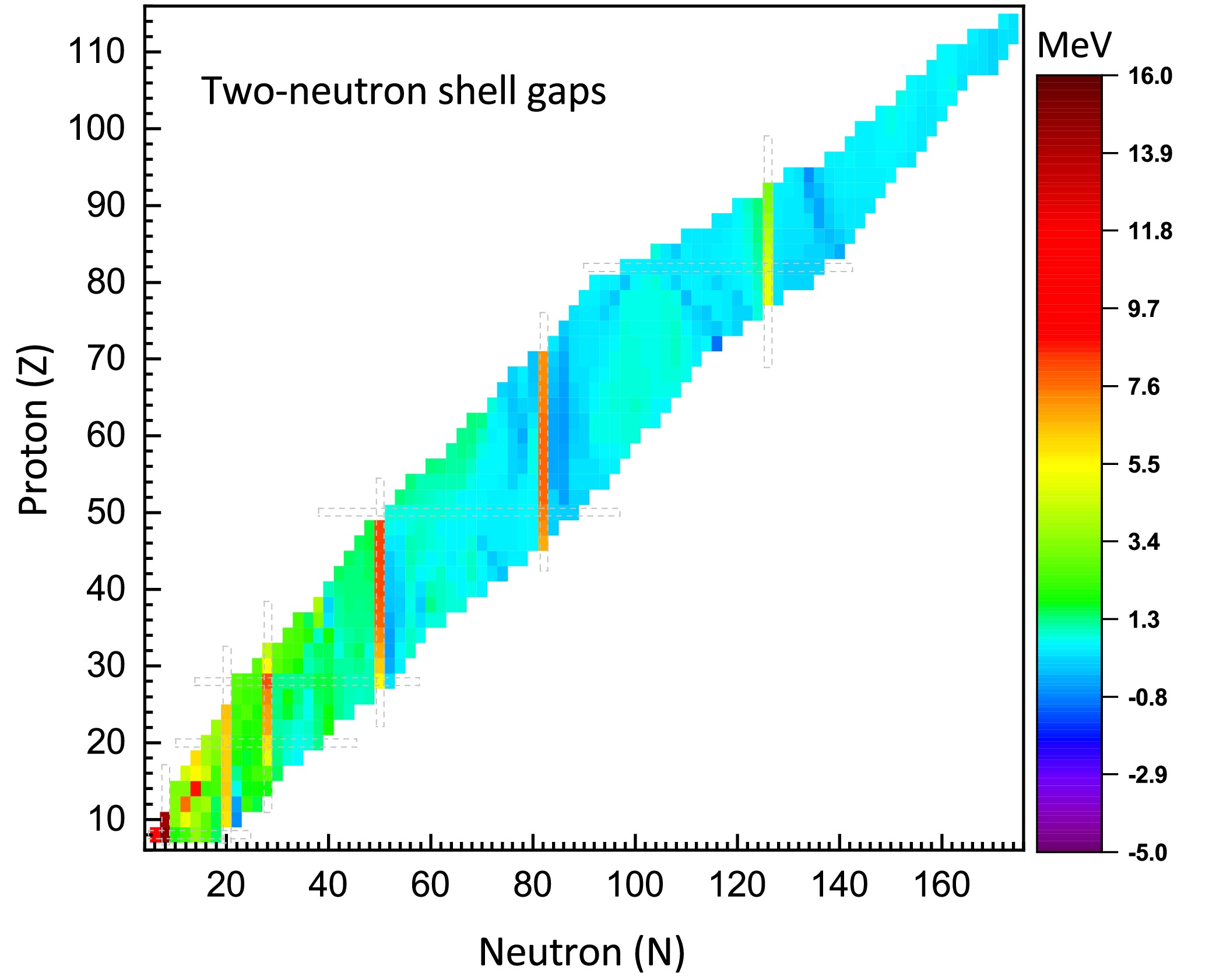
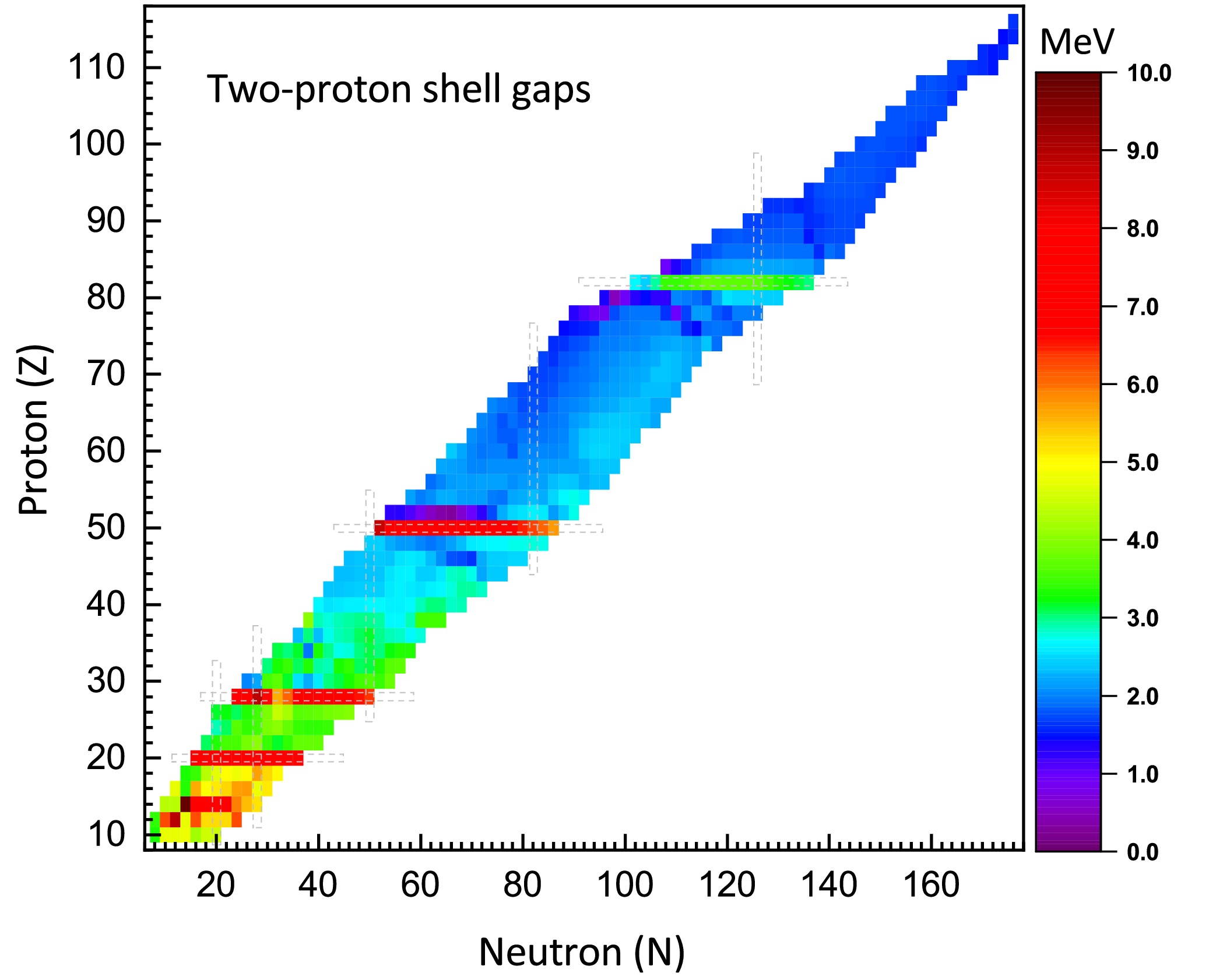
A relativistic Hartree-Bogoliubov (RHB) model based on quark-meson coupling is developed with a new parametrization derived from experimental observables. Using this model, we systematically investigate the ground-state properties of even-even nuclei spanning\begin{document}$ 8\leq Z\leq118 $\end{document}
A relativistic Hartree-Bogoliubov (RHB) model based on quark-meson coupling is developed with a new parametrization derived from experimental observables. Using this model, we systematically investigate the ground-state properties of even-even nuclei spanning
2026, 50(1): 014106. doi: 10.1088/1674-1137/adfe55
Abstract:
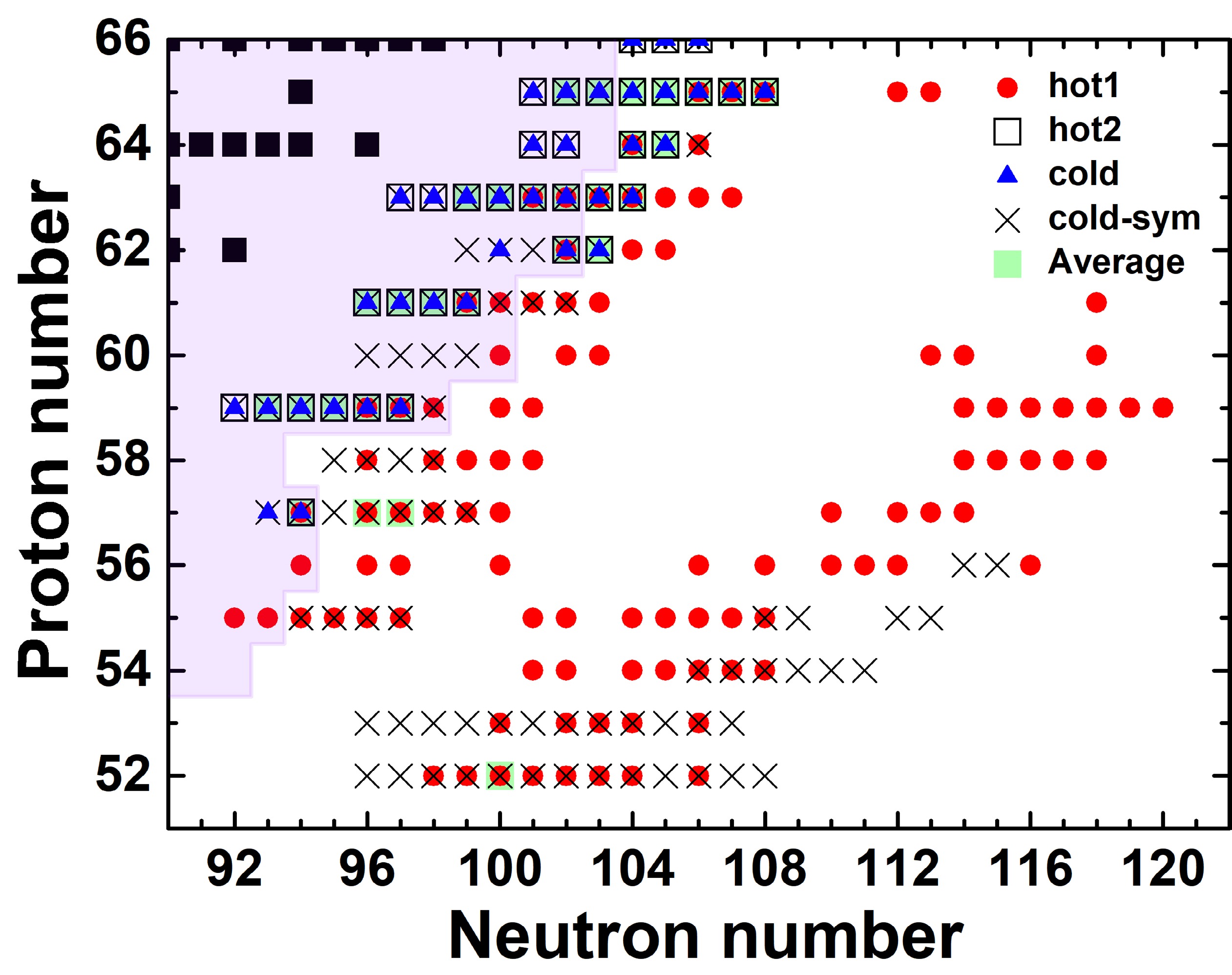
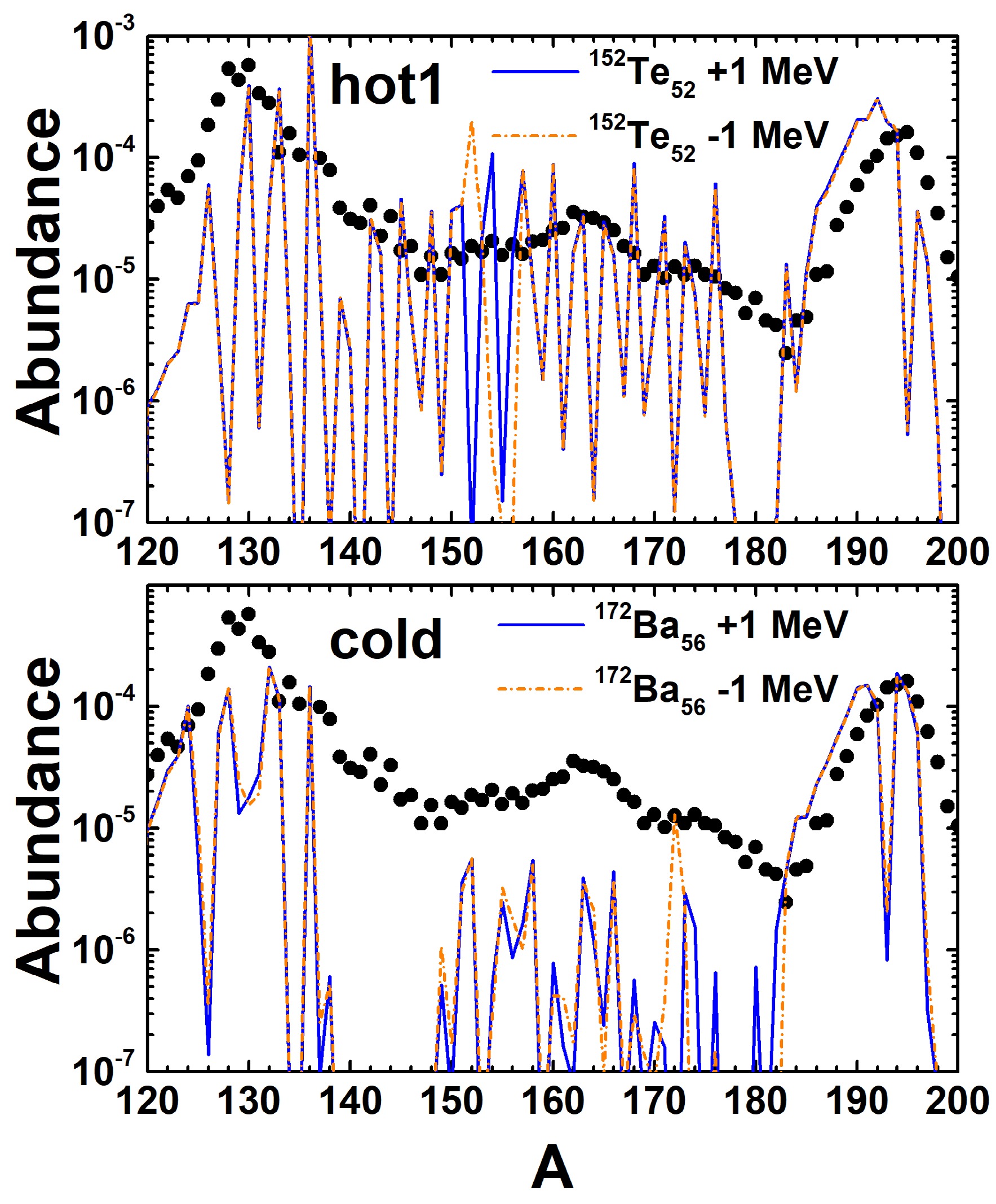
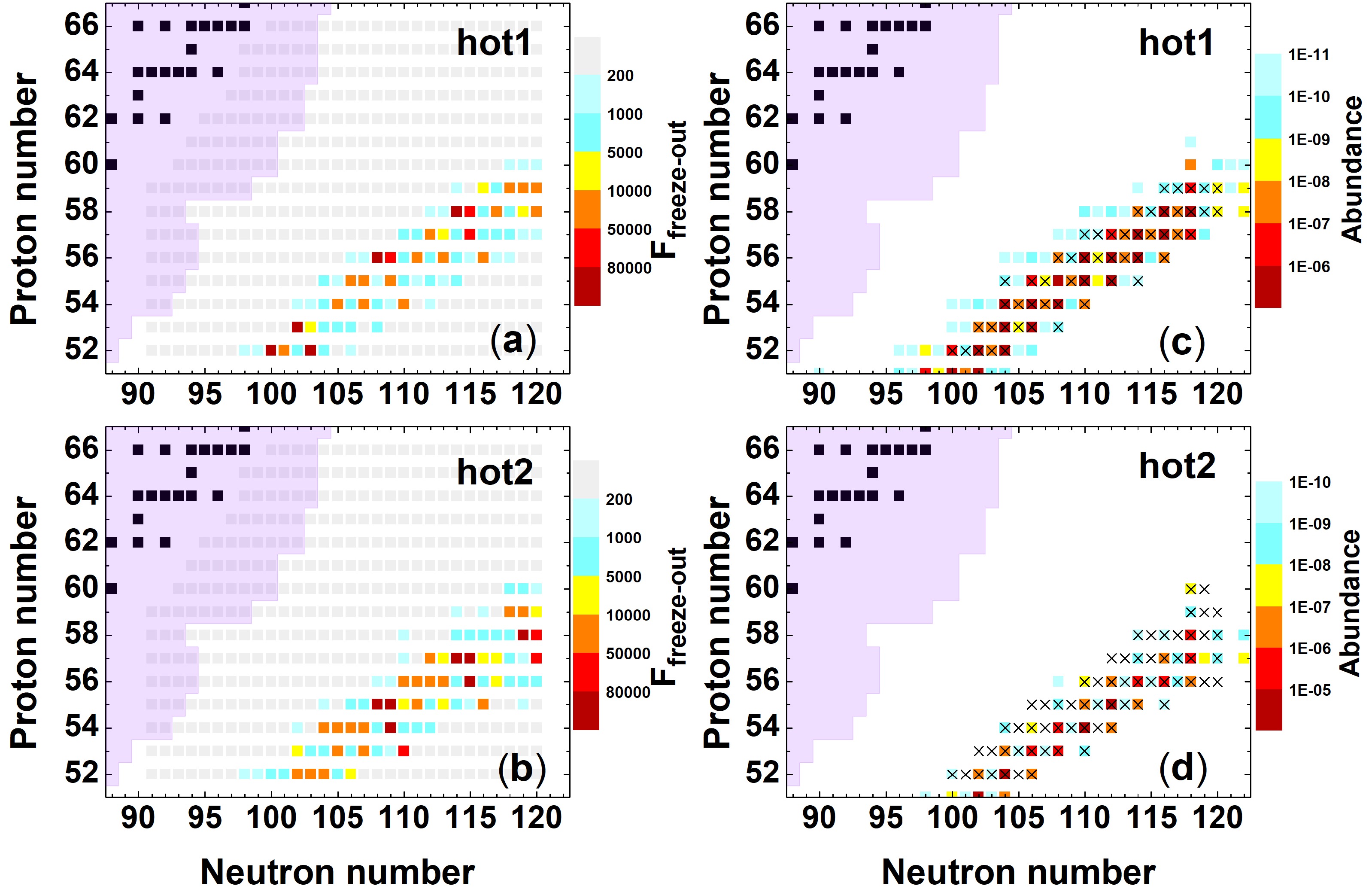
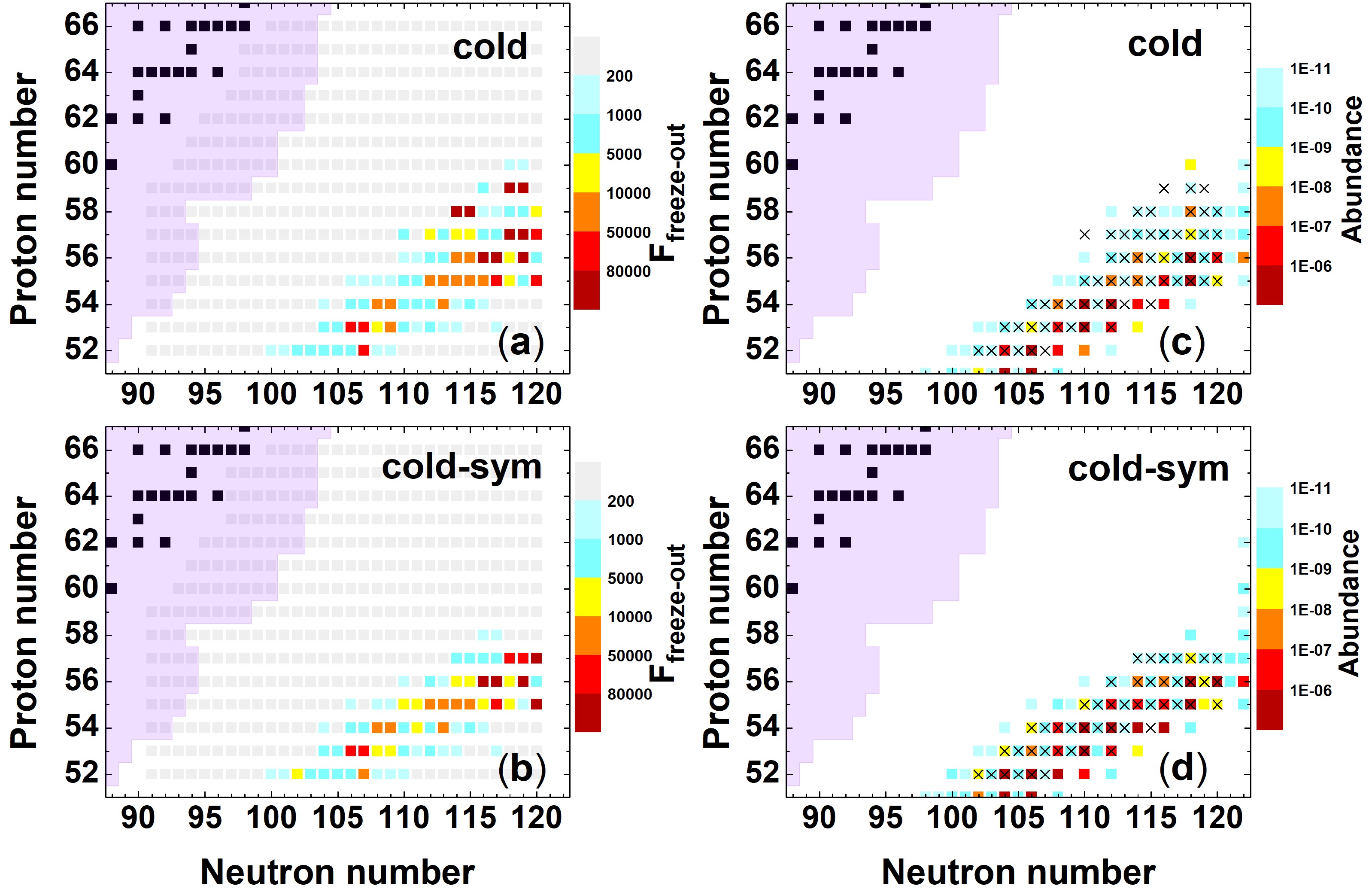
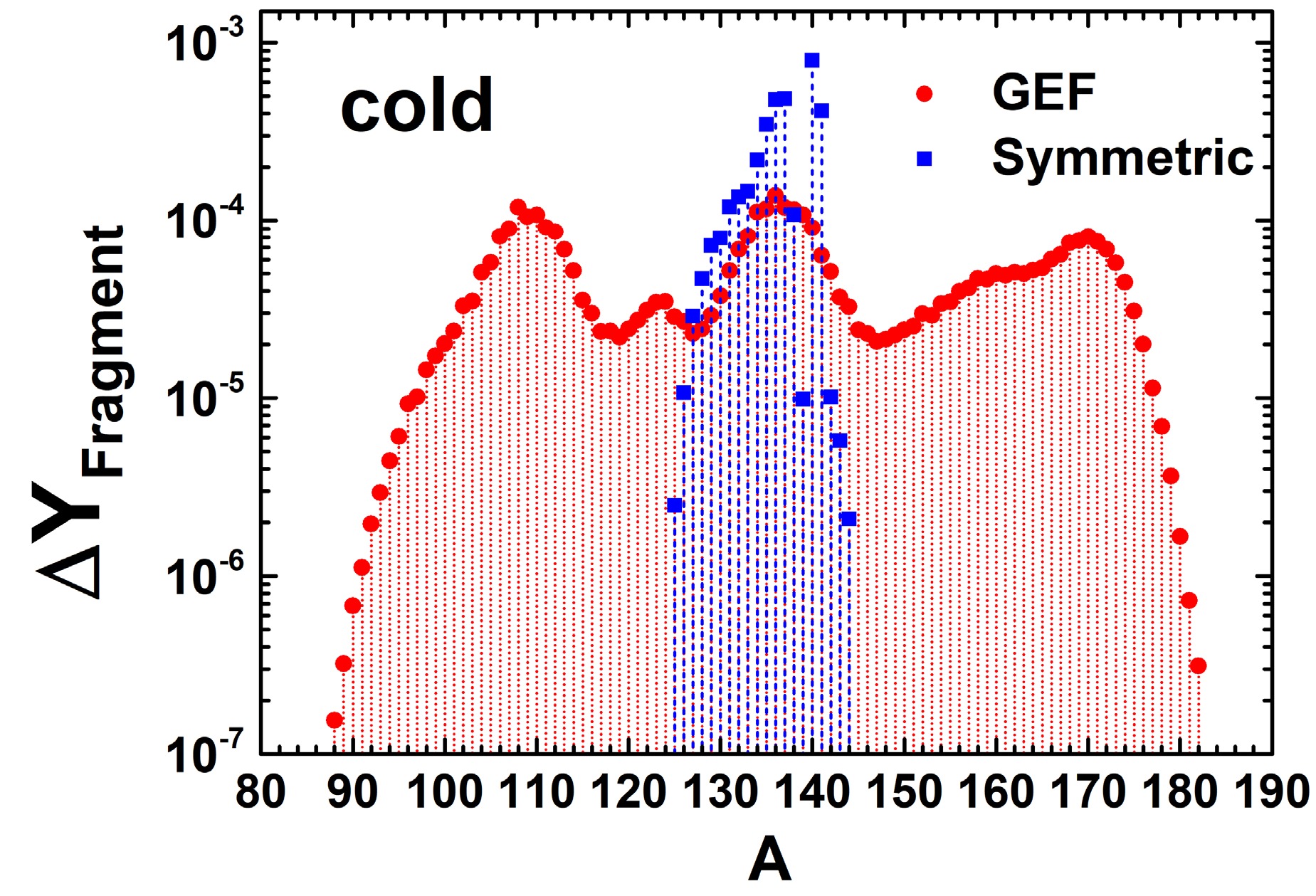
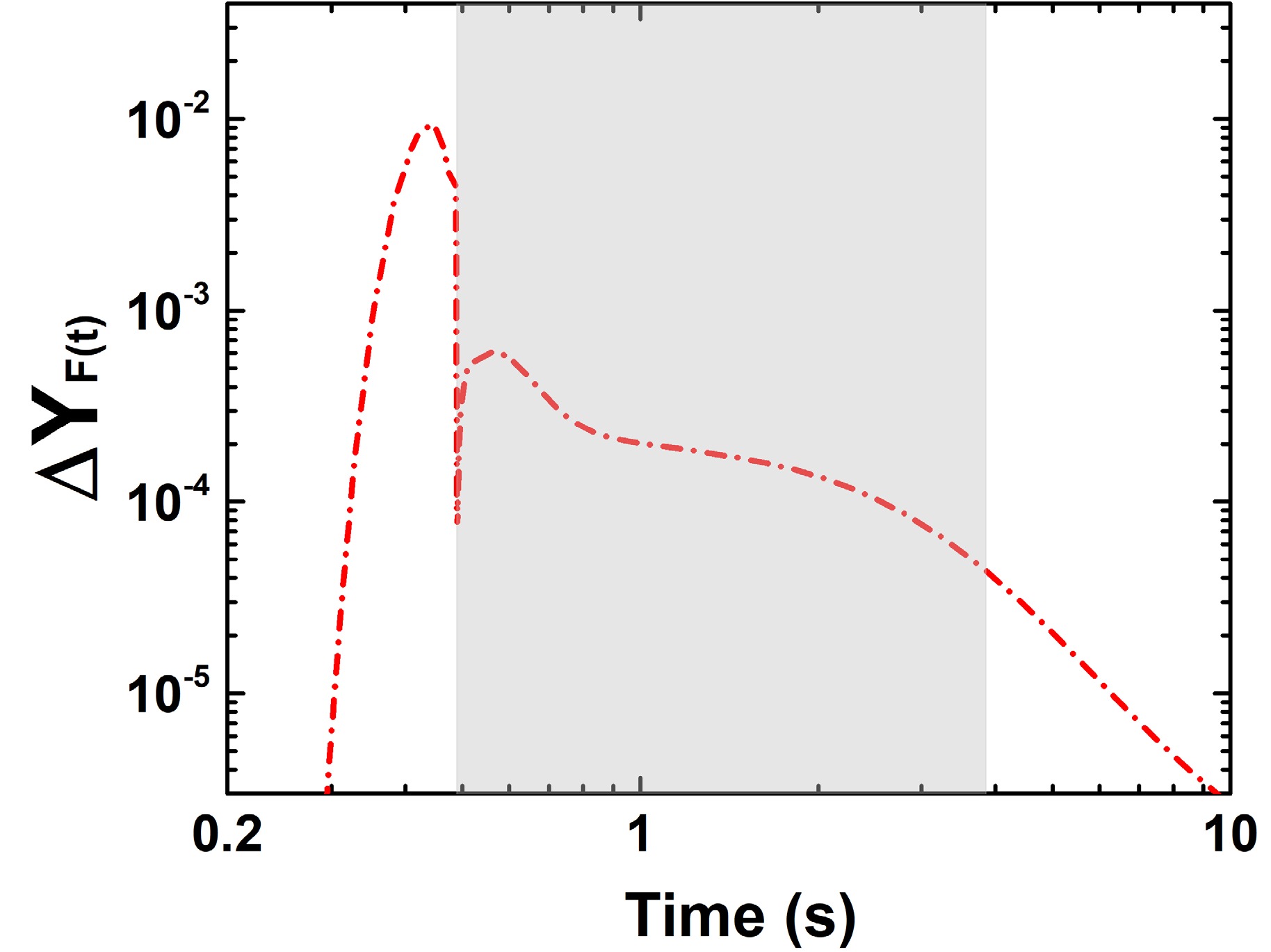
A sensitivity study was performed to investigate the impact of individual nuclear masses on r-process rare-earth peak abundances in different astrophysical scenarios. The most impactful nuclei are primarily distributed in two regions on the nuclear chart: one located 20-30 neutrons away from stability (defined as region I) and another 7-15 neutrons away from stability (defined as region II), as previously reported in Phys. Lett. B 844, 138092 (2023). In this study, we extend our analysis by focusing on the role of fission in the mass sensitivity study. The results show that, in astrophysical scenarios involving fission, the sensitivity of nuclei in region I is diminished owing to the deposition of a large number of fission fragments in the rare-earth mass region. However, nuclei in region II retain high sensitivity because the contribution of fission decreases in the later stages of nucleosynthesis. This study highlights the impact of fission on the sensitivity of r-process abundances to nuclear masses and enhances the understanding of the rare-earth peak formation mechanism.
A sensitivity study was performed to investigate the impact of individual nuclear masses on r-process rare-earth peak abundances in different astrophysical scenarios. The most impactful nuclei are primarily distributed in two regions on the nuclear chart: one located 20-30 neutrons away from stability (defined as region I) and another 7-15 neutrons away from stability (defined as region II), as previously reported in Phys. Lett. B 844, 138092 (2023). In this study, we extend our analysis by focusing on the role of fission in the mass sensitivity study. The results show that, in astrophysical scenarios involving fission, the sensitivity of nuclei in region I is diminished owing to the deposition of a large number of fission fragments in the rare-earth mass region. However, nuclei in region II retain high sensitivity because the contribution of fission decreases in the later stages of nucleosynthesis. This study highlights the impact of fission on the sensitivity of r-process abundances to nuclear masses and enhances the understanding of the rare-earth peak formation mechanism.
2026, 50(1): 014107. doi: 10.1088/1674-1137/adfe54
Abstract:
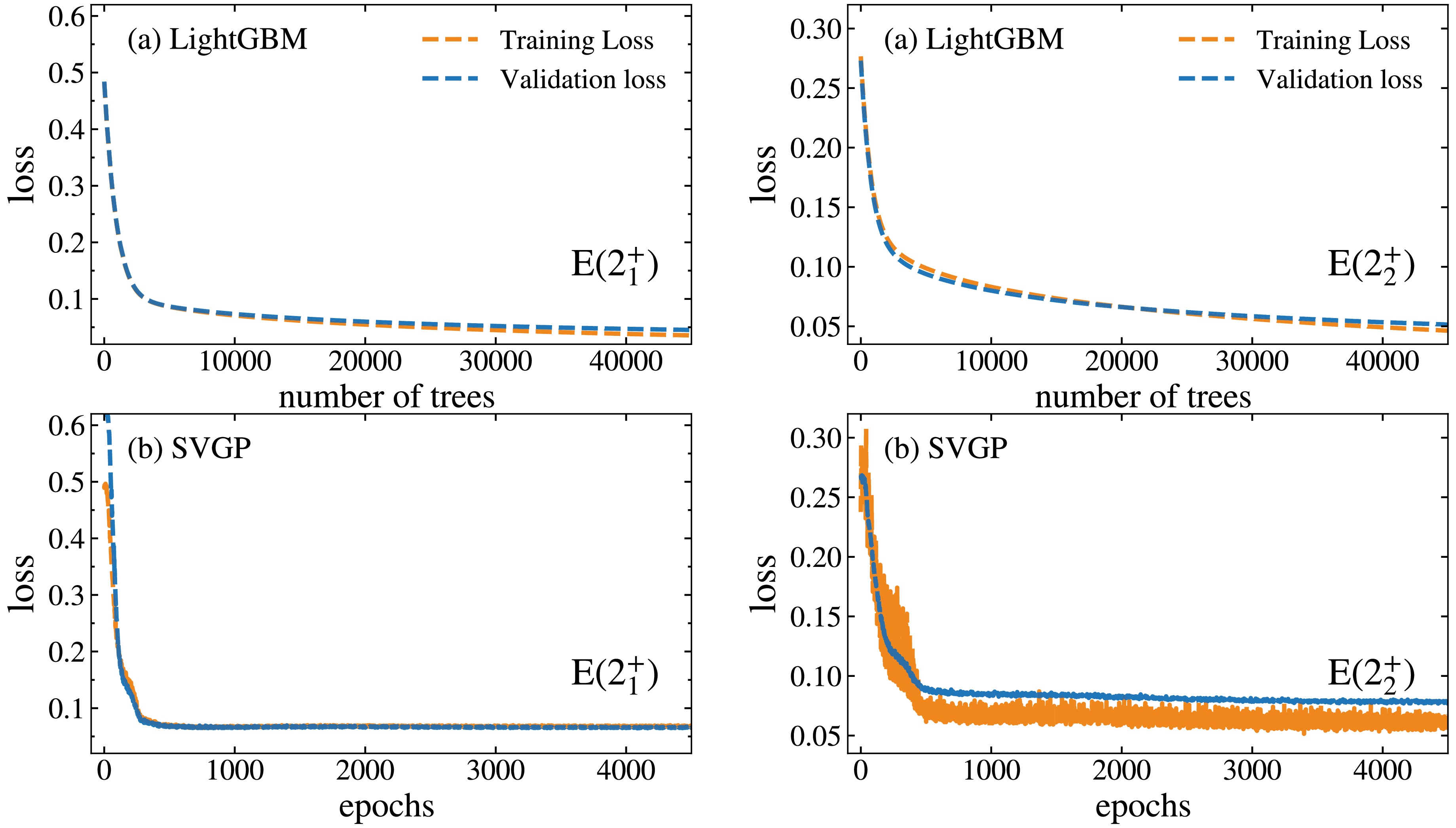
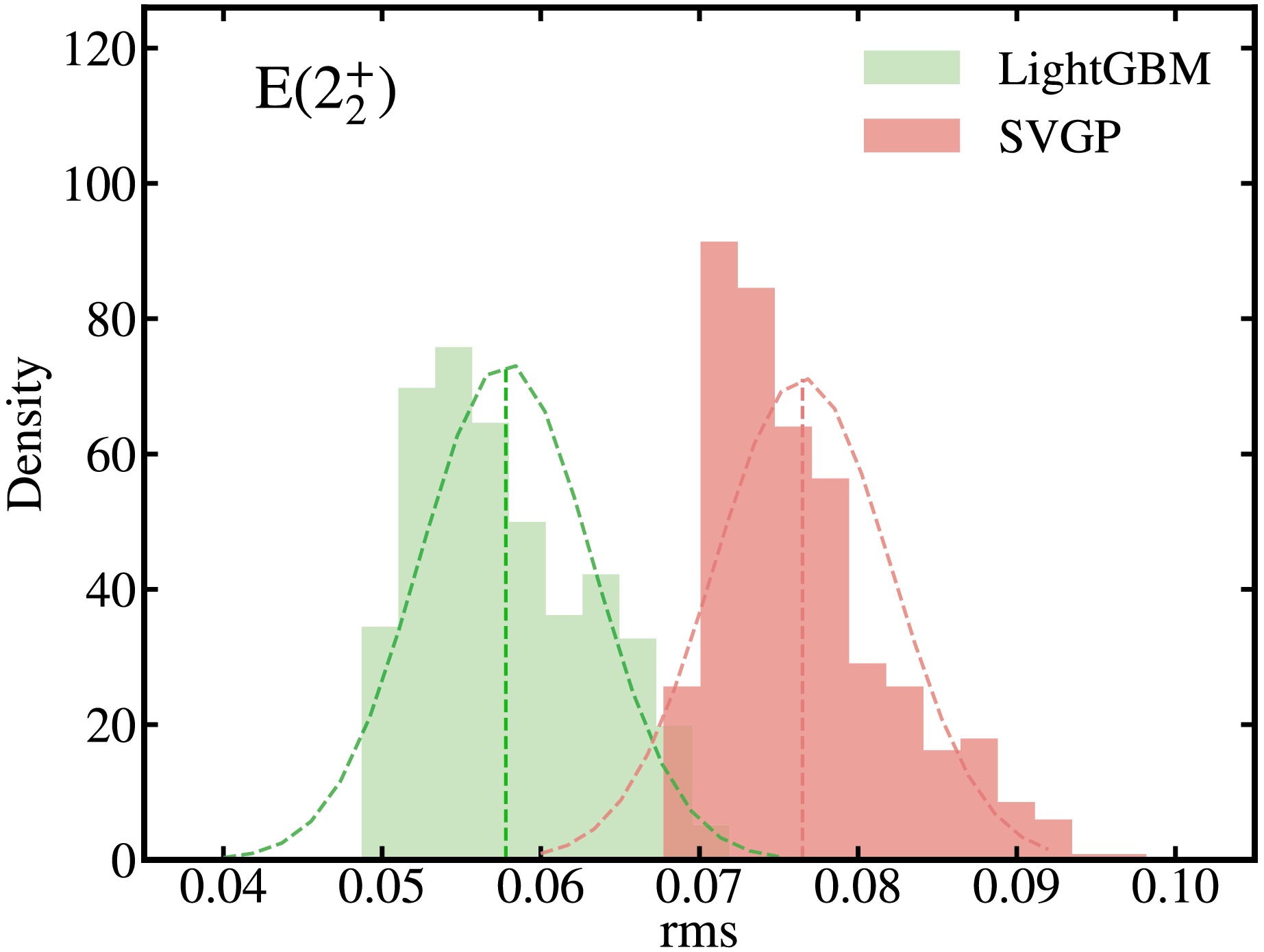
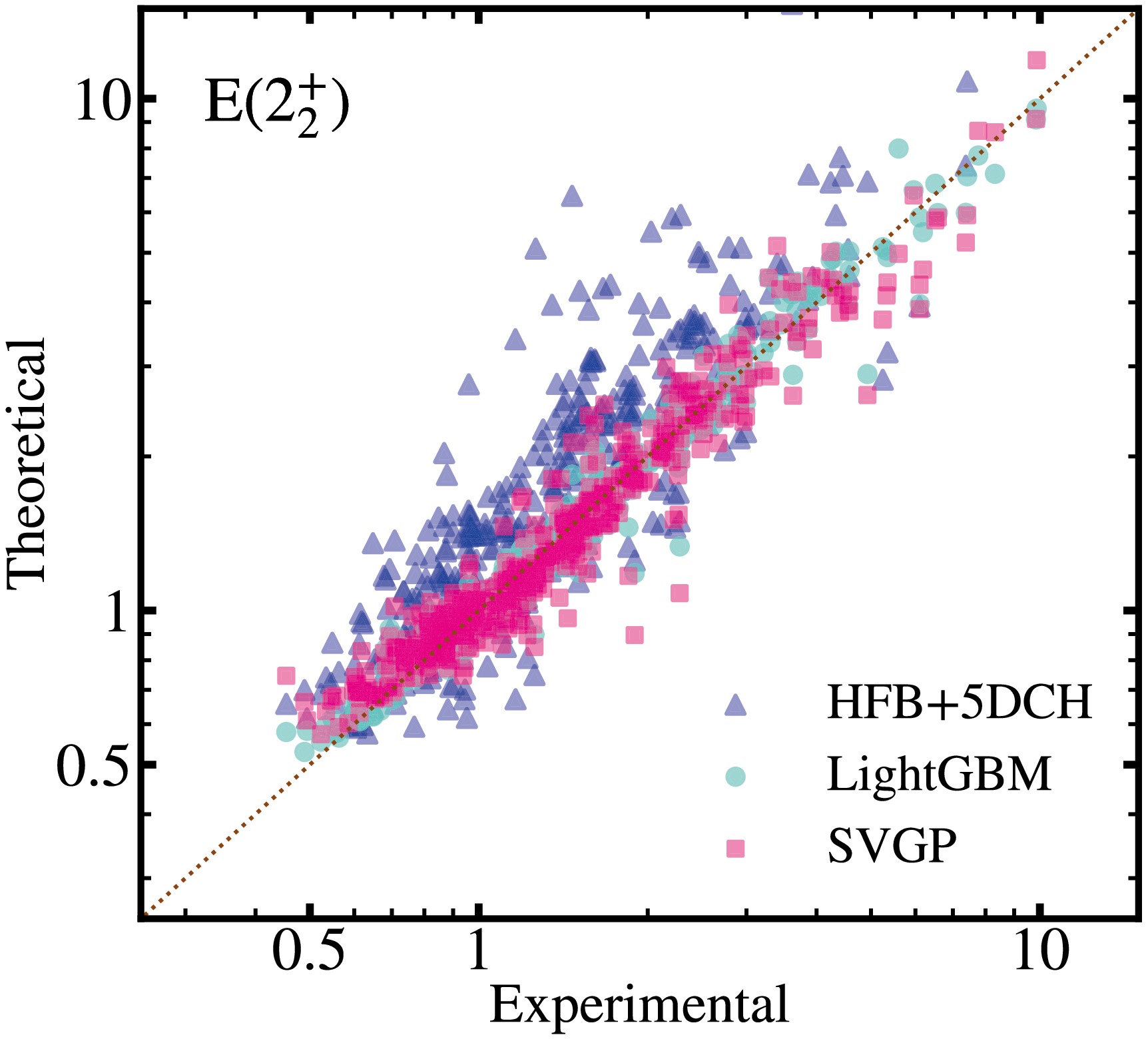
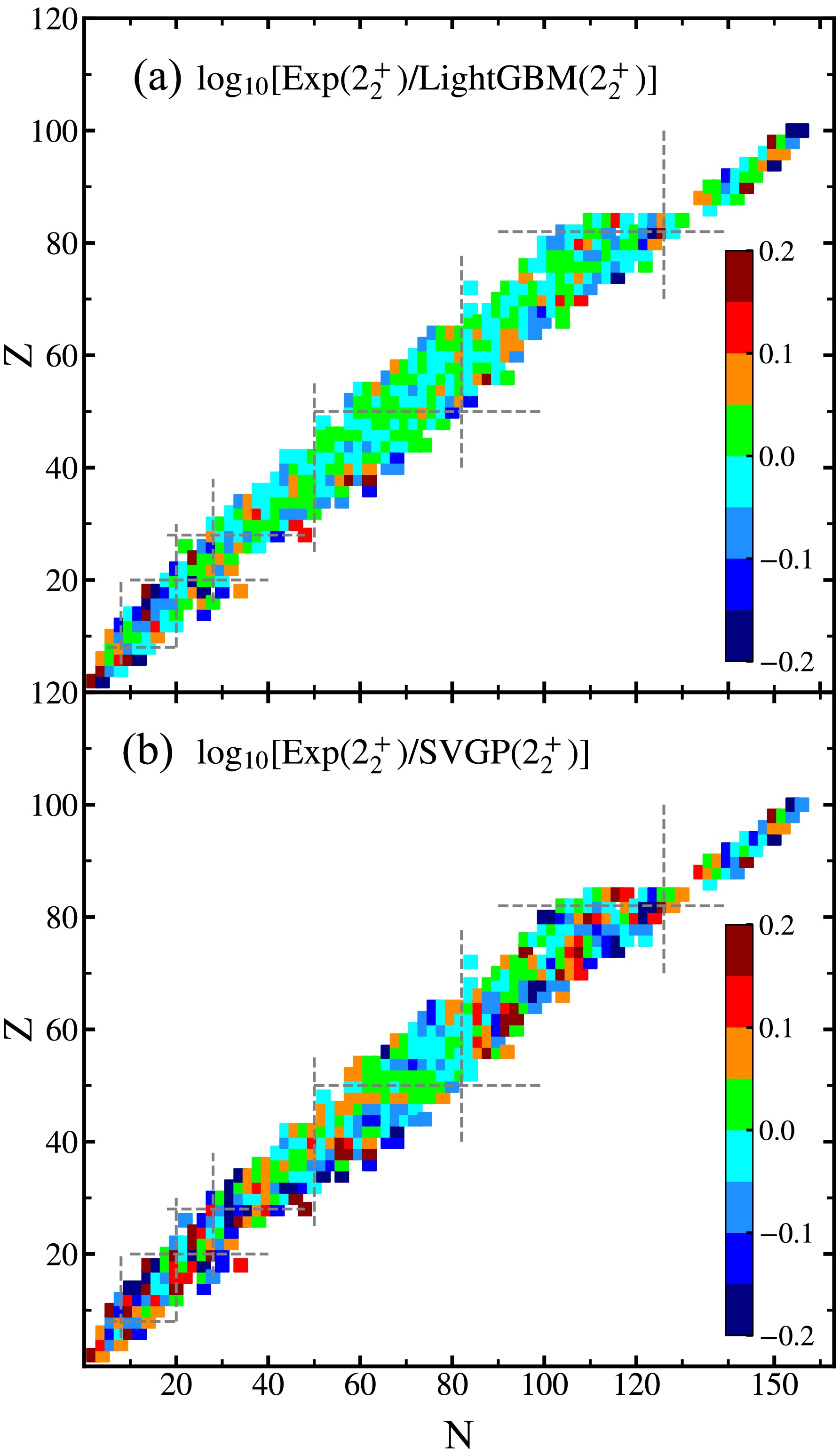
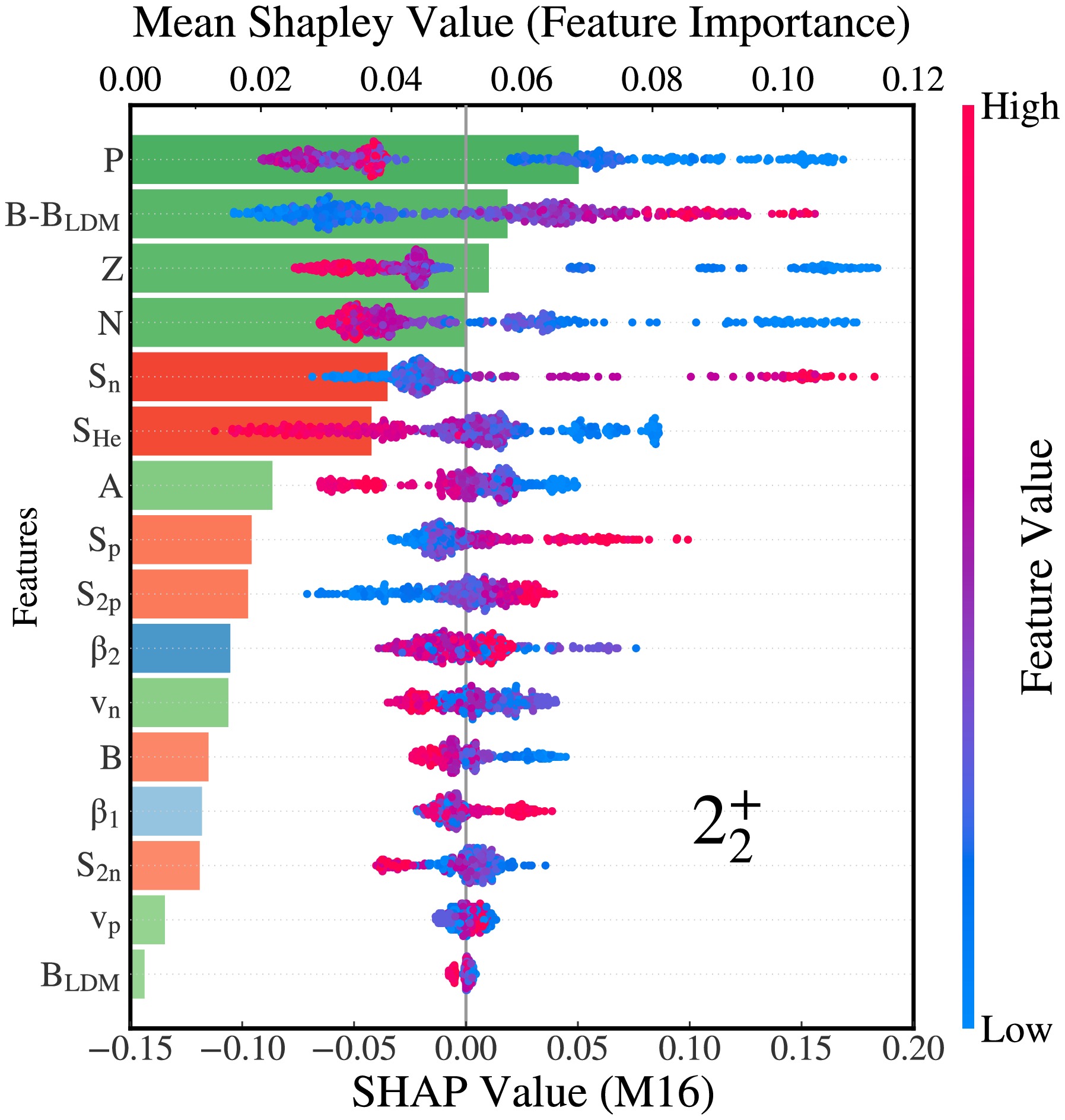
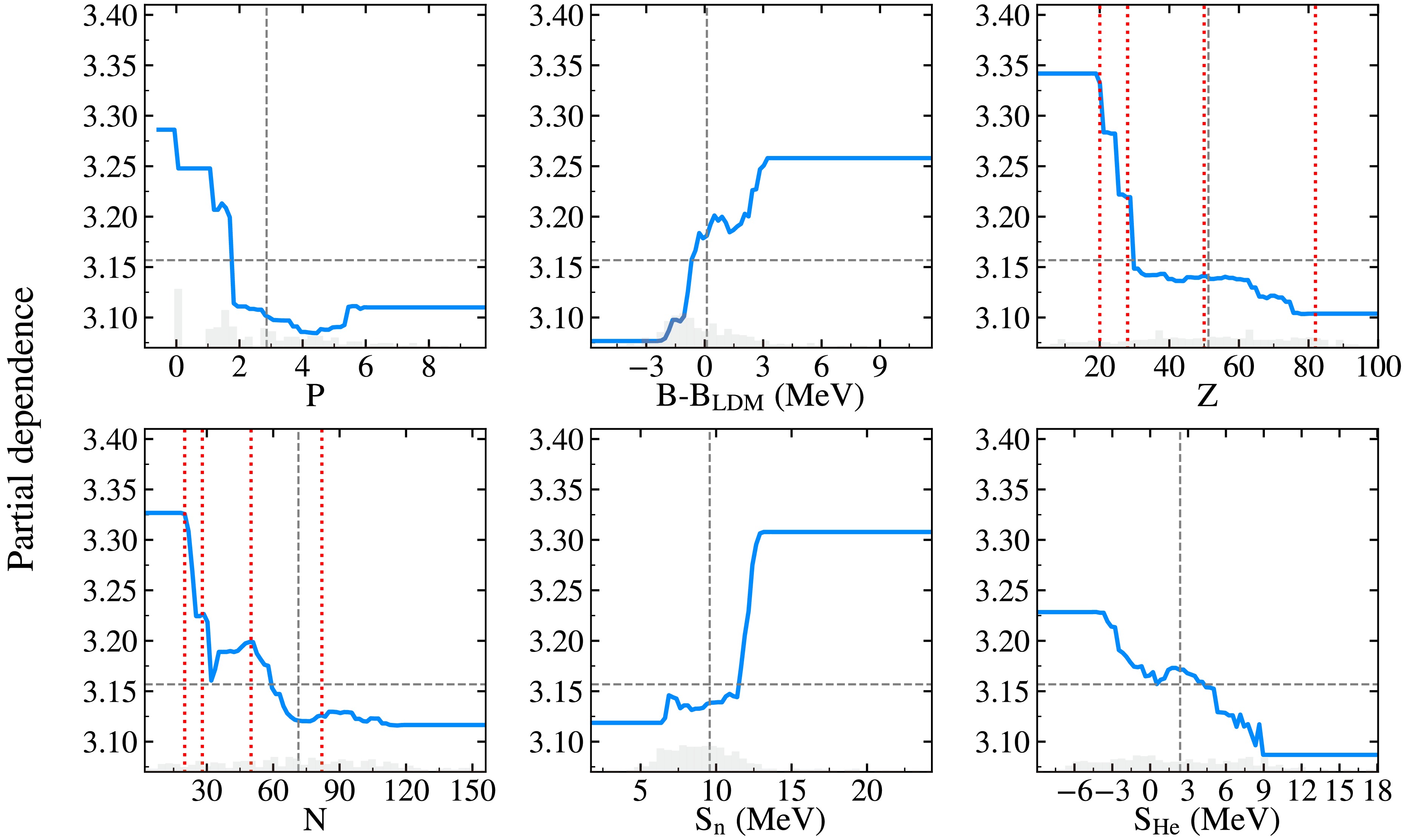
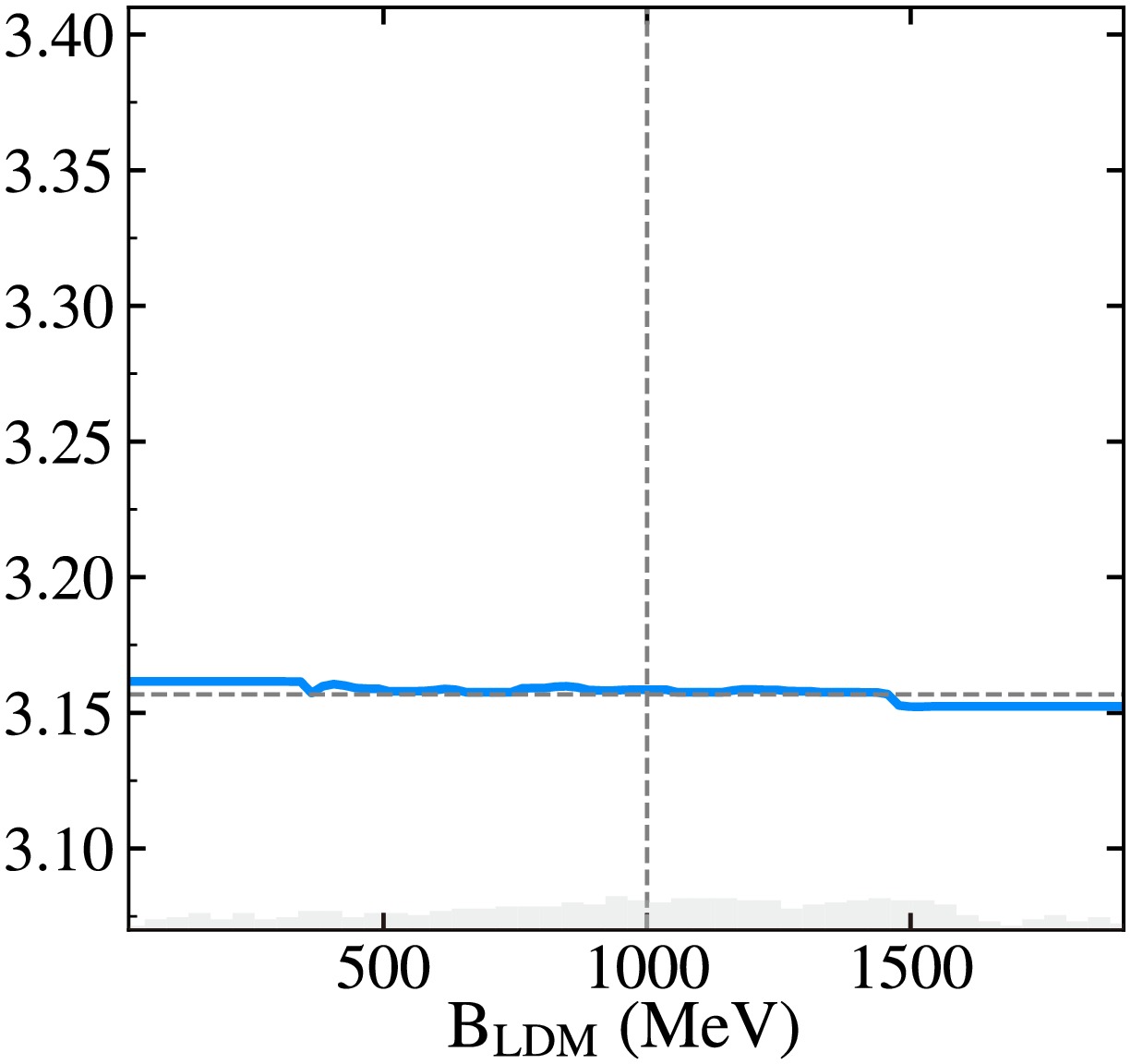
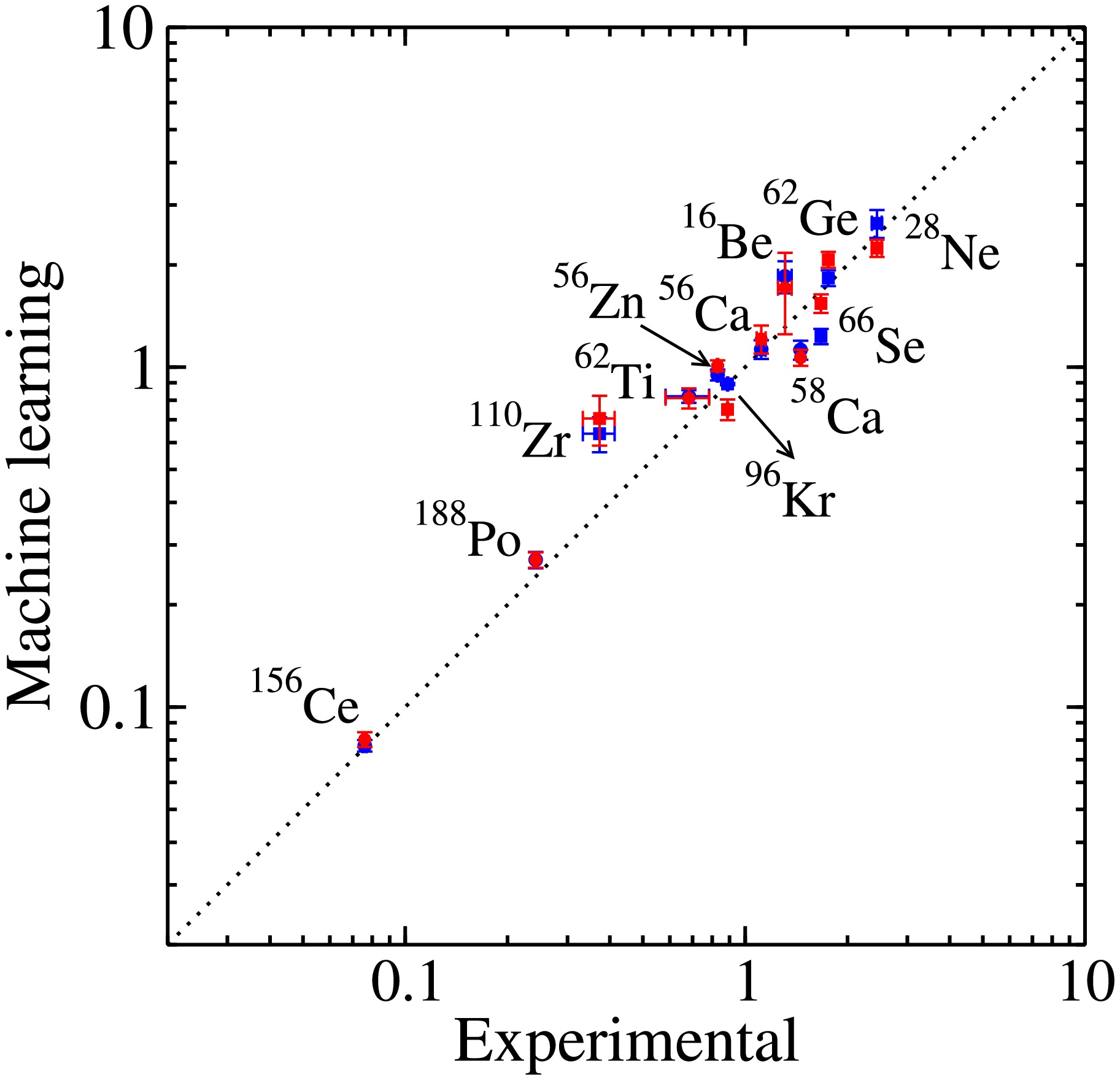
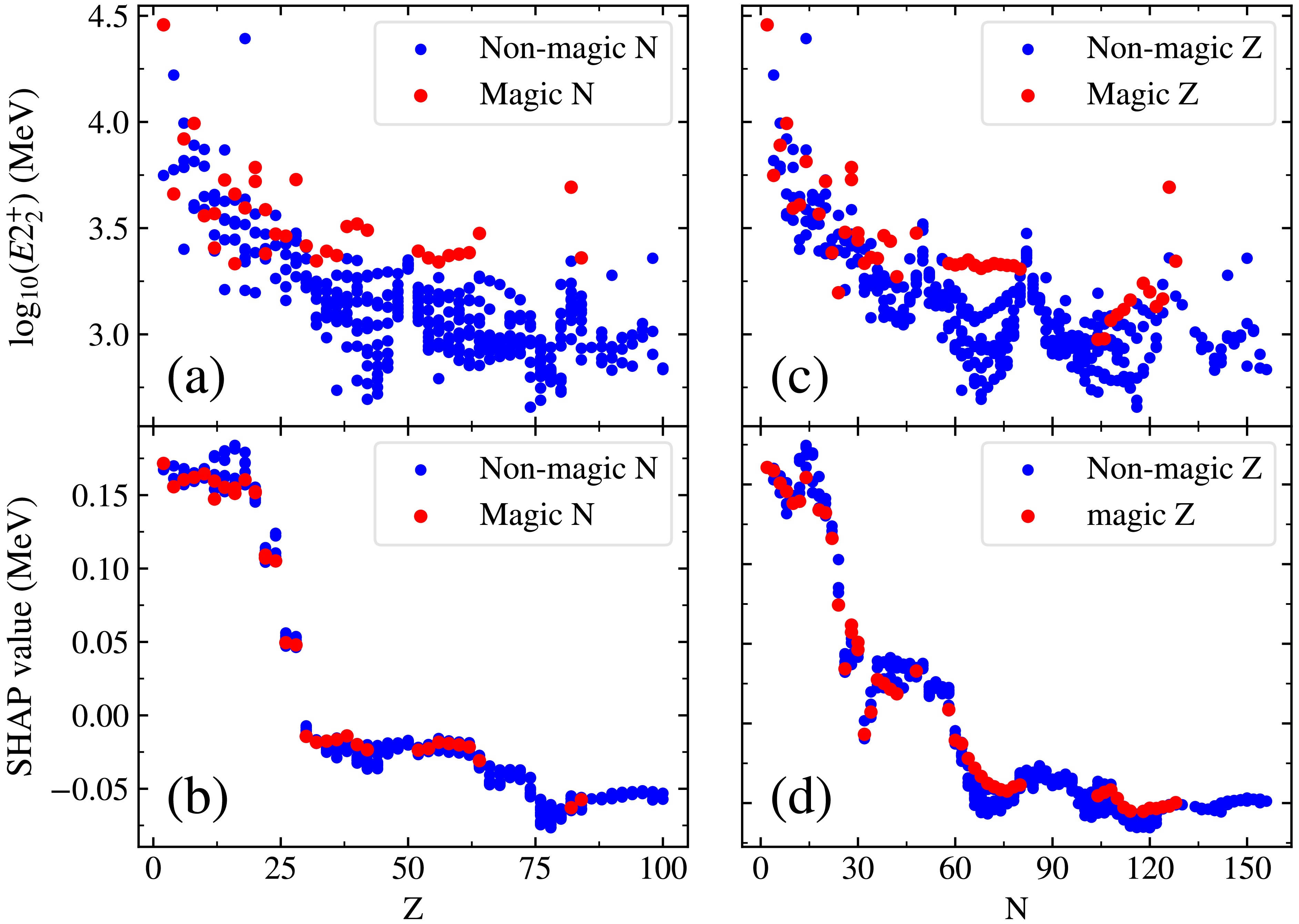
The low-lying excitation energies of the\begin{document}$2_1^+, 4_1^+,2_2^+, 0_2^+,3_1^-, 0_3^+$\end{document} \begin{document}$2_1^+$\end{document} \begin{document}$2_2^+$\end{document} \begin{document}$2_1^+$\end{document} \begin{document}$2_2^+$\end{document}
The low-lying excitation energies of the
2026, 50(1): 014108. doi: 10.1088/1674-1137/ae07ba
Abstract:
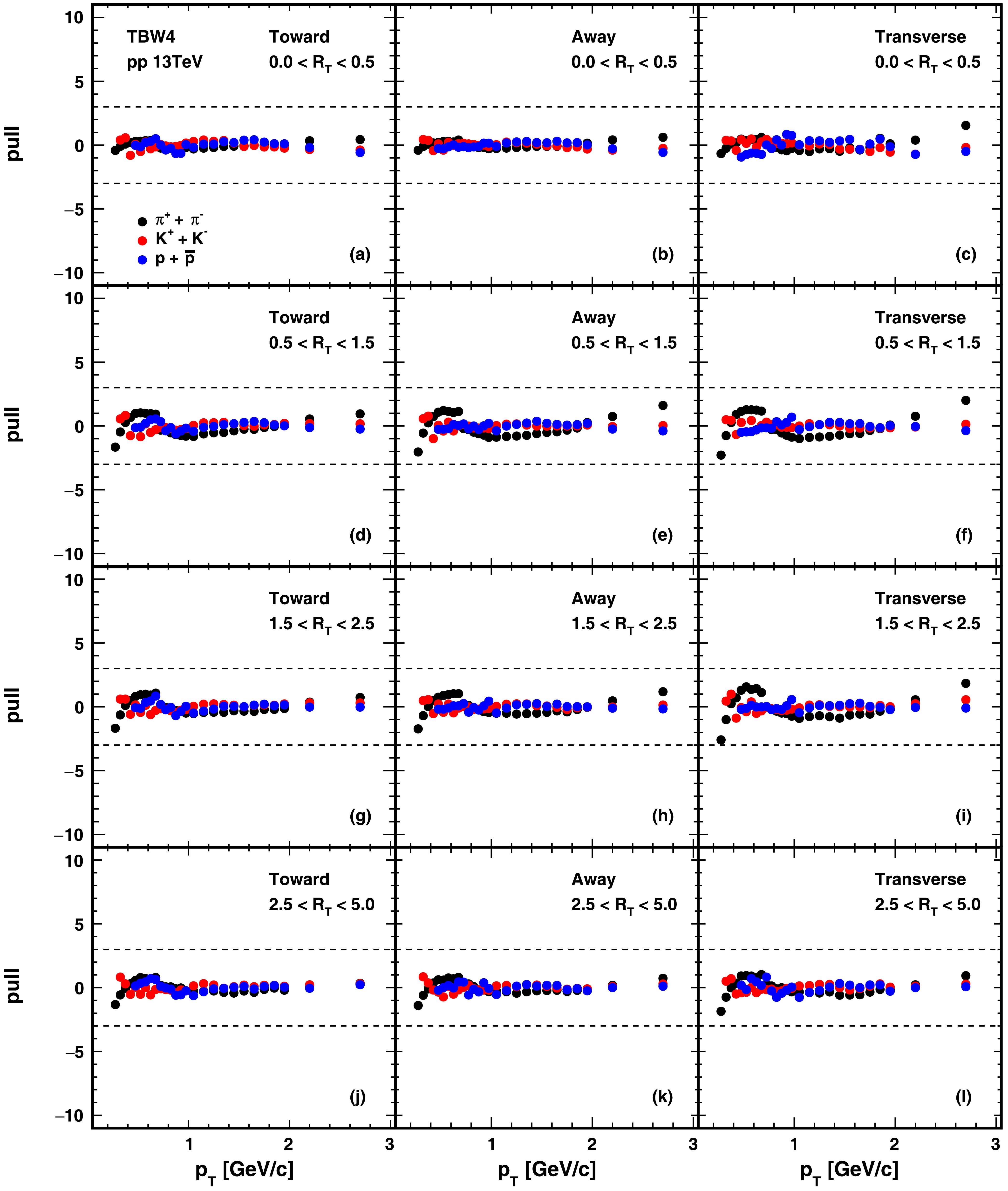
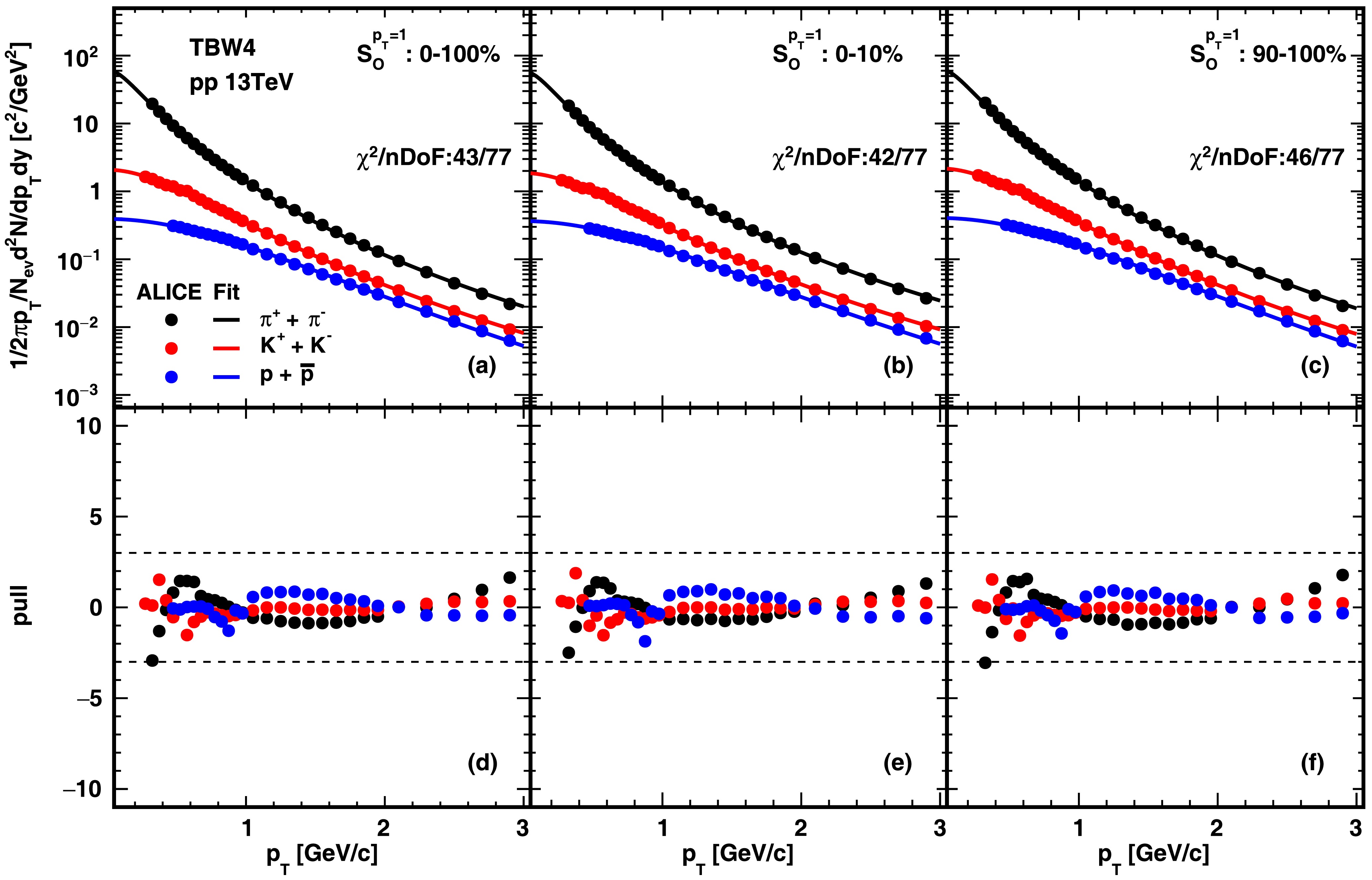
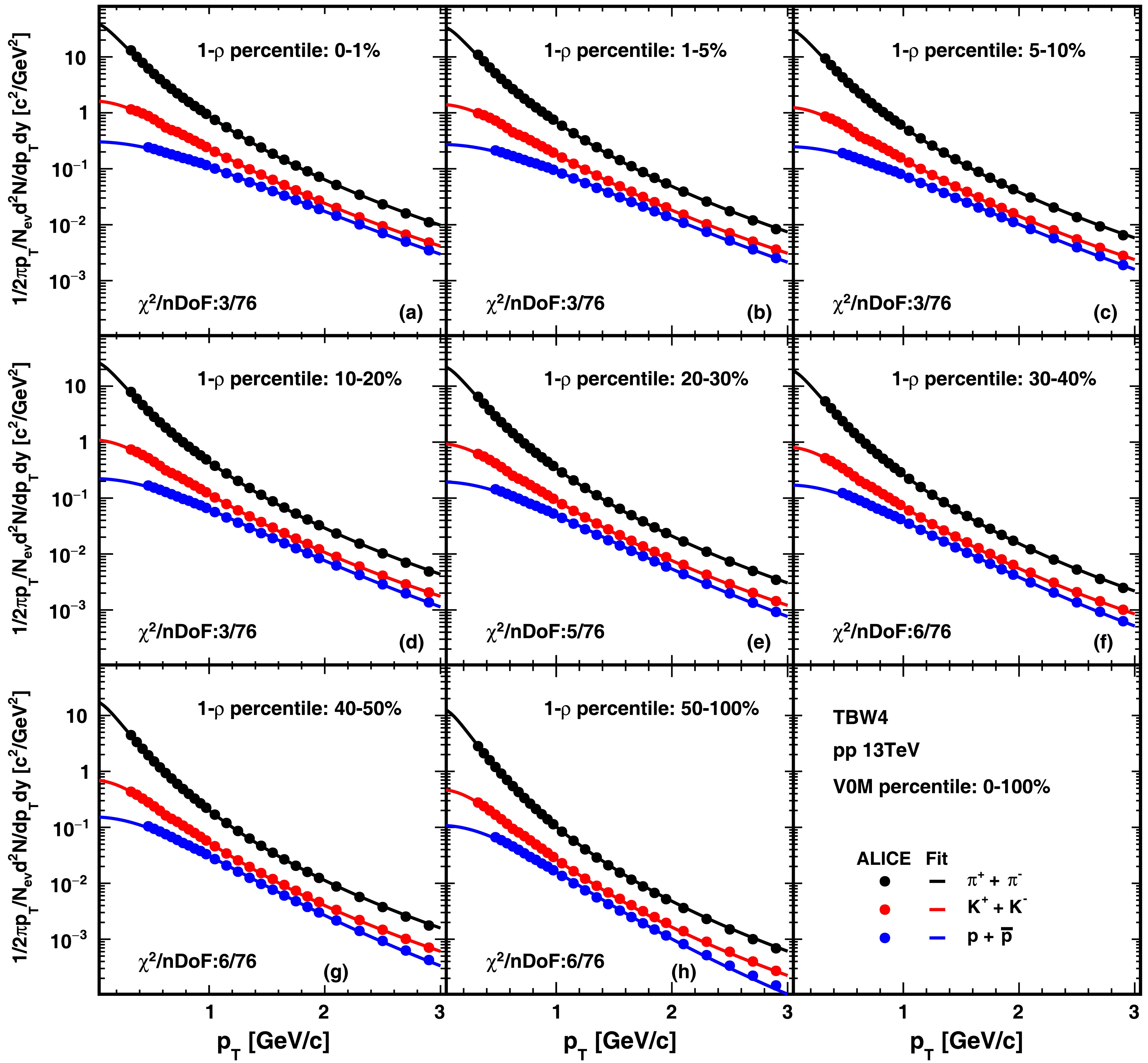
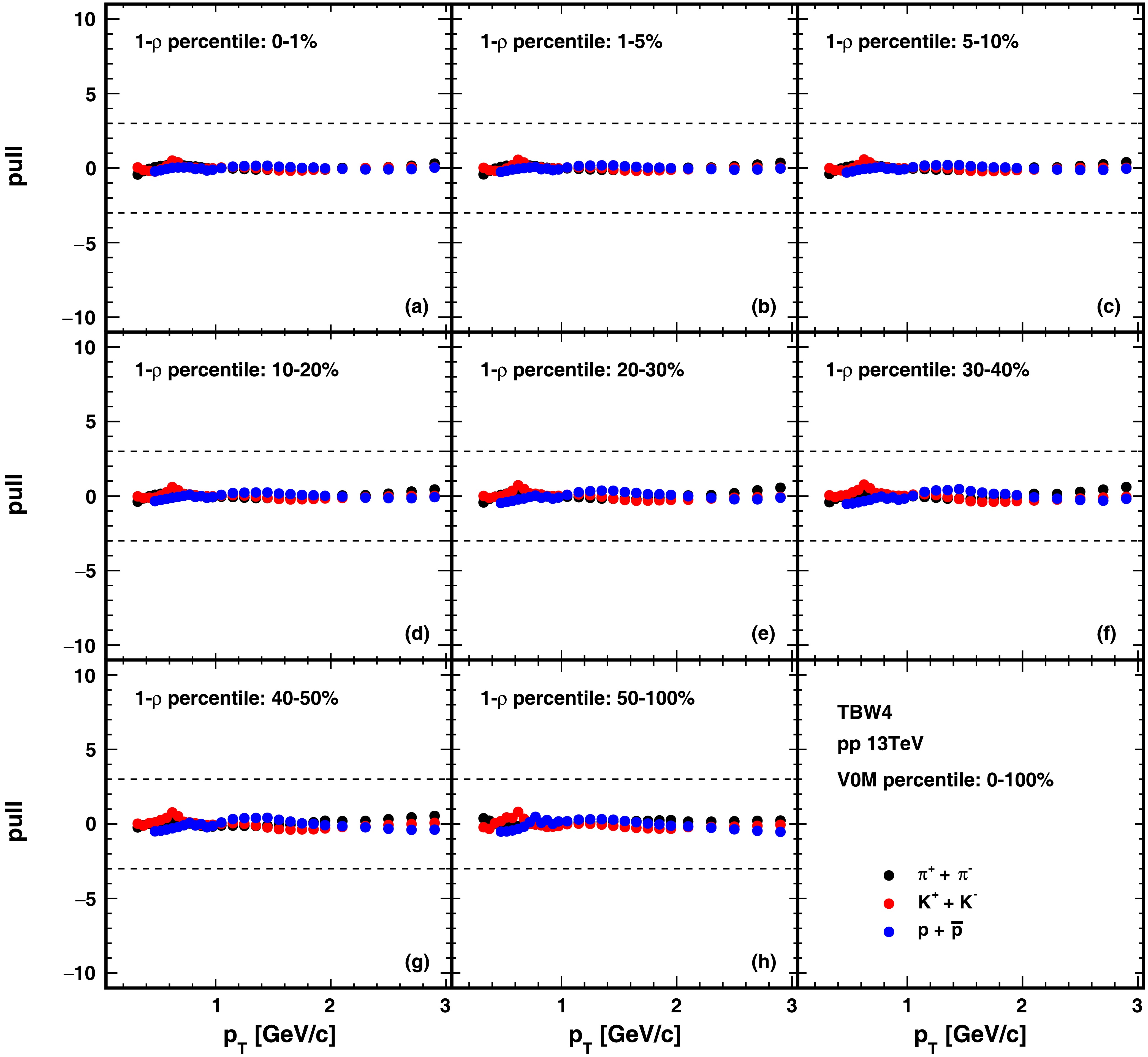
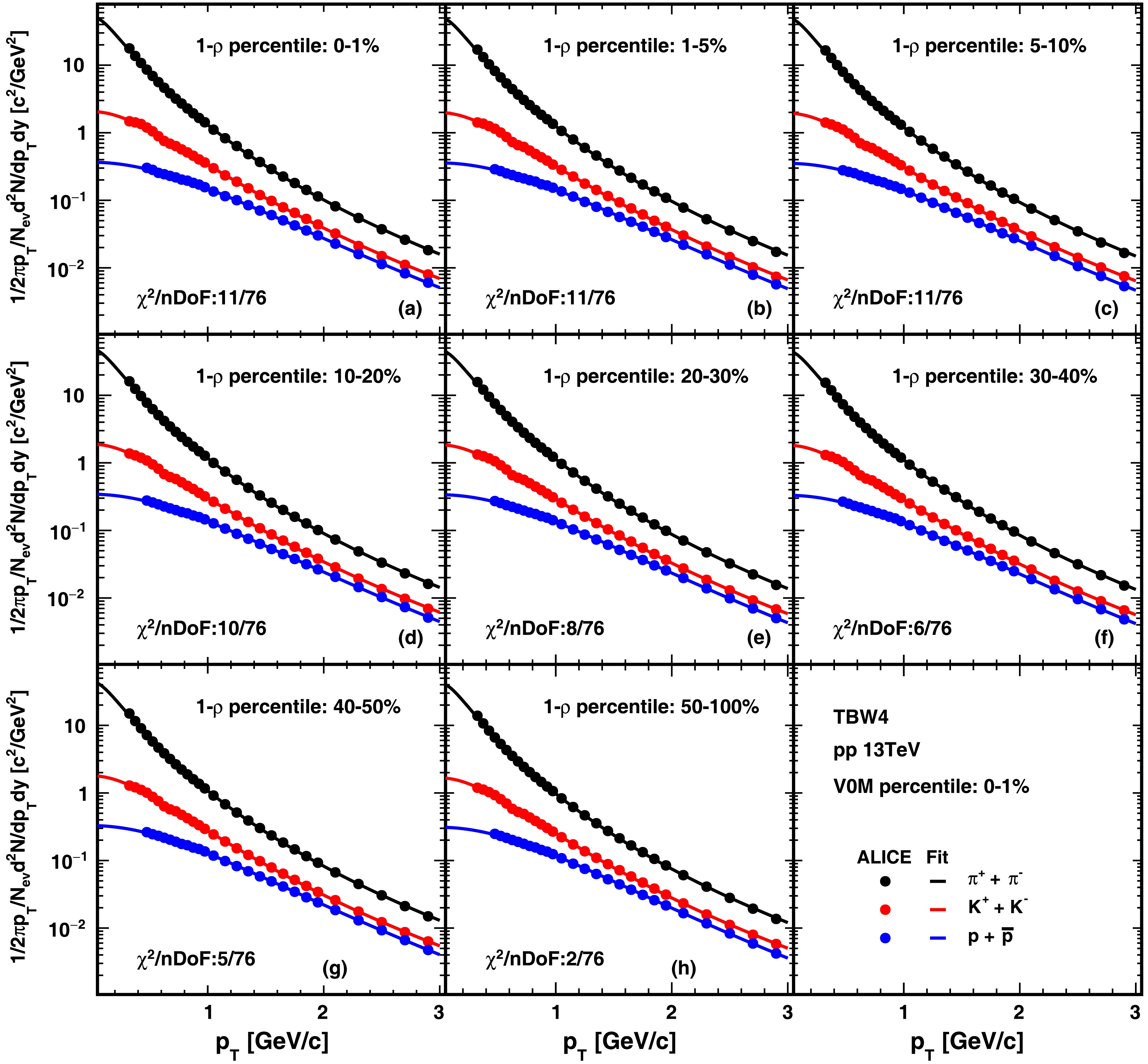
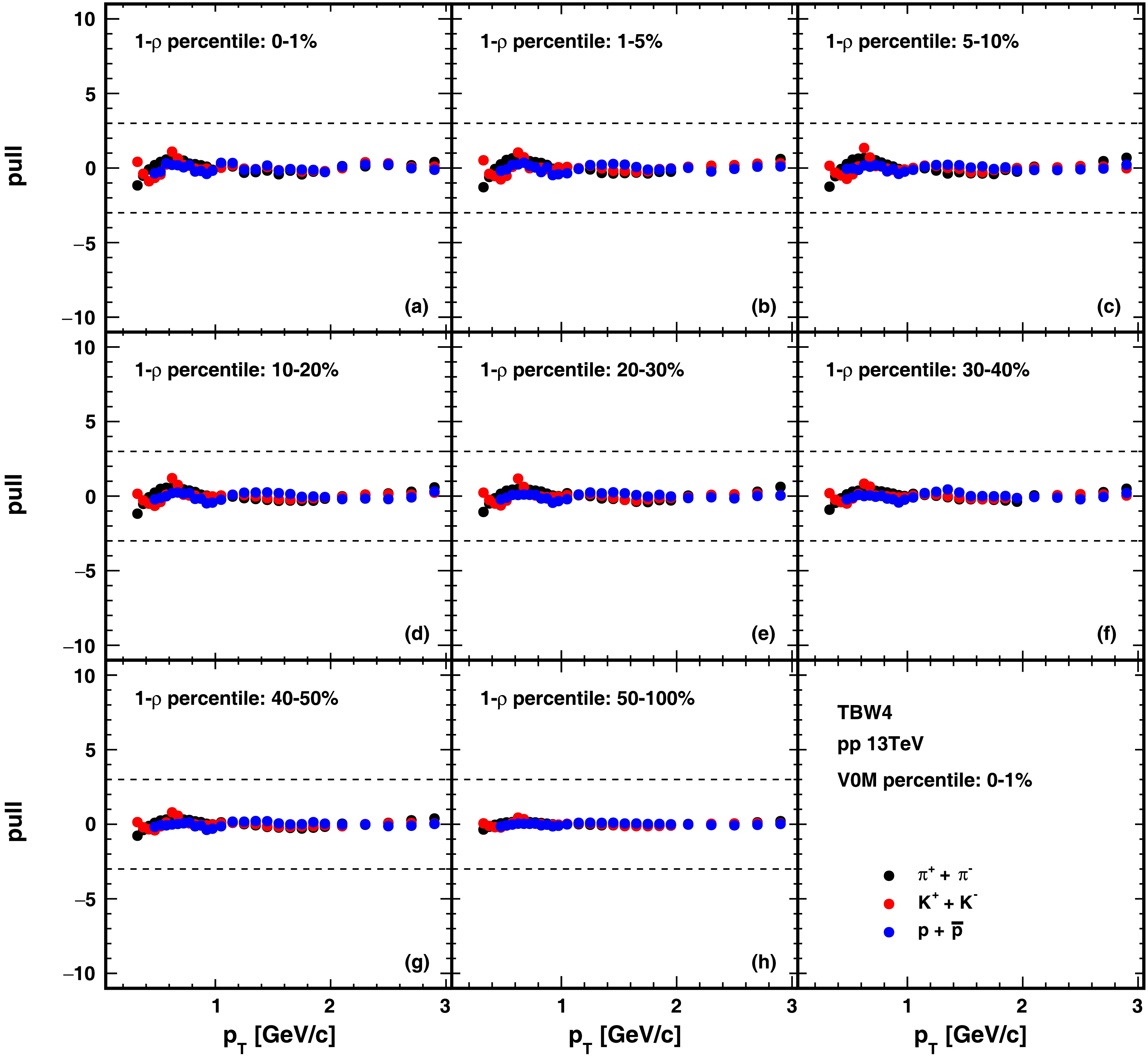
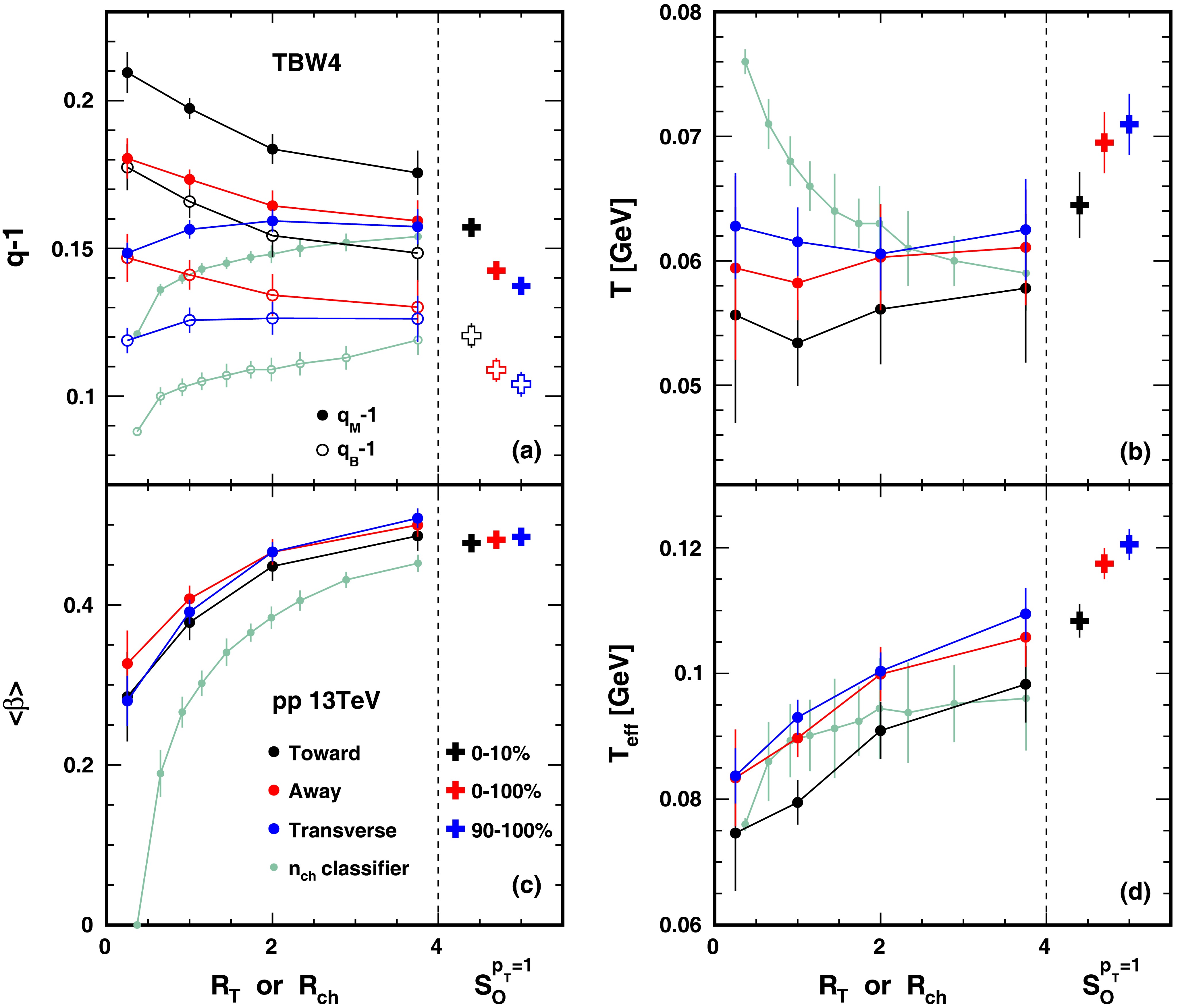
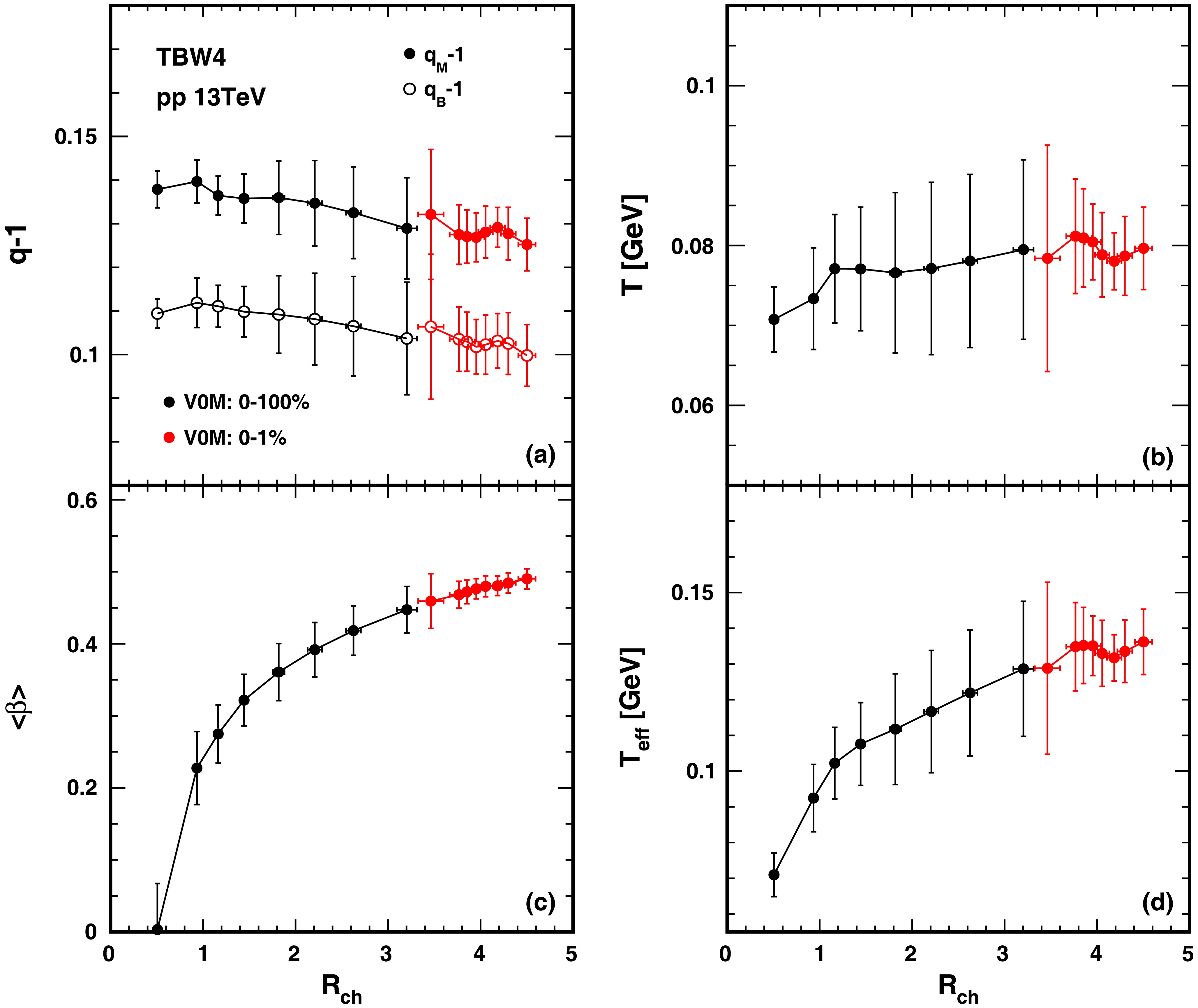
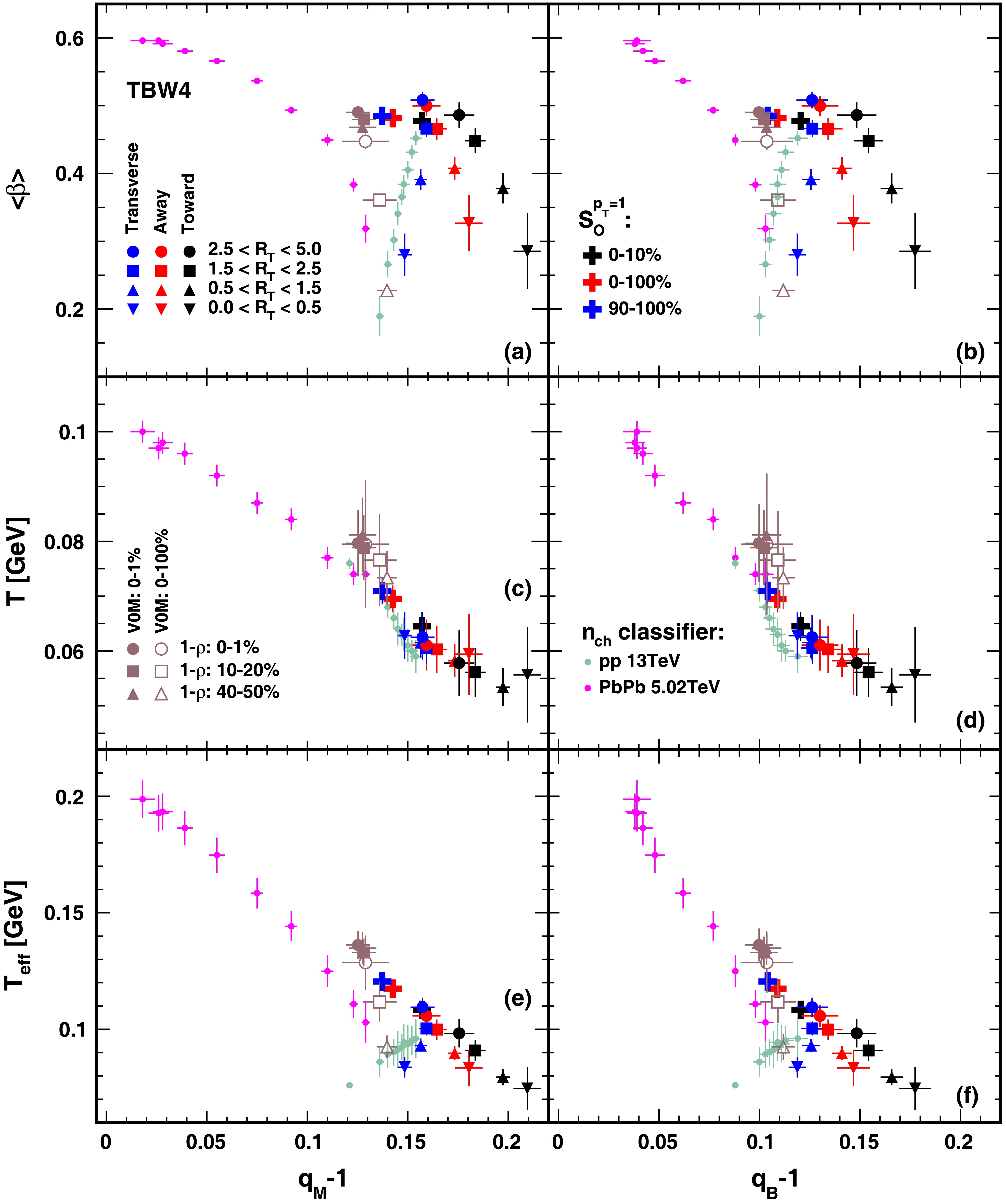
Event shape measurements are crucial for understanding the underlying event and multiple-parton interactions (MPIs) in high energy proton-proton (pp) collisions. In this study, the Tsallis blast-wave model with independent non-extensive parameters for mesons and baryons was applied to analyze the transverse momentum spectra of charged pions, kaons, and protons in pp collision events at\begin{document}$ \sqrt{s}=13 $\end{document}
Event shape measurements are crucial for understanding the underlying event and multiple-parton interactions (MPIs) in high energy proton-proton (pp) collisions. In this study, the Tsallis blast-wave model with independent non-extensive parameters for mesons and baryons was applied to analyze the transverse momentum spectra of charged pions, kaons, and protons in pp collision events at
2026, 50(1): 014109. doi: 10.1088/1674-1137/ae042f
Abstract:
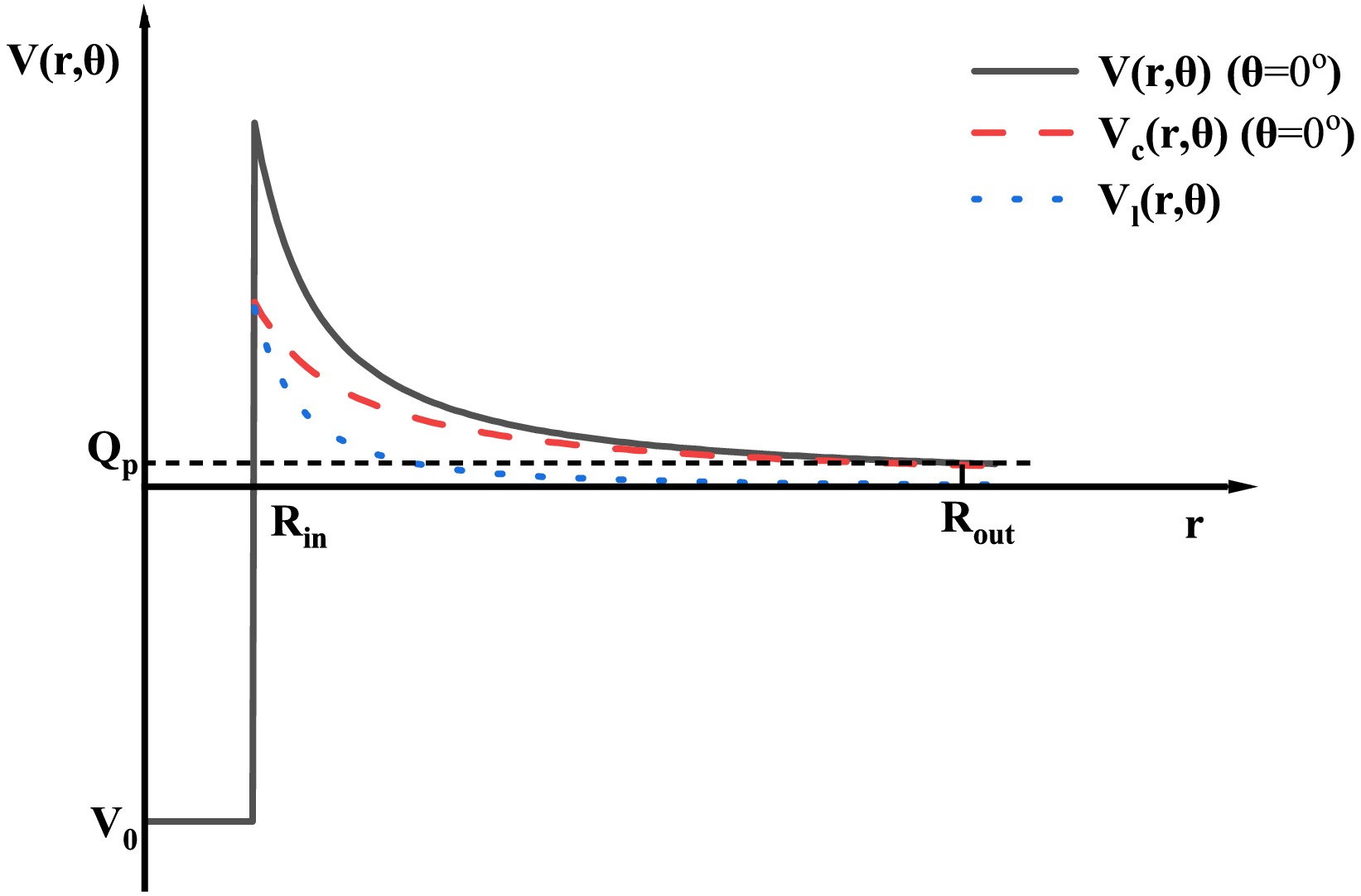
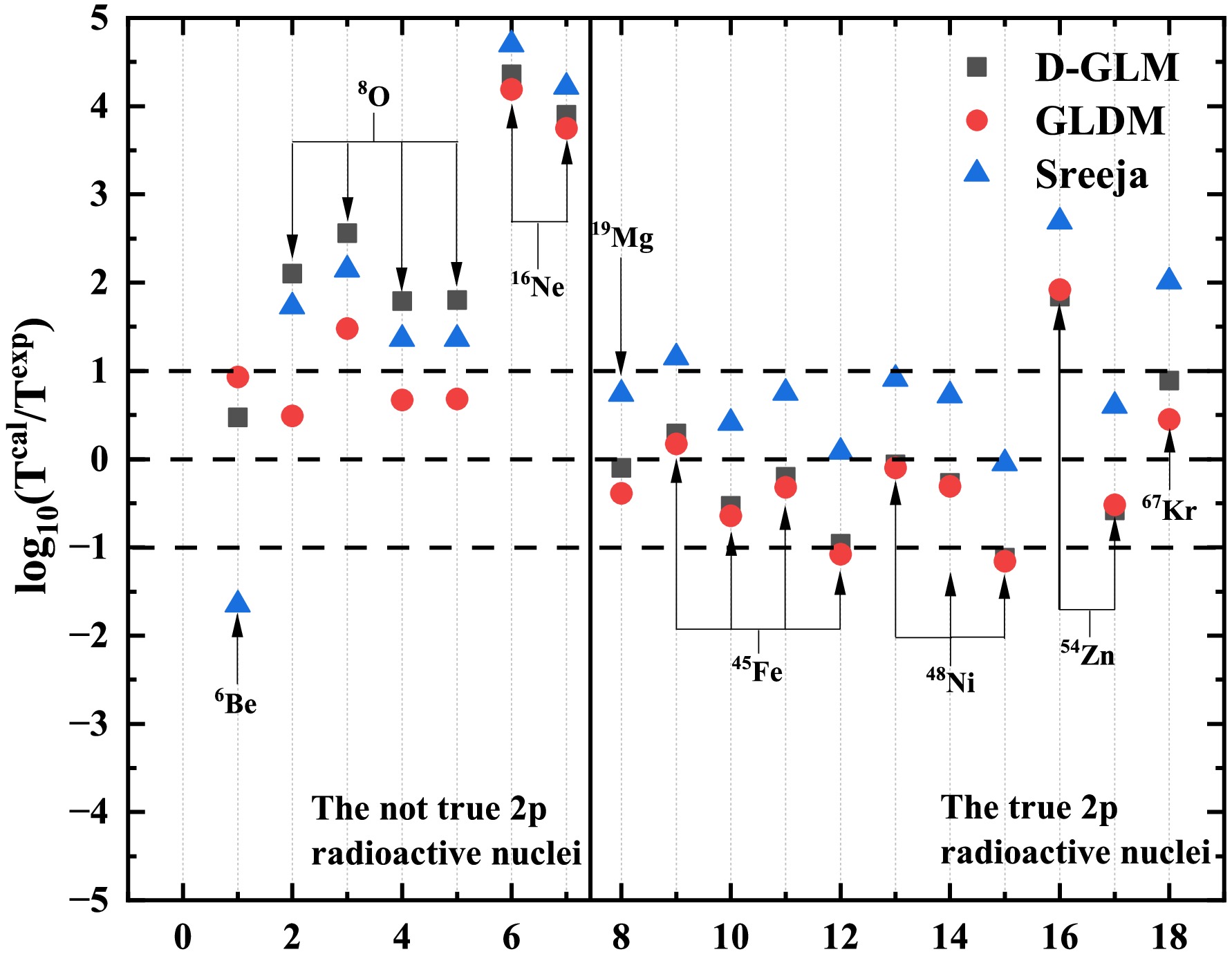
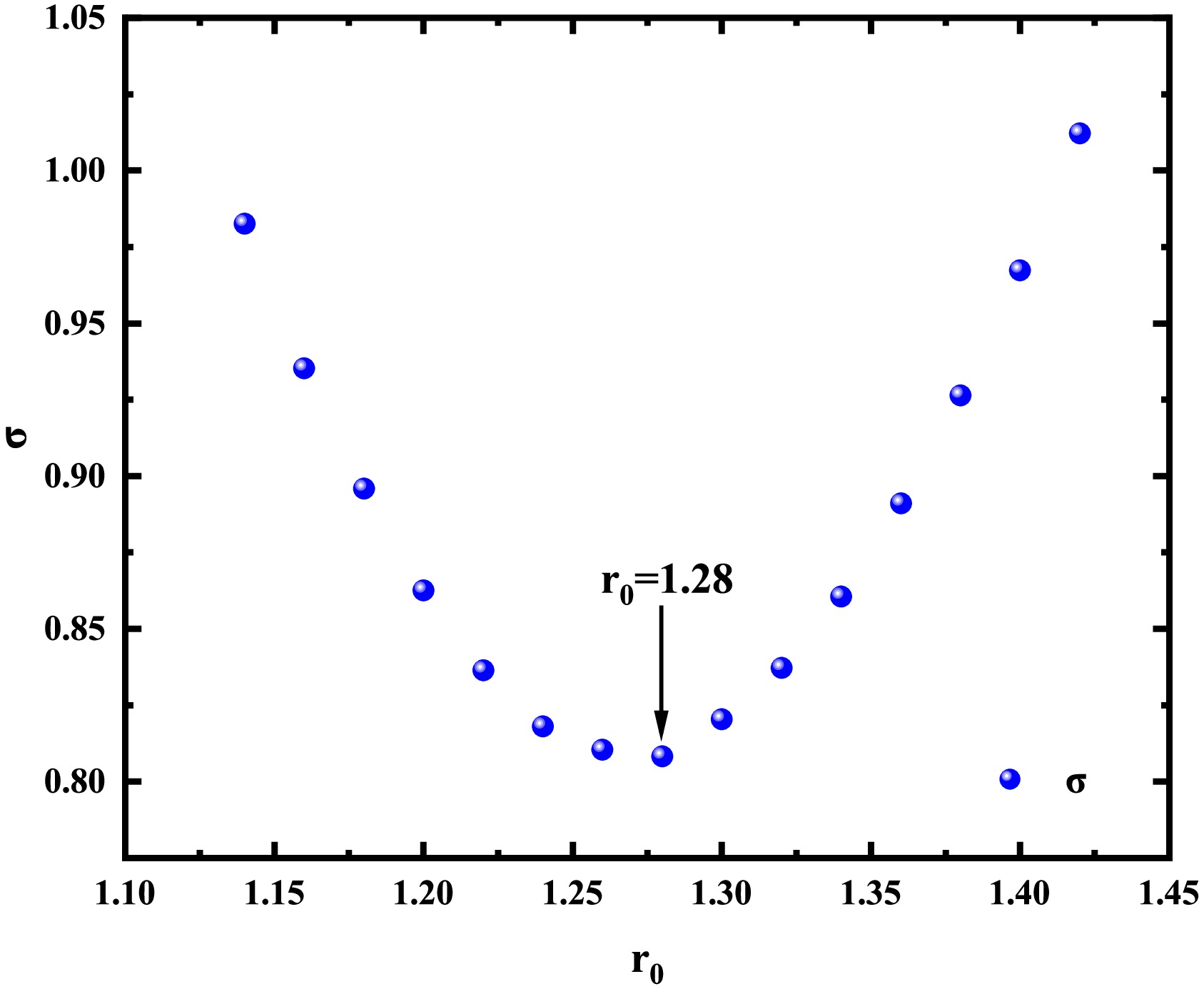
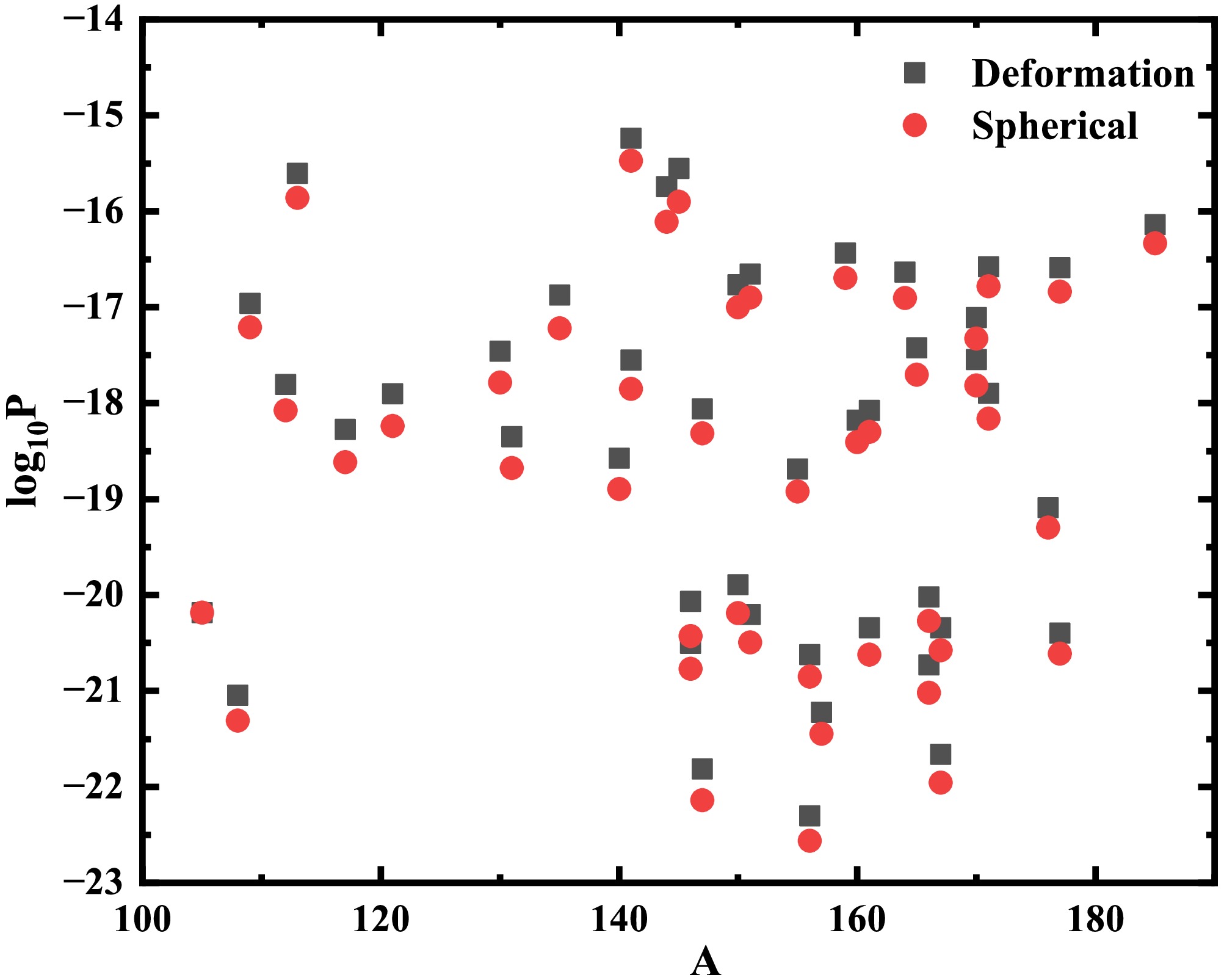
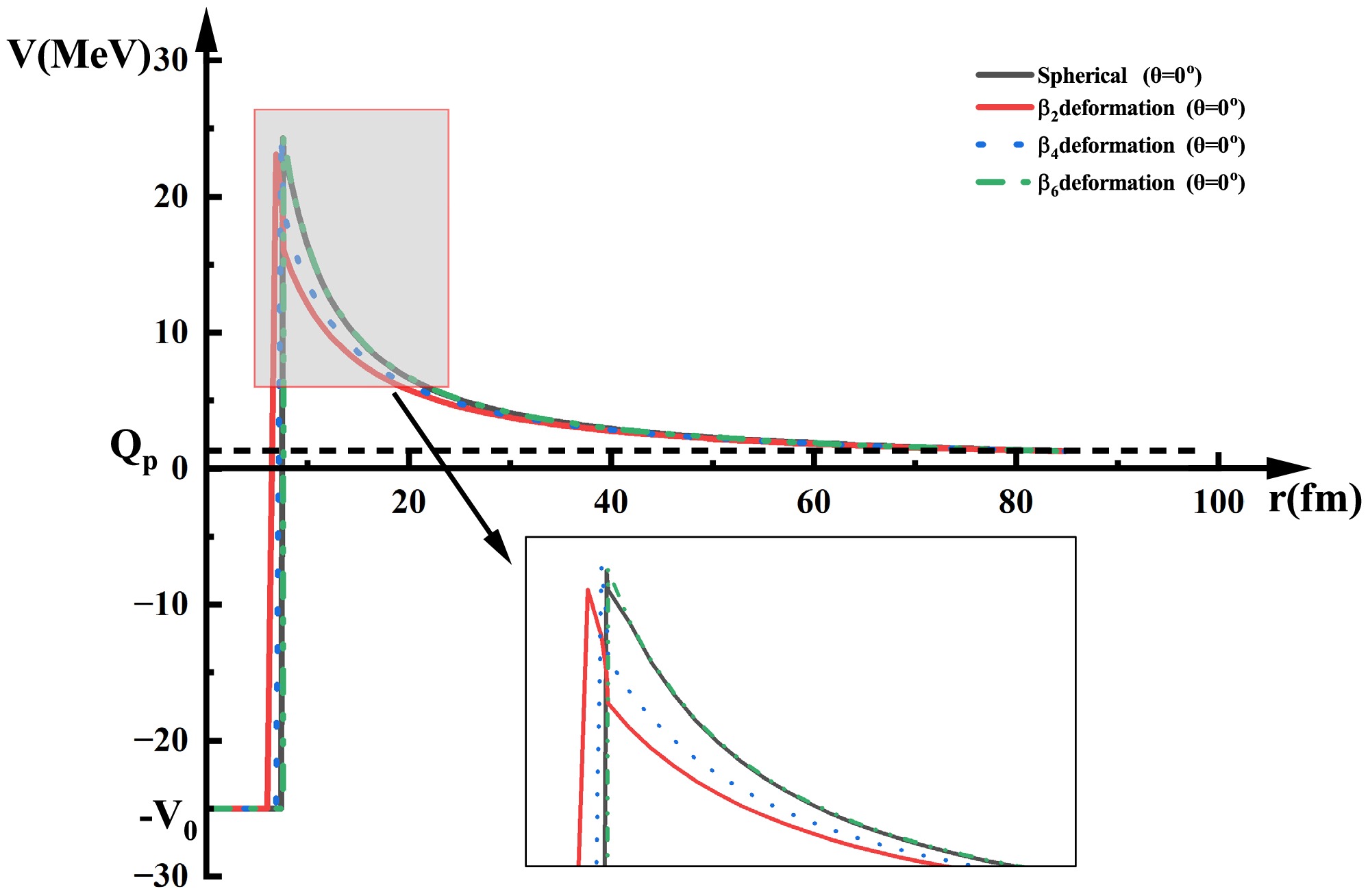
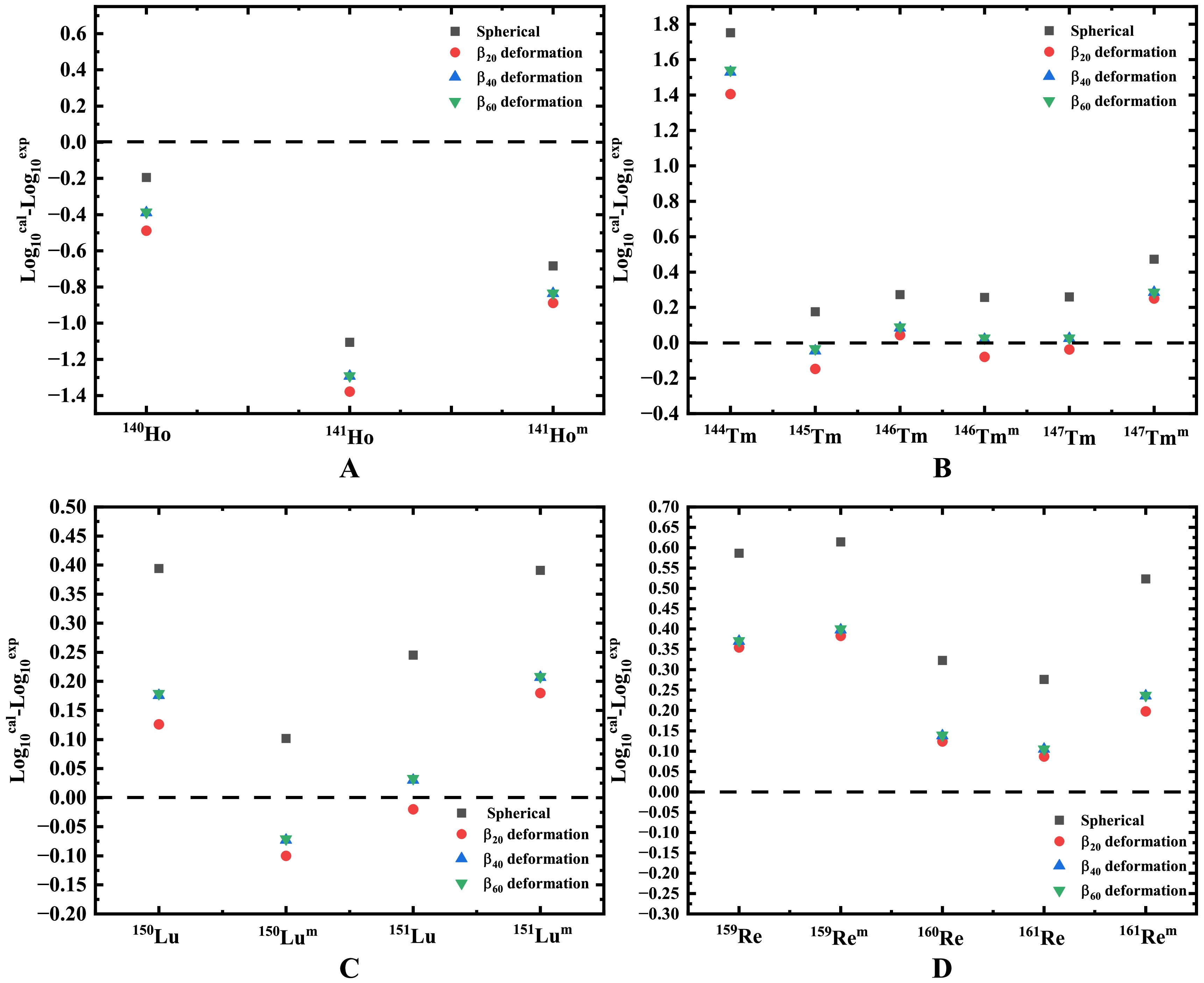
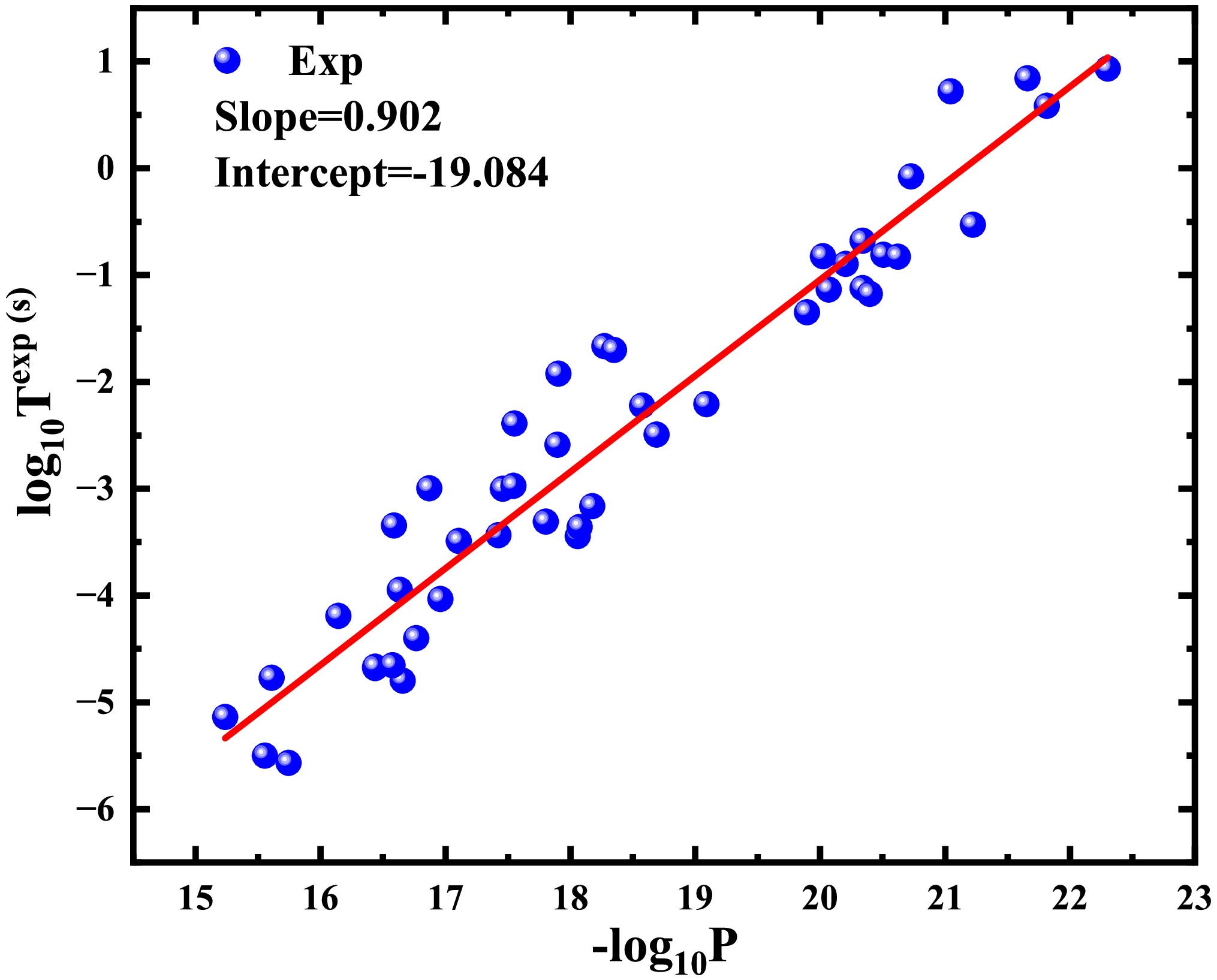
We modified the deformed Gamow-like model (DGLM) by incorporating the effect of daughter nucleus deformation on Coulomb interaction between the daughter nucleus and emitted proton. Using this modified DGLM, we systematically calculated the half-lives of both single- and two-proton radioactivities within a unified framework. Computational results demonstrate remarkable consistency with the experimentally observed radioactivity half-lives. In addition, our study explores how deformation affects penetration probabilities and establishes a universal curve relating penetration probability to experimental half-lives, validating the efficacy of the DGLM. Further, we made unified predictions for the half-lives of potential single-proton and two-proton radioactive nuclei, which align well with other models, thereby underscoring the reliability of the DGLM in predicting proton radioactivity.
We modified the deformed Gamow-like model (DGLM) by incorporating the effect of daughter nucleus deformation on Coulomb interaction between the daughter nucleus and emitted proton. Using this modified DGLM, we systematically calculated the half-lives of both single- and two-proton radioactivities within a unified framework. Computational results demonstrate remarkable consistency with the experimentally observed radioactivity half-lives. In addition, our study explores how deformation affects penetration probabilities and establishes a universal curve relating penetration probability to experimental half-lives, validating the efficacy of the DGLM. Further, we made unified predictions for the half-lives of potential single-proton and two-proton radioactive nuclei, which align well with other models, thereby underscoring the reliability of the DGLM in predicting proton radioactivity.
2026, 50(1): 014110. doi: 10.1088/1674-1137/ae0f85
Abstract:
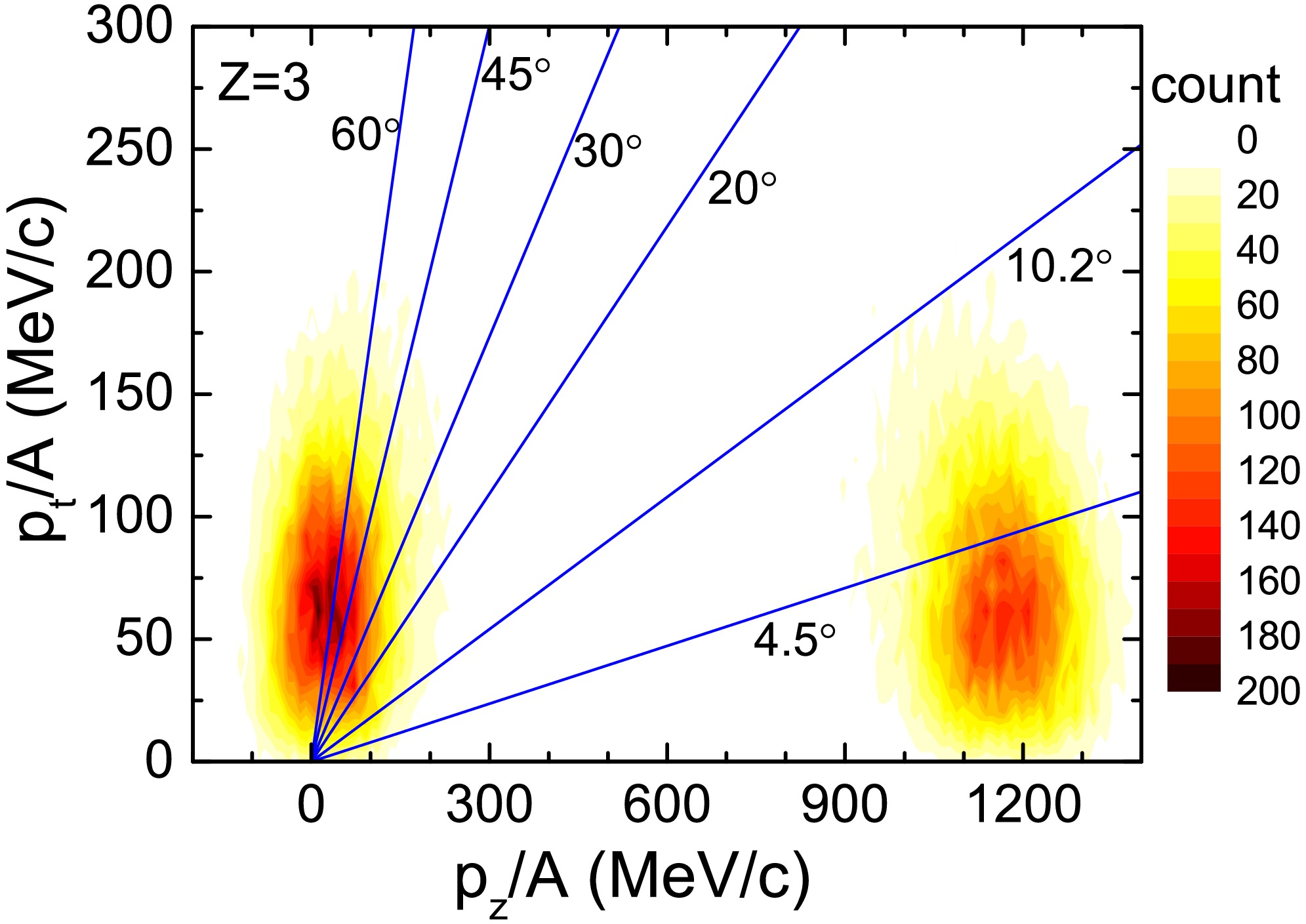
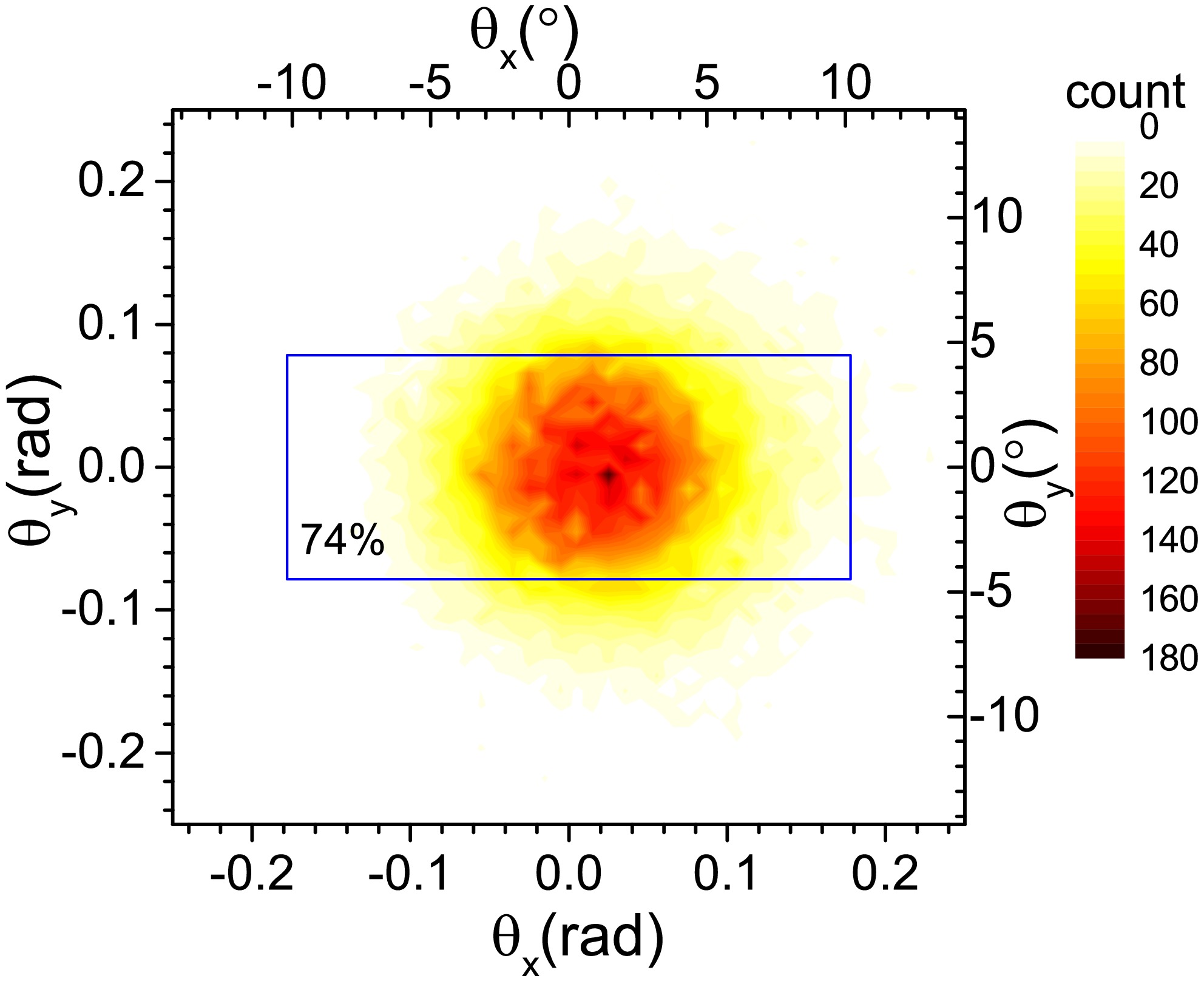
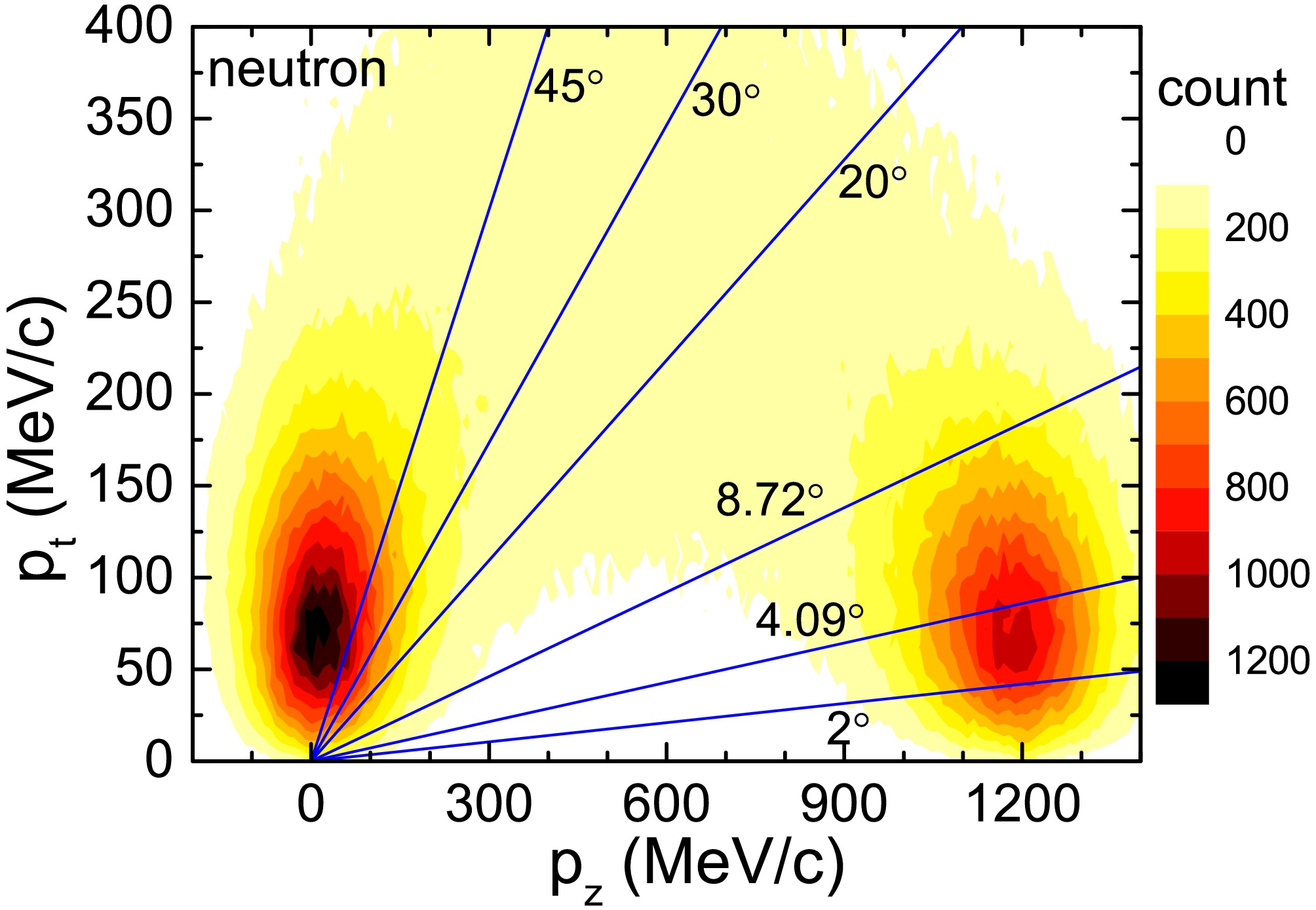
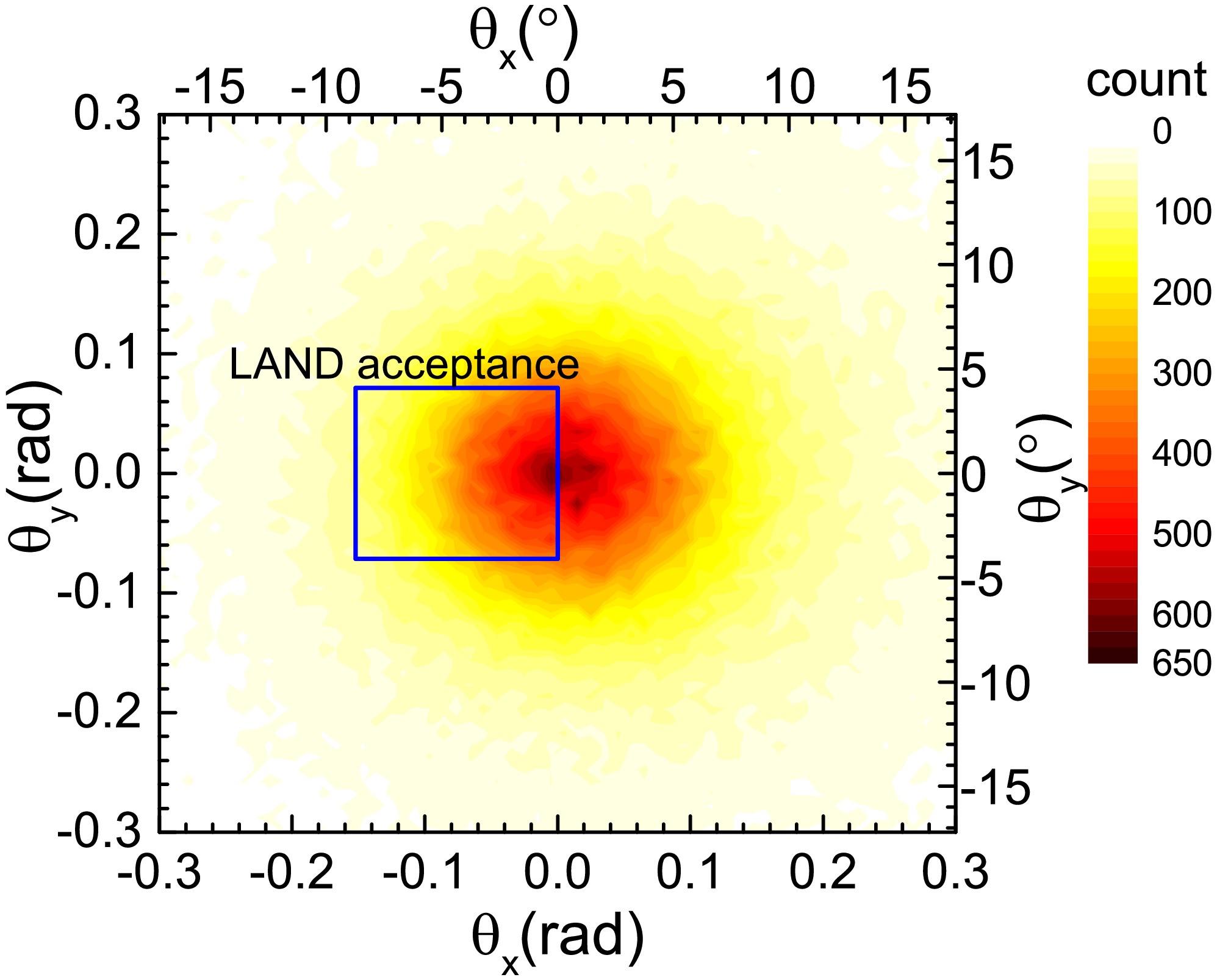
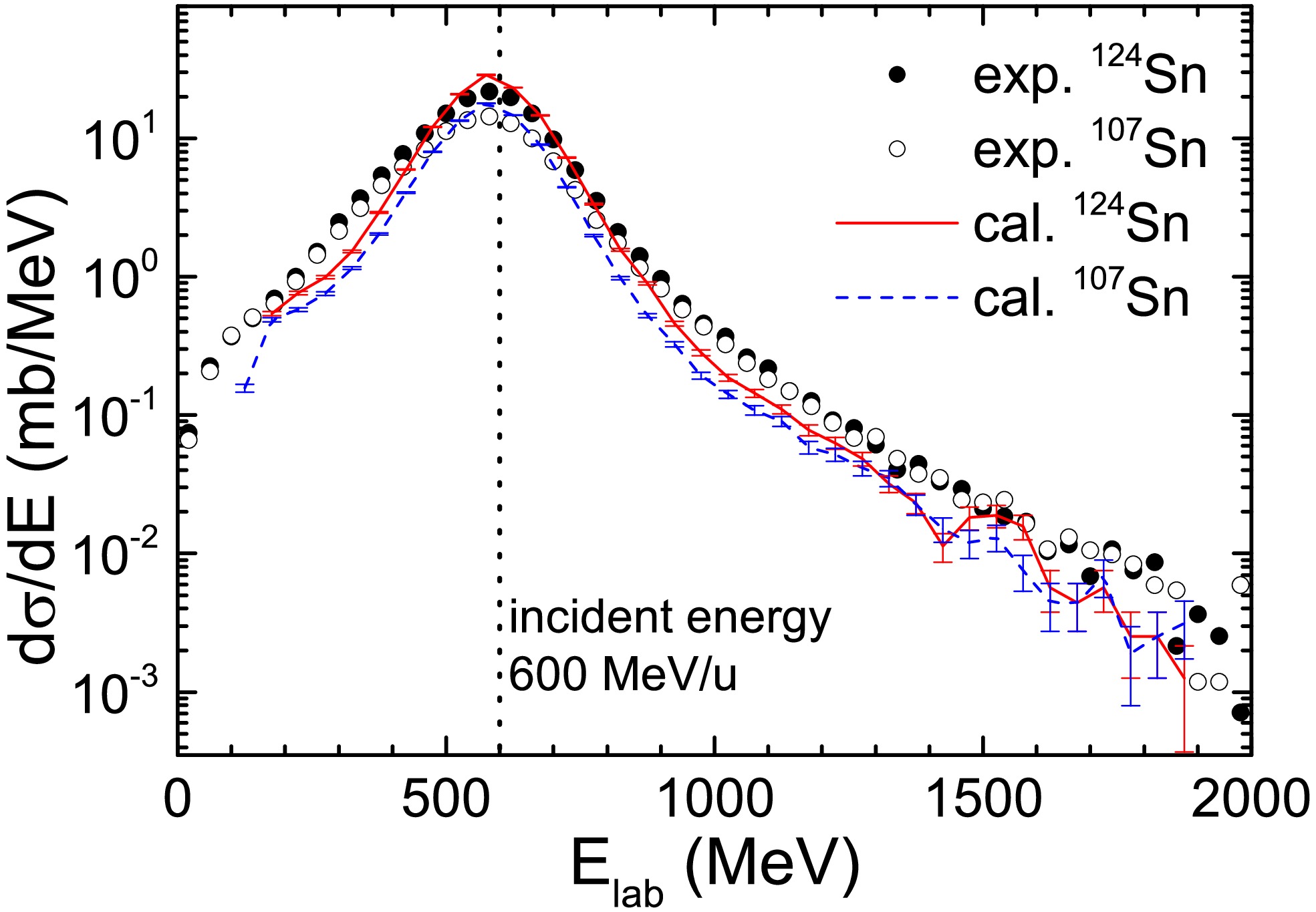
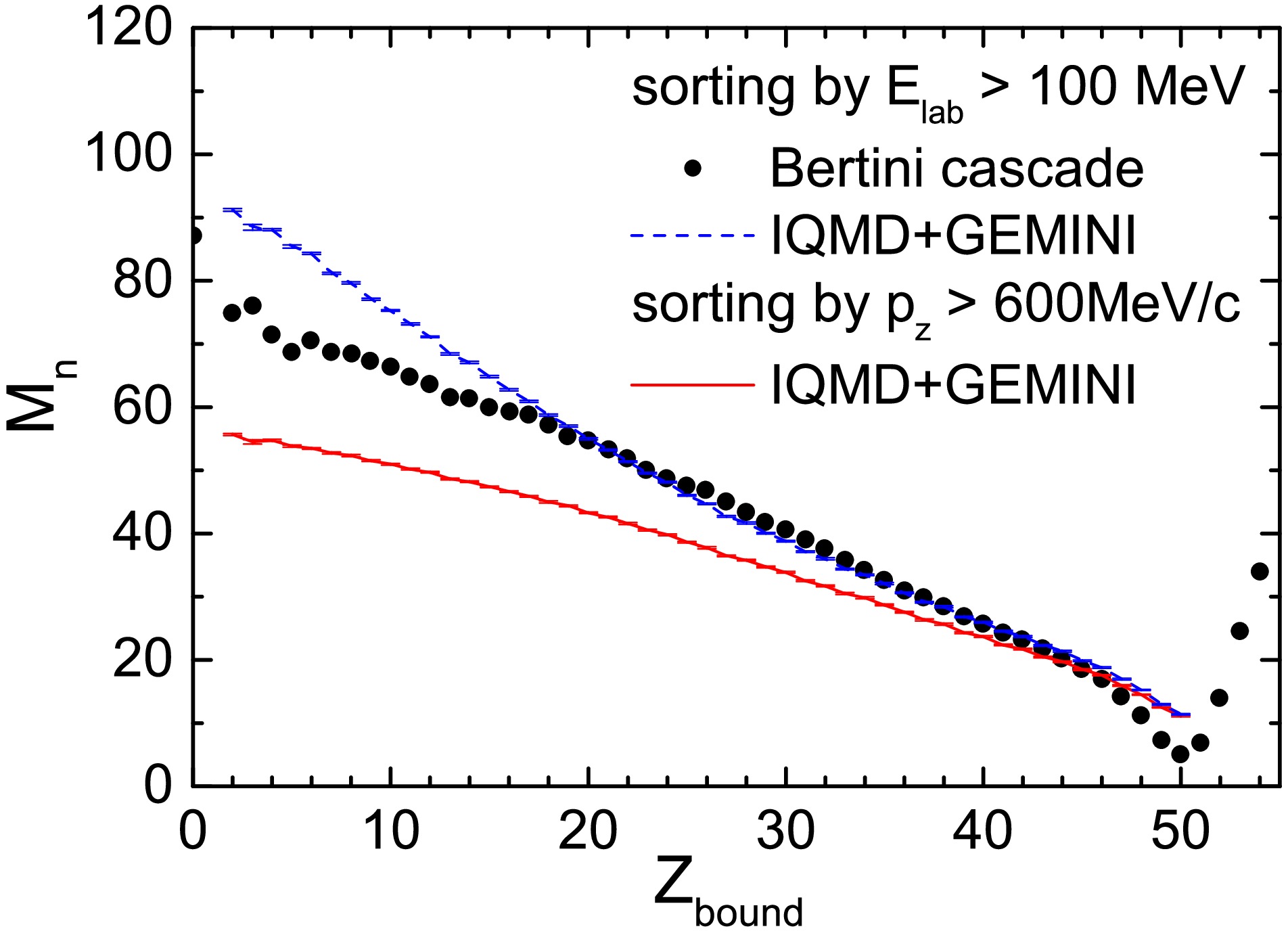
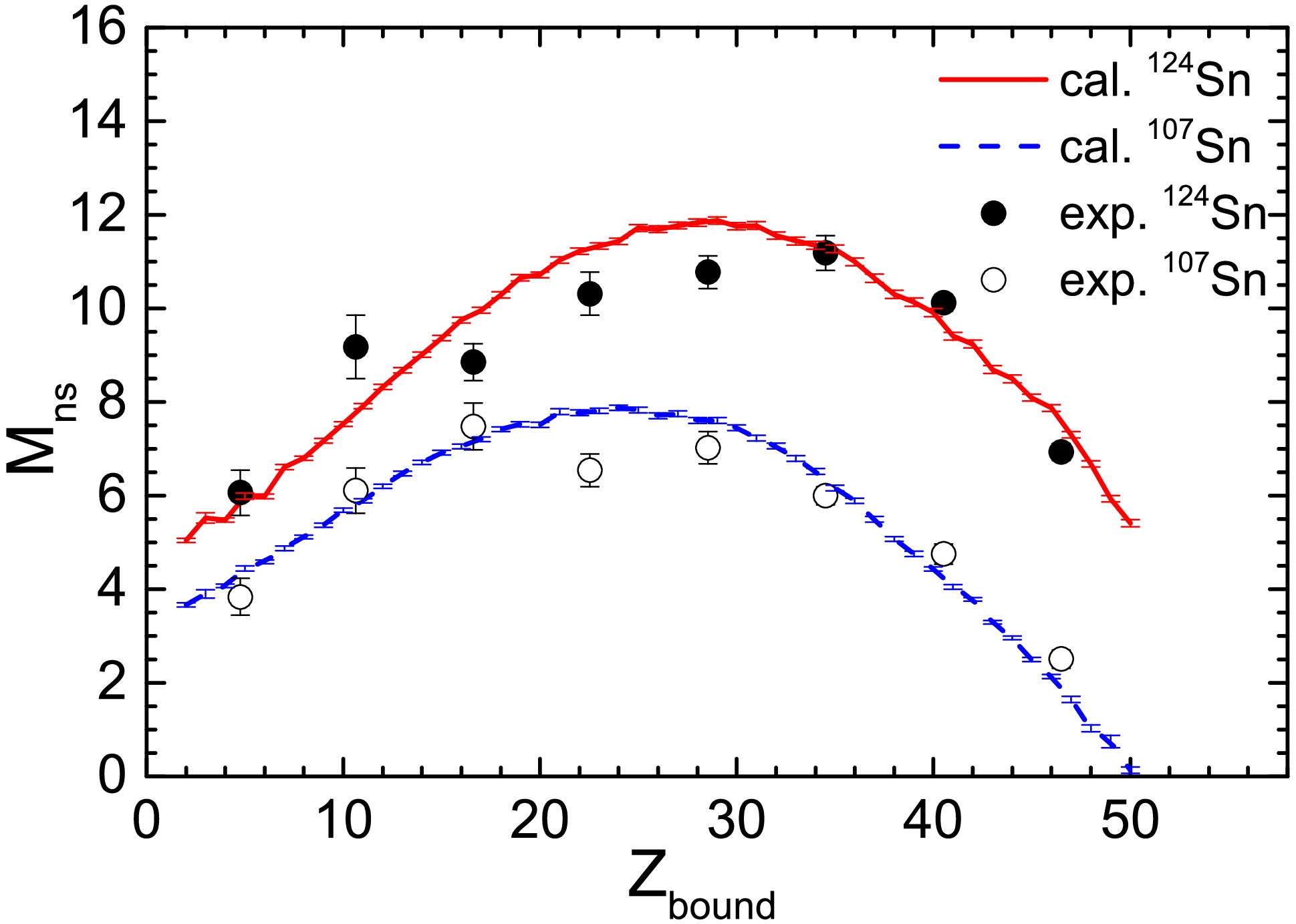
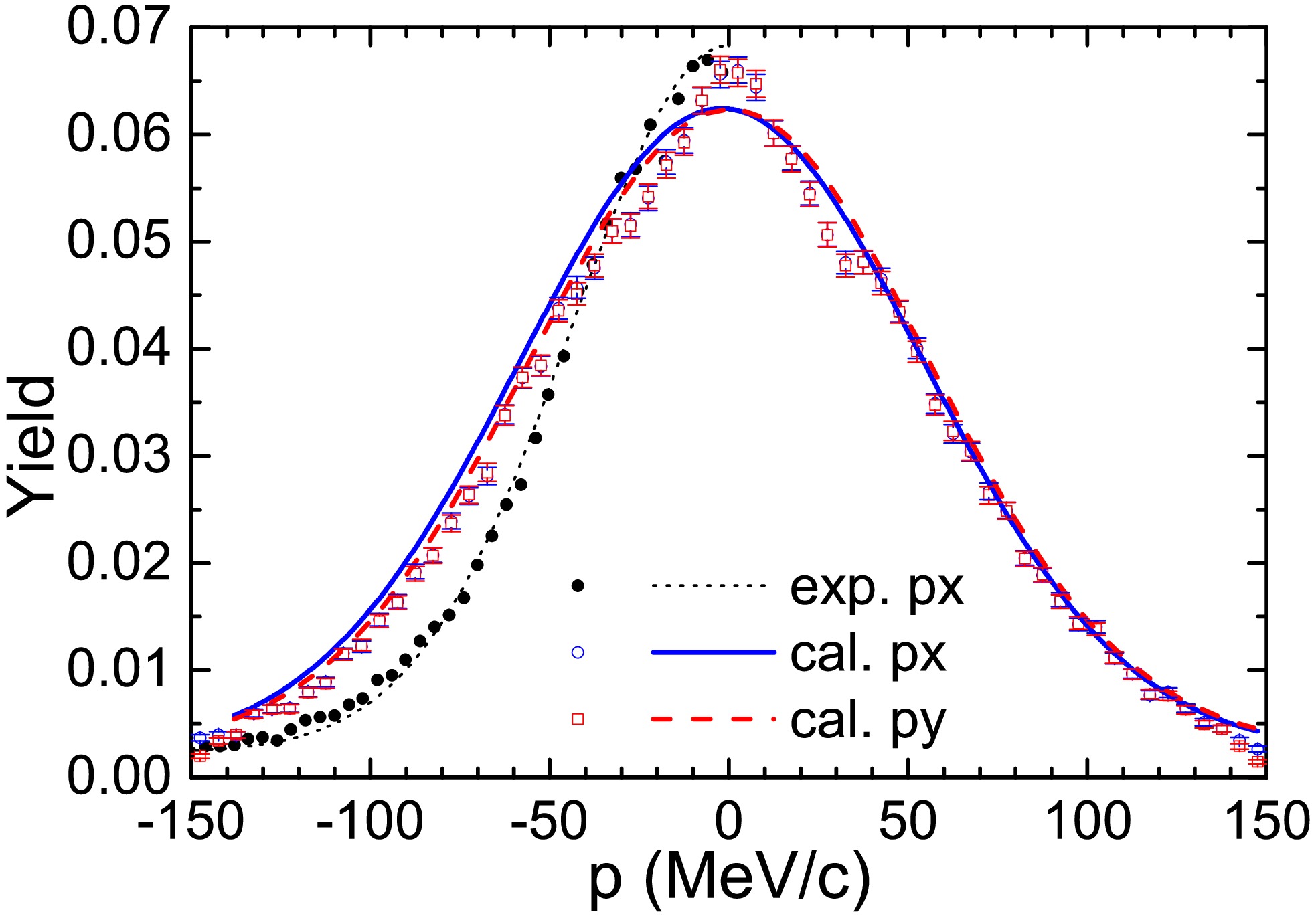
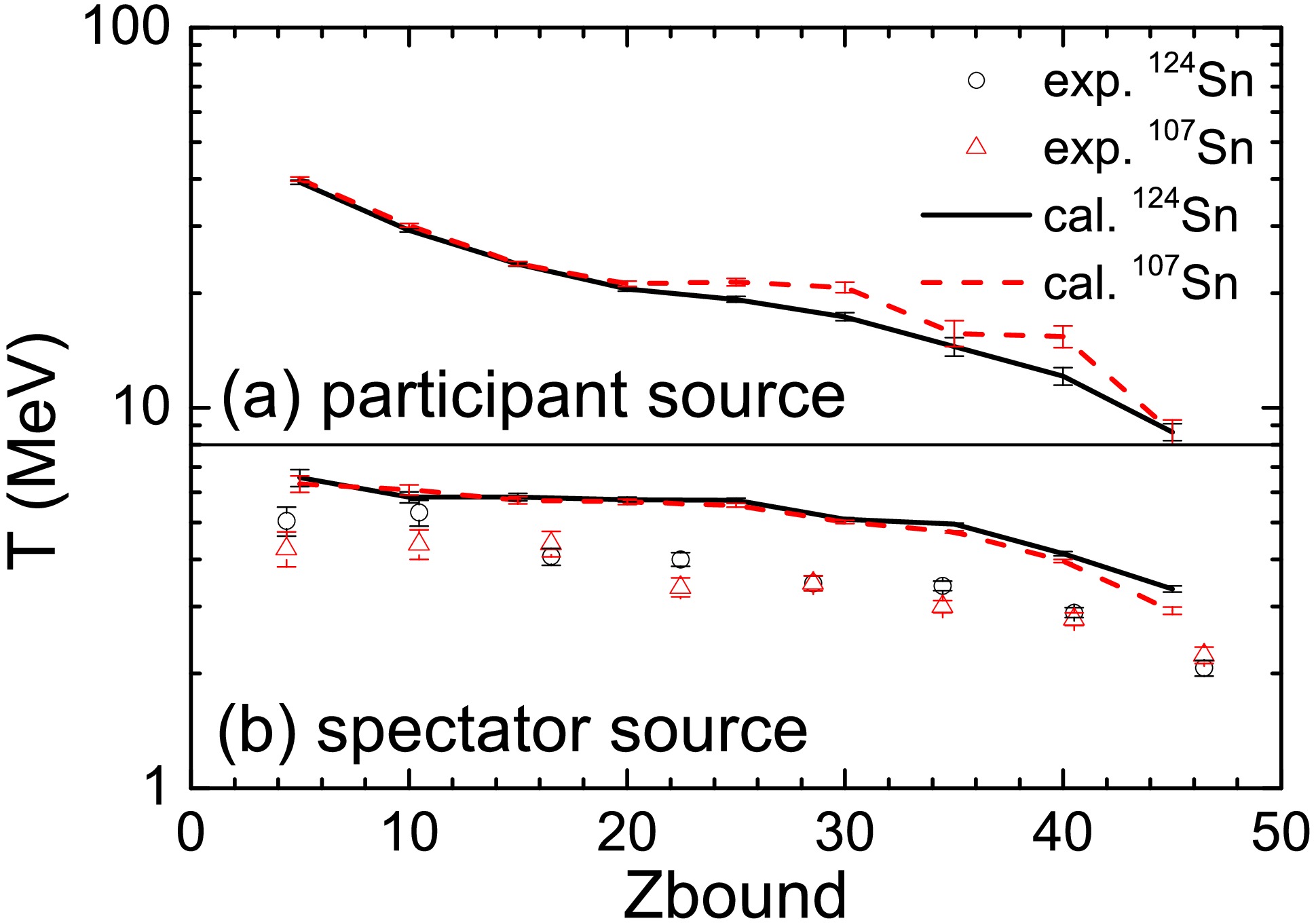
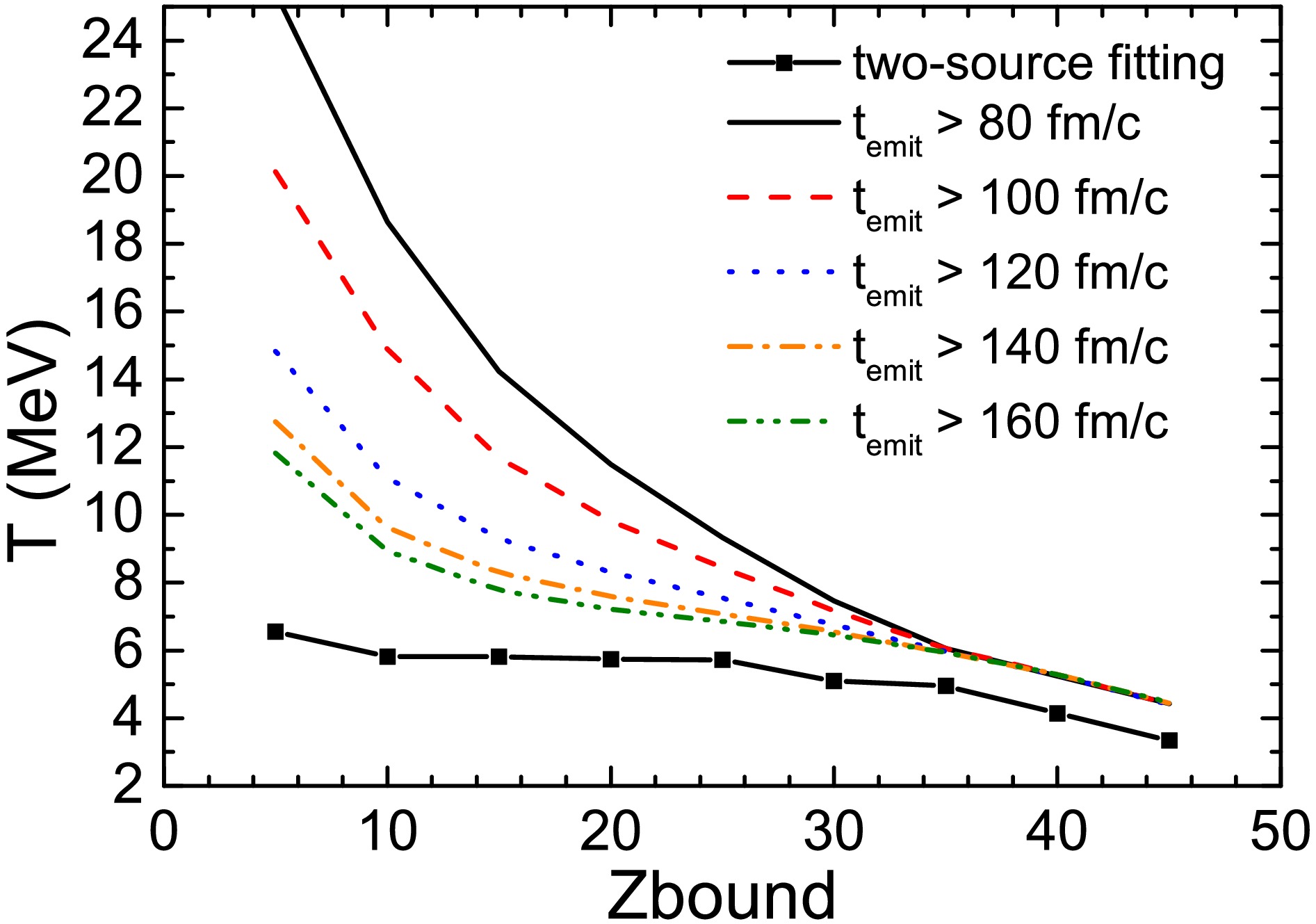
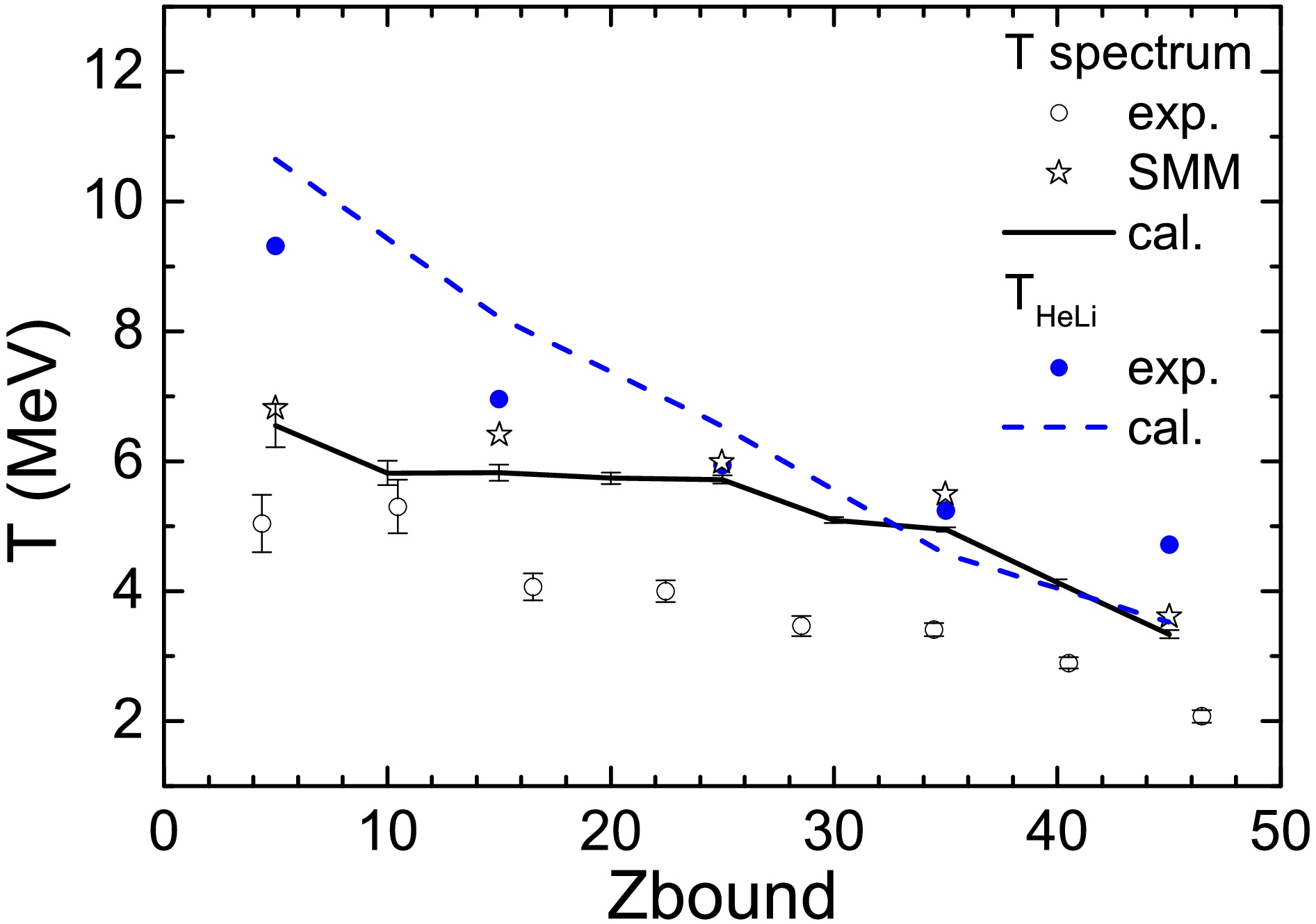
The properties of neutrons from spectator sources produced in 107,124Sn + 120Sn collisions at 600 MeV/nucleon are studied. The isospin-dependent quantum molecular dynamics (IQMD) model is used to describe the dynamical process of fragmentation, and the statistical model GEMINI is applied to simulate the secondary decay of the pre-fragments. The differential cross section and multiplicity of the neutrons emitted from the spectator source are used to prove the model's feasibility. The temperatures of the spectator source are extracted by two-source-fitting the transverse momentum distributions of the neutrons using the classical Maxwellian functions. The temperatures of the spectator sources extracted from calculations are consistent with the experimental data, those from the SMM model, and the isotopic temperature\begin{document}$ T_{\text{HeLi}} $\end{document}
The properties of neutrons from spectator sources produced in 107,124Sn + 120Sn collisions at 600 MeV/nucleon are studied. The isospin-dependent quantum molecular dynamics (IQMD) model is used to describe the dynamical process of fragmentation, and the statistical model GEMINI is applied to simulate the secondary decay of the pre-fragments. The differential cross section and multiplicity of the neutrons emitted from the spectator source are used to prove the model's feasibility. The temperatures of the spectator source are extracted by two-source-fitting the transverse momentum distributions of the neutrons using the classical Maxwellian functions. The temperatures of the spectator sources extracted from calculations are consistent with the experimental data, those from the SMM model, and the isotopic temperature
2026, 50(1): 014111. doi: 10.1088/1674-1137/ae0307
Abstract:
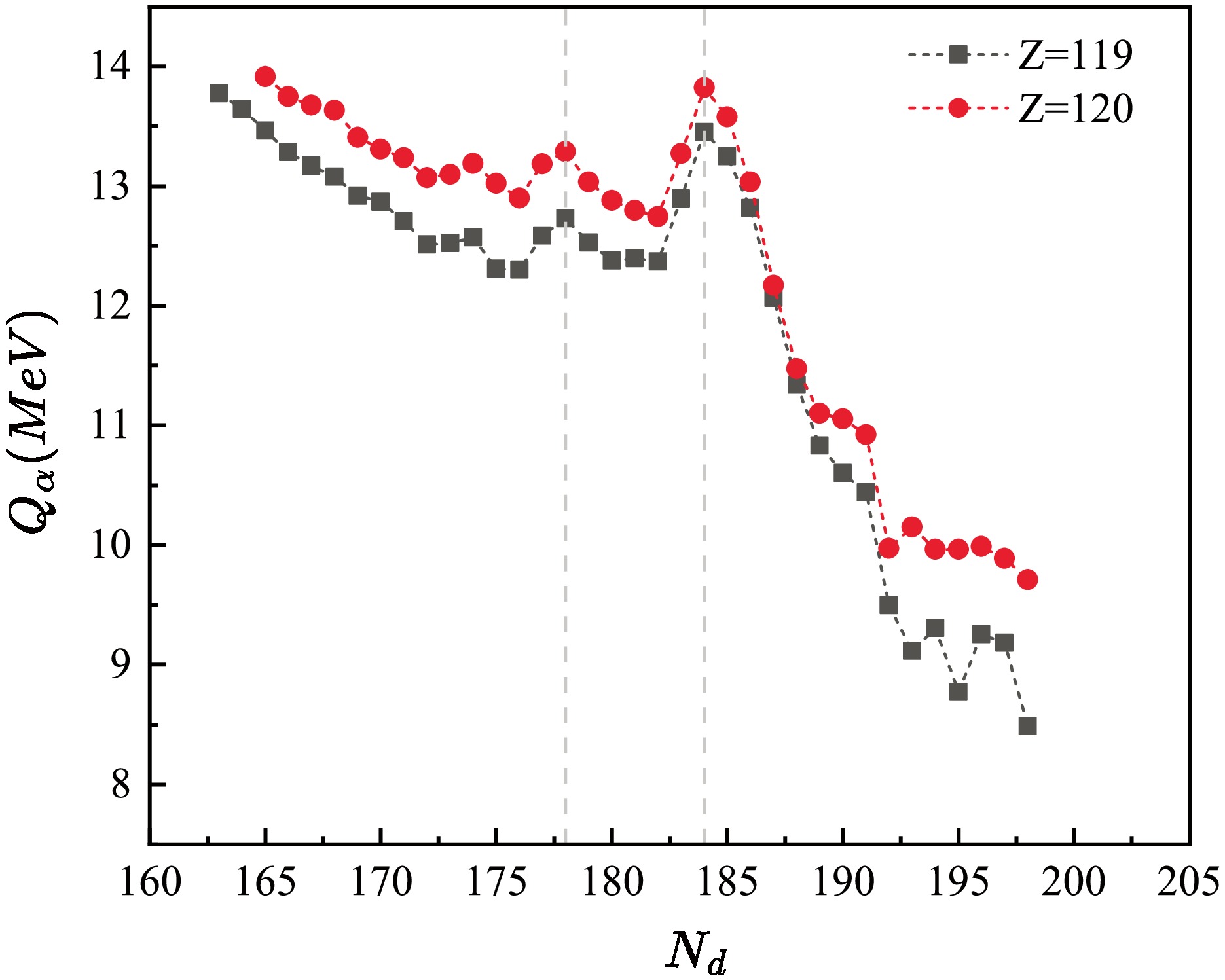
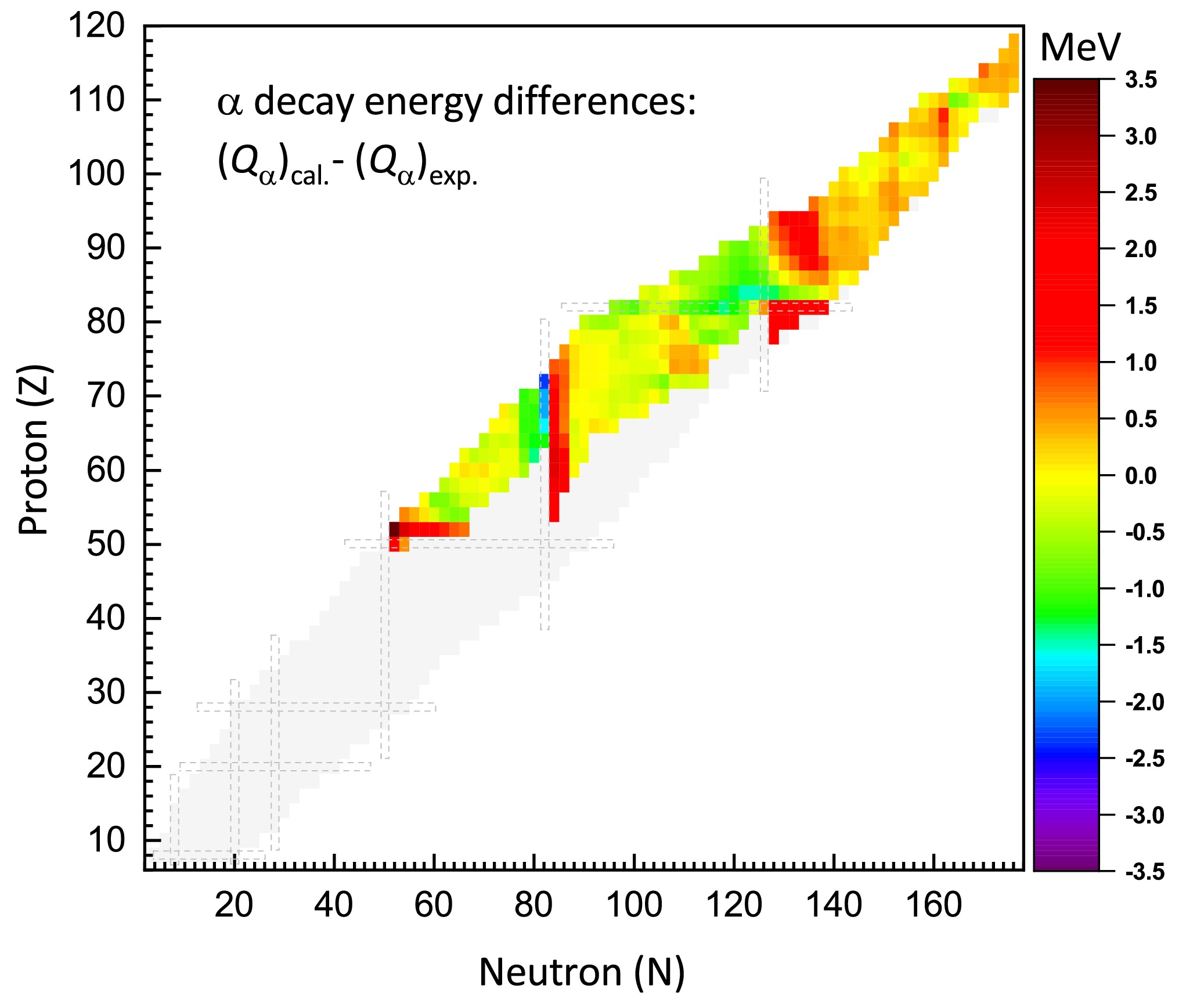
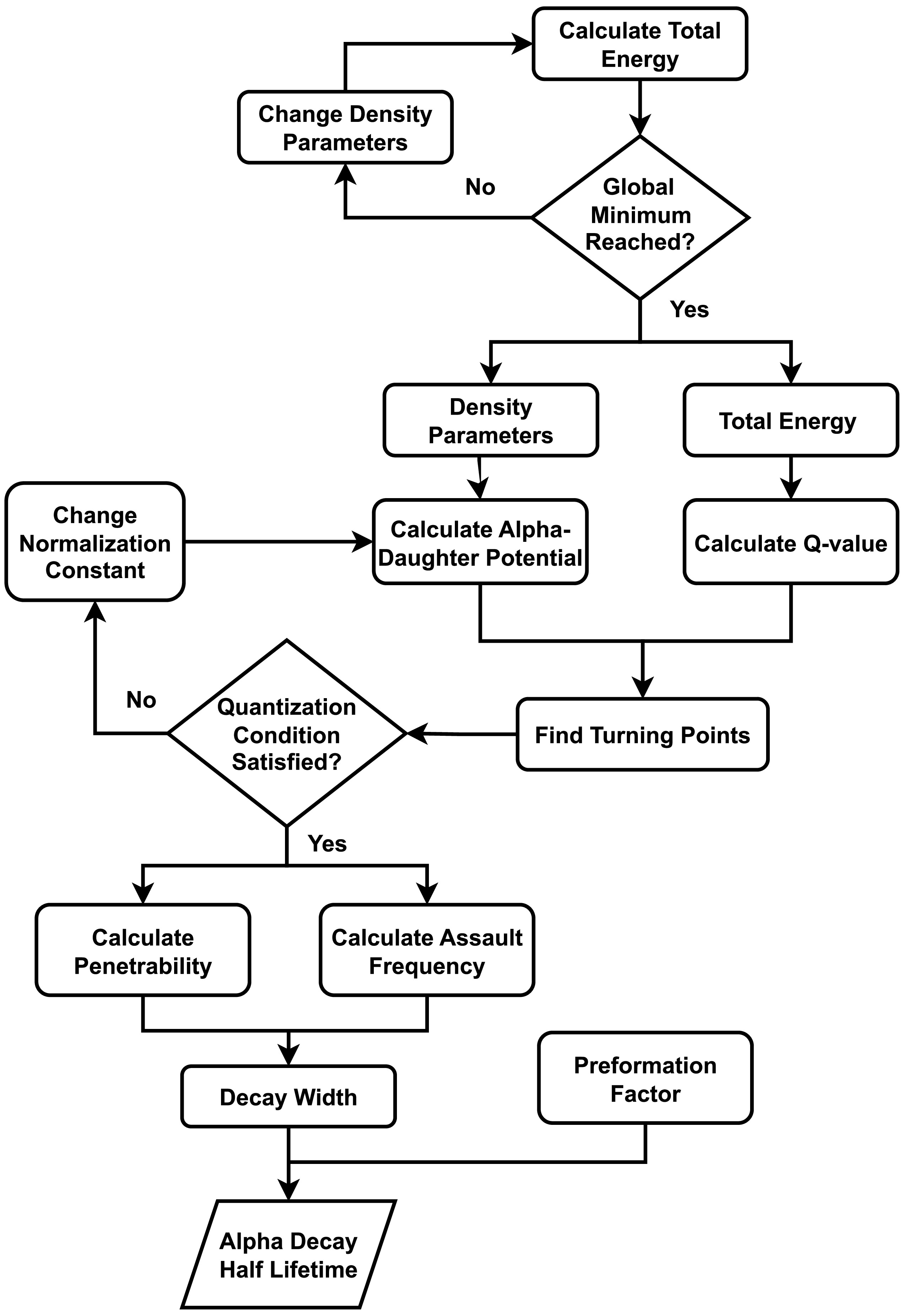
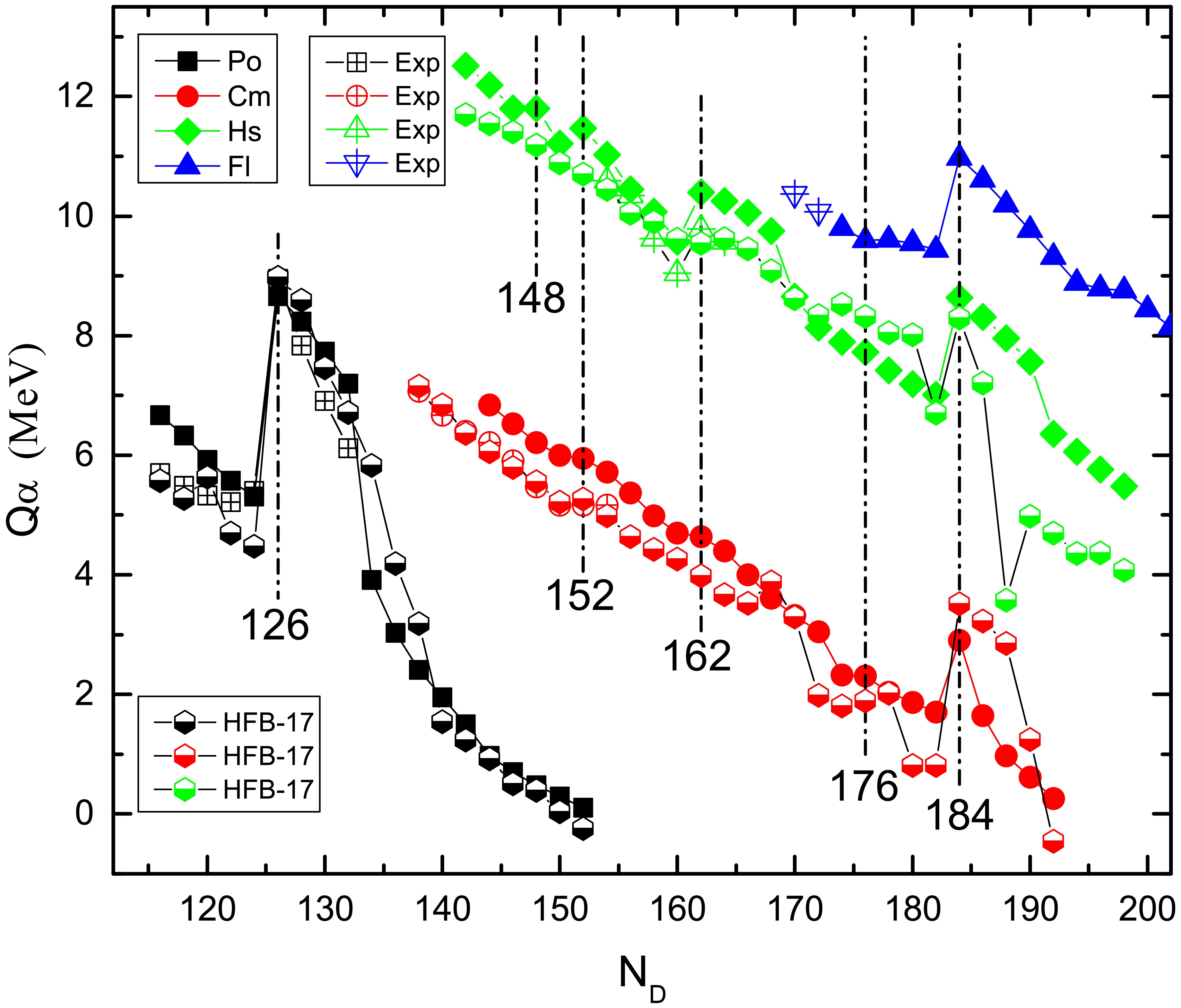
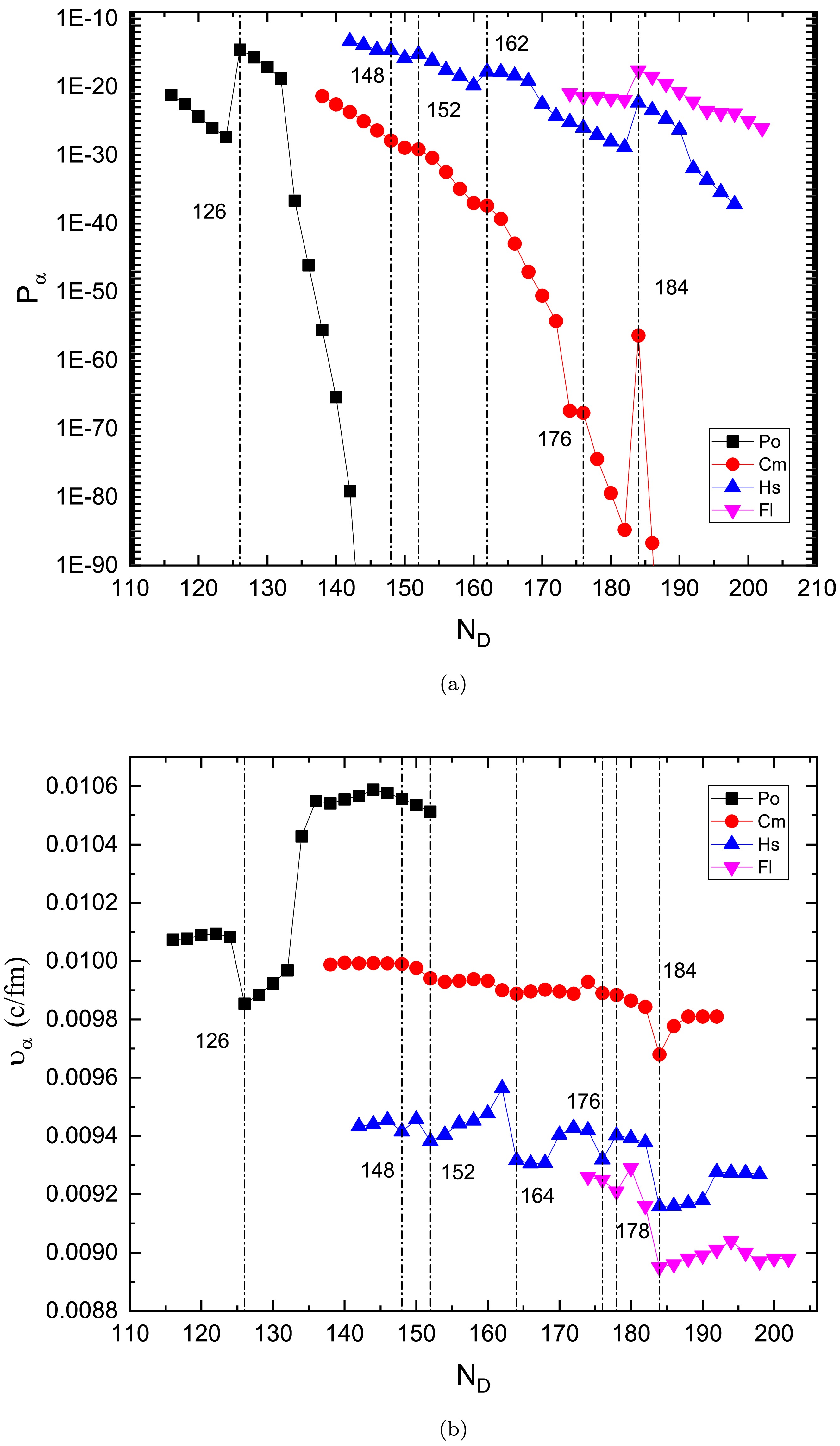
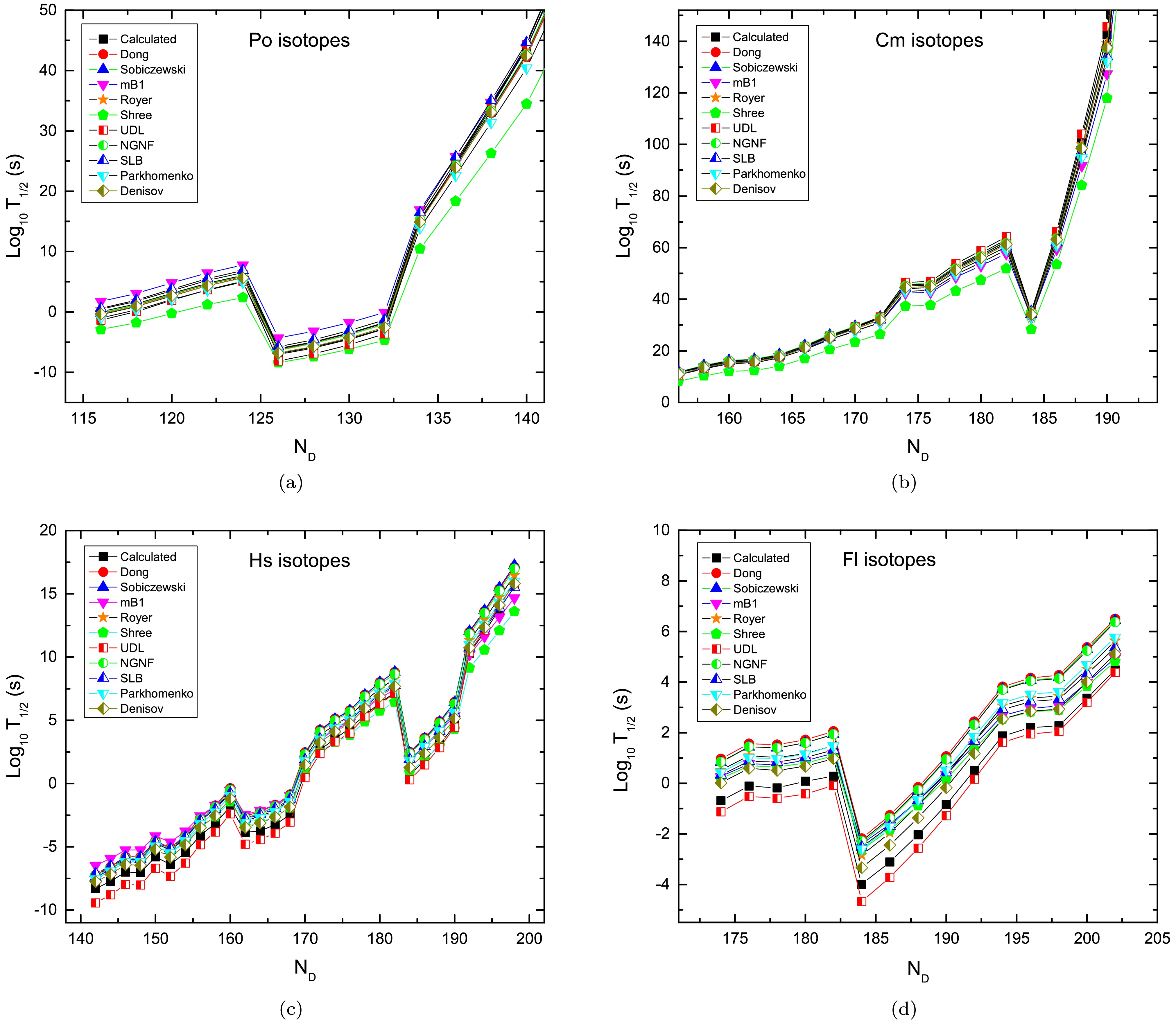
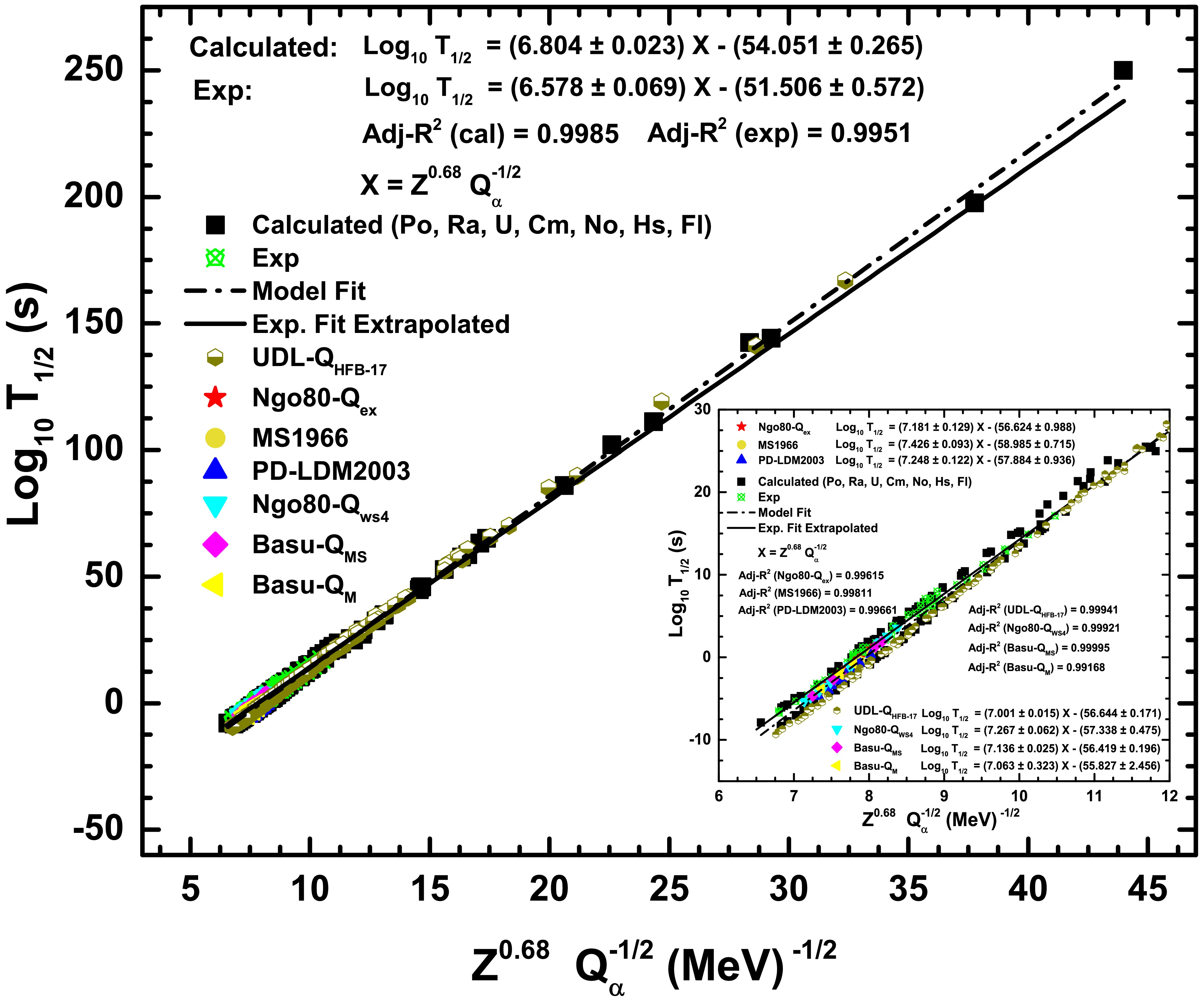
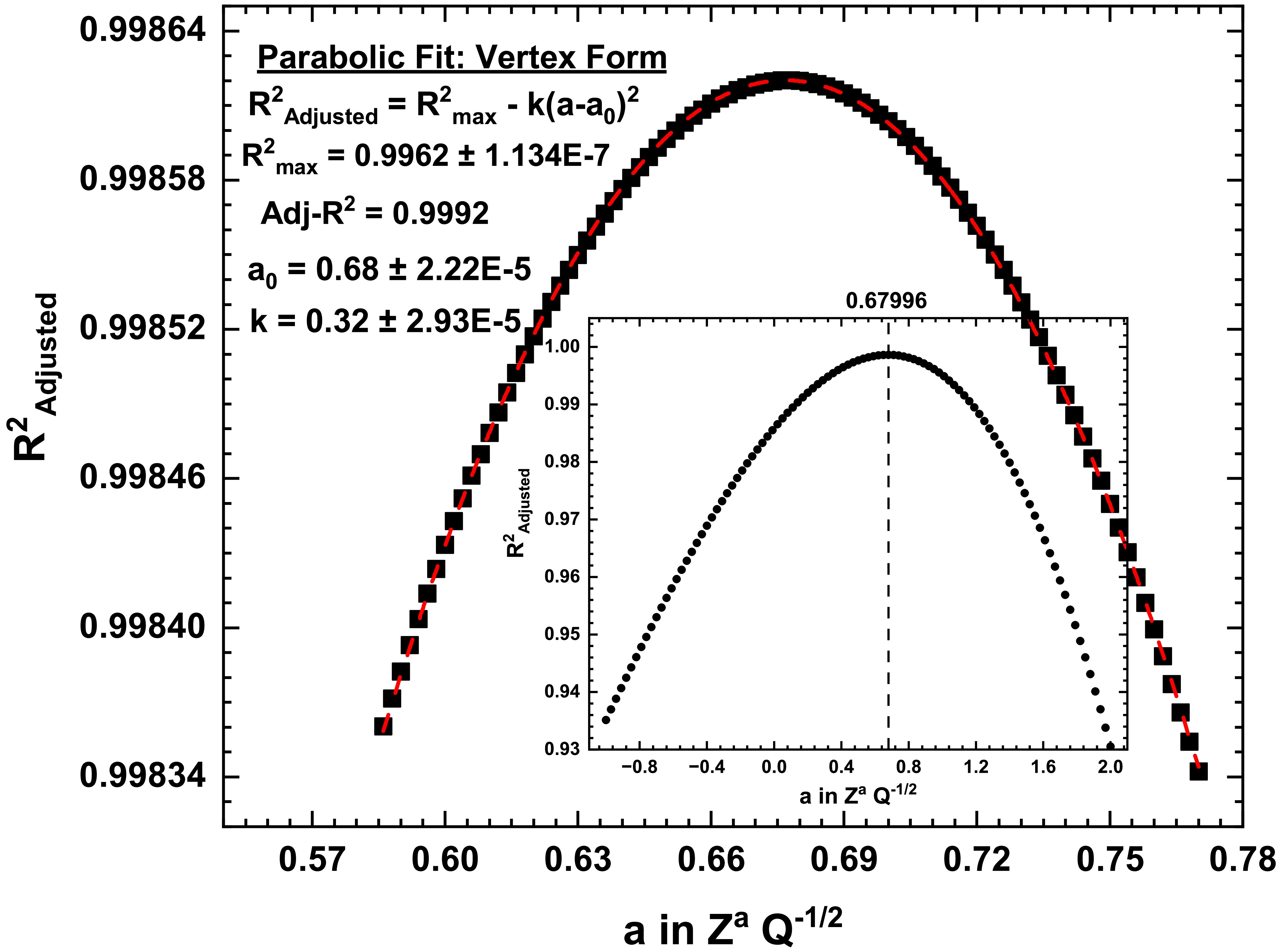
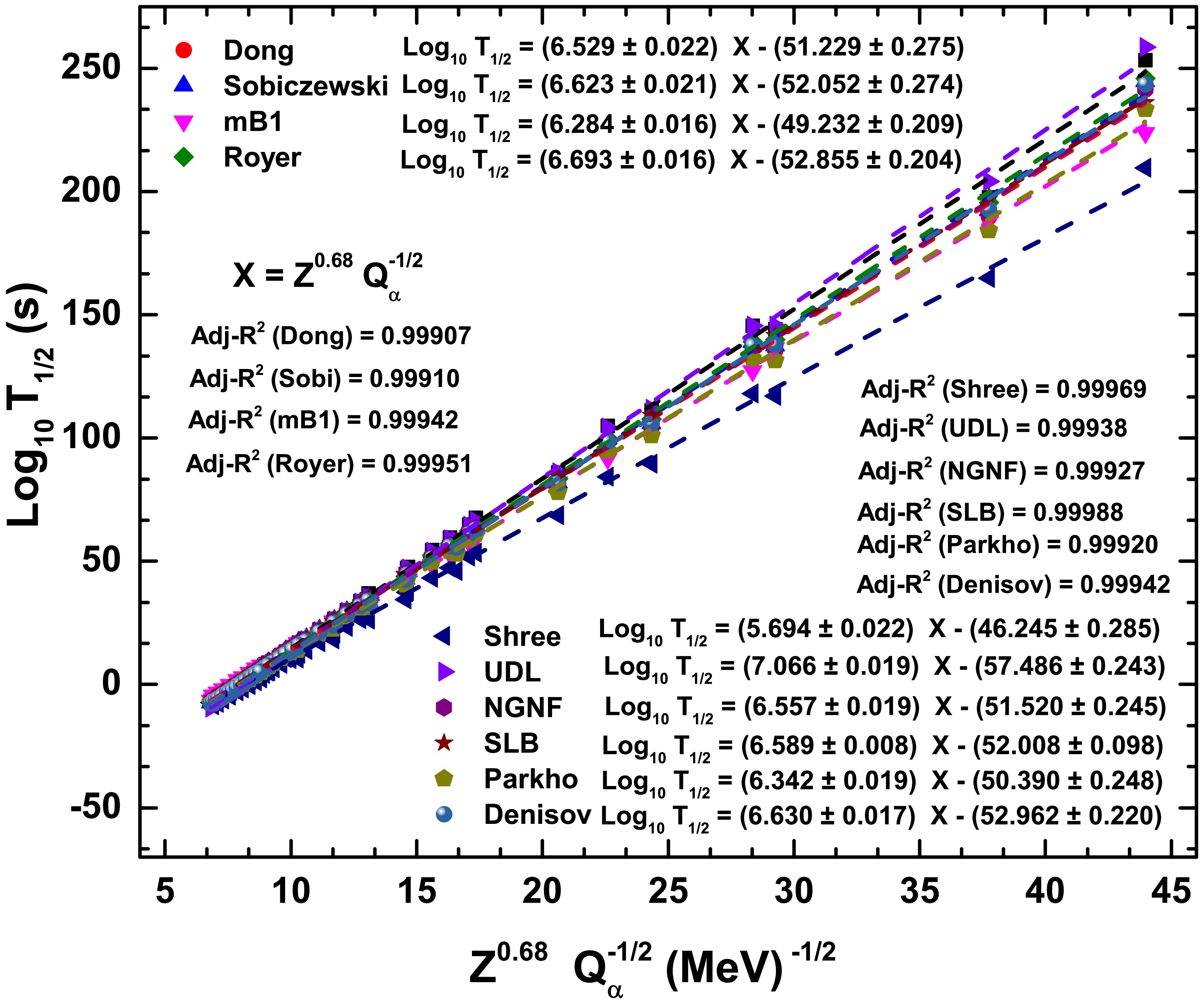
This paper presents a systematic investigation of α-decay properties in even-even isotopic chains of Po (\begin{document}$ Z=84 $\end{document} \begin{document}$ Z=96 $\end{document} \begin{document}$ Z=108 $\end{document} \begin{document}$ Z=114 $\end{document} \begin{document}$ Q_\alpha $\end{document} \begin{document}$ N=126 $\end{document} \begin{document}$ N=184 $\end{document} \begin{document}$ N = 148 $\end{document} \begin{document}$ 152 $\end{document} \begin{document}$ 162 $\end{document} \begin{document}$ Q_\alpha $\end{document}
This paper presents a systematic investigation of α-decay properties in even-even isotopic chains of Po (
2026, 50(1): 014112. doi: 10.1088/1674-1137/ae07b8
Abstract:
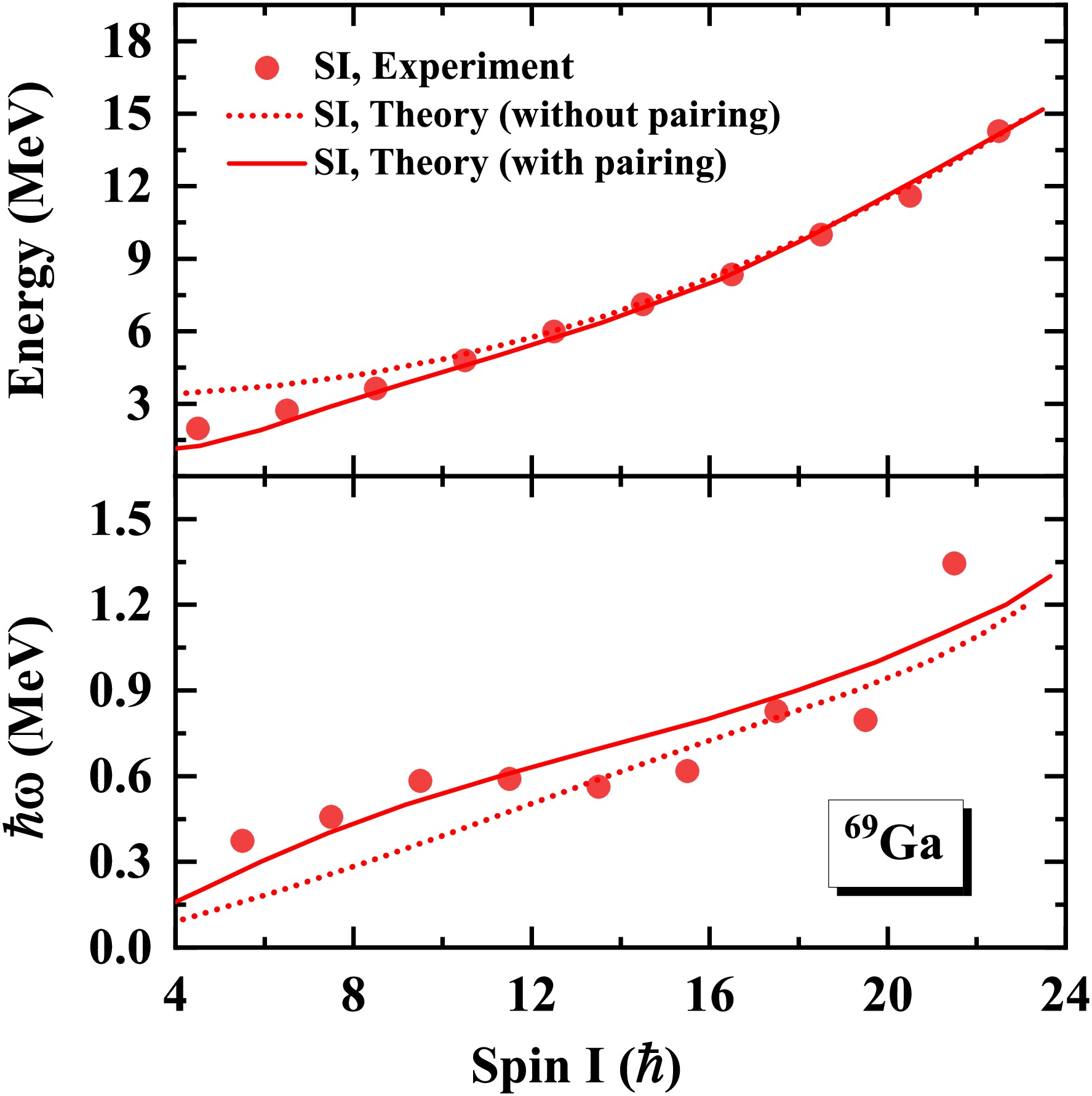
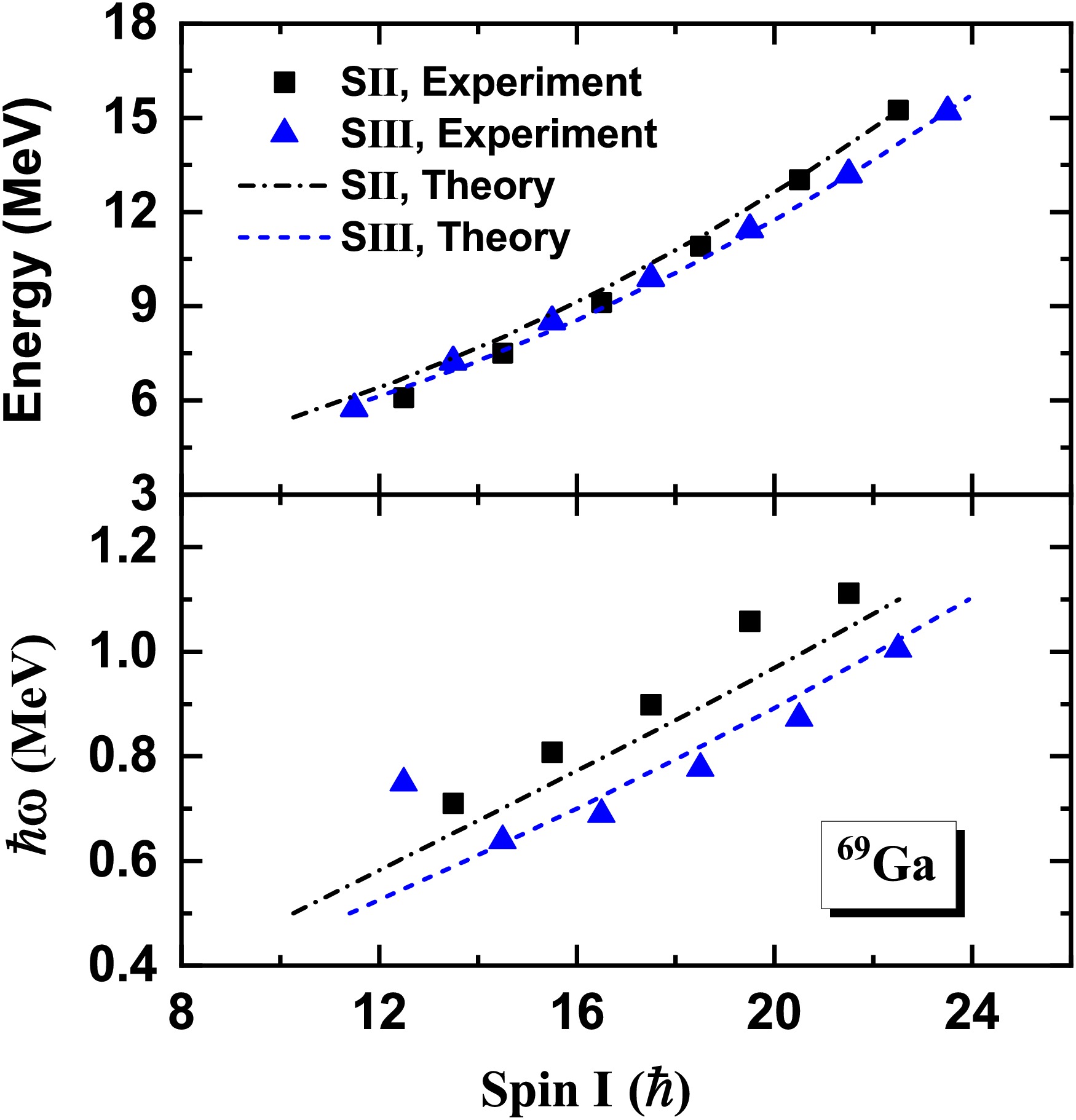
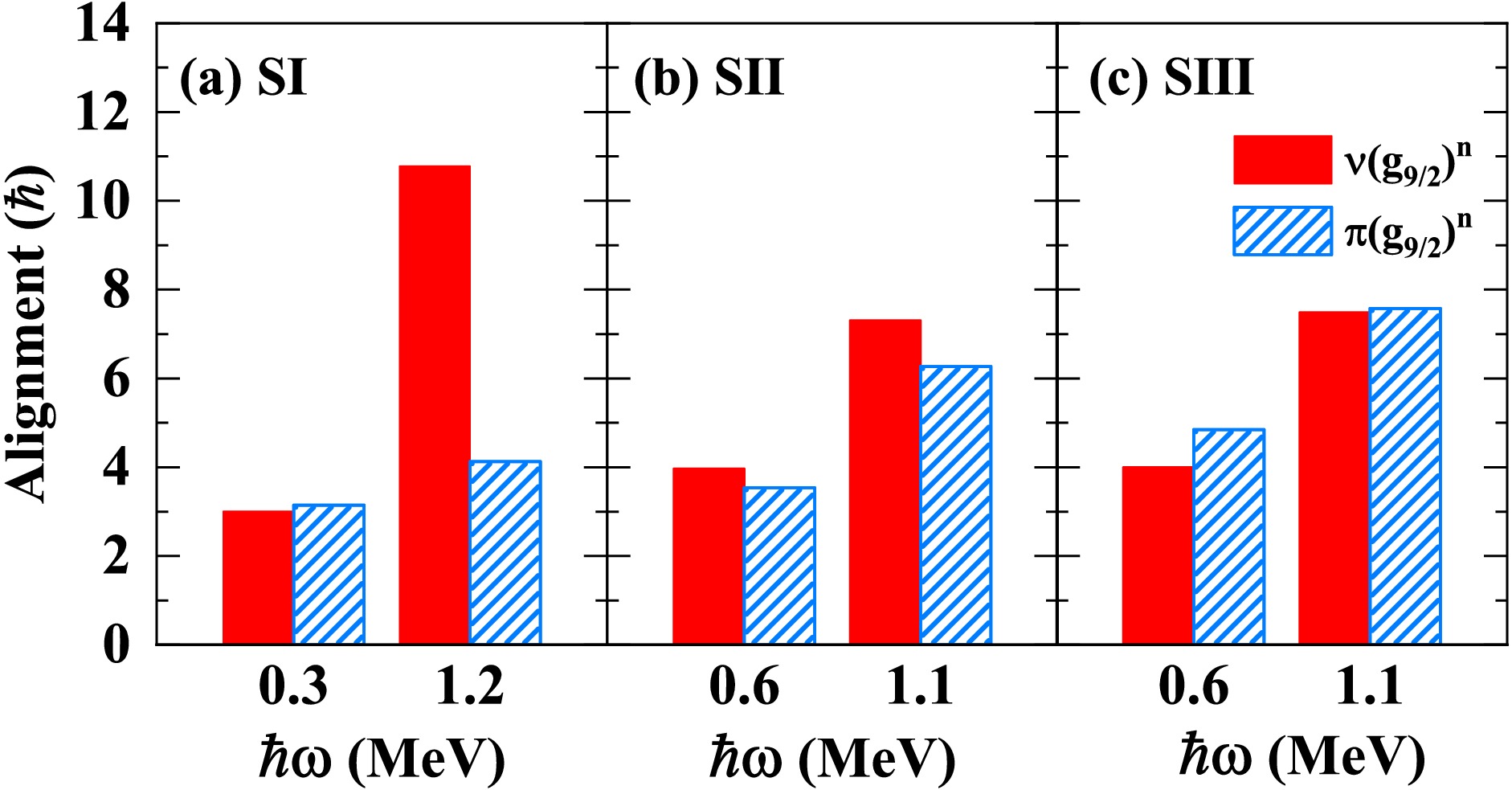
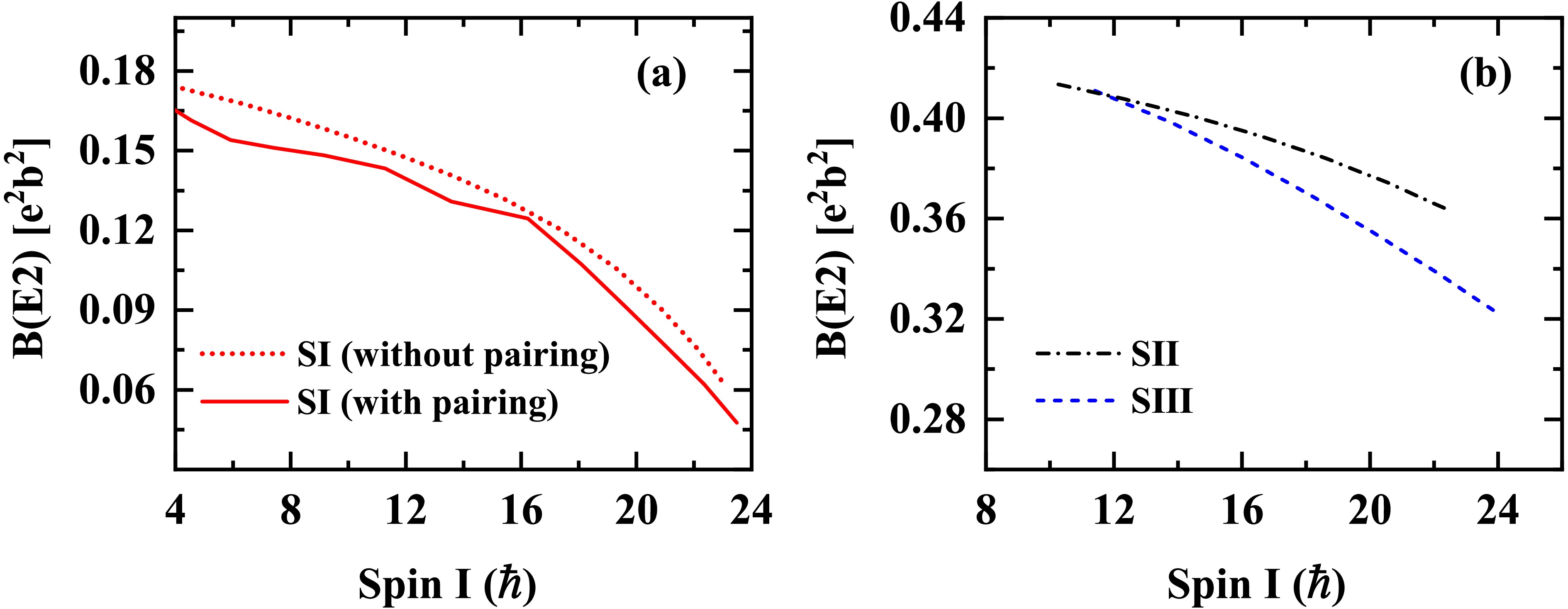
The tilted-axis-cranking covariant density functional theory is applied to investigate the three newly-observed positive-parity bands SI, SII, and SIII in 69Ga. The energy spectra and angular momenta are calculated, and they agree closely with experimental data. For band SI, pairing correlations are crucial for the states with spin\begin{document}$I\leq 23/2\hbar$\end{document} \begin{document}$g_{9/2}$\end{document} \begin{document}$B(E2)$\end{document}
The tilted-axis-cranking covariant density functional theory is applied to investigate the three newly-observed positive-parity bands SI, SII, and SIII in 69Ga. The energy spectra and angular momenta are calculated, and they agree closely with experimental data. For band SI, pairing correlations are crucial for the states with spin
2026, 50(1): 014113. doi: 10.1088/1674-1137/ae1196
Abstract:
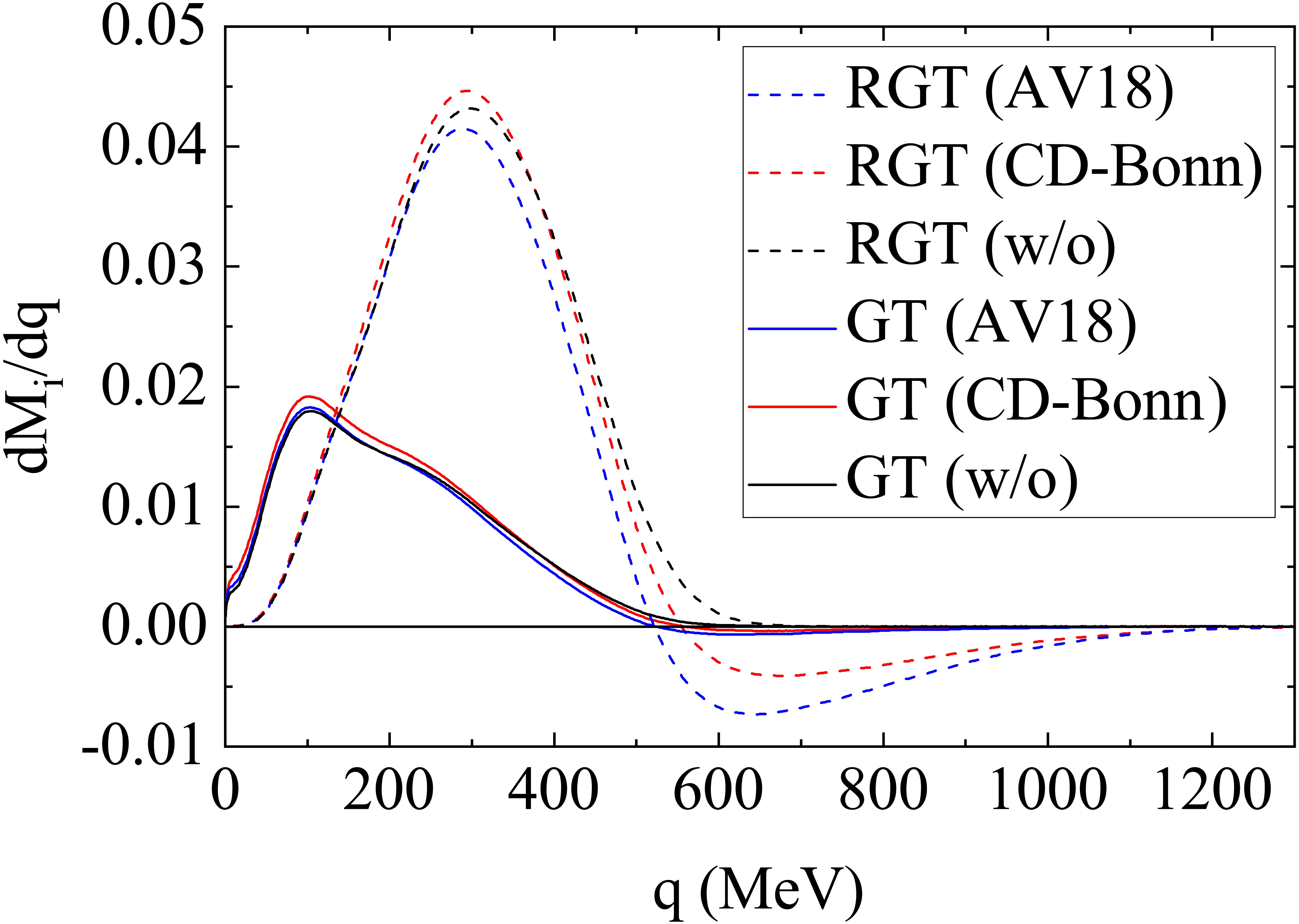
We perform the calculation of nuclear matrix elements for the neutrinoless double beta decays under a Left-Right symmetric model mediated by light neutrinos, and we adopt the spherical quasi-particle random-phase approximation (QRPA) approach with a realistic force. For eight nuclei: 76Ge, 82Se, 96Zr, 100Mo, 116Cd, 128Te, 130Te, and 136Xe, related nuclear matrix elements are given. We analyze each term, and the details of contributions from different parts are also provided. For the q term, we find that the weak-magnetism components of the nucleon current contribute equally to other components such as the axial-vector. We also discuss the influence of short-range correlations on these NMEs. It is found that the R term is more sensitive to short-range correlations than other terms due to the large portion of the contribution from high exchange momenta.
We perform the calculation of nuclear matrix elements for the neutrinoless double beta decays under a Left-Right symmetric model mediated by light neutrinos, and we adopt the spherical quasi-particle random-phase approximation (QRPA) approach with a realistic force. For eight nuclei: 76Ge, 82Se, 96Zr, 100Mo, 116Cd, 128Te, 130Te, and 136Xe, related nuclear matrix elements are given. We analyze each term, and the details of contributions from different parts are also provided. For the q term, we find that the weak-magnetism components of the nucleon current contribute equally to other components such as the axial-vector. We also discuss the influence of short-range correlations on these NMEs. It is found that the R term is more sensitive to short-range correlations than other terms due to the large portion of the contribution from high exchange momenta.
2026, 50(1): 015101. doi: 10.1088/1674-1137/ae039c
Abstract:
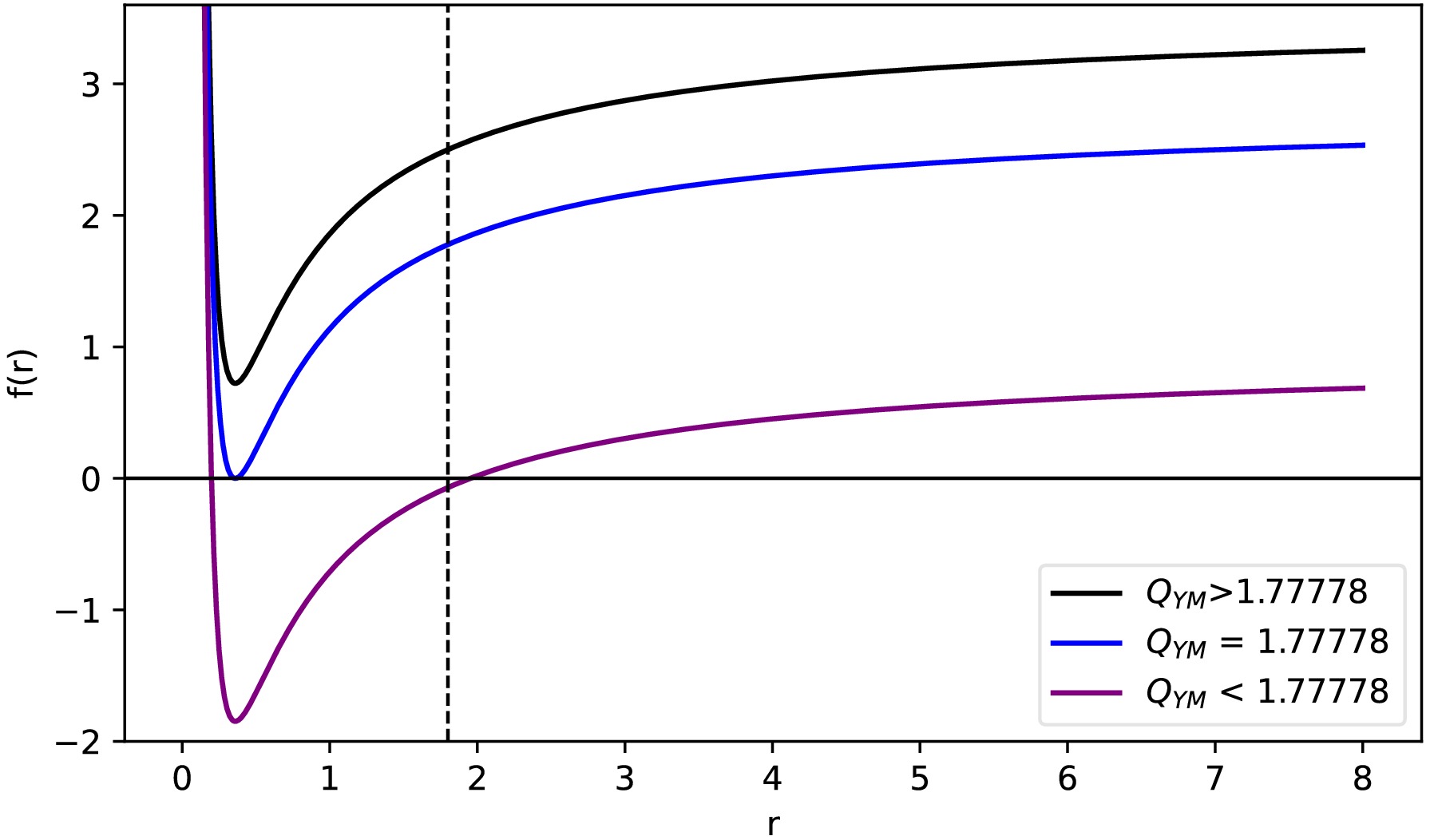
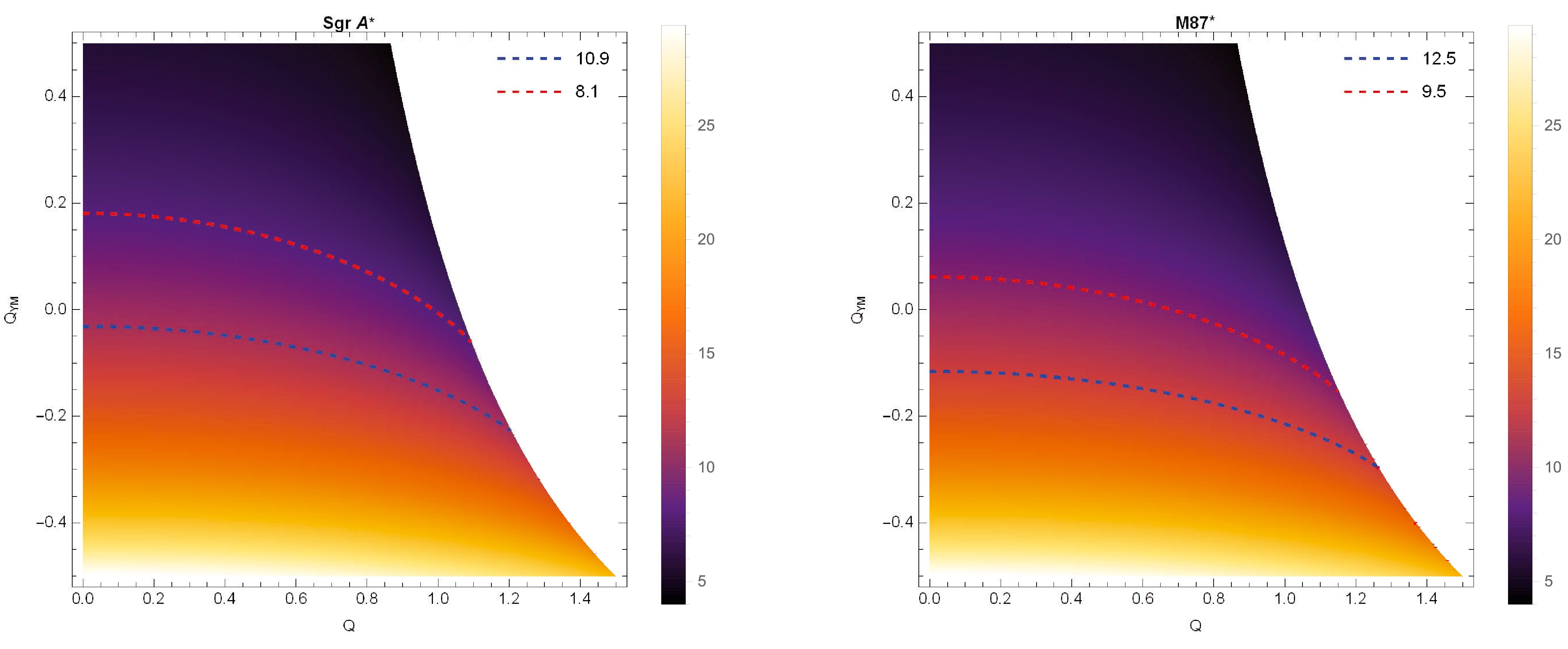
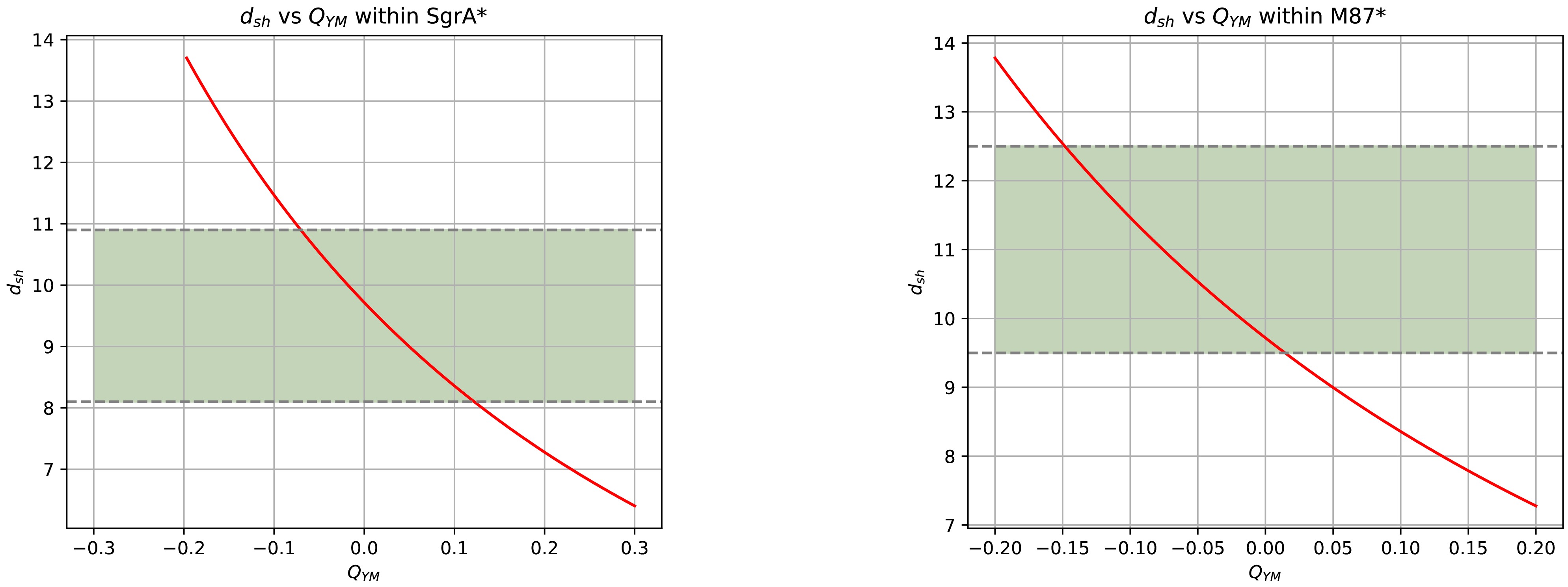
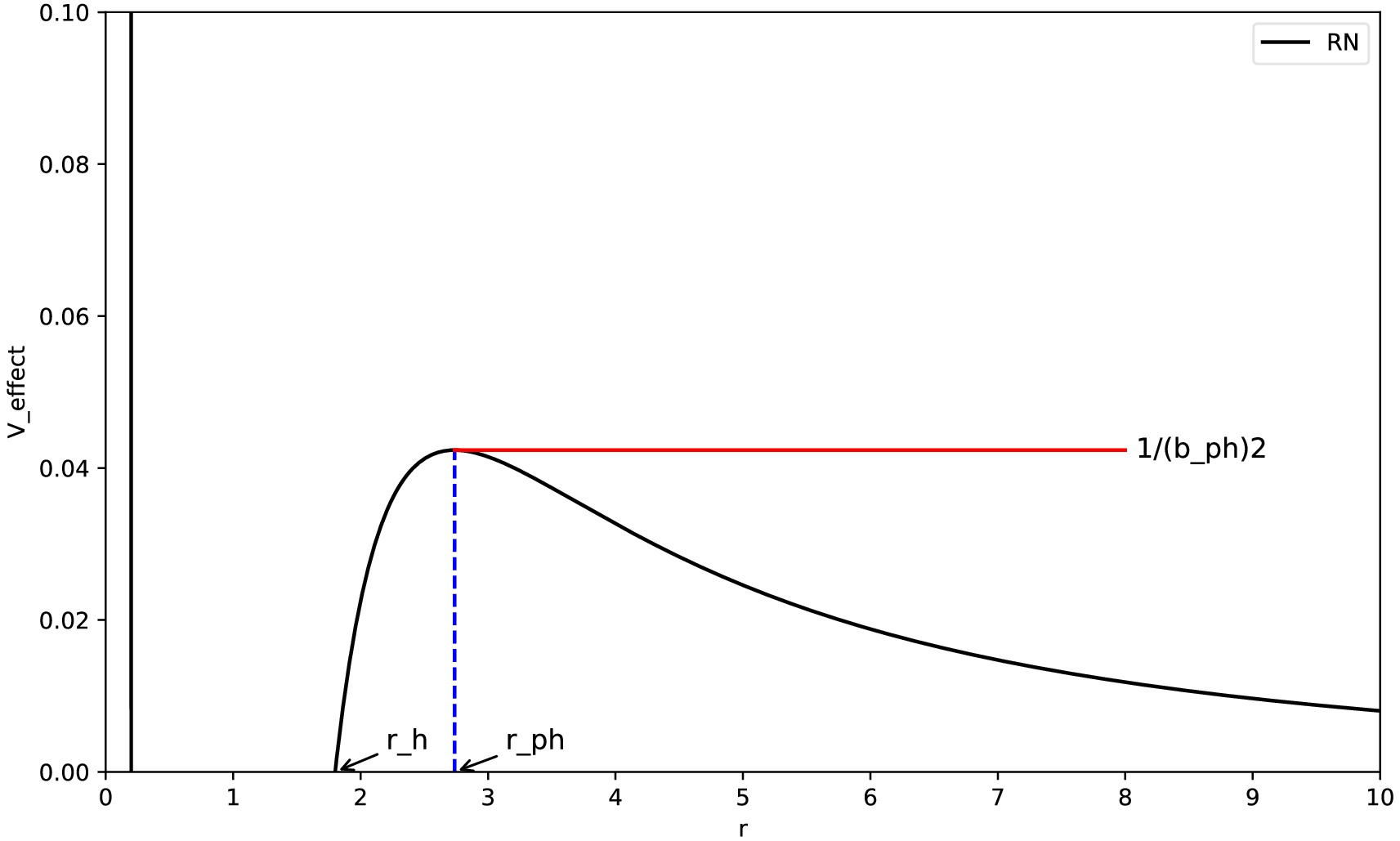
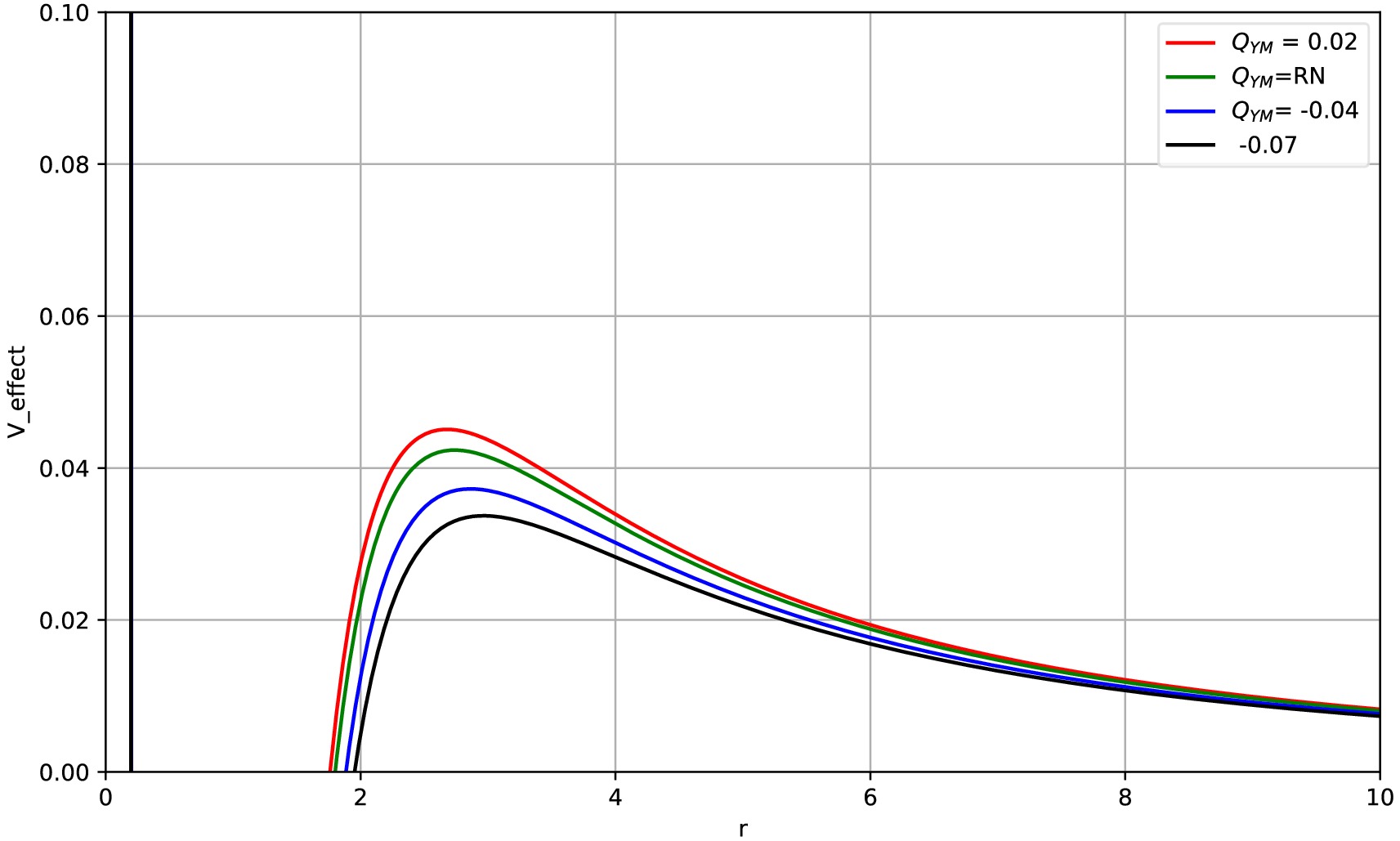
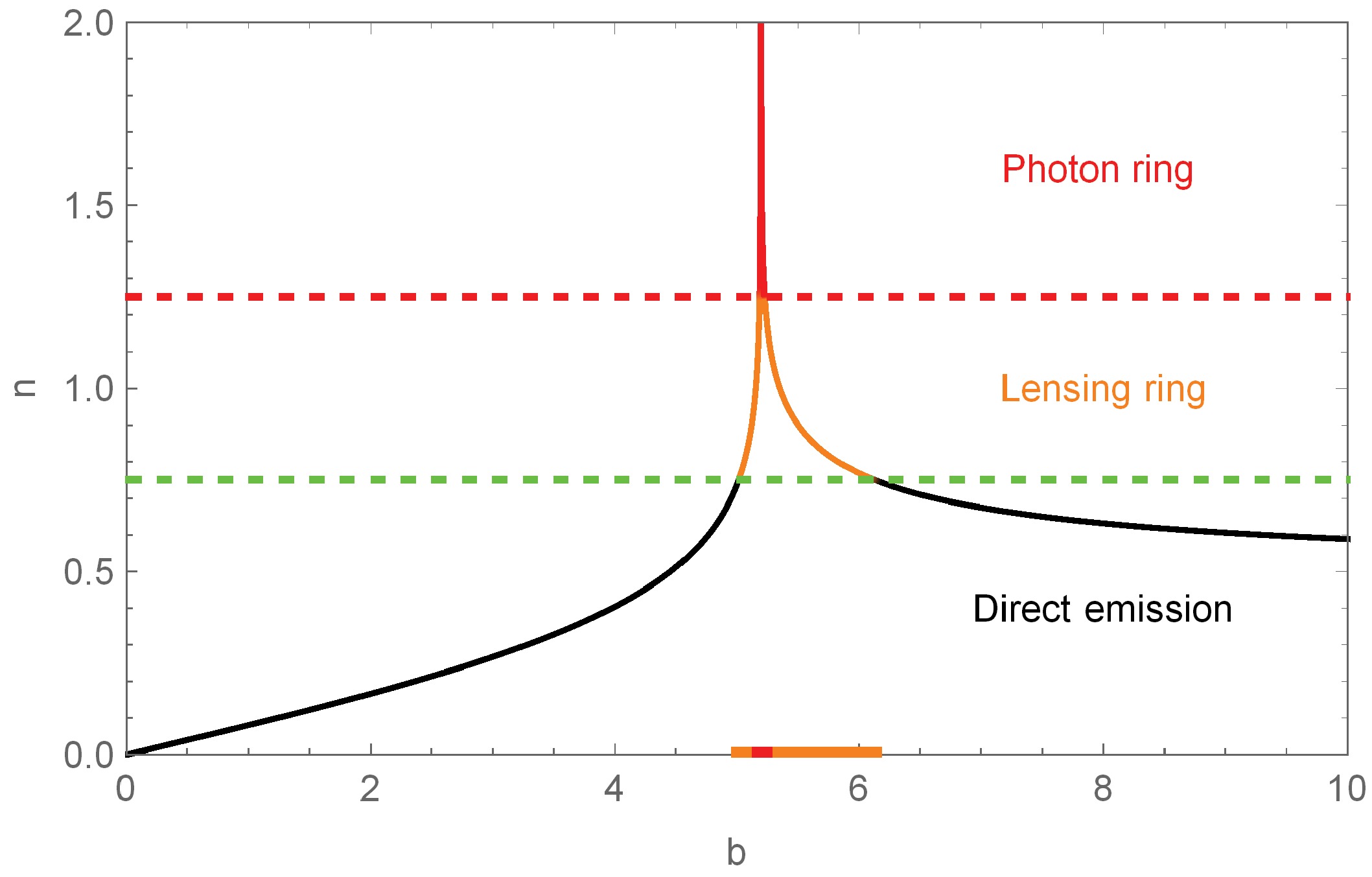
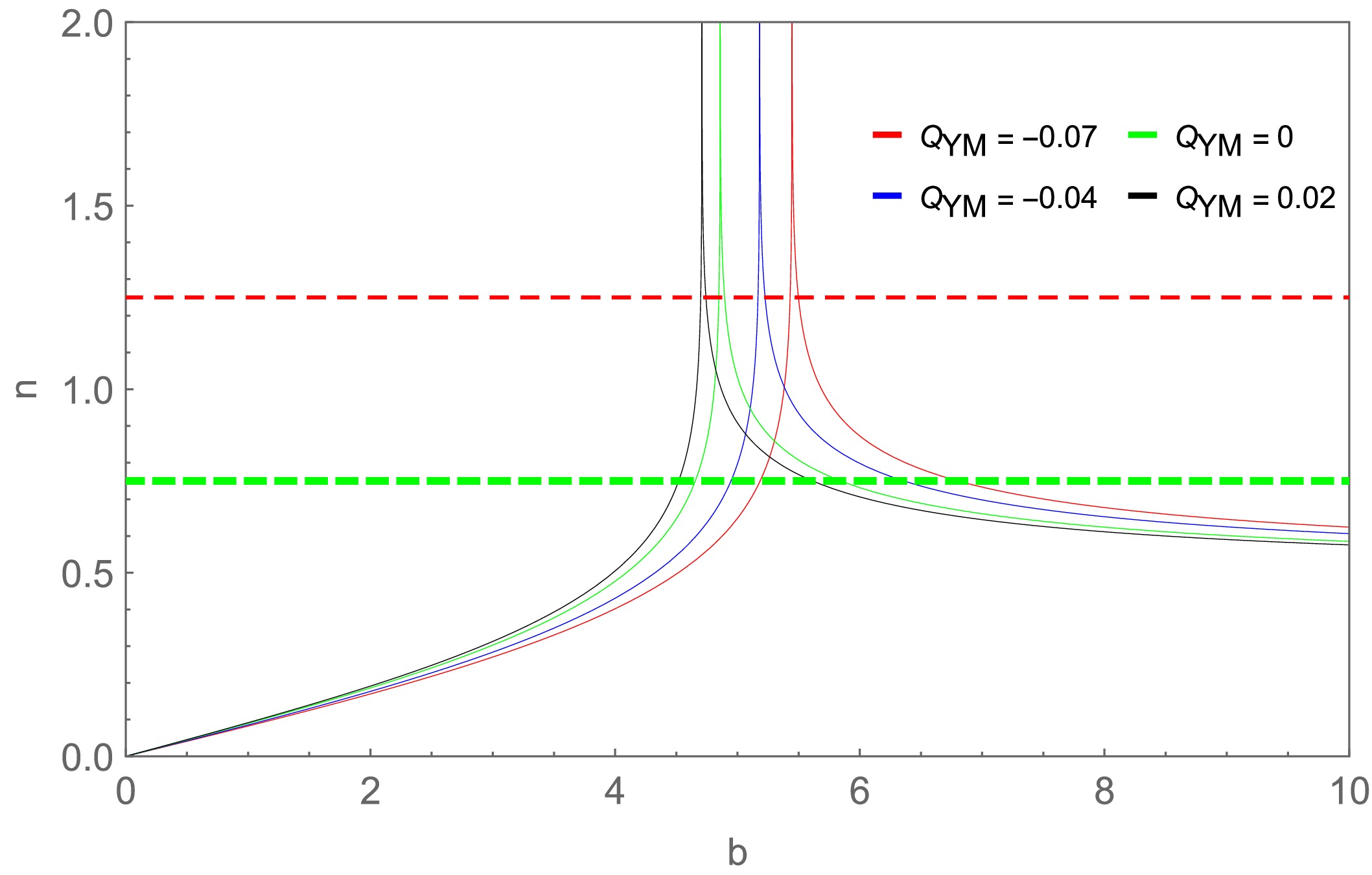
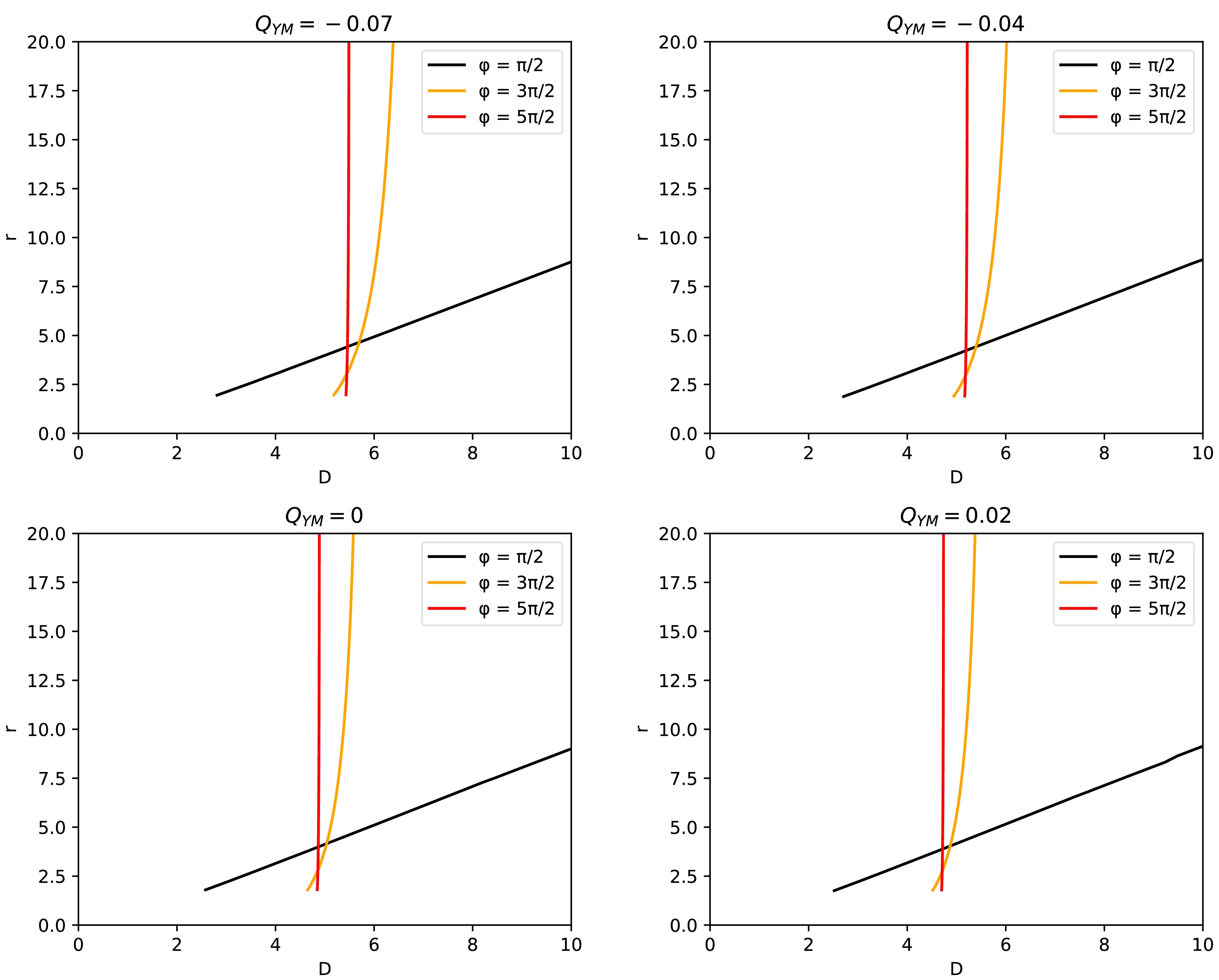
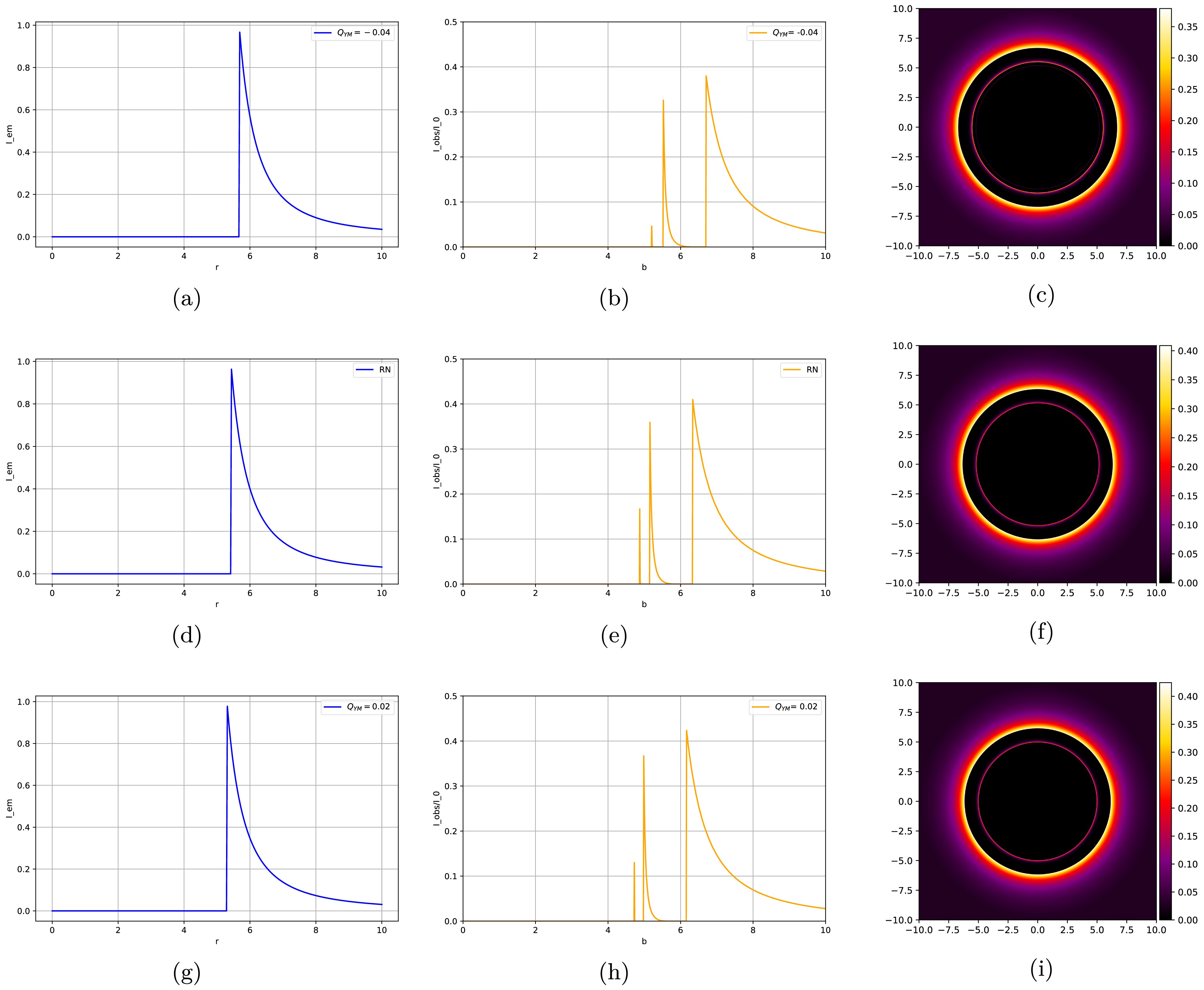
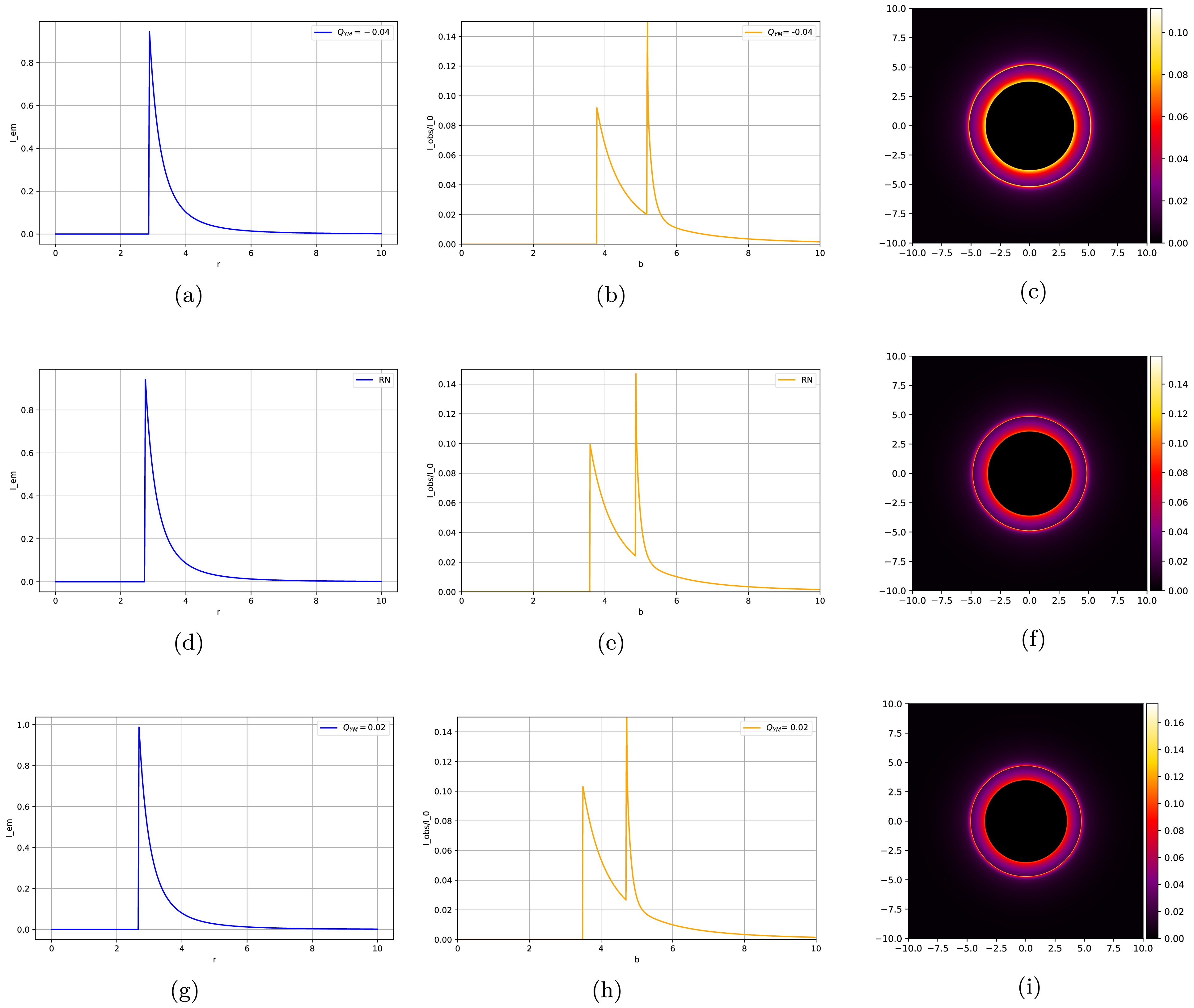
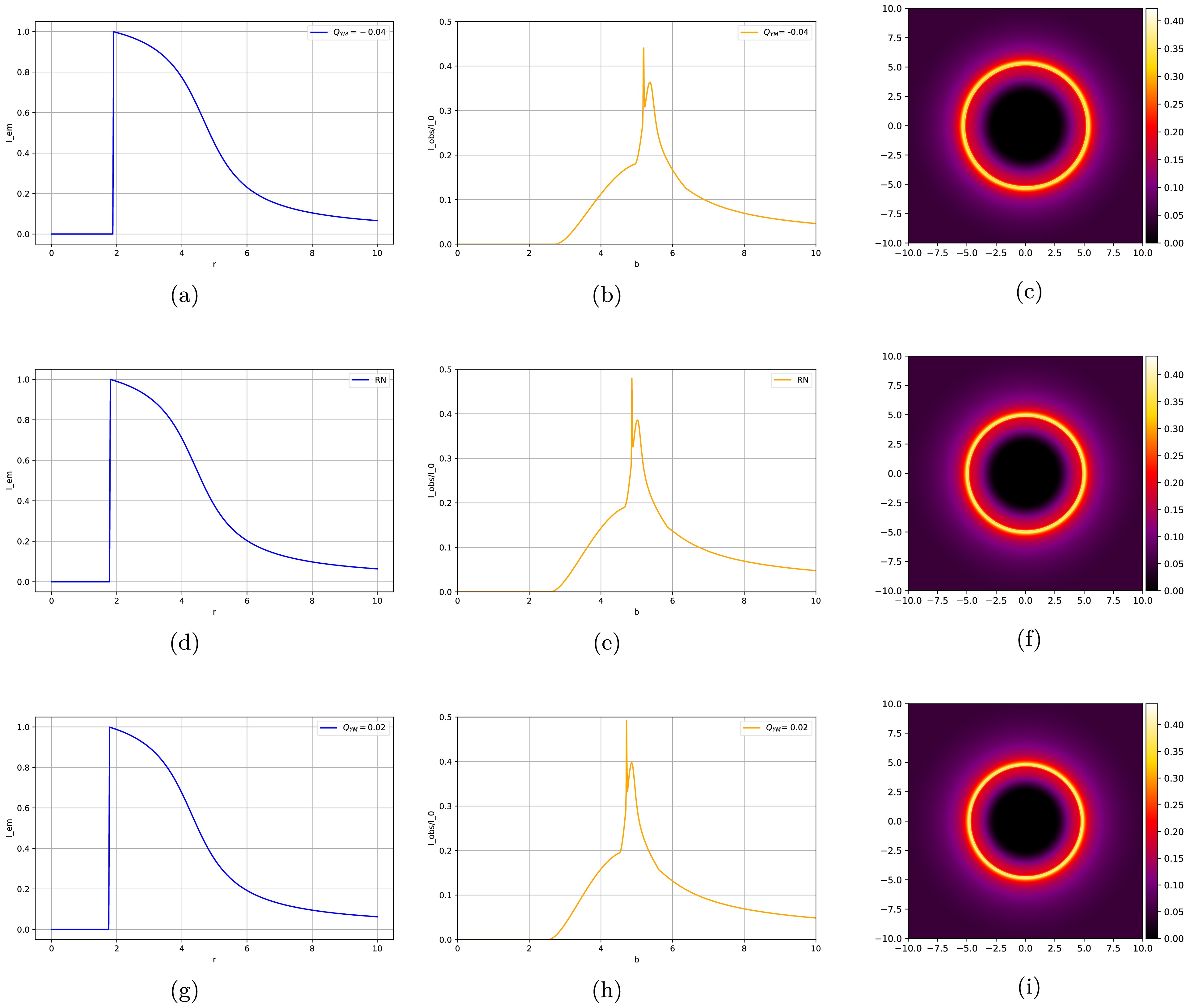
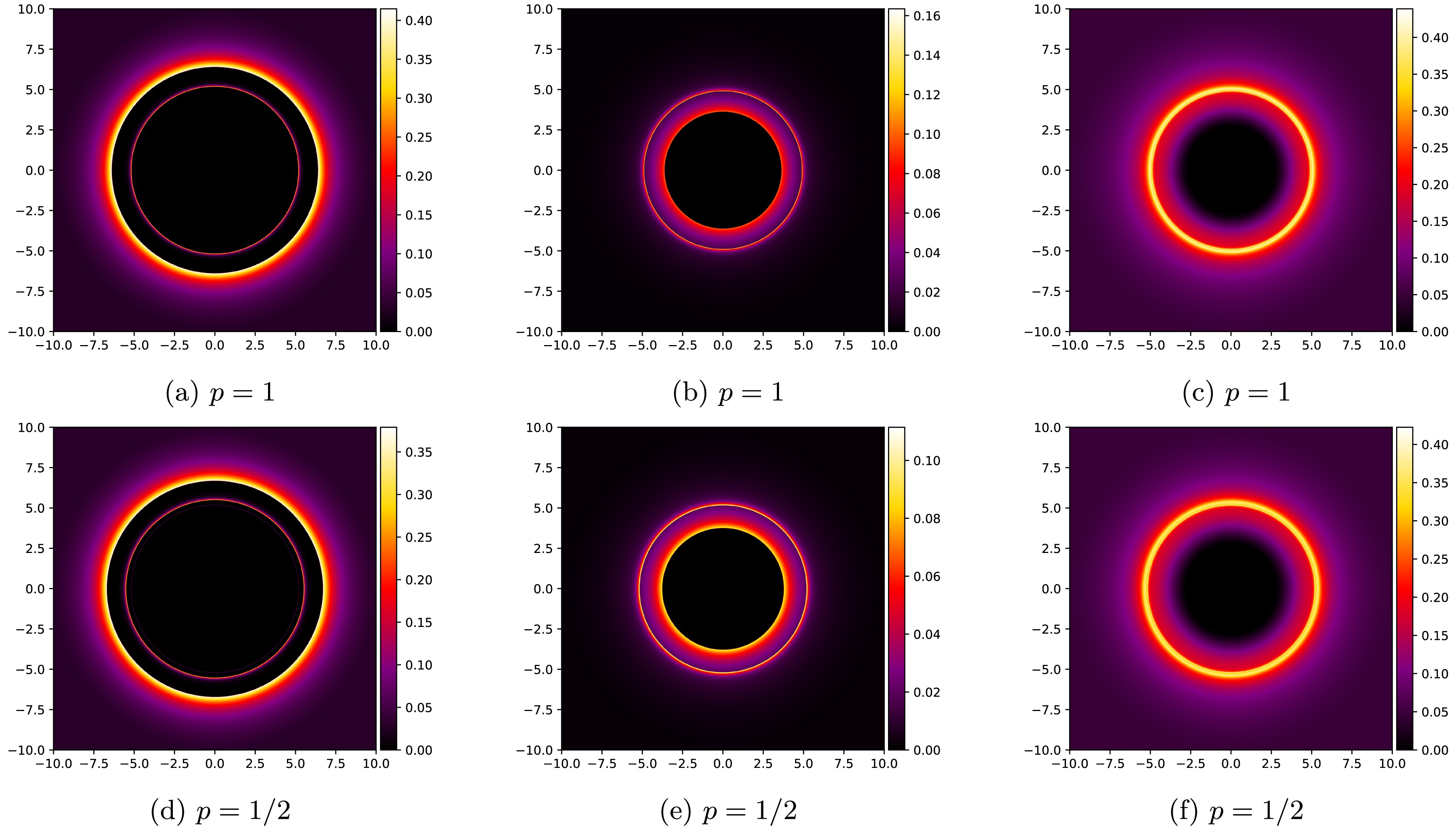
In this paper, the optical appearance of static and spherically symmetric hairy black holes is studied under the standard Einstein-Maxwell theory considering the p-power Yang-Mills term. During the research process, the specific case of\begin{document}$ p=1/2 $\end{document} \begin{document}$ r_{\rm h} $\end{document} \begin{document}$ r_{\rm ph} $\end{document} \begin{document}$ r_{\rm isco} $\end{document} \begin{document}$ p=1/2 $\end{document} \begin{document}$ p=1 $\end{document} \begin{document}$ r_{\rm h} $\end{document} \begin{document}$ r_{\rm ph} $\end{document} \begin{document}$ r_{\rm isco} $\end{document} \begin{document}$ b_{\rm ph} $\end{document} \begin{document}$ p=1 $\end{document}
In this paper, the optical appearance of static and spherically symmetric hairy black holes is studied under the standard Einstein-Maxwell theory considering the p-power Yang-Mills term. During the research process, the specific case of

2026, 50(1): 015102. doi: 10.1088/1674-1137/ae0725
Abstract:
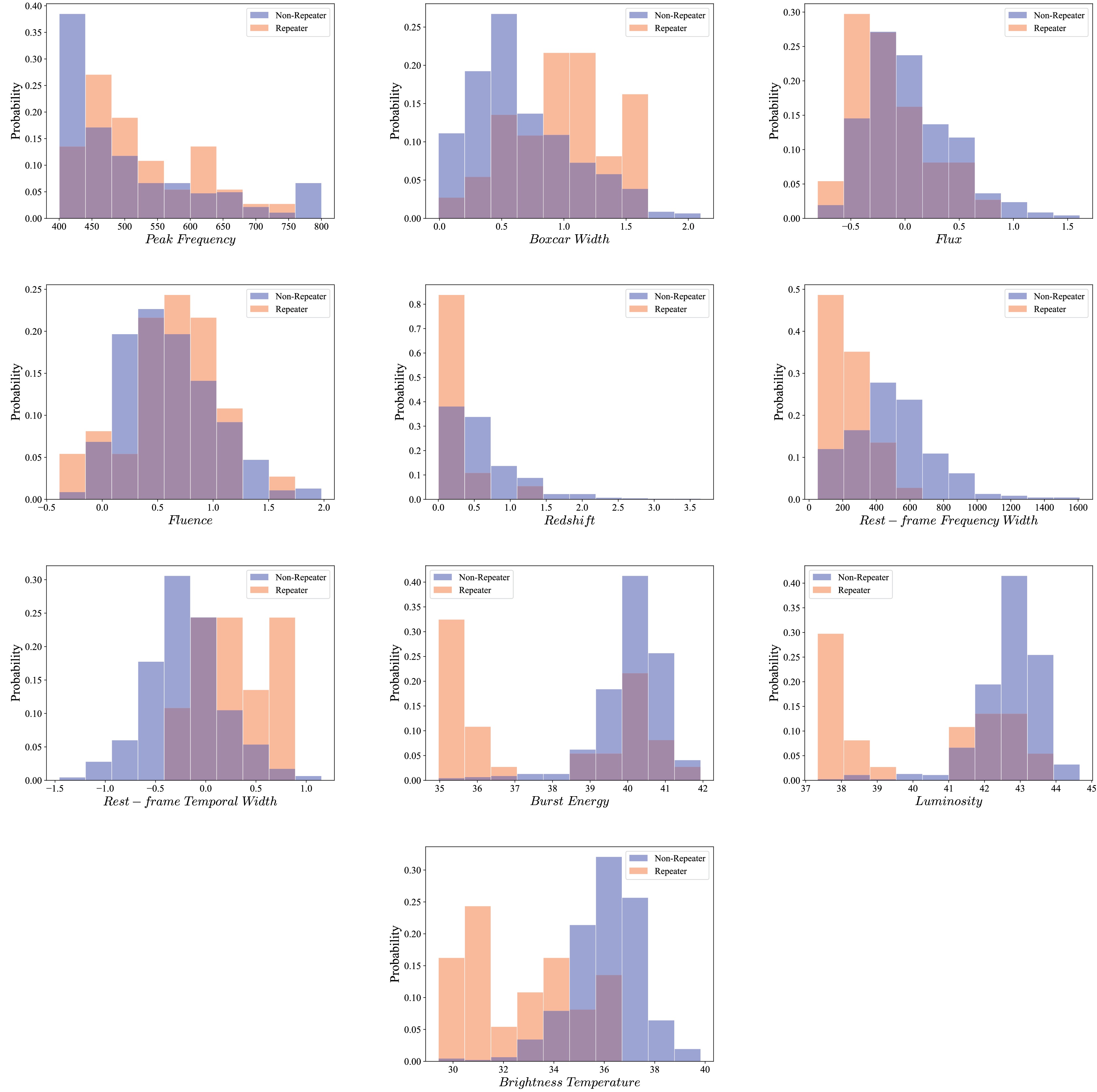
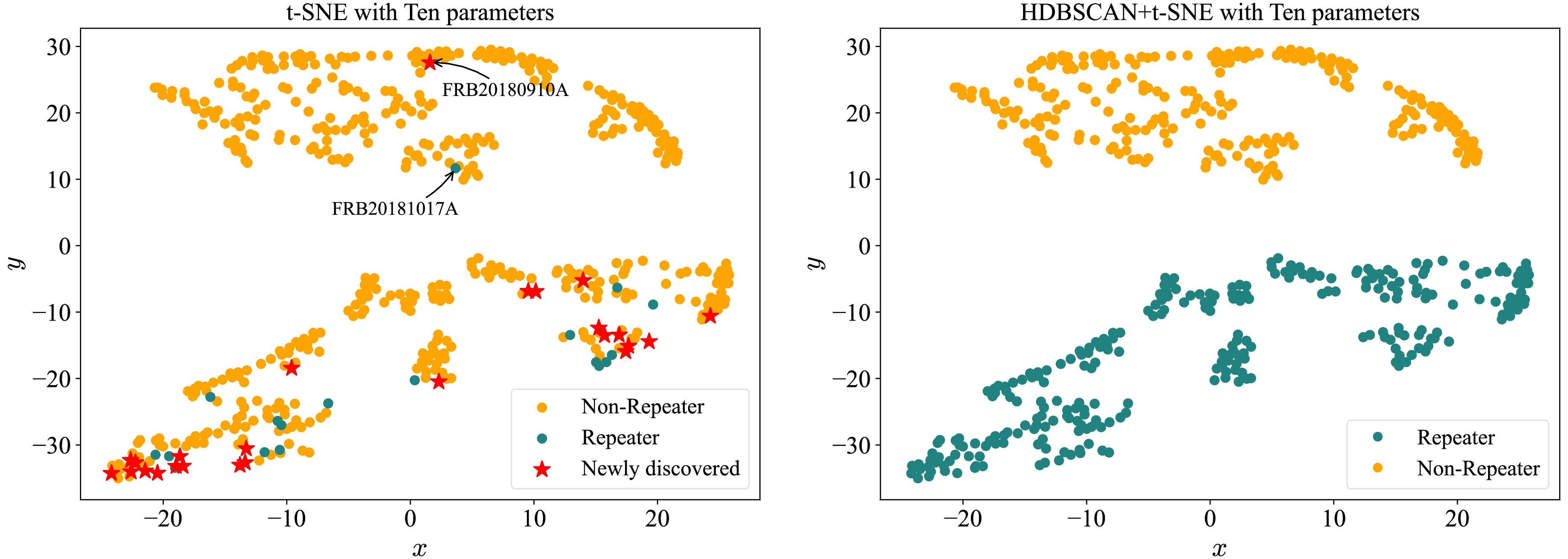
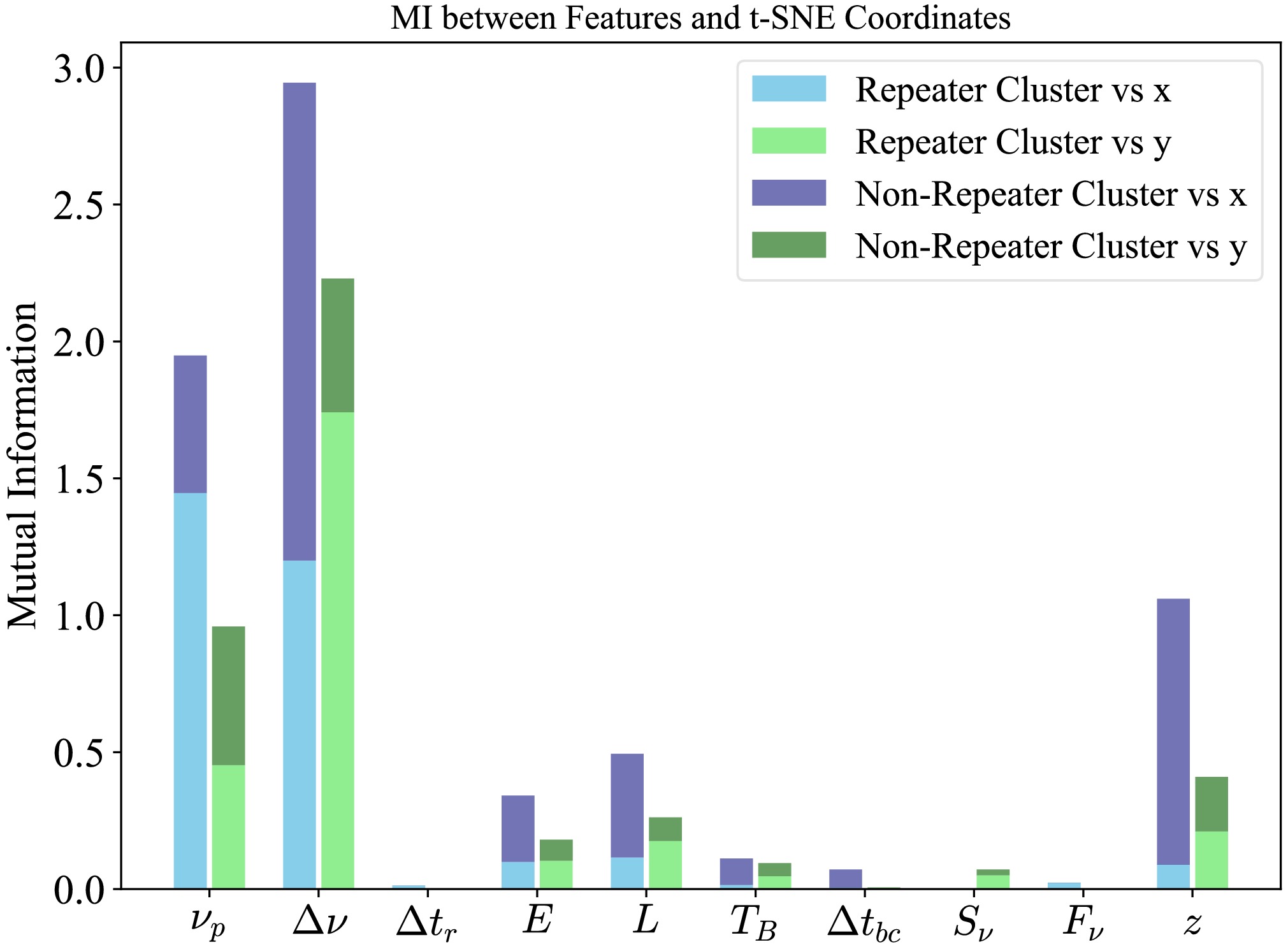
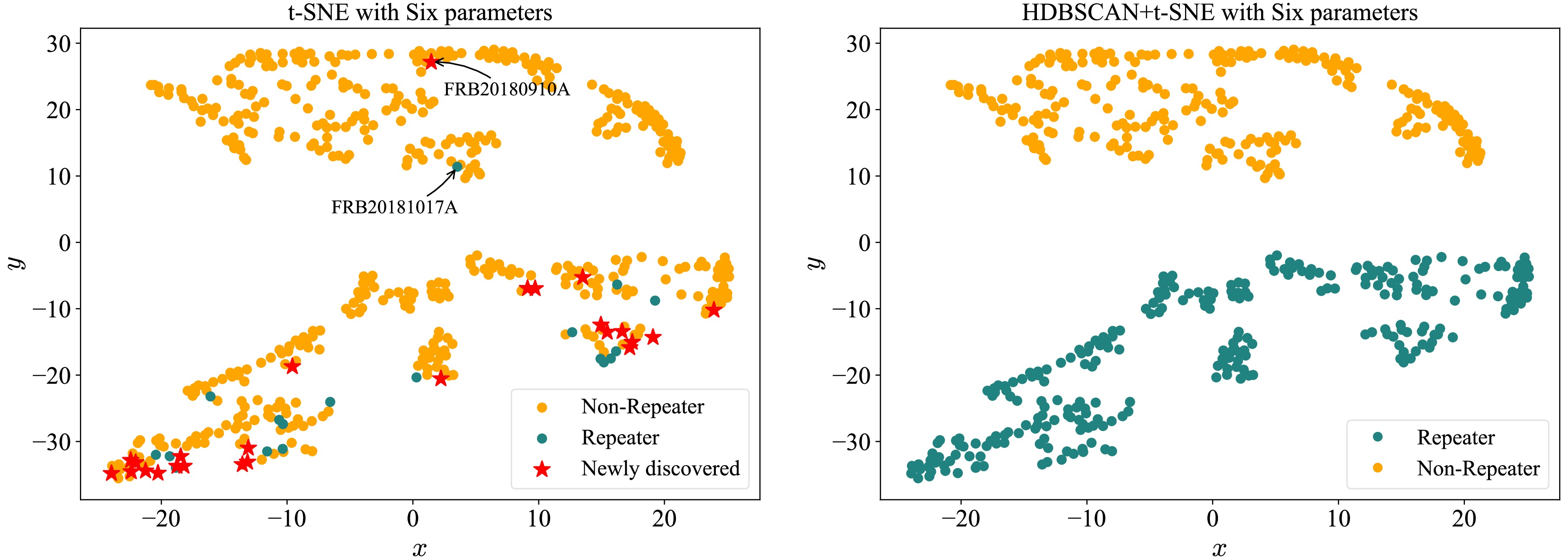
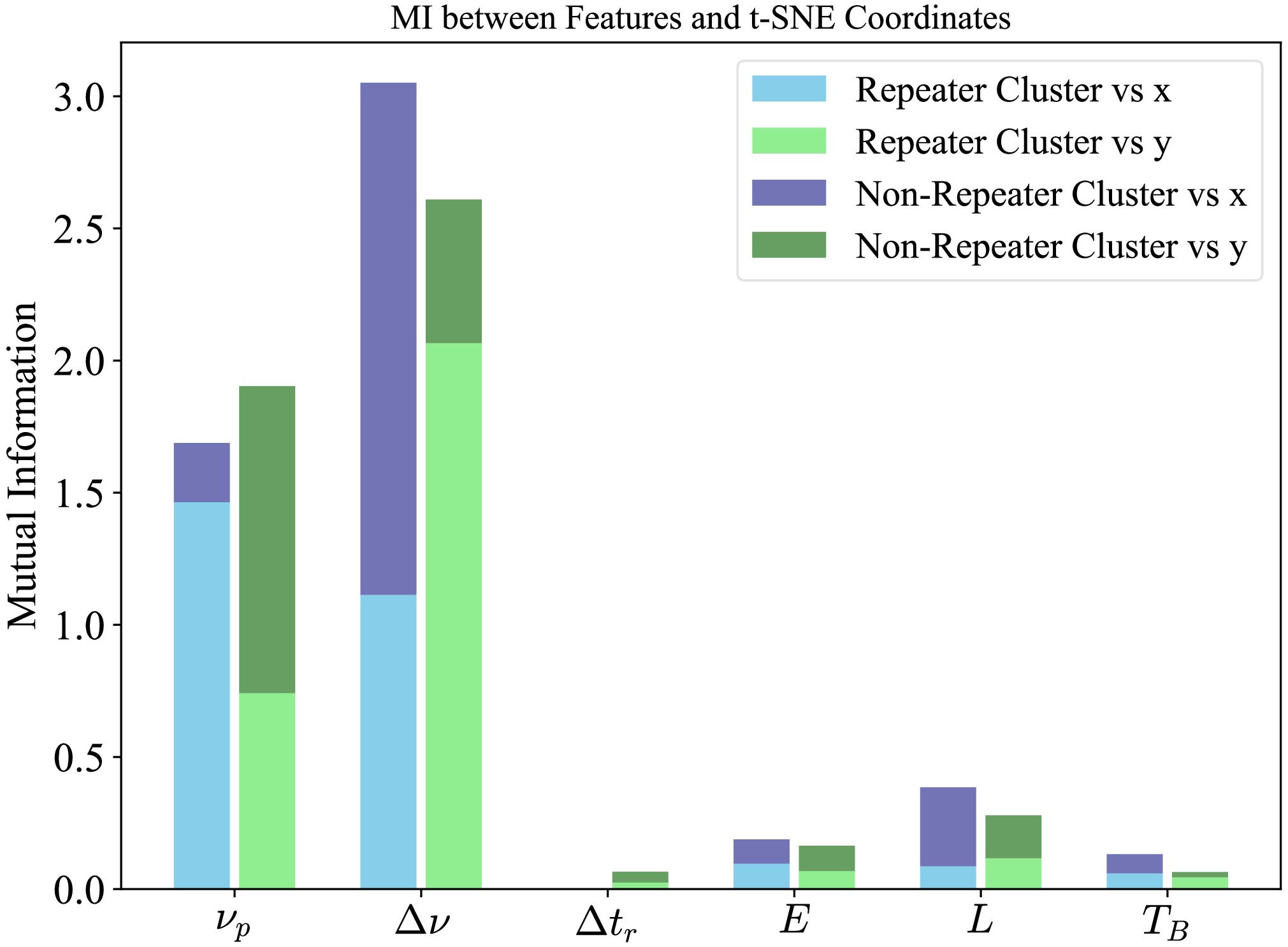
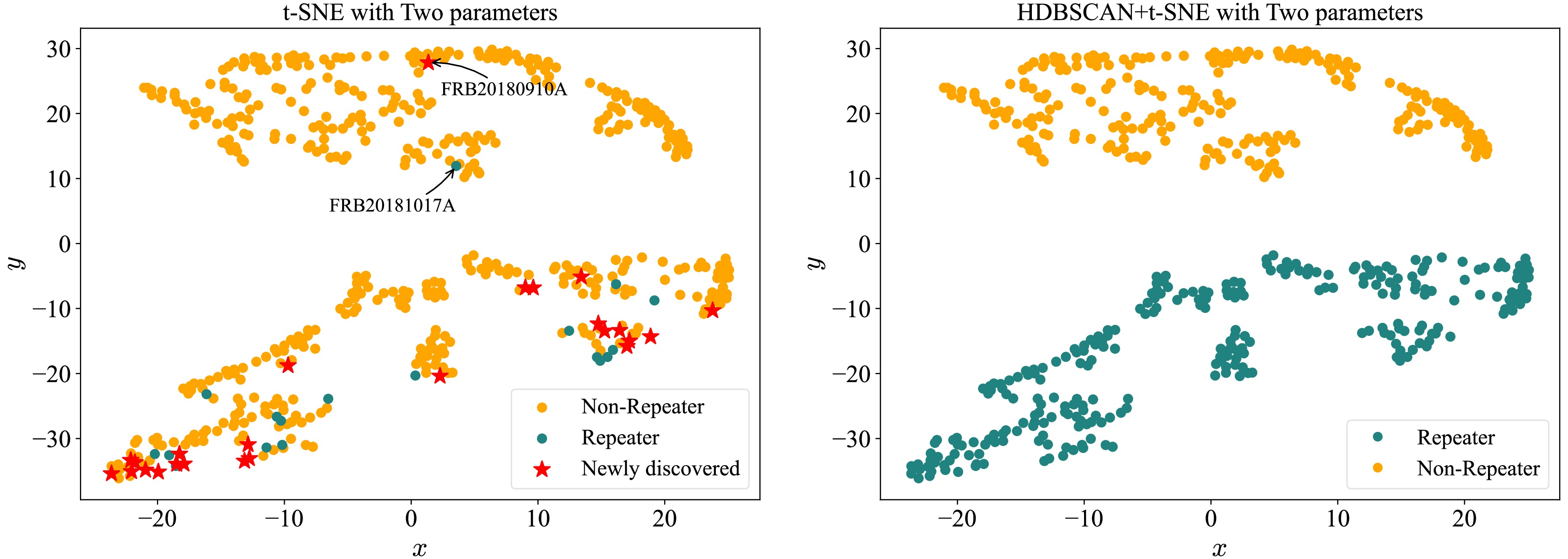
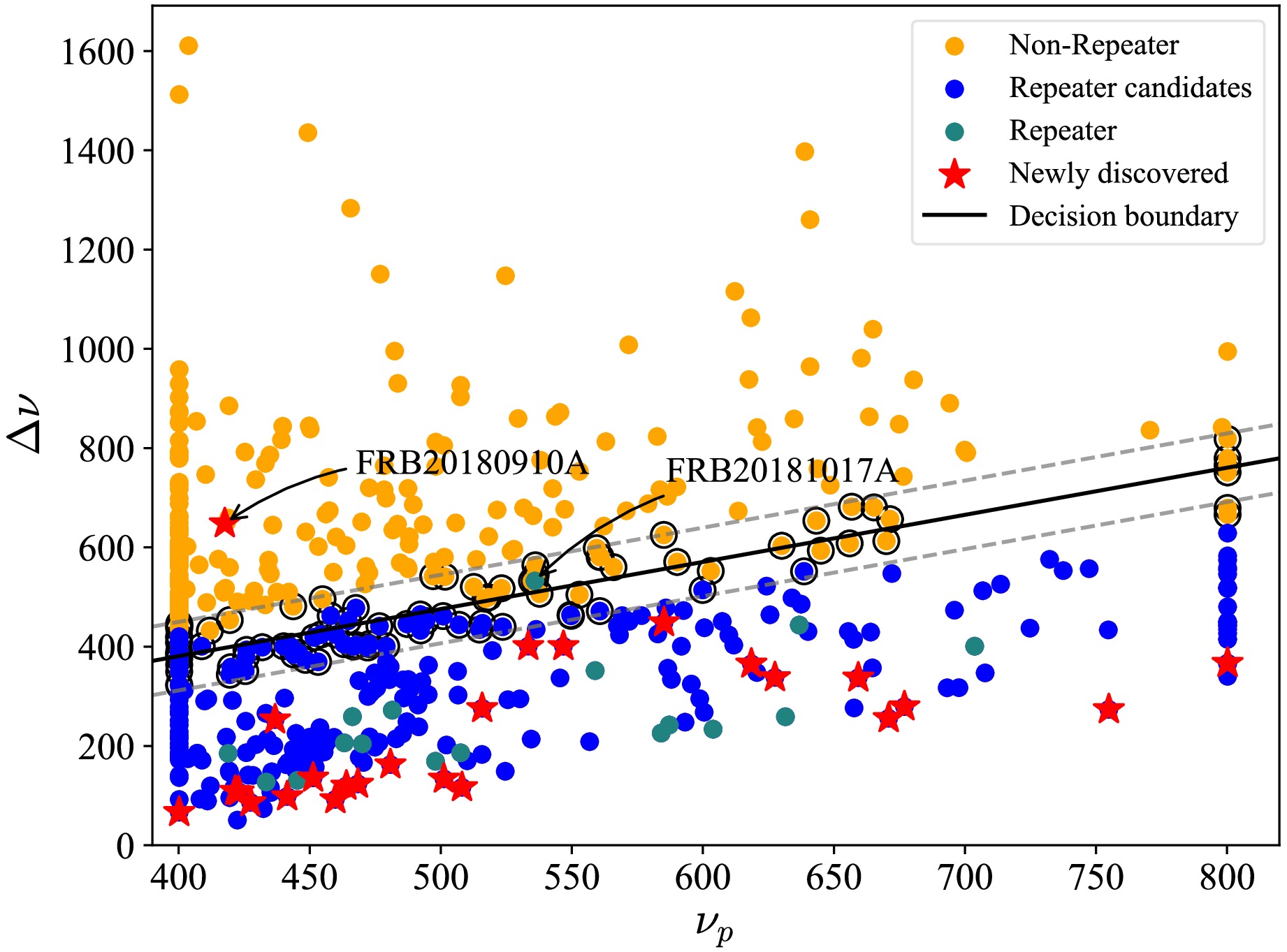
Fast radio bursts (FRBs) are short-duration and energetic radio transients of unknown origin. Observationally, they are commonly categorized into repeaters and non-repeaters. However, this binary classification may be influenced by observational limitations such as sensitivity and time coverage of telescopes. In this study, we employ unsupervised machine learning techniques to re-examine the CHIME/FRB catalog, with the goal of identifying intrinsic groupings in the FRB population without relying on preassigned labels. Using t-distributed stochastic neighbor embedding (t-SNE) for dimensionality reduction and hierarchical density-based spatial clustering of applications with noise (HDBSCAN) for clustering, we find that the FRB sample naturally separates into two major clusters. One cluster contains nearly all known repeaters but is contaminated by some apparently non-repeaters, while the other cluster is dominated by non-repeaters. This suggests that certain FRBs previously labeled as non-repeaters may share intrinsic similarities with repeaters. Mutual information analysis reveals that rest-frame frequency width and peak frequency are the most informative features governing the clustering structure. Even when reducing the input space to just these two features, the classification remains robust.
Fast radio bursts (FRBs) are short-duration and energetic radio transients of unknown origin. Observationally, they are commonly categorized into repeaters and non-repeaters. However, this binary classification may be influenced by observational limitations such as sensitivity and time coverage of telescopes. In this study, we employ unsupervised machine learning techniques to re-examine the CHIME/FRB catalog, with the goal of identifying intrinsic groupings in the FRB population without relying on preassigned labels. Using t-distributed stochastic neighbor embedding (t-SNE) for dimensionality reduction and hierarchical density-based spatial clustering of applications with noise (HDBSCAN) for clustering, we find that the FRB sample naturally separates into two major clusters. One cluster contains nearly all known repeaters but is contaminated by some apparently non-repeaters, while the other cluster is dominated by non-repeaters. This suggests that certain FRBs previously labeled as non-repeaters may share intrinsic similarities with repeaters. Mutual information analysis reveals that rest-frame frequency width and peak frequency are the most informative features governing the clustering structure. Even when reducing the input space to just these two features, the classification remains robust.
2026, 50(1): 015103. doi: 10.1088/1674-1137/ae07b4
Abstract:
Hawking radiation elucidates black holes as quantum thermodynamic systems, thereby establishing a conceptual bridge between general relativity and quantum mechanics through particle emission phenomena. While conventional theoretical frameworks predominantly focus on classical spacetime configurations, recent advancements in extended phase space thermodynamics have redefined cosmological parameters (such as the Λ-term) as dynamic variables. Notably, the thermodynamics of anti-de Sitter (AdS) black holes has been successfully extended to incorporate thermodynamic pressure P. Within this extended phase space framework, although numerous intriguing physical phenomena have been identified, the tunneling mechanism of particles incorporating pressure and volume remains unexplored. This study investigates Hawking radiation through particle tunneling in Schwarzschild AdS black holes within the extended phase space, where the thermodynamic pressure P is introduced via a dynamic cosmological constant Λ. By employing semi-classical tunneling calculations with self-gravitation corrections, we demonstrate that emission probabilities exhibit a direct correlation with variations in Bekenstein-Hawking entropy. Significantly, the radiation spectrum deviates from pure thermality, aligning with unitary quantum evolution while maintaining consistency with standard phase space results. Moreover, through thermodynamic analysis, we verified that the emission rate of particles is related to the difference in Bekenstein-Hawking entropy of the emitted particles before and after they tunnel through the potential barrier. These findings establish particle tunneling as a unified probe of quantum gravitational effects in black hole thermodynamics.
Hawking radiation elucidates black holes as quantum thermodynamic systems, thereby establishing a conceptual bridge between general relativity and quantum mechanics through particle emission phenomena. While conventional theoretical frameworks predominantly focus on classical spacetime configurations, recent advancements in extended phase space thermodynamics have redefined cosmological parameters (such as the Λ-term) as dynamic variables. Notably, the thermodynamics of anti-de Sitter (AdS) black holes has been successfully extended to incorporate thermodynamic pressure P. Within this extended phase space framework, although numerous intriguing physical phenomena have been identified, the tunneling mechanism of particles incorporating pressure and volume remains unexplored. This study investigates Hawking radiation through particle tunneling in Schwarzschild AdS black holes within the extended phase space, where the thermodynamic pressure P is introduced via a dynamic cosmological constant Λ. By employing semi-classical tunneling calculations with self-gravitation corrections, we demonstrate that emission probabilities exhibit a direct correlation with variations in Bekenstein-Hawking entropy. Significantly, the radiation spectrum deviates from pure thermality, aligning with unitary quantum evolution while maintaining consistency with standard phase space results. Moreover, through thermodynamic analysis, we verified that the emission rate of particles is related to the difference in Bekenstein-Hawking entropy of the emitted particles before and after they tunnel through the potential barrier. These findings establish particle tunneling as a unified probe of quantum gravitational effects in black hole thermodynamics.
2026, 50(1): 015104. doi: 10.1088/1674-1137/ae07be
Abstract:
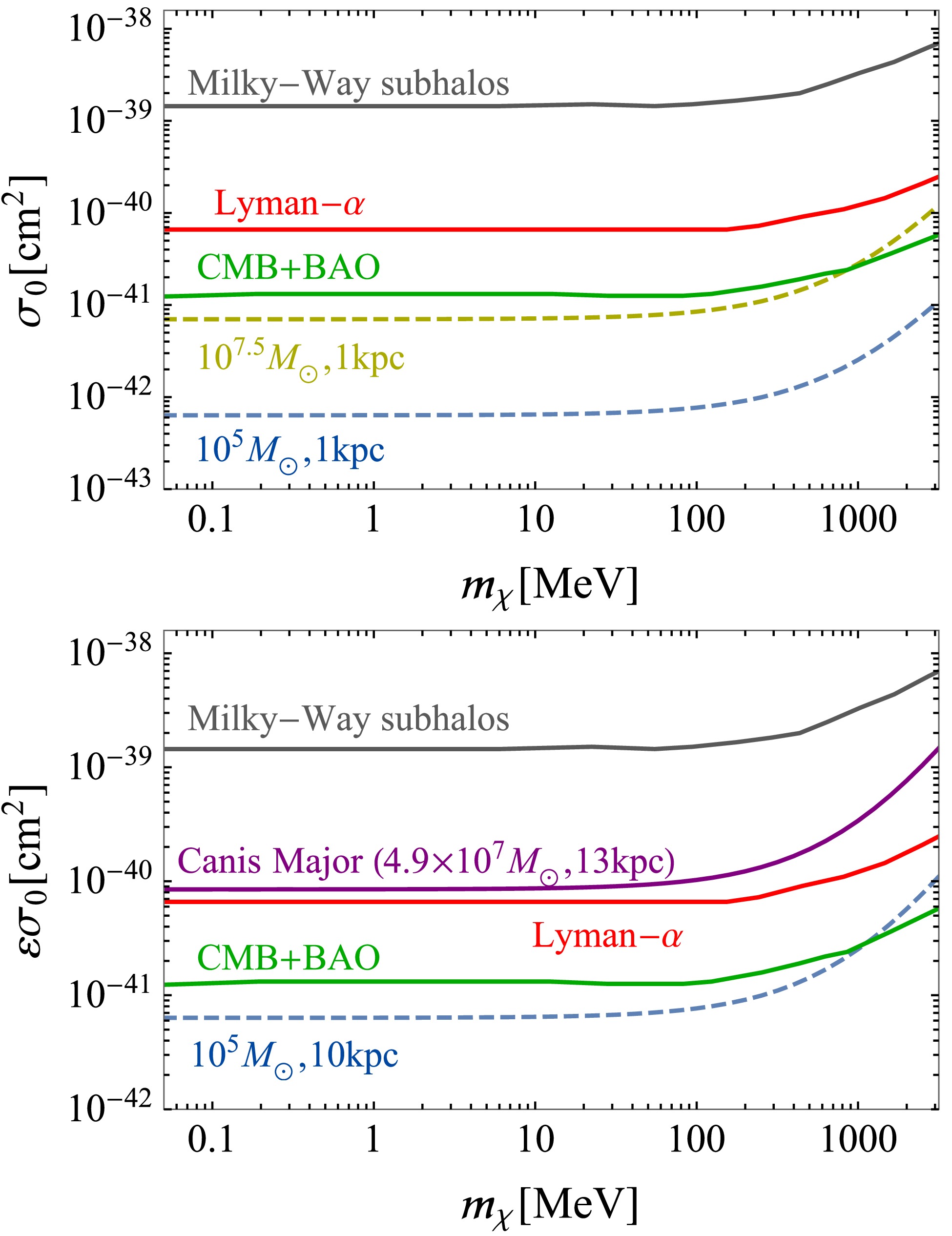
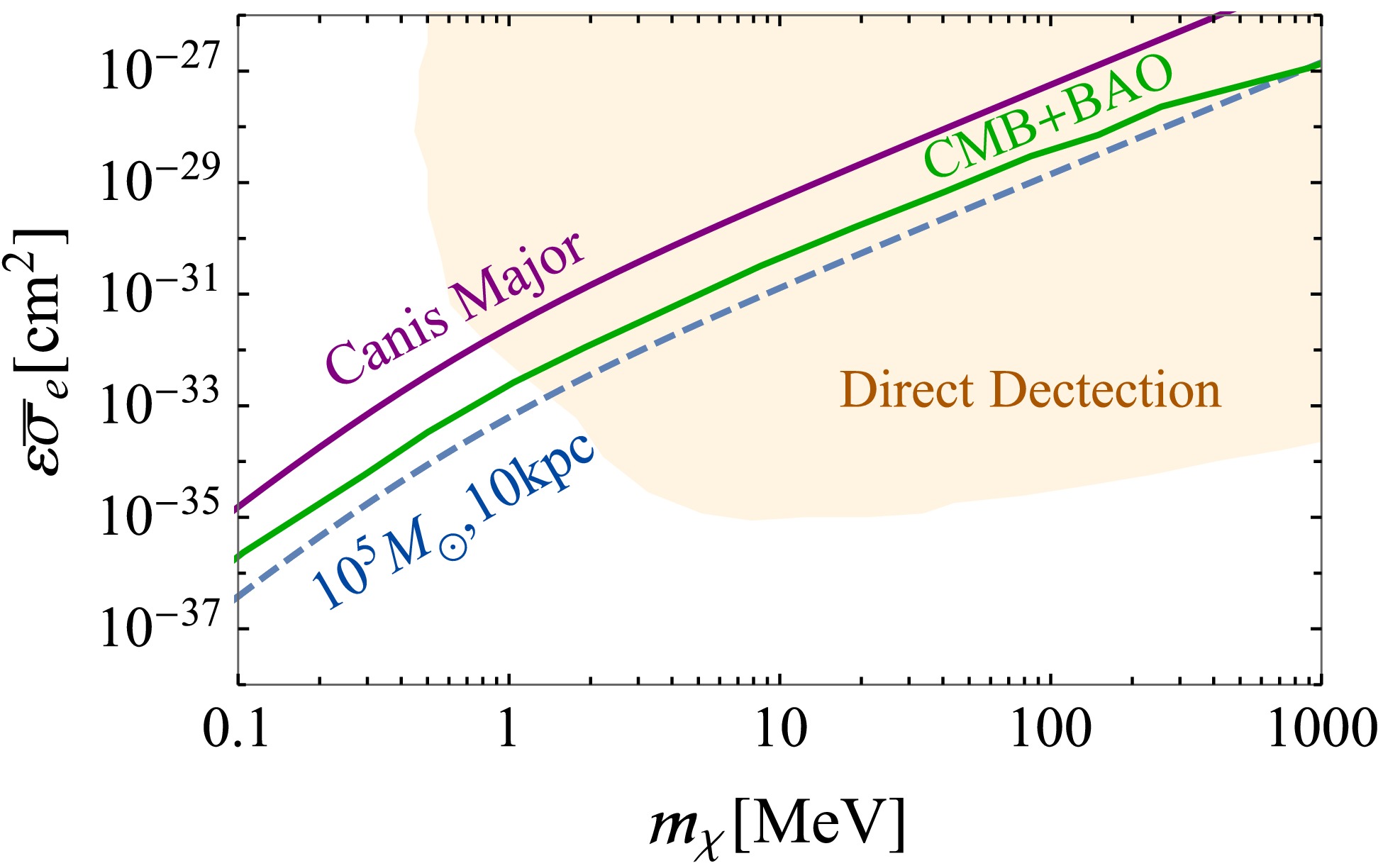
Coulomb-like interactions typically have a cross-section that scales with relative particle velocity according to\begin{document}$ \sigma=\sigma_0 v^{-4} $\end{document} \begin{document}$ 10^{7.5} \;M_\odot $\end{document}
Coulomb-like interactions typically have a cross-section that scales with relative particle velocity according to
2026, 50(1): 015105. doi: 10.1088/1674-1137/ae0b43
Abstract:
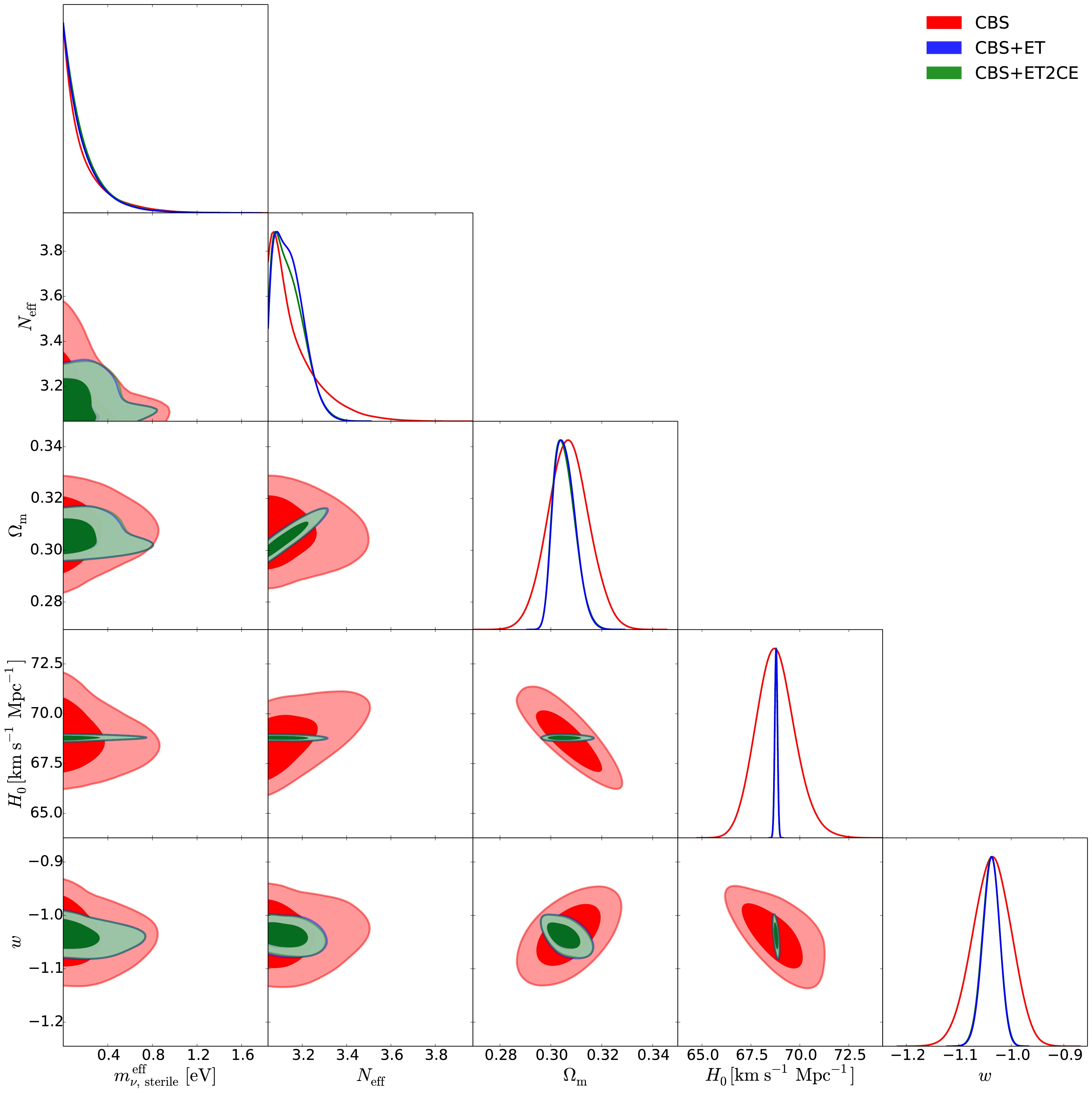
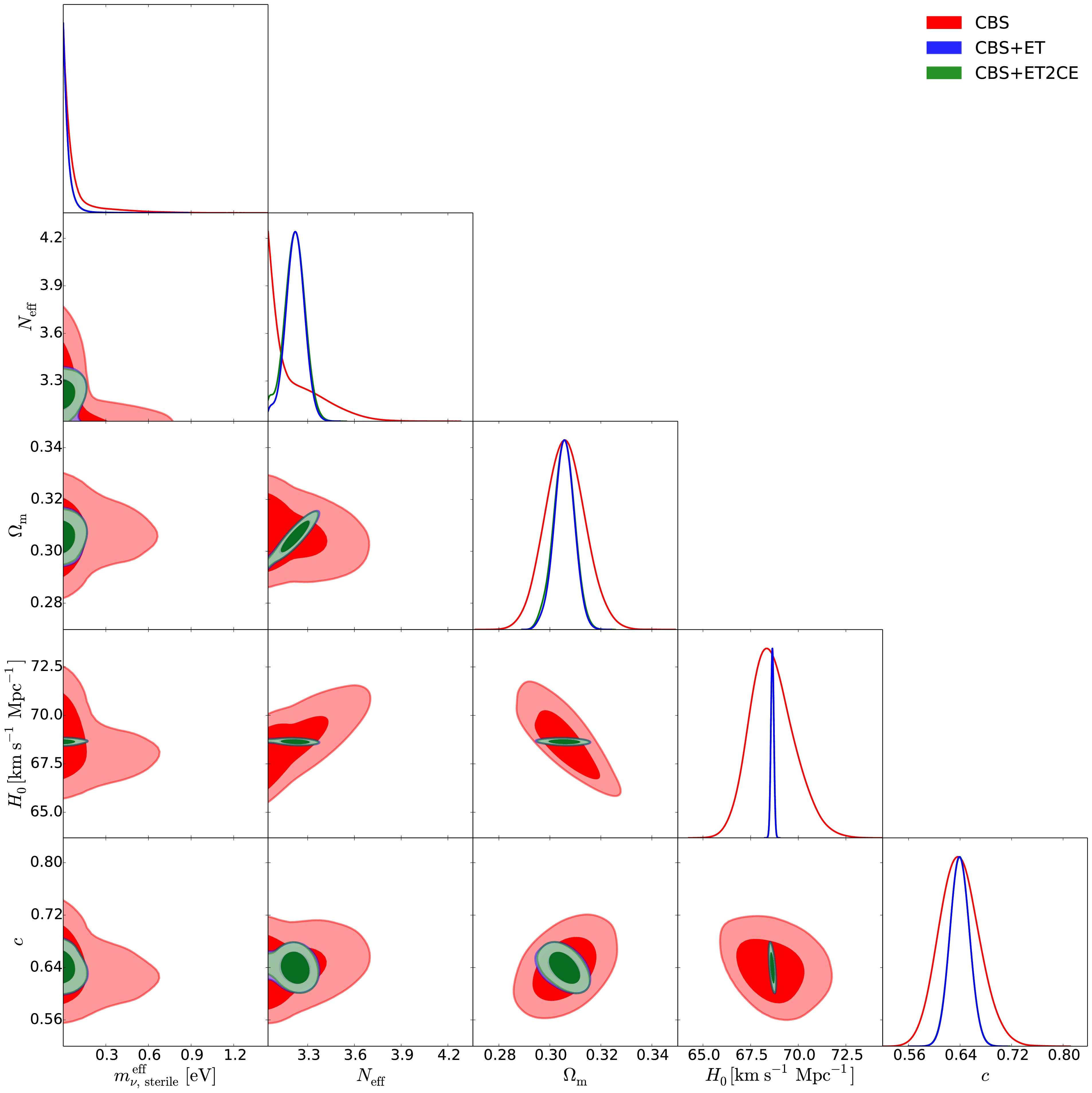
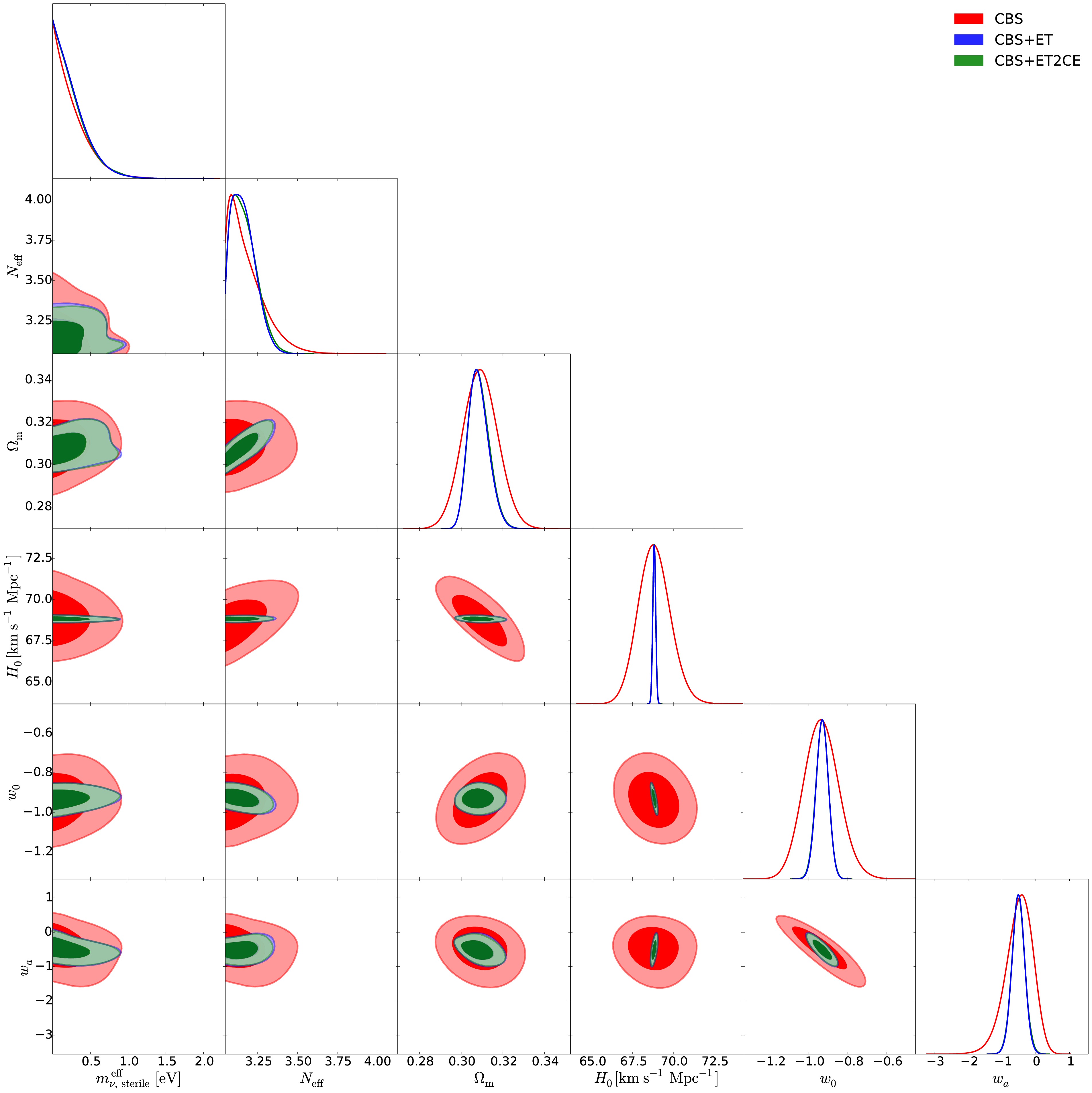
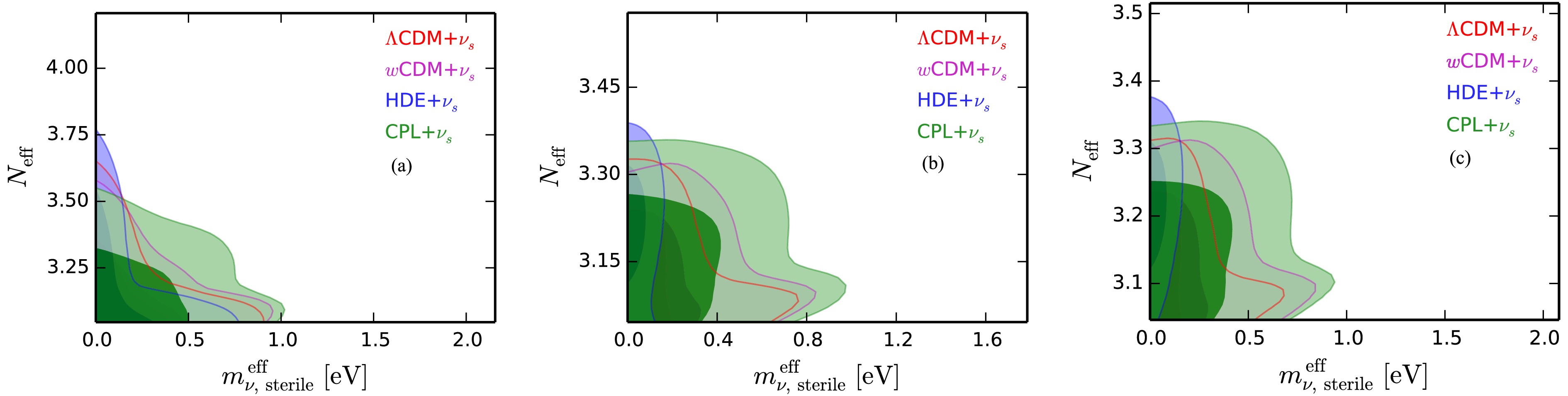
In the era of third-generation (3G) gravitational-wave (GW) detectors, GW standard siren observations from binary neutron star mergers provide a powerful tool for probing the expansion history of the universe. Because sterile neutrinos can influence cosmic evolution by modifying the radiation content and suppressing structure formation, GW standard sirens offer promising prospects for constraining sterile neutrino properties within a cosmological framework. Building on this, we investigate the prospects of detecting sterile neutrinos in dynamical dark energy (DE) models using joint observations from 3G GW detectors and a future short gamma-ray burst detector, such as a THESEUS-like telescope. We consider the wCDM, holographic DE (HDE), and Chevallier–Polarski–Linder (CPL) models. Our results show that the properties of DE can influence the constraints on sterile neutrino parameters. Moreover, the inclusion of GW data significantly improves constraints on both sterile neutrino parameters and other cosmological parameters across all three models compared to the current limits derived from CMB+BAO+SN (CBS) observations. When GW data are included in the CBS dataset, a preference for\begin{document}$ \Delta N_{\rm{eff}} > 0 $\end{document} \begin{document}$ 1\sigma $\end{document} \begin{document}$ 3\sigma $\end{document} \begin{document}$ m_{\nu,{\rm{sterile}}}^{\rm{eff}} $\end{document}
In the era of third-generation (3G) gravitational-wave (GW) detectors, GW standard siren observations from binary neutron star mergers provide a powerful tool for probing the expansion history of the universe. Because sterile neutrinos can influence cosmic evolution by modifying the radiation content and suppressing structure formation, GW standard sirens offer promising prospects for constraining sterile neutrino properties within a cosmological framework. Building on this, we investigate the prospects of detecting sterile neutrinos in dynamical dark energy (DE) models using joint observations from 3G GW detectors and a future short gamma-ray burst detector, such as a THESEUS-like telescope. We consider the wCDM, holographic DE (HDE), and Chevallier–Polarski–Linder (CPL) models. Our results show that the properties of DE can influence the constraints on sterile neutrino parameters. Moreover, the inclusion of GW data significantly improves constraints on both sterile neutrino parameters and other cosmological parameters across all three models compared to the current limits derived from CMB+BAO+SN (CBS) observations. When GW data are included in the CBS dataset, a preference for
2026, 50(1): 015106. doi: 10.1088/1674-1137/ae07bc
Abstract:
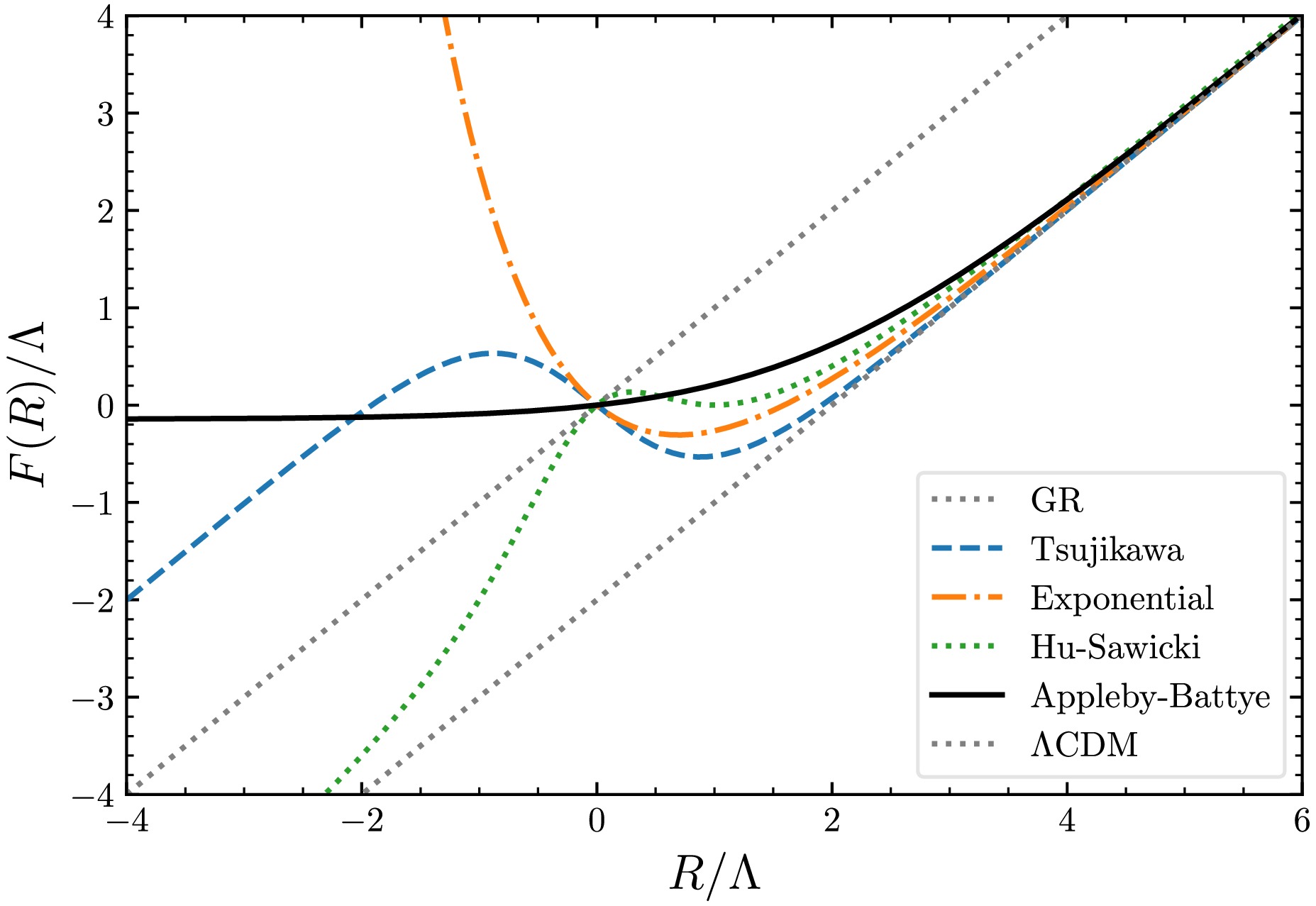
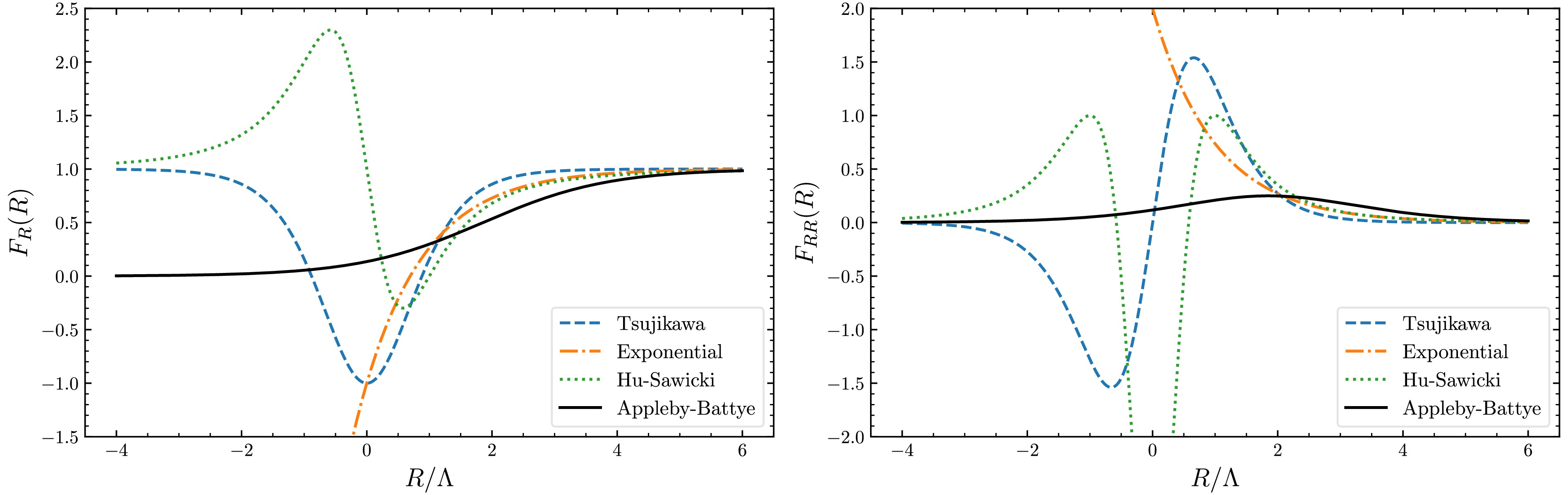
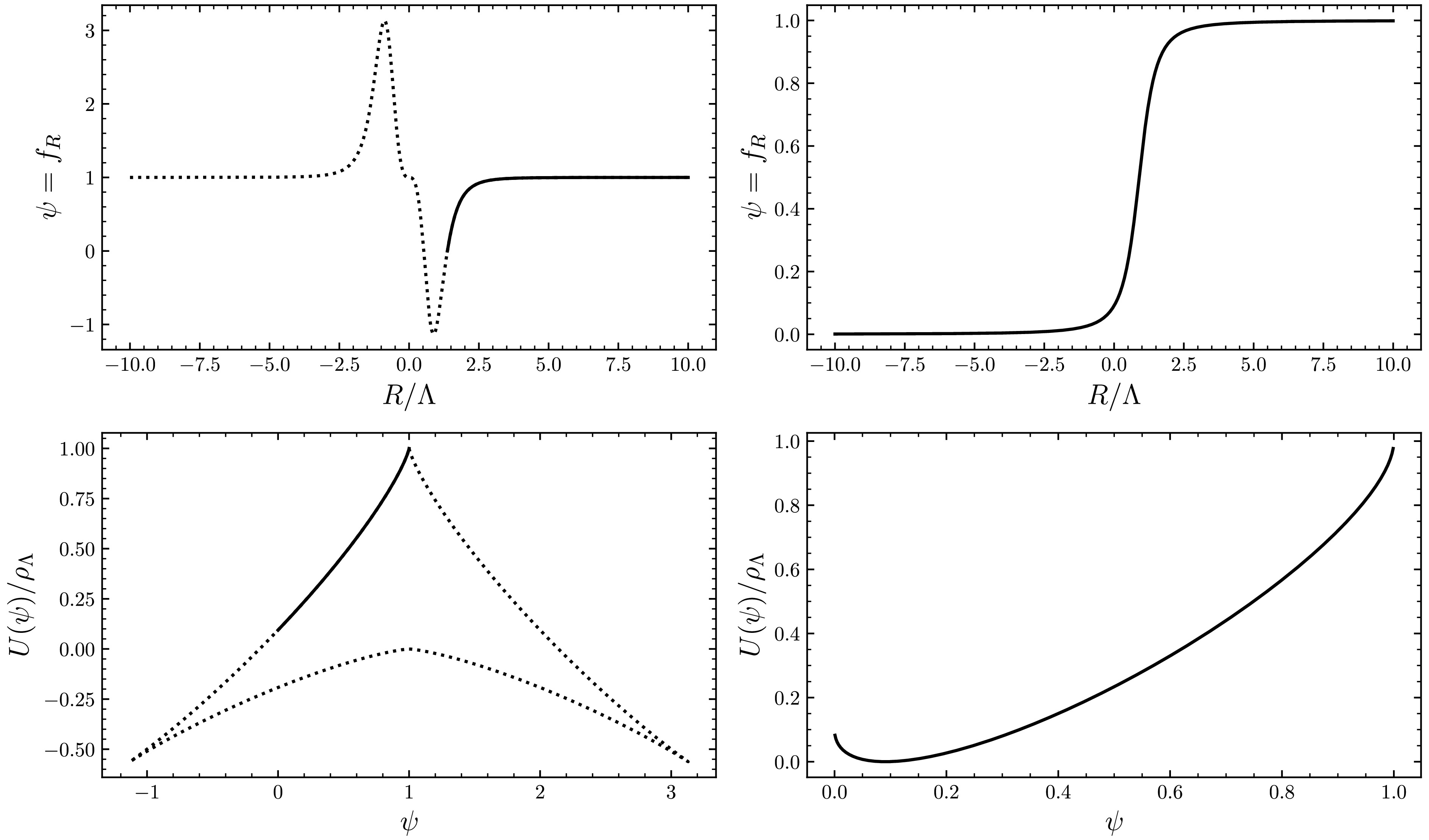
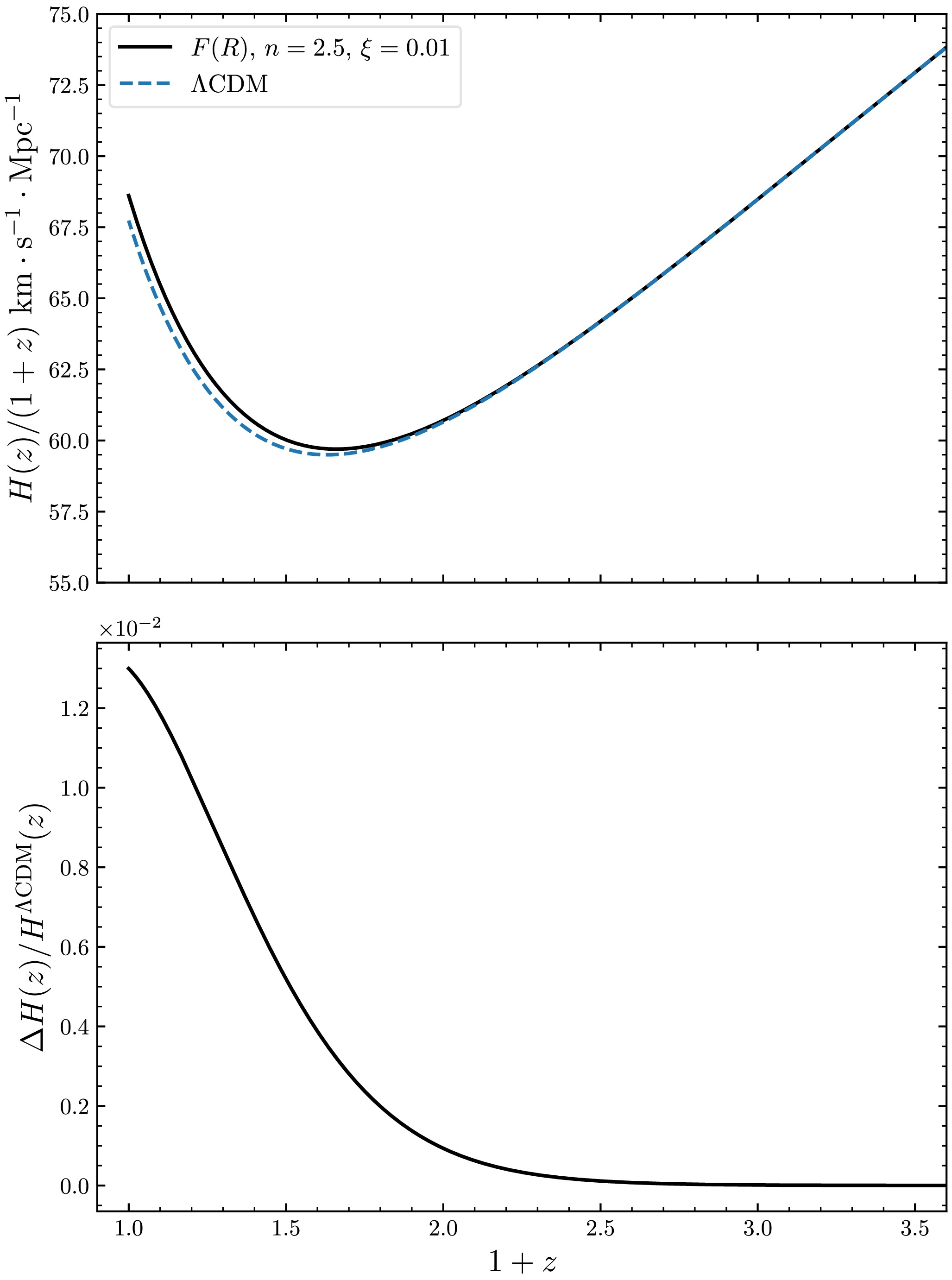
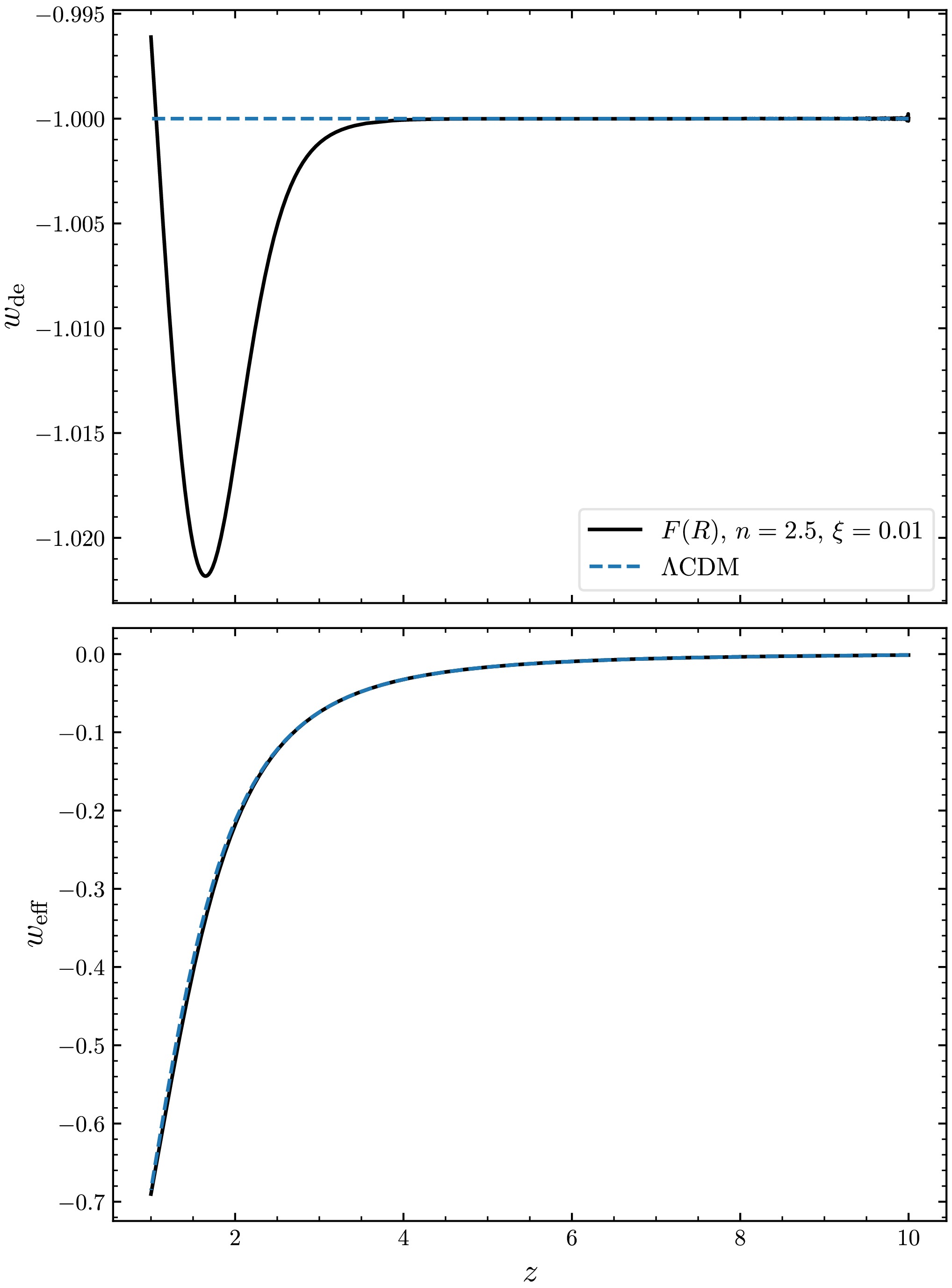
\begin{document}$F(R)$\end{document} \begin{document}$R^2$\end{document} \begin{document}$F(R)$\end{document} \begin{document}$R^2$\end{document} \begin{document}$F(R)$\end{document}
2026, 50(1): 015107. doi: 10.1088/1674-1137/ae0b42
Abstract:
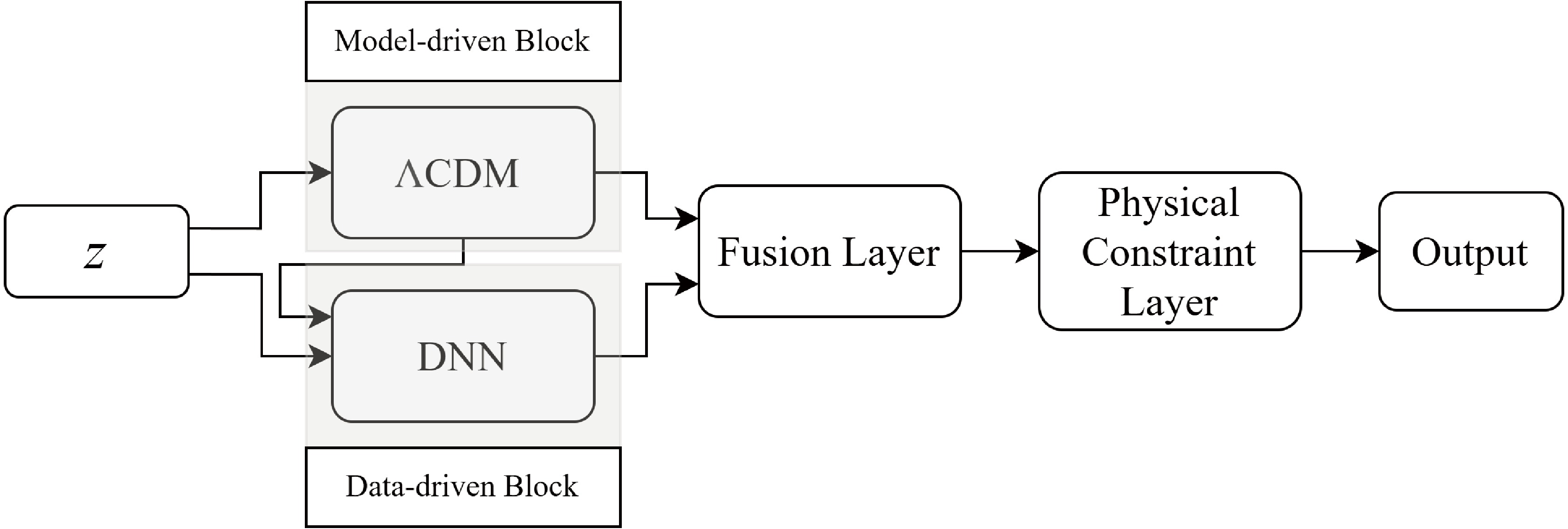
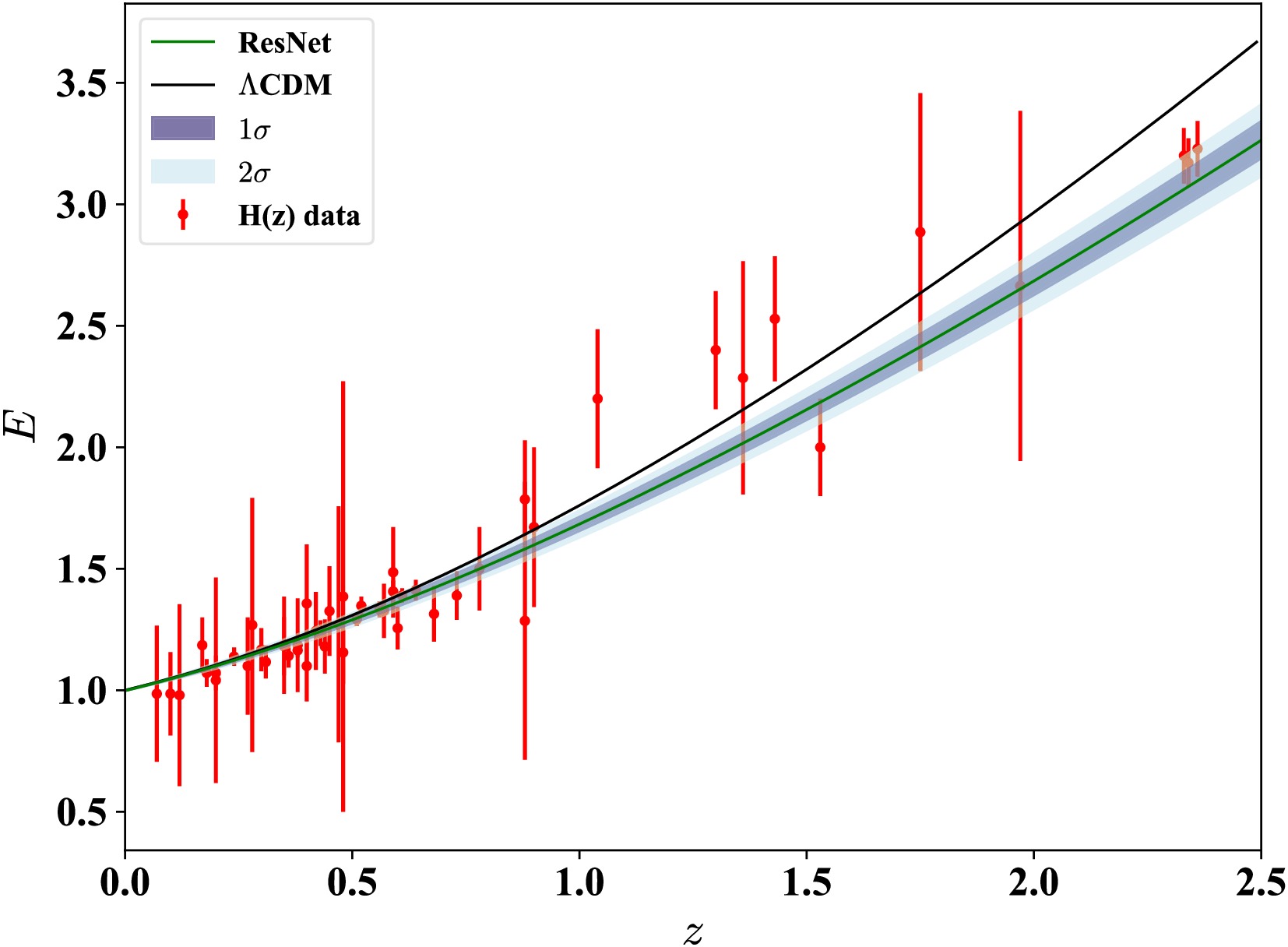
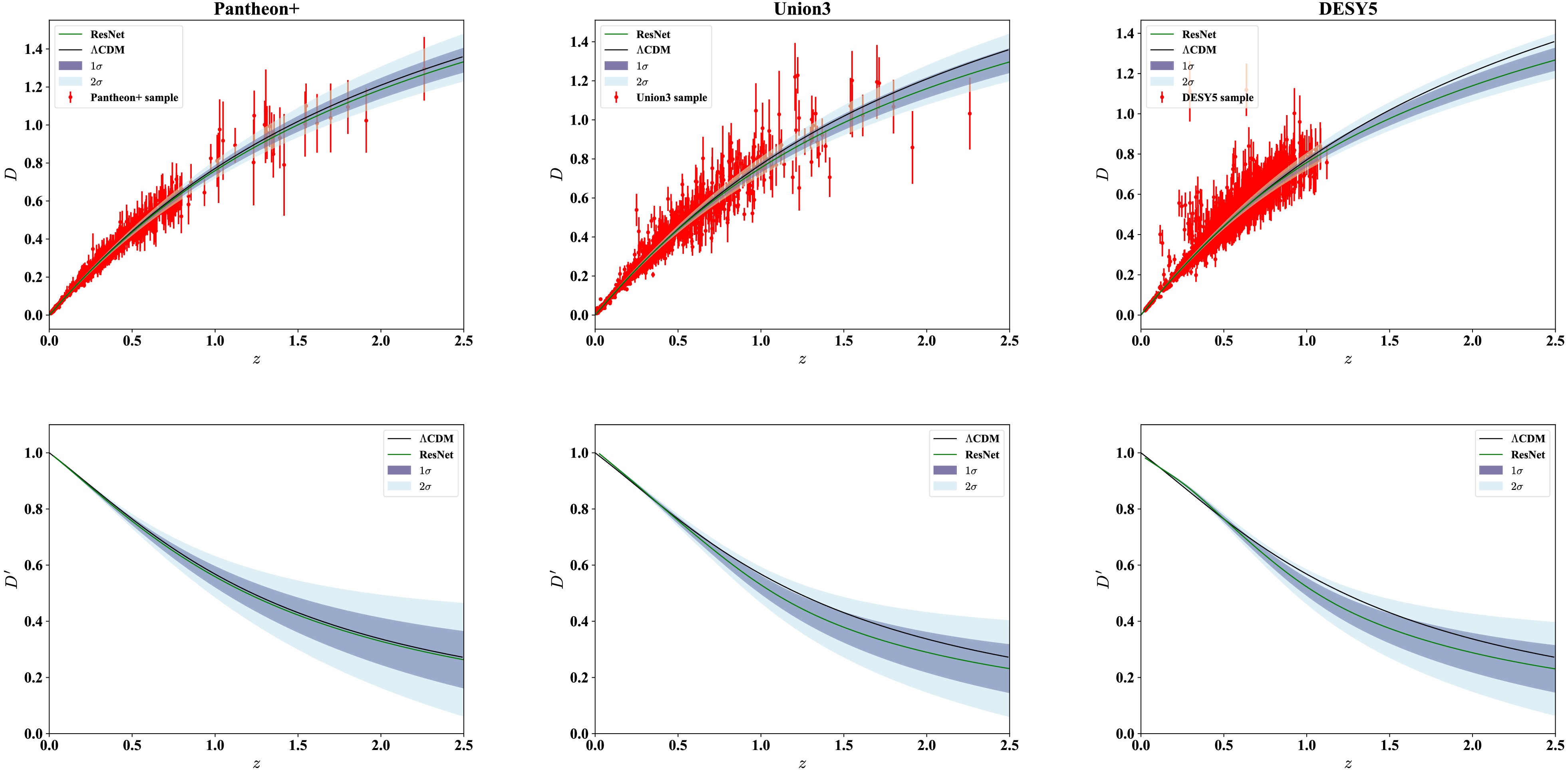
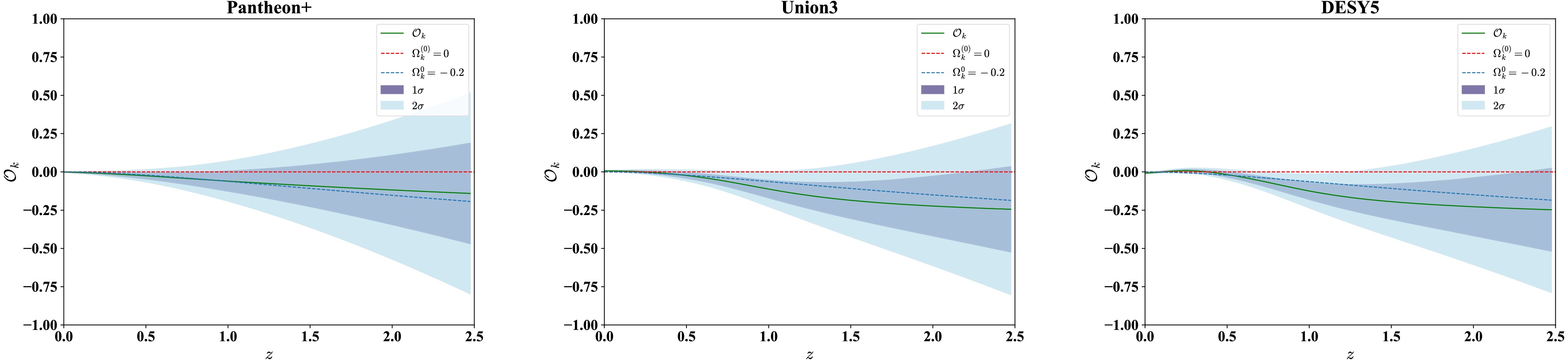
Determining the spatial curvature of the Universe, a fundamental parameter defining the global geometry of spacetime, remains crucial yet contentious due to existing observational tensions. Although Planck satellite measurements have provided precise constraints on spatial curvature, discrepancies persist regarding whether the Universe is flat or closed. Here, we introduce a model-independent approach leveraging deep learning techniques, specifically residual neural networks (ResNet), to reconstruct the dimensionless Hubble parameter E(z) and the normalized comoving distance D(z) from H(z) data and multiple SNe Ia compilations. Our dual-block ResNet architecture, which integrates a model-driven block informed by\begin{document}$ \Lambda $\end{document} \begin{document}$ {\cal{O}}_k(z) $\end{document} \begin{document}$ \sigma $\end{document}
Determining the spatial curvature of the Universe, a fundamental parameter defining the global geometry of spacetime, remains crucial yet contentious due to existing observational tensions. Although Planck satellite measurements have provided precise constraints on spatial curvature, discrepancies persist regarding whether the Universe is flat or closed. Here, we introduce a model-independent approach leveraging deep learning techniques, specifically residual neural networks (ResNet), to reconstruct the dimensionless Hubble parameter E(z) and the normalized comoving distance D(z) from H(z) data and multiple SNe Ia compilations. Our dual-block ResNet architecture, which integrates a model-driven block informed by
2026, 50(1): 015108. doi: 10.1088/1674-1137/ae1184
Abstract:
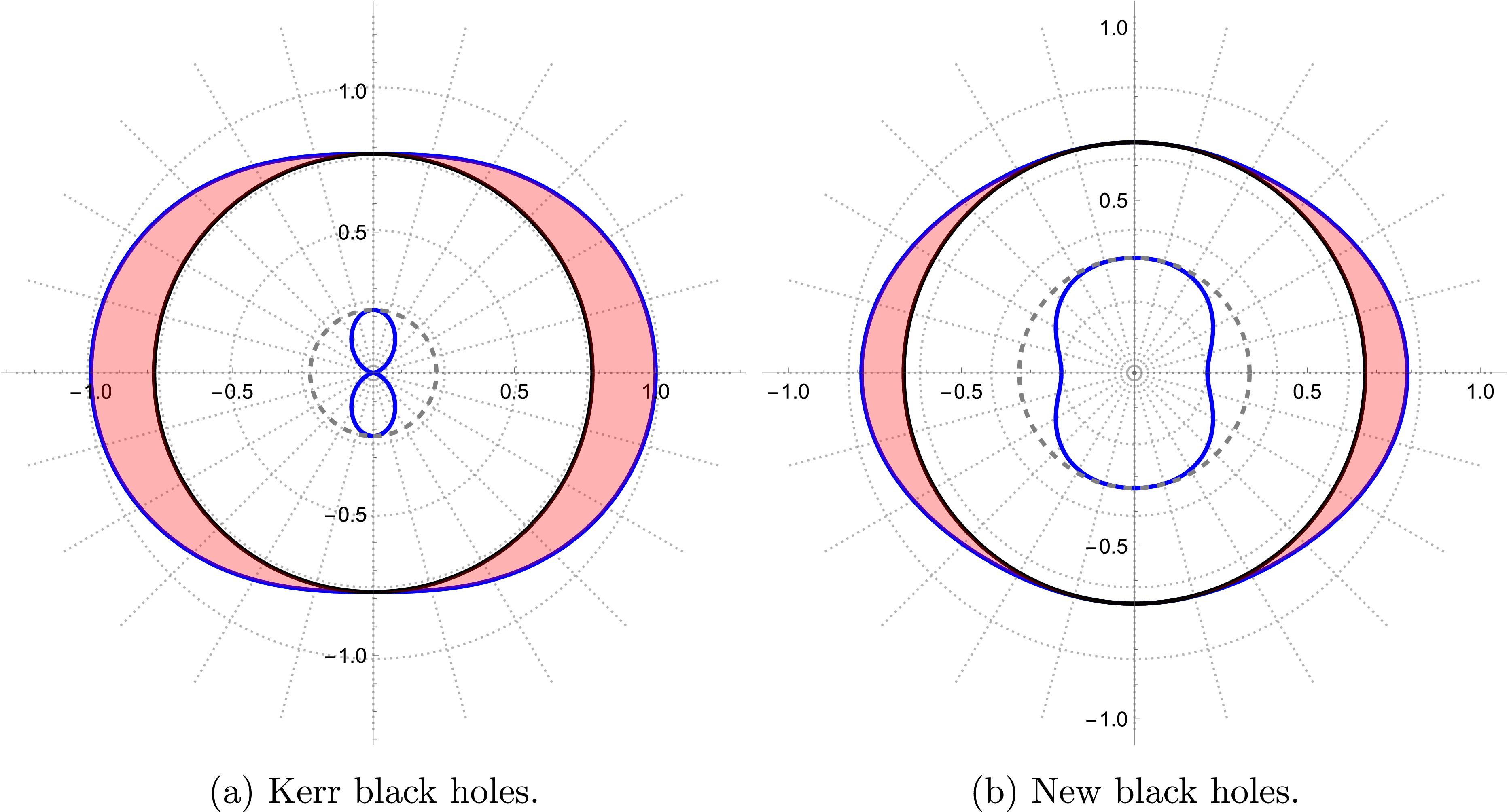
We address a specific problem of the Newman-Janis algorithm: how to determine the general form of the complex transformation for the Schwarzschild metric and ensure that the resulting axisymmetric metric satisfies the zero-scalar-curvature condition\begin{document}$ R=0 $\end{document}
We address a specific problem of the Newman-Janis algorithm: how to determine the general form of the complex transformation for the Schwarzschild metric and ensure that the resulting axisymmetric metric satisfies the zero-scalar-curvature condition
IF: 3.1
Monthly issued, founded in 1977
Sponsored by:
ISSN 1674-1137 CN 11-5641/O4
Original research articles, Ietters and reviews Covering theory and experiments in the fieids of
- Particle physics
- Nuclear physics
- Particle and nuclear astrophysics
- Cosmology
Author benefits
- A SCOAP3 participating journal - free Open Access publication for qualifying articles
- Average 24 days to first decision
- Fast-track publication for selected articles
- Subscriptions at over 3000 institutions worldwide
- Free English editing on all accepted articles
News
- CPC Announces 2025 Outstanding Reviewers
- Chinese Physics C Outstanding Reviewer Award 2023
- Impact factor of Chinese Physics C is 3.6 in 2022
- 2022 CPC Outstanding Reviewer Awards
- The 2023 Chinese New Year-Office closure
Cover Story
- Cover Story (Issue 2, 2026) |The images of Brans-Dicke-Kerr type naked singularities
- Cover Story (Issue 1, 2026) A focused review of quintom cosmology: from quintom dark energy to quintom bounce
- Cover Story (Issue 11, 2025) The Earth-Magnet Assists DAMPE in Studying Cosmic Anti-Electrons
- Cover Story (Issue 9, 2025): Precise measurement of Ïc0 resonance parameters and branching fractions of Ïc0,c2âÏï¼Ïï¼/ K+K-
- Cover Story (Issue 8, 2025) A Novel Perspective on Spacetime Perturbations: Bridging Riemannian and Teleparallel Frameworks
Advertising